So I flew up to Madrid from Granada on Sunday night. Didn’t sleep much and then literally walked across the street from my hotel to the Algerian Embassy at 9:00 a.m. to plead my case. Now it quickly became apparent that in addition to my unorthodox request (please replace my Algerian VISA with a new one in a completely different passport), there was a language barrier. Very little English spoken. Spanish .. si; Arabic … naeam; French … oui. So it took about 15 minutes to finally convey what happened, why I was there and that I had a second passport for which a new VISA could be issued (thanks to my translation app).
Anyway, over the course of the next three hours, I was asked to provide a myriad of information: Where was I going in Algeria? Why was I going to Algeria? Why was I flying from Madrid to Algeria and not from the U.S. or Canada? They wanted a copy of my complete itinerary for my 2 ½ month trip. They wanted a copy of my original Algerian VISA. They wanted a copy of the police report regarding my lost/stolen passport. They wanted my tour company contact information. They wanted my Canadian passport.
And just after 12:00 they came back and said they had been unable to contact my tour company. I immediately sent the tour company a WhatsApp message and saw that it had been read. I then called and was able to get hold of my contact, passed the phone to the folks I was dealing with in the Algerian embassy and then had no idea what was being said. The phone was given back to me and I was told to hold on. Then I got a WhatsApp message from my tour company telling me that the Algerian Embassy was going to give me the VISA.
At just after 12:30, the embassy folks asked me to fill out a new VISA application (the application was in Spanish) so the app came in handy again as did the very helpful Algerian embassy employee who was dealing with me. I then had to run down the street to a photo shop and have my picture taken for the VISA and then run back to the embassy to give them the photo. By 1:30 I was told it would be just a couple minutes and by 1:40 I had my VISA. After many thank yous, I ran across the street, grabbed my overnight bag from the hotel folks and rushed down the street to the taxi stand.
By 2:00, I was at the airport for my 3:50 fight back to Granada (and fortunately, there was no line at security). All in all, a successful, if not incredibly stressful day. But the good news, I am cleared to travel to Algeria on Sunday. So THAT was my Monday.

And the reason I needed to come back to Granada and not just stay in Madri and go to the US embassy for my replacement passport then travel from there to my next stop, Valencia, is that my tickets to the Alhambra (the 13th century city fortress) were for Tuesday and they only issue 8,000 tickets per day. As just as important, once you have a ticket, the reservation cannot be changed. And the Alhambra was THE reason I had come to Granada. So it was back to Granada for a day before heading back to Madrid to obtain my replacement passport. (And the U.S. Embassy was closed on Monday anyway for Columbus Day).
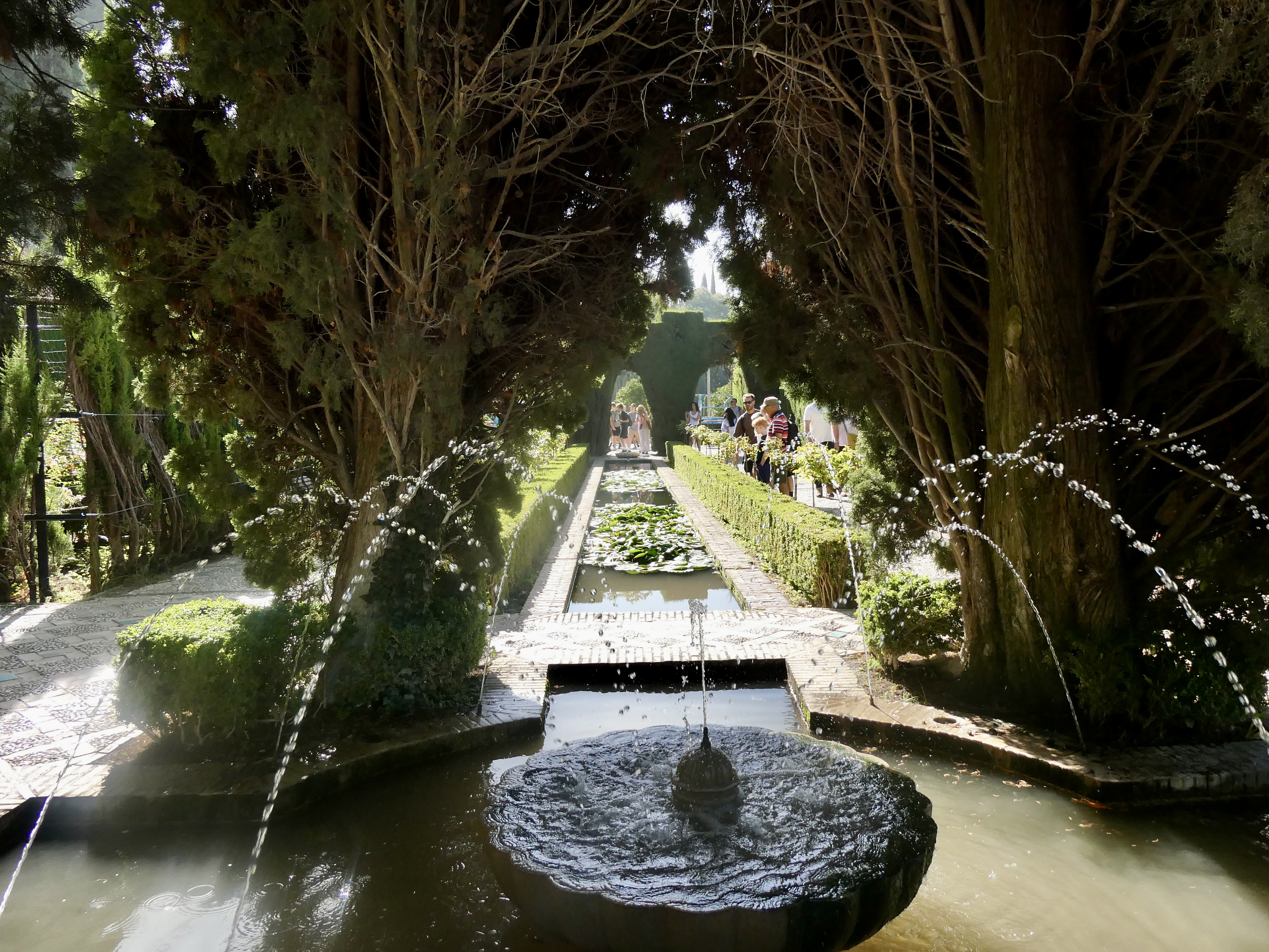
So at 11:30 on Tuesday, I met up with Pablo, my guide for a walking tour of the Alhambra. Now the Alhambra is a palace and fortress complex in Granada, which was built by the Moors/Nasrids between 1238-1358. The Alhambra is famous for its over the top architecture (both Islamic and Renaissance) and is historically significant because it was the last major stronghold in Granada before the region fell to the Catholic Kings. Today, the complex is a UNESCO World Heritage site, which includes refurbished palaces, gardens, courtyards, fountains, an outdoor theater and even an art gallery.
Anyway, once I met up with Pablo we went through the complex task of being admitted to the Alhambra. A ticket was not good enough. You actually have to produce identification, preferably a passport (and fortunately I have my Canadian passport or I would have been screwed), which is then matched against the ticket. And all told, I had to go through this ritual three times during the day.
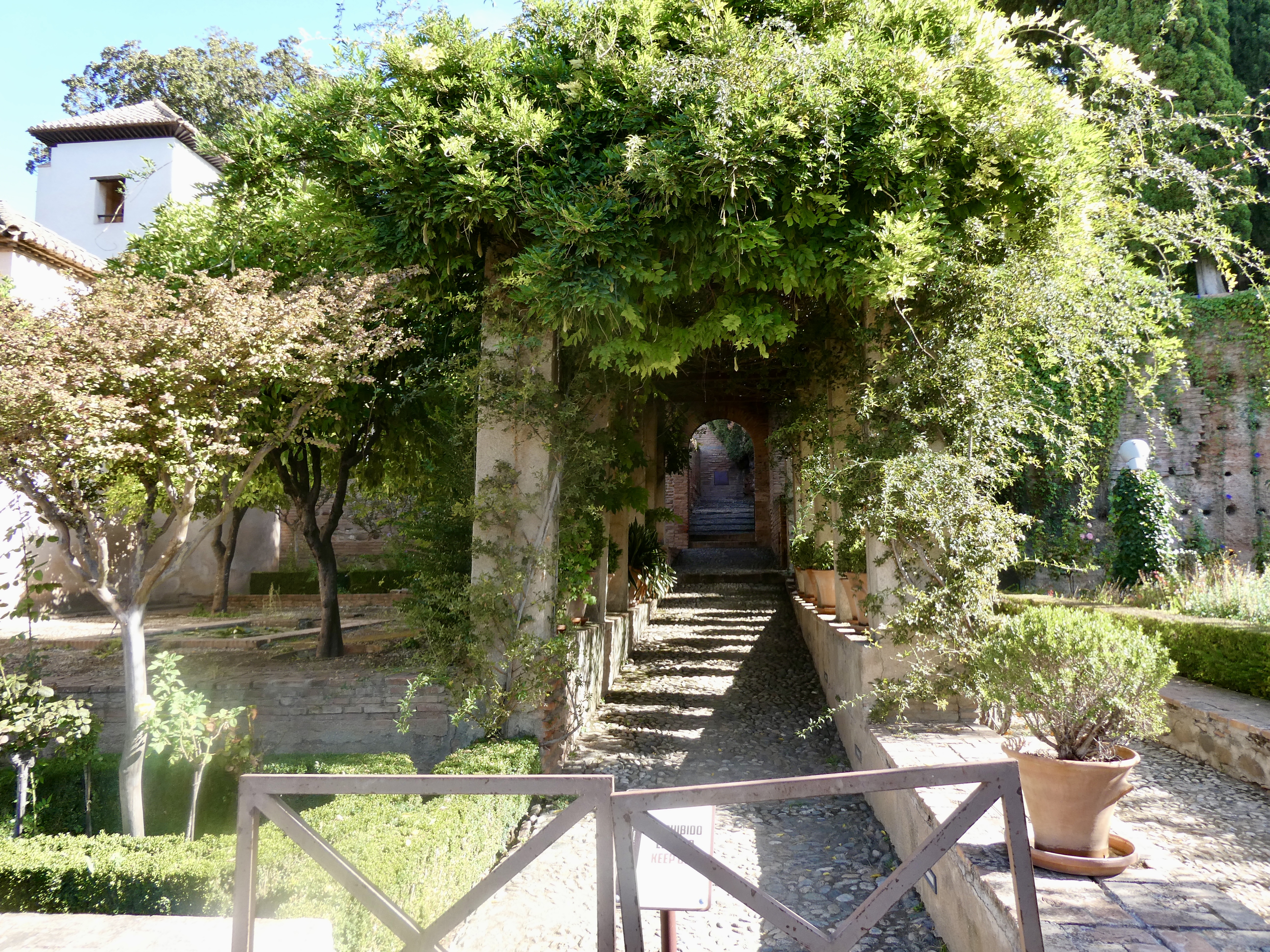
Once admitted, we walked to the far side of the complex to the area known as the Generalife, which was the summer palace of the Sultan. Now the Generalife is surrounded by trees and gardens and can be upwards of 5 degrees cooler in summer, which can make a huge difference in the Granada summer heat.
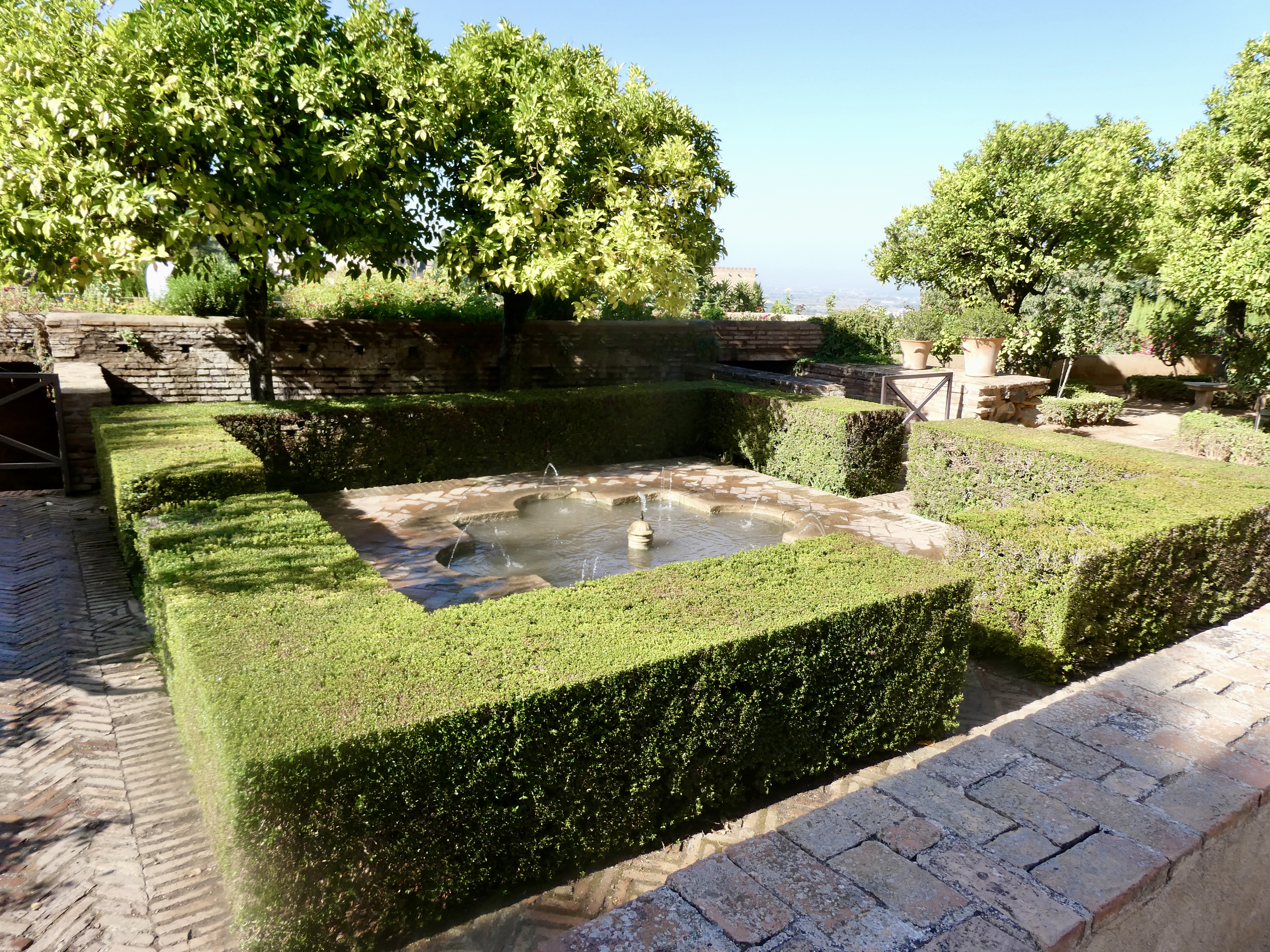
We walked through the new 20th century gardens, which included a small outdoor theater where summer concerts are held. The gardens were exquisite and even though
it is not prime blooming season, there was still lots of jasmine and roses in bloom as well as a lot of annuals. In addition, the gardens were filled with water features, and there were a number of fountains spread throughout the gardens.


Once we had passed through the garden area, we entered the palace through an archway. The palace is believed to have been constructed at the end of the 13th century and features some magnificent views of the Alhambra as well as areas of old Granada.

Now much of the palace was destroyed over the years, but there remain some viewpoints and walls that are from the original architecture and in traditional Islamic design. The building, as with most buildings from Moors time period, is constructed around a courtyard and this palace was no exception.
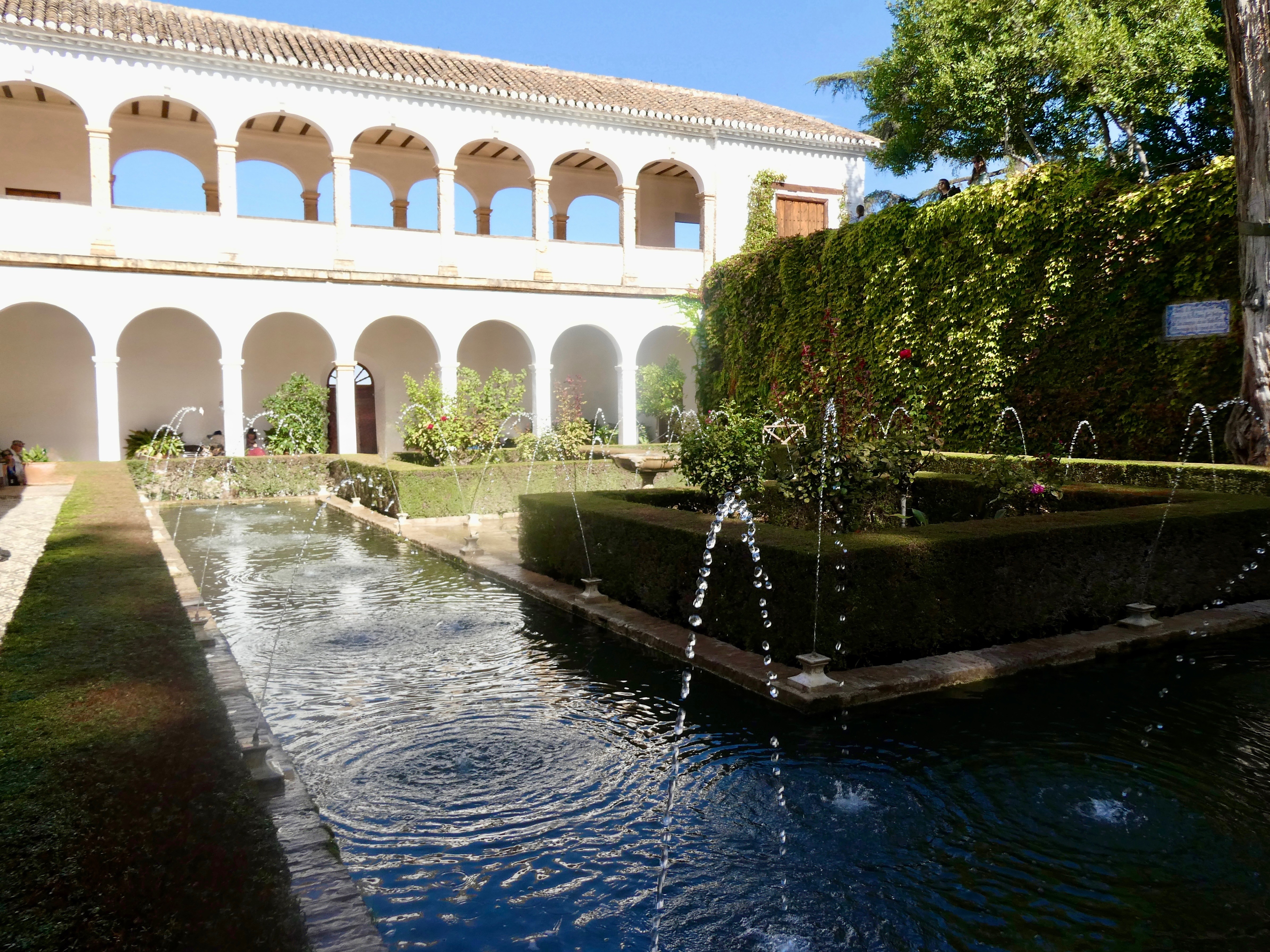
As we entered the palace, we passed by an enormous courtyard that included an oblong style pool that ran the length of the courtyard and was surrounded by alcoves with viewpoints to the surrounding areas.

We walked through one of the alcoves and took the views as well as the old Islamic designs and stucco decorations in some of the porticos before doubling back and outside again.
We then walked up a small staircase to take in the view again over the Generalife complex before ending the tour of the summer palace.
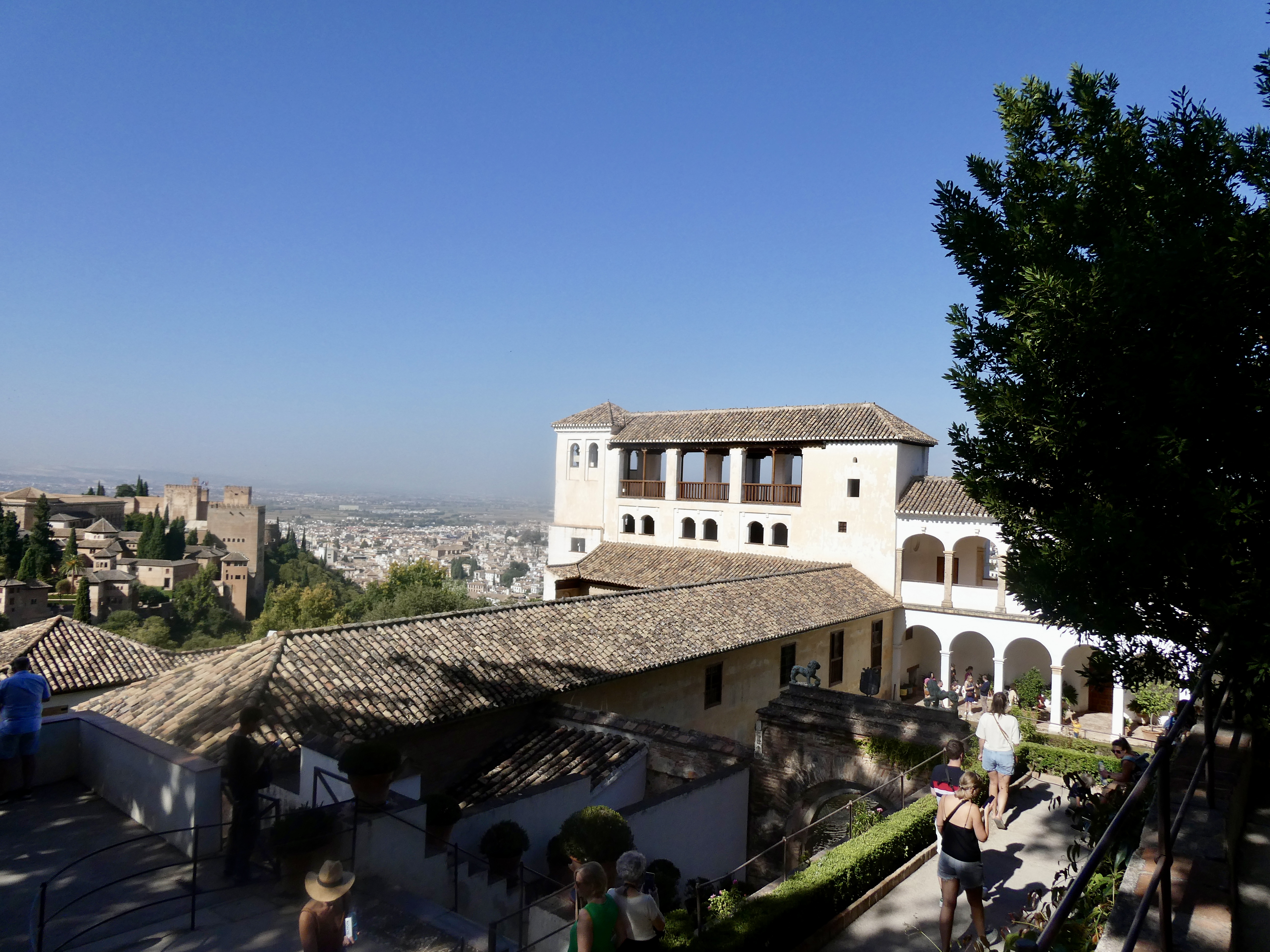

From here, we pas
by the remains of the Palacio de los Abencerrajes, which was another of the 13th century palaces. Unfortunately, when Napoleon occupied the Alhambra from 1808 to 1812, many of the buildings were destroyed. However, it is believed that much of the palace was intact until Napoleon ordered its destruction upon vacating the Alhambra.

We then walked down a long corridor that was once the Medina, a place containing old shops and living areas for those who resided in the Alhambra. Usually these people would be shopkeepers, artisans, folks who maintained the Alhambra and regular townspeople. We ended up stopping in a shop where a gentleman was maintaining the traditions of cutting wood and glass to make intricate designs for frames, pictures and more.
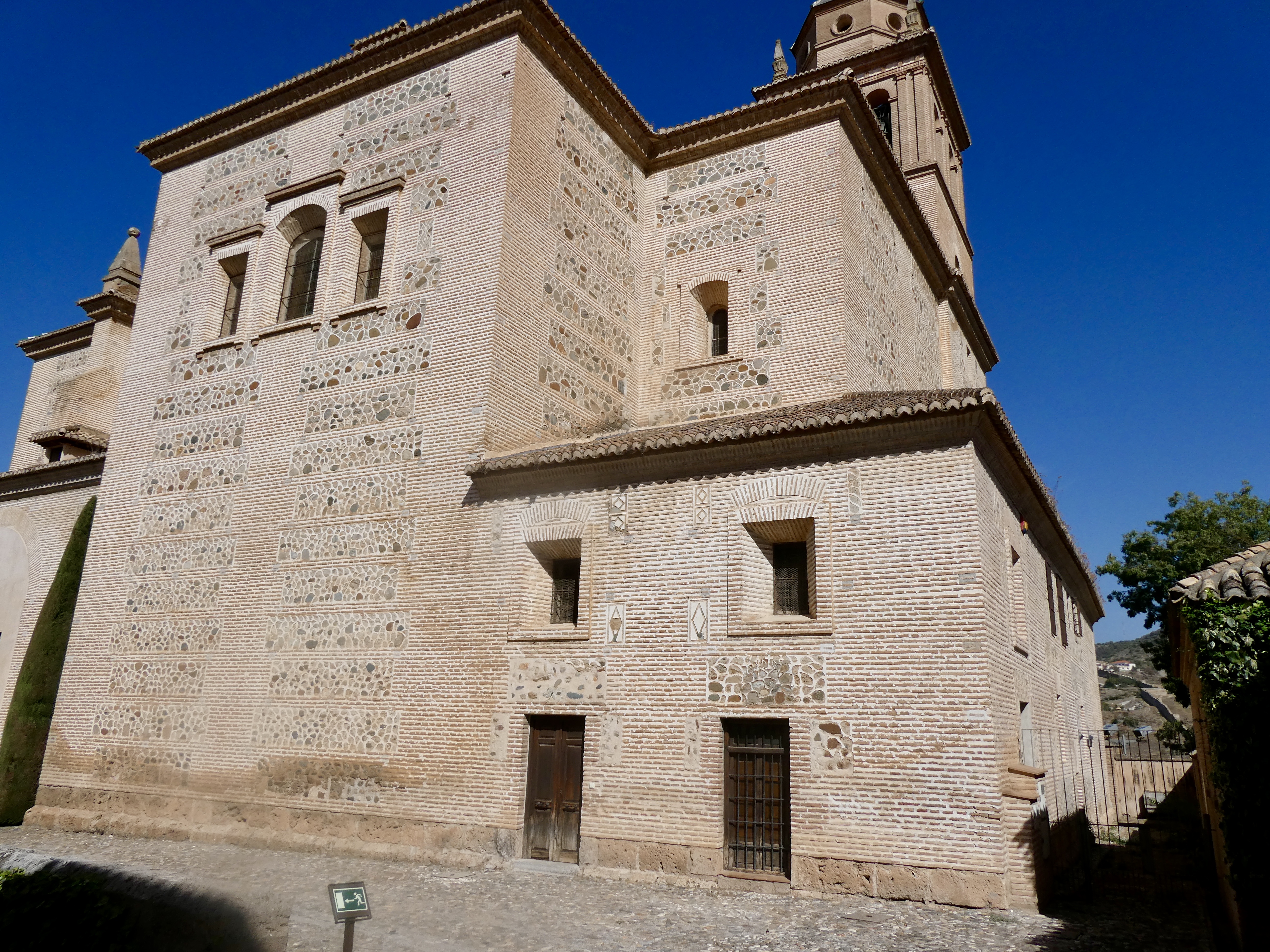
After the quick visit and craft demonstration, we walked past the Iglesia de Santa Maria de la Alhambra, a 17th century church that was constructed on the site of the old Grand Mosque. Now unlike other old mosque sites, this church did not simply take over the old building, but instead the mosque was destroyed and a new building constructed in its place.

We did not go in the church, but continued on to the next palace, Palacio Carlos V, a palace constructed by Charles V as an ode to himself. In 1526, Charles V moved his royal court to Granada and took over the Alhambra. Wanting to put his fingerprints on the Alhambra, Charles V ordered the construction of his own palace with walkways that connected his place to the Nasrid palaces (more about those later).
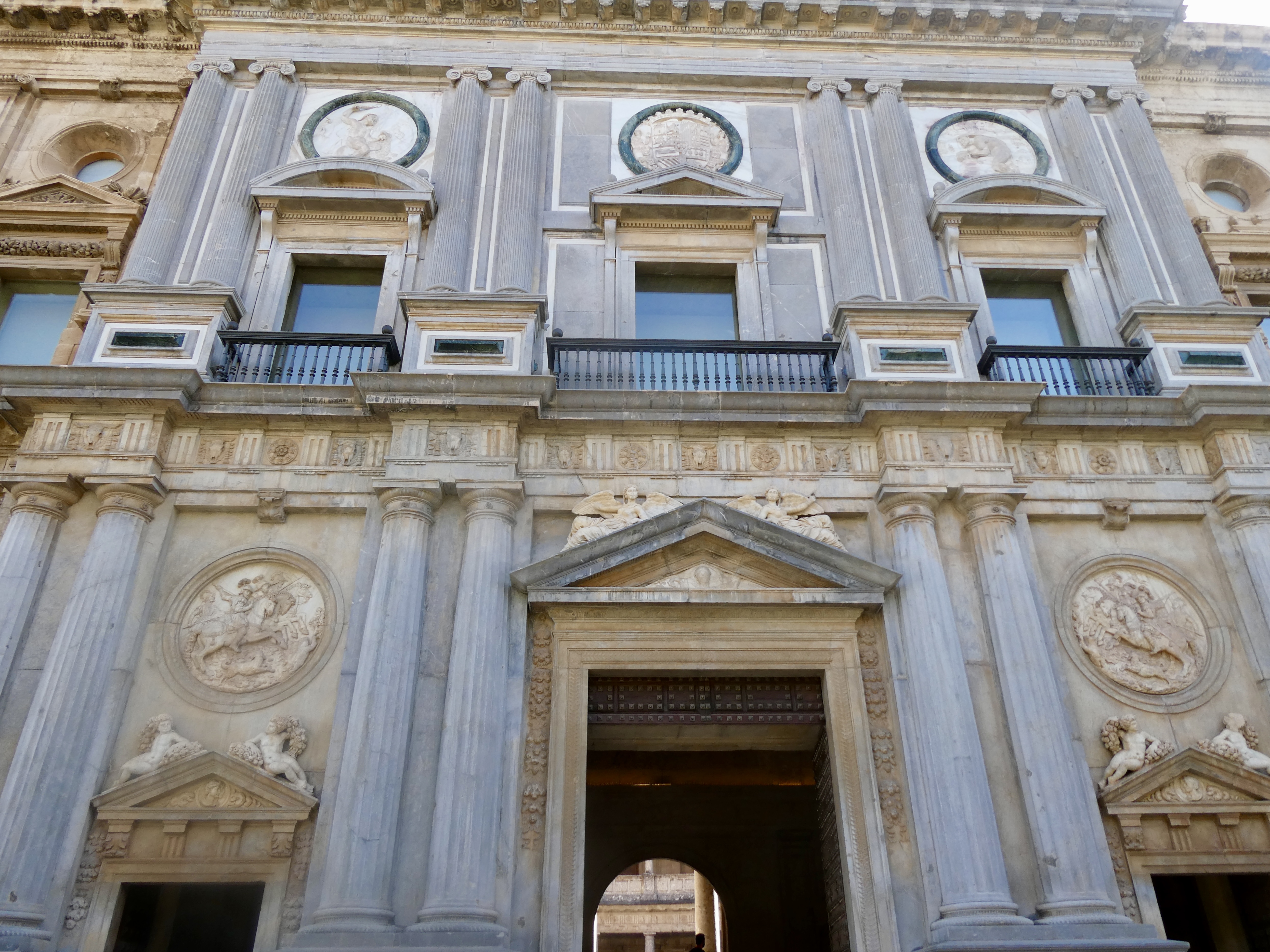

The façade is constructed in the Renaissance style with a lot of references to Roman emperors. And on the inside, it was something else. Huge porticos and columns two stories high, which made the building look distinctly like the interior of the Pantheon in Rome, with one huge exception. There was no ceiling. Apparently the plan was to build a third level and then dome the ceiling leaving an opening in the middle. And while the opening remains, there is no third level or dome. Nevertheless, the building was something else.
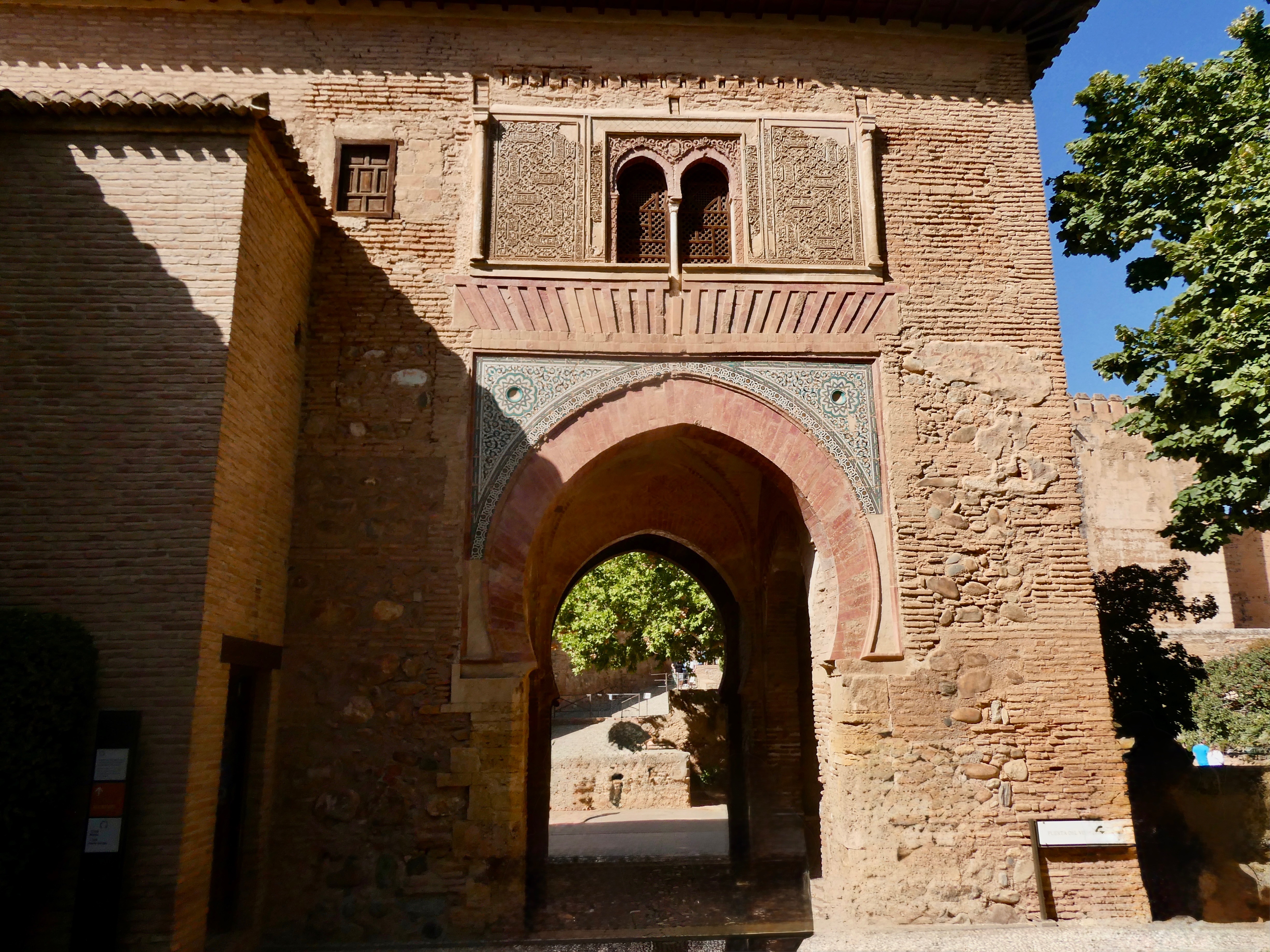
From here, we walked through the Puerta del Vino, which was the inner gate providing access to the Medina (where we had just come from) and other parts of the Alhambra, including the Alcazar, which was our next stop.
Now the Puerta del Vino is considered to be one of the oldest structures in the Alhambra dating to 1302-1309. The gate was so large that there was room for the guards to sit down while keeping watch over and restricting access to the walled fortress.
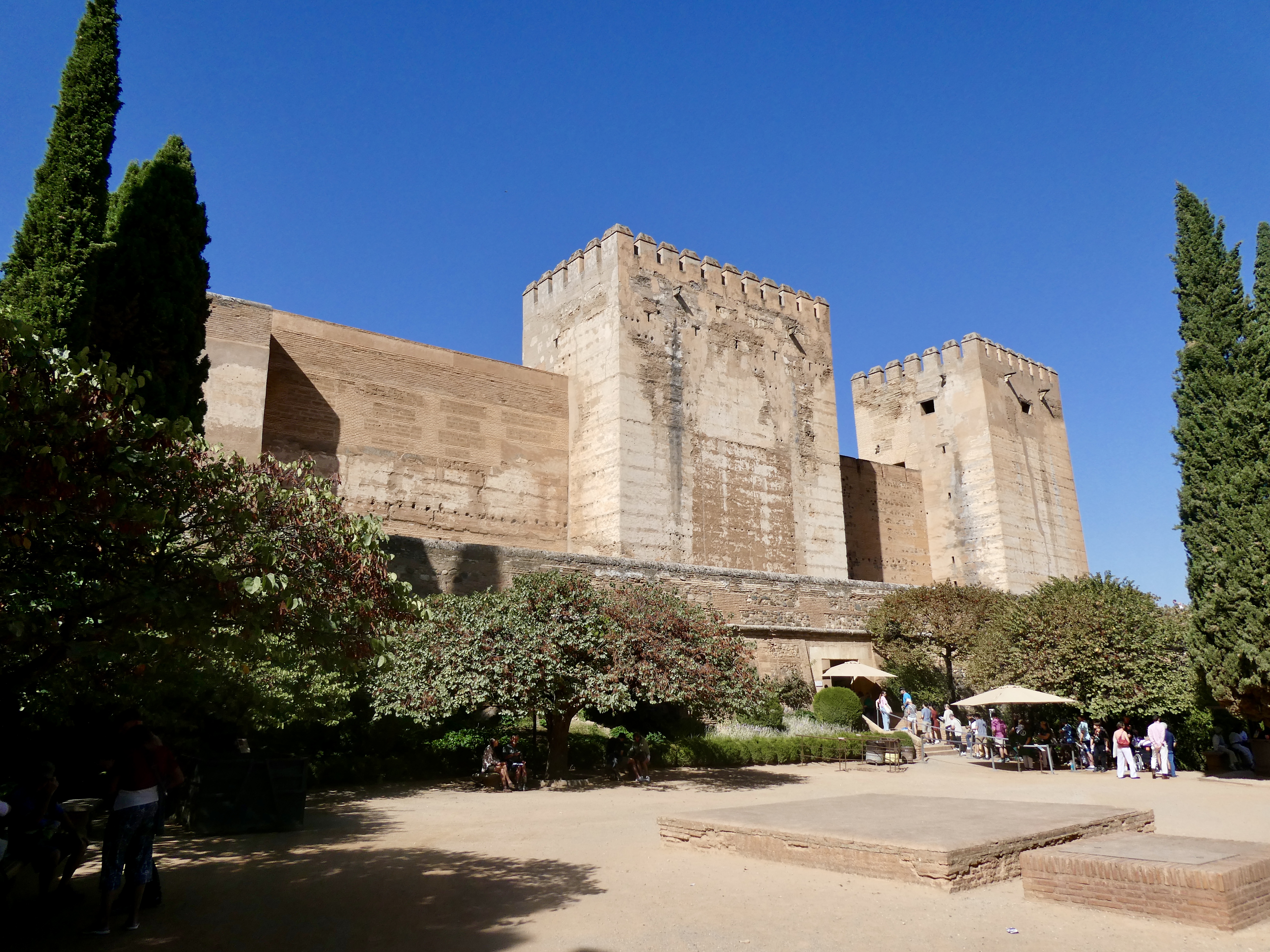
So once we passed through the Puerta del Vino, we walked a couple hundred meters to the Alcazaba, which was the fortress occupied by soldiers who stood watch over the Alhambra. And of course, we had to go through the ticket entry/ID process all over again.

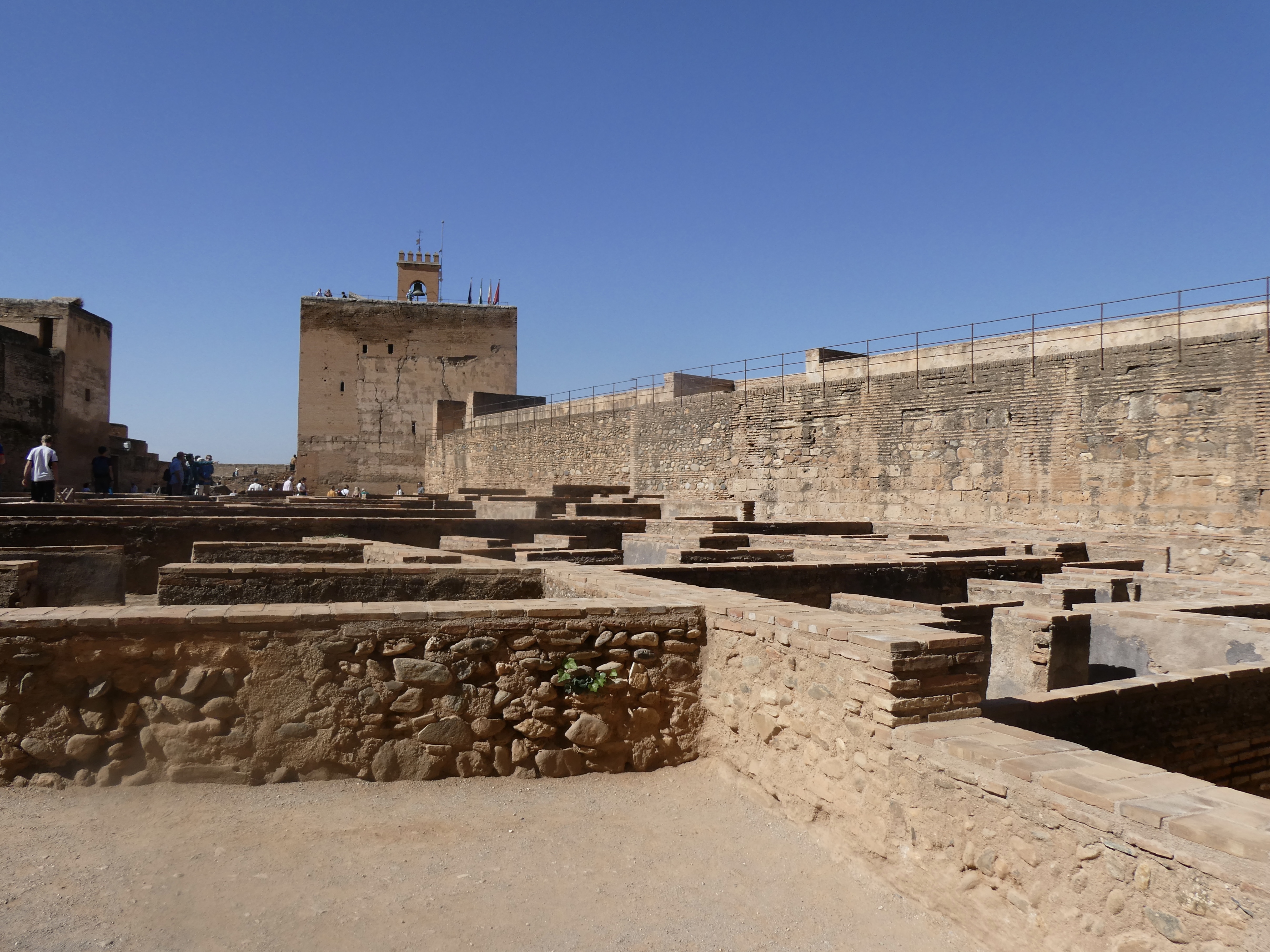

Now the Alcazaba is thought to be the oldest part of the Alhambra. The Alcazaba was constructed on the site of an old fortress in the mid 13th century so there are layers to this fort that predate the Alcazaba and may even go back to Roman times (but an excavation would be required to prove this). And the Alcazaba was a typical Islamic fortress, with a number of labyrinth pathways making it a challenge for invaders to access the interior of the fortress.
We wandered the twisting alleys before reaching the wide open area where it is believed the soldiers residences were located as well as the Alcazaba prison, with stairs to the prison that are still visible today.
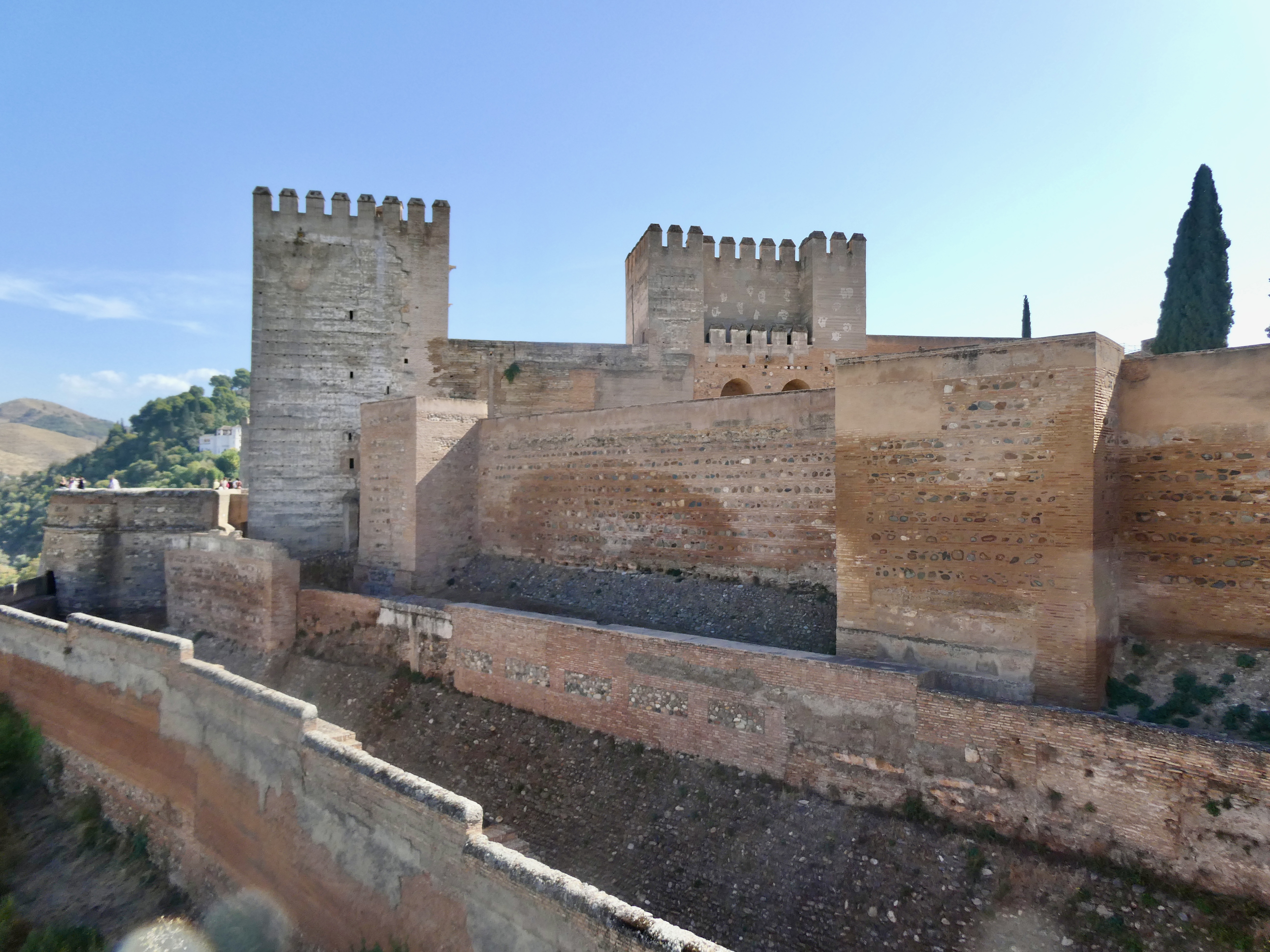

Now the fortress was protected by three layers of walls and a number of watchtowers. The two primary towers were the Torre de la Vela, which I look out at from my hotel room and at the opposite end of the fortress, the Torre de la Homenaje. The views from the fortress and the towers were spectacular.
So once we finished our tour of the Alcazaba, we took a short break as my admission time for the last part of the fortress, the Nasrid Palaces, was at 1:30 p.m. and they do not let you into the palaces even one minute before your allotted time.
Now the Nasrid Palaces are a series of three palaces that were constructed at various times in the 14th century and served a variety of functions.
Anyway, once it was 1:28, Pablo and I headed to the entry point and literally had to stand there while the keeper of the gate watched a clock until it was exactly 1:30. Seriously. Then it was passport and ticket for a final time and tada … I was admitted.
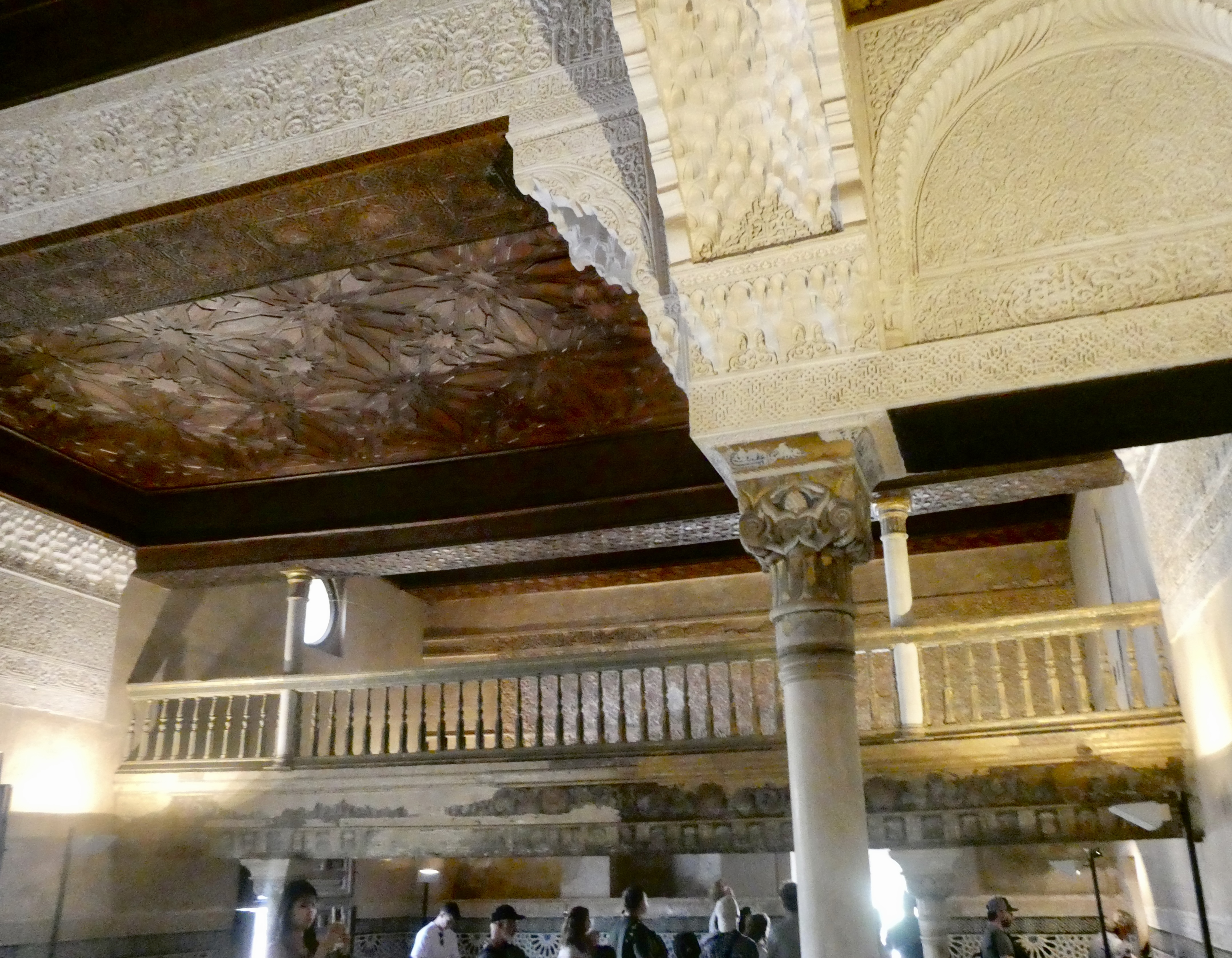
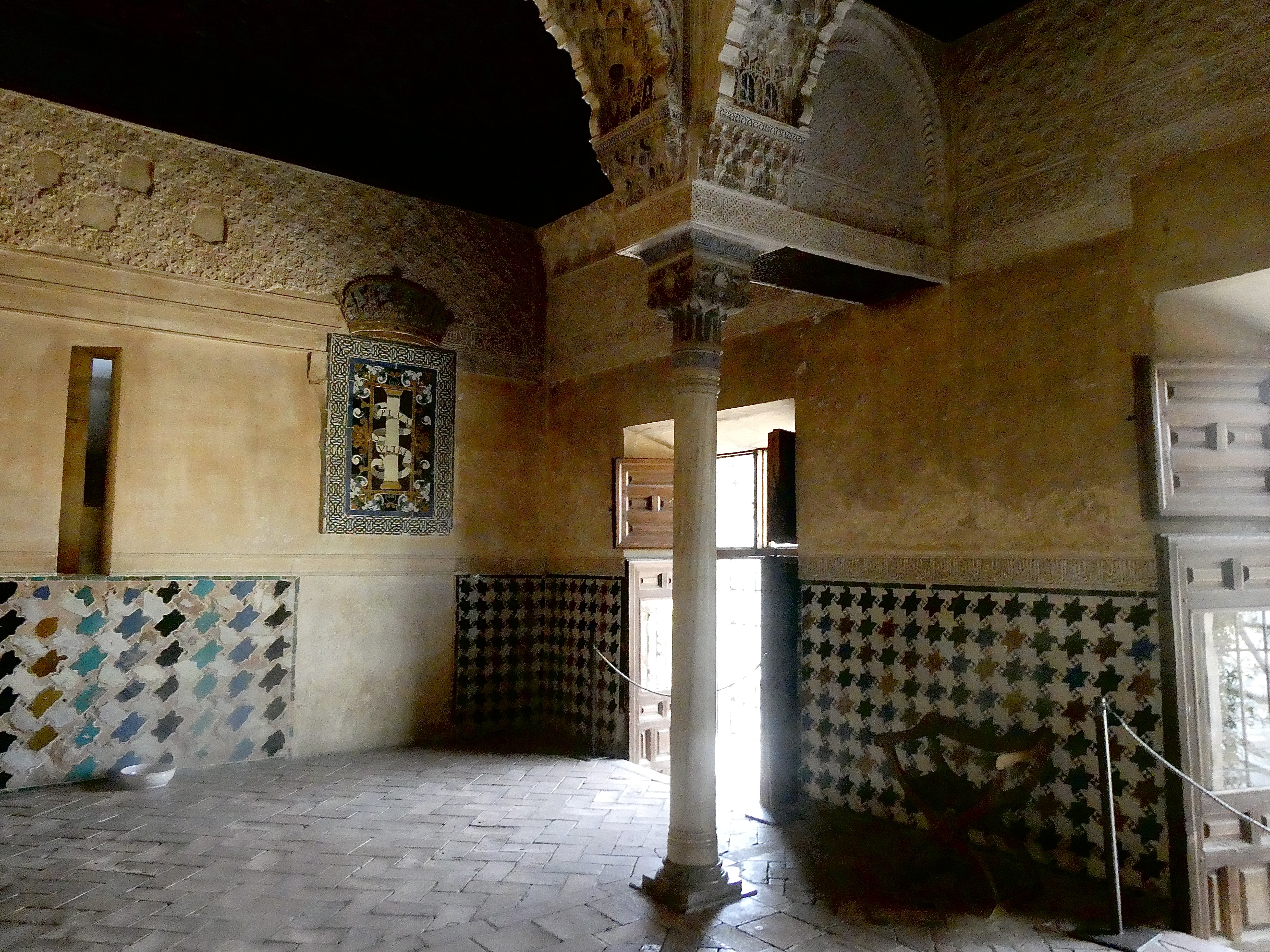
So first up was the Mexaur, which was a semipublic palace constructed in the early 14th century where non-political folk came for audiences with the sultan. In addition, the palace was used for the administration of justice and state affairs.
Now, sadly, much of this palace (as small as it was) was under renovations, so we only were able to see parts of the waiting room area and pictures of the courtyard where the sultan’s throne would have been located in taking audiences with his subjects.
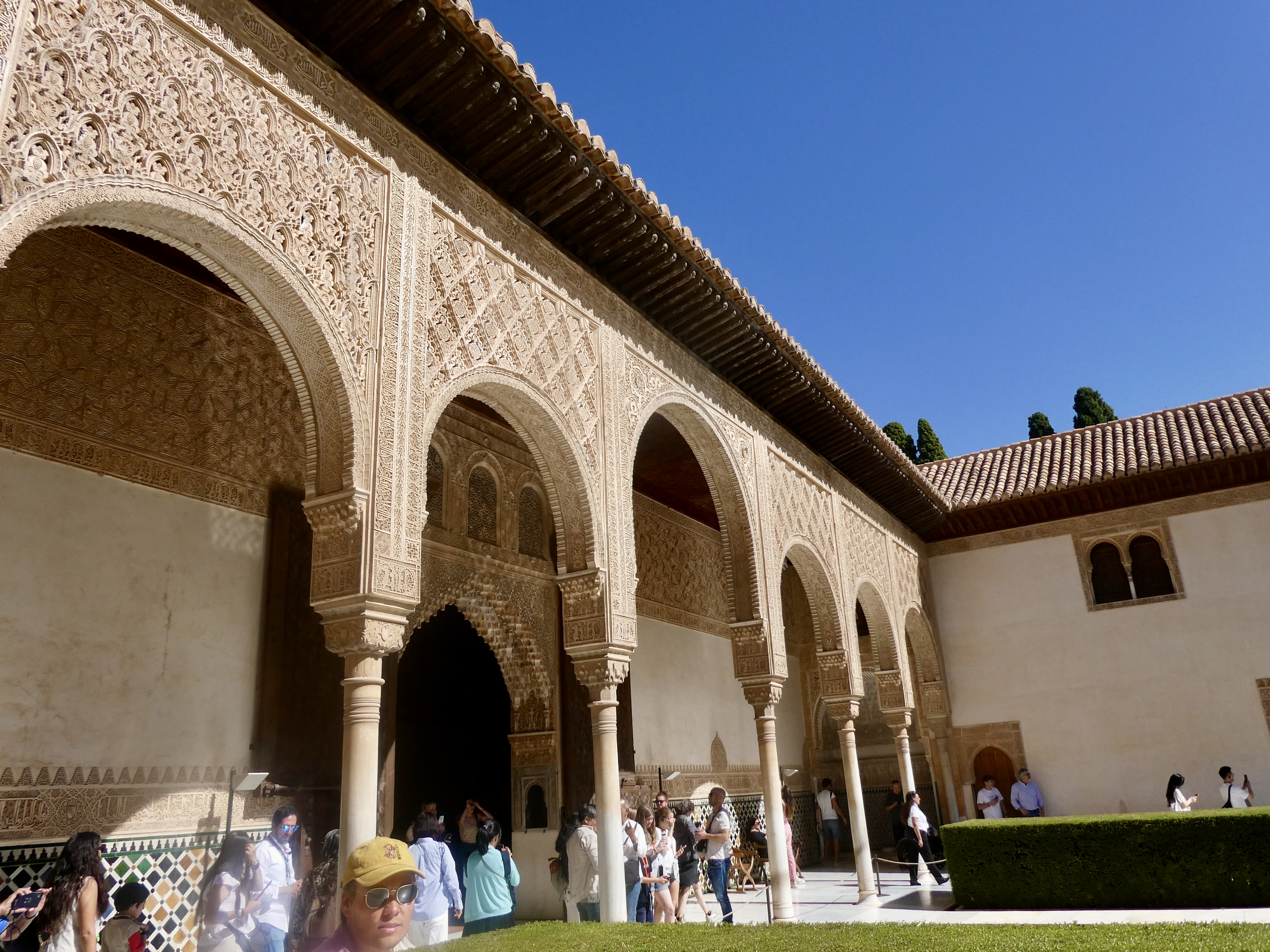
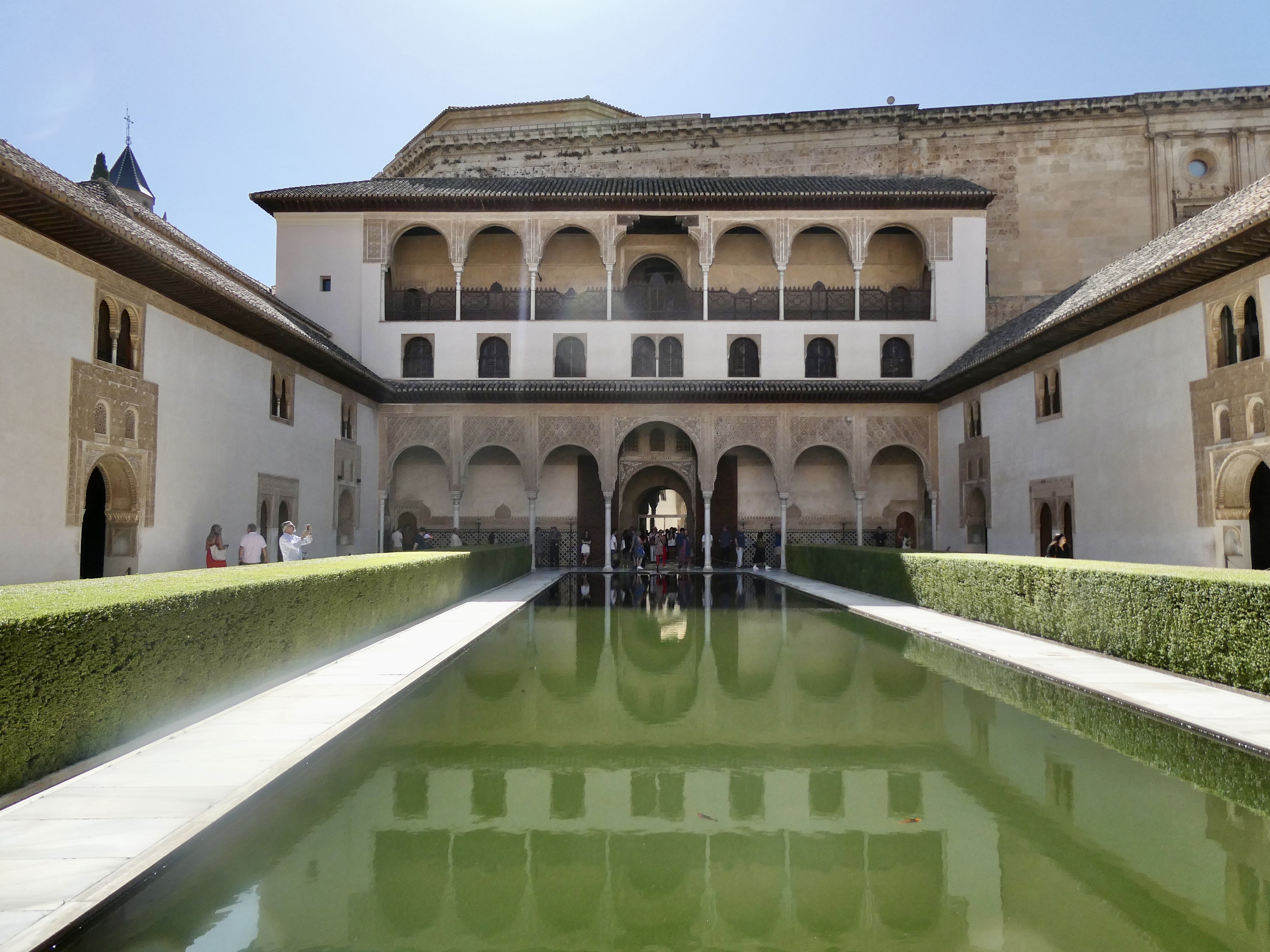
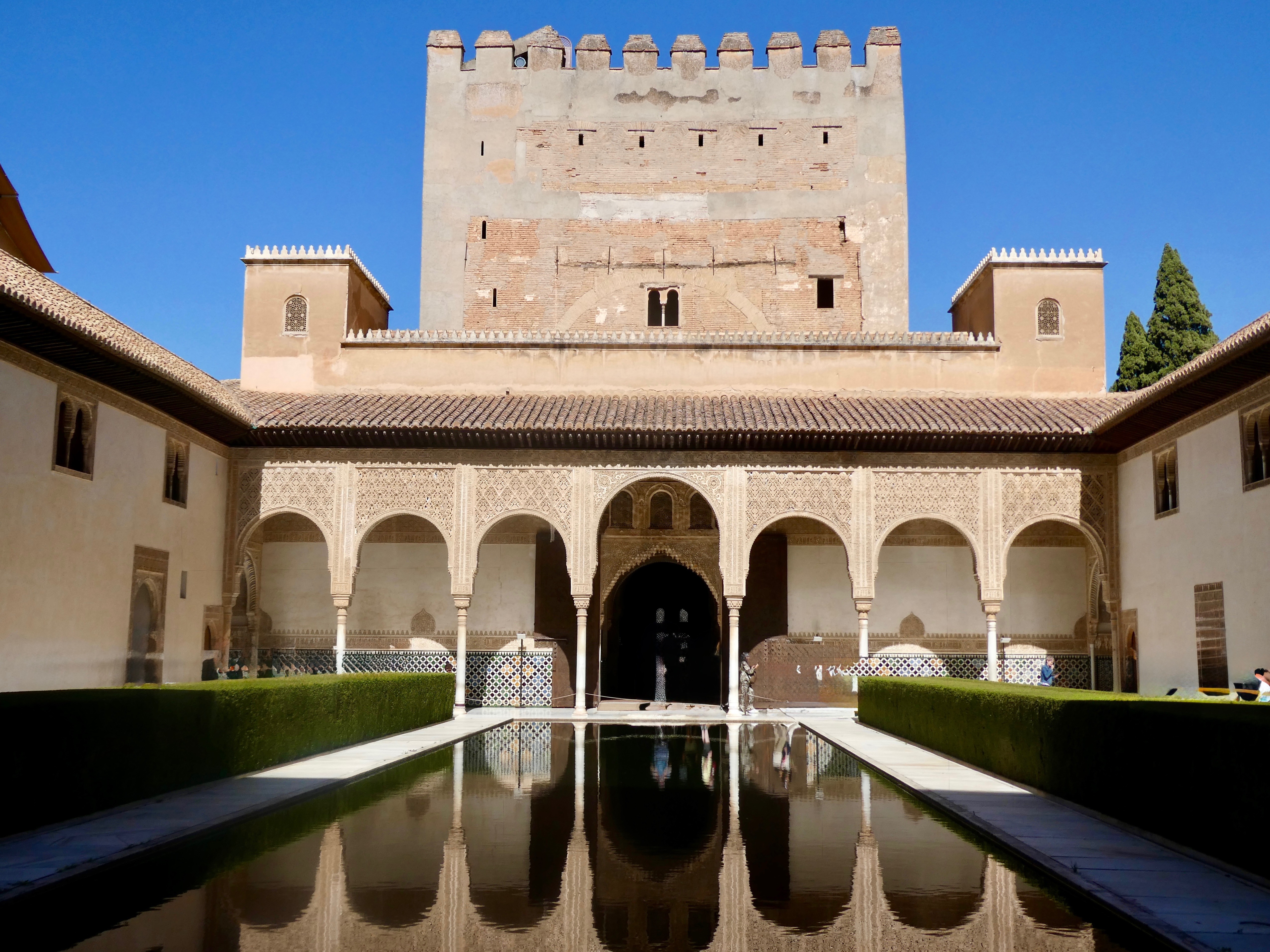
From the Mexauer we entered a doorway and walked through a three cornered labyrinth before reaching the Patio de Los Arrayanes, a magnificent courtyard with an oblong pool running the length of the patio. This courtyard and pool were the focal piece of the Palace of Comares, which was also constructed in the early 14th century.

Now this palace was the official residence of the sultan/king. The Patio de los Arranyanes was surrounded by family rooms on either side of the courtyard, and there were also two small, absolutely gorgeous porticoes with towers rising behind them. The tallest tower was the Comares Tower, which rises over the Hall of Ambassadors/throne room.
So once I had enjoyed the view of the Patio de los Arranyanes, we moved through another archway and into the Hall of Ambassadors/throne room where the Sultan would receive the most important people from his Kingdom, including ambassadors and wealthy merchants.

On one side of the entryway into the hall was a prayer room and on the other side was the private entrance of the sultan.
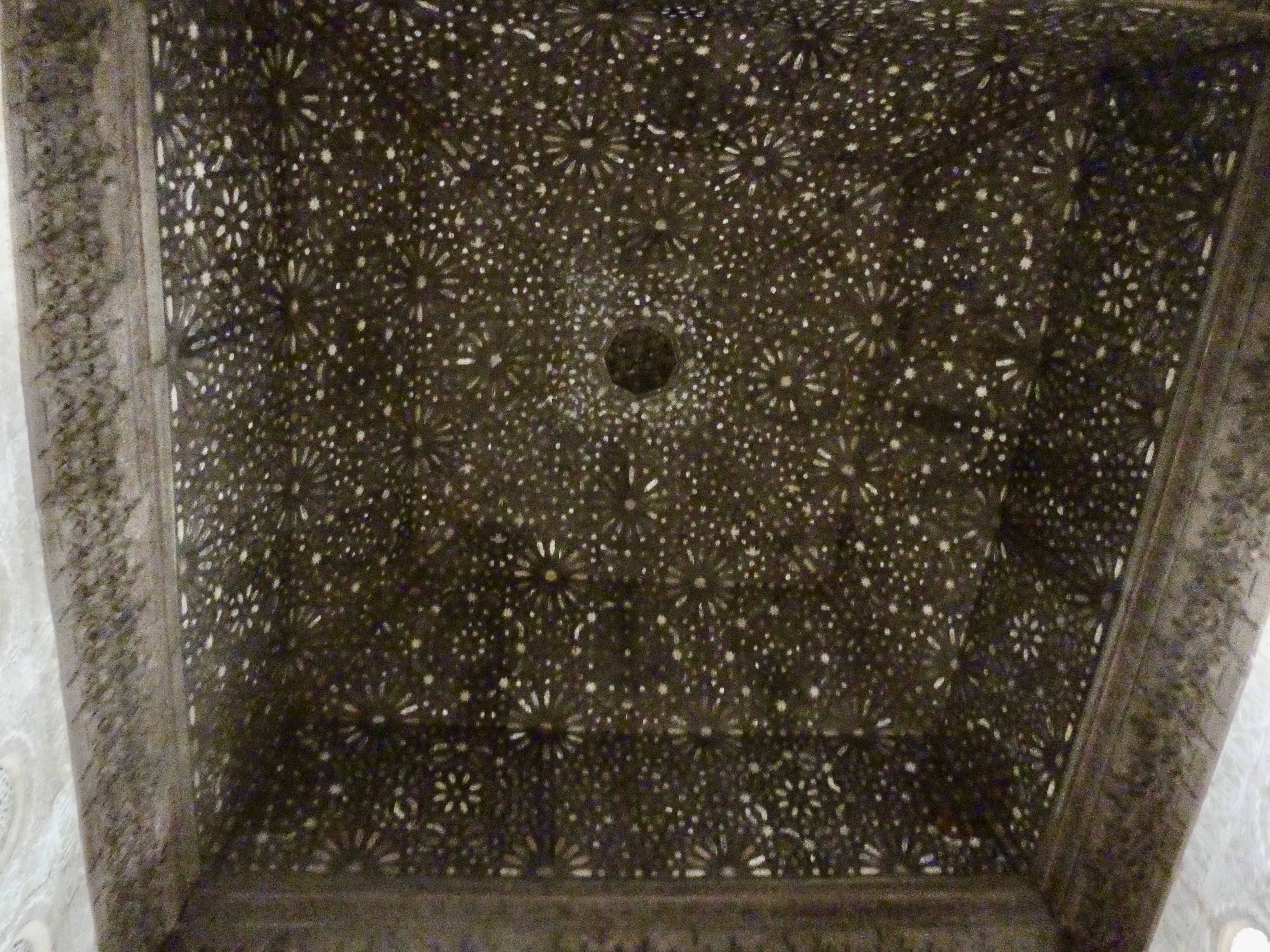
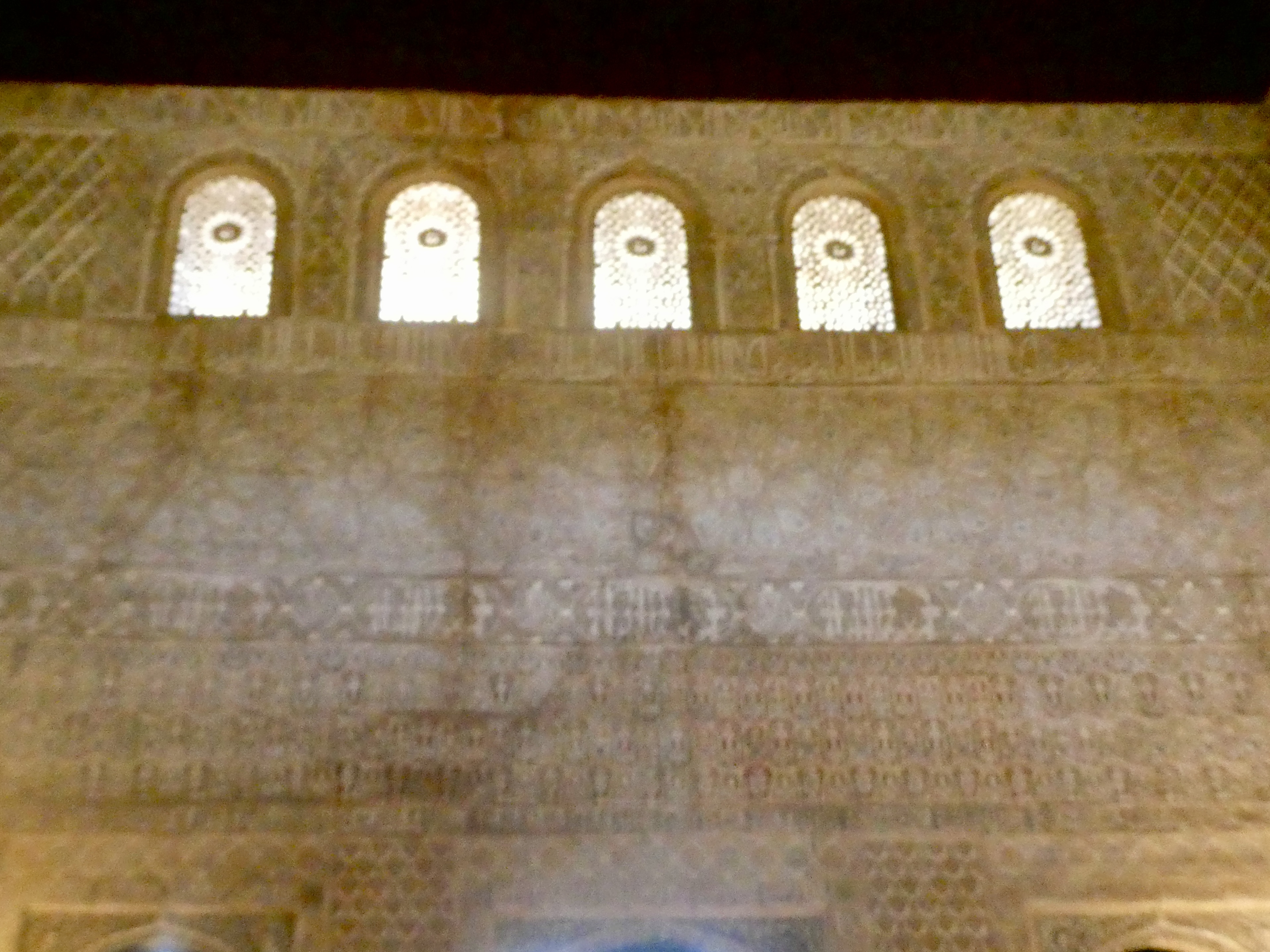

The room has a magnificent dome made up of 8,000 pieces of wood and has three of the four sides of the tower marked by five windows, which at one time were all filled with stained glass. Sadly an explosion in the 16th century destroyed all of the stained glass in this room.
And throughout the room there was Islamic stucco designs and small porticos with windows covered in intricate wooden designs. The room was pretty darn impressive.
After visiting the Hall of Ambassadors, we walked around to the other end of the Patio de los Arranyanes to take in the amazing reflections of the Hall of Ambassadors in the pool. I am not sure I captured how truly magnificent this site was, but I can tell you it really was gorgeous
We then moved through yet another arched doorway to the Palace or Court of the Lions (Palacio de los Leones), which was constructed in the mid 14th century and was the private palace of the sultan where the Harem and the wives quarters were located.
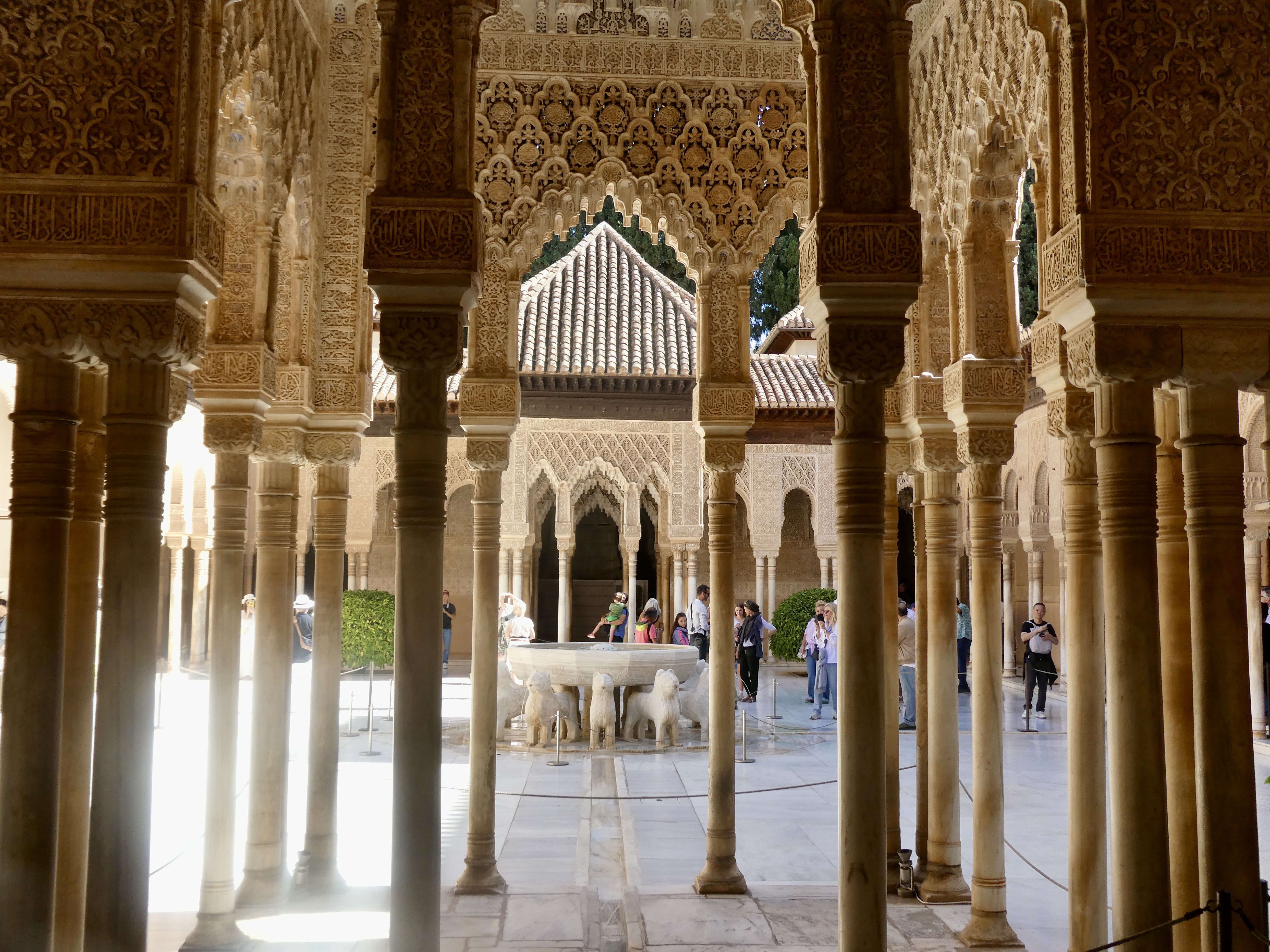
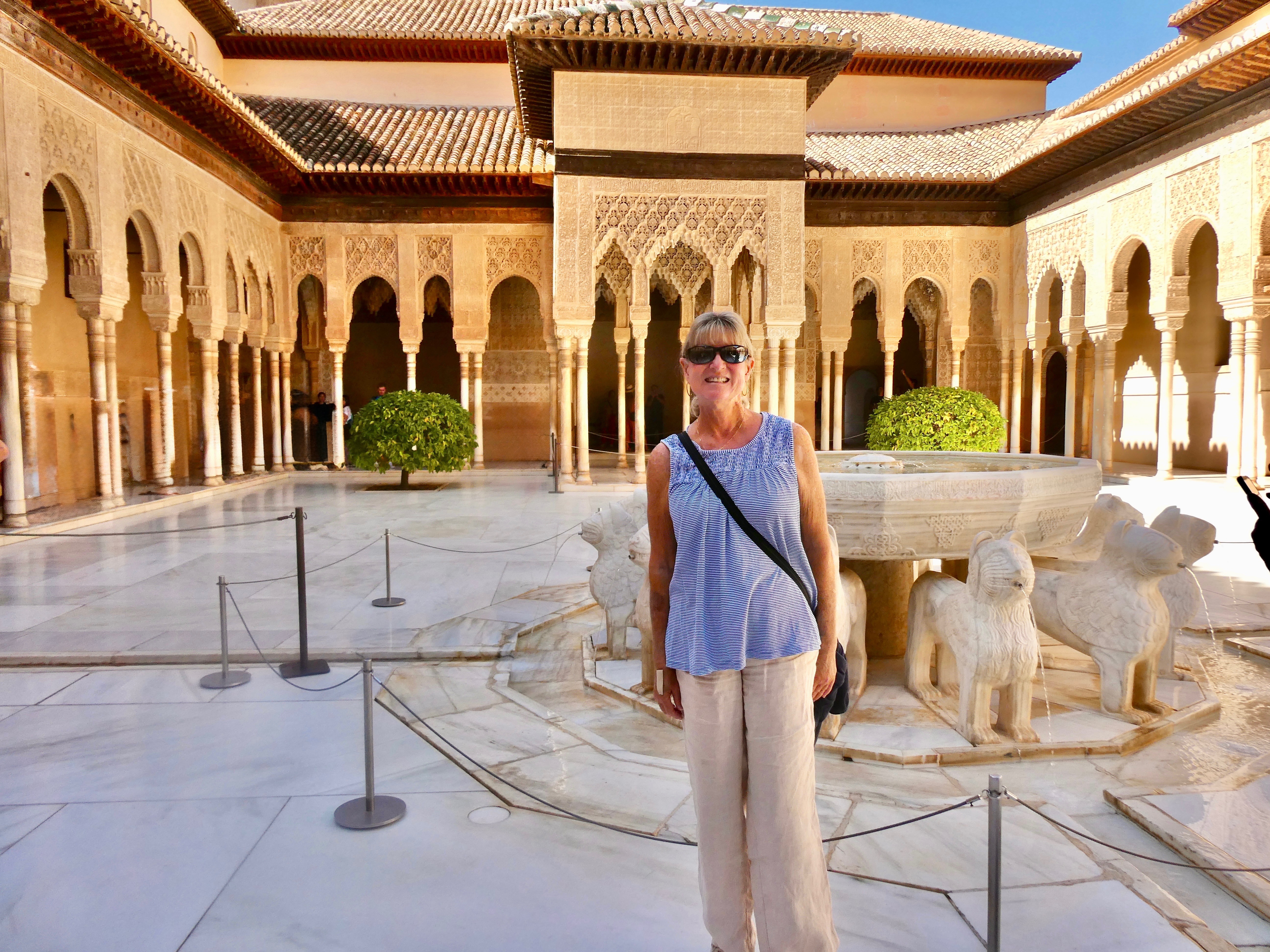
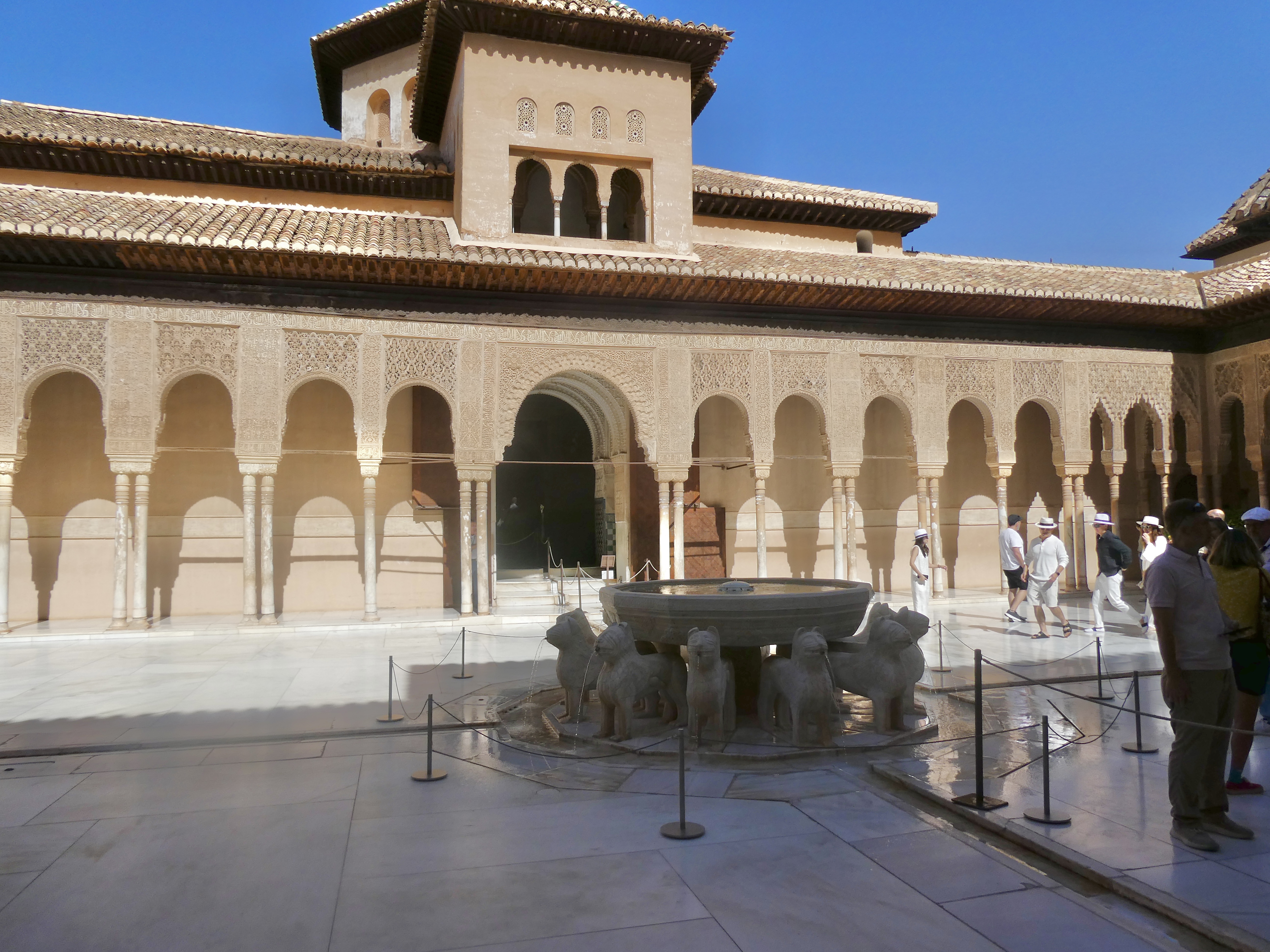
Now this palace is so named because the palace rooms were arranged around a courtyard with a forest of 124 columns and a fountain featuring a number of uniquely designed lions.
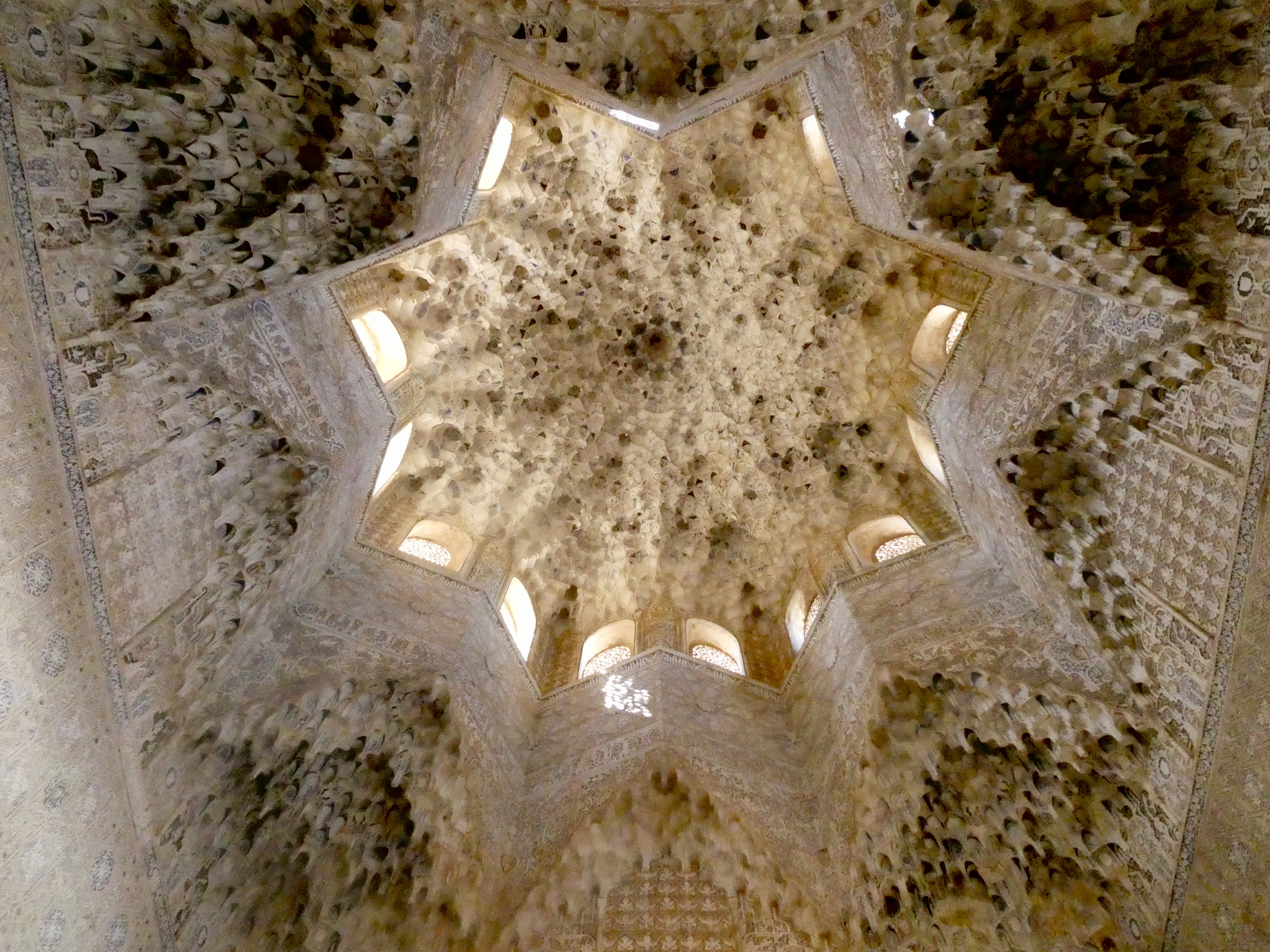
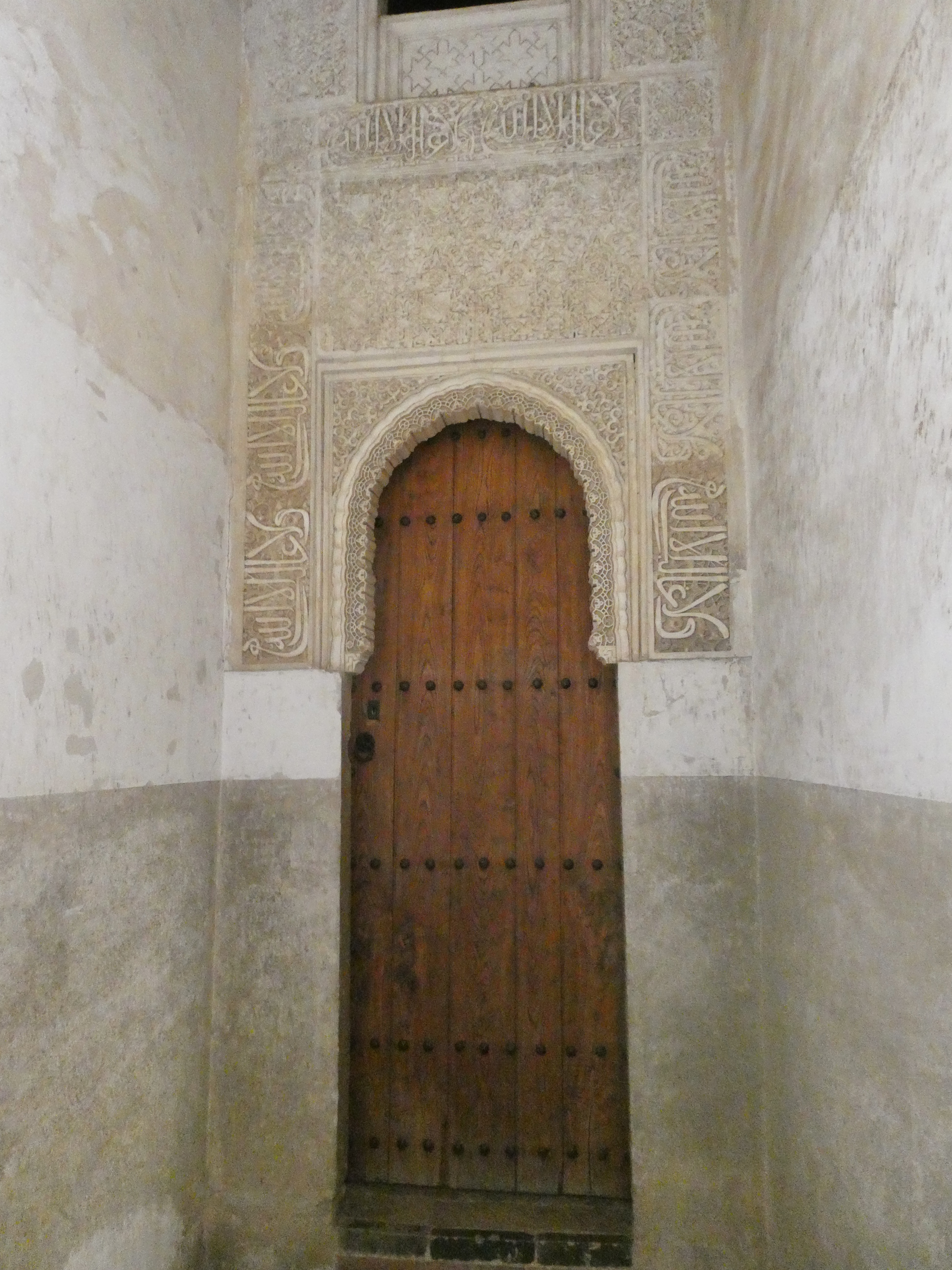
On one side of the courtyard was the Sala de Abencerrajes, a room with an absolutely magnificent muqarnes dome illuminated by sixteen windows and constructed in the shape of an eight point star. Above this chamber lies the Harem, an area with restricted access even today, although the door to the harmem was visible on the main floor. It is thought that this room was used by the Sultan in his “interactions” with the harem.
On the opposite side of the courtyard was the Hall of Two Sisters, which was the residence area of the Queens. The area featured white stucco designed ceilings, lots of white lattice work, and the only remaining stained glass window in the three palaces.
The room was bright and airy, but sadly much of the remainder of the palace was destroyed by King Charles V who let his narcissistic tendencies take over.
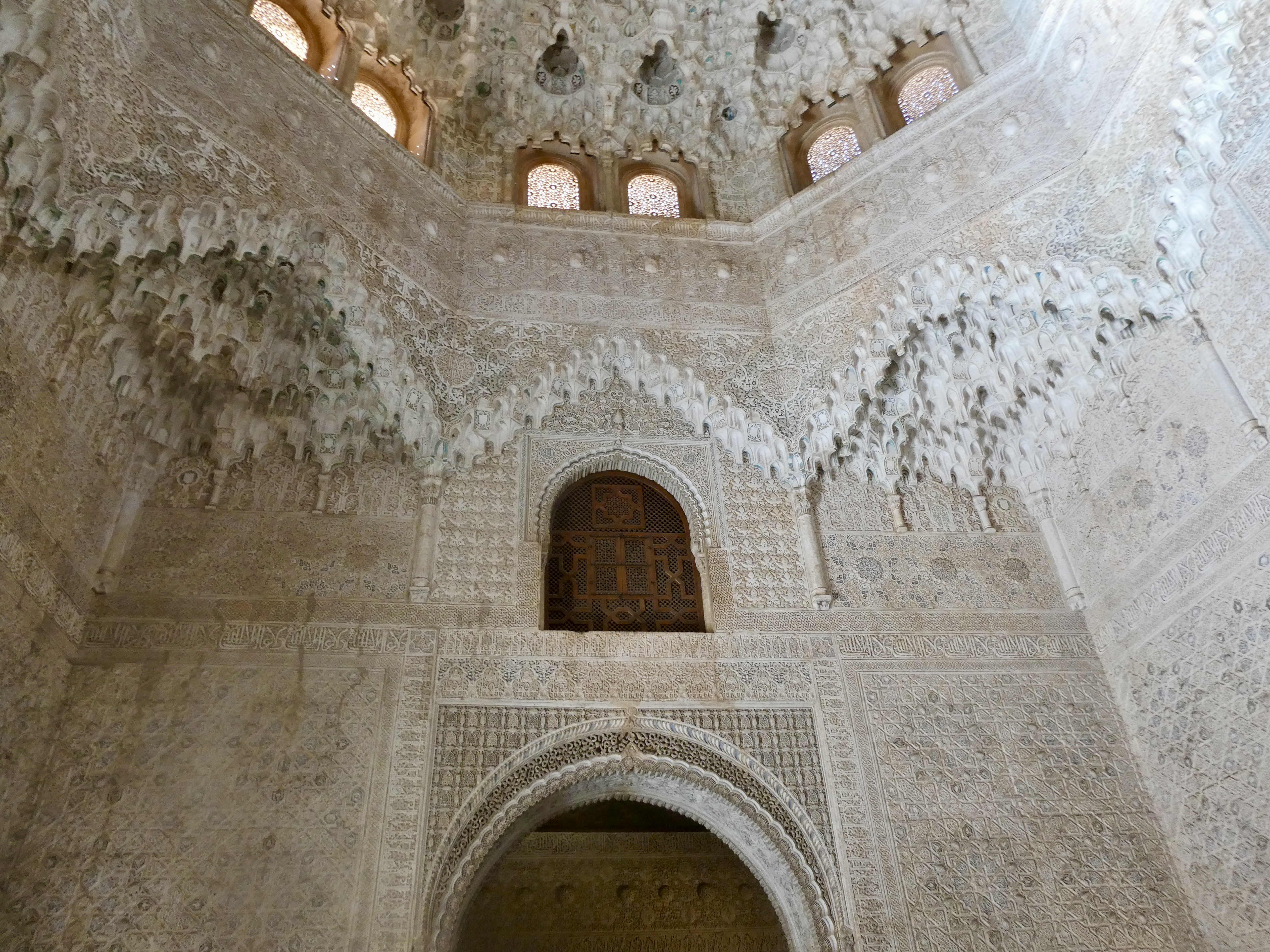
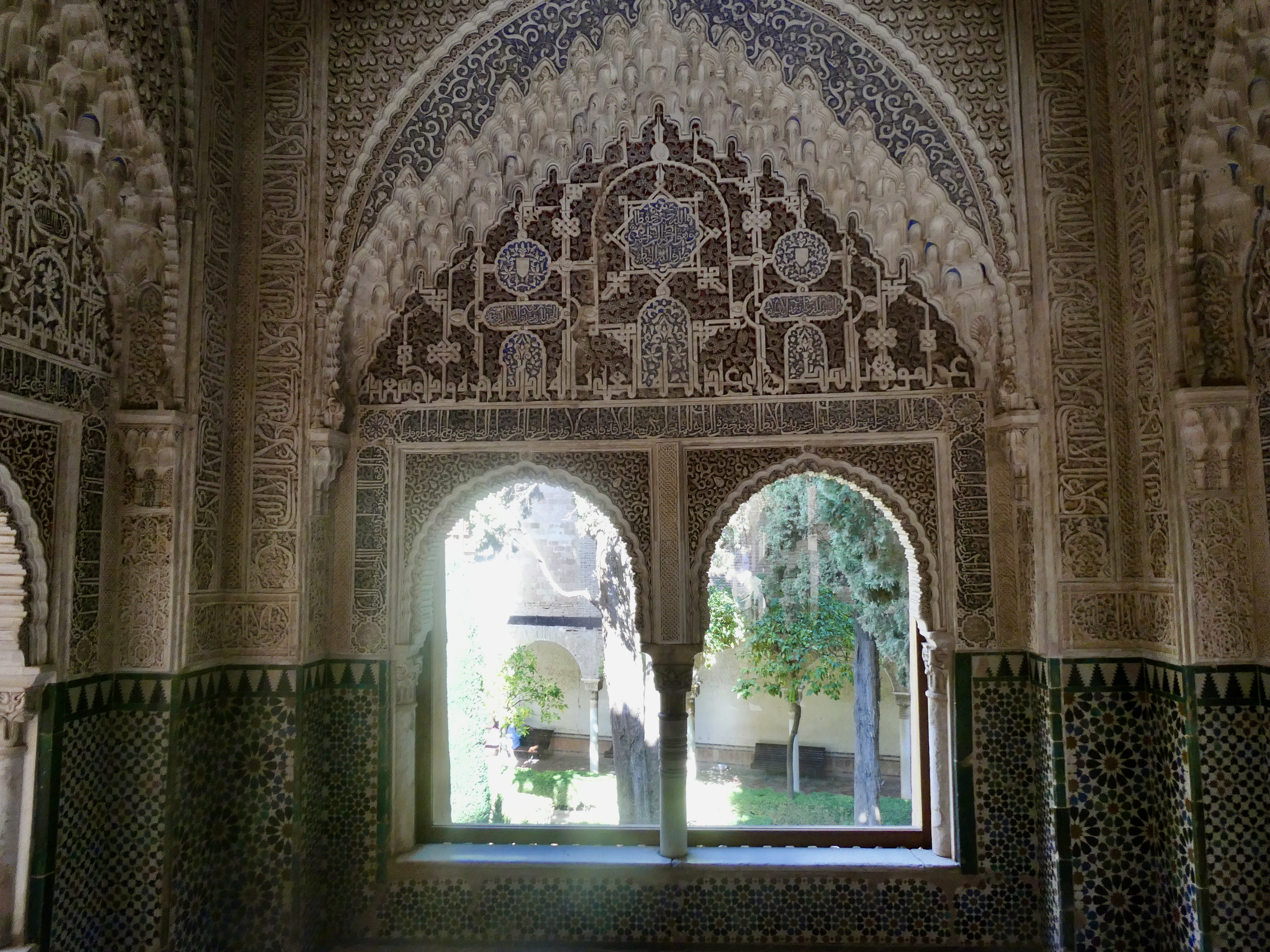
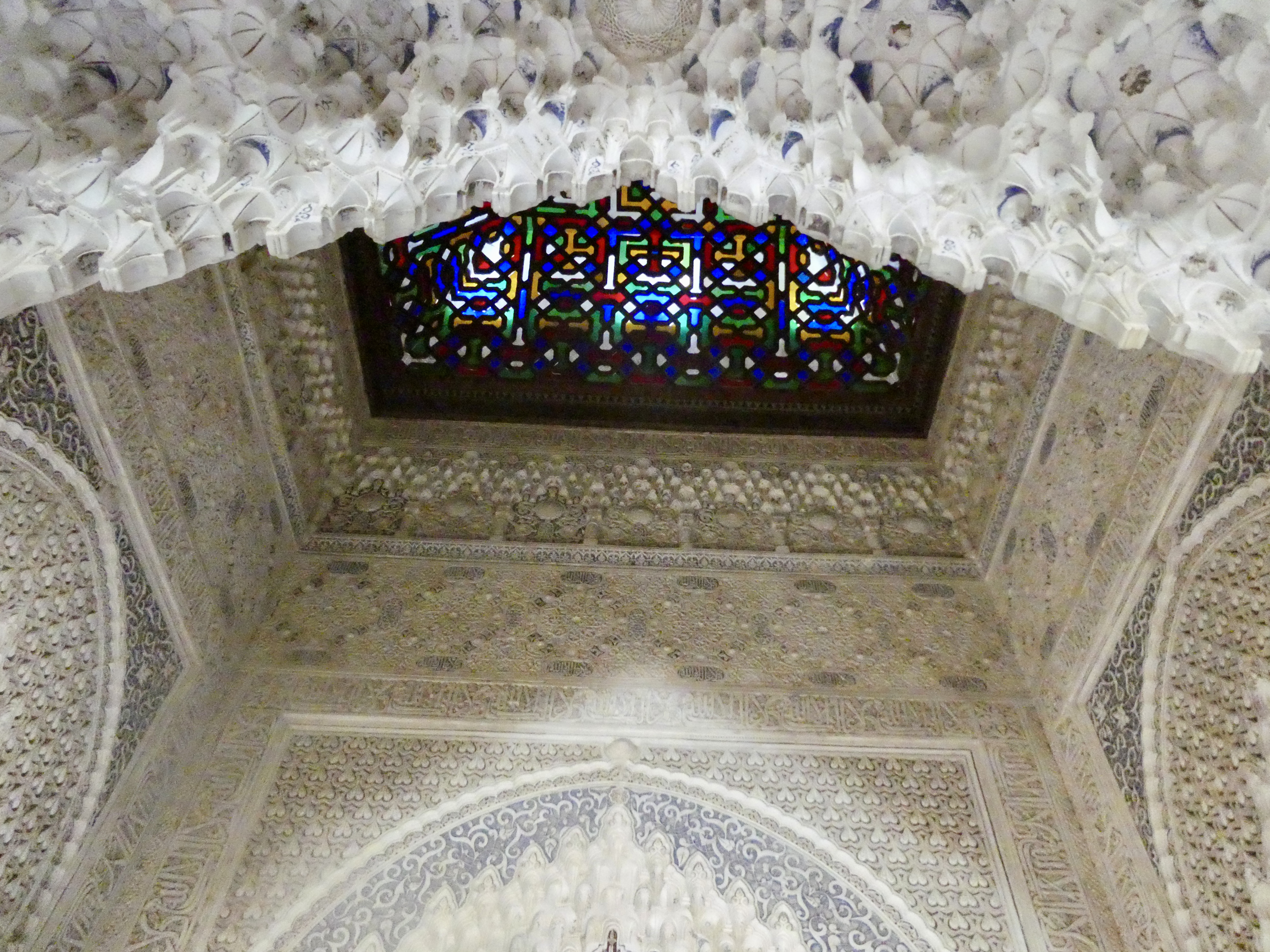
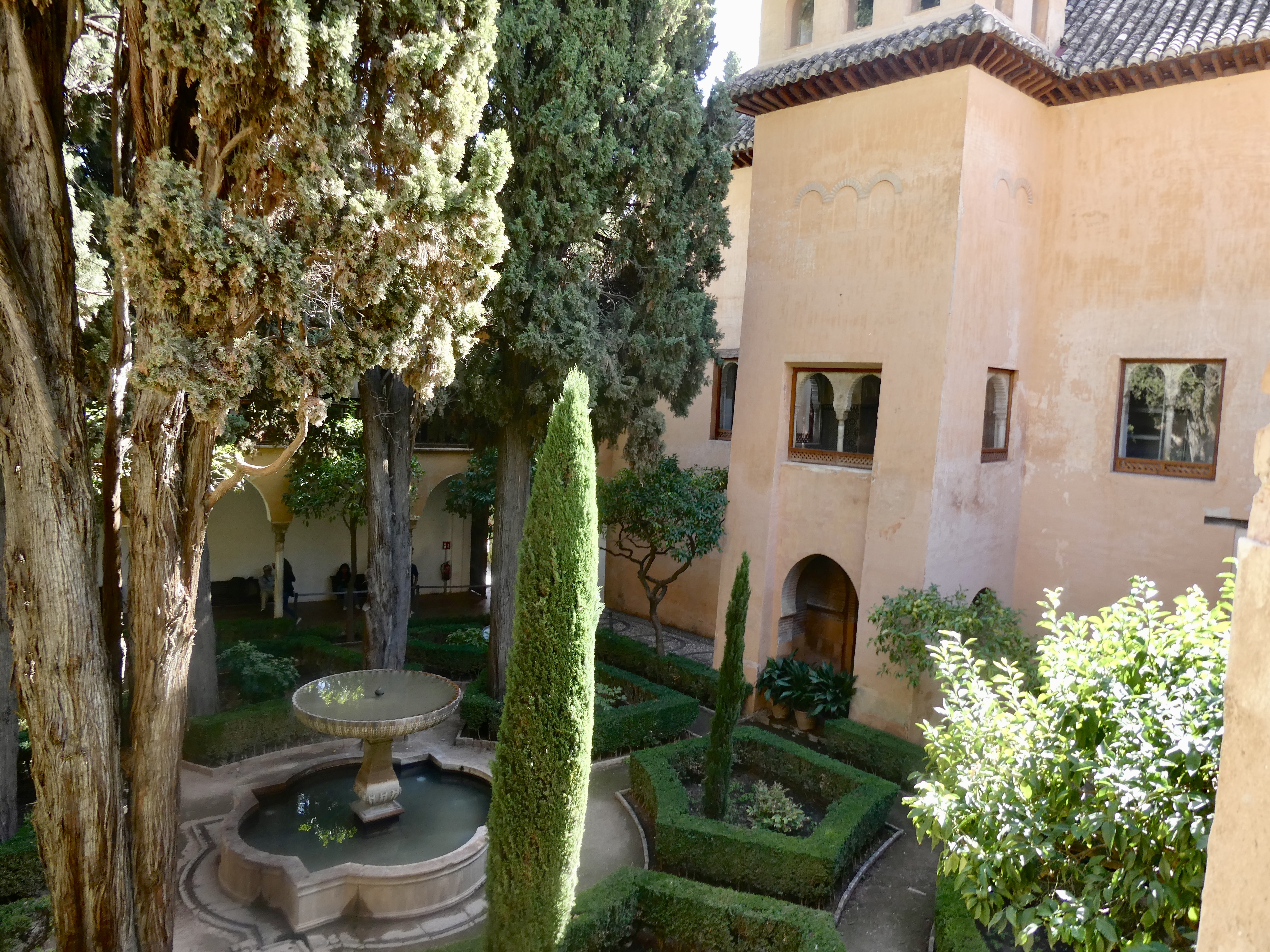
From here, we moved over a walkway that King Charles V had constructed from the Courtyard of the Lions to his offices, which overlooked the Lindaraja Patio, a lovely garden courtyard.
We then walked down the stairs to the oldest gardens of the palaces, the Palacio del Partal Alto aka the Partial Palace. This palace was constructed at the beginning of the 14th century, but only the northern part of the palace remains featuring the Torre de las Damas, with its beautiful portico and the large pool that likely was the focal point of a courtyard.
And with that, my tour of the Alhambra was over. The views from and ruins of the old fortress were spectacular, and I am very happy I came back to Granada to see this amazing UNESCO World Heritage site.

So my choppy time in Granada was over and it was off to the train station to catch the 6:15 p.m. train to Madrid, which will get me into Madrid just before 10:00 p.m. Then it is up early to be at the U.S. Embassy at 8:00 a.m. to obtain my new U.S. passport. If all goes well, I will be on a train for the two hour trip to Valencia by late afternoon.
