So after spending most of the day in Madrid on Wednesday, I obtained my replacement passport and caught a train to Valencia arriving just before 7:00 p.m. Fortunately, the trip was less than two hours.
I ended up catching up on some sleep, but was up early on Thursday for a private walking tour of old Valencia with Marco. The meeting point was close to my hotel in the Plaza del Ayuntamiento in front of the Valencia city hall.
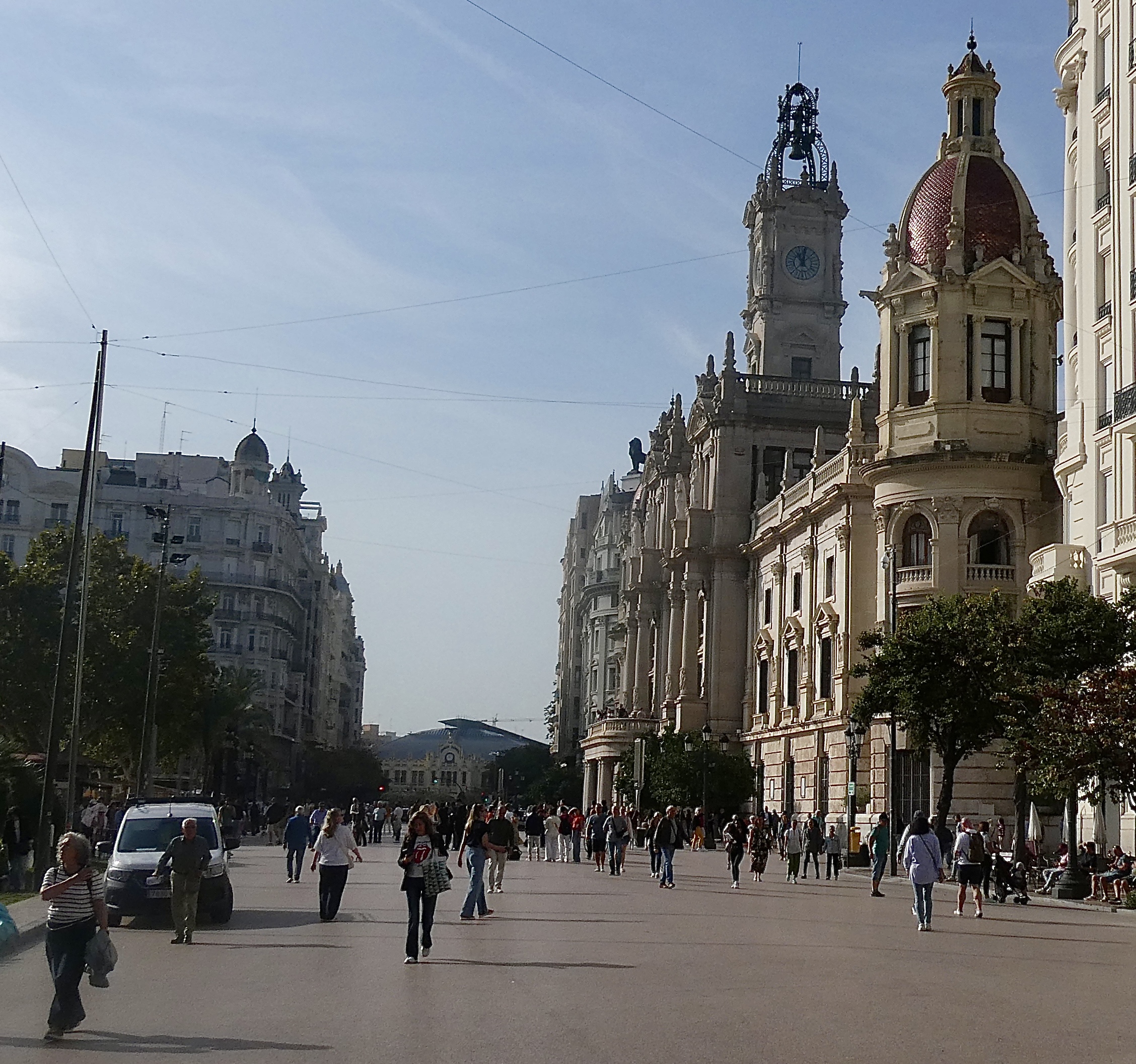
Now we were going to visit the six different areas that make up the old town: Sant Francesc, which included our meeting point and the city hall; El Mercat, where the central market is located; El Carmen, the oldest part of the old town with winding streets and old buildings; Le Seu, which is where the Valencia Cathedral is located; La Xerea near the main square where a lot of administrative buildings are located; and finally El Pilar where the historic church of San Nicolas is located.
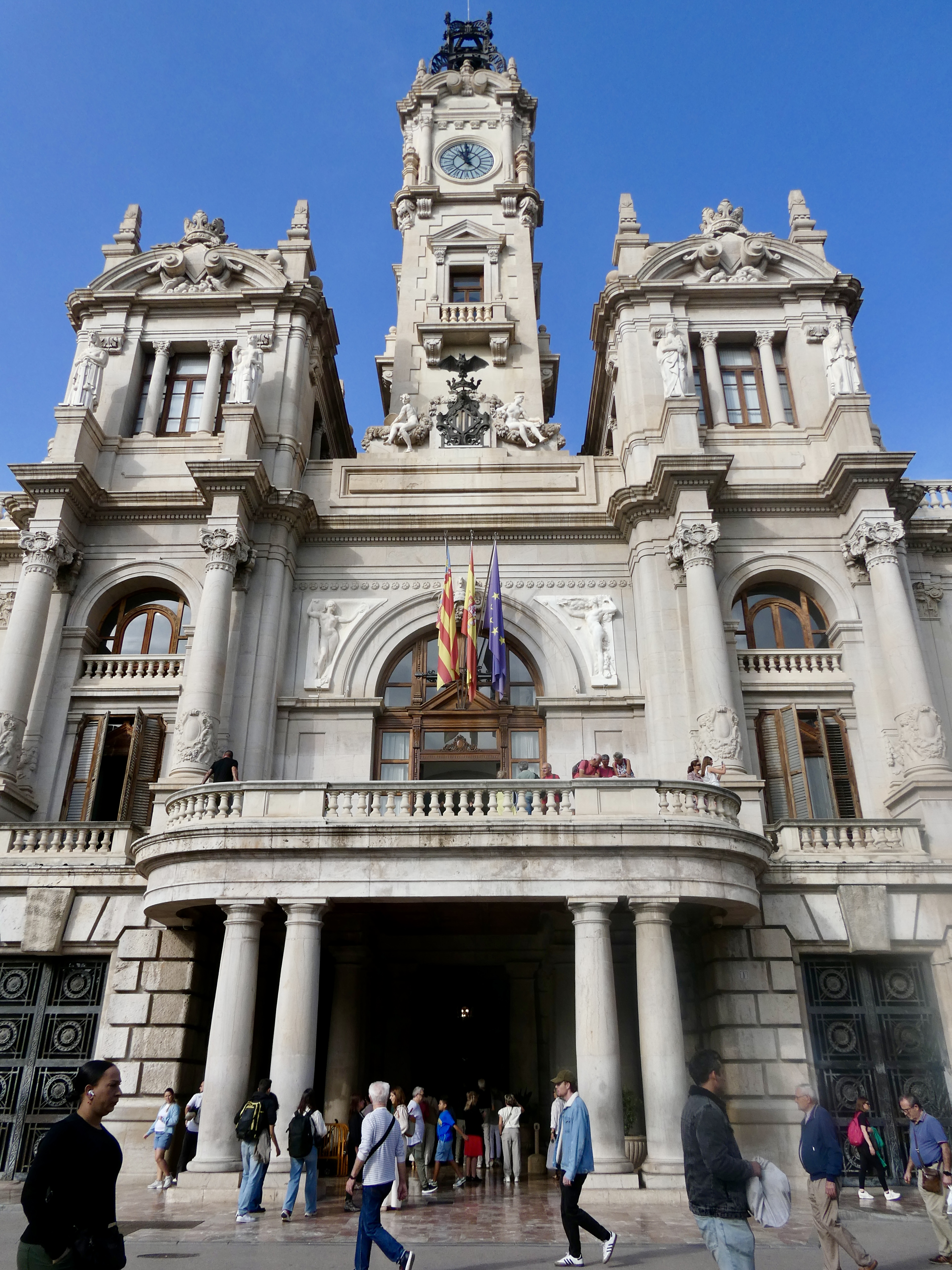
So originally, we were going to first visit the Estació del Nord next door to the Valencia city hall, an art deco building from 1917, but they are doing restoration work so Marco suggested we pass and start the tour in the Ayuntamiento de Valencia aka the Valencia city hall and museum, a building actually made up of two parts: the first dating to the 18th century and the façade and front part of the building dating to the early 20th century.

So we walked through security and up a flight of stairs into the Hall of Mirrors and WOW. The room was spectacular with an amazing rectangular shaped stain glass window covering the top of the dome, hanging crystal chandeliers, marble columns around the exterior of the room and even frescoes on the ceiling.
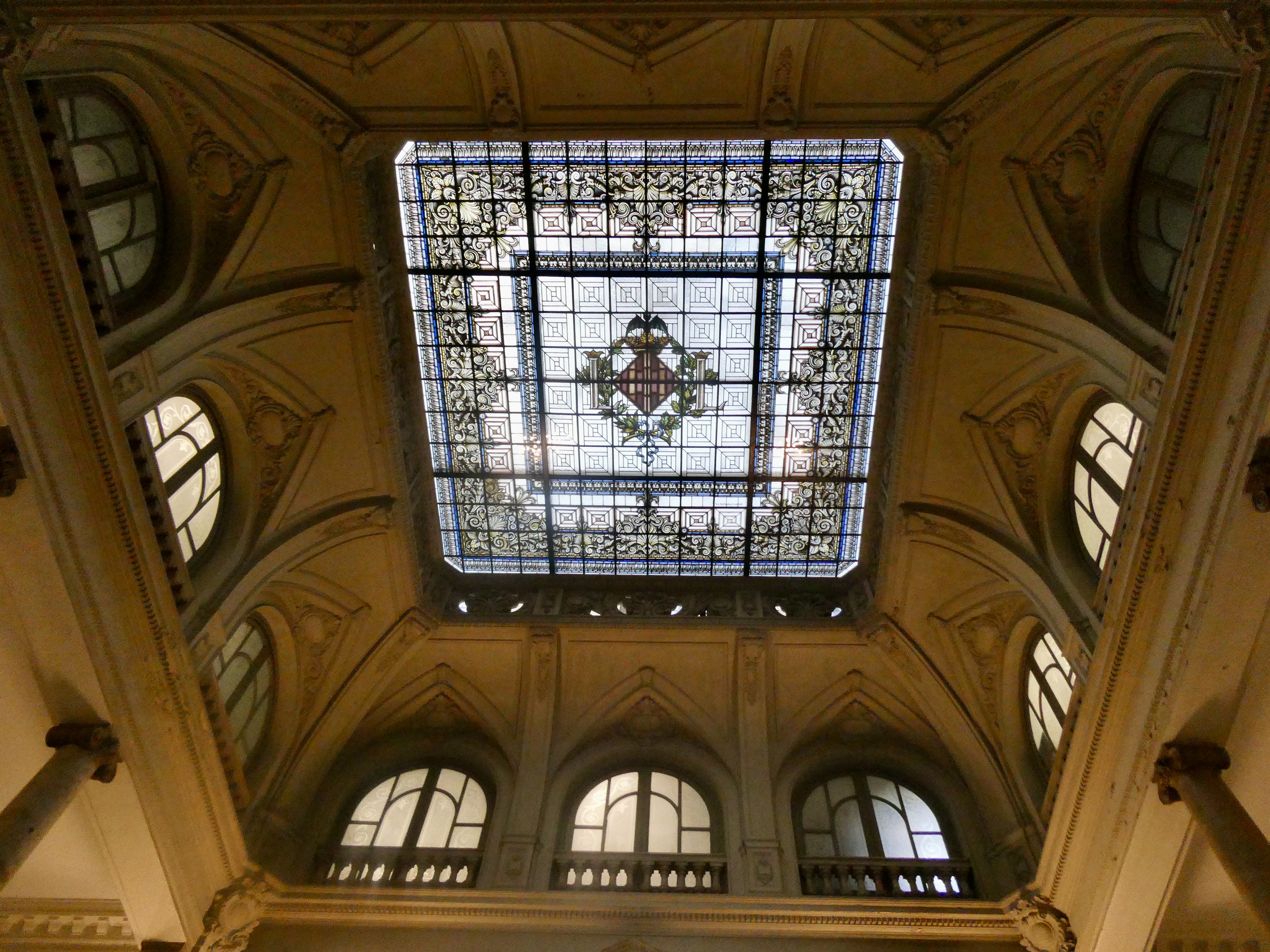
Apparently, the room is used for special occasions, including ceremonies hosted by the King and Queen of Spain as well as parties and even weddings. The room was absolutely lovely.
We then walked to the Municipal Museum, where Marco gave me a brief history of Valencia. The city dates to Roman times (138 BC), was destroyed by Pompeii and then rebuilt. When the Moors conquered the area, they built a second wall outside the original Roman wall. Today, only remnants of the second wall remain along with two towers.
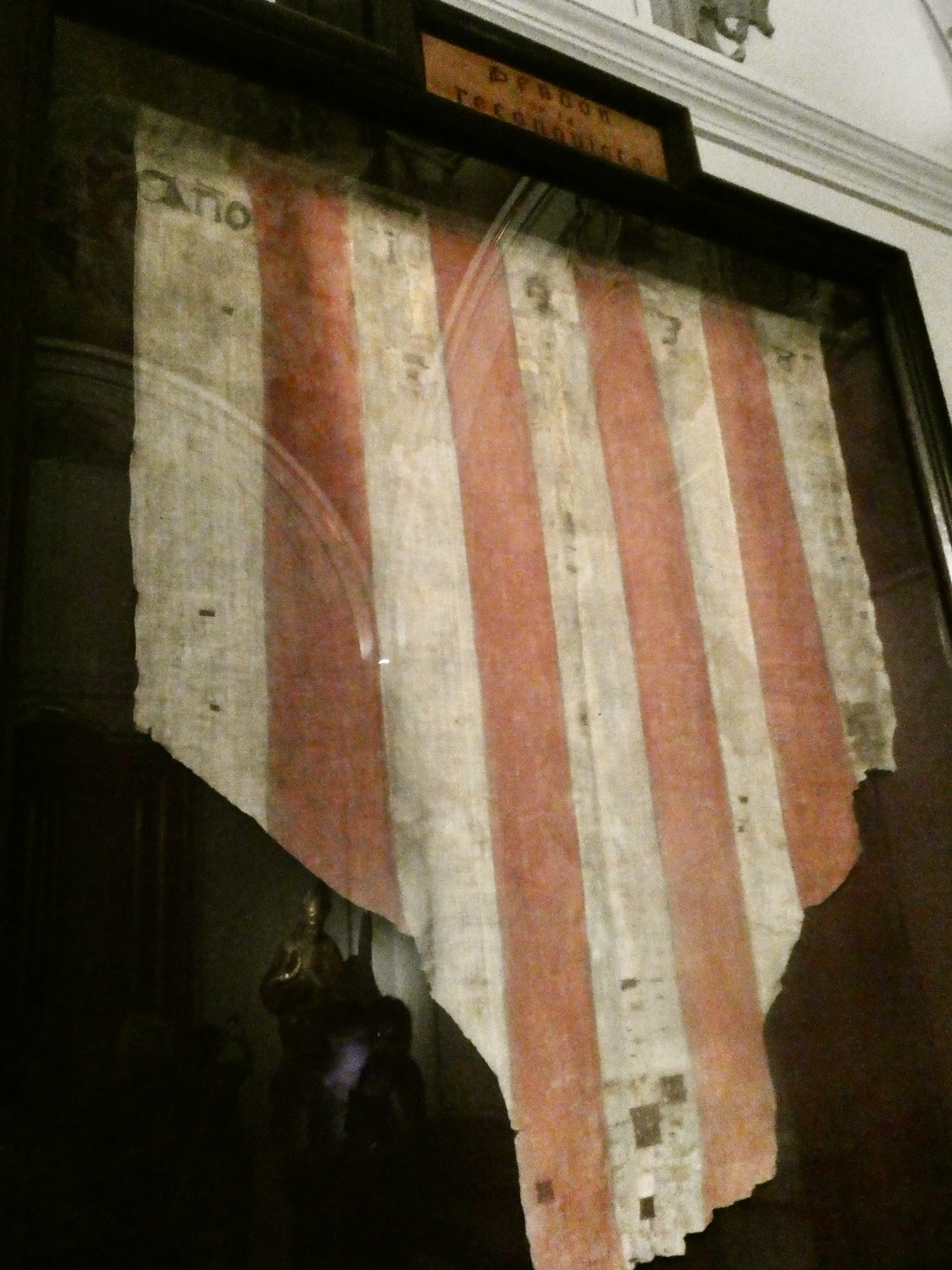

When the Christians took control of the city in 1238, the Moors surrendered by raising the Christian flag, the remnants of which were on display in the museum. And fun fact, a bat is now incorporated into the city insignia because when the Christians and Moors were fighting a bat landed on the King’s shoulder and when he turned to look at the bat he spotted the Moors advancing towards him.
Anyway, we wandered around the museum taking in some of the paintings of Christian Kings, another old flag and some maps that allowed me to see what the city looked like back in the 14th and 15th centuries. Apparently, in the 15th century the city became wealthy because of its position on the Mediterranean as an important seaport and trading center. Eventually, the silk trade made the city incredibly wealthy.

So from here, we left the museum and entered the magnificent city hall chamber where the mayor conducts business. At one time during the Franco period in the 20th century, the room was used by Franco and his administration so the room was actually designed to seat 200 people.
Our last stop was the balcony which allowed for views over the Plaza del Ayuntamiento. Apparently, Franco had this balcony constructed in the mid 20th century so he could stand and stare down at his subjects. Another narcissistic dictator wanting attention.
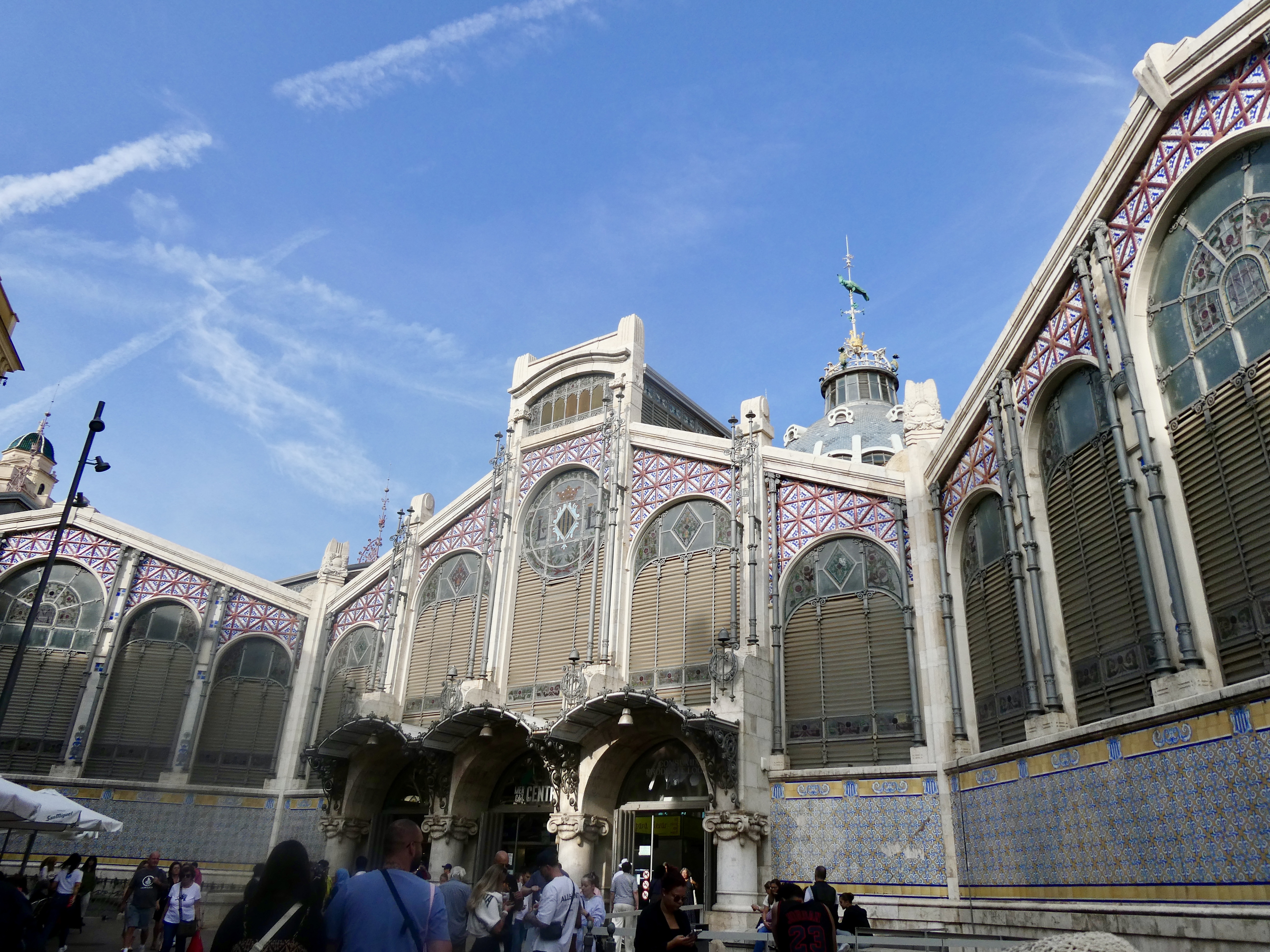
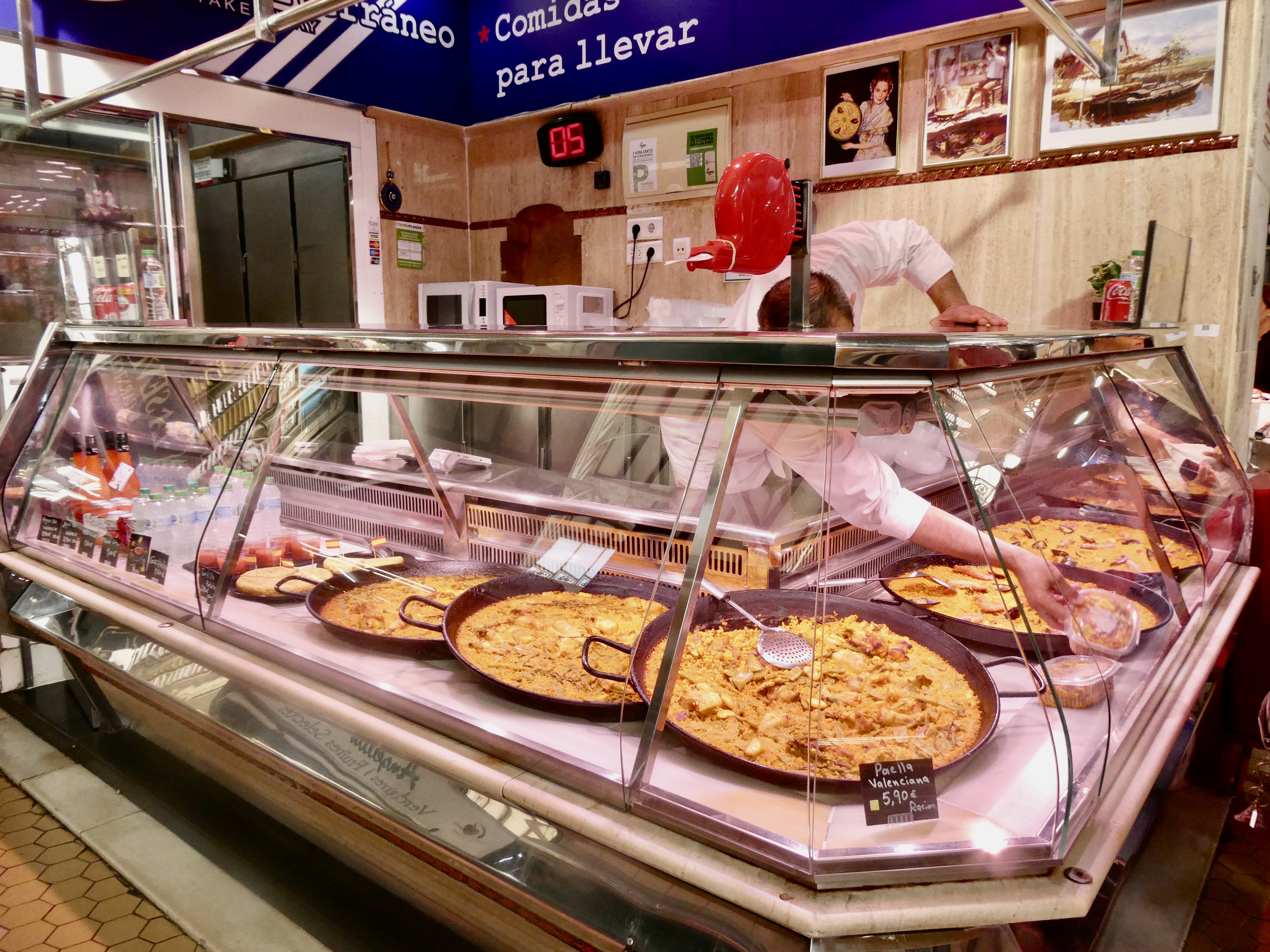
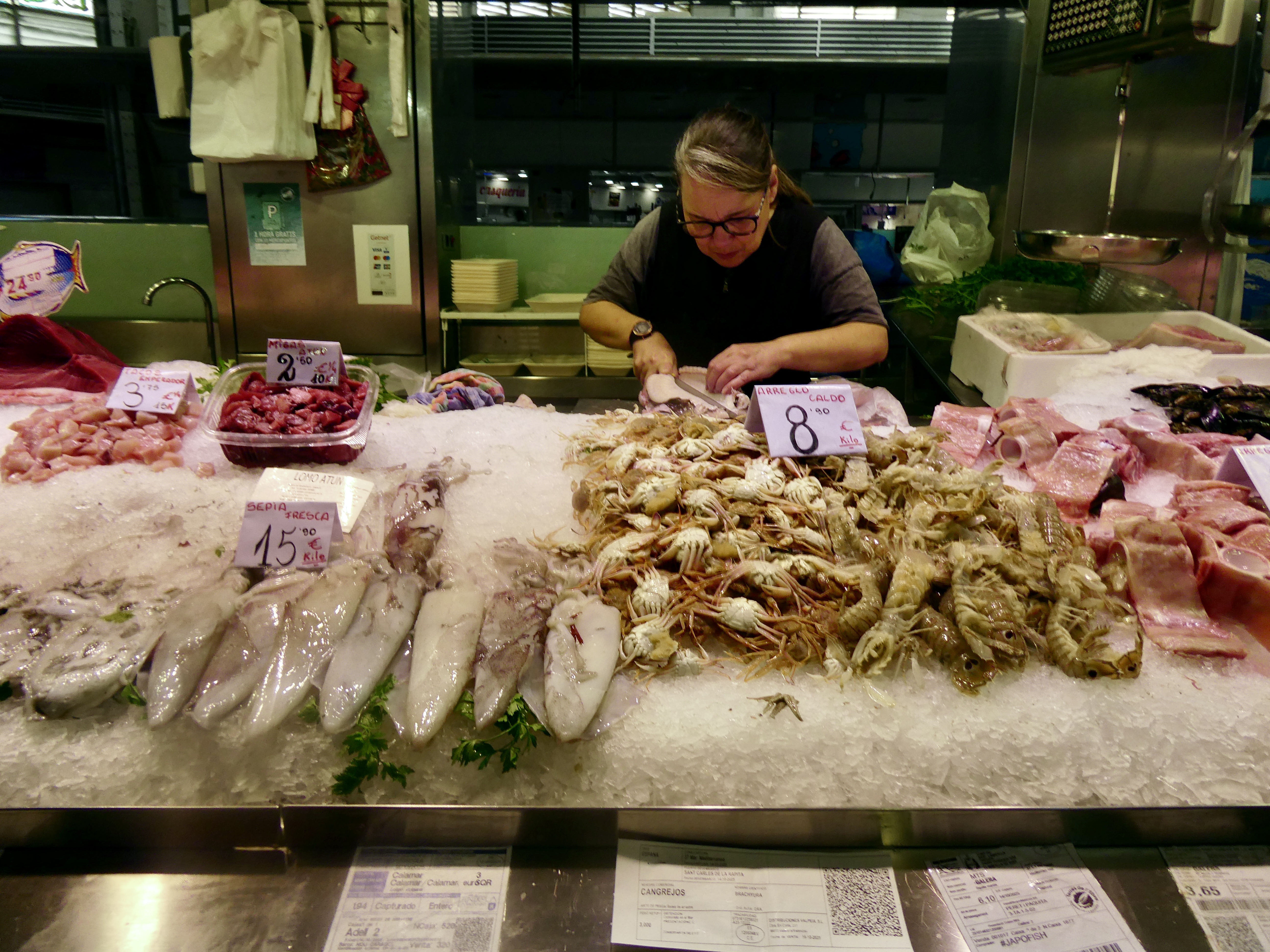

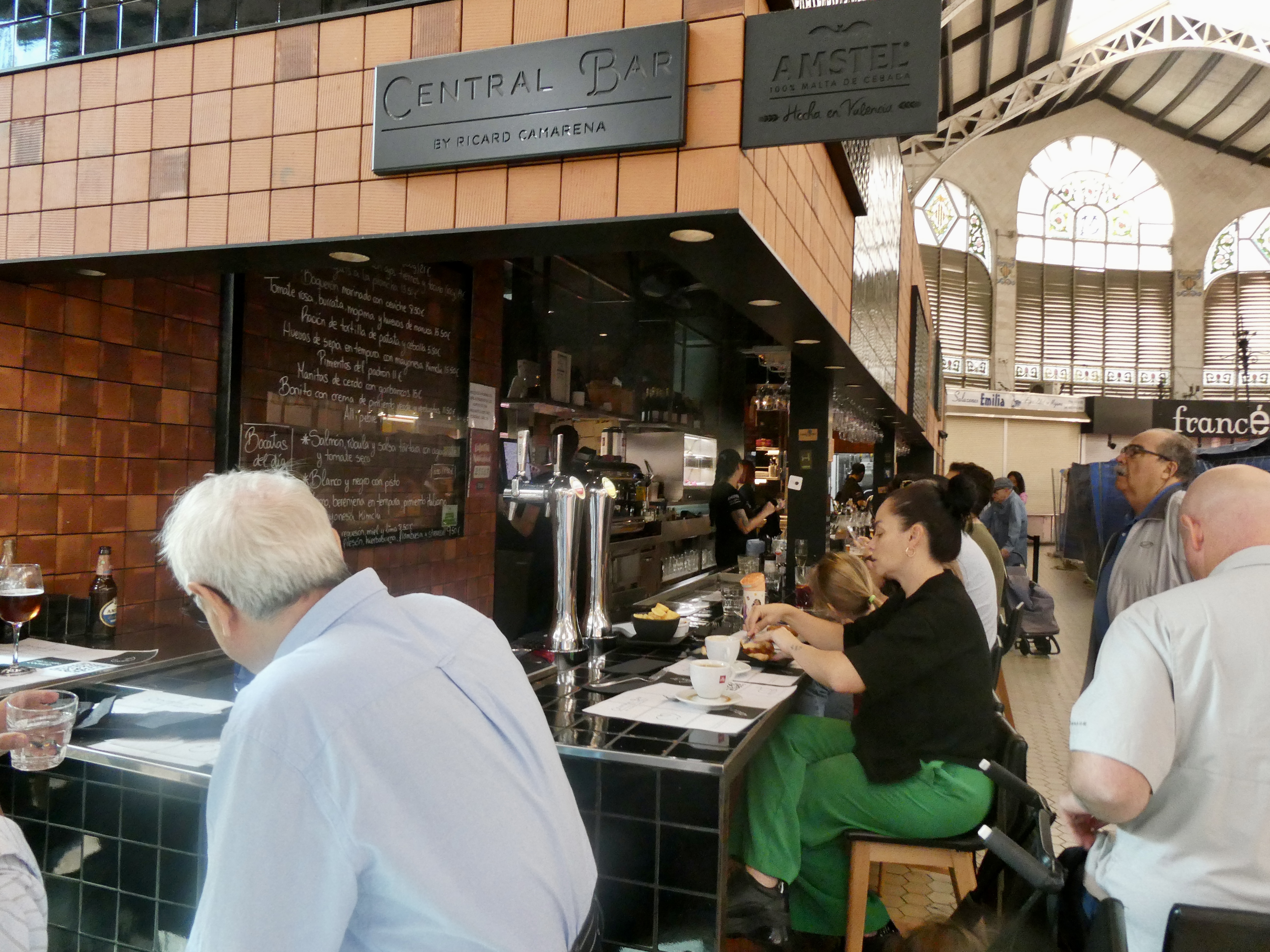
From here, we left the area and walked to the El Mercat area and the Mercat Central de Valencia, another magnificent building housing the 200 stalls and dating to the early 20th century. The building even had a dome in the middle of the facility.
Marco and I wandered around the various stalls taking in the array of fruits and vegetables, nuts, olives and olive oil and even a spectacular fish market. There is even a small restaurant, the Central Bar, apparently run by a two star Michelin chef. The restaurant is the only one in the market and people line up for hours to get a seat at the little restaurant/bar. Marco said it was a must try restaurant.

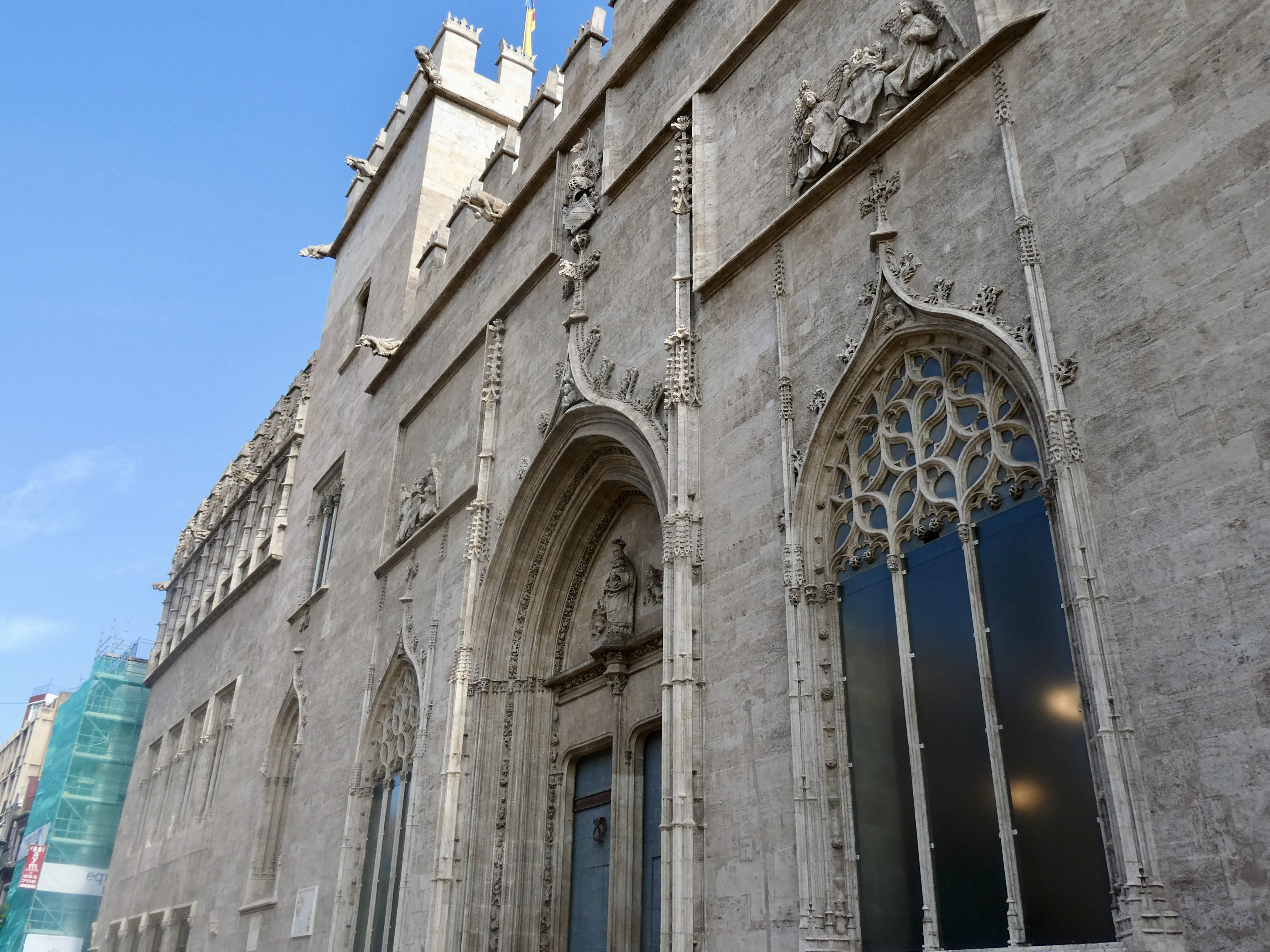
So after battling the crowds in the market, we then walked across the narrow road past a hilarious shop that still had its Christmas decorations up. (My kind of people) and to the La Lonja de la Seda aka the Silk Market/Merchants Exchange, which dates to the 14th and 15th centuries and is a UNESCSO World Heritage site. The building was originally designed to facilitate silk trade, but became the seat of commerce in Valencia during the height of its trading days.
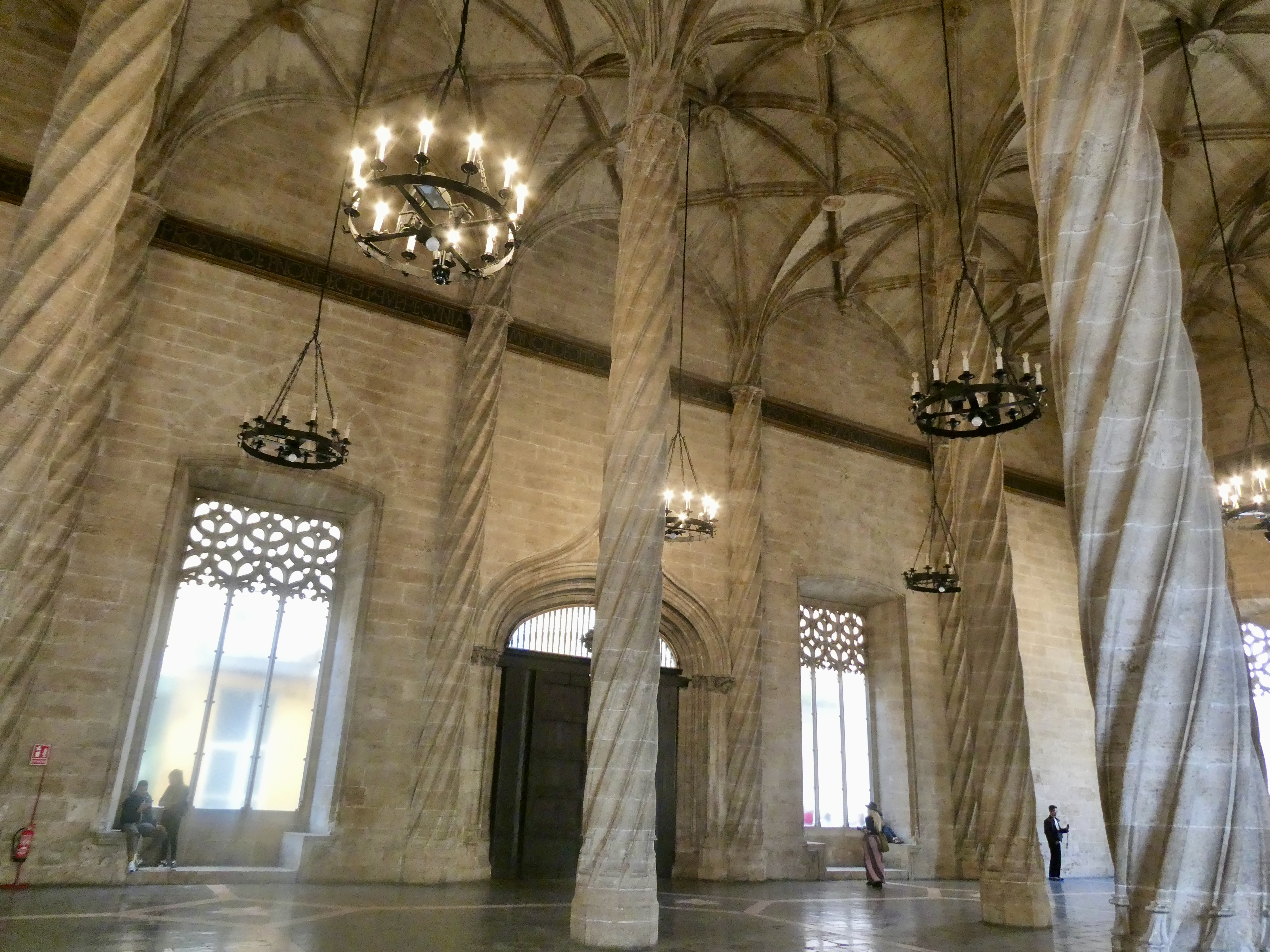
Now the exterior of the building was a Gothic exterior, and while lovely, belied the fabulous interior with 24 massive marble columns surrounding a large room. There were 16 columns built into the walls of the building and 8 columns standing like trees throughout the room. In fact, the columns actually looked like palm trees when you looked up. The place was really lovely.

We then went outside to the courtyard and up an exterior staircase (there is apparently a cellar in the basement area where goods were stored and a chapel at the top of the stairs, which we did not stop to see). Once at the top of the loooong staircase we entered a small room that was the Table of Exchange aka bank where transactions were financed on a handshake.
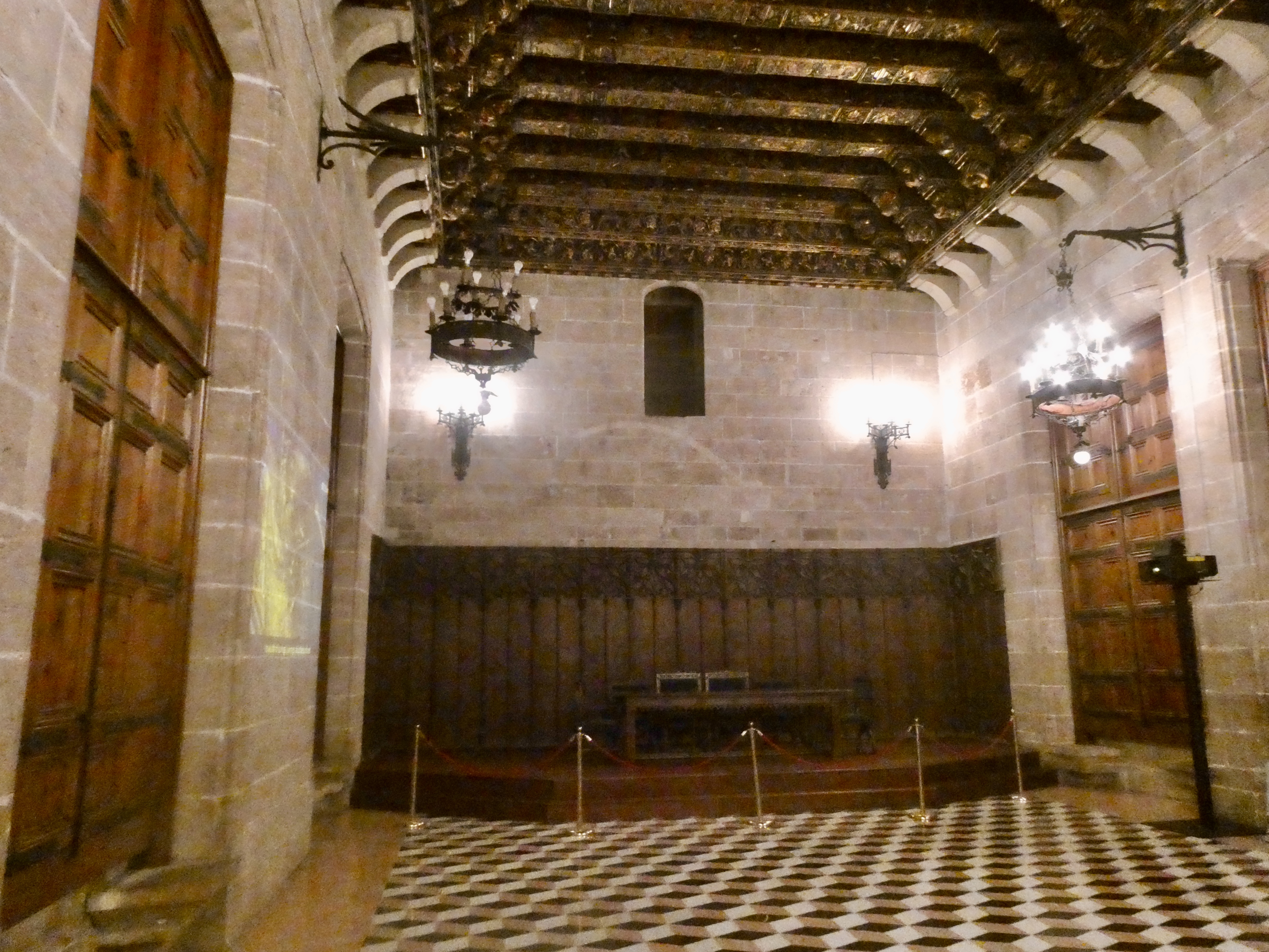
We then crossed a hallway and entered a room that was used for arbitration (if the agreement reached in the Table of Exchange went sideways) and to pay taxes. Now the most fascinating part of this quite spectacular room, was that there was a door midway up the far wall and the outline of an old staircase. Apparently there was a prison on the other side of the door so if things did to go well in the arbitration or you failed to pay taxes, you were immediately hauled up the stairs to prison.

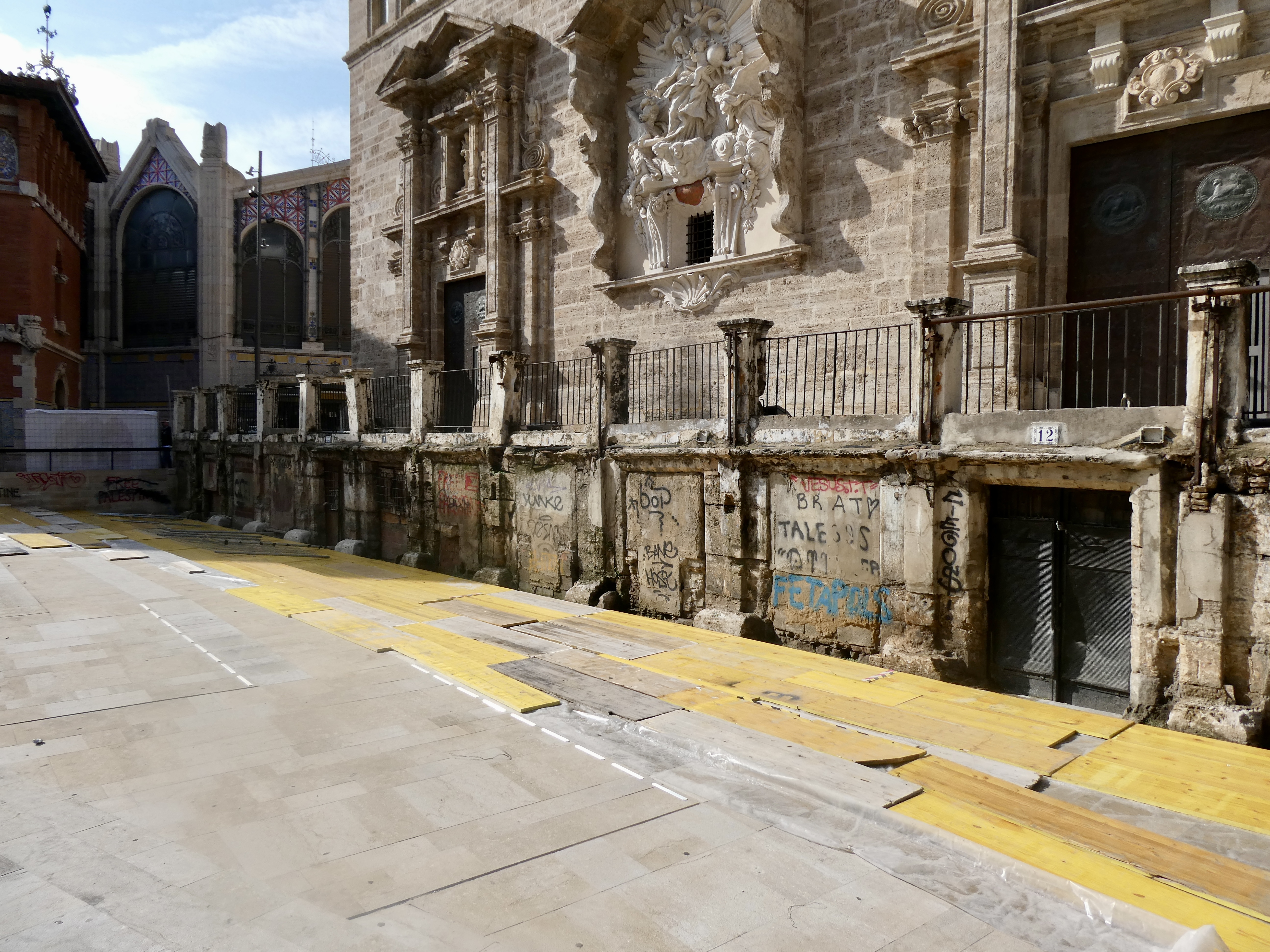
We then stopped by the outside of St. Johns Church (that’s John with an “s” because the church was dedicated to an apostle and an evangelist). The church was built in the mid 13th century over top of a mosque and was being refurbished so we did not enter. However, what I found fascinating is that there were ancient stalls below the street line that are individually owned by people (apparently passed down through the generations). The stalls have yet to be refurbished because there are so many owners and no one can agree on what the stalls should be used for. Fascinating.
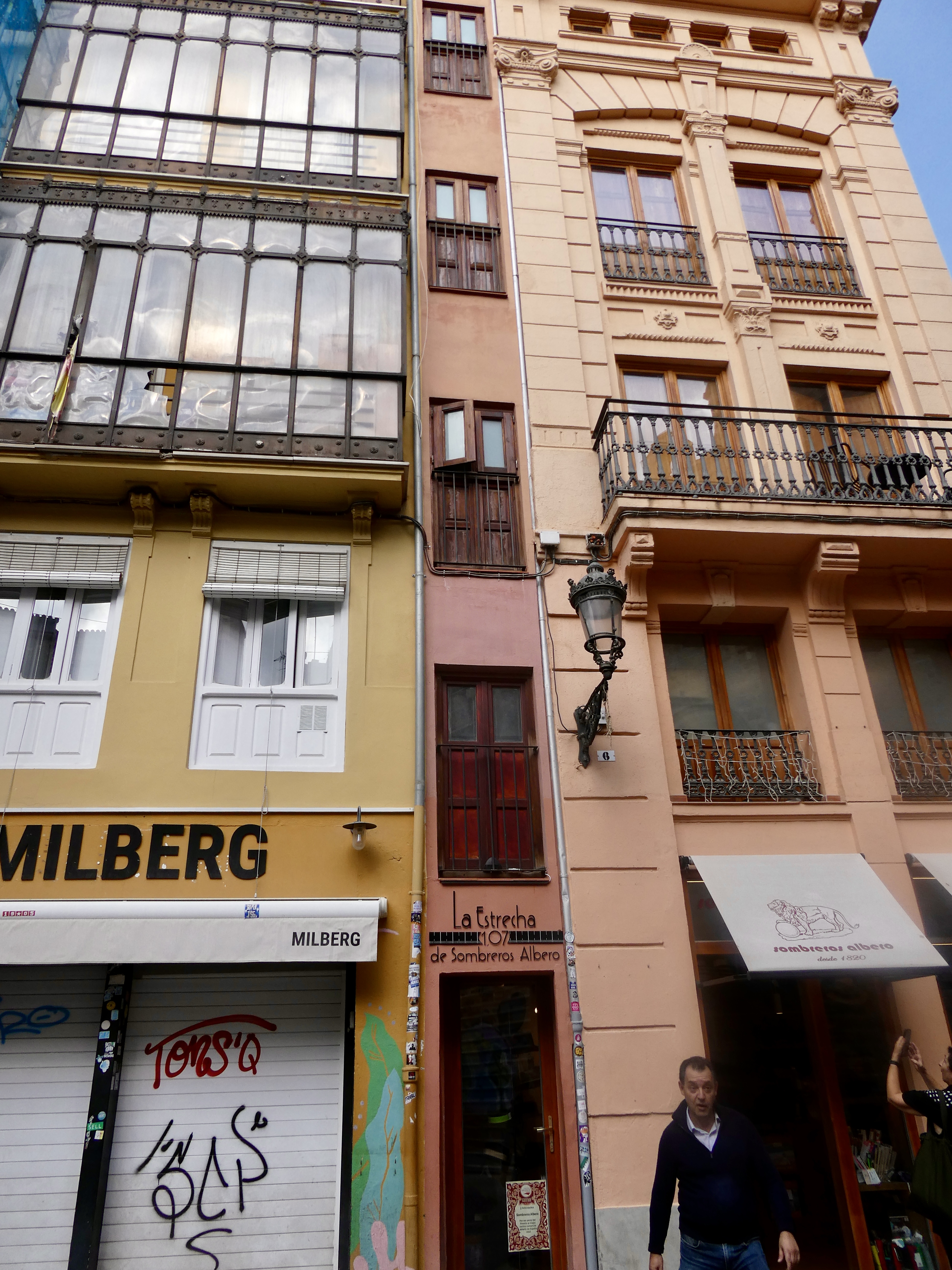

From here, we walked down a narrow alley, past more less notworthy churches (there are churches everywhere in this city) and a narrow and I mean NARROW building (less than 3’ feet wide) that was at one time billed as the narrowest building in the world, but has since lost the title. We then crossed under an arch and into the Plaça Redona, the alleged circular center of the city with, what else, a circular building. And, according to Marco, there used to be some really interesting local stalls here, but now the stalls are filled with tourist junk. Marco found it very sad.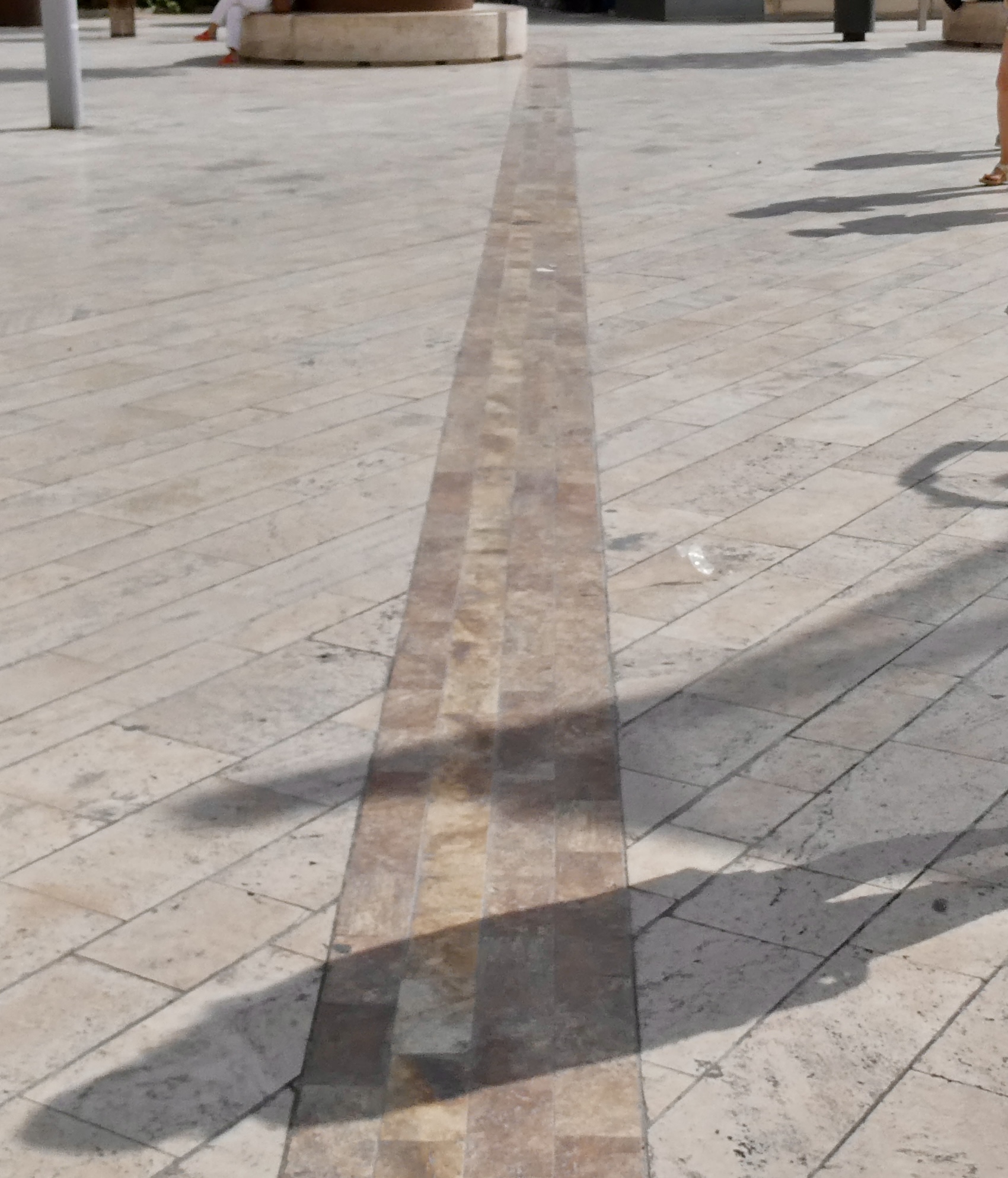
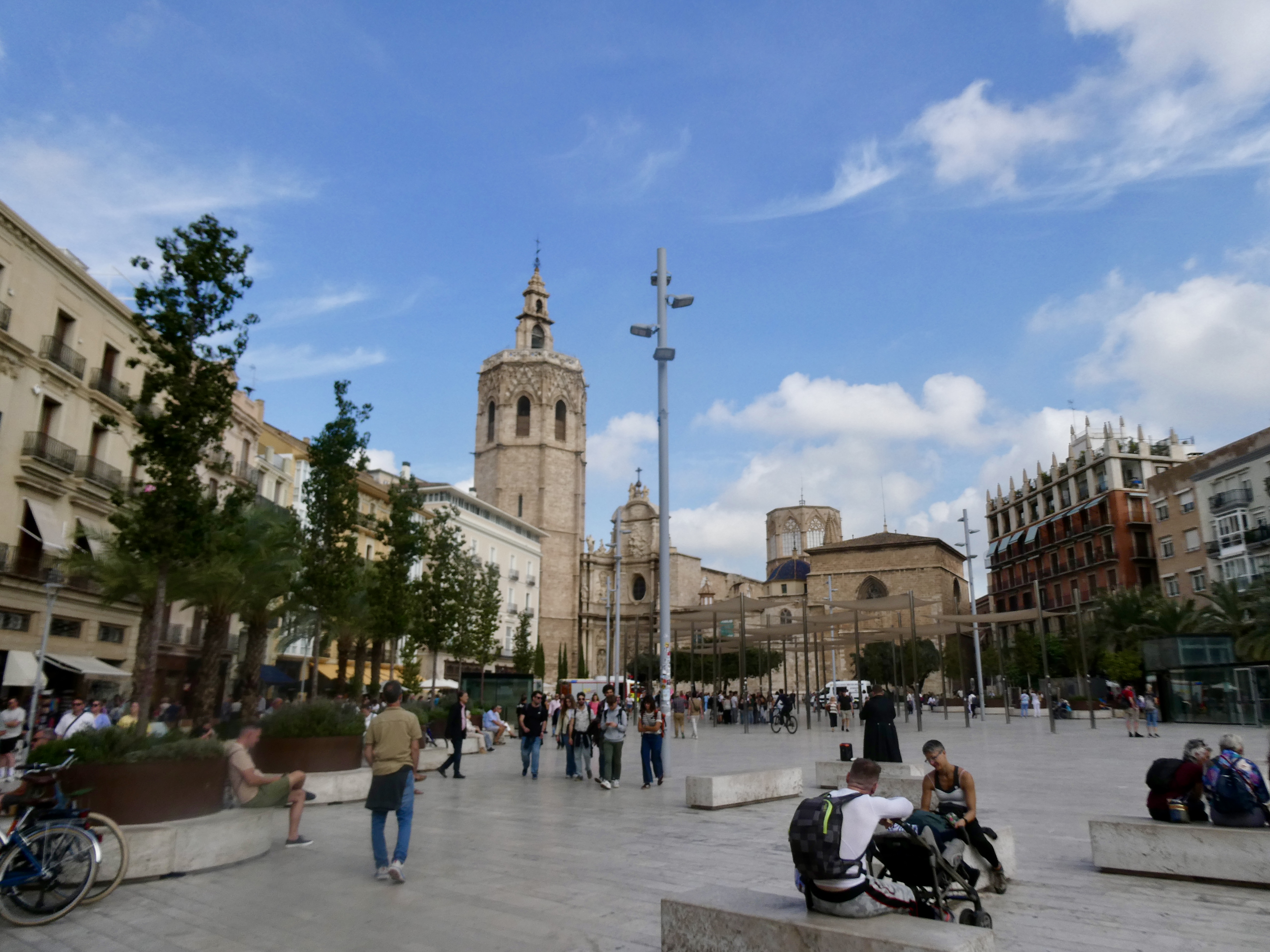
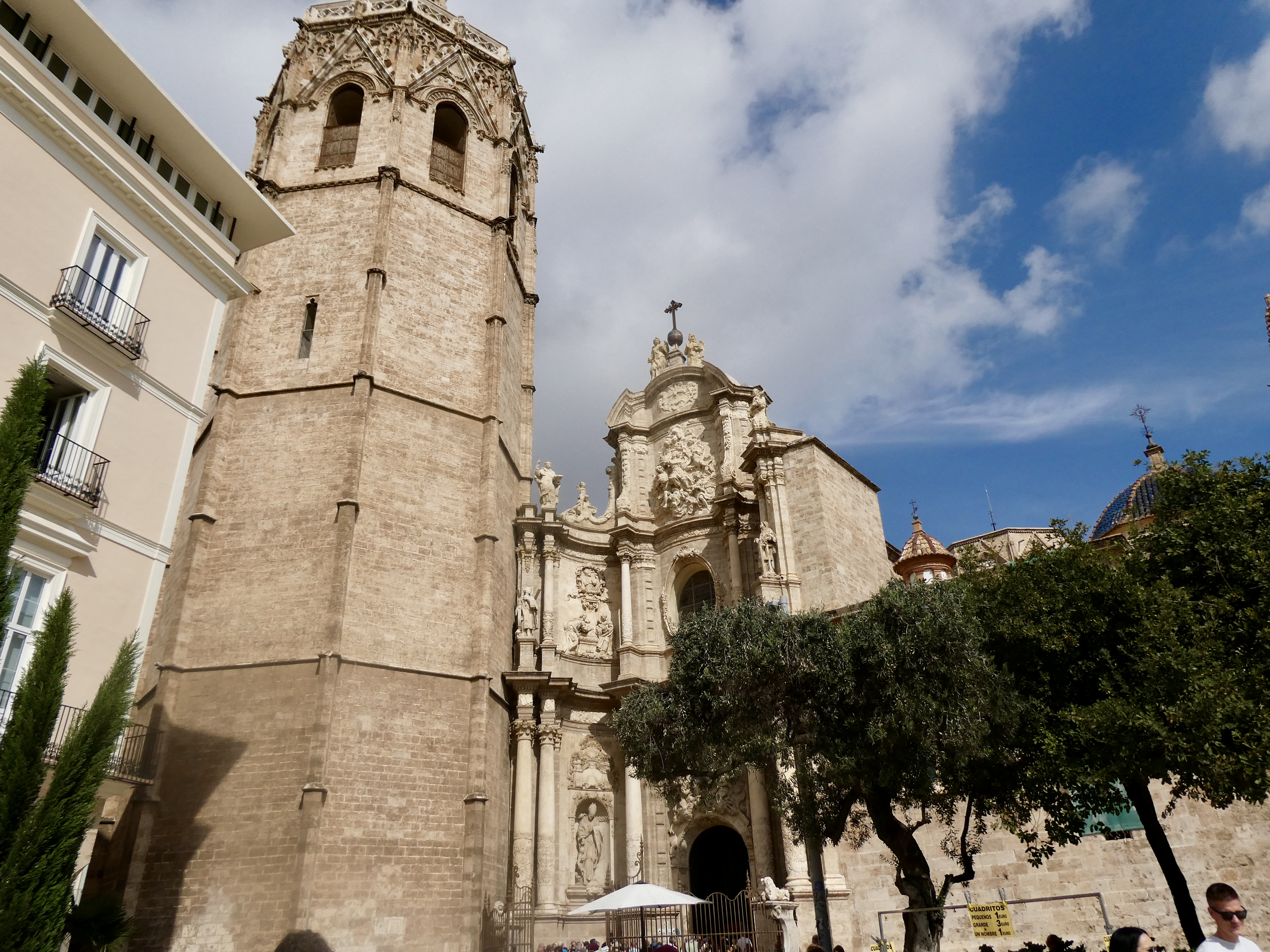
Anyway, we left the Plaça Redona and walked to the Le Seu area of old town crossing a long marking that denoted where the old Roman wall once stood before reaching the Valencia Cathedral. The Cathedral was built in 1262 and features Gothic, Romanesque and Baroque architecture. We did not go inside, but Marco suggested if I have time to pay the entry fee and take a look at the Holy Grail, which was delivered to the church in 1437 and is allegedly the chalice from which Jesus drank at the Last Supper. It is located in the Chapel of the Holy Chalice.
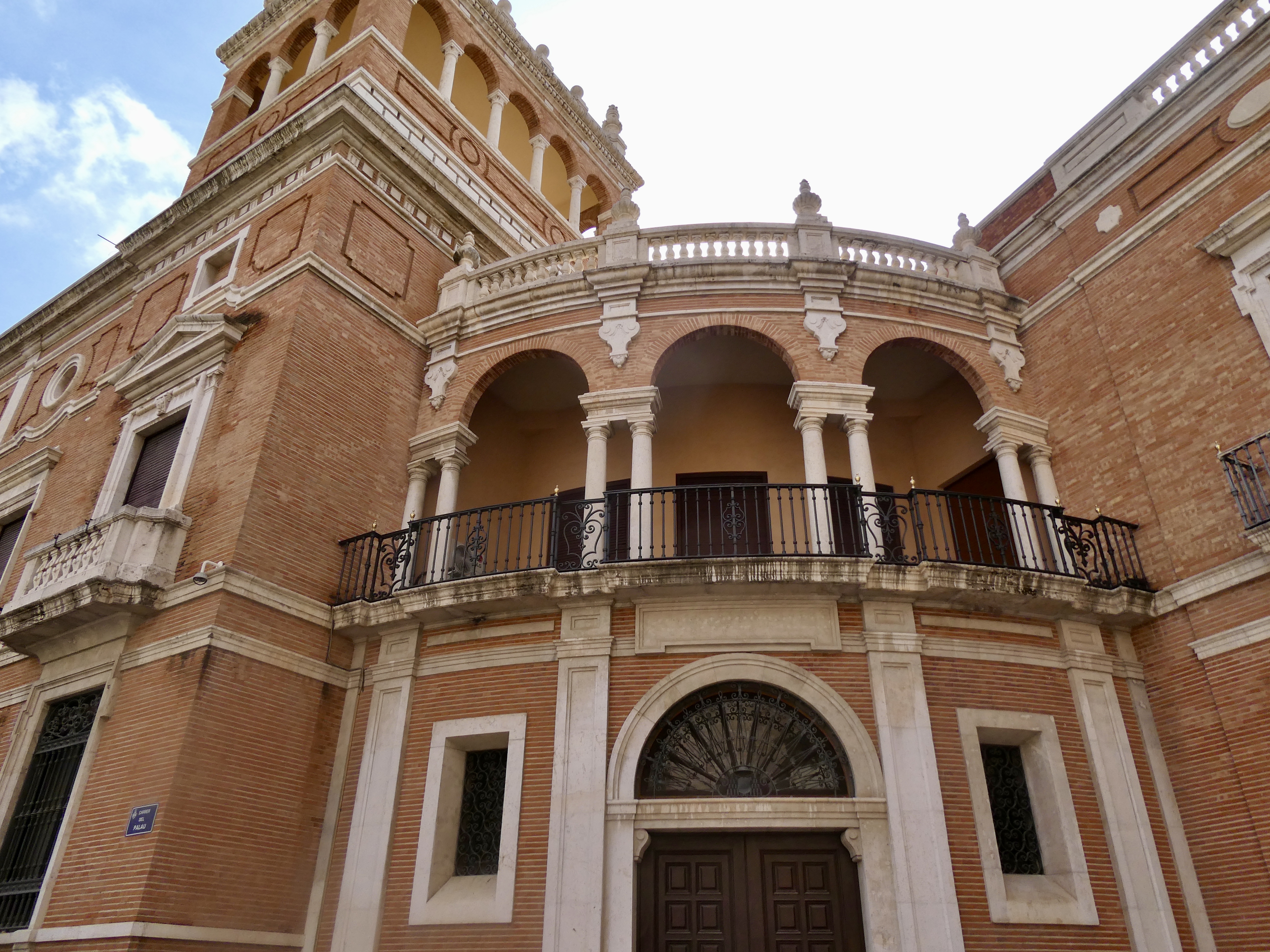
We then walked around the corner to the Archibishop’s Palace, which was reconstructed in the 20th century after the original construction was destroyed by fire.

And while the palace was lovely, what I really liked was Cathedral Bridge, an 18th century bridge that connects the Cathedral to Archbishop’s Palace. The bridge had a really unique design with three square windows and columns around the windows. It was really quite beautiful.
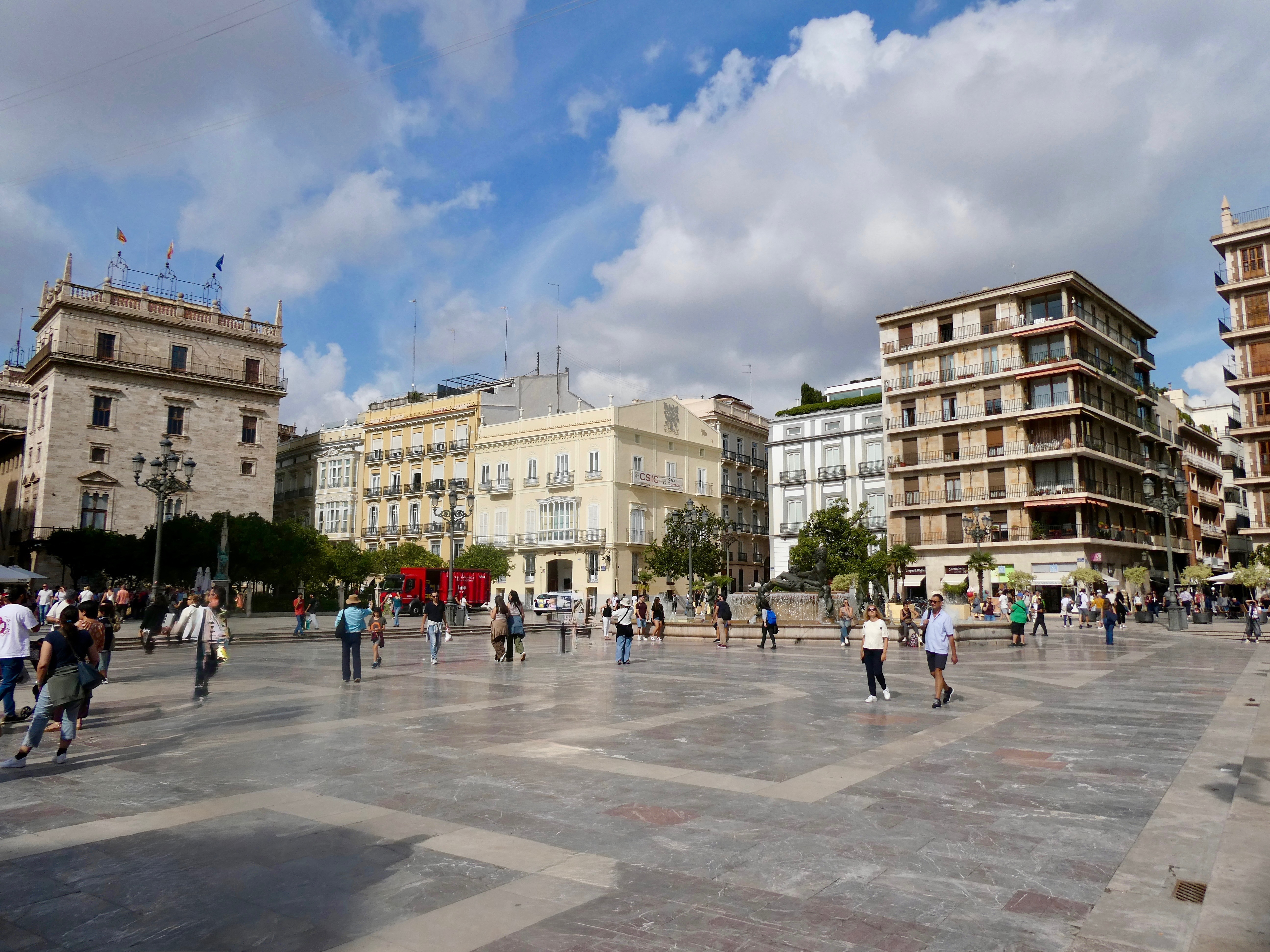
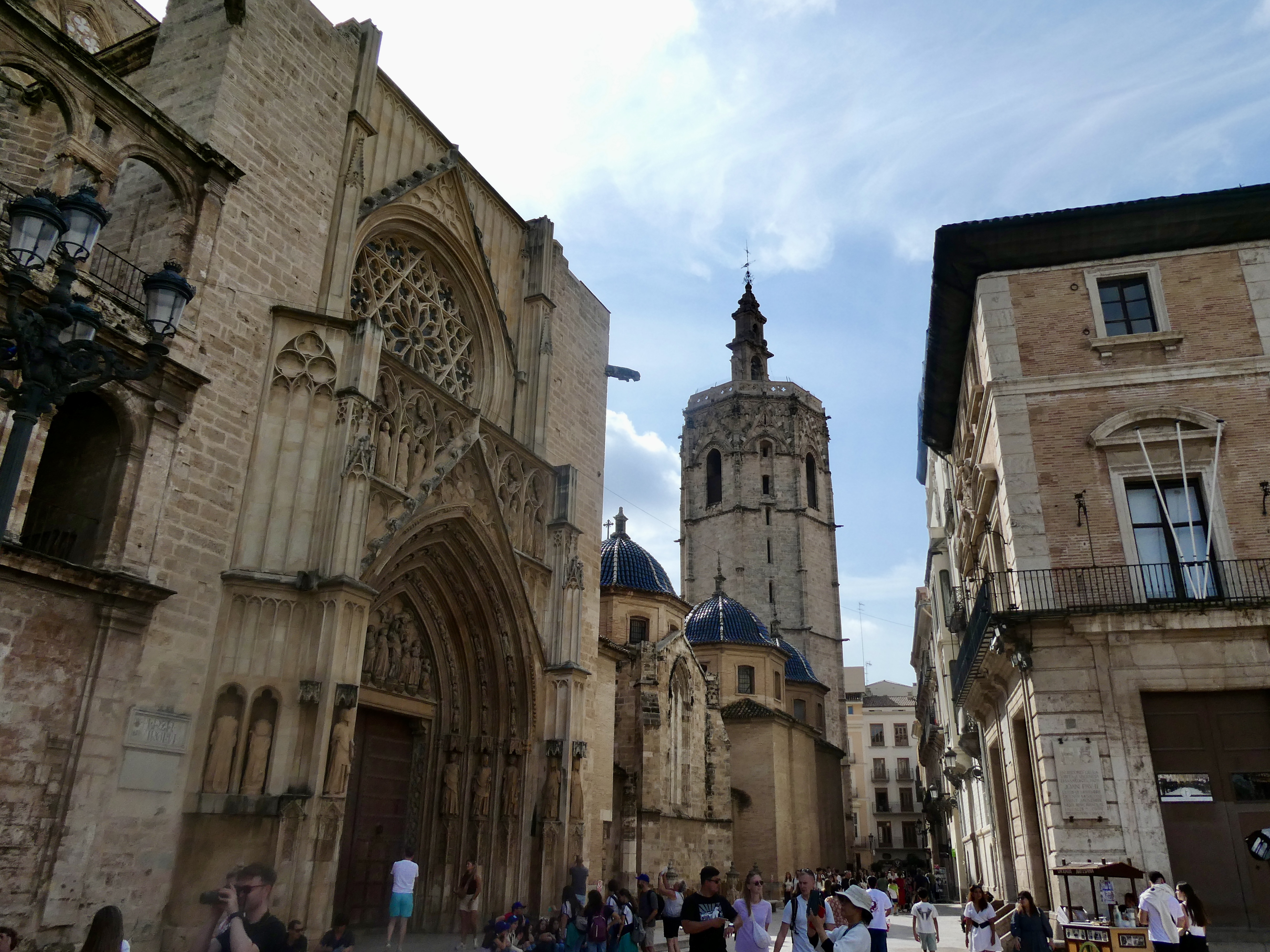
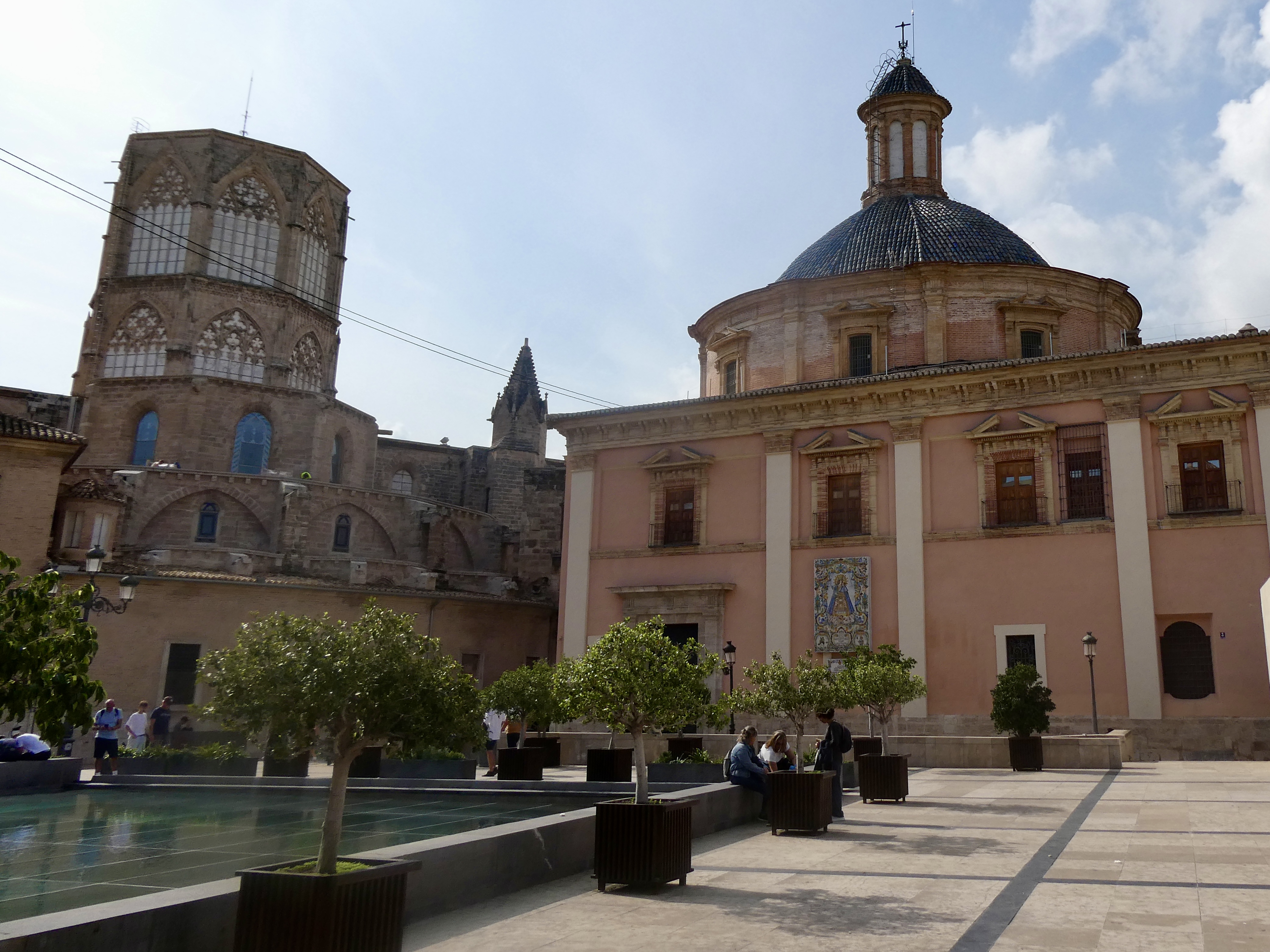
From here, we crossed under the bridge and entered the Plaza de la Virgen, the main square in the old town and at one time the center of activity in the old city. And like so many of these old squares, the square was used during medieval times for public executions. Ugh.
Now the views around the square were quite fabulous looking over to the Cathedral Bridge and the backside of the Cathedral. In addition we had spectacular views to the Real Basilica de la Virgen de los Desamparado. Apparently the inside of the basilica is pretty impressive. However, it was after 1:00 and the basilica closed for siesta time (like so many other places in Spain most things shut down around 1:00 or 2:00 and reopen at 4:00). Anyway, Marco urged me to make a stop back at the basilica during opening hours.
And while the views around the square were lovely, the myriad of folks hanging out around the square hawking their restaurants and shoving menus in your face was a bit of a turnoff. I was actually glad when we moved out of the area pretty quickly.
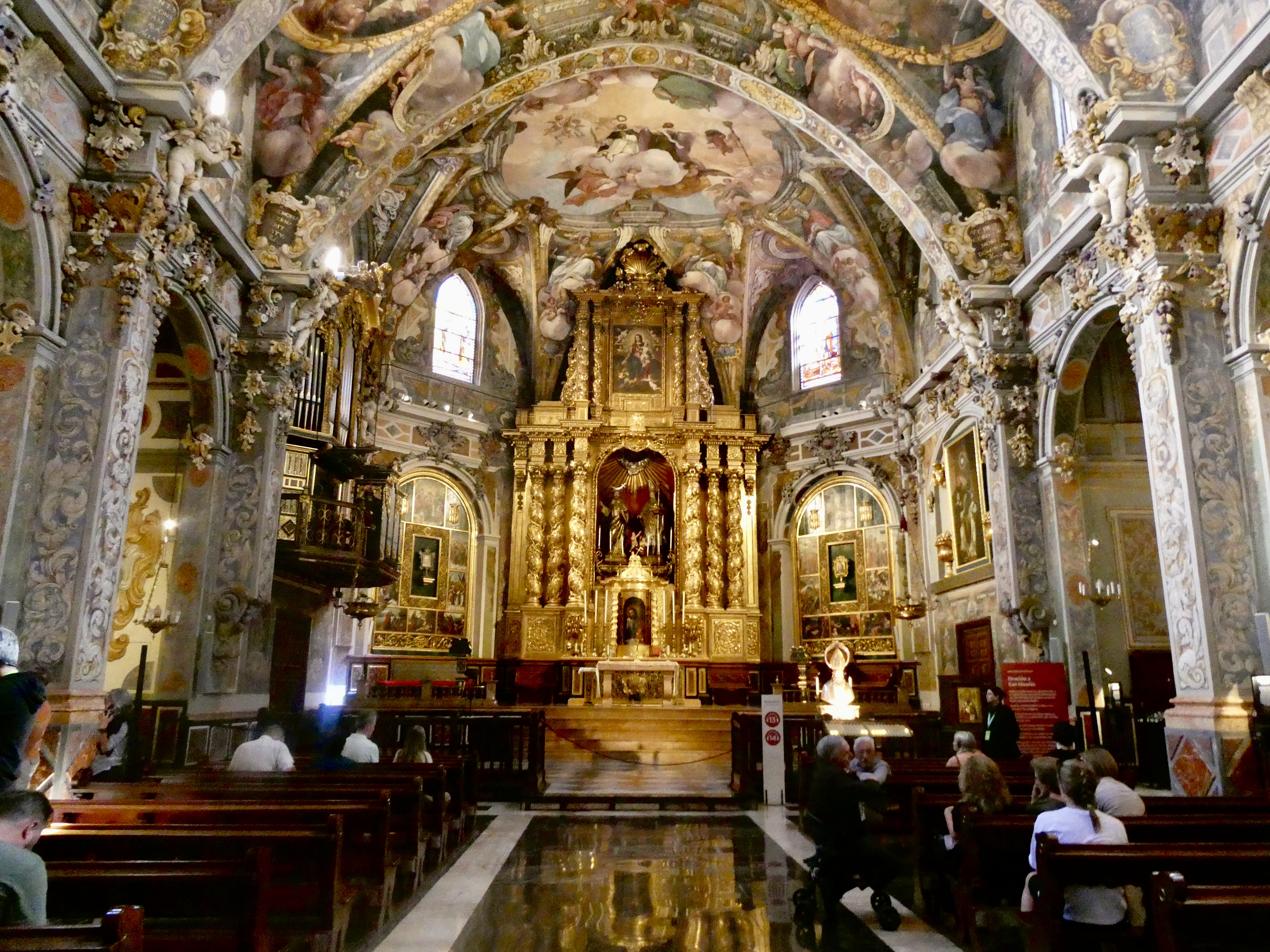
Once across the square, we walked past some administrative buildings (we were now in the La Xerea area) and were heading to our last two stops when Marco asked me if I was interested in seeing Saint Nicholas Church. I quite frankly had no idea what he was talking about so deferred to Marco. It turns out that the Church is a one of a kind artwork akin to the Sistine Chapel.
The church was originally established in 1242, underwent renovations between 1419 and 1455, and then between 1690 and 1693, the church’s interior was covered in lavish Baroque frescoes depicting scenes from the life of Saint Nicholas and Saint Peter Martyr.

Now I am certain, the pictures will not do this place justice, but oh my goodness. The frescoes were absolutely spectacular and the main alter simply gorgeous.
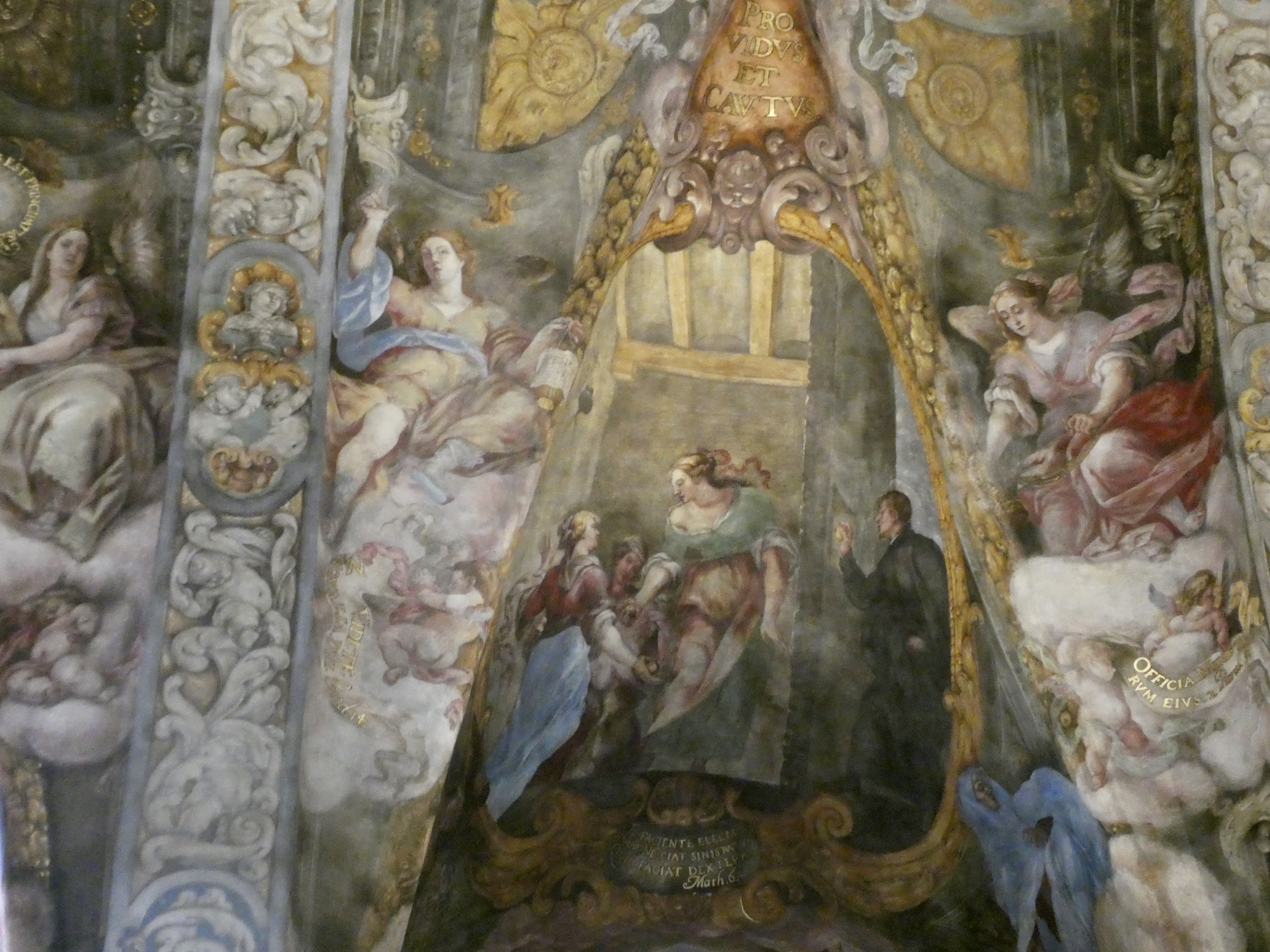
Marco pointed out one fresco in particular that apparently drove the legend of Santa Clause. Saint Nicholas became aware of the plight of a father and two daughters who were so poor that the father was thinking about turning the girls into prostitutes. One night Saint Nicholas threw some gold coins down the chimney saving the family and the girls from a horrible life. And hence the legend of Saint Nicholas was born.
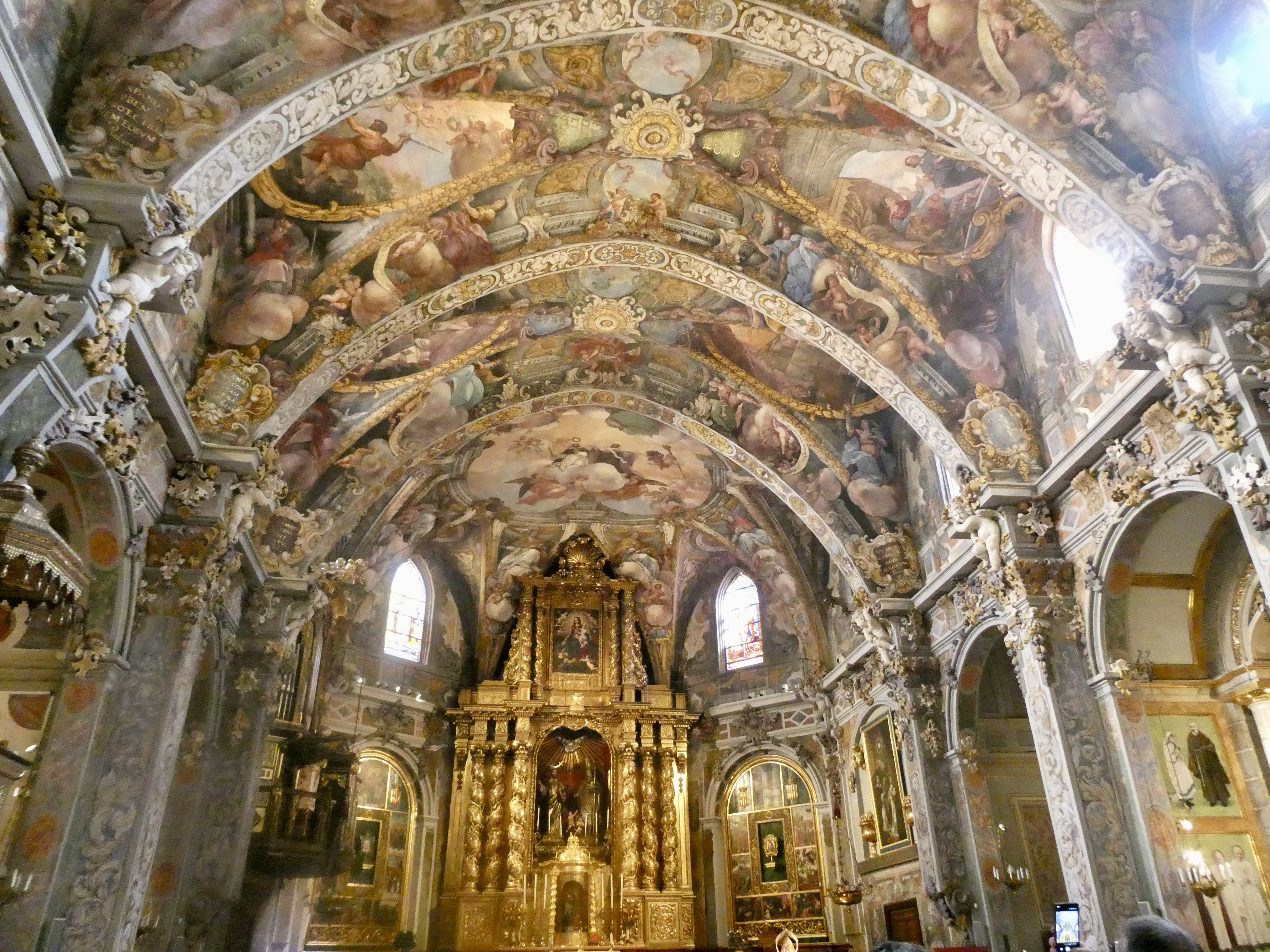
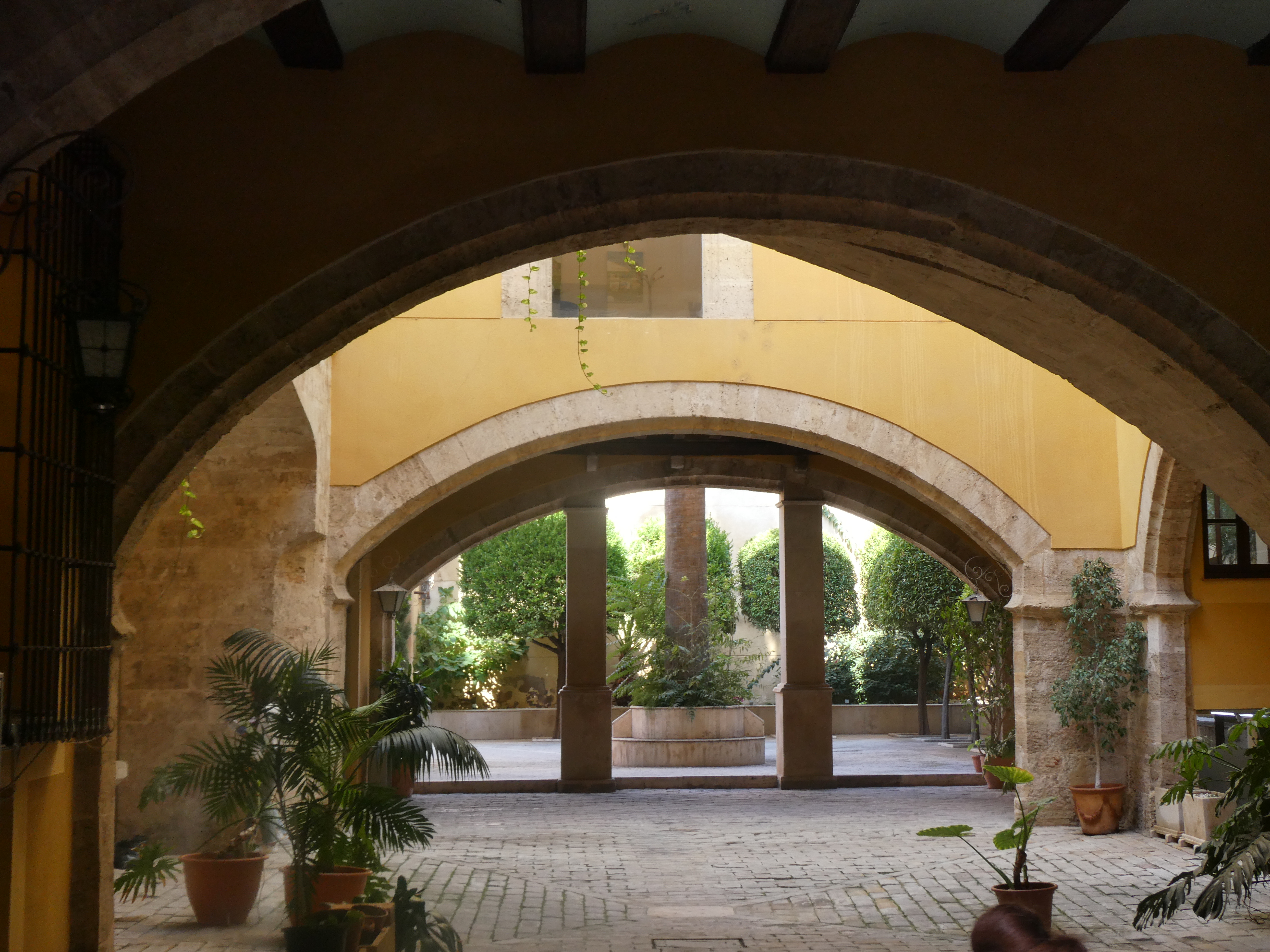

We wandered around as Marco pointed out a couple of significant chapels before heading back outside. And as luck would have it, the door of a former palace that was built across from the church was open allowing us to have a look inside at a lovely open courtyard, which is a feature of so many of these old palace homes in the area.
From here, we walked down more narrow alleys reaching the Portal de Valldigna aka Portal of the Valley of Dignity. This portal is one of the last surviving arches that was built into the ancient Muslim walls. The portal served as a gateway into the old Valencia medieval city in an area where the noble families were living. The portal opened in 1400 and contains a Muslim inscription of inspiration.
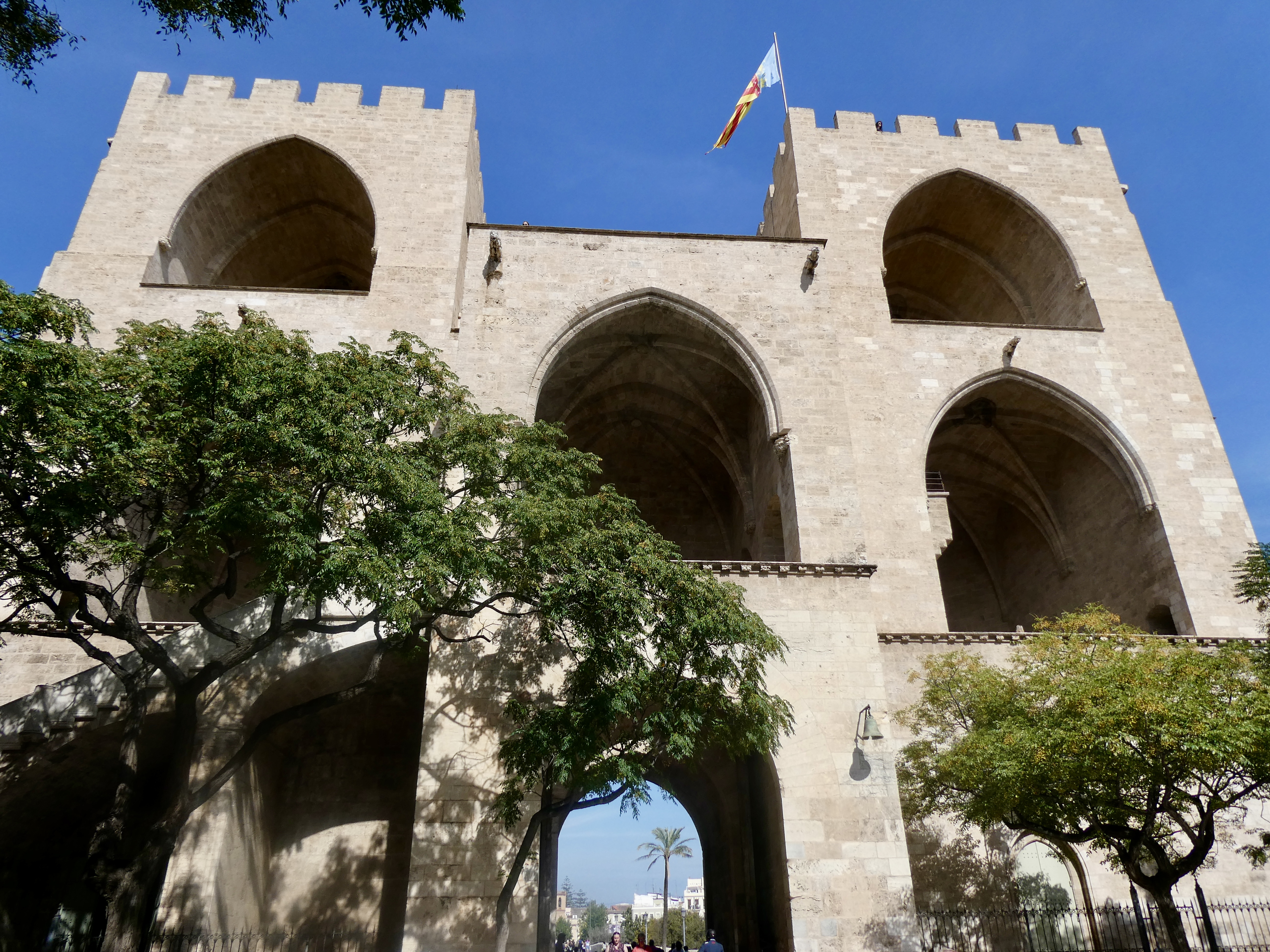


Our last stop of the day was at the edge of the old town, Torres de Serranos, a medieval gate that dates to the 14th century. The gate’s main purpose was to defend the city. Now sadly the walls connected to the tower were ordered torn down in the 18th century. It is not known why this tower and the tower at the opposite end of the city form the Torres de Serranos where left standing, but thankfully they were.
And just as cool as the gate was the fact that the original wooden doors to the gate were still standing. The wood was really weathered, but the doors were in surprisingly good shape.
So from here, Marco and I walked back towards the Plaza de la Virgen where we said our goodbyes. I then walked under the Cathedral Bridge to the Almoina Archaeological Center, where a significant number of old Roman ruins had been uncovered as well as ruins from the Visigoth and Muslim time periods.
And while the little pamphlet provided that the layout of the walking areas followed the general layout of the streets and porticoes of the Roman town, I found the signs and walking areas incredibly confusing. Some of the ruins had signs and other ruins had nothing or they were located in a different part of the walkway. And in one area there were the remains of a what appeared to be a house with zero explanation. There were also no signs showing the direction to walk. VERY confusing.

There was also a lot of displays of pots, jewellry and statutes found in the ruins, but again this layout was confusing. In one display there were Muslim finds and then next to that display was Roman finds. There was no real chronological order to things.
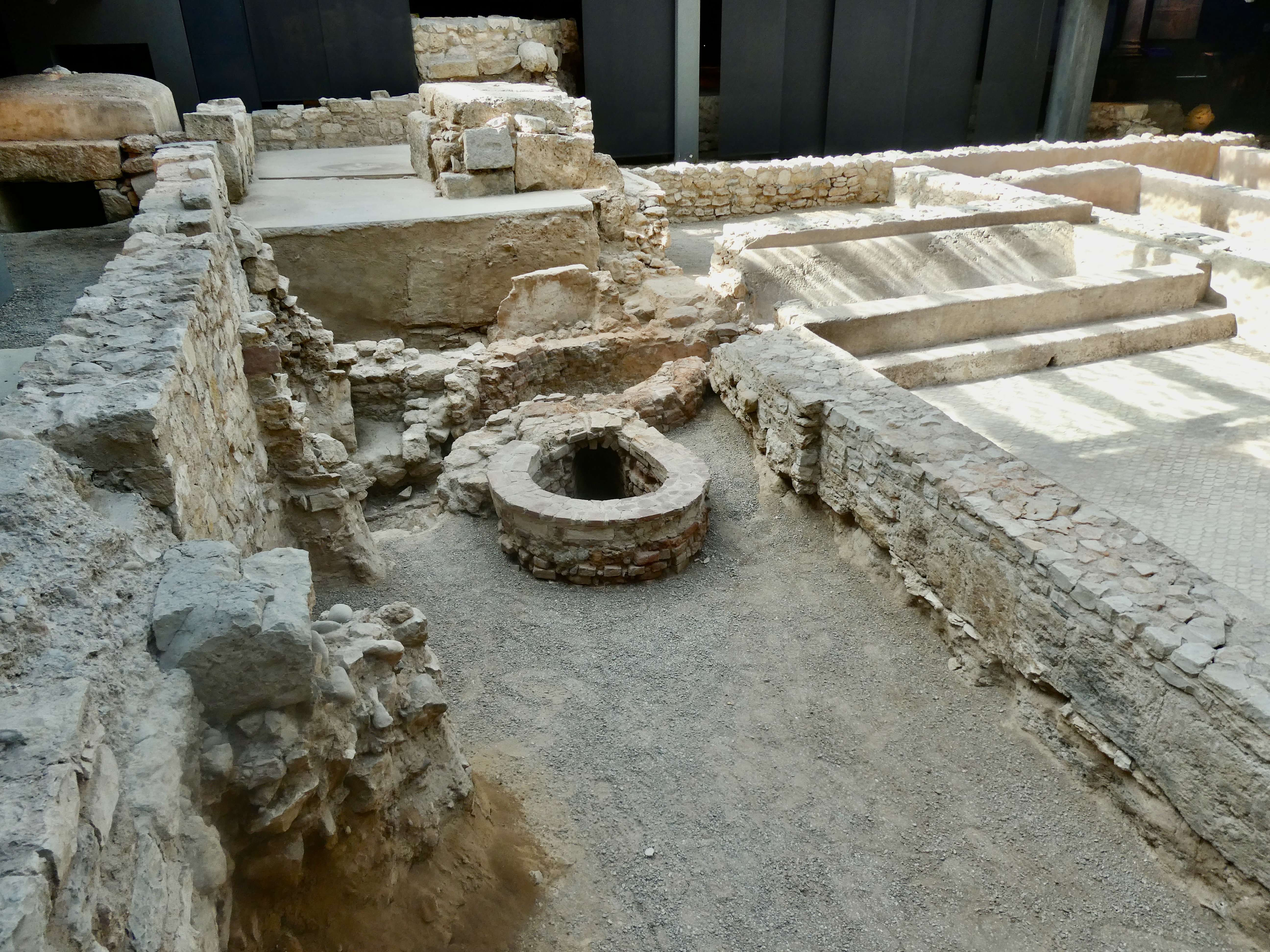
Now having said all of this, the ruins were really interesting. The Roman baths, dating to the 1st century were incredible and it was easy to see the cold, warm and hot areas of the baths.
Next to this was a Baptismal area and burial area from the 6th century attributed to the Visigoth’s. Then it was back to the Romans with a building believed to be a 3rd century factory, followed by a 1st century Roman basilica with some remaining columns. And adjacent to this was a 7th century Visigoth apse and church. Next to this was a 1st century Curia, where the city’s senate would meet.

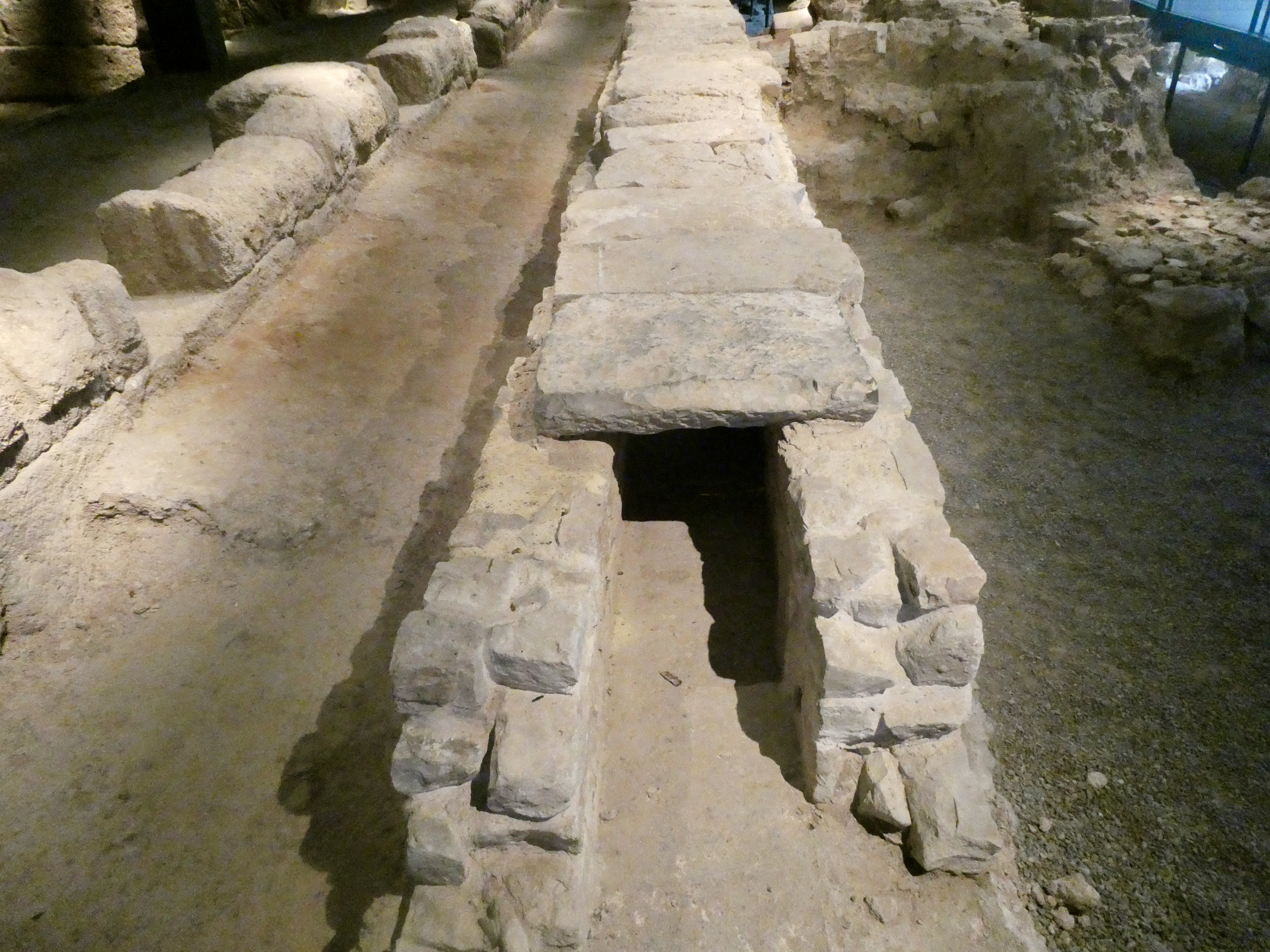

Nearby there were two large marble columns that were the remains of the 1st century Roman forum. And across from the forum was an irrigation system with no information and a 1st century BC horreum or grain storage area with a lot of intact ceramic pots. There was an adjacent area described as the Nympheum, where a public fountain of a nymph was located, but there was no statute and the remains of the fountain were hard to discern.
There was also evidence of the old Roman roads which formed a cross through the town, with the road running north to south known as cardo maximus and the road running east to west known as decumanus maximus. Very interesting.
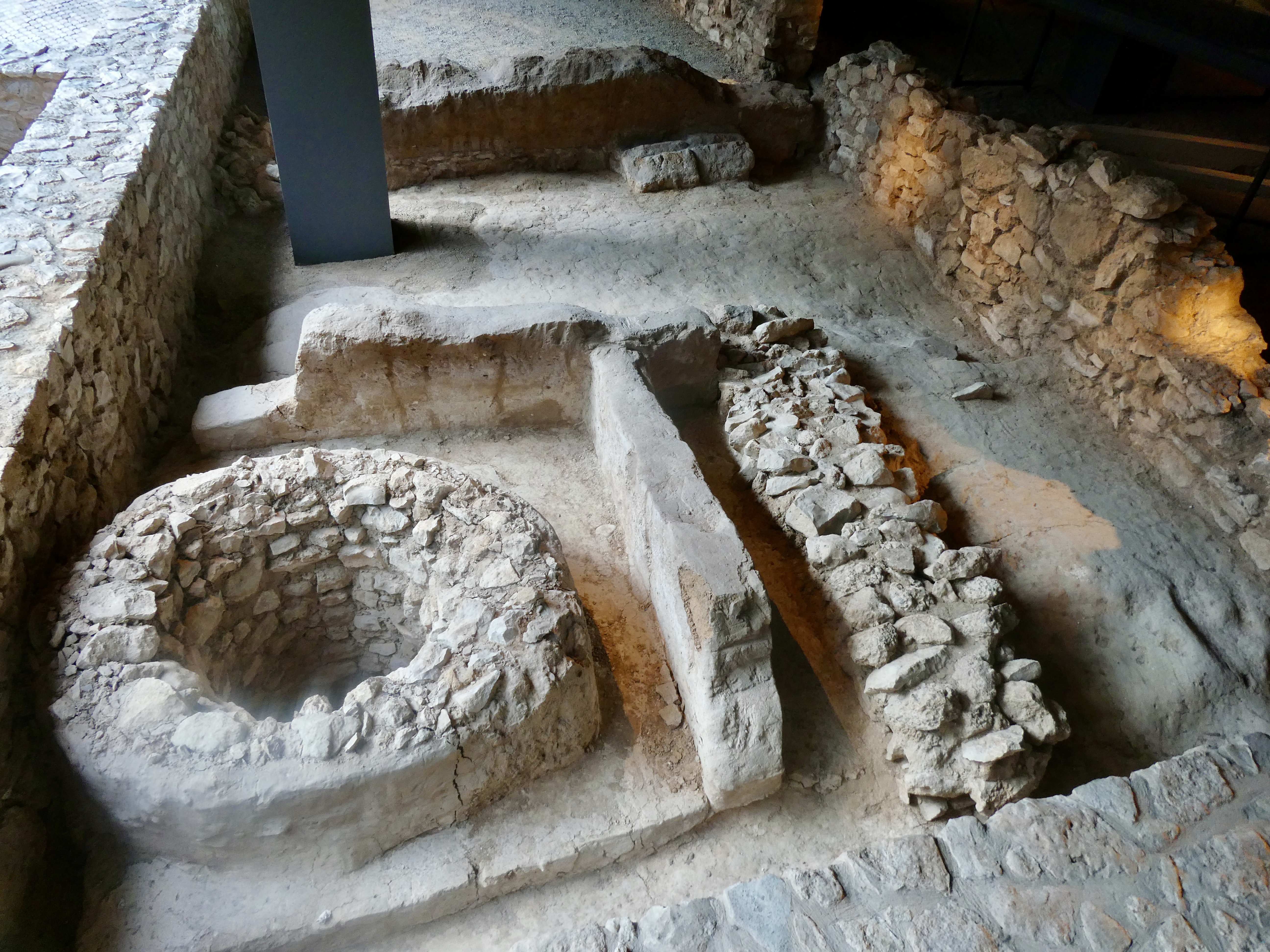
The last area was the old adobe walls that dated to 100 BC most of which were destroyed when Pompeii conquered the city.
So by now, I had been walking for almost 6 hours and was exhausted. I walked back to my hotel and took a break until 5:45 when I had to walk to a nearby square for my food tour. I met up with our guide Victor at just before 6:00 p.m. along with a couple from Switzerland and 6 women from Windsor (just outside London) who do an annual womens’ trip. They were all in there late 50s and early 60s and were a complete hoot.

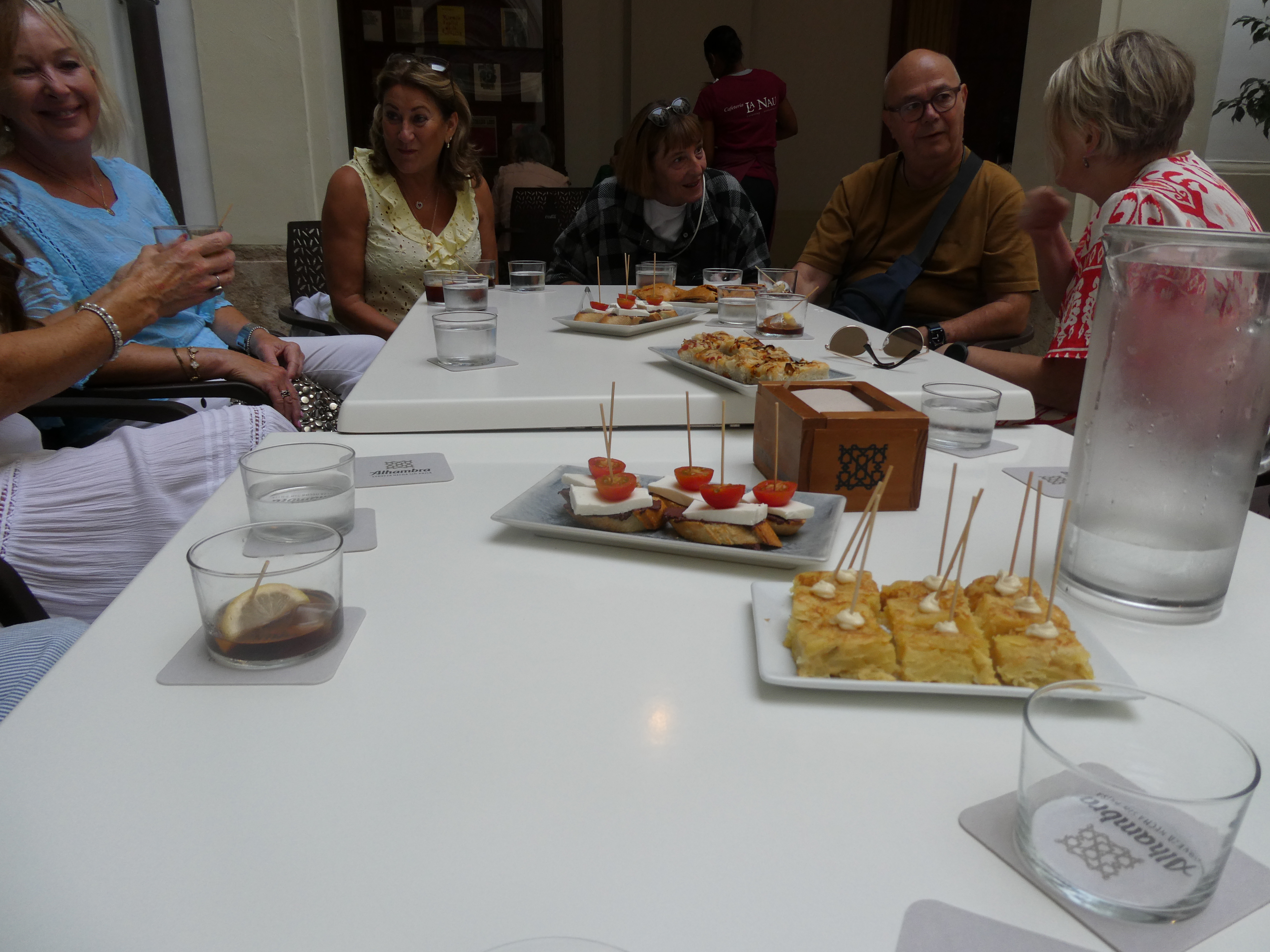
So our first stop was right next door to the meeting spot at La Nau where we sat in a fairly sterile courtyard where Victor wanted us to try Vermouth with our tapas. UH NO NO NO. I drank water while everyone else gave it a go.
The tapas we were served were an olive tapenade on bread topped with cow’s milk cheese and cherry tomato, a potato tortilla, a vegetarian empanada and a Spanish omelette. For me, the hands down winner was the olive tapenade mixture. Fabulous.
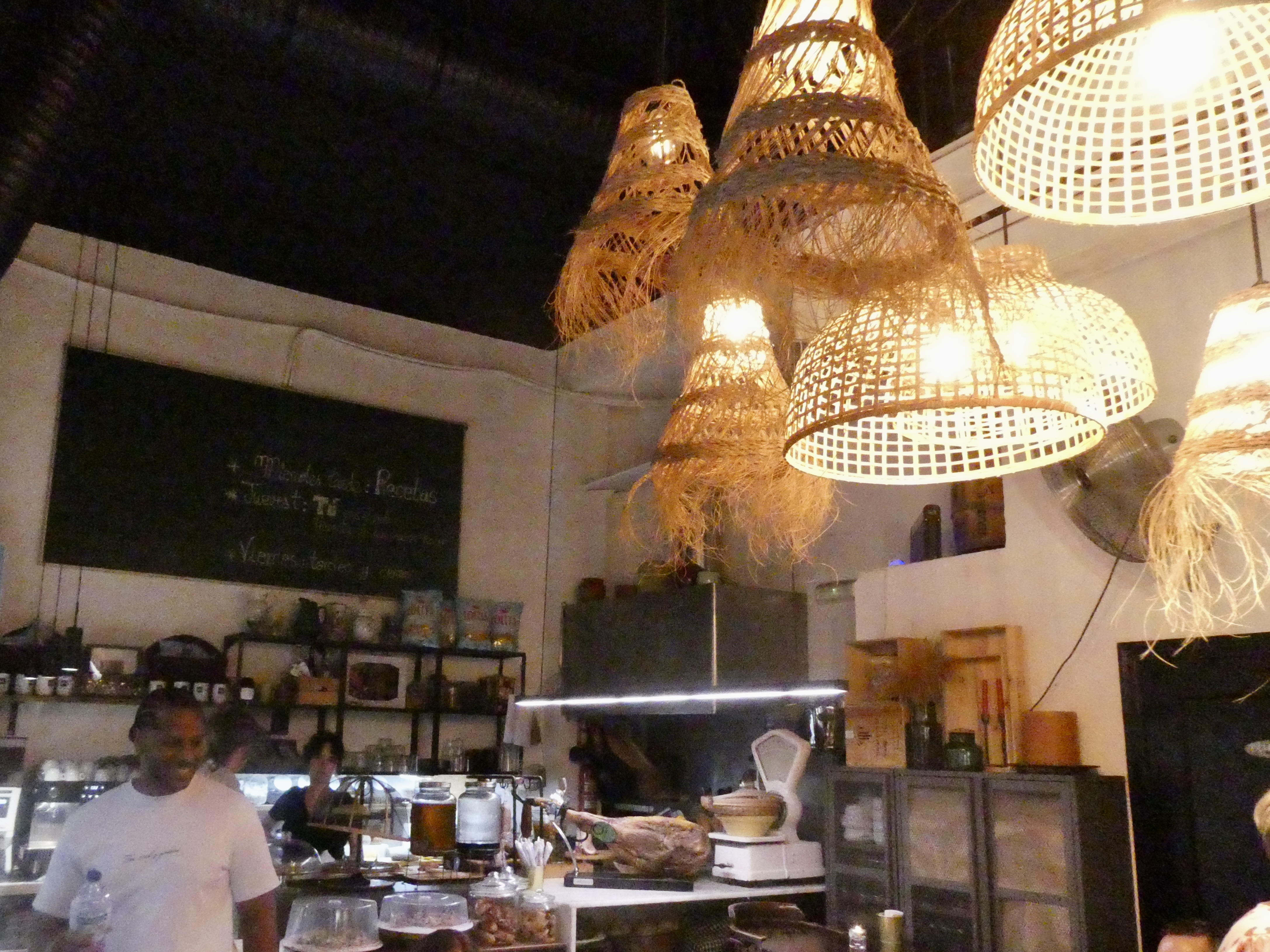
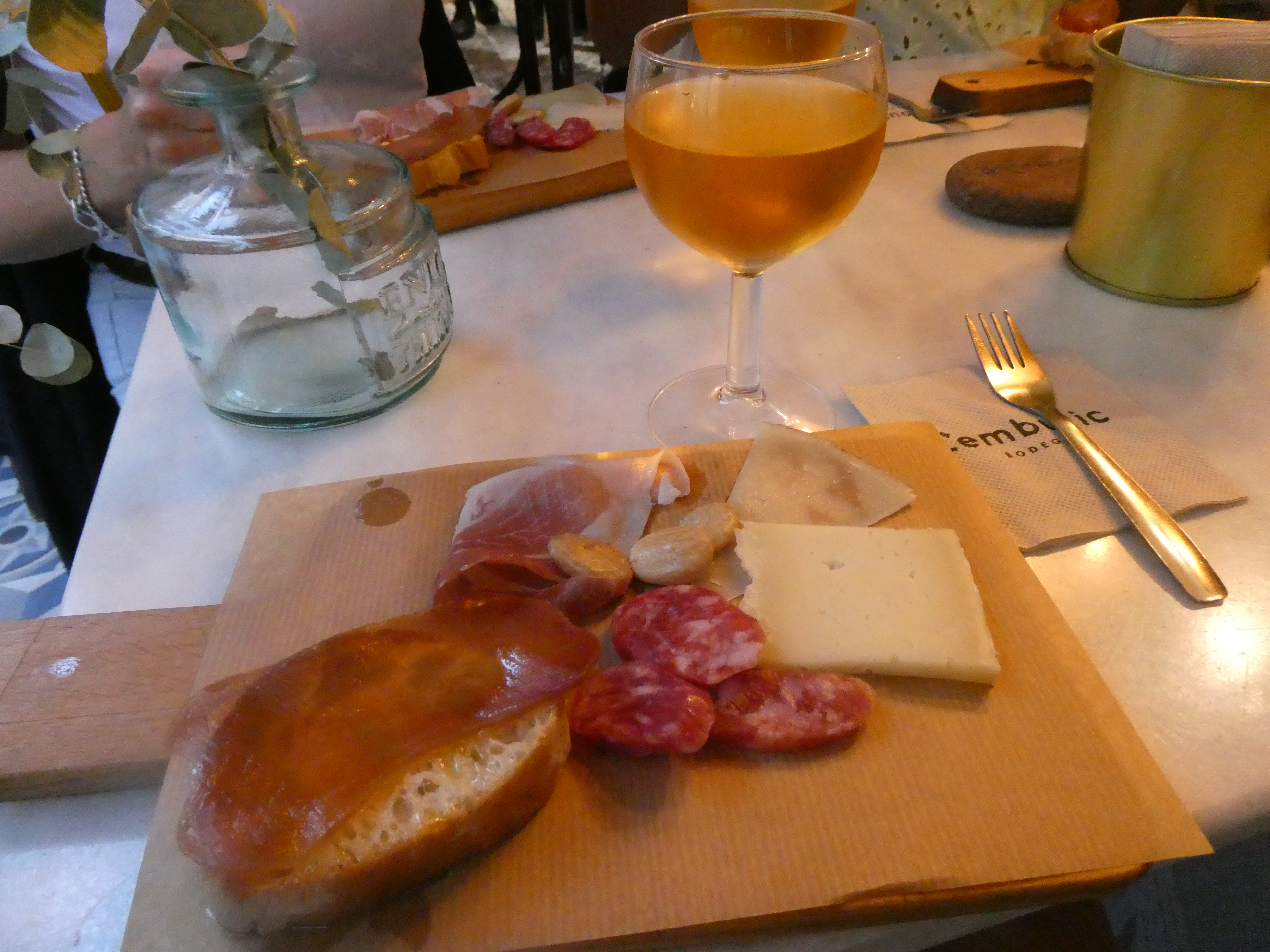
From here, we walked about ten minutes to L’embutic Bodega, a small bar/restaurant owned by two sisters and this was hands down the best restaurant for ambiance. It was lovely.
The food served here was basic but good. Cured tuna on bread, almonds, two different kinds of goat cheese, jamon and jamon sausage. I thought it was all really delicious. And we were served an orange wine with the tapas. The orange wine was OK, but the flavour was enhanced by the cheese. Without the cheese, I think the orange wine would have been a thumbs down.

We then walked another ten minutes to El Aguila La Mes Cabuda, which was near the Mercat Central de Valencia. This was hands down the least favourite stop. The location was very sterile with bright lights and the food was mediocre. Tomato tapenade topped with dried fish on bread, fried pork belly and the worst dish of the night, potatoes in monkfish broth. The only saving grace here was the El Aguila beer.

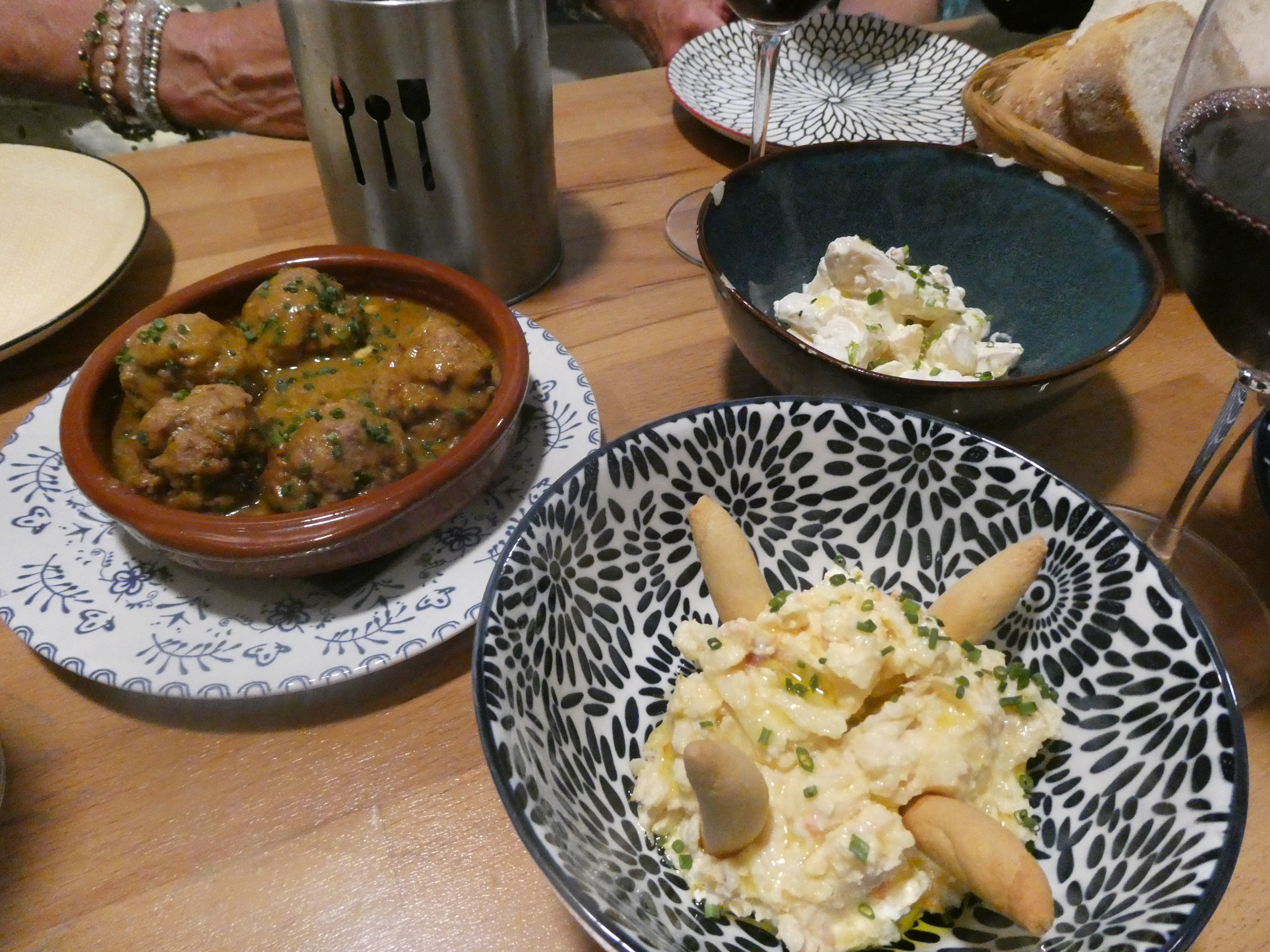
We then walked another ten minutes to Taberna el Templat. The ambiance here was pretty cool, but they could do with less bright lights (perhaps a soft yellow). Anyway, here, we were served squid salad
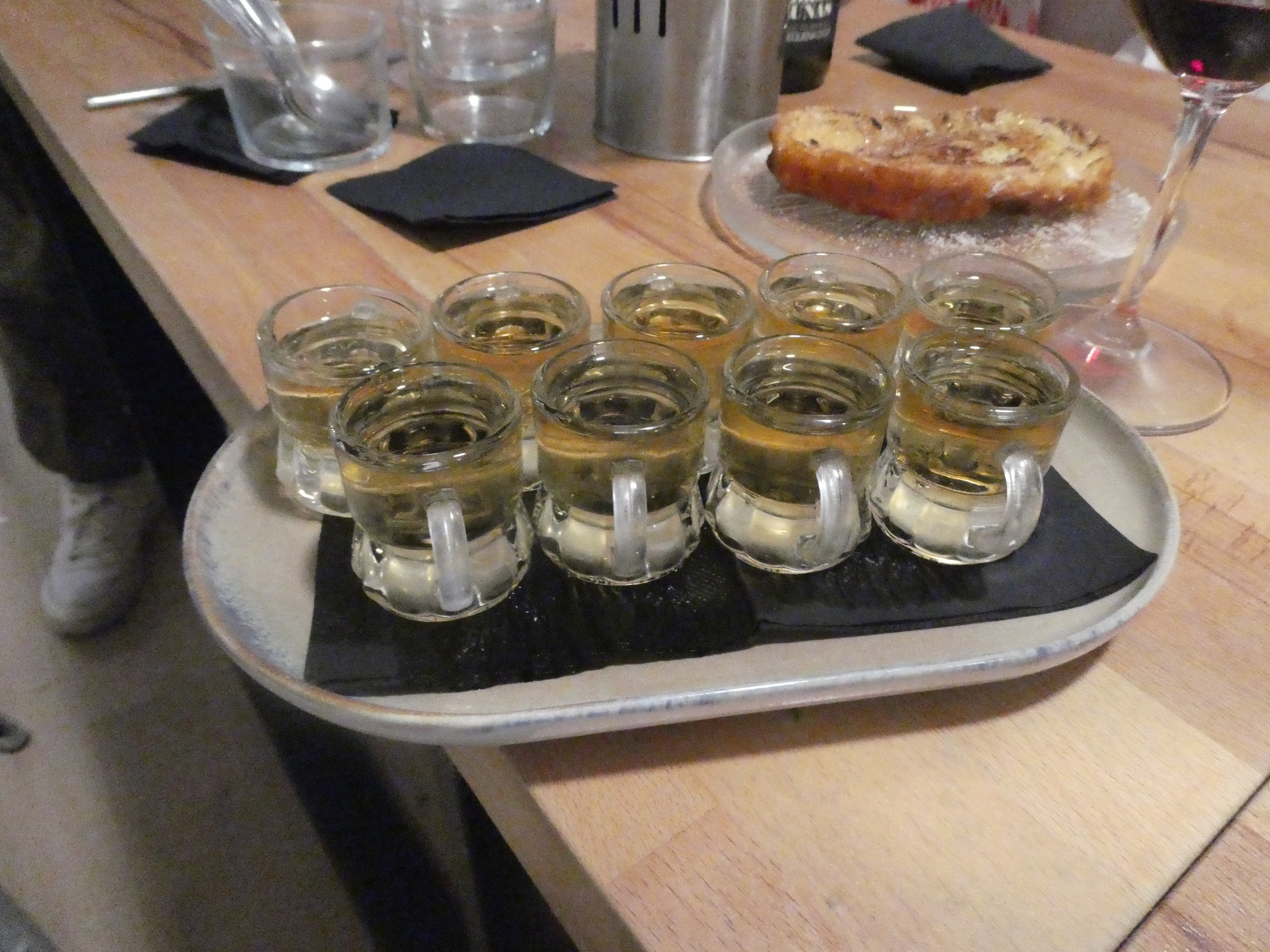
Russian salad with a twist (it contained rabbit instead of prawns) and Albondigas (Spanish meatballs) in a secret sauce (the star of the night). For desert we were served bread soaked in egg that was fried and then topped with sugar and cinnamon caramelized with a torch. We also had red wine (pretty good) and a shot of an almond aperitif.

Now throughout the night, I was treated to the a running commentary of laughter and jokes from the Windsor women. A truly great group of friends who, at the end of the night, wanted me to join them on a pub crawl. I don’t know where these women found the stamina, but I bowed out. I was done in.
So tomorrow I am off to Albufera a local nature sanctuary for a boat ride through the lake and some bird spotting.
