So I arrived in Algiers yesterday (Sunday) at 7:30 a.m. after getting up at the God awful hour of 2:30 a.m. Once I made it through immigration and the grumpy policeman stamped my passport, I made it to the hotel and by just before 10:00 was ensconced in a room and promptly feel asleep for five hours. As a result, I did absolutely nothing on my first day in Algeria (although if truth be told, there was nothing on my itinerary).
However, Monday was a different day. At just before 9:00 a.m. my driver Mohammad picked me up at the hotel and then picked up my guide for the day, Jasmine. Jasmin turned out to be a funny and opinionated as well as pretty jaded about women in Muslim countries.
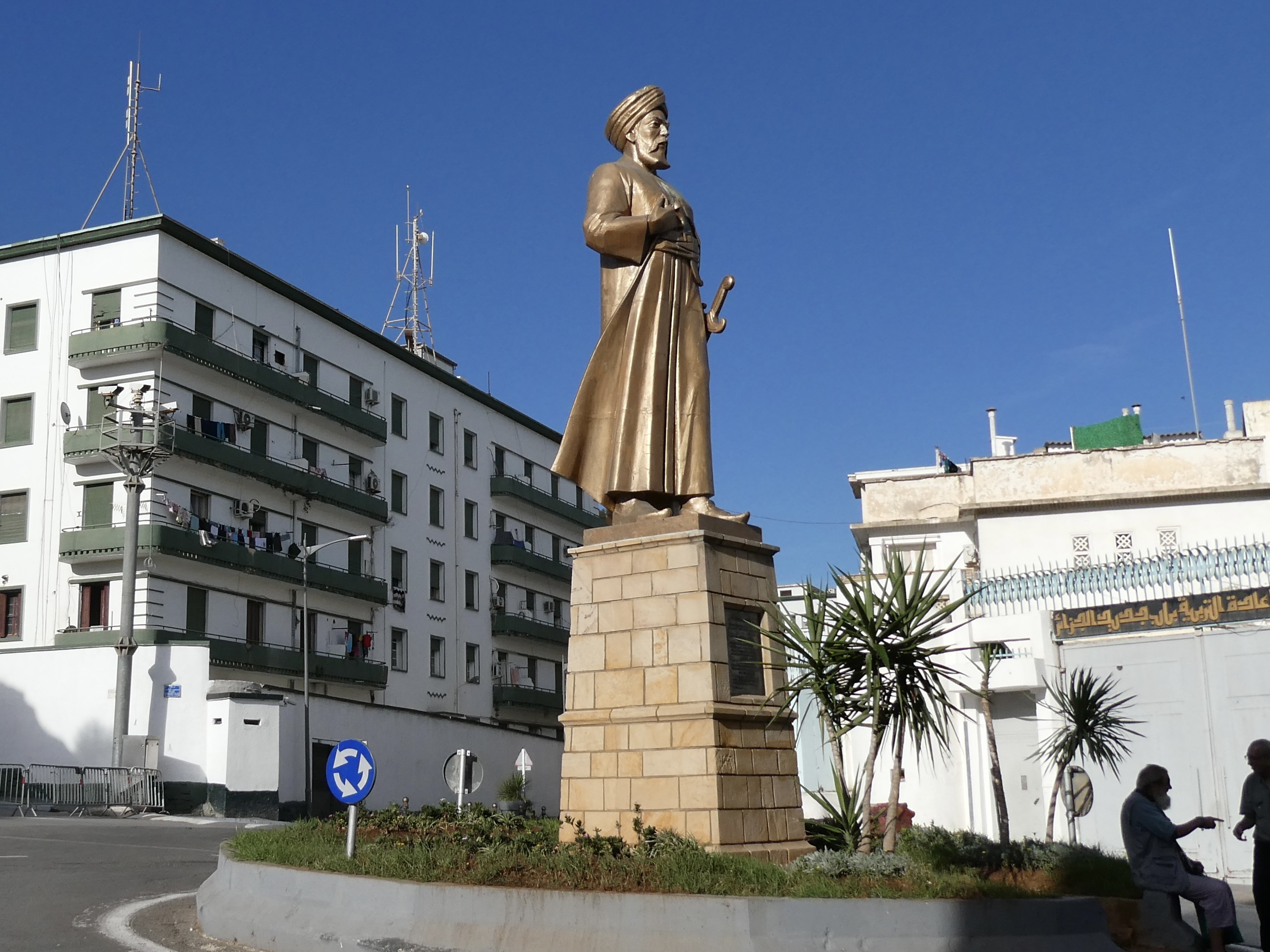
Anyway, we started out the day by first visiting the statute of the founding father of Algiers Bologhine ibn Ziri which sits near the top of the stairs you take to enter the Casbah, which is the old Algiers Medina or old town. We started our walk through the Casbah by taking the myriad of stairs that wind through the old quarter. Now Jasmine began the tour by telling me that the Casbah dates to the 10th century when the Berbers (a local tribe) built the walled city on one of the highest points in the region primarily for defensive purposes.
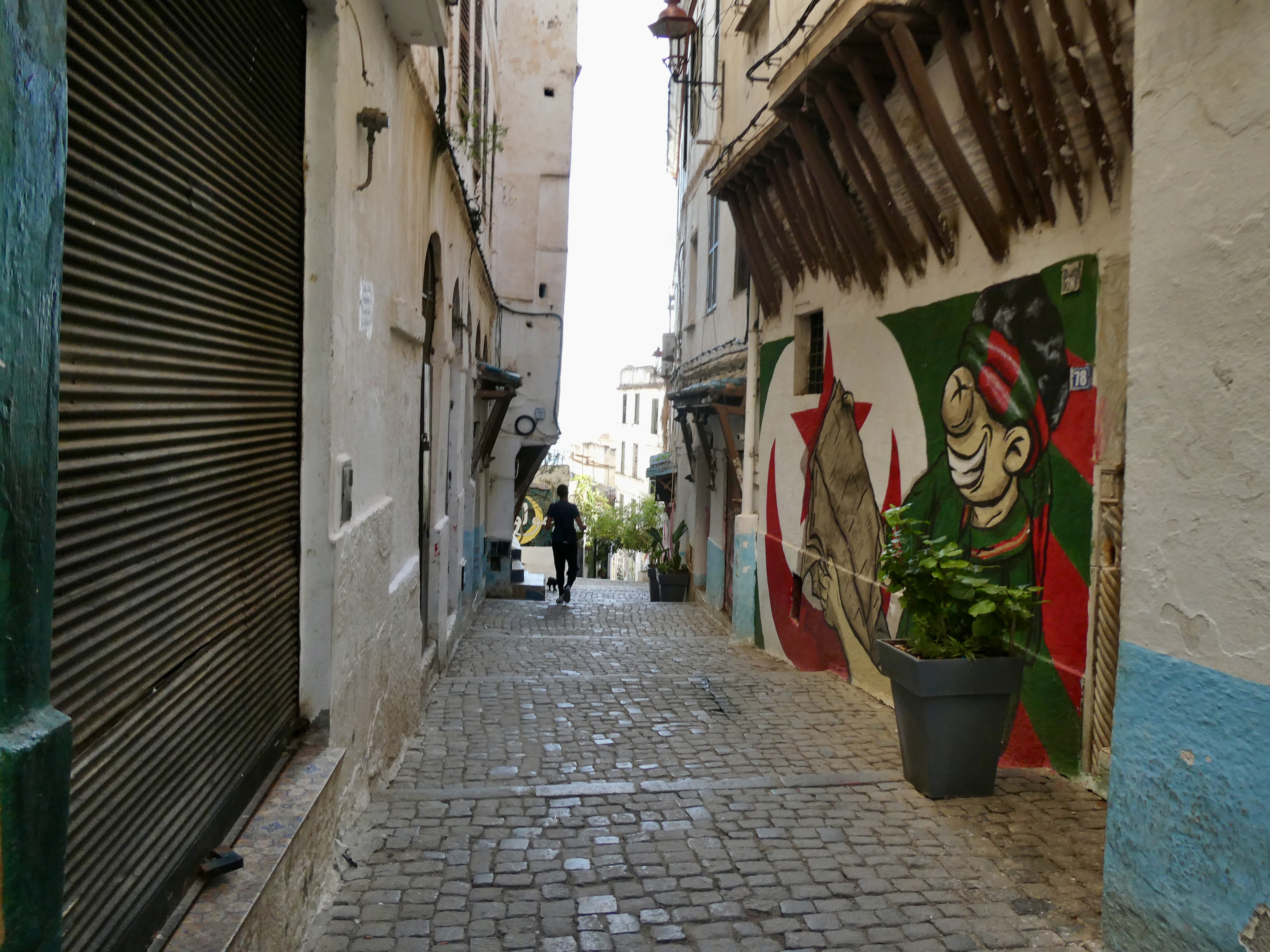
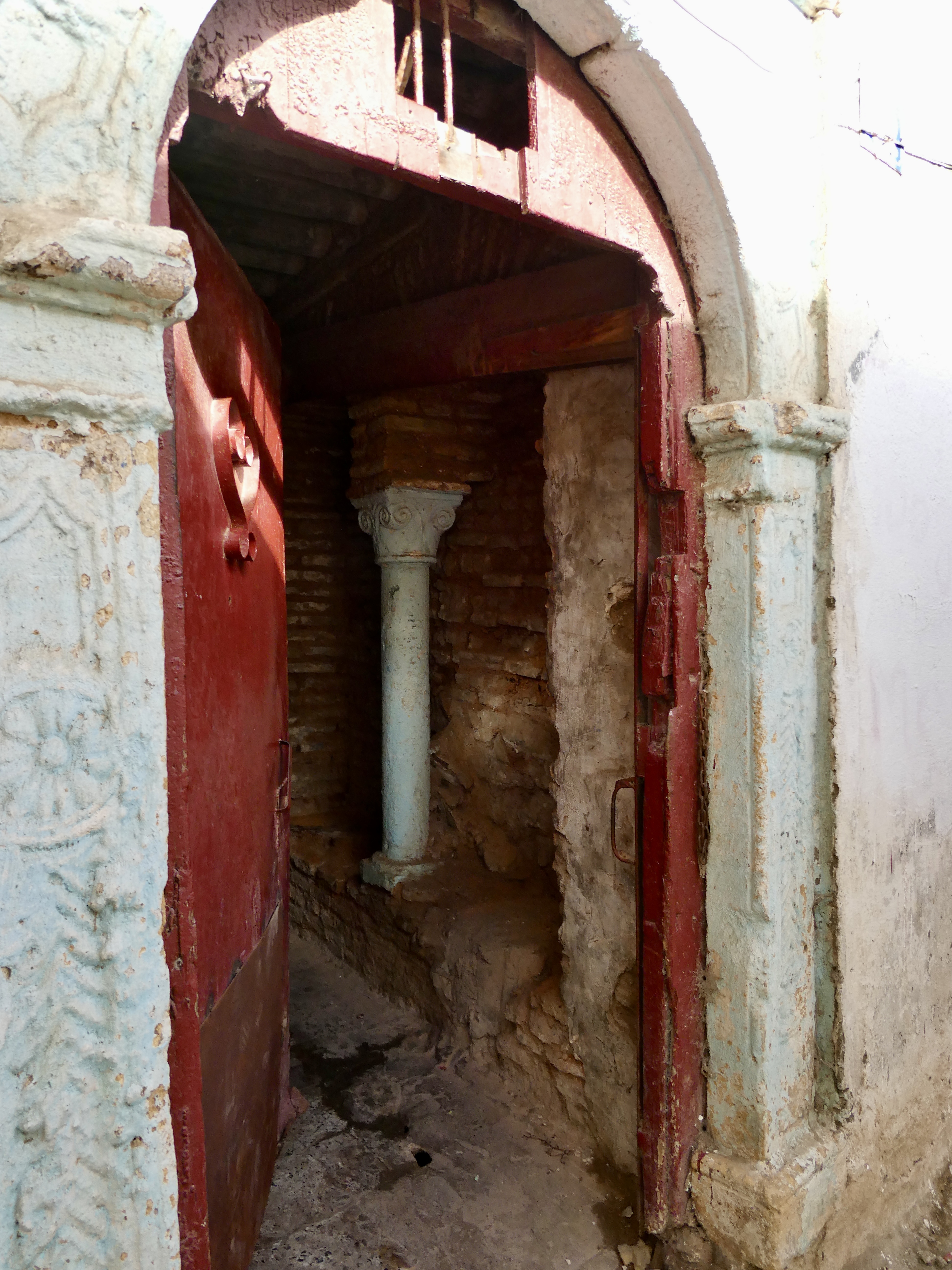
And not much has changed since the 10th century when the Medina was built as it still retains its labyrinth of winding narrow cobbled alleys and is a car free zone. As a result, the delivery of food and supplies and the removal of garbage are still done using donkeys (although we did not see any donkeys during our walk). The area was listed as a UNESCO World Heritage site in 1992.

Now I mentioned we started out taking a myriad of stairs down through the old town. In fact, in order to get anywhere in the Casbah you have to either walk down or climb up stairs and sloping walkways. And as we walked, we passed a number of old whitewashed houses, many in poor condition, but as Jasmine noted, these homes have been passed down for generations, they are owned outright and it is a whole lot cheaper than having to pay rent. In addition, there was an awful lot of artwork on the walls of the buildings.
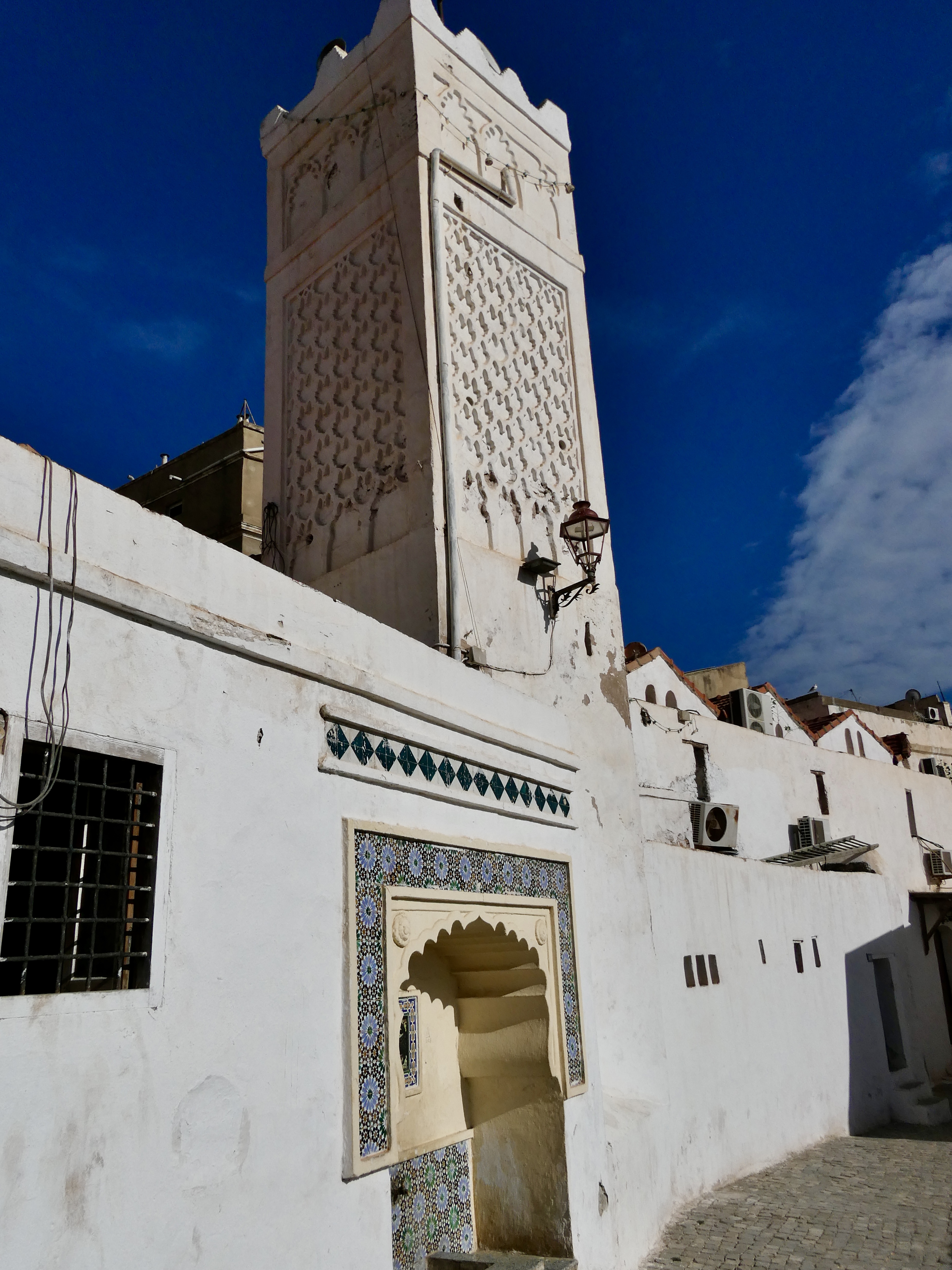
There are also a number of old mosques in the area, including one in particular that is one of the the oldest in the Casbah, the Sidi Ramadan Mosque, dating to the 11th century. The mosque was not particularly big, but its minaret was 32 meters or 115 feet high.
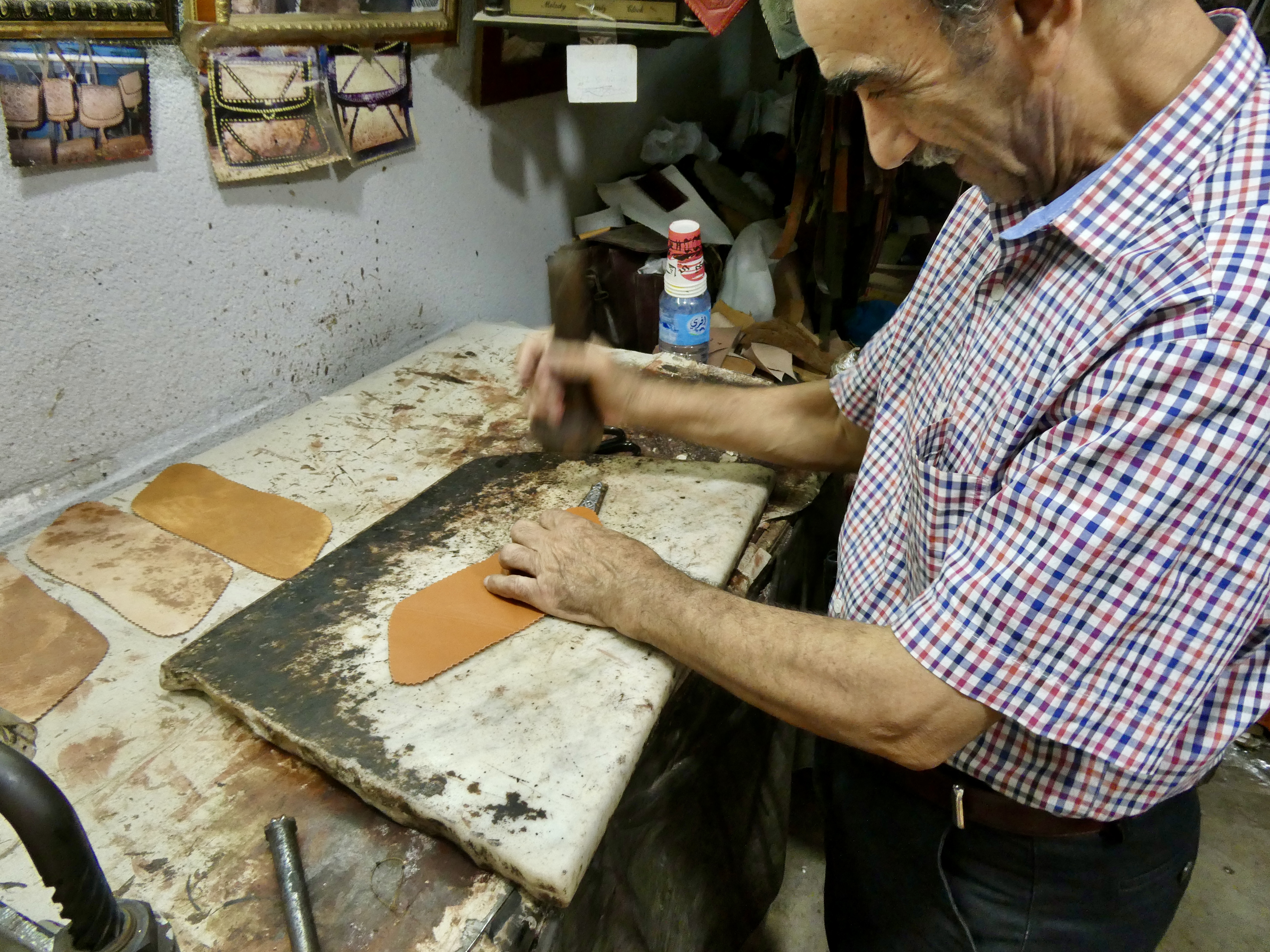
At one point as we walked the narrow alleys, we stopped in an artisan shop and were provided with a demonstration on how leather goods are still handmade in the Casbah. This gentleman took a piece of leather and demonstrated how he makes designs in the leather using stamps which he pounds by hand creating patterns on the leather. The man we met had been doing this for 42 years. Sadly, he is having a hard time purchasing leather because the Italians are apparently buying it all up.
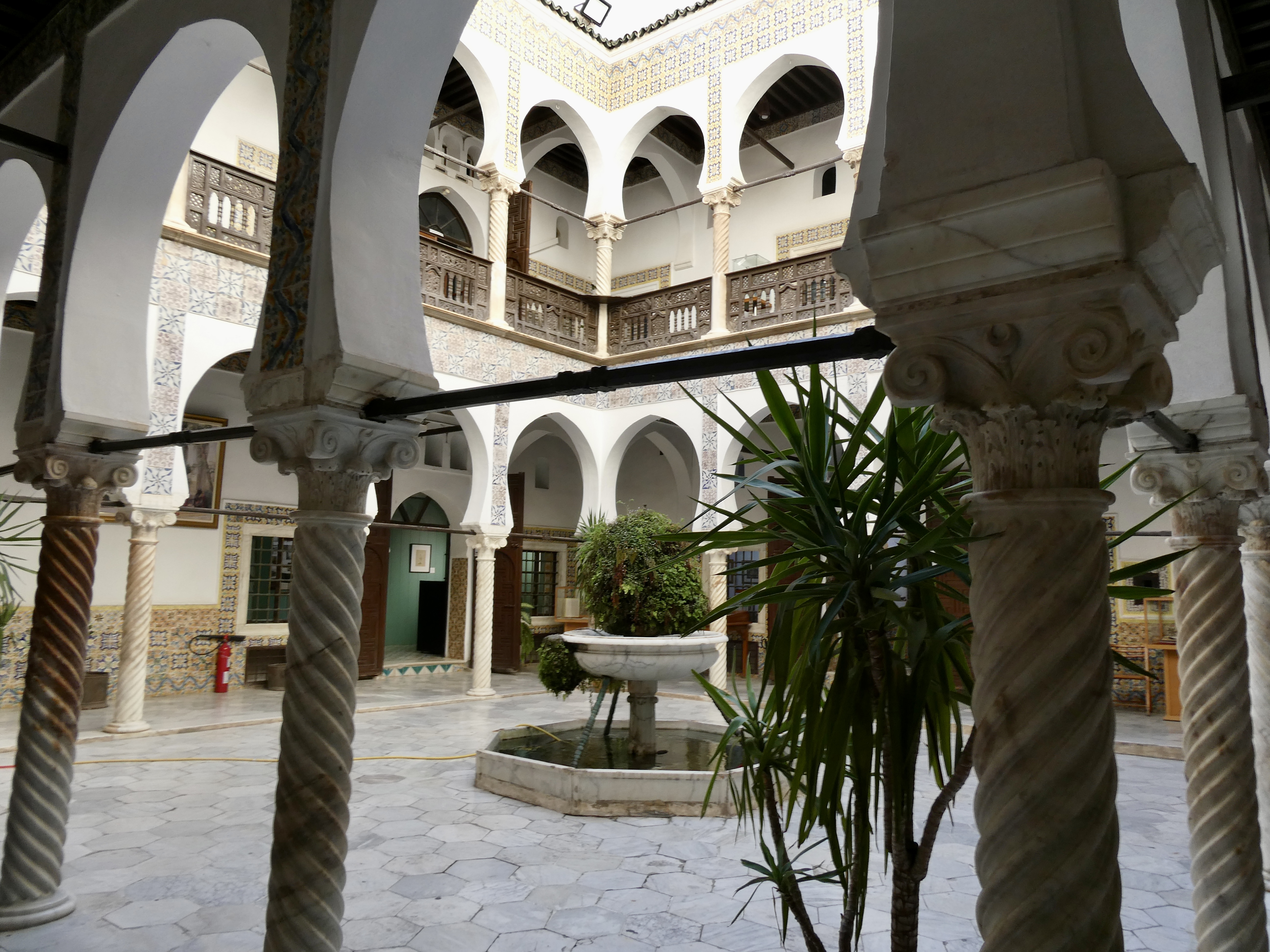

We next moved on to the Dar Mustapha Pacha palace, which was built in 1798. The building consisted of three floors. The first floor was for greeting common folk. The second floor was for visiting noblemen. The third floor was the private residence for the favourite wife.
Now the place contains over half a million antique tiles from all over the Mediterranean and is constructed (like so many of these palaces) around a central courtyard with a fountain in the middle.
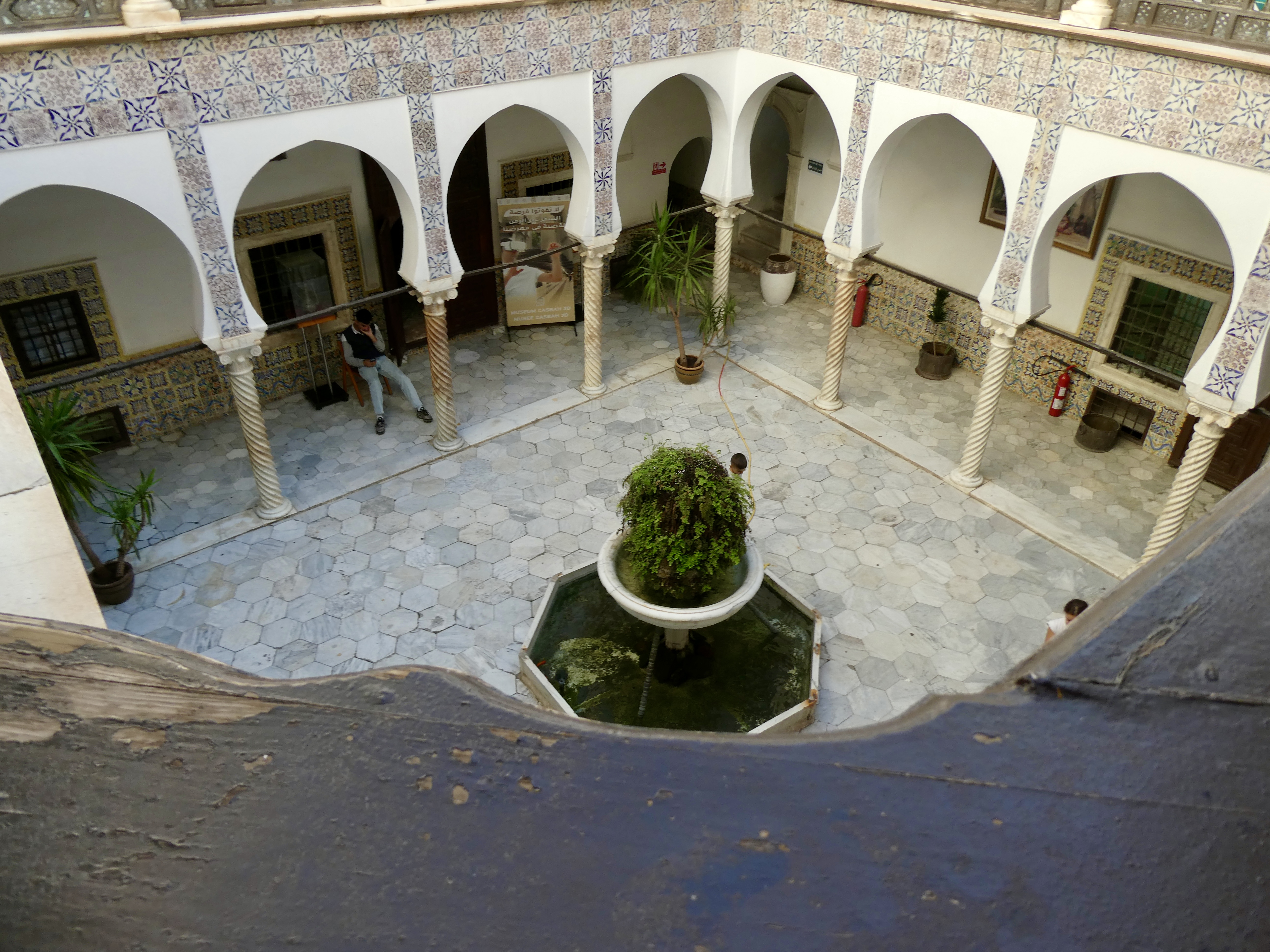
On the second floor there were servants quarters and kitchen area for serving the noblemen. In fact the door leading from the servants quarters to the noble area was not that tall forcing the servants to bend over as then went through the door thus avoiding the embarrassment of failing to bow to the noblemen as they entered the room.

I ended up wandering the two floors (no access to the third floor) where the was a display of art work and calligraphy. Now the thing I did not get is that the place is billed as housing the Calligraphy Museum of Algiers, but there was very little calligraphy displays and mostly a lot of religious artwork on the walls. My favourite art display was not actually a painting, but a tiny box with miniature paintings on the box. Absolutely gorgeous.

From here, we continued walking down more stairs stopping at the “Art House”, which has a tea shop in the back room. Now sadly, I screwed up the picture of the room, which is too bad as the room was gorgeous, but I do have one picture of the proprietor making me mint tea from dried mint. (Oh and I found a hand carved Christmas ornament in his shop! YAY!)
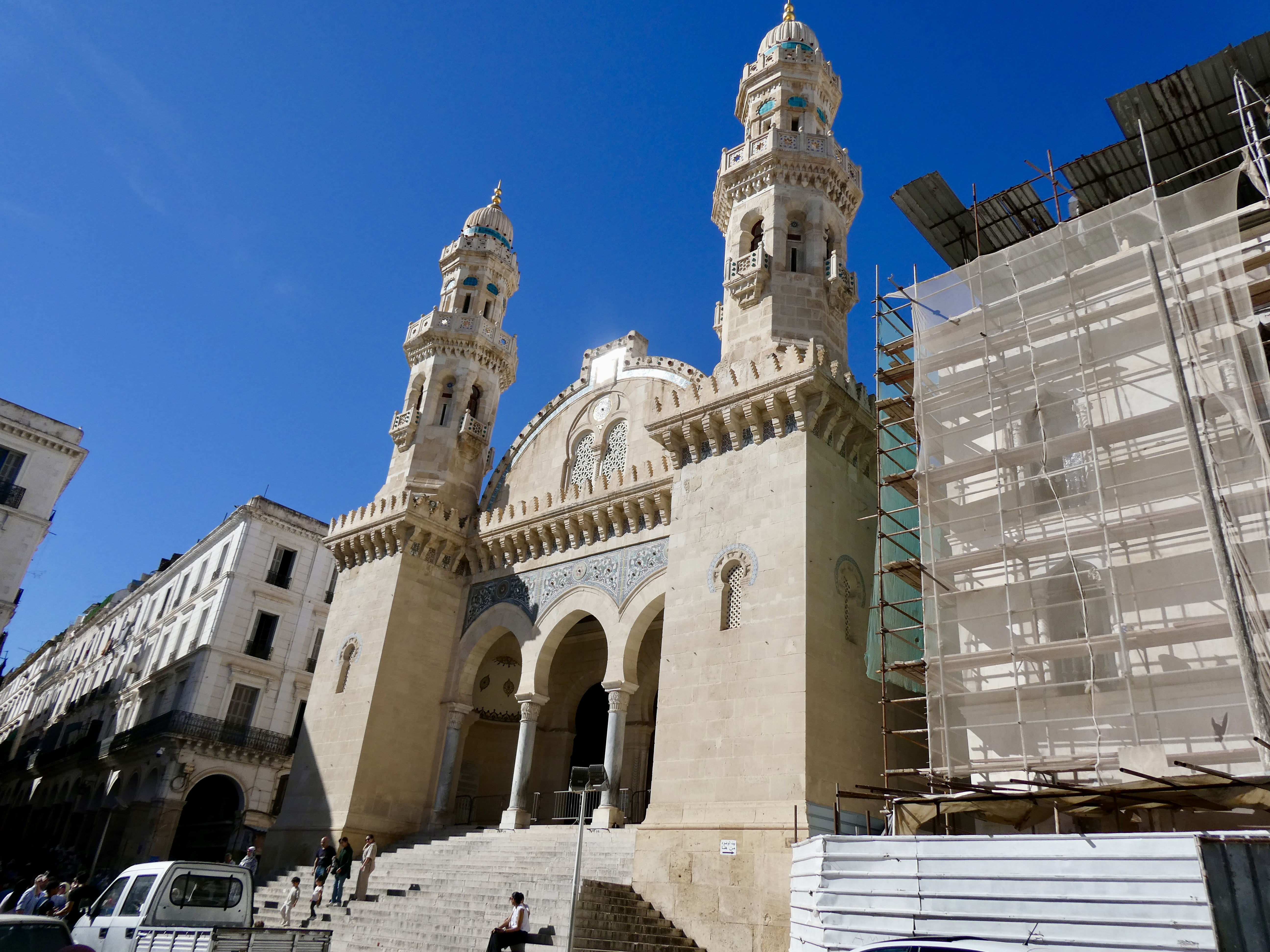
So after the mint tea break, we walked the last little bit to the lower Casbah where we cook in the 17th century Ketchaoua Mosque. Now originally, a mosque was built on this site in 1020, but when the French took over, the mosque was converted into a Roman Catholic cathedral in 1832. However, a few years later the mosque was mostly torn down and a new cathedral built in its place although the design retains the Moorish architecture. When the French were booted out of Algeria in 1962, the building was converted back to a mosque.
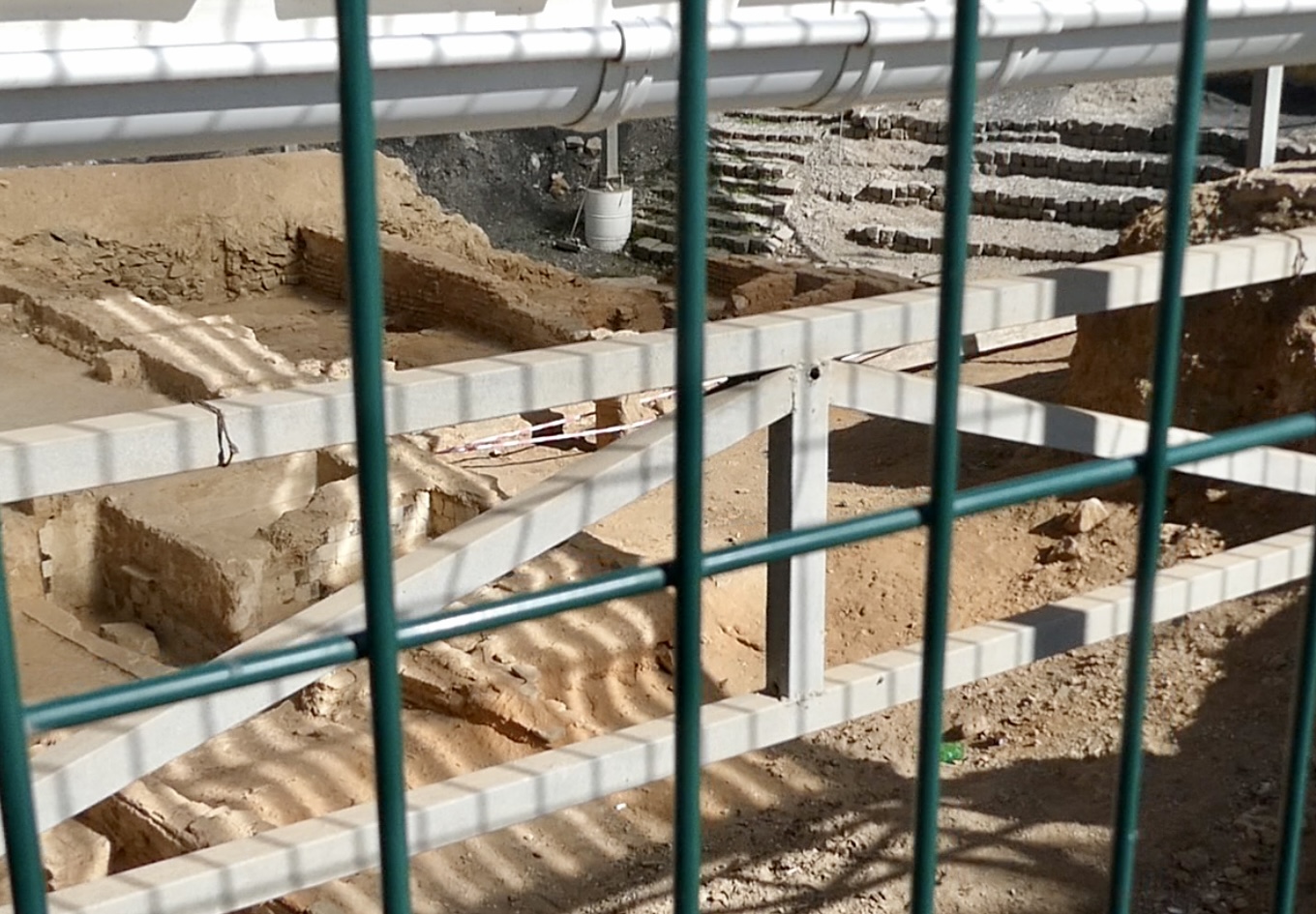
From here we stopped by 10th and 11th century partially excavated Ottoman ruins, where we could see public toilets, staircases and some mosaics on the stairs. The site was uncovered in 2009 during excavation work for the Place de Martyrs subway stop. I was quite surprised that this site was so under-publicized. I thought it was fantastic.
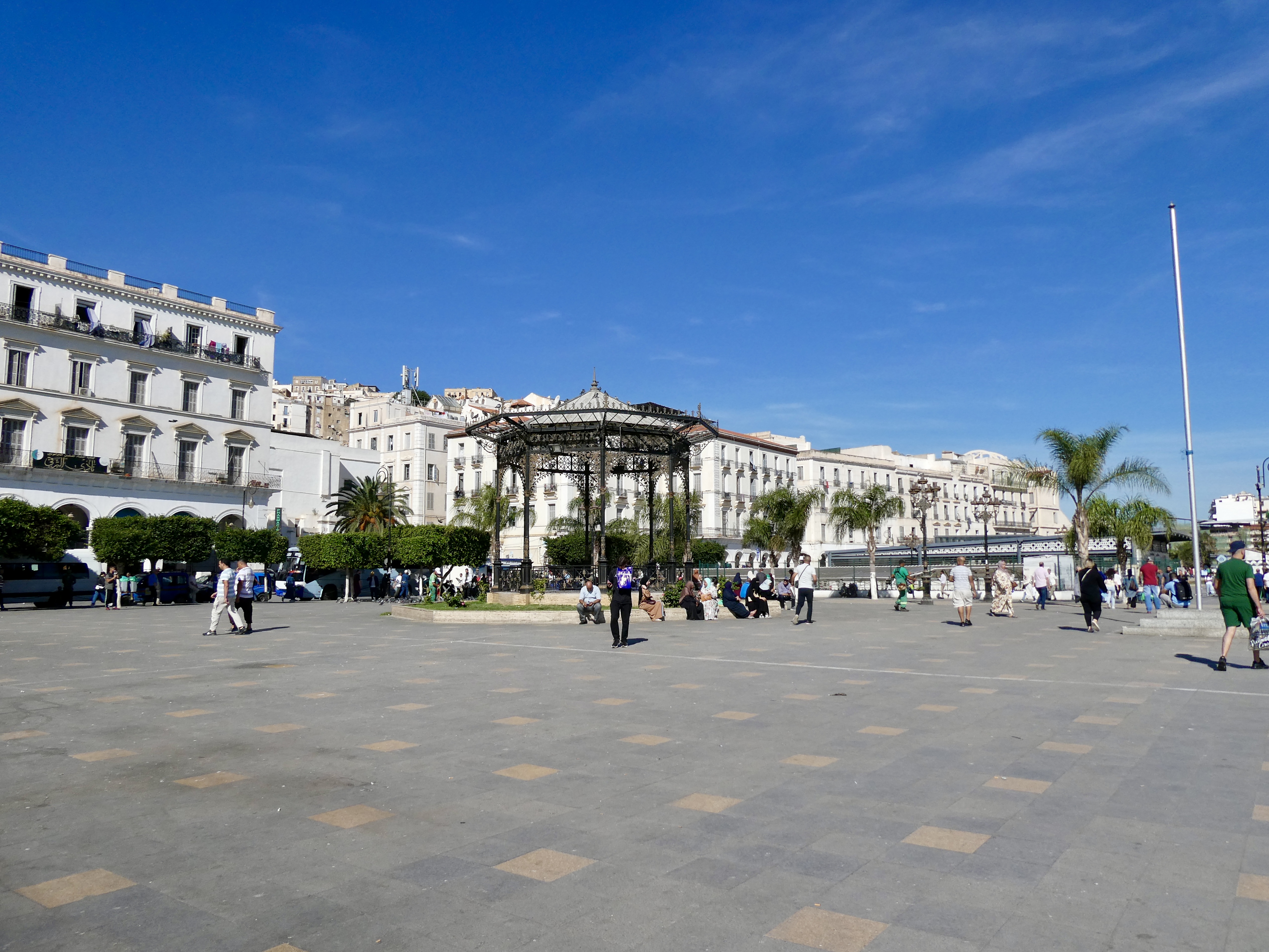
We then crossed through Martyr’s Square which was the hub of social activism during the turbulent times in the 1990s, but today, the square is a cultural hub with a musical kiosk standing in the middle of the square where a wide range of Algerian musicians are known to perform.

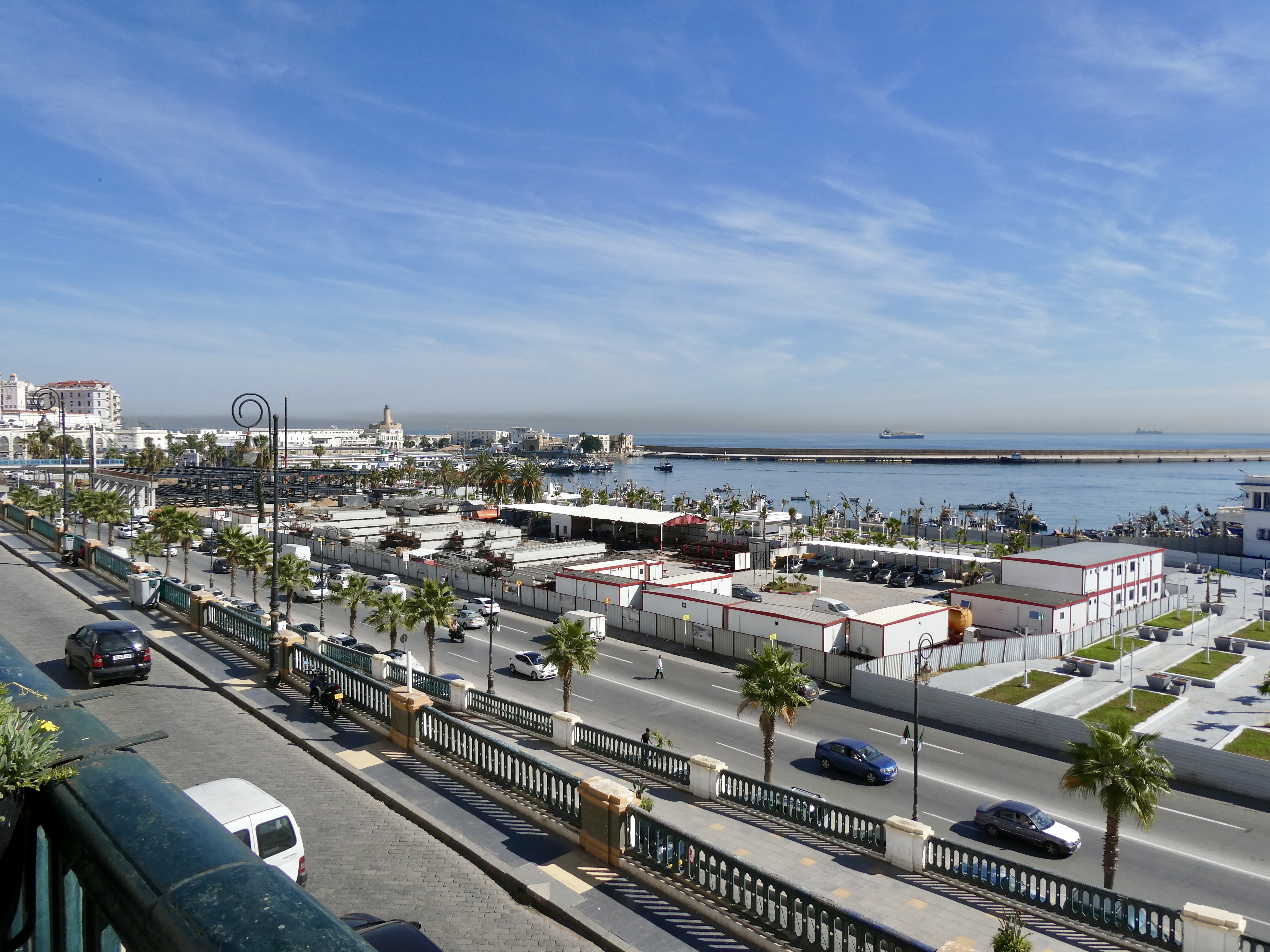
From here, we left the Casbah and started our walk along the waterfront facing the Mediterranean where we passed huge old French colonial buildings, which are relics from Algeria’s troubled French occupation. And as we walked it was clear that the Algiers waterfront was an important part of the city. The waterfront was a hive of activity with two cruise ships in port as well as numerous cargo ships filled to capacity with railway boxes.
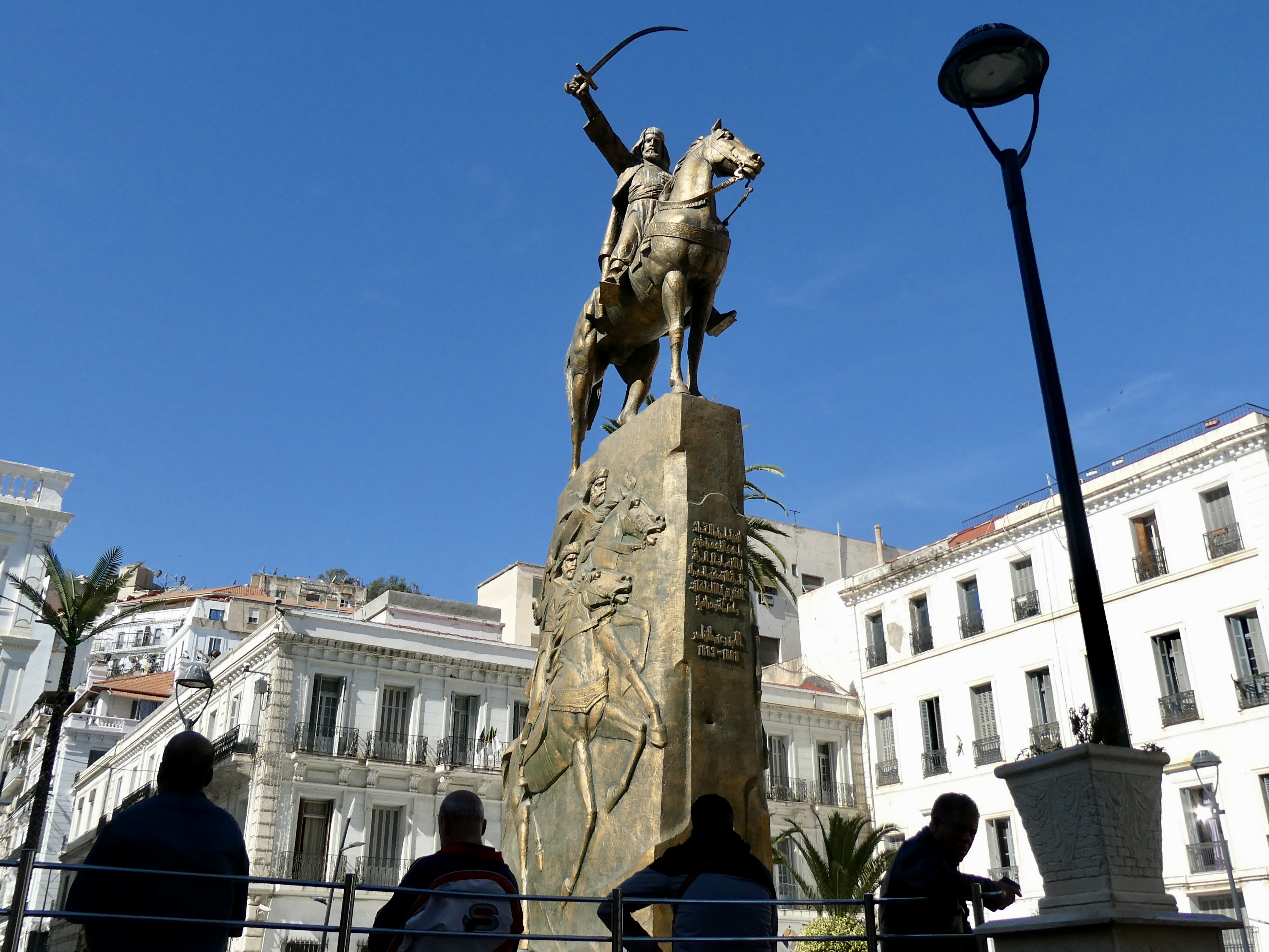
We eventually turned away from the water front and up the crowded streets to the 18th century statute of Place Emir Abdelkader, the last Algerian sultan to resist the French invasion in the 1830s. And nearby was the Milk Bar, which was the site of numerous bombing efforts when the Algerians were fighting agains the French.
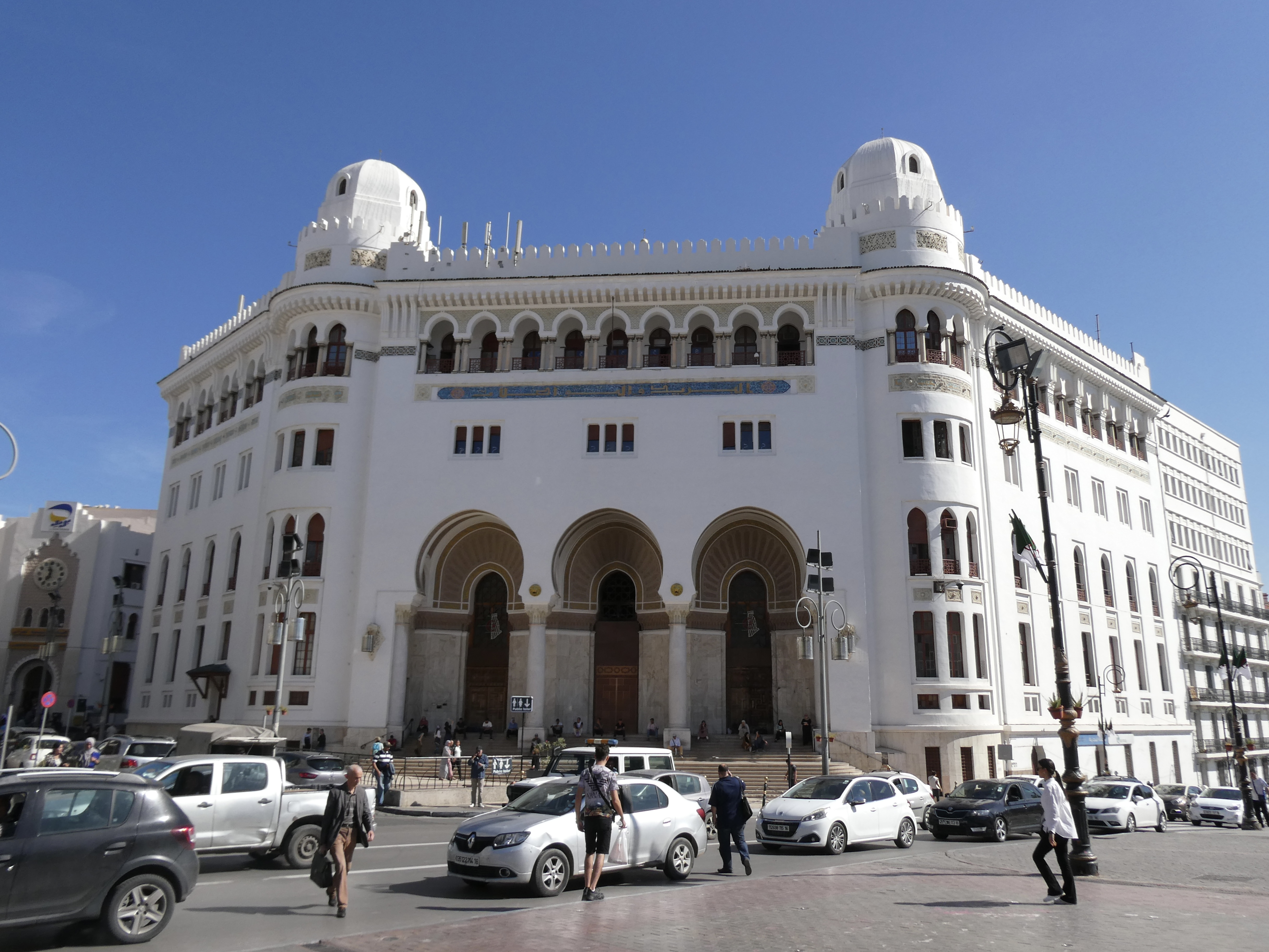
We then walked down the street to the largest building in the area, the Grand Post office, which was constructed in the early 20th-century using Moorish architecture. Today, only a small portion of the building is used as a post office.


By now, it was after 12:30 and unlike the Spanish who eat lunch between 1:30 and 3:30, the Algerians like their lunch at noon. So Jasmine and I stopped for lunch at a small local restaurant, where Jasmine ordered for me (since I had no clue about what to order). Now Jasmine advised that Algerians love to eat and this was obvious when I ended up with bread, Bourek aka chicken rolls and Chorea beida (chicken with noodles in chicken broth). I had a bit of bread, ate both Bourek and ate maybe a quarter of the Chorea beida and I was still stuffed. It was way, way, way too much food. I was actually to the point of uncomfortable I was so full.

Anyway, once lunch was done we wandered through the packed streets. Apparently many, many people do not work in this country because (i) the average wage is 120 Euros per month and (ii) if you don’t work the government gives you 100 Euros per month. So the attitude is why work?
So we walked down a couple of side streets to reach a local market where just about everything was being sold as people wandered in the middle of the street occasionally jumping out of the way of for a passing car, which could barely fit on the narrow road.

We eventually stopped inside a building that housed fruits and veggies as well as lots and lots of spices. Even though I was absolutely stuffed, the spices smelled fabulous and the pomegranates and pears looked delicious.

As we were leaving the market, we came across a very kind hearted sole who was feeding some stray cats. Cats are literally everywhere on the streets of Algiers and many, many of these strays look like they haven’t eaten in days so it was heartening to see this young woman feeding the cats.

After the walk through the market, we doubled back towards the waterfront and walked down more stairs than I could count to reach Algeria’s newish subway system, which began operations in 2011 and consists of only one line. But judging from the amount of traffic on the roads here, they should seriously expand the line.
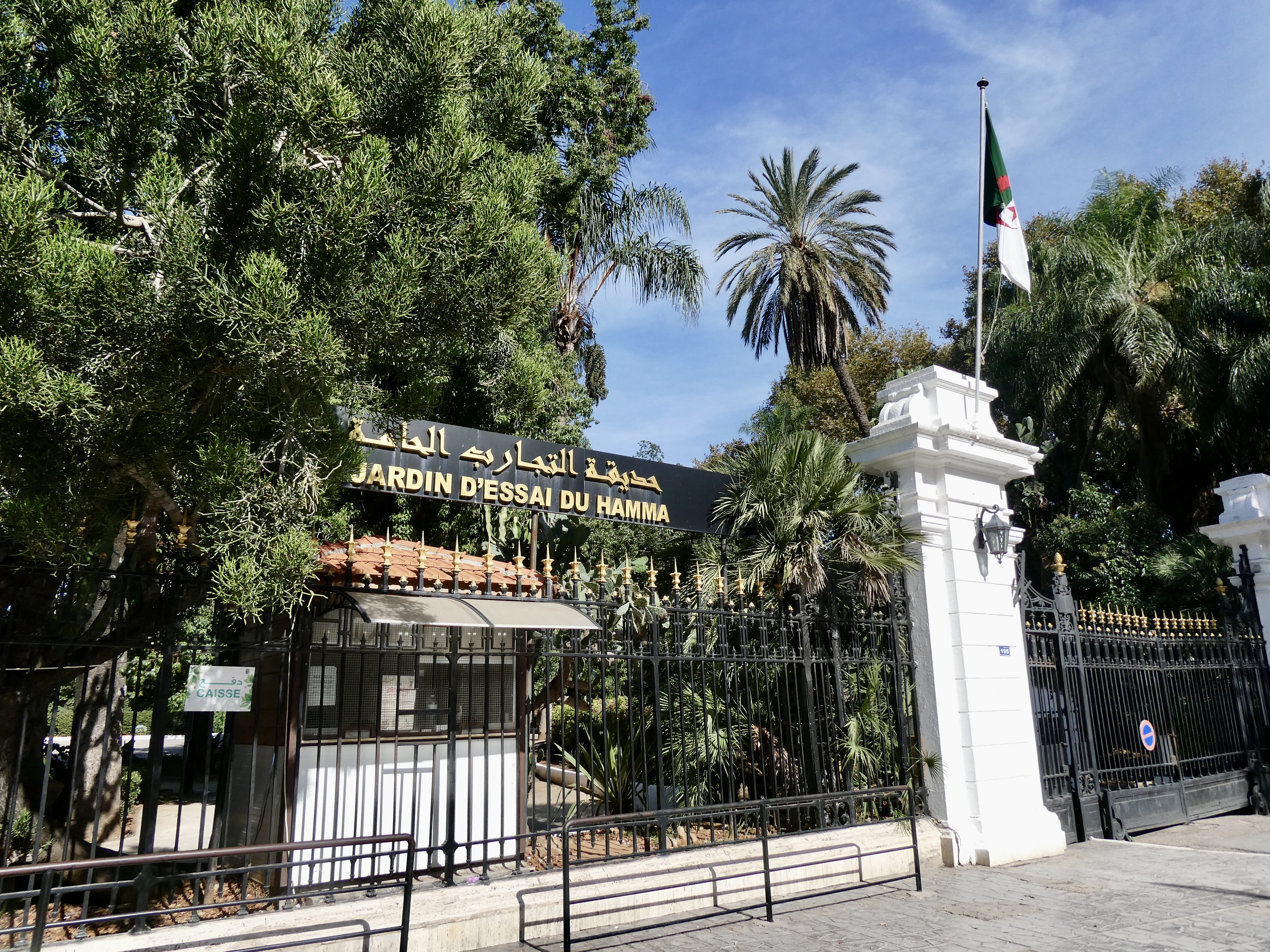
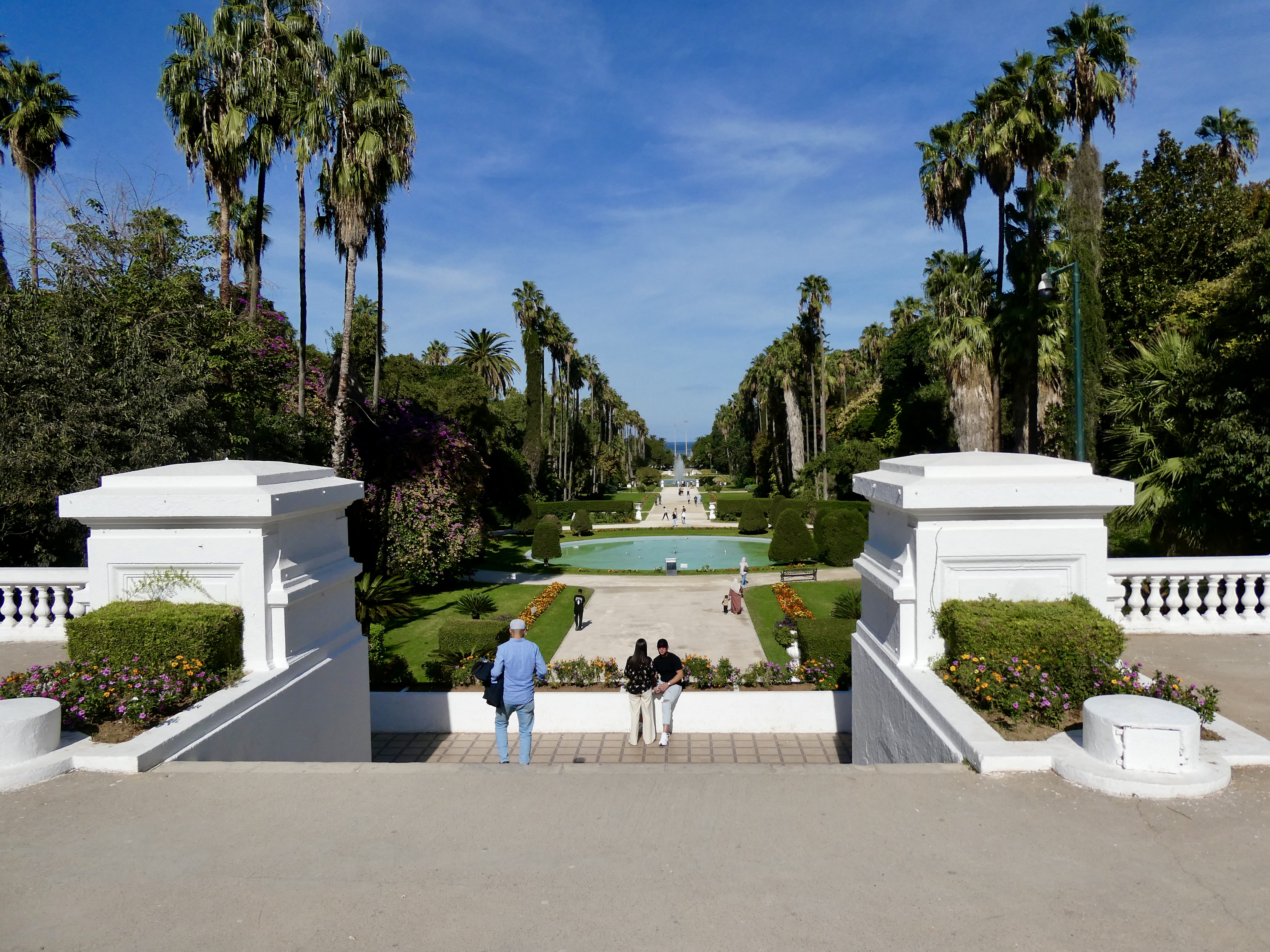
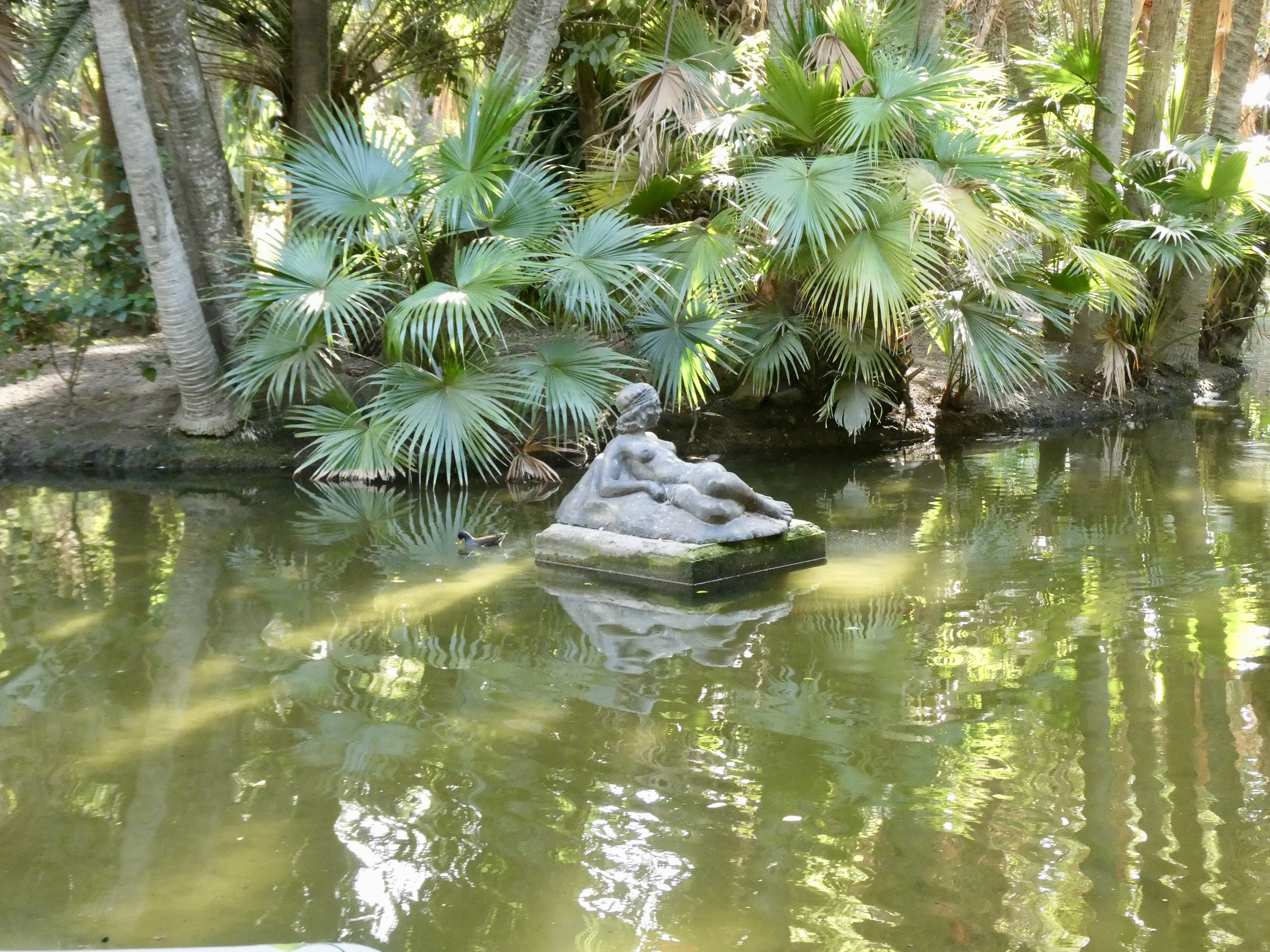
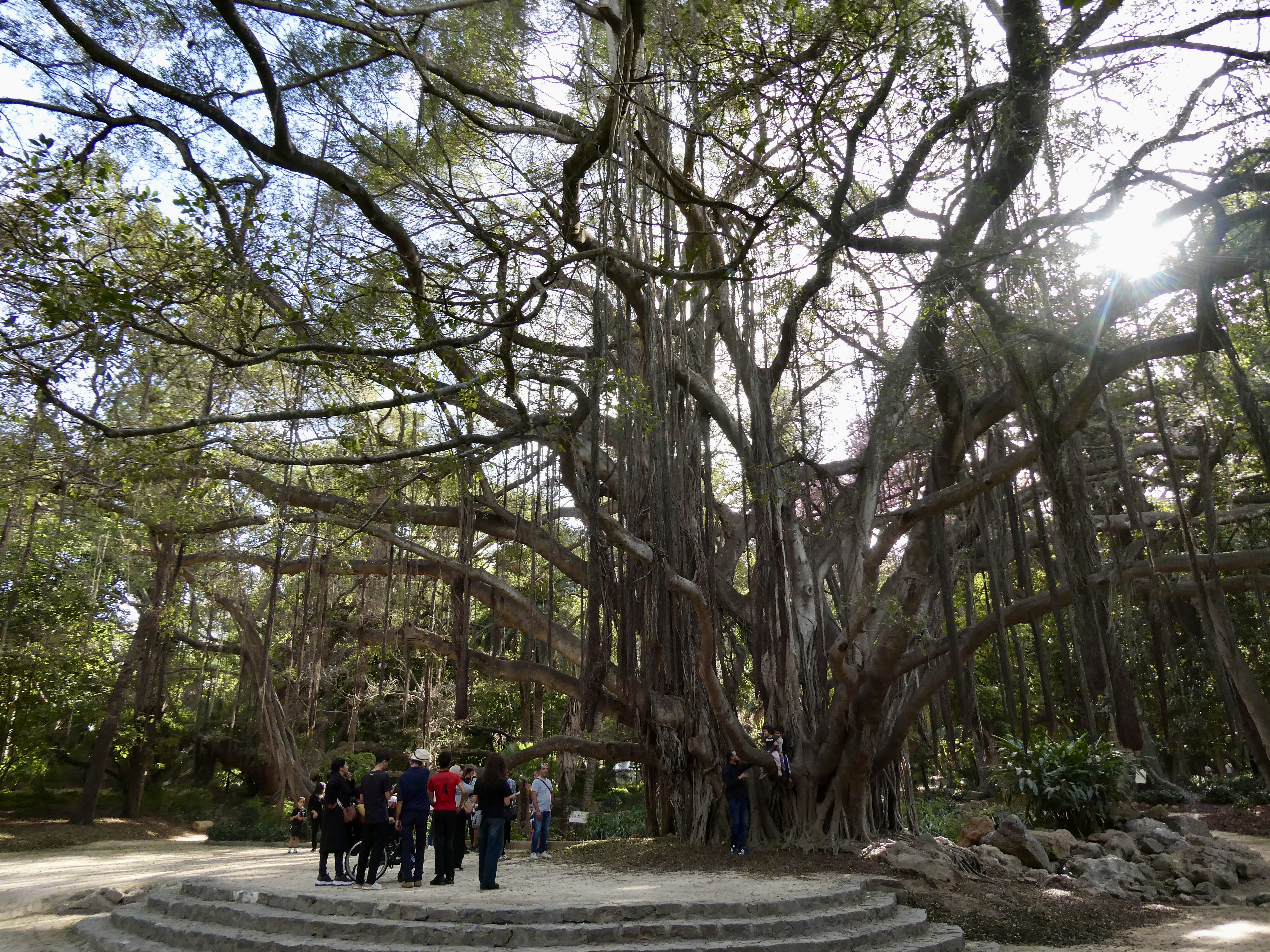
Anyway, our trip on the subway served a purpose. We were headed four stops away to the Algiers Botanical Garden of El Hamma, a large botanical garden dedicated to the collection and preservation of a wide range of plants and gigantic trees, including one banyan tree that was front and center in the 1960s Tarzan movie.
Once we arrived at the gardens, we took a walk through the central area with magnificent fountains and lots of green lawn areas. The gardens were really quite lovely.
At one point, Jasmine suggested we stop at a tea shop in the gardens so it was on to cup #2 of mint tea. Now the tea would have been fine, but Jasmine insisted I try Algerian nougat as well as Algerian baklava. Now, I love sweets, but I was so full I could barely finish my portions. Unfortunately, I was so full that I later felt like crap on my whole trip from Algiers to Ghardaia (more about that later).
So our last stop of the day was to take the tram from the gardens up the hillside to the 92 meter tall Monument to the Martyrs, situated on a hill and overlooking the whole city. I had been seeing this monument everywhere I looked when taking in the views of Algiers and was glad to finally take a look up close and personal.

Now once we finished the tram ride, we took in the view to the tallest minaret in the world at the Great Mosque of Algiers before walking to the Monument to the Martyrs. Now according to Jasmine, the Monument to the Martyrs is a constant reminder of the lives lost during Algeria’s struggle for independence and is dedicated to the hundreds of thousands of Algerians who lost their lives during the 8 year fight against the French between 1954 and 1962. It was most impressive.
So with that, my tour of Algiers was done for the day. Mohammad picked me up and we set off for the Algerian airport where I was catching a 6:30 p.m. flight to Ghardaia … or so I thought. Turns out when I checked in at just after 4:00, my flight was actually not set to depart until 8:40 giving me a horrendous 4 ½ hours at the domestic terminal of the airport that had zero services. Unfortunately, my flight was further delayed and we did not take off until after 9:00 p.m. arriving in Ghardaia at 10:30. My driver was there to meet me, but it was nothing but hurry up and wait as the luggage took forever and my security clearance (police take your passport and register it etc.) took even longer. After passing numerous checkpoints (this southern part of Algeria is big on security) it was well after 11:30 before I checked into my hotel. Ugh.
Anyway, tomorrow it is a tour of some of the five villages in the M’Zab valley.
