So today I was in the M’Zab Valley about an hour and a half south of Algiers by plane. My guide Kacem arrived just after 9:00 a.m. with Zachery my driver and we set out to visit one of the five ancient walled towns that make up the M’Zab Valley. Now the five “qsur” (walled towns) were established by a branch of the Berber tribe known as Mozabites. The five towns are El Atteuf established in 1012, Ghardaia established between 1048 and 1053 and the largest of the five towns, Bou Noura established between 1048 and 1065, Beni Isguen established in 1124 and Melika established between 1012 and 1355.
Now the five walled towns were built on a very rocky, mountainous area. Each of the towns had a focal point mosque with minaret and several watchtowers at the top of the hillside and from there homes and shops were built below. Homes were constructed around courtyards with small windows for maximum privacy. In fact, that privacy is paramount today as married women are completely covered in a white cloak with only a small opening for one eye because they cannot be seen uncovered by any man outside of family. We saw many of these women and were told not to photograph them. However, if there was an incidental picture of a woman in white as we were taking a picture of another subject that was acceptable. I ended up with one such picture.
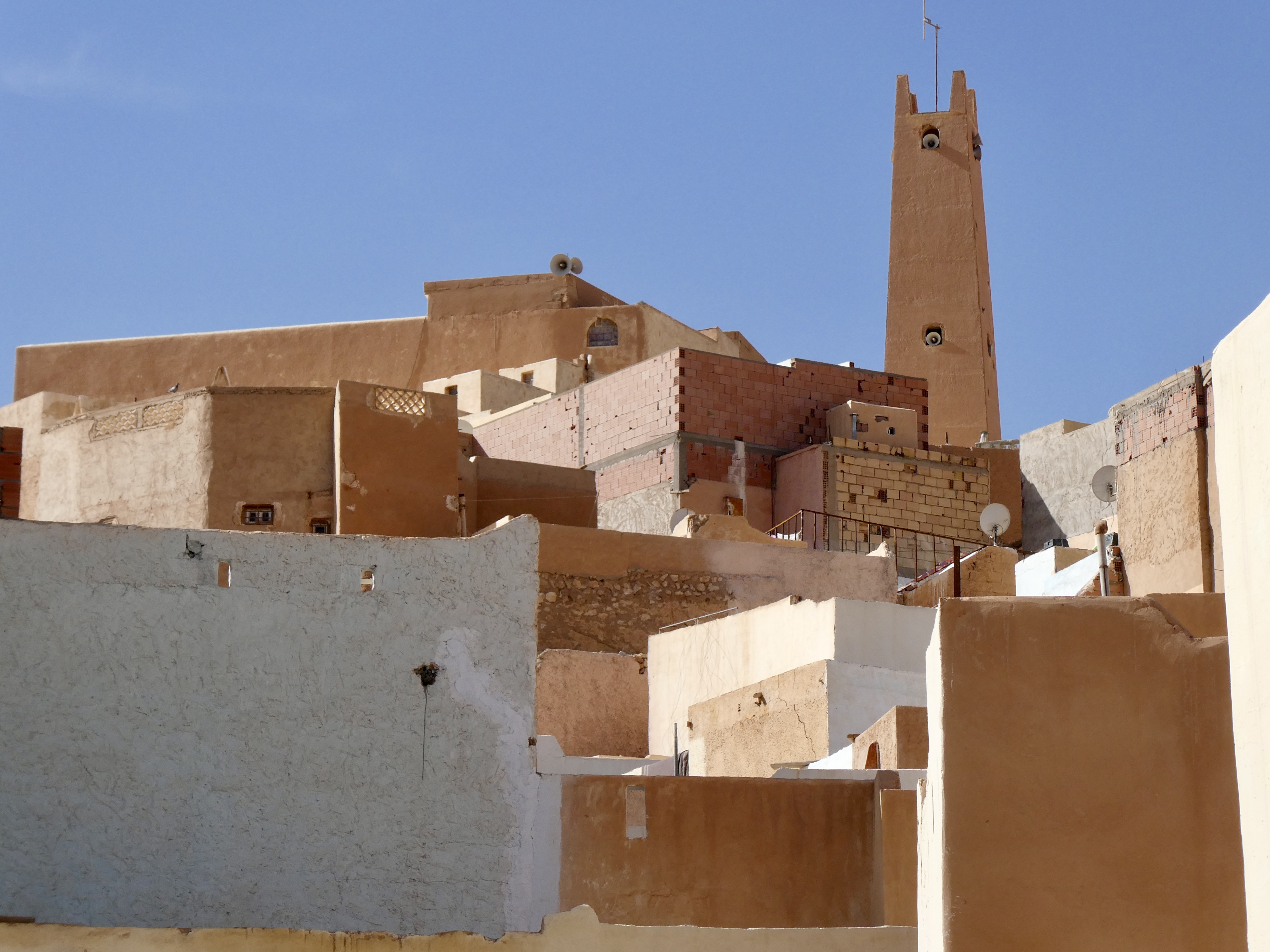
Anyway, our first stop was the oldest of the five towns, El Atteuf. Now in each of the towns we must be accompanied by a local guide so Kacem actually stayed behind as I was given a tour with Mohammad (along with a fellow from Mexico and two women from China). We started out by walking through one of the five gates that lead into the walled town and the five thousand homes that are within the walls. (It should be pointed out that there are residents of all five towns who live outside the city walls as well.)
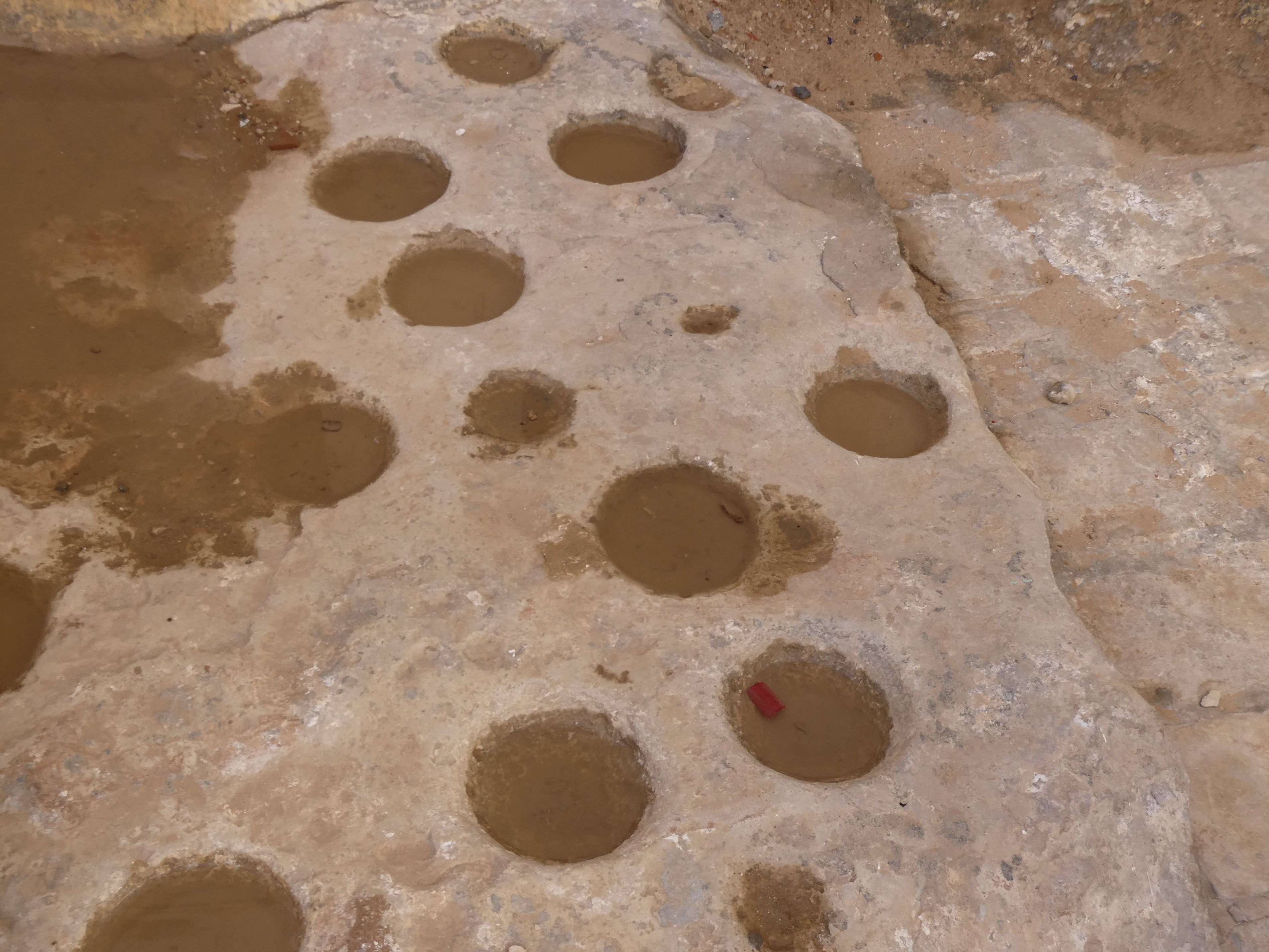
Our first stop was to take a look at old small holes that had been pounded into the stone walkways. Apparently the small holes were used to deposit the discarded date pits, which were ground up using the sides of the stone holes and the residue was fed to the goats that at one time lived in the town. The goats were used to feed milk to the children.
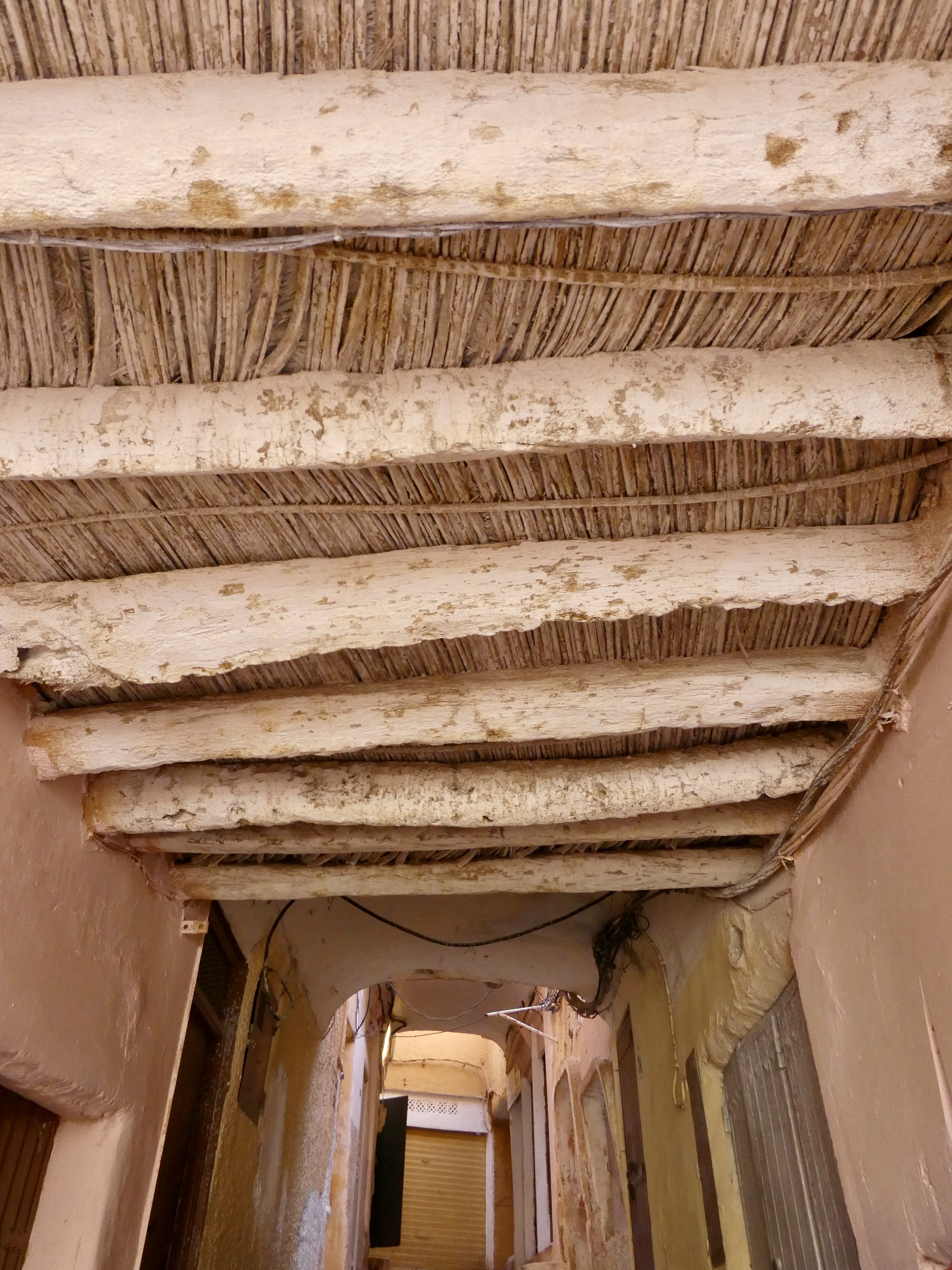
We then began our walk up the hill towards the oldest part of town. Now at one point we walked under an archway supported by 500 year old palm wood beams. And the beams looked to be in pretty darn good shape for being 500 years old.
So the hike up towards the top of the town took us along a winding stone staircase past old mud brick homes with only narrow slits for windows and tiny door frames. The design was intentional to protect the privacy of women.

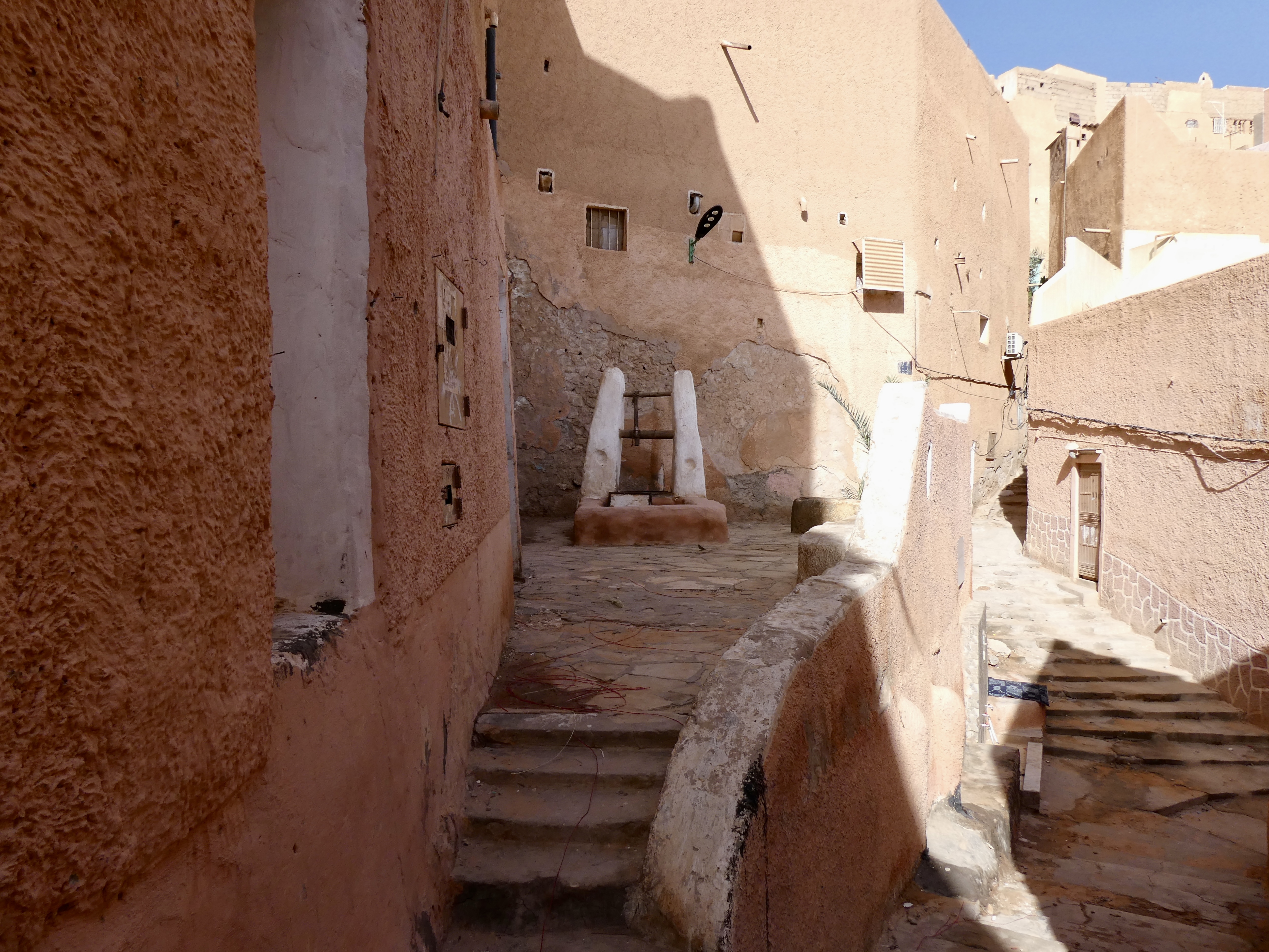
We also passed a lot of old wells dating back to the city’s origin. Now the interesting thing is that once a well was dug, the water was retrieved by using a goat skin bag tied to a pulley type system. Once the bag was brought to the surface, the water was either deposited into a pond in front of the well for feeding animals and watering plants or it was transferred to a smaller bag that was hauled to the house using donkeys so that the residents had drinking water.
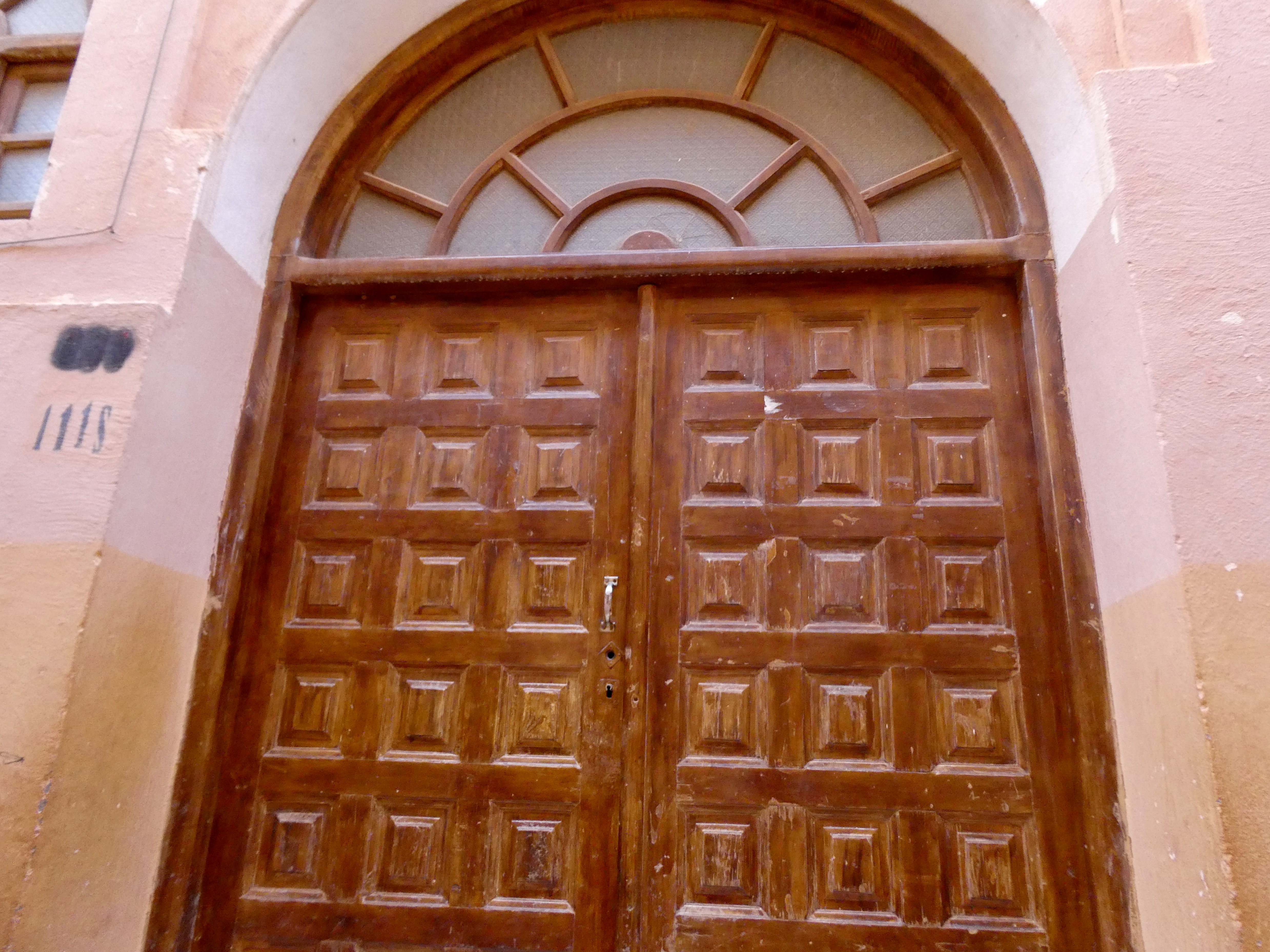
We continued wandering through the maze of alleys passing the oldest mosque in the town dating to 1012. We later passed a newer mosque that dated to 1712 when a third round of construction expanded El Atteuf. (There was a third round of expansion in the 18th century so they refer to the walls as the original walls, the second expansion and the third expansion.)
And as we walked, we frequently passed the white clad ladies with just one eye peaking out. At one point, I saw a couple older ladies who had their eyes and nose visible and when I asked about this, I was told that ladies who are widowed sometimes allow more of their face to show to signify that they no longer have a spouse. Fascinating.
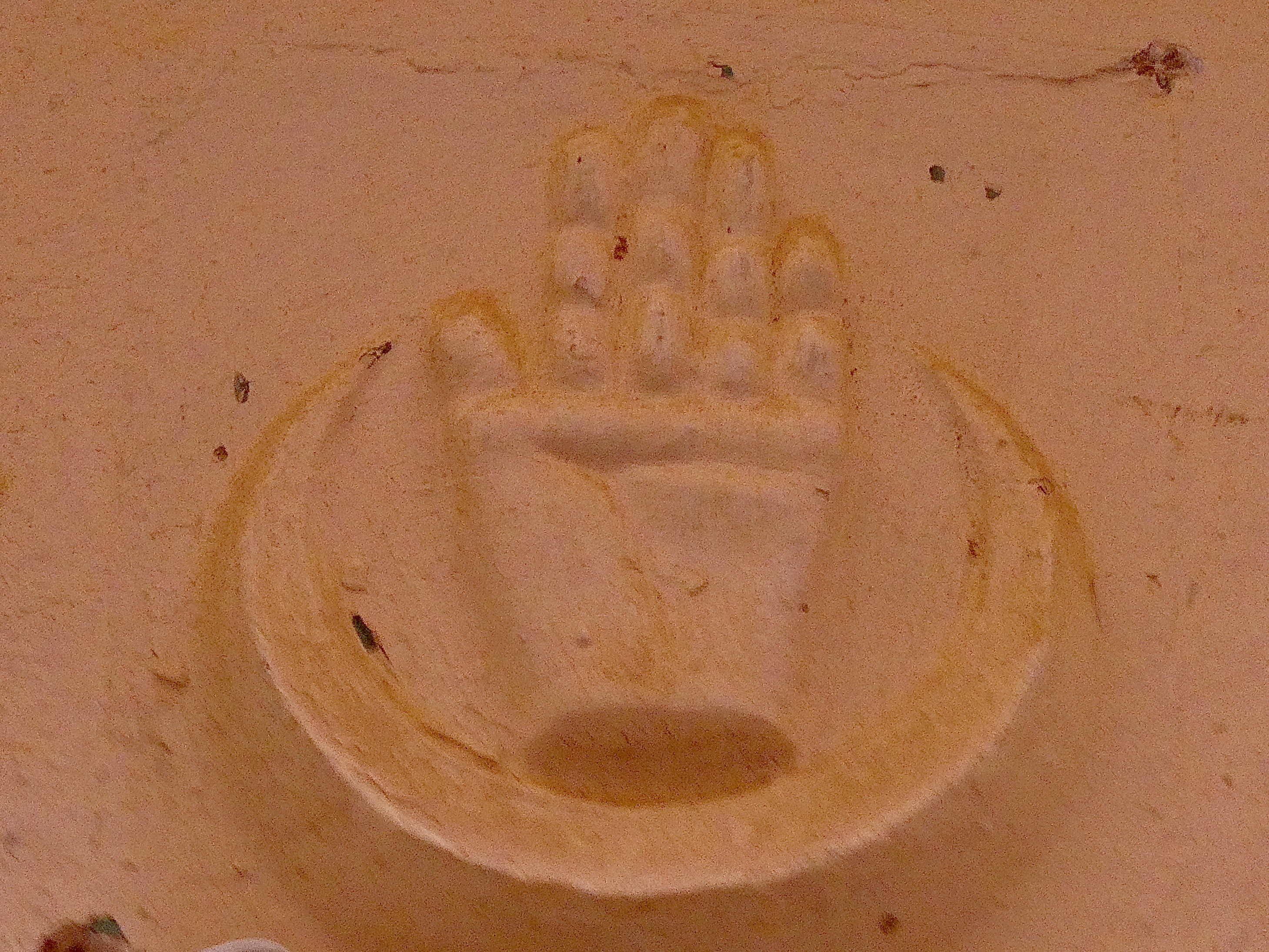
Now as we walked we frequently saw the sign of the “Hand of Fatima” above doorways, an open palmed five finger hand that is a sign that the occupants were looking for protection from the “evil eye”, which is a curse or negative energy that brings bad luck, bad health and/or misfortune.
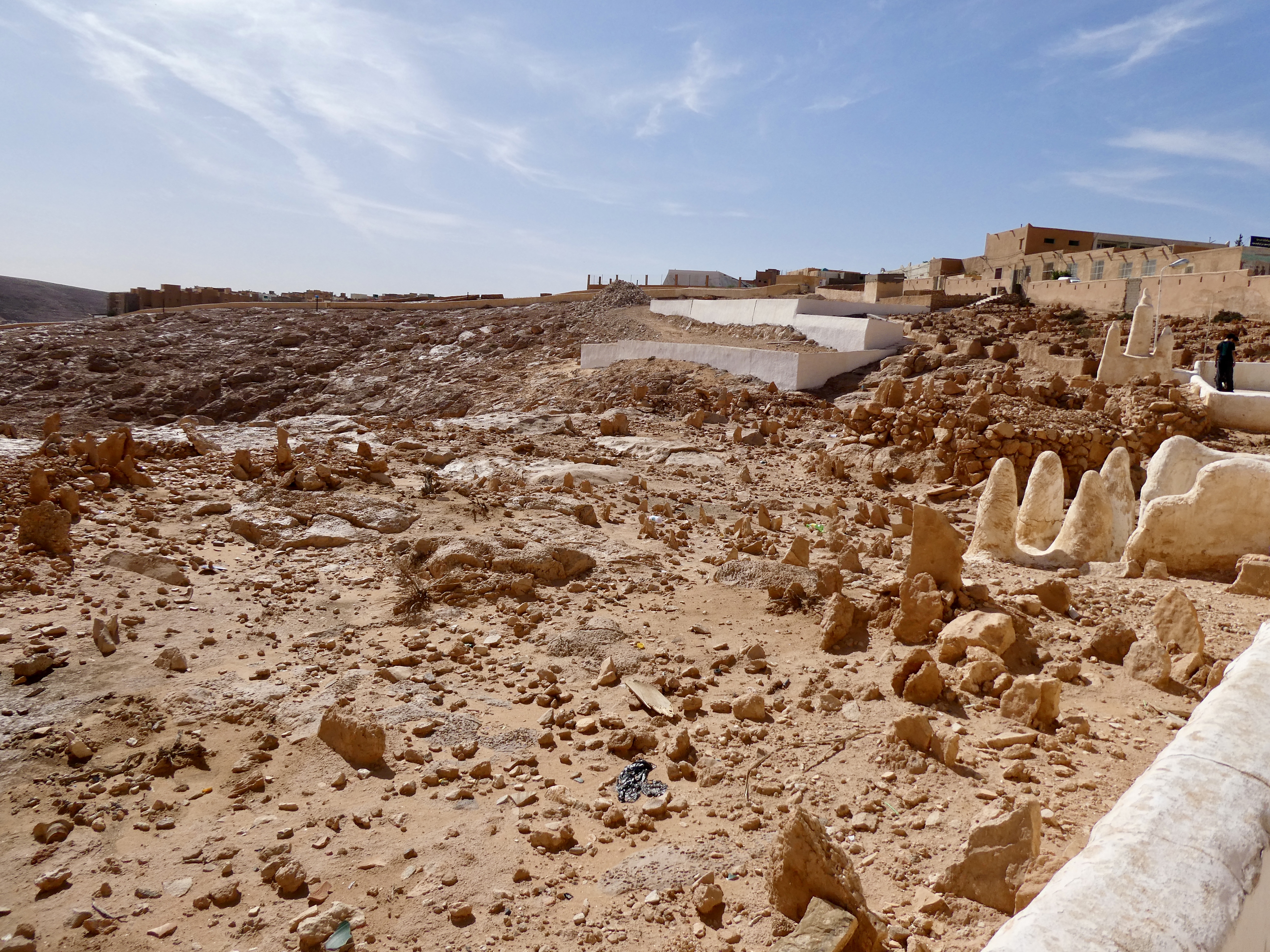
Anyway, we passed a mosque from the second expansion before reaching the top of the town where we took in an ancient cemetery that is believed to date to the origins of the town. Now the interesting thing about the cemetery and the custom for burial is that the graves of men are marked by two stones while the graves of women are marked by three stones. And if your are an imam (head of the mosque) who has passed you are rewards with a rather elaborate minaret like marker painted white for your grave.

Now the grave area was one of the higher points in the town. From here, we had spectacular views to the town below as well as to the 14th century Sidi Brahim Mosque, which is a funerary mosque that was used both as a school for teaching the Quran as well as a gathering place for families following a funeral.
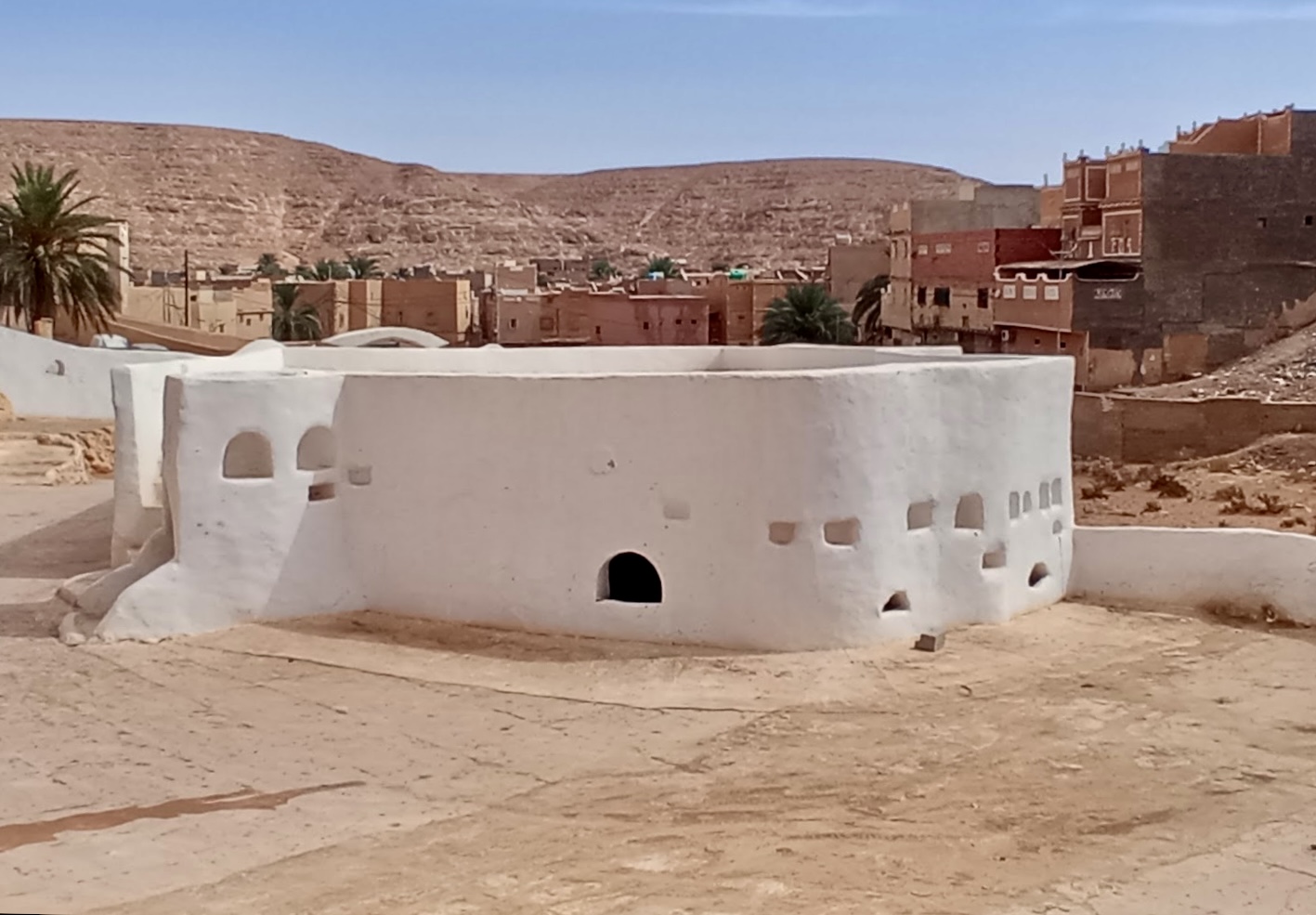
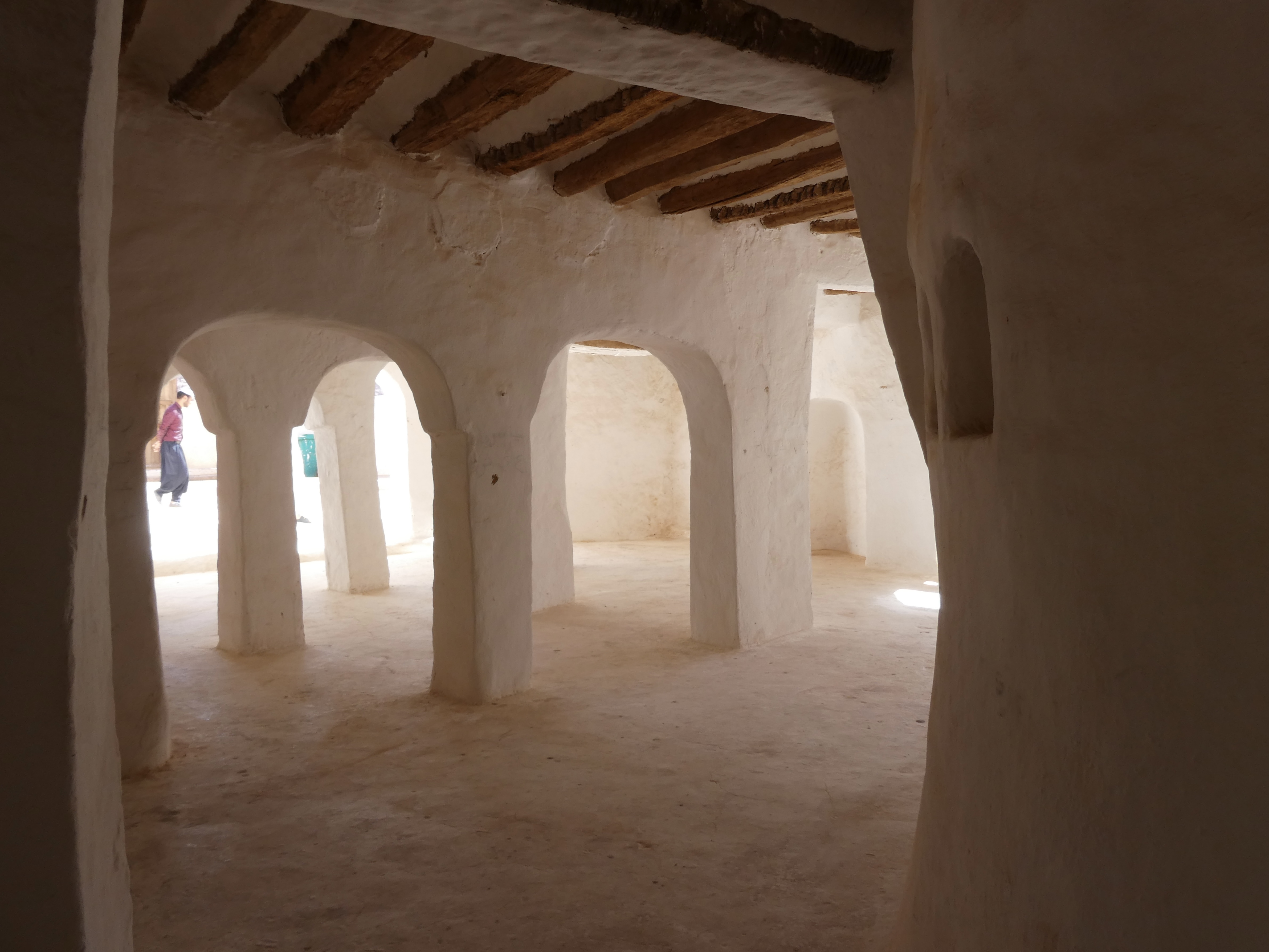
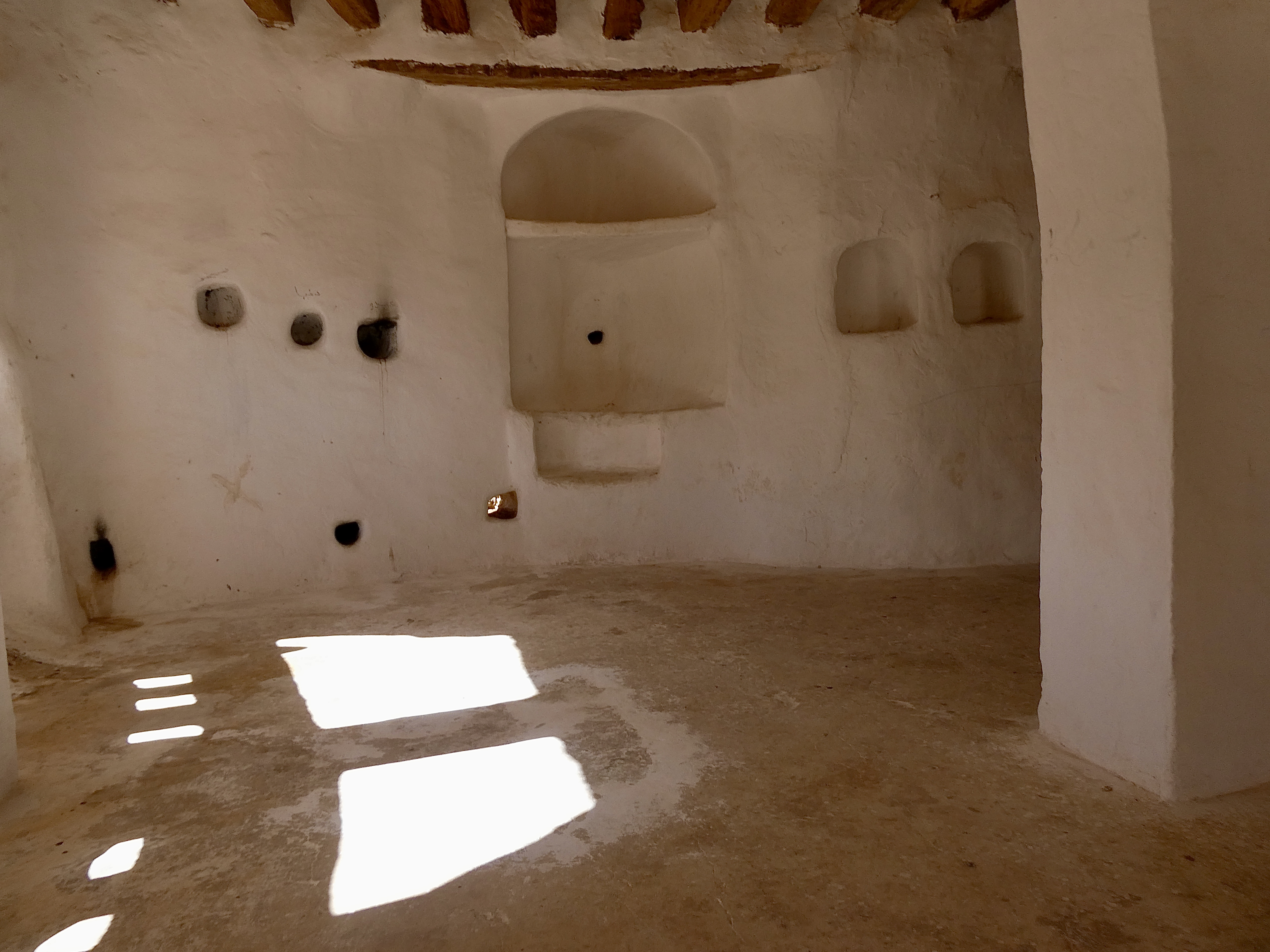
The mosque had a lower chamber where teachings occurred, a main hall for sermons and an upper hall for women who could sit and listen to the sermon without being seen. And outside the mosque was the grave of Sidi Brahmin, a holy man who was famous in the area for his religious teachings.
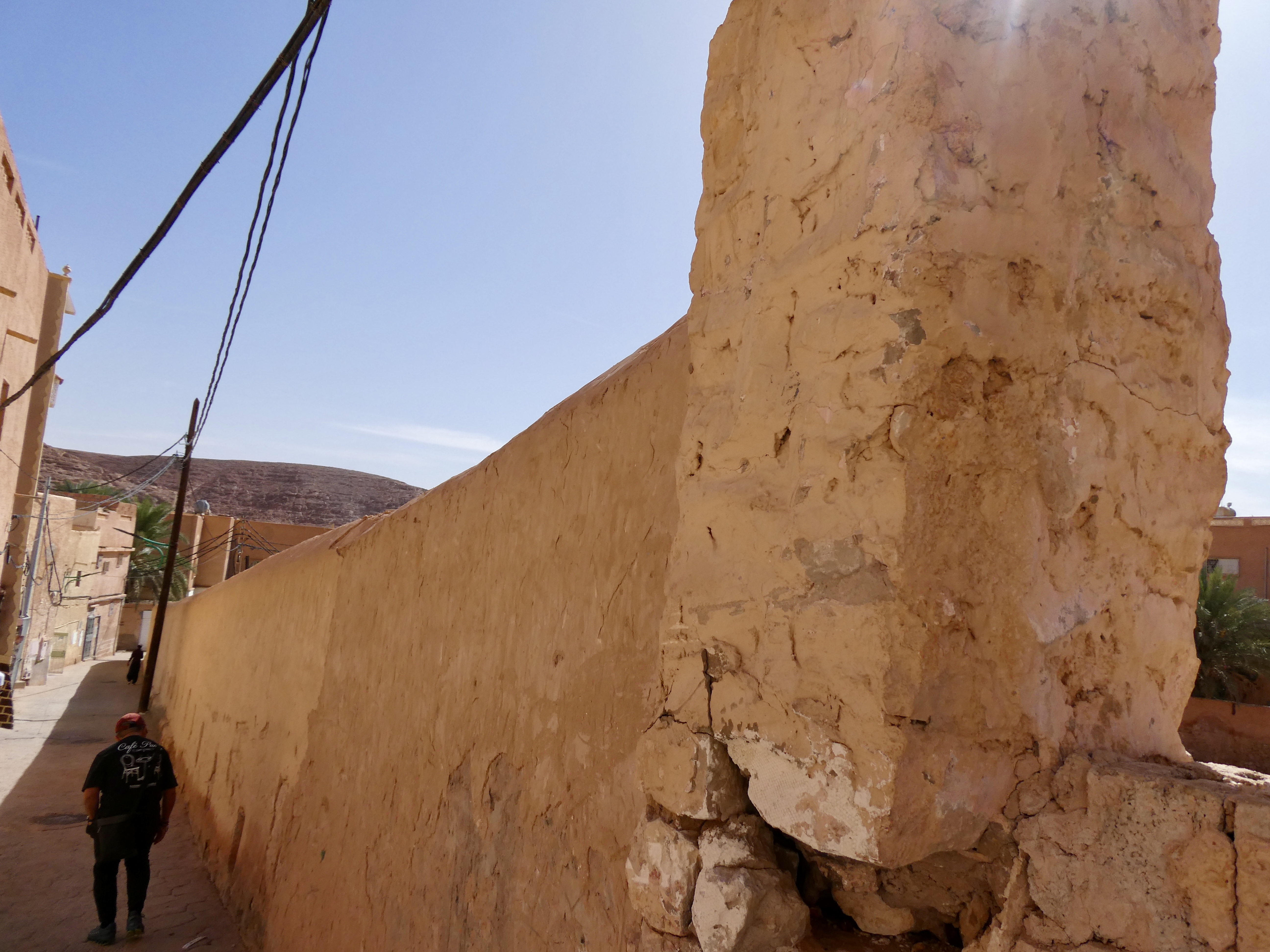
From here, we began our walk back passing by the old 11th century walls in addition to another very old 14th century well before reaching the old market area.
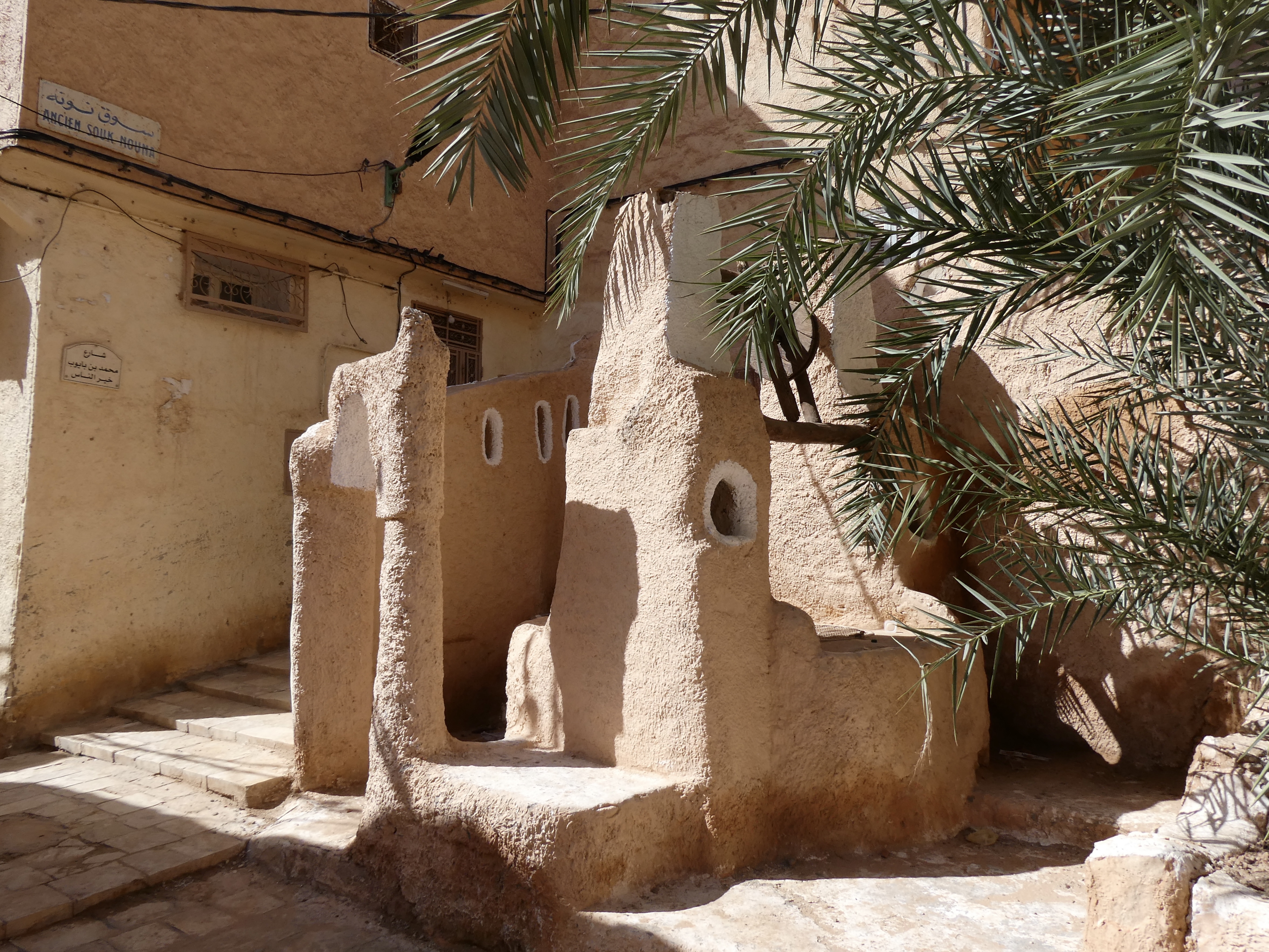
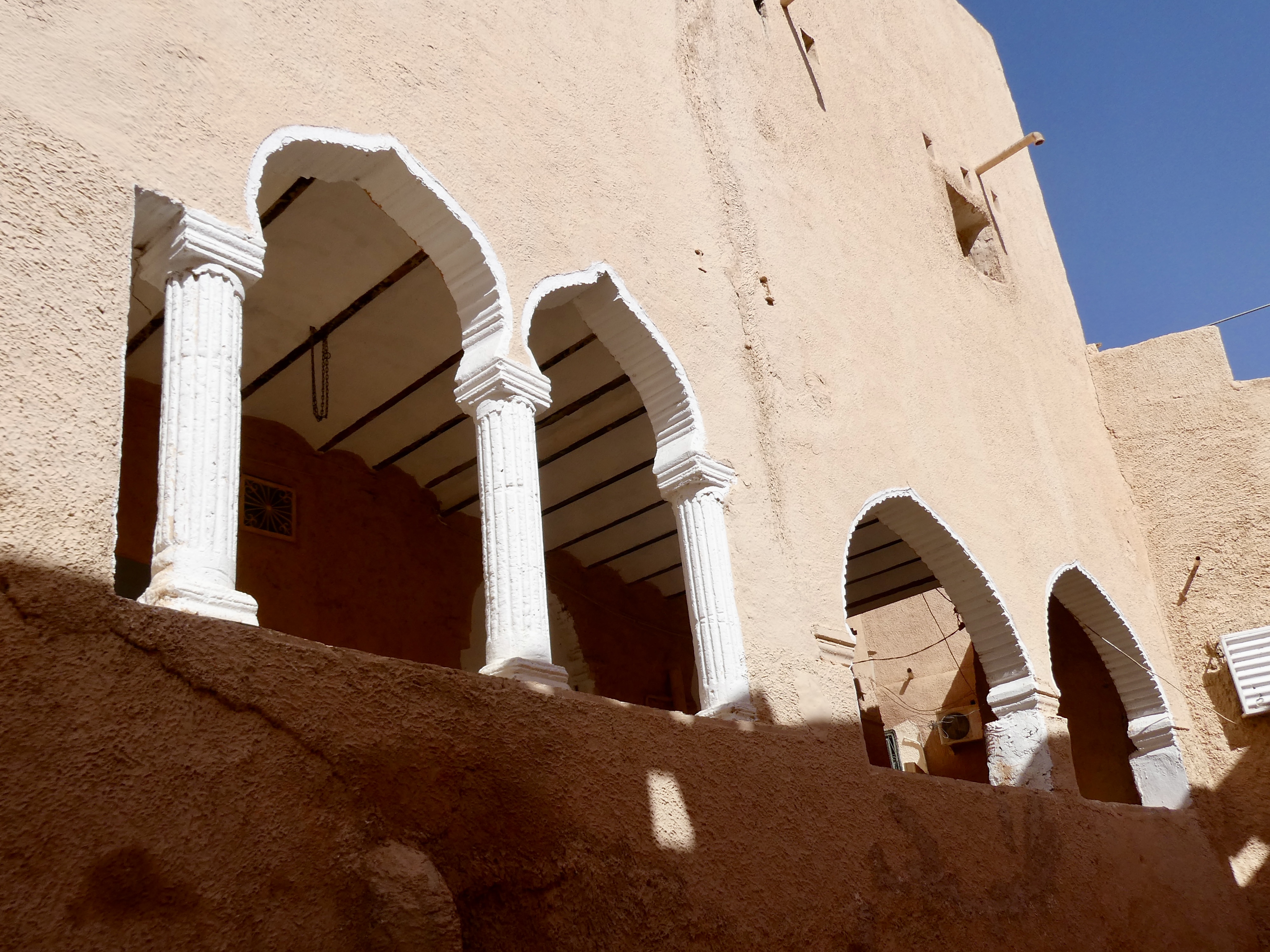
Now the interesting thing about this very small market area is that directly above the market was a large patio area where the women could look down on the market without being seen. The women would identify what they wanted to purchase to a small boy (women could interact with small boys, but no interaction with men to whom you were not married or related), hand the boy some money and the boy would run down the stairs to the market to purchase the produce. Quite the event.
So from here, we headed back to the main entrance. I met back up with Kacem and we made a brief stop at a lookout point where I got some lovely pictures of the nearby town, Beni Isguen, with its towers and minaret standing out on the hillside.
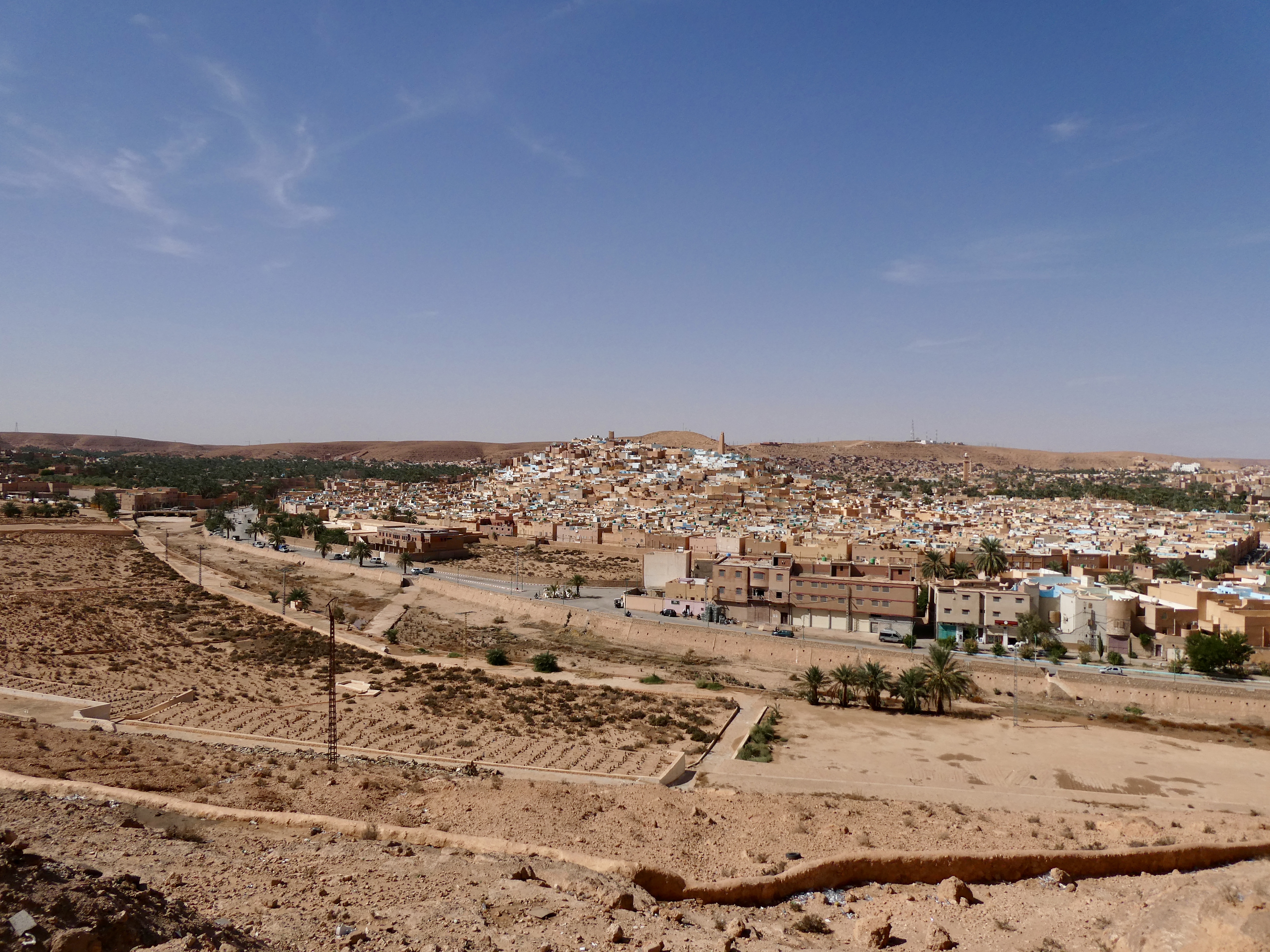


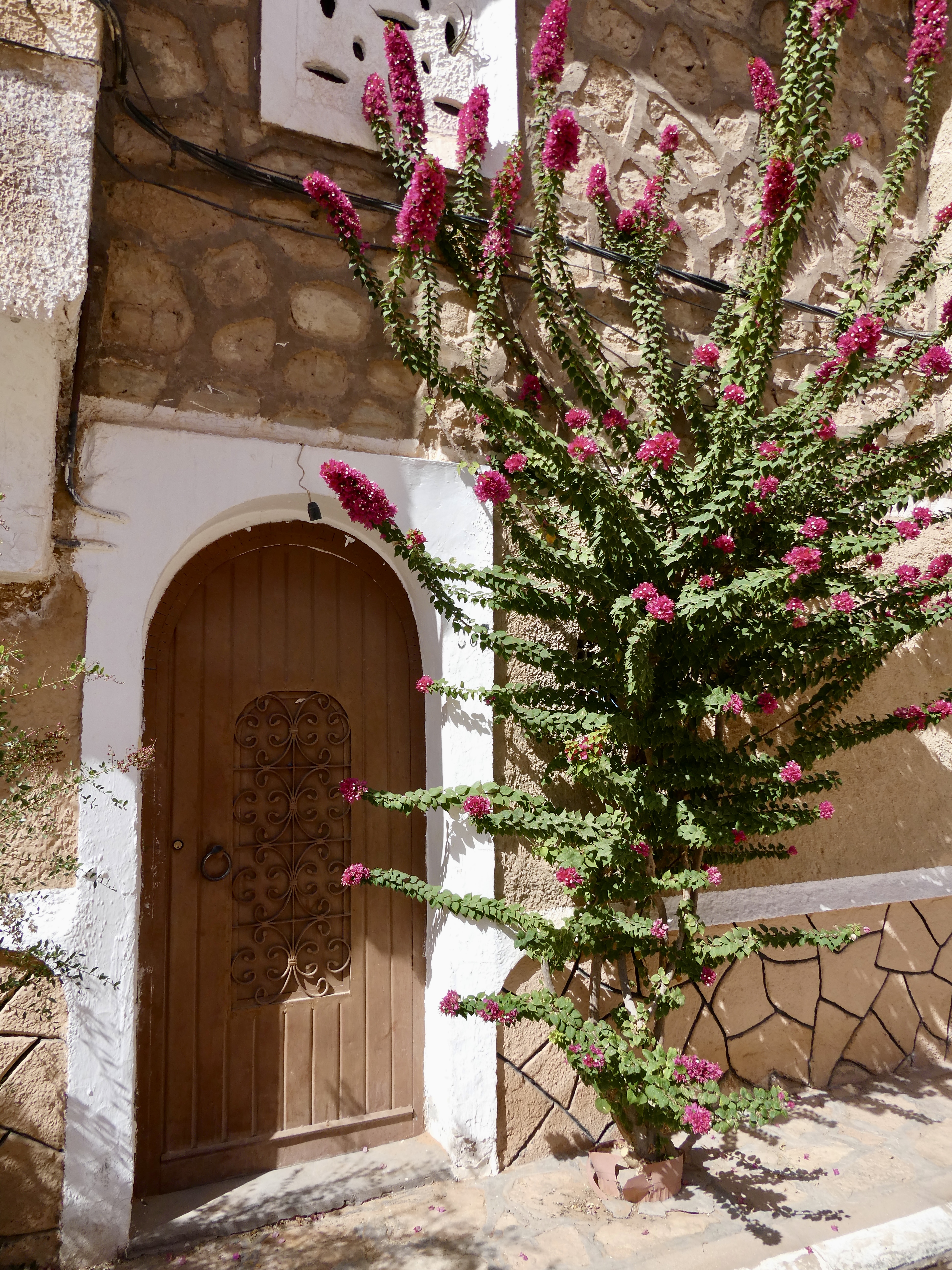
We then moved on stopping at the nearby Ecco Village, a local award winning village that is an Ecco friendly low income housing project launched in 2004. The homes reuse everything including waste water (used for the nearby garden area) and food scraps, which are used to feed the animals and birds in the local farm area from which the residents obtain eggs and meat.
Each of the multi story homes are identical in design except that some of the homes are larger than others to accommodate larger families. Between 4,000 and 5,000 people live here. It was a fascinating concept.
Anyway, after the stop at the Ecco Village, we went for lunch and then I was dropped off at my hotel for some down time. Apparently this area believes in “siestas” and everything shuts down from 2:00 – 5:00 so my guide and driver were off for their naps, while I relaxed at my hotel.
At 4:45 Kacem and Zachery arrived to take me to visit a second town, Beni Isguen, which is where Kacem lives and is the strictest of the five towns precluding visitors from accessing certain parts of the town. Now when we arrived at the entrance to the town, we found out there were no English guides so I had to take the tour in French. What the heck? I was not happy so Kacem convinced them to let him accompany me through the town and translate. So with that, we set off with a rather large group of French tourists (with three VERY bratty kids who the French guide ended up being pretty irritated with).

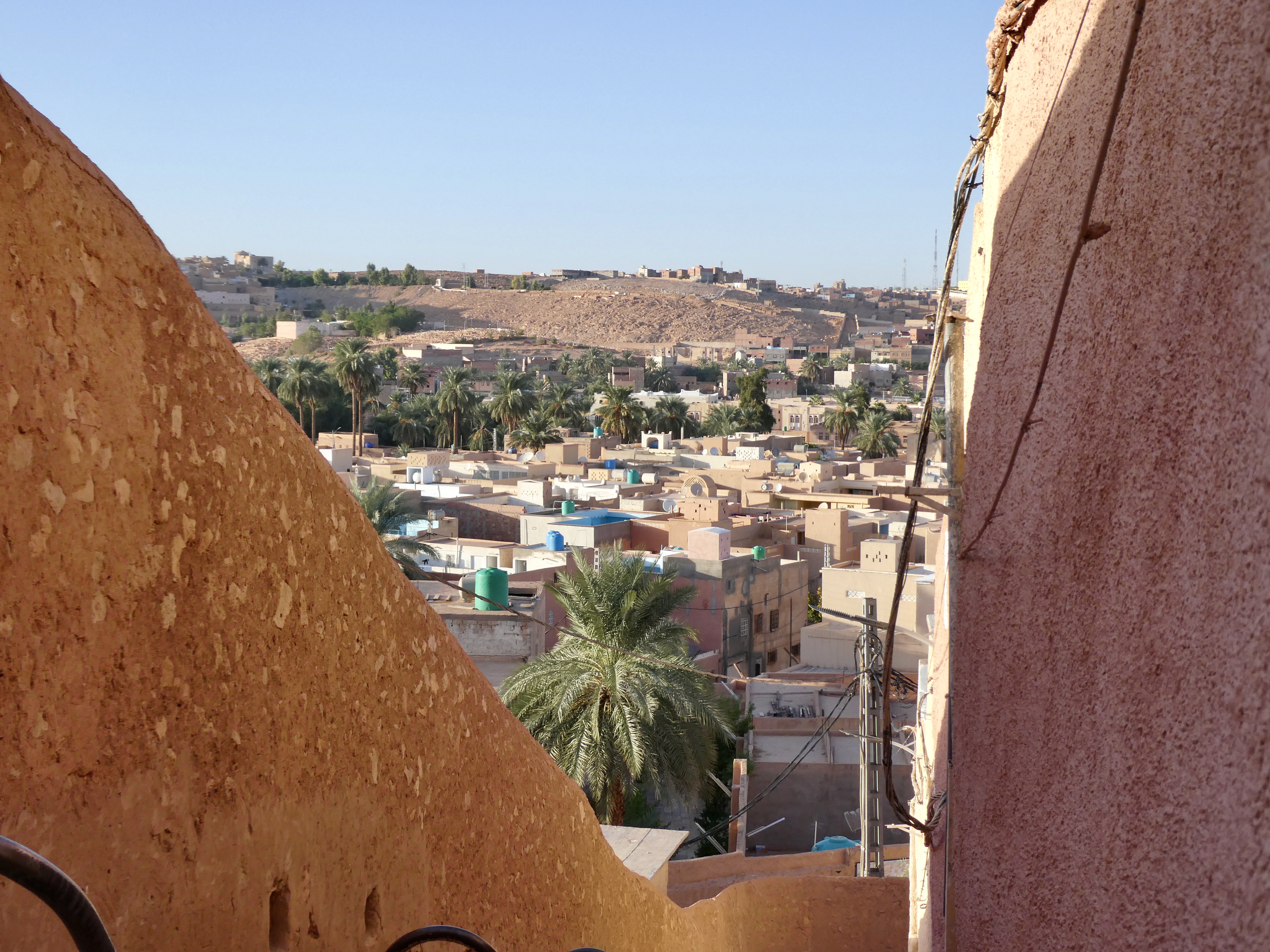
Anyway, we began the climb up the stone steps (much as I did this morning) before reaching our first stop, a 14th century well. Then it was climbing more stairs past the original 14th century walls and a lookout point that afforded fabulous views of the town below.
And like this morning, we continued to pass by numerous women in the white clad cloaks. There were obviously men and children walking the streets as well, but the men and kids took a much more leisurely pace than the white clad women who kept their heads down and hustled past us at every opportunity. Really a fascinating way of life.

So after a bit more walking, we reached the top of the walled area and the Tower of Borleila, one of the remaining lookout towers dating to the 14th century. And fun fact. The tower has 99 steps to match the 99 names of God in the Quran. Unfortunately, we could not climb this tower, but there was a nearby partial tower we did climb giving us lovely views of the area surrounding the old town walls.

We then walked down an alley to a cemetery that is believed to date to the 6th century AD, although there are apparently discoveries in the cemetary that lead locals to believe that parts of the burial ground may be thousands of years old. And it was interesting to see how different this cemetery was from the cemetery I saw this morning. This cemetery was far more elaborate with above ground tombs similar to what you see in Roman burial grounds. And of course, interspersed were tombs with the white minaret like décor indicating the burial plot of an imam.


So from here, we began our descent down through the more residential area of the town. We passed by a number of homes, including one with an original door dating to the 14th century, a mosque dating to the 12th century and a very narrow alley that served as a market area.
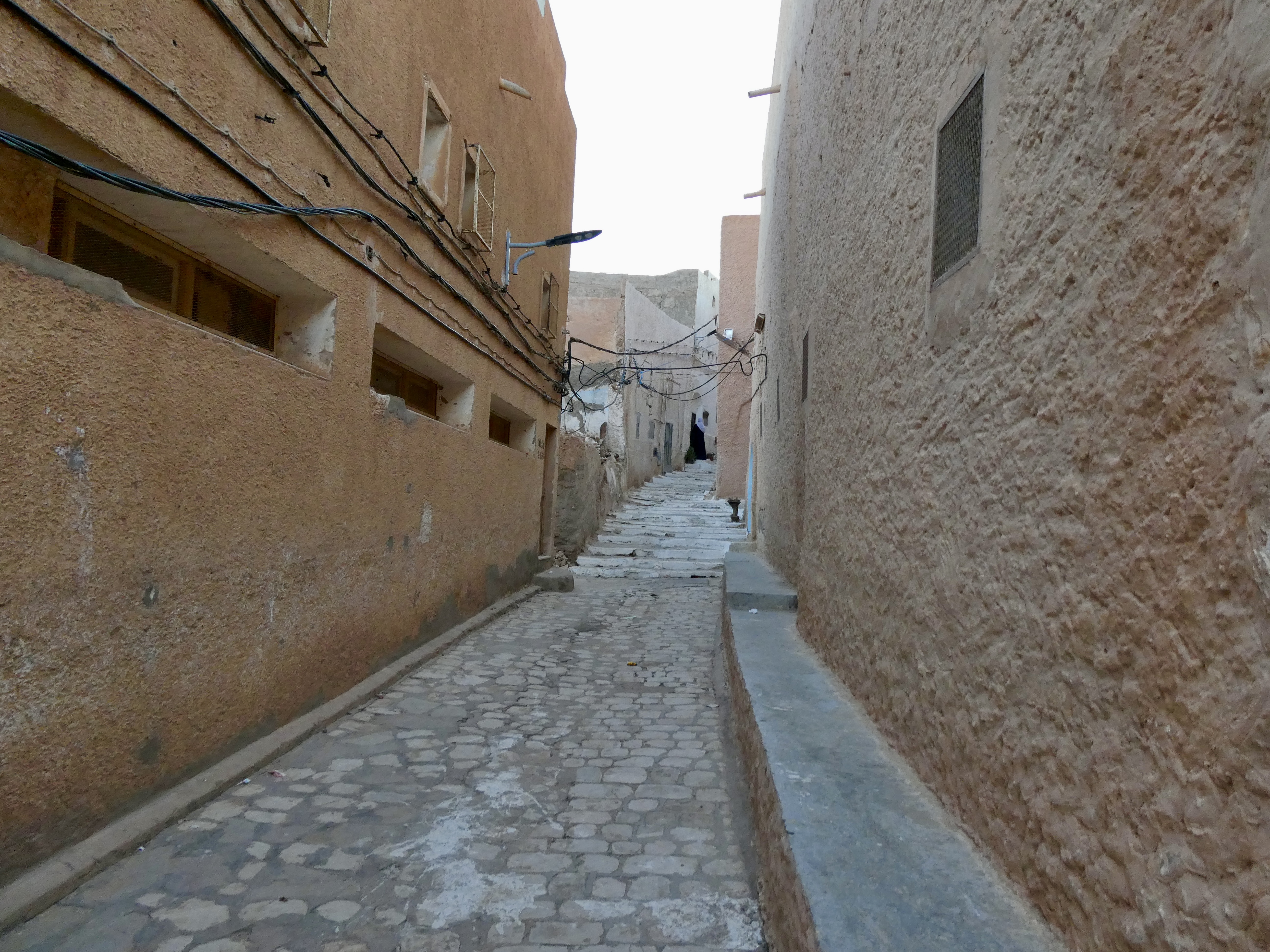


We then walked up a small set of stairs and passed by the main door of the mosque, which was painted baby blue. According to Kacem the door was painted this colour because it was attractive and because it kept the front of the door cool in hot weather. Huh?
Now the downside of the narrow alleys meant that it was impossible to take a picture of this mosque, which was the oldest in Beni Isguen. However, earlier in the day I was able to take a picture of the minaret when we stopped at the viewpoint to take pictures of the town so I did have that picture. And another fun fact. The minaret of the mosque was apparently built in 12th century along with the mosque and the minaret had 114 steps to the top match the verses in the Quran.
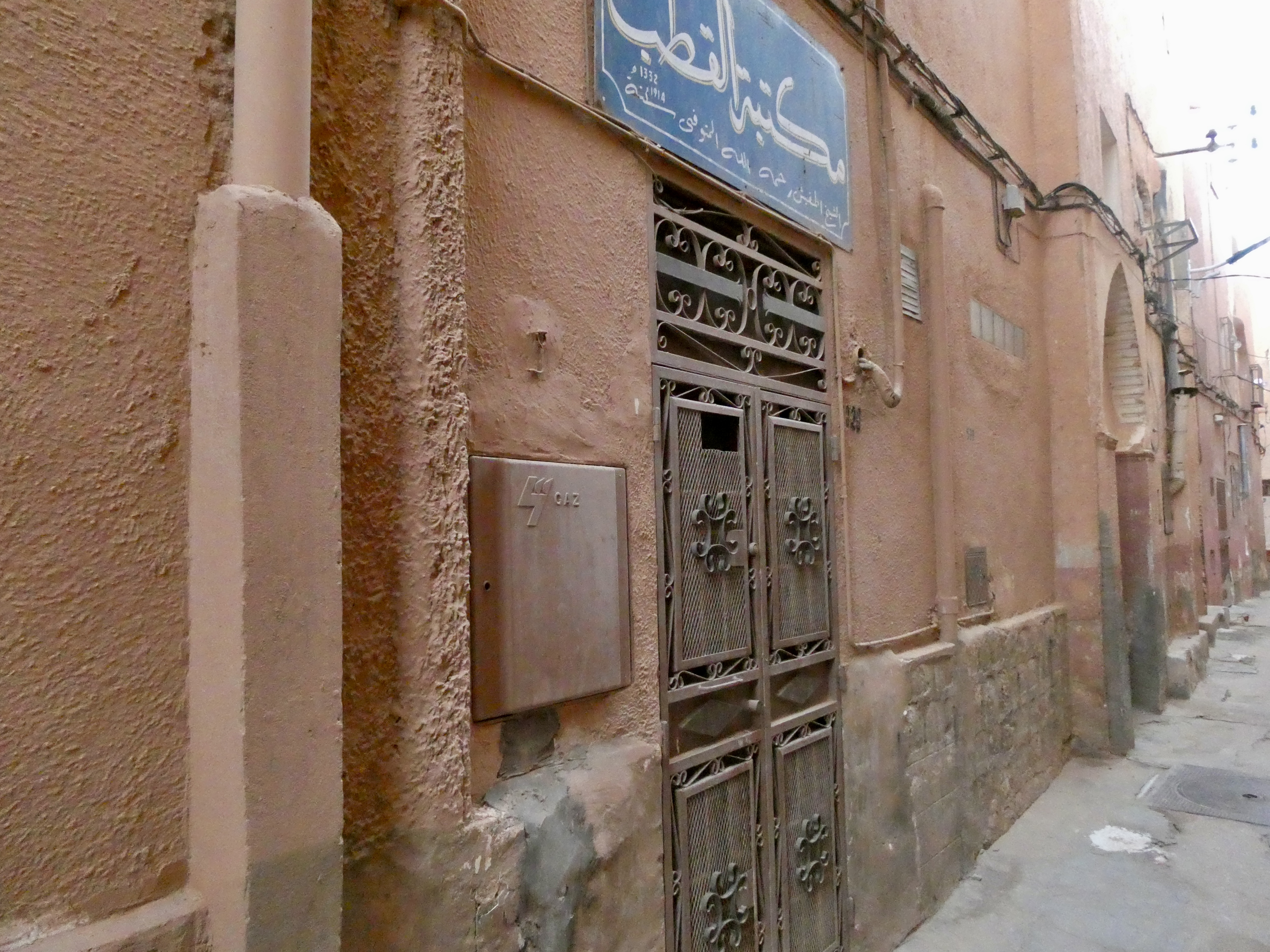
So we walked by more houses, and a small underground cave like passageway that was used a both a mortuary and an escape route from the French during the war in 1954 to 1962. We then passed not one, not two, but three libraries with two of the libraries dating to the 14th centuries. The buildings were in remarkably good shape.
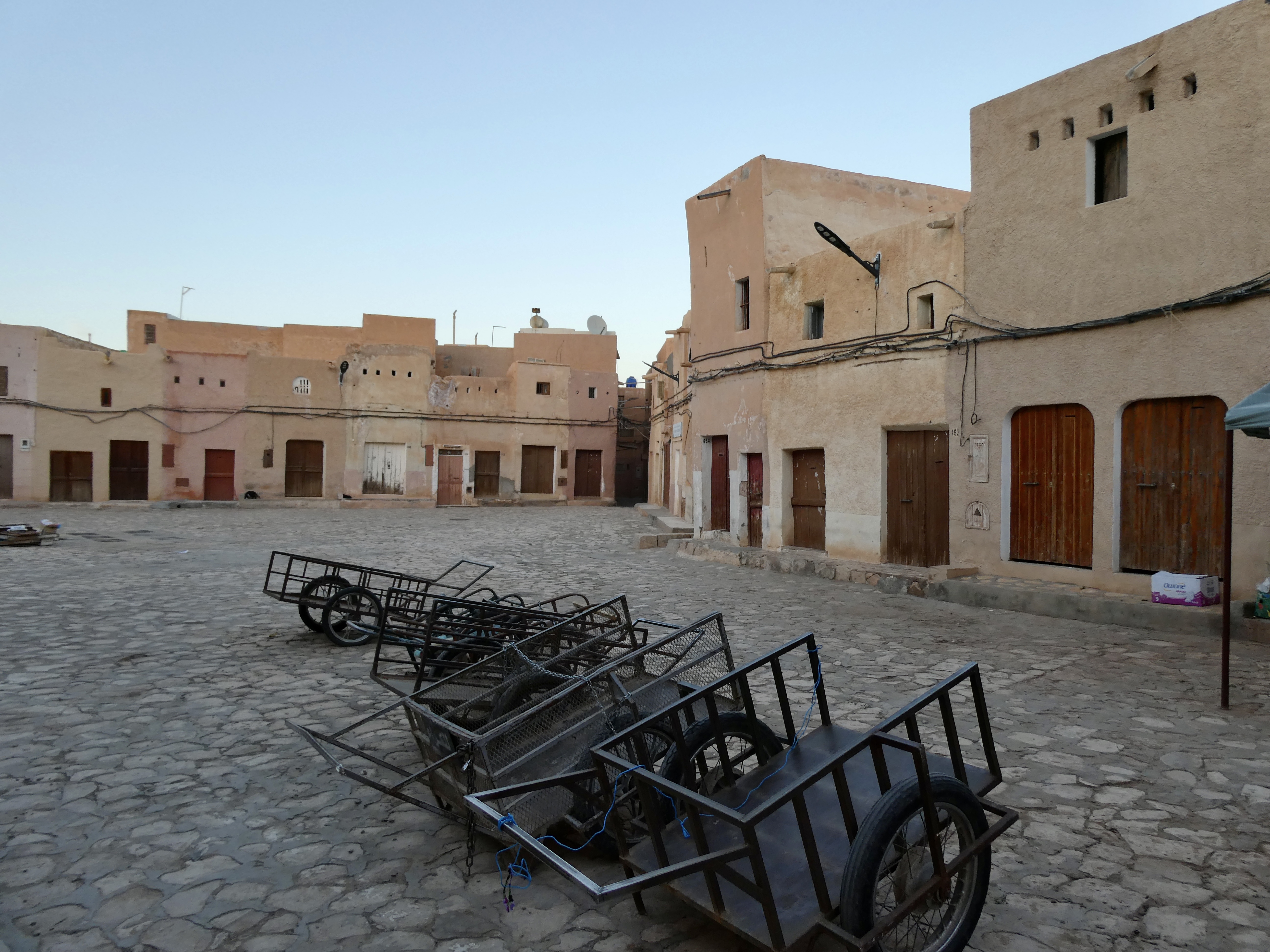
From here, we moved through the old market area and the interesting part about this old area was that there was a number of small buildings surrounding the market square. Each one of the small buildings was individually owned by a resident family. There was an arbiter of sorts designated in each family and if a dispute arose between the families living in the town, the aggrieved could meet with the arbiter for the family at the little building and try to solve the issue. Interesting form of justice.
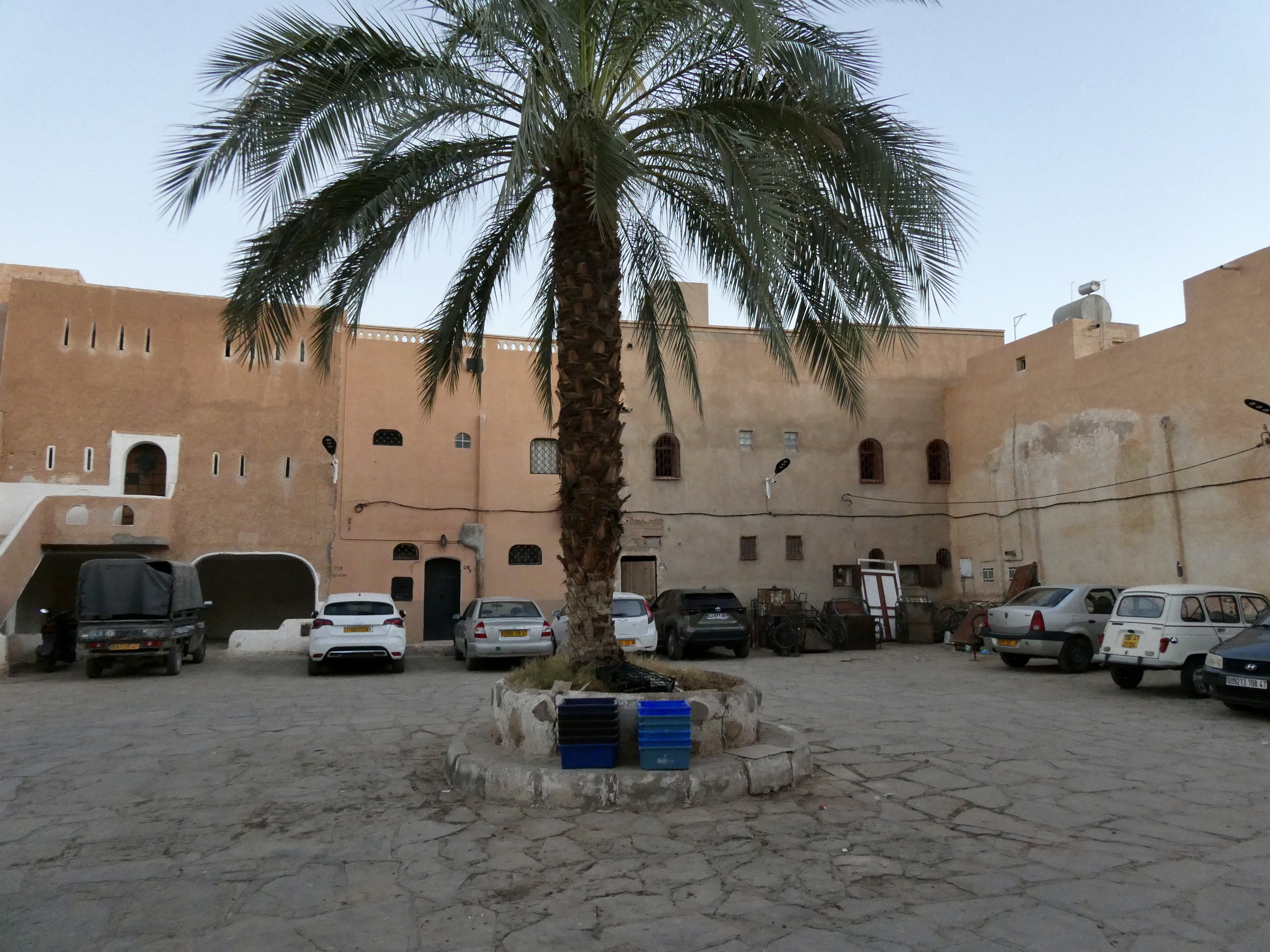
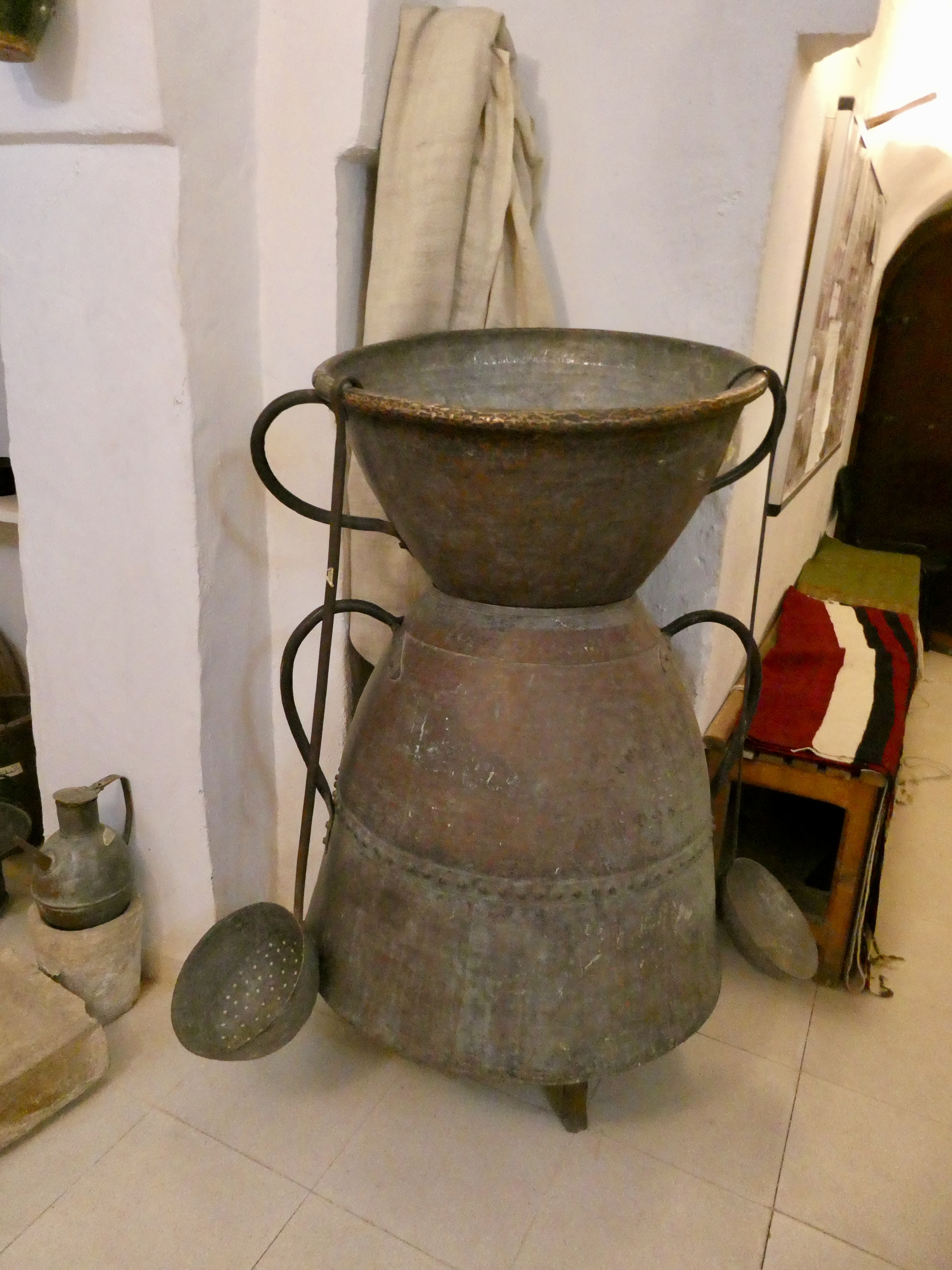
We then walked down the last alley past an old caravanserai where non-resident traders would sleep and eat while hawking their goods during the day. Across from the caravanserai was the office where we had started out. And inside the office was a small museum of sorts that included carpets, kitchen utensils and pots, pictures of grooms (no pictures of brides), a wedding bedroom and a kitchen. The most fascinating part of the tiny museum for me was the massive pot that was used for cooking couscous for wedding celebrations and parties. This thing was enormous.
Anyway, that was my first day in the M’Zab Valley. Quite the experience. Tomorrow I visit one more town and then we spend the late afternoon at an oasis of date palm groves.
