Today I was off to visit town #3 in the M’Zab Valley. Bounoura was established between 1048 and 1065 on a massive rock hillside overhanging a riverbed and is the poorest of the five towns. The walls and buildings in the town were built in three stages with the first between 1048 and 1065, the second in the 15th century and third in the 18th century.
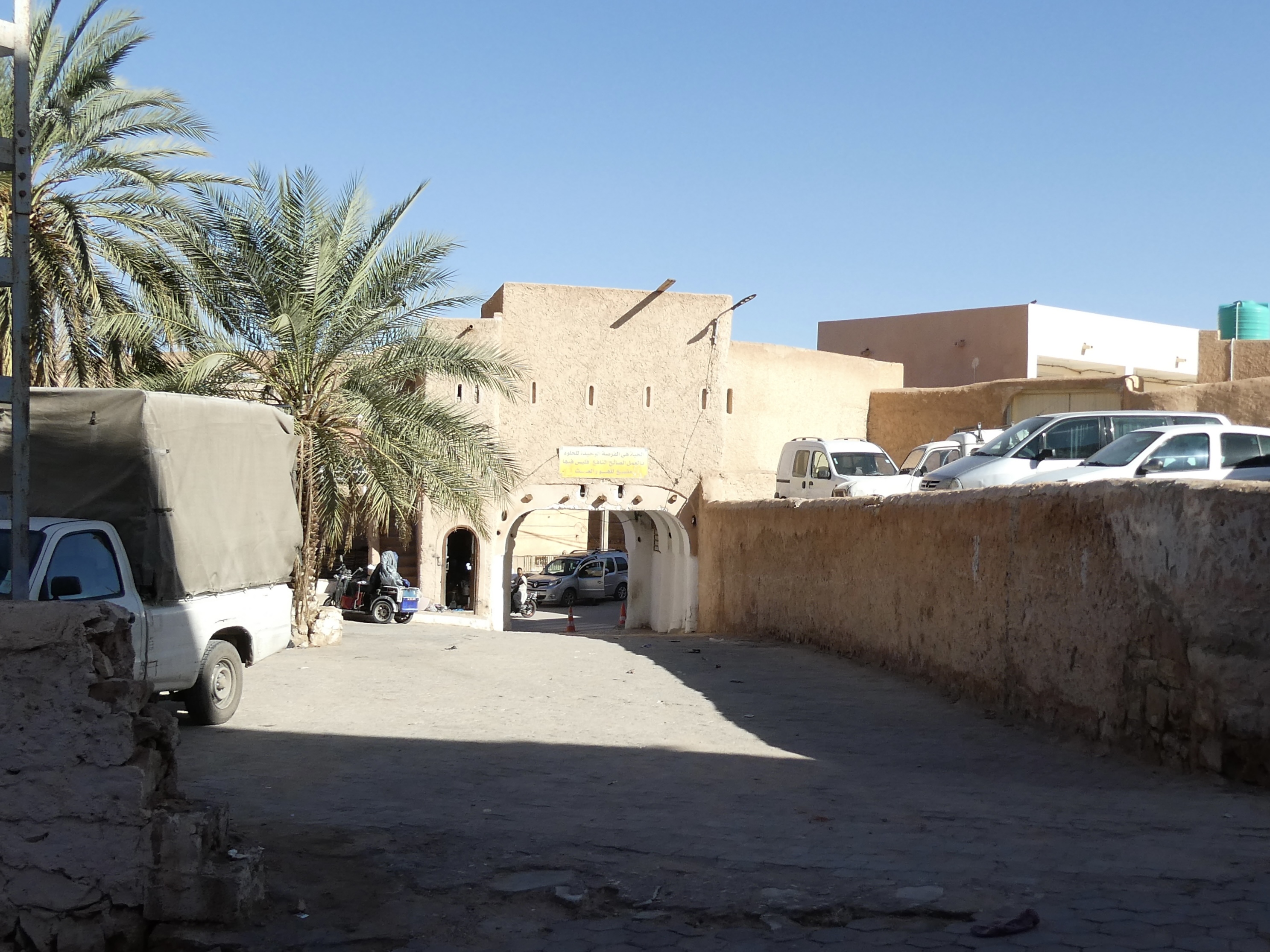
Now like all of the other five towns in the M’Zab Valley, Bounoura is centered around the old mosque and minaret occupying the highest point in the town. The mosque and minaret are surrounded by old walls and watchtowers and below the highest point are the olds houses, shops, markets and public buildings. And of course, central to the construction of the homes is privacy, with tiny windows, an inner courtyard and doorways that are offset from one another so no doorway is across from the other.
Anyway, at just before 10:00 a.m. Kacem introduced me to the Bounoura local guide, Yahia, and we set off for a walk through the small town. We stopped nearby for a quick look at the new local market area where markets are held every Thursday and Sunday before moving on through the narrow alleys all the while passing a number of white cloaked women leading children by the hand.
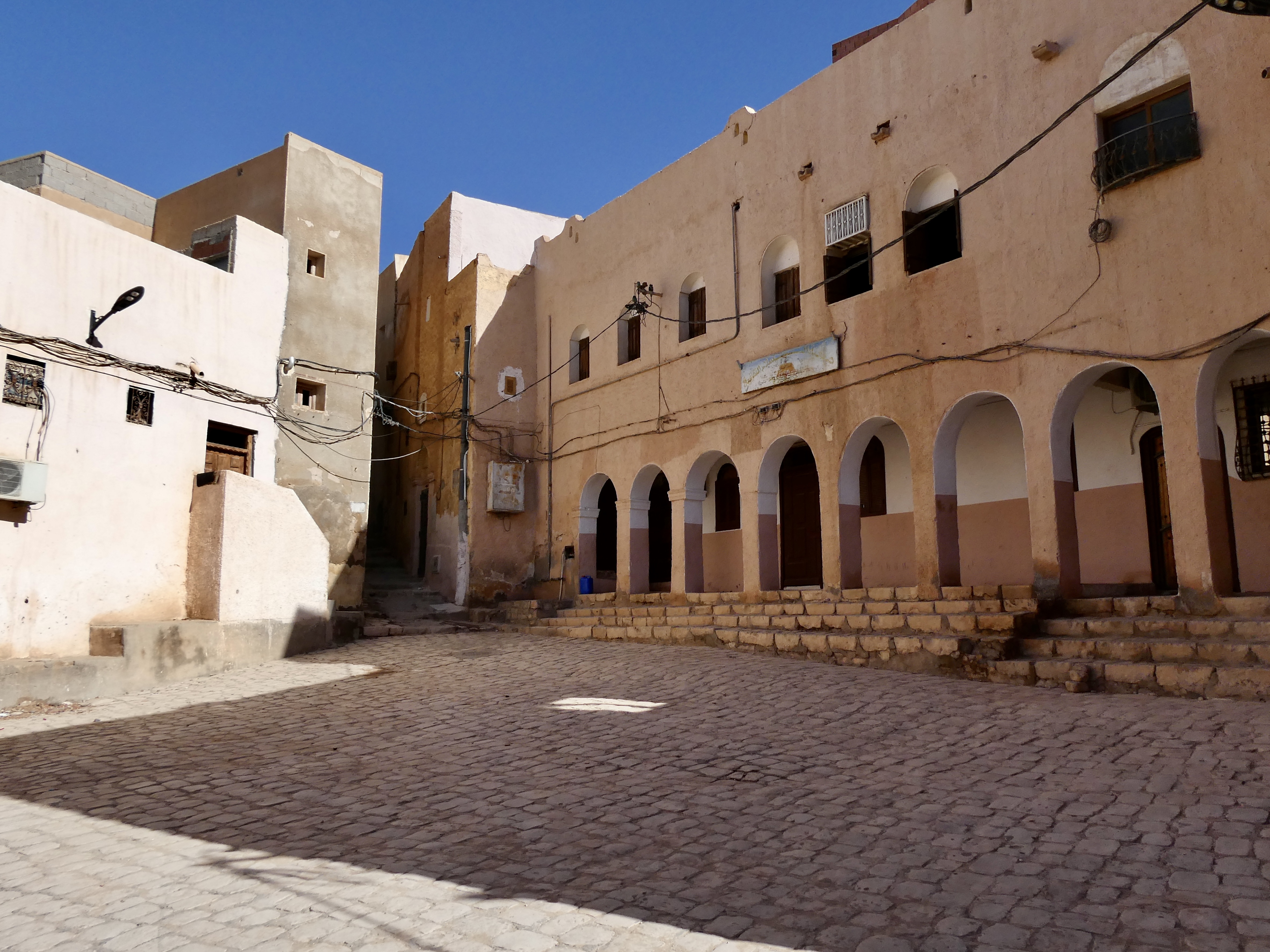
We eventually stopped at the area that was the original market place before the market was forced to move to the new locations. Apparently the move was made necessary because it was too difficult to move goods in and out of the narrow alleyways.
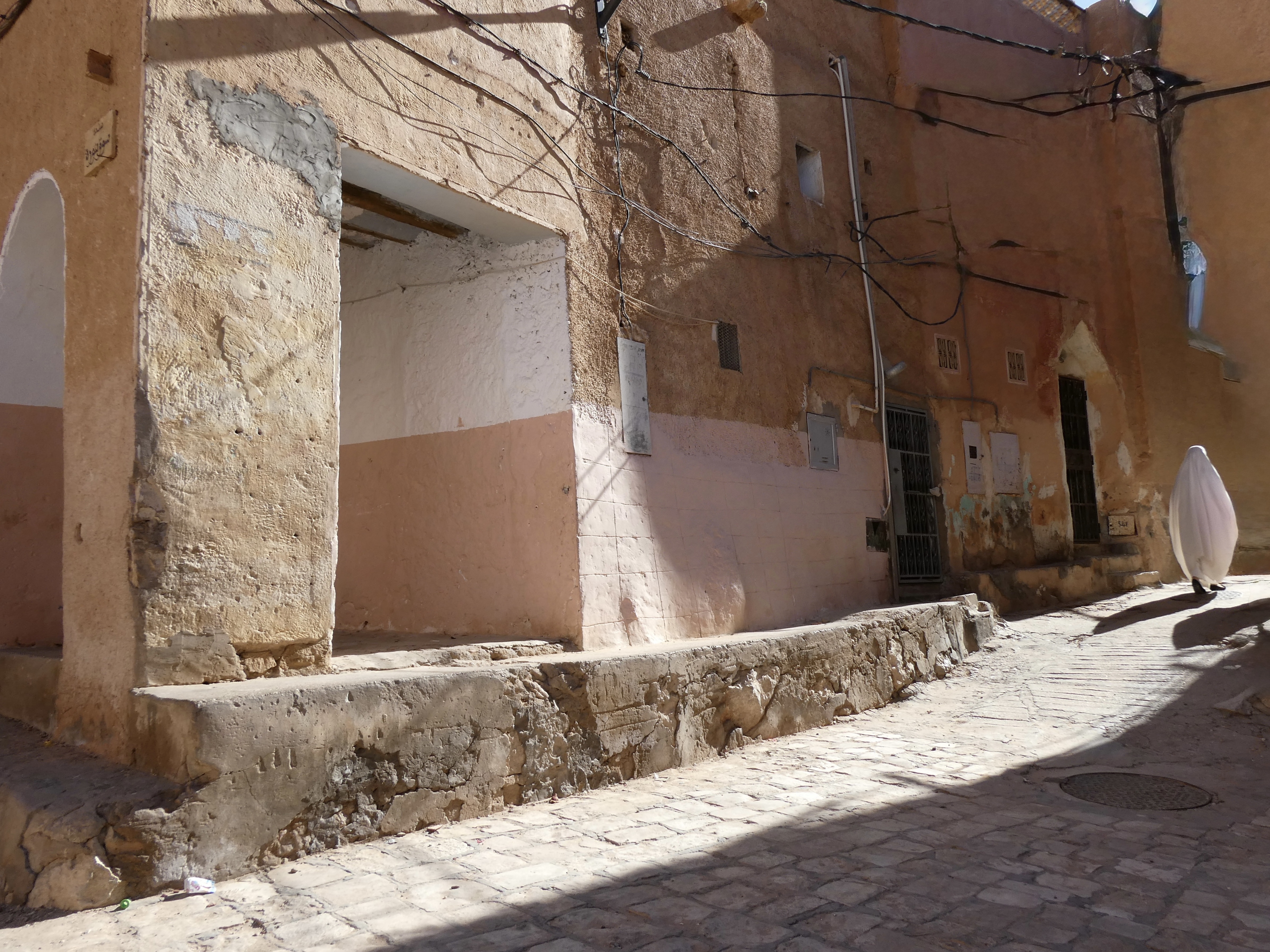
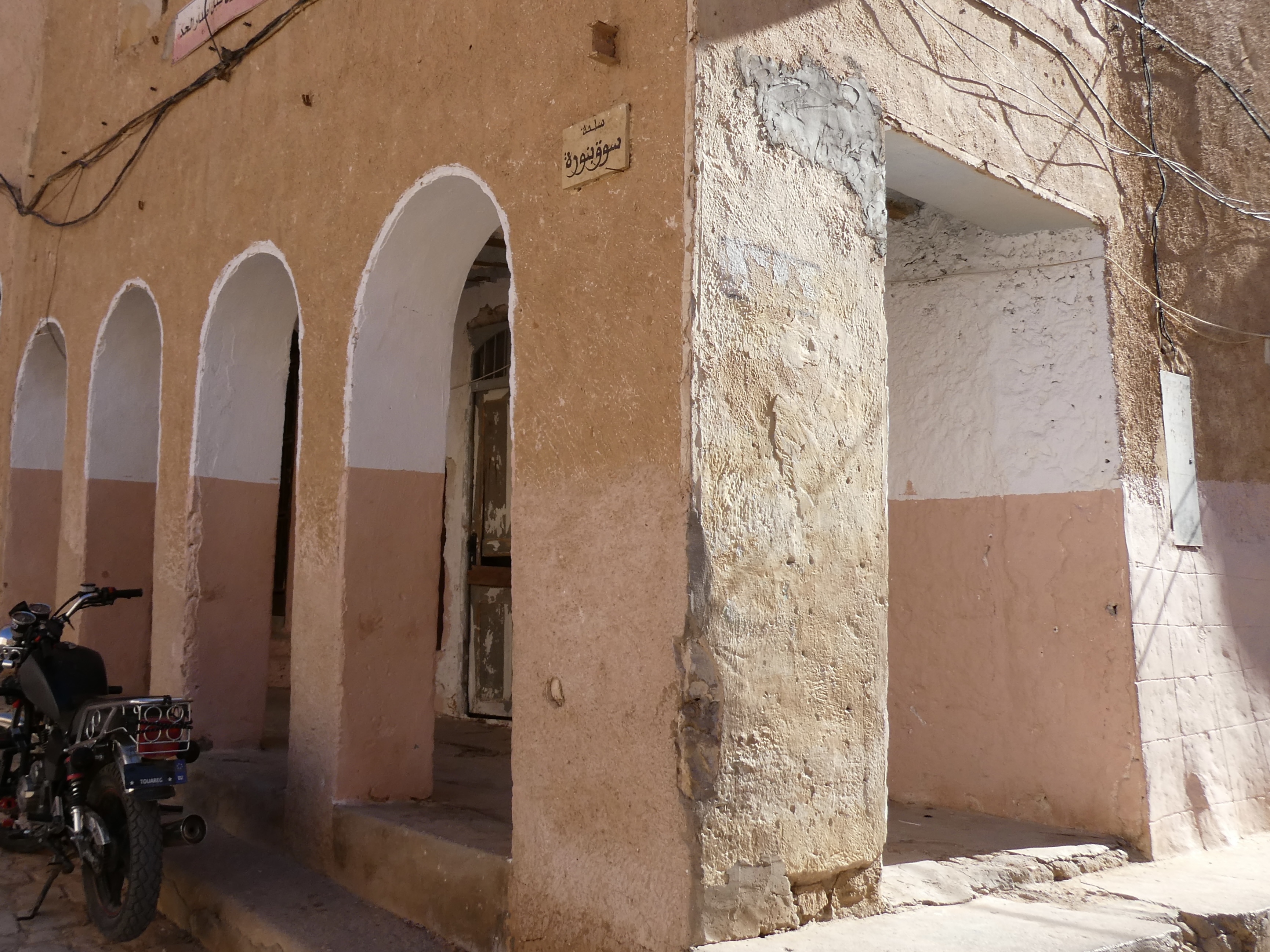
And directly across from the old market was the old law courts. Now I did not realize it, but when I took a picture of the old law courts, one of the white clad ladies came out of a doorway and landed in my picture. My guide said not to worry about it so I kept the picture.
Anyway, we moved on through the alley off of the old market area, which Yahia said was the main commercial district. There are apparently two main roads where men and women can walk in Bounoura, but the area near the end of the commercial district is apparently off limits for men (and tourists) to walk so in order for men to reach the other side of the restricted area, they must walk all the way around and to the second main road. Talk about having to follow a lot of rules.
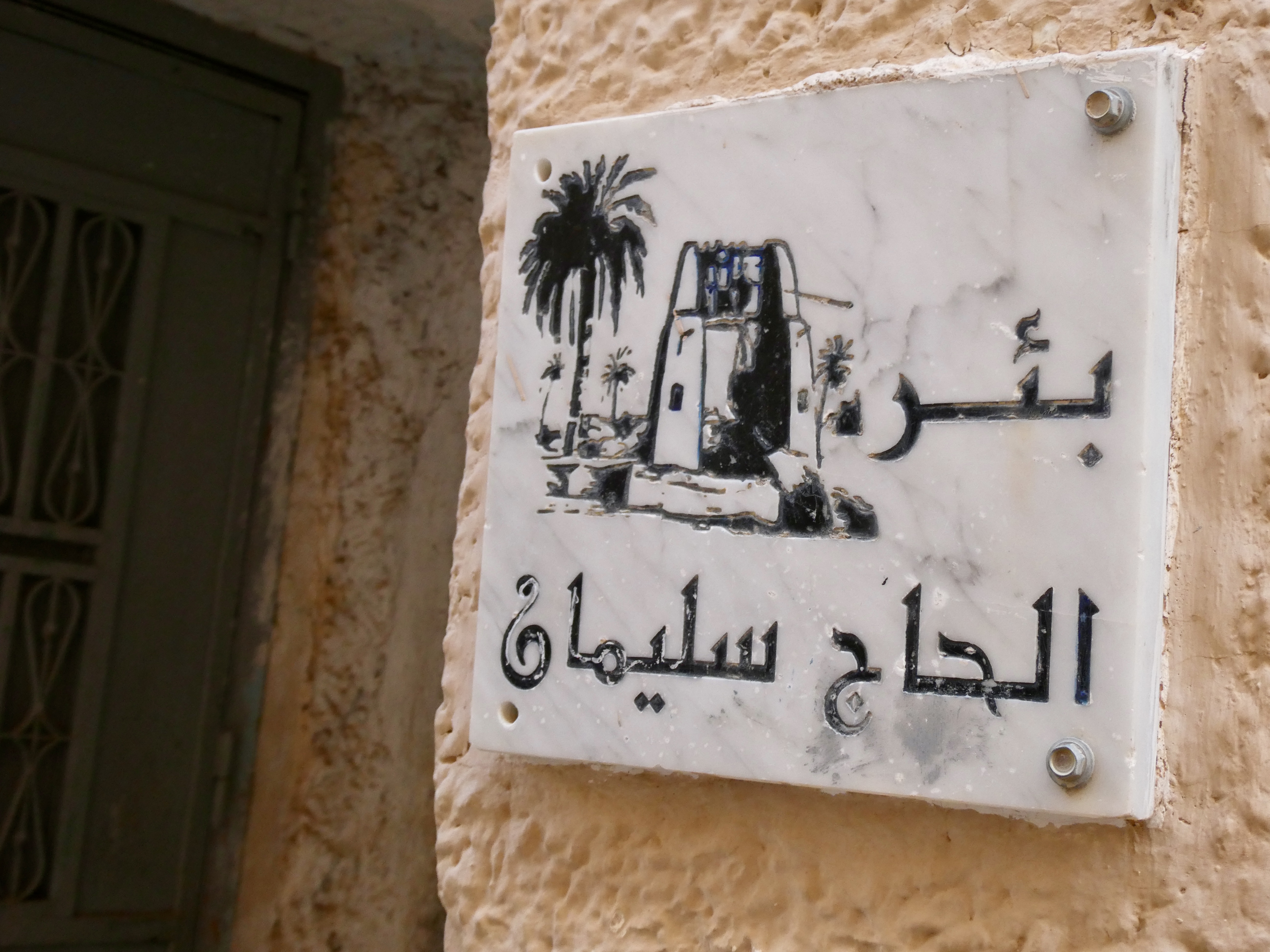
So as we walked along this main commercial area, Yahia pointed to a well that contained a small plaque depicting the construction of the well and the name of a person. Apparently wells can be named after a person who (i) has done something charitable with respect to the construction of the well, (ii) was the first person to start digging the well or the person who finds the water, or (iii) has helped with the funding of the well. Pretty interesting.
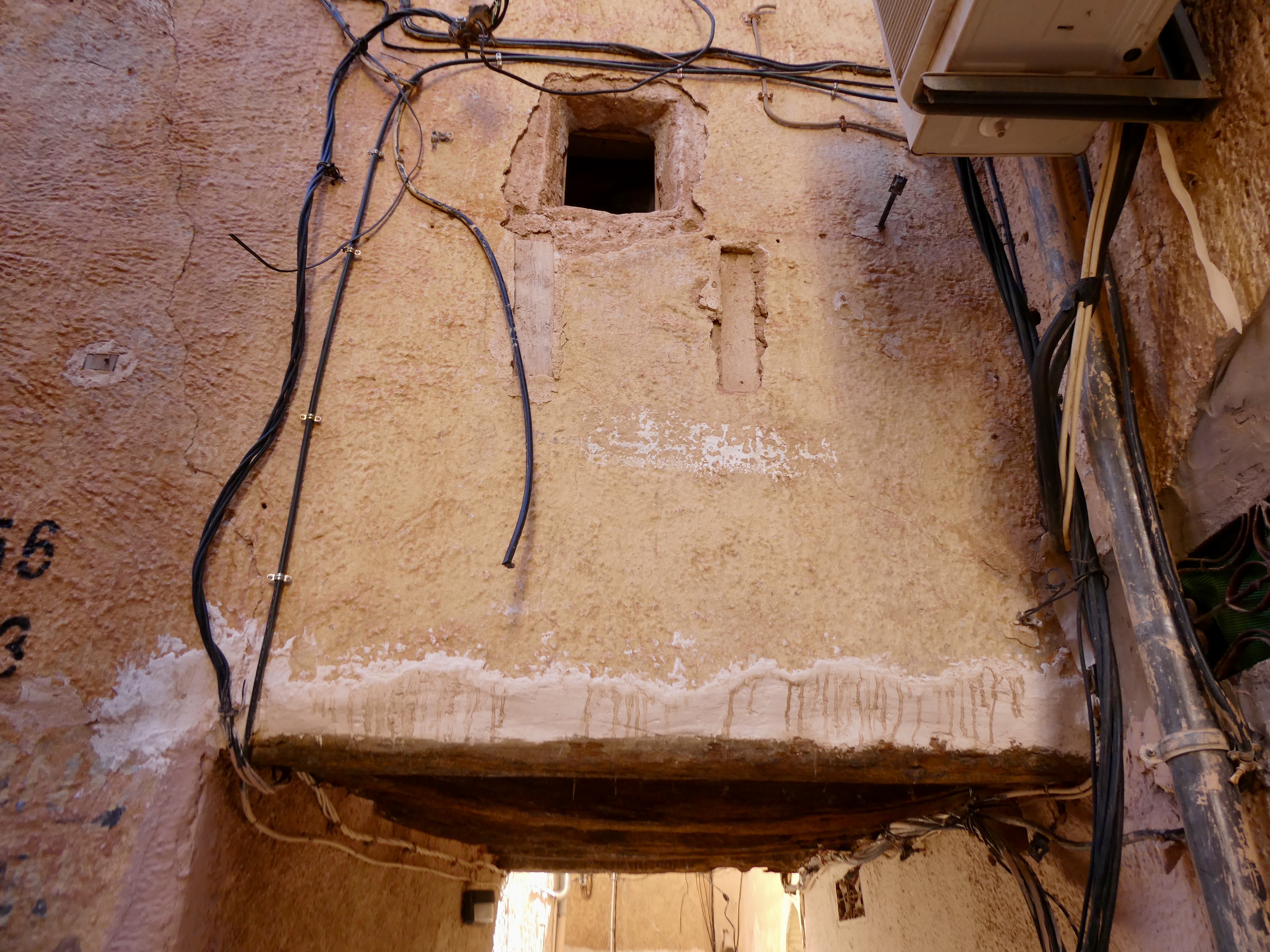
From here, we passed by some homes that appeared to be connected by a bridge. Yahia explained that the bridge is for women to go back and forth between the homes to socialize. Men are forbidden from using the bridge access point.
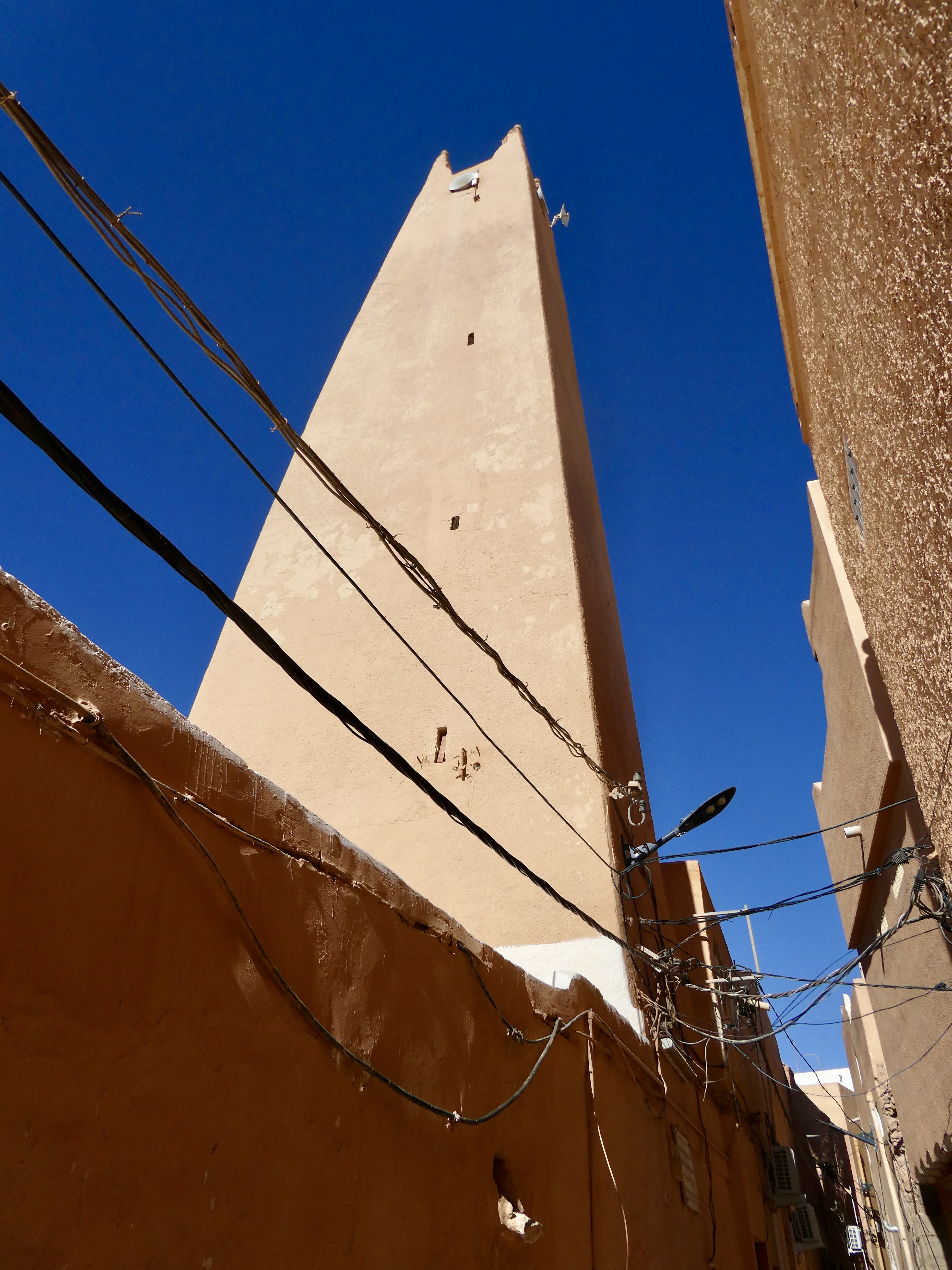
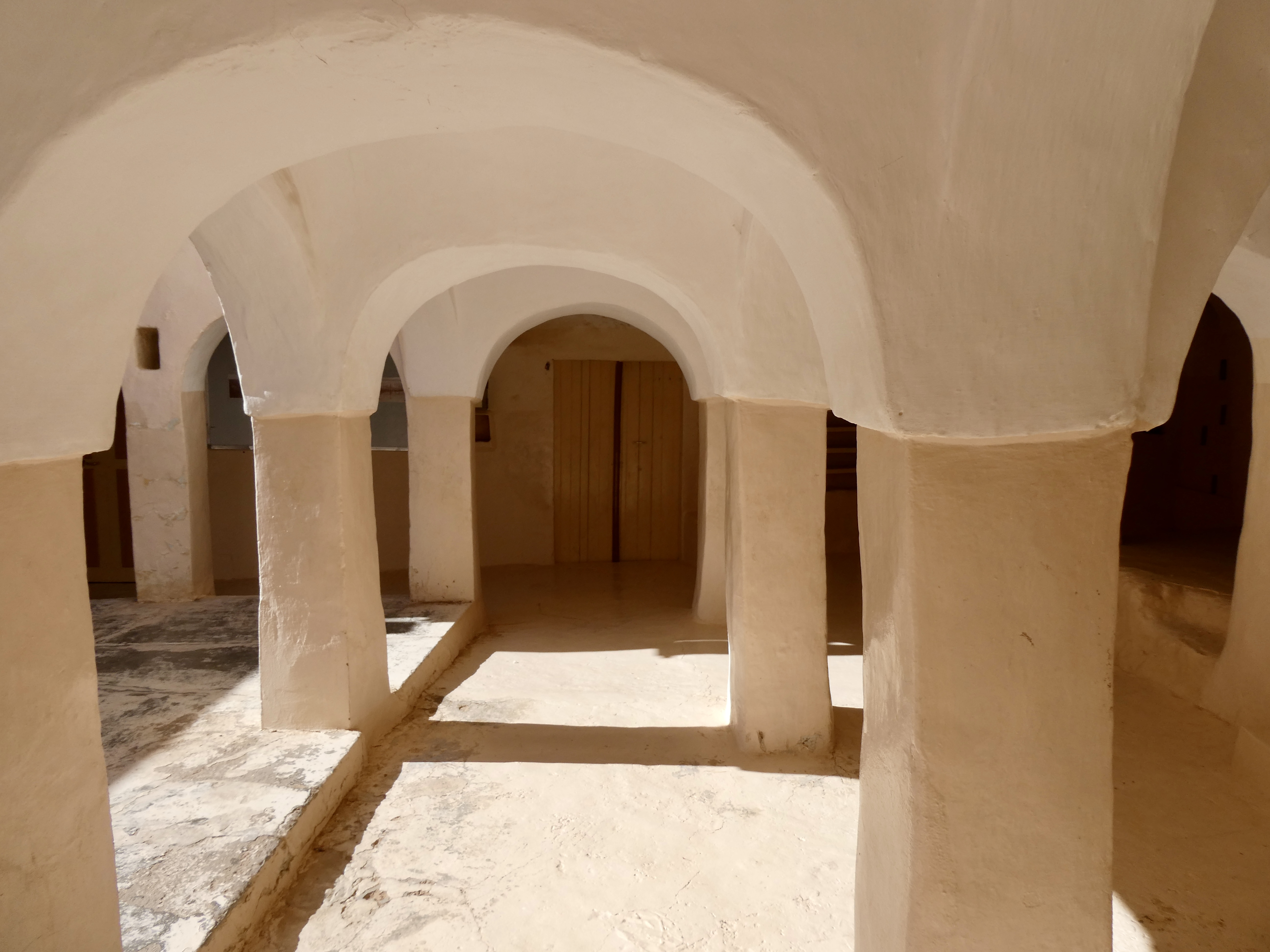
We then walked through more alleys reaching the 15th century mosque where I was actually permitted to take a look inside at the men’s entry point where they socialize before prayer. It was a pretty basic room with small arches made from mud and brick and painted white. It was actually quite a lovely little room.
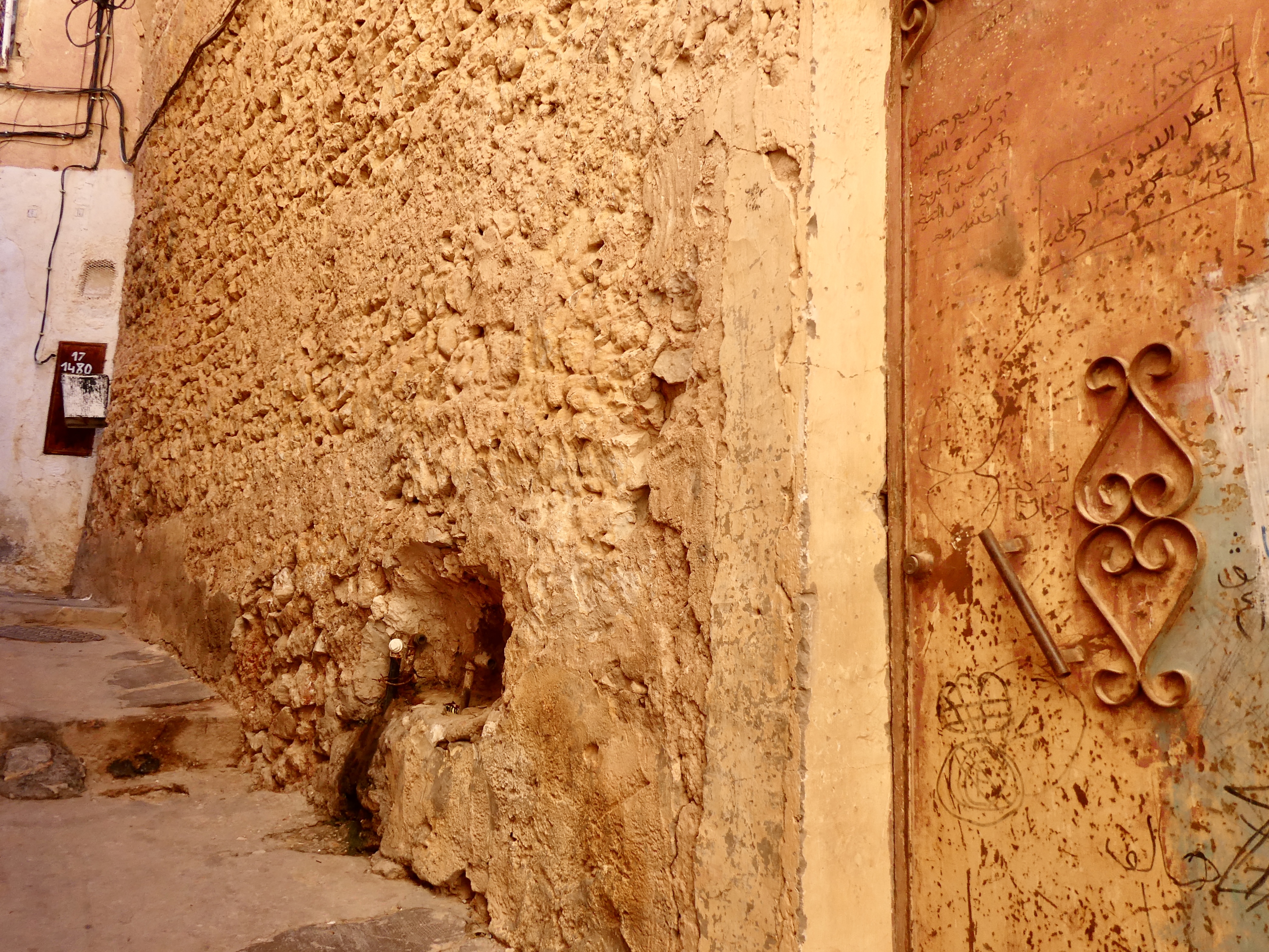
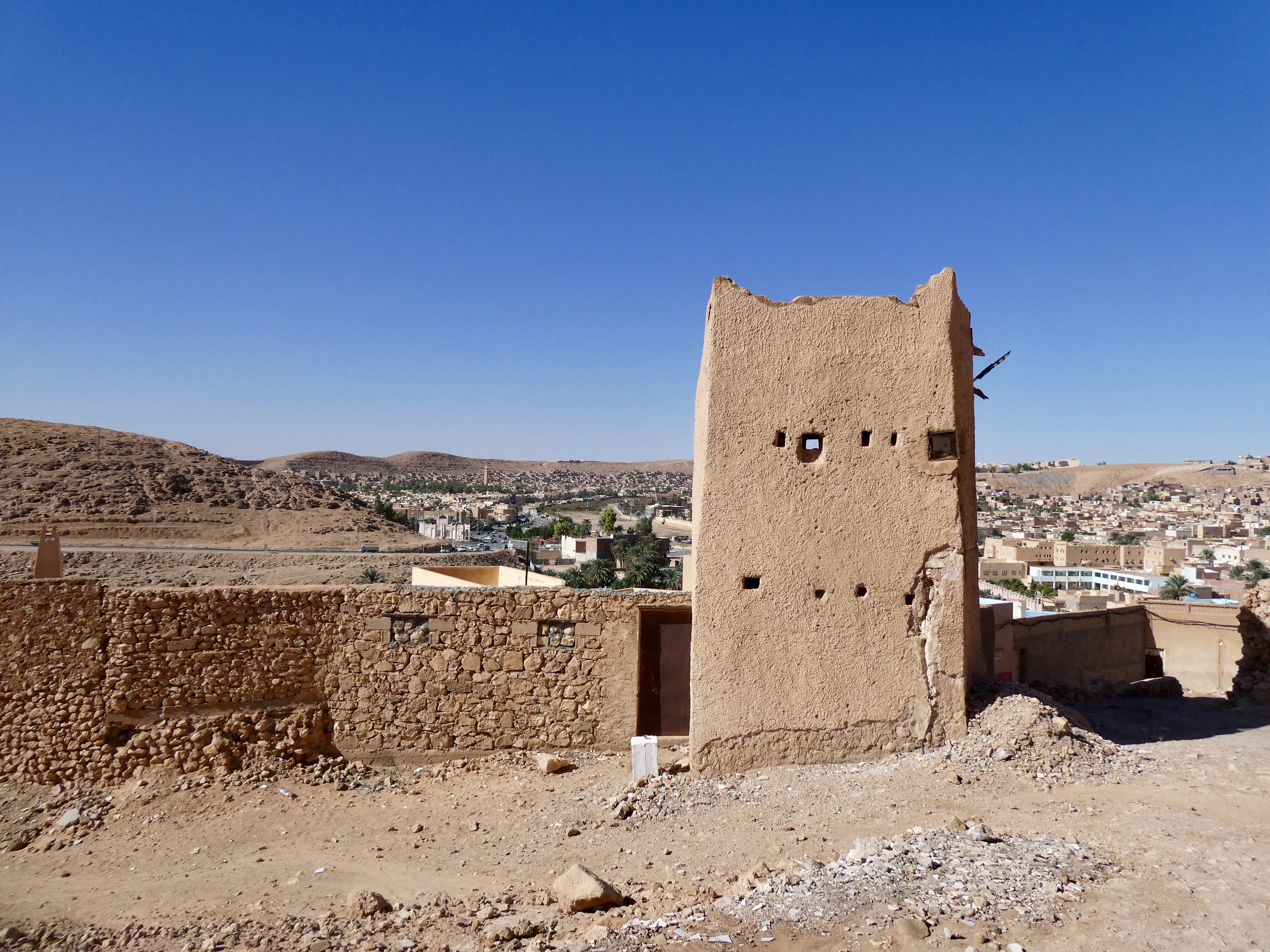
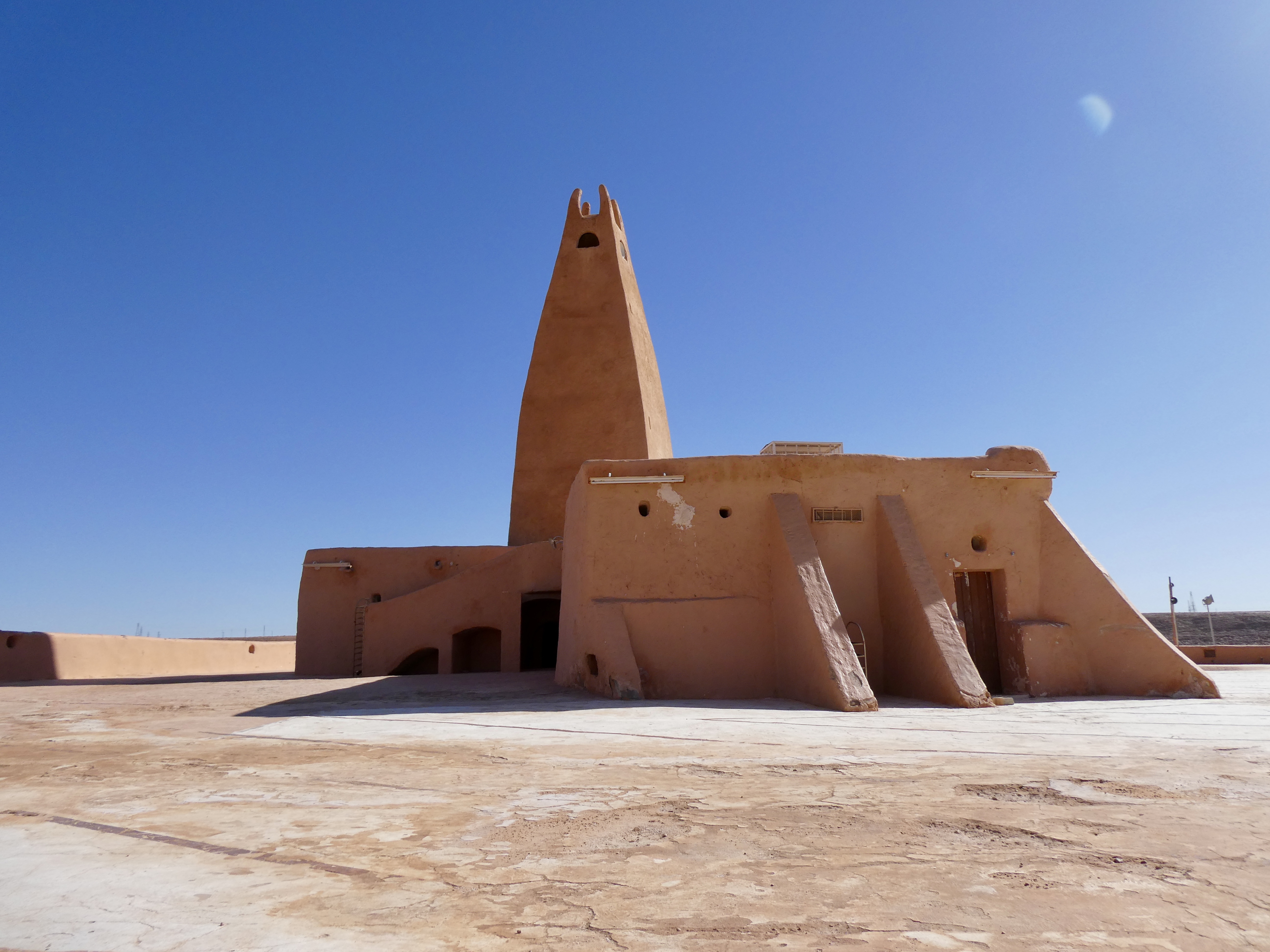
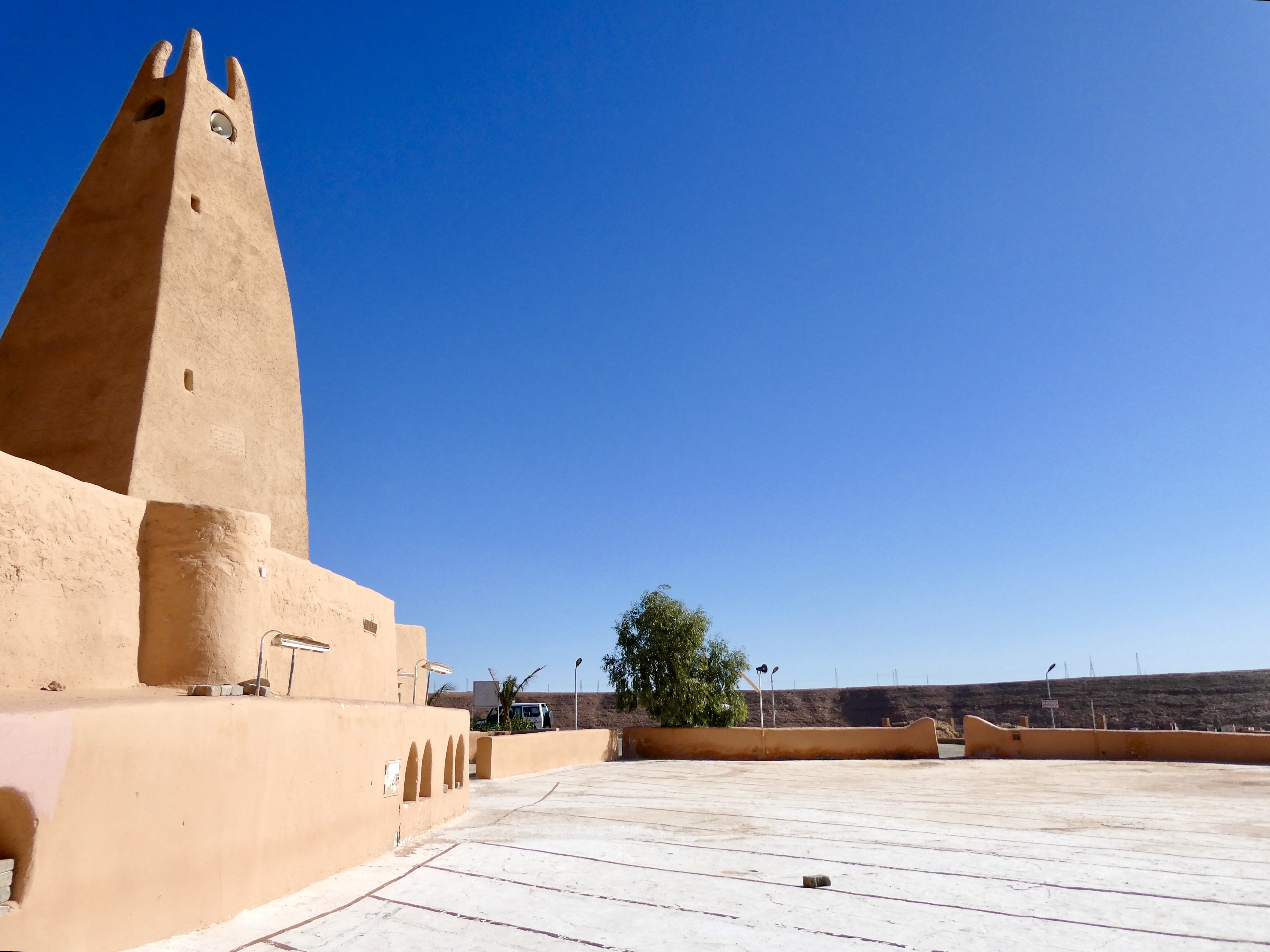

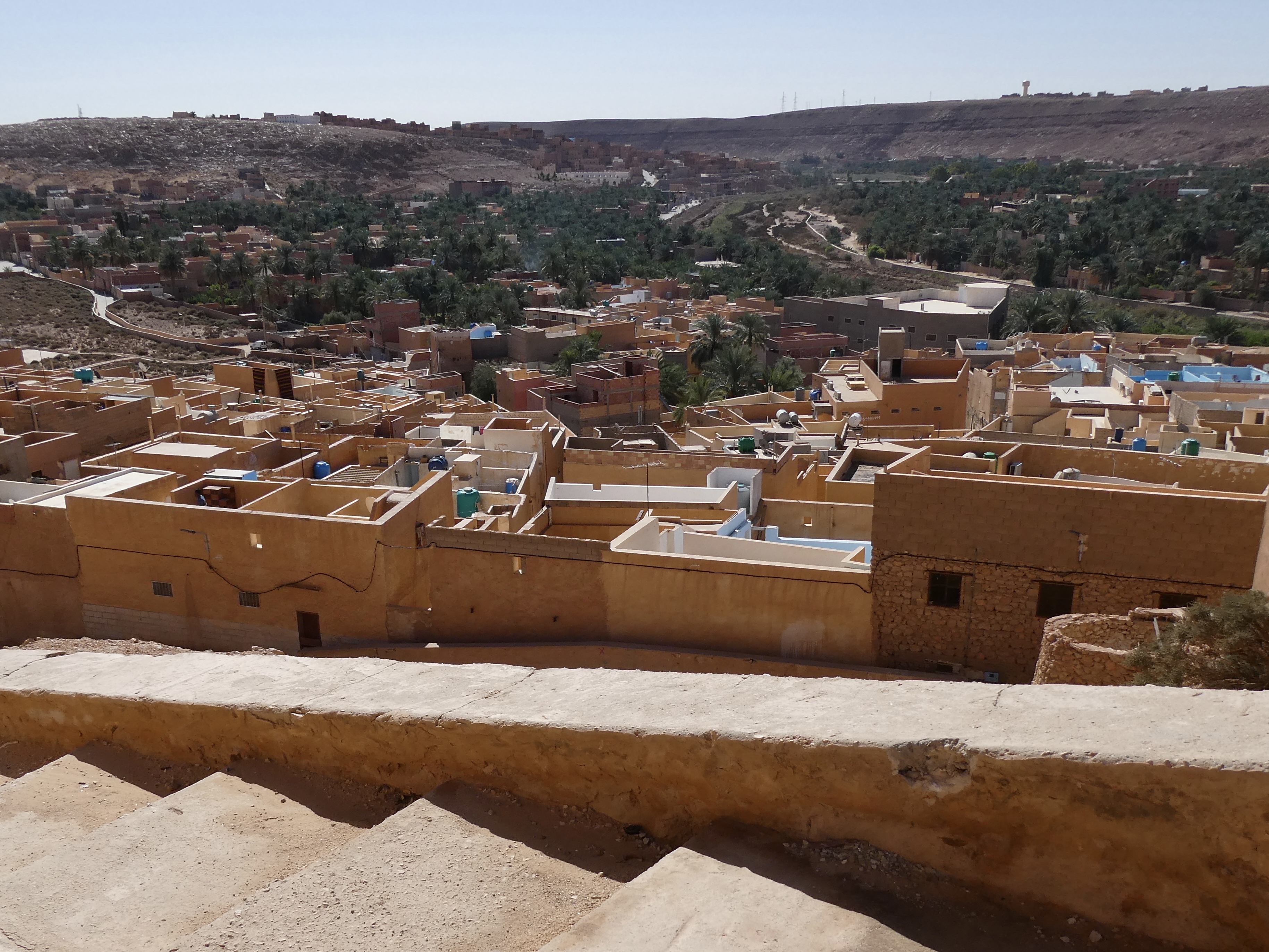
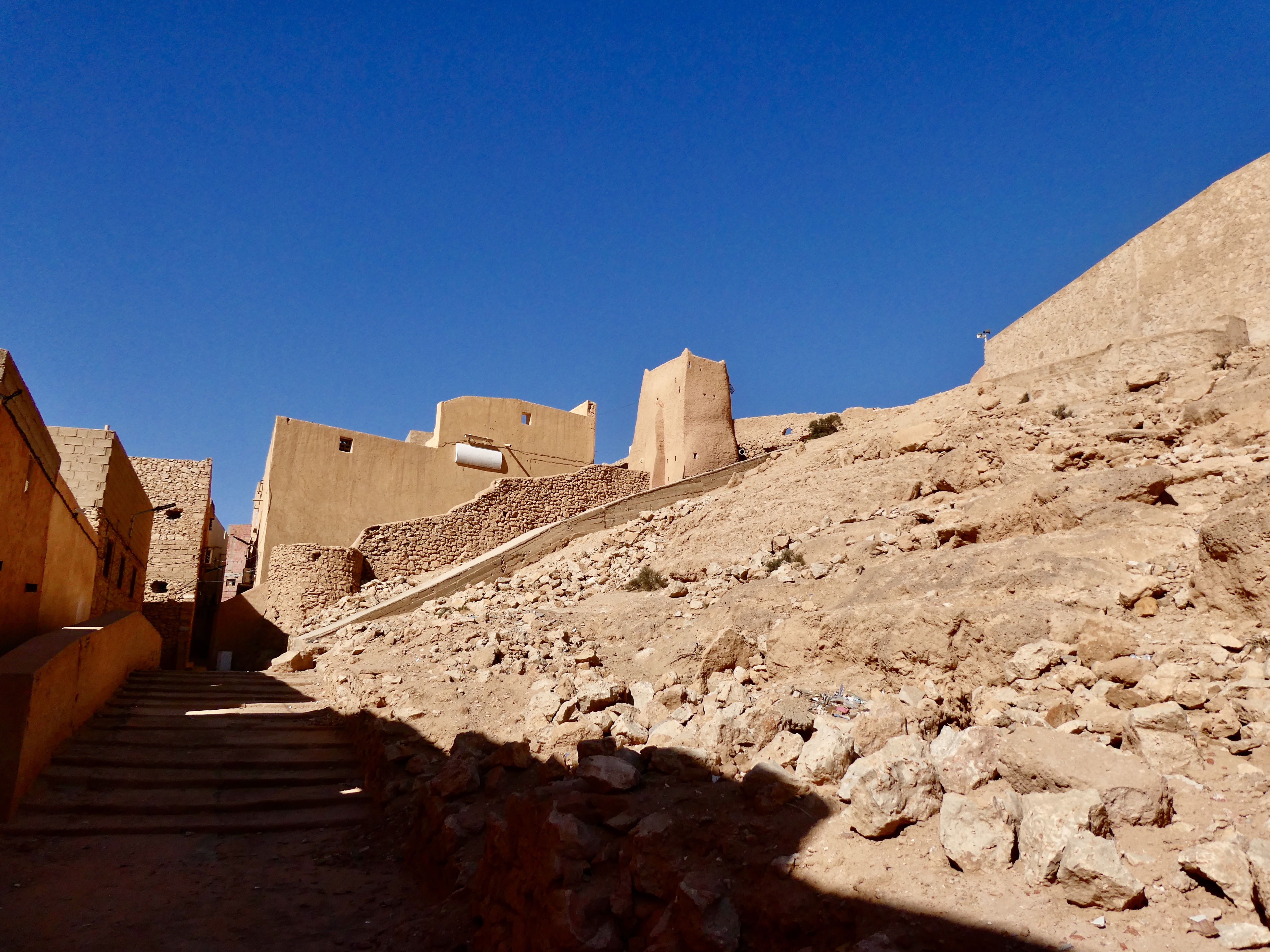
From here we began the climb up to the oldest part of the town. We passed the old 11th century walls and could even see pieces of wood sticking out of holes in the wall. Now once we reached the top of the climb, I have to admit it was rather disappointing. All of the old 11th century houses had been reduced to rubble. And when I say rubble, I literally mean piles of rocks. The only remaining buildings from the 11th century that were somewhat intact were portions of the wall and watchtower and, of course, the restored 11th century mosque.
Now the interesting thing about the mosque is that it is still used today. However, women are not permitted to enter the mosque because it is so small. In fact, the mosque is so tiny that a large courtyard has been built adjacent to the mosque where men line up and pray outside. And of course, the courtyard is marked so that the men praying can face in the proper direction towards Mecca.
And the views from the top of the hillside down below towards the newer (i.e. 15th to 18th century) buildings in Bounoura were pretty spectacular. I took in the views, lamented the fact that the old homes were in ruins and then began the hike back down to the main entrance to the town.
From here, I met back up with Kacem and we headed to the commercial district in Ghardaia where we were going to visit the massive Ghardaia market. Sadly, the market turned out to be a bit of a letdown.
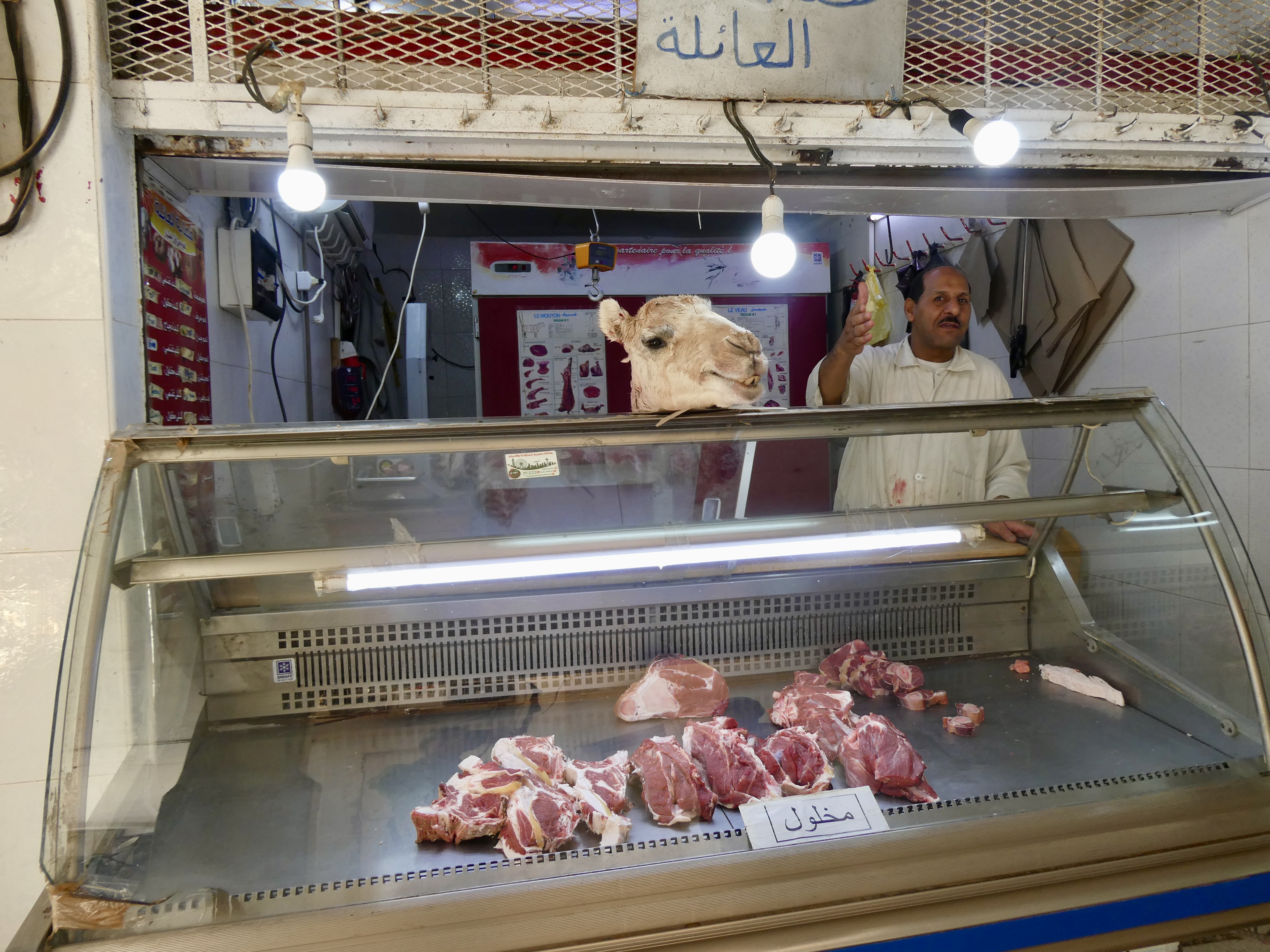
We entered the market by walking through an alley that turned out to be the meat market. Now this was rather fun as we passed by some guy selling camel meat (complete with a camel head on the counter) who insisted on trying to communicate with me even though he spoke no English. The guy wanted to know if I had ever tried camel meat (which I have) and he was more than impressed to find out that I have indeed eaten camel.
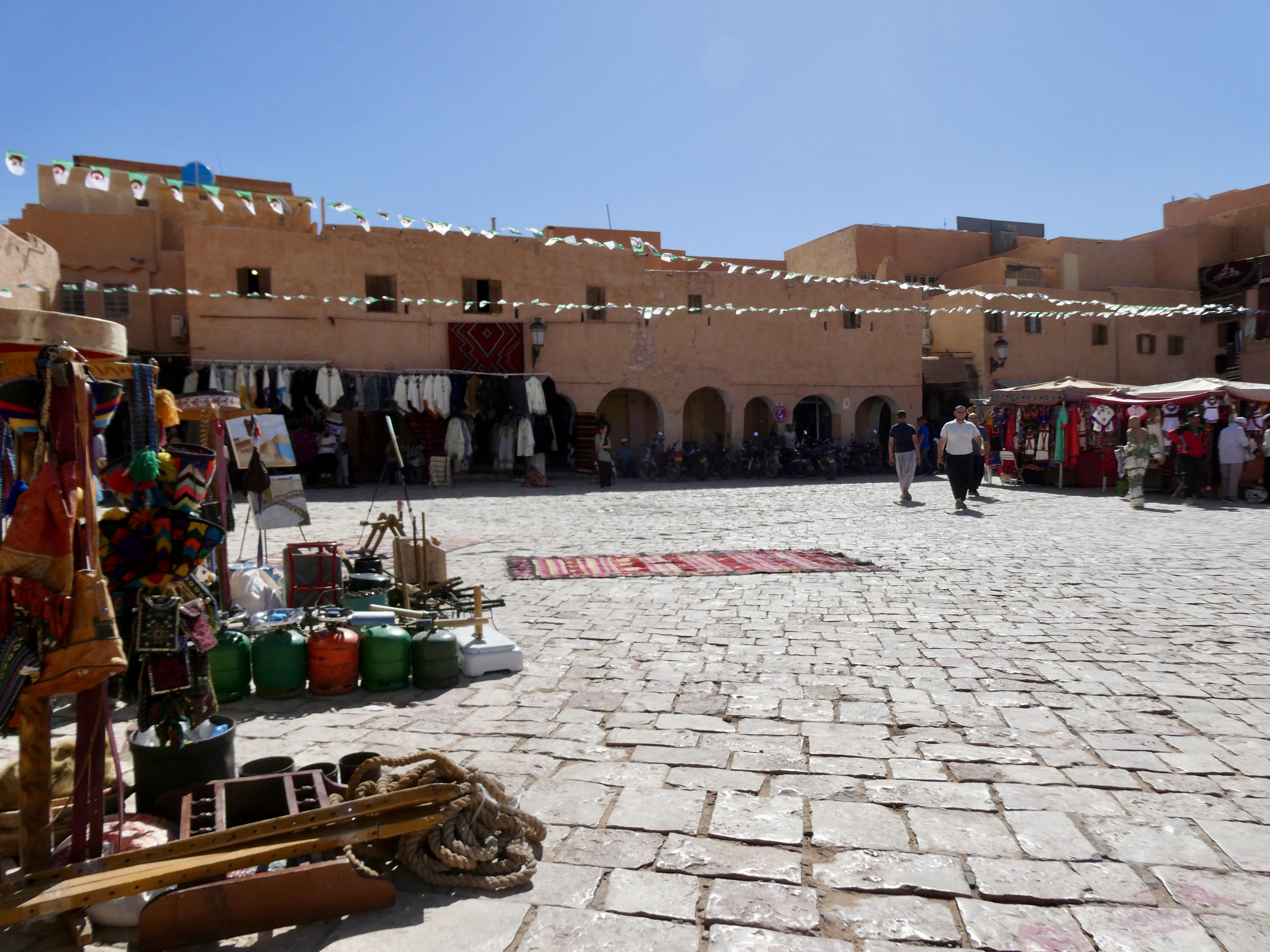
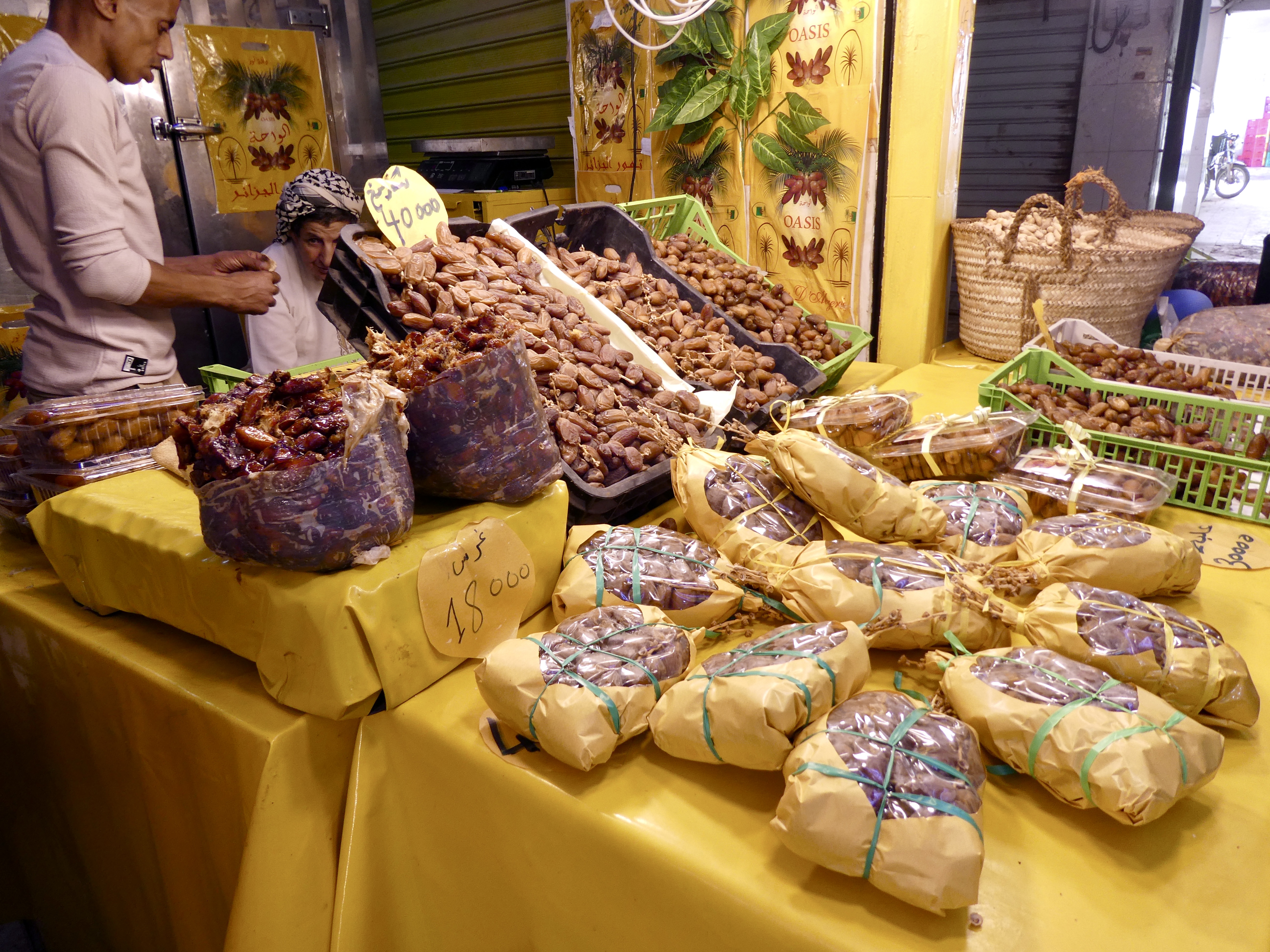
We finally managed to move on from camel guy passing a number of stalls where men were selling dates and some spices. (There were zero women proprietors.). We eventually walked out of the meat market area and into the market square. And this is where the experience was a bit of a downer. While the square was lovely, it was filled with a lot of well… crap. Tourist trinkets, second hand tea services and pots and pans and lots and lots of fairly unimpressive carpets. Ugh. No real craftsmanship anywhere other than some guy at the far end of the market painting pictures.
The one bright spot was that Kacem and I stopped at a stall where the guy was making takerwait, which Kacem said was the local version of “Red Bull”. The drink is apparently made with oranges and lemons, dates and spices including cinnamon, cloves and myrtle flowers. The drink had a bit of spicy taste, but was actually very, very refreshing and apparently gives you energy.


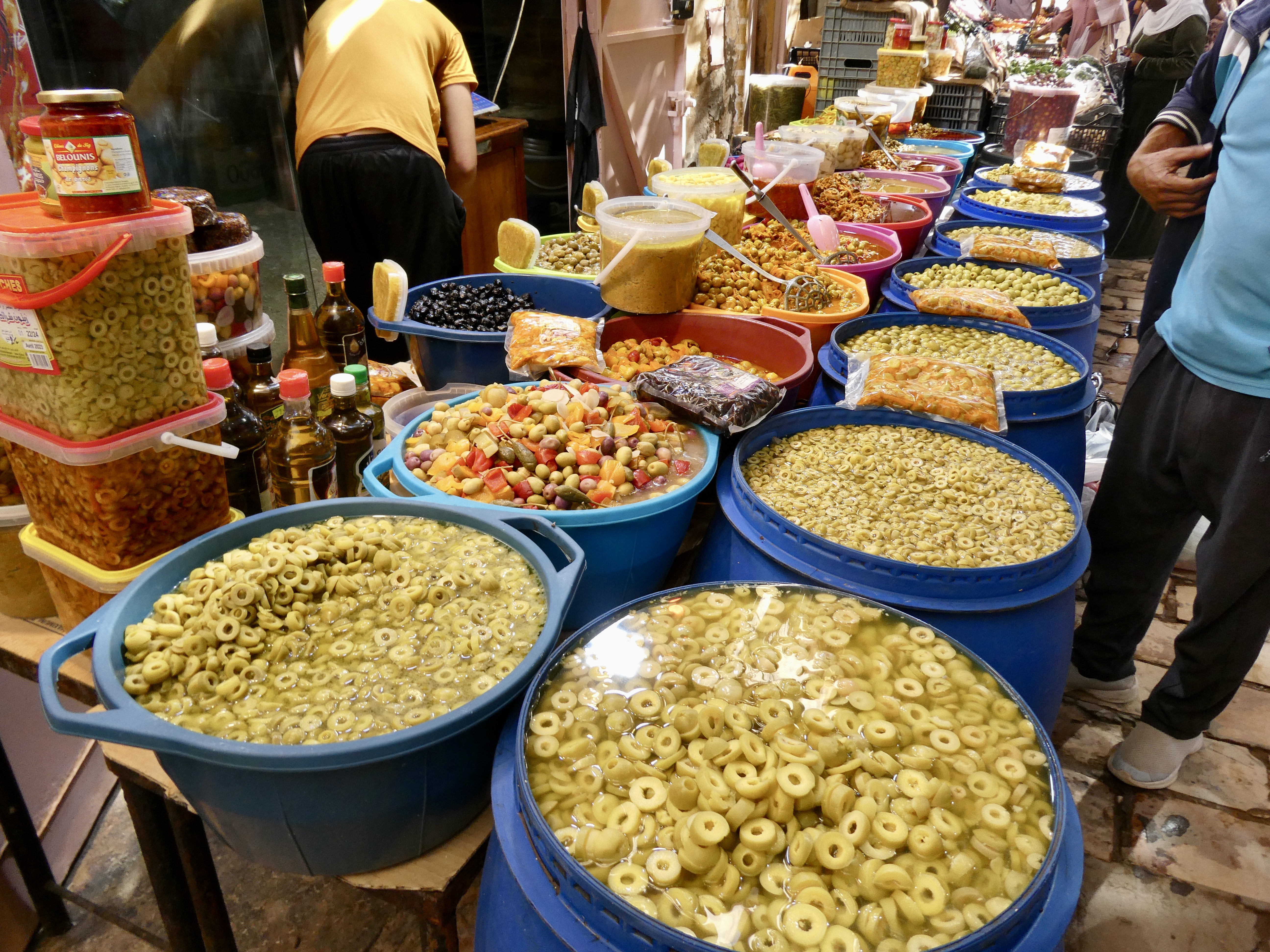
Once we had our drinks, we walked to another alley that housed the produce section. Now this area was interesting to me as it is always fun to check out the fruits and vegetables. And this place was absolutely packed with men and women buying their fruits and vegetable needs.
There were lots and lots of pomegranates for sale, which I tasted (they were fabulous), as well as oranges and pears. There were b
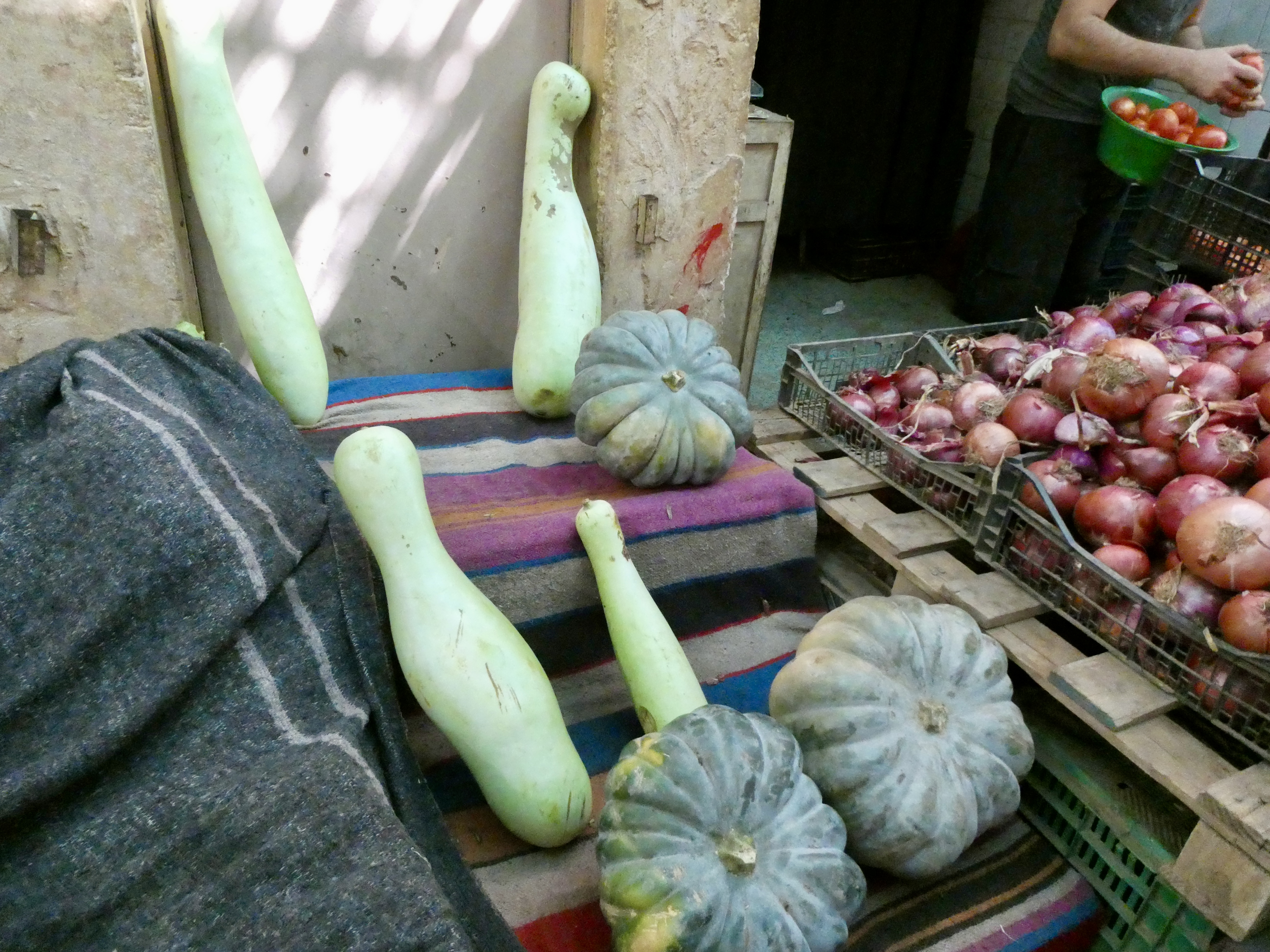
arrels of olives everywhere as well as every kind of pumpkin and squash you can think of. Apparently, the Algerian harvest season is similar to our harvest season back home because every time I pointed at a pumpkin or squash one of the vendors yelled “Halloween” at me, which made me laugh every time.
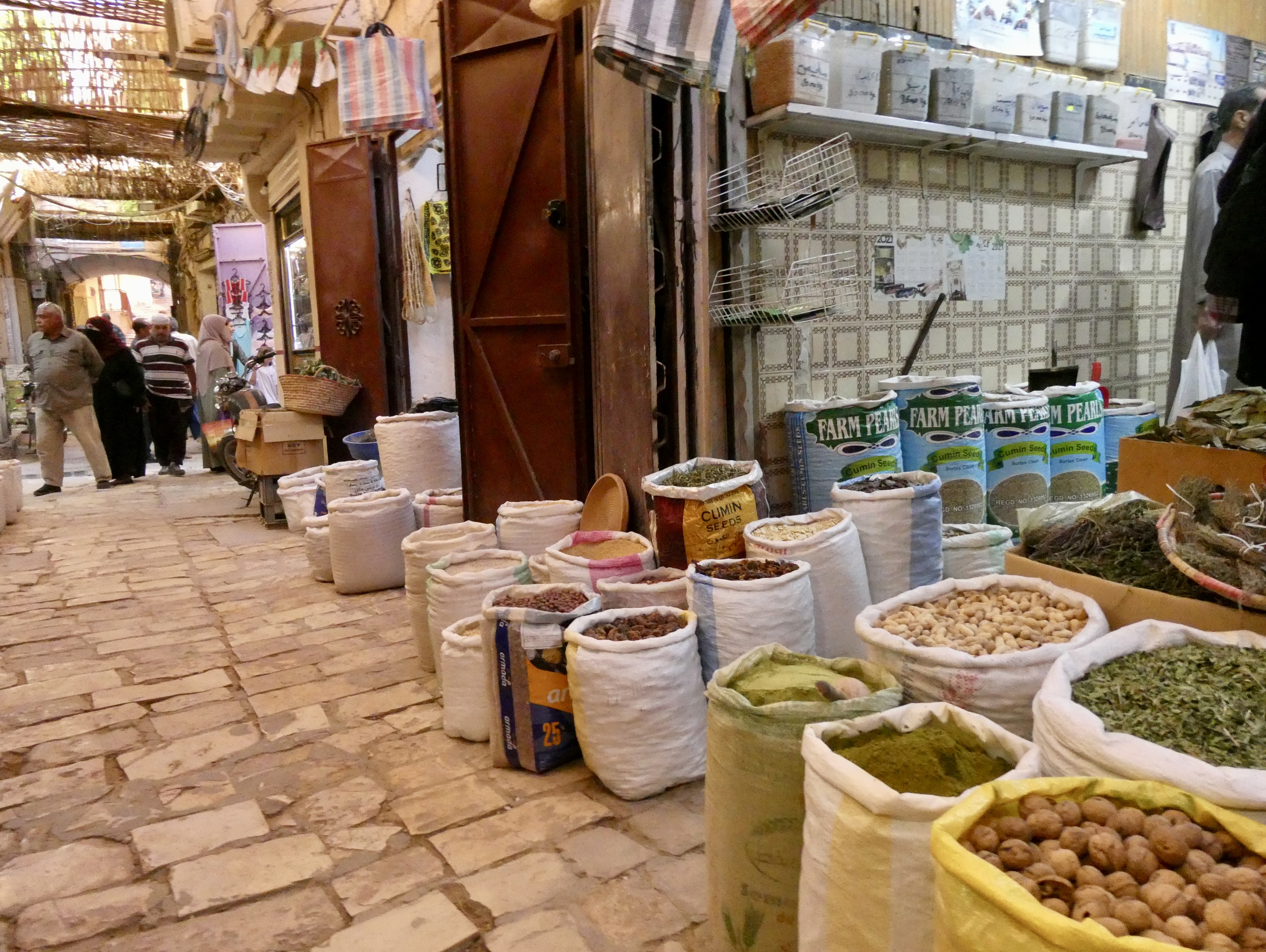
And once we reached the end of the massive produce market, we doubled back around and entered a small alley where there was a myriad of spices of sale. The men who were in running these spice stalls seemed a little grumpy so I refrained from interacting, ended up taking a couple pictures and then told Kacem I was done.
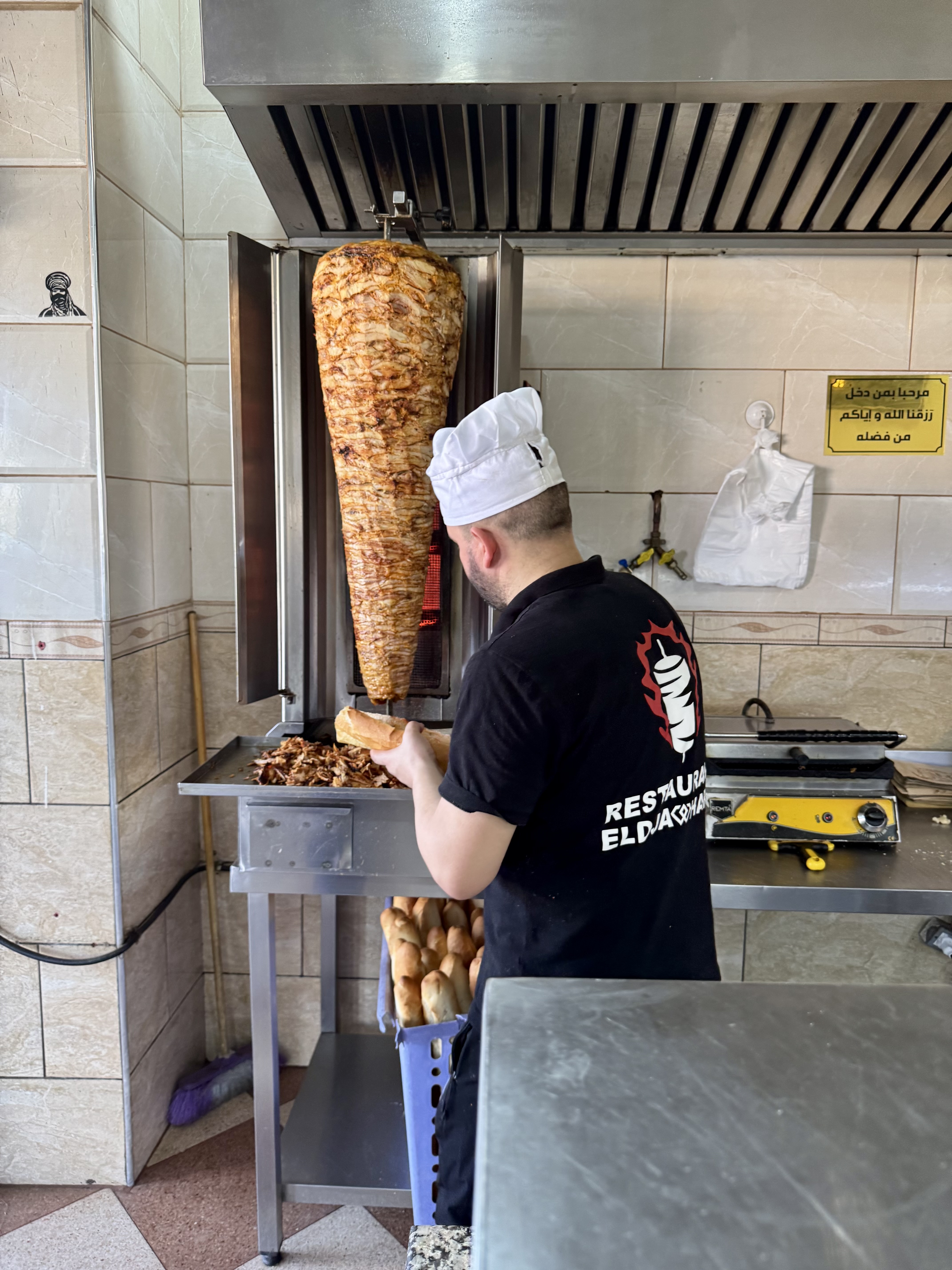
We then stopped for some lunch. I insisted to Kacem that I wanted to go back to the restaurant from the day before to have the same shawarma sandwich. The guy recognized me when we arrived and appeared thrilled that I wanted another one of his sandwiches. This time, he added a little bit more harissa and when I say this sandwich was perfection, I mean it. Absolutely delicious.
Anyway, after lunch it was siesta time so I was dropped off at my hotel around 1:30 and took a bit of a rest. At 5:00, Kacem and Zachery arrived and we set off to visit the Beni Isguen palm grove oasis.

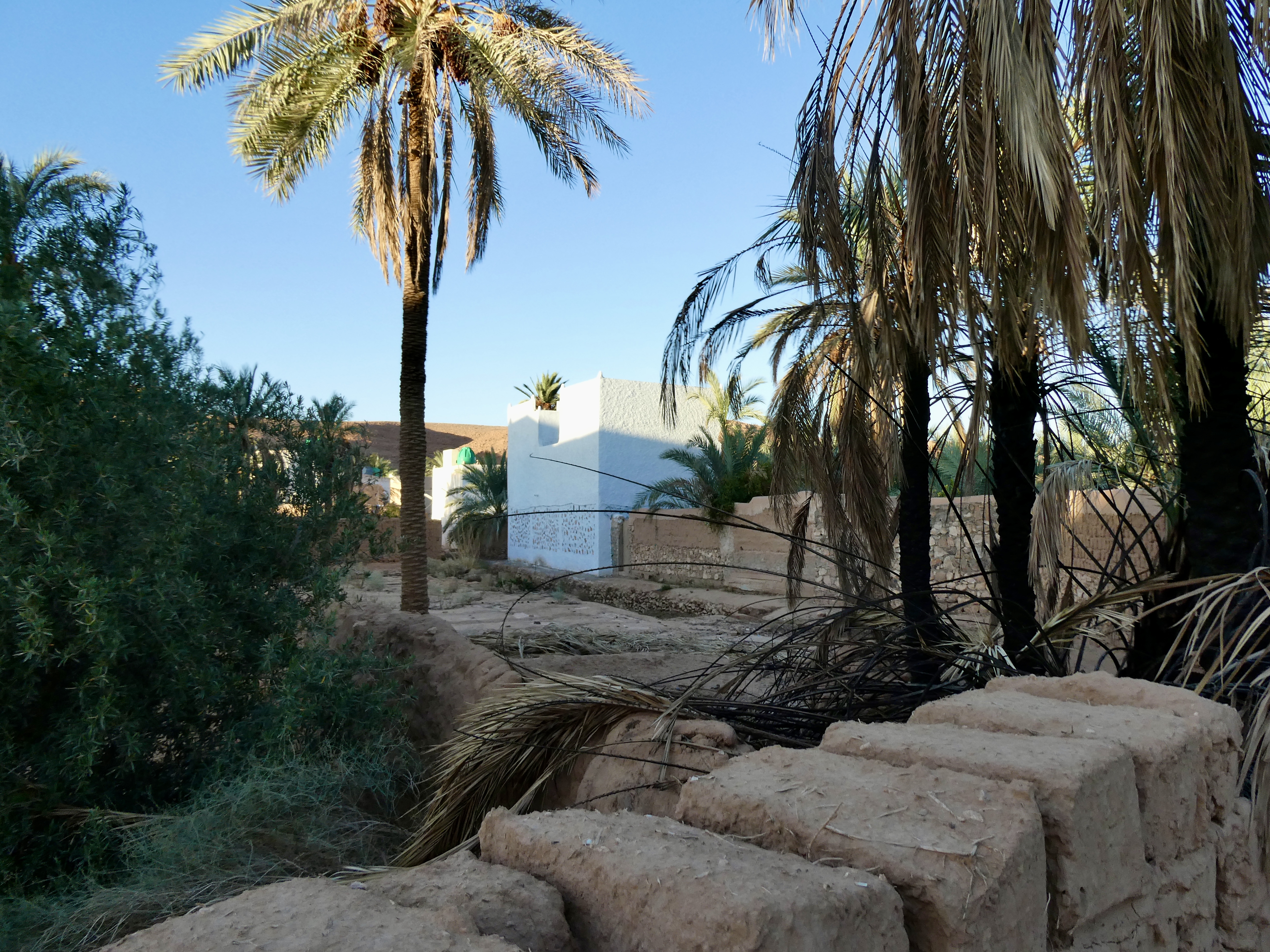
Now each of the five towns have their own palm grove oasis and within each oasis are summer homes that can only be owned by the folks living in that particular town. People leave the main towns and fill up the summer homes inside the oasis because the palm trees shade the homes providing some respite from the brutal (50 degree plus Celsius days) summer heat.
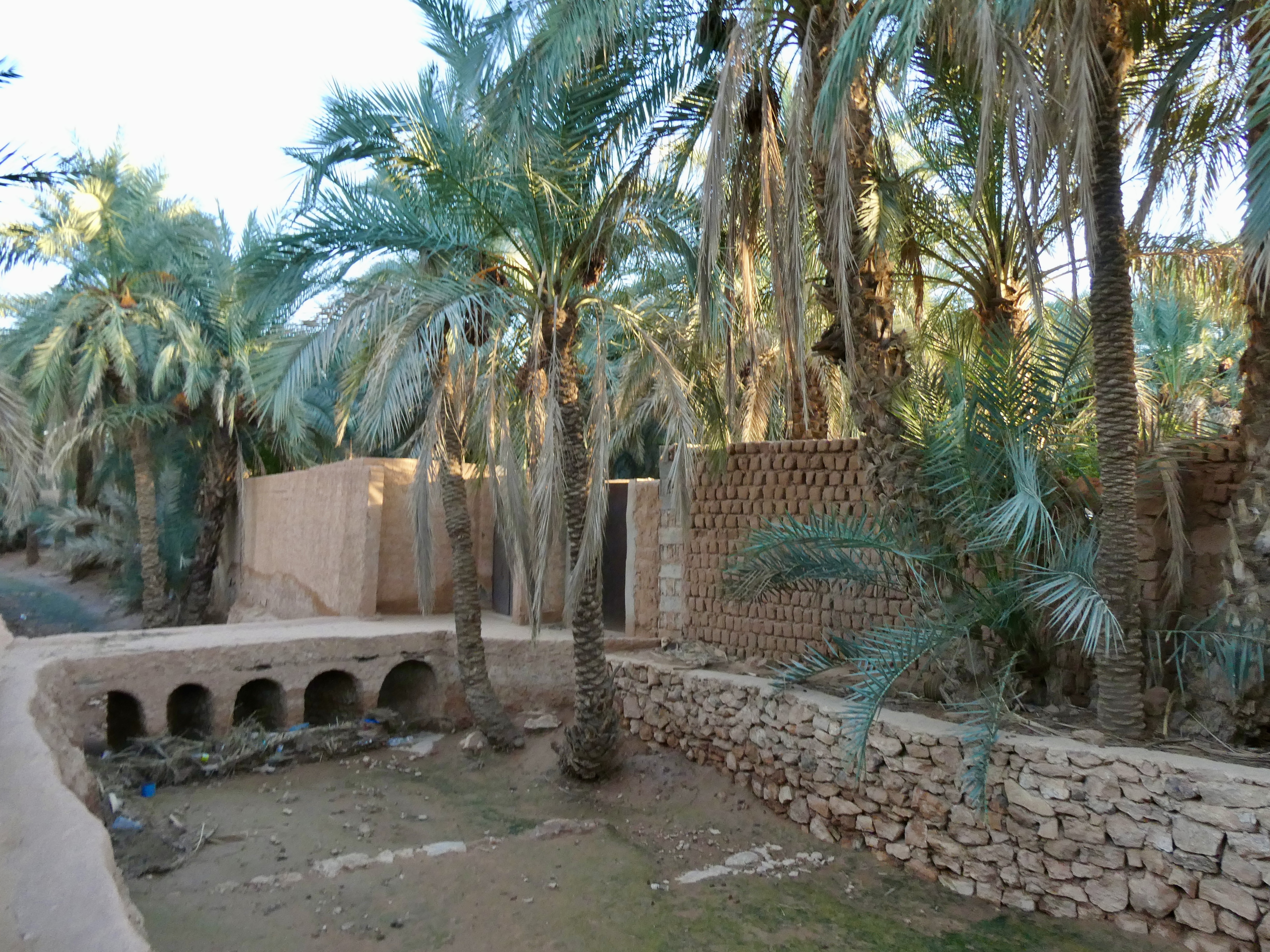
And the palm, olive and fruit trees that fill the oasis area stay alive through an incredible irrigation system that captures water and receives water from nearby damns and then distributes the water using a pipe system to feed the oasis. In addition, there are a myriad of wells within each oasis that provide local residents with drinking water.
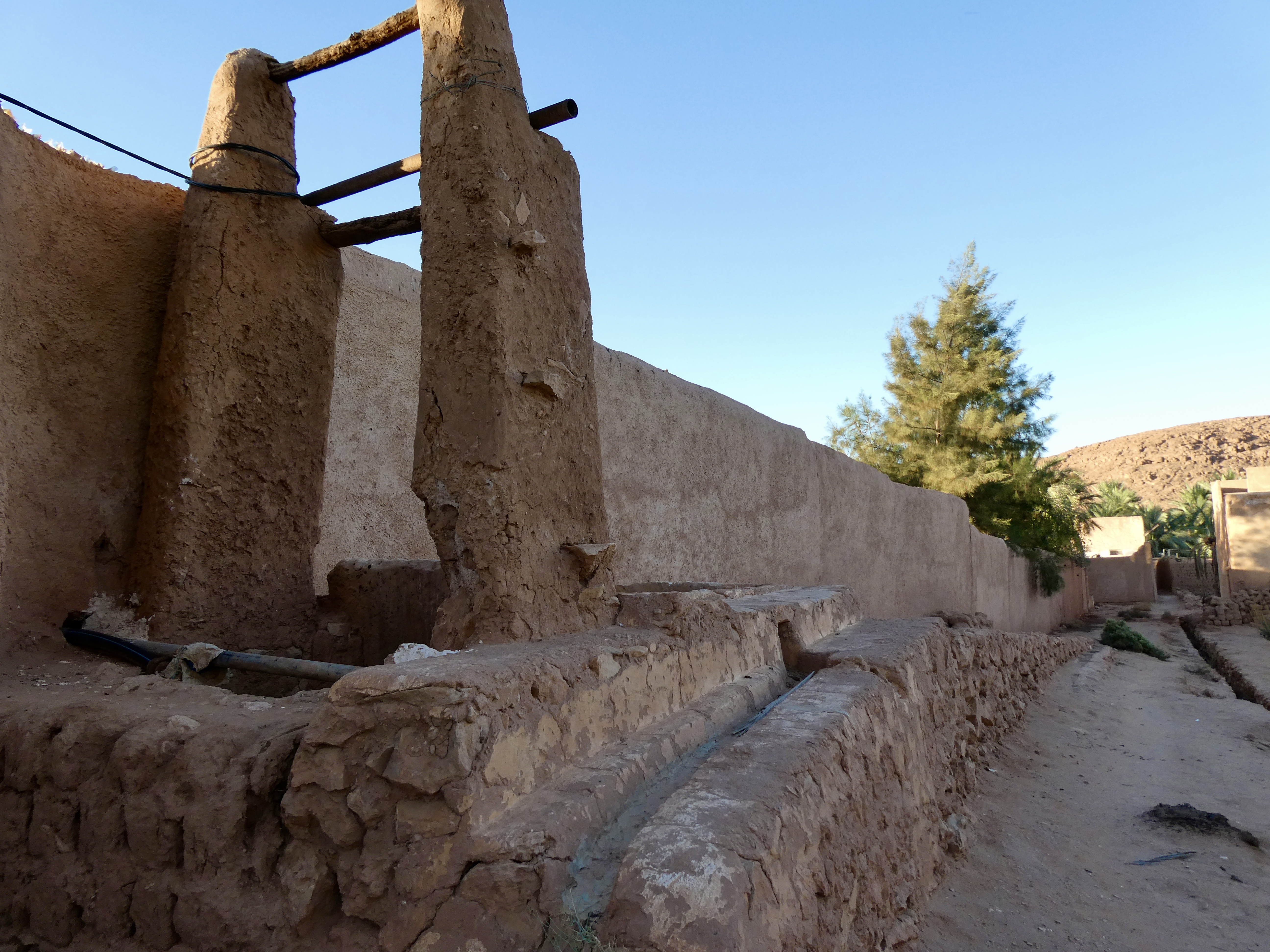
Unfortunately, there is no admission to the residential areas for tourists so the visit is limited to walking along the walls surrounding the homes and the pathways that line the dried up canals.


Kacem and I made our way along these pathways, stopped twice to take a look a couple local wells which were on the outside of the walls before turning to the right and hiking way up a very, very steep and rocky hillside to a watchtower. Now I was not entirely clear why there was a need for a fairly modern watchtower. Kacem said it was because they use the watchtower to warn residents of flooding potentials during rainstorms, but I think the real reason is to make sure that folks who are not permitted to reside in the oasis are not coming into the area.


Anyway, after our hike up the mountain, we took in the views to the homes inside the walls before hiking back down and meeting Zachery for the ride back to my hotel. Sadly my time in the amazing M’Zab Valley had come to an end. Tonight, I have a midnight flight to Constantine where I begin my walking tour over the next five out of six days to see the incredible Roman ruins in northern Algeria.
