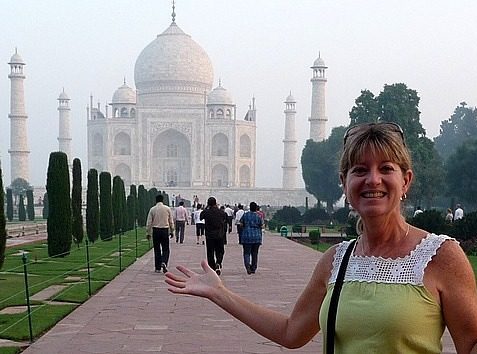
Another day in Algeria another trip to see some Roman ruins. This time we were off to Timgad, about 2 hours from Constantine. My driver, Majad, picked me up just after 9:00 a.m. and we set off for Timgad, making one stop on our way out of town to pick up Nahla. (Since it was Friday most things were closed so transportation for Nahla was difficult so it was easier to pick her up near her home.)
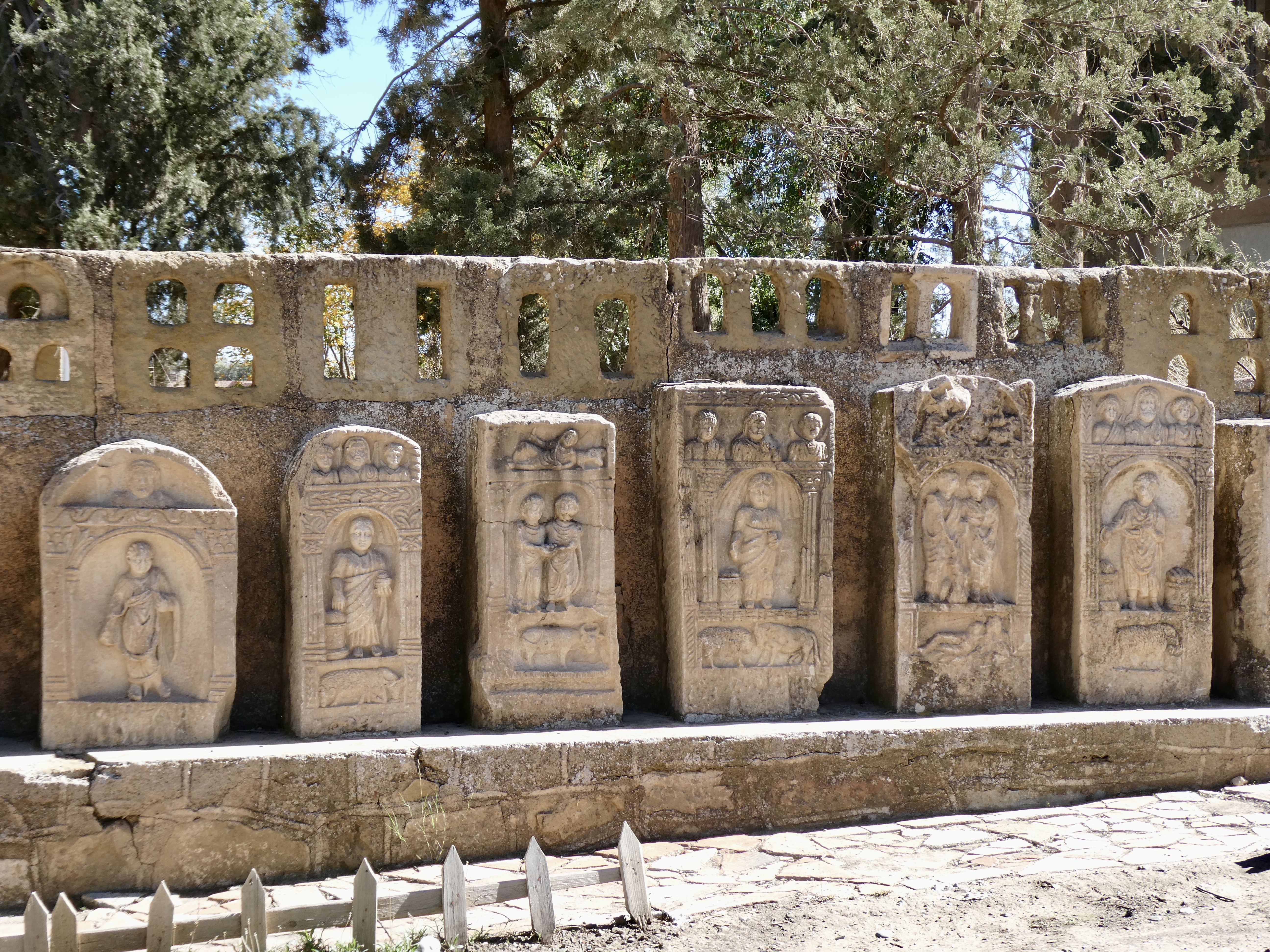
Anyway, at just after 11:30, we arrived in Timgad and began the tour by stopping first at the Timgad Museum, which houses all of the mosaics discovered at Timgad as well as numerous statutes, oil lamps, and funerary stelae.


Now the number of mosaics that were recovered and that were in pretty good to very good condition was impressive. One of the first cool mosaics I saw was a “welcome” sign that was uncovered at the Timgad Roman baths. I can’t ever recall seeing a Roman welcome sign anywhere in my travels.
And as we walked through the small museum, Nahla pointed out a massive crack that cut right through two mosaics that had been hung on the wall. Apparently in 2020 there was a significant earthquake in the area causing the damage to the wall and the mosaics on the wall. Now the mosaics did not fall off the wall, but there is concern that further earthquakes could destroy the mosaics so it is expected that the museum will be closing and a new building constructed to protect the precious art.
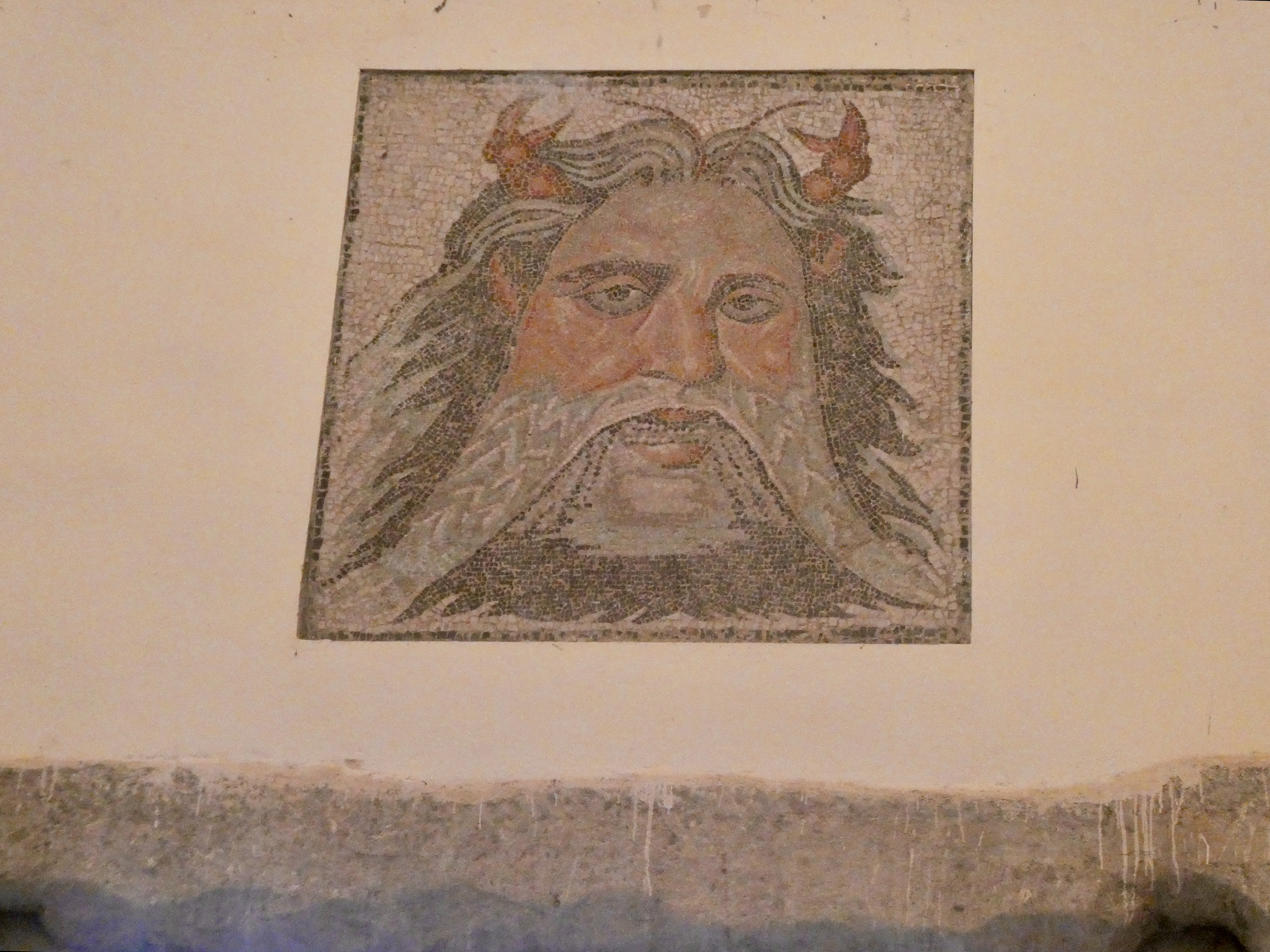
Now in addition to the fabulous welcome sign mosaic, three other mosaics that caught my eye were the large Neptune mosaic riding his chariot, a mosaic featuring a headshot of Jupiter and a mosaic depicting a number of Roman goddesses being protected by angels from sea creatures. The Roman goddesses mosaic was particularly impressive because it featured tiny, tiny ceramic and glass squares making up the mosaic. And apparently the size of the mosaic square is indicative of how old the mosaic may be. The larger the mosaic square the older the mosaic. Given the size of the Roman goddesses mosaic squares it is believed the mosaic is from the 4th or 5th century.
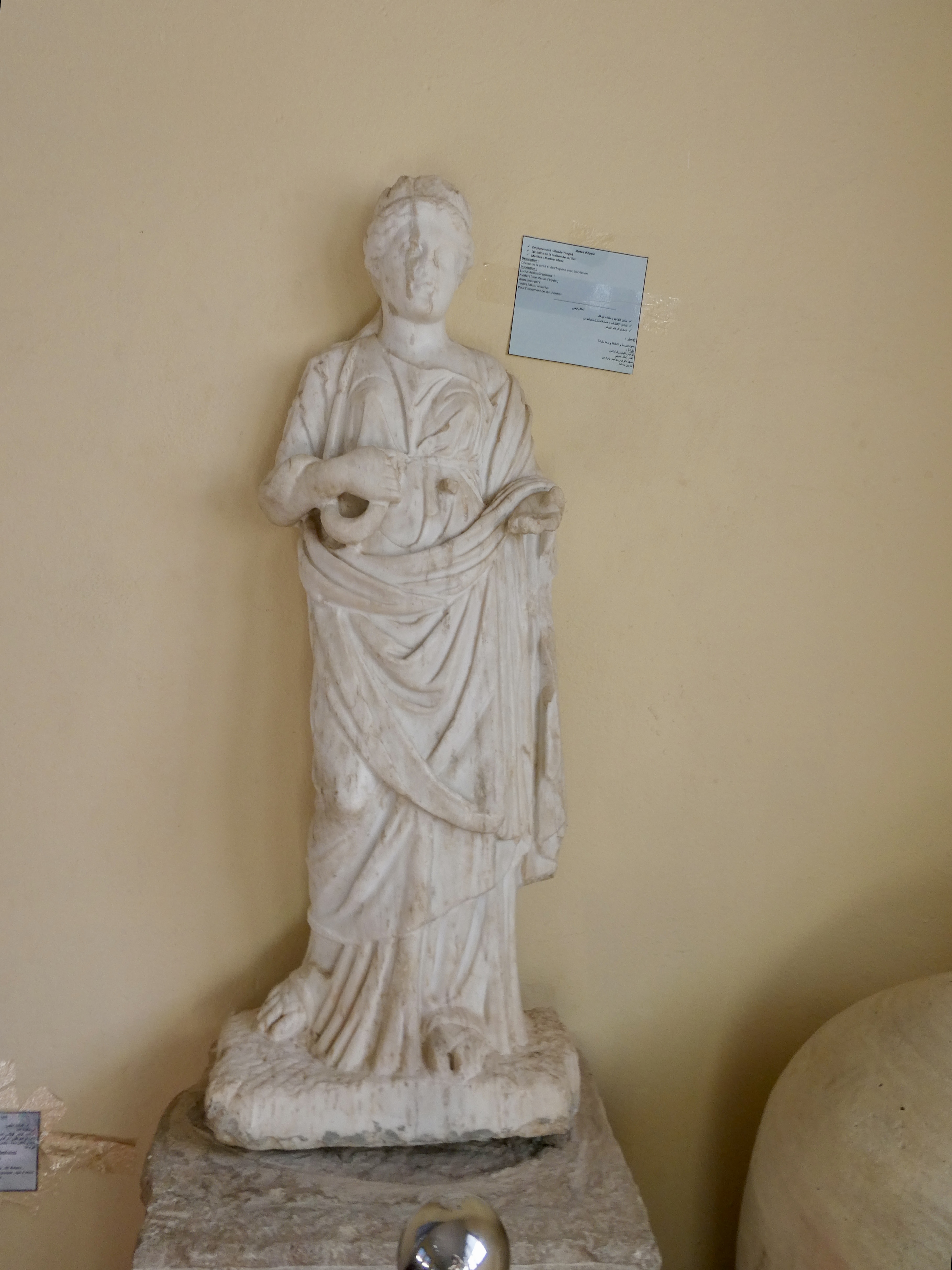
In another room in the museum we had a look at some ceramics, oil lamps and two statutes: one was a 4th century statute of a Roman god, but neither Nahla or I could decipher the name, and the other was a 4th century statute of Hygieia, the goddess of health.

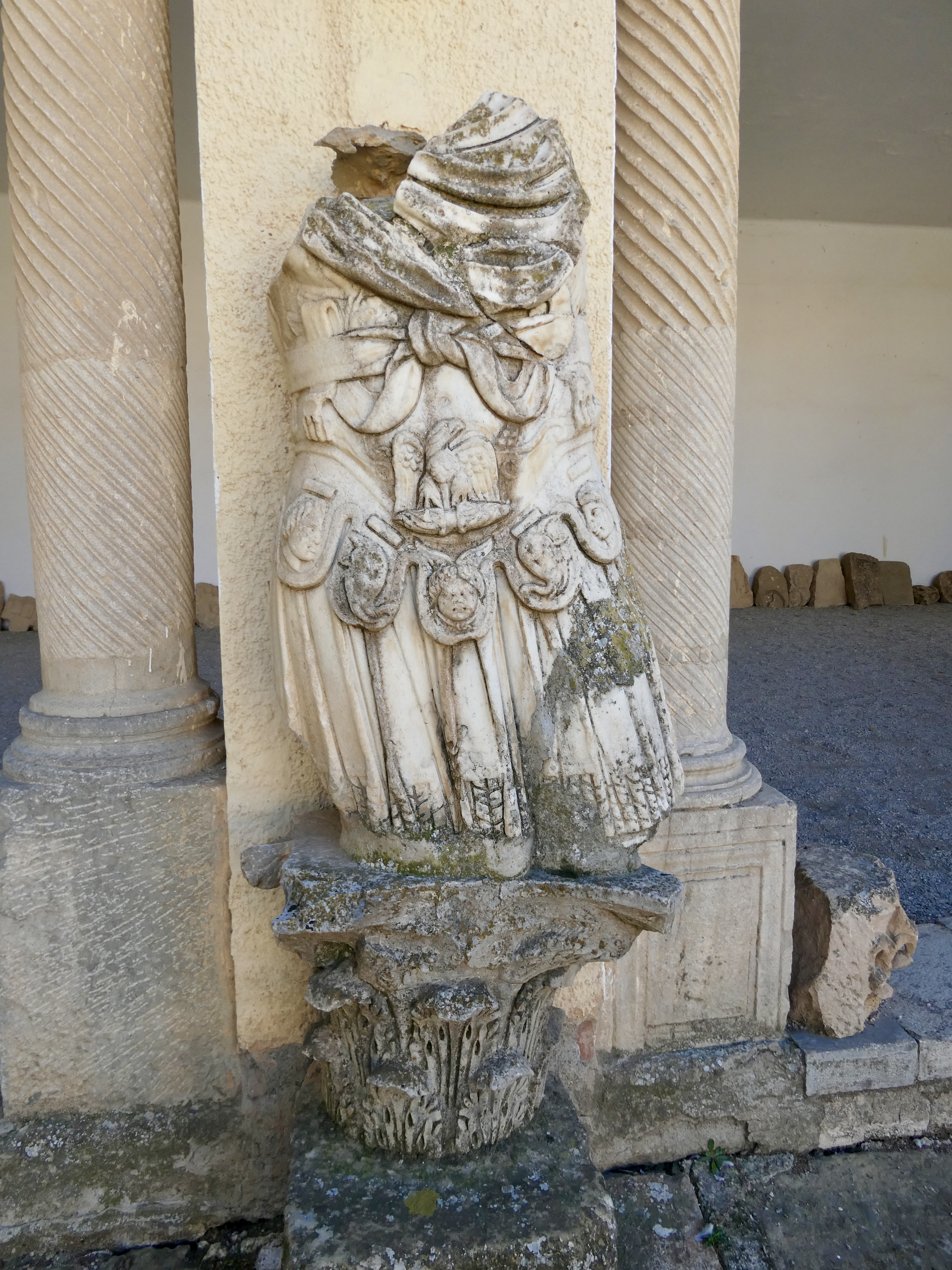
Once we had made our way around the museum we took a walk outside past numerous headless statutes, a beautifully carved sarcophagus and lots and lots of funerary stelae. Some of the stelae even had a base for offerings to the gods in honour of the deceased.
From here, we crossed a pathway and walked over to the actual Timgad ruins. Now Timgad
was founded by the Roman Emperor Trajan around 100 AD and the city was something of a retirement town
inhabited by former soldiers who were given equal sized plots of land to build their homes. In the 3rd century, the town became a hub for Christianity and in the late 5th century, the city was attacked by the Berbers who largely destroyed the buildings only to have the Byzantines rebuild the city in the mid 6th century. The city was finally ruined and abandoned for good in the 8th century when the Muslims attacked. In 1982, the ruins were declared a UNESCO World Heritage site.

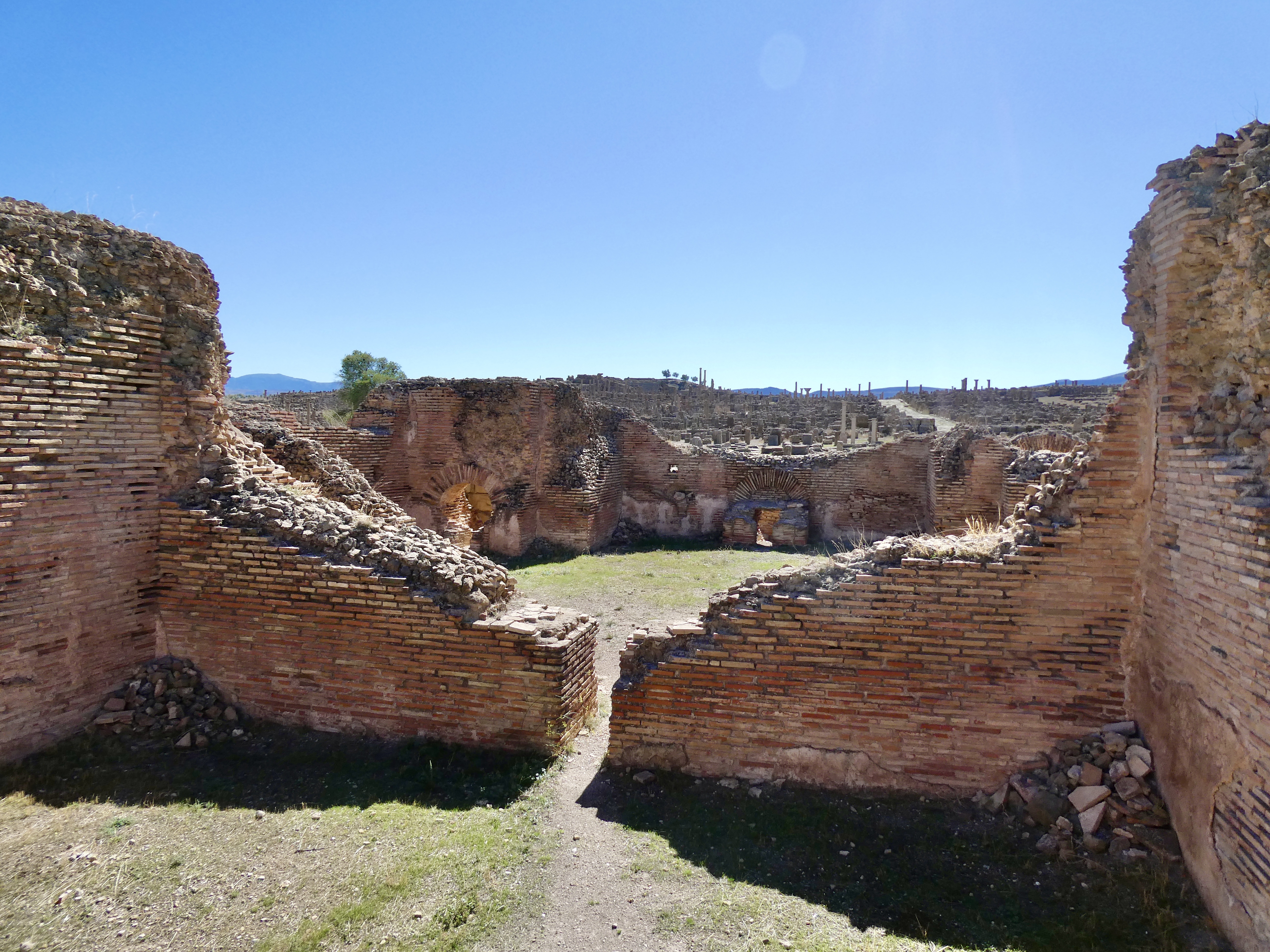

Anyway, first up were the Roman baths, which were actually outside the main city gates. Now the baths were made largely of brick, including a gymnasium, frigidarium or cold bath, a tepidarium or warm bath and a caldarium or hot bath. In addition, there was a natatio, an open-air bathing pool used for exercise and relaxation. Now at one time, men and women bathed together so it is likely that there were no separate areas at this site, but eventually (likely with the rise of Christianity) that practice ended so presumably other baths in the city had sections for both men and women. In fact, it is believed there are around 14 bath sites in Timgad, but this one outside the city main gate was the best preserved.
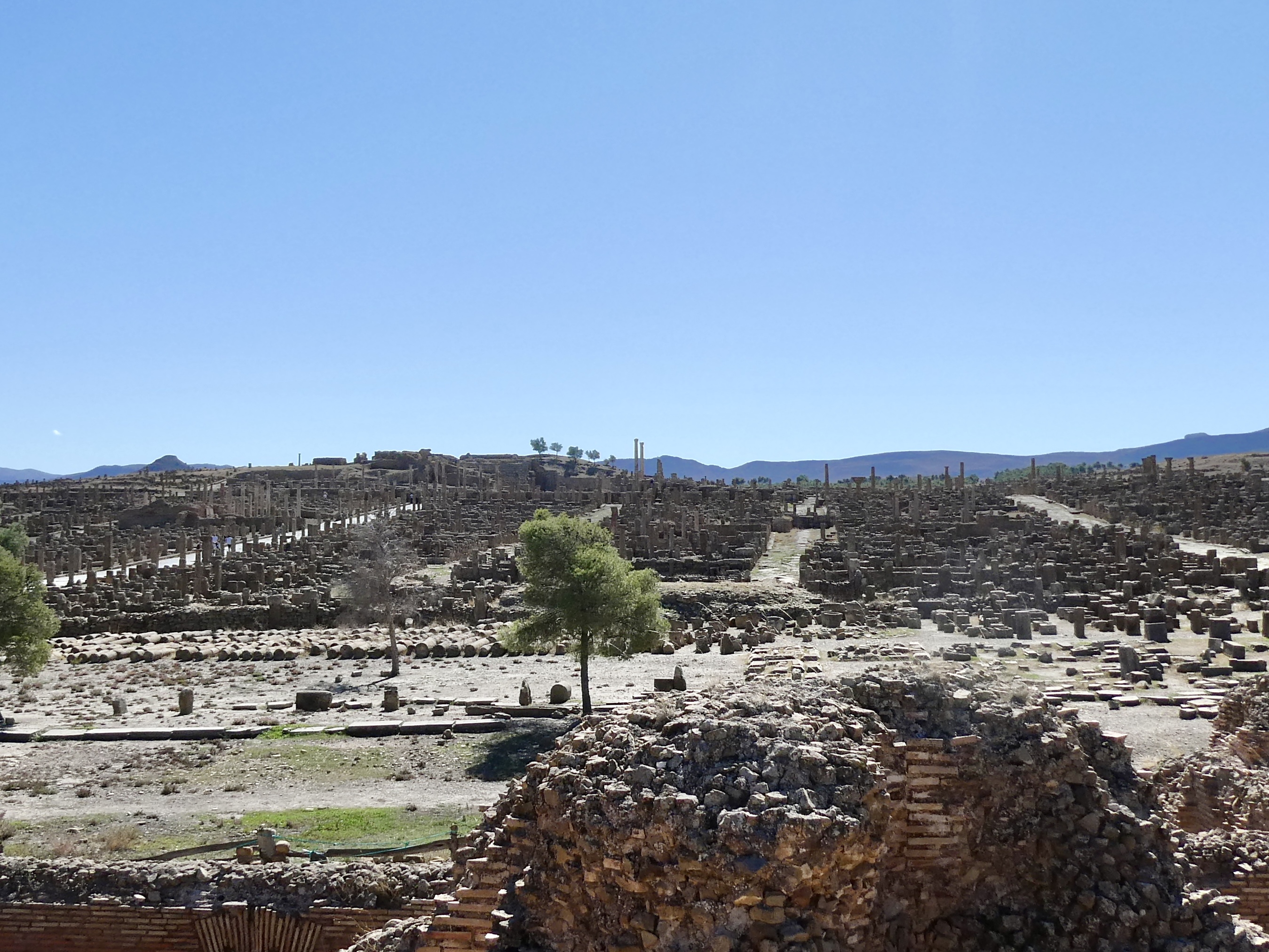
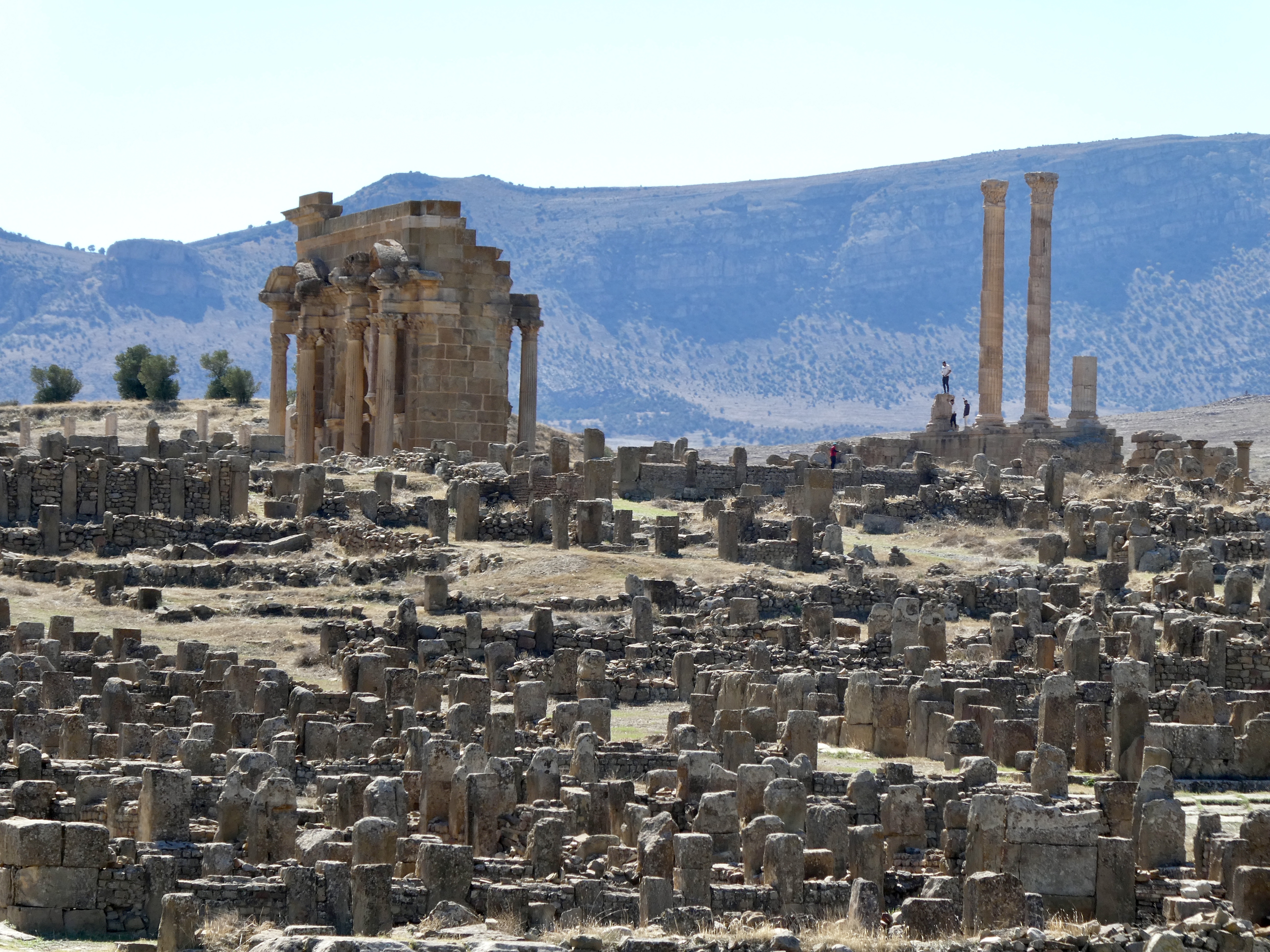
Now one of the benefits of seeing the baths first is that there was a partial staircase that allowed me to climb up and take a look at not only this entire area of the Roman baths, but the entire city and what struck me was that this was perhaps the only ruins of a Roman city I have seen where you can actually see the grid layout the Romans used in constructing the city. The entire city was a square with one main road running north and south and the other running east and west. The roads and pathways were in decent condition and the ruins of the town were such that you could see where each of the buildings and residences had been constructed. In other words, I could actually visualize a Roman city. Highly, highly unusual.
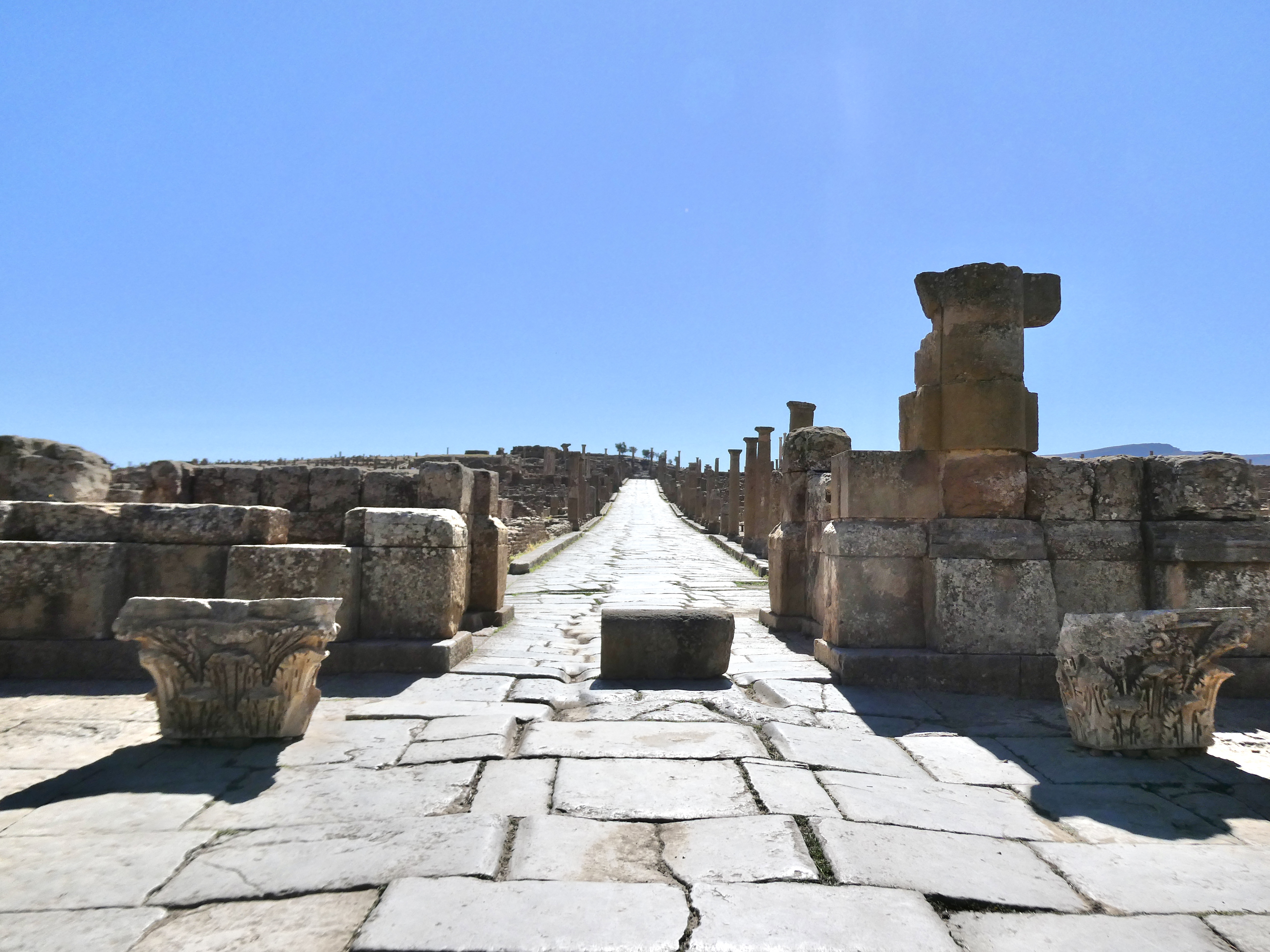


Anyway, after taking in the bath area, we took the north south main road into the city. Up first as we walked through the main north south portal gate along the old Roman road was the late 3rd or early 4th century library that had apparently been a gift from a wealthy Roman.
The library is actually the second largest standing Roman library with the largest being in Ephesus. In my opinion, what makes Ephesus so spectacular is the remarkably well preserved façade, which did not exist here. However, there were well preserved colonnades and large semi-circular main room with two smaller rooms on either side of the main room. There were even what appeared to be book shelves on the walls of the smaller rooms.
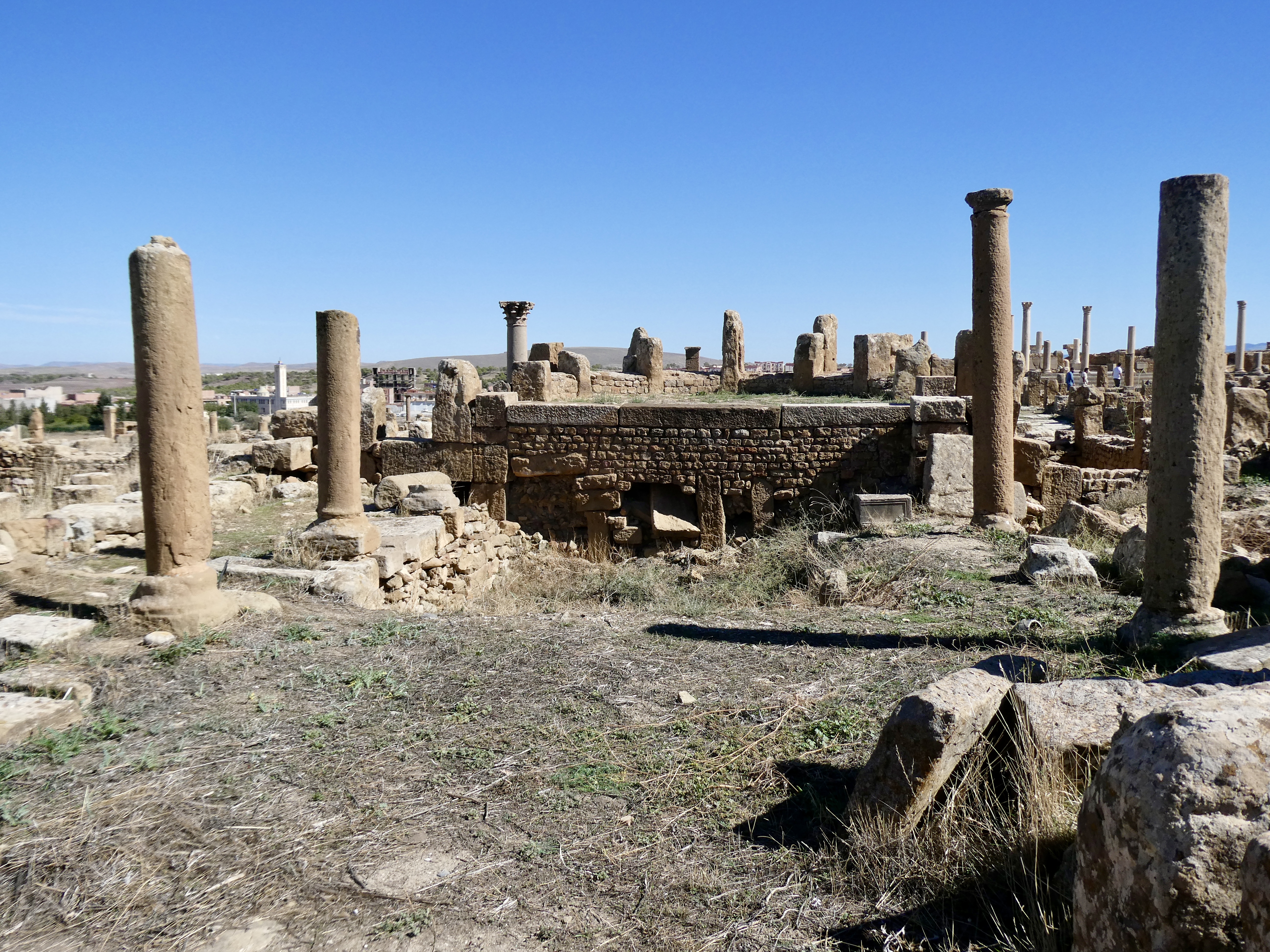

From here we took a walk along one of the side roads to reach the Temple of Jupiter. The building was round in shape and appeared to have an underground worship area. Unfortunately, the building was not in good shape so we were not allowed to go too close to the structure.

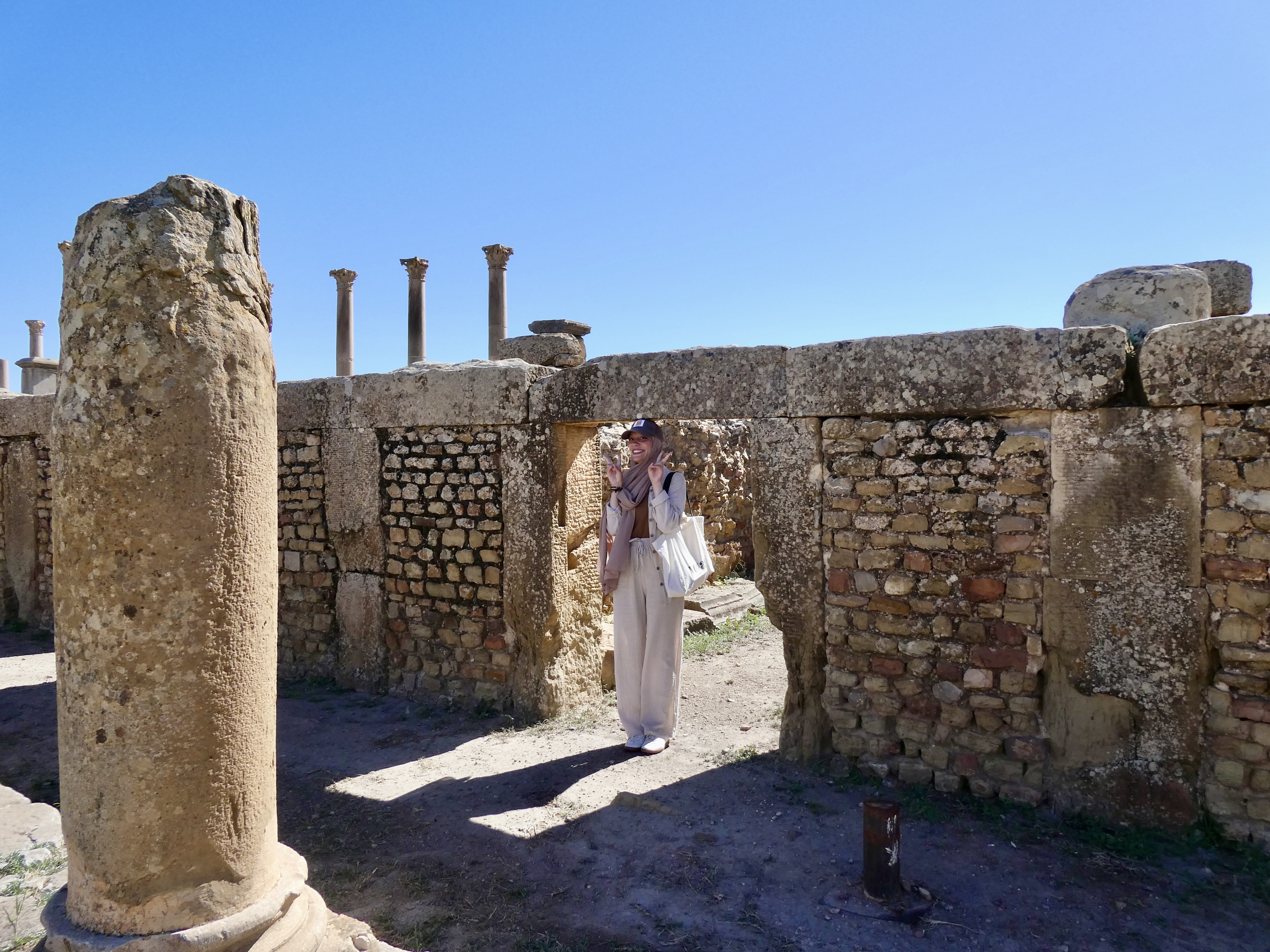
We then walked down another side road past a myriad of square shaped stone houses. Now while the residents were given equal sized plots of land to construct homes, some of the homes built were believed to be two and three stories high. Many of the homes were fronted by colonnades, but the interesting thing for me was how short and wide the doorways were, although I should not be surprised because Romans were apparently short and shall be say … “stout”.

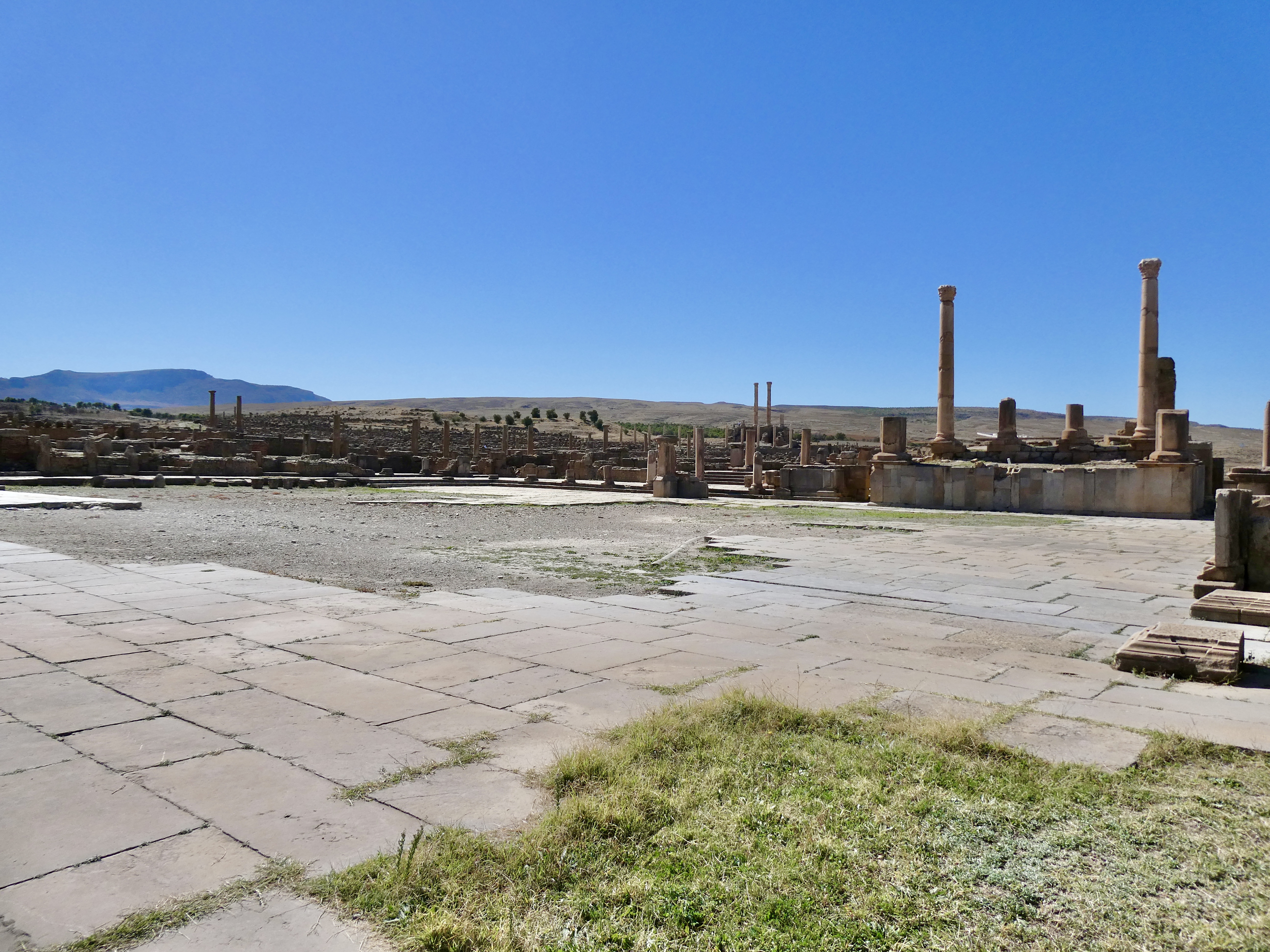
Anyway, after walking along the road past a number of houses, we reached the Forum, which was a gathering place for residents to socialize and to discuss politics. There was an inscription on the ground at the main entryway to the Forum, which described the important things in the lives of the residents including the Roman baths, recreation and arts.

And at the far end of the Forum was a temple dedicated to Emperor Trajan’s victories. Now typically a forum would have a Capitolioum Temple dedicated to the gods Jupiter, Juno and Minerva, but because Emperor Trajan was so successful and popular, the Capitolioum was ultimately built on the edge of town.

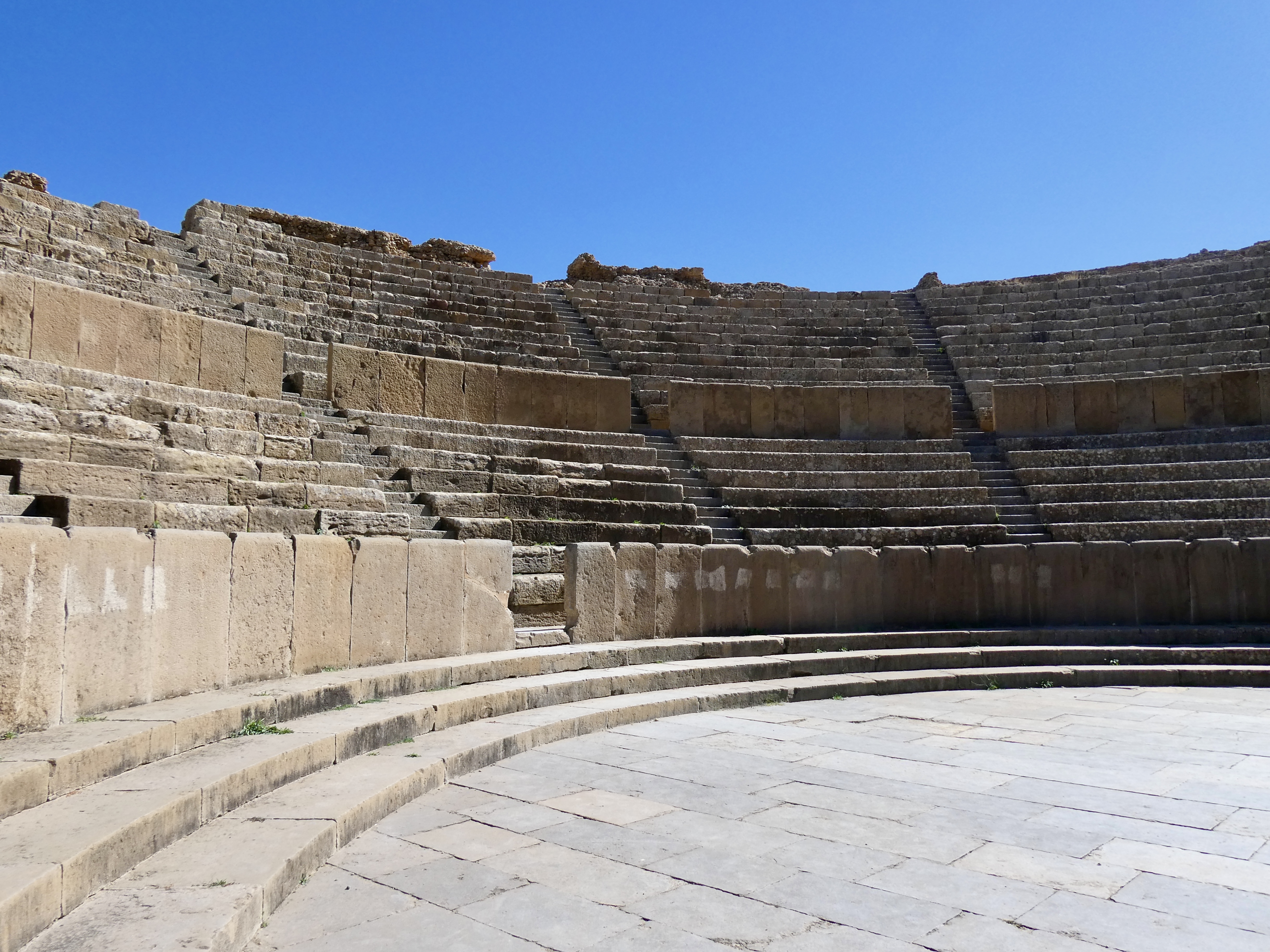
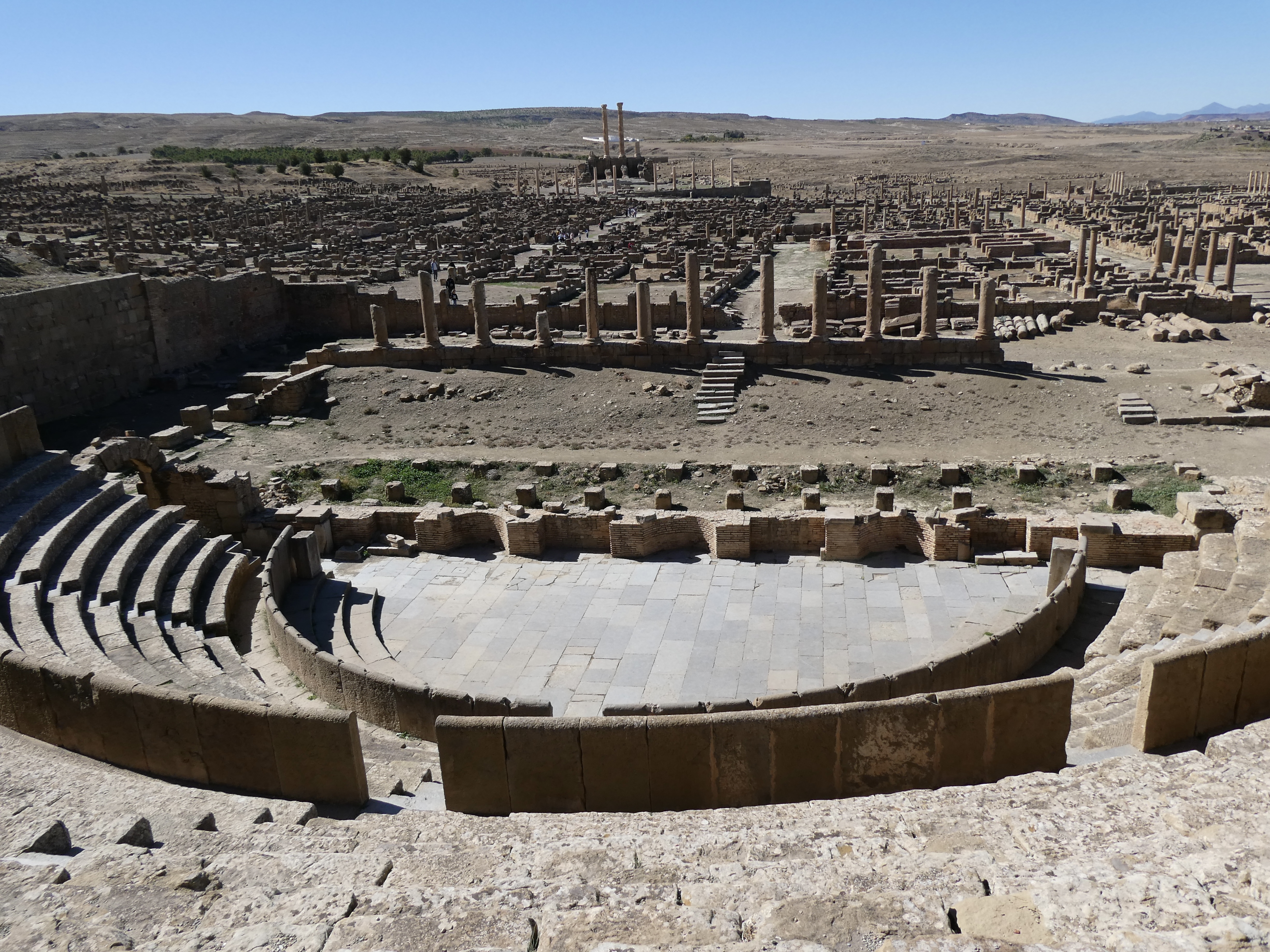
So from the Forum we walked across the lengthy square to one of the two premier sites at Timgad, the magnificently preserved theatre. The theater was cut into a small hillside and was apparently inaugurated in 169 AD. The theater was used for theatrical performances and political speeches, but was relatively small in size seating only 3,500 people.
And one of the amazing aspects of the theater was the acoustics. If you stood directly in the middle of what was once the stage area, your voice would echo through the theater, but if you moved just off center, you would barely be heard. In addition, there were these alcoves on either side of the stage and if you whispered into the alcove the person on the other side of the stage in front of the other alcove could hear you. Neither Nahla nor I understood how it worked, but damn it was amazing.
Now when Nahla and I arrived at the theater, we were the only people there, but were soon inundated with a group of school kids around aged 10 and the boys in the class were being boys yelling and running up and down the stairs and giving the poor security guard fits. And even after we left the theater, we could still hear the boys from the other side of the site.
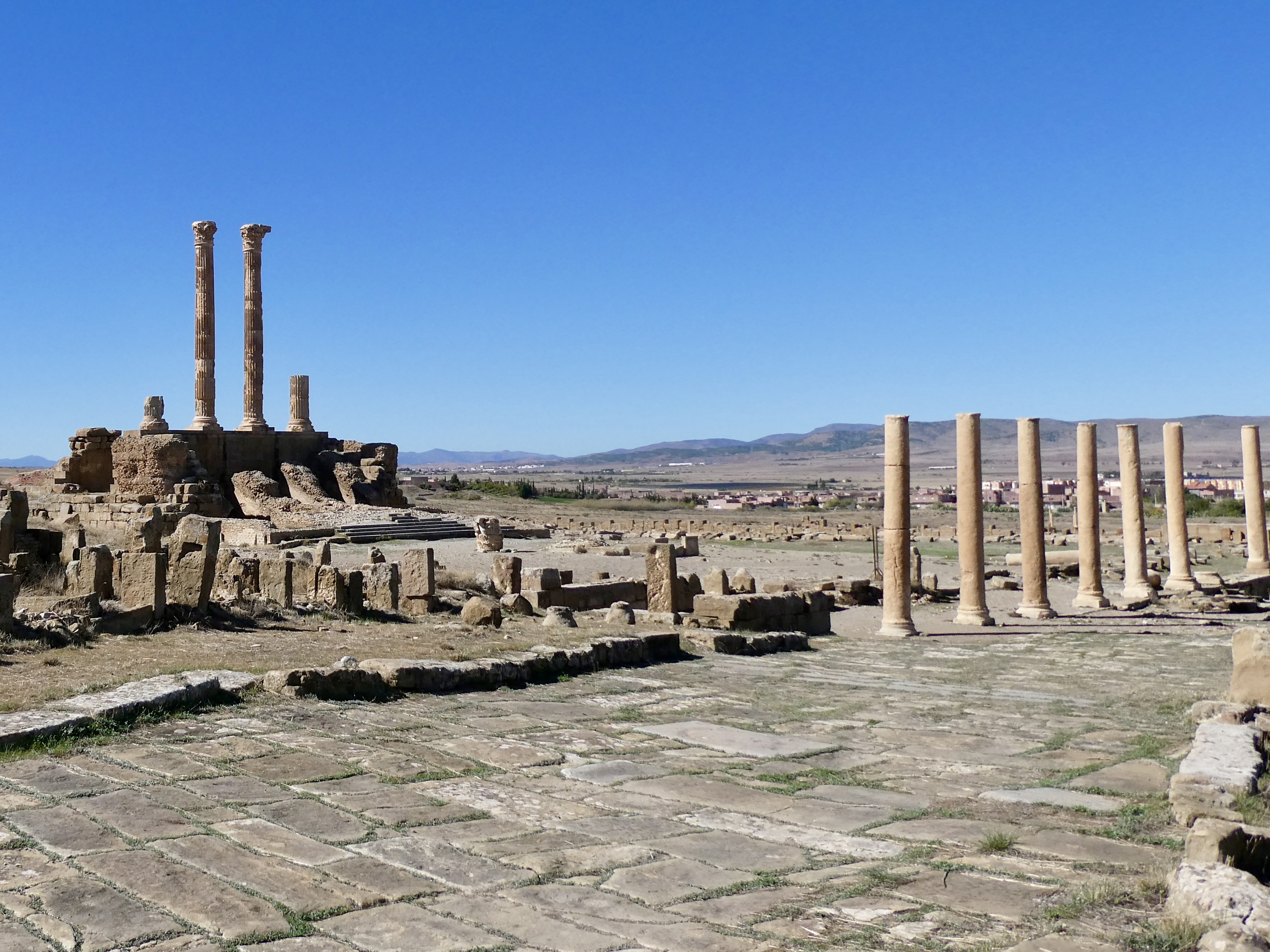
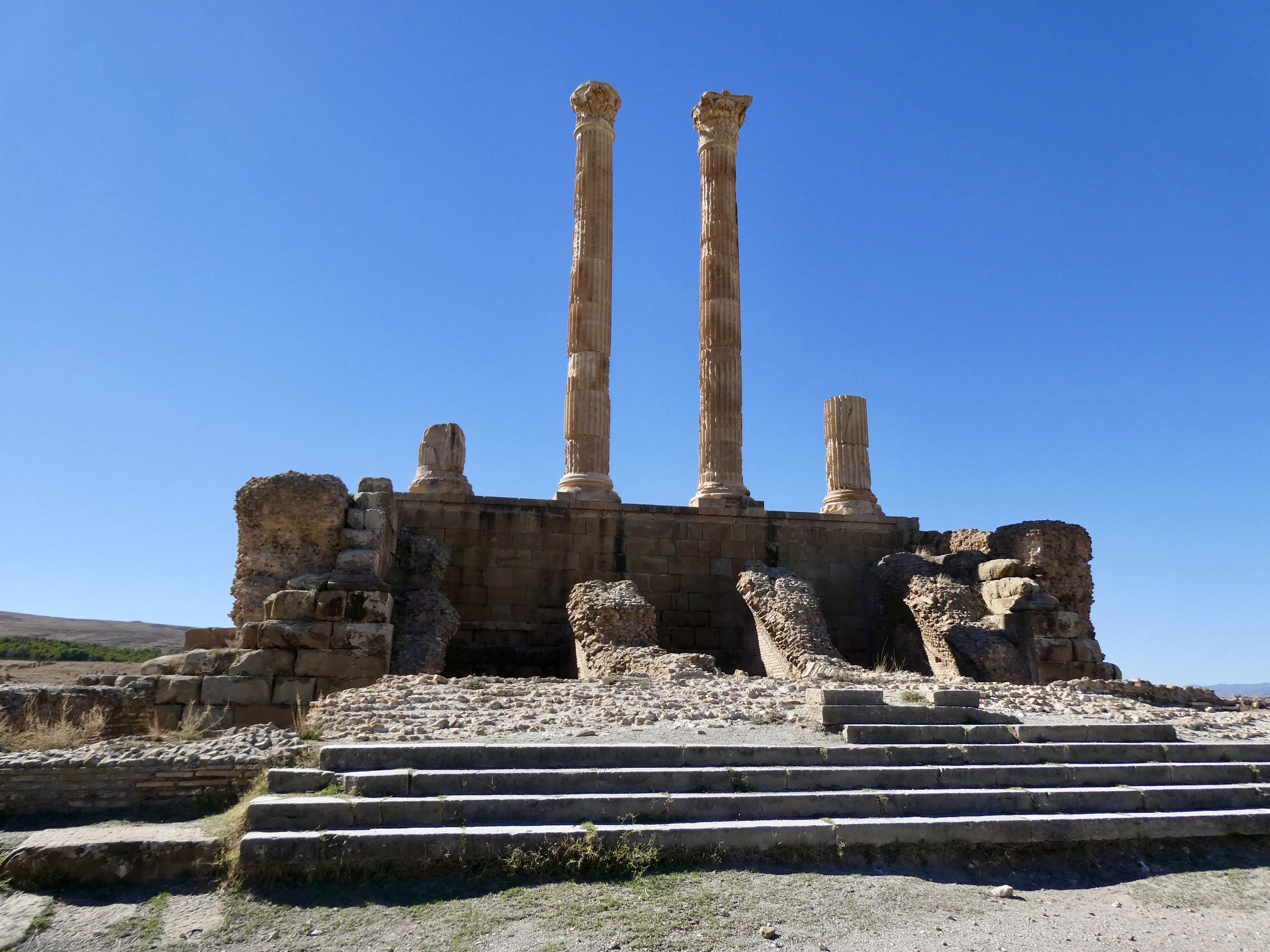

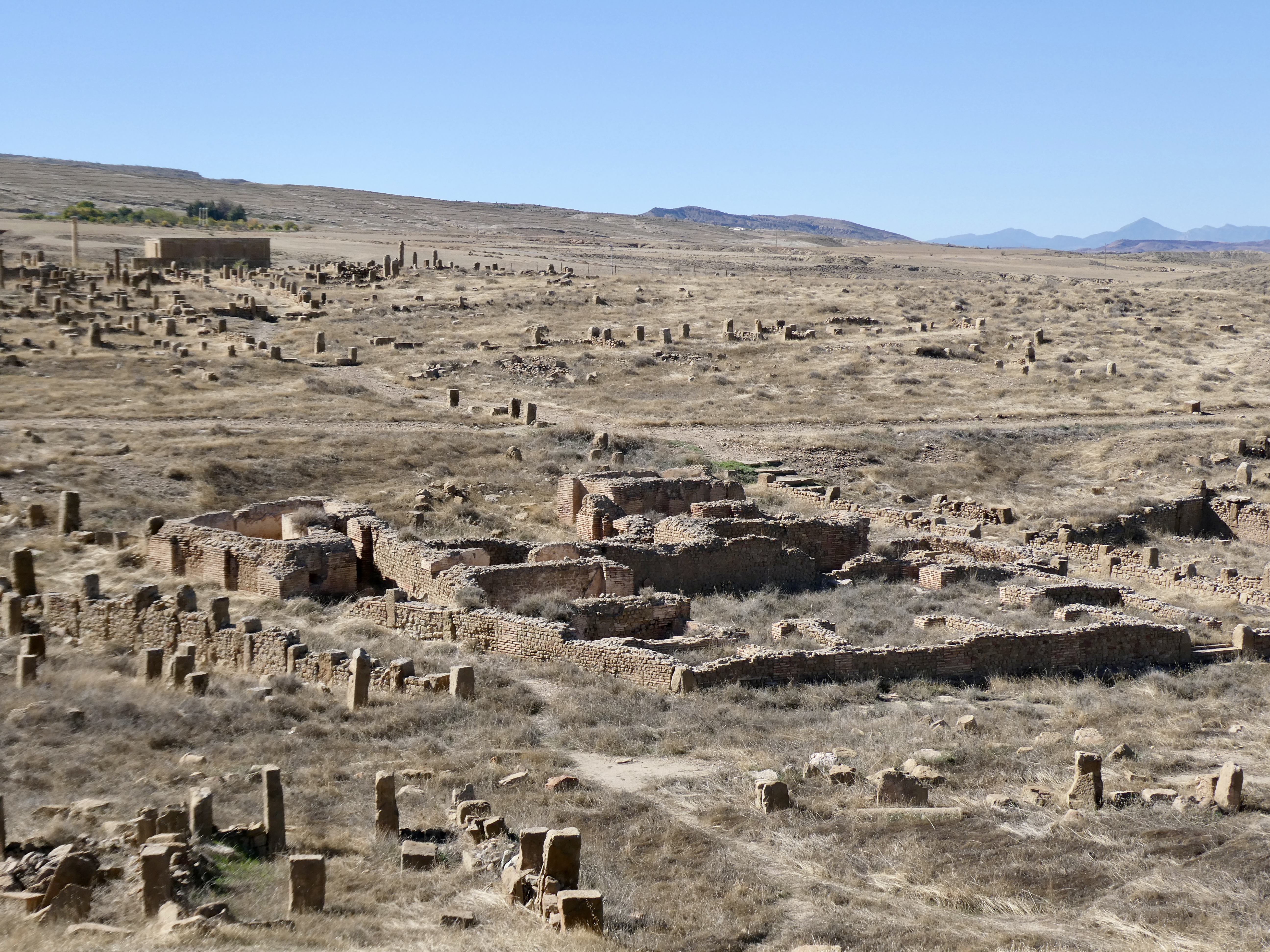
Anyway, after the visit to the theater we walked to the far east side of Timgad to the dividing line between the original town and the “new town” where the Christians constructed their own buildings in the 4th and 5th centuries. It was just at the edge of the new construction that we were able to view the Capitolioum Temple.
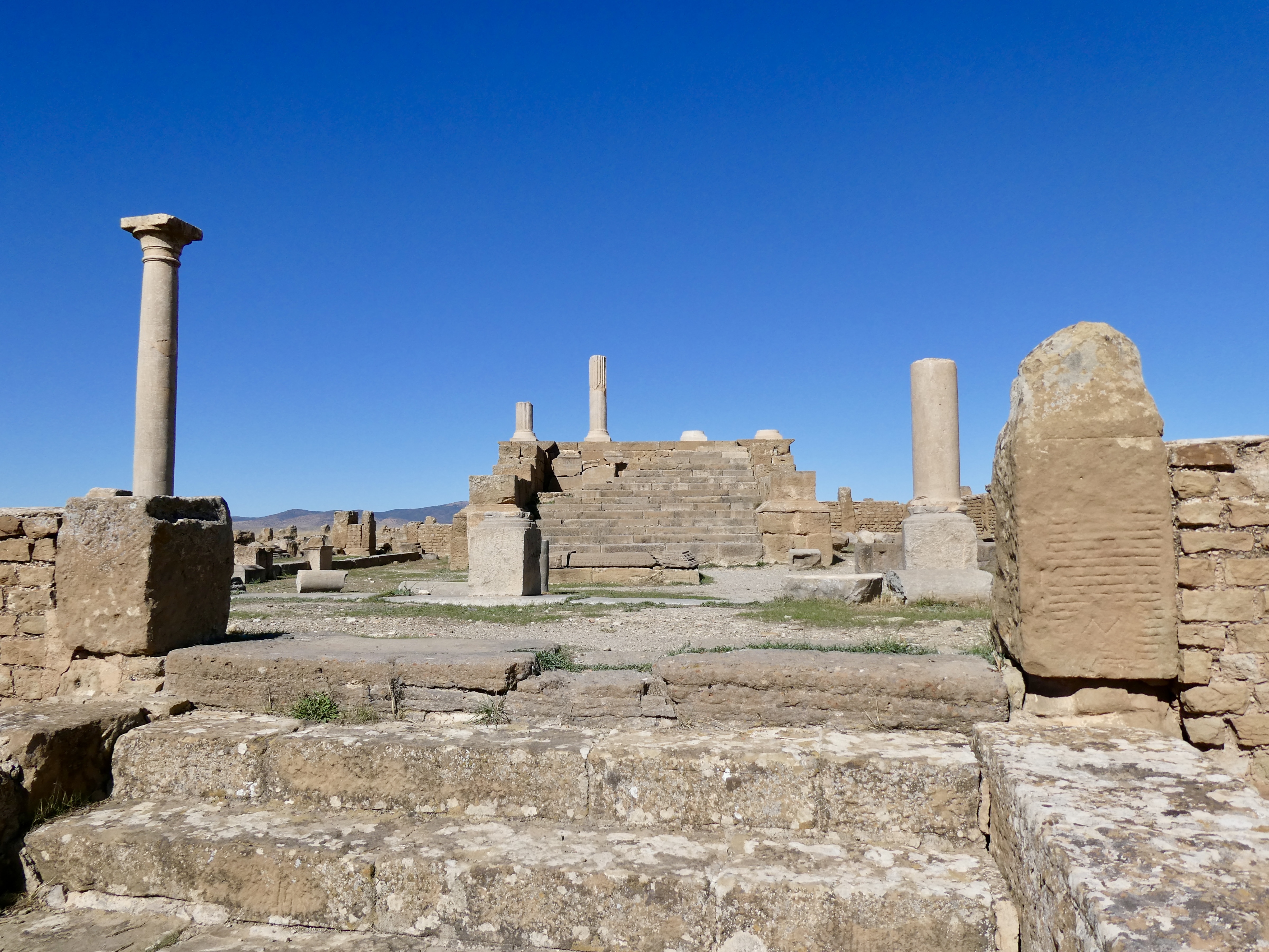
Now this temple was huge in comparison to the temple we saw yesterday at Tiddis. It was erected on a huge platform and was topped with giant colonnades (two of which were in decent shape). There were colonnades fronting the temple as well as remains of colonnades spread all around the temple site.
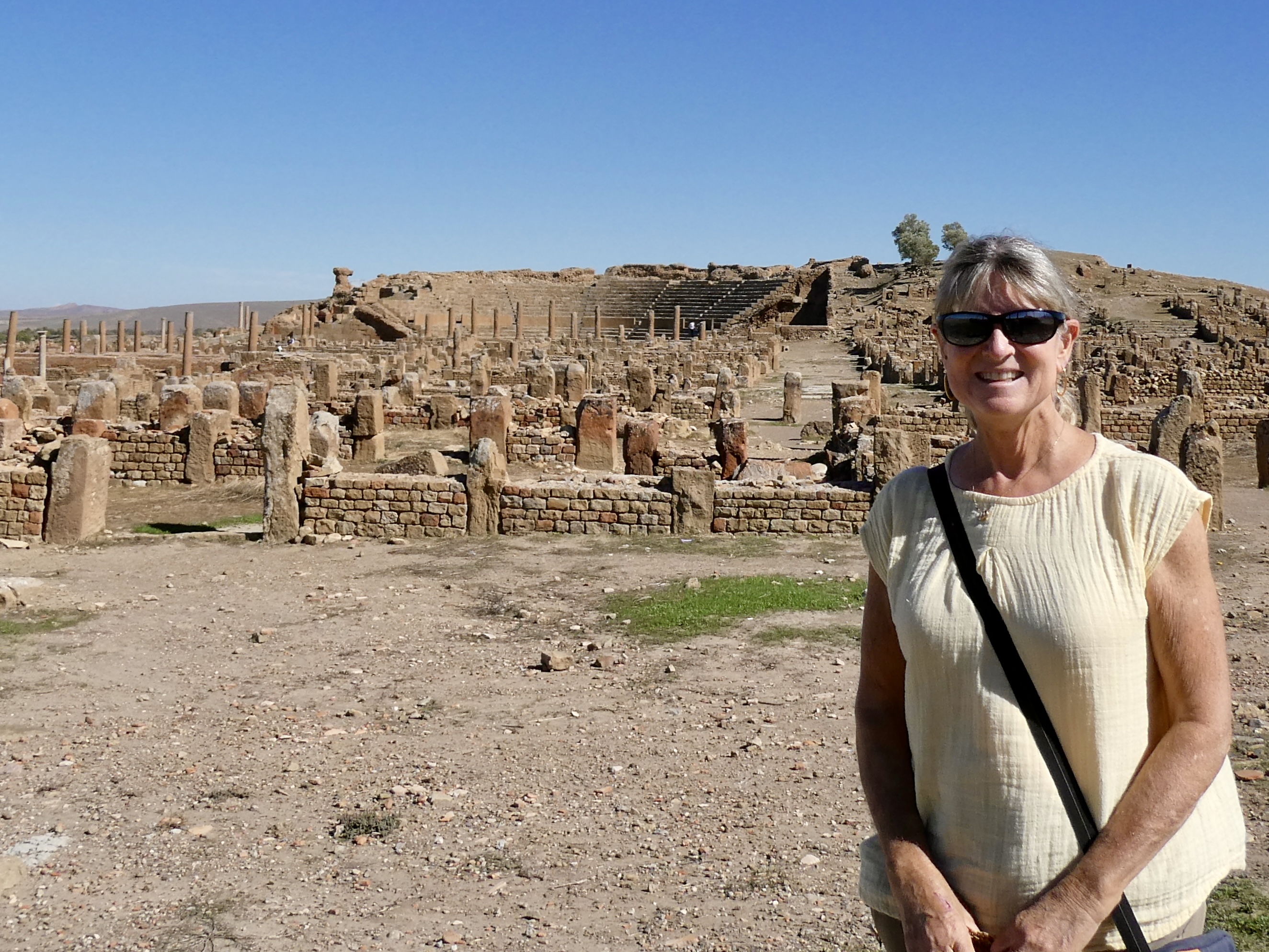
We were able to climb up some of the rocks to get a view of the surrounding area where I could see the remains of a Byzantine fort to one side and directly behind the temple was the new area of Tiddis including Christian baths.
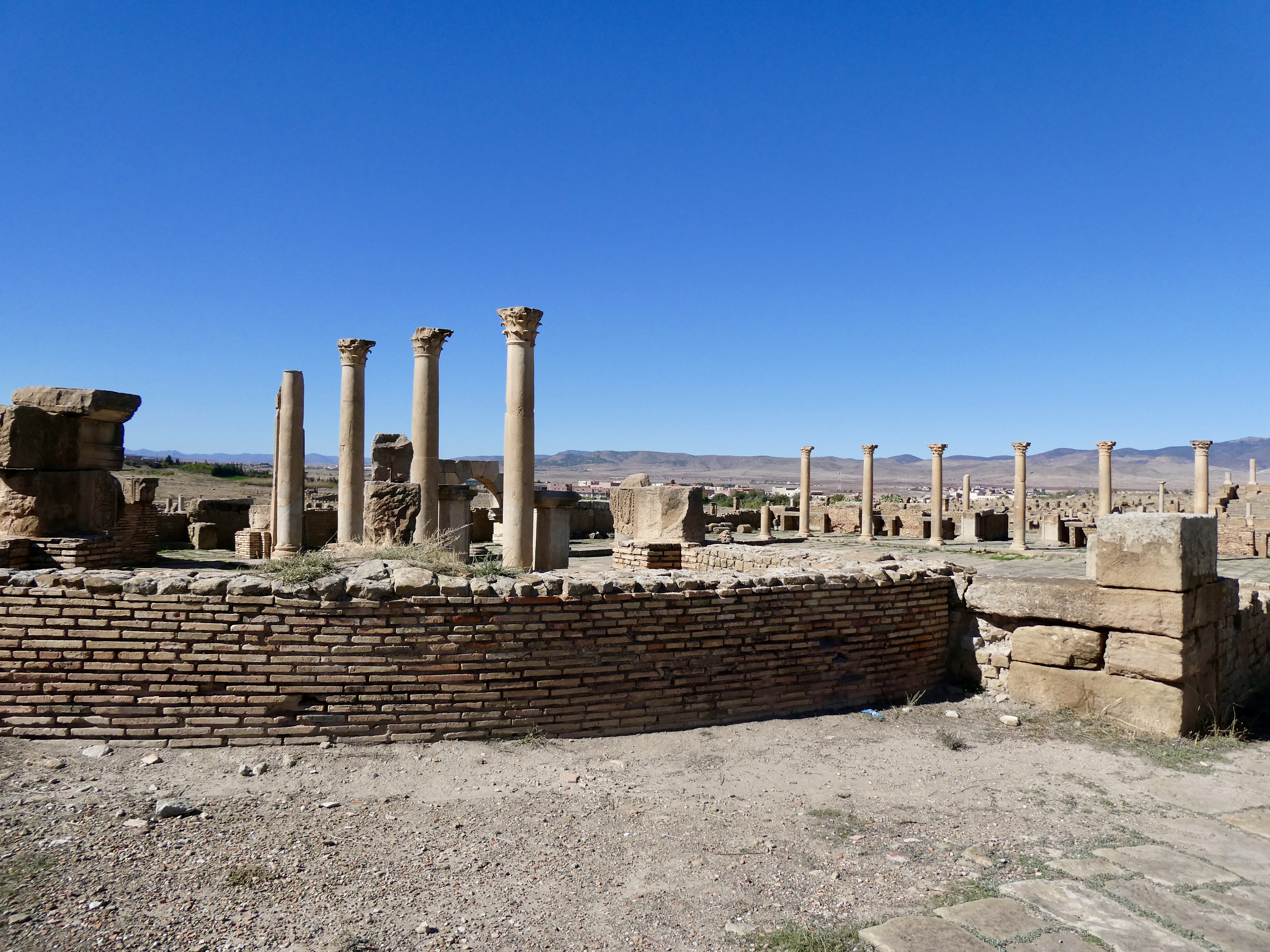
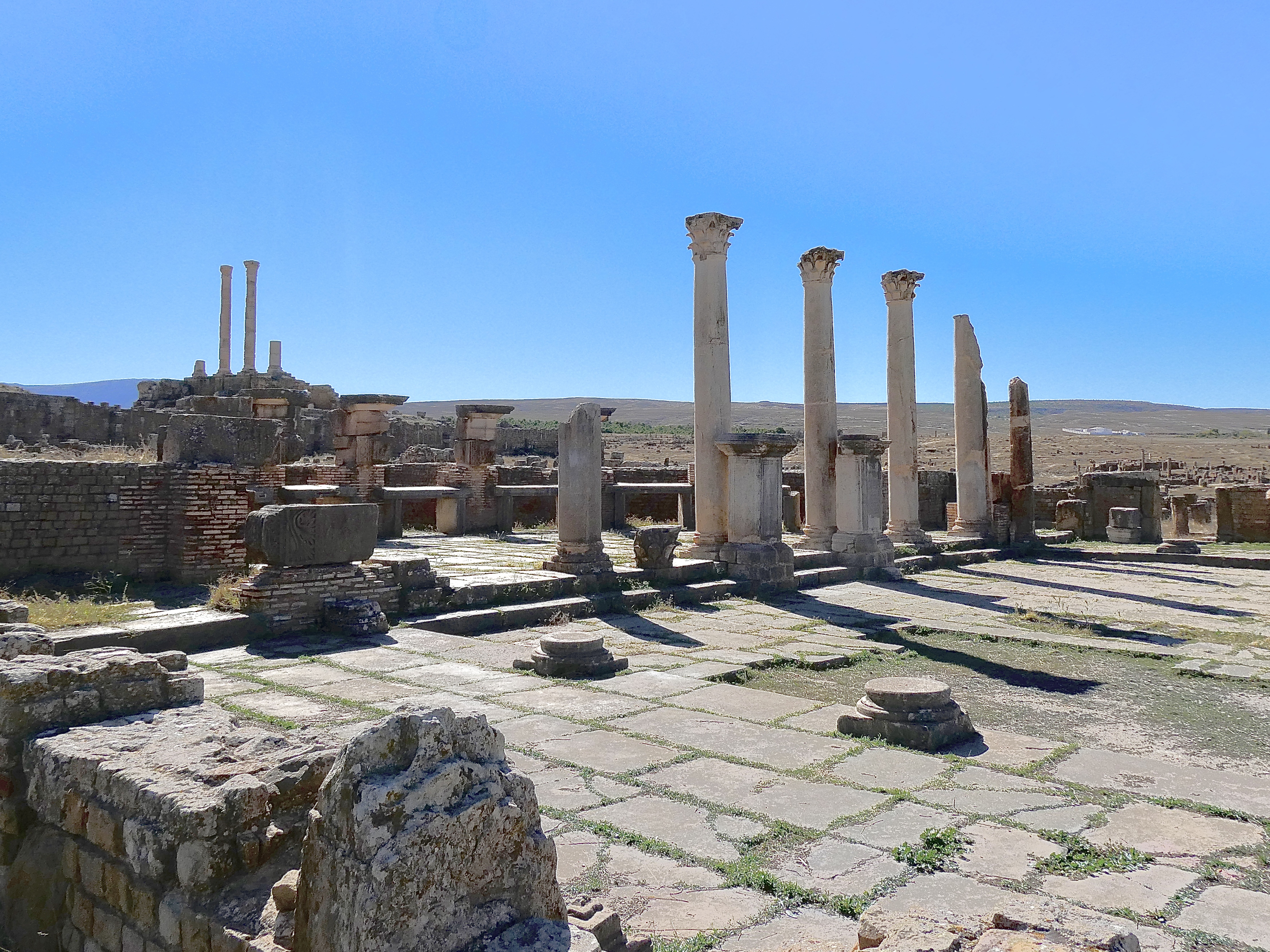

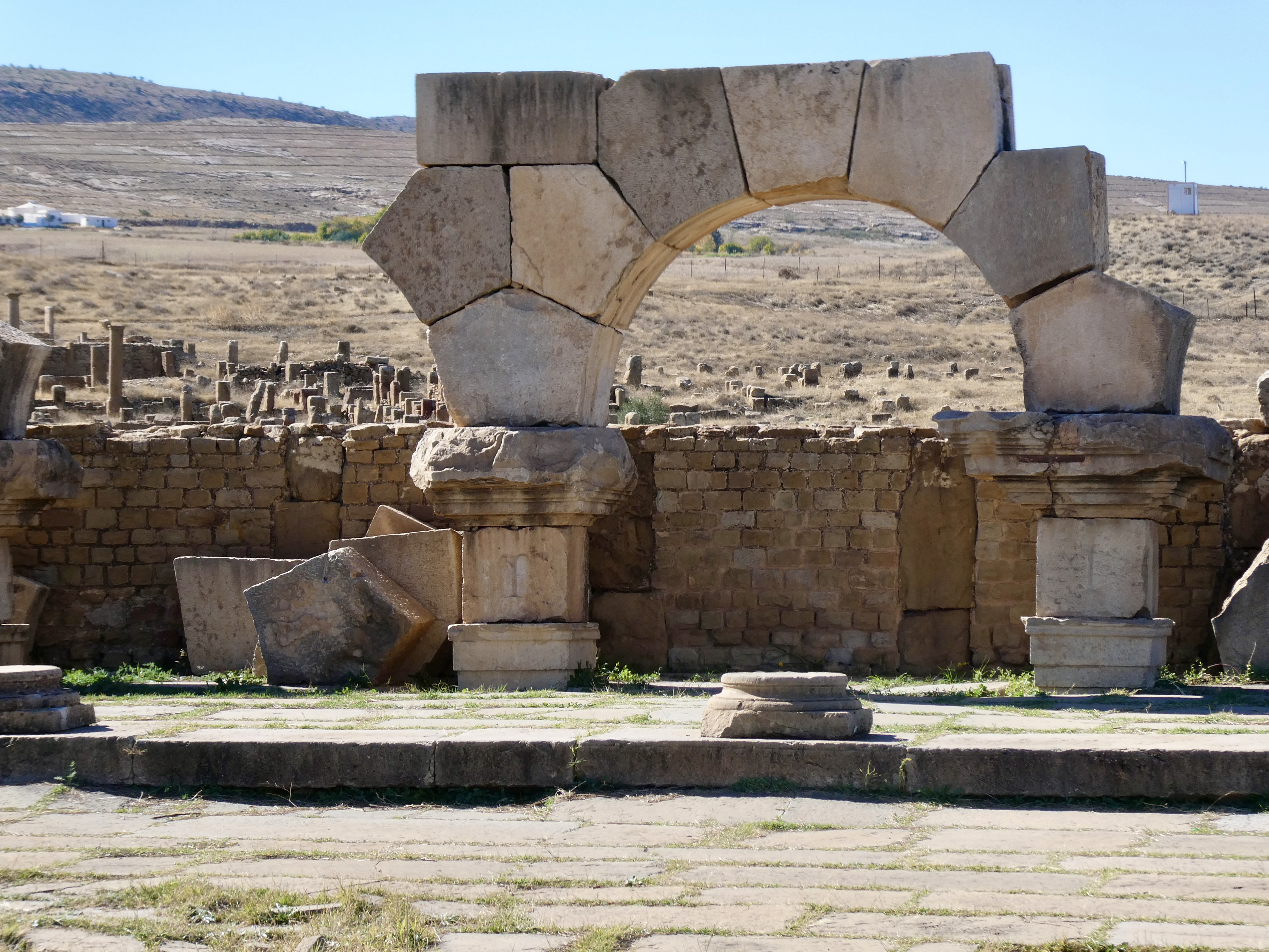
After we climbed down from the temple (no easy feat), we walked to a large square area that was at one time a Roman market. At one end of the market was the area for selling non-food items and at the other end was the meat and produce area. And in the middle of the market was an area where auctions were held at the end of the day to dispose of all remaining perishable food items (remember no real refrigeration back then).
And in the area of the market where food was sold there were stone tables visible, which had been used to display the meat and produce for sale. Pretty fascinating.
We then walked outside the market walls to the other side of the market where the Temple to the Genius of the Colony was located. The temple included a sign with the original name of Timgad, which was Marciana Traiana Thamugadi. There was also an alter where sacrifices would take place to the Genius of the Colony who was apparently was the guardian or protector of Tiddis, but apparently fell down on the job when the Berbers came calling in the 5th century.

Anyway from here we walked across the street to reach Timgad’s most famous ruins, the Arch of Trajan, a triumphal arch which was at the eastern end of the city and was a connector of sorts between old Timgad and new Timgad. The road leading from the arch to the new area is lined with columns and if you looked closely at the road running through the arch you could see the groove marks in the stones that had been made by chariots charging through the gate.
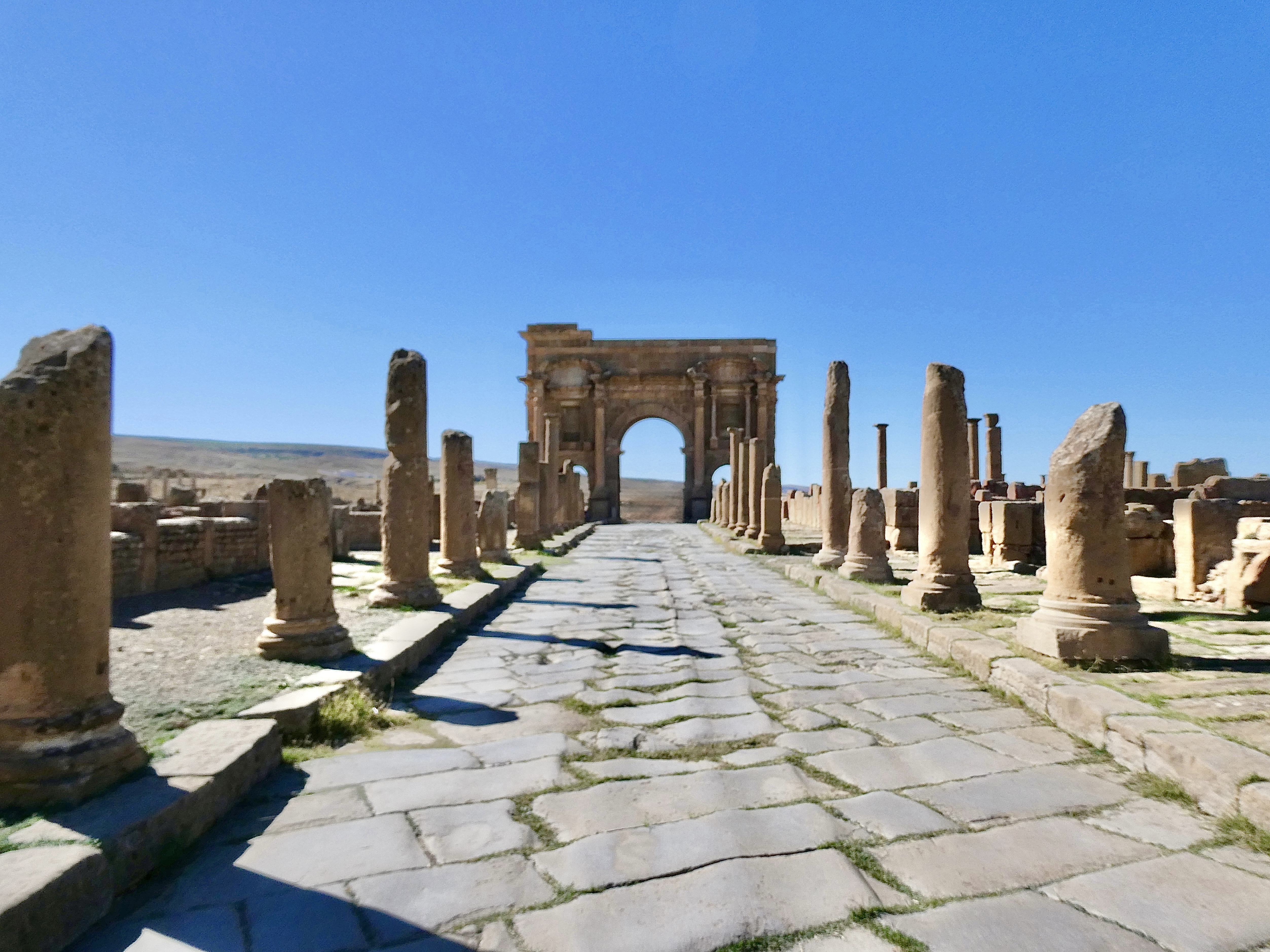
The arch was made primarily of sandstone, was comprised of three arches with the central arch being the largest at 11 feet wide.
And of course, just as I was about to take a picture of the arch with no one around, who should come running into my picture but the horde of school kids on their field trip. After a few minutes of telling the kids to get out of the way (their teacher was nowhere to be seen), we finally managed to snap a couple pictures without the kids.
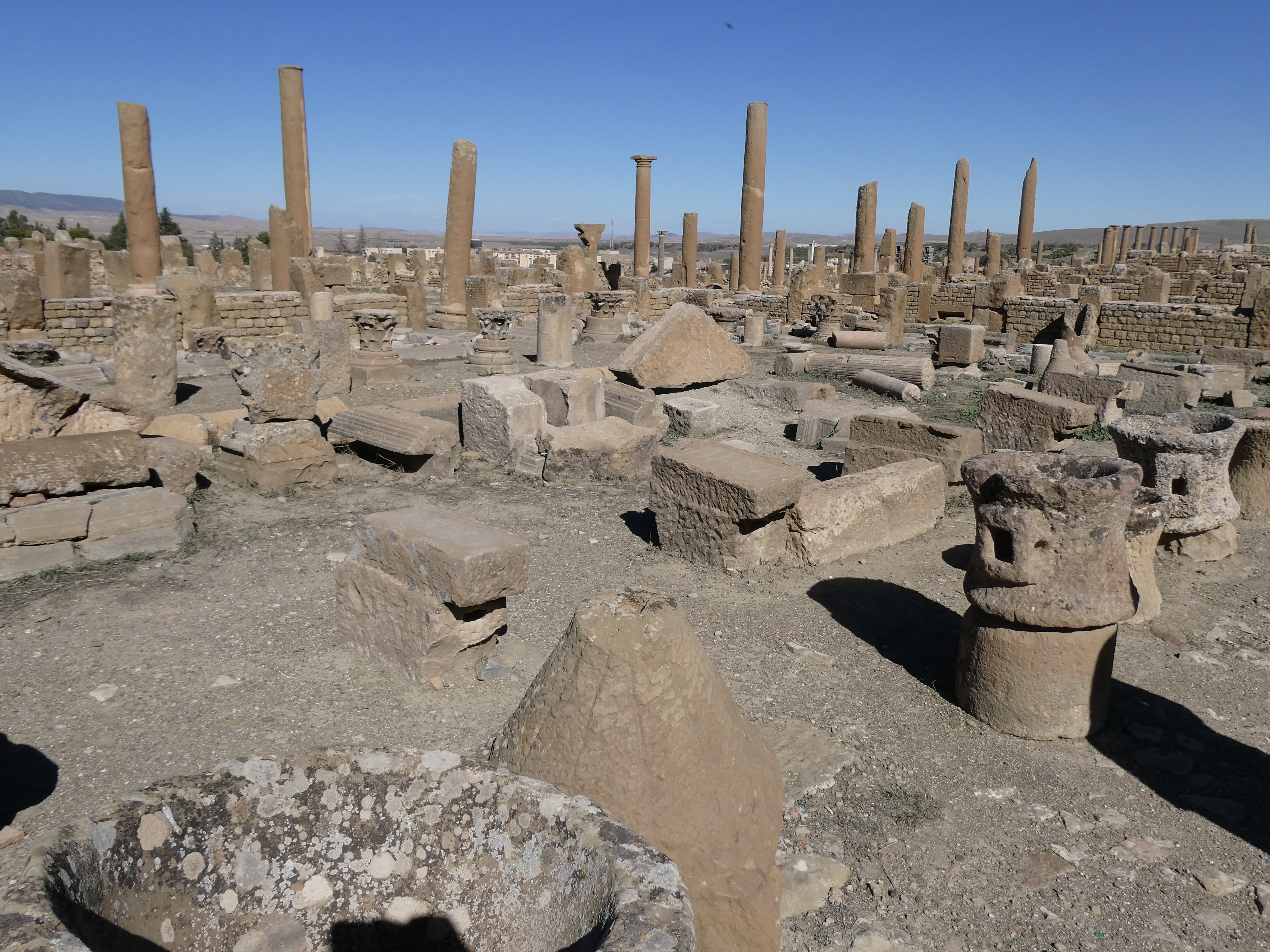
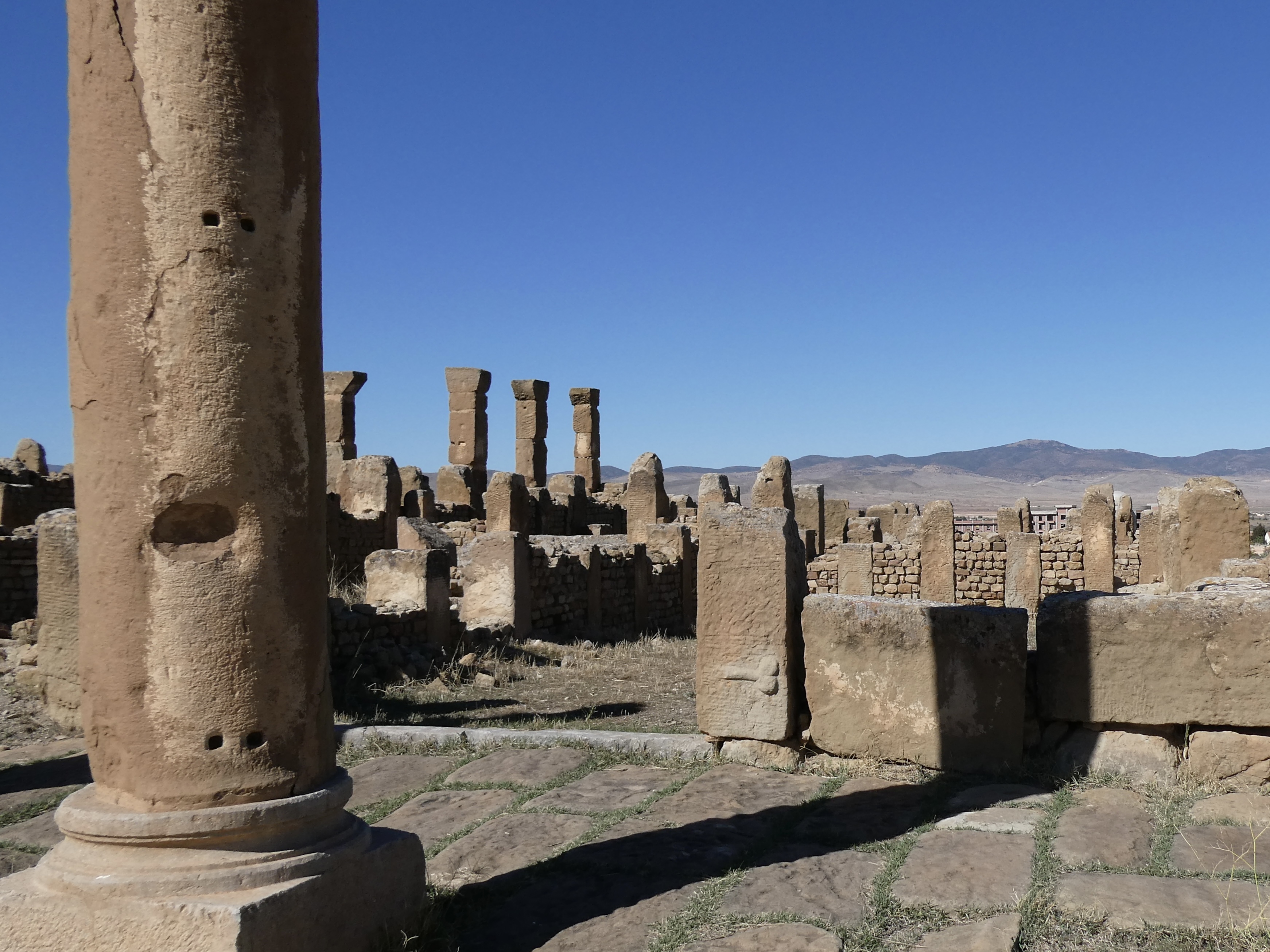
Anyway, once we passed through the arch, we wandered through an adjacent section of the city that used to house shops selling housewares and every day home goods. Ironically, directly across from this area was an “interesting” sign on a wall signifying the presence of the world’s oldest profession (and this sign provides support for that phrase).
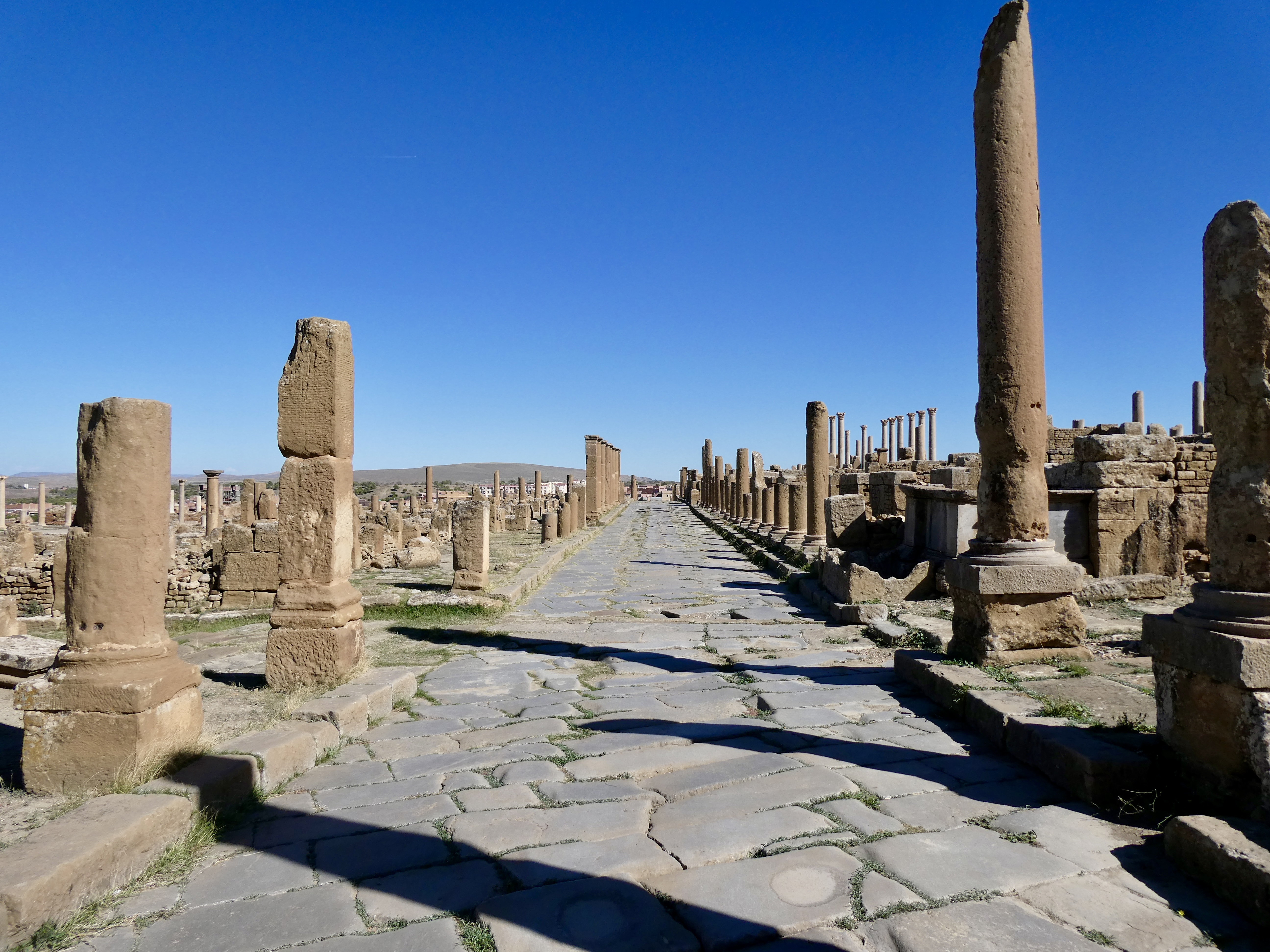
Anyway, our trip around Timgad had come to an end. We wandered away from the arch past the colonnades that lined the road before turning back onto the north south road and out of the entrance.
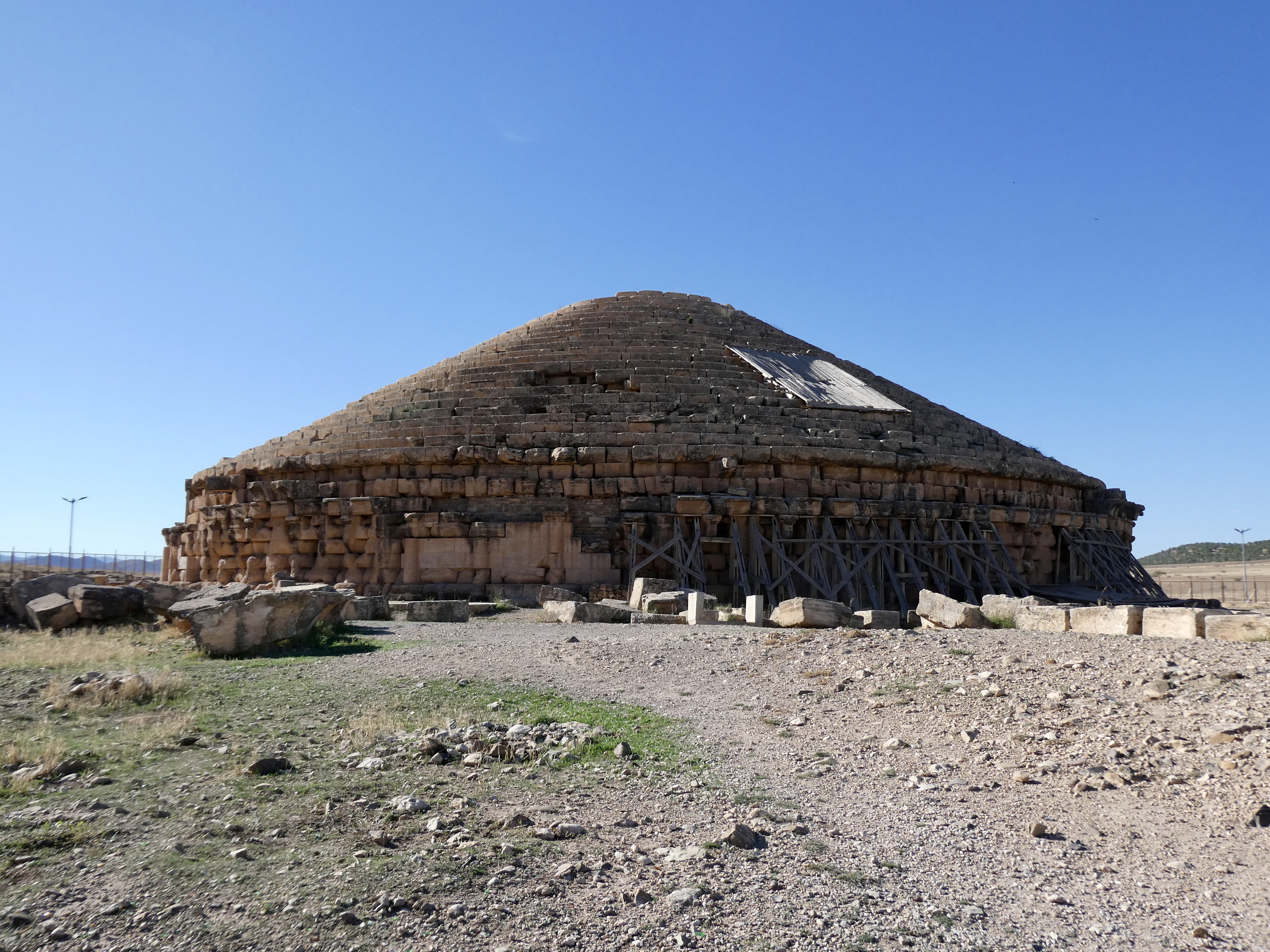
And while I thought our tour was done, we ended up stopping once on the way back to Constantine to visit the Imedghassen, an ancient funerary site comprised of a large mausoleum surrounded by several smaller tombs. The mausoleum was shaped and looked like a beehive cut in half and was constructed of bricks and rocks. It is believed that the mausoleum dates to around the third to second centuries BC and is the tomb of a notable Numidian king. Sadly, the tomb was not in good shape, but apparently the Algerian government has taken an interest in protecting the site so hopefully they will be able to preserve the remains.
So tomorrow it is break time from the Roman ruins (insert sad face) as I will be doing a tour of the city of Constantine.
