Today was all about Constantine, one of the oldest cities in North Africa. The city dates back to prehistoric times but really came into its own when the Numidians settled the area in the 3rd century BC and named the city Cirta. The Romans later conquered the city and renamed it Constantine after the Roman Emperor Constantine the Great.
The city is built on a rocky hillside above the Rhumel River and as a result, bridges are everywhere with the city nickname being the city of 7 bridges.
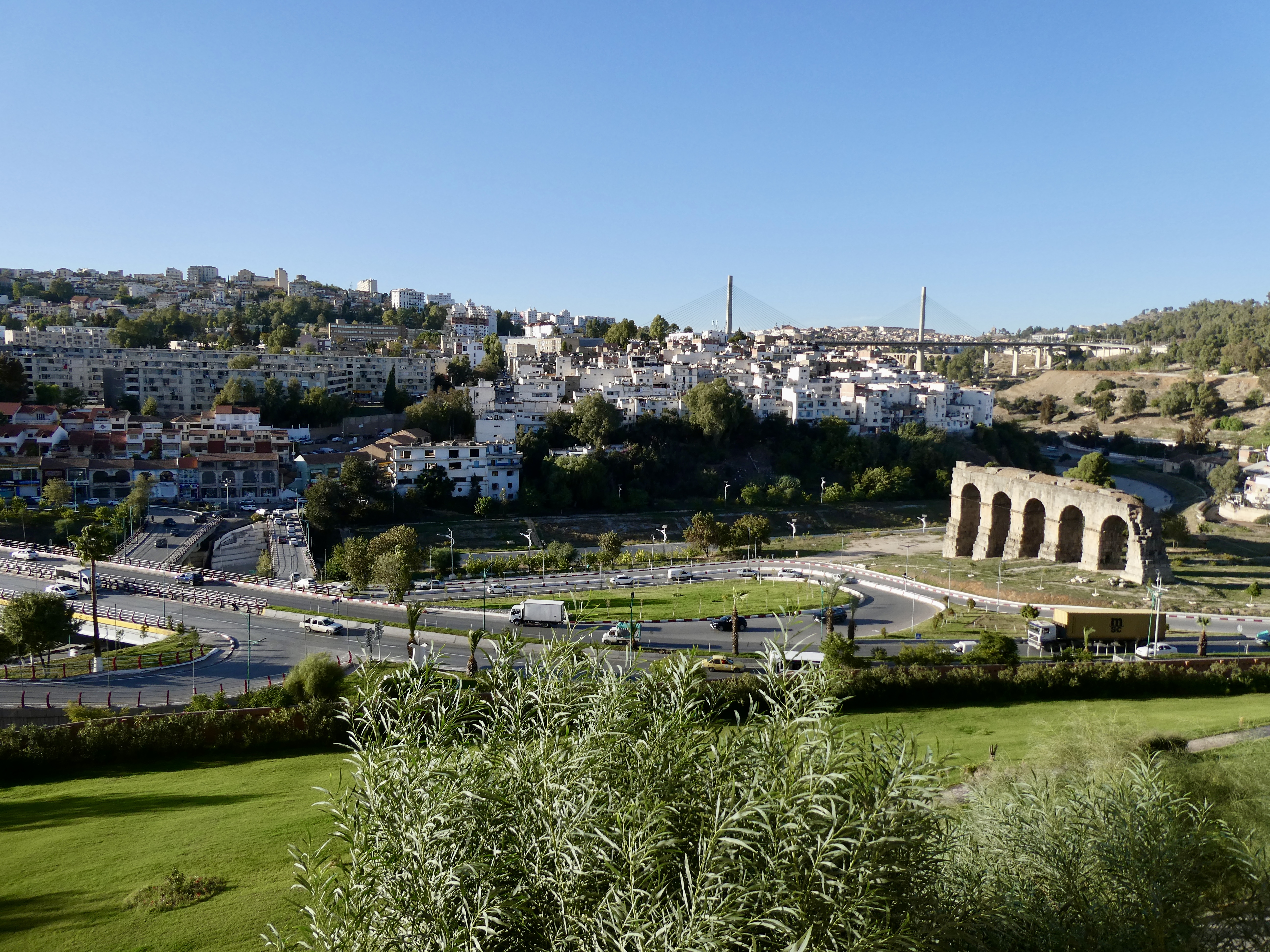
So once Majed and Nahla picked me up at my hotel (which by the way is absolutely gorgeous with stunning views of the old Roman aquduct, the Sidi Rached Viaduct and the Emir Abdelkader Mosque, which happened to be our first stop of the day.
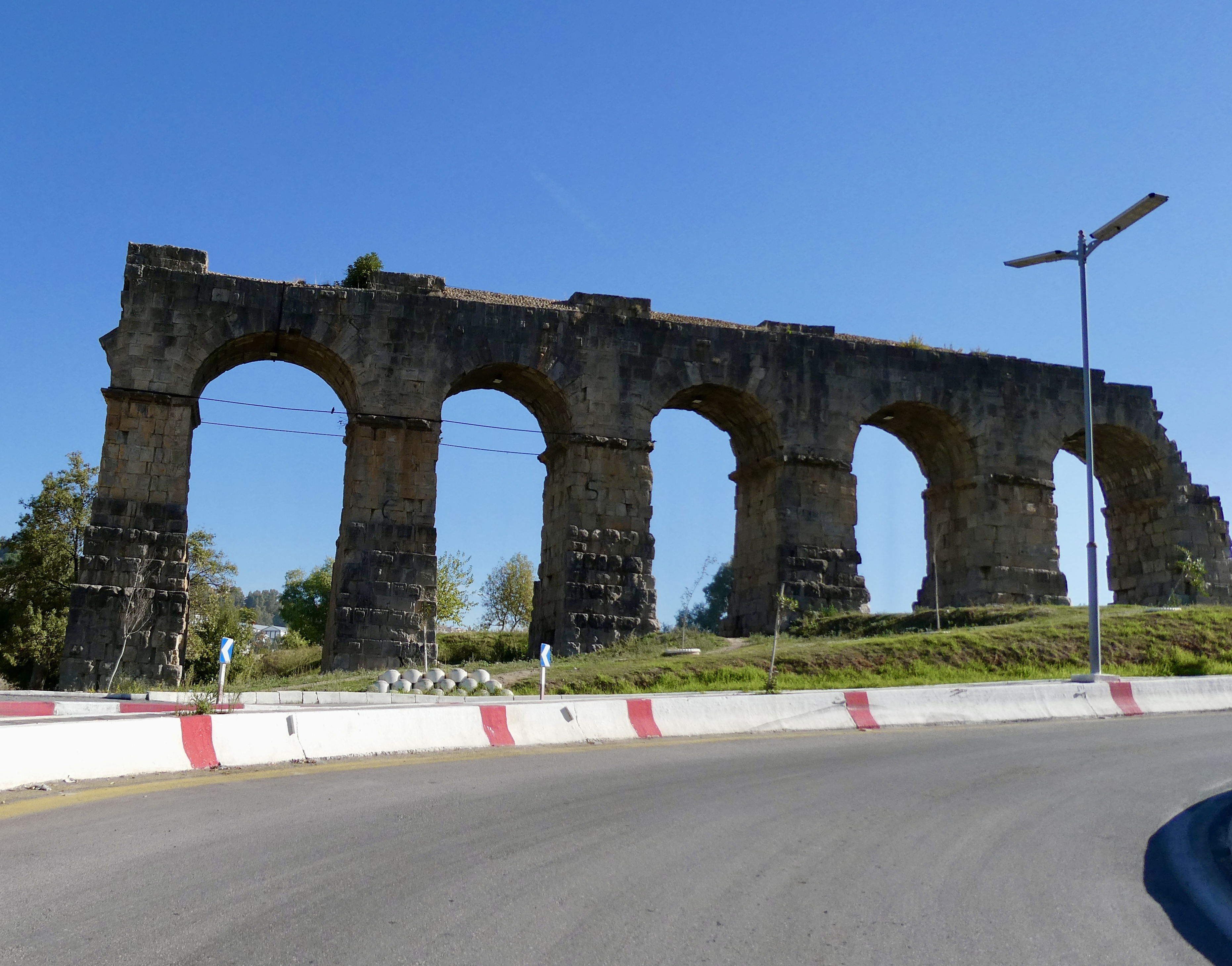
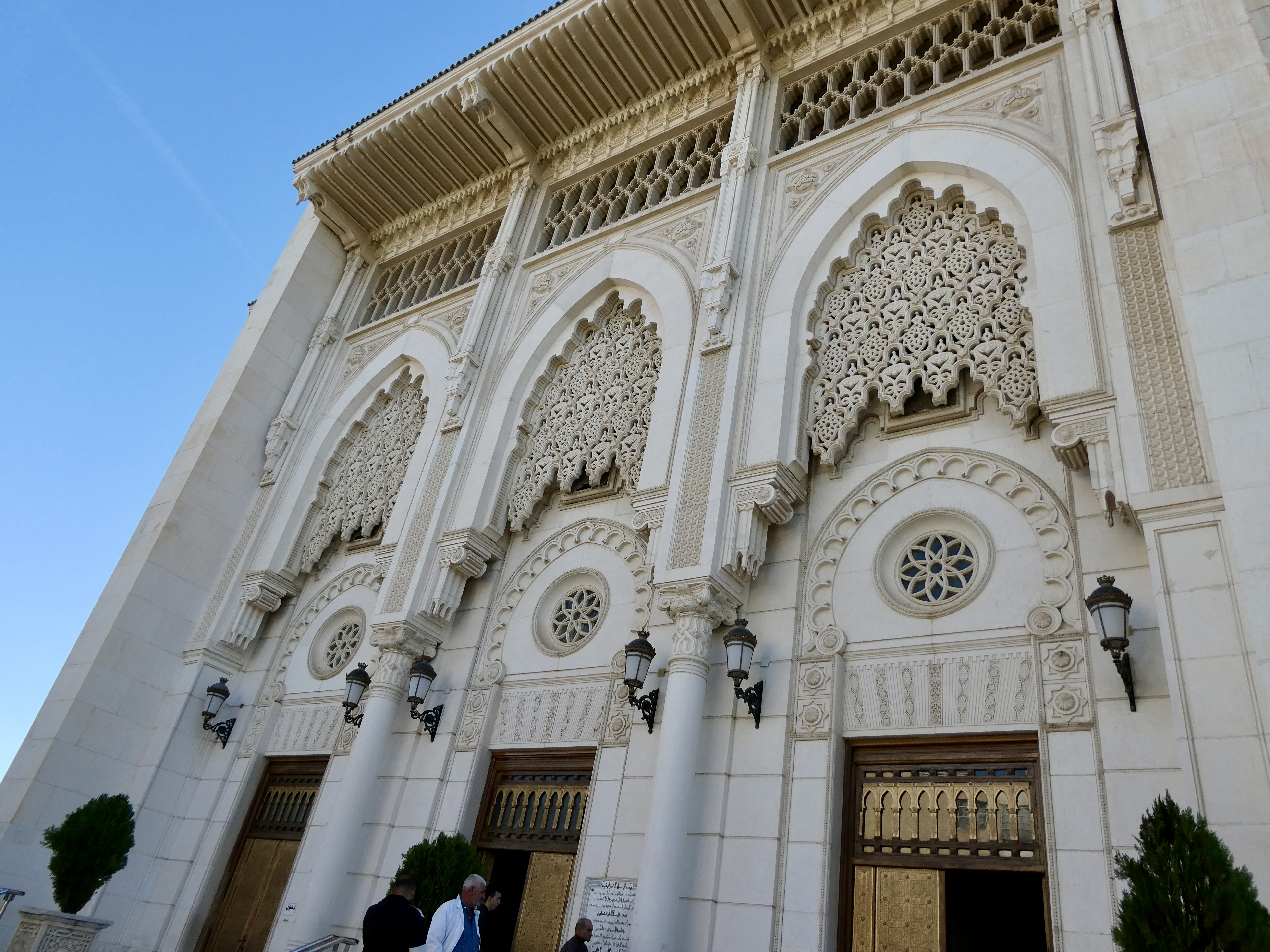
So we headed a few blocks over to the mosque passing by the remains of the Roman aquaduct on the driver before reaching the mosque. And all I can say is wow. The building is incredibly impressive with gorgeous Islamic architecture and a façade of beautiful ivory and gold colours. The mosque is also huge and was at one time the largest in Algeria with a capacity of 20,000 people and 2 minarets each 107 meters high. (The new mosque in Algiers is now larger.)
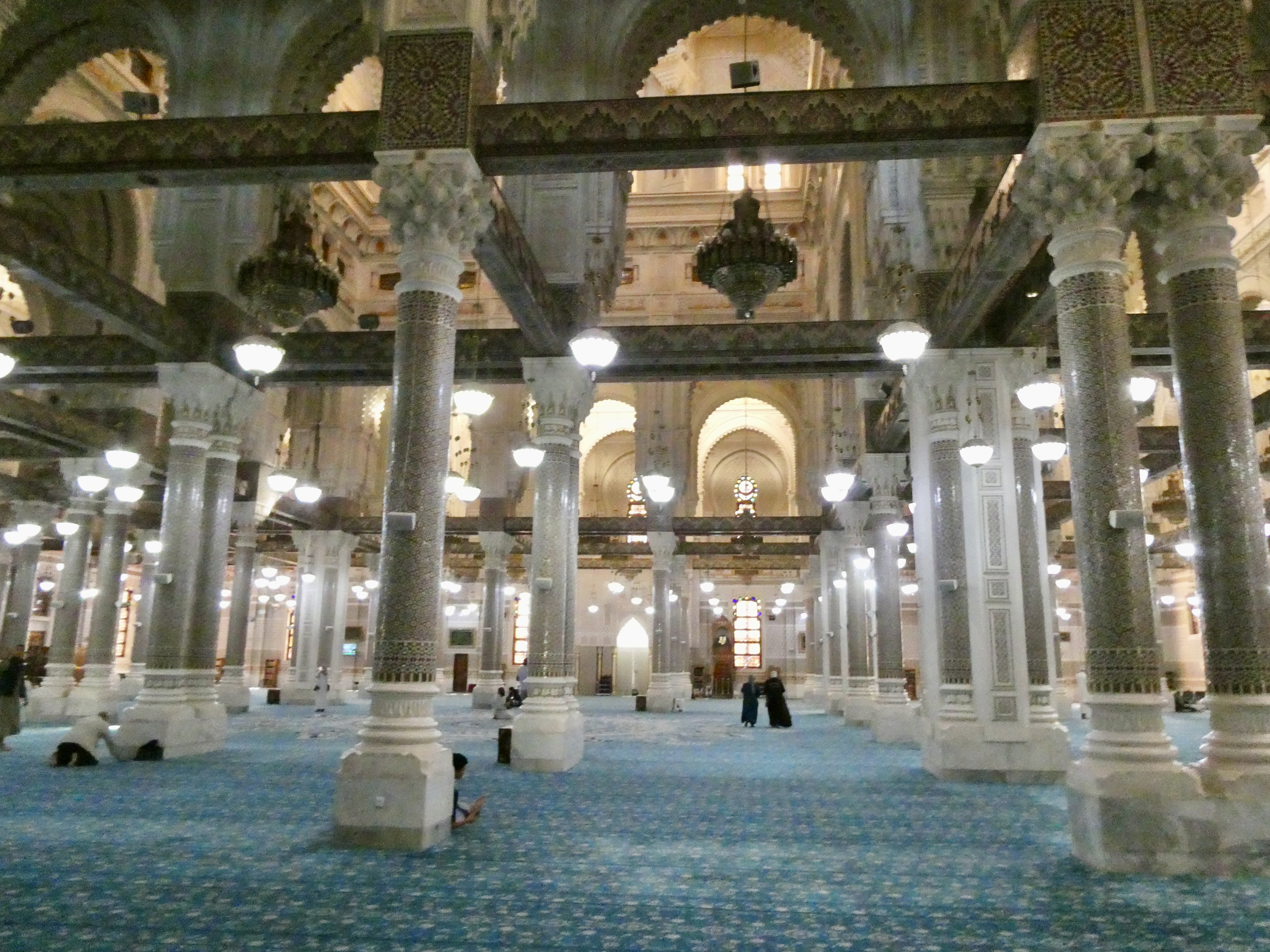
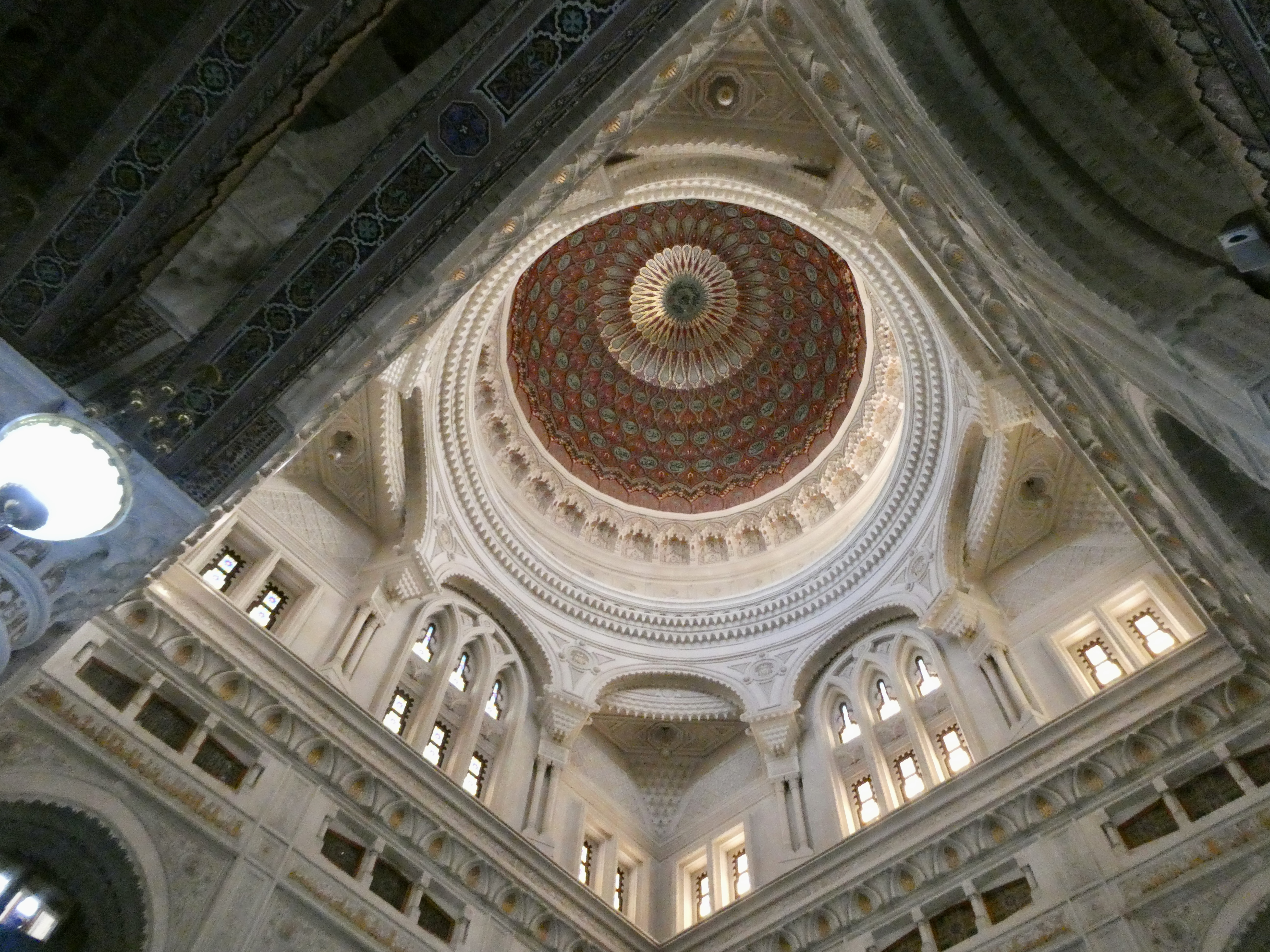
And once I donned a cloak and hijab, Nahla and I took a walk through the mosque first taking in the gorgeous main prayer hall (aka men’s side) with its fabulous domed ceiling. As we wandered around (outside of the five prayer times) we still saw numerous people (men and women) sitting on the floor reading the Quran and the occasional man praying. (Women can only pray on the women’s side of the mosque.)

Now the unique aspect of this mosque is that it is also a teaching school with the Emir Abdelkader University aka “Quran school” taking up the upper floors of the mosque. And in this vein, we ended up walking through a side hall where a number of young men were sitting in circles around teachers discussing the Quran. And even on the opposite “women’s side”, the room was packed with women studying the Quran while children ran around the room. (Boy was that room noisy.)

Once we had walked through the mosque, Nahla and I made our way outside to the garden area of the mosque where I was able to take a picture showing the mosque in its entirety. It really was big.
So from here, we met back up with Majed and headed off to the Cirta Constantine Museum. Now this museum was split into two floors with several rooms and was essentially a walk through Constantine history.
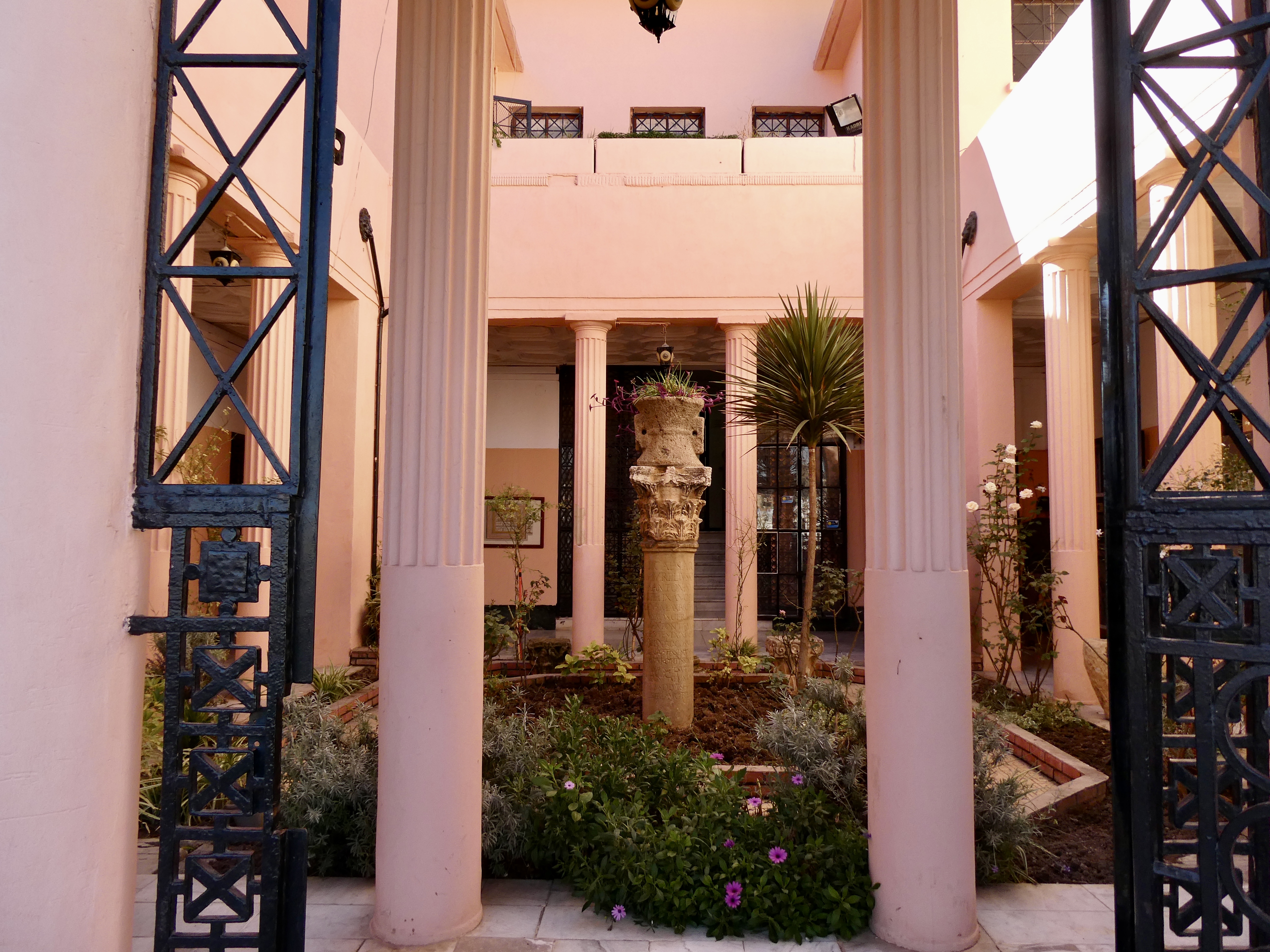
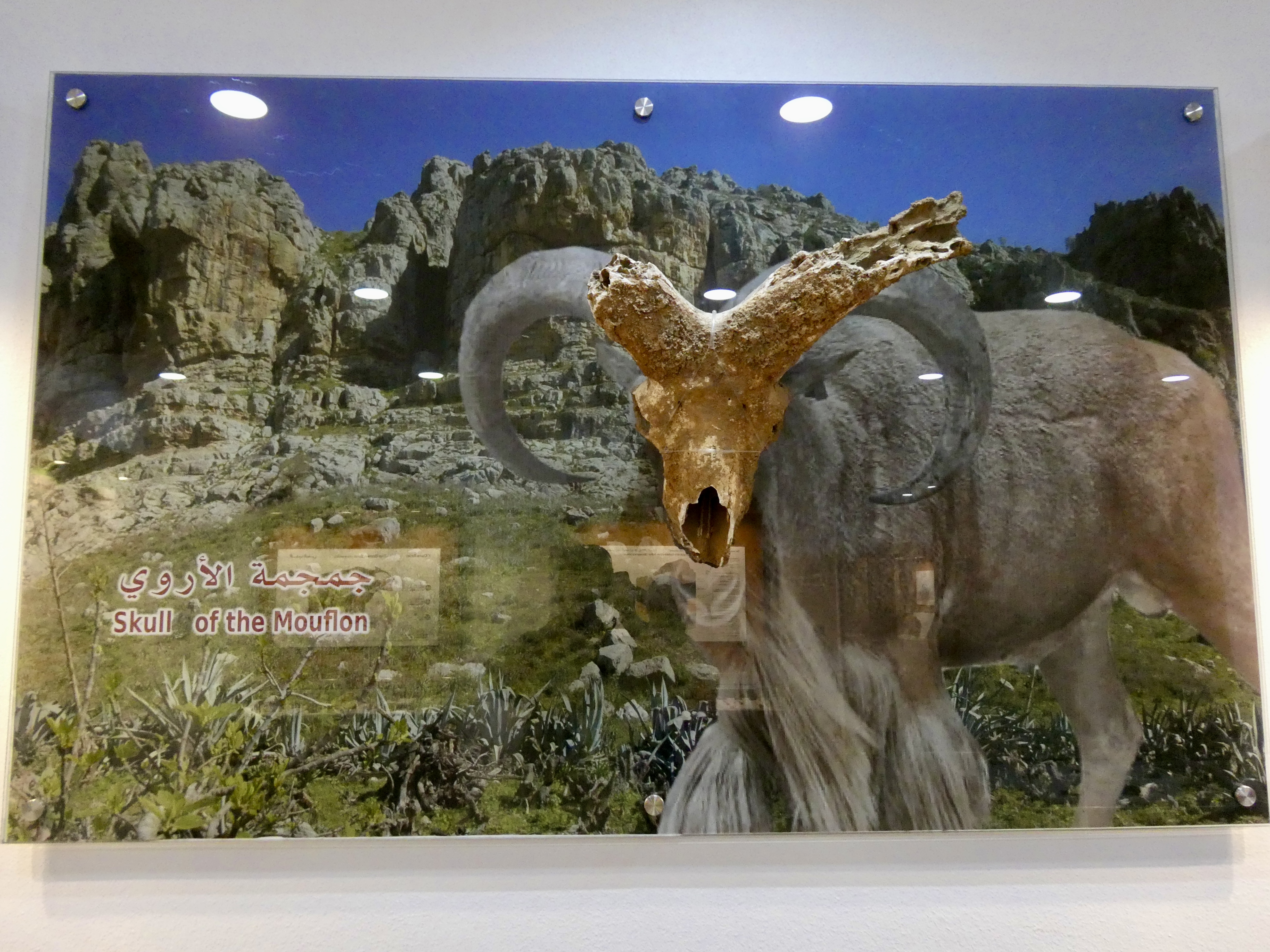
Once we entered the museum through a lovely courtyard, we started out in the prehistoric era where we saw an awful lot of pieces of prehistoric animals, including a partial skull of something called a mouflon, which is long since extinct, but looked something like a big horn sheep only its eyes were weirdly placed on either side of its head.
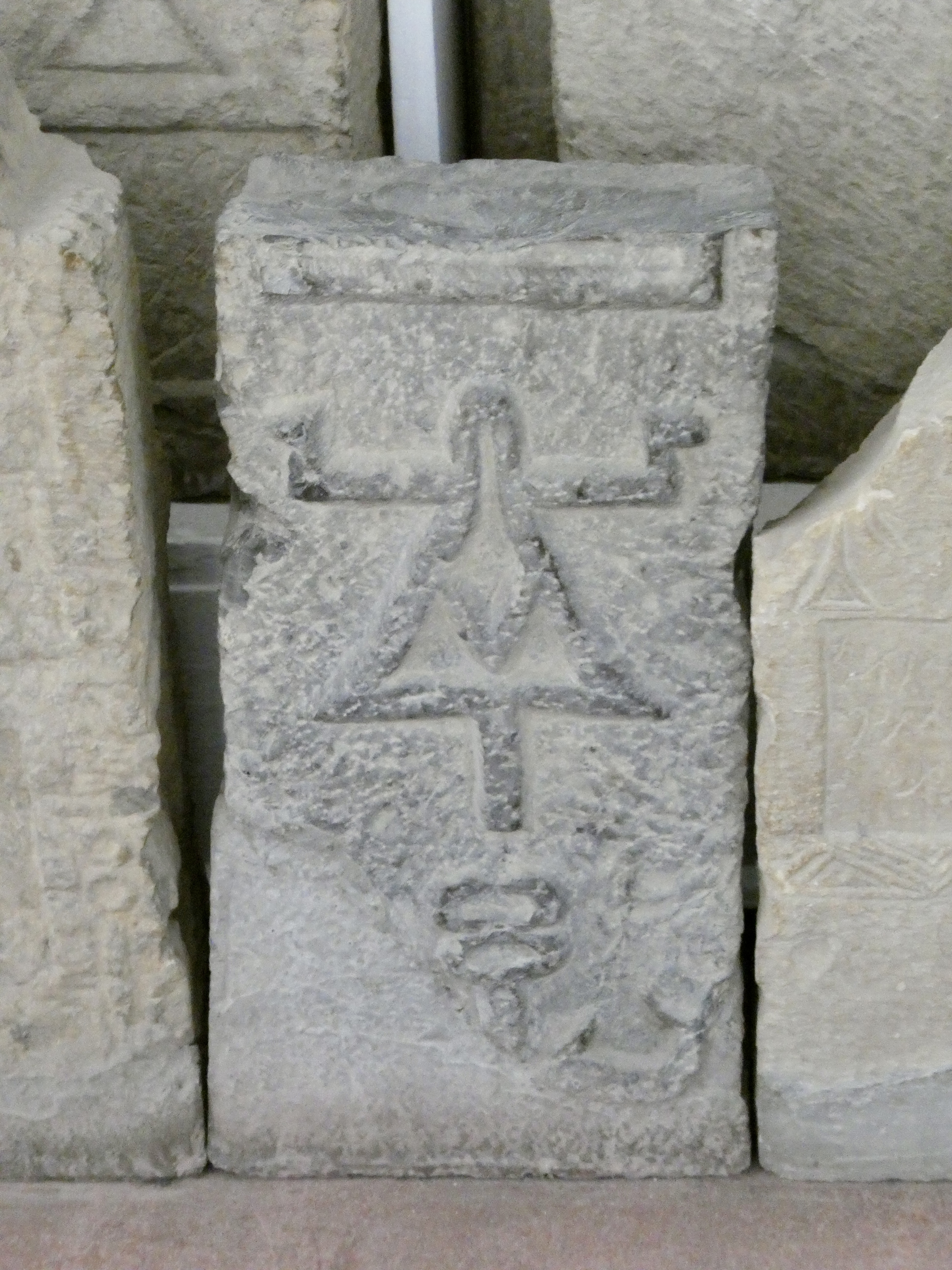
We then entered the Numidian/Phoenician period which dated from the third century BC until the Romans took over the city in 46 BC. Now the primary artifacts from this period were stelae or inscribed stone slabs found in an area called the Sanctuary of El-Hofra, a sacred site near Cirta. Many of the stelae featured a weird stick figure drawing which I learned was a Phoenician deity named Baal. In addition, there were drawings on the stelae dedicated to another deity named Tanit, believed to be Baal’s wife. Baal was apparently a deity of agriculture.

Anyway, from here we moved into the largest display, which was Roman artifacts. We passed by numerous marble statutes, including one fully intact statute of Bacchus and one of a Roman princess. There were also displays pots, jewellry, oil lamps and hairpins.
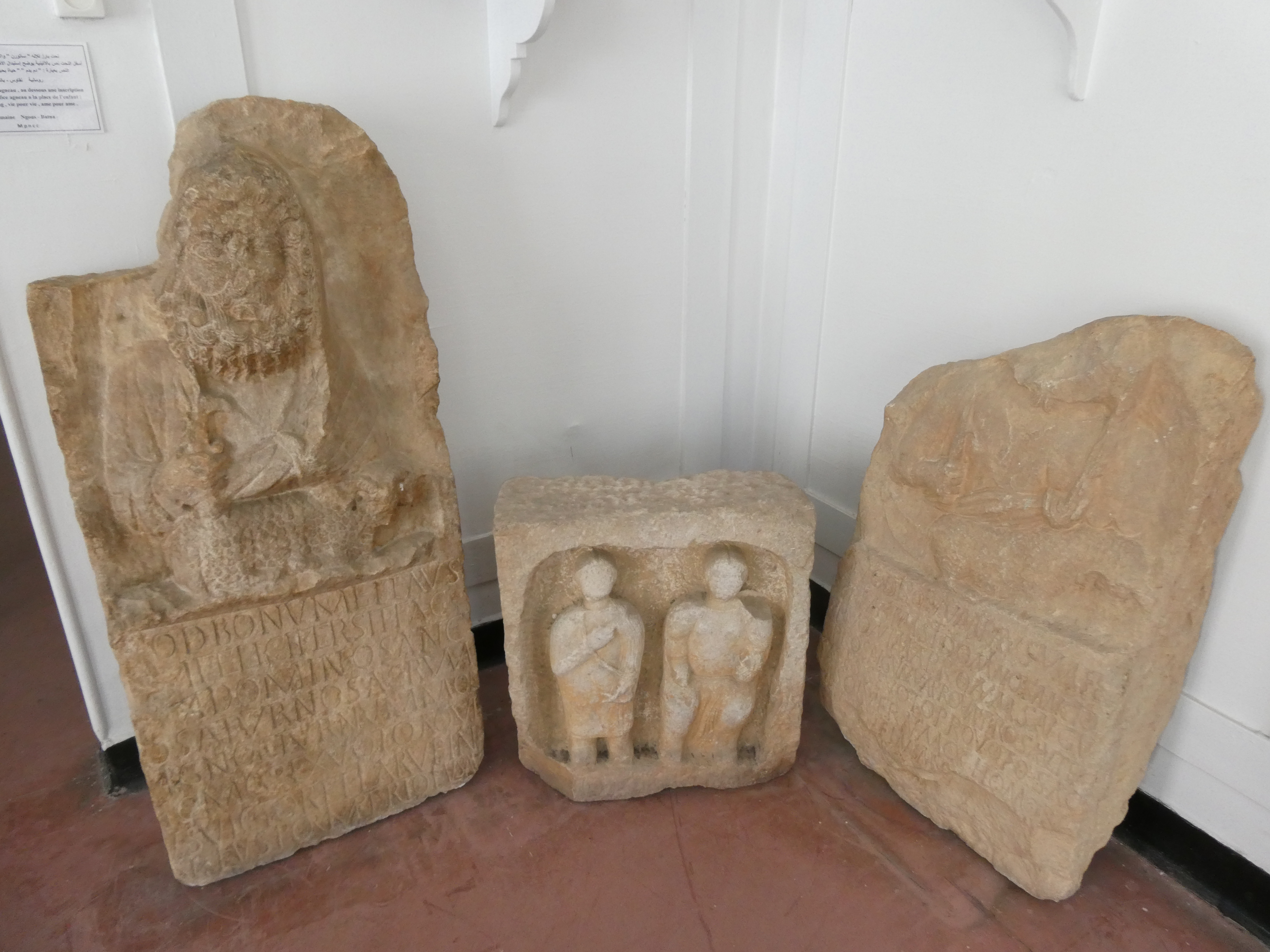
The next era was the Roman Christian era, which began in the late 3rd and early 4th century when Romans adopted Christianity. Here there was more displays of pots, jewellry, oil lamps and hairpins, as well as ceramic artwork. There was one piece of artwork in particular that signified the Roman move to Christianity and that was the remains of a clay funerary stelae featuring Saturn with a lamb below him and an inscription that the lamb was sacrificed in place of a child. Which begs the question … did pre–Christian Romans sacrifice children? No one really knows.
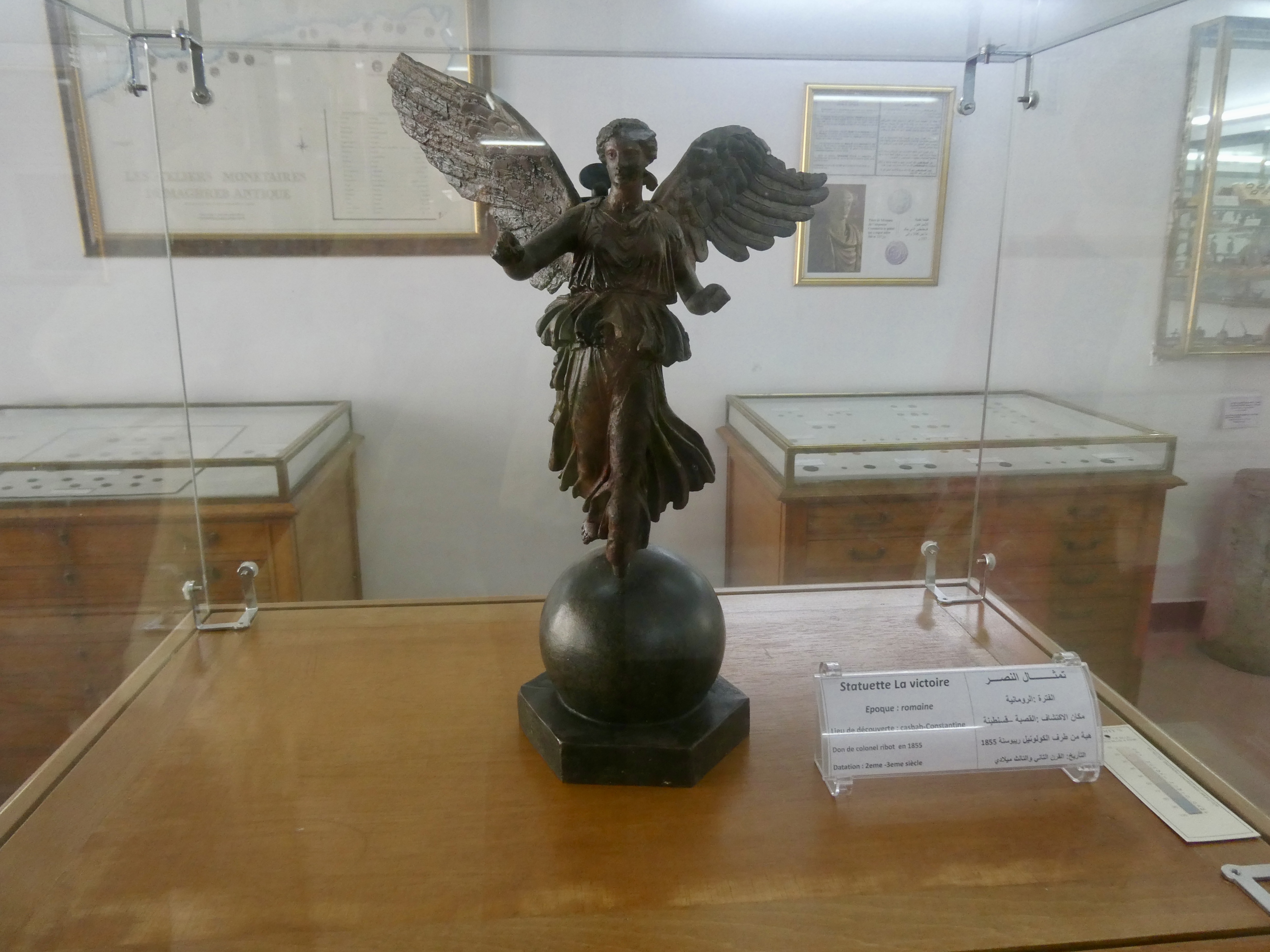
Anyway, there was also a tiny bronze statute on display that was named the “Victory of Constantine”. The tiny winged statuette was apparently discovered in Constantine in 1855 by French soldiers who were turning the ancient Casbah into army barracks. The statute is believed to be about 1700 years old.
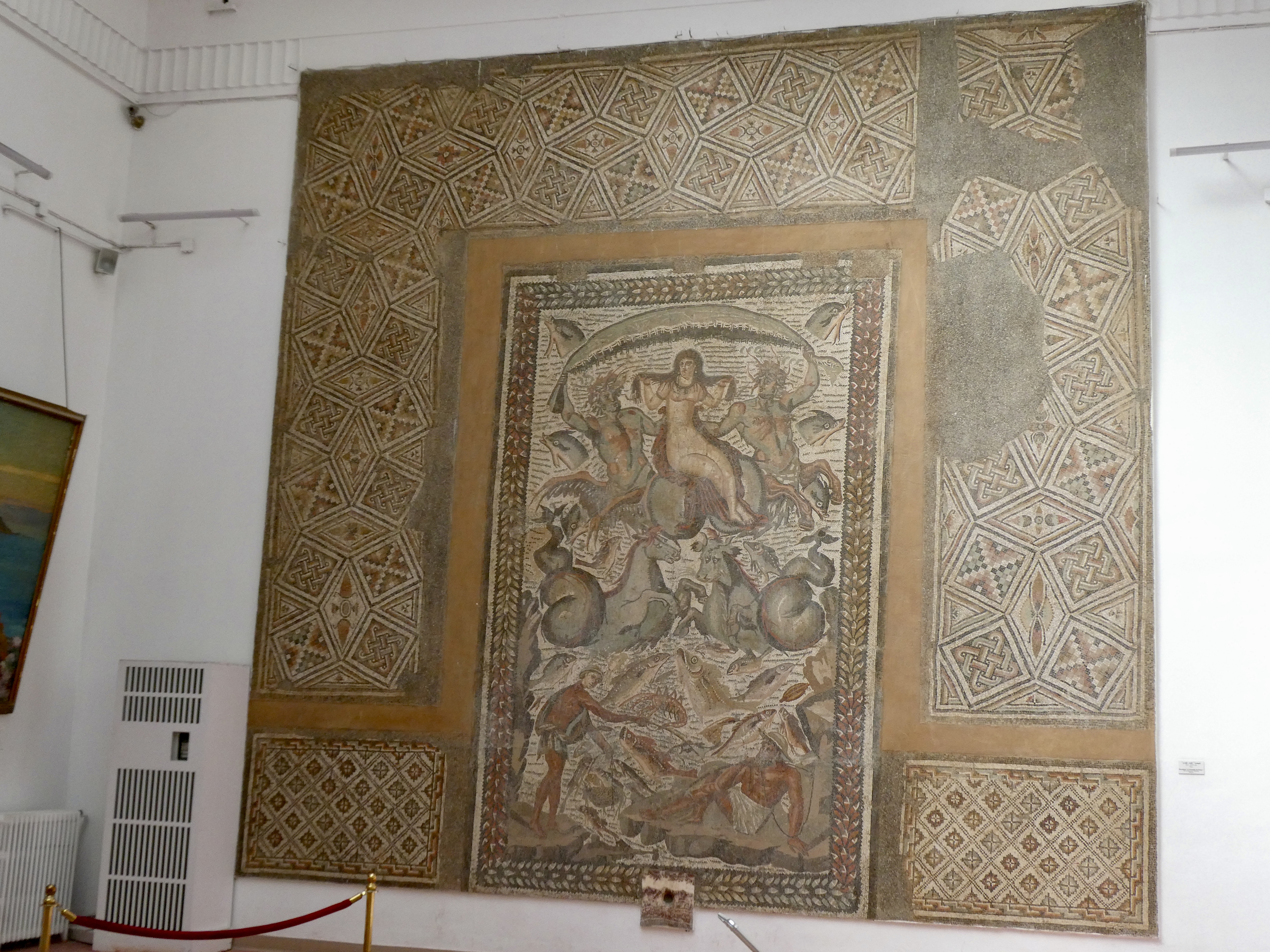
From here, we moved into a hall that housed numerous paintings as well as the Triumph of Venus mosaic, which dates to the early 4th century AD. The mosaic was in fabulous condition and was apparently found in the Roman colony of Mascula (today known as Khenchela) and depicts Venus supported by marine centaurs.
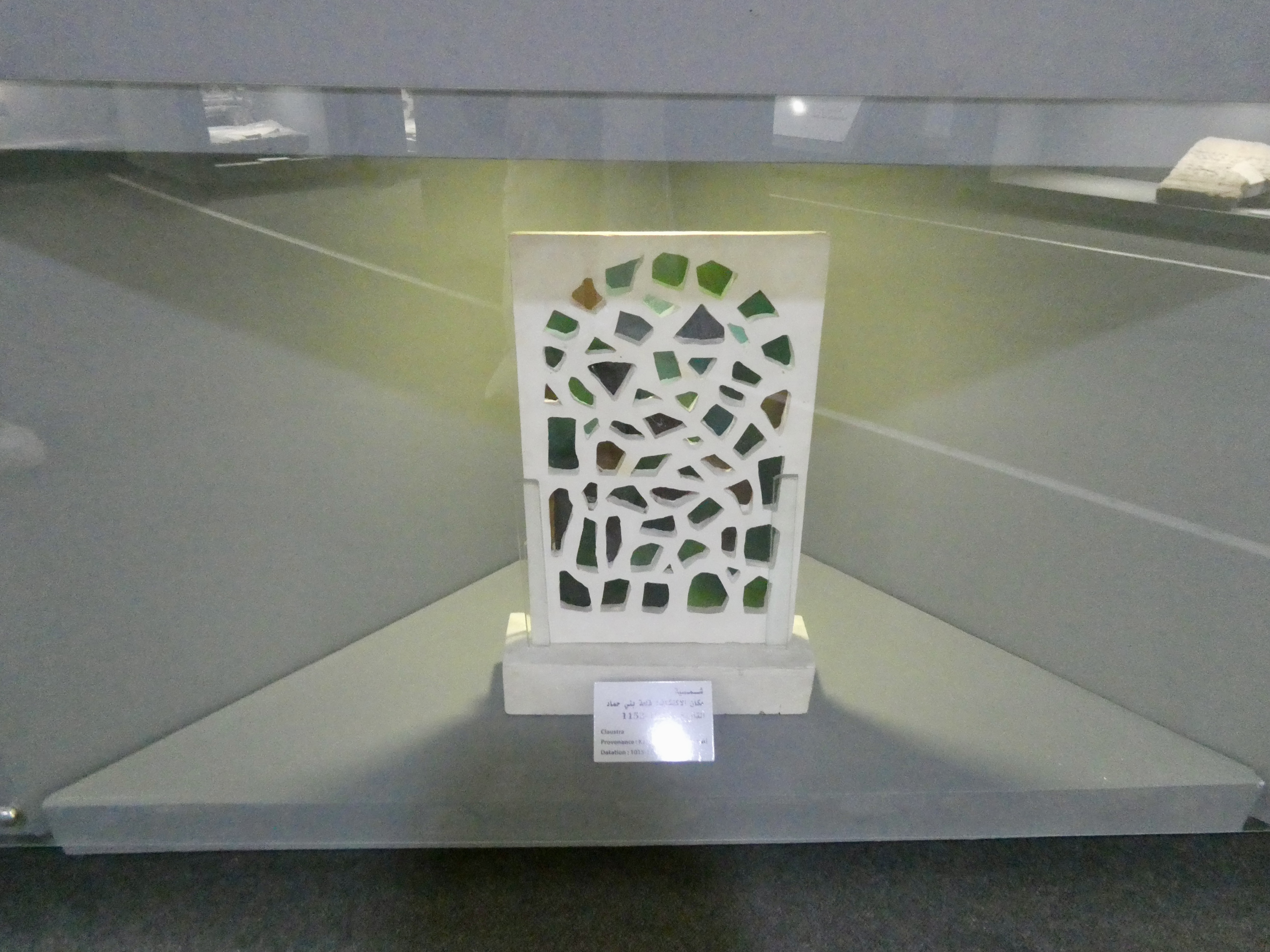
We then moved into the Byzantine and Ottoman era with lots of bronze statutes. The one artifact I found interesting was a Byzantine dividing wall (claustra) dating to 1015-1152 evidencing that as far back as the 11th century women and men were being kept apart.
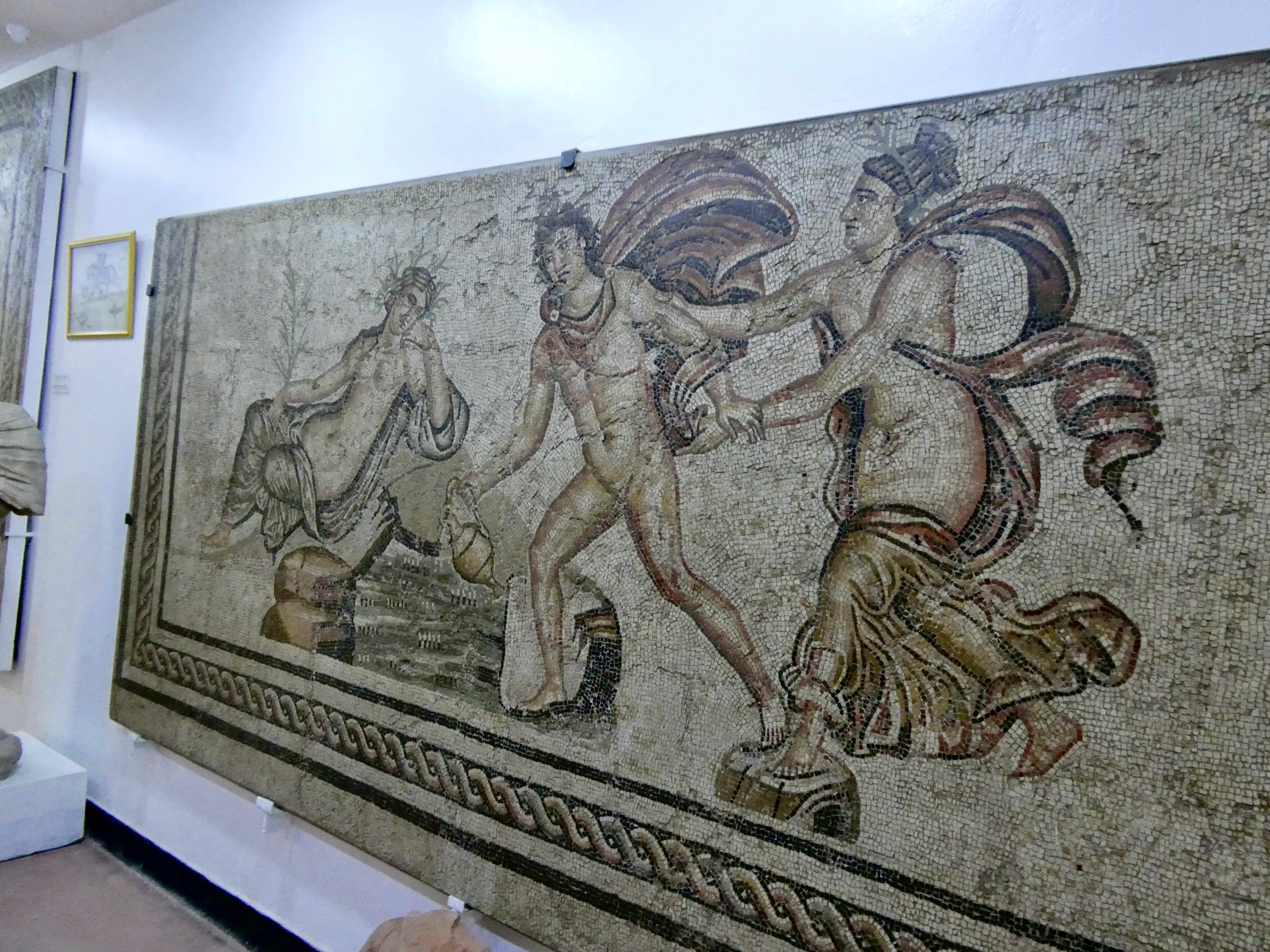
Now as we were about to move upstairs a horrible screeching alarm went off. We soon learned that this meant closing time. Huh? Nahla had no idea the museum was closing early so she begged for an extension and we hustled upstairs to take in the huge room full of mosaics recovered from Tiddis, including one mosaic I especially liked called the Abduction of Hylas, which apparently referred to a tragic tale from Greek mythology.
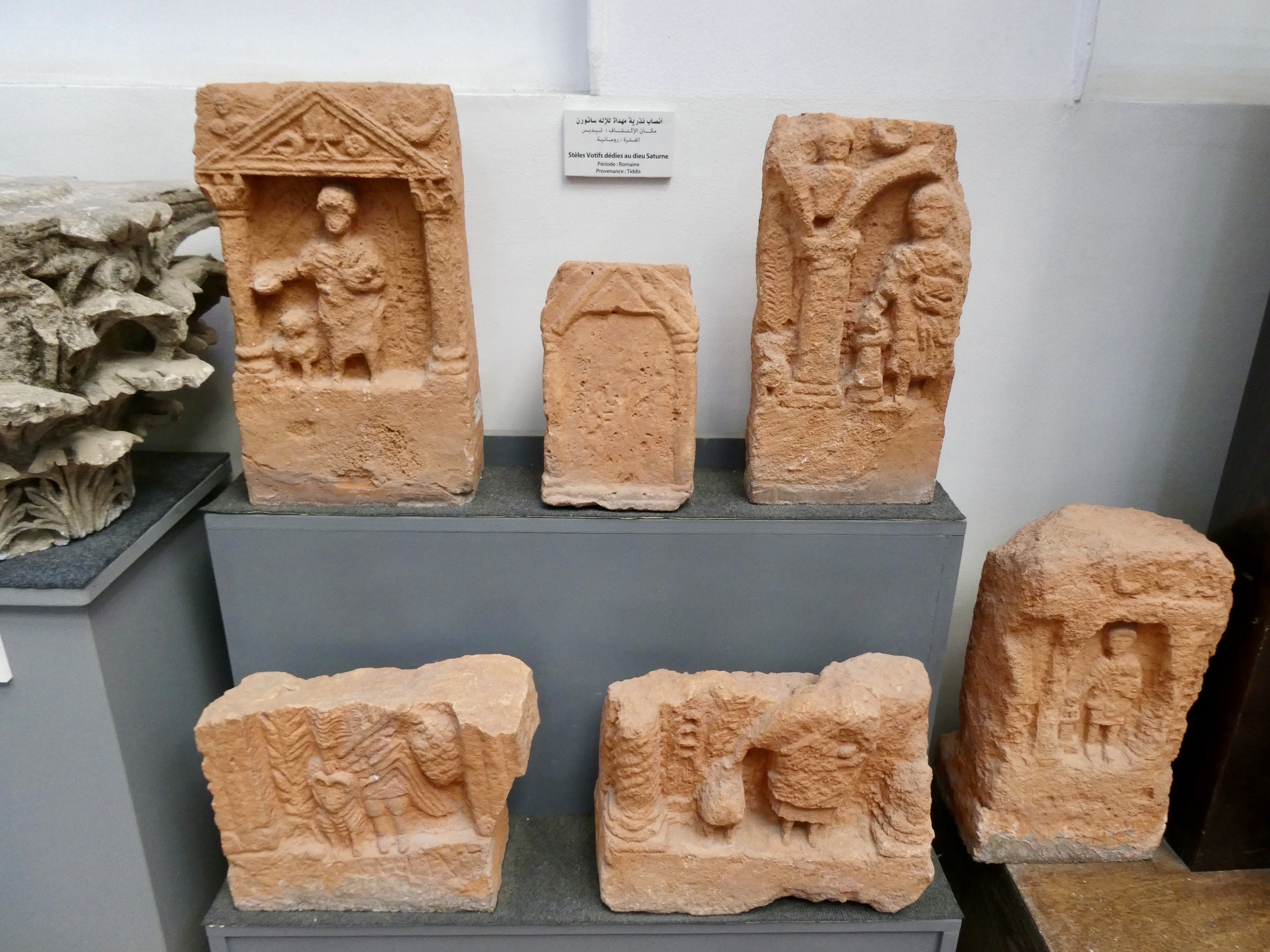
We then passed quickly by a number of paintings left behind by the French as well as some current Algerian paintings before heading down the staircase past a number of ceramic stelae recovered from Tiddis and heading out the door.

Next up was a bit of an off the radar trip. In fact, I had no idea where we were going. Turns out that we were going for a bit of a hike through the Oued Rhumel Gorge, the massive gorge that can be seen from numerous bridges in the area. And surprisingly, there was no one else at the gorge. Apparently not many folks know about the walking path at this place and so it is an under the radar location for tourists and locals.
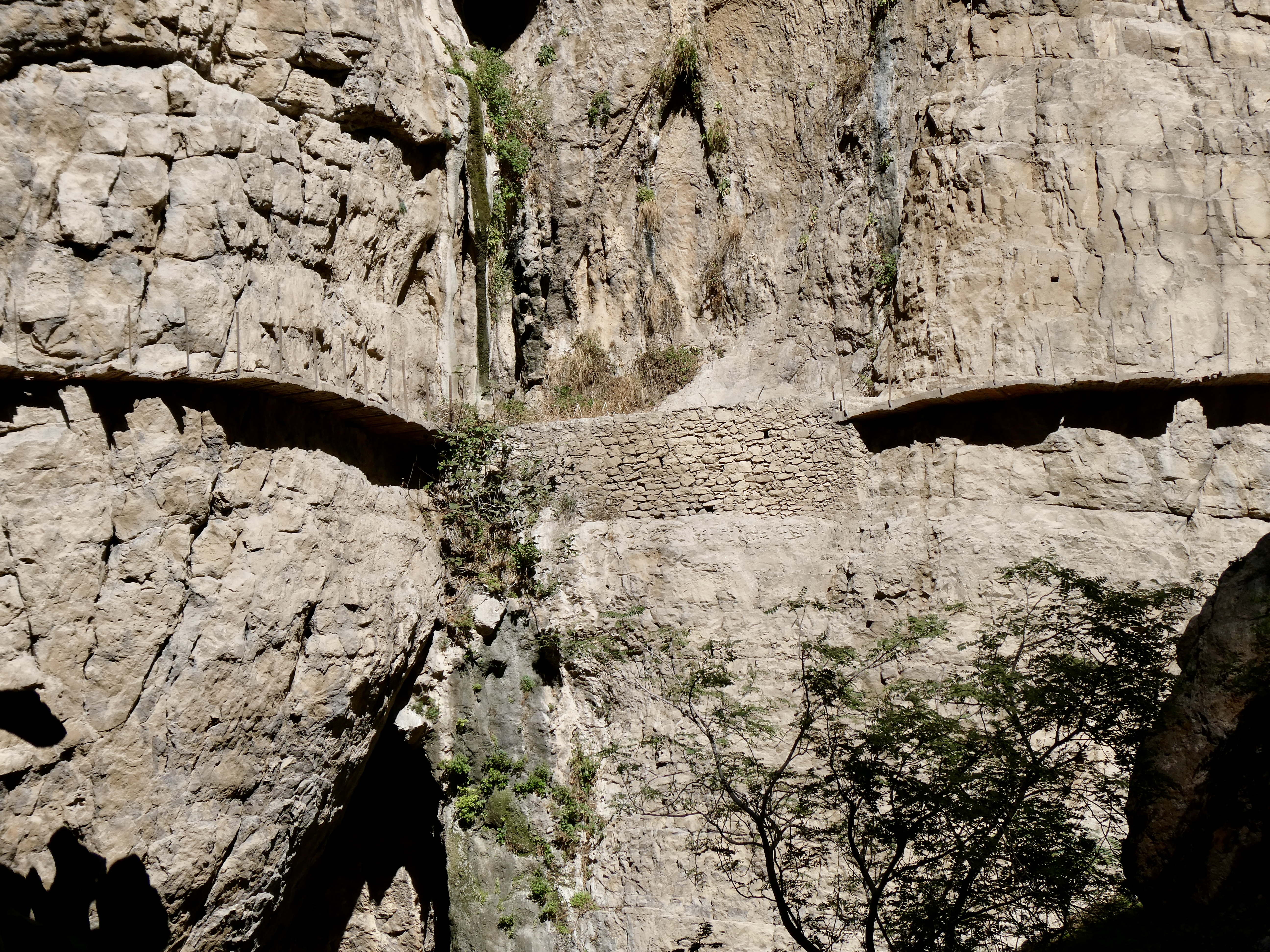
And bonus, across the other side of the river was the old Roman walking path that at one time had extended into the old city of Cirta via caves linking underground streets in Cirta to homes in the city. The underground streets allowed the wealthy Romans to avoid the non-Roman citizens as the wealthy Romans left Cirta for walks in the countryside and to access the baths (more about those later).

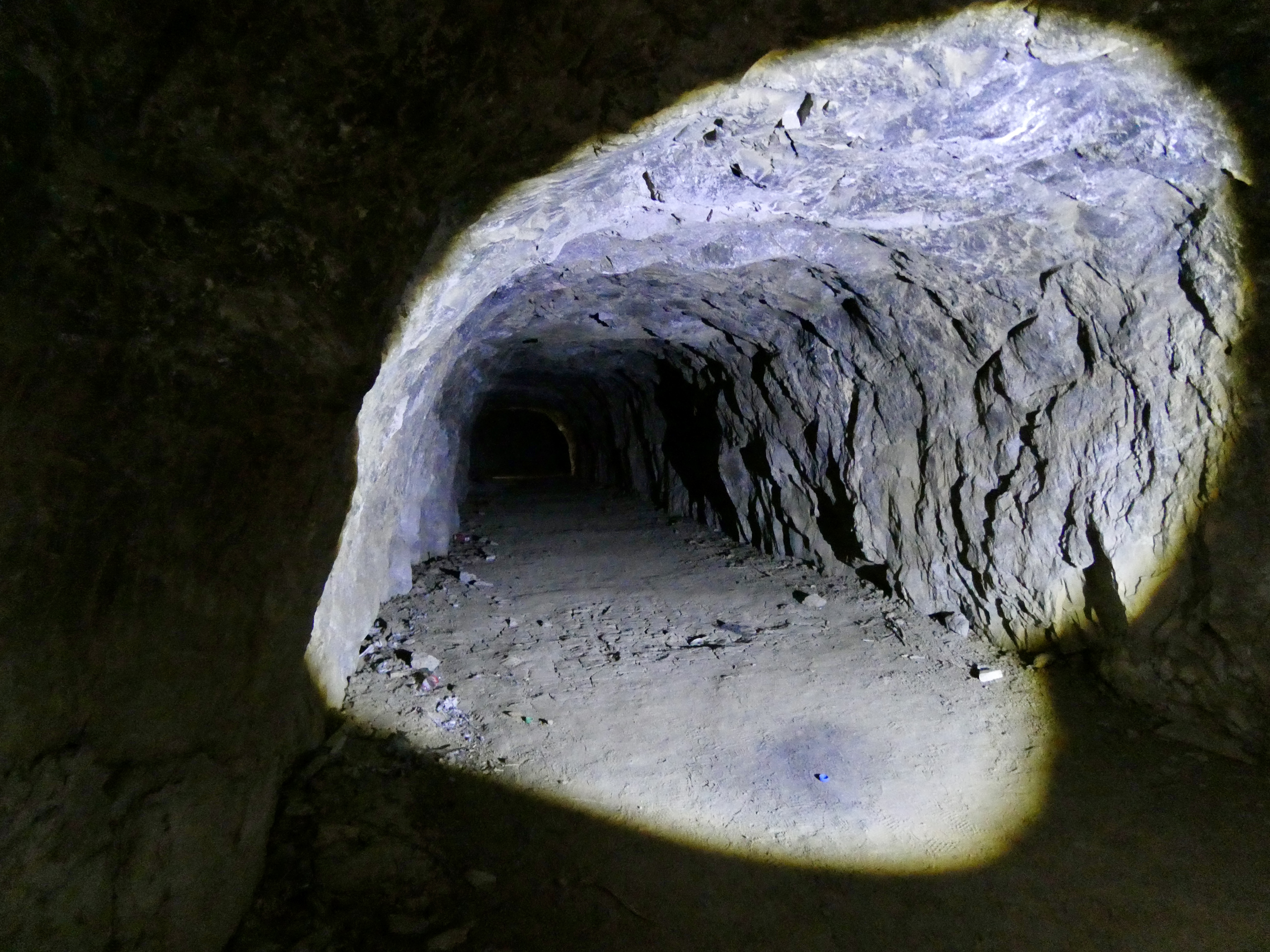
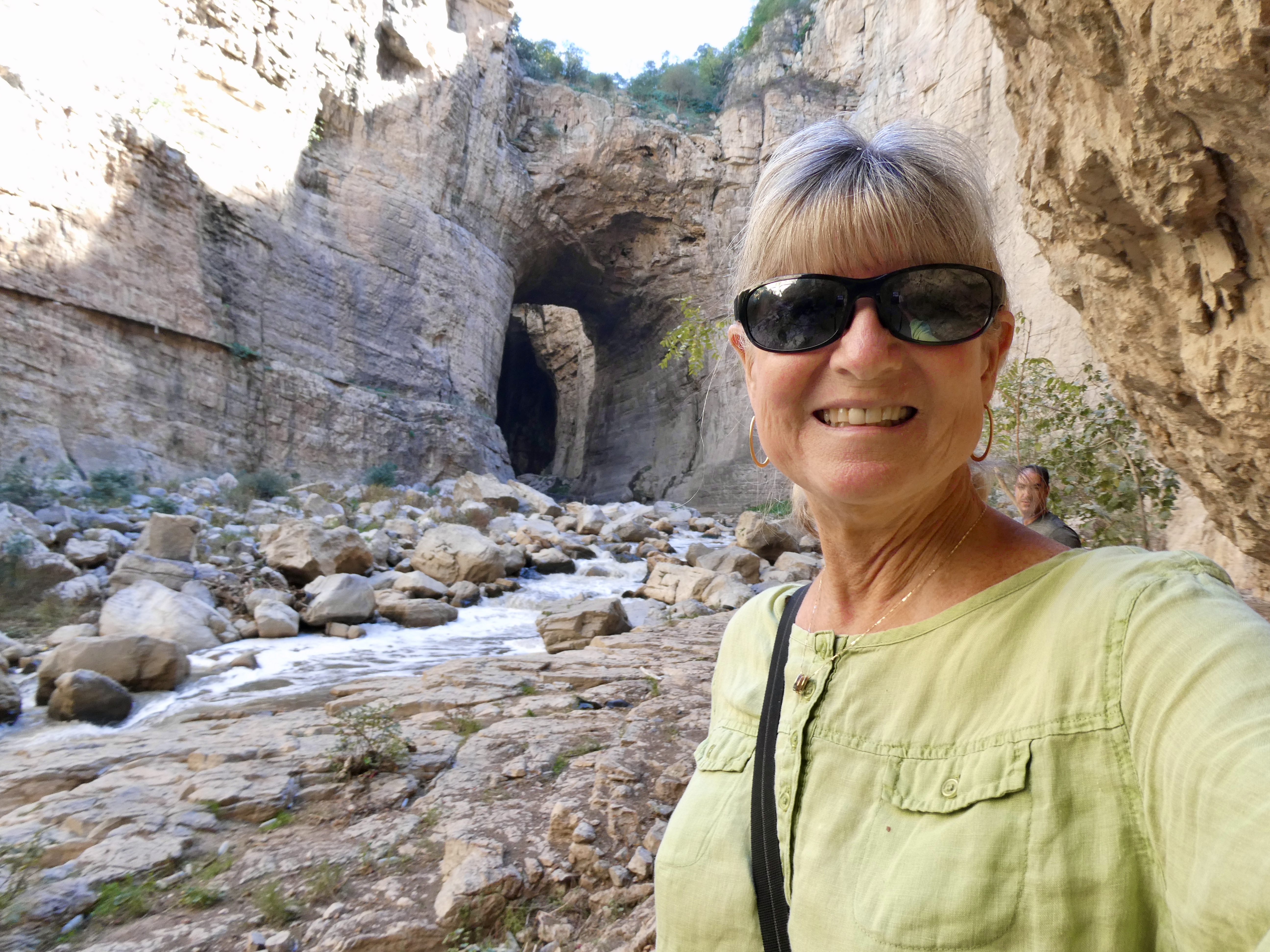
Now the views to one of the many bridges in the area, the Sidi M’Cid Suspension Bridge, was pretty darn amazing as was the nearby gushing waterfall and the beauty of the enormous rock walls. We ended up walking along a very narrow rock and dirt path passing a couple of the Roman caves and walking under an enormous rock arch, before entering one of the caves that took us to the end of the gorge where the Rhumel River was tumbling over rocks and heading towards the waterfall.
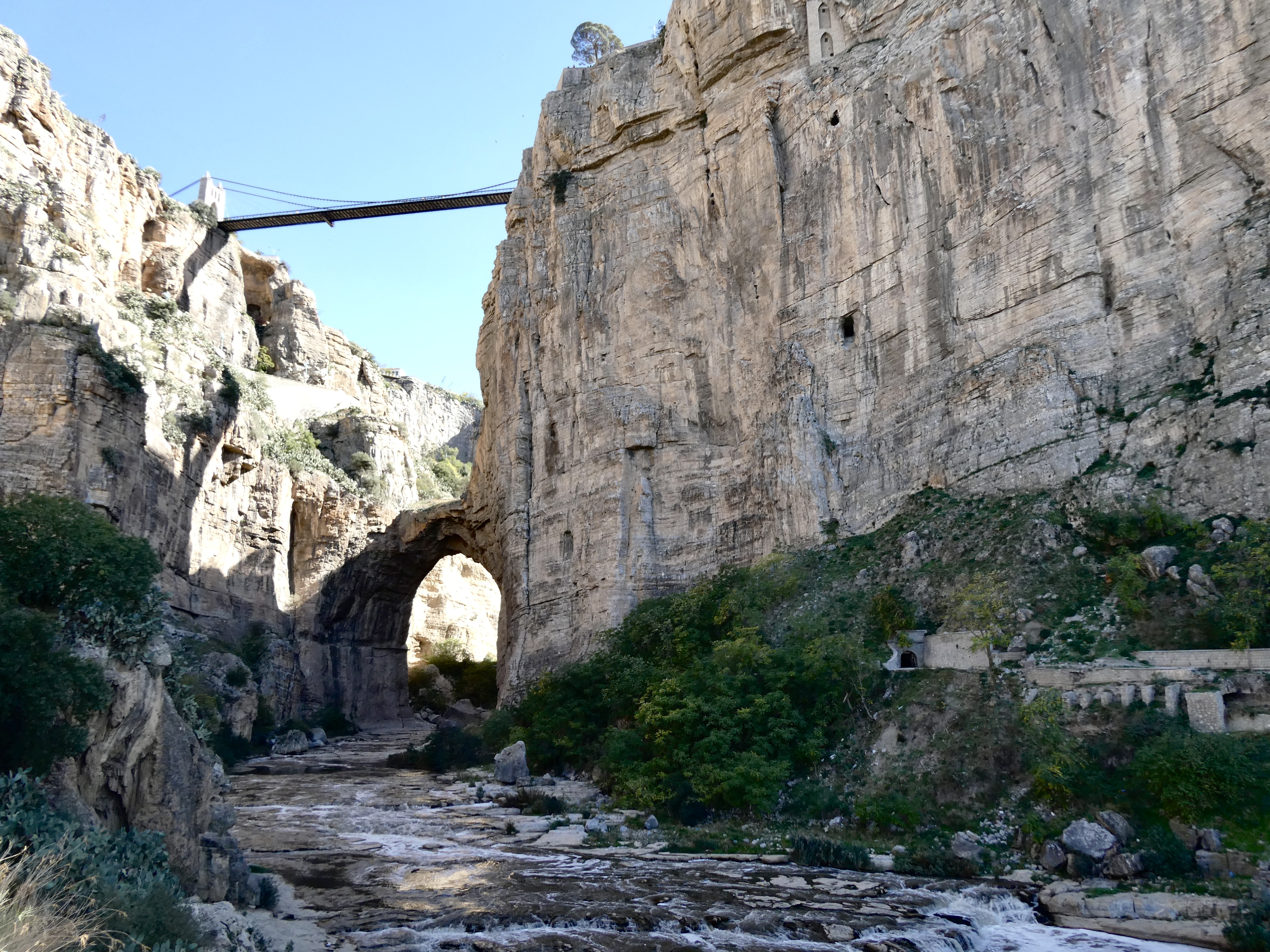
We then doubled back through the cave and along the narrow path before arriving back where we started. Nahla and I ended up walking across a nearby small bridge to get a closer look at the river and the gorge before Majed picked us up and drove us to the Monument to the Dead, a memorial in the shape of a triumphal arch topped by a huge replica copy of the Victory of Constantine we had seen in the museum earlier in the day. Once he dropped us off, he was off for a couple hour and would meet us at the end of the day to take me back to my hotel.
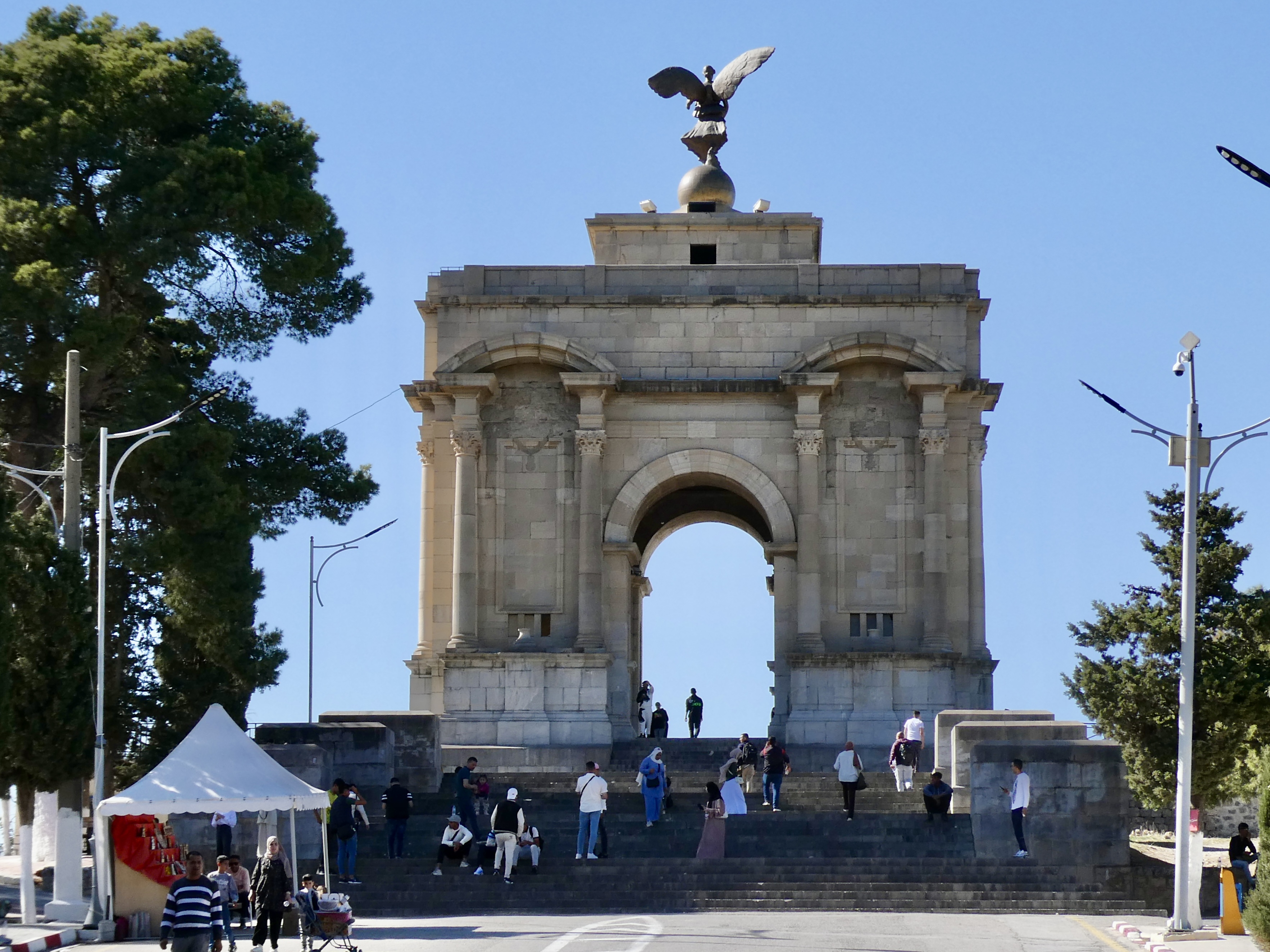
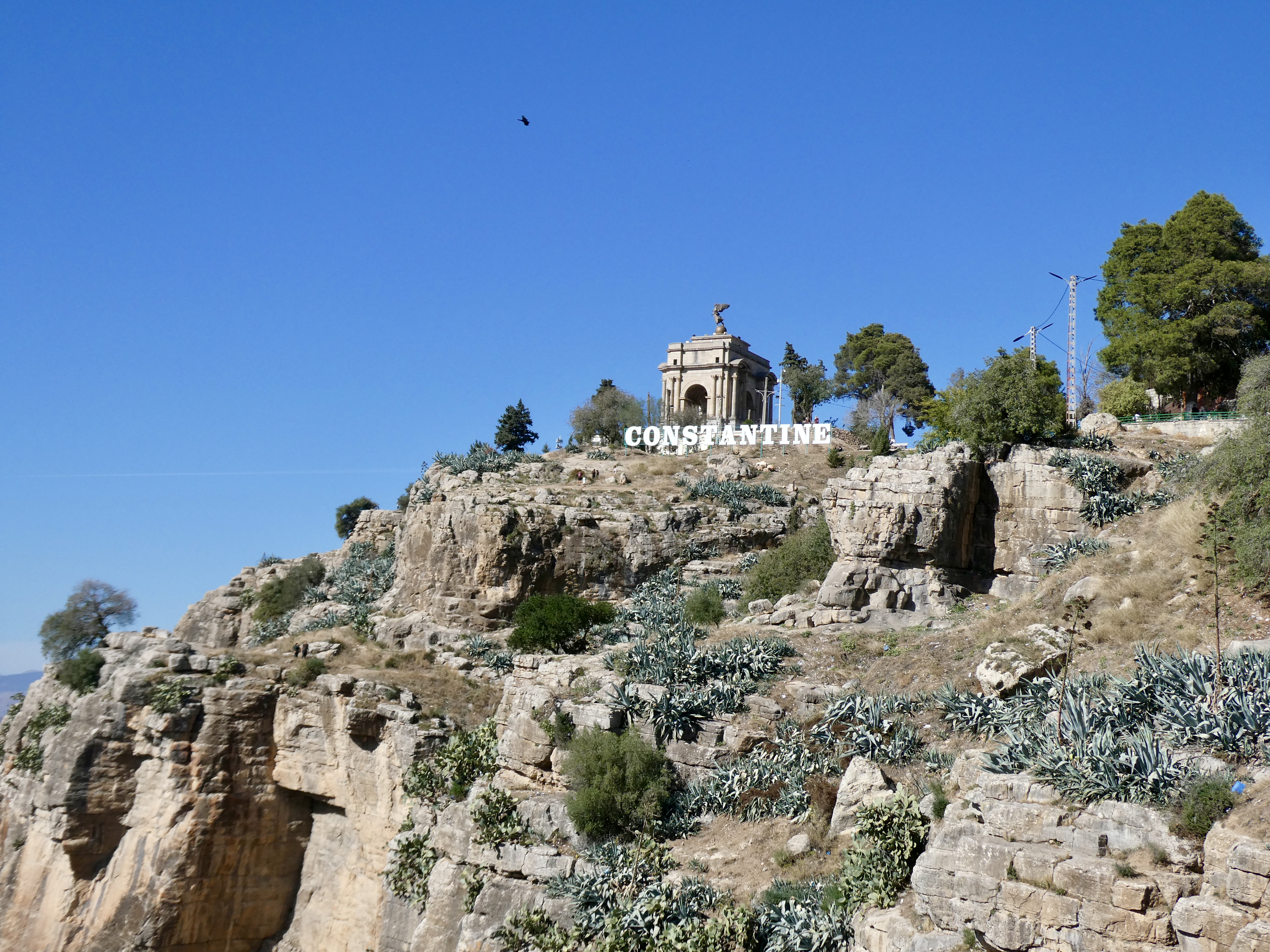
Now Nahla clearly did not like the monument. While she did not explicitly say it, she (along with other Algerians) resented the fact that the French, who were occupying Algeria at the time of WW I, forced Algerians to fight for the French with a total of 144 Constantine residents dying. As a result, the monument is a reminder of the French occupation and the fact that the French forced the Algerians to fight for a country that they despised. (In fact, they are trying to phase out French as one of the two official language and replace French with English.)

Anyway, after the monument stop, Nahla and I began a long walk down a series of staircases to reach the Sidi M’Cid Suspension Bridge, which we had just viewed from the Oued Rhumel Gorge. The walk took about five minutes to cross the bridge, which connected the hillside where the monument and a lot of residential homes are located with the city, and the views along the way were fantastic including taking in the bridge that replaced the old Roman bridge (although you can still see remnants of it.)


From here, we walked around the corner and hopped on the Constantine cable car. The system opened in 2008 and links the city station (Station Tannoudji) with the middle station (Station CHU) with upper hospital station (Tatache Station). Now apparently the line was implemented in order to link the eastern part of the city with the University Hospital Ben Badis, which is on the other side of the gorge. However, Nahla and I were simply hopping on the cable car to take a break from walking and to enjoy the views.
Once we completed the round trip (in about 15 minutes) we headed up an alley and into the Casbah. Now this Casbah is vastly different from the ancient alleys and buildings I saw in the Algiers Casbah. This Casbah had largely been demolished by the French in order to erect housing for the French occupier soldiers. As a result, the buildings are decidedly French in flavour and far more modern.


We ended up walking up through the main Casbah market where everything under the sun was being sold including fancy party dresses (a big thing here in Algeria), lots and lots of shoes, track suits, and for some reason, socks.
The market was filled with smoke as vendors sold street food grilled in front of you while others roasted nuts and poured the nuts into paper cones for eating on the run. And of course, being a Saturday (which is a weekend day in Algeria along with Friday), the market was absolutely packed. Nahla and I tried to take our time, but invariably we were being pushed along by the crowds.
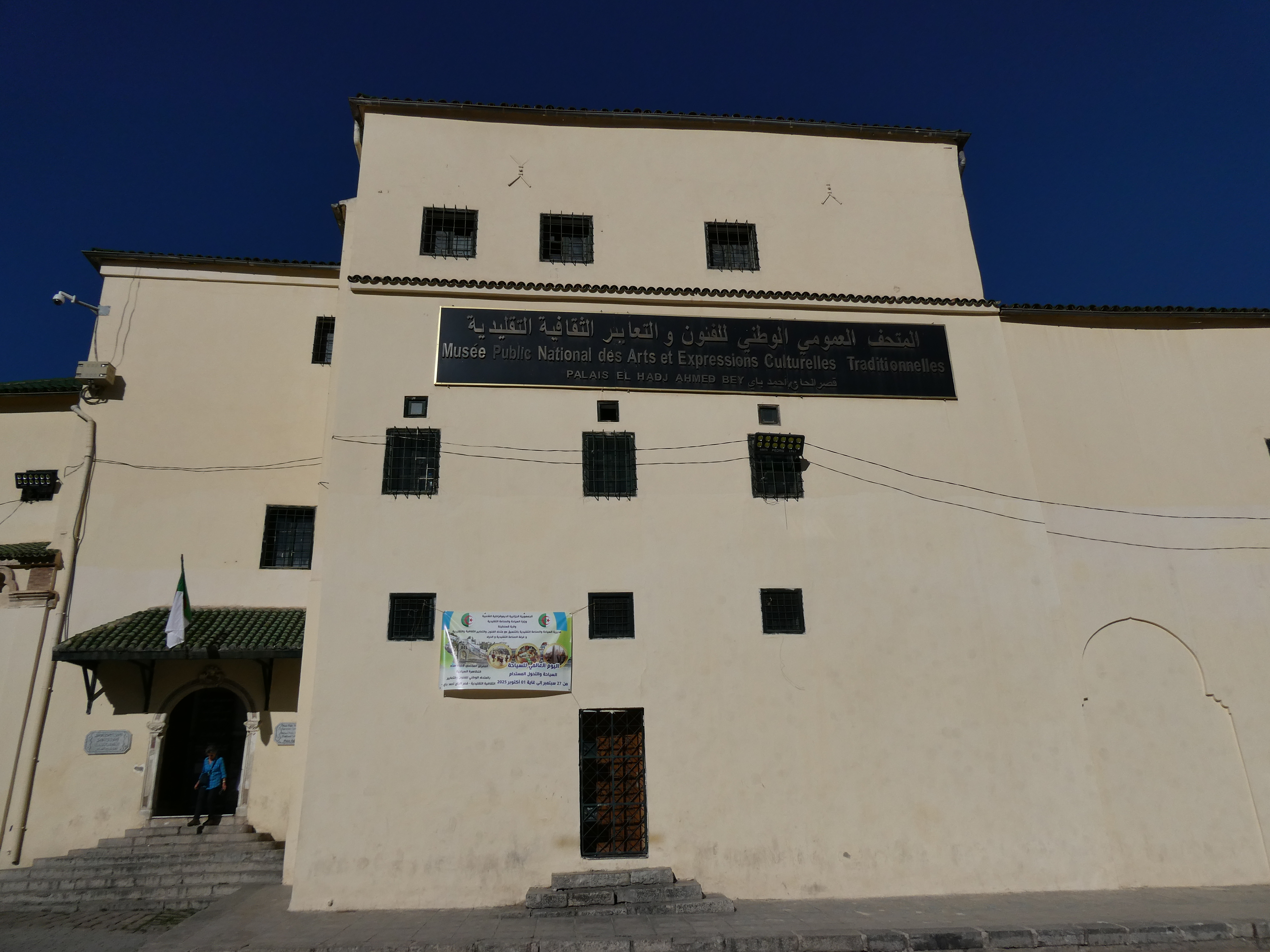
Eventually we turned right and climbed a staircase to escape the madness and reach a lovely (and peaceful) courtyard that fronted the Palace of Ahmed Bey. Now Ahmed Bey Ben Mohamed Cherif was a “Bey” who ruled Constantine from 1826-1848 and had the palace built during his reign. Construction on the palace began in 1825 and was not completed until 1835, but two years later Constantine fell to the French so Bey did not have much time to enjoy his home.
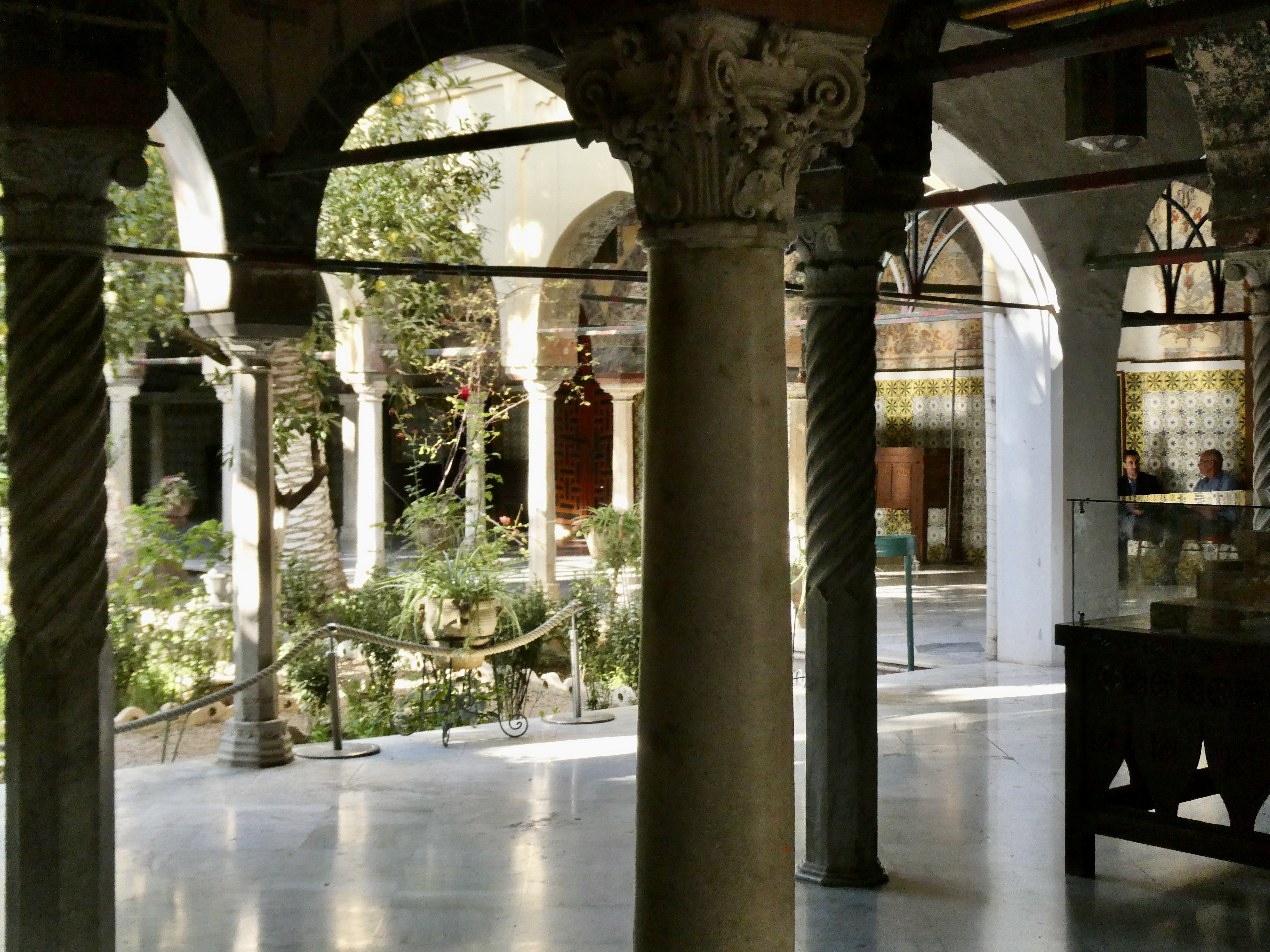
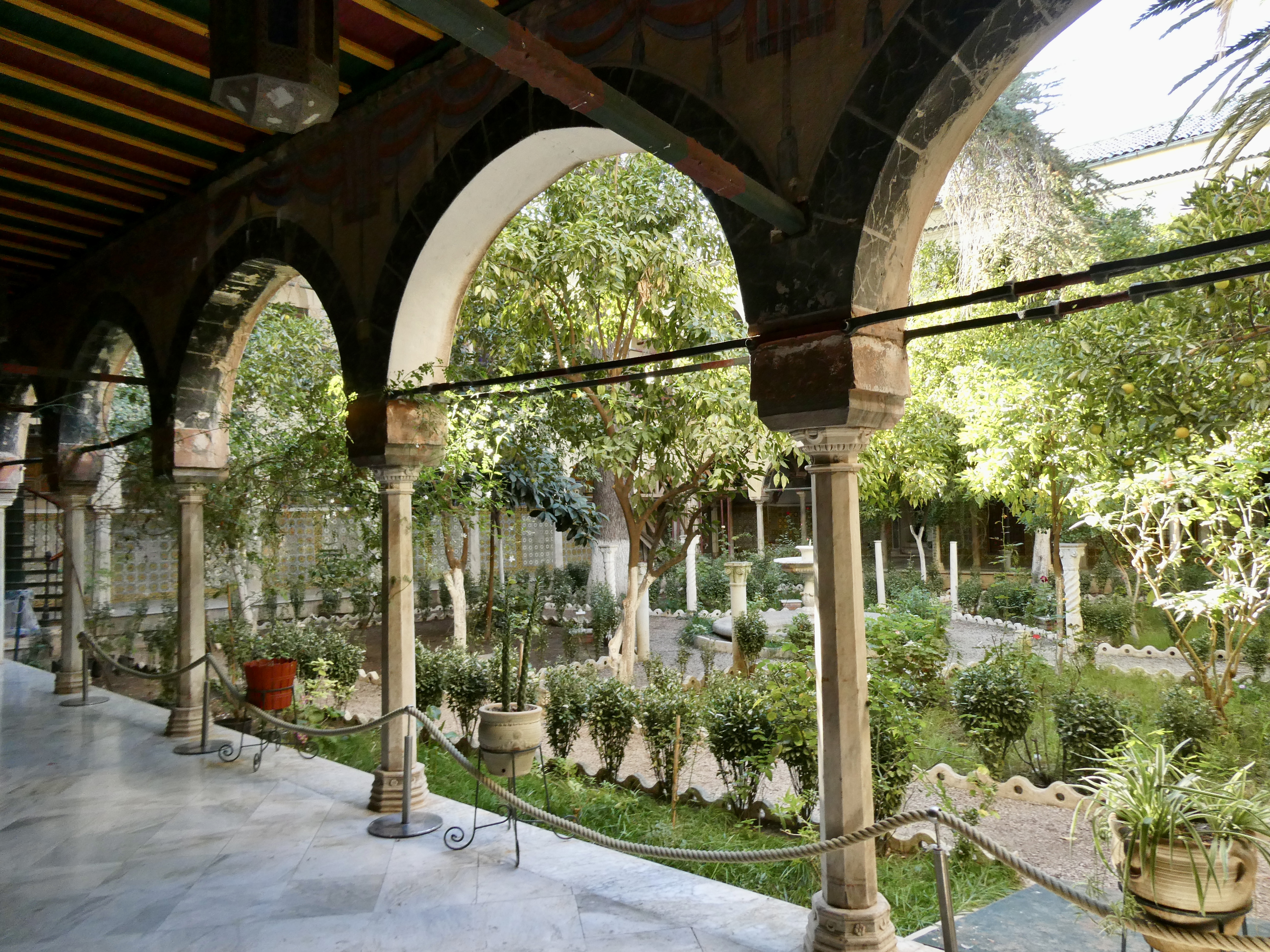
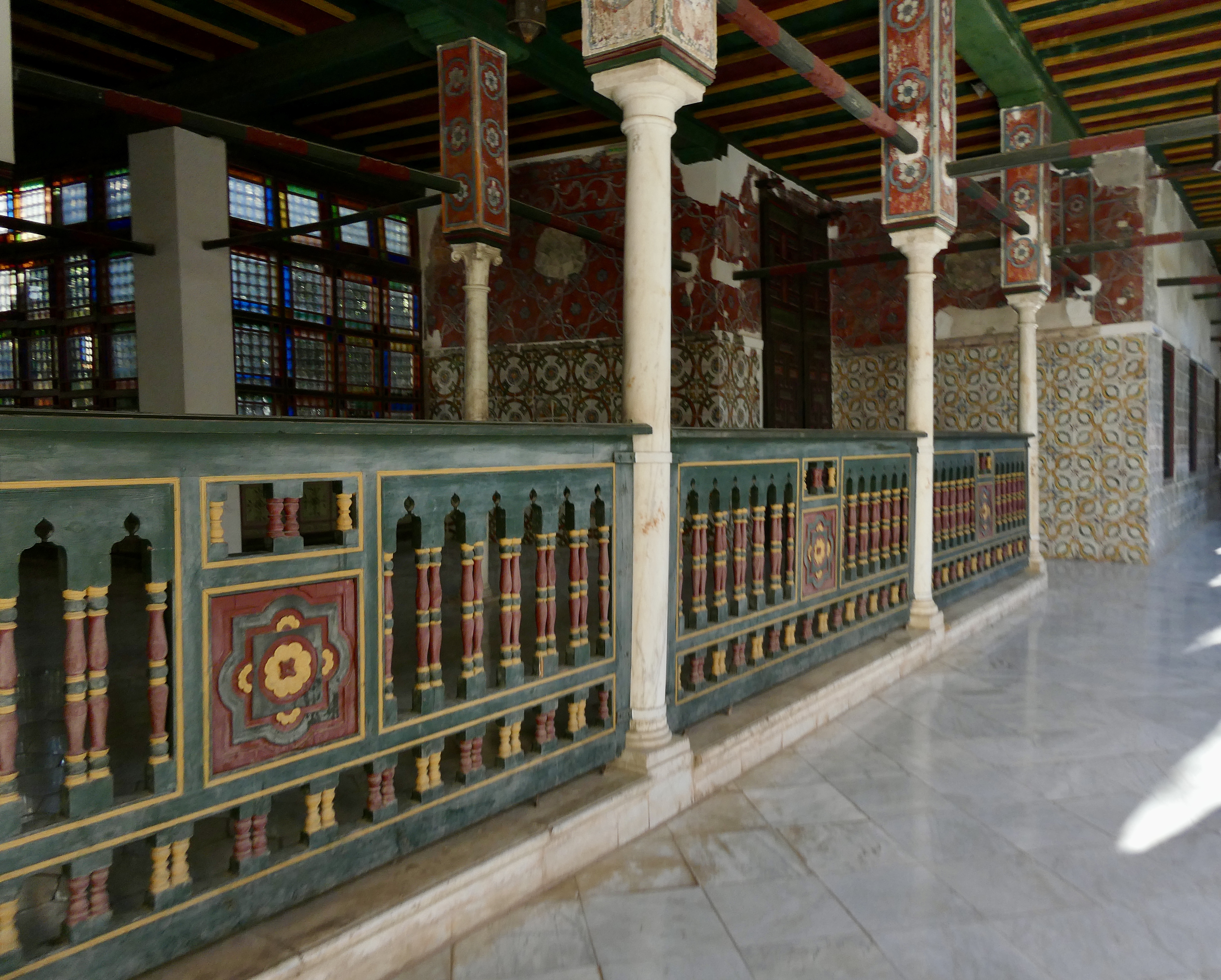

Anyway, once inside I found that the Palace was indeed something else. There were two massive courtyards on either side of the entry filled with beautiful gardens. There were colourful tiles and gorgeous hand carved doors (in fact 540 doors in total) and marble columns of all shapes and sizes. Now the reason for the variety of columns is that the Bey apparently ran out of money during construction and so he simply went door to door to the wealthy homes in the area and took what he wanted to complete his project. This accounts for why the columns are a bit of a hodge podge. (And I guess it is just desserts that the Bey was only able to live in the palace for two years before the French booted him out given his treatment of his subjects.)
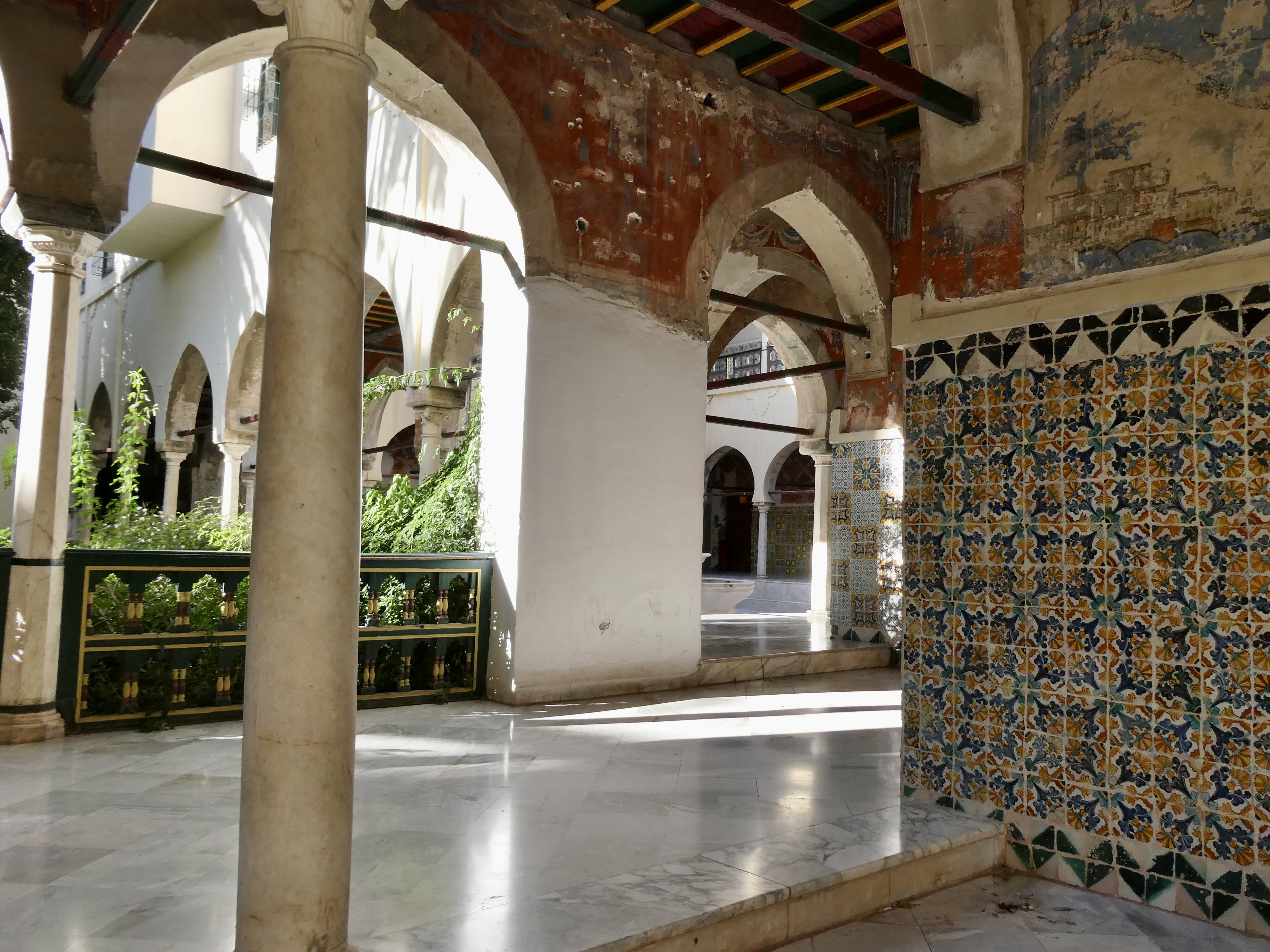
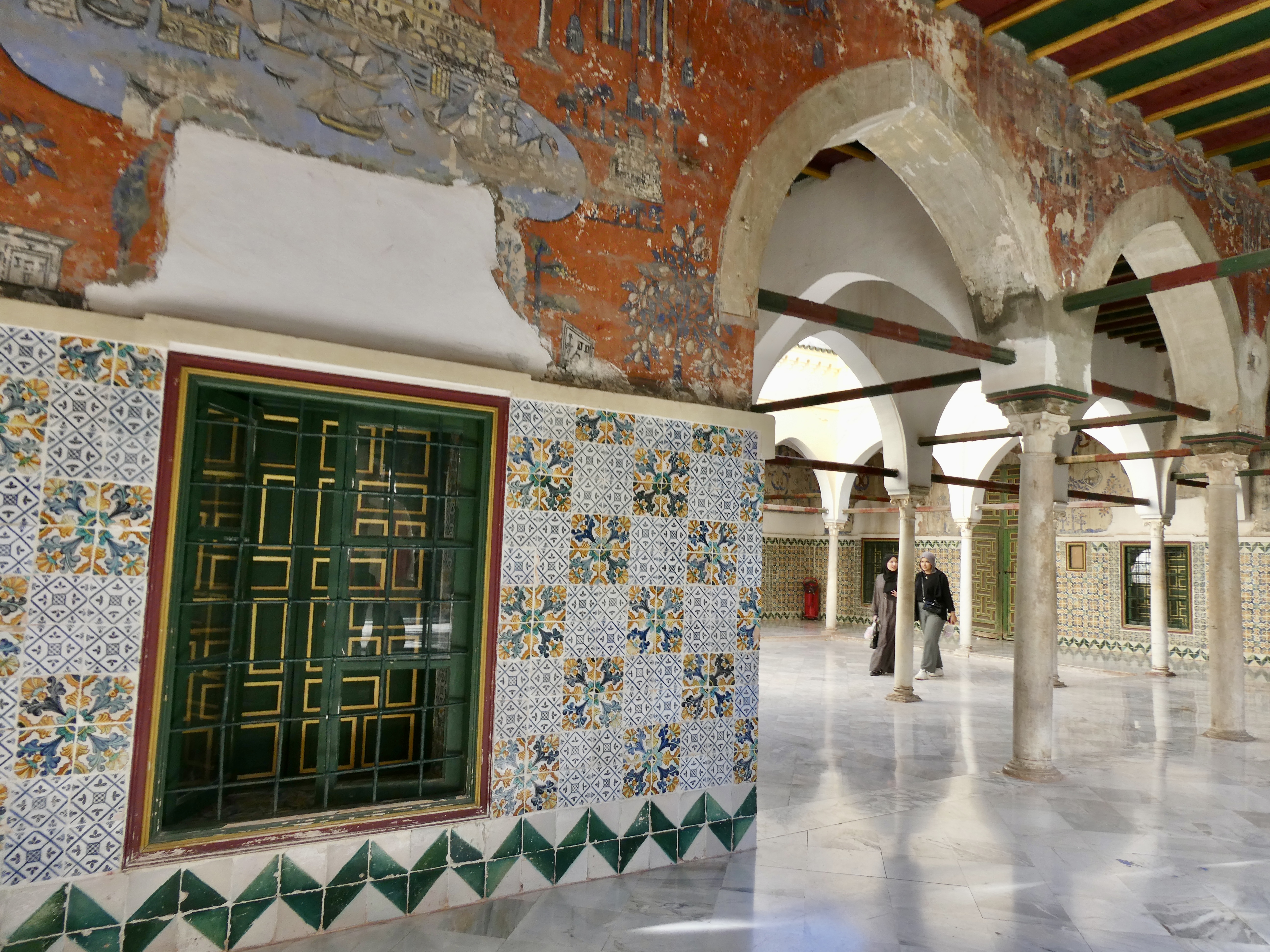
Now the palace was two stories high and divided into two sides: the men’s side and the Harem. Sadly, we were only able to walk along the main corridors of the palace as the side rooms were off limits because repairs were still needed on these rooms. Anyway, we took a walk along the corridors on the men’s side and then moved to the Harem, which, for my money, was the superior side of the palace. The colours were softer and prettier and there seemed to be more light in the Harem.
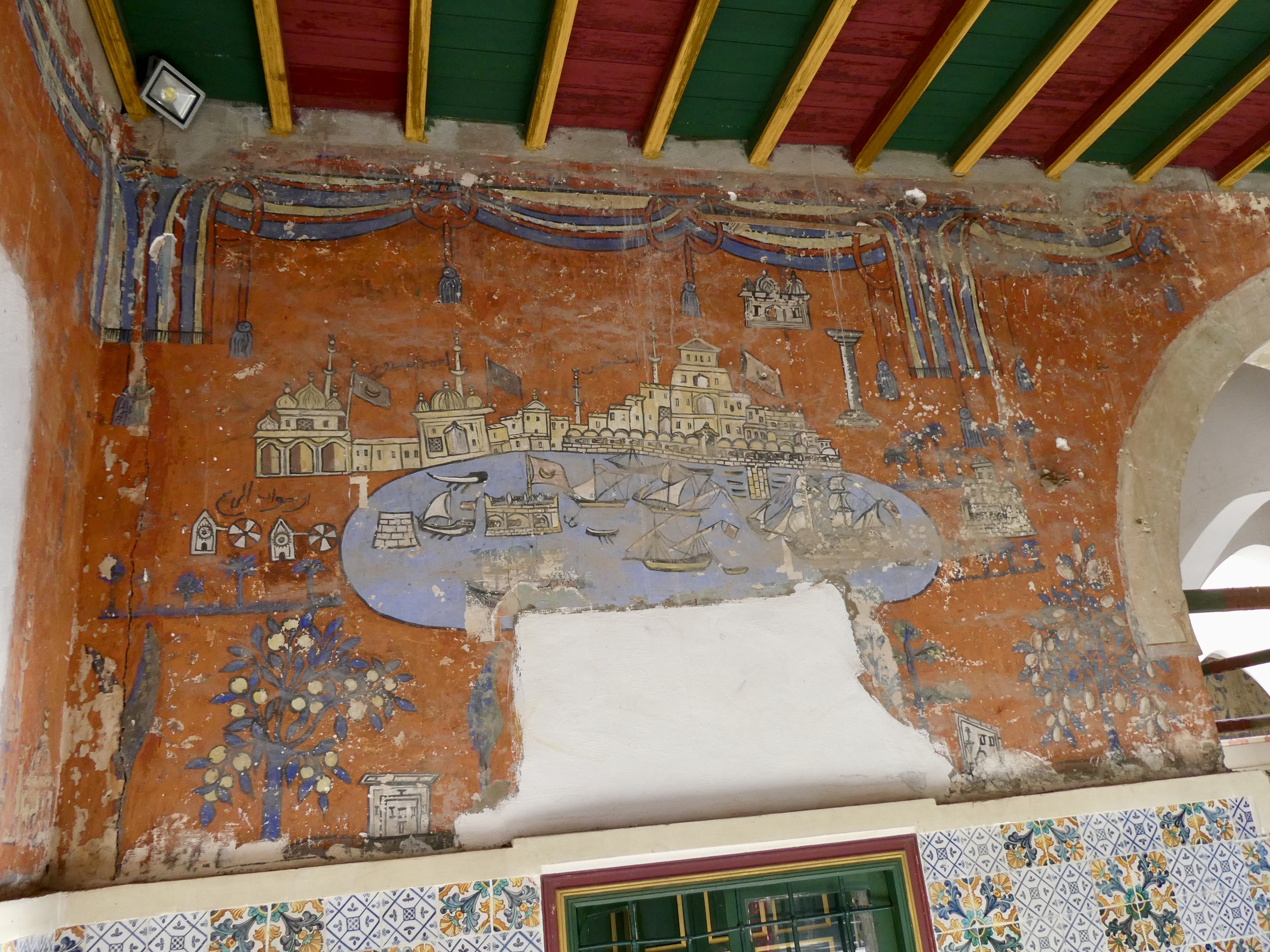
But the real star of the palace for me were the frescos that were painted throughout the palace depicting the Bey’s travels around the Middle East including Alexandria, Cairo, Algeria, Tripoli, Istanbul, and Saudi Arabia. My favourite was the fresco of Alexandria, which was located in the Harem.
However, the frescos have been severely damaged. After the French conquered Constantine they turned the palace into their headquarter and covered over all the frescos with white and black paint. The Algerians have been trying to recover the frescos by removing the paint, but the work has been painstaking and has caused significant damage to the underlying frescos.
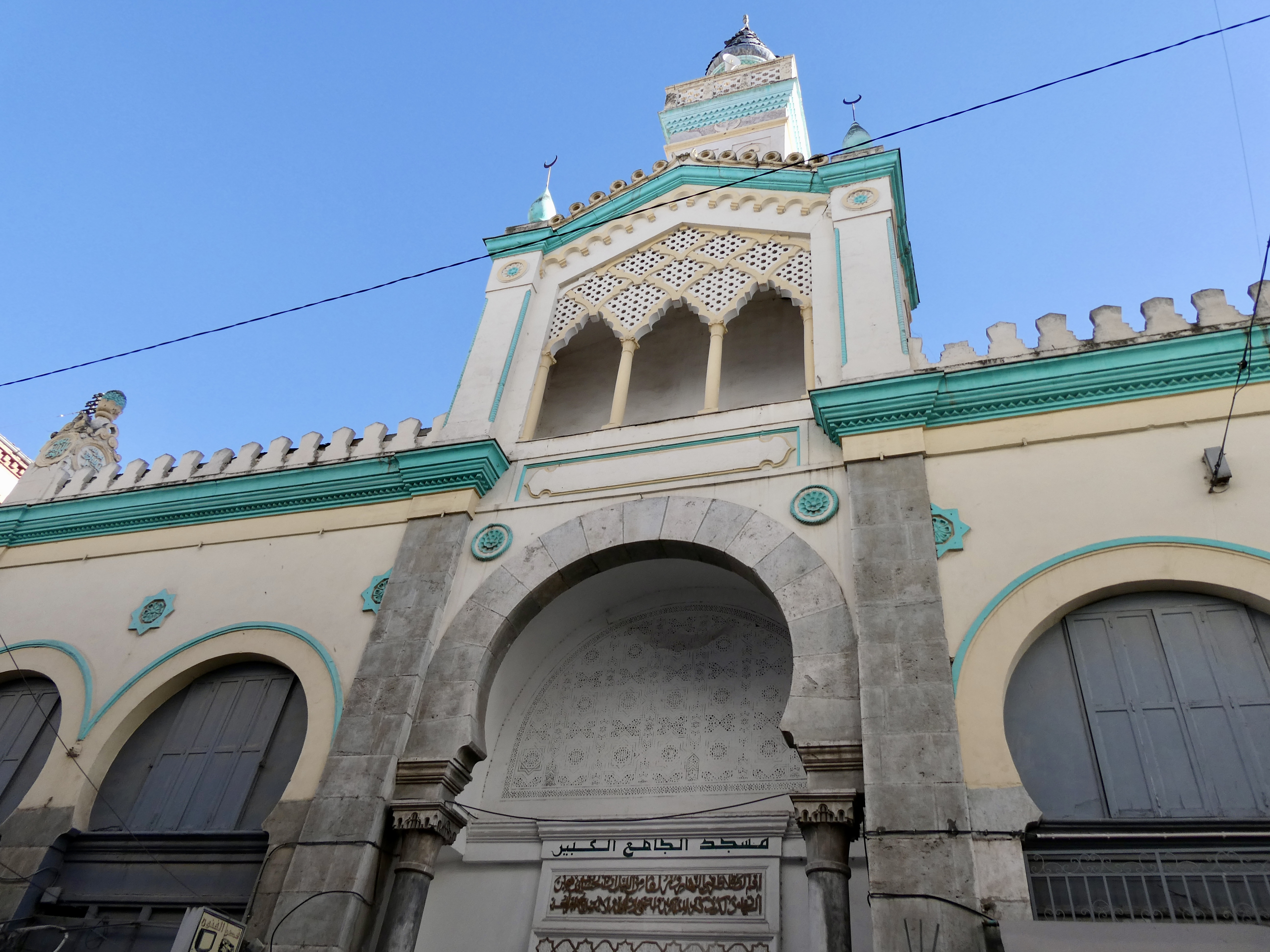
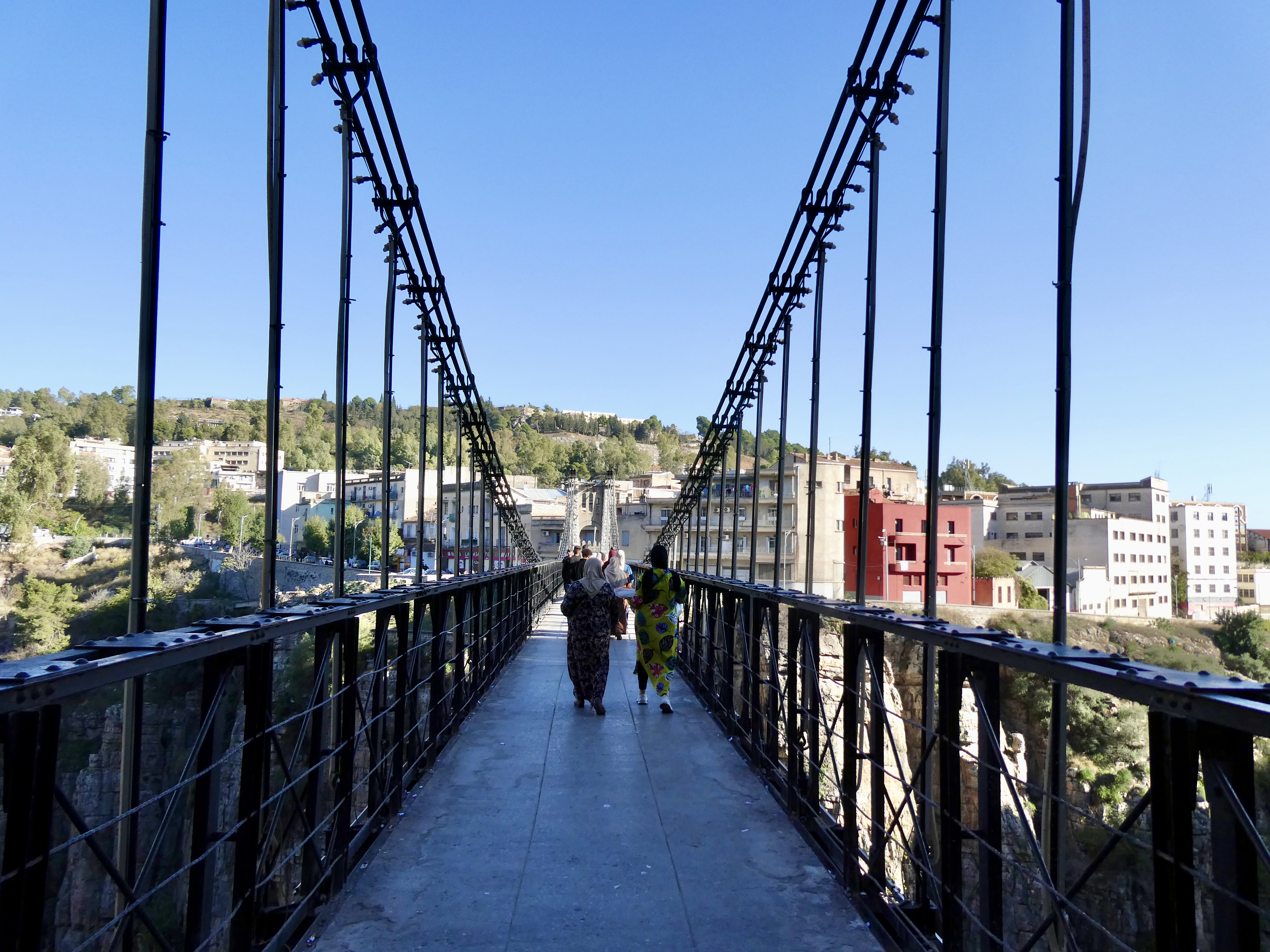

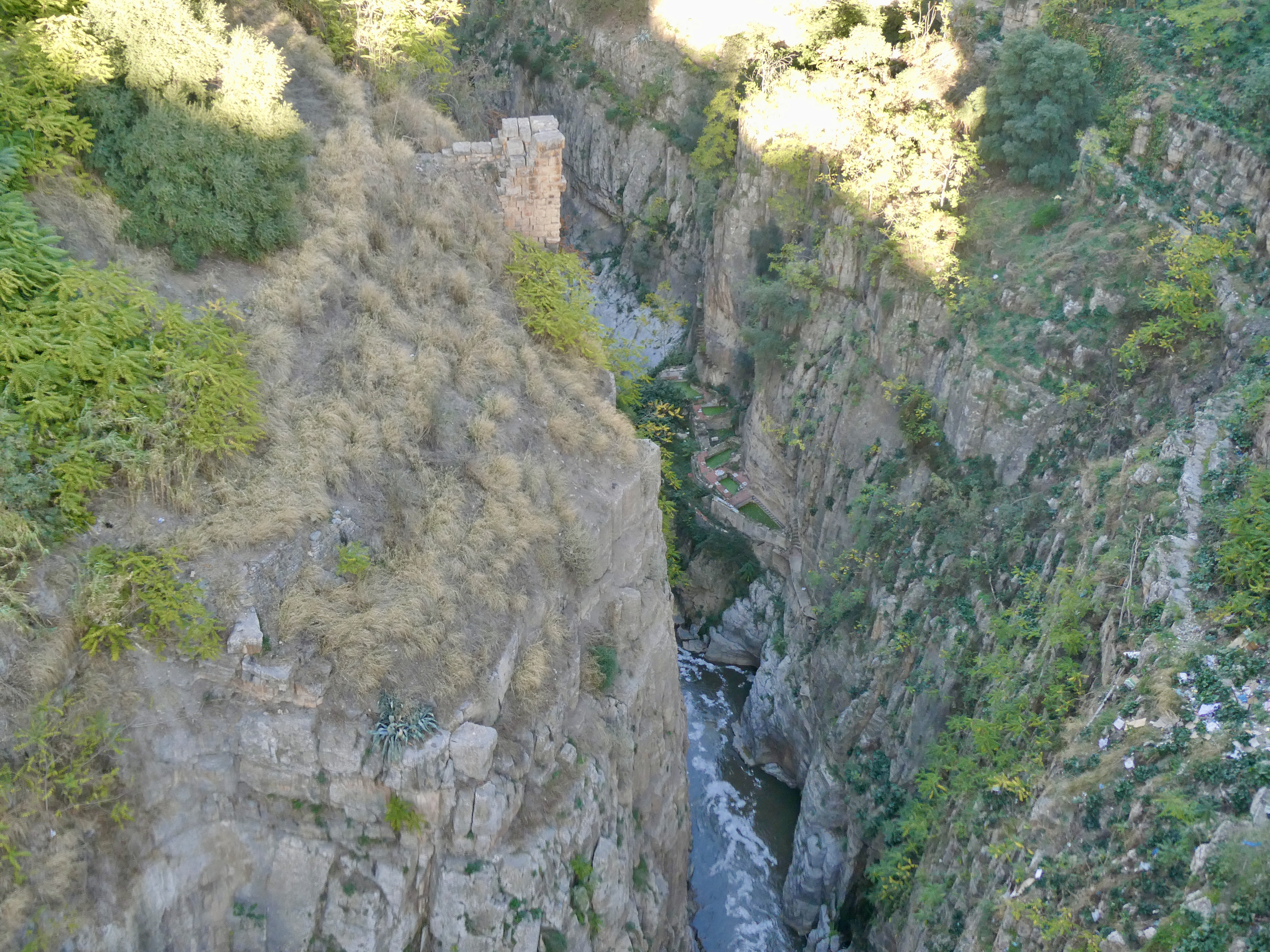
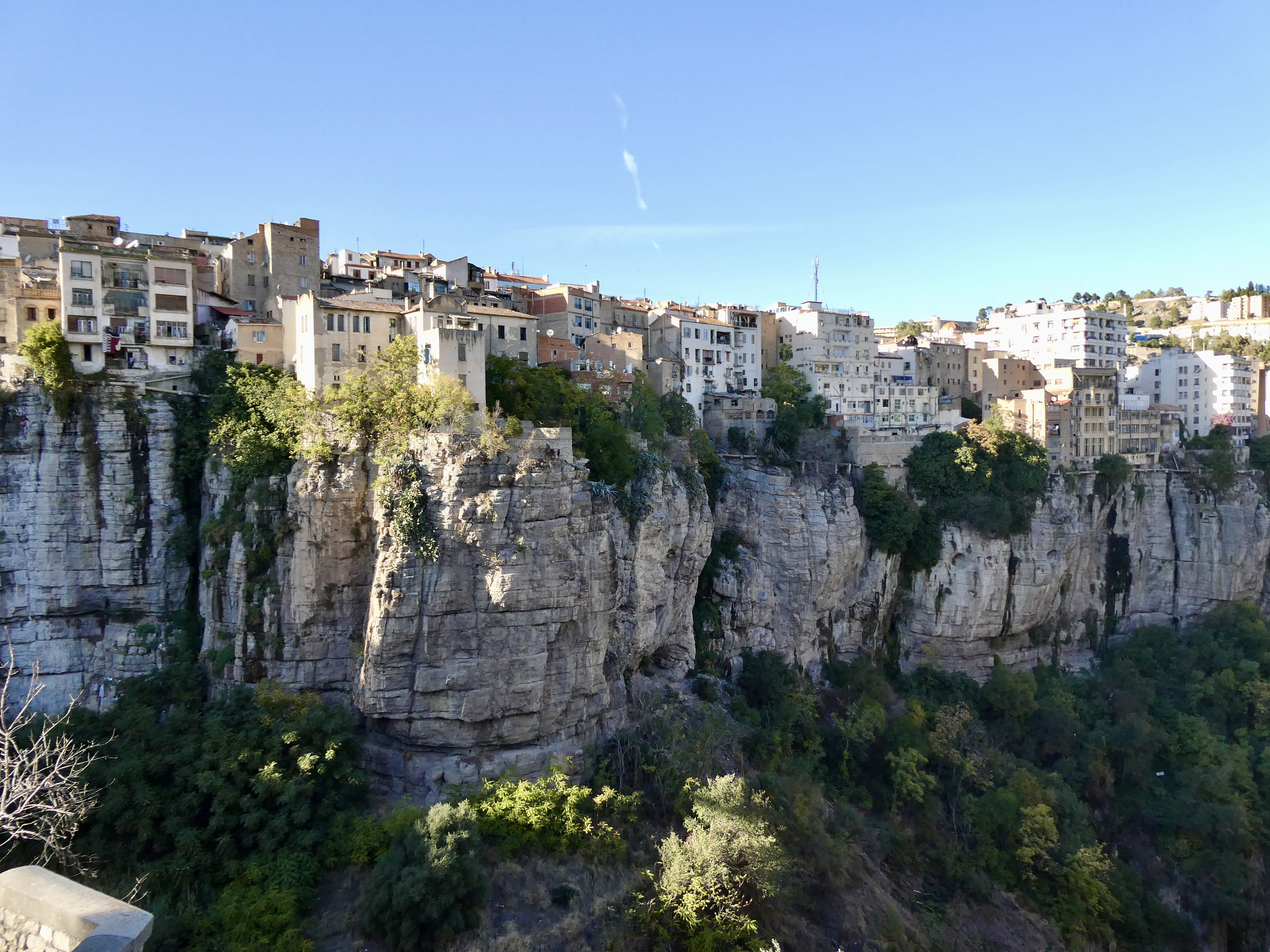

Anyway, after walking through the lovely and peaceful palace we walked back into the noise of the Casbah and down Larbi Ben M’Hidi where we took in the 11th century Great Mosque before hopping on a crowded elevator that took us down to the very wobbly Mellah Slimane suspension footbridge. This was our last excursion of the day.
As we walked, we took in the amazing views of the gorge on one side, including houses hanging over the edge of the deep ravine and even the old Roman baths, which was one of the destinations for the wealthy Romans on their walk on the old Roman road. The baths were filled with horrible green water, but nevertheless they were the Roman baths.
And on the other side of the bridge, we could see the huge Sidi Rached Viaduct. All in all, a great way to end the day.
And once on the other side of the bridge, Majed picked us up and we were off to my fabulous hotel.
Tomorrow it is back to more Roman ruins as we spend some time travelling to the old Roman city of Annaba before returning late in the day to Constantine.
