So today we were off to the Mediterranean coastal city of Annaba, about two hours from Constantine. We reached Annaba just after 10:30 a.m. and first up was a visit to Saint Augustine Basilica which sits high up on a hillside as you enter the city.
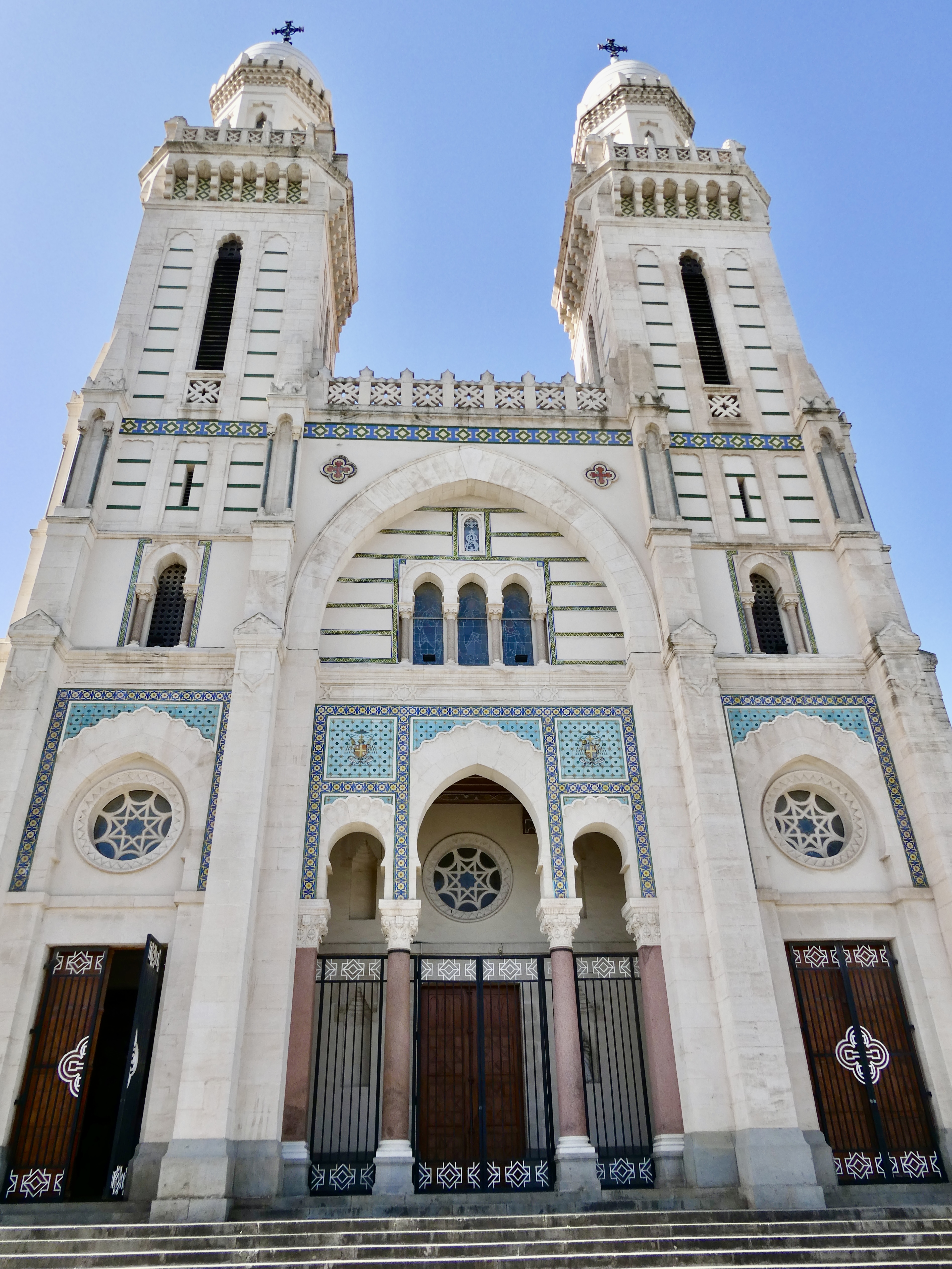
Now Saint Augustine was the first bishop of Hippo, the Roman city that preceded Annaba, and is an important figure in the Catholic Church. After the French occupied Algeria, the French built the basilica in Saint Augustine’s honour taking 19 years to complete the project (1881-1900).
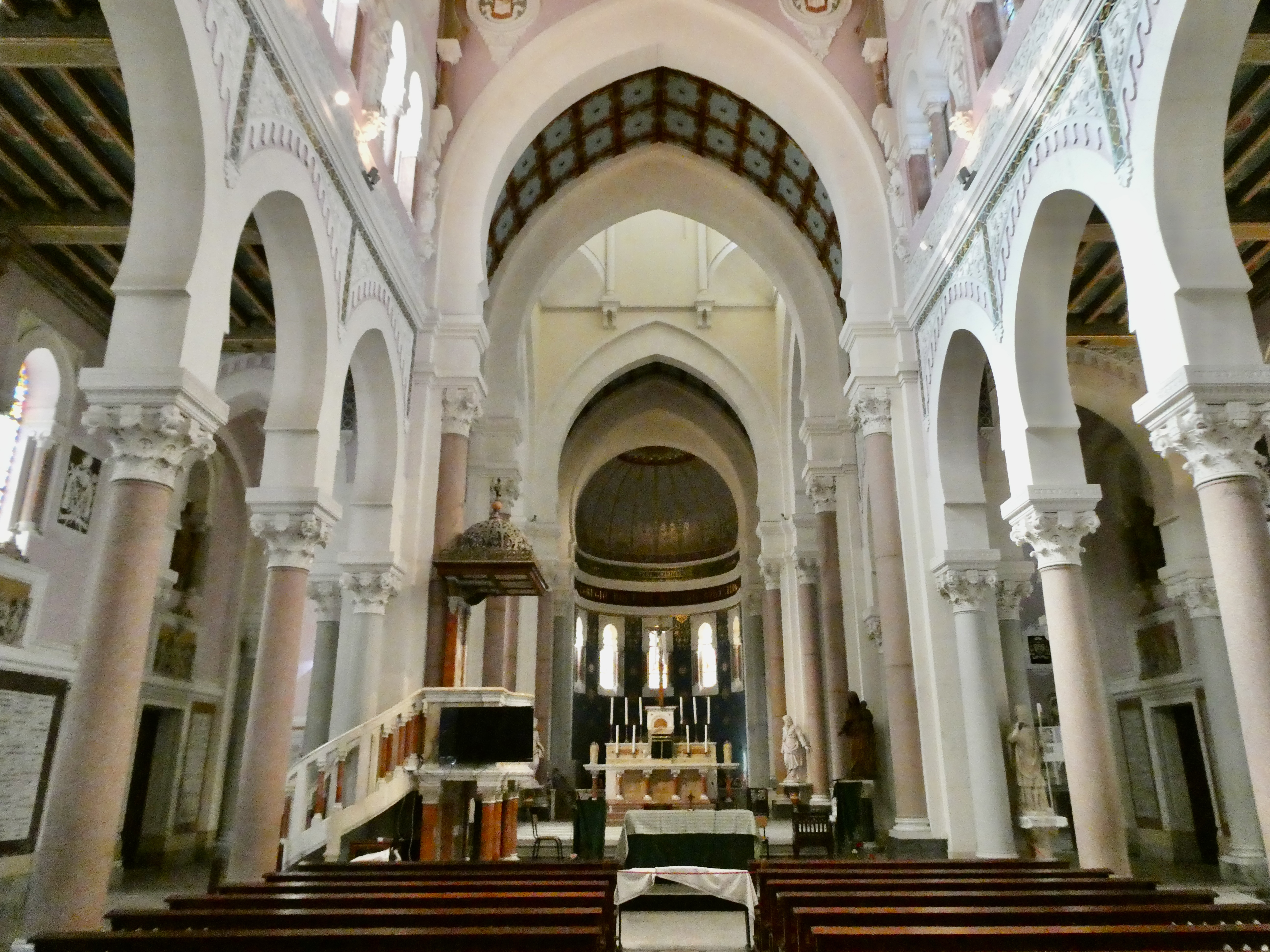
Anyway, once we reached the basilica, Nahla and I entered the church and, quite frankly, I spent more time educating her on the church instead of vice versa. Apparently, Nahla has not been in many churches so as we walked around the interior, I ended up pointing out a number of features about the church to her.
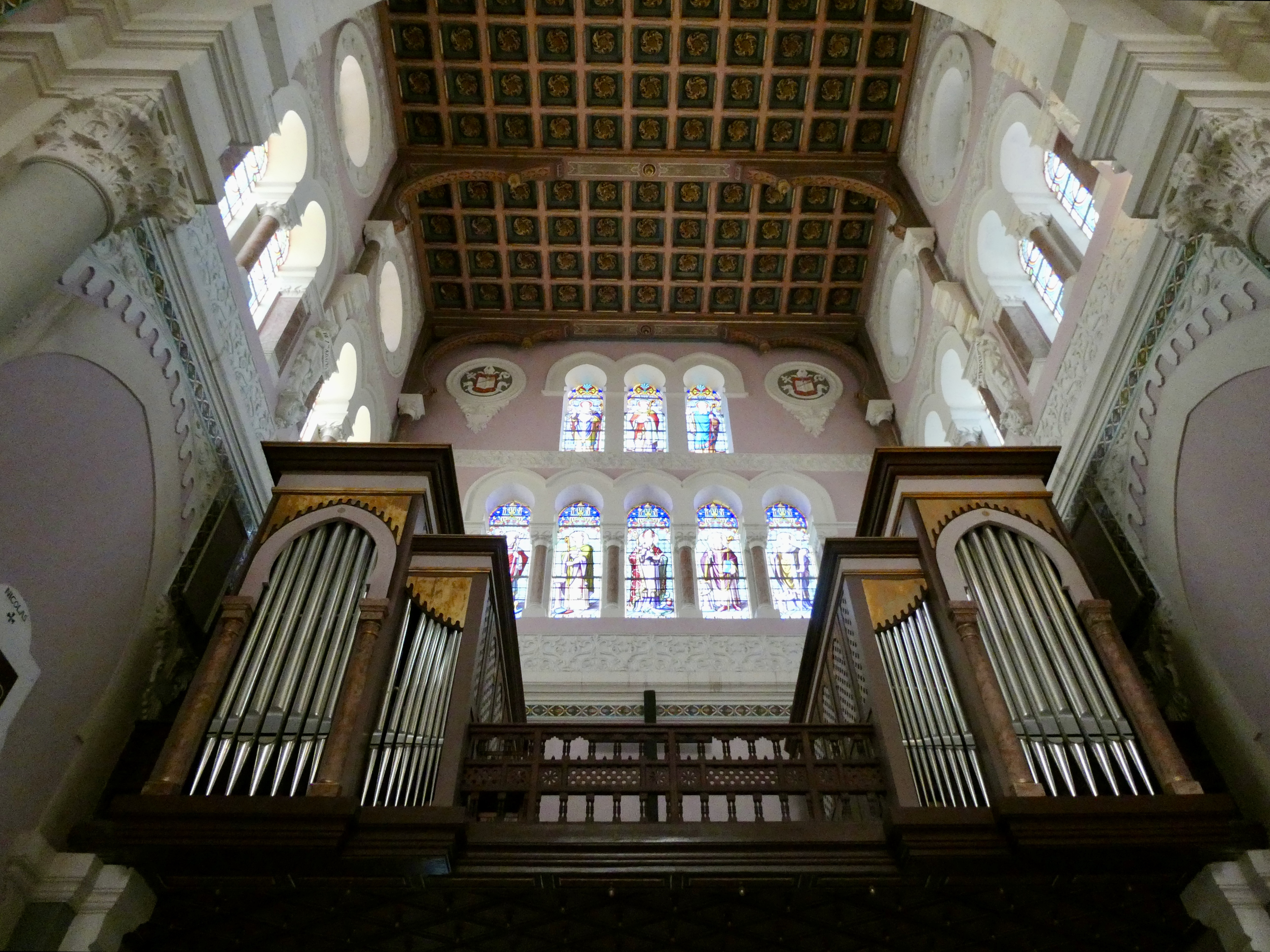
And one thing I found quite interesting about this church was the choice of colours. The marble and painted interior were pink in colour, and I quite frankly I have never seen such a colour combination. Another unique feature of the basilica was the fact that there were two balconies on either side of the main chapel for the placement of church organs, but only one side of the church actually had organs installed.
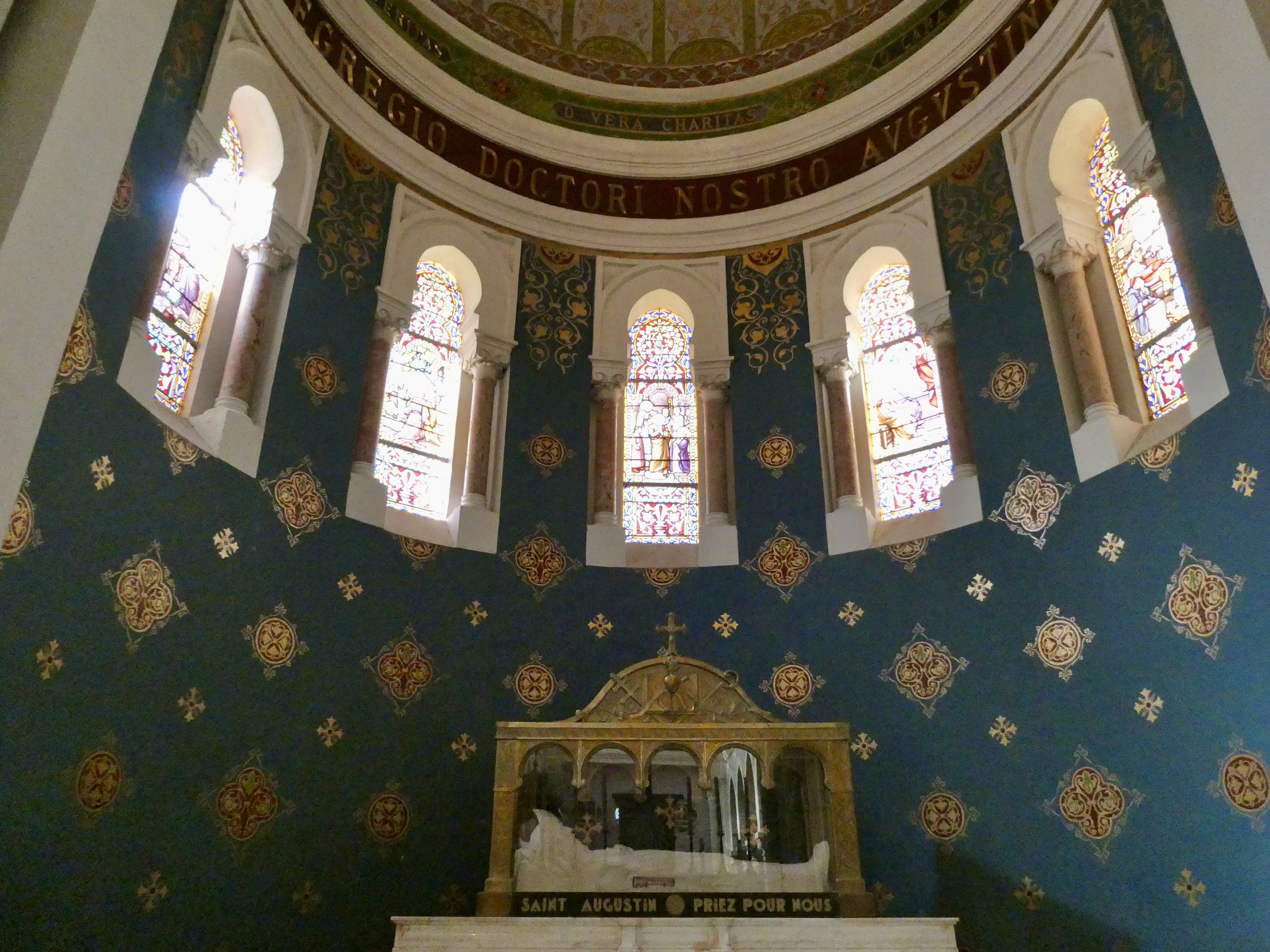
Anyway, wandered around the church, took in the main alter where there is a sarcophagus containing a marble likeness of Saint Augustine and where, apparently, one of his arm bones is located.
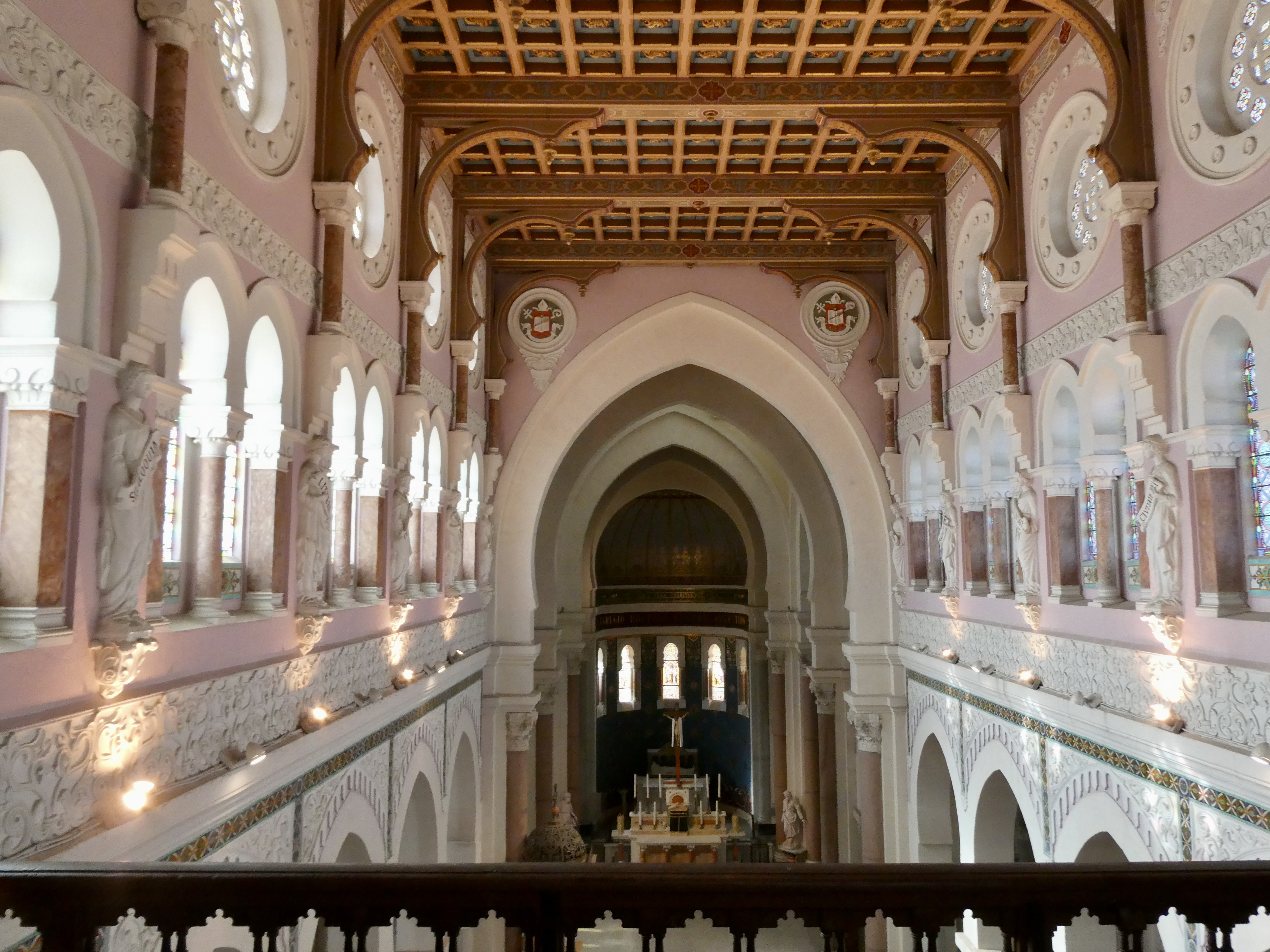
We then climbed the staircase to the second level of the basilica and took in the view of the main chapel from up top as well as the surrounding stained glass windows before exiting the church. We made one more stop nearby to take a look at a statue of Saint Augustine fronting the church before moving on.
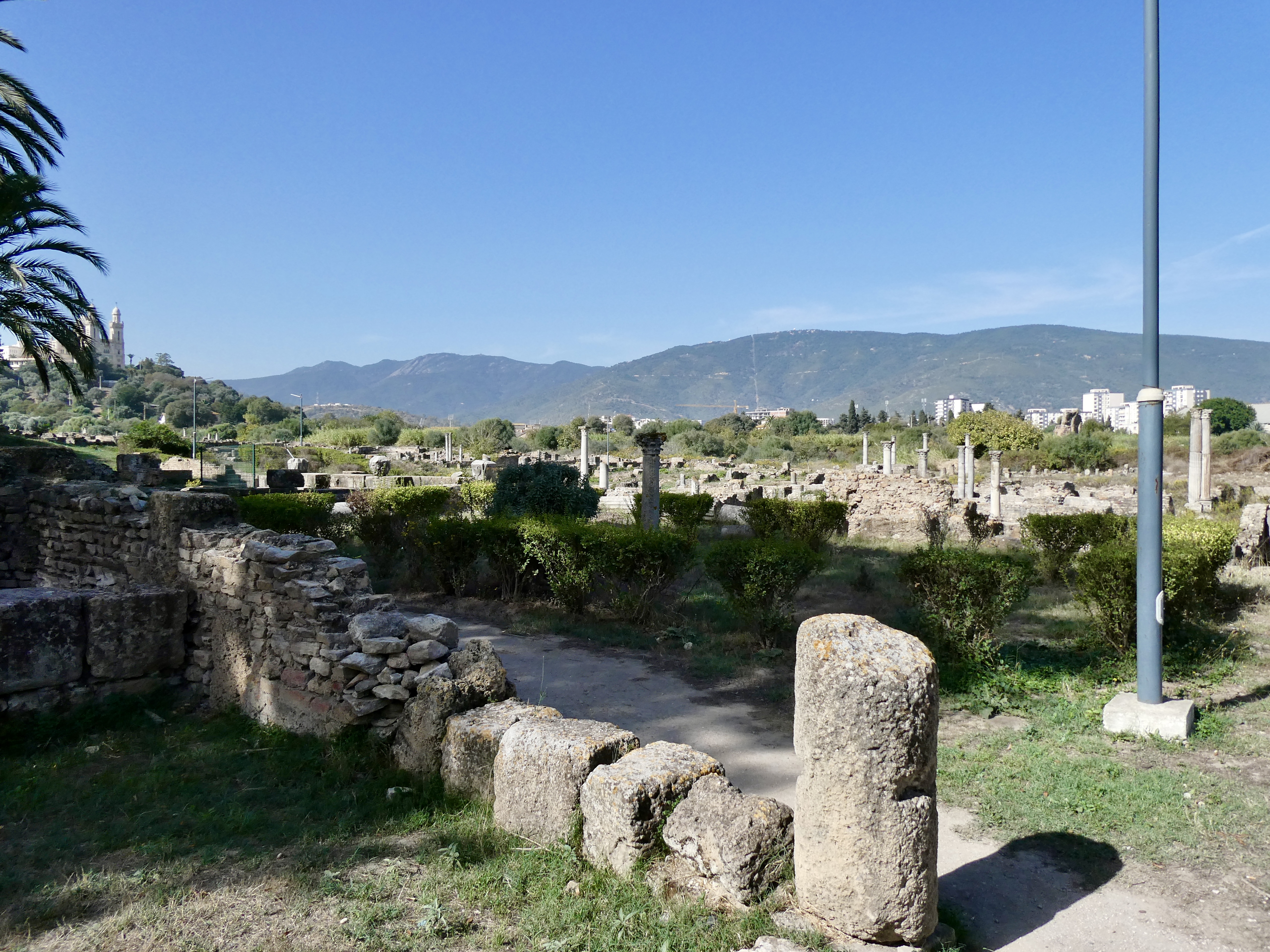
Next up was actually what I came to Annaba for, the Roman ruins of Hippo Regius. Now Hippo Regius was an ancient port city located near what is today known as Annaba. It is believed the Phoenicians first settled the area in the 10th century BC and originally named the city “Hippo” meaning Port. The site was taken over by the Numidians and then by the Romans who renamed the city Hippo Regius or Royal Port because Numidians Kings had resided in the city.
Unfortunately, the site is terribly neglected, and you need a fair bit of imagination to visualize what the city would have looked like. Perhaps the most important aspect of the city is the fact that Saint Augustine presided as bishop of Hippo from 395 A.D. to 430 A.D. (hence the reason why the French dedicated a basilica to him).
Now the other downside of my visit to the site was that upon arriving I learned that the museum was closed for renovations. This was a major downer because all of the relics discovered at the site are housed in the museum. So, no relics for me. I would have to be satisfied with just viewing the ruins.
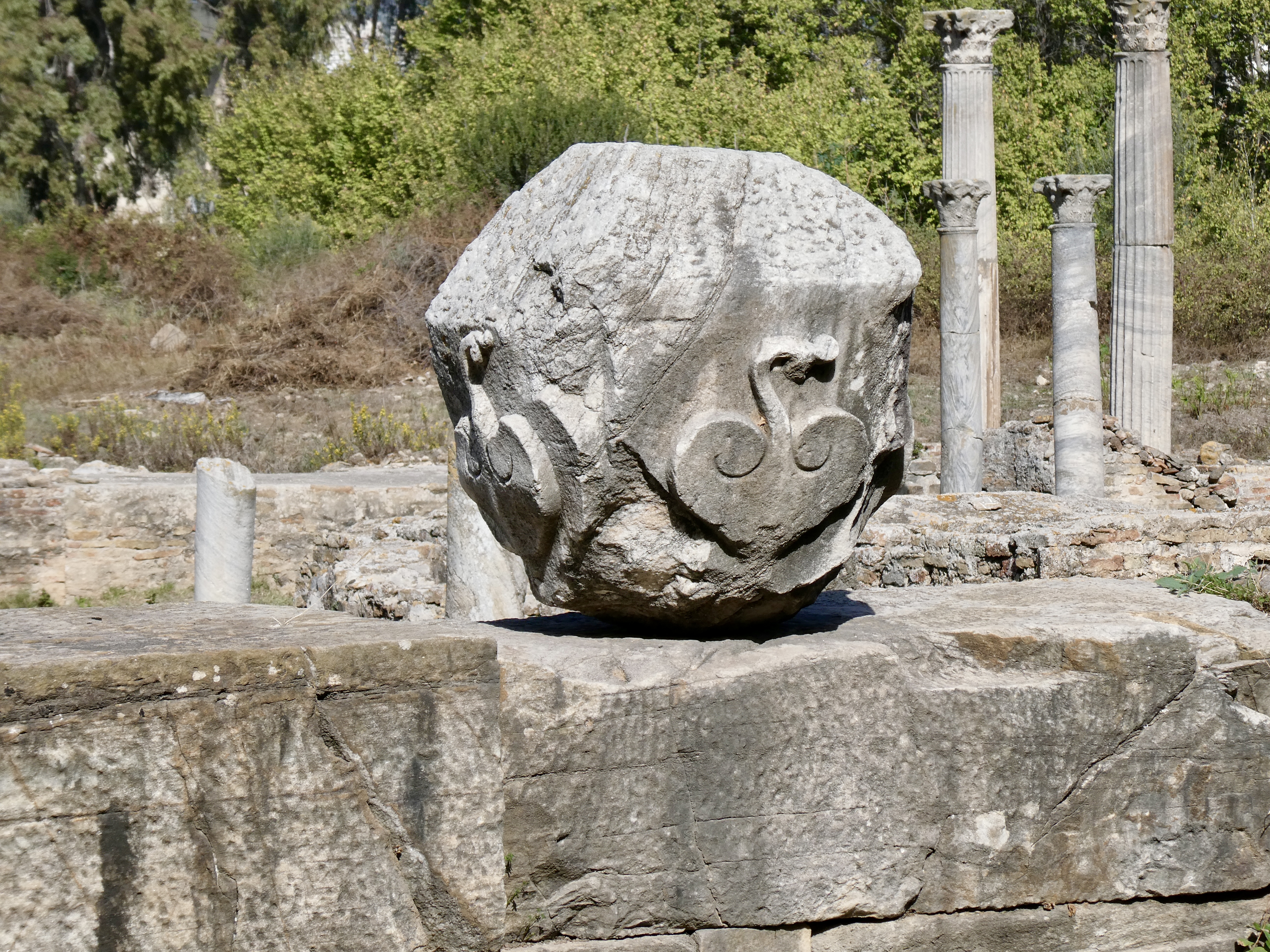

Anyway, we started wandering the site taking in the bits and pieces scattered around. Now despite the sad state of the ancient city, there were actually some remains that were visible as well as a number of stones chiseled with designs.
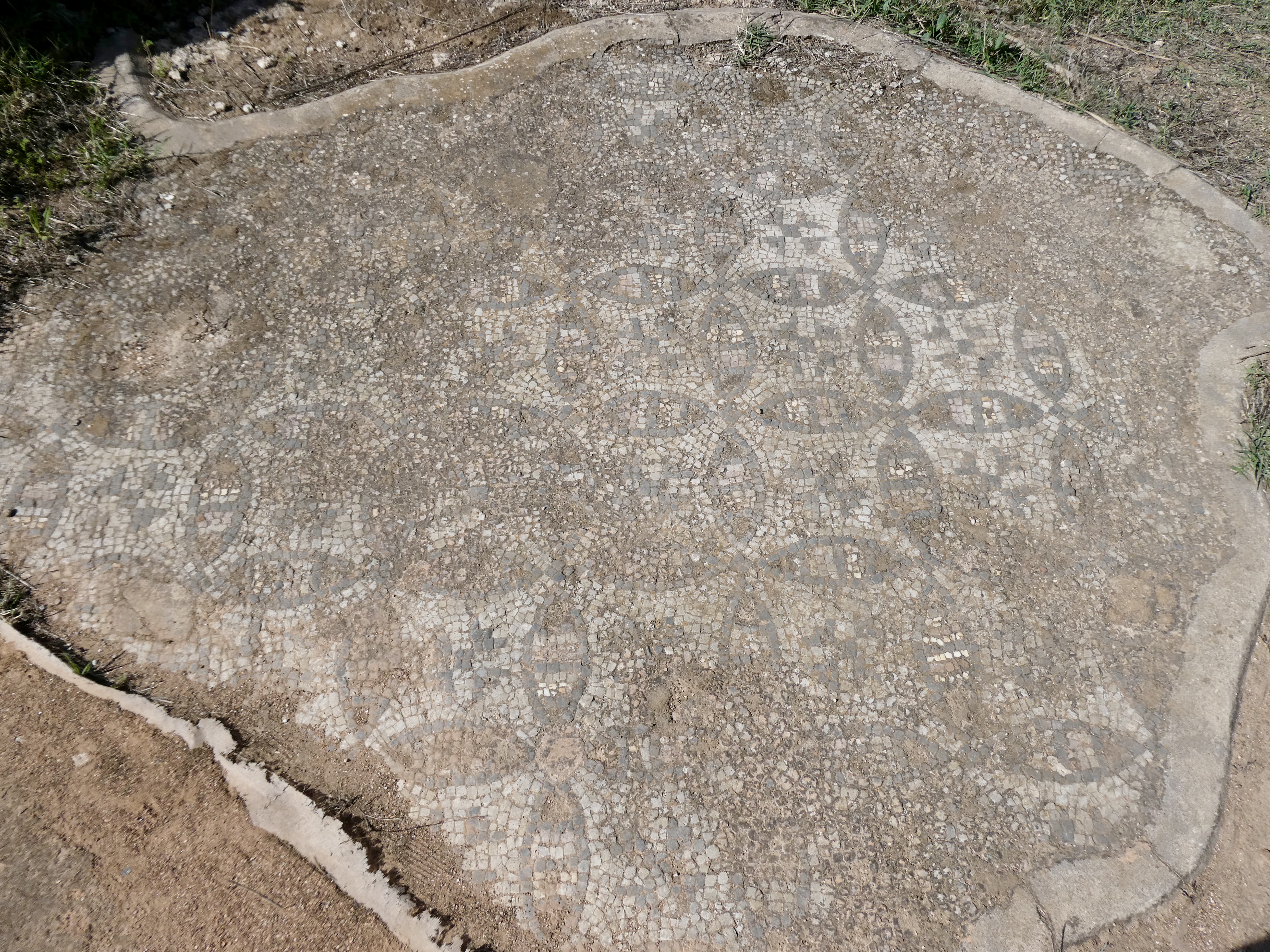
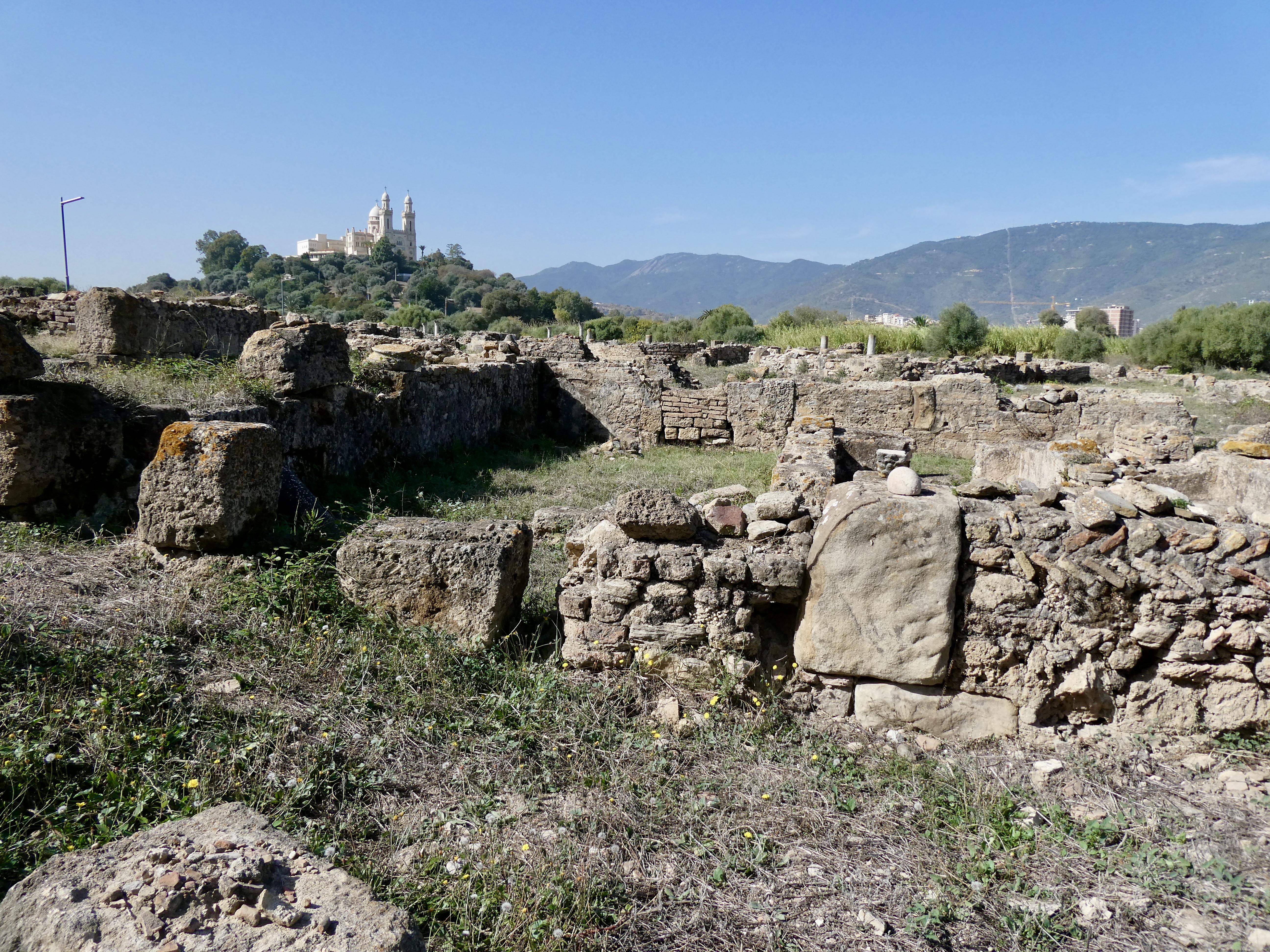
So our first stop was actually at the remains of the basilica where Saint Augustine presided. The marble baptismal bath was in decent shape and a number of the columns surrounding the basilica were still standing. There was even some very small remains of a mosaic in the shape of flowers, which was typical of Christian themed mosaics.
We then moved on along the old Roman road that wound through the ruins past the remains of a large number of Roman villas. Apparently, Hippo Regius was a pretty wealthy city and the homes here were rather spacious.
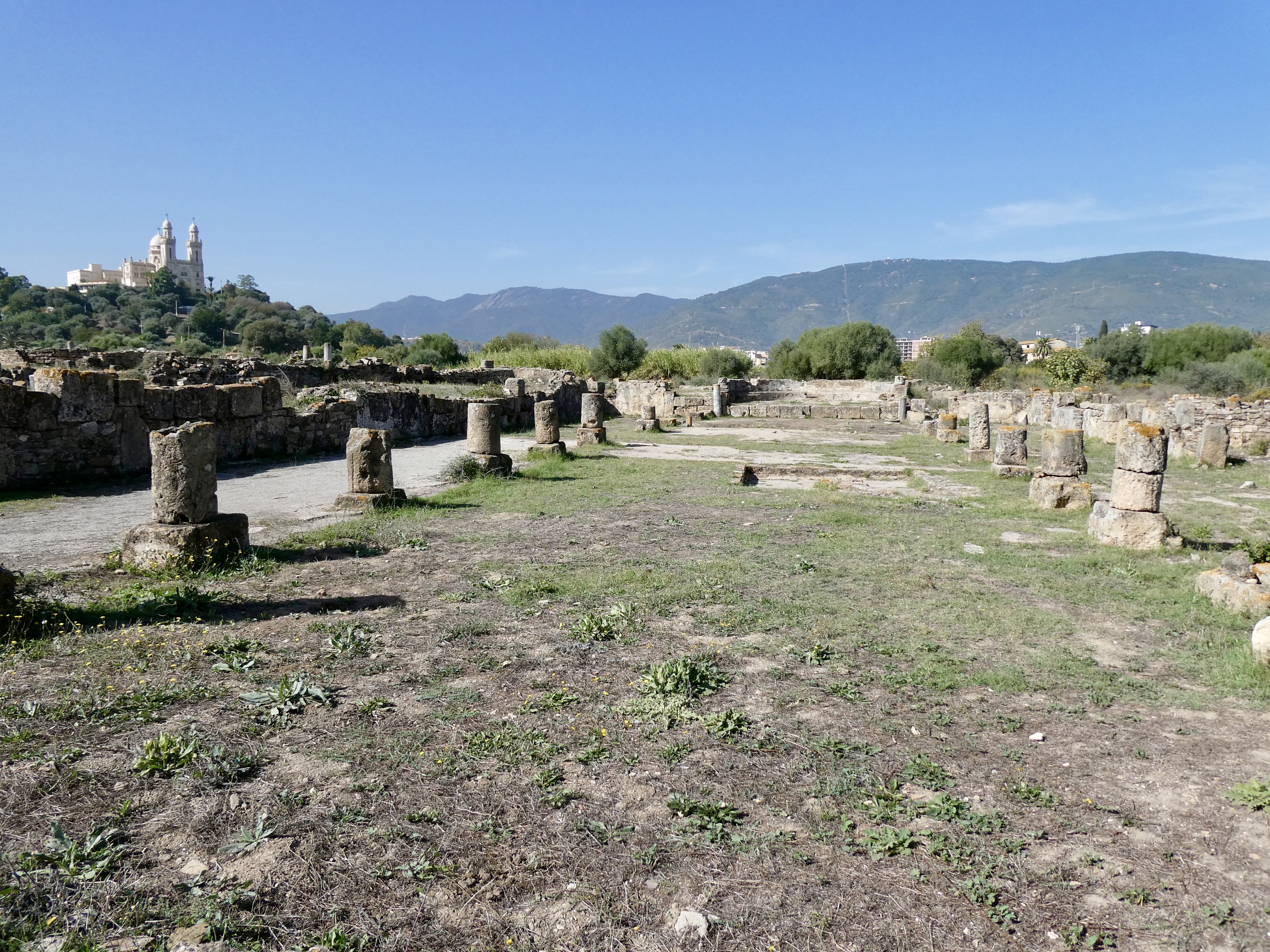
Next up was the first Forum (yes, there is a second). This Forum was not in good shape, but the outline of the space marked by the remains of columns gave us a a pretty good idea of this Forum’s original size. In addition, at the far end were the remains of what was most likely the Capitolioum and the three temples to Jupiter, Juno and Minerva.
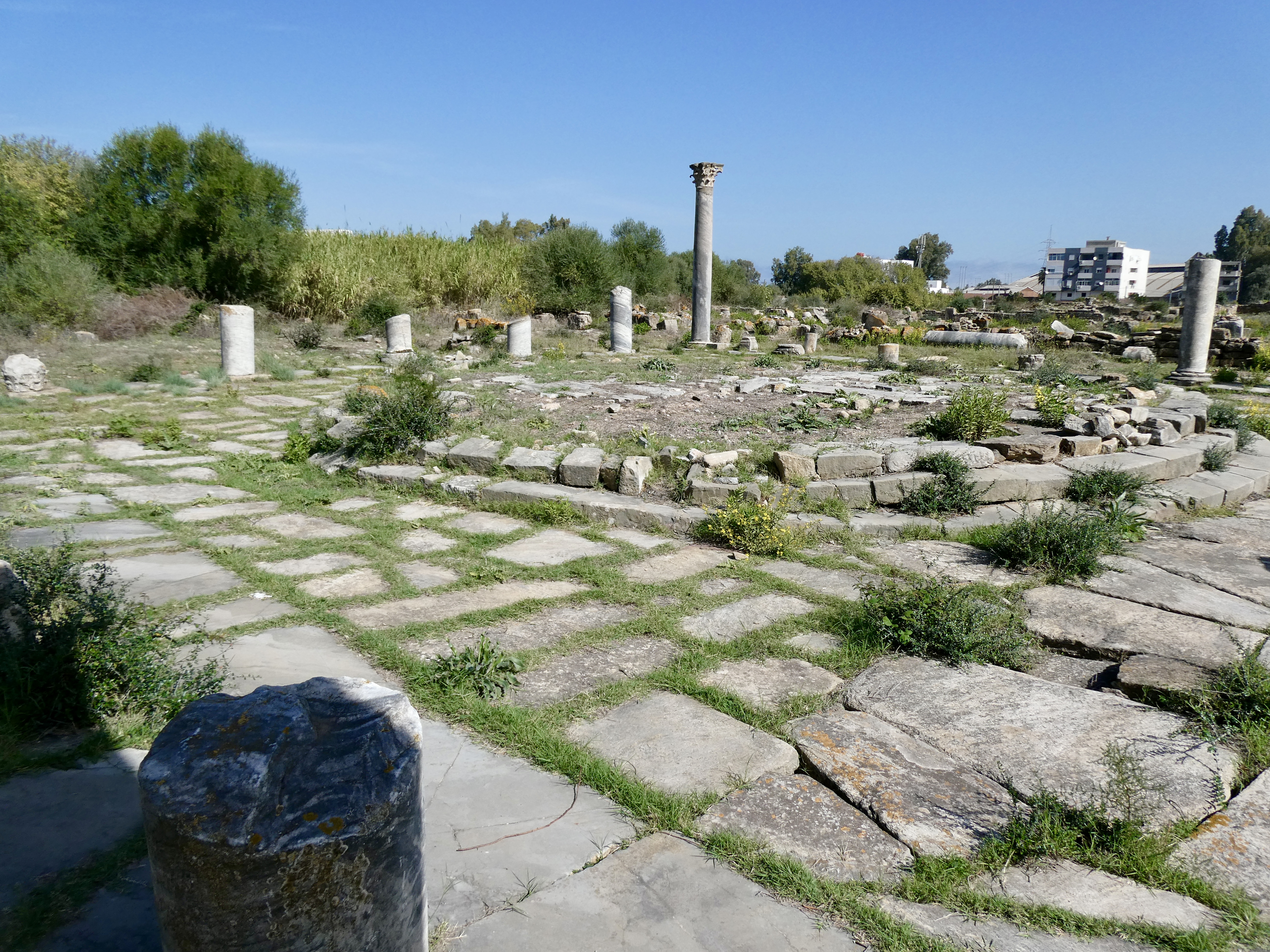

We then passed by ruins that Nahla said were believed to be a Temple to the deities of the city. Unfortunately, Nahla did not have any other information on what deities may have been worshipped here, but there did appear to be some kind of alter in the middle of the ruins.
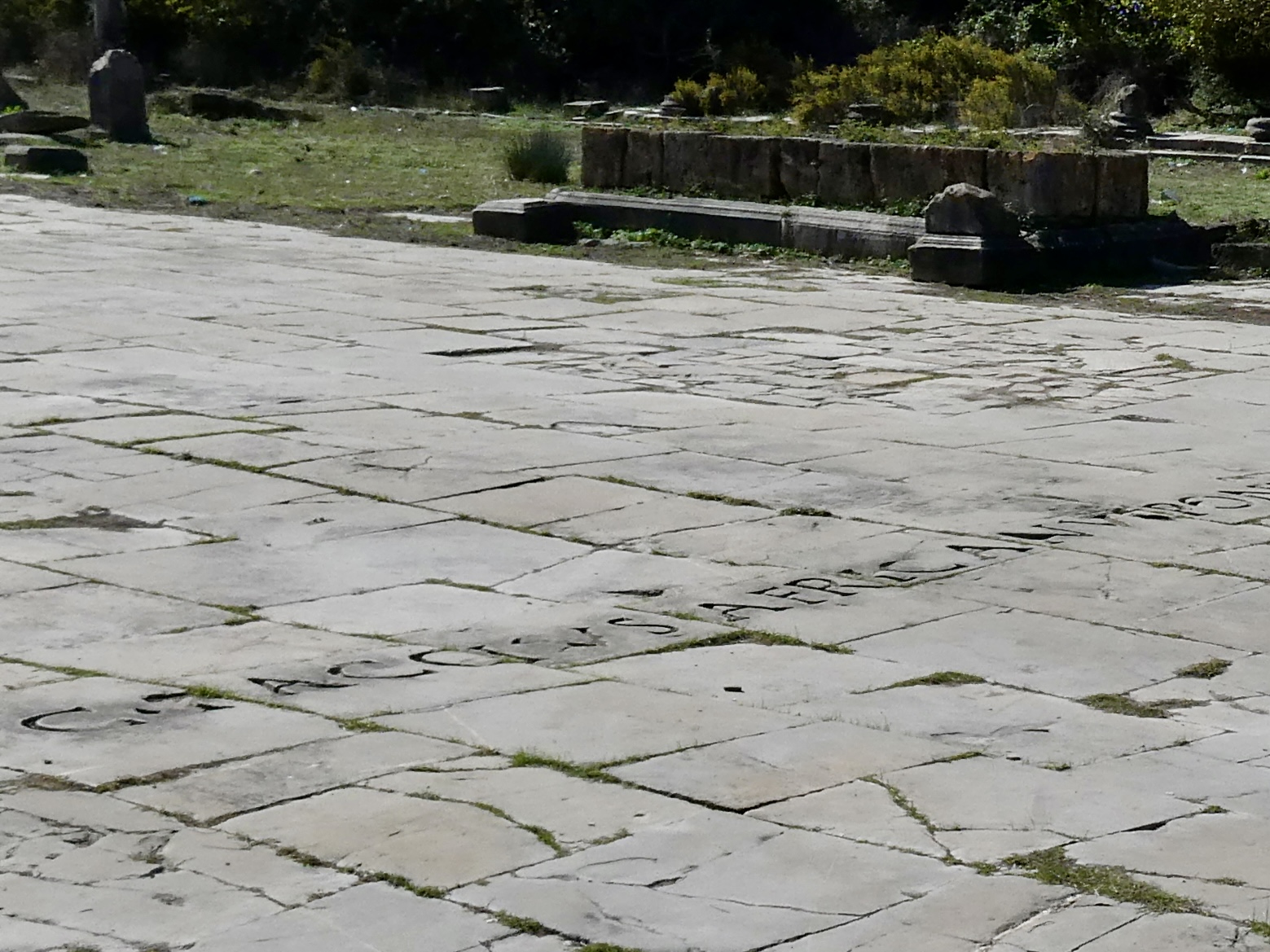
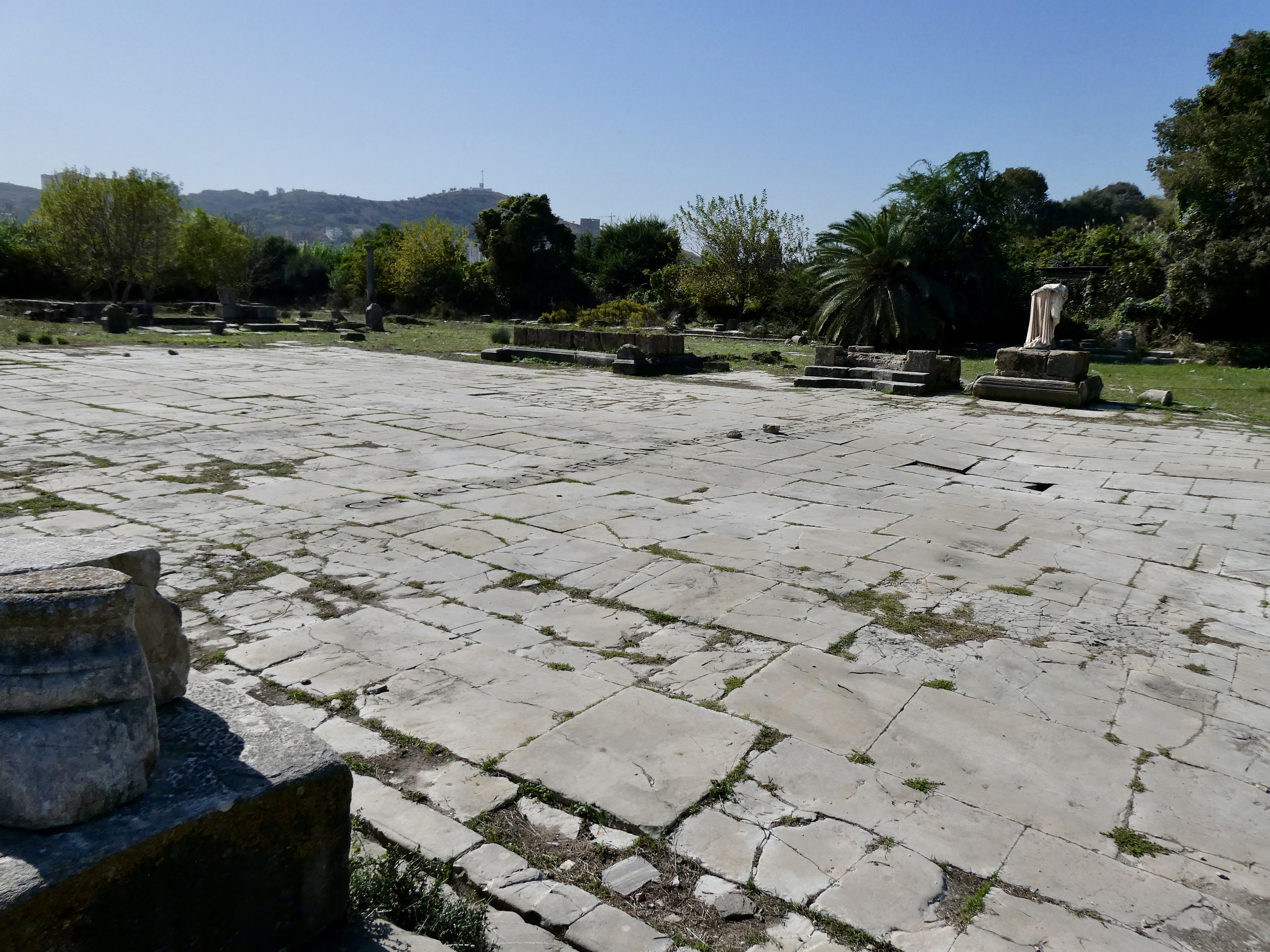

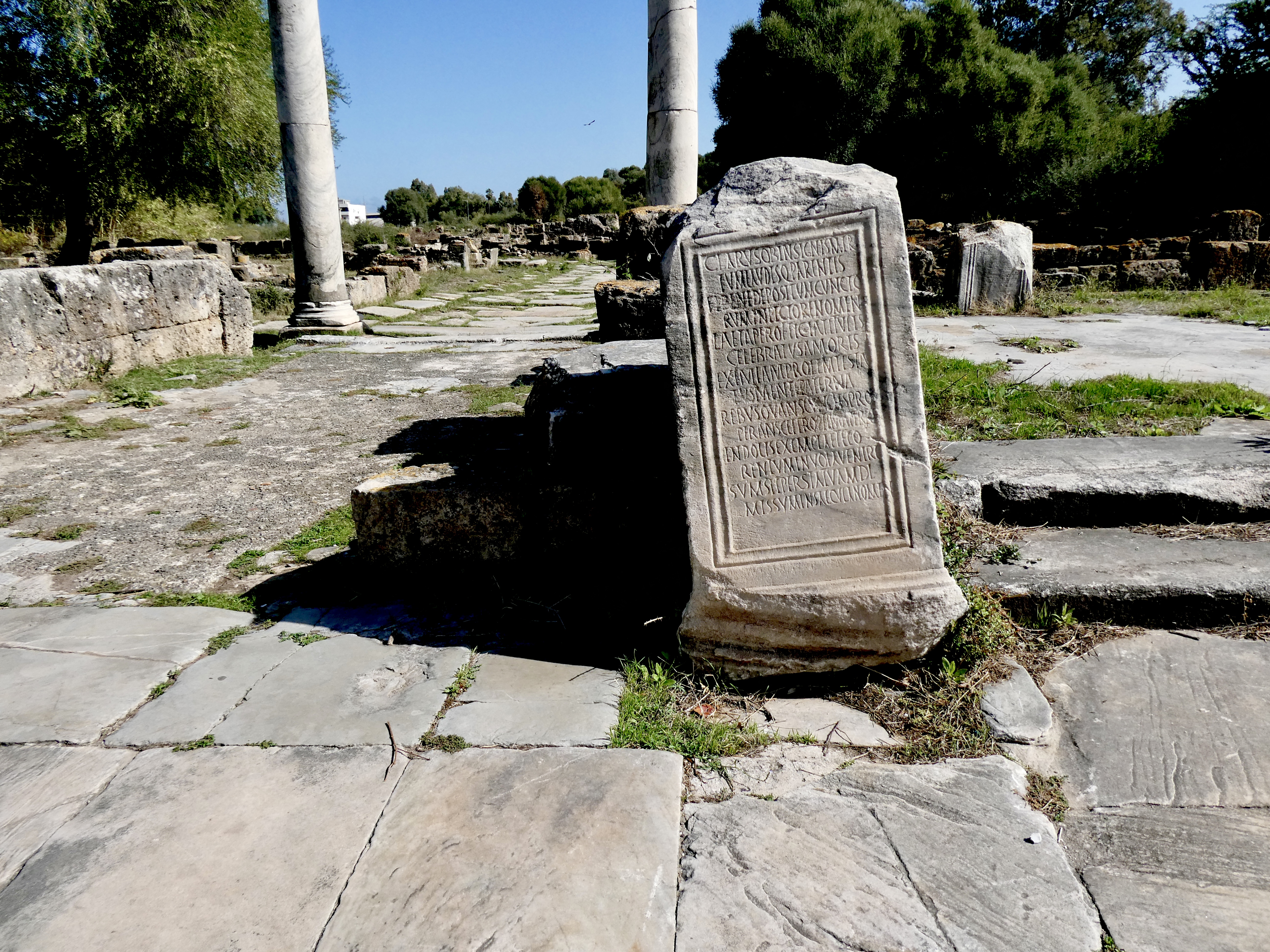

Our walk then took us past more ruined Roman villas and the entrance to what was apparently a hospital before we reached the most important ruins on the site, the second Forum, which is the largest in North Africa measuring 76 X 43 meters. Apparently, a wealthy gentleman by the name of C. Paccius Africanus paid for the construction of the second Forum and in accordance with the guy’s ego had his name carved into the stones in the middle of the Forum. It is believed that the carvings would have been filled in with bronze.
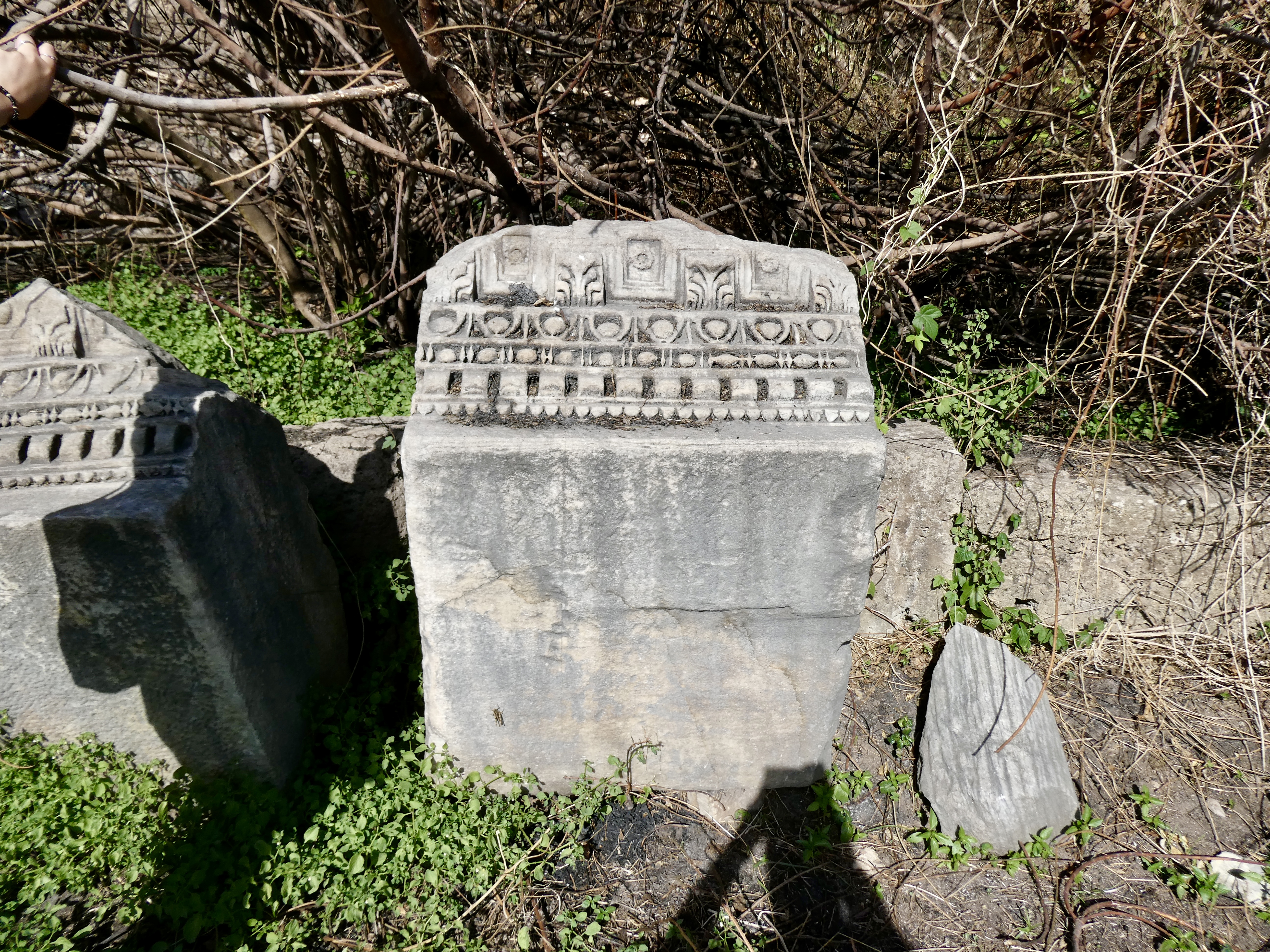
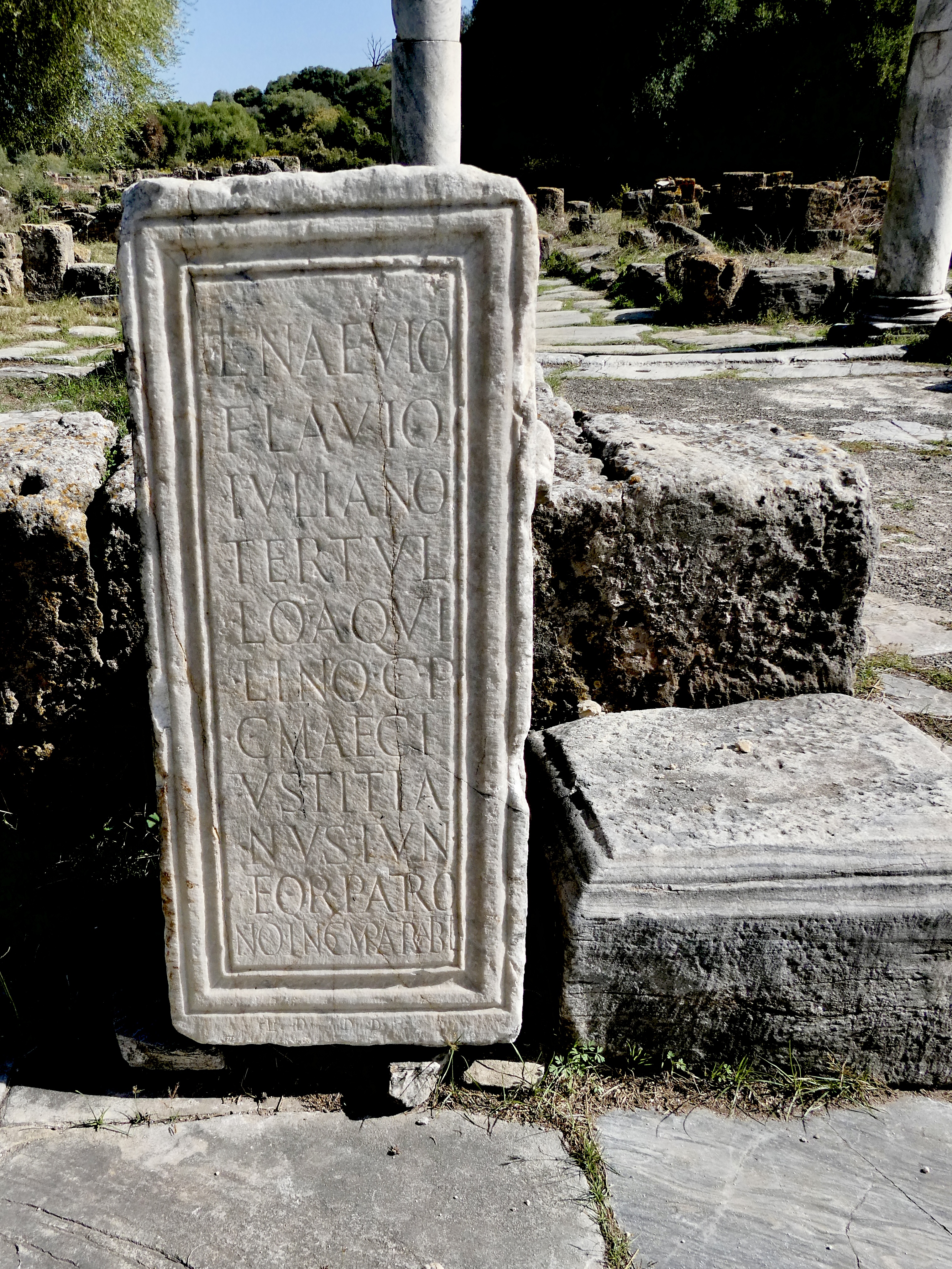
Now this Forum really was huge, but the best part was that there were partial statutes around the Forum as well as numerous tablets with ancient Latin inscriptions and pieces of the capitals (tops of pillars) with a myriad of florets and carvings. So even though the site was overgrown and the ruins were not in particularly good shape, there was still a lot of pretty cool remains to look at.
We wandered around looking for little nuggets of ruined buildings before doubling back along the Roman road, but this time taking a different path so that we could take in the ruins of the hospital, which had been built by the Little Sisters of the Poor according to information found at the site.. Now sadly, this area was severely overgrown making it really tough to see the ruins through the underbrush. Apparently, the site was not always like this and the hospital ruins were actually more visible.
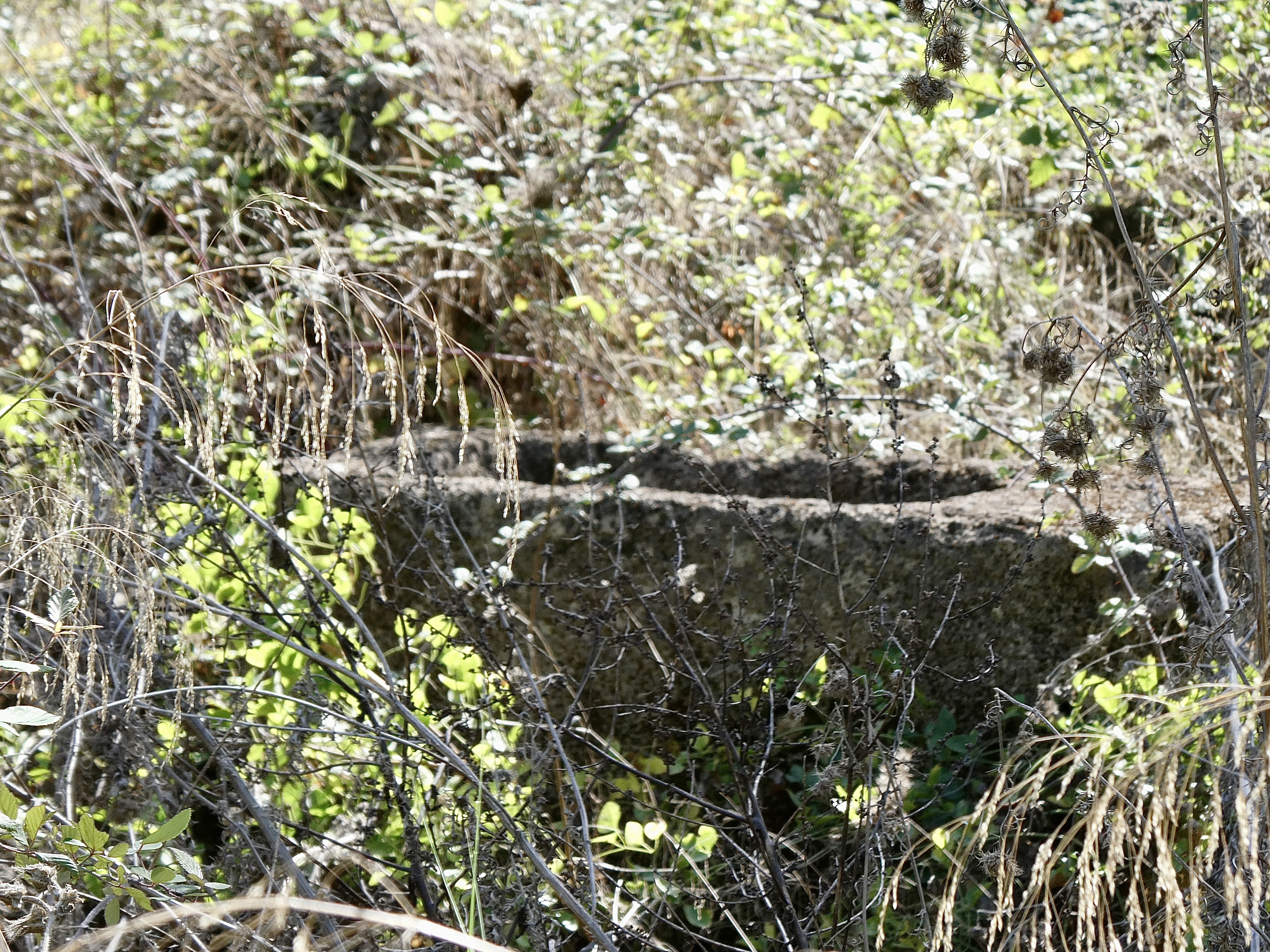
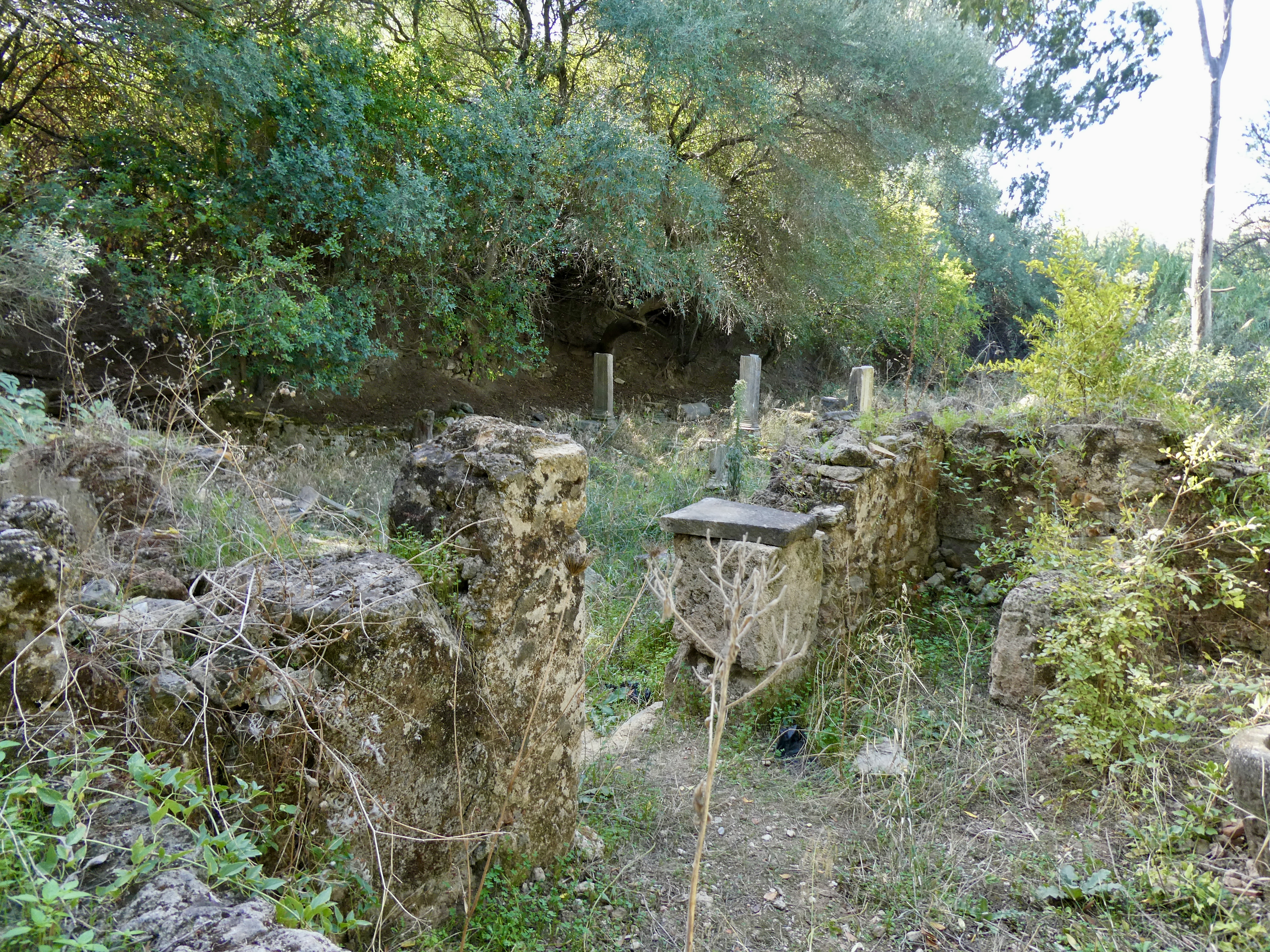
I ended up wandering through some of the high grasses and dangling branches to get a better look at what had been hospital rooms as well as an old well. I am sure there was plenty of other things to see, but it was pretty challenging without a weed wacker.
From here, we returned to the main Roman road and walked all the way back to the beginning of the site. Once at the entrance, I asked if there was any chance of seeing the museum, but I got a big fat no.
Anyway, from here we drove along the Annaba coast passing the very long seaside corniche (walkway) that fronts the Mediterranean. It was a beautiful, sunny day, but it being Sunday there were very few folks along the waterfront (Sunday in Islamic countries being the equivalent of our Monday).

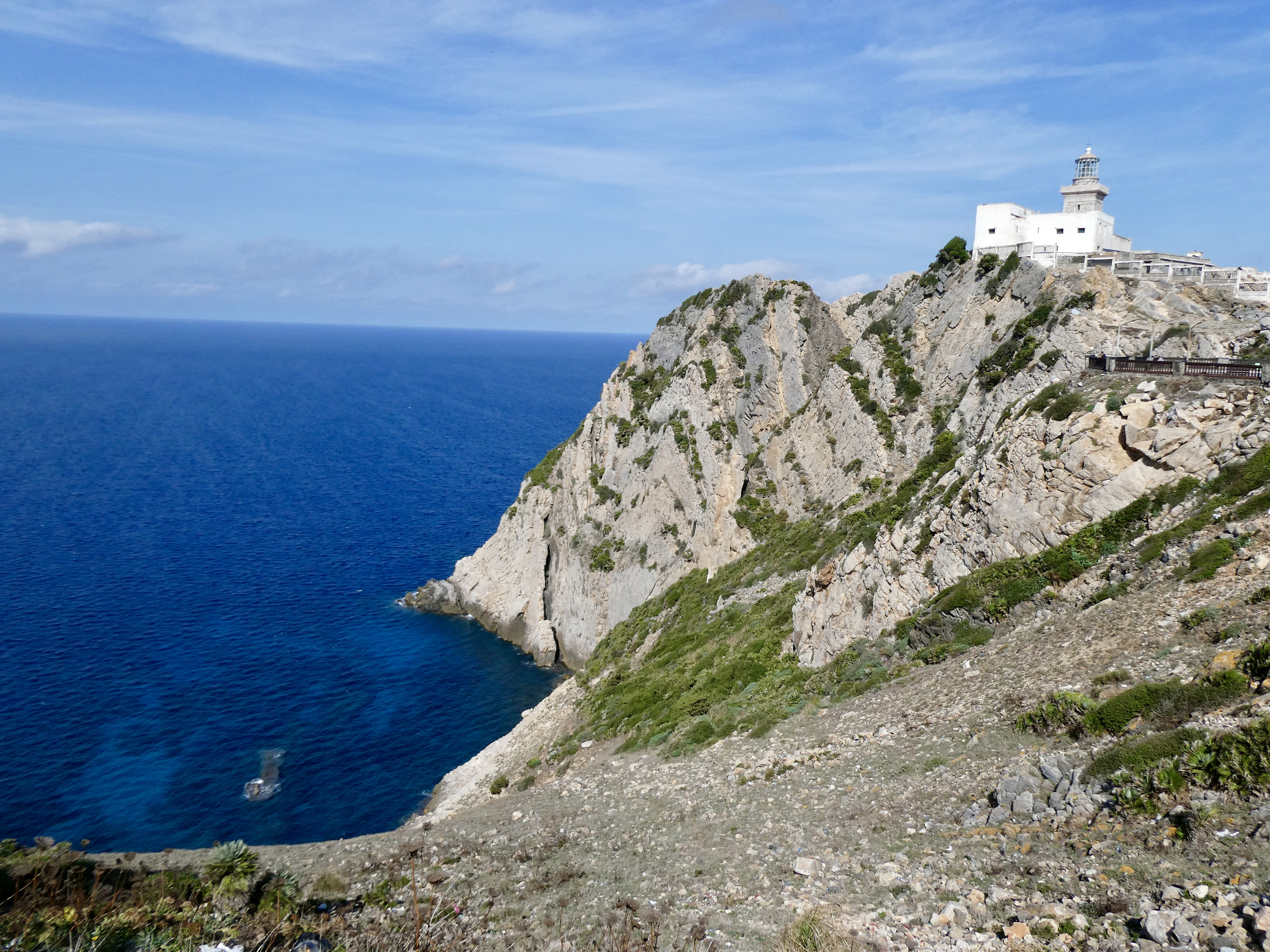
From here, we drove up the hillside paralleling the Mediterranean where we reached Cap de Garde, a beautiful seaside viewpoint of the Annaba peninsula and a nearby lighthouse. Nahla, Majed and I took up residence on a nearby bench and spent about a half hour just sitting and admiring the views. It was absolutely gorgeous and the breeze certainly cooled things down a bit as it had been rather hot and humid walking through the Roman ruins.
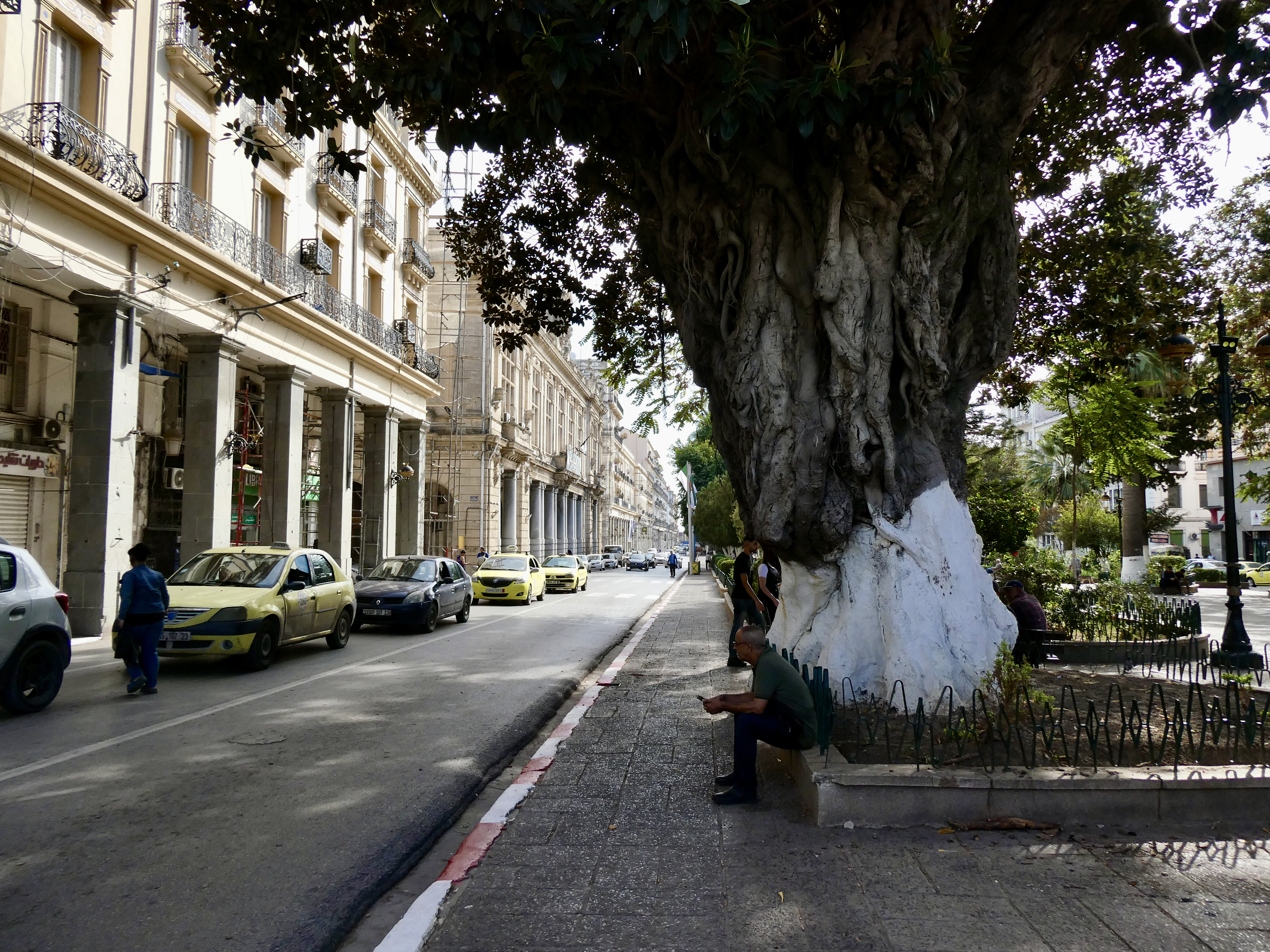

Our last stop was in the middle of Annaba where Nahla and I took a bit of stroll past a number of restored French colonial buildings that are now used by the Algerian government. Adjacent to the buildings was a lovely little central garden area with lots of men roasting and selling nuts as well as numerous cafes and ice cream stands.
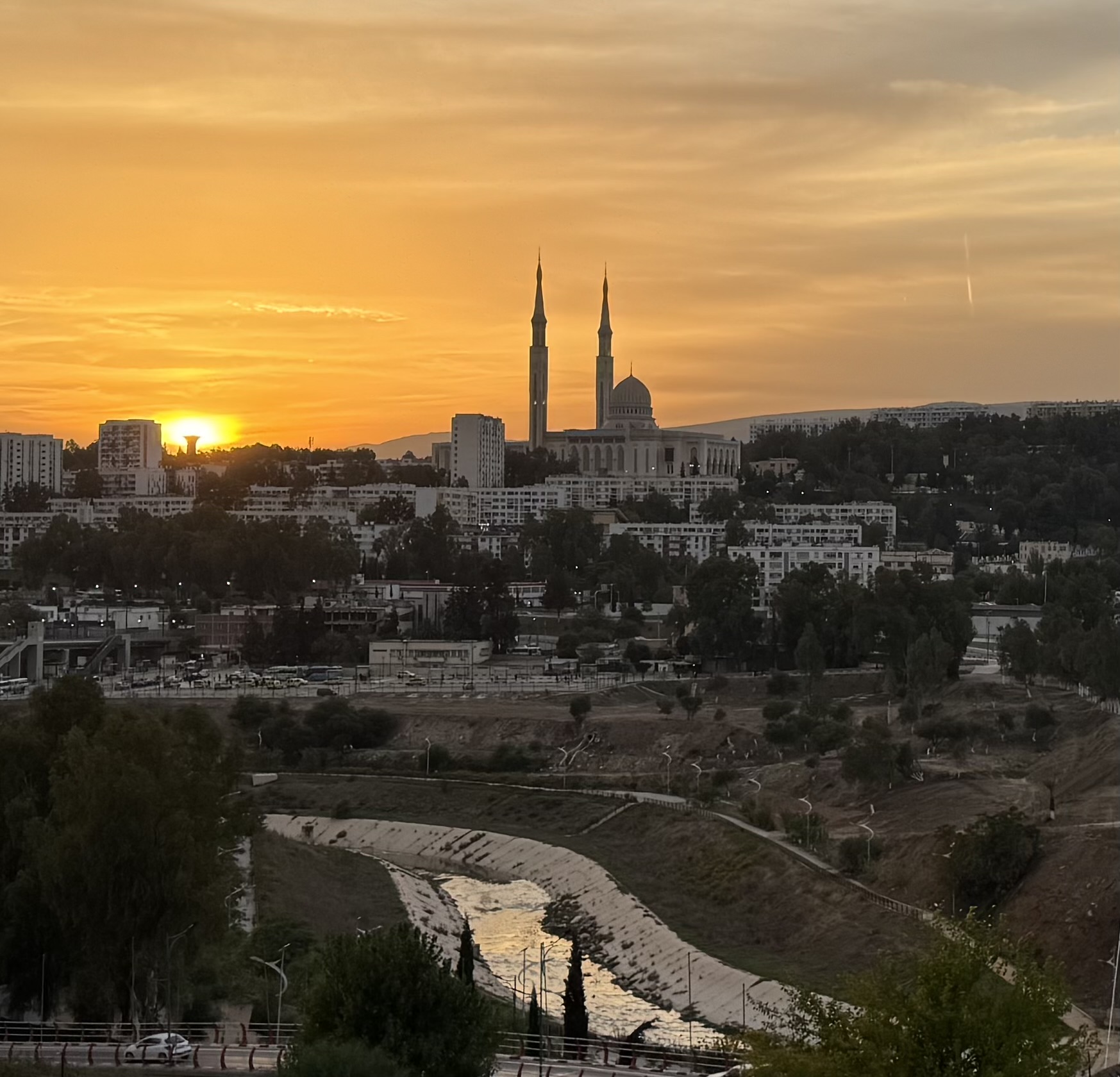
We then crossed through the gardens and walked up the street through a small portion of Annaba’s Casbah, but like Constantine’s Casbah, the old buildings had been demolished by the French and all that was left were an awful lot of newish shops selling clothing. Sadly, there was zero atmosphere (in fact even less than Constantine) so I told Nahla I was done.
So tomorrow, we leave Constantine for a tour of Djemila, perhaps the best Roman ruins in Algeria. From there, it is on to Algiers and a day trip on Tuesday for more Roman ruins. Then it is a couple free days before heading to my last stop in Senegal and The Gambia.
