Today I left Constantine (insert sad face) headed for Algiers for my last three days in Algeria. However, before that we were stopping a Djemila, which is billed as some of the best Roman ruins in North Africa. The drive took us 110 km southwest of Constantine high up into the Petite Kabylie mountains over the course of about an hour and a half. Now, unfortunately, as we climbed the fog rolled in and the rains started up. I started to worry that I was not going to see a thing once we arrived. However, luck was on my side because as we arrived into the modern day Djemila village, the rains stopped and the fog lifted just enough for it to be absolutely clear sailing into the site of Roman ruins.
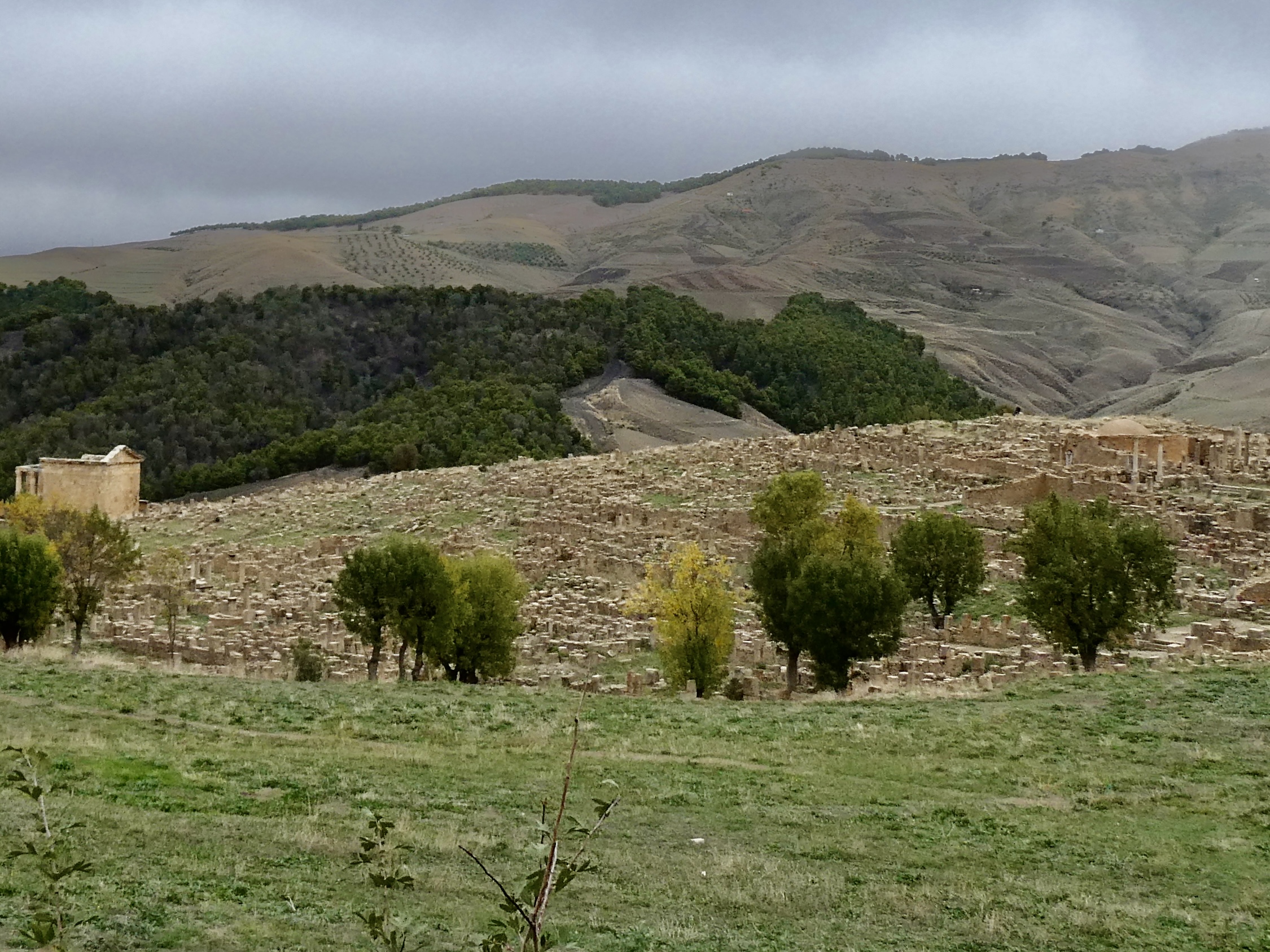
So a little bit about Djemila. It was originally built in 95 AD by Emperor Nerva on the site of a village known at Cuicul, which sat at 900 meters or 3,000 feet above sea level. The city was set up as a Roman colony for veterans aka an early retirement community, but eventually became a large trading market due to the nearby agricultural resources. Over the years, the city expanded from its original size in the 1st century AD and ultimately became a Christian Roman city in the 4th century AD. The city was slowly abandoned after the fall of the Roman Empire around the 5th century and 6th century. In 1982, Djemila became UNESCO World Heritage Site.

Anyway, we started out our tour by visiting the small museum housing marble statutes and many of the mosaics that were removed from the villas and buildings at Djemila in order to preserve the precious art.
As we entered the museum, we were greeted by two large marble statutes of Roman Emperor Septimius Severus and his second wife Julia Domna. Severus was emperor from 193 AD to 211 AD converting the government into a military monarchy en route to become known as a brutal ruler. And the brutality was passed down to son Caracella who killed his own brother, Geta, ensuring that Caracella would take sole possession of the throne. The Severus descendants ruled from 193-235 AD when the line ran out of heirs. (All of this is important to understanding the ruins.)

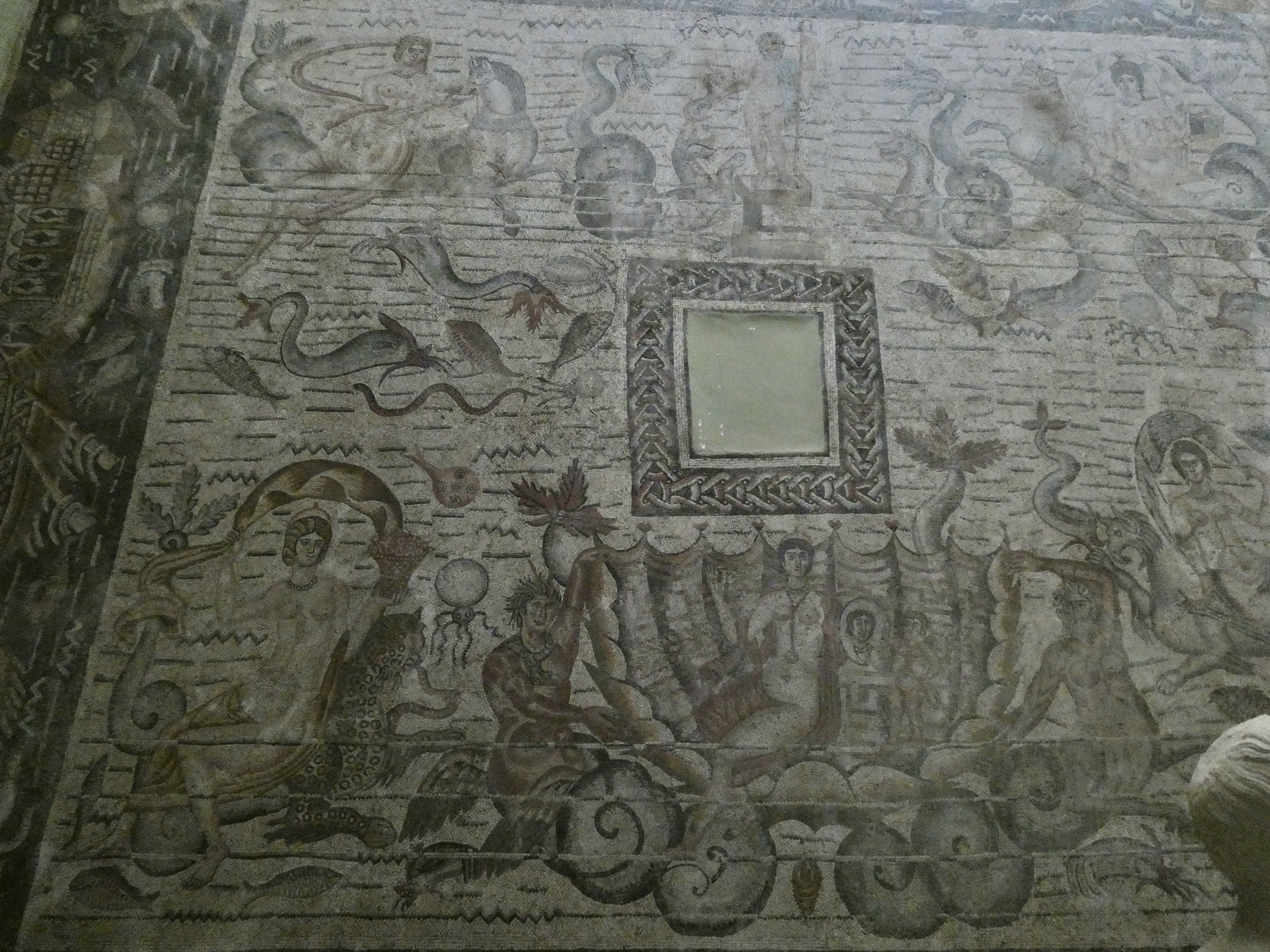
Anyway, we wandered past the two marble statutes and took in three rooms filled from floor to ceiling with mosaics spanning the early years of Djemila all the way through Christianity. There were mosaics honoring deities and animals (the early Roman years) followed by mosaics featuring Christian themes like fish and flowers. There was even a mosaic entitled “Mosaic of the Nymphs” which was found in the Christian Baths.

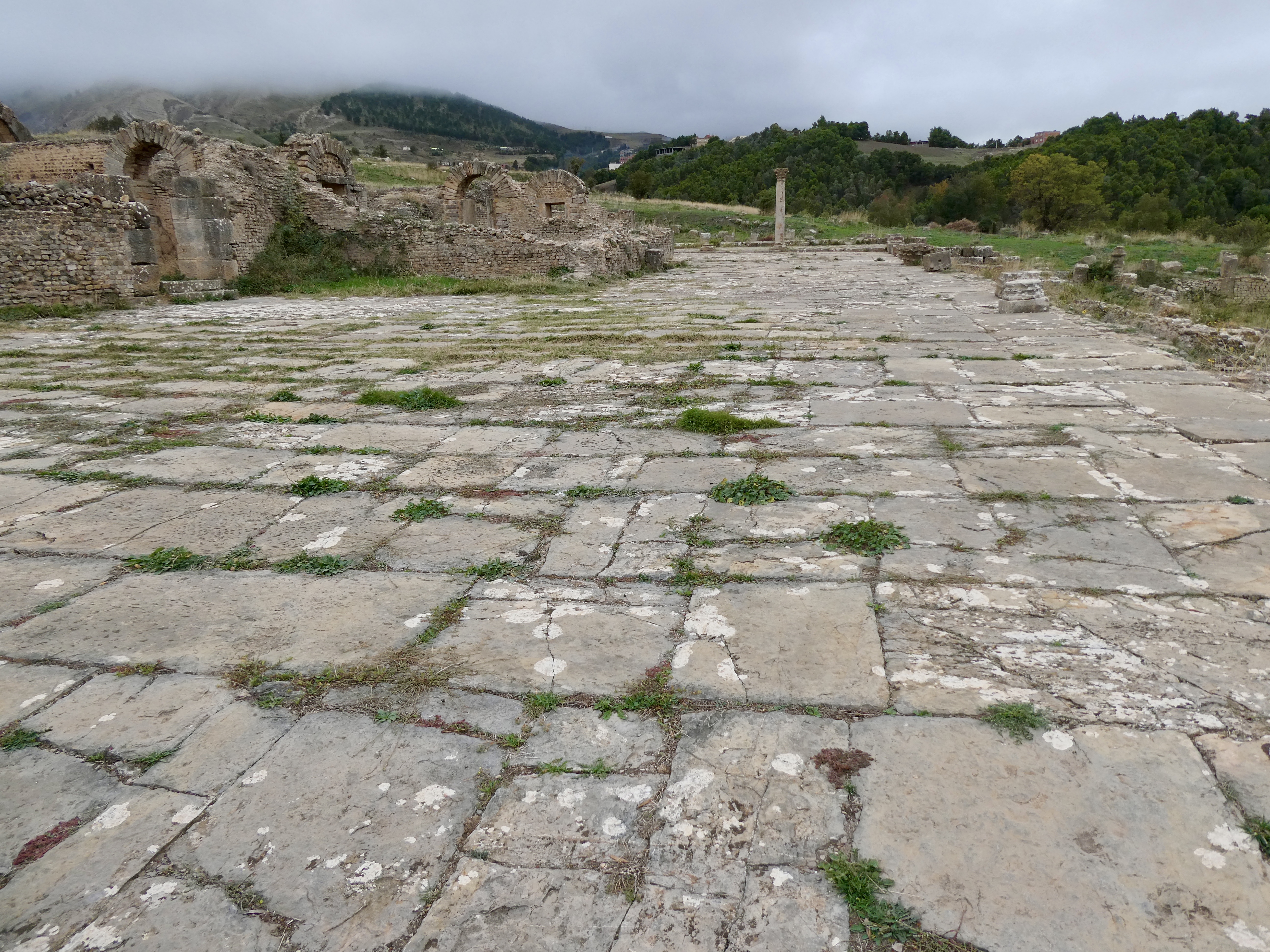
So once we made our way to the end of the museum, we walked down the hill and started our tour of the ruins. Now the ruins closest to the entrance were actually the newest ruins (ie 4th century ruins) with the ruins at the back of the site being the oldest.

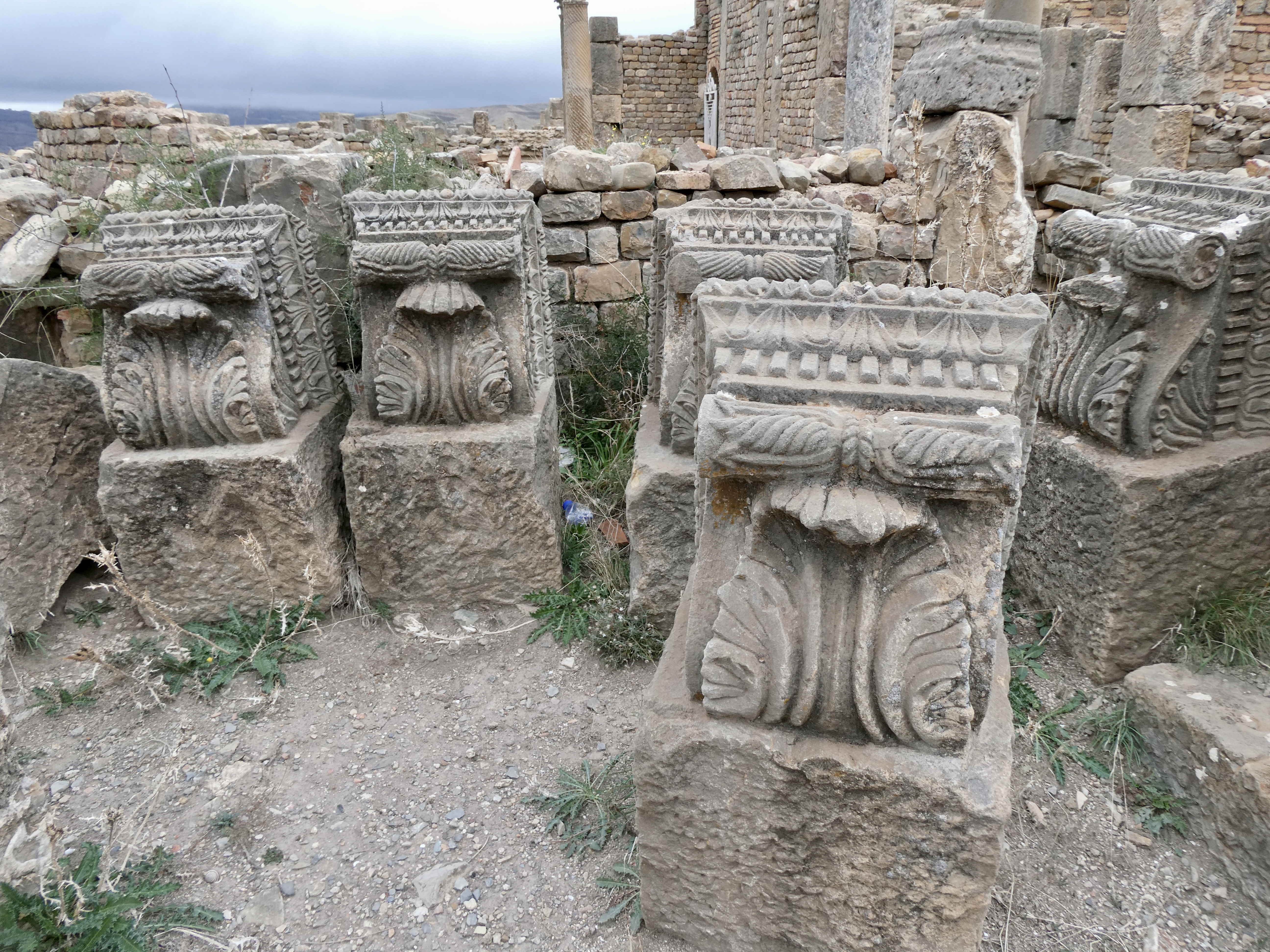
Now the “new” ruins were constructed during the time period when Christianity took hold so it was not surprising that a lot of the ruins centered around religion. First up was the Basilica and the Baptistry. The Basilica ruins consisted of pillars and remains of pillars that outlined the size of the church as well as remnants of mosaics that apparently covered the floors. All around the site there were what appeared to be remains of the capitals that topped the pillars.


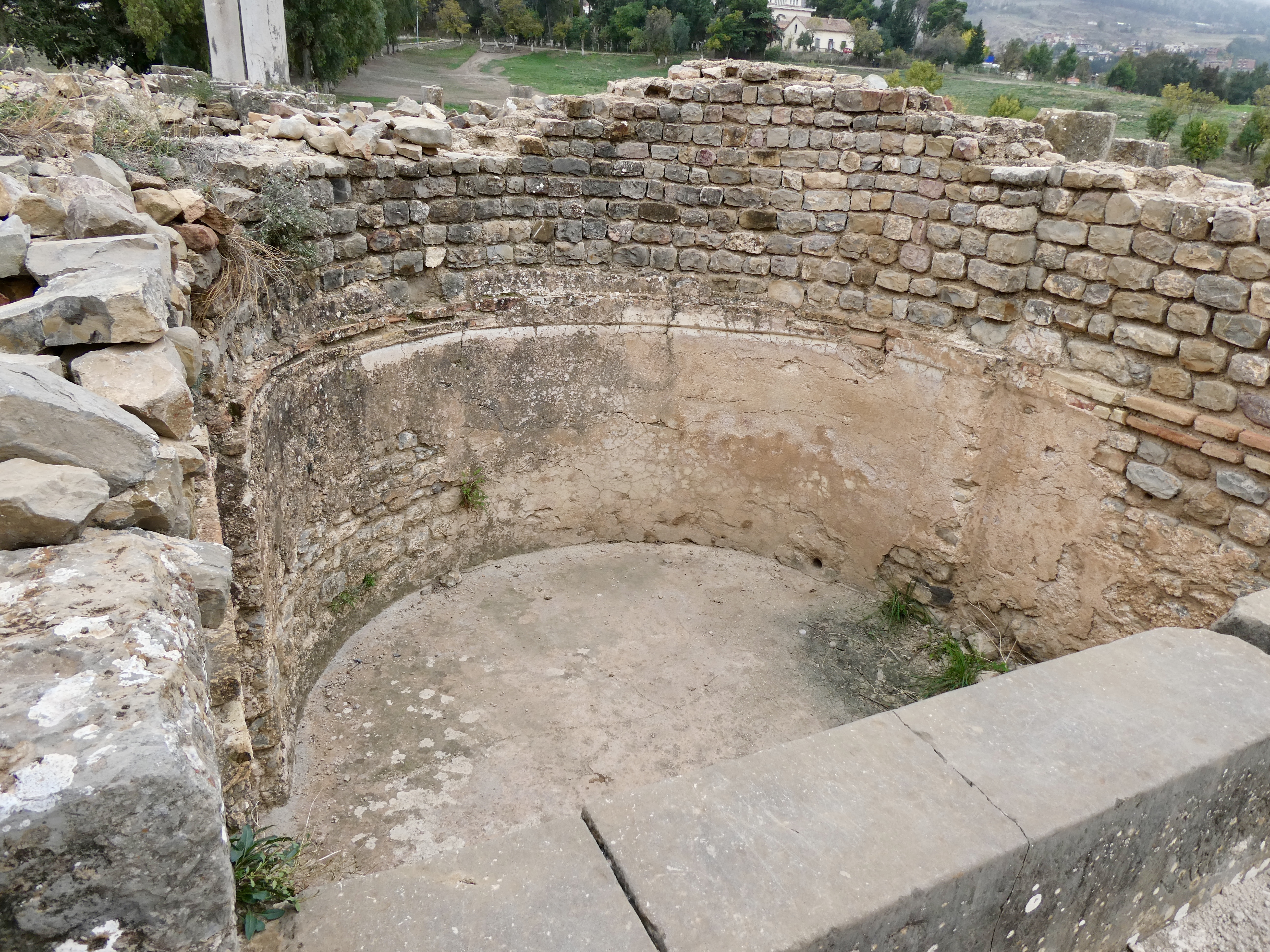
However, the Baptistry was perhaps the more interesting of the two buildings. The round dome of the Baptistry remained intact and while we were not permitted to enter the building, there were grates over the windows that permitted us to take a look inside and I was actually surprised to see that mosaics still covered the floors. And nearby there was a baptismal pool in relatively good shape where Romans were baptized into the Catholic faith.

From here, we continued with the Christian theme as we passed by a huge residential area that was apparently the villas for the Christian community. As I mentioned above, Djemila became a wealthy town with a lot of trade taking place. As a result, many wealthy people resided in the town and the homes reflected the wealth.

As we walked past the remnants of the homes we could see the outline of the villas, doorways and even private wells that had been installed by the rich residents.


Now apparently most Roman homes did not have kitchens. As a result, there were either communal kitchens where the servants of the wealthy would cook for their masters or the residents would go out to eat. Many of the towns, including Djemila, had the equivalent of “fast food” restaurants where the food was cooked and picked up by servants to take home to their masters. We saw one such location where the food was prepared and where several dolias (square containers) were used to store food. (Round containers were used to store water and every home would have at least one round dolia.)
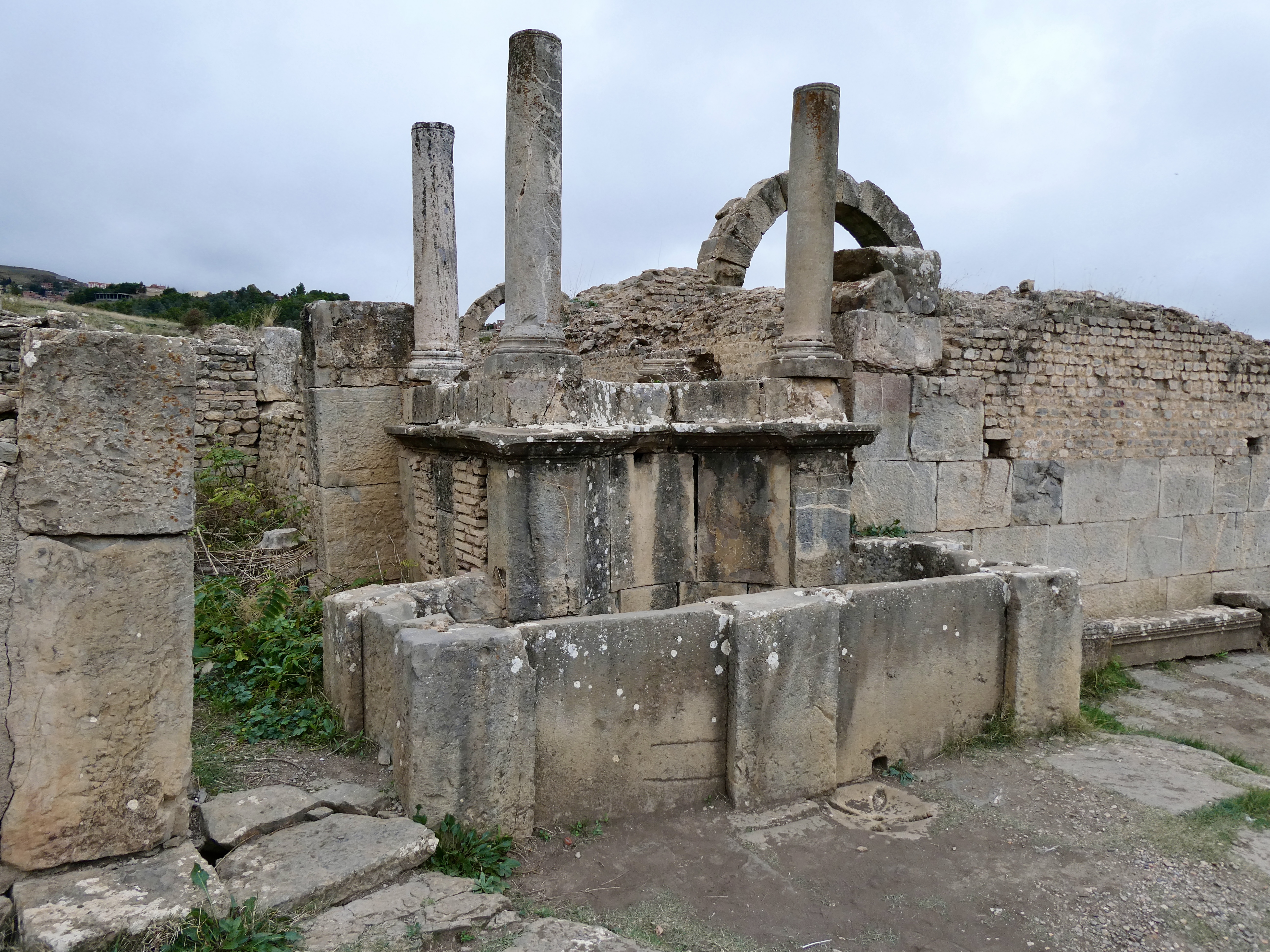
We then walked down a narrow road through the residential area to the main Roman road where we saw a well that was used for watering animals. And the well was distinguished from a human well because there was an animal grate in front of the well where animal poop would be pushed into the grate under ground. However, there were also grooves in the well evidencing that humans had dragged jugs of water over the stone well and thus had also used the well for their own personal water needs despite the fact that the town had wells dedicated solely for use by people. It’s little wonder that Romans did not have long lives.
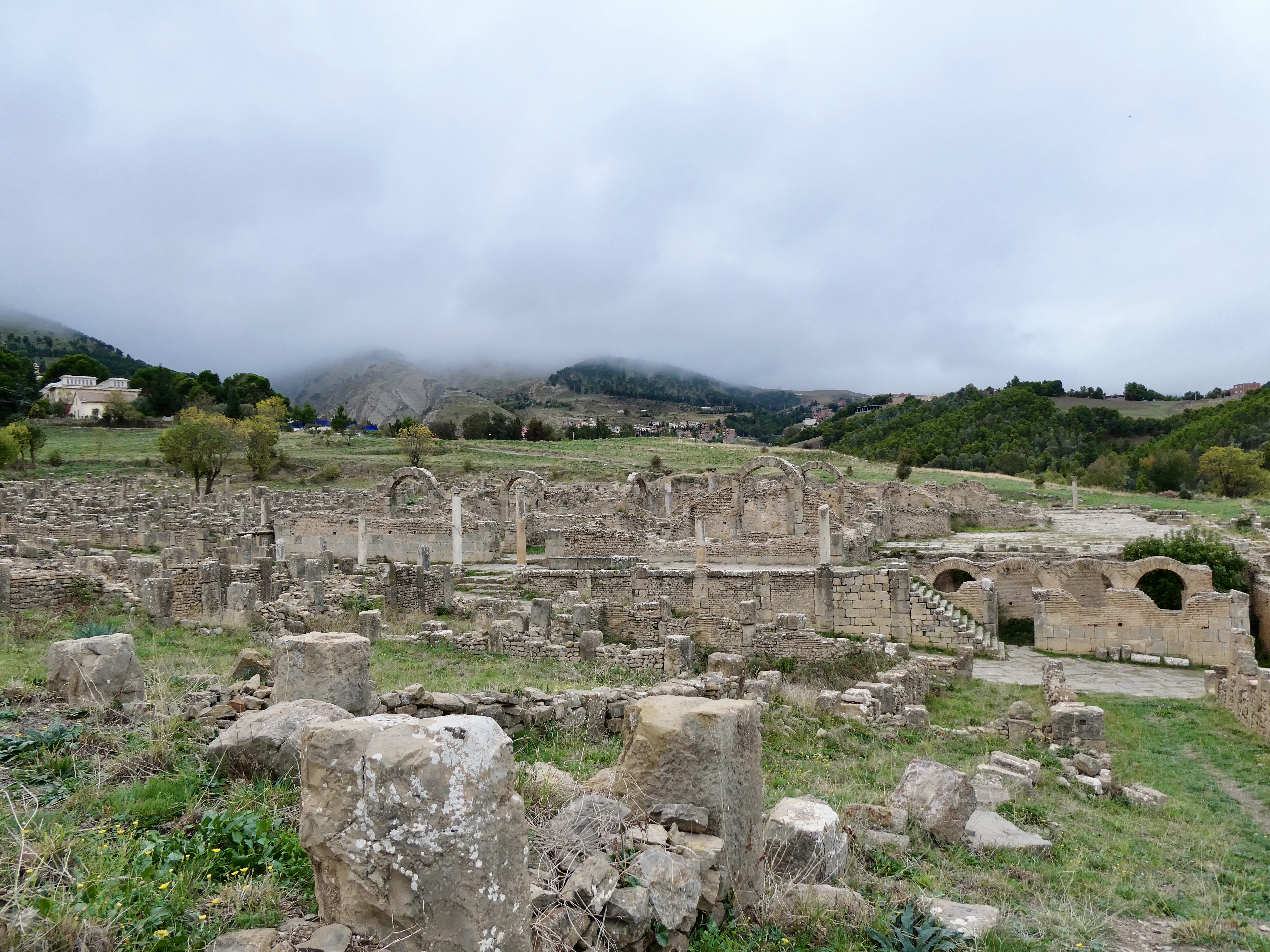
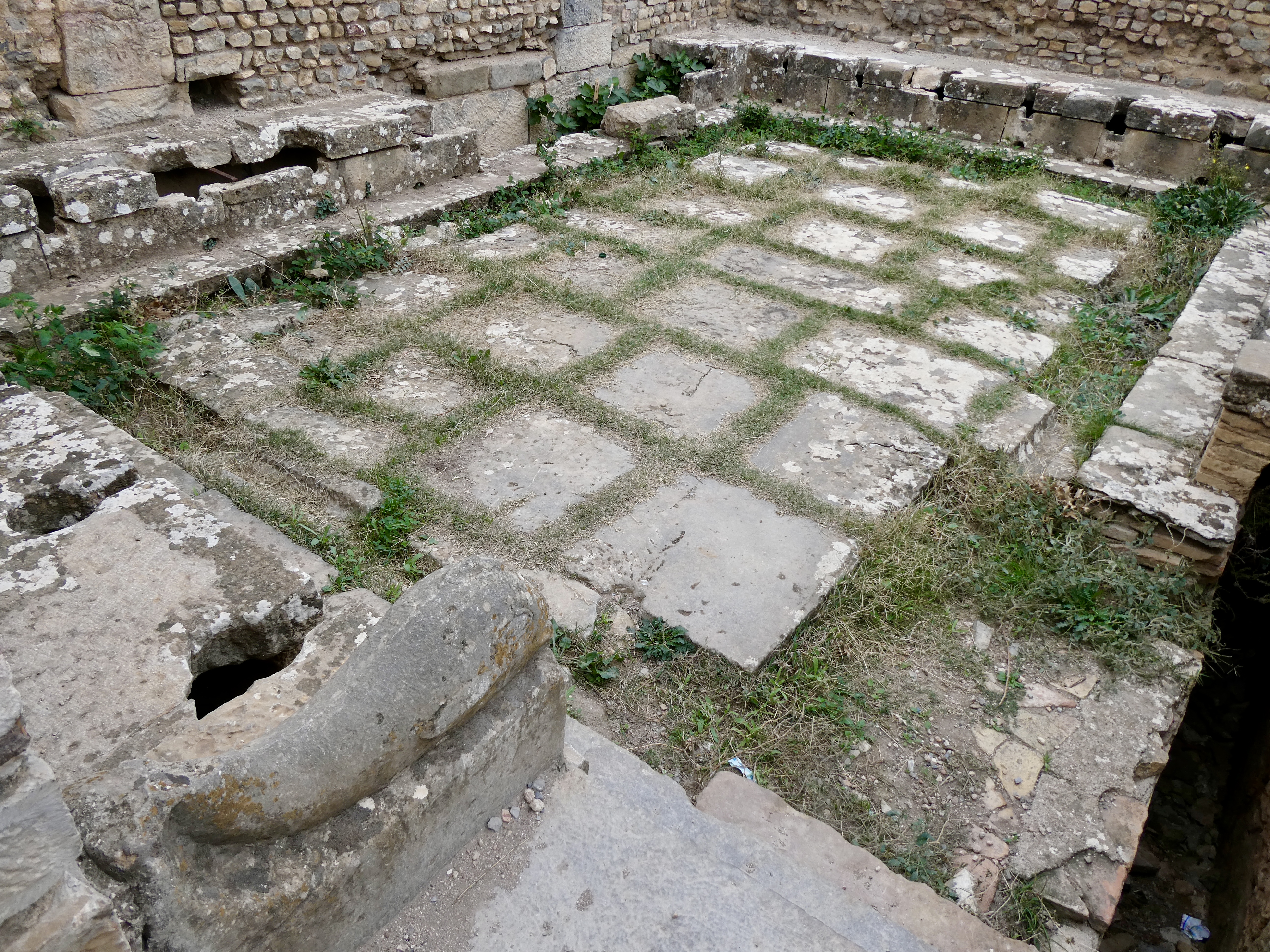

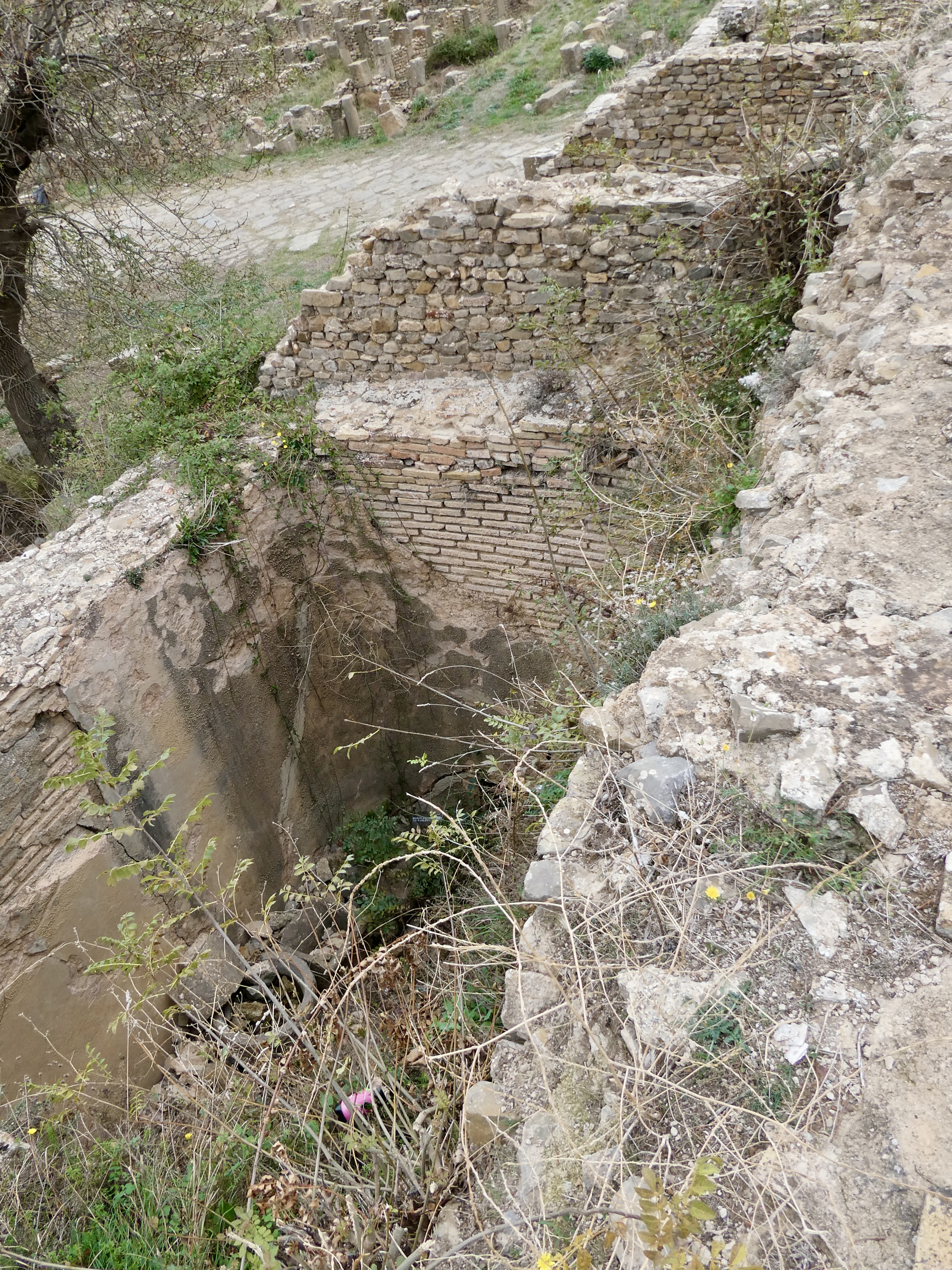
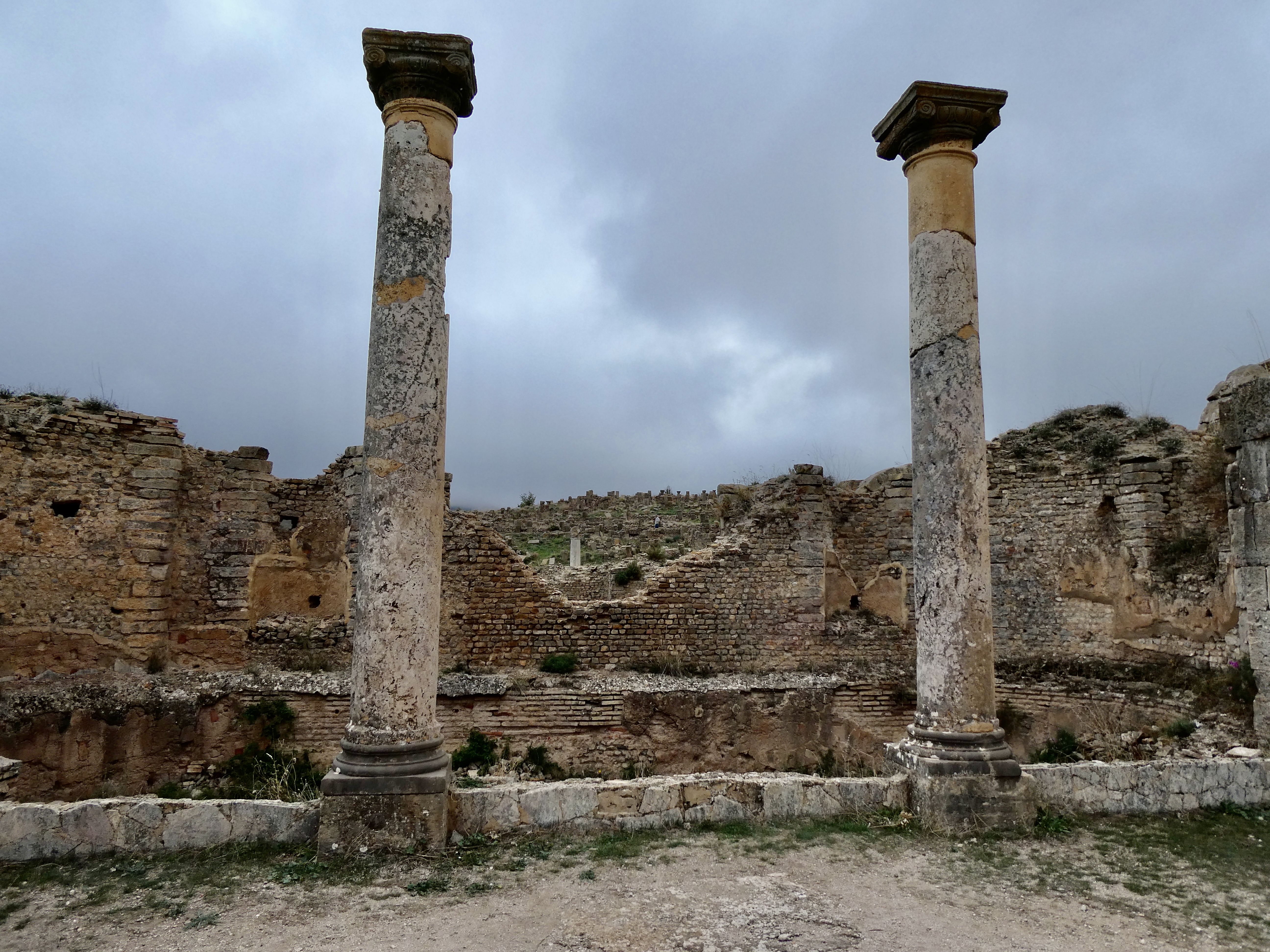
So next up was the massive Roman baths. Now the older area also had Roman baths, but these Roman baths were constructed during Christian times in the Christian part of the town. The baths were enormous and included the public latrines and the apodyterium, which was the changing rooms men and women used before entering the bathing areas.
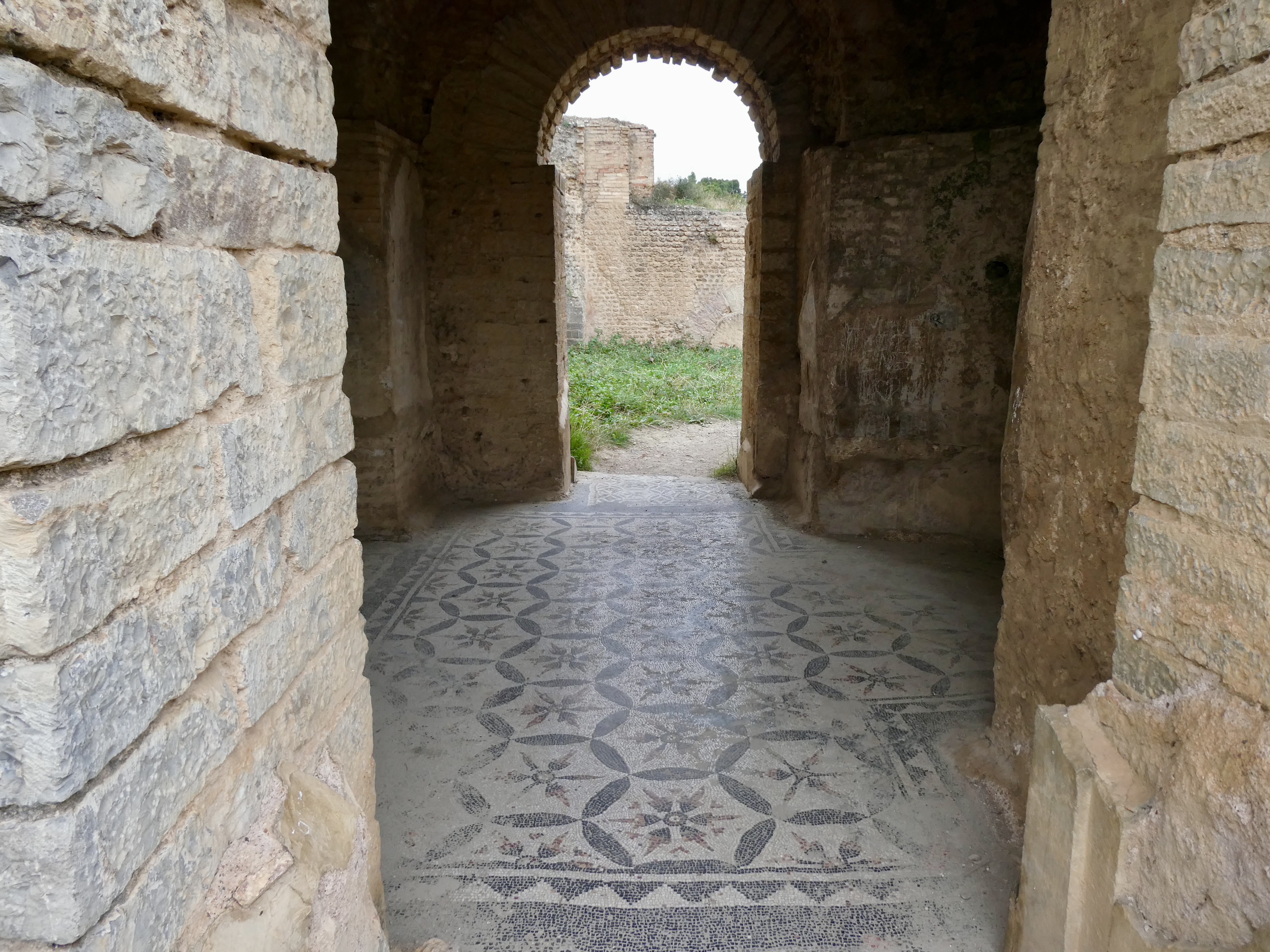
There was the usual Frigidarium, which was the unheated cold room, containing a cold-water plunge pool, the Tepadarium, which was the warm room that was indirectly heated where bathers would gradually adjust to the heat, and of course the Caldarium, which was the hot room that was heated by the underfloor heating system fueled by wood burning furnaces. The huge fires from the furnaces sent warm air under a raised floor which stood on narrow pillars of solid stone, hollow cylinders, or circular bricks. The floors were paved over with square tiles which were then covered in decorative mosaics. Simply amazing technology for the time.
There was also a palaestra, which was an open air exercise yard as well as huge water reservoirs where water was stored and of course purpose built aqueducts that moved the water from the main water system to the reservoirs. In addition, there was natatio, which was the open air swimming pool.
Now the weird thing I found out about the swimming pool is that the Romans did not drain or clean the pool. Rather, as the water went down in the pool, the Romans simply manually filled the pool from water held in the reservoirs. So they never drained the pool or cleaned the pool. YUCK! This is another reason whey the Romans suffered from so many diseases. Bathing was a ritual in Roman times, but hygiene was not their strong suit.
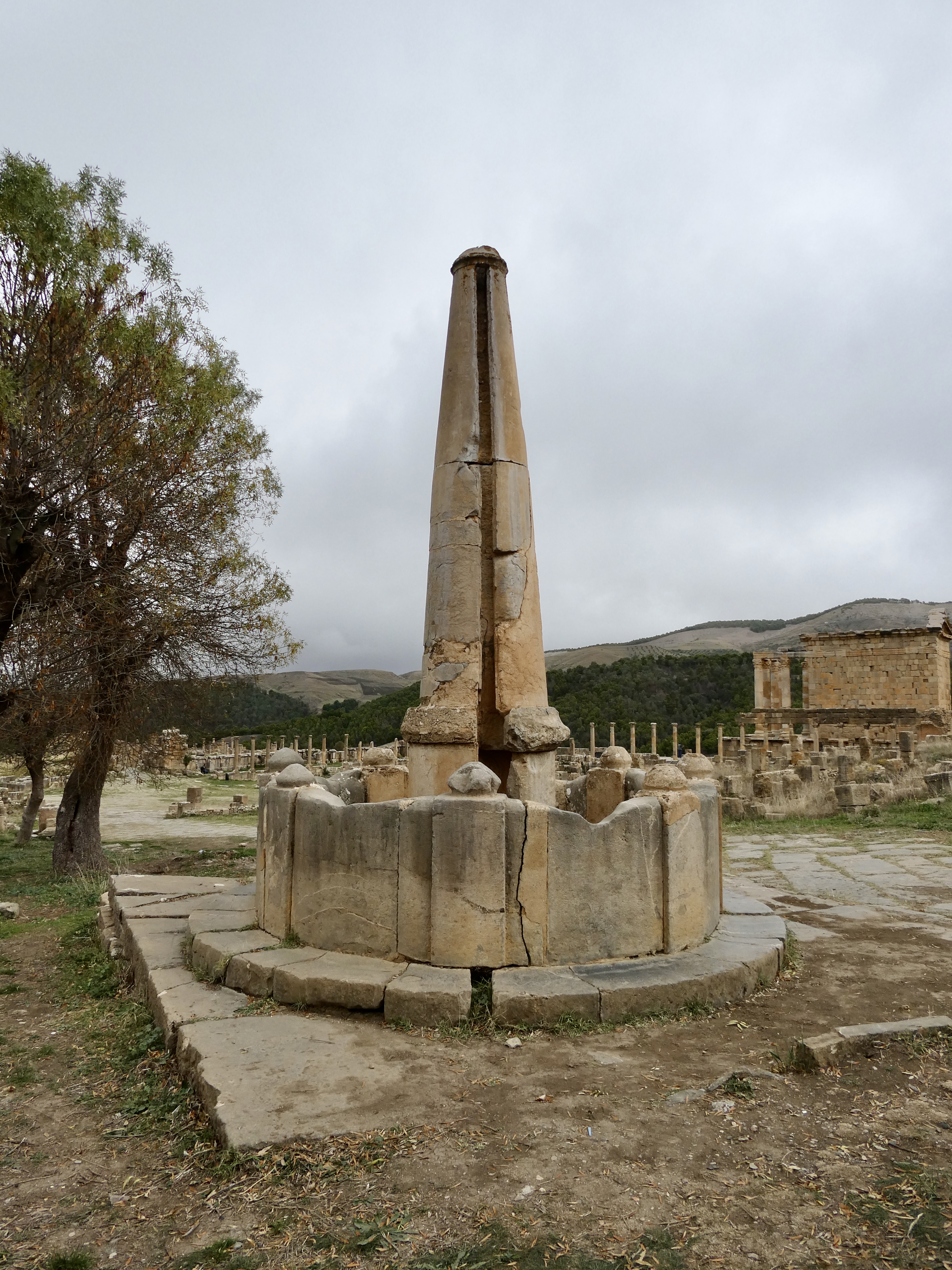
So after walking through the entrance and taking in the baths, we left the baths (and some still in place mosaics at the entrance to the fridgidarium), and continued our walk on the Roman road reaching a fountain used by the residents of Djemila. Now this fountain was fascinating. Water was pushed into the fountain from the aquaducts using gravity and the force of the gravity pushed the water up and out the top of the fountain allowing the water to cascade down the fountain like a waterfall. And you could actually see the grooves in the stone fountain where people had leaned on the fountain, filled up their water jugs and dragged the jugs over the fountain edge.

Now after some further walking, we left the Christian part of Djemila and entered the Severus phase, which refers to construction that took place outside the old town, but before the Christian construction, from the late 1st century AD when construction began to the end of the 3rd century when the Christian phase began. And the era was called the Severus phase because much of the construction was commenced during the Severus family dynasty.
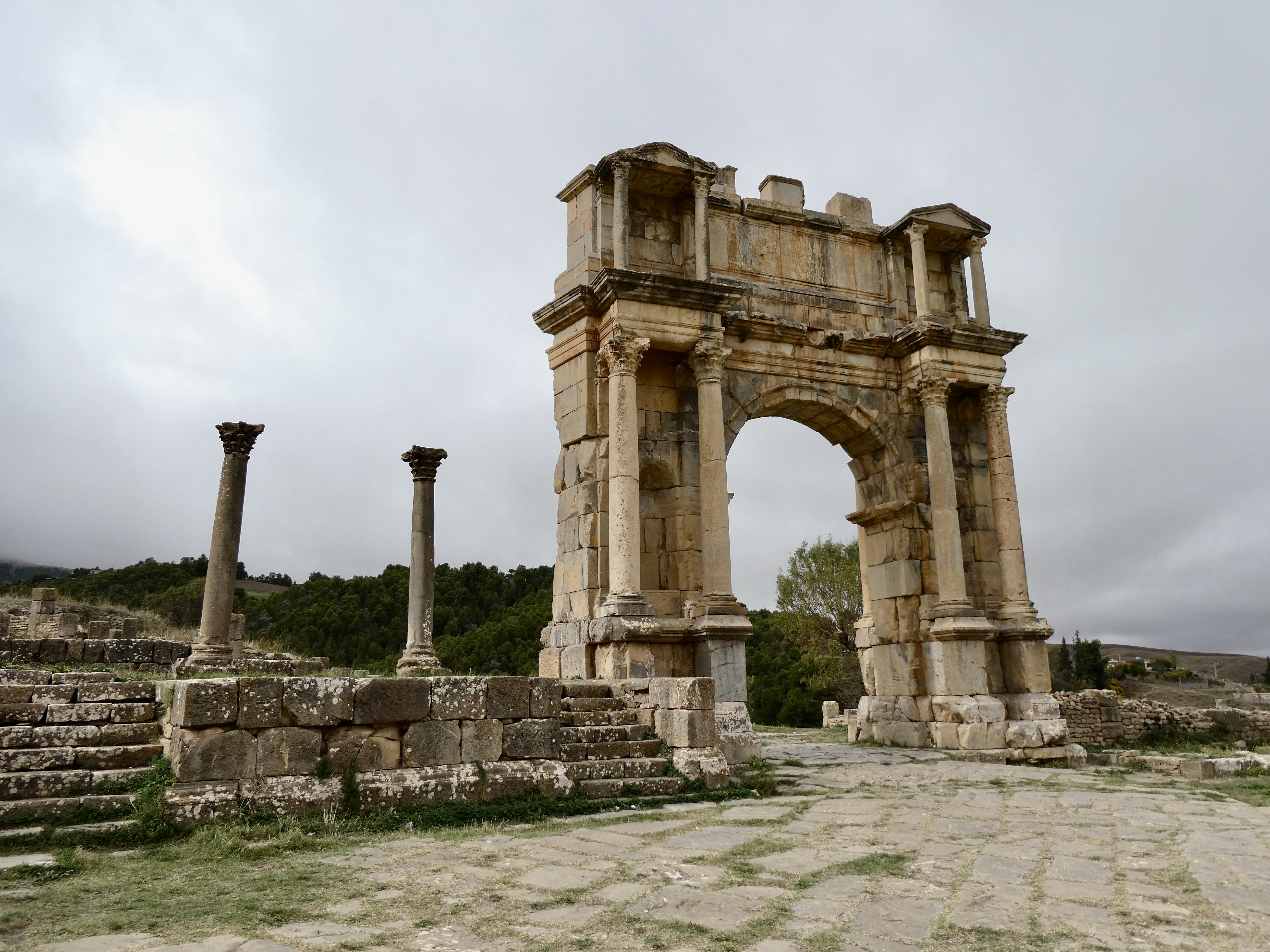
So this new phase of Djemila contained an area called the Harsh forum, which was a large, paved square that served as a public space and was a dividing line of sorts between the old and new city. At the far end of the square was the Arch of Caracella, which was like a victory arch dedicated to Emperor Caracella, the son of Septimius Severus (and the guy who killed his brother so he didn’t have to share the throne).
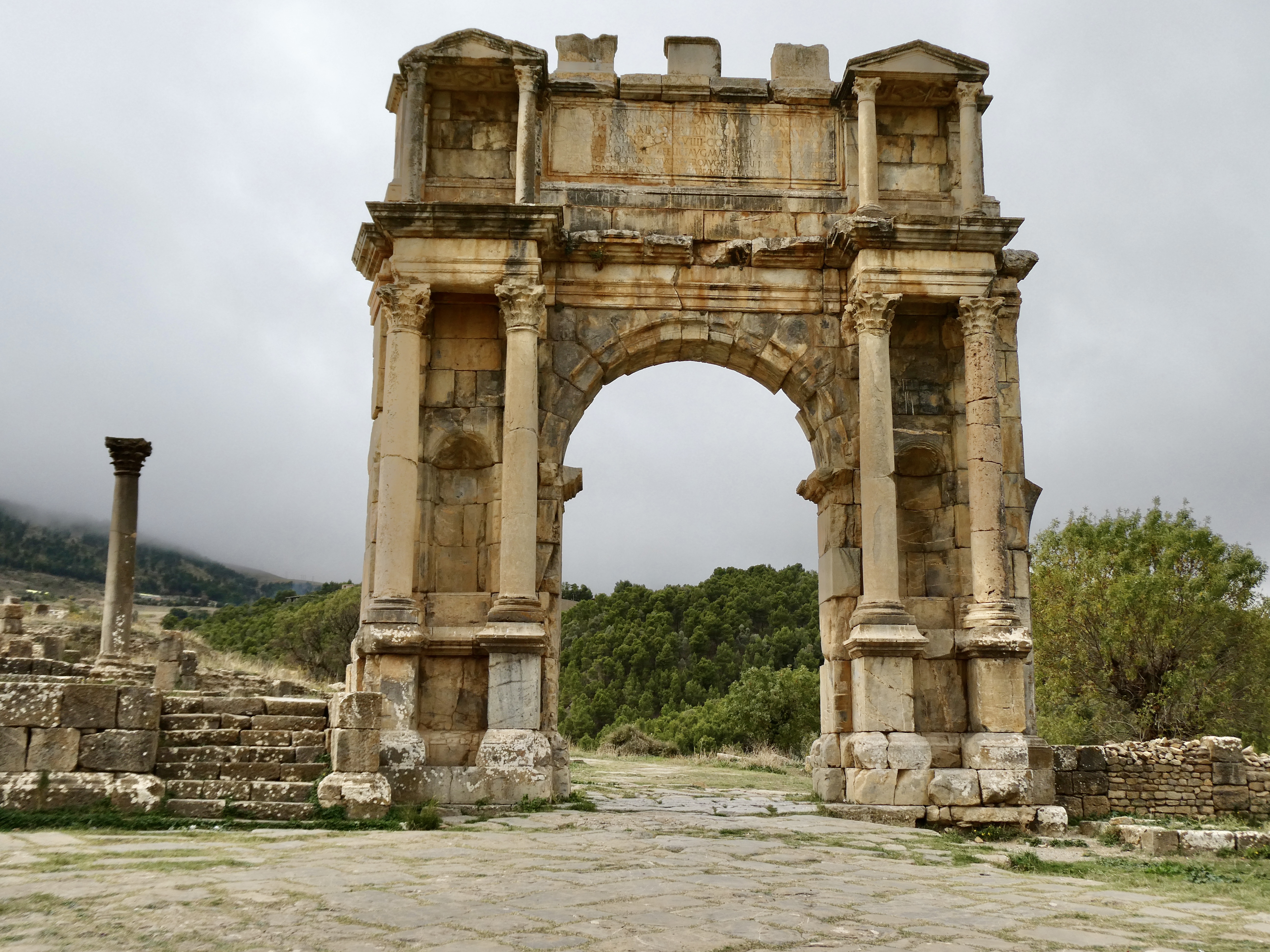
The arch was erected in 216 AD as a Triumphal Arch and was the entry into the new part of Djemila. The arch also honoured Caracella’s mother and father with open bases built into the arch where the statutes we saw in the museum of Septimius Severus and Julia Domna once stood. The arch was absolutely gorgeous.
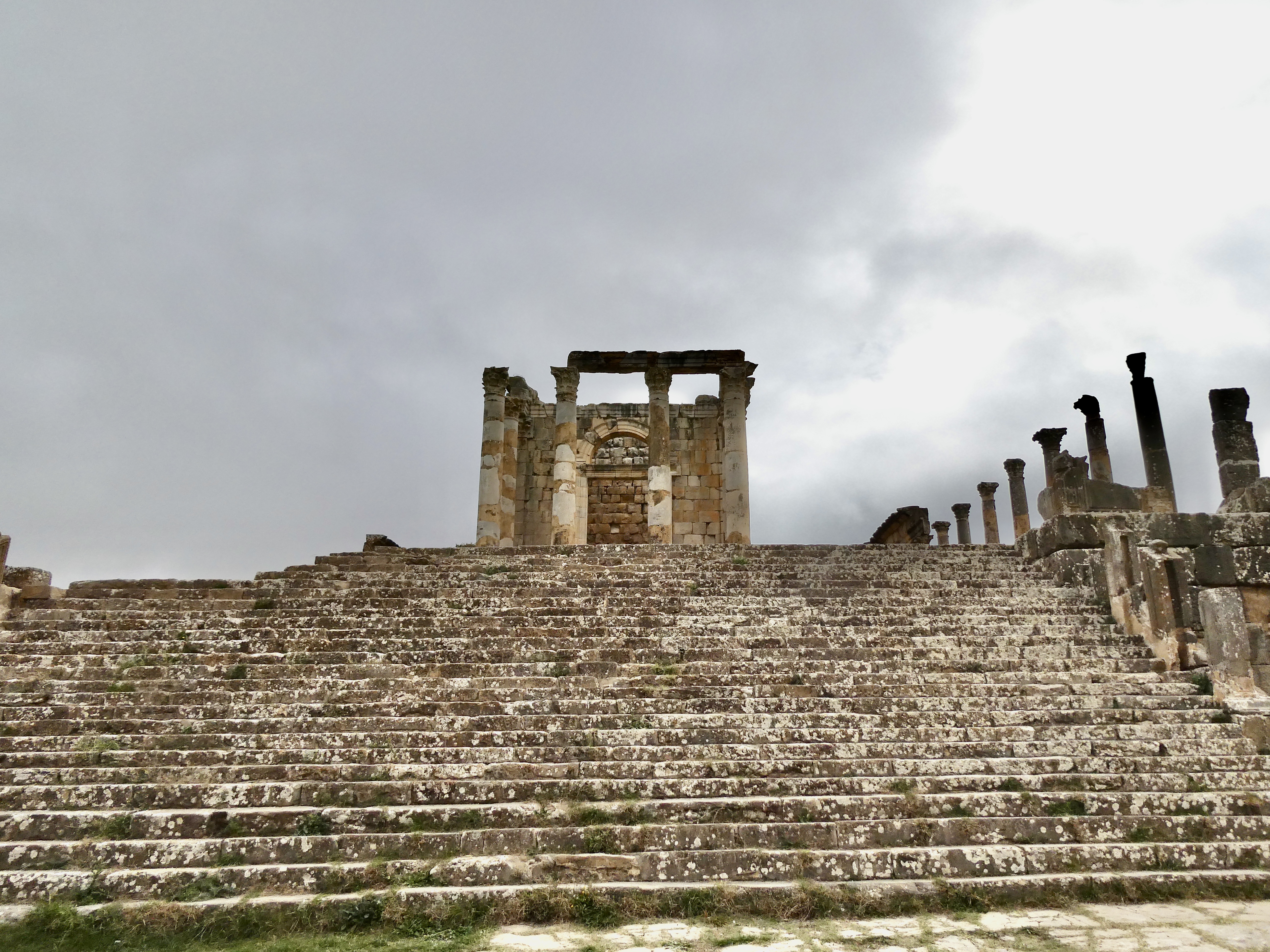
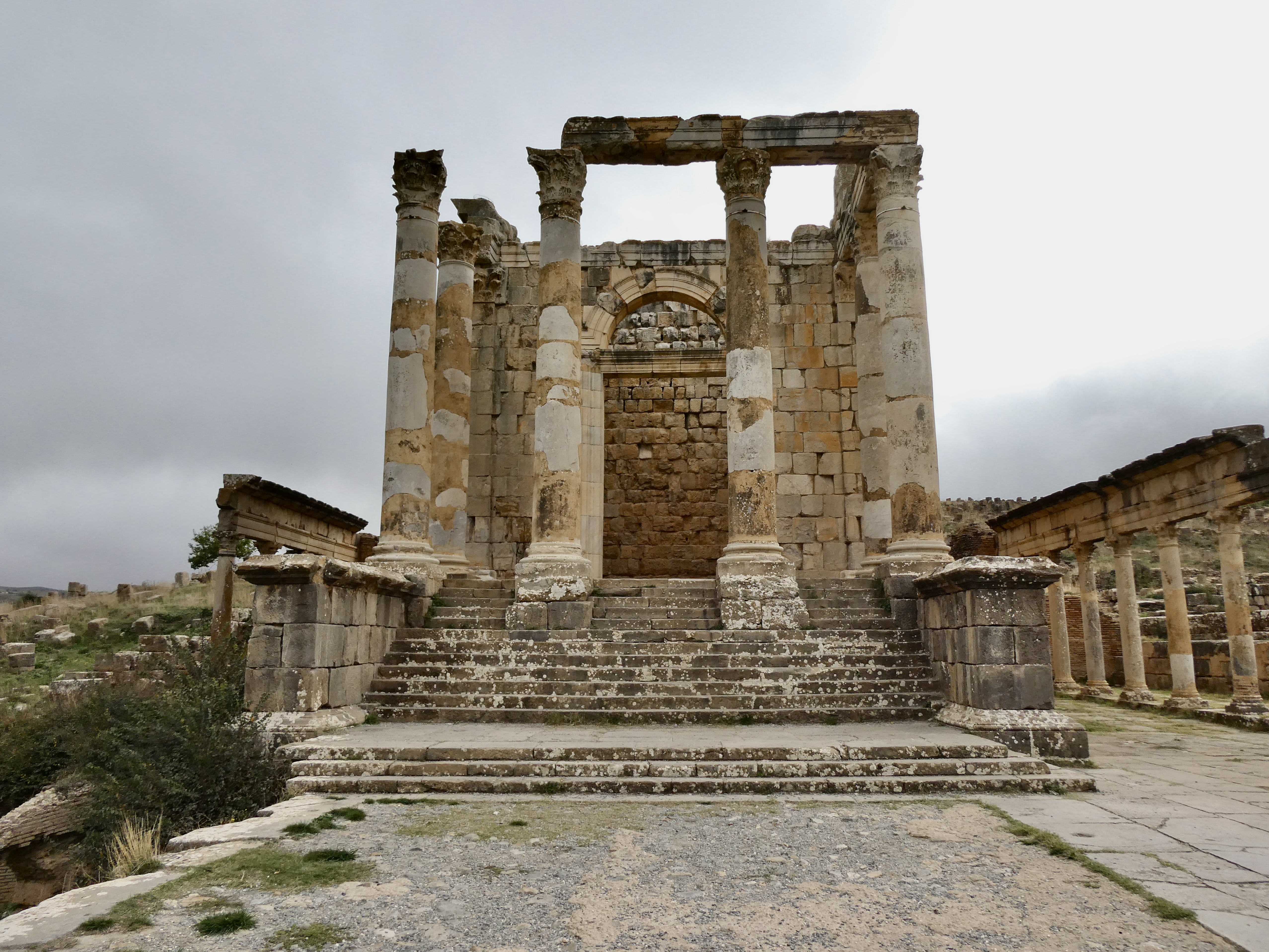
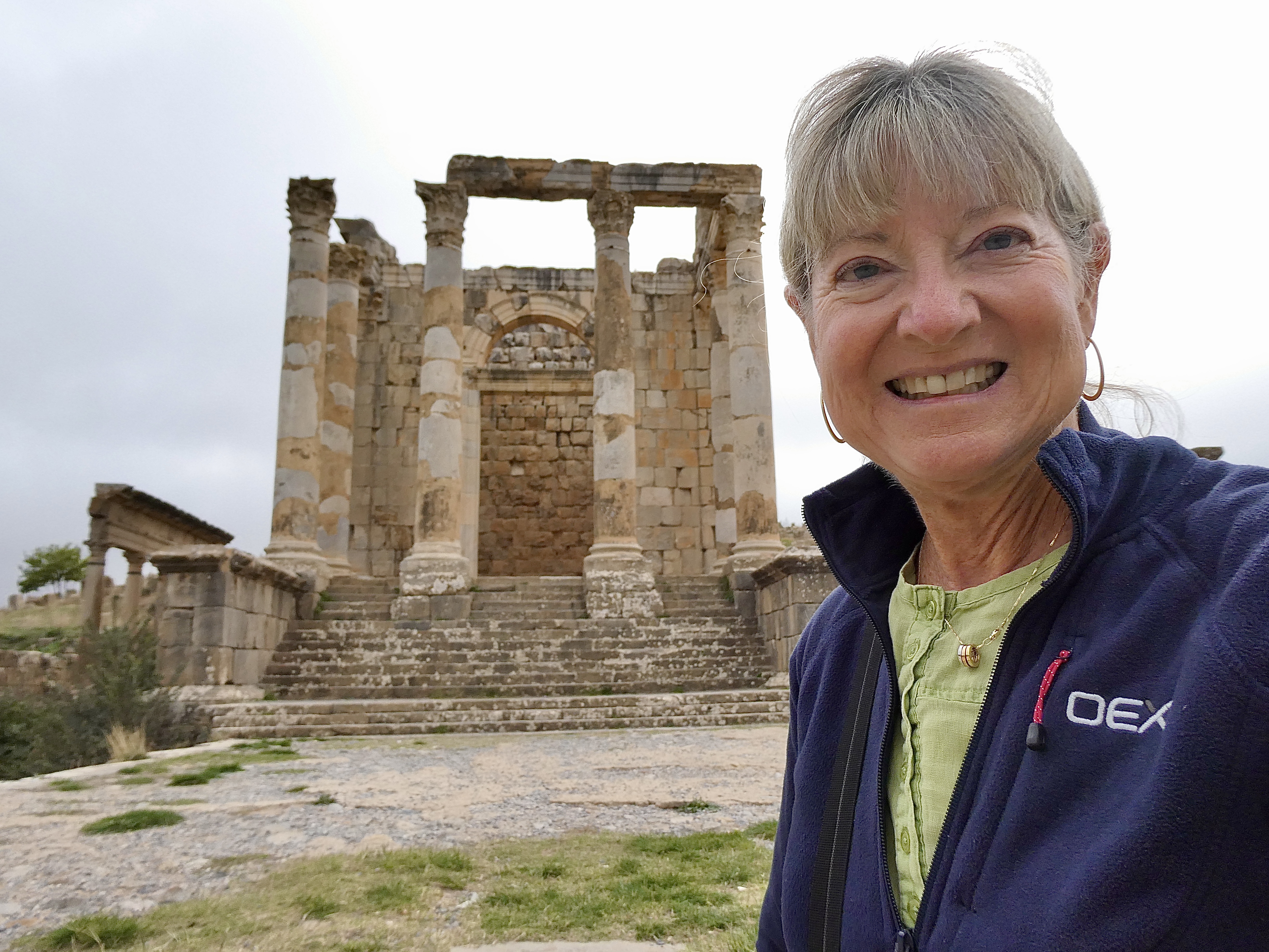
And once a person passed under the arch and crossed the forum, the Temple of Septimius Severus sat in the middle of the forum area. The temple was built in 220 AD by a descendant of Septimius Severus, Emperor Alexander Severus, and sits on a high podium surrounded by massive marble columns and fronted by a multi-step staircase. At one time there were apparently colossal statutes of both Septimius Severus and Julia Domna once housed inside the temple, but today only fragments now remain.
So after climbing up and down the massive staircase, we moved on to cross under two arched gates and down the hill to the Theatre. Now the Theatre was actually part of the old city, but was built outside the old city because the mountainous terrain made it difficult to construct the tiered theatre. As a result, it was built down the hill in an area that was much flatter and easier to build on.

Now the Theatre at one point could seat 4,500 people and included dressing rooms and a stage area. And the sound did echo from the middle of the stage, but there were no whisper alcoves like we saw at Timgad. In addition, while the backside of the stage did not include columns, there were column bases indicting that the Theatre was likely surrounded by columns and perhaps portico at one point.
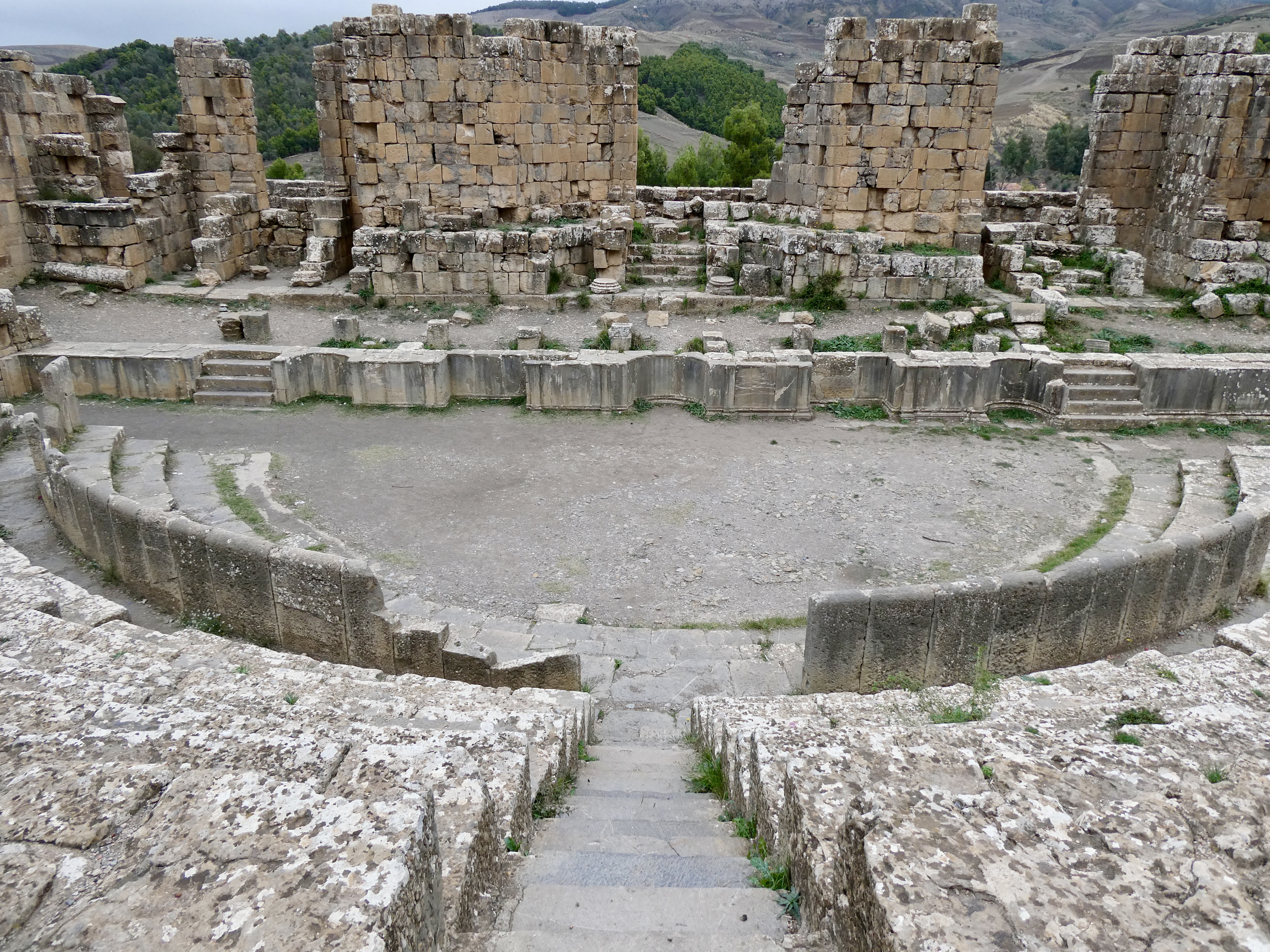
I ended up climbing the stairs, but only got halfway up the staircase because the stairs became VERY narrow and VERY steep. I didn’t need to fall off the Theatre and crack my head open (one trip to the hospital on this trip was enough) so I settled for part way up and took a seat and enjoyed the view.
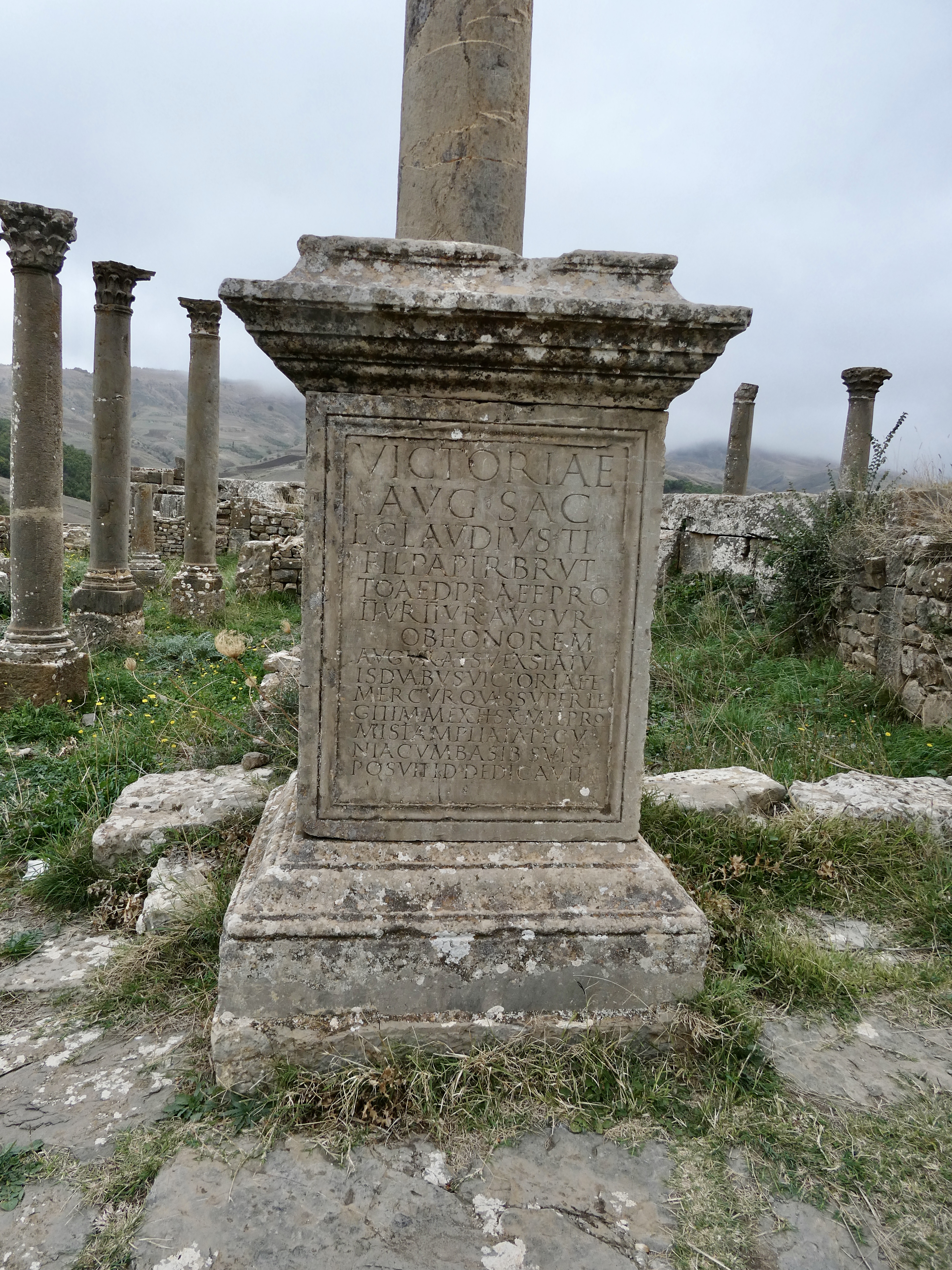
From here, we wandered back up the hill and under the arches to the Roman road where we entered the old phase of the city. As we walked, we passed by a number of old tablets with Latin inscriptions that seemed to reference some sort of victories.
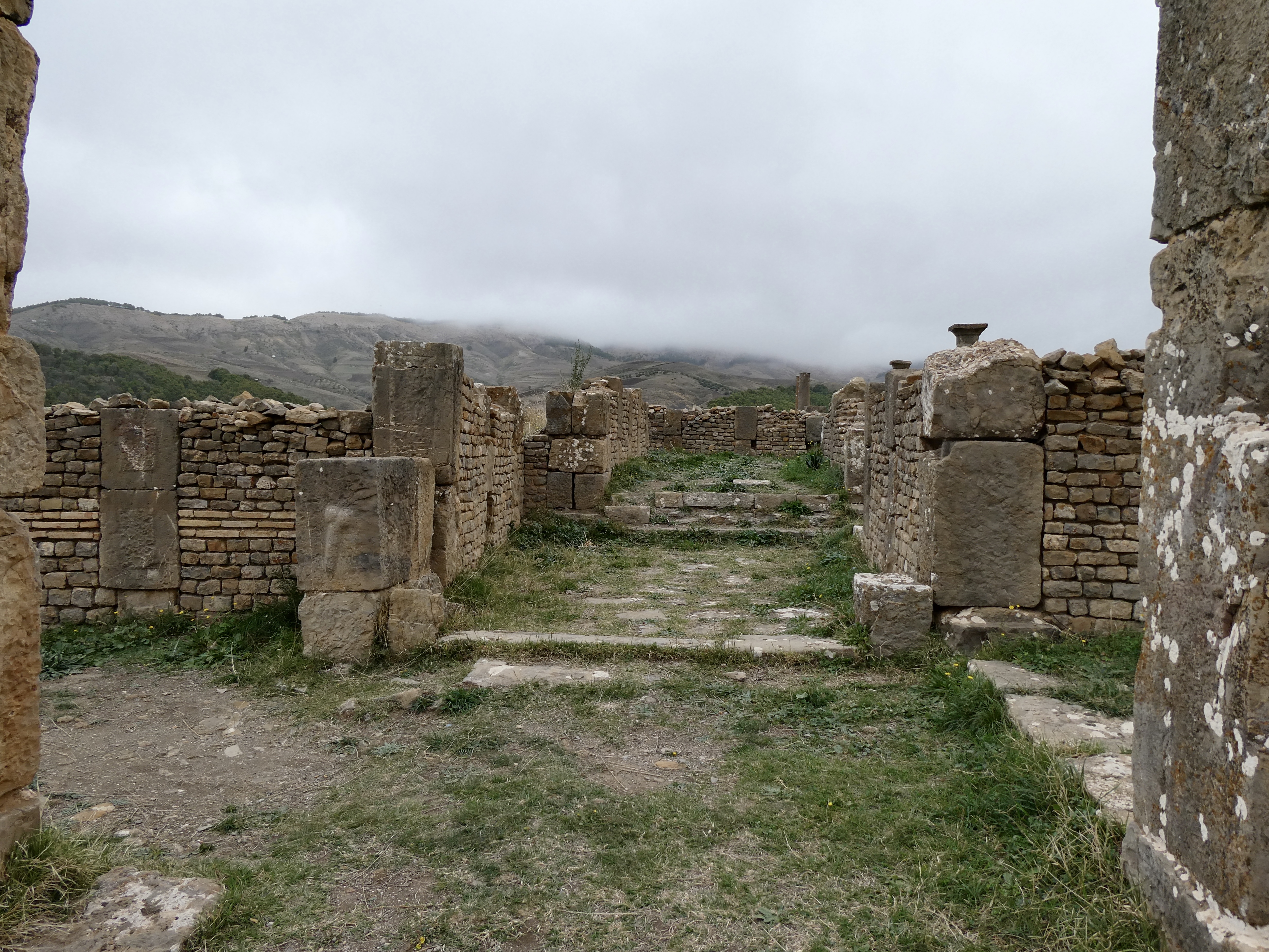
And of course, no old Roman city would be complete without its standard brothel marked by a portion of the male anatomy. And this sign (as opposed to the sign in Timgad) was intact and on display for all the world to see. Again, the “world’s oldest profession” is an apt name.
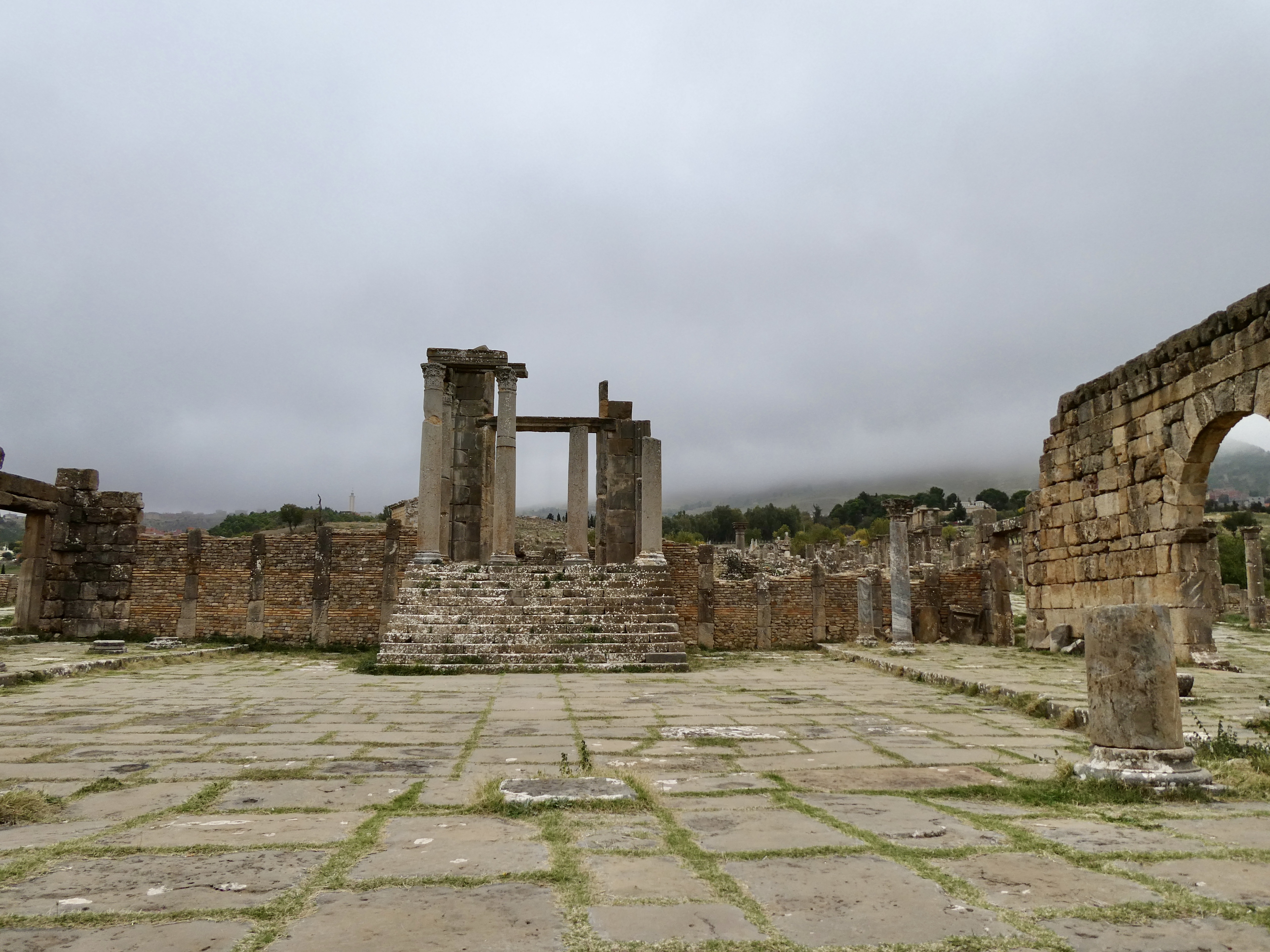
From here, we crossed onto another road and into the remains of the Temple of Venus. Now the early years of Roman rule (1st century and earlier) are marked with worshipping the deities (as opposed to the emperors as was the norm in the 2nd and 3rd centuries followed by Christianity in the 4th century).
The Temple of Venus, like most temples, included an elevated alter and was surrounded by marble columns. While the temple was large, it paled in comparison to the nearby Temple of Temple of Septimius Severus.
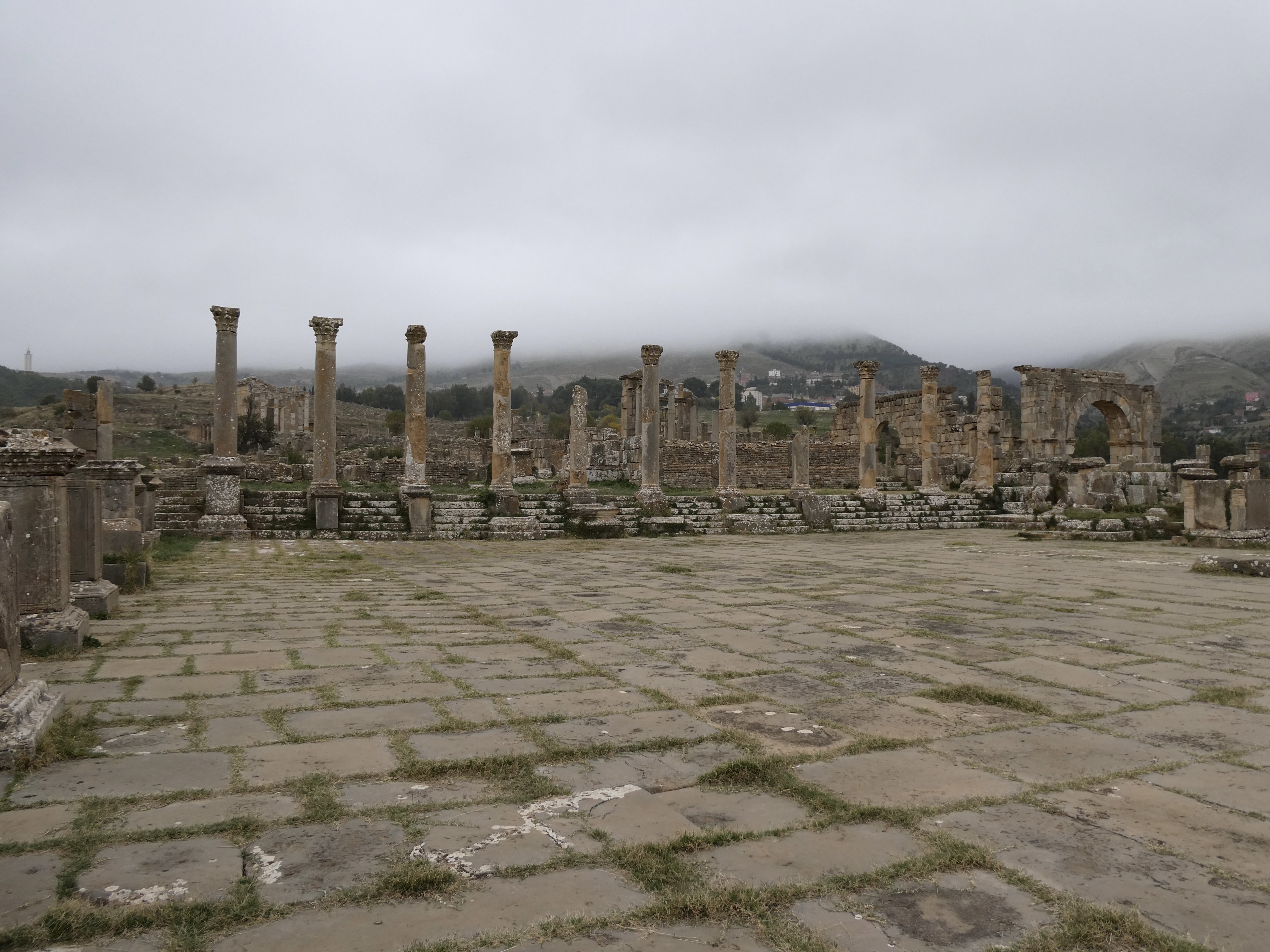
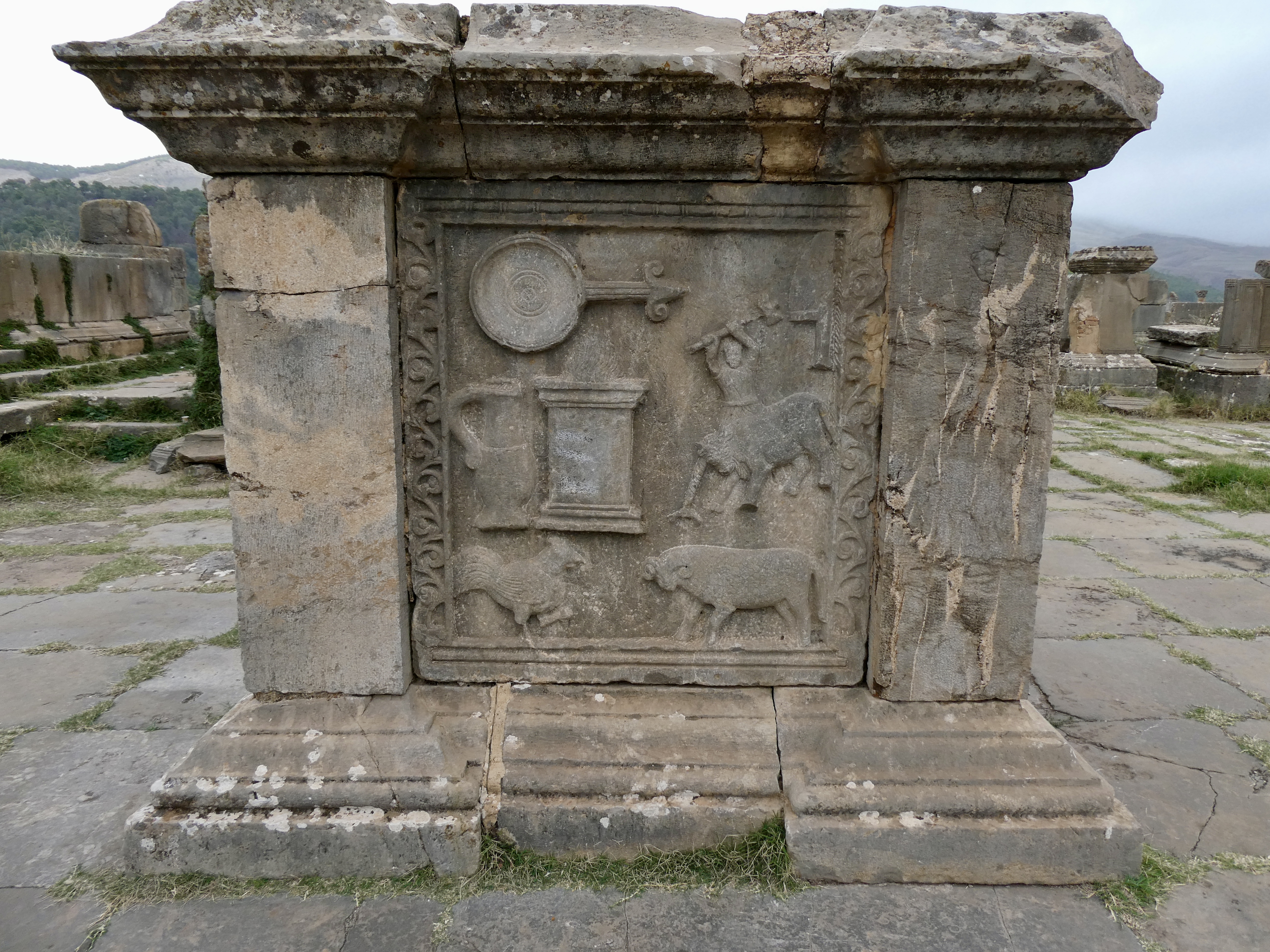
We then moved on to the original Forum. Now this Forum was quite spectacular. I entered the Forum through an arch into the large rectangular building that was surrounded by marble pillars. The Forum was used for social gatherings and animal sacrifices to their deities (in this case Fortuna). So at one end of the Forum there was a massive square stone alter in very good shape, which included carvings on one side of the stone alter showing the sacrifice process and on the front of the alter a carving of the deity Fortuna to whom sacrifices were made. Behind the large alter was a staircase, but it is not clear what purpose the staircase served. Nearby there was a smaller alter on which the sacrificial killings took place.

From here, we continued down the Roman road passing an underground jail with ZERO windows or lighting. And while crime was virtually nonexistent in the Roman cities, every once in a while there was a theft at the adjacent market so as soon as the thief was captured he or she was tossed into the underground jail. I took a look inside and immediately reversed course. NO THANK YOU!!


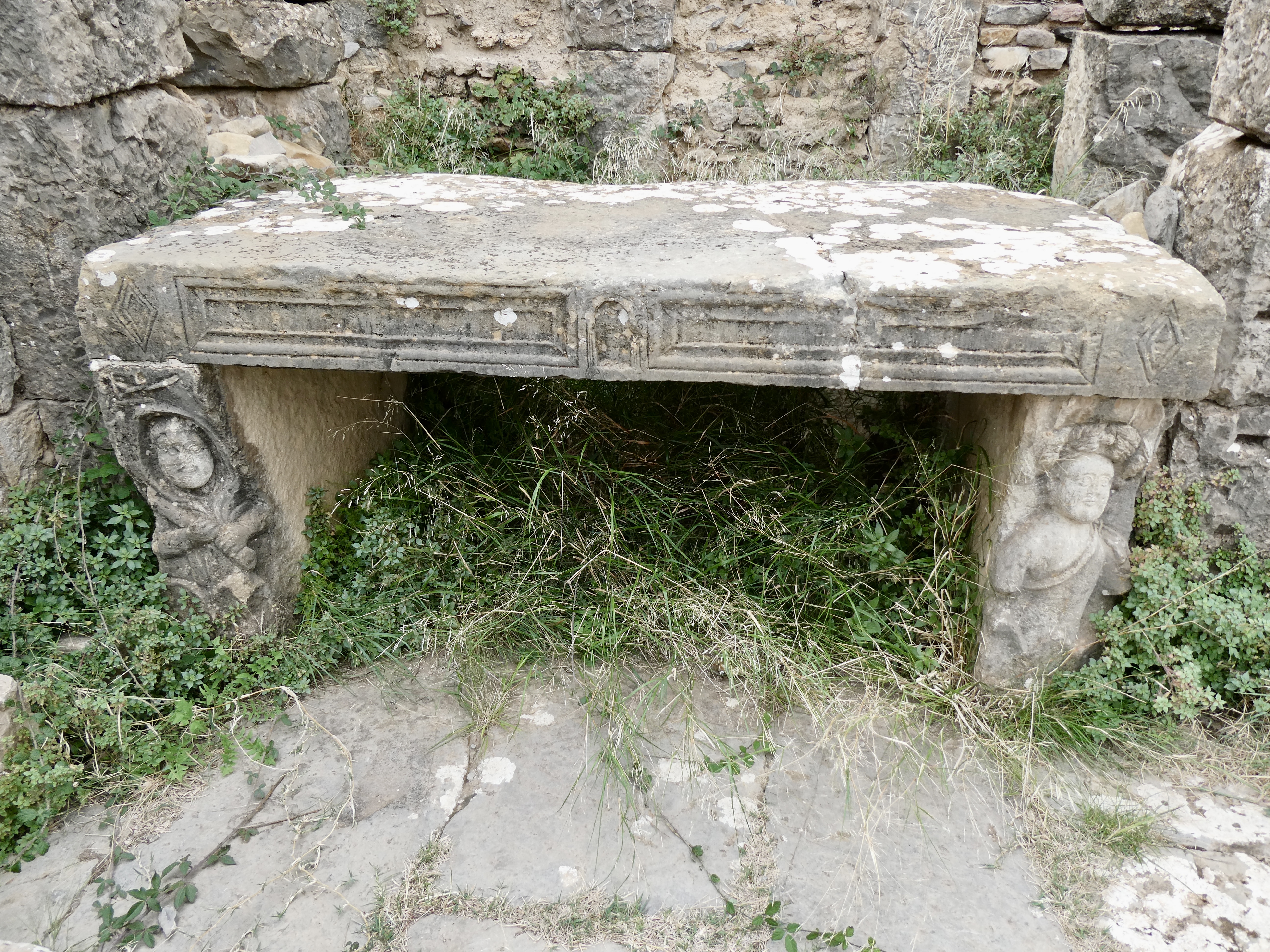
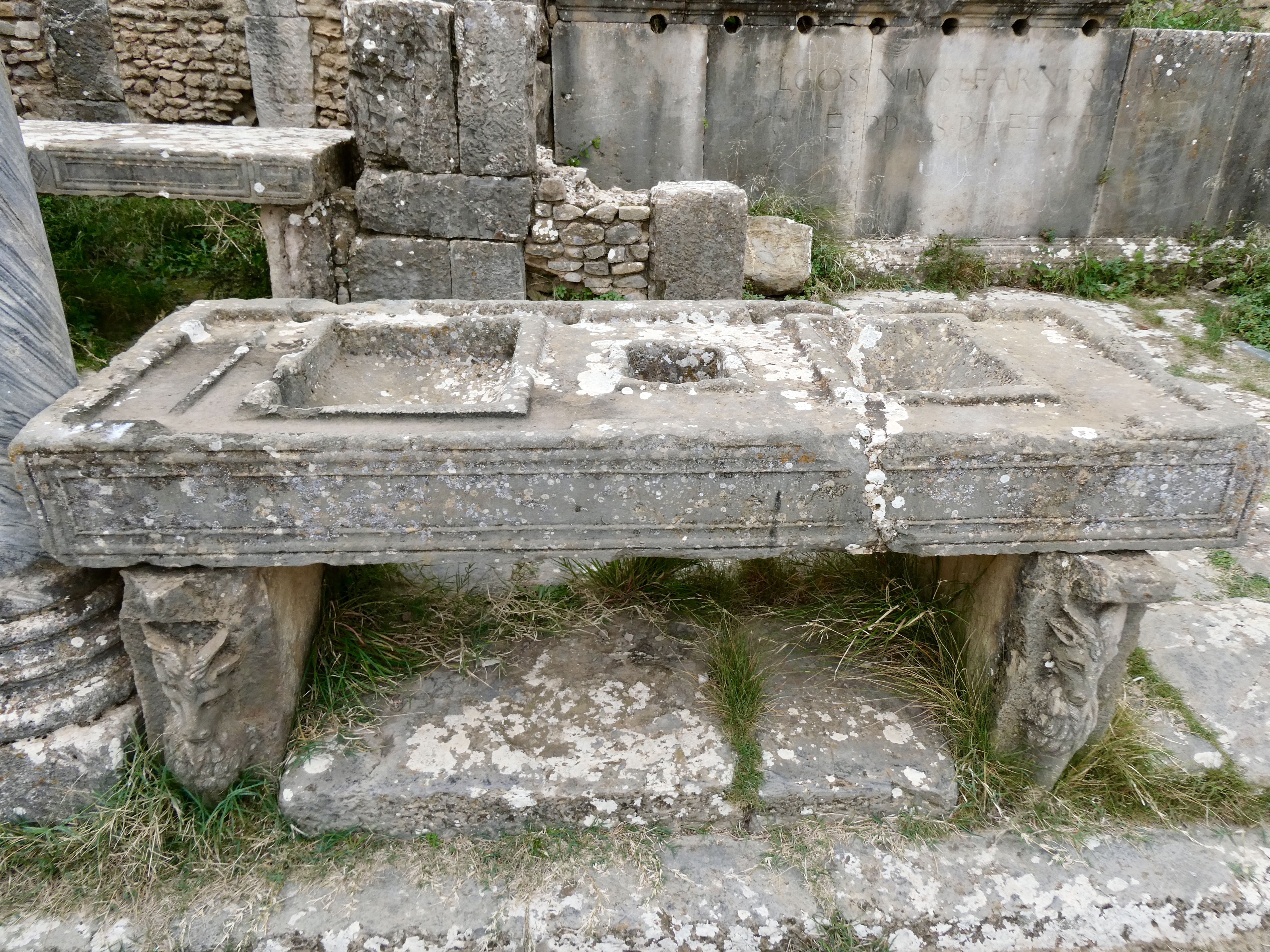
Our second to last stop was at the Market aka Marcellum and this place may have been my favourite ruins at the site. First there was a fabulous circular auction area in the middle of the market. However, the best part of the market was the number of intact tables around the perimeter of the market. At one time there was 18 stalls at this market selling various types of produce and each vendor had a table. While there are no longer 18 tables, some of the tables that remained were pretty spectacular with various figures carved into the legs of the tables, including lions and two men who were likely the vendors at the table stand.
And if all of this wasn’t enough, there was a virtually intact weigh station where produce of varying amounts would be weighed and priced according to weight. It was a fascinating peak into market history.
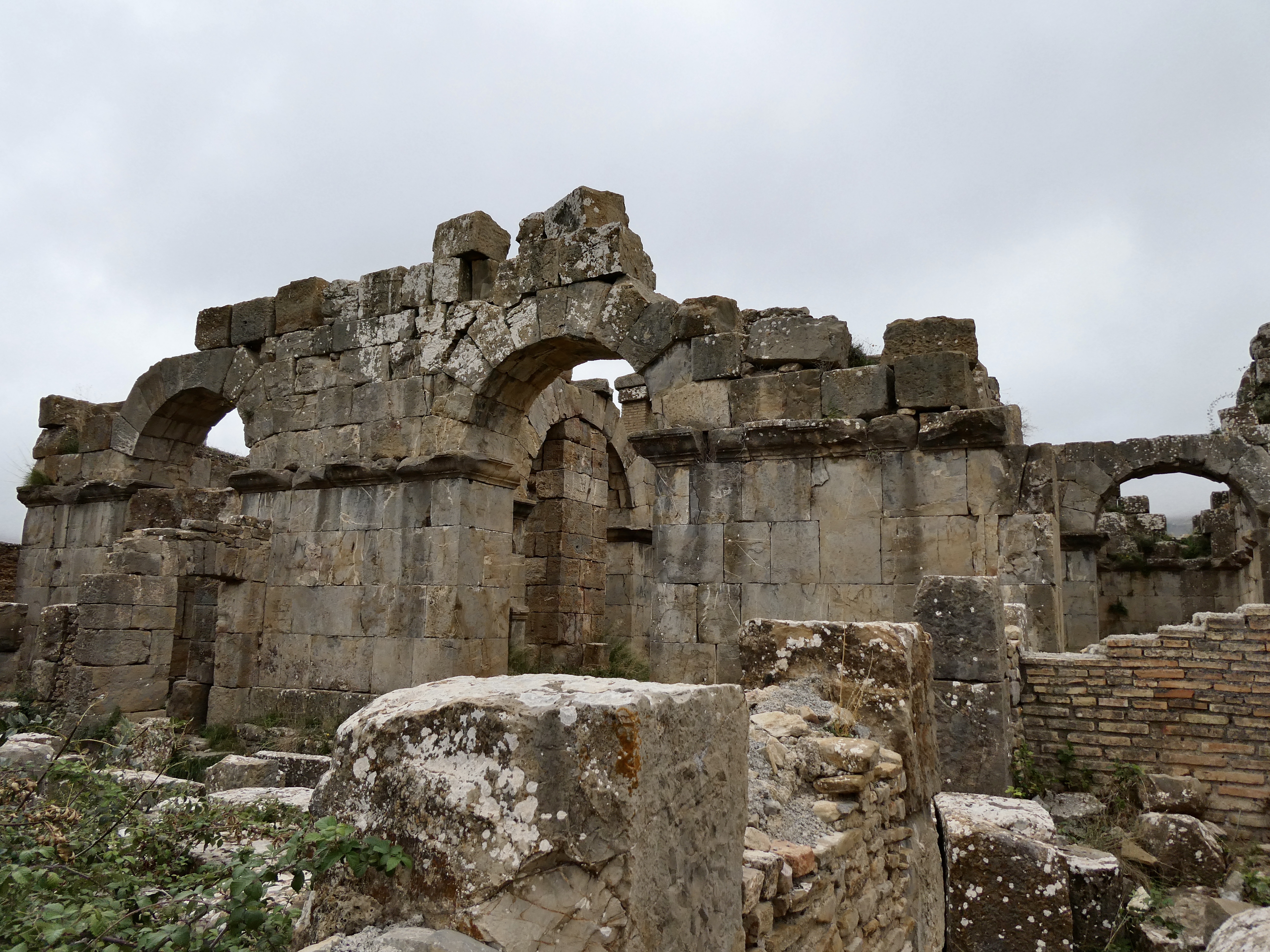

Our last stop at the ruins was that Capitolioum Temple with rooms for worshipping Jupiter, Juno and Minerva. And, of course, with Jupiter being the most important, the Jupiter temple was in the middle with … a massive and I mean massive marble bust of Jupiter. Naturally, I could not let a great opportunity like this pass by without a photo. (It actually reminded me of the large marble headless statute I posed with in Aphrodesia in Turkey. I need to track that picture down and do a side by side!)
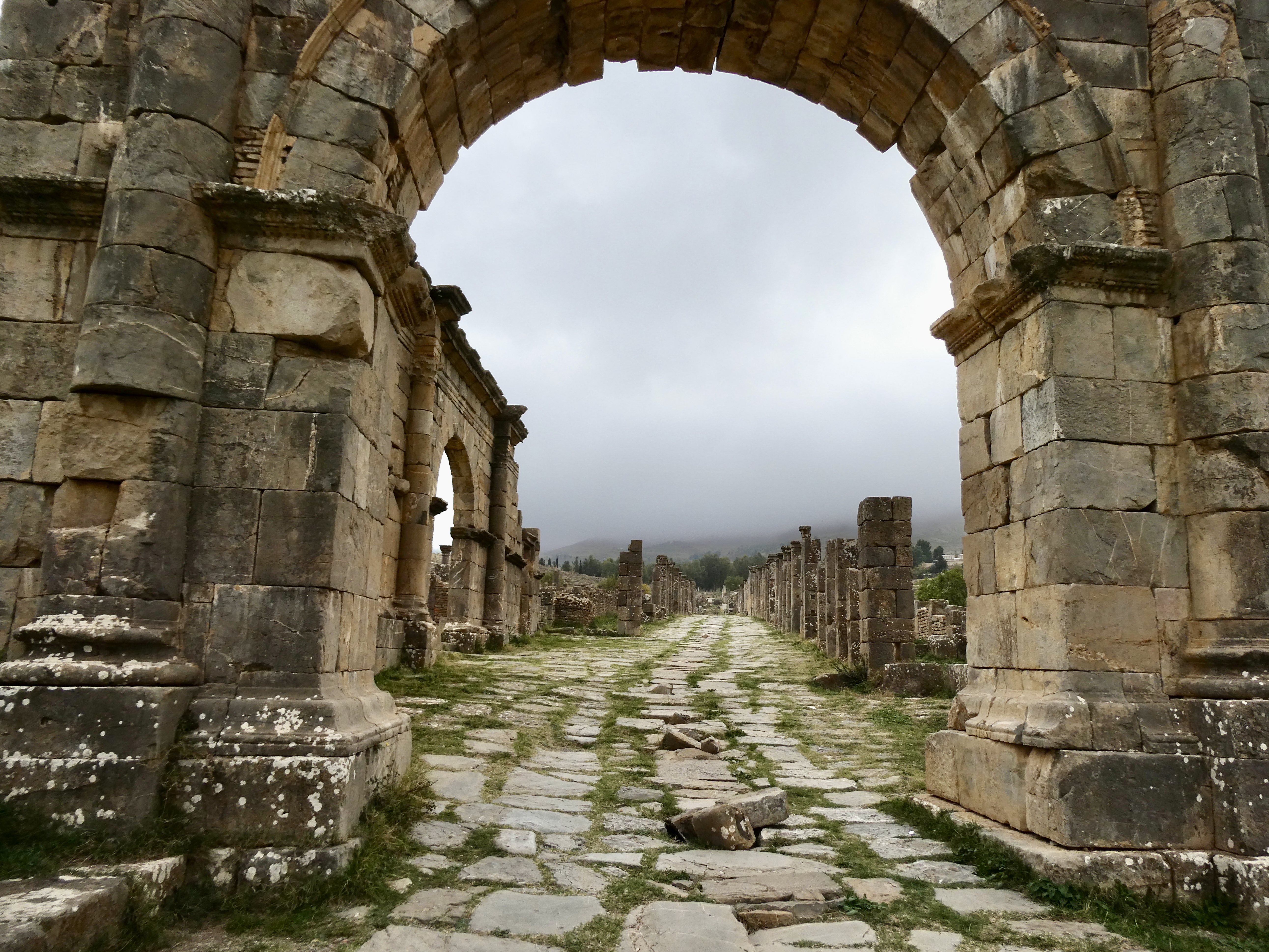
Anyway, sadly, that was the end of my tour of Djemila. We had spent over three hours wandering around the site and I have to say the Djemila ruins really are fantastic. It was a bit of challenge to get here, but entirely worth it.
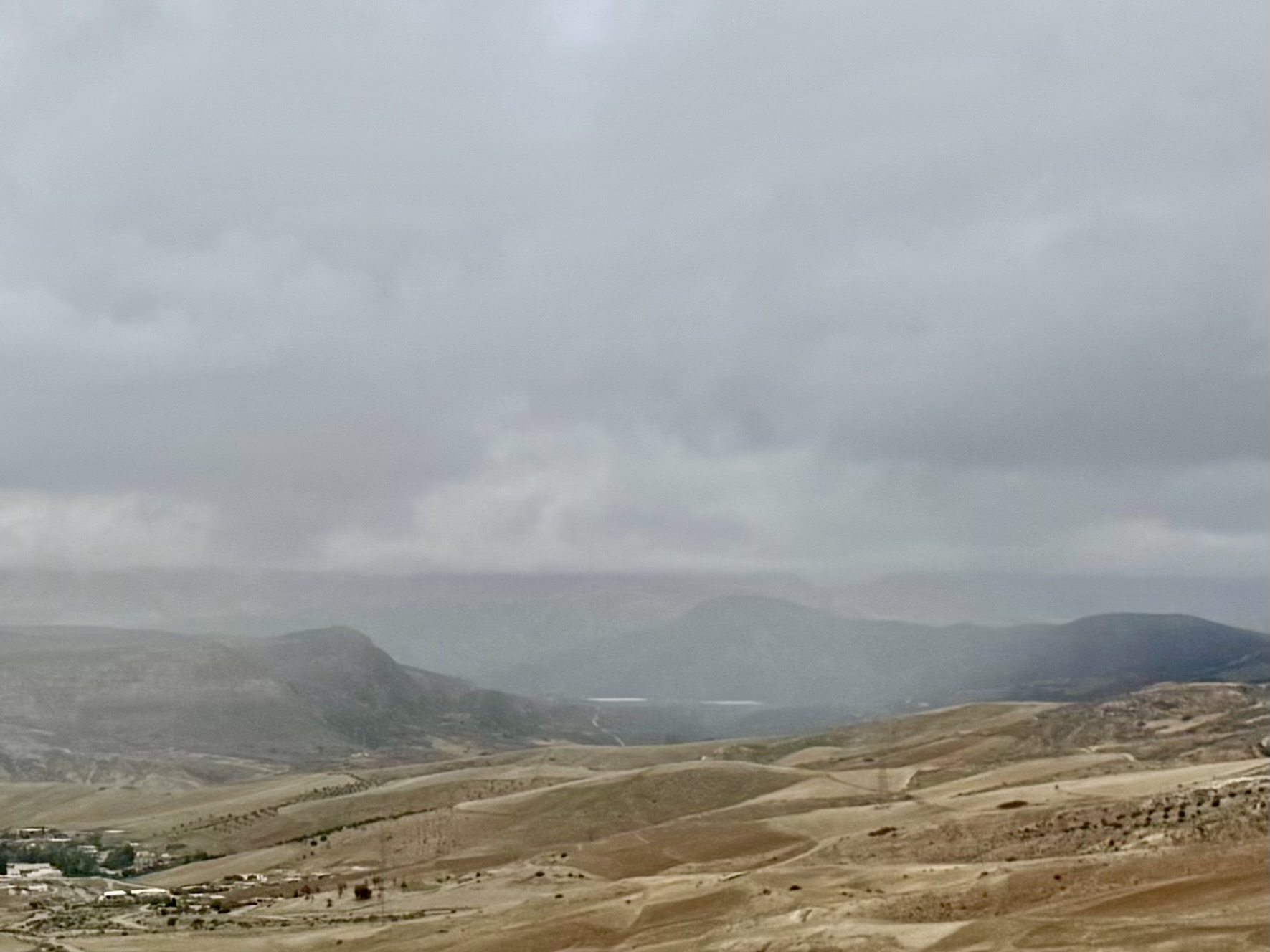
So once we reached the Roman road and walked all the way back to the entrance, we met back up with Majed and began the long trek (four hour drive) to Algiers. The drive took us through the mountain villages near Djemila, back through some foggy conditions and finally onto the main highway.
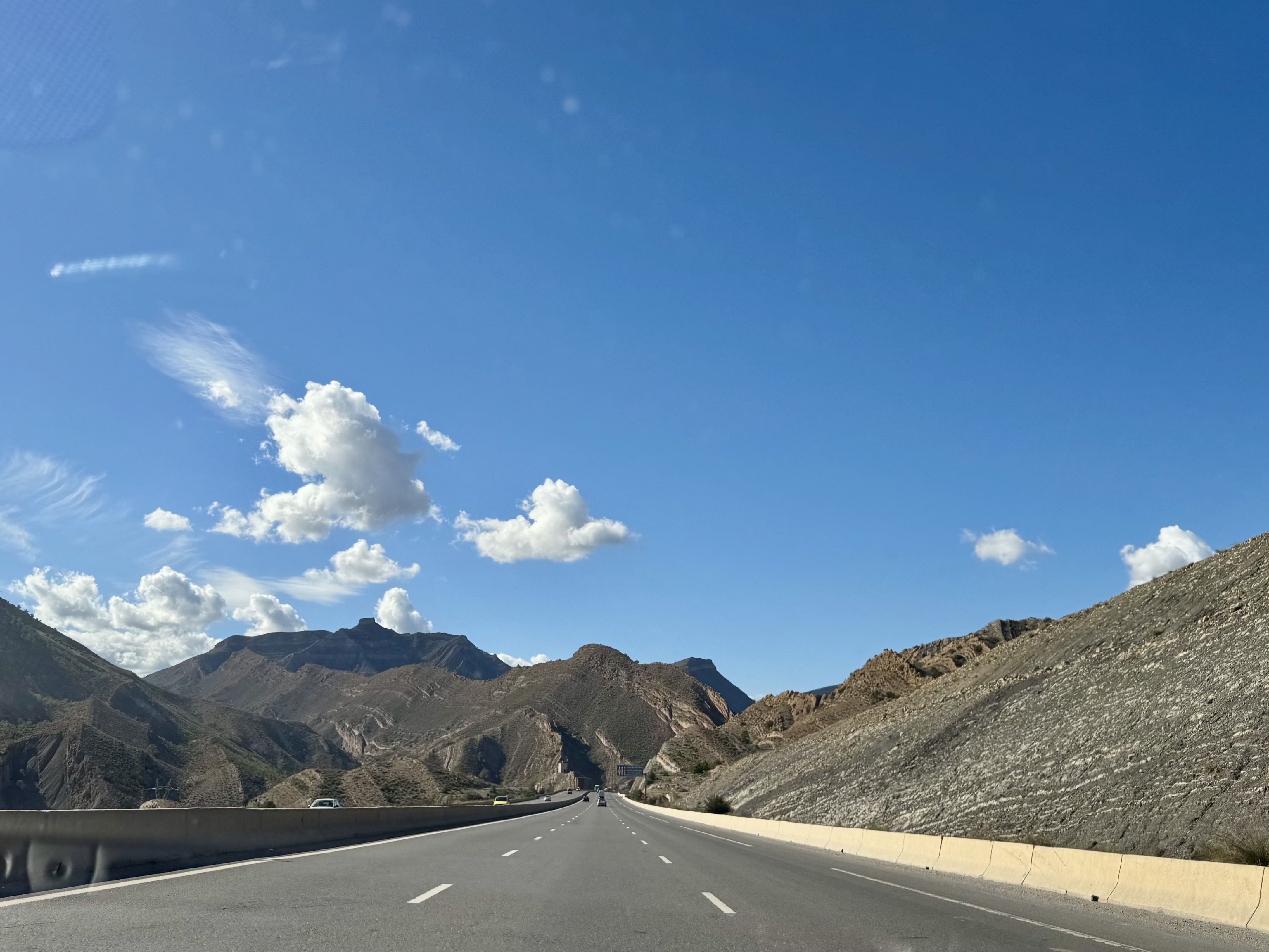
Once on the highway, the weather started to clear and by the time we were half way to Algiers it became sunny and warm again. And it was at this point that we started our drive past the absolutely gorgeous Tell Atlas Mountains fronting tiny villages and farming communities. The drive past the mountains lasted for well over an hour and I couldn’t stop staring at them. Stunning.
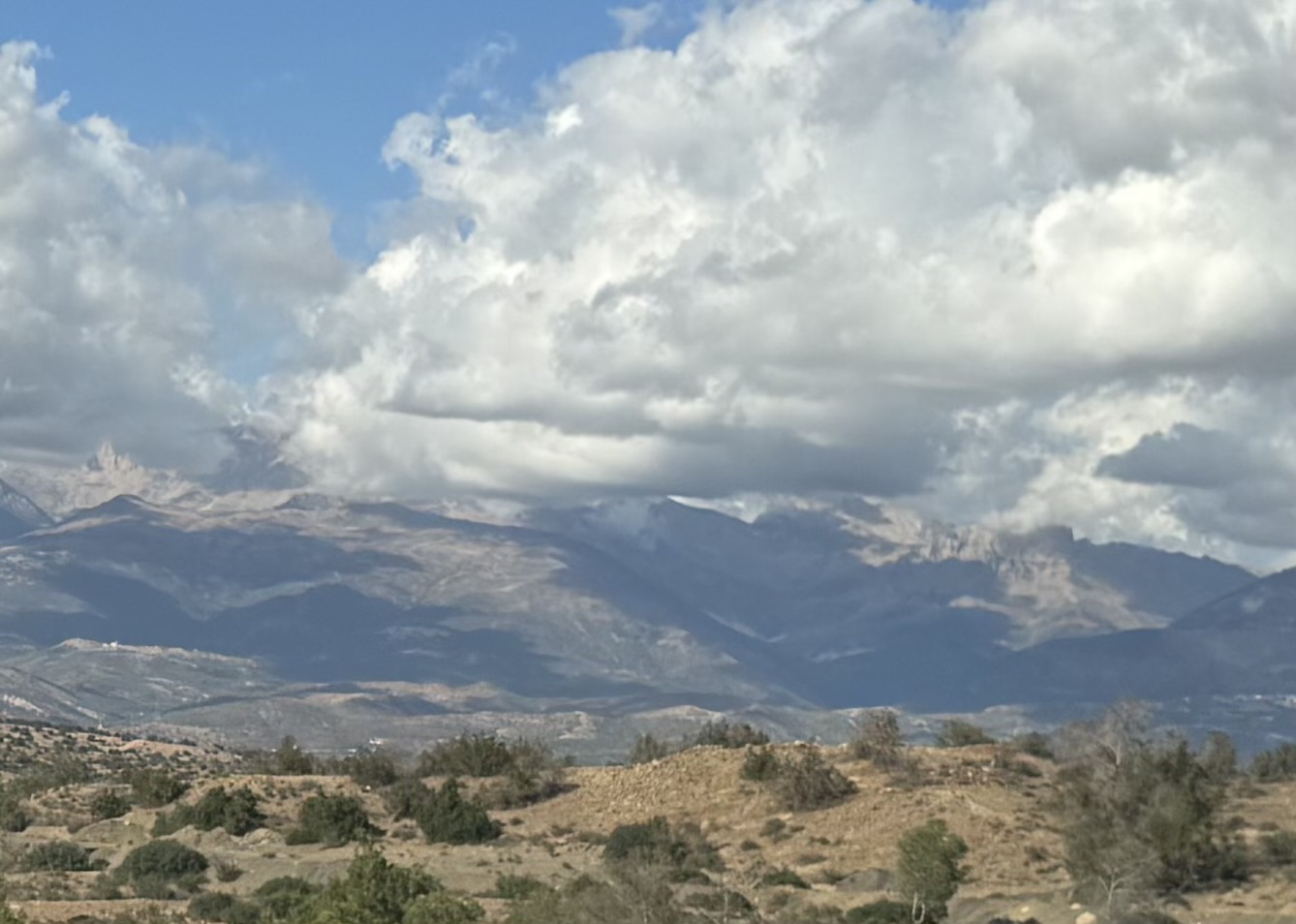
We eventually reached Algiers at about 4:15 just in time for rush hour traffic. We reached my hotel at just before 5:00 where I tearfully said goodbye to Majed and Nahla. They had been superb companions and outstanding ambassadors for their amazing country. Absolutely top notch driver and guide.
So tomorrow I am off for one more day of Roman ruins on the Mediterranean coast to see the nearby ruins in Cherchell and Tipasa. Then it is a couple off days before leaving Algeria and heading south to Senegal and The Gambia.
