So my five hour flight from Algiers to Dakar turned into the “Neverending Story”. We were supposed to leave at 8:05 p.m. and when that time came and went without any information I started to wonder if I was actually going to fly out. By 8:30 p.m. our gate had changed and the departure time was now 10:00 p.m. Great. Then the departure time changed to 10:30 p.m. However, there was still no sign of anyone at the gate or any pilots or flight attendants.
At 9:15 p.m. someone showed up to give us water and juice boxes (seriously), but still no update. At 9:30 p.m. pilots and flight attendants arrived … yay!!! Not so fast. They had to wait for a police escort to the plane (again … seriously). By 10:30 p.m., someone finally showed up and called us up to board the plane. However, we did not board until 10:45. We finally pushed off from the gate at 11:15. Five hours later we landed in Dakar at 3:00 a.m. (there is a one hour time change backwards from Algiers to Dakar). I sped through immigration and the luggage was offloaded from the plane in record time so by 3:20 a.m., I was meeting my poor driver and we were setting off for a one hour (you heard that right) drive to Dakar. Gesh. I finally got to bed at 4:35 a.m. Fortunately, I had changed the time of my Dakar tour to start at 10:00 a.m. during the ongoing Air Algiers debacle.
Anyway, right at 10:00 a.m., my guide Malang arrived with driver Simba to take me on a quick tour around Dakar before catching the 11:00 a.m. ferry to Goree Island. We would pick up the rest of Dakar after the Goree Island trip.
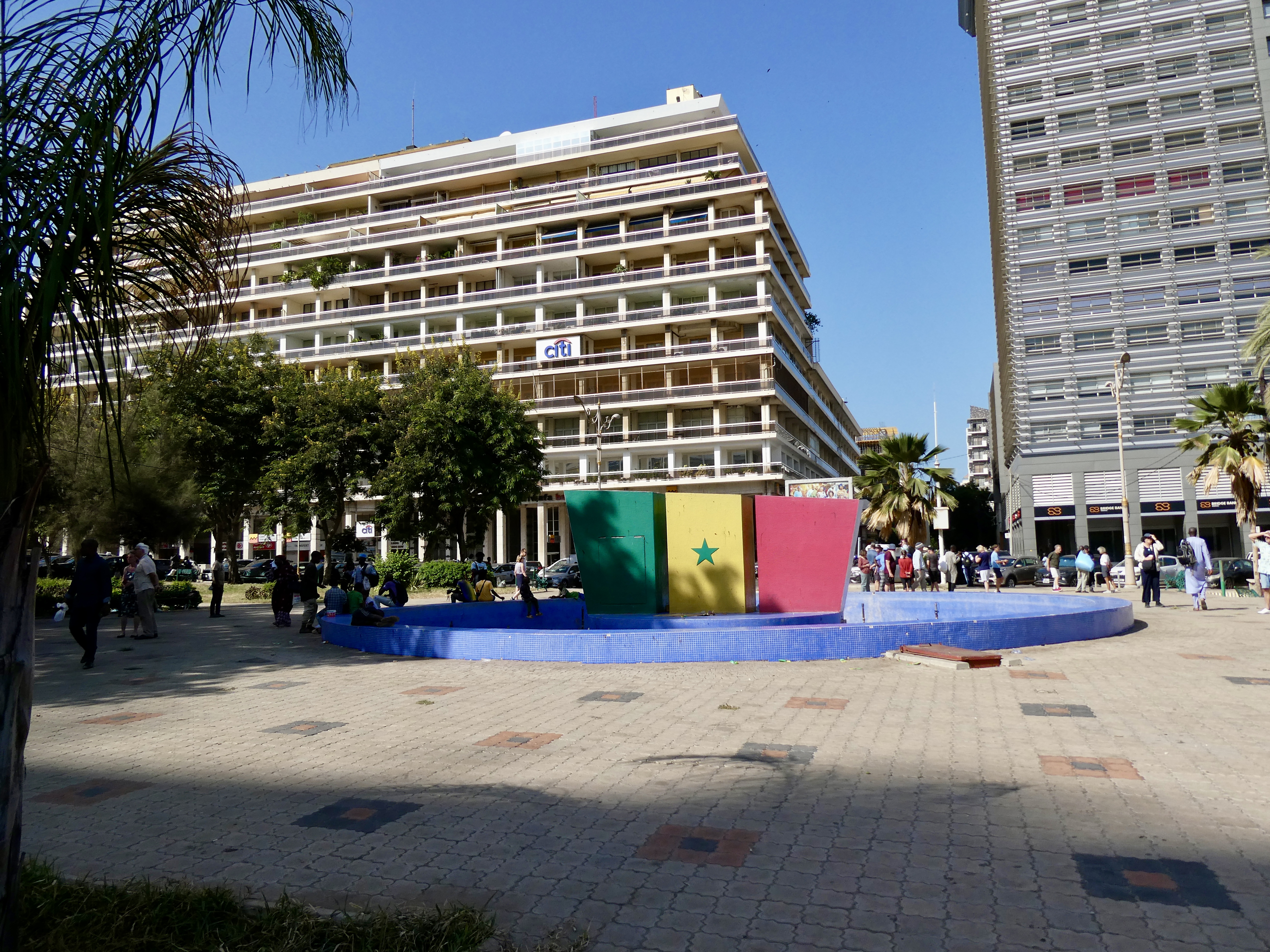
So we started out by driving Place de l’Indépendance, which is apparently Dakar’s Times Square. It is surrounded by old French colonial buildings and in the center of the square is a large concrete Senegalese flag. Now Senegal achieved freedom from the French in 1960 and the plaza and the flag are a tremendous source of pride for the Senegalese people. Unfortunately, the water fountain in front of the flag needs a bit of TLC, but other than that, folks seemed to be enjoying their green space.
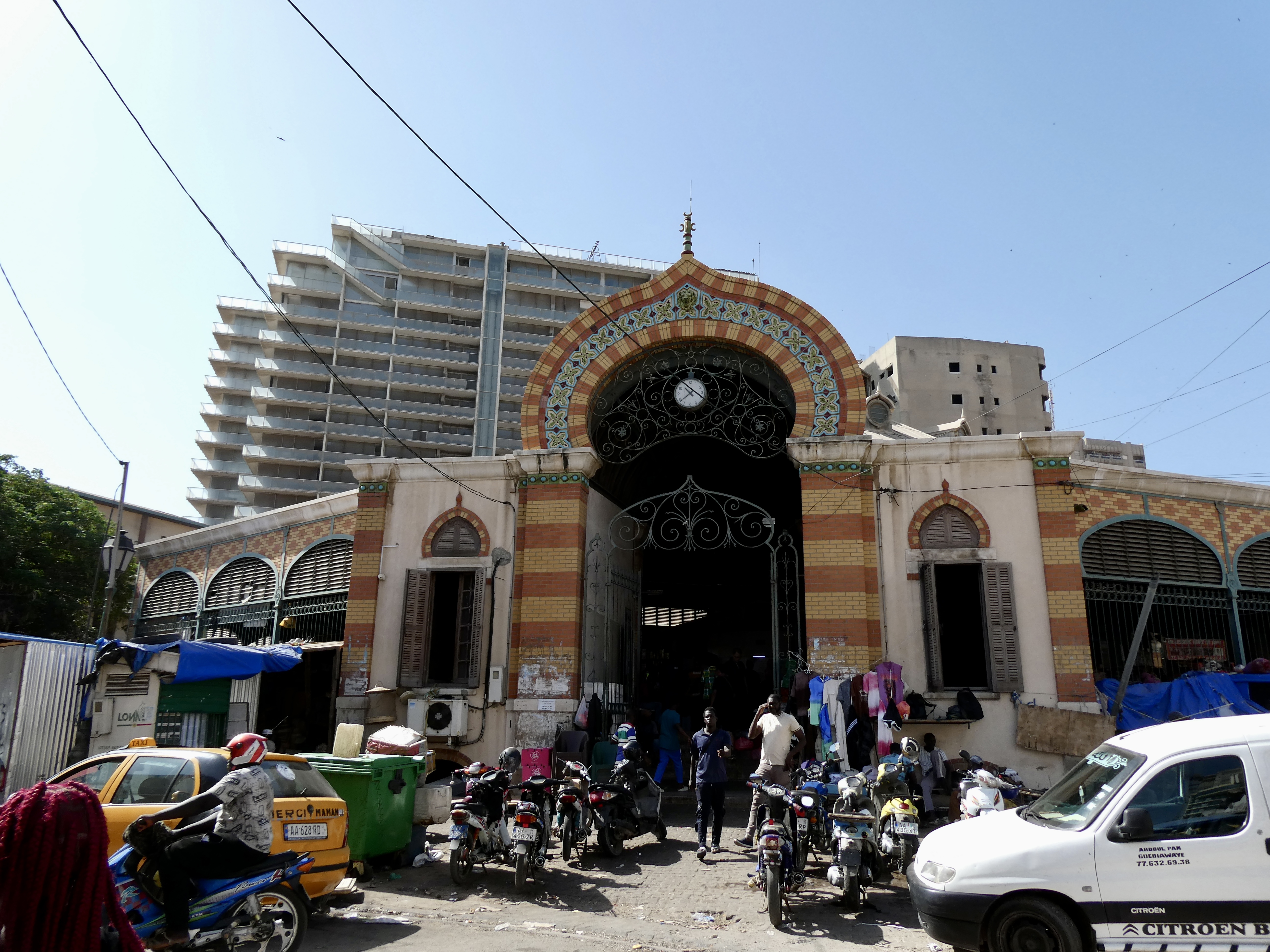
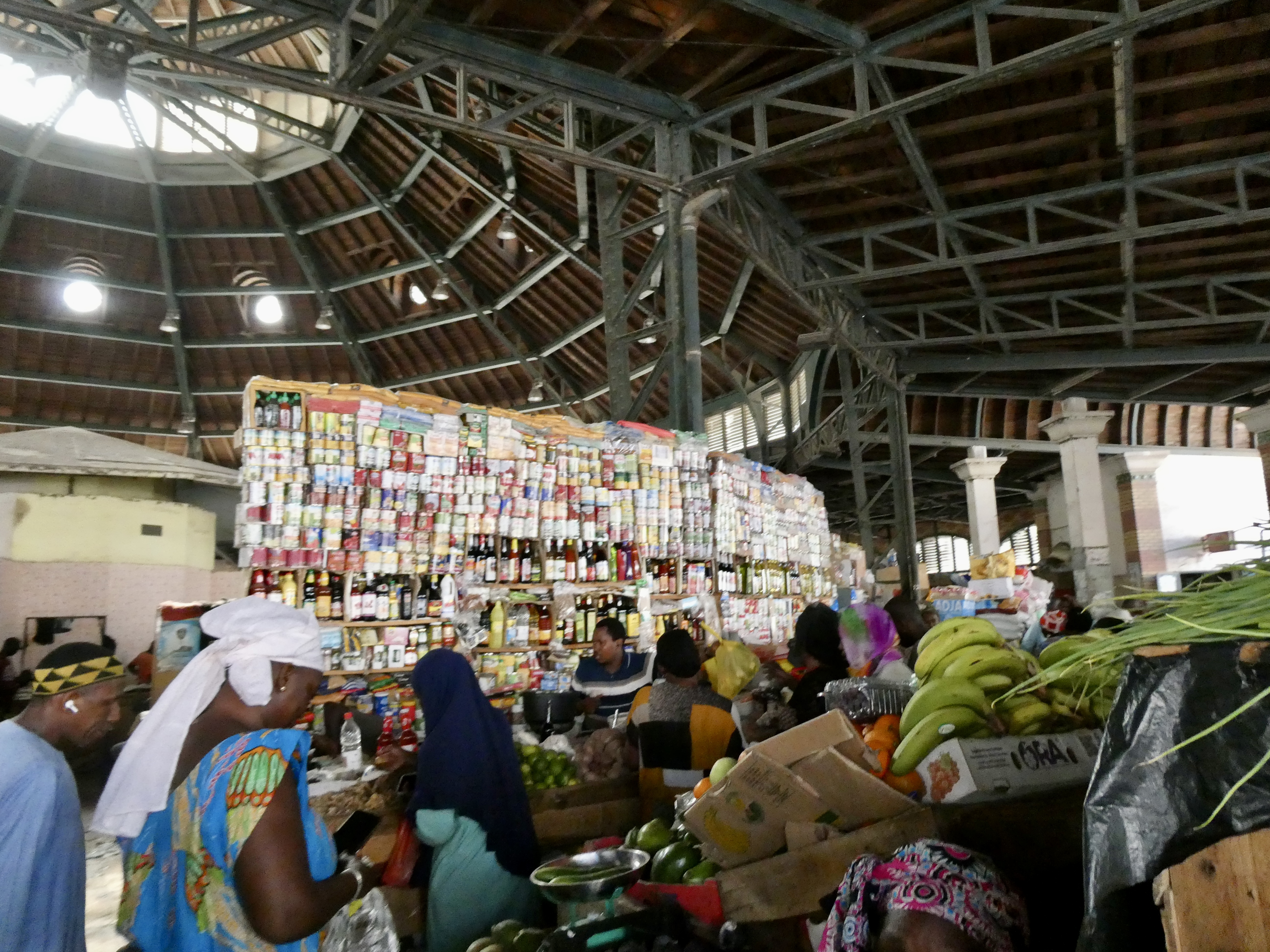
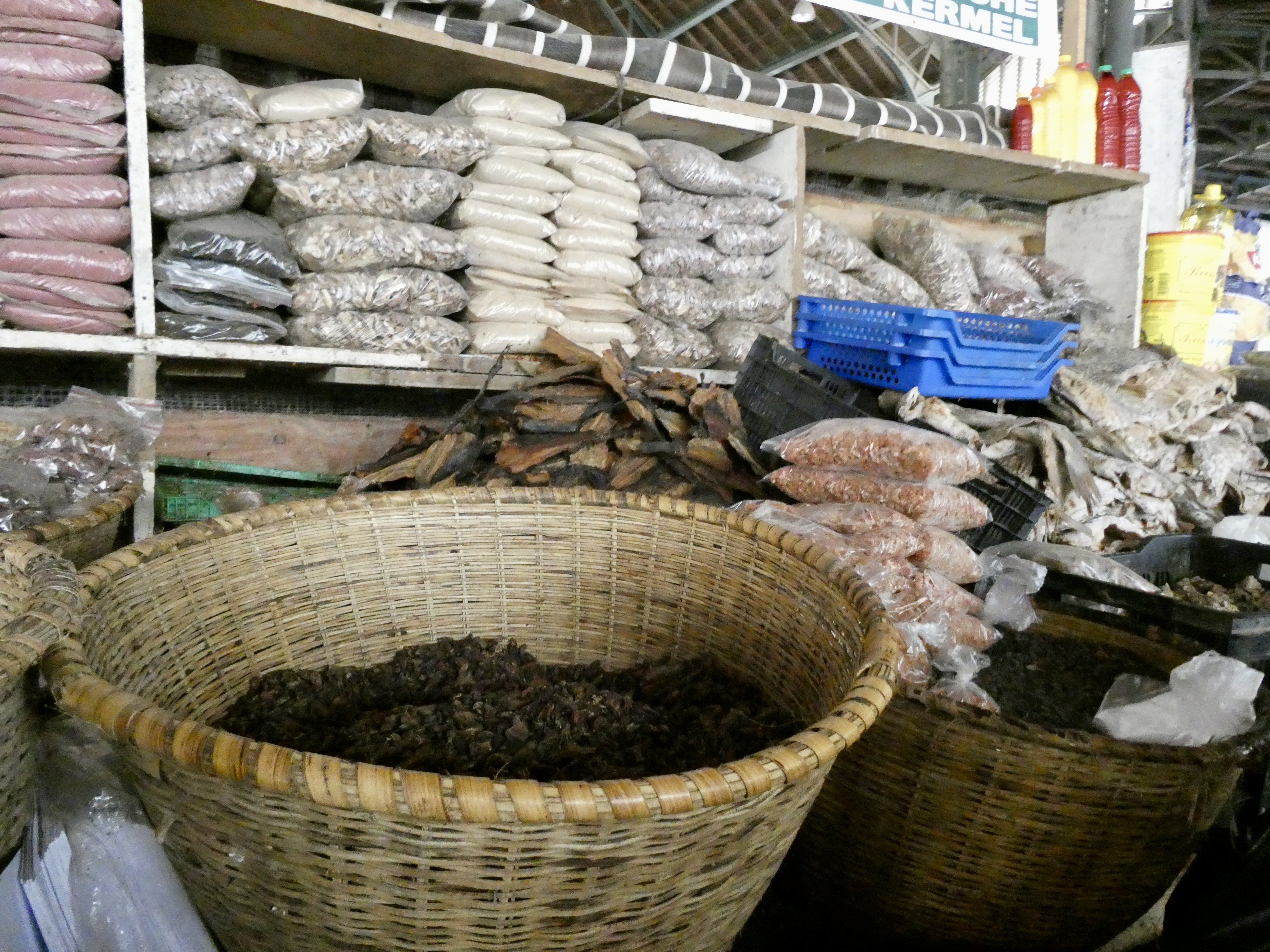

From here, we entered the chaos that is the Dakar Colonial Market. Horns honking, motorcycles zipping around cars, men and women bartering on the street, women walking around with their wares on top of their head and the smell of cooking food in the air. (Awe Africa how I have missed you).
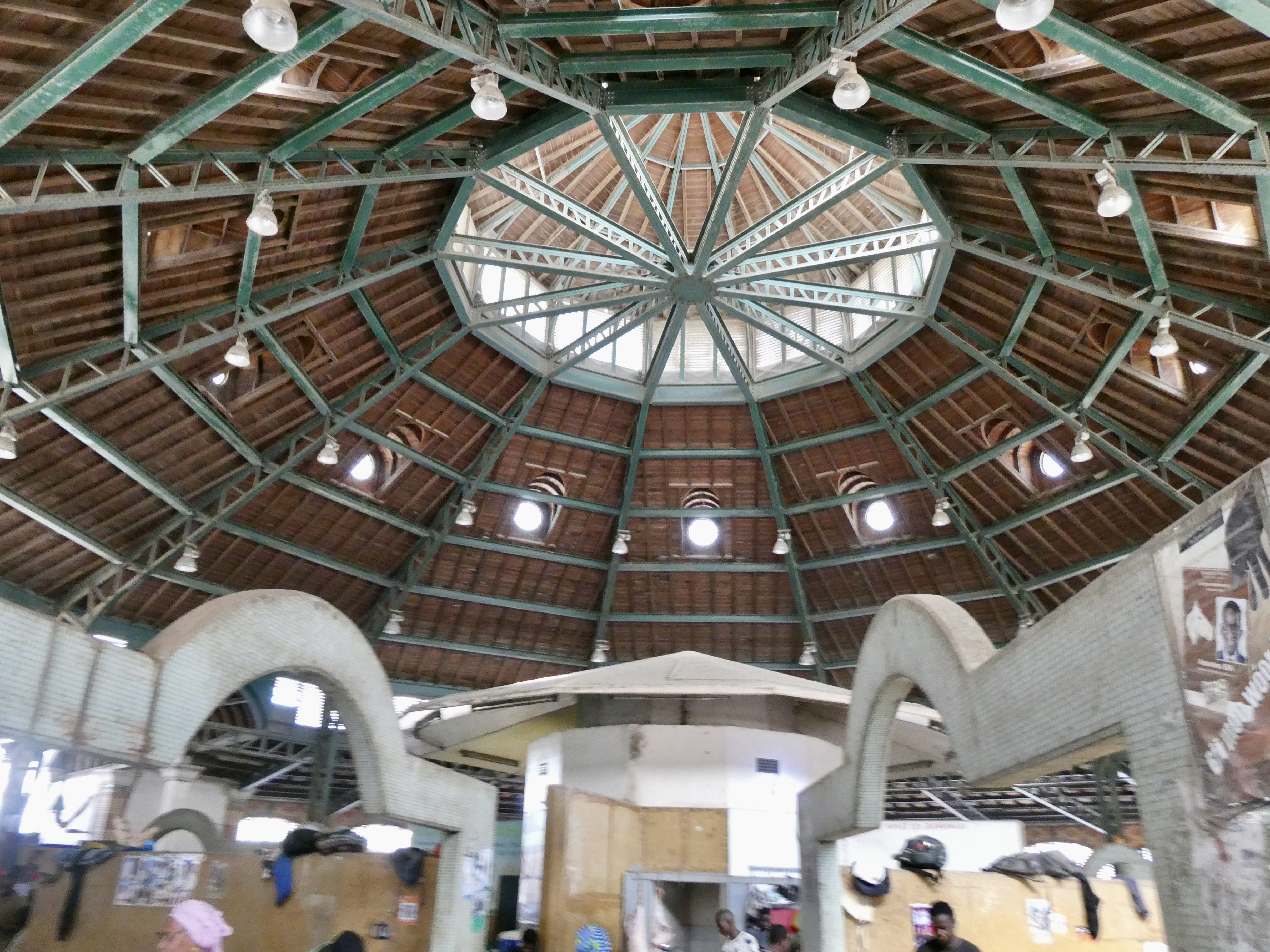
Anyway, we reached the old Colonial Market, which was apparently opened some time between 1927 and 1937 and is clearly a place where the locals shop. Now the building itself was quite spectacular with a gorgeous domed wooden ceiling, but the shopping was chaotic at best. The aisles were very, very narrow and foodstuffs were piled everywhere.
And at one end of the market was the fish vendors and boy was it smelly. Fortunately, the area was pretty wet so Malang suggested we pass on the fish stalls.
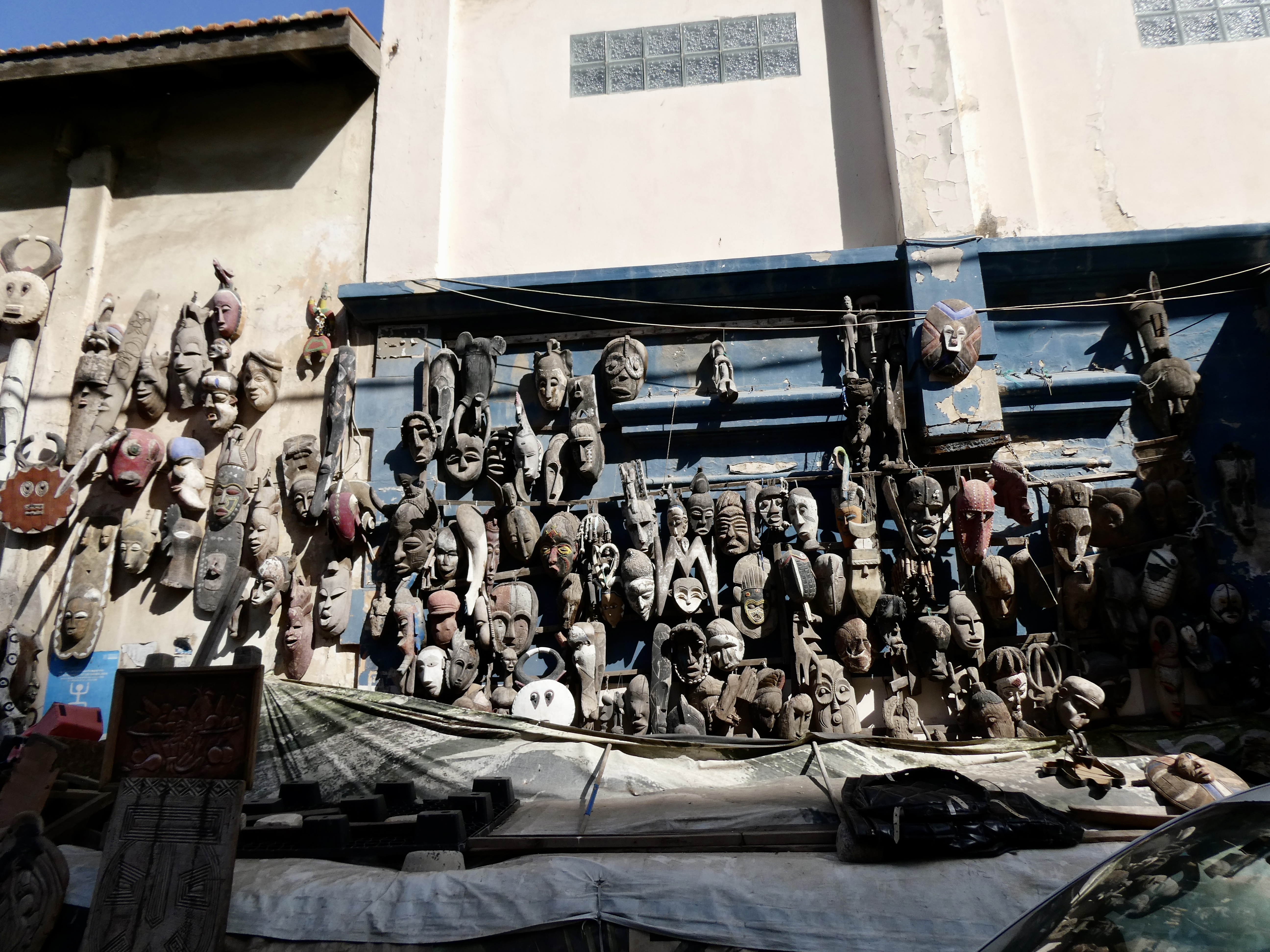
Outside the market there were lots of flower vendors along with a guy with an inordinate number of wood carved African masks and statutes. Now I could not figure out if it was a museum (as he billed it) or if he was trying to sell his collection. The guy repeatedly tried to get me to purchase a turtle as well as some huge statute that would not fit into any piece of luggage I currently have with me. I begged off and he did not seem happy.
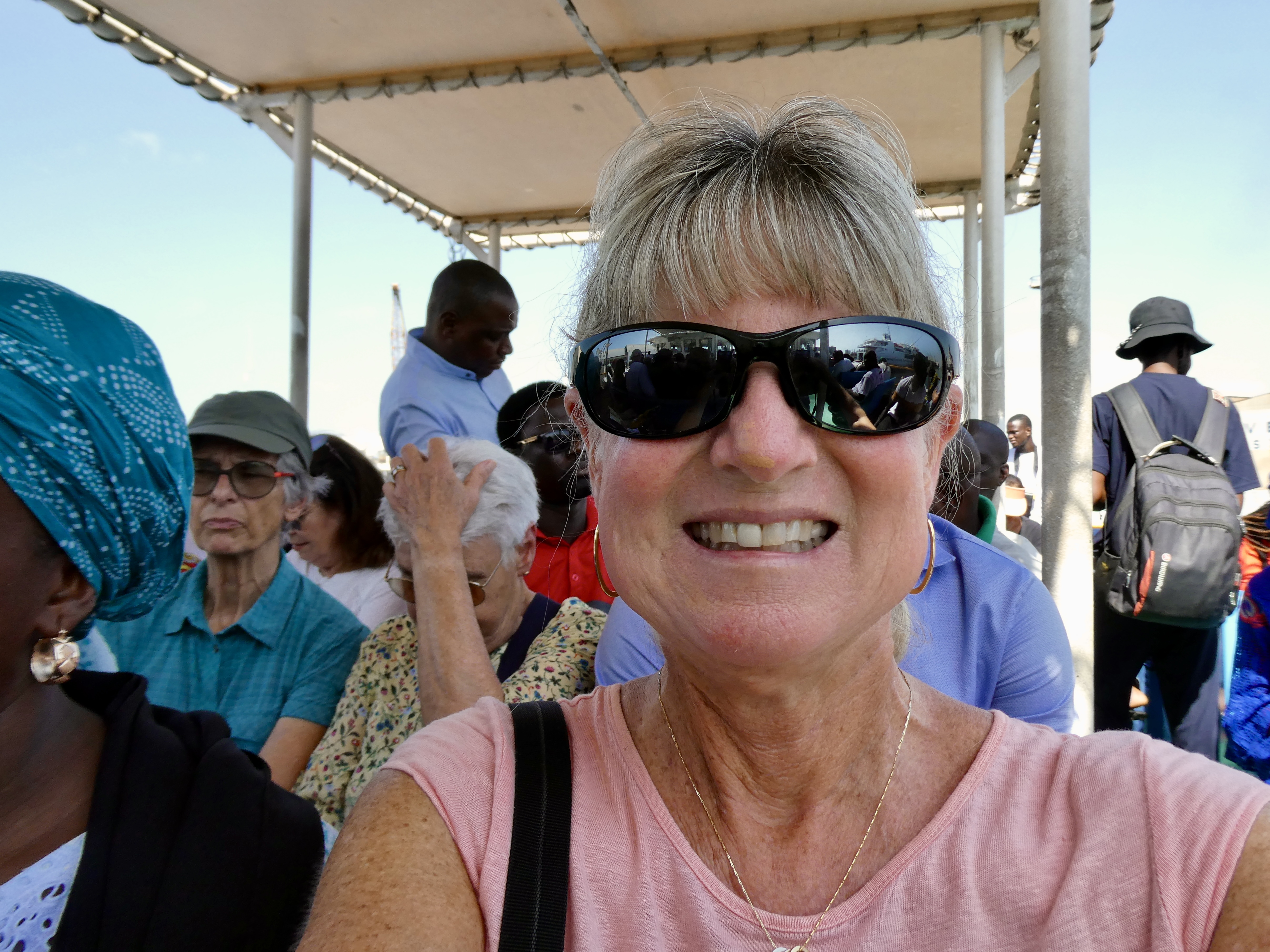
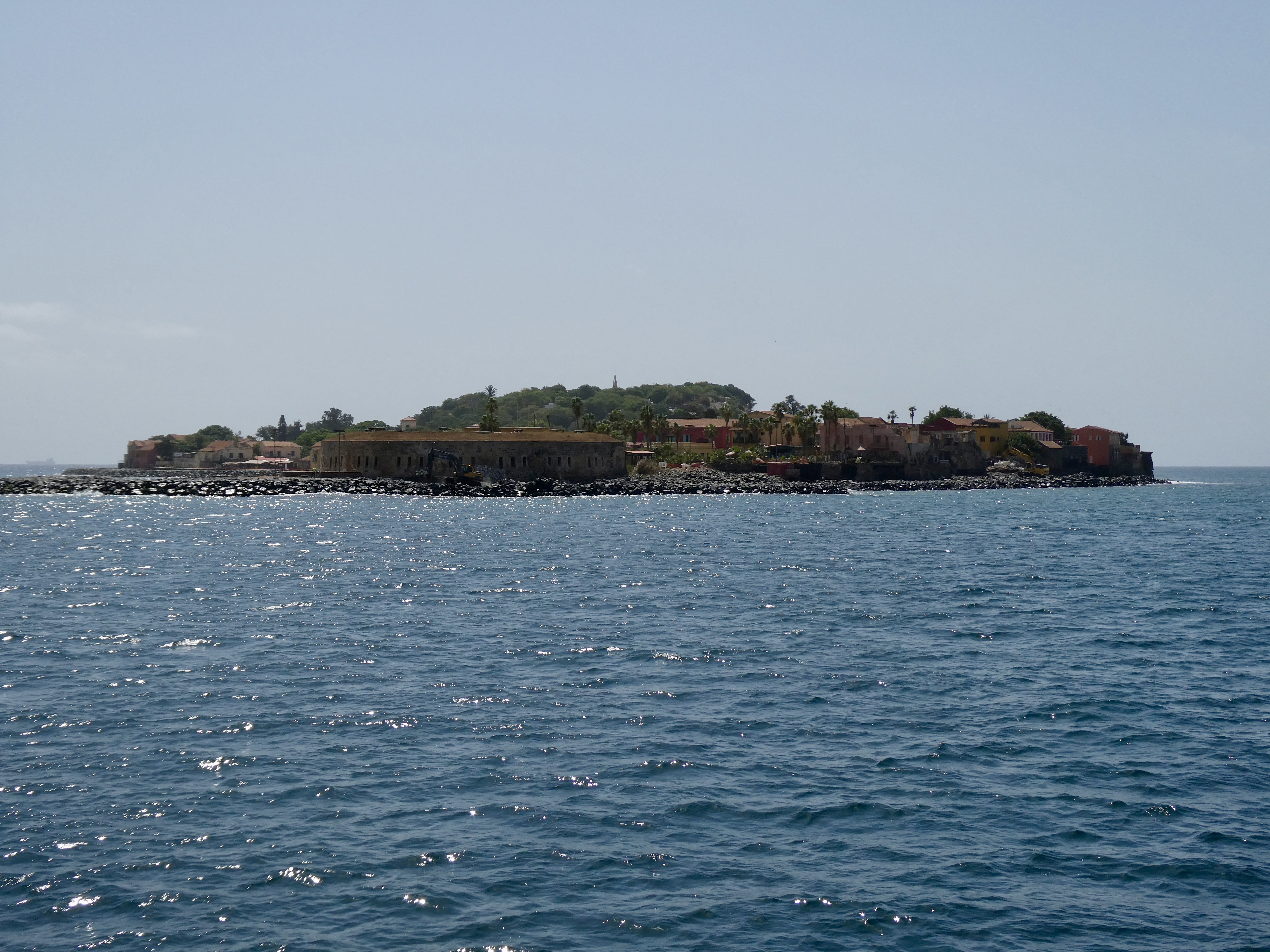
From here, we headed in the direction of the port for the short 20 -30 minute ferry ride to Goree Island. Unfortuantely, the President of Senegal decided he needed to drive directly along the waterfront this morning so we ended up sitting in traffic for so long that we had to climb out of the car and make a mad dash down the road to the ferry terminal. Fortunately, the ferry was a little tardy (15 minutes late) leaving so once I presented my passport (a requirement to go to Goree Island) and ticket we made it onto the ferry.
Now Goree Island is about 3 km from Dakar and was discovered by the Portuguese in the 15th century. Between the 15th century through the 19th century, Goree Island was an important trading post. However, during much of this same time period (1536 to 1848) first the Portuguese and then French enslaved West Africans on Goree Island forcibly selling and sending them to the Americas as slaves.
The conditions the men, women and children were held in while awaiting transport across the Atlantic were horrific. Dark cramped cells with little sunlight or fresh air. It is little wonder that many never made it out of Goree Island.
Now I learned that there is a debate whether Goree Island was the primary hub of the West African slave trade, but what is not debatable is the site has been preserved as an important reminder of the dark Goree Island past. And in 1978, Goree Island was designated as a UNESCO World Heritage Site.
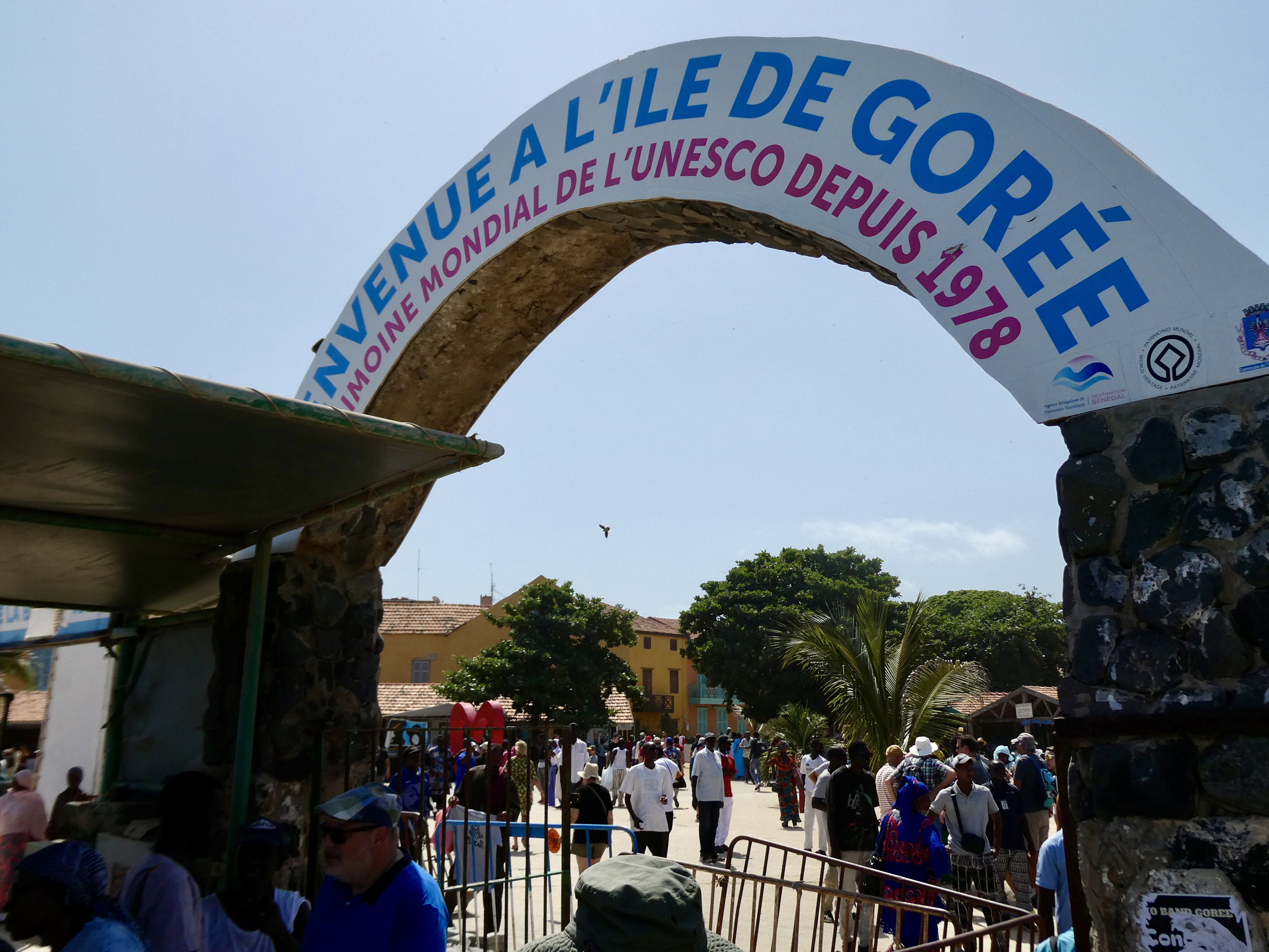
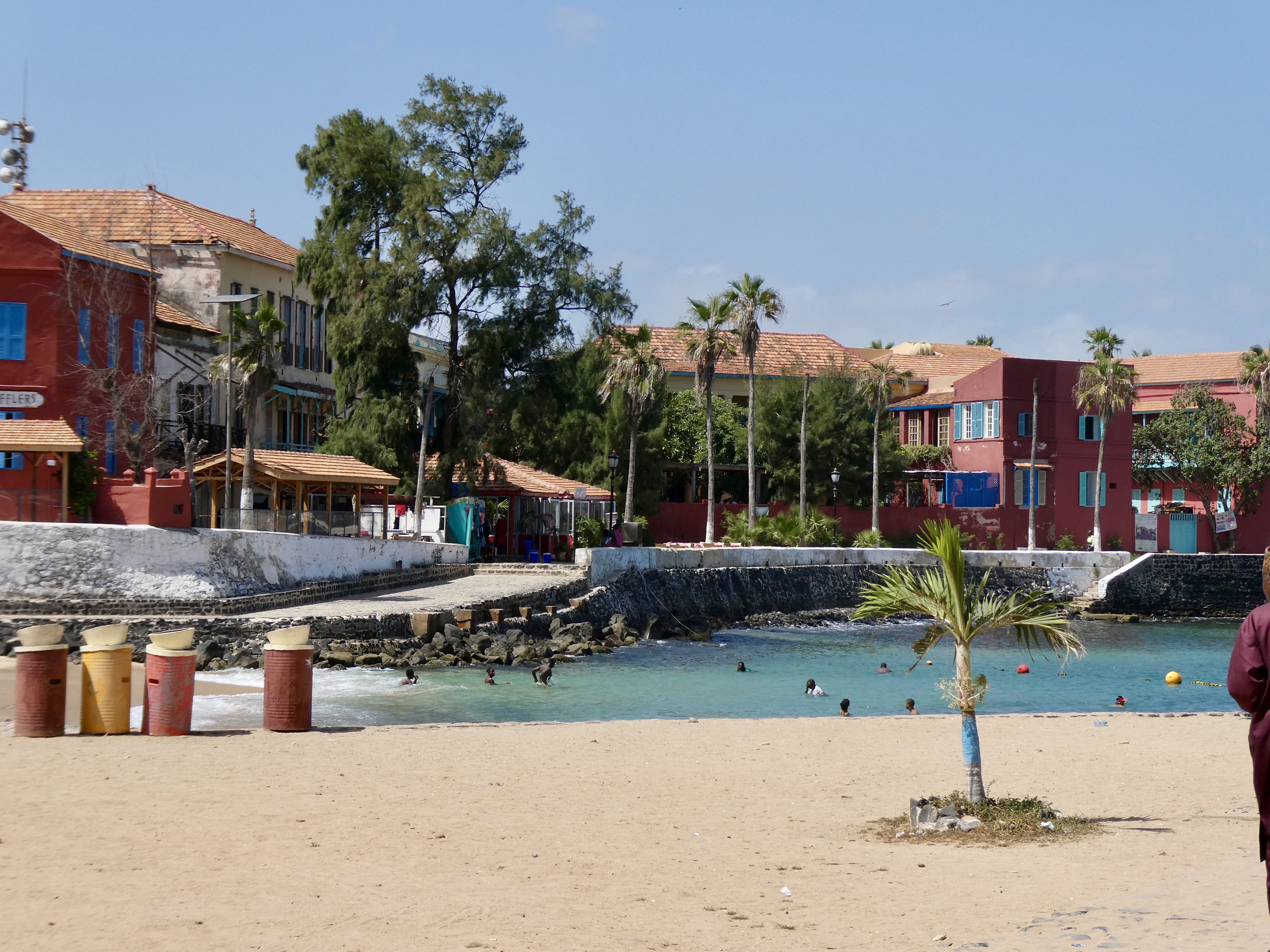
So by 11:30 a.m., we were docking on the pedestrian only Goree Island and meeting my local guide who was going to show me around. Now the first thing I noticed about the island was the sharp contrast between past and present. Colourful waterfront colonial buildings and narrow sandy lanes belied the the dark past.
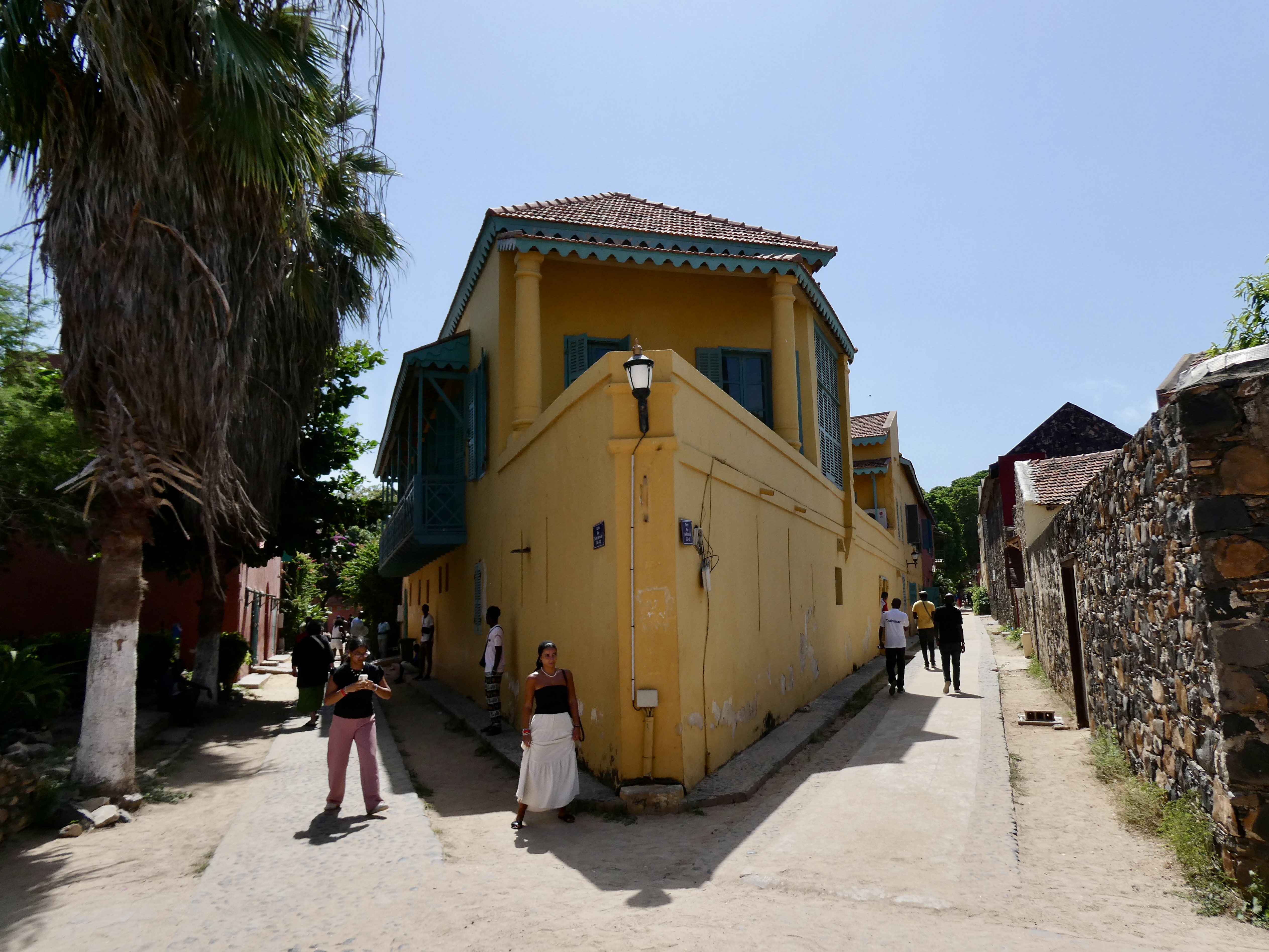
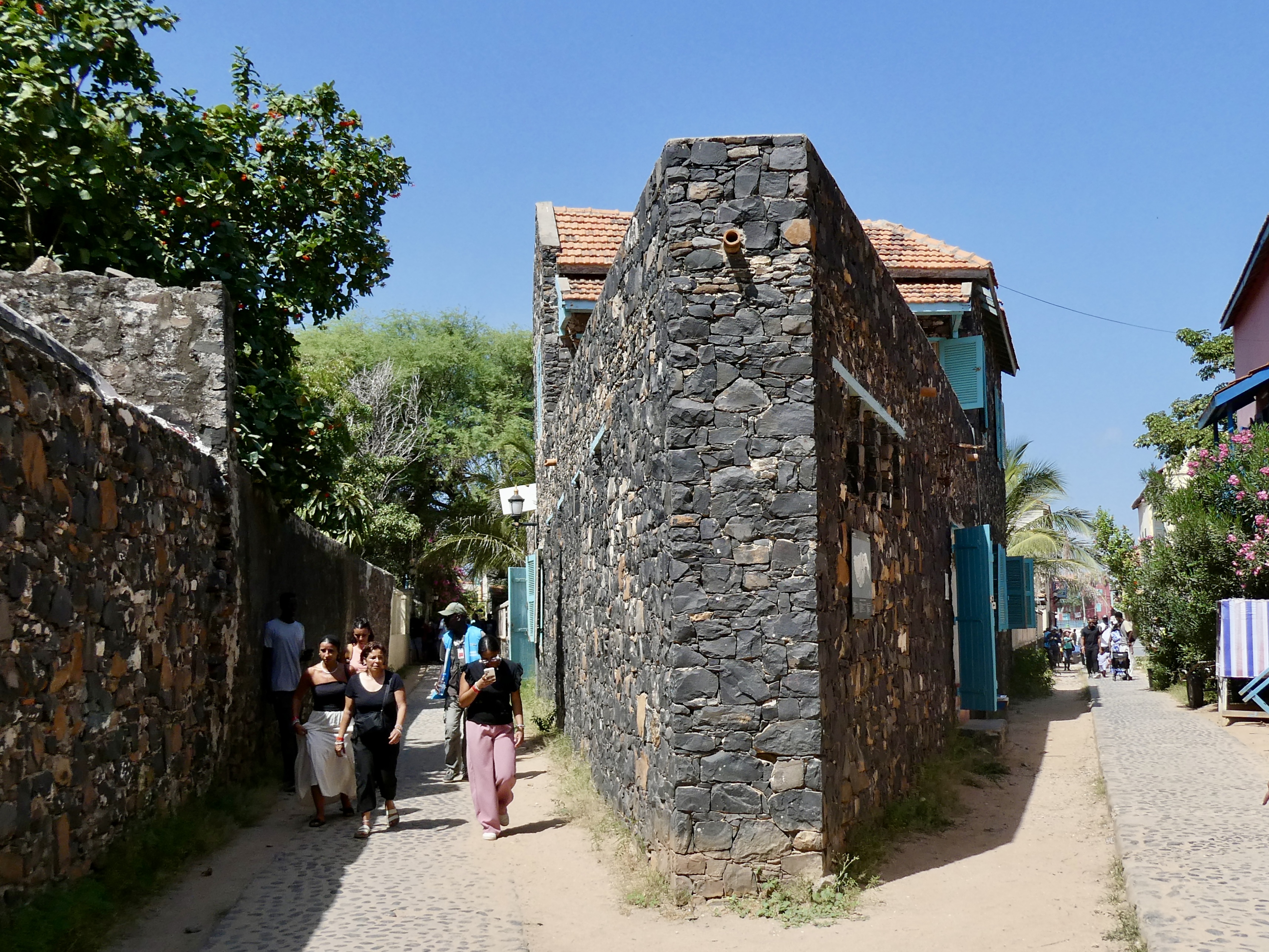
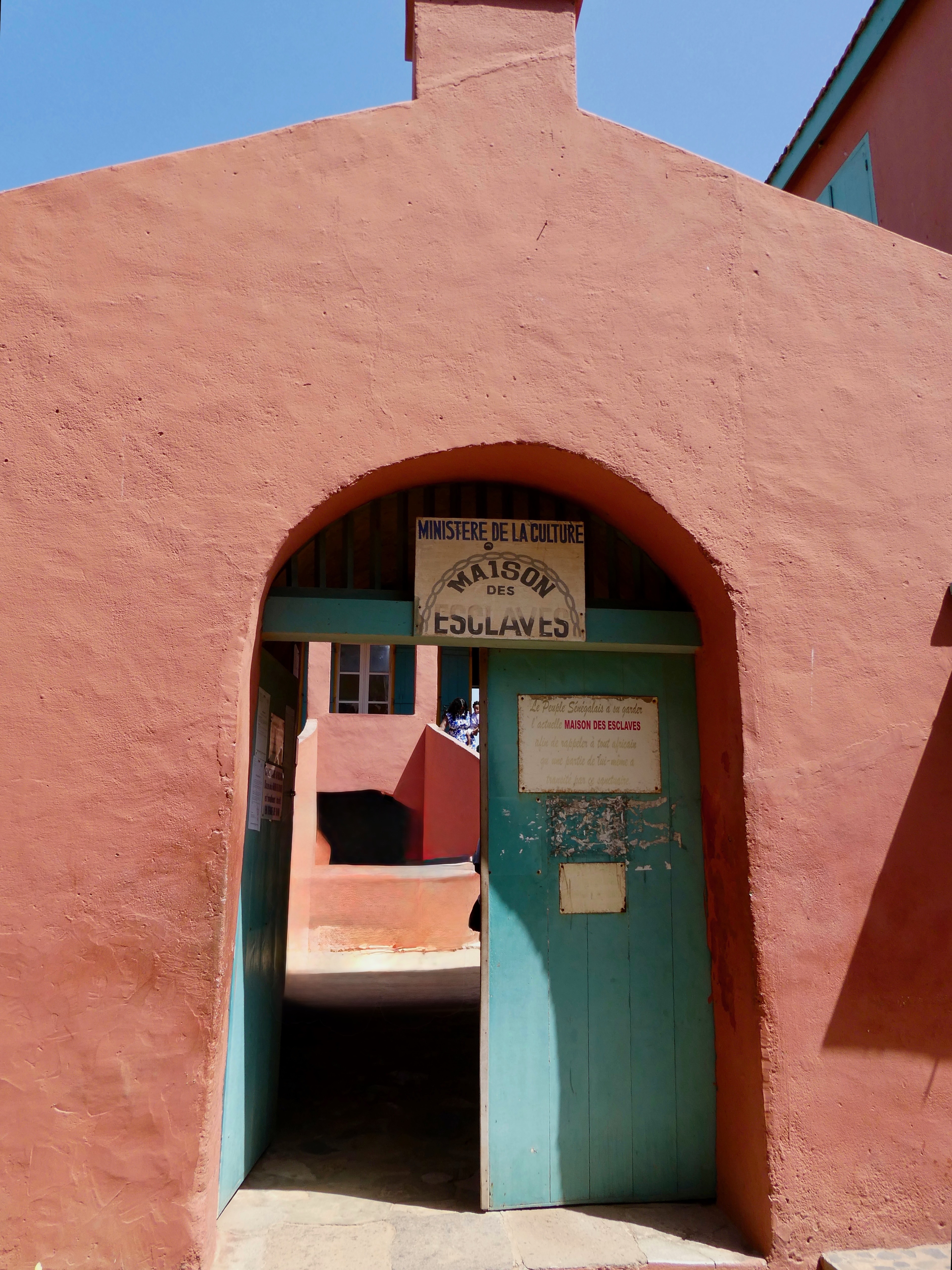
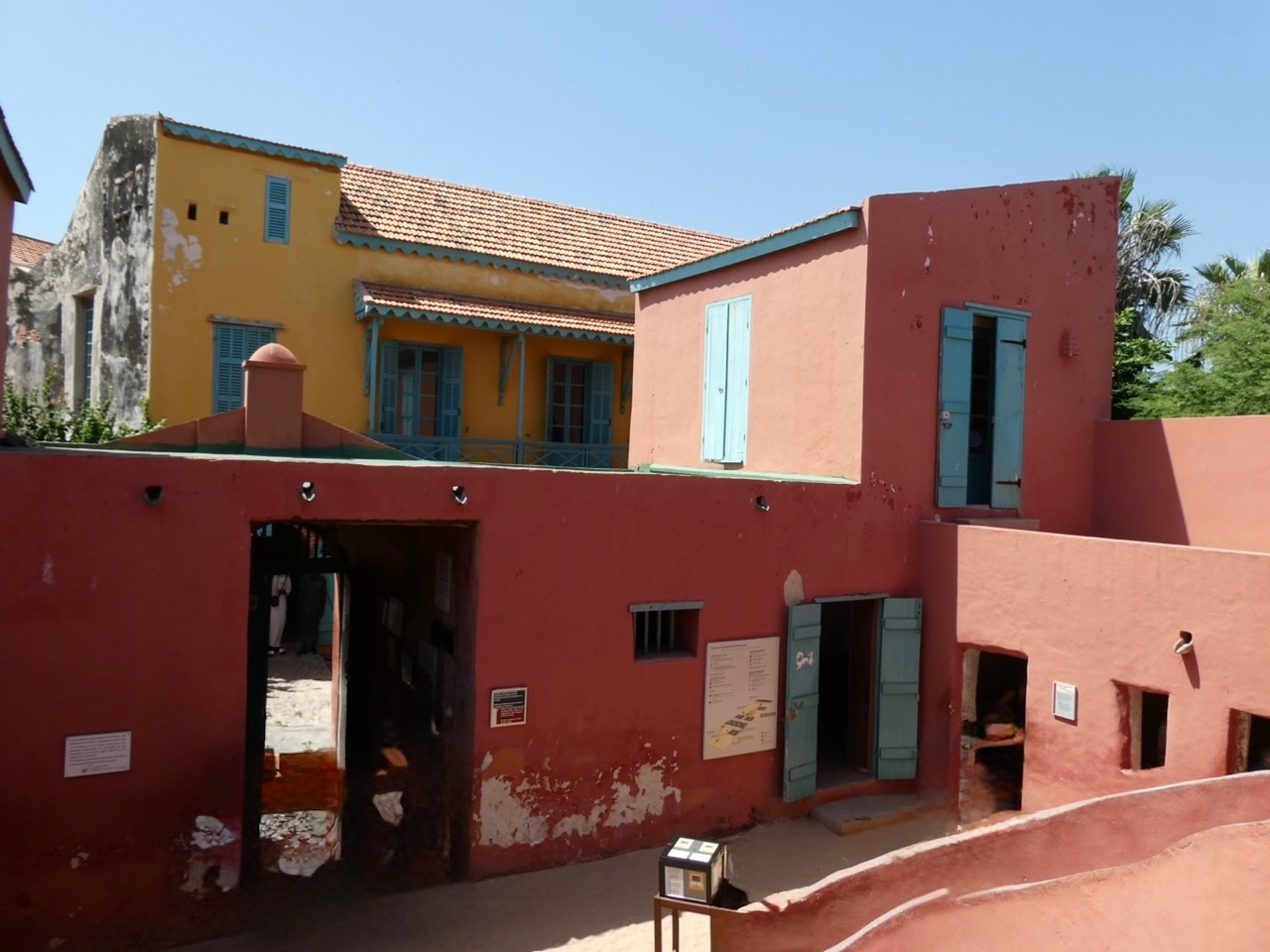
As we walked the alleys, we passed not one, but two houses that were shaped like a boat which were apparently the former residences of slave traders. We then reached the front door of a pink hued building with a sign that read Maison de Esclarve (House of Slaves) Musuem. The building was apparently constructed around 1776 by Nicolas Pépin, the brother of the influential signare Anne Pepin. (A signare is a Sengalese black or mulatto woman who had influence via a marriage or relationship with European men.). Apparently, the Pepin family owned a number of slave ships and used the home as a holding cell to export enslaved Africans. The building was at some point purchased by the Senegalese government and restored to tell the history of the Goree Island slave trade.
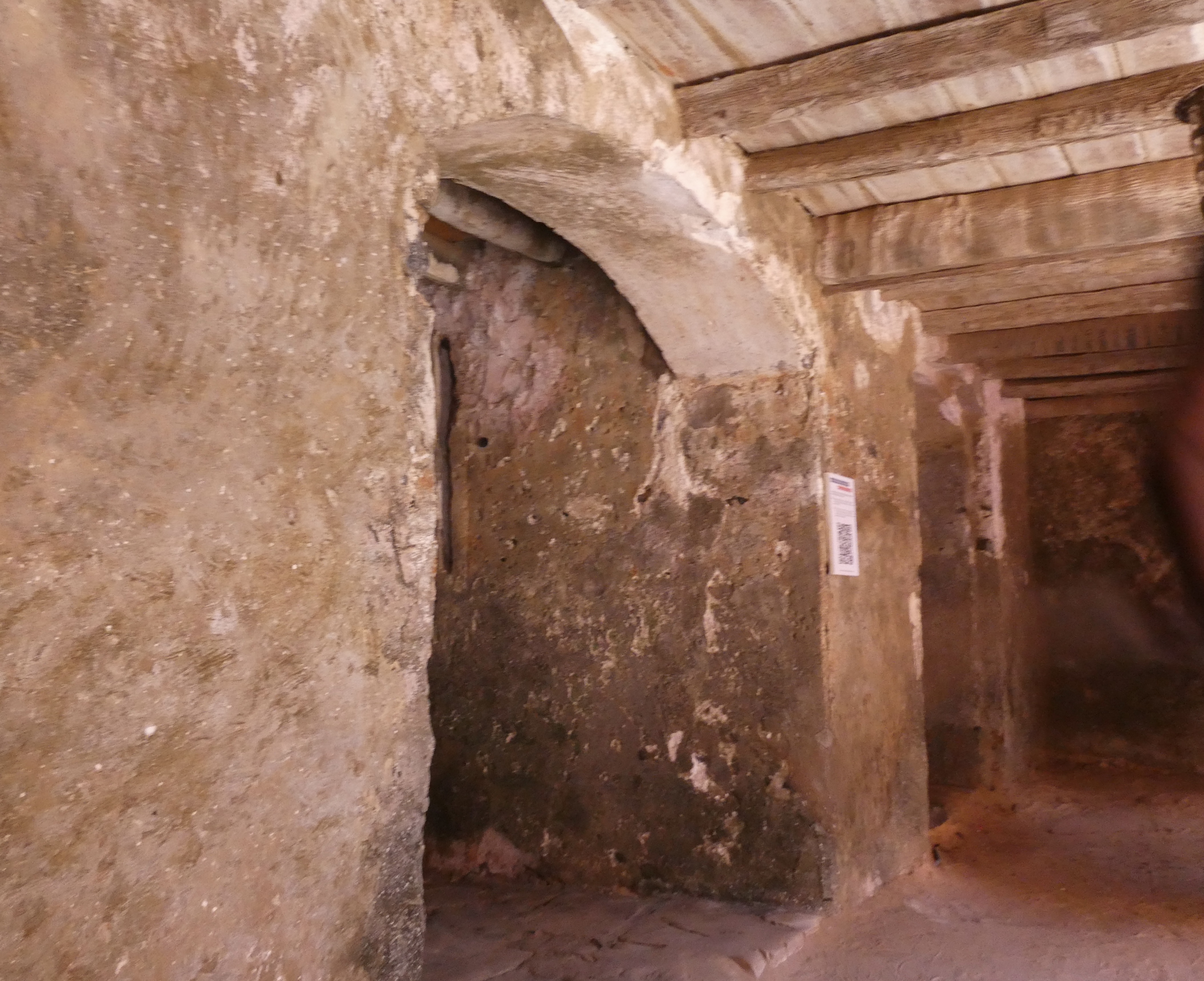
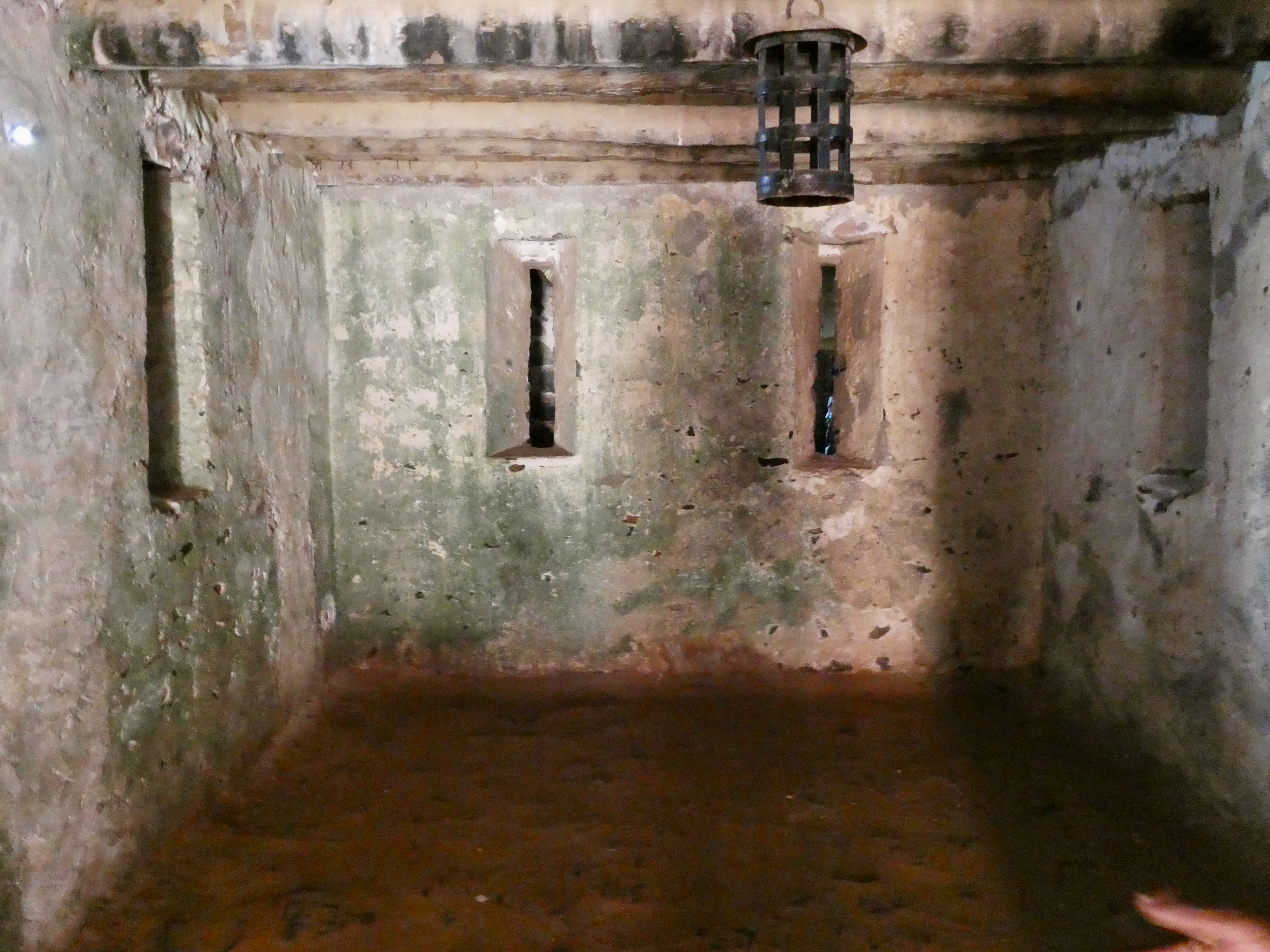
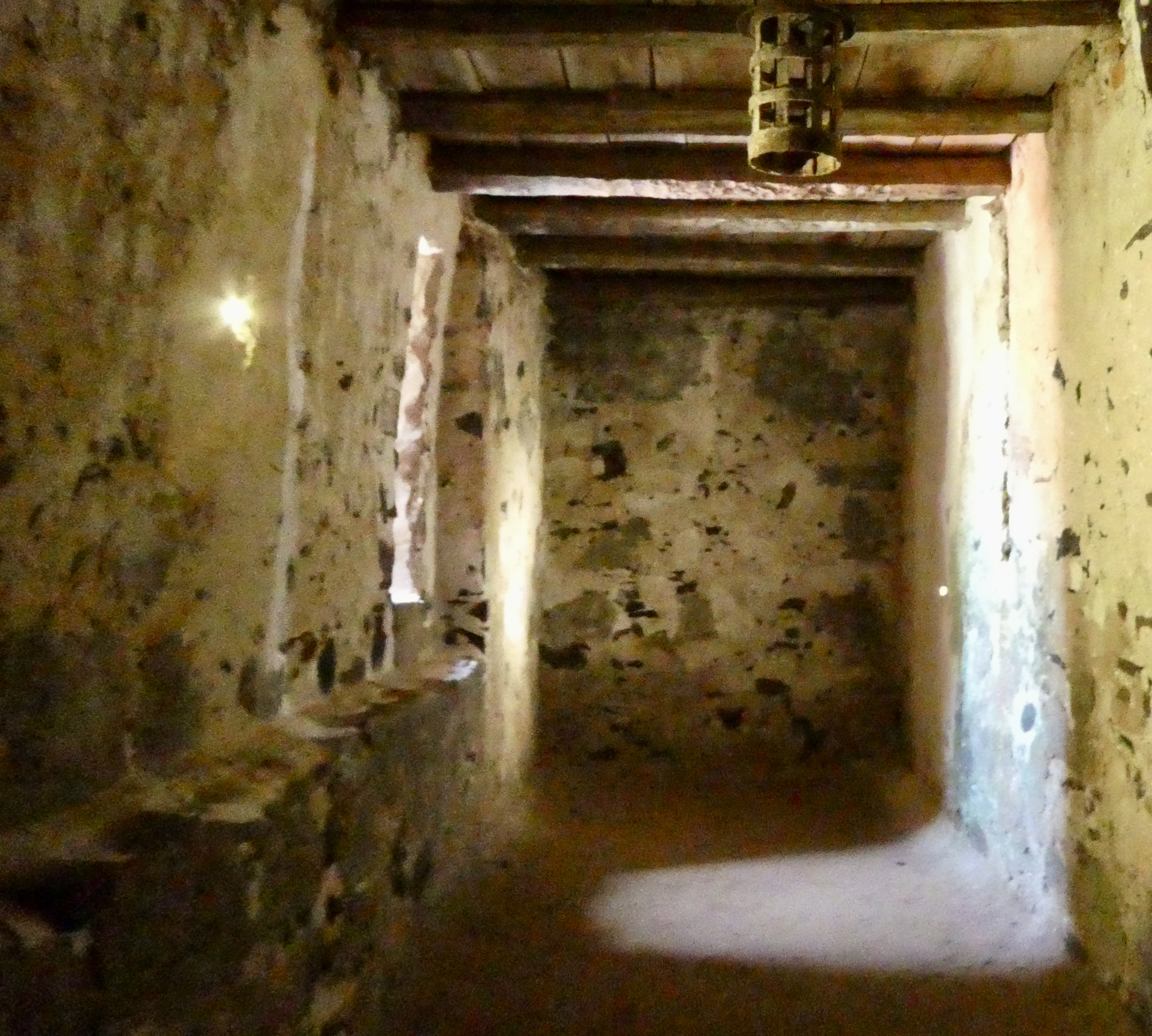
As we wandered around the building (which was one of apparently 28 homes that used to occupy the island as part of the slave trade) my guide showed me the various holding rooms divided by gender, age and size of the man. Families were separated often never seeing one another again.
I walked through one tiny, dark room where upwards of 40 large (“valuable”) men would be shackled to the floor with their backs to the walls unable to move. In another larger room up to 15 young girls were held before being paraded in the courtyard so that the traders and enslavers could choose them for sex. And if they became pregnant, they were allowed to remain on the island until they gave birth. Still another room was for children ages 6 to 11. It was horrifying to walk in these rooms.

And one room in particular was just brutal. If people misbehaved or were not “sellable” they were banished to a dark, airless cell less than 5’ high. It would take less than three days for people banished to the cells to die.
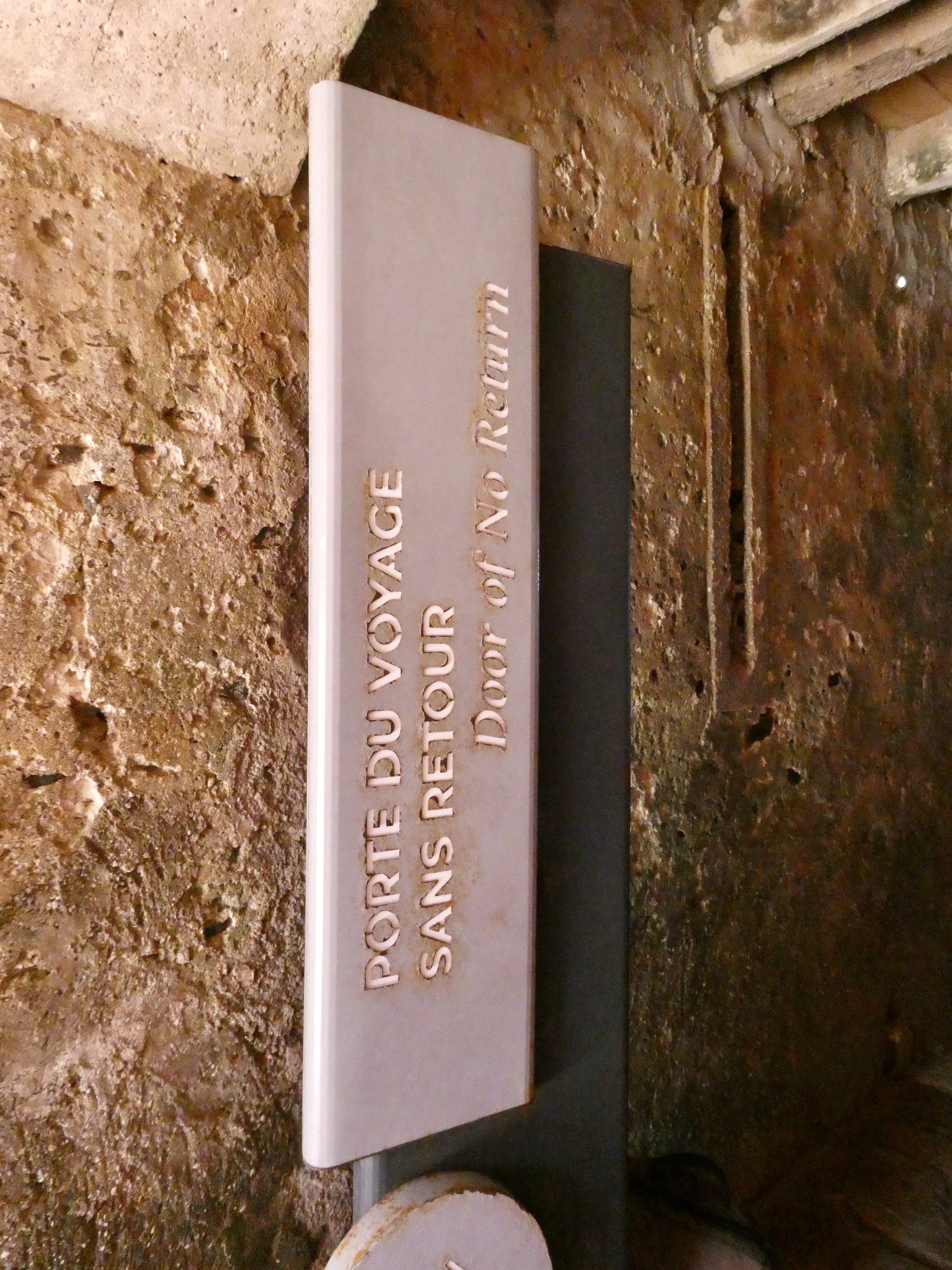
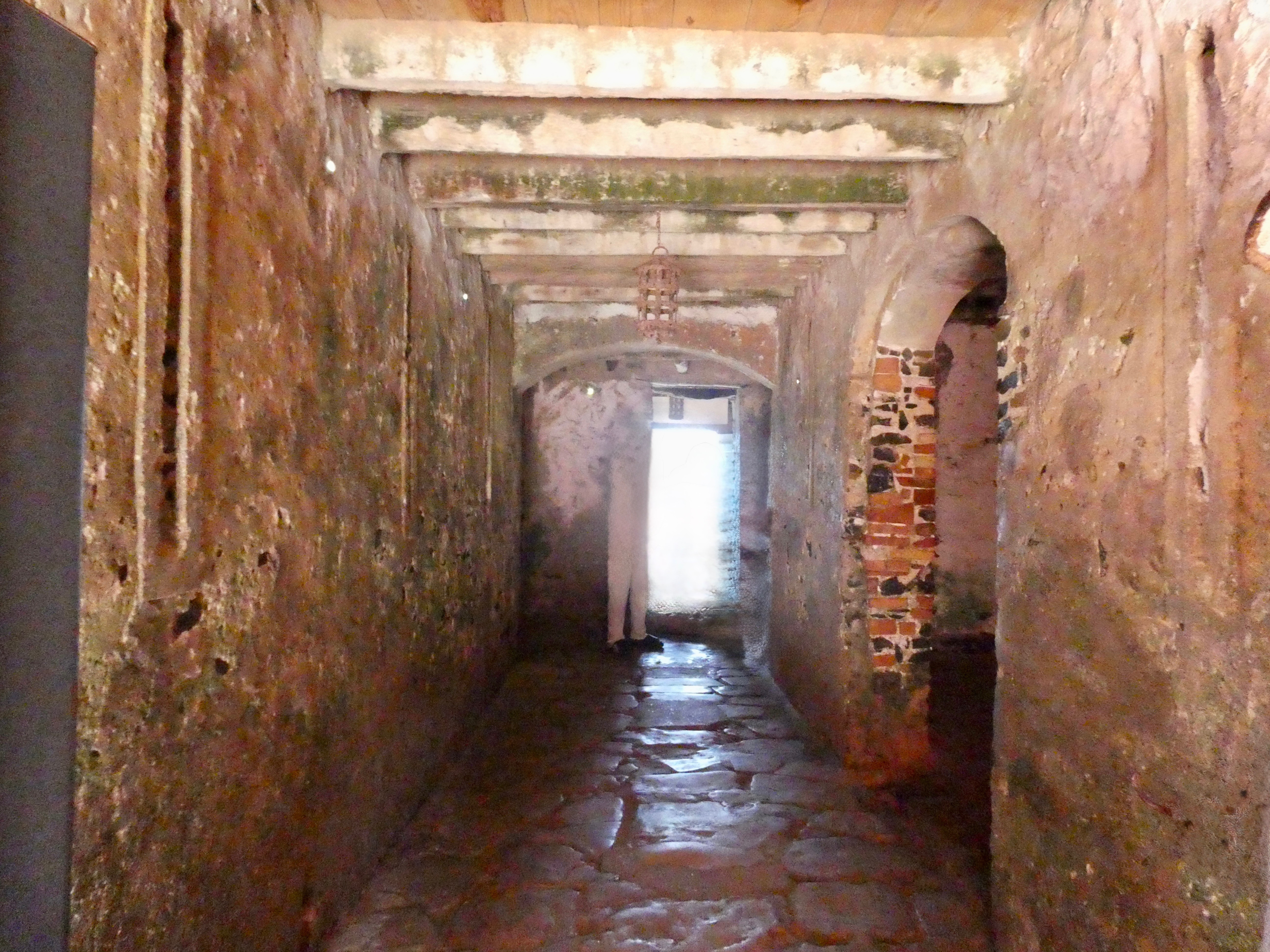
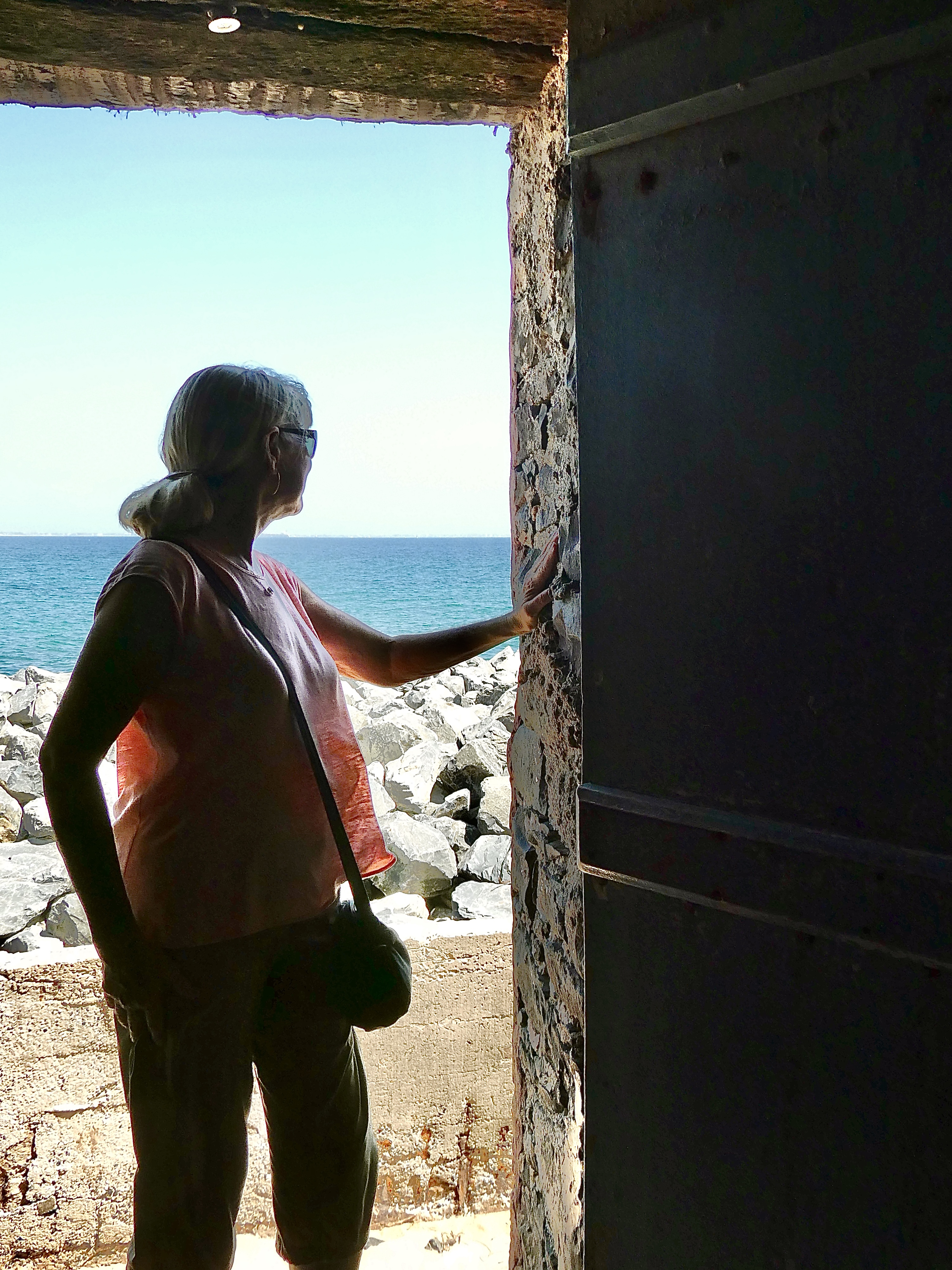
Now after looking at the holding cells, my guide took me to the “Door of No Return” which consisted of a hallway leading to a door fronting the ocean where slaves were loaded onto small boats and taken to bigger slave ships for the trip to the Americas. Again, simply horrifying.
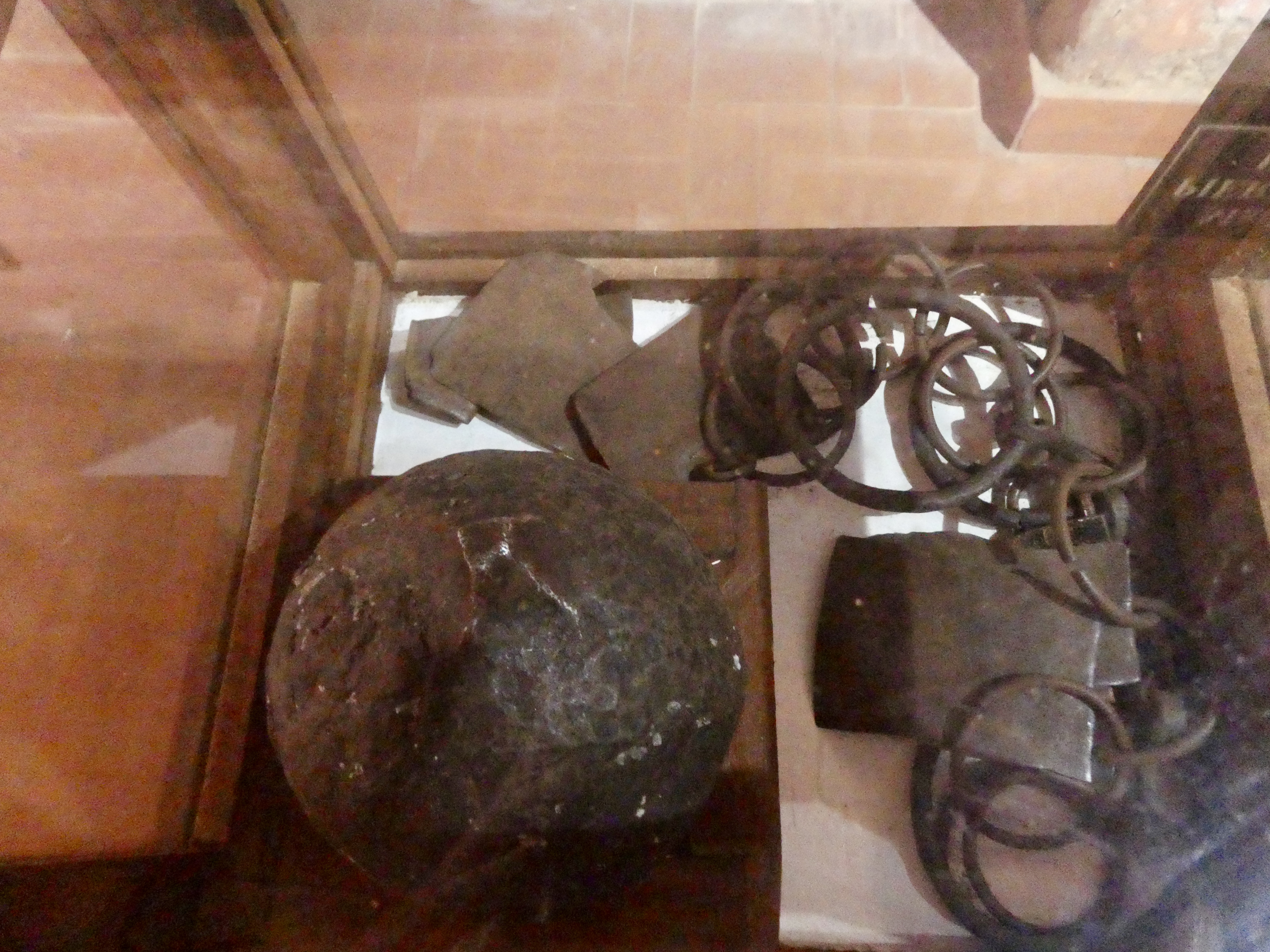
Upstairs in one of the rooms there was a display of shackles and irons that were used to restrain slaves and nearby there was a horrific mask that slaves were required to wear while picking sugar cane so that they did not try to eat any of the product. I can’t begin to describe the sick feeling I had taking this all in.
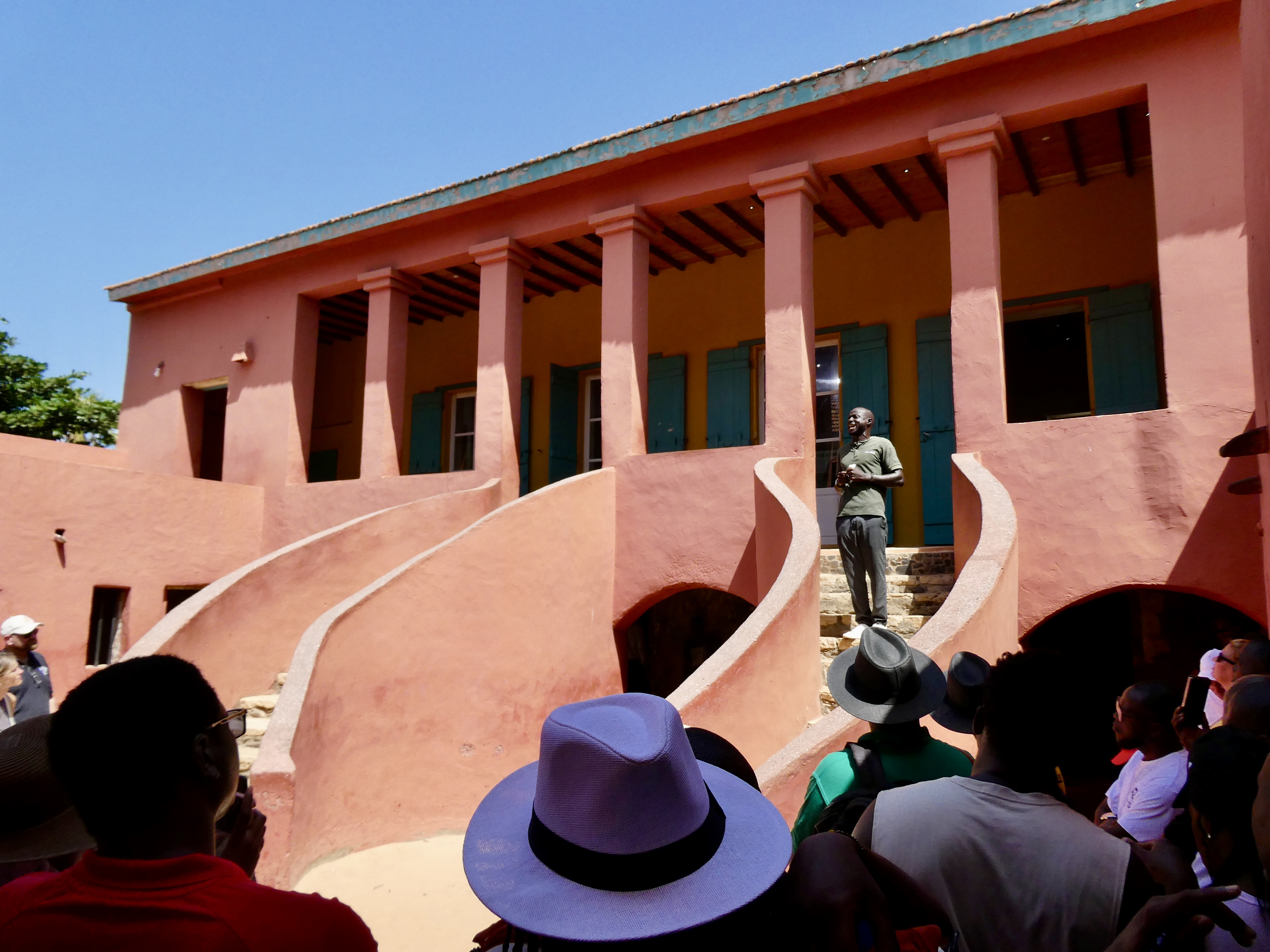
And as we were ending our walk around the slave house, a gentleman from the museum was standing part way up the steps reciting some of the language that the slave traders would use during the slave auctions. Unfortunately, he was speaking in French so I do not know what he was saying but the French folks were fixated on his talk.
So from here, we left the museum and took a walk around the island. And I cannot stress enough what a sharp contrast it was between the slave house and the rest of the island. There were picturesque buildings, homes with small gardens, children taking their school lunchbreak and children playing in the sand.
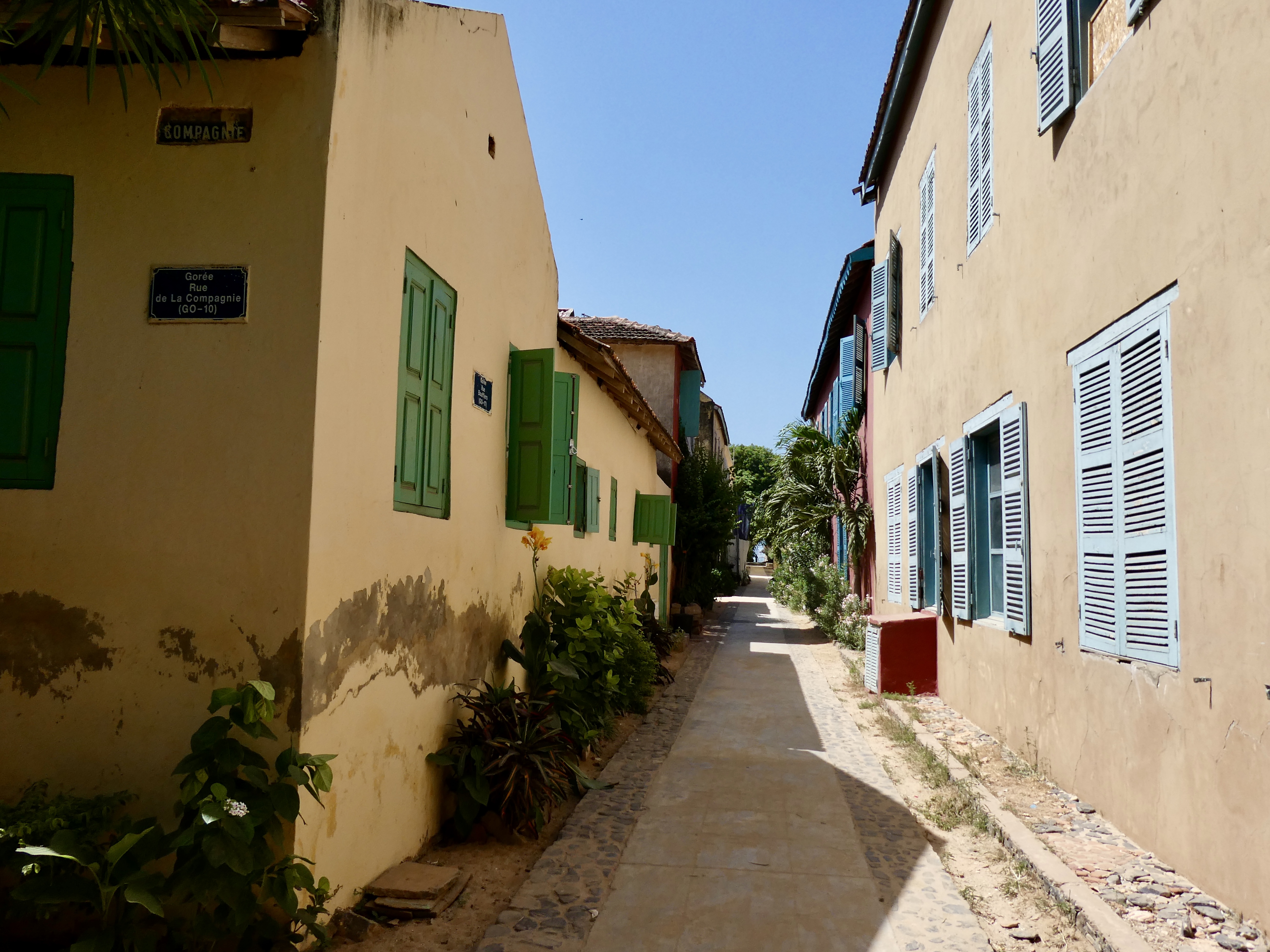
And what was really cool is that you can literally stand in the middle of the island and see the ocean in either direction. It is that small.
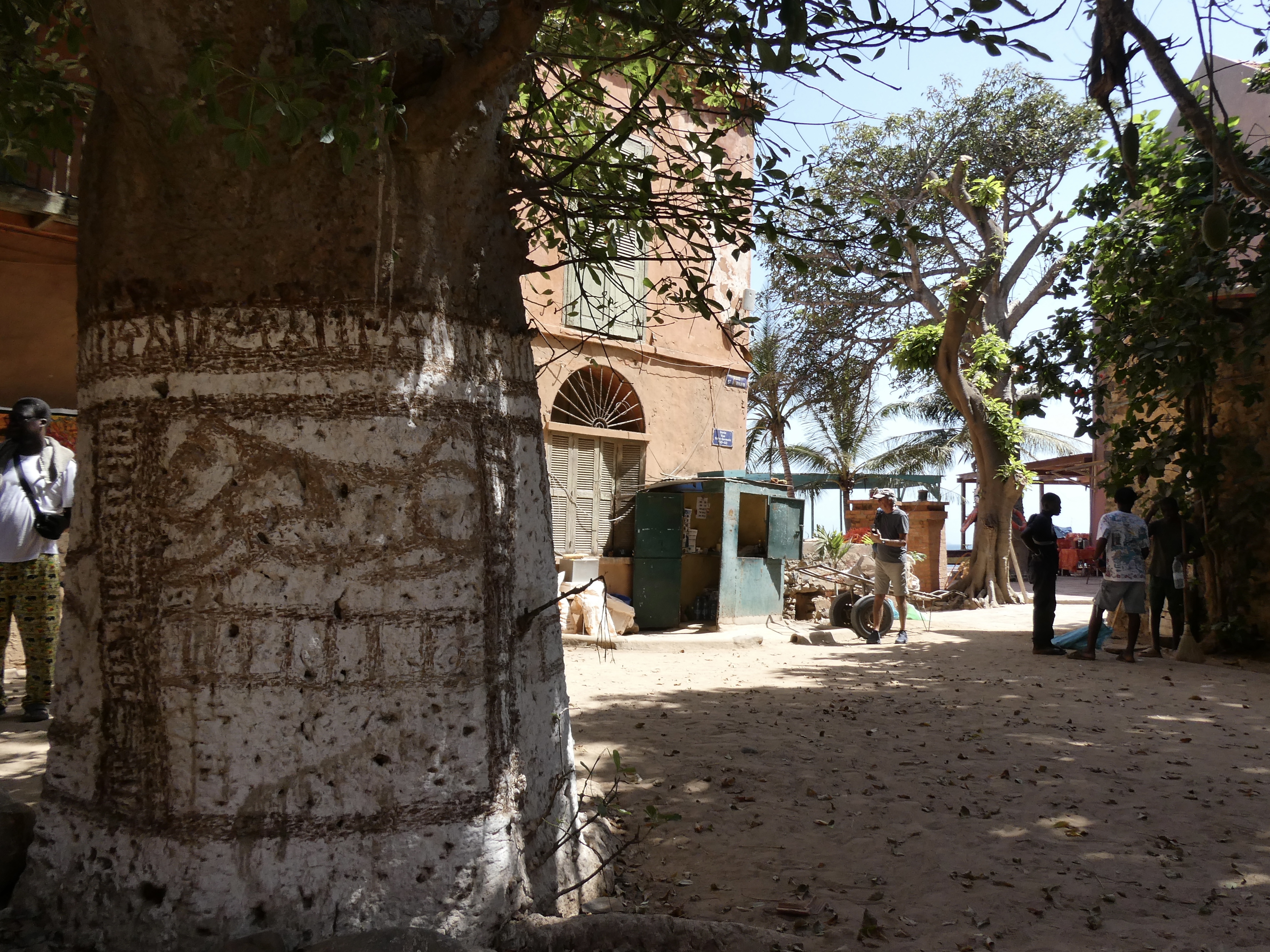
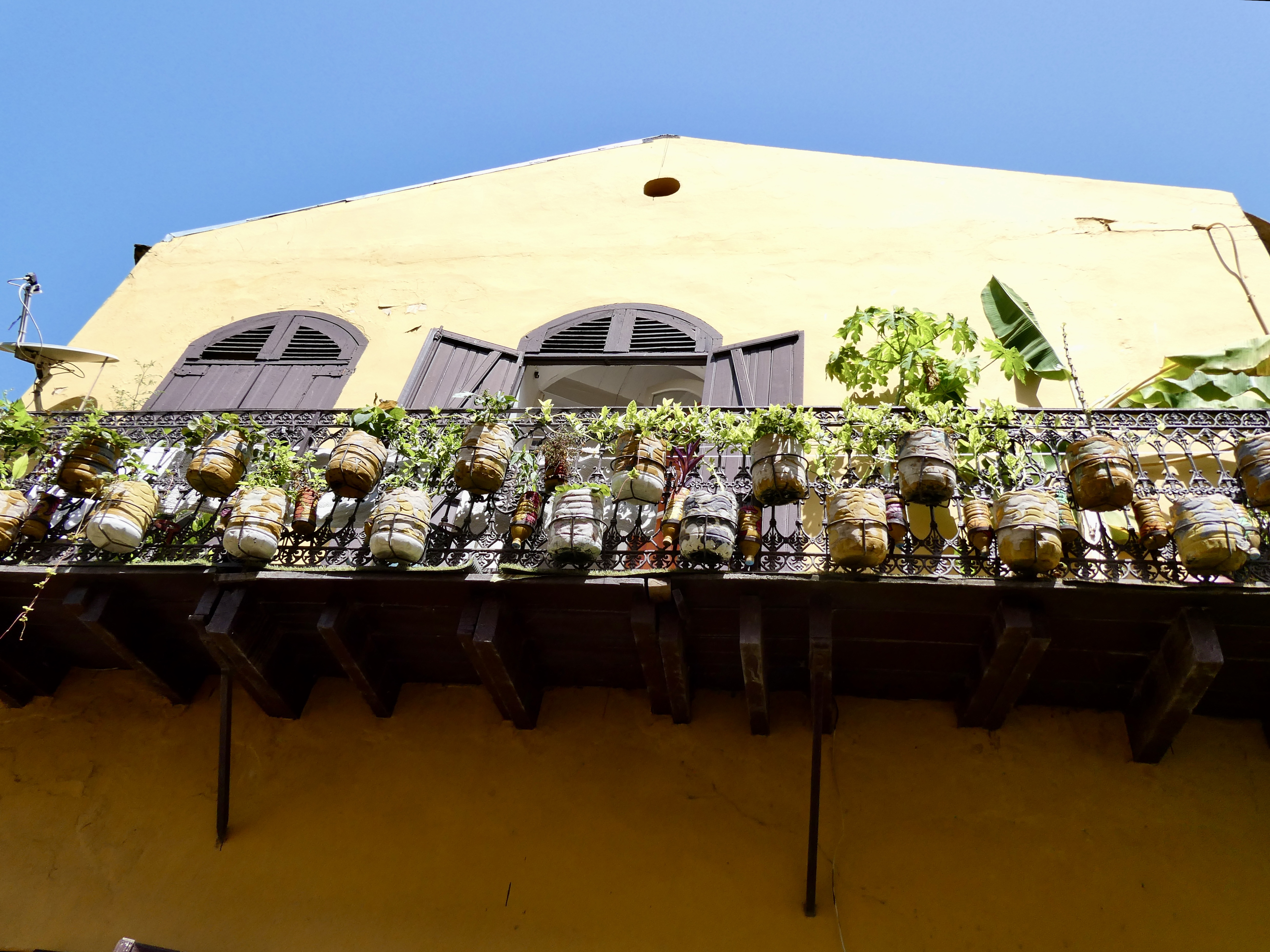
Another interesting thing was that we passed a number of trees painted in the local tradition. I did not understand the full explanation from my guide, but the designs on the trees were pretty interesting and classic African art.
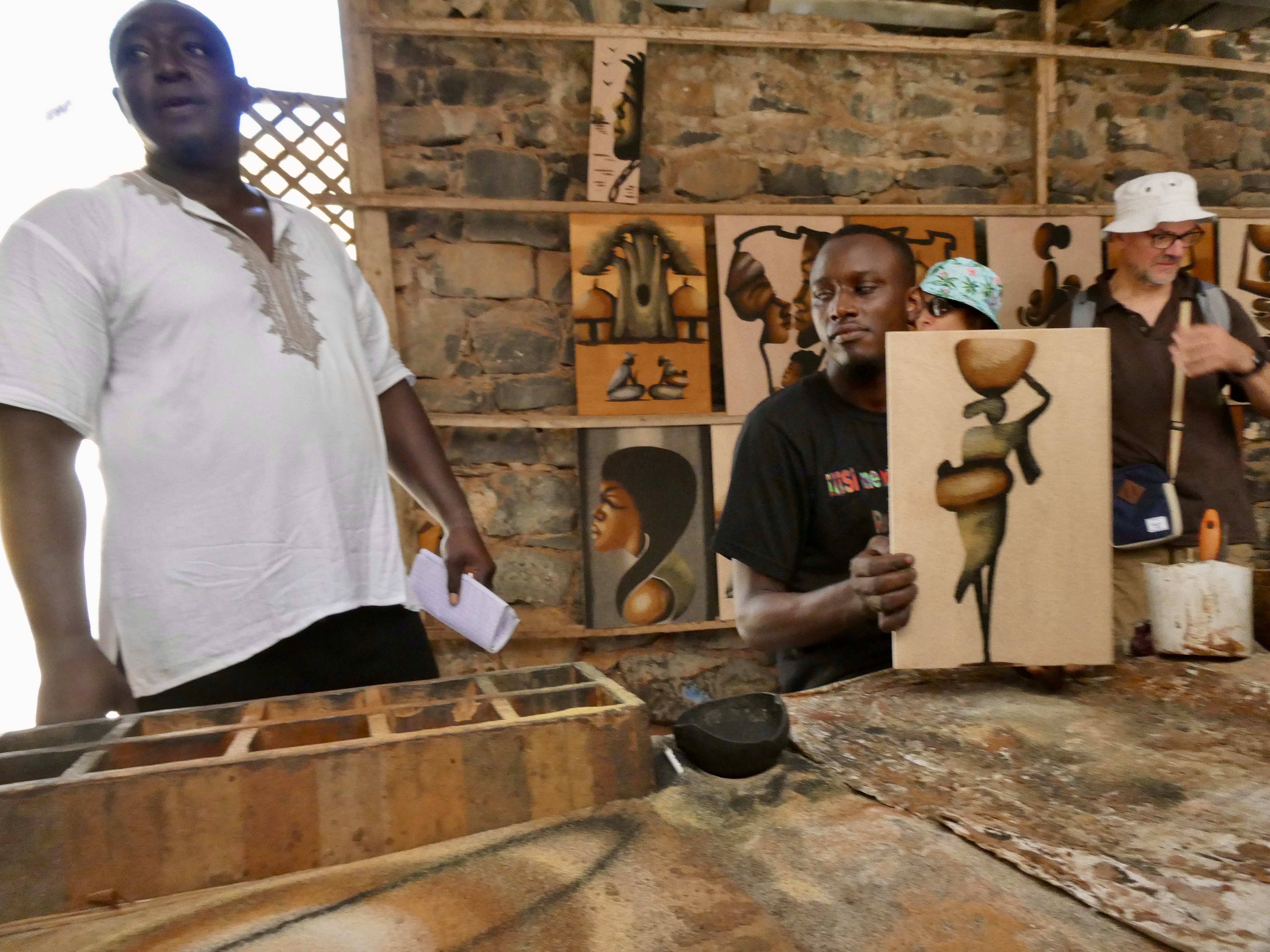
Now another thing Goree Island is known for is its sand art. The folks trained in this technique use glue to outline the subject. And then the magic happens. The artist use handfuls of sand in varying colours to “paint” the picture tossing sand onto the glue in what appears to be a haphazard fashion. However, the results are absolutely remarkable. It was fascinating to watch the artists work.
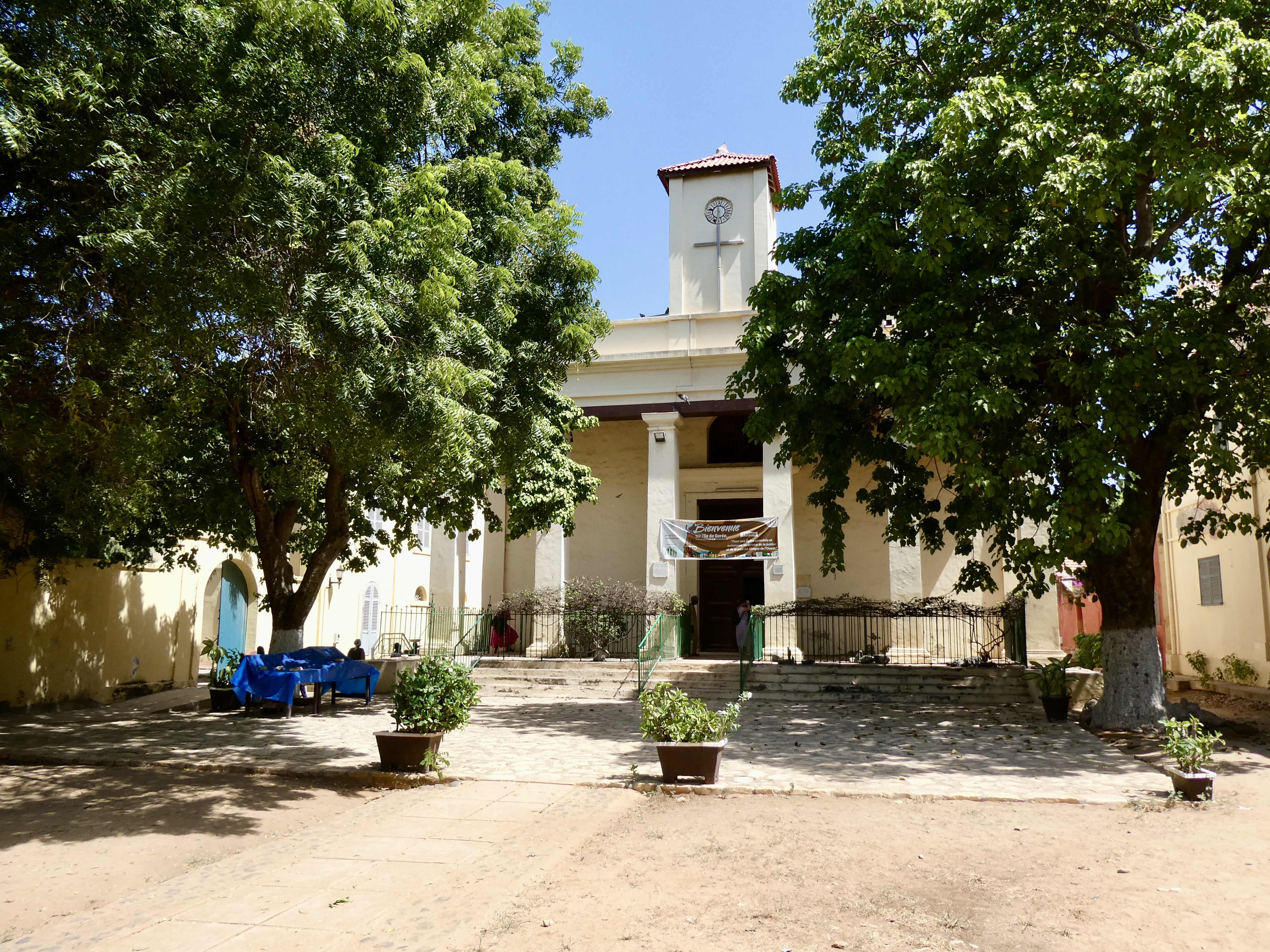
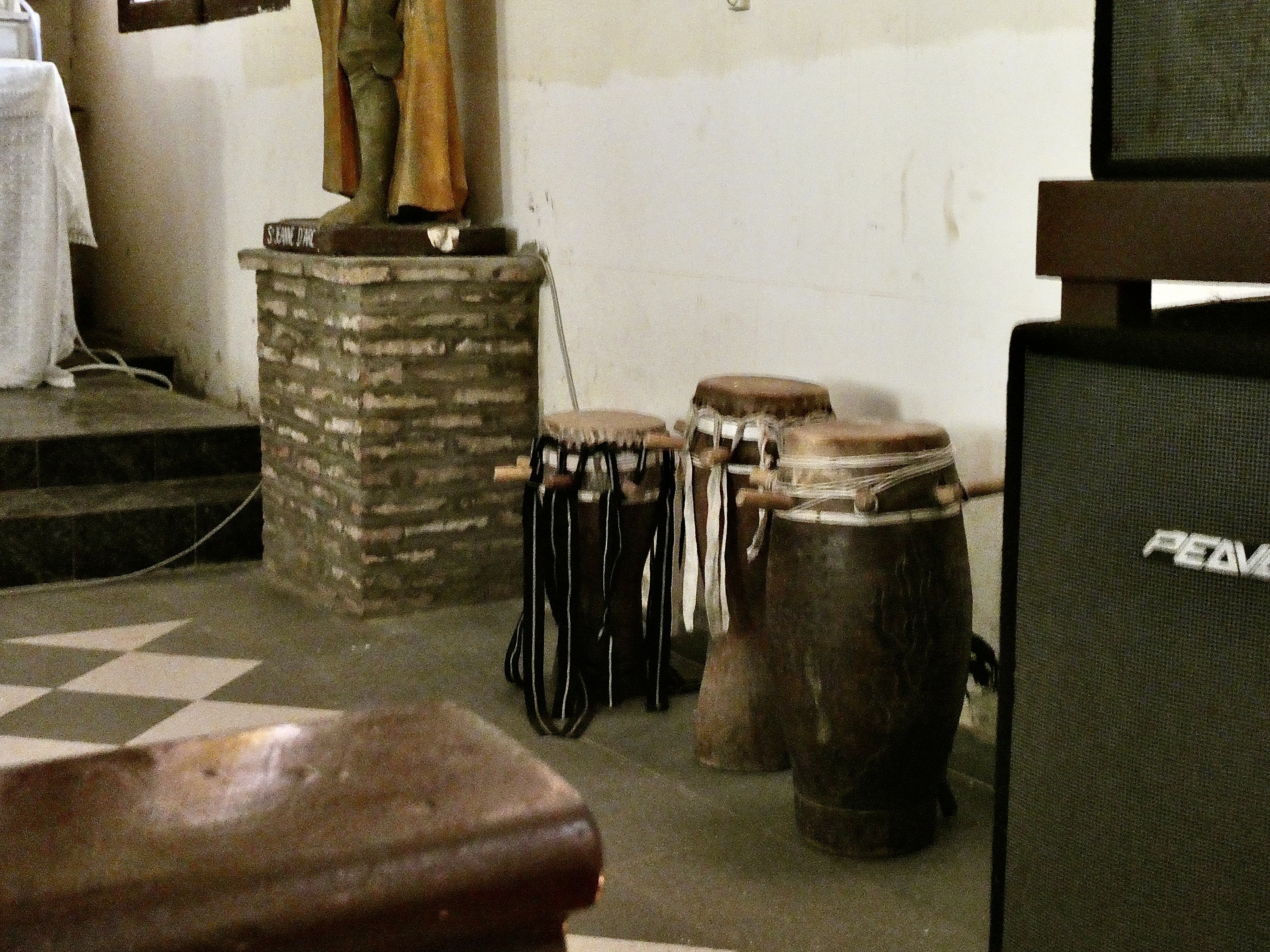
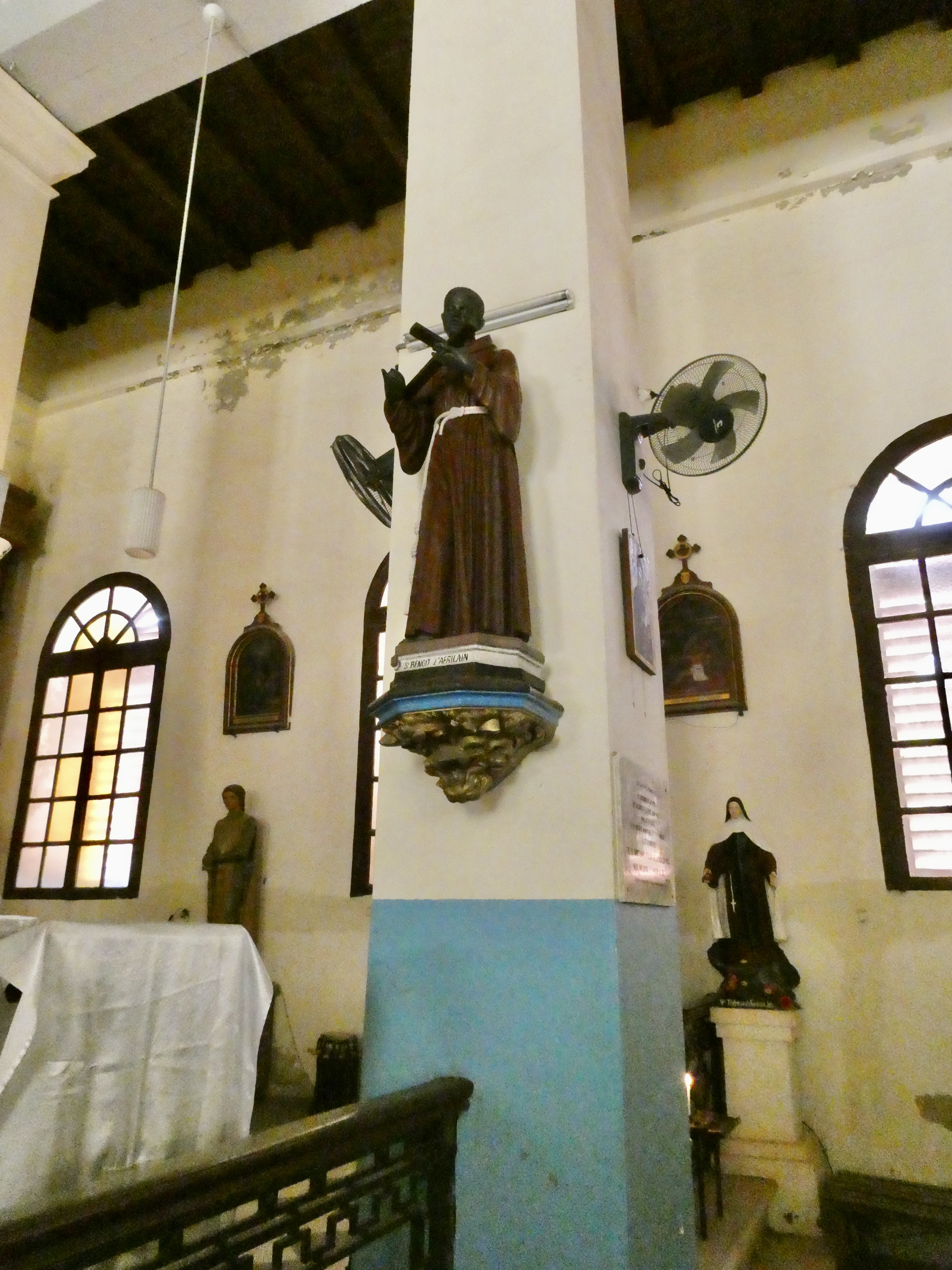
From here, we made a stop at the Saint Charles Borromeo Parish, which was built in 1830. The small Catholic Church still has Sunday services and according to my guide, is quite something to see. Singing and drums (no organs here) are apparently the order of the day. And I learned that the most important figure in this church (as well as all Senegalese Catholic Churches) is Saint Benedict the African, also known as Saint Benedict the Moor or Saint Benedict the Black. Saint Benedict was born to enslaved Africans in Italy, was freed at birth and became

known for his charitable deeds. He became the first black saint to be canonized.
So from here, we started to head back towards the waterfront, but we ended up having to stop at a small market where some of the island women were selling local clothing, fans (it was VERY, VERY HOT), handicrafts, woven baskets and wooden statutes. And I say “having to” because a young woman who was talking to me on the boat has a shop at the market and she began calling out to me as we walked by. So not wanting to be rude, we stopped and I bought a fan from her. (And it turned out to be a good buy … I used it for the rest of the day in the 90 degree 90 percent humidity day.)
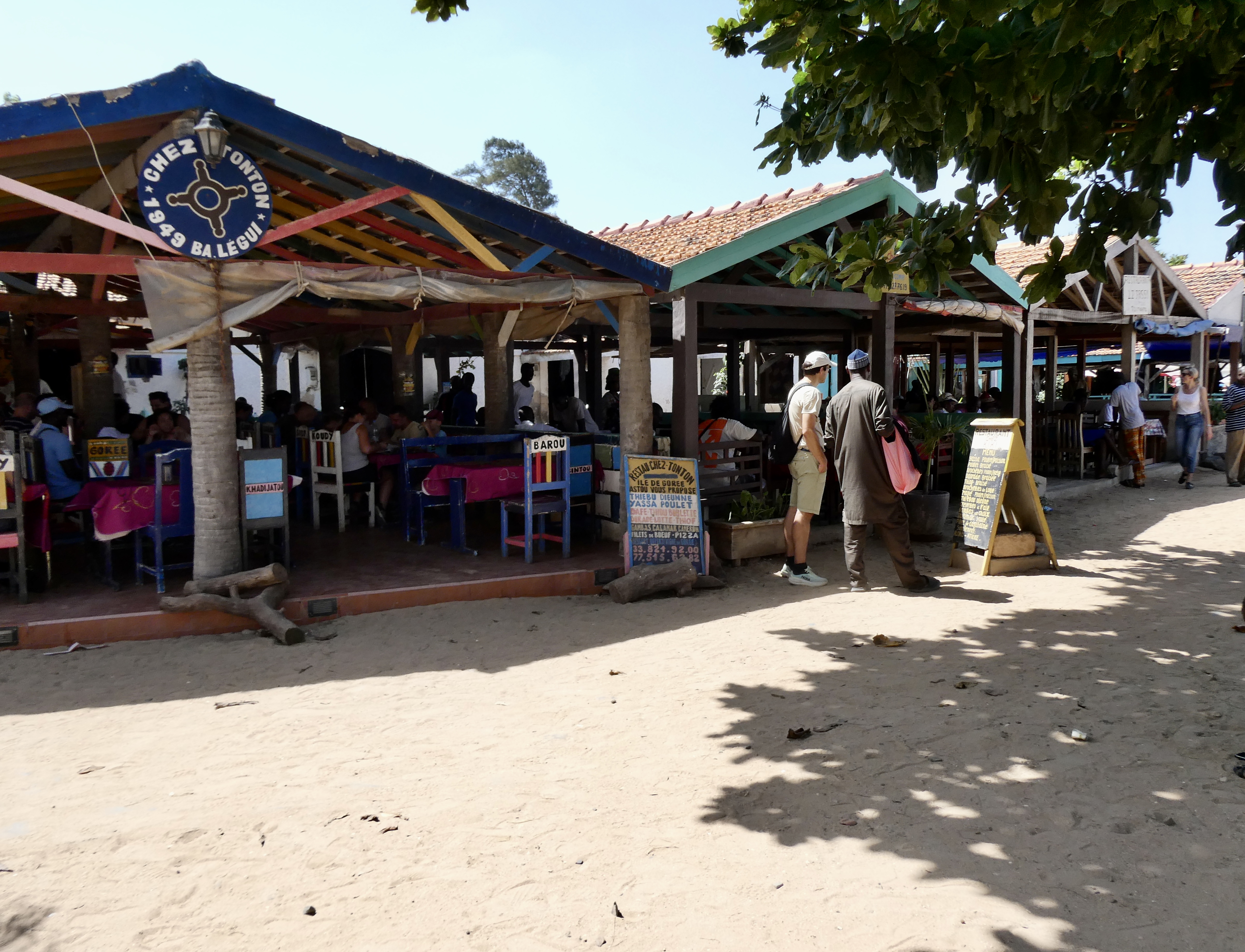
So once back at the waterfront, I met back up with Malang and after some ice-cold hibiscus tea and water, we lined up for the ride back on the ferry.
Once back on the mainland, we stopped for lunch at a very small local restaurant where I tried the Senegalese national dish Thieboudienne, a one-pot meal of fish, rice, and vegetables including potatoes, carrots and cabbage simmered in a tomato sauce. The dish has apparently been recognized as a UNESCO Intangible Cultural Heritage of Humanity. Sadly, it was not really my cup of tea, but I did my best to eat what I could so as not to insult my hosts. (And I forgot to take a picture. My bad.)
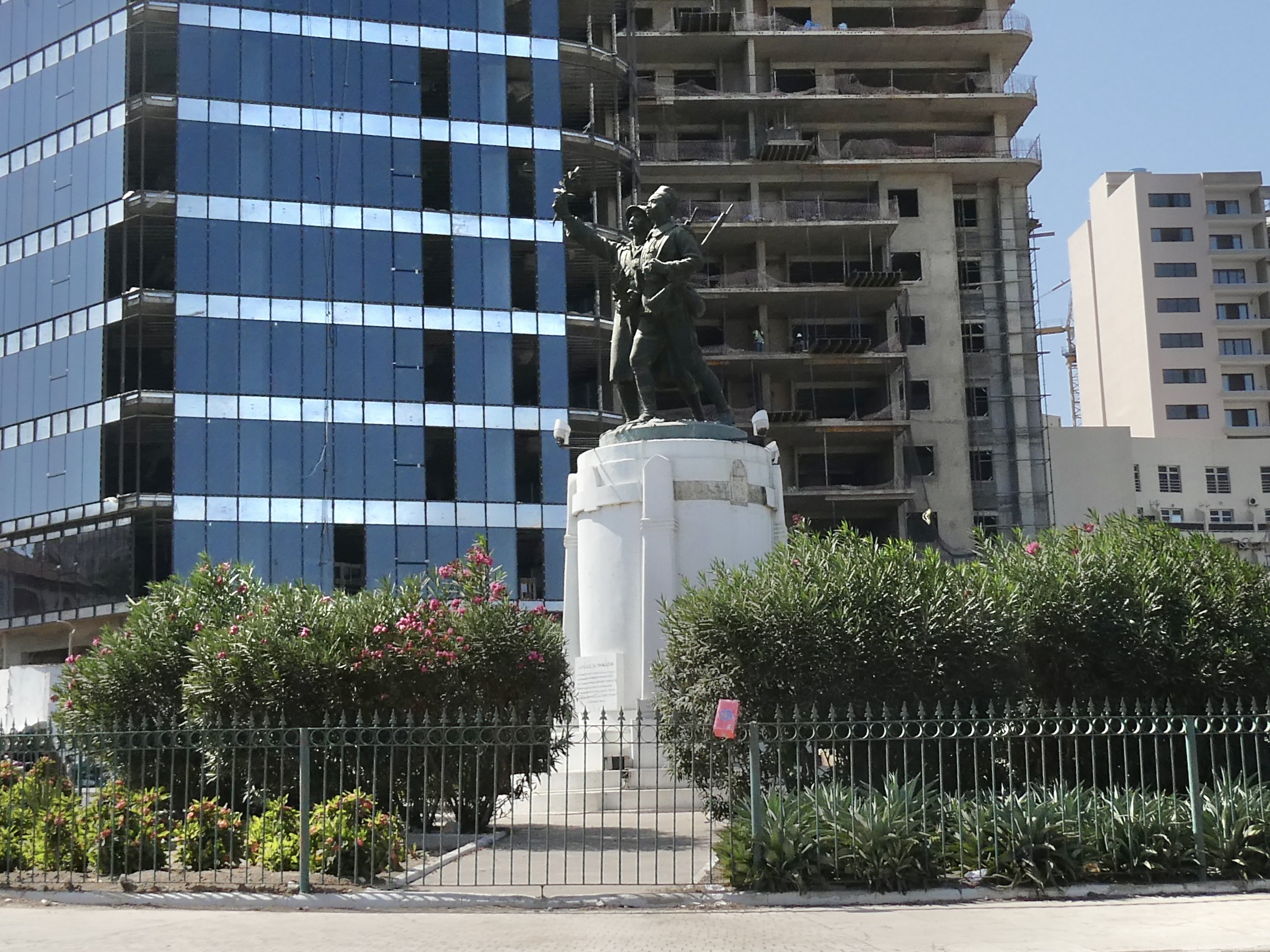
Anyway, from here we continued our drive around Senegal. First up was the Demba and Dupont War Memorial which is located at Place du Tirailleur and was first unveiled in December 1923. The statute features a a Senegalese rifleman and a French infantryman resting on a pedestal bearing the effigies of five figures from French West Africa and is a memorial to the French West African men who were forced to join WWI in service to France.

Nearby was the art decco train station that was constructed between 1913 and 1914. Unfortunately, the station closed in 2009 when the Dakar-Niger railway line closed. It was thought that the station and the train line would be demolished, but the train station has some historical significance and has since been preserved.
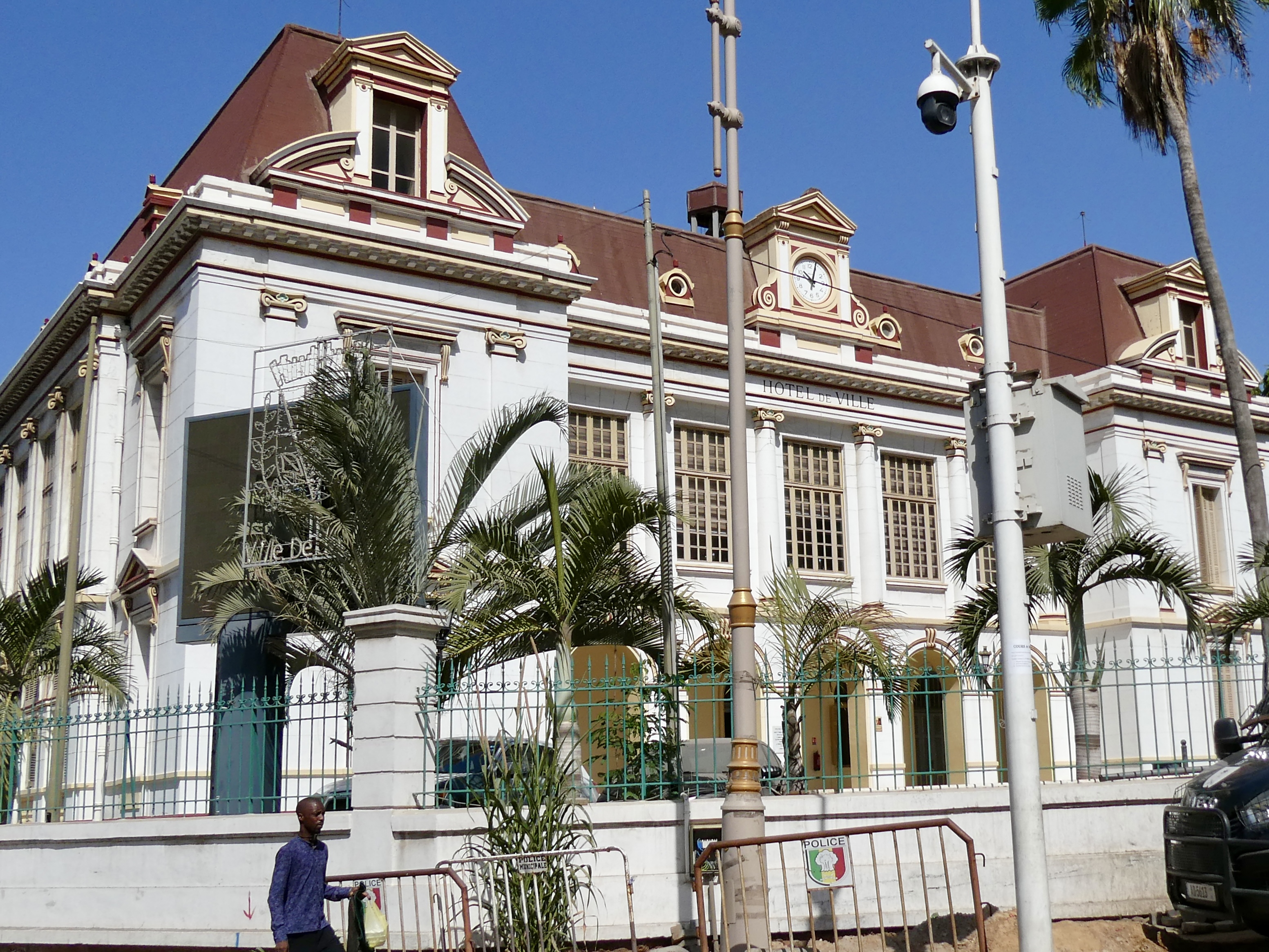
We then drove past the “Mairie de Dakar”, which is commonly referred to at the Mayor’s House, but is actually the Dakar City Hall where the affairs of the city are managed. As we drove by, I actually thought at first it was the Mayor’s House based on the way Malang was talking, but I eventually understood this was a seat of government not a residence.
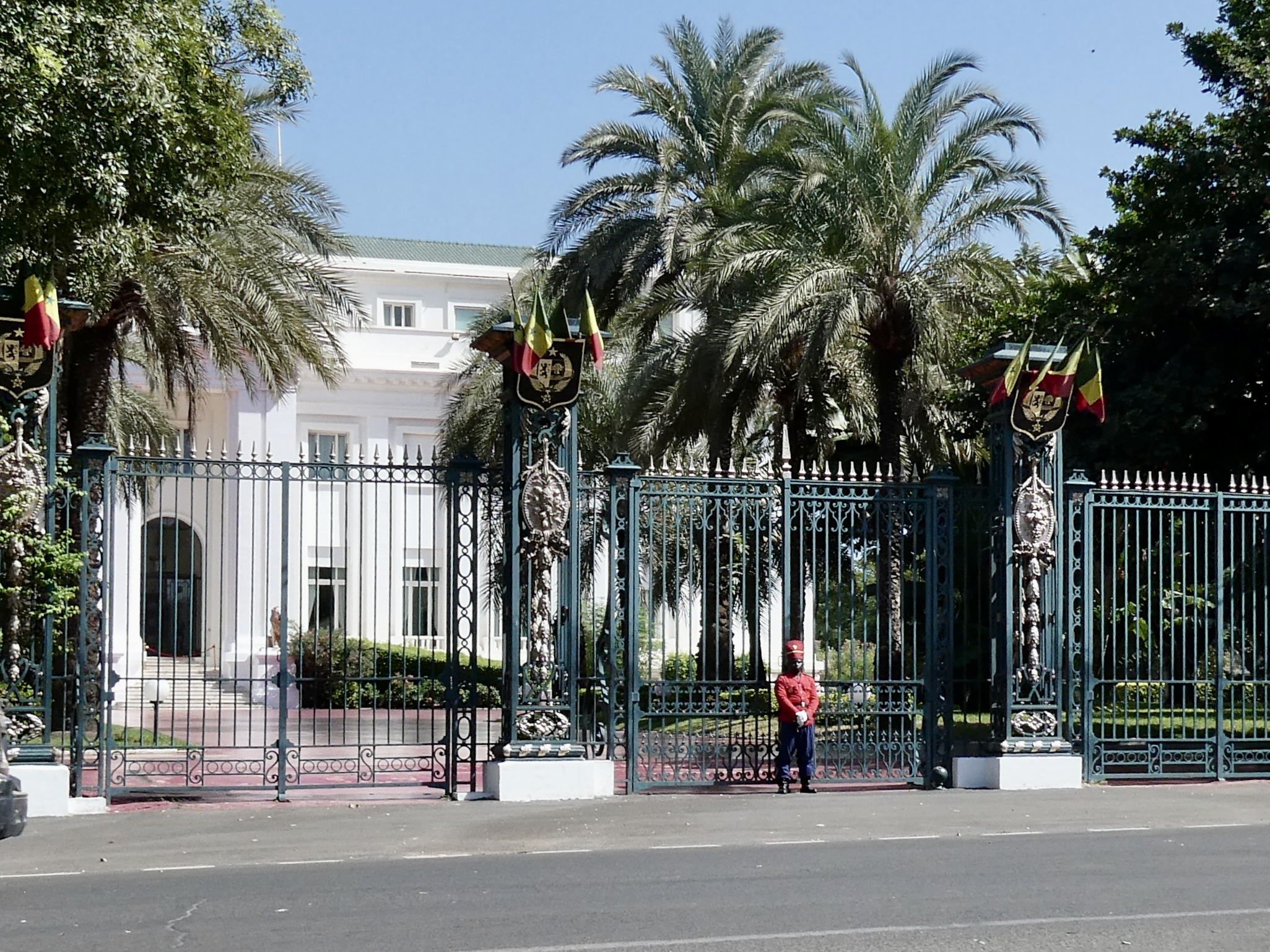
We then drove by the Presidential Palace with its official guards out front. The old colonial building was constructed in 1902 and was formerly the official residence of the Governor General of French West Africa. And while it was hard to see with traffic passing and an iron fence in the way, the building seemed to be quite pretty.
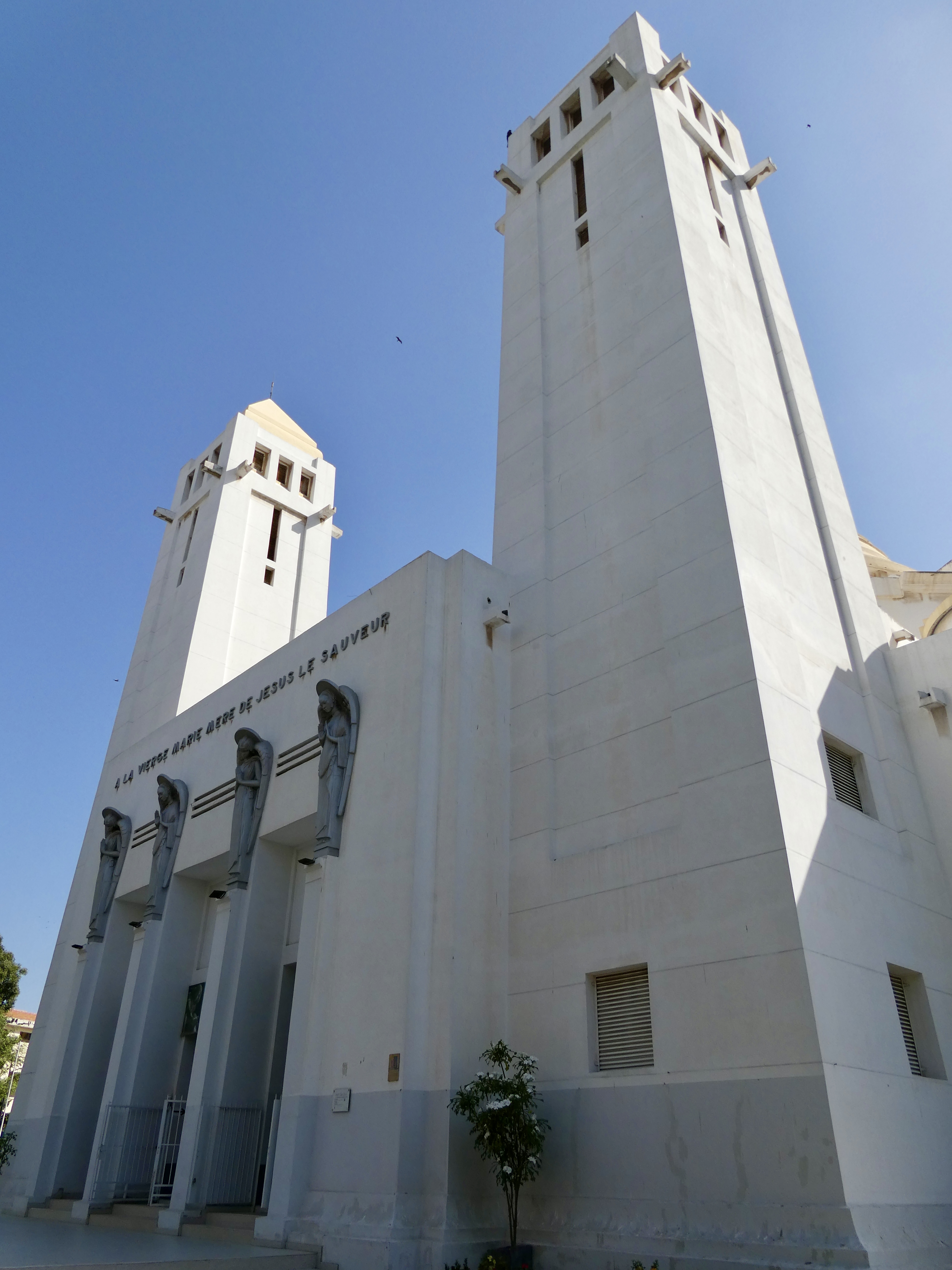
And just down the road, we made a brief stop at the Cathedral of Our Lady of Victories, the Roman Catholic Cathedral in Dakar. Construction on the building started in 1924 and in 1936 the church was officially opened.
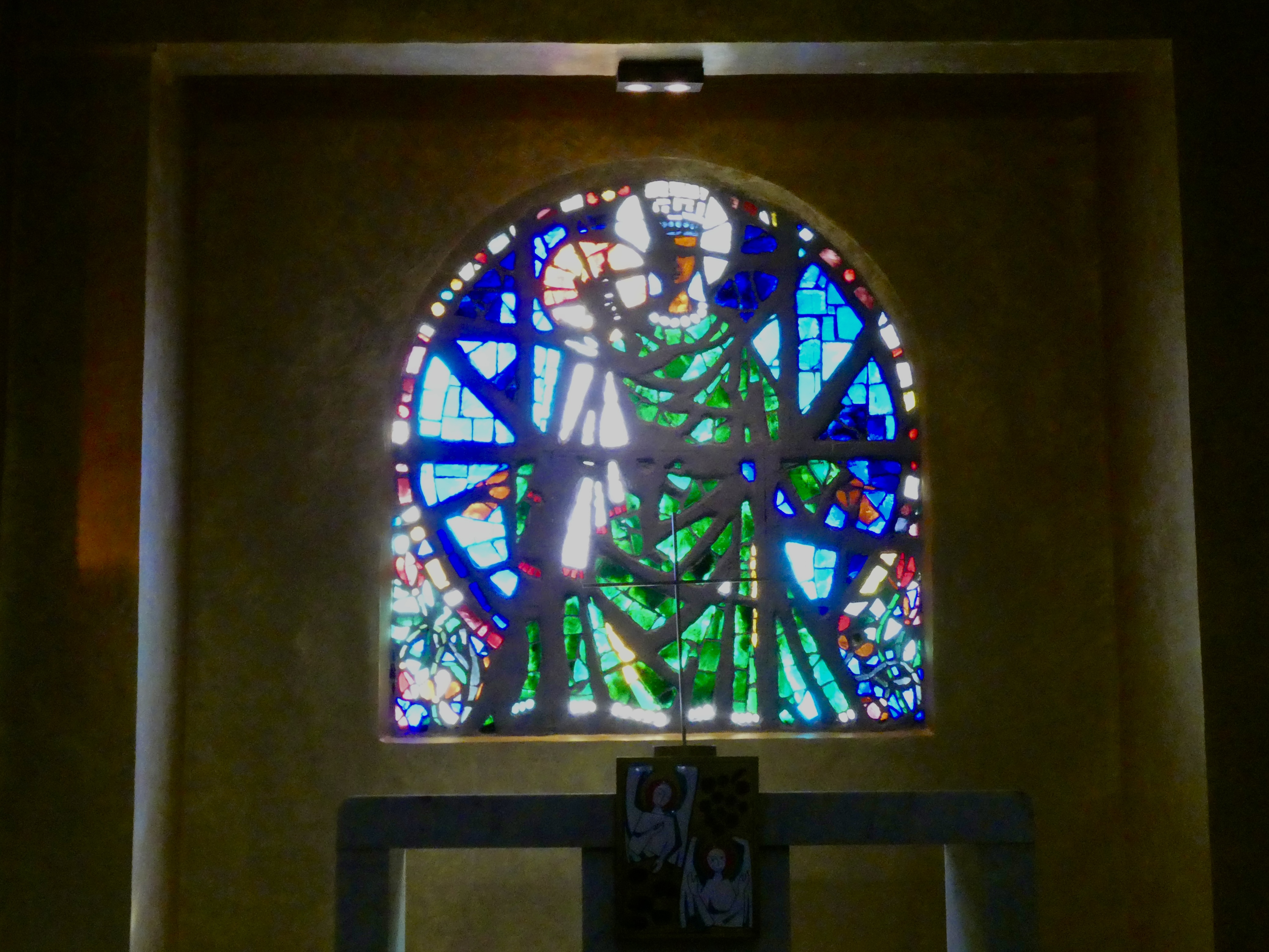
Now the church was a little plain on the interior (no pictures allowed after 12:00 because the church is open for prayers after that), but I did sneak a picture on the back side of the alter where no one was praying. And I took the picture because of the incredibly unusual stained glass windows that were installed throughout the church in more of an African art style. Very unique.
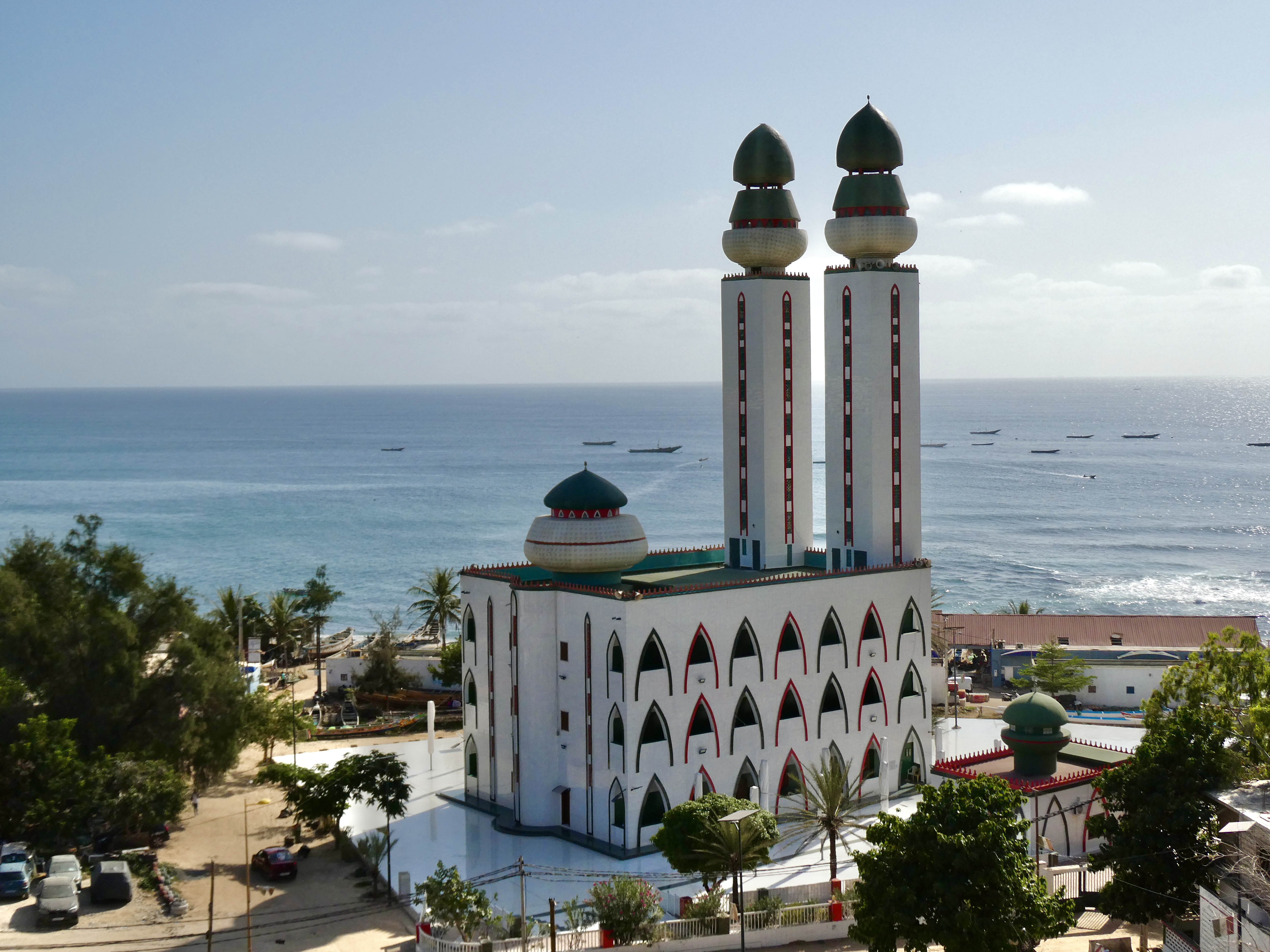
From here, we headed west along the Cornich fronting the Atlantic Ocean past embassy row and a lot of very large homes and condominiums before reaching the Mosquee de la Divinitee aka the Mosque of Divinity, which was completed in 1997, features two minarets and has the most fabulous ocean views of any mosque I have ever seen.
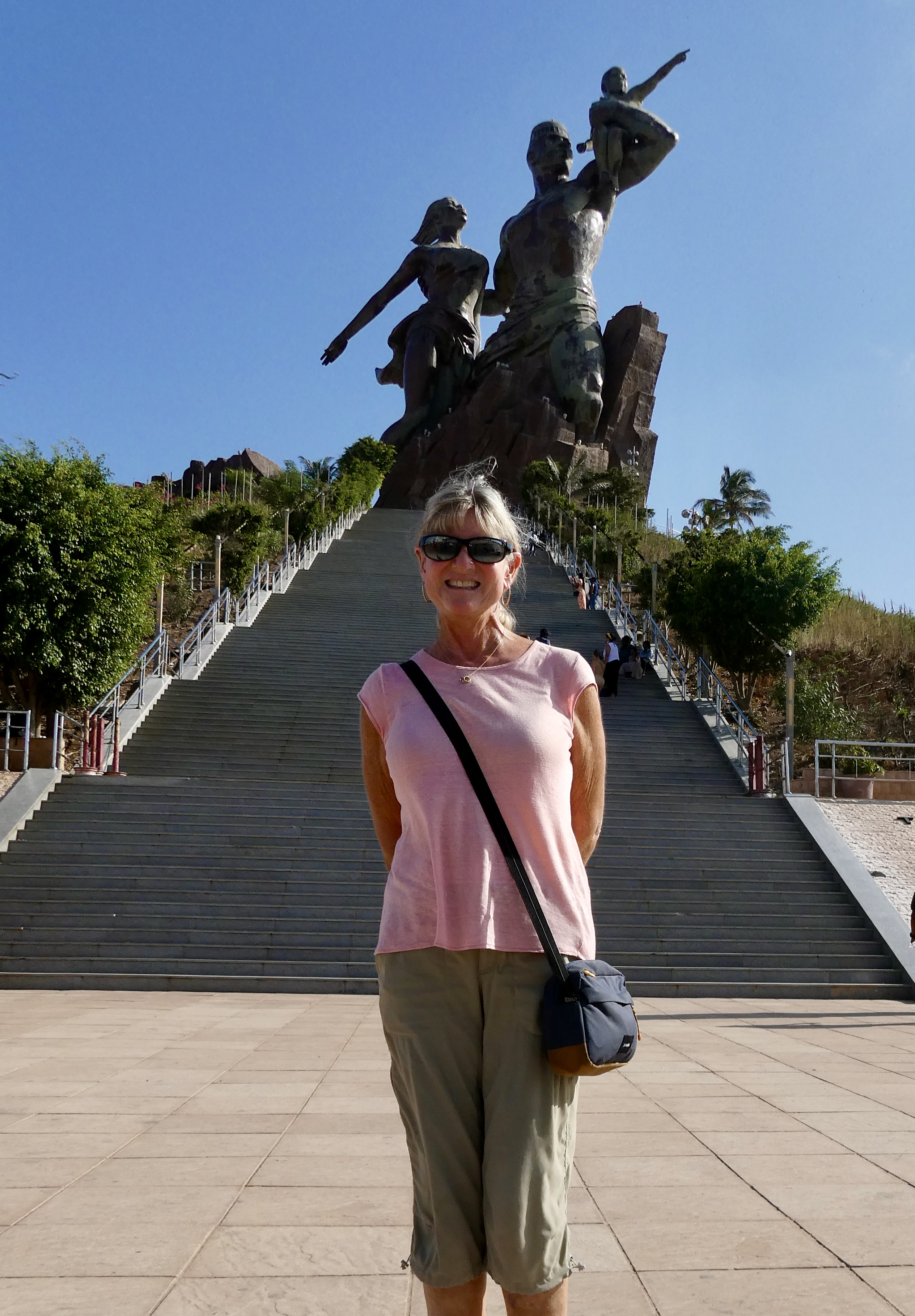
We then drove up the hill to the last stop of the day, the African Monument Renaissance, a 52 meter or 171 foot tall, bronze and copper statue located on top of a hill just up from the waterfront. The statue was designed by a Senegalese architect and built by, get this, a North Korean company at a cost of $27 million USD! The statute was apparently unveiled in front of 19 African heads of state in April 2010 to lots of controversy because of the extraordinary amount of money the Senegalese government spent on the project while infrastructure was crumbling. Today, the controversy has died down and the statute, featuring a woman pointing to Goree Island and a baby pointing forward, is a source of prided in Dakar. It really was magnificent.
So at this point, we headed back to my lovely waterfront hotel, but on the way, Malang suggested we make a quick stop at a local craft market. (I had told Malang I needed to find a Christmas ornament.). Anyway, we stopped at the craft market where wooden handicrafts are made and found … a Christmas ornament!!! Still undefeated!
Anyway, tomorrow I leave Dakar and we head north to Saint Louis as I begin my tour around Senegal and The Gambia.
