
So we (me, Malang and Simba) left Dakar this morning at 9:00 a.m. heading north about 35 km first to the Pink Lake (aka Lac Rose) and then after a stop at the lake on to Saint Louis. Now Lac Rose has so named because the lake has an algae that produces a red pigment which absorbs the sunlight and causes the lake to have a pinkish hue. Sadly in 2022, there was so much rain as a result of climate change in the area that the algae was diluted so no pinkish hue. It is only recently that the colour has returned.
And while the lake is known for its pink colour, the lake is equally known for its salt content. Upwards of 3,000 harvesters work the waters 6-7 hours per day bringing in upwards for 3 tons of salt per day.


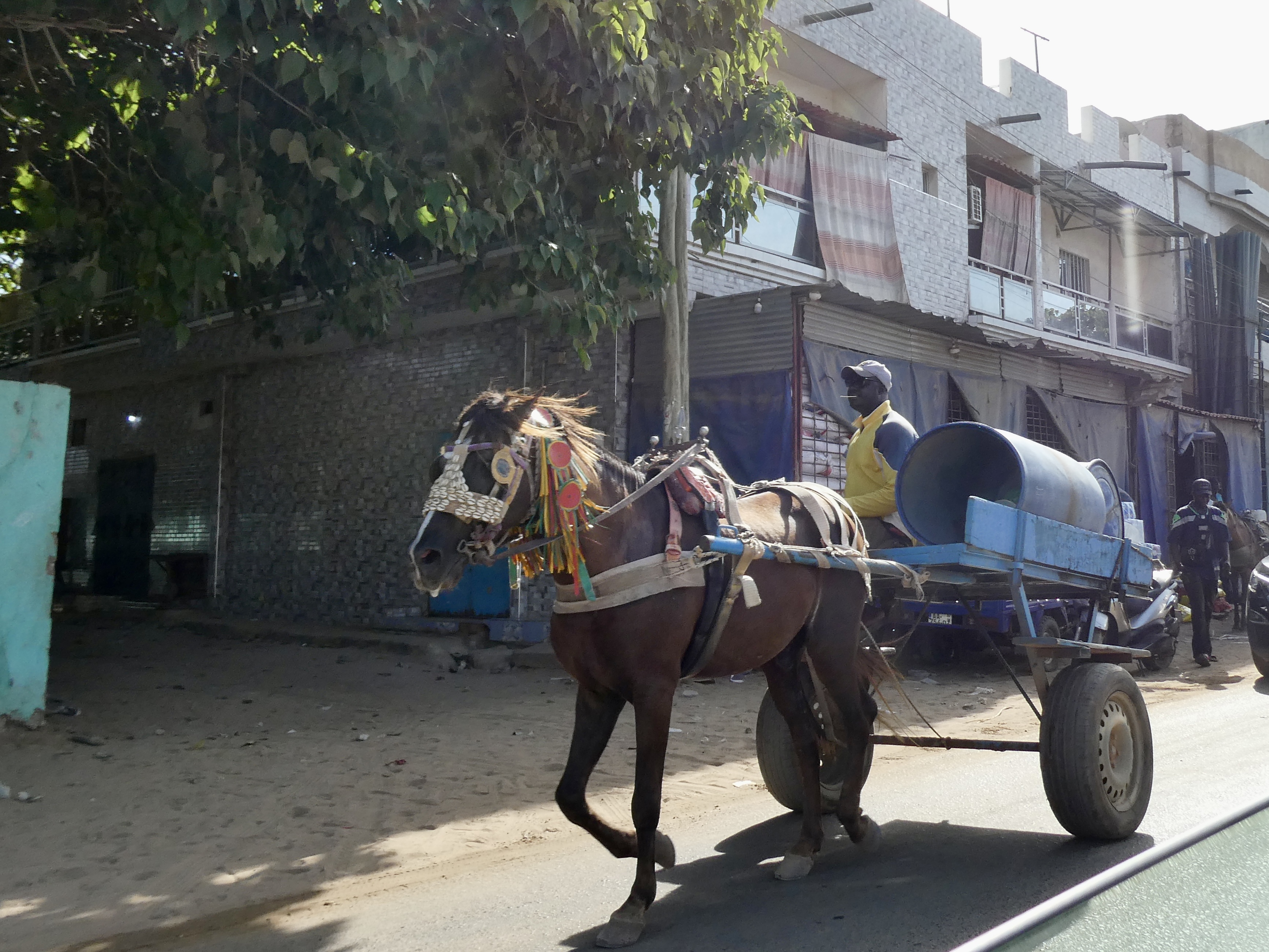
Anyway, the trip took us north on the peninsula past colourful Dakar buses and the occasional horse cart or two along the highway before we turned off and proceeded for the better part of an hour at a VERY slow pace through village after village. In fact, the drive reminded me of the time I went from Delhi to Agra (180 km) and it took 5 hours because of the endless villages.
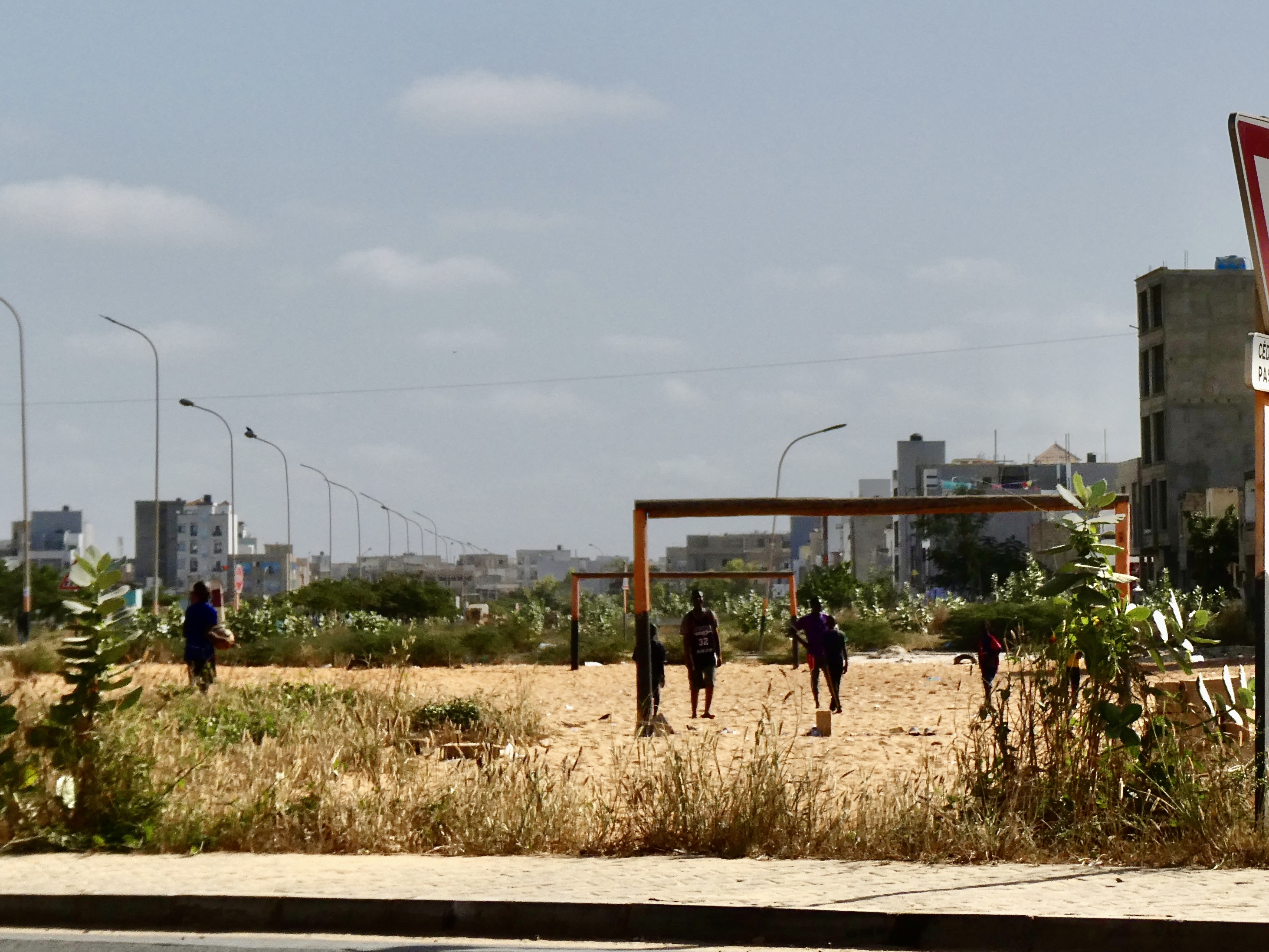
This morning we passed a lot of everything. Of course there were the horse carts with clippity clop of their hooves on the payment and the jingling bells on their harness, which reminded me of Christmas. But more interesting were the Saturday markets we passed with women bartering and walking along with their wares on their head while the occasional soccer game was being playing on dirt and dried grass nearby.


And not to be outdone was the animal parade. There were donkeys and horses standing idle hitched to carts. There were goats wandering on the side of the road and even cows eating garbage. My head was on a swivel for the entire hour.
We eventually reached the village of Lac Rose and it’s Saturday produce market was in full swing. Once we passed the market, we turned off the main road and bumped across a sandy road to the edge of Lac Rose. Now from a distance the lake looked like any other lake, but as we got closer it was clear that the lake indeed had a pinkish brown hue.




I ended up meeting the chief of the area who provided me with some background information about the lake, the types of salt that are harvested from the lake (black, brown and white) and the fact that most of the harvesters are not from Senegal, but nearby Mali and Burkina Faso.
Anyway, after the background, Malang and I hopped into a boat with the chief’s son and our boatman pushed us off shore and directed the boat with a long stick into the middle of the lake where we were going to watch a harvester at work.
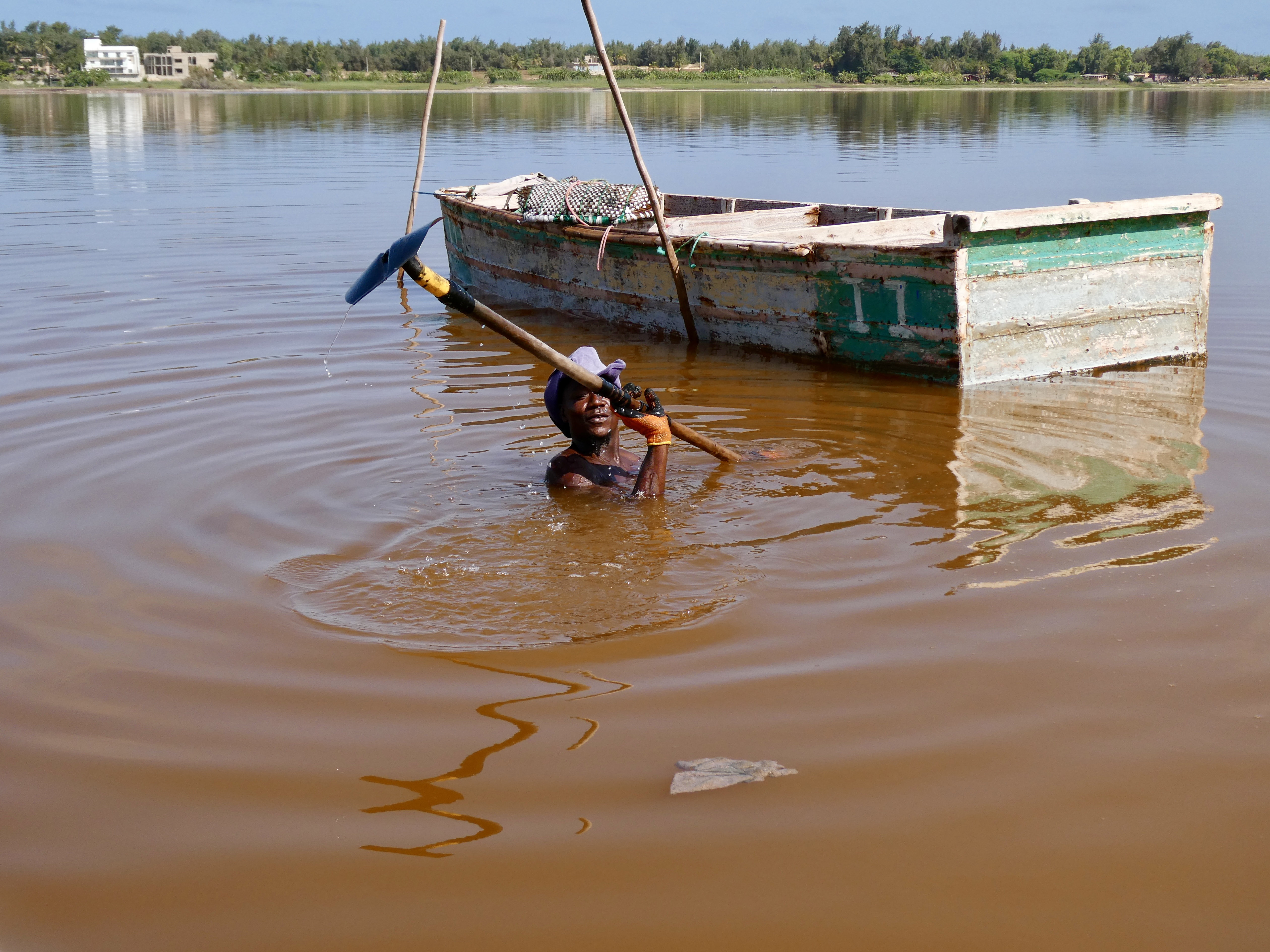
Now the lake at this time of the year is not too deep so the harvester was actually standing in the middle of the lake using a pick to hack at the salt underwater. Once enough of the salt has been loosened from the bottom of the lake, the harvester submerges a basket and then somehow drags the salt and water to the surface.
And when I say that this guy (who was in his early 30s) had arms I mean HE HAD ARMS. The work was incredibly laborious and in order to withstand the hours in the salty waters the harvesters cover themselves with shea butter. However, despite the effort to protect the skin, spending 6-7 hours per day in salt water damages the skin. In fact, our boatman was at one time a harvester and he showed me all the scars on his skin from his days as a harvester. It was brutal.
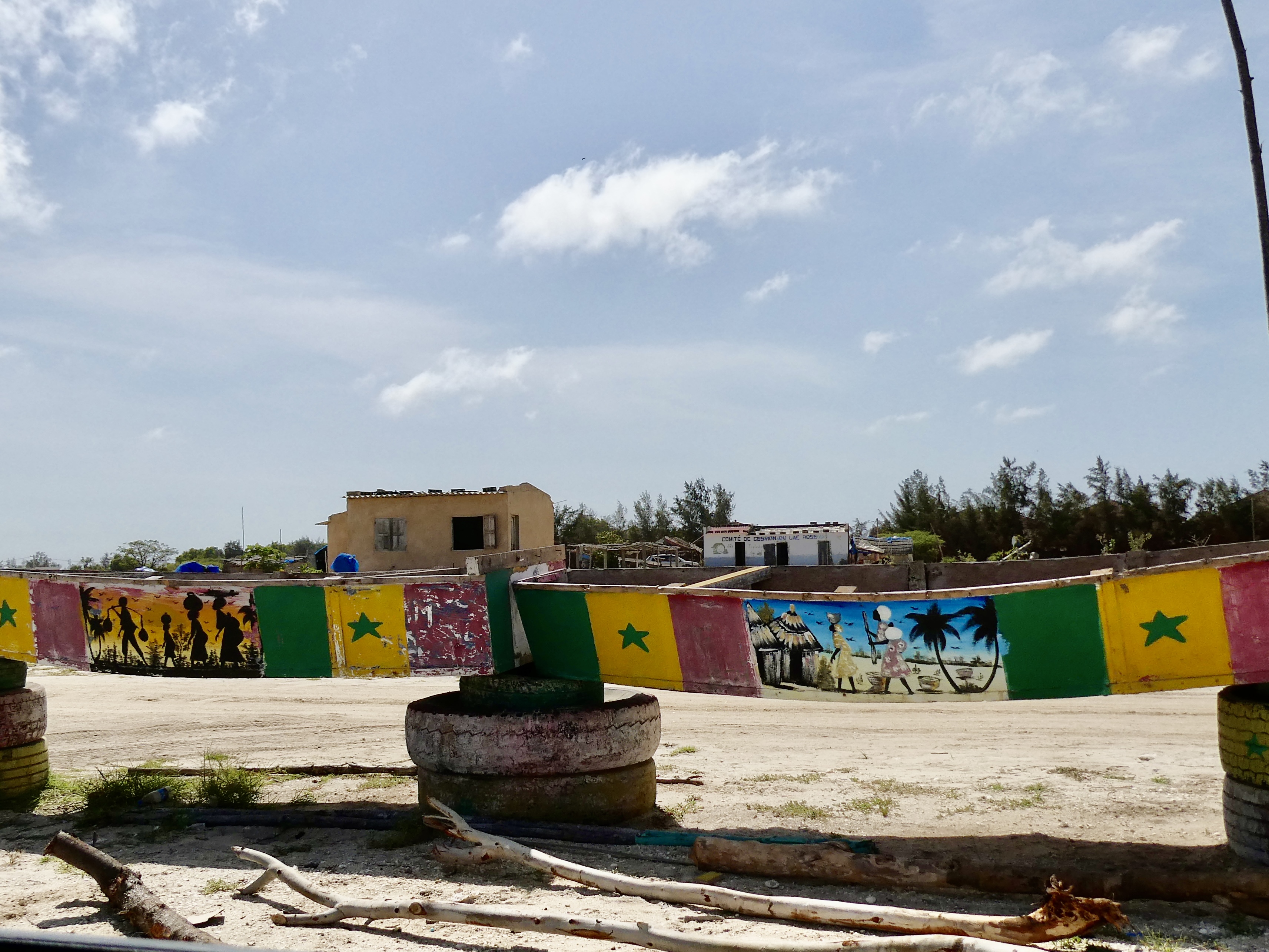
So once we saw the demonstration, we headed back to shore passing by a number of harvesting boats that were idle today because it was Saturday. (This is a 95% Muslim country so Friday and Saturday are their weekends.)
Anyway, once back on shore we had a number of artists angling for me to look at their sand art and trying to get me to buy salt. Sorry guys … I already have a sand art picture and I’ll pass on the salt.


From here, we doubled back through Lac Rose village and slowly made our way through more villages passing huge trucks dumping watermelon on the side of the road (it is watermelon season here) before finally reaching the roundabout that actually led to a freeway. So at this point I thought our villages tour was over …. Uh think again.
The trip on the freeway lasted long enough for us to pass a troop of vervet monkeys trying to cross the freeway before we exited and then spent the remainder of the trip (from 12:30 to 4:30 p.m.) passing through village after village.
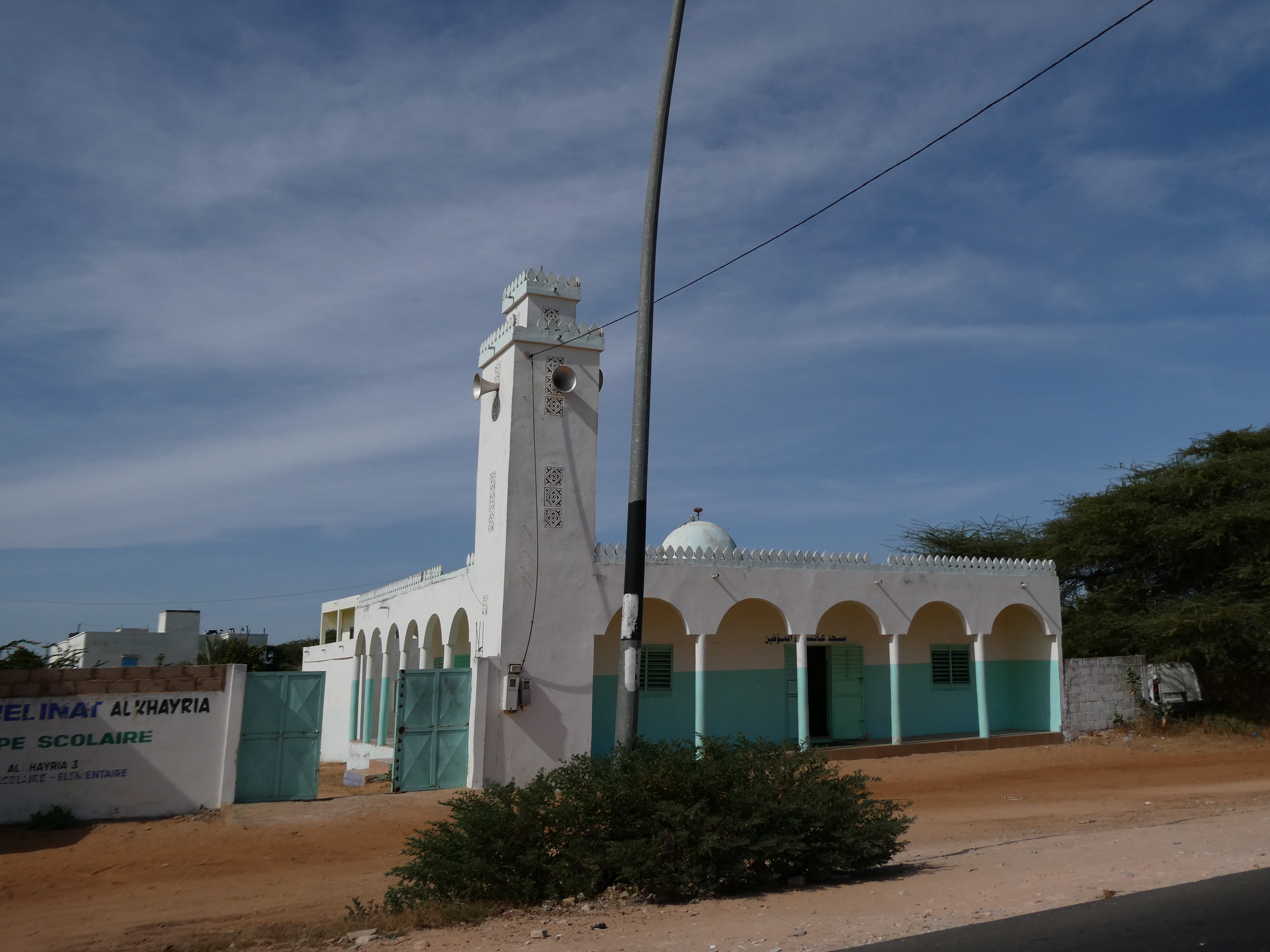

And of course, every town we passed had a mosque (some big and some very small) as well as market after market.
There was also the inevitable butcher with his wares on display (no refrigeration here). We passed old triangular shaped houses that were once the norm in these villages, but have now been replaced by cement multi-story homes.


We even passed through a village that specializes in hand made goods including brooms, baskets and leather goods. And of course we continued to see goats, cows and lots of watermelon.
By 4:30 we were pulling into Saint Louis and after passing through what looked like another village, we eventually crossed the Faidherbe Bridge built in 1865 and designed by Gustavo Eiffel (so that makes two bridges I have crossed on this trip by Gustavo Eiffel with the other being in Girona, Spain). The bridge connects the old town of Saint Louis on N’Dar Island in the Senegal River with the mainland. And yes, the city is listed as a UNESCO World Heritage site in 2000.
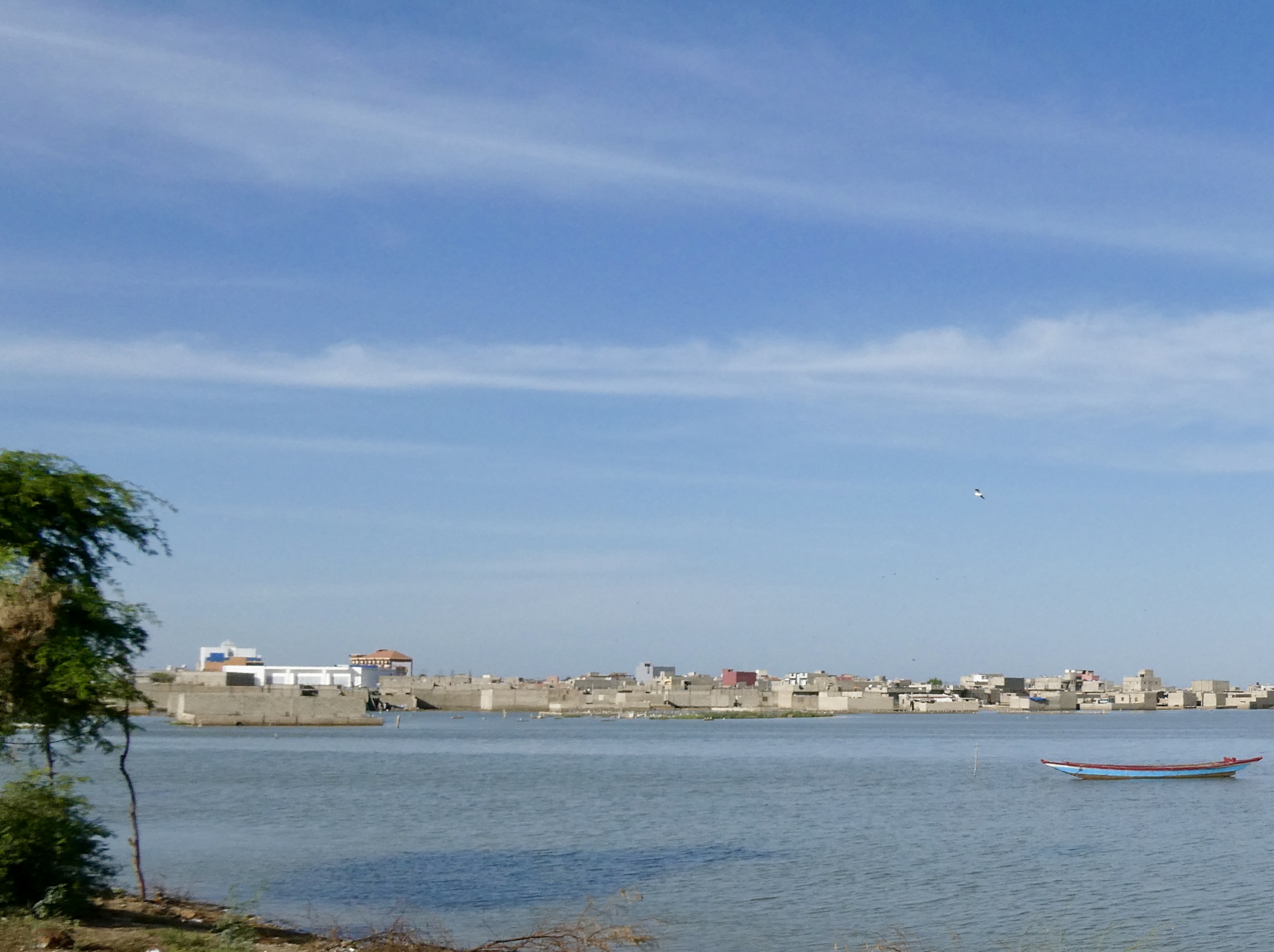
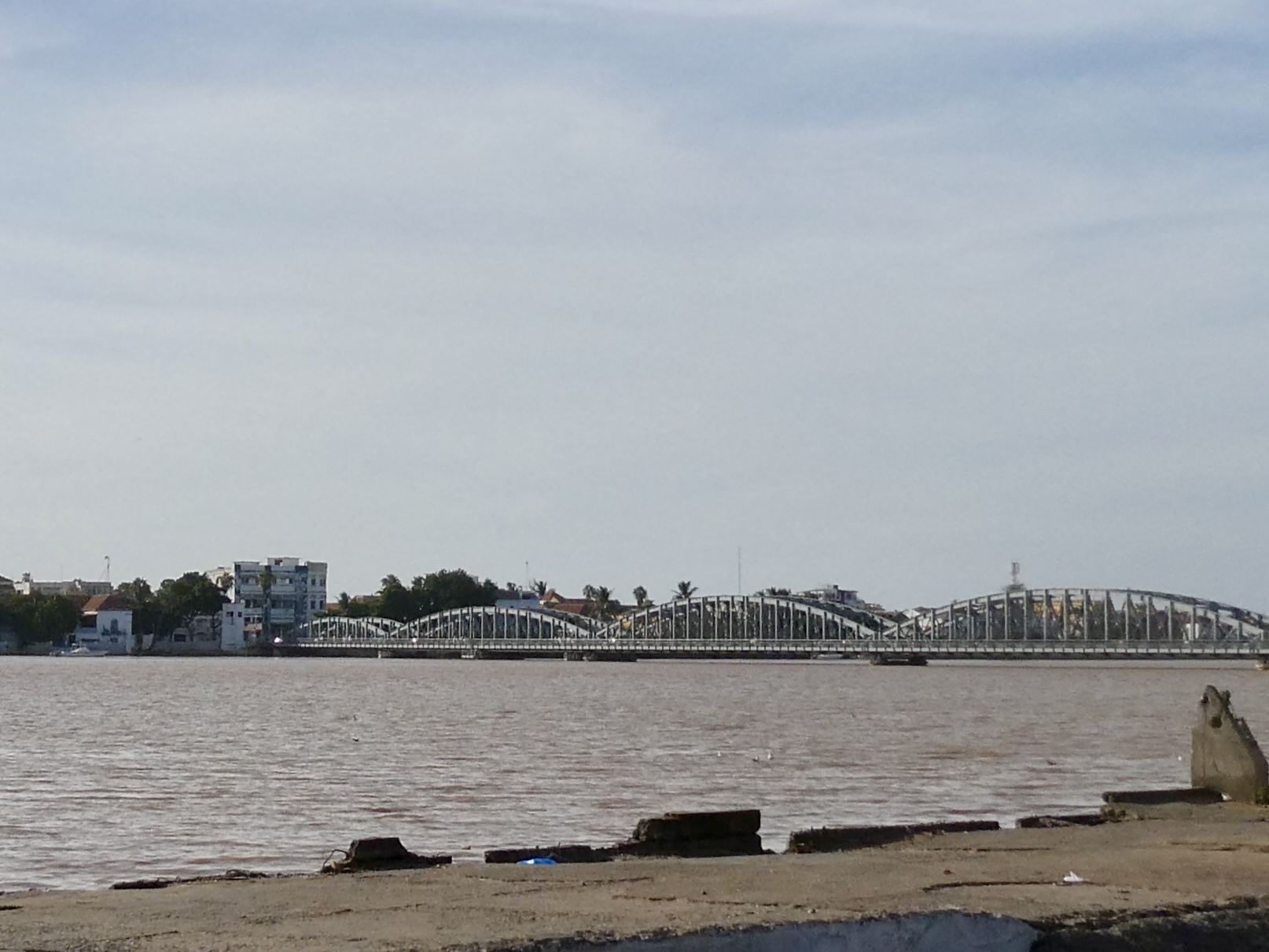
So tomorrow, we will be up early to go to a nearby bird sanctuary to see a number of birds that have migrated here for the winter and then in the late afternoon we will be going on a tour of the old town.
