Today, we were off to the holy city of Touba where a form of Islam known as Mouridism is practiced. Touba is the location of the Grand Mosque of Touba (which I was going to visit) and is the burial site of the founder of Mouridism, Shaikh Ahmadou Bamba Mbacke, who died in 1927. There is one known picture of the Sahikh and once we arrived in Touba, I saw the same picture everywhere.

Now the Shaikh apparently wanted Senegal to break free of its colonial oppressors and return to a strict version of Islam. And by and large he was successful. Over the years, the city of Touba and its religious influence have grown in Senegal. Today, alcohol, tobacco and music are banned in the holy city as are all other “illicit and frivolous pursuits”. And these rules are apparently enforced despite the fact that Senegal is a secular country because Touba is a quasi-autonomous city of 1.2 million people run by a khalifa (ruler) general and assisted by high ranking members of the “brotherhood” (a term used to describe members of this form of religion, although I soon found out that the term is used for members of all interpretations of Islam in Senegal, of which there are apparently quite a few).
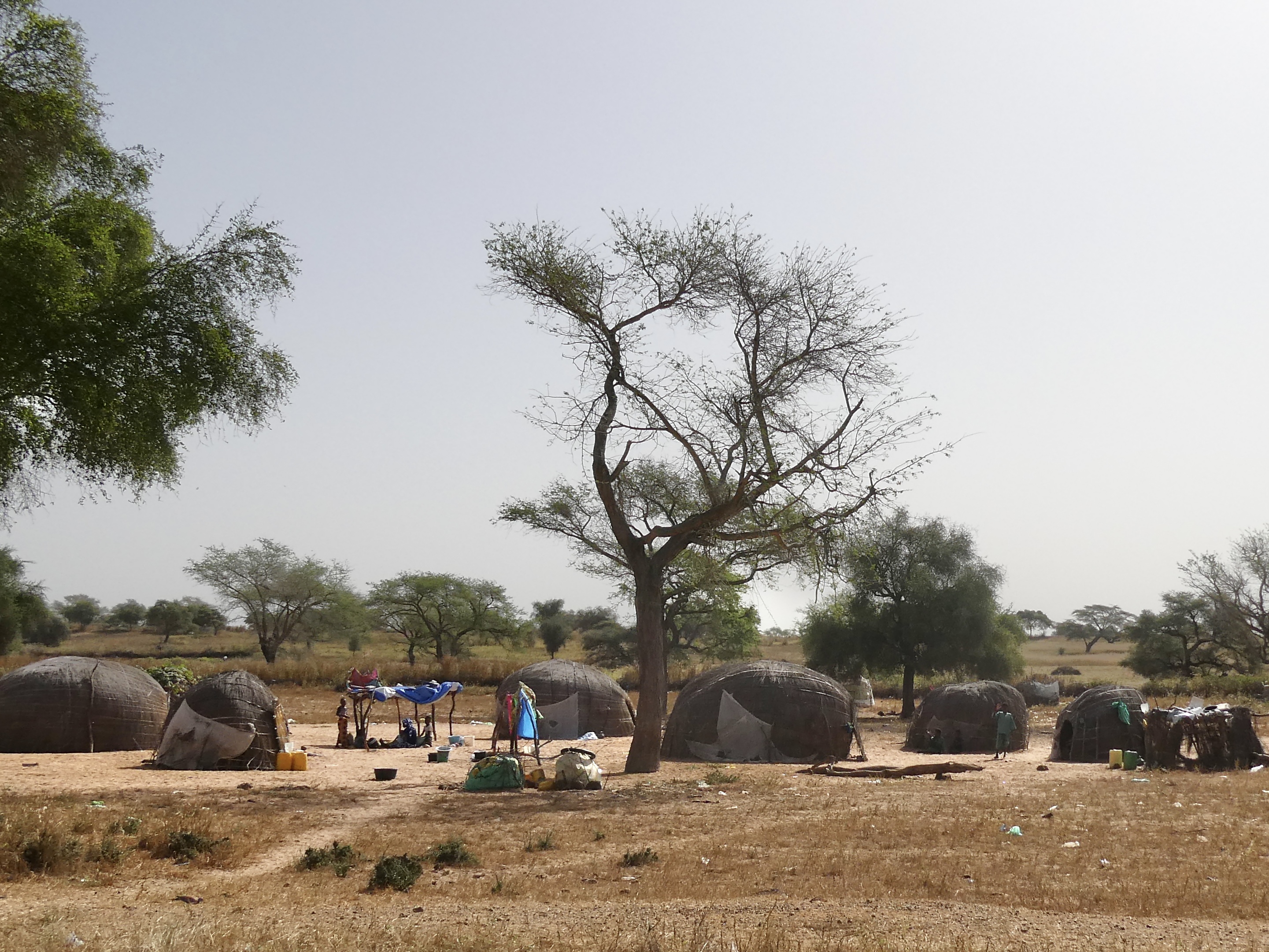

So once I had breakfast, we set out around 8:00 a.m. for the three hour drive to Touba passing more nomad villages with cows and goats grazing in nearby fields. And of course there was the ever present mosque in each little village we drove through.

As the drive wore on, the temperature rose and at one point the car thermostat read 37 degrees (I was boiling hot and the open windows did little to alleviate the heat.). And despite the heat, we still saw numerous fruit stands with women who were completely covered in the Islamic tradition selling watermelon and donkeys manned by young boys pulling carts loaded with various kinds of products while drinking from bottles of water.
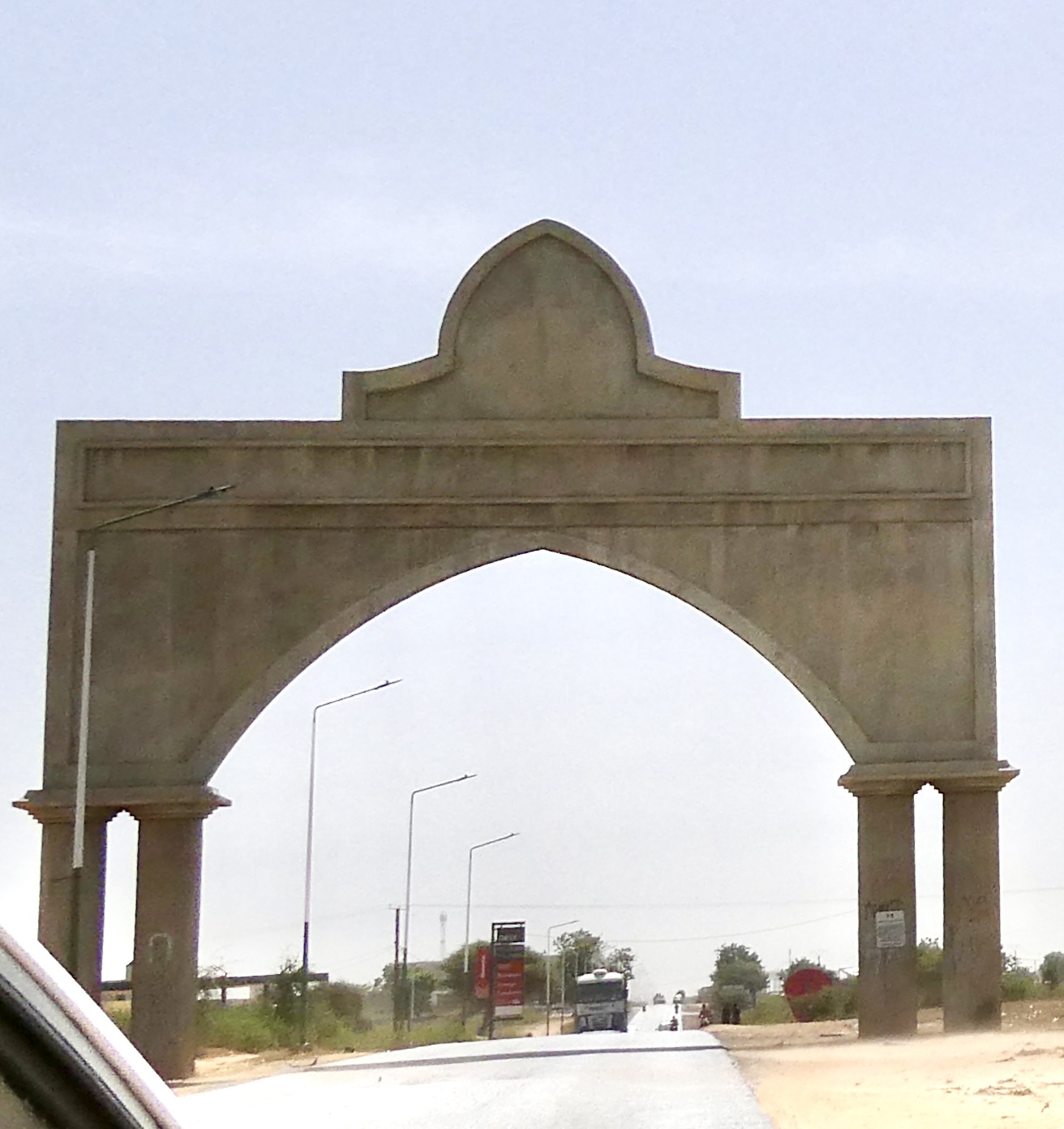
By 11:30 a.m. we were pulling into Touba passing through the enormous mosque shaped arch signifying we had arrived in the holy city. And quite frankly the only thing I noticed different about the city as we drove through to the Grand Mosque was the loud speakers attached to the outside of various businesses we passed playing Islamic chants (which begs the question … I thought there was no music….)
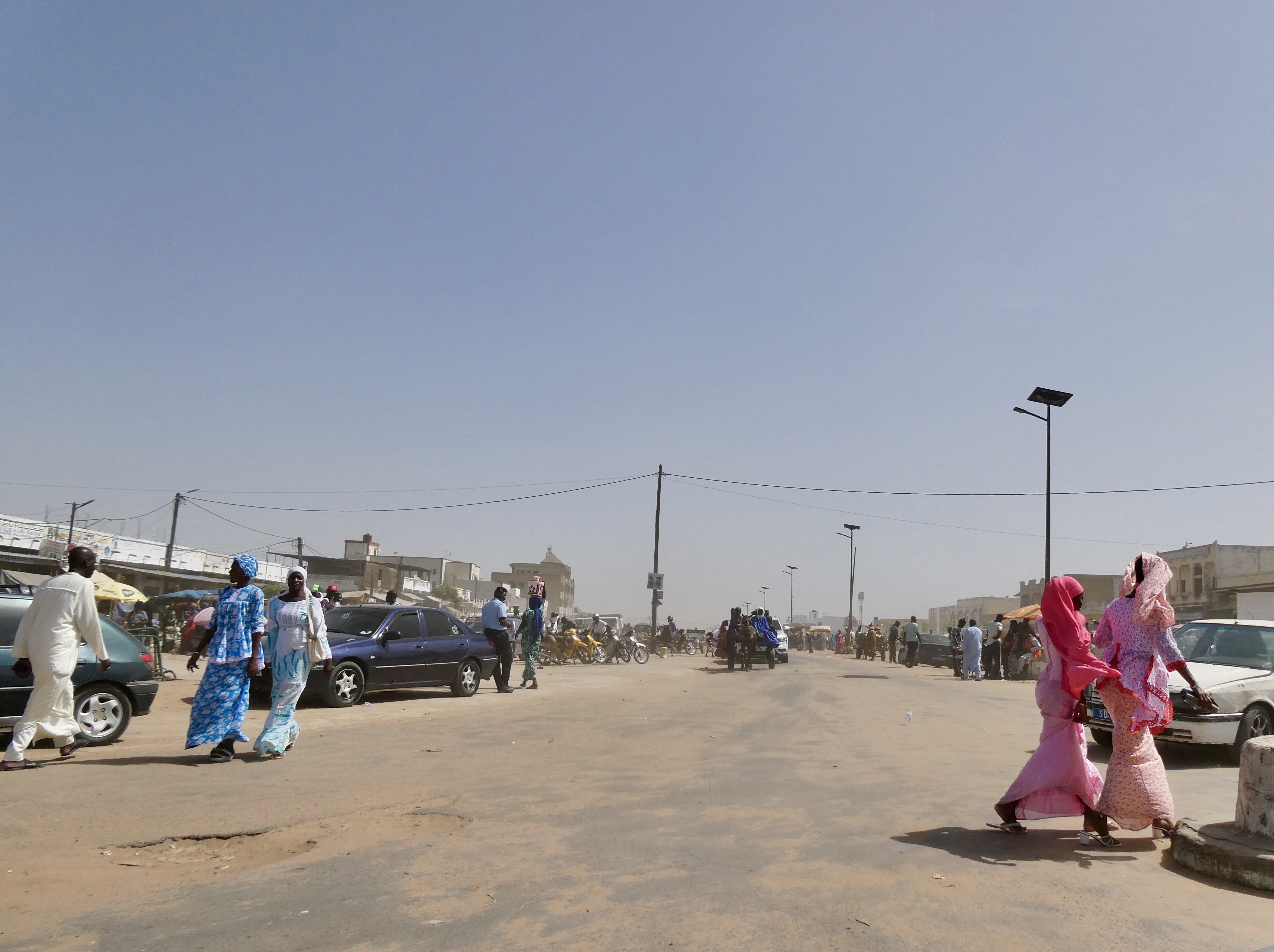
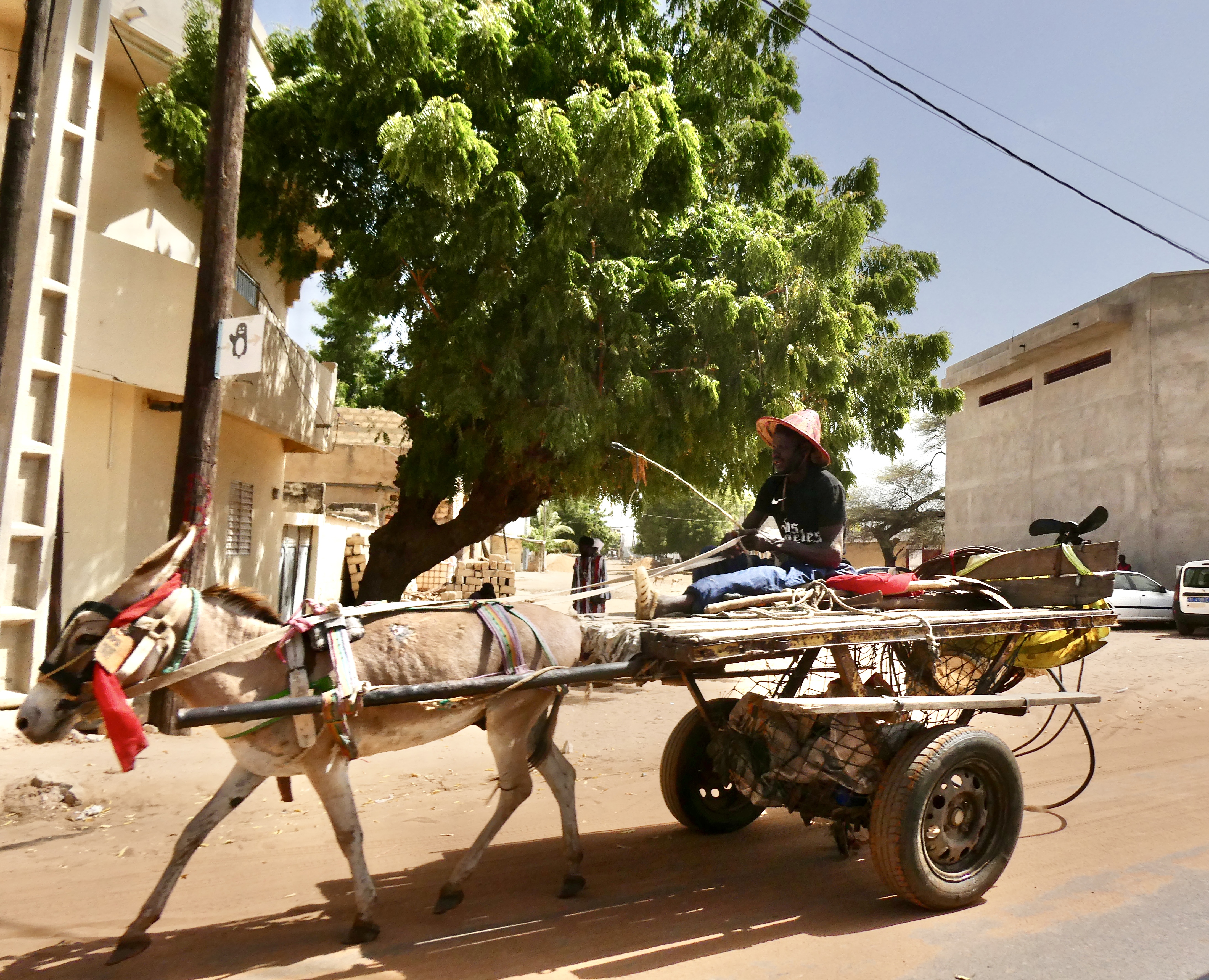
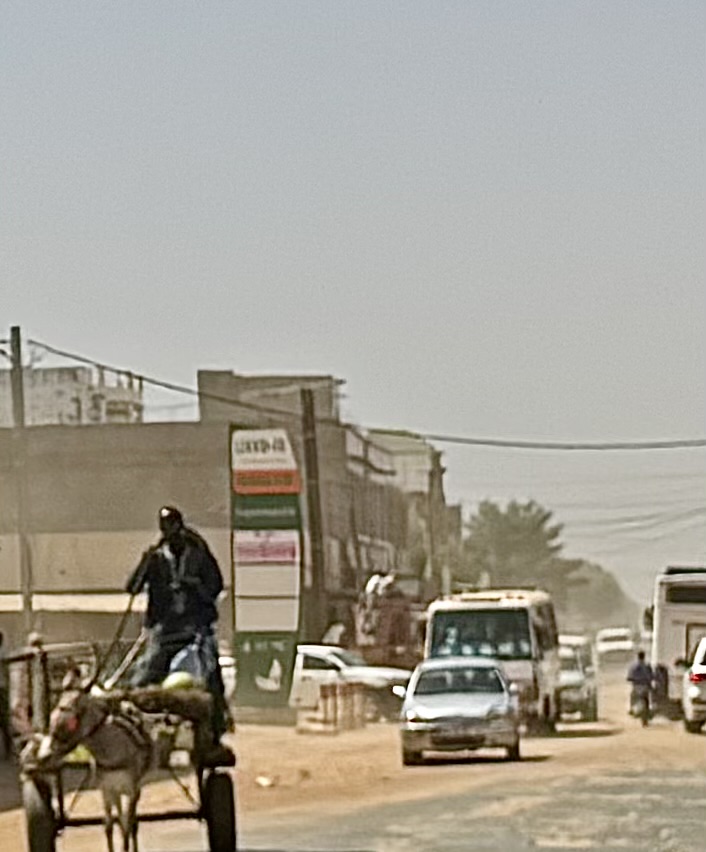
Anyway, to reach the Grand Mosque, we had to weave our way through horrendous traffic in terribly dusty, sandy conditions. The wind was blowing in from the Sahara and there was sand everywhere. Women shopping at the market were covering their faces with their head scarves and men riding donkey carts had masks on. It was that bad.
So once we reached the Grand Mosque, I had to don a headscarf and a wrap to cover up my linen pants (which I specifically wore thinking that would be conservative enough, but I soon found out … no pants on women) before I could enter the mosque with a member of the “brotherhood”.
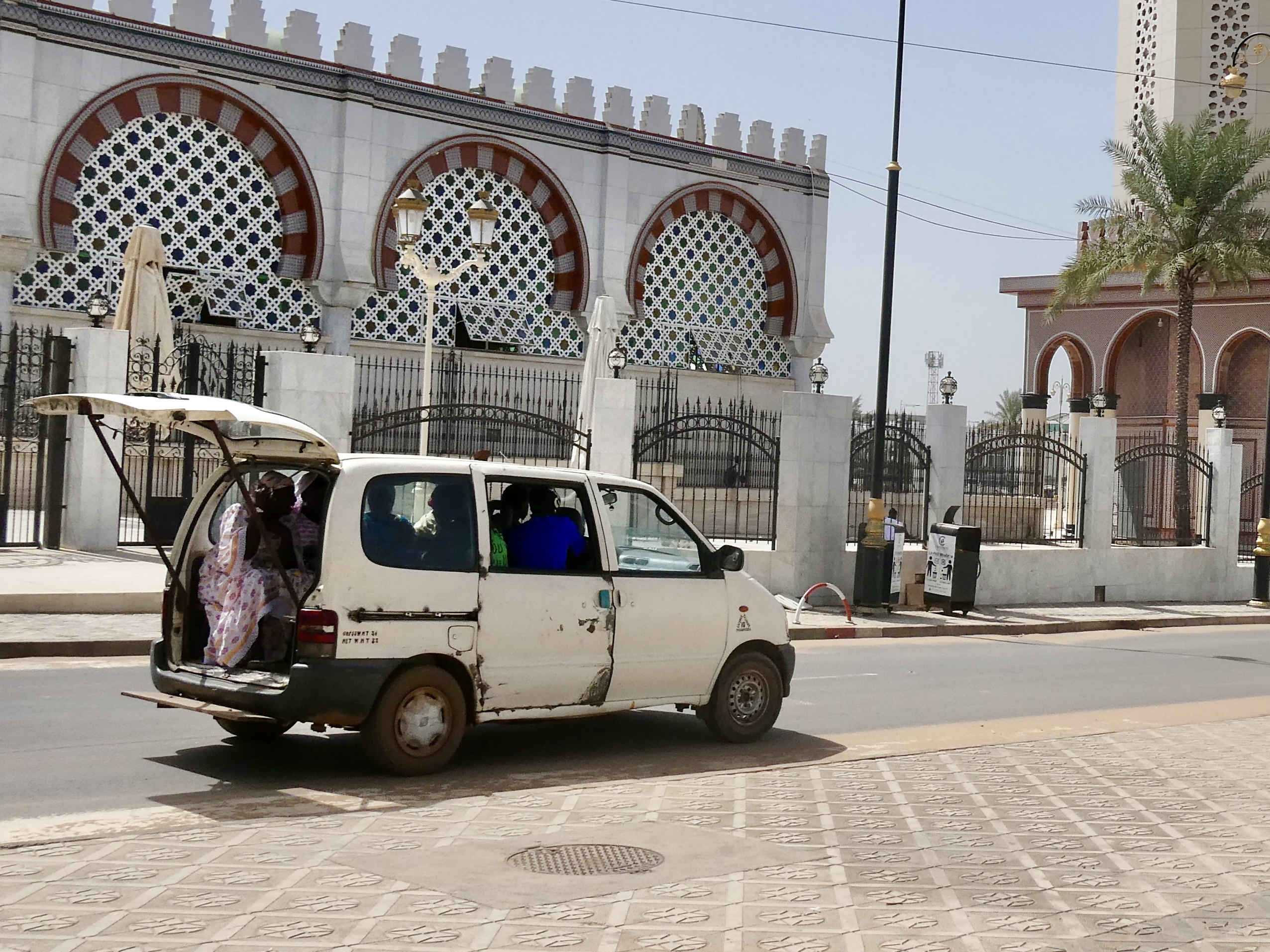
While I was waiting for the fellow to come out of the mosque, I took a wander around and ended up watching van after van pass by me each with its doors open and jammed to capacity with people. Come to find out this is the local bus service and you simply hop in and out of the van. Seemed pretty dangerous to me, but Malang told me it works quite well so who am I to judge.
Anyway, Mohammed, the fellow who was going to give me a tour of the mosque finally showed up (while I continued to swelter in the extreme heat with a headscarf on and a wrap around my pants. However, once inside the mosque, the design allowed for breezes to pass through the building, and it was surprisingly pleasant inside.
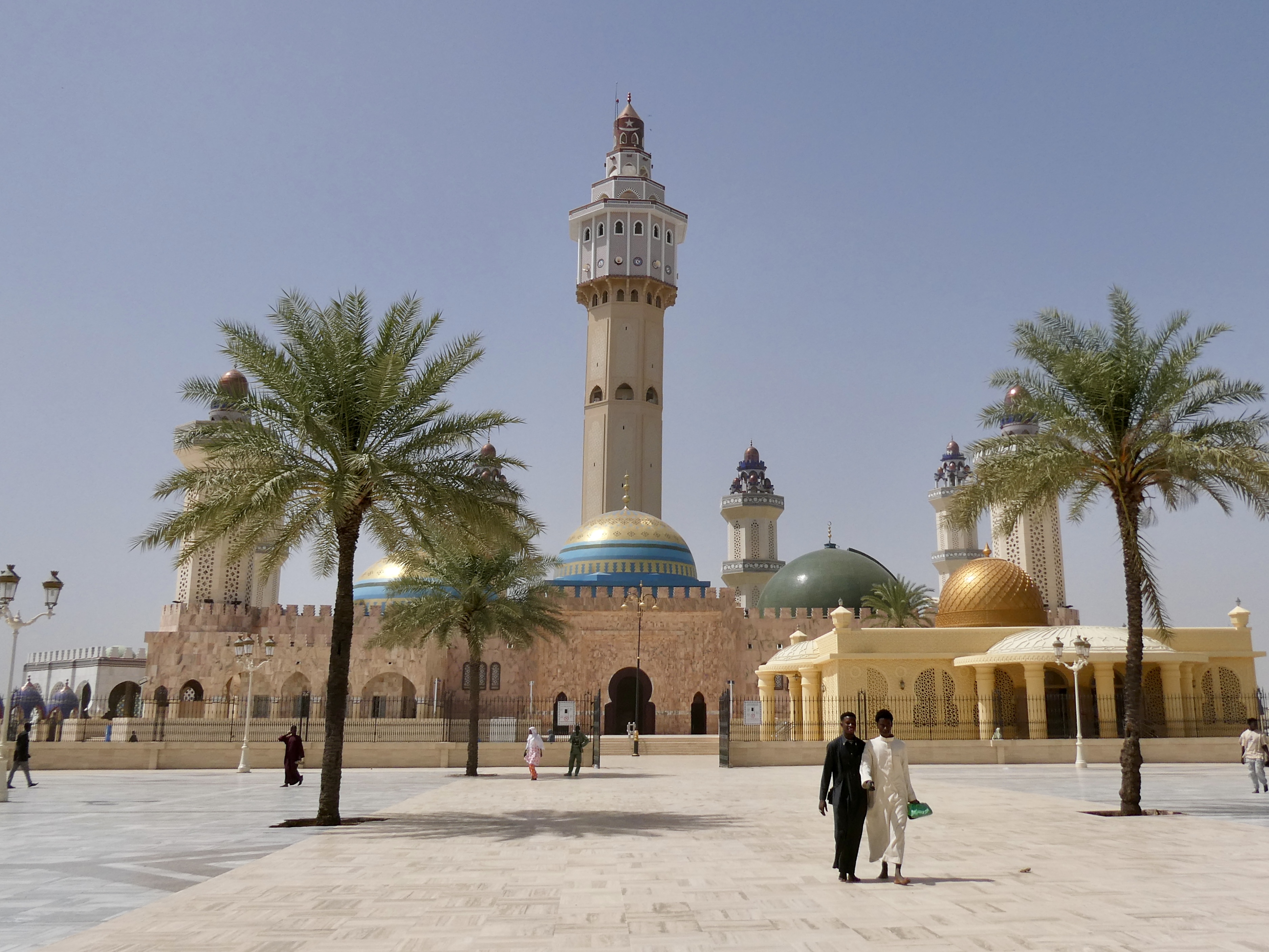
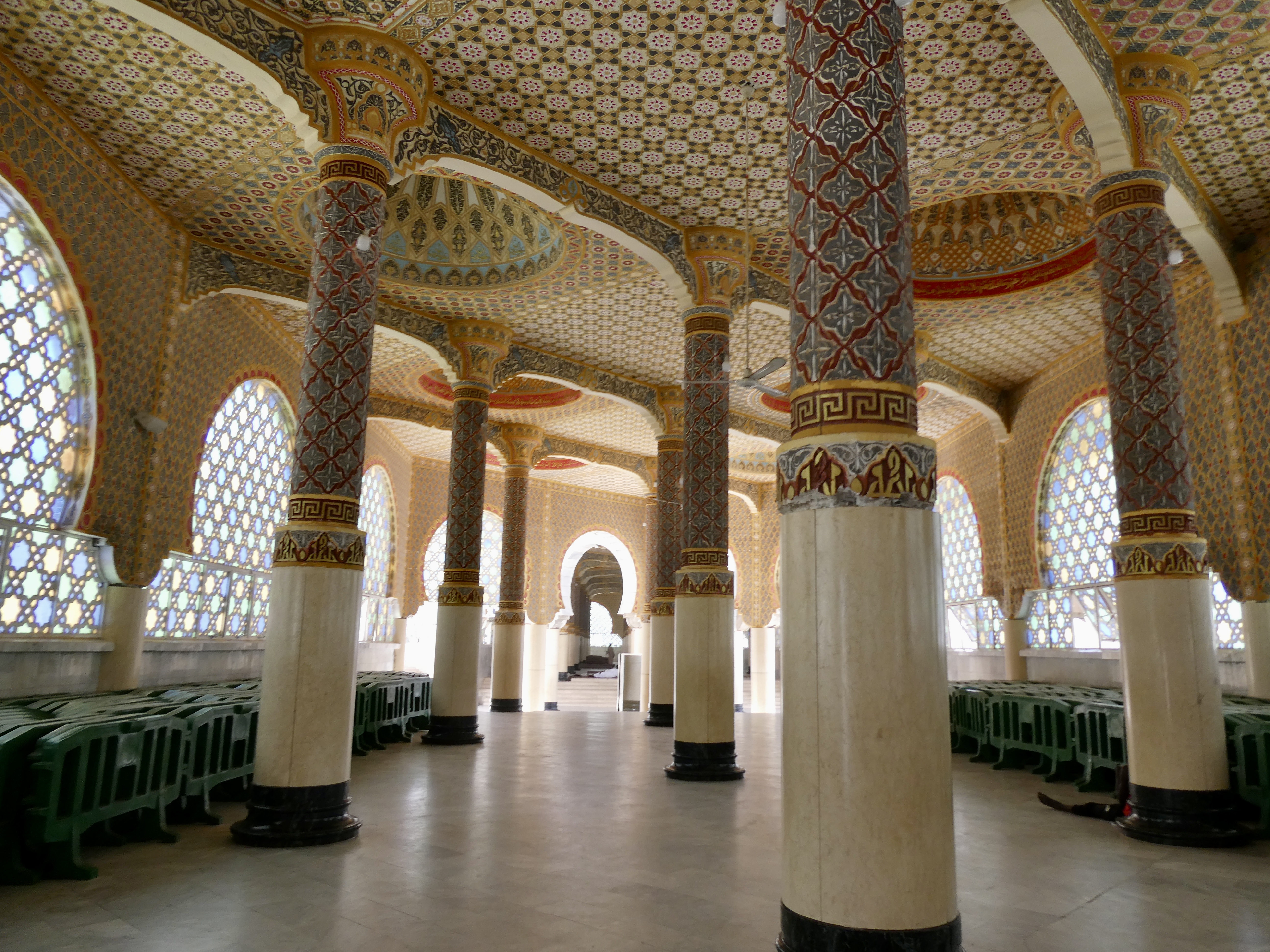
Now the building was enormous and can accommodated upwards of 10,000 people for Friday prayers and even more outside in the courtyards. Construction on the mosque began in 1887 and was allegedly completely in 1963, but Mohammed pointed out to me new areas of construction and the potential for an additional minaret to add to the seven already constructed. In addition, the mosque has three large domes and a main mausoleum where the Shaikh and his sons are buried.
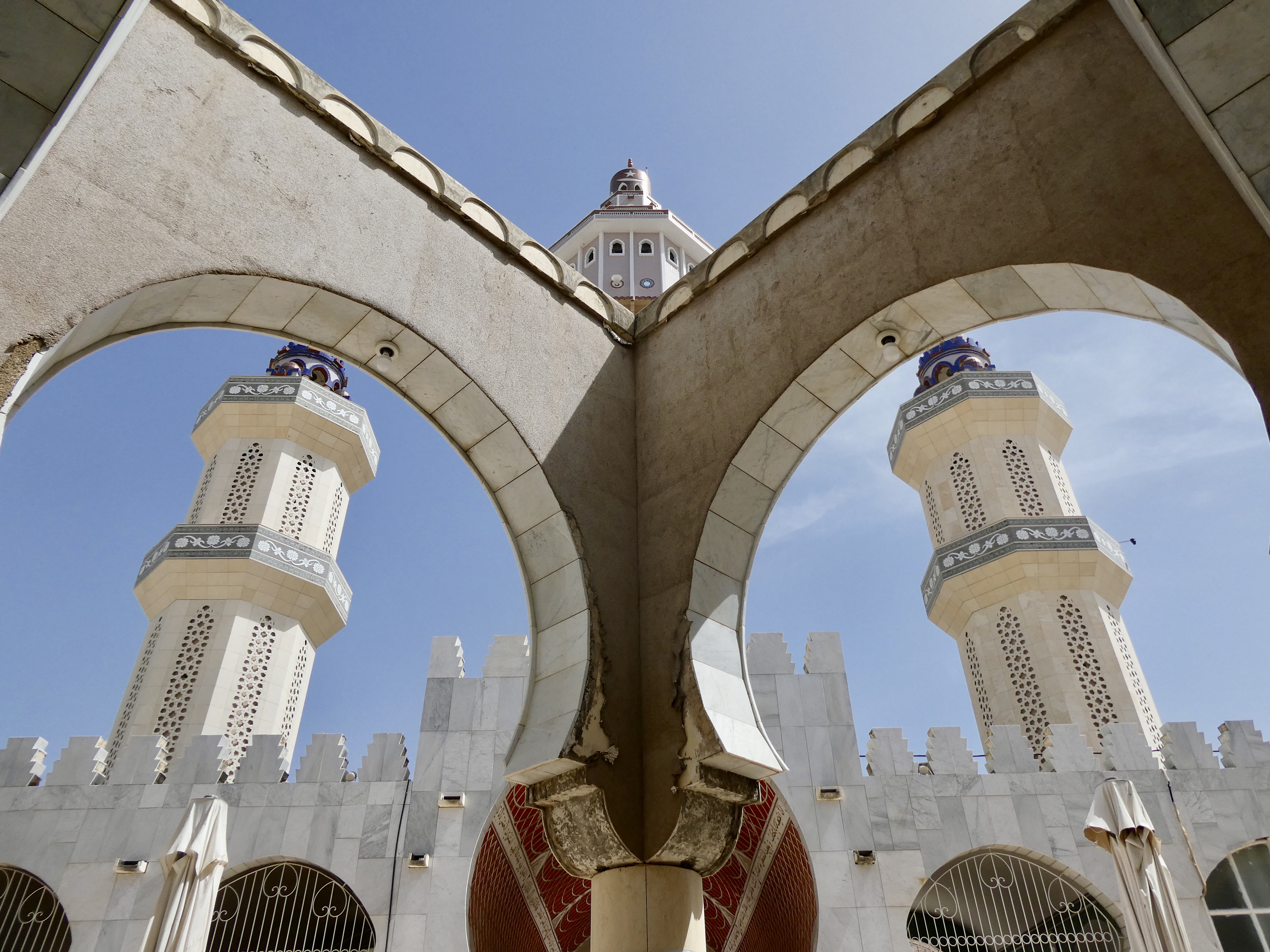
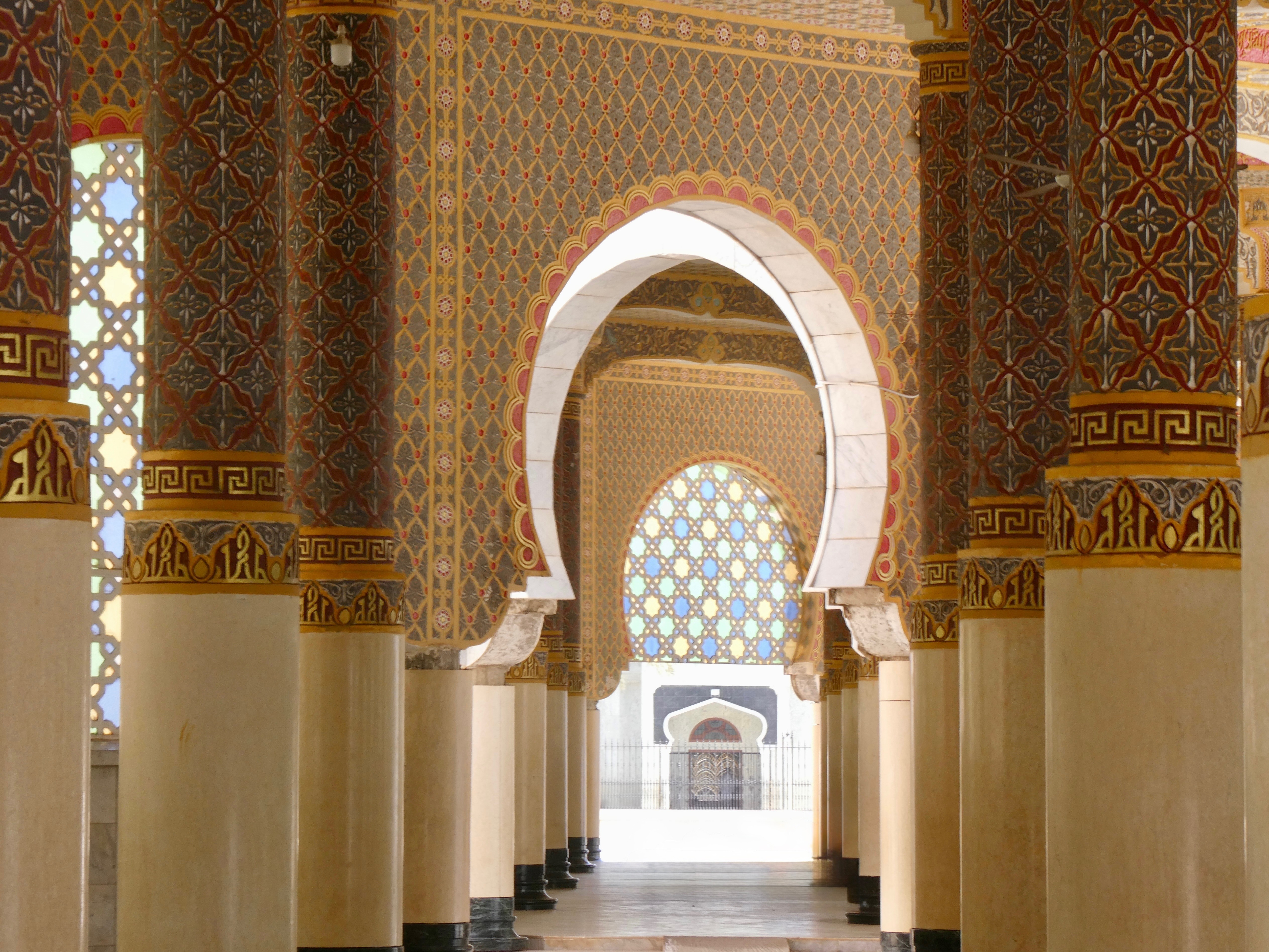
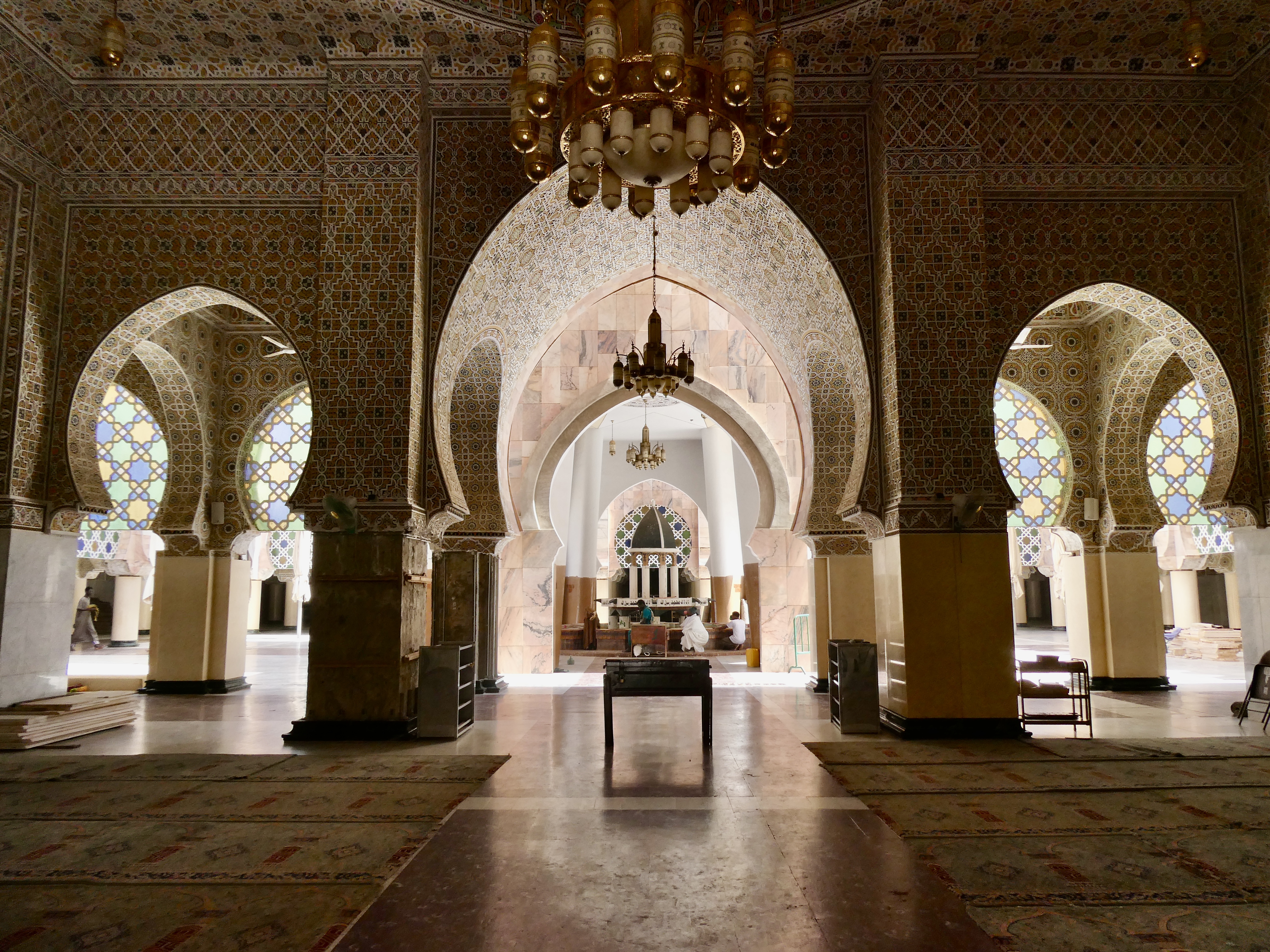
As we walked around, I thought that the mosque was rather opulent considering the poverty and poor living conditions of the folks in the area that we passed on the way to the mosque. There were Italian terrazzo floors, Moroccan tiles covering the exterior walls of the mosque and inner domes, marble pillars, gold leaf and hand made carpets. And throughout the mosque the ceilings and pillars were painted with lots of red, yellow, gold and blue hues. It was all lovely but made me wonder how these folks with very little can come here and not feel some resentment.
Anyway, we wandered through the prayer hall and then to the back of the mosque where the Quranic School for boys and the Quranic School for girls was situated. We took in various views of the minarets, passed by one of the abolition washing areas and then walked through the hall to the holy water fountain.
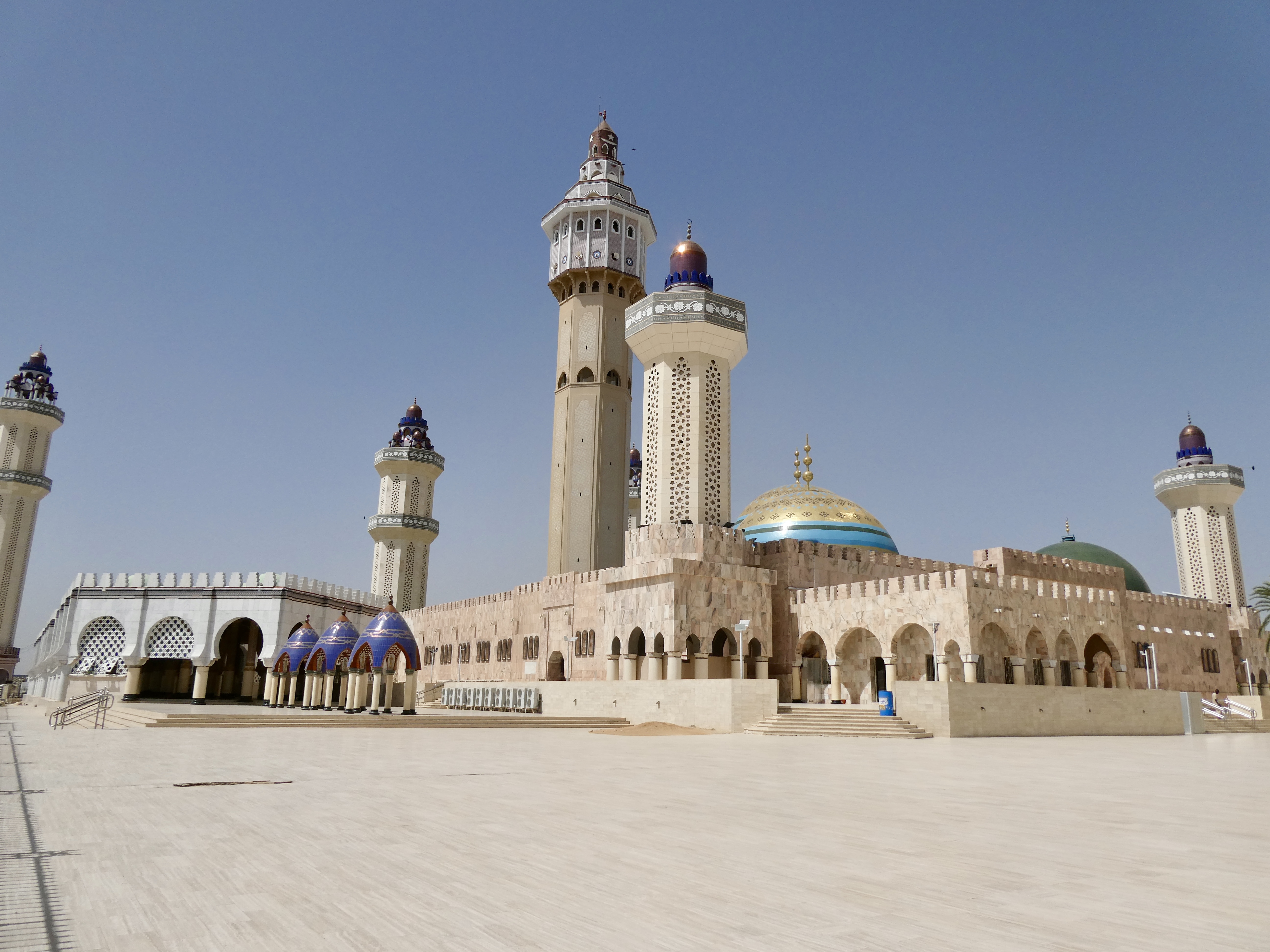
We then walked outside across the massive prayer courtyard to the far corner of the mosque for a picture perfect shot of the entire mosque before crossing back across the courtyard to the mausoleum. And by now, I was almost running to the mausoleum as I was in bare feet (no shoes in the mosque) and the floors outside were ridiculously hot. (Mohammad had socks on so he was just sauntering along.)
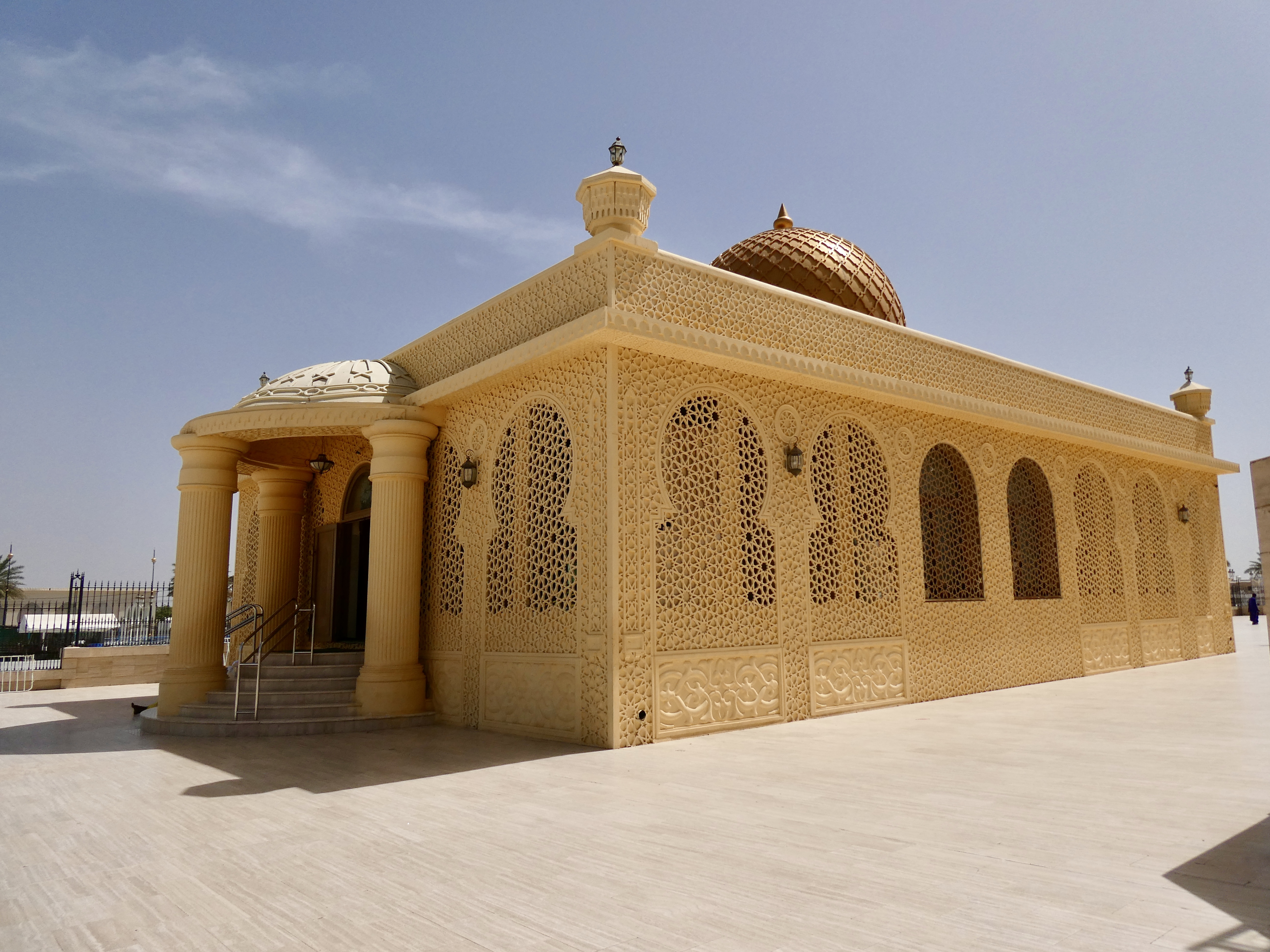
Now the mausoleum was painted the colour of daffodils and was a very pretty building. Inside, the mausoleum was divided into a men’s side and a woman’s side separated by a partition. Nevertheless, I could still see the entire resting place of the Shaikh.
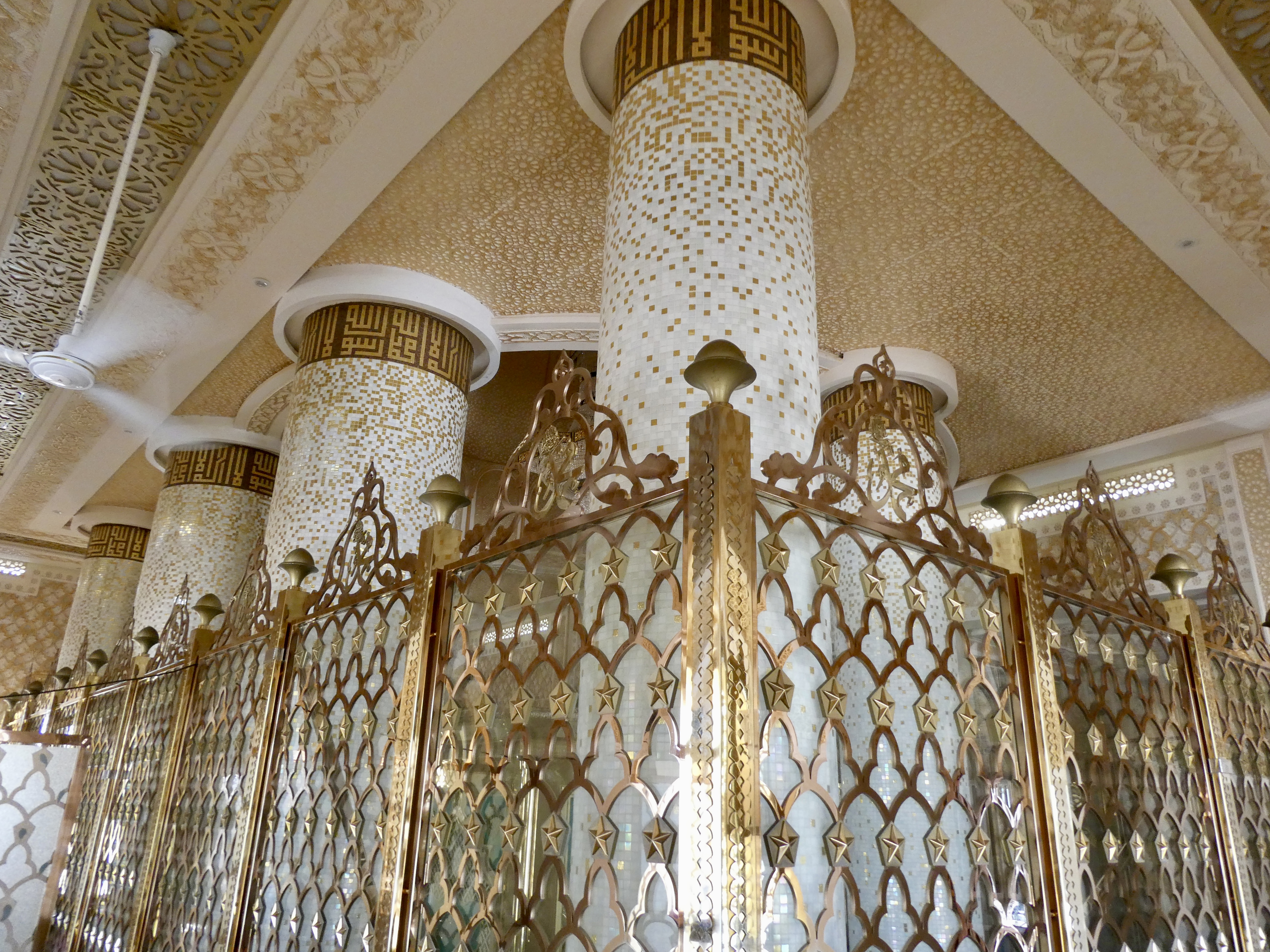
So with that, my tour of the Grand Mosque of Touba was completed, but not before Mohammad told me that tourists are expected to contribute a “gift” to the mosque. While this kind of expectation irritates me, there was no cover charge to enter the mosque (unlike the churches in Spain) so I handed over a few shackles of local currency and called it good.
From here, we drove back through the very dusty city and onto the highway for the two hour drive to Kaolack where we are spending the night. Tomorrow, we leave Senegal and drive into The Gambia for four days before it is time for me to return home.
