Today, we were heading to Georgetown aka Janjanbureh located on MacCarthy Island in the Gambia River. It is the capital of the local government area and as a result, is the seat for the governor’s residence.
Now apparently, in 1823 the island was purchased by the British to house freed slaves. And while a dispute arose with the locals and a bit of skirmish broke out, the island remained in British hands. In 1832, the British founded Georgetown on the island, which allegedly became a dropping off point for holding slaves on their way to the Americas. And I say allegedly because the history of MacCarthy Island is murky. The locals will tell you it was a holding station for slaves, while research says it was indeed a place to house freed slaves. I have no idea what is correct so I will tell you what the guide told me and leave it at that.
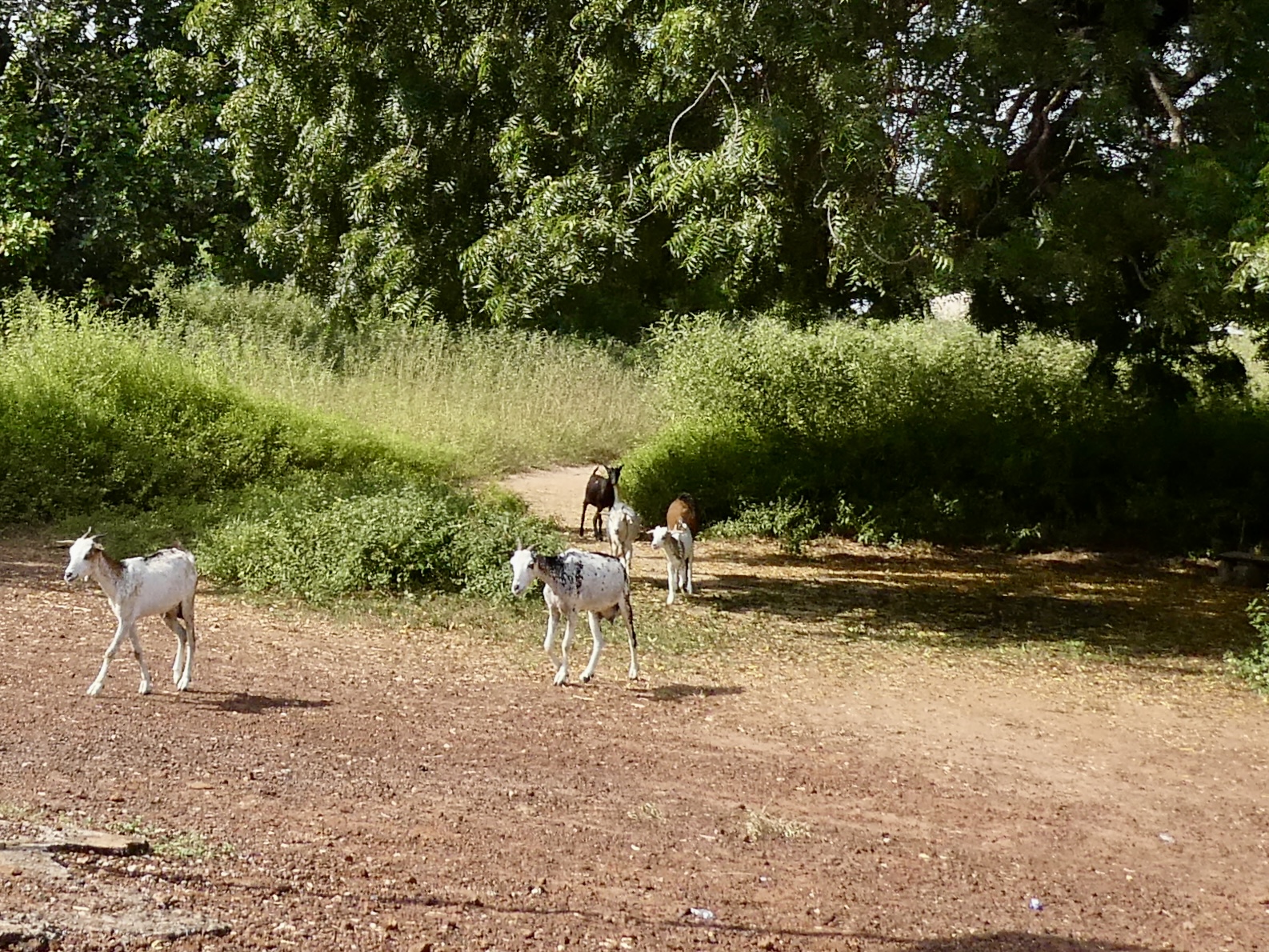
Anyway, the drive took us through the village of Kauntaur, which is adjacent to my hotel before we reached the paved highway and more police stops, goats and cows. We eventually reached the end of the road where we had to hop on a local ferry to take us to MacCarthy Island.

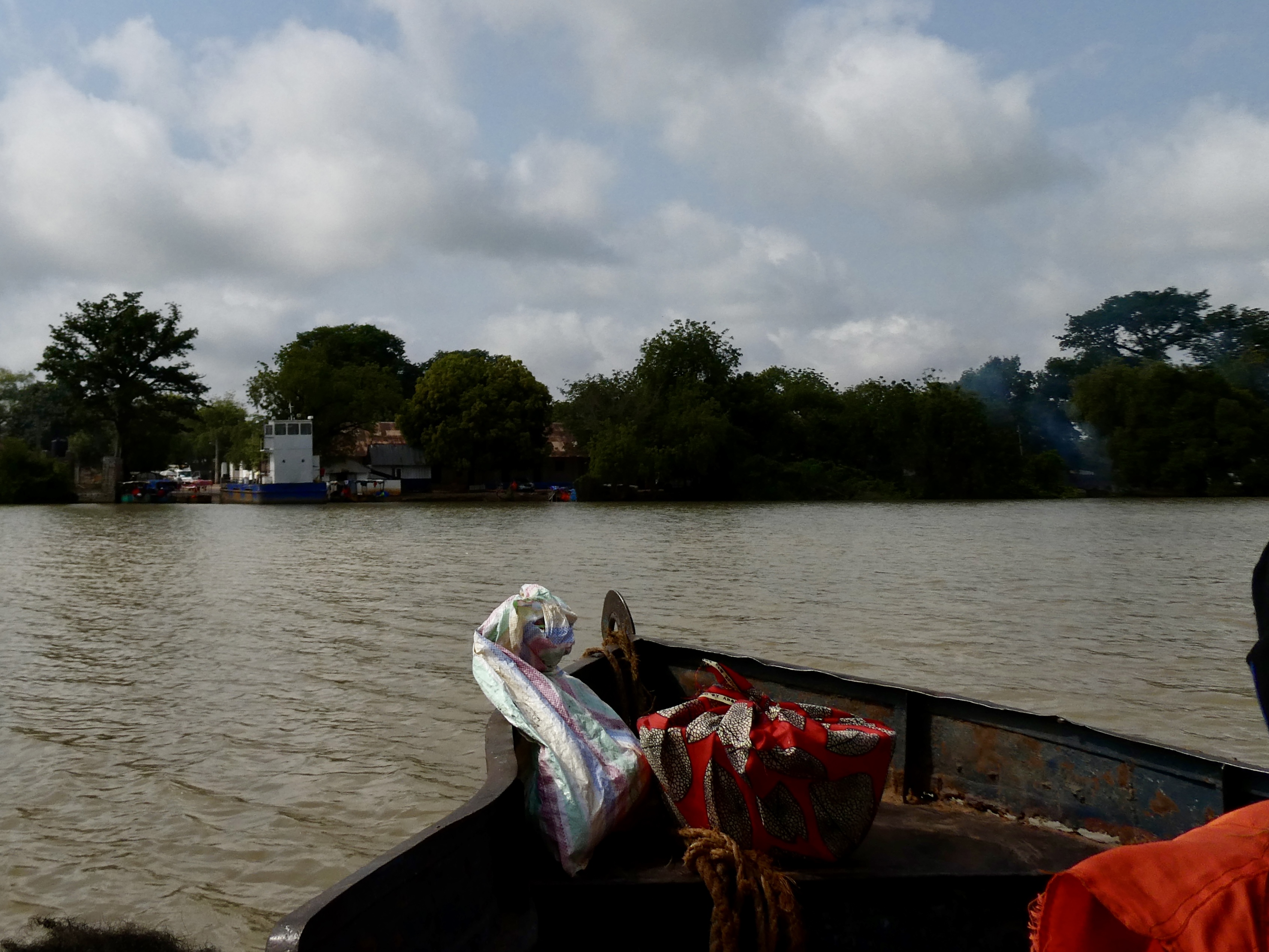
Now the boat drivers will not leave the dock until all 12 seats on the boat are full. And while we sat and waited, the boat was loaded with lots of locals as wells as buckets of rice, cloth wraps filled with groceries and even a motorcycle, which its owner had to hold on to for the duration of the trip across the river.
Once we were fully loaded, the tiny skiff chugged across the water and once docked in the mud on the other side, there was a lot of jostling to get off the boat. I sat and waited until most were off the boat. I was not in a hurry.
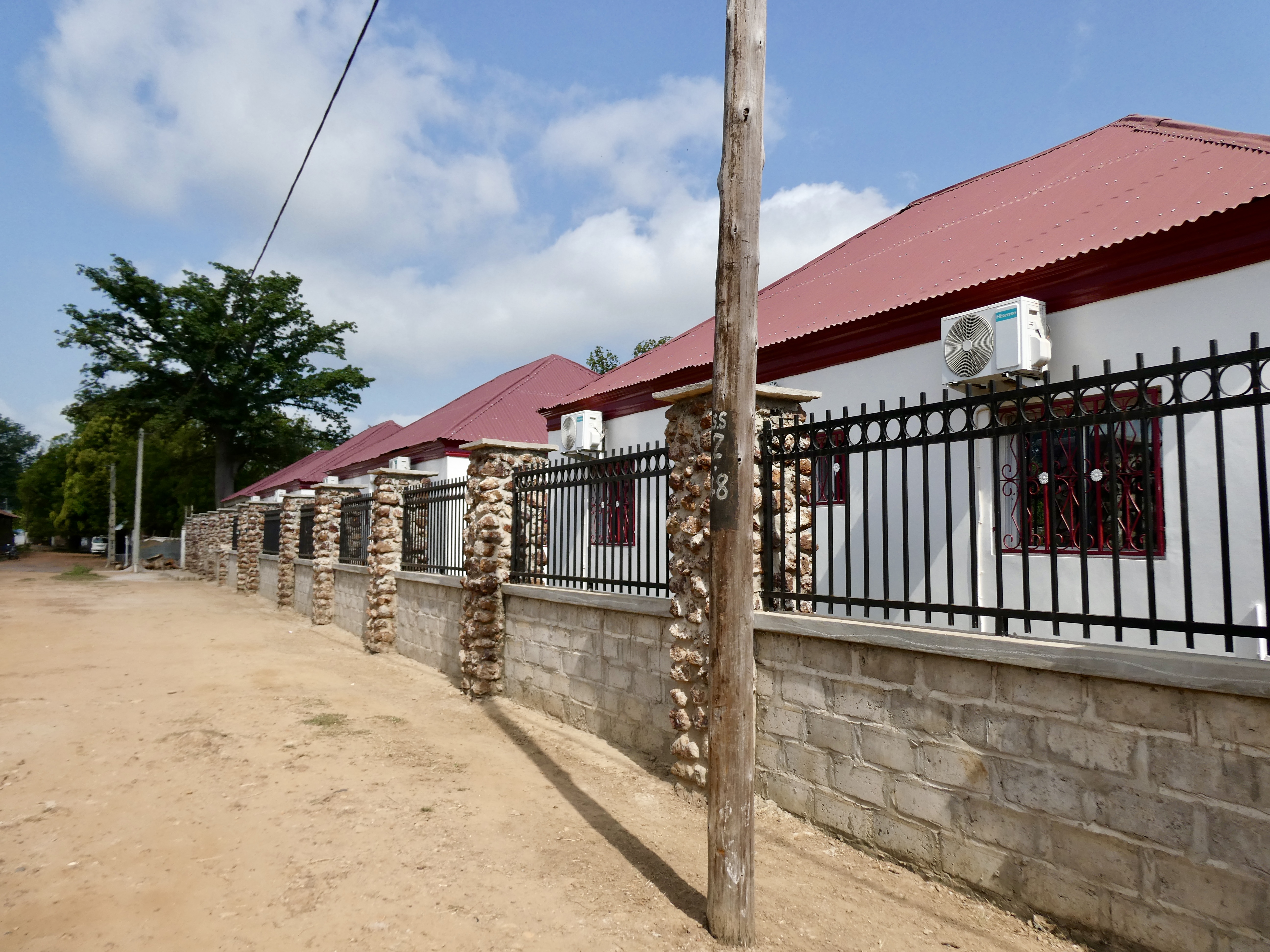
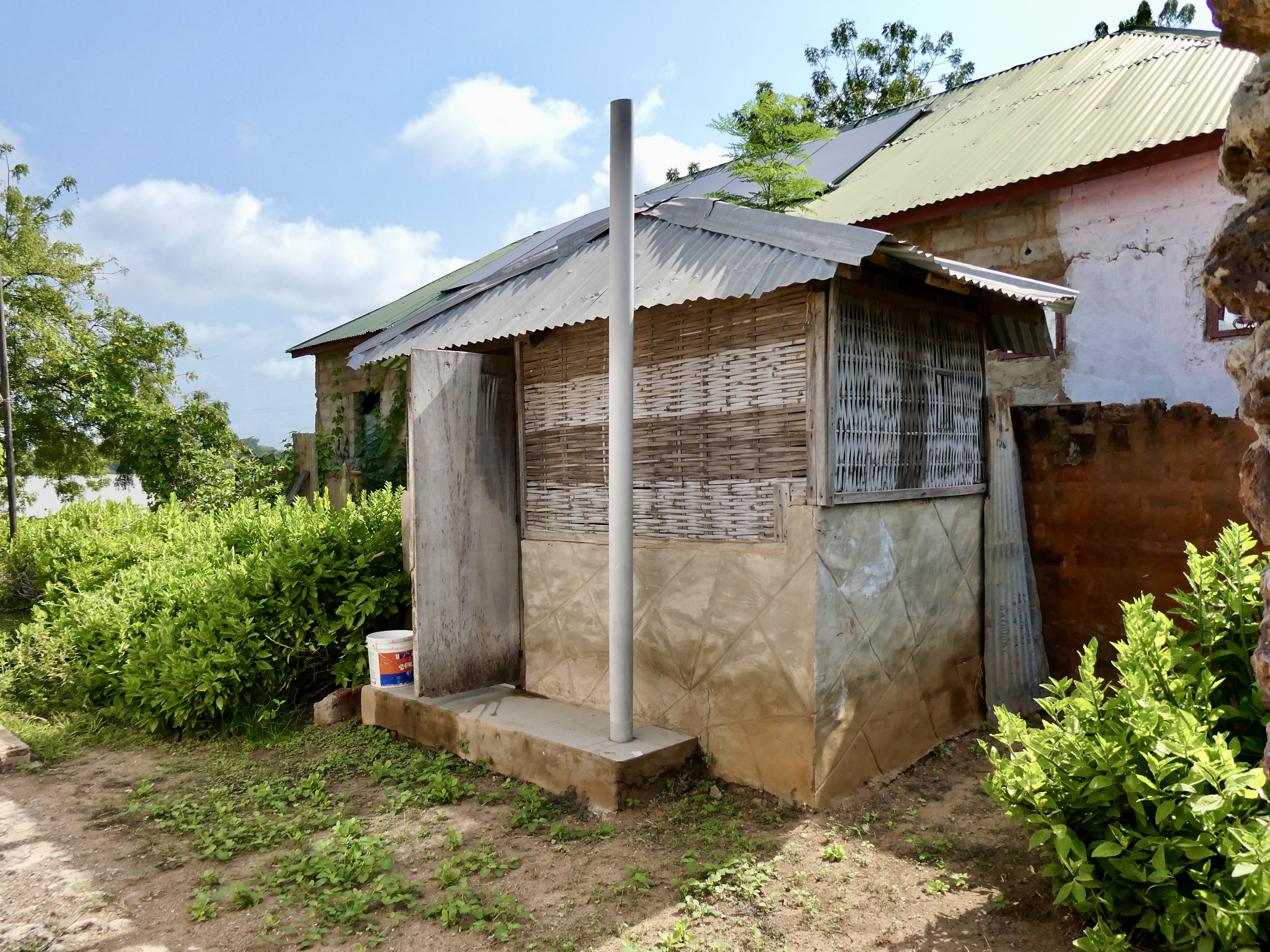
So once off the boat, my local guide (who mumbled his name twice so I gave up trying to figure it out) took me on a tour (which turned out to be rather brief) of the island hot spots. Now sadly the old stone building where slaves in transit were allegedly held was purchased last year and the local guy who bought the building renovated the whole thing (save for one building where women were kept) and converted it into a hotel and restaurant. Seriously. And the Gambia government did nothing to stop the desecration of a historical site.


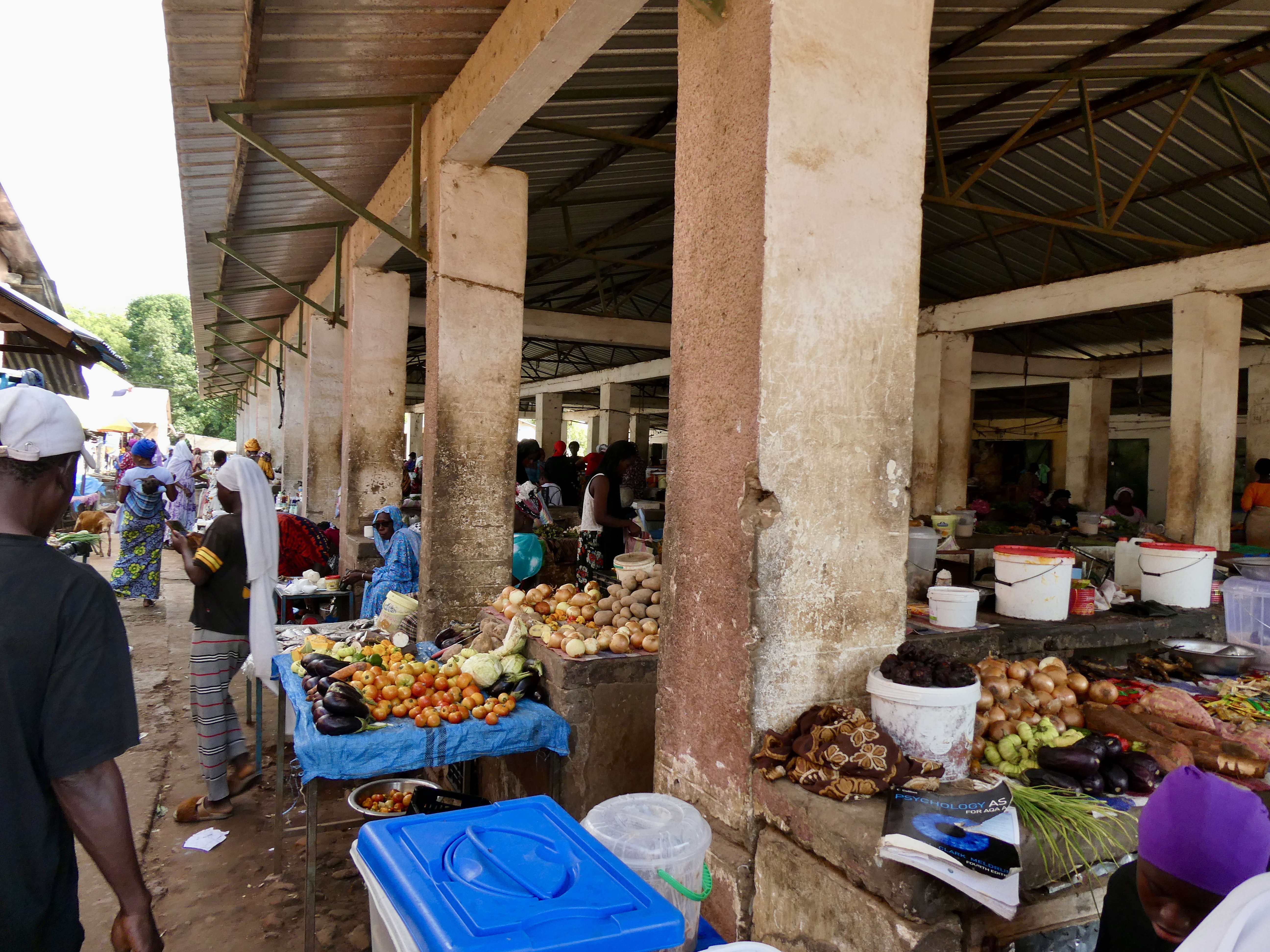
We then walked down the street to the local market. This market was pretty dirty. There were dead fish sitting on a counter for sale as well as dried fish nearby. I saw lots of peppers and tomatoes as well as cucumbers, carrots, rice and beans being sold, but the overwhelming feeling was there was not a shot in hell I would buy anything here. I would end up with food poisoning for a year. It was terribly unsanitary conditions.

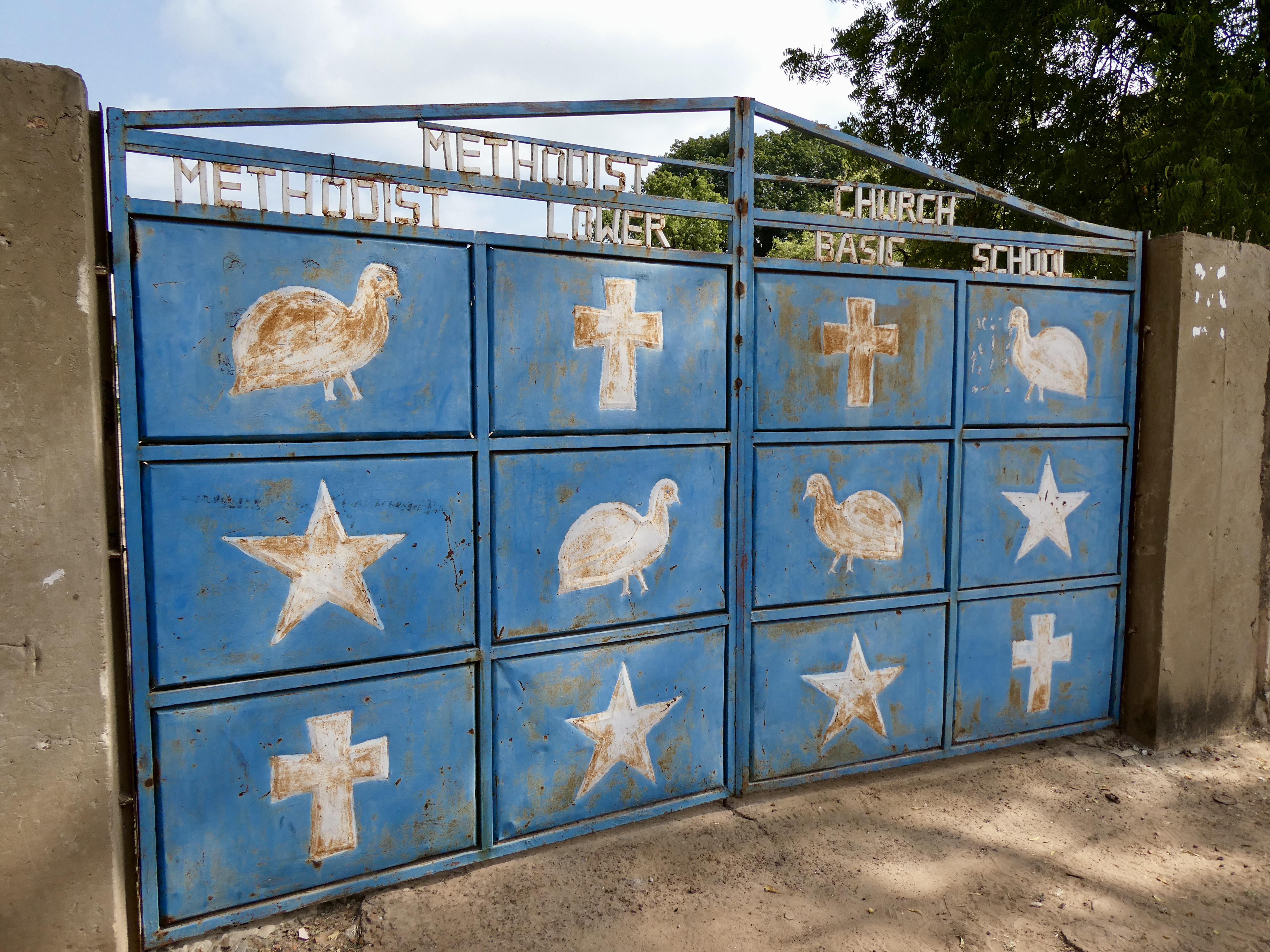
From here, we walked down the street to the old Methodist Church and school, built in 1832. The guide said it was the oldest church in Gambia, but I was previously told the oldest church is a Portuguese Church on James Island aka Kunta Kinte Island, which I will be visiting tomorrow.
Anyway, the church was pretty unremarkable, although the sign outside on the fence announcing the presence of the church was a nice piece of artwork.

We then walked down what I believe was main street stopping at the remains of oldest wooden house that was inhabited by freed slaves. The Jones families apparently lived here and were among the group of 200 slaves freed in 1832. Sadly, the locals scavenged all of the old wood and all that remains is the stone stairs and basement. Truly tragic.
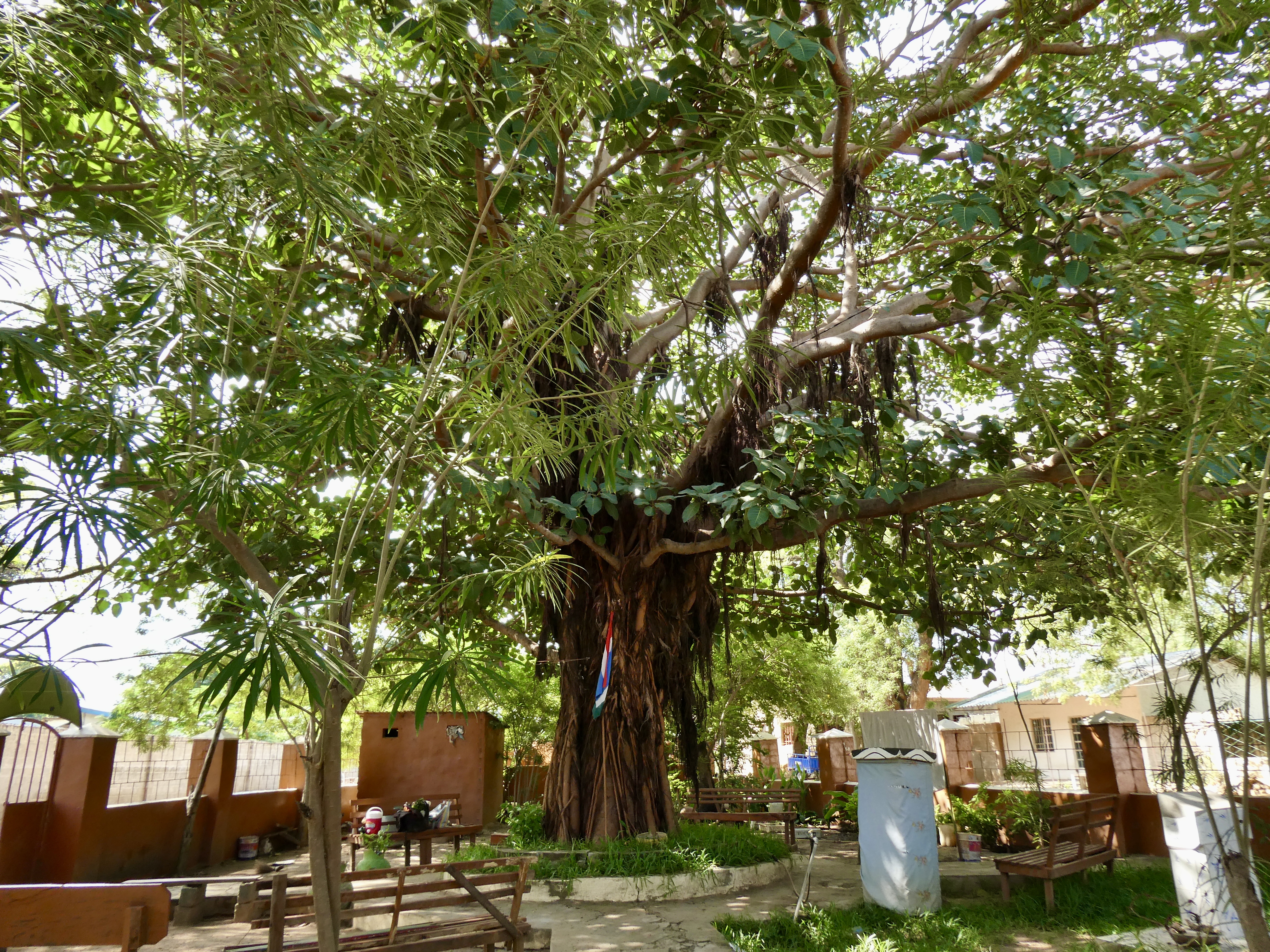
From here we walked a couple blocks to what is billed as the Freedom Tree. As the guide told it, if slaves were able to escape from the holding areas near the waterfront and they could reach this tree (a couple blocks from the holding area) they would be branded with a freedom marker and given their freedom. I questioned this because why would they leave a tree unprotected if it only resulted in giving slaves their freedom. I wasn’t buying this one.
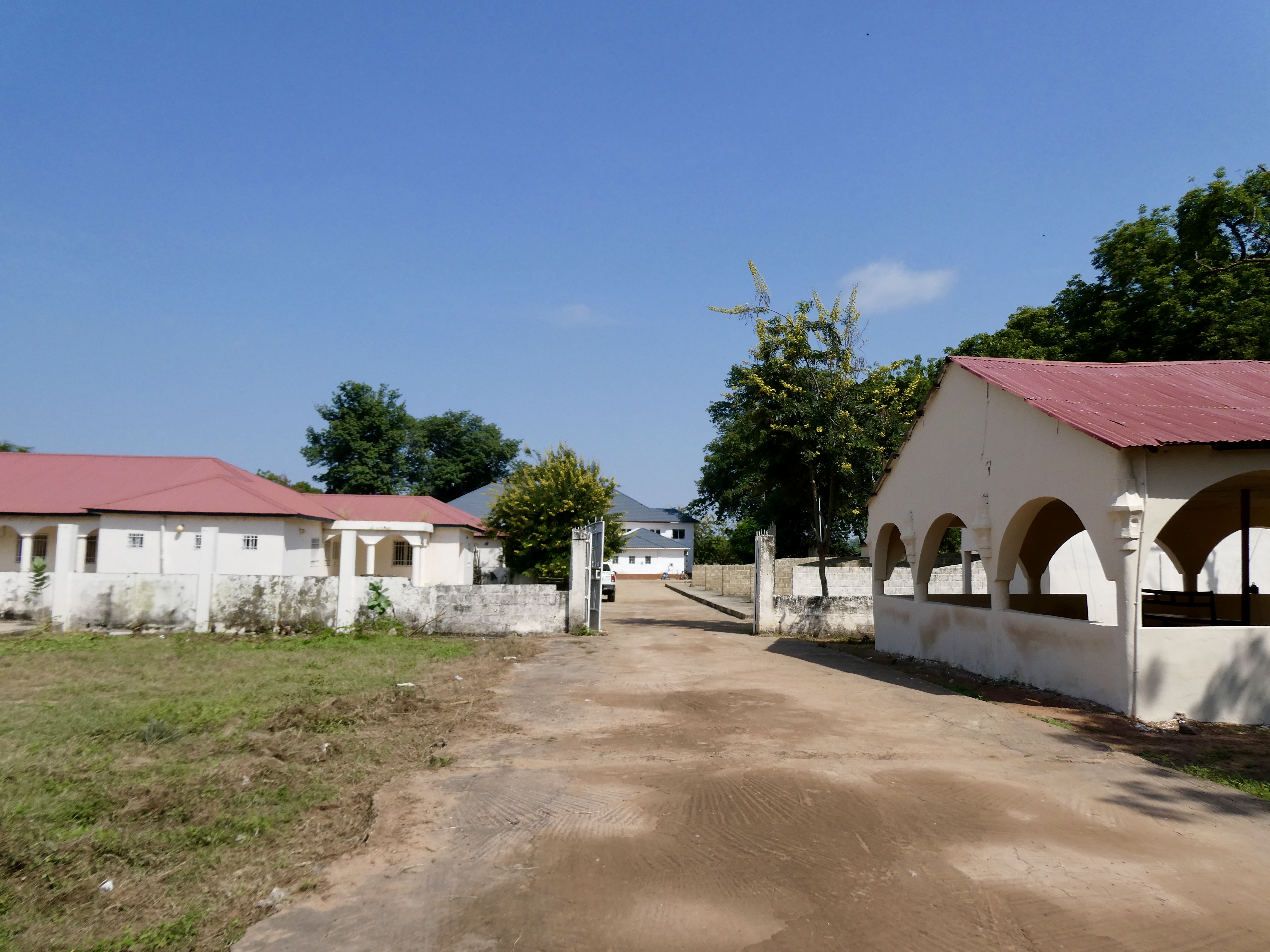

Anyway, we then walked through some gates to see the old British Administration building, which is now the governor’s residence. The buildings look to be in relatively good shape and include a building where the local tourism office is located.
However, the real attraction at this site was a very old looking cannon that was allegedly used to shoot warning shots at boats if the boats neared mouth of the river when the slaves were being loaded onto boats. Again, I have no idea if this is true or not, but it is a good story.
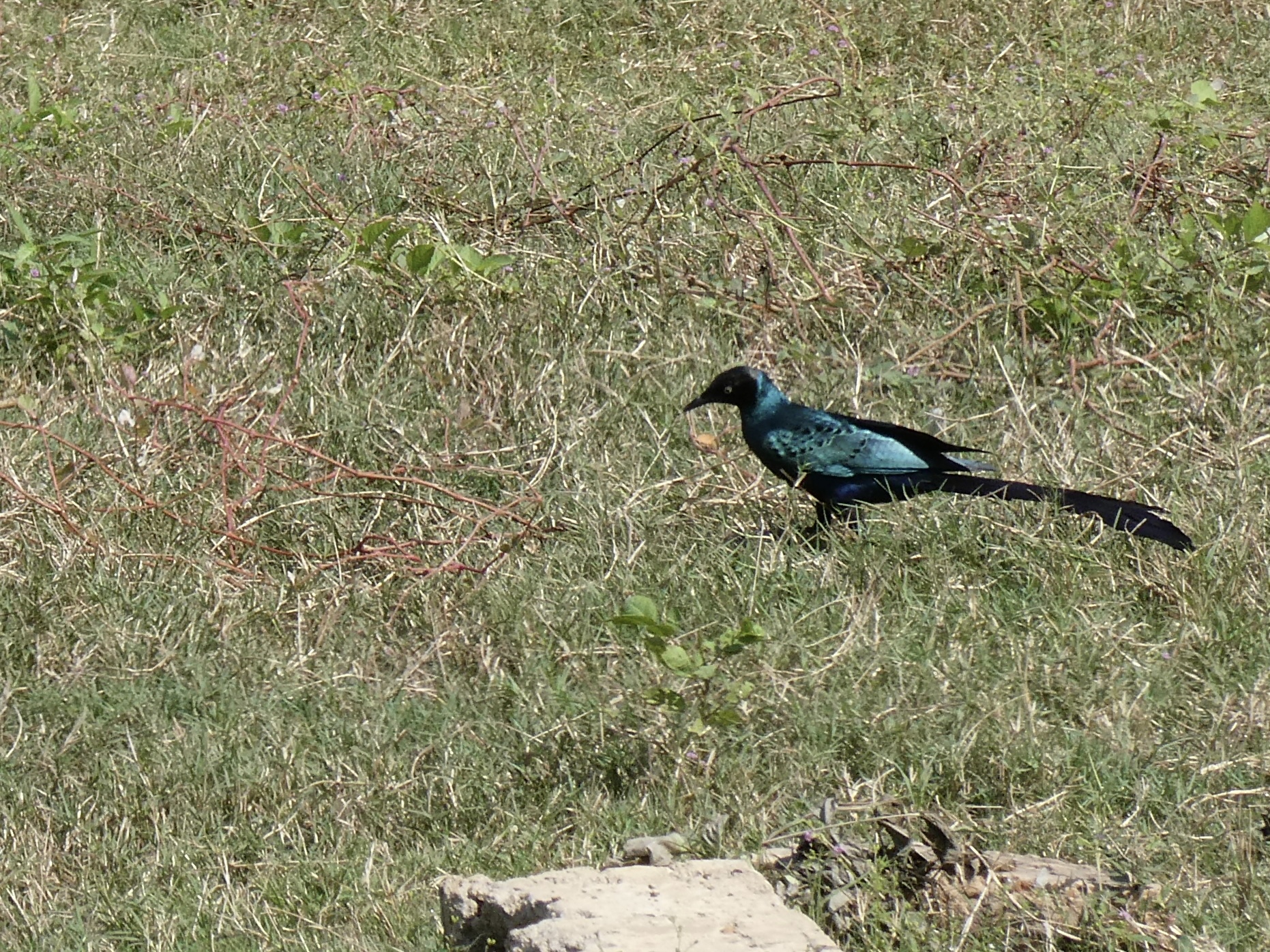
And while I was listening to the guide, I spotted a gorgeous bird hopping around on the ground, which was apparently a Burchell’s starling. A gloriously coloured blue and green bird that is native to the tropical parts of Africa. It was gorgeous.
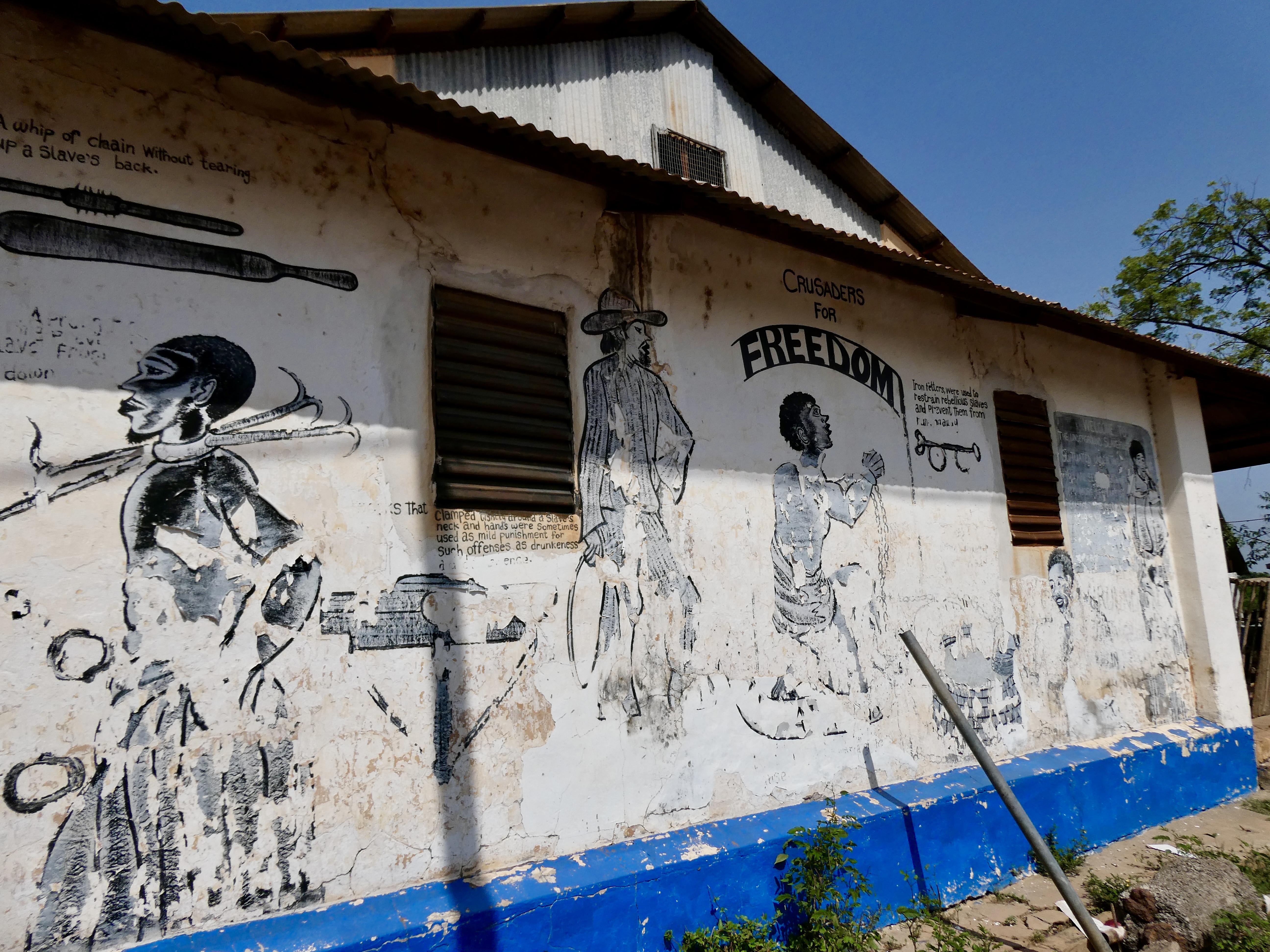
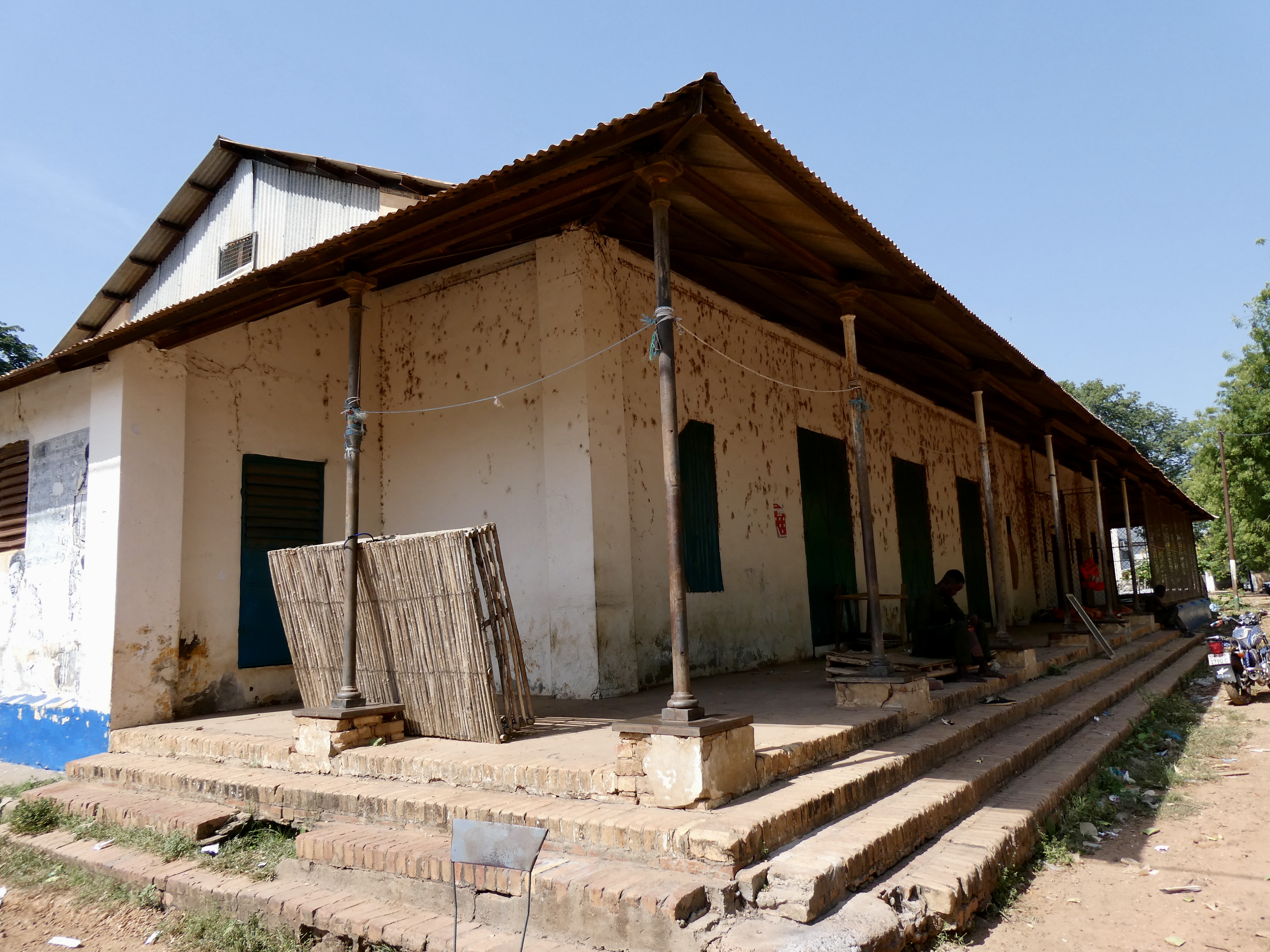
Our final stop was the slave dungeon. Now the only attractive thing about this stop was the artwork on the outside of the building. The proprietor was not around and I was not allowed to go in and have a look at the dungeon where prisoner slaves were kept in deplorable conditions. Apparently, when the river was at high tide, it would flood the dungeon drowning some folks, but providing drinking water to others who were tall enough to withstand the flood waters or who could swim. And the water would wash away the fecal matter and other waste when the tide went out. It might be a good thing I did not get a look inside.
And with that, the tour was over. Not a whole lot to see and very little support for the history I was being told.
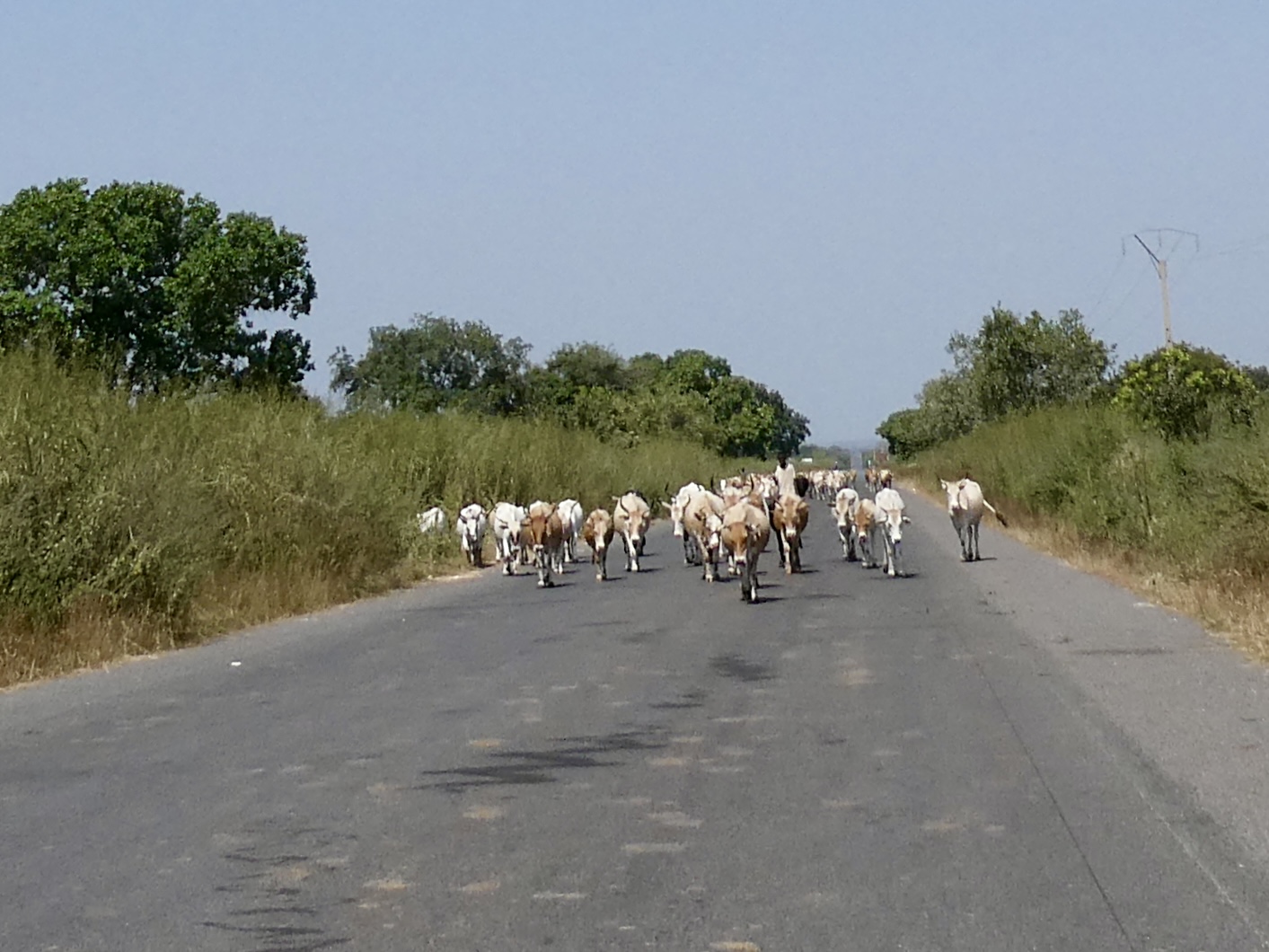

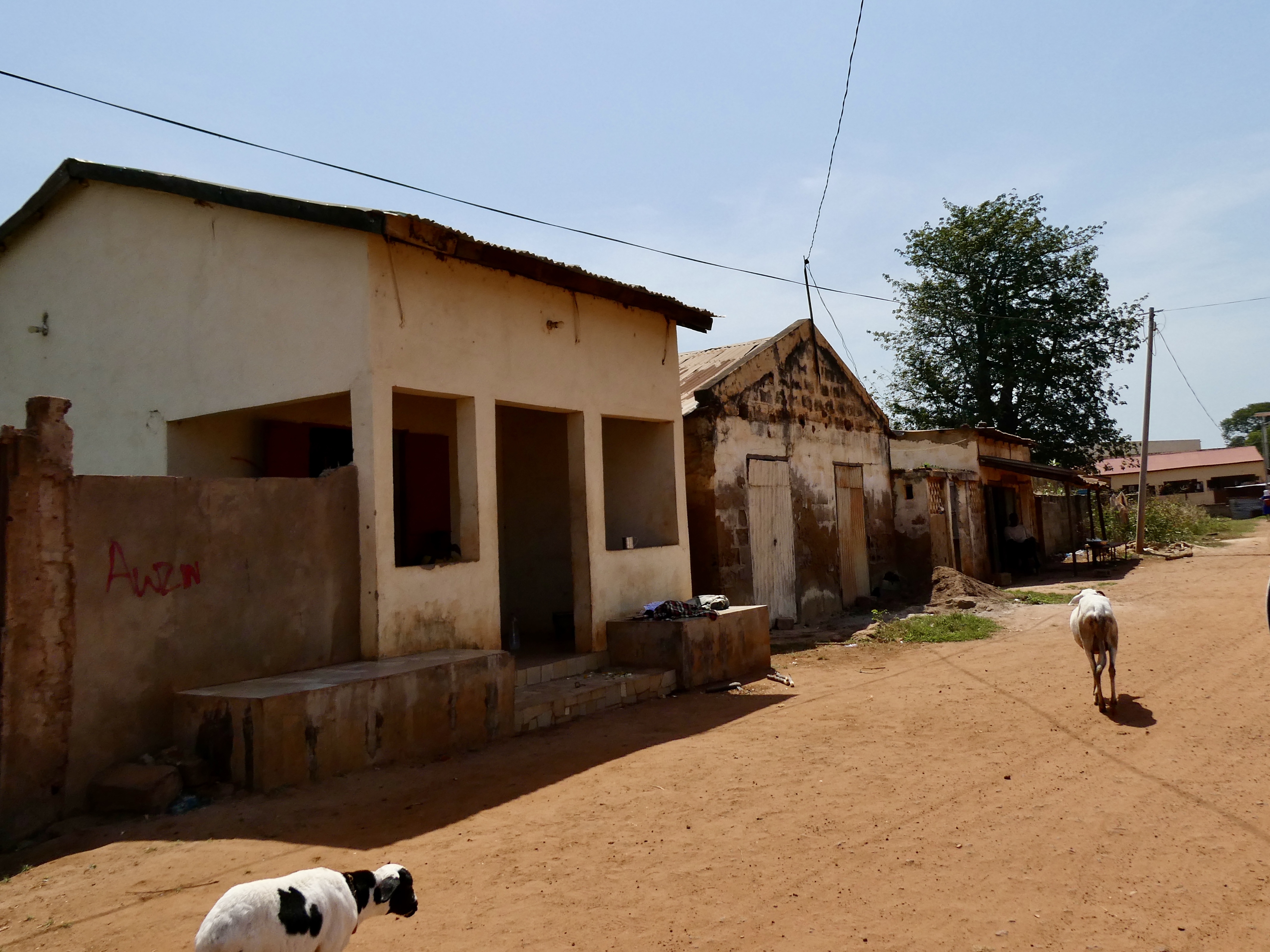
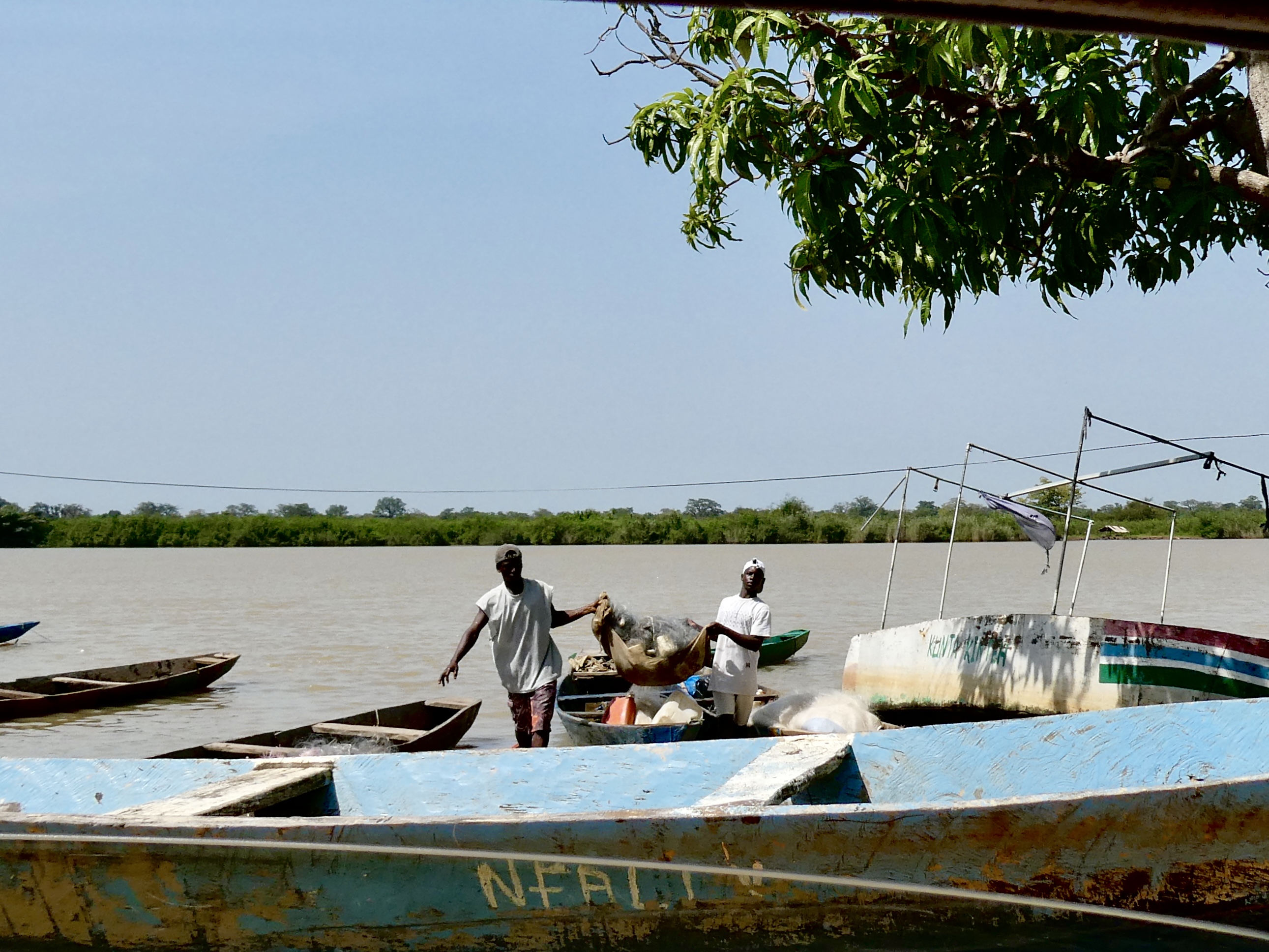
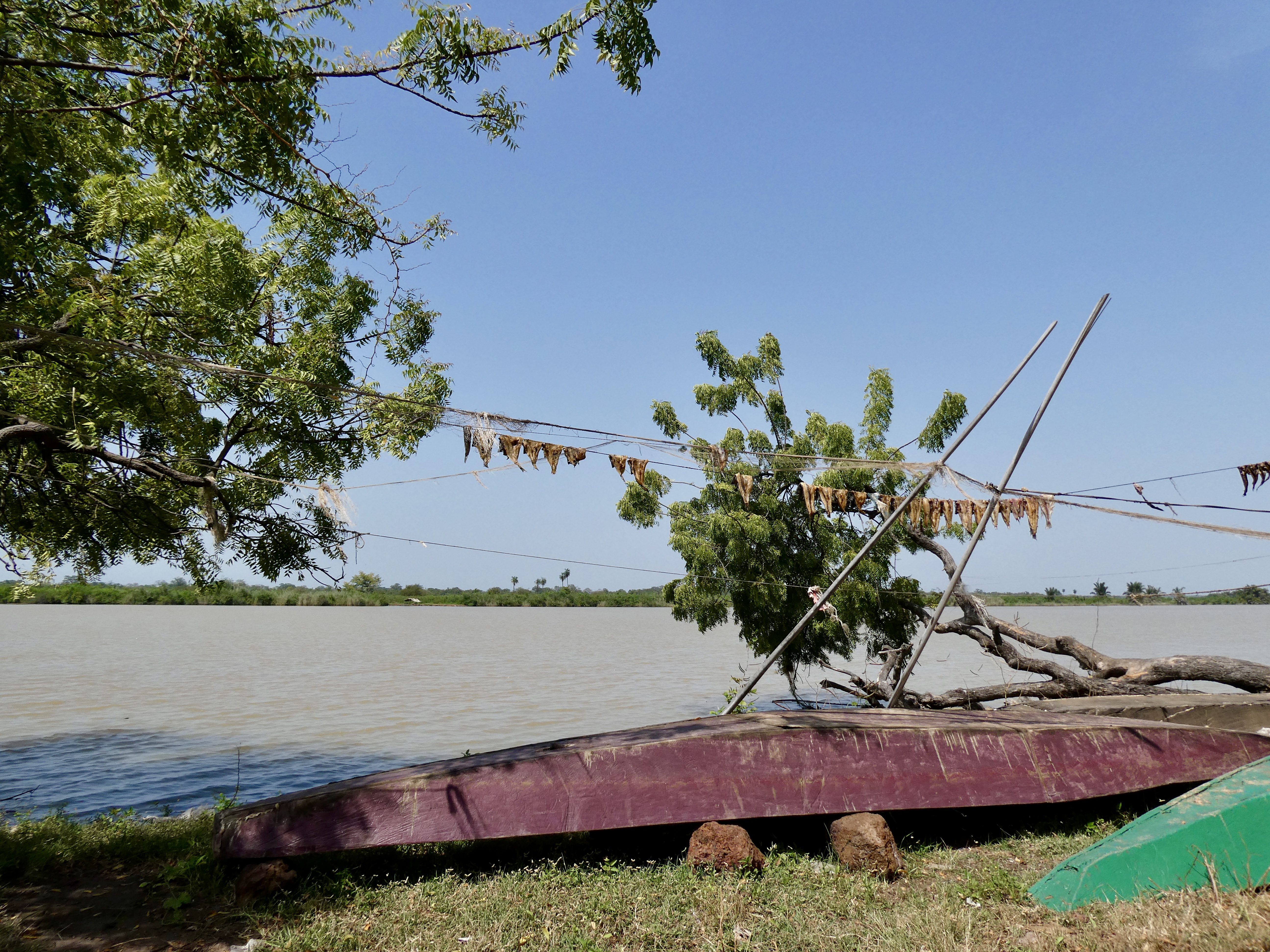
The boat trip was virtually the same as the trip across only this time we had two motorcycles on the boat instead of one. Once on the other side, we headed back to the Kauntaur and the hotel. Along the way we ended up stopping for an enormous herd of cows, passed a field of little egrets (they are everywhere in this area) as well as the village goats, men untangling their fishing nets, kids washing in the river and even fish drying in the sun. That is Africa for you!
Now as mediocre as the morning was, the afternoon and evening were absolutely spectacular.
First, I ended up buying a watermelon from the lady outside the hotel and offered to share the watermelon with this guy and his son from Holland. (They had invited me to go on the walking tour the night before so it was the least I could do.)
Anyway, as we were munching on the watermelon they told me they had hired a boat to go back out to look at the chimps and hippos later on and invited me along. We ended up hanging out for a bit after lunch and I learned that the guy is a teacher in Amsterdam and he brings 20 students to Gambia every year to learn about the country and participate in a volunteer project. (Last year they built a fence around a soccer field and now the community can charge admission to games, have concession stands etc.) And the purpose of this trip was to lay the groundwork for the trip with the students in February. Pretty cool.
And the guy’s son, Chris, was really a nice kid. I would guess he is about 15 or so. Right before we were going to leave on the boat trip, he came by my room and gave me some Dutch candy … spectacular!

So just after 3:00 we piled into the boat and took off for the islands. The Dutch guys really wanted to see hippos so that was top of the list. But first up, we would take a swing by the main island to see if there were any chimpanzees and … score. We immediately spotted a young chimpanzee hanging out under the trees near the shoreline.
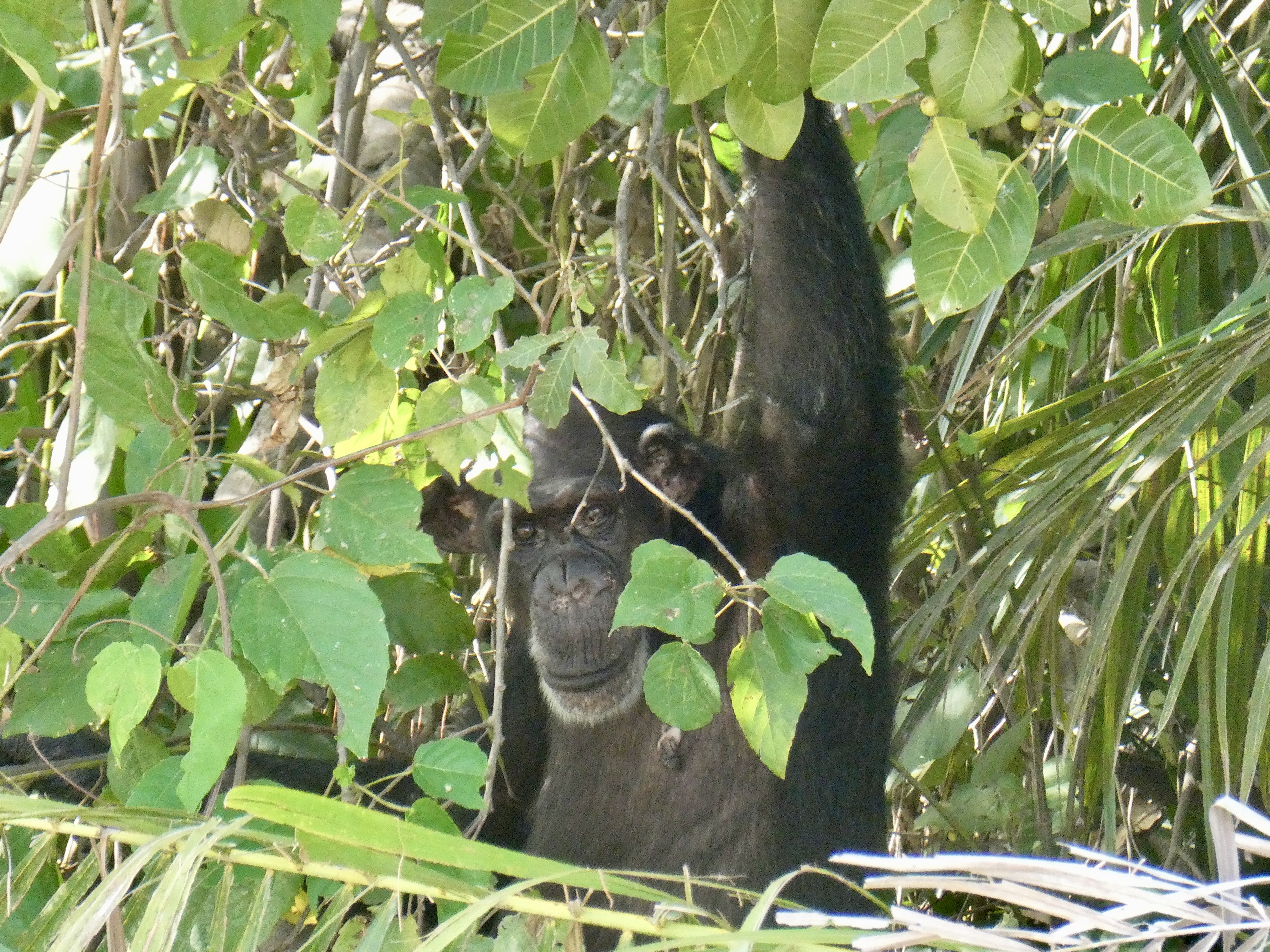
And nearby we spotted a chimpanzee who was apparently the oldest chimp in the islands at 56 years old. He was kinda of hanging from a branch and definitively had, what I would call, a “grizzled face”. (OK maybe I should say he looked his age ….)

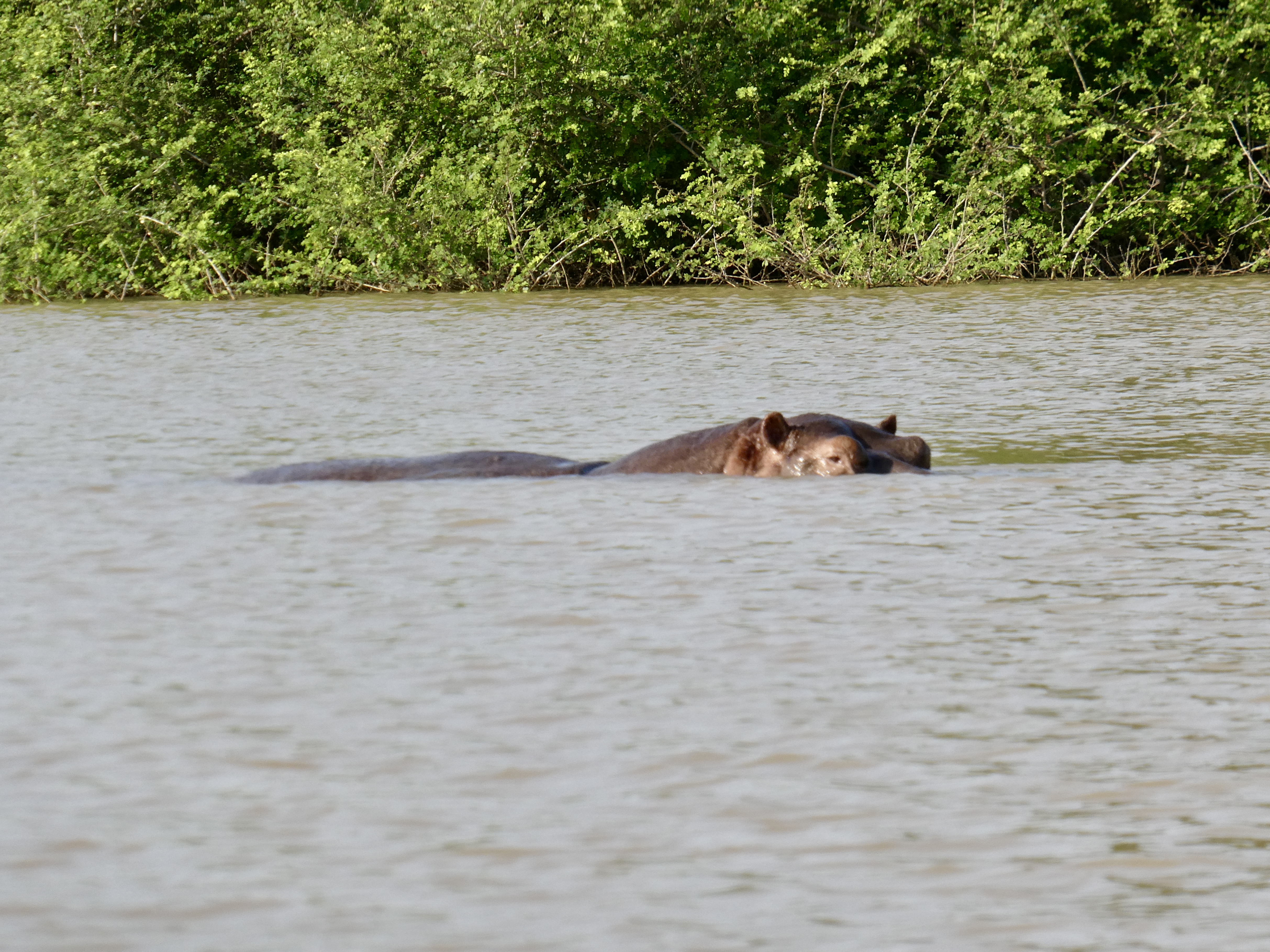
We ended up spending about ten minutes watching the two chimps before moving on to look for hippos. And luck was with us today. As we puttered towards the shallow part of the river, a hippo surfaced in the distance and then quickly ducked under water. We moved in closer and saw it surface

again just about the same time we saw another hippo in the distance.
Now I have seen hundreds of hippos in the wild, but what made the sighting of the hippos so exciting is that there are not a lot of hippos in this river so just the chance to see them here was a pretty big deal. And even better, the driver for the Dutch guys was on the boat with us and he had never seen a hippo before so it was pretty cool to see his reaction when the hippo surfaced.
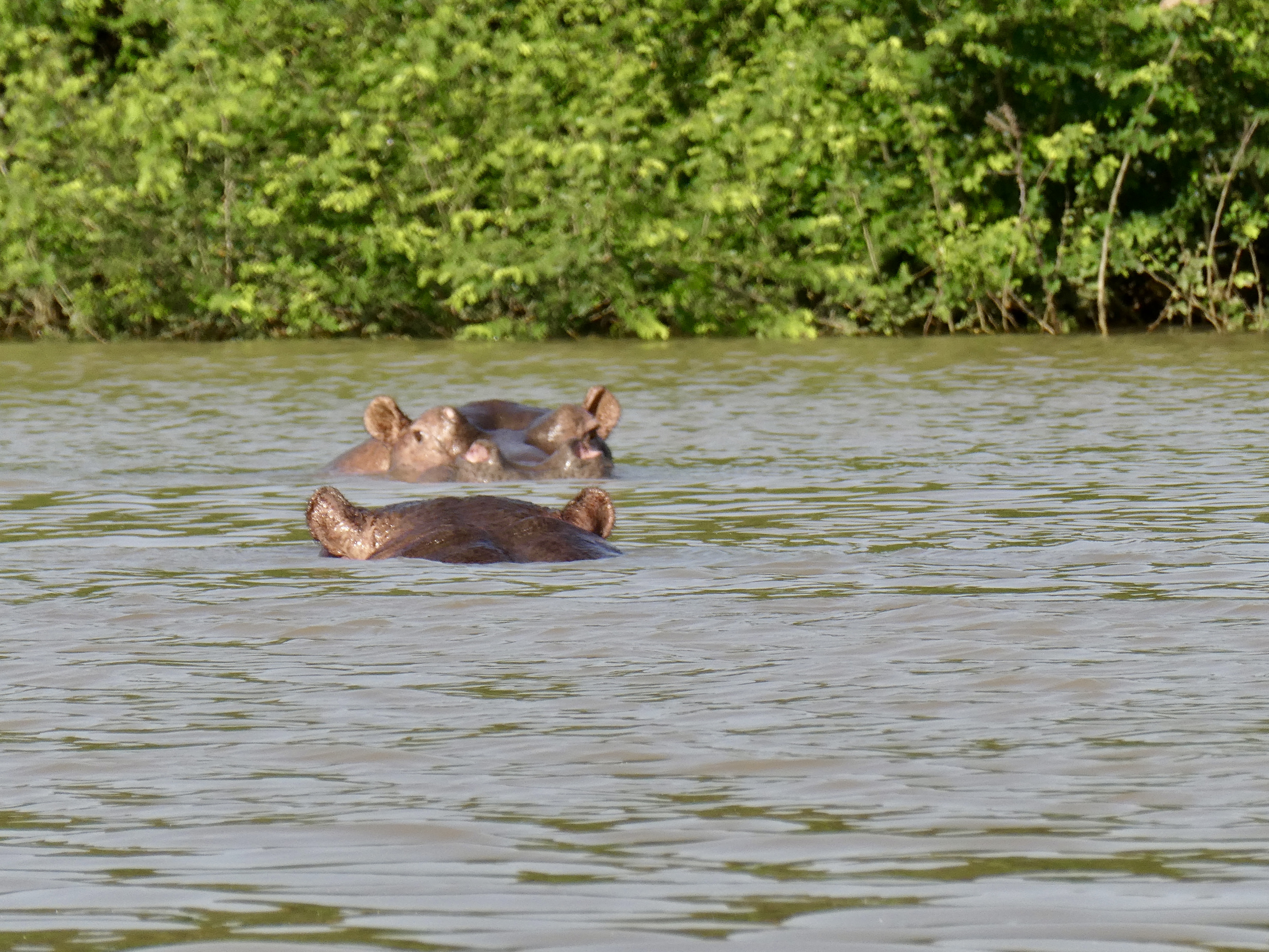
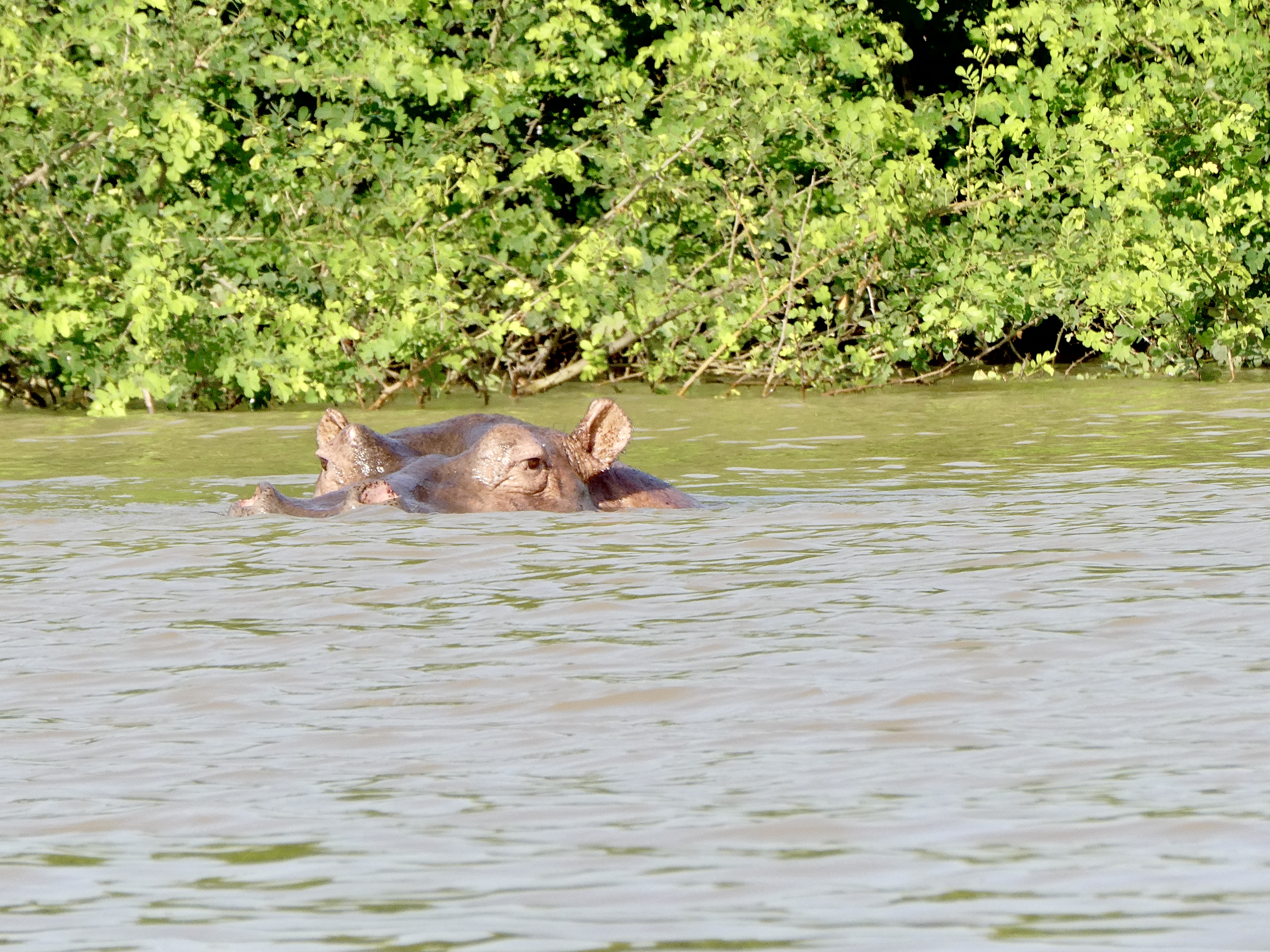
And just when we thought we were good, two more hippos surfaced in the distance. We ended up parking the boat and watched while three of the four hippos we spotted continued to surface, open their jaws like they were yawning, roll over, and generally play around. The guide on our boat from the park had no idea why the hippos were in a playful mood, but we were the lucky beneficiaries of quite a show.
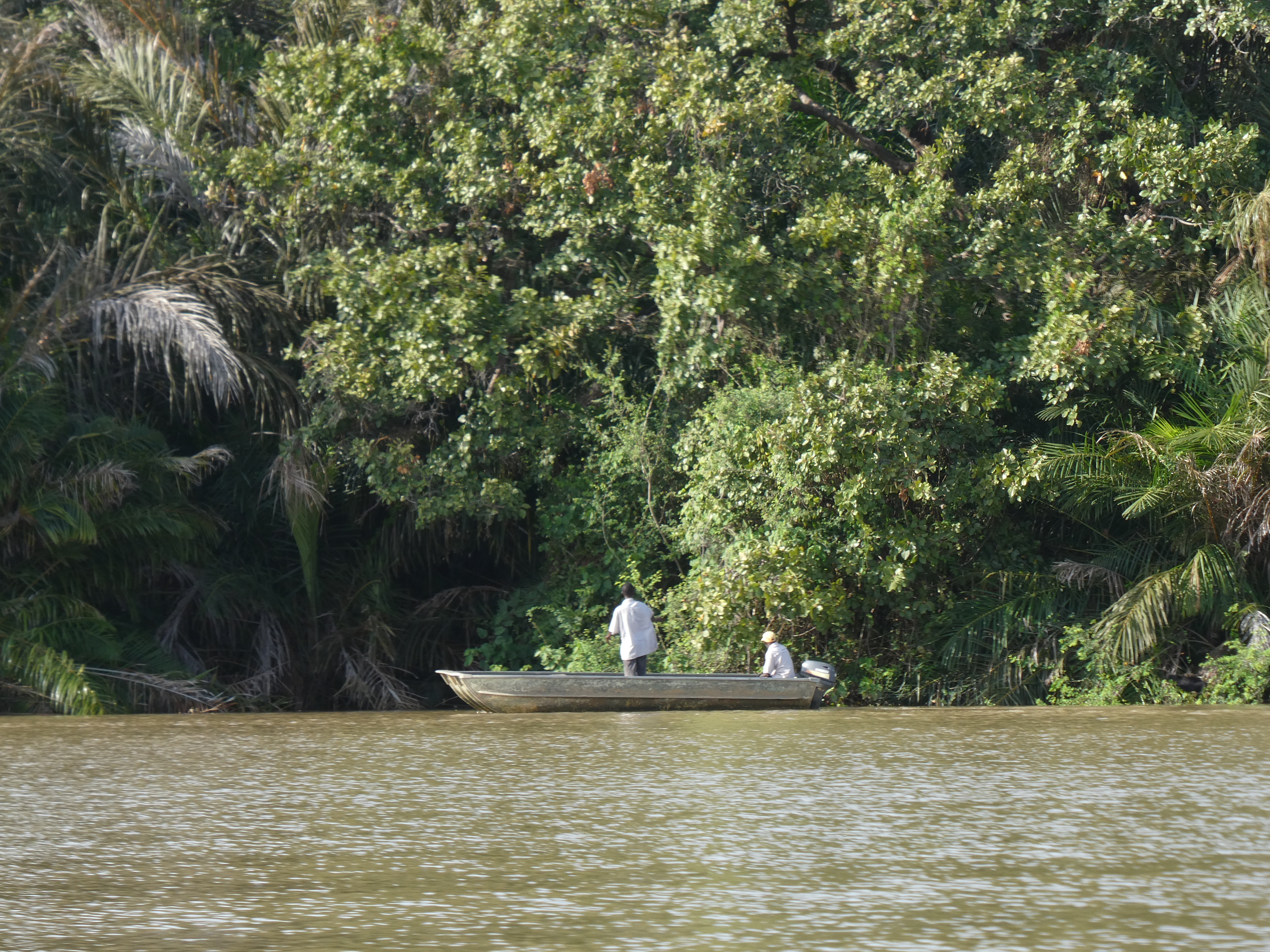
By now, it was close to feeding time for the chimps. And when I say feeding time, I mean that the park rangers once a day go to an area of the biggest island and throw some fruit onto the island. This is done so that the rangers can keep track of the chimps on the island. Now yesterday the feeding was near dusk so we were unable to witness it, but today, the feeding was at 4:30 so we hung back while the fruit was thrown on the island and then we moved in to watch.

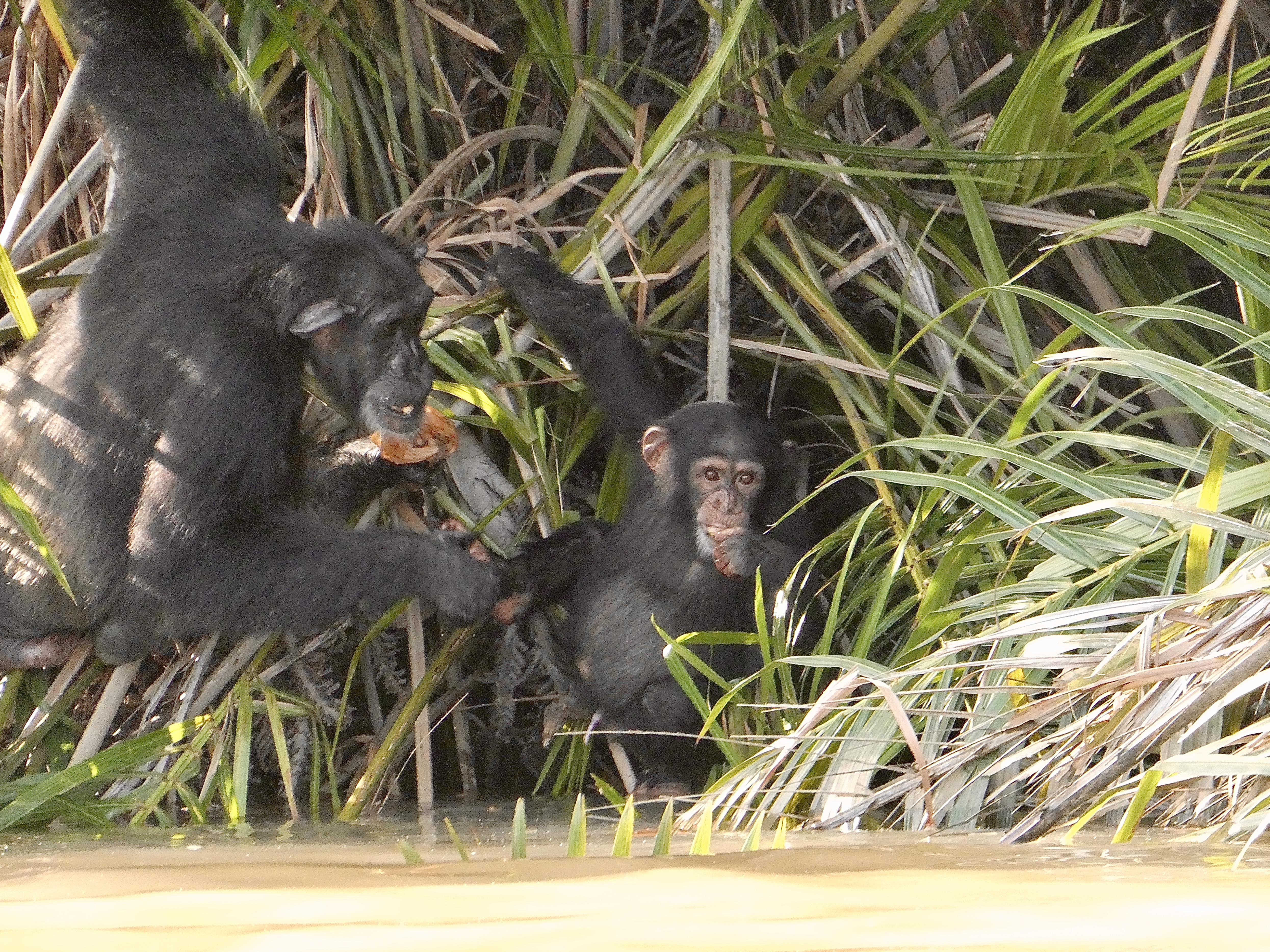
It wasn’t long before we spotted one chimp munching on a banana and drinking water from the river. And not far away was a mama chimp with her young baby chimp. (I was pretty sure this was the same mama and baby we saw yesterday.)
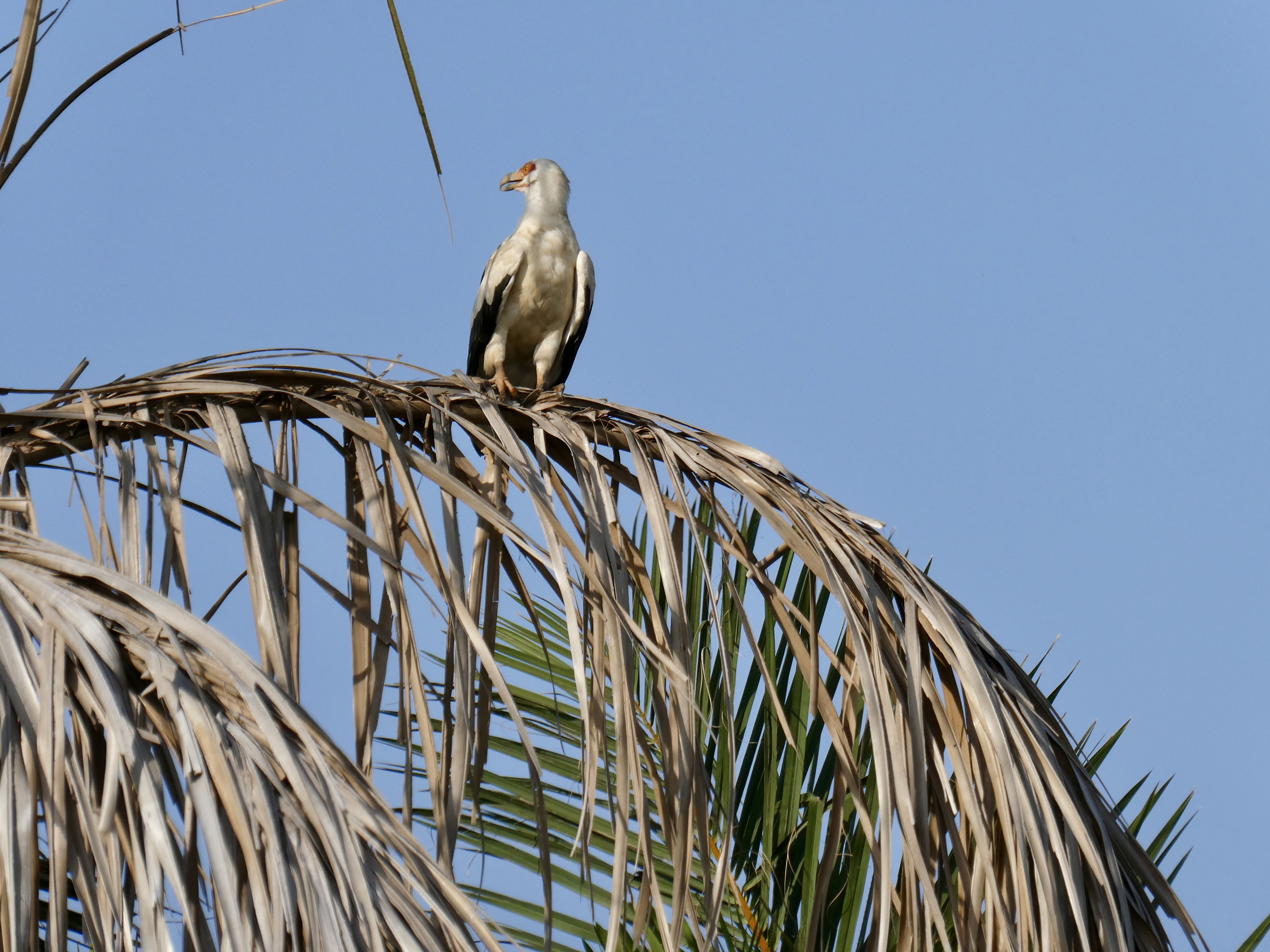
Anyway, after watching the feeding fest for a few minutes, we left the chimps alone and headed back to the hotel. Along the way, we spotted a number of birds flying overhead and once again saw a vegetarian vulture hanging out on a branch over the river.
Now once back at the hotel, one of the local guides told me that we could not go back to the island for the hike this evening (no idea why), but I had the option to go for a walk “through the nearby rice fields” to look for birds. Uh that would be a no. Rice fields are filled with snakes and leeches. However, there was apparently something lost in translation. After some back and forth, I finally figured out that the guide was trying to tell me that we could go walk on a path through the rice fields where we could see all kinds of bird species. And that would be a big yes.

So at just after 6:00 I headed out with the guide and the Dutch guy joined us. We ended up having a fabulous time. The path through the rice fields was very similar to the dirt path we walked last night, but this path took us first through the village of Kauntaur and then into the rice fields where we immediatley started seeing birds. In fact, it was shocking how many different species we spotted.
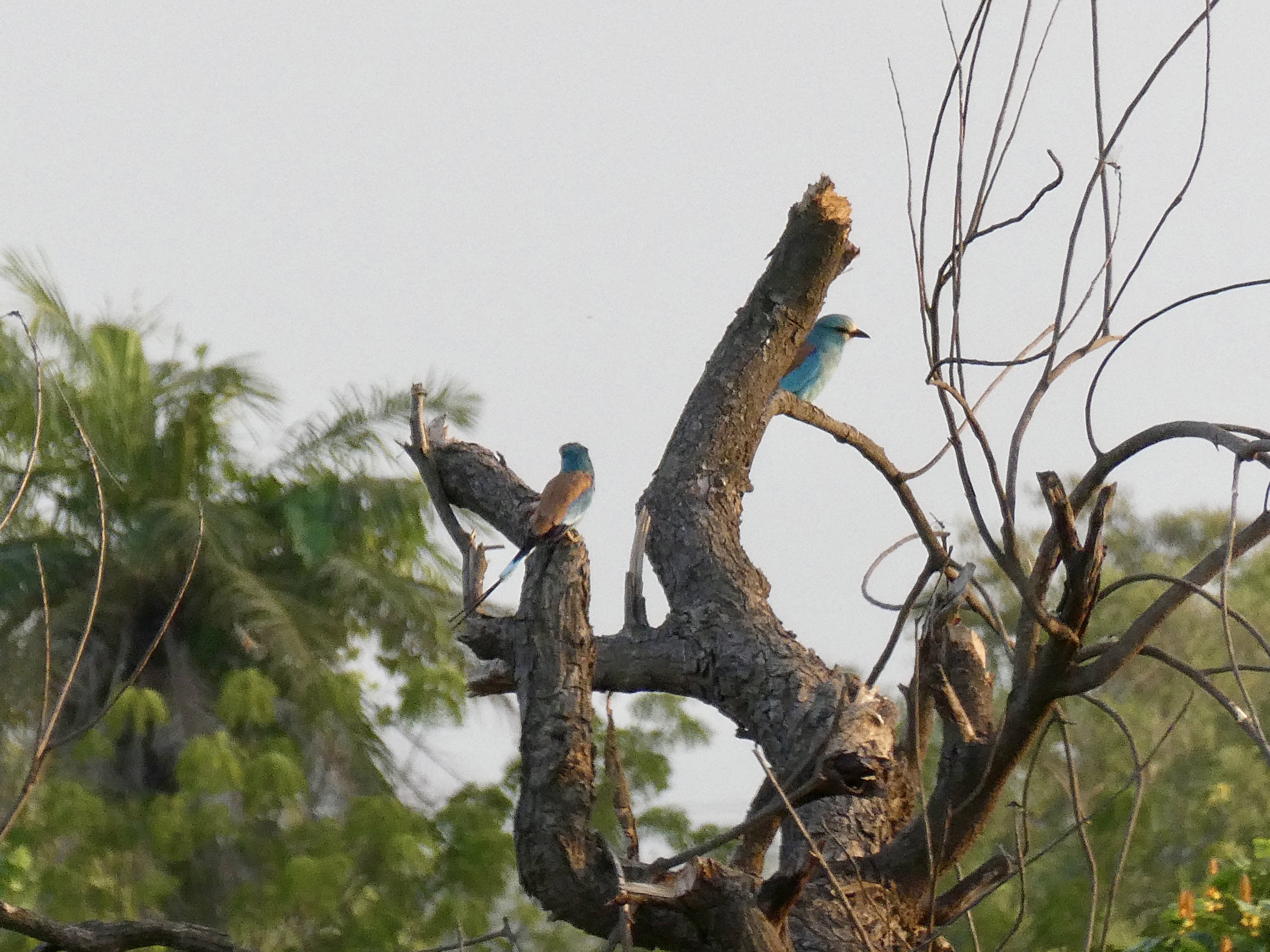
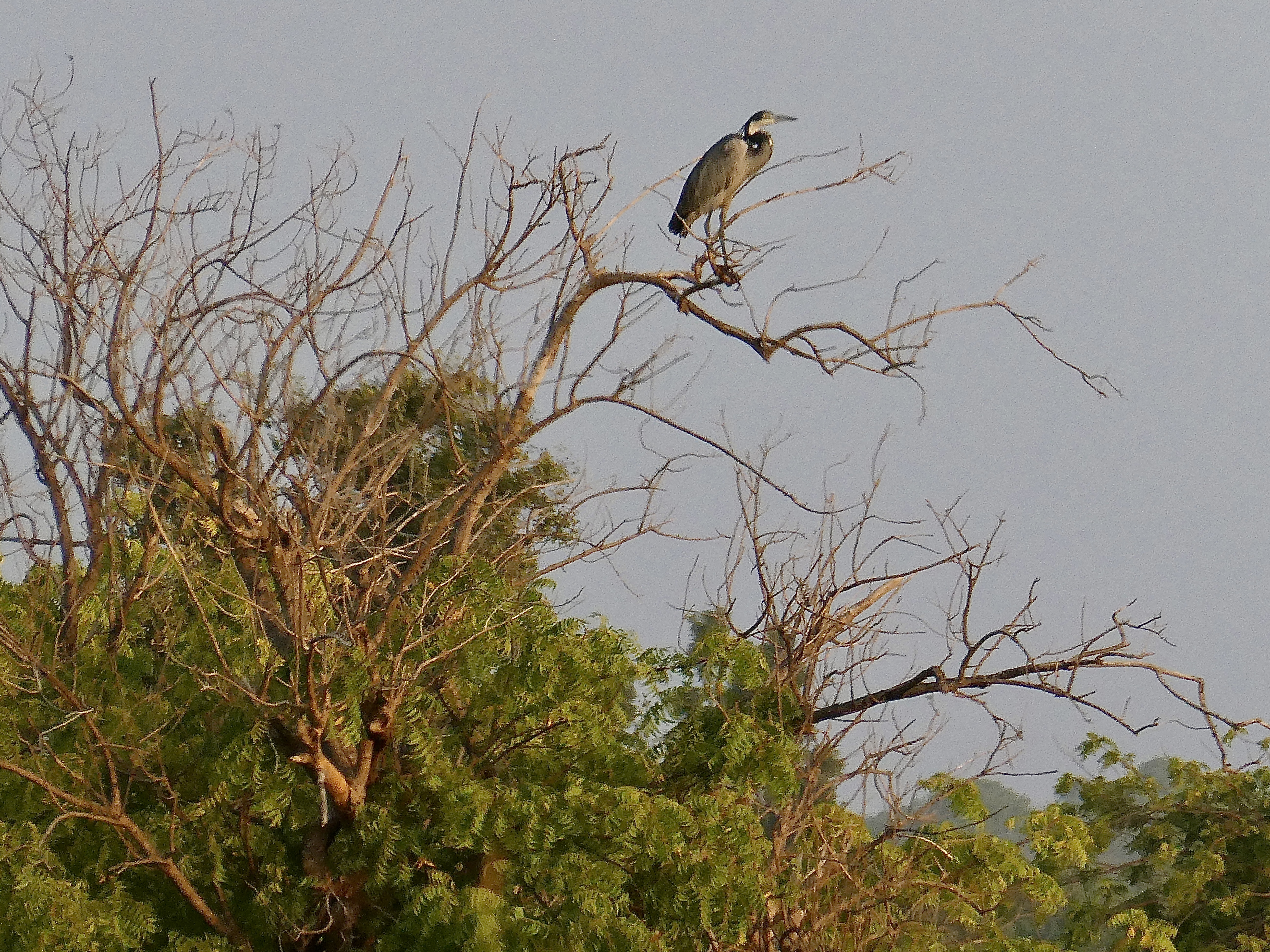
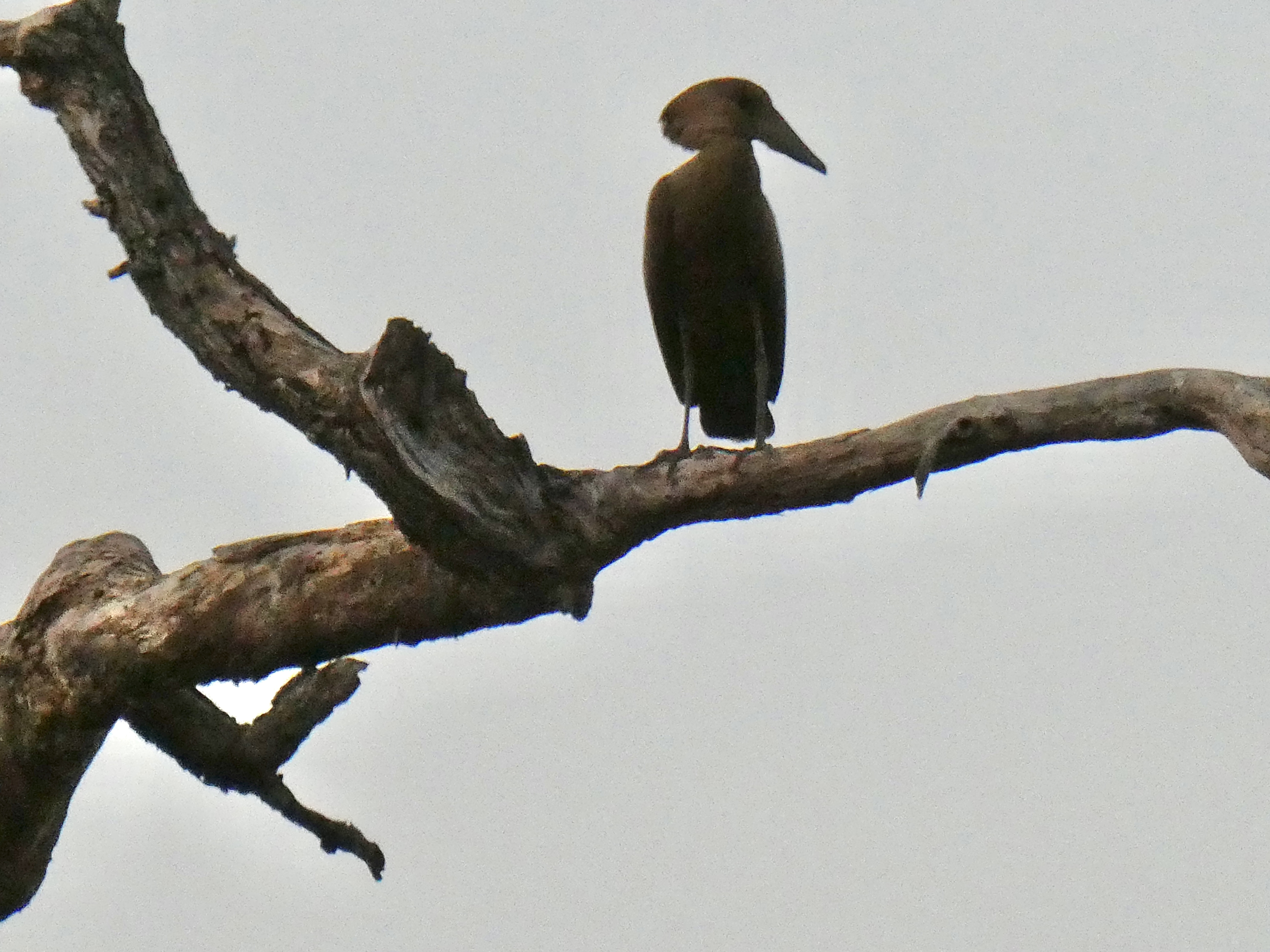


There were giant egrets, little egrets, black headed herons, broad billed rollers, spurwing lapwings, doves, hamerkops and long tailed glossy starlings. Birds were everywhere. We even saw the massive nest of the hamerkops built into the middle of a nearby tree. The entire area was absolutely beautiful with the setting sun and why the hotel does not push this opportunity to take a walk through the rice fields to see the birds is beyond me.
And in addition to the birds, we saw the almost 200 year old cemeteries (one for the Christians and one for the Muslim with only the dirt path separating the two). And nearby, we ran into some fishermen who had nets in the river and were hauling in their catch for the day. One guy had a bucket overflowing with fish.
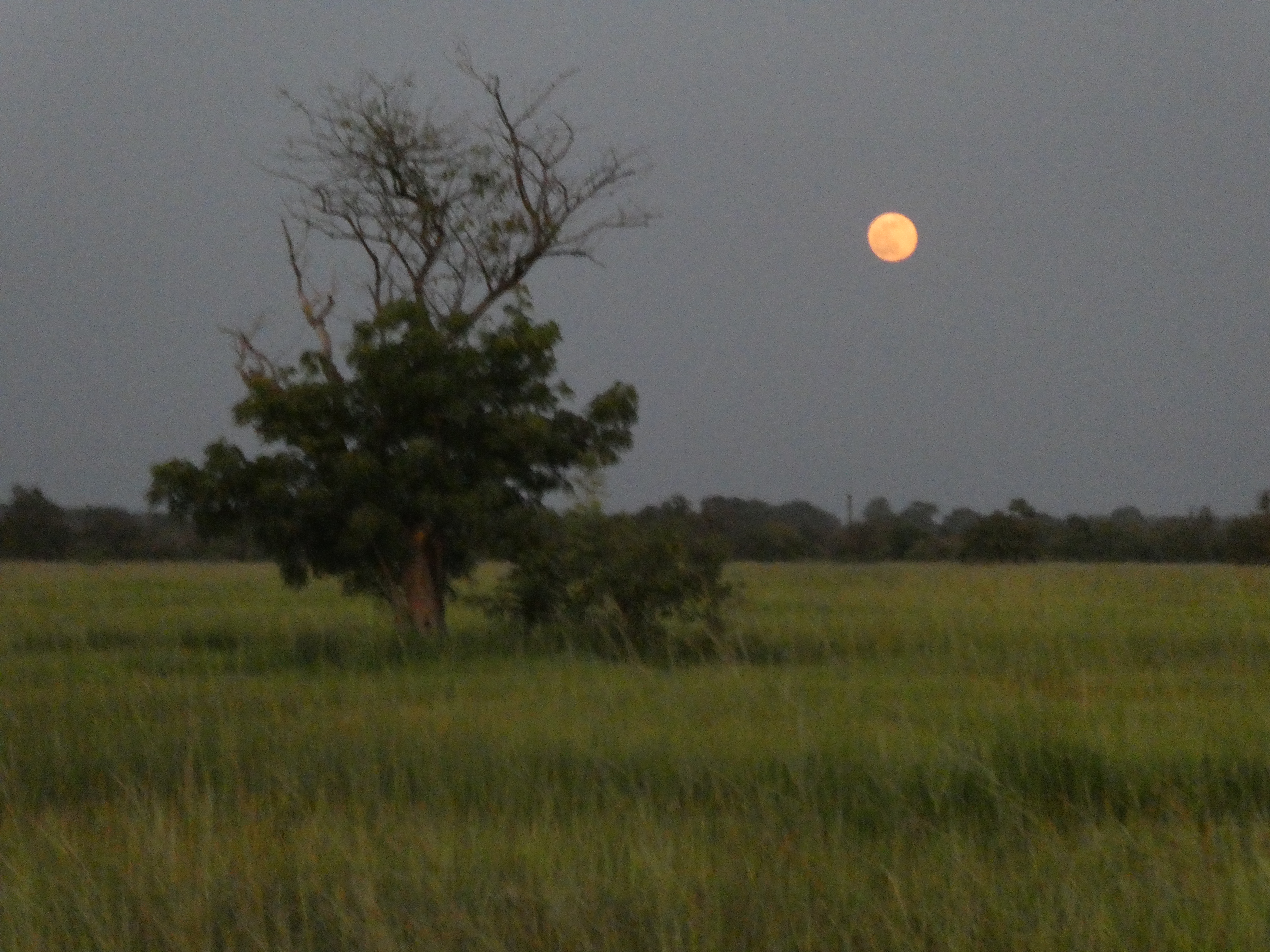
All in all it was a really wonderful one hour walk. And as we lost light, the harvest moon started to rise over the rice fields. It was an absolutely amazing way to end the day.
So tomorrow we leave the countryside and head to the city of Banjul with a stop at Kunta Kinte Island on the way. It is going to be hard to beat a day like today!
