Today I reunited with Jasmine, my tour guide from last week when I did a walking tour of Algiers. My tour today had us travelling up the coast to Cherchell and Tipasa. The trip west took us along the Mediterranean coastline past Tipasa to Cherchell where we were going to start the tour at the Museum of Cherchell.
So the museum sits on Martyr’s Square in Cherchell and is considered one of the best collections of Roman artifacts in Northern Africa. Most of the collection in the museum was found in the area of Cherchell (with ancient sites such as the forum and theatre specifically referenced as discovery points on the signs accompanying each of the artifacts even though the sites listed exist today in name only).
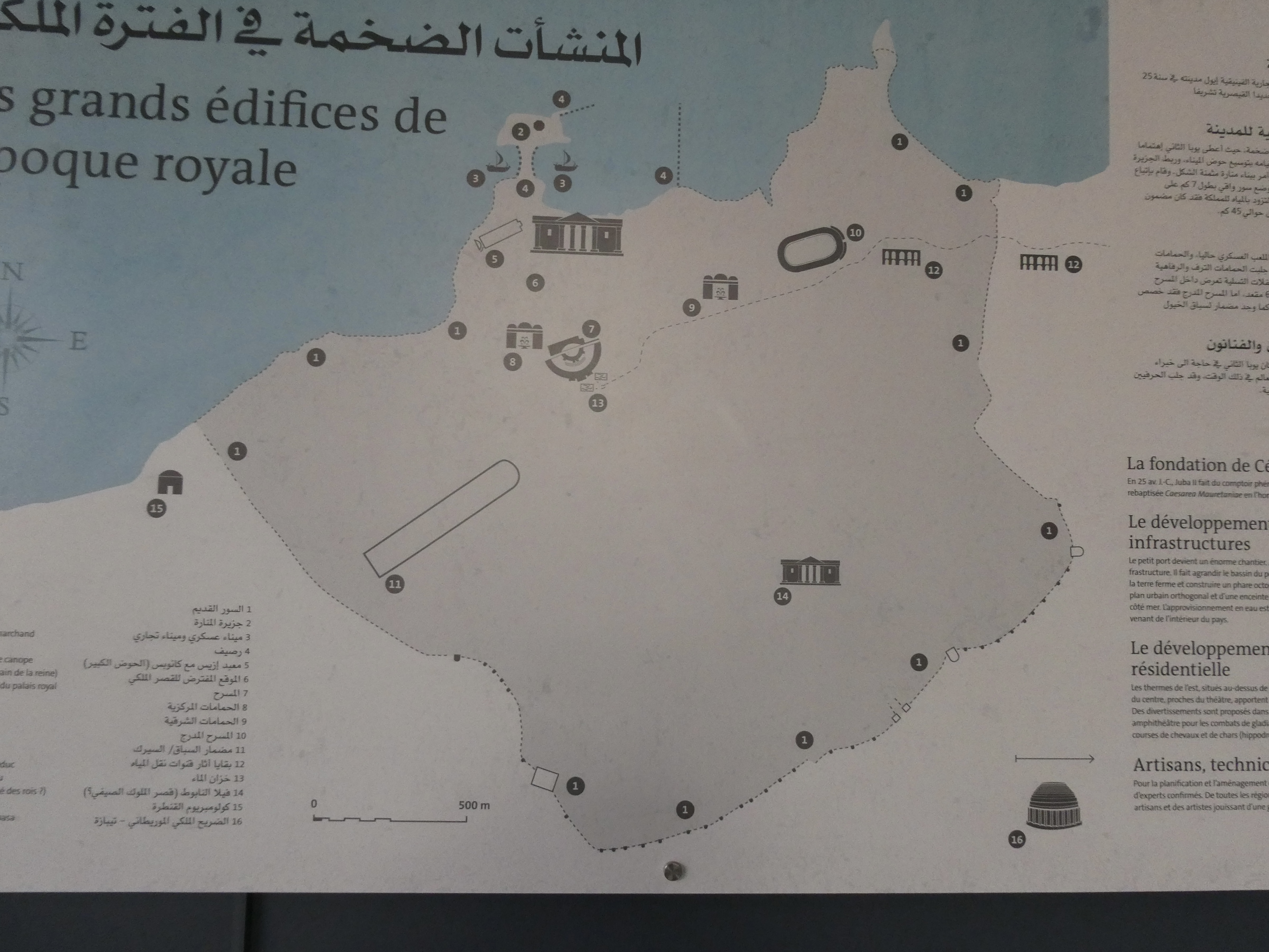
Now Cherchell was originally settled by the Phoenicians in the 8th century BC. However, the larger settlement was probably not built here until 600 BC with the Phoenicians then naming the town Yol, which was later Romanized to Lol. In the 1st century BC the Romans took over the city and renamed the town Casesarea of Mauritania. Sadly, most of the former city was completely lost and today there are only remnants of a Roman aqueduct, Roman Theatre, Roman baths and and a Basilica on the outskirts of Cherchell. (We did not visit these ruins as Jasmine said the trip was not worth it, but in retrospect I wish we had since I will likely never be back here.)
Anyway, the antiquities that have been rescued from in and around Cherchell were incredibly impressive housed in a small museum in the form of a square with a courtyard in the middle where bits and pieces of statutes and columns were located. The layout in the inside of the museum that housed many impressive statutes was chronological so it made it easy to follow along in a historical context despite the fact all the signs were in French and Arabic. (Fortunately, I know enough French words to figure out what the signs were about). The mosaics, on the other hand, which lined the walls had no apparent order, but there were dates on most so that was helpful.
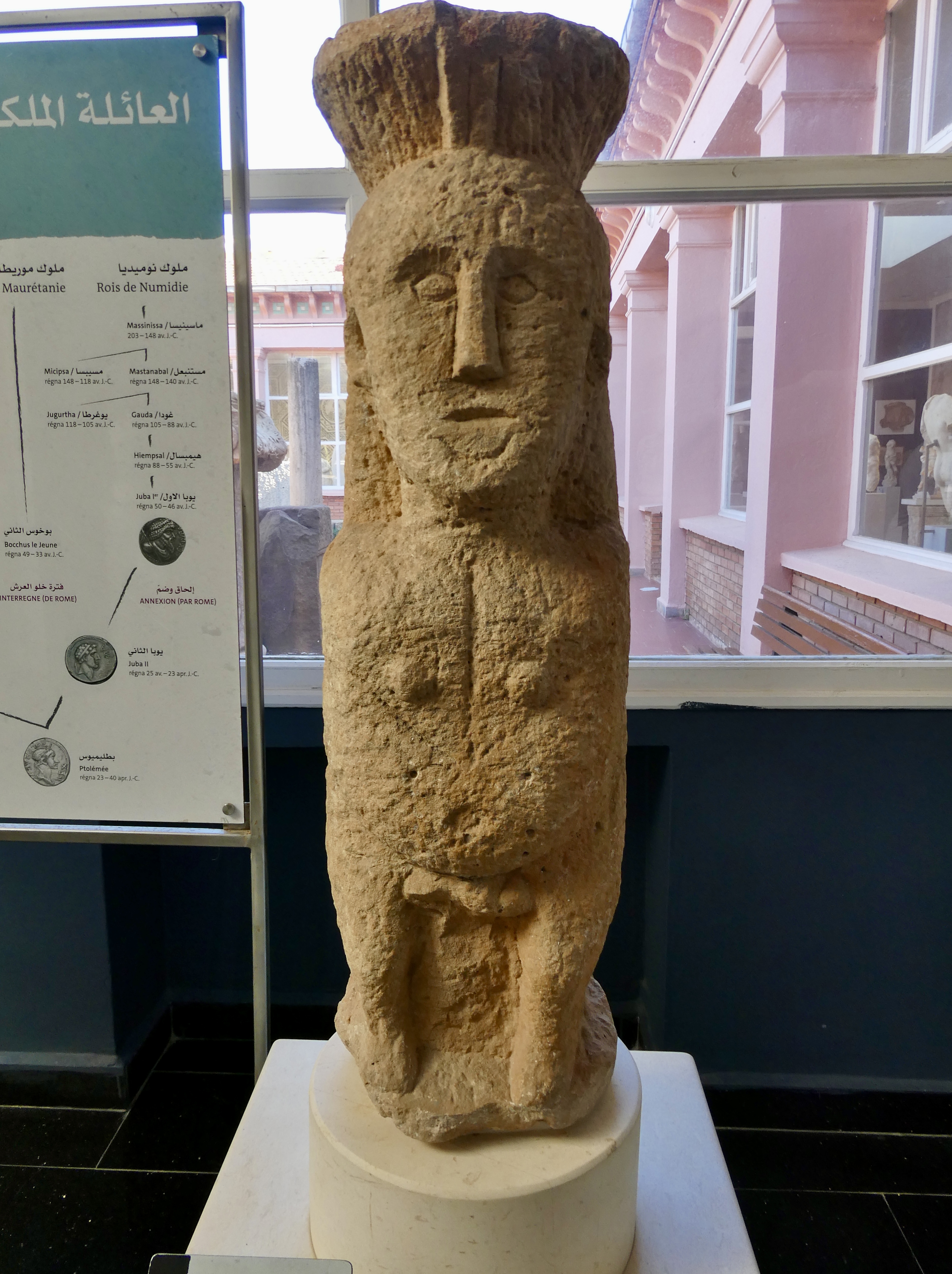
So first up was something called the Idole de Cherchell which was from the Punic (Phoenician) period and was apparently found during excavations at a local’s house by the name of Randon very near the museum. The carving is made out of limestone and is of a man wearing what appears to be a headdress and nothing else. The statute is very rudimentary and is believed to date to 2nd or 3rd century BC. It was pretty impressive to see.
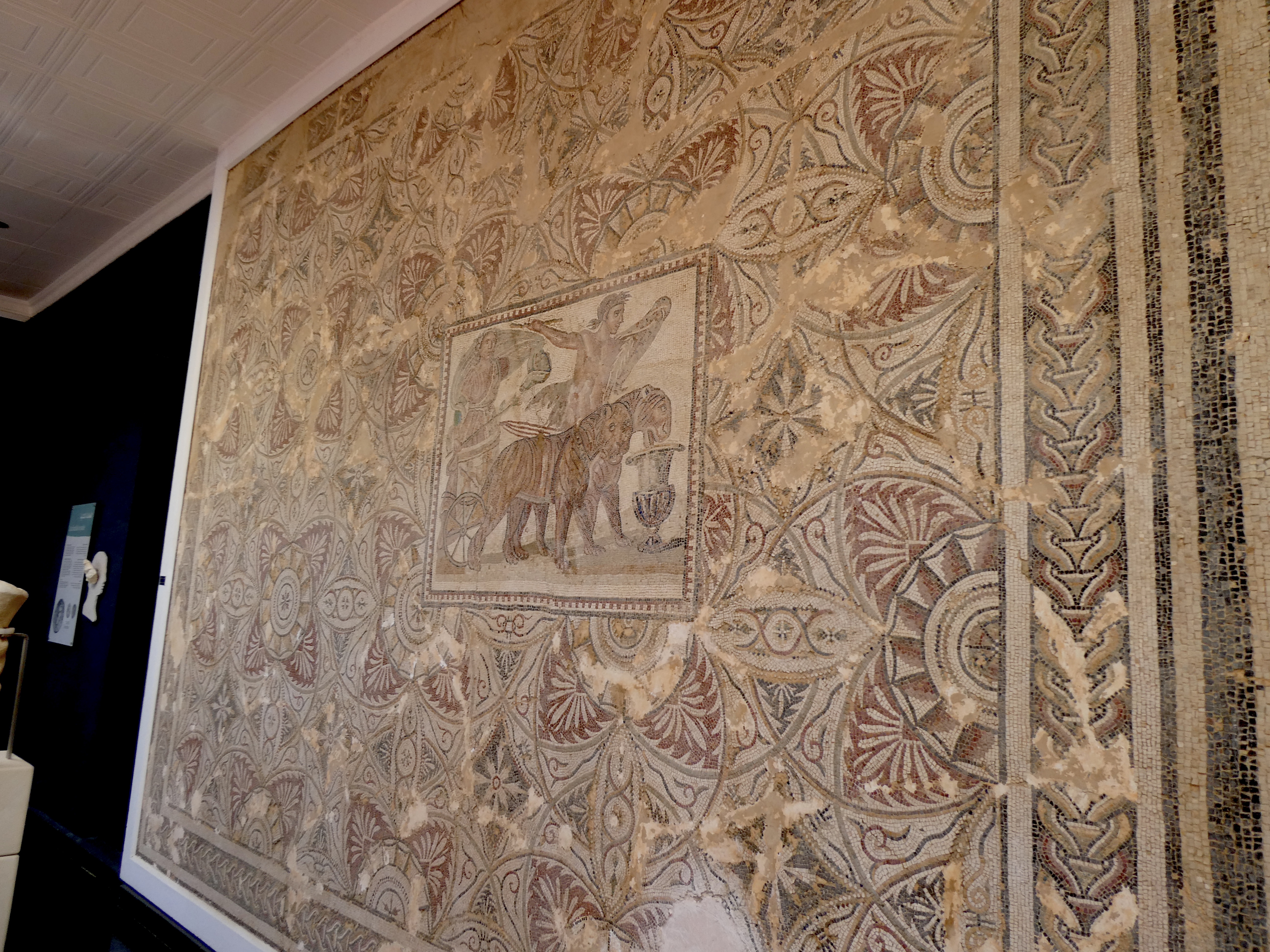
Now all along this first corridor of the museum were copies of 1st century BC Roman heads. Apparently the originals were taken by the French to the Louvre Museum so I walked by a lot of these copies. However, also on this corridor was an amazing original, near in intact mosaic titled Triumph of Bacchus from the 3rd century AD that was found in the remains of a Roman villa in the early 20th century. The mosaic features the Bacchus, god of wine, on a chariot pulled by two tigers returning from his conquest of India. His companion Ariadne is also featured in the mosaic.
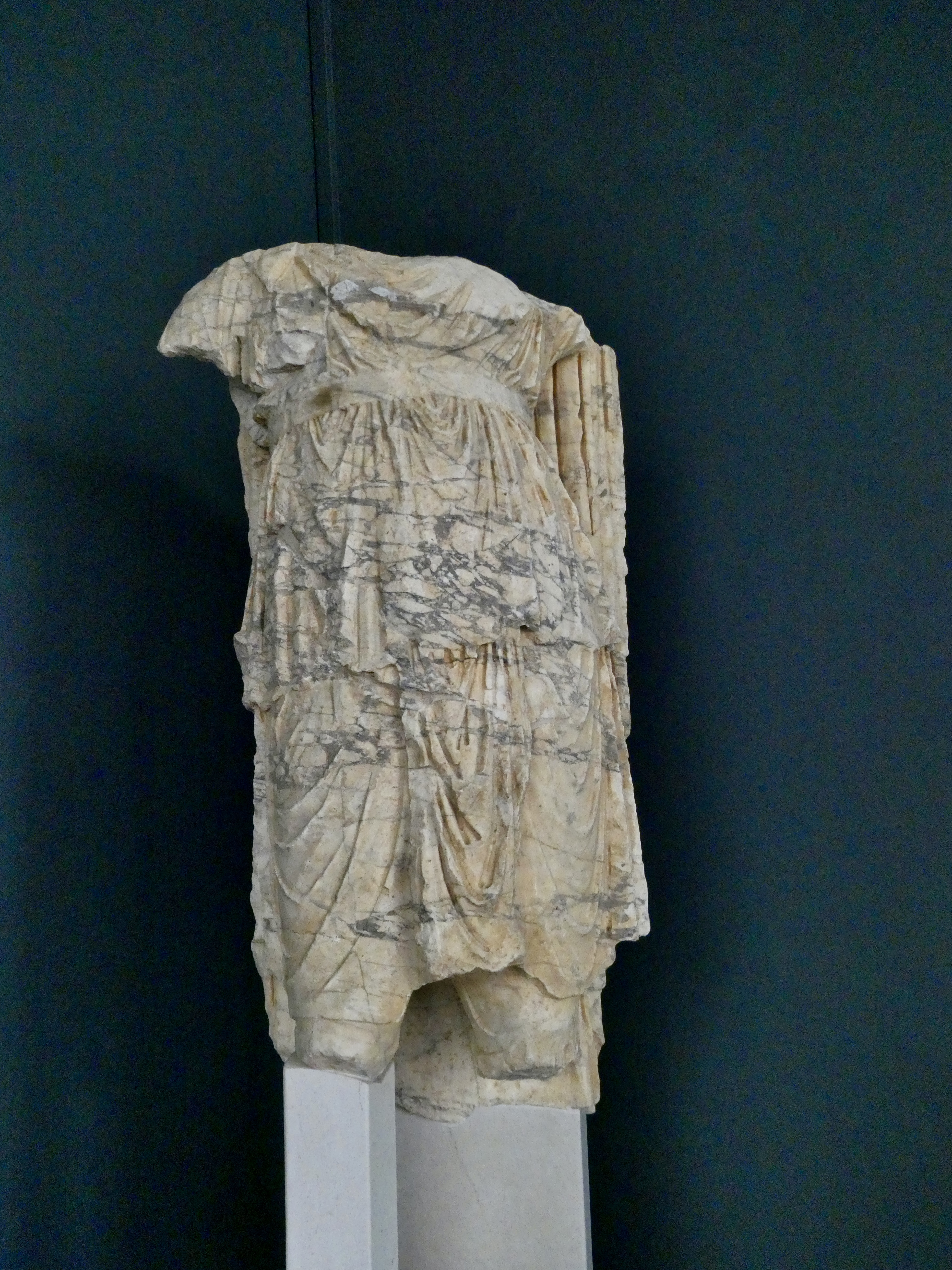
And fearby there was a sculpted male statute used in place of a column that was discovered in the remains of the forum and dates to the 1st century BC. I found the remains unusual because of the colour of the marble, which had shades of something close to orange and grey.

I then wandered down the second corridor and spotted a completely intact head of Cleopatra Selene II (daughter of Cleopatra and Mark Anthony) that dated to the 1st century BC. Cleopatra Selene II was Queen of Mauritania (including Casesarea Mauritania aka Cherchell).
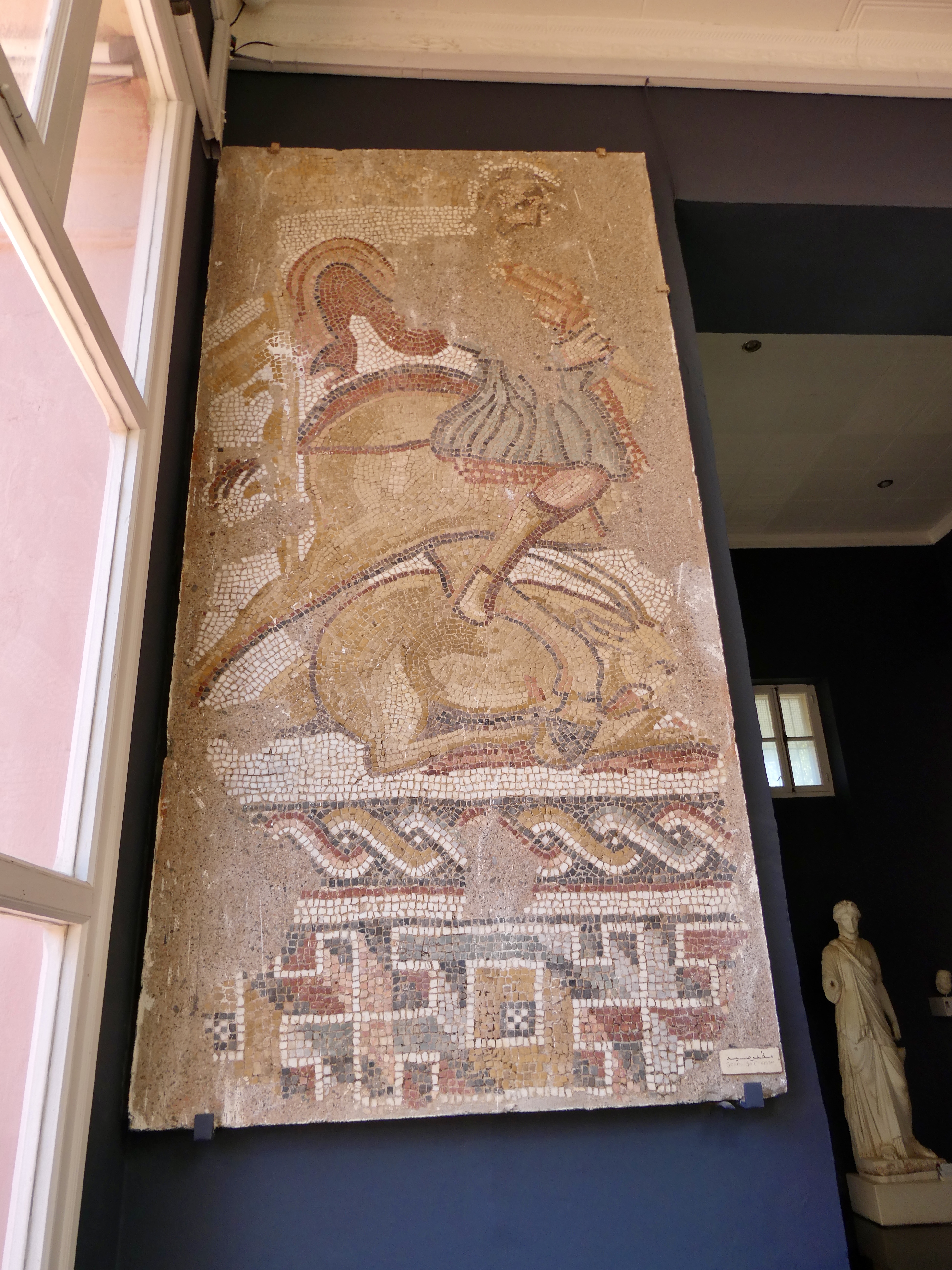
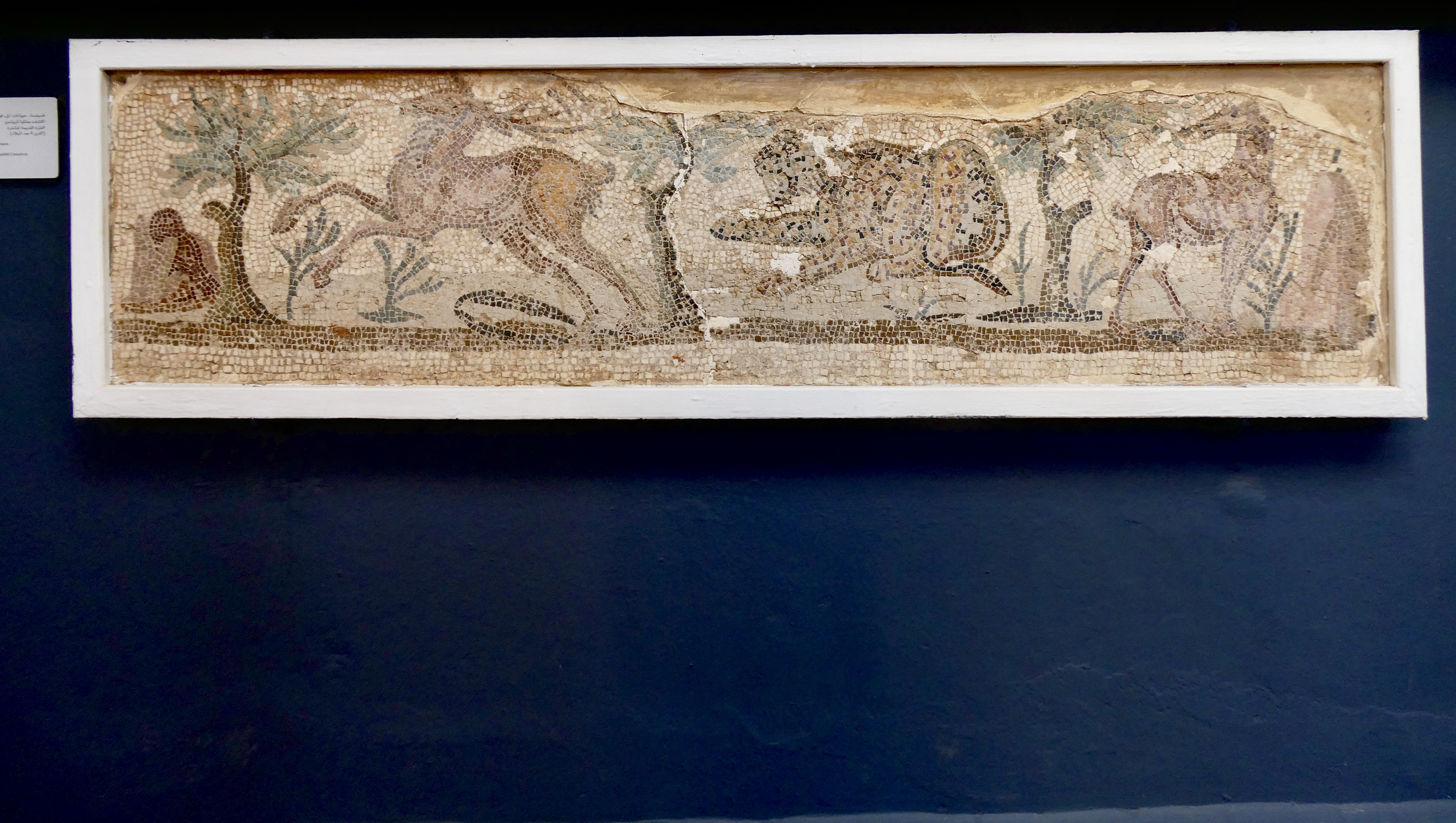
I continued walking past amazing relics and statutes turning the corner down corridor three and eventually stopped at another mosaic called the Mosaic of the Hunt, which was discovered at a villa known as the Crescenzo property and is likely from the 4th century AD.
And just a few steps from the mosaic was perhaps my favourite piece in the museum, a headless statute of Emperor Claudius from the mid 1st century AD discovered in the Theatre.
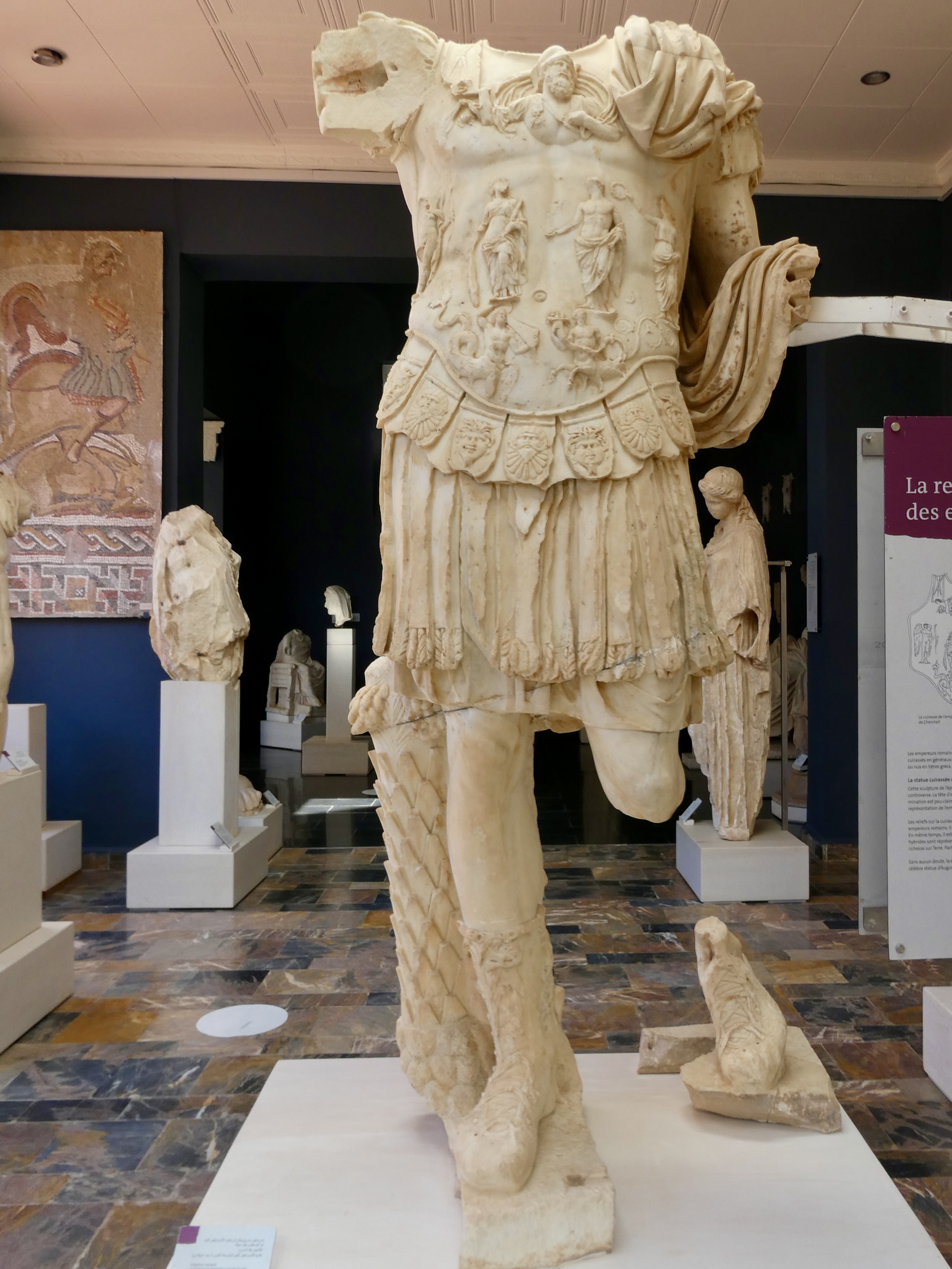
Now this statute was absolutely incredible because of the extensive detail that had been carved into the marble on the Emperor’s breastplate, which featured Julius Caesar at the top of the breastplate and below that various Roman gods including Venus as well as two mythical creatures. Then there was the detail on the belt, which featured gods for protection (much like what I saw on the statutes at Tiddis) and the intricate designs on his shoes. I spent at least five minutes examining the statute. Absolutely remarkable.
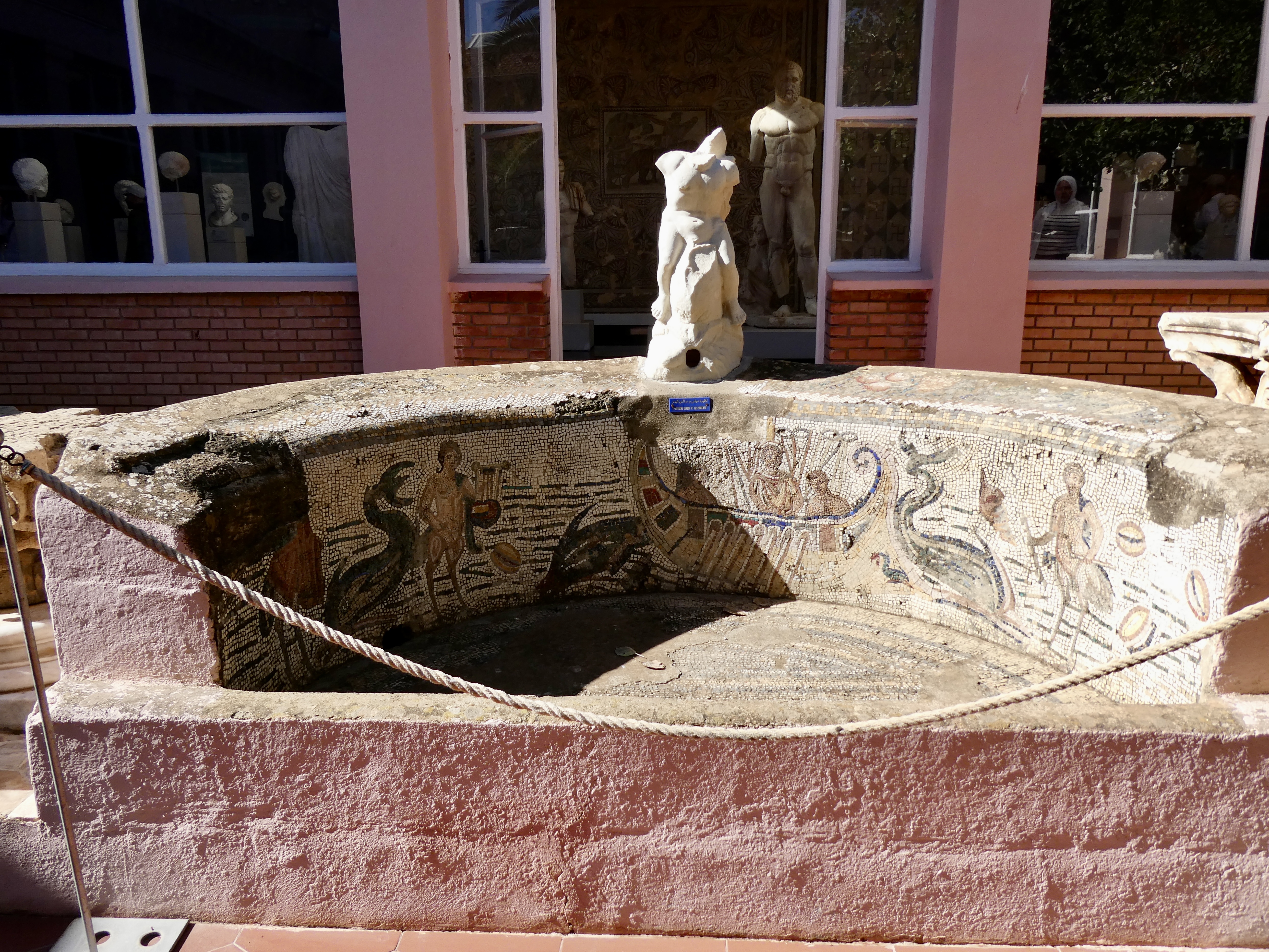
From here, I walked into the courtyard in the middle of the museum and while most of the remnants were just bits and pieces of columns, there were the remains of a fountain that had been lined with a fresco titled Homer’s Odyssey Fountain Ulysses and the Sirens. The fountain was found in the remains of a Roman villa and likely dates to the 1st century AD.

After checking out the courtyard, I walked past more amazing marble statutes before stopping at a late 4th century mosaic titled Mosaic of the Three Nymphs aka Mosaic of the Three Graces dating from the mid to late 4th century AD. The mosaic featured the three daughters of Venus and Bacchus: goddess Aglaia representing beauty, elegance, brightness, and splendor, goddess Thalia representing festivity, bloom, and abundance and goddess Euphrosyne representing joy, mirth, and good cheer. The goddesses are associated with Aphrodite, the goddess of love and beauty. The mosaic was found in the remains of a Roman villa known as the House of Lulii.
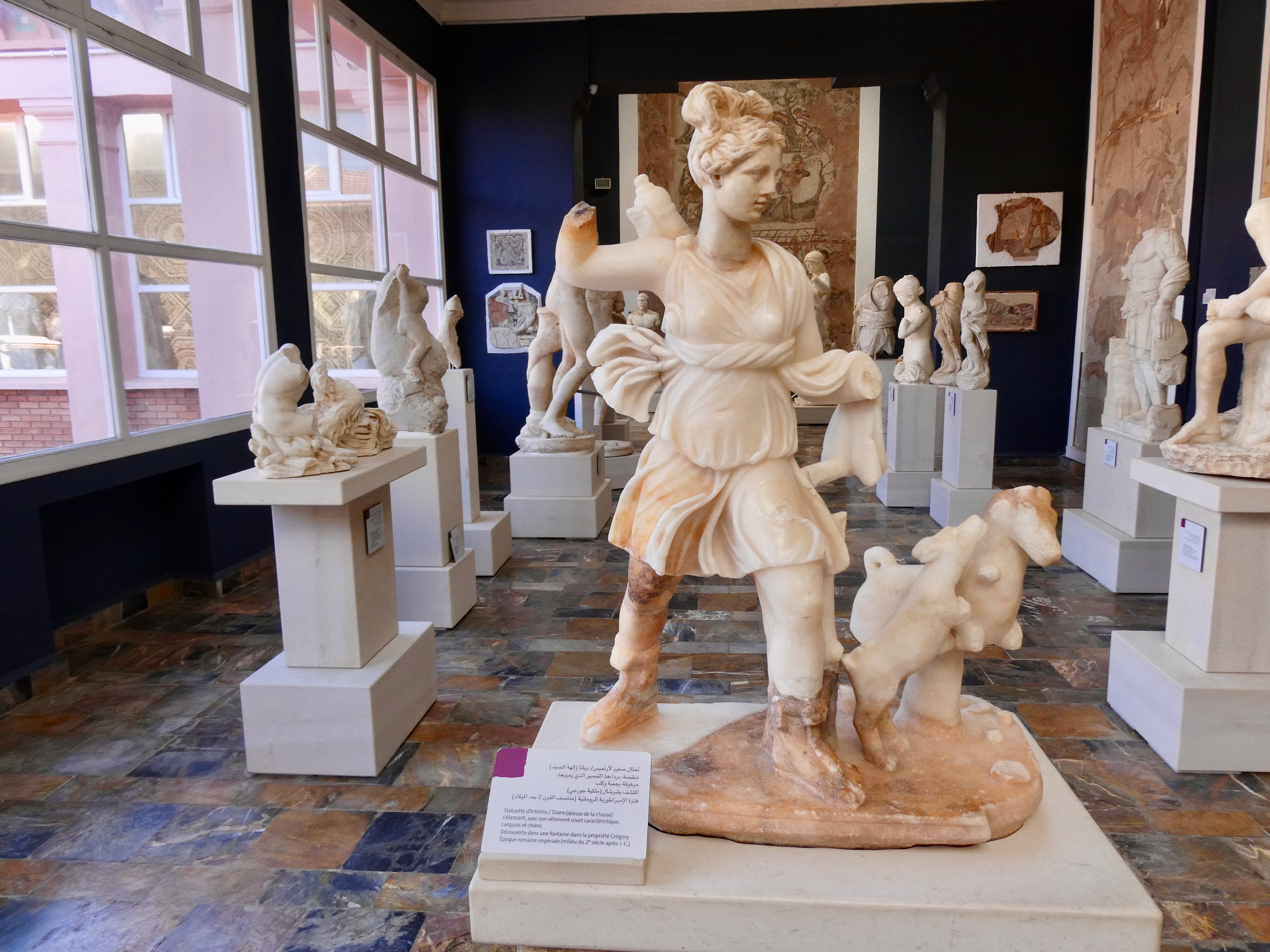
As I neared the end of my walk, I came across the statute of Diane aka Artemis, the goddess of the hunt and the moon. She was wearing a skirt and fishing boots with a bow and arrow holder on her back. And except for the missing hands, the statute was in remarkable shape. The statute is from the mid 2nd century AD and was discovered in the fountain in the late 19th century in the remains of the Gregory Roman villa.
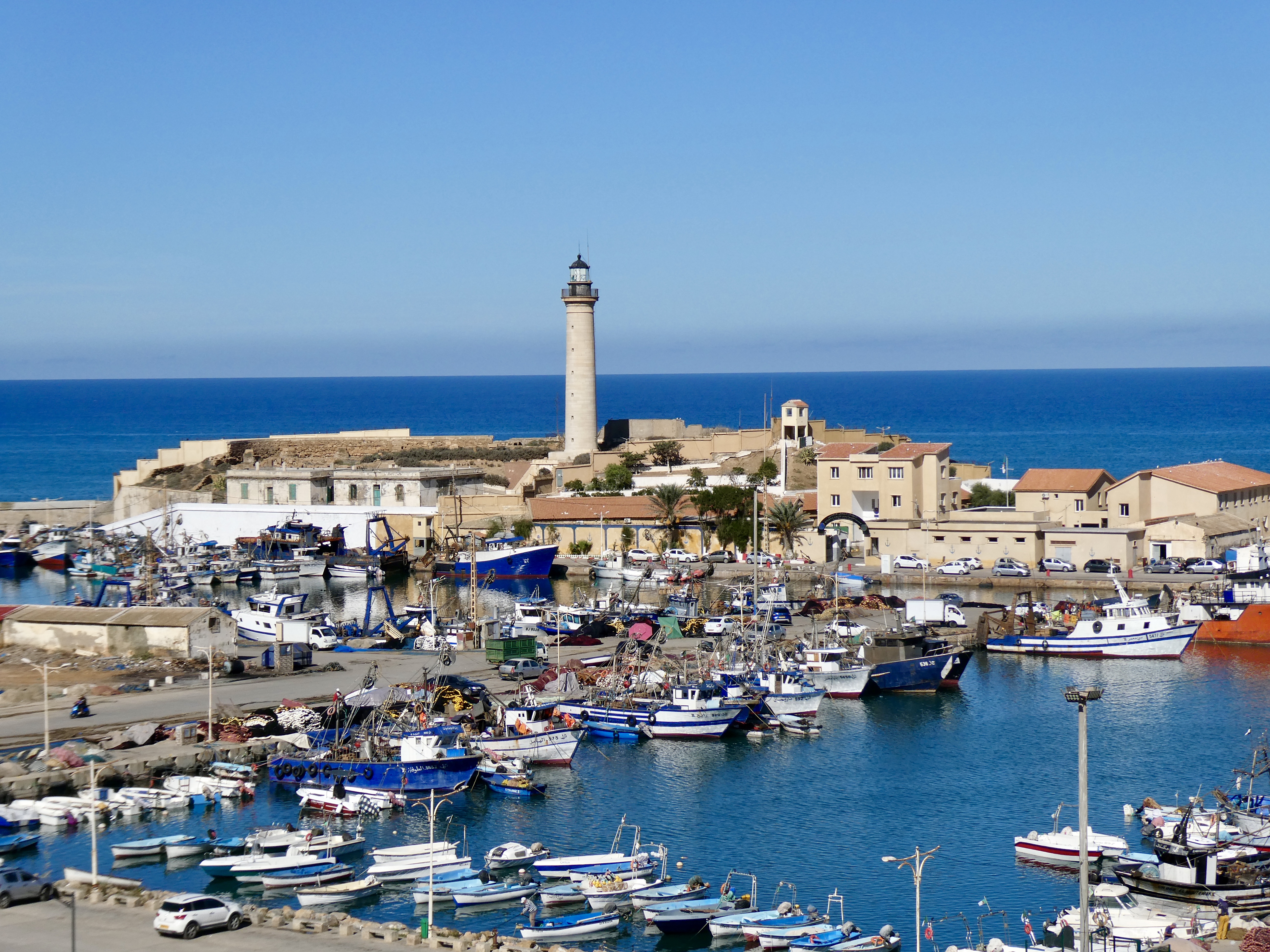

So after my walk around the museum, I met back up with Jasmine and we took a walk above the waterfront through Martyr’s Square. On the opposite side of the square from the water was the El Rahman Mosque, which was originally built in 19th century as the Church of St. Paul and actually looked like a Roman theatre. We did not stop there, but took a look from a distance.
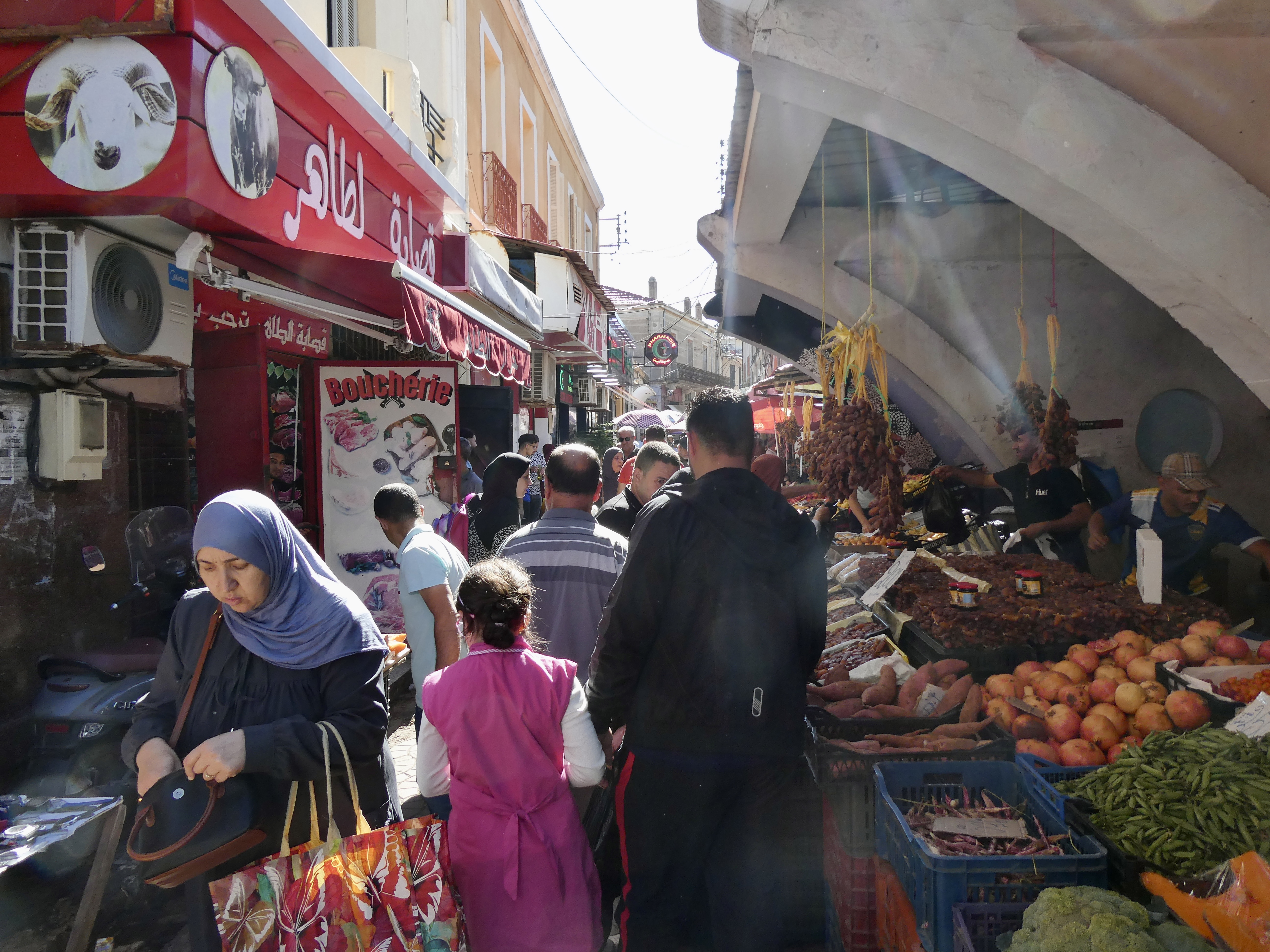
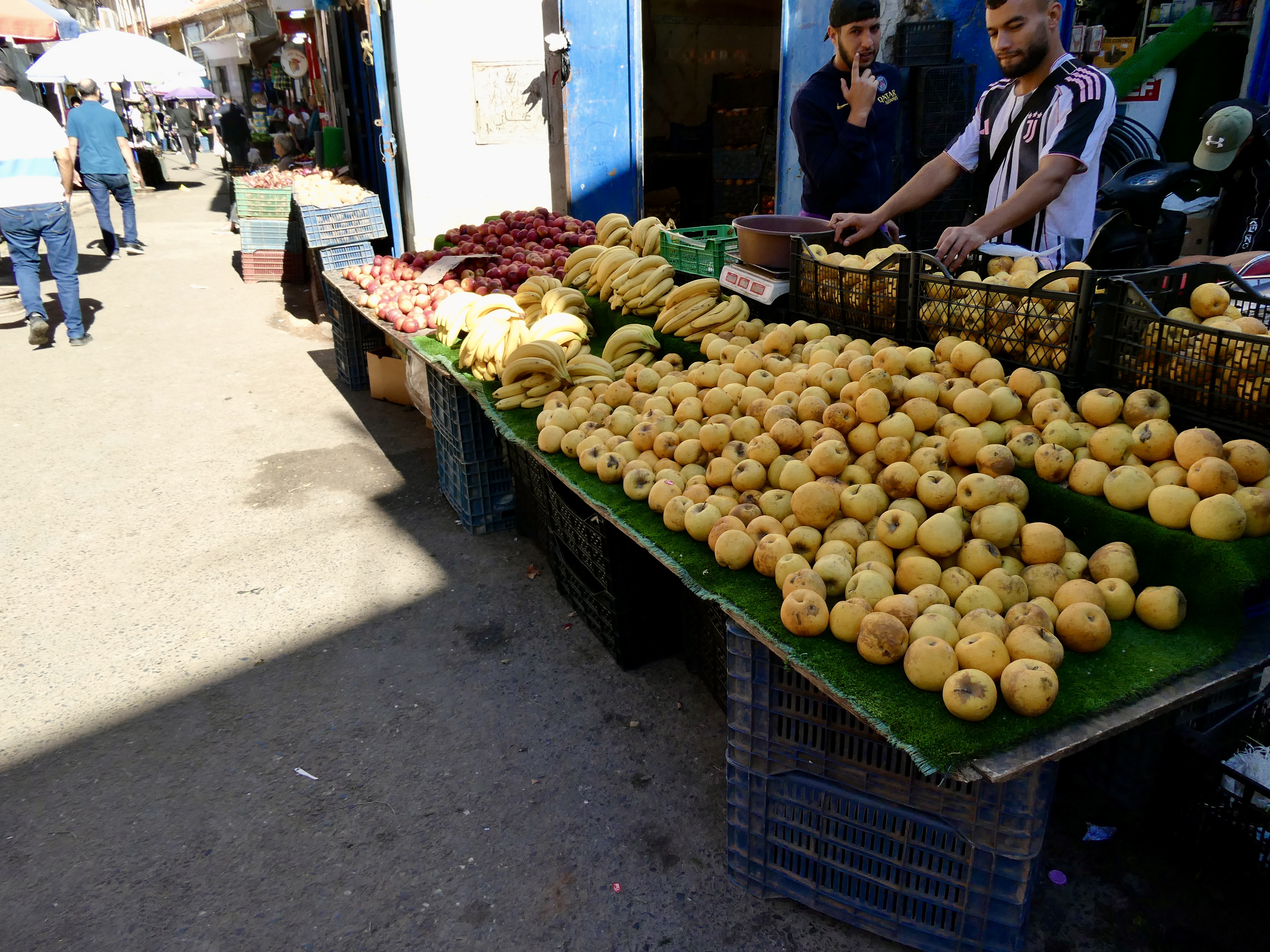
We then crossed the street and took a walk through the nearby market tasting the fabulous pomegranates at every shop and stopping to buy some persimmons and tangerines for our ride back to Tipasa. Now this market wasn’t more than a couple blocks long (so relatively small compared to other markets I have seen on this trip), but the food selection was amazing with stalls dedicated solely to olives, in season produce and the occasion perfume seller (not sure what that was about since this was a food market).
Anyway, from here, we doubled back towards Martyr’s Square and jumped back in the van for the short drive to Tipasa and the Western Archeological Park of Tipasa, which has been a UNESCO World Heritage site 1982.
Now initially, Tipasa, like Cherchell, was a small Phoenician trading-post. In the late 1st century BC, the Romans conquered the town and established a military port at the site, building a 2,300 meter, (7,200 foot) wall around the city for protection. The city became an important commercial and military port and in the 3rd century AD, Christianity was introduced. In the 5th century the Berbers conquered and partially destroyed the city and in the 6th century the Byzantines rebuilt the city. Unfortunately, in the 7th century the Arabs completely destroyed the city so all that is left are remains that are in mediocre condition.
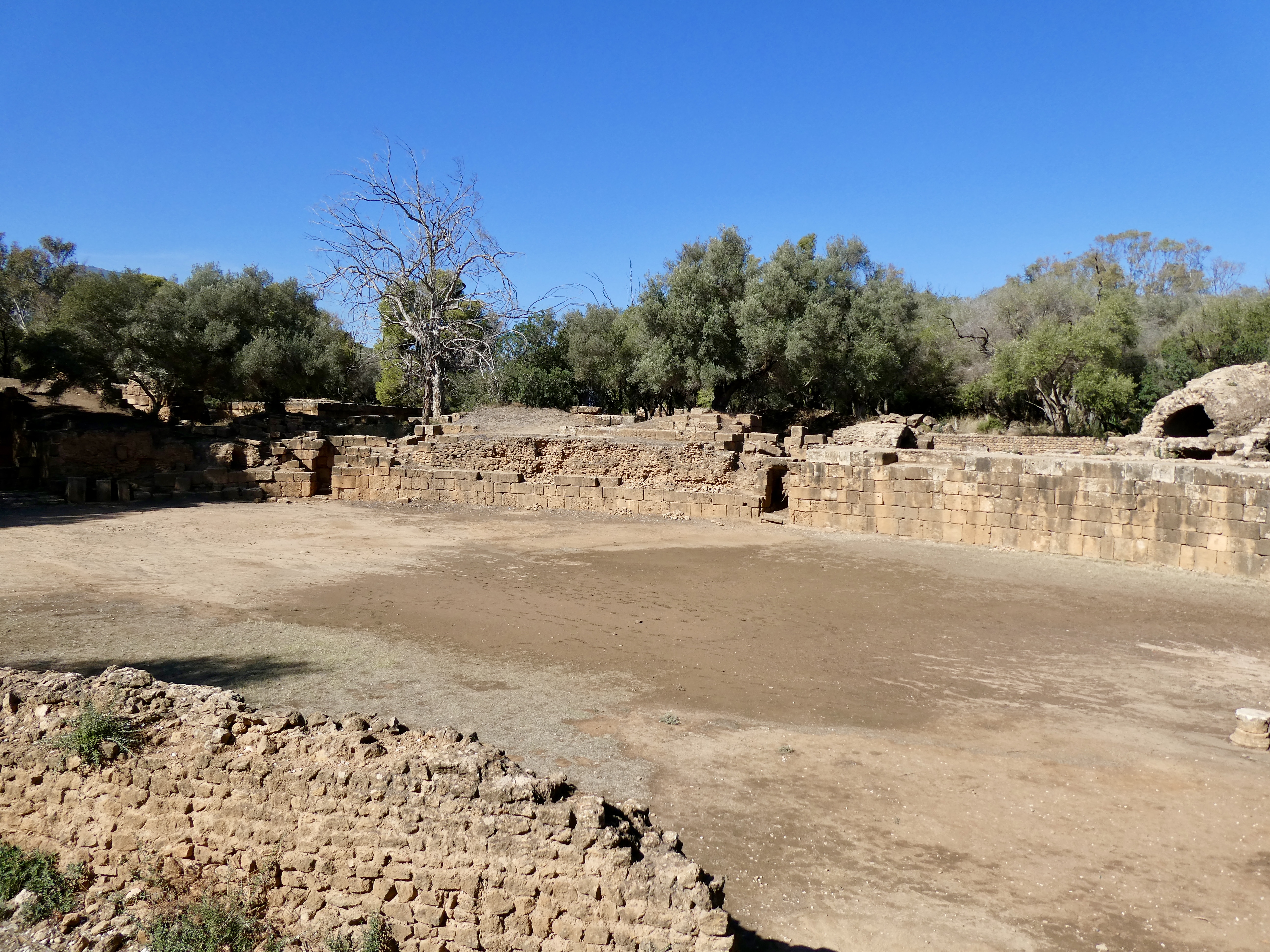
No matter, we started out visiting the Amphitheater, dates to the 3rd century AD, was built on the site of a former Punic necropolis and was used for gladiator animal fights. Now the Amphitheatre really highlighted the poor shape of the ruins. The Amphitheatre had at one time three tiers for seating, but there was little left of the stands, there was sign of the old animal cages and the entrance at either end of the Amphitheatre, while visible, only consisted of five to six levels of stones. I am afraid the Amphitheatre was a sad reflection of its former glory.

Anyway, from here, we walked to the area where two temples were located. The first was the Anonymous Temple dedicated to an unknown deity. The temple likely dates to the 1st or 2nd centuries AD since the worship of deities went away with the introduction of Christianity in the 4th century AD. However, little is known about the origins of the temple.
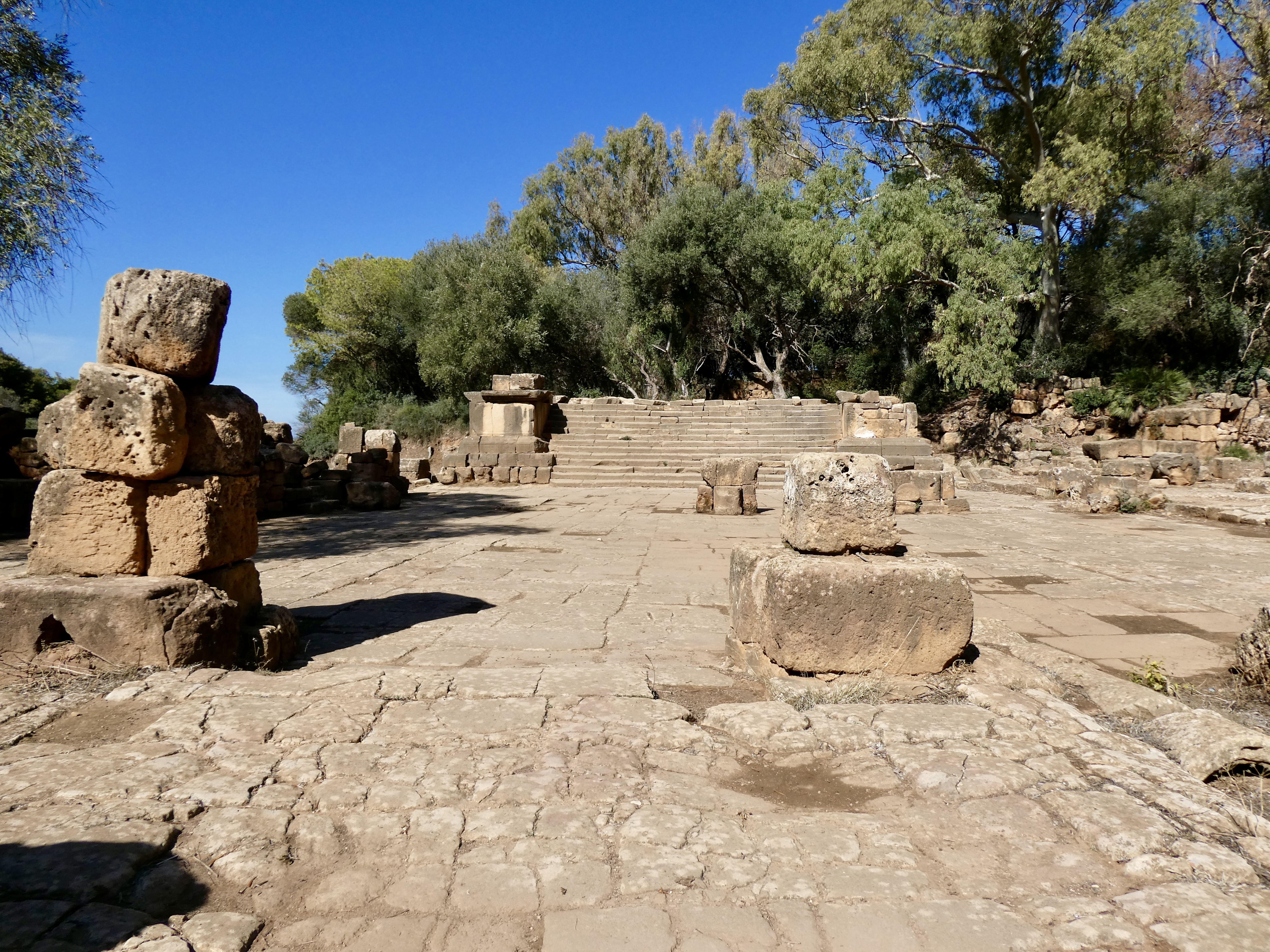
The temple featured a courtyard with steps to platform and the remains of a cella, which is likely where the statute of the deity was kept. In fact, a gigantic portion of a leg was found in the cella, but nothing else was found to answer who was worshipped here. And n the center of the temple were the remains of a sacrificial alter. There were also the remains of columns and porticos so the temple was most likely partially covered.

And directly across from the Anonymous Temple was the New Temple, which was built between the 2nd and 3rd centuries and was so named because it was built after the Anonymous Temple. This temple was better preserved than the Anonymous Temple and had both an entry staircase as well as stairs to a platform where the statute of the deity was kept. There were also the remains of columns and porticos around the temple. And like the Anonymous Temple, it is unknown what deity was worshipped here. It is, however, known that dolias (the square storage containers for produce) were discovered on site leading archeologists to believe that the temple was likely converted into a market at some point.
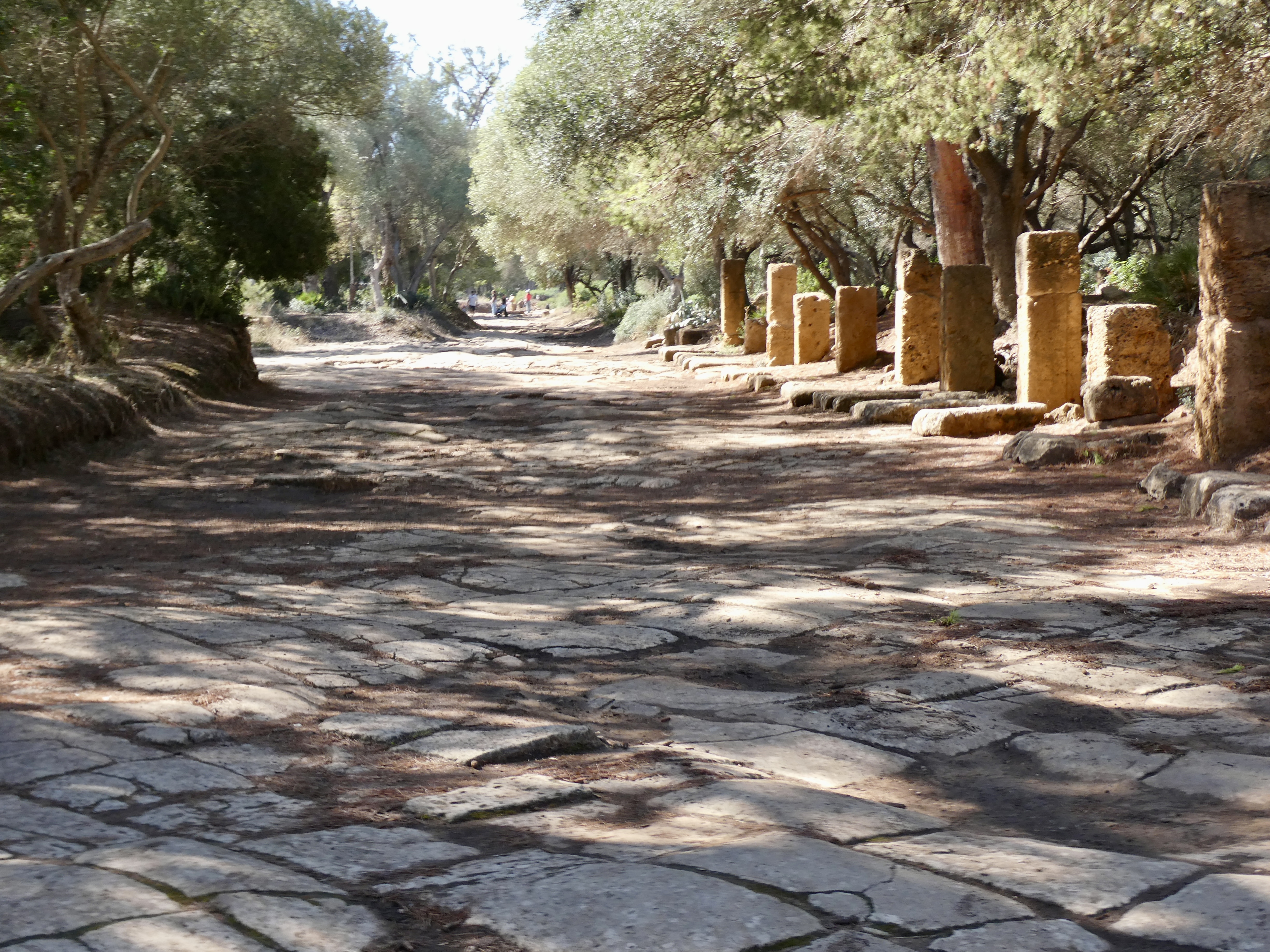
From here we took a left and walked the old Roman road. The road was in pretty bad shape with a lot of uneven and missing stones. However, there were chariot marks in some of the stones, pillars marking the sides of the road and the path of the road clearly remained visible making it a fun walk through history.
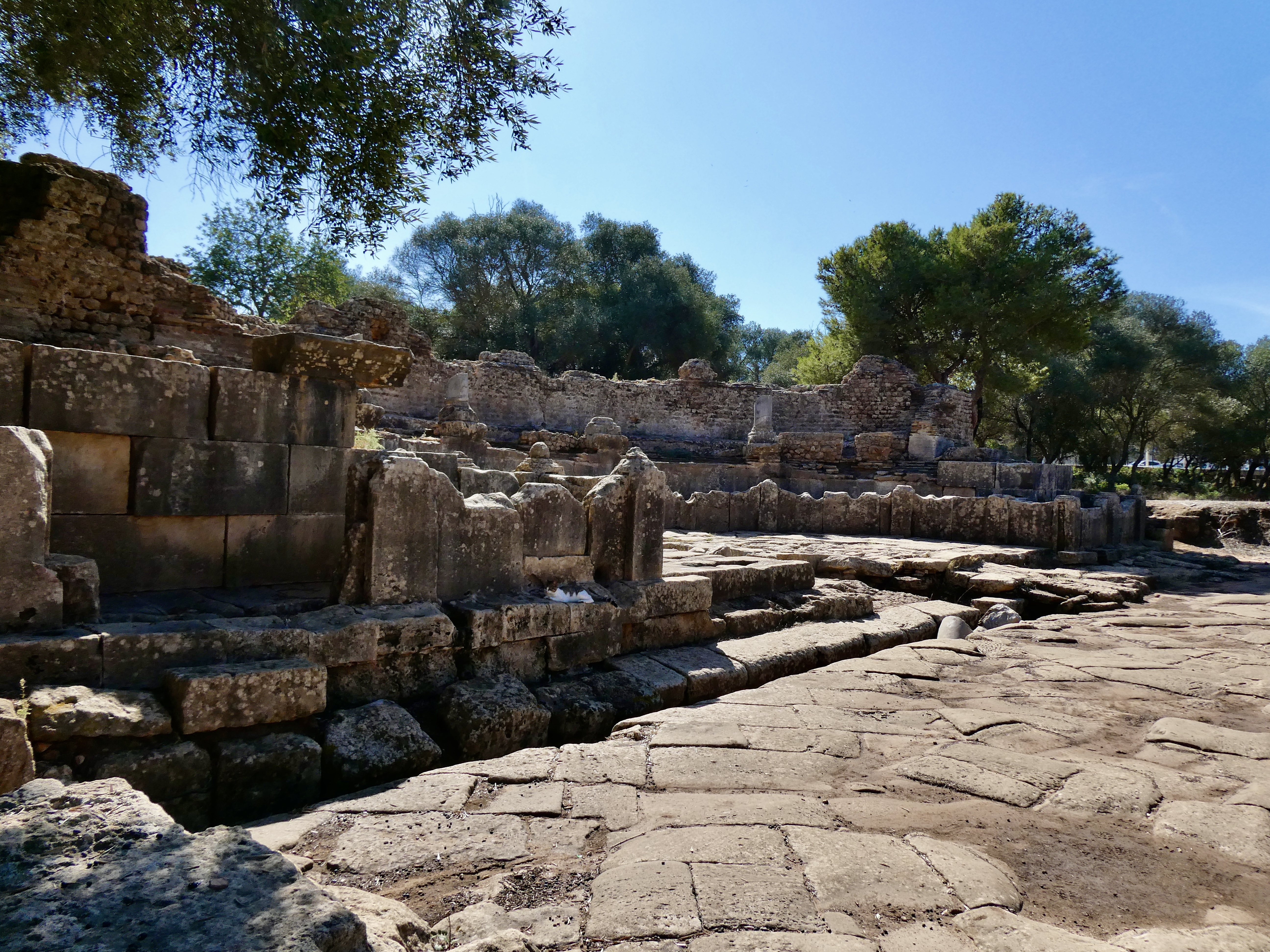
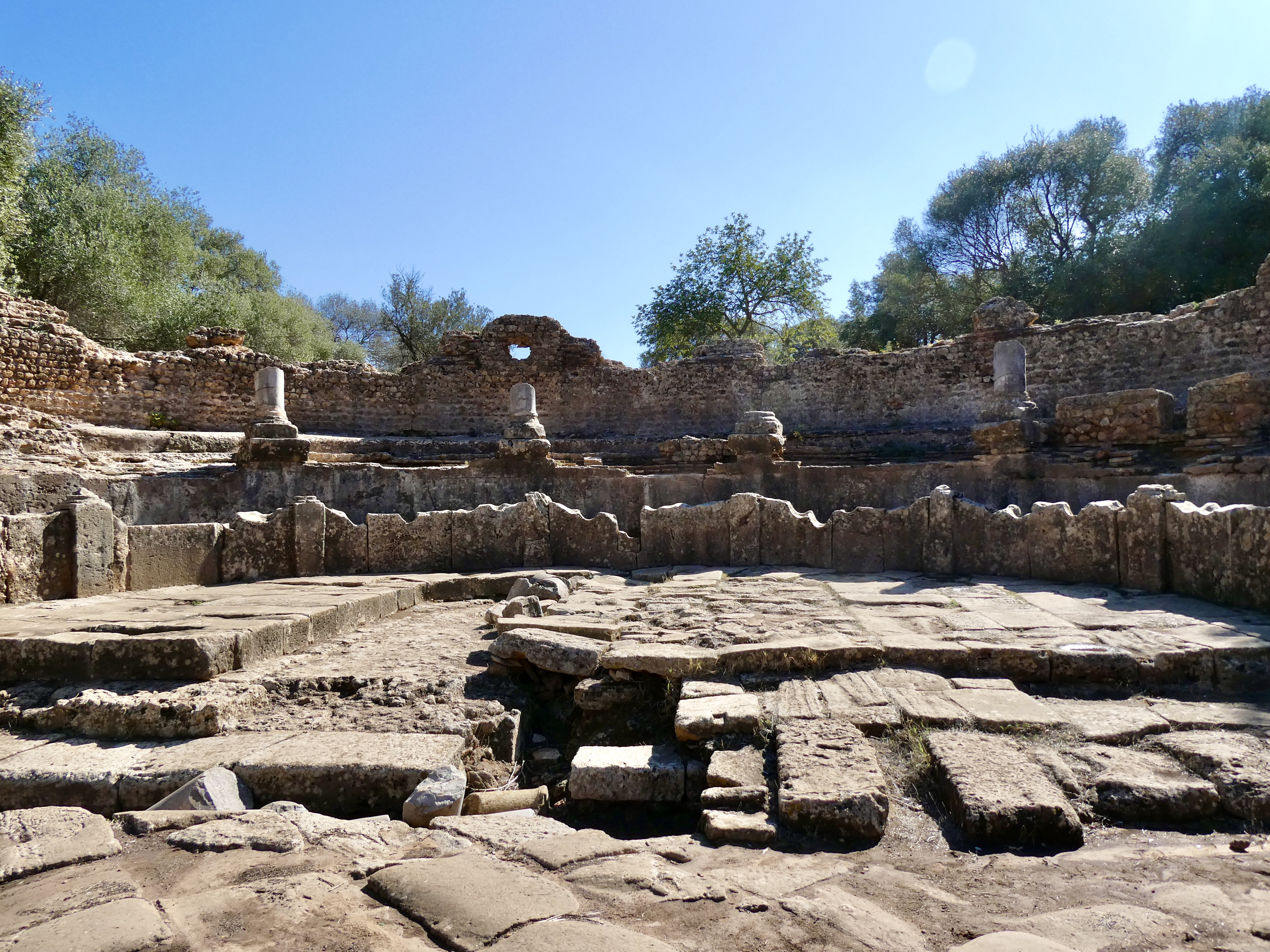
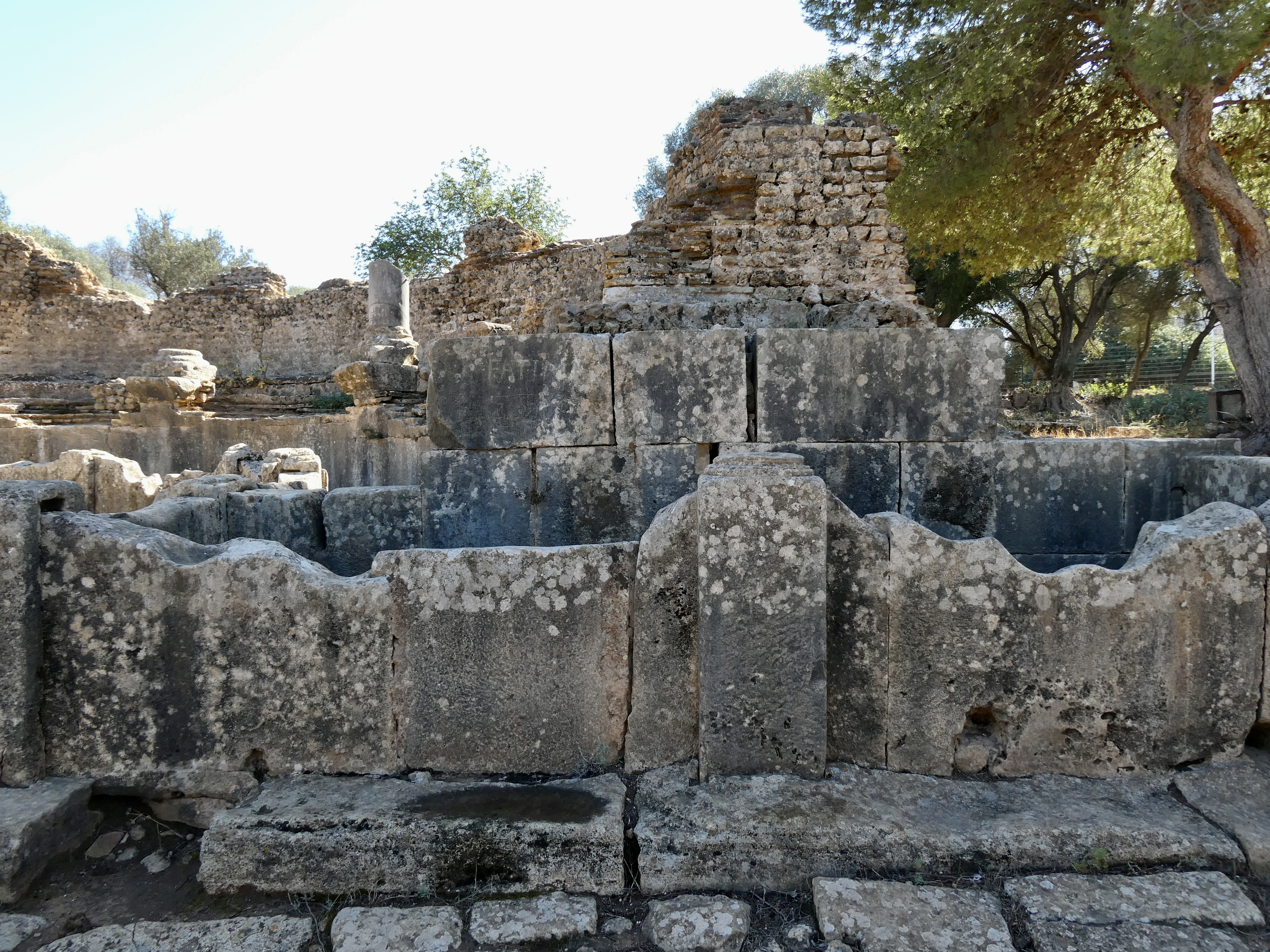
Near at turn in the road, we reached the nymphaeum, which was a decorative fountain and water feature dedicated to the nymphs likely built in the 3rd to 4th century AD. The fountain was used for public water distribution and may have been used to provide water to horses for those riding along the road.
Now this building was absolutely huge and pretty good shape. In fact, up to this point, it was clearly the best building we had seen. There were the remains of pillars at the back of the fountain indicating there was likely a portico over top the fountain and
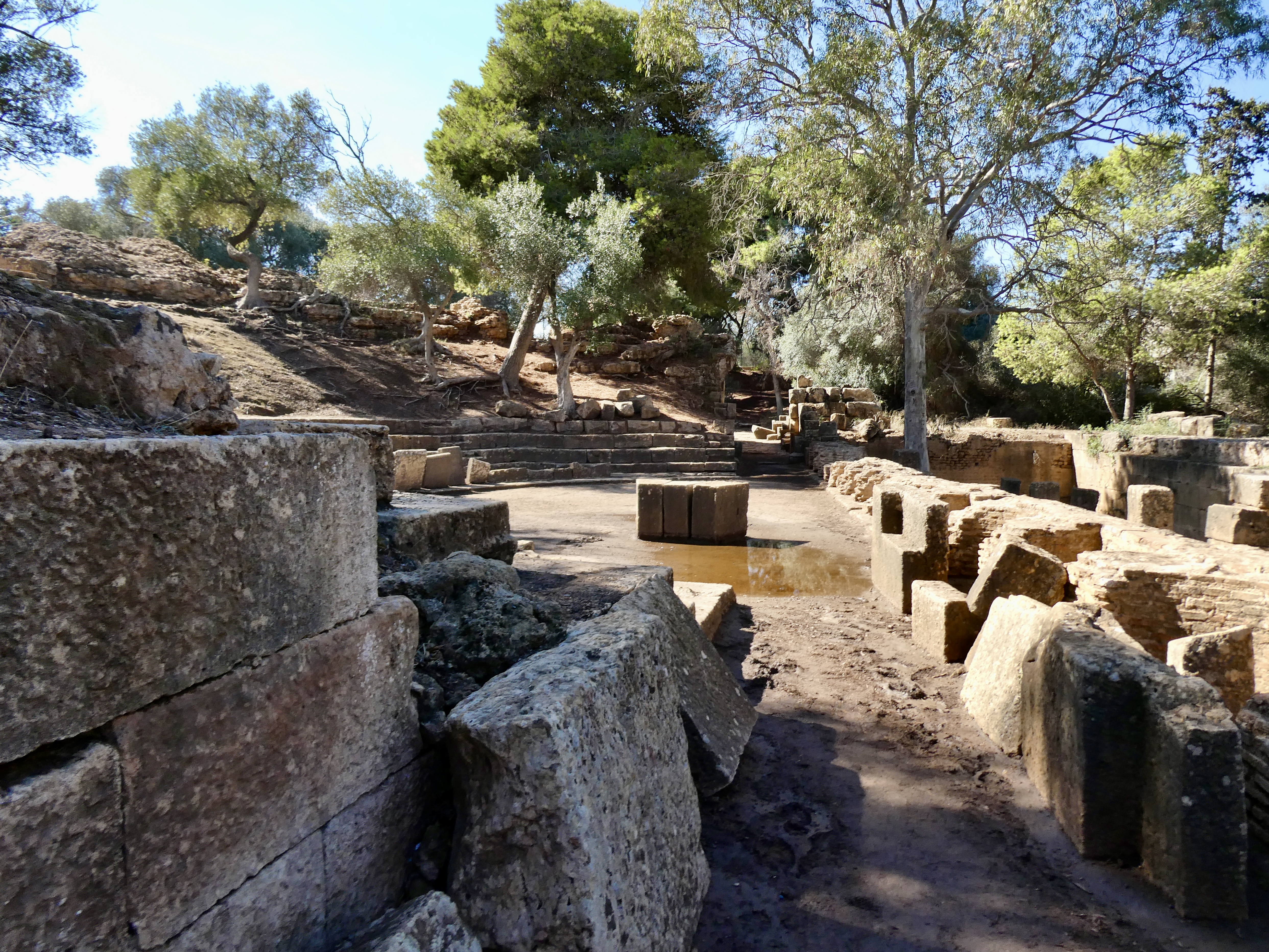
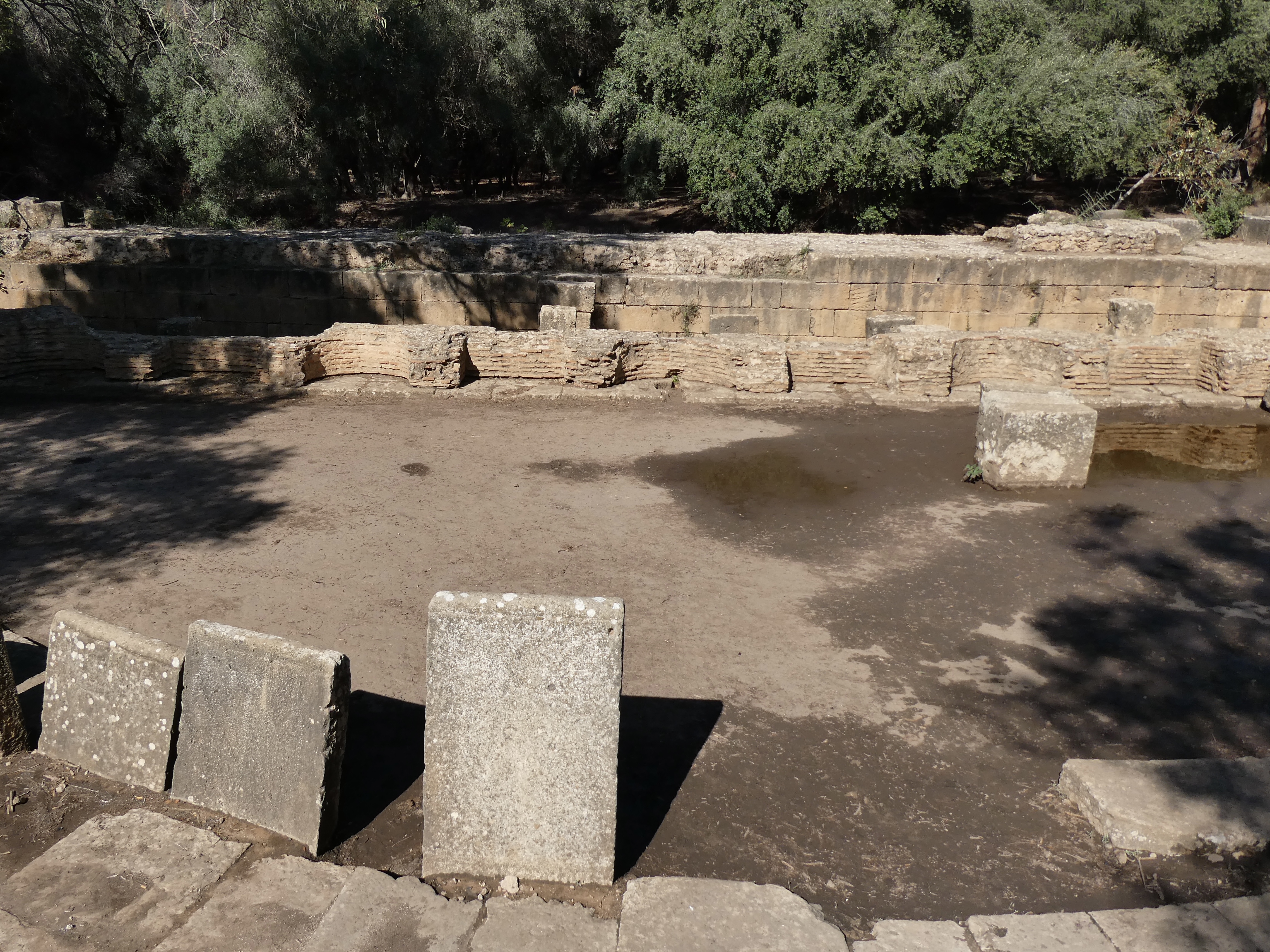
the water trough beside the main fountain was huge (lending to the argument that horses may have used the fountain for drinking).
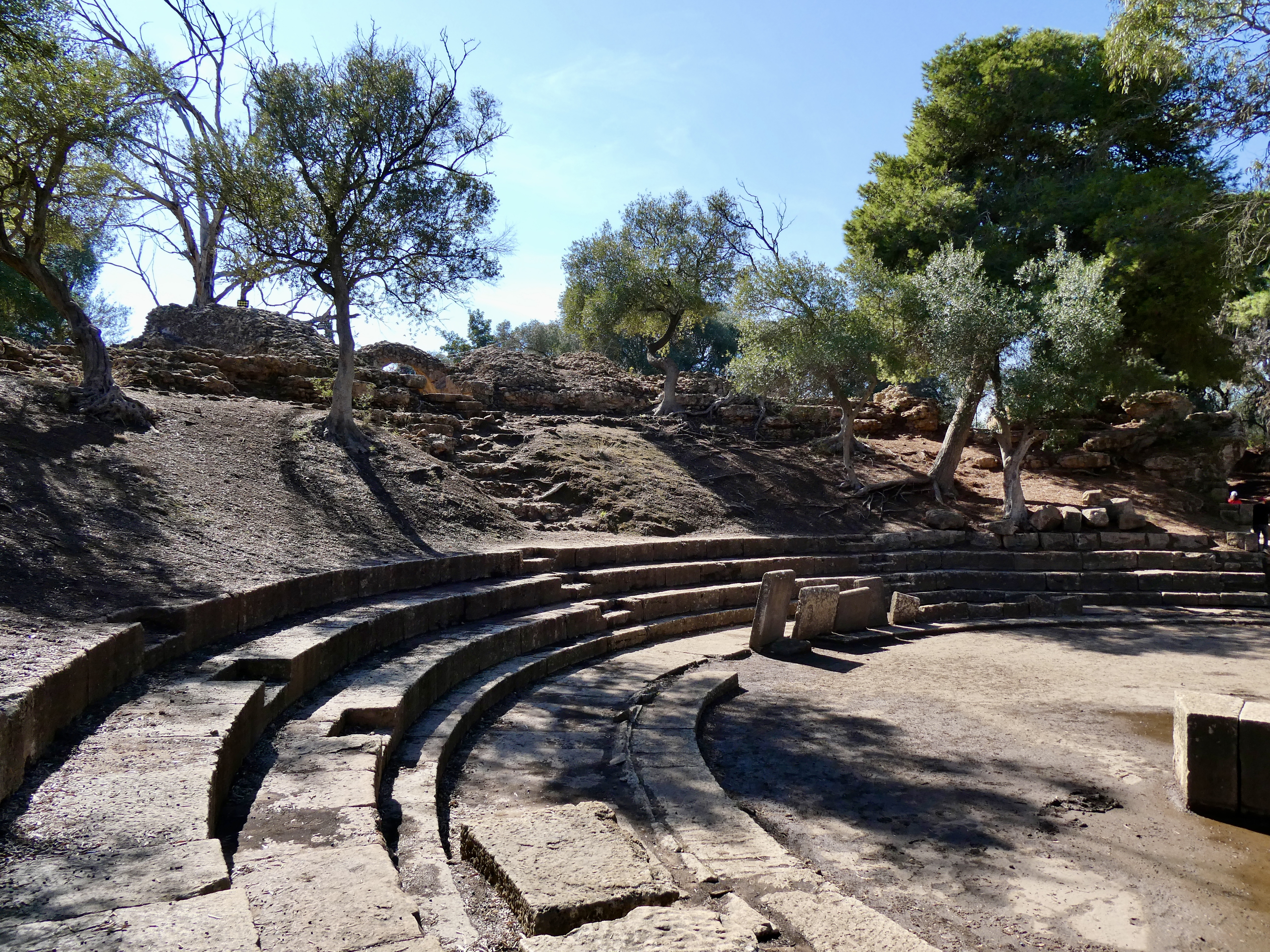
We moved on from here to the adjacent Theatre that was built between the 2nd and 3rd centuries AD. The Theatre included a nobles entrance for those with prime seats at the front of the Theater and three different entrances for the upper levels. The Theater was a semi-circular structure built into the hillside, which could at one time seat up to 4,000 people. The Theatre featured an orchestra section at the front of the stage and behind this was the actual performance stage. Unfortunately, there was very little left of the seating area.
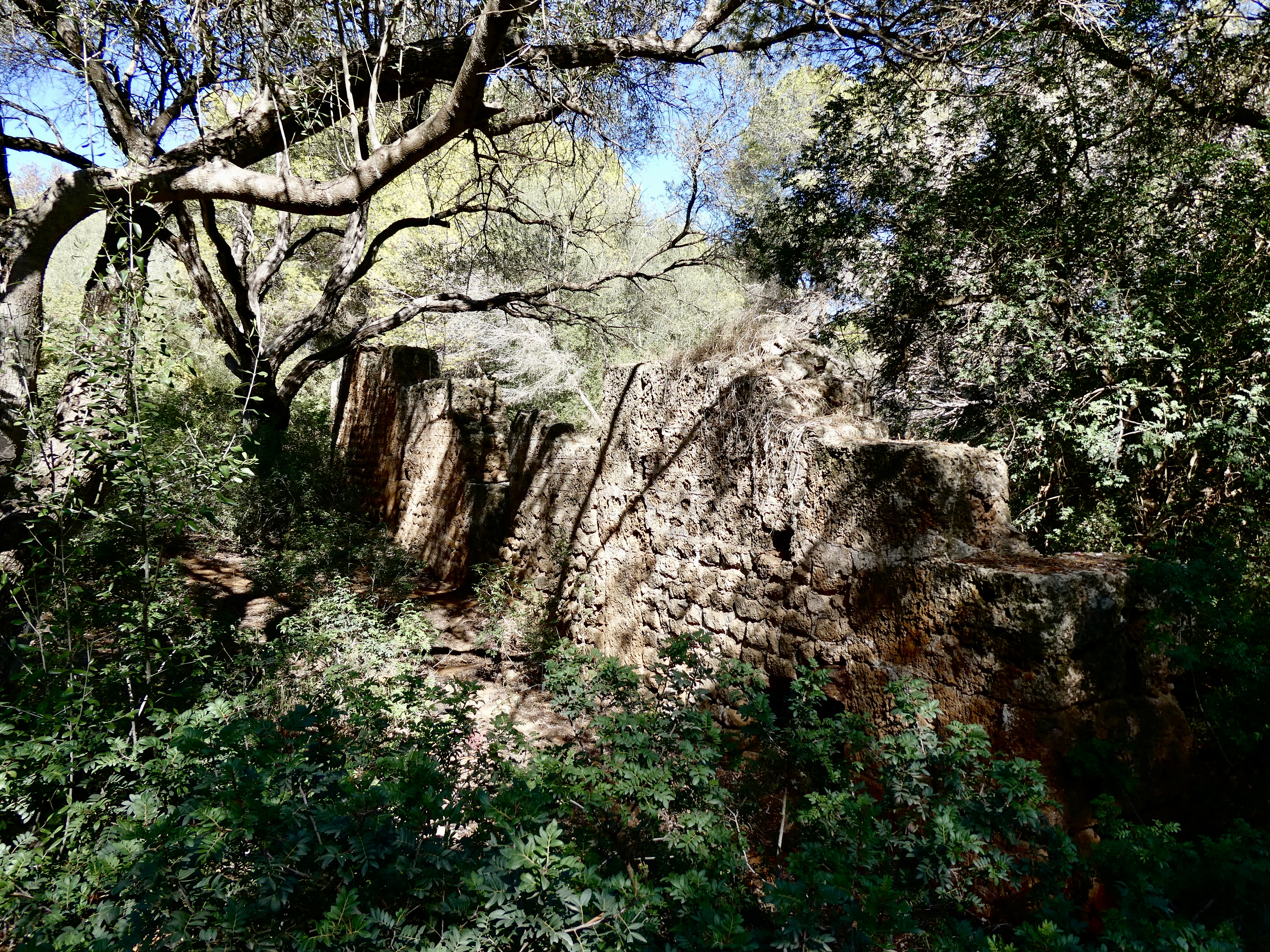
From here, we took about ten minute walk up some hills where we passed what appeared to be stairs to a home as well as what I thought might be the remains of the old Tipasa wall. Unfortunately, Jasmine had no information on the wall and seemed a bit bored by the ruins so I let it drop. (Nahla had been much better informed about the Roman ruins and seemed to share my interest for all things old.)


Anyway, the walk took us to the Great Basilica dating to the 4th century AD. The Basilica was approximately 58 meters long and 48 meters wide and was surrounded by columns that supported seven naves (likely small chapels). The basilica floor was covered in mosaics some of which remained today (although in
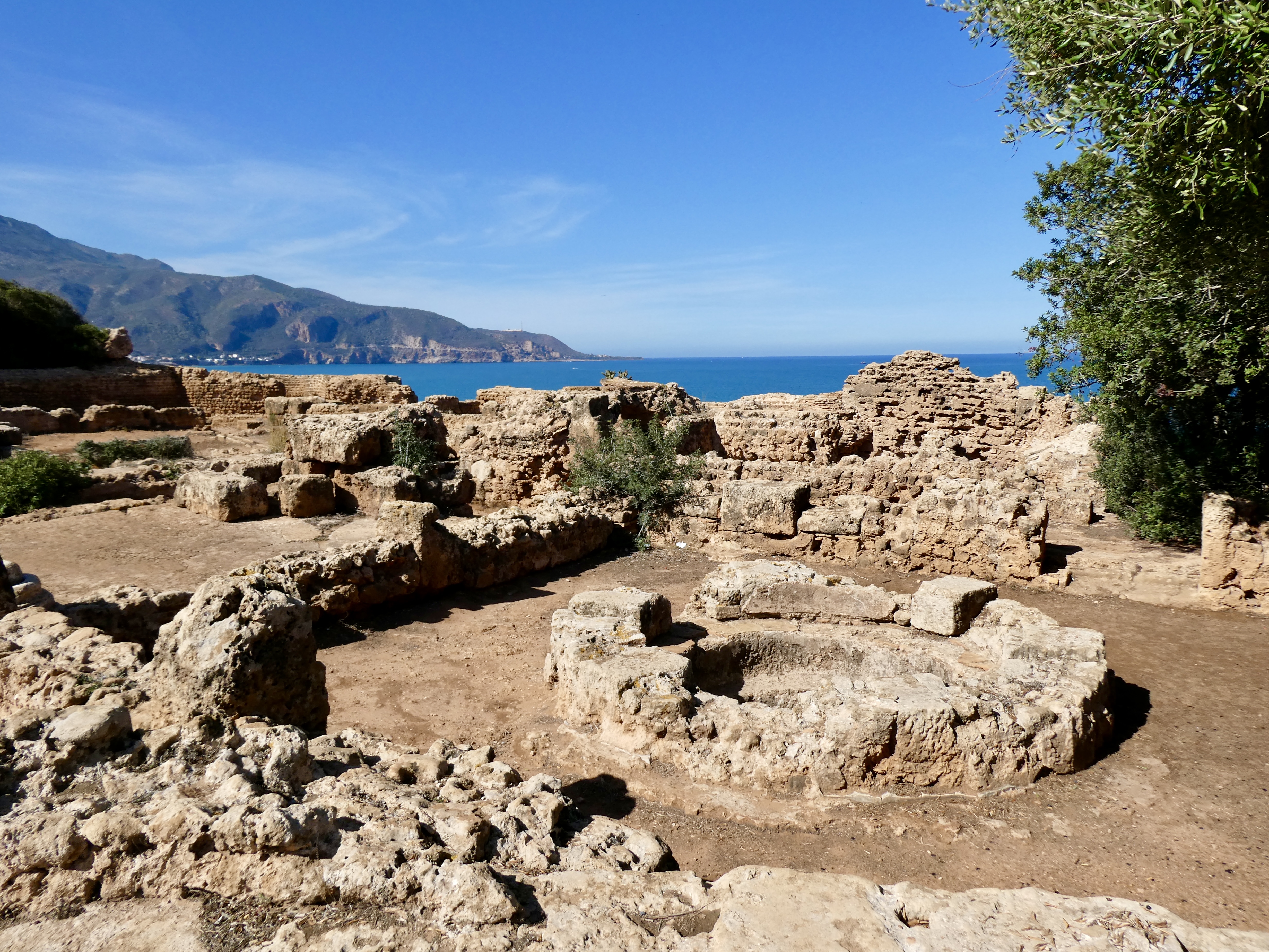

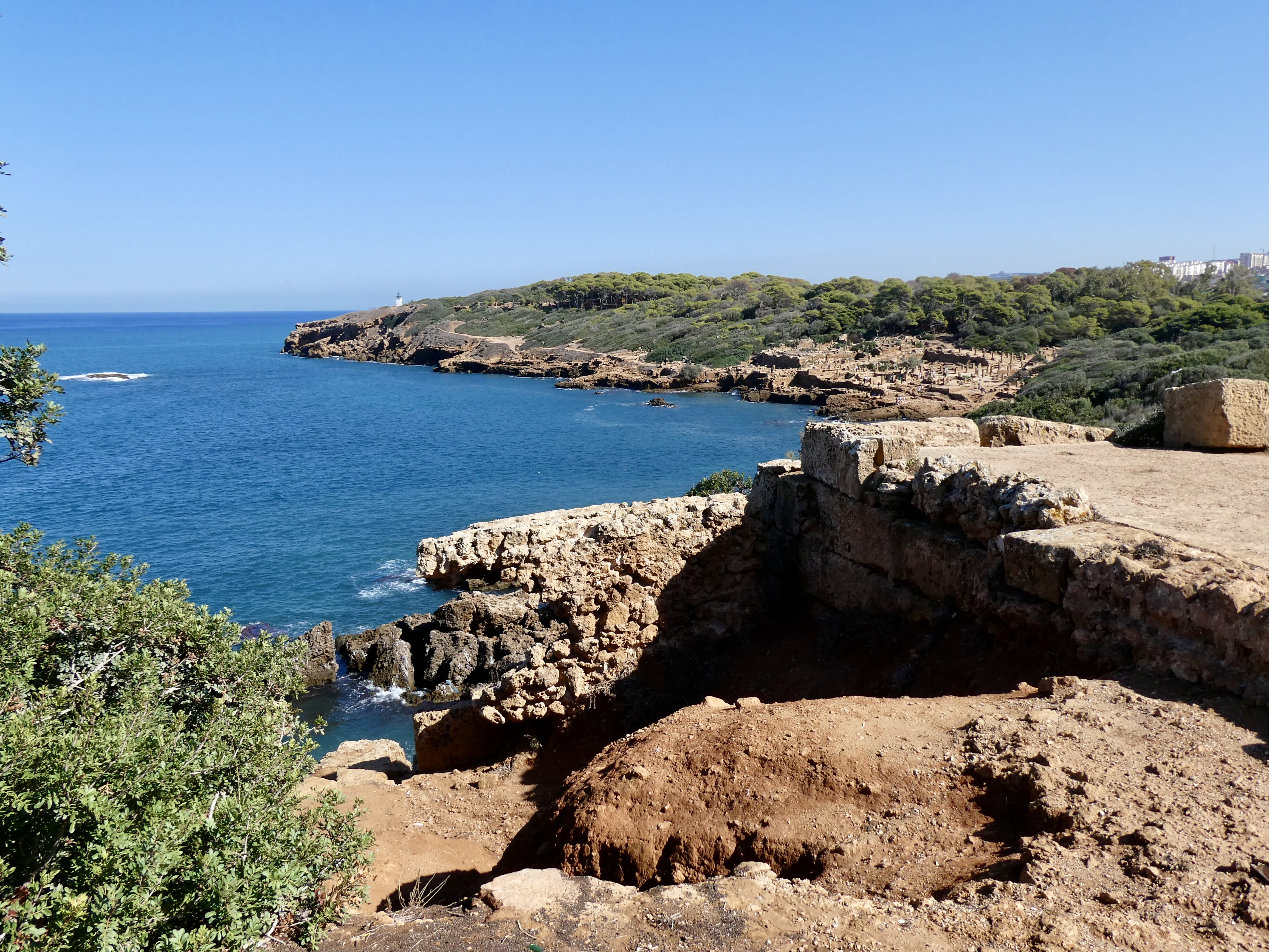
very rough shape).
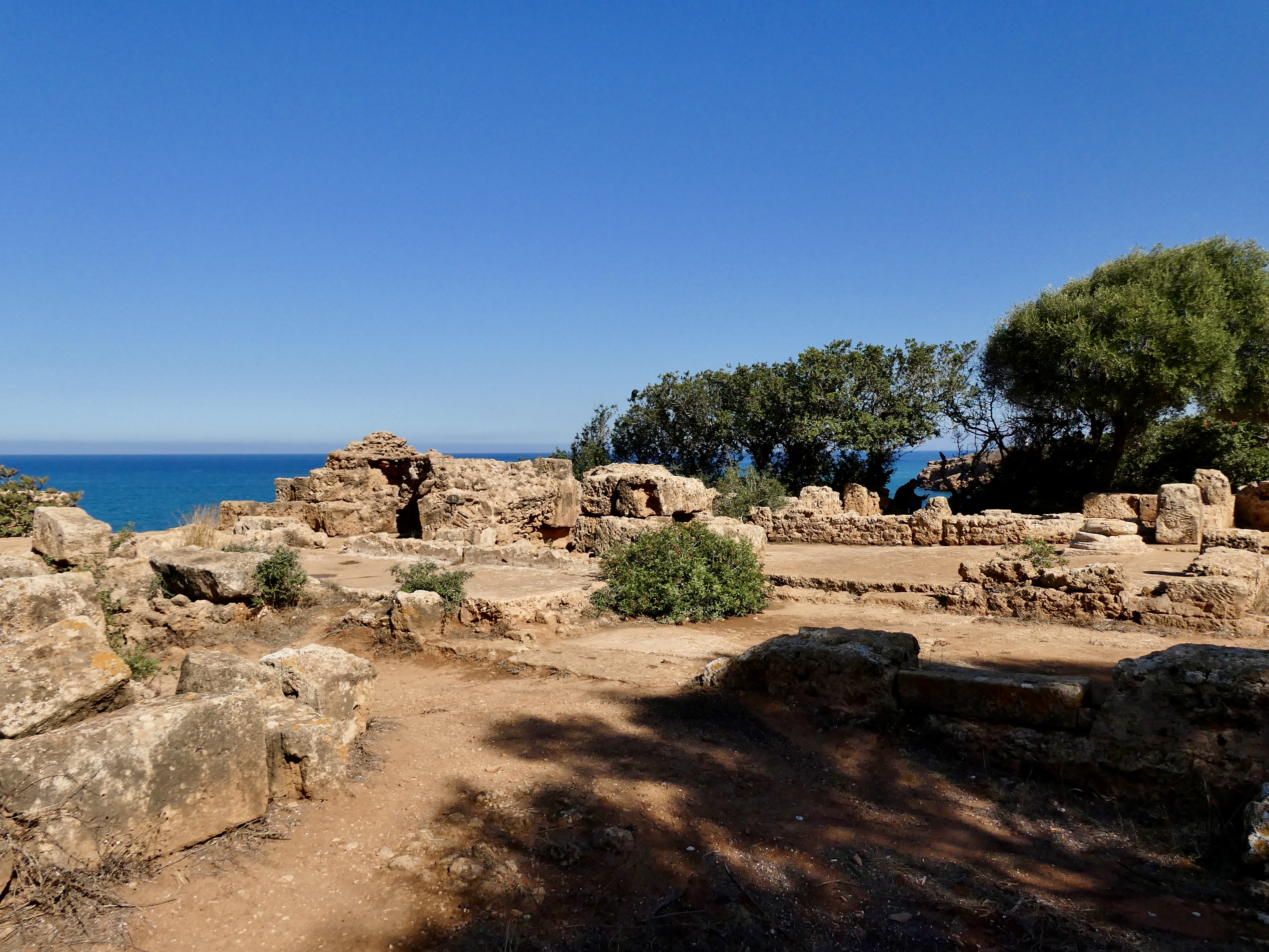
Nearby was the Basilica of Alexander, which also dated to the 4th century AD and was likely built for burials and was adjacent to the Baptistry of Tipasa, which featured a round baptismal font outside the building.
And the views from the two Basilicas were simply fabulous. I could see across the Mediterranean and to the right I could see the residential area and market of ancient Tipasa.
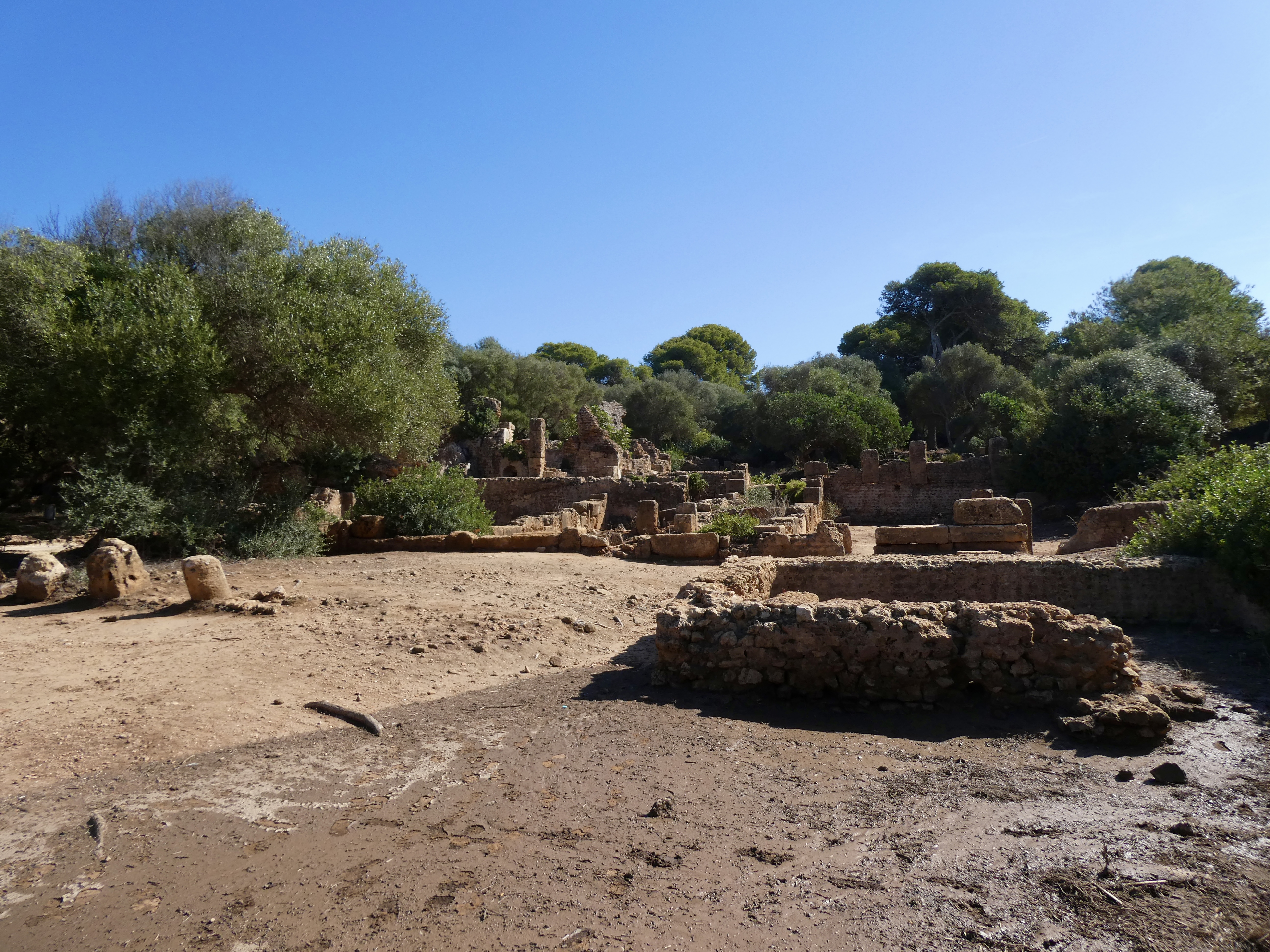
After walking around the site for an inordinate amount of time, we took the path down a very, very step hill (with stairs in parts of the path) down to the area I could see from above. Along the way we passed the old garum factory, which was originally built around the 1st century AD where fish sauce was produced. The factory continued production until the city was destroy in the 7th century.
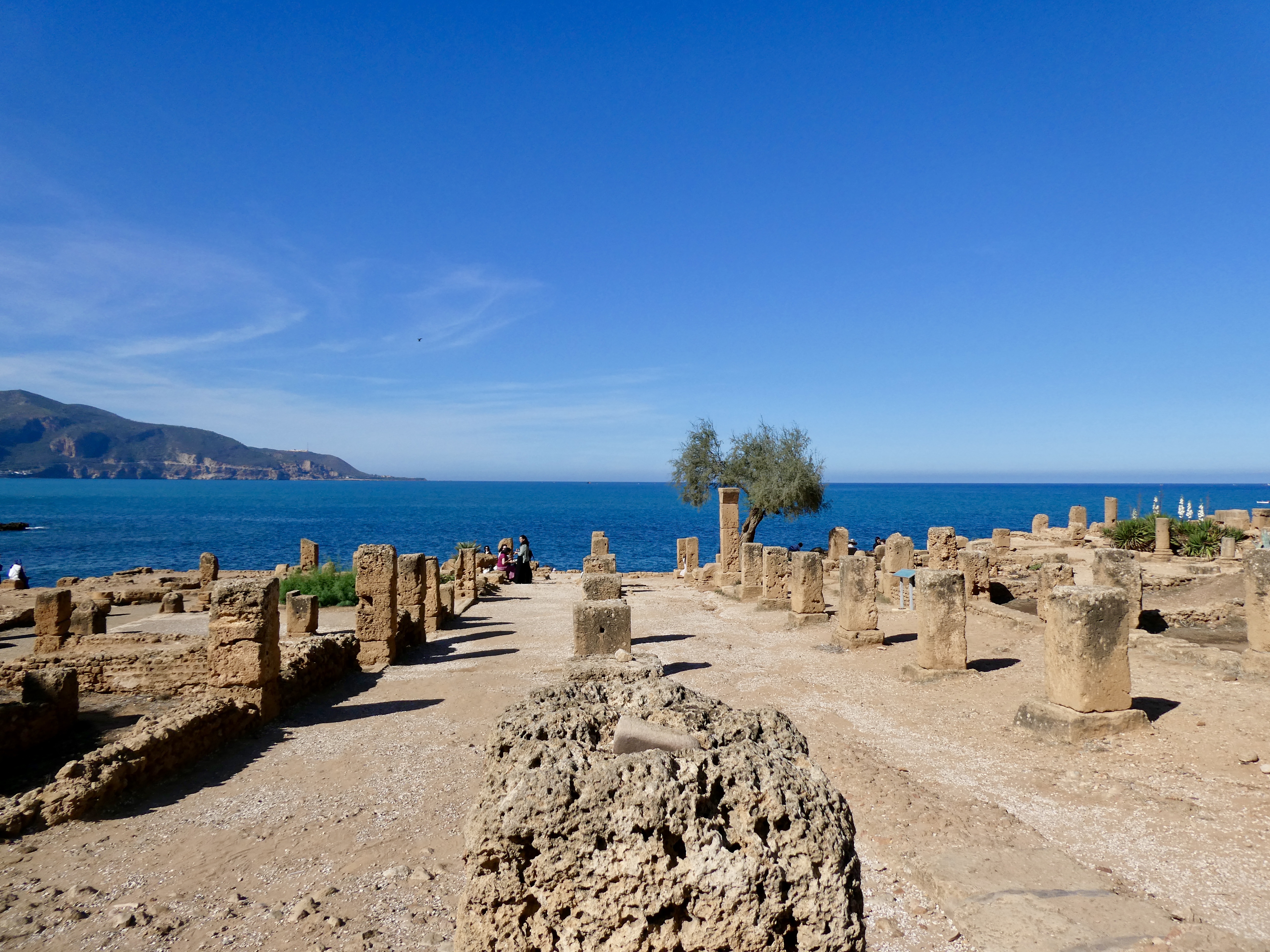

And nearby were the remnants of the 1st century AD Roman public baths. I only took a look at the baths from a distance, but the caldarium and its fire places were clearly visible.
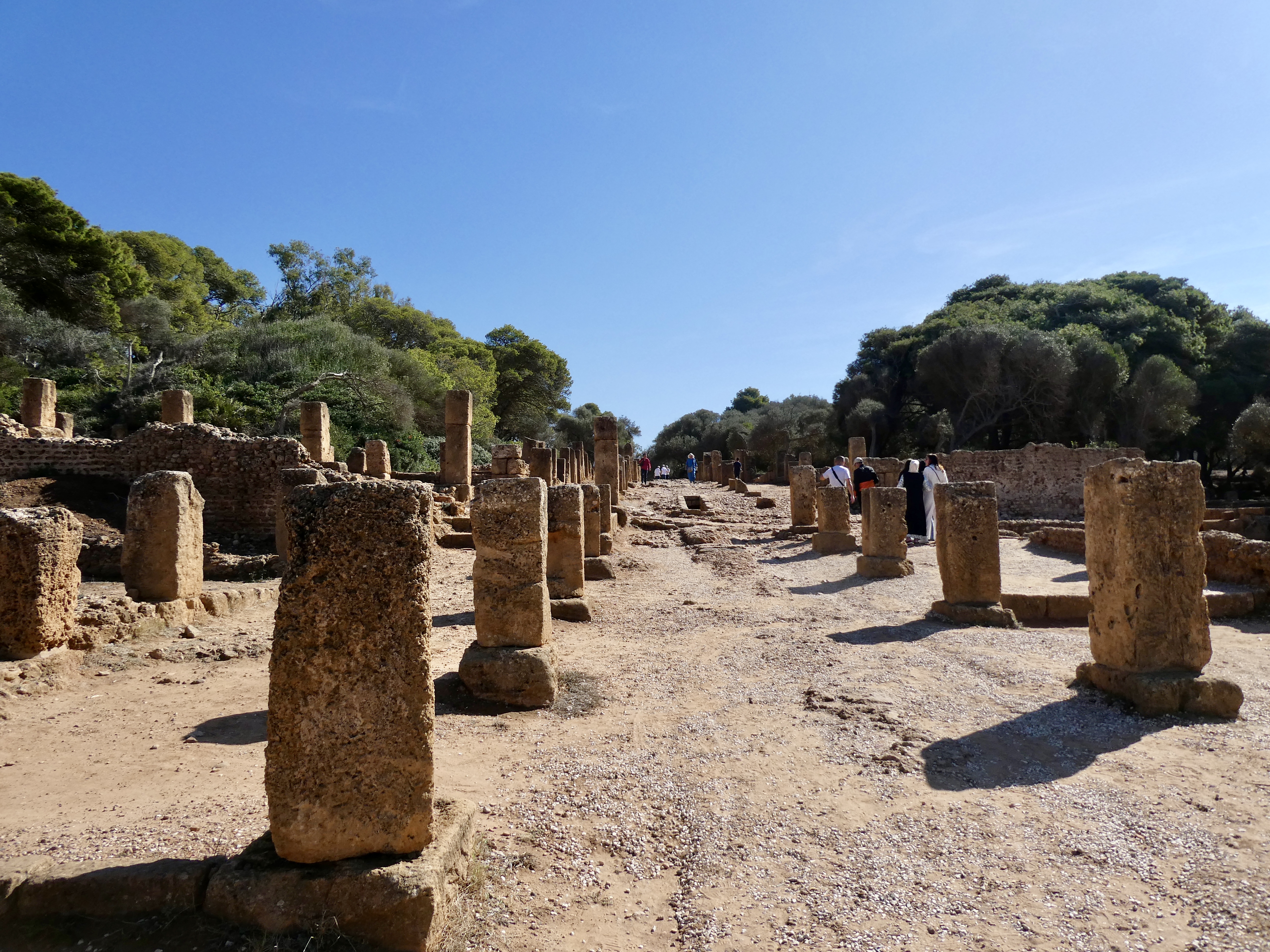
Once we reached the bottom of the path, we walked along the old city market area framed by columns that one time made up the old market.

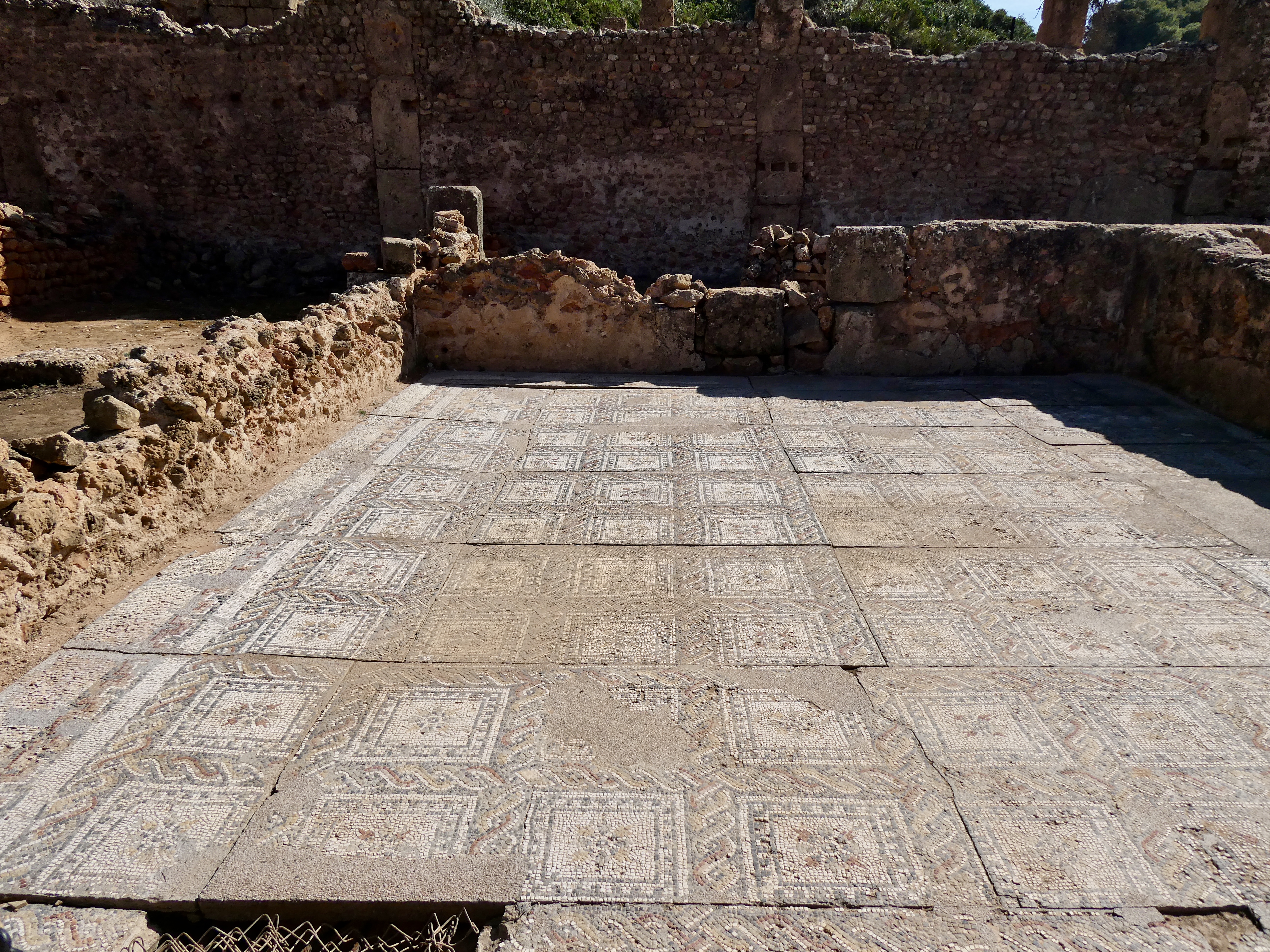
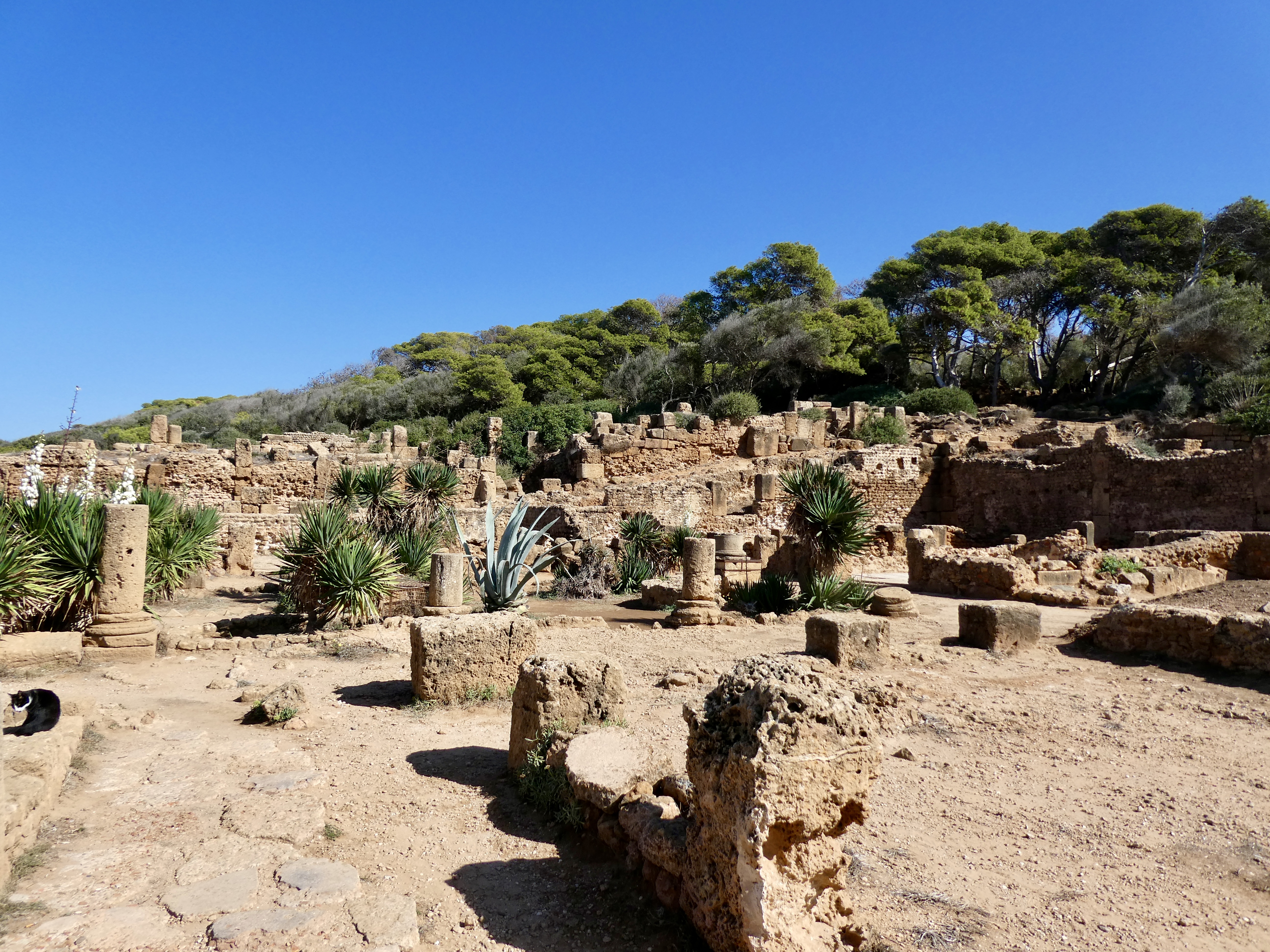
Our last stop was the nearby House of Frescos, a massive 1,000 square meter villa dating to the 1st century AD that was apparently known for its brilliant frescos. Now sadly there is nothing left of the walls that contained the frescos. However, there were small portions of walls still visible giving me an idea of how large the villa was. In addition, there was a living room with a large mosaic still in place.
The villa fronted the Mediterranean and the rooms of the villa surrounded a massive open air interior courtyard, with the remains of columns still visible. In addition, there were remains of dolias and capitals from columns everywhere.
So after walking around the villa, we made our way back to the market area and then walked back out past the New Temple, the Anonymous Temple and the Amphitheatre to the main entrance. Near the entrance, I spotted a small stall and what appeared to be some wood crafts.
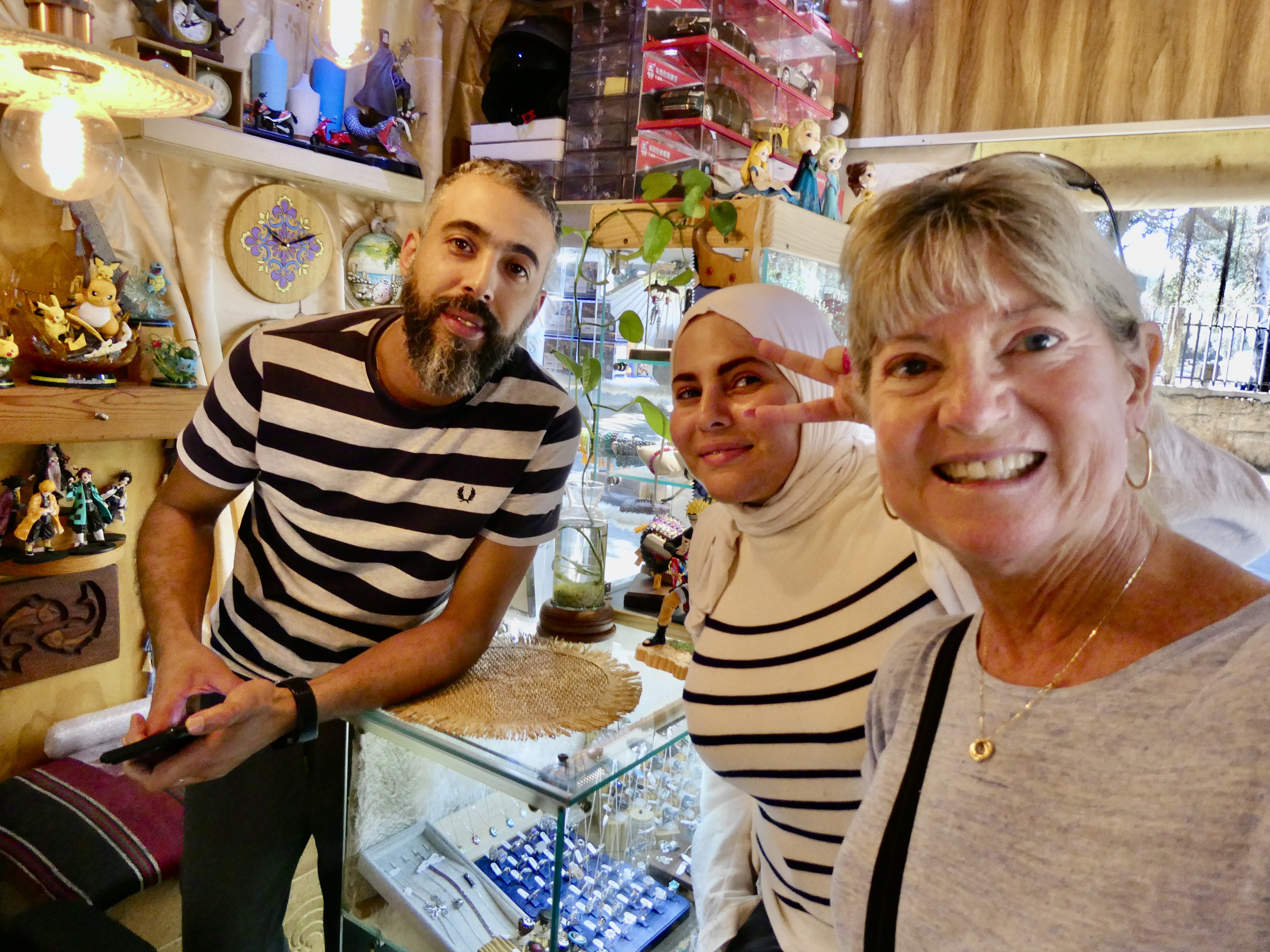
Now Algeria is pretty short on tourism and as a result, there is very little in the way of local handicrafts, but this stall looked different so we walked and in low and behold … jackpot. The fellow was a woodworker and had made a majority of the crafts in the store. And … even better, I found a handmade Christmas ornament (a Santa Claus) with Algeria on the back as well as a handmade wooden snowman cookie platter. I couldn’t believe it. The guy gave me a great deal on the the purchases and I left absolutely thrilled. I am also required to send him a picture with the cookies on the platter at Christmas, which I will be happy to do.
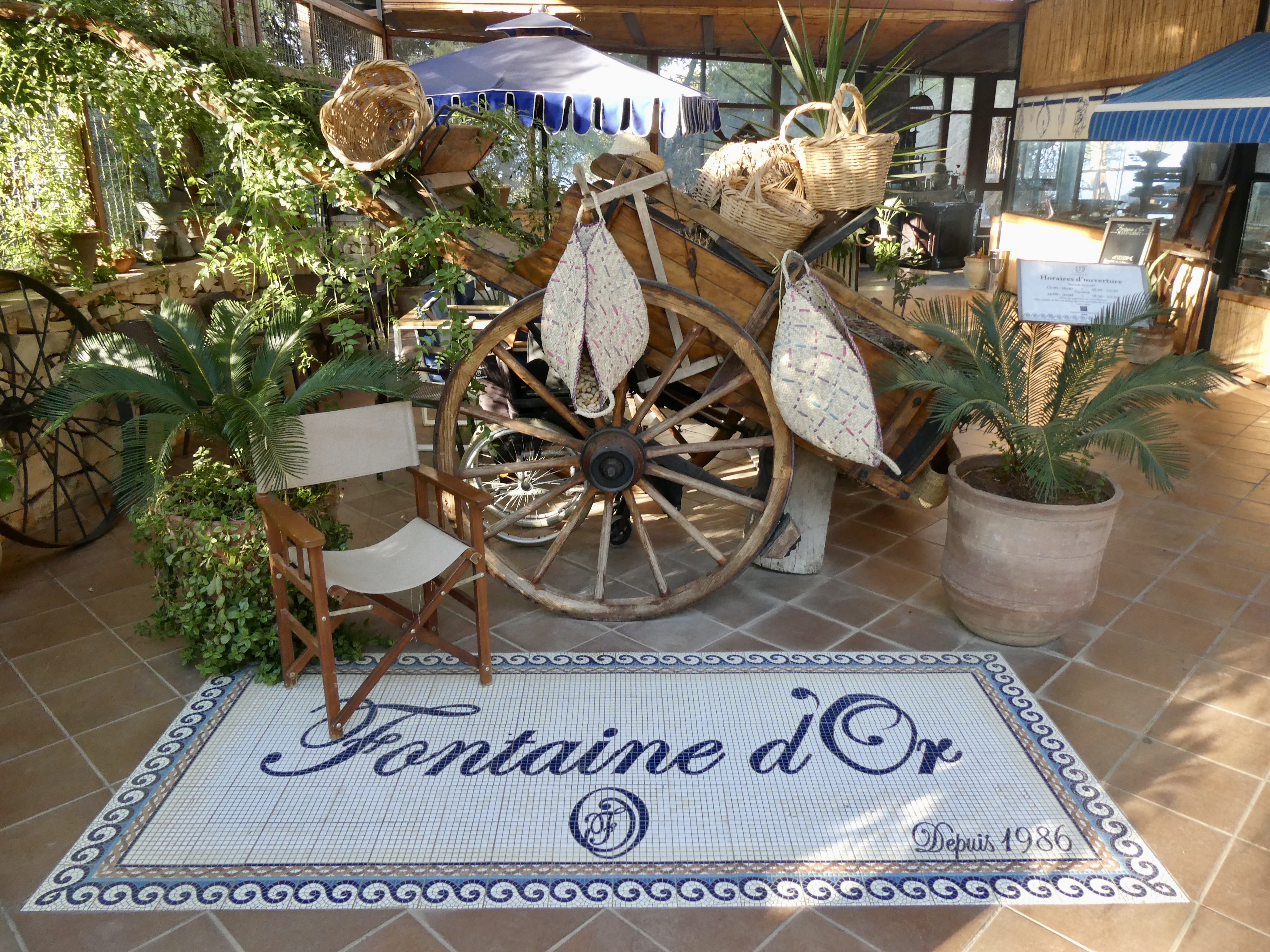

So after the purchases we hopped back in the van and drove a short distance along the Mediterranean to Fontaine d’Or, a restaurant up on a hill overlooking the Mediterranean that has been on site since 1986. We were given the VIP treatment with a table on the top floor of the restaurant and spectacular views. I ended up ordering some shrimp bourek (springrolls), bread with a house made dip and fabulous garlic butter shrimp. Delicious.
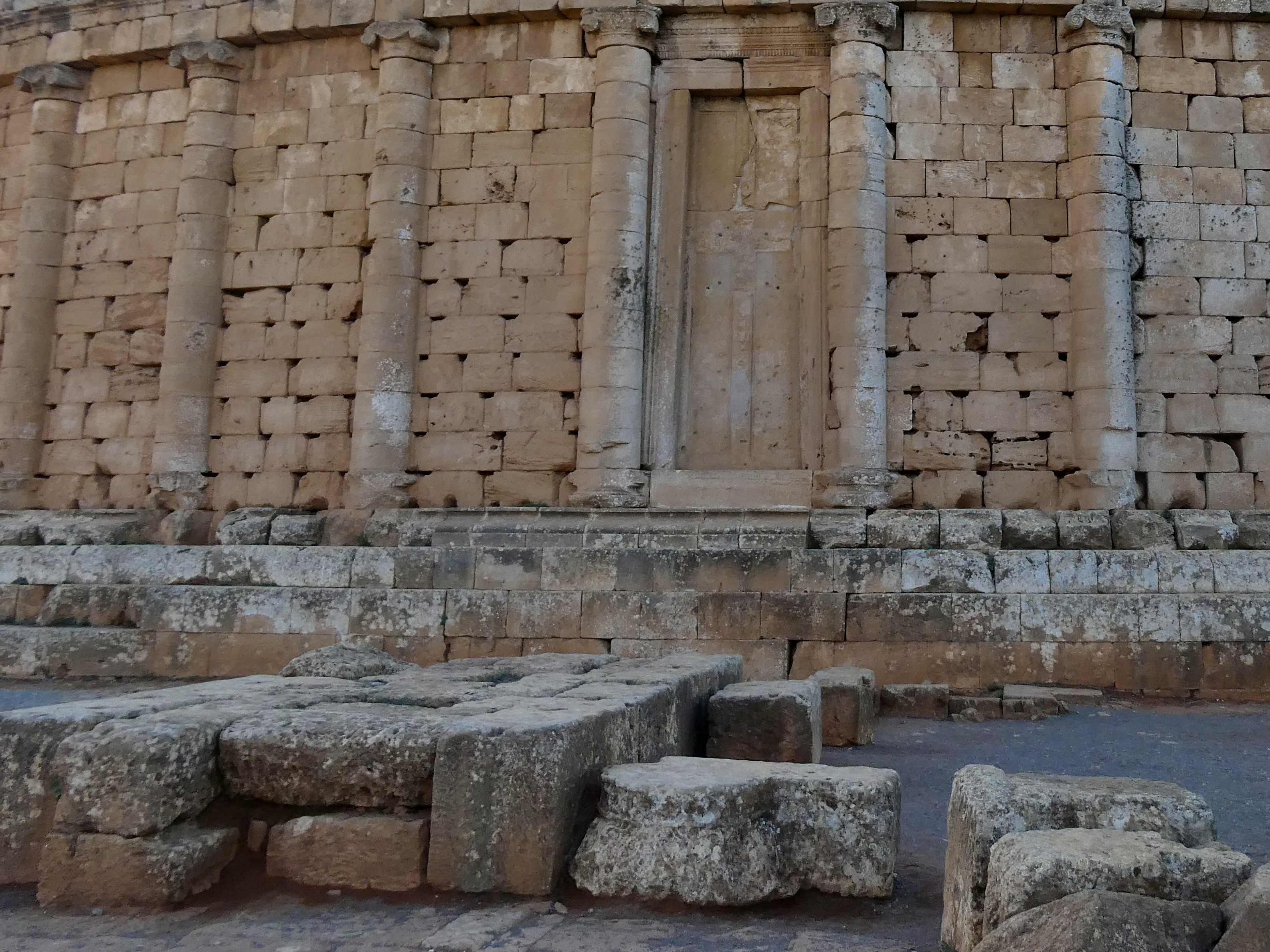
After lunch we made our way down the road to our last stop, the Royal Mausoleum of Mauritania, which dates to the 3 BC and is the tomb of King Juba II and Queen Cleopatra Selene II, although their bodies are no longer in the tomb likely because of tomb raiders. The mausoleum is built entirely from stone and has a square base, a circular form and is topped by a cone. It has four entrances including three fake entrances. The mausoleum is a UNESCO World Heritage site having received the designation in 1982.
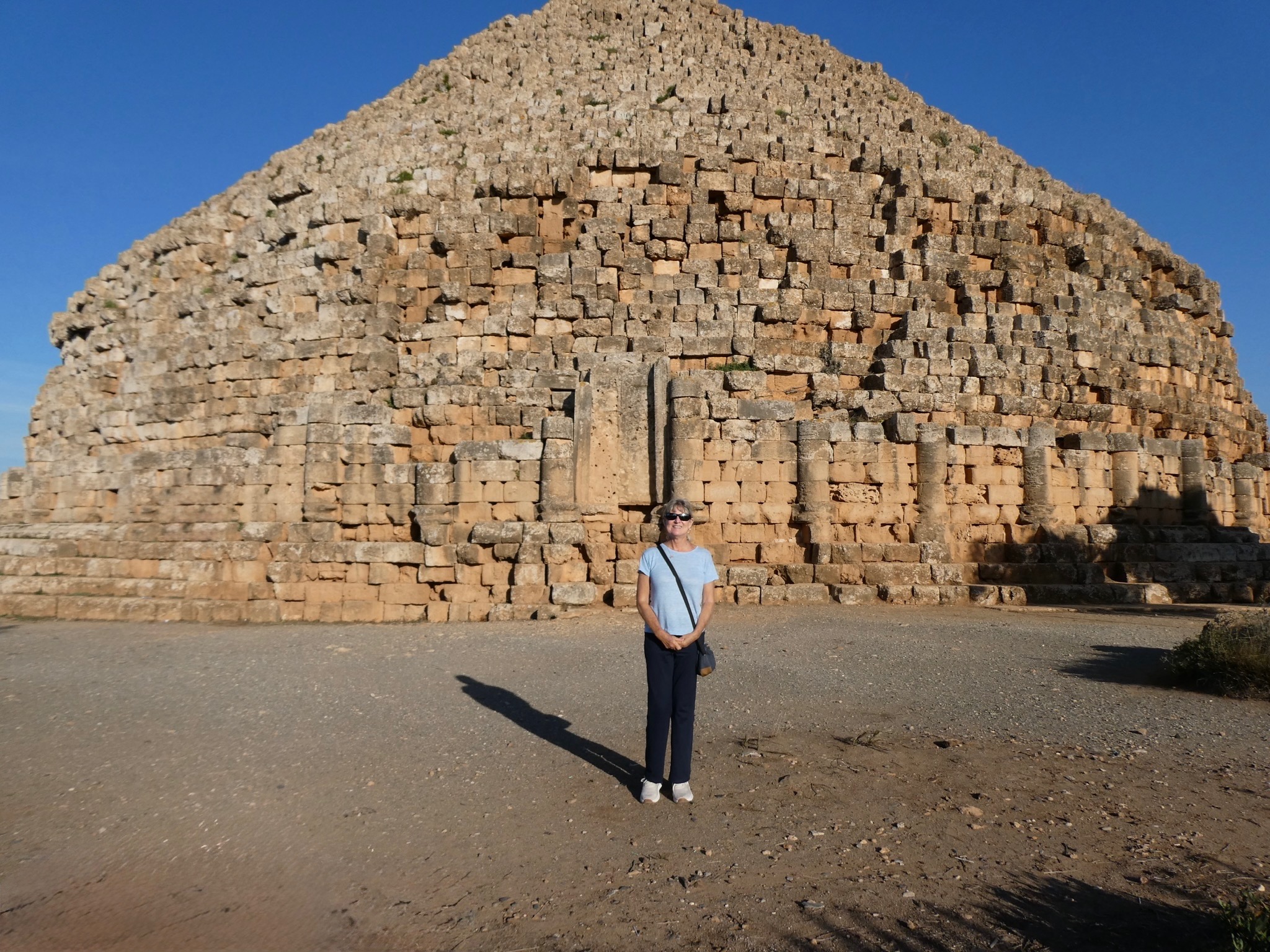
We ended up doing a walk around the mausoleum and that was about it. No one is permitted to enter the mausoleum so beyond the walk there is nothing else to see.
From here, we headed back to Algiers running smack dab into rush hour traffic so I did not reach my hotel until well after 6:00 p.m. Fortunately, we had eaten so much at lunch that I decided to skip dinner and just have some of the fruit I bought at the Cherchell market.
So with that, Algeria is a wrap. I have the next day and half to relax (spa day??) and then I am off early Thursday evening on a four hour flight south to Dakar (Senegal) for the last 9 days of my trip.