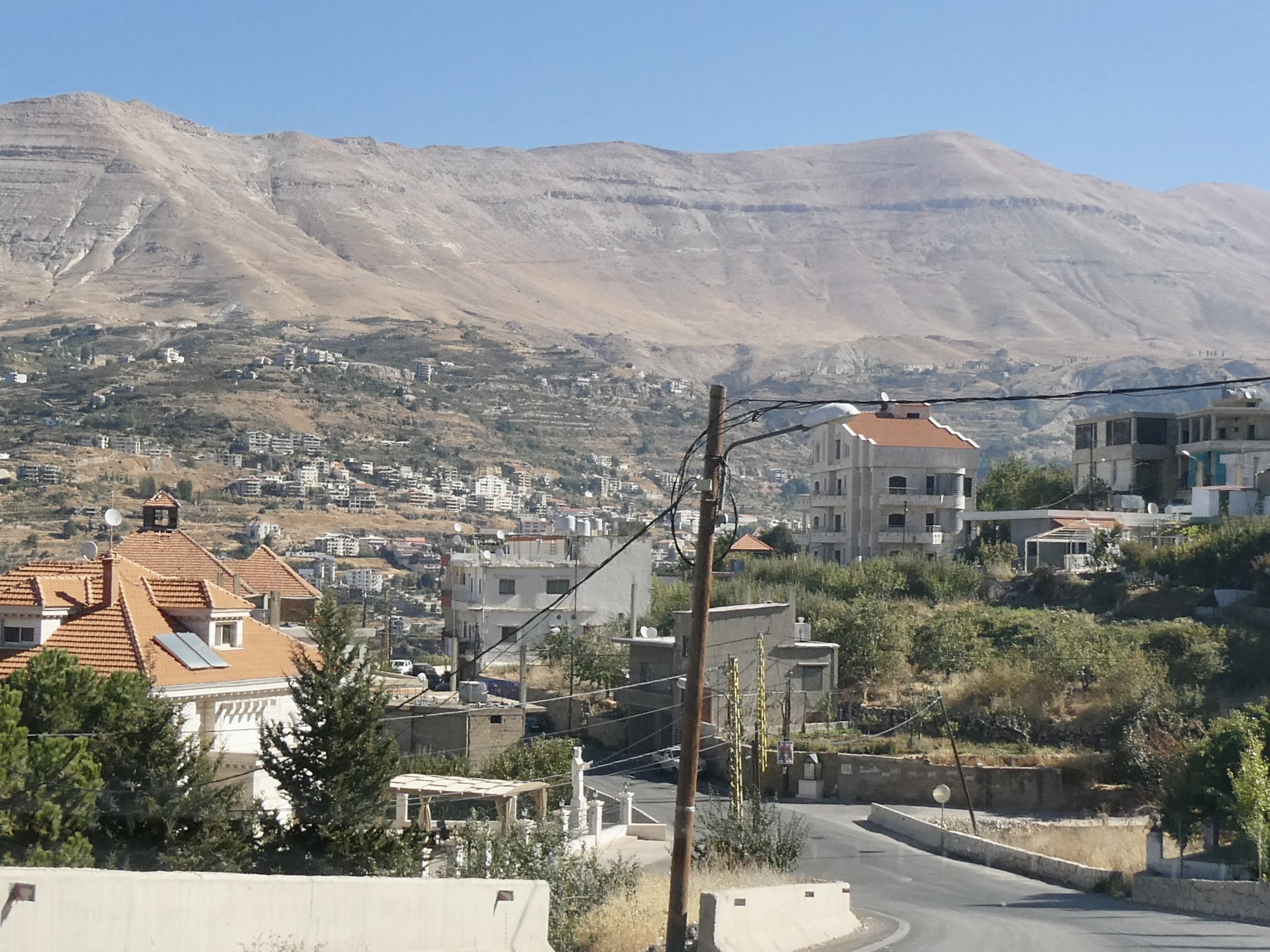
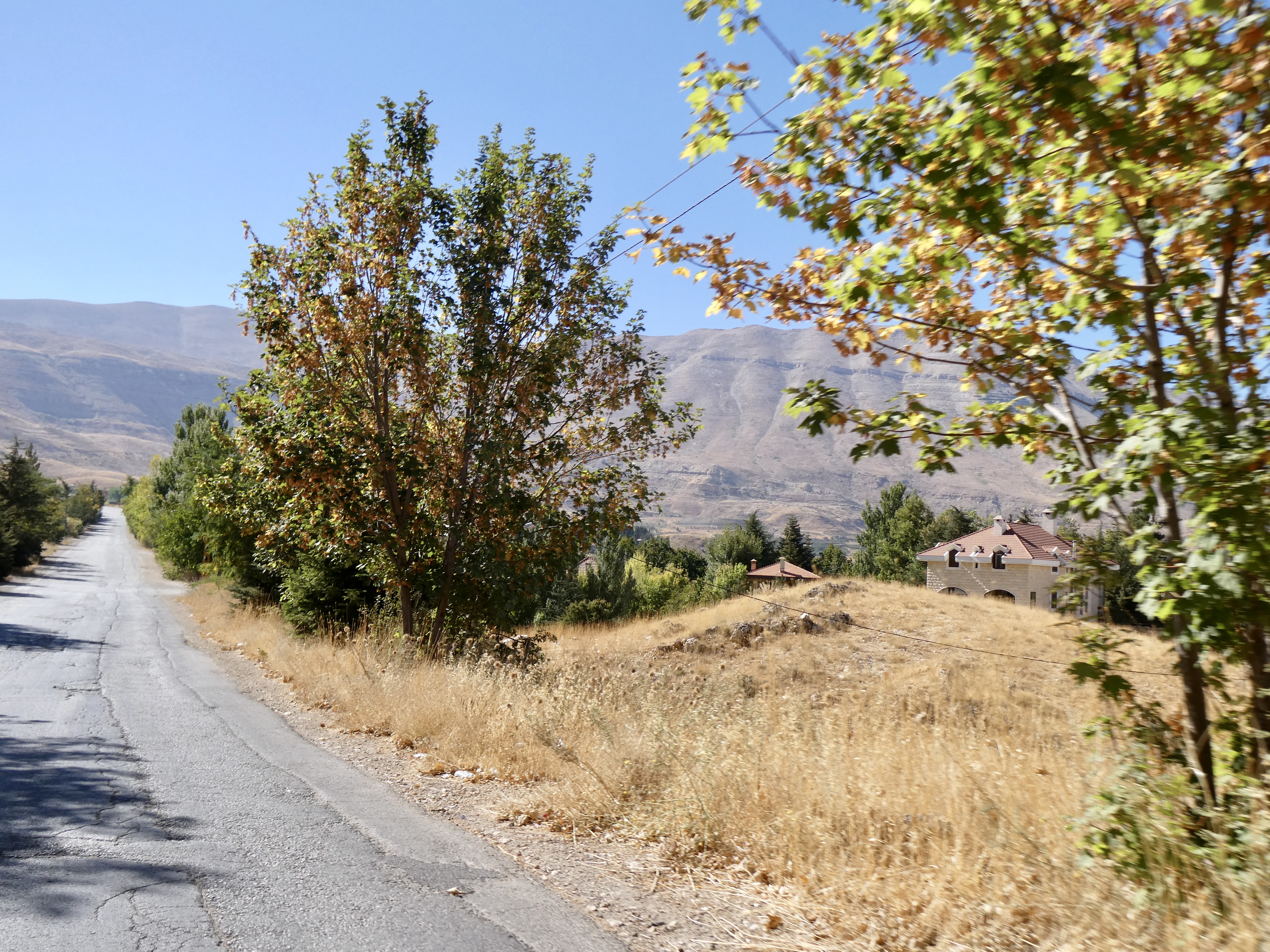
So today’s tour took us north and once again up into the mountains overlooking the magnificent Kadisha Valley. Our first stop of the day was to the Cedars of God forest, a UNESCO world heritage site located about 6,600 feet above sea level. Now Lebanon has long been known for its cedar trees (so much so that the cedar tree is on the Lebanese flag), but centuries of exploitation by virtually every invader that ever existed from the Phoenicians, Egyptians, Israelites, Assyrians, Babylonians, Persians, Romans, Arabs, and Turks as well as more recently, climate change, has caused a significant decrease in the mighty cedars. The Cedars of God forest is an effort to correct the issue by protecting the trees and encouraging new growth so hopefully in a few decades (these are very slow growing trees) the effort will be rewarded.
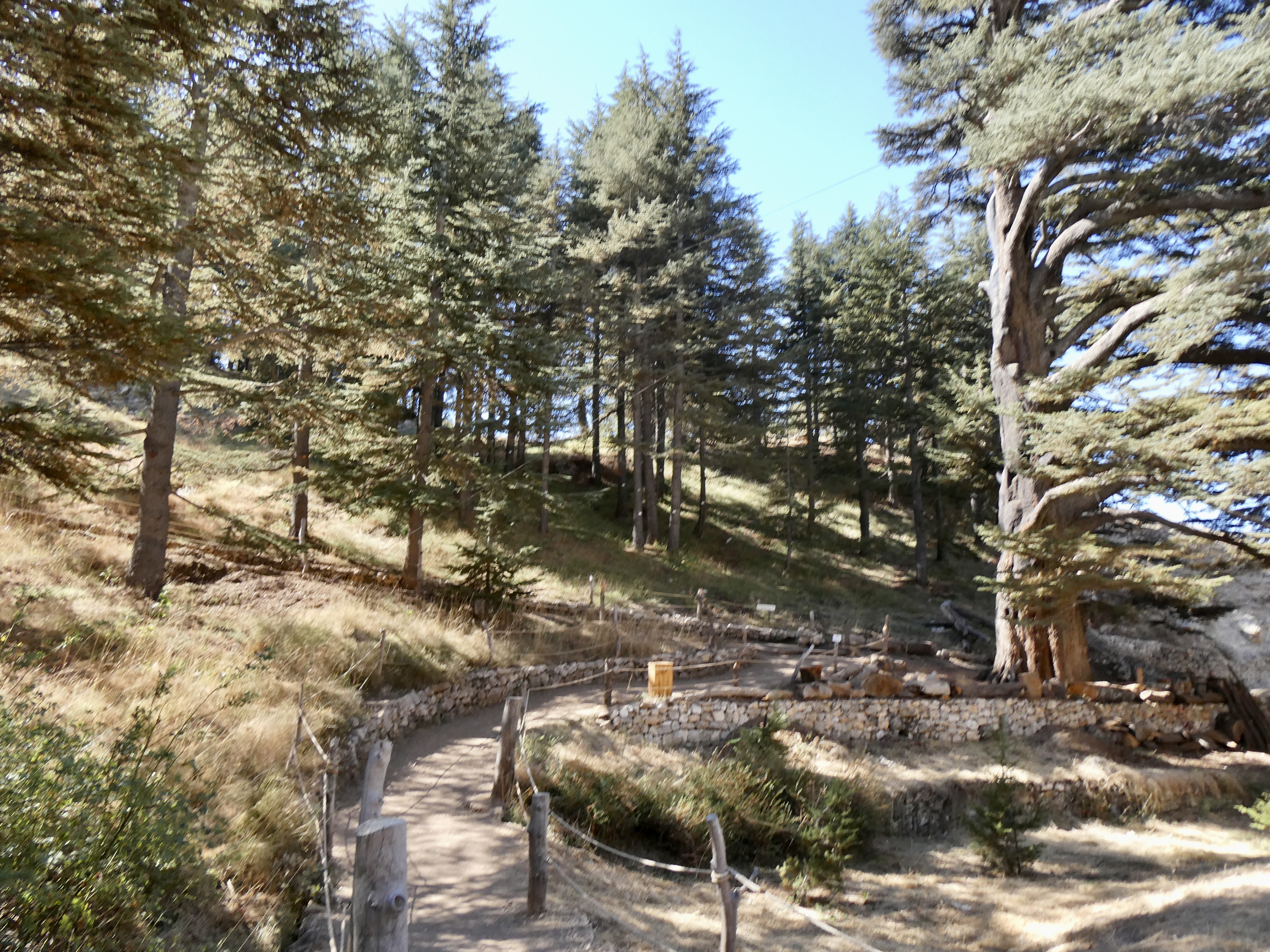

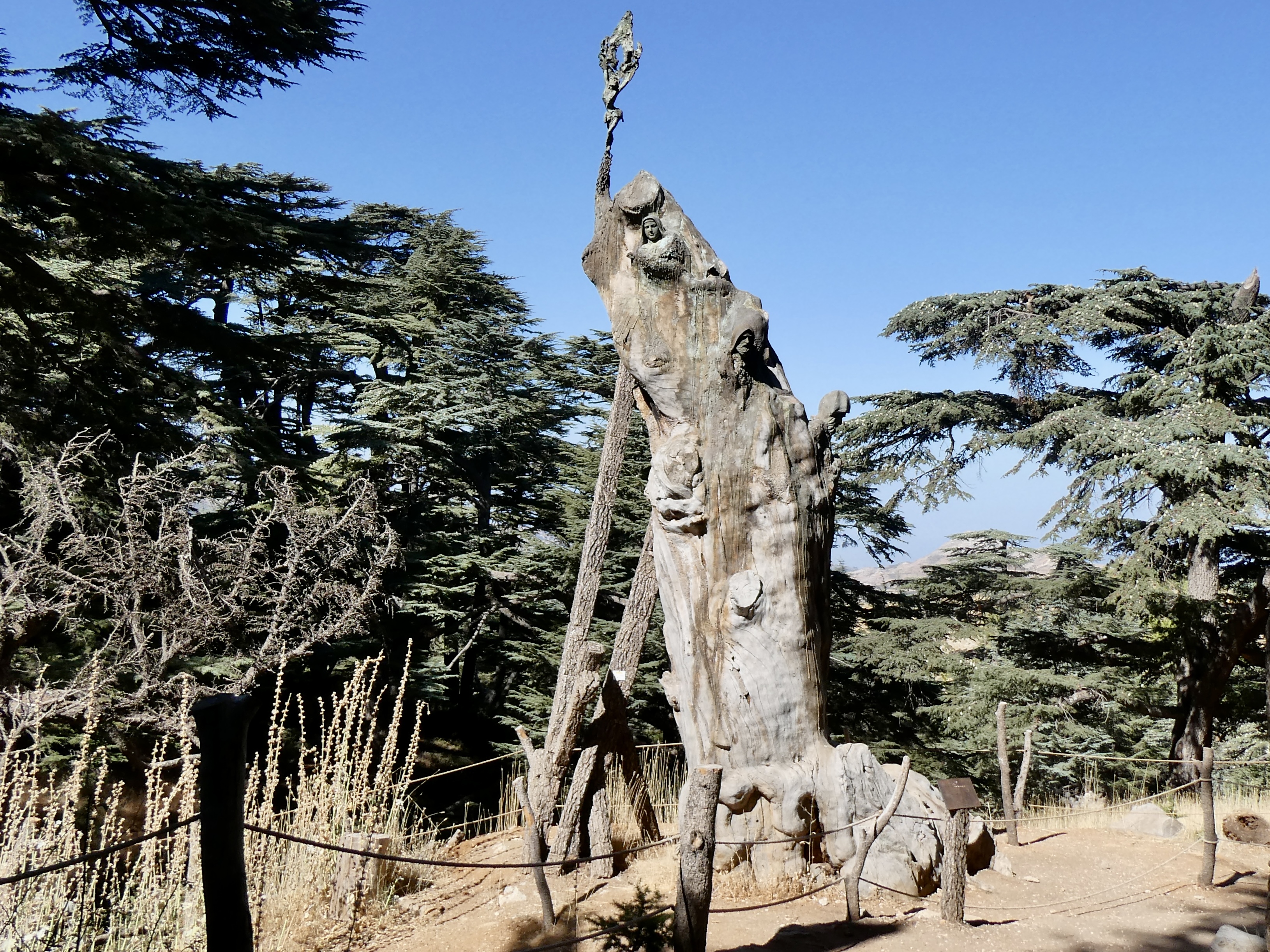
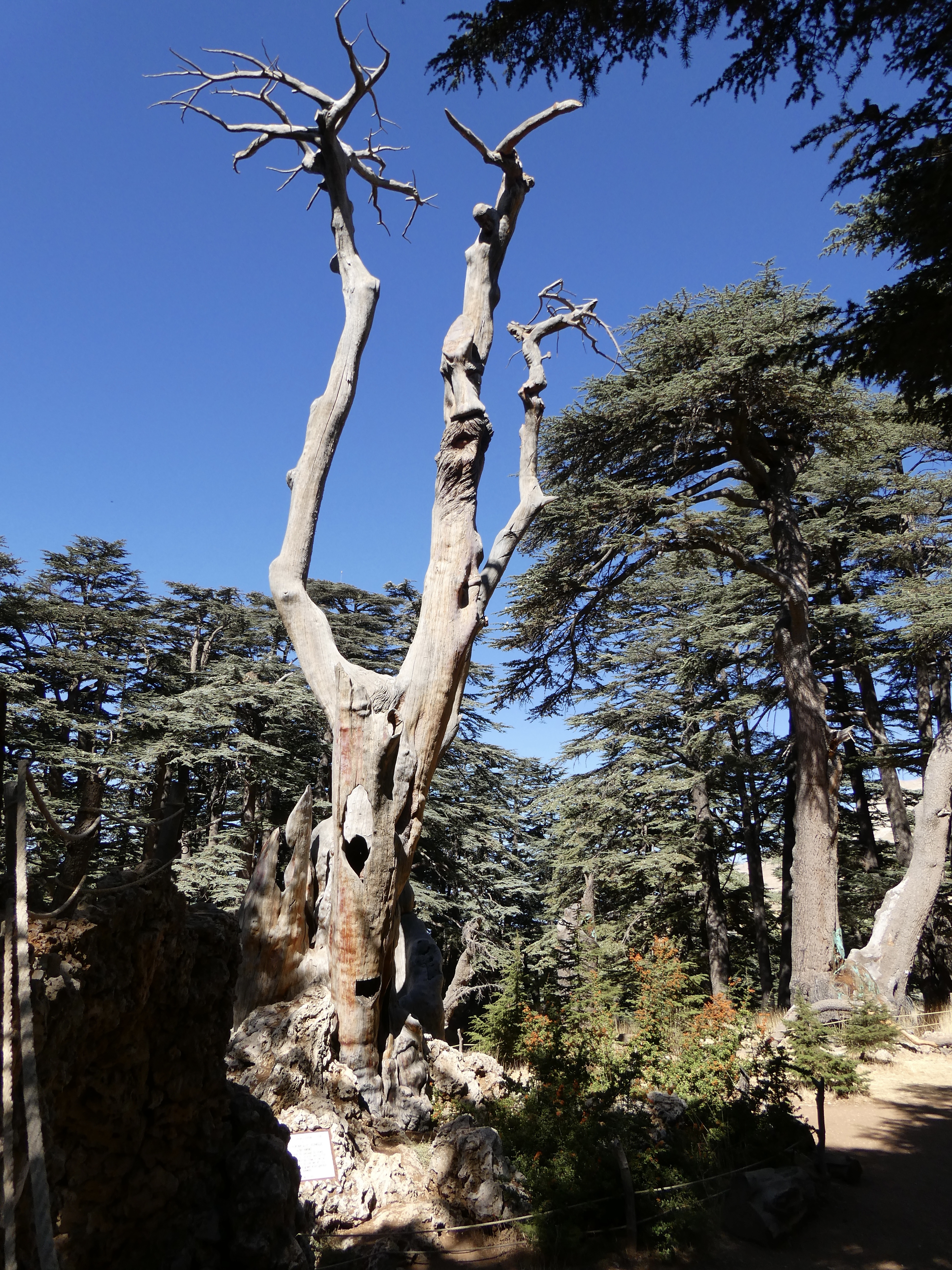

Anyway, the drive took us through 2 checkpoints, the main checkpoint to Tripoli and then a checkpoint as we crossed into the Kadisha Valley. Once at the site, we followed the well marked path down the hill and then up and through the groves of trees and up to the top of the hill where there was a little church. Now some of the trees we walked by were huge and centuries old, while others were relative babies. And one of the cool things about the forest is that past damage to trees has resulted in carvings throughout the forest by an artist known as Rudy Rahme. One carving in particular features various religious figures including Christ on the Cross. And as you move around the carving you spot additional figures all over the former tree. Quite spectacular.
Once we reached the end of the path, we reversed course and walked back down the hill to the entrance where I took a look at a number of carvings made from dead cedar trees (apparently thunderstorms are a big killer of these glorious trees).
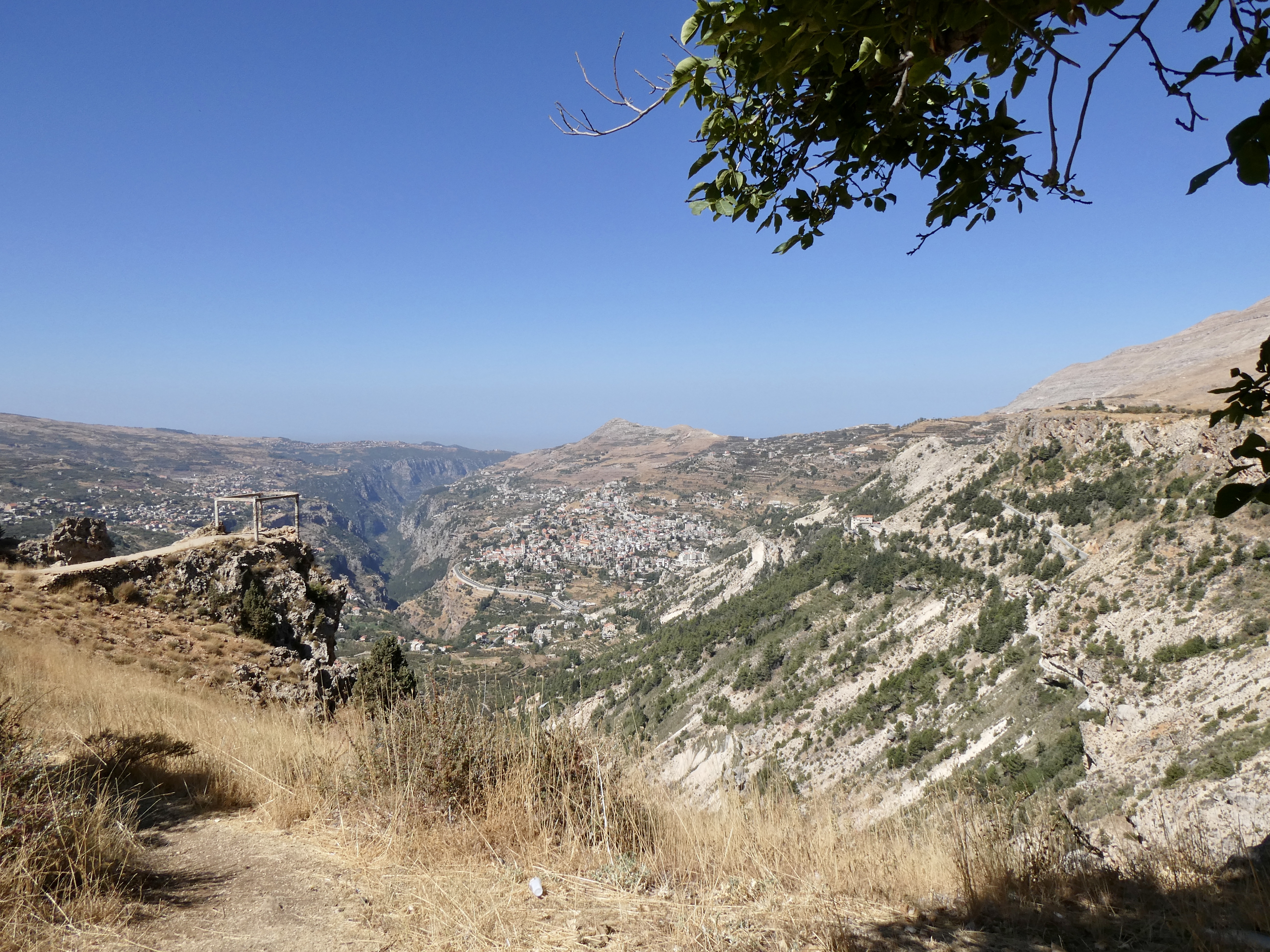
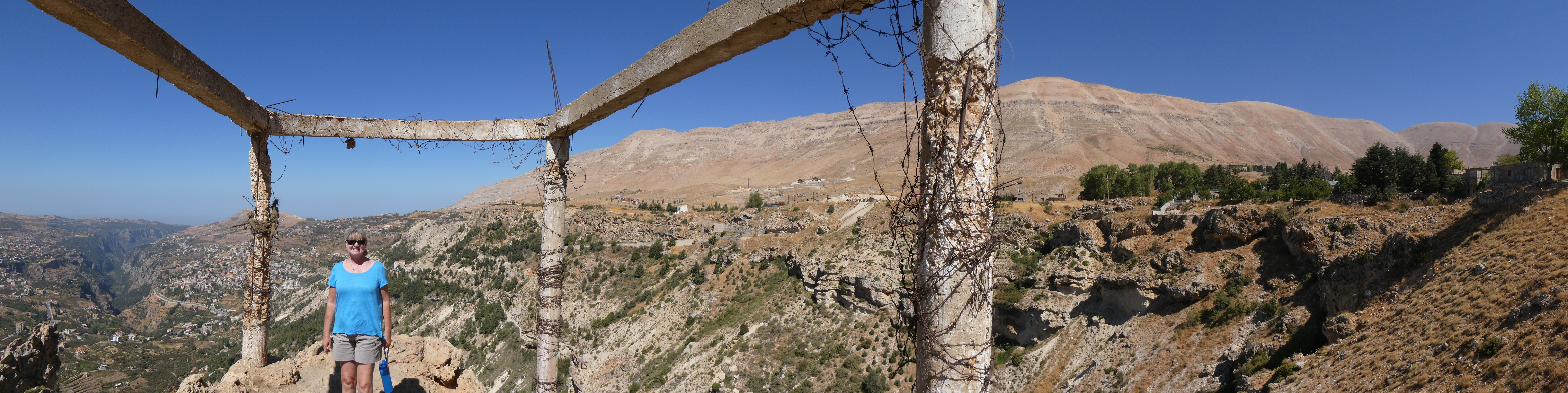
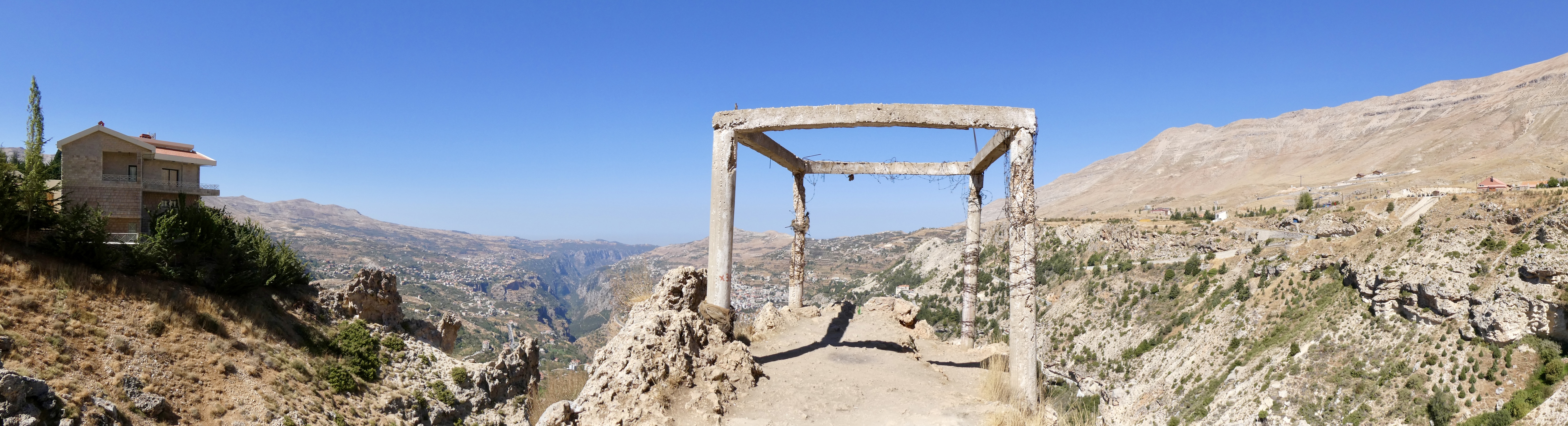
So after the tour of the Cedars of God, we made a quick detour to take in La Jetee aka the “throwing area”. The area is a rocky outcrop that has you staring down to the bottom of the Kadisha Valley. The views are magnificent and as legend has it, the Ottomans used the cliff as a location for meeting out punishment to their enemies where they were tossed over the cliff to the bottom of the valley. Their bodies were left to be devoured by animals. Yikes!
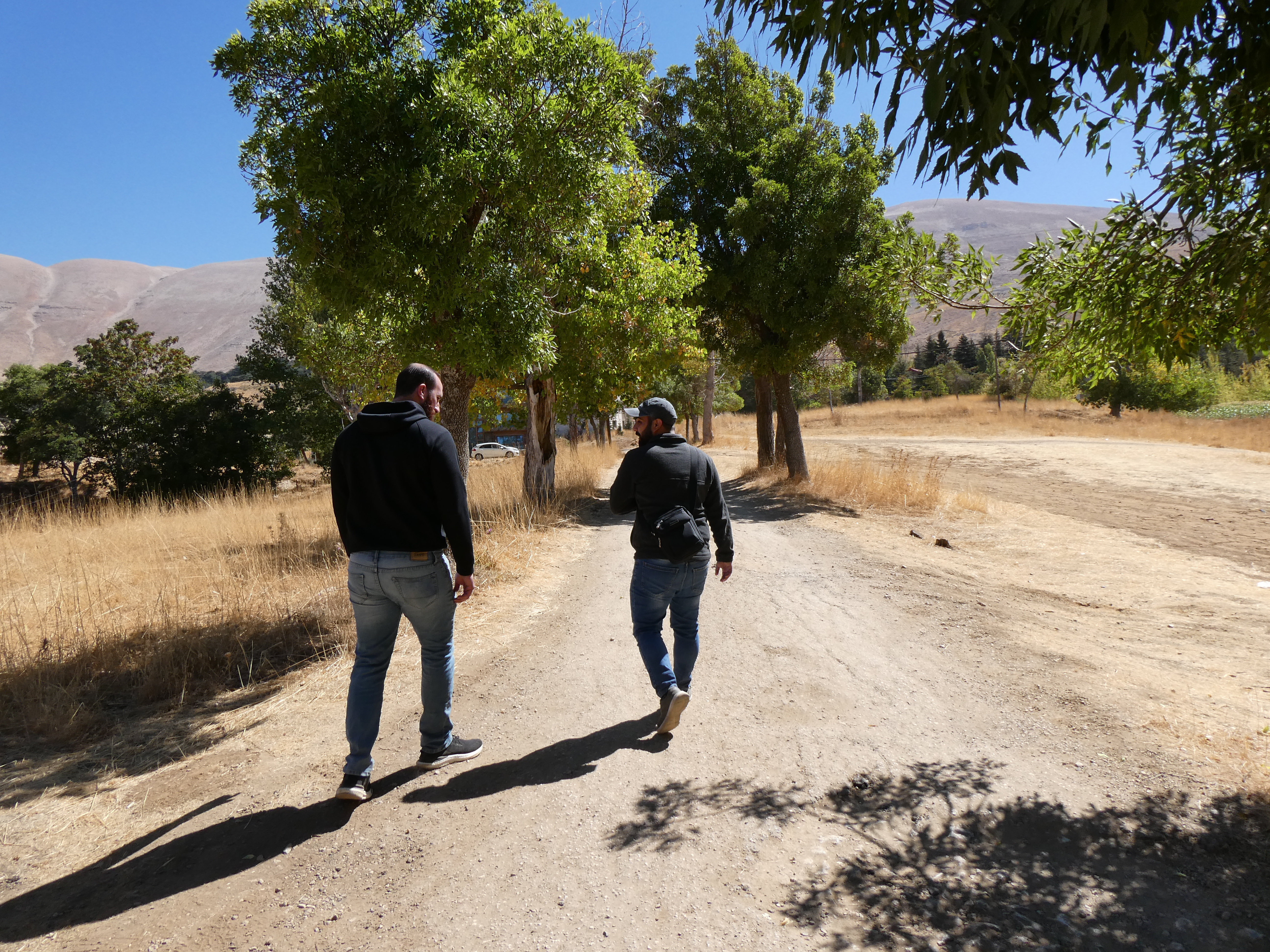
I will say, however, that the views were utterly spectacular at around 6,000 feet. And of course, since we were high up in the mountains, the temperature was much lower than the close to 90 degrees I was experiencing at sea level. In fact, the temperature was a “frigid” 70 degrees, which I found downright pleasant, but Elie and Romeo were freezing and donned hoodies. I busted their chops the entire day calling them woosies…. Of course all in good fun.
So after the trip to the La Jetee on the outskirts of Bsharre, we made our way through the town and up a hill to theGibran Museum, a former monastery, which is now the final resting place of the Lebanese poet, philosopher and artist Kahlil Gibran.
The Gibran Museum was comprised of three different level and houses Mr. Gibran’s artwork and personal effects as well as his crypt in the basement cave. Now most of the paintings were of nudes in various surroundings. Not really my taste, but what I did like is that Mr. Gibran refused to name his paintings because he thought putting a name on a painting limits one’s imagination when viewing the painting. Interesting perspective.
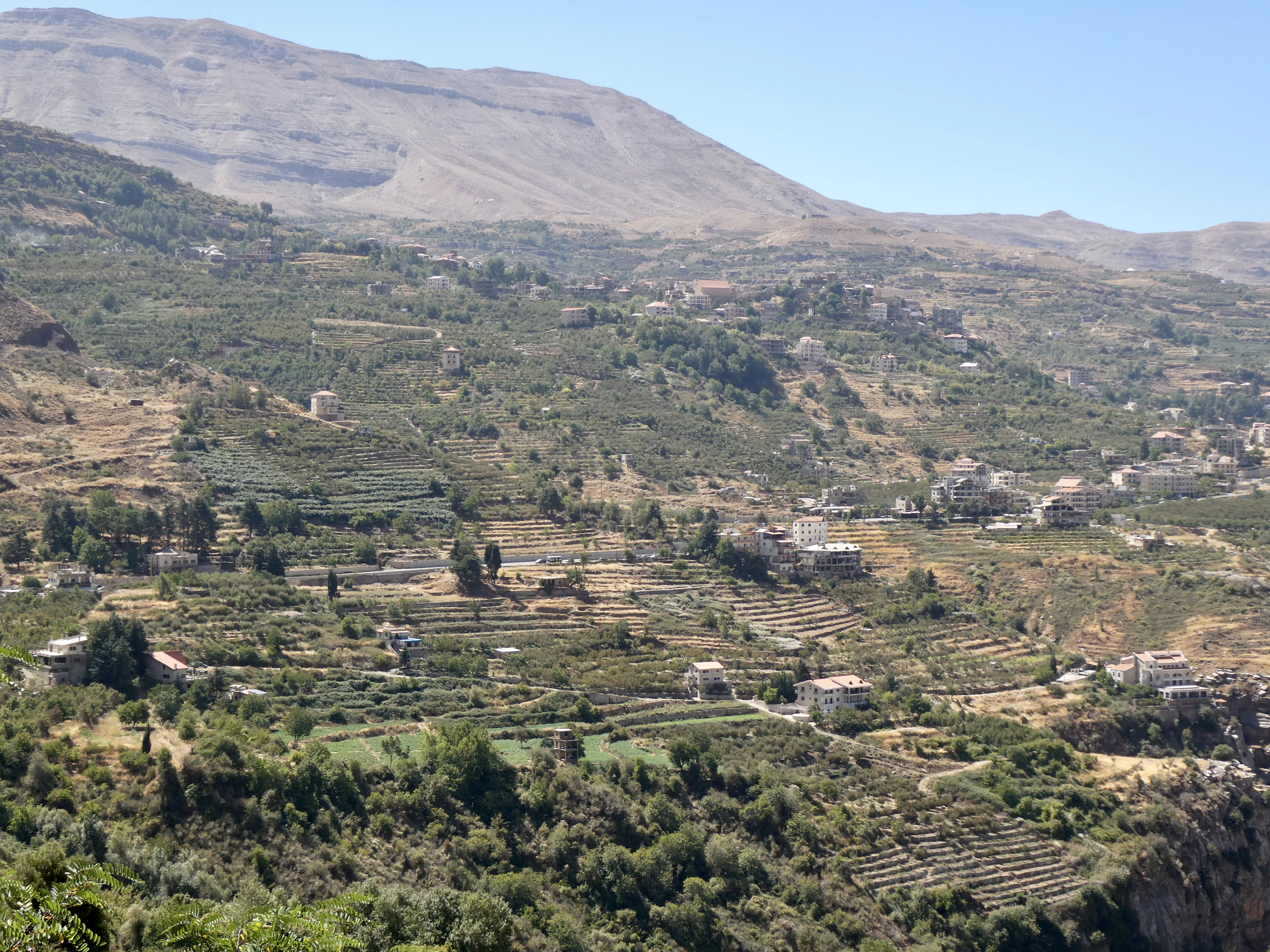
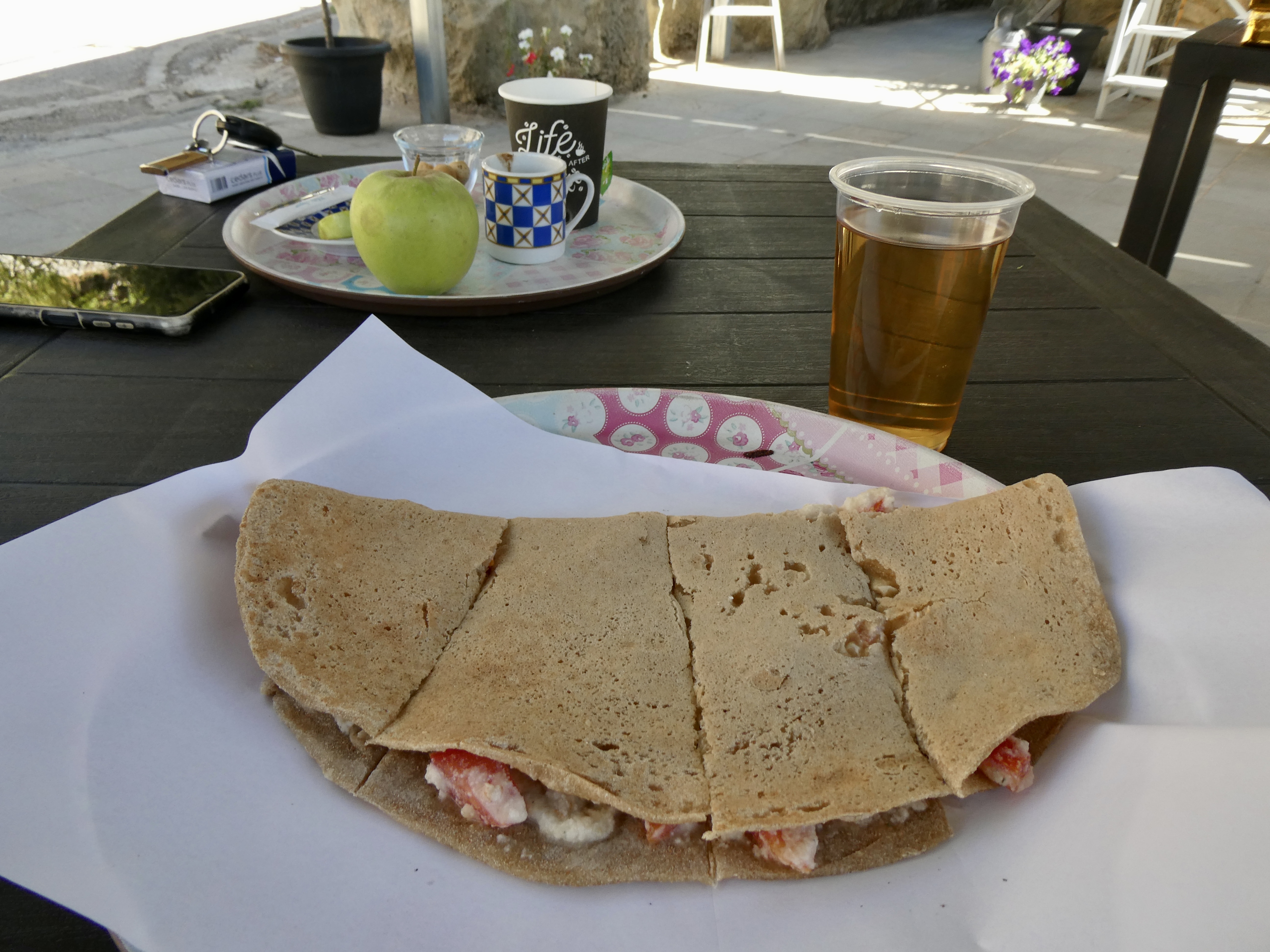
Anyway, after a walk through the museum and the crypt, I took in the spectacular views and then met Elie for a quick snack of my newly favourite flatbread, kechek, as well as a ham and cheese flatbread and freshly made apple juice. (The area is absolutely teeming with apple orchards and stands were all along the side of the roads we were driving along.). Now this kechek was slightly different from the kechek I had the day before. The first had the yoghurt, tomato and onion mixture really mashed together whereas the second version had been gently mixed so that chunks of tomato could be tasted with each bite. Elie asked me which I preferred and quite frankly I loved both versions. However, the kicker was the fresh apple juice. So sweet and fresh. Like nothing I have ever tasted back home. In fact, I might drink more apple juice if it tasted like this!
After the snack, we checked in on Romeo, who had not been feeling particularly well, but after some water seemed to be doing much better. Elie and I piled in the car with Romeo and took off for a “secret” viewing area that Elie said we would love.
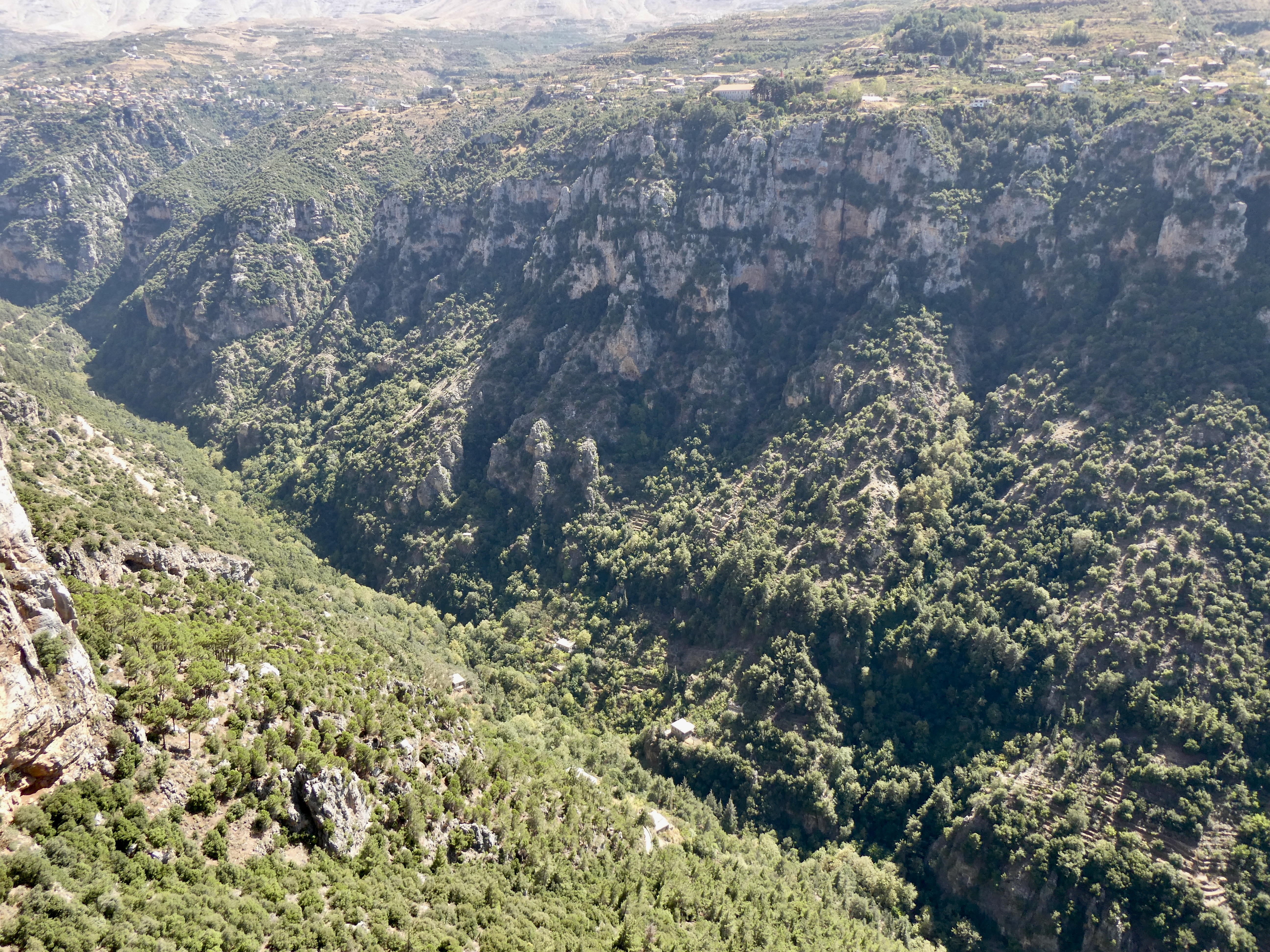
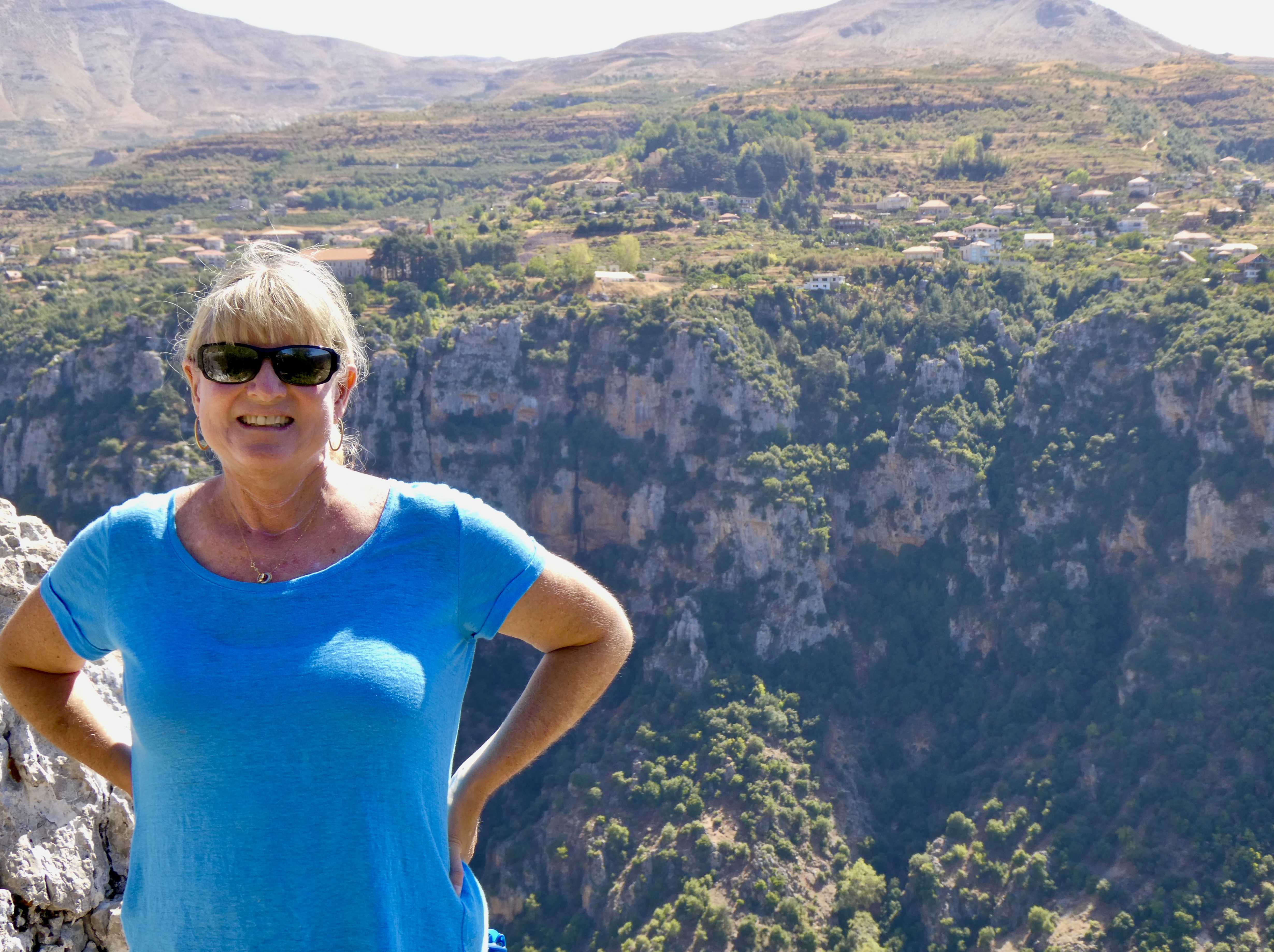
A few minutes later we were pulling into a tiny neighborhood filled with enormous homes. Once we parked the car, we walked in front of a church and cemetery before veering off onto a very narrow, rocky little path that took us out to a well-hidden lookout point. The views were amazing. We could see all the way down the Kadisha Valley and even spotted caves on the opposite site of the hillside. It was really quite spectacular and no way anyone would find it without knowing the area.
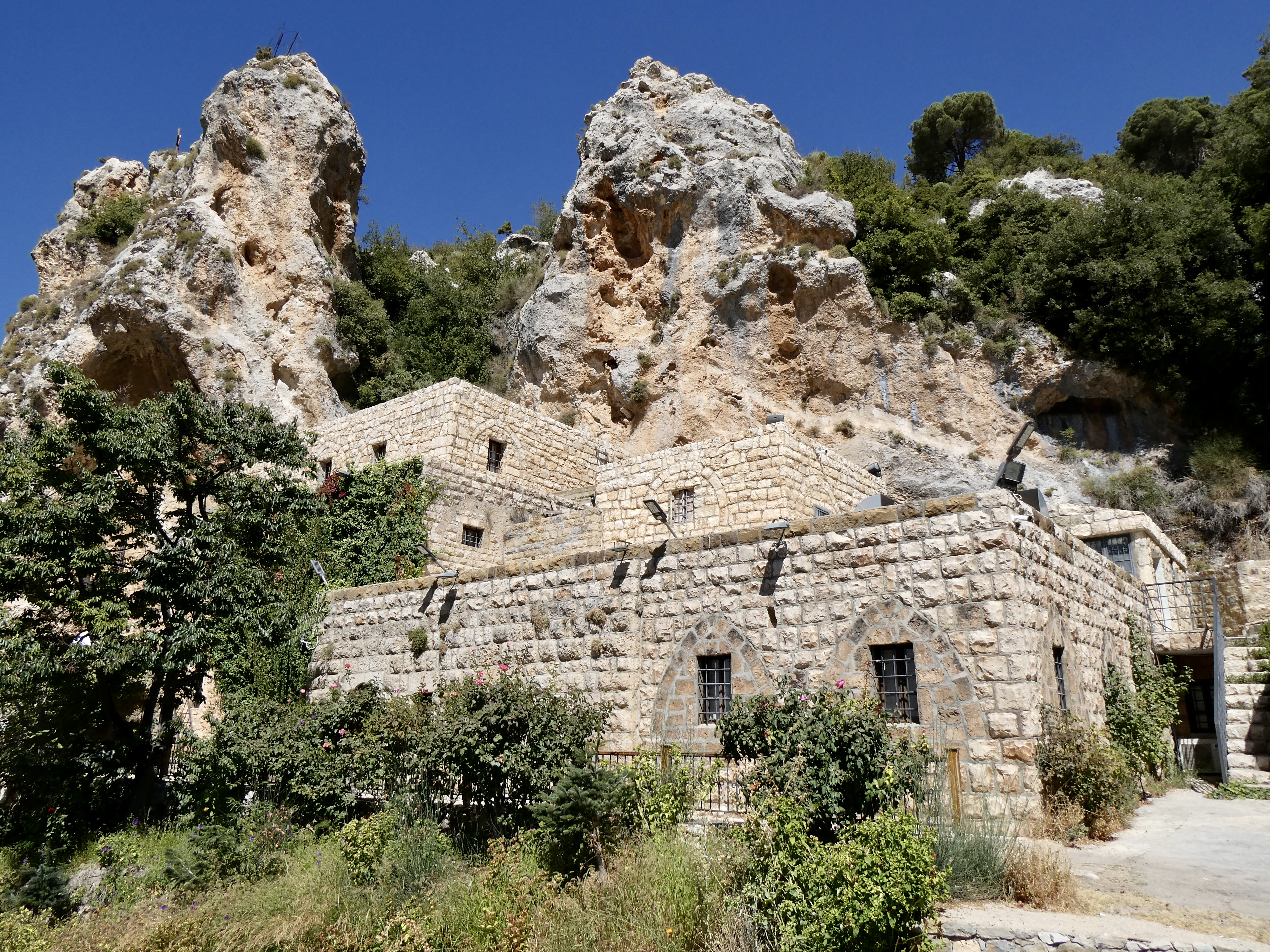
Anyway, we hiked back out and drove to our last stop of the day, the Monastery of St Anthony of Qozhaya, one of what seems like dozens of monasteries in the area.
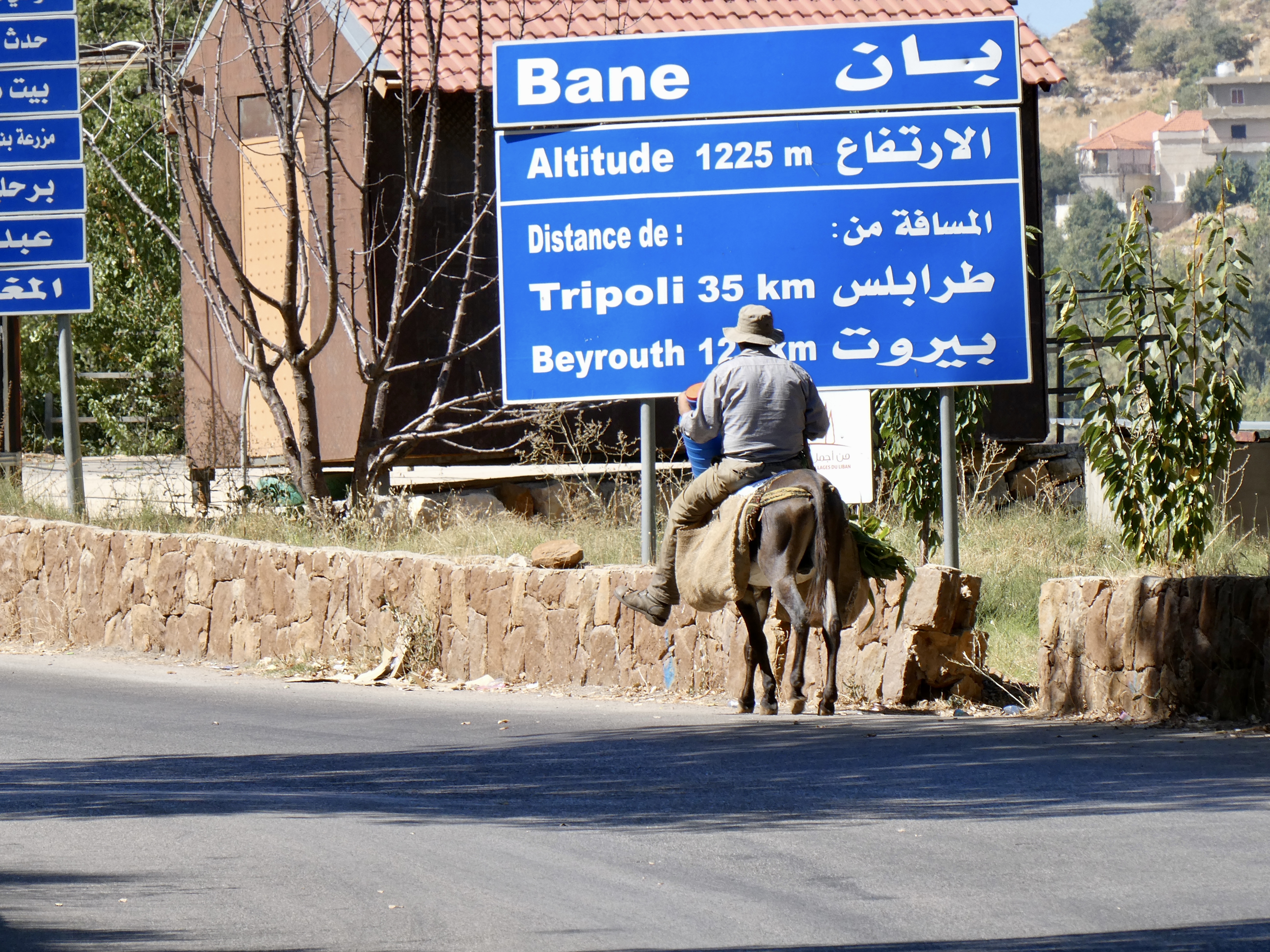
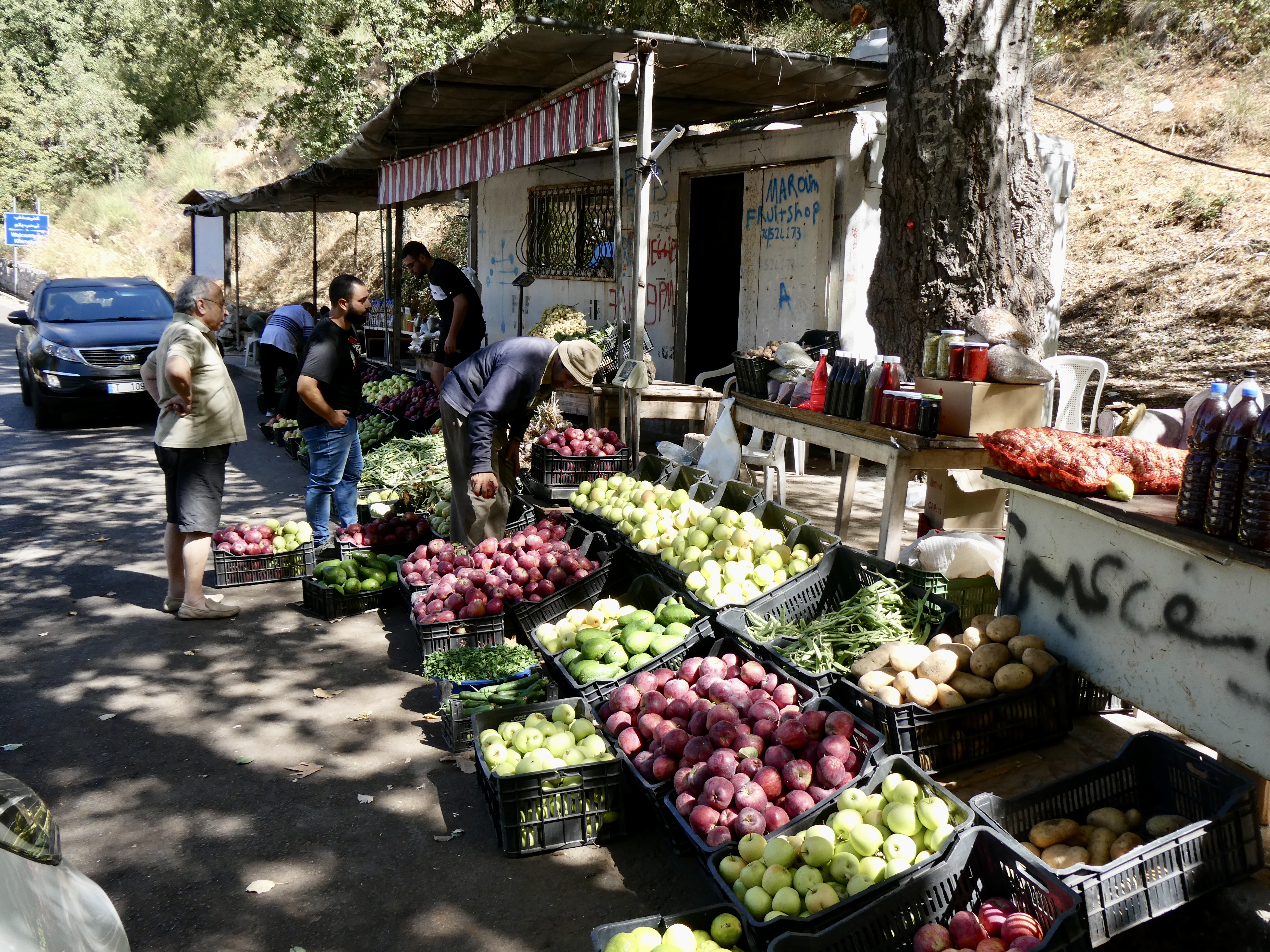
On the drive to the Monasetery, we made a quick stop so that Elie could purchase a crate of apples. While Elie was purchasing the apples, I was busy taking a picture of a guy riding a burrow on the side of the road carrying a huge stainless steel milk jug. And as an added bonus, the nice man running the produce stand (there was much more than apples) gave me an apple to try. Sweet, tasty and delicious.
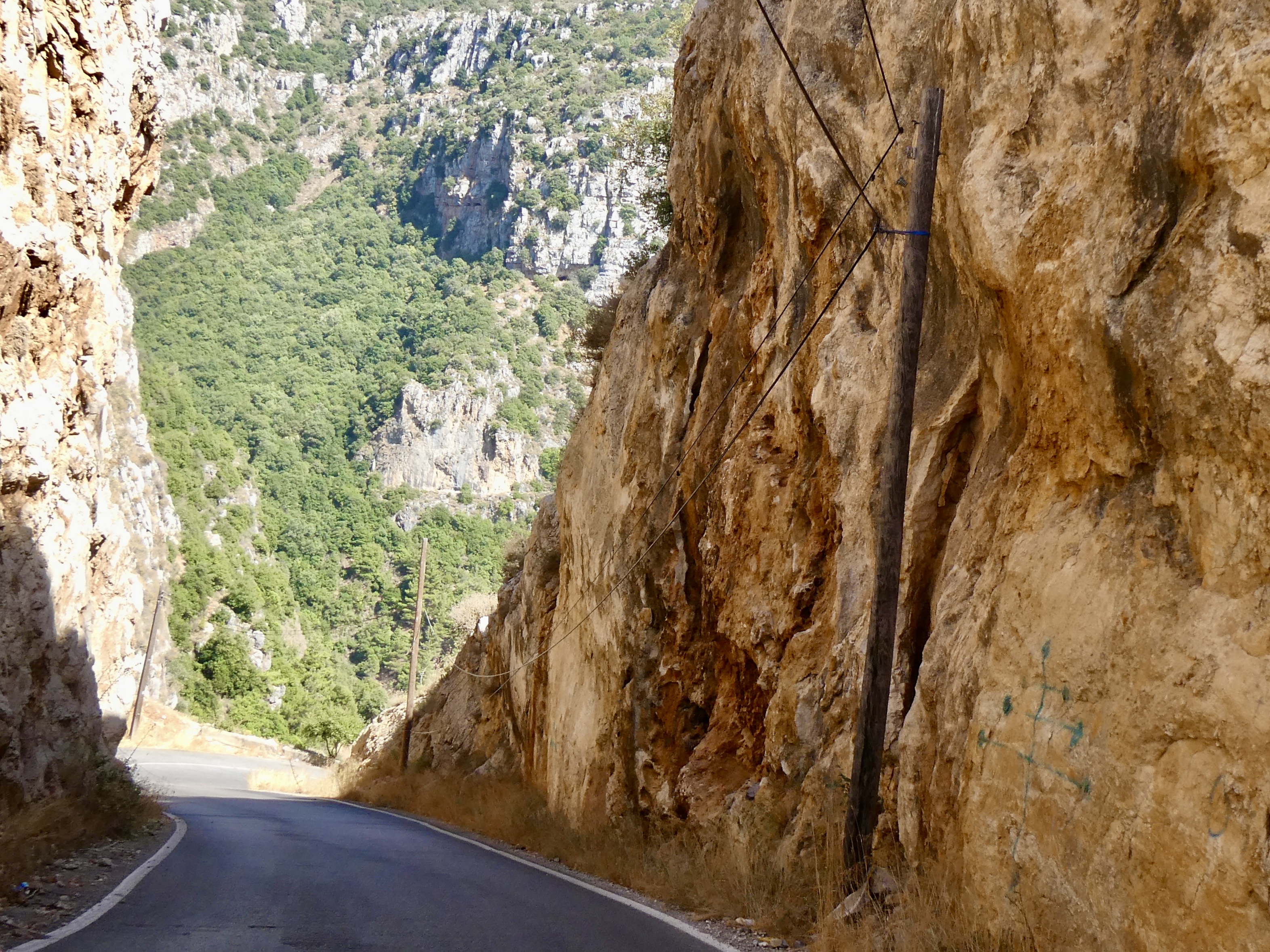
Once back on the road, the drive took us back through Bsharre and then along a road literally cut through the rocks and along a rocky cliff before reaching the monastery, which is located at about 3,000 feet above sea level offering spectacular views of the Kadisha Valley. (In fact, where haven’t I seen spectacular views today?)
Now the monastery is believed to have been first built around the fourth century AD, later being looted and destroyed. Today, the oldest vestiges of the monastery date to the 7th century. Through the years, the faithful took refuge in caves located in and around the monastery when invaders, including the Ottomans, tried to kill them for their Christian faith.
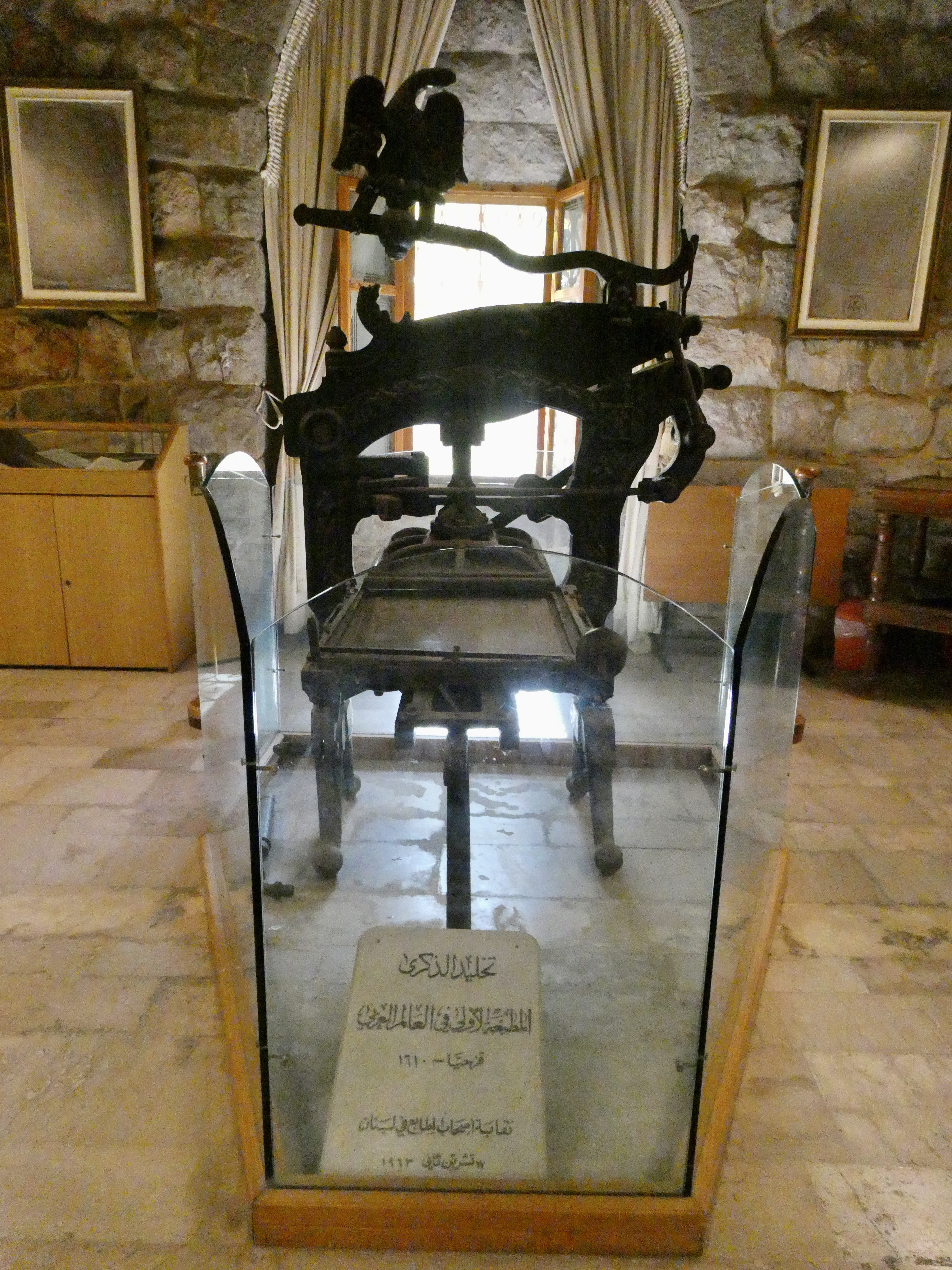
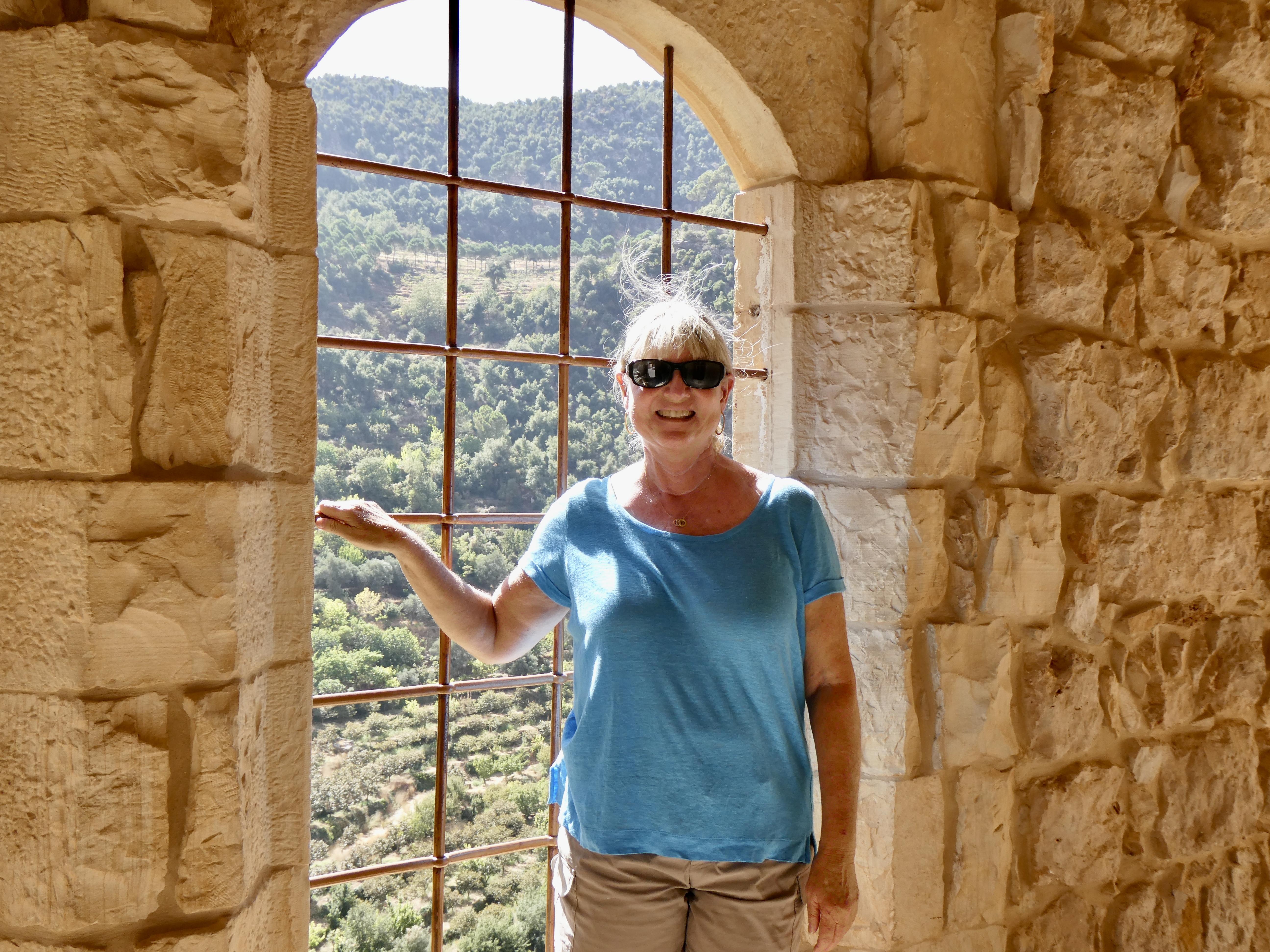
Once at the site, we wandered around the museum, which featured the first printing press that was introduced in the area in 1584 with the first book printed here in the Arabic language in 1610. The old press looked to be in pretty darn good shape.
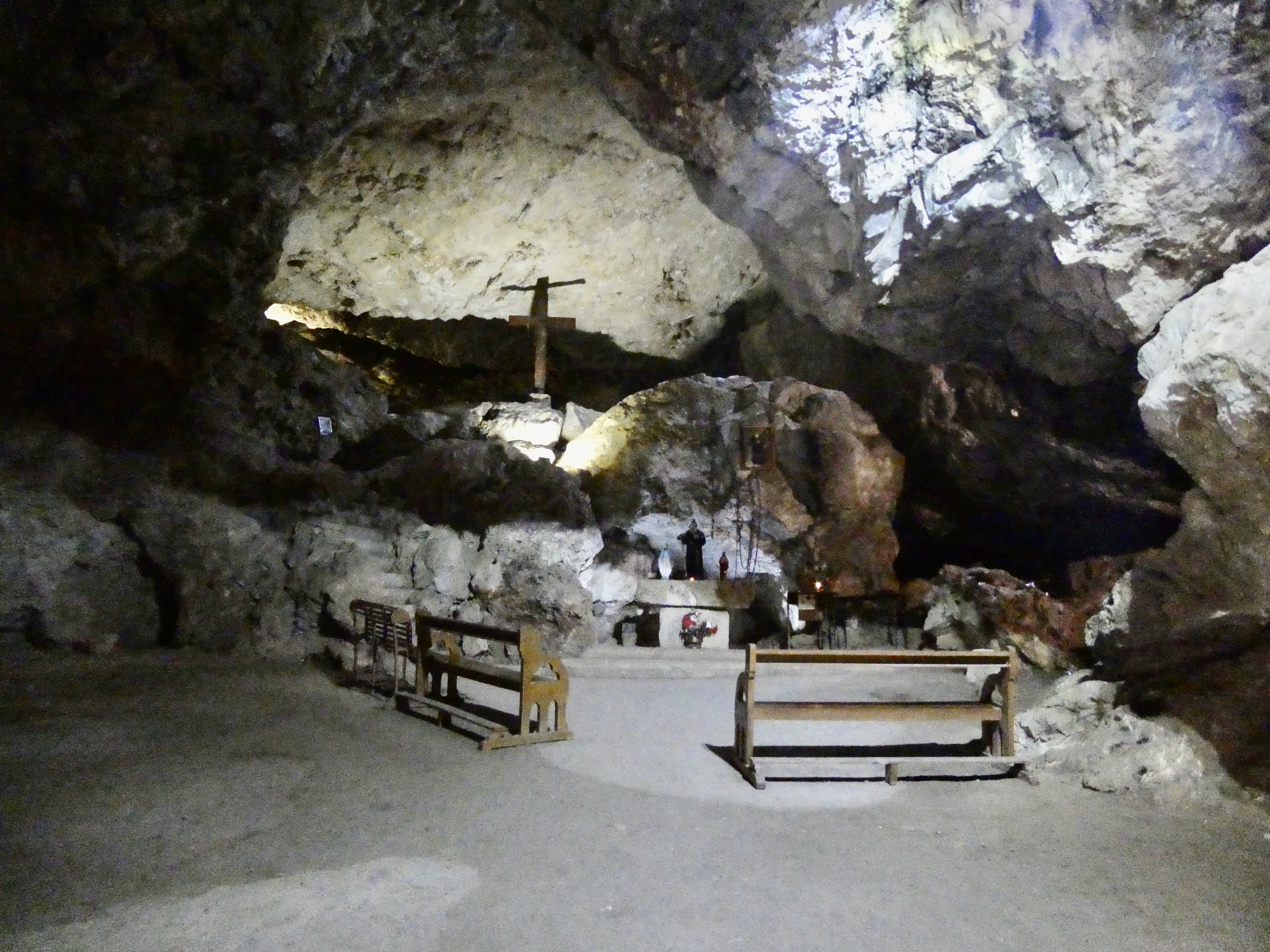
We then moved to one of the caves where the faithful would take refuge. The cave was marked by black smoke stains and featured a number of pots. The faithful believe that if they wish to become pregnant they will leave a pot in the cave and once it has filled with water (from the moisture dripping inside the cave) they will have a baby. And judging by the number of pots in the cave, there are a lot of women who want babies.
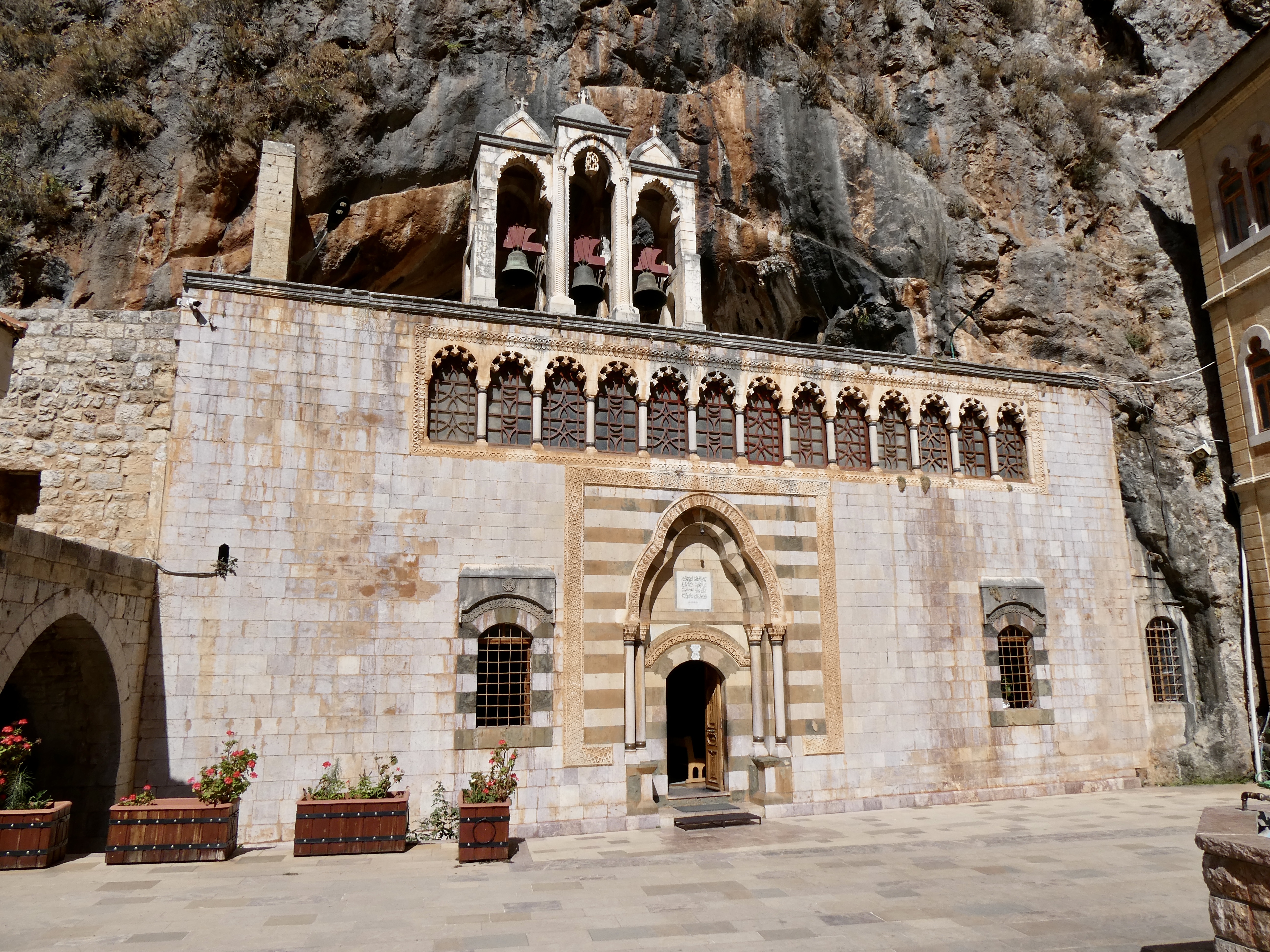
Anyway, our last stop at the monastery was the spectacular church that is built partly inside the mountain and partly outside. The exterior featured gorgeous window panels surrounded by pillars (12 for the apostles) and inside the ancient rock walls were still visible.
After the visit we walked up the hill in the blazing sun (was by now around 89 degrees and yes, the guys had finally removed their hoodies) and began the hour and half drive back to Byblos.
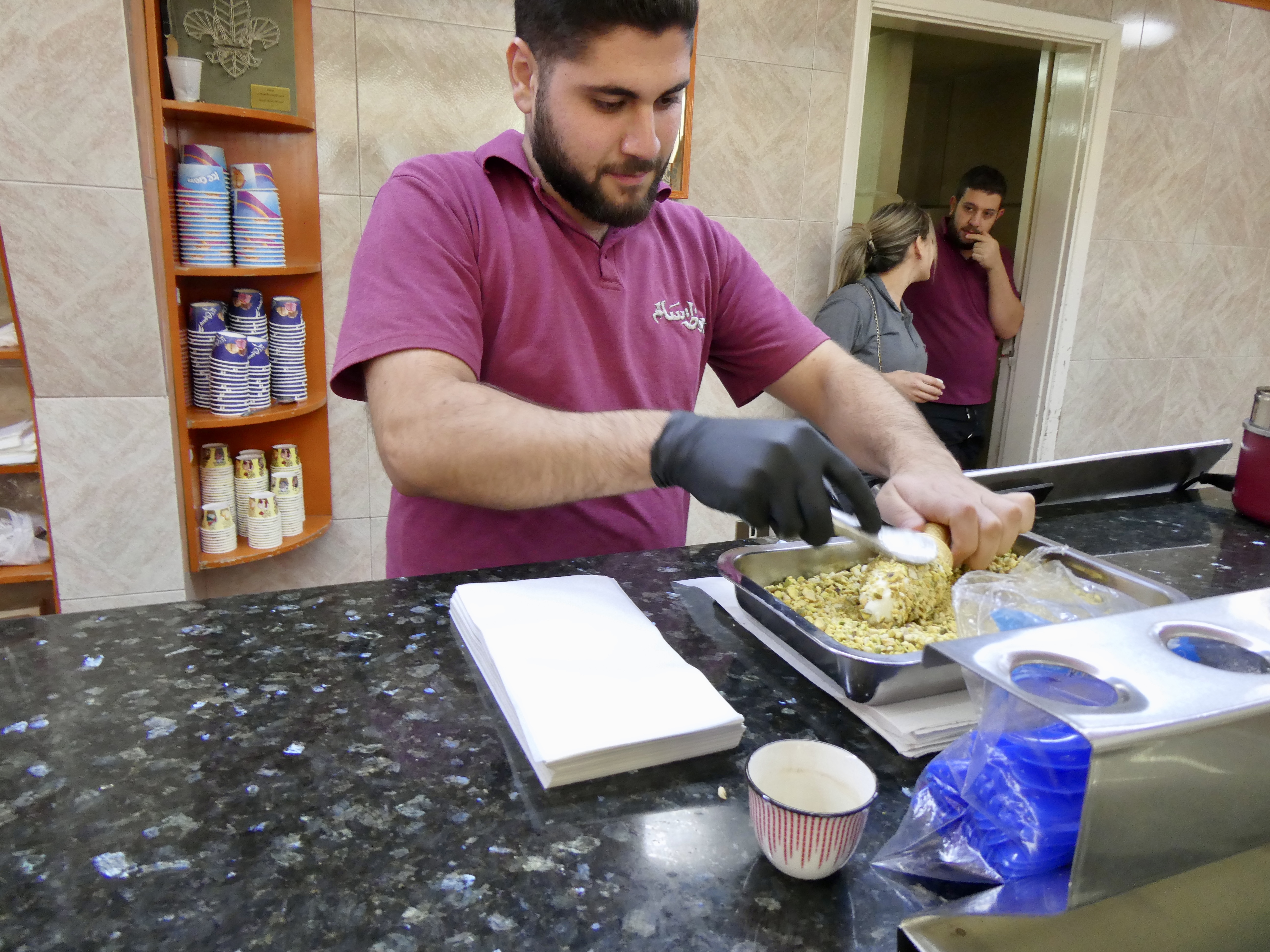
Once we crossed back through the checkpoint and we made one more stop … an ice cream shop that is apparently quite famous in the area. And after tasting the ice cream (I had achta, vanilla flavoured ice cream covered in pistachios), I can understand why there are lines out the door on weekends as Elie tells it. The ice cream was wonderful.
Shortly after we were back on the road and soon dropping off Romeo in Batroun before crossing the checkpoint to the south and then back to Byblos. Tomorrow, we head south for a trip to the Chouff region and then on to Beruit where I will be staying for the next five nights.