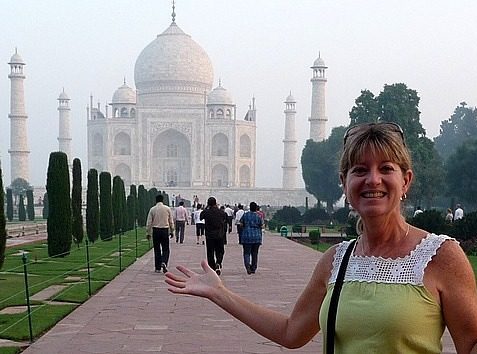
So as you may or may not know, I have retired from the practice of law and the first item on my post-employment agenda … well travelling of course! And this first trip is a doozy. A five-month trip to New Zealand, Australia, Japan, Taiwan, Thailand, Indonesia, Papua New Guinea, Philippines and Fiji planned back in the dark days of COVID when my wings had been clipped.
So first up … New Zealand. And it wouldn’t be a trip without my dear friend, Tom Linde, joining me along the way. And for this adventure, Tom decided to join me on the front end for the New Zealand leg of my trip.
We departed from Seattle on January 30 and travelled from Seattle via San Francisco and Nandi, Fiji before reaching Christchurch at 12:30 p.m. on February 1. And because we crossed the dateline, we lost a day completely bypassing January 31.
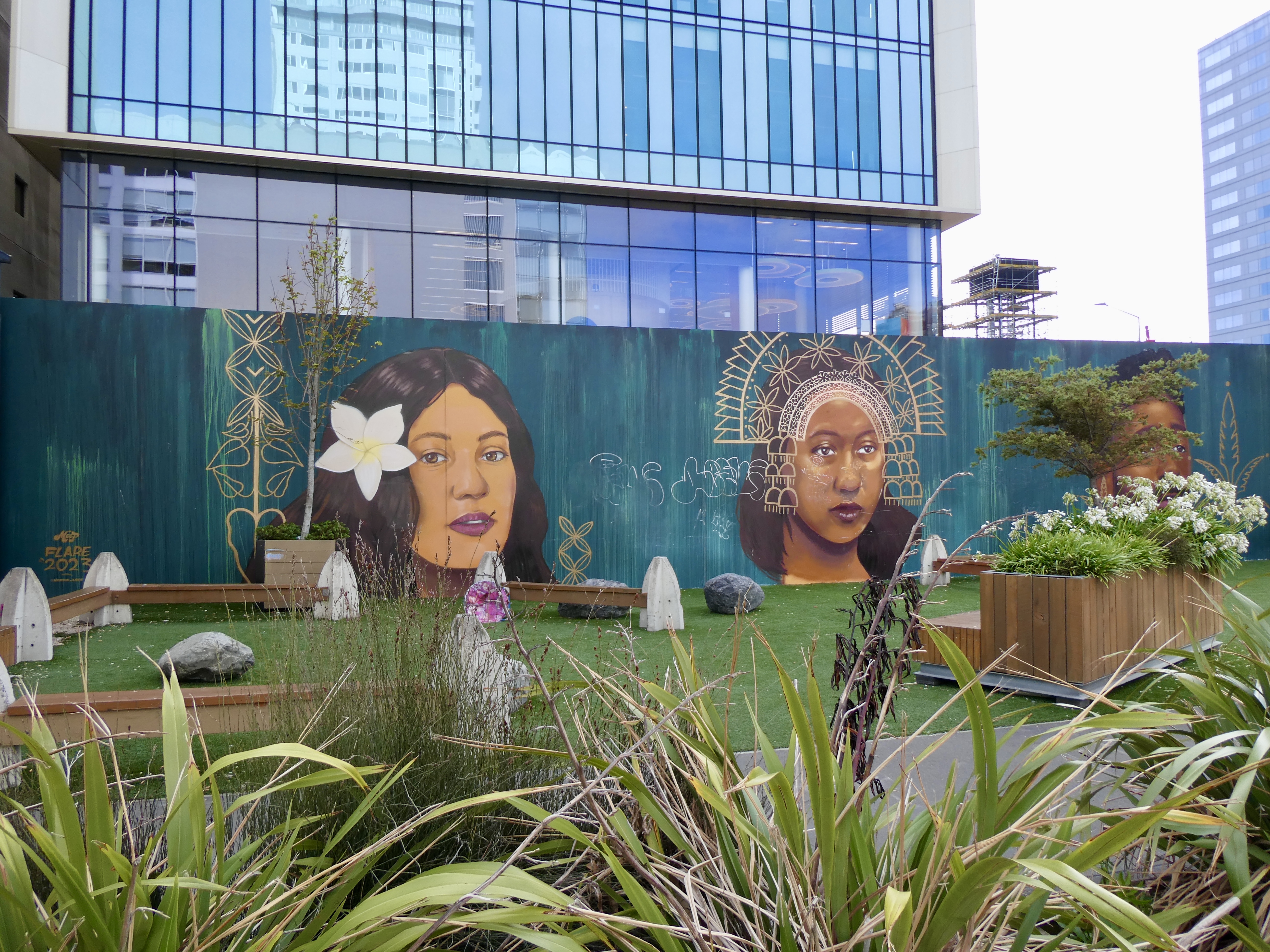
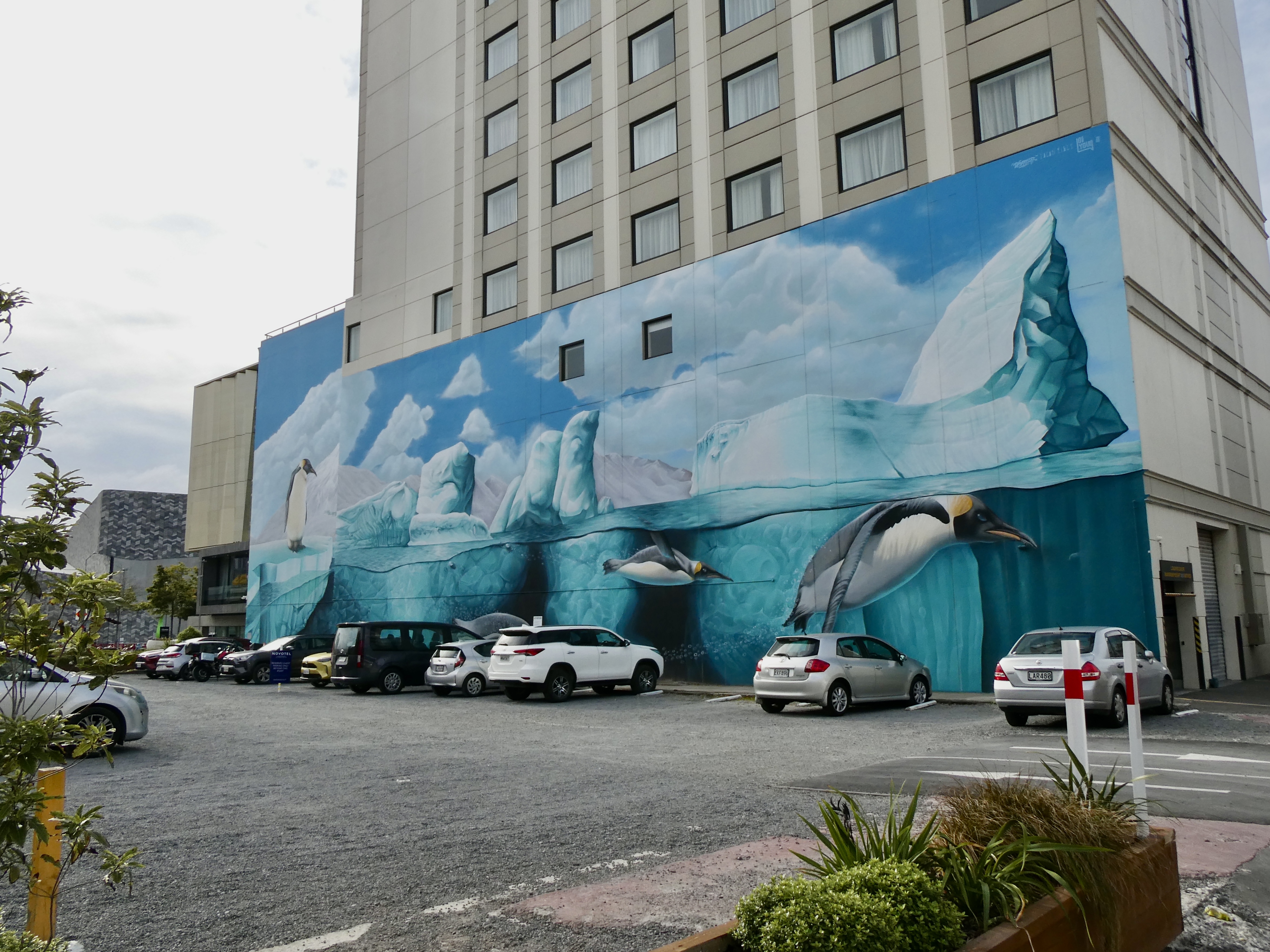
So once we were settled into our hotel and briefly rested, Tom and I ventured out for a little walking (forcing ourselves to stay awake). One of the first things we noticed was all the scaffolding that remains on a number of buildings following the February 2011 earthquake that destroyed most of the downtown area and killed 185 people. While the city, to a large extent, has been rebuilt there is still a lot of ongoing construction and to compensate for this, there are a myriad of murals and art work throughout the city. As we wandered, we past numerous murals paying homage to the indigenous peoples of New Zealand as well as the traditional historic connections New Zealand has to the world.

We also found this cool little street that had retained some of the original colonial architecture and was now the home to a number of restaurants and bars. We grabbed a bite to eat at one of the restaurants and by 7:30 we were back at the hotel and called it a night.
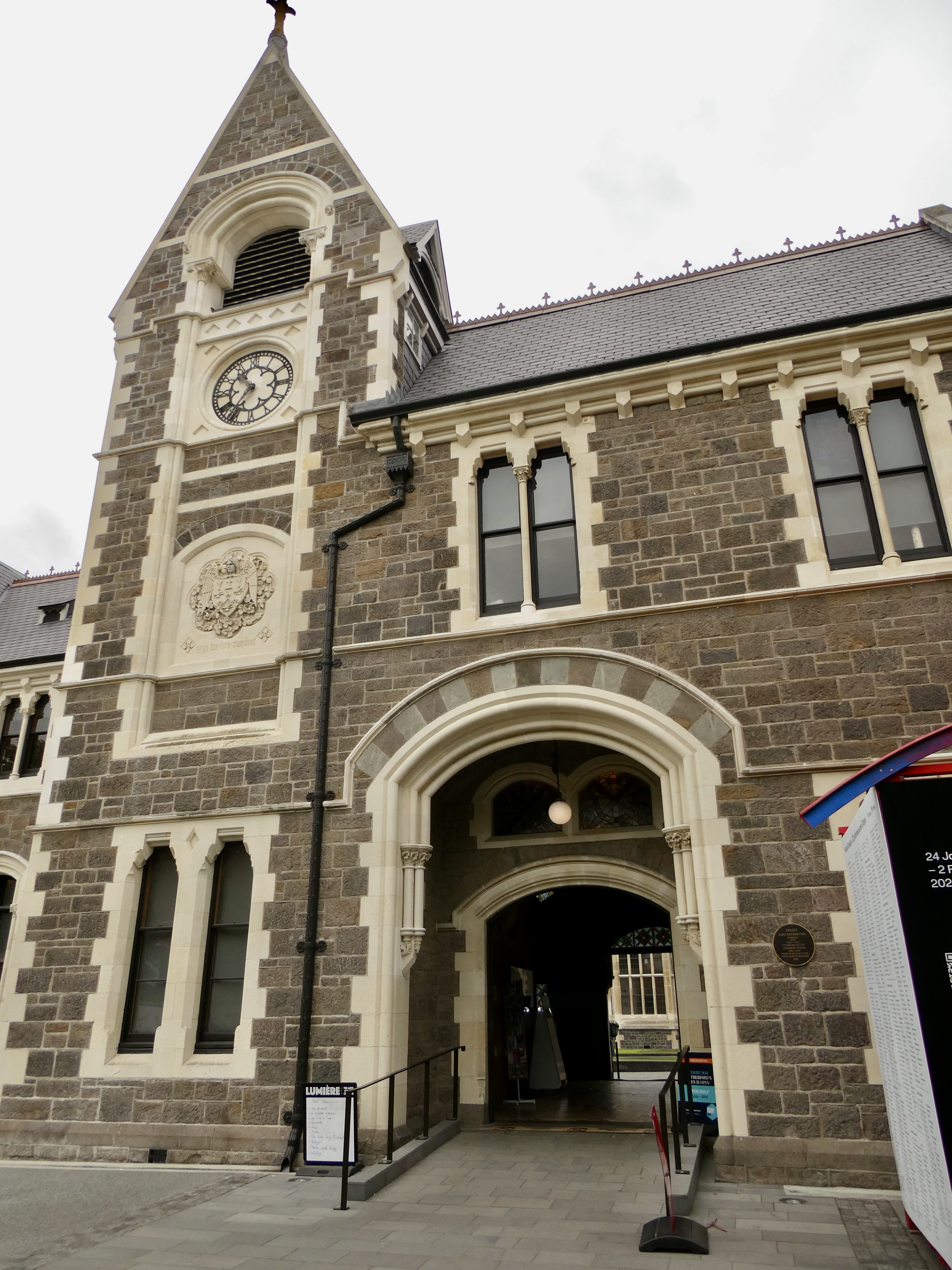
On Sunday morning, we were off and running (actually walking) with Walks Christchurch, a walking tour of the central area of Christchurch. We met our guide Grahame, along with a couple from Boston, Sheryl and David, at 10:30 a.m. after having some initial trouble finding the meeting point. New Zealanders apparently value privacy a great deal and as a result, there are virtually no numbers on buildings so when trying to find 2 Worcester Blvd., Tom and I had a bit (OK, a lot) of trouble. (Even MAPS was confusing.) Tom finally asked one of the passing tram drivers and we were directed down to the end of the road where we found the clock tower meeting point in front of The Arts Center.
Anyway, our tour began right at 10:30 and lasted until just after 1. Grahame turned out to be a fabulous guide and we learned a great deal about the history of Christchurch. In fact, Grahame began the tour by giving us an overview of how New Zealand was settled (first by the Polynesians in the 1300s). In the 1700s, the Brits arrived and began the process of building the Christchurch settlement.
Now at the time the Brits arrived, the area where Christchurch was eventually built was a swampy grassland some miles inland and over a hilly region from the ocean. As a result, the movement of goods and people was particularly tough. Eventually, the Brits built a tunnel making transportation much easier.
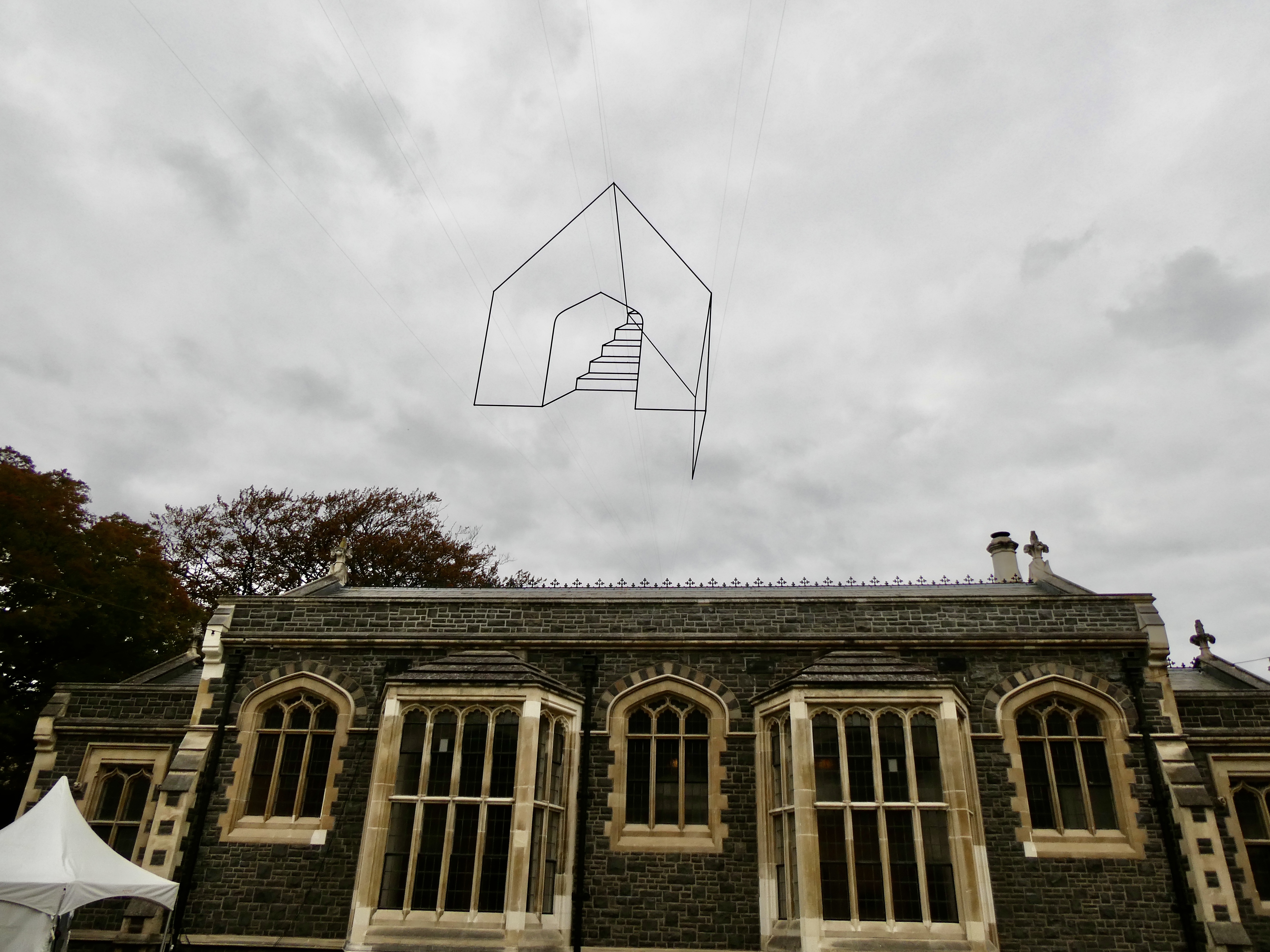
Two of the first buildings constructed by the Brits were right in front of us. The clock tower building was actually at one time the university and the building across the street was the original government house. Today the government building is still being rebuilt following the earthquake and the university now houses art galleries, a cinema, a boutique hotel and a restaurant. It is through these commercial ventures that the property is maintained in close to its original form.
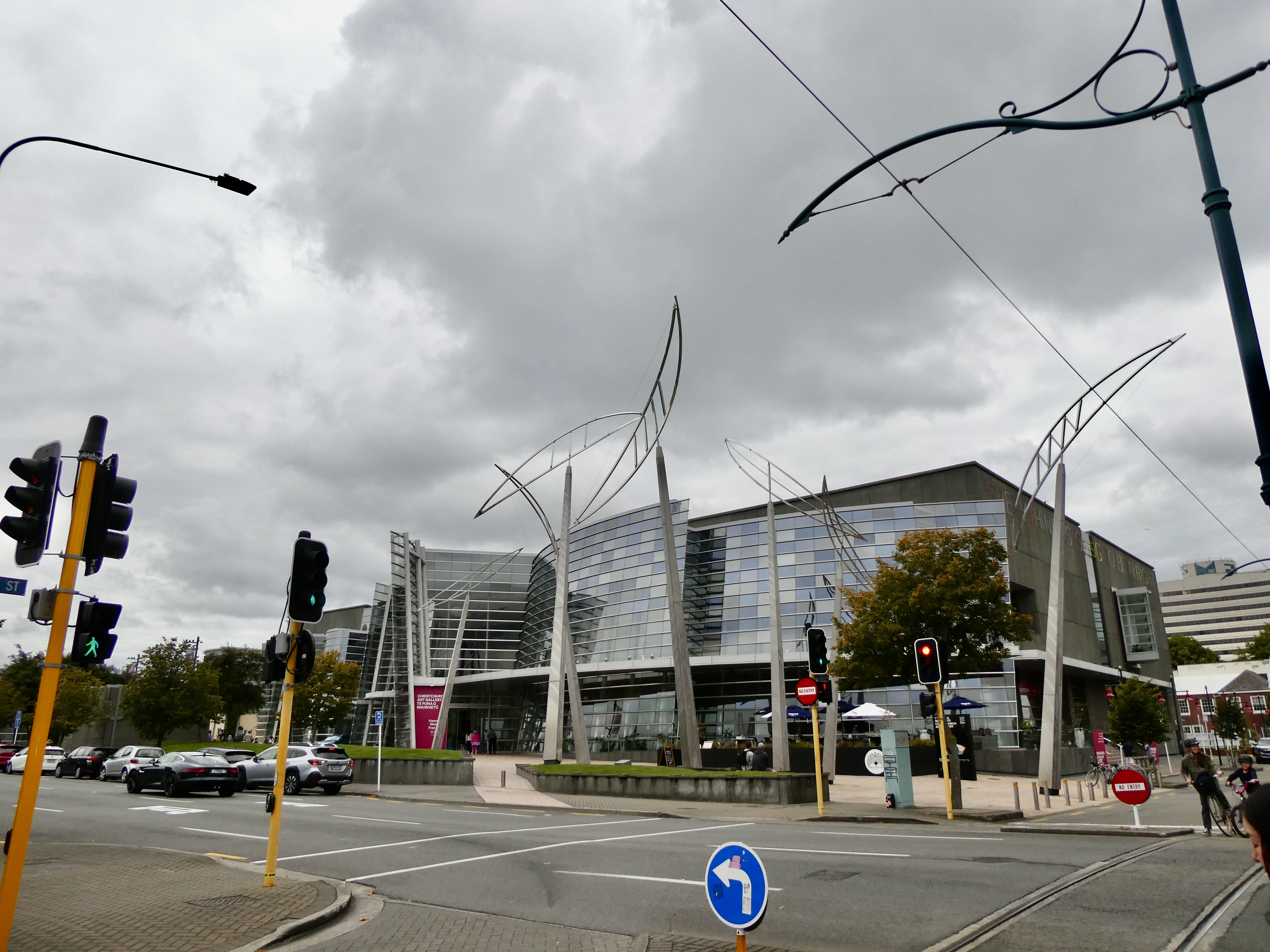
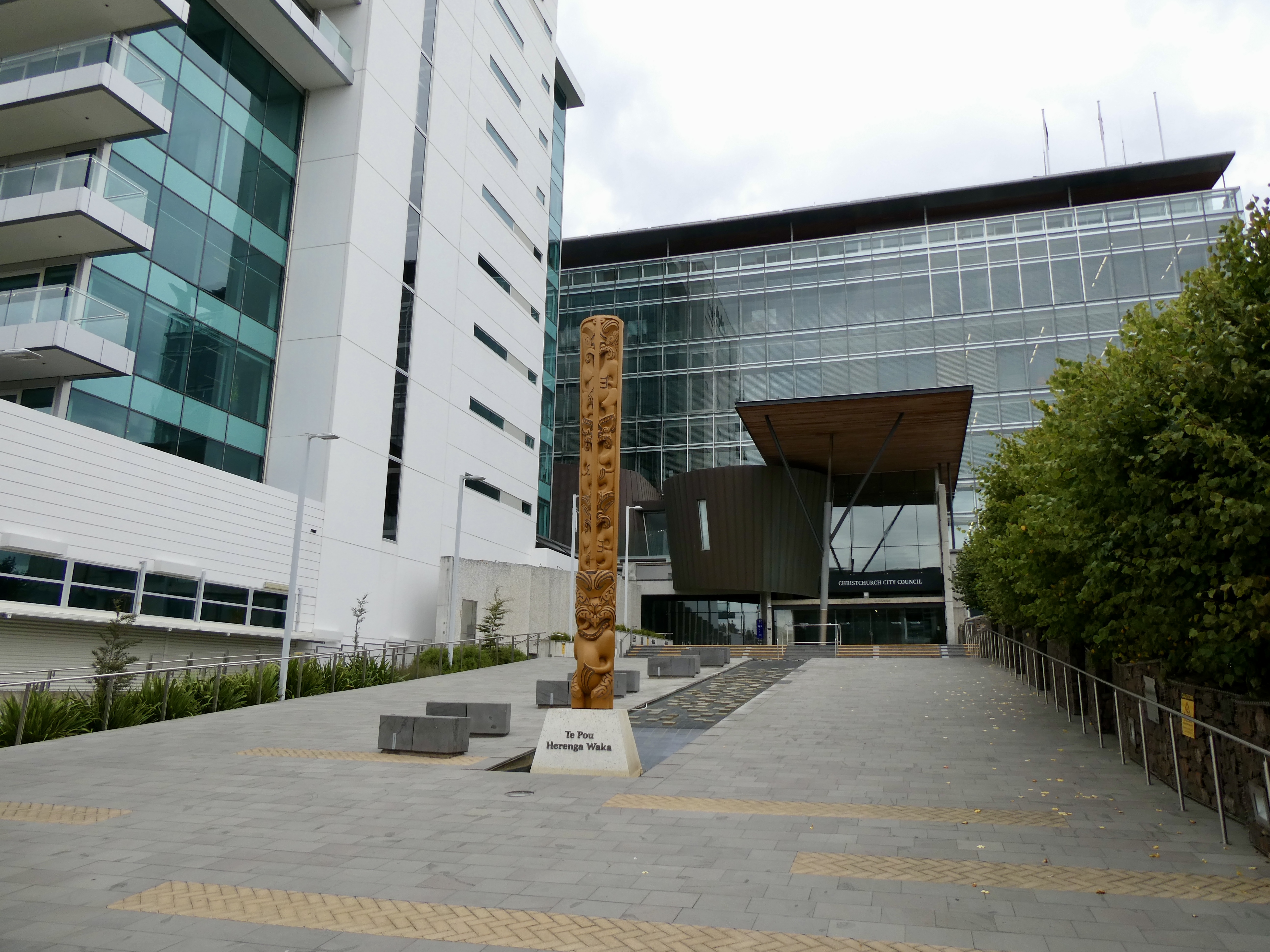
So after walking through the old university grounds, we moved on down the street past an additional art museum to the Christchurch city counsel building where there is a monument out front to the indigenous people who are regularly consulted on all things that affect the land and the governing of the city.
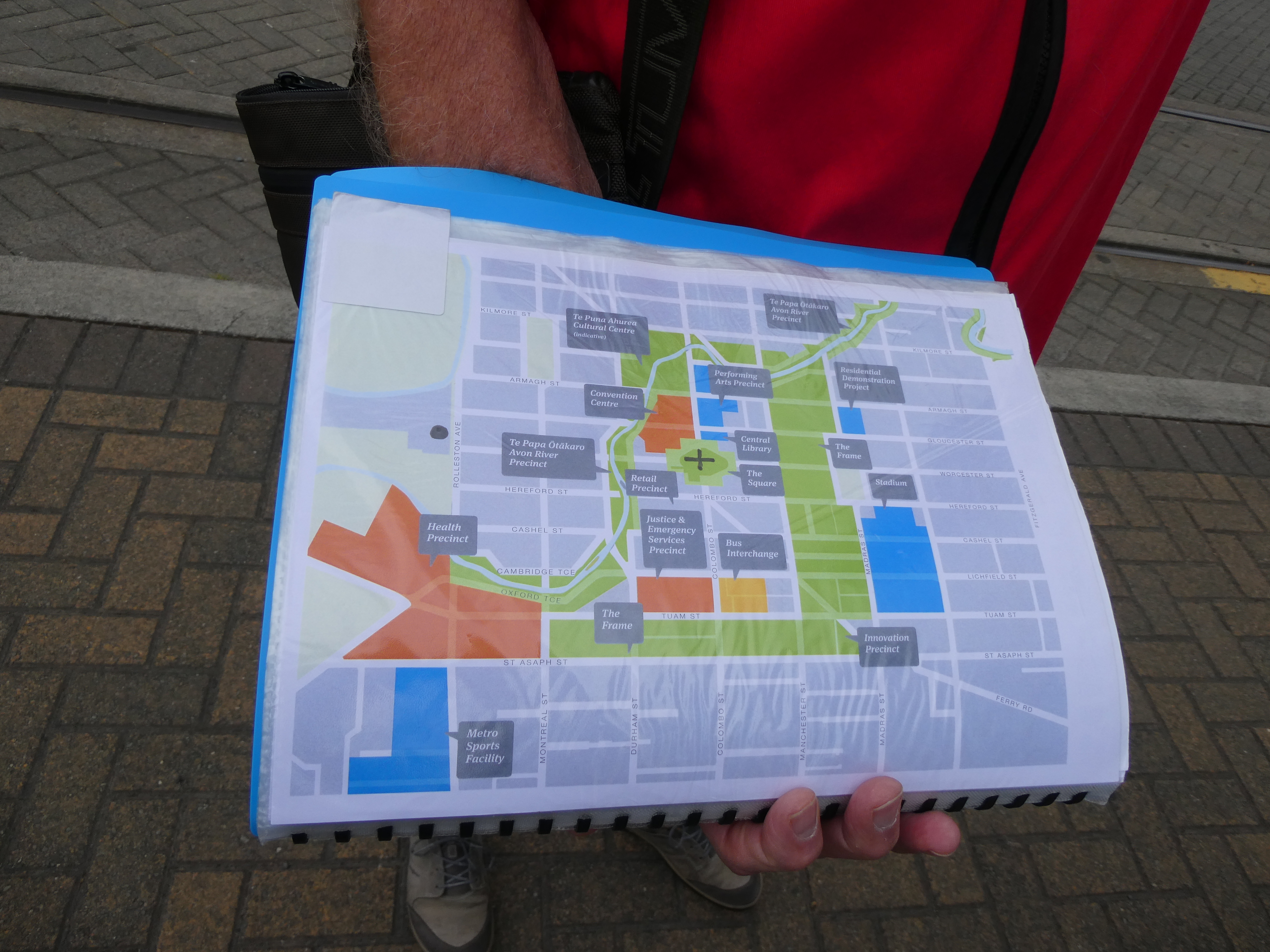
At this point, Grahame pulled out a map to explain to us how the city was rebuilding following the massive devastation brought on by the February 2011 earthquake. And the plans, were quite ingenious. First, the city was going to be rebuilt in zones – a health precinct, a sports precinct, a performing arts precinct, a shopping precinct, and so on. Next the city was going to be surrounded by gardens and pedestrian friendly zones. Finally, the city was going to ensure that families would want to come to the downtown core so they constructed a multi-acre playground and recreation area. Brilliant!
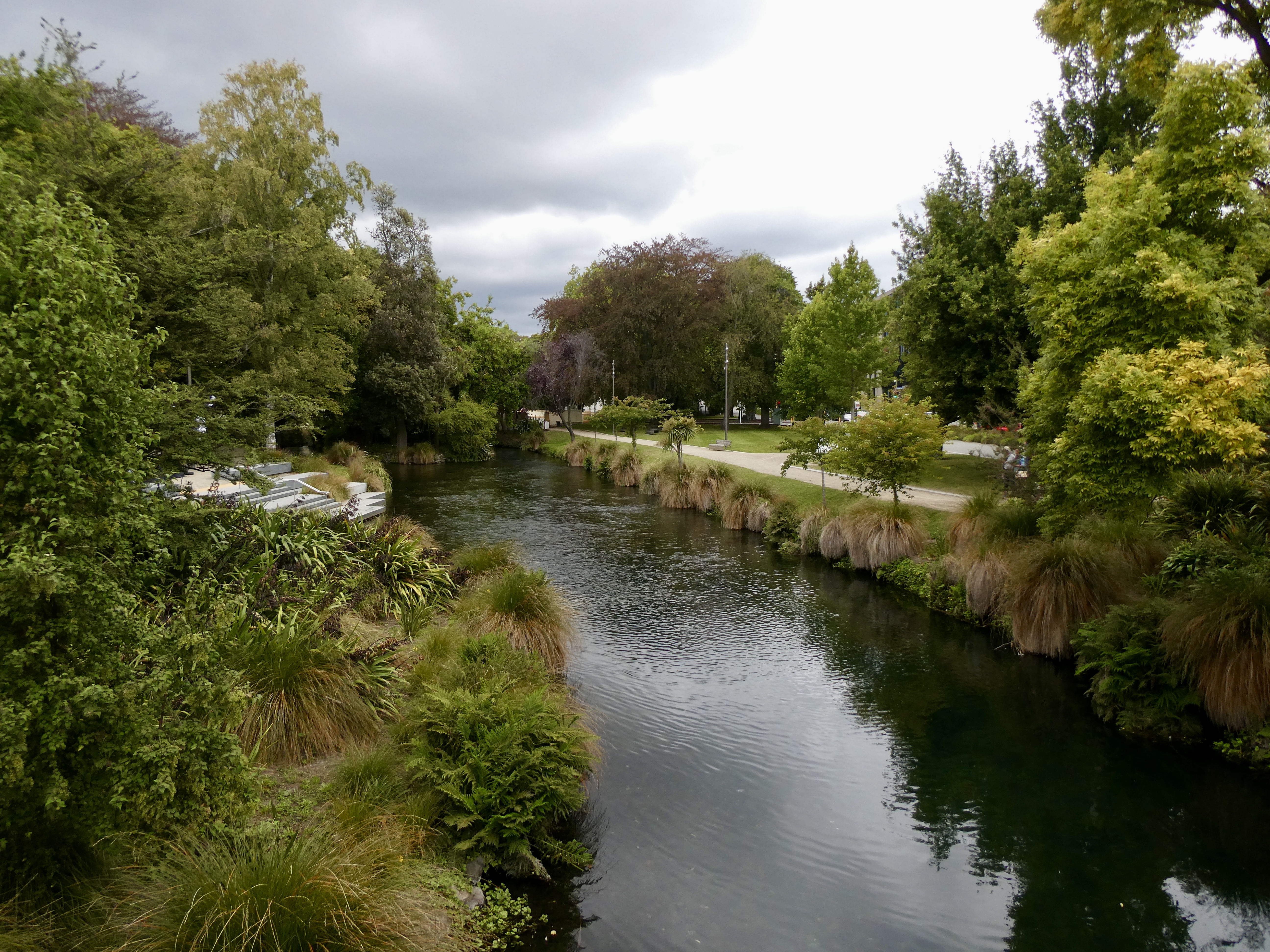
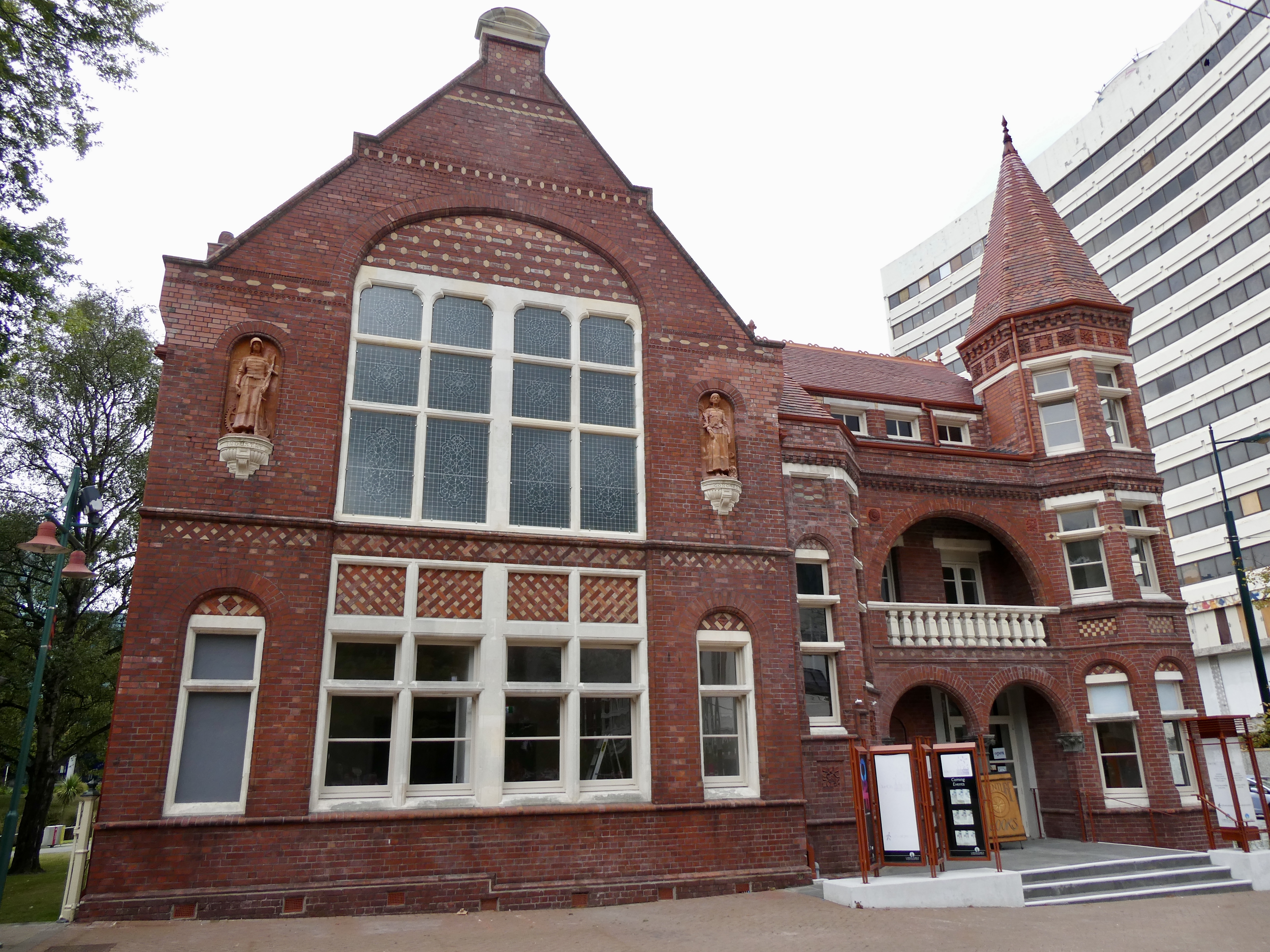
Anyway, we continued down the street past the oldest wooden building in Christchurch (which was virtually undamaged by the quake) and continues to be used as a private club and then over the Avon River towards the new Convention Center. On the way, we passed by the old city counsel building, which was a combination of Dutch architecture and baroque. Quite unique.
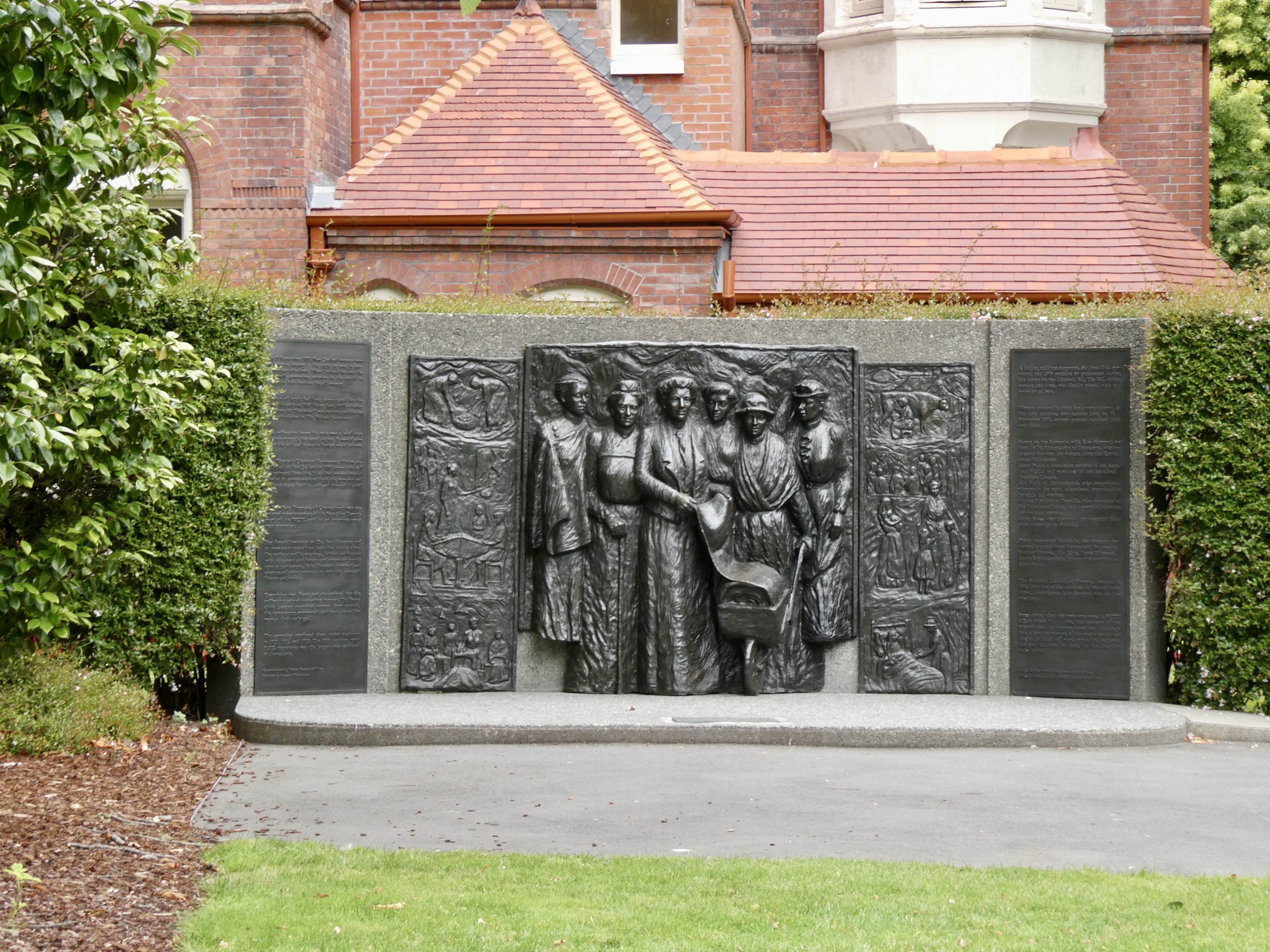
We also stopped by the river to take in a monument to the suffragette movement in New Zealand, which resulted in the passage of a bill in 1893 giving women the right to vote. The stories of the men who voted agains the bill were hilarious, including one male politician who said he would have to resign because his wife believed if women were given the vote a pretty women may be elected and the men would never get any work done (seriously).
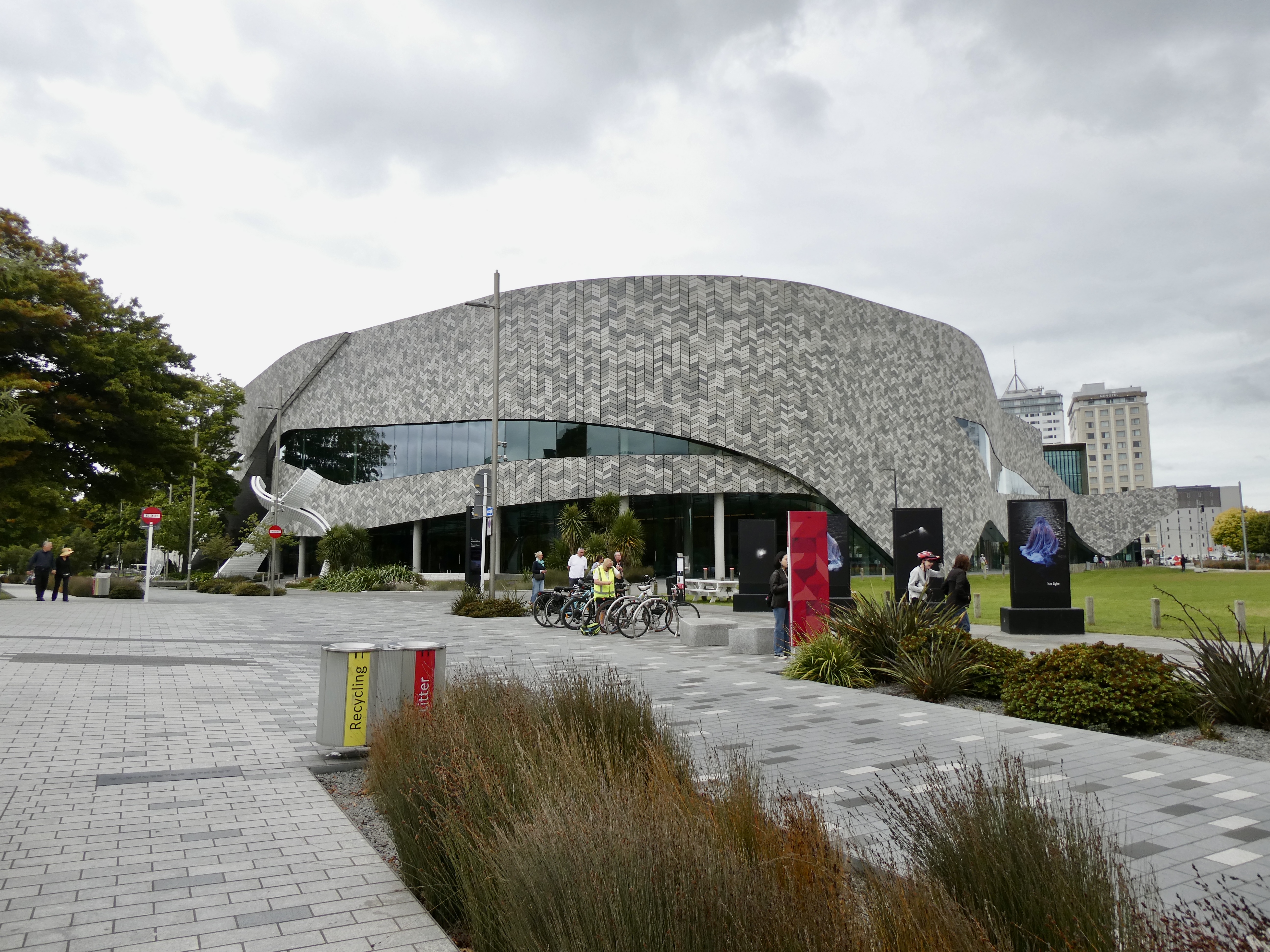
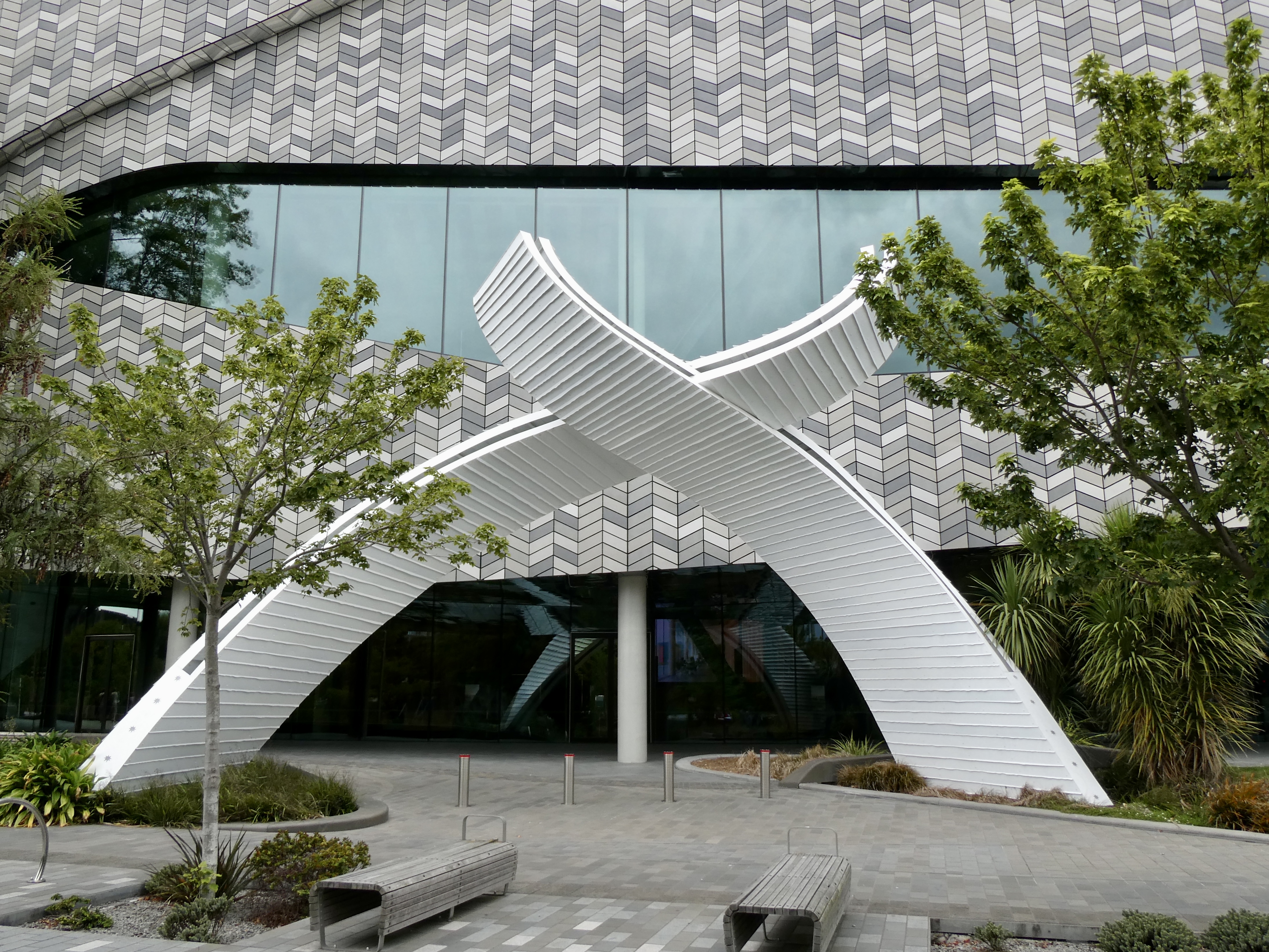
Anyway, after the suffragette stories, we moved on to the Convention Center, which was one of the most unique designs I have seen, incorporating at the entrance the indigenous peoples’ traditional welcome sign. It was a really remarkable building.
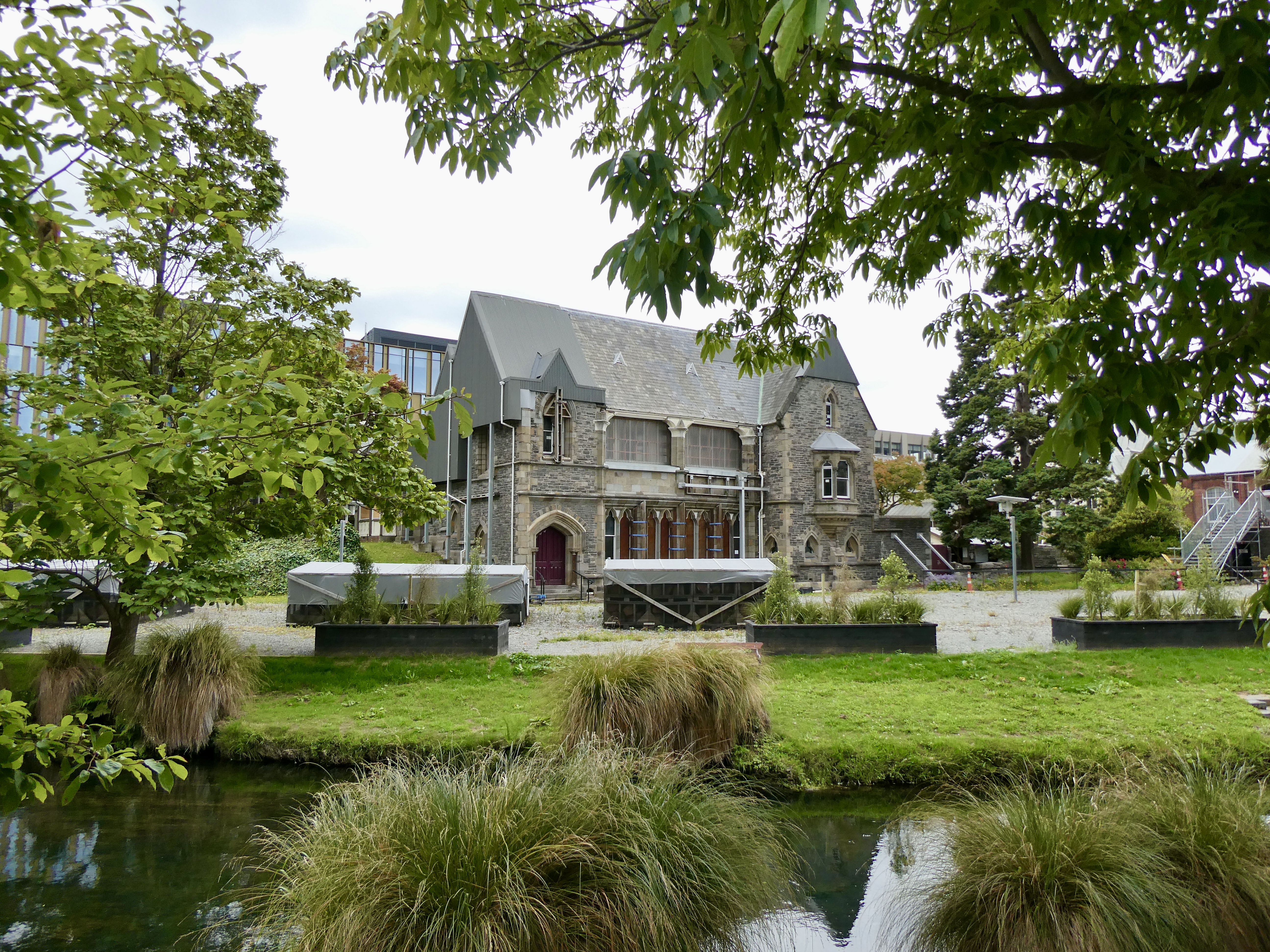
On the other side of the Convention Center was the Timber Counsel Building that had been heavily damaged in the earthquake. Scaffolding surrounded the building and many of its original facets were gone, including an adjacent tower. To date, billions of dollars have been spent rebuilding these old British heritage structures with more than 30,000 people coming from all over the world to aid in the rebuilding effort.

And while many old structures have been or are being rebuilt, there are others like an old church near the Convention Center that requires just too much money to rebuild. In fact, $100,000,000 has already been spent and it is estimated that another $100,000,000 is required, which now has many people balking at the idea of a rebuild.

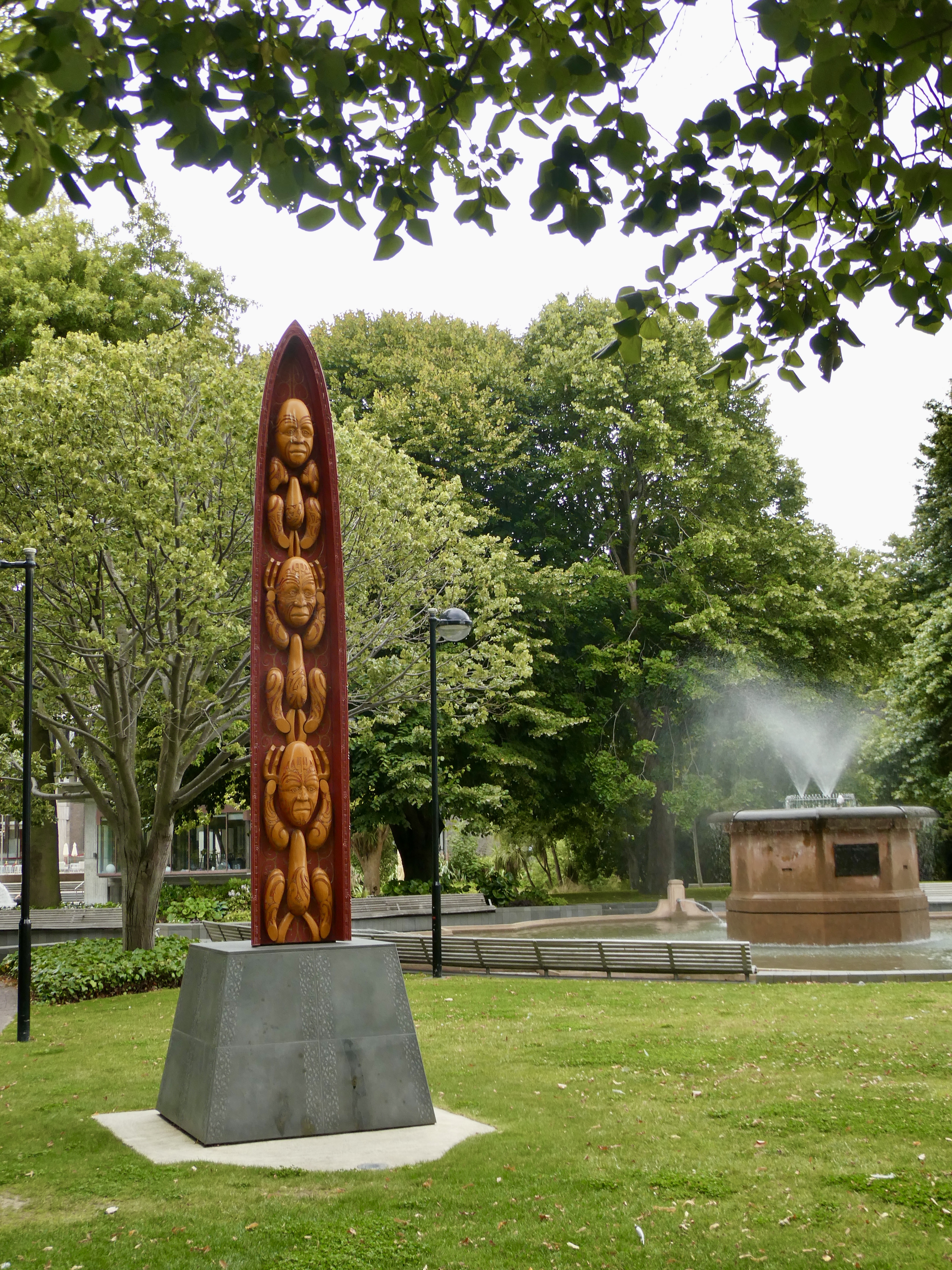
So after the Convention Center, we wandered across the street to what is now known as Queen Victoria Park. At one time, the park area was a marketplace and trading center, but today the park is filled with pathways and fountains and is adjacent to what is known as City Hall (which is actually a concert hall). The park also pays homage to the indigenous peoples by including two large poles with the faces of six indigenous chiefs who signed a treaty with the Brits in 1840 giving the indigenous peoples a say in how the area was and is governed.

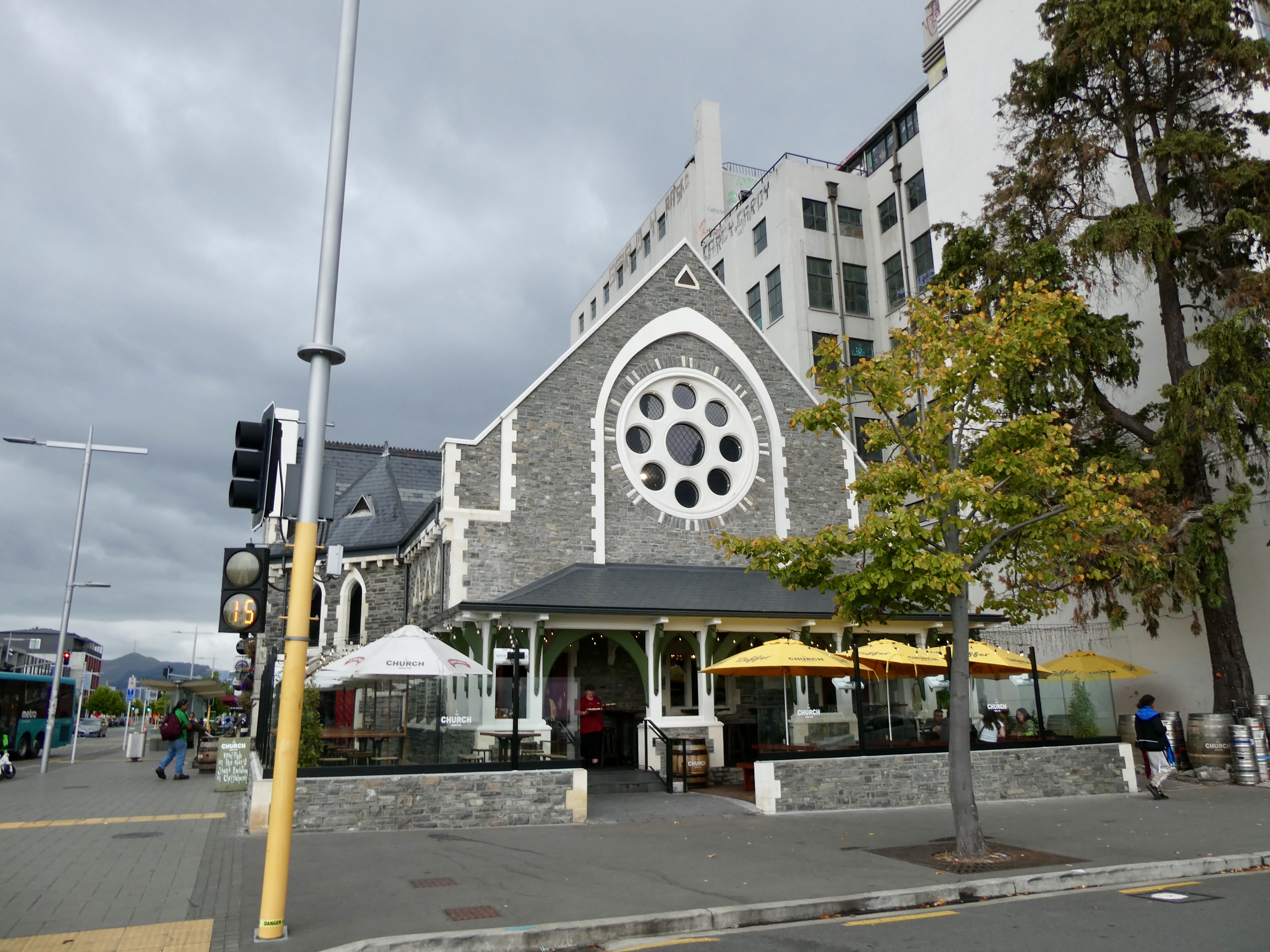

After the tour through the park, we ended walking down the street Tom and I had visited the night before with the old colonial buildings before circling around the block in the direction of the stadium under construction to what appeared to be yet another church. And in fact, before the earthquake, the building had been a church, but was now restored to … the Church Bar. We took a walk through the building and it was in a word … fabulous. In fact, after our tour was over, Tom and I came back and enjoyed a fabulous lunch of fish and chips and wood fired pizza.
Anyway, after exiting the Church Bar, we walked down the street to Cathedral Square, which is considered the heart of Christchurch and where the city’s old Anglican cathedral, Christchurch Cathedral, is located. The church was heavily damaged and was shrouded in tarp, scaffolding and construction materials. Still a work in progress.
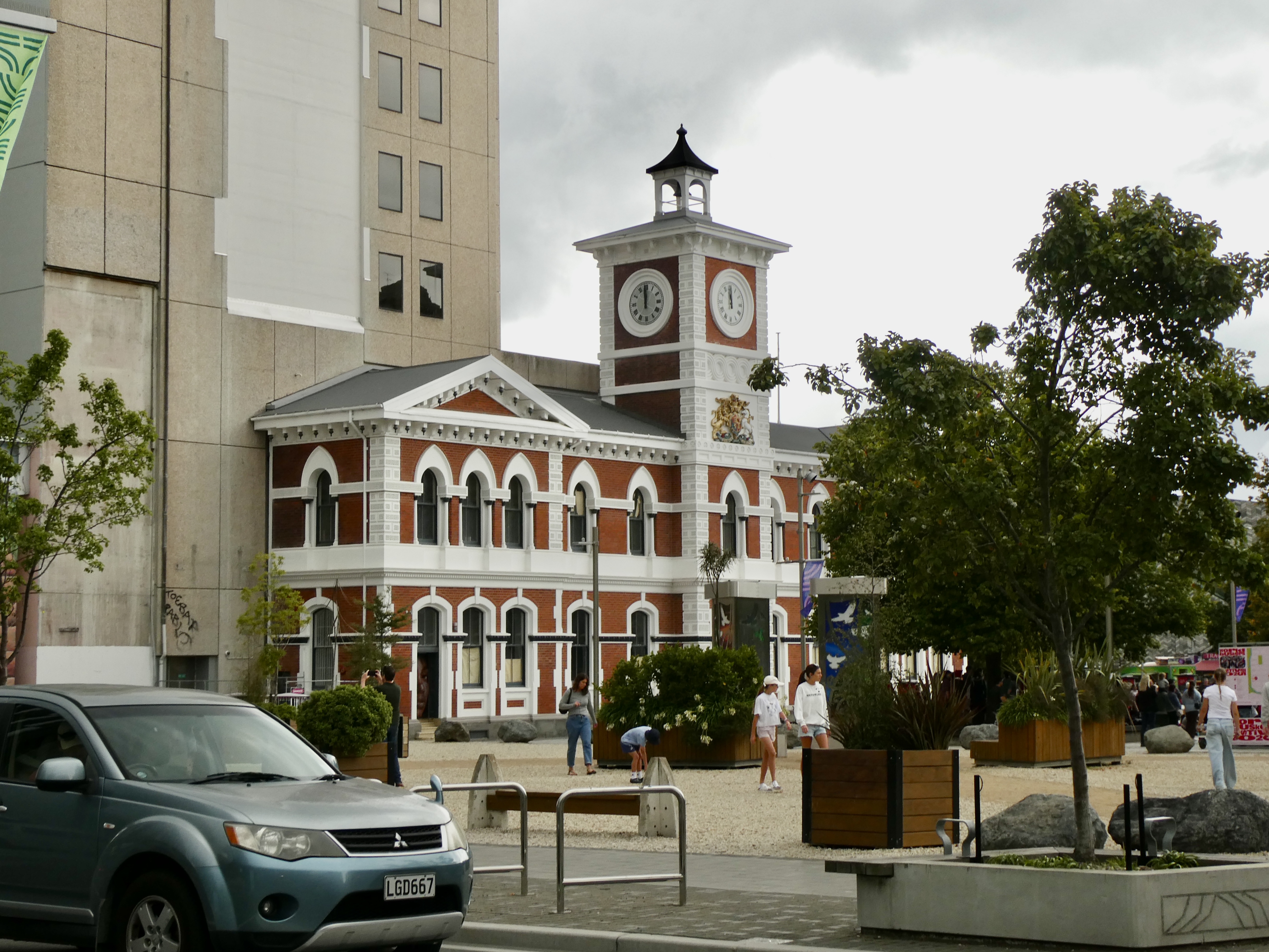


We then walked past the old post office (a fabulous looking building) before turning down a narrow street to the shopping precinct where we meandered past numerous shops all bustling with visitors, before cutting through a flea market to reach Riverside Market. Now before we reached the market, we passed by yet another of the many murals in the city and this one was really special. The mural depicted a series of row houses, which appeared to be at different angles to one another, but once we reached the building depicting the mural, the building was actually flat. The mural was an amazing optical illusion.
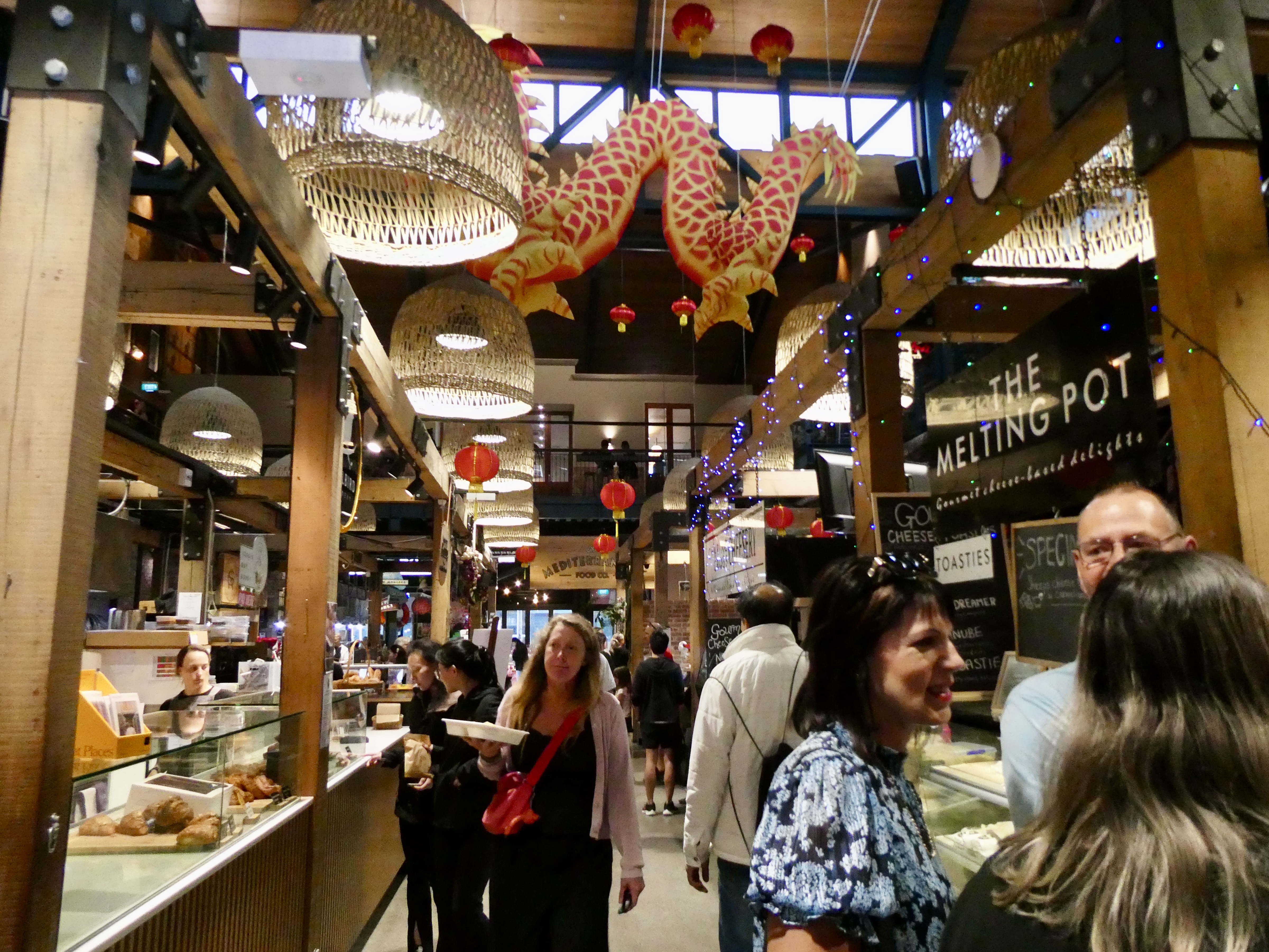
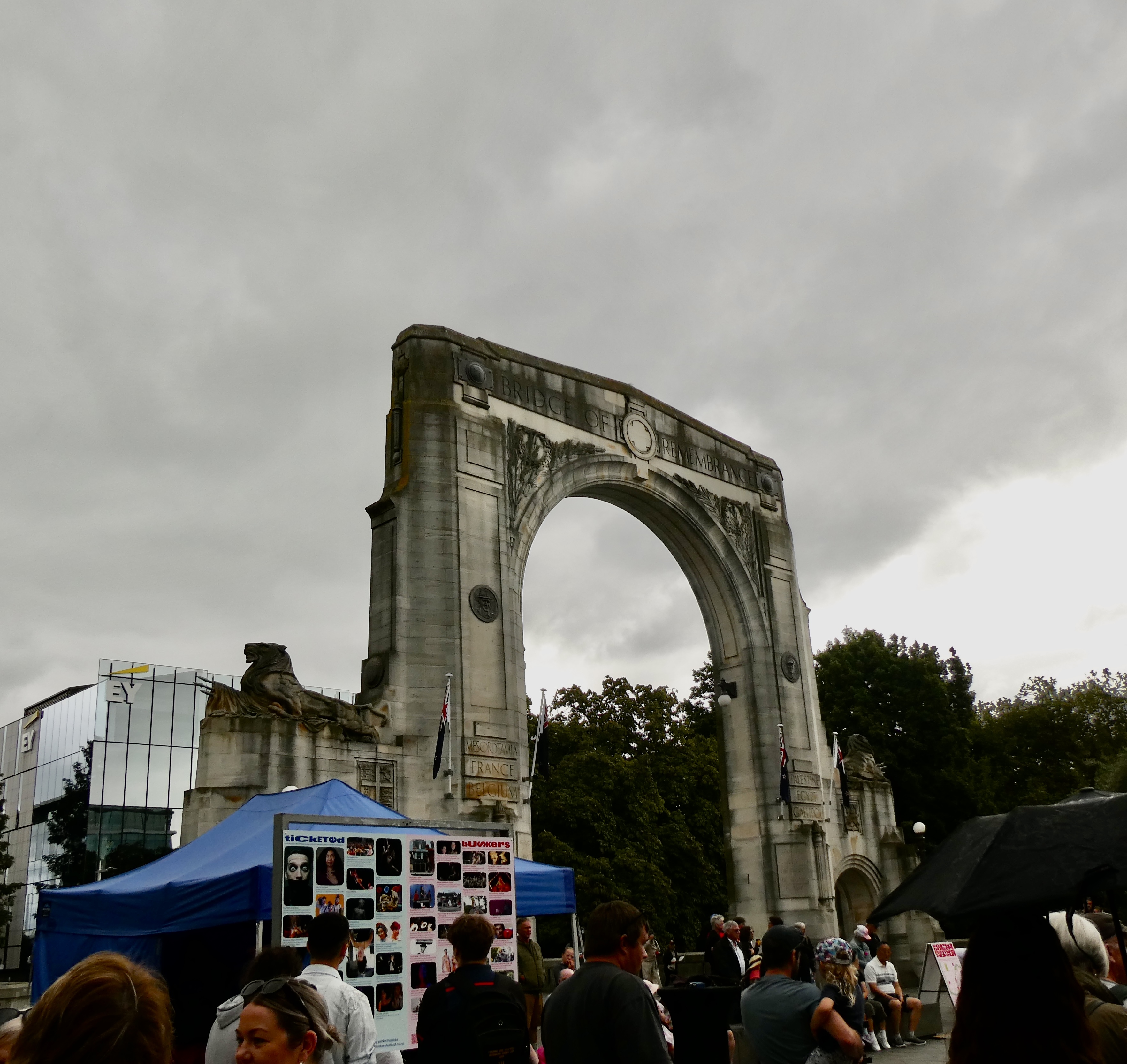
So after marveling at the mural, we walked down a narrow alley to the entrance to the market. Now this market had numerous shops, bakeries, restaurants and so on, but it was really, really crowded so it was impossible to take in all that the market offered. We ended up exiting the market, walking past the WWI arch, under which the New Zealand troops passed as they were being deployed and then crossed the street to walk along the Avon River to our last stop of the day, the earthquake memorial.
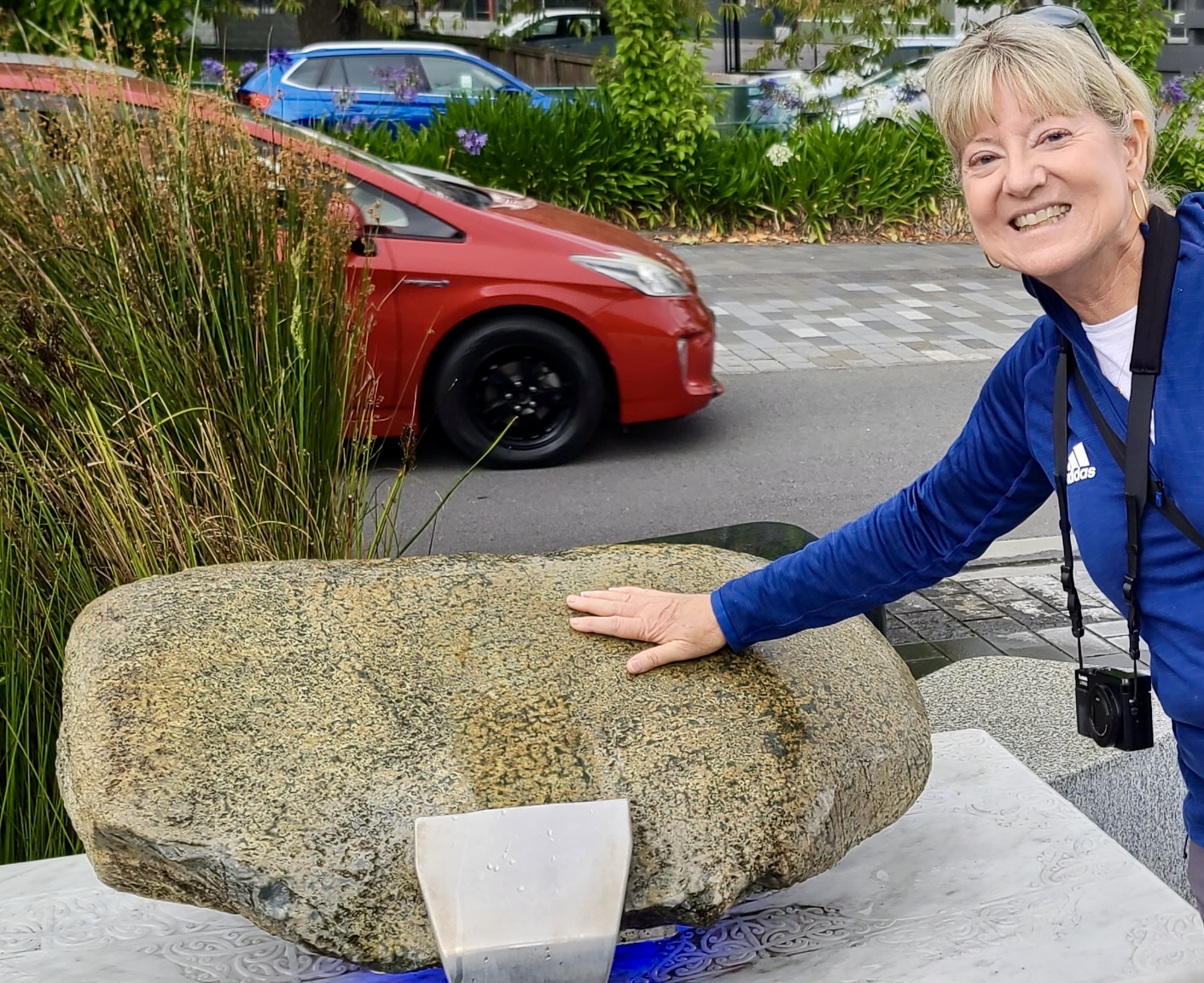
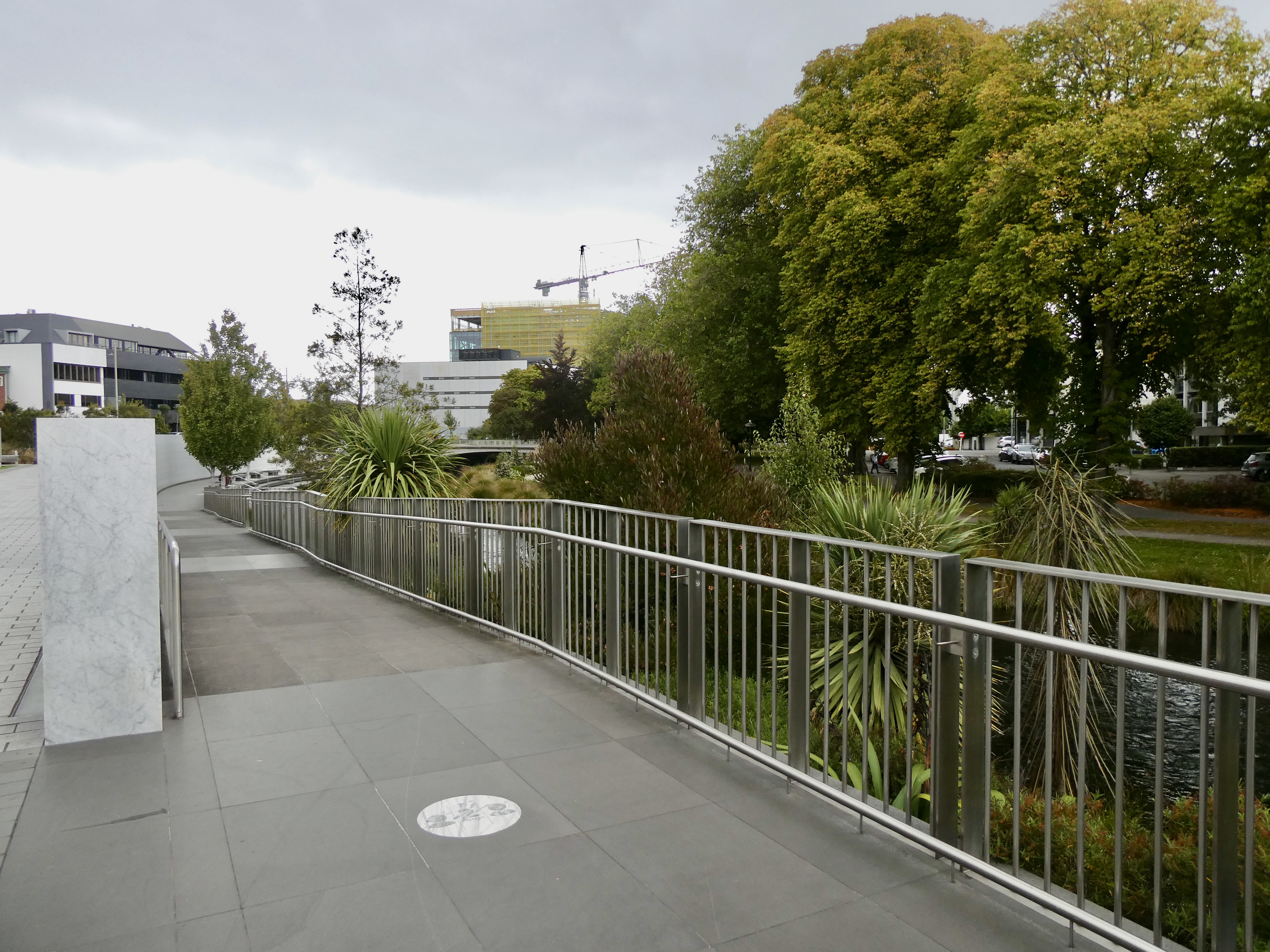
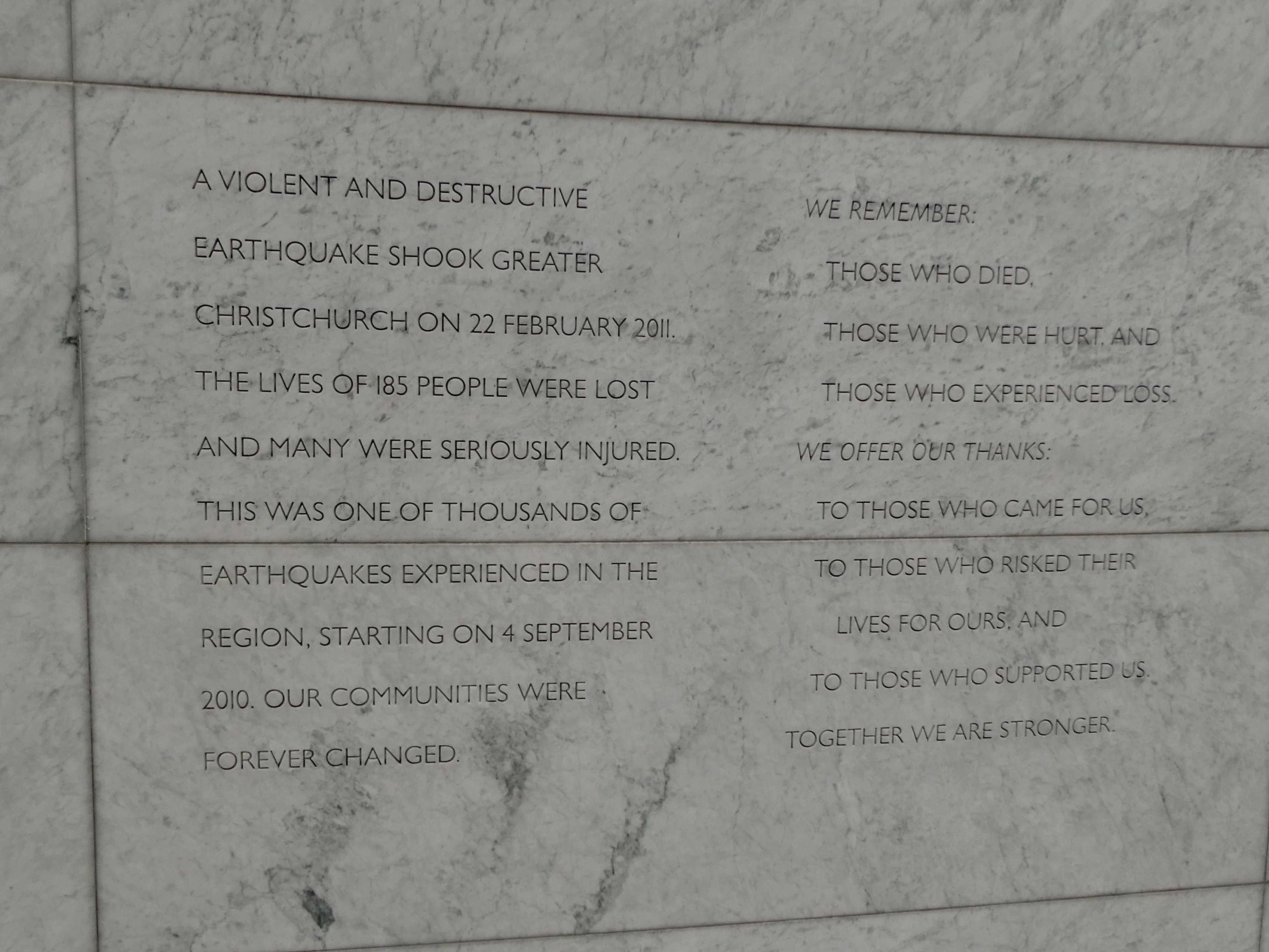
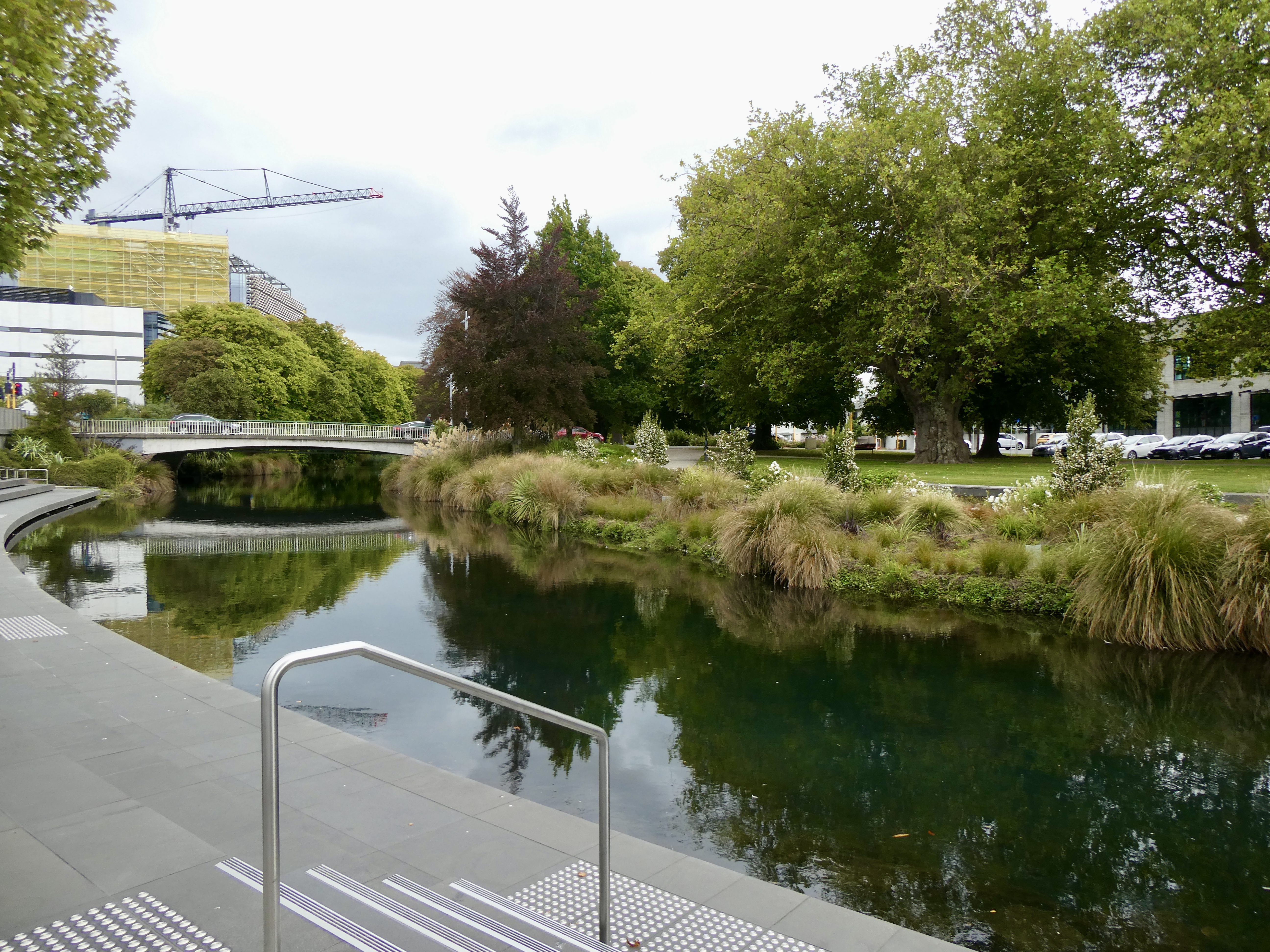
Now this memorial was really, really special. First, there was a large stone or pounamu (as it is known is Māori) at the entrance, which follows the Māori tradition of placing such a stone at important entranceways and requires the ritual of touching the stone to connect visitors to the land of those who were there before us. The memorial is then divided into three spaces. The south bank features the memorial wall where the names of the 185 people who lost their lives are commemorated. The north bank has a park like atmosphere with seating areas where people can come and reflect. Finally, there is the river, which has been slowed so that it seems like it is not even moving (no idea how this was accomplished). It was a really lovely tribute to a horrific disaster.
By now it was well after 1:00 and how tour had come to an end. We said our goodbyes, and Tom and I wandered back towards the Church Bar stopping on the way to find Tom a pair of sunglasses and … to purchase my first Christmas ornament. A kiwi made of wood that expands from flat to 3D. Really, really unique.
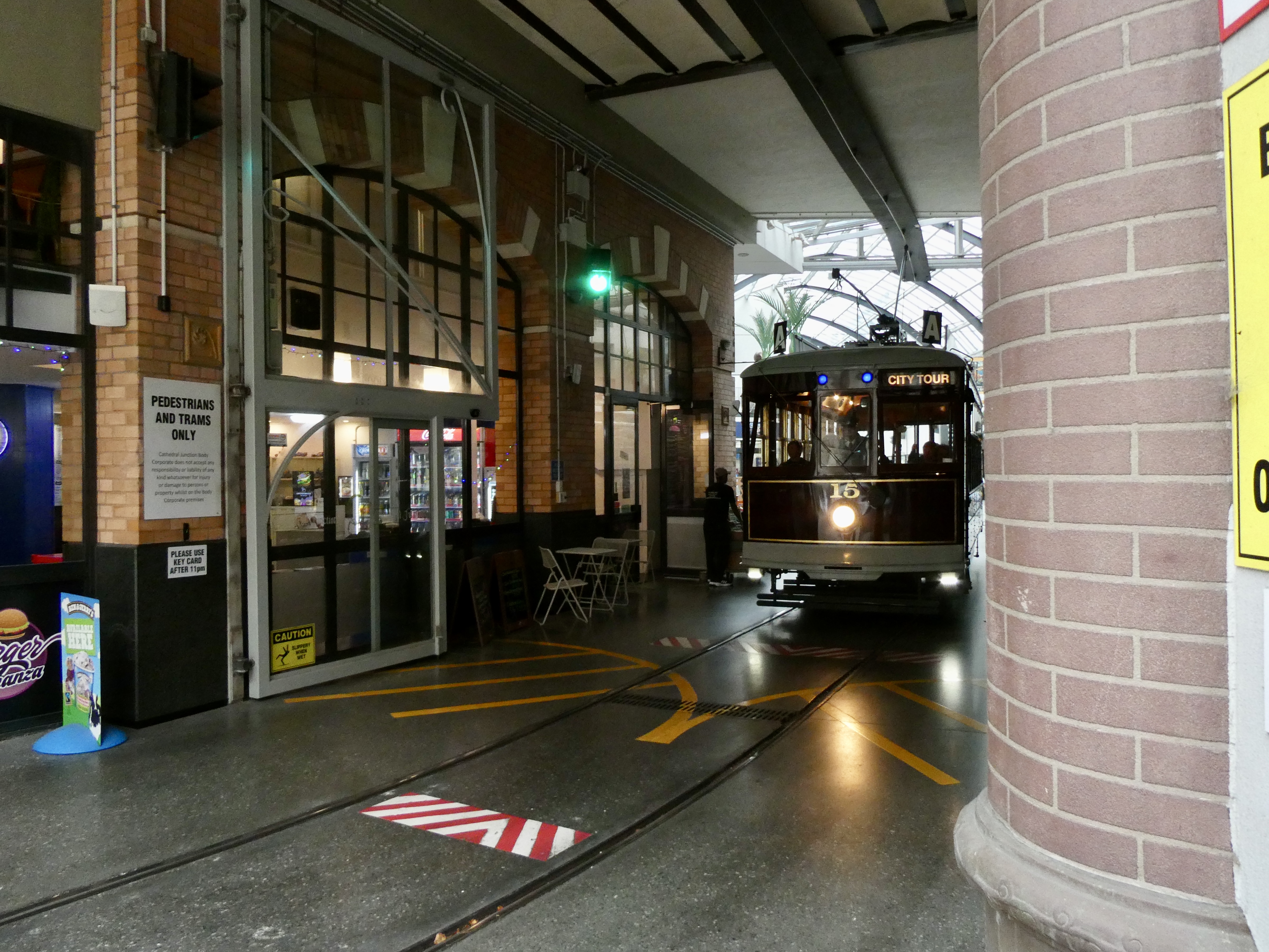
So that is day 1 in the books. Tomorrow we are off for a ride on the river, a trip up the city gondola and a trip around the town on the tram. (And this tram goes everywhere including through an outdoor mall.)