Well … I made it to Barcelona on Saturday night after about a two hour delay leaving Heathrow due to thunderstorms in Barcelona. Once at my hotel, I checked into my lovely hotel with a room overlooking the Barcelona cathedral in the gothic quarter of Barcelona. Now, sadly, two large trees are blocking a lot of my view, but the room is large and sunny so no complaints. And the location is prime real estate with a lot of nearby sites.
Now originally, I had planned to do nothing on Sunday as it was the day I was originally scheduled to fly from Nice to Barcelona, but the lovely desk clerk at my hotel suggested I take the Hop on Hop off bus tour that left from nearby Placa de Catalunya, a large square that seemed to be the departure point for lots of tour buses.

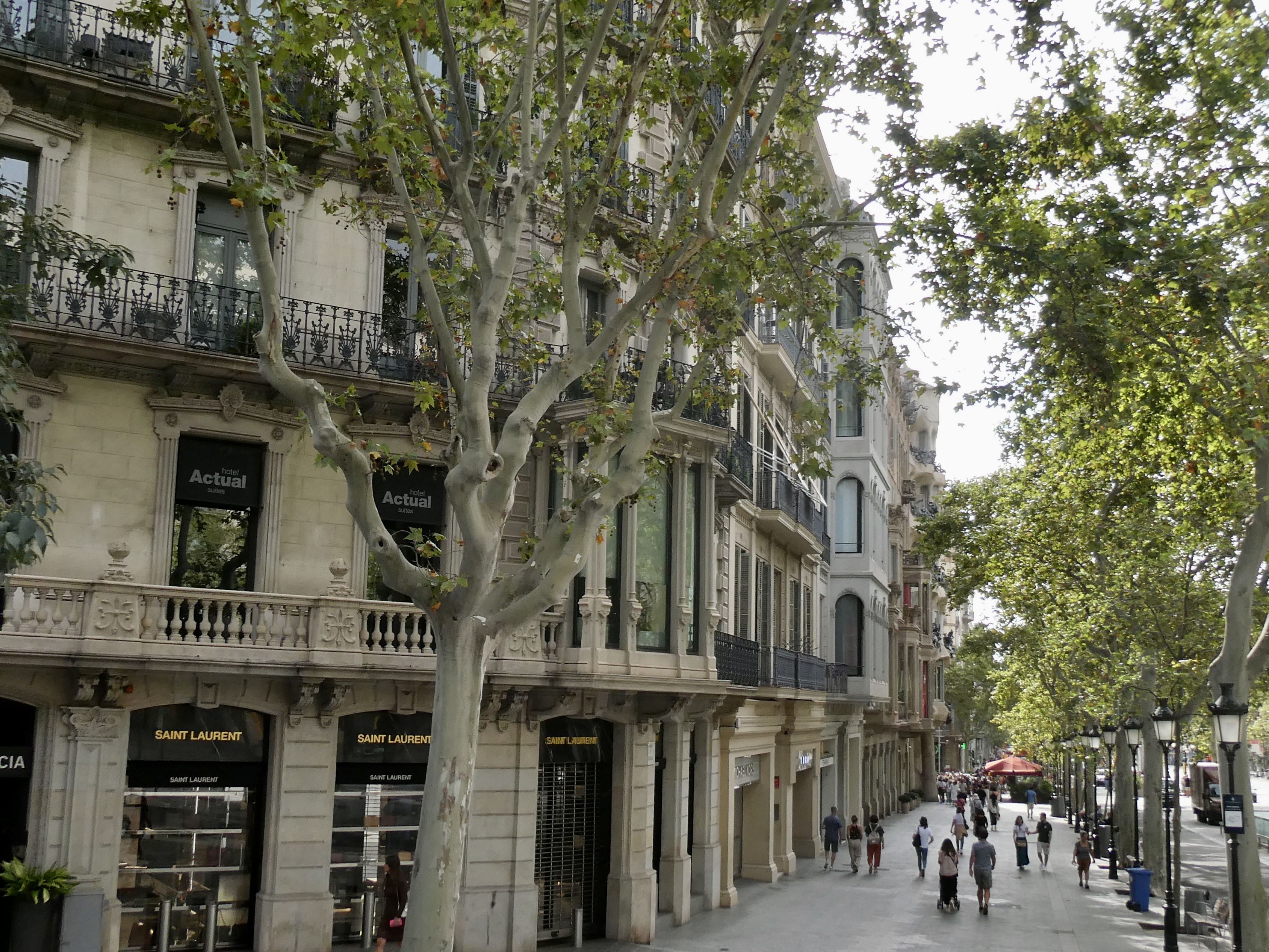
Anyway, I thought what the heck so I walked down the narrow alley from my hotel (the Gothic area is nothing but narrow alleys, shops, restaurants, bars and hotels … very cool location) to Las Ramblas (one of the main streets in the area) and then turned right and walked about 5 minutes to the square. Once at the square, I found the departure point and hopped on the Blue Line and figured once I finished the Blue Line, I would take the Red Line.
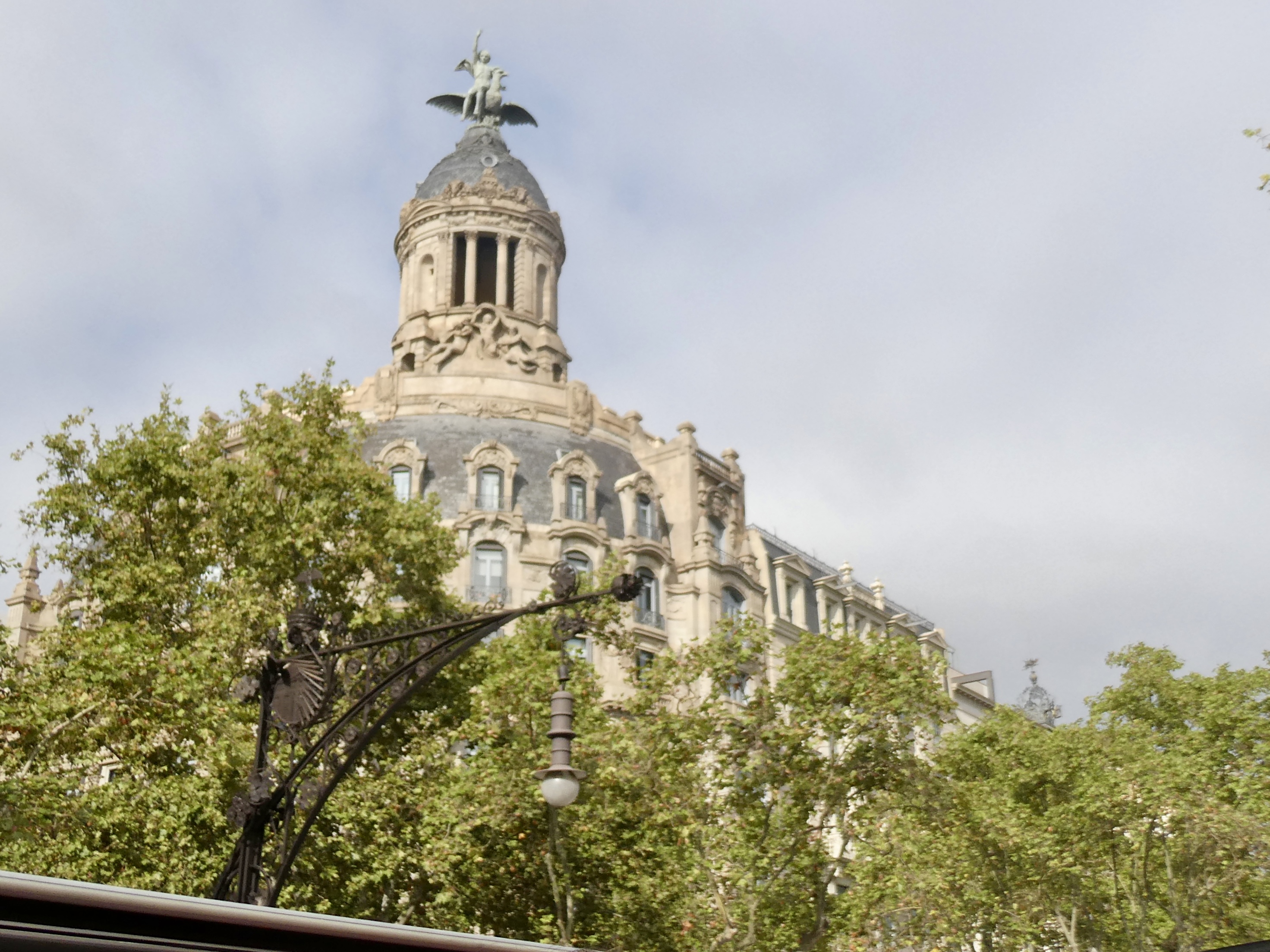
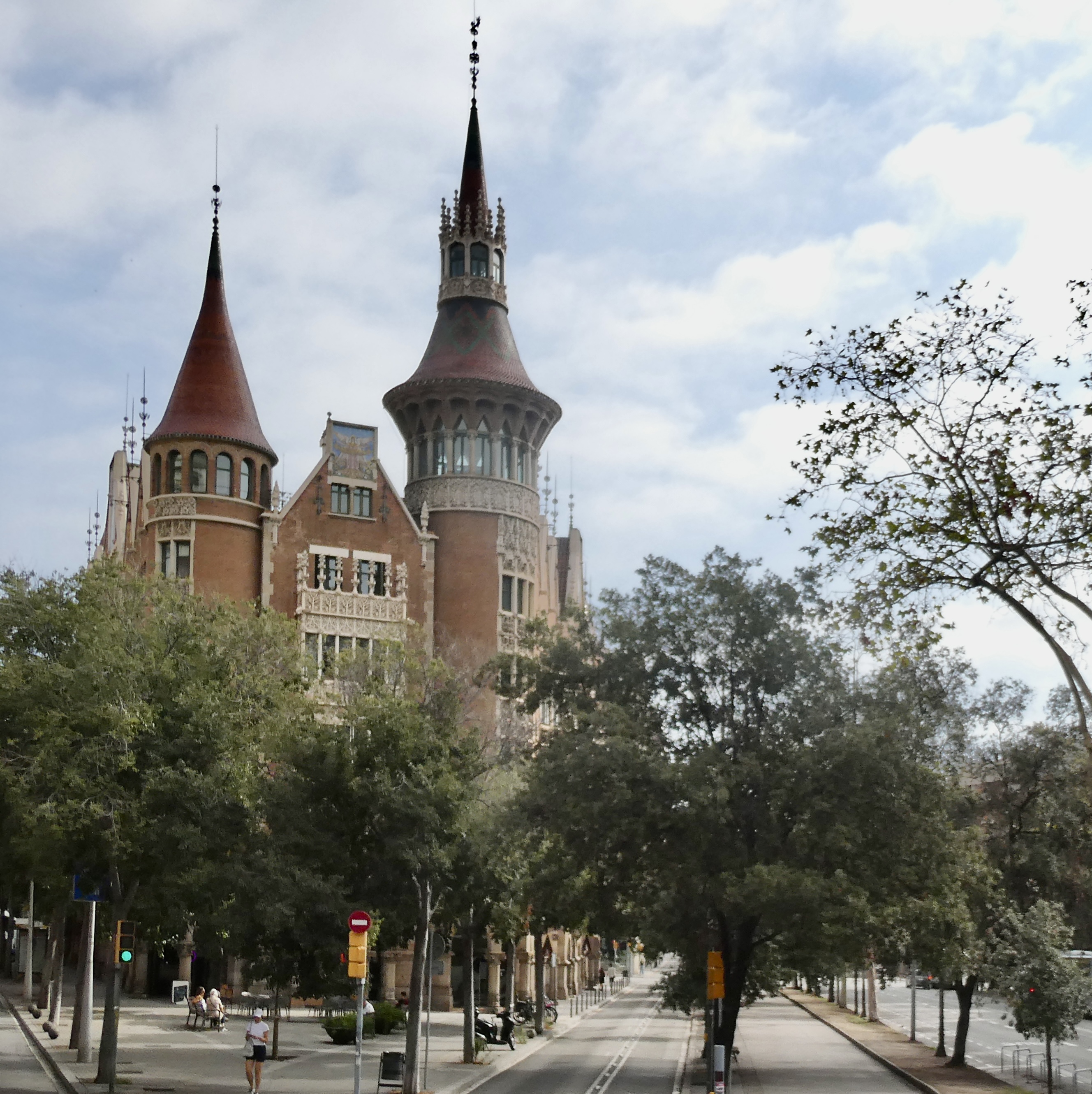
Now the Blue Line was a two hour bus trip that took us to the east part of the city through lots of old neighborhoods and past some pretty cool architecture. The famous Spanish artist Gaudi, figured prominently in a lot of the old Spanish villas that are now used as upscale apartments.
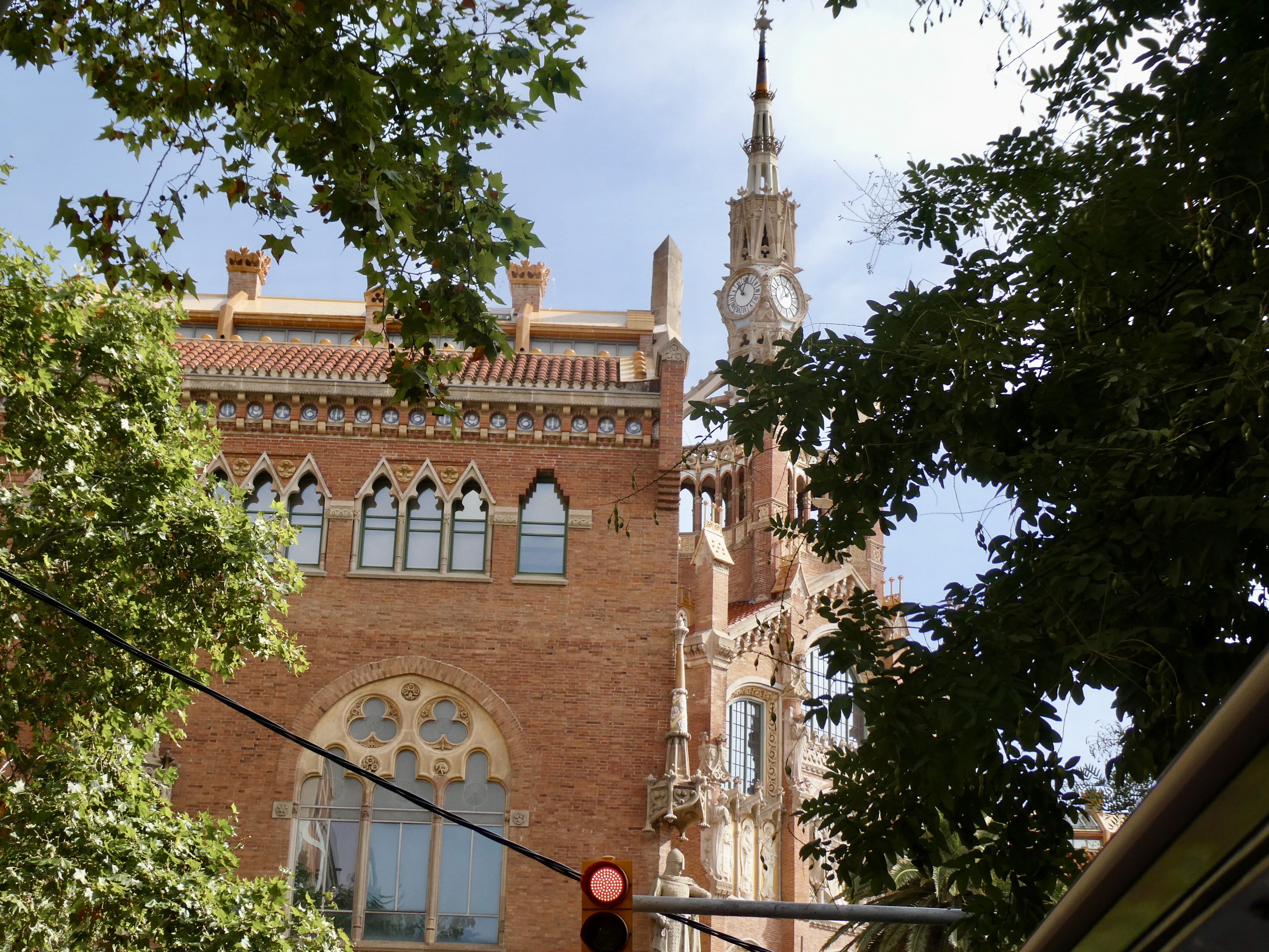
Along the route we passed the massive Recinte Modernista de Saint Pau, a former hospital constructed between 1902 and 1930 by architect Lluís Domènech i Montaner. The site is now a UNESCO World Heritage site and features 27 buildings connected by gardens and underground passages and was built between 1902 and 1930. Today, the buildings are used as a cultural center and museum. It was gorgeous.
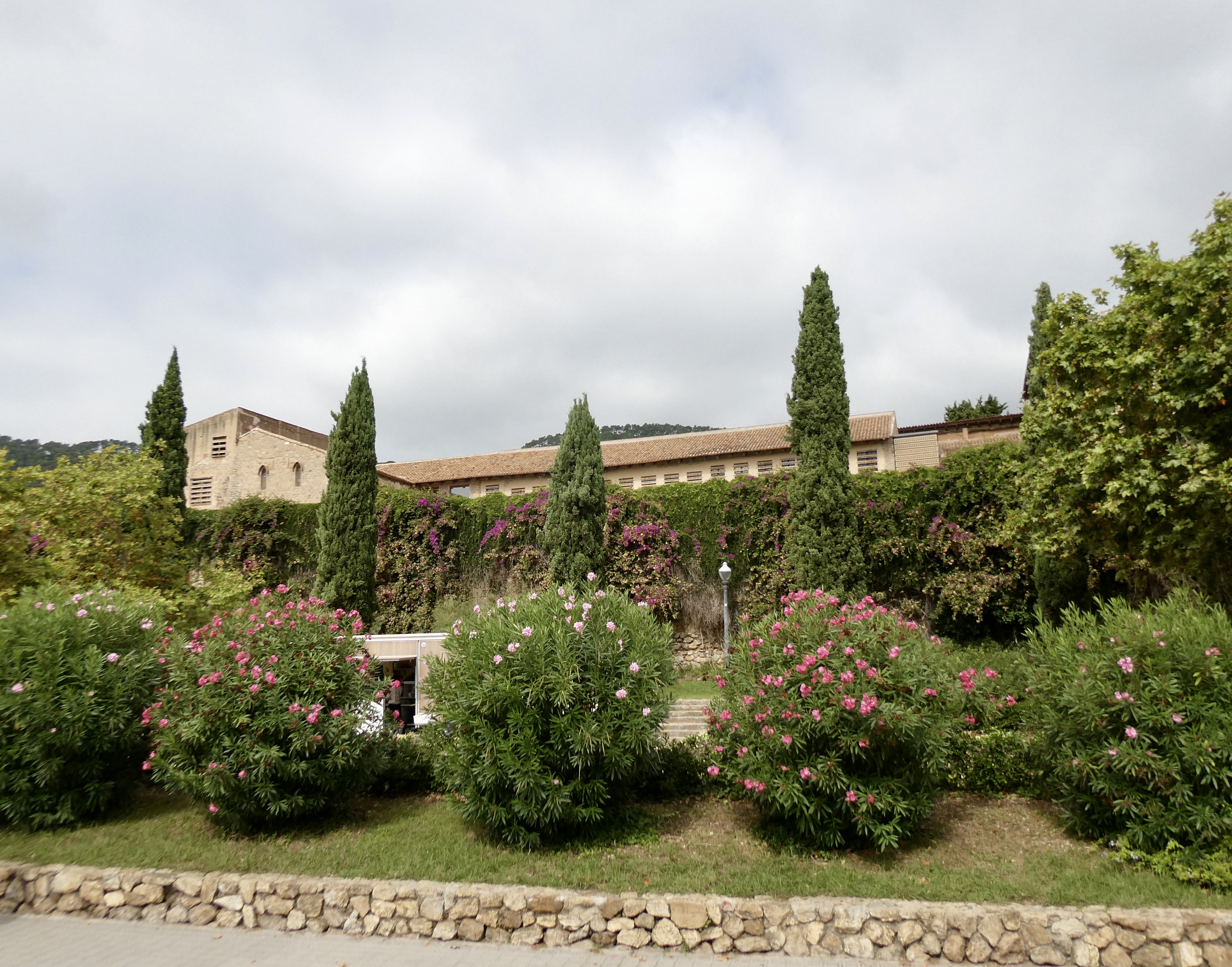

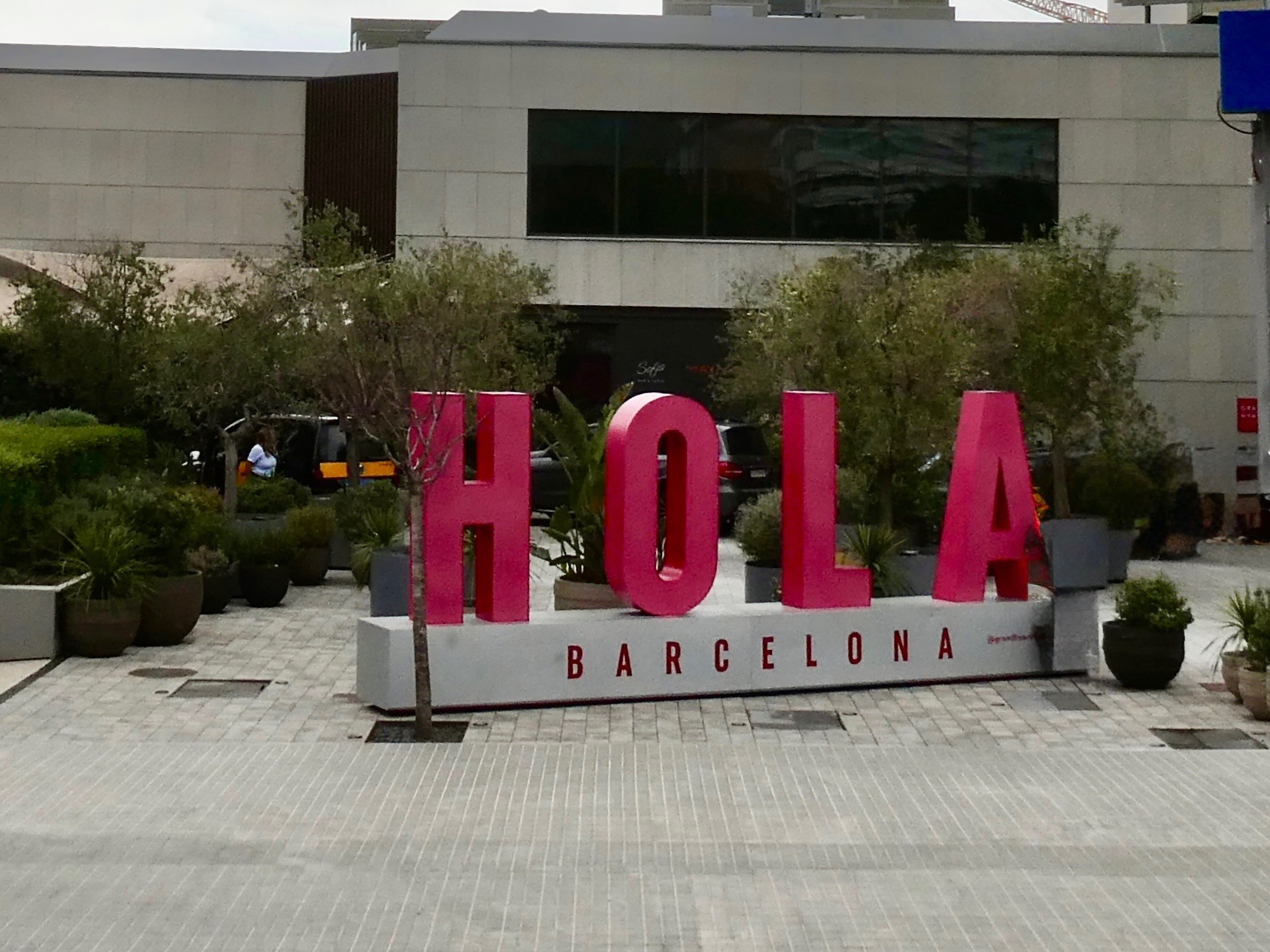
As we continued through neighborhoods, we passed by the Park Guell, a large inner city park, a monastery, the new massive (and I mean massive) stadium being constructed for Barcelona FC, and several large shopping areas before returning back to our starting point.
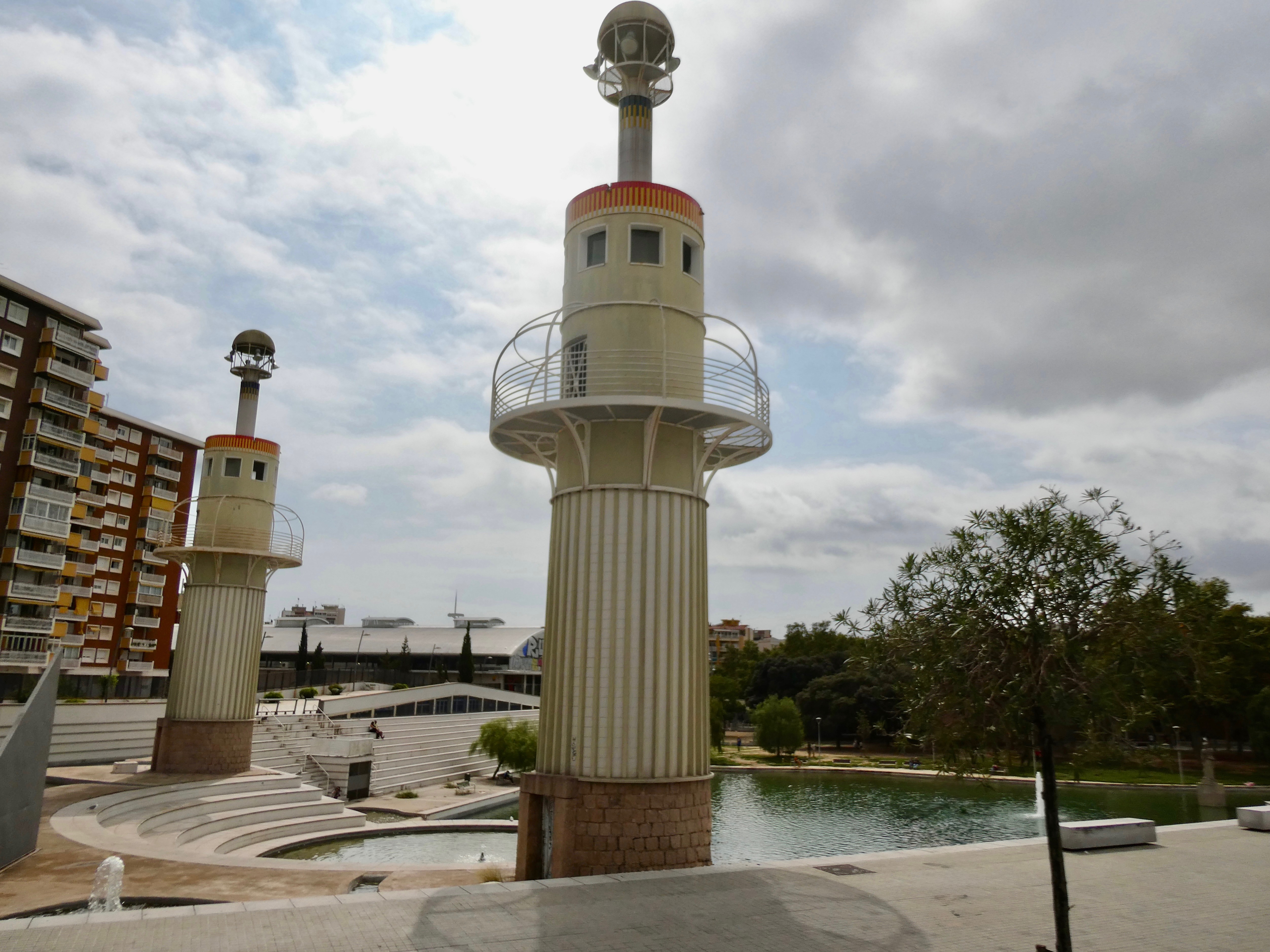
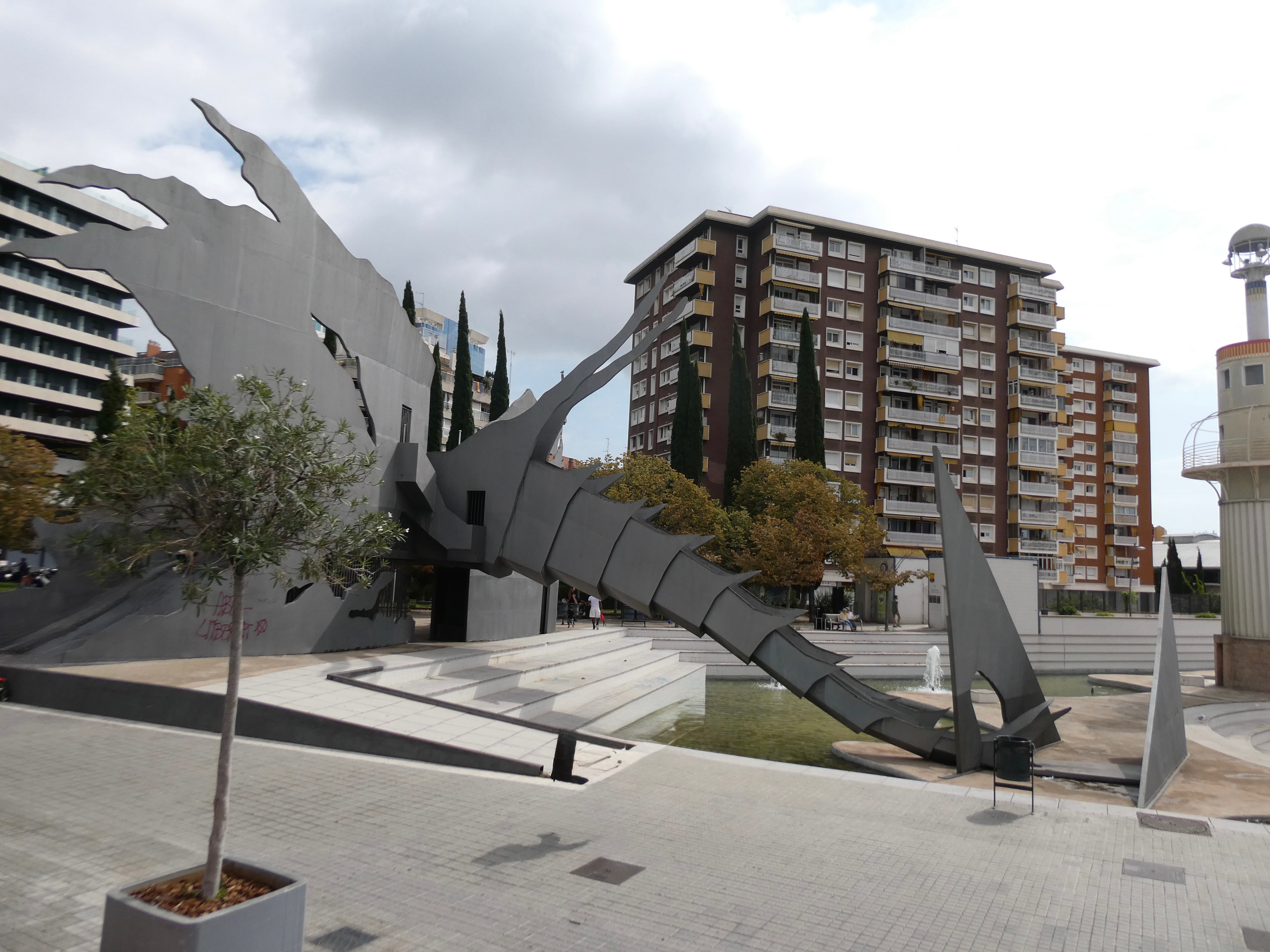
Now in order to catch the Red Line, I had to say on the bus and get off at stop #2 for the Blue Line. Once of the bus, we headed to the west first taking in the park area known as Parc Espanya Industial near Barcelona Sants, the main train station in Barcelona. The area featured a man made lake, lots of walking trails and some pretty cool art.
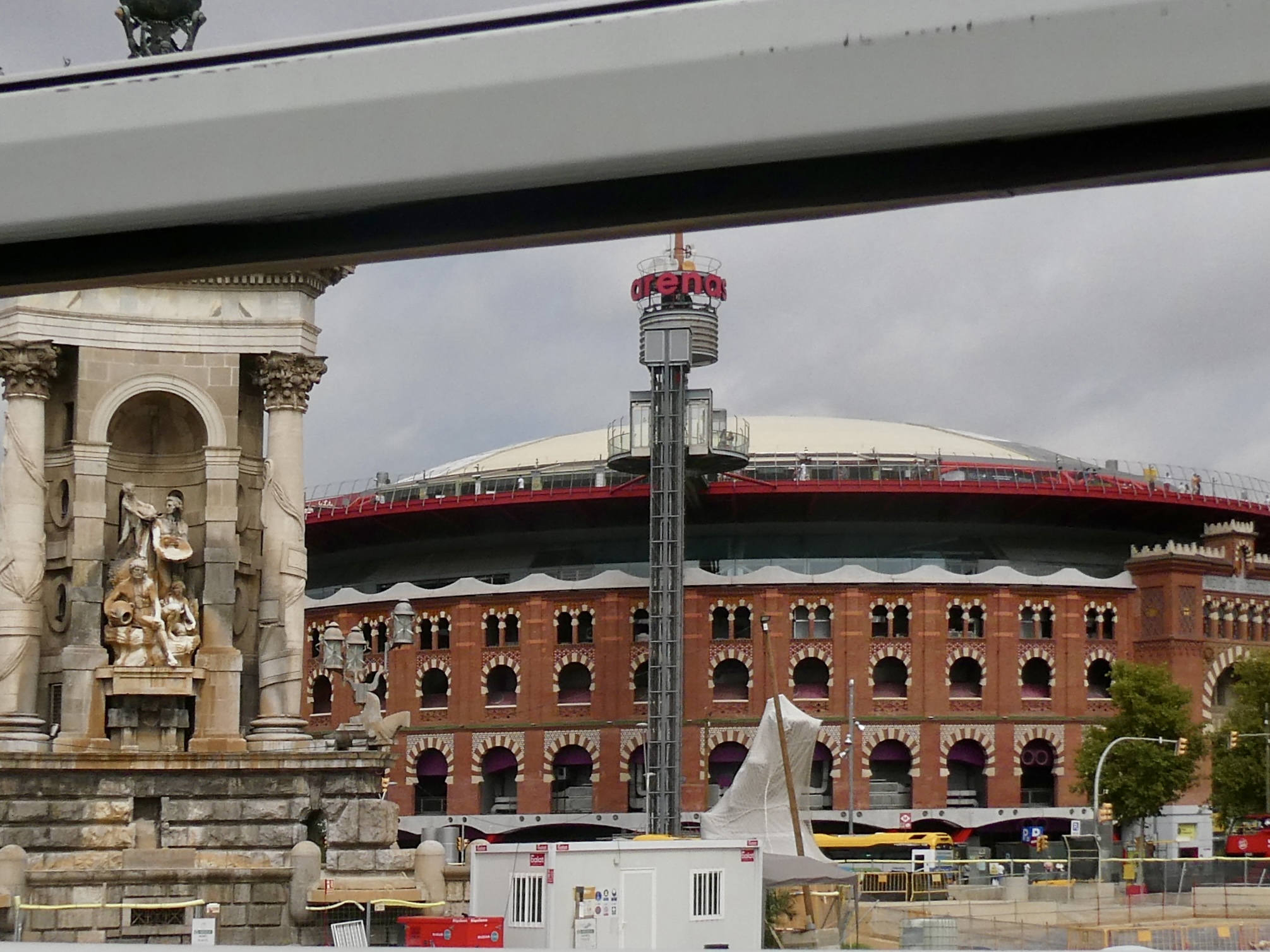
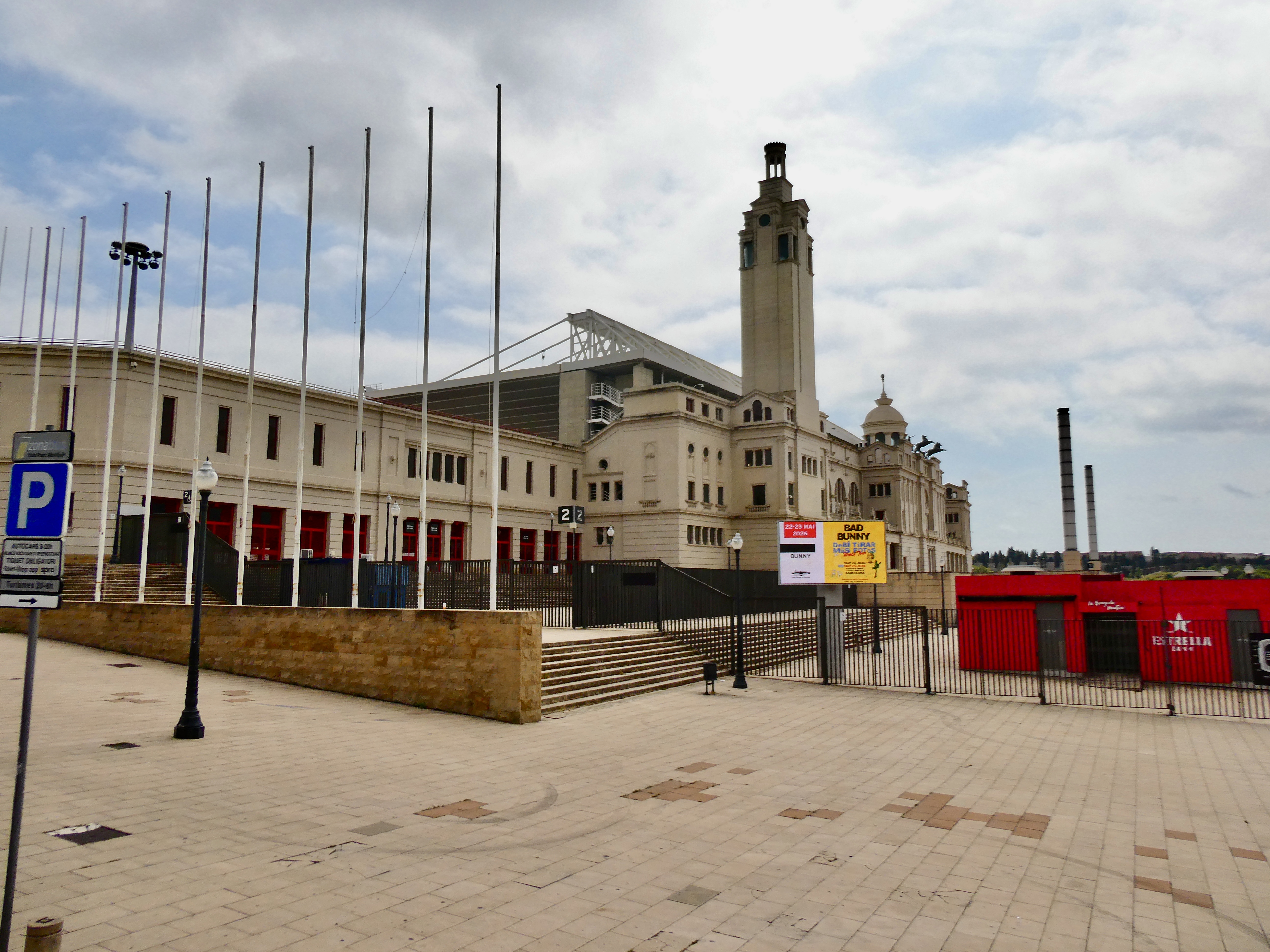
From here, we headed past the old Barcelona bull ring (no longer used as bull fighting is outlawed in Barcelona) and up into hills of Monjuic Mountain to area known at Parc Montjuic. Now this area was particularly interesting because it featured the Olympic Stadium where the Summer Olympics were held in 1992 as well as swimming and diving facilities. And the views from here were absolutely stunning. (I would actually be coming back here tomorrow for a tour of the nearby Montjuic Castle.)

After passing through Parc Monjuic, we made our way down the hill and to the Barcelona port where there were 5 cruise ships and 2 ferries from Italy docked for the day. Cruise ships have become a huge source of discontent with the locals so I was rather surprised to see so many docked as I understood they were trying to limit the cruise ship traffic.
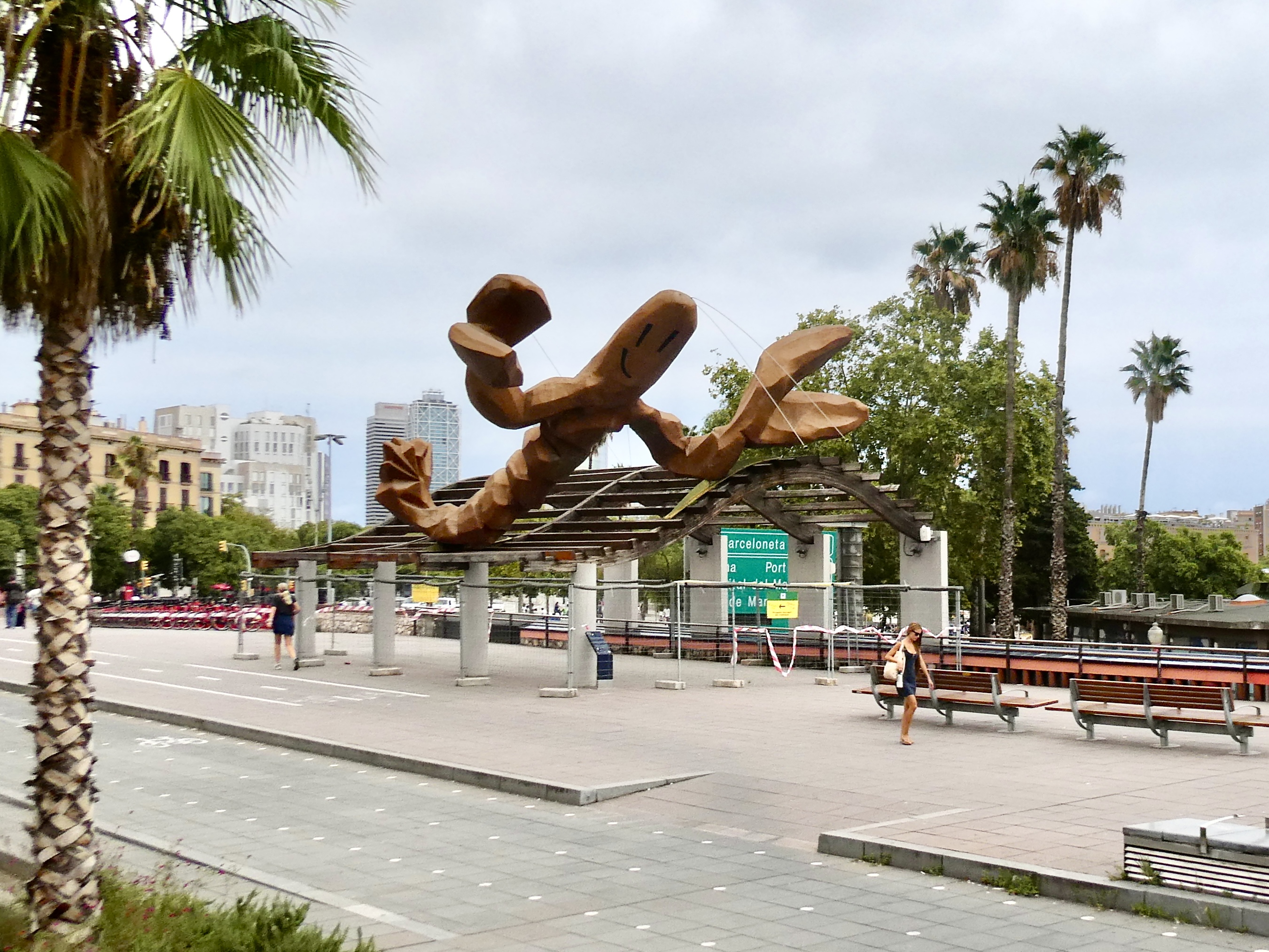
Anyway, from here, we cruised along the tree lined waterfront passing the monument known as La Rambla Colon, a 60 meter tall statute built in 1888 that honors Christopher Columbus’s first voyage to the Americas. And all along the waterfront there were seafood restaurants and shops as well as some really cool giant art installations.
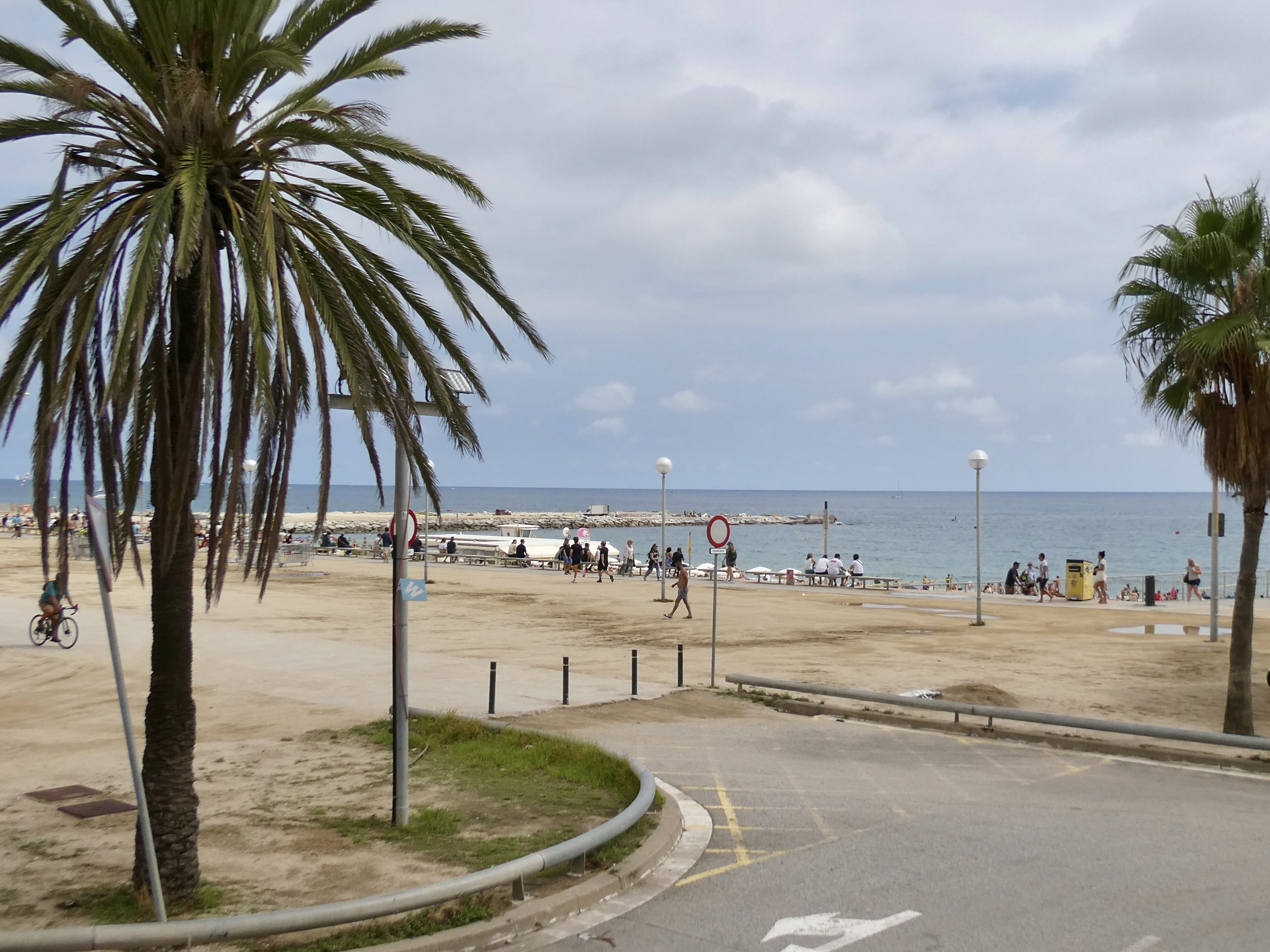
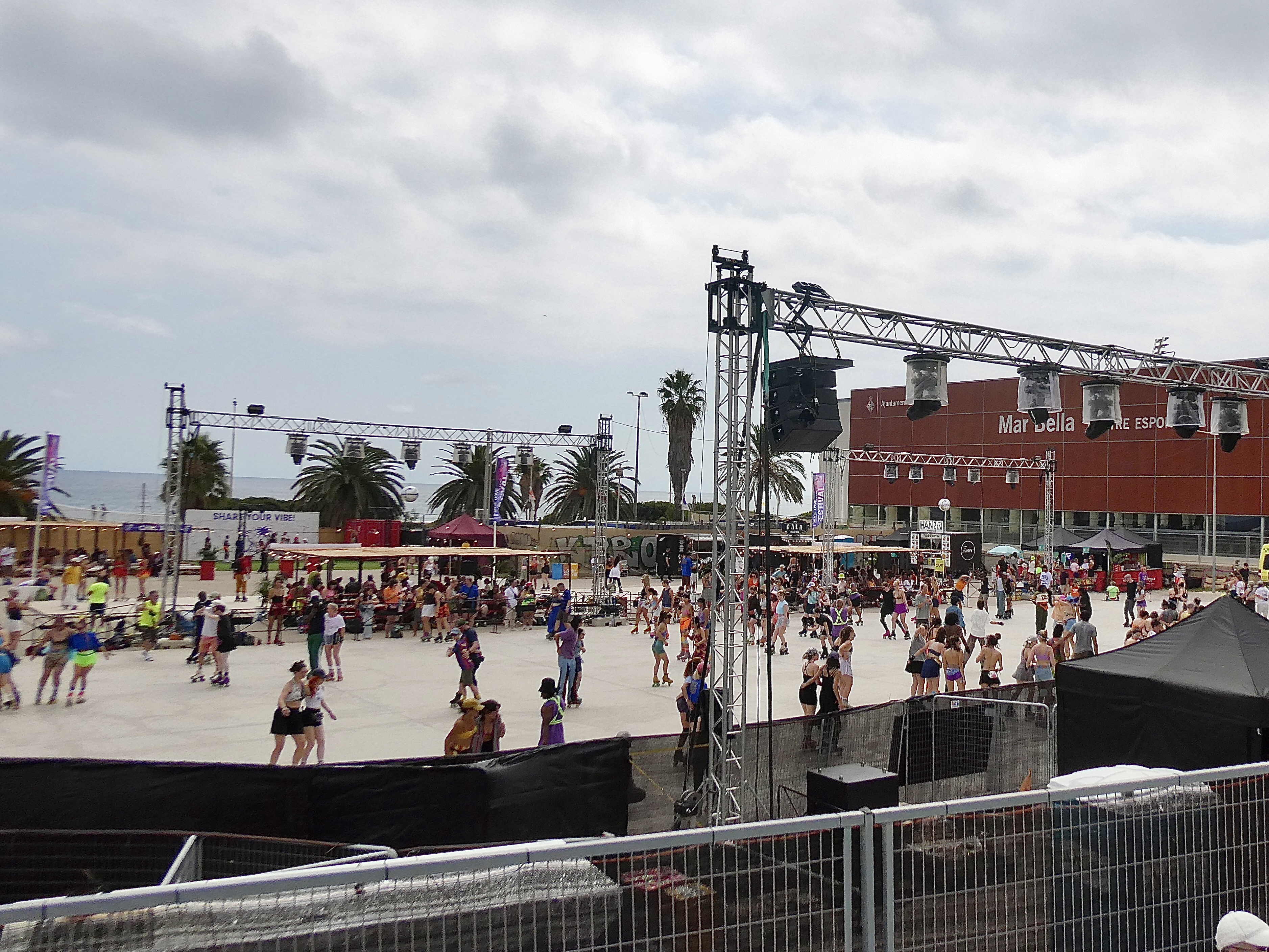
Once past the shopping district, we entered the beach area where Barcelona has constructed 5 km of man made beaches. Now the beaches were originally constructed for the Olympics, but the beaches were so popular they remain today. However, because they are man made, the sand has to be replenished each year. And in addition, to the beach area, there were a lot of recreational areas including a skate park, soccer pitch and an area to practice cross-fit.
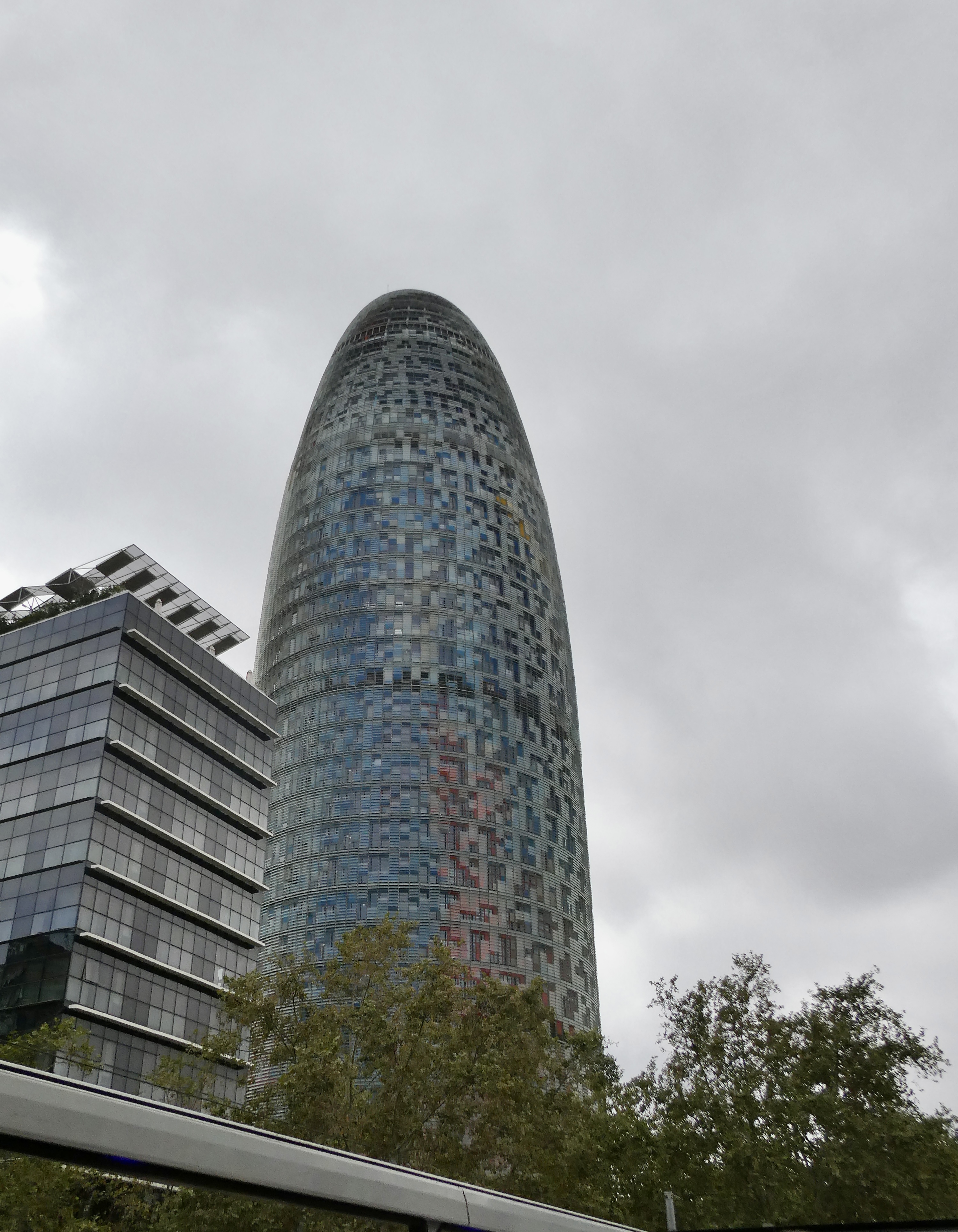
After the beach area, we headed east and took in the Torre Glories, a bullet shaped 38 story building that was constructed with polychrome glass louvers that change color with the building’s temperature. Unfortunately, it was a tad cloudy so we did not get the full effect of the building.
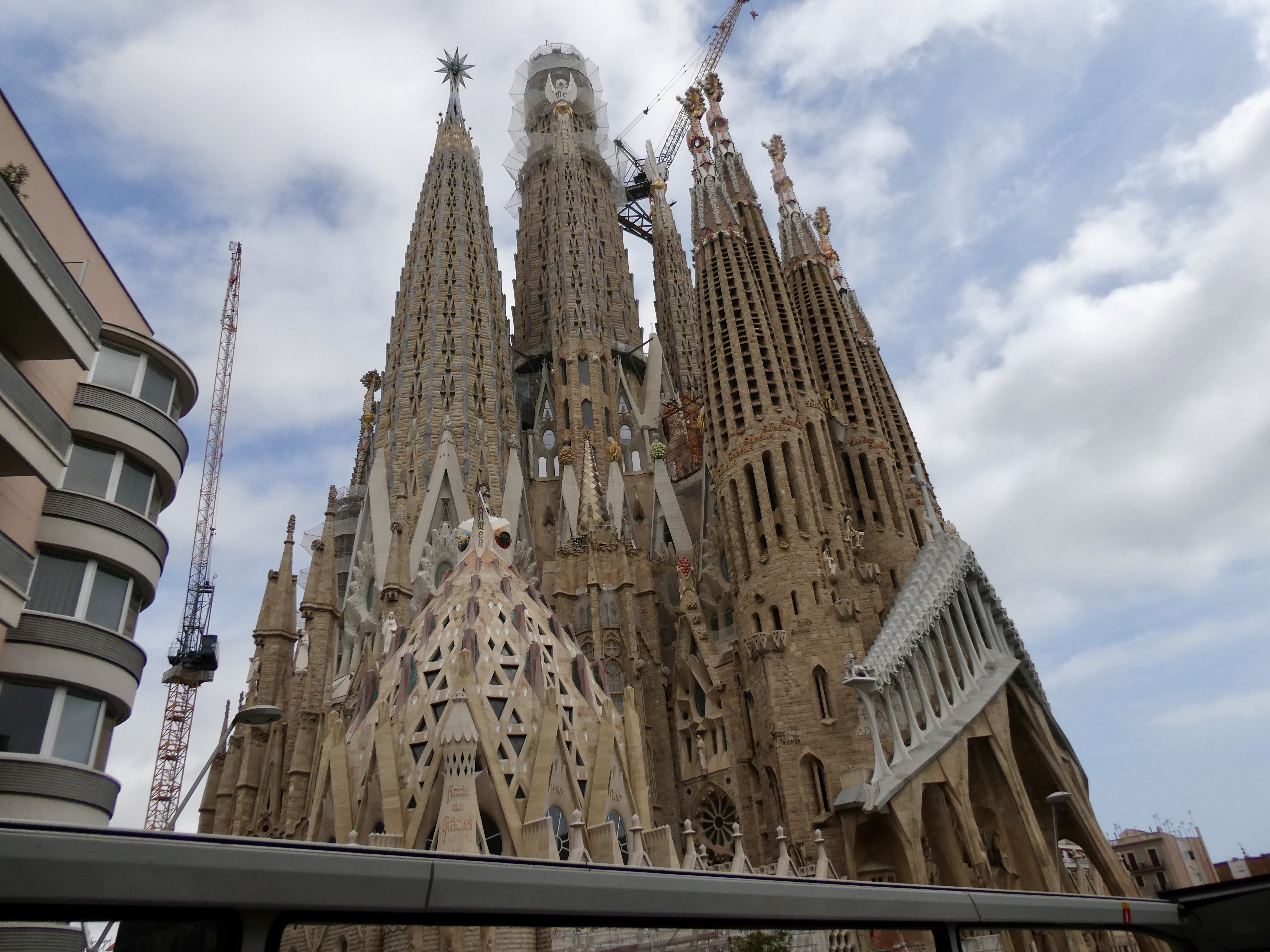
From here, we drove through a business district before driving past the historic La Sagrada Familia, Gaudi’s famous church that is still, after almost 100 years, under construction. (I will be visiting this site on Tuesday.). As we drove past, it was clear that today was not the day to visit the church. The area was teeming with tourists, tour groups, and tour buses.
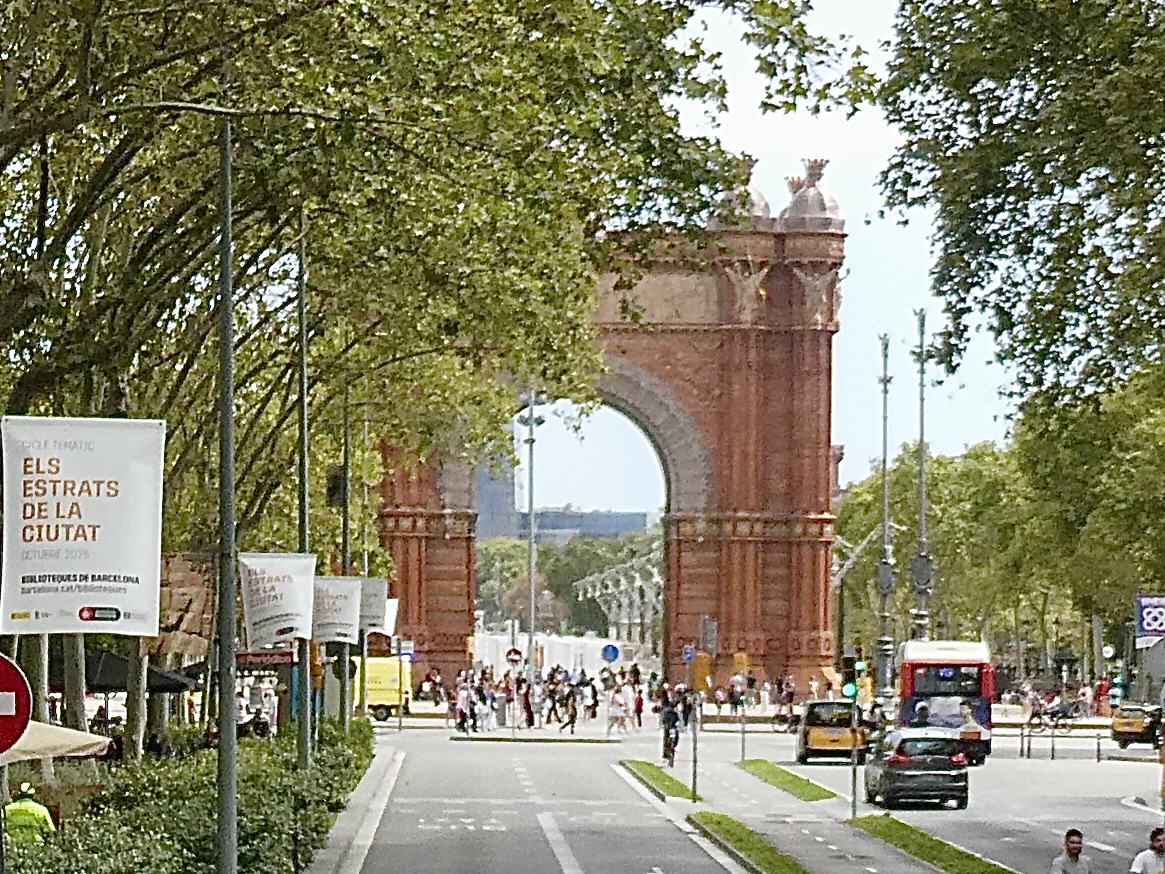
At this point, we were nearing the end of the bus tour. We ended up passing near the Arc de Triomf (Barcelona’s version of the entry gates to the city) before ending the tour back where we started.
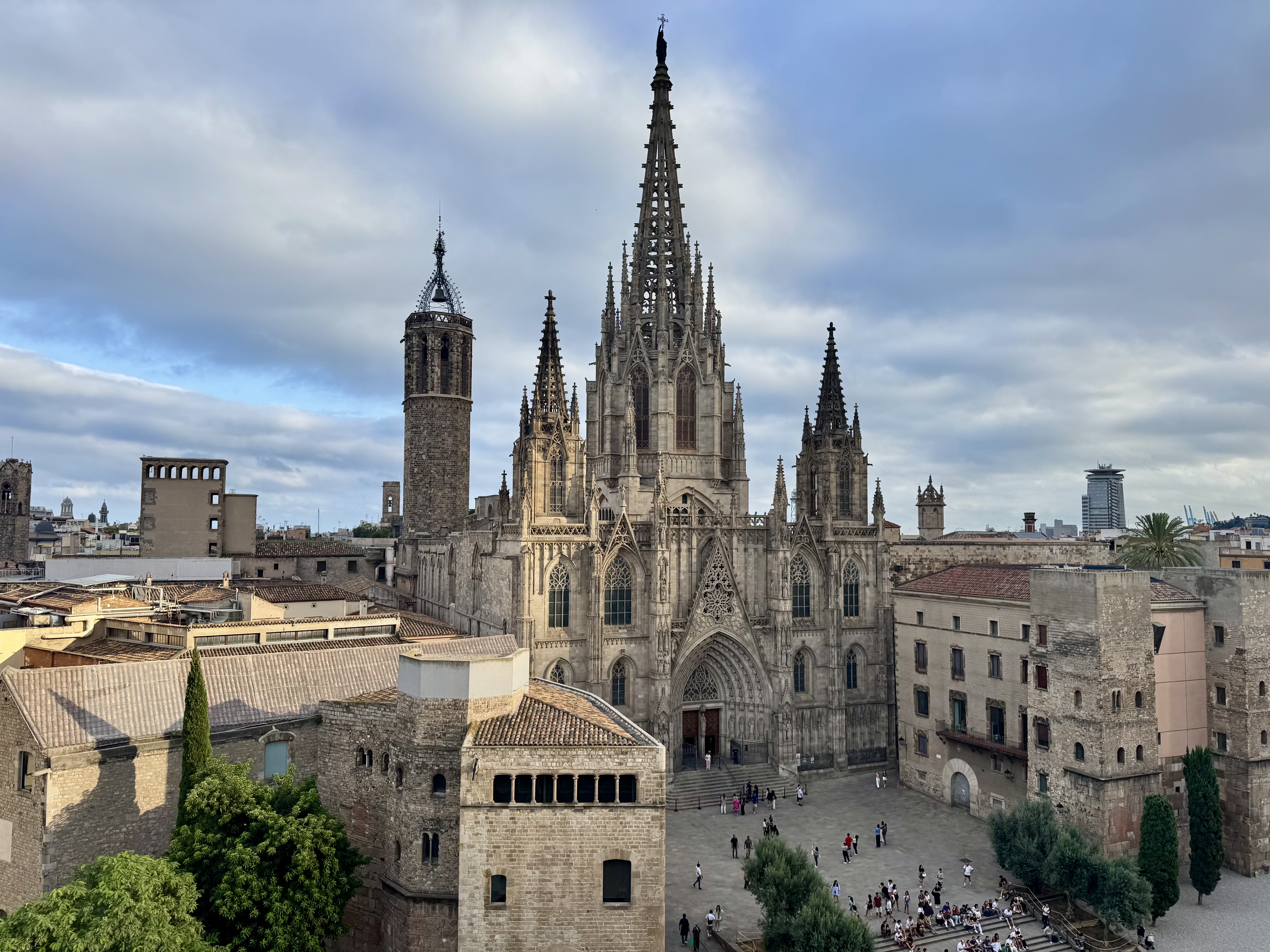
So once I walked back to the hotel, I took a nap and then headed up to the 7th floor outdoor bar with magnificent views to the Barcelona cathedral. I ended
up having a couple tapas and a drink and then called it a night.
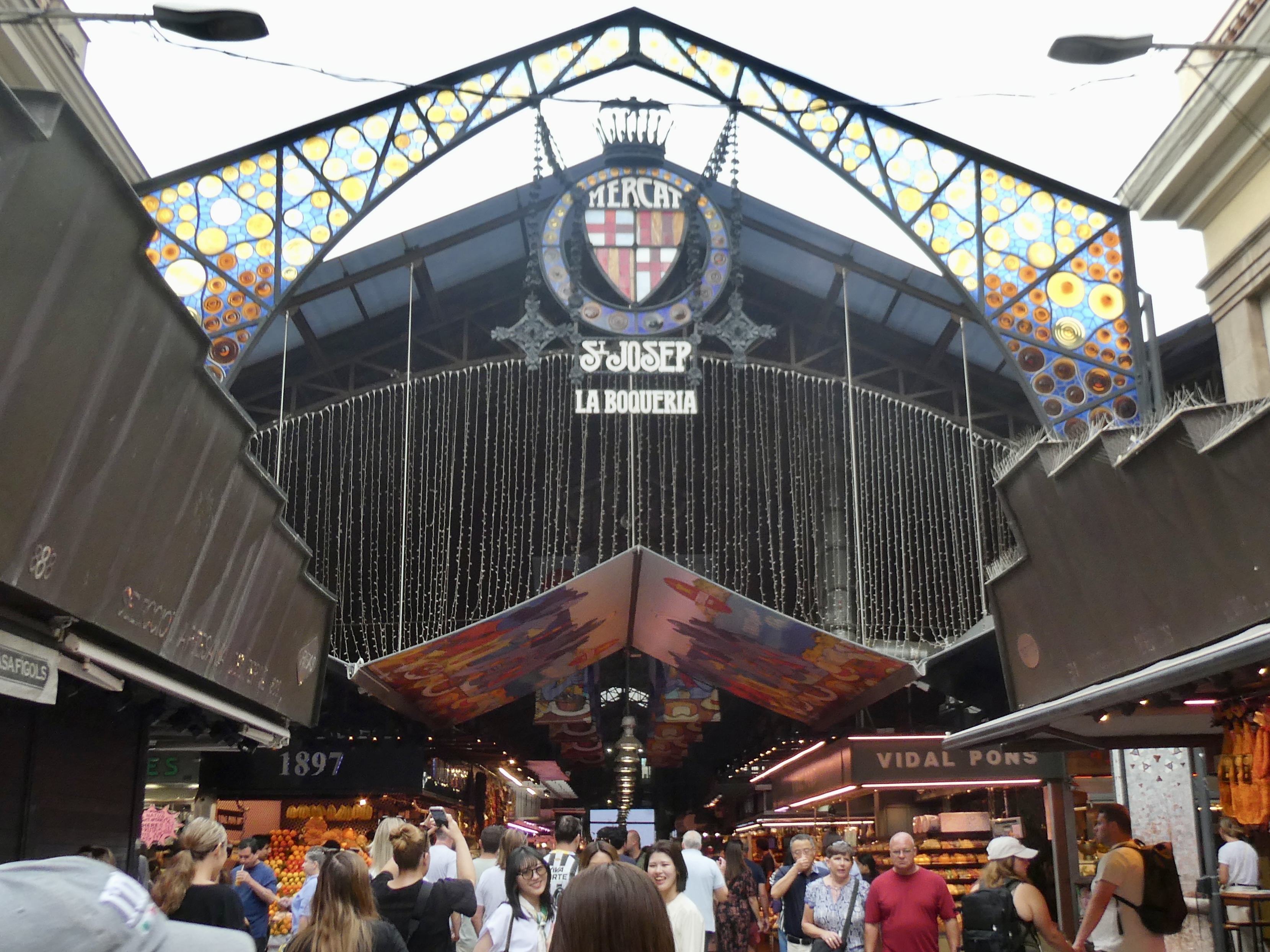
My tour on Monday was a short walk through the old town and the nearby La Boqueria, the Barcelona market before heading to the tram which would take us to the cable car and the ride up to Castell de Montjuic for a walk around the castle with its stunning views of Barcelona. I was joined on the tour by two couples from England and a couple from Brazil. Our tour guide, Pepe, was OK, but not the best tour guide I have had.
And once we began the tour, I found that the walk around old town wasn’t particularly riveting. We walked some alleys, learned about the history of Barcelona, which dates to 5,000 BC, and has been settled by the Phoenicians, the Romans and Visigoths. At one time Barcelona was part of France, was later conquered by Spanish Royalty and today still asserts its independence as the capital of autonomous area known as Catalonia. (As recently as 2019, there were massive demonstrations for independence.) However, we did not really see much of the main sites in the old town, which I found disappointing.
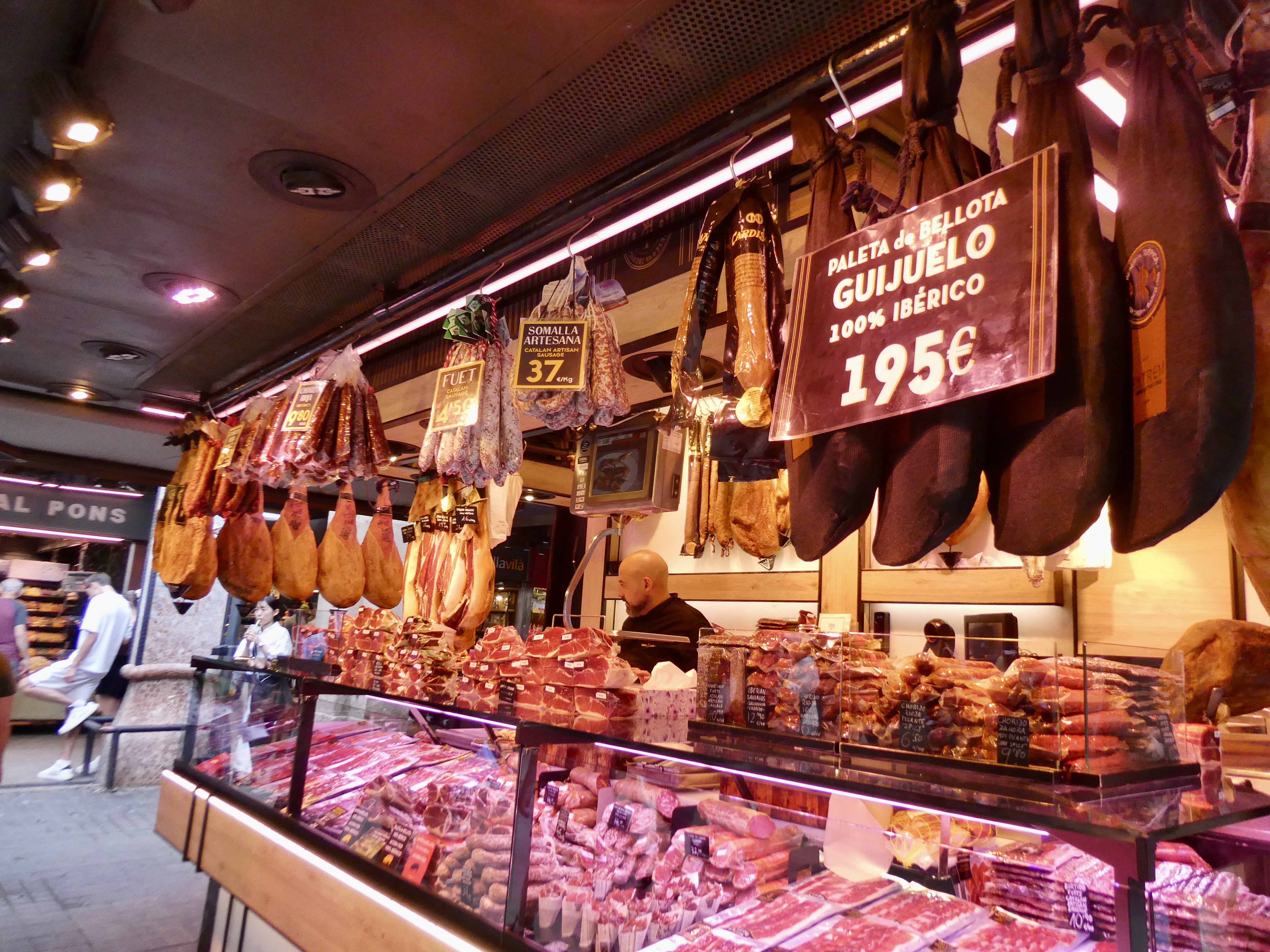
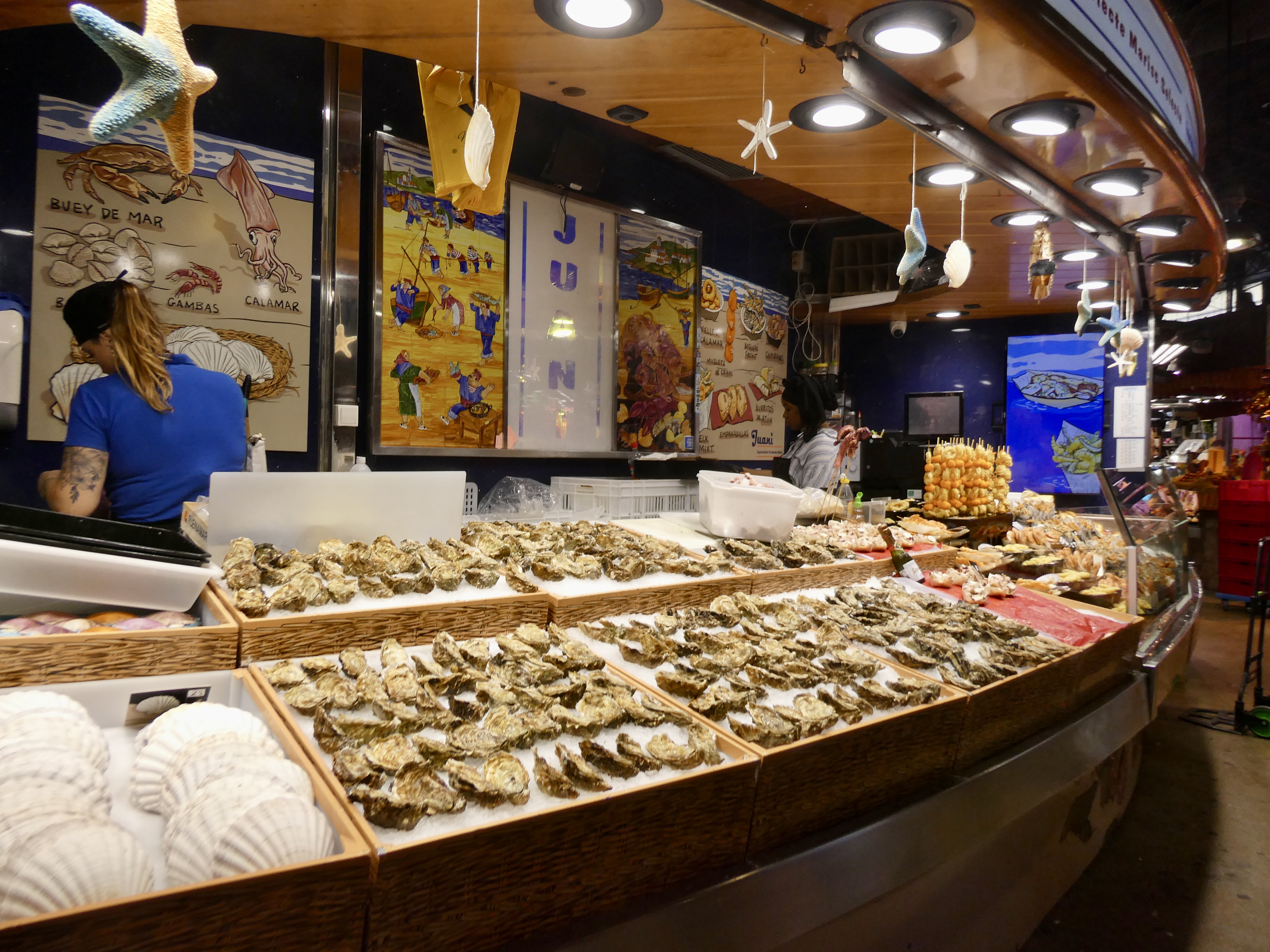
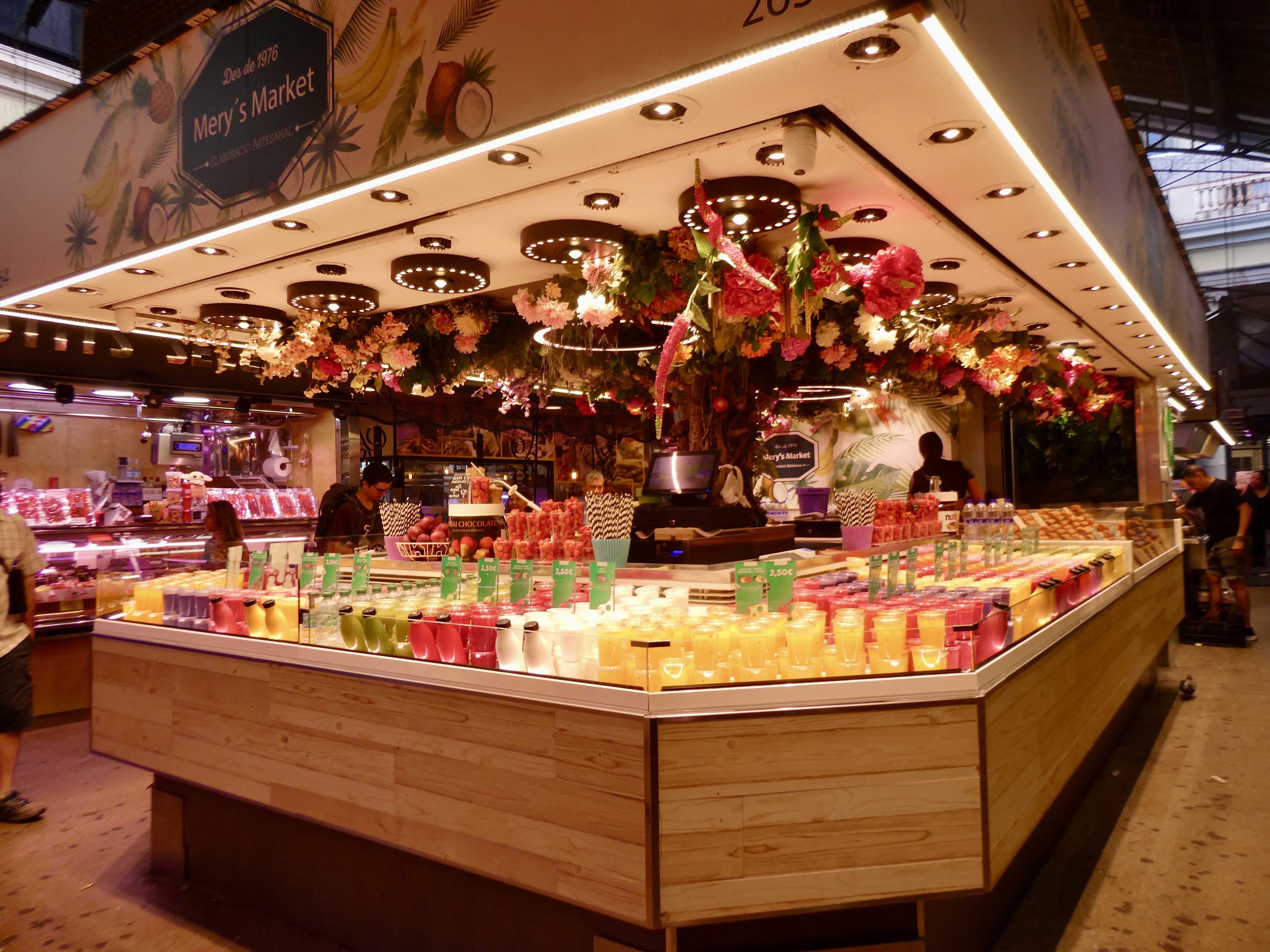
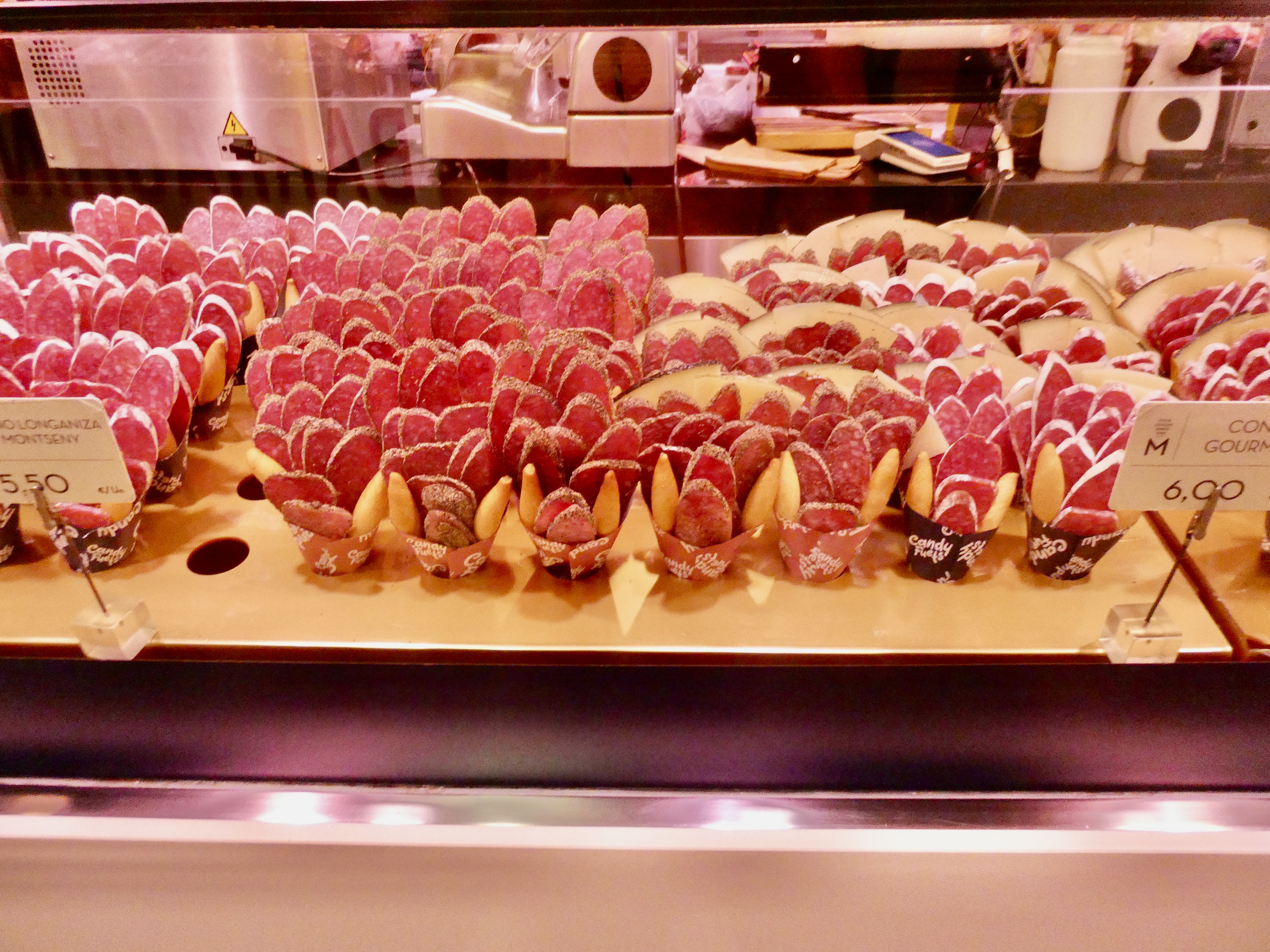
In fact, once we had some background and understanding of how the city developed, we simply walked along the large center boulevard of Las Ramblas, without taking in many of the historic sites. Instead, the walk took us to the Boqueria Market, which dates to the 13th century. The present structure was built in the 19th century and features colorful stalls selling a wide variety of fresh produce, seafood, meats, cheeses, sweets, and more.
And despite the fact we missed many of the historic sites, the trip to Boqueria Market was probably the highlight of the tour. In fact, I have been to more markets than I can count, but this market was something else. The prepared foods for sale were unbelievable with every kind of pintxo (tiny snacks often served on bread), meats, cheeses, olive oil, oysters, shrimp, clams and on and on. It was sensory overload. I could have spent hours in that place. Now fortunately, I should have some time later in the week to spend more time here and perhaps eat my way through the market. In the mean time, we ended up having about 15 minutes to wander around and I found a juice stand where I bought a dragon fruit and mango juice that absolutely rocked. YUM!!!
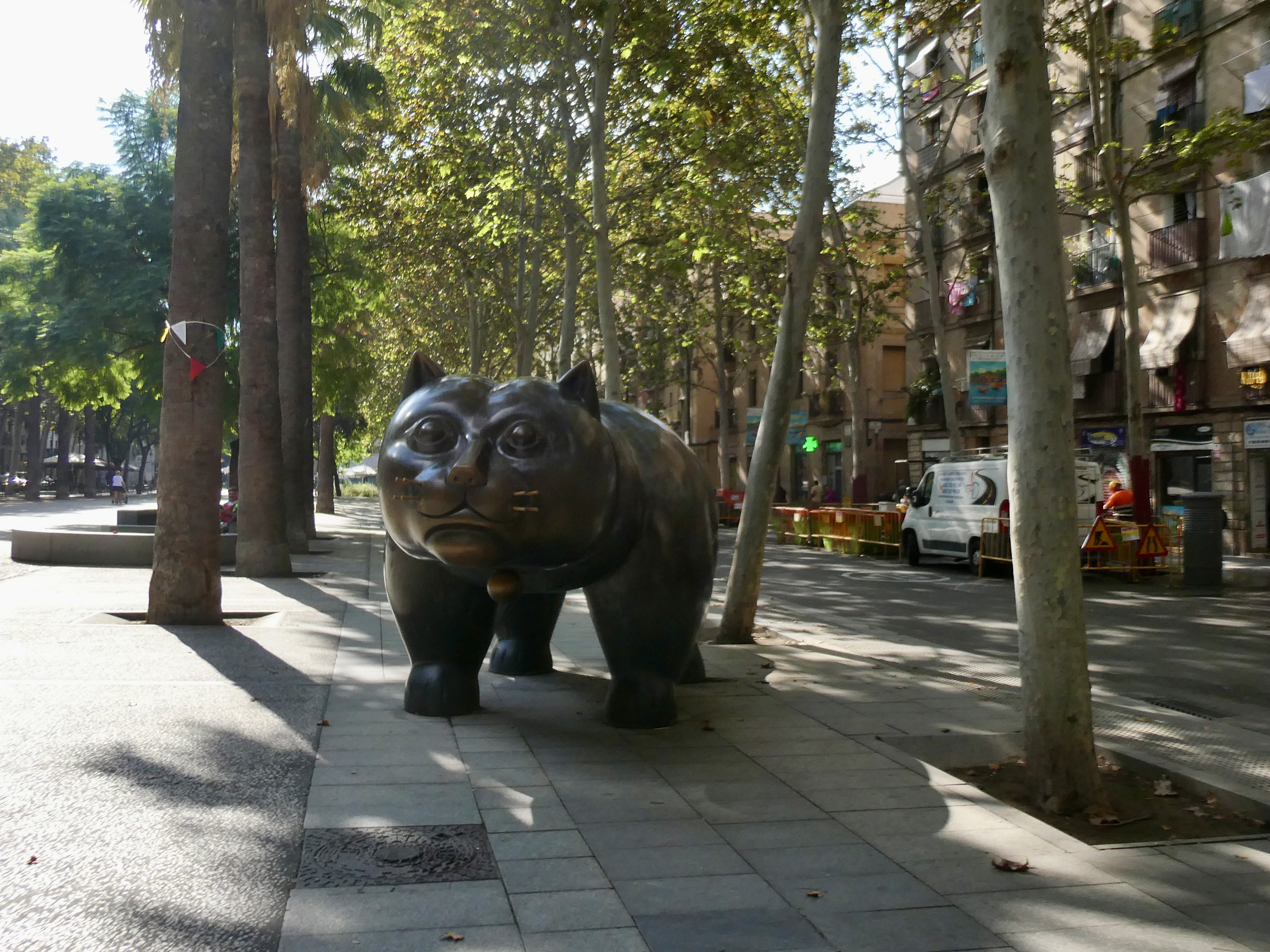
Once we left the market, we took a walk through the El Ravel neighborhood, one of the oldest neighborhoods in old Barcelona. (There are three neighborhoods, El Ravel, the Gothic Quarter and El Born.) We wandered around the back streets and quite frankly, the walk was again not particularly interesting besides a massive statute of a cat. In fact, we learned that this area has become a bit of a problem and is not particularly safe after the sun sets.
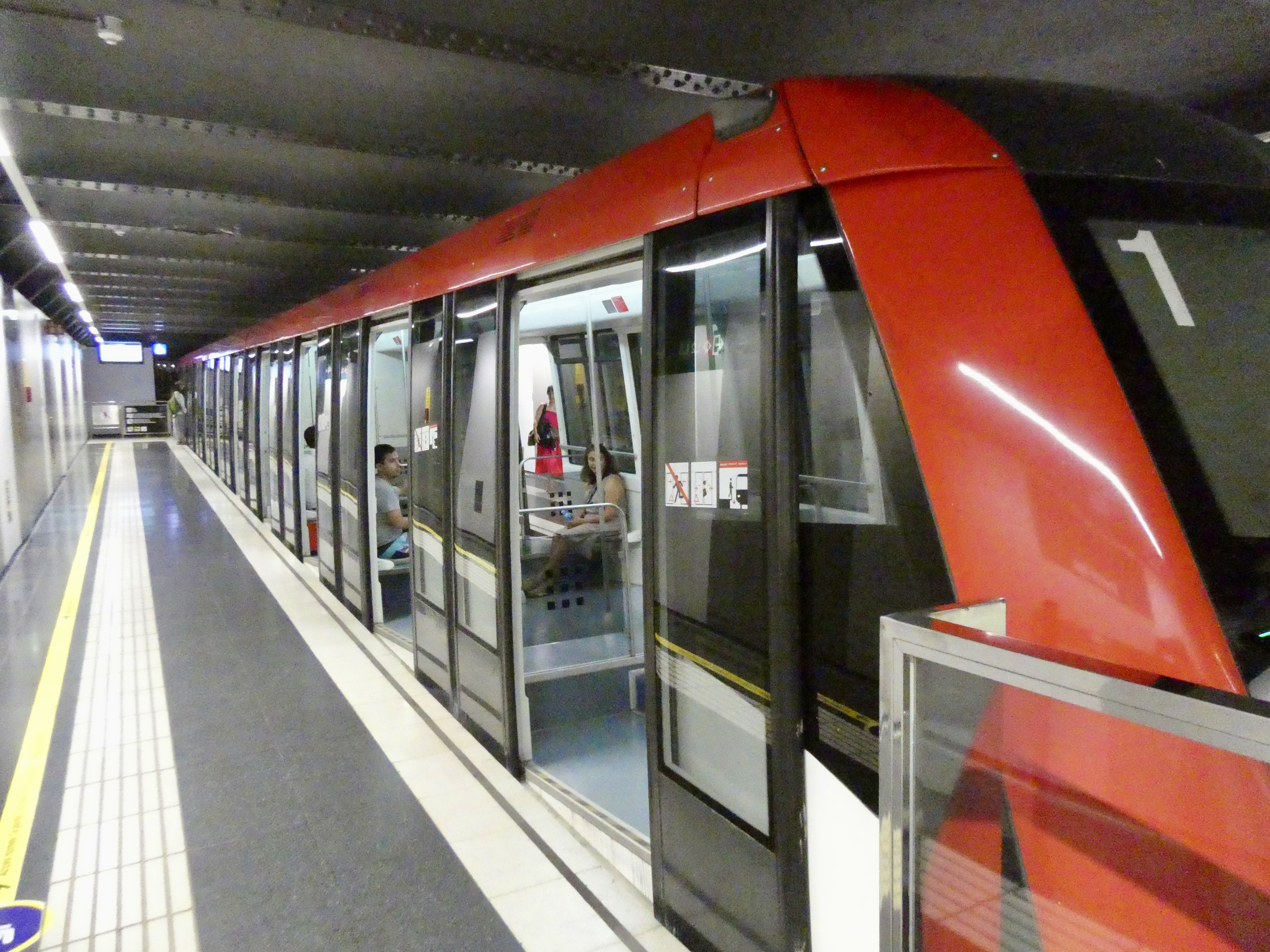
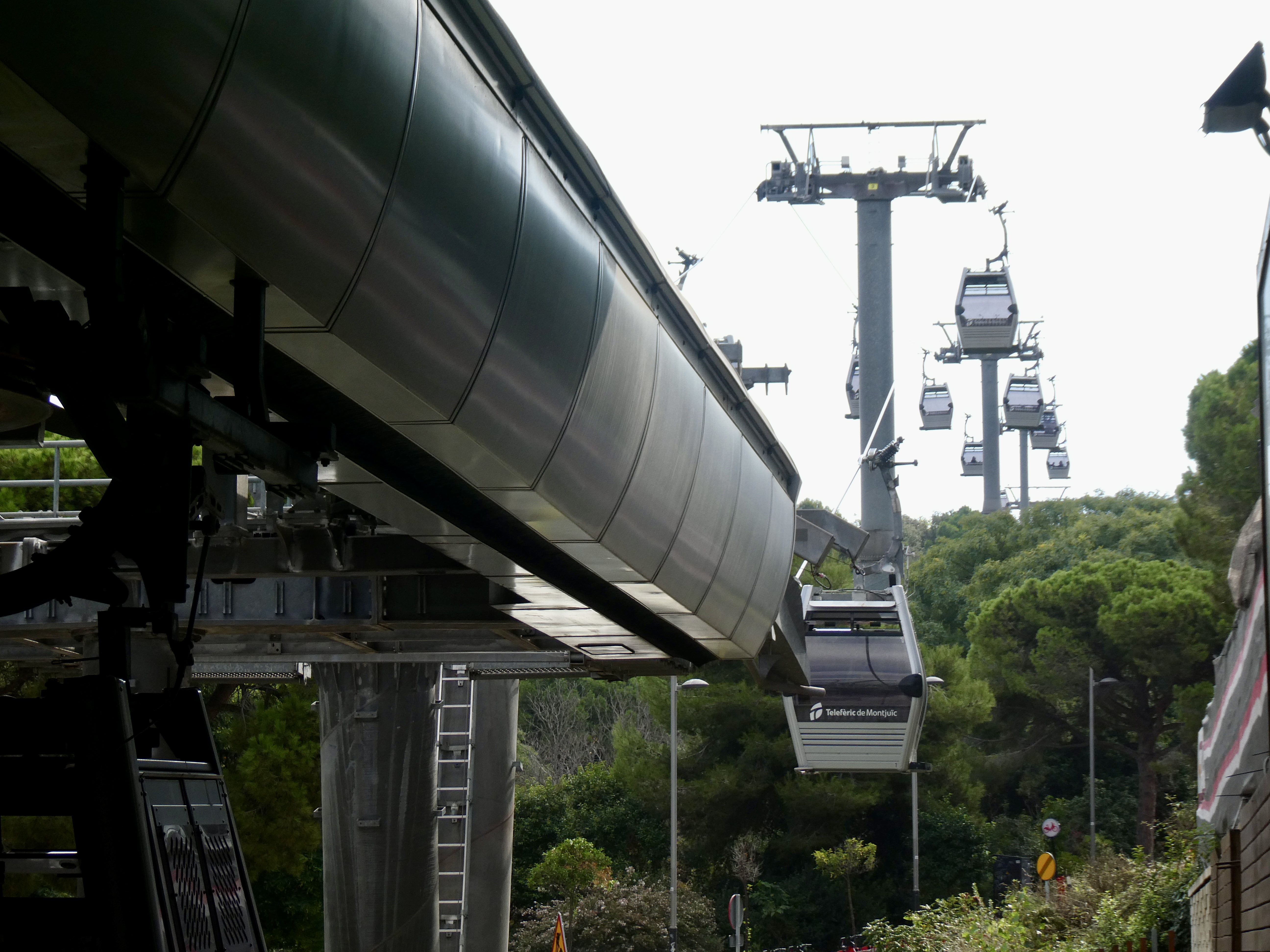
From here, we headed down the street and then downstairs where we took the funicular to the base of Montjuic Mountain where we caught the cable car for a ten minute ride up the mountain to Castell de Montjuic.

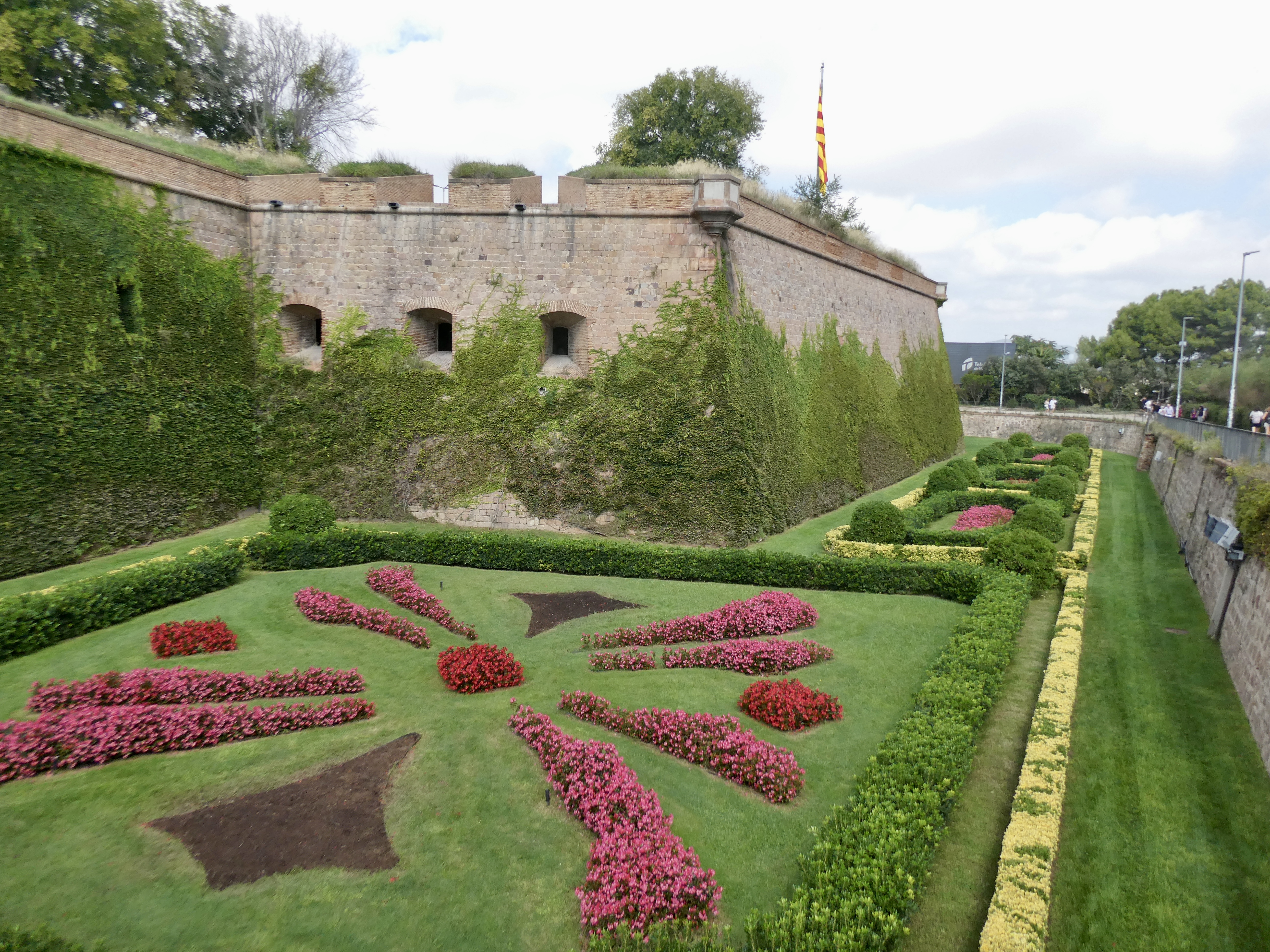
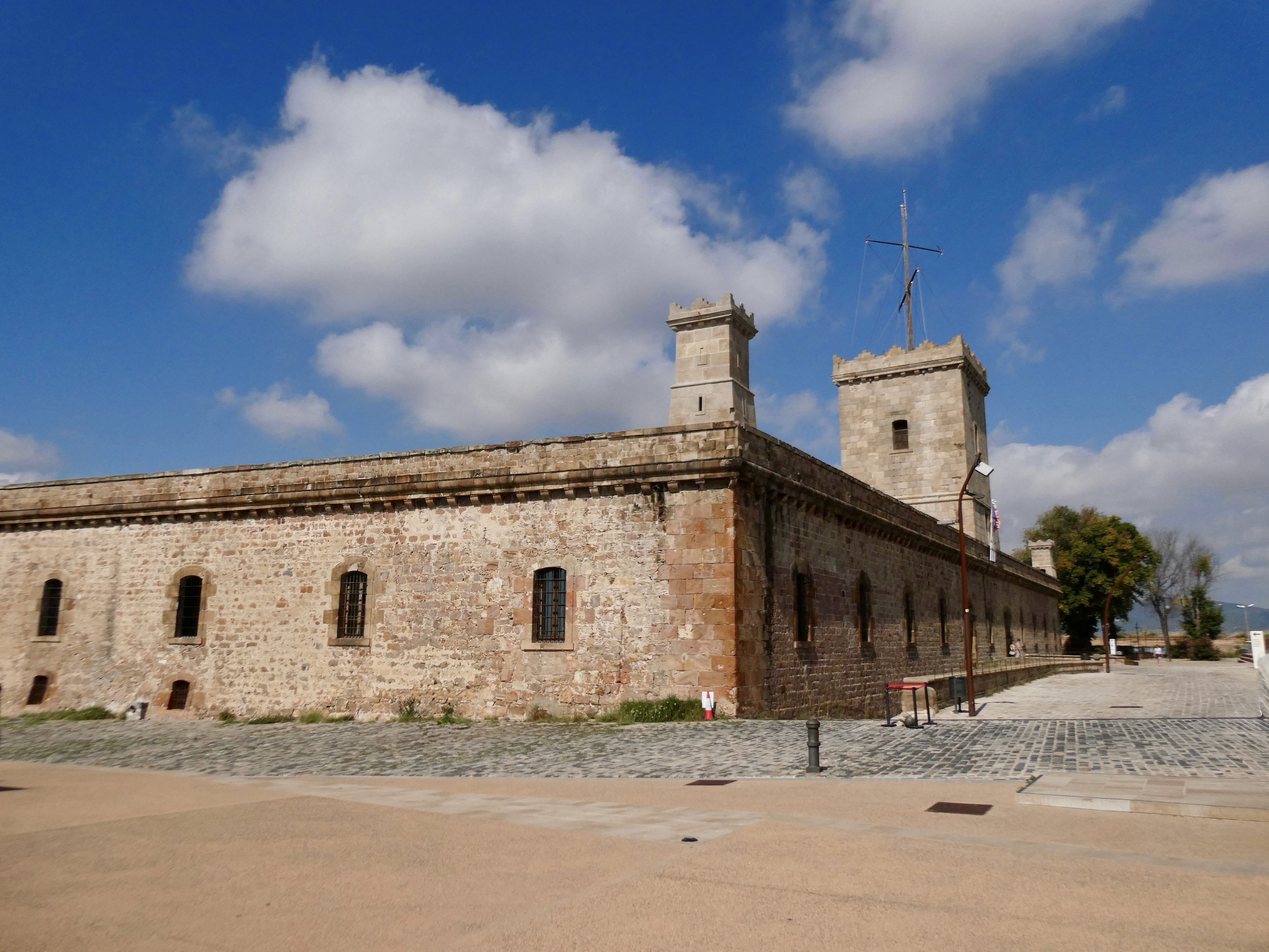
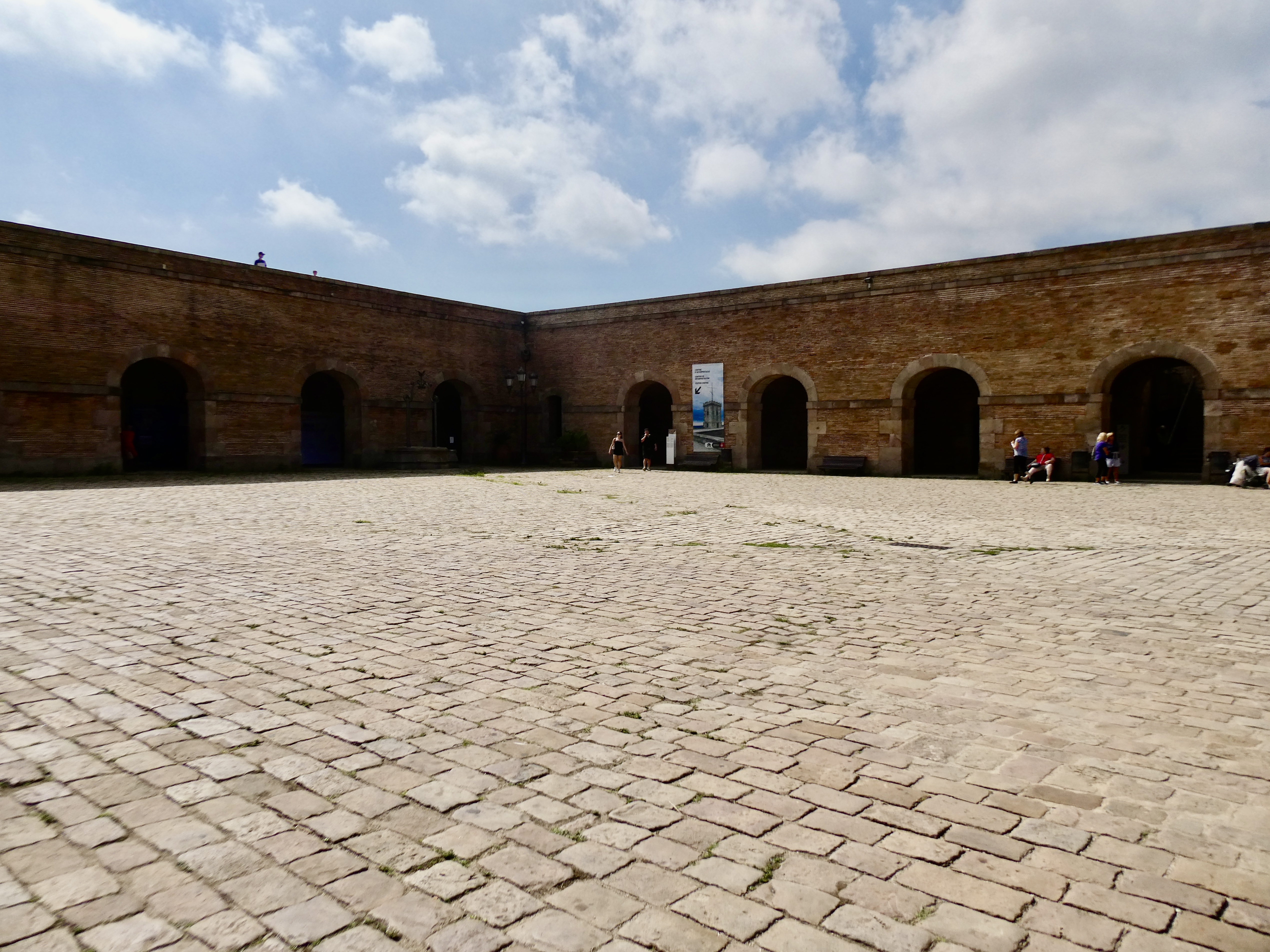
Now Castell de Montjuic, was a military fortress constructed in the 17th century. (No idea why it was called a castle because no one of nobility ever resided here.). The fortress served as a coastal defense, a prison to house locals during uprisings and a military museum. Today the building is used as a cultural space featuring summer concerts, films and parties.
Now while there were bastions, terraces and a large open air former prison area to wander through, Castell de Montjuic was pretty underwhelming. In fact, the only real highlight of the site for me was the spectacular views of Barcelona. Literally 360 degree views of the entire area. Beyond that, the fortress was pretty much a “meh” for me.
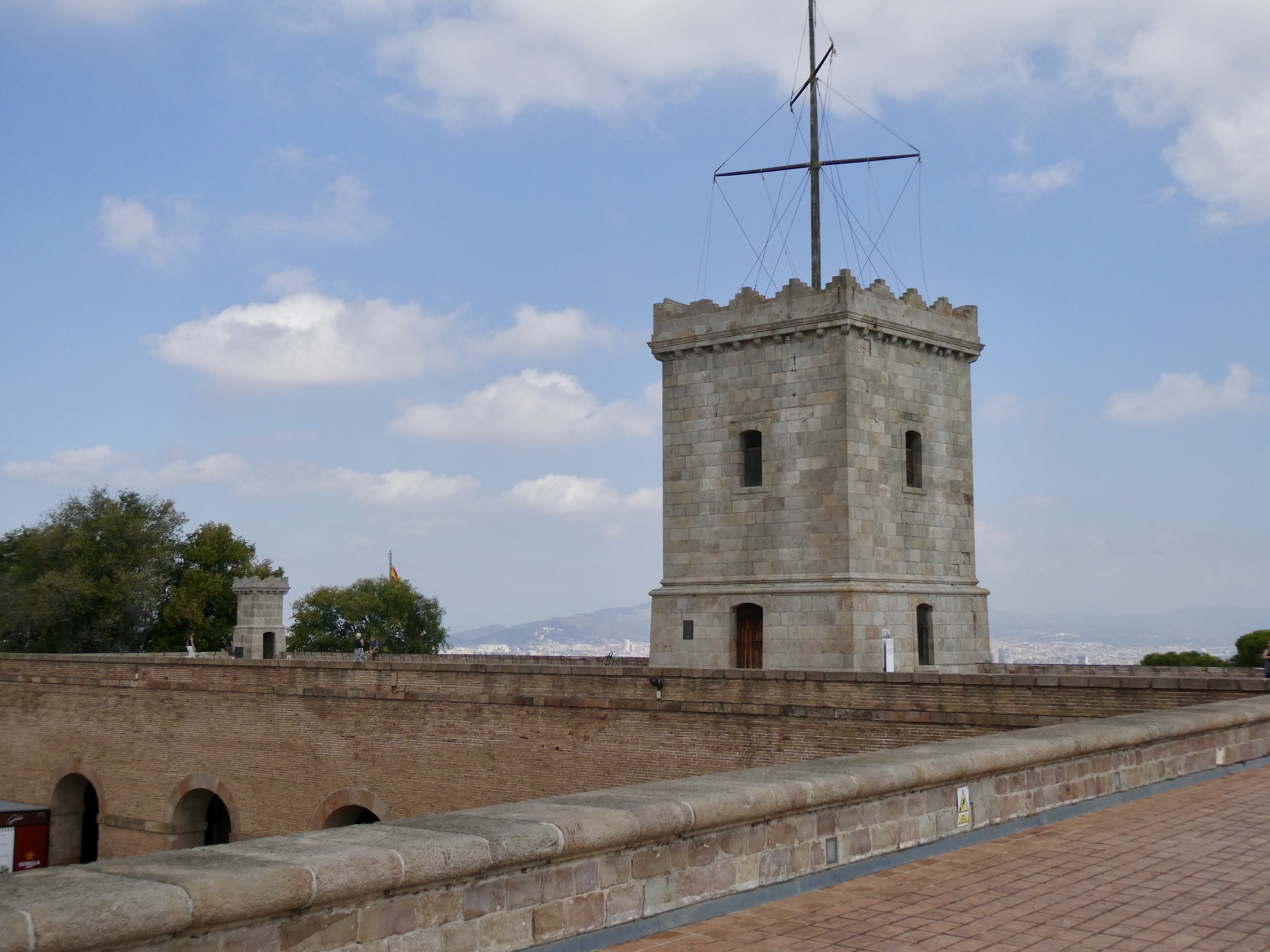
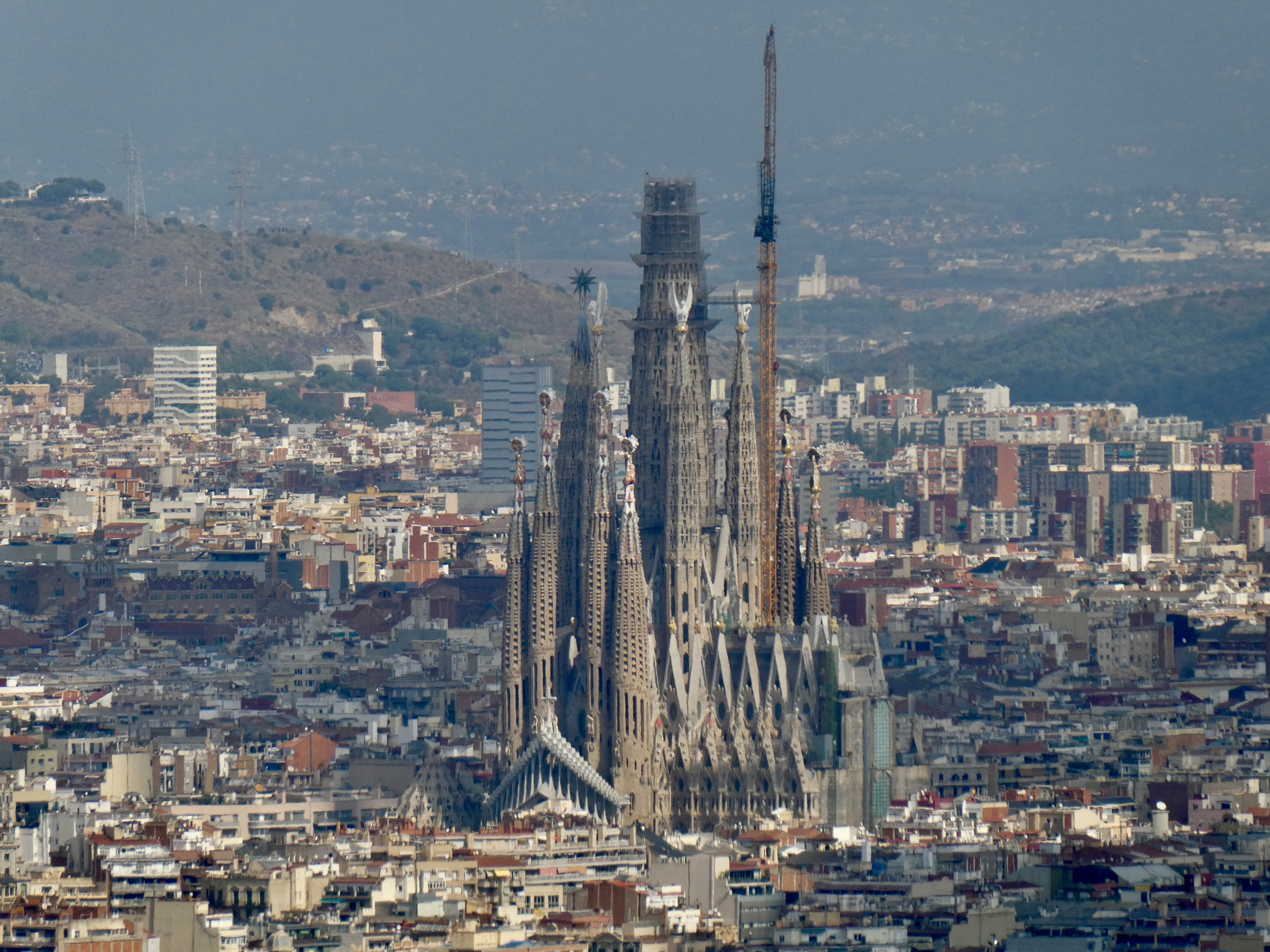
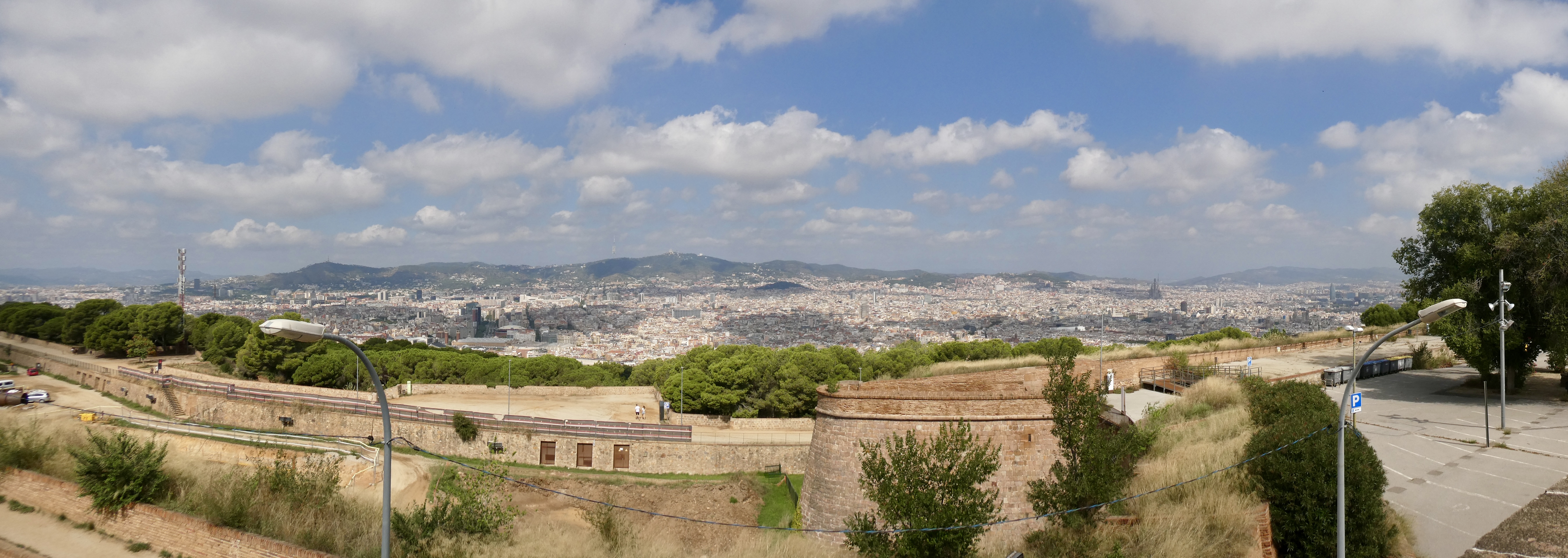
We ended up walking around and taking some pictures of the spectacular views before heading back down to the cable car (which was actually my favourite part of the trip to the castle) and then back on the funicular to old town.
Once back in old town, I said my goodbyes to our little group and headed back to the hotel for a bit of a rest before my evening food tour.
So just before 5:00, I headed down the narrow alley for about 1 km to the meeting point for the food tour. Along the way, I passed a very cool looking shop featuring local handmade art and low and behold, I found a fabulous Christmas ornament so Spain is done!! Yay.
By 5:25 I had reached the meeting point and was greeted by Alex, our tour guide for the evening. I was eventually joined by a couple from Sydney, Australia and four Americans, including two young guys who were doing a semester abroad along with their mothers. The boys turned out to be absolutely wonderful kids.
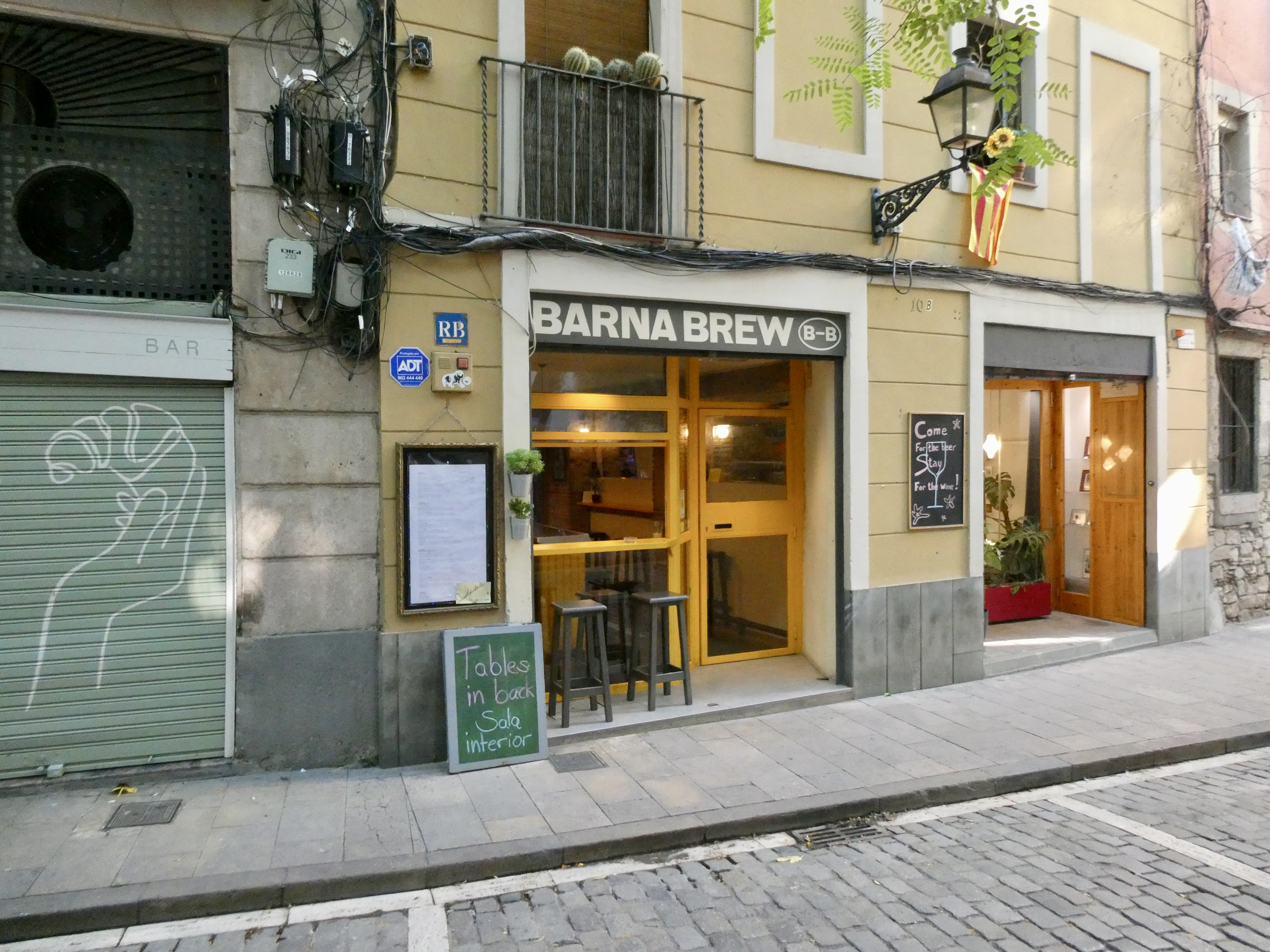
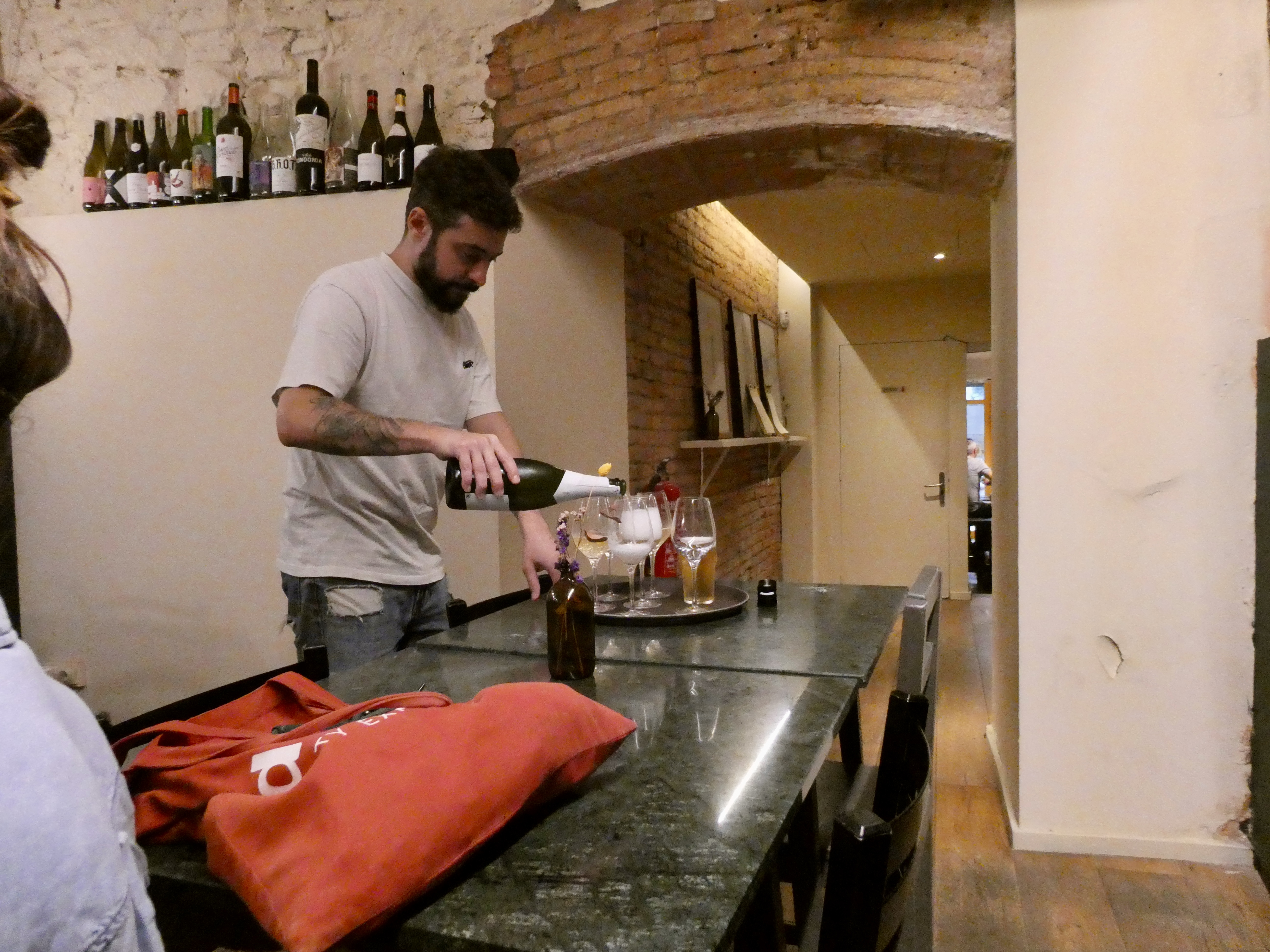
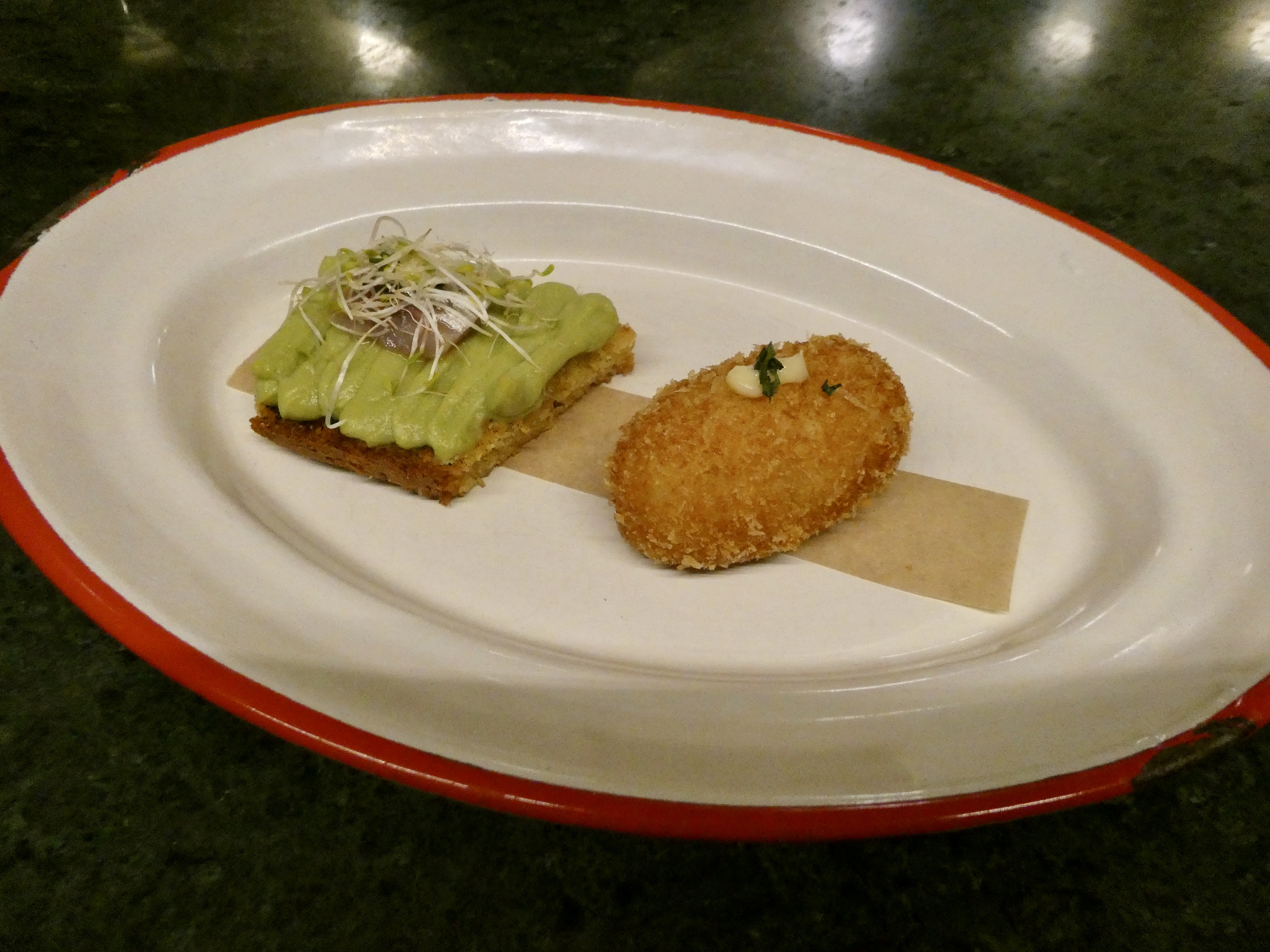
Anyway, once assembled we headed down a narrow alley to our first stop at Barna Brew where we were immediately served beer and cava (Spain’s version of champagne). And along with the drinks we were served two tapas: an Iberian ham croquette and a cornmeal bread app with sundried tomato spread, avocado and sardines. I could have used a larger piece of sardine, but both tapas were very good.
From here, we wandered through the old quarter in areas I had not walked during my morning tour. (And quite frankly this tour incorporated a lot more of the old quarter than my morning tour despite it being a food tour.)
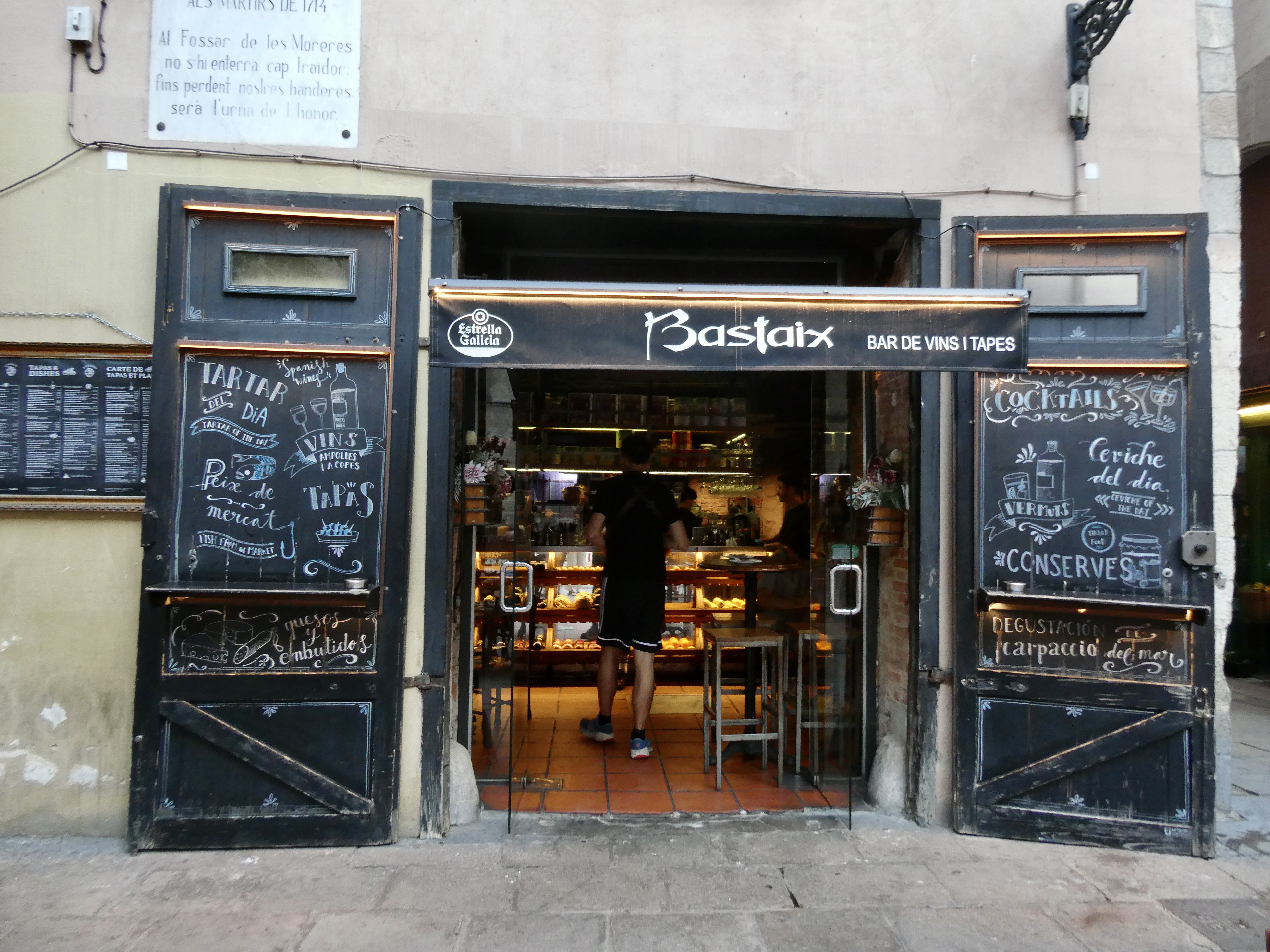
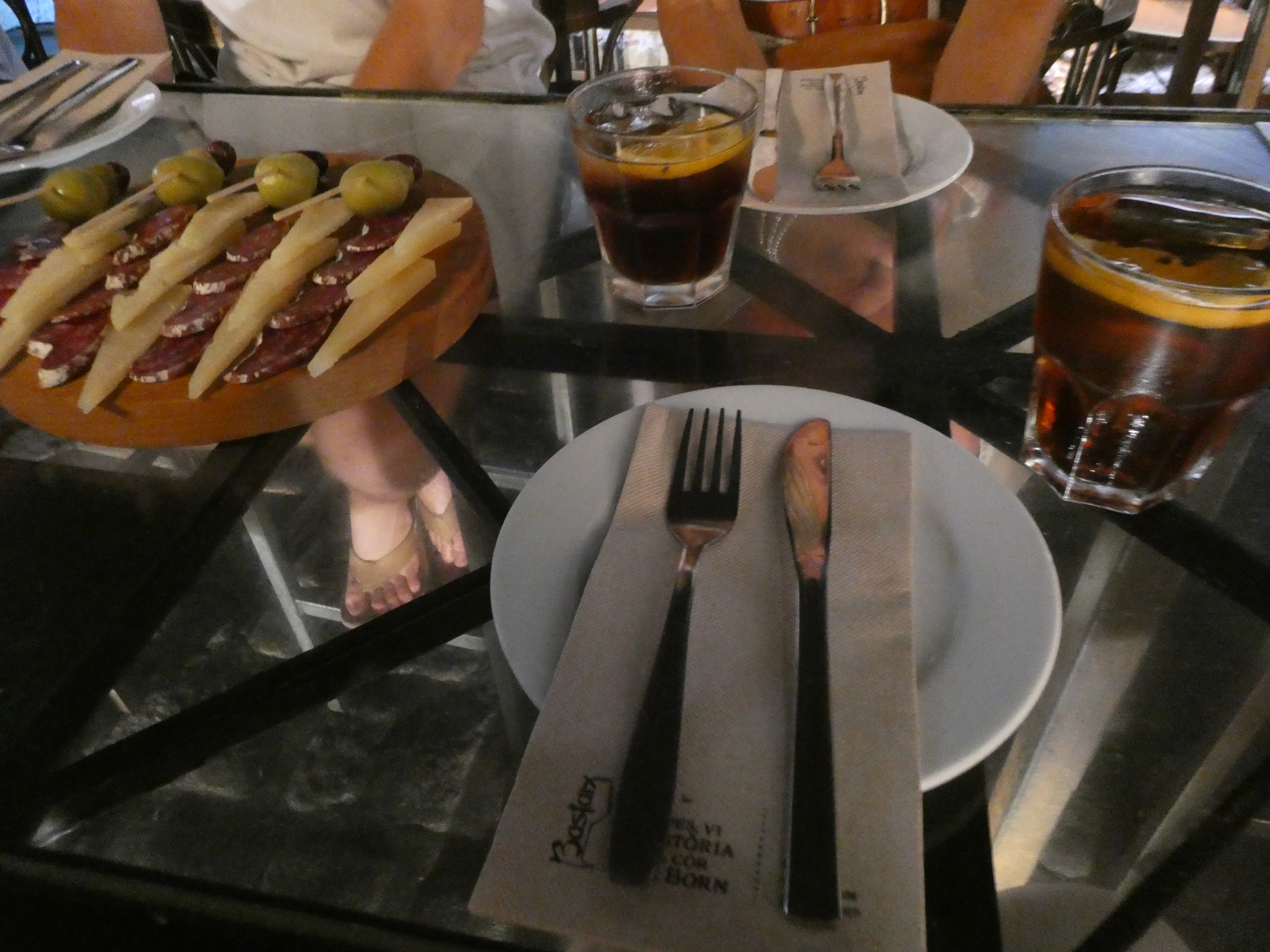
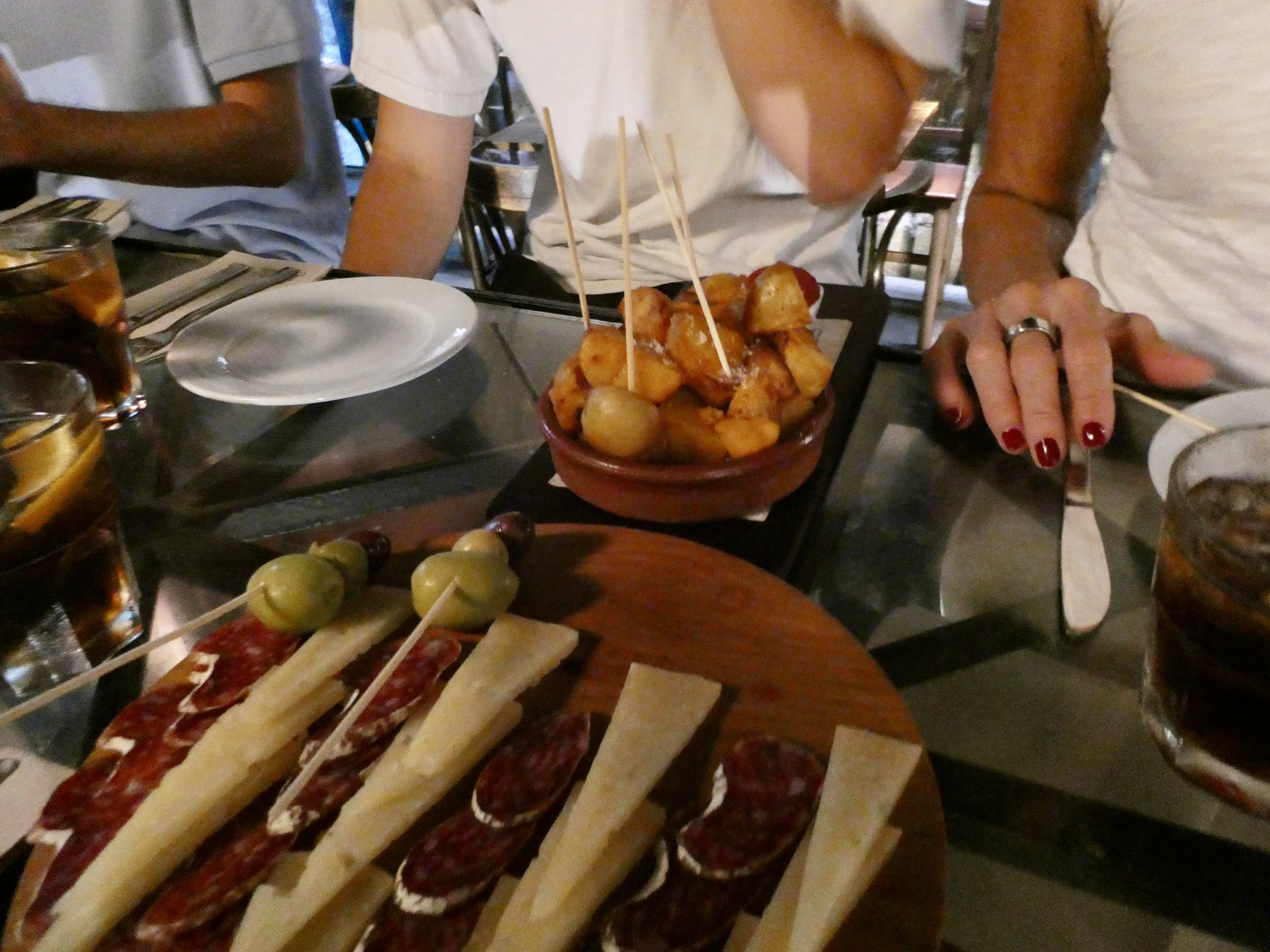
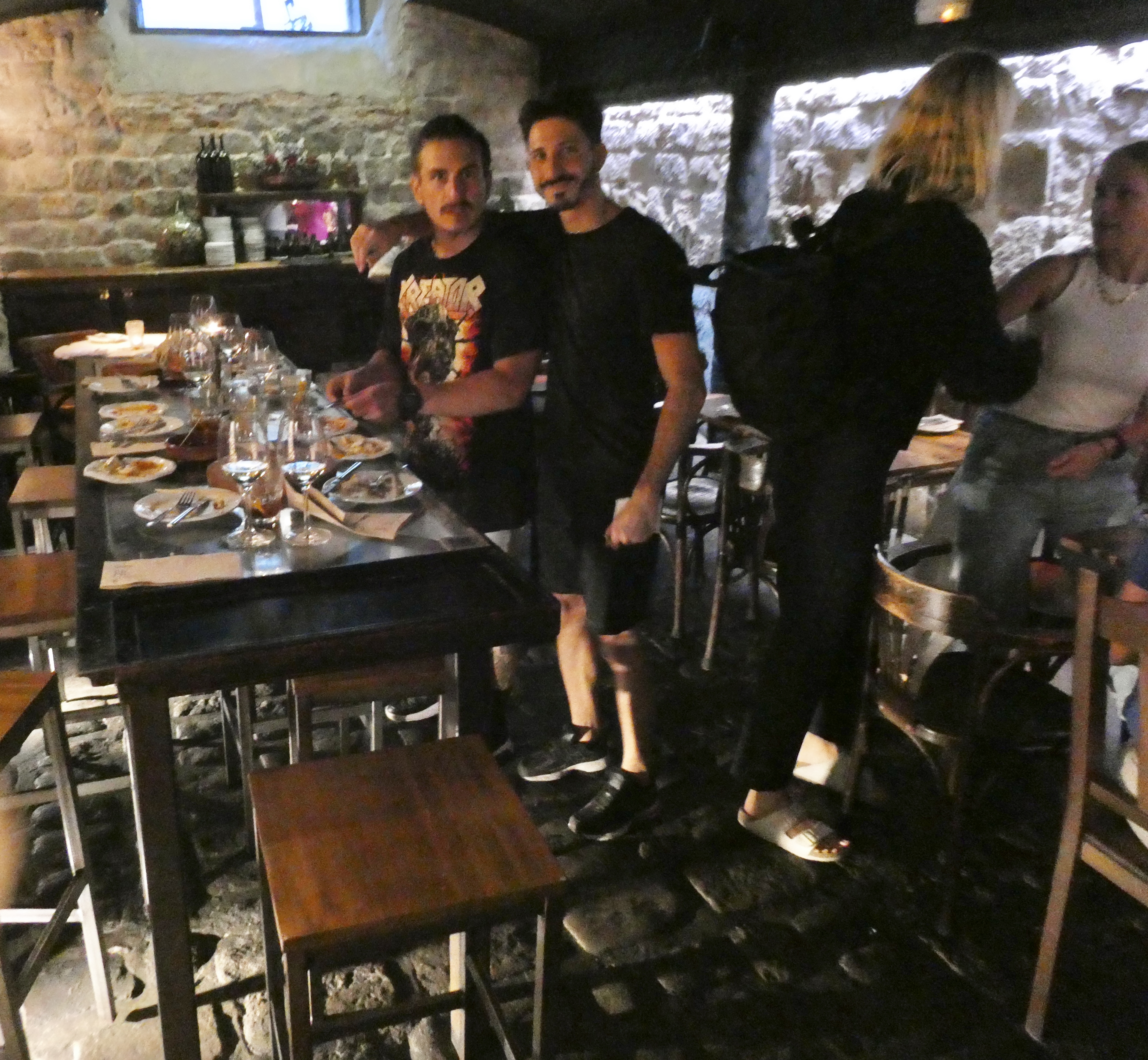
Our next stop was at Bastaix, in front of the the Basillica de Santa Maria Del Mar (which we would visit later). Now Bastaix was incredibly cool and had incorporated all of the 13th century walls and the original lower street cobblestones into the restaurant. Once seated, we were served a glass of vermouth (not like the type we are accustomed to, but much sweeter with a caramel flavour and hints of citrus). This was followed by a plate of olives, cheese and fuet sausage and let me tell you, I could have eaten that sausage all day everyday. Talk about tasty!
We were also served a traditional Catalonia dish of potatoes with a garlic and red spice sauce. I wasn’t particularly fond of the garlic sauce, but the red sauce with the potatoes was fantastic.
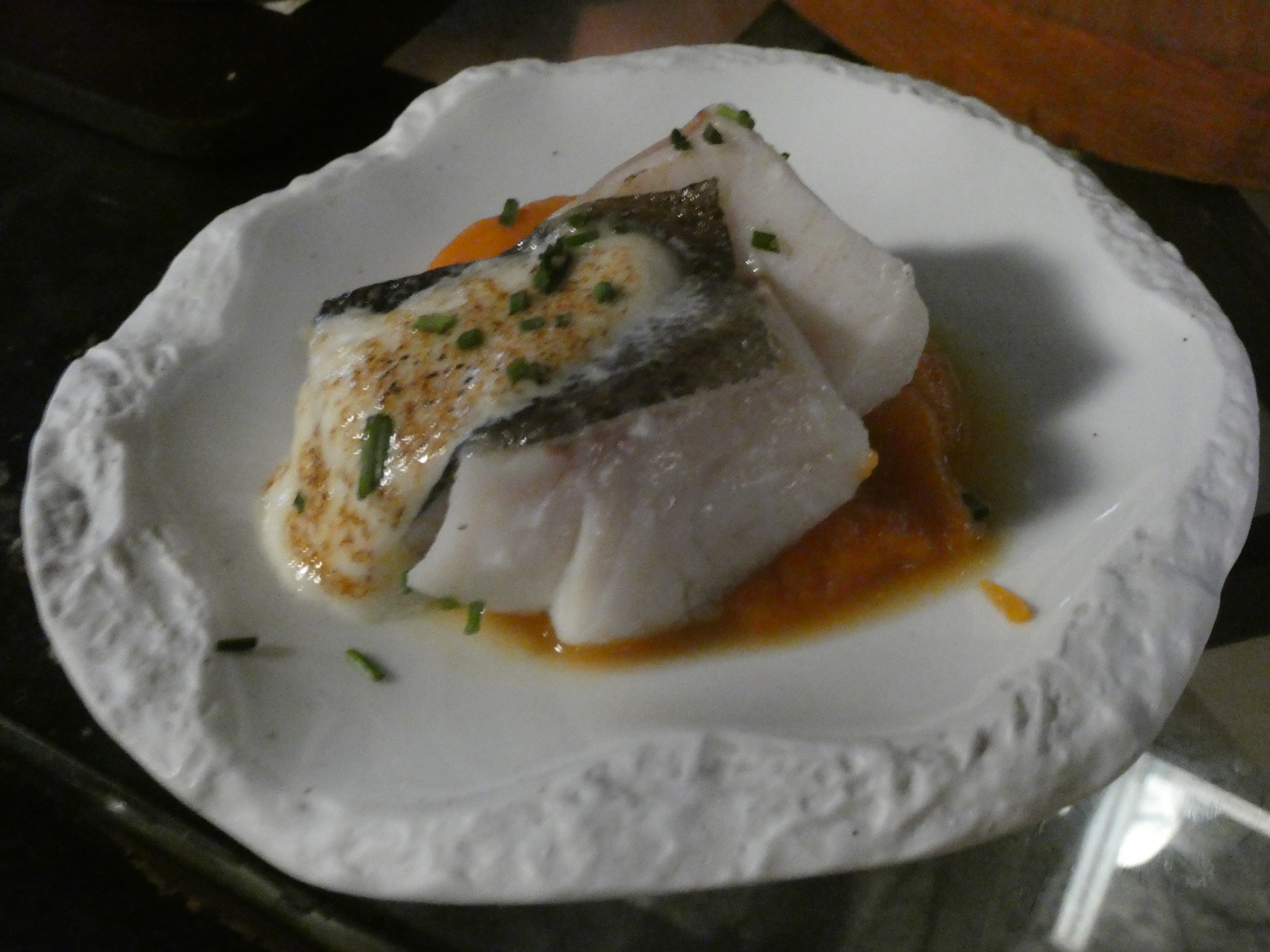
The last dish we were served was a cod dish and it might have been the best fish dish I have ever had. Olive oil and spices were drizzled over the top and the fish was bake to absolute perfection and was accompanied by a squash purée. Delish!! And with this last dish, we were served a fabulous white wine to accompany the fish. The entire dish was perfection.
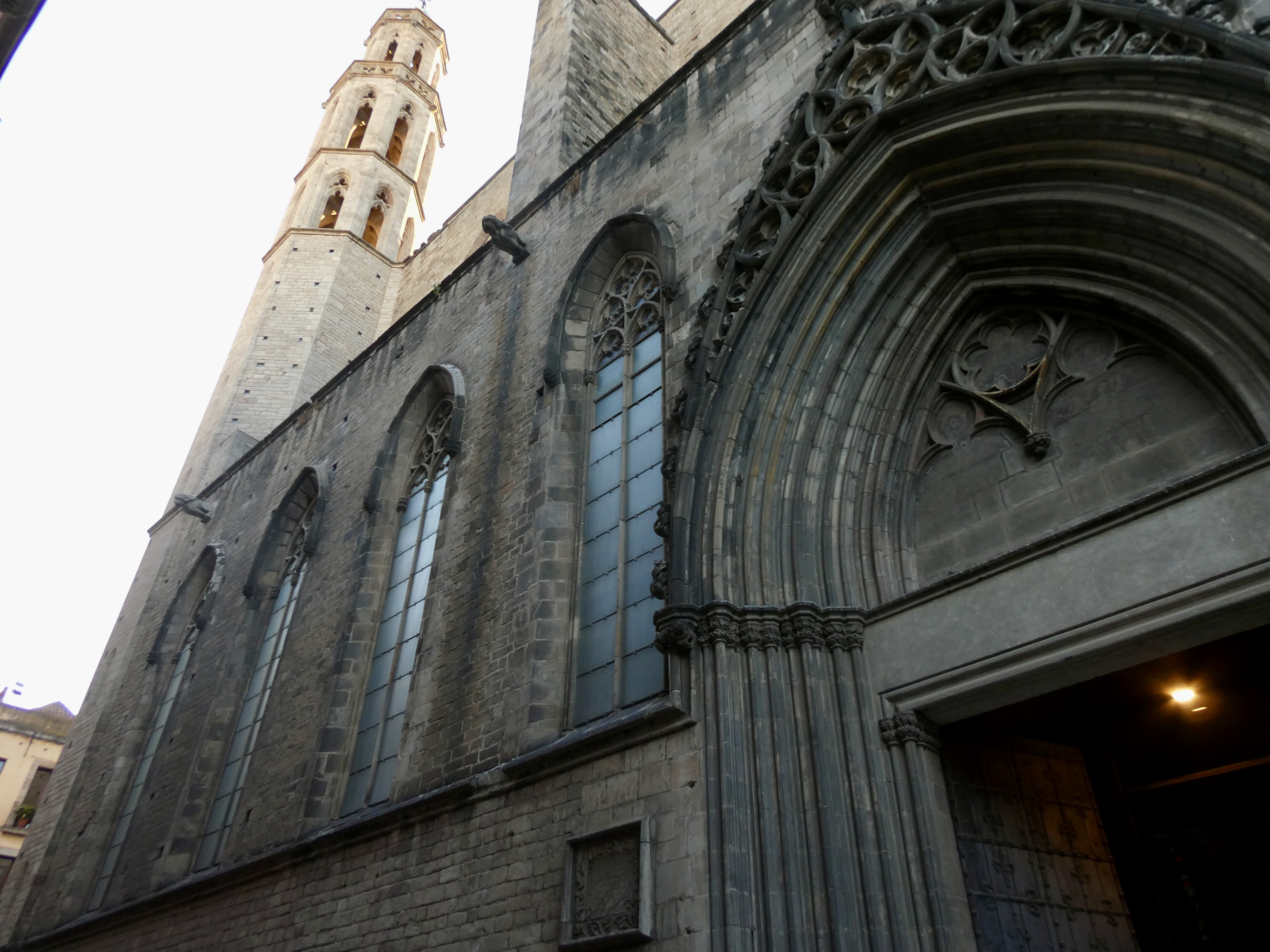
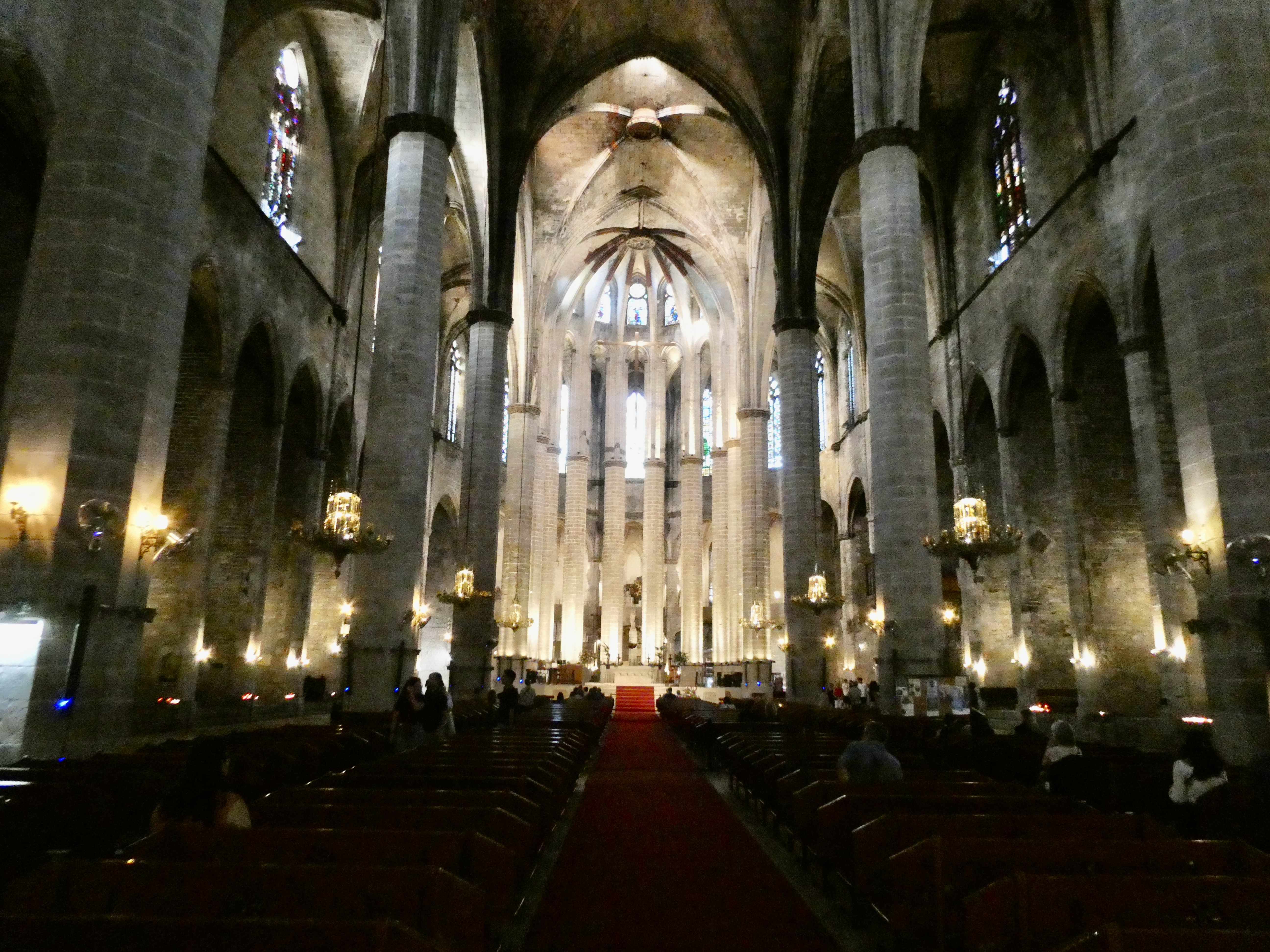
Once we were finished the meal, we left the restaurant and headed across the square to Basillica de Santa Maria Del Mar, which dates to the mid 14th century and was constructed in just 55 years. The inside of the basillica was fairly austere, but I thought it was absolutely magnificent with candles lit everywhere and gorgeous stained glass encircling the interior. I am not particularly religious, but this place was fabulous.
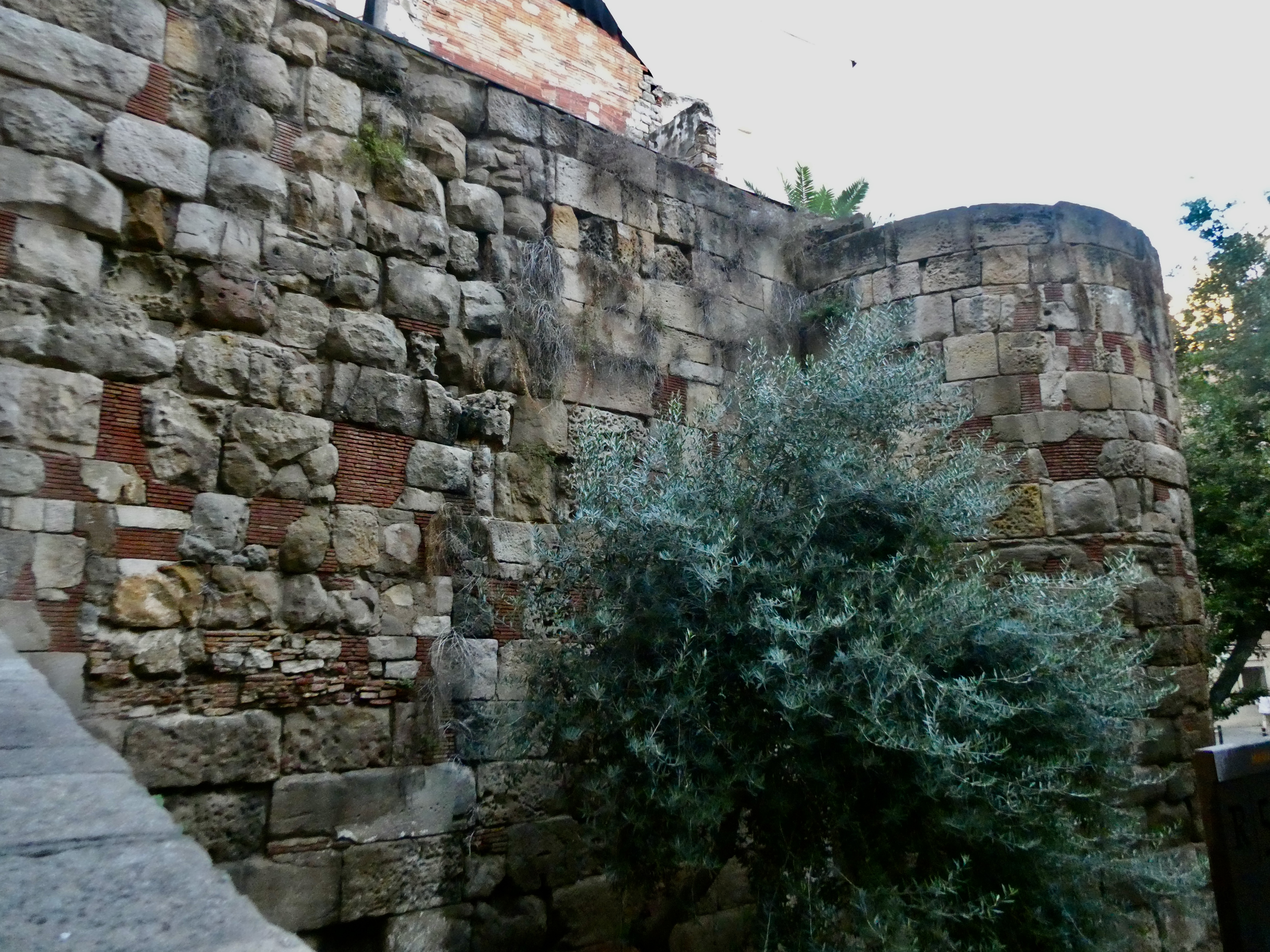
Anyway, once we exited the church, we crossed the alley and stopped at the oldest part of the old gothic quarter, the Roman tower and wall that dates to the 4th century. I had been planning to track this area down (since we did not tour it in the morning tour for some unknown reason), and was thrilled to be able to see it on the tour.
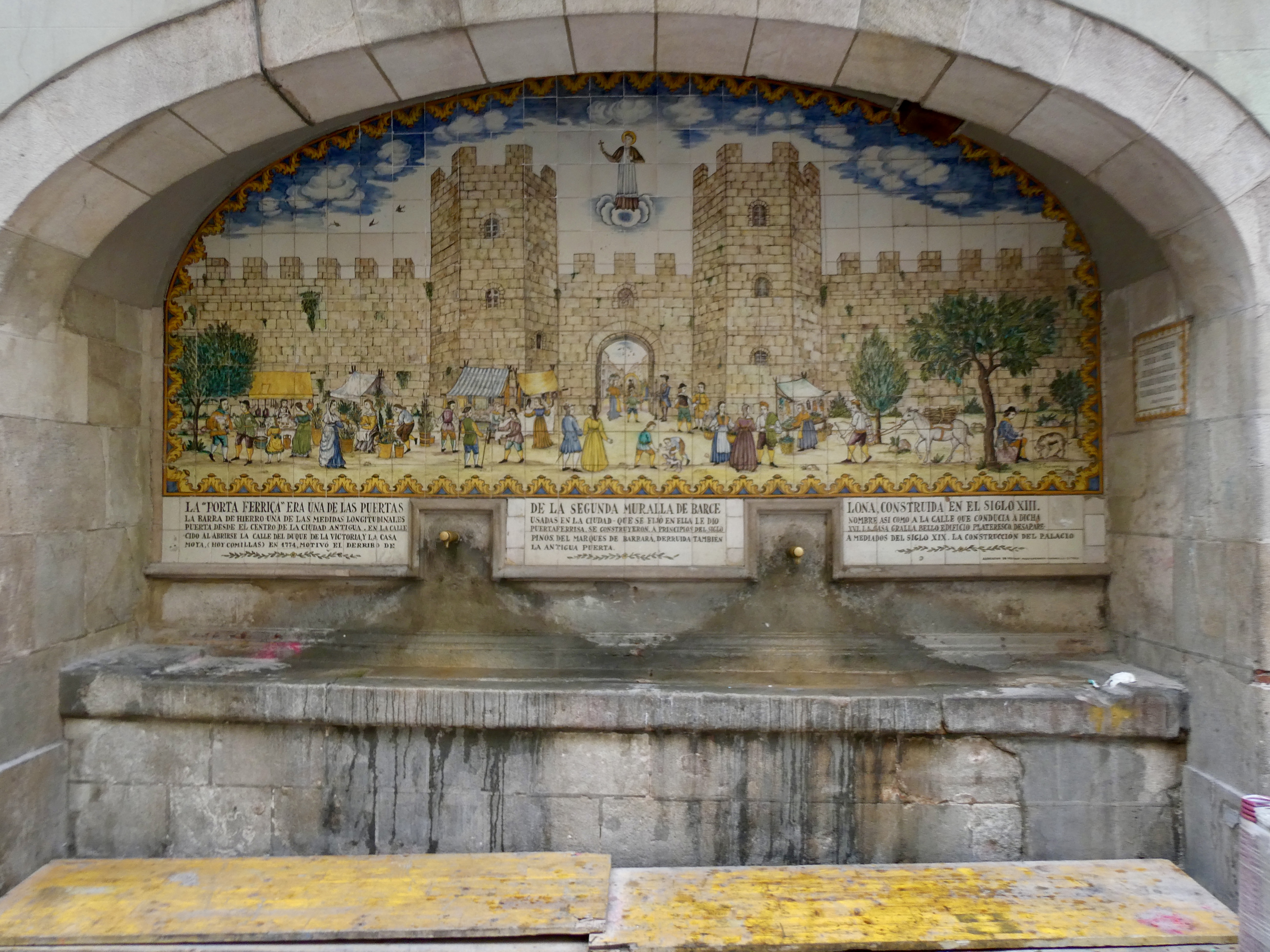
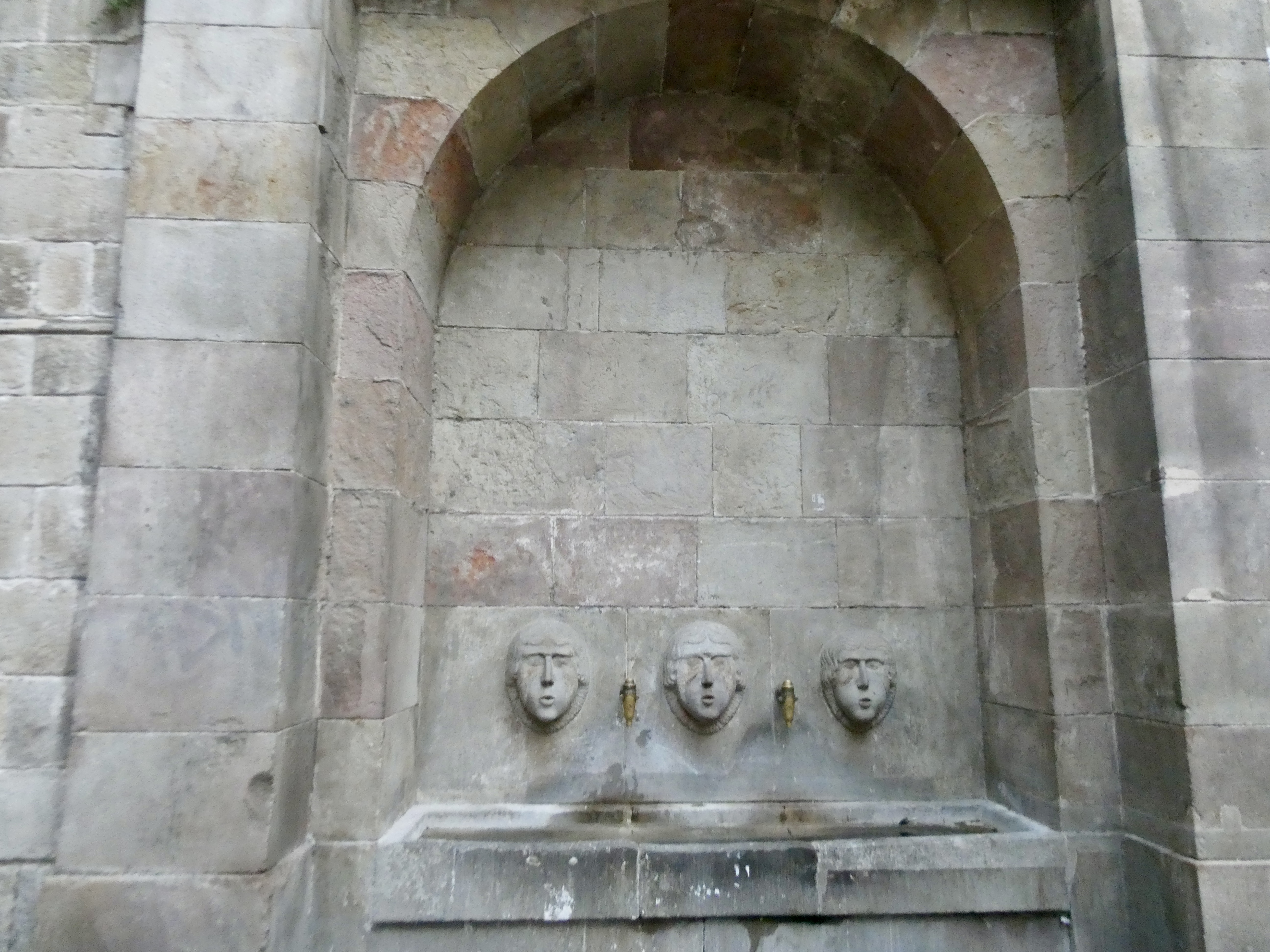
We then walked up the hill that was adjacent to the tower and down an alley to reach the area known as Place de San Just where there was yet another old church and a really amazing old water fountain with old sculptures acting as faucets.
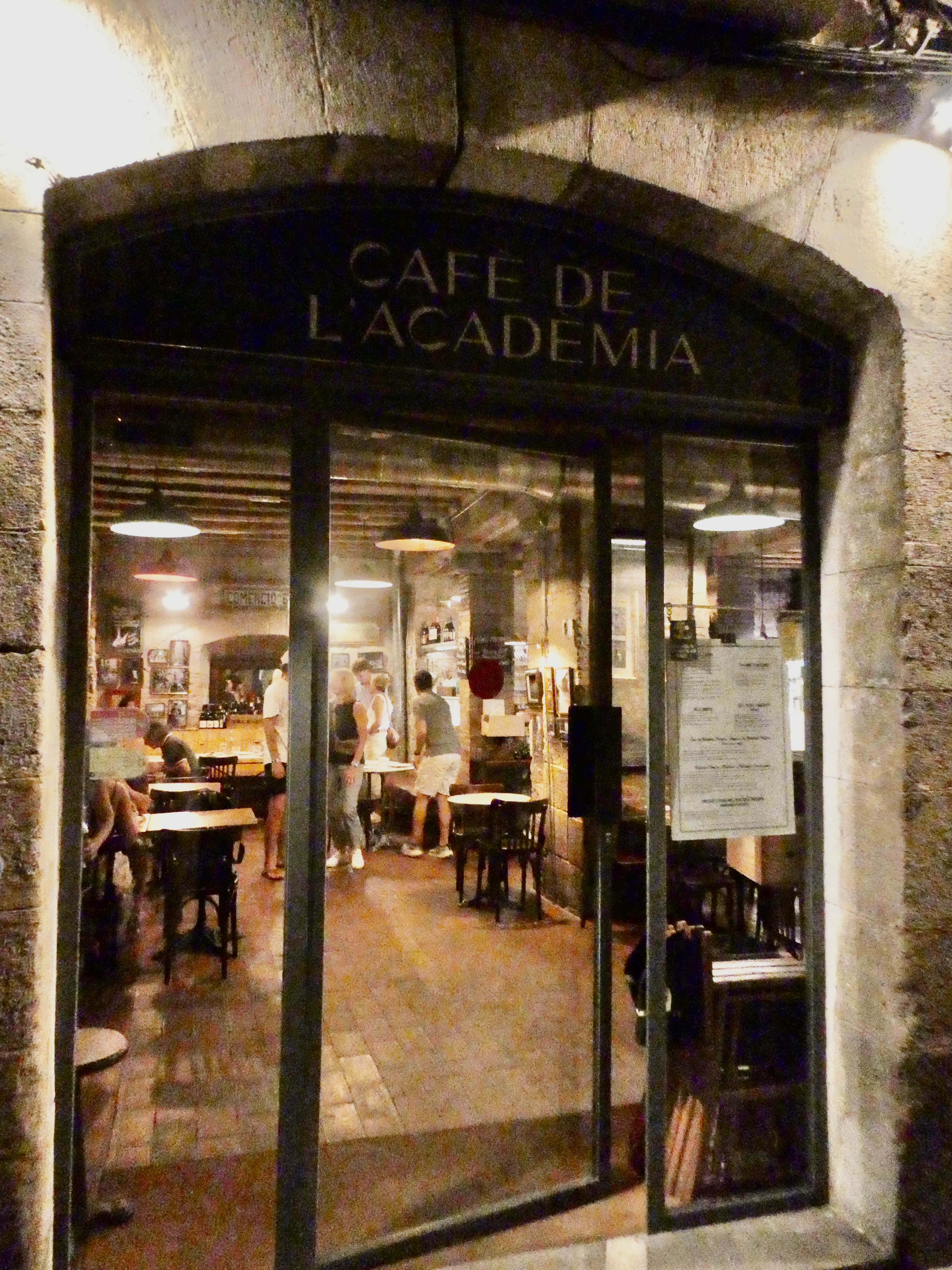
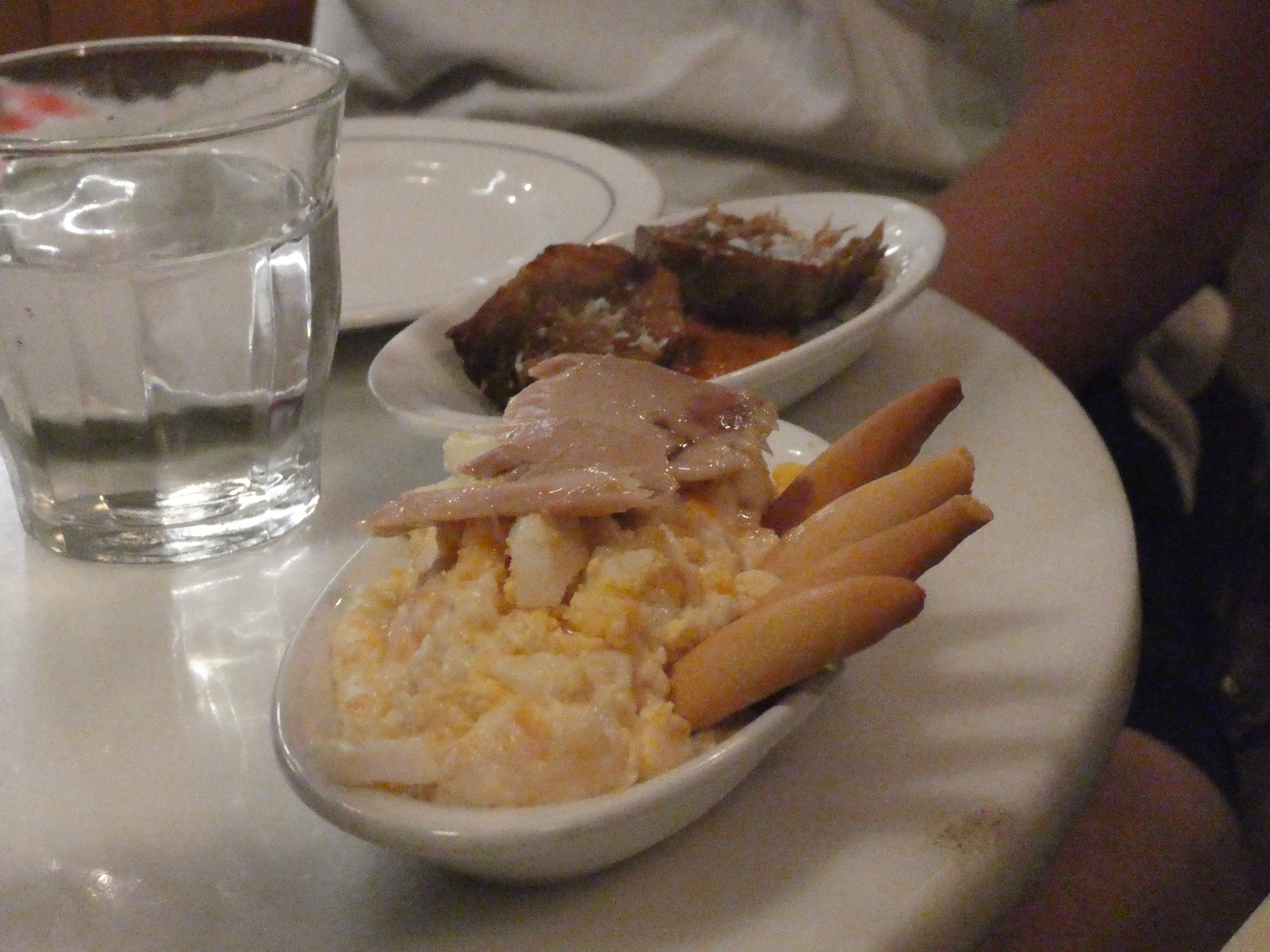
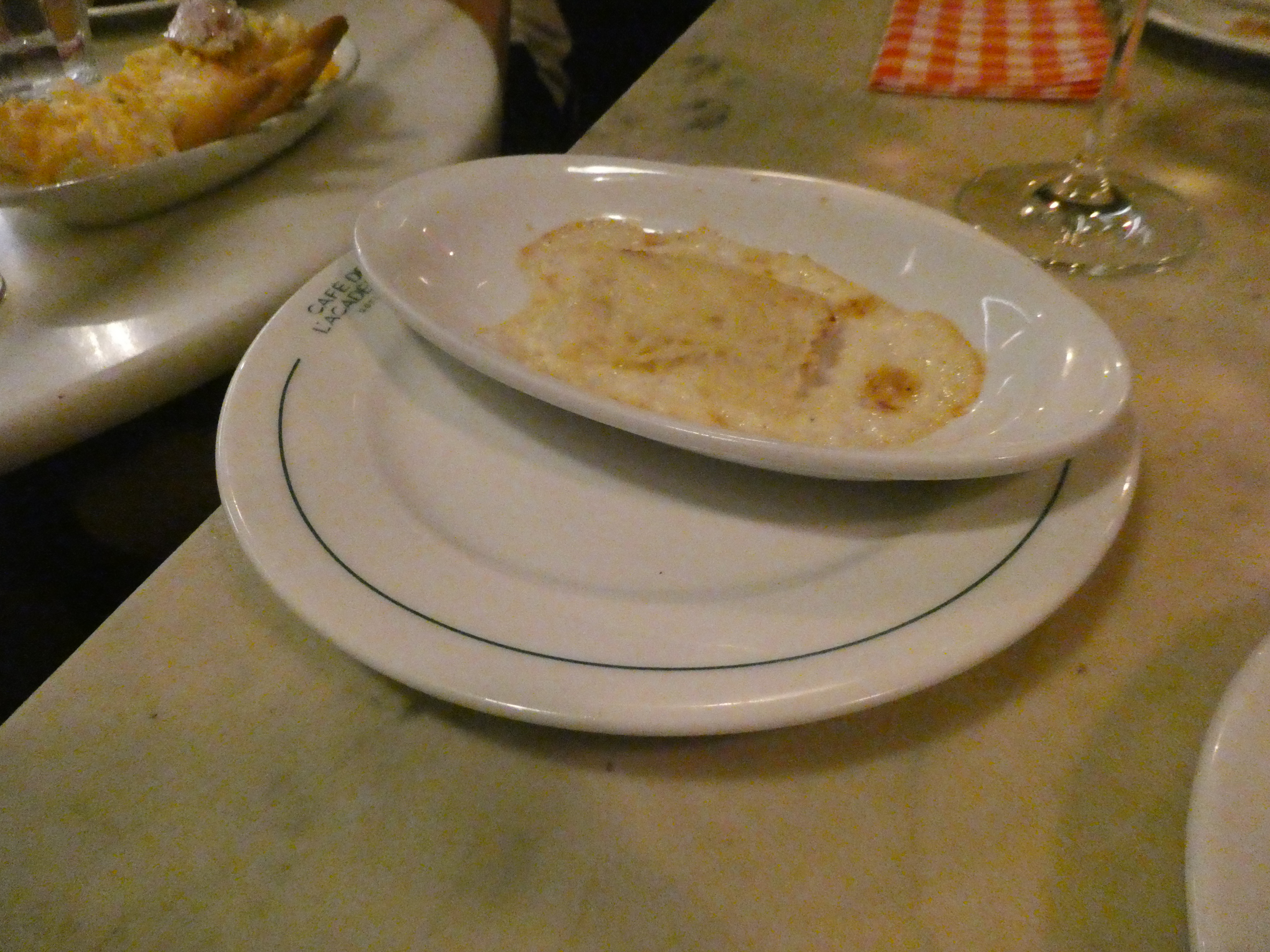
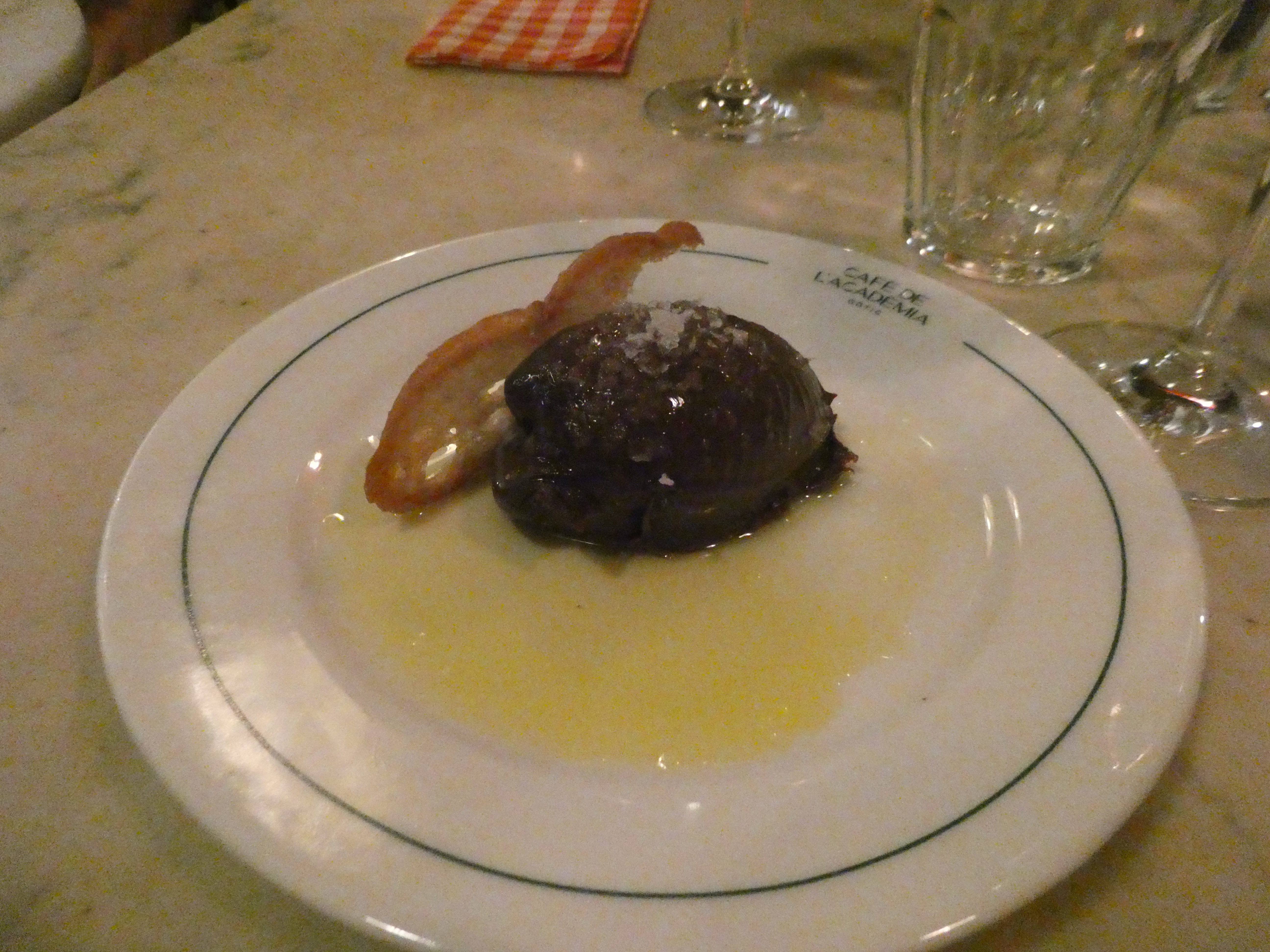
We then walked to Café de L’Acadamia, a small restaurant across from the church where we were to have our last tastings. Here, we were served white wine along with fried artichokes and Russian salad. Both were spectacular, but the fried artichokes were superb. In addition, we were served a Spanish canallone, which is a traditional dish cooked on December 26 and consists of a filling of leftovers (pork, chicken or veal). Our dish included both pork and veal with a béchamel sauce and was without a doubt my favourite tapas of the night. It was absolutely decadent.
And while I had reached my breaking point in terms of food consumption, I gobbled down the desert we were served that was a gooey chocolate fudge concoction sprinkled with olive oil and sea salt along with a glass of red wine. My sweet tooth thanks you!!!
All in all, the “Devour Tours” food tour through the old quarter of El Born and the Gothic Quarter was A+++. And this was just one of many food tours I will be doing over the next few weeks.
So after the tour, I headed back to my hotel and got ready for bed. Tomorrow I am on a small bus tour to La Sagrada Familia, Barcelona’s most famous attraction.