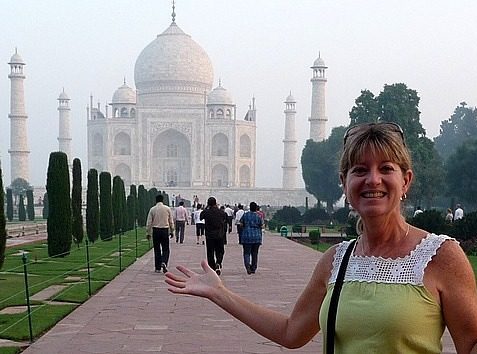
So this morning I had to sadly say goodbye to my new Dutch friends, Joshua and his son Chris. One of the few people I have met who loves to travel as much as I do. Joshua even agreed with my philosophy that you always have to have a trip or two planned in the future so returning from a trip is not a letdown. And his whole once a year tour with his students to Gambia was fascinating. Anyway, we ended up exchanging contact information, and I have an invite to visit the small town of Enkhuizen (apparently near Amsterdam) when I am in Holland in April.
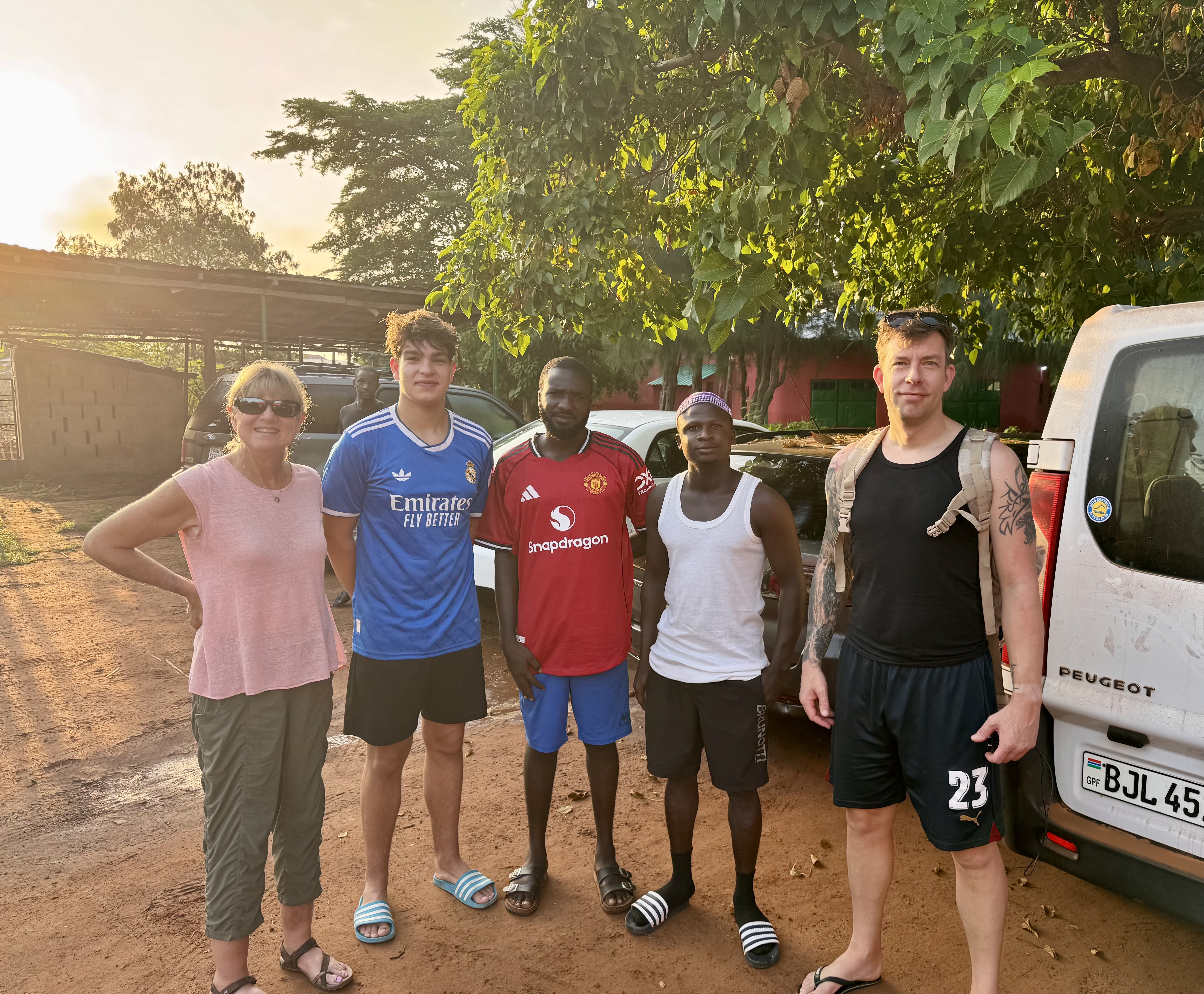
After we all said goodbye to the Dutch guys, Samba, Malang and I set out at 8:15 a.m. on what was supposed to be about a 3 hour trip to Juffereh, which not only houses the Gambian slave museum, it is the departure point for Kunta Kinteh Island (formerly James Island) in the Gambia River and a UNESCO World Heritage site. However, the trip ended up taking about 4 hours and 15 minutes in large part due to the endless and I mean ENDLESS police (bribe) check points.
As with the prior two days, we were repeatedly stopped at police checkpoints so that poor Samba had to pull out his license, registration and evidence of insurance over and over again. And then would come the finger point from the cop to pull the car over. Samba would then get out of the car take a few shekels from his pocket and hand it over in the nearby shed. What a racket!
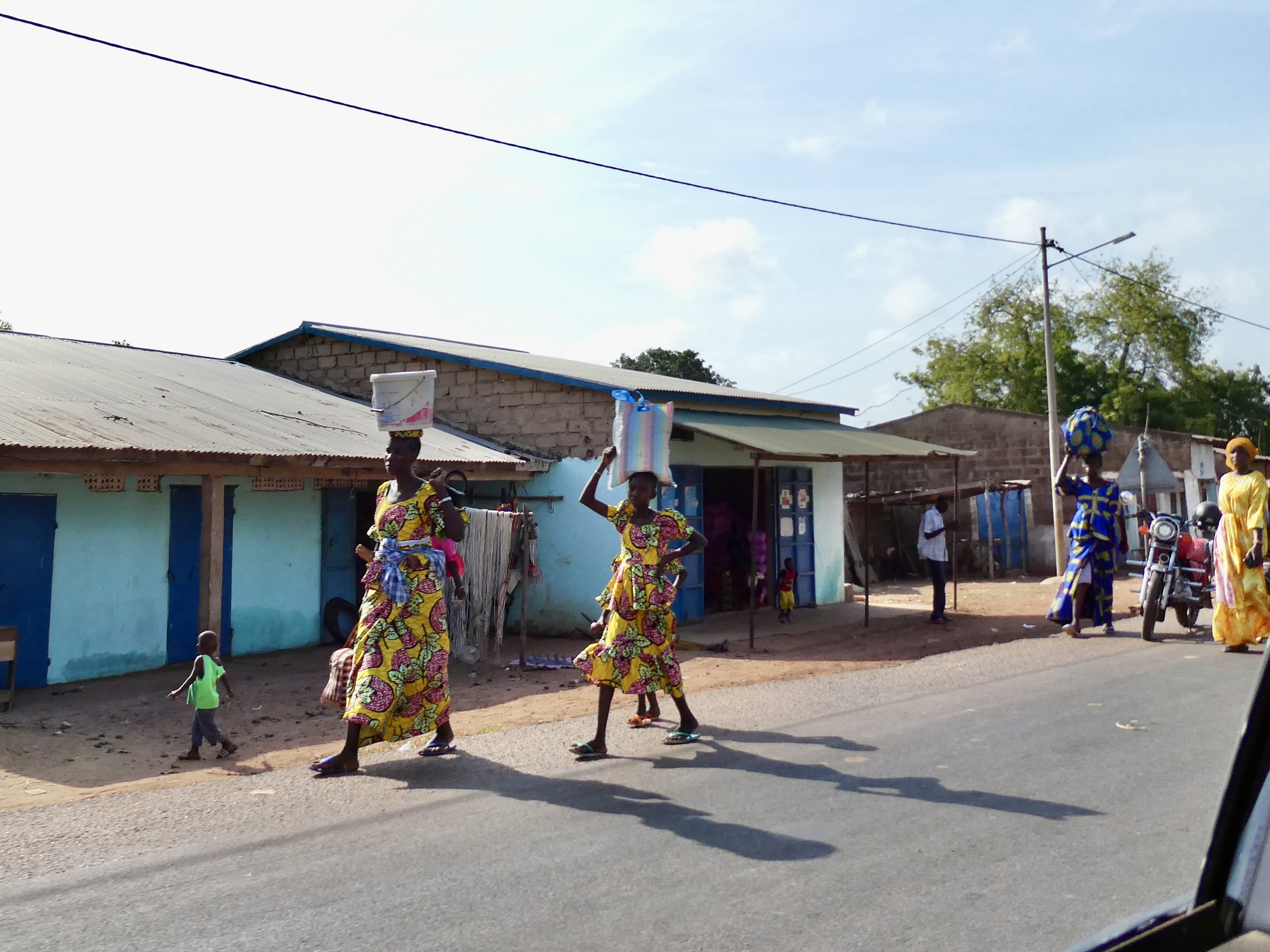
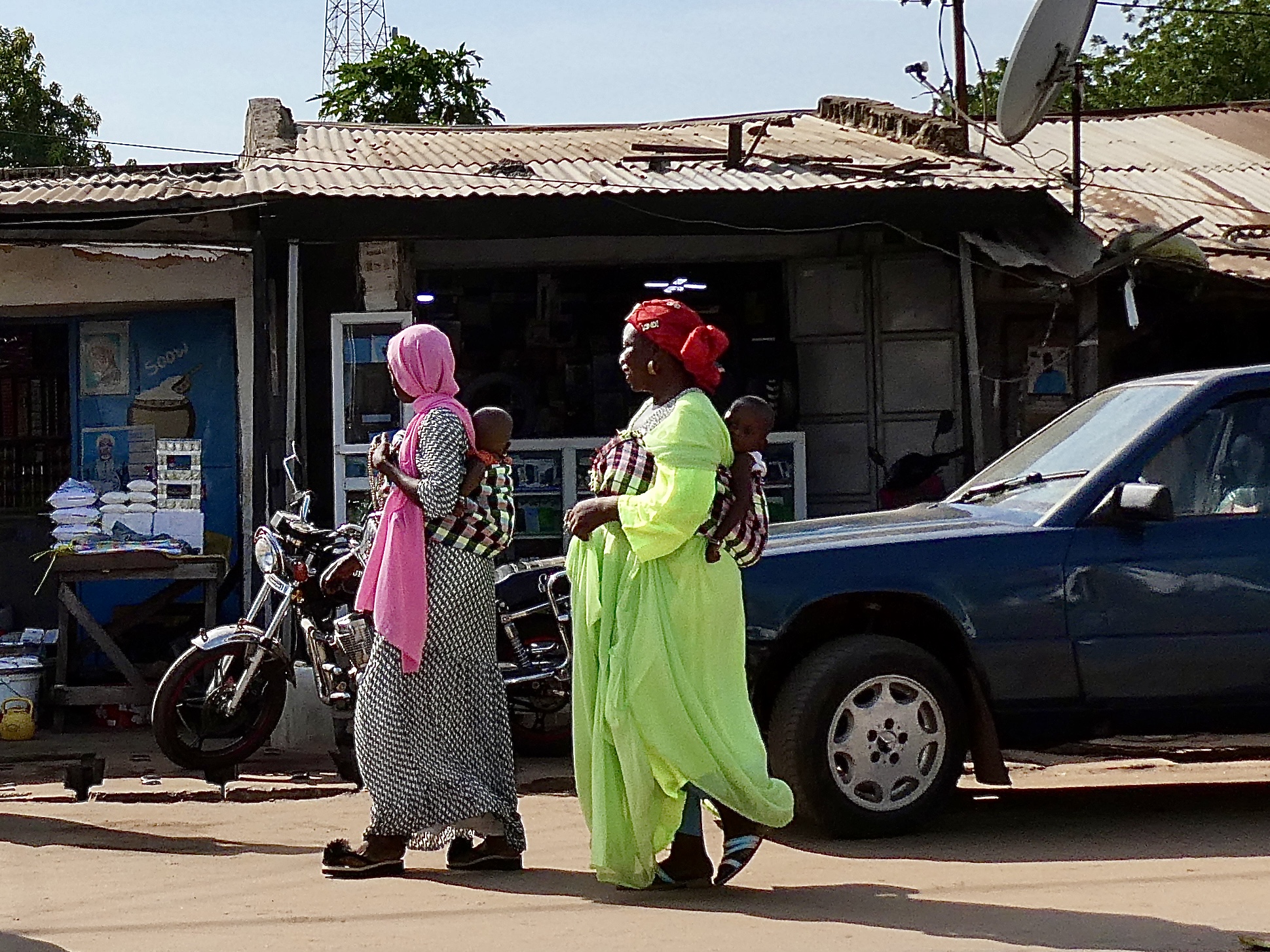
And in between stops, we passed through village after village and market after market. We saw women carrying every conceivable product on their head. We also saw women passing our vehicle with babies strapped to their back (as is the custom in Africa).
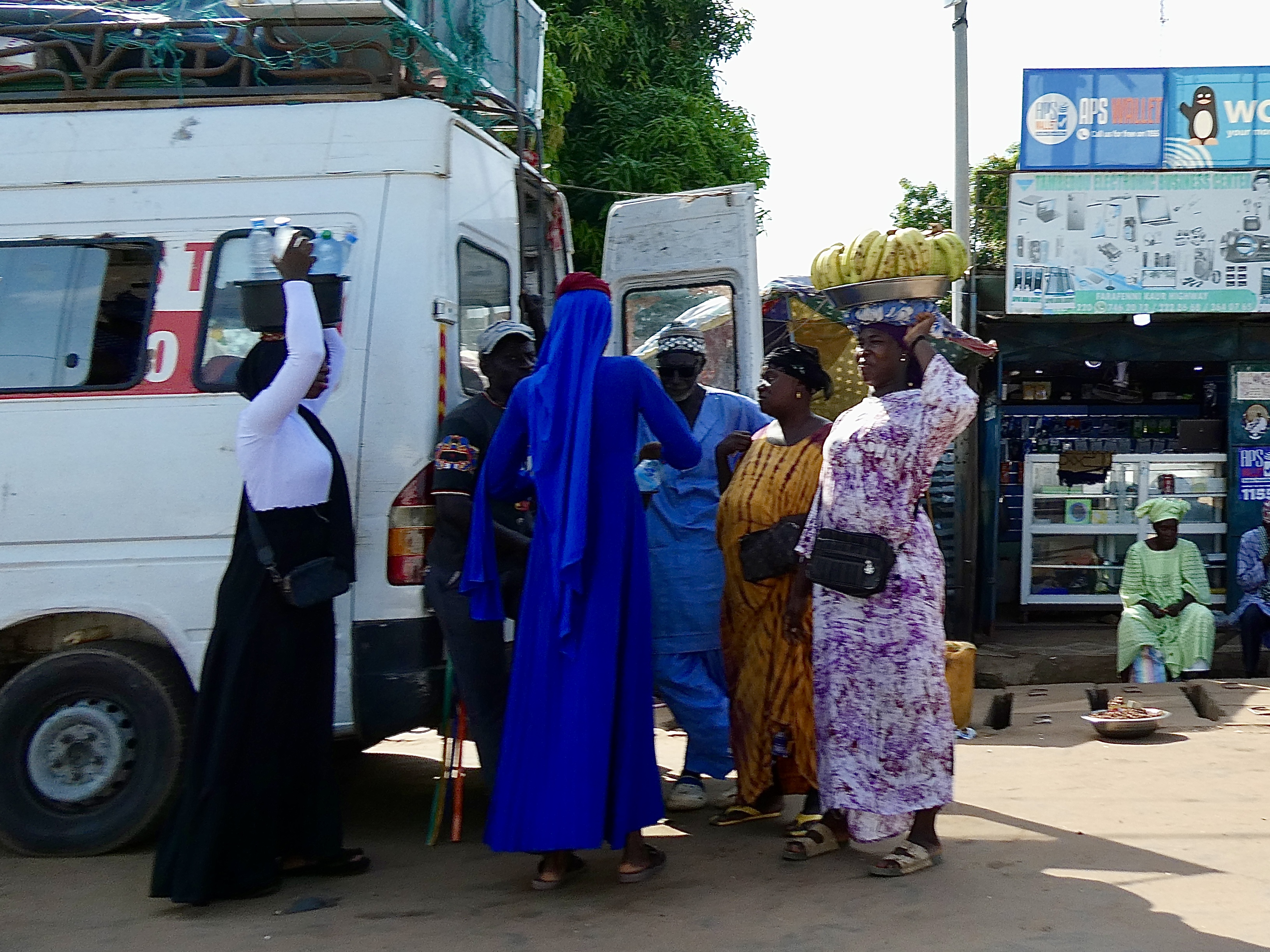
There were local buses that were little more than large minivans loaded to the nines with passengers and suitcases on the top of the roof. And of course, where there are passengers confined to small hot spaces there were also ladies selling drinks to the bus occupants. And of course, there was the ever-present goats and cows at literally every turn.
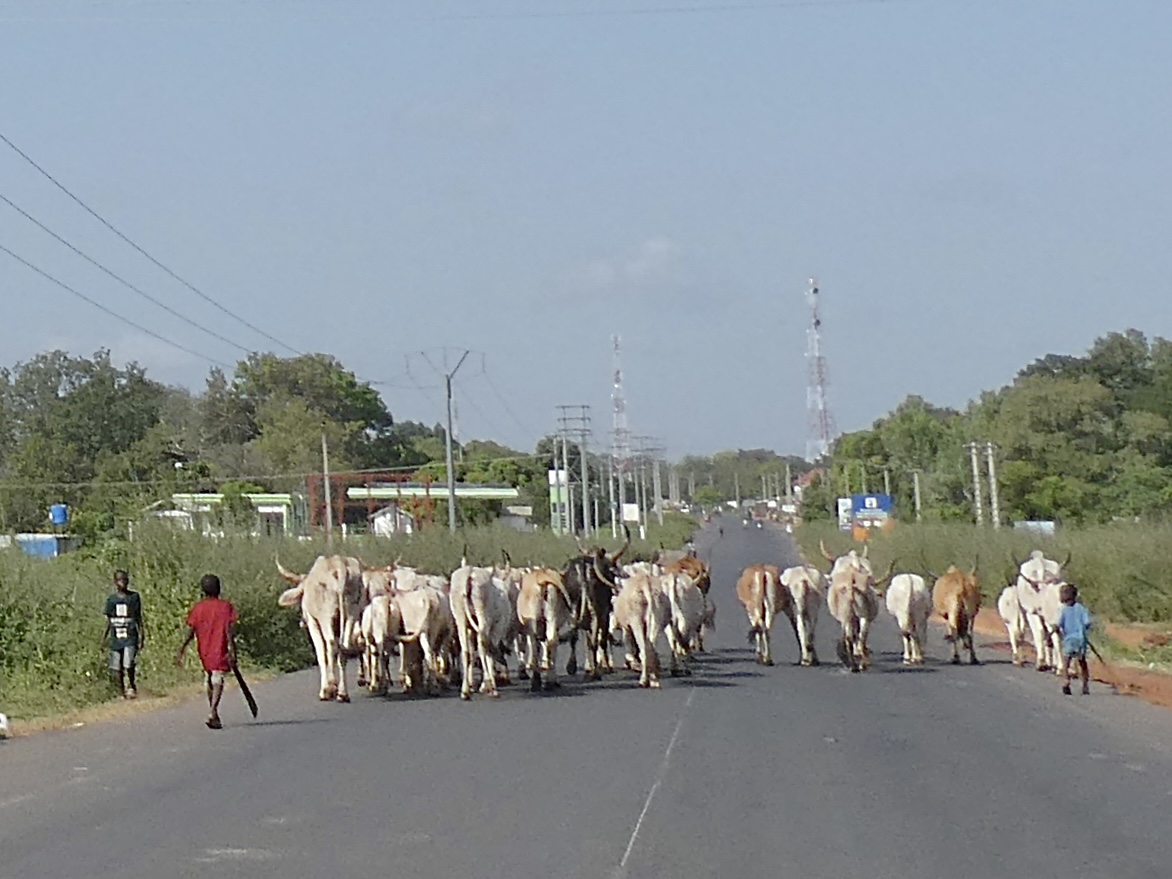
We did see one unusual sight and that was a group of three very, very young boys herding cows down the middle of the road. As we honked the car horn, the boys deftly directed the cows to the side of the road and we passed by. The oldest could not have been more than ten years old. Clearly no schooling for these kids.

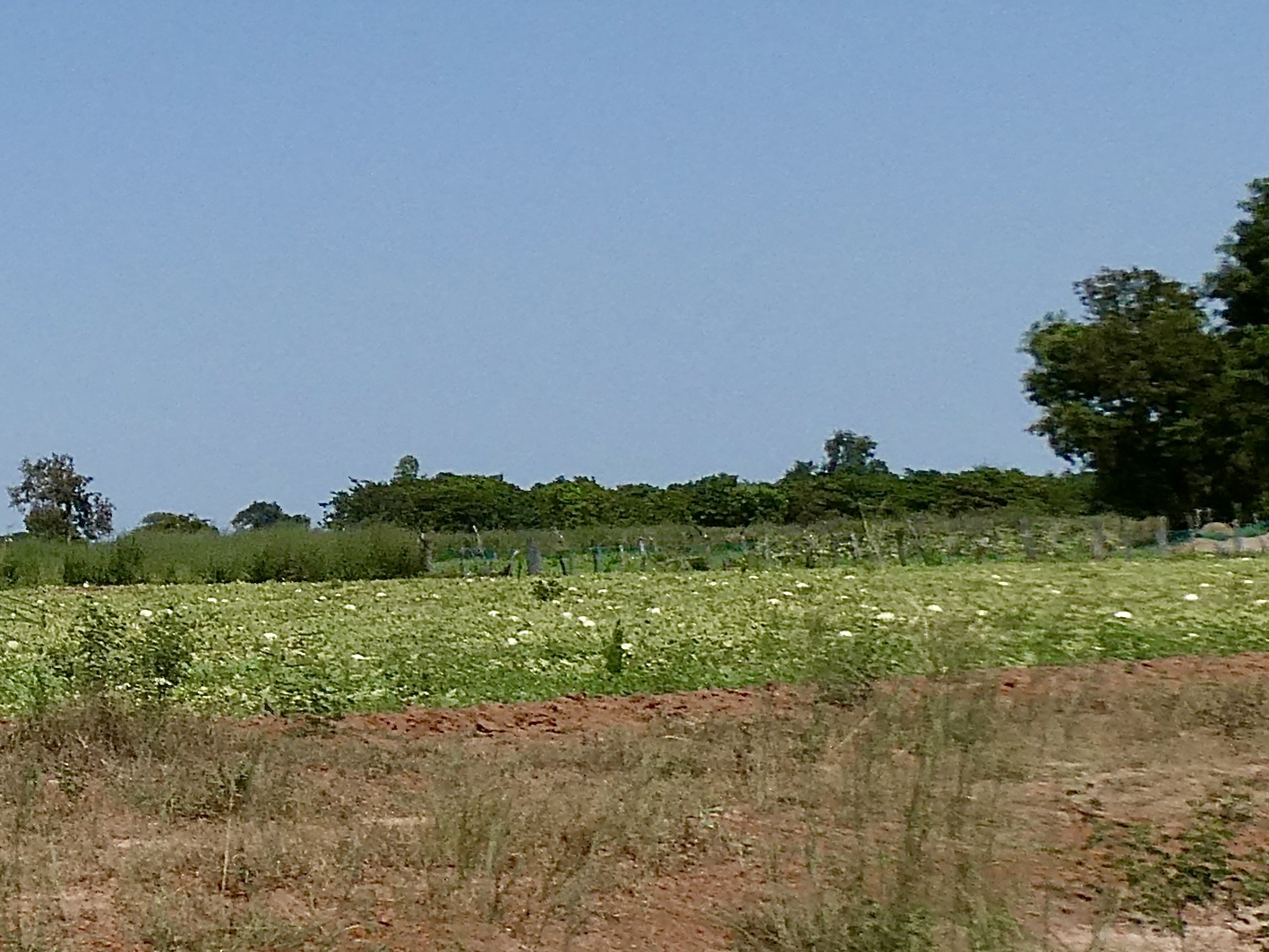
As we drove along, I couldn’t help but think how much poverty there was in this country. The Gambia is mostly an agri-based country. We passed lots and lots of rice fields, watermelon fields and farms. And the poverty was pressed home when we repeatedly saw wells in the middle of fields with people walking to the well to collect clean water. In addition, we saw people in the early morning out collecting random pieces of dead wood on the ground to use as firewood. When you see these things, you realize we really have it good in the west!


Anyway, we finally reached Juffereh at just after 12:30 where I met the local guide and we proceeded to have a tour of the slave museum. Now the slave museum details the history of the slave trade with the arrival of the Europeans in the 15th century and the subsequent beginnings of the slave trade in the 16th century through the 18th century when slavery was abolished, although illegal slave trading continued into the 19th century.
Now the Senegal-Gambia region were major centers for slave trading and included Saint-Louis and Goree Island in Senegal and James Island aka Kunta Kinteh Island in Gambia. It is estimated that over the course of three centuries of slave trading, between 10 million and 15 million people were enslaved and send to the Americas.

As I wandered around the museum, one of the most gut wrenching displays was a case with shackles and a branding iron. It was horrible to see and visualize how many people were marked using this hideous practice.

And the description of conditions of transportation for slaves was equally horrific. Slaves were bound together using ropes and forced to march for miles to holding areas. Once in a holding area, they were crammed together, given very little food or water and suffered illness and disease. Then came the passage to the Americas where they were forced to lie down roped together for the duration of the trip lying in their excrement. More than half did not survive the passage. The whole description turned my stomach.
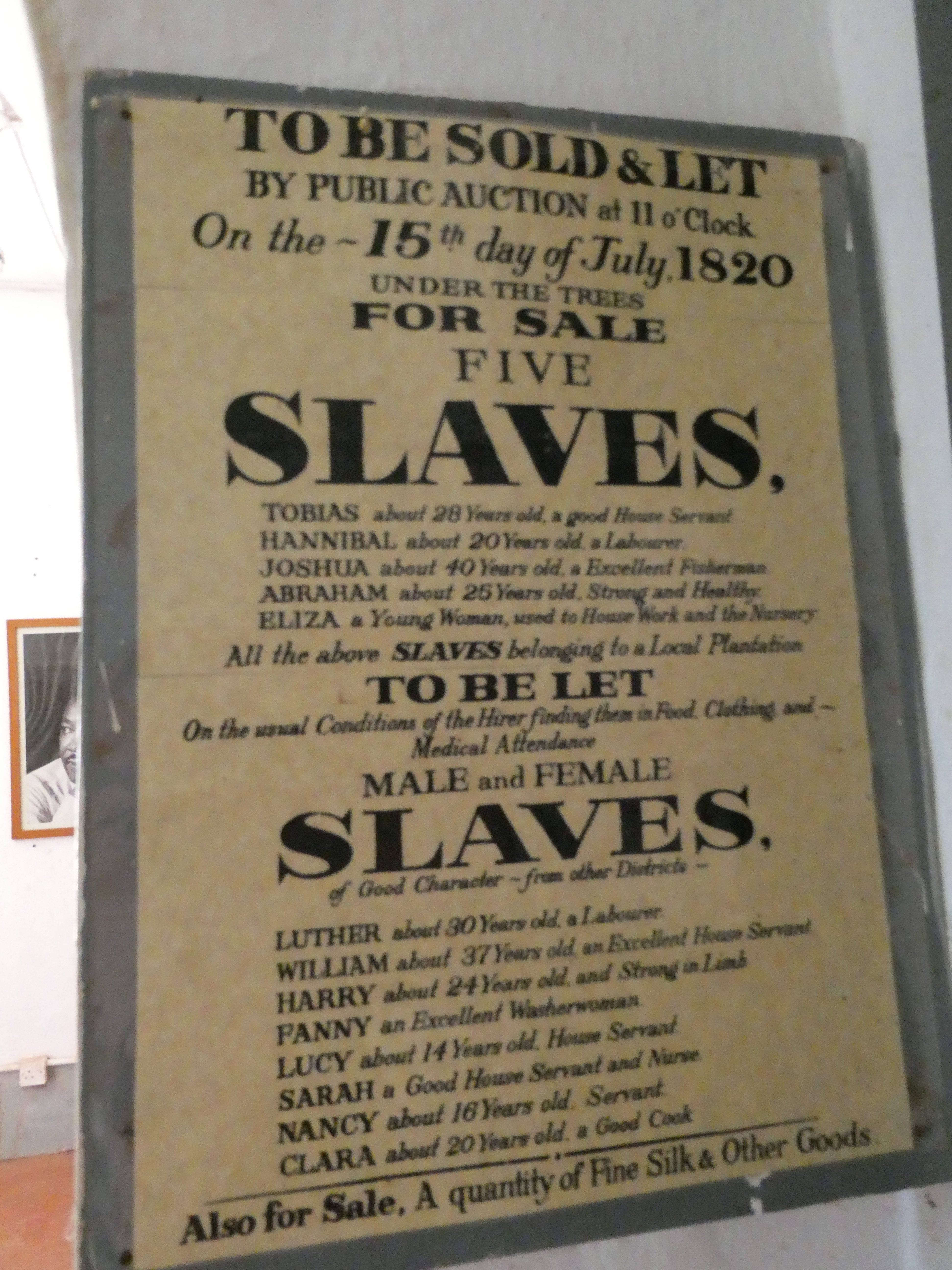
There were also some pictures from the 1860s of slaves on plantations as well as placards from the 1820s advertising slaves for sale with specifics such as their slave name, age and what work they specialized in. What really got me was at the bottom of the sign it provided “also for sale fine silk and other goods” proving that slaves were viewed as nothing more than goods or property for sale. Brutal.
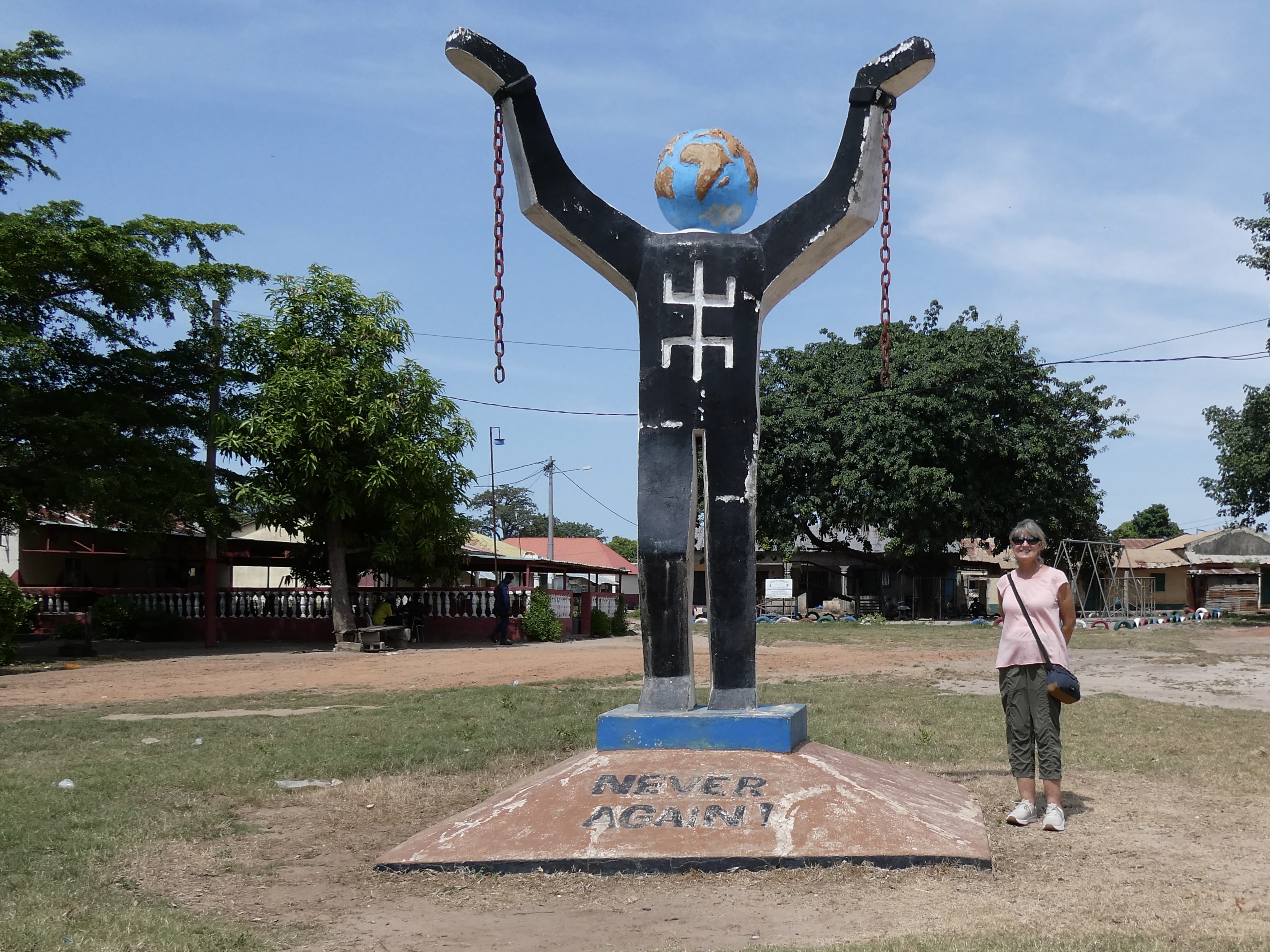
After the tour of the slave museum, we walked to the “Never Again” statute that reminds visitors that slavery must never again occur. It was an enormous black and white statute of a human with arms outstretched and broken chains dangling from the wrists. A globe is used for the head and the words “Never Again” are inscribed on the base of the statute.
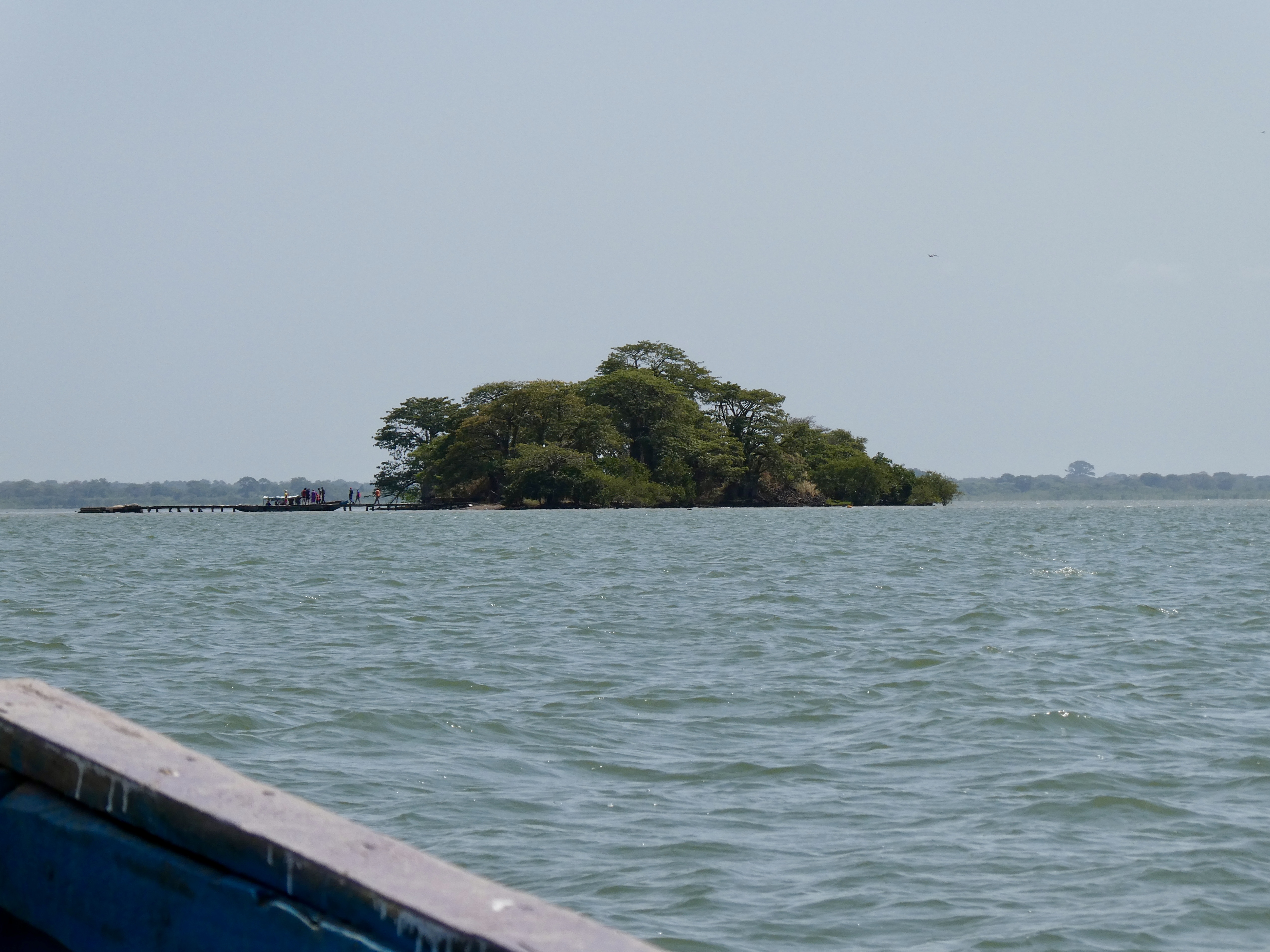
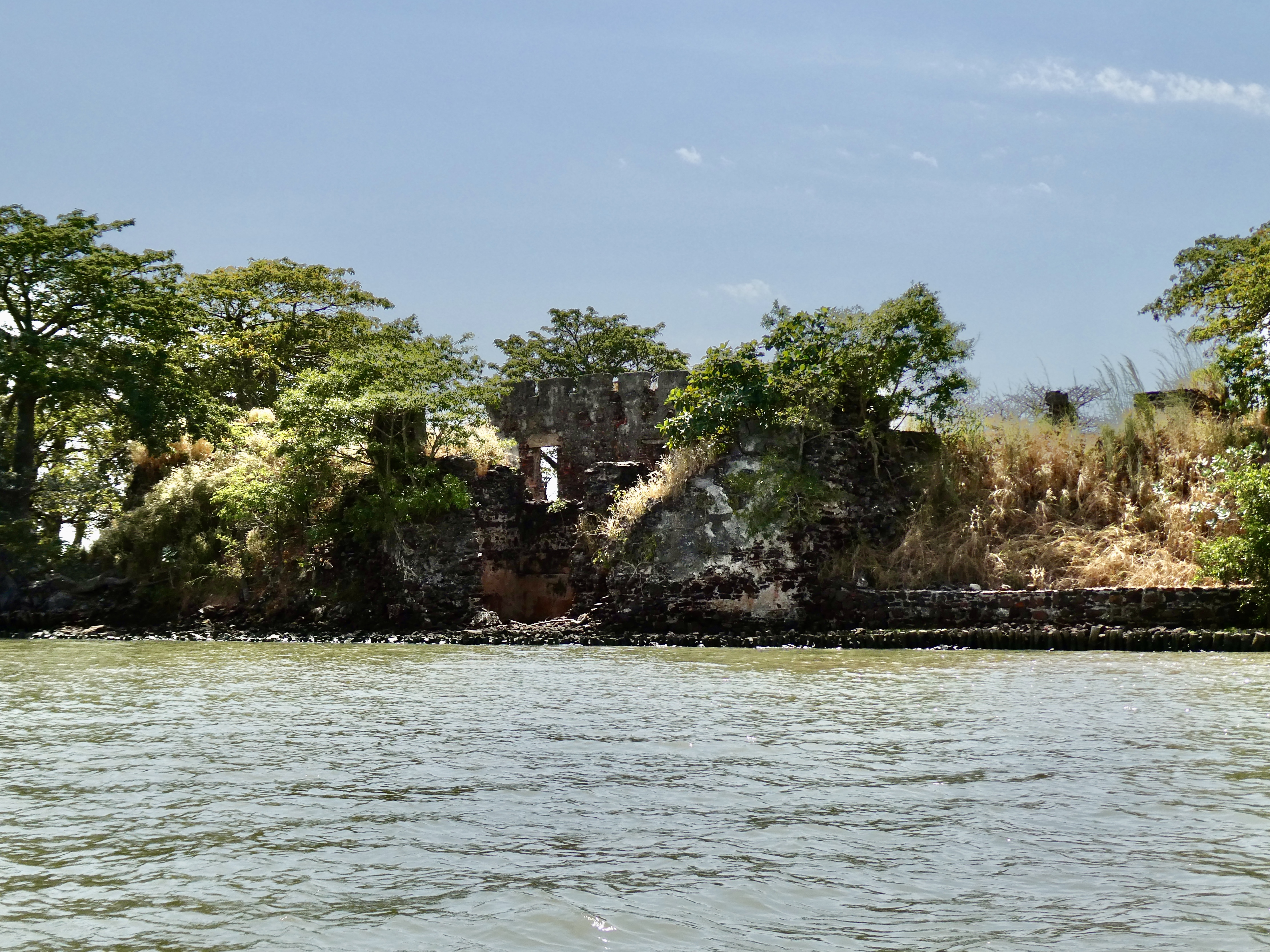
So after taking a few pics of the statute we headed over to the dock where there were a number of skiffs waiting to take tourists to Kunta Kinteh Island. And yes, Alex Hailey did indeed trace his ancestor, Kunta Kinteh, to this island and in 2011, the name of the island was changed from James Island to Kunta Kinteh Island.
Now the island was a former British fort (Fort James), which the Brits captured from the Dutch in the 17th century (who previously captured it from the Portuguese). Over the years, the fort was fought over and destroyed many times because the fort sat at such a critical point in the middle of the Gambia River. Whoever controlled the fort controlled trade on the river which led to the Atlantic.
Now from the 16th to the 18th century, the fort played a critical role in the slave trade, with cells built to hold slaves on the island for up to two weeks before they were loaded on ships headed to the Americas.
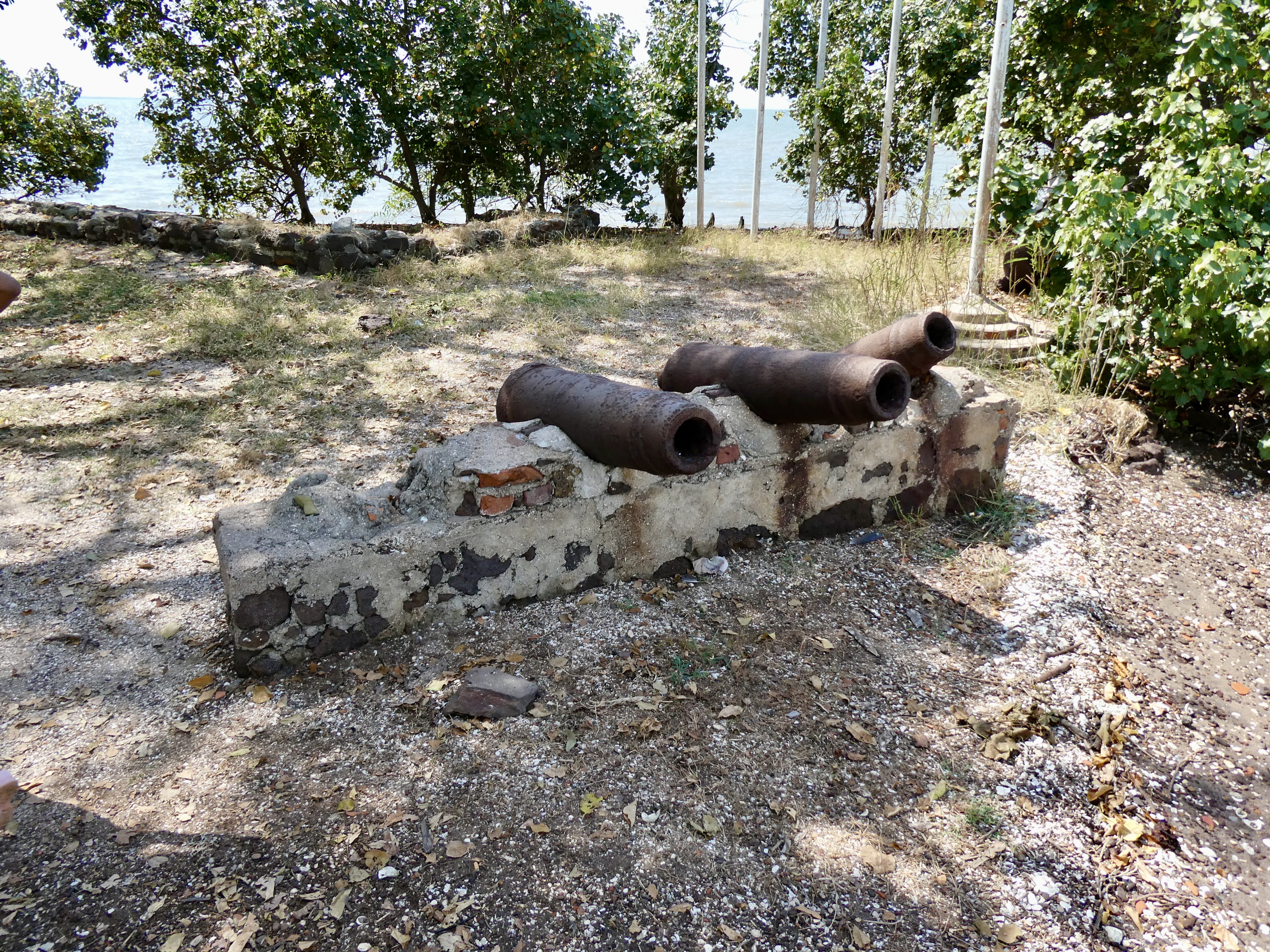


Anyway, we boarded one of the skiffs and in about 20 minutes we had crossed to the middle of the Gambia River where Kunta Kinteh Island sits. Once on land, we took a tour of the remains of the fort first climbing up a staircase past three long forgotten cannons to reach the first of a series of ruins that once made up the fort.
We then walked past the old wells that were used to collect rainwater to give to slaves. And next door to the wells was the only remaining jail (out of four that once occupied the island) which were used to house the slaves before they were loaded onto ships and sent to the Americas.
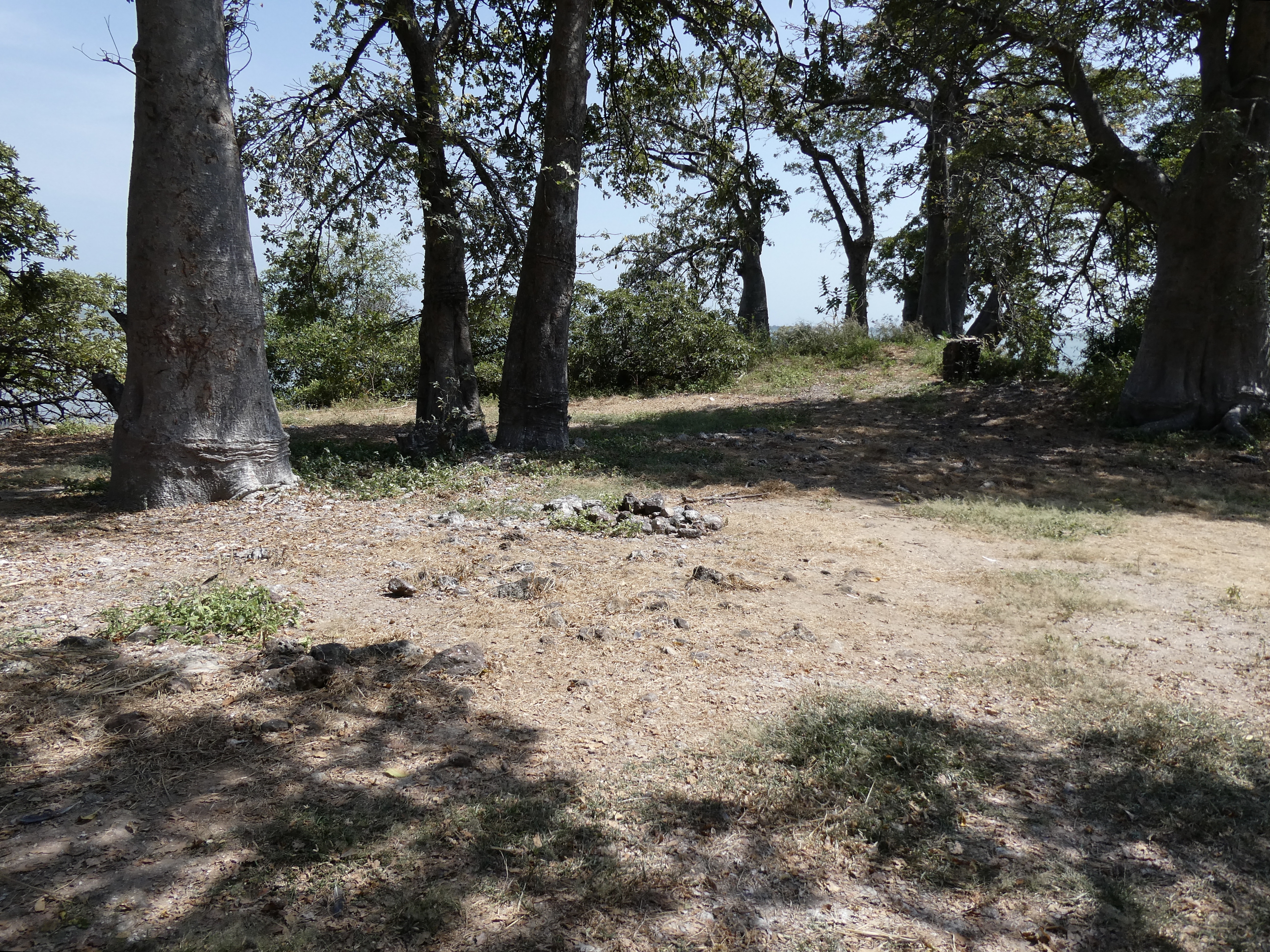
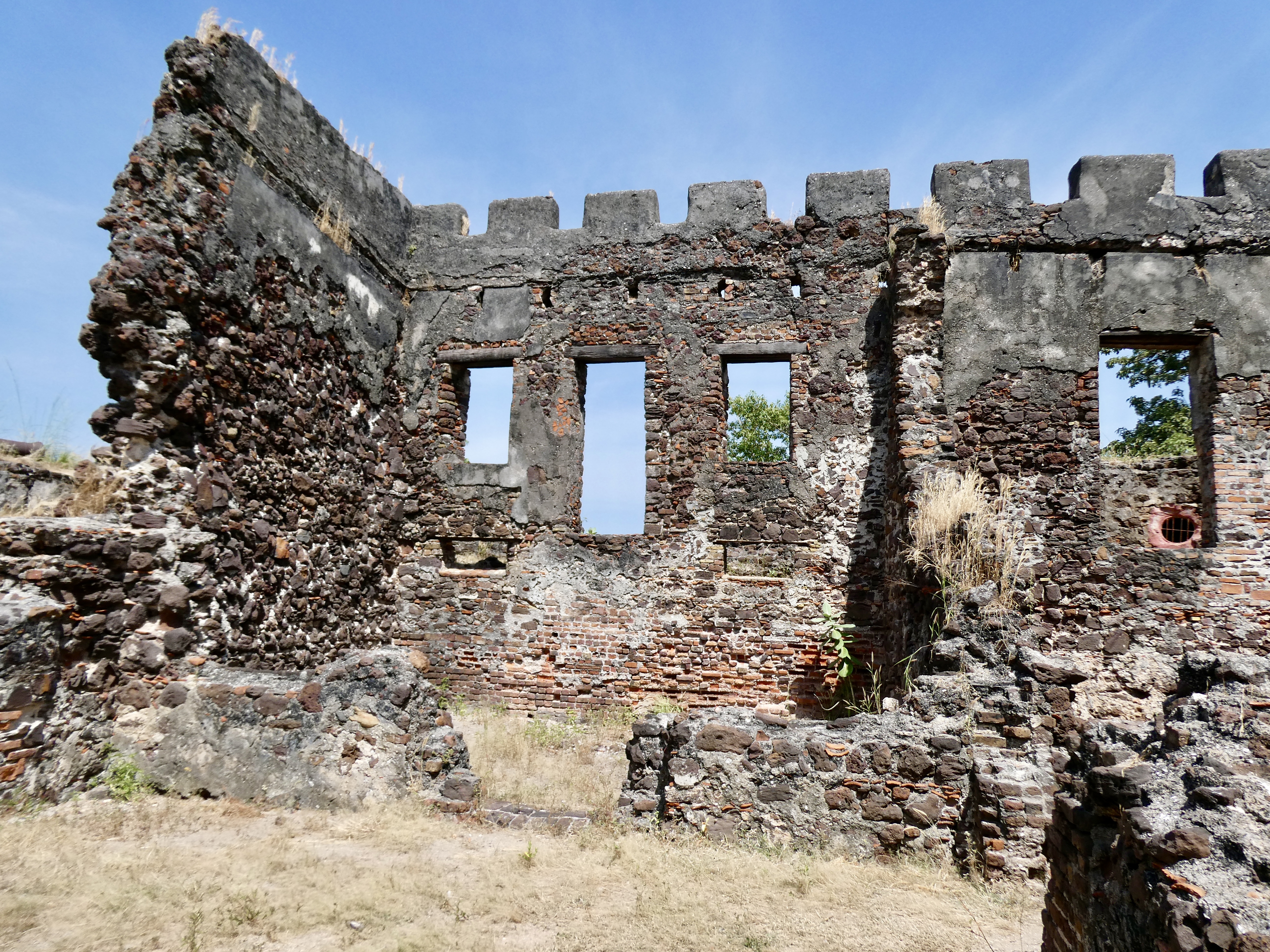
Nearby was the square where slaves were auctioned off to ship captains and next door was the dining room for the officers as well as the office of the Consular General and the office of the Governor. What was striking about the dining room and the two offices is that they were all far, far larger than the tiny jail where up to twenty men were held at a time.
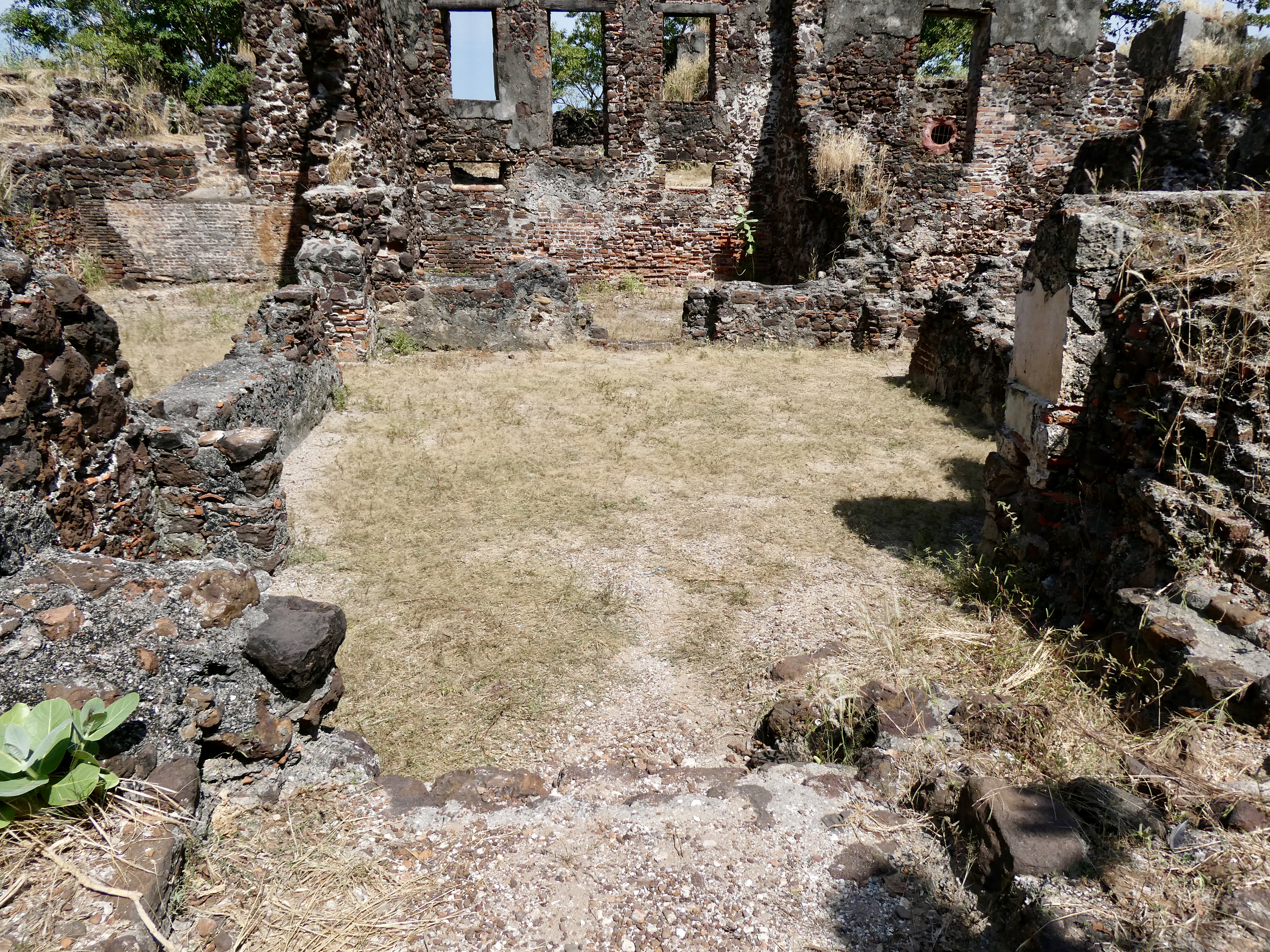
And outside the Governor’s office was the area where they disciplined slaves going so far as to kill those who were either repeat offenders, refused to cooperated or were so “unruly” that they were simply killed.
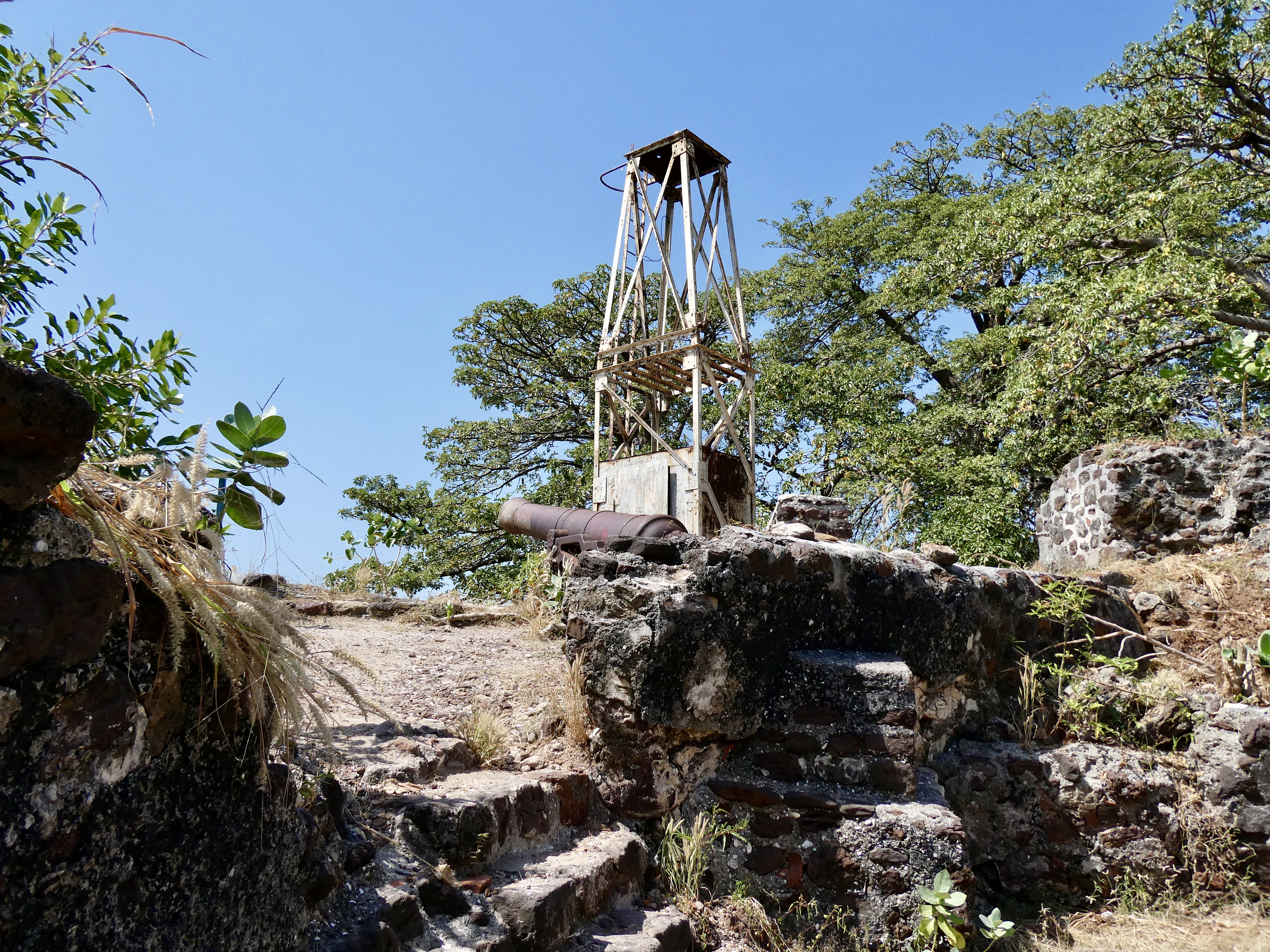
We wandered around the tiny island (which is apparently under threat from erosion and climate change) before ending the tour at what was formerly the lighthouse.
Once back on land, I was inundated by men manning craft stands wanting me to purchase something/anything before I finally escaped into the car. From here, we spent another hour in the car before arriving at Barra Point, which was where we were catching the ferry to Banjul, the capital of The Gambia.

Now the ferry experience was something else. We actually had to leave the car at Barra Point, drag my luggage across a dirt road, bribe a guy to let us on the ferry early and then find a wooden bench to sit on for the hour long ride across the water.
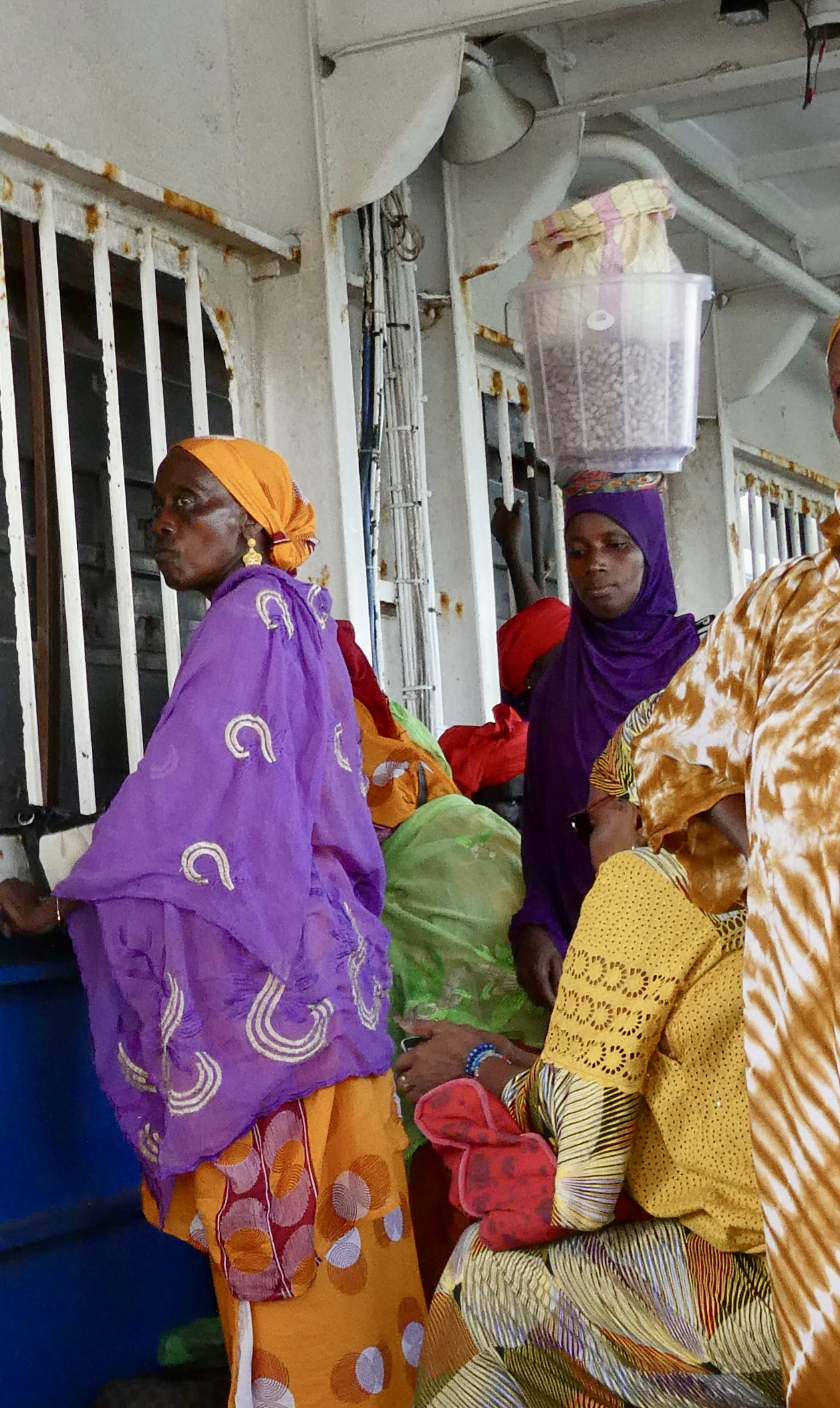

And all around us was absolute chaos. There were women carrying bags on their head while holding babies. There were large trucks and small minibuses trying to jostle their way onto the ferry. There were vendors calling out trying to sell drinks and nuts and locally made cakes. And of course there was the constant horns and dust from the sandy dirt road not to mention the roiling heat and humidity.
Now as if all this wasn’t enough, once on the ferry I spent the time waiting to leave by watching men unload huge skiffs laden with every kind of good imaginable. First came the onions. Bags of them piled high on some guy’s head who then turned and promptly had two bags fall in the water.


There were boxes of fruit piled high. Tubs of something I could never figure out and on and on. And the capping on all this is that the skiffs also carried passengers, but the boats were anchored a bit offshore so rather than have the passengers wade through the water, the passengers were carried from the boats to the land. Seriously. It was something else ….
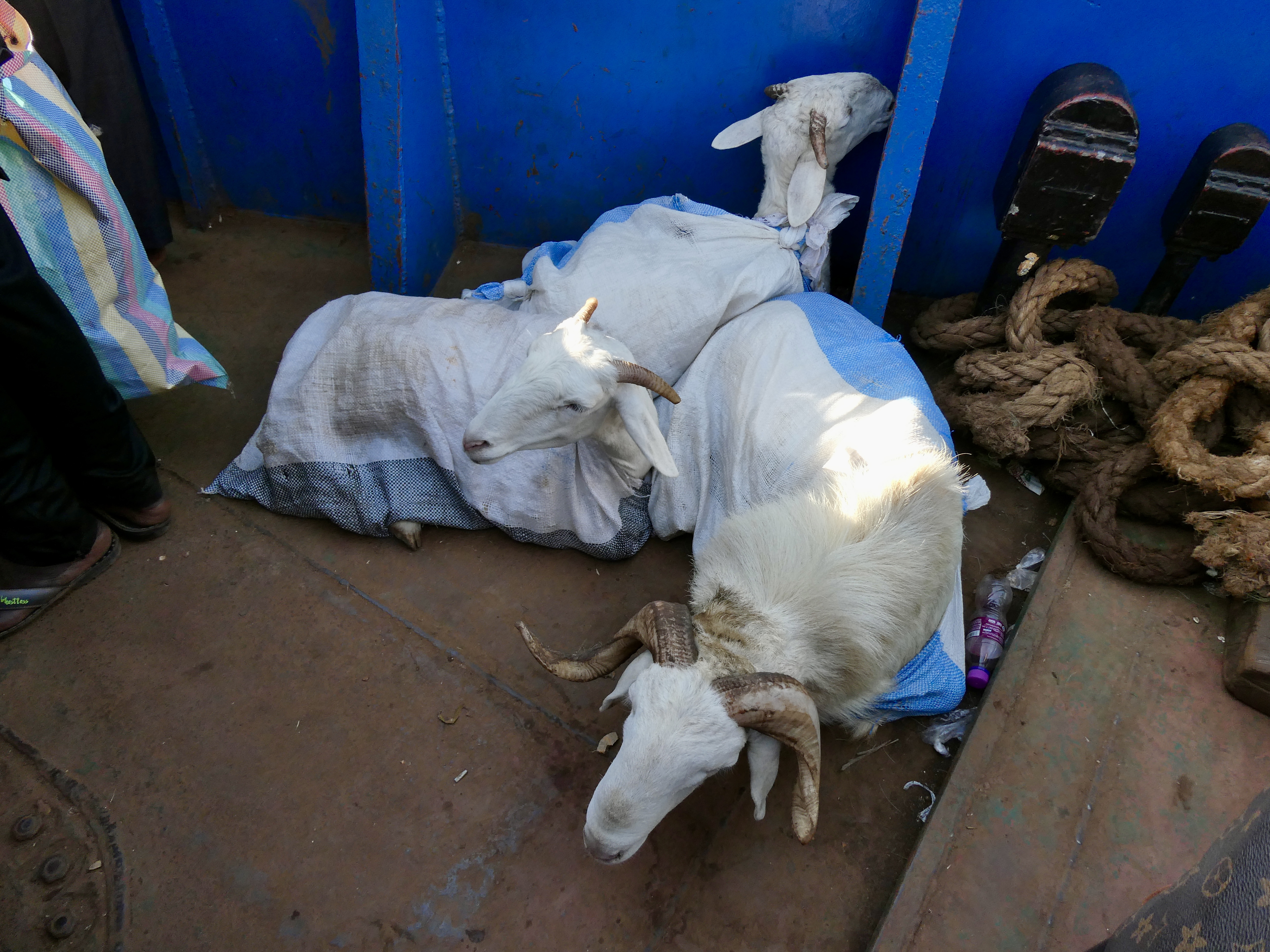
We finally left Barra Point loaded to the rafters with people, goods and yes … even goats. And the trip seemed to take forever. I was incredibly hot (actually dripping with sweat) and the ferry was so slow it didn’t even muster a bit of a breeze as it moved through the water. The only saving grace was the cake lady who was selling home made cakes … they were fabulous.


Once we reached the other side, we walked off the ferry and for some reason had to show our passports again. Malang ended up getting pulled aside and we ended up waiting for almost a half hour for him. I was desperate for water and despite the fact that there were women selling water right in front of me, Samba said no. Apparently some of the women fill bottles with tap water and that would not end well for me.
We finally reached the hotel at 6:00 and it took another 45 minutes before I had my room. Seems like they gave away my room so they ended upgrading me to a room with a pool and a view to the ocean.
So tomorrow is my last tour day on the trip. Then it is back to Senegal on Saturday and home on Sunday.