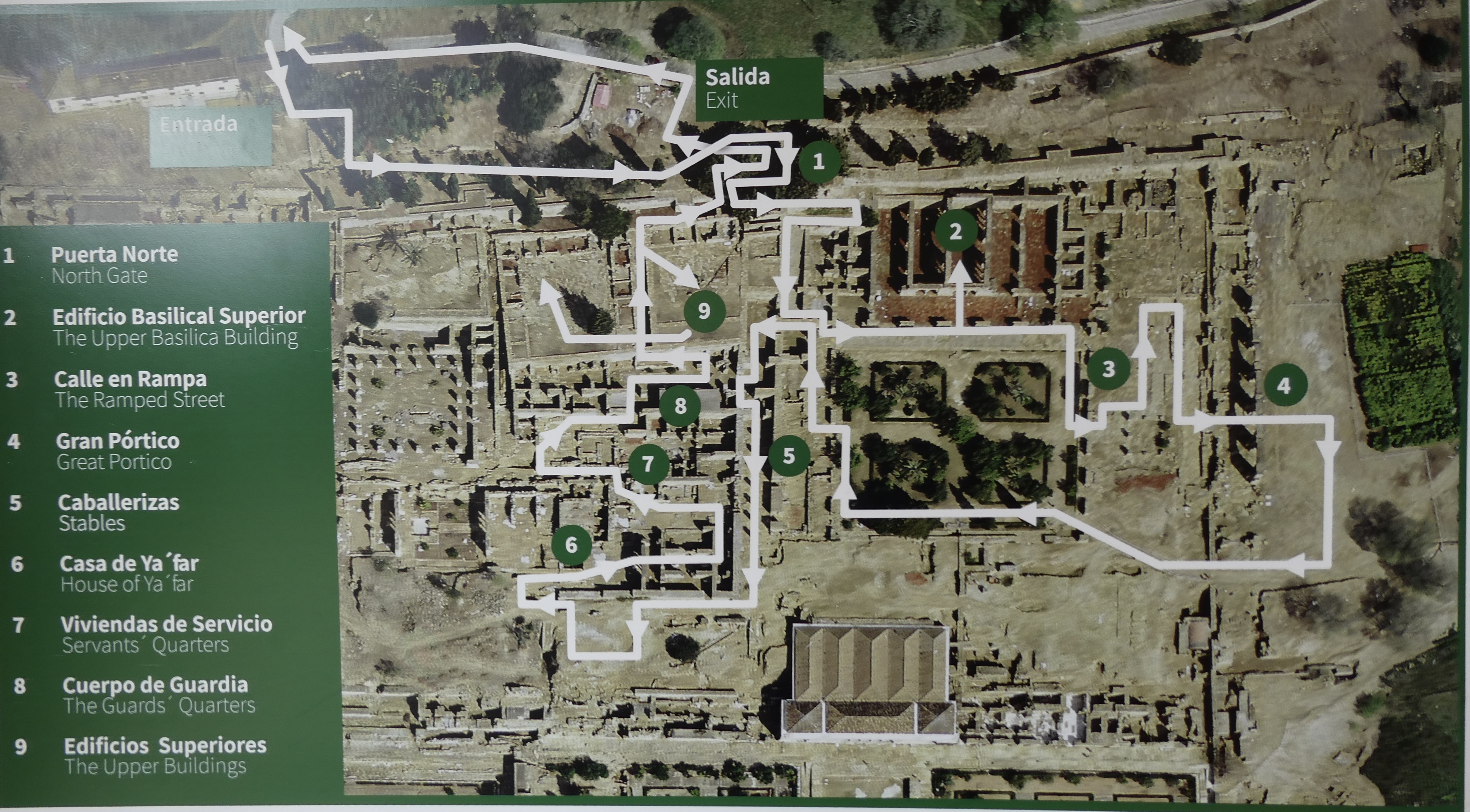
Well … today was a massively early start (but it actually paid off as explained below). I was up at 5:00 a.m. and on a train at 7:05 a.m. bound for Cordoba. By 9:05 a.m. I had arrived in Cordoba and 15 minutes later I was at my hotel, dropped my luggage off, found a cab and headed off to Medina Azahara aka Madinat al-Zahra about 8 km from my hotel. Now Medina Azahara is a UNESCO World Heritage site featuring ruins of a fortified palace/city constructed by the Umayyad Caliph Abd ar-Rahman III to symbolize his power and the power of the Moors (North African Arabs) in the 10th century. (As it turned out, his dynasty was short lived as there were only two caliphs before a civil war amongst successors brought down the caliphate and the city less than 80 years after it was built.)
Now when I arrived at the site, there was a bit of rain falling, but by the time my guide Helena arrived at 10:00 a.m. it had stopped. Now before we visited the actual archeological site, we took a quick tour through the museum as well as sat and watched a 10 minute video that provided a great overview of the Medina Azahara and what the ruins would have looked like back in the day.
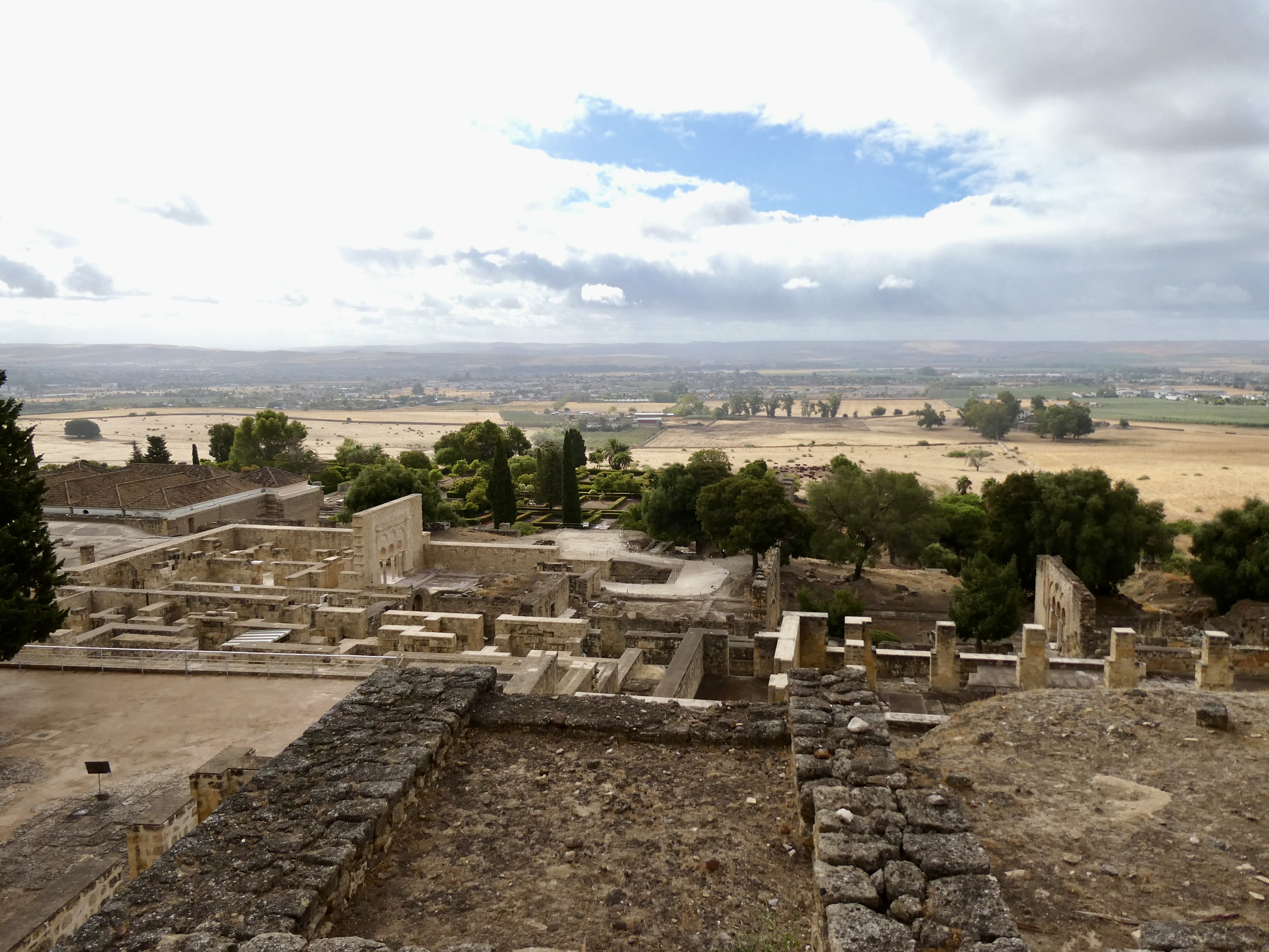
We then hopped on one of the commuter buses that took us up the hill to the site. Now the excavation of the ruins only began in 1911 and only about 15% of the total site has been uncovered leaving most of the city still undiscovered. Nevertheless, standing above the ruins was a pretty impressive sight.
Now it is believed that the city was comprised of three levels with distinct functions: the upper level housed the private palace of the Caliph and close family members; the middle level housed state buildings and residences of the highly placed individuals; and the lower level for rif raff and the army.
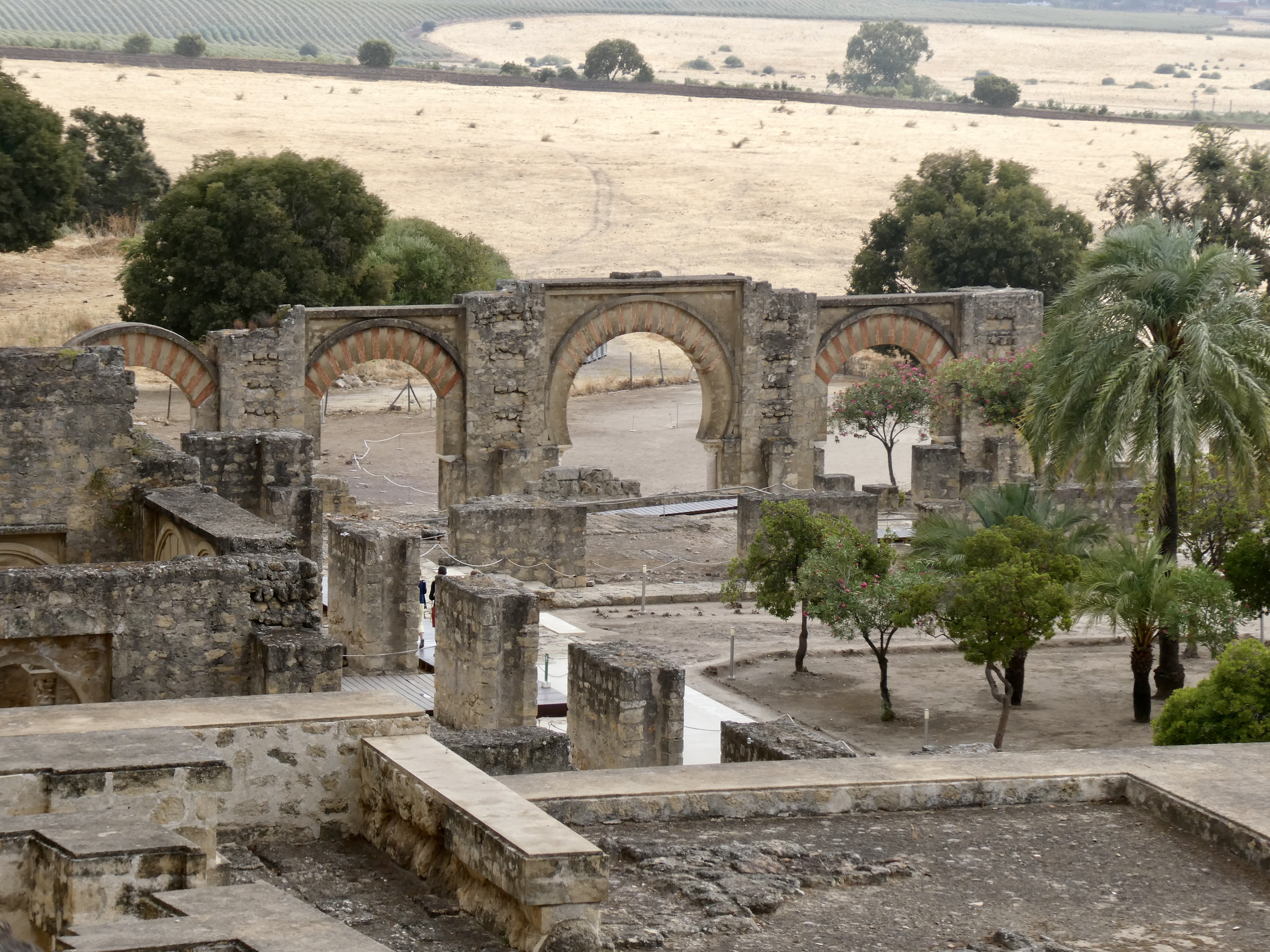
So after taking in the views, we walked down a series of staircases to the North Gate entrance where the servants, slaves and worker bees would enter the city bringing with them supplies for the city. From here, we had spectacular views to the far end of the city to the Gran Portico (more about that later).

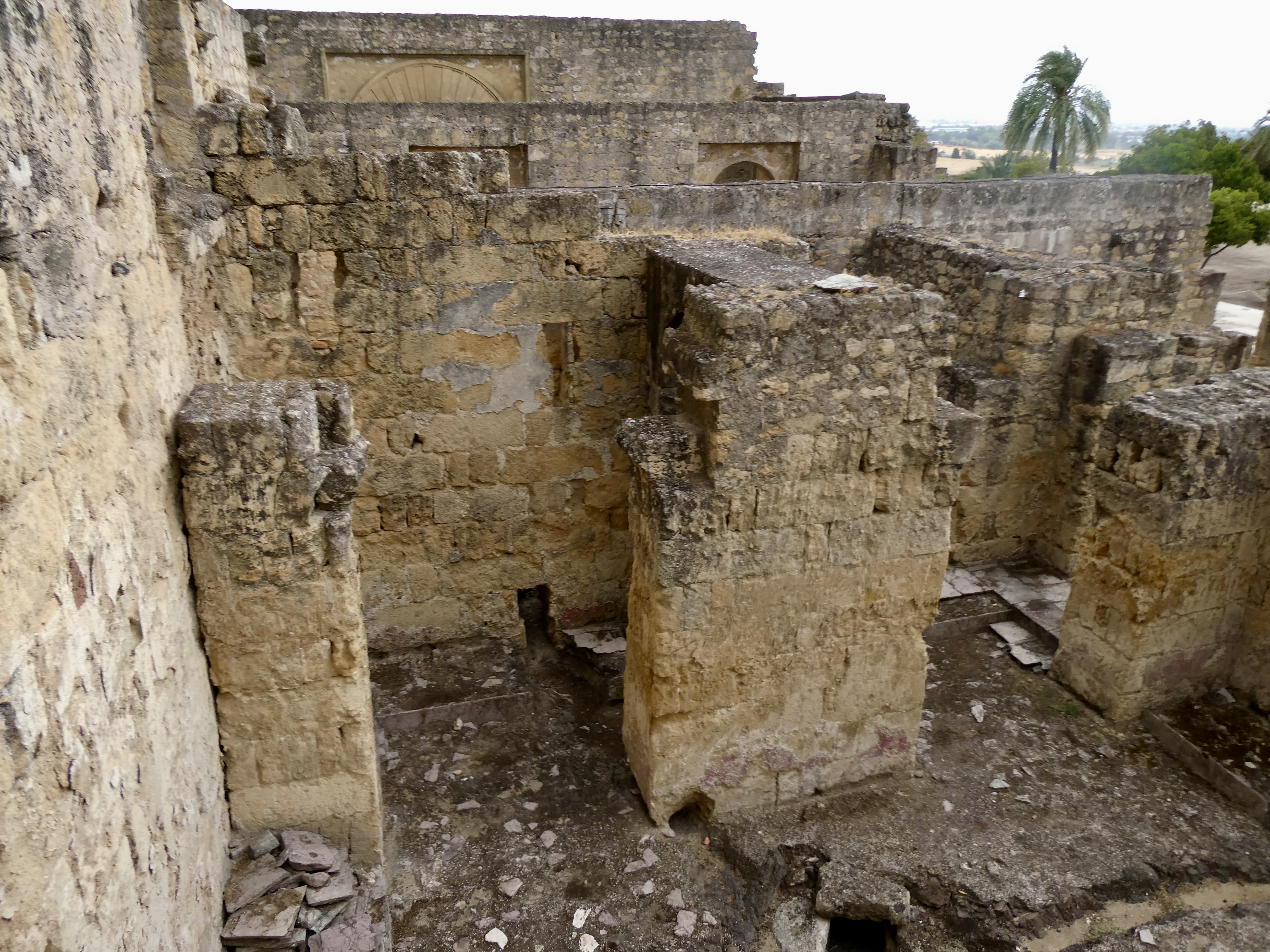
We then walked towards the Upper Basilica Building passing an irrigation system that had been in existence since the Roman times (although the Moors added to the system) before passing the latrine area of upper part of the city.
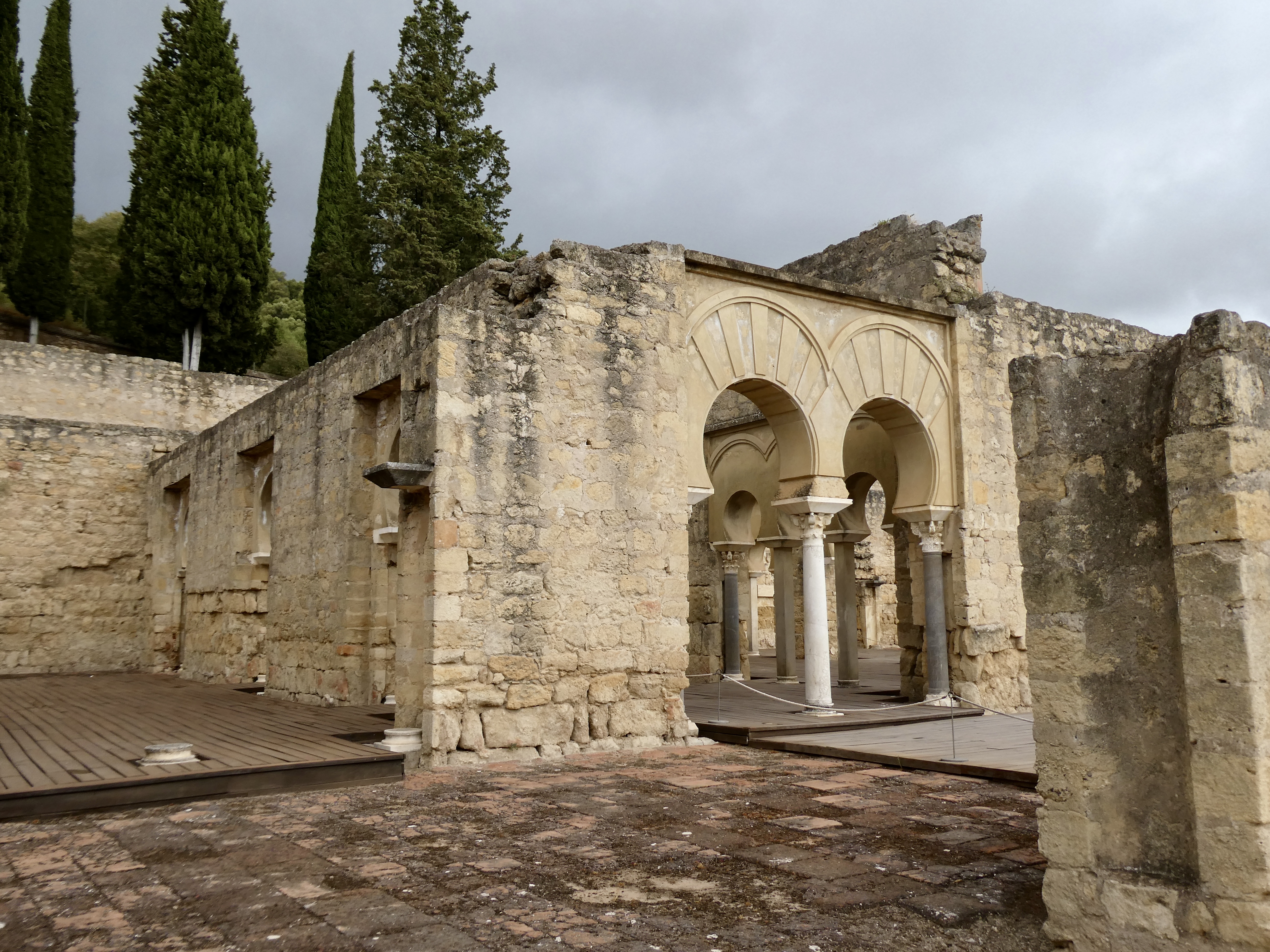

We then turned a corner and reached the Upper Basilica Building. Now this building was interesting because it was not only an administrative building for conducting city business, but it is believed that when state visitors arrived to see the Caliph, they were housed in this building sometimes waiting months to have an audience with the big guy.

The Upper Basilica Building remains were quite spectacular with huge decorative arches and large spacious rooms. There was also a lot of marble used in the pillars signifying that this was an important building.

From here, we walked down the Ramped Street, a street that led from the official buildings on the upper terraces of the city to the Gran Portico. It is believed that the street may have been covered back in the day, and that this was actually the main route from the Gran Portico to the upper sections of the city used by dignitaries and important city residents.
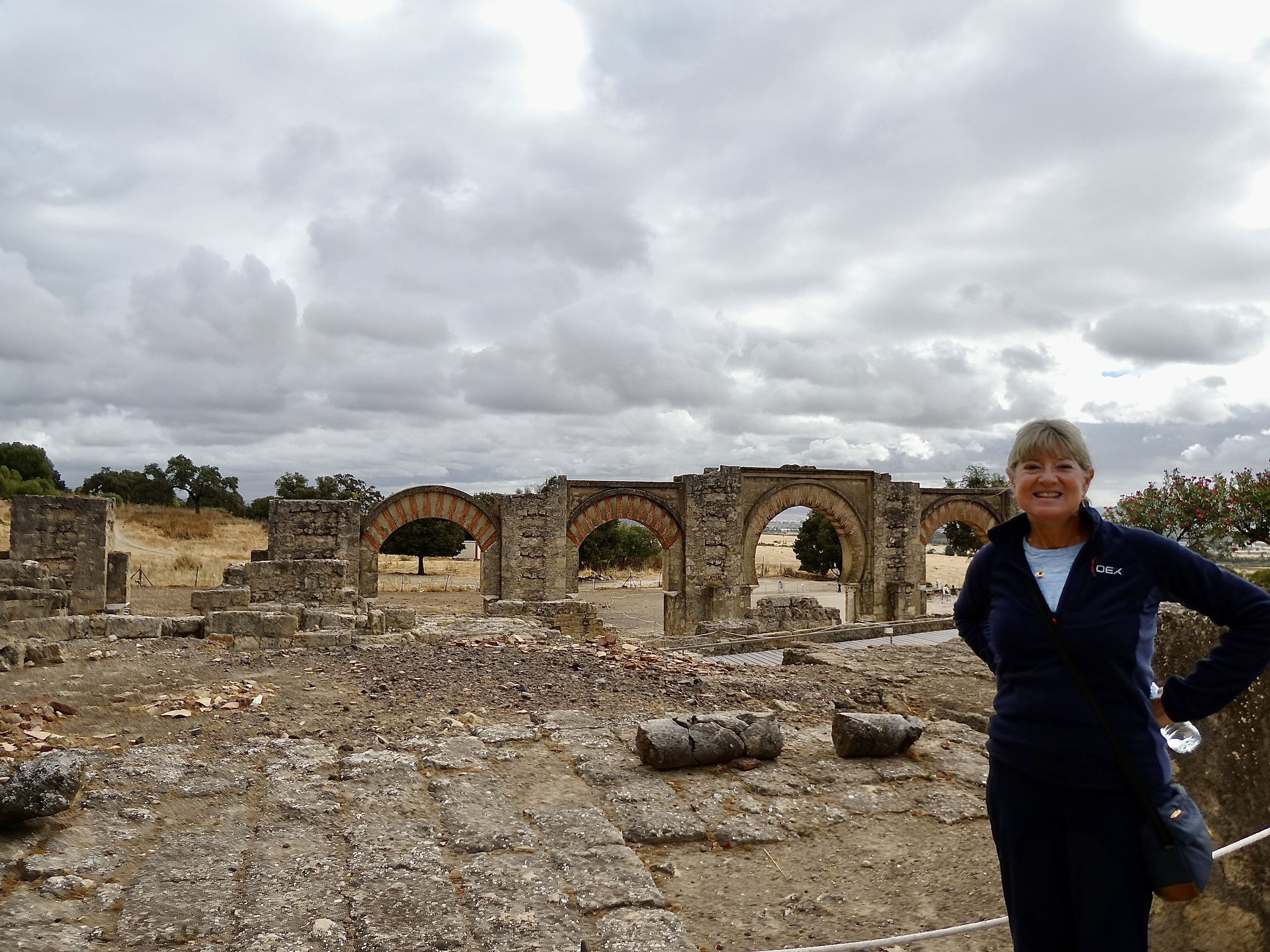
And in front of the Ramped Street was the Gran Portico, a huge entryway with rows of arches designed to impress visitors. In addition, the Gran Portico was where troops from the city would gather prior to departing for battle. The Gran Portico would have had a huge terraced area above the arches for the Caliph to inspect the troops before they left the city.
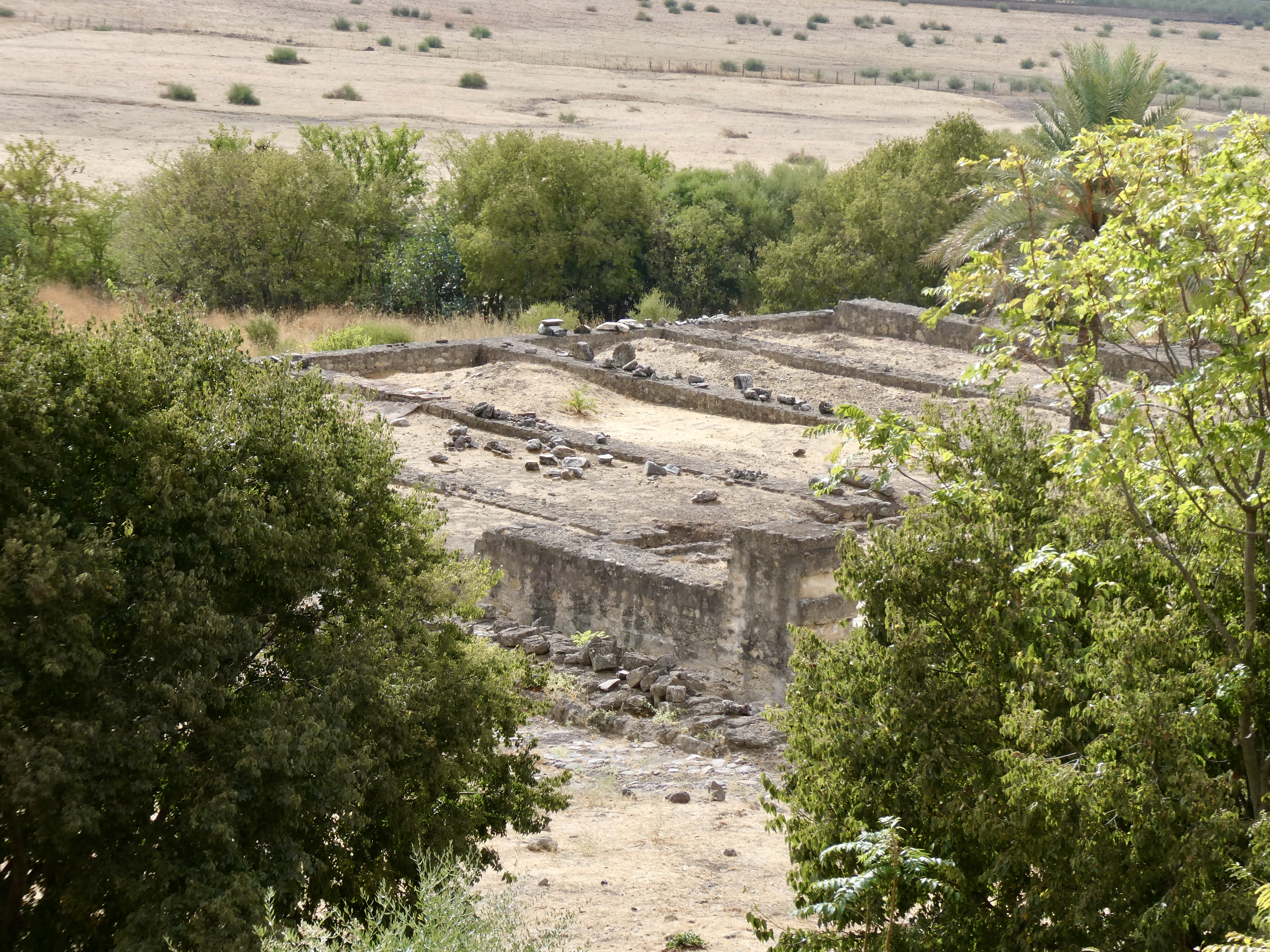
We walked through the huge arches and then doubled around to take in a view of the giant Mosque that was used by all residents of the city. The mosque faced towards Mecca (unlike some mosques in the area that were built on top of churches and as a result were not constructed facing Mecca), but the mosque was hard to see given that it was outside the walking route at the site and could only be viewed from a distance. Now one thing that surprised me was that the Caliph did not have his own mosque, but instead shared the mosque with all of the city (although he did apparently have his own special area of the mosque reserved just for him).
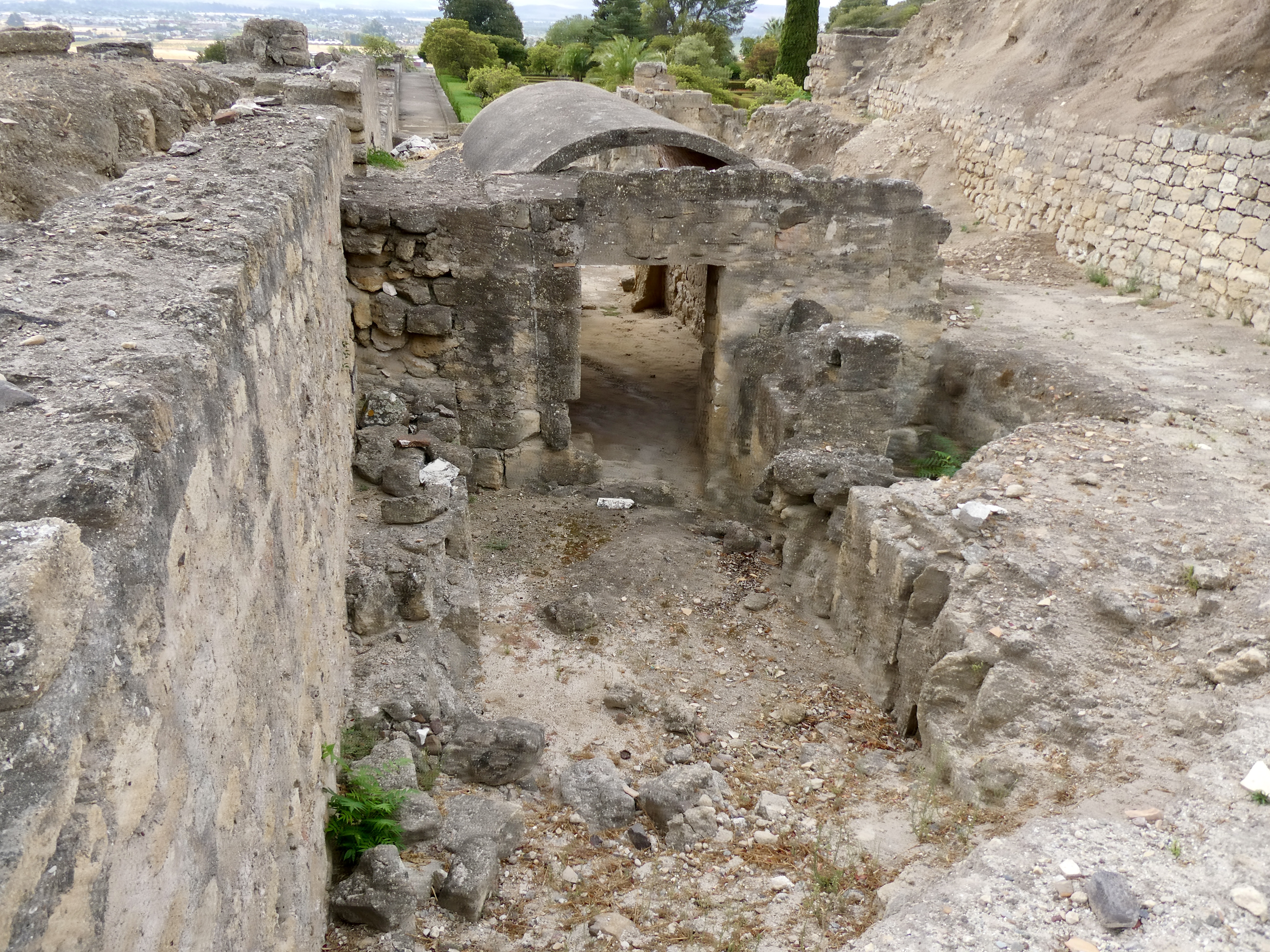
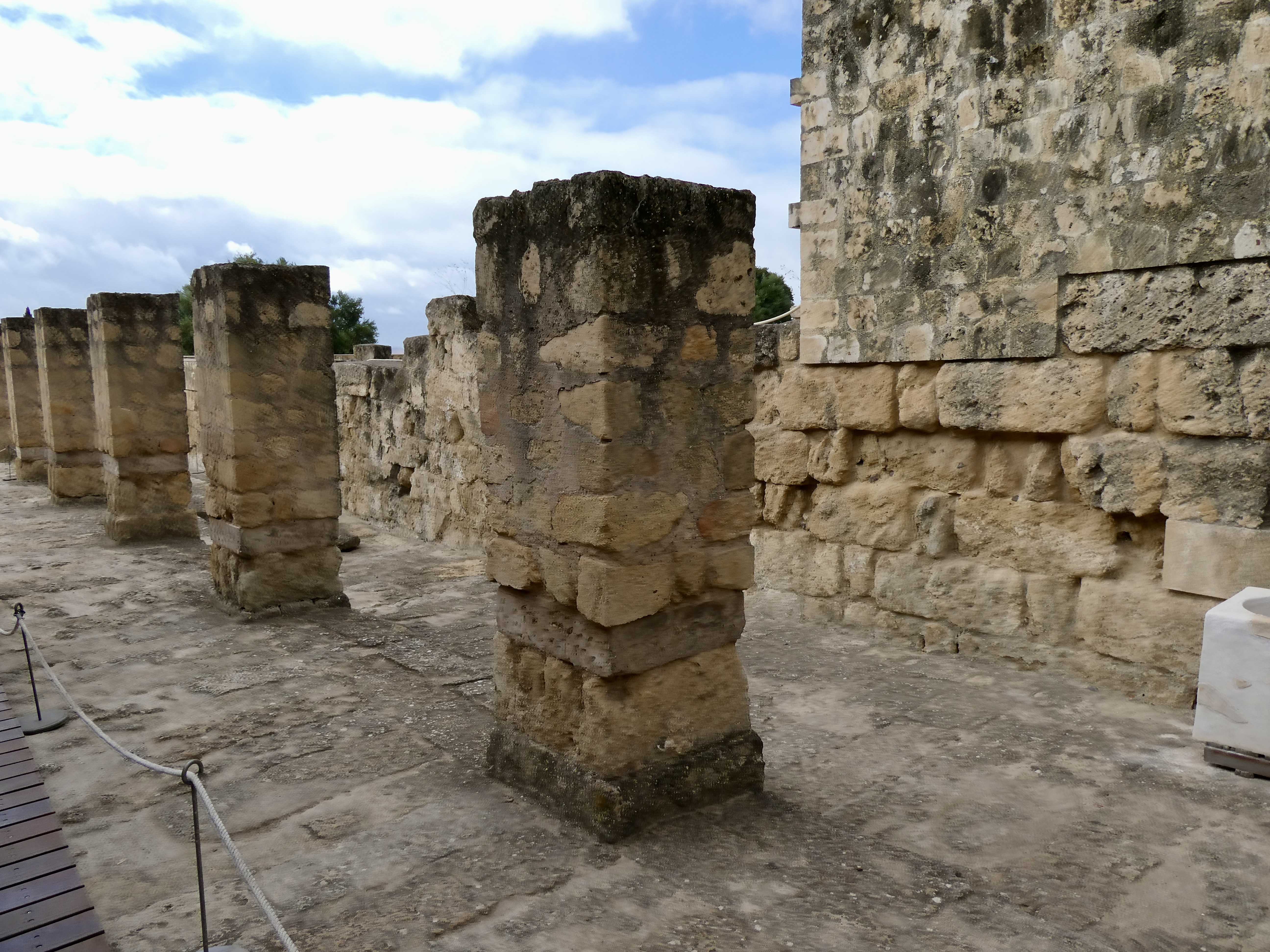
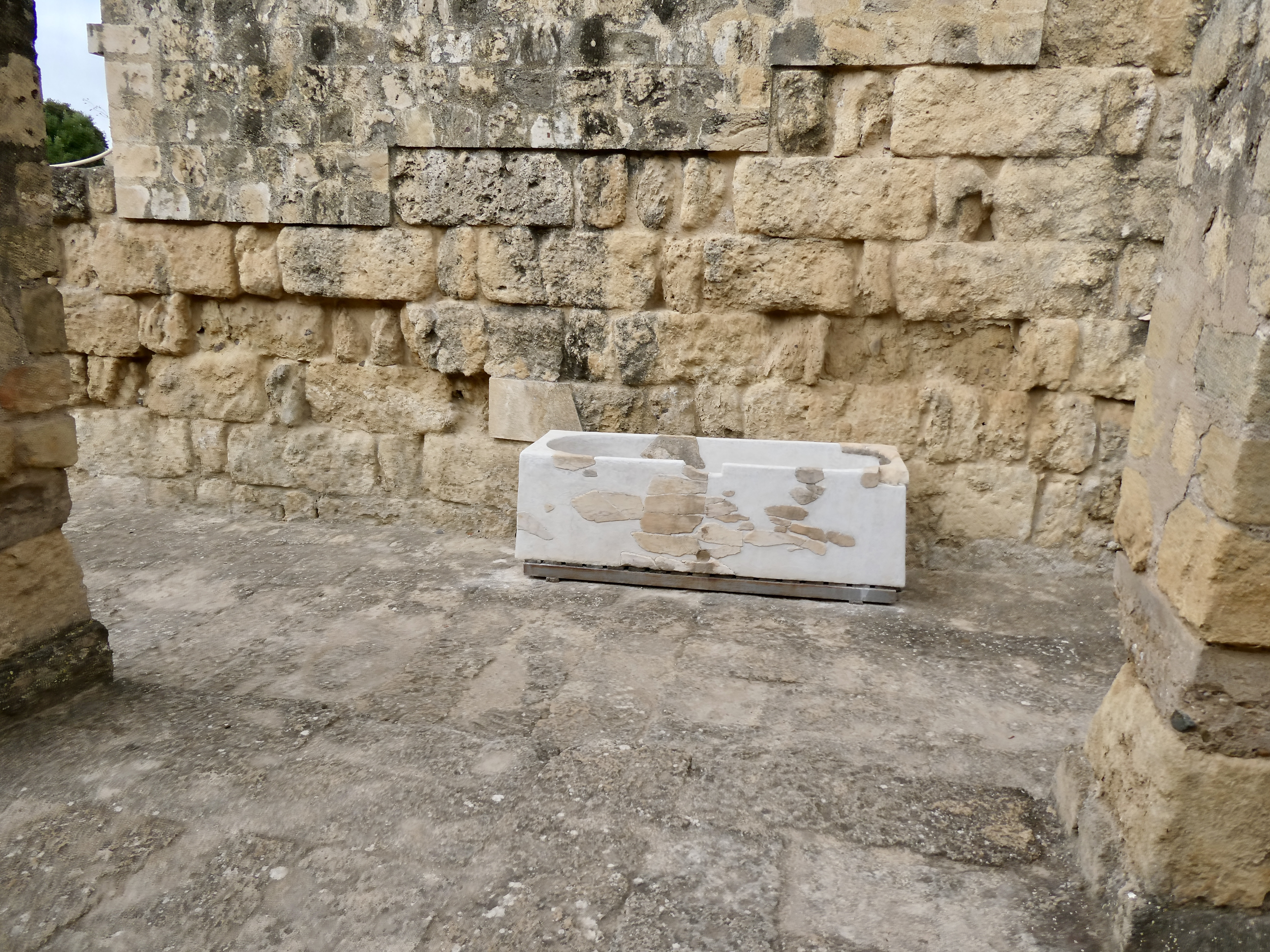
From here, we walked past the public baths area (yep they had public baths just like the Romans) before turning the corner and reaching the stables area. Now the cool thing about this area is that they uncovered a Roman marble sarcophagus that had been repurposed as a drinking trough for the horses. (No idea what happened to the poor Roman who had been buried in the fancy sarcophagus.)
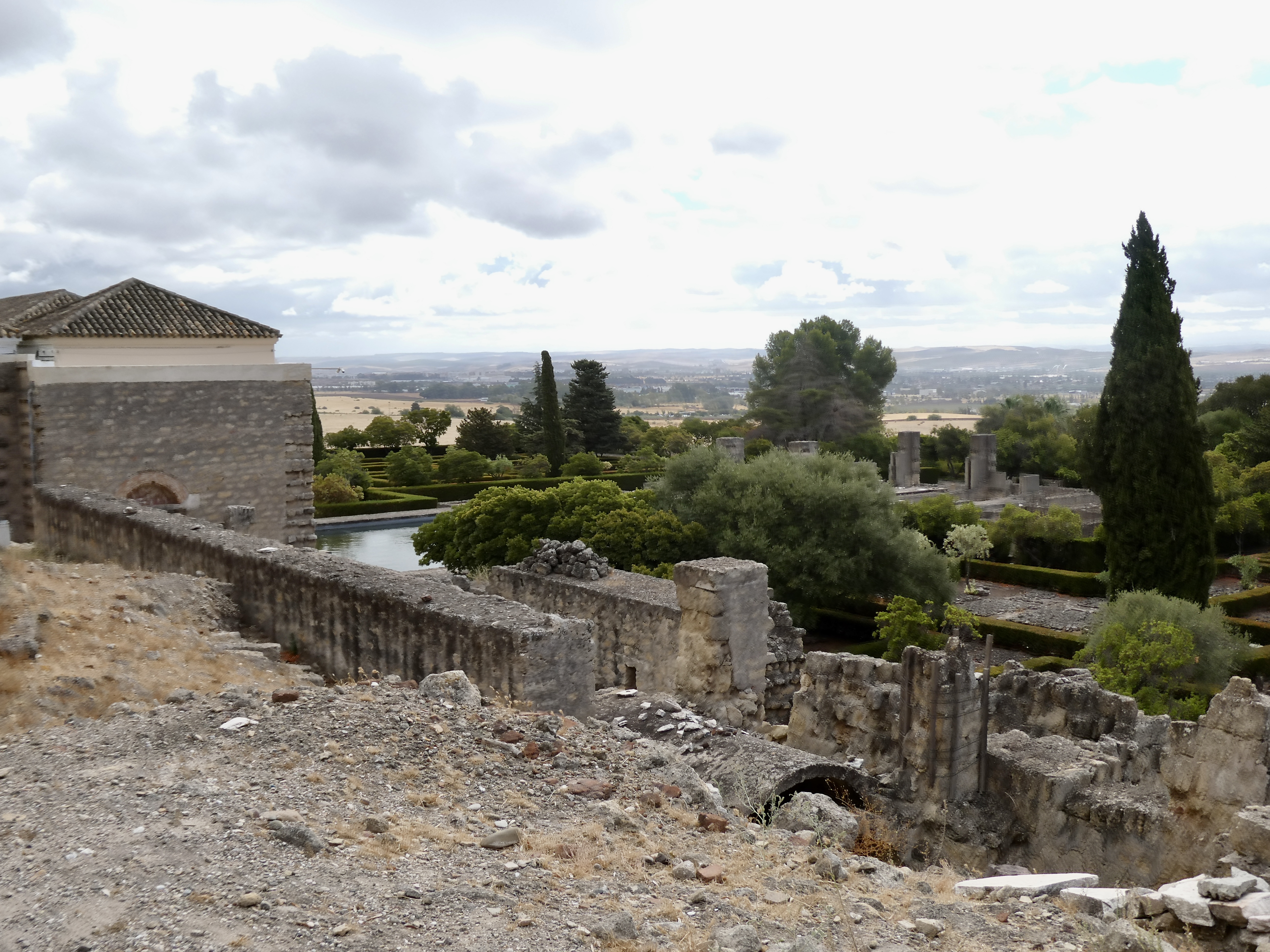
We then walked to the end of the stables to a garden area comprised of an upper garden and a lower garden, which had been part of the Hall of Abd al-Rahman III aka the “Rich House” which was sadly not open to the public at this time. Apparently the Rich House was the building to the left of the garden area where the Caliph received visitors. The back doors of the Rich House opened to a huge garden pond that reflected sunlight into the building giving the Caliph an “aura” as he sat on his throne and welcomed visitors.
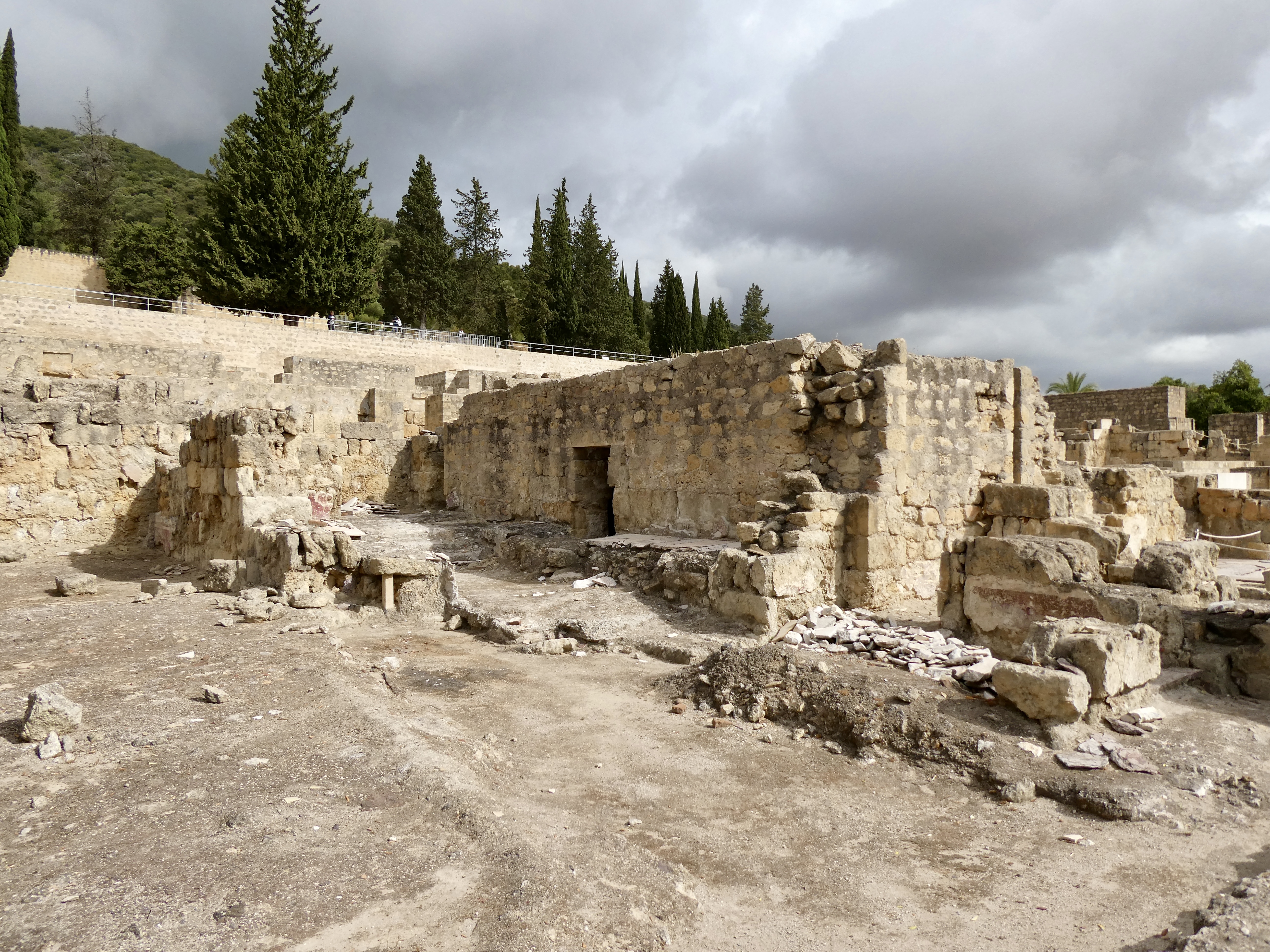

After passing by buildings that are believed to be servants quarters, we reached what is commonly known as the “House of the Water Basin” so named because of a large pool dominating the interior courtyard. This residents of this home were clearly well connected as evidenced


by the elaborately decorated pillars and archways in the home.
However, this building was nothing compared to the House of Ya’Far next door. The residence was comprised of a working area and reception, main living quarters and servants quarters. The doorway to the entrance of the house was arched and covered in highly decorative plaster relief work and the floors still had bits of marble evidencing the importance of Ya’Far, who was believed to be the Prime Minister from 961-972.
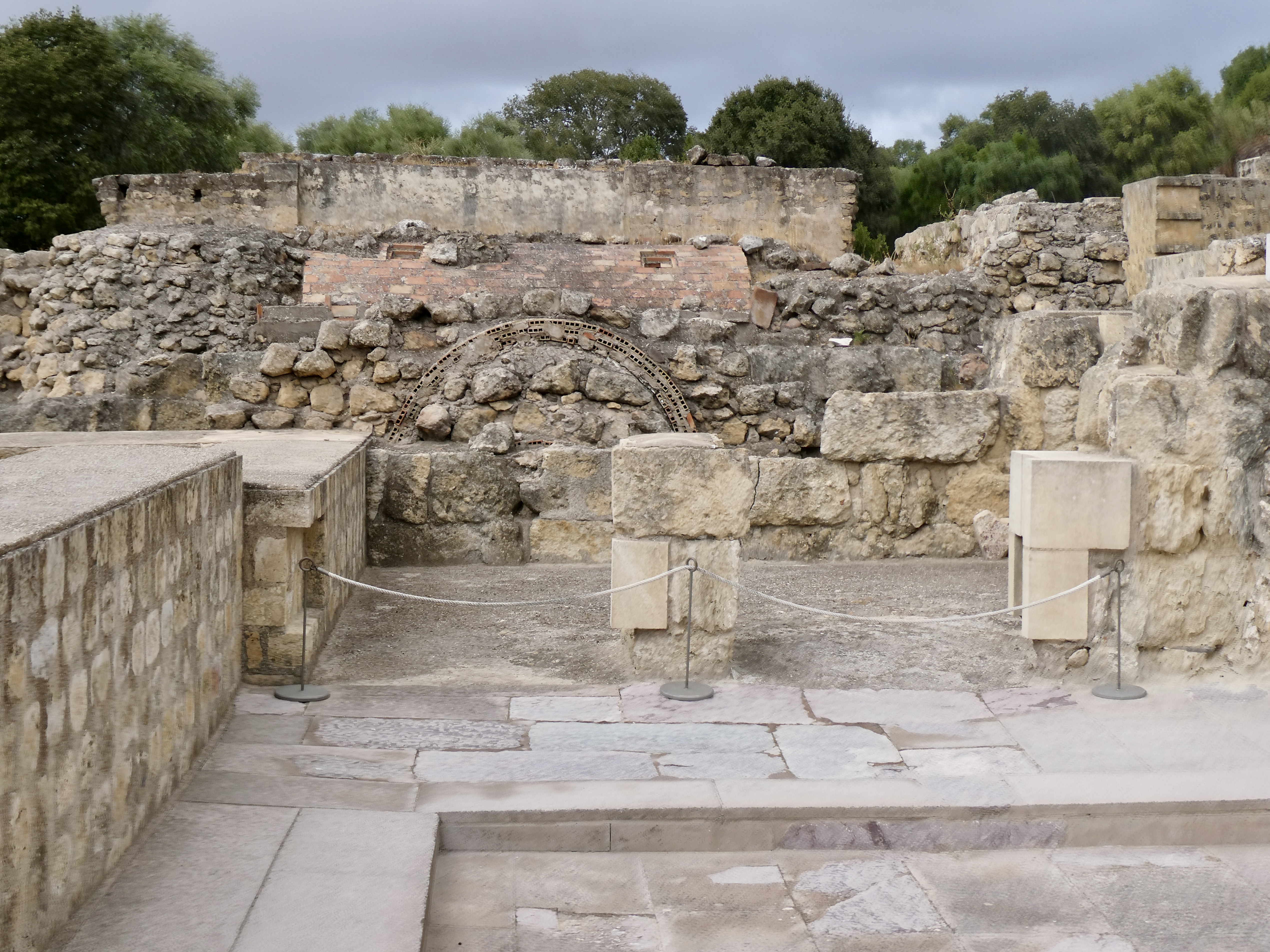
We wandered through the massive doorway with the arches and past the working area and then turned into the residential part of the home, which even included a private courtyard with marble basin area, a bedroom and a latrine. There was also a service area and a servants quarters to the north of the home. The residence was really, really large.

Now to the east of the House of Ya’Far was the communal cooking area where domestic staff cooked meals for the wealthy residents of the city. Staff rooms were located nearby and food preparation rooms were arranged around a courtyard with the oven in the center of the courtyard. Now believe it or not, the 10th century oven was excavated almost entirely in tact. It was made out of clay and was quite impressive.
From here, we took a stairway that led to the Guard’s Quarters. The guards controlled access to the upper level of the city and in particular the Caliph’s palace.
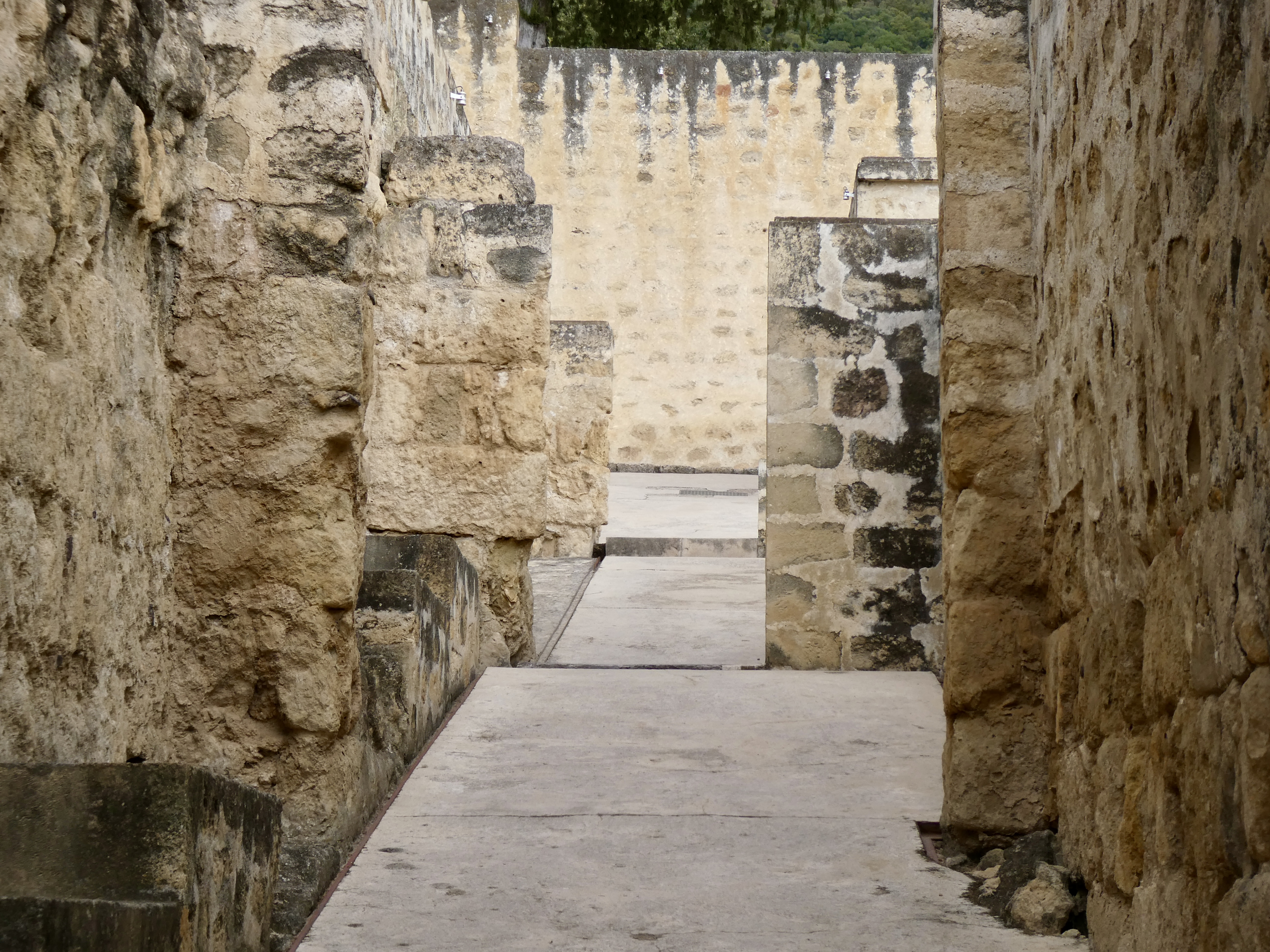
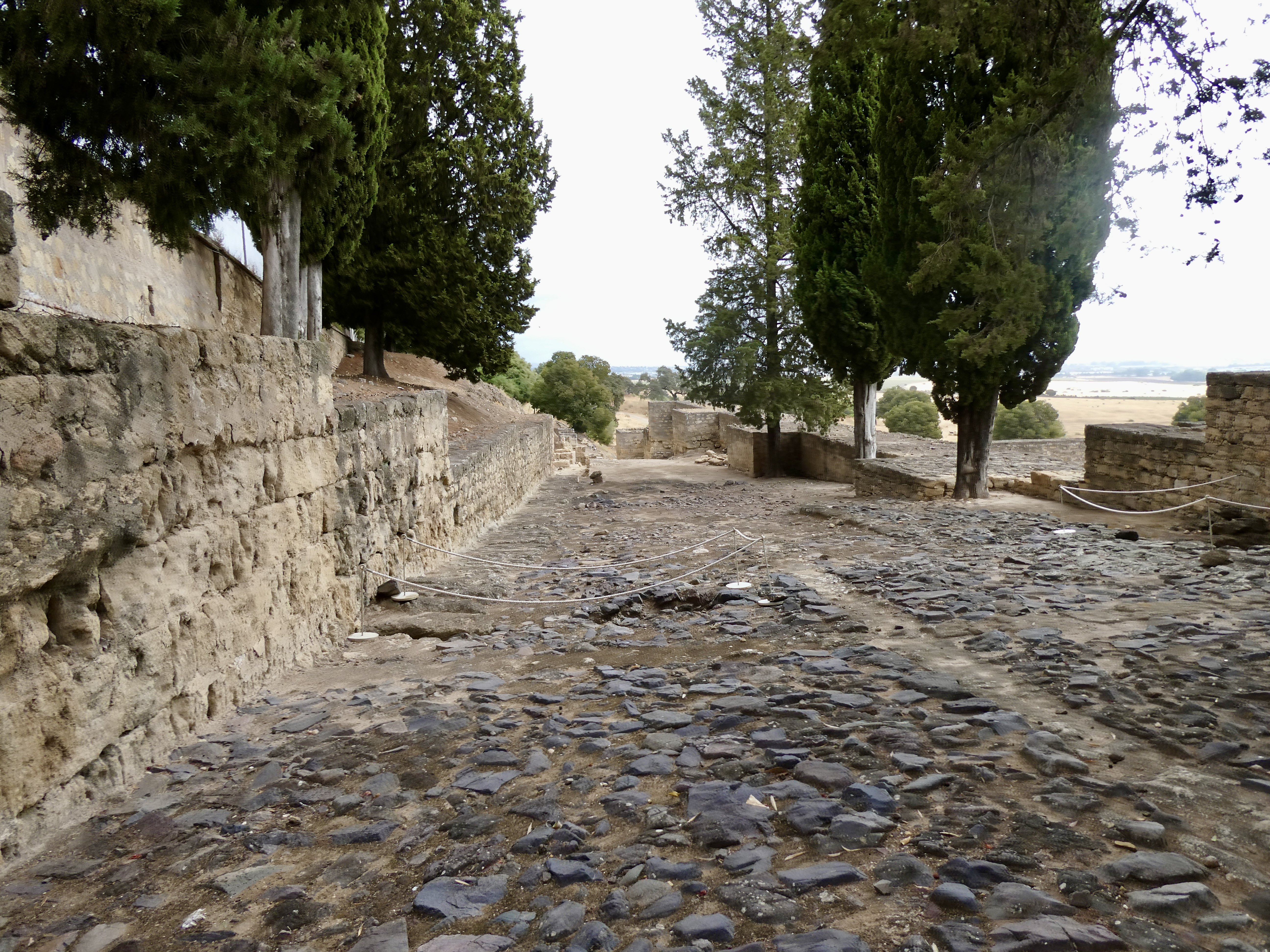
When then walked up a narrow passageway that was believed to have been a street that connected the middle part of the city to the upper level. From here, we were able to see what is thought to be the rooftops of the buildings of the middle part of the city.

And one really cool part of the walls throughout the city: apparently the Mediterranean millions of years ago covered this area. As a result, the stones walls throughout the city (made with rock from the area) are filled with seashells. So cool.
And with that, the tour of the fabulous Medina Azahara was done, just as the hordes of but tours arrived and just as it started to rain. Like I said, the early start proved to be worth it.
Tomorrow, I am going to wander around and check out the Roman ruins on my own before doing a later afternoon tour of the Patios of Cordoba and on Tuesday, I have a walking tour of the old town.