
Today I was off at 8:00 a.m with my guide, Masa (who I thought was a female, but turned out to be a male), to a small town about an hour by train from Tokyo named Kamakura. Now the primary reason to go to Kamakura was to see the Great Buddha, but the secondary reason was to see another area of Japan that was spared the WW II bombings and remains largely preserved.
Anyway, Masa and I set out through the massive Tokyo Station taking not one, not two, but three staircases down to catch our commuter train to Kamakura. And once we arrived in Kamakura, we had to switch to a train that was older than dirt, for the three stop trip to Hase and about a fifteen minute walk to reach the Kotokuin Temple and the Great Buddha. Fortunately, we arrived well before the tour groups so there were only a handful of people at the site.
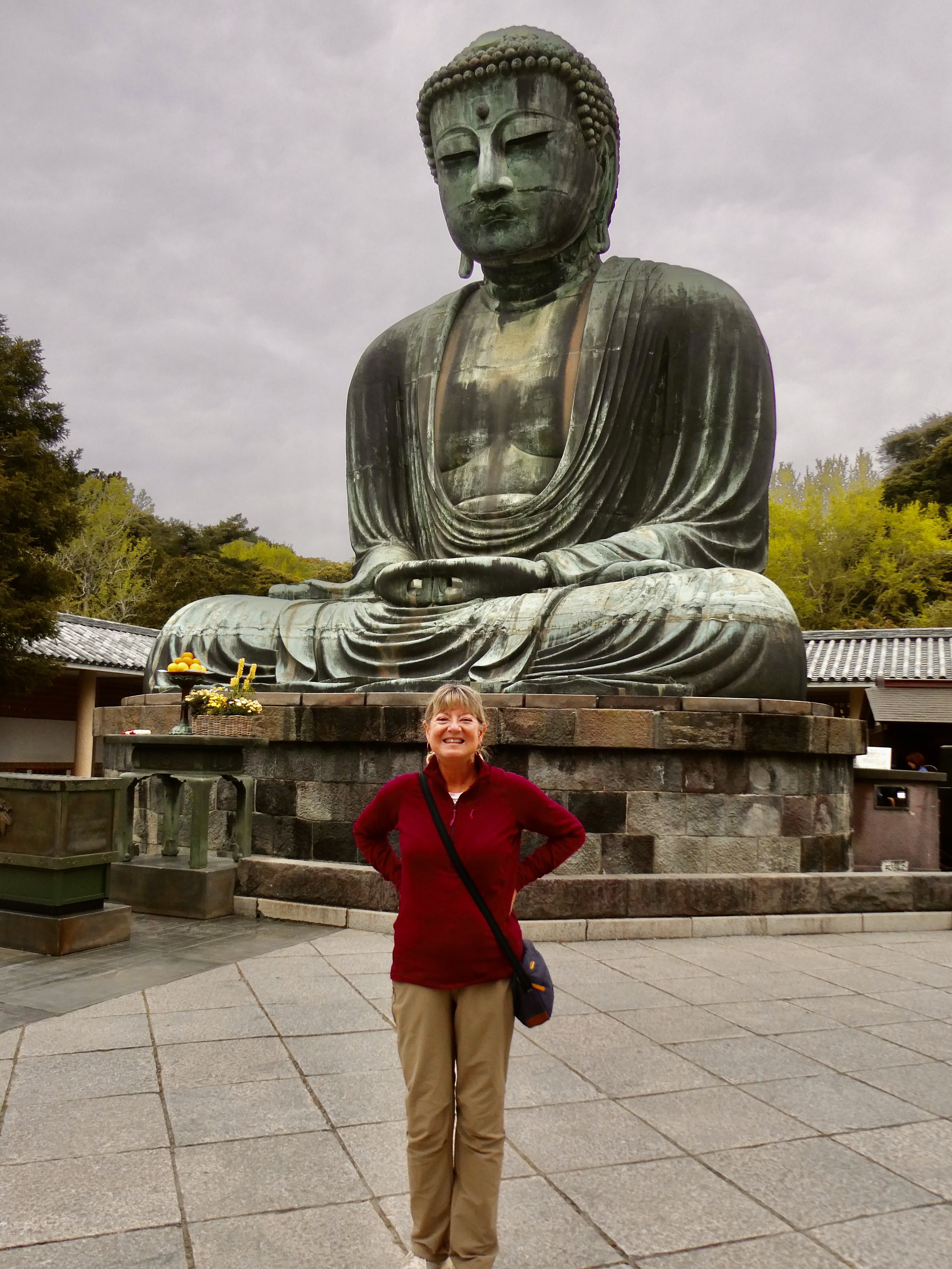
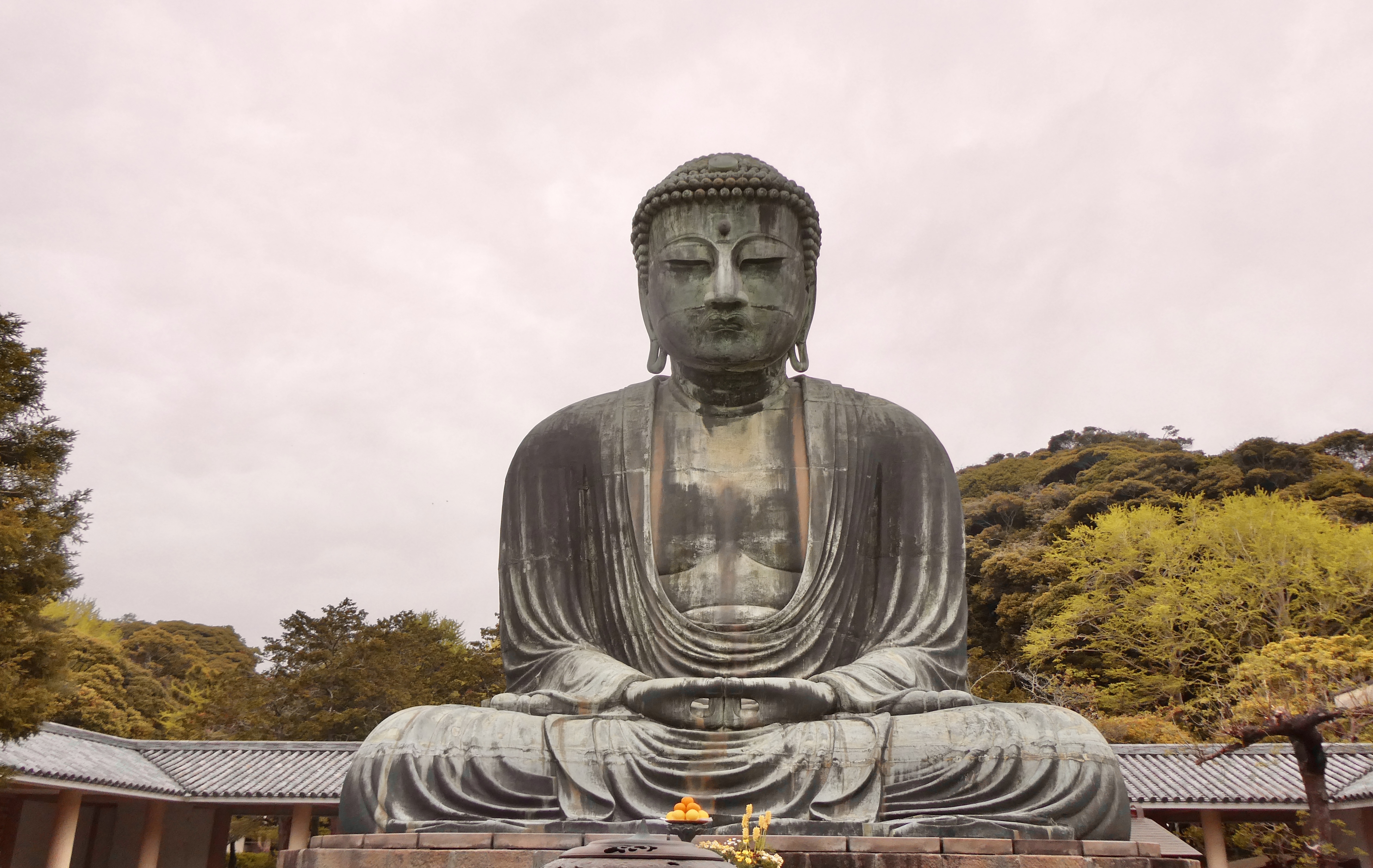
Now the Great Buddha is a bronze statute of Amida Buddah and sits on the grounds of the Kotokuin Temple at a height of 11.4 meters. The statute is the second largest Buddha in Japan behind the Buddha I saw in Nara. The statute dates to 1252 and was at one time kept indoors, but after the temple building housing the Buddha was destroyed multiple times by the weather, the Buddah has been sitting outside since the late 15th century.
So once we walked through the temple and took in the size and grandeur of the Buddha, I was able to pay 50 yen to walk up a flight of stairs inside the Buddah and take a look at its interior. And the cool part was there was an explanation of how the Buddah had been constructed using 30 different pieces of bronze.

Once I exited the Buddha, we wandered around the small little garden area before heading for the exit just as several large tour groups were lining up to enter.

We then walked back down the street in the direction of the train station and took a right towards the Kamakura Hasedera Temple, which is built high up on the side of a hill. Now this temple dates to 8th century and honors Kannon, the goddess of mercy. As we entered the temple through the main gate, we found beautiful gardens on either side of the staircase that would take us to Kannon-do Hall, the main hall of the temple.
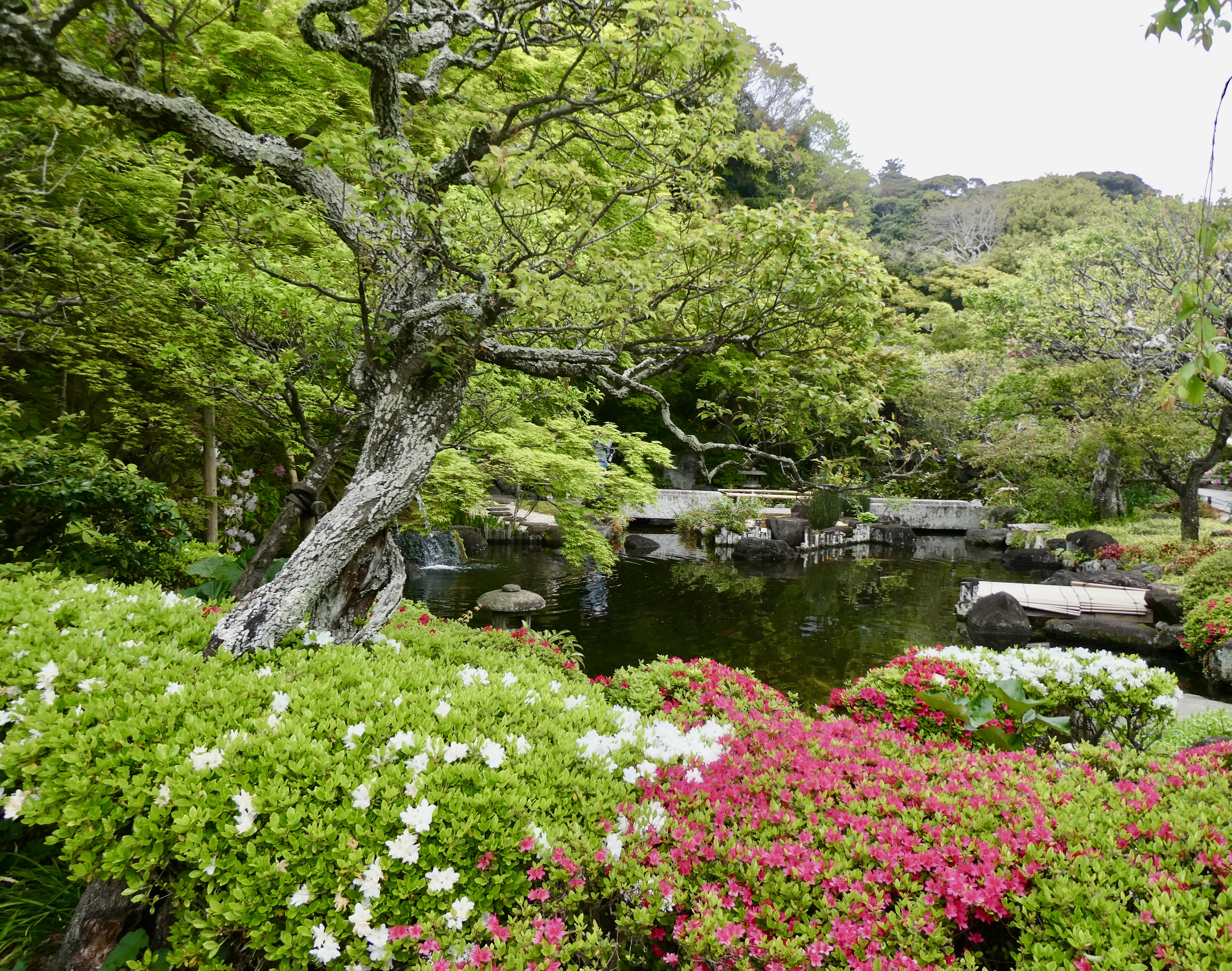
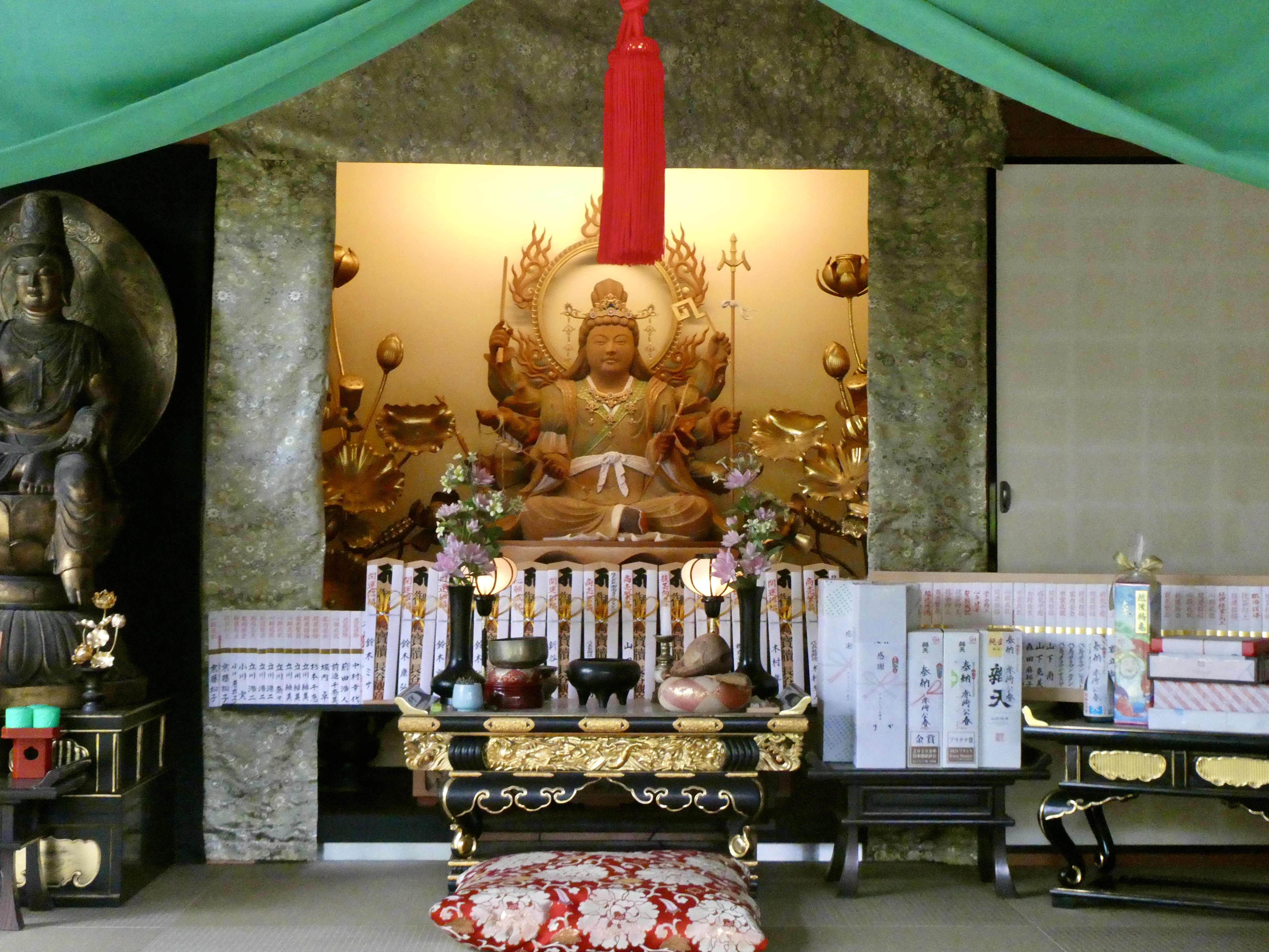
However, before climbing the staircase, we took a walk around the two ponds surrounded by beautiful gardens and then entered a small temple hall known at Benten-do Hall, which honors Benzaiten, a sea goddess. Benzaiten is the patron of music, fine arts and good fortune in general. The little temple was pretty cool and I was actually able to take a pretty good picture Benzaiten sitting at the back of the temple.
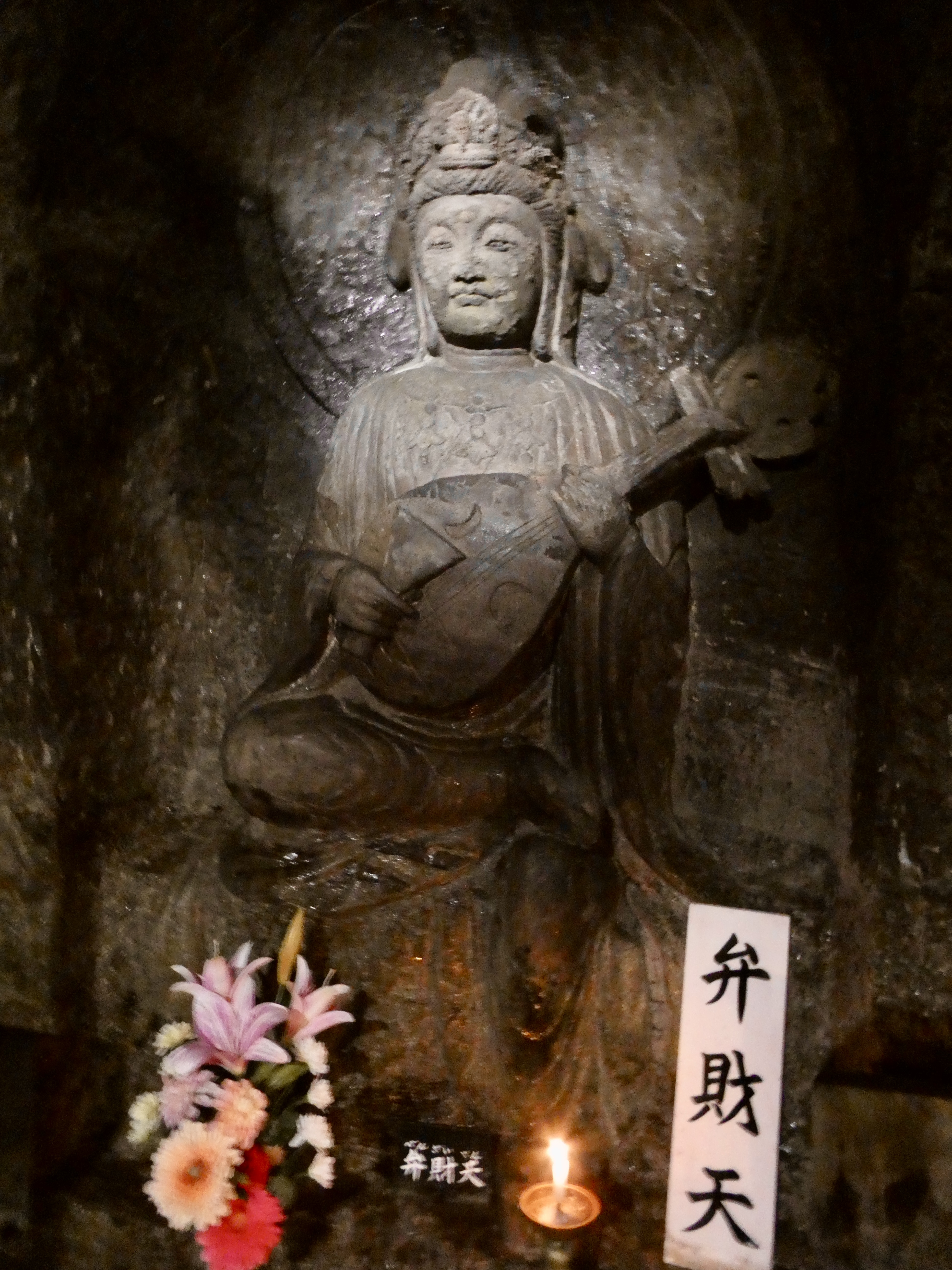
From here, we walked into the small Benten-kutsu cave beneath the Benten-do Hall, which contains a bas relief carving of Benzaiten and a long winding tunnel with a ceiling so low I had to bend over to walk through it. Now as we walked through the tunnel, we passed numerous statutes, including tiny Benzaiten statutes you could purchase for a donation of 300 yen, which allowed you to leave the statute there for good fortune. (I did not opt in.)
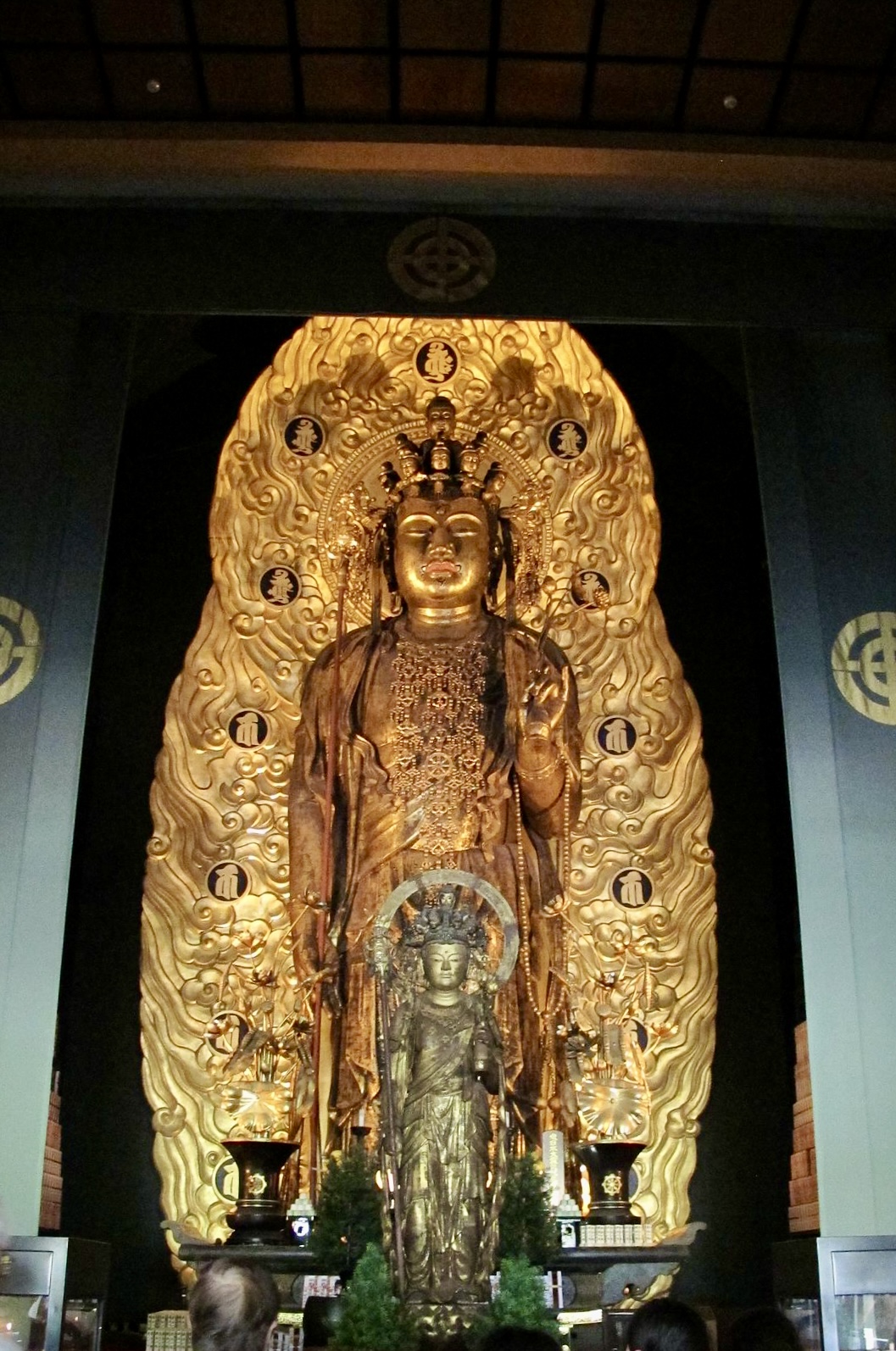
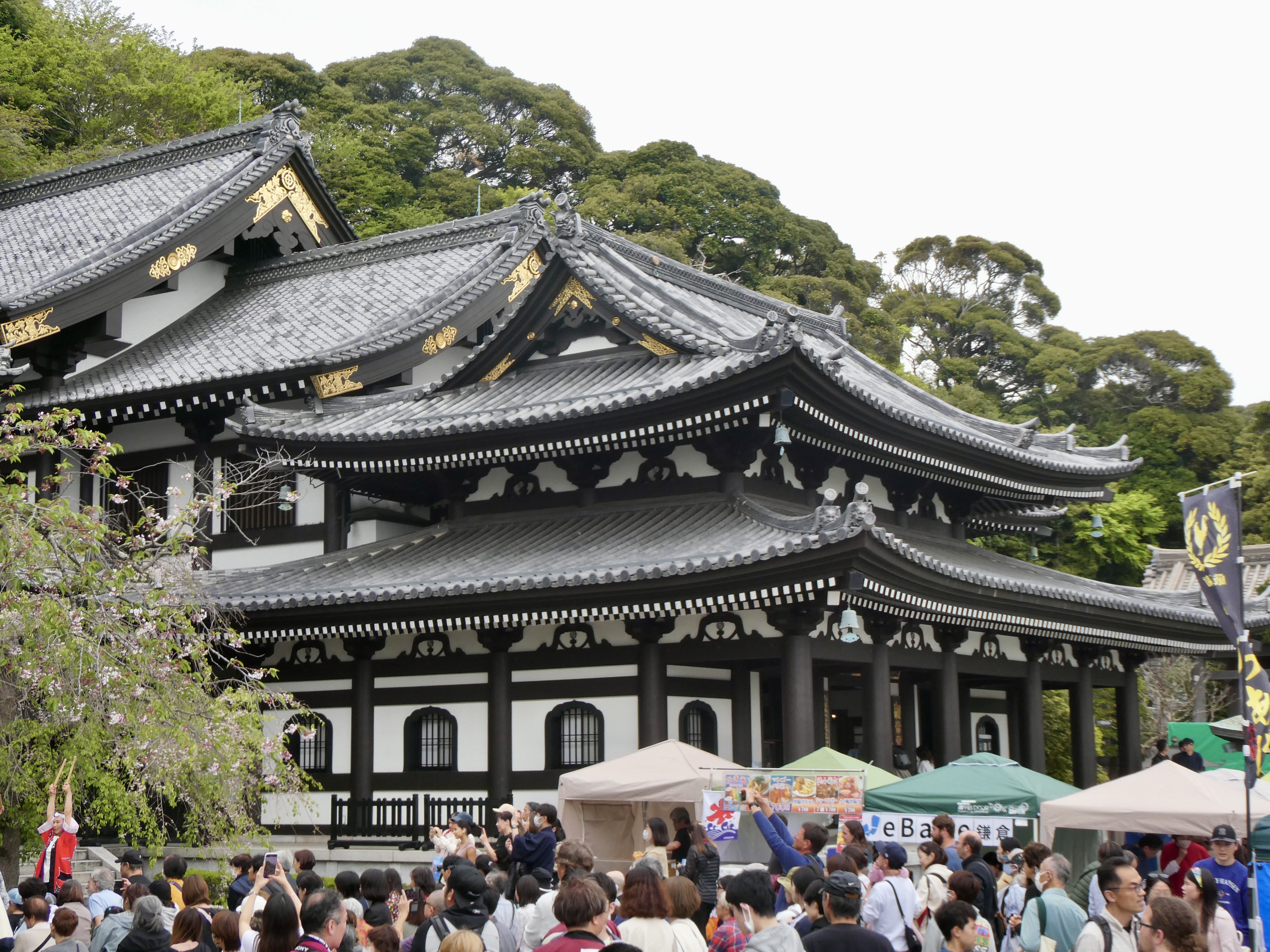
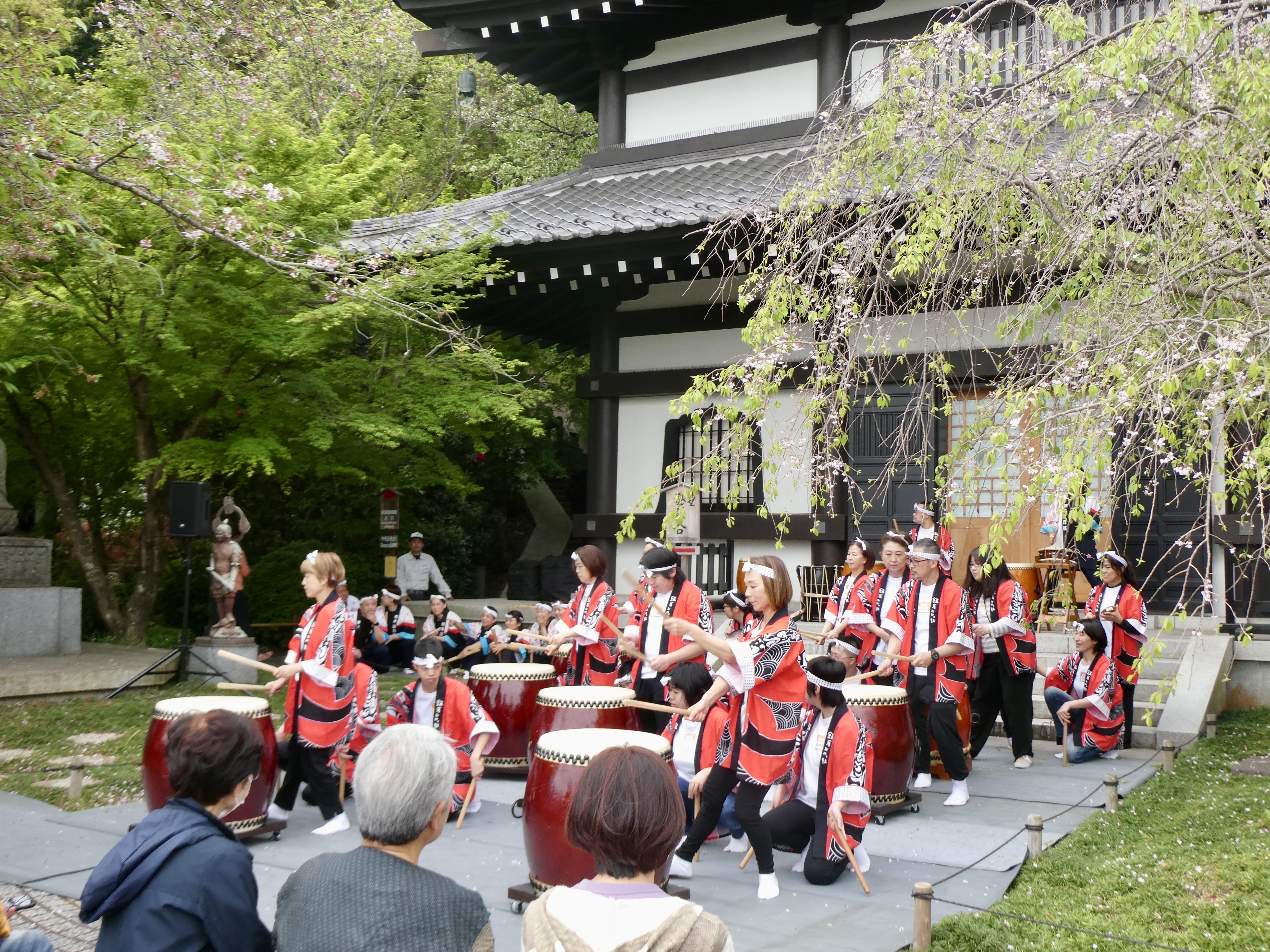
Once we exited the cave, we climbed up the staircase to the Kannon-do Hall, passing tiny gardens and ponds filled with a variety of stone statutes and carvings before reaching the main hall where the eleven headed Kannon statute, which is considered the largest wooden Buddhist statute in Japan, stood. I stared at the statute for a bit before leaving the hall and walking down a set of stairs to the sounds of drums. Apparently a local group of kids were performing in an area adjacent to the hall.
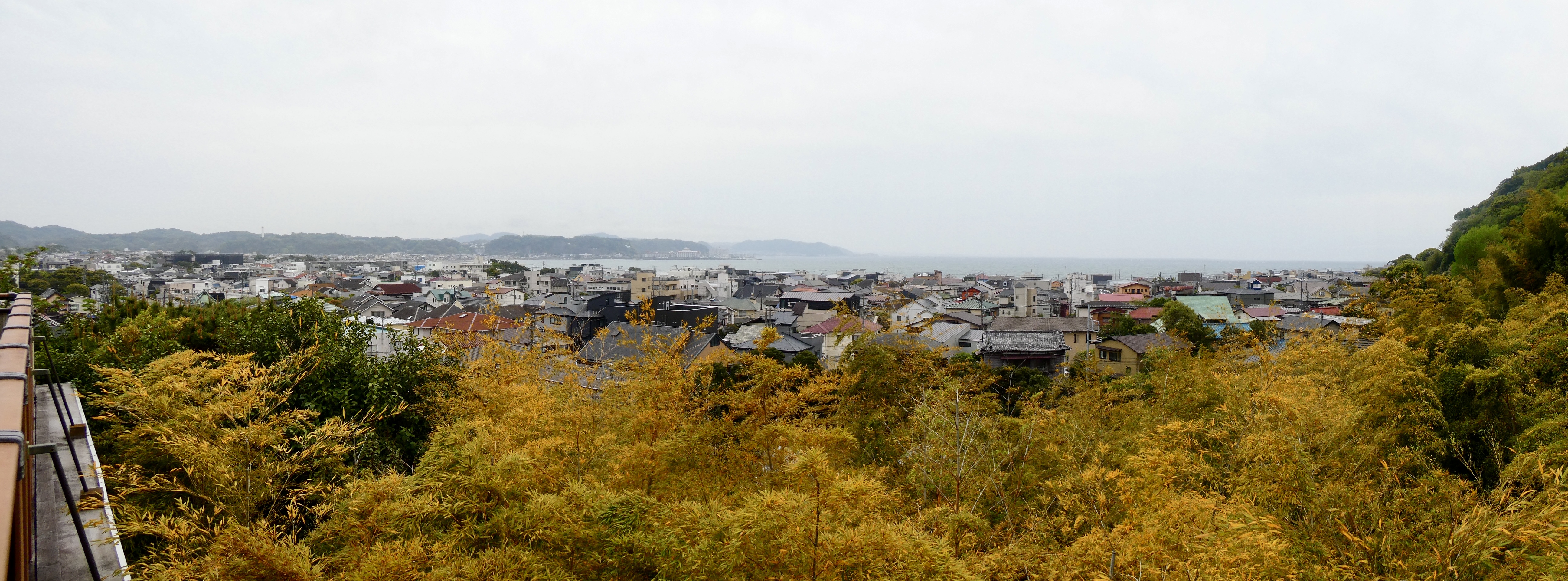
We stood and watched for a bit before walking over to a lookout point to take in views of the Pacific Ocean (I waved to the west coast of Canada and the US) before walking back in front of the Kannon-do Hall and stopping at the midway point of the staircase to take in the views of yet another pond surrounded by little statutes. And quite frankly it was impossible to see all the little statutes that were hidden literally everywhere. If I had more time, I would have loved to just walk around looking at nothing else but these tiny statutes that had been placed everywhere.

So once we reached the bottom of the stairs, we walked back to the train station and took the older than dirt train back to Kamakura. From here, we were going to apparently walk about 2 km uphill to the Zeniarai Benzaiten Ugafuku Shrine. I quickly vetoed this and opted for a nearby cab to take us close to the shrine. The cab was barred from entering a street we needed to take to reach the shrine so we ended up walking about a ½ km to the shrine, mostly uphill. However, this beat the daylights out of walking a full 2 km uphill (especially when we had done nothing but walk for the better part of 2 hours).
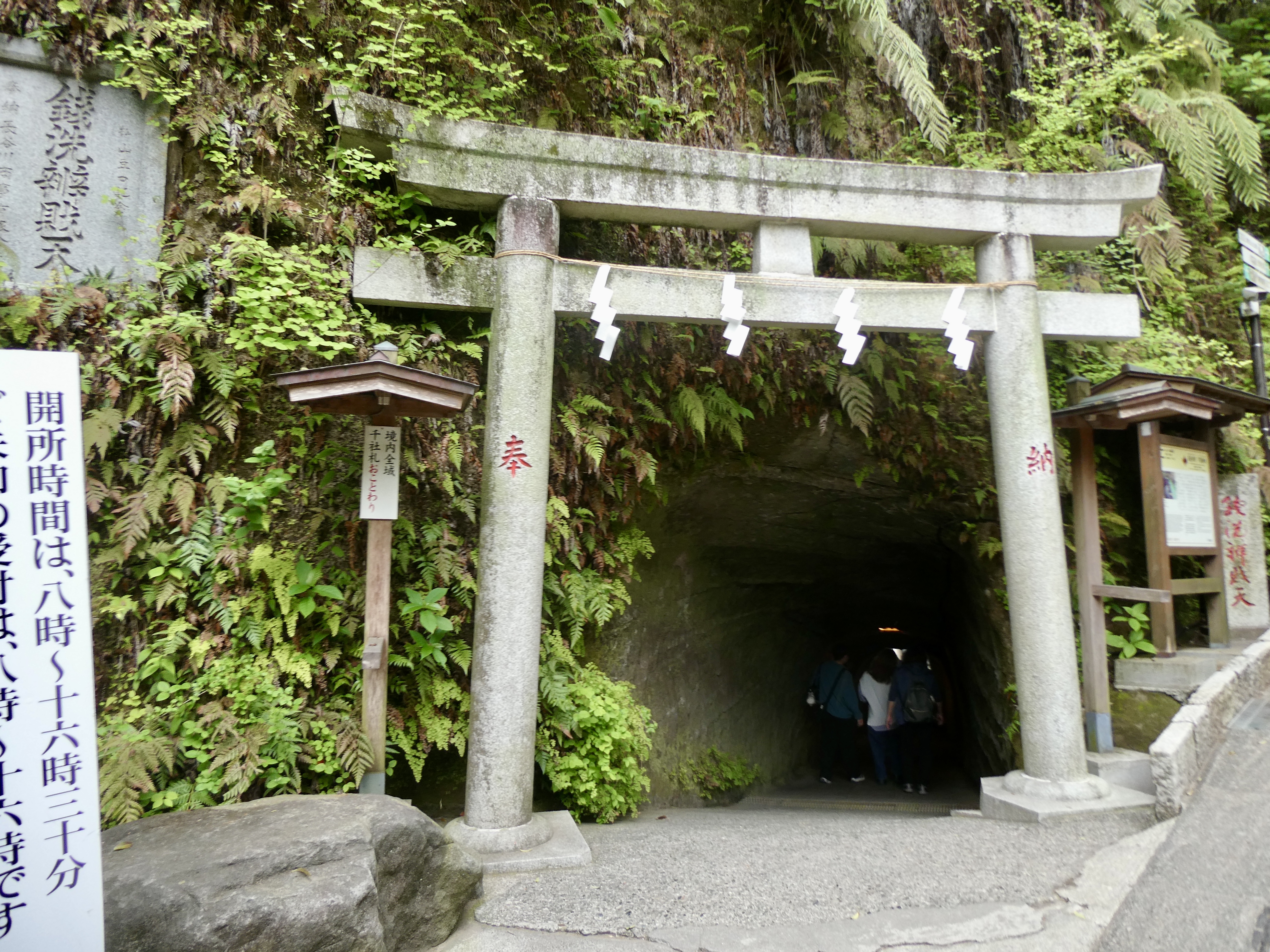
Anyway, the Zeniarai Benzaiten Ugafuku Shrine is a quirky little Shinto shrine said to have been founded in 1185 by Minamoto no Yoritotomo, the first Kamakura shogun. The Shogun reportedly had a dream where the god Ugafukujin instructed him to build the shrine “in a valley to the northwest where there is a miraculous spring” and by building the shrine, peace would come to the region. The Shogun found the spring flowing from the nearby hills and immediately constructed the shrine dedicated to Ugfukujin.

So once we reached the Torii gate entrance, we walked under the gate and through a little tunnel to reach the shrine. Now today the Zeniarai Benzaiten Ugafuku shrine is popular because people believe if they wash their money (zeniarai means coin washing) the money will double. No idea where this idea came from, but judging from the number of people pulling out money, setting the money in a little basket and ladling the water from the spring over the coins and bills (yes bills) it is an idea that is firmly held.

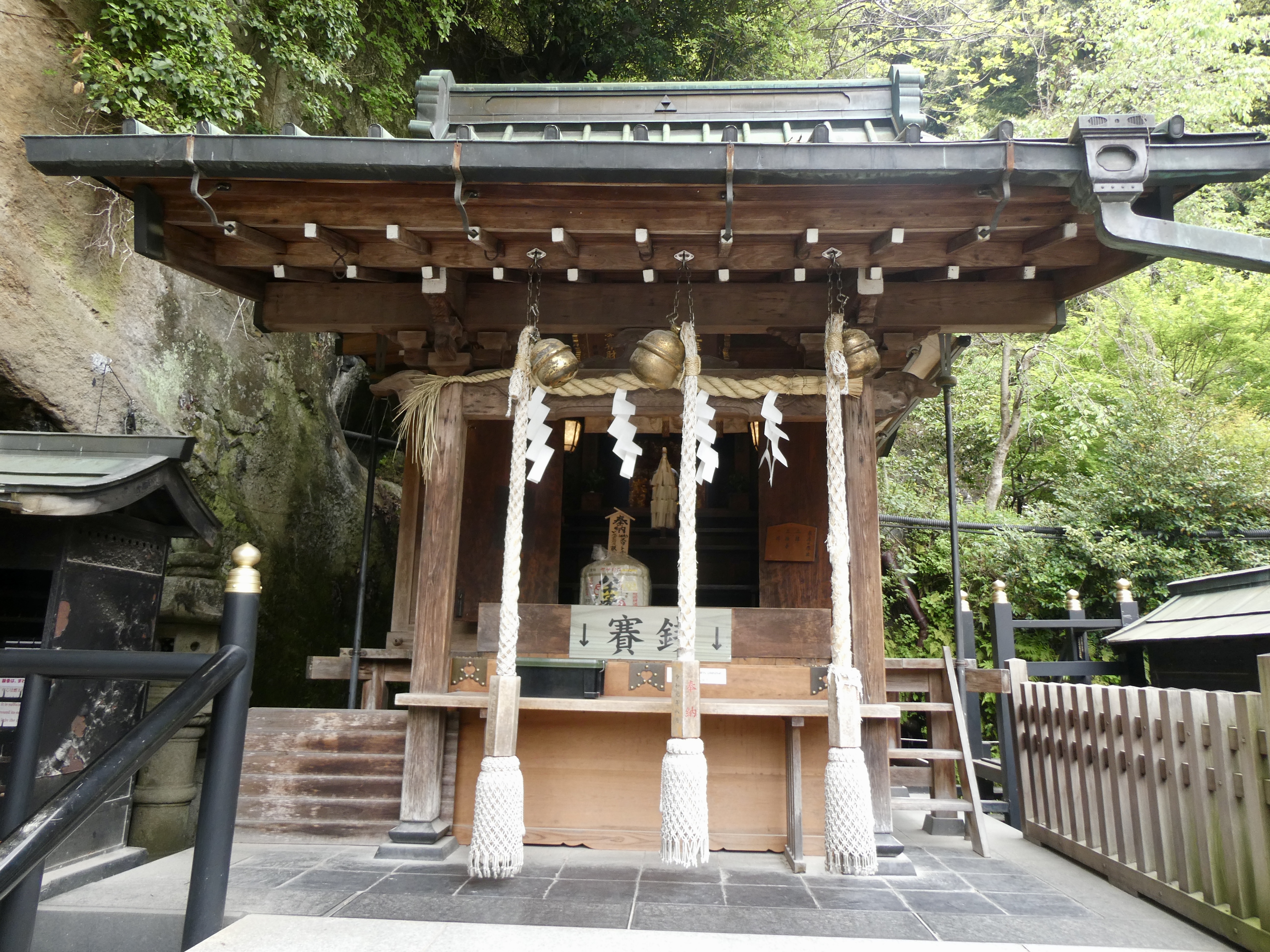
We wandered around the site, before I lit a candle and some incense (for some reason my incense would barely burn) and then grabbed a basket, put a coin in the basket, washed the coin and then did the Shinto ringing the bell, clapping and bowing ritual. Now this area of the shrine was very popular and there was a good amount of people hanging out here. However, Masa and I wandered to the back side of the shrine, where there was tiny dragon statute and there was virtually no one there. (Apparently if you purchase a blank sheet of paper at the entrance and pour water from the dragon statute over the paper words appear … I did not do this.)
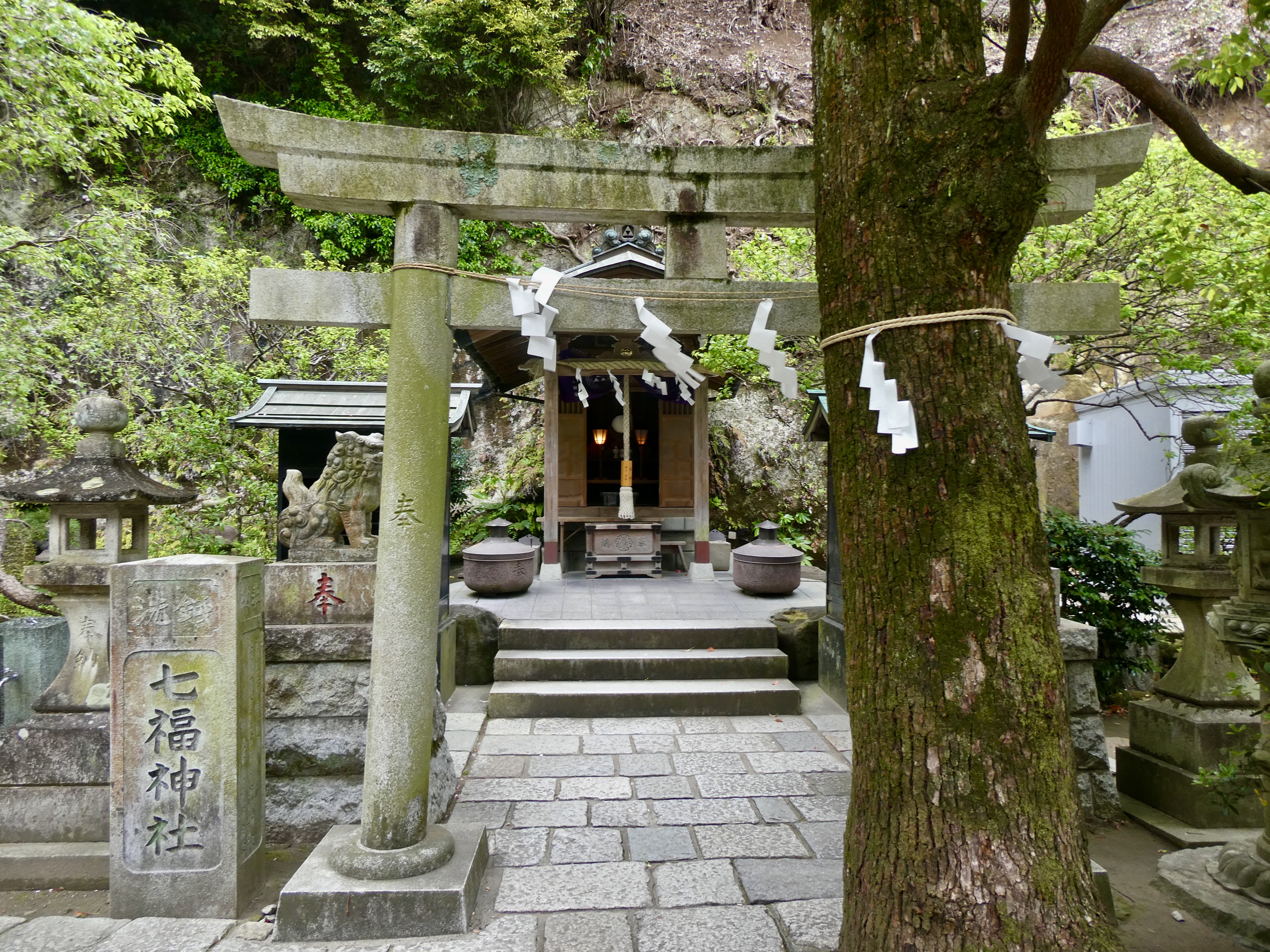
From here, we wandered further to the left and found a small waterfall, a small shrine, koi pond and a number of small statutes. And not a single person was around. I have no idea why, but it seemed to me that the source of the spring water at the popular prayer area we had just left was being fed by the waterfall, but no one was around.
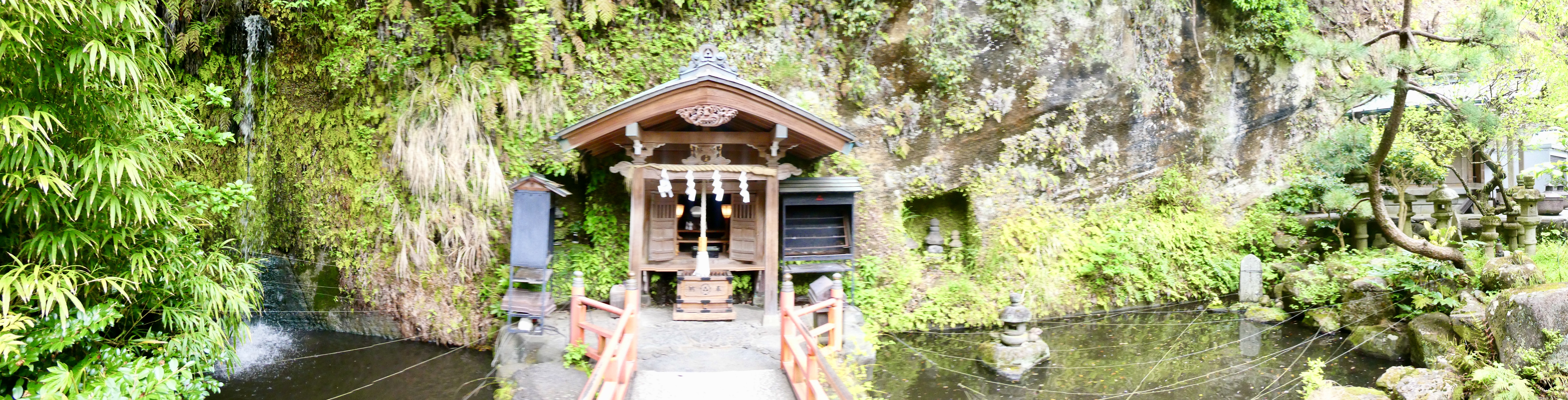
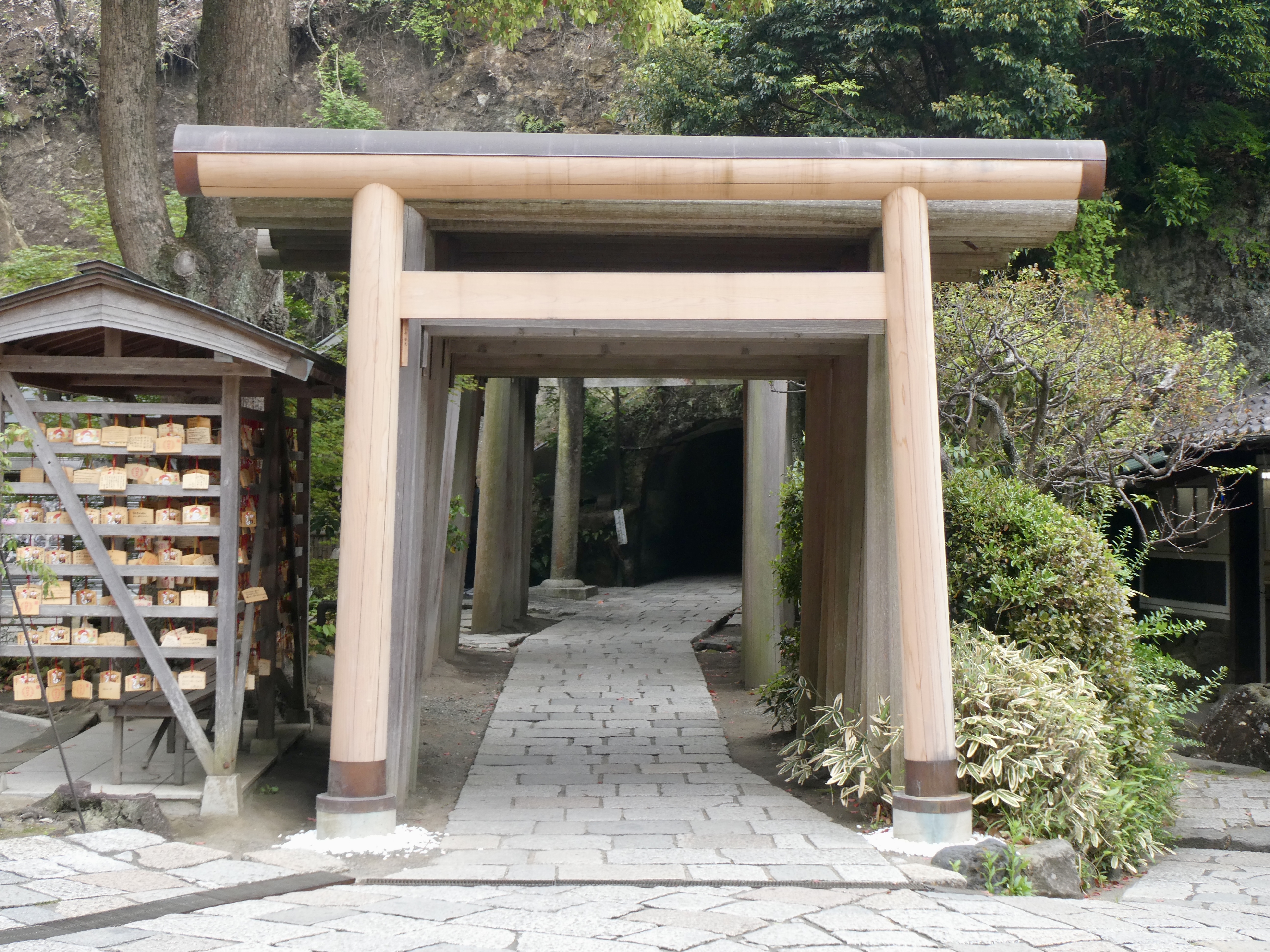
We ended up staying in this area for a bit before taking a seat in a rest area to gather some strength for the 2km hike back to town. Now fortunately, the first part of the hike was downhill before the road flattened out and we continued on back into town.
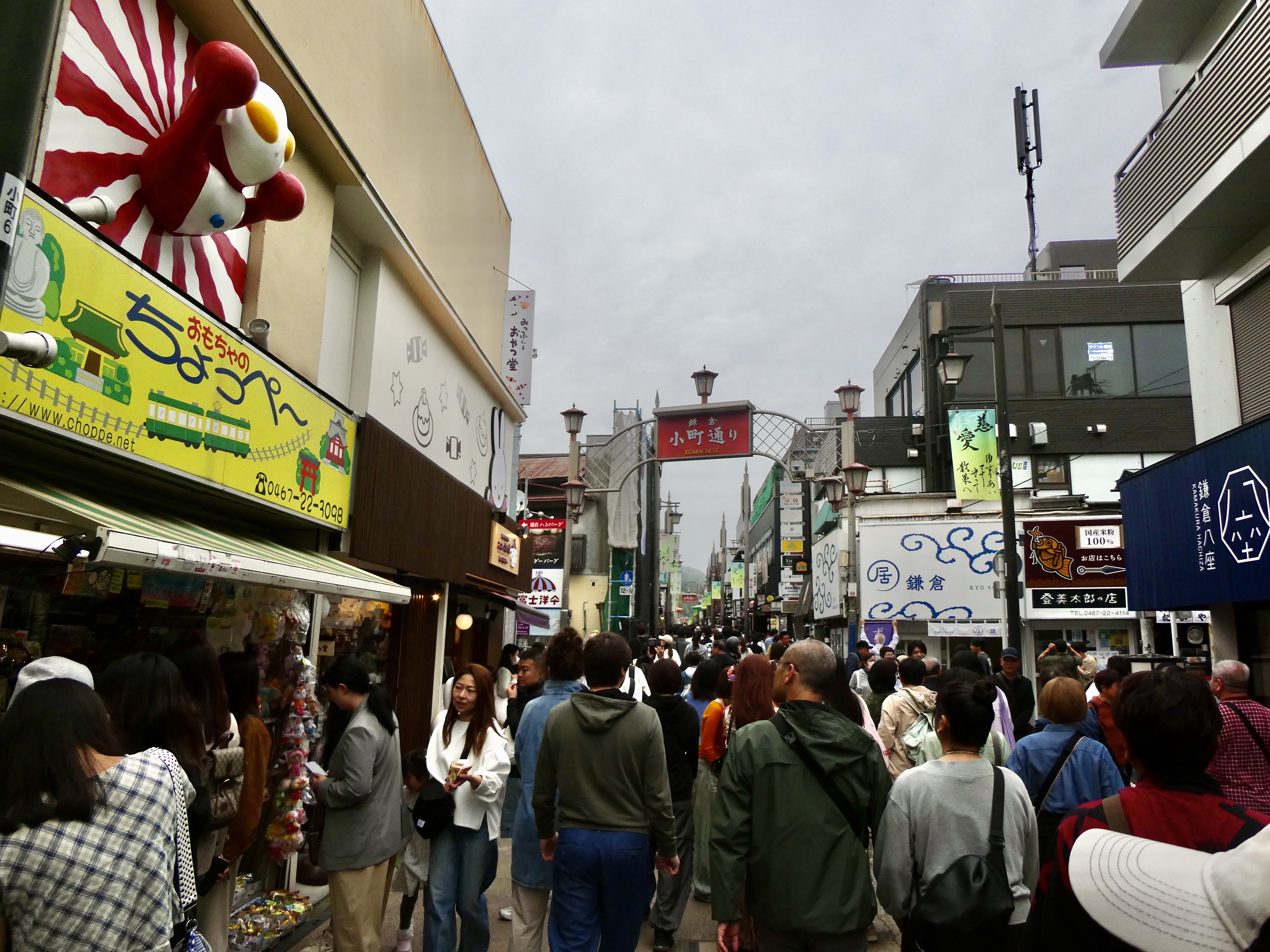
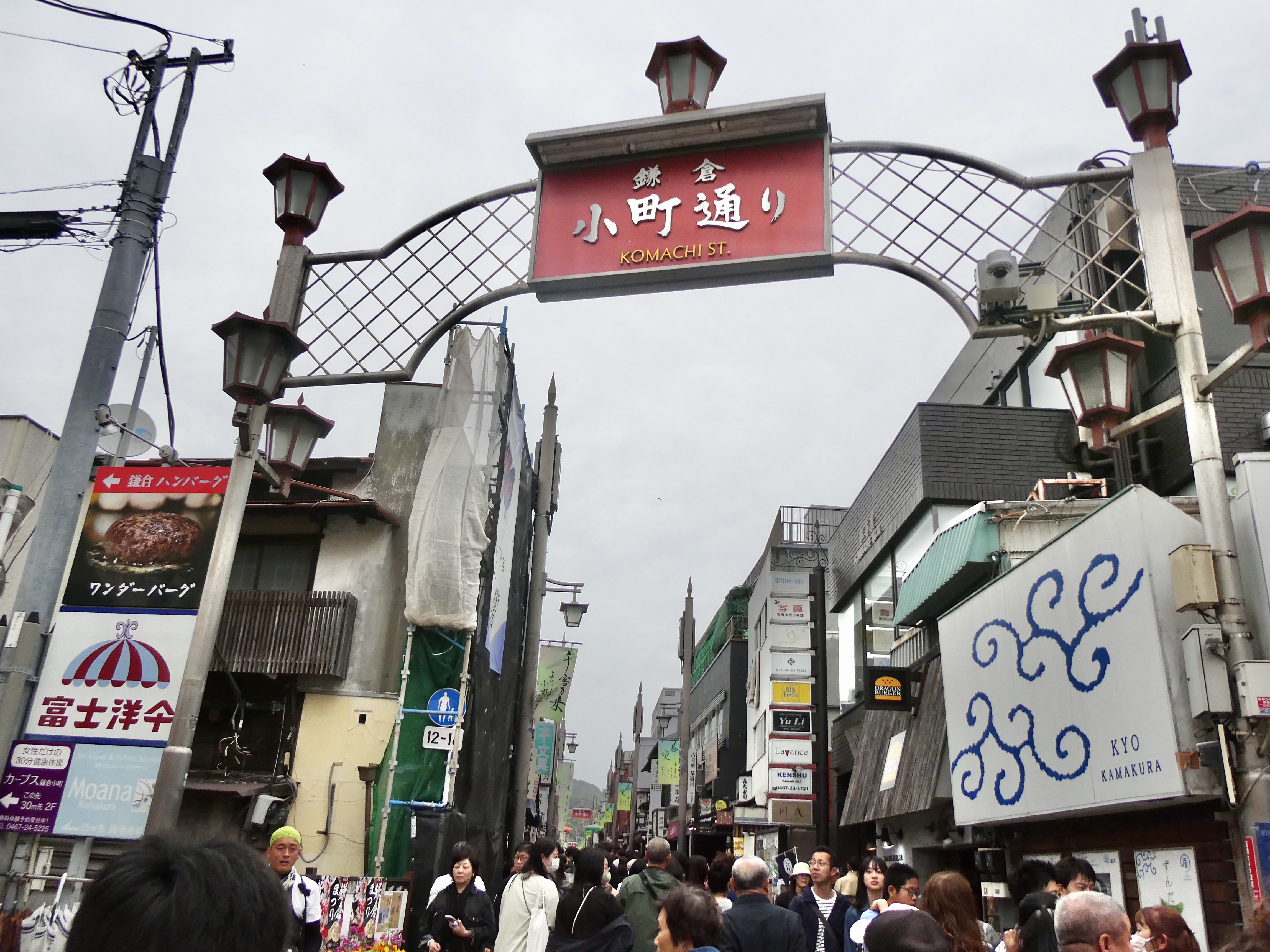
Next up on the list was a walk down Komachi-dori street where we were going to grab some street food for lunch. This area has numerous shops and restaurants and is noted for its street food. Now unfortunately, the area was teeming with tour groups. In fact, it was so packed that a couple times we came to a complete stop. I could tell that Masa was frustrated by the crowd (hell I was frustrated by the crowd) so we selected a small coffee shop for some lunch to escape the crowds rather than munch on some street food. Not my cup of tea, but it was better than waiting in a line forever and trying to squeeze through the crowds.
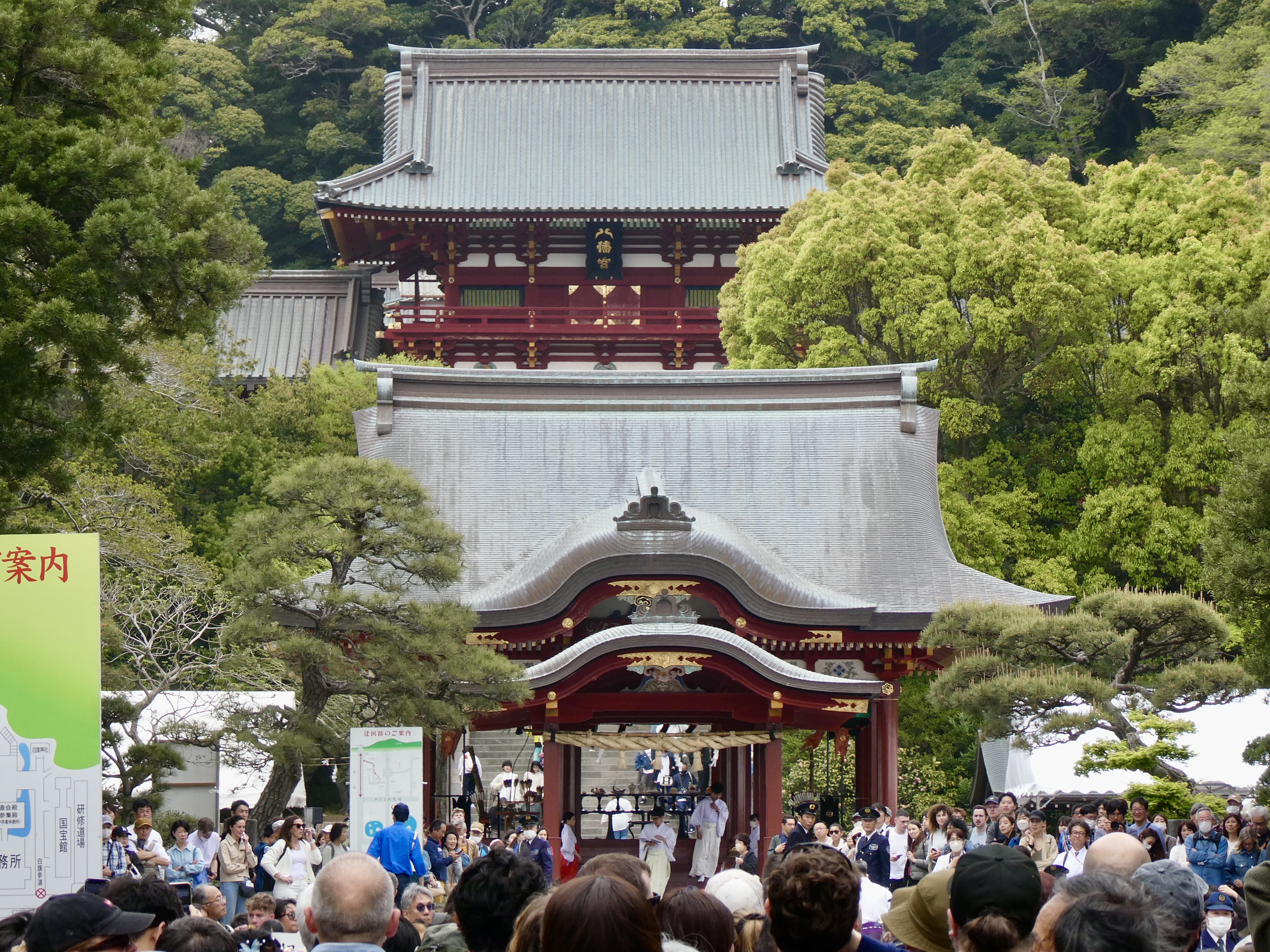
Now originally, my last stop of the day had been Hokokuji Temple, but Masa was concerned about how long it may take for us to get there so he suggested we visit Tsurugaoka Hachimangu which is Kamakura’s most important shrine. And it was right at the end of Komachi-dori street so not a great distance from where we were eating lunch. I deferred to Masa’s advice so after lunch we set out on what was supposed to be a ten minute walk to the site.
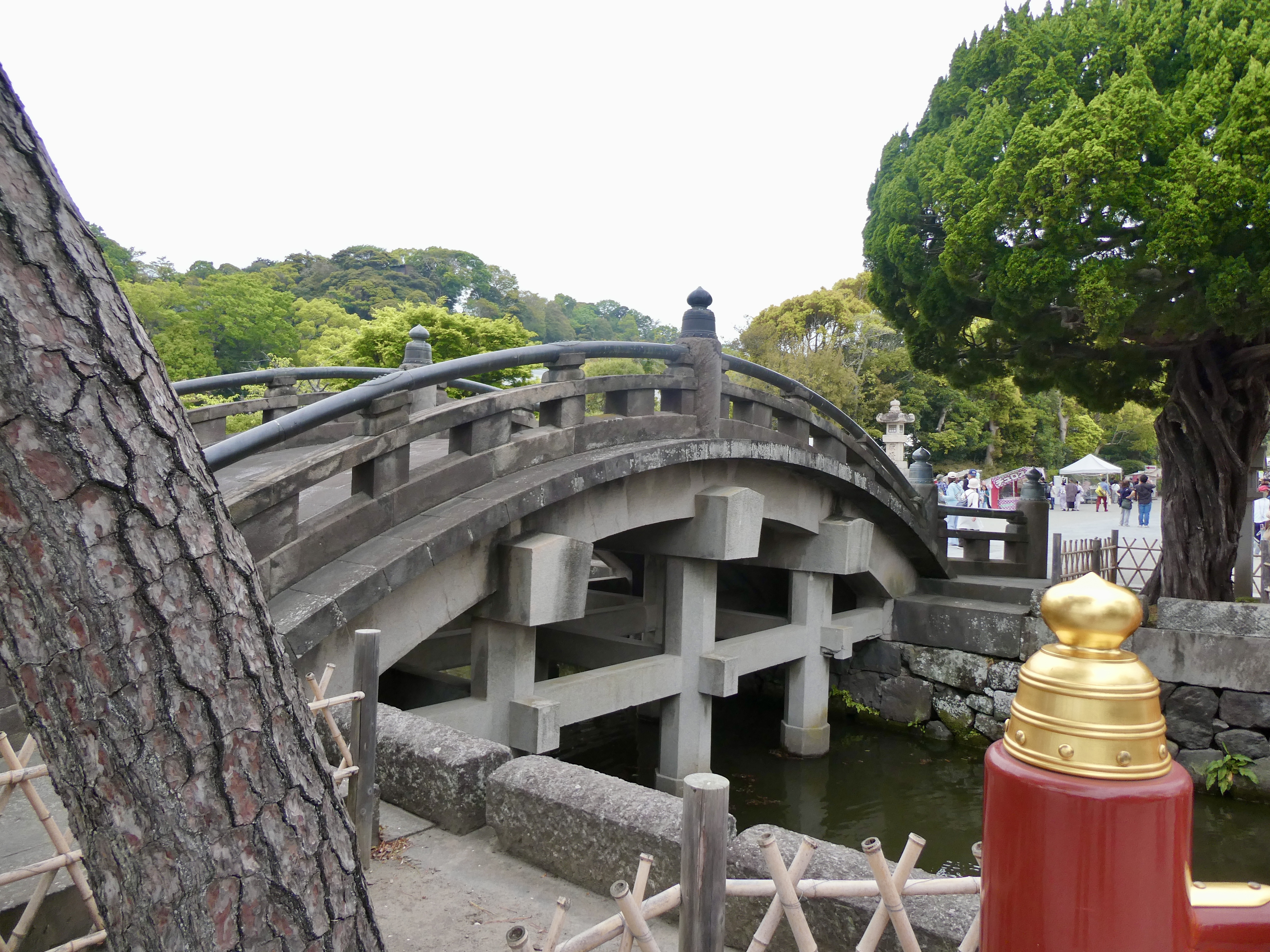
Once we passed through the Torii gate and by a lovely little Japanese bridge, we came to a virtual dead stop. Masa went to see what was going on and it turns out that the area in front of the shrine (which sites high up on a hill) was being used for yabusame, horseback archery. It was unclear how long it was going to last, but standing where we were was not an option because I could see nothing but the back of peoples’ heads.
Masa said that we could take the long way around and enter the shrine from the back. At this point, there was no other option, so we reversed course, walked out of the shrine grounds and took a right walking down a street that was bumper to bumper cars before taking another right and finally reaching the back entrance to the shrine 20 minutes later.
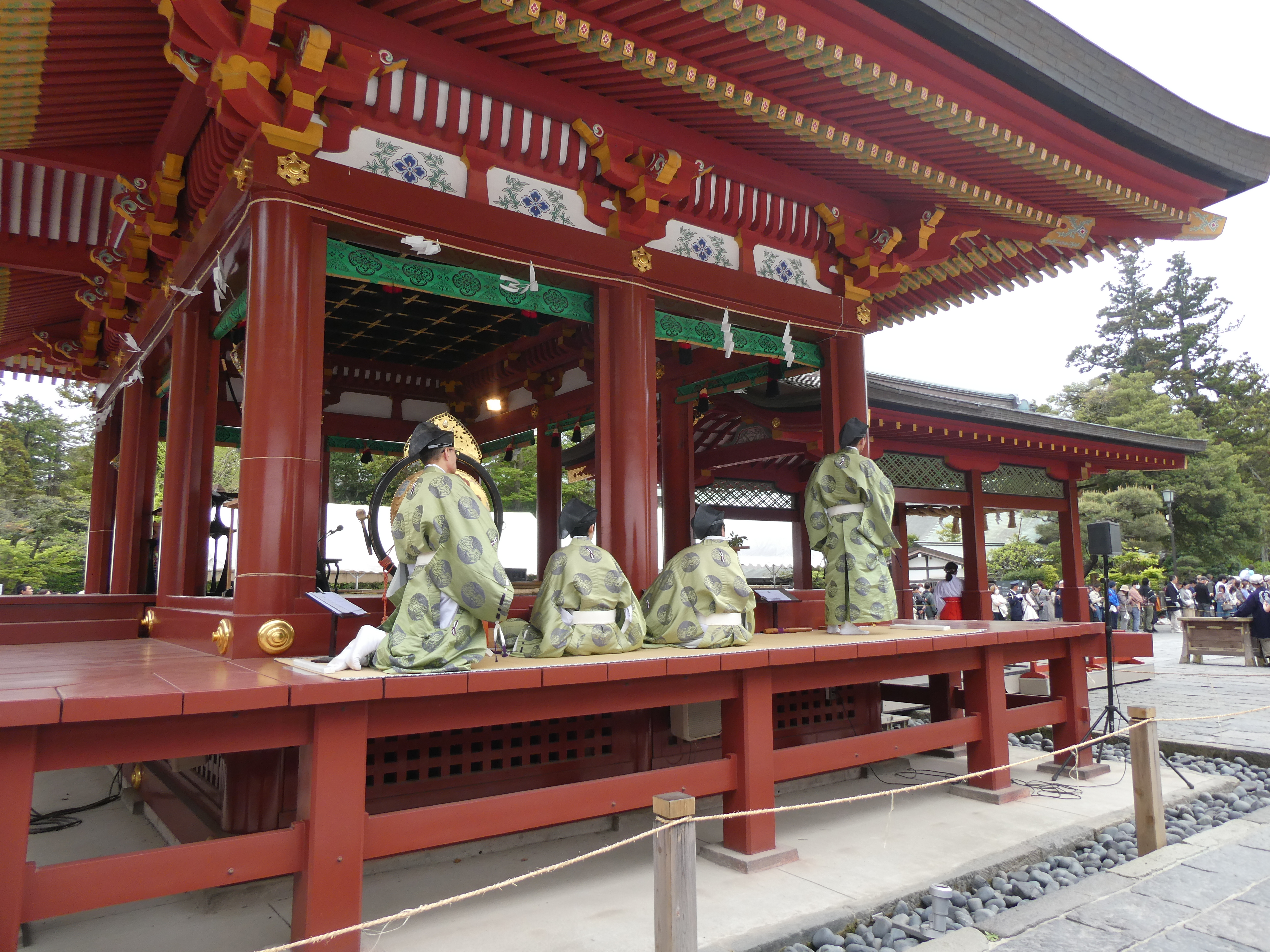
Once we entered the back entrance, we could see people seated for the show, but saw nothing so we ended up walking past the Maiden Dancing Stage where some men and women were sitting dressed in traditional Japanese clothing. We had no idea whether they were part of the archery event or if there was going to be some kind of show after the archery event, but we did not stick around to find out.
Now the shrine was apparently founded by Minamoto Yoriyoshi in 1063, and enlarged and moved to its current site in 1180 by the first Shogun. The shrine is dedicated to Hachiman, the patron god of the Minamoto family and of samurai in general.
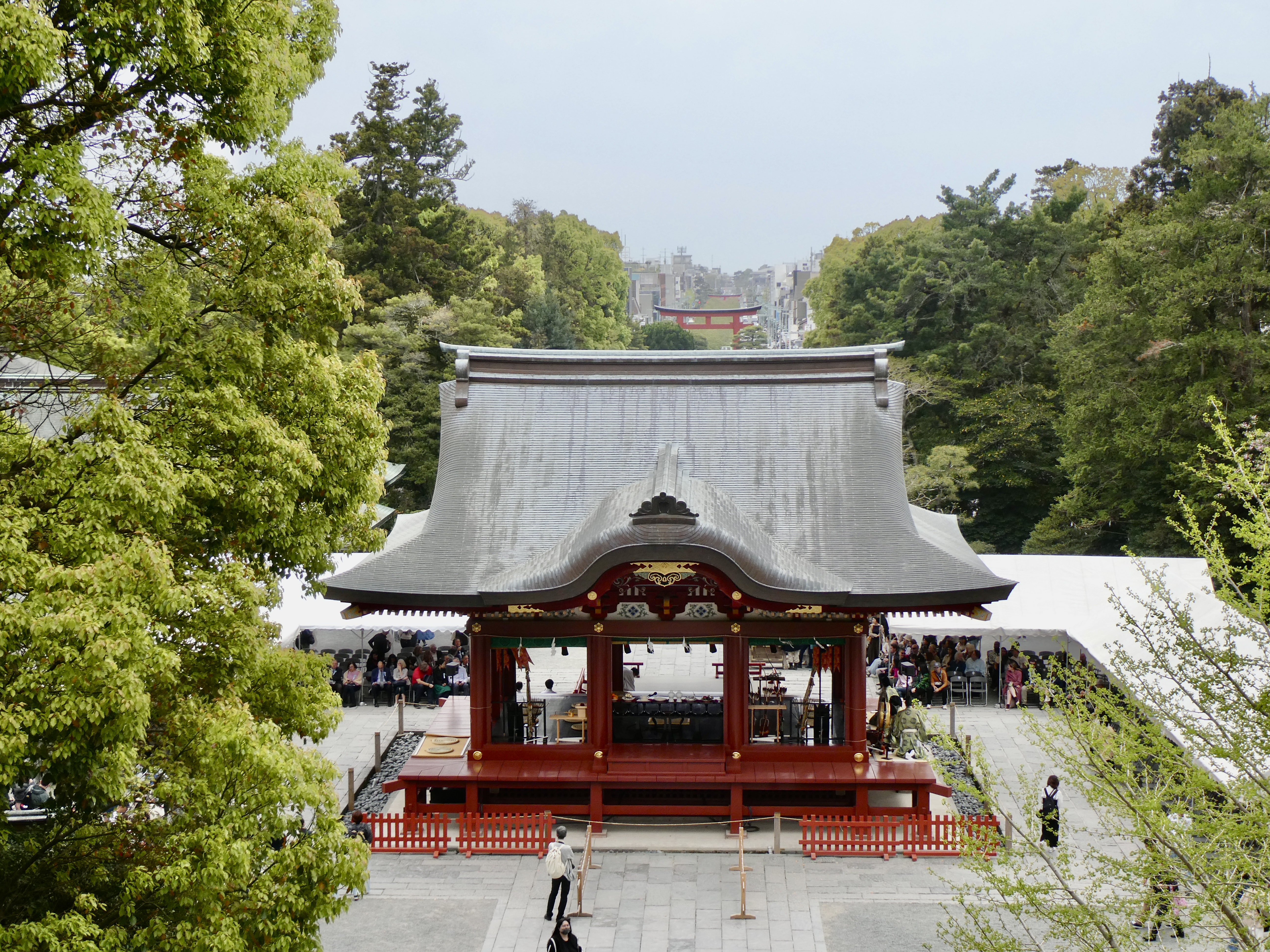
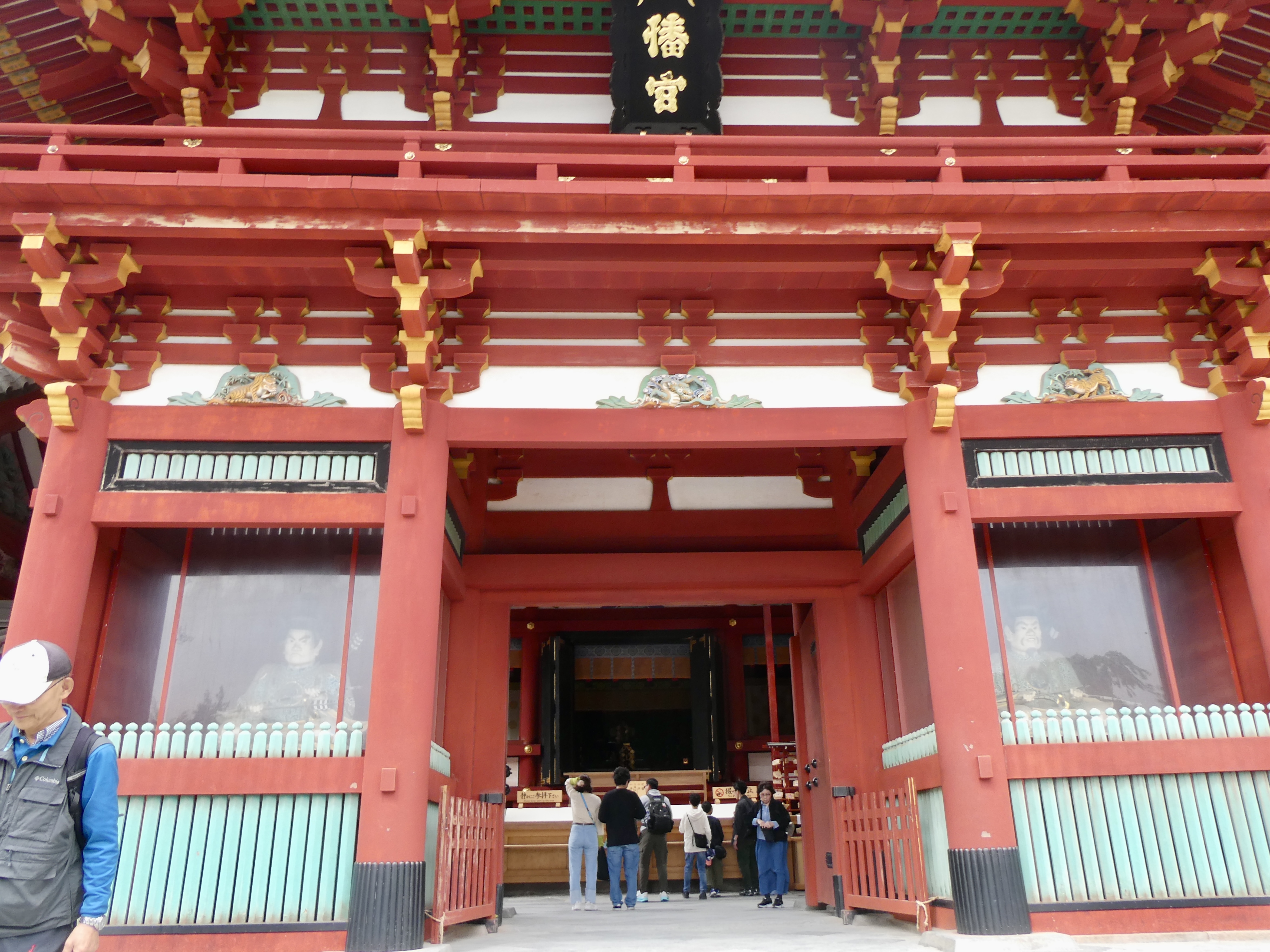
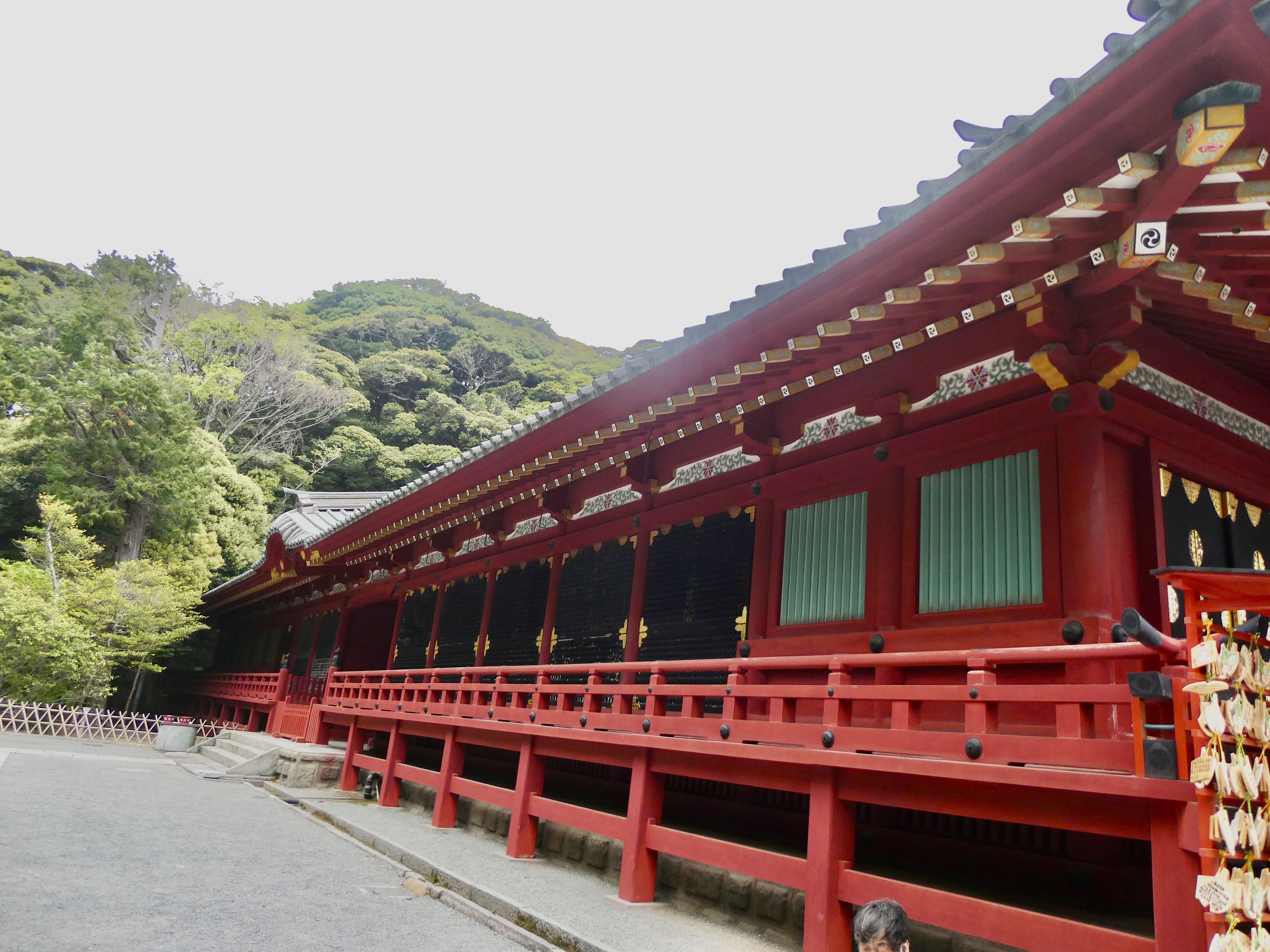
Anyways, at this point, Masa and I decided to simply hike up the 60 stairs to take a look at the main hall at the top of the wide stairway. Now the views from the top were spectacular, and I could see in the distance multiple Torri gates lined up in a row heading all the way towards Kamakura in the distance (and eventually the sea). Sadly, however, no pictures were allowed inside of the main hall and after all that walking, I was more than a little peeved because the carvings and paintings were simply gorgeous.

We ended up walking around the back of the main hall and found the Torii Gates for the oldest building at Tsurugaoka Hachimangu, the Maruyama Inari, which dates to 1336 and is dedicated to Inari, the deity of rice, agriculture and prosperity. We did not go see the shrine and instead walked up the staircase through the multiple Torii Gates and called it good.
I was exhausted and we still had to walk back to the train station and then take a one hour ride back to Tokyo. Tomorrow … another long day. I am off to Mt. Fuji.
