So this morning I learned all about the horrors of Manila traffic. I ordered a GRAB at 7:45 a.m. for what was supposed to be a 30 minute trip to Intramuros (Old Manila) for my 9:00 a.m. tour. The GRAB driver was supposed to arrive at 8:00, but went to the wrong entrance and it took him until 8:15 to pick me up. By this time, the traffic was horrendous, and I did not reach the meeting point for the tour until 9:35 a.m. Fortunately, I was the only one on the tour so the very gracious Jerome waited for me. (And it was his birthday).
Now the area I was visiting this morning, Intramuros, means within the walls. This refers to the fact that old Manila was concentrated within 64 hectares of walls totaling 4.5 km in length. Any establishment outside the walls was called extramuros and was given a different city name. This is the reason that Manila is now made up of 16 “cities”. Within the old walls, there are the remains of Fort Santiago, a number of churches including San Augustine Church, a UNESCO World Heritage site and the only building in Intramuros to survive WW II unscathed, a number of old administrative buildings and the recreation of an old residence known as Casa Manila. Work continues in the area to rebuild many of the old historical sites and buildings.
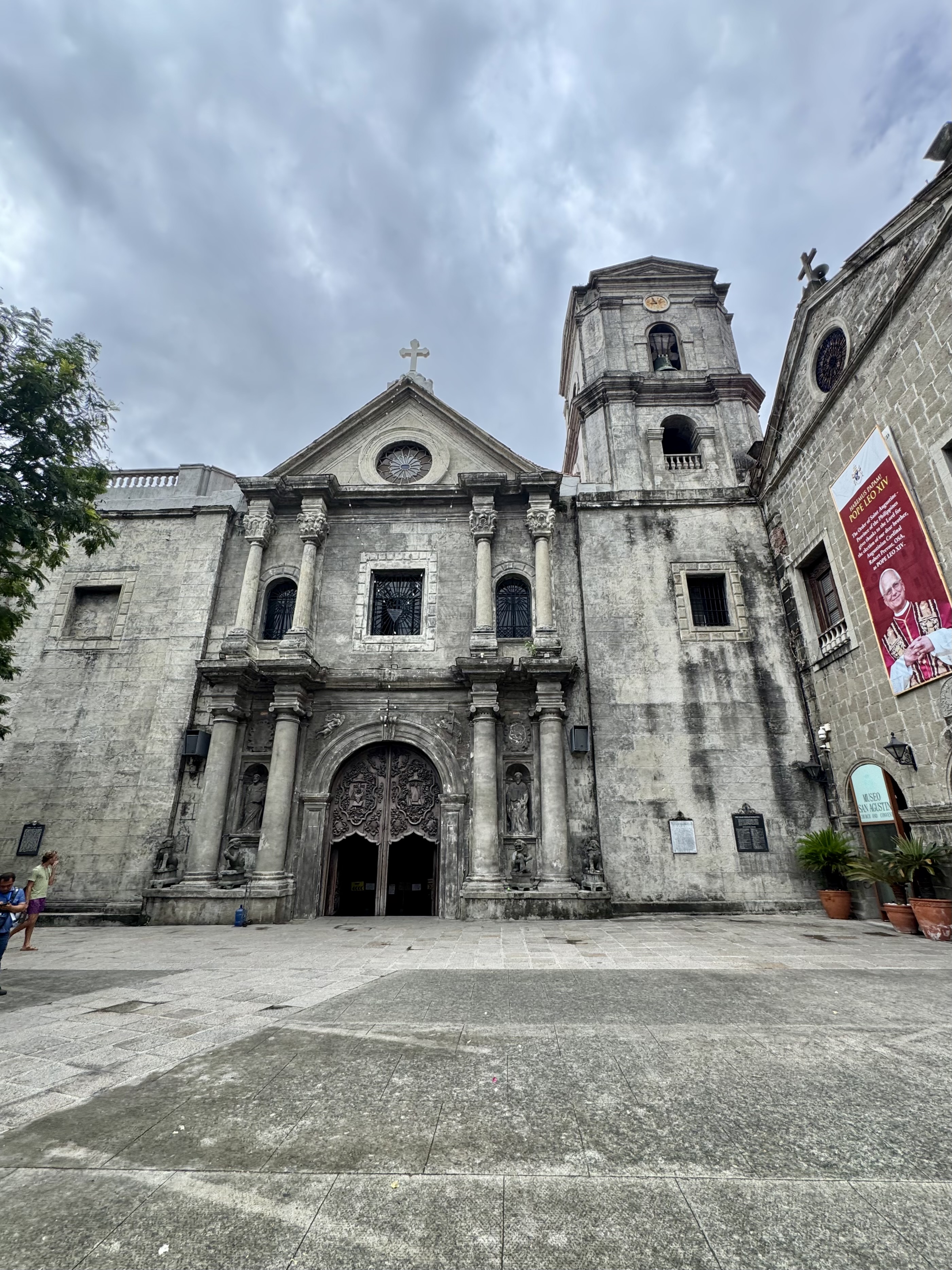
Anyway, the meeting point was in front of the San Augustine Church (which was built in 1607 and is the oldest stone church in the country) and Museo de Intramuros, a former convent aka Casa Mision de Jesuits, which has been converted into a museum housing a vast ecclesiastical collection that tells the history of the Spanish conquest of the Philippines.
Now the reason the tour begins here, is because the Spanish arrived in 1565 in Cebu and then in 1571 in Manila with instructions to convert the locals from Islam to Catholicism. The Spanish were met with a bit of resistance, but quickly defeated the locals after which, construction of Fort Santiago began and after that San Augustine Church was built.
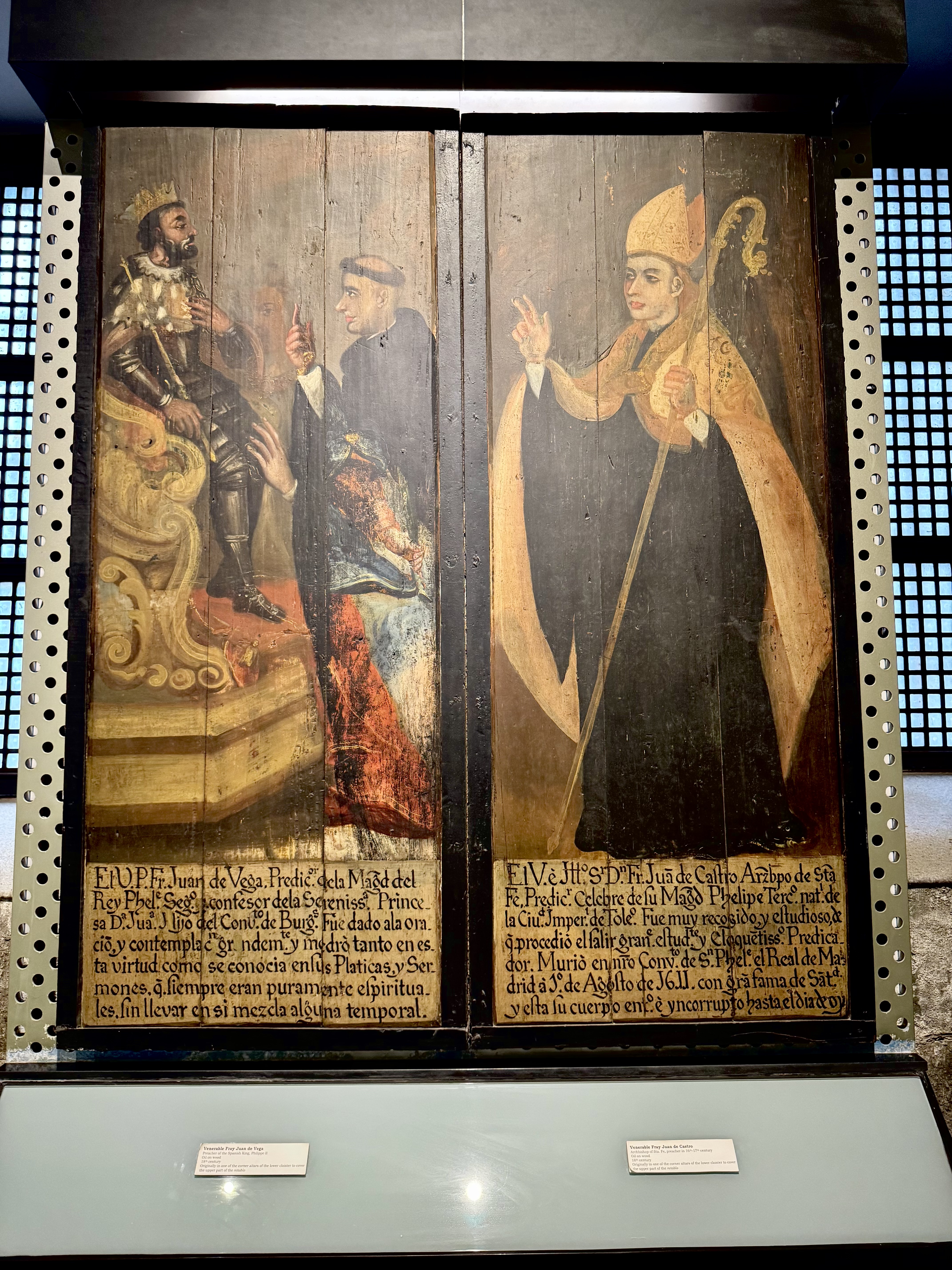
The convent/museum (which we would be visiting) was built in the mid 1800s and was mostly destroyed during WW II, although a number of historical treasures were saved and now on display. So with this background, we Jerome and I set off to see the ecclesiastical collection and learn about the Spanish colonial history of the Philippines. And as we wandered the halls, it was incredible to see the amount of artwork that had been saved from the war.


At the end of each of the four halls, there was a retablo (devotional painting) depicting some religious scene. The first one we encountered, the 18th century Retablo of St. Nicholas of Tolentino, depicted St. Nicholas releasing the souls from purgatory. Nearby, we wandered out into a courtyard, which was apparently called the Garden of Contemplation because the Augustine friars from the adjacent church used to come here for mediation and contemplation.
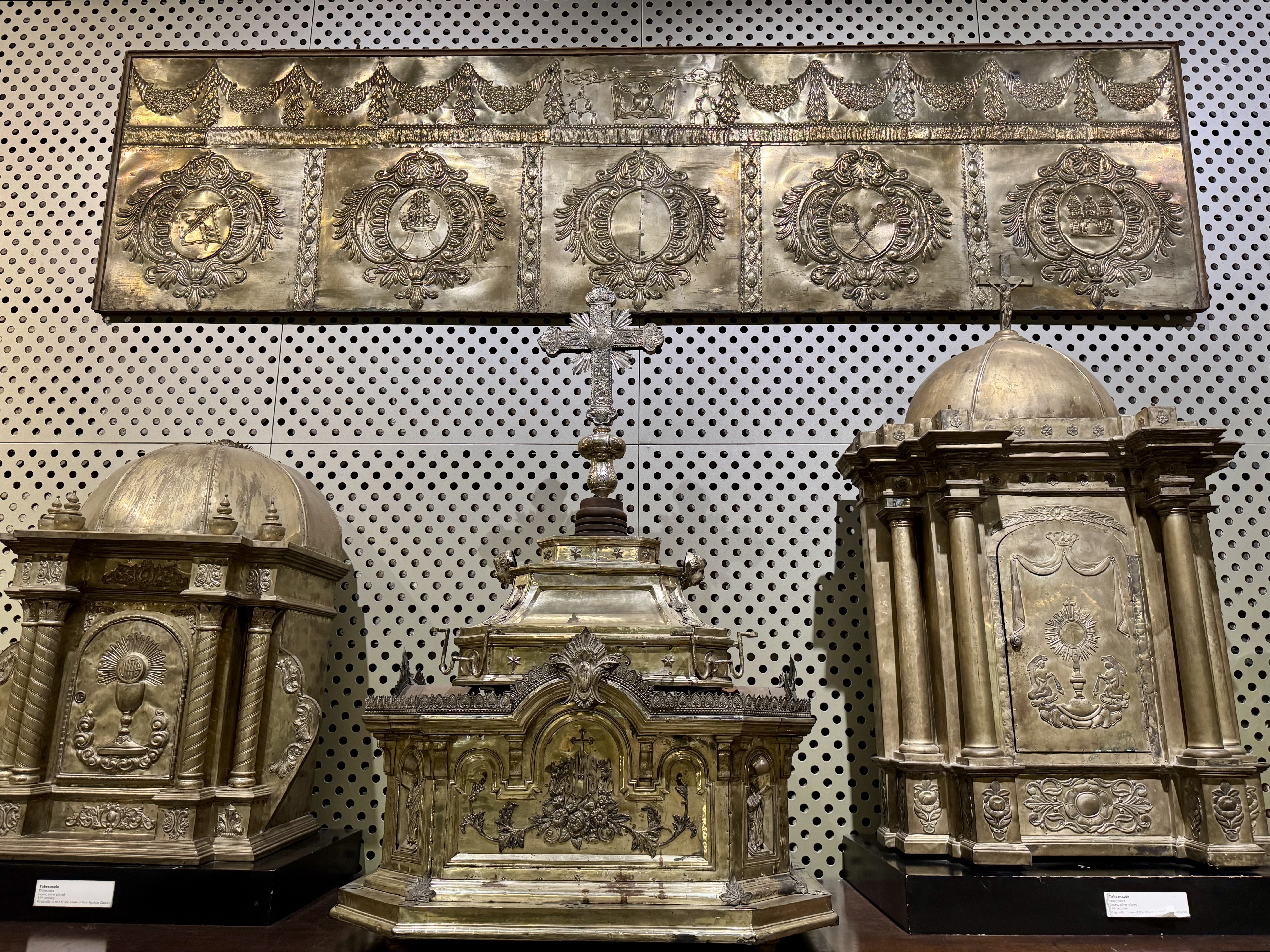
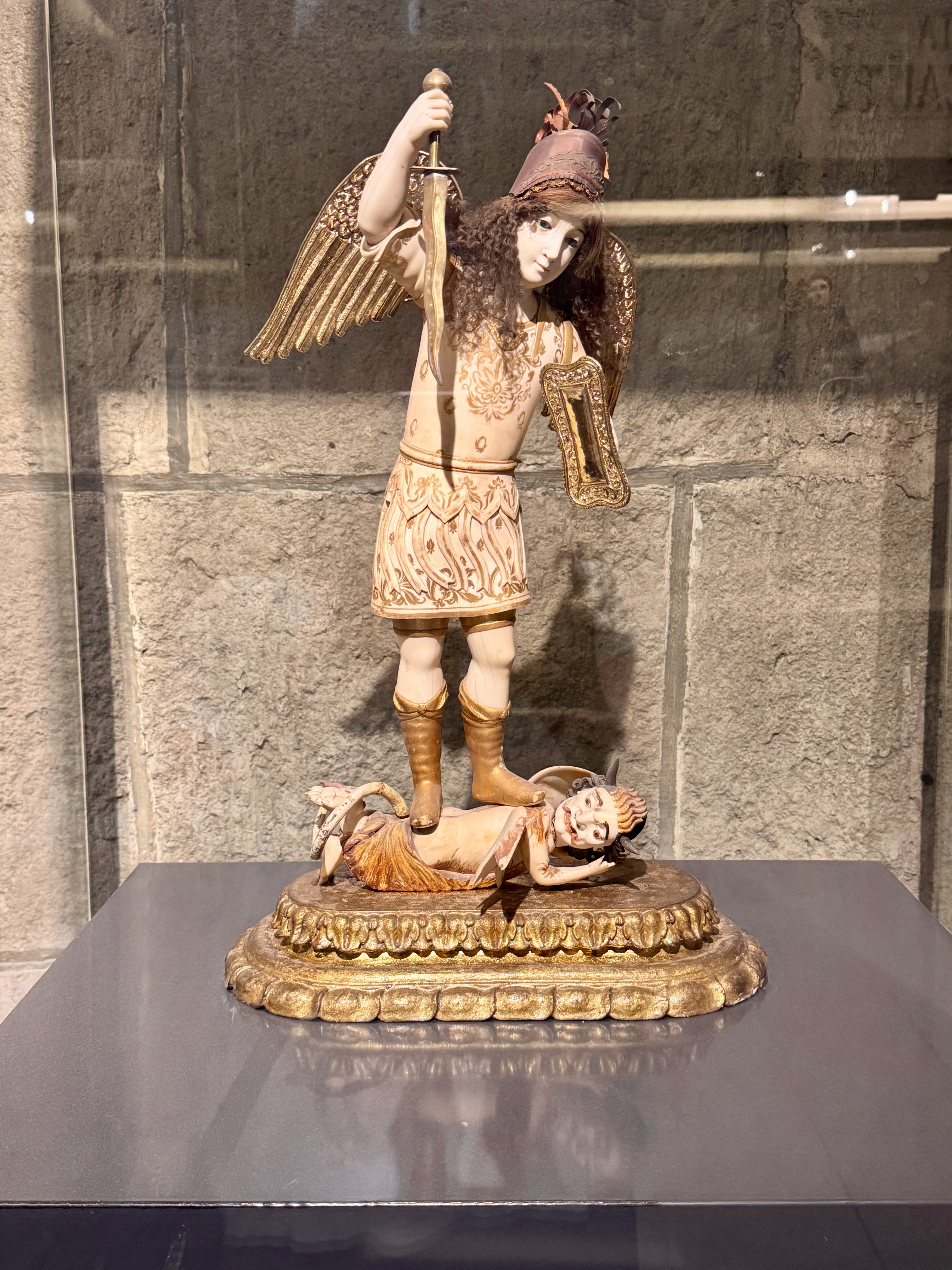
We then walked to the end of the hall and entered a room that was filled with Jesuit treasures, including sterling silver tabernacles (used for the Catholic Eucharist … specifically storing those little wafers that they hand out to the faithful), a marble wash basin used by the priests to cleanse themselves, a myriad of chalices containing precious and semi precious stones, priests clothing made of gold thread, an 1800 ivory statute of St. Michael, the Archangel stomping the devil and a number of 18th century frescos featuring religious scenes. The Jesuits spared no expense!
So after the walk through the Museo de Intramuros, I was hoping to go inside the UNESCO World Heritage site St. Augustine Church, but the building was locked up tight. Totally bummed. Anyway, we ended up heading across the street and down an alley to Casa Manila, a re-creation of a mid 19th century upper class Filipino residence.
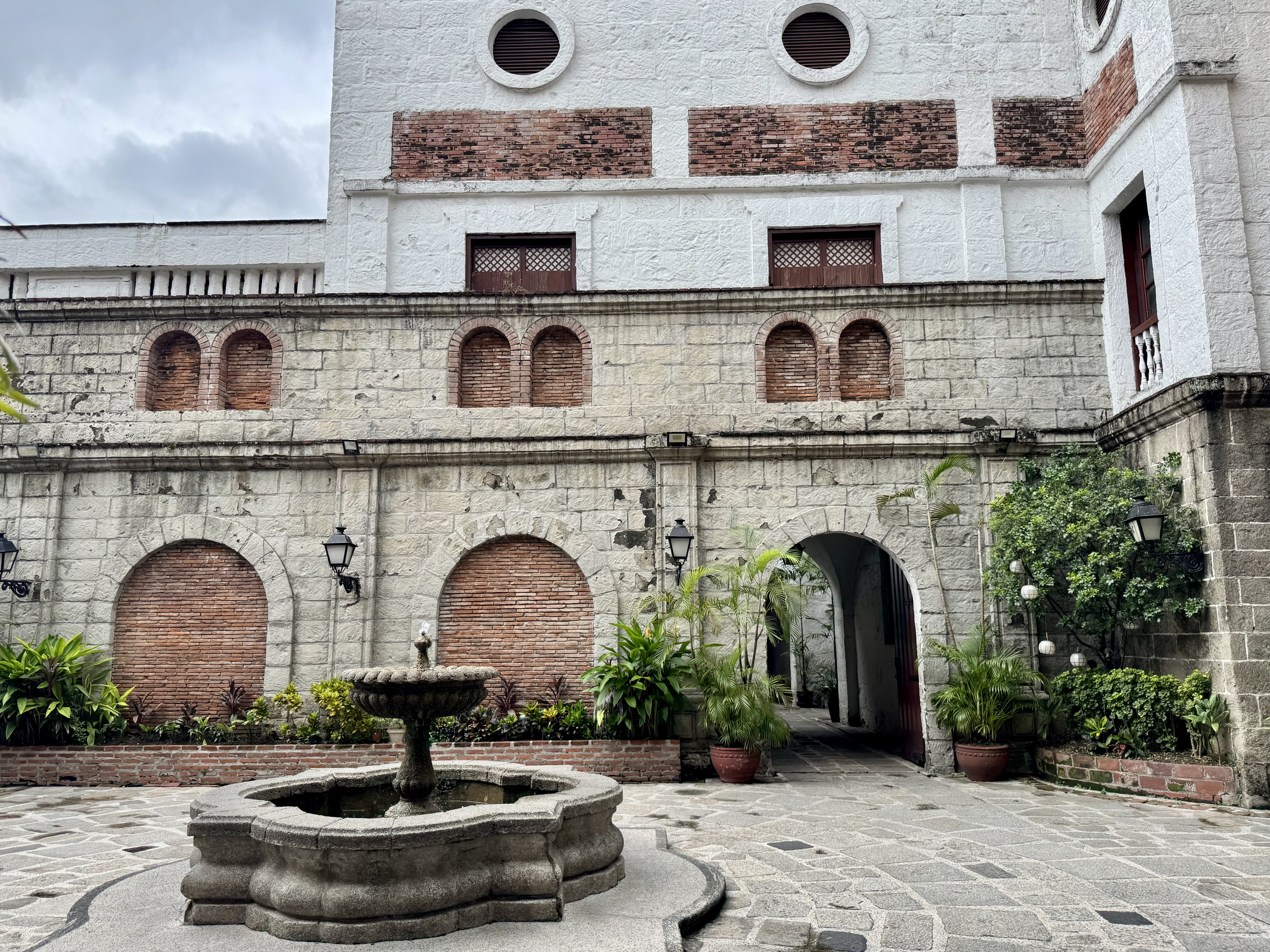
Now just to show how “class driven” the country was back then, the homes of the upper class Filipinos consisted of a lower floor and an upper floor. Only those with “standing” could visit the upper floor, while those considered middle or lower class could only visit the lower floor. In fact, the owner of the home had his office on the lower floor so that the owner could do business with the lower class persons such as tenants, servants etc.
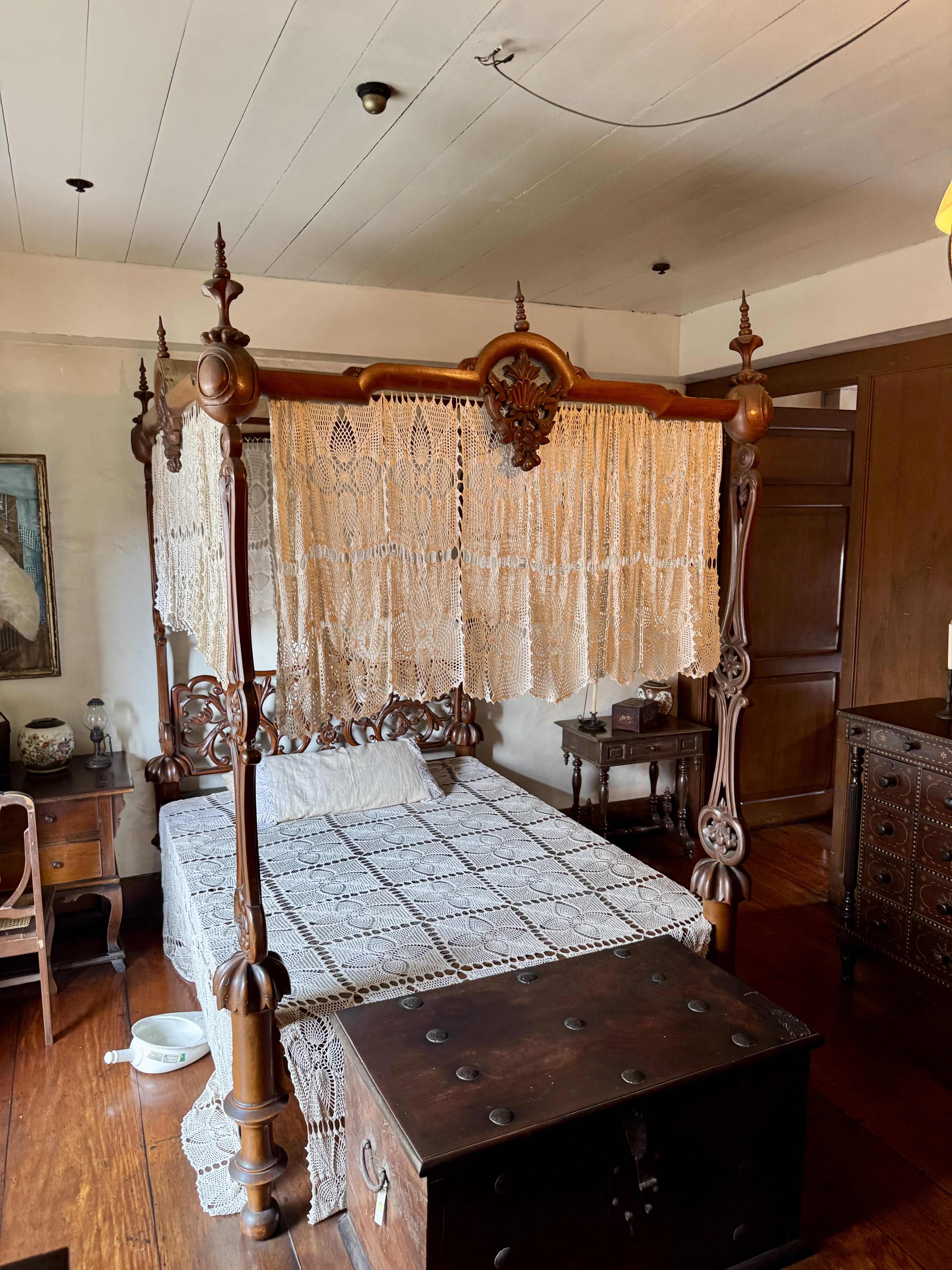
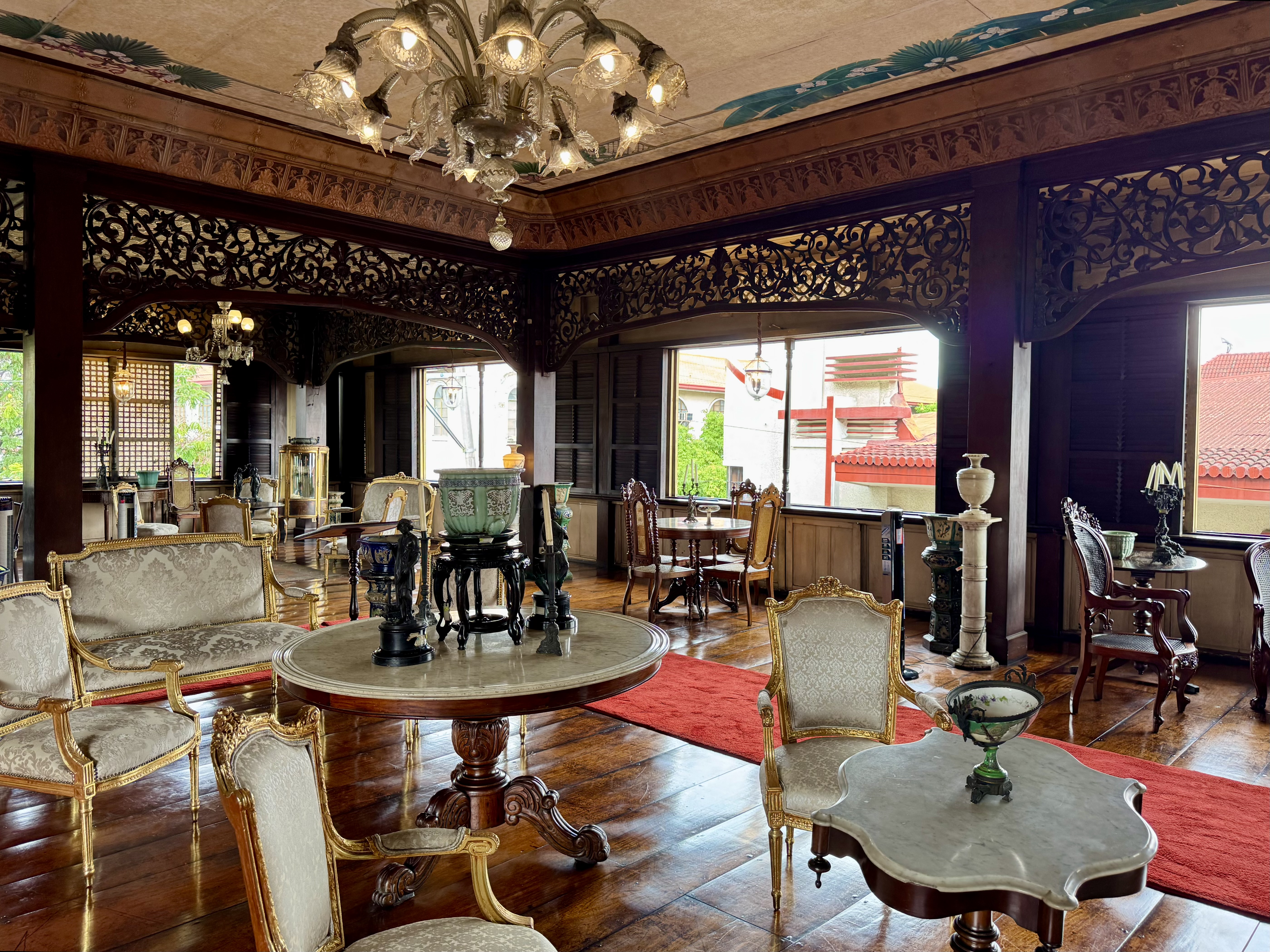
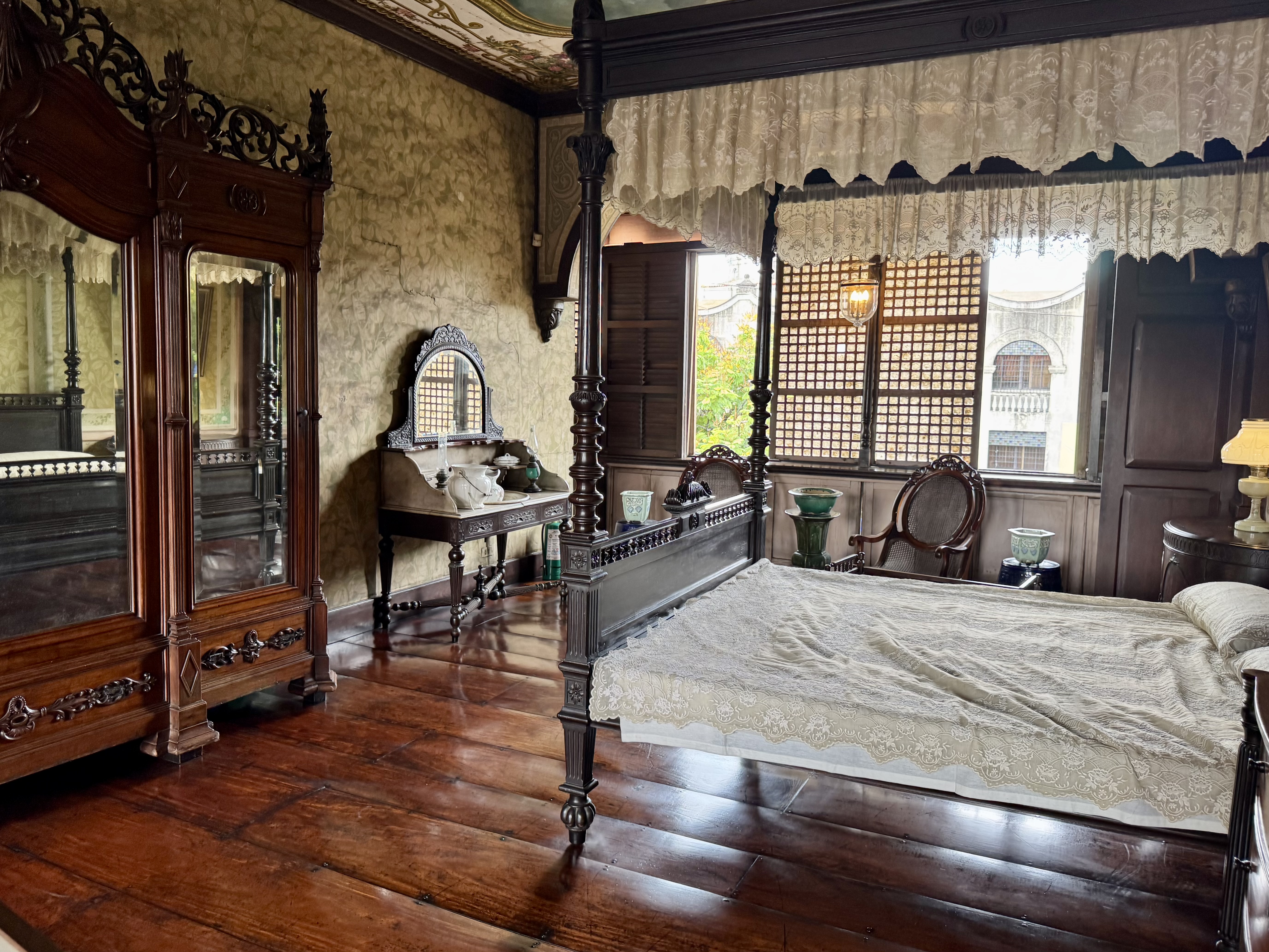
And the upper floor was pretty ostentatious. There was an incredibly opulent living room filled with crystal chandeliers, Chinese ceramics, and handmade wooden tables and chairs. Even the floors were much fancier than the lower level. In addition, the master bedroom we visited was huge and could easily have been subdivided into two spacious apartments.
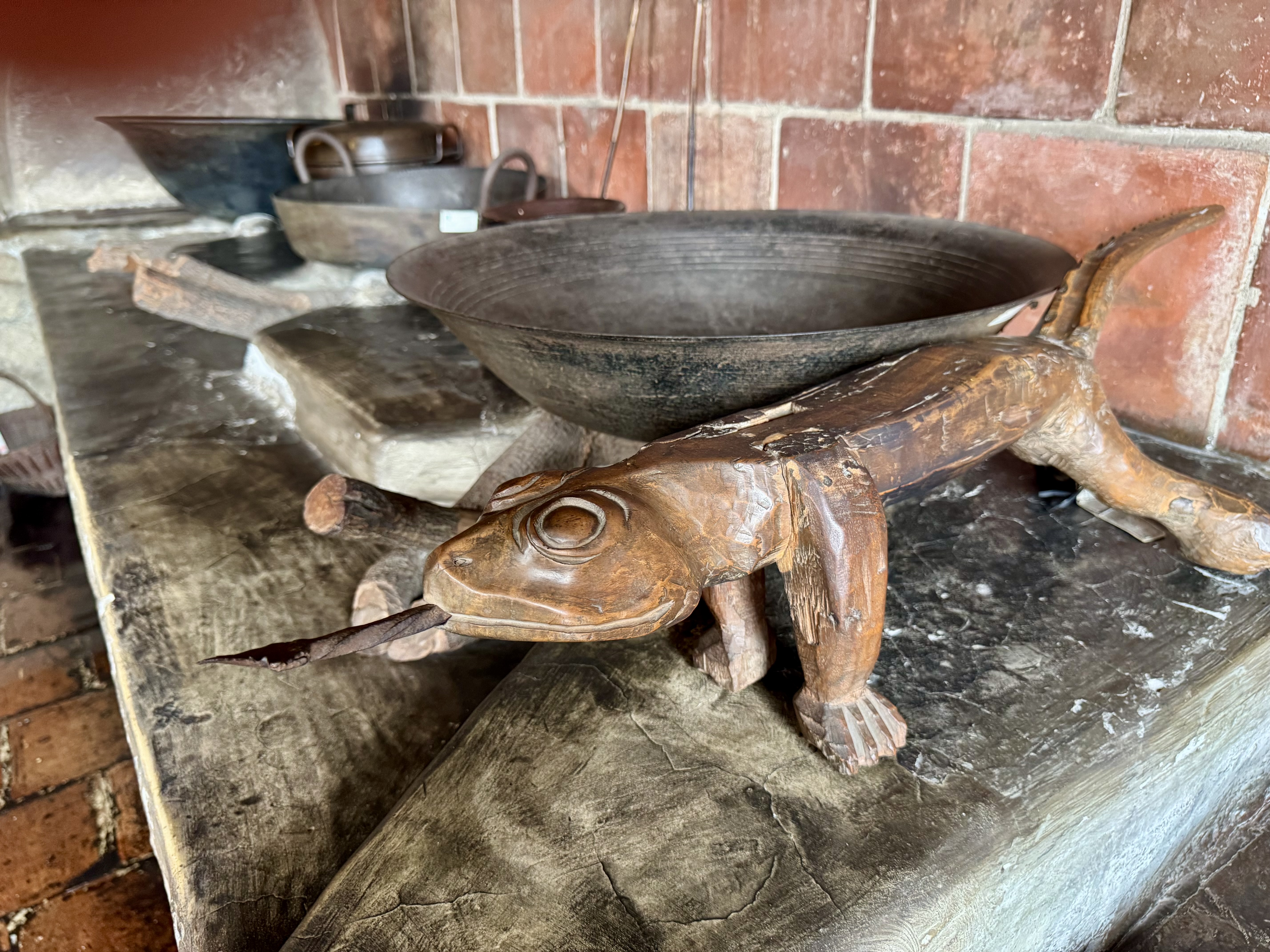
We then walked down a backstair into the kitchen where I saw perhaps my favourite object in the house … a handcarved wooden iguana with a serrated tongue that was used to carve up coconuts. Seriously. And I took a pretty close look at the tongue and believe me that thing could cut through anything.

And off the kitchen was a small garden area where they would collect rainwater, grown small plants and slaughter small animals. OK then.
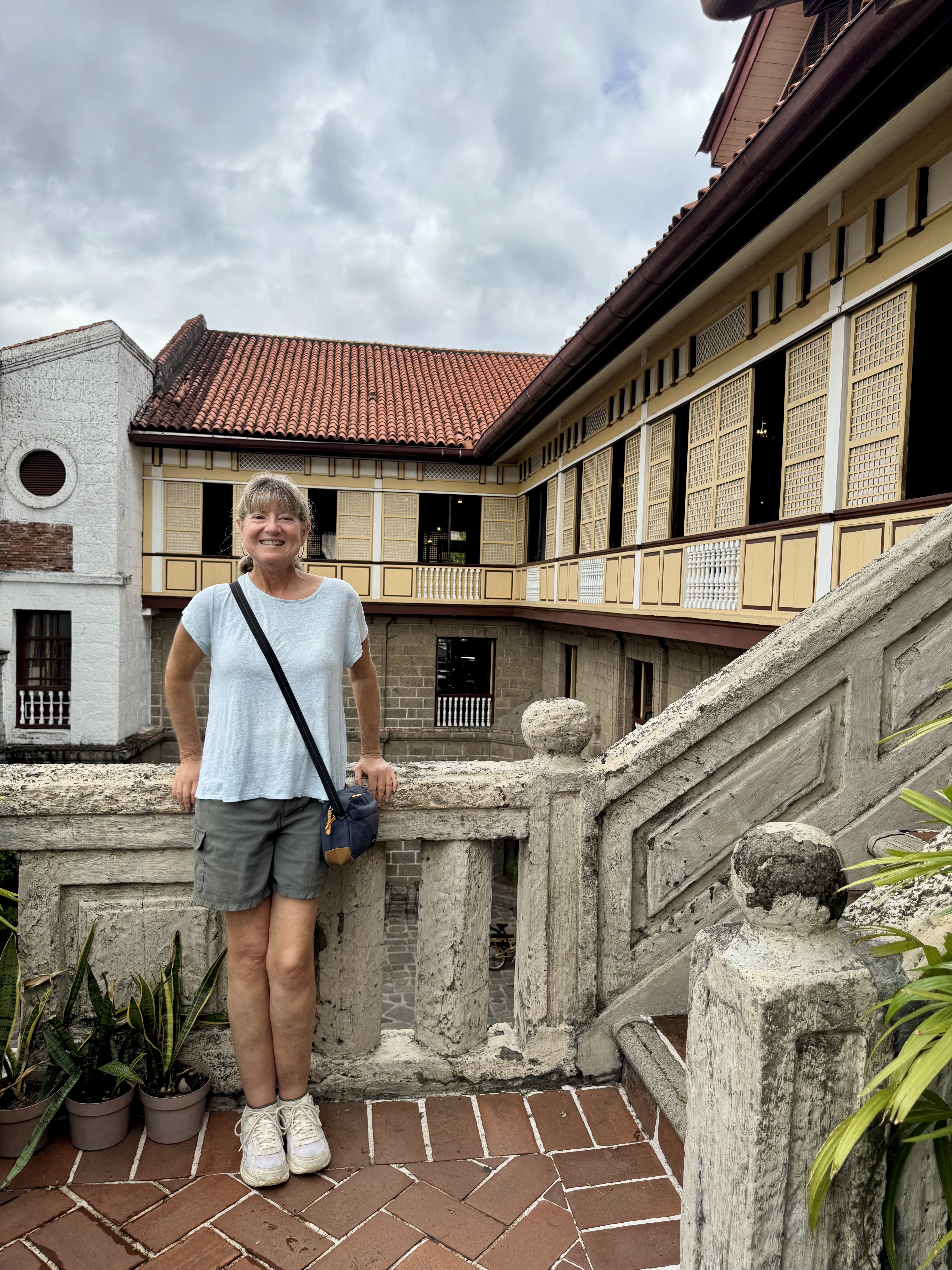
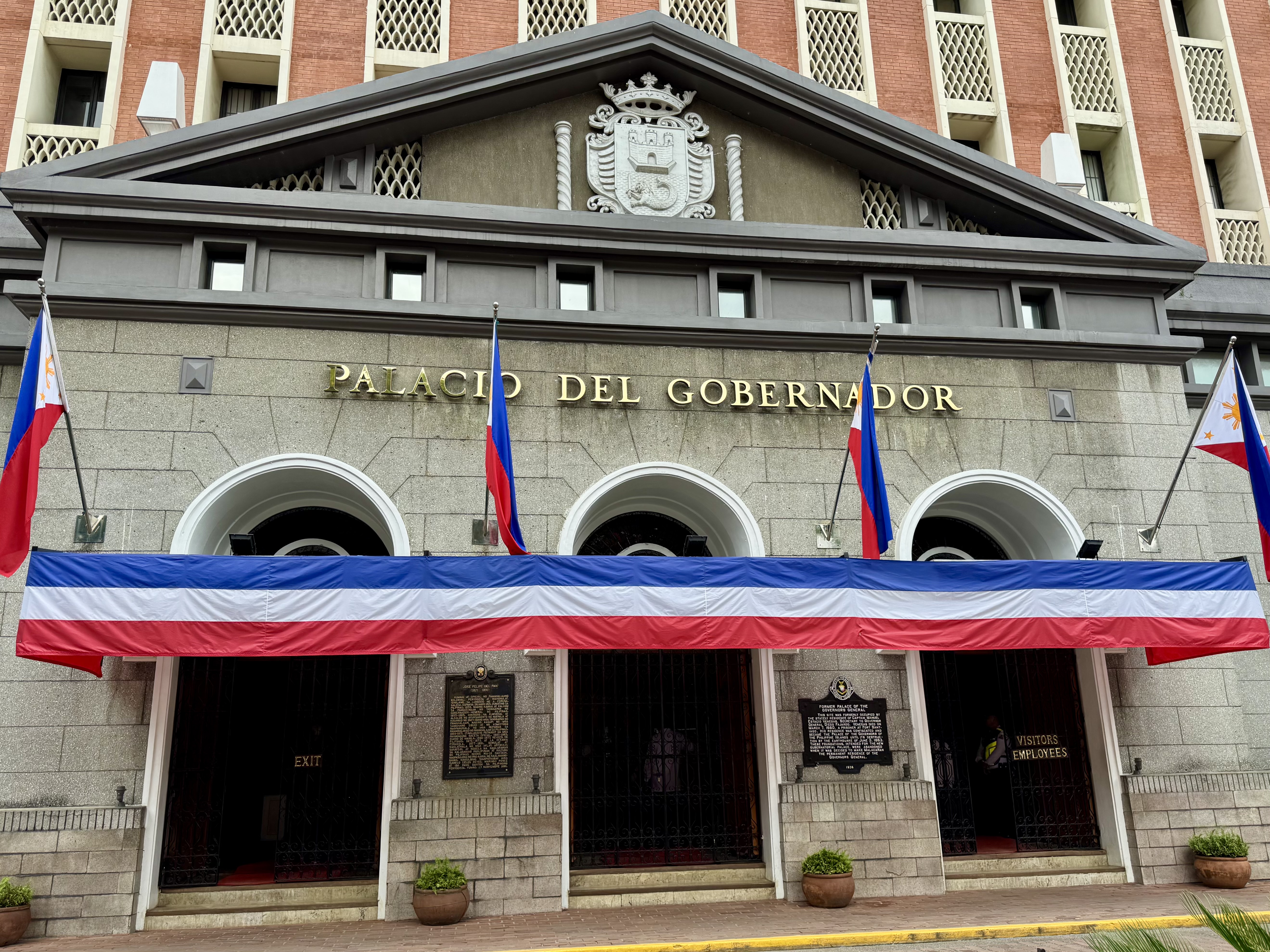
Now the stairwell to the small garden actually led all the way back down to the first floor and the large outdoor courtyard. So having finished with Casa Manila, we took a 200 meter walk to Fort Santiago passing the Palacio del Gobernador, which was the former residence of the governor-general during the Spanish colonial era (which by the way ended in 1898 when the Spanish-American war broke out and the country was ceded to the U.S., which occupied the country until 1946 when it recognized Philippine independence).
After passing the Palacio and the Manila Cathedral (we didn’t stop), we then crossed a street and walked another couple of blocks before reaching the sign that told us we had reached Fort Santiago. Now there is not much left of Fort Santiago as it was completely destroyed in the Battle of Manila in 1945. But since 1946, the Philippine government has endeavored to restore some of Fort Santiago beginning with the rebuilding of the old walls and the gates, including the main Fort Santiago gate, which leads to the inner sanctum of Fort Santiago and specifically the Plaza de Armas and the shrine to the Philippine hero, Dr. Jose Rizal (more about him later).

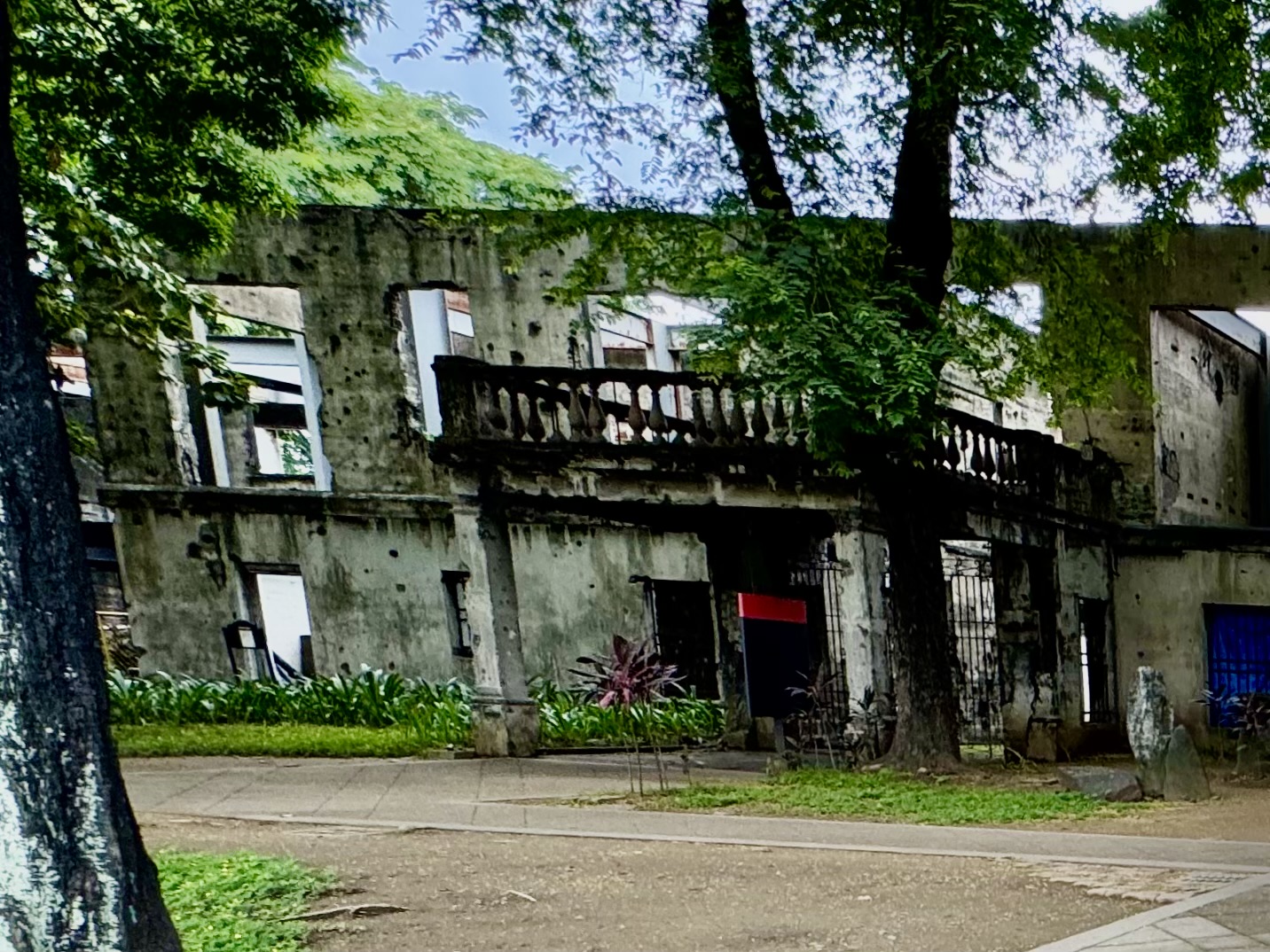
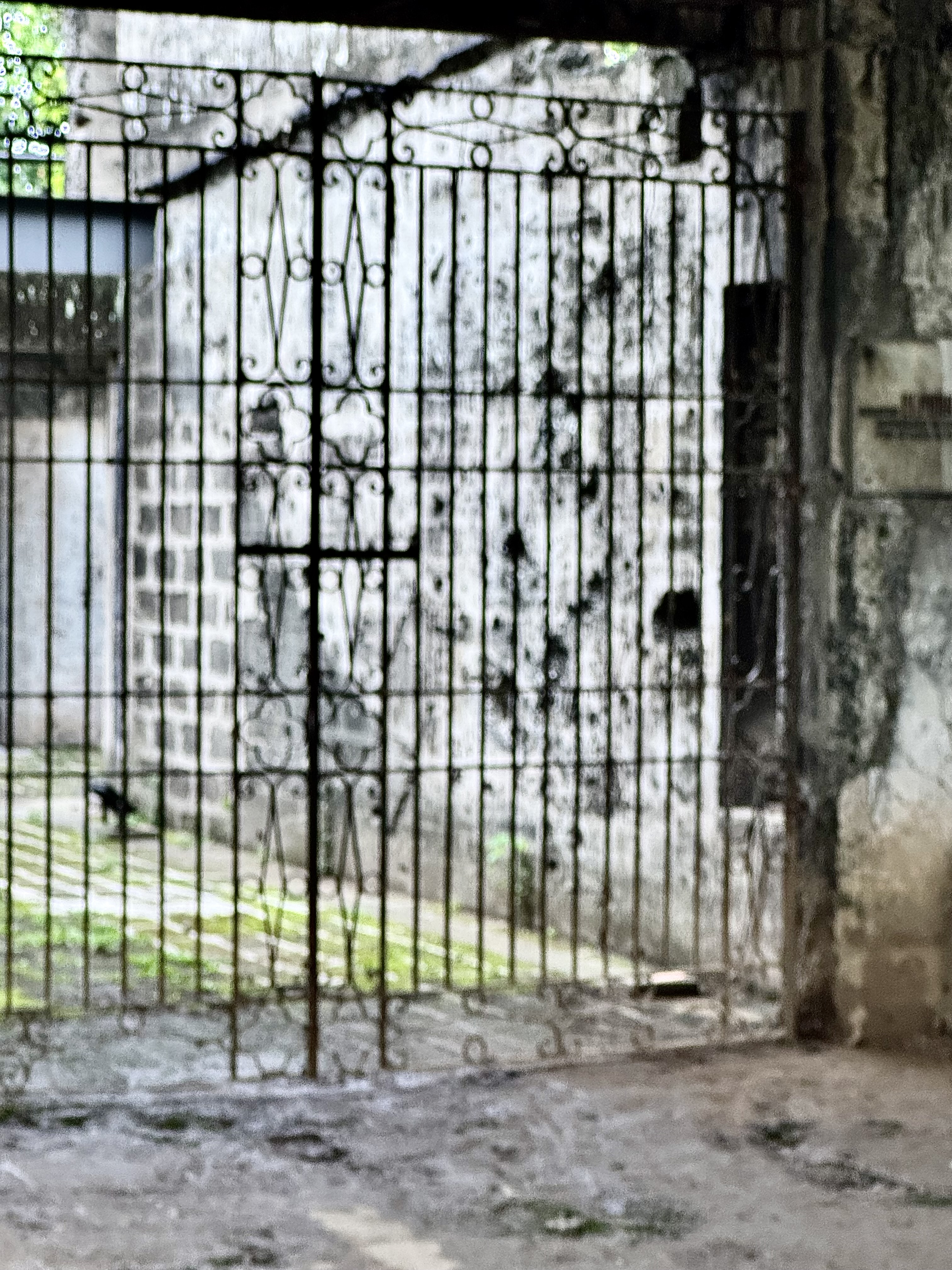
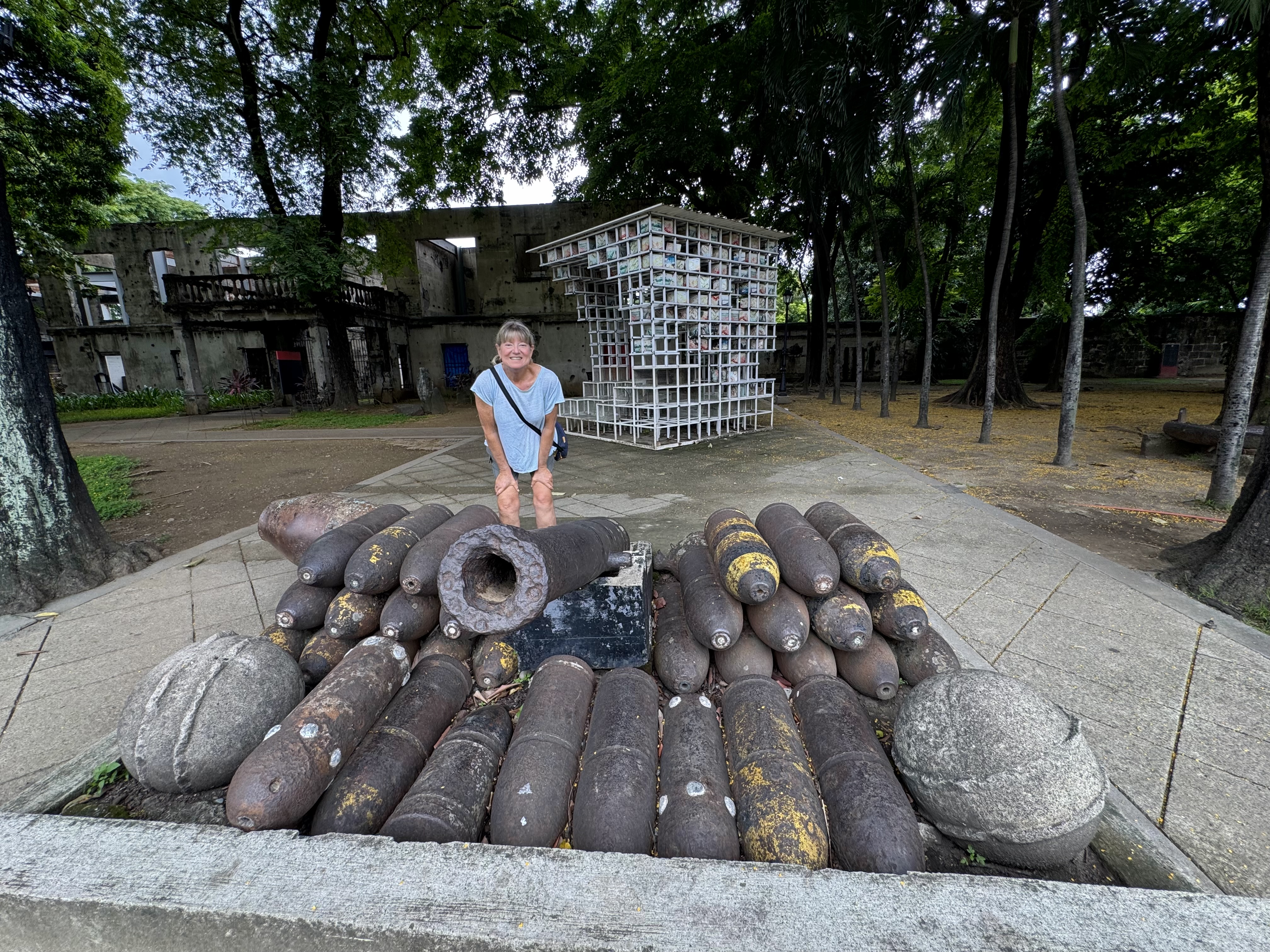
Now before we reached the Fort Santiago gate, we walked through a large green space that included the old US Army barracks and a 17th century cannon and weaponry from the Spanish colonial period. In addition, there was a nearby 16th century anchor from a Spanish Galleon. In addition, we passed a wall that was filled with bullet holes from World War II.
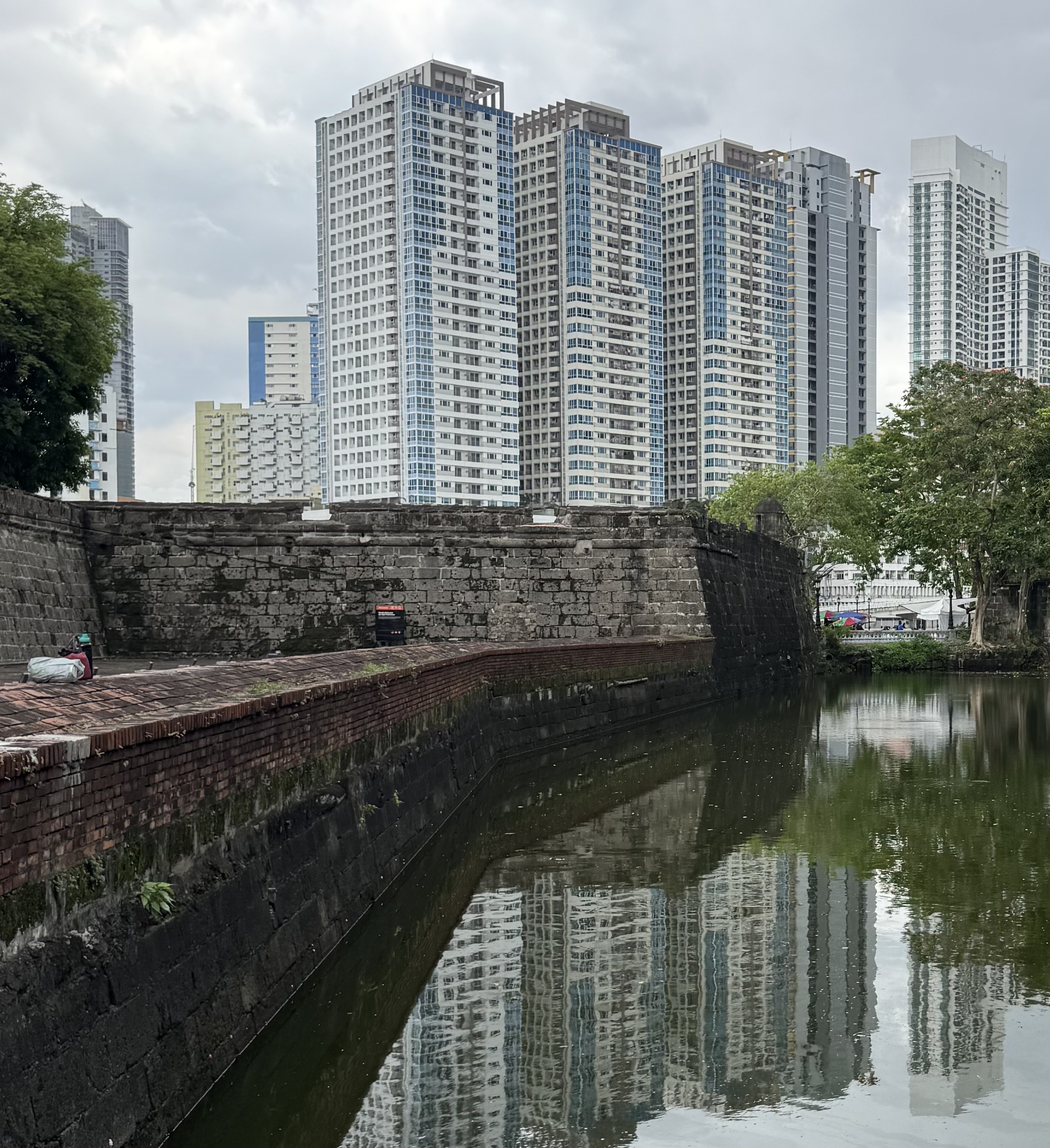
We then crossed over a rampart and a moat, each built in the 16th century to fortify the fort’s defenses, to reach the Fort Santiago gate.
Unfortunately, the original Fort Santiago gate (along with all the other gates that were built into the Intramuros walls, was destroyed in WW II. However, two stone soldiers that were part of the original gate were recovered and were used in rebuilding the Fort Santiago gate.
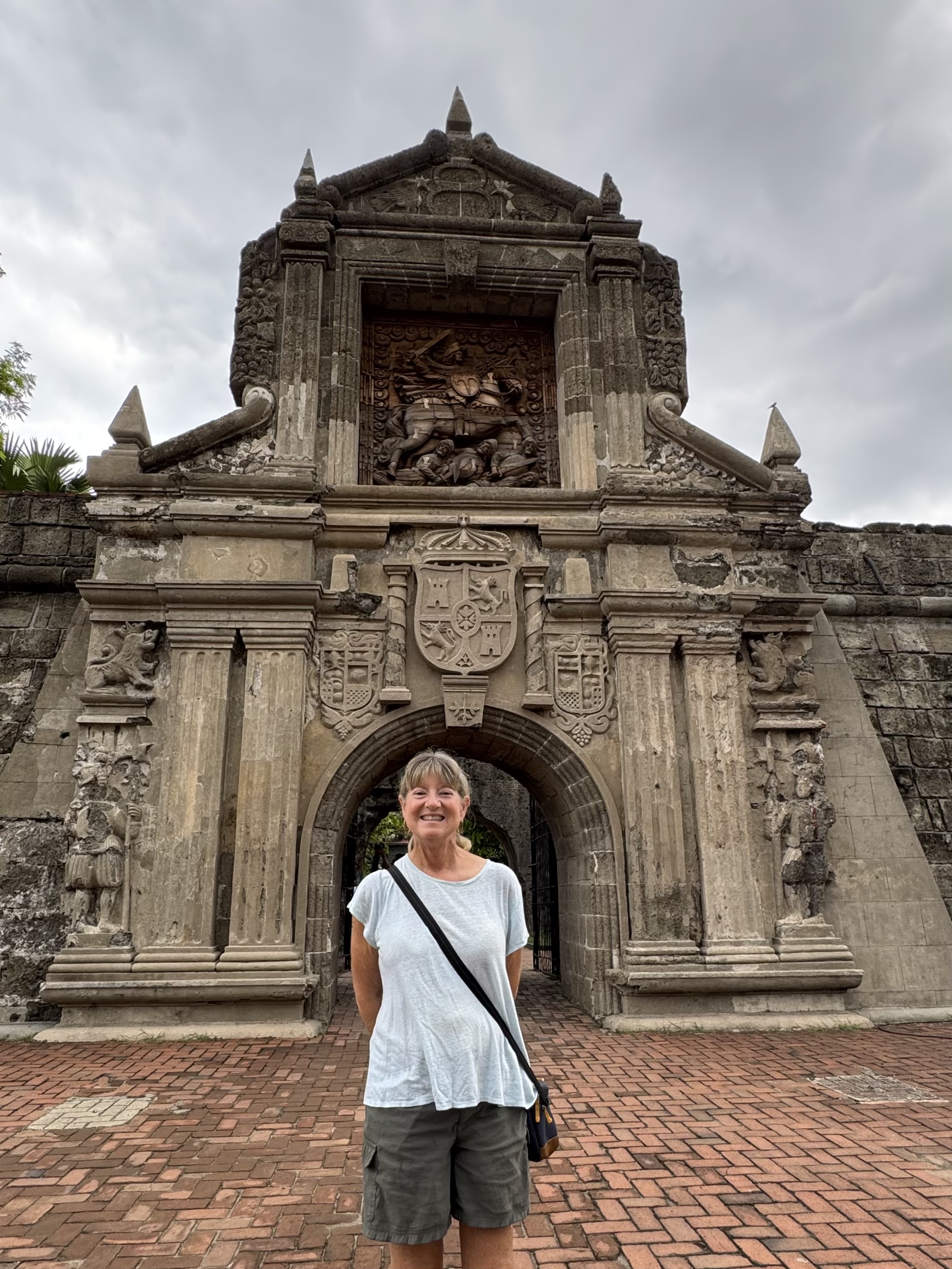
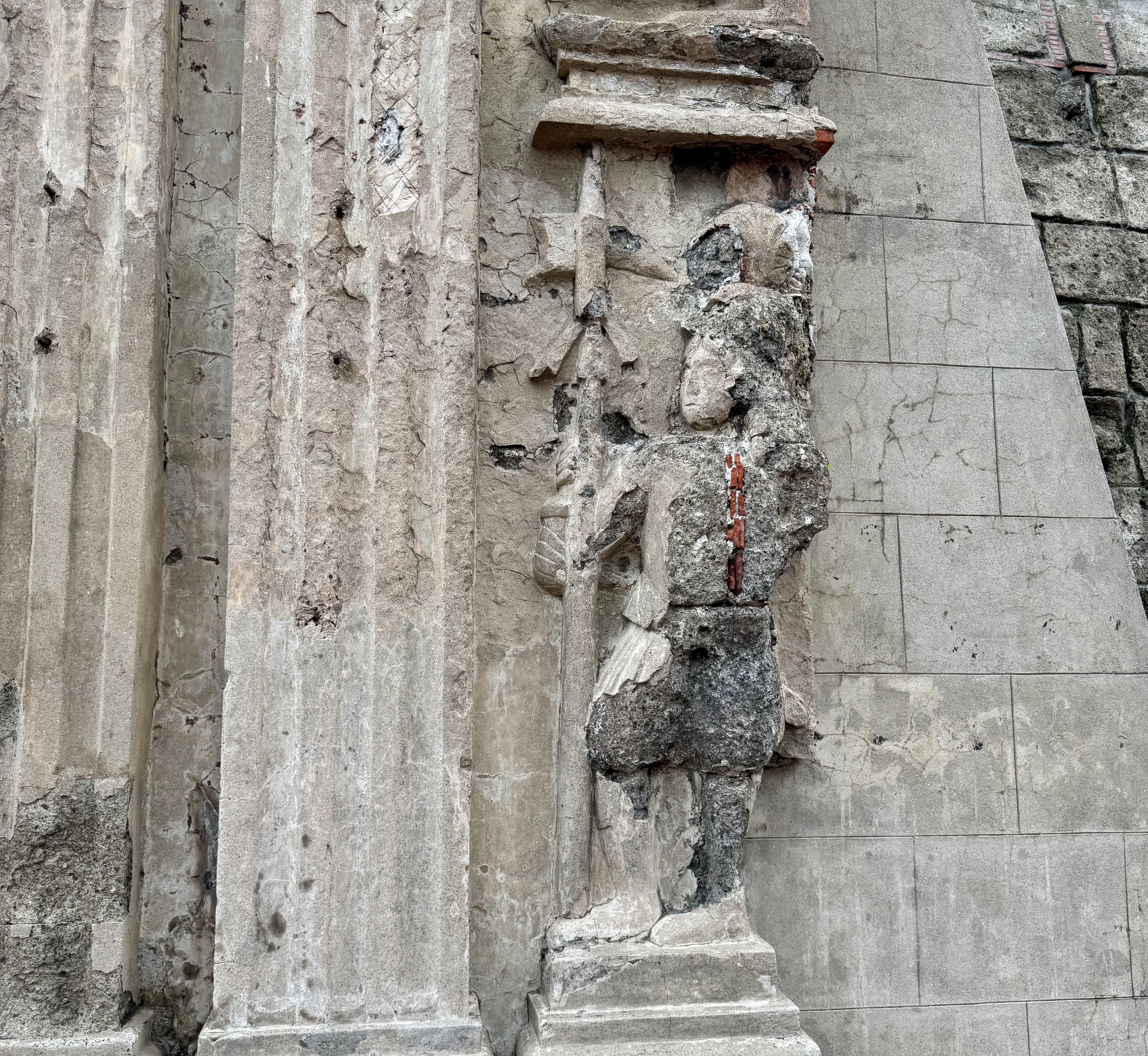

So once we passed through the Fort Santiago gate, we reached the Plaza de Armas, which is where the soldiers used to march for their daily drills. Today, the area is most famous for the shrine to Dr. Jose Rizal, a Philippine national hero. Dr. Rizal wrote two books in the late 19th century about Philippine independence, which did not sit well with the Spanish. When the writings inspired the Philippine revolution, the Spanish arrested Dr. Rizal and ultimately executed him in 1896. Before he died, Dr. Rizal wrote a poem entitled “My Last Farwell”, which he hid in a lamp and gave to his sister.

The Philippine government erected a memorial to Dr. Rizal entitled the “Last Walk to Martydom” which encapsulates Dr. Rizal’s footprints in bronze and follows the walk he took from his cell in Fort Santiago to Bagumbayan, where he was executed by firing squad.

Now Fort Santiago has a whole host of other sites to visit, but at this point my tour came to an end. (I’m not sure why we didn’t visit the remains of the Royal Warehouses or the ruins of the Spanish colonial era barracks. We didn’t visit the dungeons either, but that was because of recent flooding.)

So with the tour ended, I walked to Plaza Roma and found a GRAB and was back at my hotel by 12:30. Now I was not done for the day. Andrei (from the previous day) picked me up at 6:15 p.m. for a night tour of the Intramuros area to see the monuments lit up.
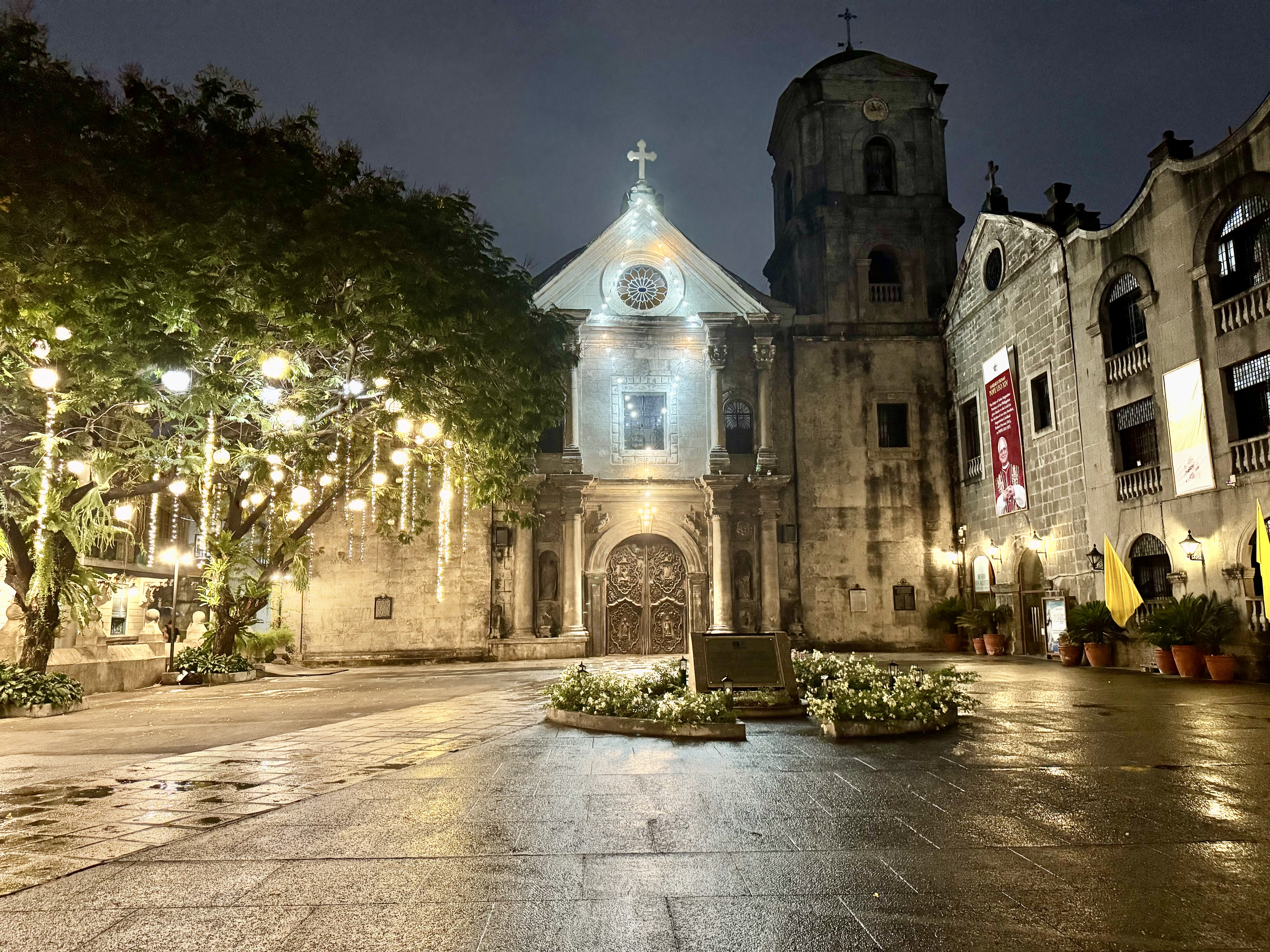

We first hit up St. Augustine Church and sadly the church was still locked. I took a couple pictures and then suddenly the door opened. Andrei and I walked over to see if we could take a quick look inside. Apparently they have been setting up for some big wedding and we weren’t allowed inside, but the gentleman was kind enough to open the door wide enough so that I could take a peak inside. It was gorgeous and I even managed to sneak a picture before the man said he had to shut the door.
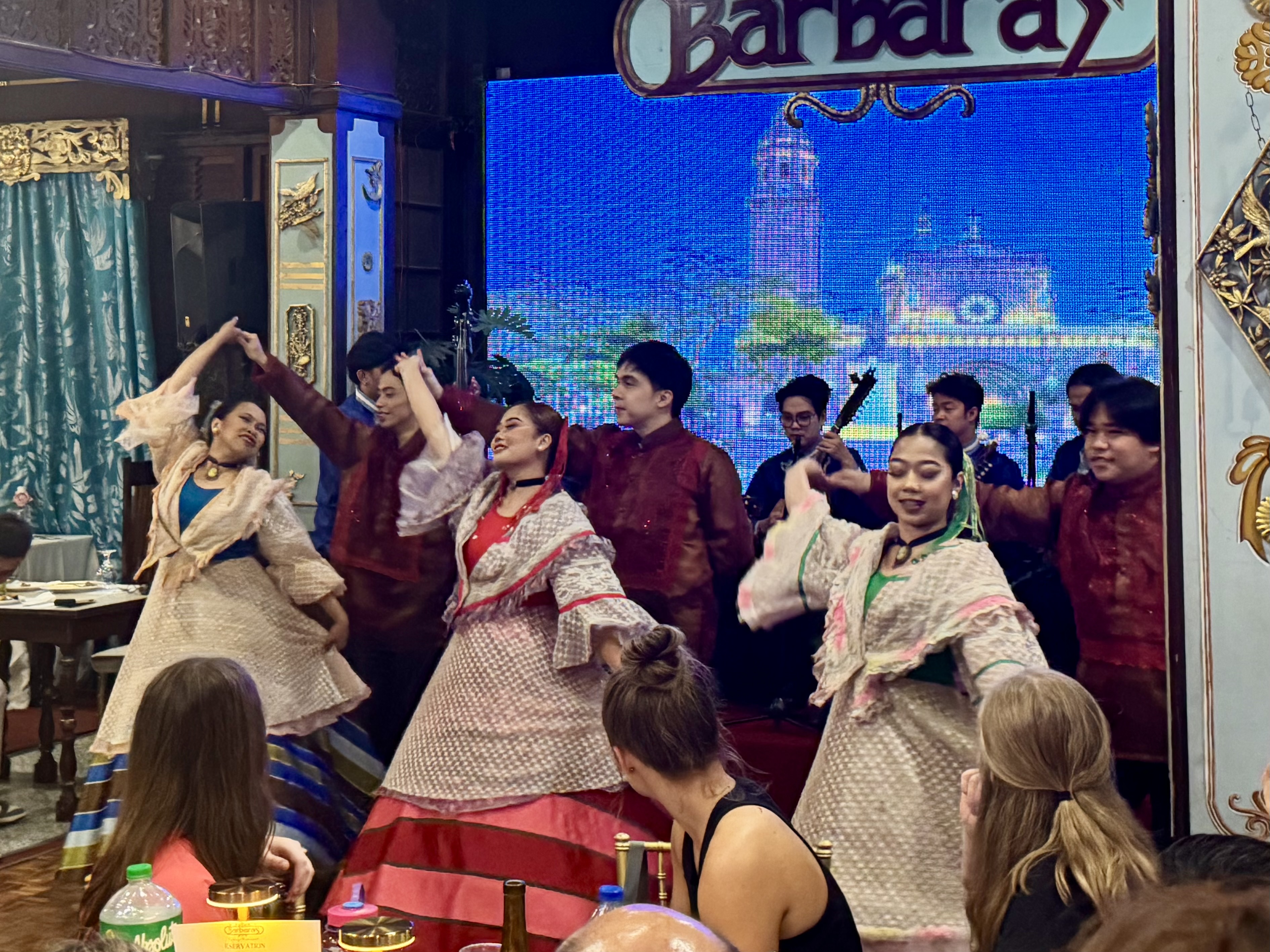
From here, we crossed the street and went into a restaurant called Barbaras where we were permitted to watch one of the dances being performed at a cultural show. (If we wanted to stay for the whole show, we had to sit down for dinner.)
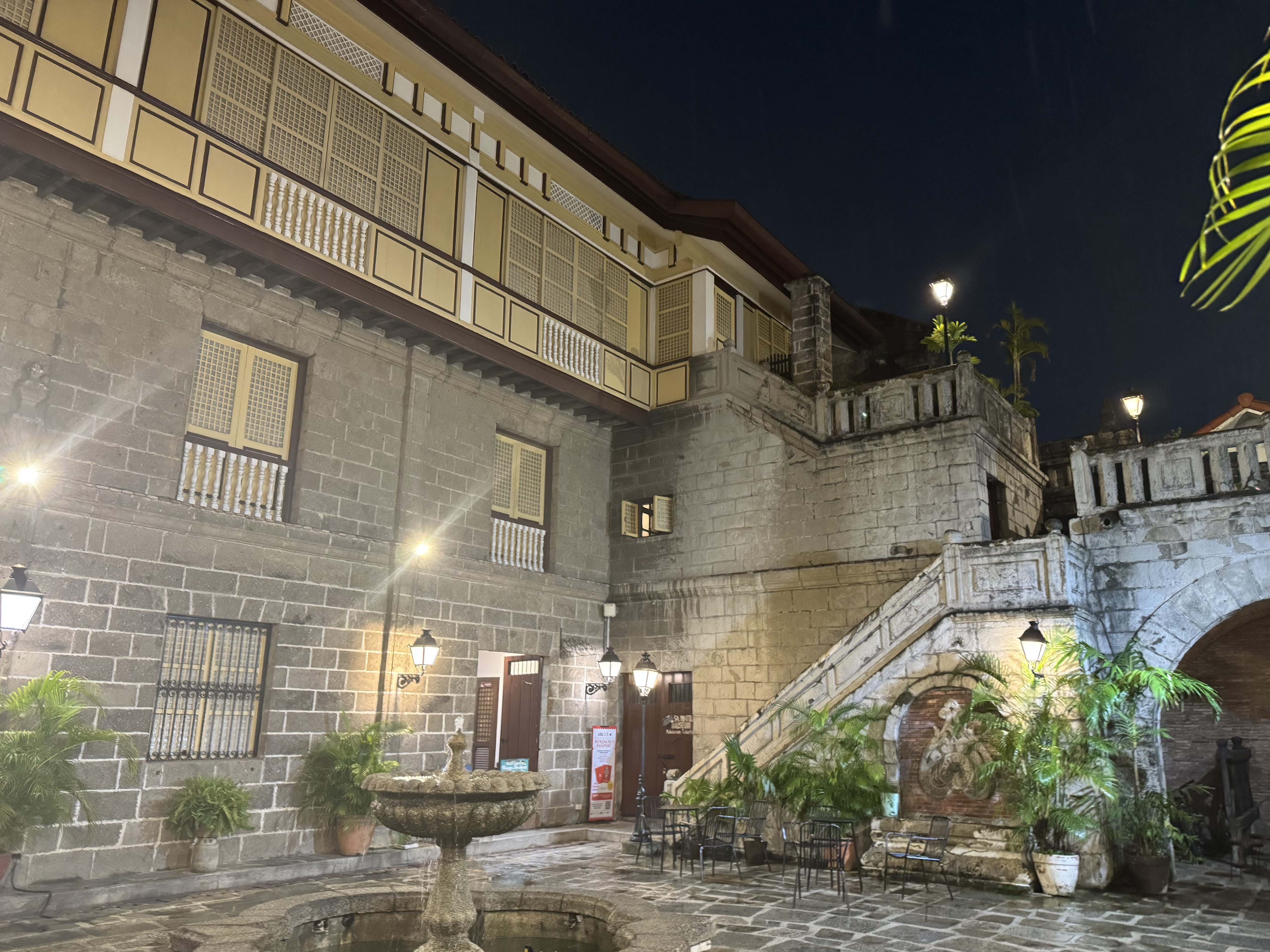
After the dance, we walked back downstairs and crossed the courtyard of Casa Manila where I was able to take a picture of the residence at night. We then walked down the street (now in the rain) surrounded by lights on all the trees towards the Manila Cathedral.

However, before reaching the Cathedral, we stopped at the monument to the 100,000 civilians who were killed between February and March 1945 in the Battle of Manila. There was also a series of storyboards describing the events that transpired, the slaughter of civilians by the Japanese and the absolute annihilation of the city of Manila. It was interesting and absolutely horrific at the same time.
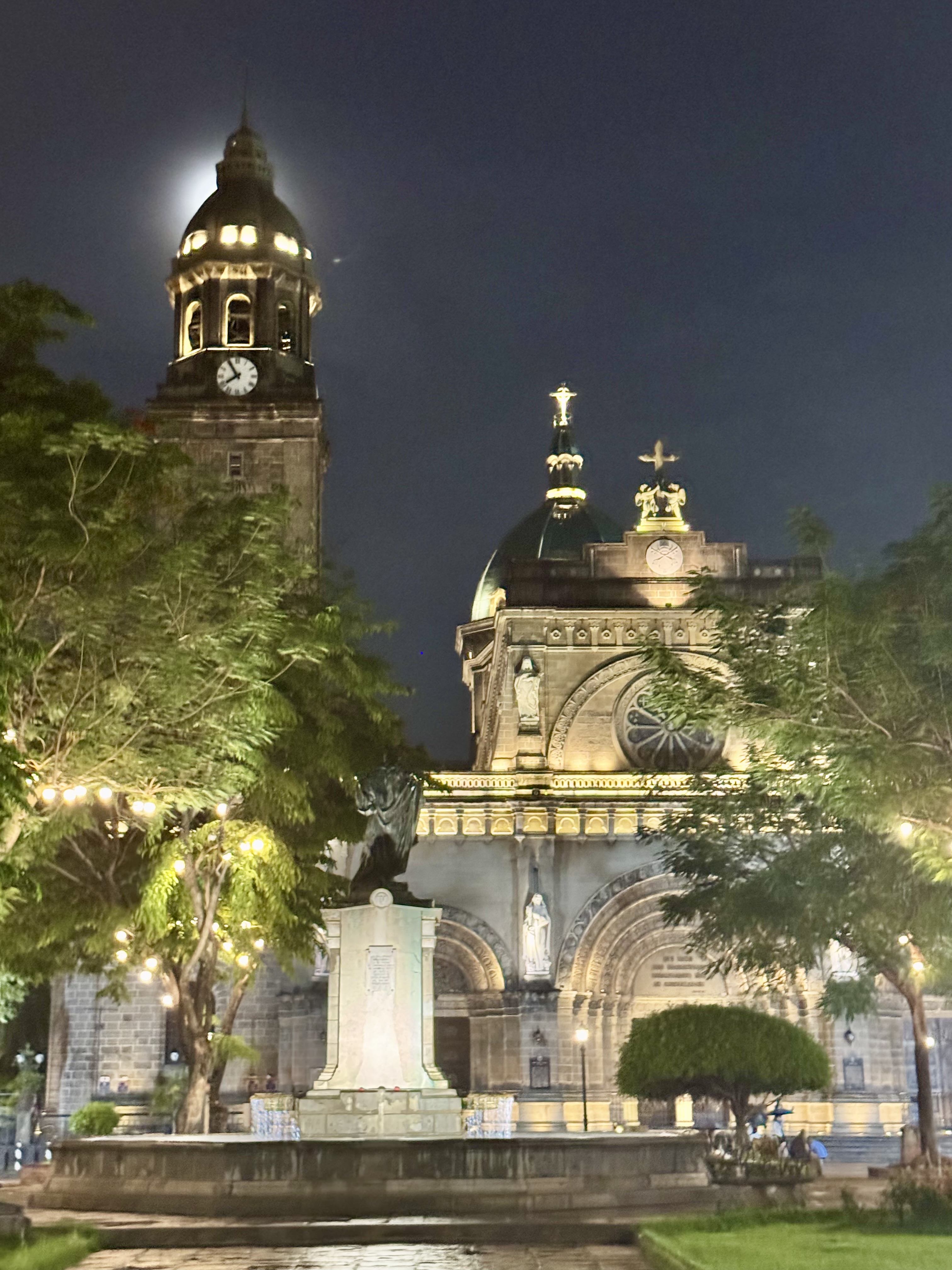
From here we walked another block past more lights to the Manila Cathedral, which was lit up and looked absolutely gorgeous. Now sadly the building was locked so I was not permitted inside. (What is it with locked churches in Manila?)
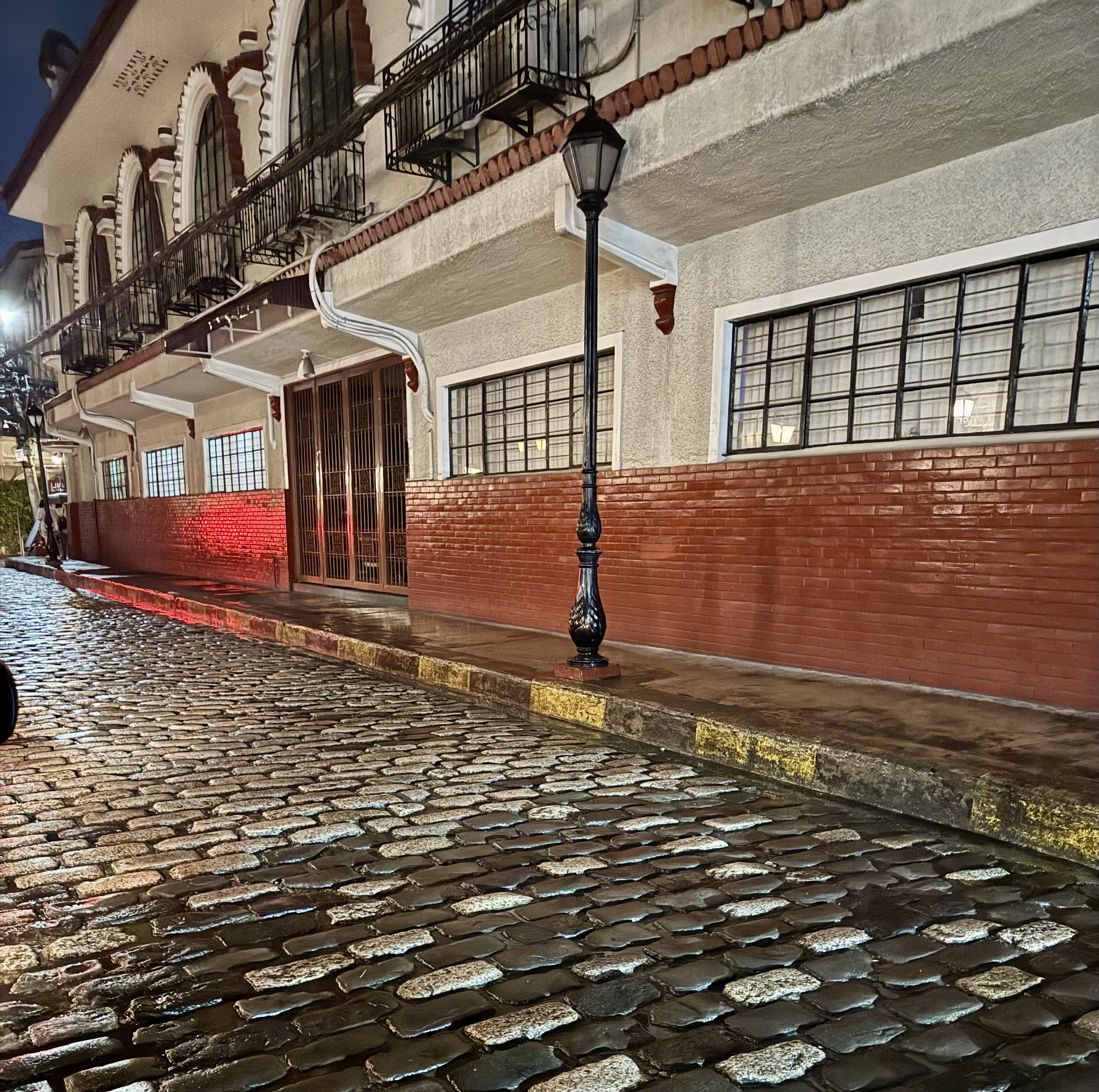
Anyway, from here we walked back over the cobblestones and headed to the Pasig River where there was a waterfront Esplanade with a variety of shops. Now I had been planning on attending a night market (in fact that is the reason I booked the night tour), but Andrei insisted that the Esplanade was far better. Unfortunately, Andrei failed me on this one. The only shops located at the Esplanade were restaurants, some shops hosting kids games and some gal singing music. It was a massive letdown. I wanted a real night market.
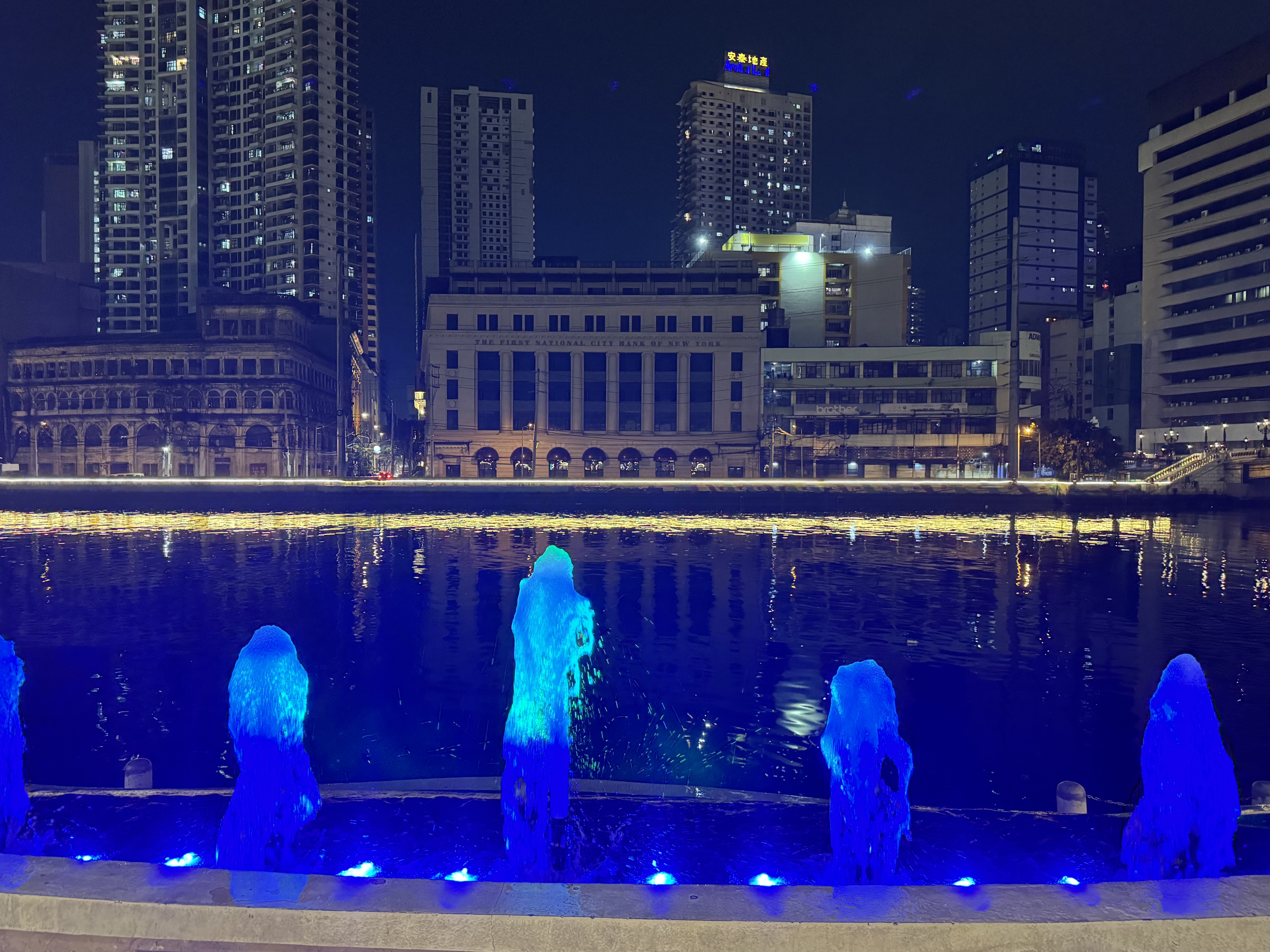
I told Andrei that this wasn’t for me and that I was ready to go back to the hotel so by 9:15 we pulled into the Fairmont Makati. I was done for the day. Tomorrow, it is off to see the Tagaytay volcano.
