Today was all about visiting really old stuff. Marco met me at my hotel at 10:00 a.m., but by the time he arrived, the beautiful sunny morning had turned foggy and a bit chilly. Anyway, once I grabbed my hoody we set off for our first destination of the day in Merida: the nearby Roman bridge, which dates to the 1st Century BC. and was a vital transportation connection for the Roman city of Augusta Emerita (Merida today).
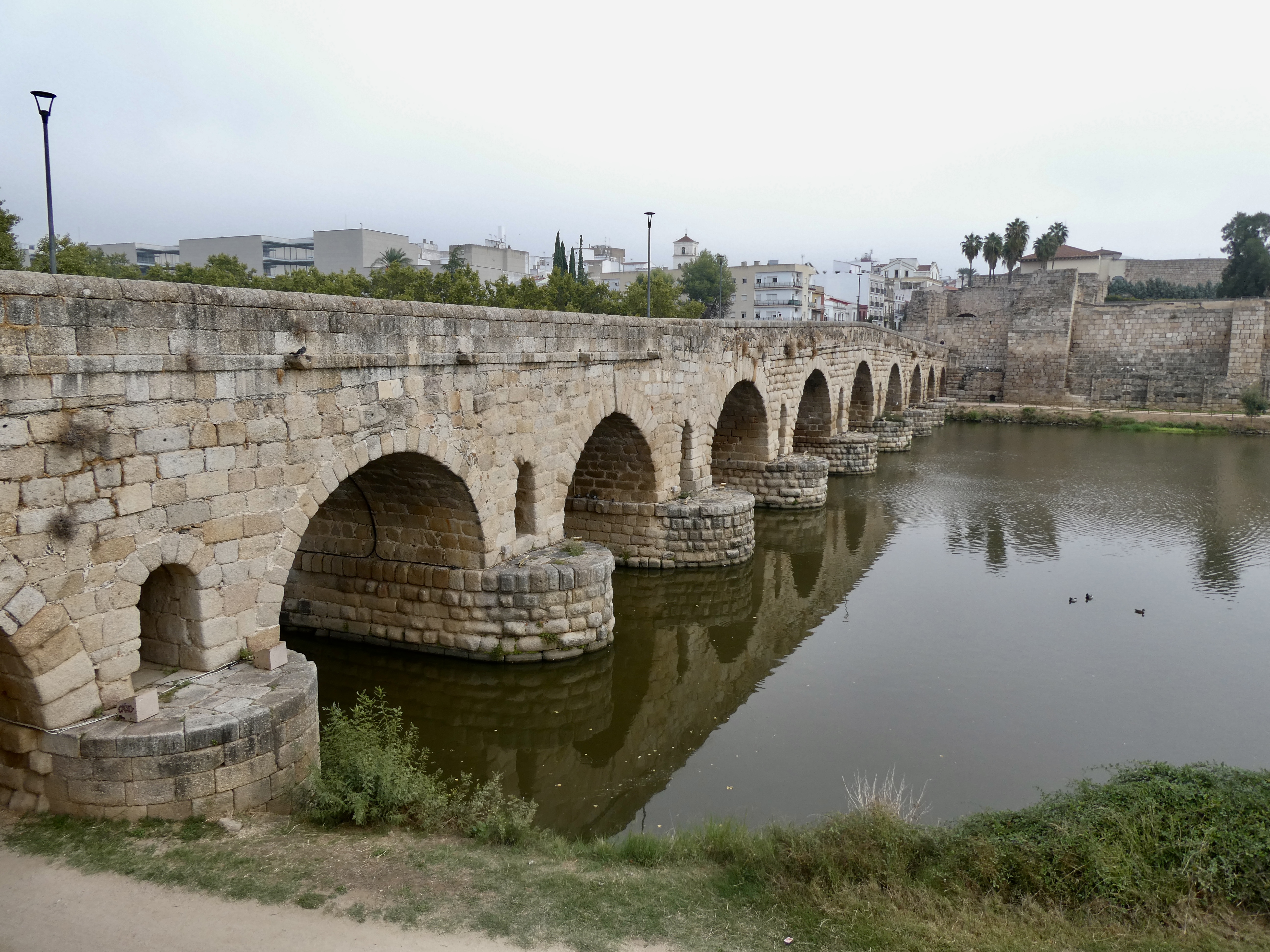
Now this bridge, which crosses the Guadiana River, is the longest surviving Roman bridge in the world and at one time this bridge was 792 meters and was divided into two parts connecting an island in the middle of the river. In the 17th century, the two bridges were connected and you can actually see the marks where the bridges were joined.
Today, the bridge is only 721 meters long with some of the bridge lost to wars and reconstruction. However, the bridge was actually still in use into the 1990s, but became a foot traffic only bridge when a new bridge was constructed nearby.

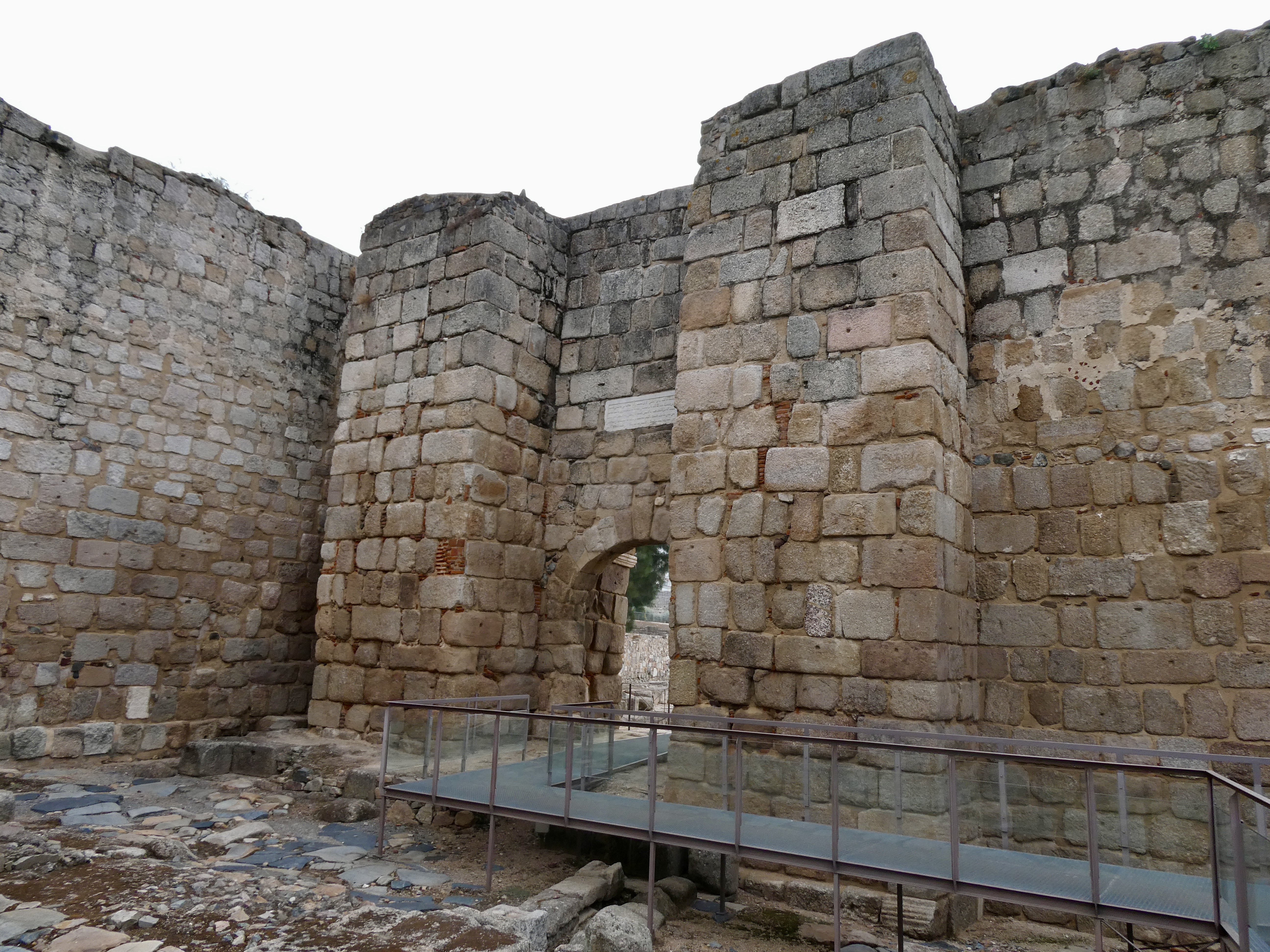
Marco and I ended up crossing a good part of the bridge on foot to reach the nearby Alcazaba. Now this fortress castle dates to the 9th century when the Moors conquered the area. In fact this Alcazaba was the first on the Iberian peninsula. Now the original entry point into the Alcazaba is long gone, but was believed to be a Roman gate incorporated from the original Roman wall. In fact, in looking at the Alcazaba, many Roman stones and columns were repurposed in building the Alcazaba. In addition, the Alcazaba incorporated the old Roman retaining wall that acted as a buttress against flooding.
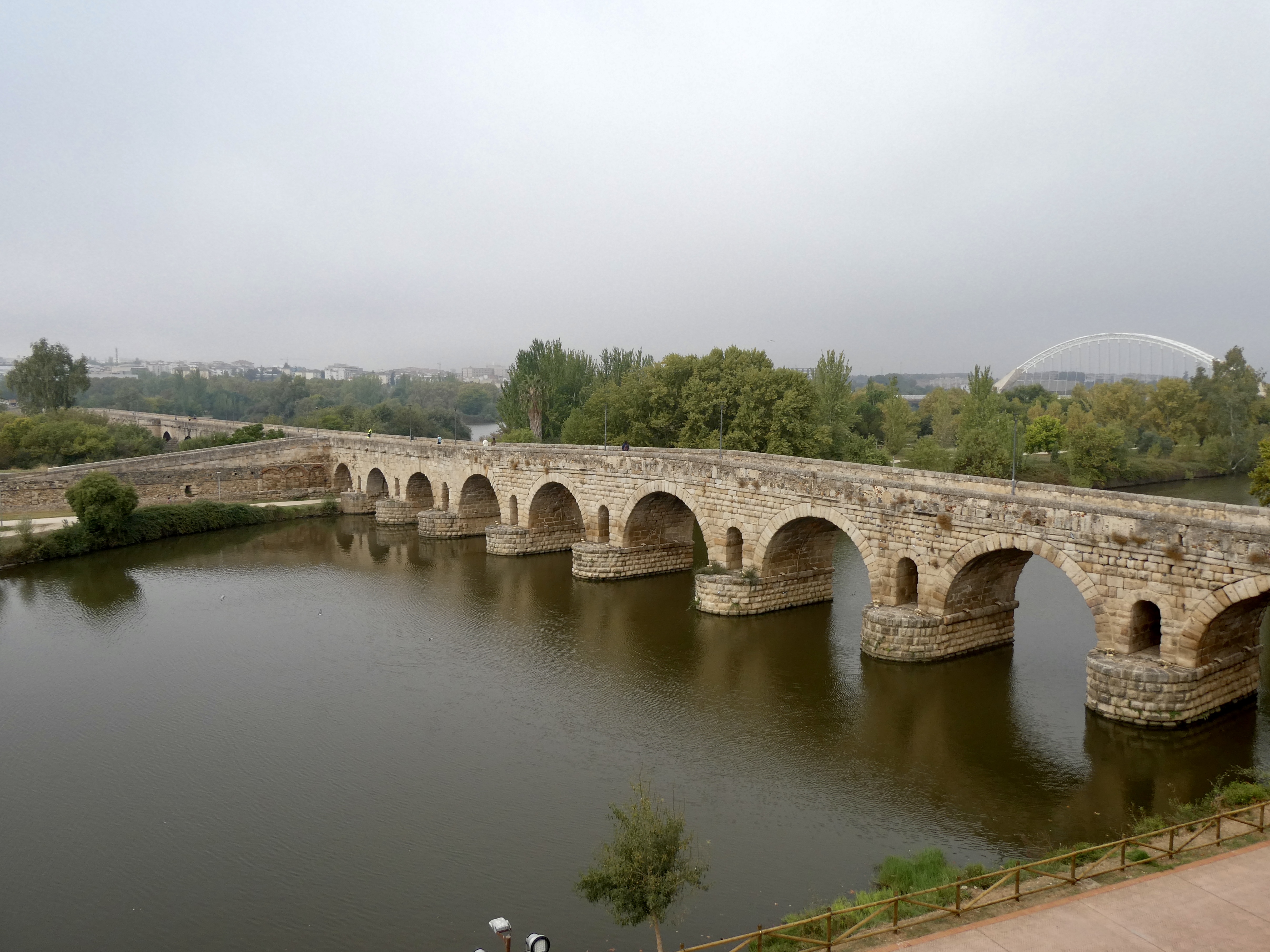
We ended up walking up one of the access points to the Alcazaba fortified wall and took in the views of the area, including the Roman bridge abutting the Alcazaba.
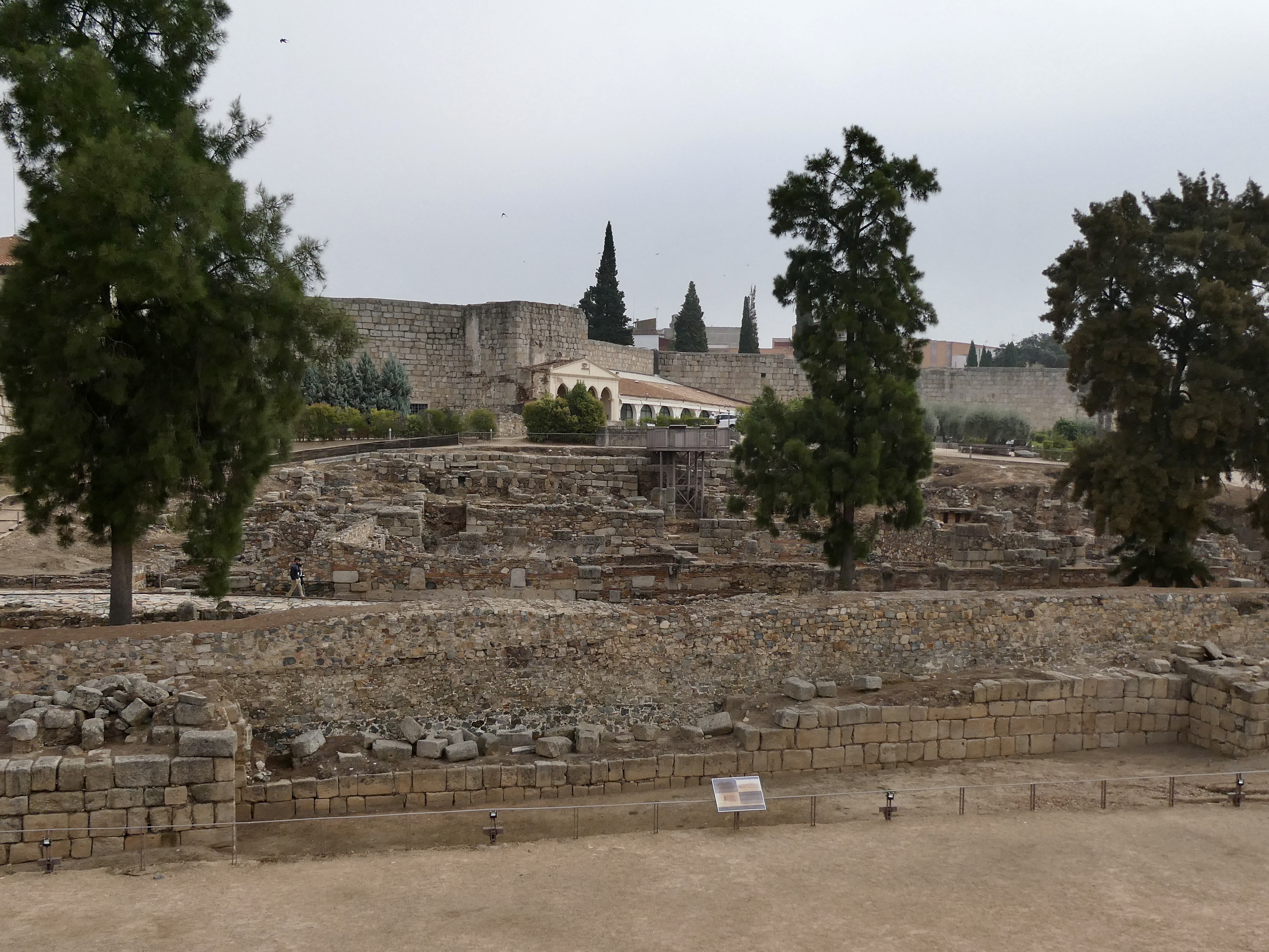
Now across from the Alcazaba inner walls they have excavated areas that revealed residences which were built inside the Alcazaba.
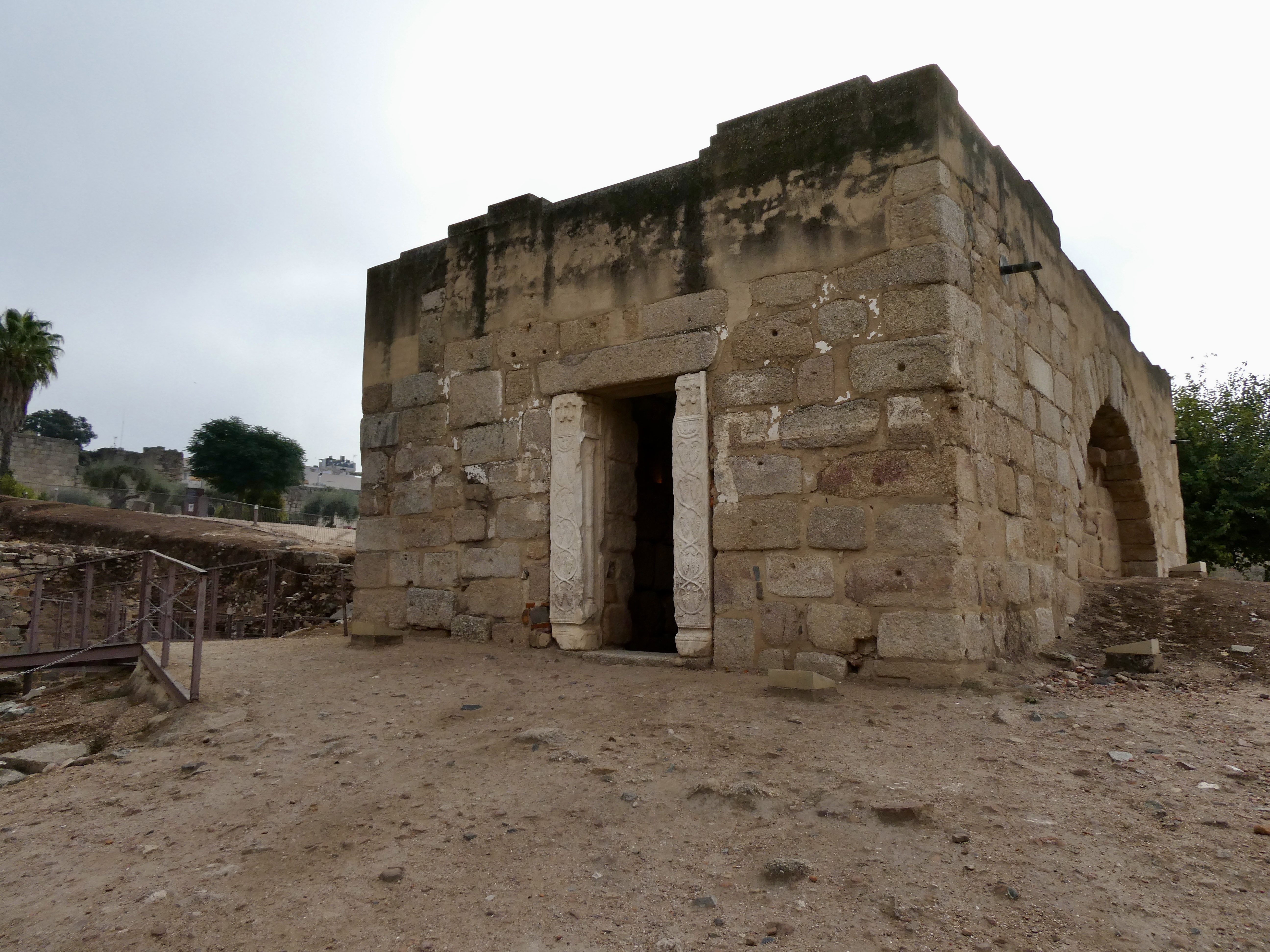
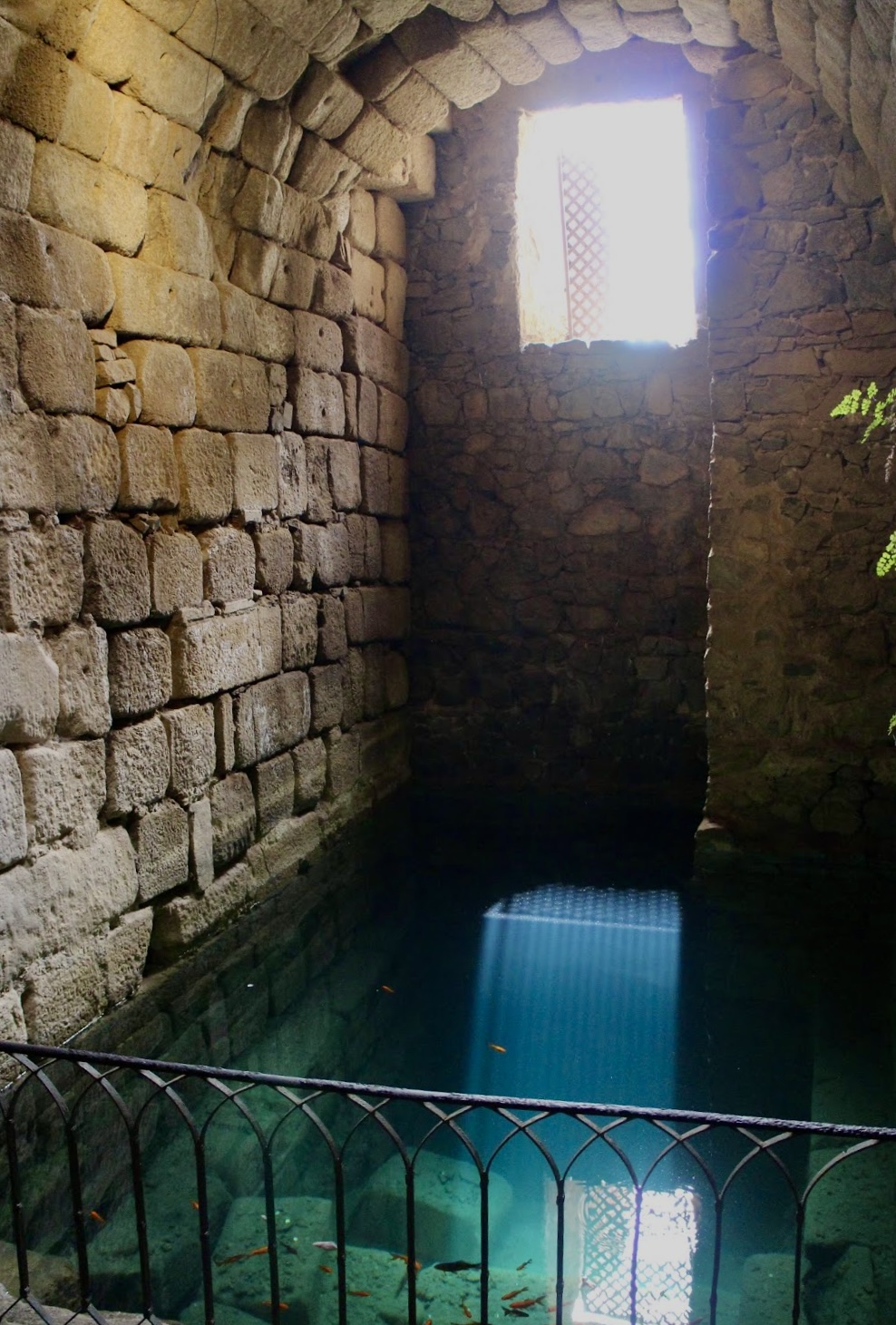
However, without a doubt the most interesting building at the Alcazaba was the cistern, an underground well the residents of the Alcazaba used for potable water. The cistern was constructed using old Roman stones and columns and incorporated the old Roman sand filtration system to take water from the nearby Guiadiana River and make the water clean for drinking and everyday use.
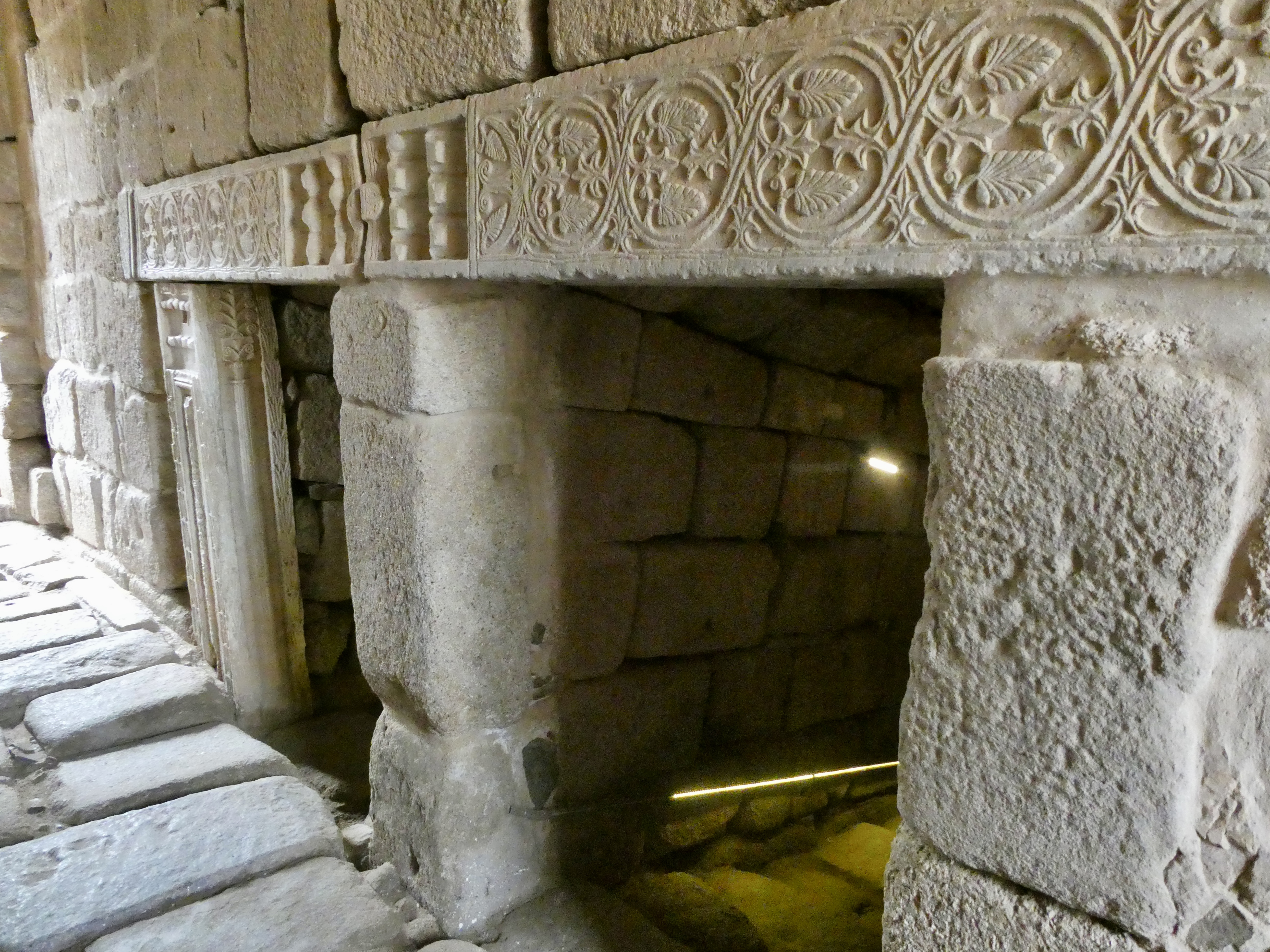
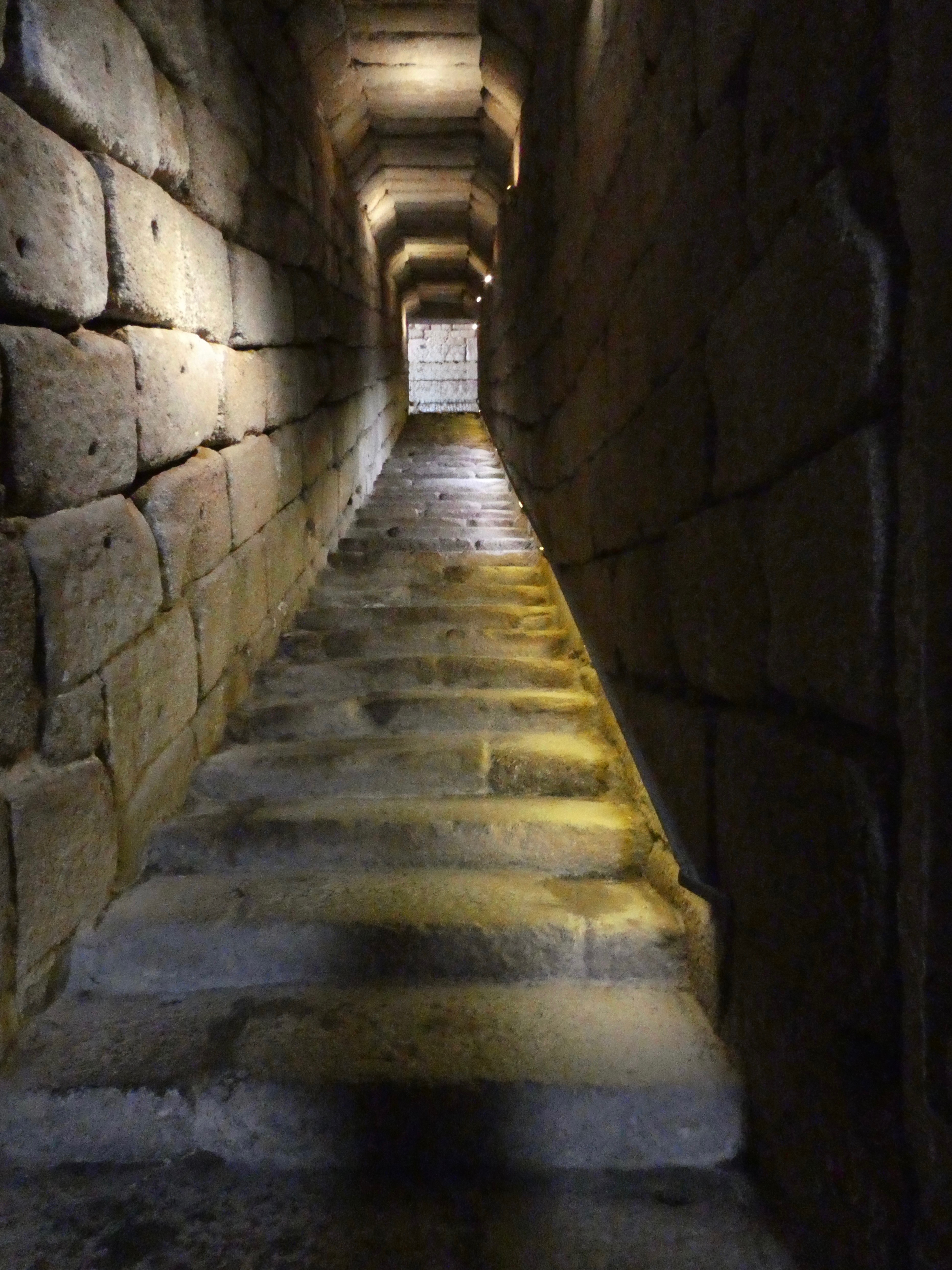
In order to reach the cistern, there were a long narrow staircase, that lead to the underground well with its vaulted ceiling and water so clear you could see goldfish in the cistern. A second narrow staircase on the other side of the cistern led out of the building. Apparently, the residents used donkeys to climb down the staircase and haul water up to the residents for their needs so there was a need to have an ingress and egress so the donkeys had room to maneuver in and out. Very clever.
We then left the Alcazaba and drove outside the old city limits to see the remains of the Los Milagros aquaduct, one of three aquaducts the Romans constructed in the area. It is believed that the Los Milagros aquaduct was built in the 1st century AD, although it is possible that the aquaduct was built earlier. This aquaduct was built with alternating layers of brick and granite and like all aquaducts used gravity to move the water from the Albuera reservoir to Augusta Emerita.
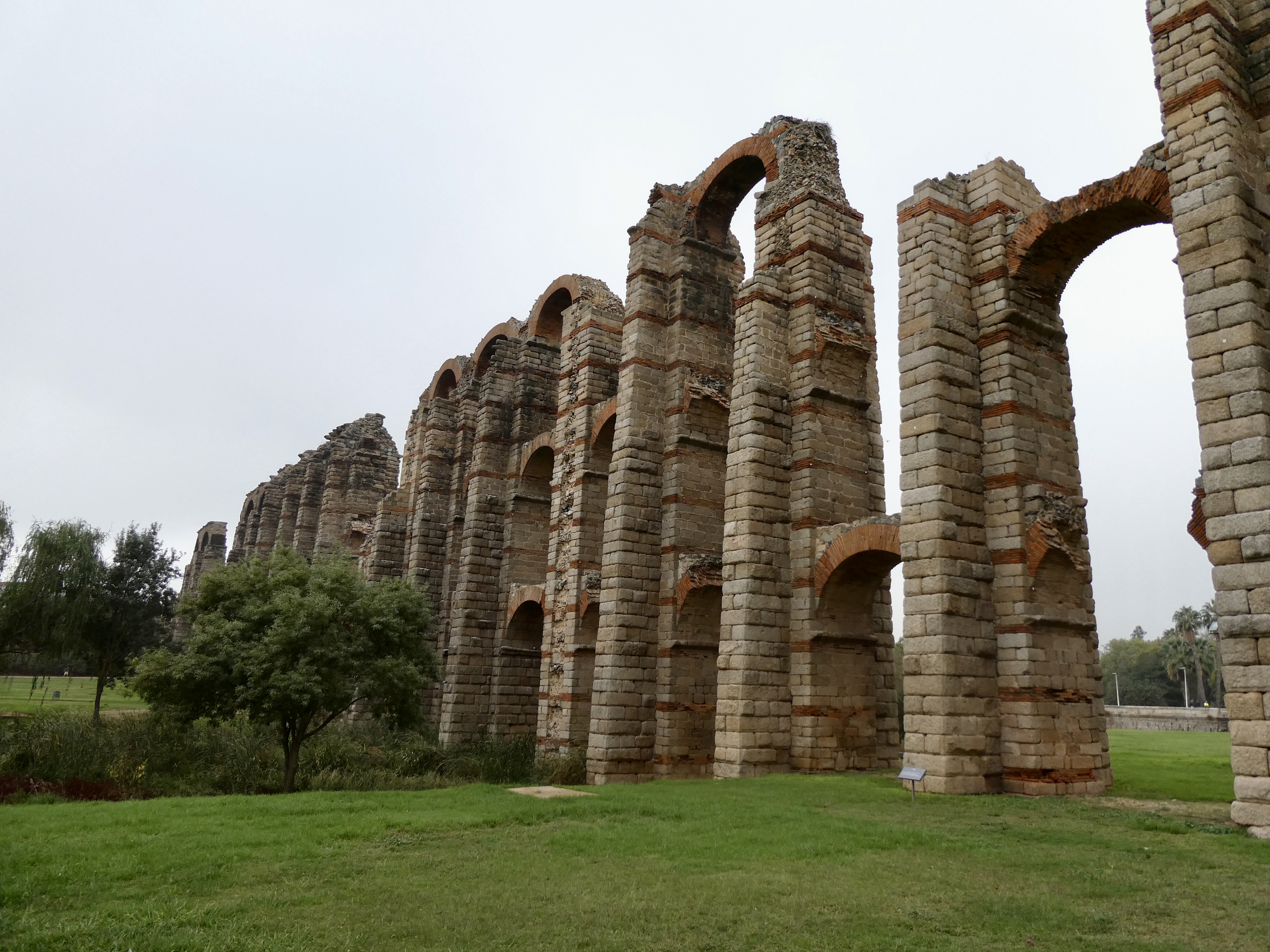
And at one time, the aquaduct was 6 km long, but today there are only 37 arches remaining with the highest point being 25 meters tall.
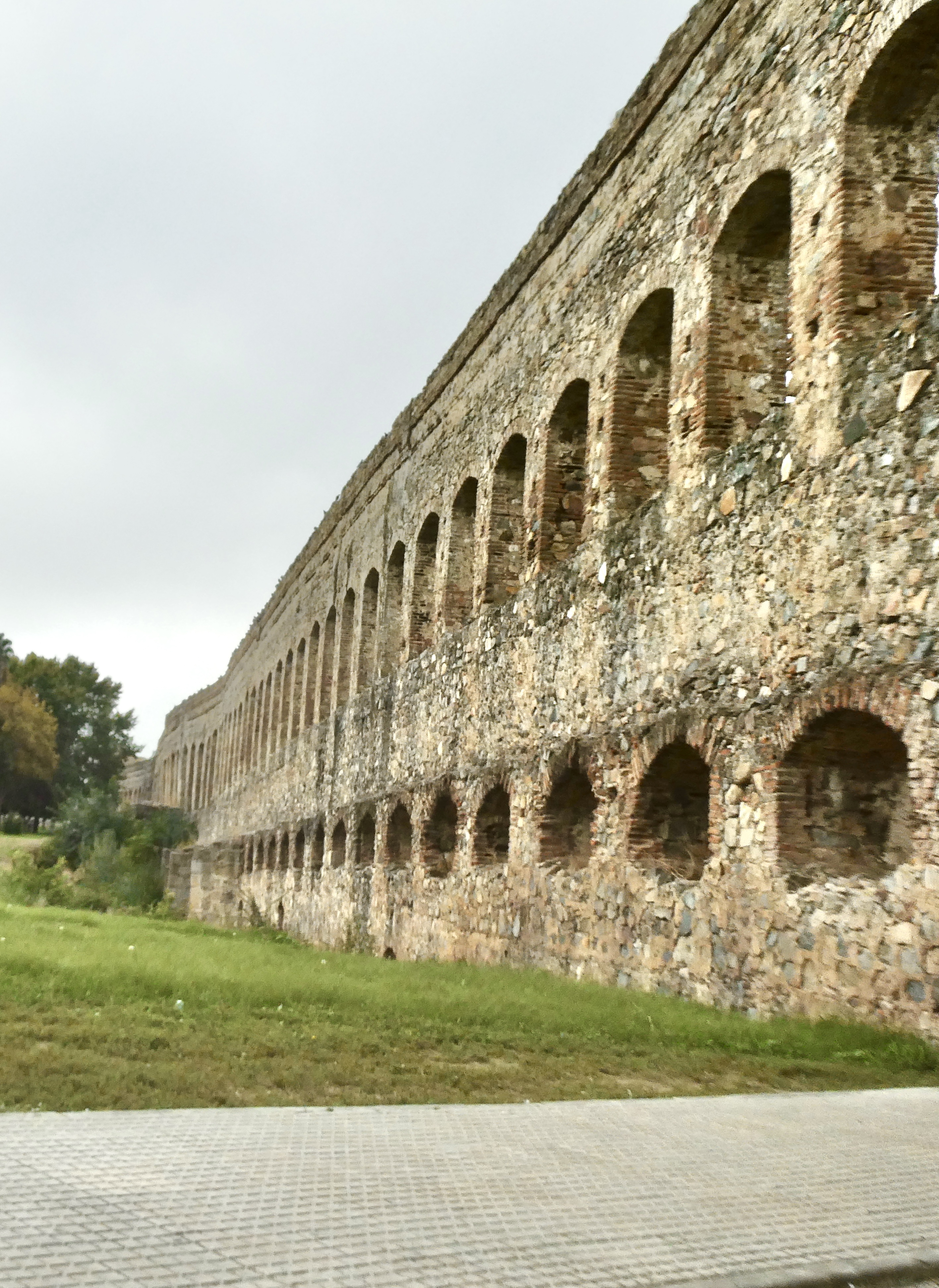

After wandering around the site, we hopped back in Marco’s car and drove by the second aquaduct, the San Lazaro aquaduct, which was built in the 1st century AD but was replaced in the 16th century with stone and looks visually quite different from the original Roman aquaduct. Today, there are only three pillars remaining from the original San Lazaro aquaduct and not surprisingly, these pillars are made of the same brick and granite as was used for the nearby Los Milagros aquaduct.
From here, we drove back into town (with the sun finally starting to burn through the fog) to the main archeological site in Merida: the Amphitheater, the Theater, the Roman Museum and Casa del Anfiteatro, a Roman home built near the Theater.
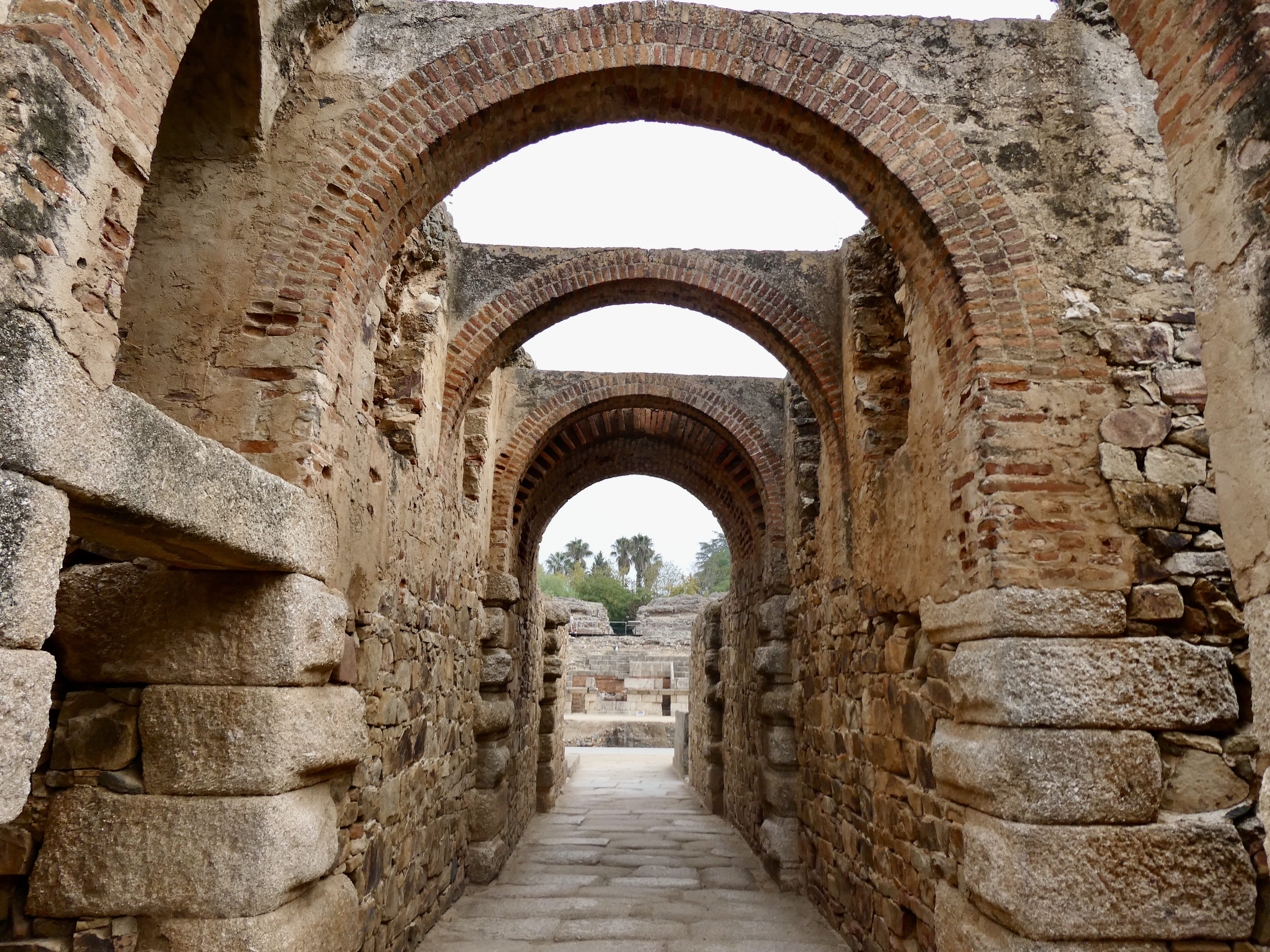
First up was a stop at the Amphitheater. Now this Amphitheater was built in 8 BC, was oval shaped and today is mostly in ruins. At one time, the Amphitheater could seat 15,000 people and was comprised of three levels, with a VIP box and politicians area on the first level, the Roman citizens on the the second level and the slaves, women and others with no rights on the third level. Today, only the first and part of the second level are visible.

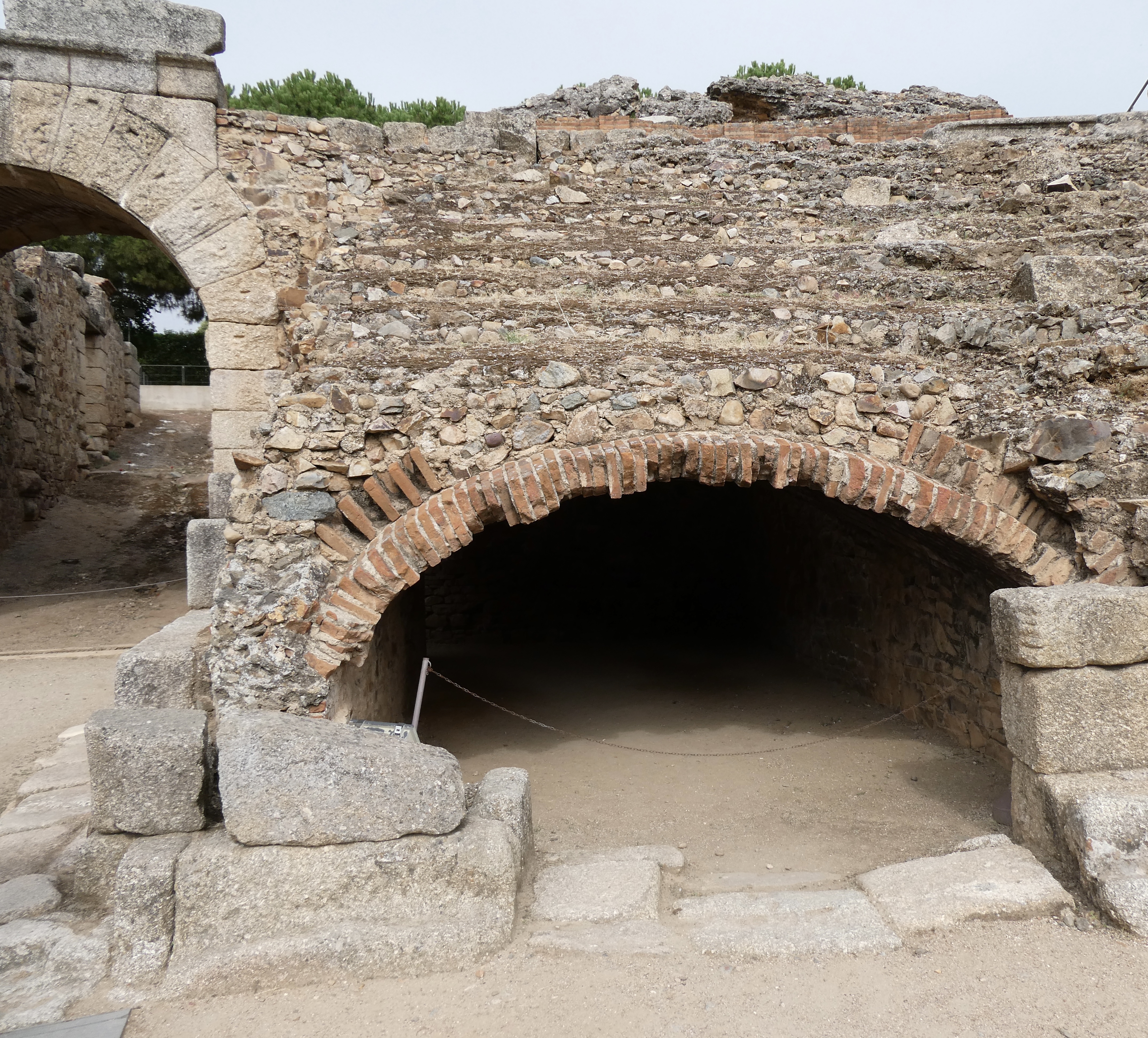
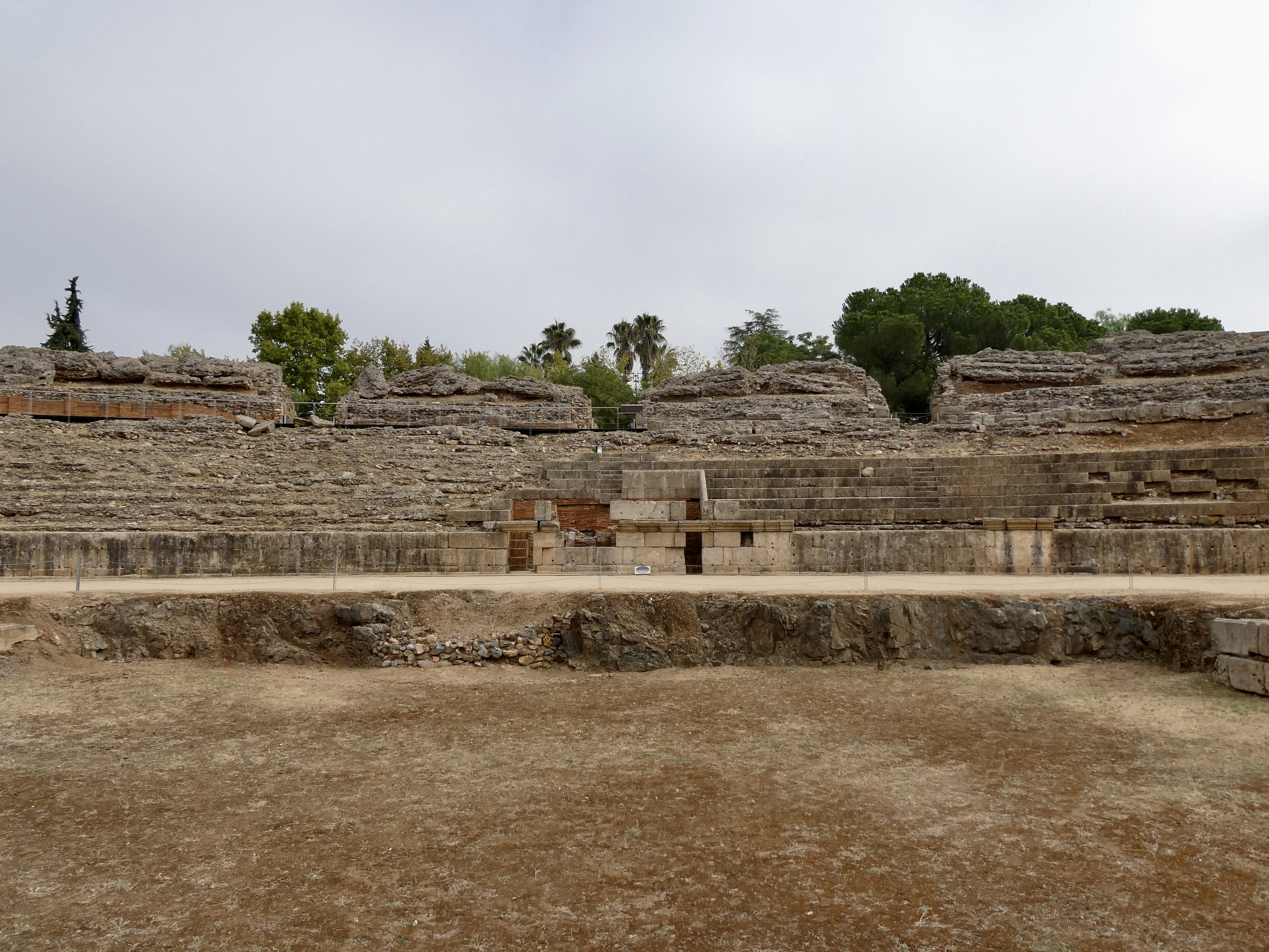
The Amphitheater was used for gladiator fights and fights between animals or gladiators and animals. Now interesting factoid, only 10% of the gladiators were actually killed in these fights. Most of the fights were apparently (as Marco described it) like WWE wrestling … all for show. The gladiators were property of wealthy Romans and the death of a gladiator for a Roman owner was the loss of an asset so unless the gladiator was costing the Roman owner money, they usually survived.
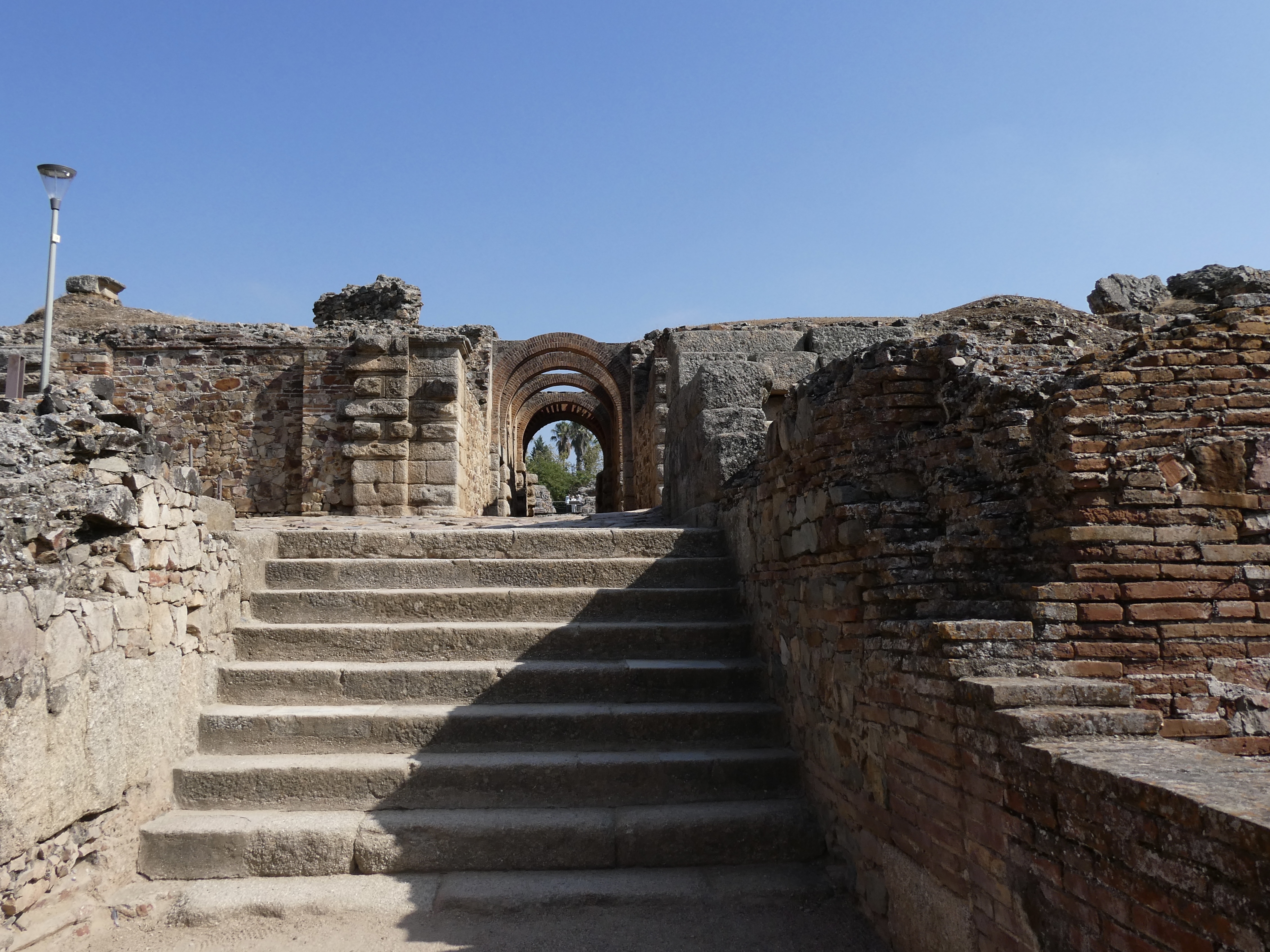
We wandered around the floor area taking in the entrance where the gladiators walked into the Amphitheater, saw the rooms where the animals were housed and took in the VIP box area before walking out the exit for the victorious gladiators. On either side of this exit were staircases that today lead nowhere, but at one time lead to the upper levels of the Amphitheater.
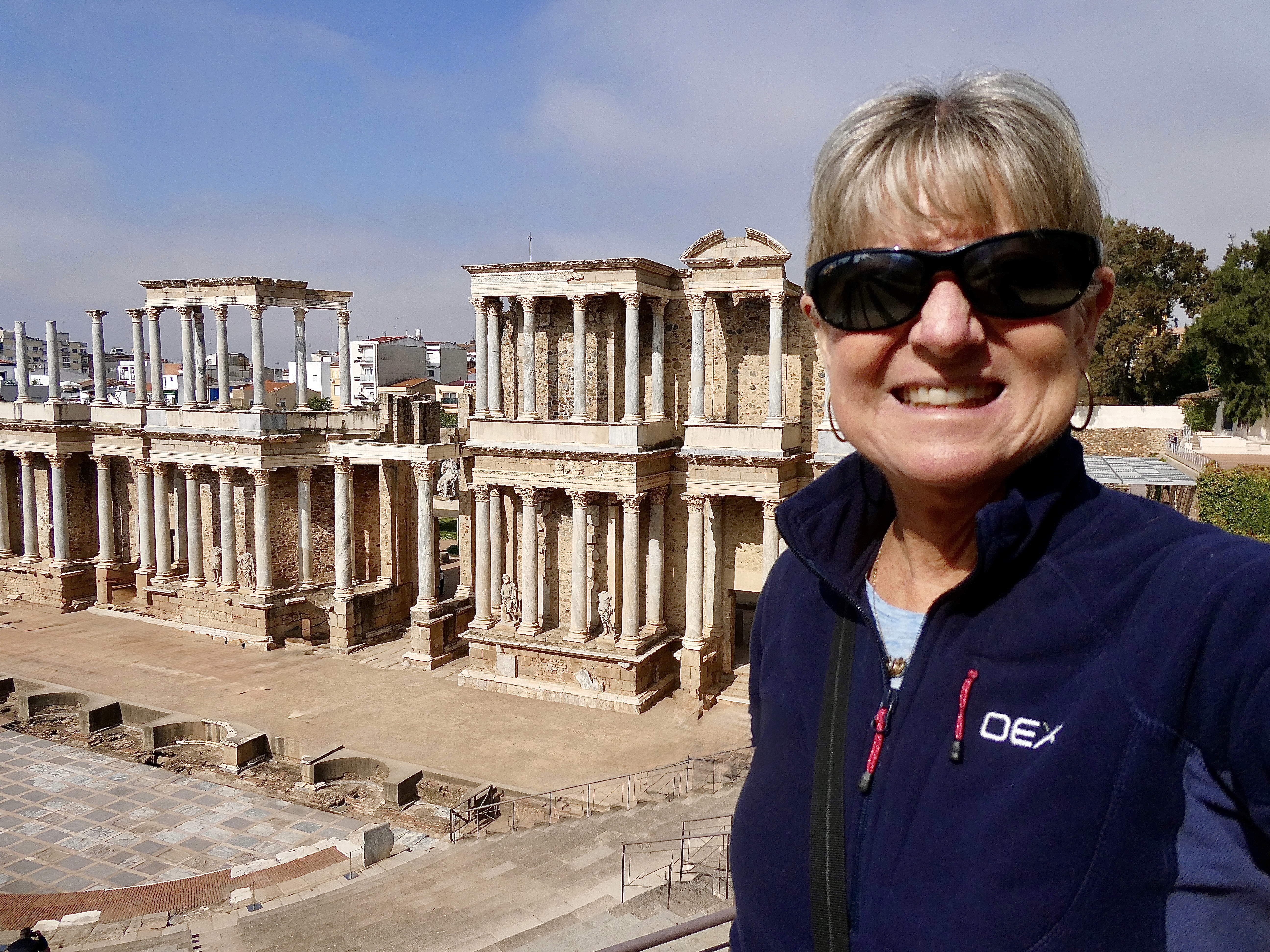
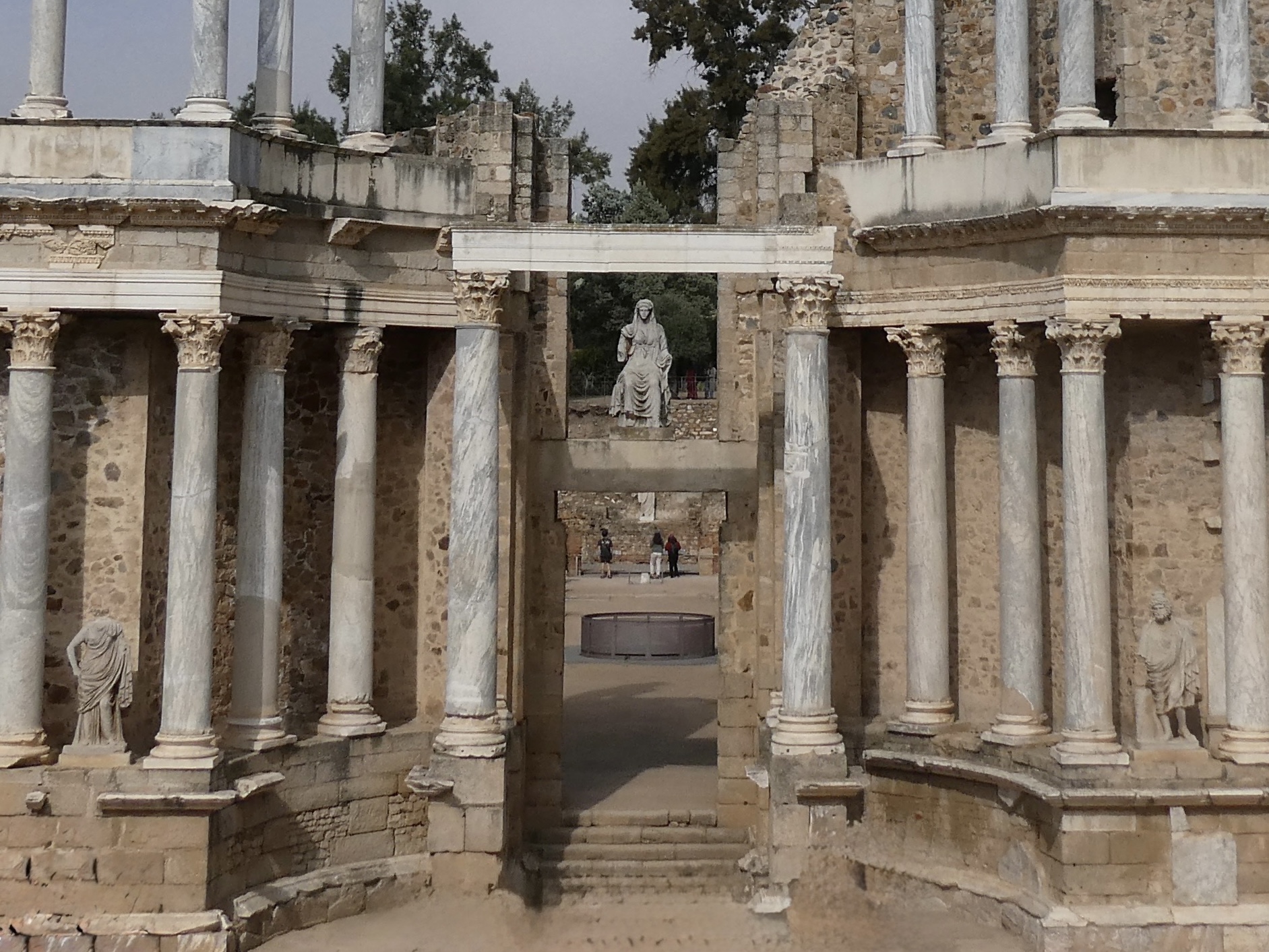
From here, we walked across to the adjacent Roman Theater that was opened in 15 BC with a capacity of 6,000 people. I was immediately wowed by the amazing portico columns that made up the backdrop for the stage area. Absolutely stunning.
I also commented to Marco that I was surprised the Theater opened before the Amphitheater, but he thought the reason might be that the Theater was not only used for plays, but also for political speeches so the building was a necessity for the administration of the city.
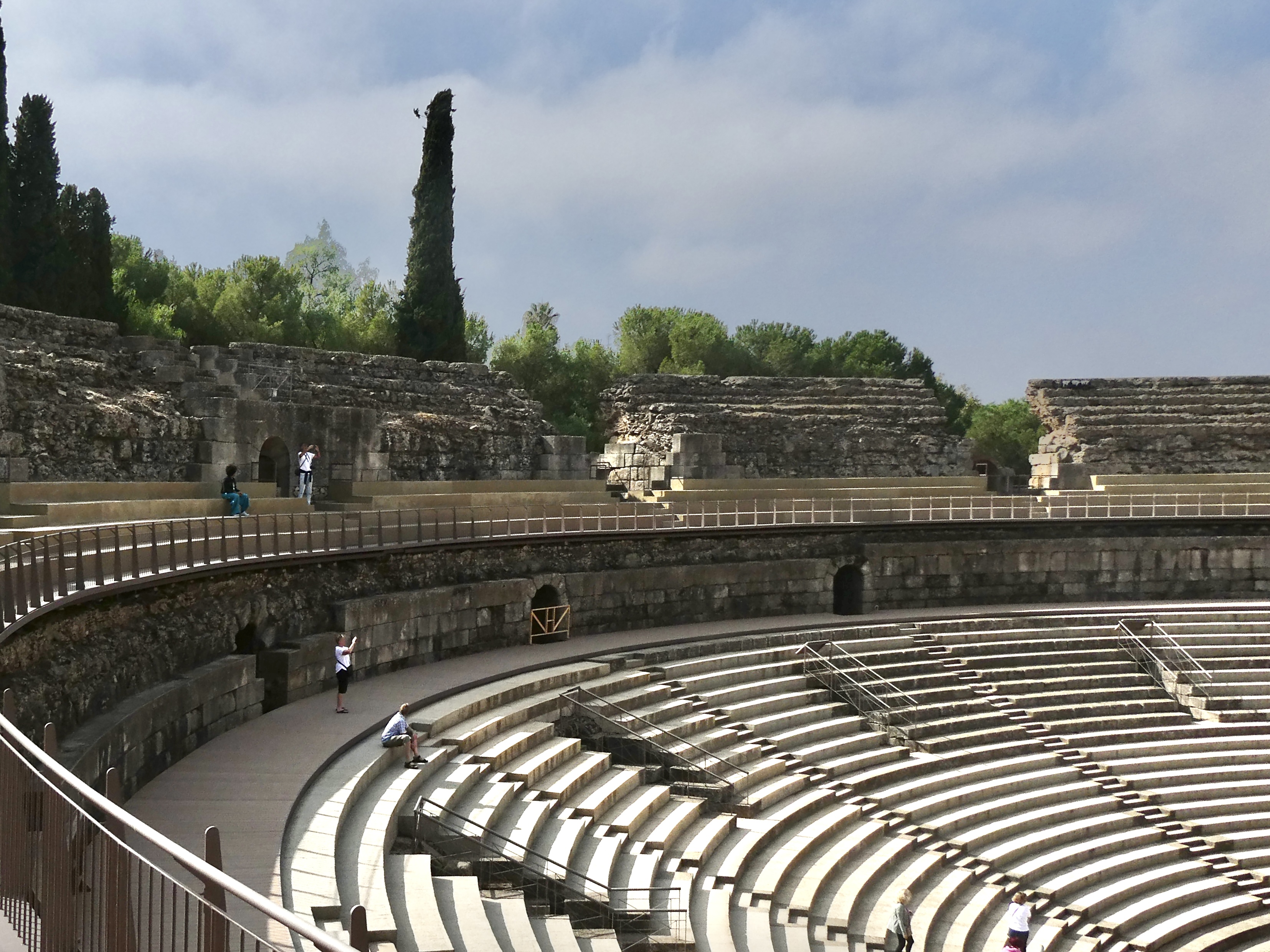
The semi-circular area of the theater was built into the San Albin hill and, like the Amphitheater, was divided into three areas with the wealthy in the first tier, the middle tier for Roman citizens and the third tier for the riff raff.
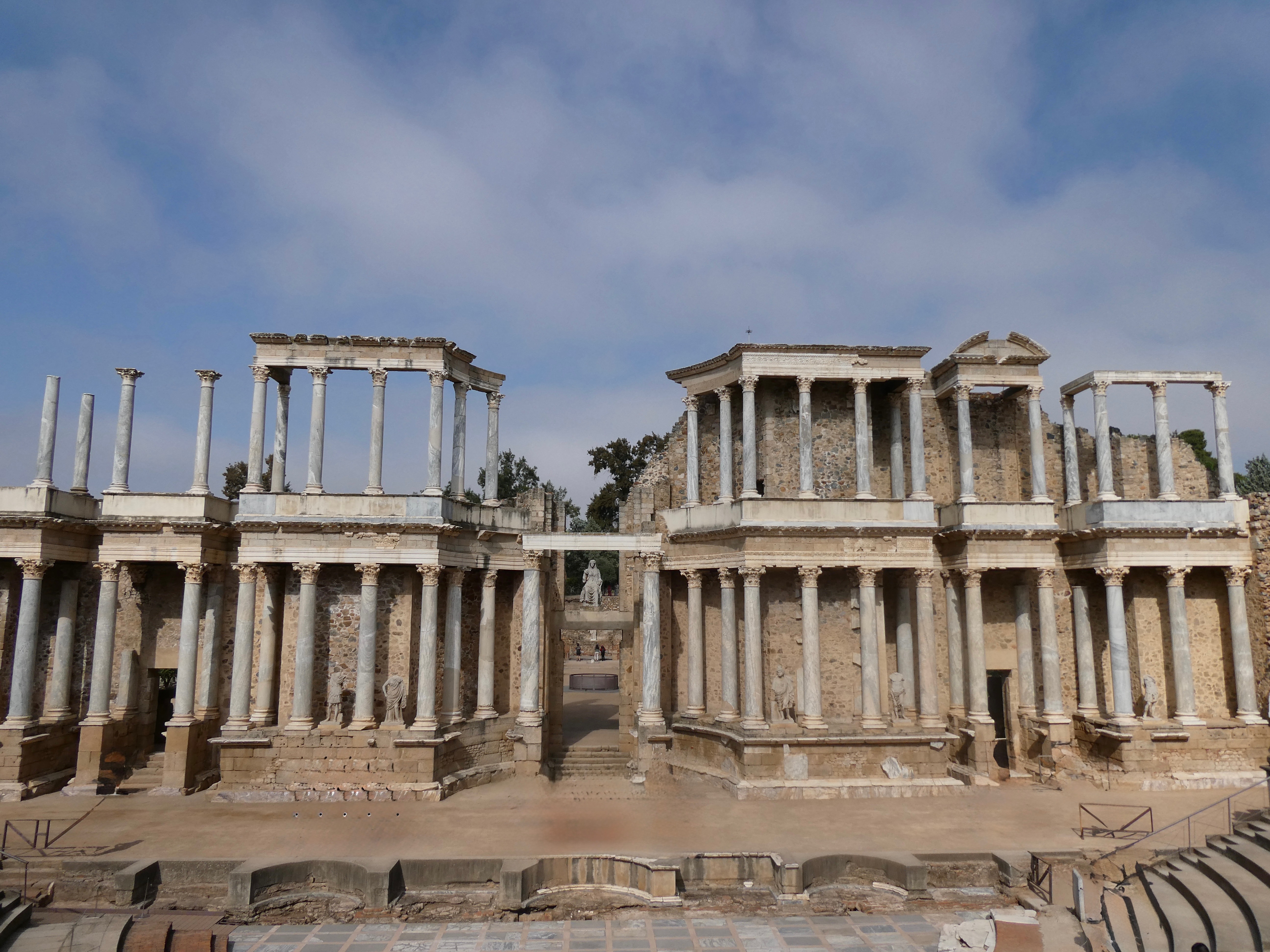
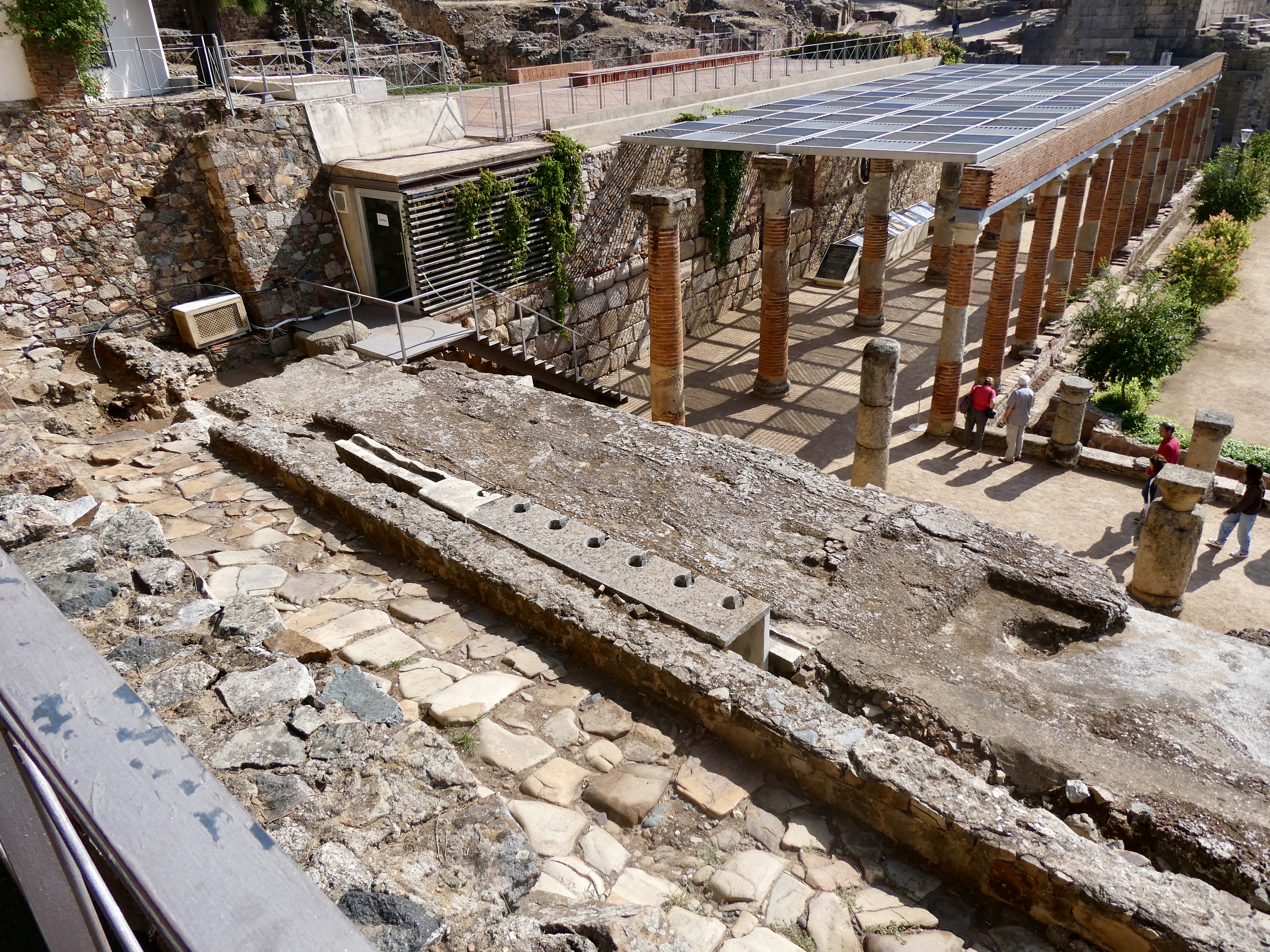
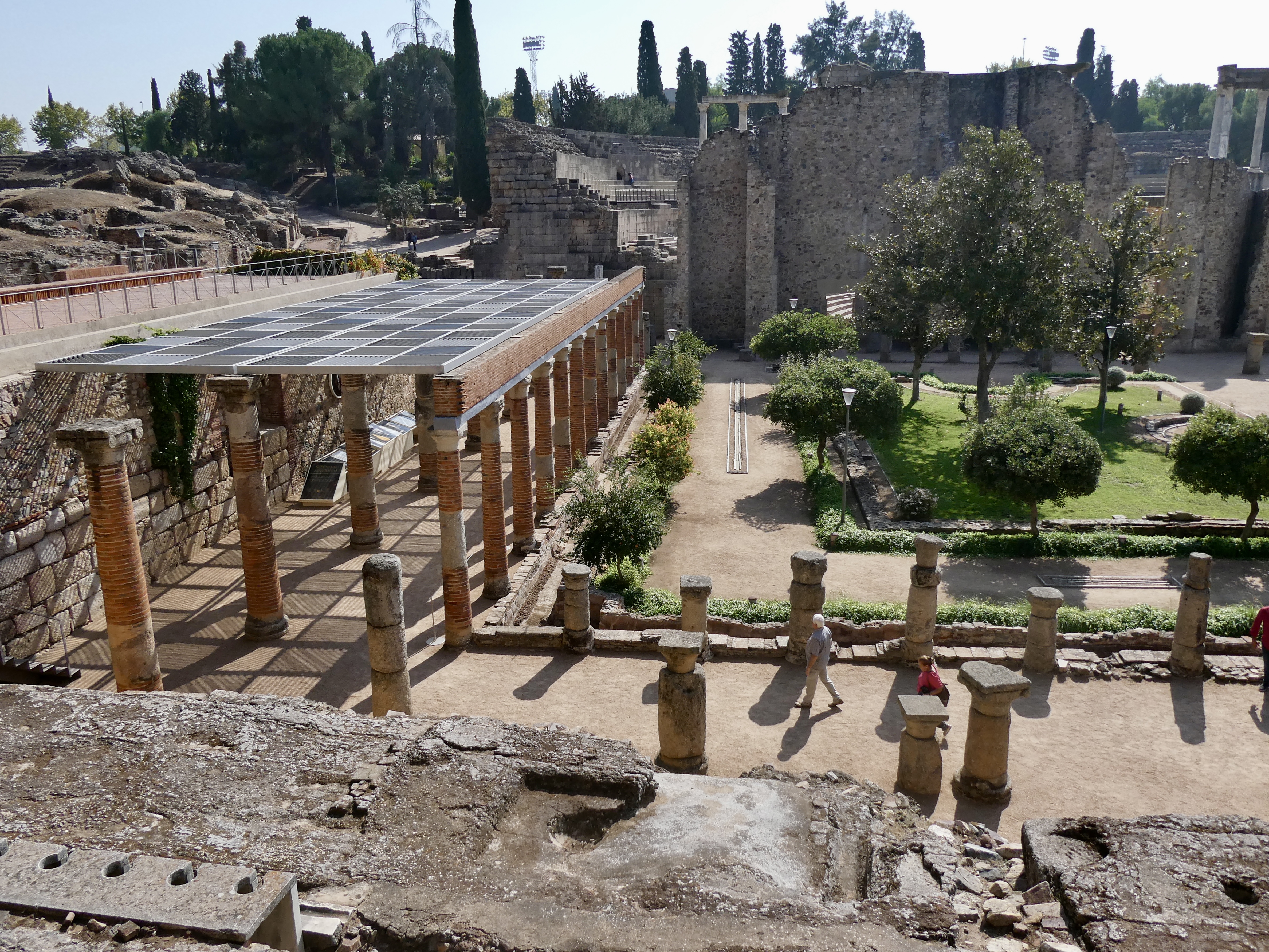
The stage was made of marble, but only bits of this remained today. Now the interesting part about both the Amphitheater and the Roman Theater archeological sites is that these sites had all been covered up with dirt and garbage as the Moors and later societies used the area as a dumping ground. At some point, some of the land was even used as farm land to grow chickpeas. The only part of the Theater that remained visible through time was the top of the bleachers. In 1910 excavations began and the columns and the porticos (the tall pillars that now stand behind the state) were discovered, and the porticos were rebuilt creating the stunning backdrop to the stage that is still used today for summer concerts and theater with seating up to 3,000 people.
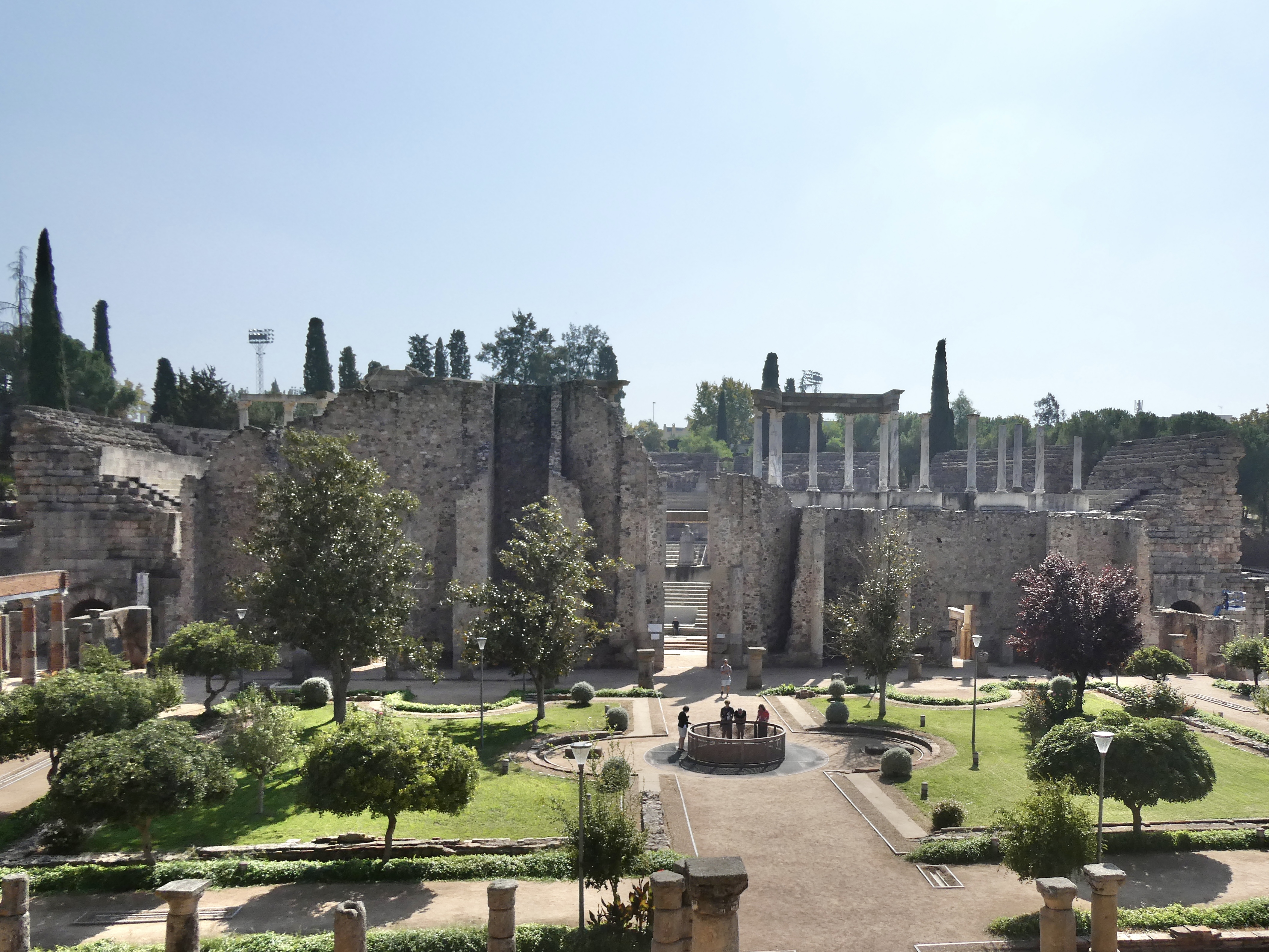
Now behind the Theater was the peristyle and garden area, which even included a public toilet area. I always get a kick out of those public toilets. The garden area was gorgeous and even included the remains of an old house that had been built on the site after the Romans abandoned the Theater.
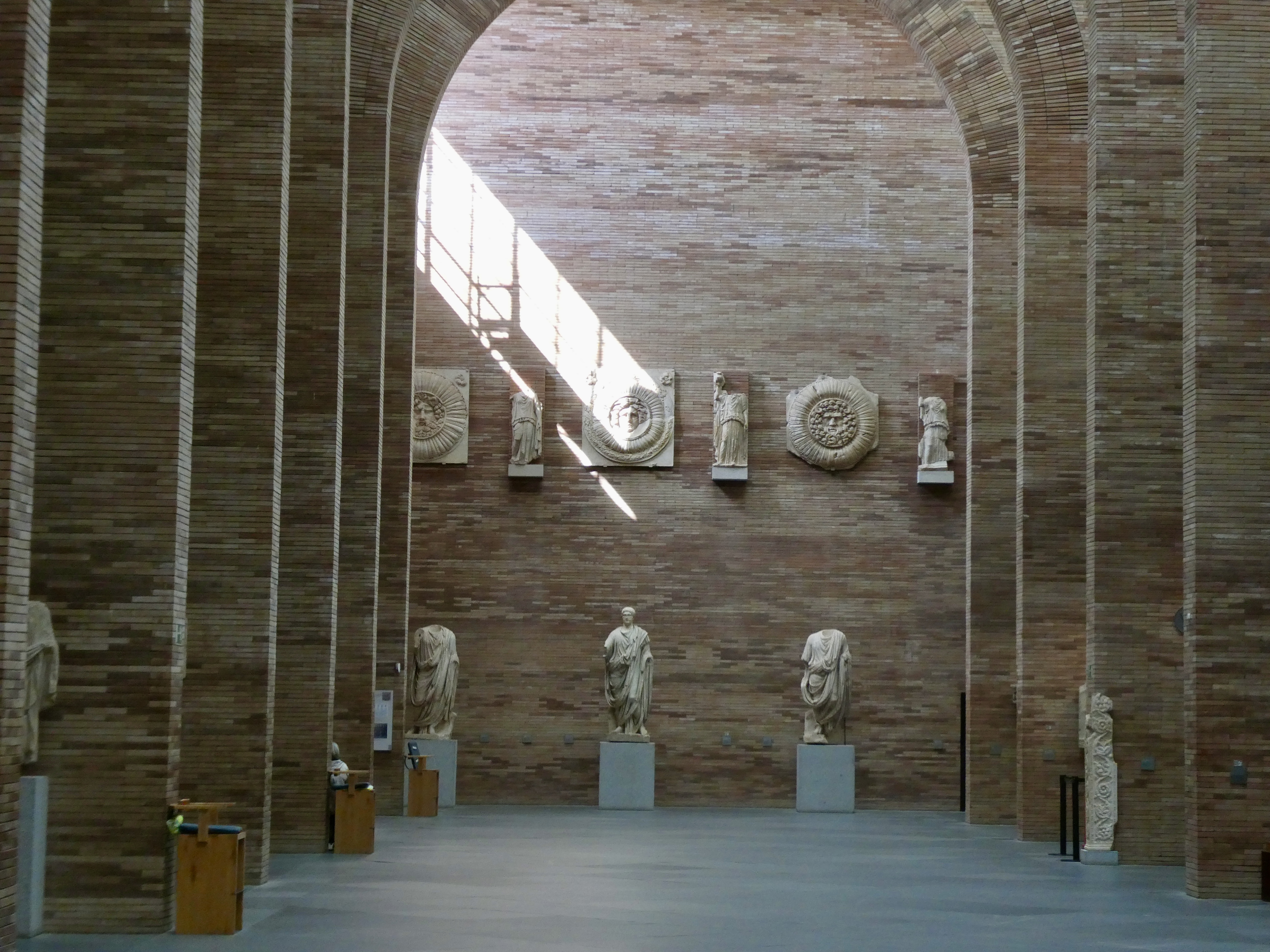
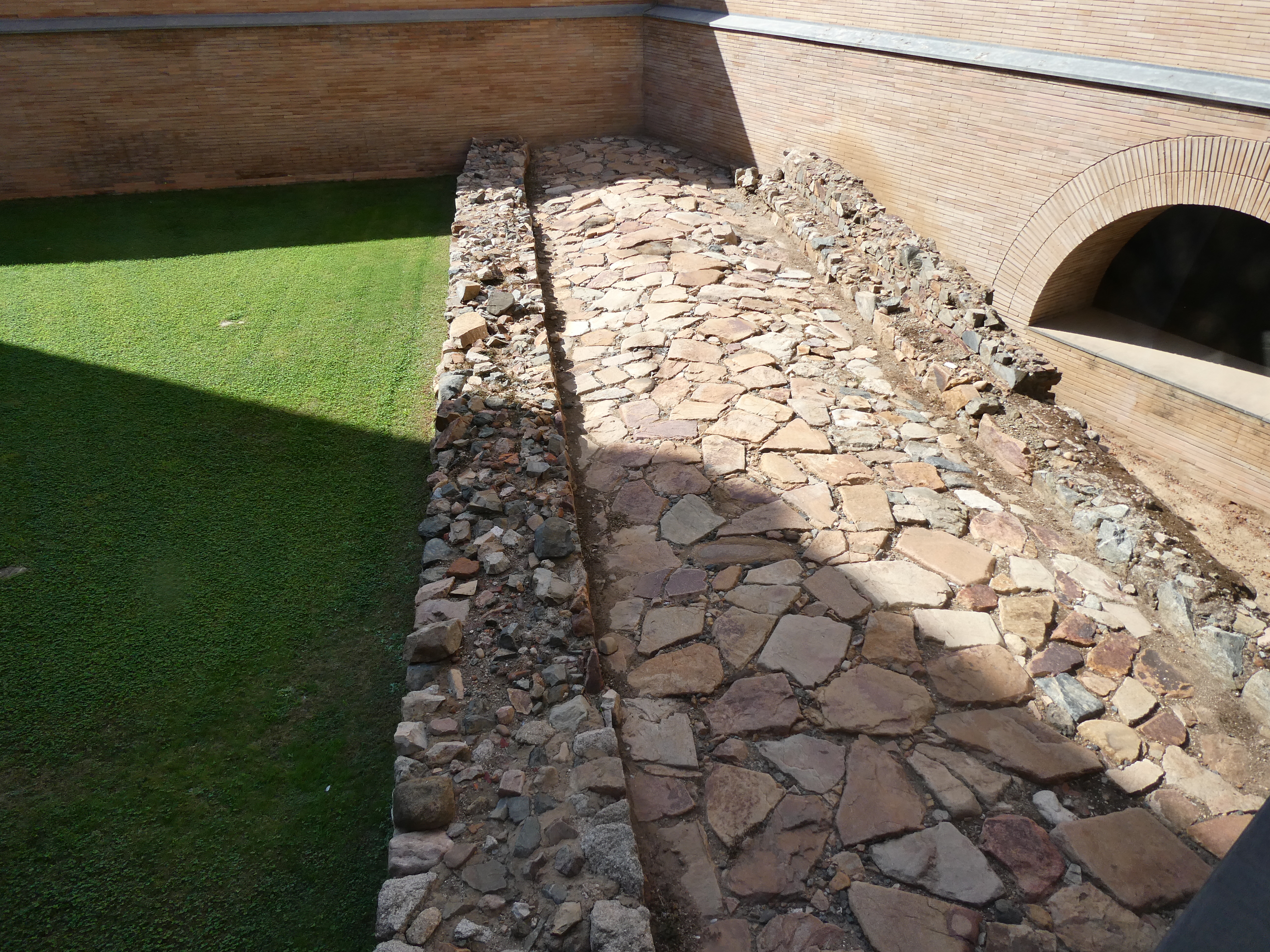
From here we made a quick stop to the Roman Museum. Now I had visited the Roman museum when I arrived on Wednesday, but Marco was able to provide some insights that escaped me when I visited. For example, the mosaics and statutes on the wall at the far end of the museum were recovered from the Roman forum I had passed on Wednesday. And if you looked carefully at the statutes, the artist had conspicuously signed the statutes (which is unusual as the Roman artists usually hid their signatures).

Marco also pointed out that there was a tombstone in the museum from the nearby Casa Del Anfiteatro (the Theater House) that we were going to be visiting after lunch. The tombstone included carvings of two men who personified the local rivers. The older man on the tombstone was named ANA (which is the original name for the Guadiana River) and was the god of abundance and prosperity while the younger man on the tombstone was named BARREACA (which is the original name for the Alberragas River). These are the only known art objects with the old original names of the nearby rivers.
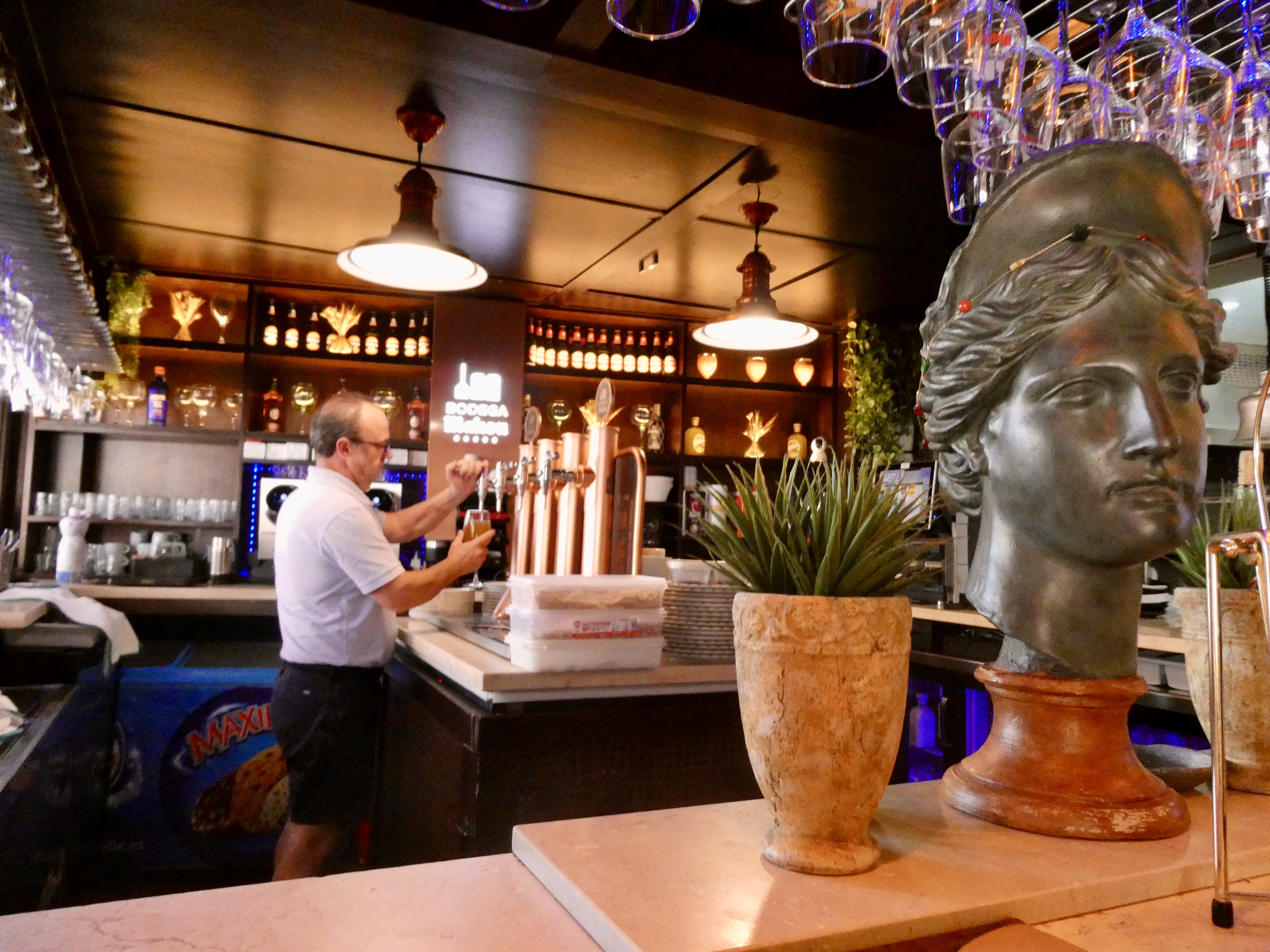
Anyway, we wandered around the museum while Marco pointed out some interesting facts here and there before we left the museum, crossed the street and had a fabulous lunch including jamon iberico (the black label), grilled squid, salad and wine. However, the best part of lunch was the after dinner apertif that was an acorn liqueur … fabulous.
From here, we walked across a courtyard to visit two Roman houses, with the first being smaller and called the 1st century BC Water Tower House and the second being the Casa del Anfiteatro, which is the star attraction of the two.
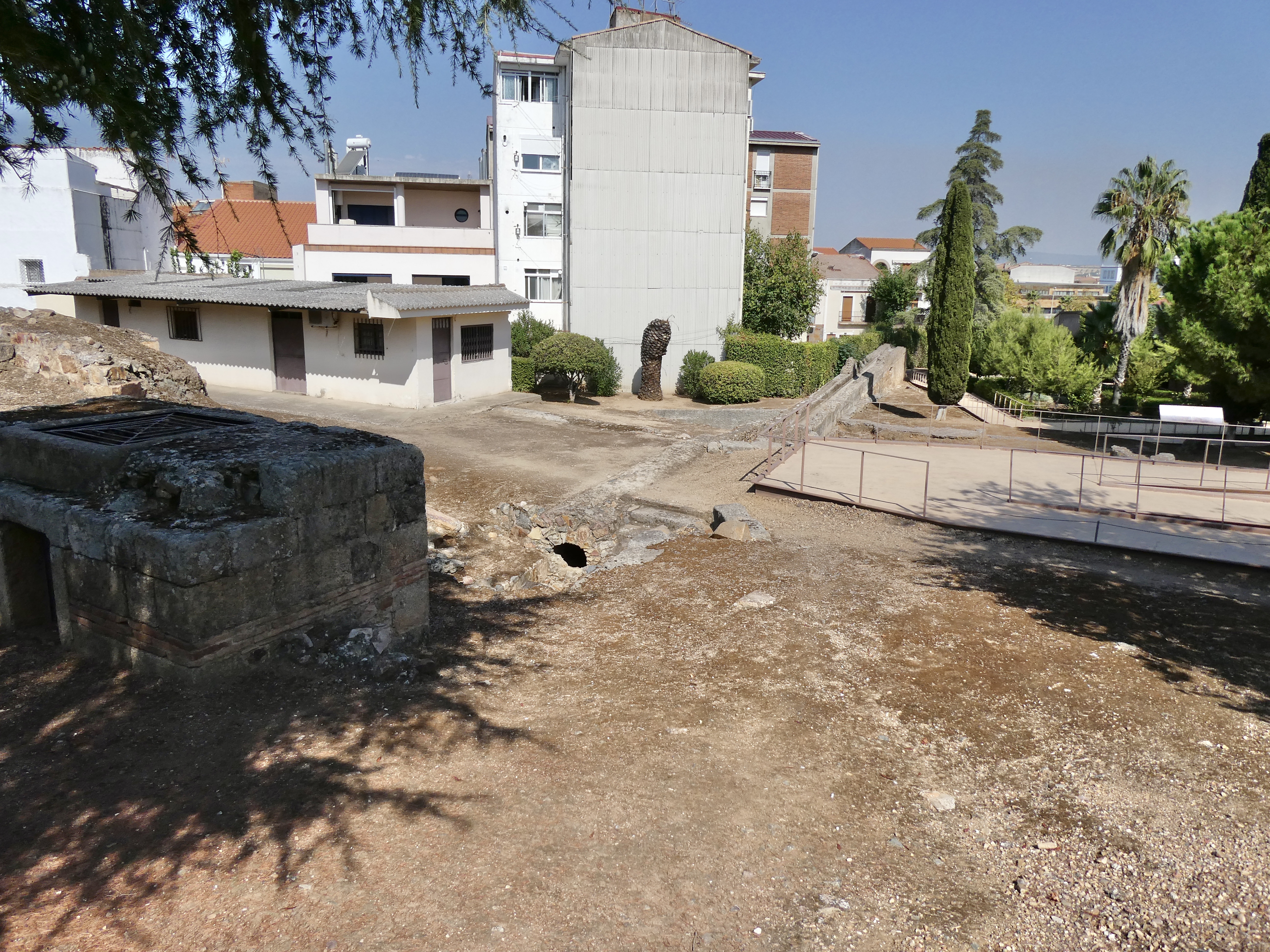
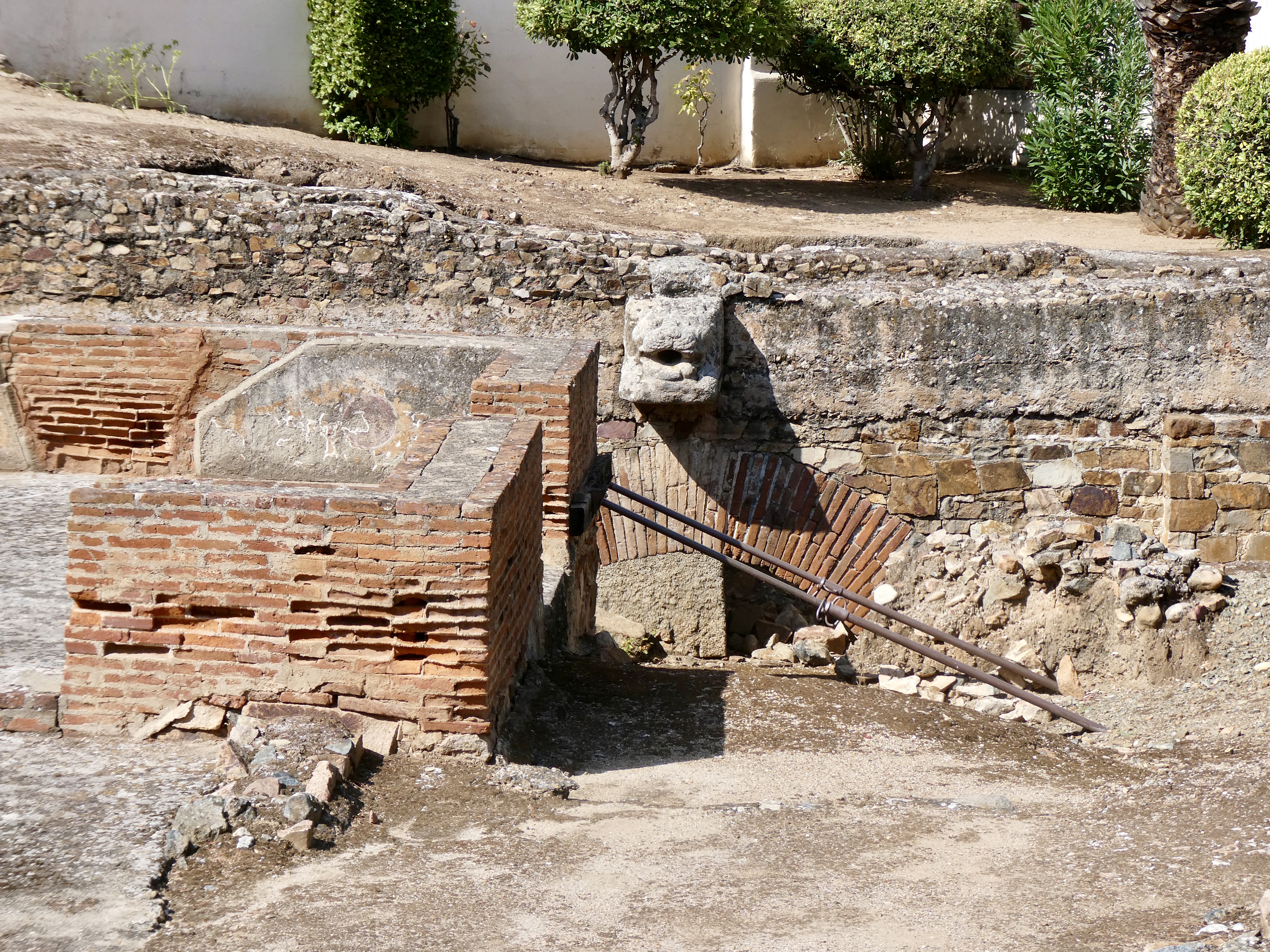


Now the Casa del Antifeatro was built between the late 3rd century AD and the early 5th century AD. This was a time when the wealthy residents were moving outside the walled area of Augusta Emerita, and the area where the residence is located also contains other archaeological sites, including houses, industrial sites, and funeral areas.
Now one of the really impressive aspects of this house was that it had its own private irrigation system/Roman conduit that supplied water to the house from the nearby aquaduct of San Lazaro. In fact, we could see the piping leading to the aquaduct. And the water was used in part for the private baths that were built within the residence as well as the impressive kitchen with its 1,700 year old oven.
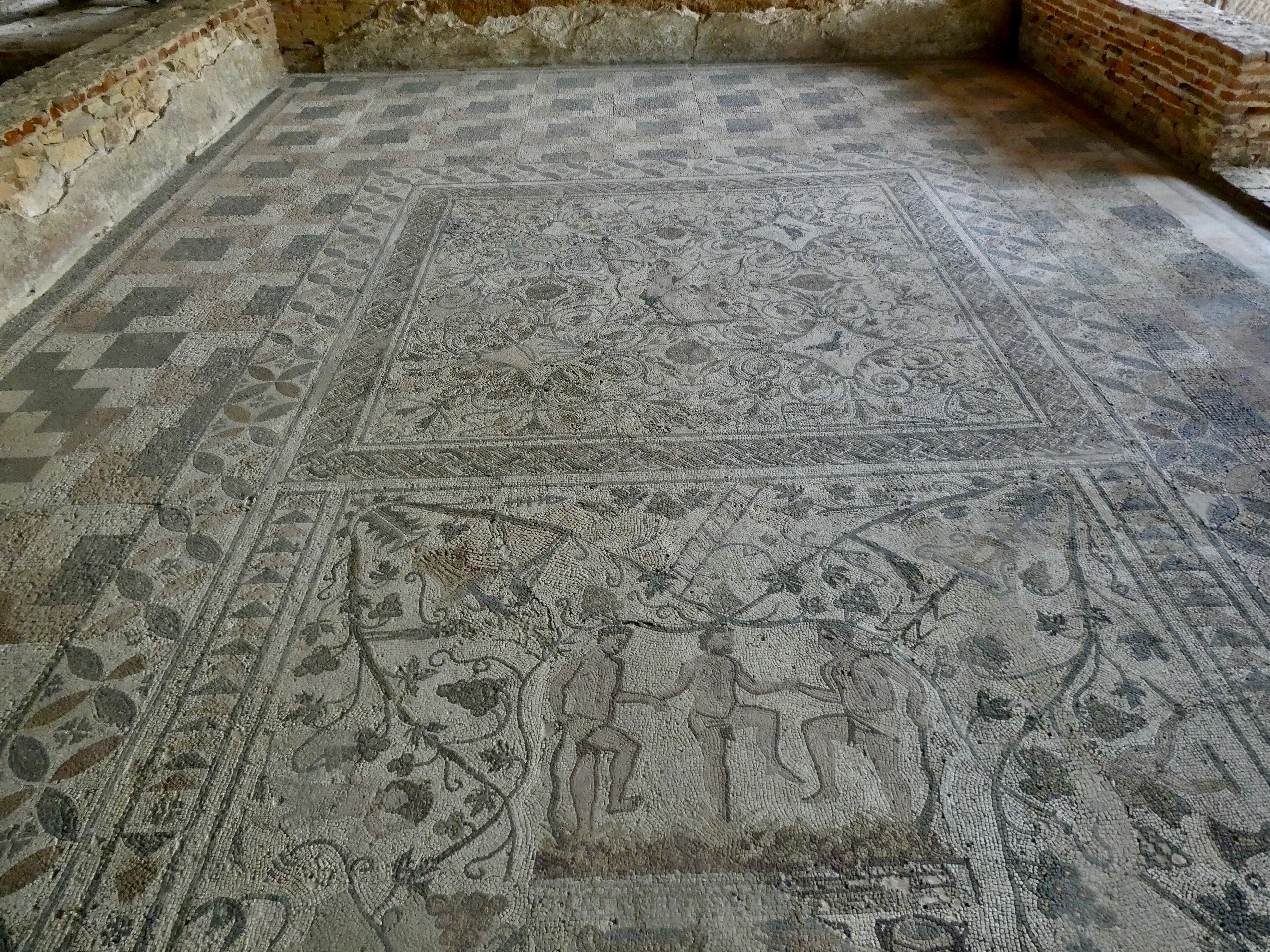
However, perhaps the most impressive part of the home was the myriad of mosaics throughout the residence, including my favourite, a 3rd century mosaic with men stomping grapes. You can even see the sticks they are holding to maintain their balance. Loved it!
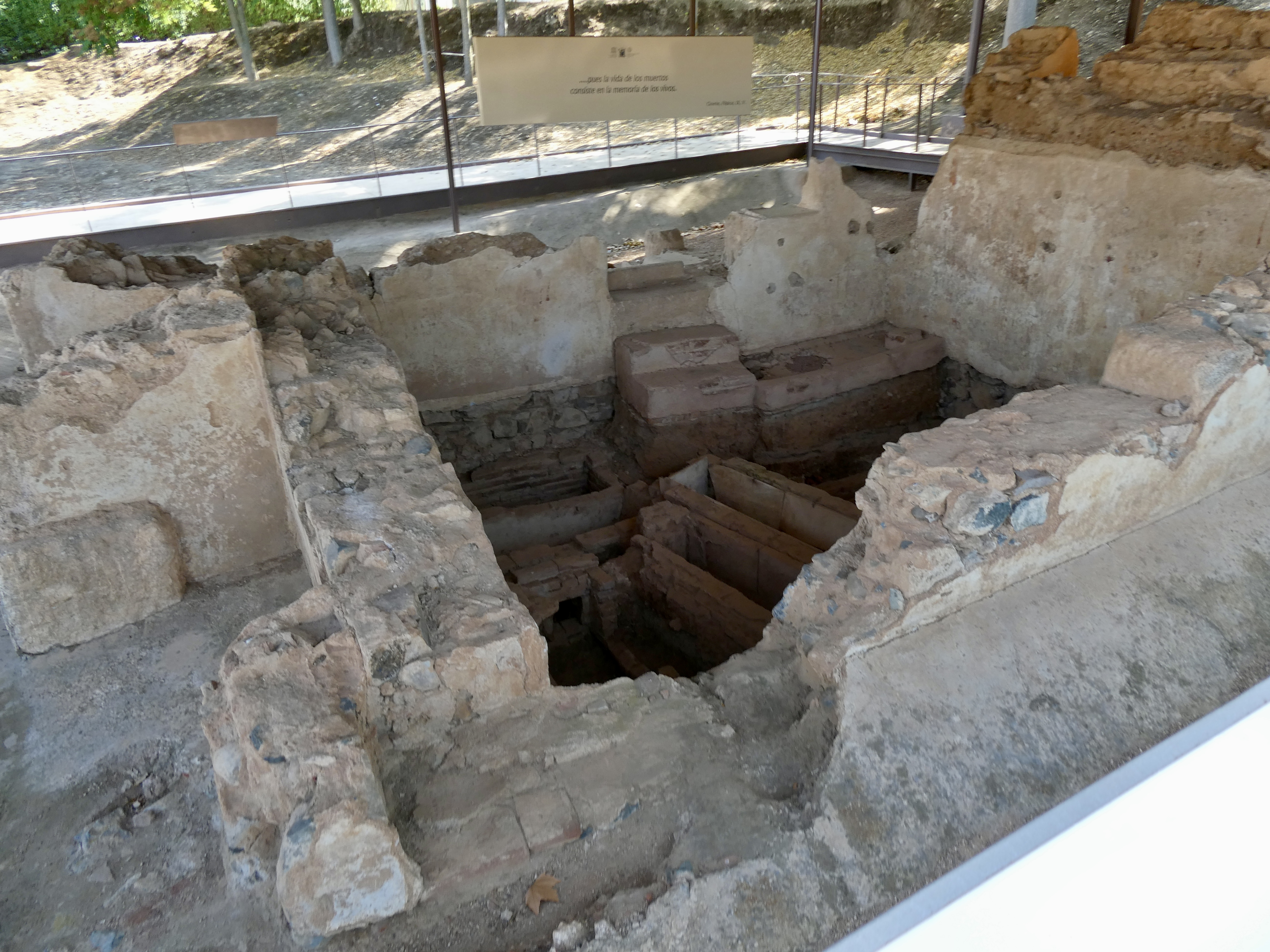
And adjacent to the residence was the homeowner’s very own Funerary complex where the family was buried. This is where the headstone called the Dintel de los Rios was found and which is now located in the Roman museum.
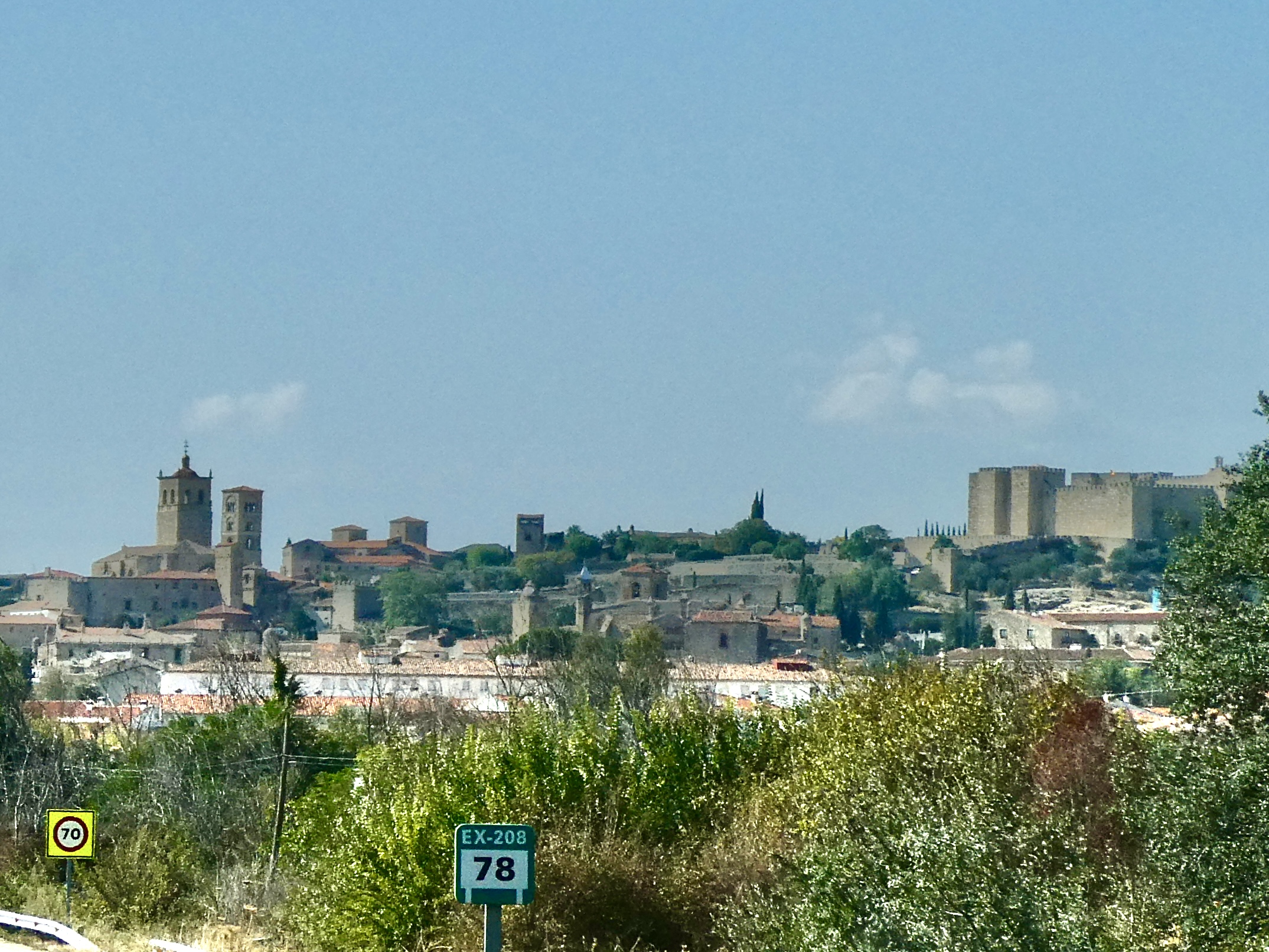
So after the Merida Roman tour, Marco and I jumped into his car and drove north to the medieval town of Trujillo. The drive took us through old rock quarries where the stones used by the Moors to build old town Trujillo were located.
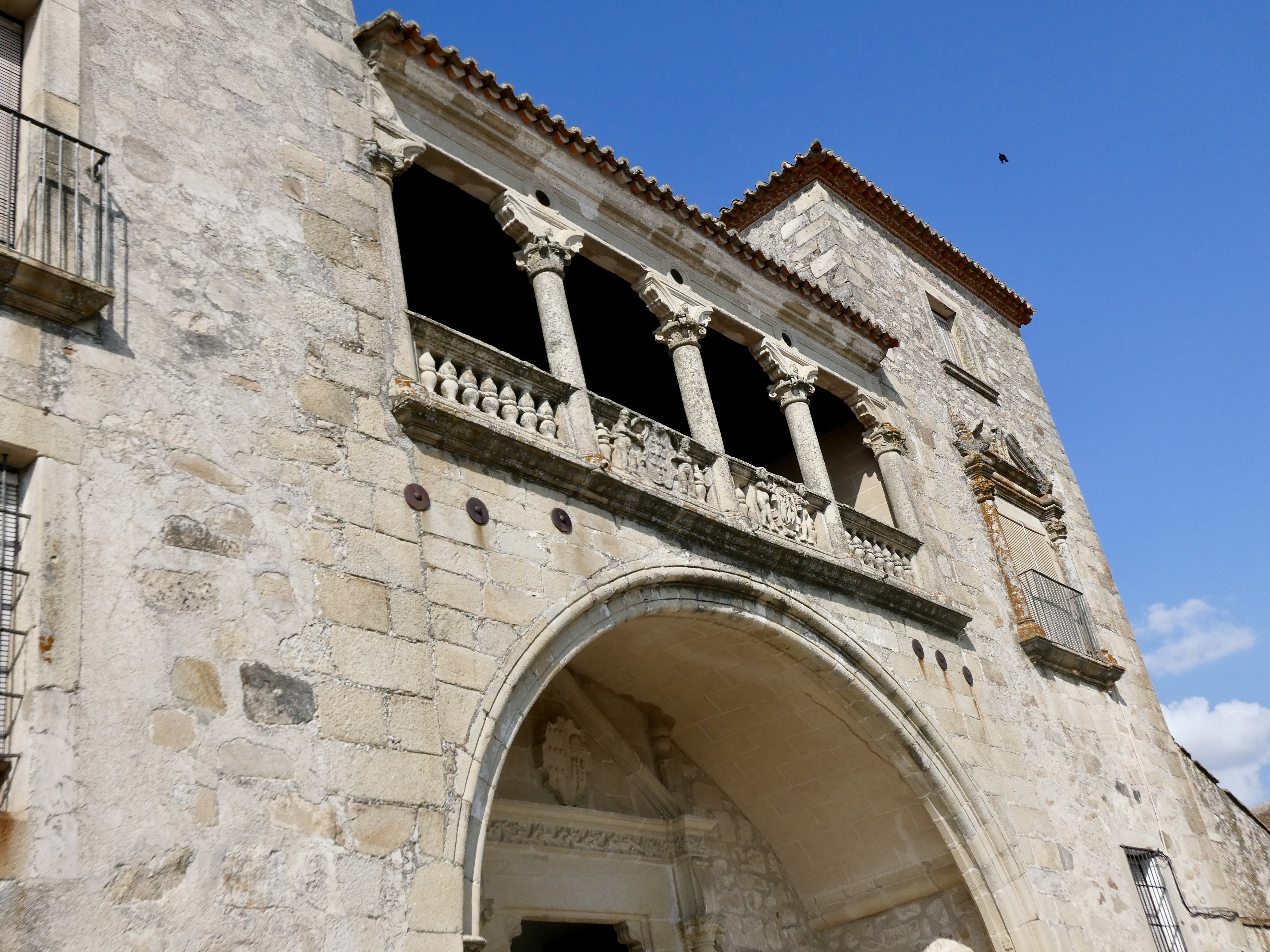
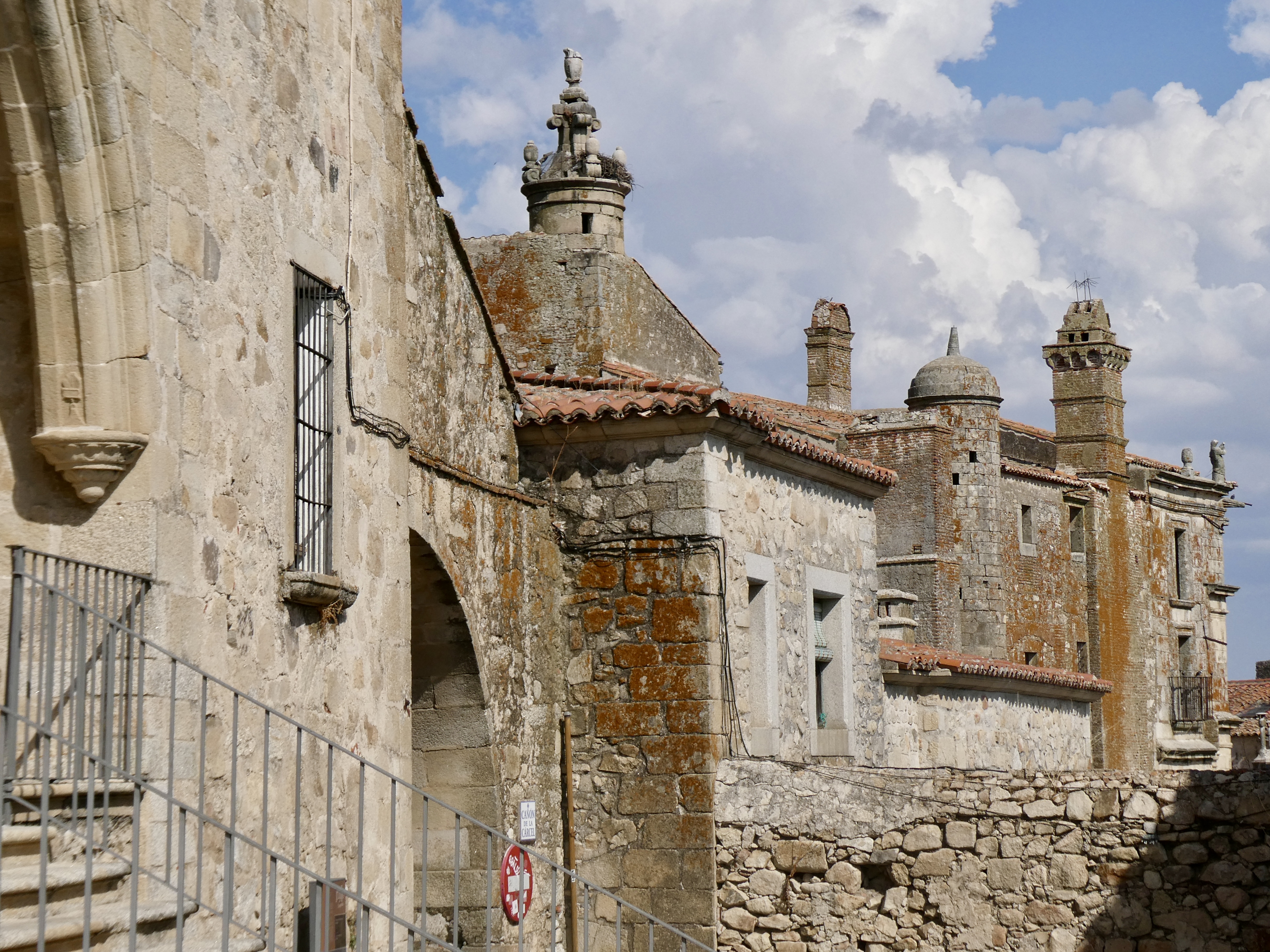
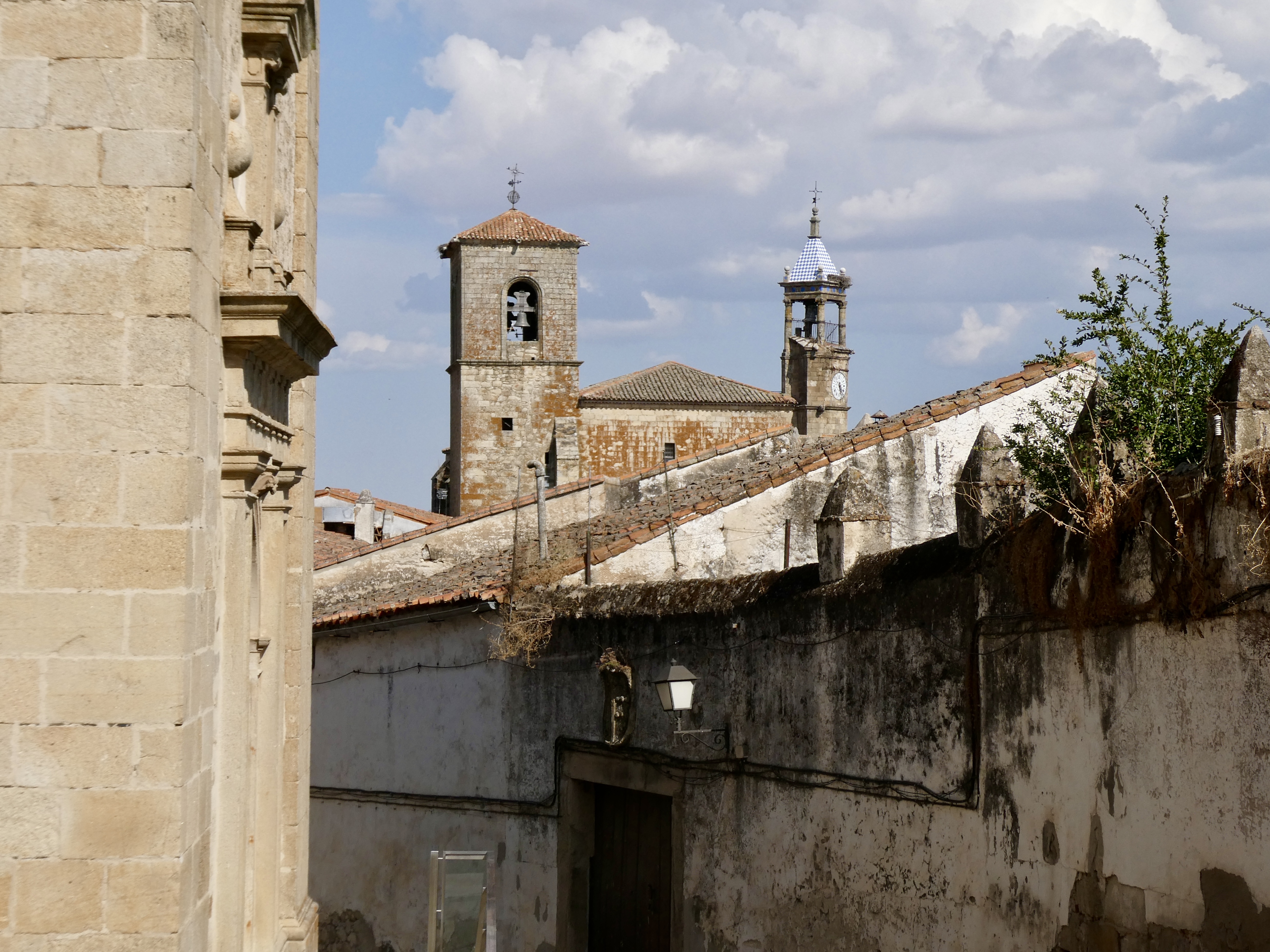
By just after 3:30, we reached Trujillo and began our walk through the old walled town. As climbed out of the car, I took a picture of Palacio de Orellana, one of many old palaces in the area that are now privately owned homes.
We then walked up the hill and through a number of narrow alleys before reaching the city walls and the Puerta de Santiago (St. James gate), one of four surviving gates in the town (there used to be seven gates).
Now the Trujillo castle walls date in part to the 9th century when the Moors first conquered the area. However, there was significant rebuilding and strengthening that occurred in the 13th century under King Alfonso VIII after the Christian reconquest, and further additions, such as the albacar (a second walled enclosure), were made in the 15th century by the Catholic Monarchs, with some sections and gates being reformed in the 15th and 16th centuries.
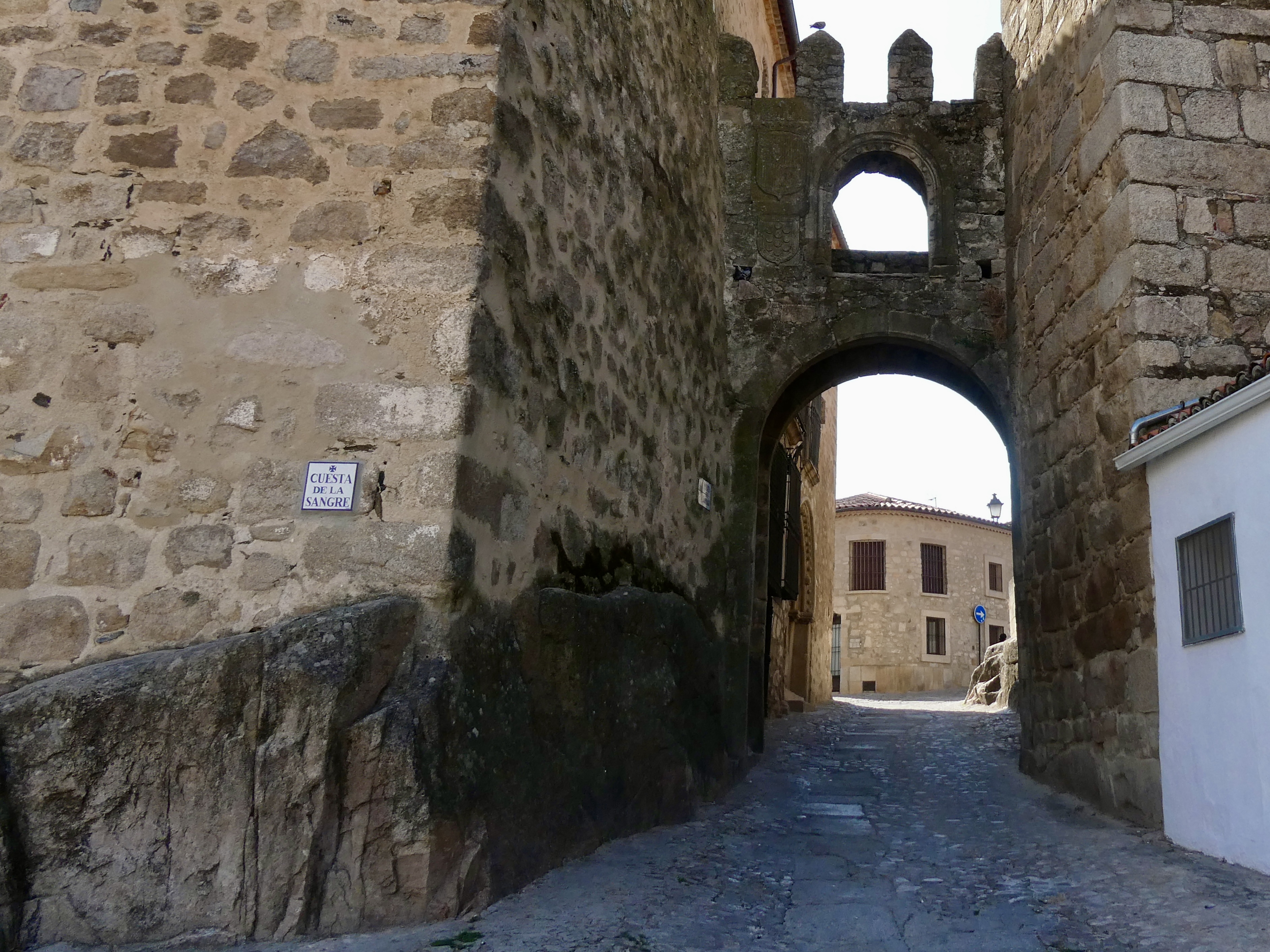
As we passed through Puerta de Santiago, Marco told me that the adjacent building was a palace where Queen Isabella stayed, but today it is a secondary school. Which begs the question: do the kids know or care that the Queen stayed in their school?
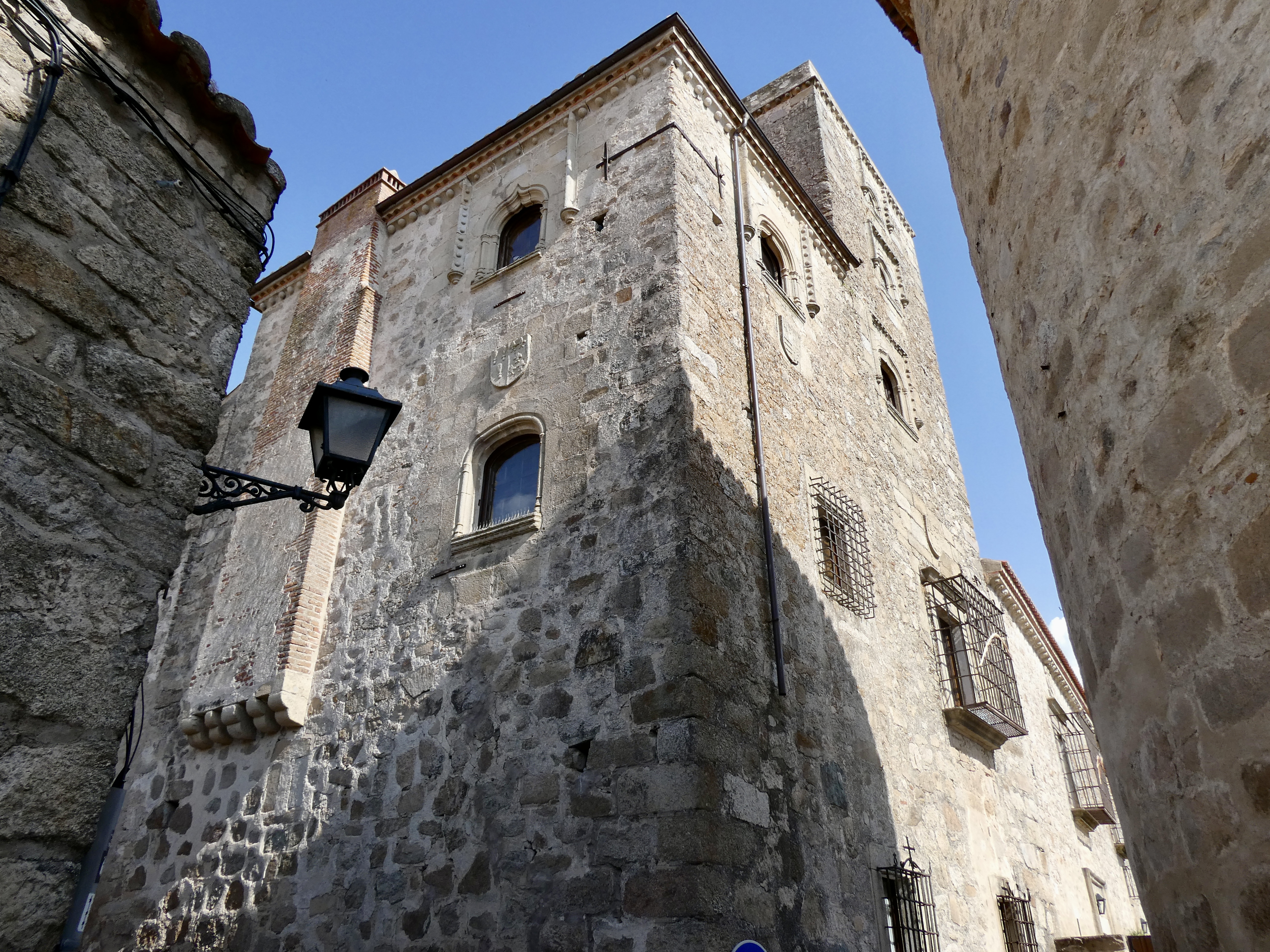

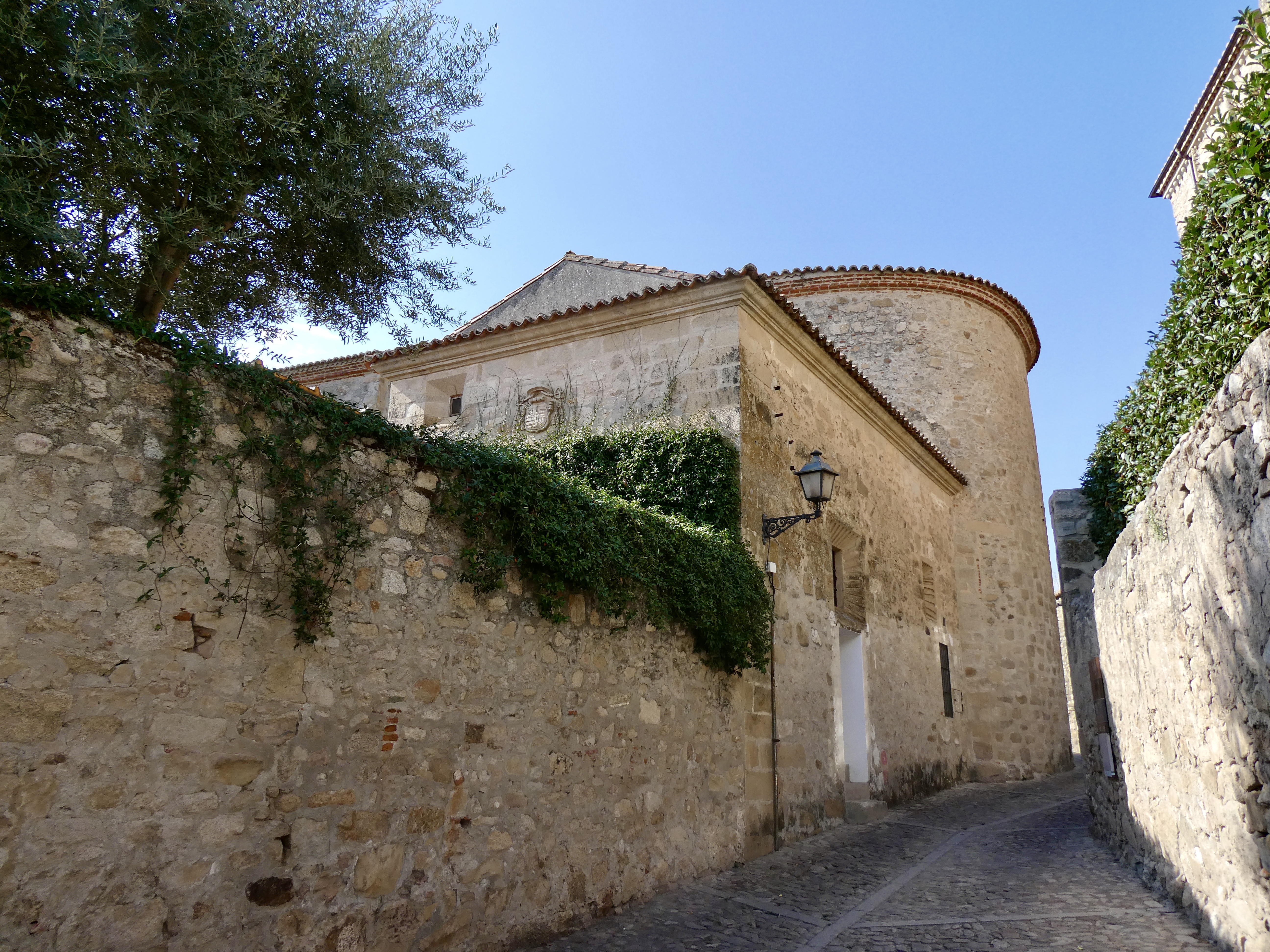
Anyway, once through the gate, we wandered the alleys taking in the medieval charm of the town, before passing the Escobar House, a former palace owned by the Escobar family, who may or may not be related to the Columbian drug lord. And next to the former palace was San Andres Church aka St. Andrews Church, which has been converted into a residence complete with the former bell tower.
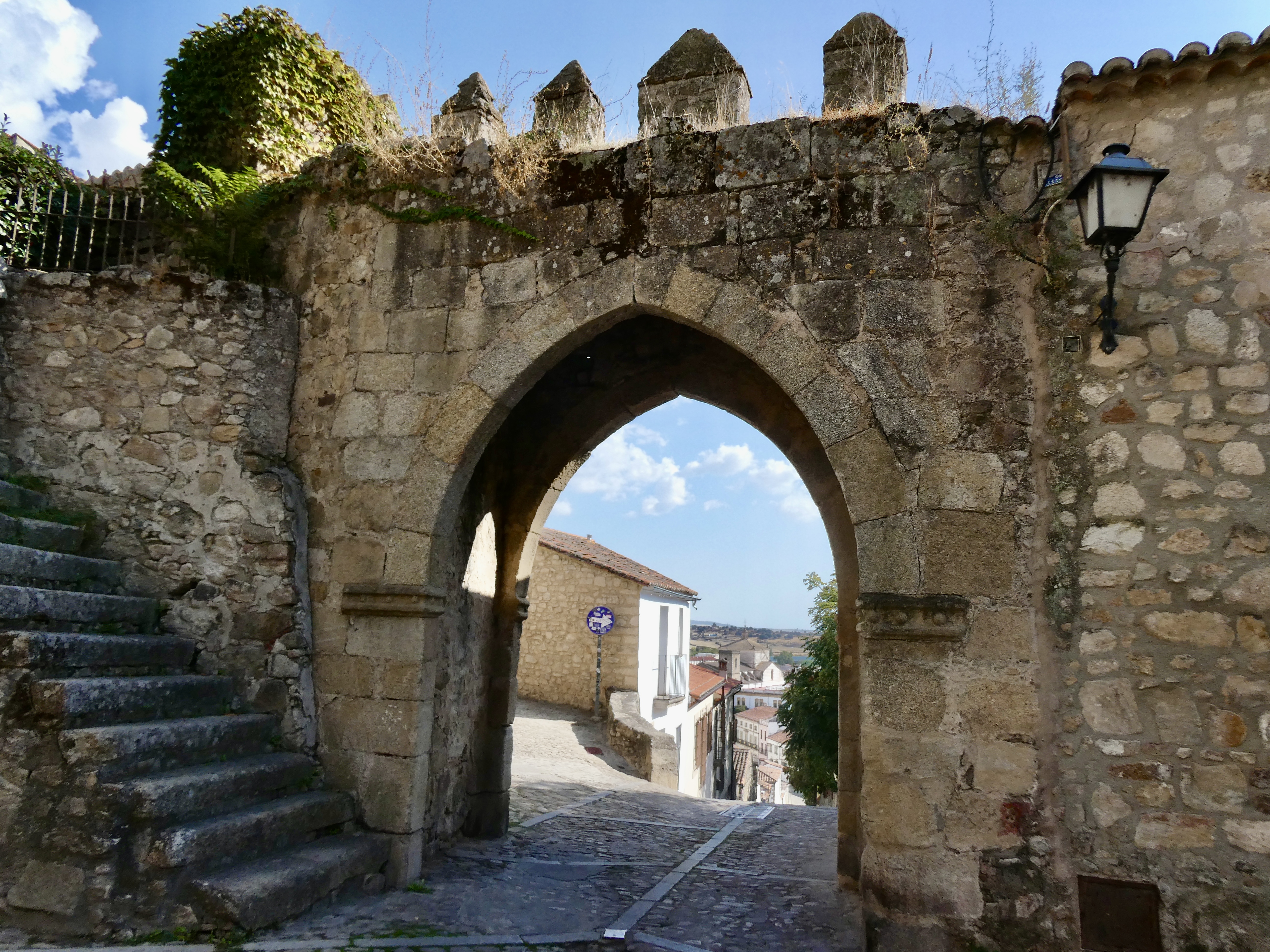
We then walked past the San Andres Church to take a look at the Puerta de San Andres (second gate) (St. Andrews gate), with appeared to be the main gate to travel through for residents living inside the old city walls. (We saw at least three cars passing by us and travelling through the gate, and I expect the reason is that it is a straight shot down the hill after passing through the gate as opposed to the hairpin sharp turns you have to make through Puerta de Santiago.)

From here, we wandered around to the other side of San Andres Church and then walked up a slight hill to a Cistern that has been here since at least 1215. And how do I know that? Well there was an old carved sign listing the dates when the cistern had been cleaned: 1215, 1733 and 1798 as well as a new sign showing that the Cistern had been cleaned in 2003.
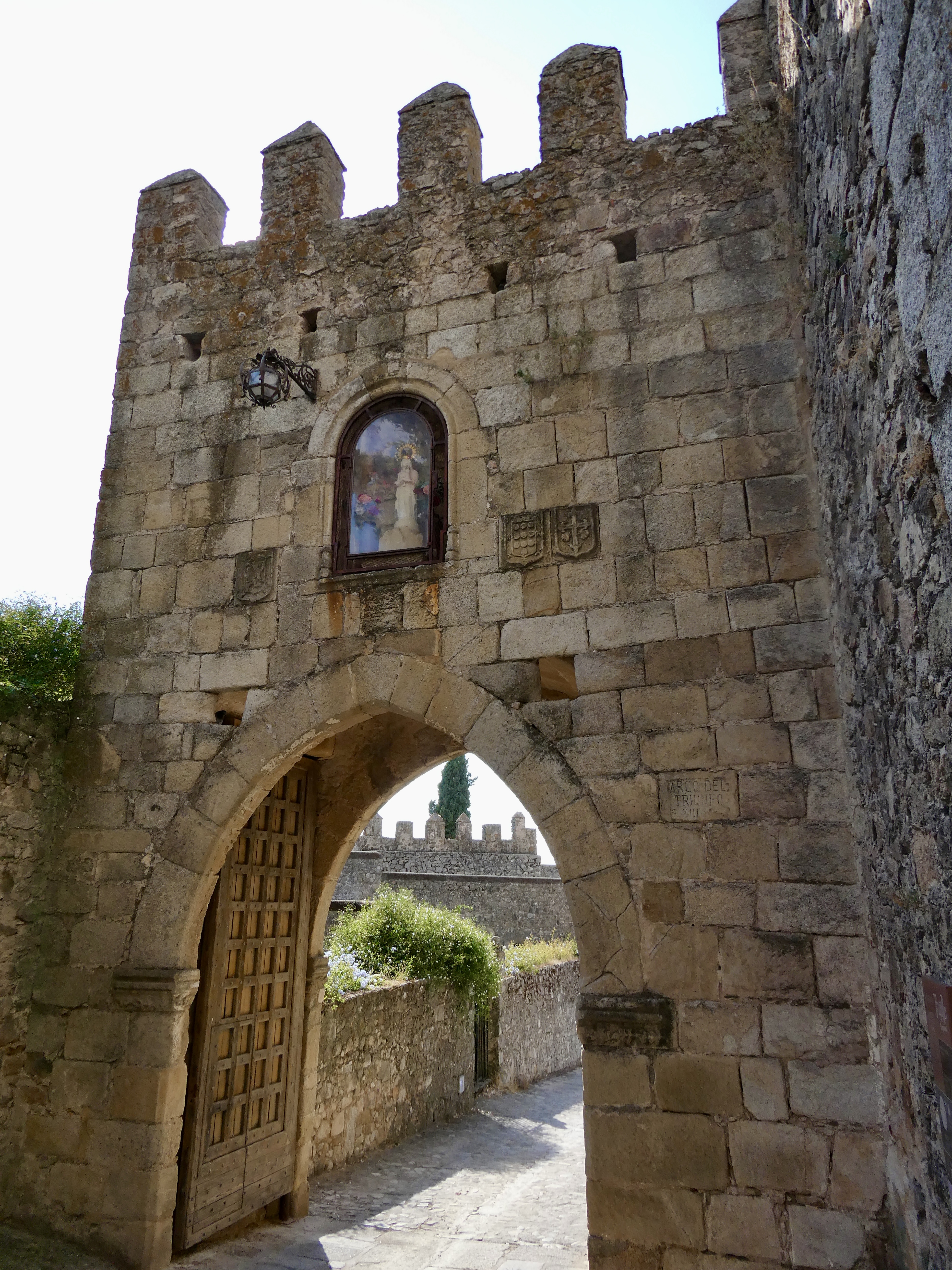

We spent some more time walking the alleys before reaching the Puerta del Triunfo (third gate) (Victory gate). Now this gate gets its name from the fact that in January 1232 that Christians conquered the Moors in Trujillo and in victory, the Christians walked through the gate hence its name.
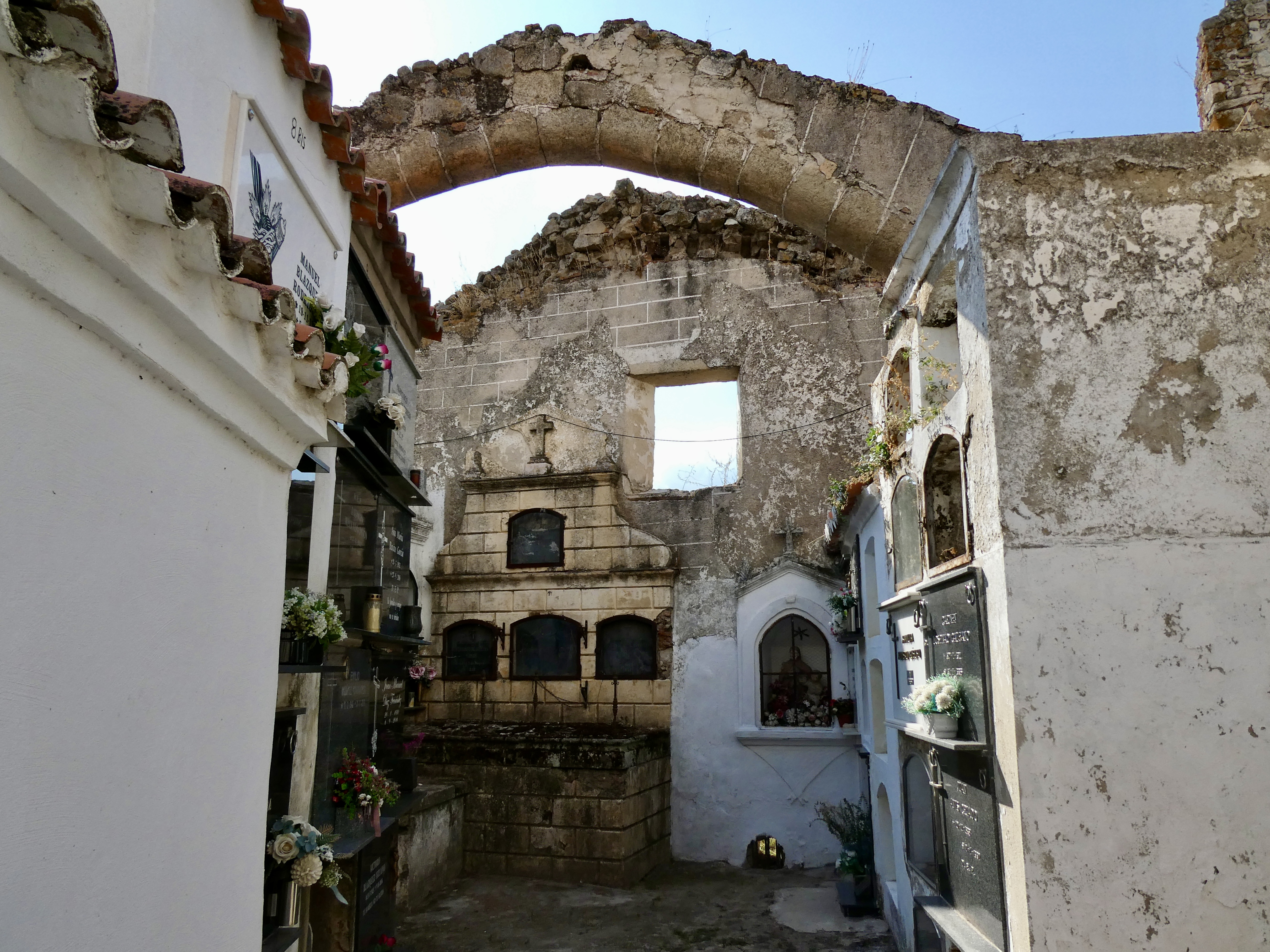
We then walked along the old city walls and made a stop at a 16th century church that was later converted into a cemetery. Apparently, when the wealthy residents began to move outside the old city walls, the church was no longer used and given that it had been custom to bury the wealthy inside churches, it seemed like a natural progression to simply convert the unused church into a burial ground.
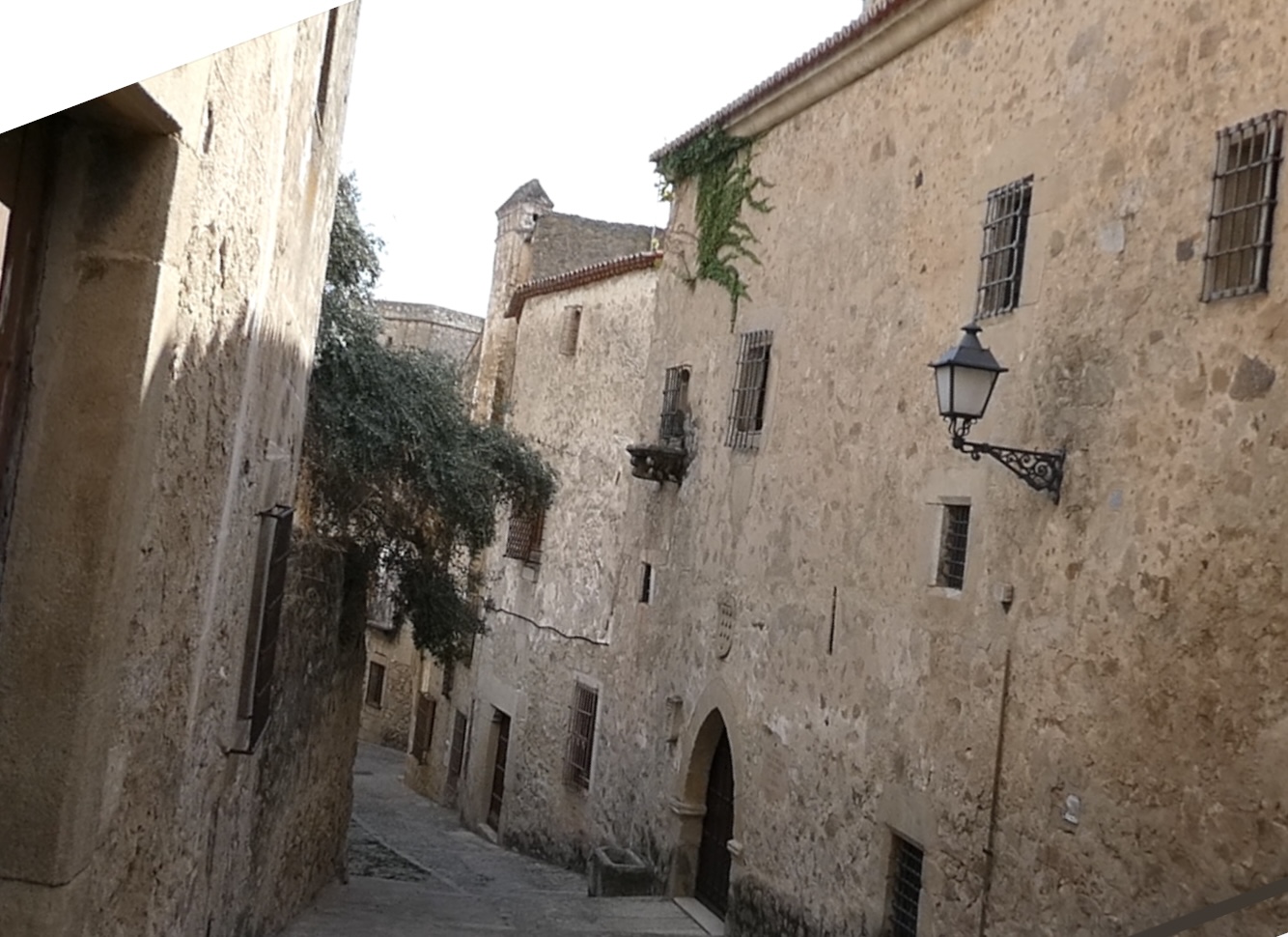
From here, we walked around a corner, down a hill and then up a hill past Palacio de Orellana. Apparently, this was the home where the Spanish explorer, and Trujillo residence, Francisco de Orellana was born. Francisco de Orellana was the first person to sale the length of the Amazon River arriving at the mouth of the river in August 1542, but on an ill fated second expedition to the Amazon he died of disease at the age of 35.
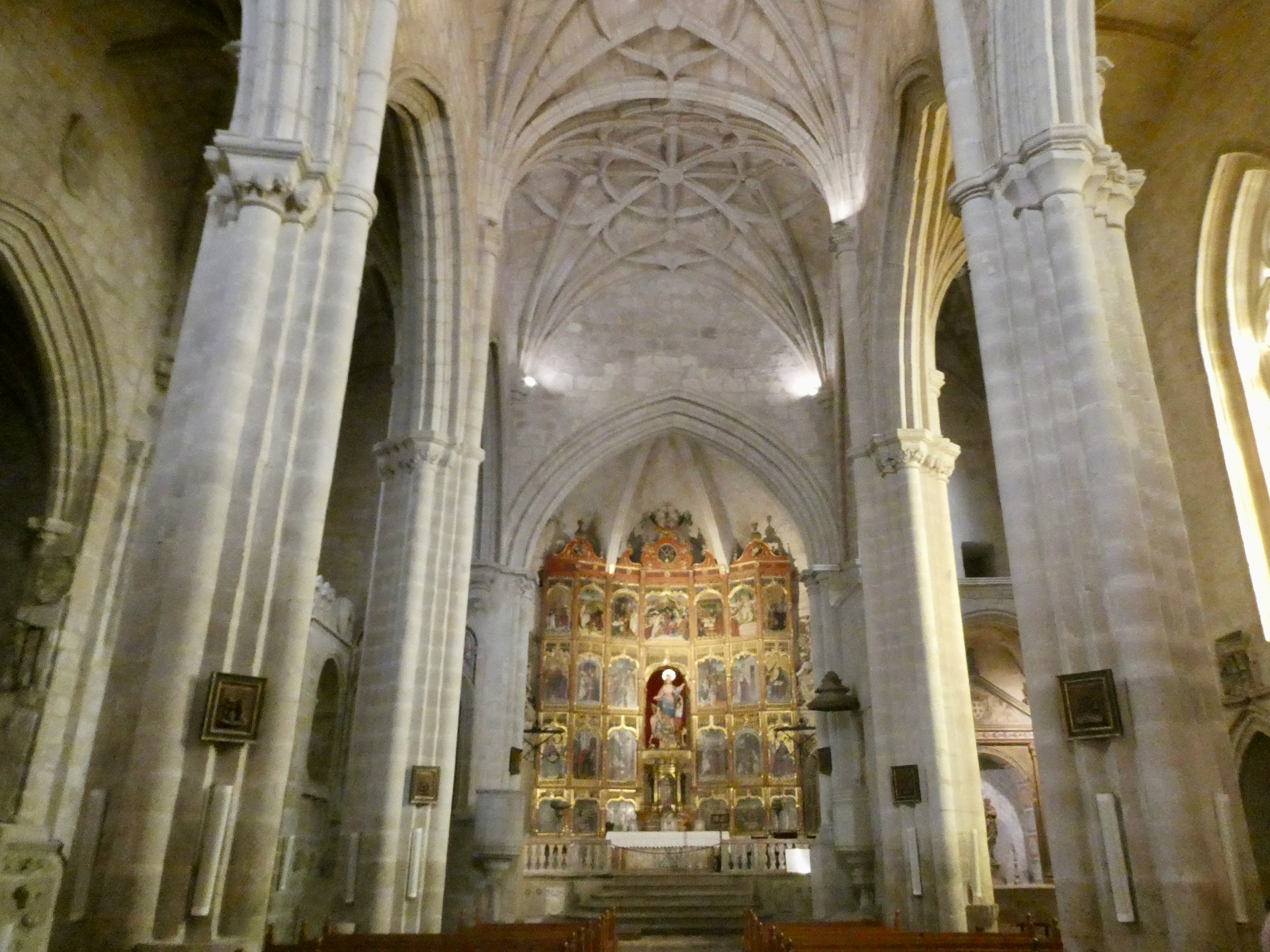
Now just up the hill from the Palacio de Orellana was the Iglesia de Santa Maria la Mayor, the main church in the old city with its two magnificent towers. The church was built in the 13th century in a Flemish-Gothic style and was continuously renovated through the 16th century. In fact, the roof was refurbished in the 15th century.
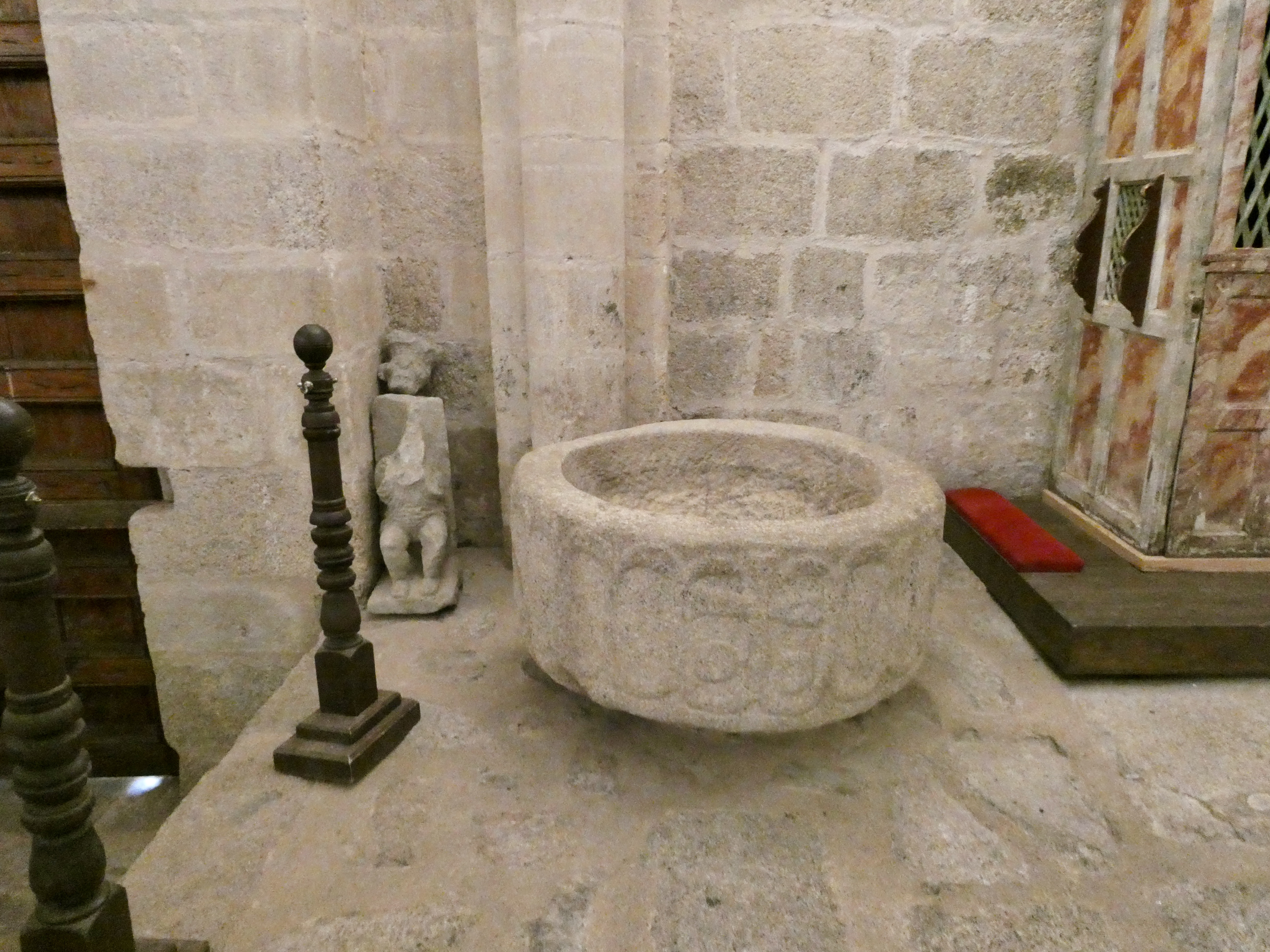
In the 19th century, the church was mostly destroyed by Napoleons troops leaving only the Church alter intact. (No one knows why.) And while the Church was nice looking, it was not the most striking church I have seen. In fact, the most interesting aspect of the church for me was the 13th century Aspergillum that was used to sprinkle holy water on the faithful. Today, the church is only used at Easter as the church is too far up the hill for most folks to walk.
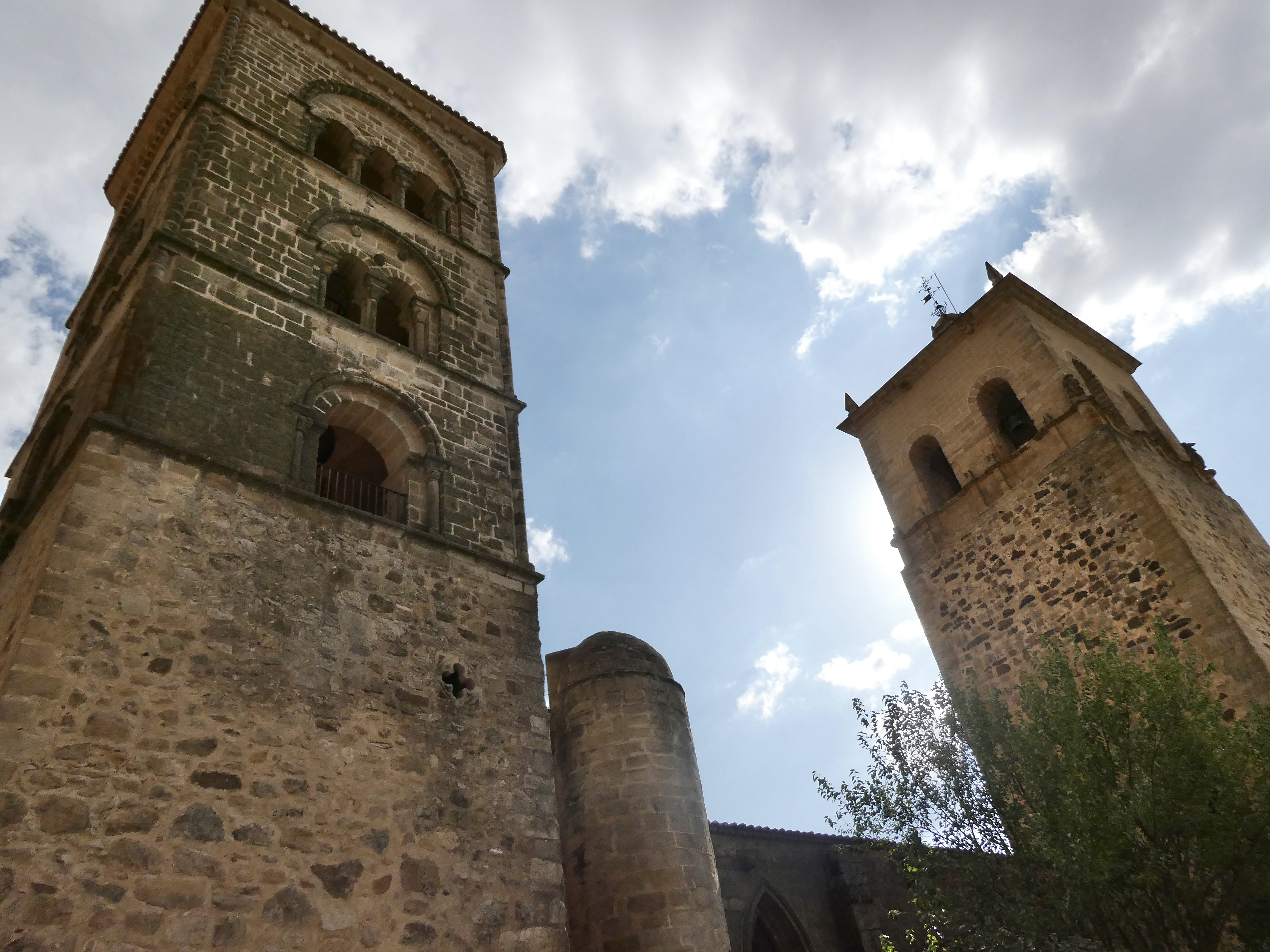
After the church visit, we walked around to the back of the church to get a better look at the two towers and … uh oh … the sky had turned very, very dark and we could hear the rumble of thunder in the distance. Fortunately, we were near the end of the tour.


We made brief stop in front of house of Francisco Pizarro (Pizzaro was a famous Spanish conquistador who conquered the Incas) before starting our walk down the hill to Plaza Major. As we walked along the narrow alley, a few raindrops began to fall, and Marco decided it would be a good time to play Raindrops Keep Falling on my Head … which lead to a couple of ladies coming out of their homes to dance along.
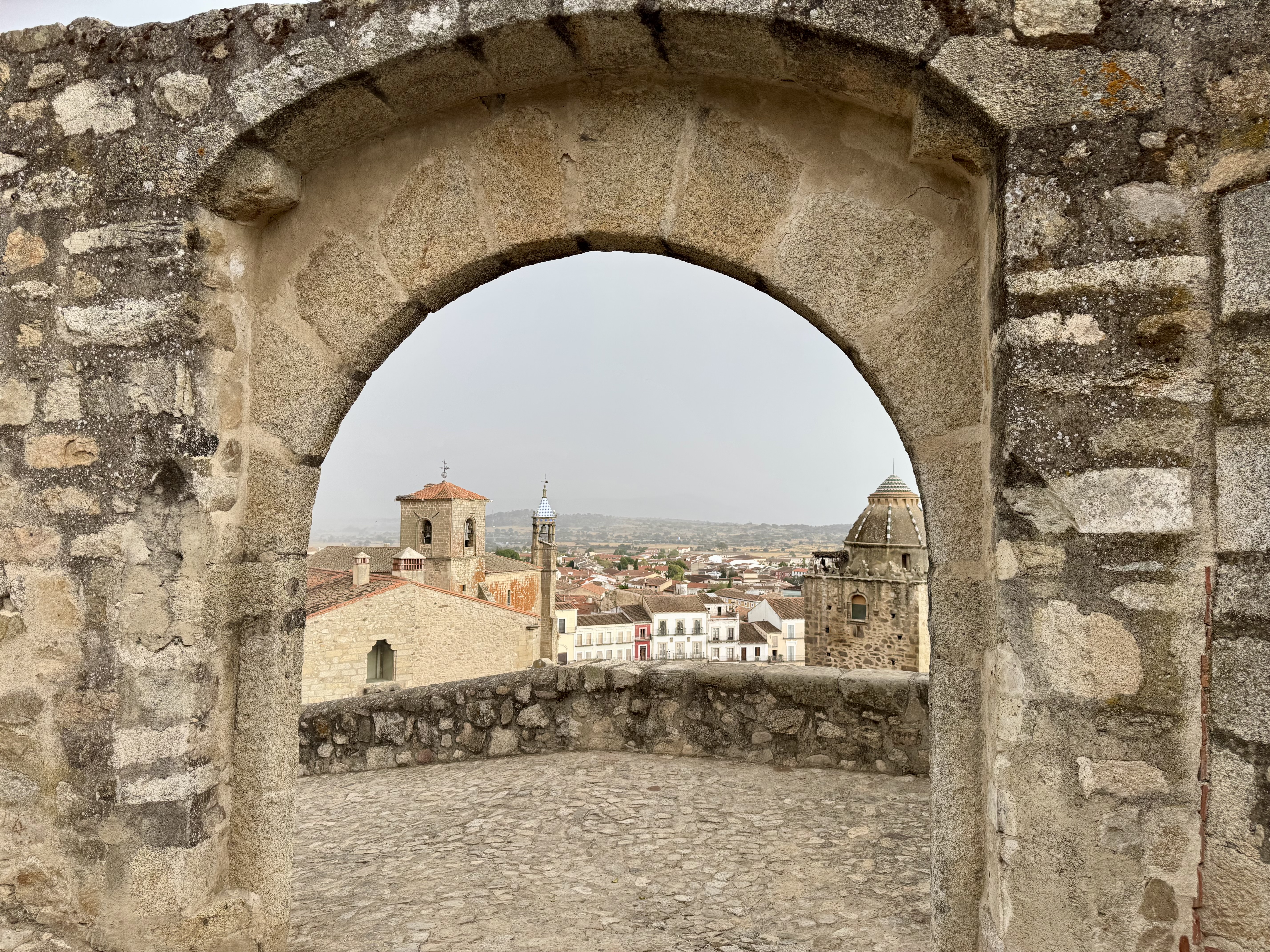
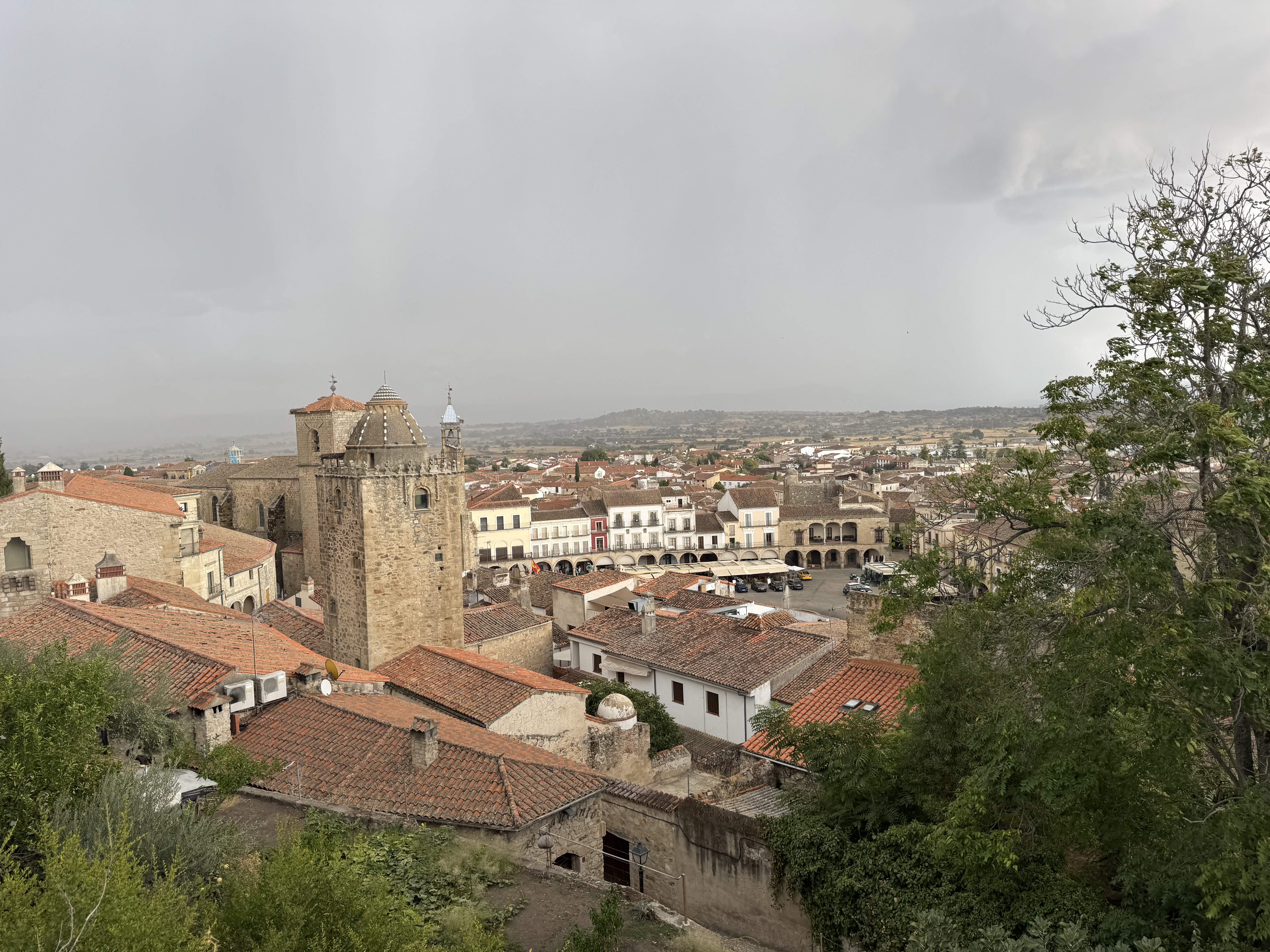
By the time we reached Puerta de la Coria (aka Pigeons gate), the fourth of the four remaining gates, the rain had really started to come down. We started to move a little quicker down the narrow lane reaching the Church of San Martin, which fronts the Plaza Major just as the heaven opened up.
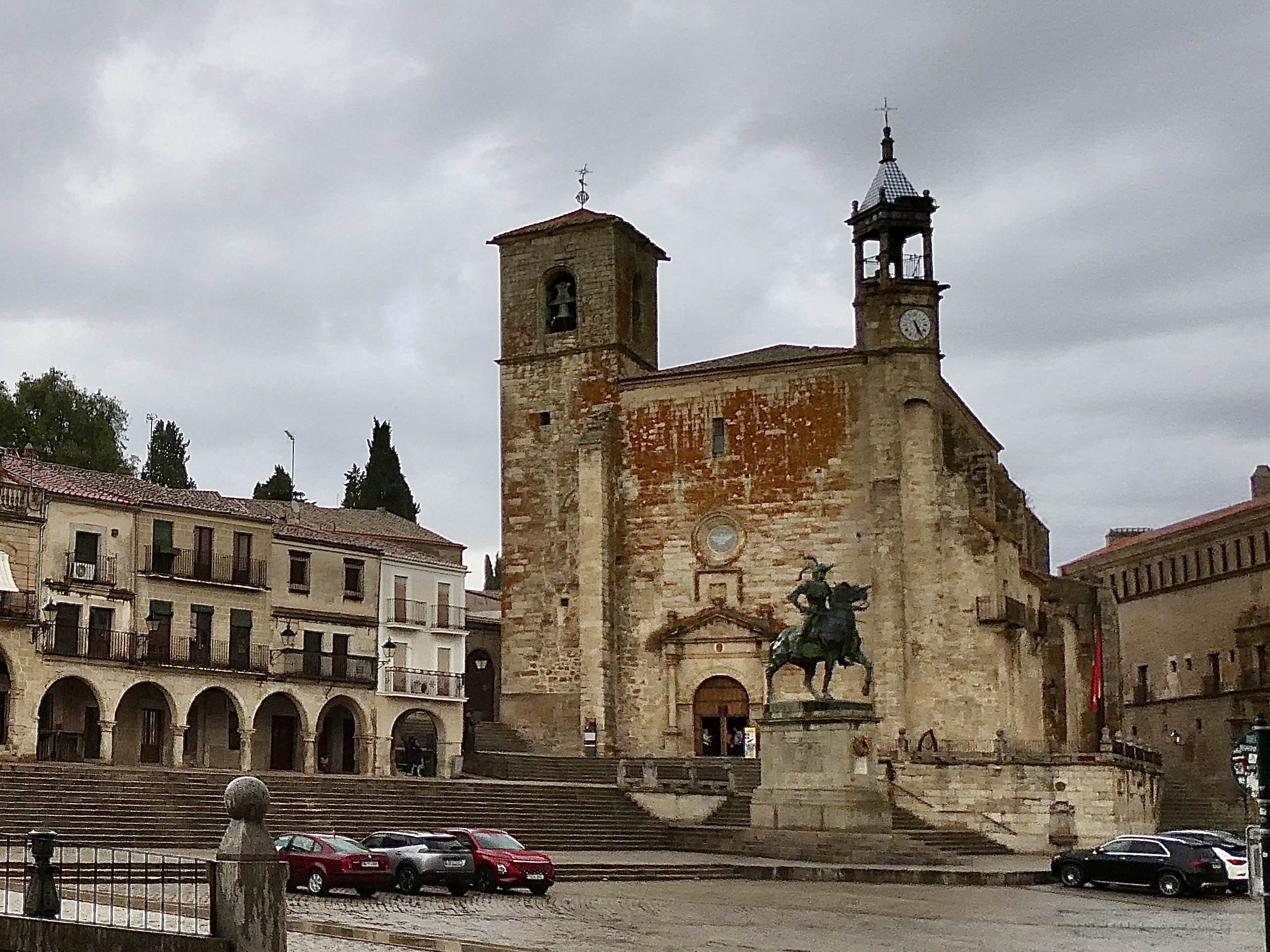
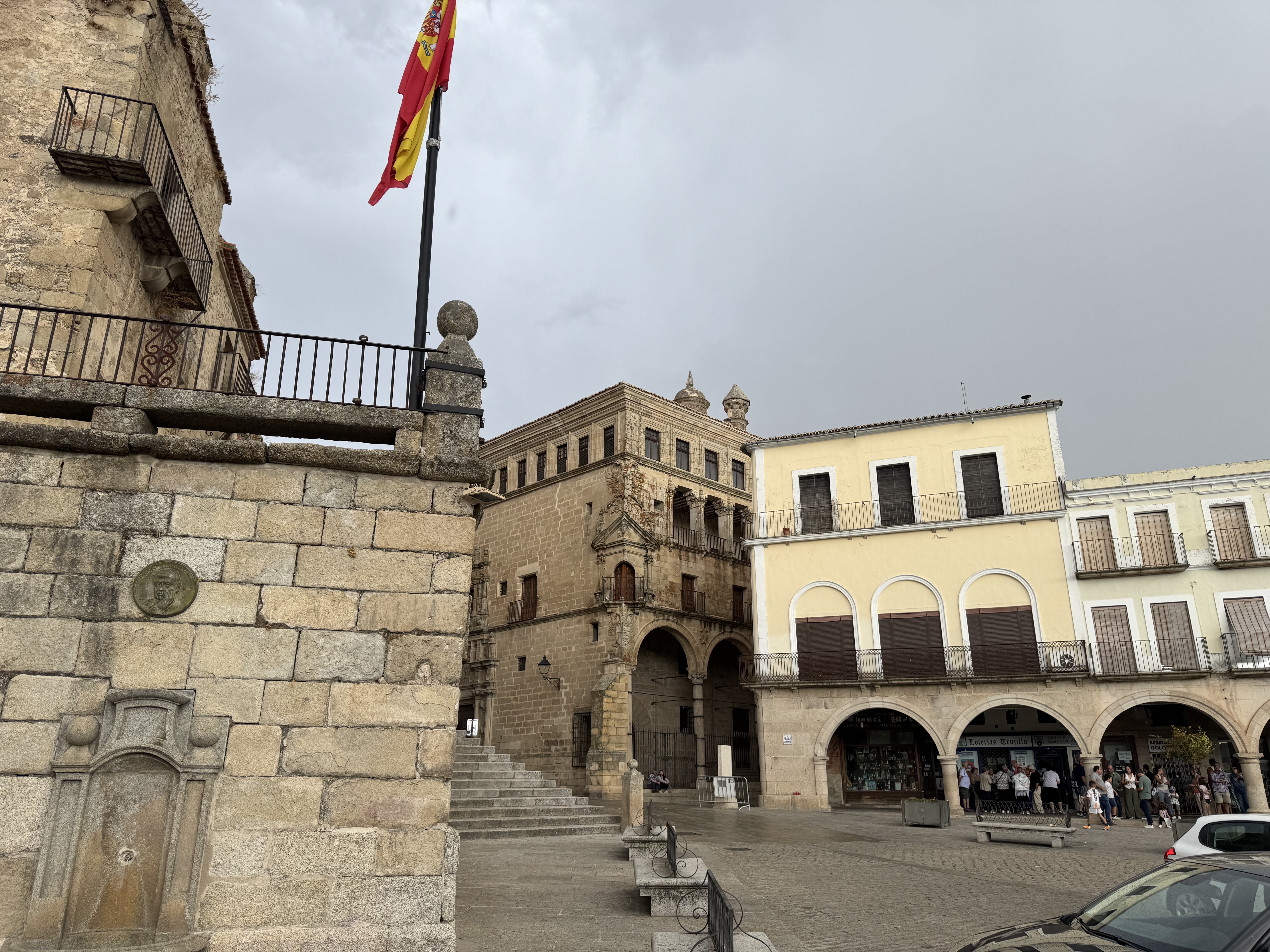
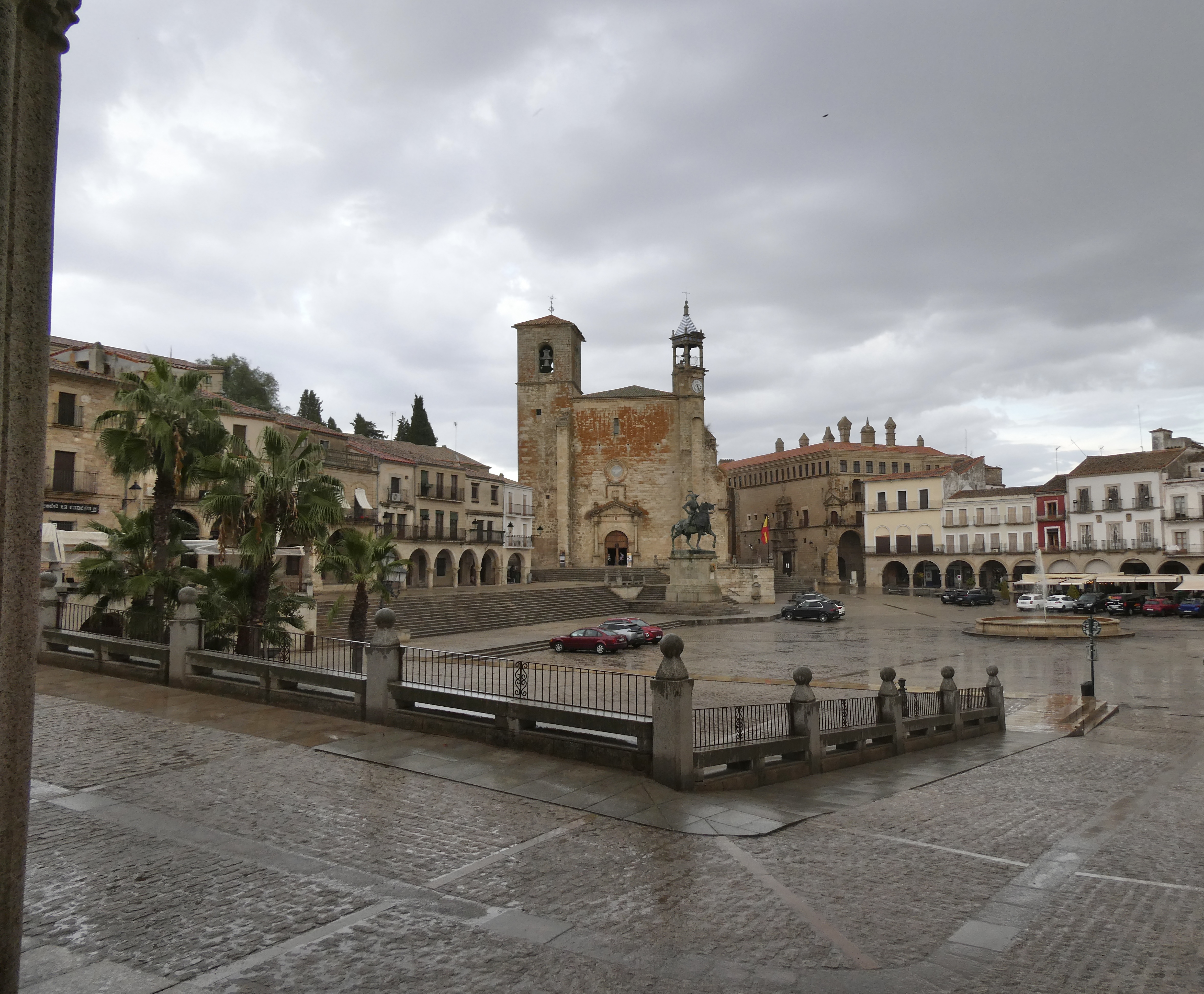
Marco and I made it out of the rain and into a small little café where we sat outside under cover and watched the rain fall as the thunder and lightening hit the area. While we sat there, Marco pointed out the nearby Palacio de los Duquesne de San Carlos in Trujillo, which is apparently where King Felipe II stayed in the 16th century. In fact, the Renaissance palace is adorned with a coat of arms of the Habsburg dynasty evidencing that King Felipe II stayed there.
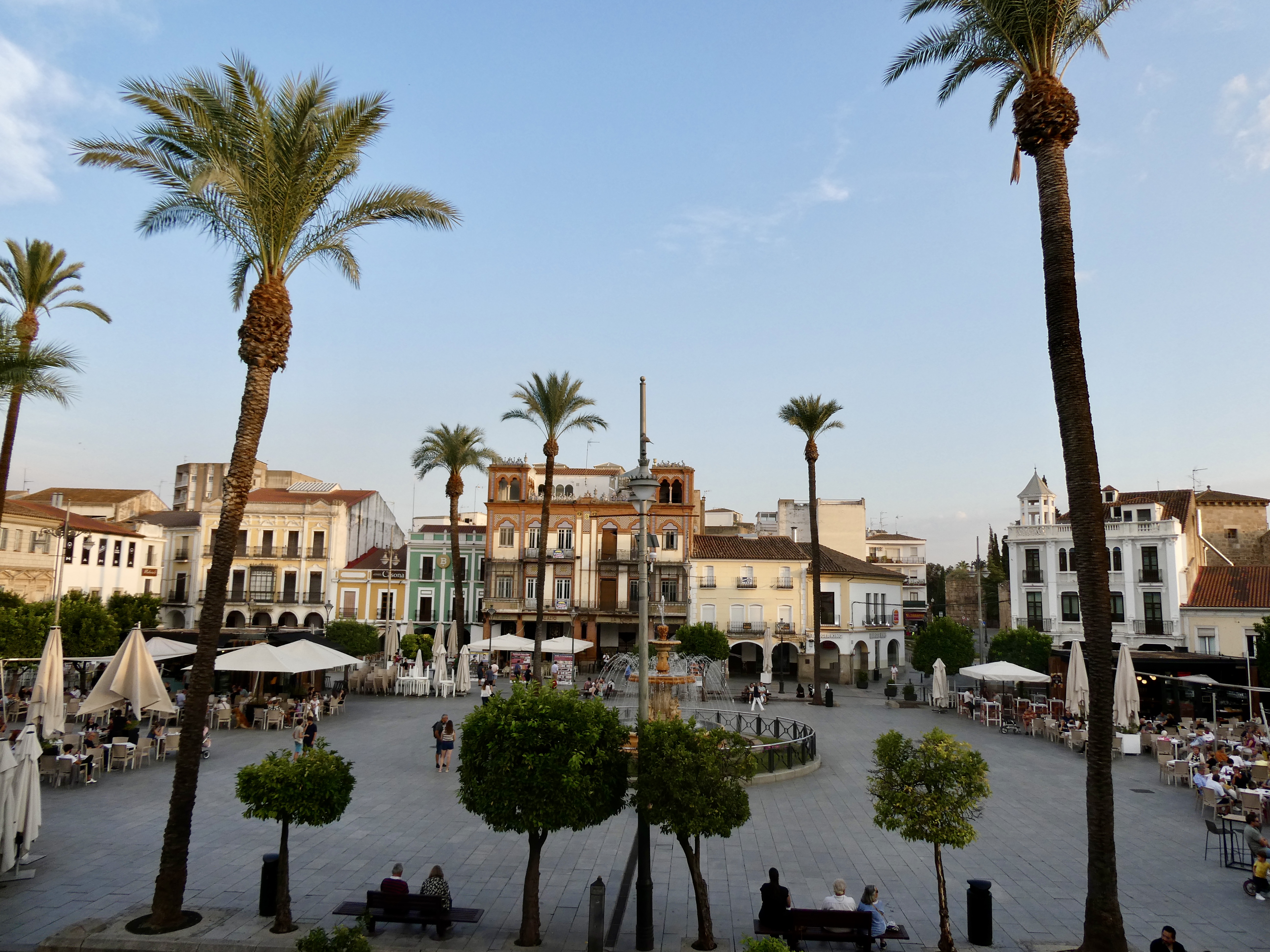
Just before 5:30 the rain let up and Marco and I made a mad dash for the car. We arrived just before the rain started up again, but on the trip managed to out drive the rain and made it to Caceras in time for my 30 minute train back to Merida.
So tomorrow, I am off to Granada for a few days before ending my time in Spain in Valencia.
