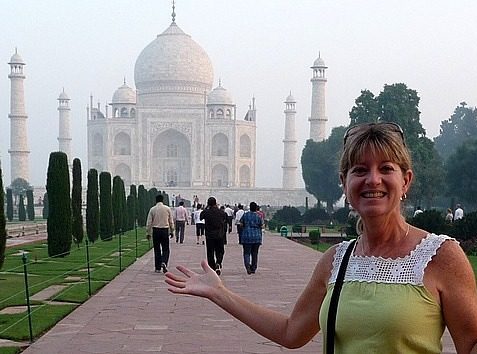
So after yet another sleepless night, I ended up heading off to the local police station to file a police report about my missing passport as recommended by the U.S. Embassy. Once that was done, I made my way back through the alleys to the Granada Cathedral, as I had a “no waiting” ticket for entrance to the Cathedral between 10:00 a.m. and 2:00 p.m. And good thing, because the line to get in was massive.

Now once I entered the Cathedral, I was not particularly wowed by the second largest Cathedral in Spain. In fact, it was rather plain looking. I ended up downloading the cathedral app and wandered around from numbered sign to numbered sign learning about the Cathedral from an app.
Anyway, the Cathedral was built on the former site of the Grand Mosque, which was destroyed when the Christians defeated the Muslims in 1492. However, surprisingly, construction on the cathedral did not begin until 1518 when the first stones were laid in the middle of the old Muslim medina.
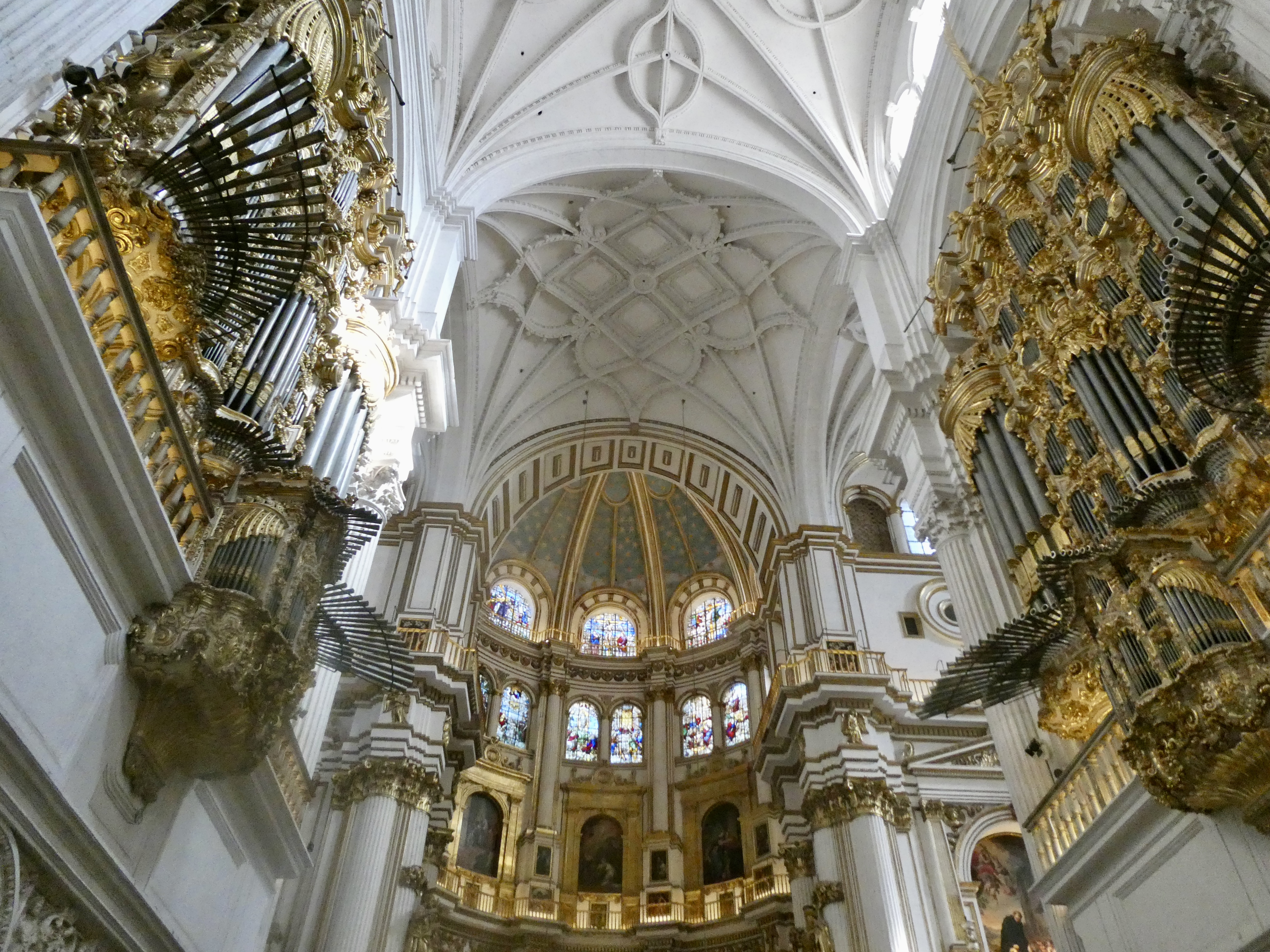
The Main Alter was pretty typical of Cathedrals with a huge gold guilded alter surrounded by two balconies where the organs of the Cathedral were located.

From here, I walked around the Nave of the Epistle, where a number of chapels were located including the Triumph of St. James the Apostle and the Royal Chapel (which requires a separate ticket to view, but the line was too long for my patience). However, I did learn that the Royal Chapel was the first part of the Cathedral to be constructed, was built in the Gothic style, as opposed to the Renaissance style like the remainder of the Cathedral and housed the remains of some Spanish royalty.

But my hands down favourite chapel in this part of the Cathedral was the Chapel of St. Michael the Archangel. Now there was a lot going on in this Chapel and the altarpiece, but it apparently showed the story of how St. Michael defeated a dragon with his sword. As a result, there were a lot of demons and dragons in the Chapel relief. I thought it was far and away the most interesting Chapel in the Nave.
I then wandered through the Nave of the Gospel, which housed more chapels, none of which were as much fun as the Chapel of St. Michael the Archangel.
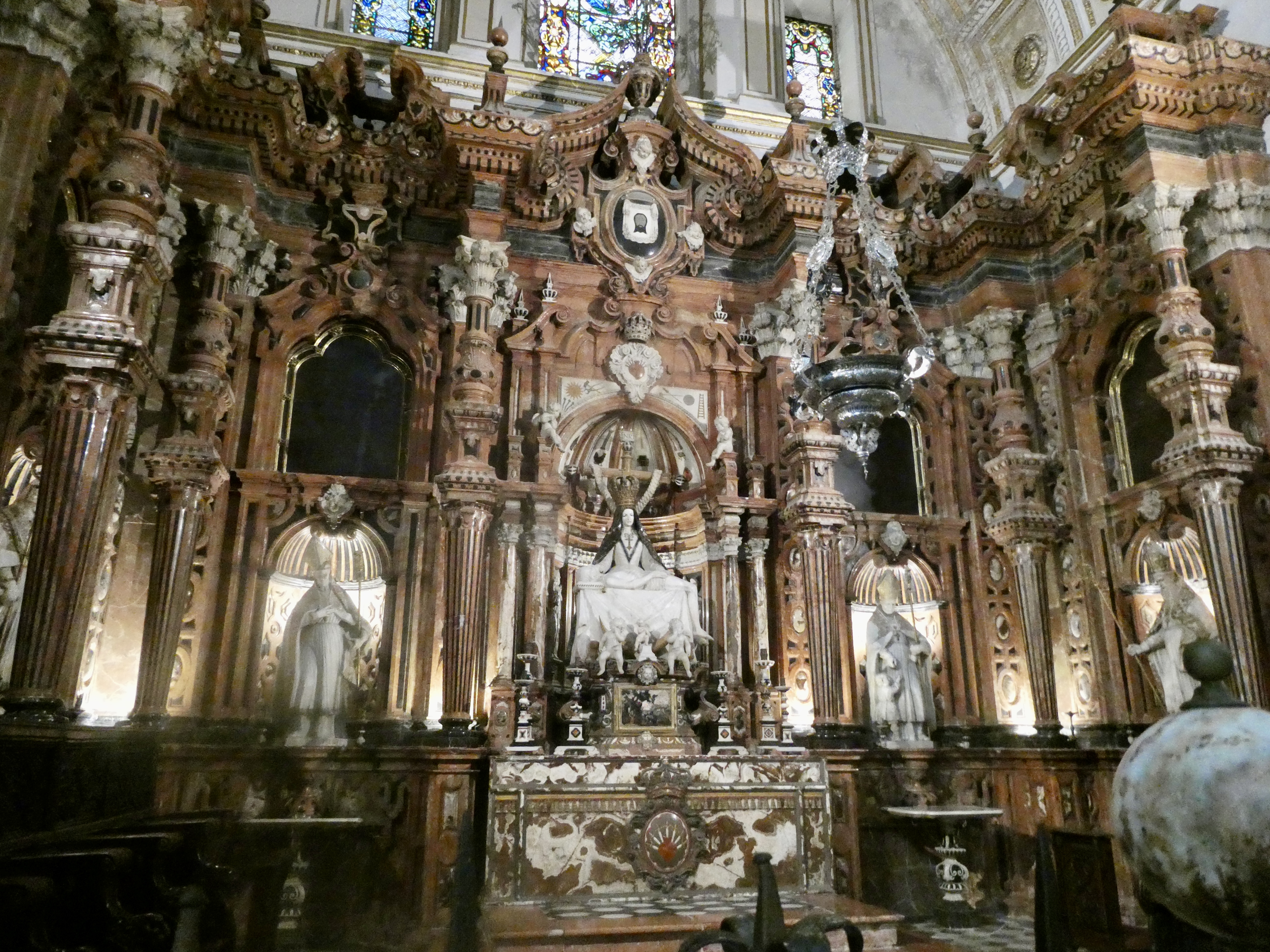
The last part of the Cathedral was the Ambulatory, a curved area leading to the back of the Main Alter. And again, more chapels, but here there were one particularly interesting chapel and one fascinating cabinet. First, I found the Chapel of the Virgin of Antigua particularly interesting not just because the altarpiece was in baroque design (which is always more interesting than Renaissance design in my opinion), but the Virgin Mary was wearing a blue cloak and the statute was gifted to the Cathedral by Queen Isabella. Second, baby Jesus was holding a pomegranate and the Spanish word for Pomegranate is Granada.
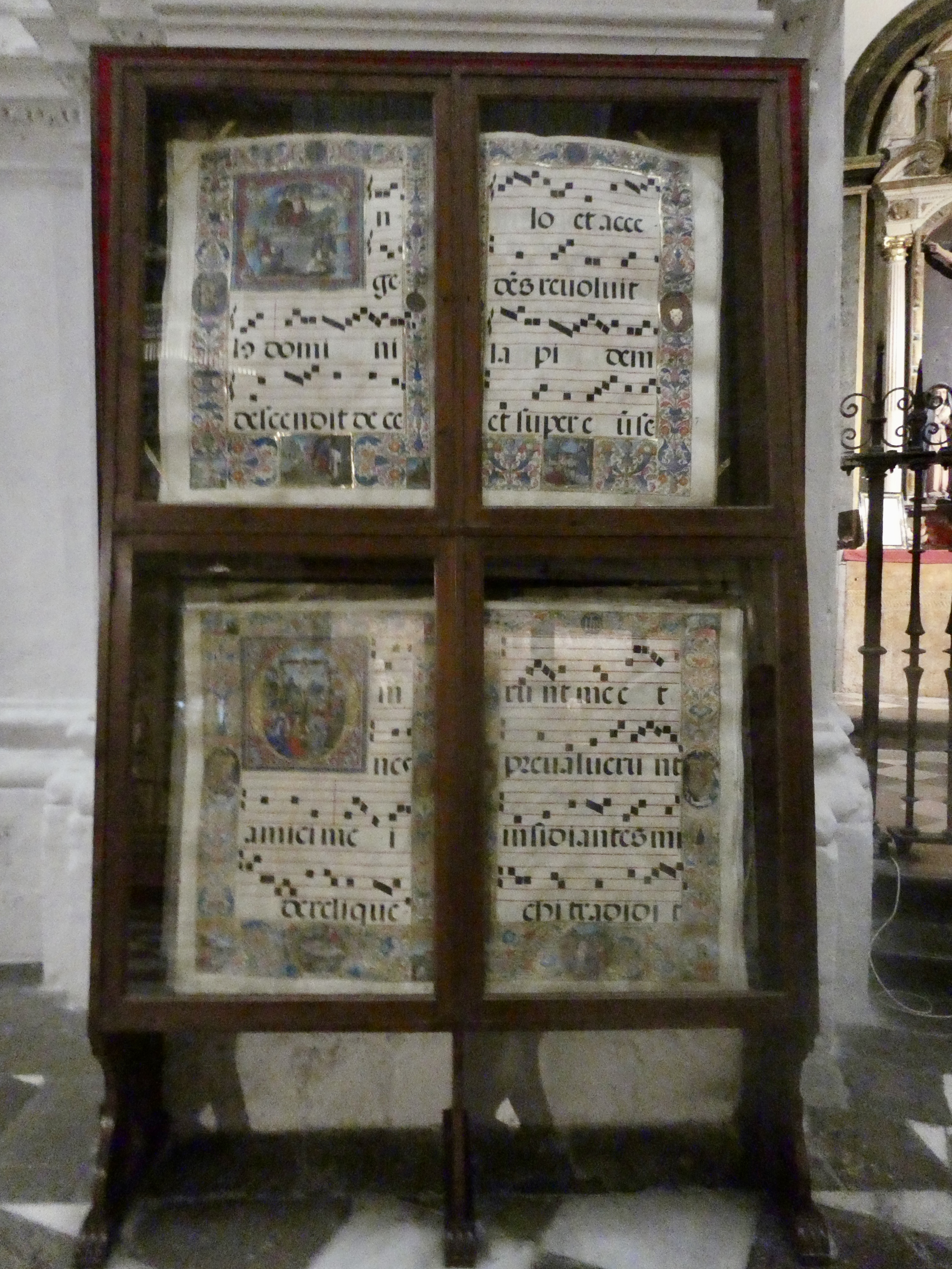
Now about the cabinet. Near the end of the Ambulatory was a large wooden cabinet with four choirbooks that dated to the 16th and 17th centuries. No one seemed to be paying any attention to the choirbooks, but I found them fascinating (and they reminded me of the choirbooks I had seen last weekend at the monastery in Italica.)
The last area I visited was the Sacristy. Unfortunately, no pictures were allowed in this room (which is where the priest prepares for mass), and this was a shame because there was a very famous, tiny, tiny statute of the Virgin Mary in the room by the artist Alonso Cano. I had to hunt around to find it and the statute was indeed tiny at 55 cm.
So after the visit to the Cathedral, I grabbed some lunch and took a bit of a rest before heading down the hill to Plaza Nueva to meet up with guide Raphael and others for a walking tour of Albaicín and Sacromonte areas of Grenada (the old Muslim and Gypsy quarters of Grenada).
Now the Albaicín neighborhood dates to the 11th century and is located on the western hillside of Granada opposite the Alhambra (more about the Alhambra later). As a result, much of our 2 ½ hour tour was all about hiking up the Granada hillside.
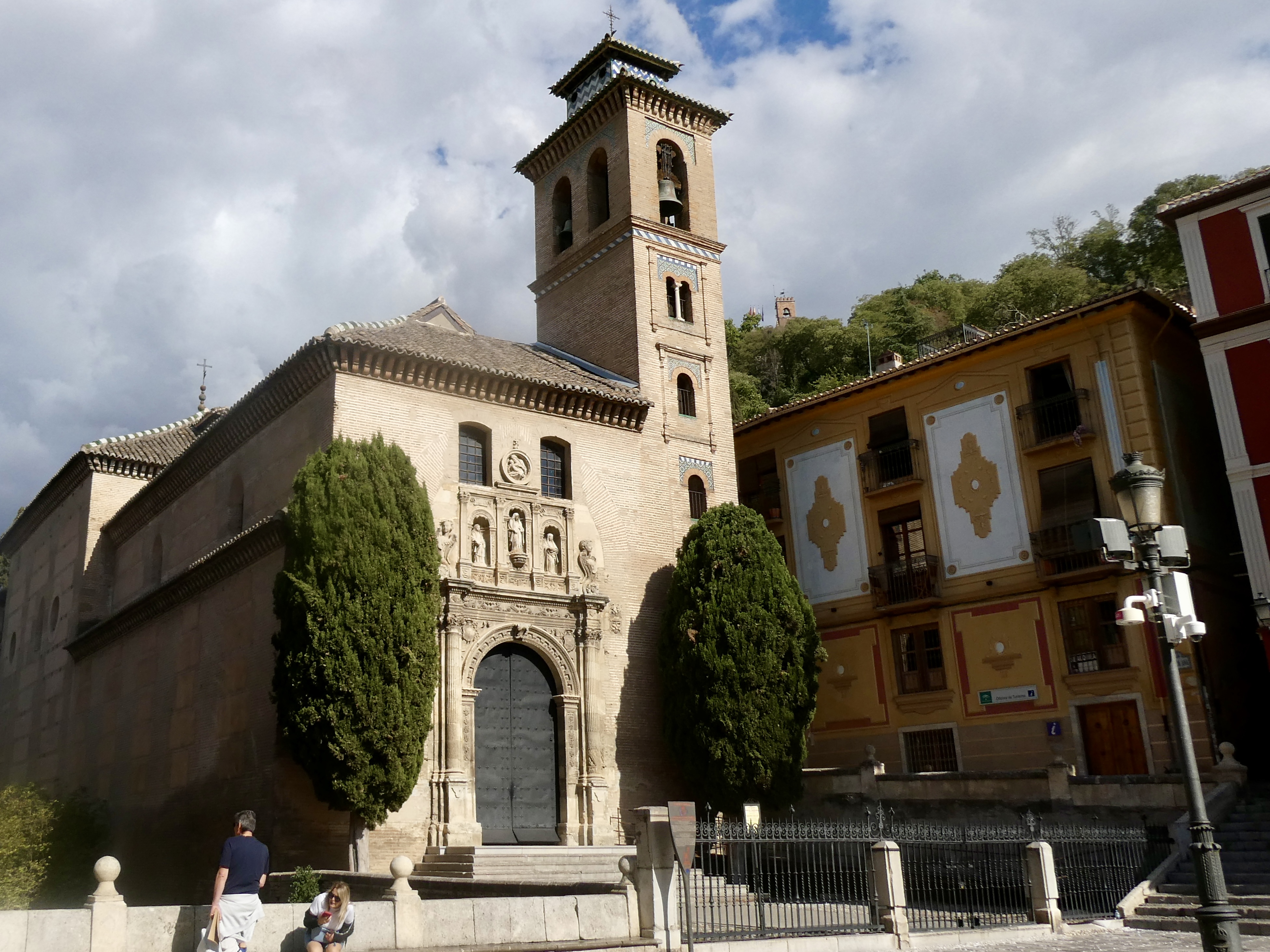
In order to reach Albaicín we walked along Darro River, which cuts through Granada and in fact, much of Granada has been constructed on top of the river. At one point along the river, we stopped to take in the 16th century Santa Ana Church, which like so many other churches in Granada was a converted mosque. In fact, the cross on top of the church had been mounted on top of the jamour (three vertical balls) that signify the building is a mosque.
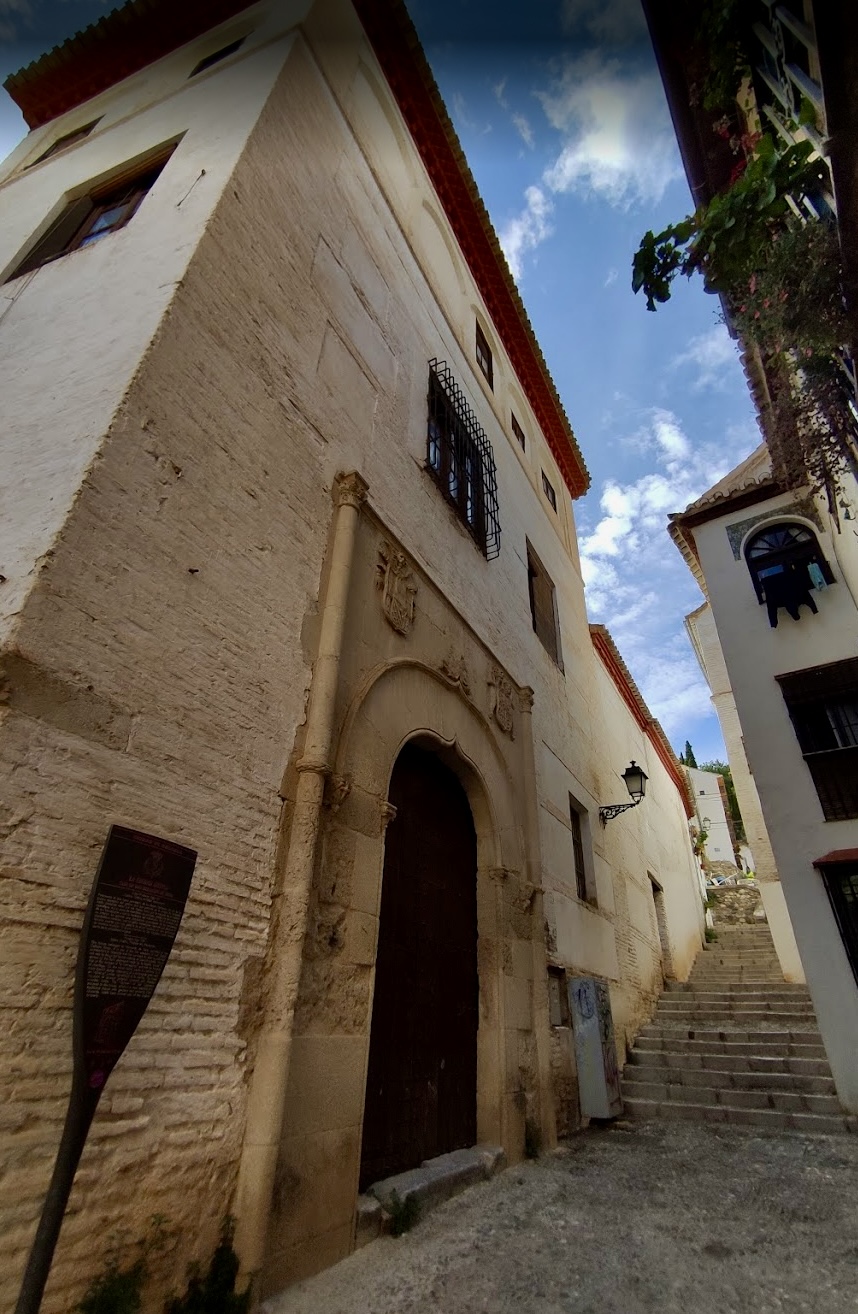
From here, we began our climb up the hill along a narrow road that Raphael described as the “sad walk” because this is the route folks took back in the 11th century onward to bury their dead. And nearby, we passed the Casa de Don Hernando de Zafra, a 14th century Moorish property and one of the only gothic style houses in Albaicin to have survived.
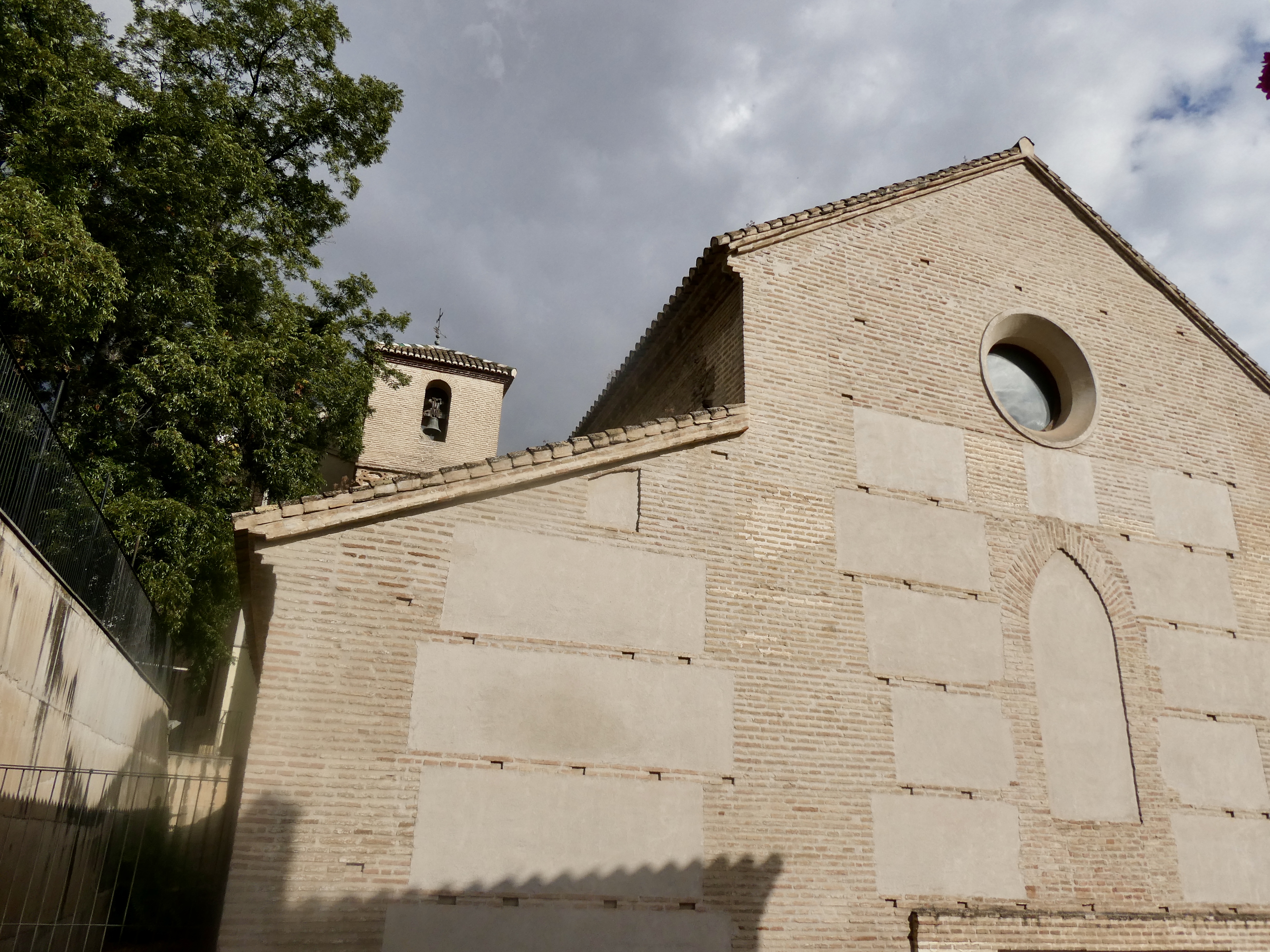
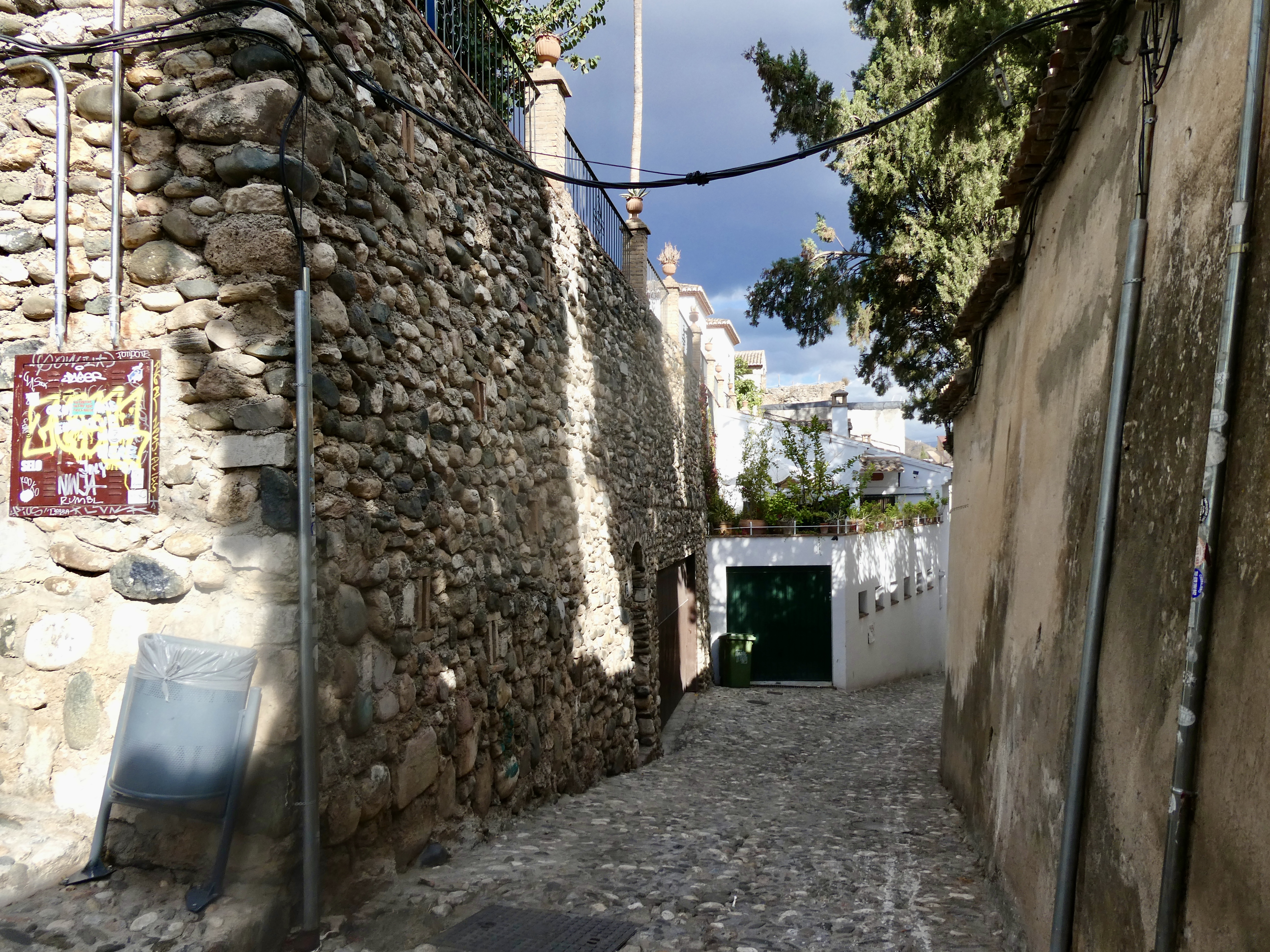
We continued our climb up the hillside walking up more steps and steep paths to reach the Iglesia de San Juan de los Reyes aka the Church of the Traitors. Apparently, the building was a mosque and was subsequently converted into an existing mosque in the 16th century and even still retains the original minaret. The name Church of the Traitors comes from not only the fact that the mosque was changed into a church, but the fact that many of those who began attending the church were former Muslims.
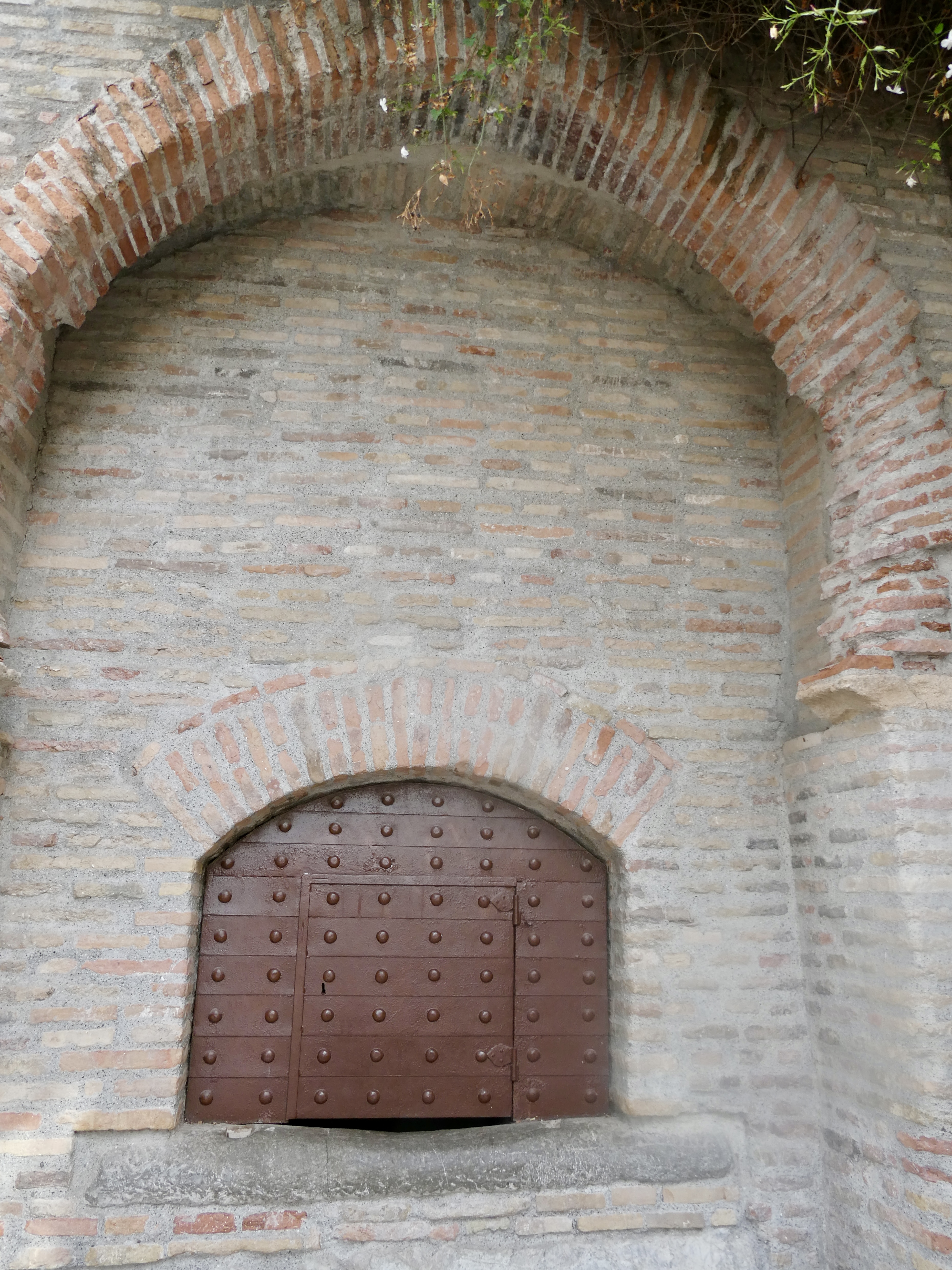
We continued walking the narrow alleys and nearby we saw the first of a number of traditional aljibes, which are essentially cisterns or wells where Muslims would go to draw their water for absolution and to drink.
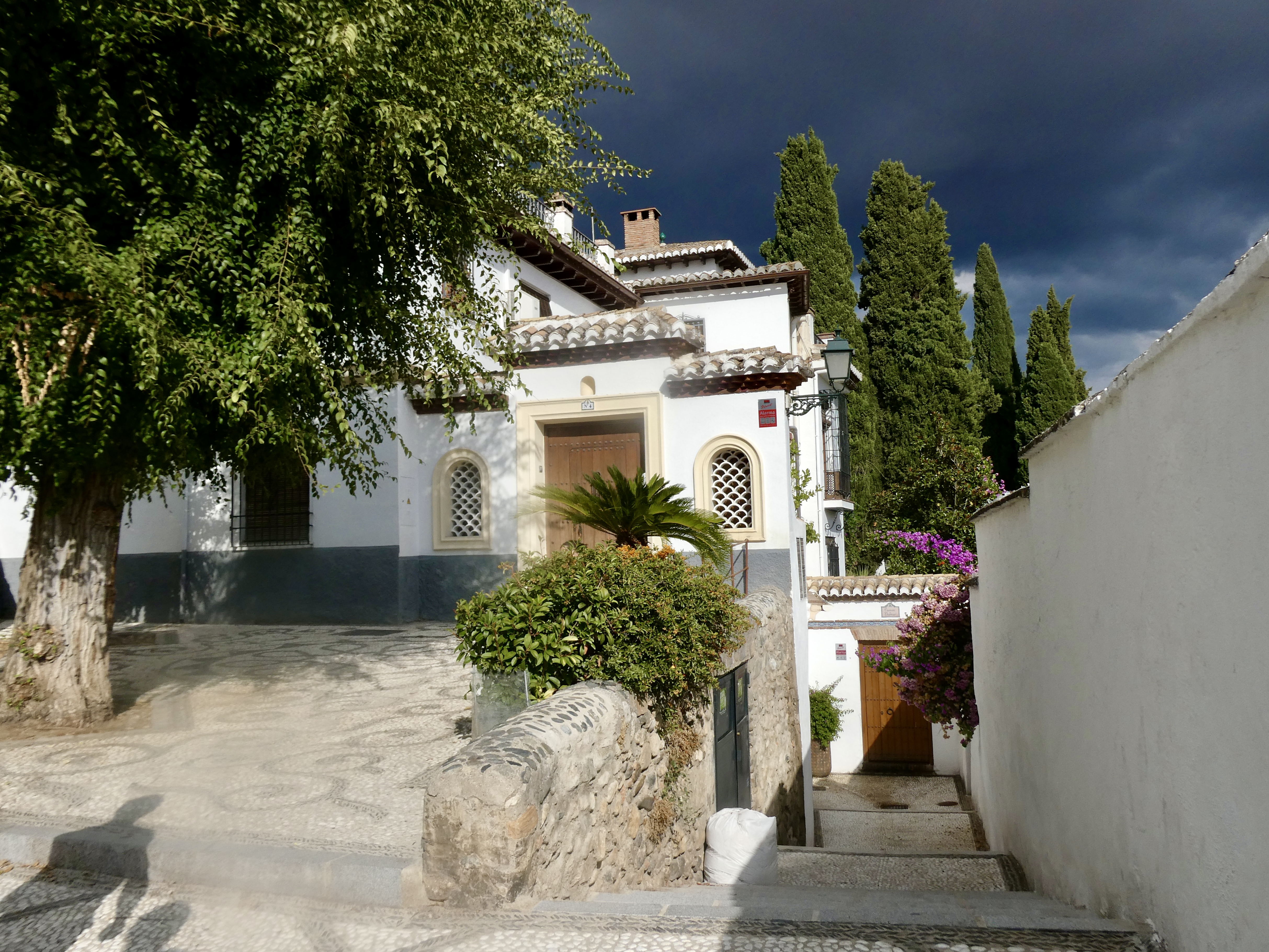
We eventually reached the two-thirds point of the climb and it was here that we began to see many “Carmen” houses, which date to the 11th century. Carmen houses are traditional, walled homes with hidden interior gardens and courtyards with water features, all of which was traditional in Muslim homes. Apparently, many of these homes have small orchards in the gardens featuring a variety of fruit trees. The homes are meant to be secluded with plain, whitewashed walls hiding the secret courtyards inside.
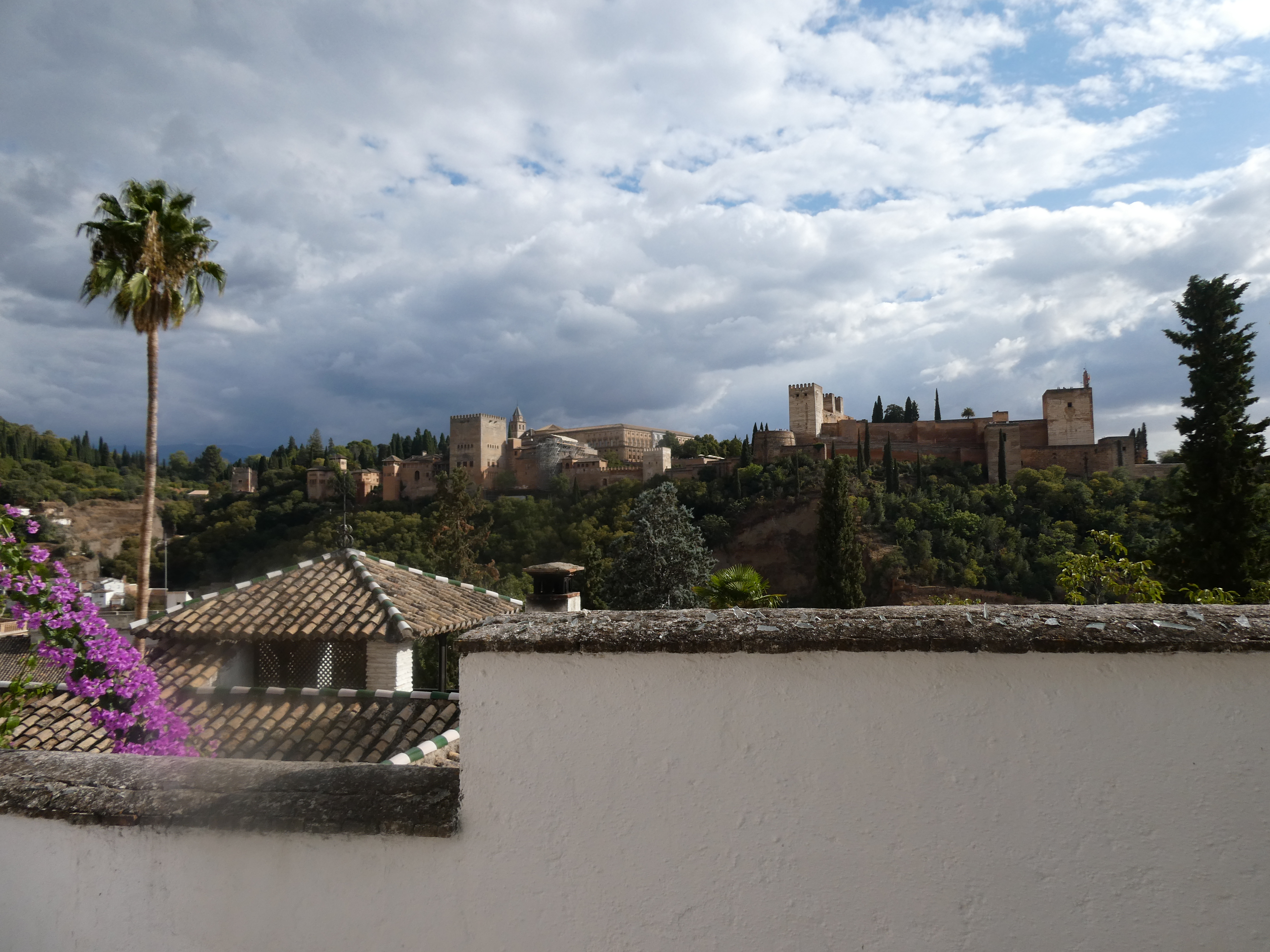
Now it was at this point that we began to see the magnificent views to the Alhambra, the historic palace and fortress that dates to the 13th century and dominates the opposite hillside from Albaicín. (I will be visiting the Alhambra with a private guide on Tuesday.)

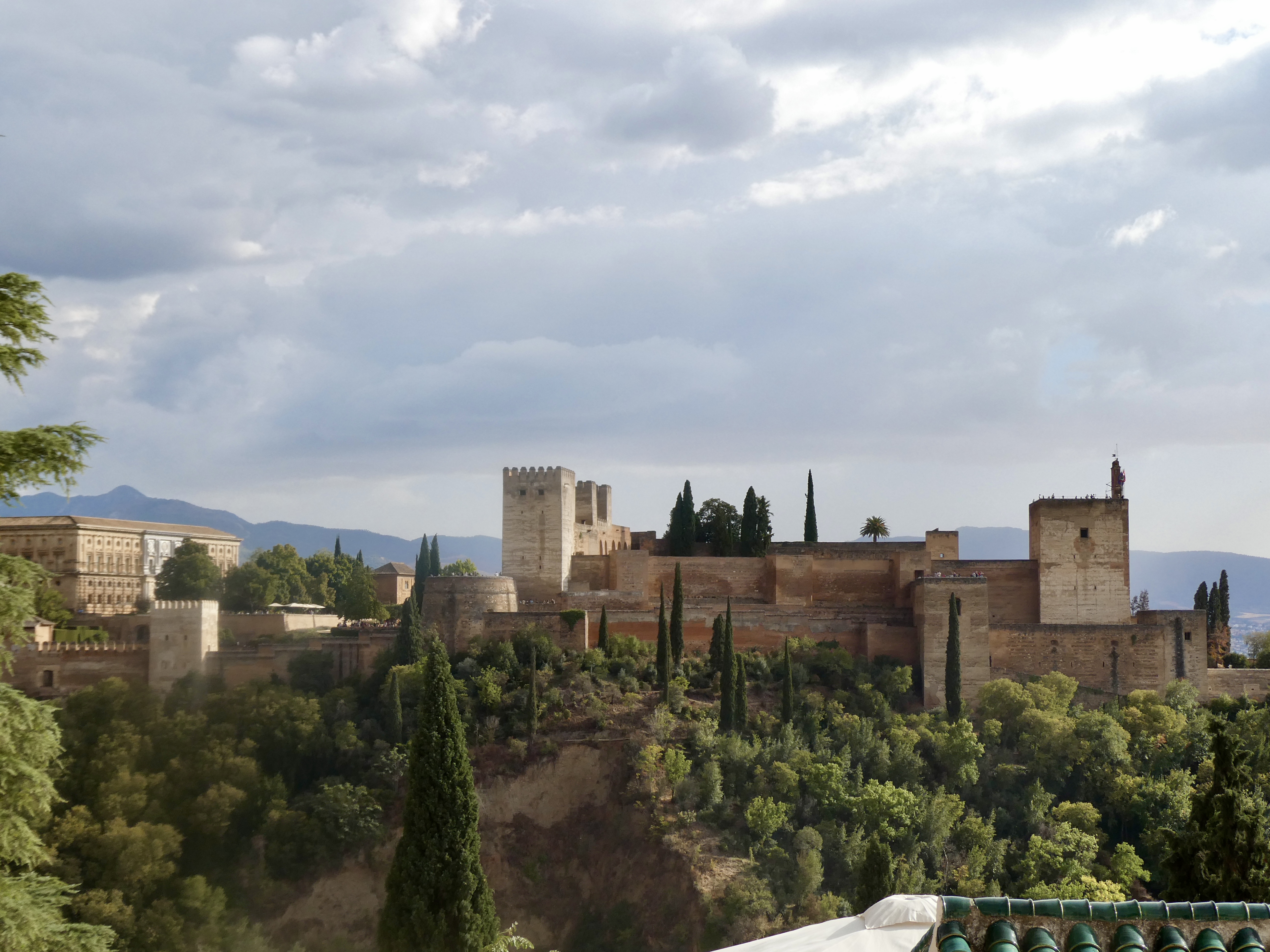
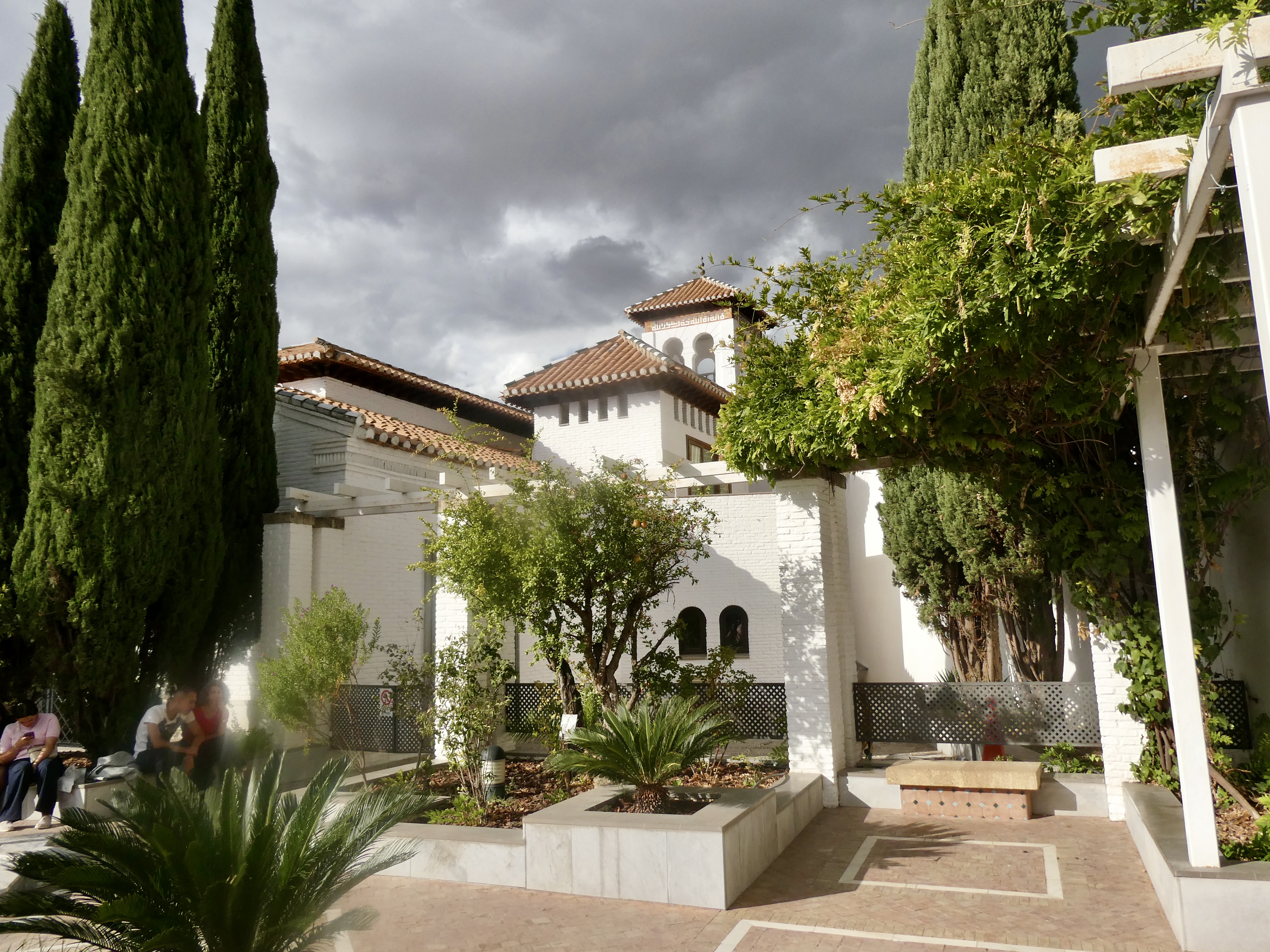
So after taking in some of the Carmen houses, we continued walking the narrow alleys, passing the occasional home with beautiful hanging flowers. We eventually reached the top of the hill fronting the St. Nicholas church and its famous views of the Alhambra and the sunsets (thanks to former President Bill Clinton who apparently made this view spot famous).
However, Raphael advised that there was a viewpoint that was just as nice next door at the Mosque of Granada with the same views, but far less people. So instead of spending time amongst the hordes at the St. Nicholas viewpoint, I walked over to the mosque and took some pictures from there. Far, far better.
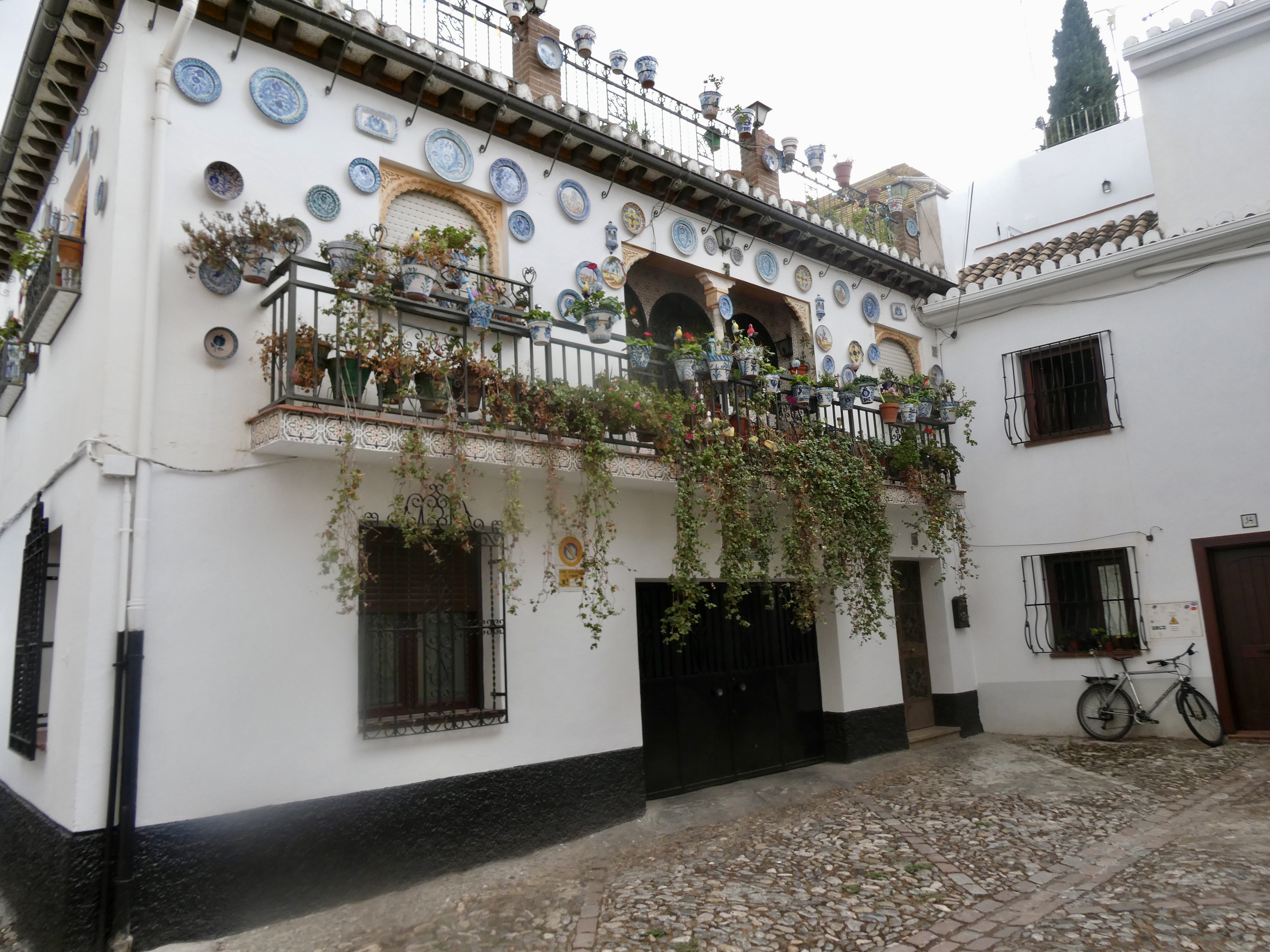

About fifteen minutes later we continued on walking down a bit of a hill before heading away from St. Nicholas viewpoint through an alley filled with homes draped in beautiful Bougainvillea and past the old city walls of Grenada. Once past the old city walls, we entered the Sacromonte area.
Now Sacromonte was first occupied in the 1520s by Gypsies. No one knows where these folks originally came from, although it is suspected that they may have originated from Egypt or India. And the fascinating party of the Gypsy community is that they built their homes into the side of the hillside essentially making cave homes.
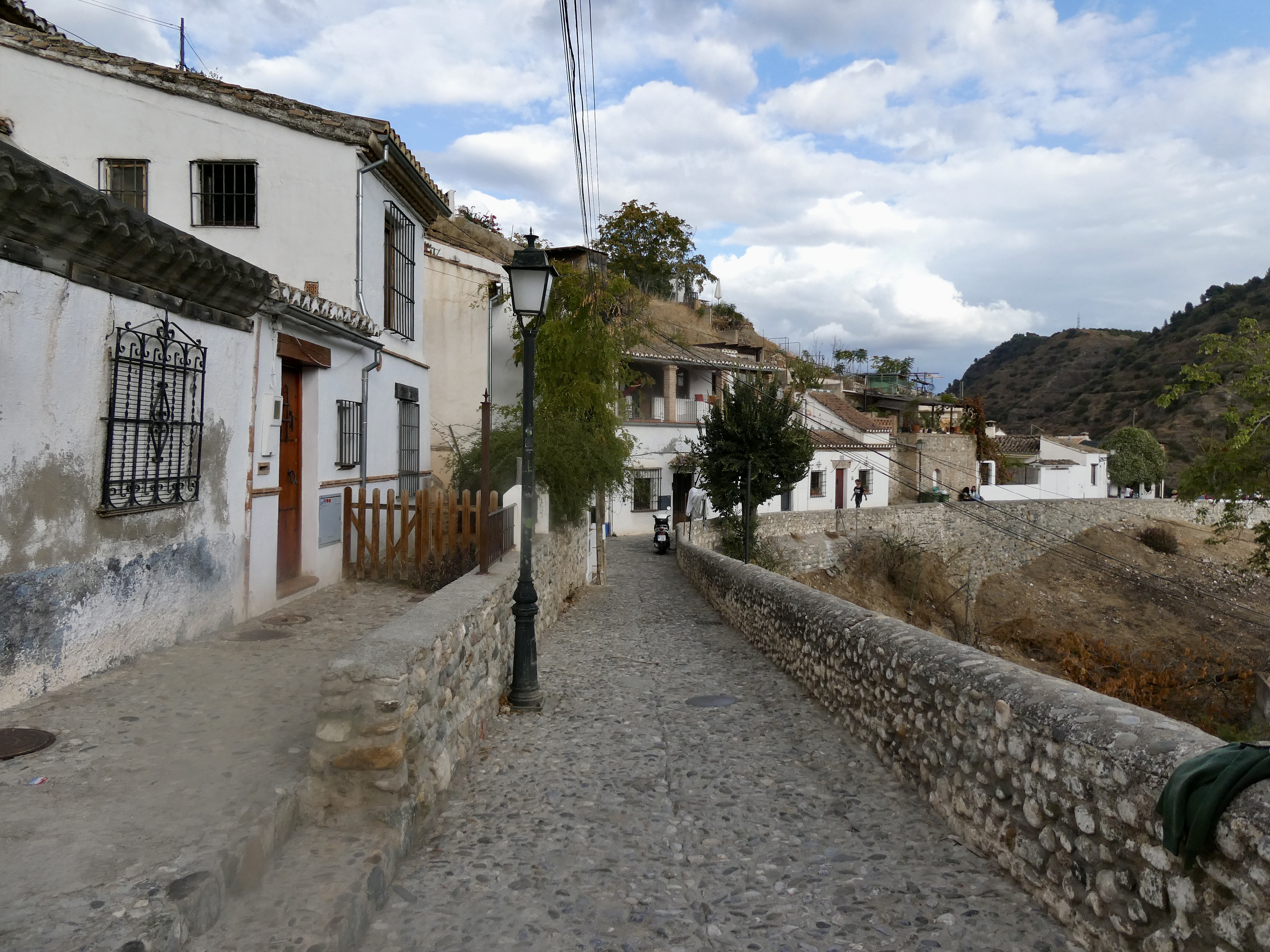

How the Gypsy community came to build their cave homes is not clear. However, the area outside the Granada city walls became filled with marginalized peoples who had been expelled from their homes when the Christians took over Granada. These folks literally had nowhere else to go and since they were outside the control of the church and the Granada administrative authority (meaning the Spanish Inquisition – the group of administrators charged with ensuring the population adhered to Christian beliefs and way of life) they were free to live as they saw fit outside the city walls.
Now in order to construct a cave house, part of the hill where the home was to be located had to be dug out with the exterior area serving as the façade. The soon to be home owner made an arch at the midpoint of the cut in the hillside to serve as a door and the interior was excavated for a variety of rooms including bedrooms, kitchen and living area. The homes were poor lit, poorly ventilated, and lacked running water.
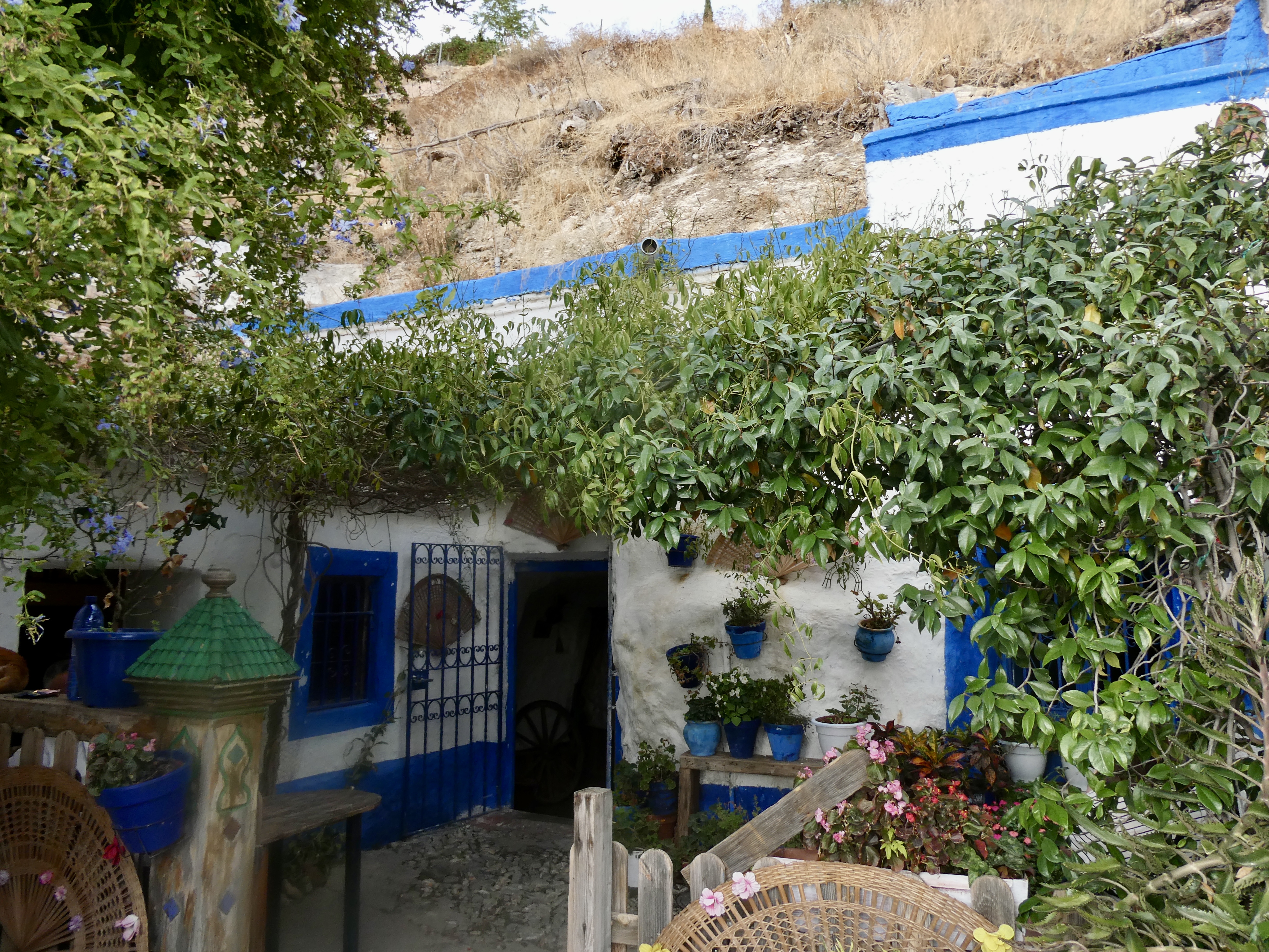
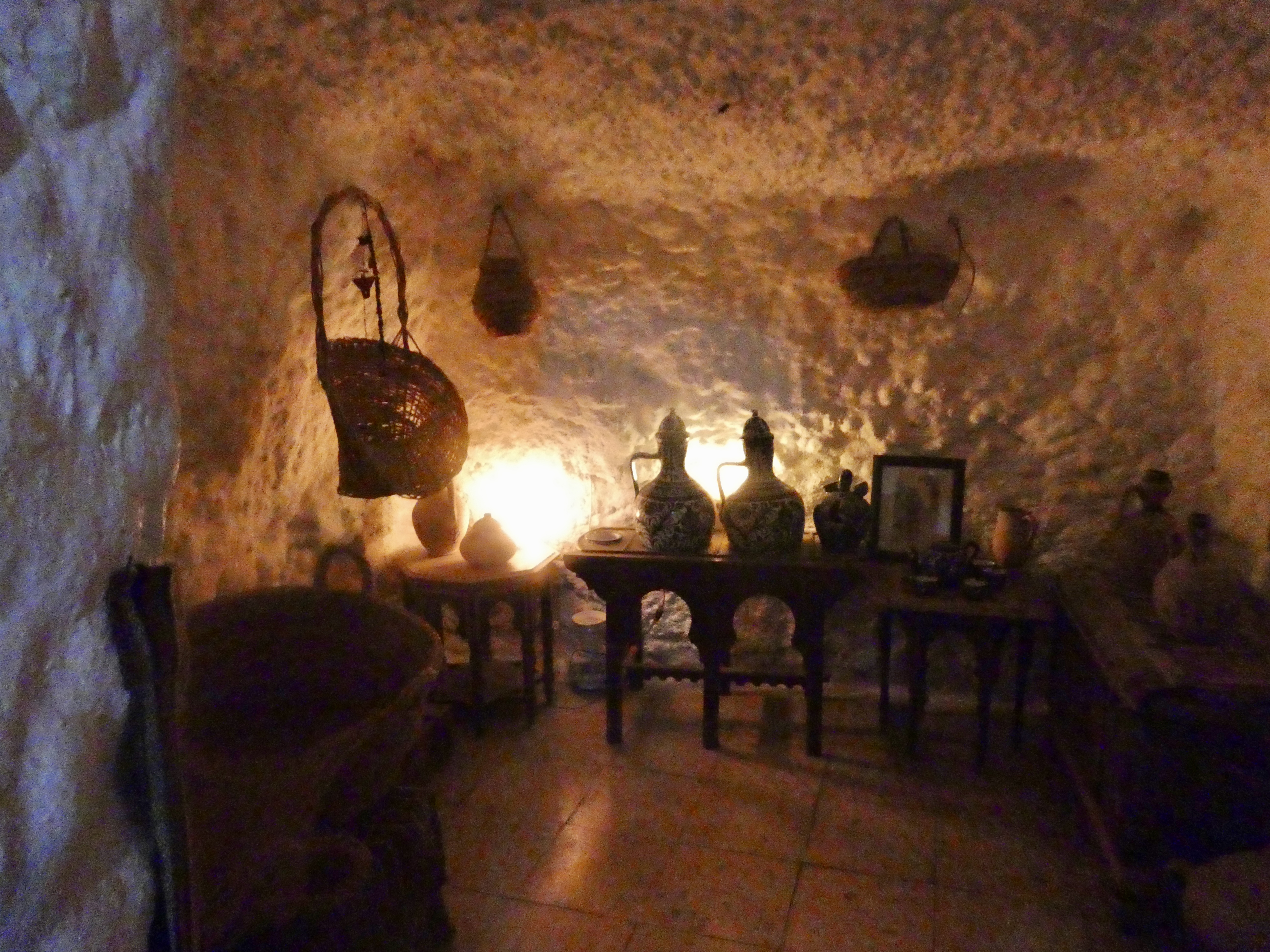

Today, there are still a few cave houses remaining and we were fortunate enough to tour one of the homes. It was as you would expect a cave to look like – dark with low ceilings and small spaces. However, the front yard was decorated with gorgeous flowers and plants making it look very attractive on the outside. In addition, there is now running water, electricity and a ventilation system in the remaining cave homes.
Ironically two nearby cave houses are now Air B&Bs and one is even a restaurant. I don’t think I could have stayed in the cave house though … way too dark and way too claustrophobic.

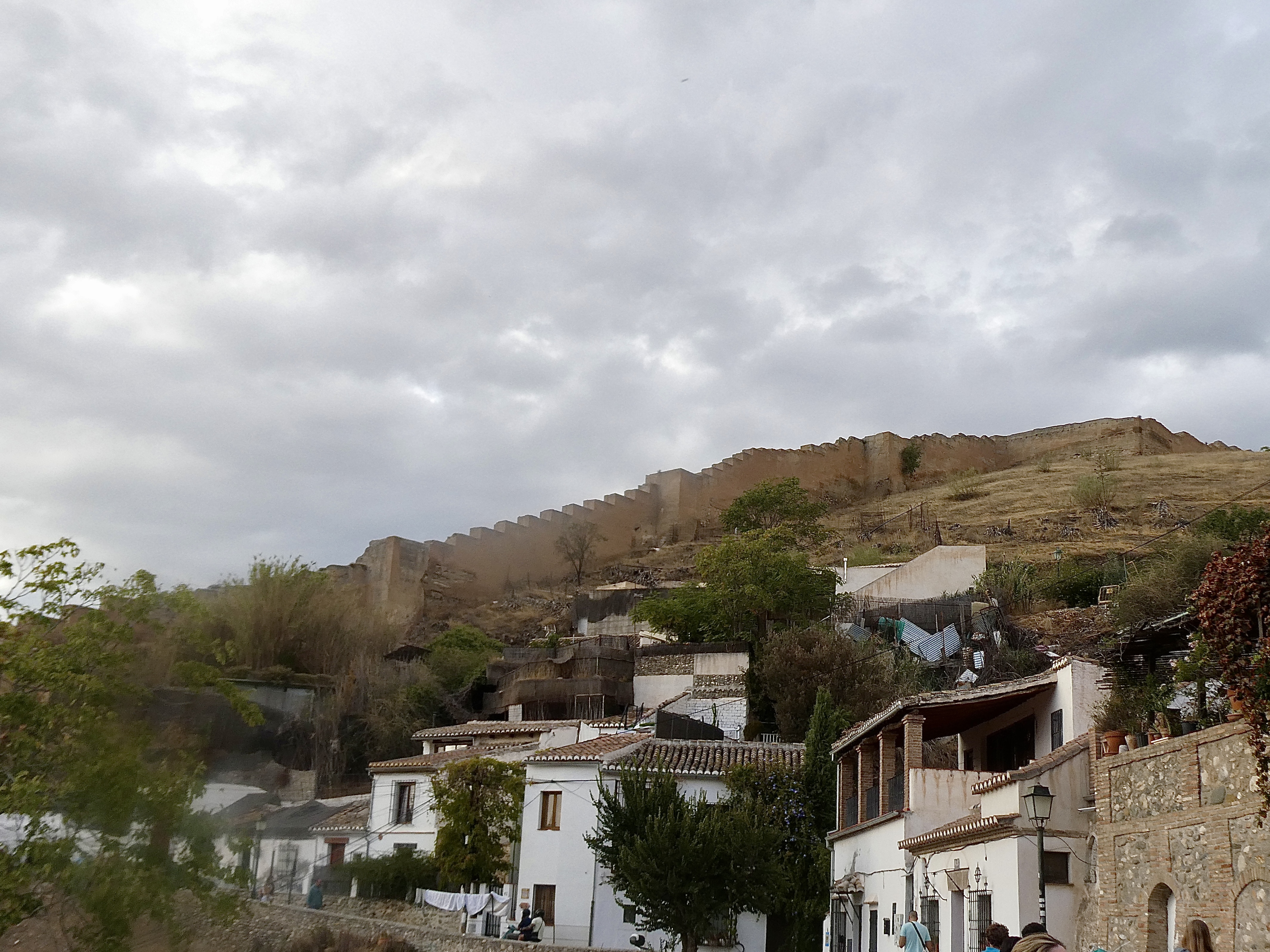
Anyway, after taking in the cave houses, we took in more magnificent views of the Alhambra and the old
city wall before heading back down the hill and the end of the tour.
Tomorrow I have a city highlights tour during the midday and then late in the afternoon I am flying to Madrid in hopes of having the Algerians take pity on me and issue a VISA for my Canadian passport or agree to reissue a VISA for my new U.S. passport I will have on Wednesday. Fingers crossed.
