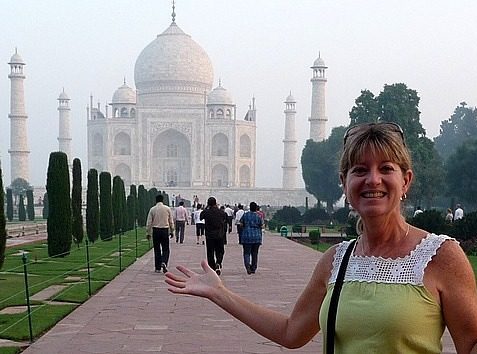

So today, I was off on a short city center tour, which included some of the oldest Islamic buildings in Granada. I met Anna and the rest of the tour group at 11:00 a.m. and we began with Plaza Nueva, the oldest square in Granada that was built in 1506. At one time, the plaza was used as a market place, a parade ground, a place for executions and a setting for processions and festivals. Today, Plaza Nueva (which is only about two blocks from my hotel) is a hub of activity with lots of bars and restaurants surrounding the square.
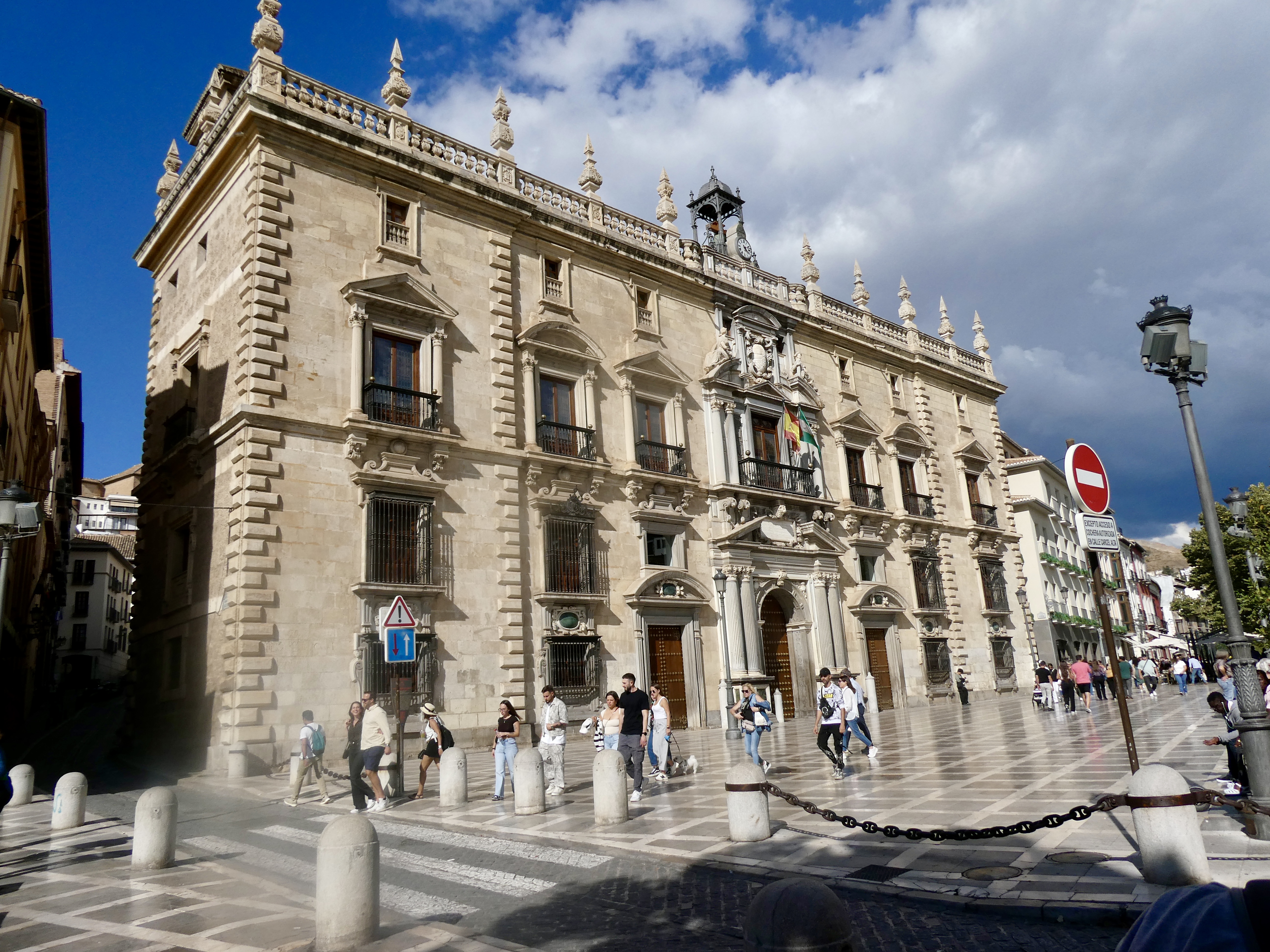
And next door to the square is the Royal Chancellery, which was a court established by Queen Isabella in 1505 that served as a judicial body governing southern Spain. Many Spanish Inquisition trials were held here. However, with the rise of liberalism, the court was abolished in 1834. Today the building is a historical museum.
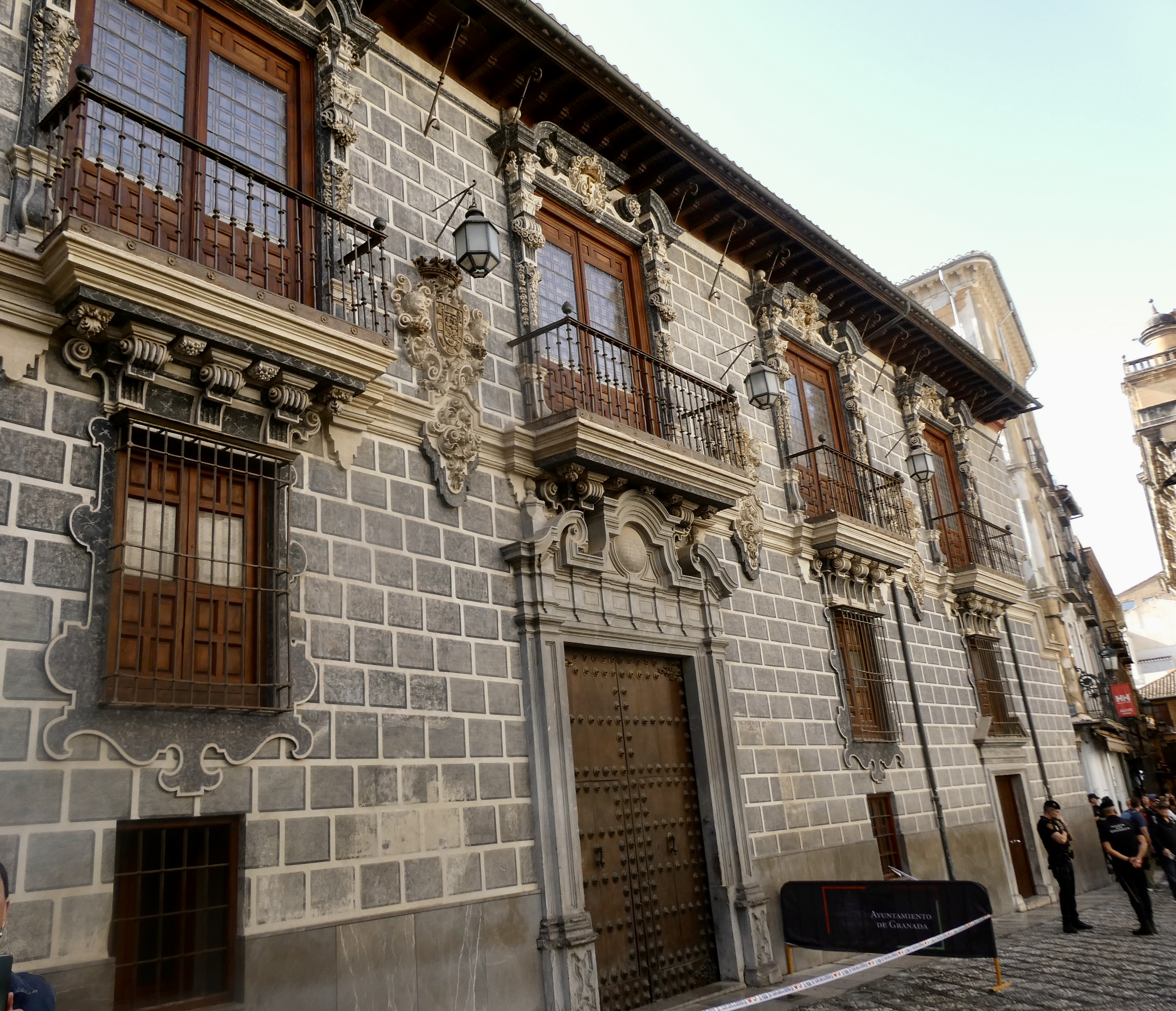
From here, we began our walk towards the middle part of the city and the site of the old Madrasa of Granada. This building was at one time, the oldest university in Granada having been built in 1349. The interior of the tower is apparently quite beautiful with many colours having survived the years. (I may try to visit the site on Tuesday before my tour of the Alhambra.)
Subjects taught at the madrassa included mathematics, medicine and law. However, when the Christians took over, Cardinal Jiménez de Cisneros, who had close ties to Queen Isabella and had the titles of the Grand Inquisitor and Archbishop of Toledo, sought to eradicate all Muslim and Jewish influence and closed the school.
And sadly, in 1499 he started burning the madras’s 5,000 books and manuscripts in what is now Bib-Rambla Square. (And even sadder was that after the book burning they went after all non-believers during the Spanish Inquisition and began burning people in the same square.)
The Madrasa was later used as the Granada city hall, but today the site is used for lectures and book readings.
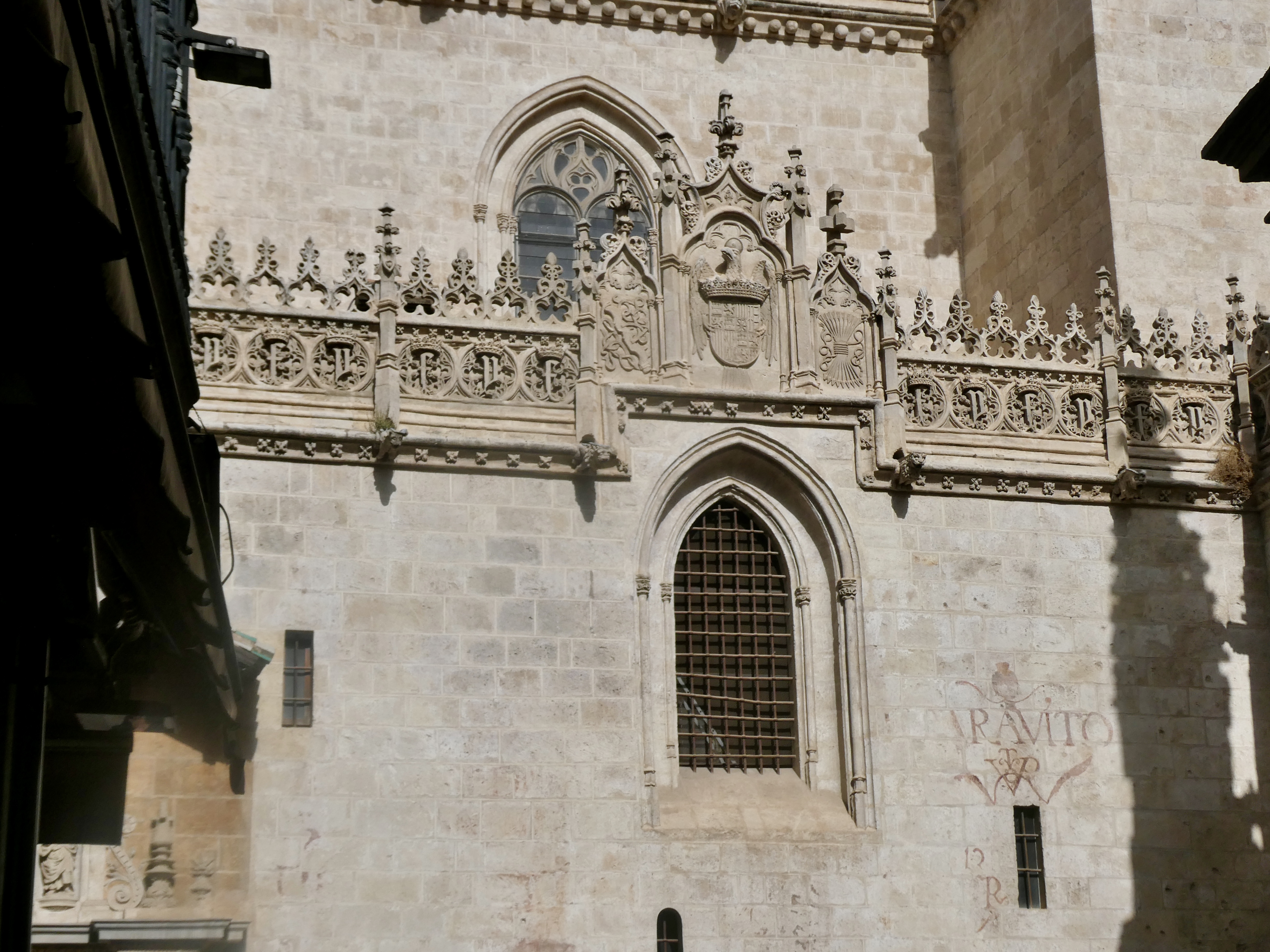
Now directly across from the Madrasa was the Granada Cathedral where we could see the façade of the Royal Chapel, which I mentioned yesterday in my blog was was the first part of the Cathedral to be constructed between 1505 and 1517. The Chapel is the burial place of Spanish monarchs, including Queen Isabella and King Ferdinand.
We then had to do a bit of maneuvering around crowds at this point because it was the National Day of Spain, which, believe it our not, commemorates Christopher Columbus’ arrival in the Americas and there was a parade planned for the area around the Cathedral.
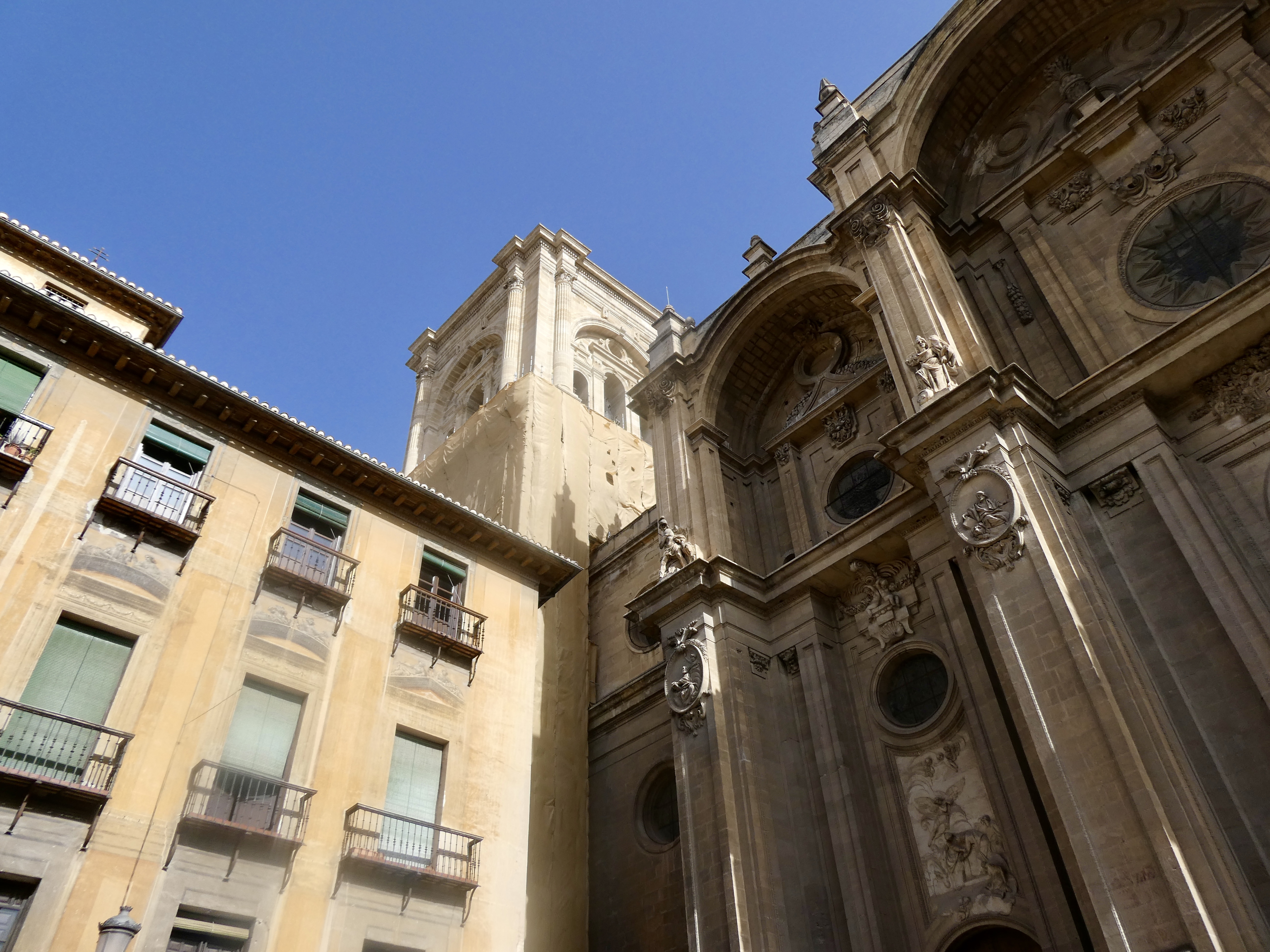
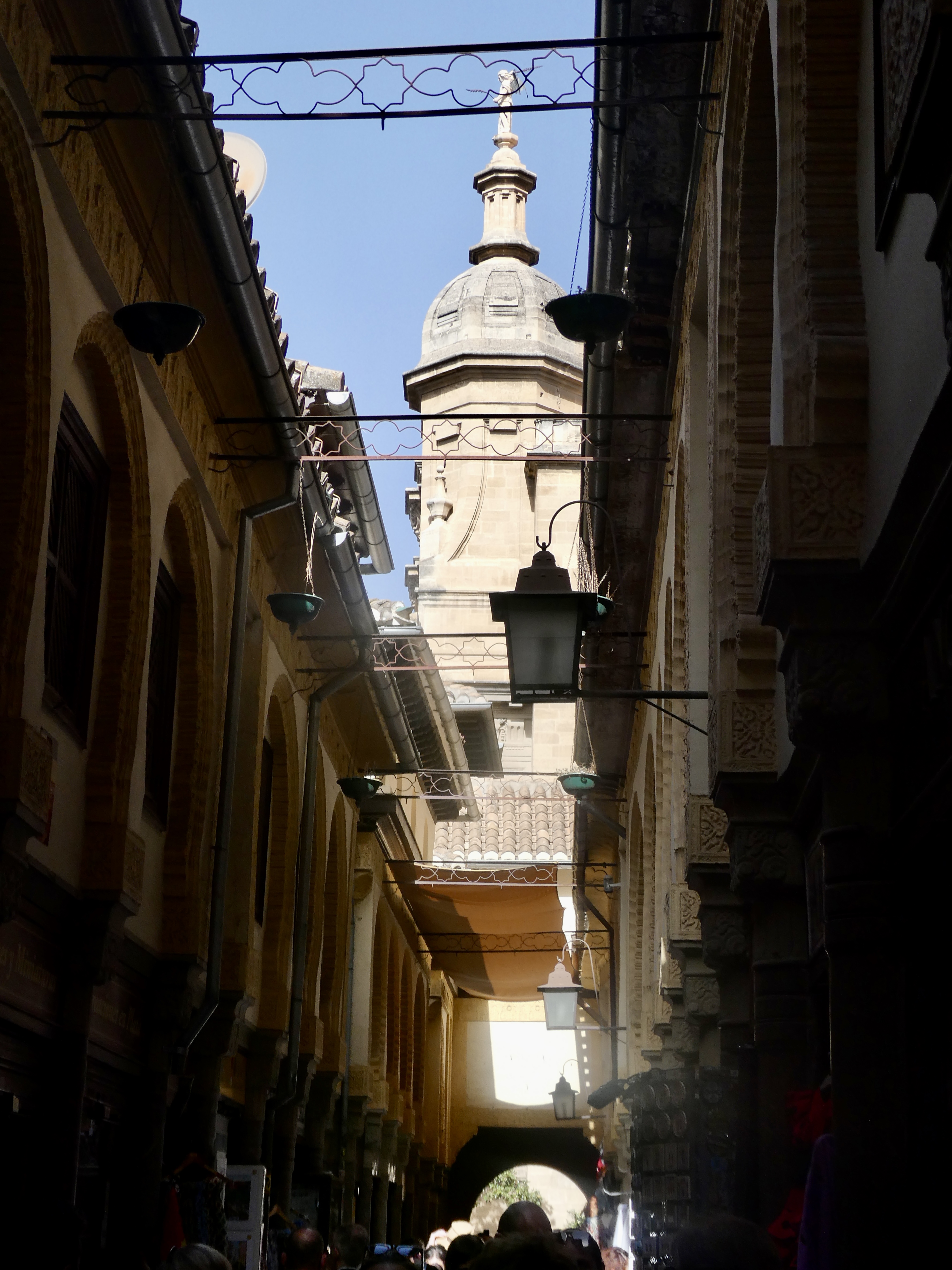
Anyway, after some additional walking through some alleys, we made it to the front of the Cathedral, where Anna essentially repeated what I had learned about the Cathedral yesterday with one tidbit I was not aware of. Apparently, like the Cathedral in Malaga, this Cathedral is missing its second tower and 25 meters of its first tower. Apparently, the Spanish ran out of money, which seems to be a running theme with many of these churches and Cathedrals.
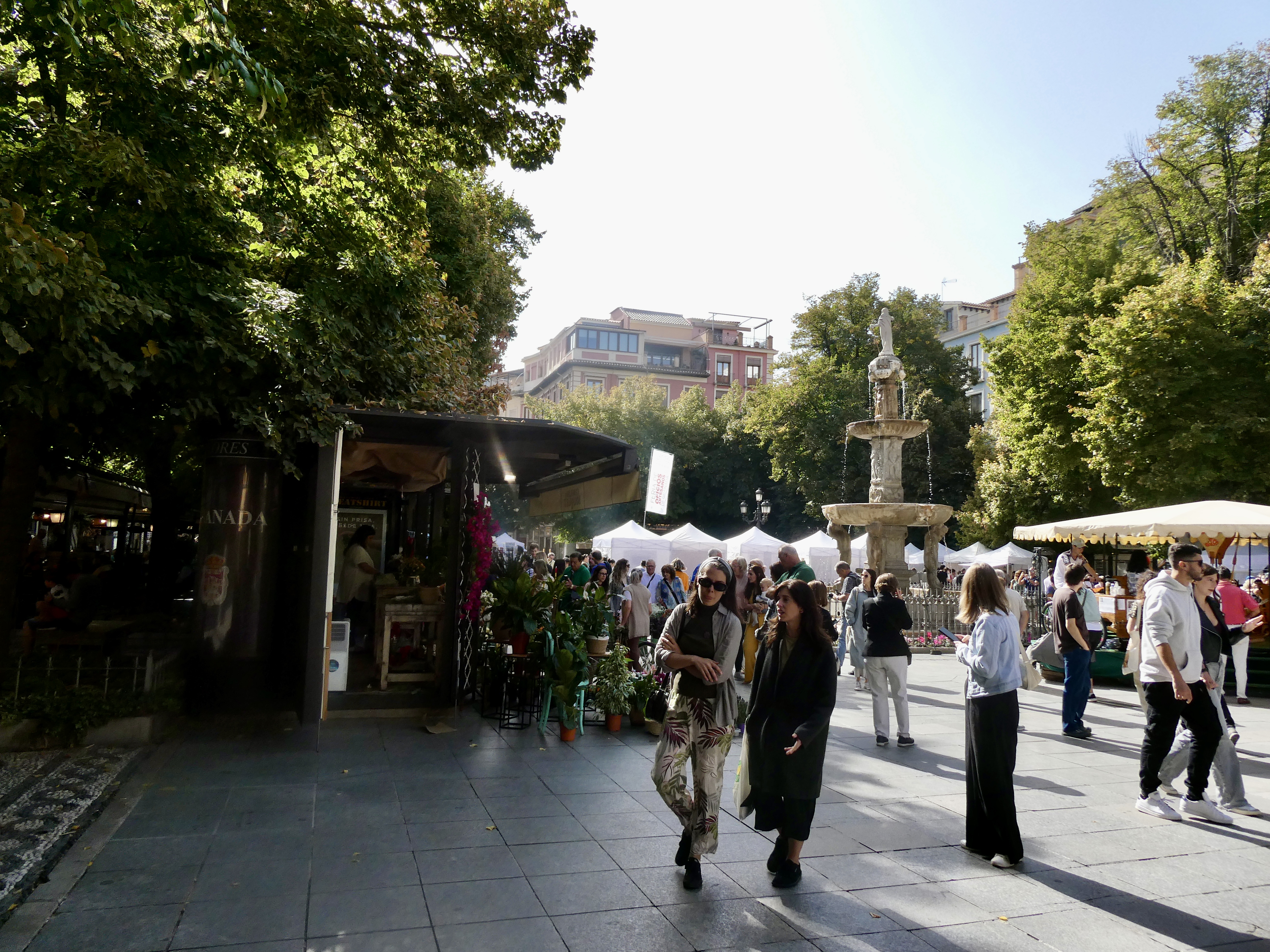
So after taking in the Cathedral, we walked across the square fronting the Cathedral to Bib-Rambla Square, the site of the famous 15th century book burning. Now, surprisingly, there is no commemoration in the square about the book burning or the murders of thousands of nonbelievers, although we learned that Berlin has a memorial to the holocaust that mentions book burning, including the Spanish book burning, as a reminder of what can happen if we do not learn from history.
Today, the square is filled with vendor stalls, a fountain and a merry-go-round and lots of people. And I would bet most wandering the square have no idea of its dark history.

From here, we crossed the square and entered a narrow alley where we began our walk through the Alcaicería or old Muslim souk. The Alcaicería became an important commercial area from the 11th century where merchants sold their wares. Over the centuries, the souk became an important silk market as well as a location for the sale of high end products. Today, the market is filled with shops and stalls selling goods imported from Morocco, including lamps, clothing and food products.
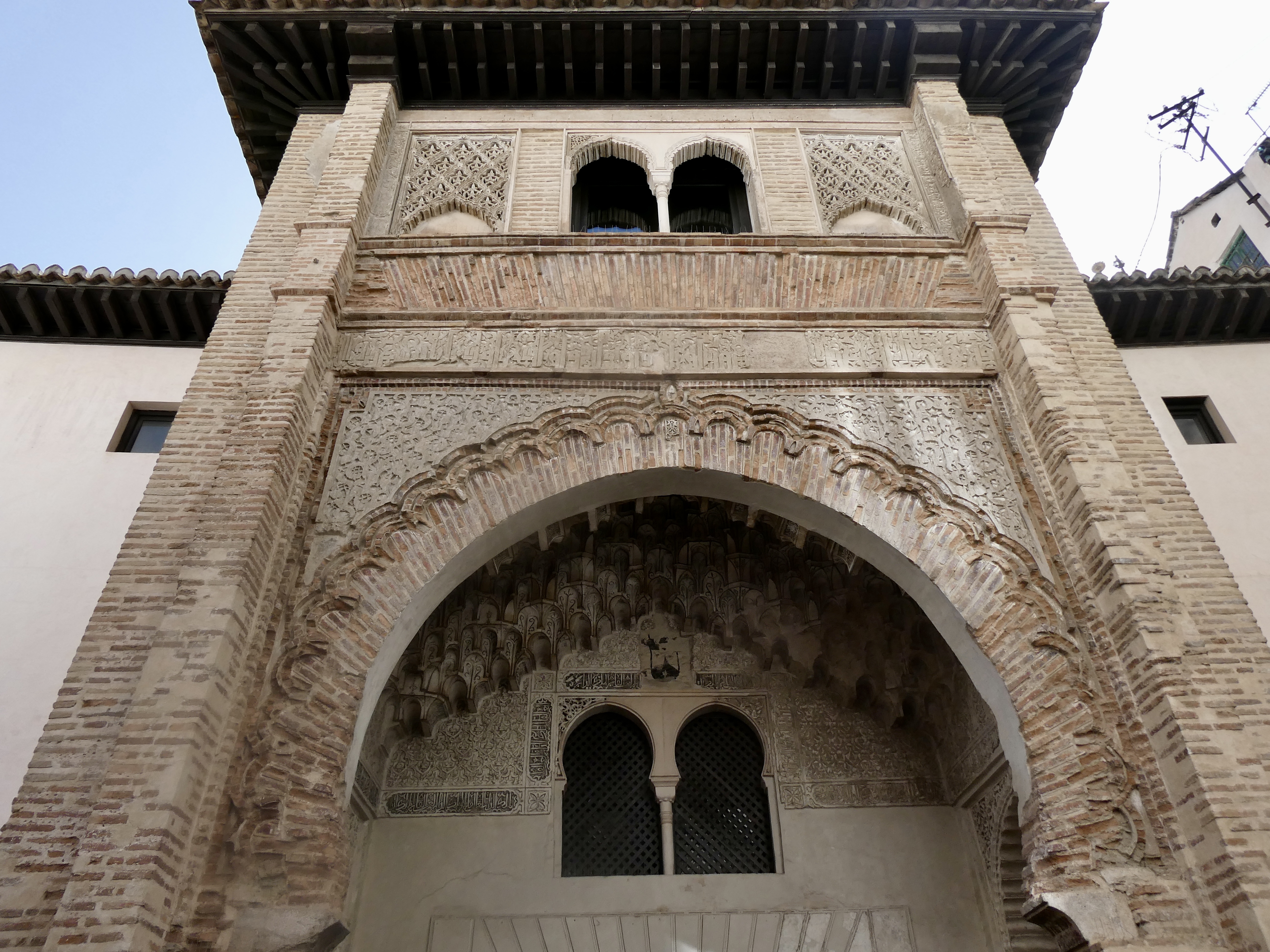
Once we exited the Alcaicería, we walked down yet another narrow alley to the Alhondica Vieja aka Corral del Carbón, the oldest Arab building in Granada dating to 1336. The building was originally used for a grain storage facility with a merchant hostel on the two floors above the ground floor much like the caravanserais of the Middle East. In addition, there were rooms in the hostel that served as a brothel for the lonely merchants.

Now this building was far and away the most interesting building of the day. The façade of the Corral del Carbón was original and inside the courtyard of the building was an original fountain. After the fall of Granada to the Christians, the building became a theater, then a residential building and then a storage facility for coal (hence the nickname Corral del Carbón). The building was eventually declared a national monument and through the years restored to some of its former glory. The whole history of the Corral del Carbón was pretty fascinating.
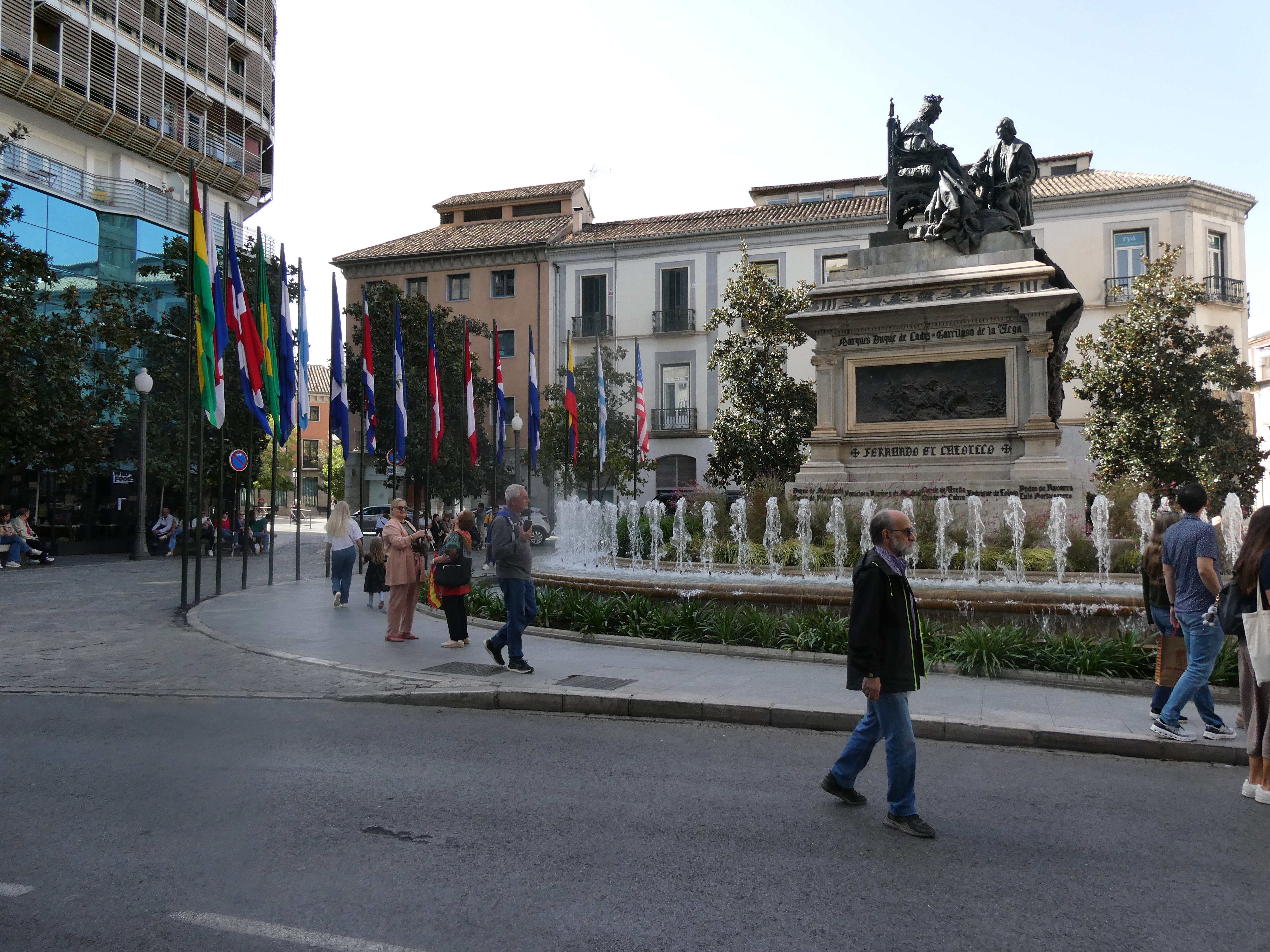

So from here, we doubled back down the alley and out onto one of the main streets in Granada where we stopped at the Monument to Isabella the Catholic. The statue depicts Christopher Columbus presenting to Queen Isabella and Christopher Columbus the contract evidencing the agreement between the two for Columbus to embark on his search for the new world in 1492 and for Queen Isabella to finance the project. The statue in located in Plaza Isabel la Catolica.
Now at this point, it was time to head uphill to the Lower Albaicín area of Granada. Yesterday, I had visited this area, but today, we walked around a part of Albaicín we had not visited yesterday. And fortunately, the climb was not nearly as rigorous.
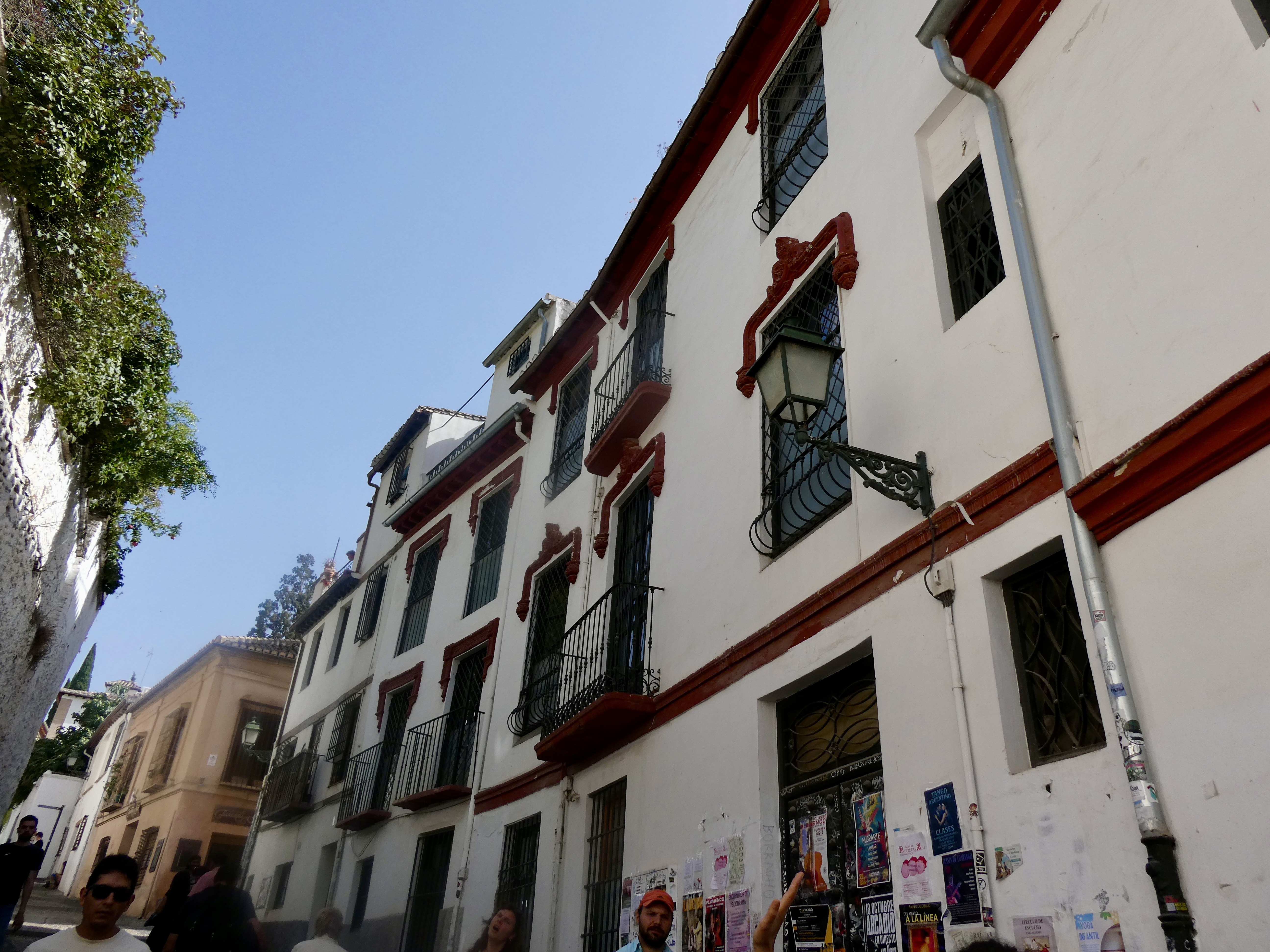
First up was the San Gregorio – Iglesia de San Gregorio Bético. This church was located at the start of Albaicín’s San Gregorio slope. The 15th century church had a whitewashed façade and was attached to a convent housing a congregation of nuns. Now these nuns, like the nuns at the convent in Madrid, only speak an hour a day and do not let outsiders see them. And there must always be at least one nun in the church 24 hours a day “ensuring that Jesus is never alone”. The nuns inside the church are completely clothed in white from head to toe and sit on the other side of a barrier separating them from the regular folk.
We were told that it is rare to see the nuns and many people who visit the church don’t even realize that the nuns are sitting in the church covered completely in white. (This is relevant later.)

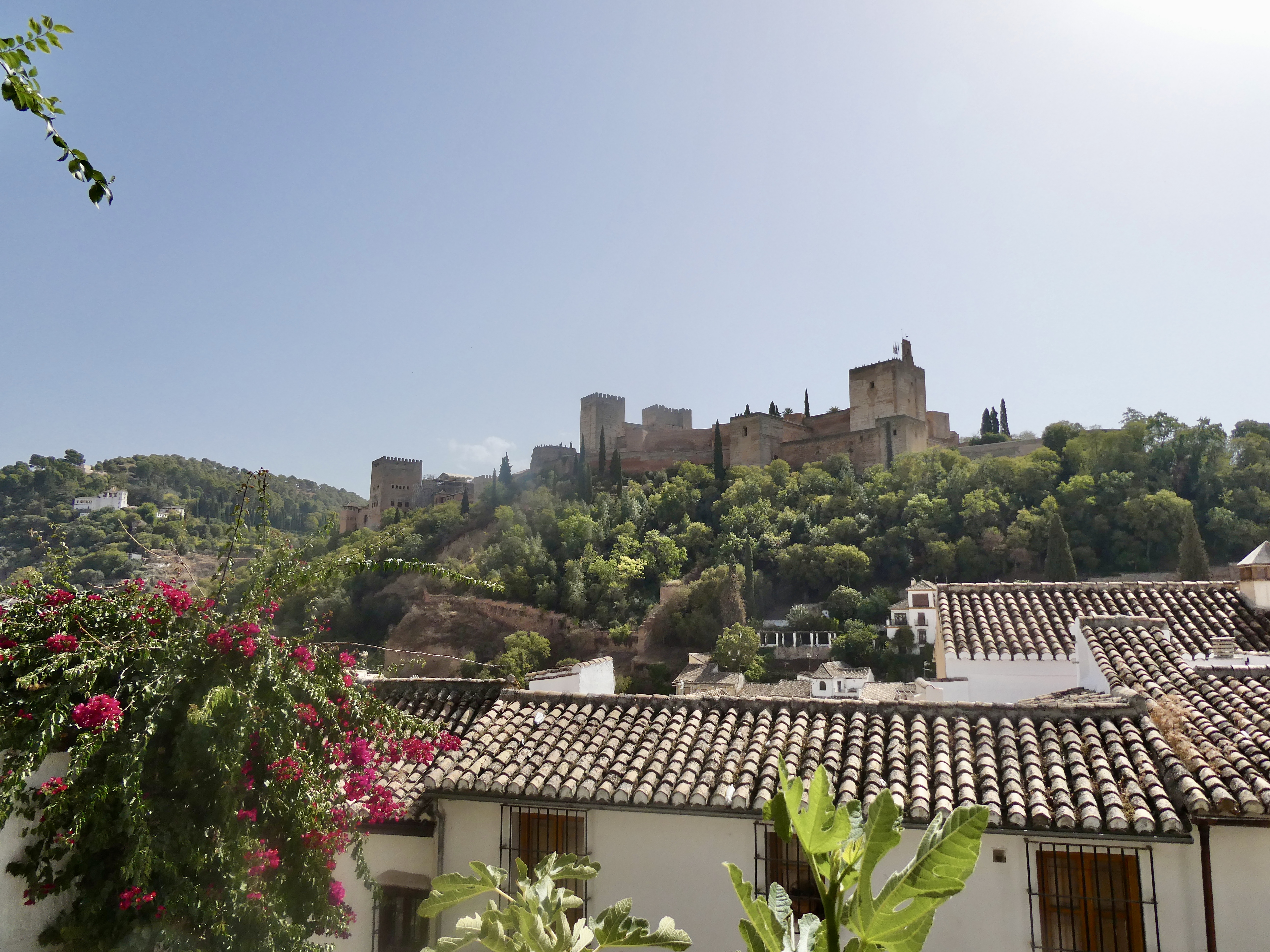
Anyway, from here, we wandered up the hillside passing more Carmen houses before ending the tour at yet another viewpoint of the Alhambra. Now this viewpoint was not as nice as the one at the mosque yesterday, but was nevertheless pretty awesome.
So with the tour over, I walked back down the hill and decided to pop into the San Gregorio Church to take a look and as I opened the door, I found myself staring face to face with a nun clothed in white. Holy Crap. She immediately moved away and a woman and man who were leaving advised that the church was closed, but would reopen at 5:00. I was so shocked to see the nun in white, I could only manage a “Gracias” and hightailed it out of there. Certainly a new one for me.
Anyway, after the tour I packed a small bag and made my way to the airport for my flight to Madrid. I plan to be at the Algiers embassy when it opens at 9:00 a.m. tomorrow in hopes they will be able to give me a replacement VISA in my Canadian passport. And then on Wednesday when I stop in Madrid to change trains to Valencia, I will head over to the U.S. Embassy to replace my U.S. passport.
