So today I took a cab over to Kyoto Station and from there took a train to a suburban area of Kyoto known as Arashiyama, famous for its bamboo forest. And while I was certainly going to see the bamboo forest, there were other sites I would be visiting.
Once I met my guide Masa, we (a family of three from Hungary and a couple from South Africa) left the train station and walked several blocks to the Seiryoji Temple. Now the Seiryoji Temple, which dates to the 10th century (although the present buildings only date to the 18th century) is famous for being the home of a copy of the Udayana Buddah, which is said to be the actual likeness of a 37 year old Buddha. Now, unfortunately, we were not able to see the statute, which only comes out at certain times of the year, but I found the little temple interesting for other reasons.
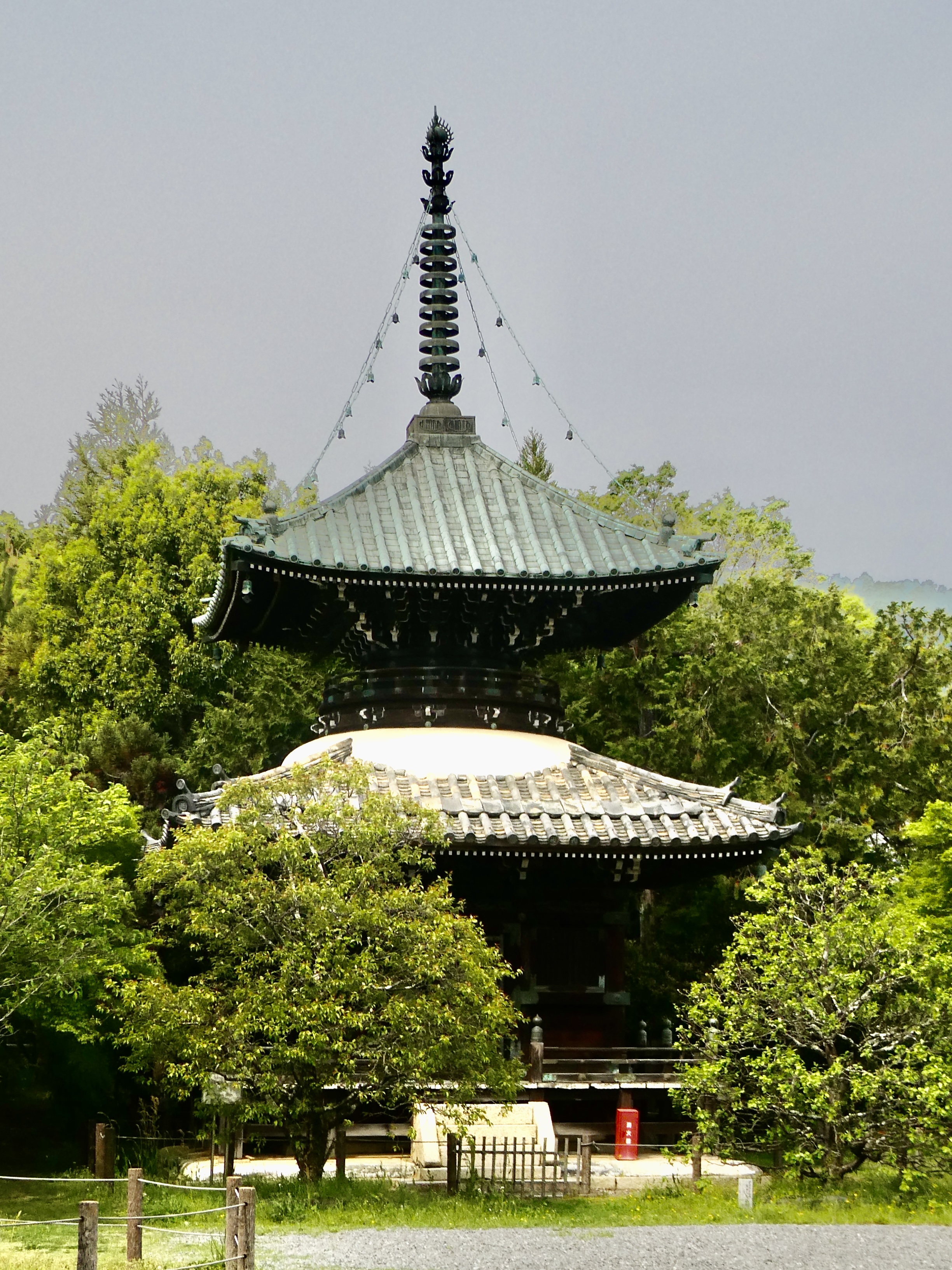
As we walked through the main gate, I was immediately attracted to the tiny (two story) Taho-to Pagoda. Now, given the size of the pagoda, there was certainly no remnants of Buddah inside (important, larger pagodas usually have something relating to Buddah inside the building), but what fascinated me is that no one and I mean no one was paying any attention to the tiny little pagoda sitting off by itself. I kind of felt sorry for the building.

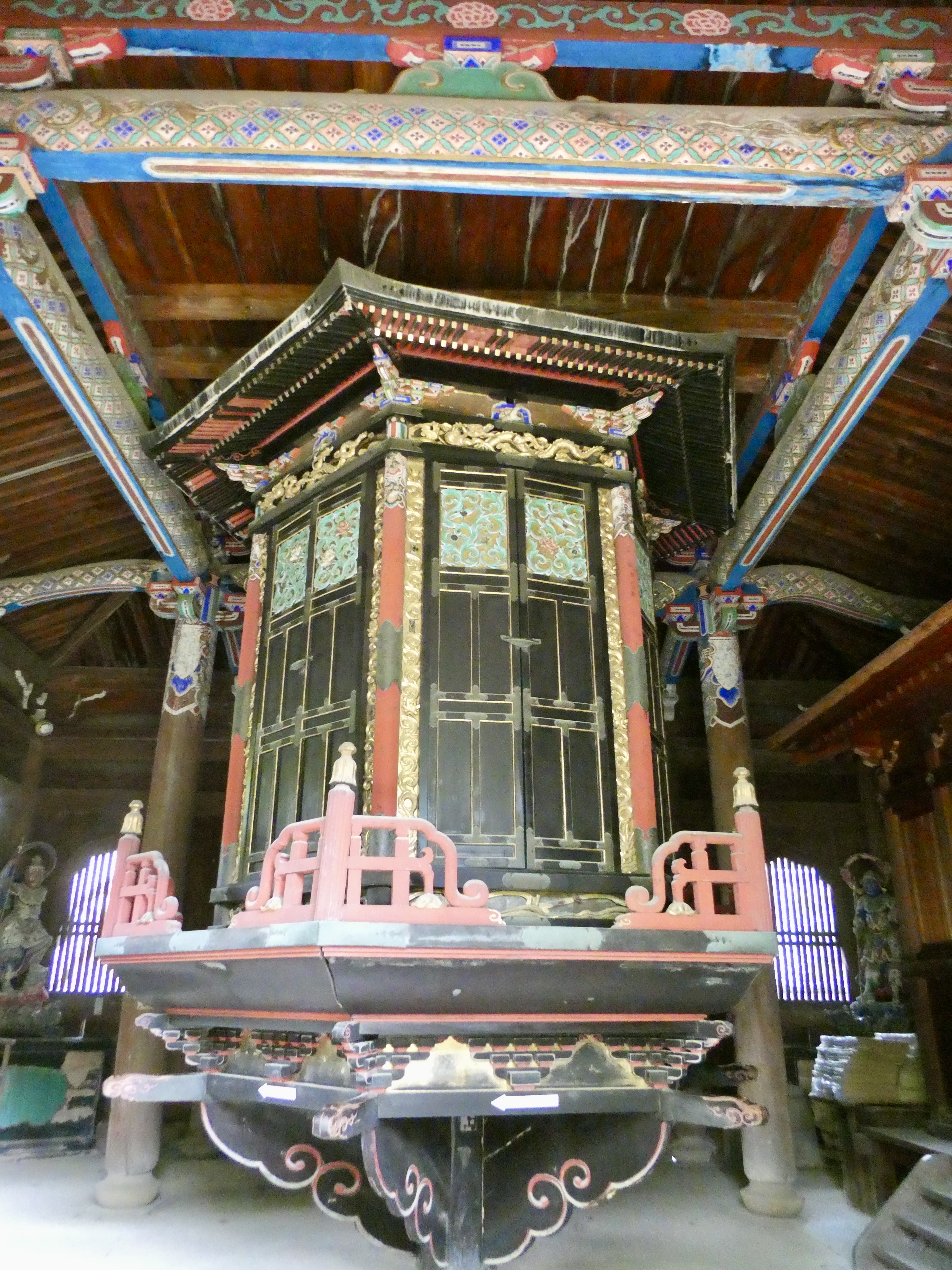
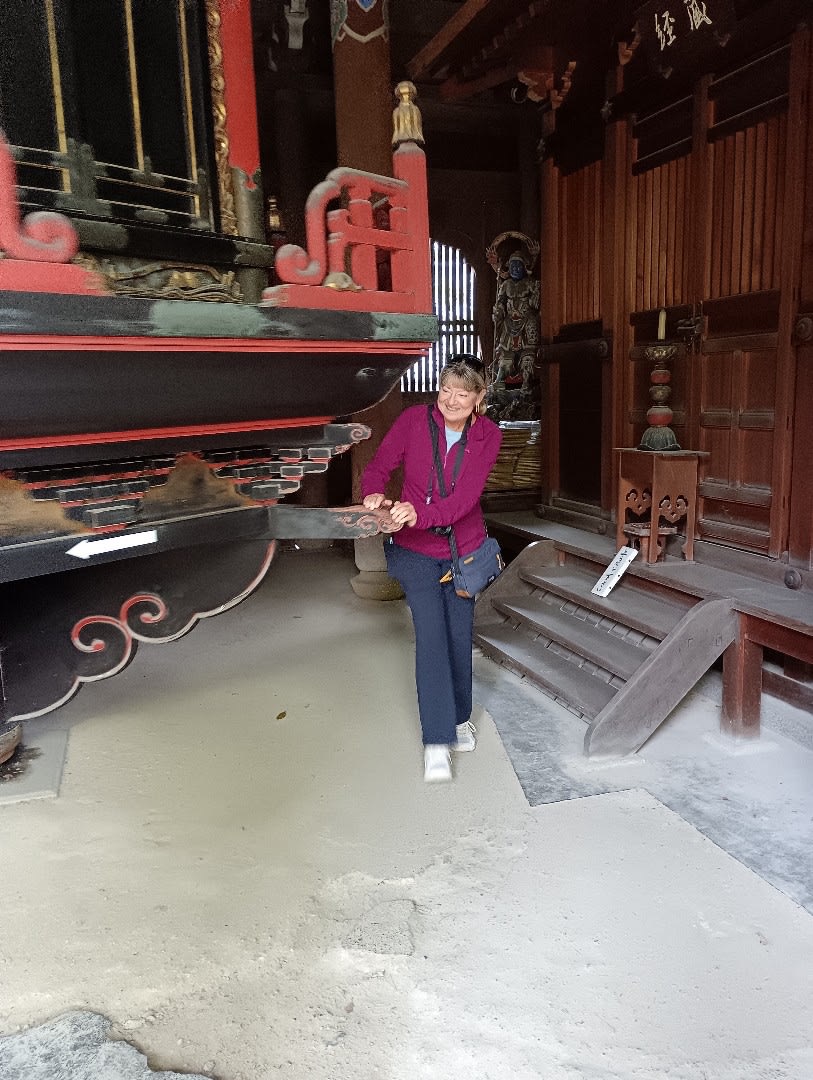
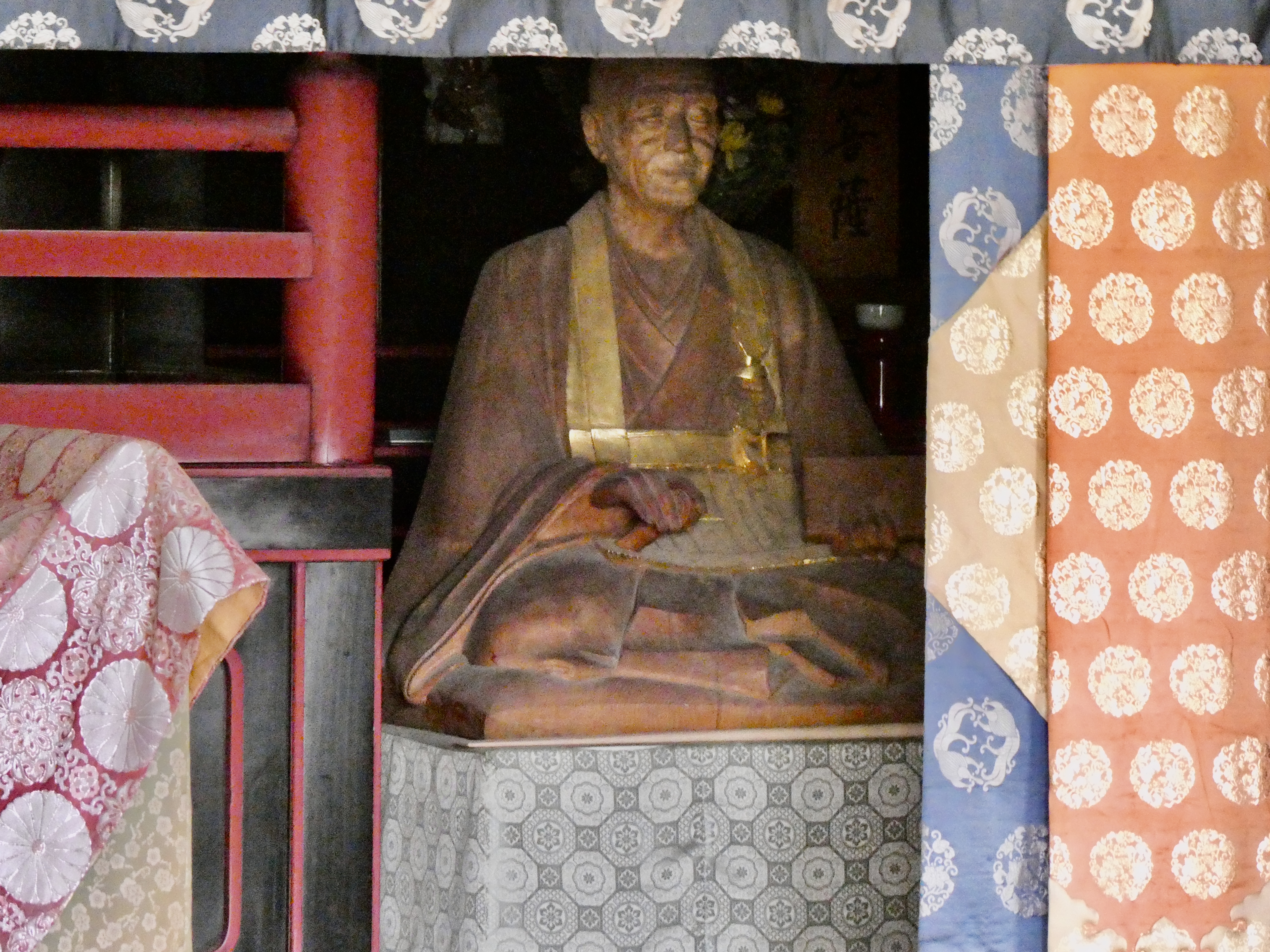
Anyway, we moved on through the site and took a right towards a building that Masa did not seem to know much about even though we were paying to go inside. First, there were three very old statutes in the front of the building believed to date to the 14th century. I later found out that the statute was of Chinese Buddhist Fu Daishi, who invented revolving sutra shelves, along with his two sons. And why this was important is because the building housed revolving sutra shelves. It is said that if you turn the revolving shelves, you do not have to recite the sutra (which is about 100 pages long). I took a spin at the wheel, although I had no intention of reciting the sutra today.
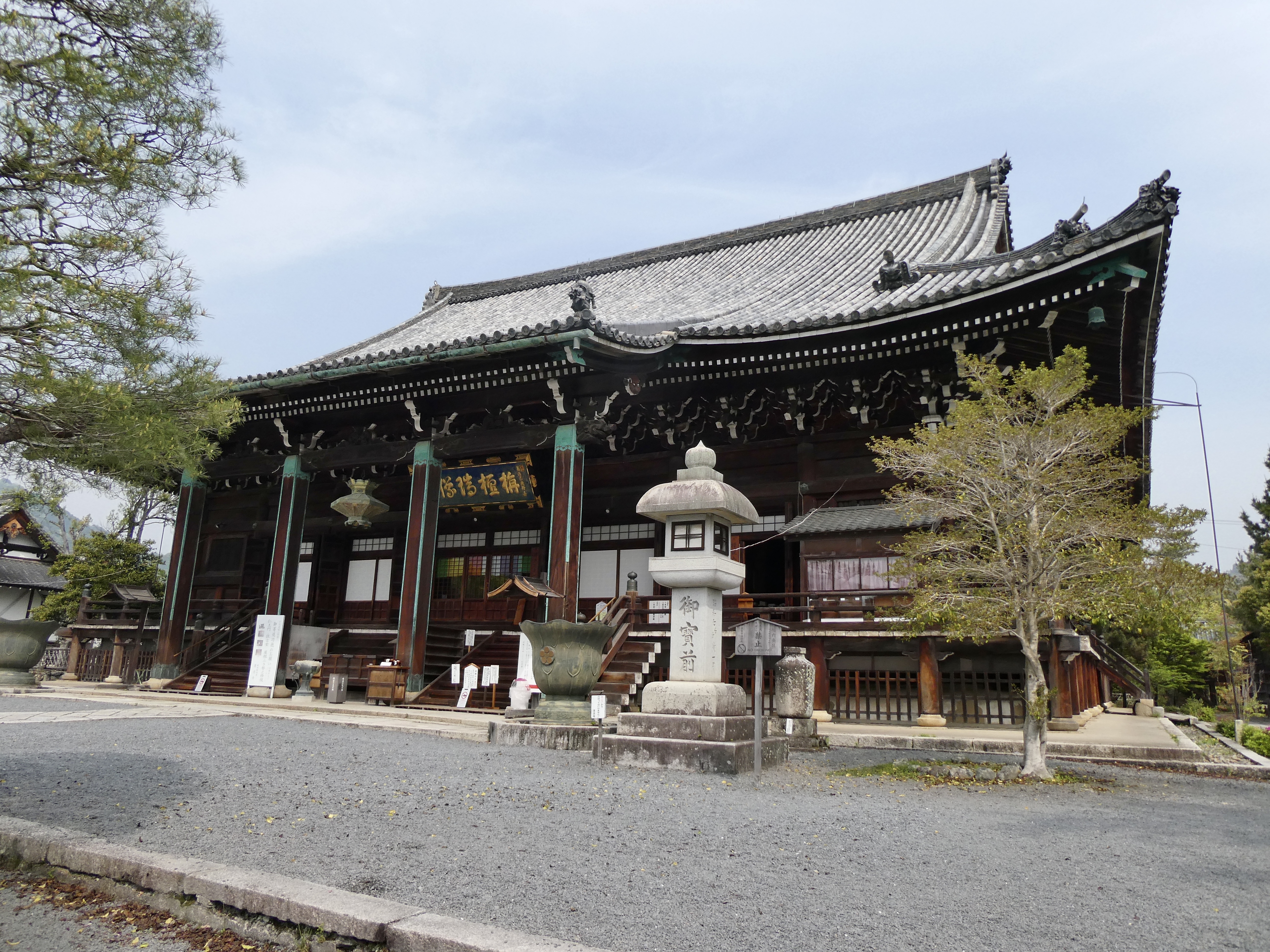
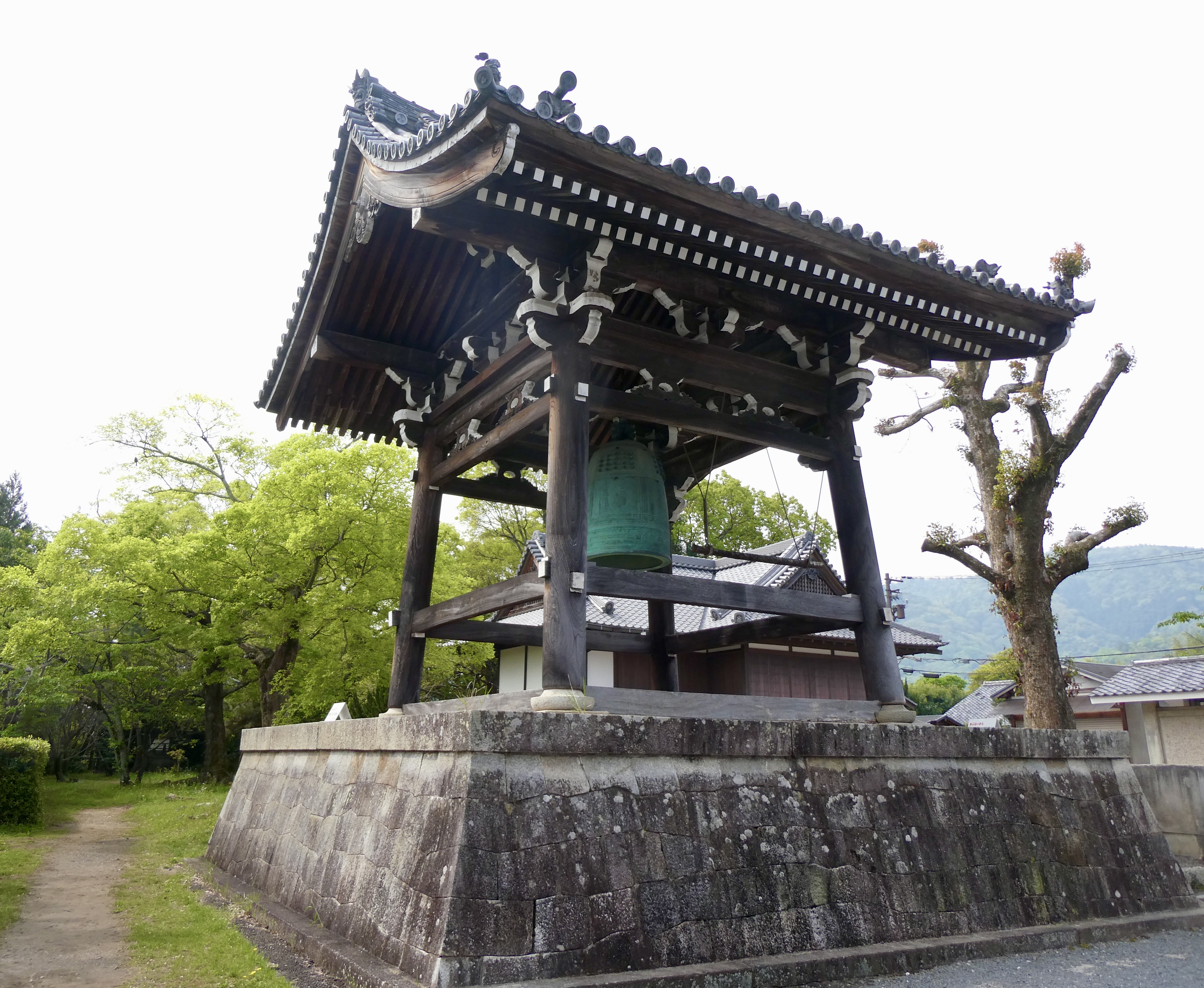
We then walked to the main hall and had a look at the exterior, which was pretty meaningless given that the most important object at the temple was inside this building, but we could not go inside. From here, we moved past the giant bell (found at every temple), which is rung 108 times on December 31. Why 108 times? Apparently, there are 108 sins in Buddhism and prior to the New Year, the symbolic ringing of the bell 108 times wipes the slate clean and you can start with your bad ways all over again on New Year’s Day.
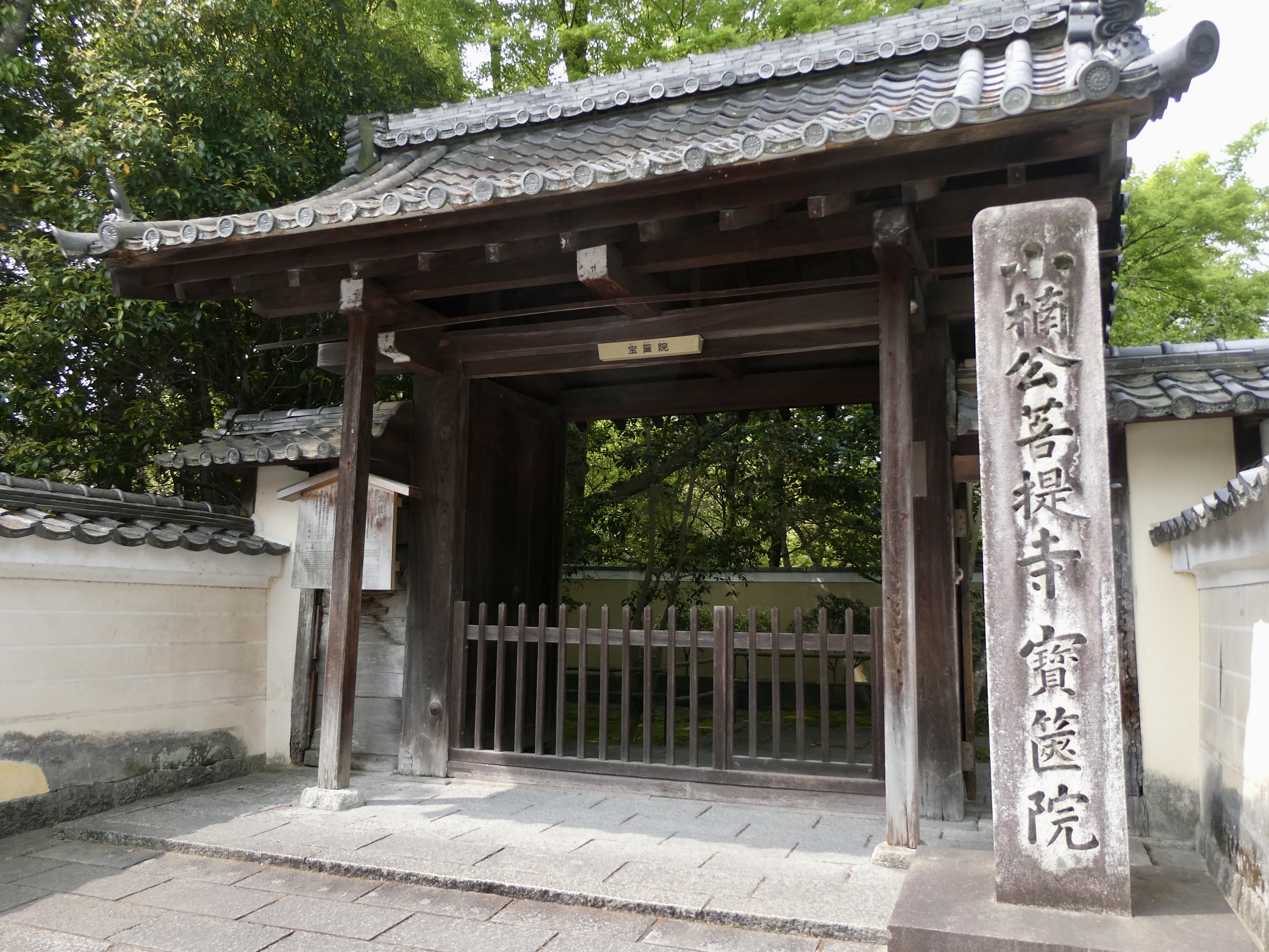
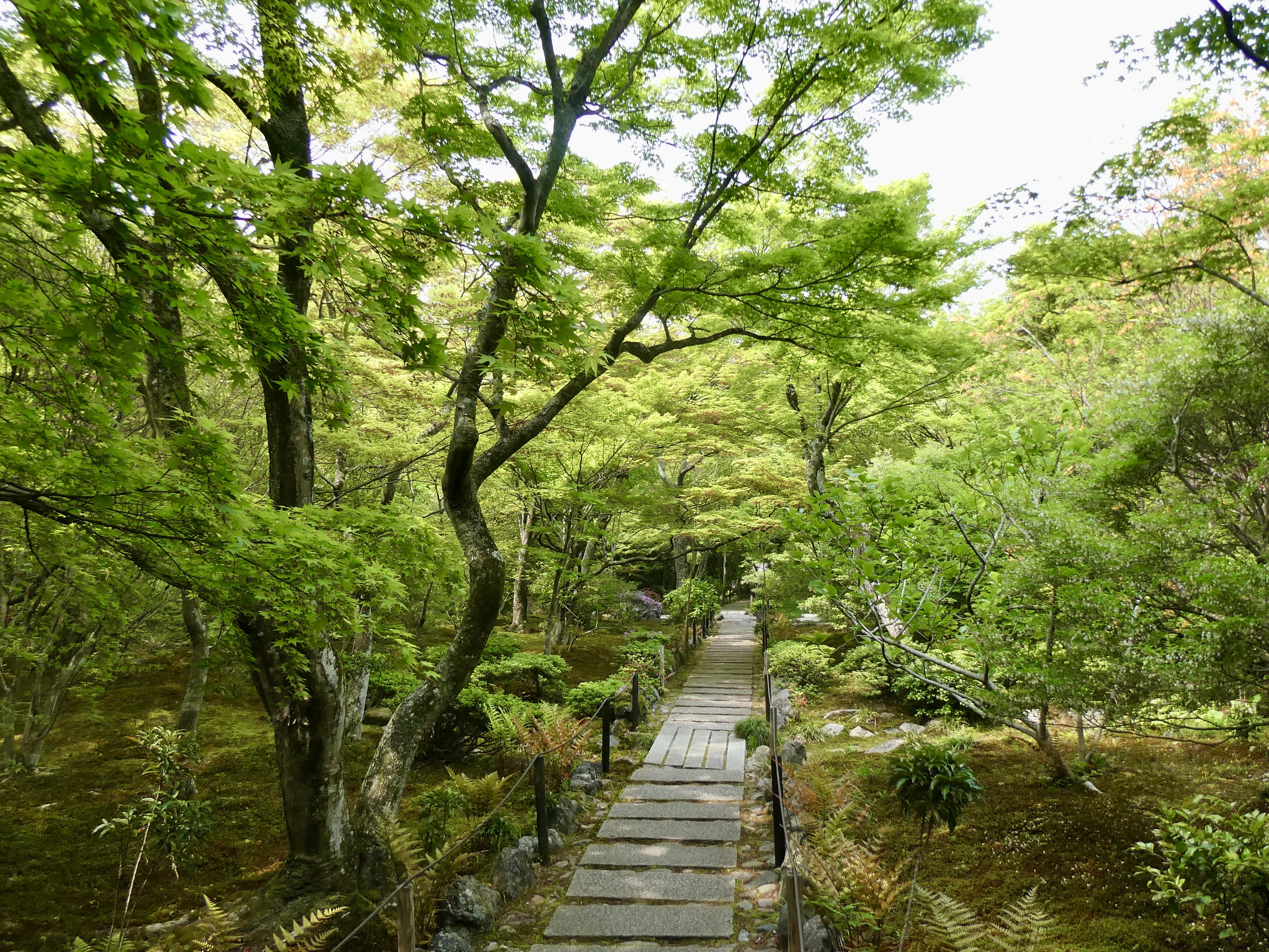
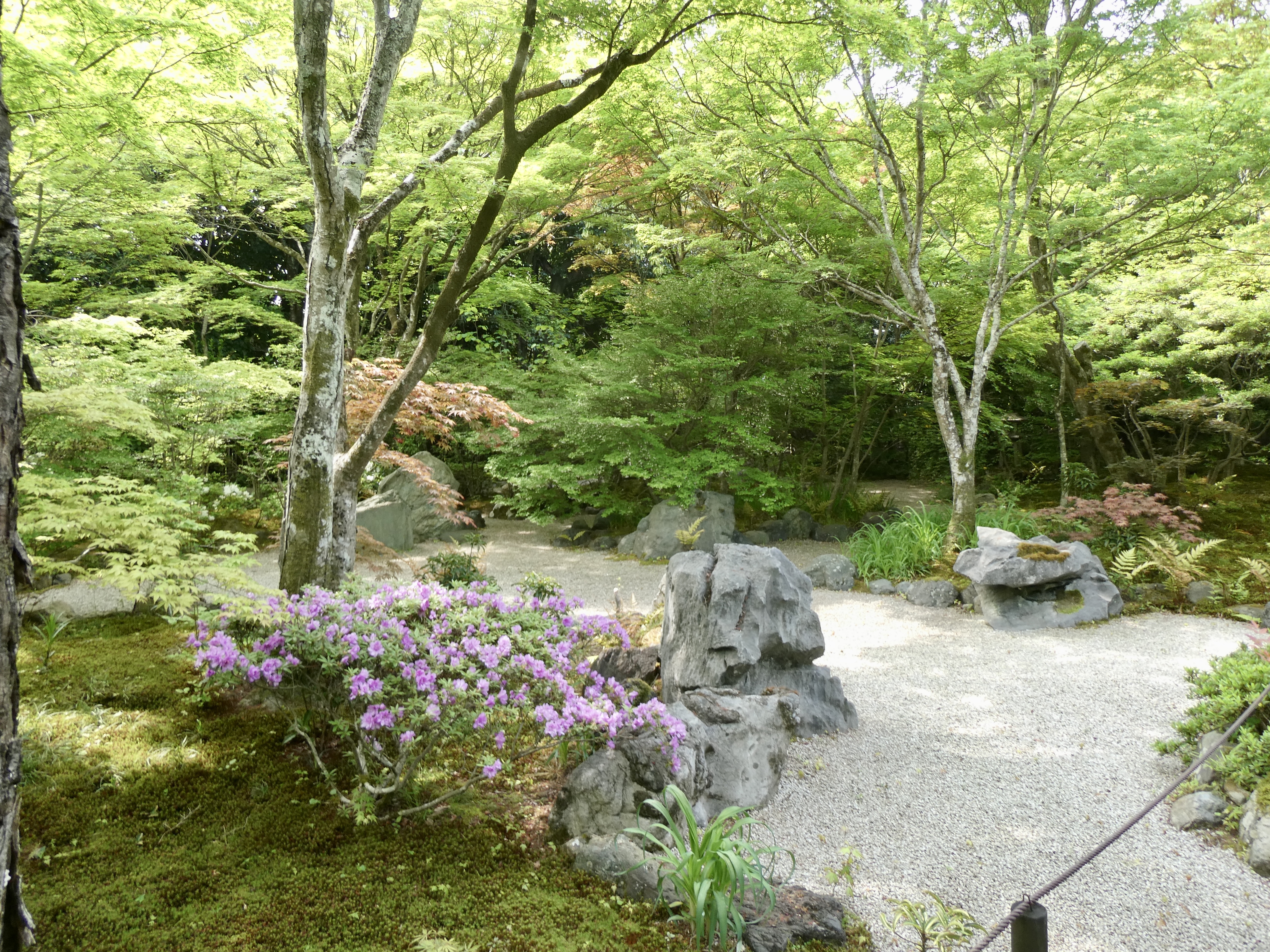

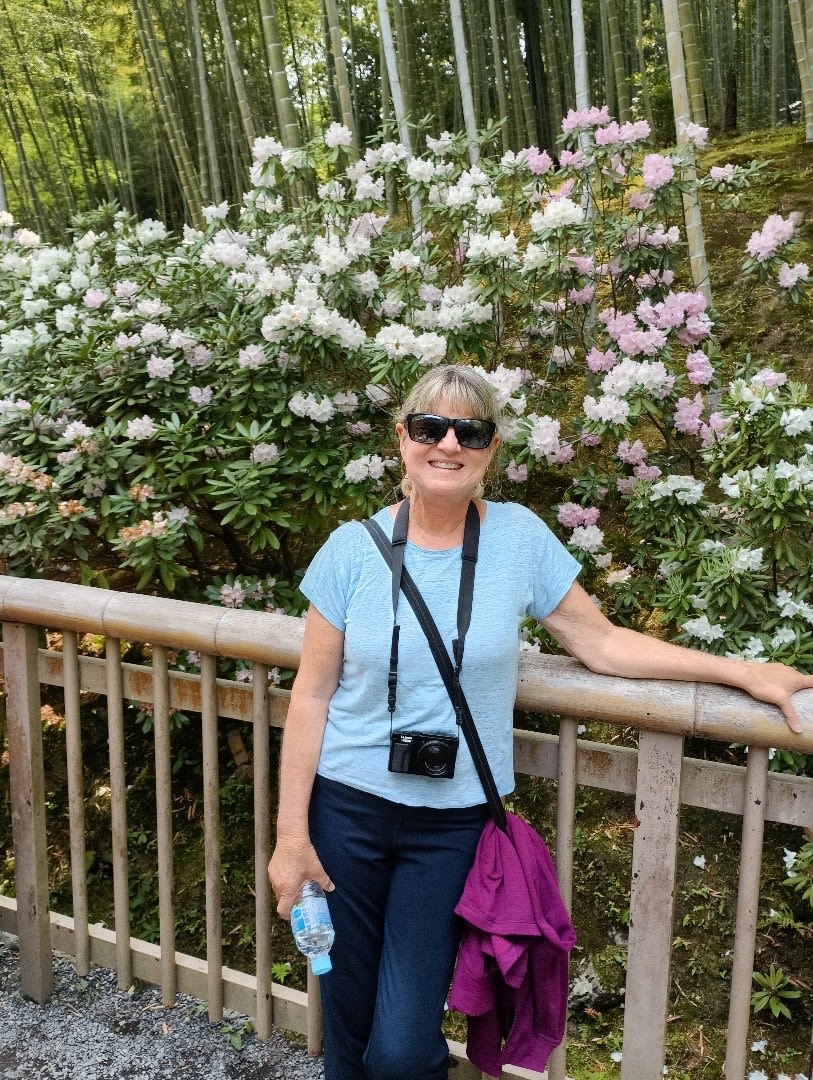
Anyway, at this point, we left the temple and walked down a small residential street to an even smaller temple known as the Hokyo-in Temple, built in the 11th century. Now this temple had an absolutely beautiful Zen garden with azaleas in full bloom (love saying that even though the Masters is over for the year), various other flowering plants and a moss garden. The entire area was serene and absolutely devoid of any tourists. Apparently, no one has discovered this little oasis.
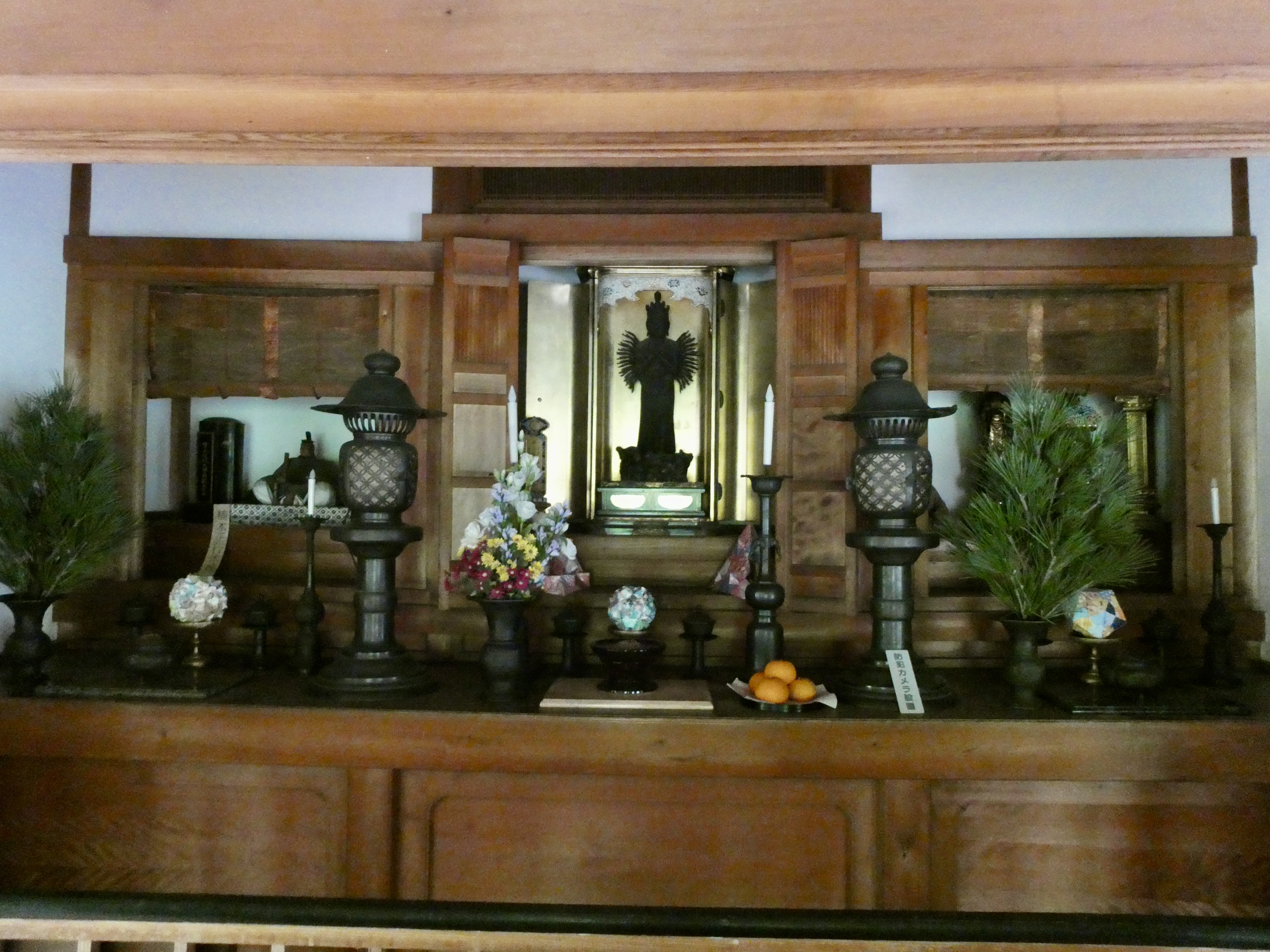
After walking along the path through the garden, we stopped at the main hall, which was rebuilt in the 19th century, where the eleven faced, 1,000 armed Kannon, goddess of mercy, is enshrined. We ended up spending a little bit of time wandering around the hall and the exterior walkway giving us views of other areas of the garden.

Now perhaps the most interesting aspect of the temple was the burial site at the backside of the grounds. Here we found the graves of military foes Ashikaga Yoshiakira, the second shogun of the Muromachi period and Kusunoki Masatsura, a rival military commander. When Masatsura was killed in battle, his head was brought to Yoshiakira. Yoshiakira so admired his rival that Yoshiakira decreed that when he died, he wanted to be buried next to Masatsura’s head. So the two are buried next to each other with the crest from each of their rival regions on the front of each grave marker.
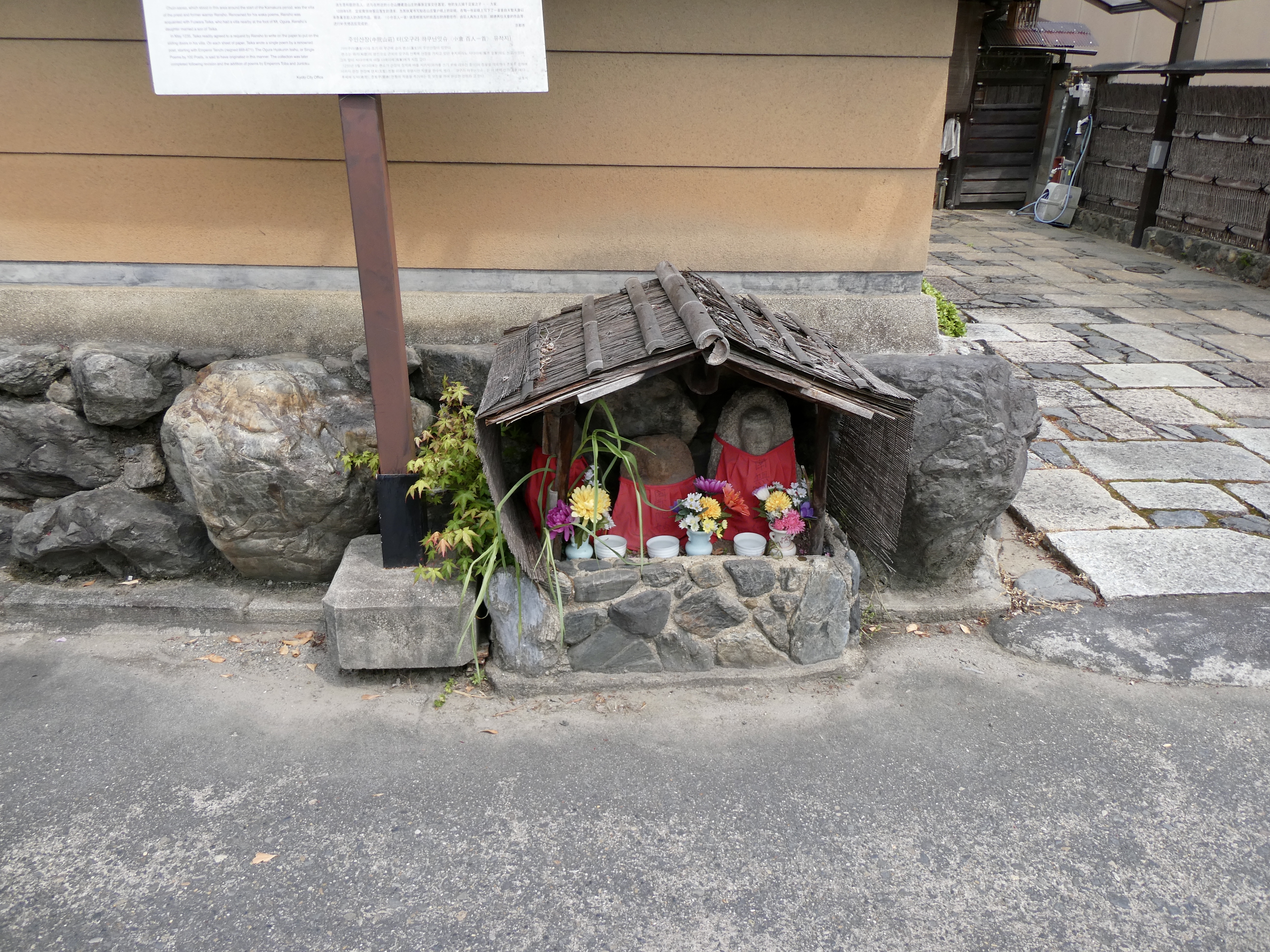
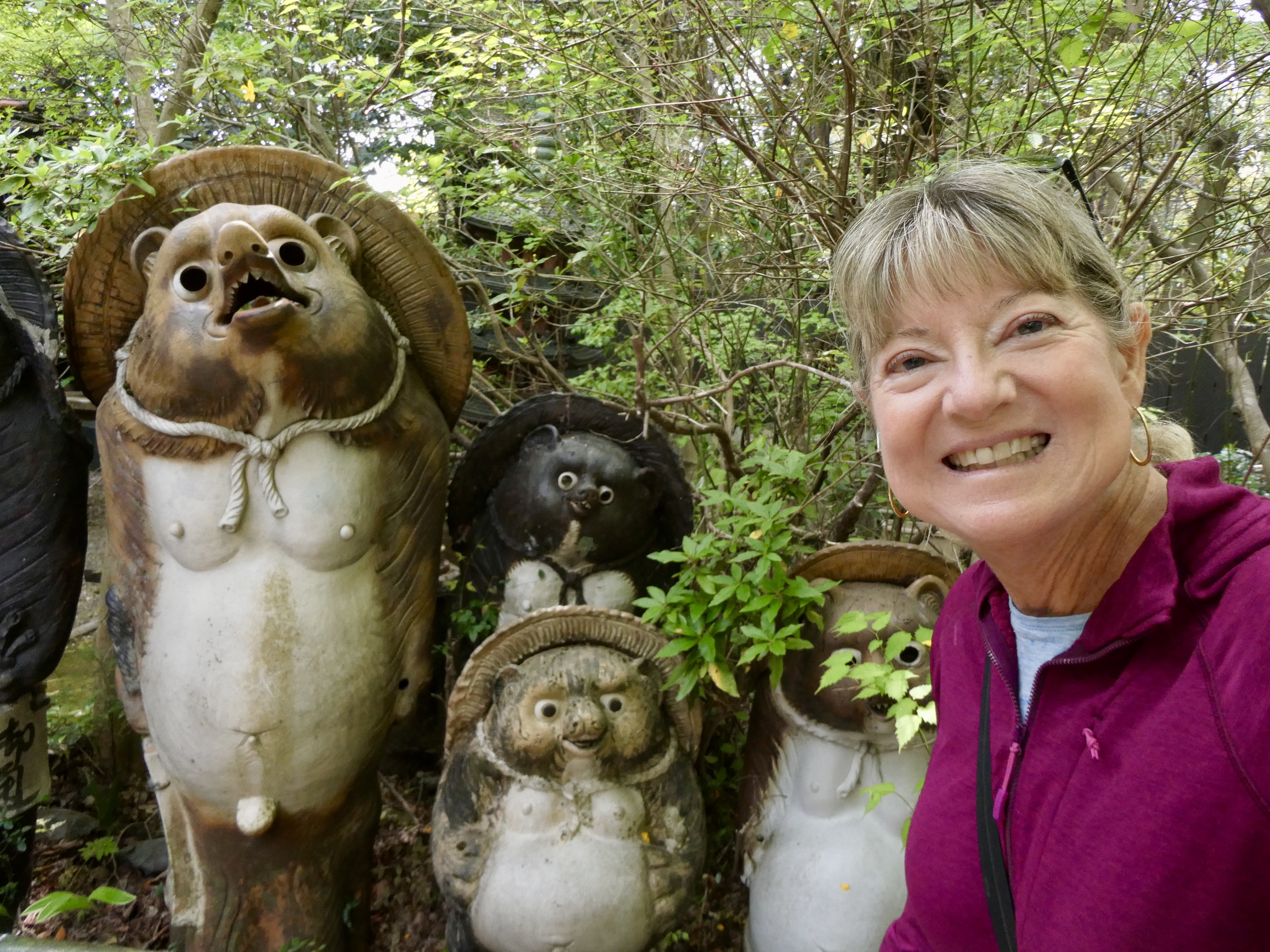
So now it was time to get down to our visit at the Arashiyama bamboo forest. We left the temple and walked several more blocks down the street through another residential area passing a home with a ghost jizo outside (signaling the loss of a child), before stopping in at a shop specializing in, what else, bamboo products. We then stopped in at a second shop specializing in Tanuki statues, also known as Japanese raccoon dogs. These statues are considered symbols of good luck, prosperity, and wealth, and are often found outside businesses and homes to attract customers and ward off bad luck. Now I had no intention of buying a Tanuki statute, but I did enjoy having my picture taken with the giant size Tanukis (check out the anatomically correct male Tanuki beside me).
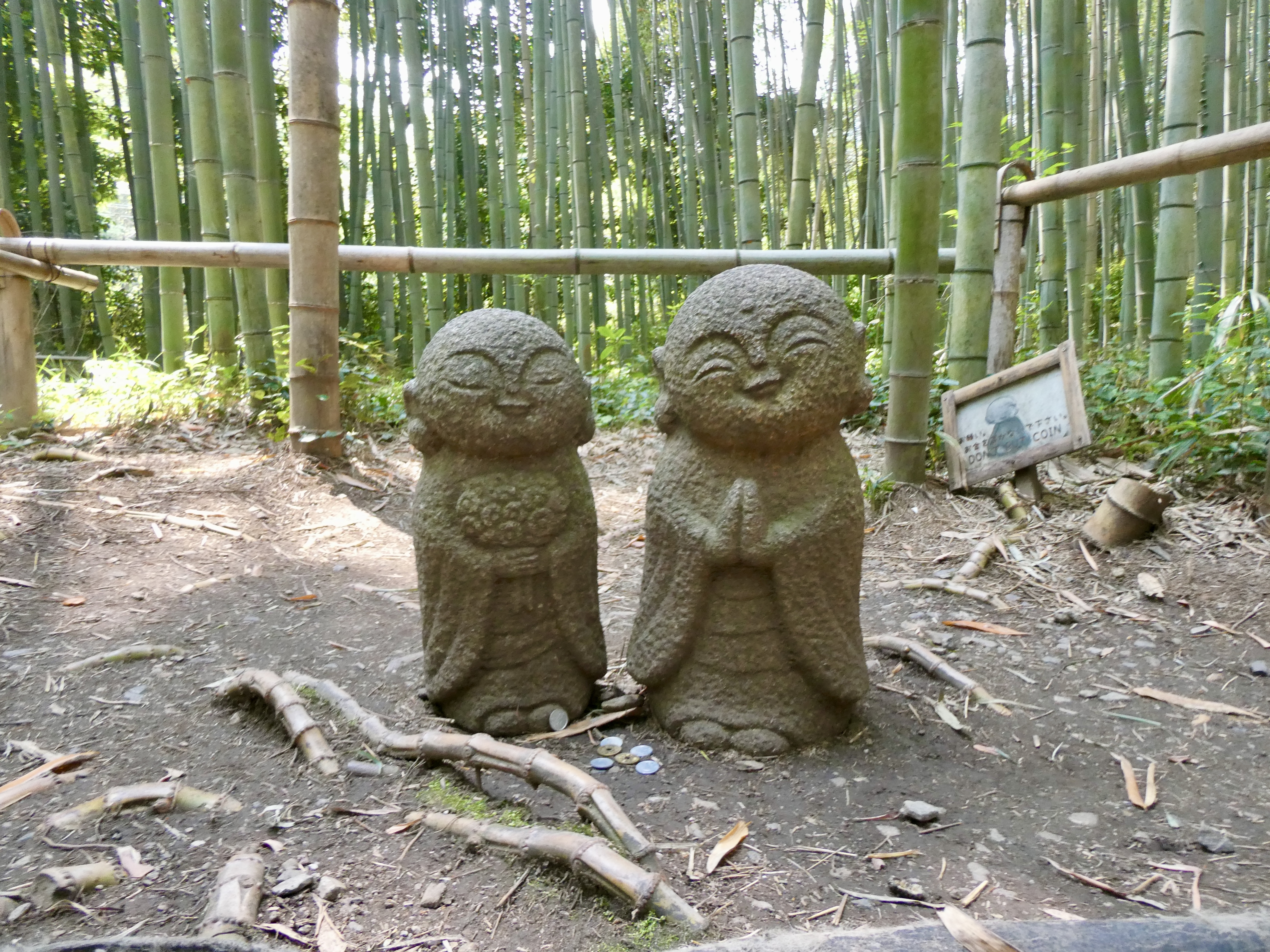
We finally reached what I thought was the bamboo forest, but it turns out it was just an area of bamboo trees near the actual forest. We ended up winding our way around the pathway and were almost run over by a series of rickshaws zipping through the pathway (very dangerous). And while the bamboo trees were lovely, it was not the massive forest I was here to see, although I did love the fact that the forest had two tiny Rakan statutes near the exit area. Rakan statutes represent arhats, which are supposed to be enlightened disciples of Buddah. I don’t know much about that. I just liked how they looked so tiny against the mammoth bamboo trees.

From here, we walked across the railroad tracks and took a quick look inside the Nonomiya Shrine, which is surrounded by the Arashiyama bamboo forest. The shrine is dedicated to happiness, love, the mountains and easy childbirth.
Now the fascinating thing about this shrine is that unlike most lacquered vermilion Torii gates, Nonomiya Shrine has a somewhat unusual black Torii gate referred to as a kuroki torii. The gate, which dates to 1875, was made to resemble unstripped timber and relates back to the oldest style of Shinto torii gates that would have been erected in the past.
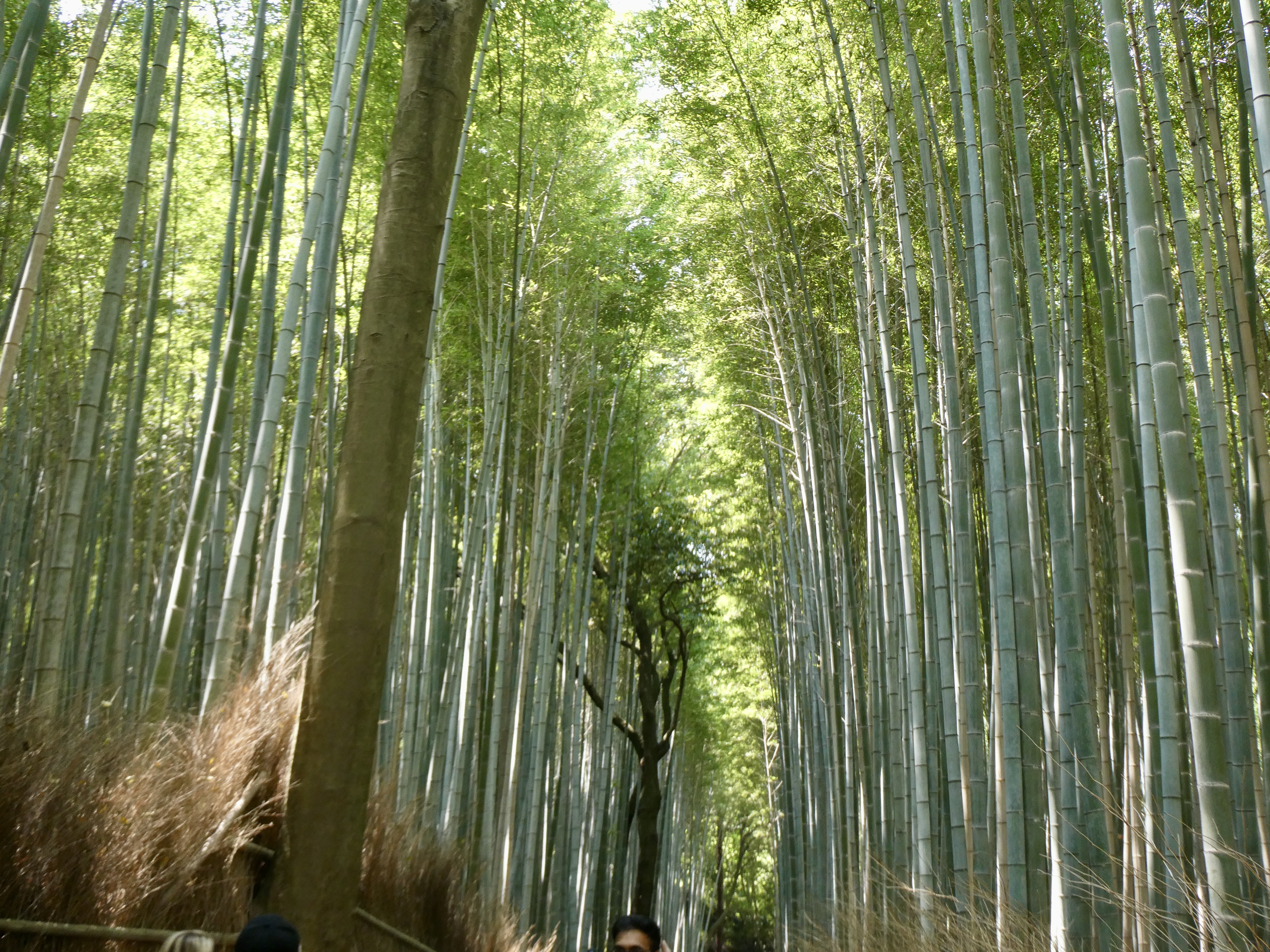
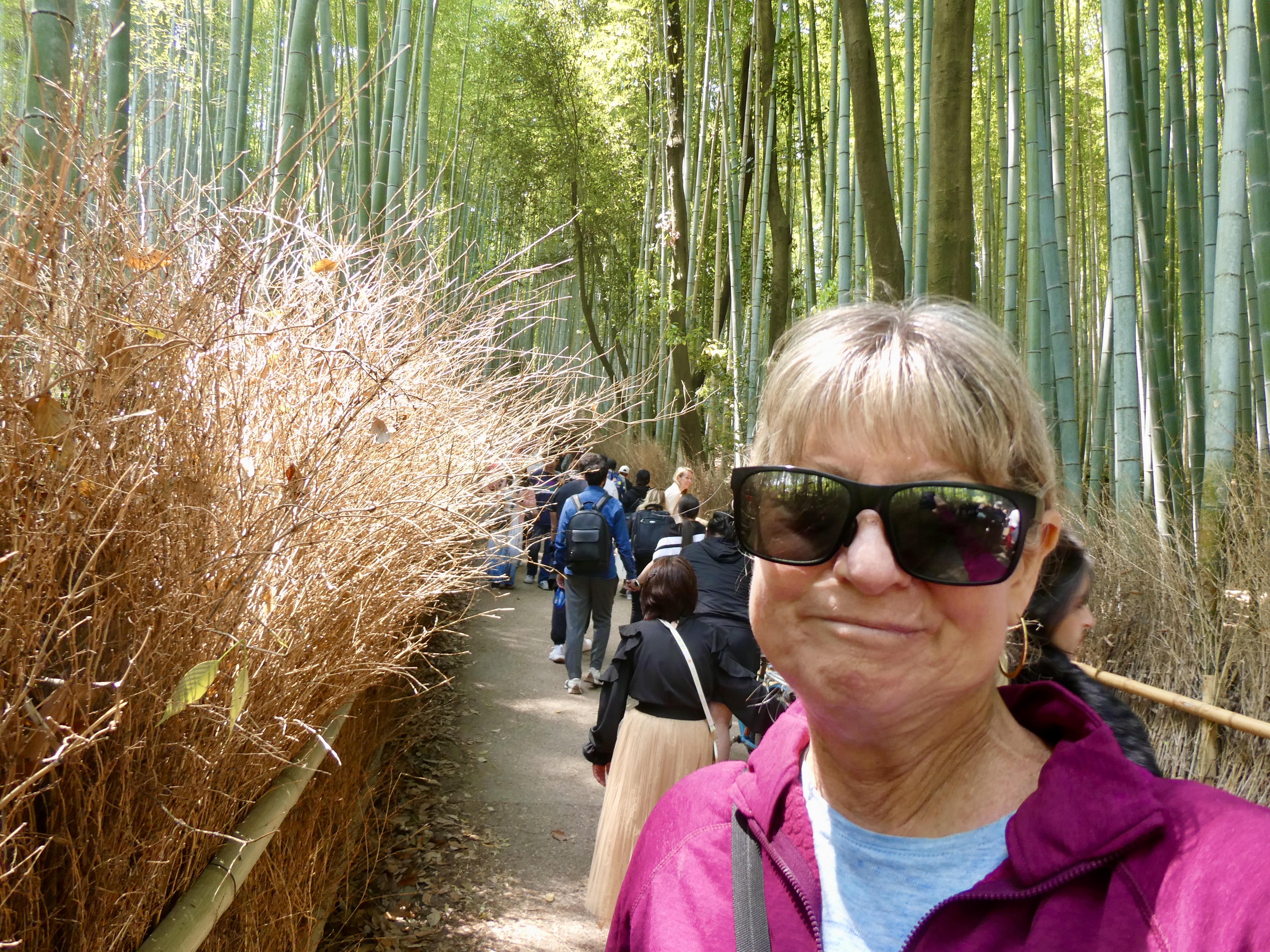
So after the quick stop at the shrine, we finally, finally turned onto the path that took us through the iconic Arashiyama bamboo grove. And … what a shit show. The place was wall to wall people. And while the bamboo trees were gorgeous in the sunlight, the number of people made the whole experience not worth it. Quite frankly, the bamboo forest we walked through at Fushimi Inari a couple weeks ago was far, far superior to this experience.

I ended up walking as fast as I could through the hordes of people just so that I could reach the end of the pathway. And here, the crowds melted away. I have no idea where they went, but it was nice not to feel like I was being tackled every couple seconds.


Once all of us reached the end of the pathway, we turned to the right and made our way up a small hill to the Ohkouchi Sansou Gardens. Now these gardens included the former residence of the early to mid 20th century Japanese film star Okochi Denjiro, which included a traditional home, tea houses and Buddhist halls all set amongst gardens planned by Mr. Denjiro.
We first visited the outside of the residence (no admission inside) before winding our way up through the hillside past beautiful gardens and trees. We made a quick stop at the tea house for some macha tea, before continuing on to the Jibutsu-do Shrine, which is where the first gardens were constructed. The shrine was apparently Mr. Denjiro’s happy place and he spent a great deal of time here.
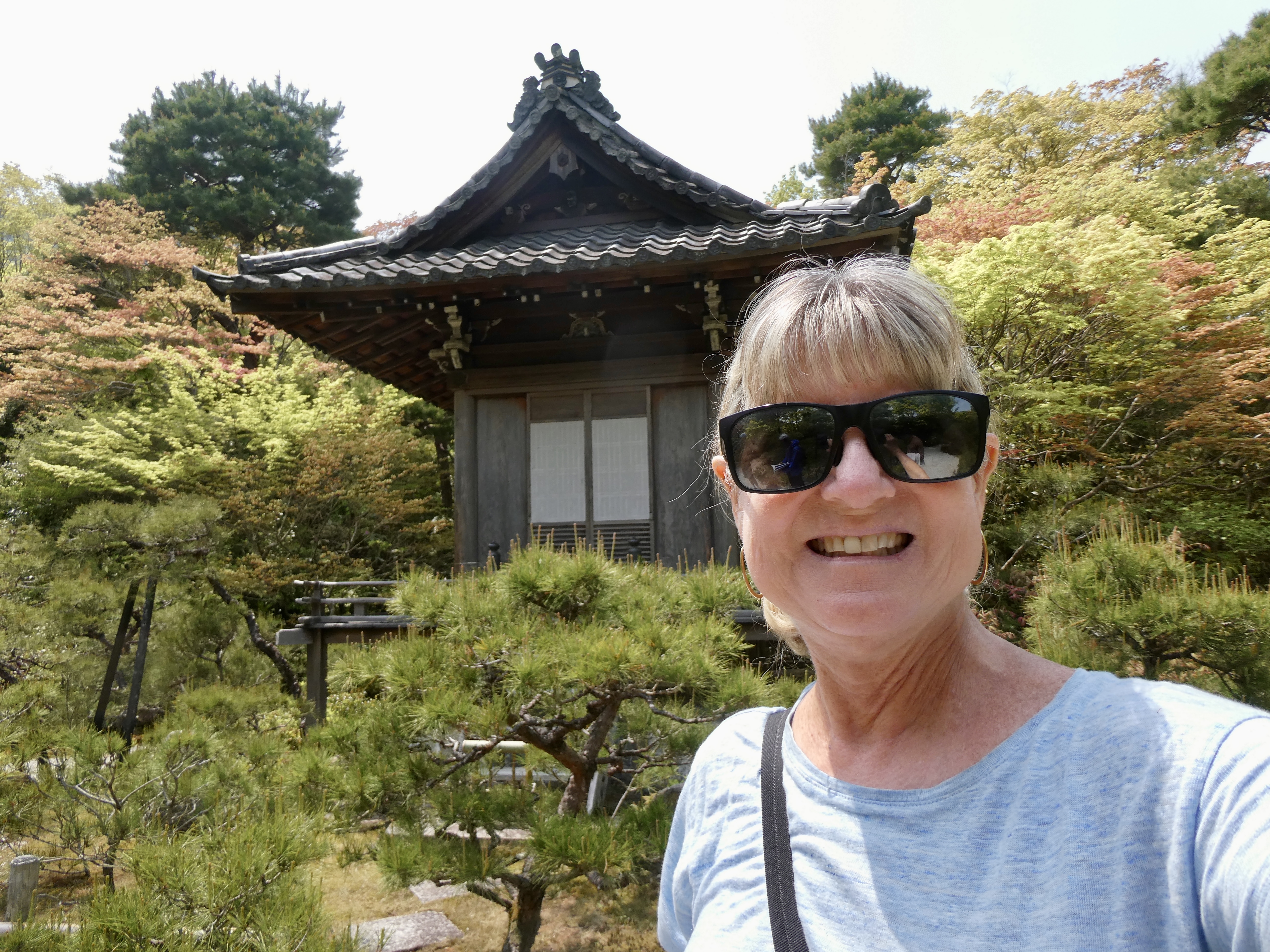
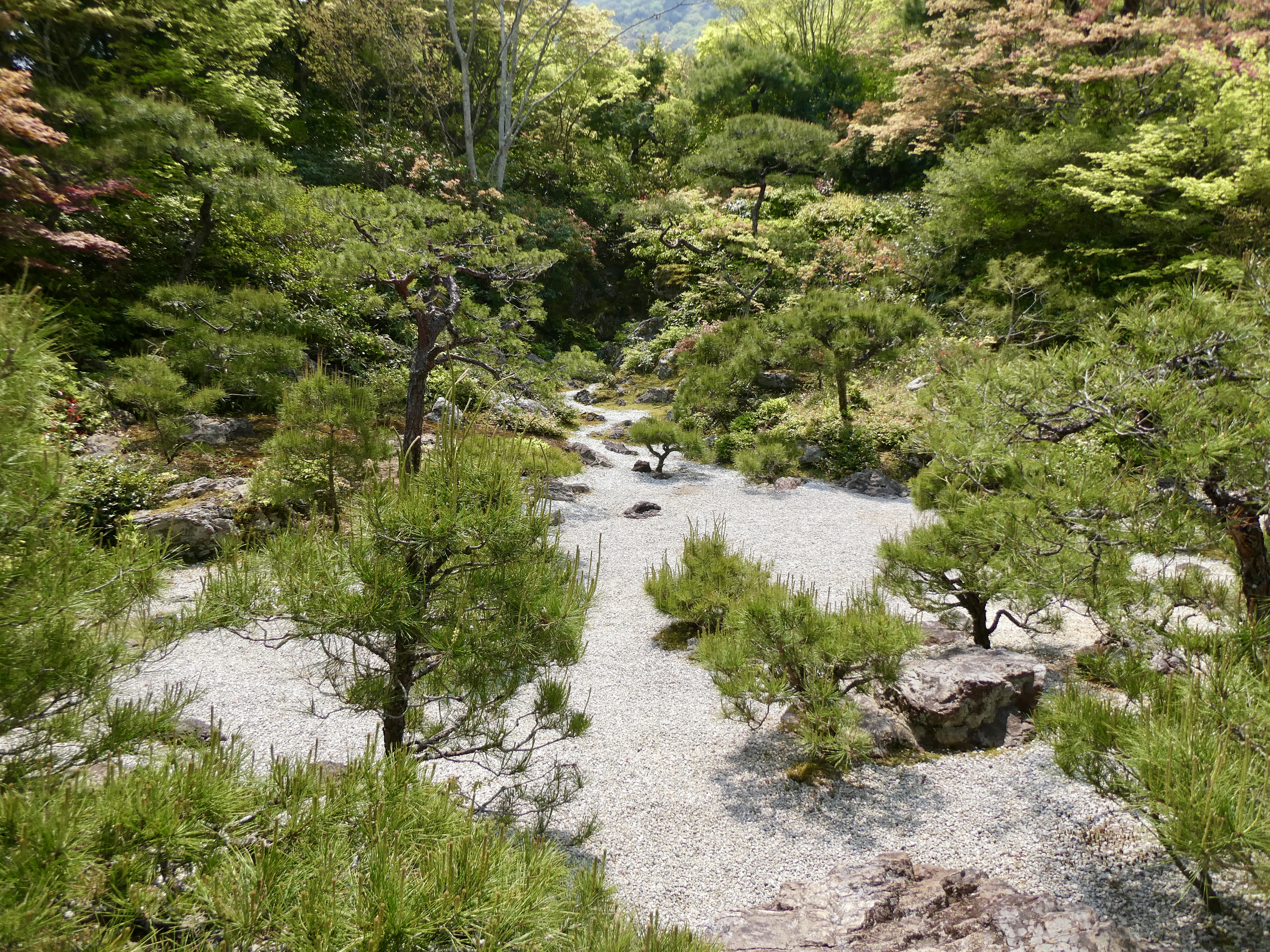
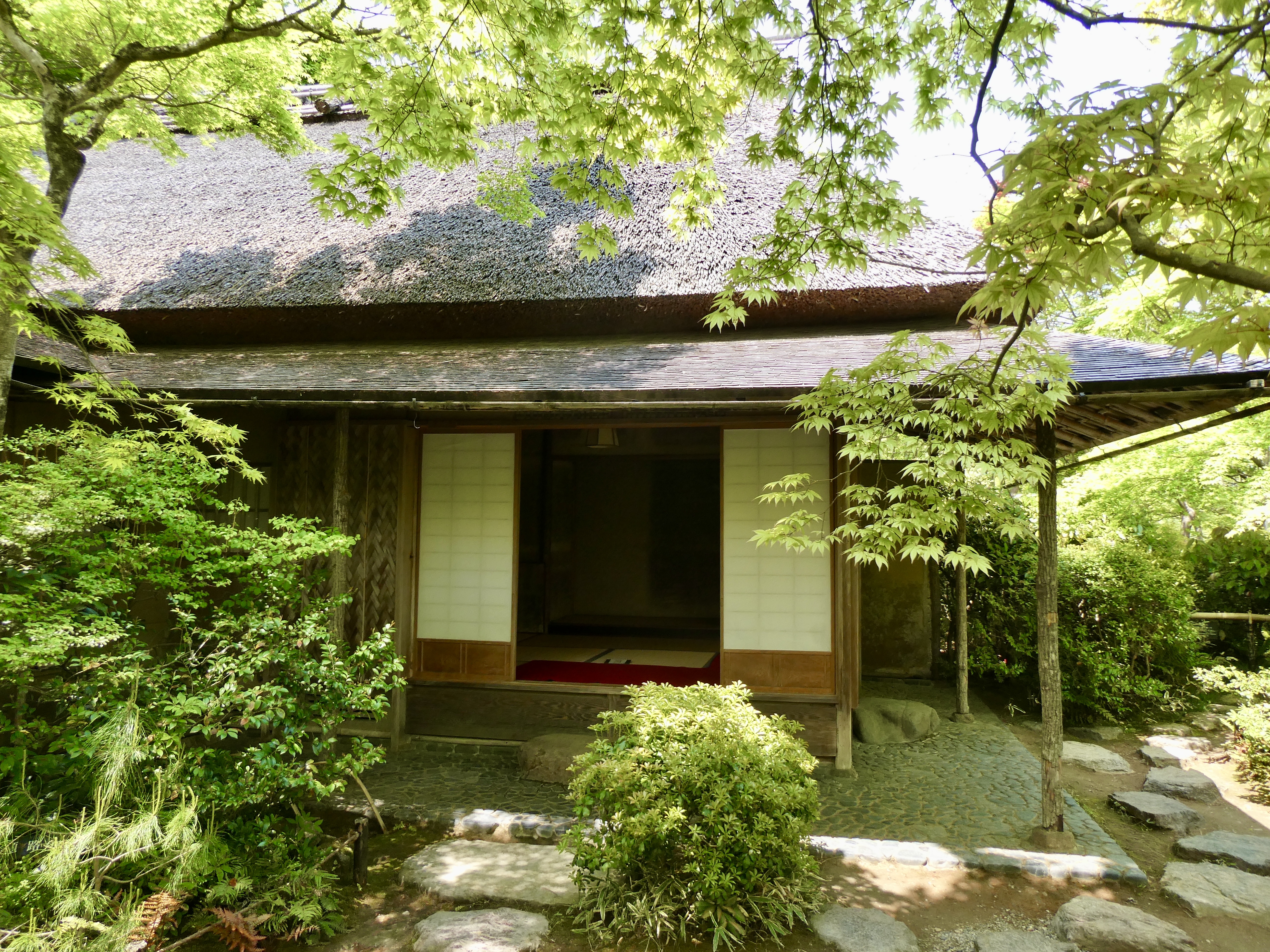
We continued up the hill through the gorgeous gardens before stopping at a second tea house with some nice views of Kyoto. Then it was up the hill to a viewpoint (more views to Kyoto) before finally reaching the last stop, which was a small building surrounded by a Zen garden. This was apparently Mrs. Denjiro’s happy place. Here, we even had a chance to try our hand at some Japanese calligraphy (said to be a favourite pastime of Mrs. Denjiro).

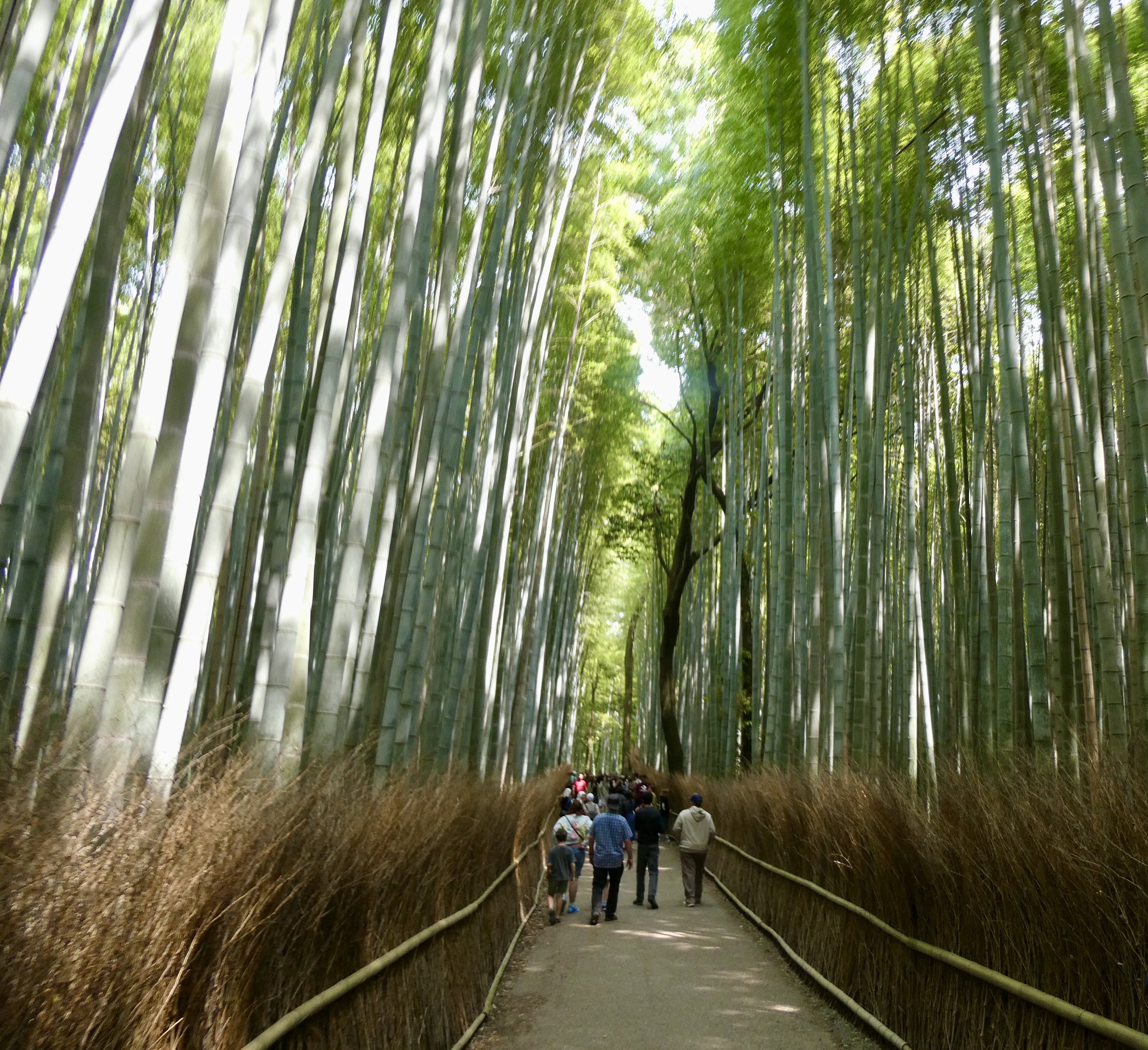
By now, it was approaching 12:30 and we were a half hour late for lunch so we reversed course and walked back down the pathway, through the bamboo forest again (far less people now given it was lunch time) and to our final stop of the day, the Ternryuji Temple.
Now while the temple, which was originally constructed in 1339, is considered the most important in Arashiyama, most of the buildings have been repeatedly lost to fires and wars. In fact, the main hall and drawing hall only date to 1868-1912. So why is the temple so important? The temple’s garden is designated as a UNESCO World heritage site, which has remained the same since the garden was constructed by Muso Soseki in the 14th century.
But before we visited the site, it was time for lunch. Now we were going to dine at Shigetsu, a Zen vegetarian restaurant, that is Bib Gourmand rated establishment by the MICHELIN Guide, located in the middle of the Tenryuji Temple grounds. The restaurant apparently specializes in shojin ryori, a vegetarian cuisine rooted in Buddhist monastic tradition.
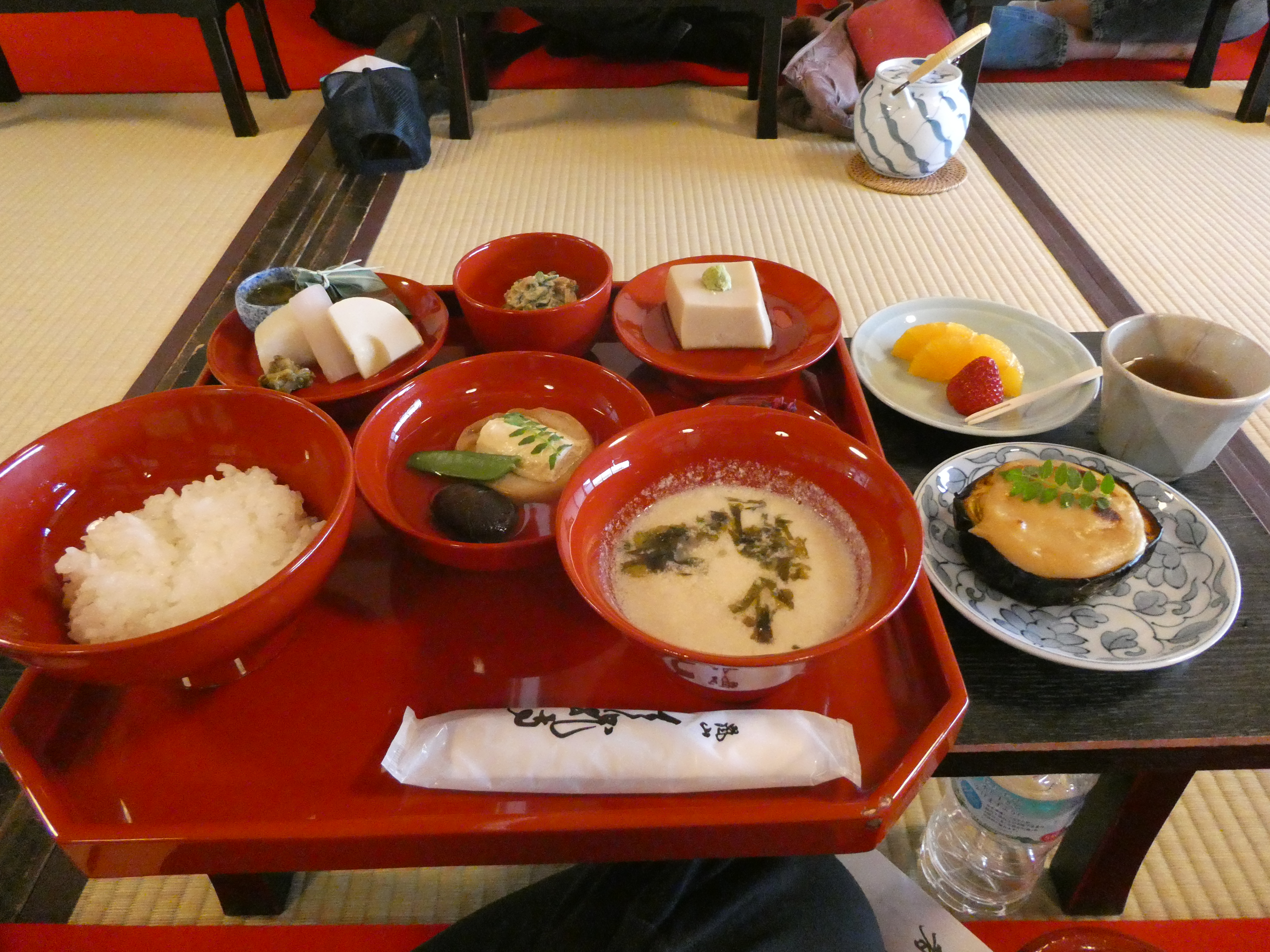
So once at the mammoth restaurant, we took our seats on the floor (ugh) and were served multiple courses of bamboo shoots, eggplant, potato, a vegetarian broth with mushrooms, wheat bread, beans and tofu, a soup made of who knows what, but I pretty much gagged on it, tofu with wasabi (not good), rice, radish, a sweet made with red bean paste and macha, a soy bean, wasabi and tofu mixture and some fruit. I ate about half and called it good. Four of the five others had a taste of each dish and called it good. Only one person ate it all. I guess if you are vegetarian you would have been in heaven.
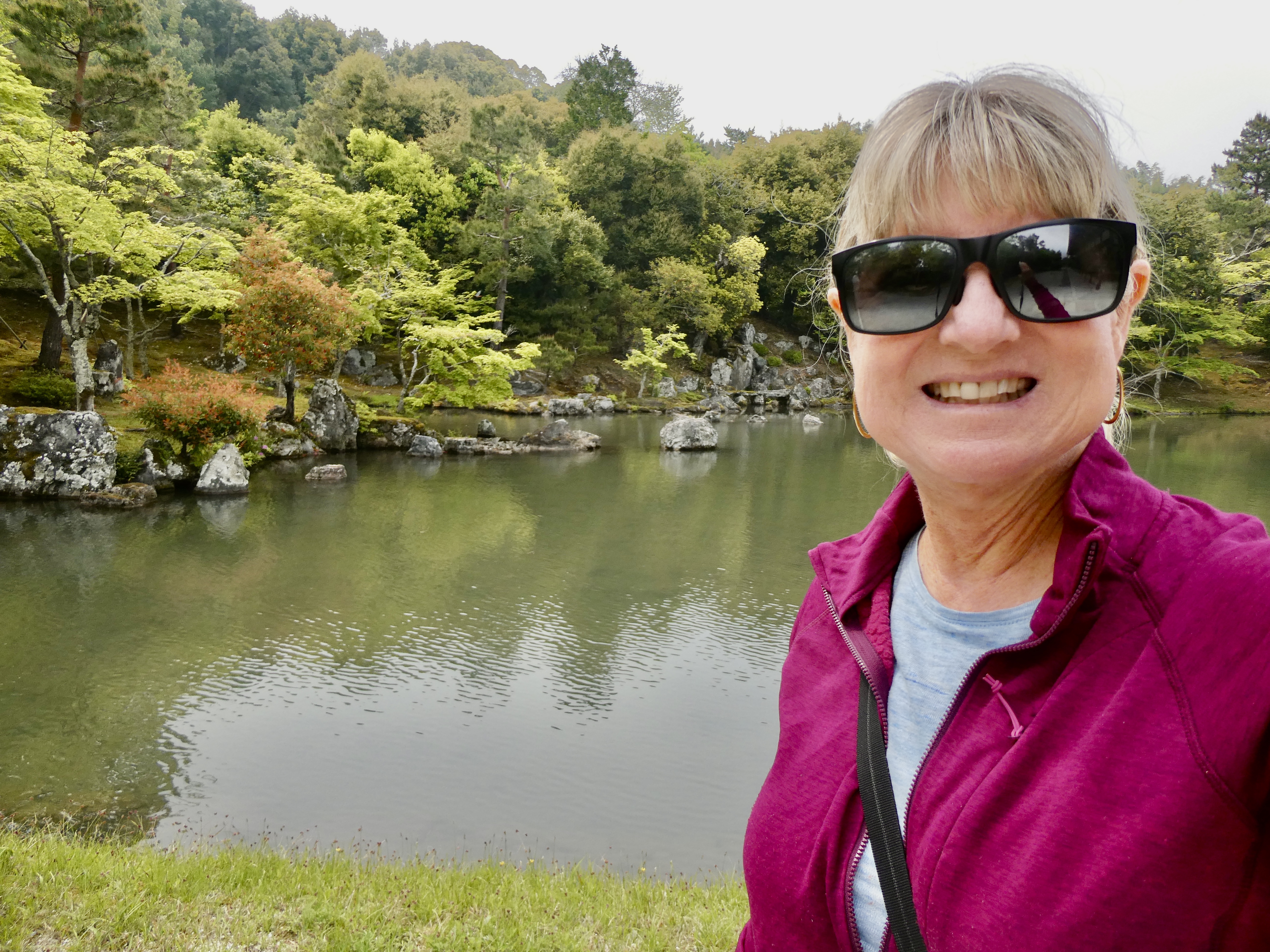
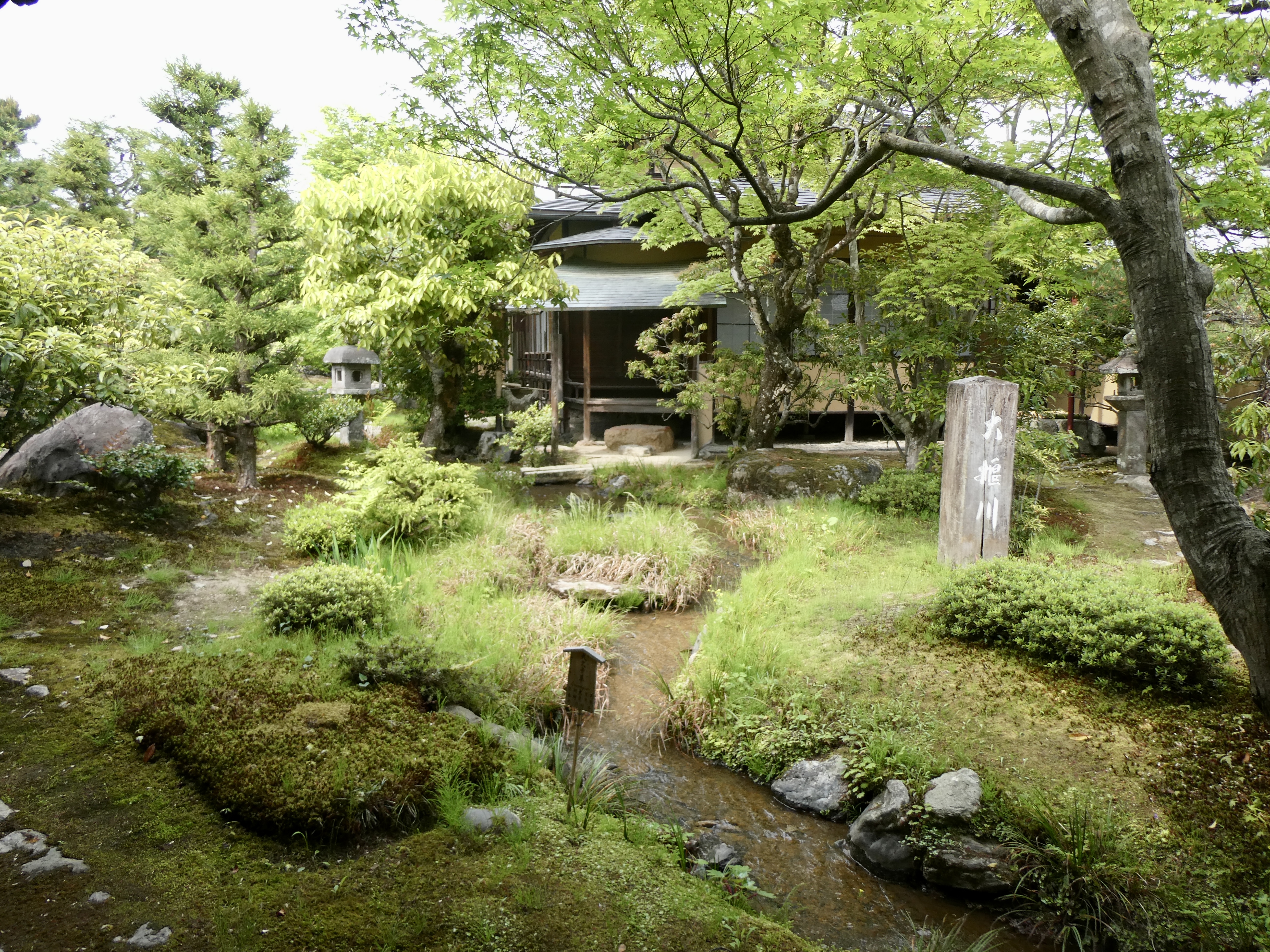
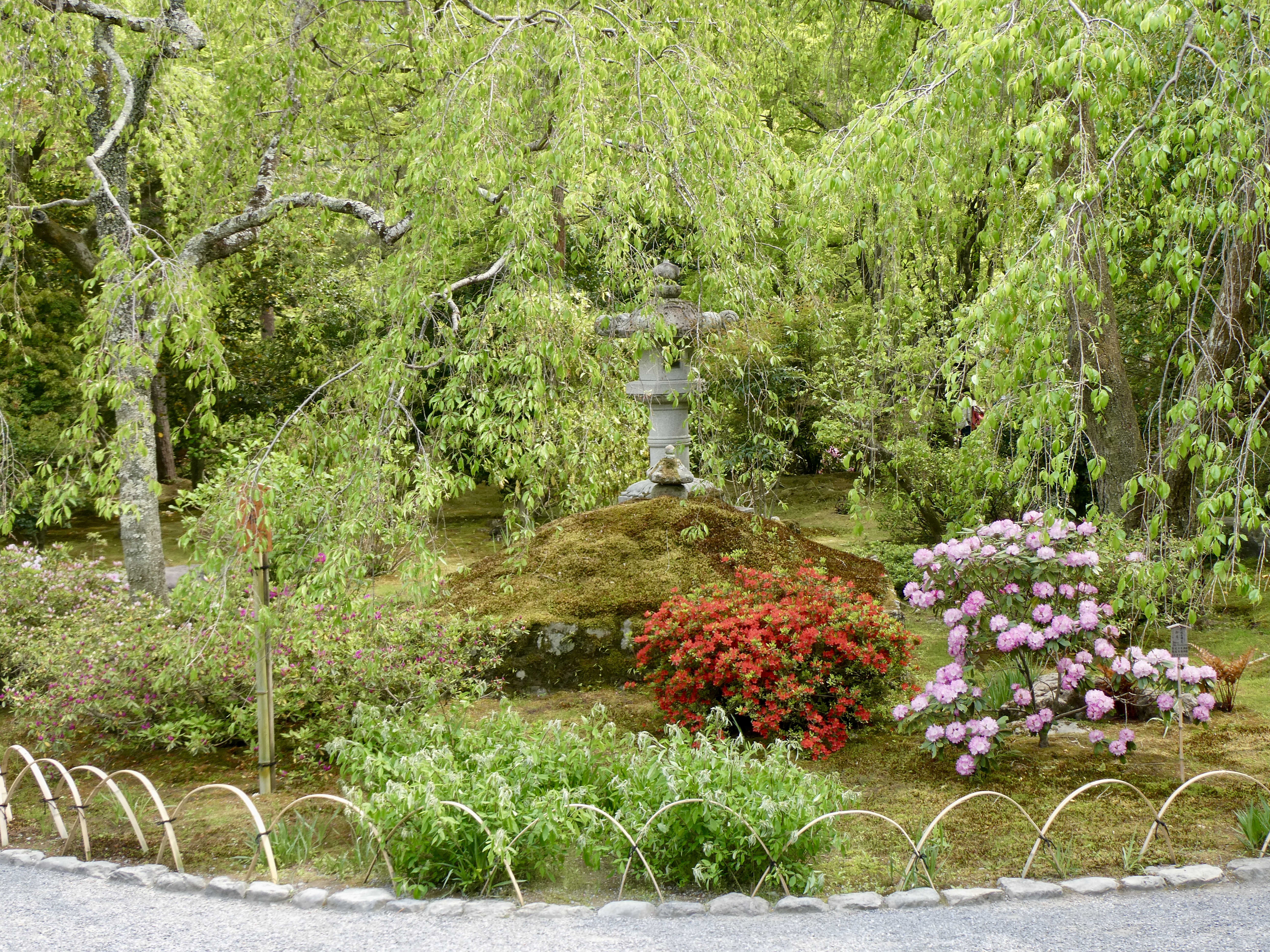
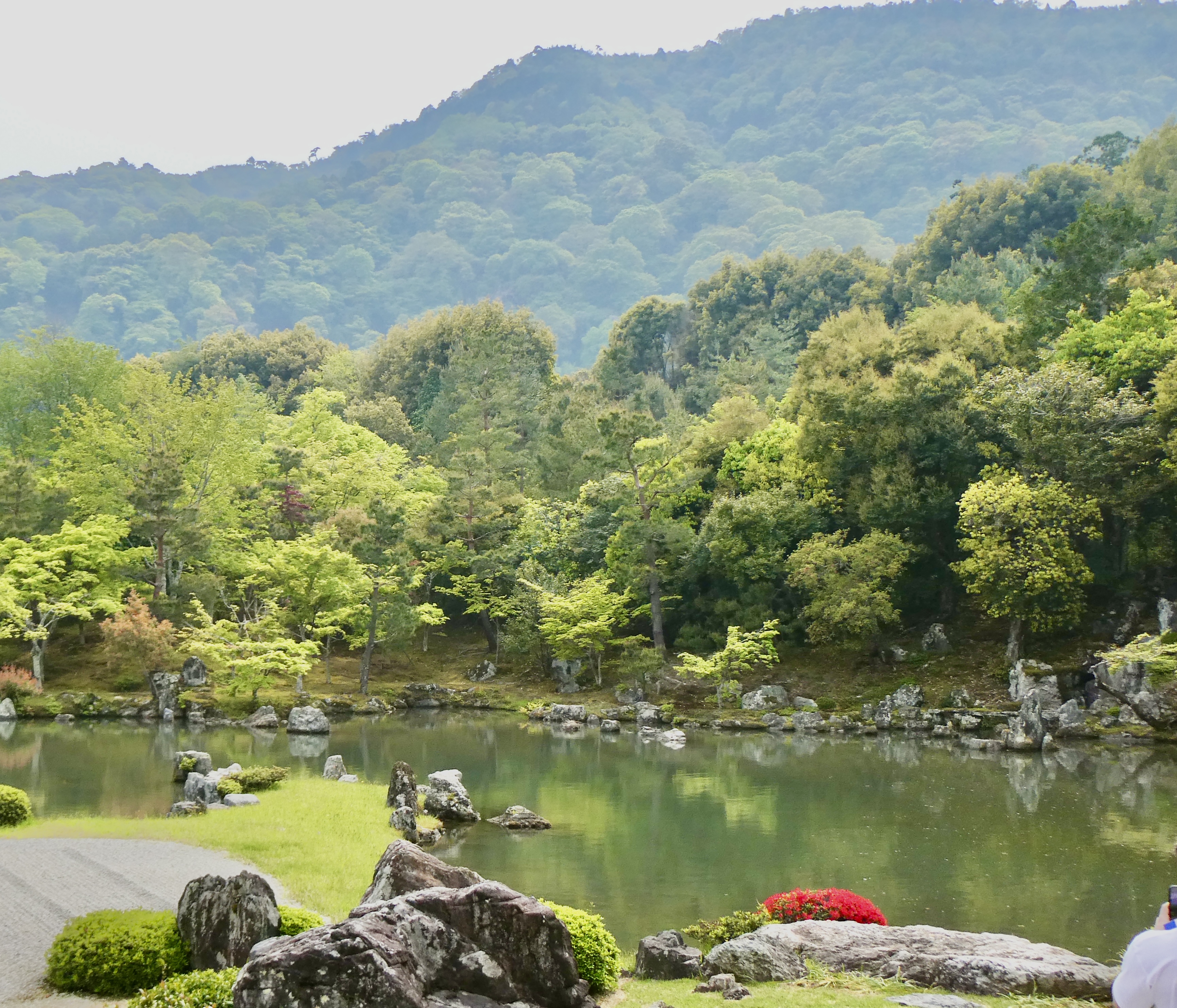
Anyway, after lunch, we made our way around the garden which is centered around a large koi pond surrounded by rocks, pine trees and flowering plants designed to reflect the changing seasons. The scenery of two nearby hills, Kameyama and Arashiyama, form part of the garden’s composition. This technique of making use of the surrounding landscape is apparently called shakkei.
We wandered around the gardens taking in the stone bridge and the rocks that cascade down like a waterfall. The stones apparently represent the Dragon Gate Falls on the Yellow River in China. Legend has it that any carp (koi) able to jump these falls transforms into a dragon. No word on whether a koi in this pond has jumped

the rocks and turned into a dragon.
From here, we moved on to the inside of the main hall (shoes off please) where we were greeted by a large painting of
the 5th century Indian monk who allegedly sat in cave silently facing a wall for nine years meditating. OK then.
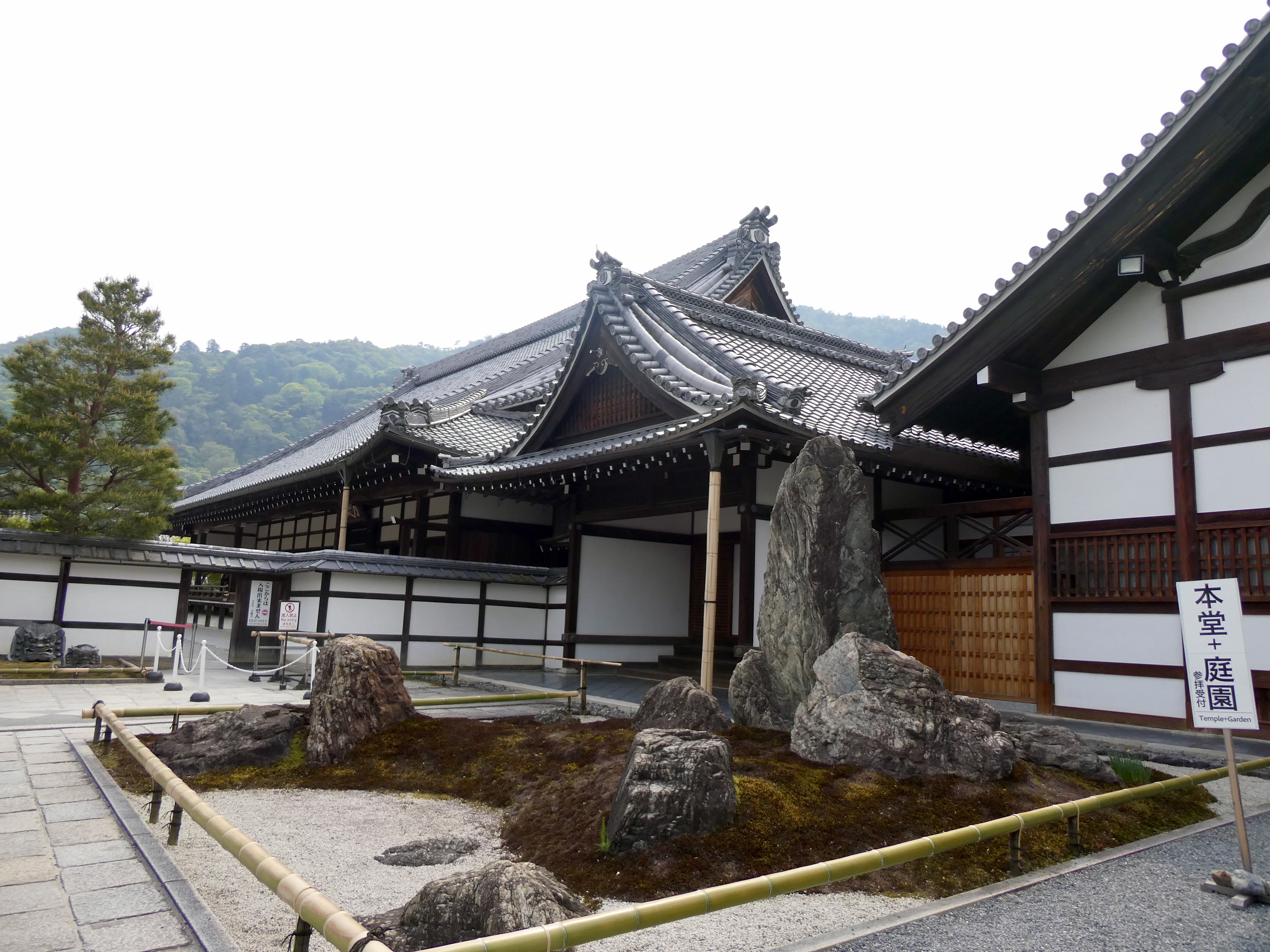

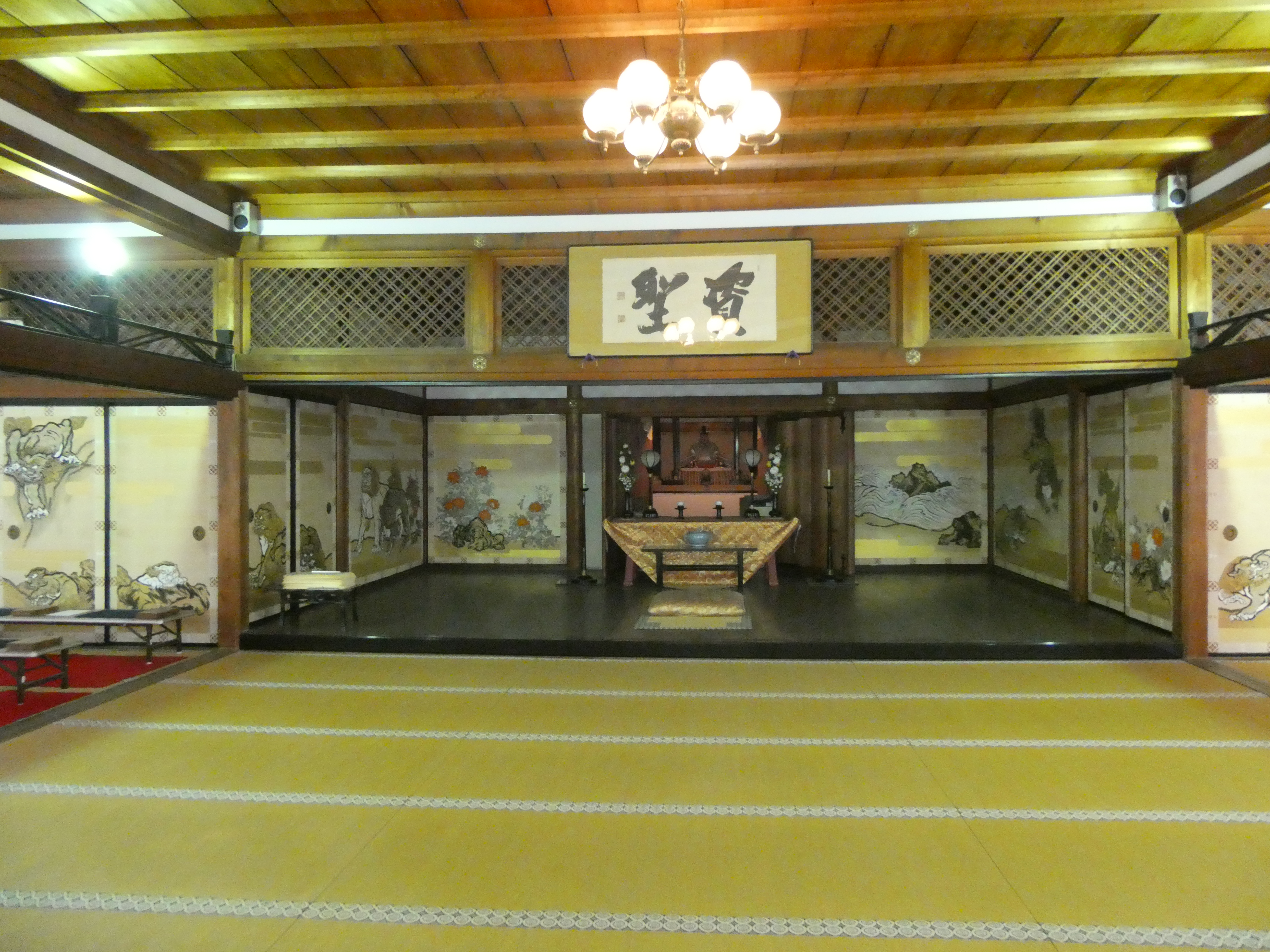
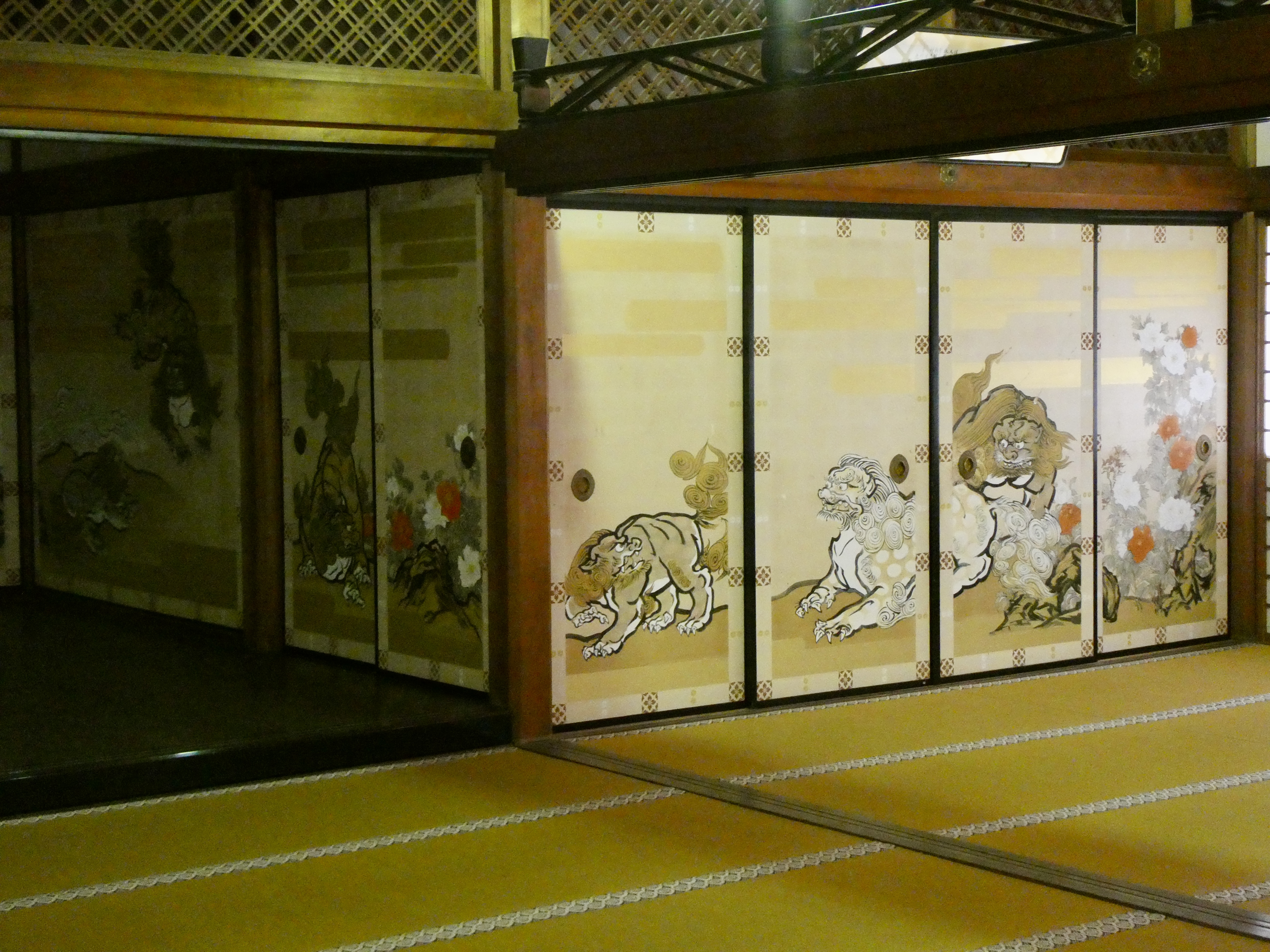
We then walked through the main hall to a mediation area and then up a hill to the monks prayer hall before doubling back and visiting the head monk’s quarters and calling it good.
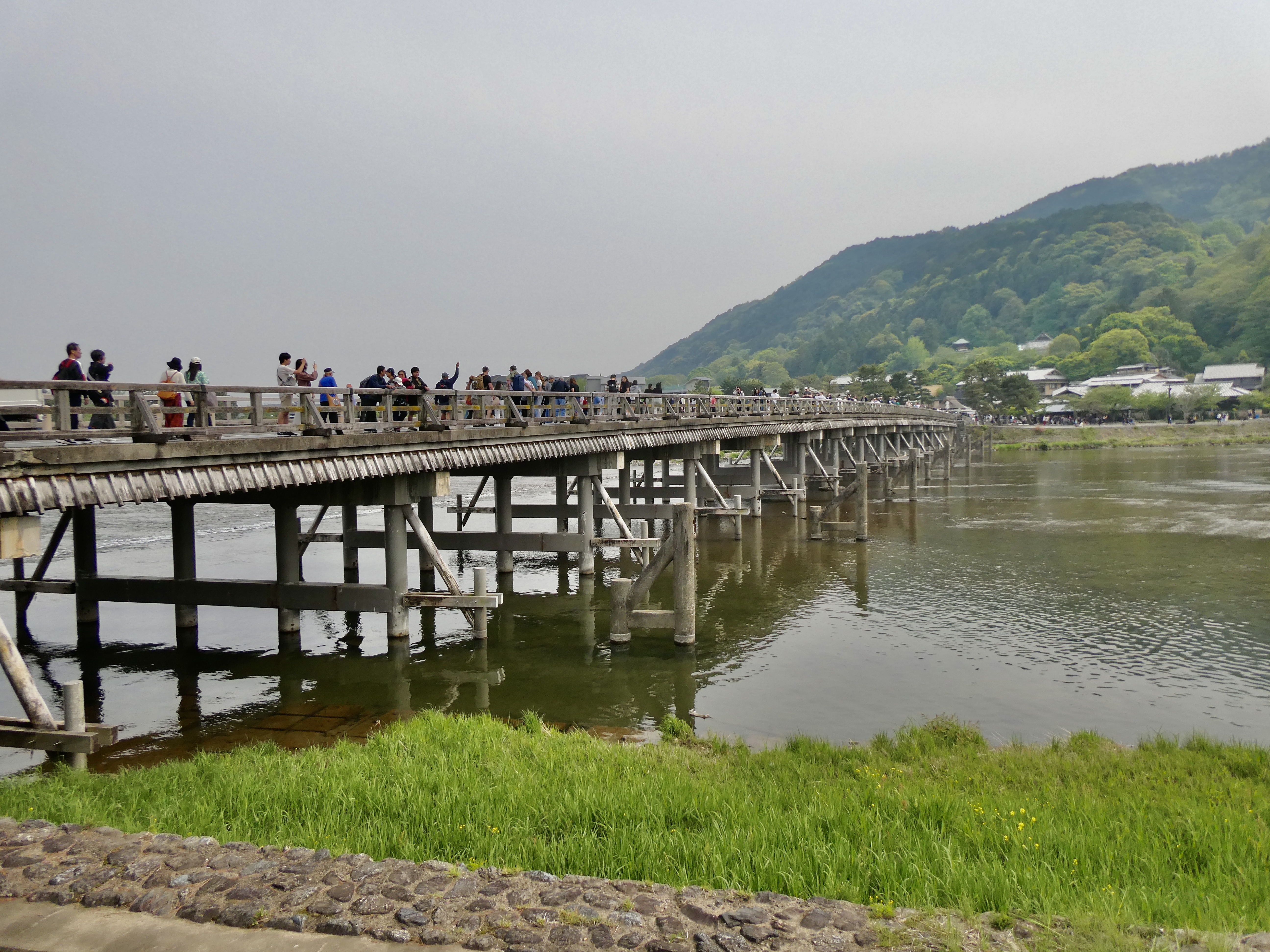
At this point, the tour was over, but Masa suggested he accompany us to visit the Togetsu-kyo Bridge, a 155-meter bridge built across the Katsura River, which flows through Arashiyama and apparently has some lovely views. The bridge dates back to the 9th century, but the current wooden bridge is less than 100 years old dating to 1938. In 2005, a hydro dam was built in front of the bridge and electricity generated from the dam powers lights in the area.
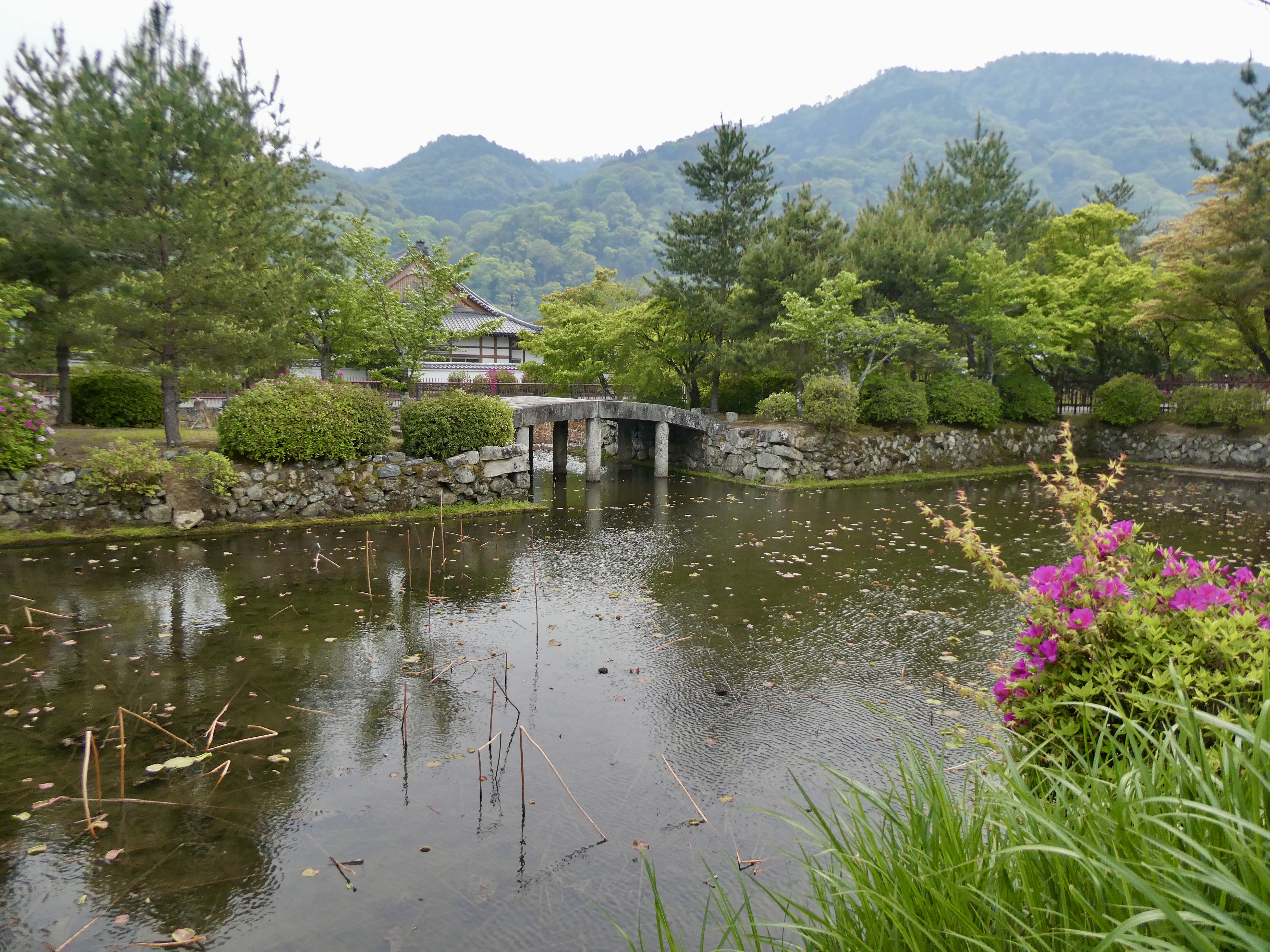
So, we all agreed to take a look at the bridge. We ended up walking past a gorgeous Japanese pond and garden before running headlong into the crowds on main street in Arashiyama. The walk took us about ten minutes and quite frankly the ultimate view from the bridge as mediocre at best.
And with that, my touring around Japan came to an end. Tomorrow, it is country number 4, Taiwan.