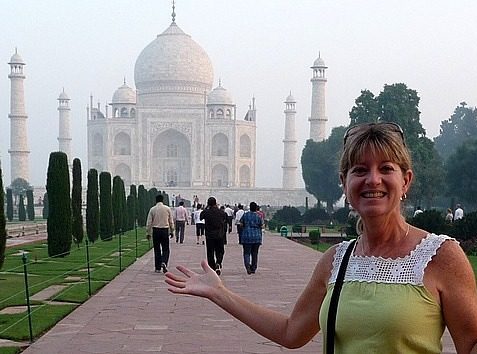
Today there was going to be very little touring, which was fortunate since thunder and rainstorms were in the forecast. Instead, I was in for a real treat. Elie was taking me to his ancestral home in the mountains above Batroun in the little village (600 people) of Zen. I was going to be learning to cook some Lebanese dishes with his mother Teresa and his sister Perla. (Yea, I know I am not known for my cooking skills, but Lebanese food is world famous, and I really wanted to learn how to make some authentic dishes.) So mother Teresa and Perla graciously offered to show how to make some of the basic dishes of Lebanon.
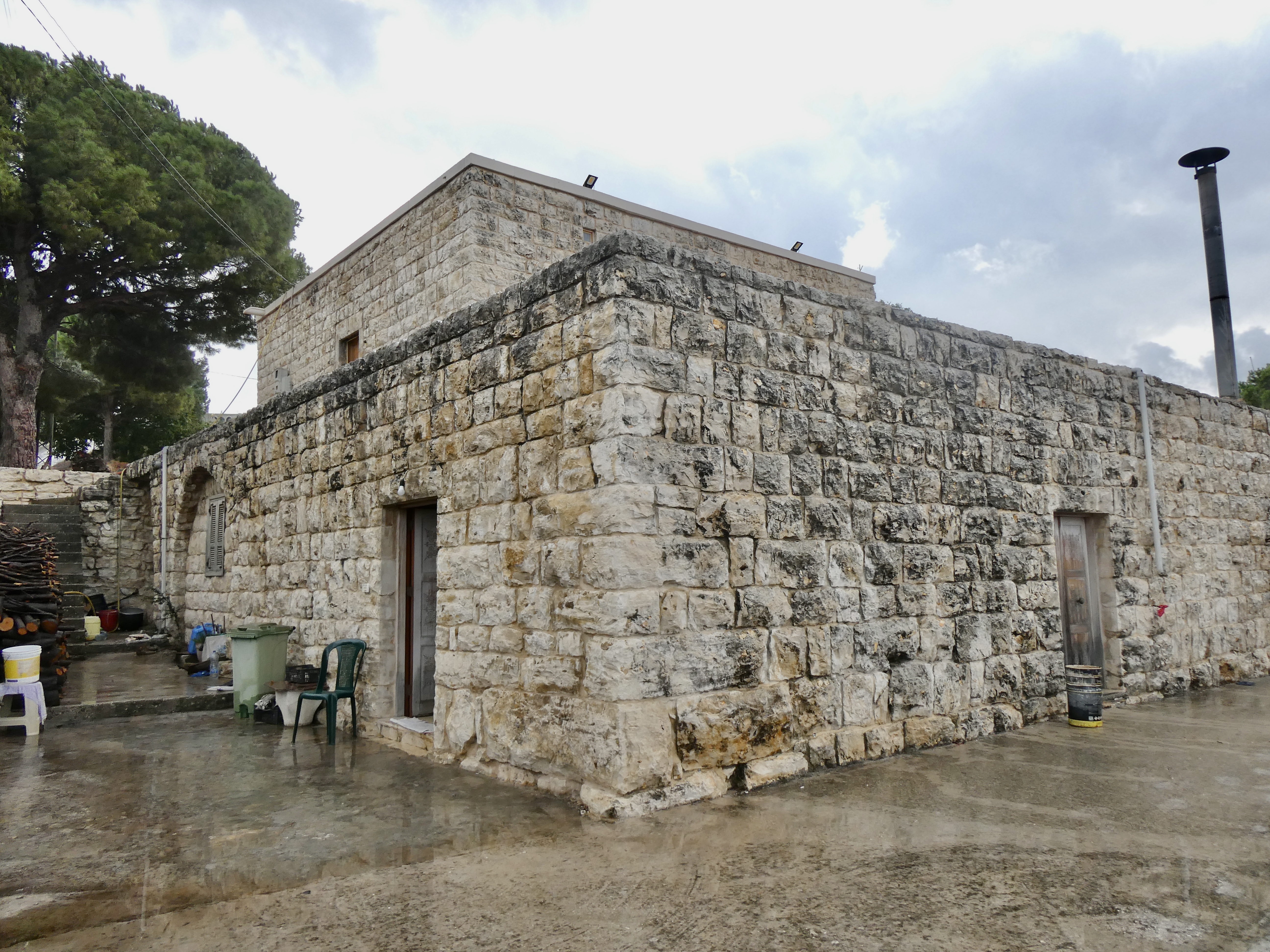
Elie and Perla picked me up at 9:00 a.m. at my hotel and we set off north for Batroun. We were soon winding our way up through the mountains eventually reaching Zen around 10:00ish. Now Elie and Perla’s home was something else. An old stone home dating back 200 to 300 years, which had been in the family for generations. The home was at one time used as a stable, but had been later converted into a home. More recently, the family has been working on an addition to the home on the second floor.

Once we arrived Elie gave me the grand tour and I was simply enchanted with the home. Ancient stone arched walls, old wooden doors and a lovely yard. What was not to love about this home.
I was introduced to mother Teresa, who did not speak a lot of English so Perla and Elie acted as translator. After being shown the kitchen, mother Teresa suggested we have coffee. (The Lebanese hospitality is right up there with the Turkish hospitality. Simply wonderful.)
Now one of the really, and I mean really, cool things about the village is that everyone knows everyone else. So when the door to the home is open, people just pop in for coffee. It was awesome as folks popped in periodically while I was there.
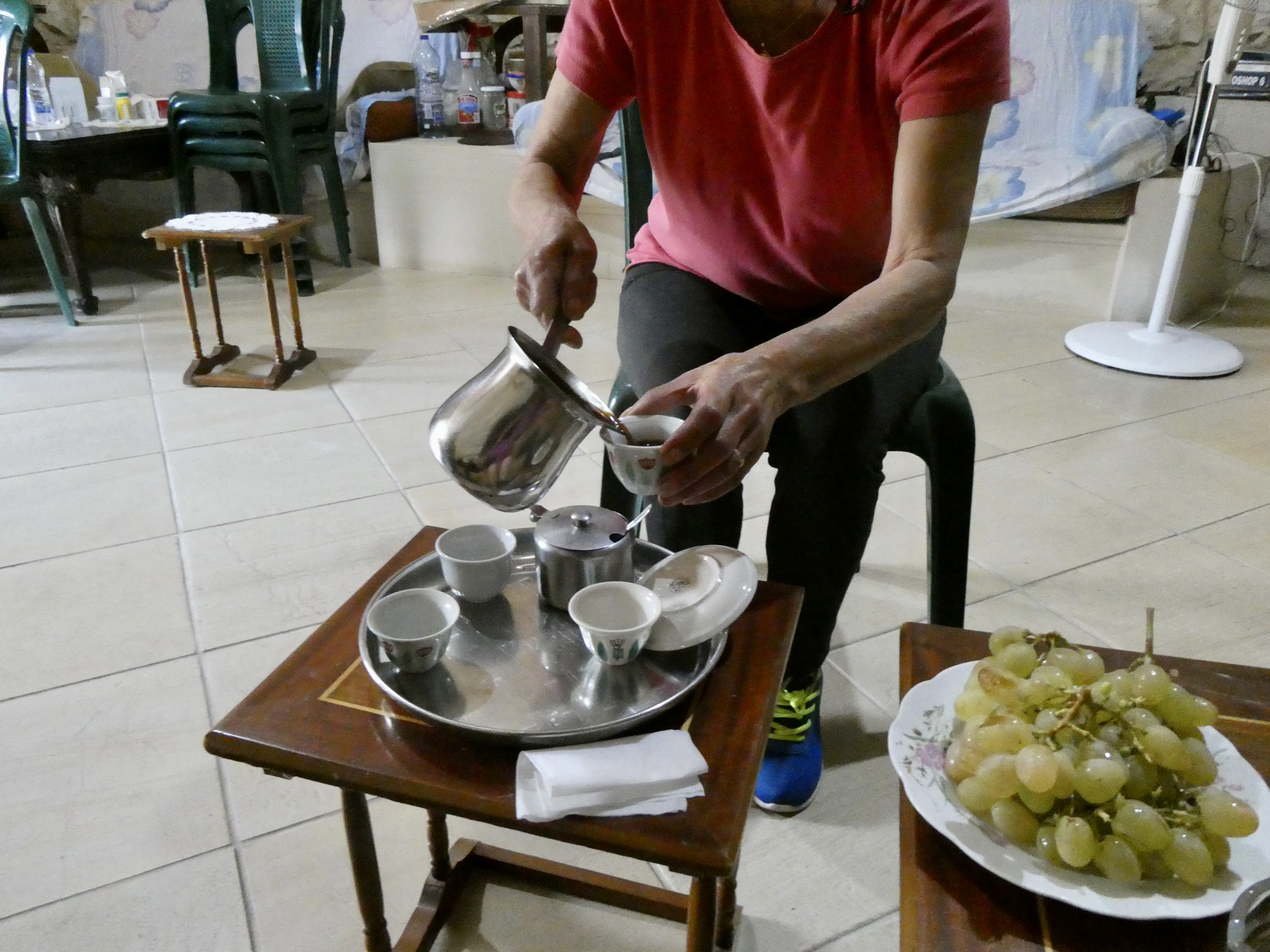
Anyway, before I knew it, grapes and figs were being put on plates and set on a small table in the living room area. Then mother Teresa brought out the coffee and poured it into little cups. Absolutely delicious.
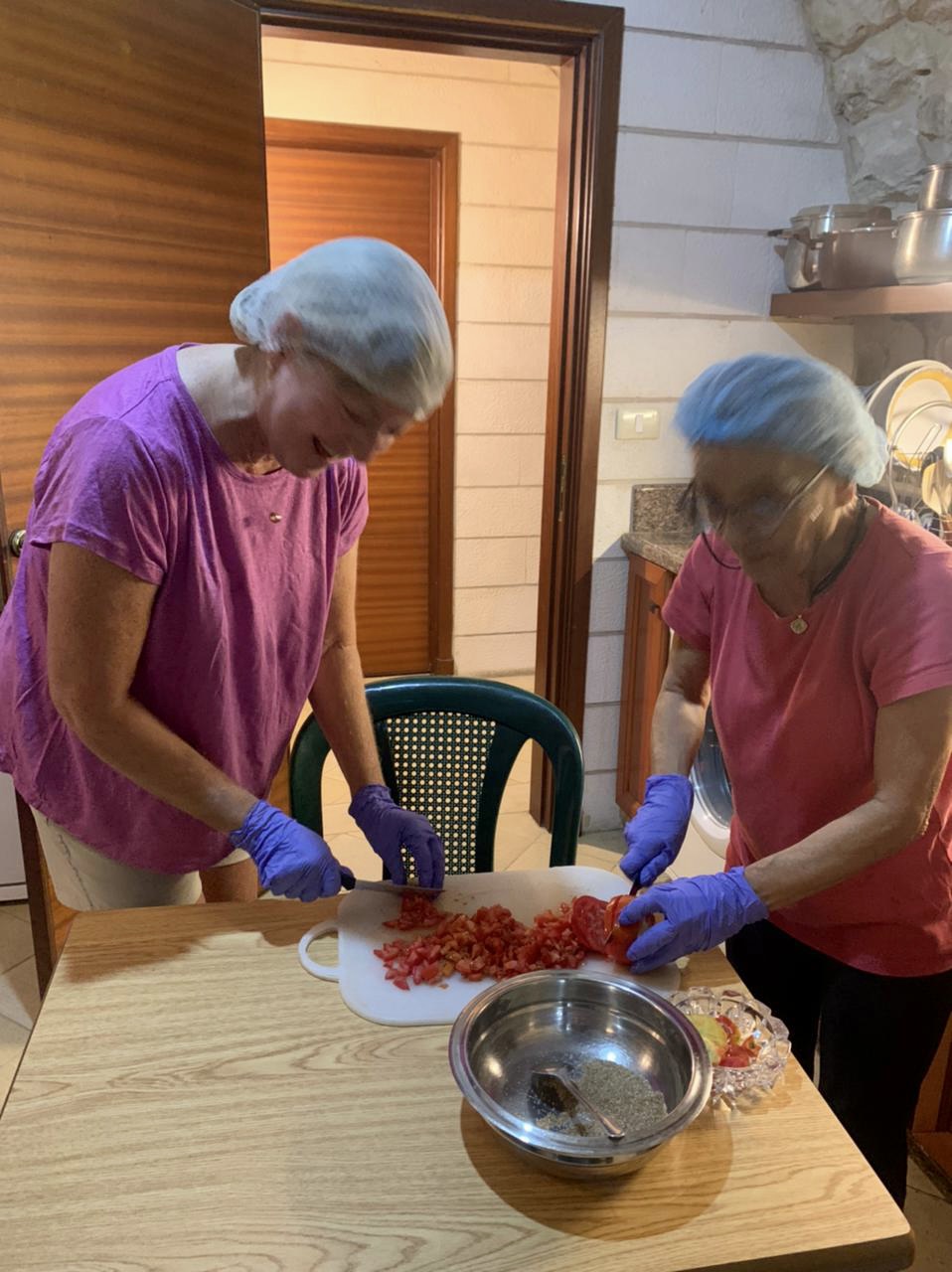
Eventually, it was time for the cooking lessons. I followed mother Teresa and Perla into the kitchen donned a hairnet and gloves and was soon learning how to make tabbouleh, a Lebanese salad consisting of bugler, tomato, parsley, mint, lemon, salt and pepper (and onion for those inclined). Now my chopping skills leave a lot to be desired, so I was amazed at how quickly mother Teresa could cut the stems off the parsley and finely (and I mean finely) chopped the parsley and tomatoes.
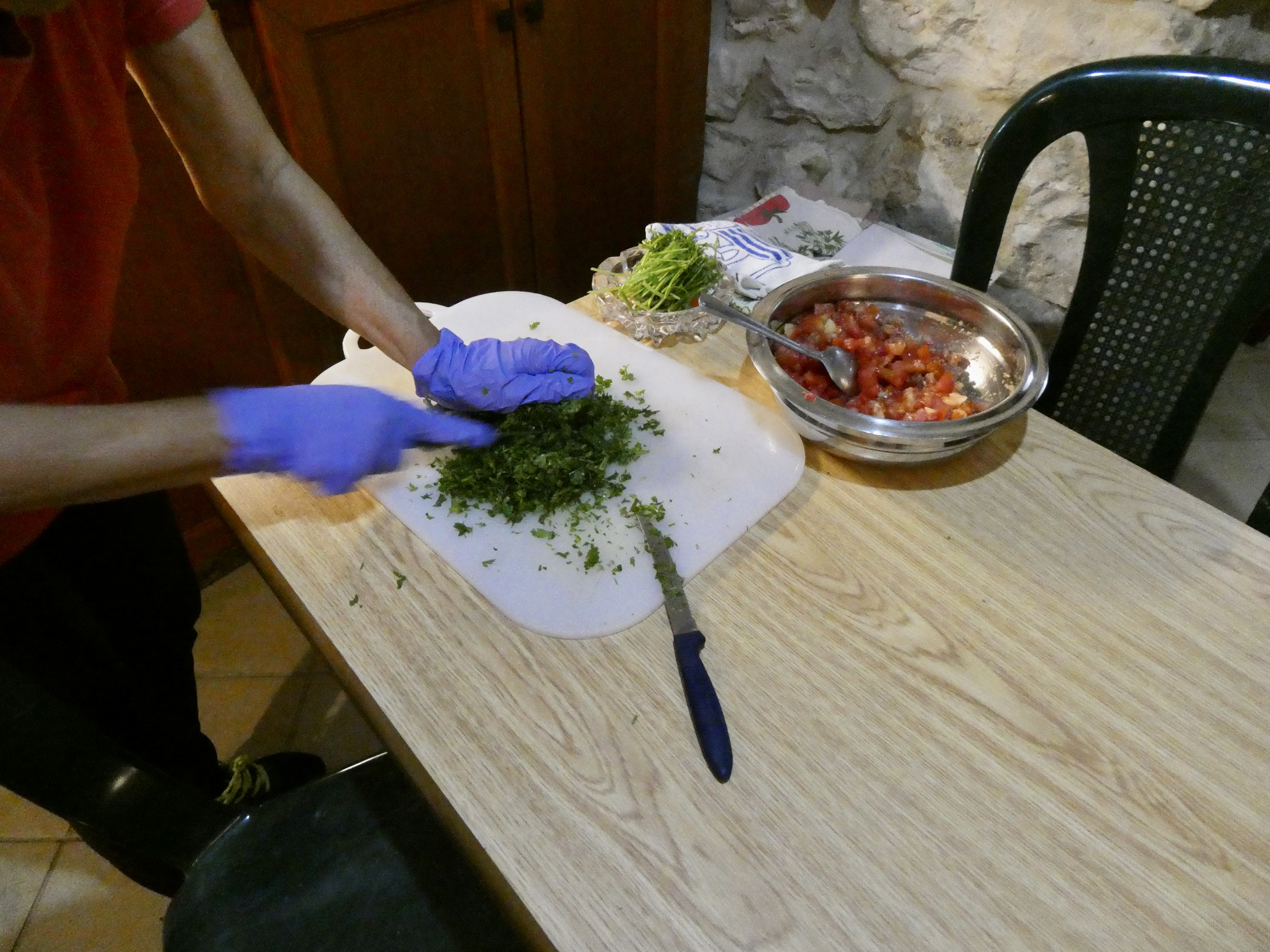
After watching mother Teresa, I had a go at it and if they had let me chop the rest of the tomatoes and parsley we would still be there. Anyway, once the tomatoes and parsley were chopped, I was given the task of squeezing the lemons which was added to the tomatoes, parsley, bugler and the rest of the ingredients. Once the ingredients were mixed (and little flowers made from tomato skins placed on the top of the salad), the salad was put in the fridge to chill.
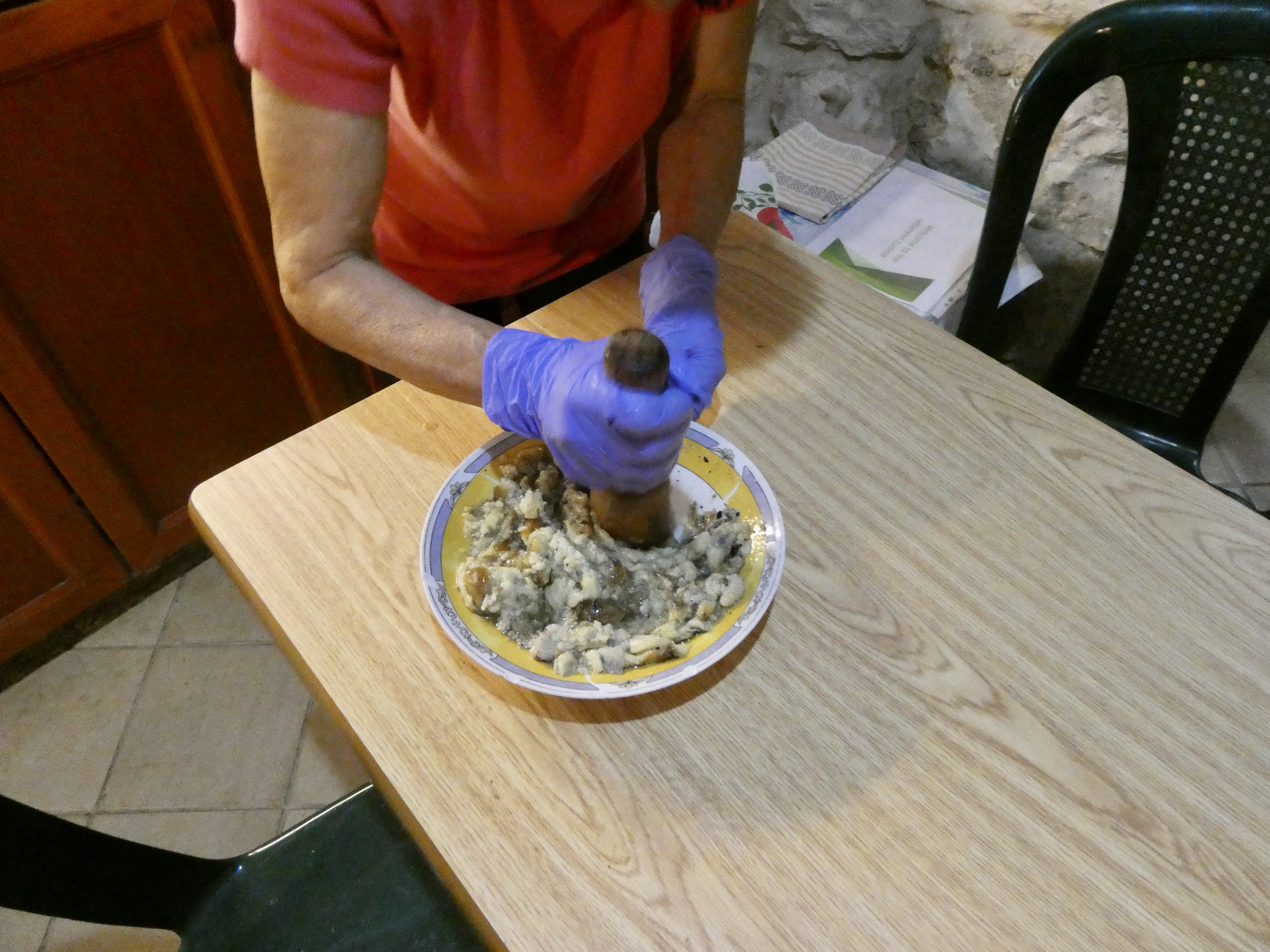
Next up was babba ganoush consisting of aubergine (eggplant), garlic, olive oil, tahini and lemon juice. The eggplant had been roasted so I helped peel the skin off the roasted veggies and then proceeded to smash the auberine, which was then mixed with the remaining ingredients. Perla pulled out some flat bread and suggested that I taste the mixture and … oh my God! I have had babba ganoush before, but nothing like this. Smokey, smokey goodness. I could have easily eaten the entire plate.
We then moved on to stuffed vine leaf rolls (Greeks call them dolomades) made with rice, tomatoes, mint, parsley, (onion), lemon, olive oil, sale, pepper and water. Now this dish was going to require some rolling skills and if anyone remembers my trip to Vietnam, I took a cooking class where I had to roll spring rolls and it was a disaster. My limp little spring roll still makes me laugh.
Anyway, once the stuffing was mixed, Perla brought out the jar of vine leaves. Now the really cool thing about all of this cooking was that everything, and I mean everything, came from the family garden or the garden of Elie’s uncle, including the vine leaves that were annually pulled off vines layered in jars, sealed and preserved in the storage area connected to the house.
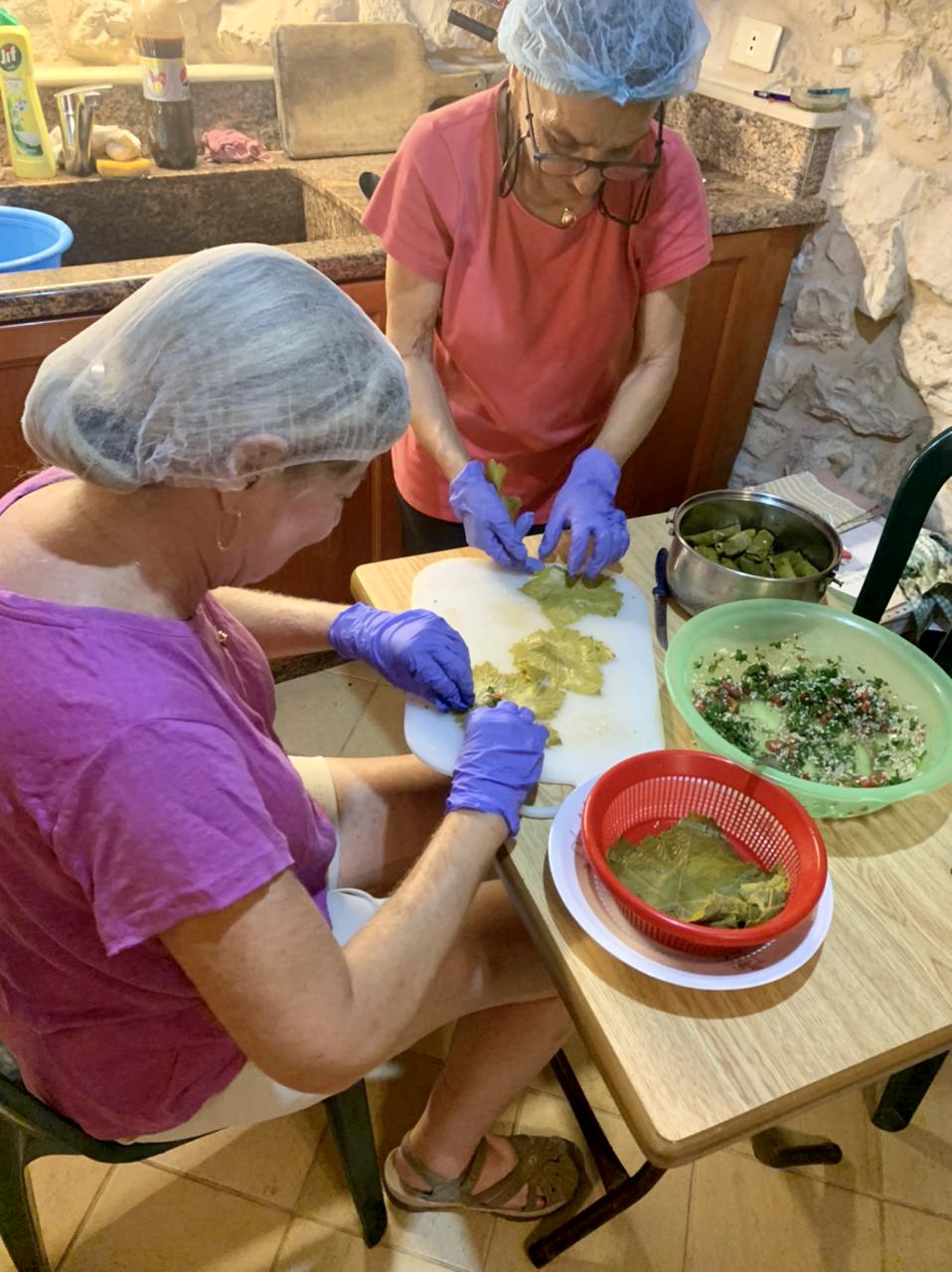
Now opening the jar took a bit of work as the seal was really tight. After some effort to break the seal, mother Teresa grabbed a spoon and presto, open jar. Once the jar was open, mother Teresa taught me the three ways to stuff the grape leaves. Two methods required folding the leaves over the stuffing and then rolling and the third method required taking the leaf in your hand stuffing it, folding and rolling. This last method was for the professionals, so I opted for folding the bottom leaves, then the side leaves and then rolling.
I rolled a number of vine leaves and would rate my effort a solid B-. Some good, some not so good, but fortunately nothing limp like the spring roll.
Once the vine rolls were stuffed, we cut up two potatoes and layered the bottom of a pan with potatoes to prevent the vine rolls from sticking, layered the vines rolls on top, added a plate to the top of the vine rolls to hold the vine rolls in place, filled the pot with water to the plate level and then put a lid on the pot. The vine rolls were left to cook until all the water had boiled out of the pot.
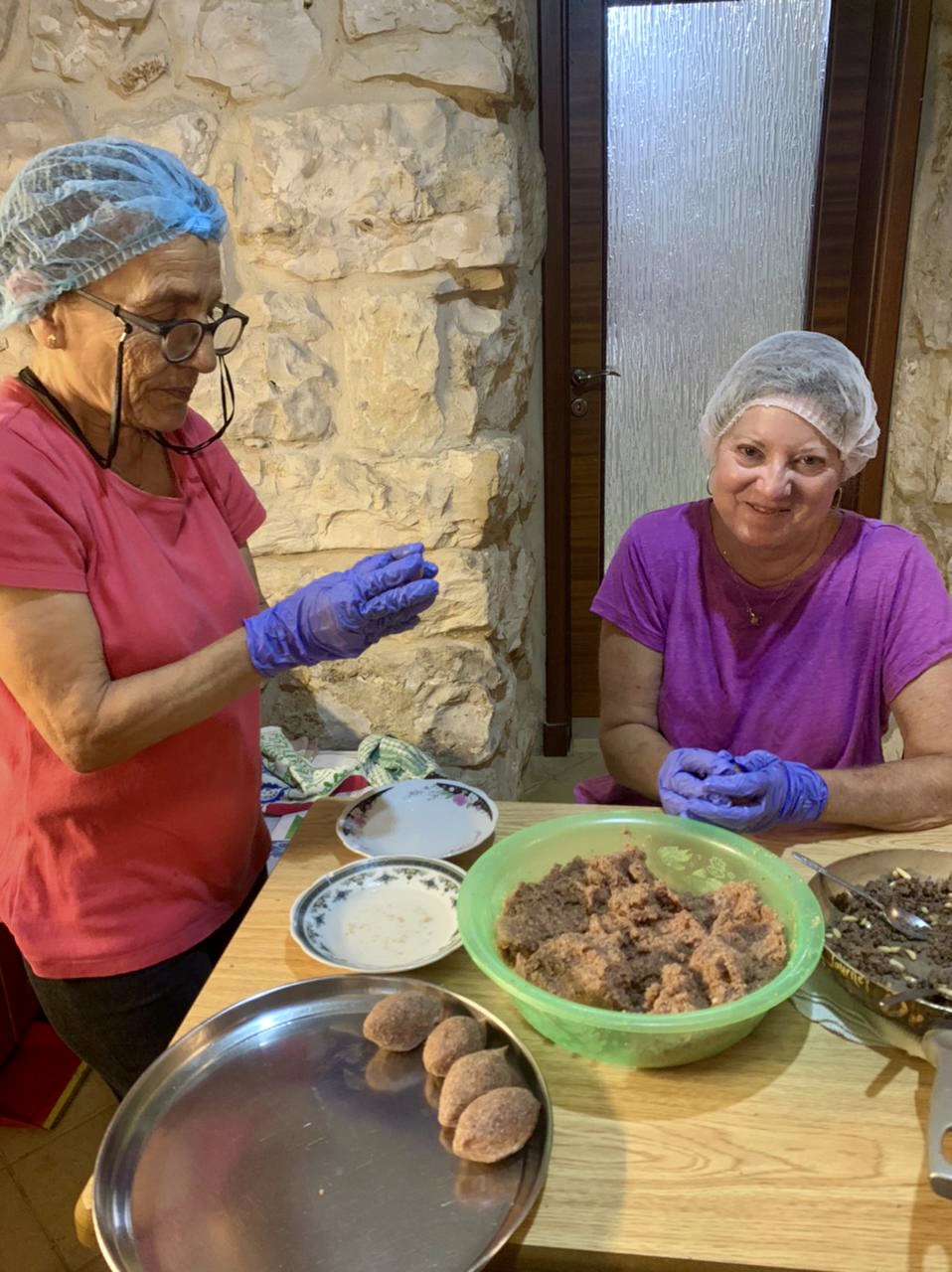
The last dish, kebbeh, was the main dish. The kebbeh was made two ways, with stuffing and without stuffing. The kebbeh was made with bulger, ground beef, salt, all spices, cumin, black pepper (onion) and in this case some spicy pepper. The stuffing for the kebbeh was made with olive oil, ground beef, pine nuts, all spices, cumin, (onion) salt and pepper. The kebbeh that was stuffed was cooked in a sauce with yoghurt as the base to which cornstarch, water, dried mint, garlic, rice, salt and pepper were added. The kebbeh that was not stuffed was fried in olive oil and served.
Now the stuffed kebbeh was a real art. Once we had the kebbeh mixed, we took a handful of the mixture formed it into a ball, polked a hole in the ball and then rotated the ball over and over to make a larger hole. Once the hole was large enough, you stuffed the kebbeh and then pinched the hole closed. Sounds easy right … think again. My kebbeh efforts were a disaster. My kebbeh were either too small or started falling apart. Mother Teresa kept having to repair my damage. She has immense patience with me, but I am sure she was thinking this woman is useless.
And one of the the amazing things about the entire cooking experience is that mother Teresa was patient with me and took the time to measure every single ingredient. Now this woman has been cooking for 50 plus years so she had no need to measure anything and every now and then I could tell she was about to just take a handful of whatever ingredient was up next and throw it into the mixture. She would then stop herself and show me the measurement. An amazing lady!
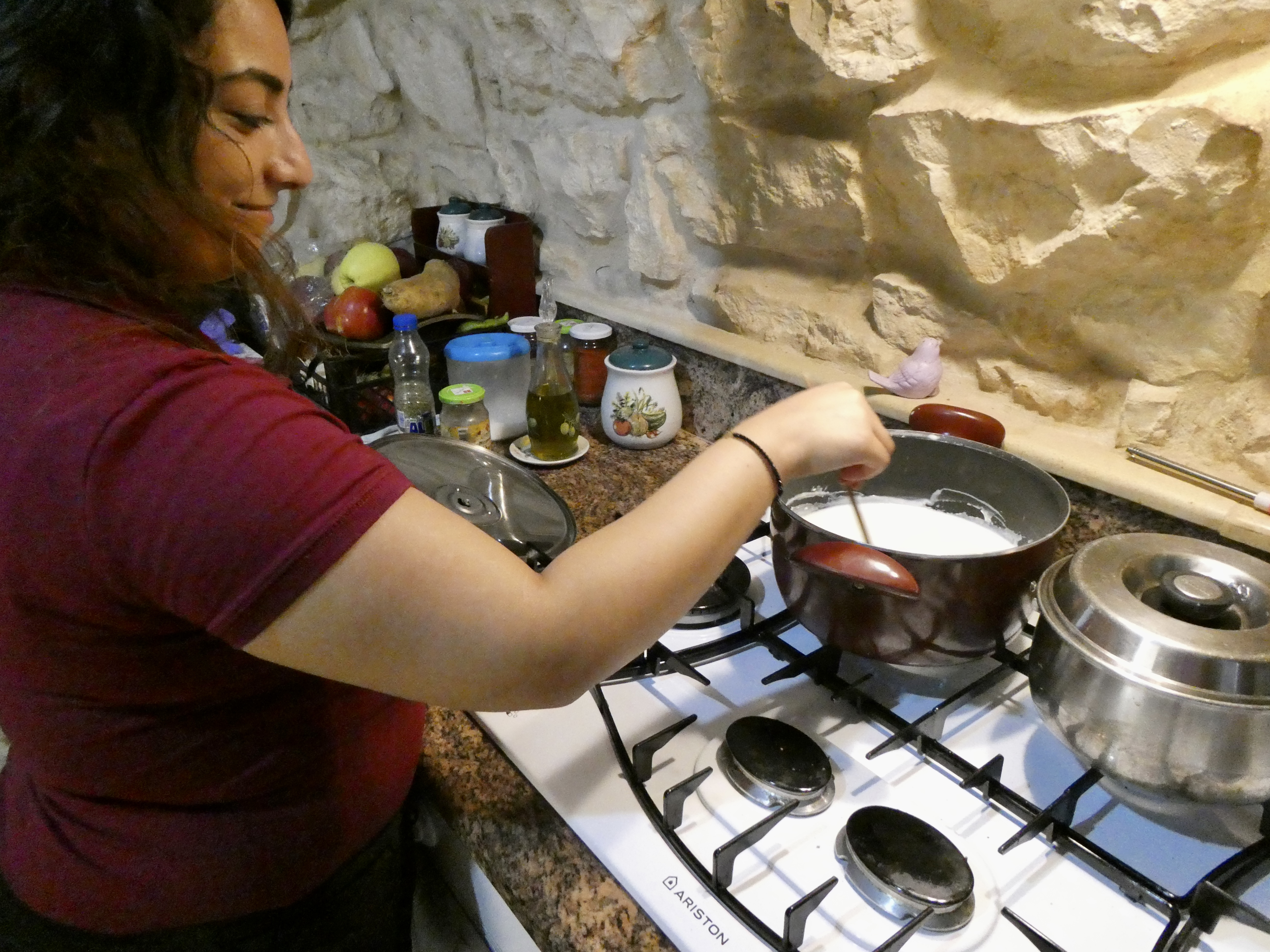
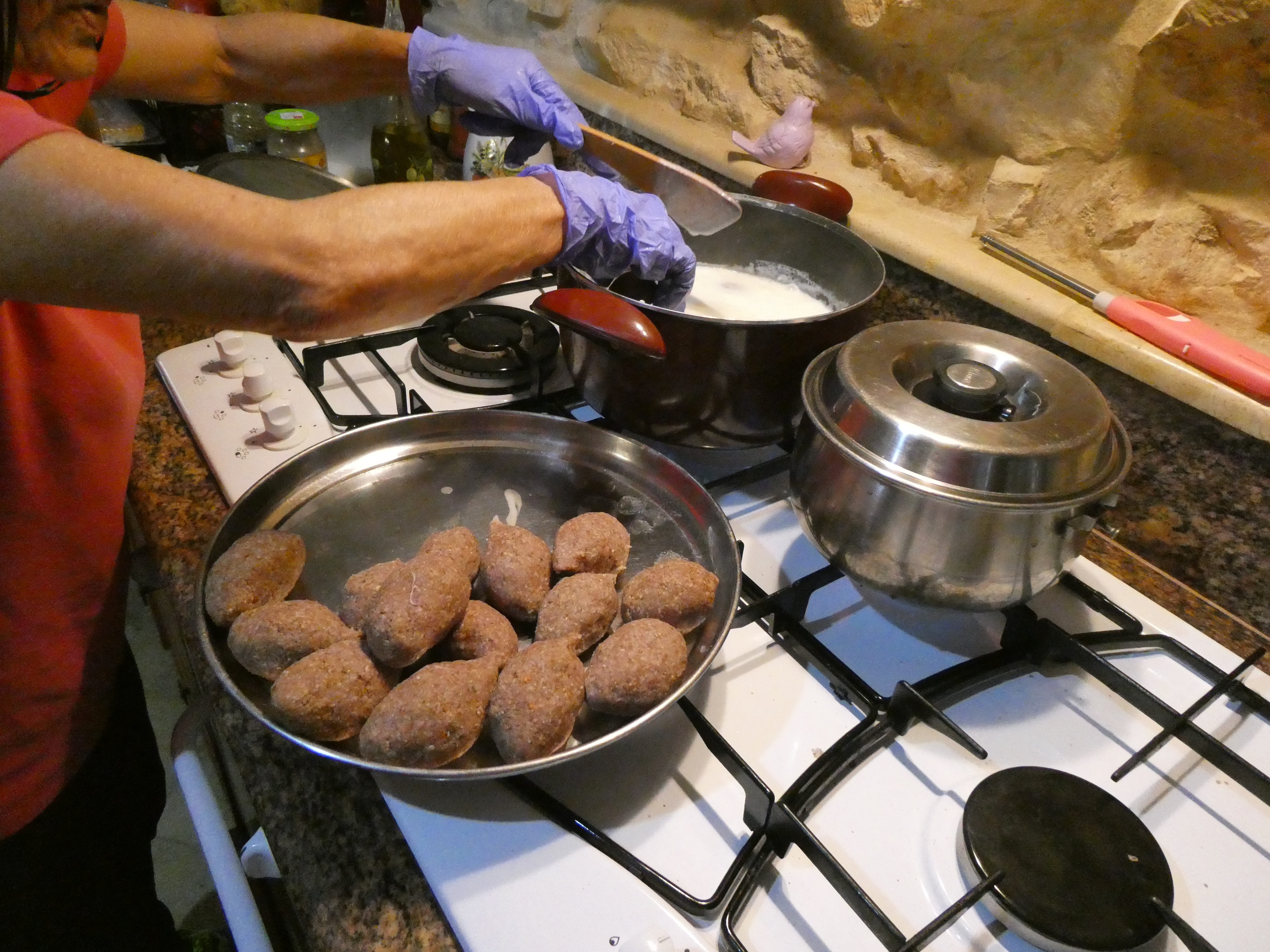
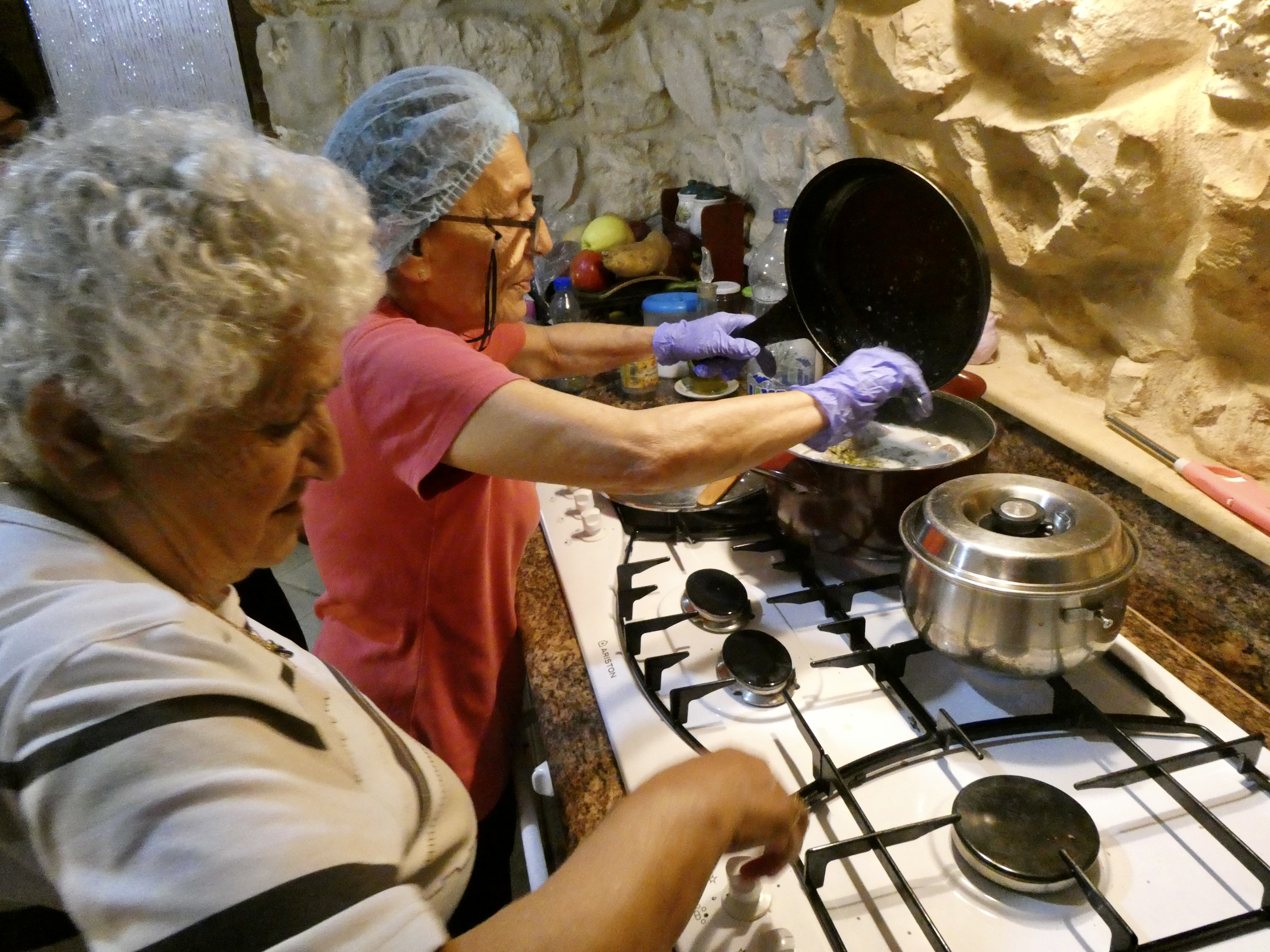
So once the stuffed kebbeh was made and the remaining kebbeh flattened into round patties for frying, we turned to the yoghurt sauce. Now the yoghurt sauce was VERY labour intensive. You had to cook the sauce at a low heat and stir the sauce continuously until it reached a low boil. The heat was then turned off and the sauce left to rest. After a bit of cooling, the cooking process commenced all over again, continually stirring and bringing the sauce to a low boil. If the sauce is too thick you add water. We all took turns stirring the yoghurt mixture including mother Teresa’s sister who had popped by for coffee.
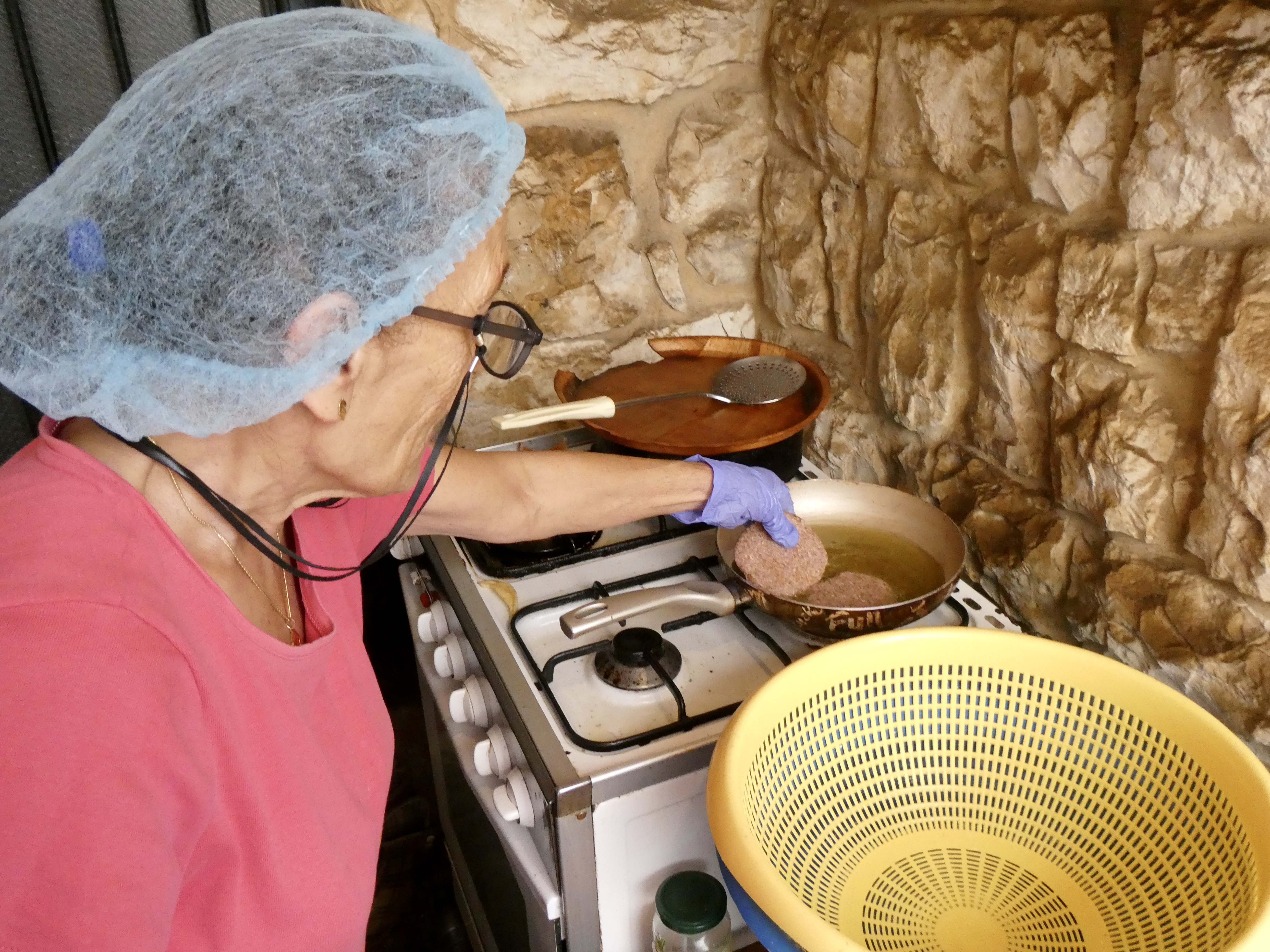
So once the yoghurt mixture was ready, the stuffed kebbeh were added to be cooked for about five minutes. In the meantime, mother Teresa and I went outside and I watched as she fried the flat kebbeh patties in olive oil on a stove outside. And the olive remains are not wasted. After frying the olive oil twice, the olive oil is then used to make soap!
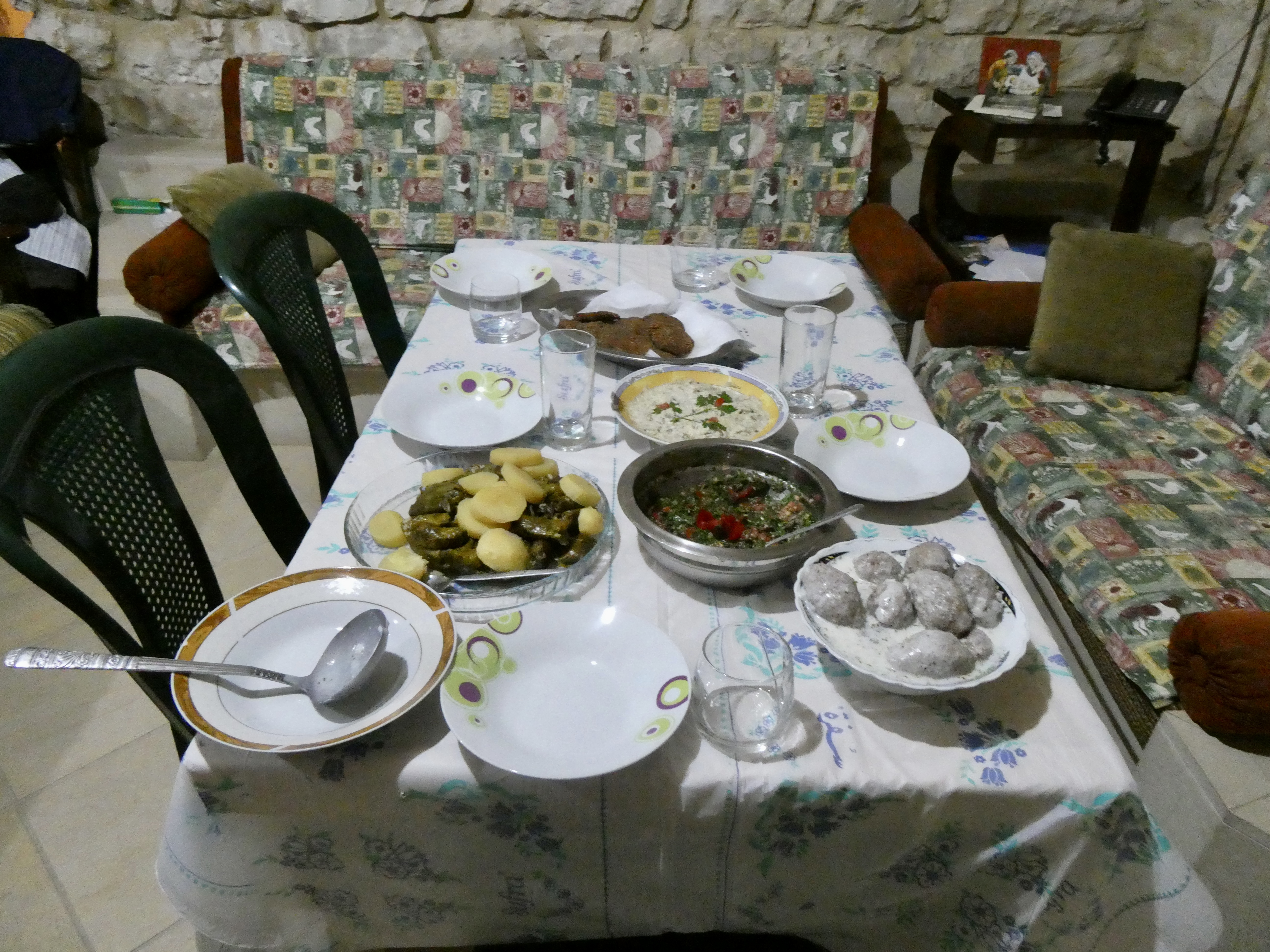
Anyway, at this point, we were ready to feast on the fruits of our (actually mother Teresa’s) labors. We all sat down at the table in the family area, and dug in. The food was absolutely delicious. The vine leaves were cooked perfectly. The kebbeh had a bit of spice to it and was wonderful. The tabbouleh was light and refreshing. And, of course, the babba ganoush was divine (loved, loved, loved, the smokey flavour). We ended the meal with a very light cake made with raisins and walnuts, which mother Teresa had previously baked.
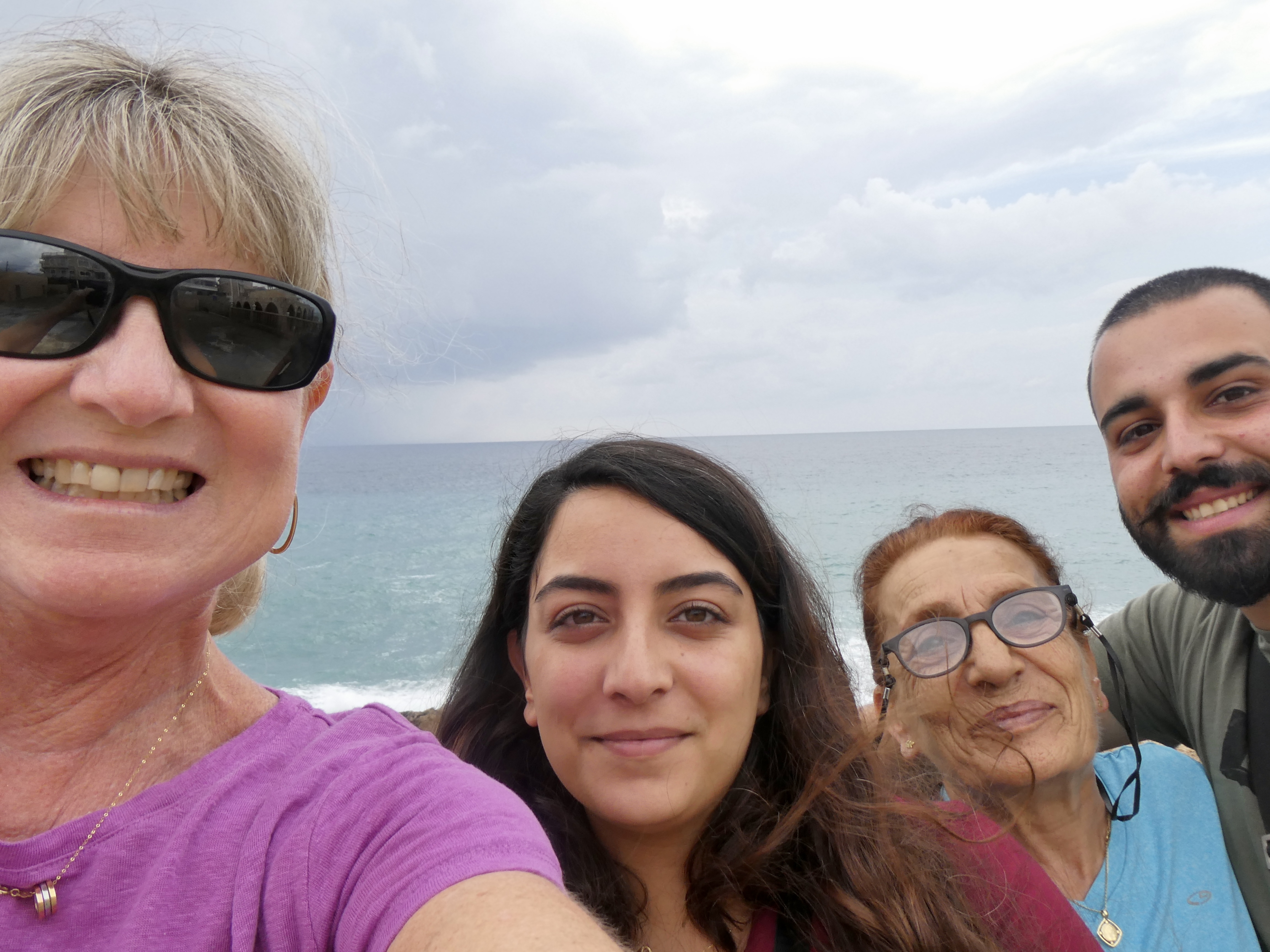
It was an incredible privilege to be invited and welcomed into this family’s home and to share a truly unique and special Lebanese meal. It is something, I am certain, I will remember forever.
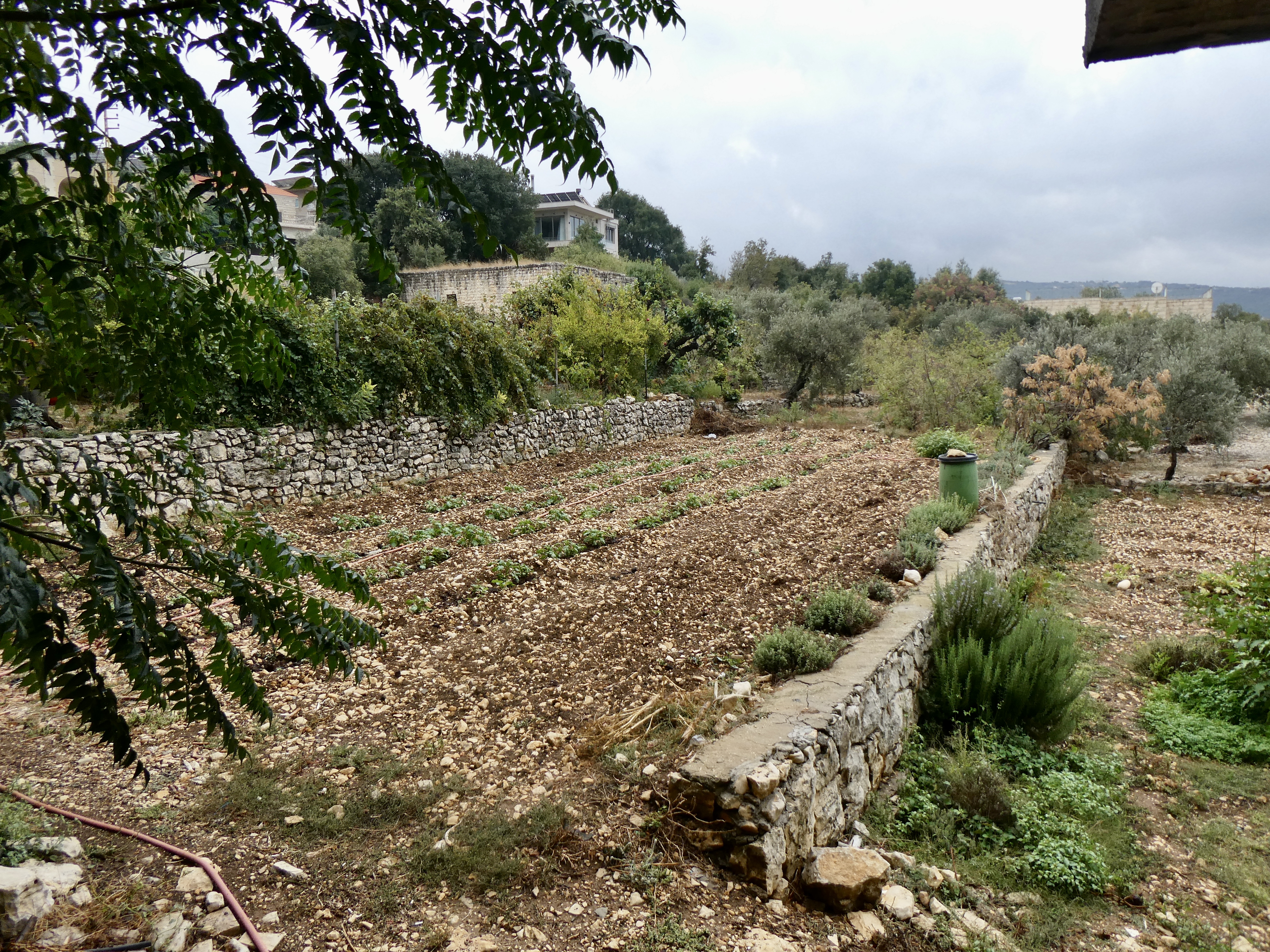
So after we cleared away the plates, Elie drove me, Perla and mother Teresa by his uncles home (literally a stone’s throw away) to see the gardens before driving down the mountain to Batroun.
Now, Batroun is right on the Mediterranean and has become something of a tourist town (to the chagrin of Elie). And because the streets are so narrow and because it looked like it was going to rain, we rented a tuk tuk to take us on a quick tour of Batroun.
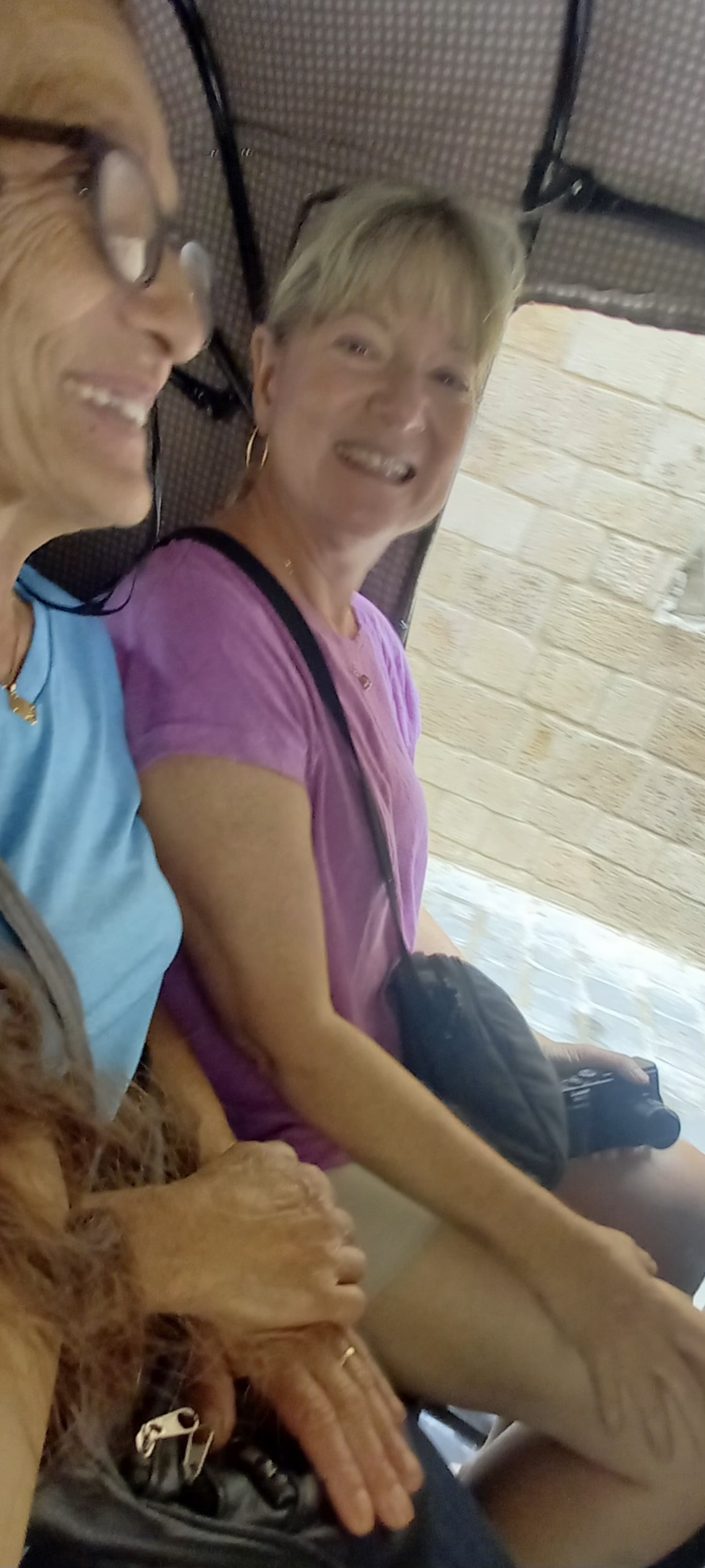
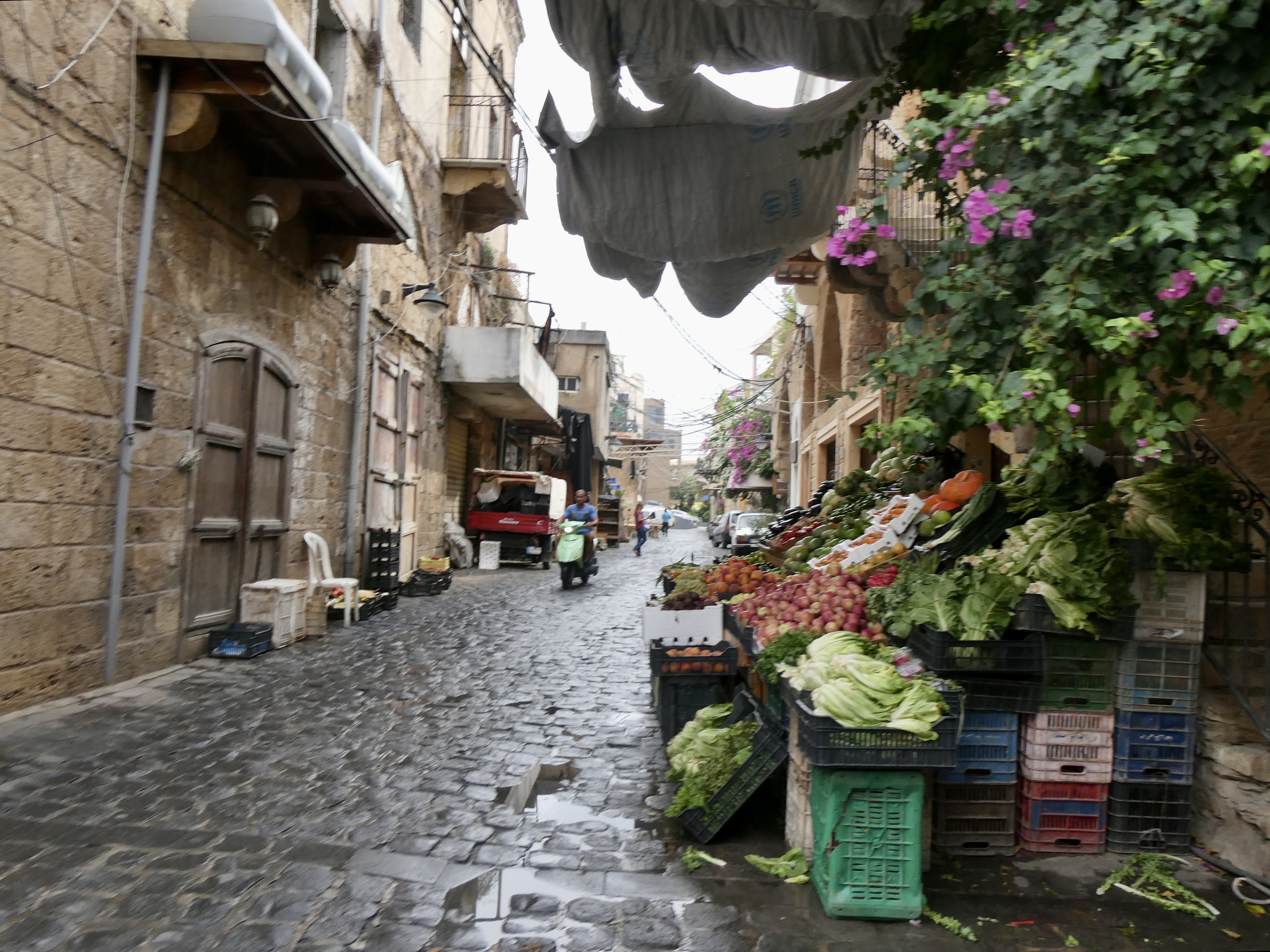
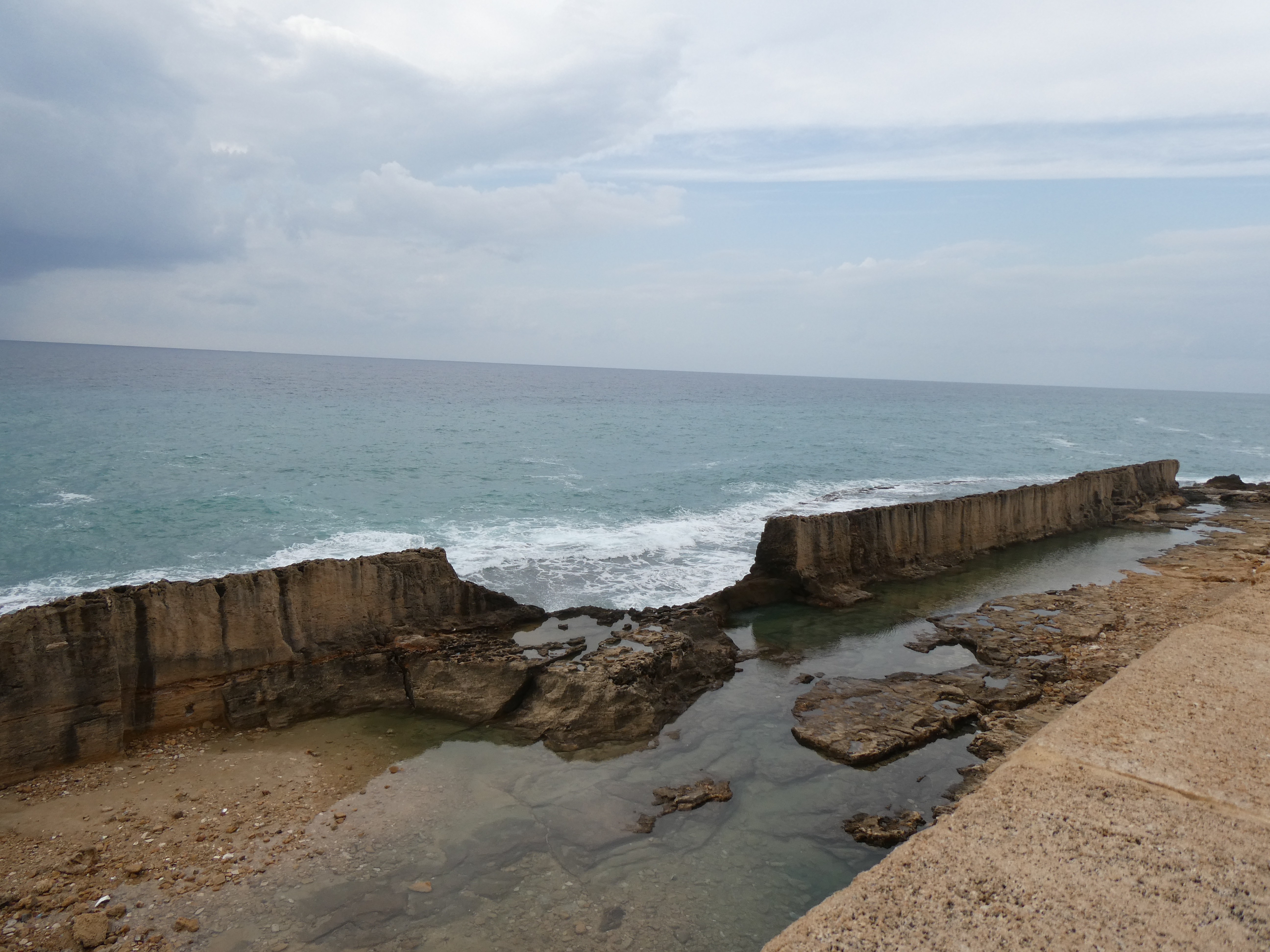
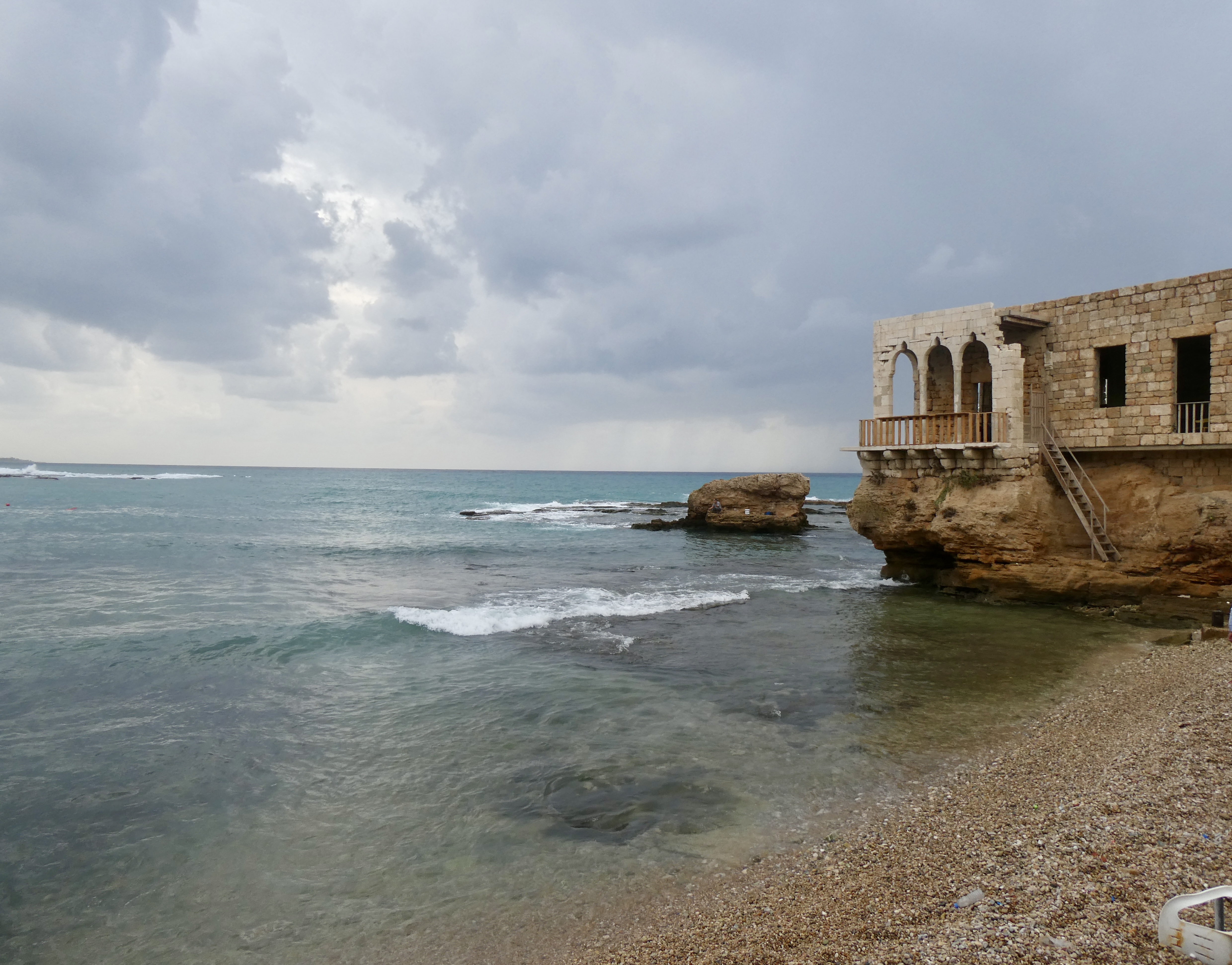
We drove through the narrow streets of the Souk and then down to the waterfront and the Church of Our Lady of the Sea and the old Phoenician walls.
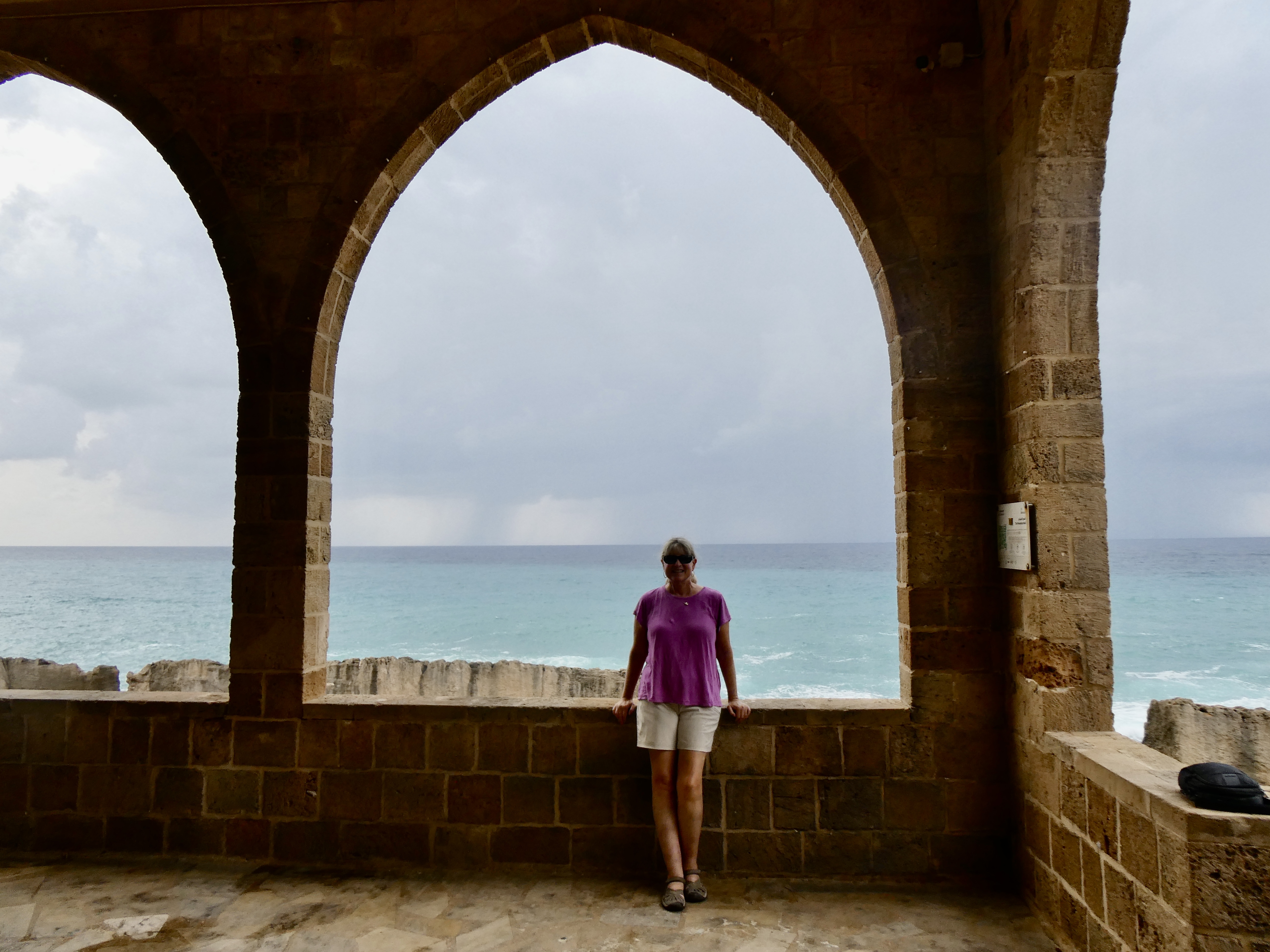
Now these Phoenician rock walls date to the first century BC and were constructed to protect the Phoenicians against storms and invaders. Today, the walls continue to function as something of a barrier against rising seas. And the views at this site were spectacular. We walked around and took some pictures, while I kept an eye on the darkening sky. We then drove along the touristy waterfront/beach area before returning through the souk to Elie’s car.
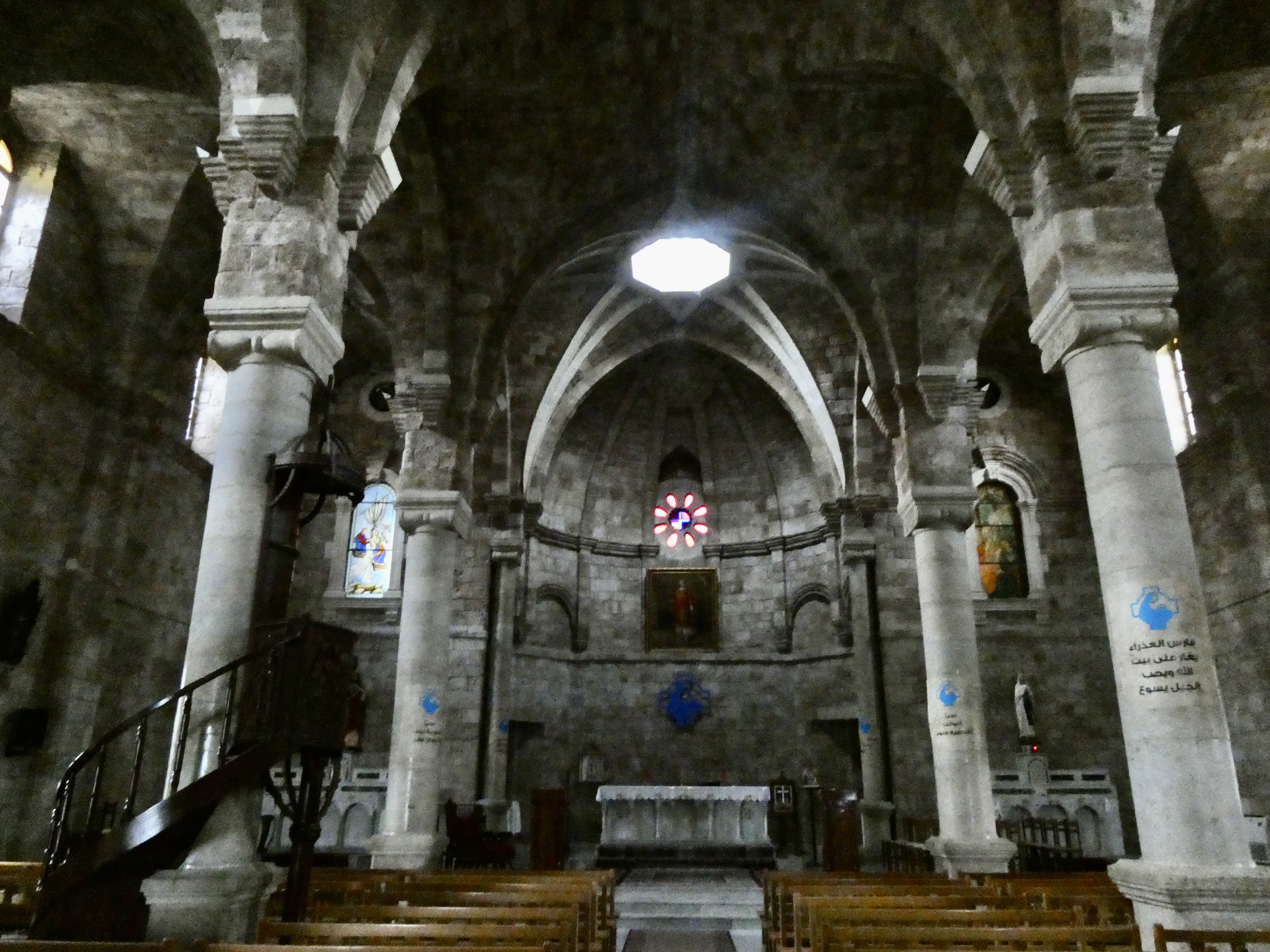
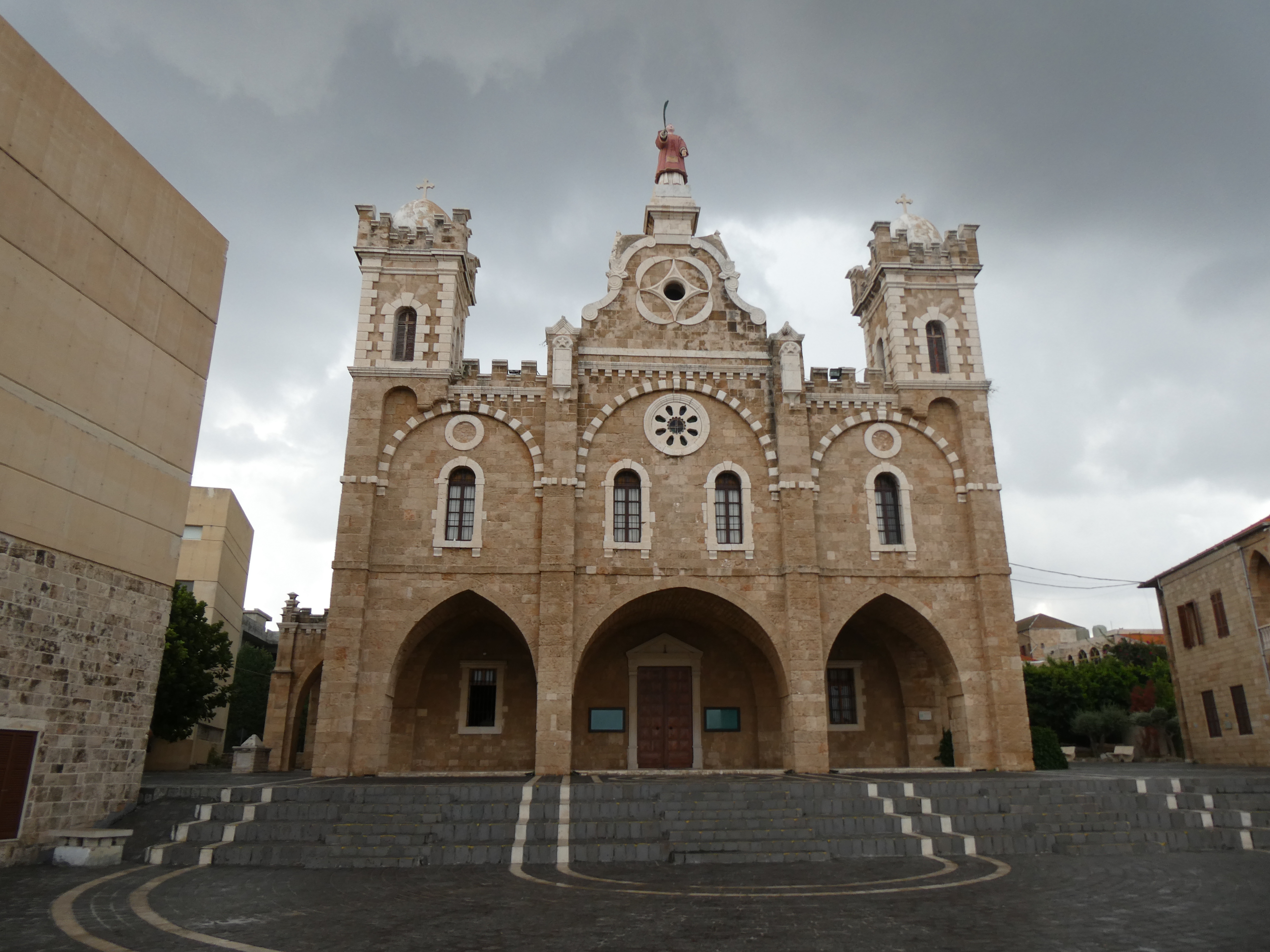
We then did a quick tour of the Batroun sea port and the 100 plus year old Saint-Stephen Cathedral, built on the ruins of an old crusader church. We took a quick look inside the very gothic looking church before walking back outside as raindrops started to fall. I made a quick run to the front of the church for a picture before making a break for the car with Elie, just as the rain really started to come down.
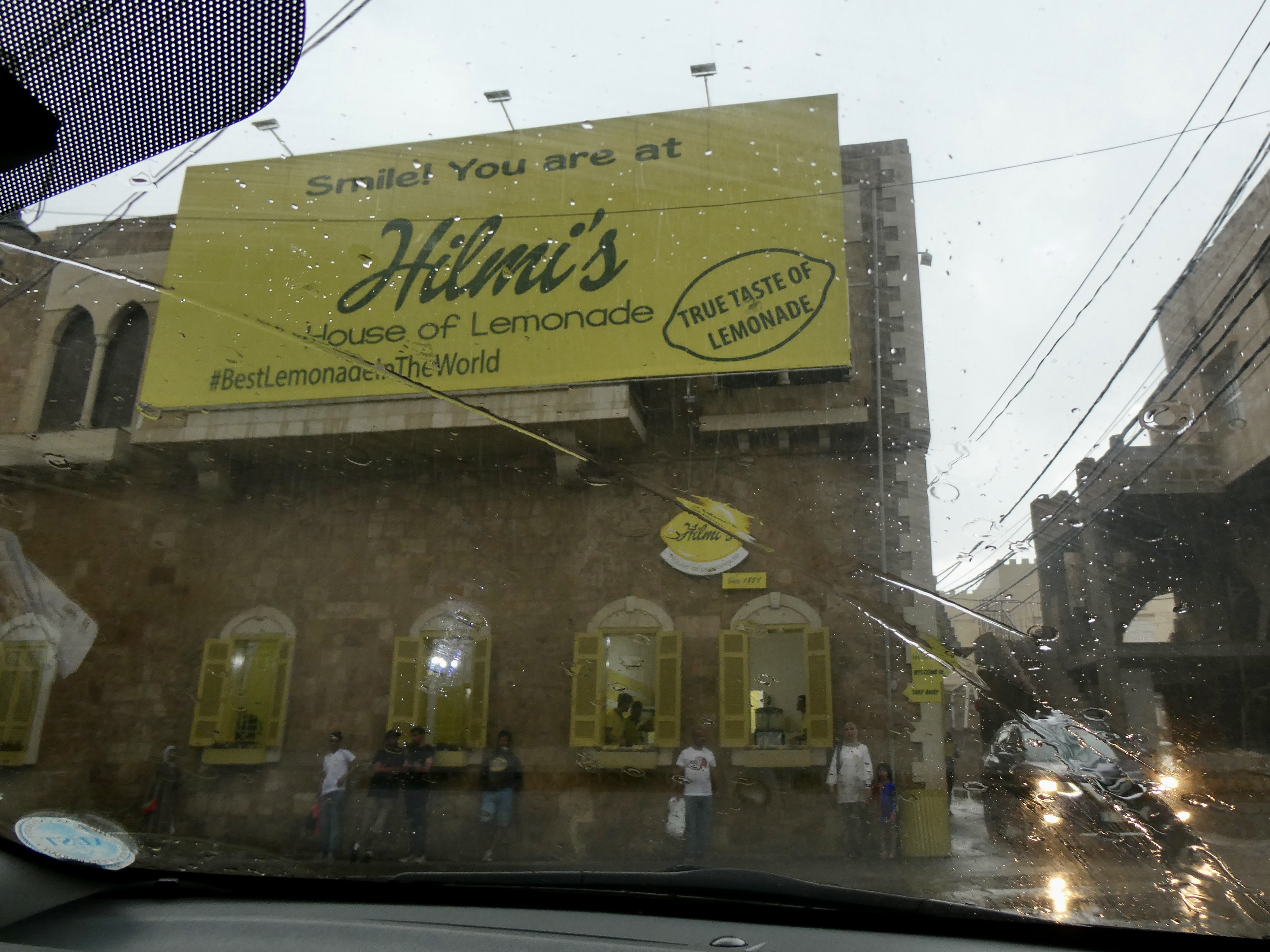
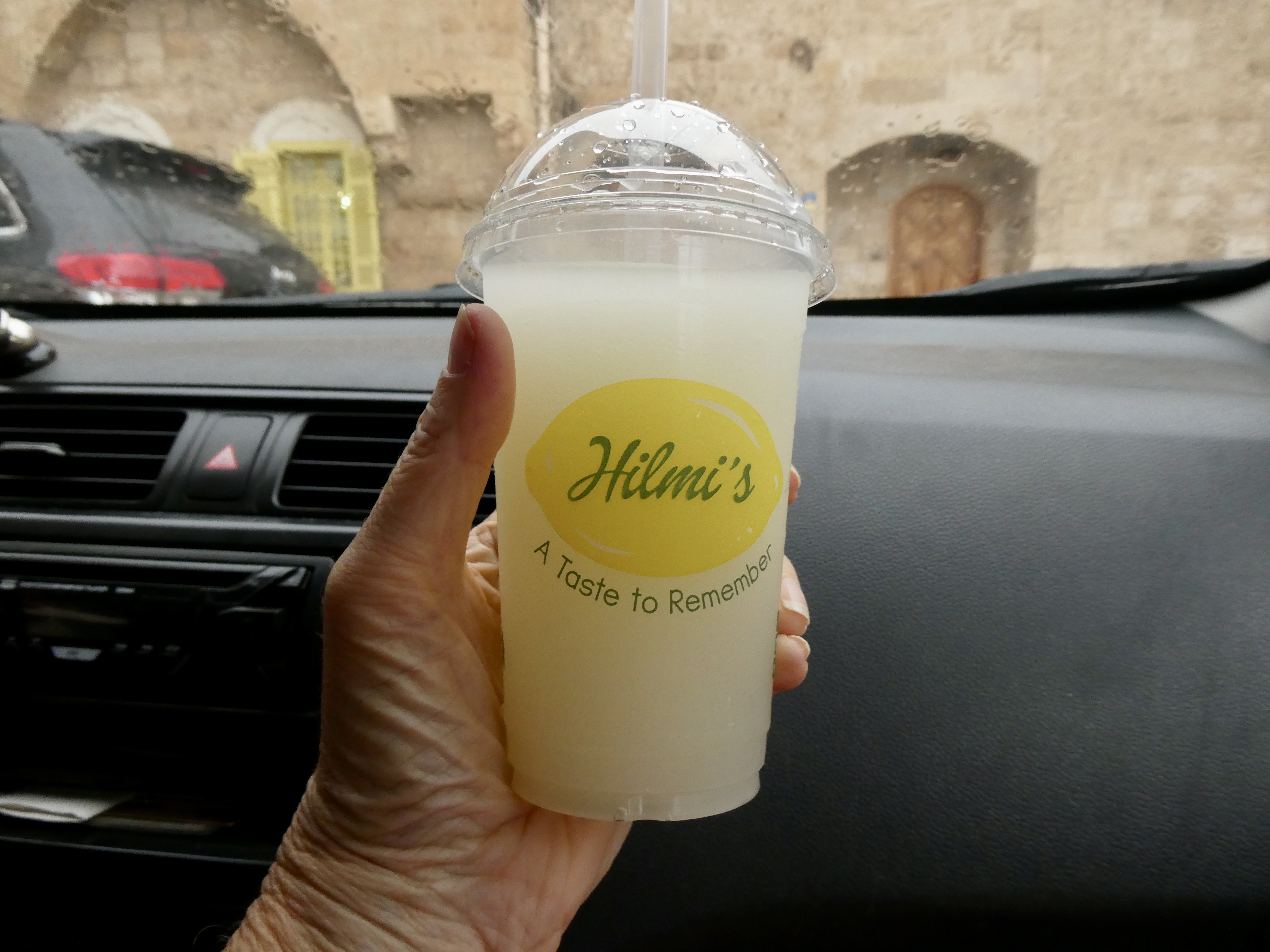
And damn, did it ever rain. I mean like someone was pouring a bucket of water on us. Unfortunately, Elie insisted on making one more stop at Hilm’s House of Lemonade, which is world famous and dates to 1888. Now I say unfortunately, because Elie was the one who made the lemonade dash through the downpour, but I will say, it is probably the best lemonade I have ever had.
So with lemonade in hand, we made our way back to the freeway and on to Beirut. (Perla and mother Teresa came along because they have an apartment in Beirut where they were going to stay.) And wouldn’t you know it. Ten minutes outside of Batroun, the rain stopped, the sun started to peak through and it appeared that the area south of Batroun had not received any rain. As a result, we did not experience any rain induced backups on the drive back to Beirut.
Anyway, no plans tomorrow and then on Wednesday, a tour of Beirut. Only a couple days left in Lebanon and then back to Cyprus and then home. My trip has been absolutely wonderful and today could not have been more fun!