So after the unsettling experience with Mahmoud, the wonderful folks at Explore Lebanon were mortified and went above and beyond to make sure my Sunday trip matched my expectations. My new guide for the day, Alain, would accompany me to the Baaka Valley and the site of Anjar, the unique, one of a kind site of Baalbek, and to the Ksara winery.
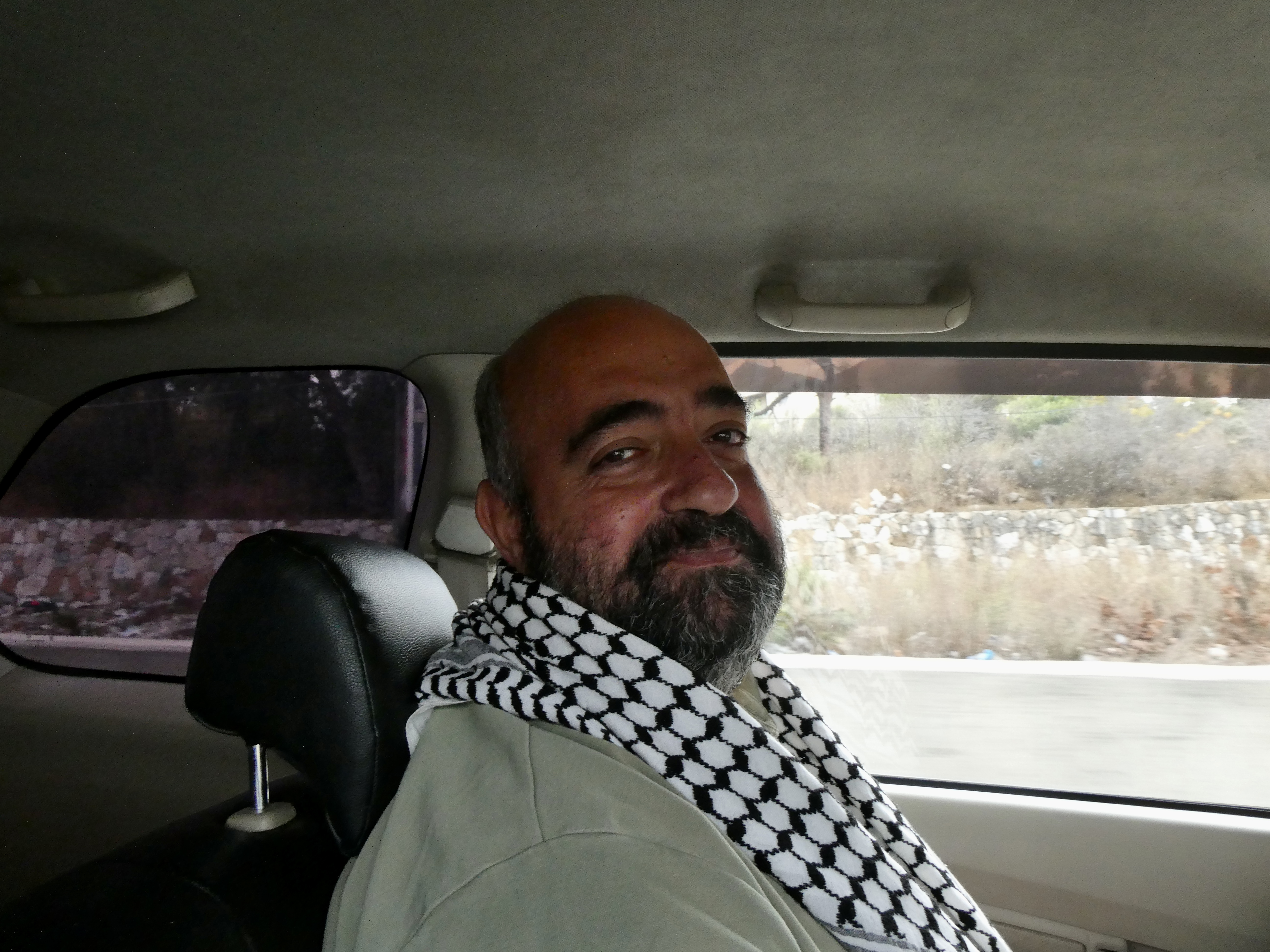
Anyway, on Sunday morning we left Beruit at 8:00 a.m., met Alain about 15 minutes outside the city and then drove east on the Beruit-Damascus highway towards the Baaka Valley and the sites of Anjar and Baalbek.
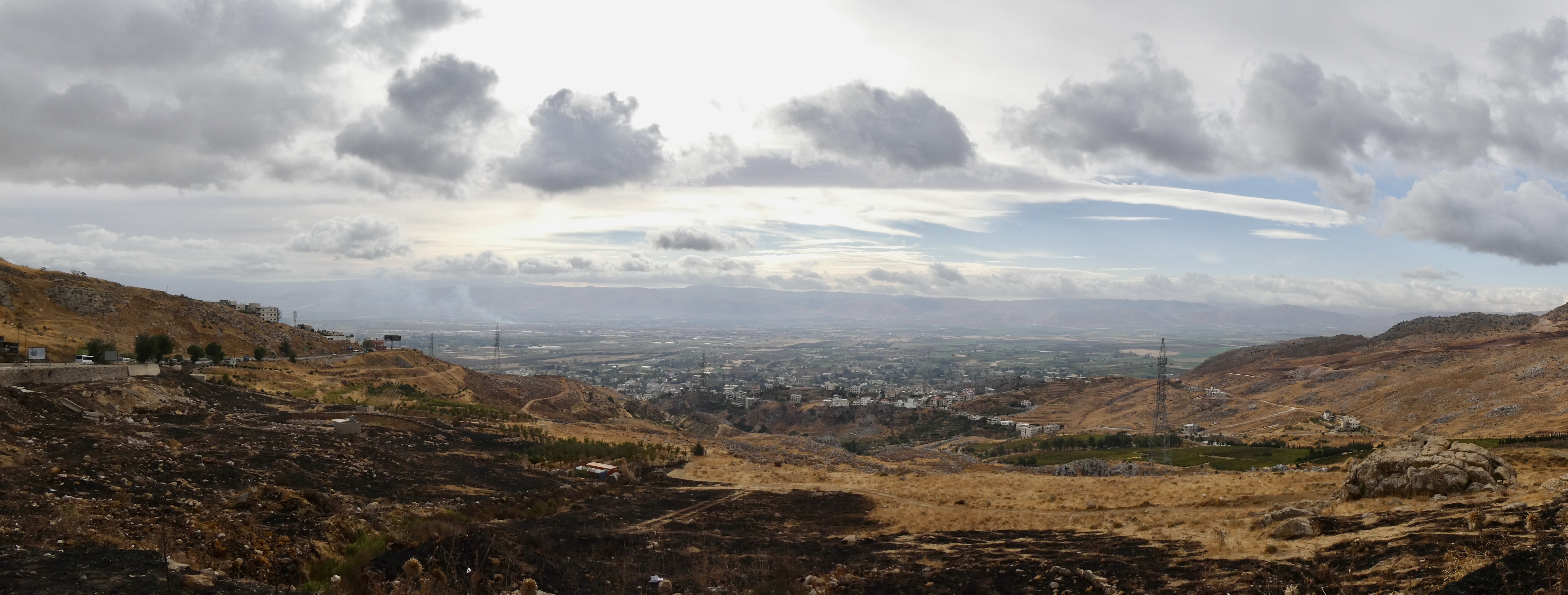
The trip took us up and over the mountains and into the Baaka Valley (the bread basket of Lebanon). Now because of our need for an early start (the drive to Anjar would take about an hour and a half), Alain had not had his coffee so he suggested we stop in at a coffee shop just after the first checkpoint of the day. Unfortunately, the coffee shop was packed with tour groups on the way to Baalbek so we drove to a local supermarket where there was a coffee stand.
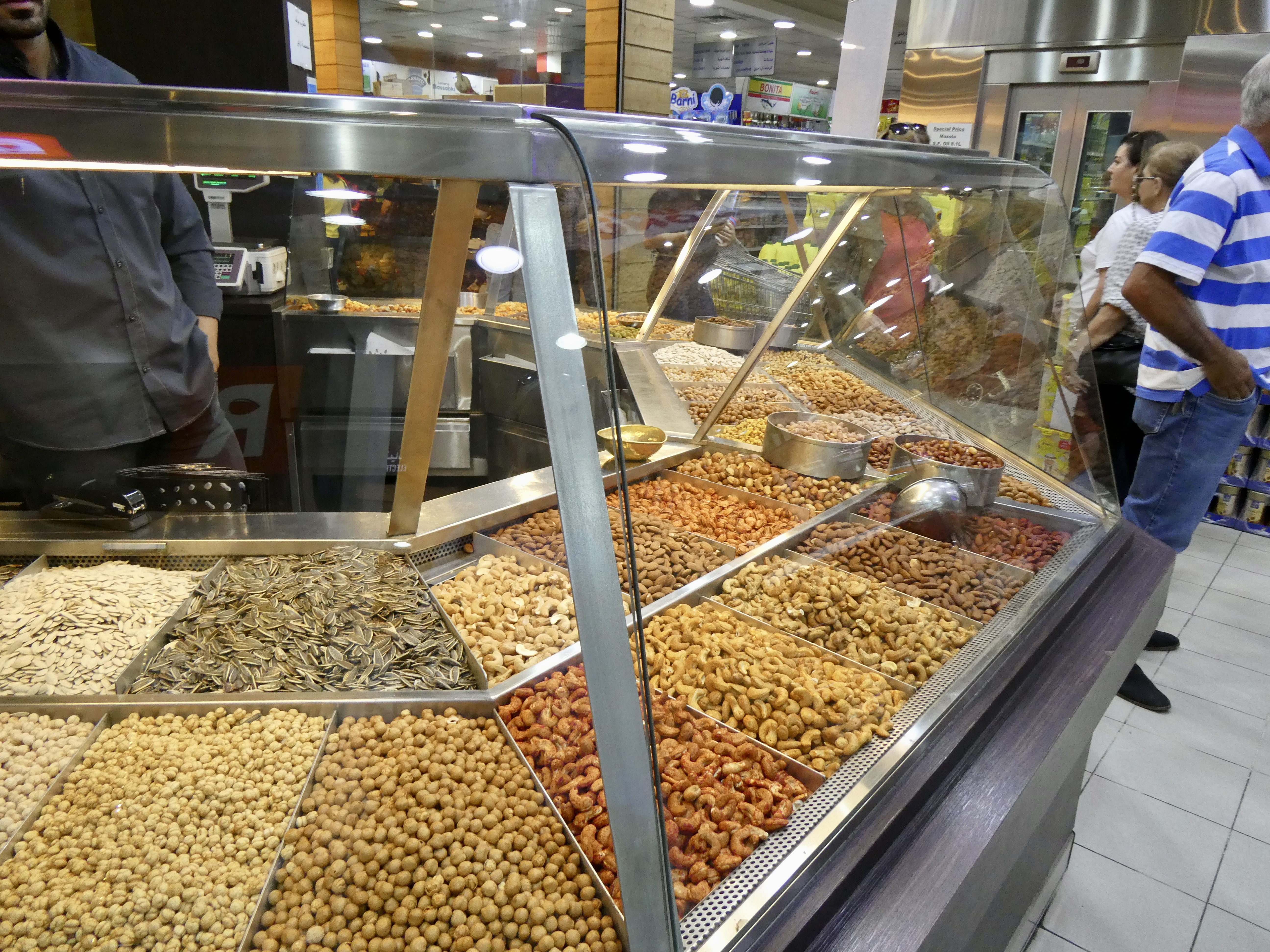
Now the trip to the supermarket was fascinating because they had this massive nut stand. You name a kind of nut, you name a flavour of nut and they had it. I was boring and simply bought some pistachios, but damn I am now regretting not buying the truffle oil cashews. The young man at the counter gave me a taste and it was superb. I am hoping I can find another Rifai nut stand and buy some of the truffle oil cashews. (Always, always buy if you like it. I am deeply regretting not having those nuts to munch on right now.)
Anyway, once Alain had his coffee fix (and a latte for me), we continued on to the city of Anjar, about 10 minutes from the Syrian border, and the ruins lying within the town limits. Now the Anjar ruins, aka the Ummayad city of Anjar, dated to the 8th century A.D. and had been constructed using stone “borrowed” from the Byzantines and the occasional column “borrowed” from Roman ruins. As a result, the city had a very unique design.
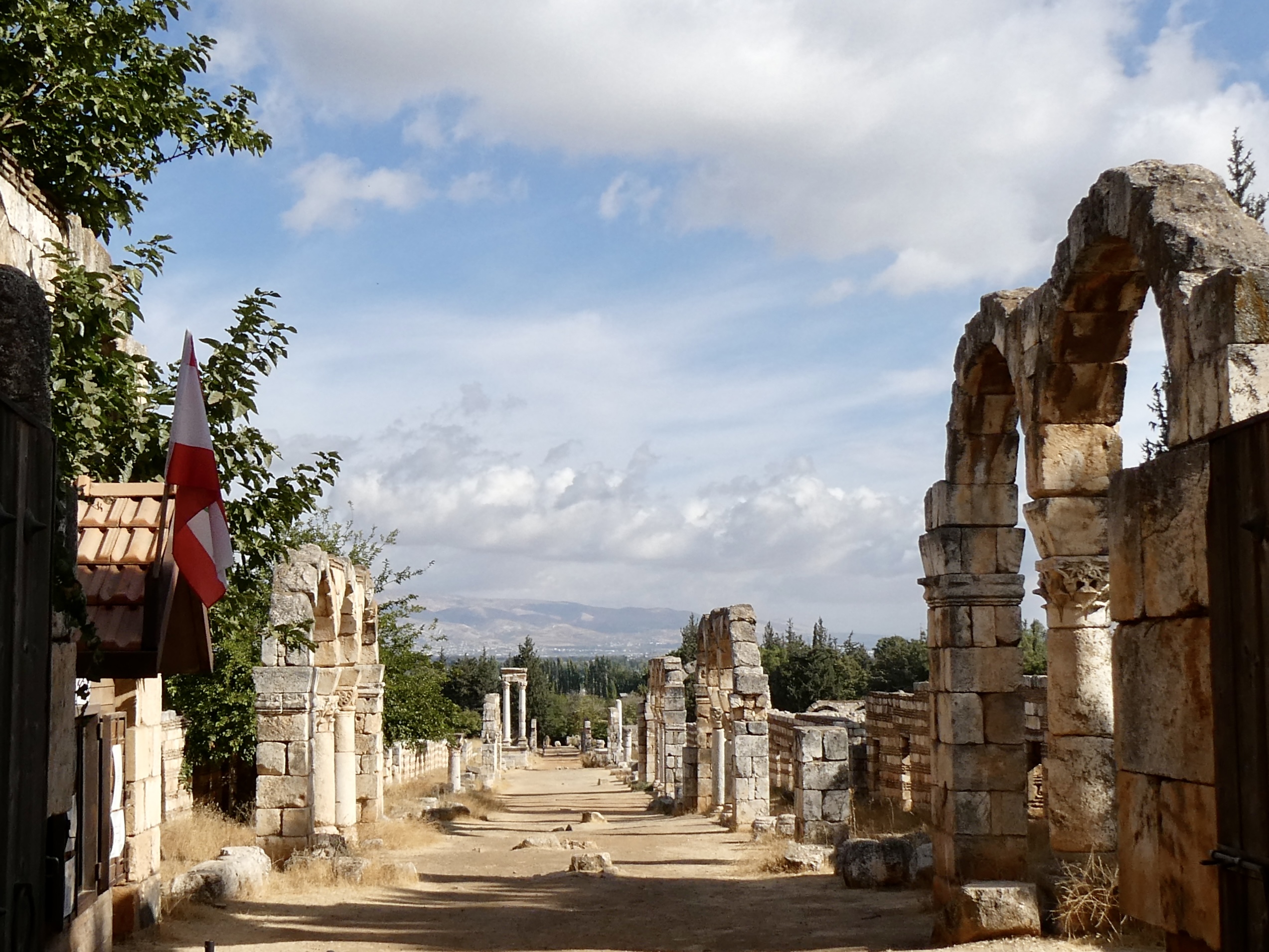
Now the city was in the shape of a rectangle with the two primary streets running north and south and east and west forming the shape of a plus sign and was surrounded by large stone walls. Within the walls Roman colonnades surrounded the streets and hundreds of shops lined the streets. In the center of the intersection of the two streets was a four pillared portico (although now there was only one complete pillar still standing).
The site featured a Grand Palace, and adjacent mosque, a smaller palace on the opposite side of the mosque, thermal baths styled after the Roman baths, a large area that may or may not have been a garden, and the remains of frescos and tools, including an olive oil press.
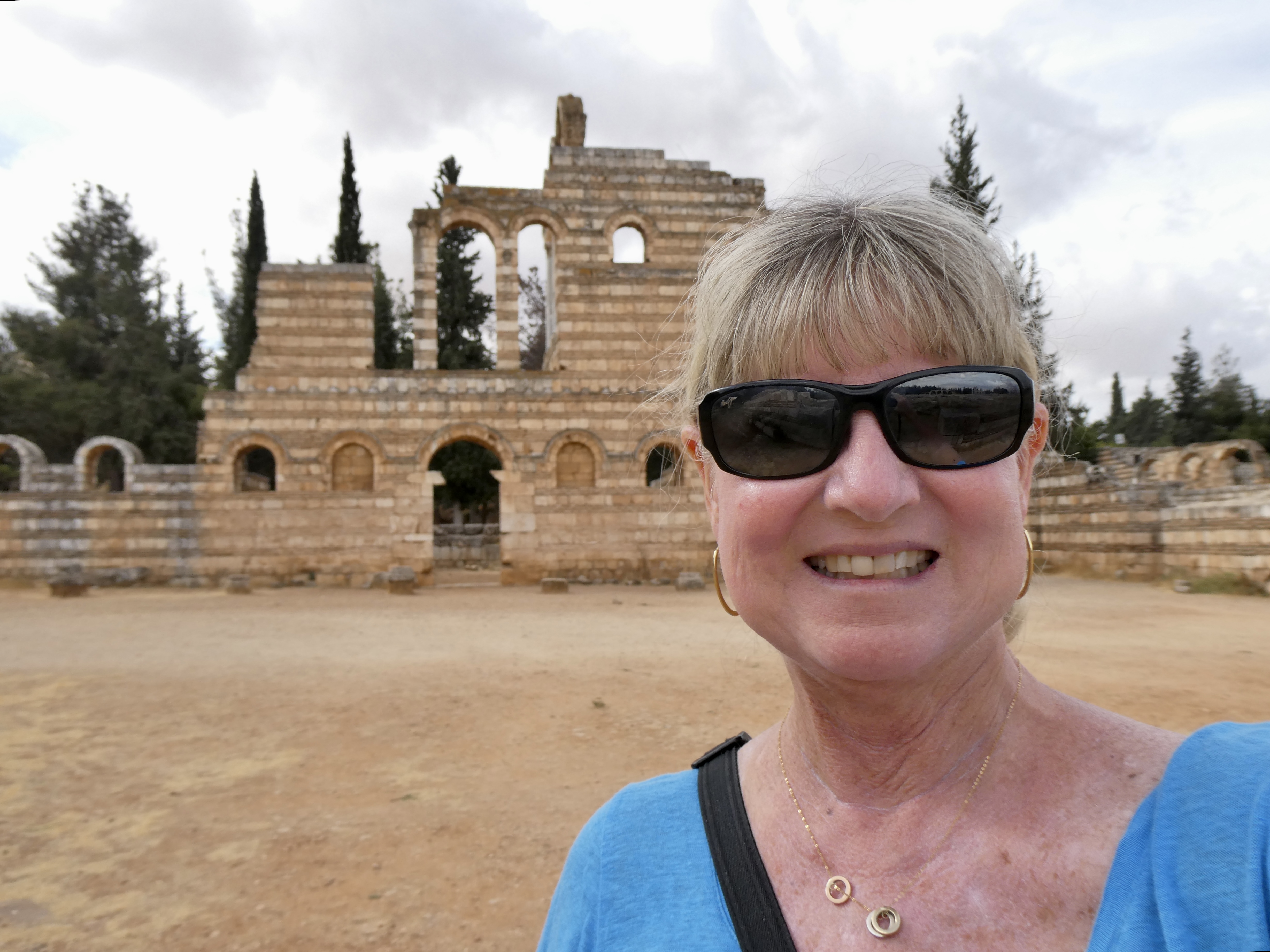
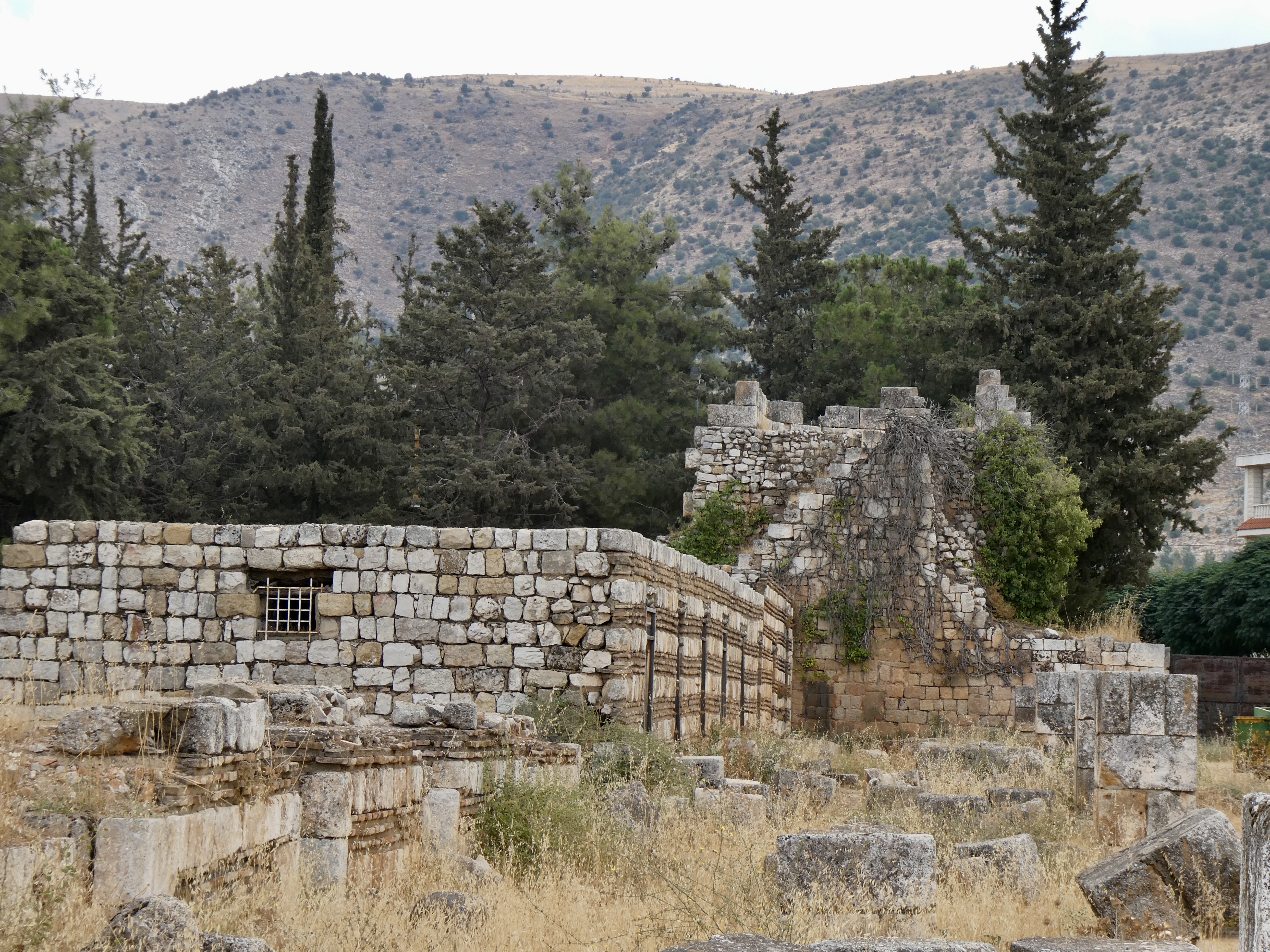
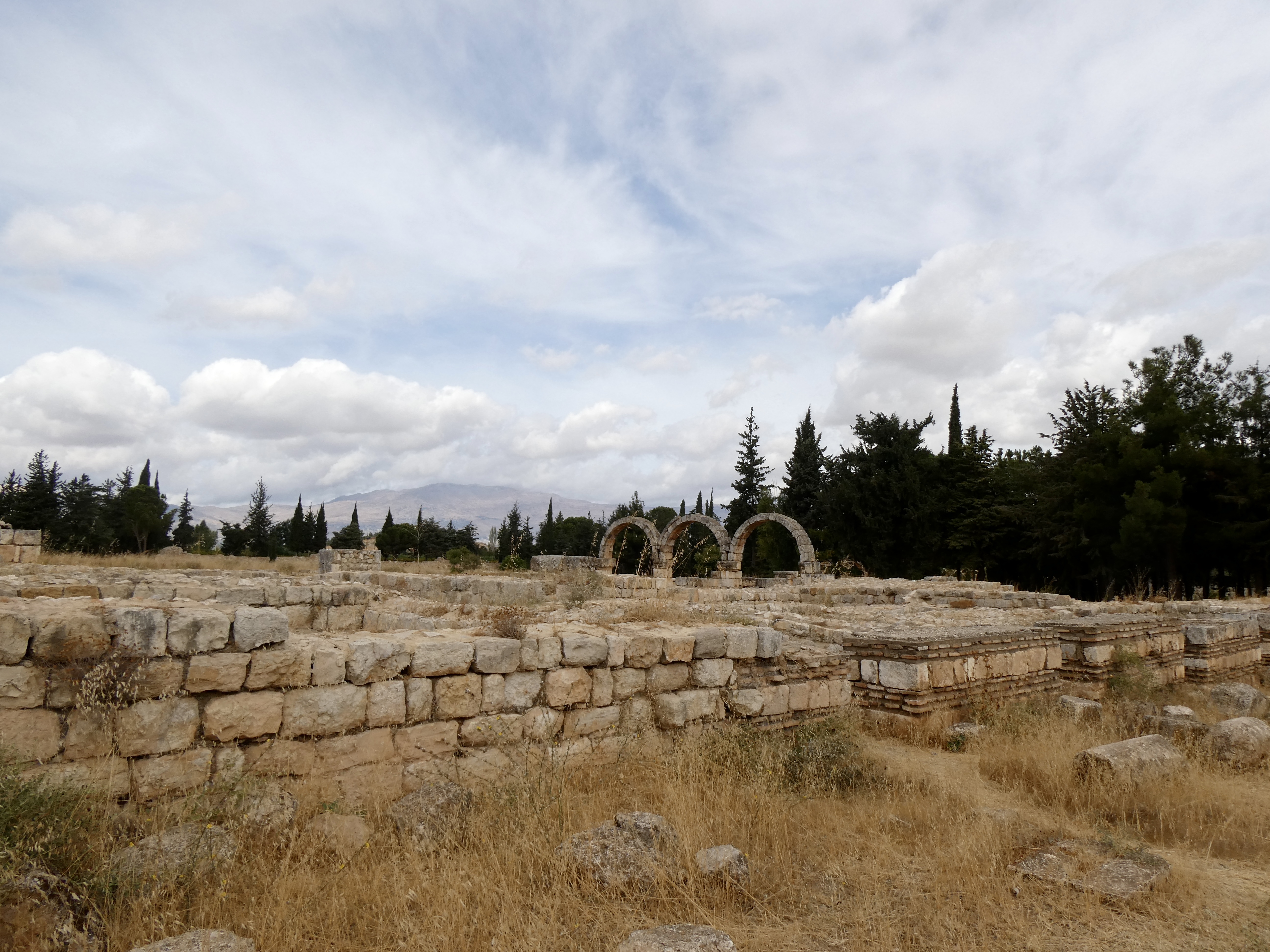
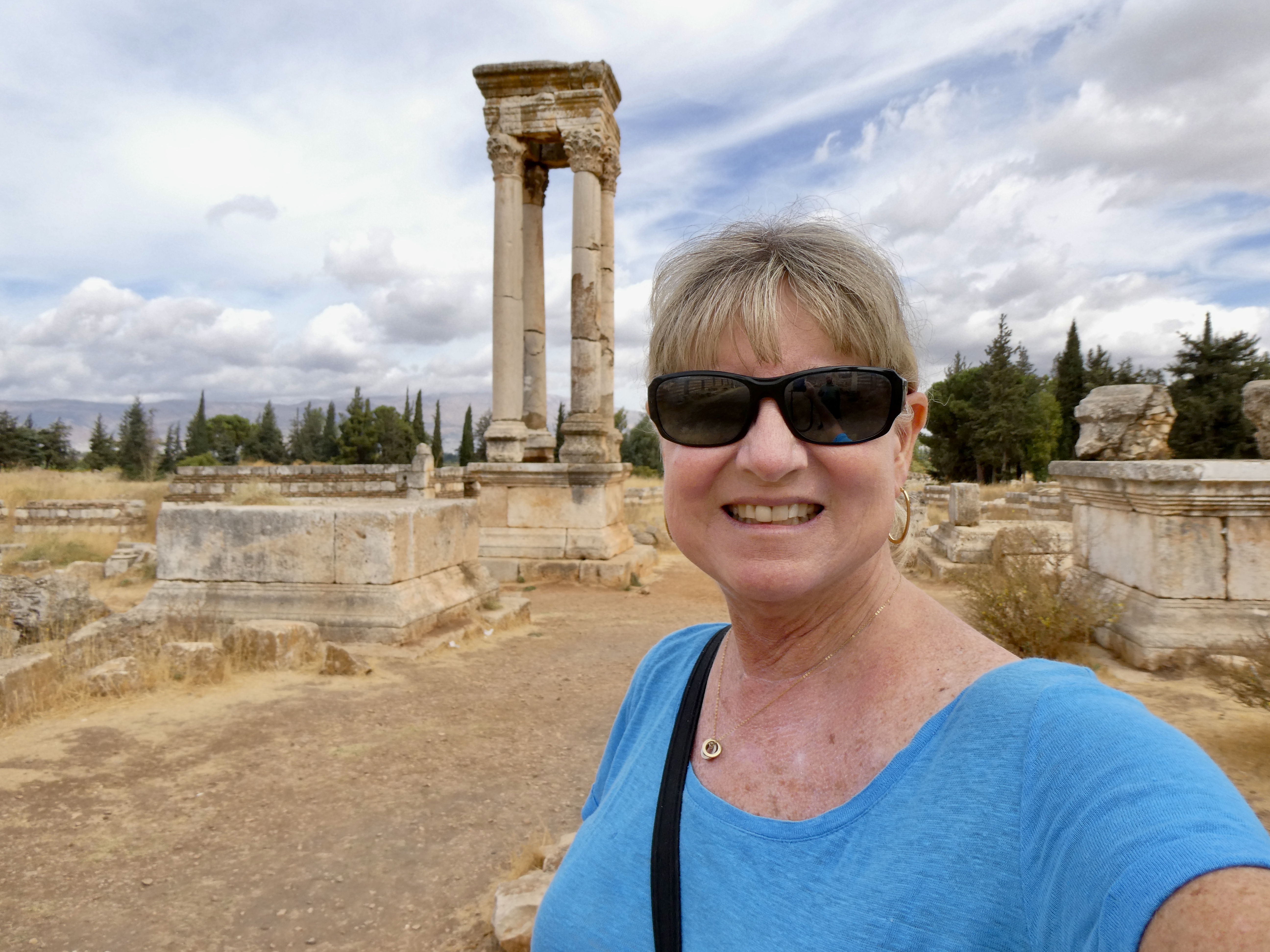
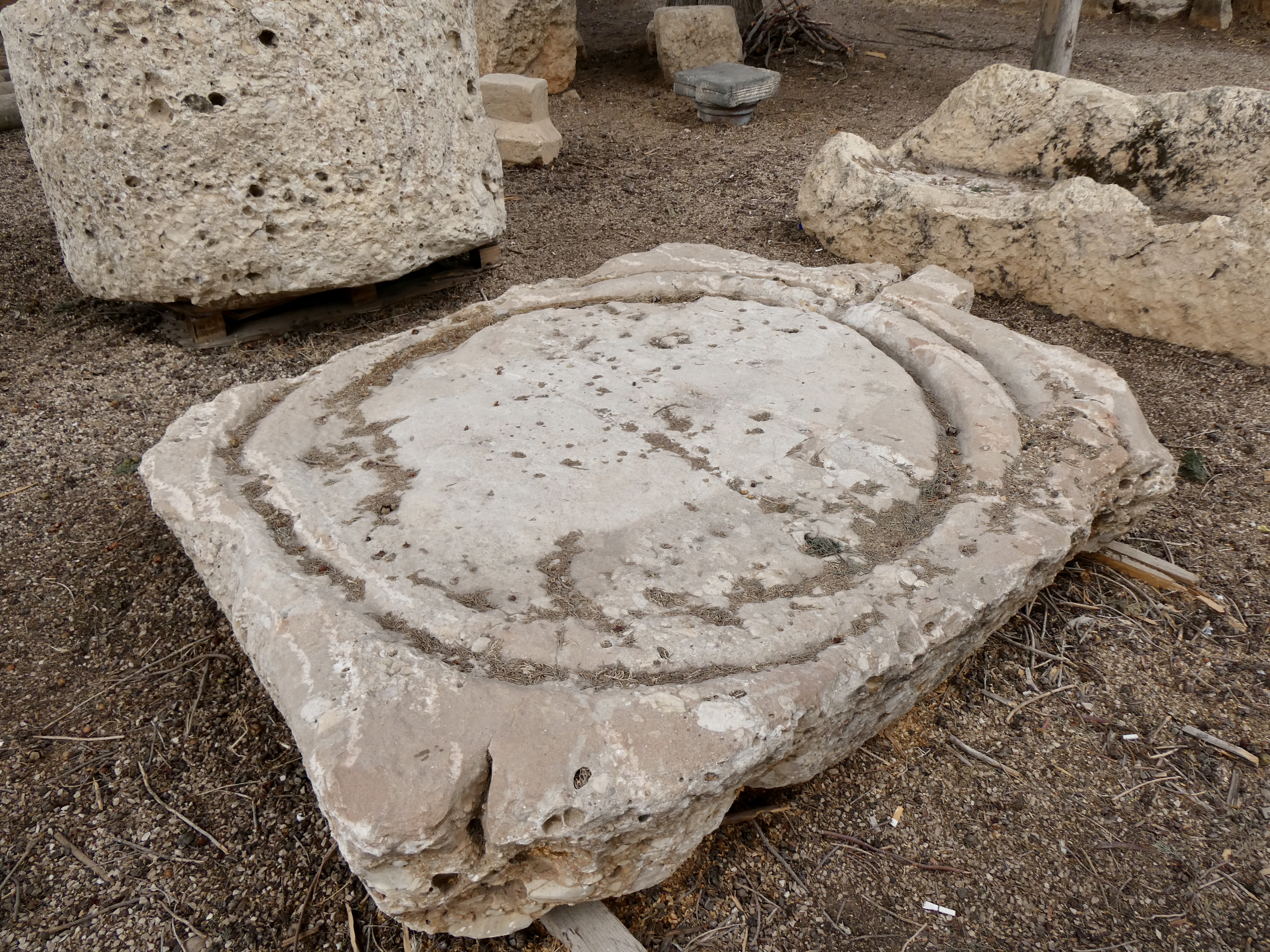

After Alain gave me a brief introduction to the site, we commenced our walk heading down the street between the shops before turning right and taking in the Grand Palace, the mosque (complete with an irrigation system for the small pool used by the faithful to wash before prayer, the smaller palace, the baths, including a lovely fresco, and an amazingly well preserved oil press.
After the trip around the surprisingly large site, we rejoined the main road and walked back to the entrance. Now, one thing I did not know about Anjar is that it is primarily inhabited by ethnic Armenians who fled Turkey in the early 1900s. And while they are assimilated and speak Arabic, they have not lost their silversmith skills which they brought with them from Turkey so I ended up checking out a lovely little jewelry shop where the elderly woman showed me an array of necklaces she had made. I ended up purchasing a small pendant and then found Alain for our trip to the amazing temples of Baalbek.
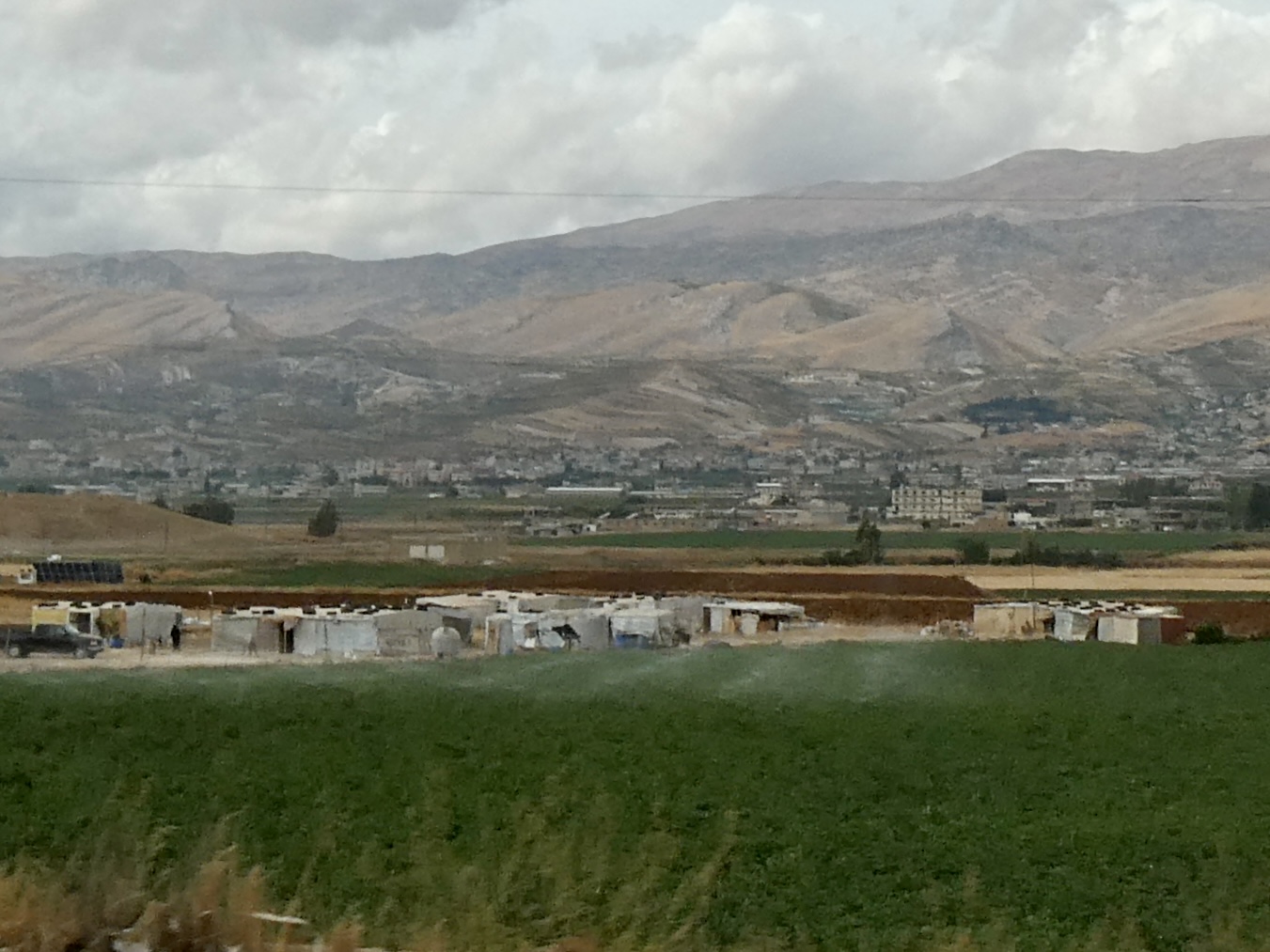
My driver for the day, Husain (Elie was finally taking a day off) took us through the heart of the Baaka Valley past potato and onion farms, sheep grazing, and … numerous Syrian refugee camps. Now the area had a decidedly middle eastern feel (as opposed to a more western feel that is present in the North of Lebanon and Beirut). We passed numerous mosques, women in conservative clothing and lots of men wearing headscarves.
About 30 minutes after we left Anjar we were pulling into the town of Baalbek and made a very short stop at the Roman quarry where the rocks used to construct the temples of Baalbek were harvested, and to see the megalithic stone (one piece of stone), that was most likely intended to be part of the construction at the Temple of Jupiter, and better known by the name the Stone of Pregnant Woman. (There is apparently no reason for the name).
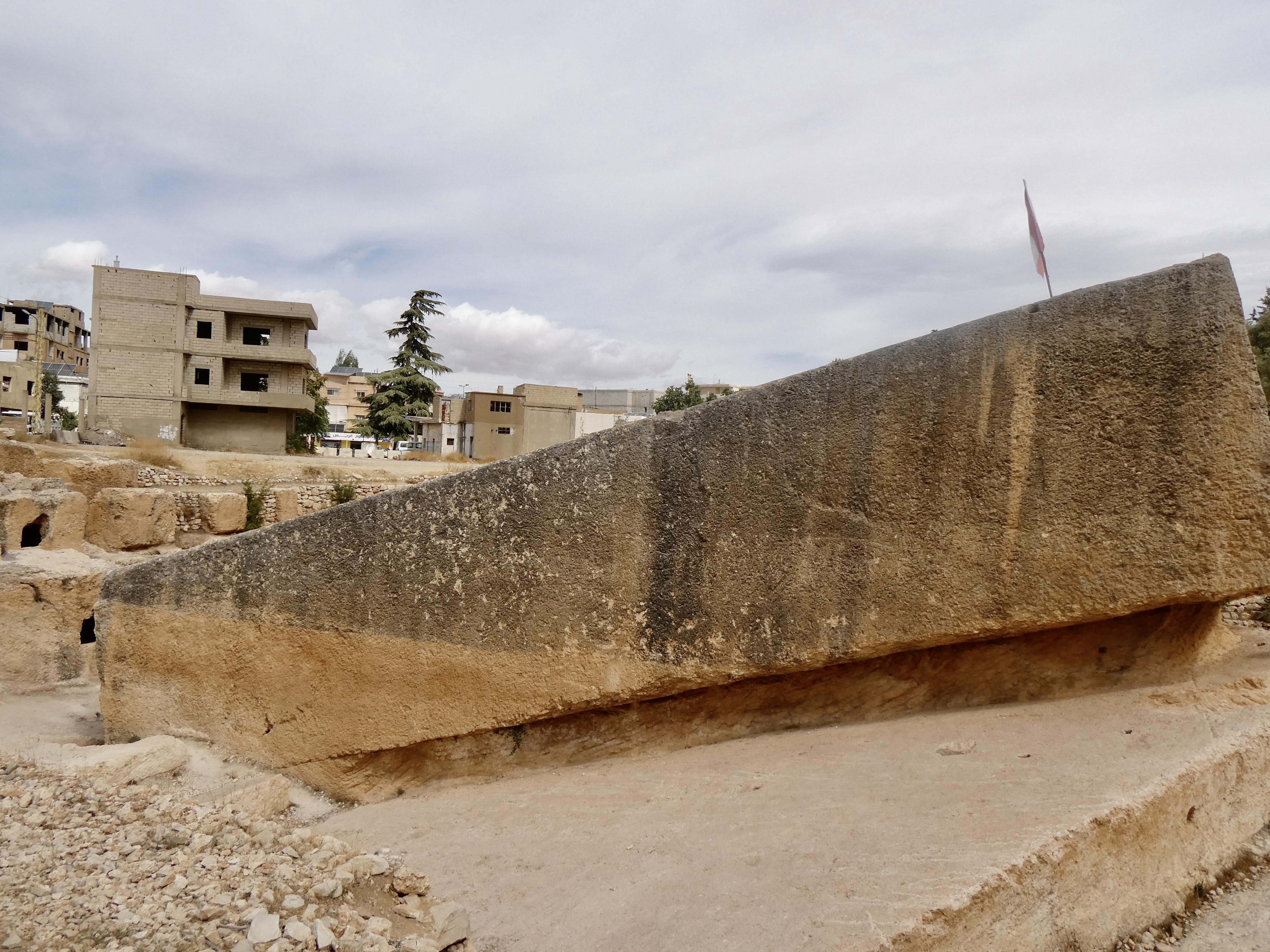
Now this stone was one solid ginormous piece of limestone rock. I took a walk around the stone and took some pictures, but no picture I took does it justice. The stone weighs in at almost 1,000 tons. Recent excavations at the quarry have uncovered an additional stones larger than the Stone of the Pregnant woman, but the original megalithic stone at the site remains the star attraction (probably because it is so well excavated).
Anyway, after the quarry visit, we drove through the main part of town and then … the ancient ruins of Baalbek came into view. I was literally giddy and definitely did not contain my excitement.
Now Baalbek is a UNESCO World Heritage site and is included as one of the new seven wonders of the world. The site was initially a Phoenician settlement and later occupied by the Greeks, the Persians via Alexander the Great, and then the Egyptians. The site was always used by the occupiers as a site for worship, but Baalbeck really hit its stride under the Romans made Baalbek, commencing in 47 BC and continuing for the next two centuries, the site of the Roman empire’s largest holy temples, including the temples of Jupiter, Venus, Mercury (only stairs remain) and Bacchus.
Eventually the Byzantines took over and converted the pagan temples into Christian churches and when the Arabs conquered the land in the 7th century, a mosque was built on the site (although quite surprisingly, they did not convert the temples to mosques as Arabs frequently were inclined to do).
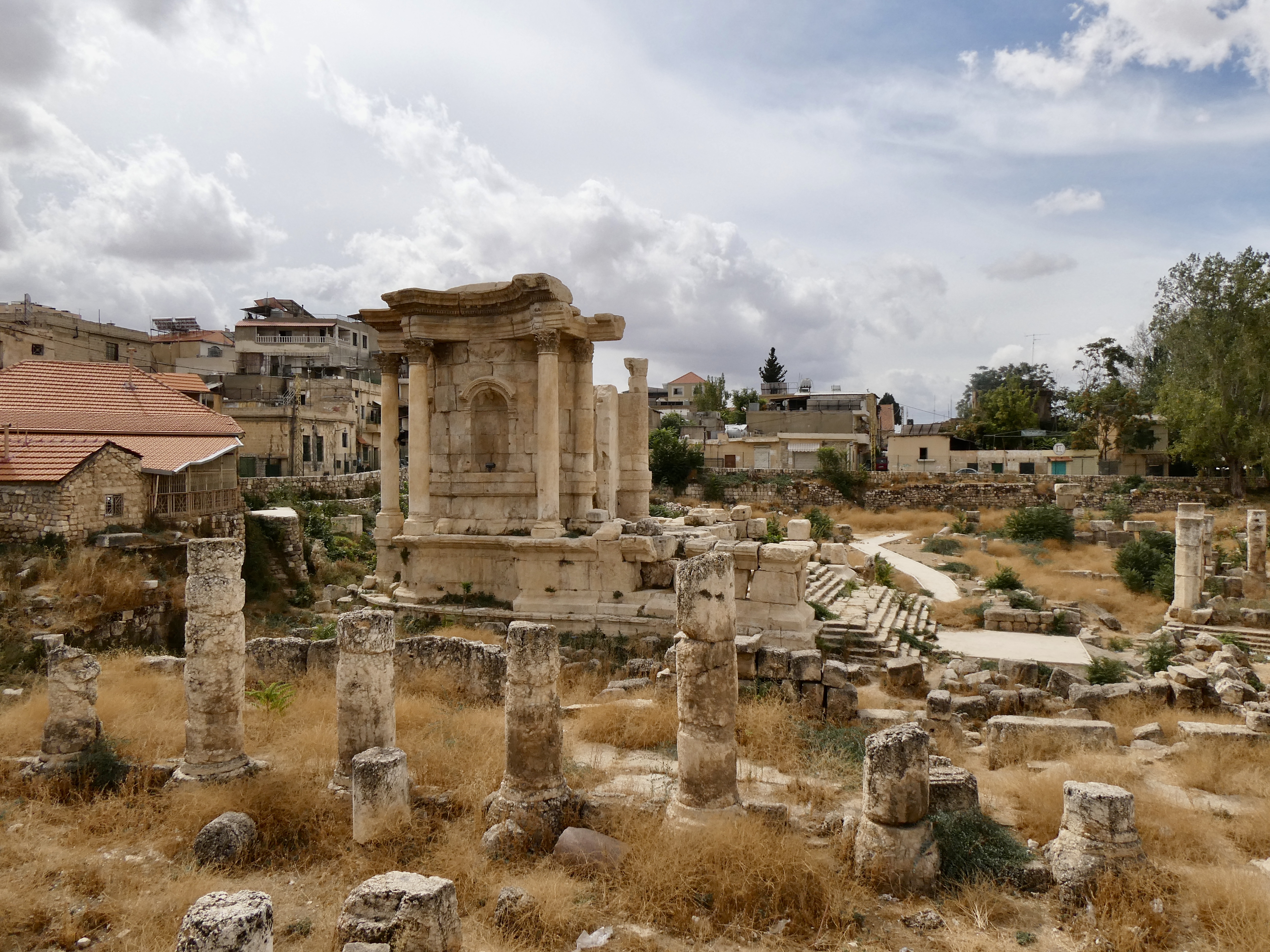
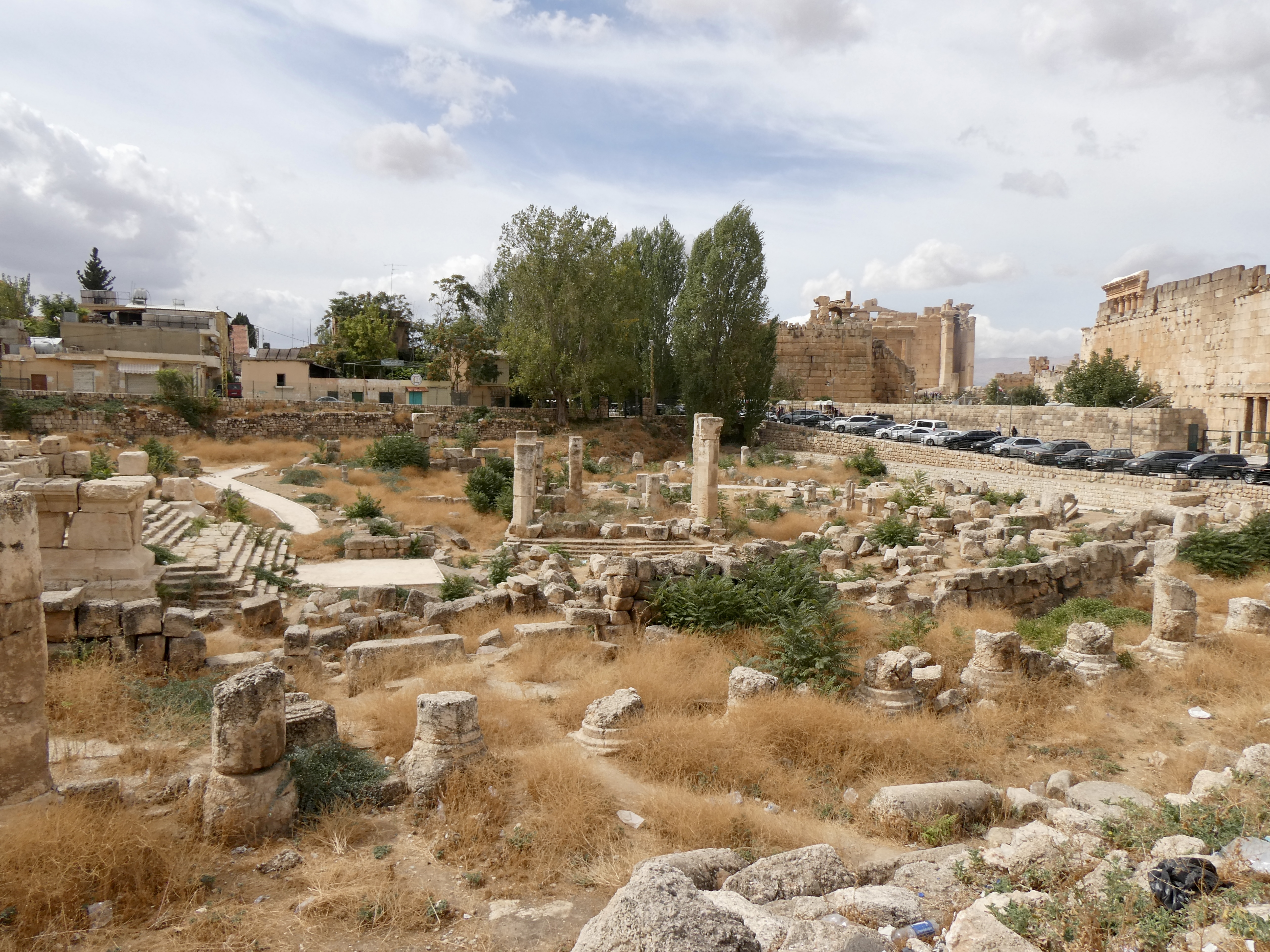
So once Alain and I were dropped off at the site, we stopped at a fence overlooking the Temple of Venus and the Temple of the Nine Muses. The Temple of Venus is far, far smaller than the two main temples we would be taking in and the Temple of Nine Muses was actually tiny in comparison to even the Temple of Venus. However, as Roman ruins go, the two temples were pretty awesome.
Anyway, after taking in the two lesser temples, I paid my entry fee and ran into a man sitting on a chair at the entrance. He asked me where I was from and told him I in live in the United States. “Ah … Anthony Bourdain, Anthony Bourdain.” Now one of the reasons I have wanted to come to Lebanon for so long is my undying love for the late, great Anthony Bourdain and his fabulous 2006 No Reservations episode featuring Beirut and his 2010 Parts Unknown episode again featuring Beirut. Tony raved about the people, the food and the complexities of the country and it just fascinated me.
Well this man proceeded to tell me that he had guided Anthony Bourdain at Baalbek and said he had a picture with him. When I asked to see the picture, the man pulled out his phone, pressed one button and viola there was a picture of this man with the smiling face of the wonderful Anthony Bourdain. I stared at the picture and immediately choked up and tears came to my eyes. I told the man that I was very appreciative that he had shown me the picture and went on to explain how Tony had influenced me to come to Lebanon. It was absolutely wonderful to speak to this man who could not say enough nice things about Tony.
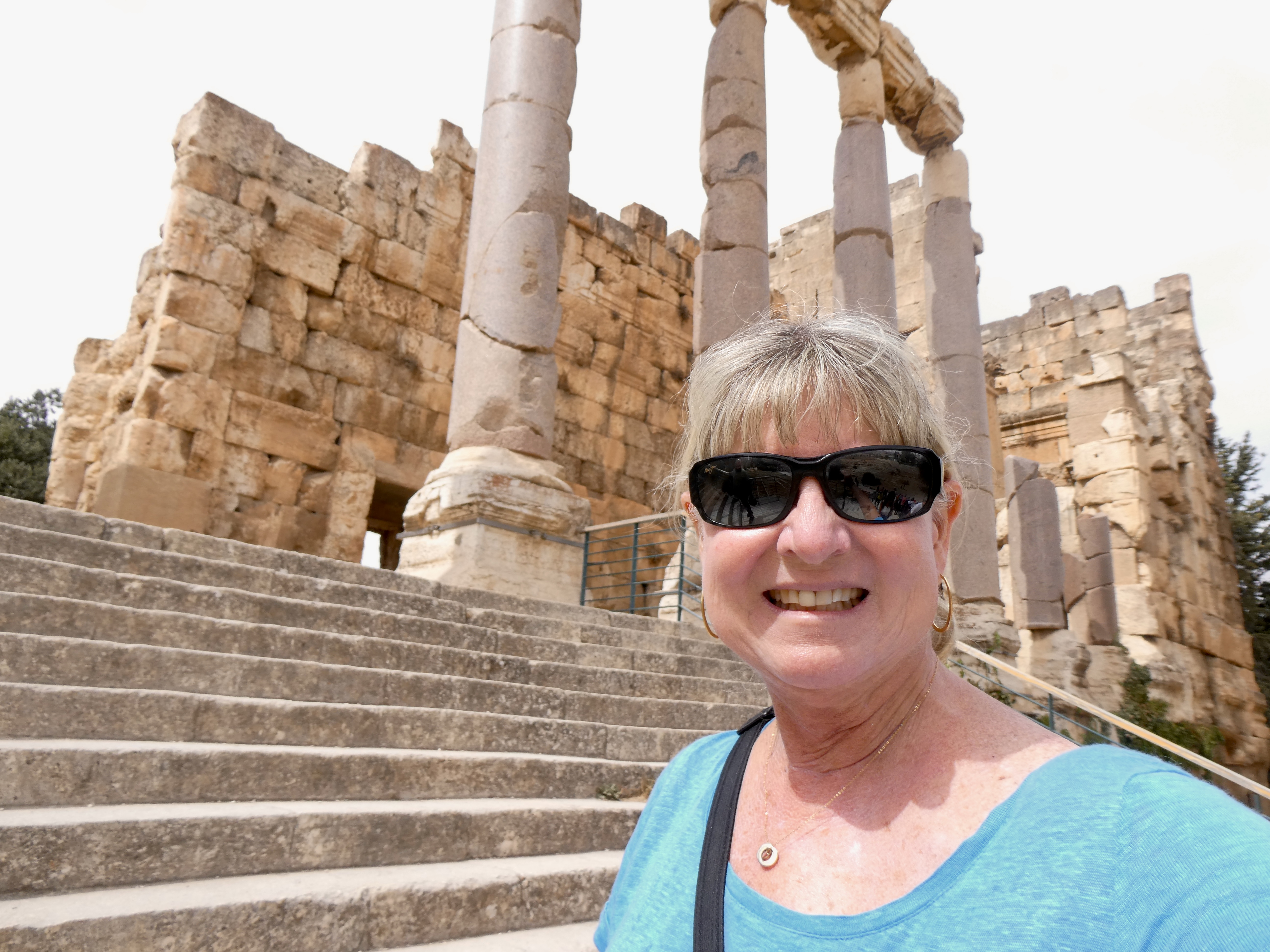
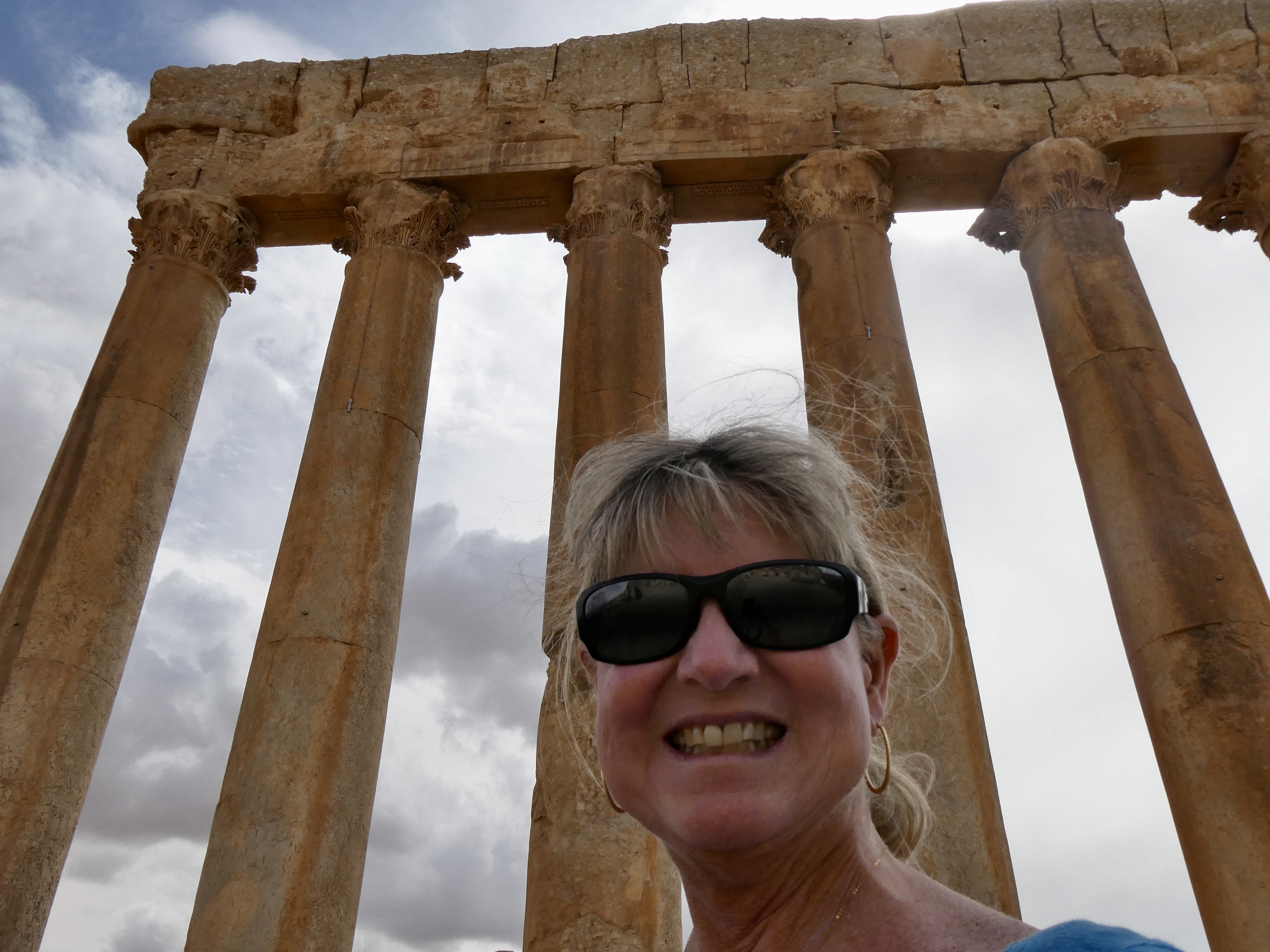
So after taking one more look at the picture, Alain and I went to the map of the temples. Alain proceeded to tell me a bit about the two temples we would be visiting. First up would be the Temple of Jupiter which is the largest temple ever built by the Romans and includes a huge entryway, two alters, six of the original 54 columns.
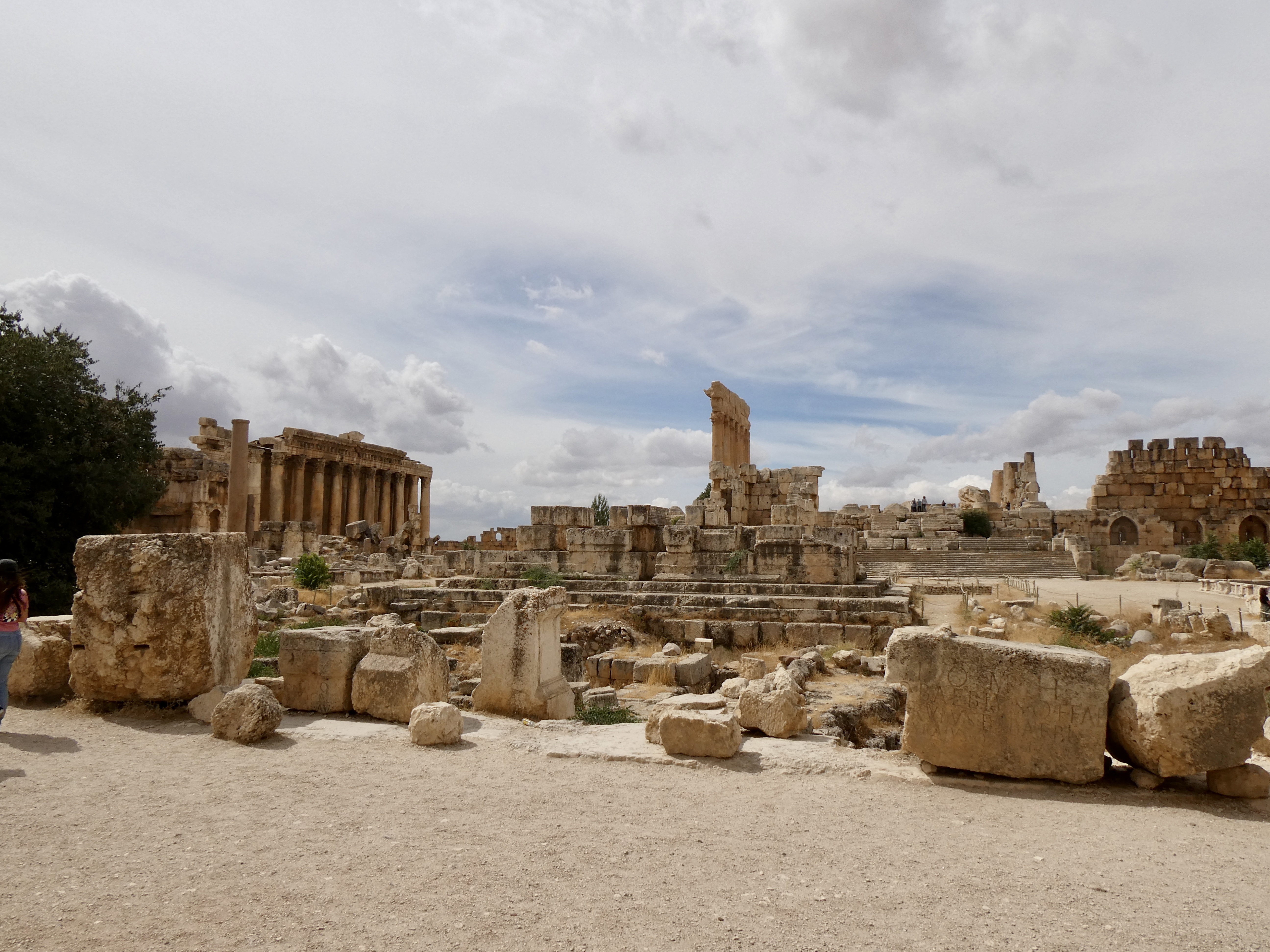
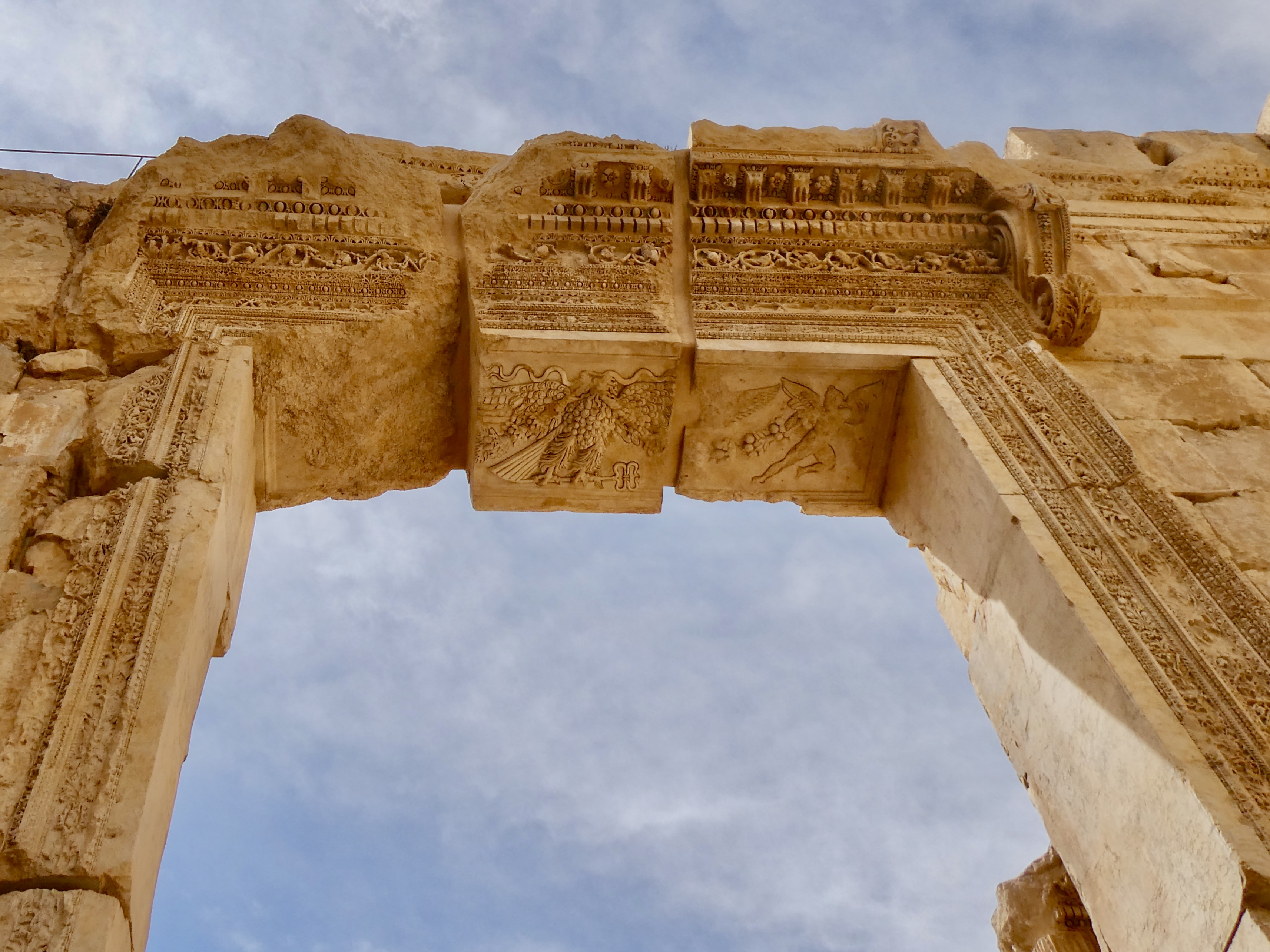
The second temple was the Temple of Baccus, who was the pagan god of wine. The Temple of Baccus is considered the most well preserved Roman temple in the world, is built on a podium and can be reached by stairs through an entrance decorated by vines and grapes while the archway over the entrance includes grapes and a nymph. The temple’s walls were supported 42 decorated columns designed in the Corinthian style. Of the original 42 columns, an astounding 19 columns remain standing. Each column is 19 meters high, while the temple (once the upper horizontal moldings are added) measure 31 meters high. Although most of the moldings have collapsed some of the ornamental moldings still exist.
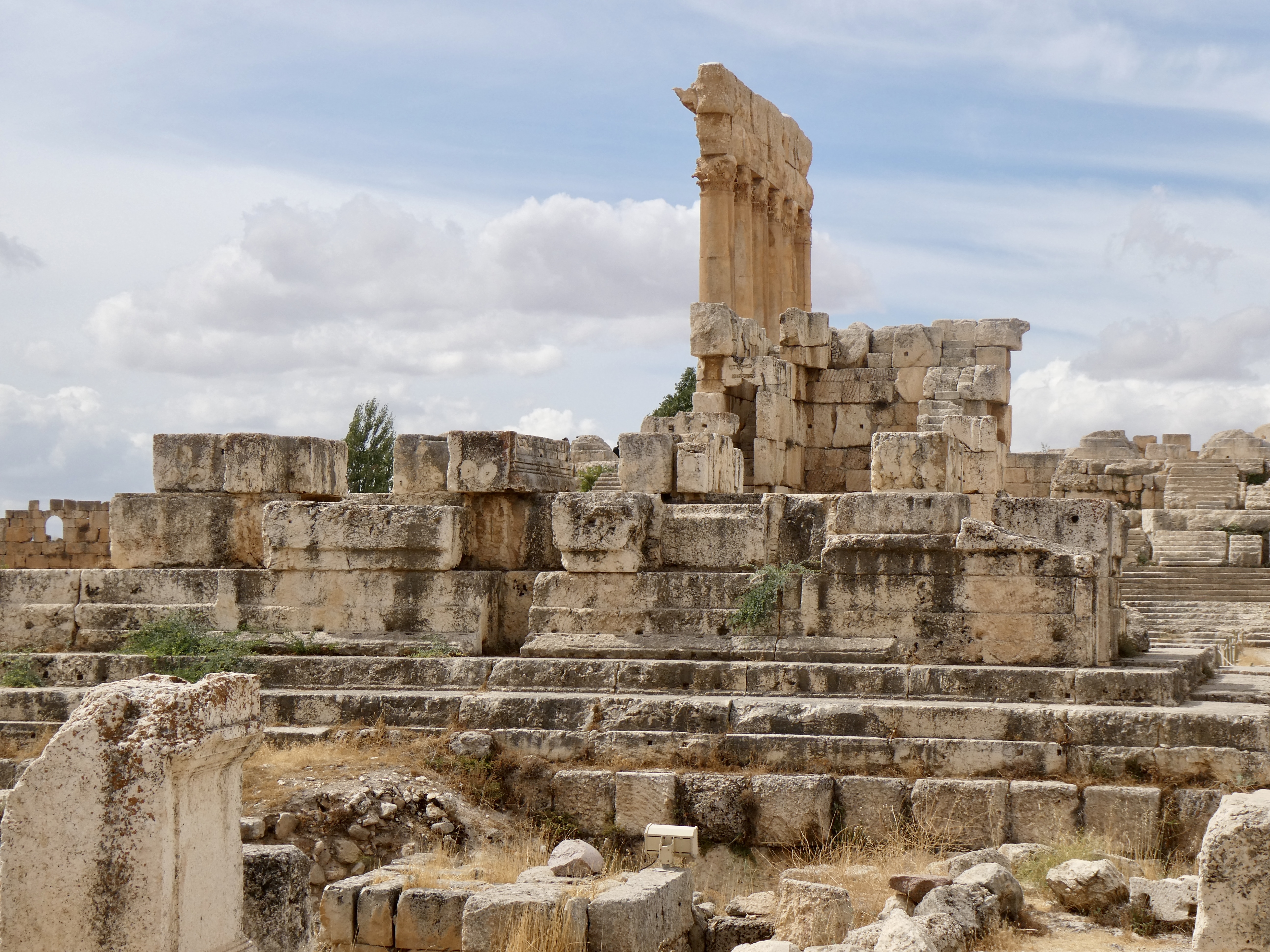
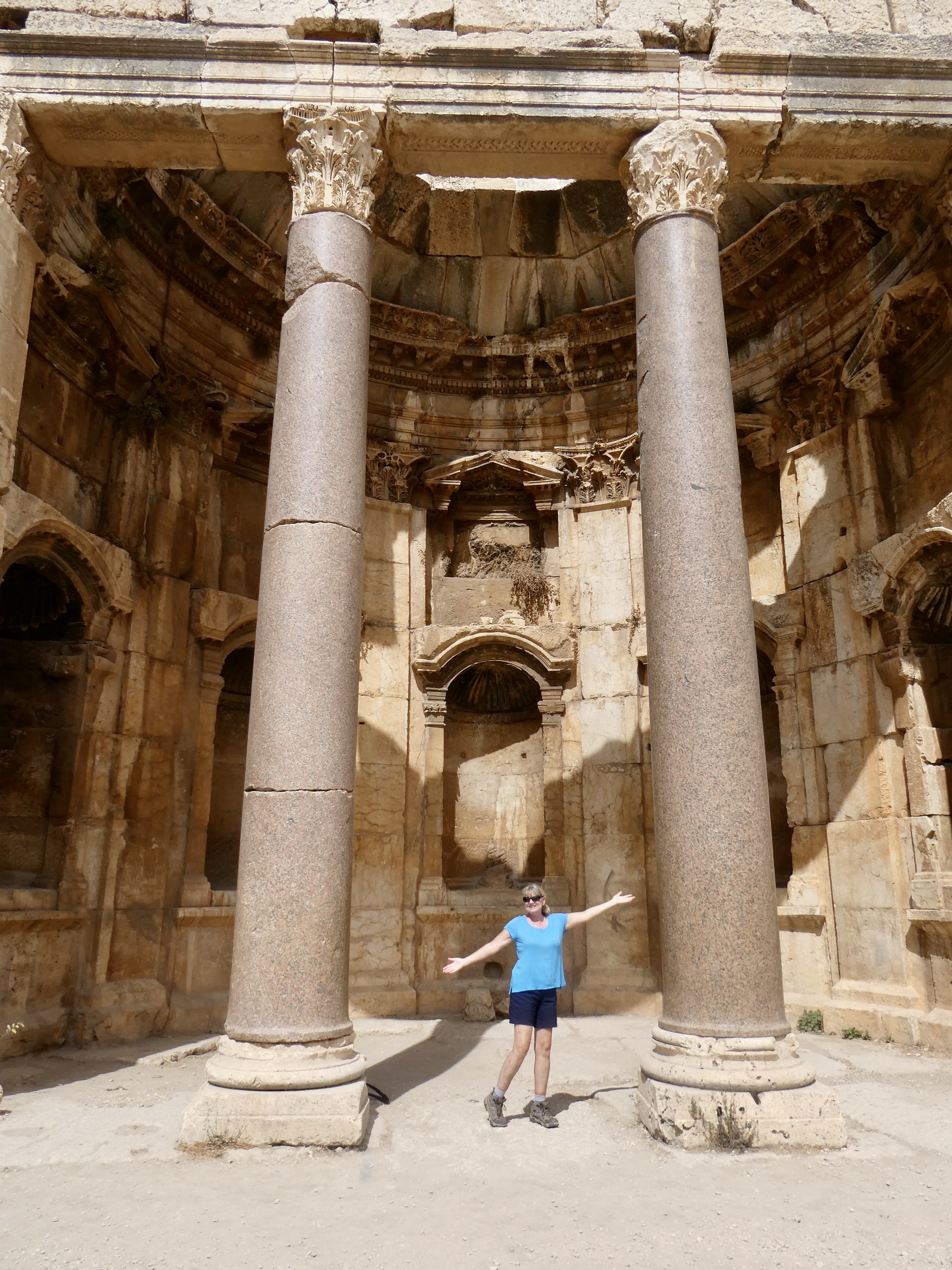
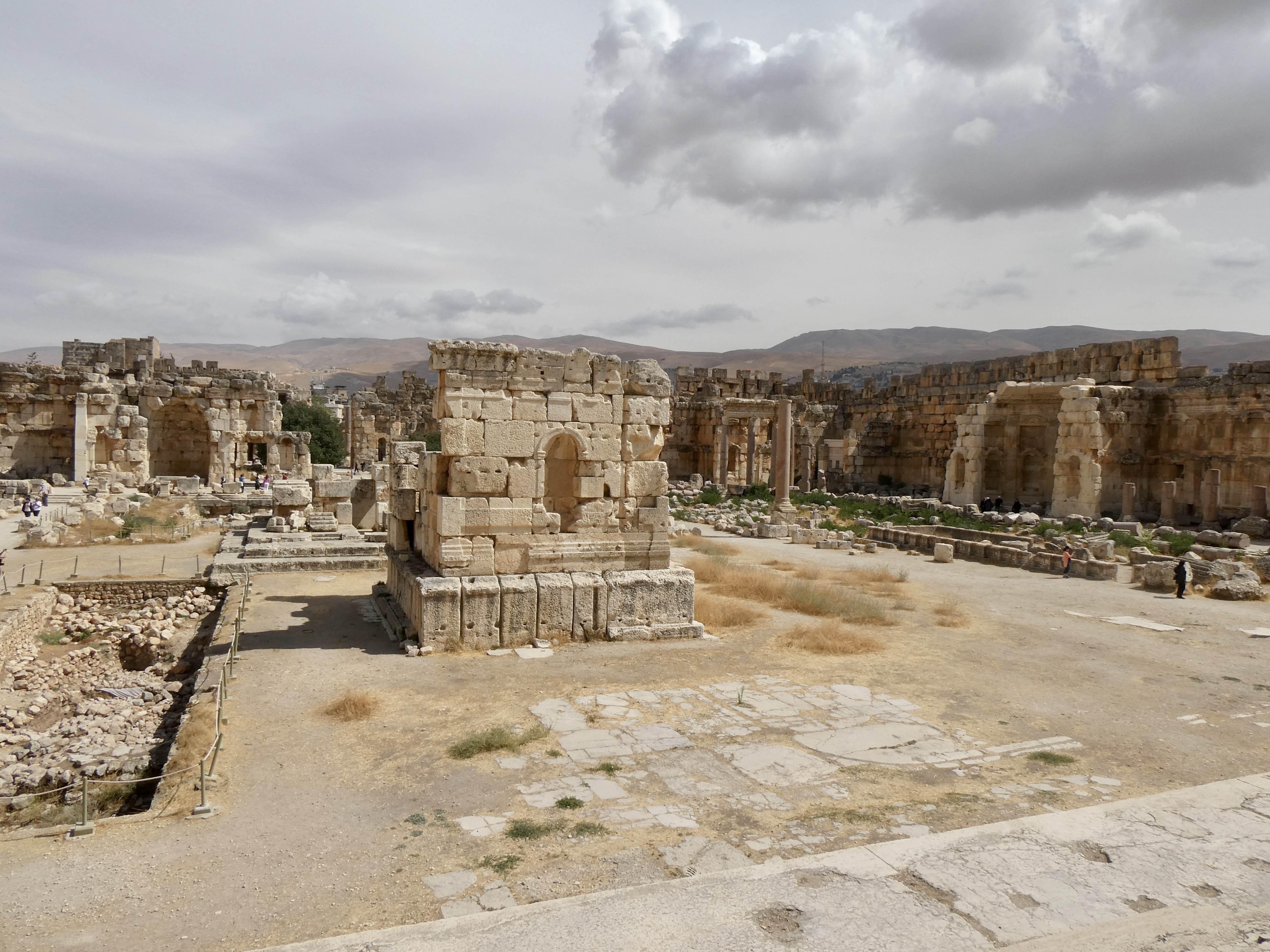
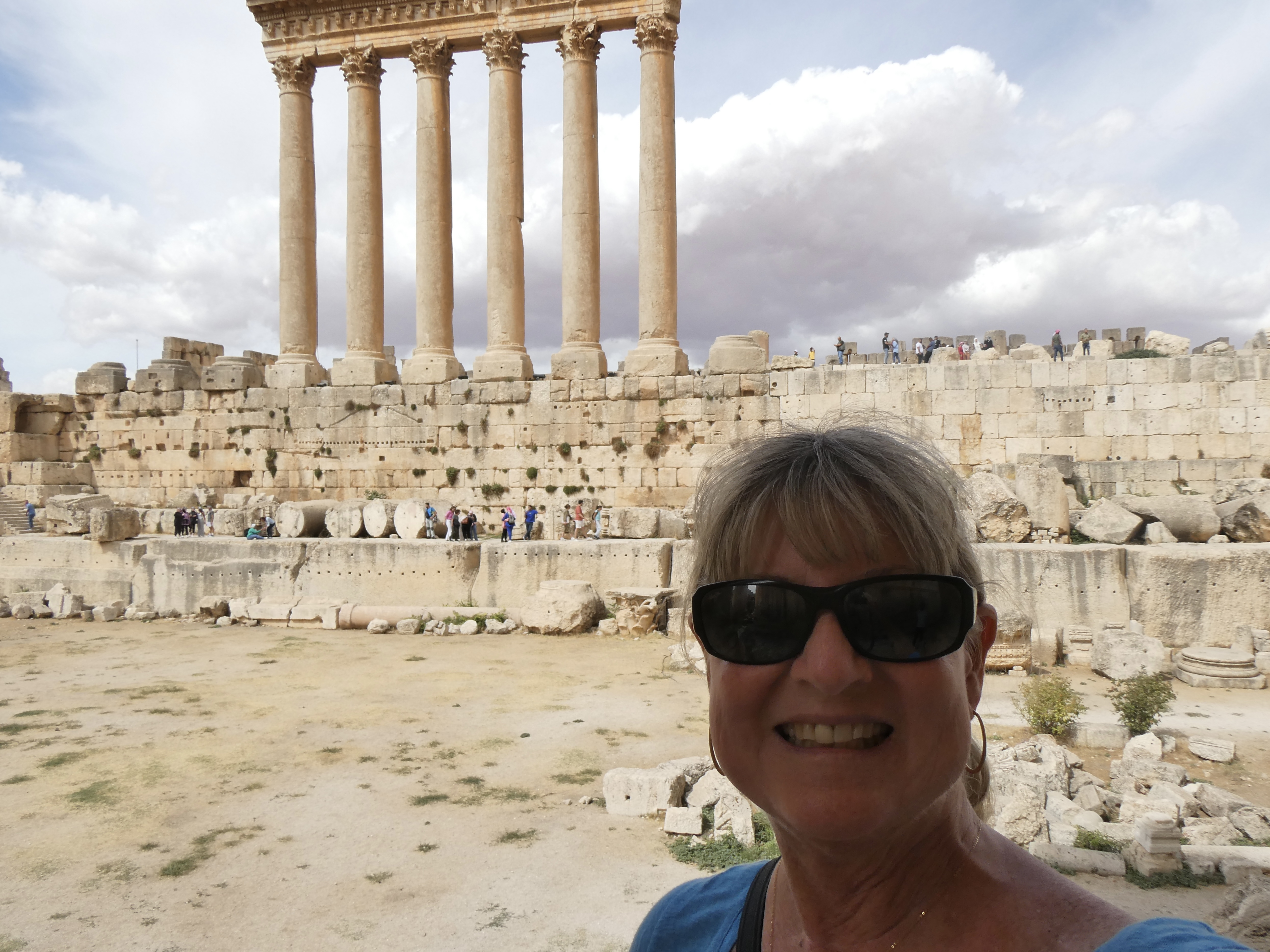
Anyway, with this background, Alain and I began our walk through the site … and what a walk it was. We climbed the huge staircase, past marble columns and through the entryway to the inner portion of the Temple of Venus. We immediately came face to face with the larger of two alters, large granite columns and all around us we were surrounded by intricately decorated alcoves and porticos. To the left, the mighty Temple of Baccus beckoned in the distance.
I told Alain, I needed a minute and just stood and took in the amazing, amazing scene. It was without a doubt the most incredible ruins I had ever seen. Unbelievable.
Once I was ready to move on, we walked to the right past a number of porticos, took a look at the outer walls (which most people seem to miss, but are amazing in the size of the stones used) before turning to the left and walking up the staircase to the inner sanctum of the temple and the six remaining original columns.
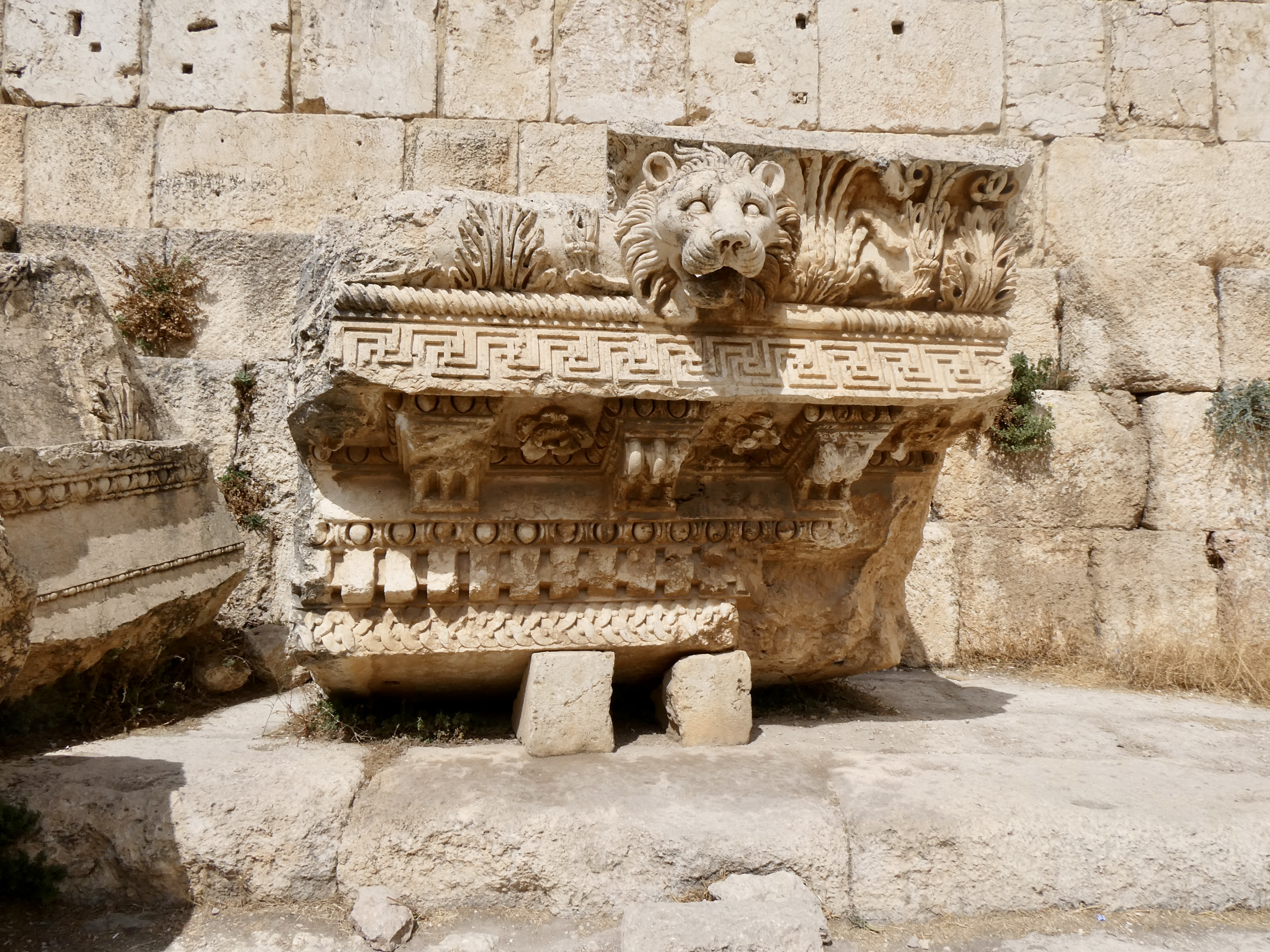
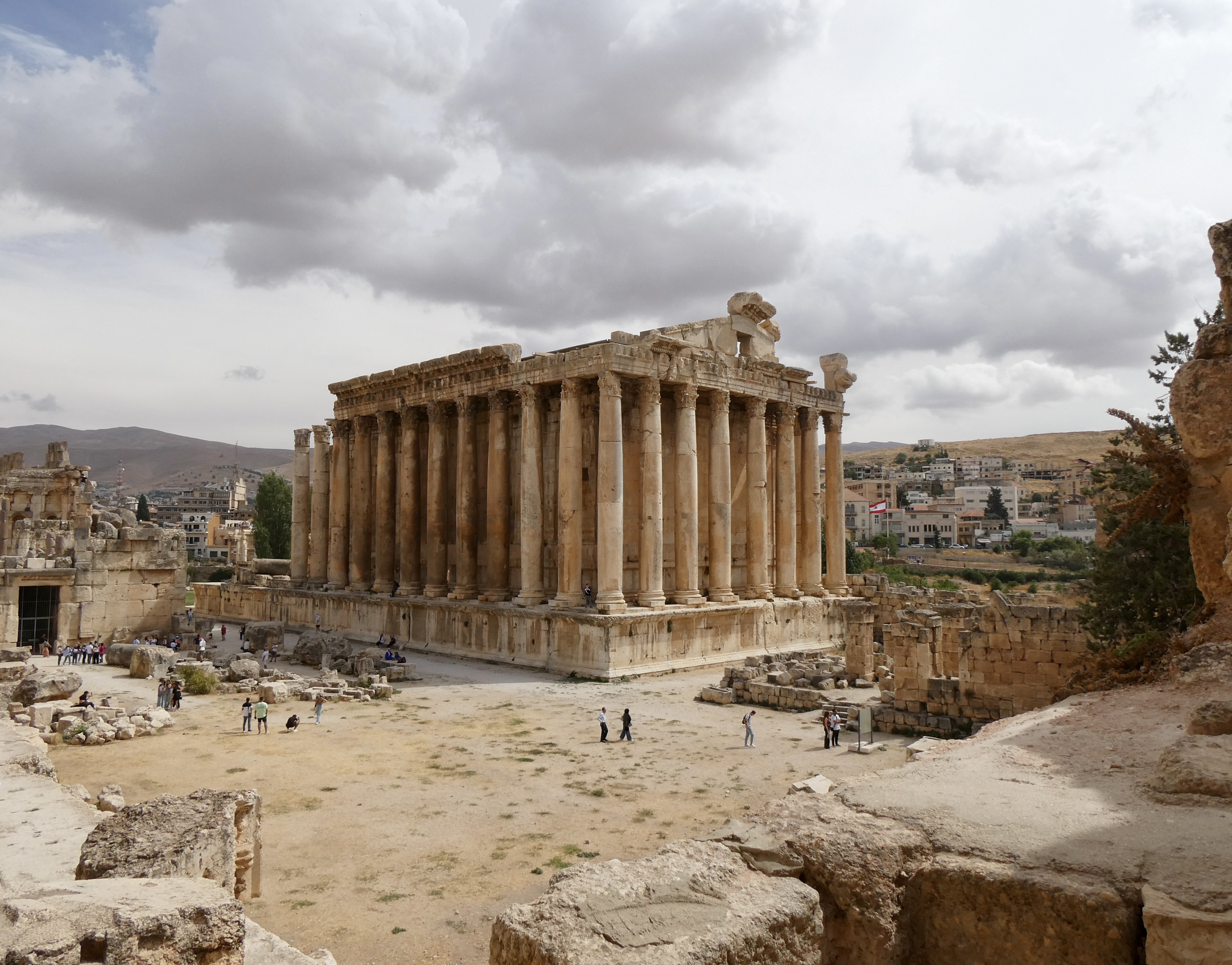
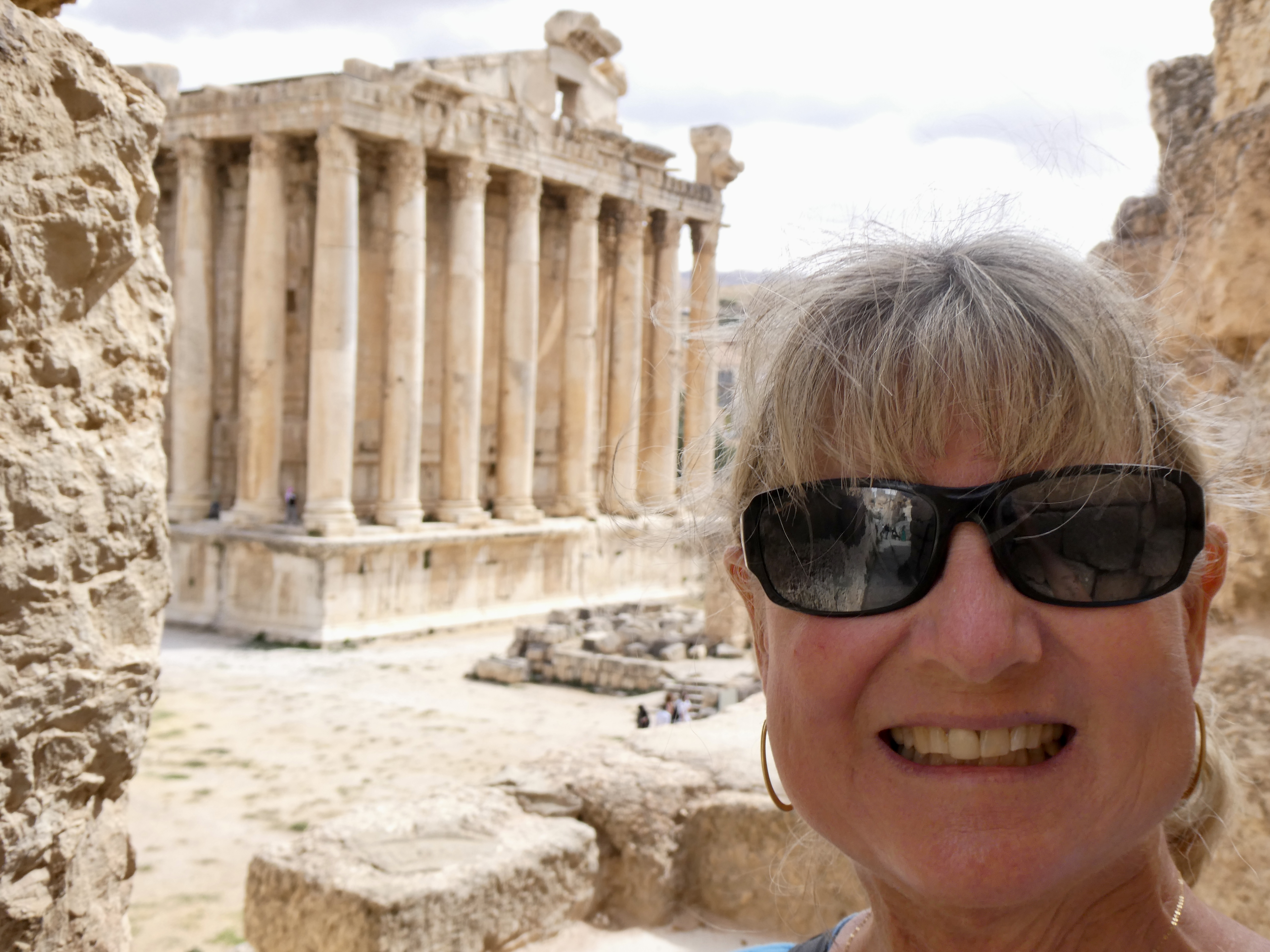
We then walked down as set of metal stairs and through a walkway surrounded by enormous stones before turning to the left and getting an up close look at the Temple of Baccus. We then walked below the six remaining columns of the Temple of Venus, where Alain pointed to a hole in one of the stones that had fallen from the Temple of Venus. The hole still contained the connecting iron rod that joined the stones. 2,000 year old iron!
After the amazing tidbit, we walked down another set of stairs and past the remnants of ornamental moldings that have fallen from the temples before walking to the front of the Temple of Baccus. We then climbed the stairs through the amazing entrance (yes I looked up and saw the intricate carvings featuring the grapes and the nymph) and into the inner sanctum of the temple.
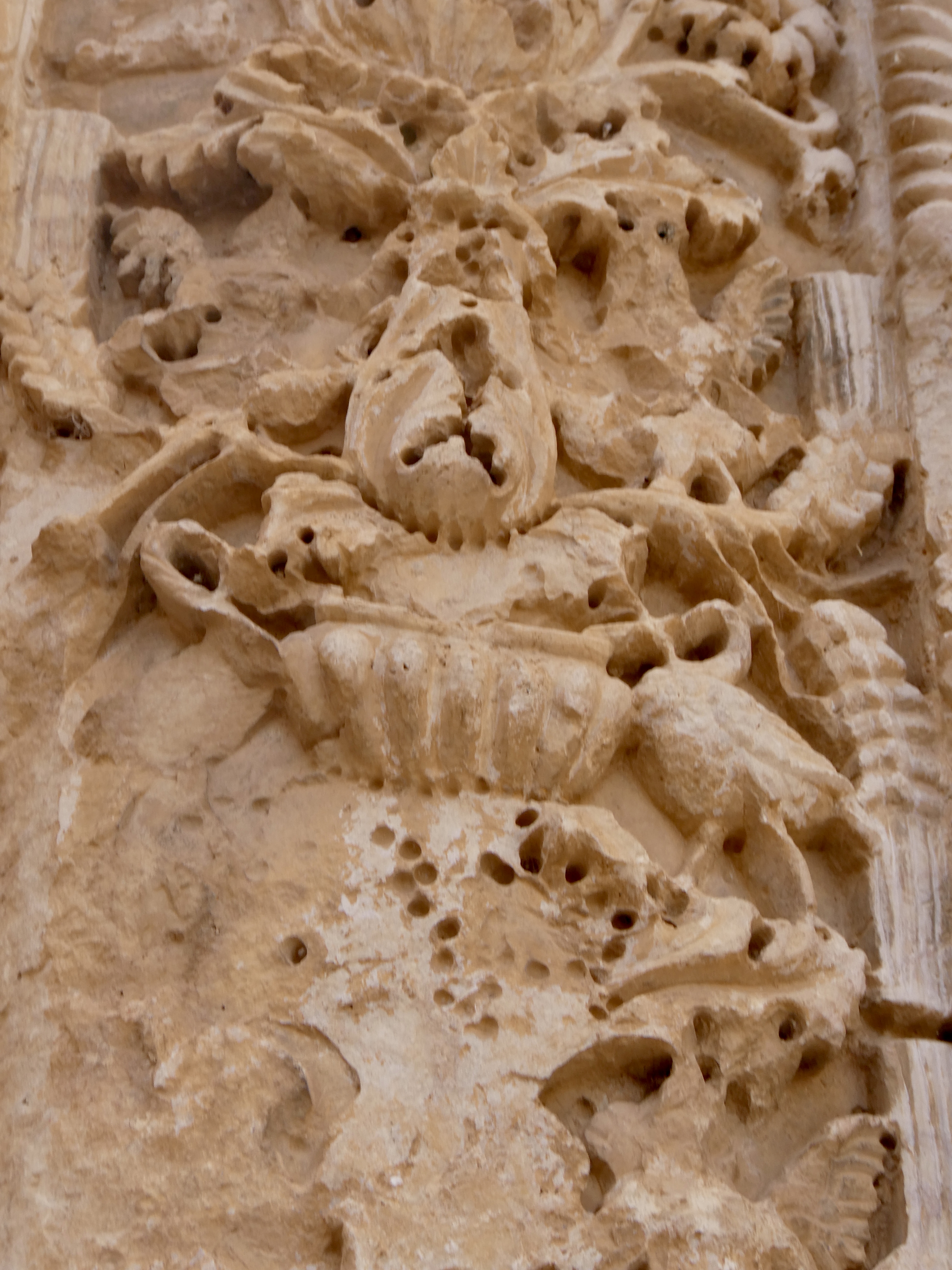
All around me the detailed carvings in the stone simply amazed me. You could see tiny birds, cranes, nymphs and vine leaves that contained so much detail you could still see the vines that had been carved into the leaves. I simply do not have enough words to describe how incredible this site is.
Alain never rushed me and told me to take my time. He was terrific about pointing out little details in the carvings and telling me where to look. I would never have seen half the artwork but for Alain.
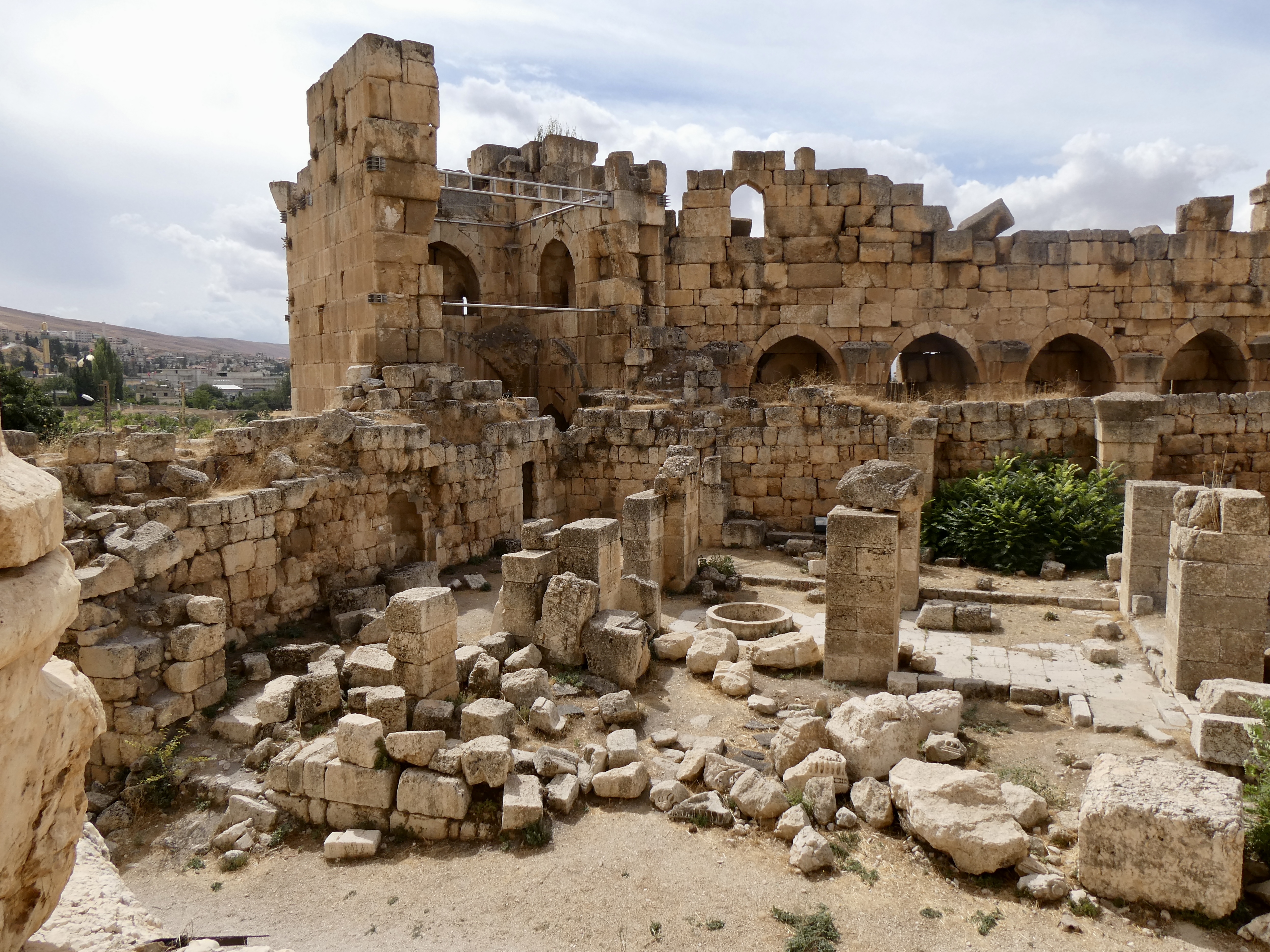
We eventually left the Temple of Baccus, walked around the outside past the large 8th century mosque from the Arab conquest, then under a fallen column that was leaning against the temple, before walking down the stairs past a fresco of Baccus and out of the site. The tour had been everything I had hoped for and more!
We met back up with Husain (and Romeo who was along for the ride) and then drove from Baalbek (with me having them stop so I could get one more look and picture) before driving back through the Baaka Valley to the wonderful (and world renowned) Ksara winery. The winery was founded by Jesuit monks in 1888 when they were gifted land after one of their own was killed. The monks began making wine and today the winery is owned by four local families. They farm Cabernet Sauvignon, Syrah, Merlot, Semillion, Claret, Muscat, Gewurvztraminer among other grapes.
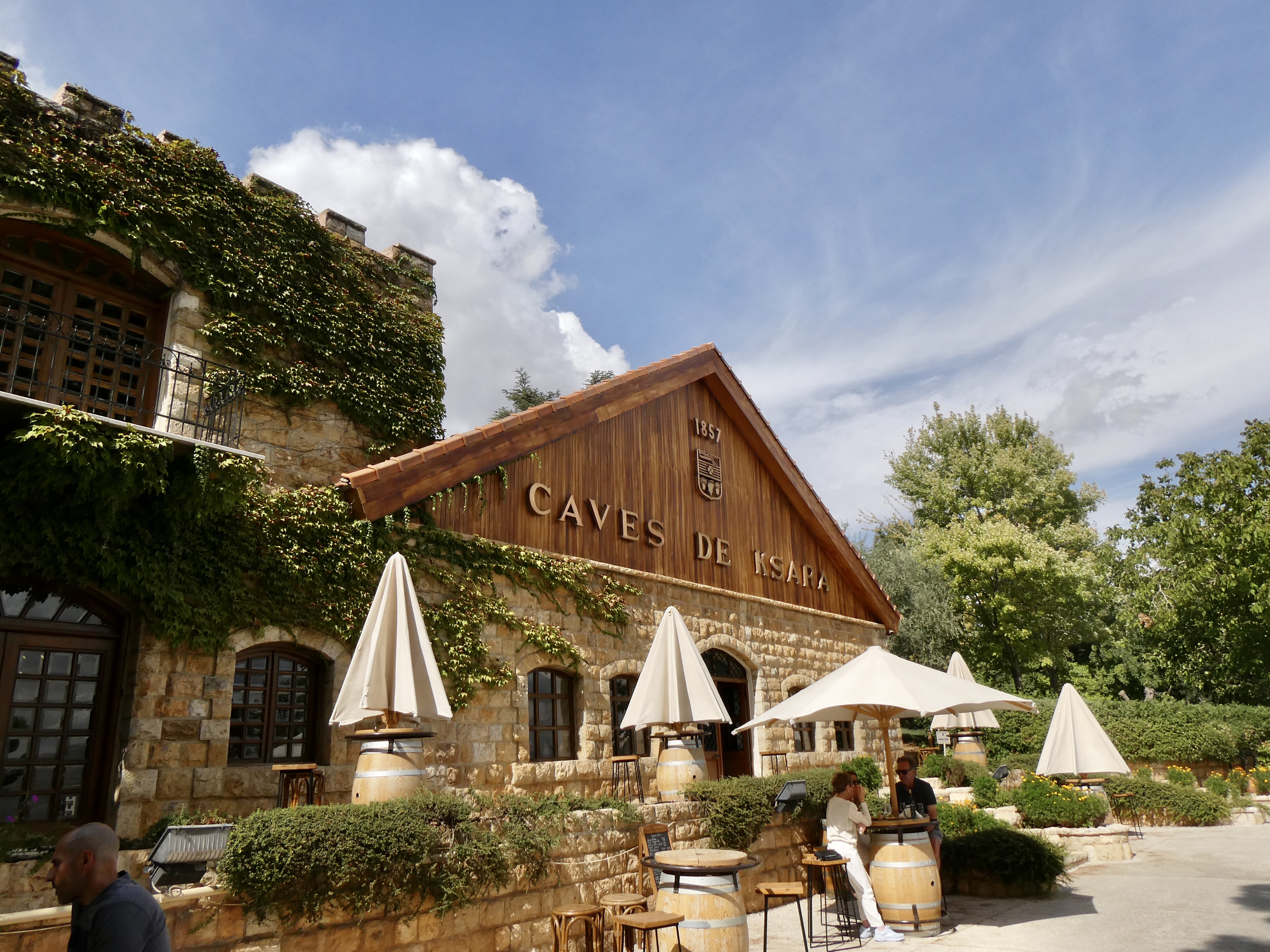
Unfortunately the premium tour was not available so I went with the regular tour that included a walk through the caves (which were built by the Romans and rediscovered by the Jesuits). All of the wine (whether bottled or barreled) spends time in the caves.
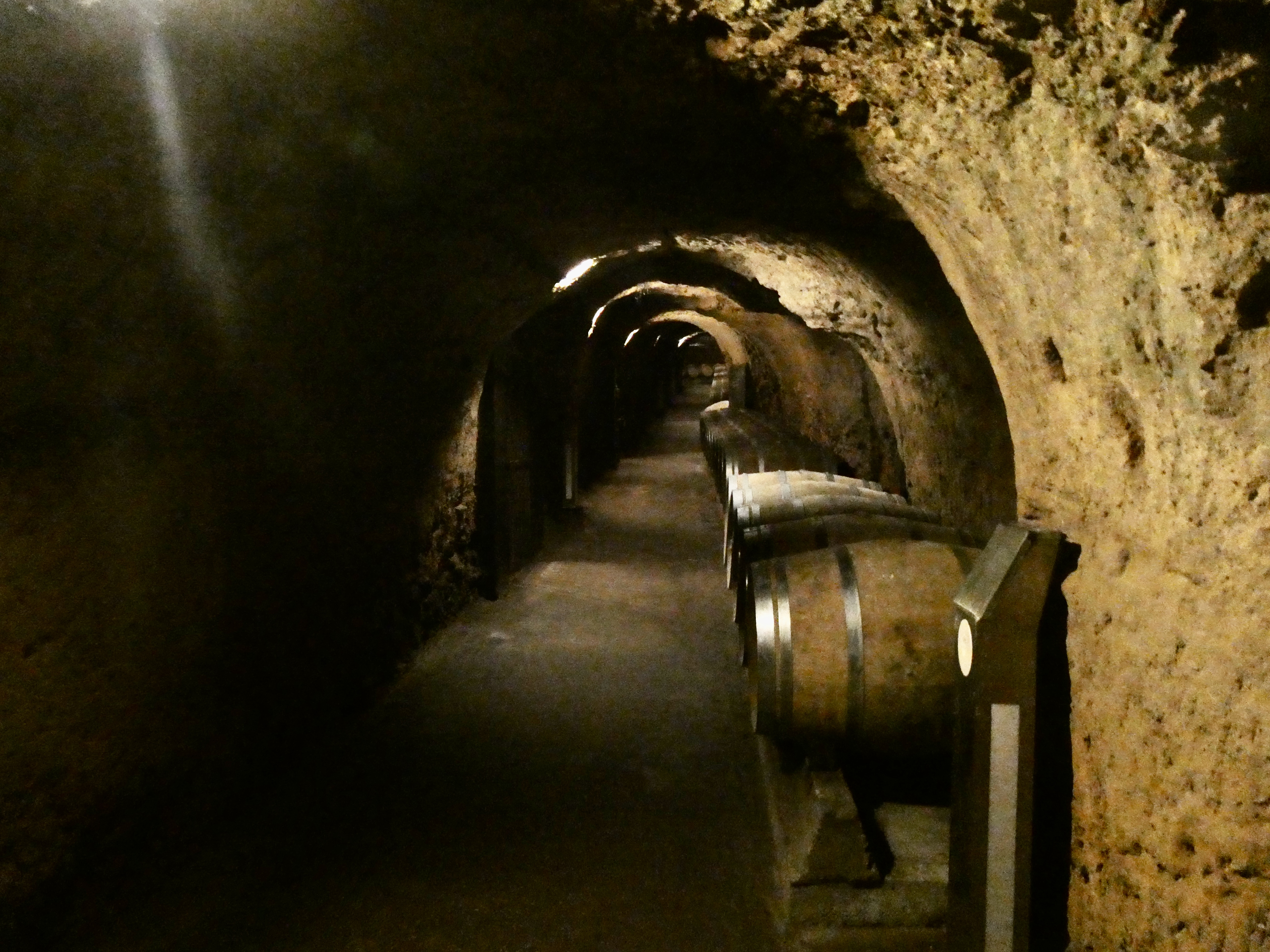
After the walk through the caves, we were able to try four different wines, a rose (not my cup of tea), a white blend of Sauvignon blanc, Claret and Muscat, a red blend of Cab Franc, Cab Sauvignon and Syrah and finally a Muscatel (my least favourite). I thought the white blend was very good, but could have been chilled more, and the red was very, very good (and definitely my favourite).
So after the wine tour and tasting it was back through the remaining Baaka Valley, up the mountain and to Beirut. It had been an absolutely wonderful day! Tomorrow, I am off to a mountain village to learn how to cook Lebanese food! (And yes, now you can all joke about my cooking skills or lack thereof.)