So today had to have been one of the most bizarre and unsettling endings to a day I have ever experienced in my travels (and that includes the time some guy pulled us over in the middle of the Tunisian Sahara at night holding an AK 47). But more about the day ending incident later.
The beginning of the day started with me missing breakfast (because my new hotel does not start breakfast until 8:30 and we were leaving at 8:30) so we had to stop at a little shop where I picked up a flatbread and some water for the road.
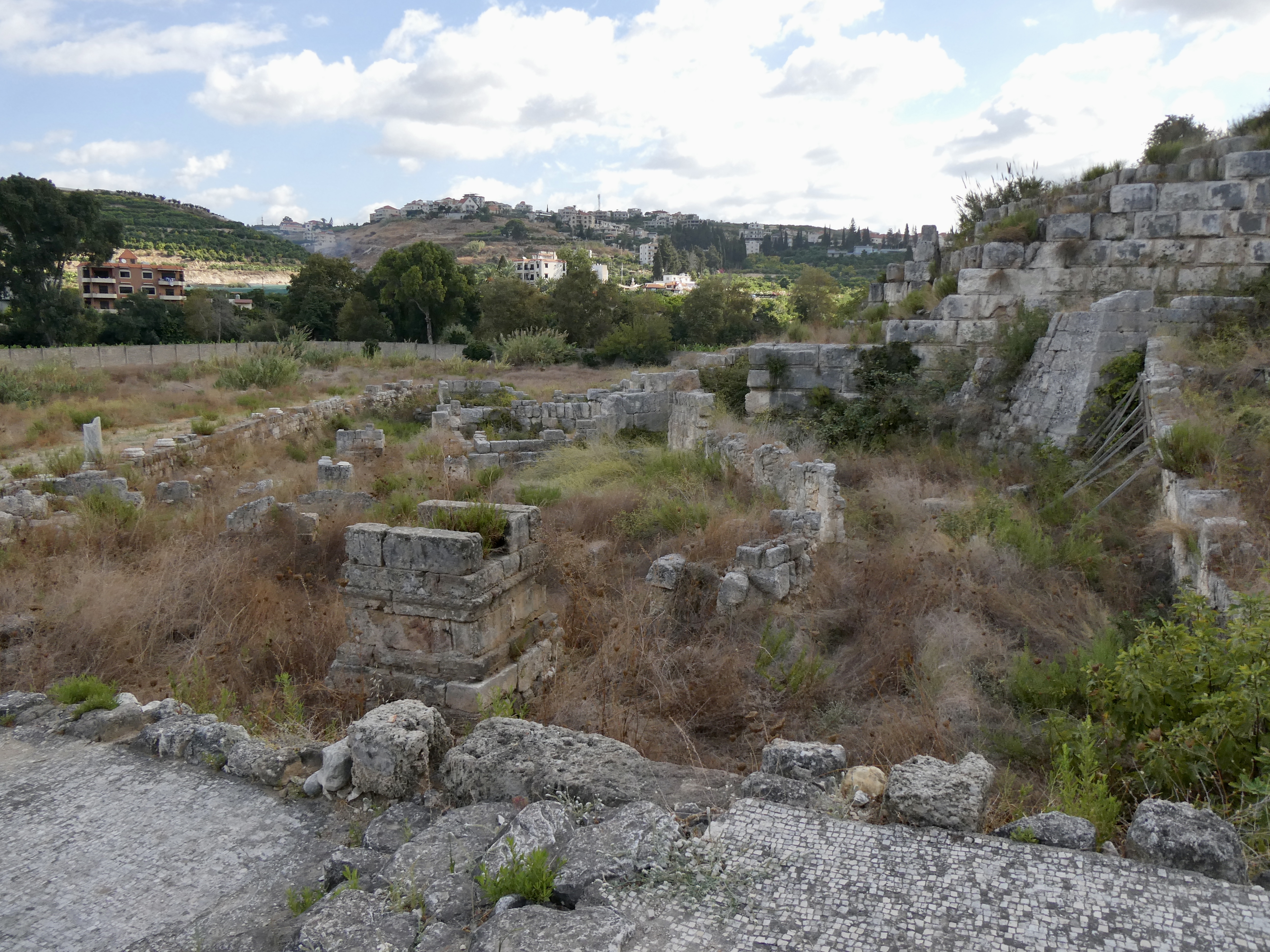

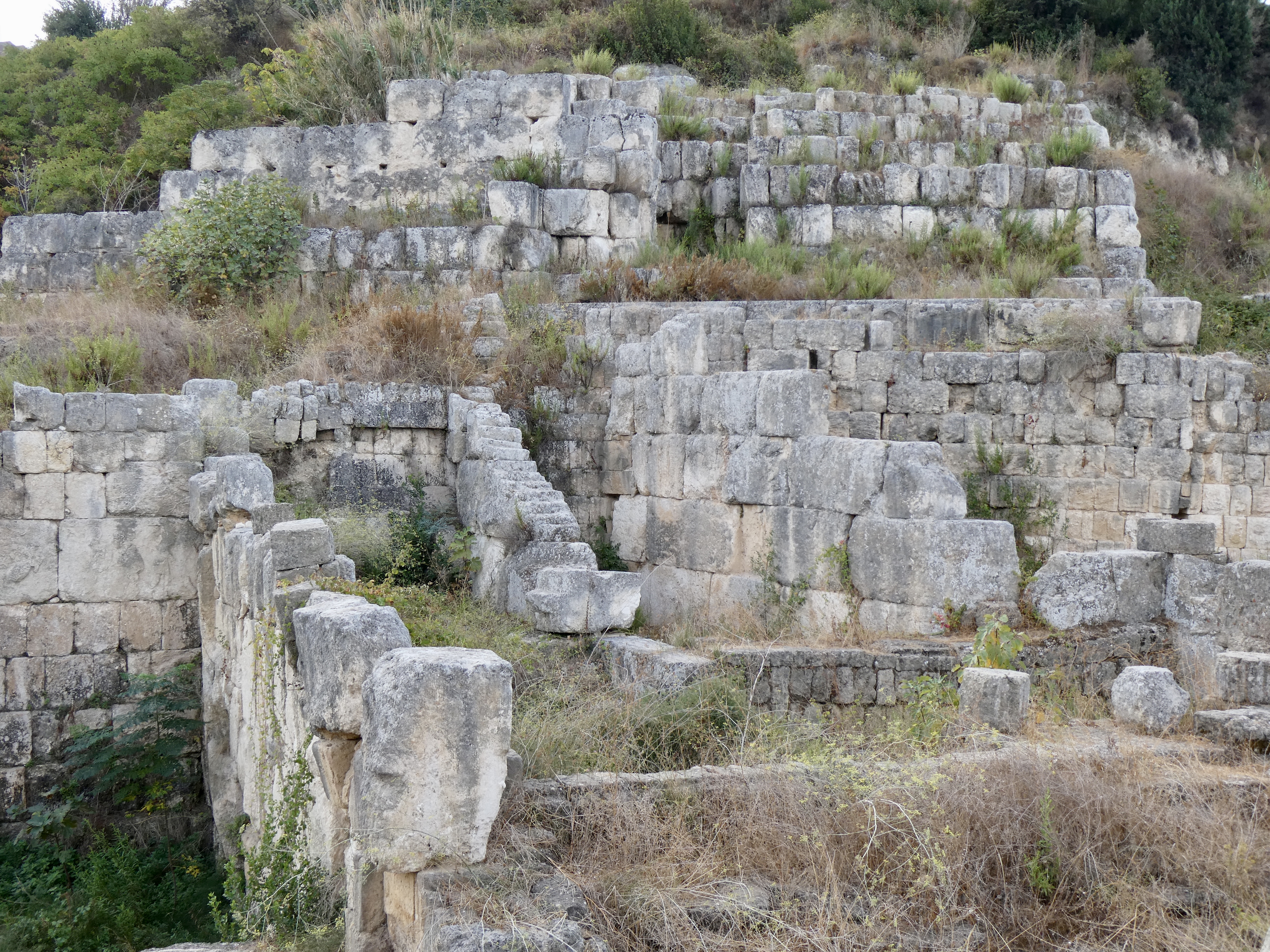

Anyway, once on the road, the itinerary for the day took us south to the Sidon/Tyre region, which is considered the Muslim dominated part of the country. Our first stop of the day, about an hour south of Beirut was the Temple of Echmoun just north of Sidon. The temple was originally constructed as a pagan place of worship dedicated to Echmoun, the Phoenician god of healing. The story goes that Echmoun, a hunter, saw Astarte aka Aphrodite and fell in love with her, but was driven crazy by her beauty and killed himself. Astarte was so grief stricken, she brought Echmoun back to life and made him the god of healing. And thus began the pagan worship of Echmoun.
Apparently, the site was occupied from the 7th century BC to the 8th century AD by the Phoenicians, the Greeks, the Romans, the Byzantines, the Arabs and Ottomans and included a temple (obviously), ritual ablution basins surrounded by canals that were fed water from nearby rivers, a Roman colonnade and Byzantine mosaics.
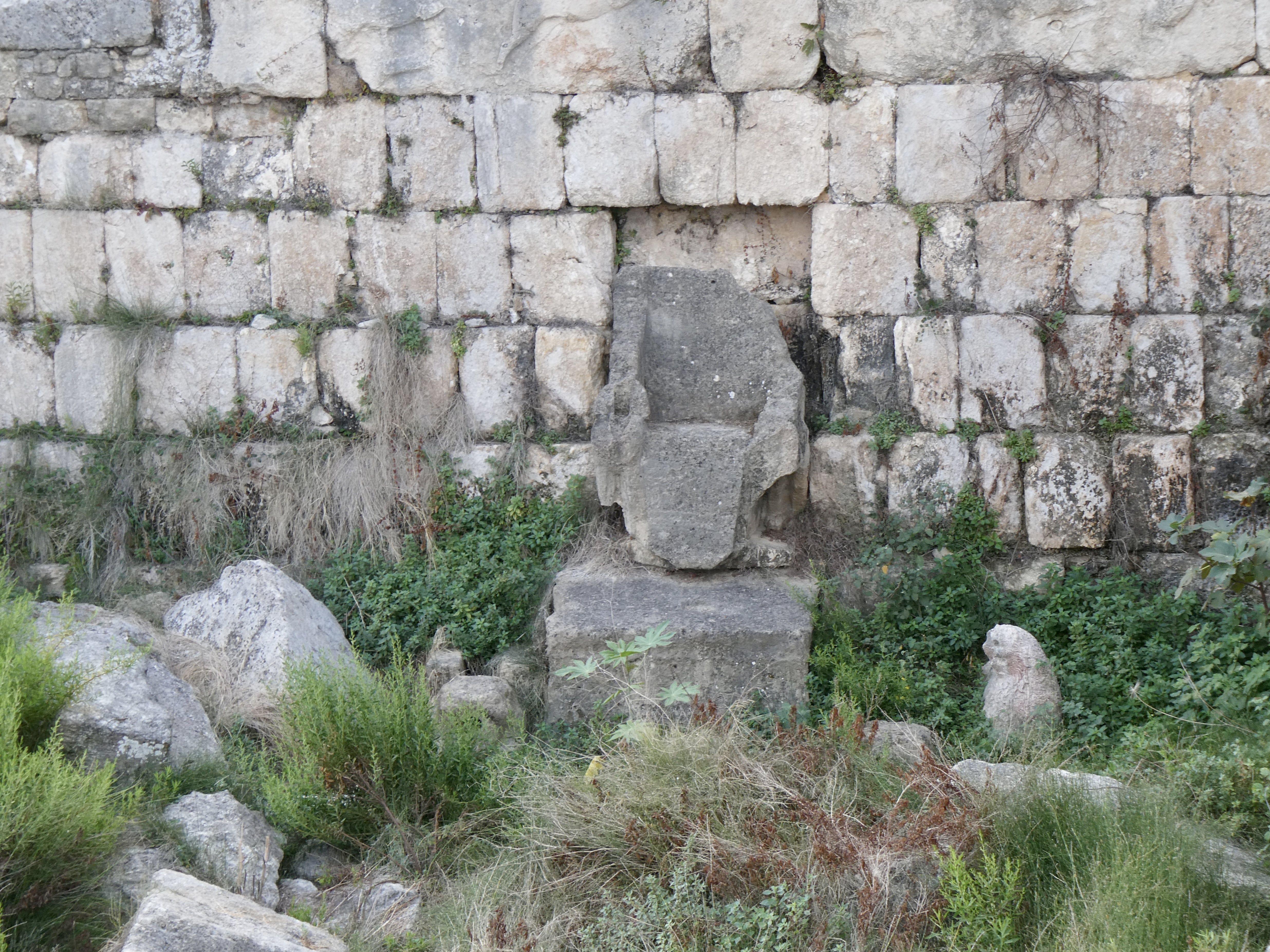
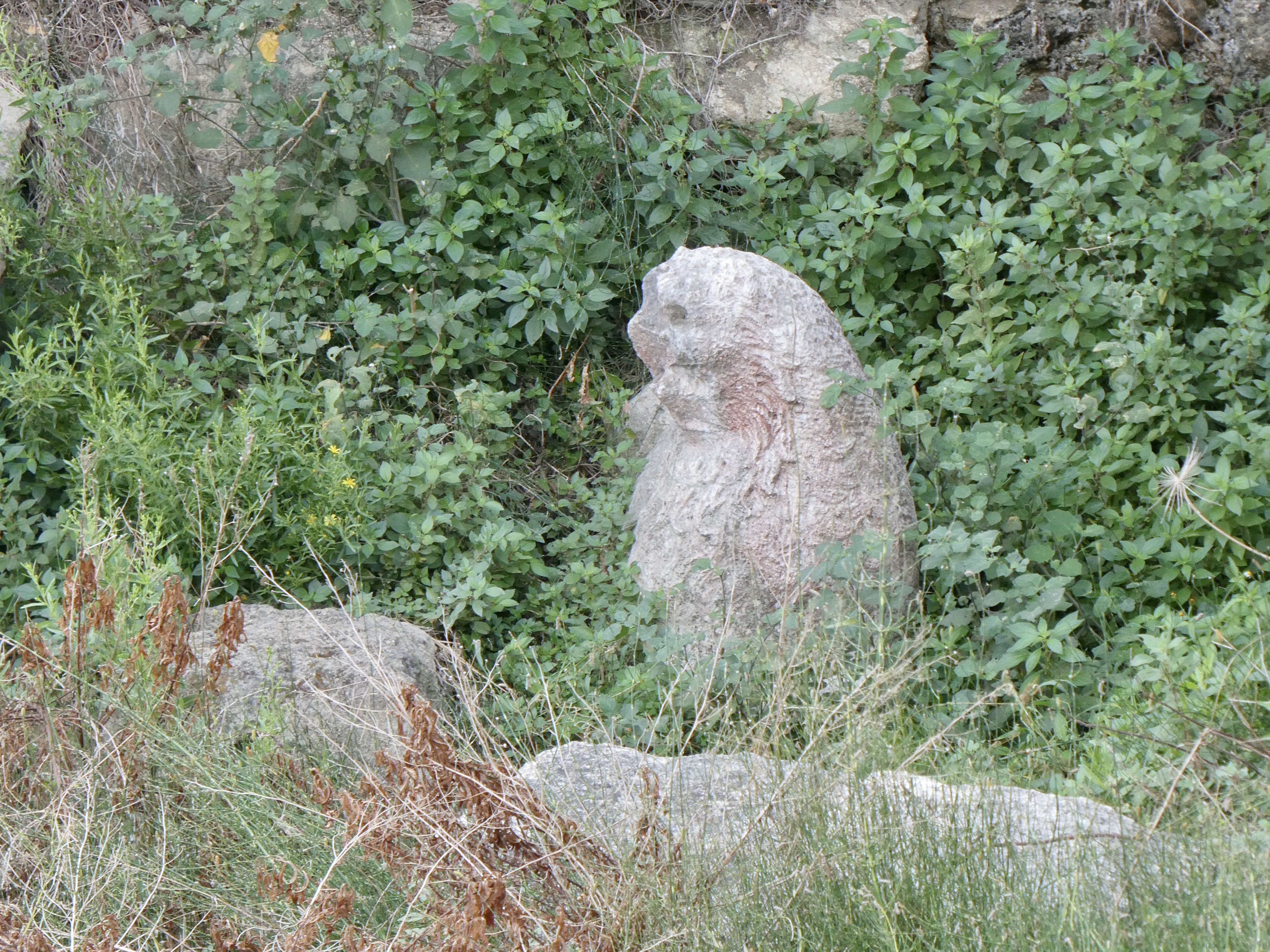
Once we entered the site, we walked along an old Roman road surrounded by the remains of Roman columns. Immediately to the right were Phoenician ruins, the oldest at the site dating back 7th century BC. The highlight of the site (for me) was the throne of Astarte surrounded by two winged sphinxes (or are they lions??)
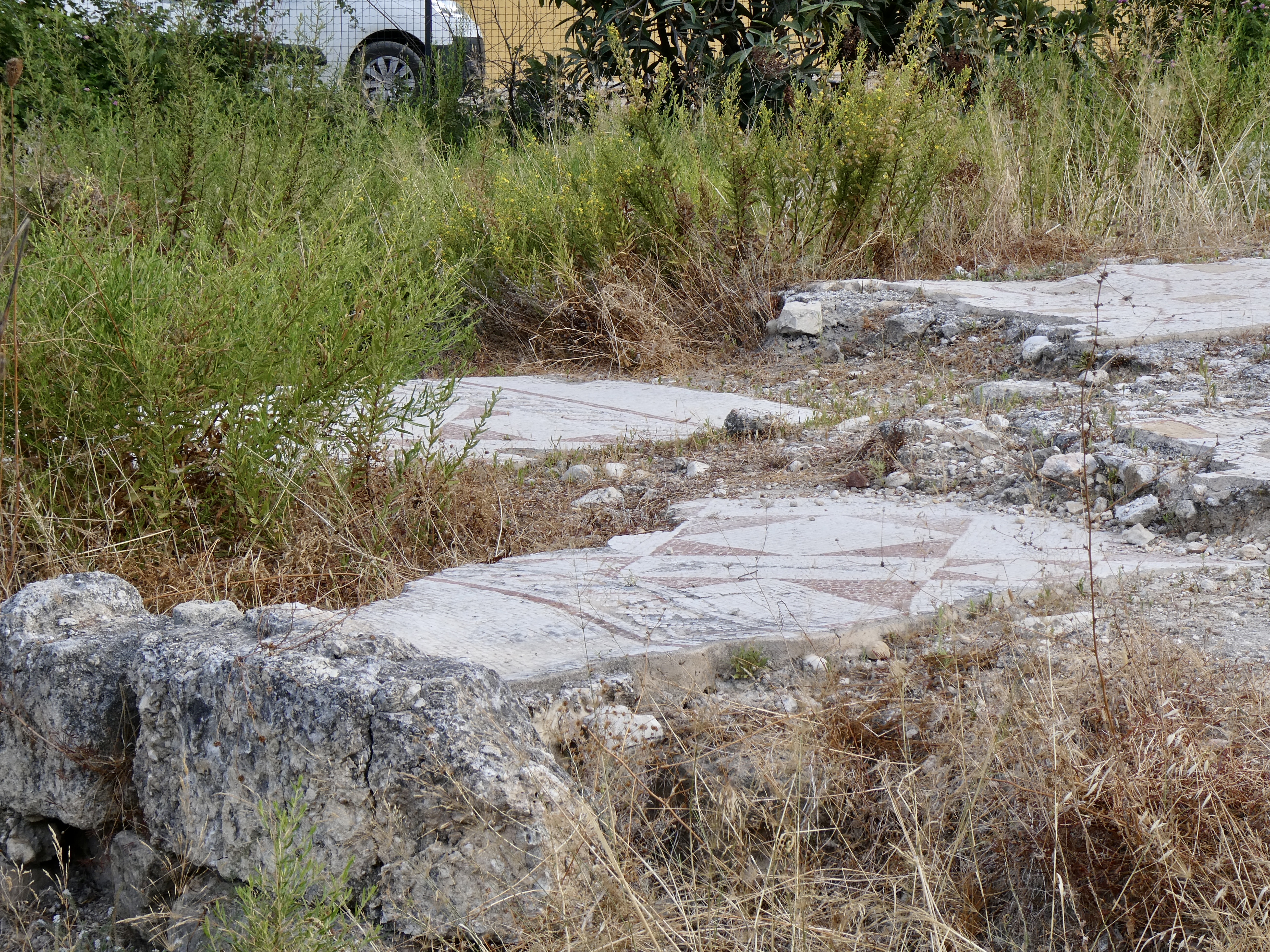
Behind the throne were stones carved with little animal, including a deer and beside the site was the Greek temple where the faithful worshiped Echmoun. Nearby there were basins for washing, the remains of Roman columns and mosaics that were once part of a Byzantine church.
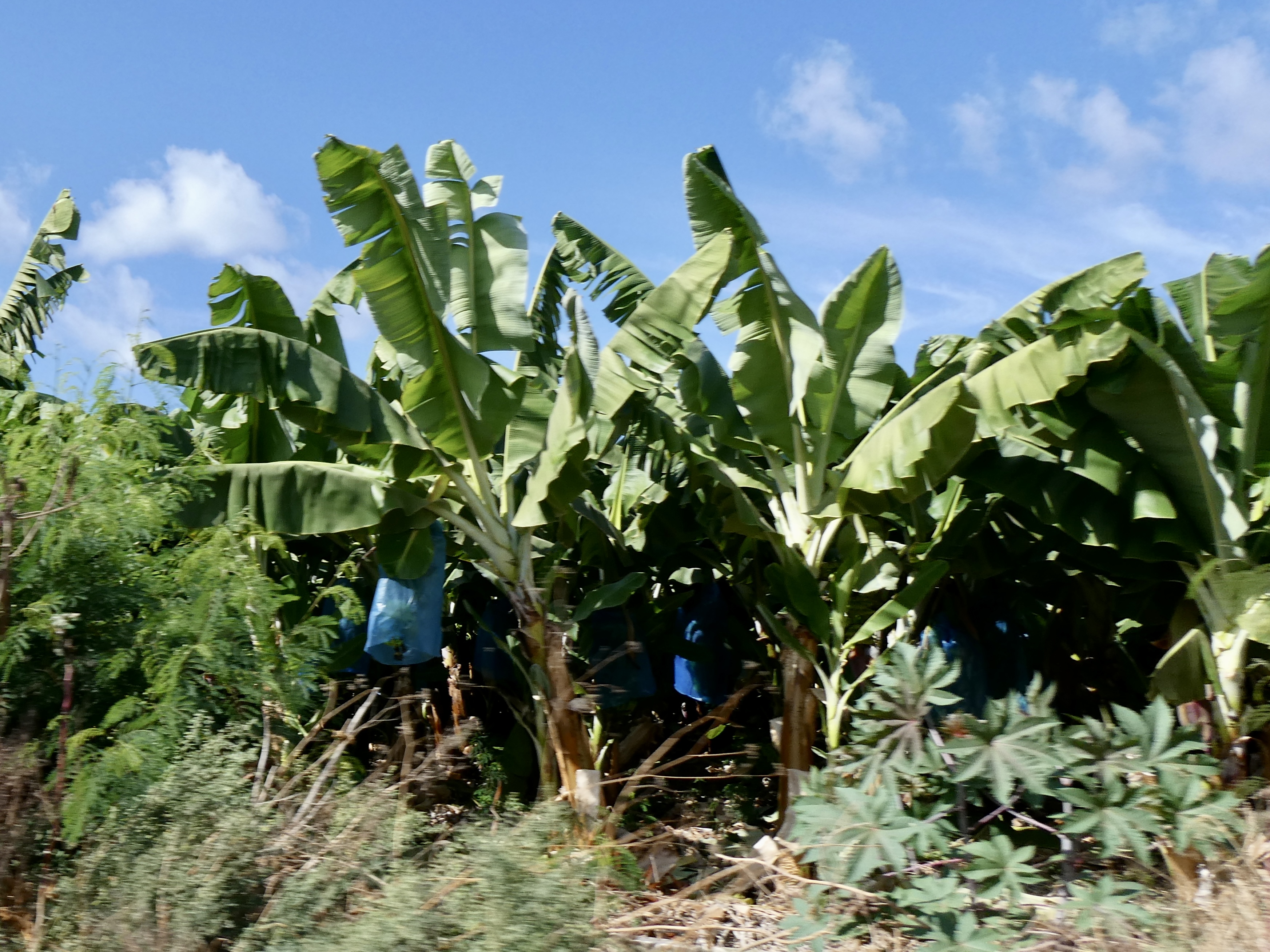
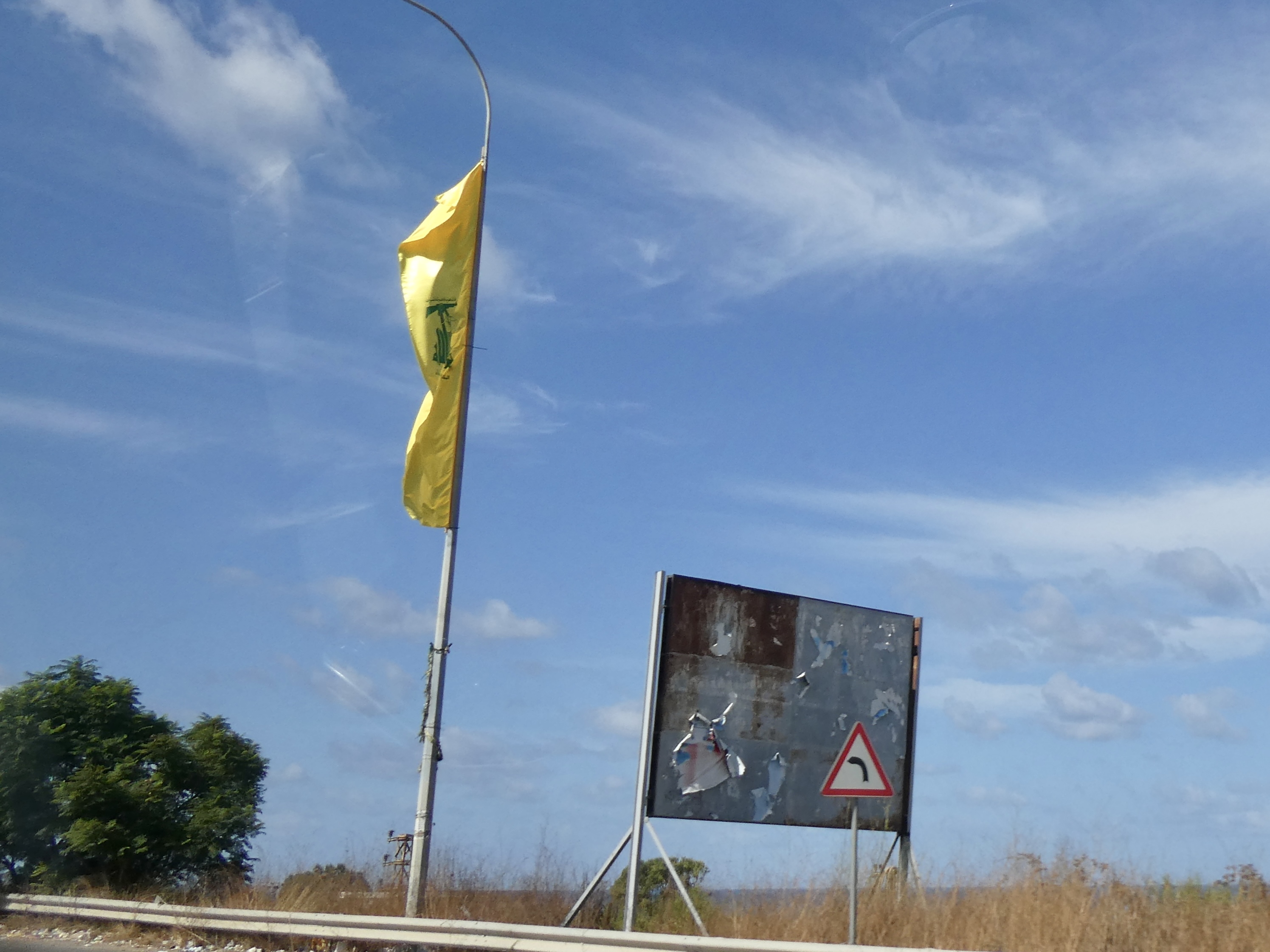
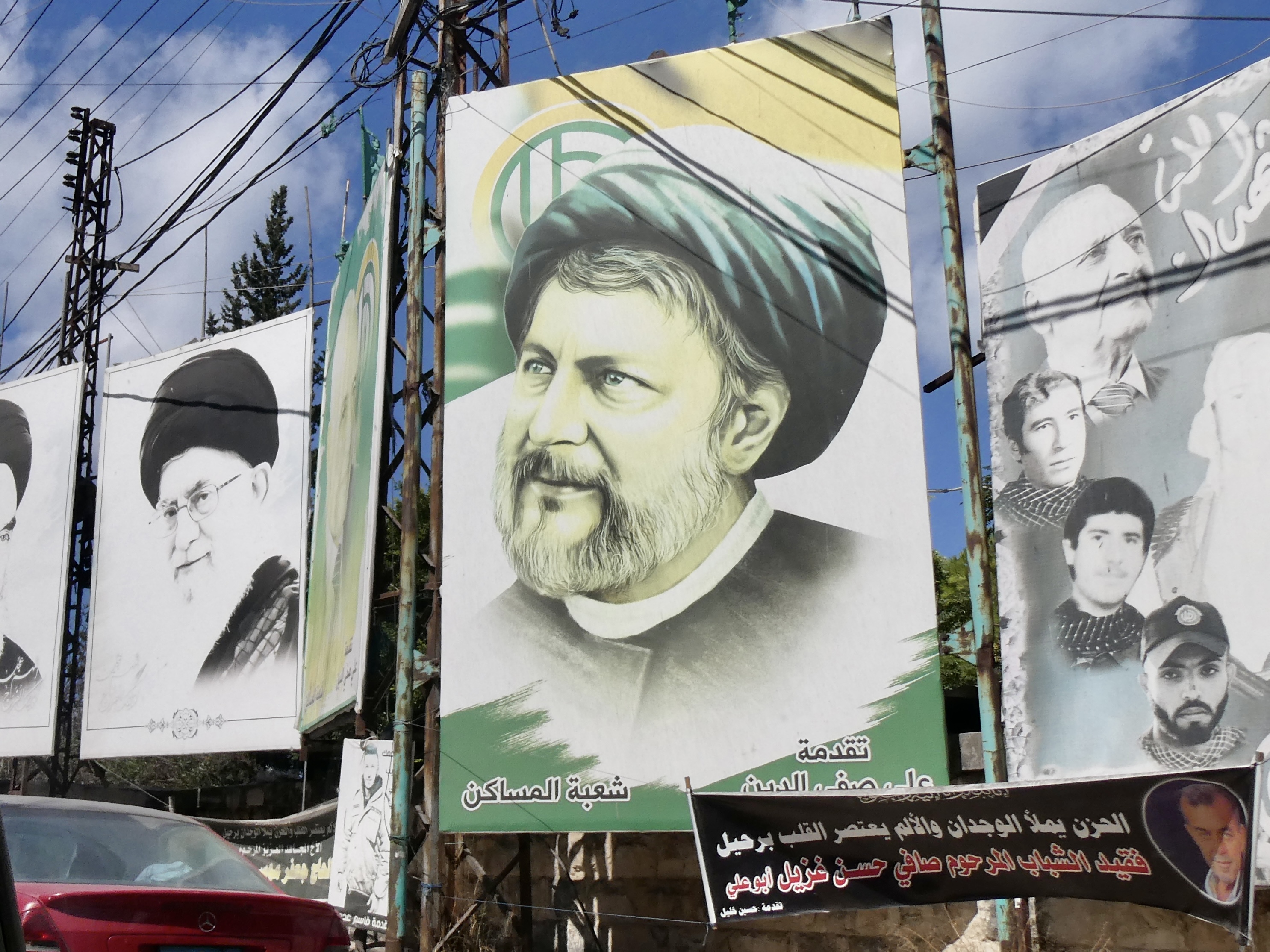
After the trip through history, we got back in the car and headed further south to Tyre where we were going to take in two Roman and Byzantine sites: Al Baas and Al Mina, which comprised the Tyre World Heritage site. And we knew we were in the south when the roads became lined banana trees (a staple in this part of Lebanon), yellow Hezbollah flags and banners of stern looking clerics on lamp posts, including the leader of Hezbollah. Clearly, Hezbollah either controls or has a tremendous amount of support in this area. And as a result, the southern part of Lebanon is distinctly different from the north and far more conservative.
In fact, as we drove, I saw very few women in western dress and the abya was the choice of style for most women (although younger women seemed to be styled in a hijab, jeans and long sleeves). In addition, I did not hear the call to prayer once while I was in the northern part of Lebanon, but here in the south, I heard it twice while we were in Tyre. (In fact, there were so many mosques near Al Mina that the call to prayer went on for at least ten minutes as each mosque sounded the call at slightly different times.).
Anyway, we started our trip through the Tyre UNESCO World Heritage site of Al Baas. The site was ENORMOUS with both Roman and Byzantine ruins.
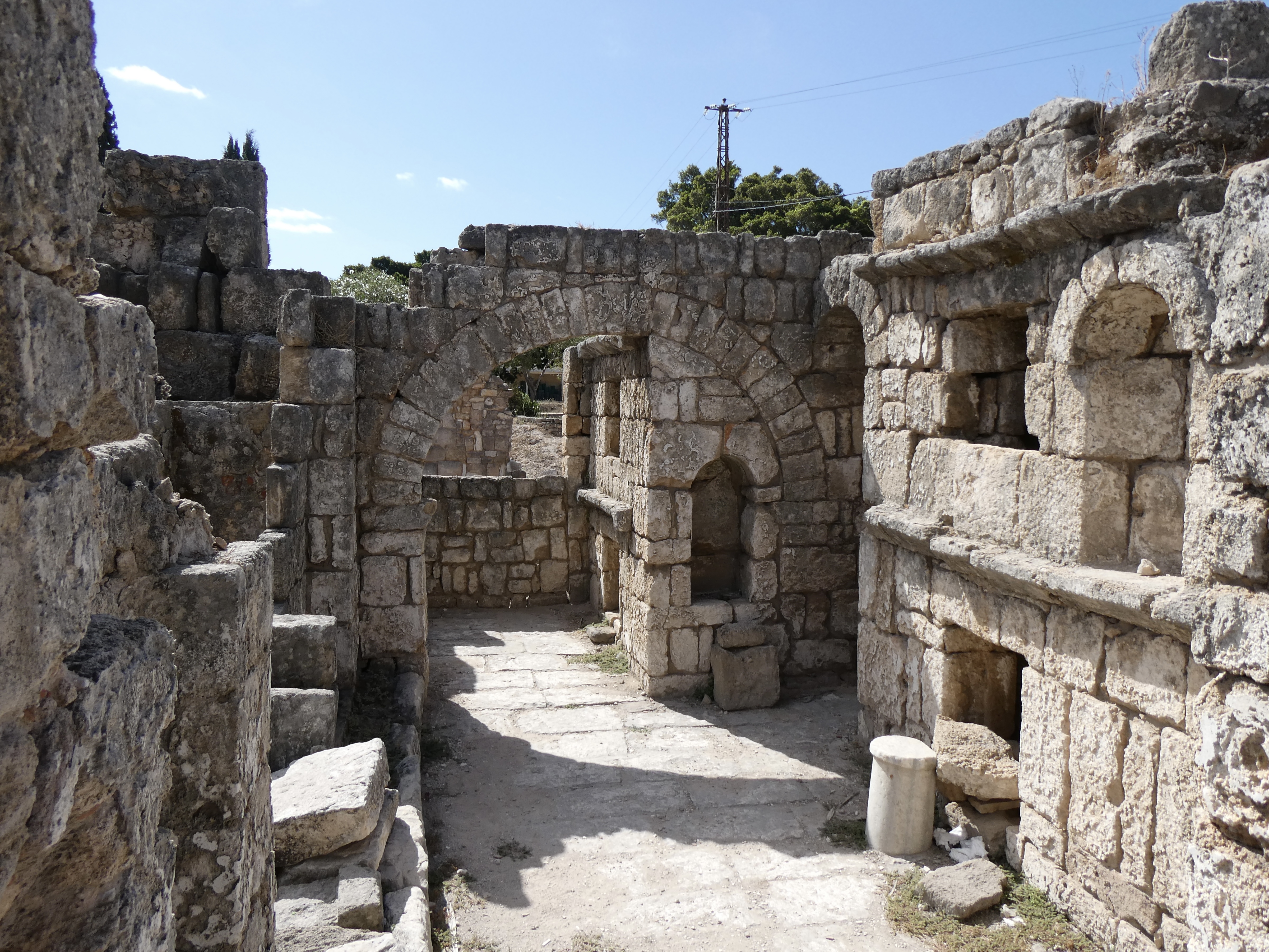
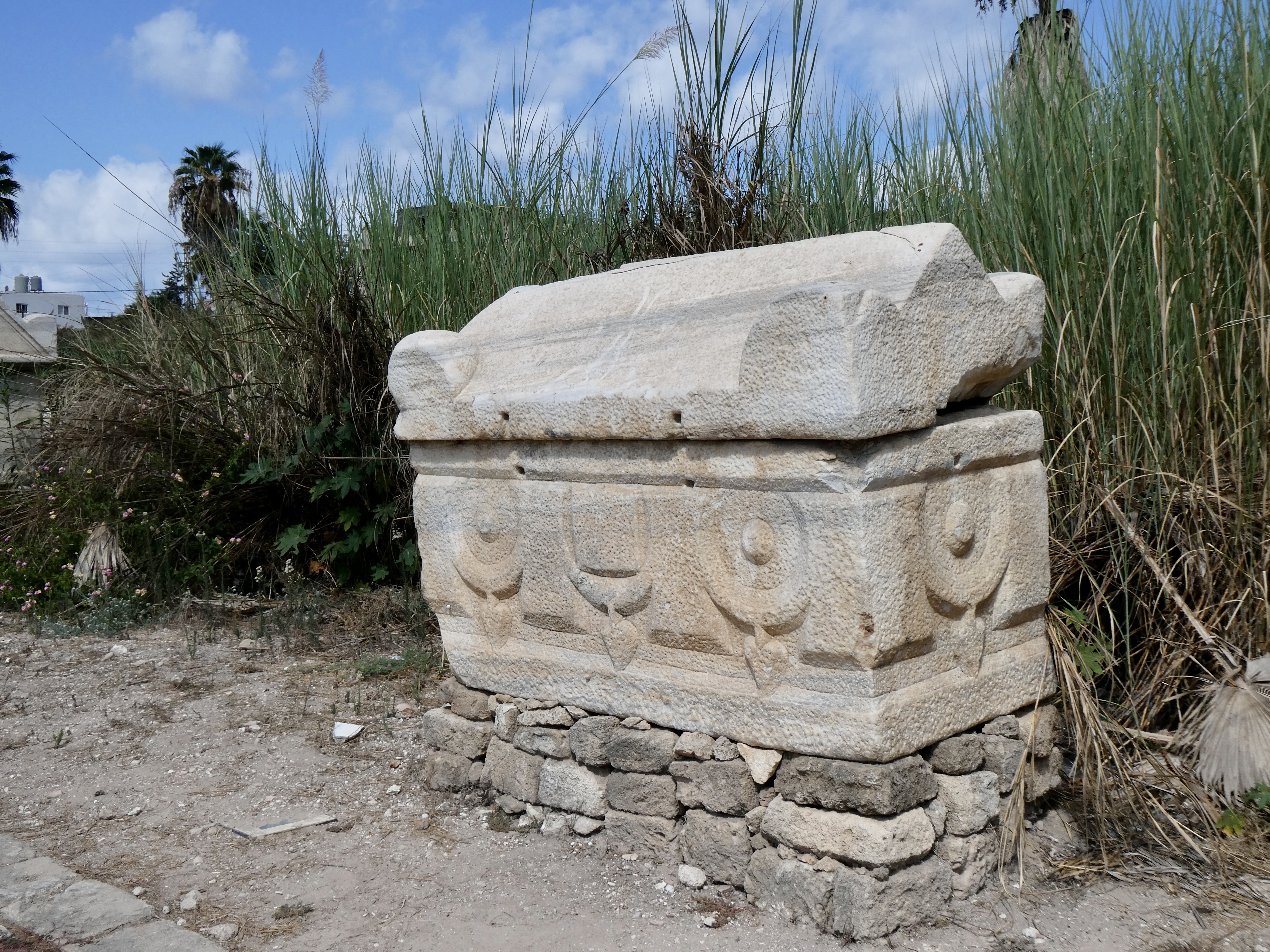
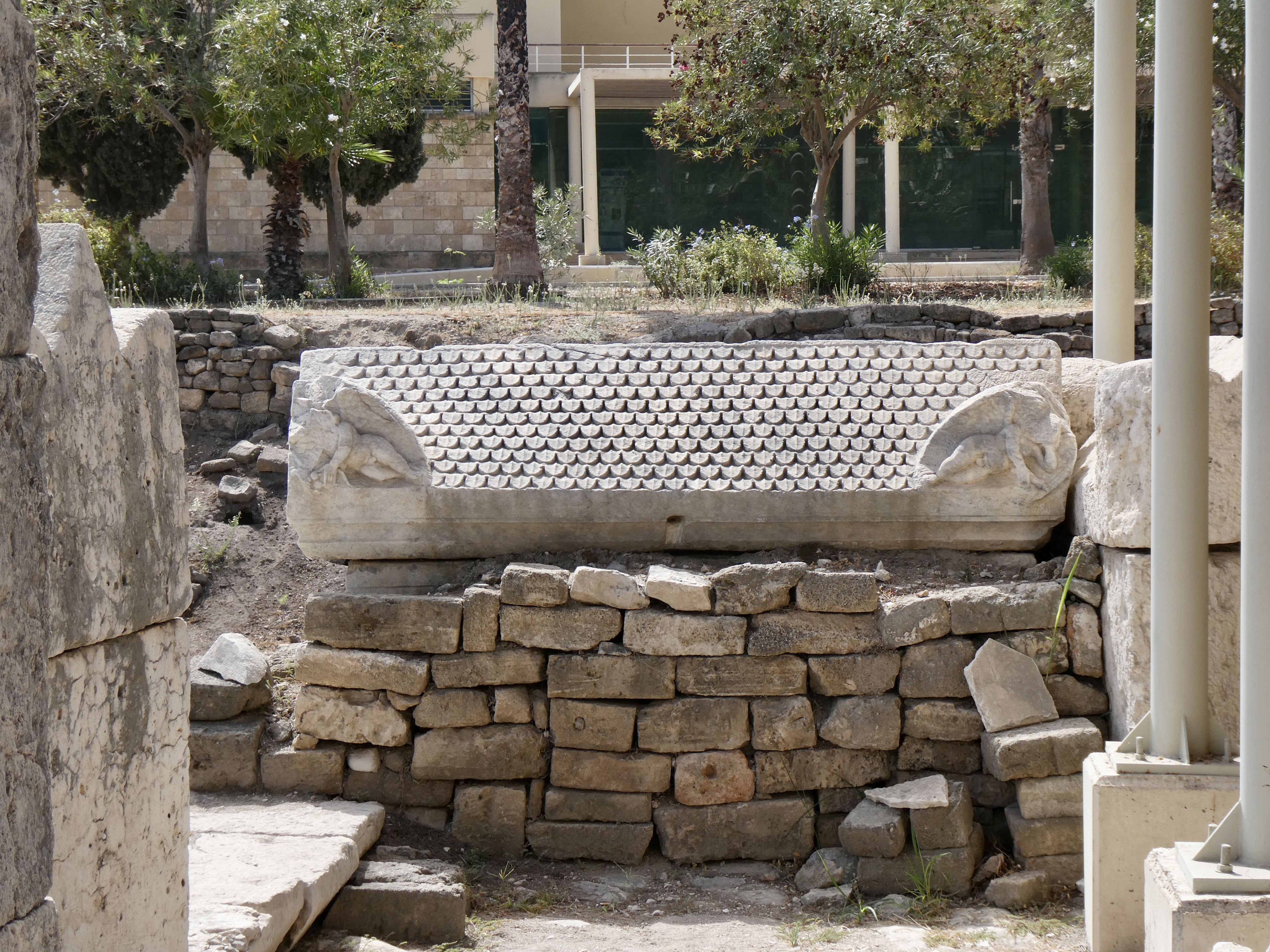
As we entered the site, we walked along an old Roman road past a several blocks long necropolis (cemetery) that was constructed between a Byzantine arch at one end and a huge Roman triumphal arch at the other.
Now the necropolis was several blocks long and included hundreds of stone and marble sarcophagi and burials walls. The marble sarcophagi were intricately carved and typically held the body of a wealthy individual (marble was very expensive) while stone sarcophagi were used by the less influential and wealthy people.
And as is typical of Roman necropolis, the necropolis was located on the outside of the huge triumphal arch entrance that led to the ancient city of Tyre because the Romans were very cognizant of the fact that dead bodies can spread disease and don’t smell particularly good. Sooooo … keep those dead folks away from the city center.
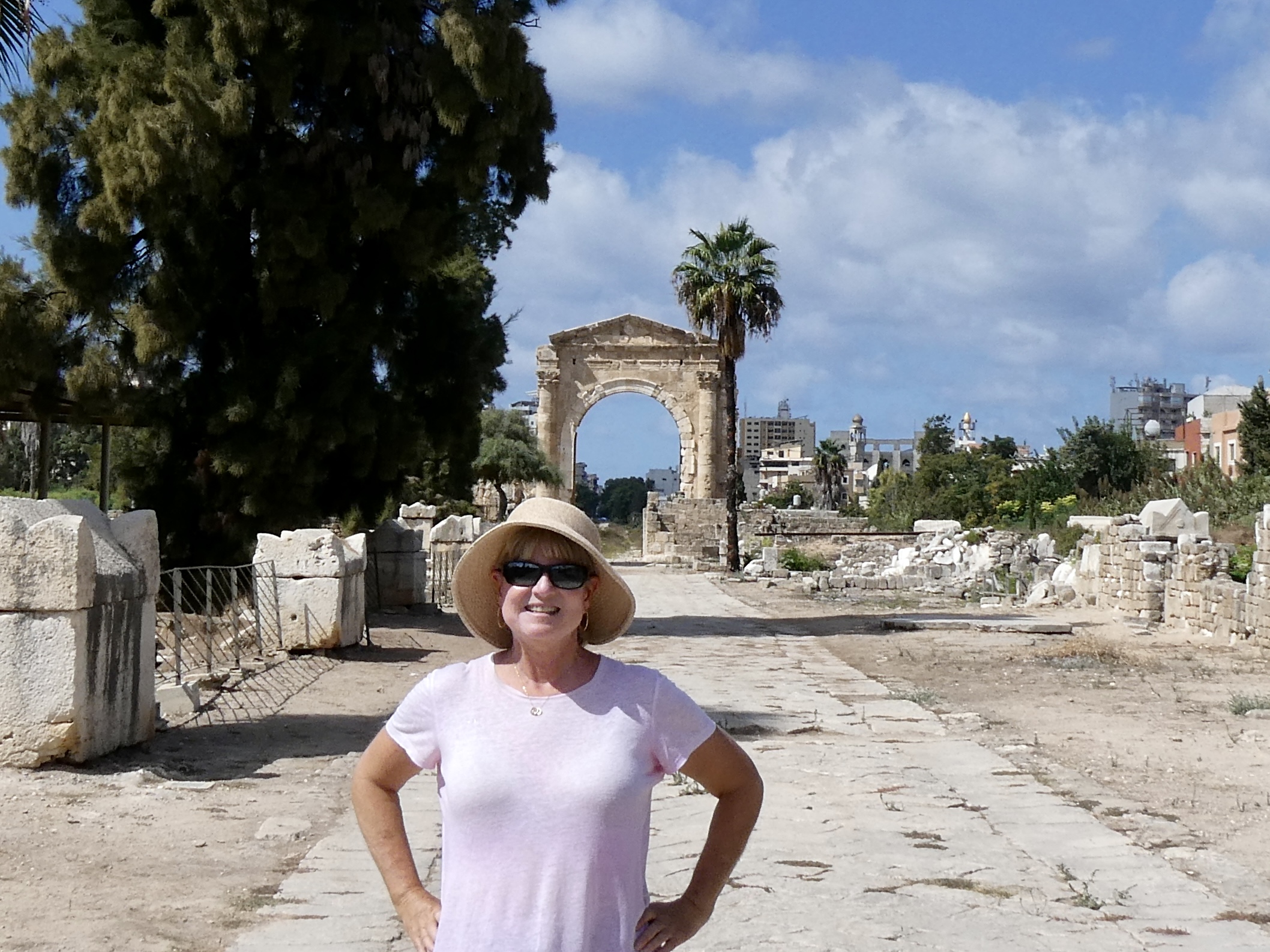

Anyway about that gorgeous arch. While it is not entirely clear who constructed the triumphal arch, the general consensus is that the Roman Emperor Hadrian had the arch build in the 2nd century (as he did with the cities he ruled all over the Roman world).
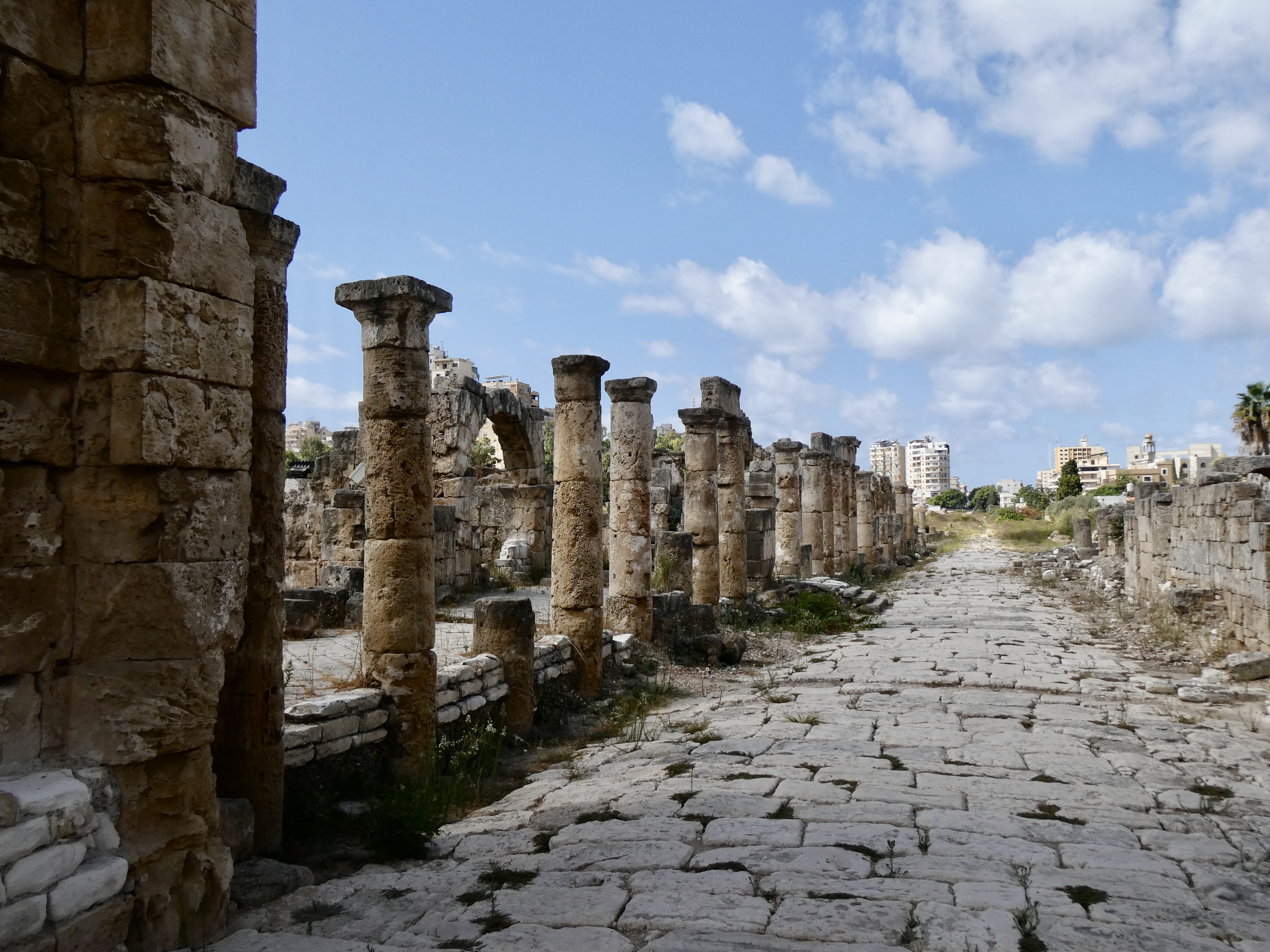

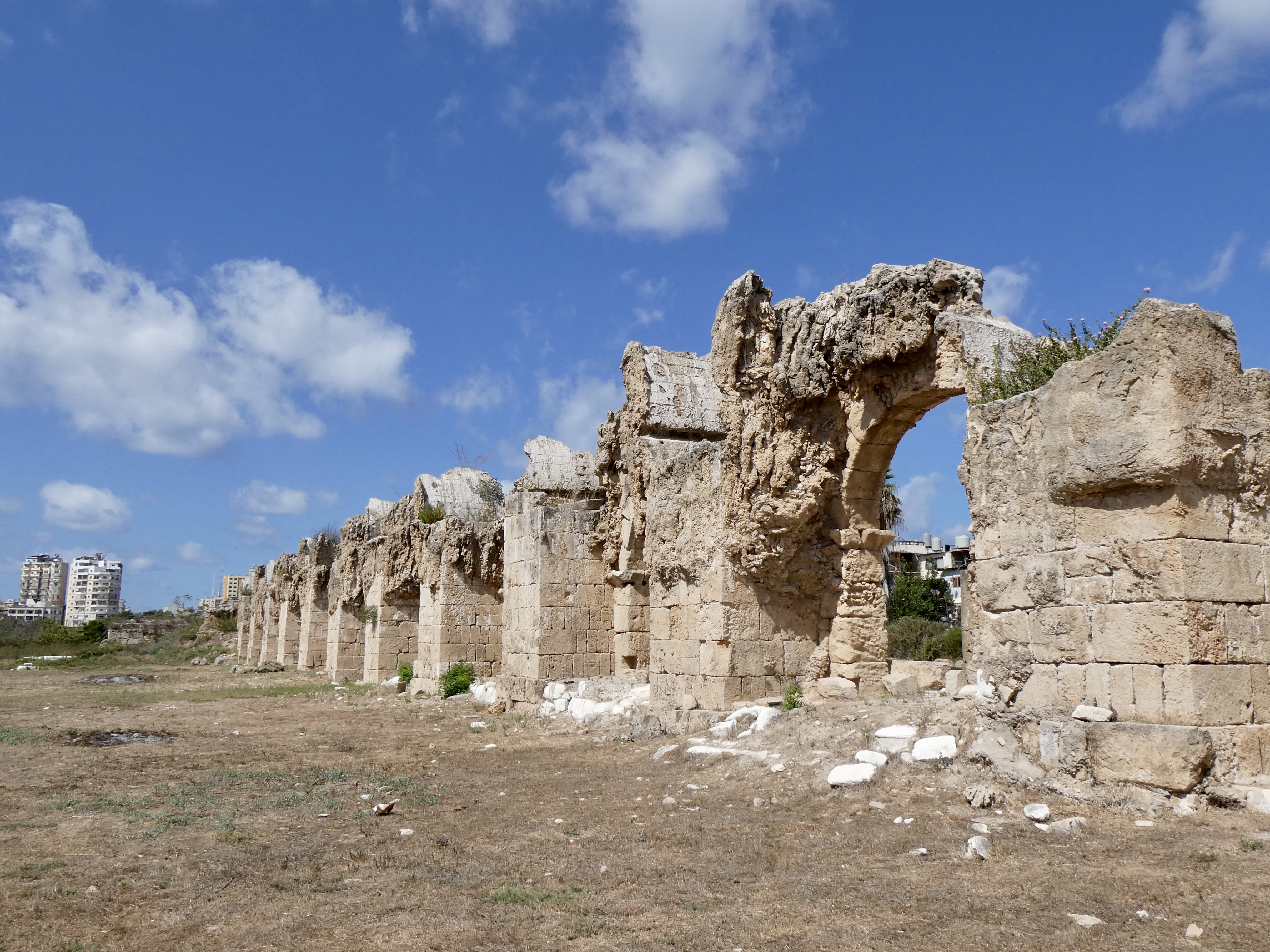
So once we passed through the triumphal arch, we were able to get a pretty good view of the aqueduct, which carried water to the city and the second largest Roman hippodrome in the world.
Now the hippodrome was a massive field where chariot races would take place. The construct of the site was like one very, very long football field with stands surrounding the field. Today there are only three sets of stand remaining at the site along with the ever present obelisk, which is often found at hippodromes (a present from the Egyptians).
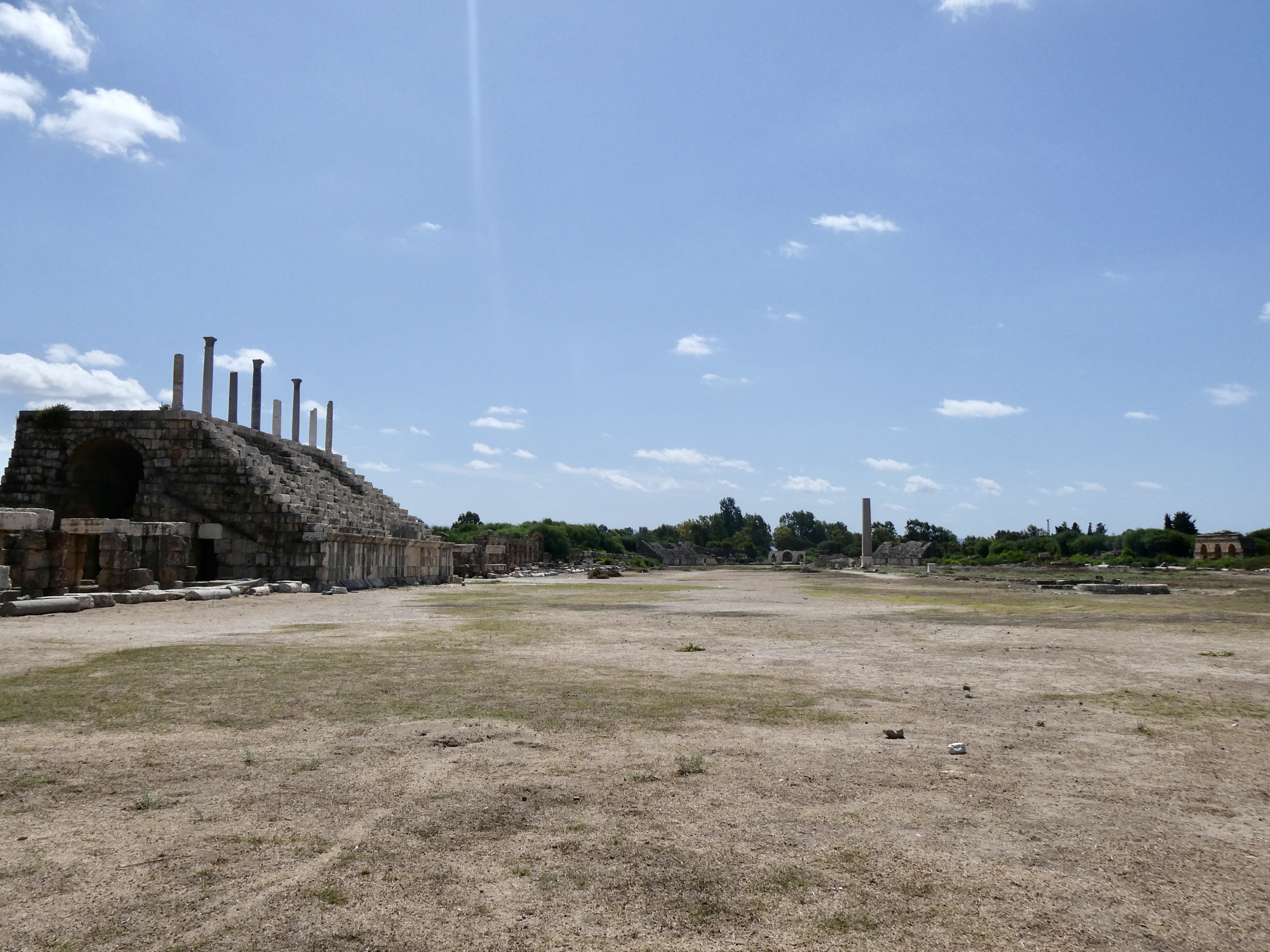

Once in the hippodrome, I climbed up one of the remaining stands and took a seat and waited for the chariot races … unfortunately, I was a few years too late. But seriously, the view from the top of the stands was something else and I could well imagine the chariots racing around the grounds. All in all, I absolutely loved the Al Baas site.

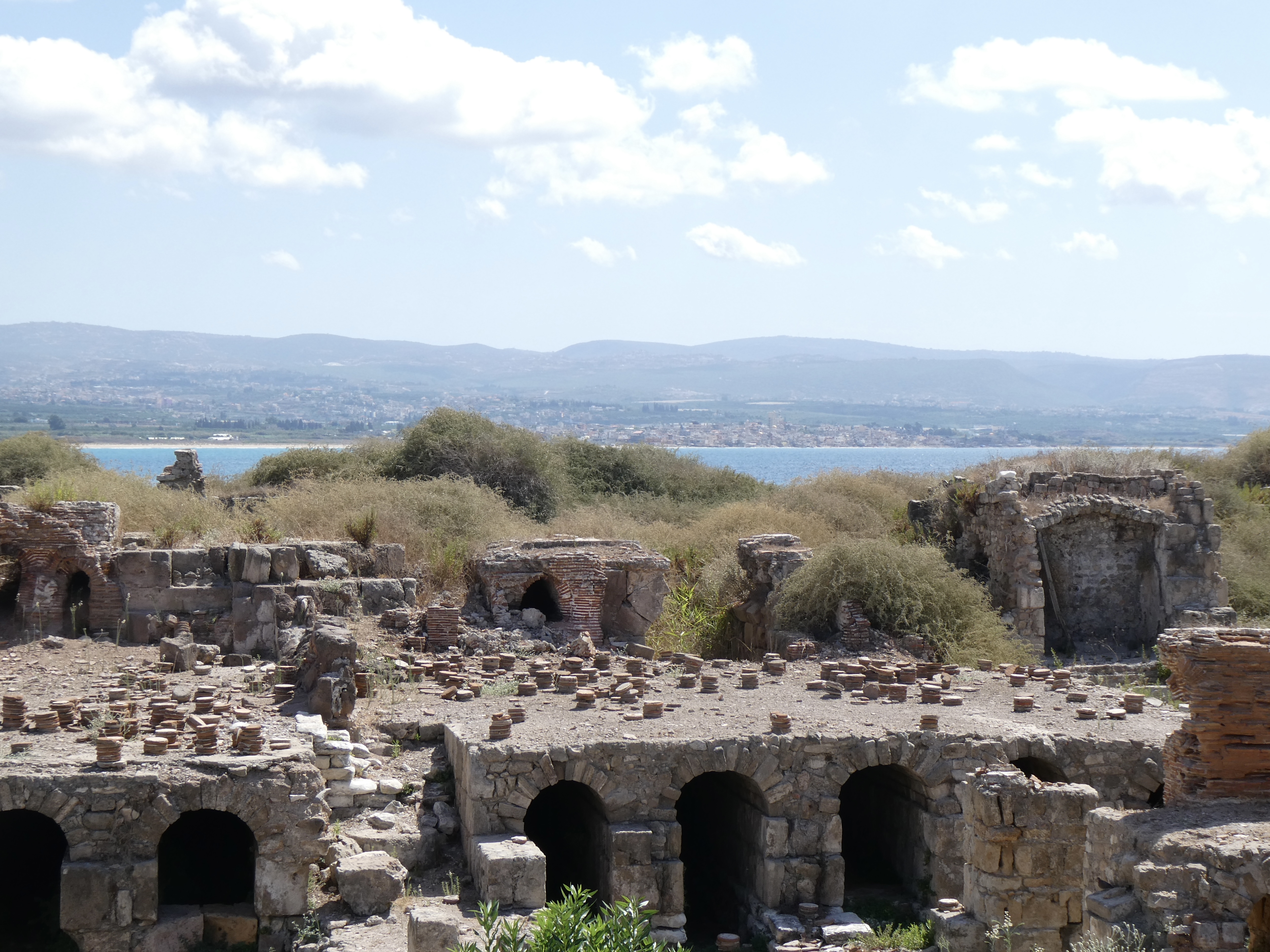
We then walked back from the hippodrome to the car and made the quick ten minute trip along the Mediterranean to the second site, Al Mina. Now Al Mina was a Phoenician city that was at one time on an island, but Alexander the Great bridged the gap between the island and the mainland when he conquered the island. Eventually, both the Romans and the Byzantine controlled the site, which includes a Byzantine basillica surrounded by Roman columns, a swimming pool used for water sports, Roman baths and gorgeous sea views with a submerged harbour.
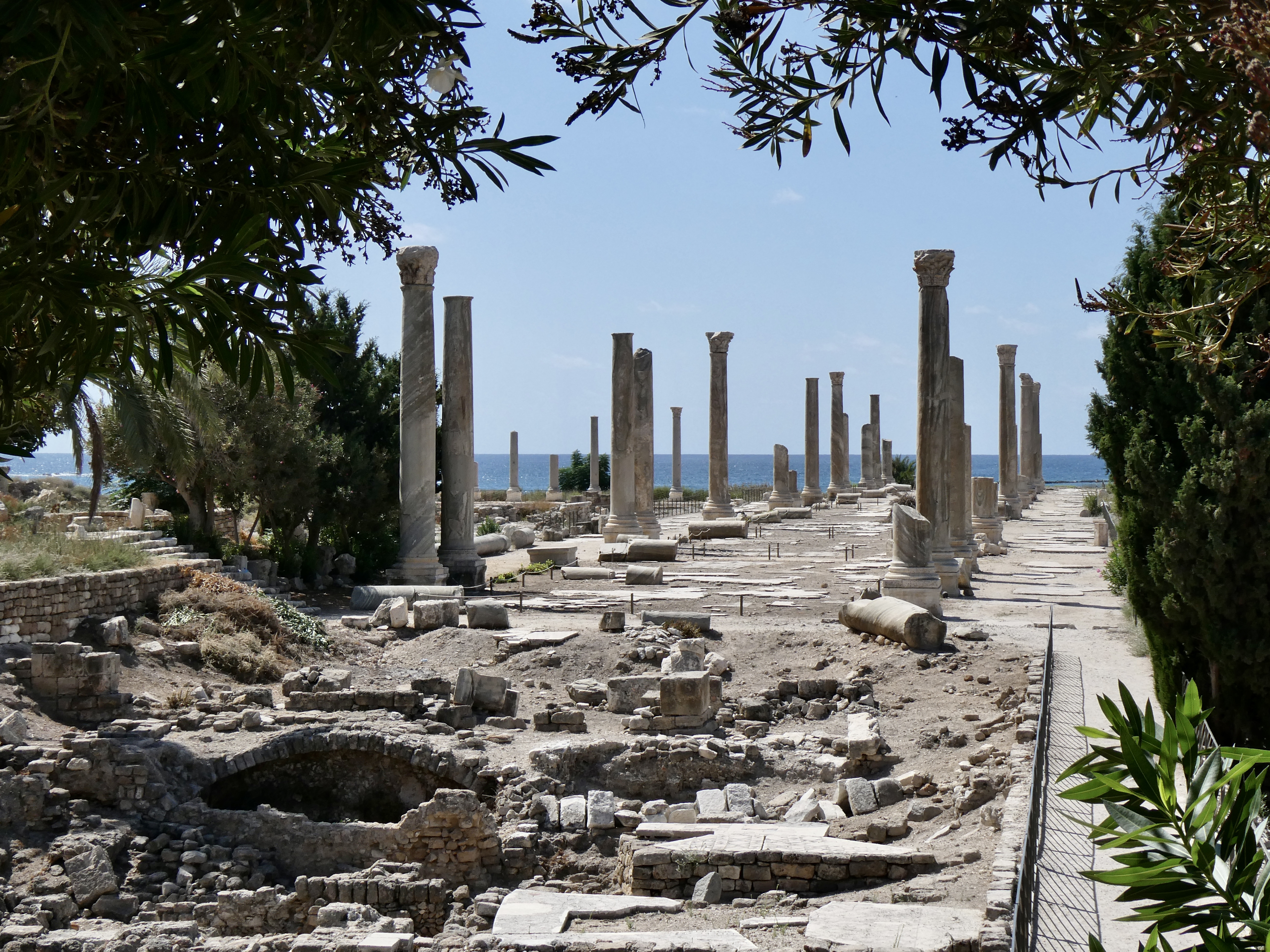
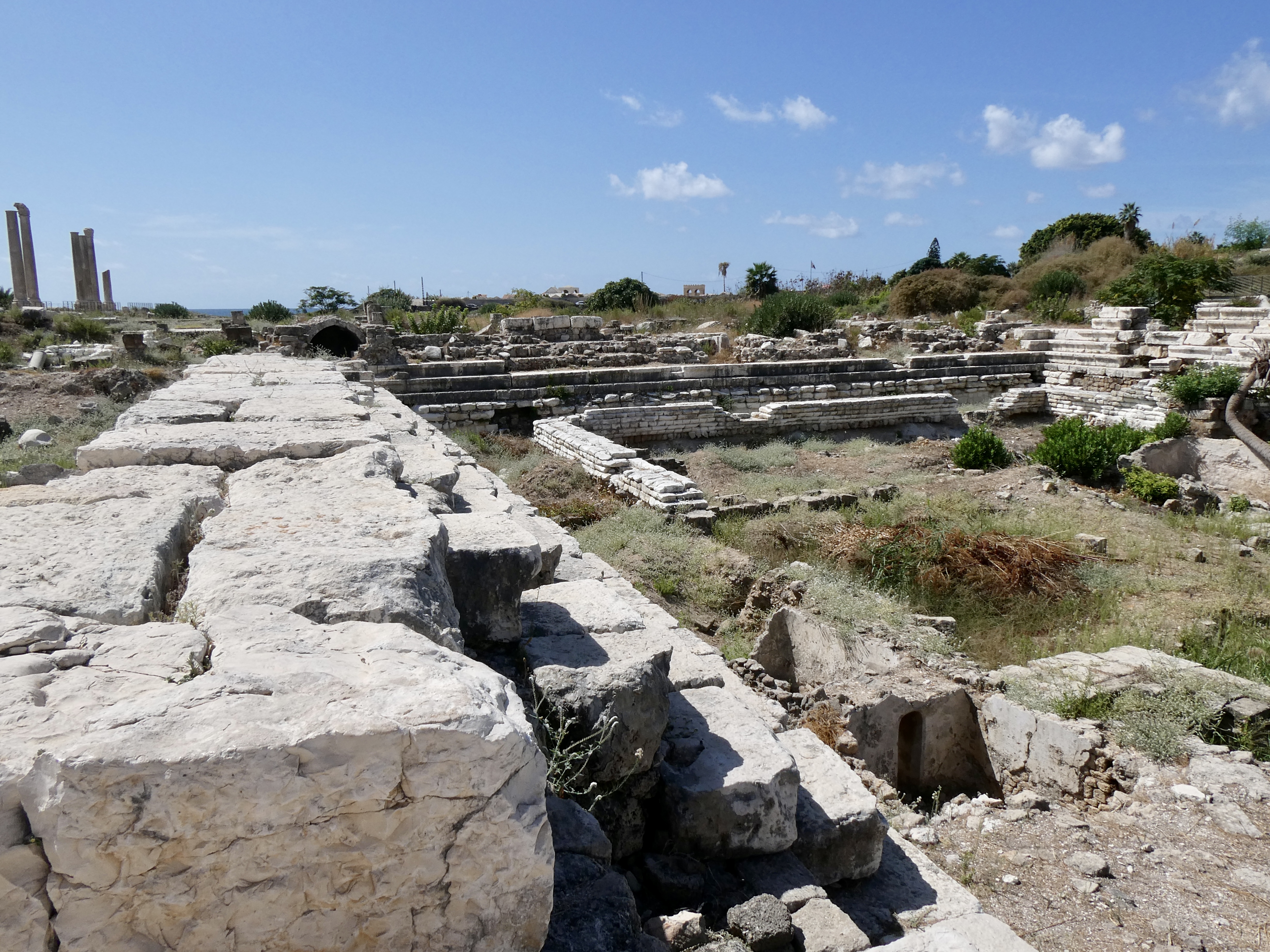
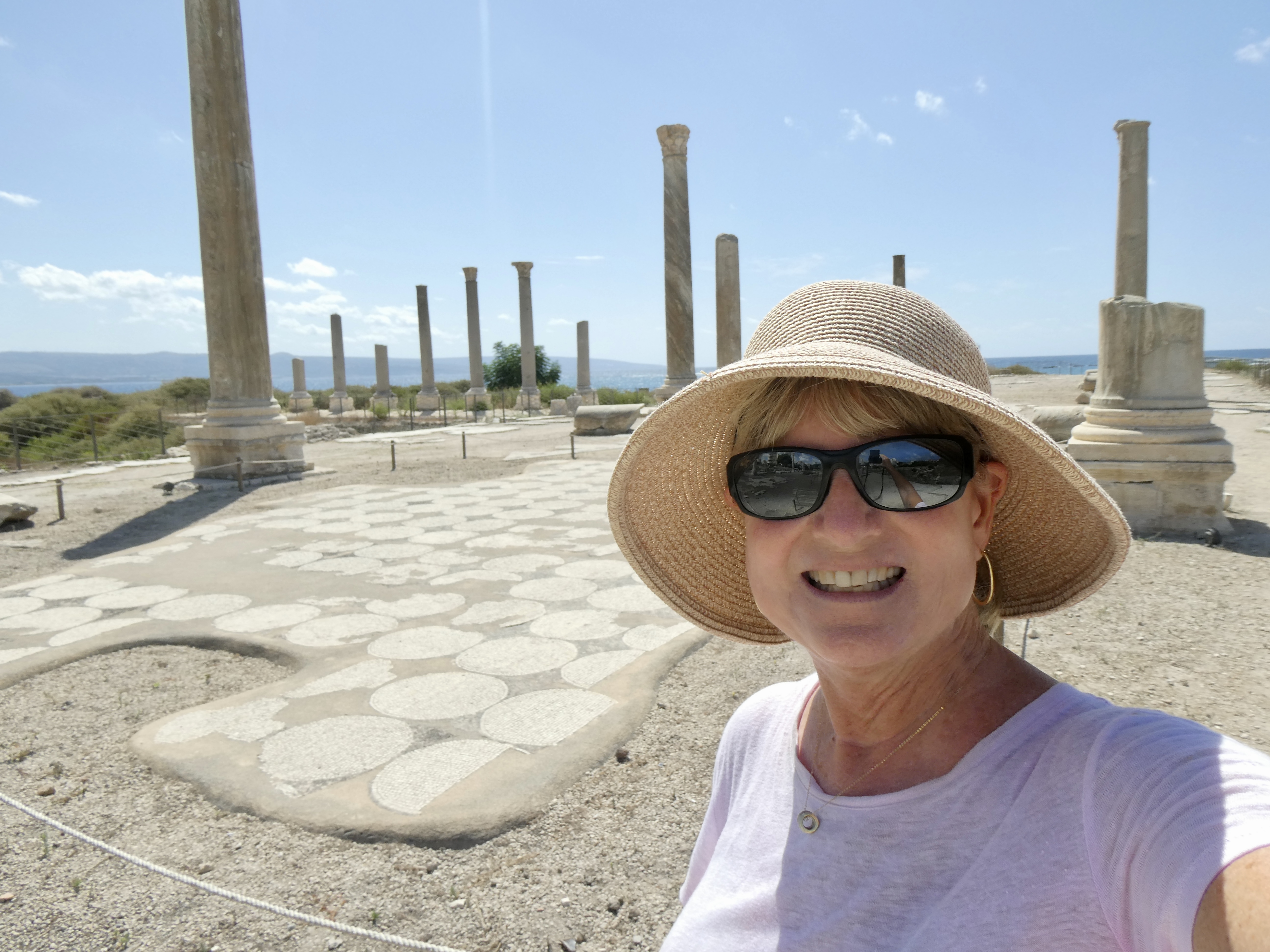
As we walked along the old Roman road and through the basillica, you could see the remains of both Roman and Byzantine frescoes. The frescoes were not in particularly good shape, but you certainly could get the idea of how lovely the site must have been in its prime.
The Roman baths, to the left were a pretty good size given that at one time there was around 70,000 people living in the city, the majority of whom would use the baths. There were also the remains of a gymnasium, although the grass and weeds had overtaken the ruins so it was hard to make it out.
After the visit to Al Mina, we got back in the car and attempted to have some lunch, but the restaurant we planned to go to was closed so we opted to head back to Sidon for the last three sites of the day: the Our Lady of Waiting shrine, Sidon Castle and Sidon Souk.
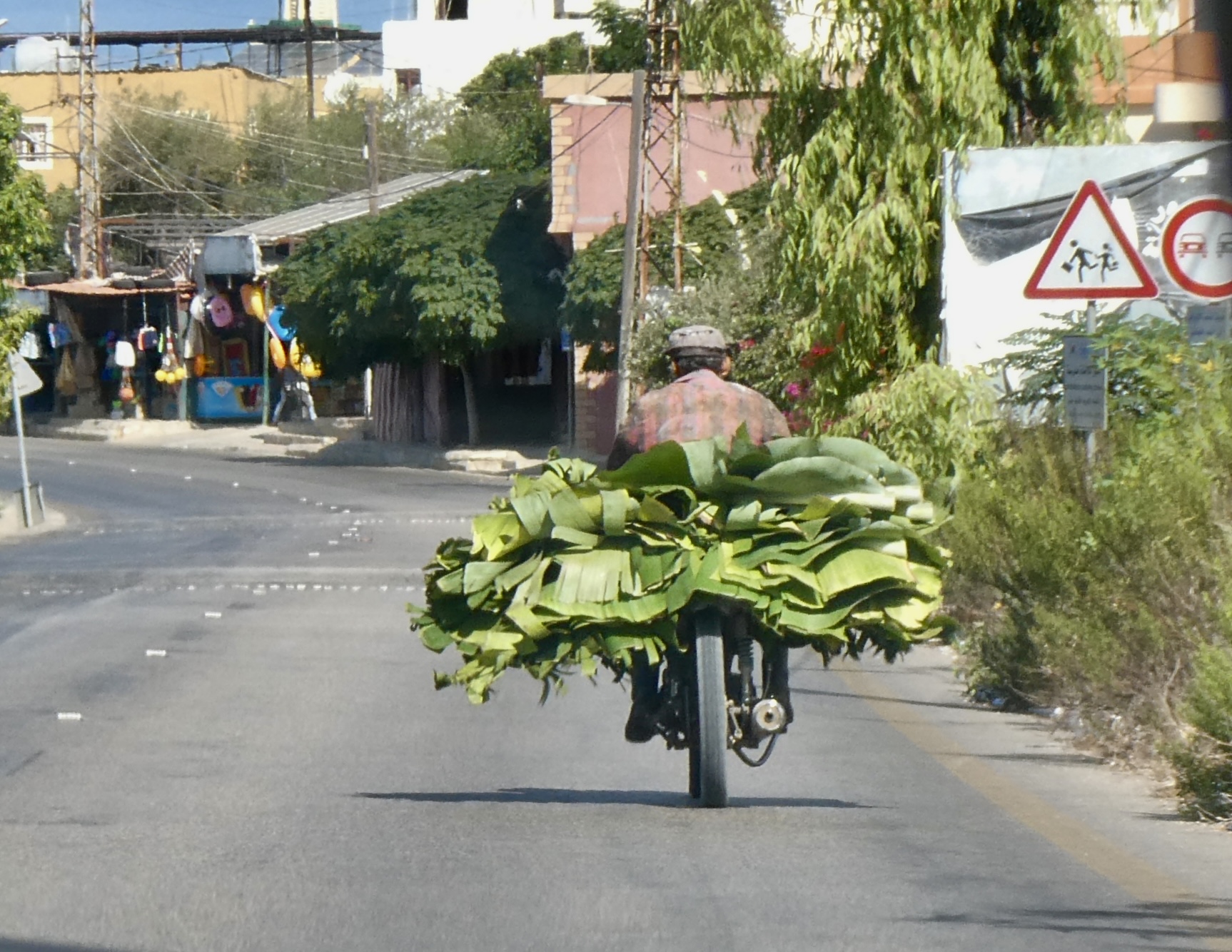
The trip back to Sidon took us past the same banana plantations, as well as little shops, veggie and fruit stands and lots and lots of traffic. Almost an hour after leaving Al Mina, we were winding our way up the hillside to the little town of Magdhdouche to the shrine and magnificent tower dominating the site.

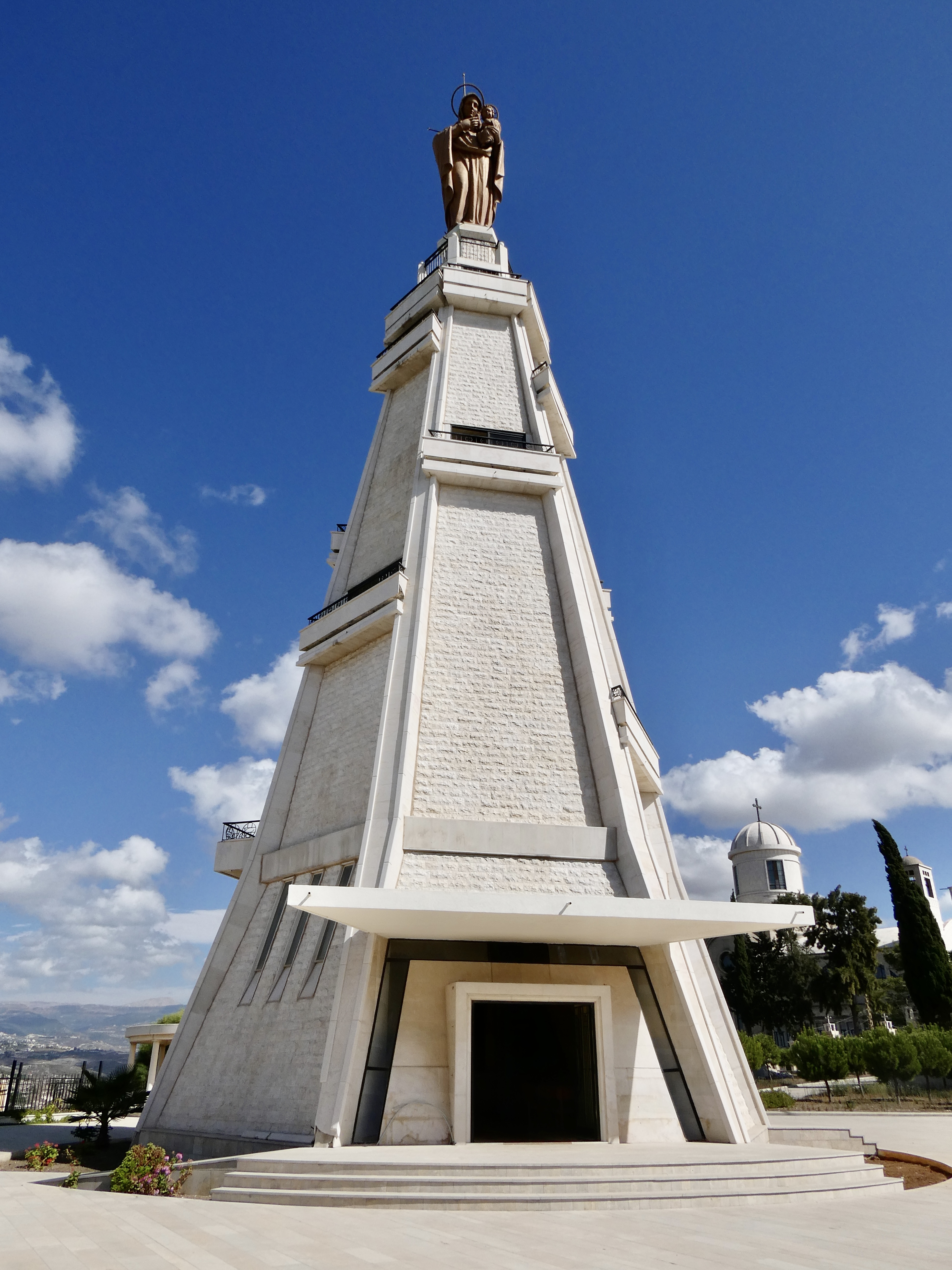
Now the Our Lady of Waiting shrine was discovered by a shepherd in 1721 (sheep went down a hole) and consists of a cave/grotto that has now been converted to a church). According to legend, Mary rested in the grotto while Jesus preached the gospel in nearby Tyre and Sidon.
We ended up making a quick visit to the cave church before walking to the other end of the site to see the tower, which is topped with a statute of Mary and baby Jesus. Now unfortunately, the tower was closed so I could not climb up to see, what I was told, were spectacular views of Sidon. Bummer!
Anyway, after the walk around, passing the cemetery and taking a quick look in the partially completed cathedral, we drove back down the hill to the Sidon waterfront where we visited the Sidon Castle, which was built by the crusaders in the 13th century as a fortress to protect against invaders from the sea.
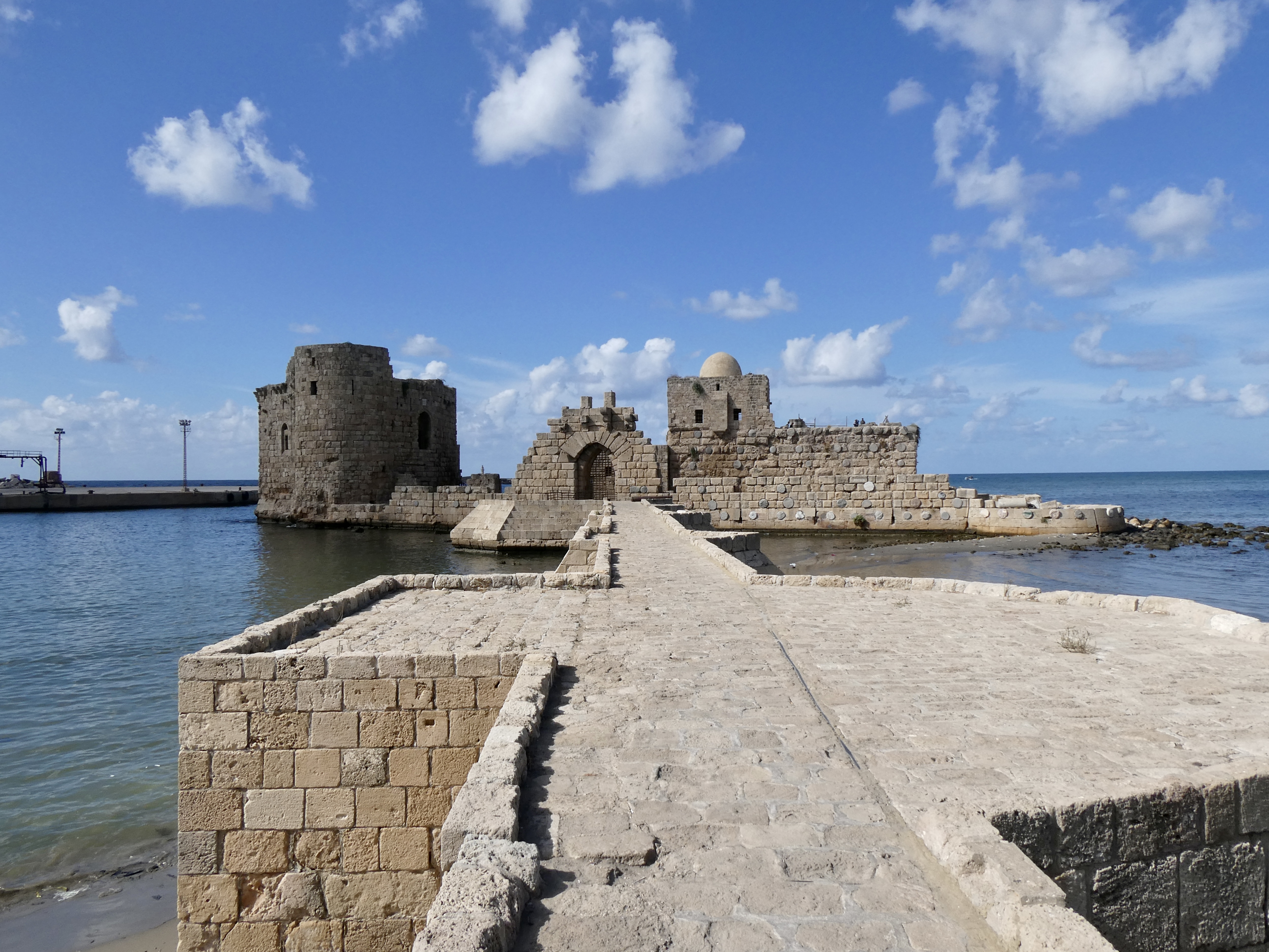

Today, the castle consists primarily of a massive entrance and two towers connected by a wall. And the interesting part about the castle is that the crusaders raided nearby Roman ruins because there were Roman marble columns used as horizontal reinforcements for the outer walls.
Once through the entrance, we ended up climbing up a staircase to the better preserved tower and took a look inside. The tower featured a fire place and those same tiny windows from which soldiers could shoot arrows. After the tower visit we climbed back down, walked to another set of stairs and climbed up to the see a small, domed Ottoman mosque. And while the mosque was closed, the views to the sea were gorgeous with a number of men casting lines into the water.
Once we left the castle, we walked across the street to walk through the Sidon Souk. This souk was very similar to the souk we saw in Tripoli. Lots and lots of clothing and trinket stores, some gold jewelry stores and the occasional produce and spice stand.
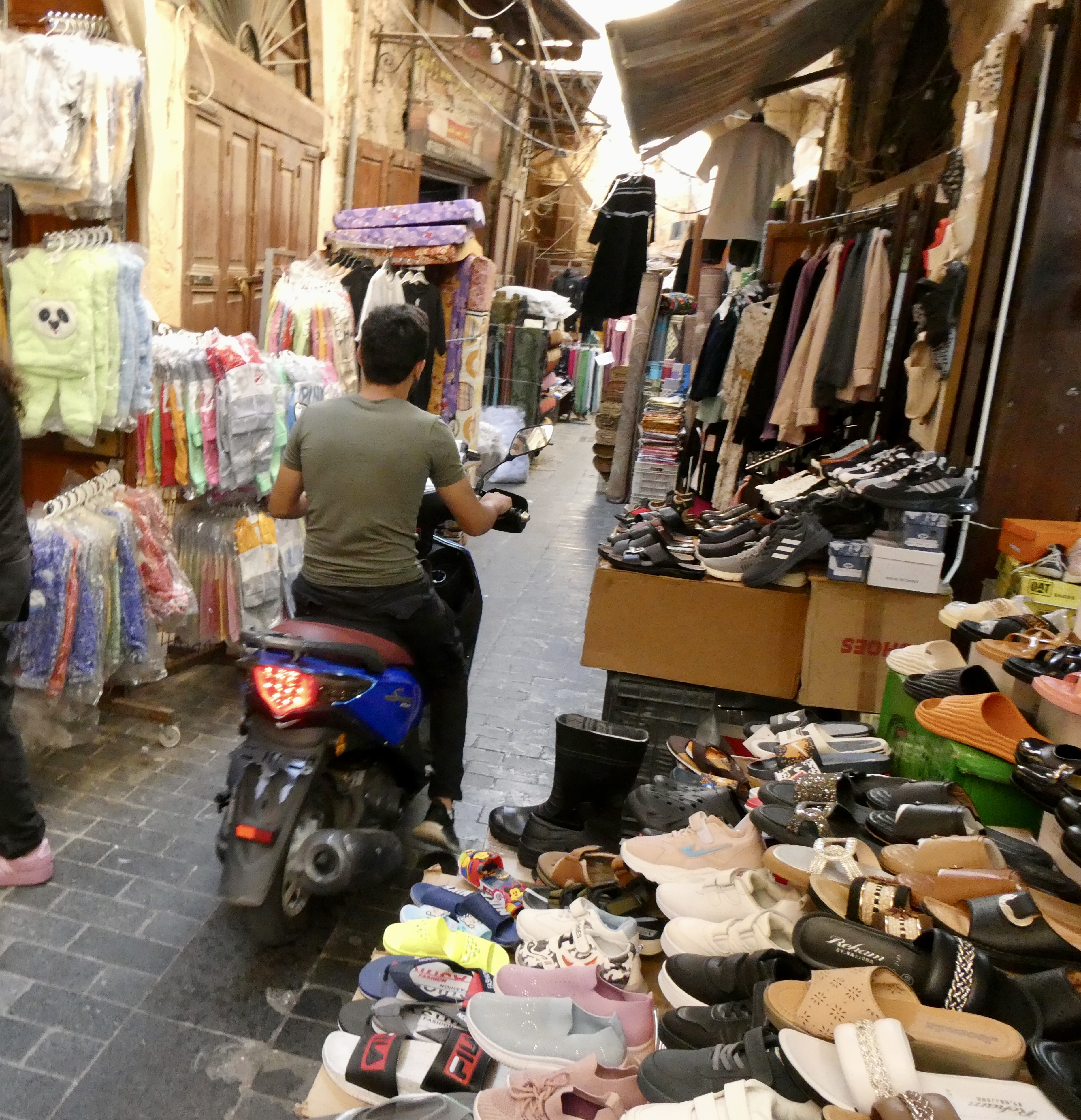
Now the interesting thing about this souk is that the alleys were very, very narrow, yet, somehow guys on motorbikes insisted on driving through the crowds of people. Seriously. I even asked Elie if anyone was ever killed by one of the motorbikes. Elie said he did not know…
Anyway, I had mentioned earlier in our trip through the souk that I wanted to grab some fruit from one of the stands since we were going to be leaving at 8:00 tomorrow to go to Baalbek and I was going to miss breakfast again. I was thinking that some grapes would tied me over and this is where the problem began.
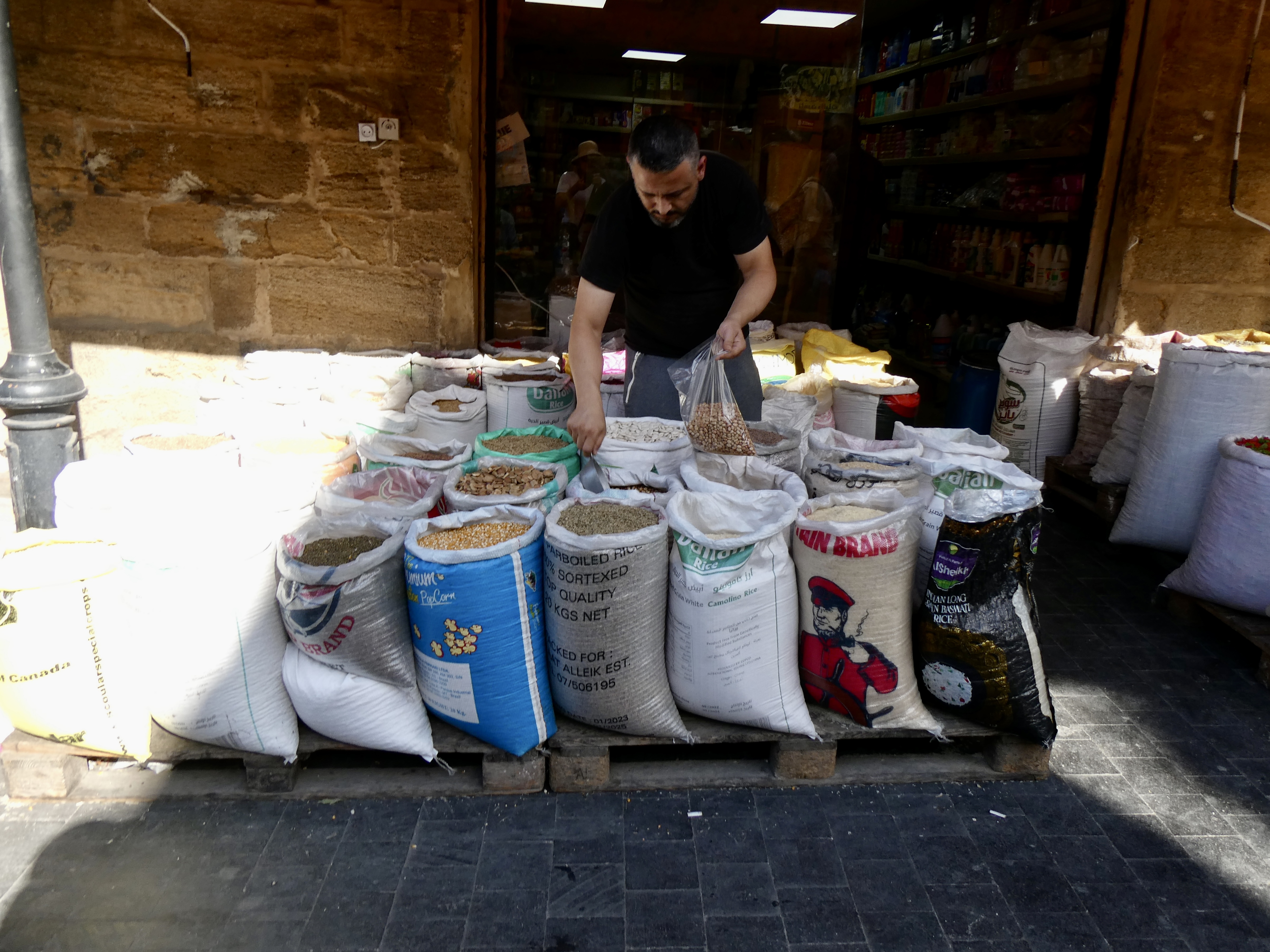
Mahmoud walked in front of me and pointed me towards a fruit stand with mangoes. He said why don’t you buy some mangoes. I said I don’t want want mangoes, I want grapes. Mahmoud then told me “Come…. Look at the mangoes.” I walked over and he had a mango in his hand and told me it was $.50. Again I said “Mahmoud I don’t want a mango. How am I going to cut it. I don’t have a knife in my room. I want grapes”. Mahmoud told me to “use your teeth”. HUH?
The next thing I know Mahmoud it telling me to pull out my 500 note (about US $.50) for the mango. Again, I said I really don’t want a mango. I don’t have a knife. Then Mahmoud tells me the mango is going to be $1.50 and that I need to also give him a US dollar. By now I just want to buy the damn mango so I can go and actually get the grapes I want. I pull out a dollar, hand it over and then Mahmoud tells me I need to give him another dollar. HUH?? At this point I say “No, I’m out. I don’t want the mango.” I then walk away and go to the stand with the grapes.

While I am asking the vendor about the grapes, Mahmoud comes running at me yelling “don’t you ever do that to me again”. HUH?? I have no idea what he is talking about, but he begins to make a huge scene. Yelling at me over and over telling me I am a horrible person. I am standing there with my mouth open while everyone within hearing distance is staring. This guy has literally come unglued because I don’t want to buy a mango that started out at $.50 and was now $2.50.
I tell Mahmoud I have no idea what I did wrong, but I am sorry. He continues to yell at me and then tells no one does that to him and that he will no longer be my guide. “I do not guide horrible people.” OK. Don’t be my guide. At this point, I just walk away in the opposite direction desperate to end this ridiculous scene.
About a minute into my breakaway, Mahmoud comes running after me yelling all over again that I am a horrible person. I speed up trying to get away from him because the guy has literally lost it. At this point, Elie has caught up and says something to Mahmoud, and I turn a corner to escape the crazy man. Elie catches up to me trying to find out what happened and by this point, I am in tears and shaking.
Elie assures me that Mahmoud will not be my guide for Baalbeck, and that they will find someone else to guide me at the famous site. Fine by me. After sitting for a few minutes to calm down, I drink some water and we head to the car. We reach the car and Mahmoud is there because he has left stuff in the car. Elie gives him his stuff and then Mahmoud starts yelling at me all over again and motioning at me like he is shooing me away. He continues to carry on even after we are in the car. Ultimately, as we are leaving I flip him off (couldn’t take it anymore) and we drive off leaving the crazy man still yelling at me. Weirdest thing to ever happen to me after travels in 77 countries. And no, I never did get my grapes.