
So this morning we were going to visit three villages in and around Mt. Hagen. The first village, Kingarly, is just outside Mt. Hagen in the Western Highlands Province and was about ten minutes from Rondon Ridge Lodge, where I was staying. Joseph, my driver for the day, and Thomas, my guide for the day, met me at 9:00 a.m. for the short trip down the hill to village #1.
Now we no sooner got out of the car than we were joined by four ladies (all of whom appeared high as kites on betal nuts) and numerous children in tow. And one thing I have not mentioned about Papua New Guinea is the amount of children in this country. It is unbelievable the number of kids that I see with young women. Apparently, the men can have more than one wife and that has led to men having upwards of 10 to 12 children. In fact, my guide Chris in Karawari had what he described as a “soccer team”. Apparently, the population has increased in one province alone by more than 2 million in the last few years. Shocking. And wherever I go, there are literally hundreds and hundreds of men and women sitting by the side of the road or wandering around in the middle of the day. Clearly unemployment is a problem in this country and will become increasingly so if there is not some kind of change in the mindset about having children.

Anyway, I digress. The ladies introduced some of the kids coming alone with us including two little imps by the names of Colin and Ben. Now Colin was the older one who was nothing but trouble and Ben was the showboat. Throughout my tour of the village, Colin wielded a stick and kept getting getting yelled at for aiming the stick and pretending to shoot everyone while Ben simply wanted to hold my hand, check out my camera, grab the strings on the side pockets of my pants and given me a banana (although he ultimately peeled and ate it himself).
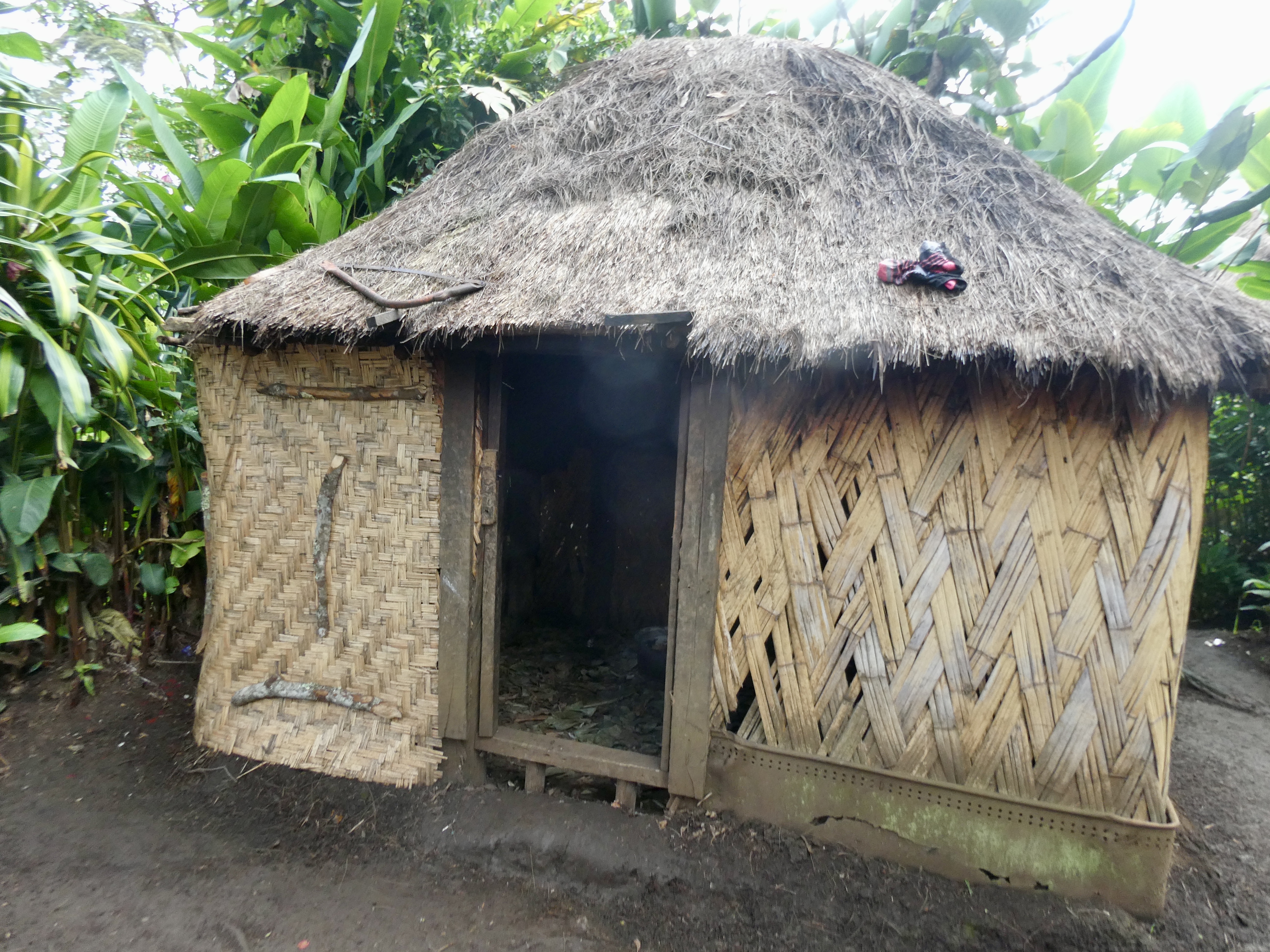
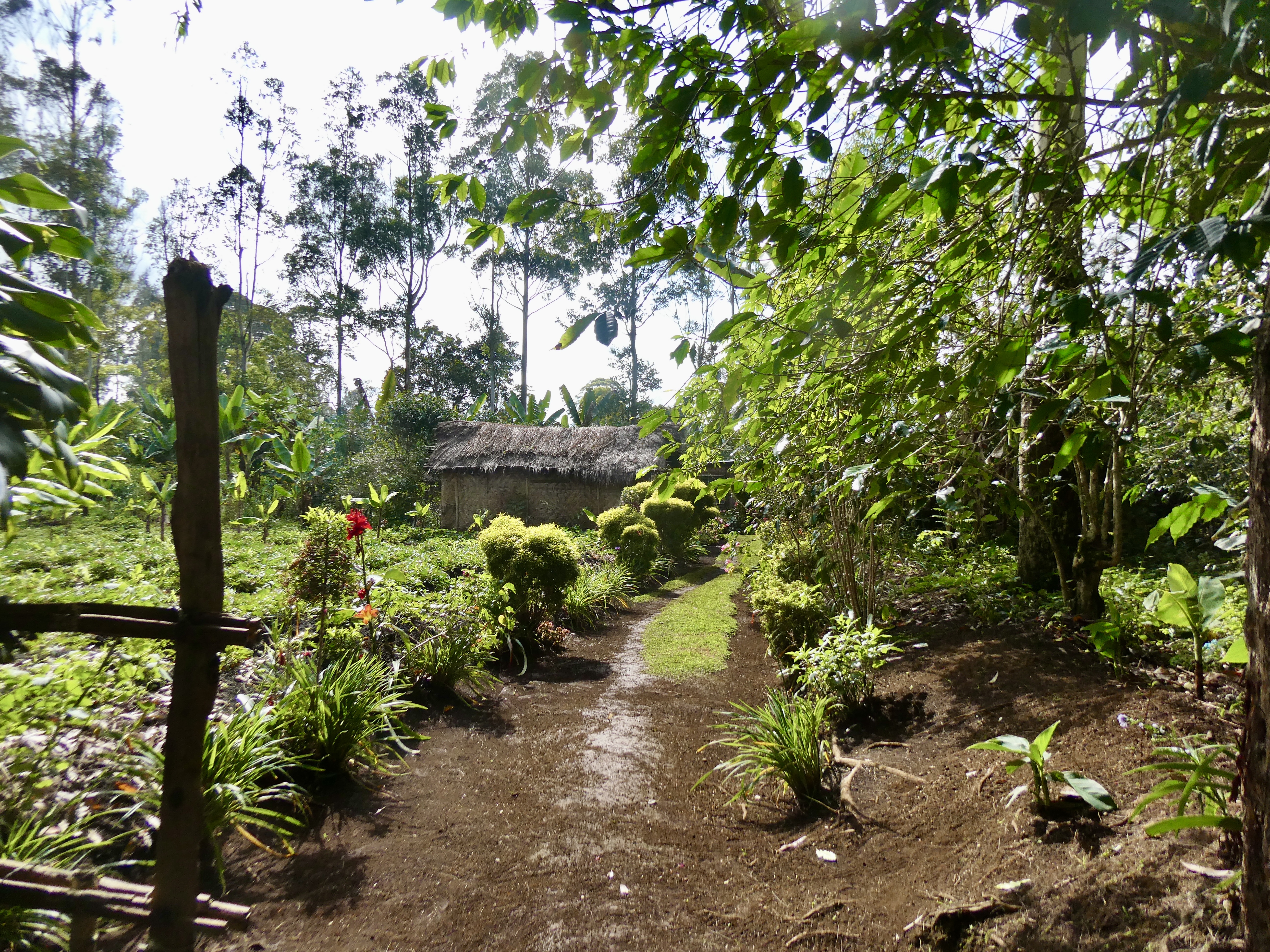
Now as for the tour, the paths we took were incredibly muddy (and by the way, the kids were shoeless), so it made walking a little treacherous. I was taken around the village (and at times felt like the pied piper as more and more people joined my tour) passing by homes made of bamboo, palm leaves and grasses (for the roof)). Each home had a small garden in which they grew fruits and vegetables to live on and any surplus was sold at the market. In addition, each home had a small holding area where the pigs were kept. And every now and then I would pass a home made out of wood with glass windows and was told that the folks who lived there were rich.

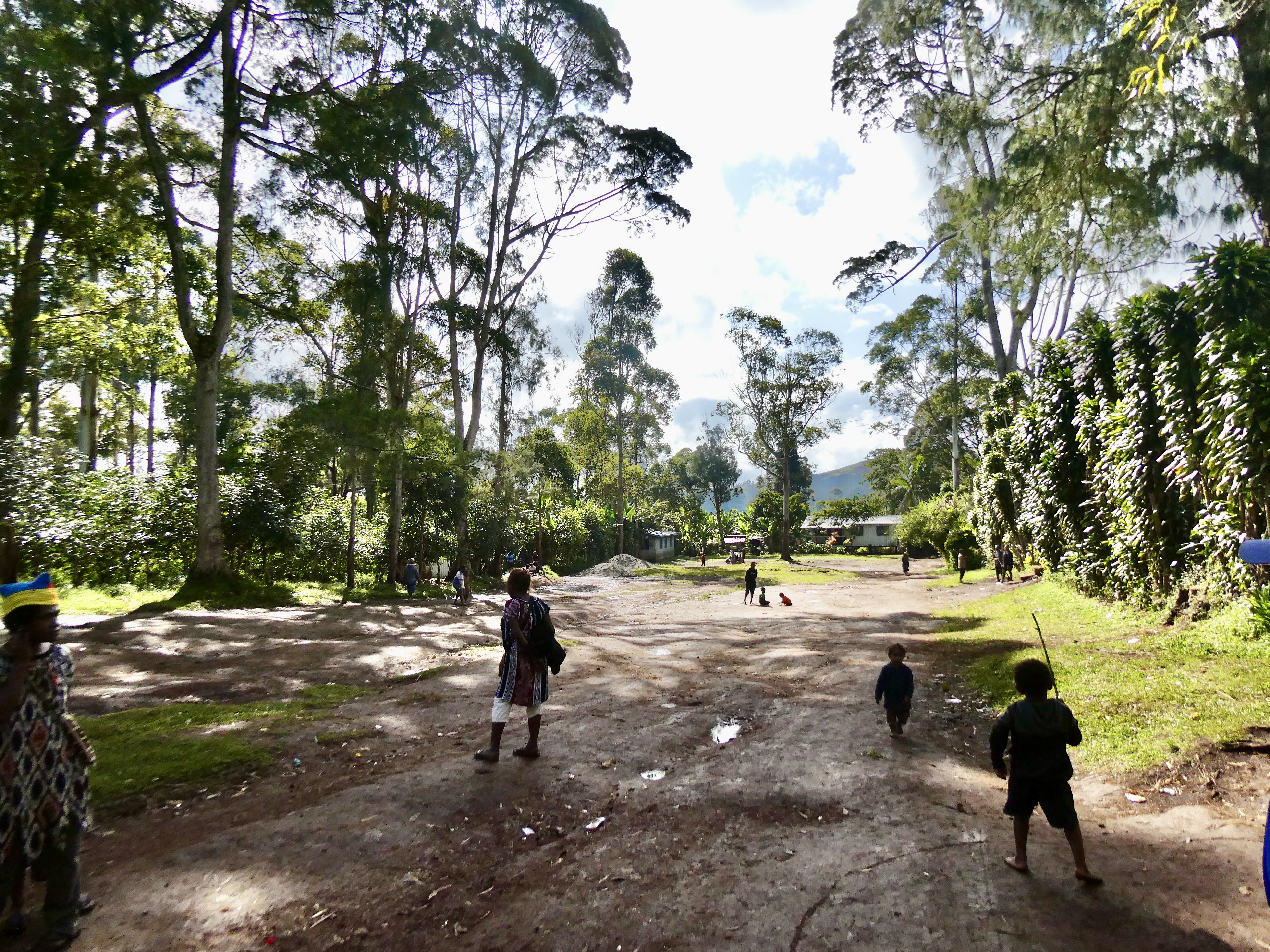
At one point we emerged from a path into a large open area, which I was told was the communal village space for celebrations, funerals and recreation. There were also small convenience stores (and when I say small, I mean a one room building) and lots and lots of stands where villagers were selling betel nuts and produce from their gardens. I also saw a lot of women working in the gardens and as per usual, not a single man doing any apparent work (other than sitting around with other men playing cards and gambling). In addition, and as with all of the highland areas I have visited, there was lots and lots of garbage and trash strewn about. This combined with the mud made me wonder what the life expectancy of these folks is.
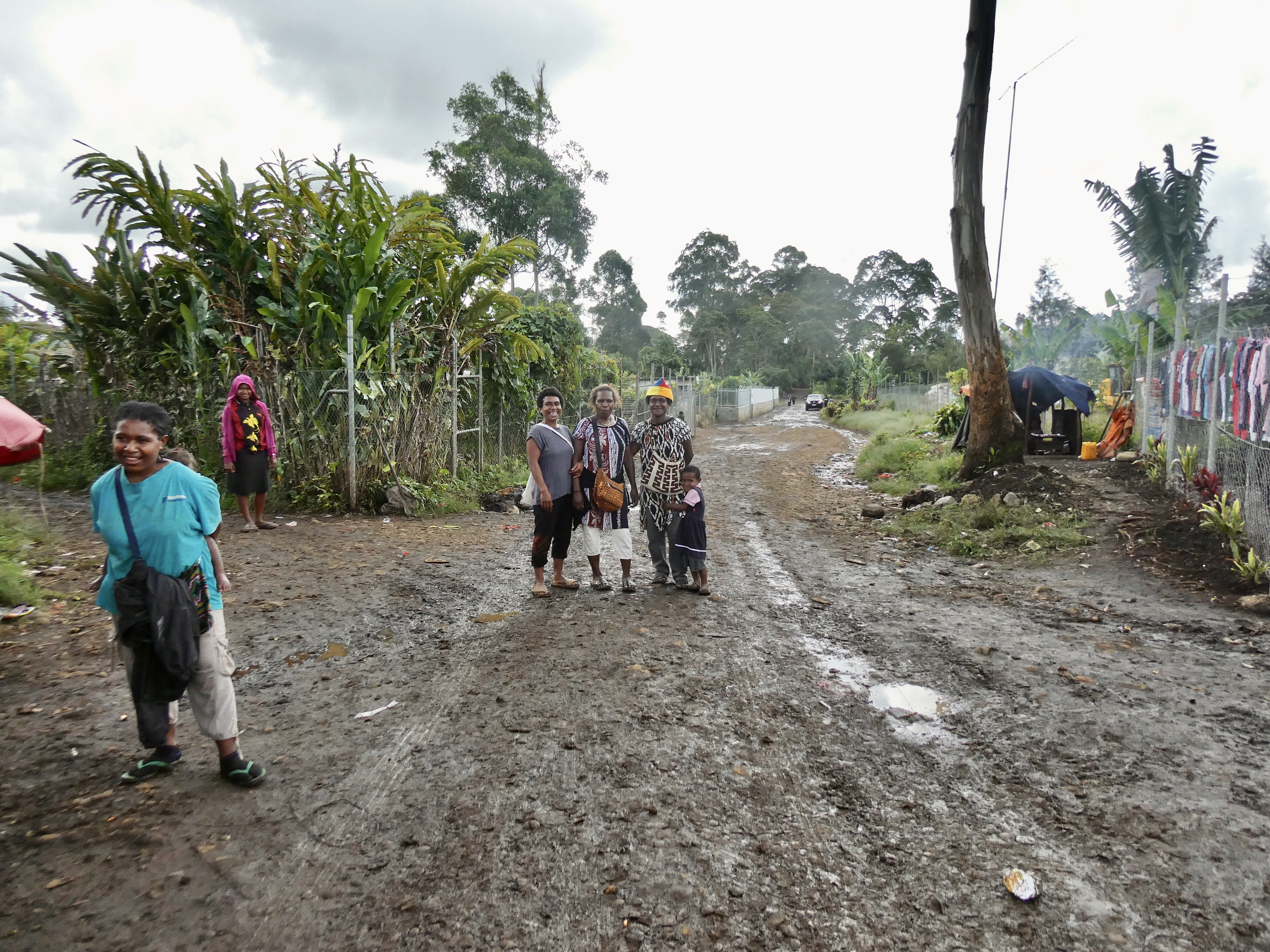
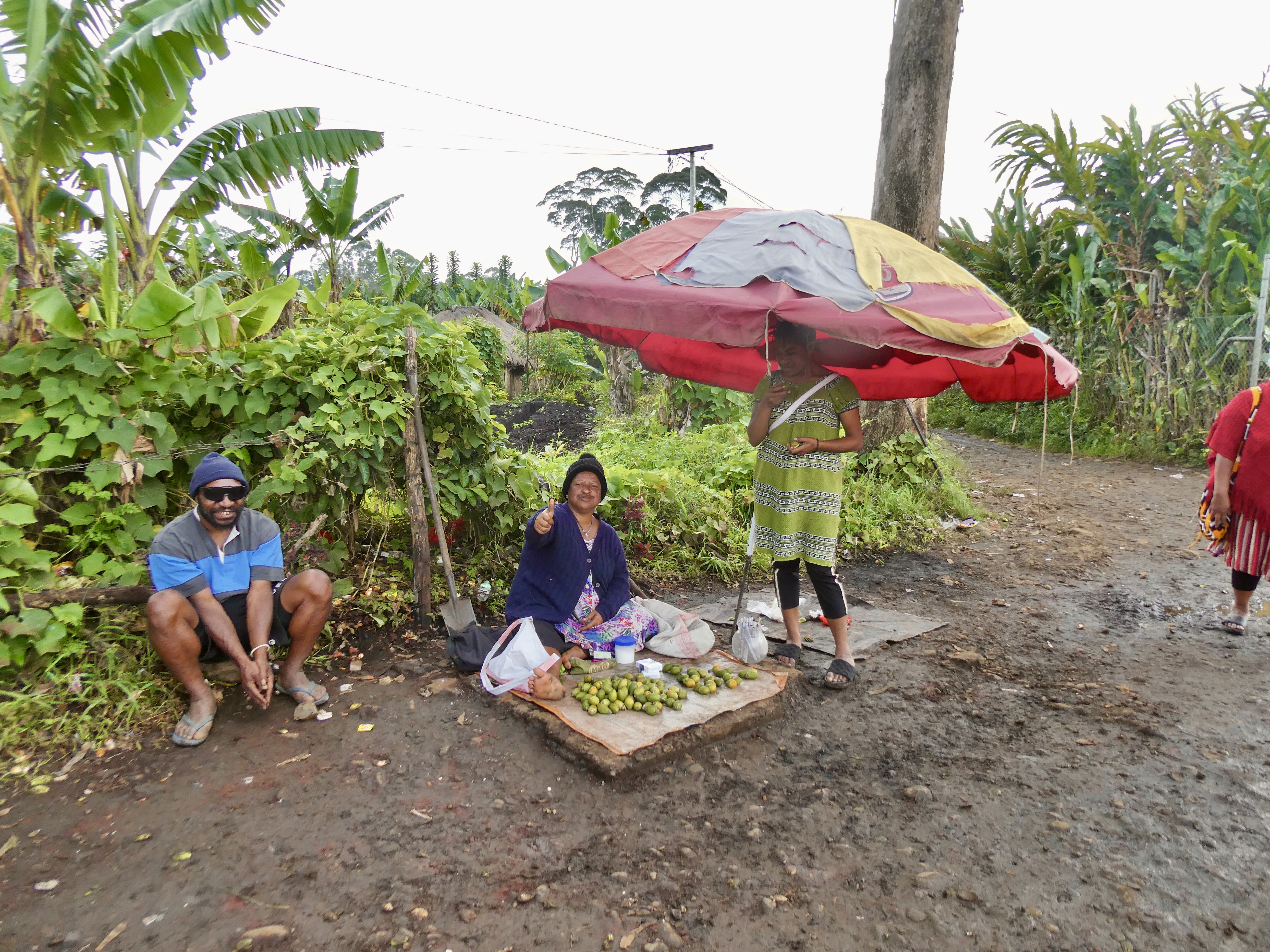
Anyway, we completed a circle of the village and the ladies asked me to take their picture. And just as I was about to take their picture, a lady named Anna yelled at me to take her picture as well. Anna was selling betal nuts, and I am pretty sure she was consuming more than she was selling.
So from here, we waved goodbye to the masses who had followed me around and drove the rest of the way down the hill and through Mt. Hagen along the Highlands Highway before turning off and heading back towards the mountains through a number of coffee plantations eventually reaching the little village of Polga, which is home to the Asaro mudmen.

Now legend has it that a couple hundred years ago the Asaro mudmen were defeated in battle by another Highland tribe and were forced to retreat to the Asaro River losing the land that they had held for centuries. The mudmen came up with a plan to cover themselves in thick white mud, and approach the women of the enemy tribe who were now working the mudmens’ gardens and scare them into believing they were spirits of the dead. The mudmen came out of forest and so frightened the women that they ran home, told the men that the land was occupied by evil spirits and that they must all go. When the men went to check, they encountered the mudmen coming out from a nearby cemetery causing them to believe the women and forcing the entire tribe to leave the land of the mudmen.
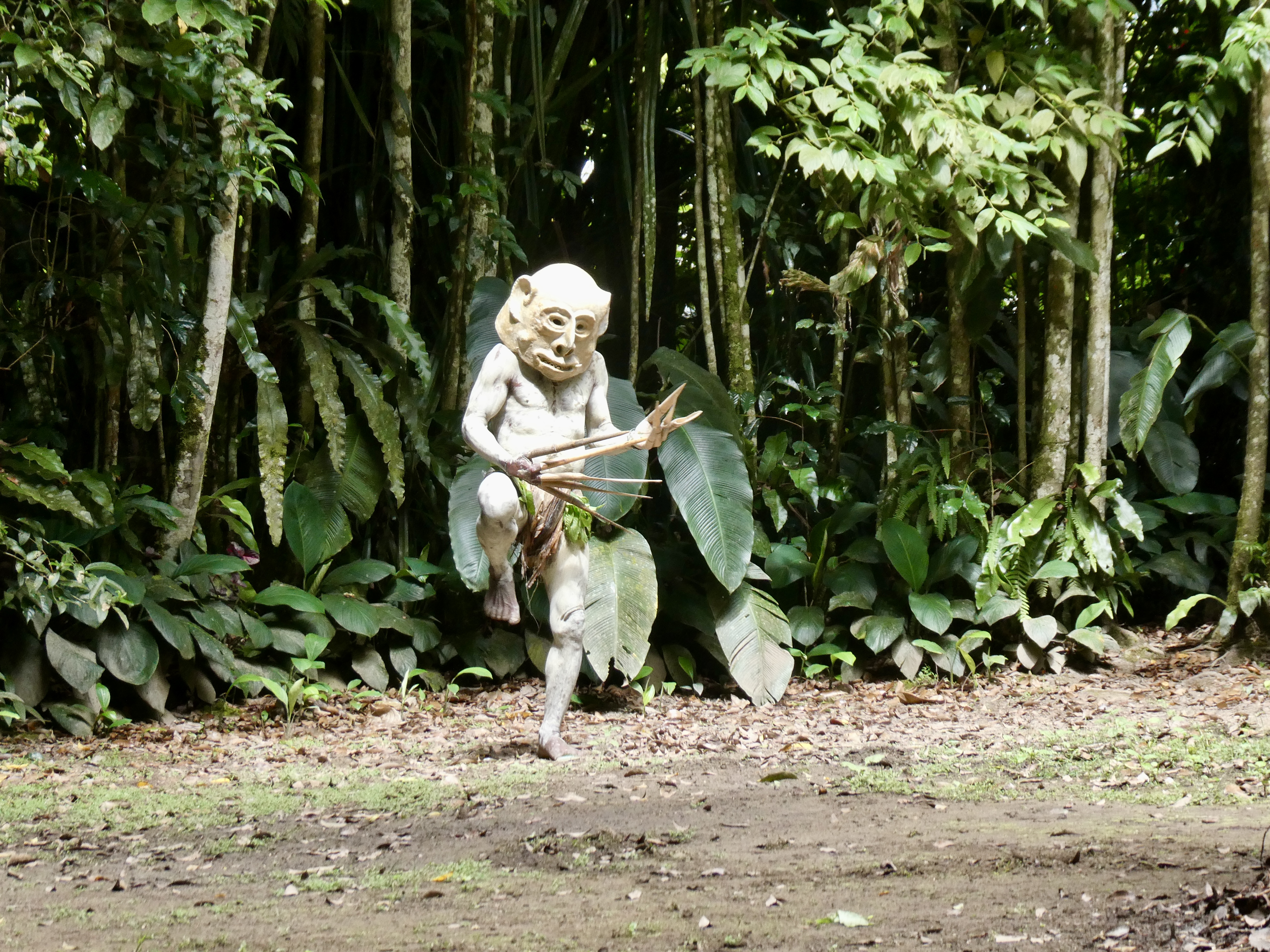
Today, the mudmen keep their history alive by recreating the story of how to the mudmen came to be. In the re-creation, the mudmen wear heavy clay masks and bamboo finger extensions and paint their bodies with white clay.


So once we reached the village, the Asaro mudmen and the women of the village recreated the story for me and it was absolutely fascinating. The reenactment began with three women working in the “garden”, near a fire (and I was not sure about the purpose of the fire). Slowly the mudmen emerged from the forest and performed a sort of ritualistic dance of intimidation complete with poses, clicking of the bamboo finger extensions and weird noises. Eventually the women took notice of the mudmen and ran off frightened by the “spirits”.
Now what was particularly enjoyable for me was that the mudmen were joined by a young boy who is learning about his heritage and the traditions of the mudmen. Unfortunately, the incredibly heavy clay mask was a bit too much for the little guy to bare and the mask kept shifting to the side of his head, but he hung in there and even managed a pose or two. And I will give the kid kudos for learning about his culture and his willingness to participate in the old customs.
And the only annoying part of the performance is that Thomas felt it necessary to give me a running commentary of what was taking place. At one point, he even said you will notice that the women are talking as they garden so it takes some time before they notice the mudmen. As you know women are always talking talking talking. (I am so over this patriarchal crap in this country.)

Anyway, after the performance I was able to meet the group and was impressed with how proud these people are of their heritage and that fact that the traditions are continuing with the younger children.

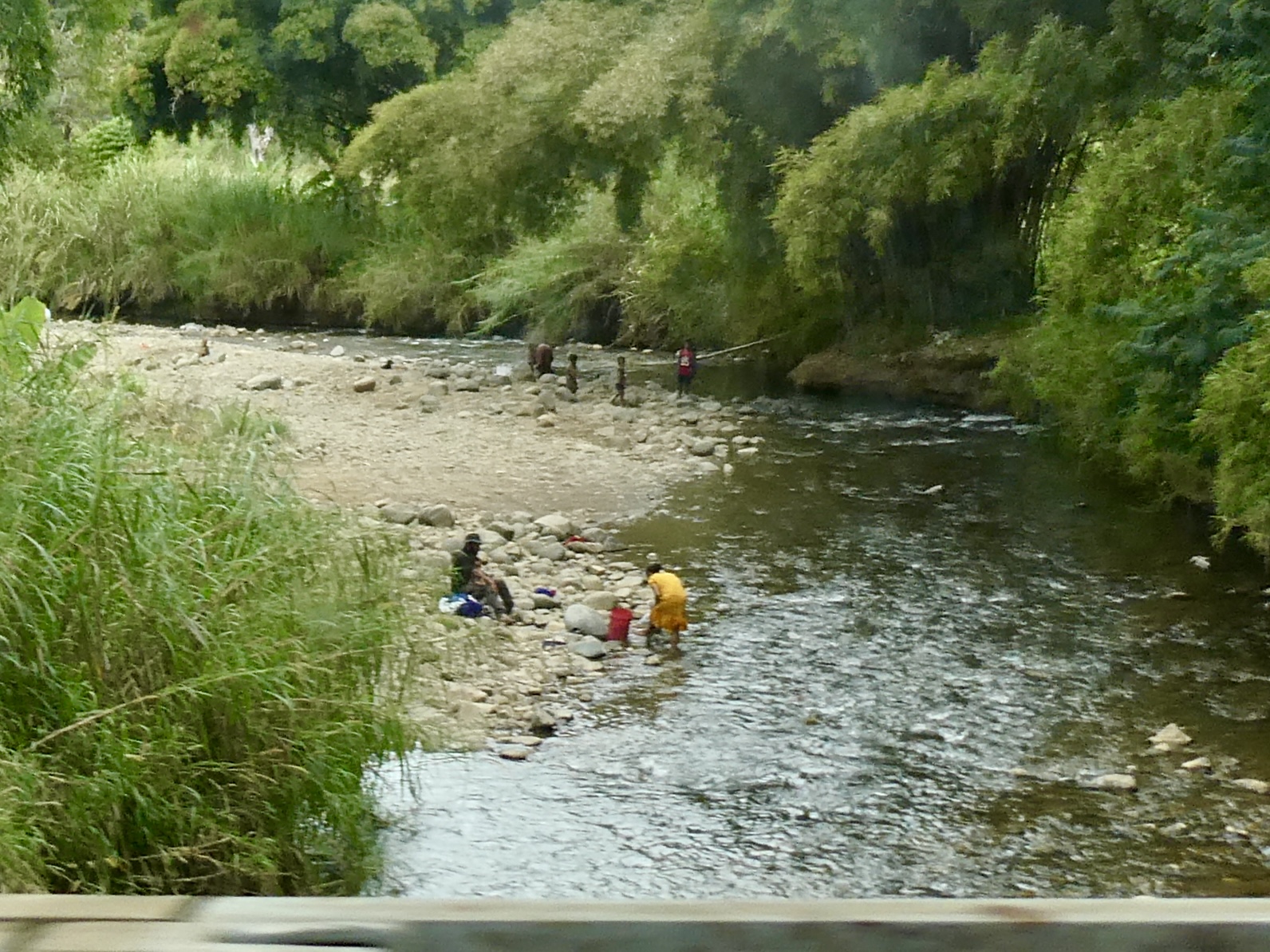
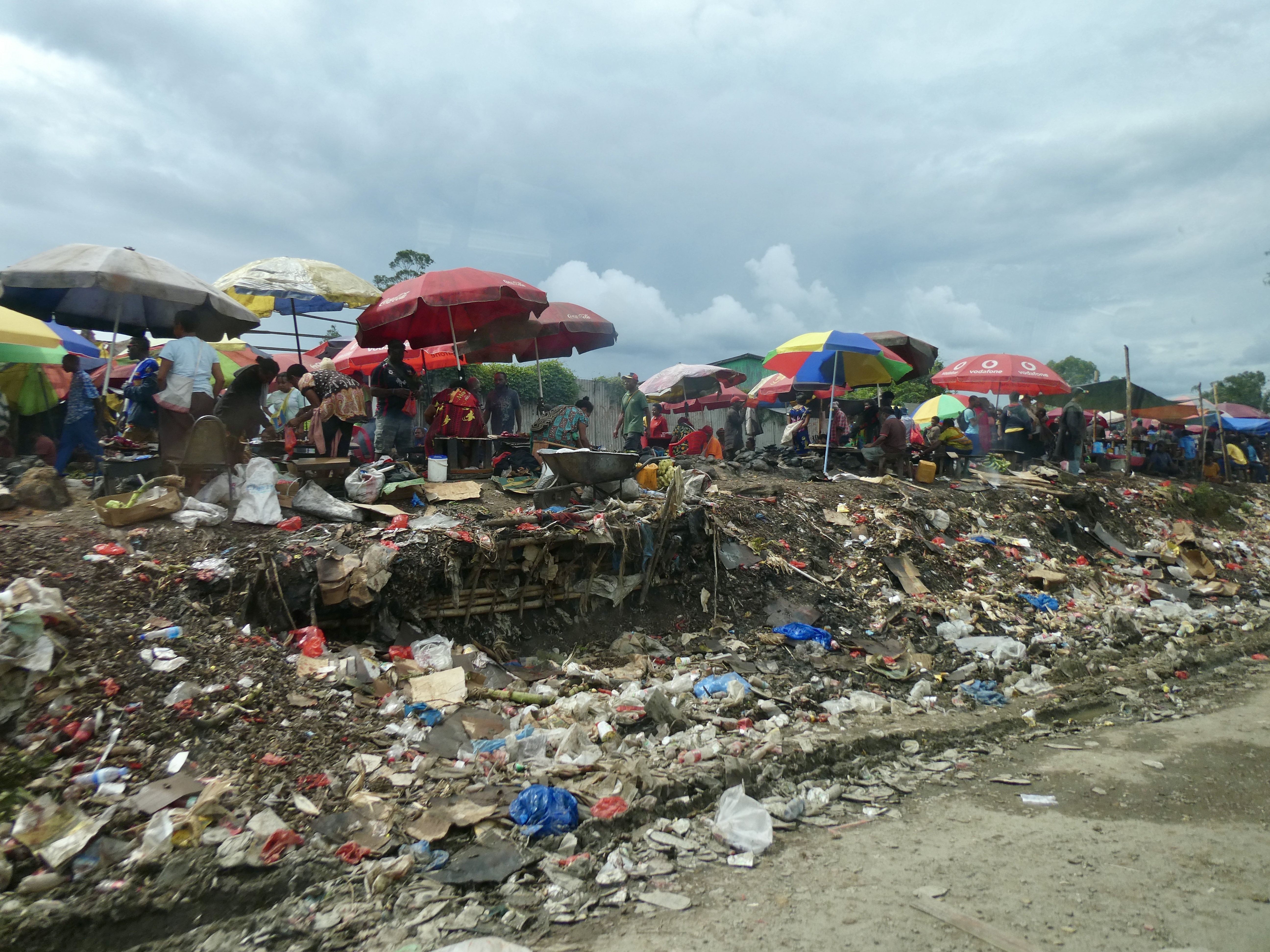
So after the fabulous visit with the Asaro mudmen, we drove another hour and a half along the Highlands Highway to the third village, Koskala. The drive took us over the Wahgi River where numerous women were washing clothes and over bumpy stretches of highway that are either in the process of being repaired or are in desperate need of repair. We also passed more roadside stands and a number of Friday markets in local villages, including one that looked more like a dump than a market. Although, I must admit that the amount of garbage and trash on the streets of Papua New Guinea is generally pretty bad and people here seem to have no concept of littering.

Anyway, we reached Koskala just before 2:00 and I was immediately entertained by a group of villagers in ceremonial attire with ritualistic mating songs. Apparently in days gone by, young men would gather in groups with young women and sing songs about who they would like to date. If the song is reciprocated, the young man and woman would seek permission to marry. Today the ritual is no more, but the tradition and songs are practiced at festivals around the region.
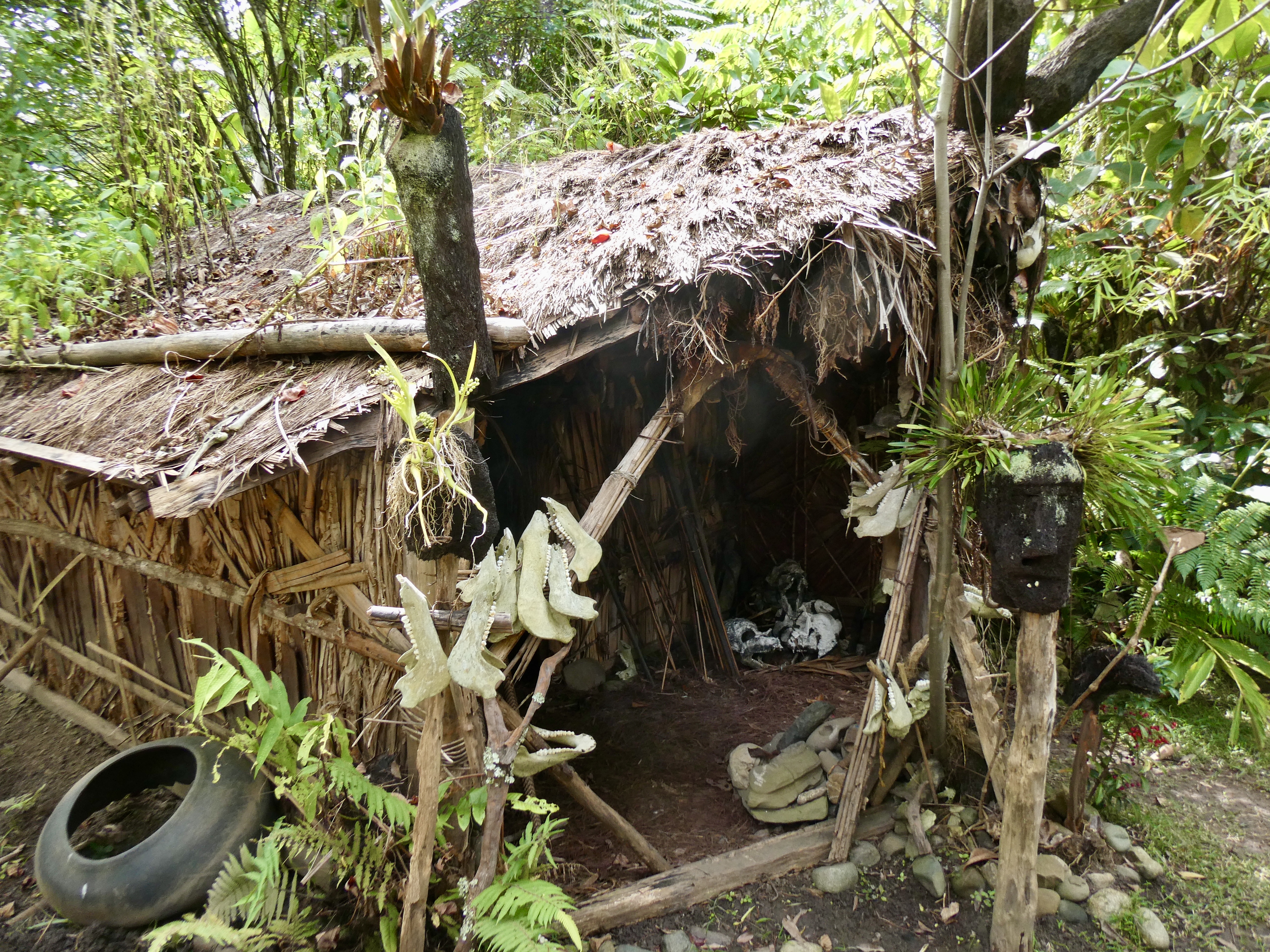
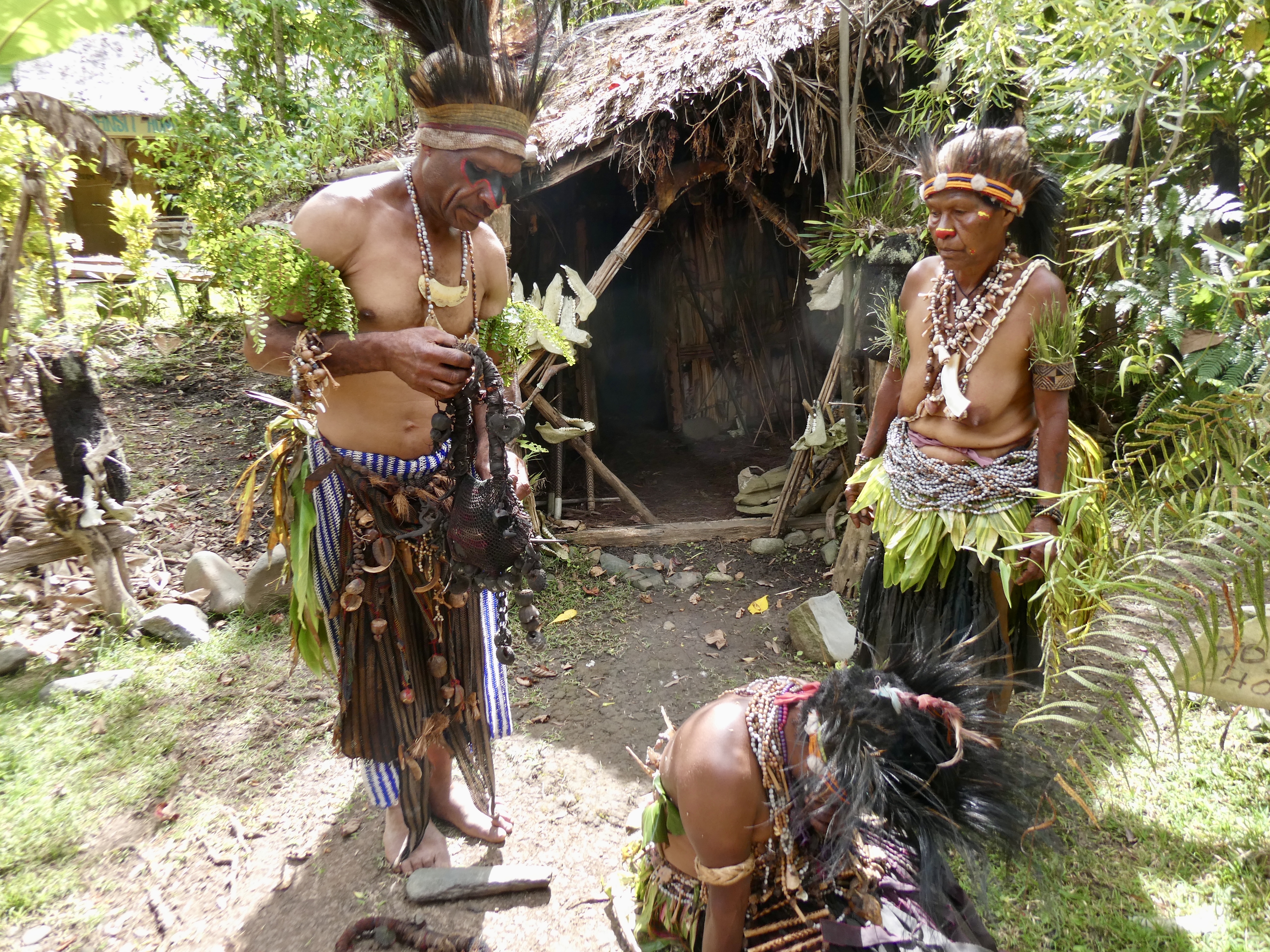
After a number of songs, I was then shown the Mens’ House (similar to the one I saw on the Karawari River) and got to meet the village Witch Doctor. Now the villagers still believe in and use a Witch Doctor when they believe that someone has put a spell on them or (get this) inserted some kind of foreign object into their body. The Witch Doctor uses all sorts of potions and can even suck on the skin of the person in an effort to extract the “foreign object”. OK then.

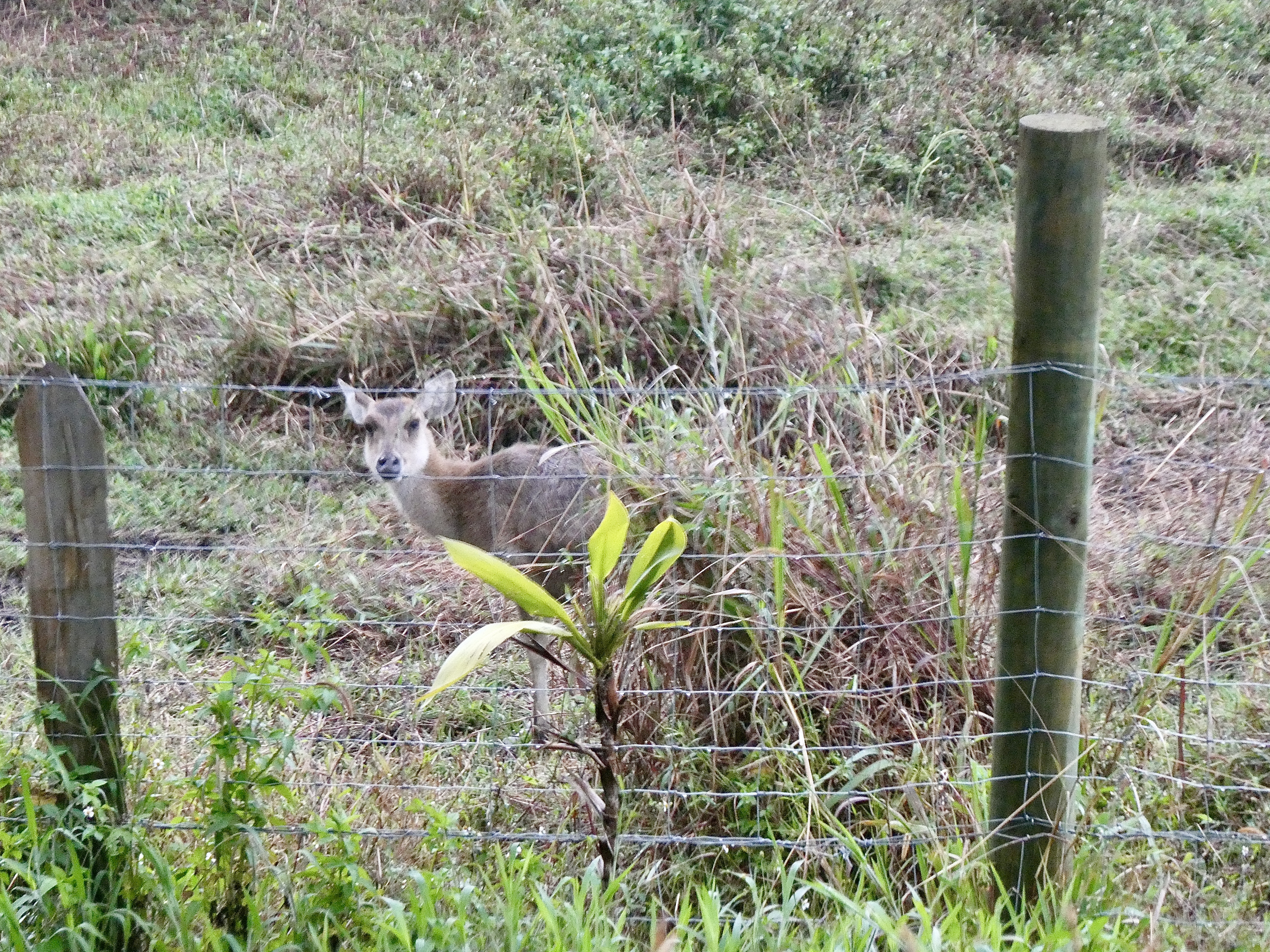
So after the Witch Doctor introduction and explanation we took our leave and arrived back in Mt. Hagen in a torrential downpour. Once at Rondon Ridge Lodge, I packed up for my trip back to Port Moresby on Saturday morning and even spotted a coupled deer in a nearby farm as I packed. Now, other than a brief delay in my flight back to Port Moresby, the trip was pretty smooth.
However, once I arrived back at my hotel, I took my luggage upstairs to begin repacking for my trip to Manila and that is when I suspected someone had broken into the luggage because the lock one piece of luggage had been changed. (The luggage in question is the luggage that holds all of the “stuff” I have bought on this trip). So once I figured out how to reset the lock, I opened the luggage and found that a hand painted shirt I had specially made in Thailand for my grandniece, Cora, was missing. In addition, my backup camera was gone. I was furious. I called the tour company (Trans Niugini Tours) and they had the manager call me back. He immediately denied any wrongdoing and said it was impossible. He had no explanation for why the lock had been changed and did not offer to do any investigation. I was furious and hung up on him. I plan to write a review on TripAdvisor and hope it dissuades people from ever using this company. (And I am actually more pissed about the shirt than the camera. Cameras can be replaced, the shirt cannot.)
Anyway, I am now very much looking forward to getting on to Manila in the morning. I do not plan to ever return to this country. The theft has tainted my opinion of PNG forever.