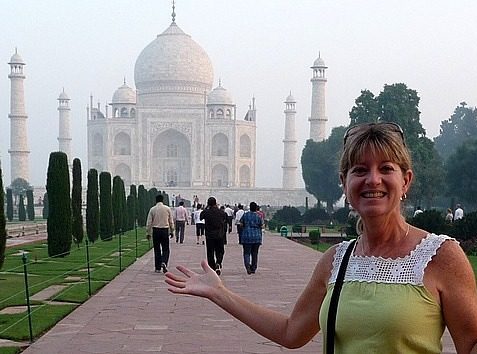
So today I was off to Toledo about an hour outside of Madrid. I was on a small group trip (10 people) to see the former capital of Spain (until Madrid became the capital in 1561). Our little group consisted of a couple from Australia, two guys from Quebec, a couple from Greece, a couple from Spain, a couple from the US and me. All in all, a very nice group of peeps.
Now on the drive, we received some background on the history of Toledo, which is known as the “City of Three Cultures” and in 1986 was designated a UNESCO World Heritage site. Now the reason Toledo is known as the City of Three Cultures is because there was a time when Christians, Jews, and Muslims co-existed in the city leading to the construction of some pretty unique architectural styles. In addition, the famous Greek painter El Greco, lived in Toledo for a significant period of time.
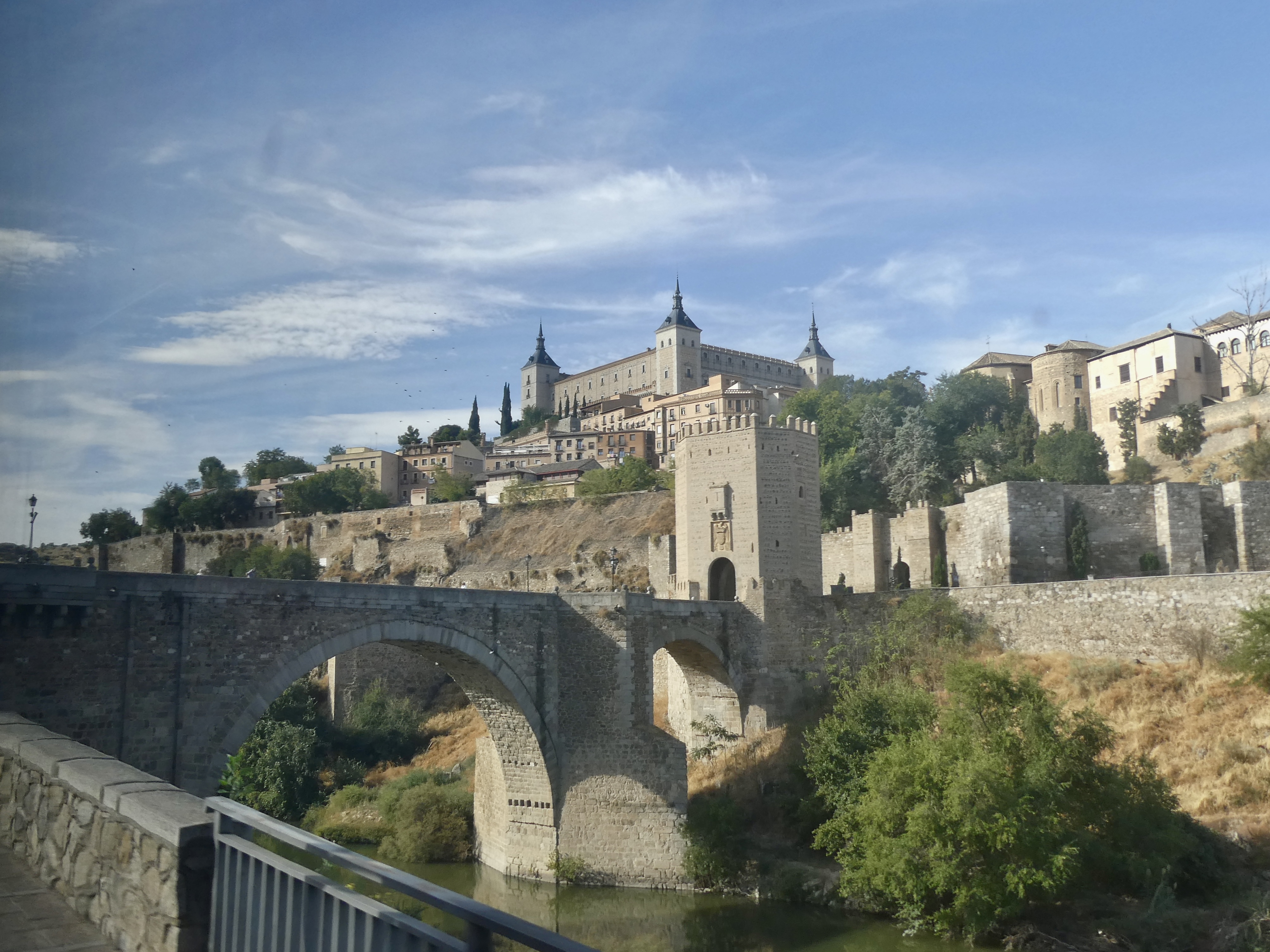
Anyway, the approach to the city led us past the Puente de Alcantara, one of two bridges over the River Tagus. The bridge was originally constructed back in Roman times and has been repaired many times. The current version of the bridge dates to the 15th century when the tower was added. (And bonus, I selected the correct side of the minibus to sit so I had prime viewing to the bridge which was on the right side of the vehicle.)
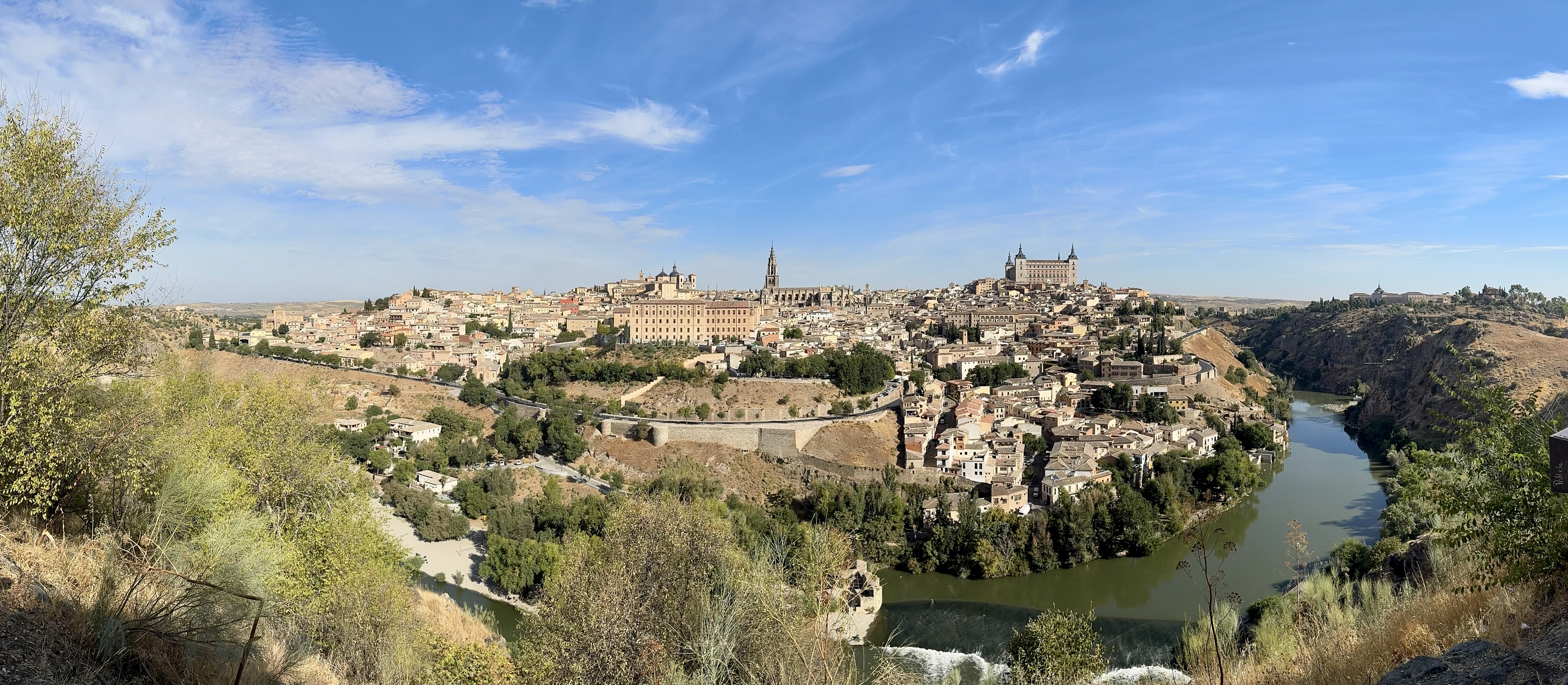
From here we wound our way up the hillside to the Mirado del Valle (the main viewpoint to the city) where we were able to enjoy fabulous panorama views of old town Toledo with three buildings dominating the skyline: the Catedral Primada de Toledo aka Toledo Cathedral, the Alcázar of Toledo and the Hospital de Tavera.
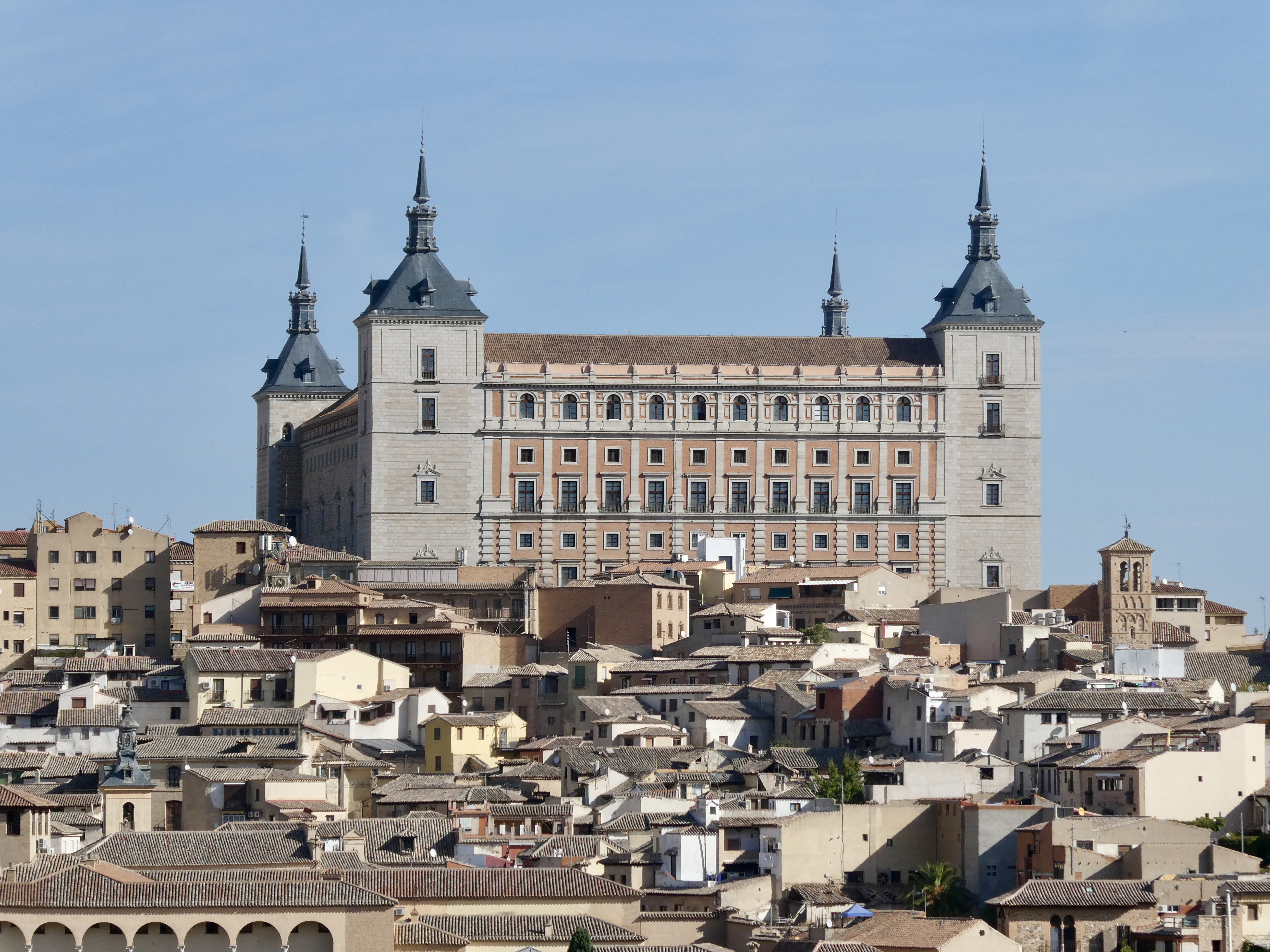
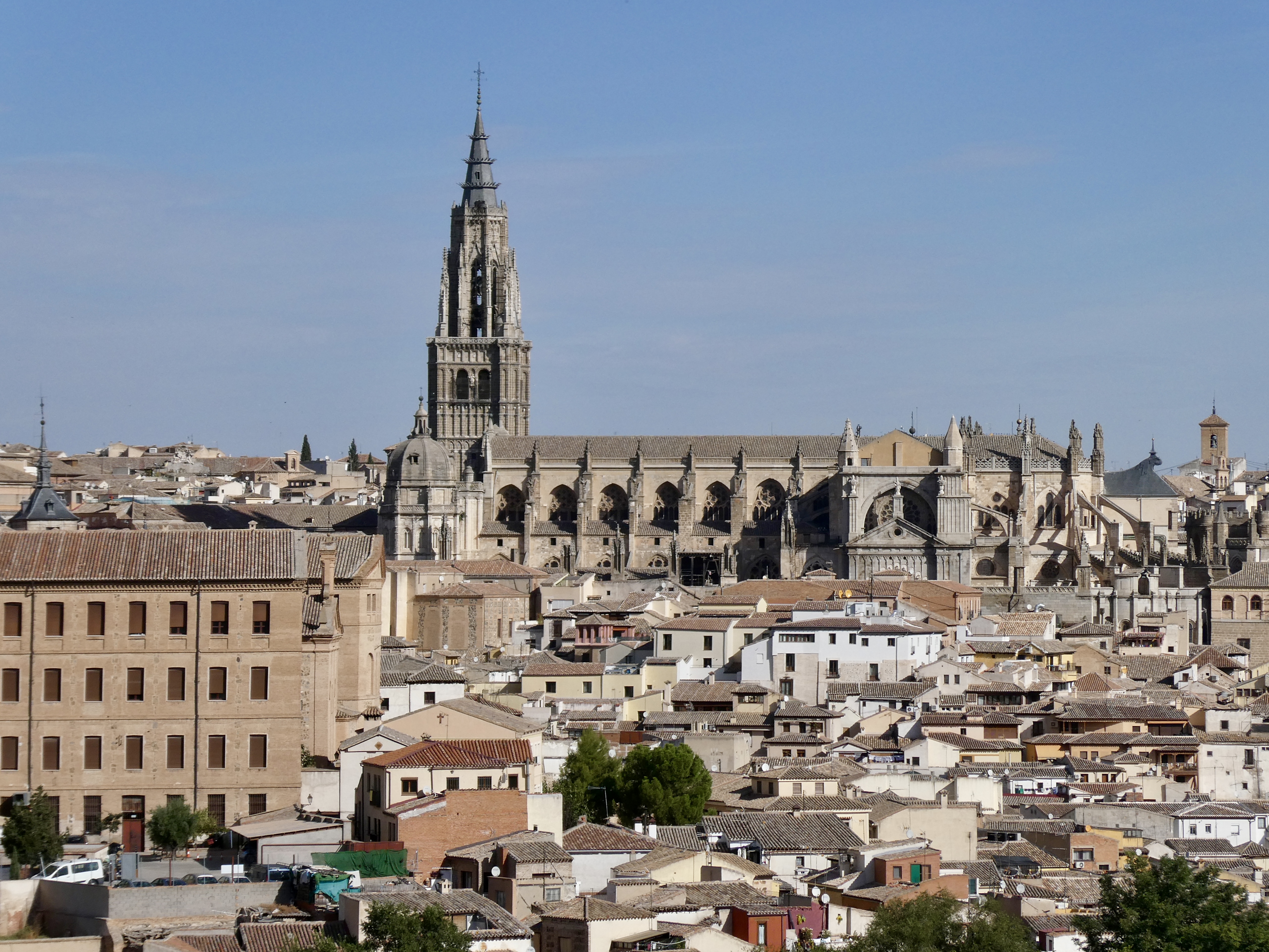
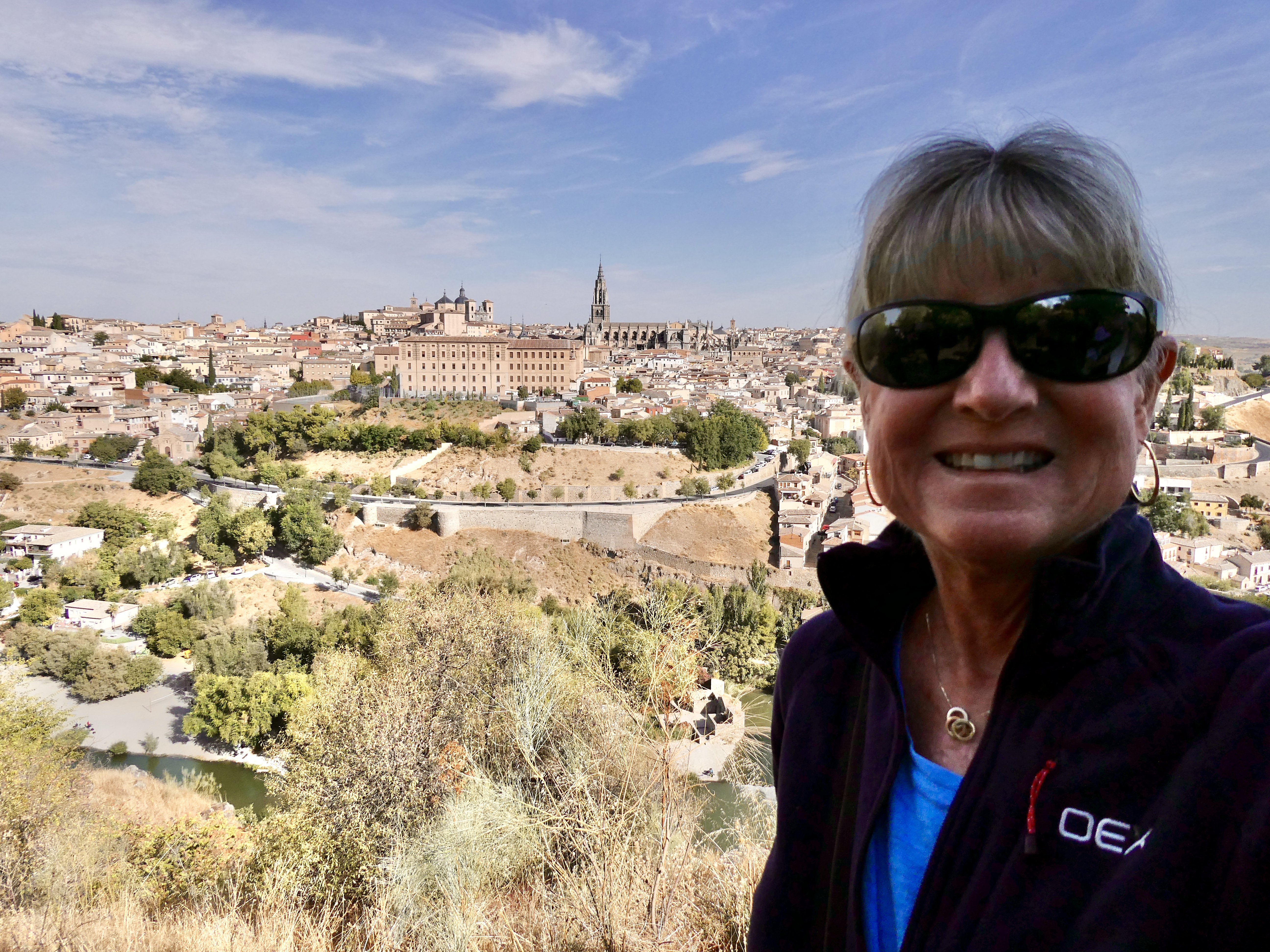
Now unfortunately, we were not going to be visiting the Alcázar of Toledo, which is now a military museum. Nevertheless, we were still able to catch a pretty good view of the the former palace built in the mid 16th century, but on a site that has held a fortress for at least 2,000 years. Apparently the palace was meant to be a royal residence for Charles V, but by the time the palace was finished the court had moved to Madrid.
From here, we doubled back and stopped at the base of old town, outside the old city walls, where we met our guide Alexandria who would take us on a walking tour of old town. Now the old town sits high above on a hillside so in order to accommodate tourists, the city has added a series of 5 escalators, which took us about 5 minutes to ride to the top and inside the city walls. Today about 10,000 people live inside the city walls while another 76,000 live outside the walls
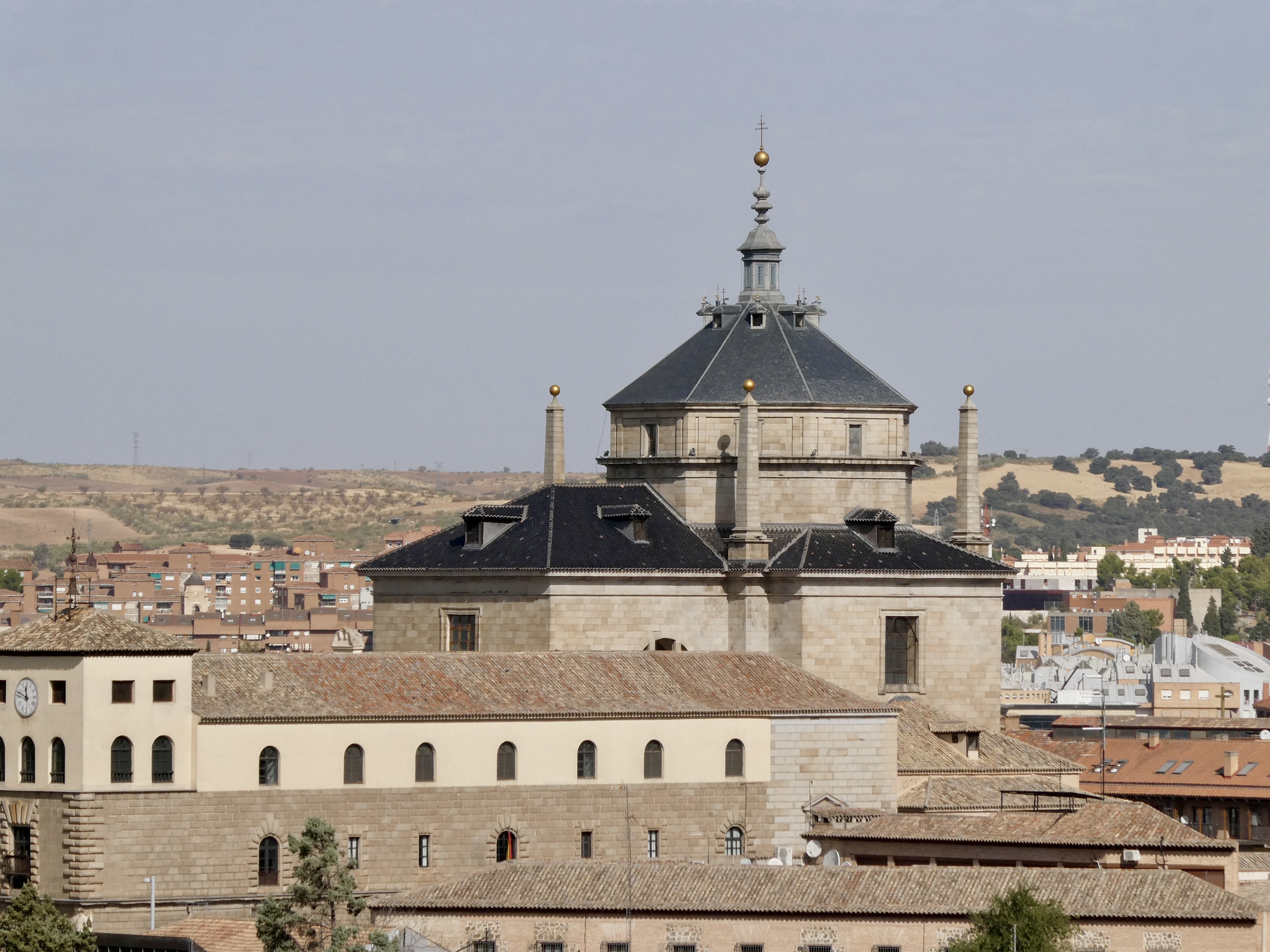
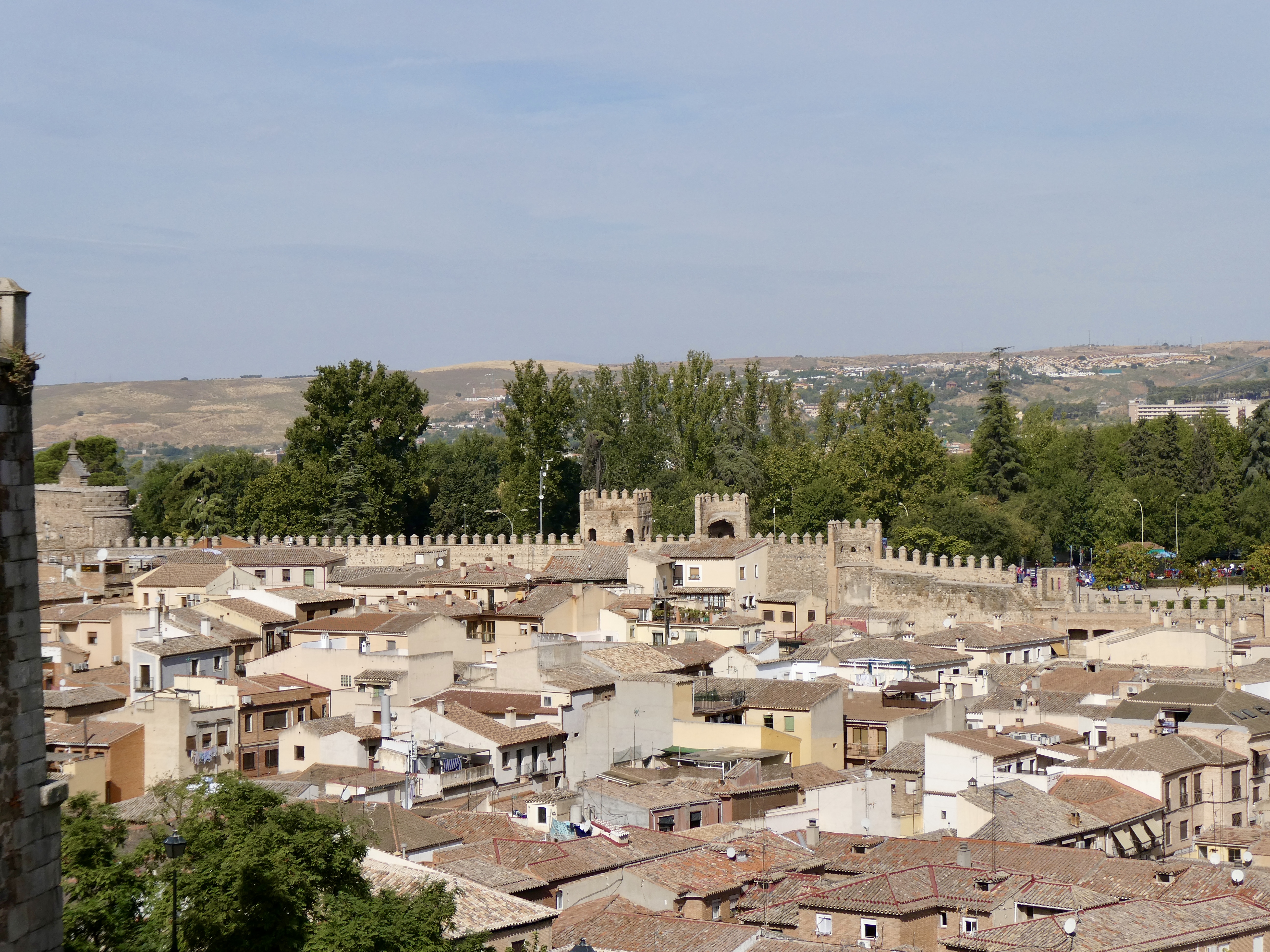
So once at the top of the escalators, we had lovely views back over part of old town including, once again, the Hospital de Tavera dedicated to St. John the Baptist and now a museum. The hospital was built between 1541 and 1603 by the order of Cardinal Tavera and stood out because of its dark black roof. In addition to taking in Hospital de Tavera, we were able to take in wonderful views of the old 10th century city walls off in the distance.
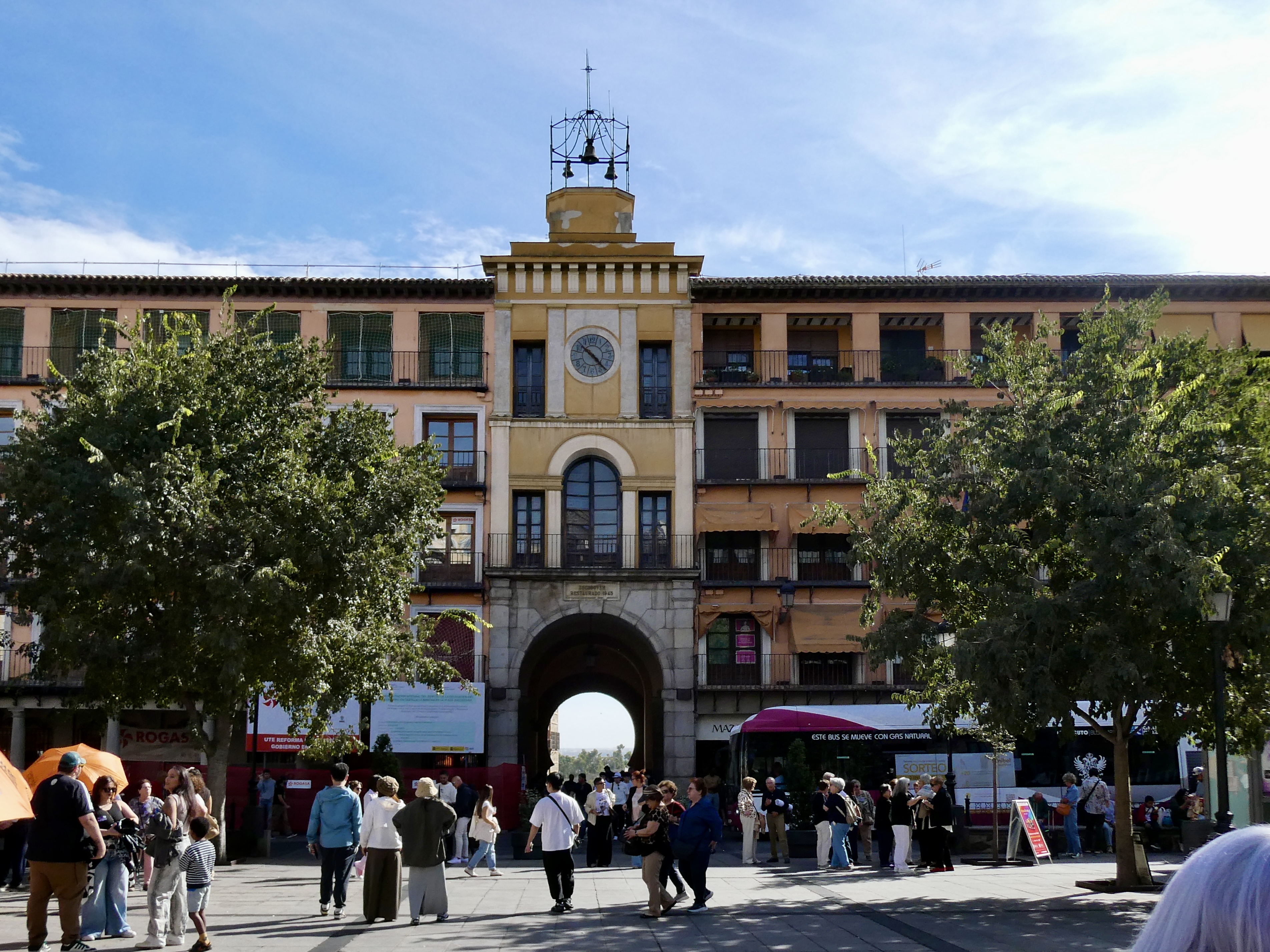
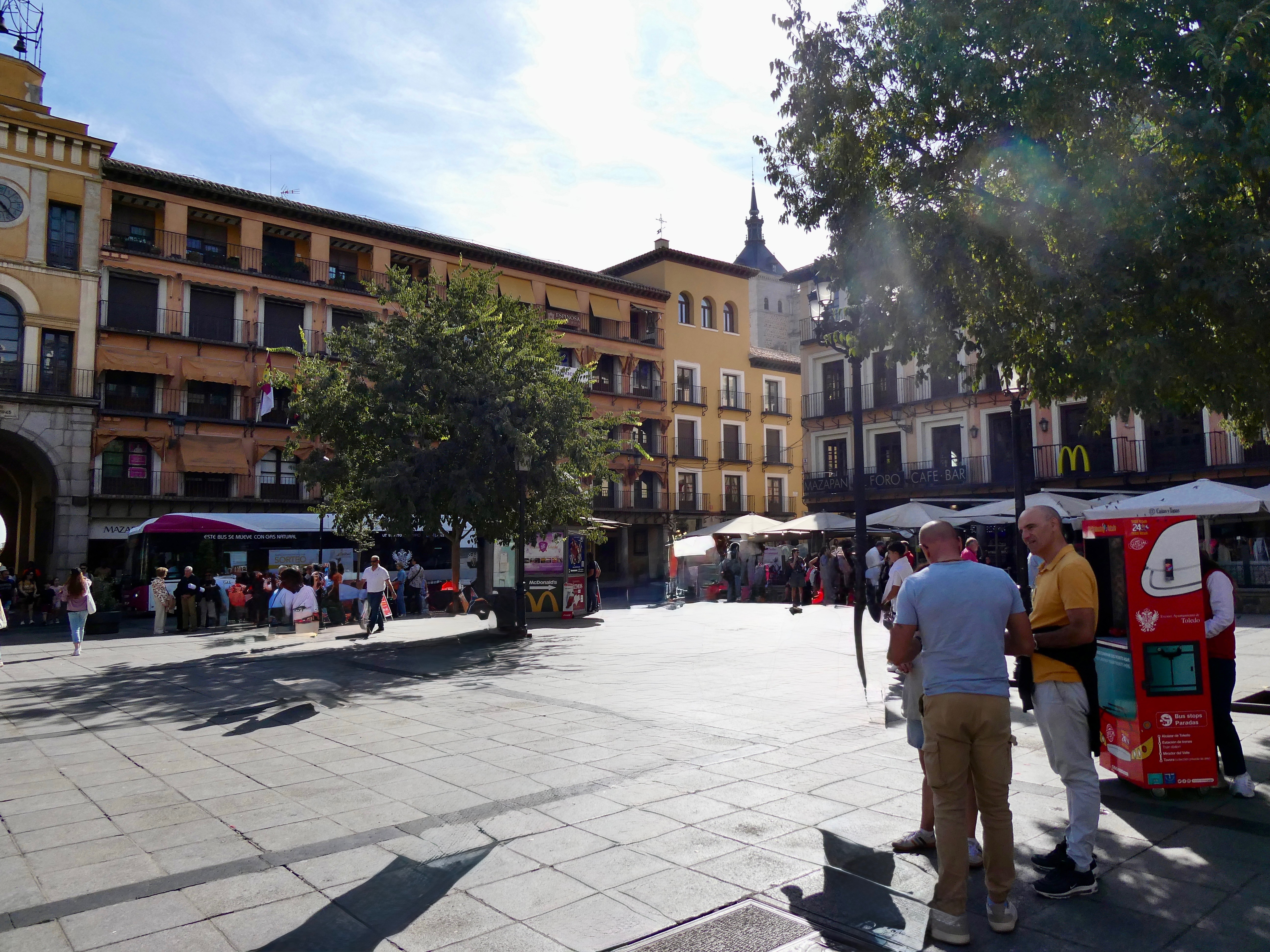
From here, we walked up a small alley to the Plaza de Zocodover (“Square of the Animals”). In Moorish times this was a big horse market, where mules, ponies, mares and stallions were traded. Later the square became the site of a general market that took place on Tuesdays, but in the mid-20th century the market was moved to another part of old town. Today, the square serves as a meeting point and tourist hot spot where there are lots (and I mean lots) of tapas bars, restaurants, shops and people.
We spent a few minutes wandering around the square before beginning our walk up the Main Street in the old town. We passed marzipan shops (a favourite treat in this area) as well as more knife shops than I could count. Apparently minerals in the area make for good knives hence all the knife shops. (Not sure how tourists would take these home though….)
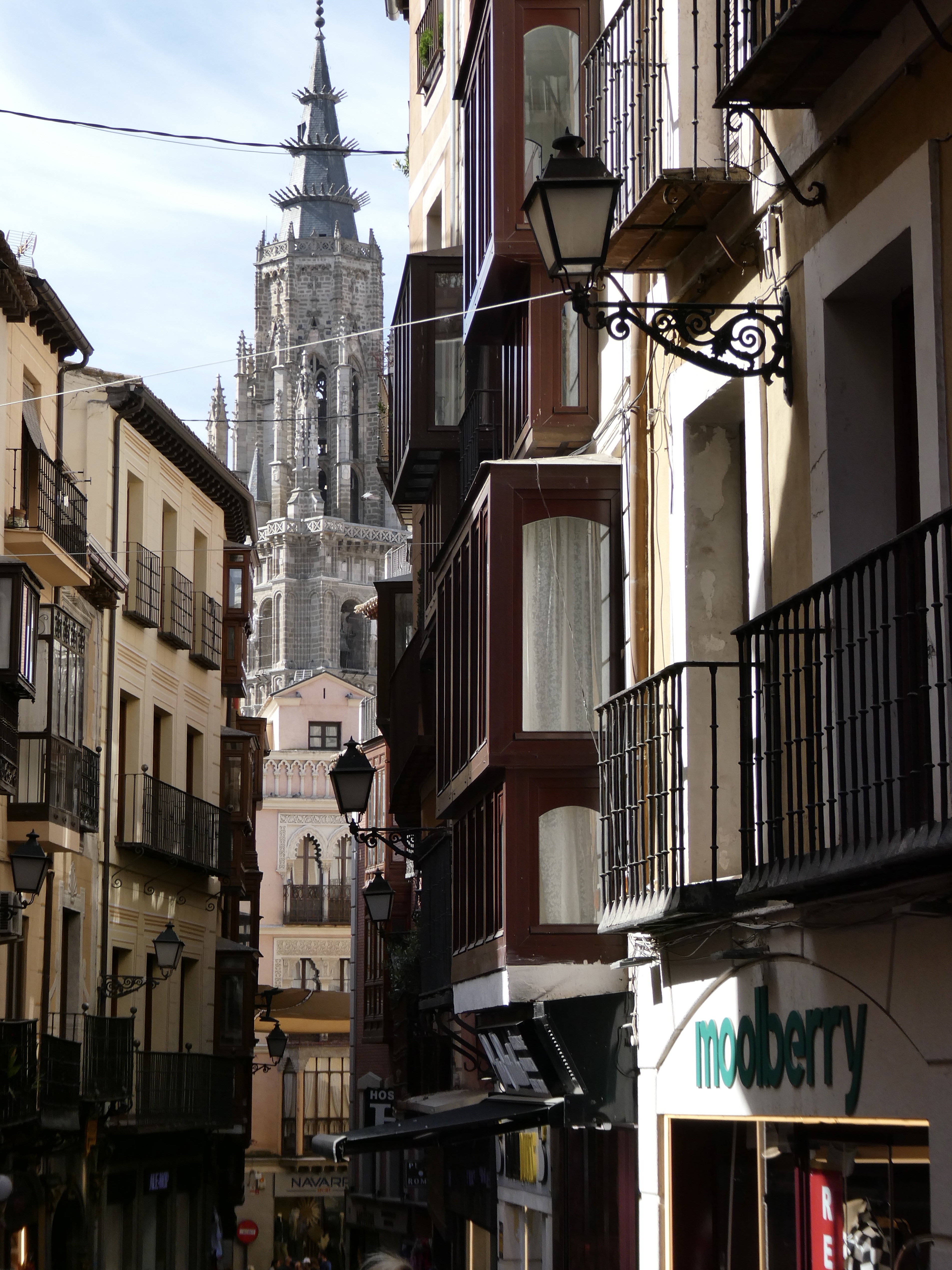
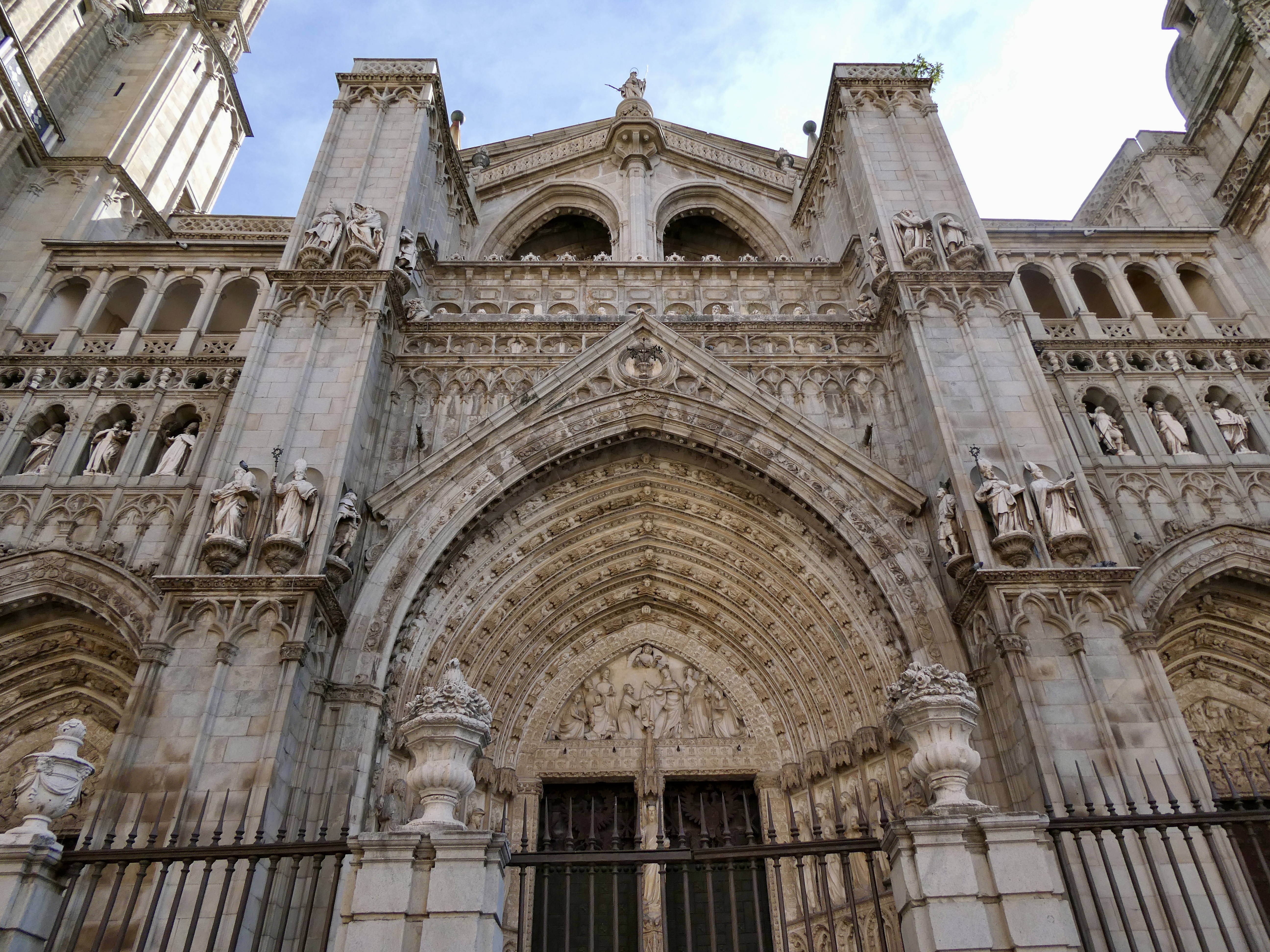
Anyway, we continued down the Main Street until we reached a spot on the narrow road where we were able to catch a glimpse of part of the spire of the Toledo Cathedral. Now the Toledo Cathedral is a gothic masterpiece and dates to 1227 when construction began. Construction continued on the cathedral until 1493 when it was finally finished. Restoration work, however, continues to this day.
The Cathedral is the largest in Spain and contains 15 chapels, over 750 stained glass windows and intricate carvings and designs. The Cathedral has a number of entrances, including a very elaborate entrance reserved for heads of state and the Pope. We were obviously not taking this entrance, but would go into the Cathedral through the more austere main entrance.
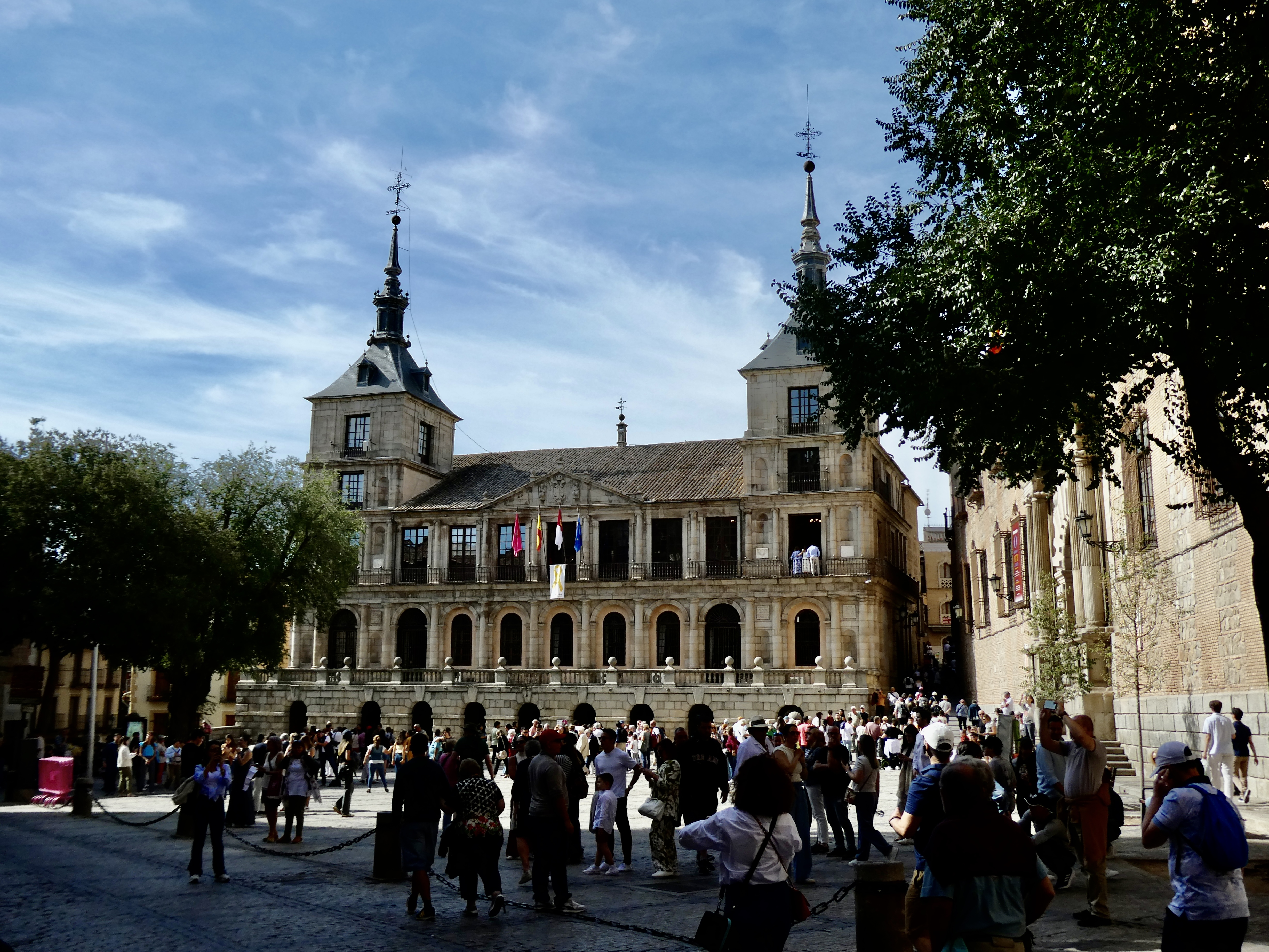
And adjacent to the Cathedral was the magnificent City Hall of Toledo, which is over 400 years old and contain baroque elements. I thought this building was gorgeous (and bonus, there was a wedding taking place on one of the balconies).
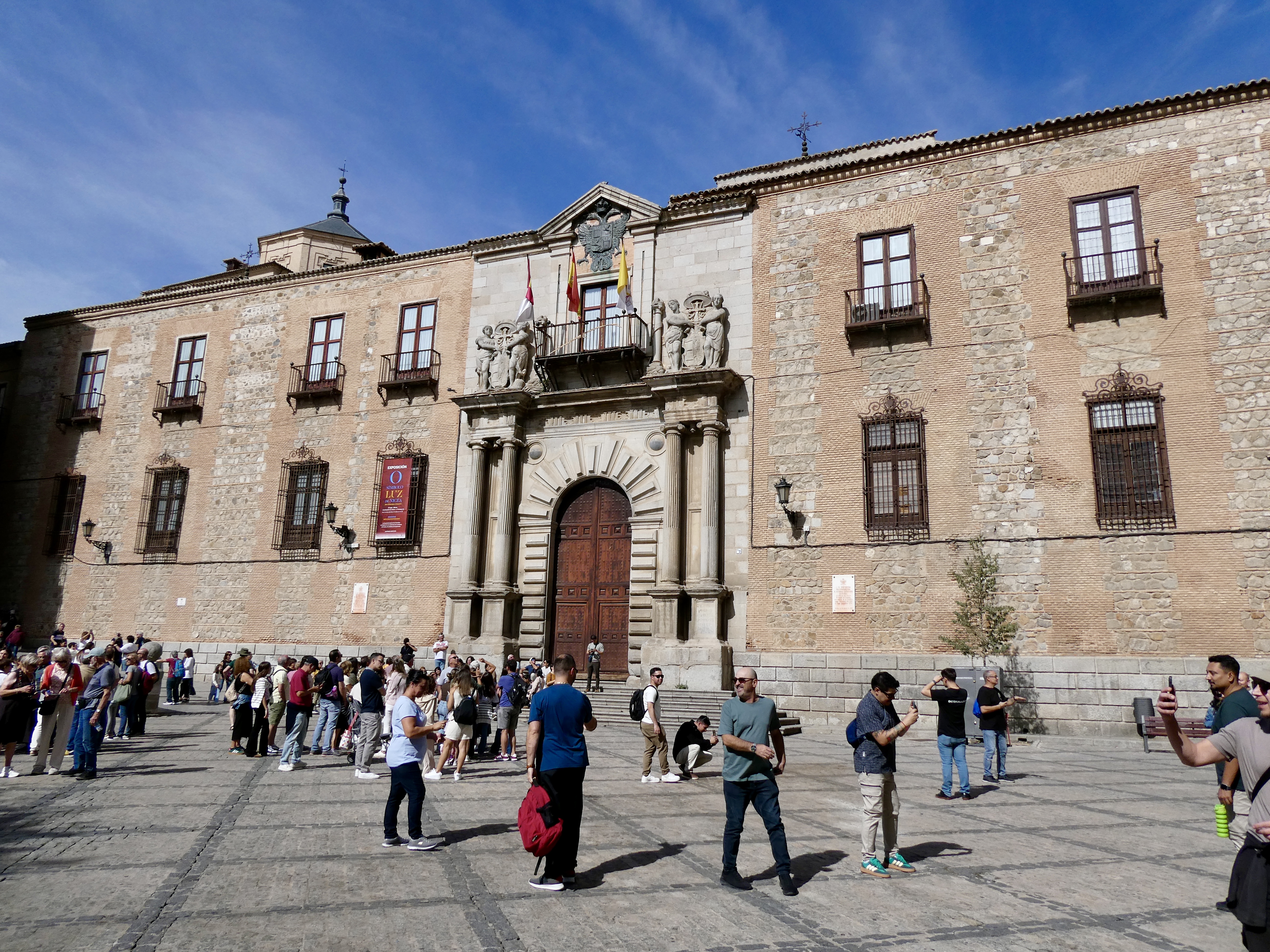
Next door to the City Hall was the Cardinal Espinosa Palace, a 16th century building that blends Spanish and Renaissance styles. Quite frankly the palace was a little bland standing next to the gorgeous City Hall.
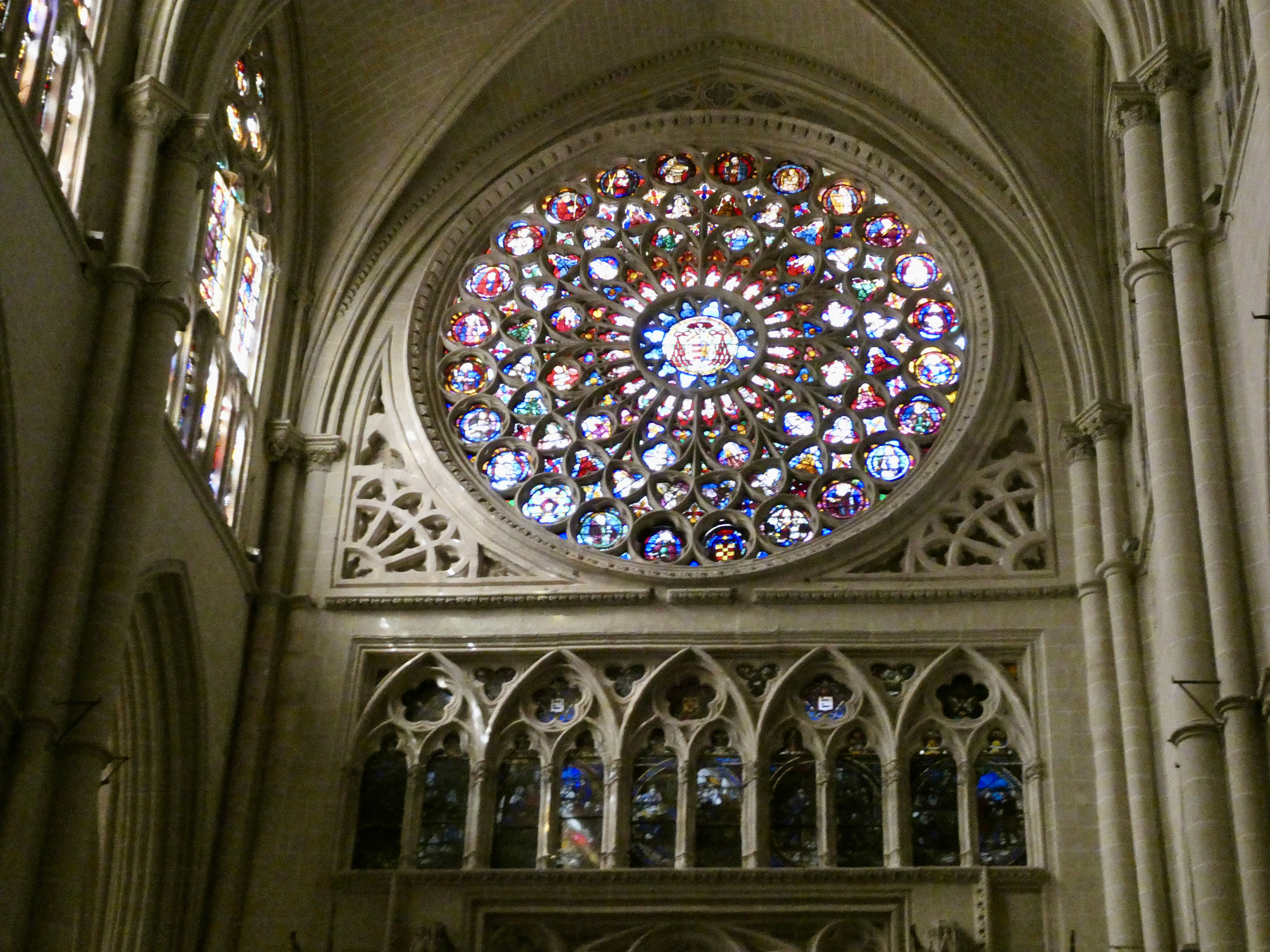
So after passing by the “fancy pants” entrance to the Cathedral as well as the City Hall and the palace, we entered the Cathedral, and when I say this place was huge I mean HUGE. There were lots of open spaces to walk, but the first thing that stood out to me was the 16th century Rose Window, which sits above the VIP entrance.

Alexandria took us around the Cathedral pointing out various designs and old columns dating to Moorish times (which were likely reused from a mosque that stood on the site) before taking us to one end of the cathedral to see the Great Monstrance of Enrique de Arfe a hexagonal tower dating to the 16th century made of 18 kg gold, 183 kg of silver and semi-precious stones, which had belonged to Queen Isabella. The tower was absolutely stunning.
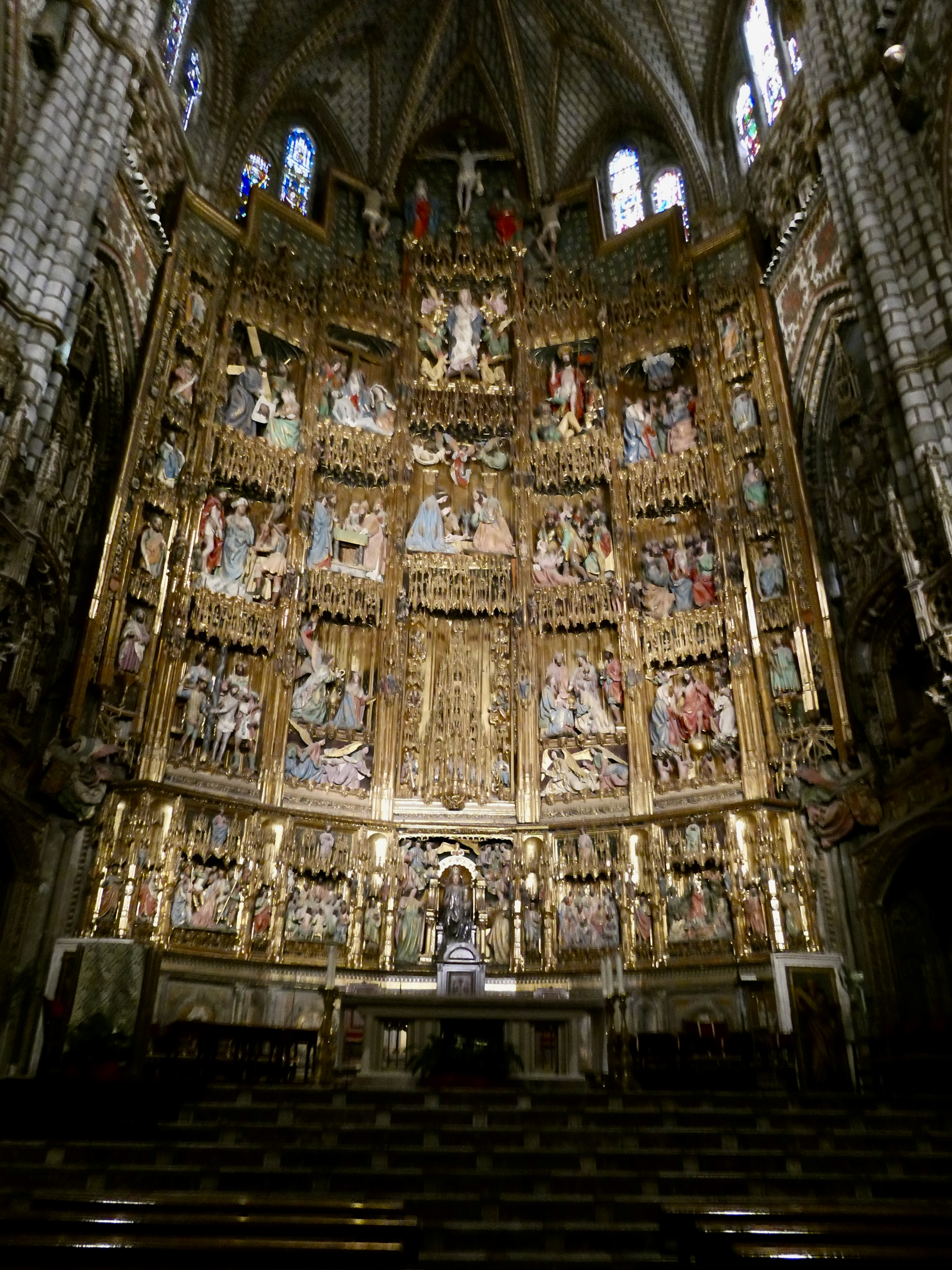
From here, we reversed course and took in the Main Chapel, a gorgeous gold leaf sculpture making up the high altar depicting scenes from the life of Christ. The Chapel was topped by a large dome. The Chapel was spectacular.
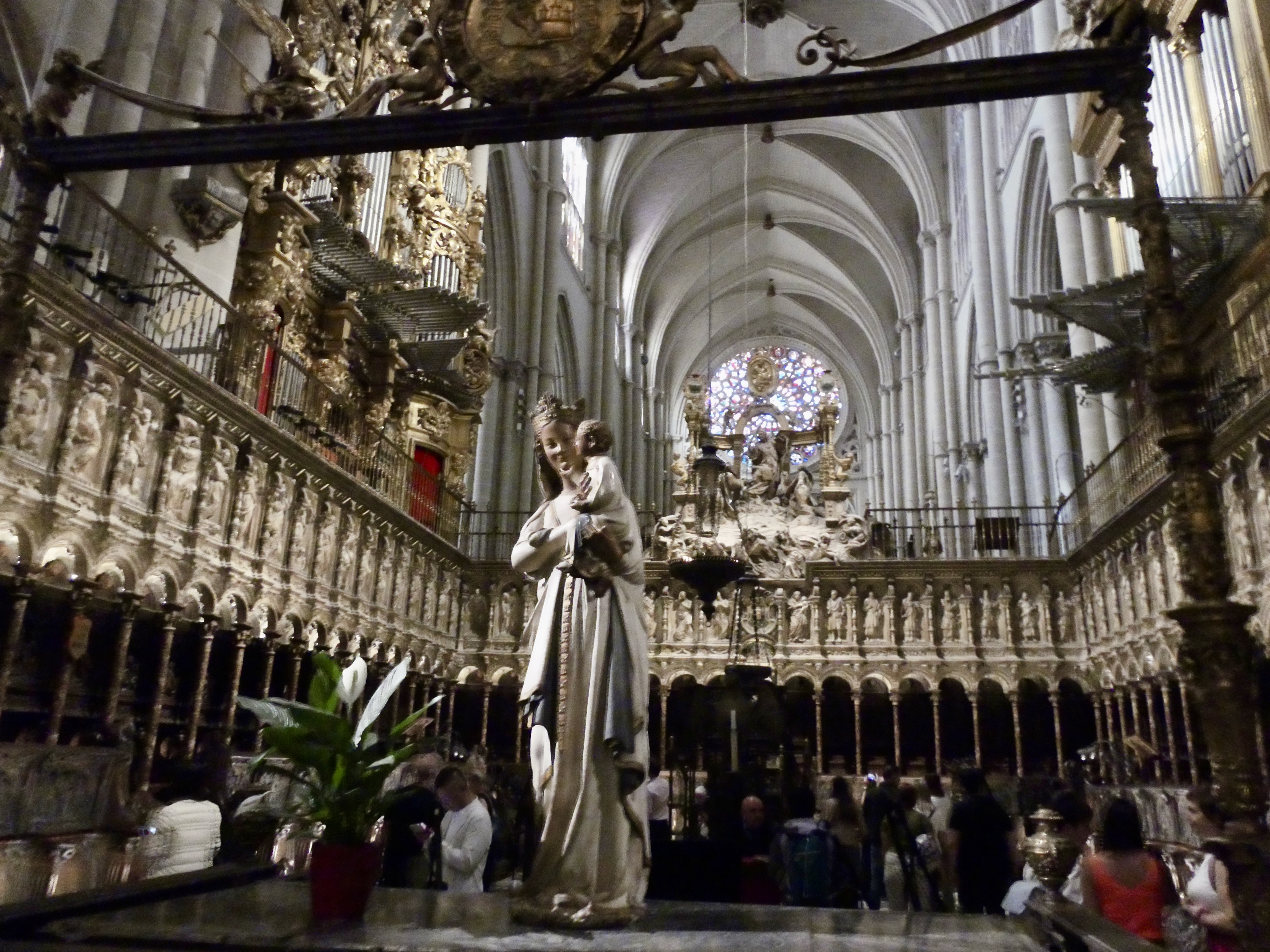
And directly across from the Main Chapel was the Choir, which was actually located in the center of the main floor of the cathedral and featured elaborate upper and lower choir stalls carved by masters like Alonso Berruguete and Rodrigo Alemán. The lower stalls depict scenes from the conquest of Granada.
We then took in the Mozarabic Chapel featuring a lovely fresco covered dome surrounded by elaborate carvings. Unfortuantely, they added windows near the dome making it impossible to take a decent picture.
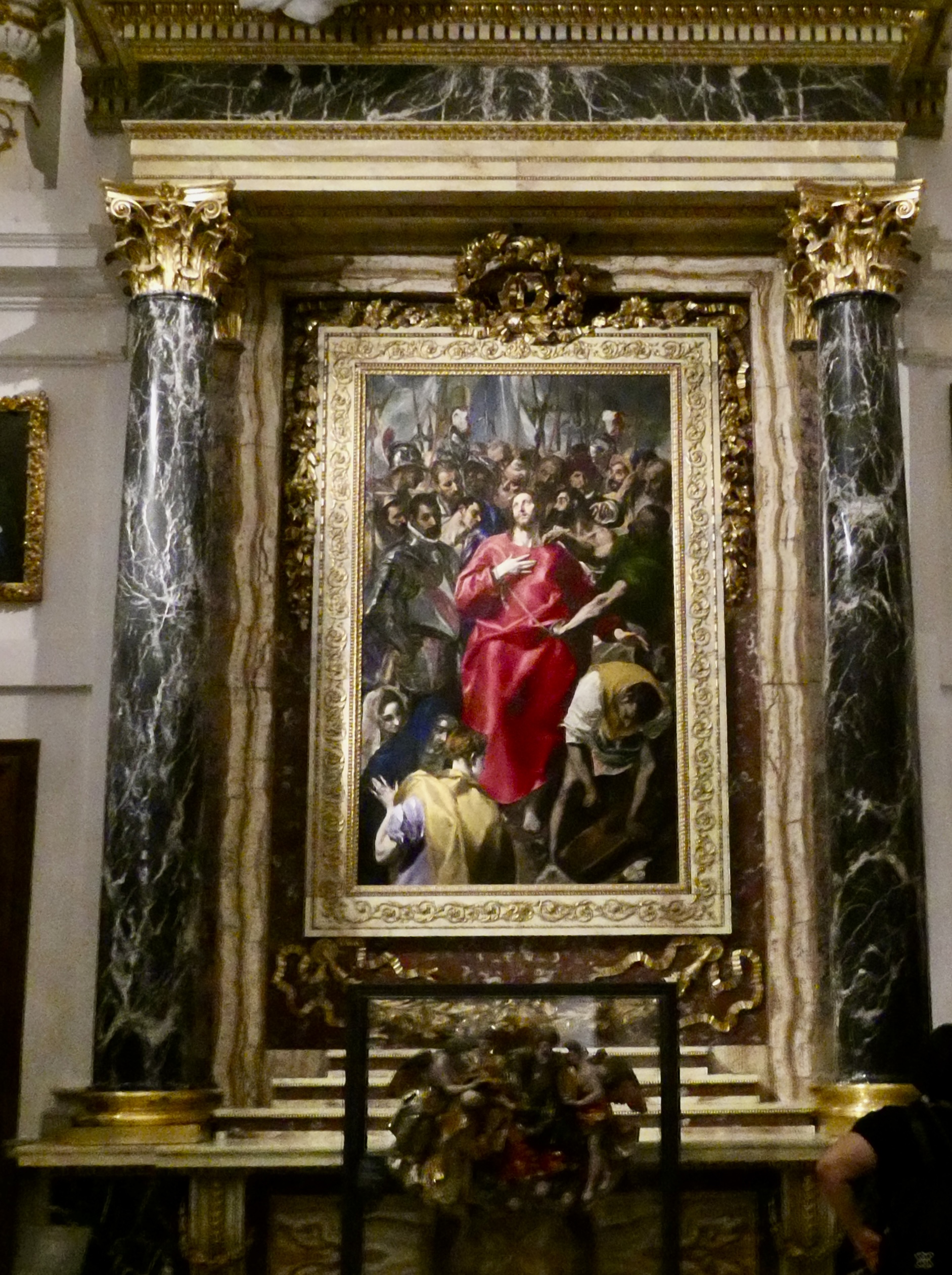
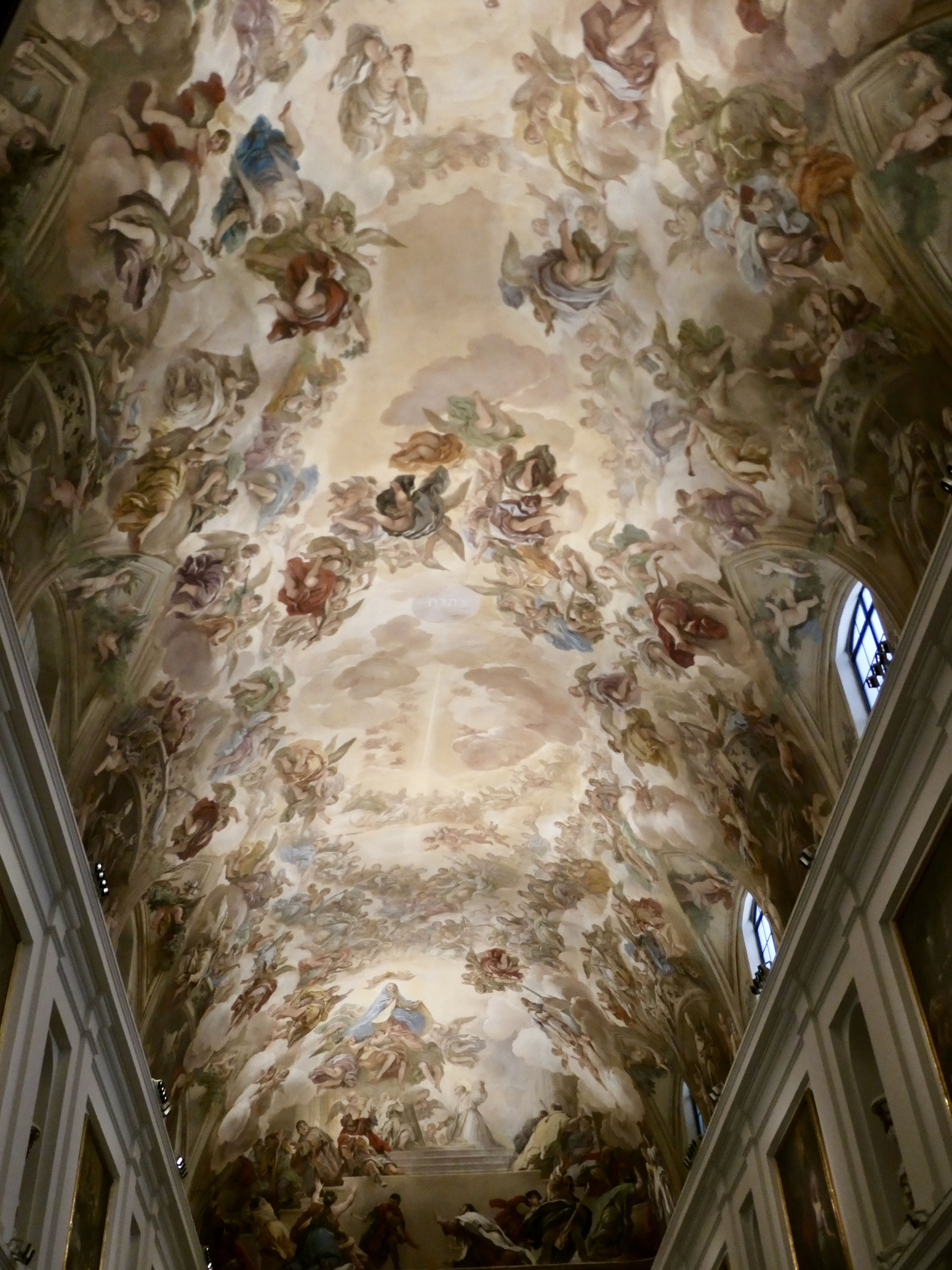
From here, we visited the Sacristía aka the Cathedral’s art gallery featuring masterpieces by renowned artists such as El Greco, Goya, Titian, and Caravaggio. The main painting in the gallery is the Disrobing of Jesus by El Greco, but I preferred the ceiling fresco depicting the clothing of St. Ildephonsus. The fresco was gorgeous.
After taking in more paintings (not a big fan of the amount of time we spent in this area) we moved on to the Funeral Chapel where 14th century royalty of Castilla are buried.

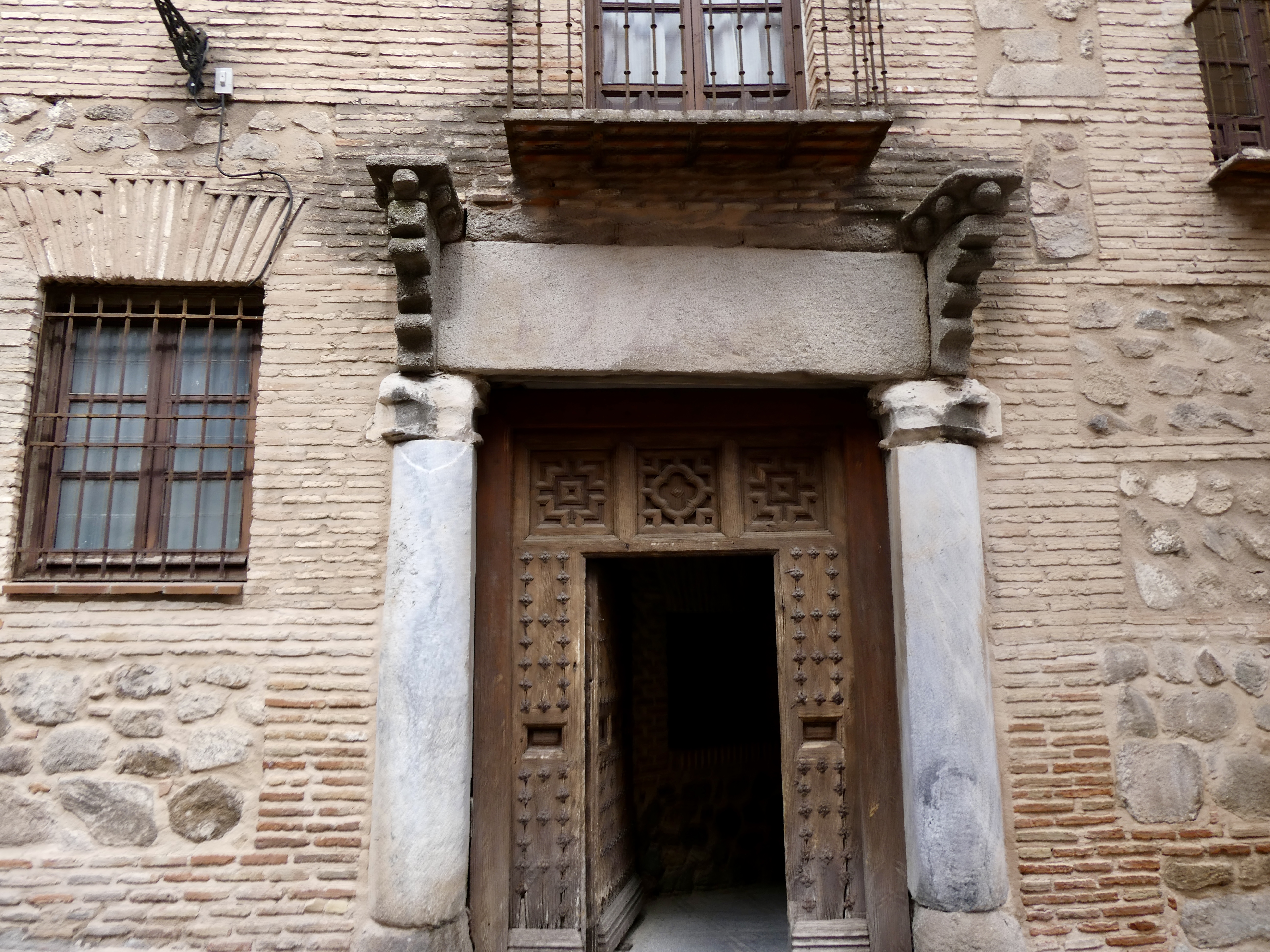
We had spent about an hour in the Cathedral and finally moved on to our next stop, the Jewish Quarter. Along the way, we passed through the entrance to the the grand Palacio de Fuensalida, which Alexandria pointed out was a good example of Mudéjar (hybrid Muslim and Christian) architecture. The palace was constructed between 1580-1603.
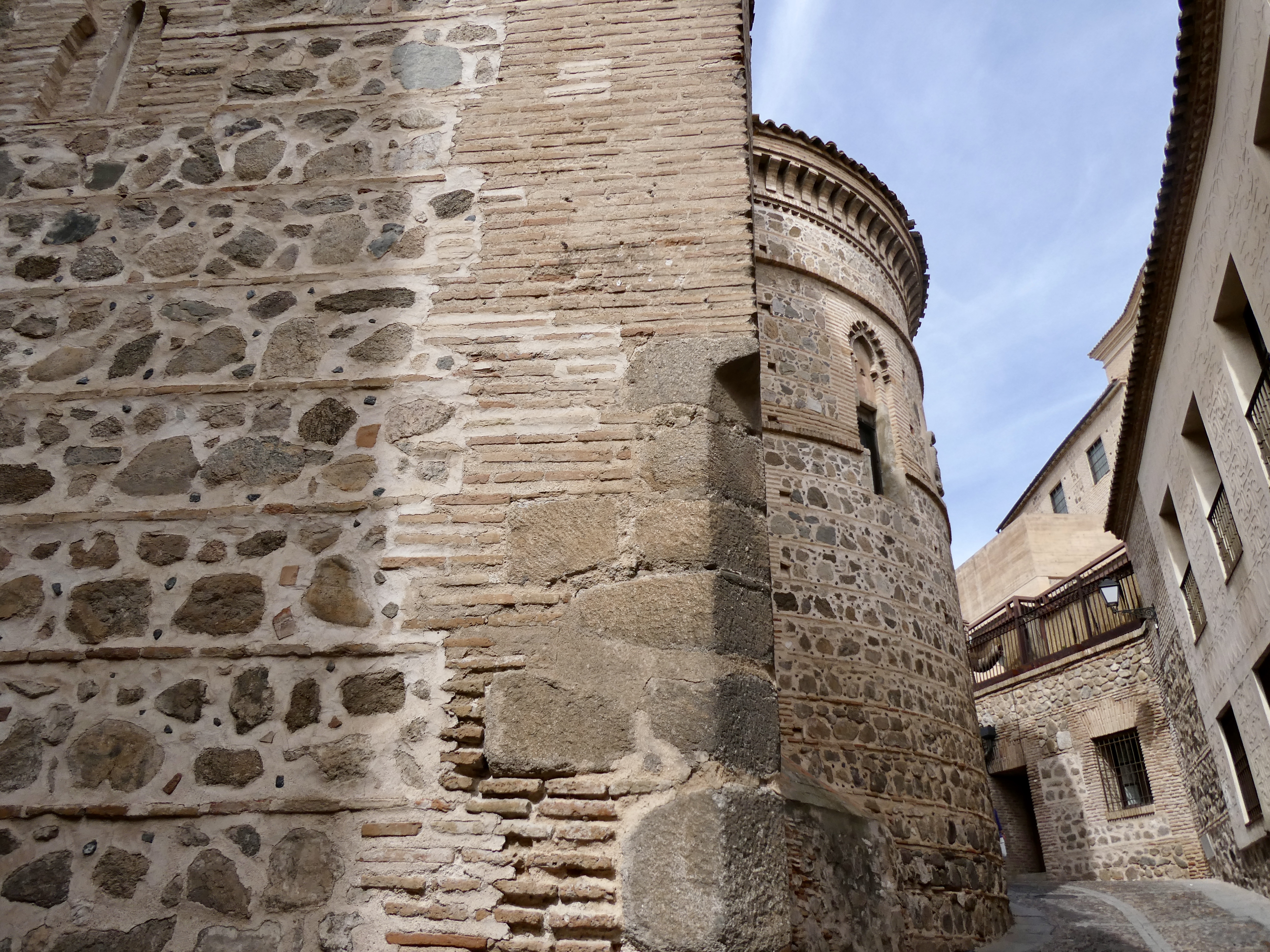
And as we continued, we passed the Walls of the Agustinas Ermitañas Convento Santa Ursula constructed in 1360. This construction also had a lot of Moorish/Muslim overtones and included stones that had been recycled from Roman construction.
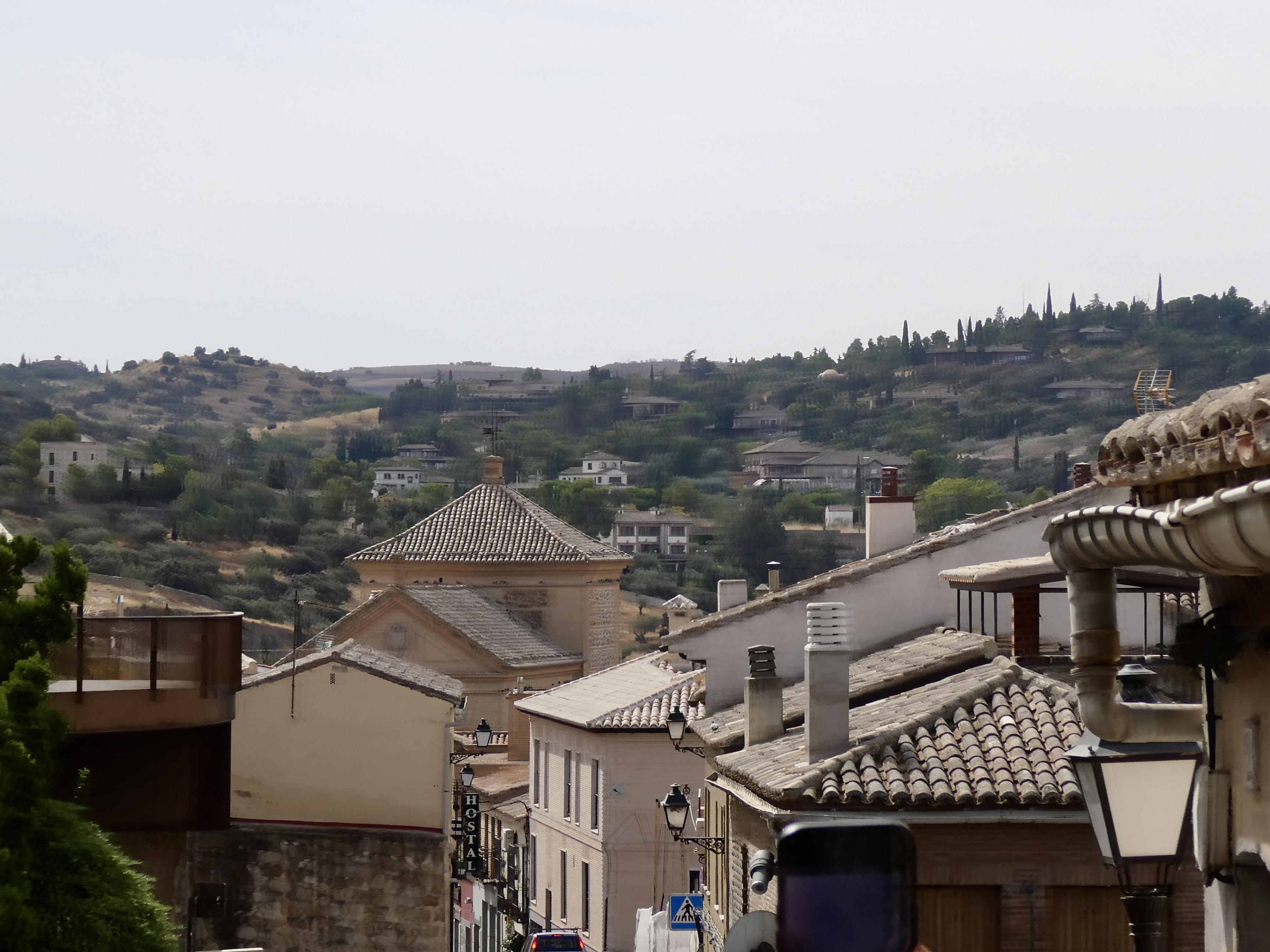
As we we turned a corner and began our decent into the Jewish Quarter, Alexandria pointed out that the houses on the hillside outside the old city walls are called cigaralles, which is cicadas in English. Apparently every summer the cicadas make an appearance and the noise from the hillside rings out through the old city.

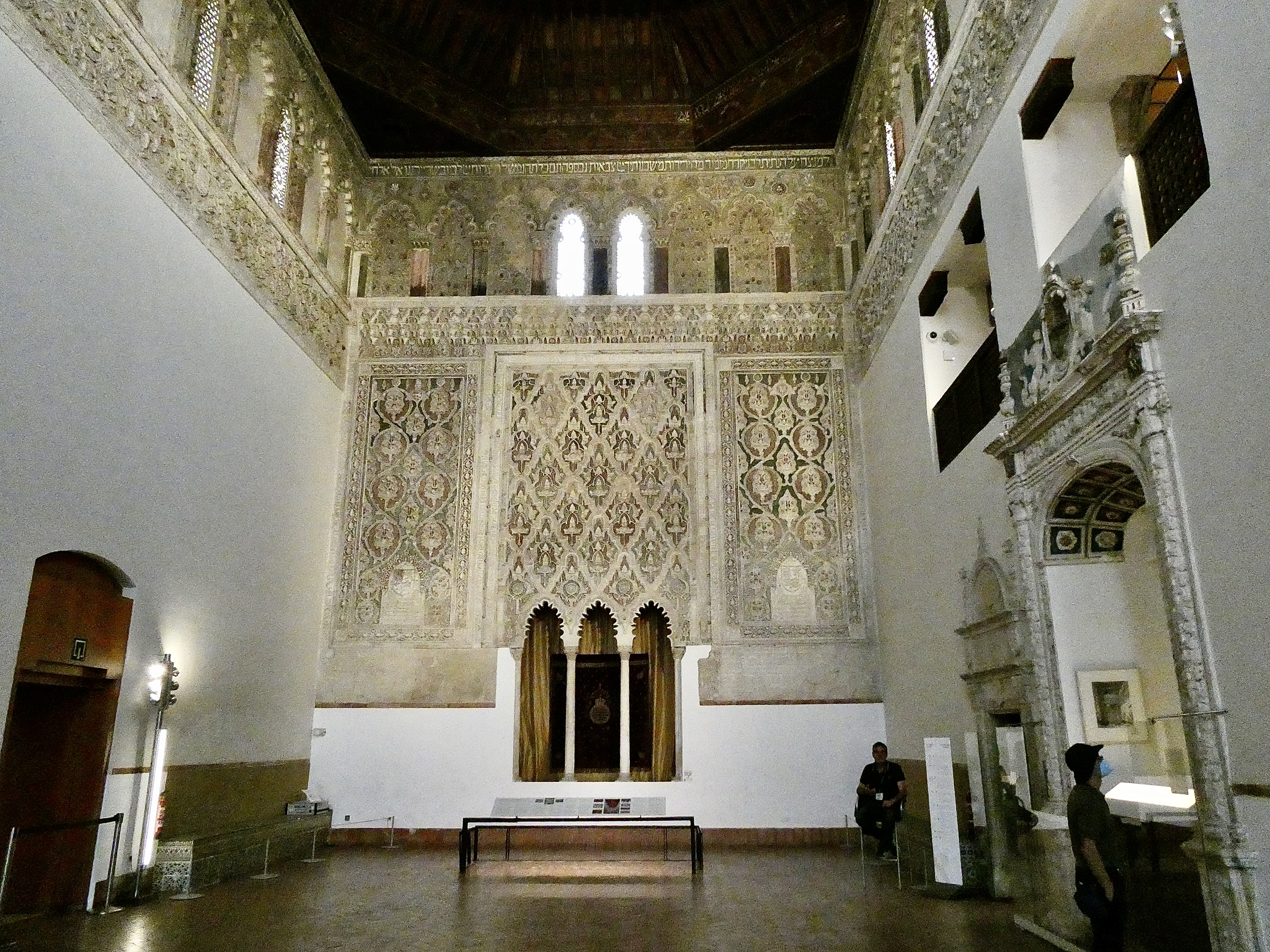
Our next stop was the Museo Safardi, an old Synagogue that had been converted into a museum of sorts. The building dated to 1376 and the old walls and roof were visible on the interior. Now we spent, in my opinion, far took much time in this stuffy building. I lost interest about 10 minutes in and we ended up spending another 15 minutes or so on artifacts and collection pieces on display. (I would have rather gone to see some of the nearby old gates and walls.)
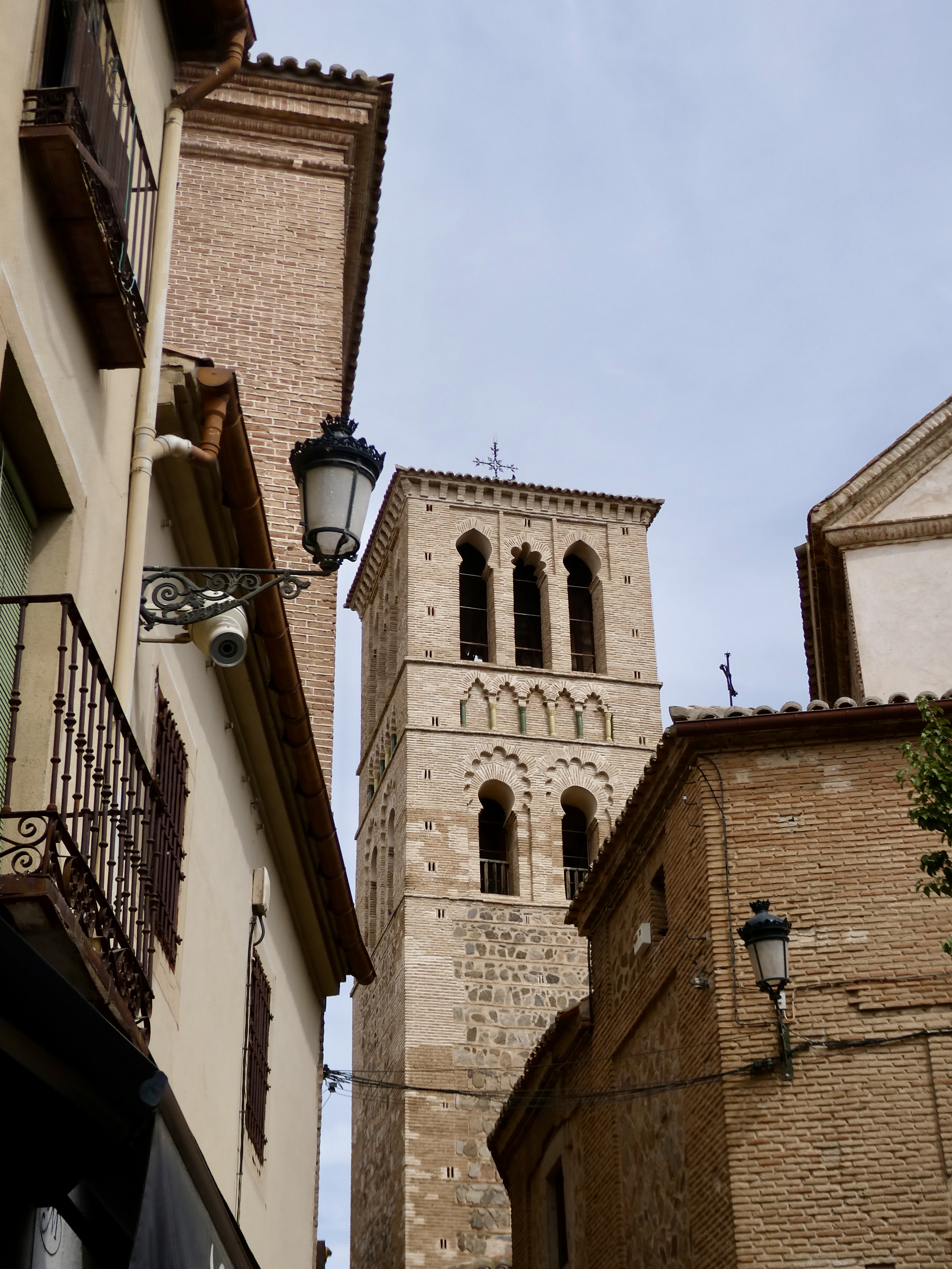
Once we finally left the museum, we wound our way through the rest of the Jewish Quarter before climbing the hills and passing by the tower of the Church of Santo Tome, which dates to 12th century and was built on top of an 11th century mosque. The tower was fabulous and used stonework from the original minaret and had beautiful scalloped arches.
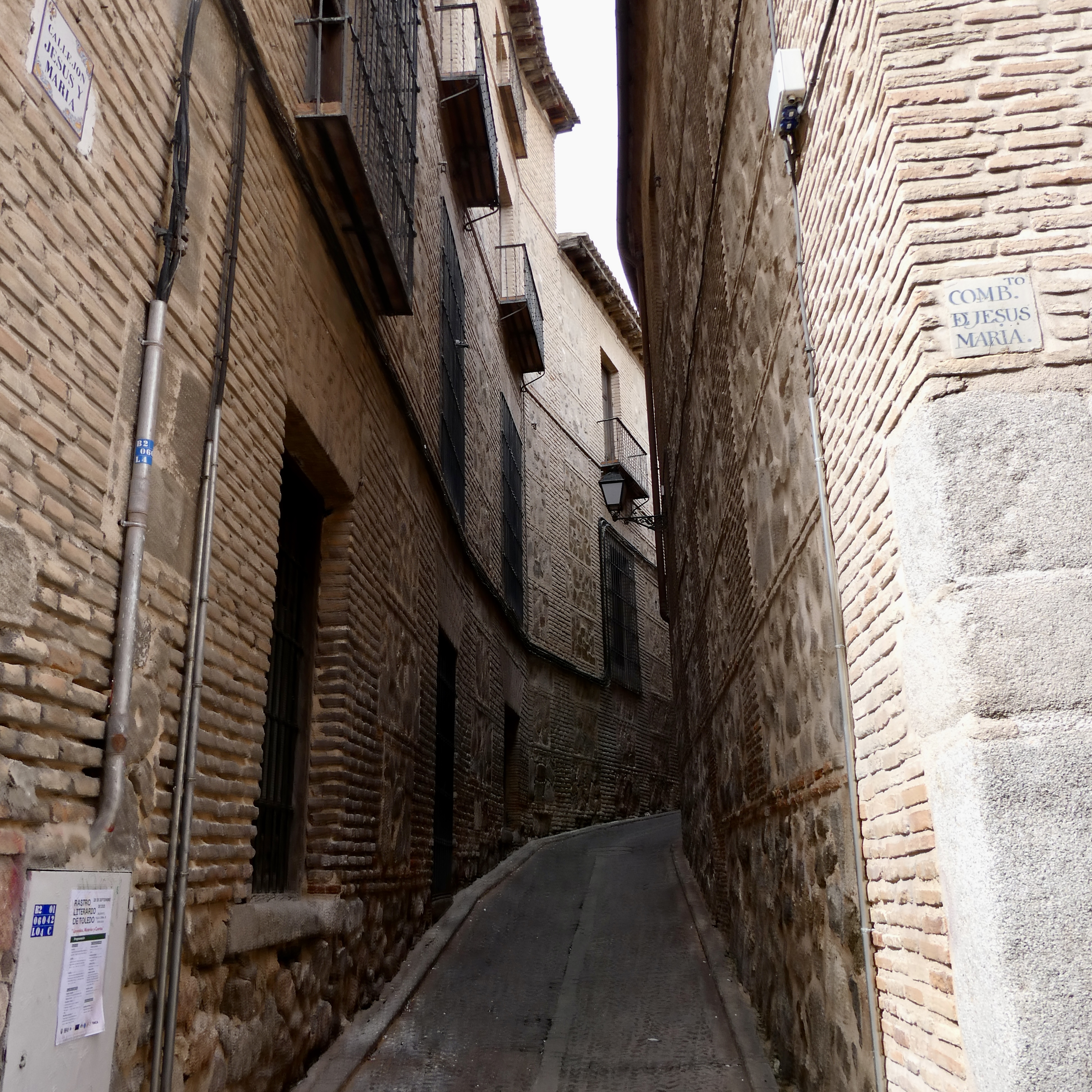
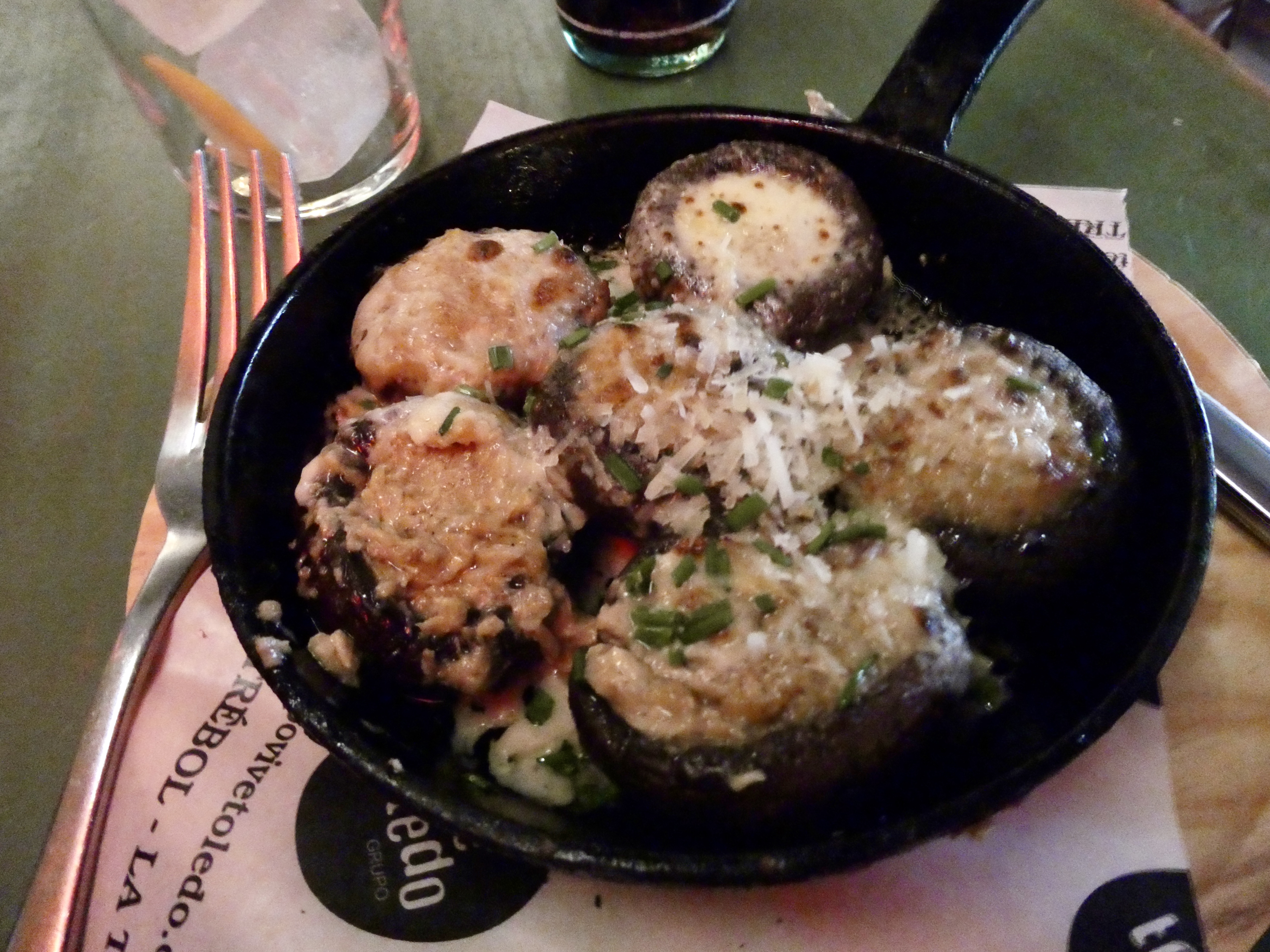
From here, we walked back to the Main Street in the old quarter back to the Plaza de Zocodover and the end of our walking tour. Now we were given a couple hours on our own before we had to be back to the mini-bus so I took off and found a lovely little tapas bar, Tabernita, where I had two fabulous dishes: portabello mushrooms stuffed with chicken and manchengo cream cheese and topped with mozzarella; and fried green tomatoes topped with goat cheese and fig jam. Absolutely spectacular!
After lunch, I wandered around the old quarter, had some ice cream and called it good. Tomorrow, it is goodbye Madrid and hello Cordoba. First up is a private walking tour of Medina Azahara, a 10th century UNESCO World Heritage site near Cordoba.