So my last day in Tokyo was actually spent, not in Tokyo, but in Nikko, a small town 2 ½ hours northeast of Tokyo. My guide from Sunday, Masa, accompanied me on the trip.

We left Tokyo at 8:00 a.m. on the subway to Asukusa in order to catch the express train to Nikko. By just after 10:30 a.m. we had reached the station and then opted to transfer to a bus that left for the UNESCO World heritage site temple area of Nikko. Our first stop was actually past the temple area and up a hill to the Tamozawa Imperial Villa. The villa was constructed in 1899 with parts of the residence being moved from Tokyo and served as a residence for a wealth local family. The villa was later expanded and converted into a summer residence for the Imperial Family.

Once we reached the residence (in a downpour), it became clear just how large the villa was with a total of 106 rooms. The south side of the villa was reserved for the Emperor and Empress and the north side for the riff raff aka staff. Of the total rooms in the villa, only 23 rooms were occupied by the Emperor and Empress with the remainder of the rooms for staff. In addition, the building is apparently one of the largest remaining wooden buildings in Japan.
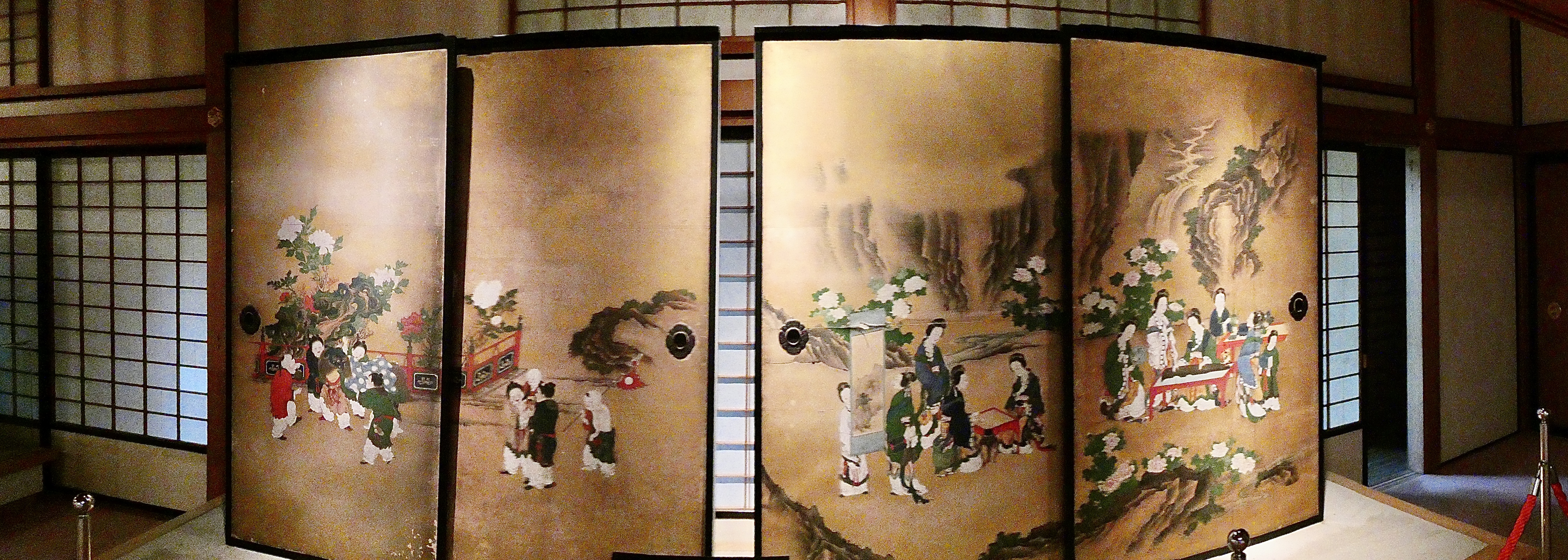
Now what I found odd, was that the interior of the villa did not seem to know what it wanted to be. In some rooms there was western carpeting and chandeliers while in other rooms there were sliding doors with Japanese art and tatami flooring. And of course outside, there was the ever present, perfectly manicured Japanese gardens with some trees still showing their cherry blossoms.
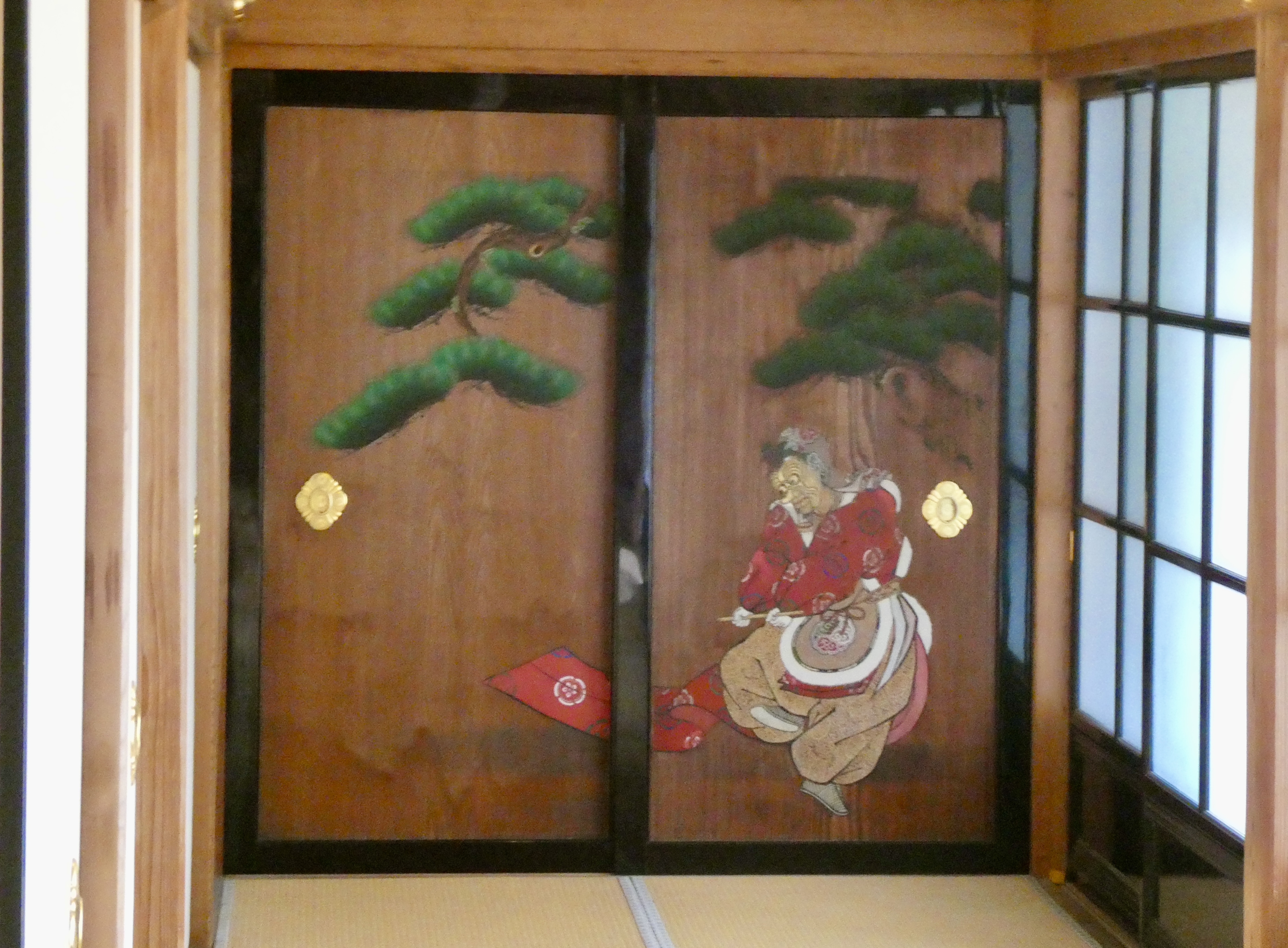
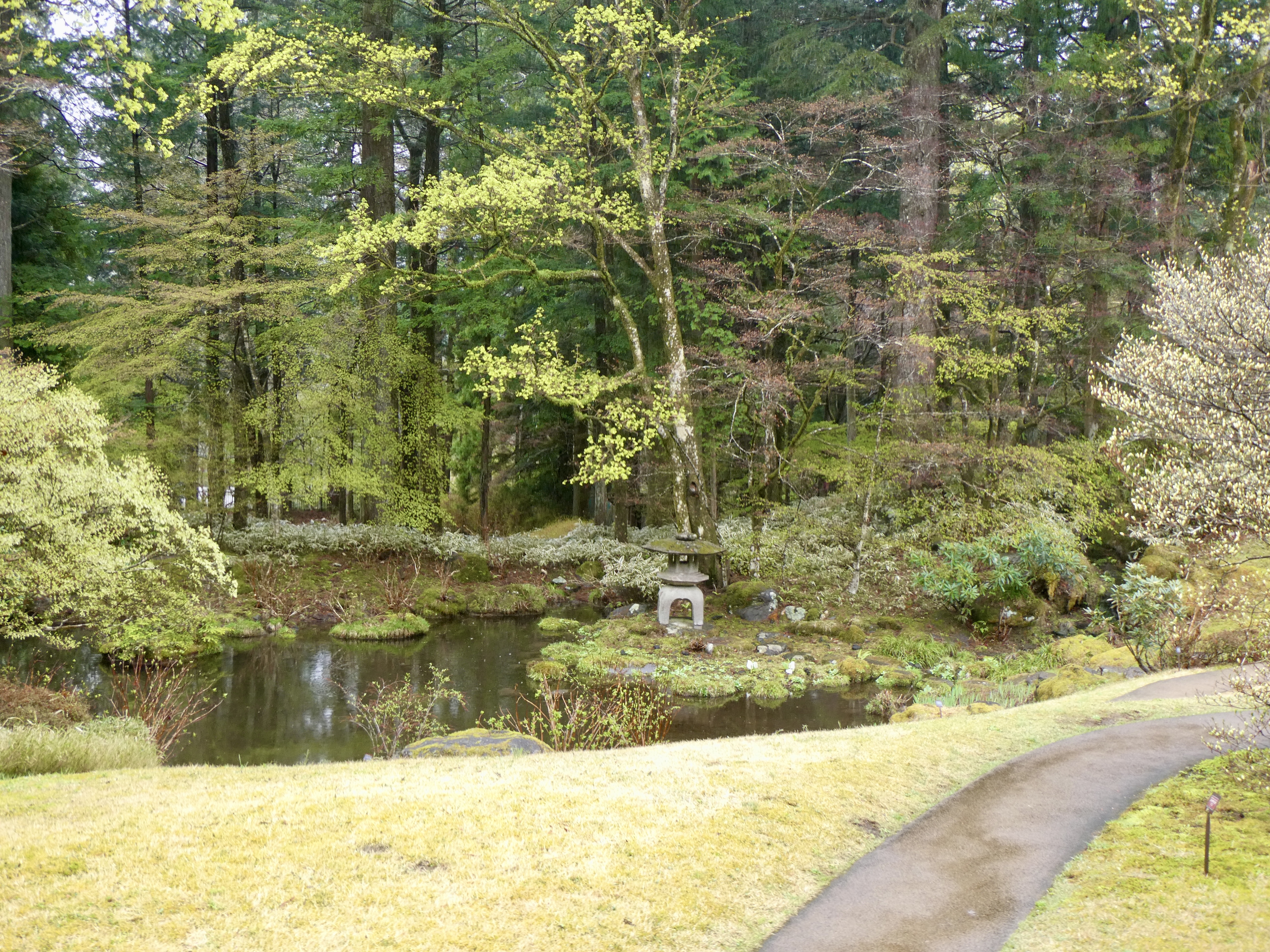
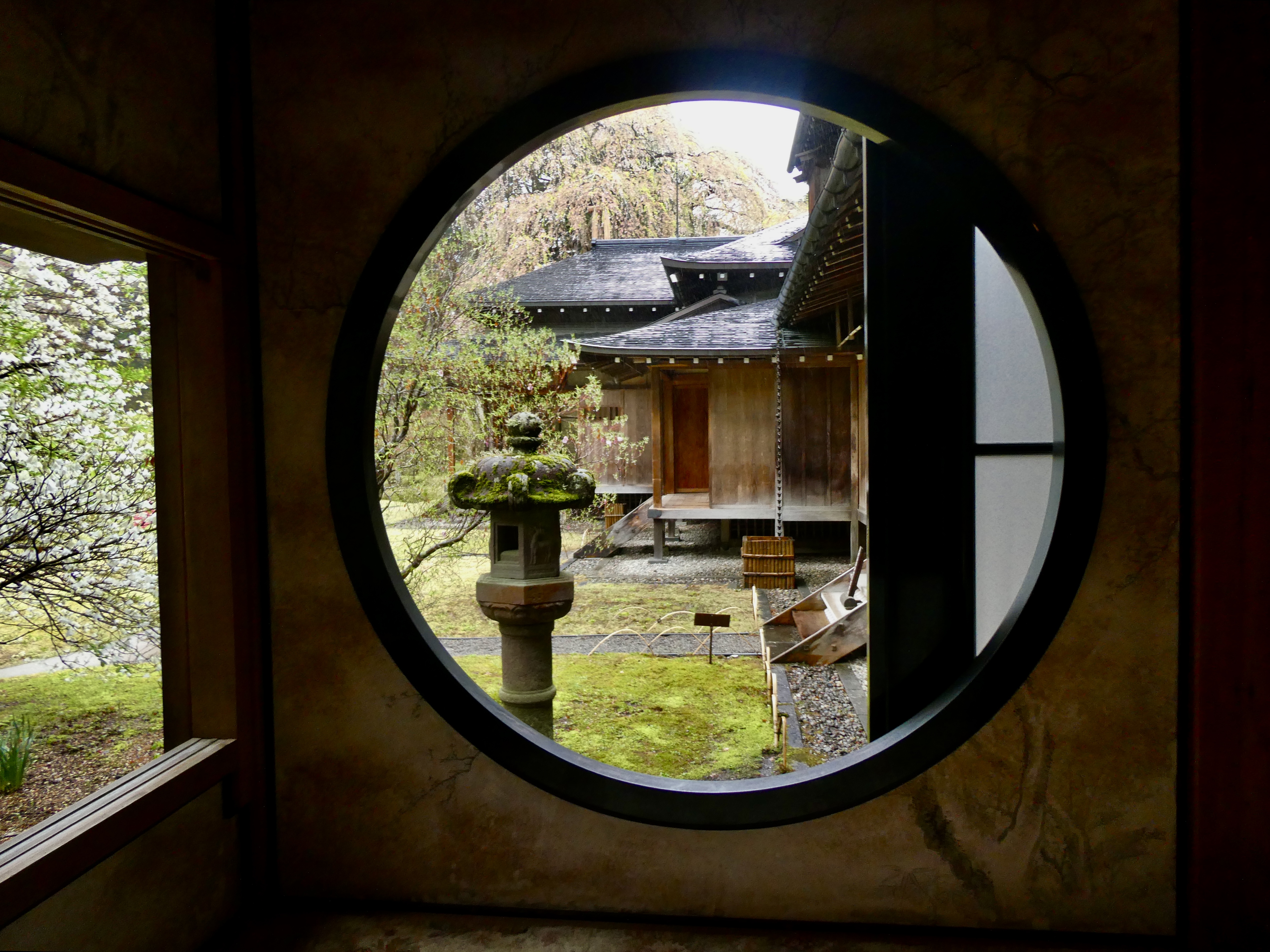
We wandered around the rooms taking in the various spaces, but for me it was more about the Japanese art on the various sliding screens, which were really spectacular and included cranes, a Noh (a storyteller on the Japanese stage), cherry blossoms, and more. I also found the gardens quite pretty although I was amazed that the rooms for the Empress were on the second floor overlooking the fabulous gardens while the Emperor’s second floor room overlooked the back tree area, which was not nearly as pretty.
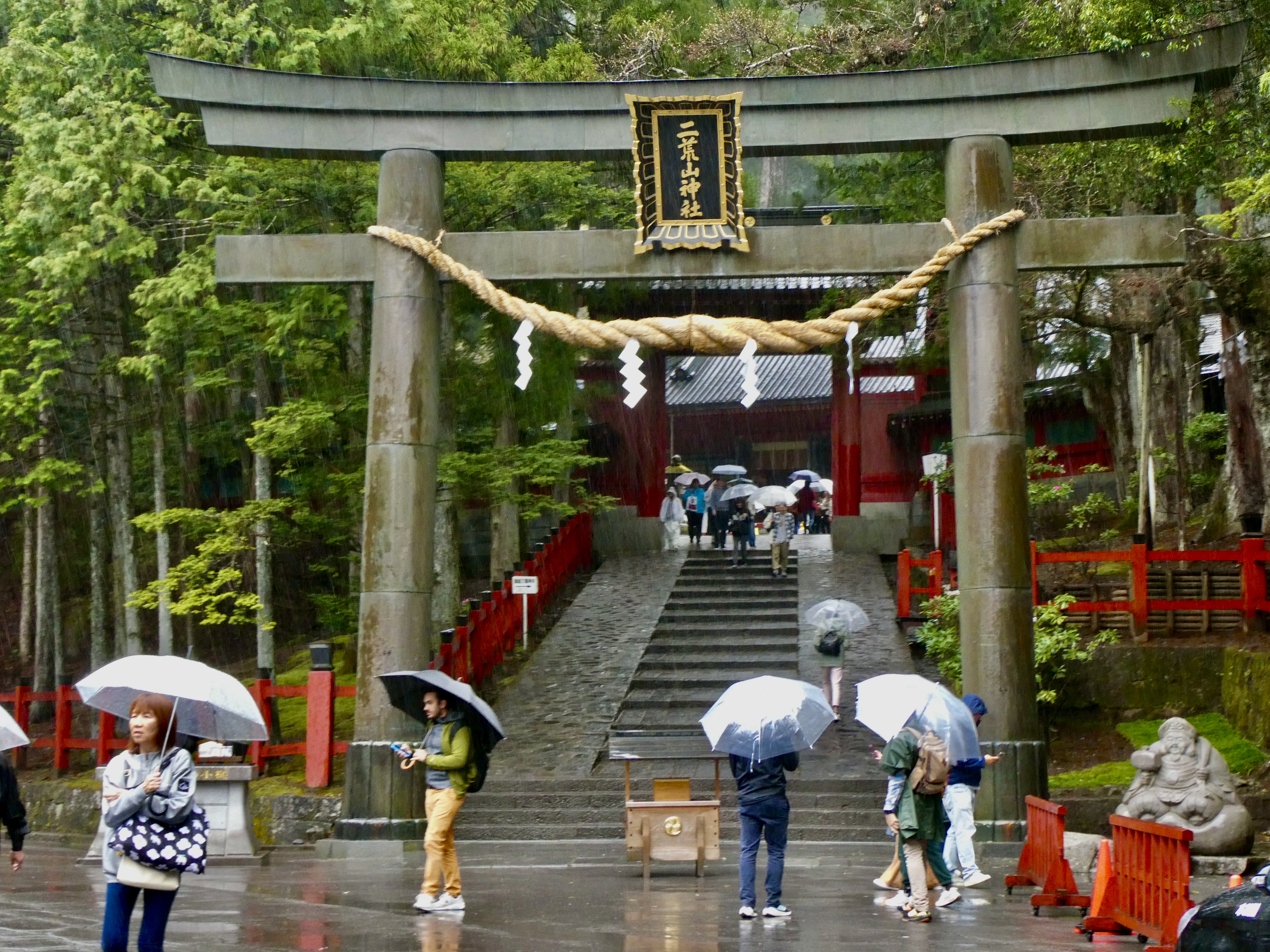

Anyway, we spent about a half hour wandering through the various meeting rooms, dining rooms, residence, and bathrooms before leaving the site and heading down the hill in the rain and then up another hill to the Futarasan-jinja shrine. This was the first in a series of shrines and temples in the temple district, but we did not enter this site, but instead continued on to the main site since I was there to see the Toshogu Shrine. (Although, I did rub the Buddah’s head and the treasure chest at the entrance to the Futarasan-Jinga shrine for good fortune.)
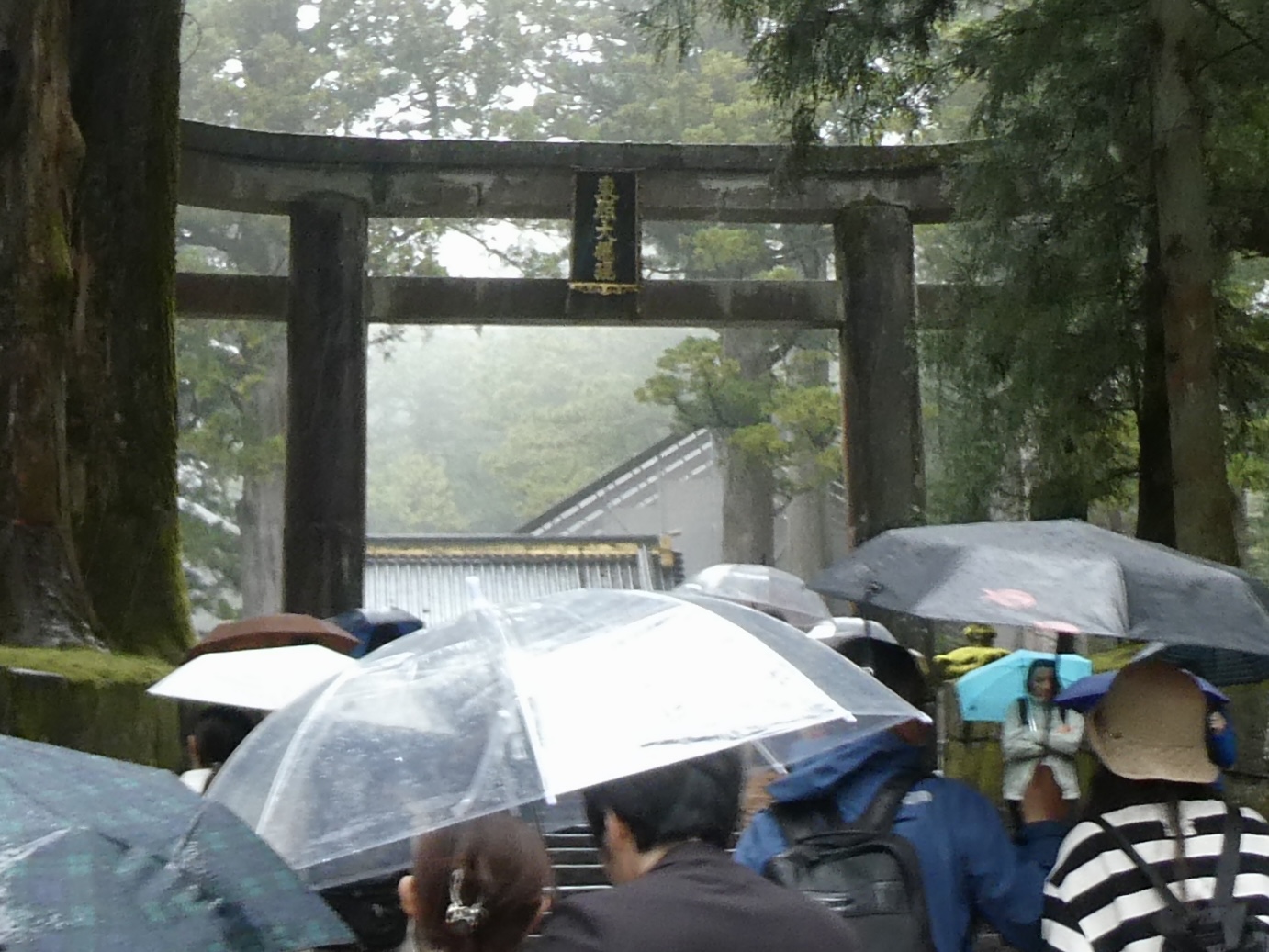
So the walk from Futarasan-jinja shrine to the Toshugu Shrine took about ten minutes on a path through old growth forest. (The trees were huge). And once at Toshugu Shrine, I knew it was unlike anything I have seen in Japan. The shrine is essentially a lavish mausoleum of sorts to the Tokugawa Ieyasu, the first Japanese shogun who took over the country in 1618 and is buried here. The shrine was expanded to its over the top design in the early 17th century.
The complex consists of about a dozen buildings set amongst old growth forest (logging is strictly prohibited in the area). Each of the many buildings include intricate wood carvings and lots and lots of gold leaf. Typically, the Japanese shrines and temples are pretty simply and understated, but these buildings reminded me of something I would have seen in India or Myanmar.
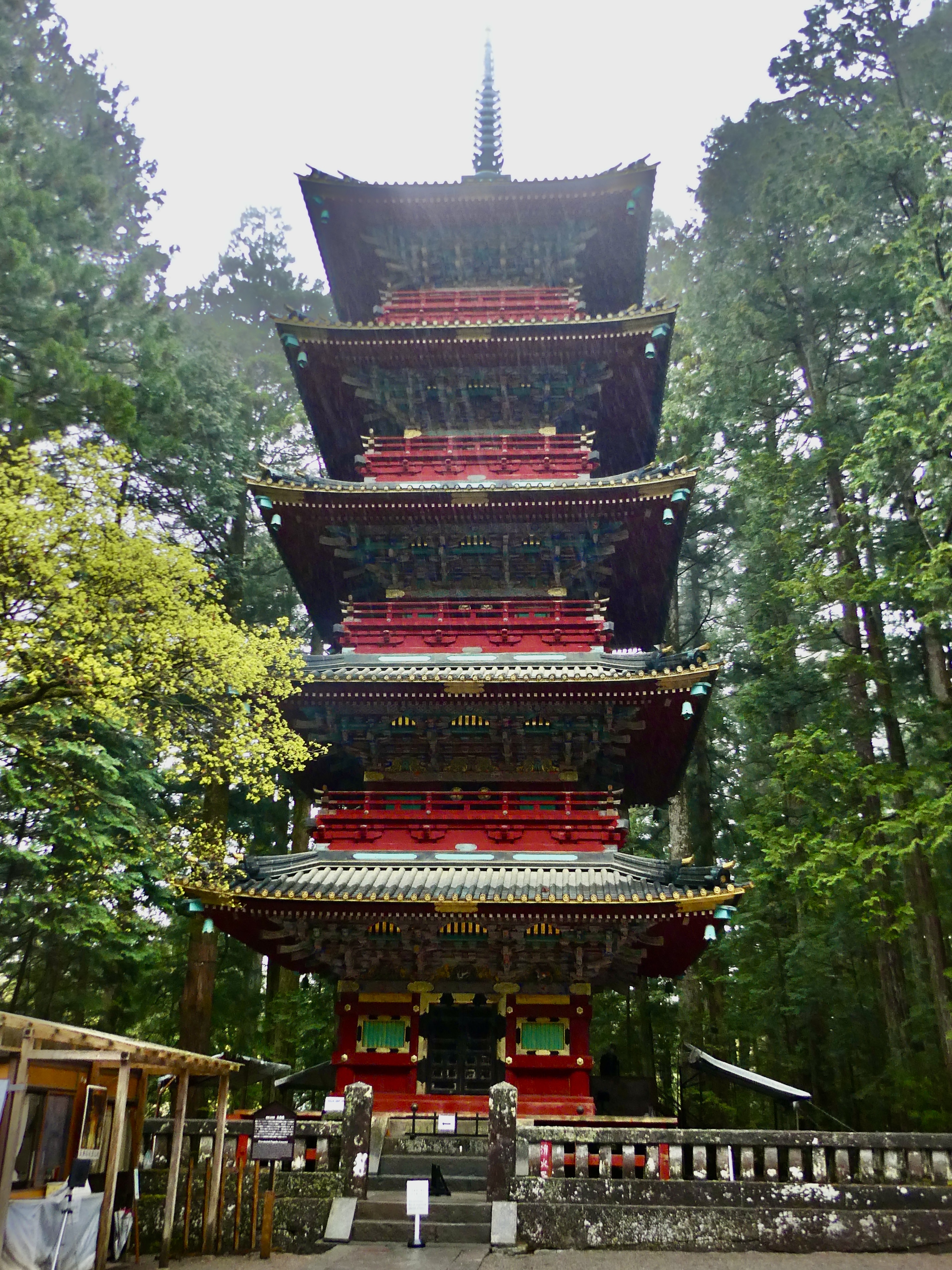
Another thing that was interesting was the buildings included both Shinto and Buddhist elements. For example, there was a five story pagoda (Buddhist) near the front Torii gate (Shinto).
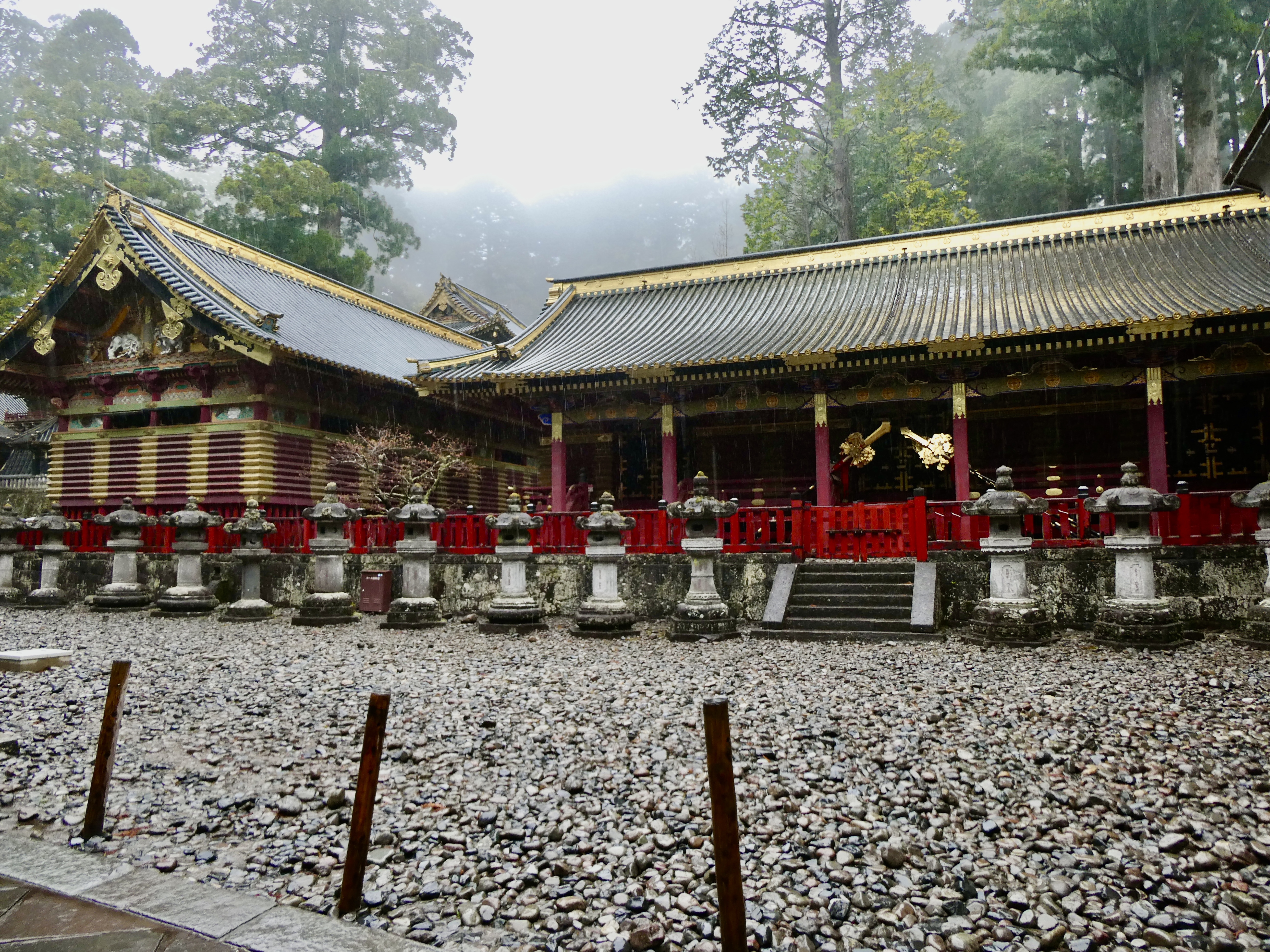
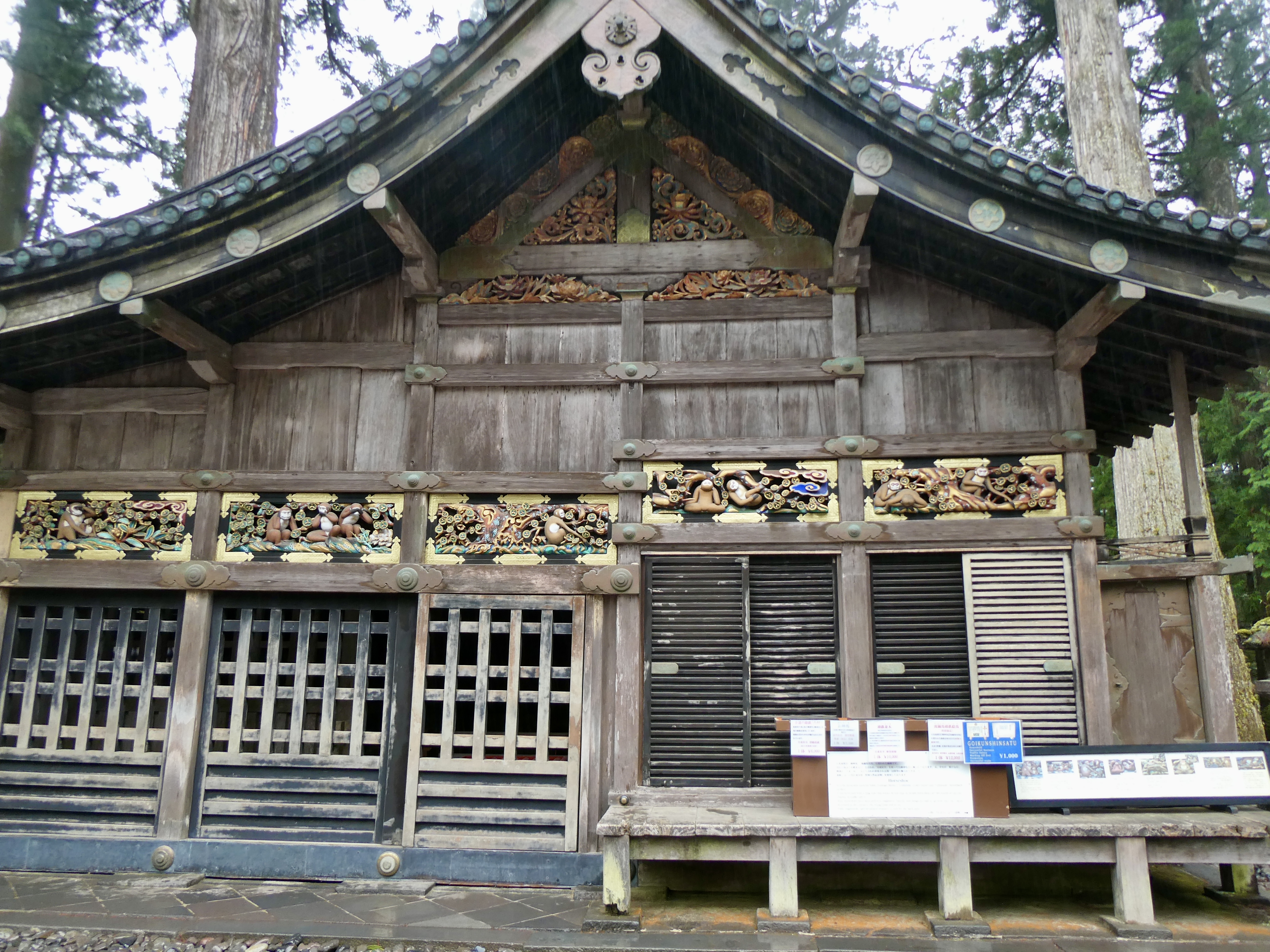

Anyway, once we passed through the enormous Torii gate, we came face to face the gorgeous pagoda shrouded in a bit of fog and then it was up another staircase to the elaborate storehouses with lots of detailed wood carvings and a myriad of colours. Across from the main storehouses was the “Sacred Stable” where a lord’s horse ridden into a battle which ultimately united Japan, was housed. After the horse passed, subsequent shoguns presented horses to the shrine.
Now this stable was largely undecorated except for a carved horizontal band of monkeys that encircled the top of the stable. The most famous of these carvings on the stable is the “hear no evil, speak no evil, see no evil” monkeys encapsulated in the second portrait from the left. I was fortunate to be there when no one was around so was able to snap some good pictures, but later when we were leaving the shrine, they were lined up ten deep.

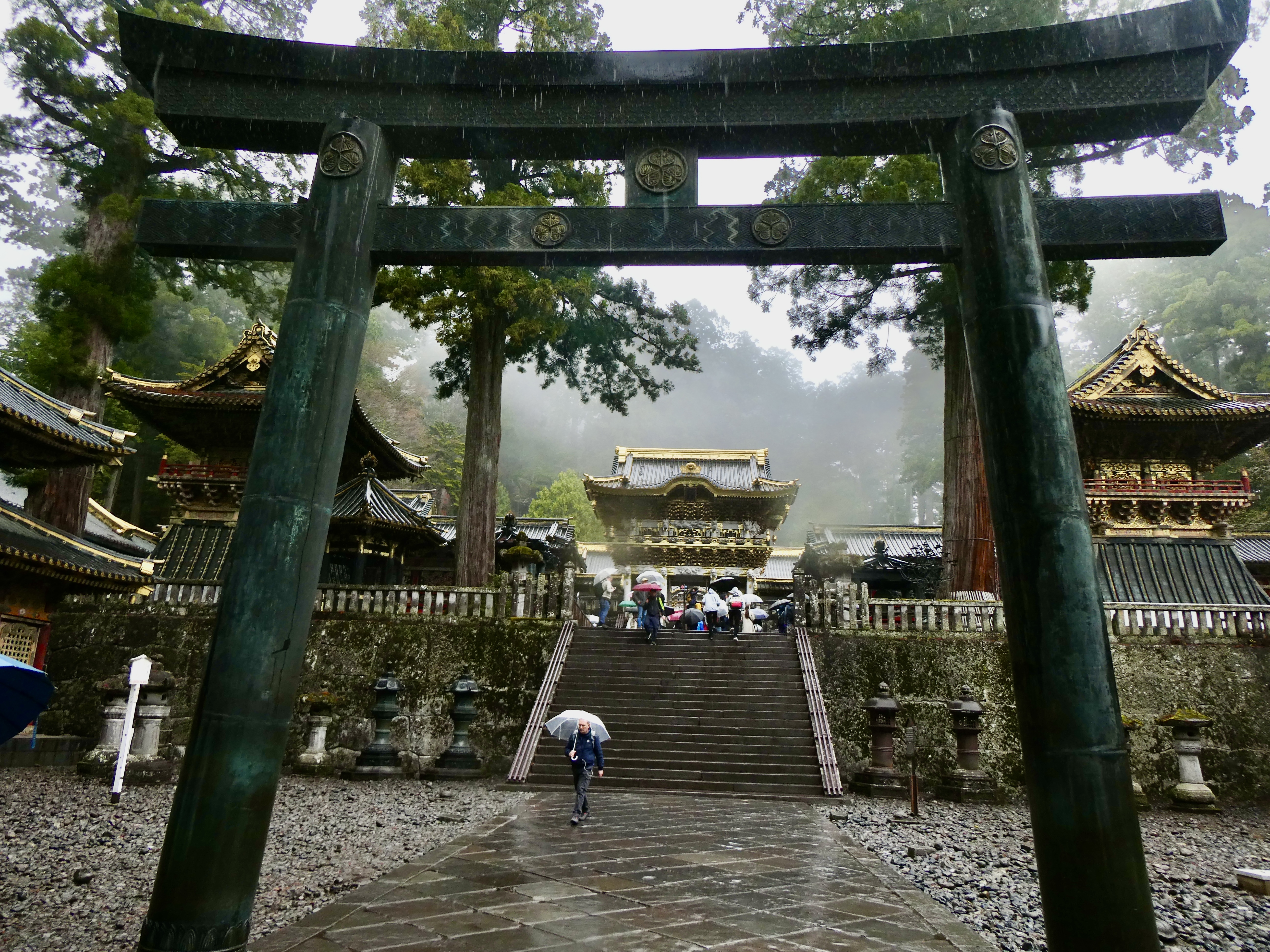


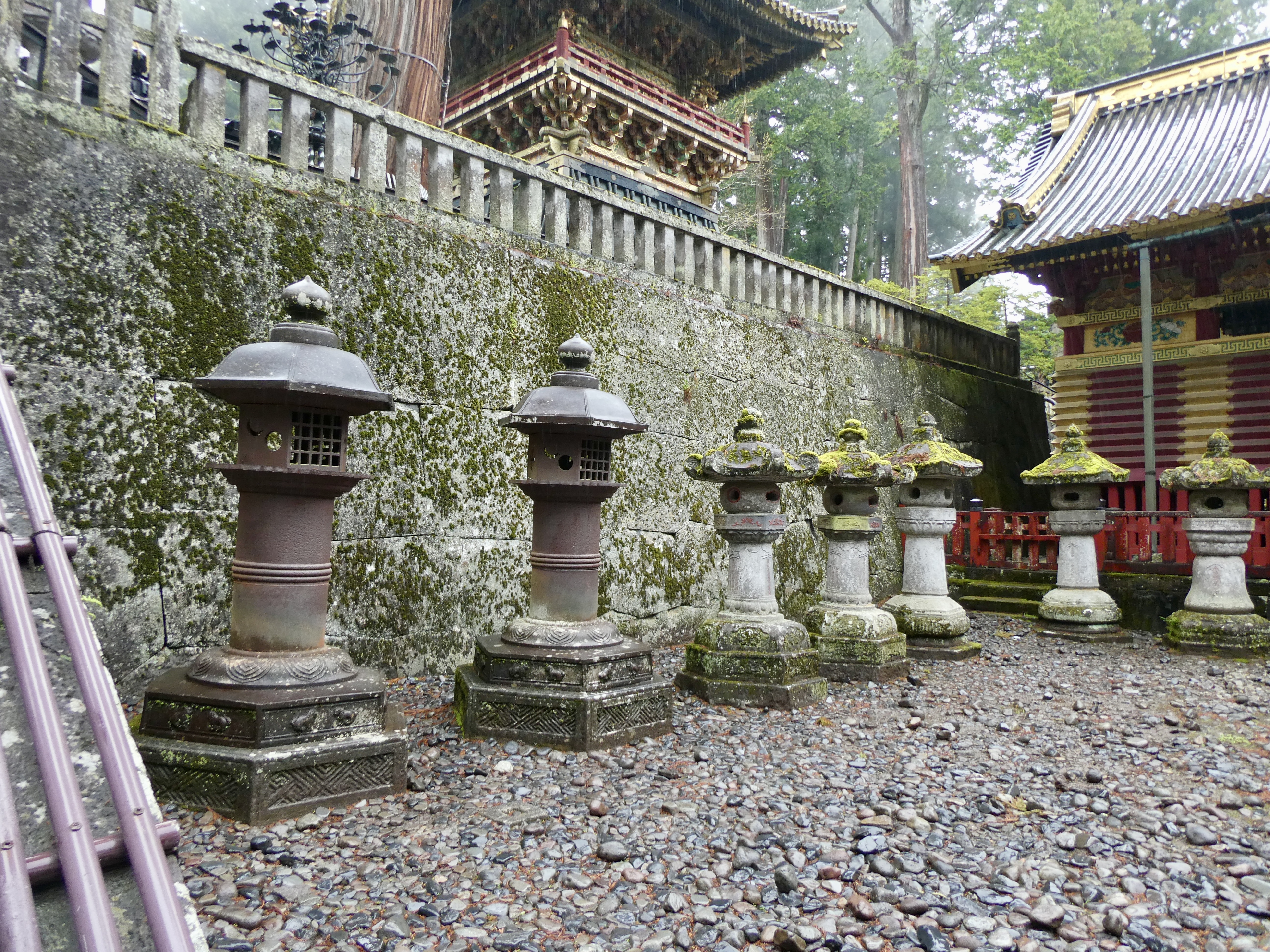
Anyway, past the stable and storehouse we walked through another Torii gate where we passed a building used by priests to prepare for prayers and numerous toshogu lanterns dating to the 14th and 15th centuries, including two rare iron lanterns from Portugal.
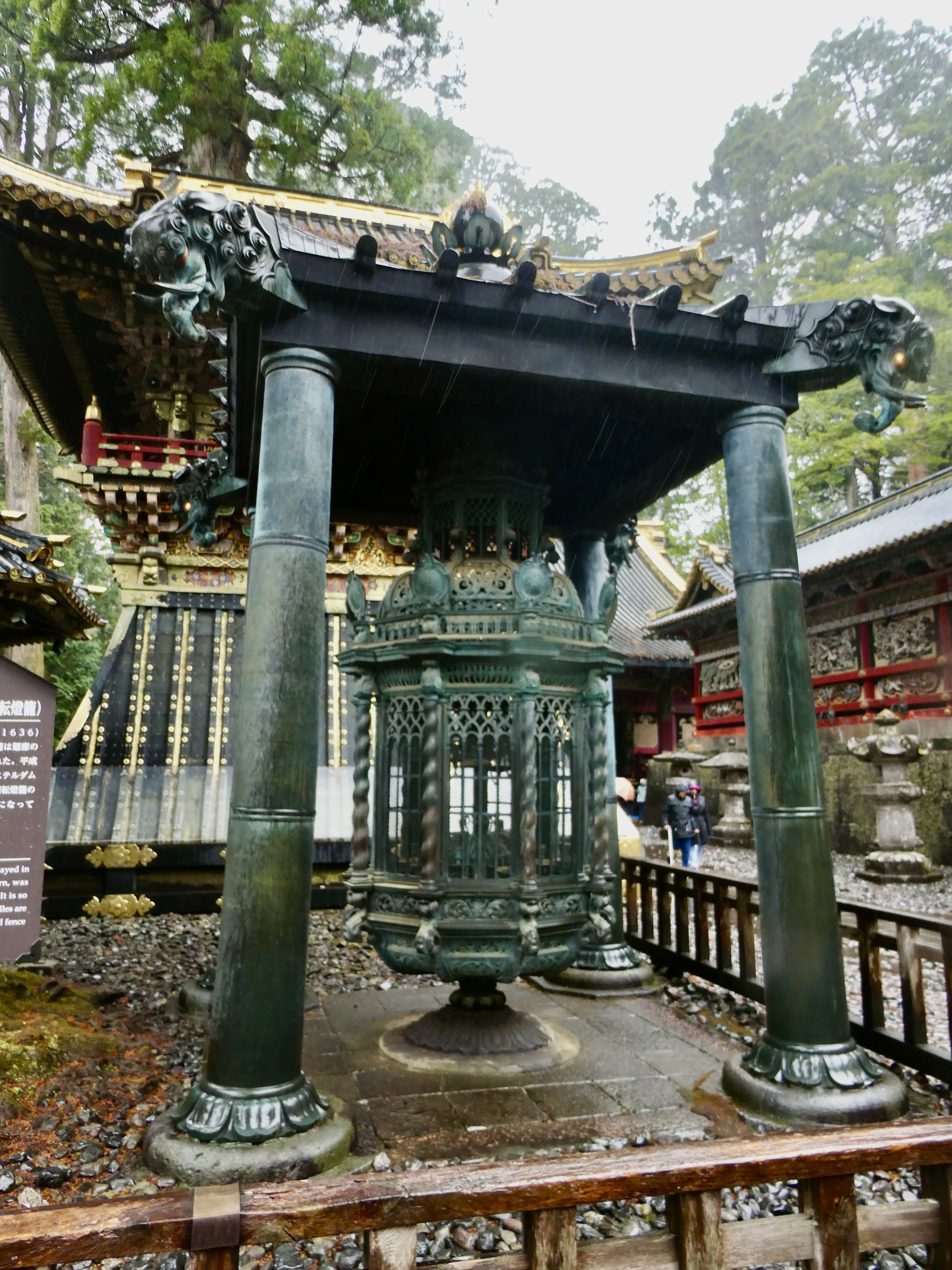

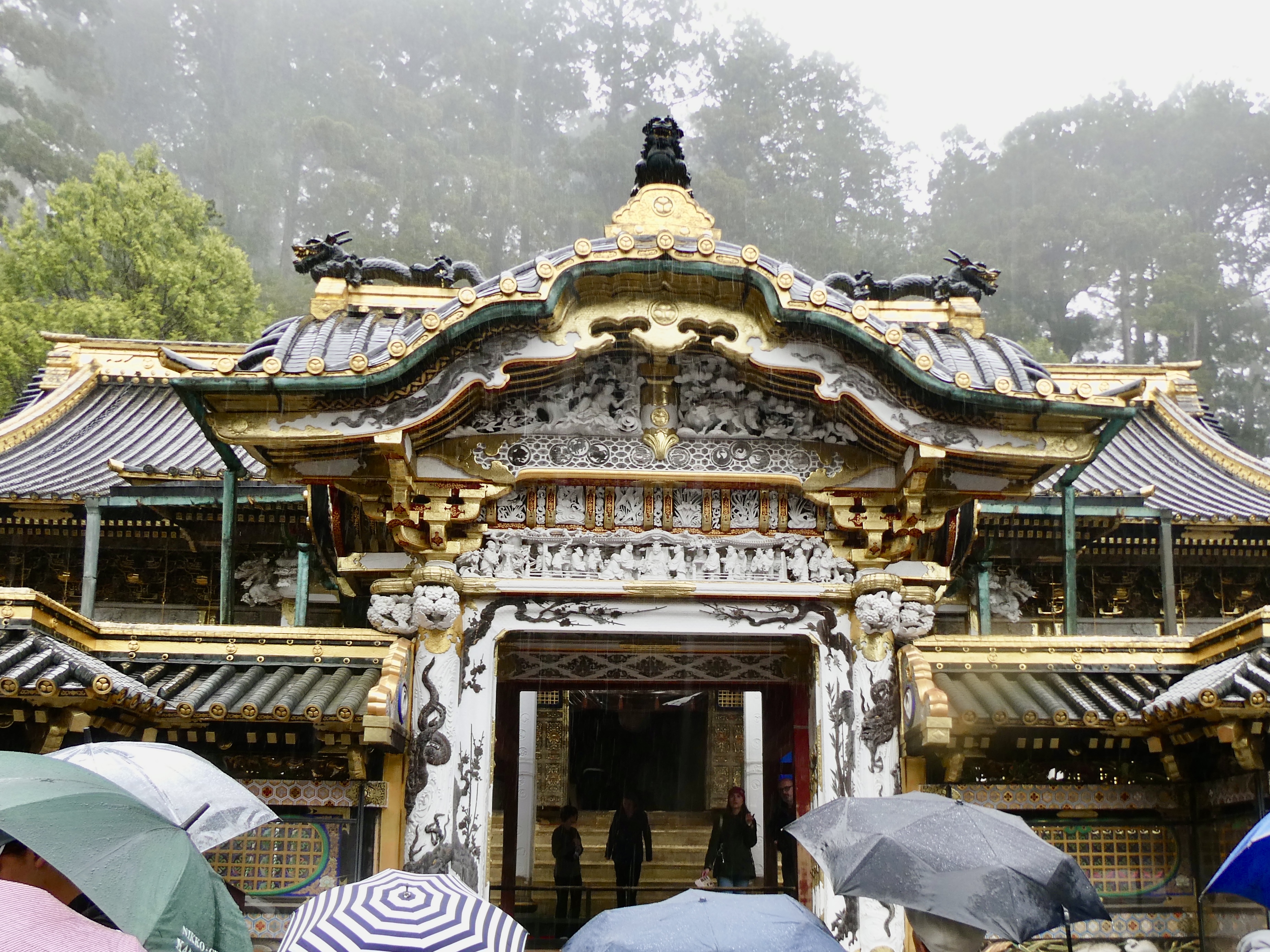
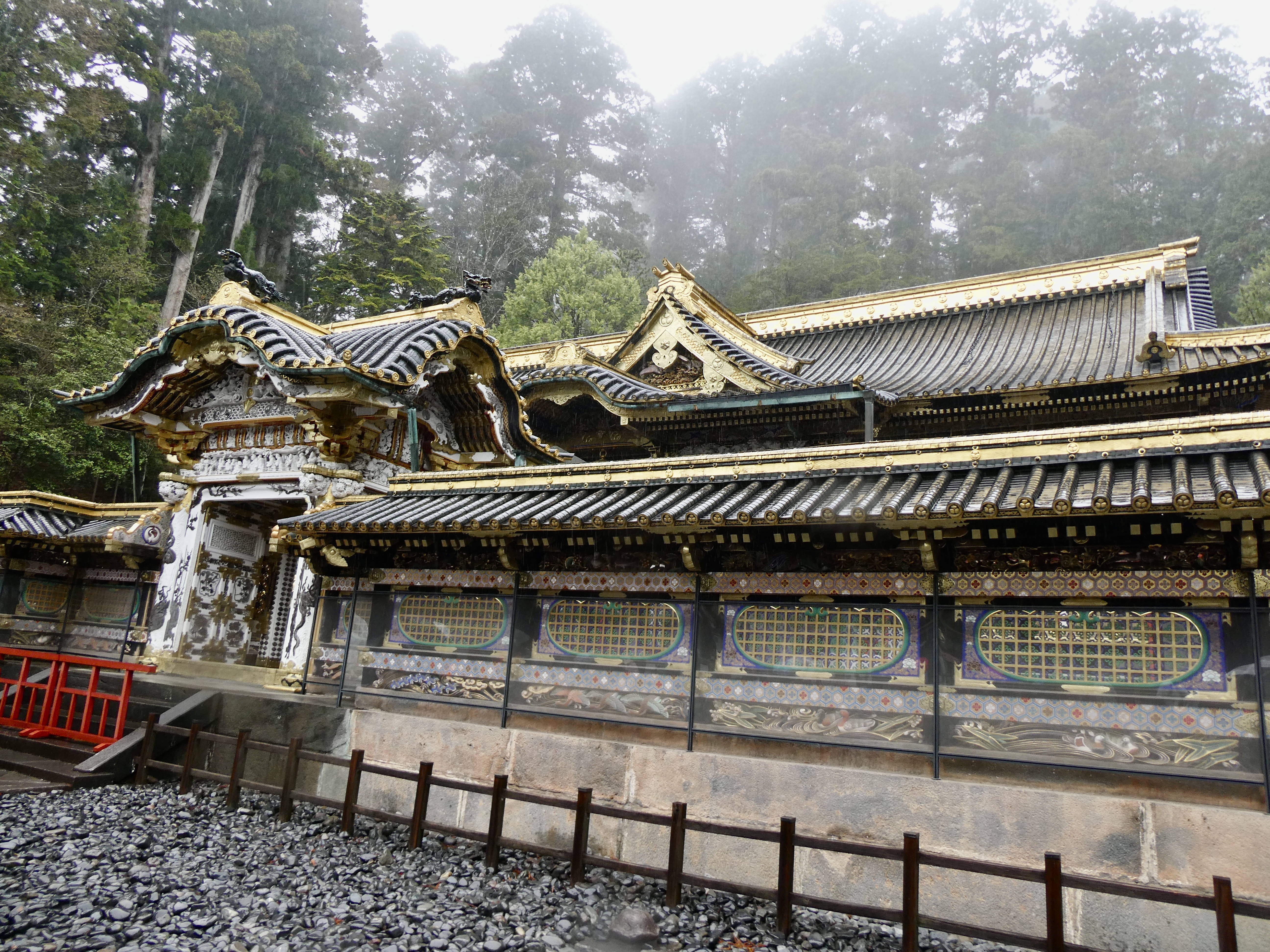
We then climbed up the staircase (why are all shrines and temples up hill??) to the main part of the shrine. First up at the top of the stairs was a 1636 Candelabra given to the shrine by the Dutch. This thing was huge. We then moved towards the star attraction, the Yomeimon Gate, an incredible ornate gate flanked by two imposing guardian figures representing Deva Kings. Once through the gate, we stopped to take a look at the more than 500 hundred carvings of children, elders and mythical beasts covering the gate. The carvings were made out of white shells and the surrounding wood was painted in reds and covered in gold leaf. Absolutely gorgeous.
From here, we walked to the main prayer hall (which quite frankly was pretty bland compared to the gorgeous Yomeimon Gate) where we had to take our shoes off before going inside. The inside of the building featured three prayer halls (a main hall, a hall for the Shogun and a second hall behind the main hall), a dragon ceiling, lots of gold leaf and many intricate carvings. However, there was no photography allowed, so no pictures.
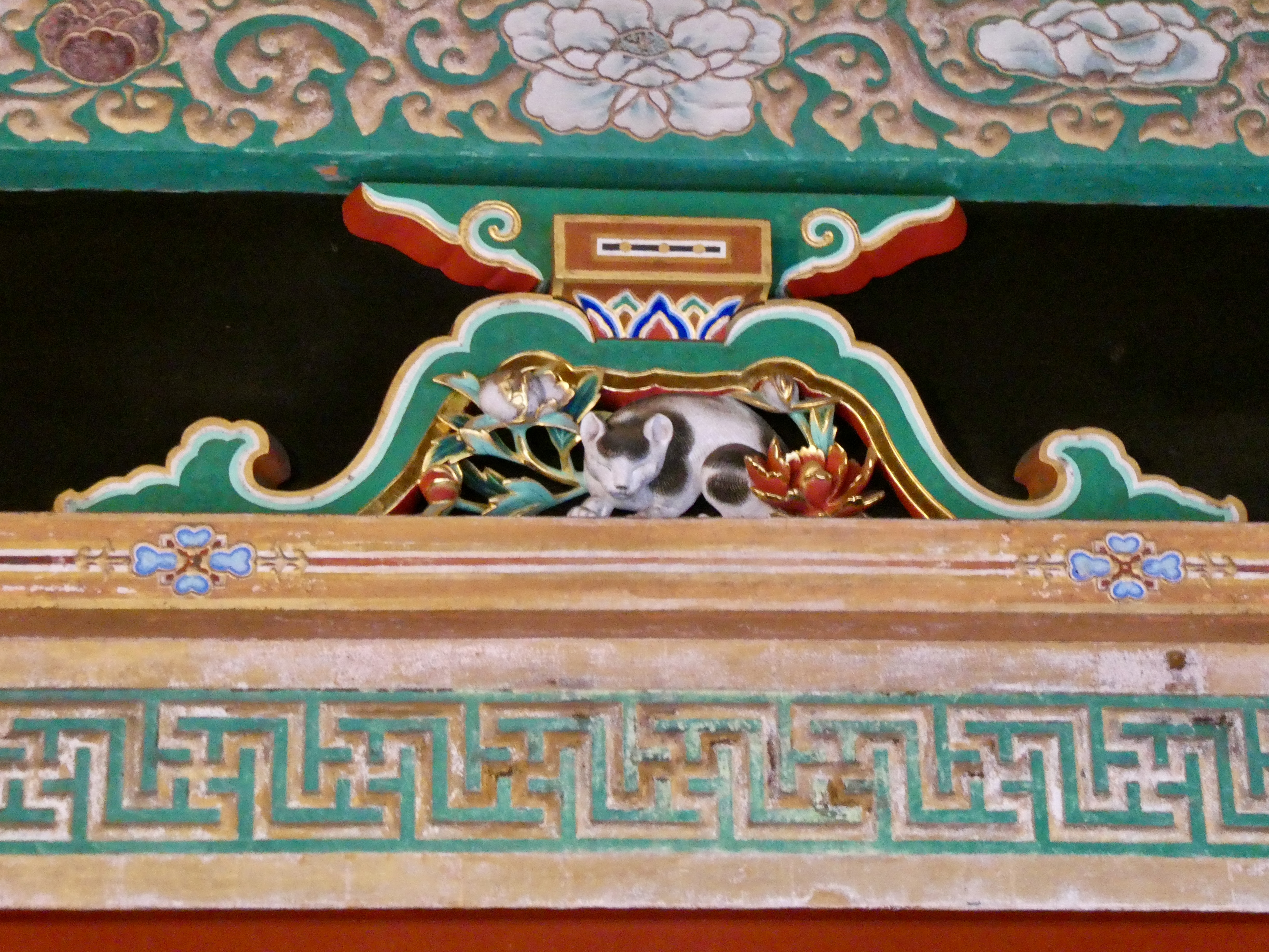
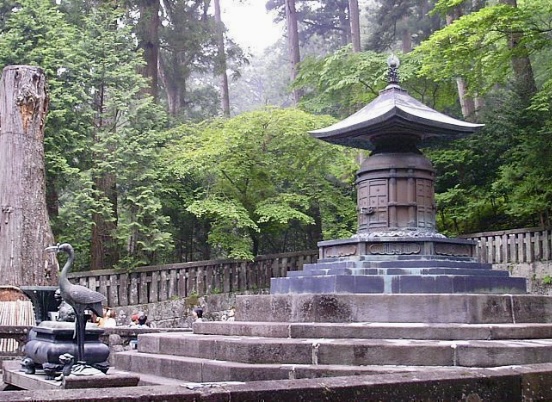
After visiting the main hall, we put our shoes back on and turned to the right and walked under the Sakashitamon Gate where we were able to see the famous carving of the Nemurineko (sleeping cat). I am not sure why it is so famous, but the Japanese love their cats. And behind the gate was a looooooong flight of stairs that took us uphill through the woods to Tokugawa Ieyasu’s mausoleum. It was slick going in the rain, but pretty cool to see.
Once we climbed back down, we walked to the other side of the shrine to the Honjido Hall which features the “Crying Dragon”, a large painting of a dragon on the ceiling. Once we removed our shoes yet again, we entered the hall with a number of other people and were given a demonstration of how the dragon “cries”. A priest greeted us and then picked up two pieces of wood, walked directly under the head of the dragon and clapped the two pieces together resulting in a slight, high pitched ringing sound. However, when the priest moved away from the head of the dragon and clapped the two pieces together again, no sound. Now sadly, they would not let us take any pictures of the ceiling, but you have to trust that it was pretty cool to see.
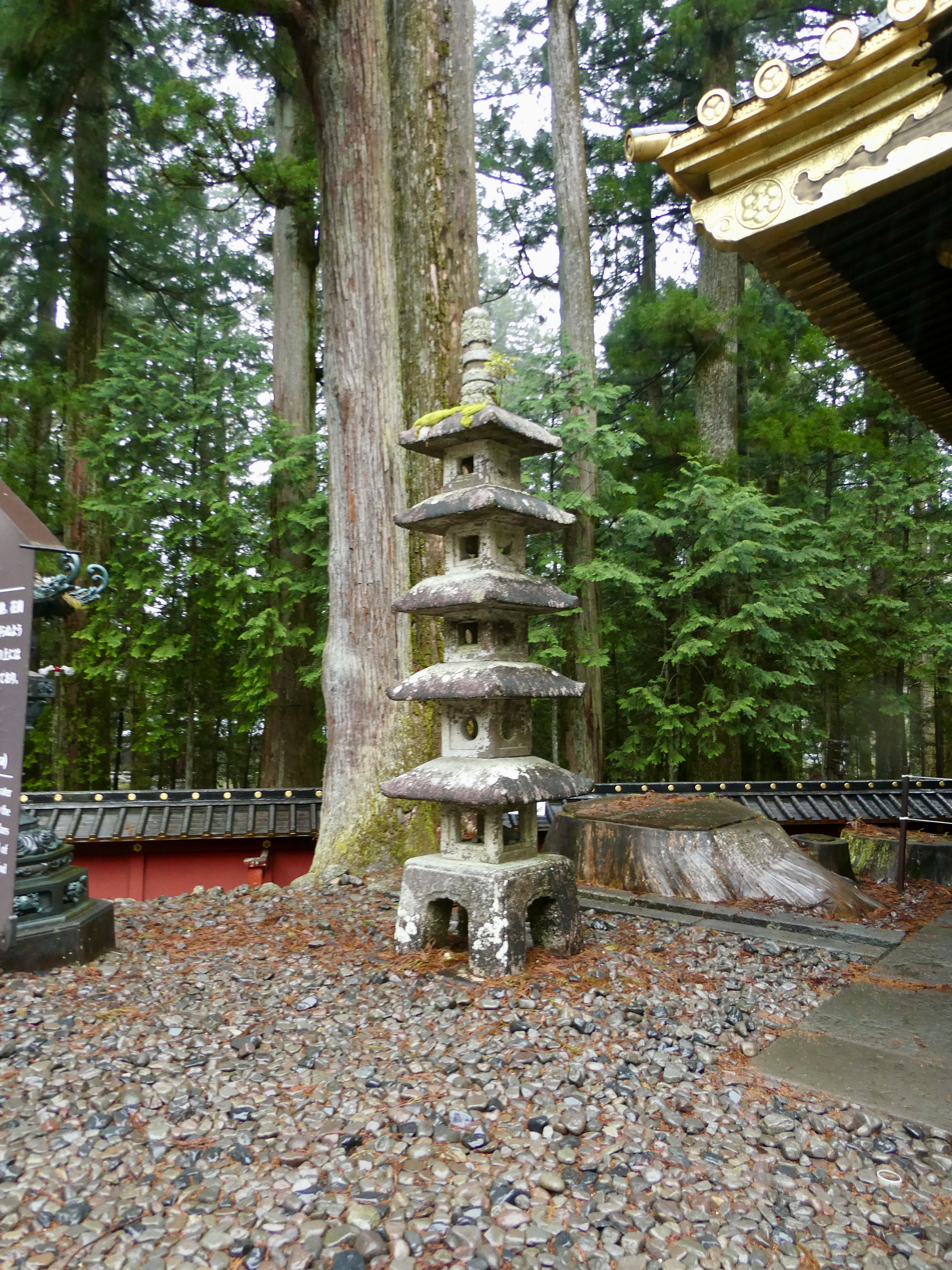
So after the crying dragon demo, Masa and I left building, walked back past the Yomeimon Gate and then through the two Torii Gates leaving the shrine behind. We then walked a couple blocks on a path through the forest to the Rinnoji Temple, which is apparently Nikko’s most important temple founded in the 8th century.
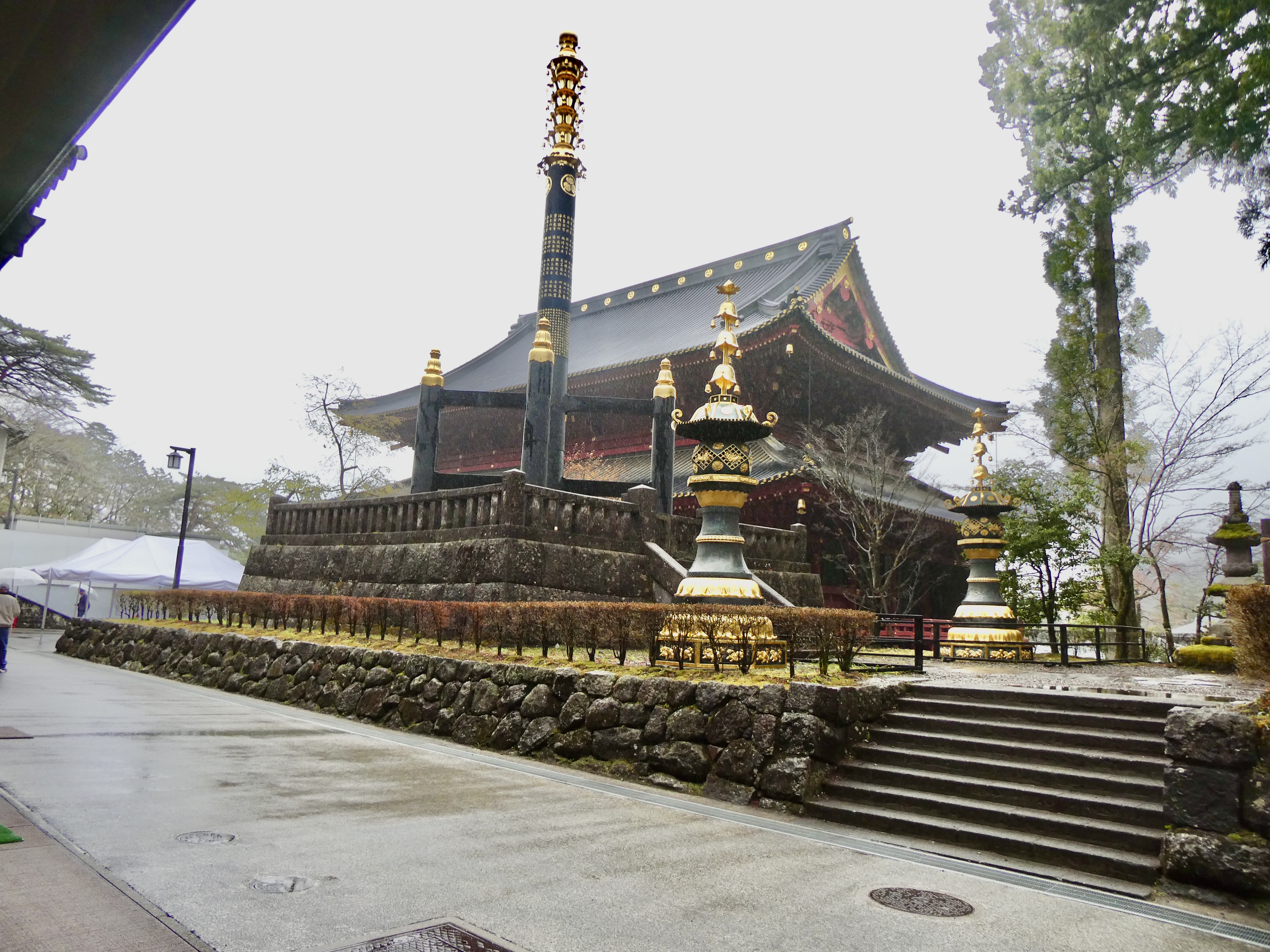
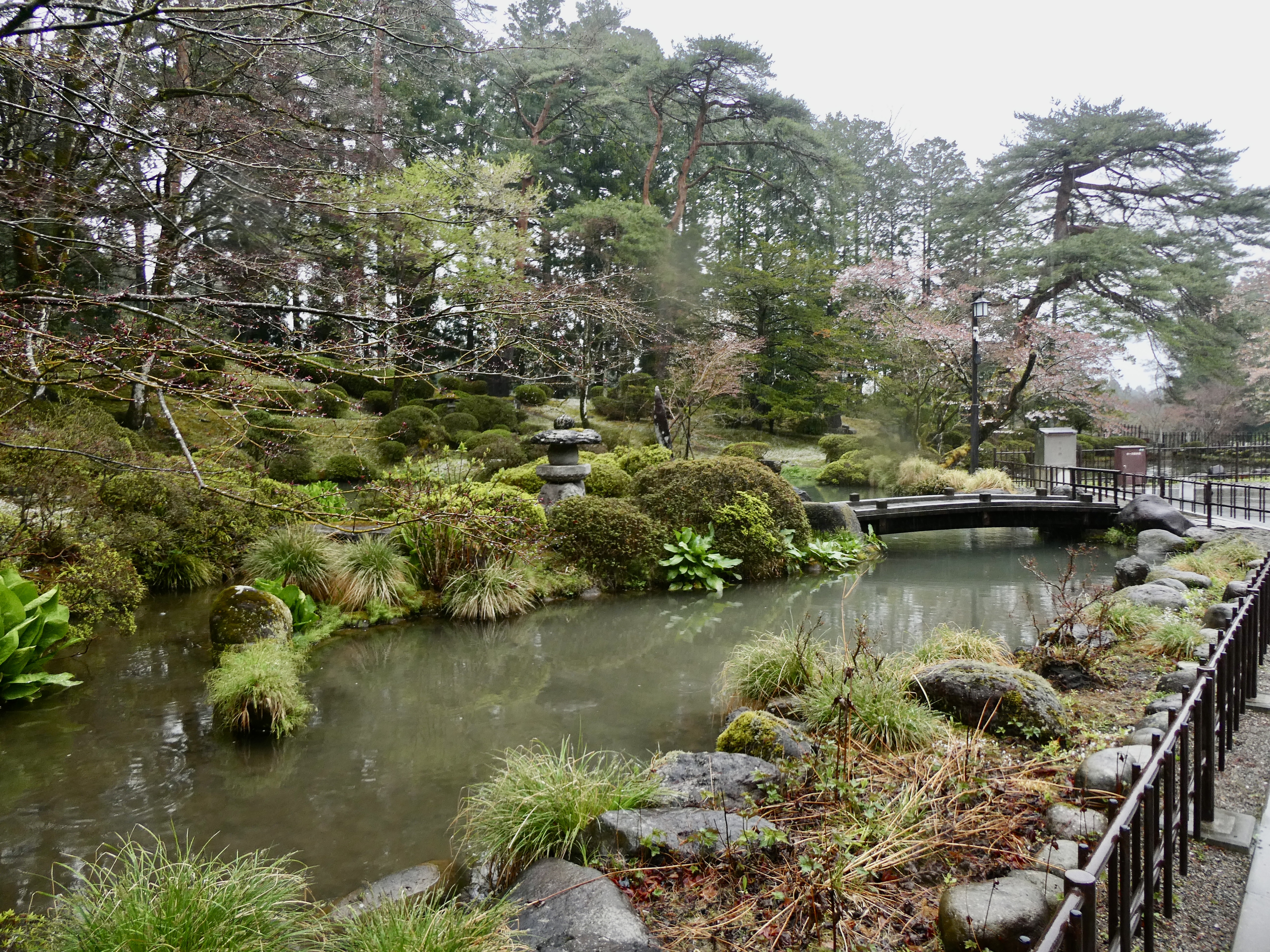


Now we entered from the backside of the temple so the first building we saw was the Daigomado Hall, which is used for something called the Goma Fire Ritual, which is apparently part of some kind of prayer ceremony. And adjacent to the Daigomado Hall was a small Japanese garden with maple trees surrounding a koi pond.
We then walked around to the temple’s main building, the Sanbutsudo, which houses large, gold lacquered, wooden statues of Amida, Senju-Kannon (“Kannon with a thousand arms”) and Bato-Kannon (“Kannon with a horse head”). The three deities are supposed to represent Nikko’s three mountains: Mount Nanaimo, Mount Nyoho and Mount Taro.
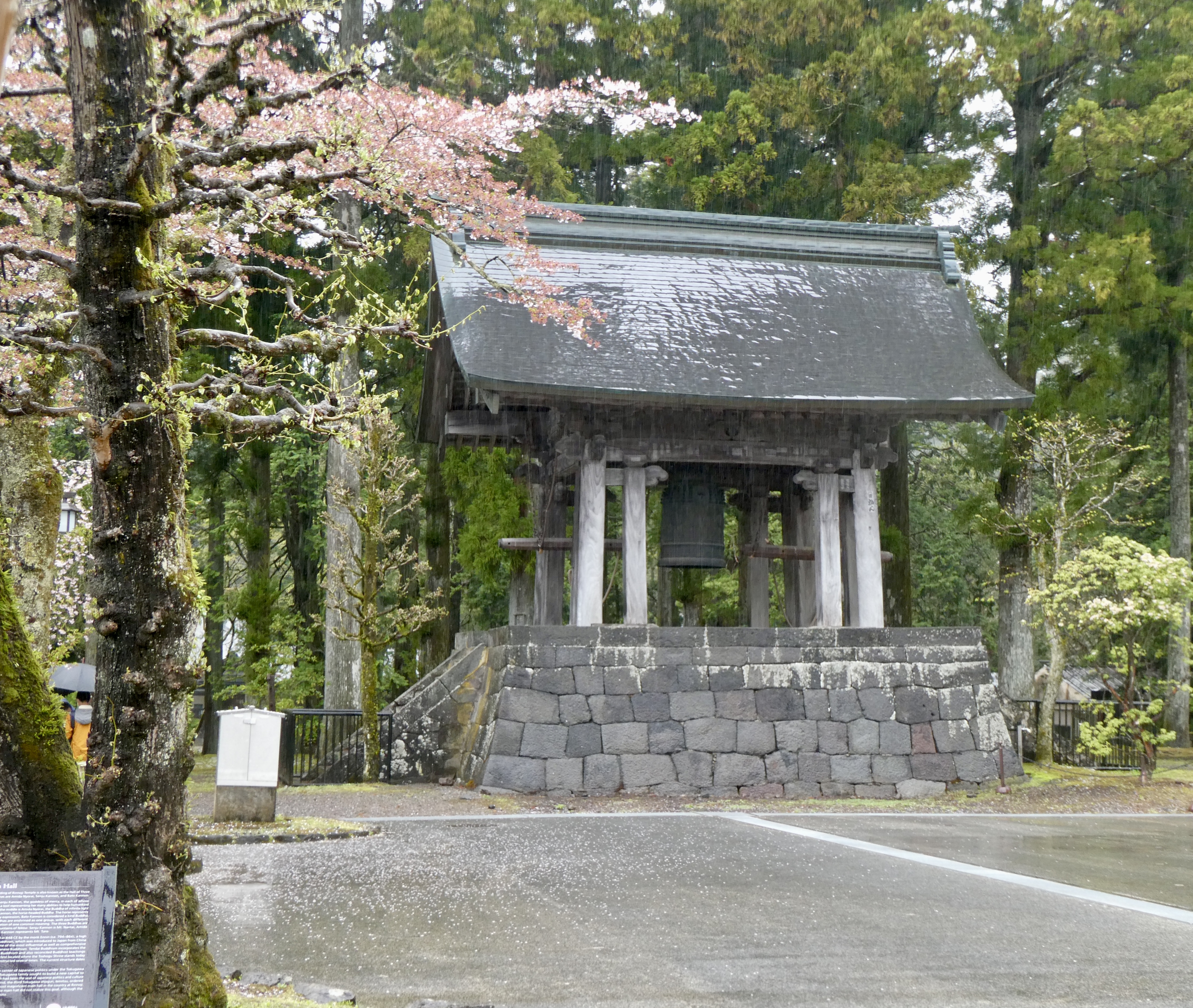
Now, quite frankly, the temple was a bit of a let down after the glamorous Toshugu Shrine. I did not pay to enter the temple and took a quick peak at the three statutes from outside before calling it good. Quite frankly, the most interesting parts of the temple were the beautiful bell and the gorgeous, still in bloom cherry blossom tree.
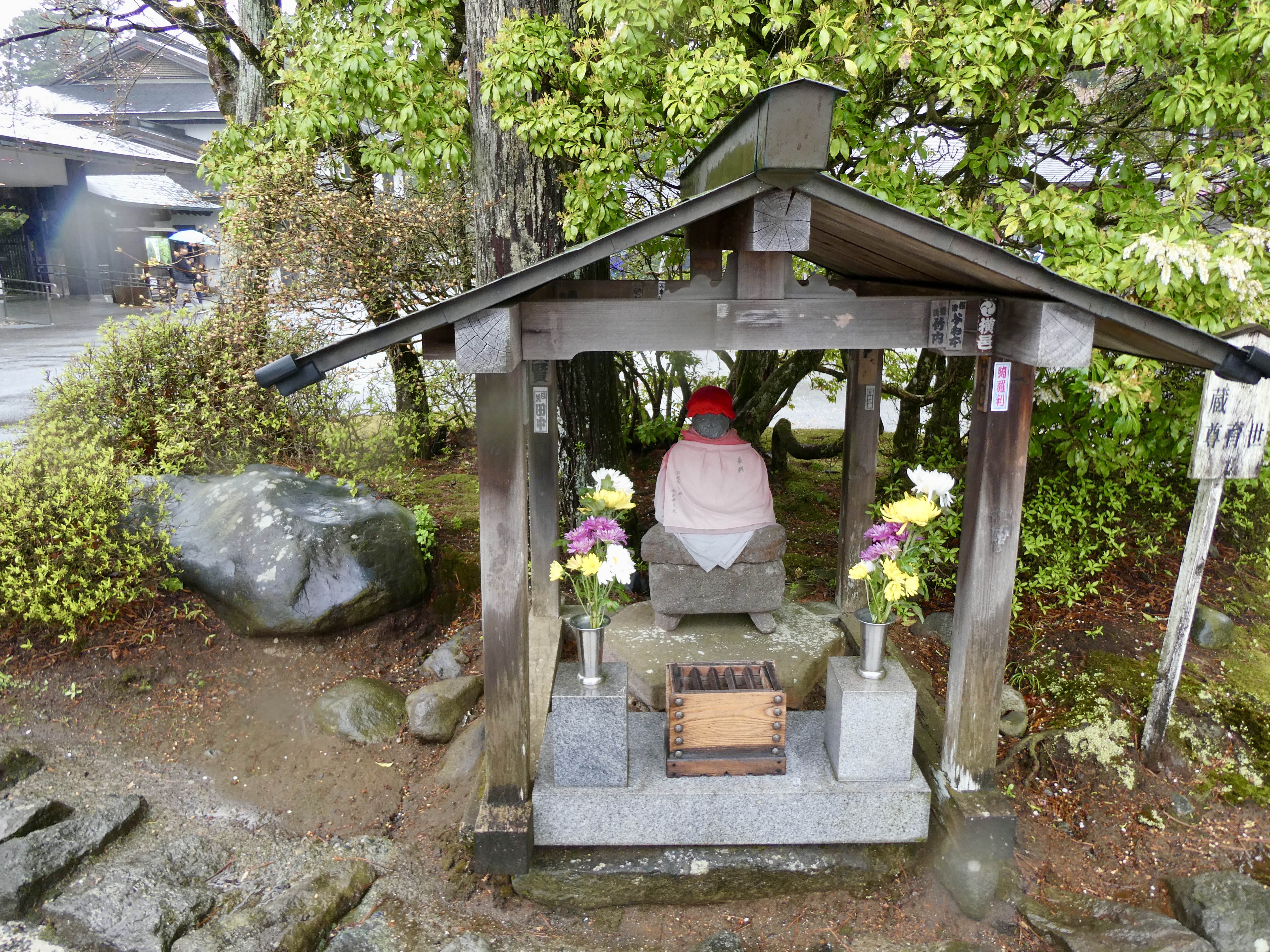
Anyway, we left the temple passing a tiny shrine containing a Ghost Jizo, which is a little statute that has a red bib and red hat. These statutes are everywhere in Japan and are believed to protect the souls of children who died before their parents.
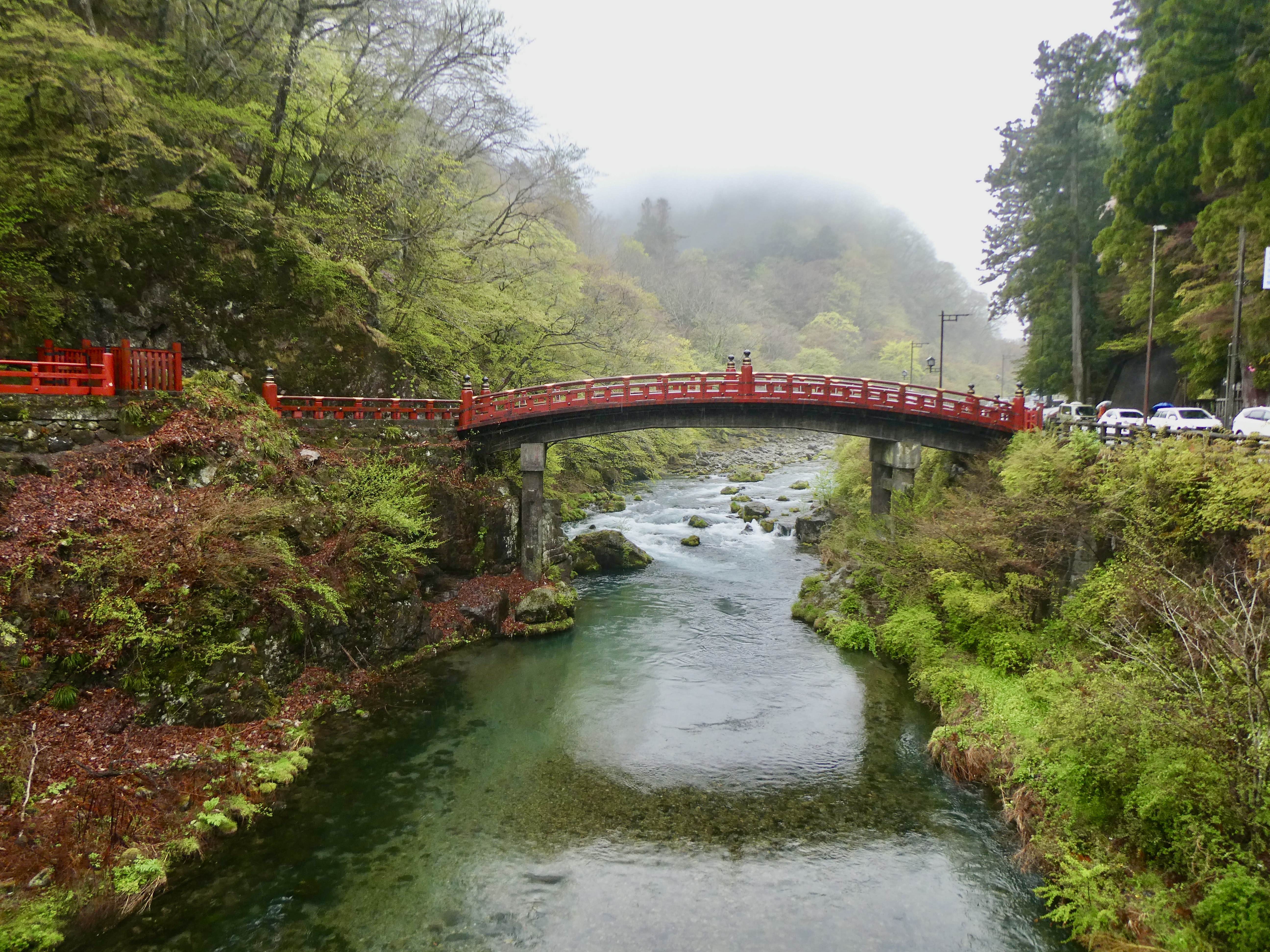
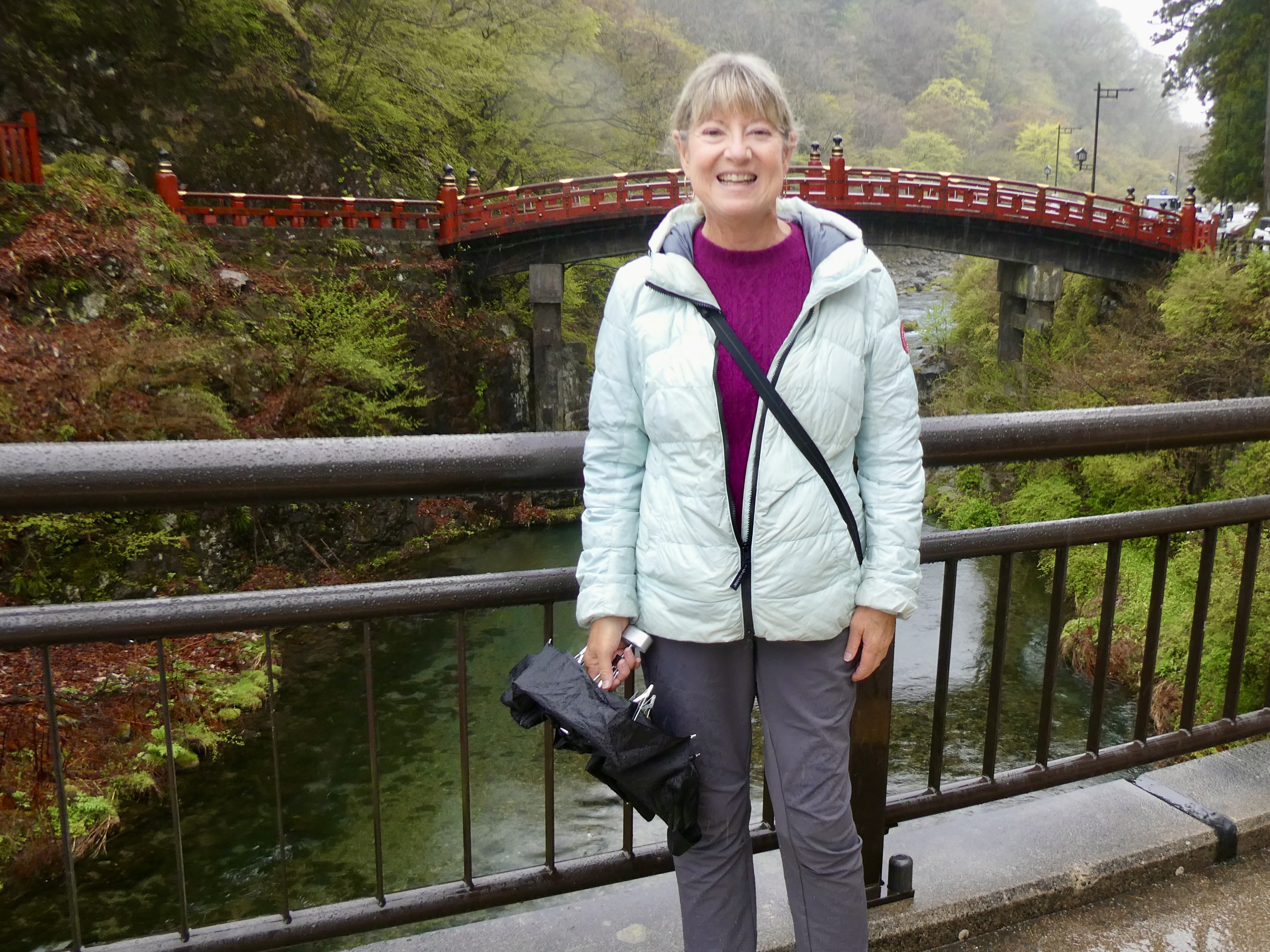
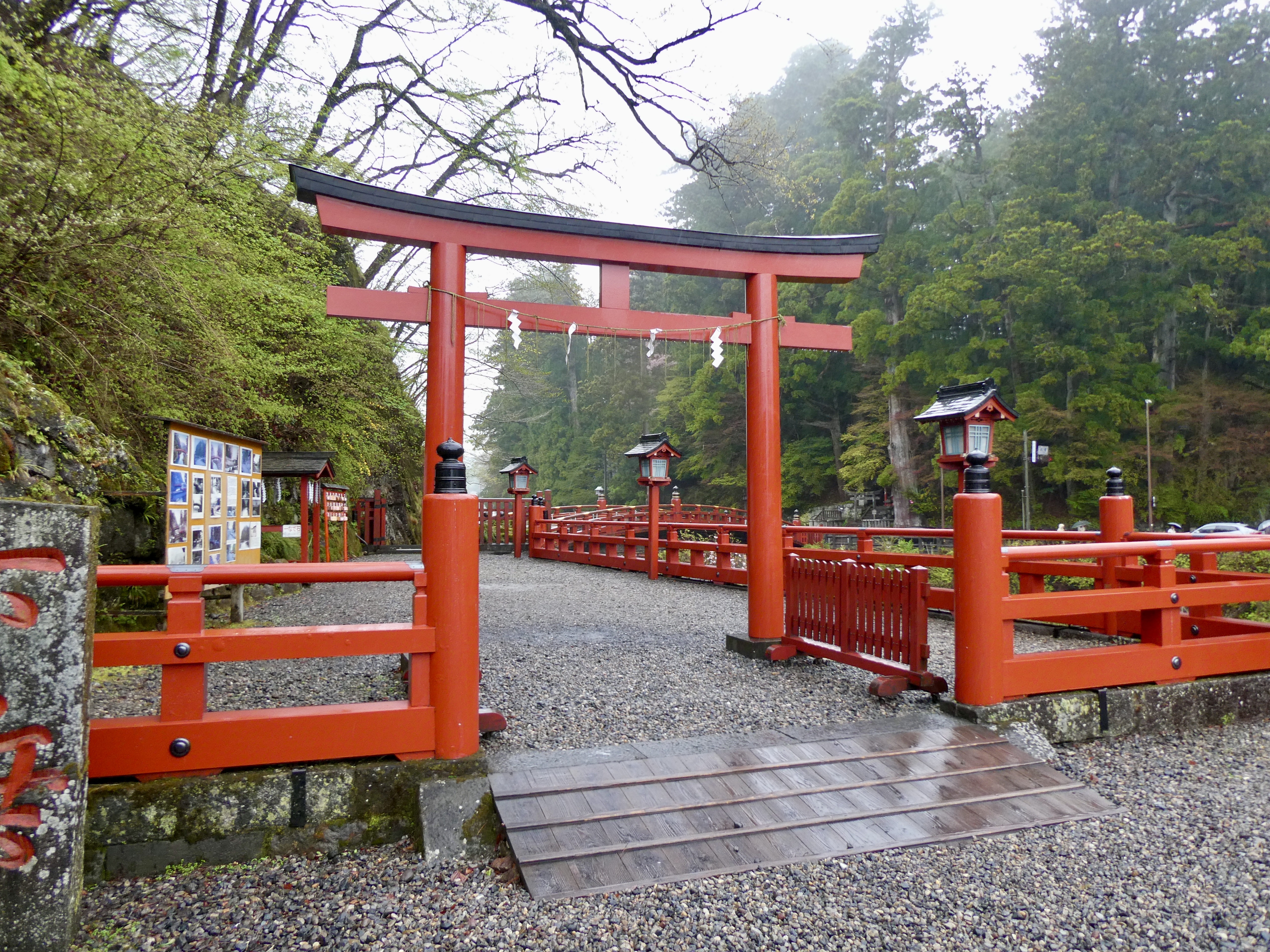


After leaving the temple grounds, we walked down the loooong hill to the Shinkyo Bridge (aka Sacred Bridge) which crosses the Daiya River (and damn was it ever rushing today in the downpour). The bridge dates to 1636, however, it is believed that a bridge has been in this location for much longer. The brilliant red bridge ranks as one of the top three bridges in Japan.
Now the best spot for a picture was across from the bridge along the road, so Masa obliged me and took a couple pictures as the rain continued. As we walked, Masa stopped me and went to inquire as to whether I could get closer to the bridge (usually it is open to tourists, but today there was no one on the bridge). We found out it was indeed open, so I paid 800 yen and walked through the Torii gate and got a much more up close and personal look at the bridge and the shrine.
At this point, we had about an hour before our train departed for Tokyo so Masa and I grabbed a bus and headed back to the main part of town, picked up some dumplings and rice to go, found some seats at the train station and ate while we waited for our train. I ended up snoozing for a bit on the train and by 5:30 was back at my hotel. Tomorrow, it is back to Kyoto. Yay! I liked Tokyo, but Kyoto is much more my style.
