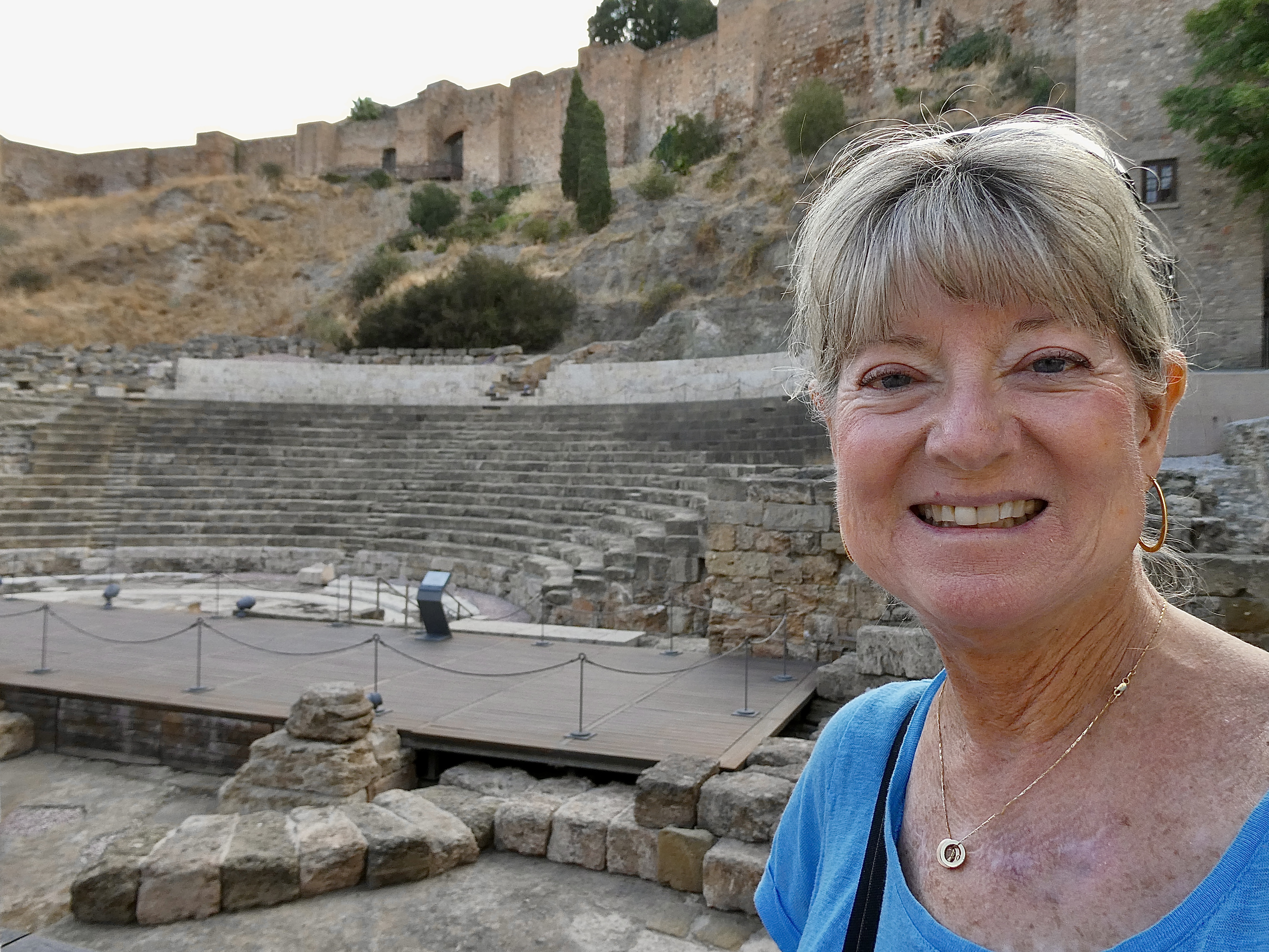
Today I was up early to travel one hour by train to Malaga, a nearby coastal city over twice the size of Cordoba with some notable sites I wanted to see. Now Malaga does not have the same quaint old town feel of Cordoba, but it does have a fabulous well preserved Roman Theater, an Alcazaba and a 15th century Cathedral. So I was on the train by 8:41 and just over an hour later, I was wandering around in front of the Roman Theater and the Alcazaba (my meeting point for my walking tour).
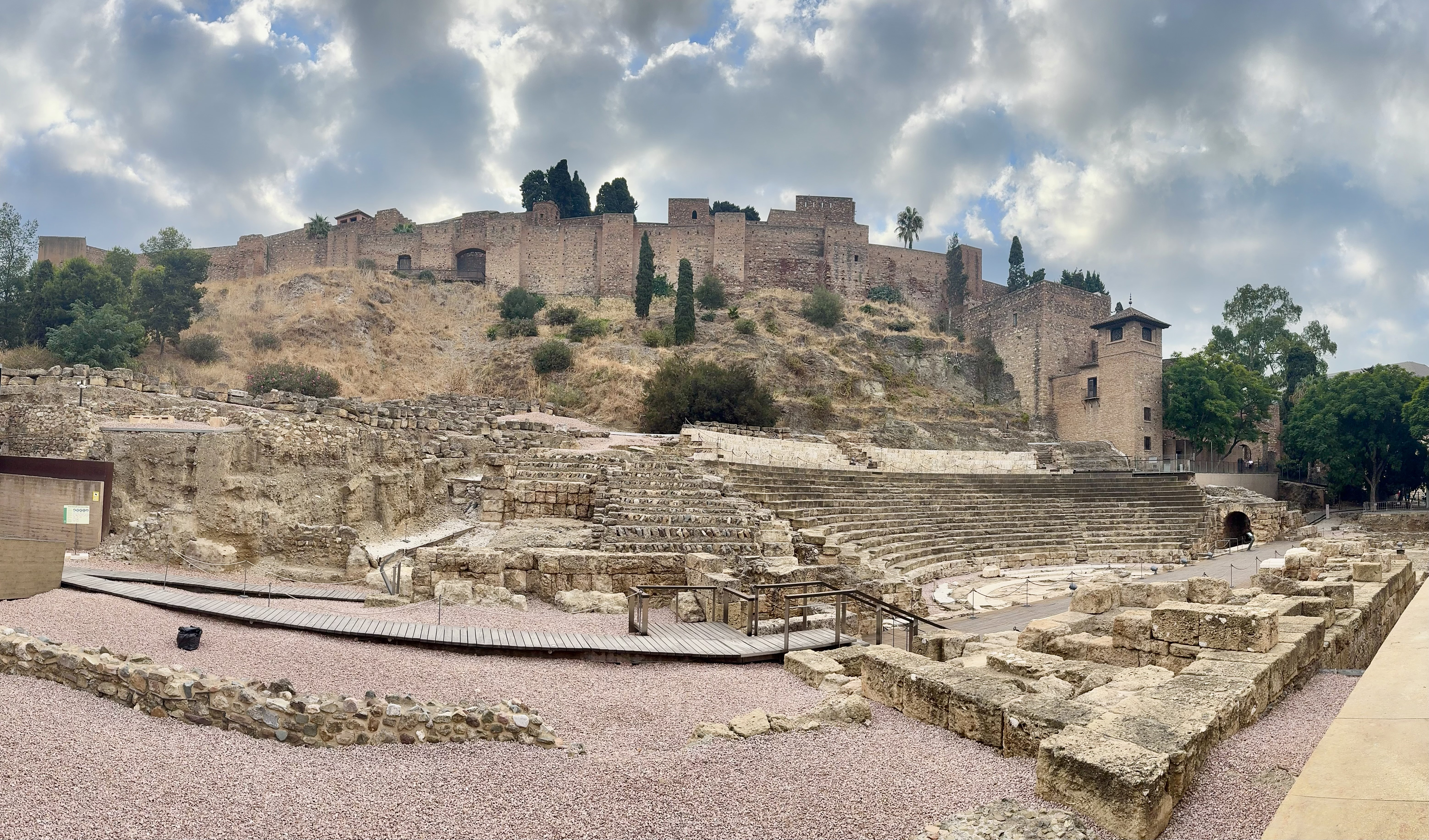
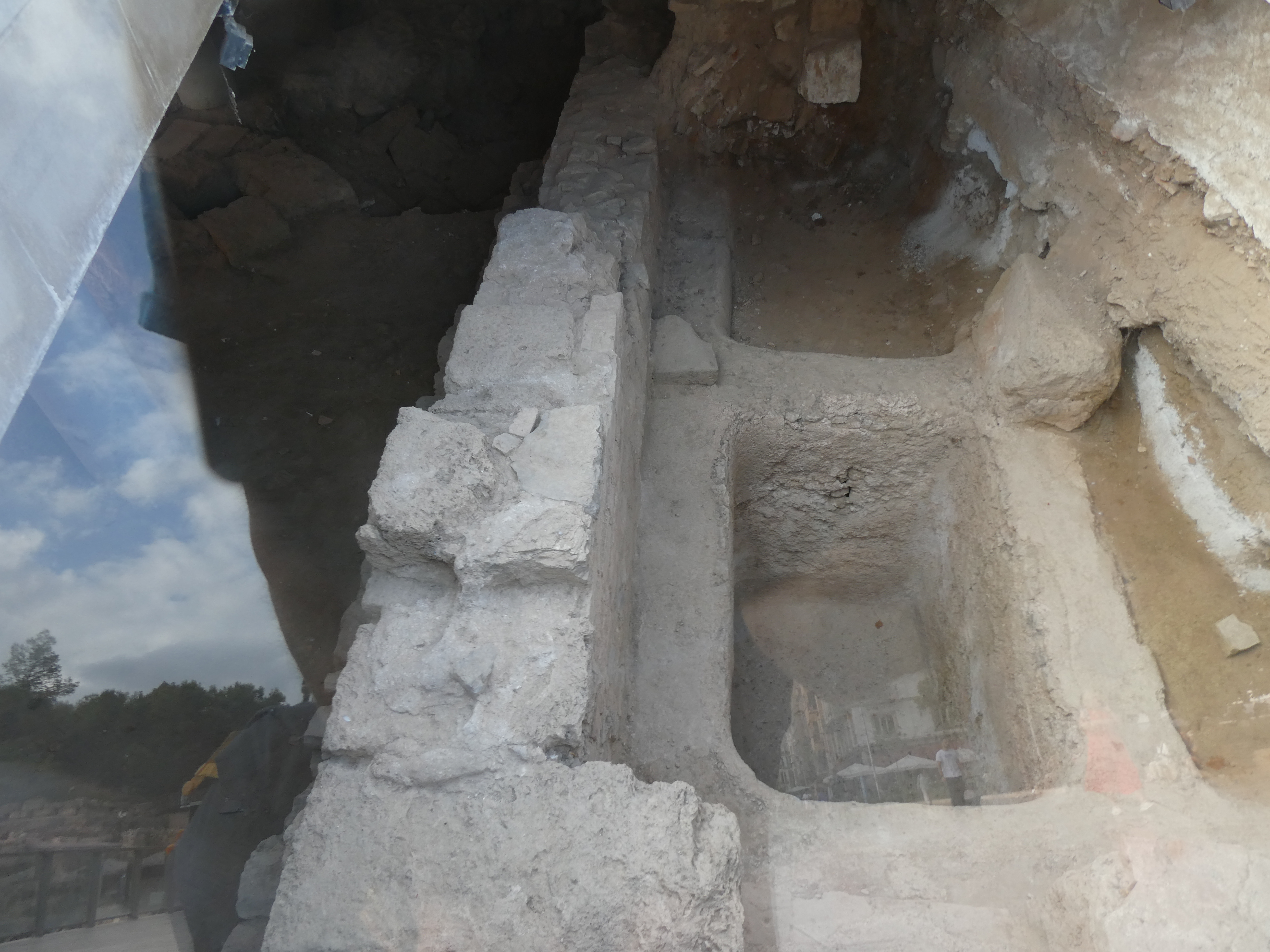
Now I was thrilled to find that no one was around so I was able to take some lovely panorama pictures of the Roman Theater and the Alcazaba with zero people in the pics. And nearby there was a glass pyramid in which you could peer down to see ruins of Roman basins that were part of a fish factory dating to the 4th century AD. Love it!
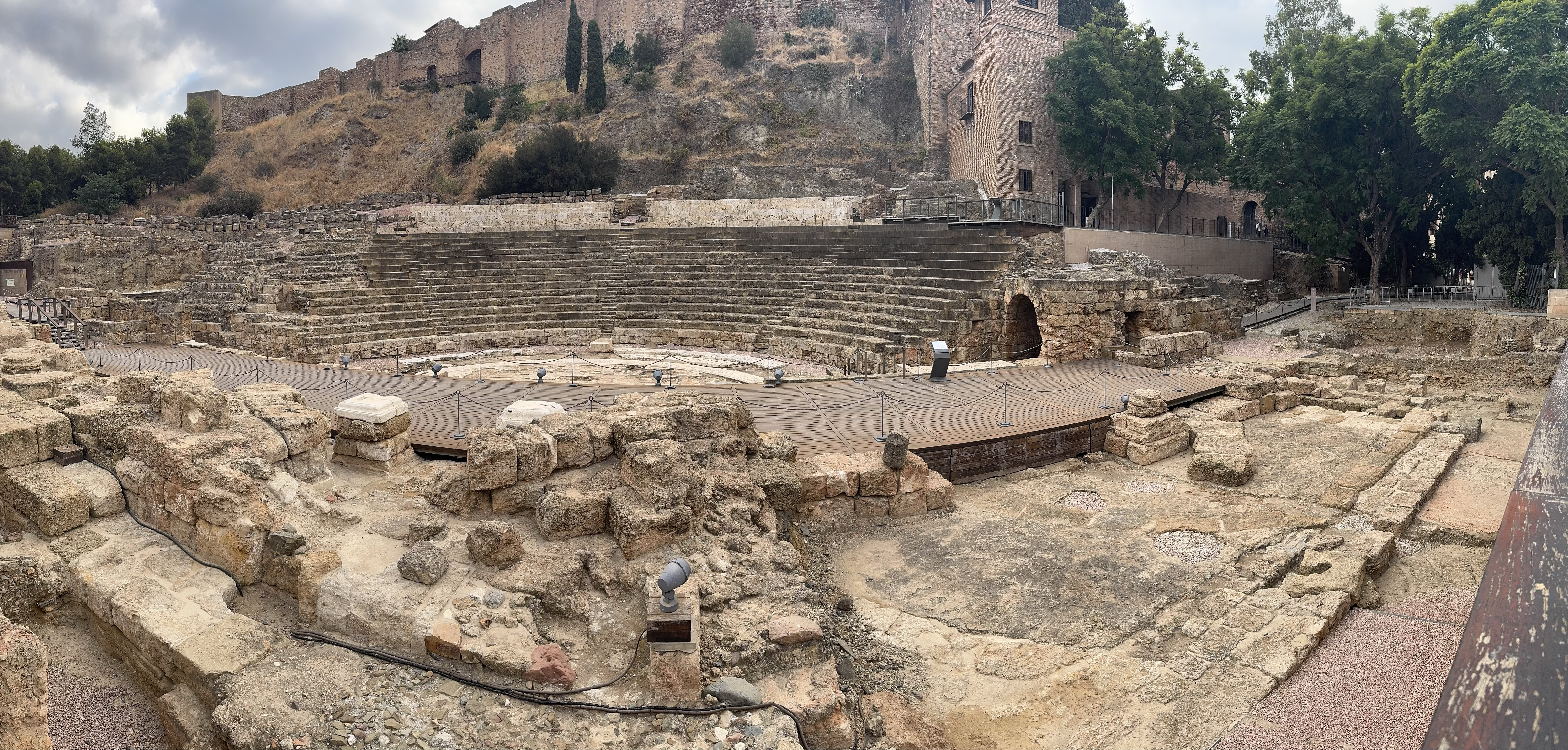
So by 10:30, I met up with my tour guide Natalia and 6 other folks for our three hour walking tour of the Roman Theater, the Alcazaba, Bishop’s Square and the Malaga Cathedral aka Santa Iglesia Catedral Basílica de la Encarnación. And at this point, I was thrilled I had arrived early and was able to take some pictures without anyone around because the square was now packed with tour groups. Fortunately, only small tours were permitted inside the Roman Theater so it made walking around the Theater a lot better.

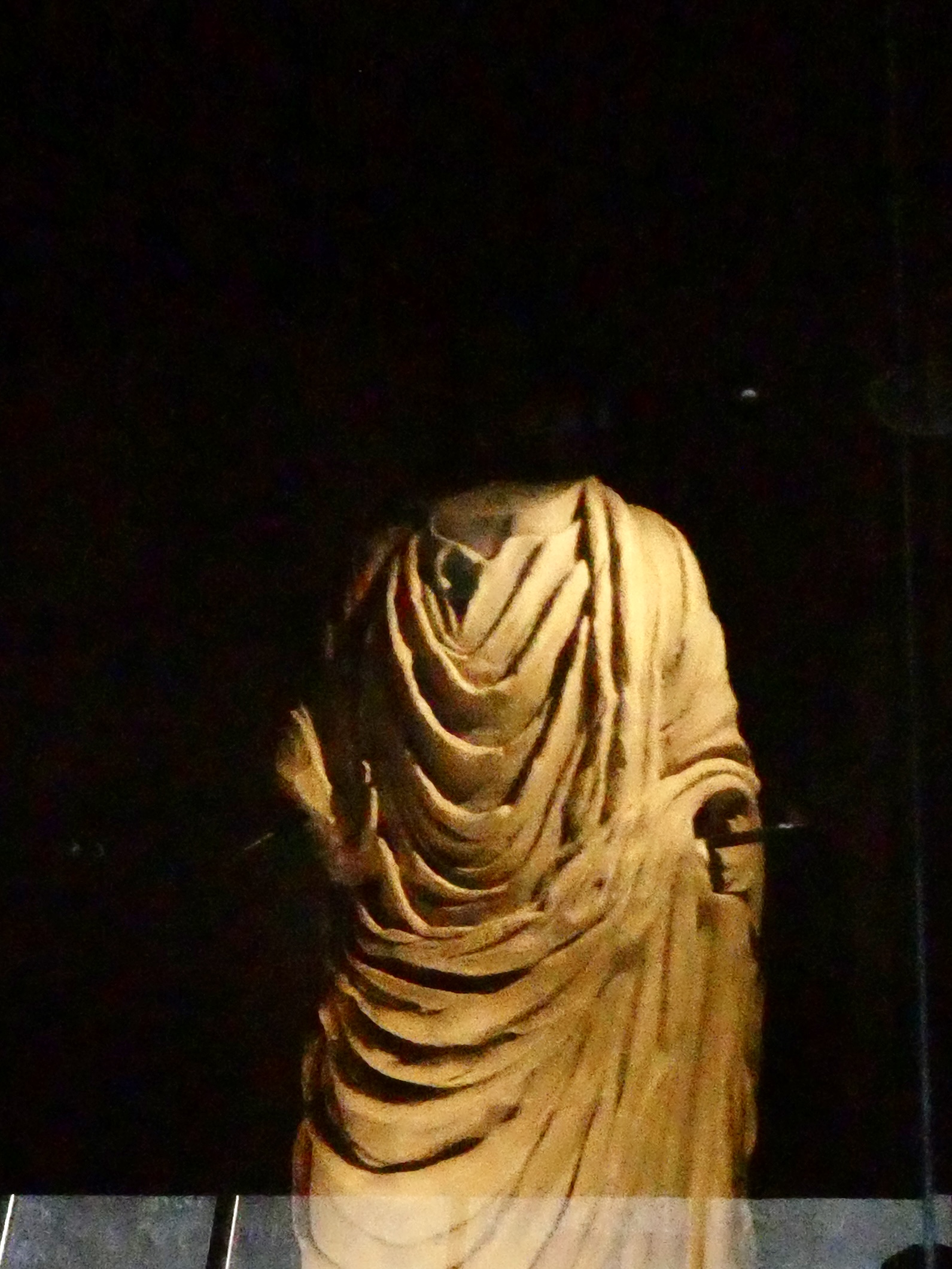
Anyway, our first stop was in a small museum that included some artifacts that had been found at the site. Now interesting history. It was known as far back as 1951 that a Roman Theater was on the site as some of the ruins were uncovered when an apartment building was under construction. Fast forward to the 1990s and when the apartment building was demolished, the city of Malaga in its infinite wisdom decided to excavate the site and fully restore the Roman Theater.
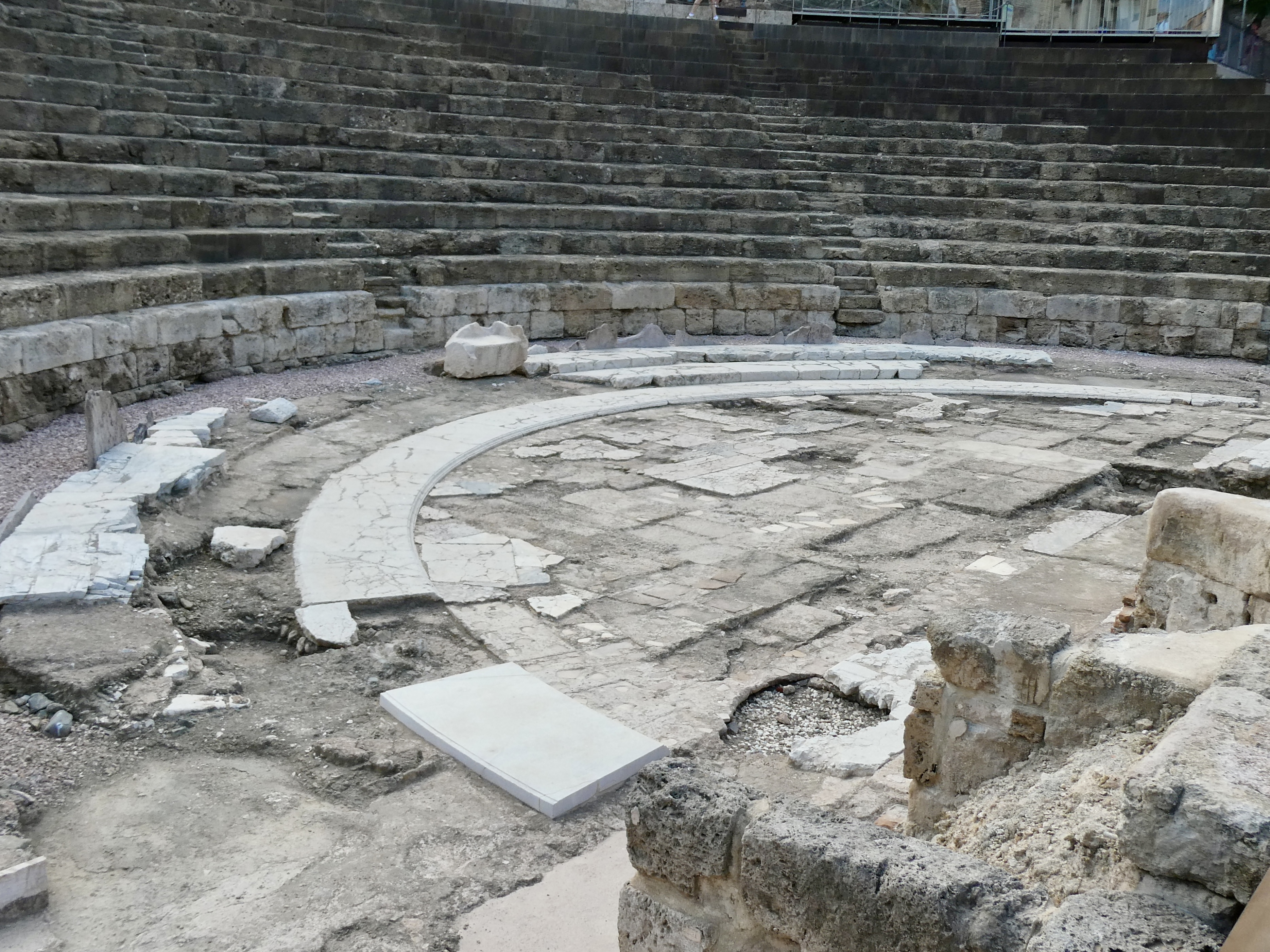
So once we made our way through the tiny, tiny museum, we walked down some stairs to the front of the Roman Theater. Now the Theater dates to the 1st century BC and includes three tiered seating area with three gateways to access your seats, a stage and am area for the orchestra. The sign at the site indicated that the Theater was likely used for theatrical events like comedy and mime, as well as political and religious events. I was in heaven and could have sat in the Theater all day. I do love my Roman ruins.
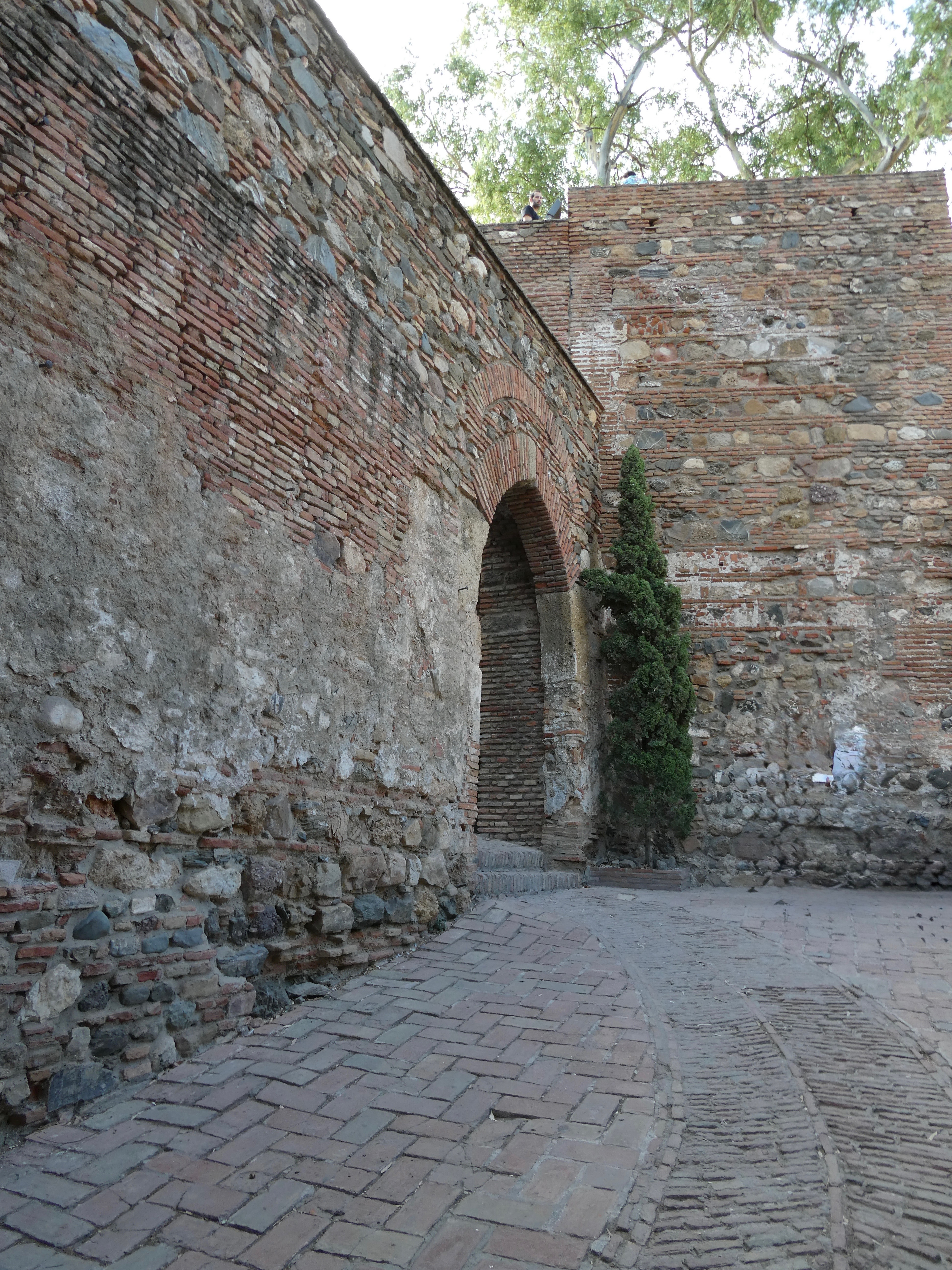
Anyway, after the visit, we moved on to the entrance of the Alcazaba, which is a fortified fortress that is used for defensive, residential and administrative purposes. Now the Alcazaba was built on a hill overlooking the port area of the city and dates to the 11th century when the ruling Muslim class began construction of the fortress. The fortress was modified multiple times until the Muslims abandoned the fortress in the 14th century.
Now the Roman Theater must have still be visible at the time of construction because the Moors used parts of the Theater in building the Alcazaba, including columns that were used to support the arches in the fortress.
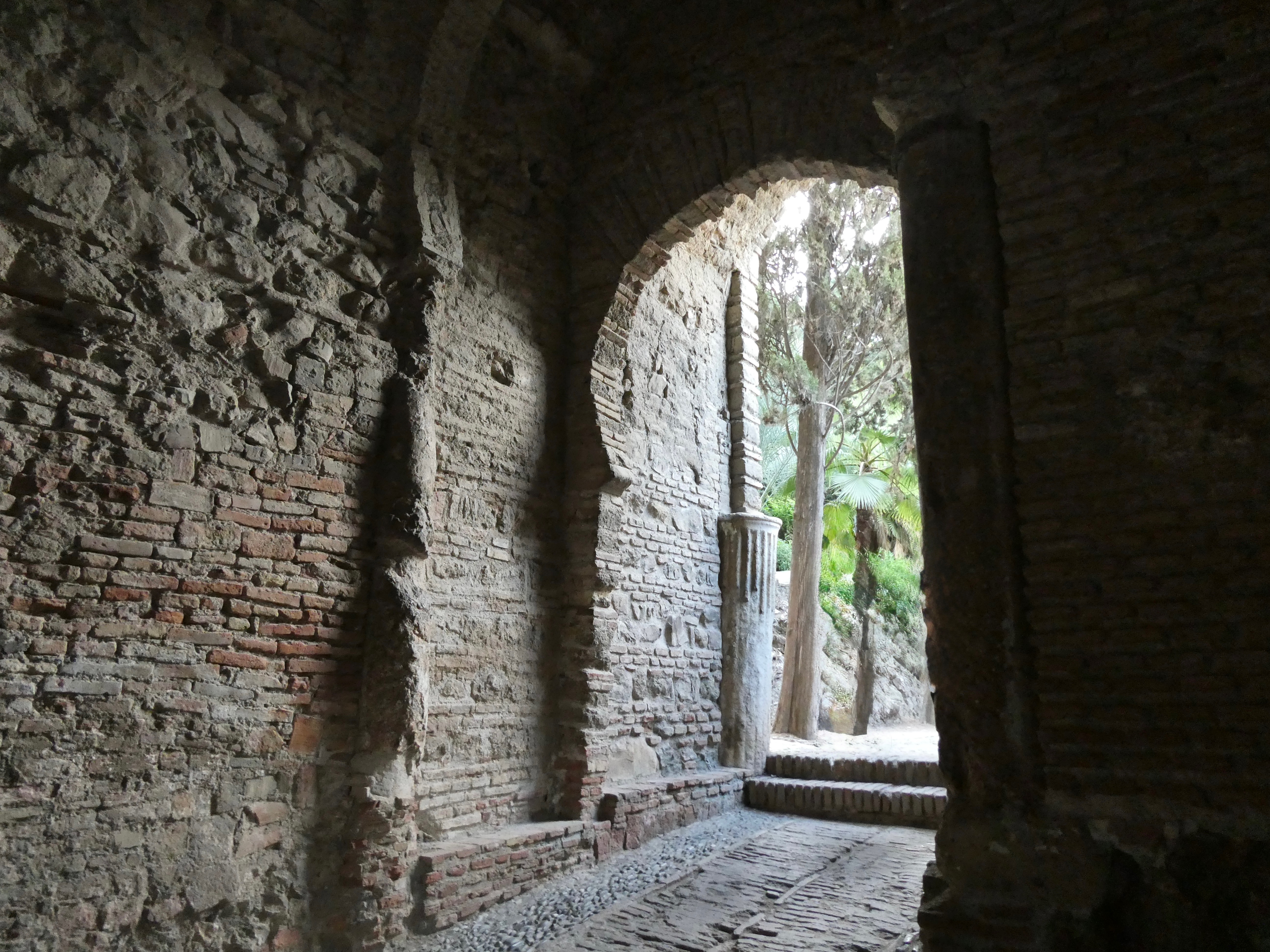
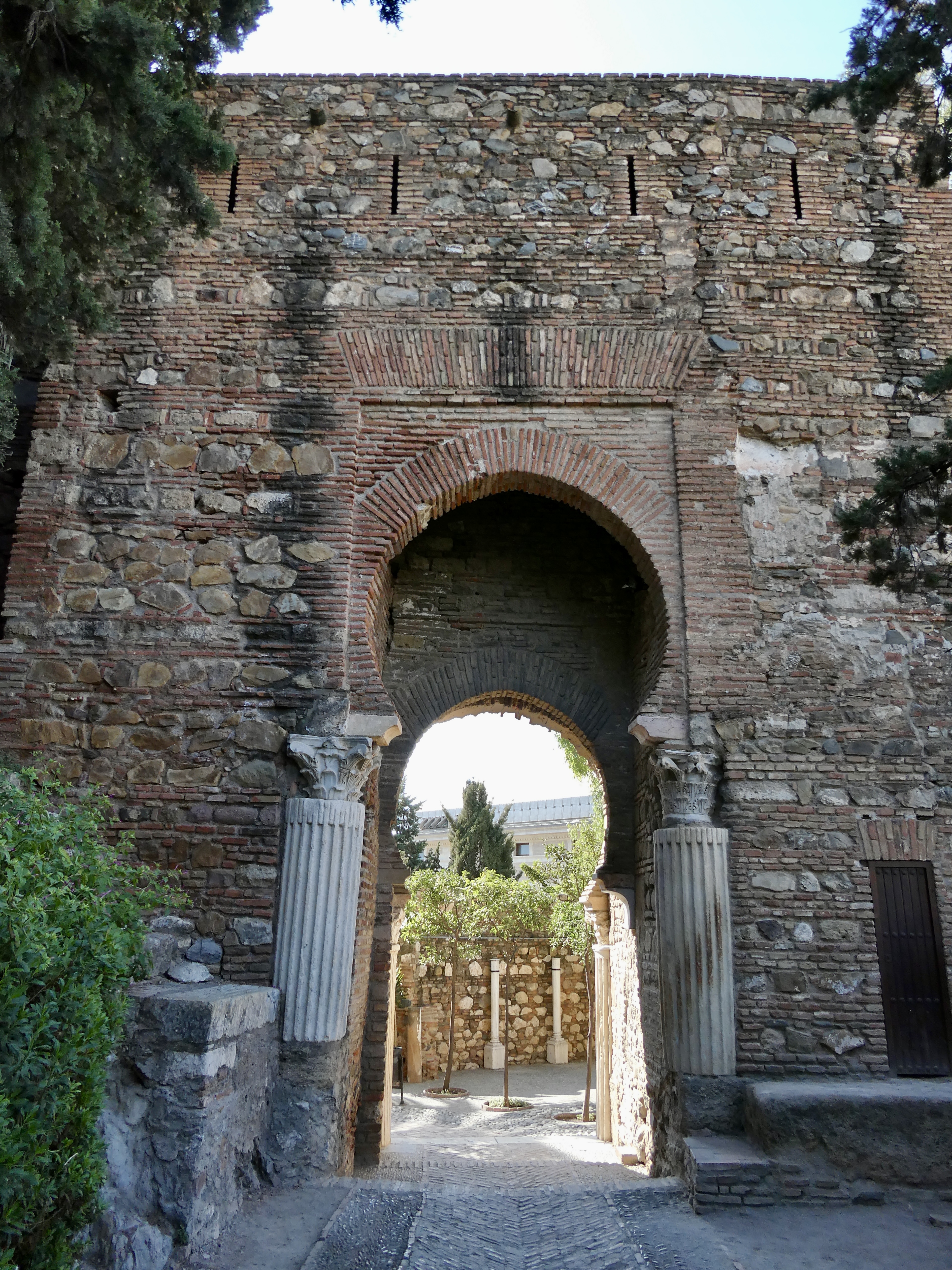
Anyway, the fortress is comprised of two walled enclosures, one contained within the other with fortified towers on each wall. The inner or upper enclosure occupies the top of the hill and is where the palaces were located.
So once we entered the first enclosure, we began the climb up the hill passing through multiple gates that were constructed like an “L” shape in order to slow down any invaders.
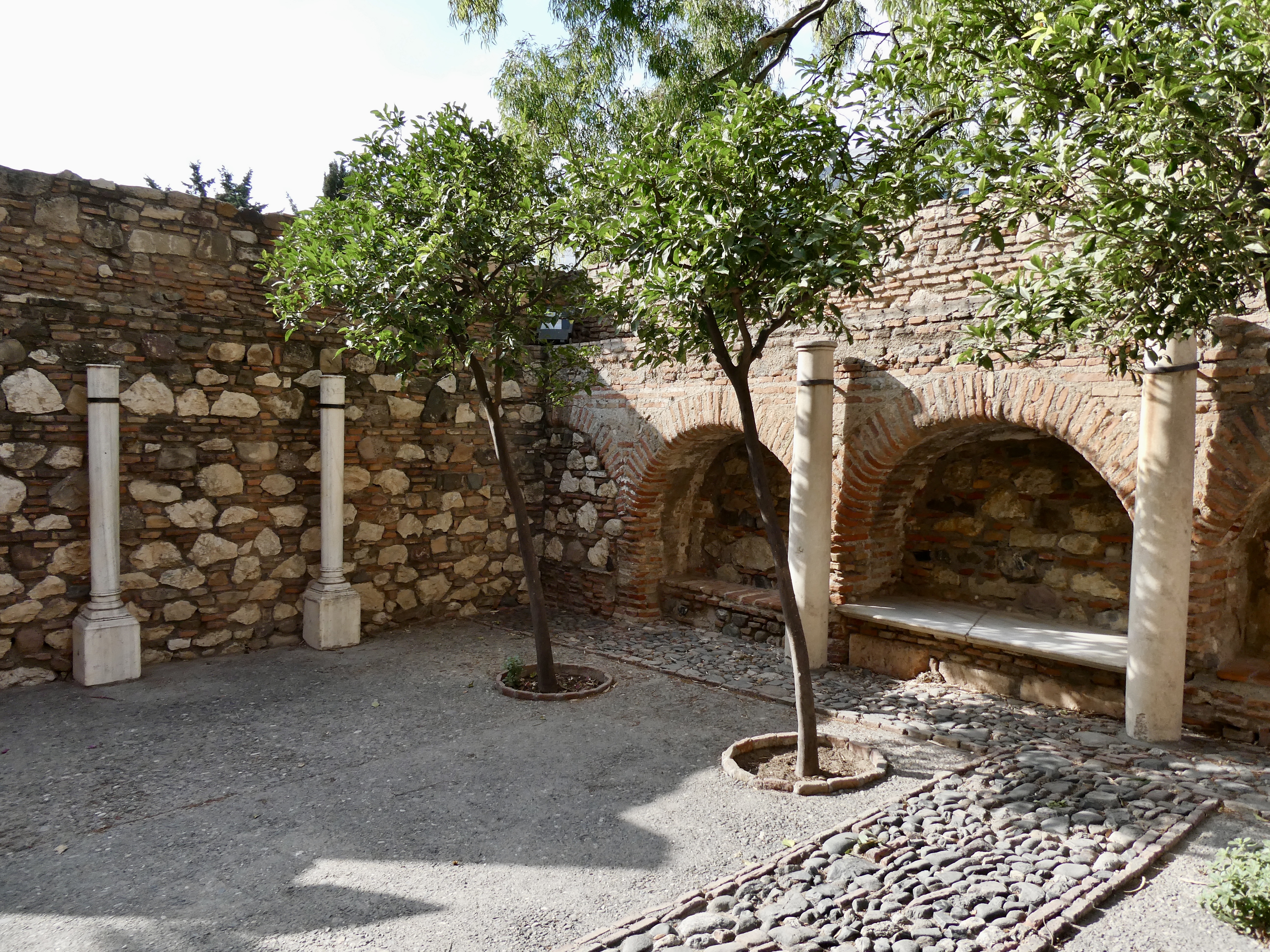
After passing through the curved entryway, we walked towards and passed through the Puerta de la Bóveda aka Gate of the Vault, which forms yet another L or bend in the passageway. We then walked straight through the Puerta de las Columnas (‘Gate of the Columns’), so named because it was fortified with Roman marble columns, which opened onto a fortified courtyard and wall.

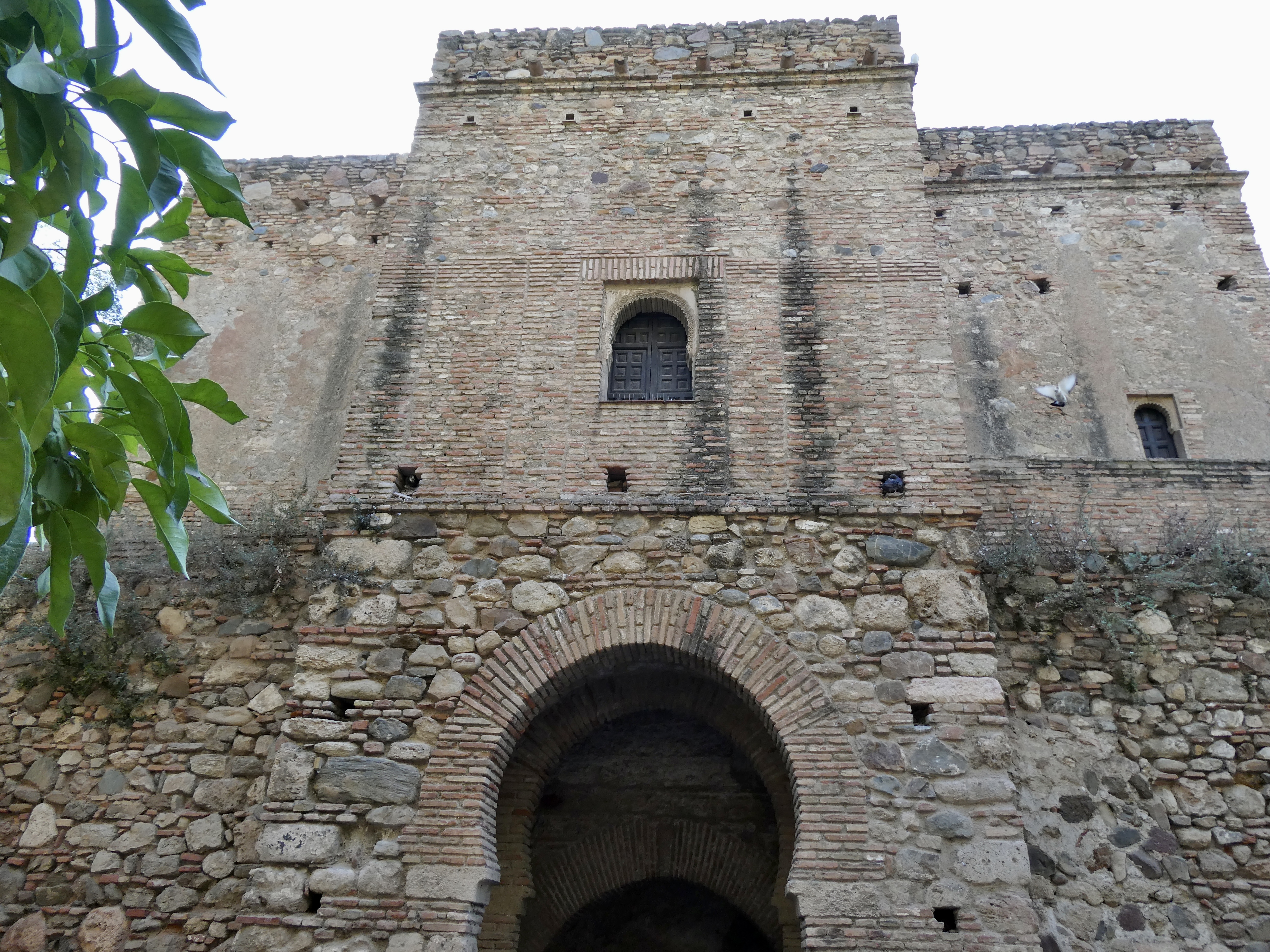
We then turned left and walked up a steep hill to the Arco del Cristo aka the Arch of the Christ, another bent-entrance gate and tower, which led to the second enclosure. And the name of the gate comes from the fact that the one of the chambers in the tower was used as a chapel during the 19th century.
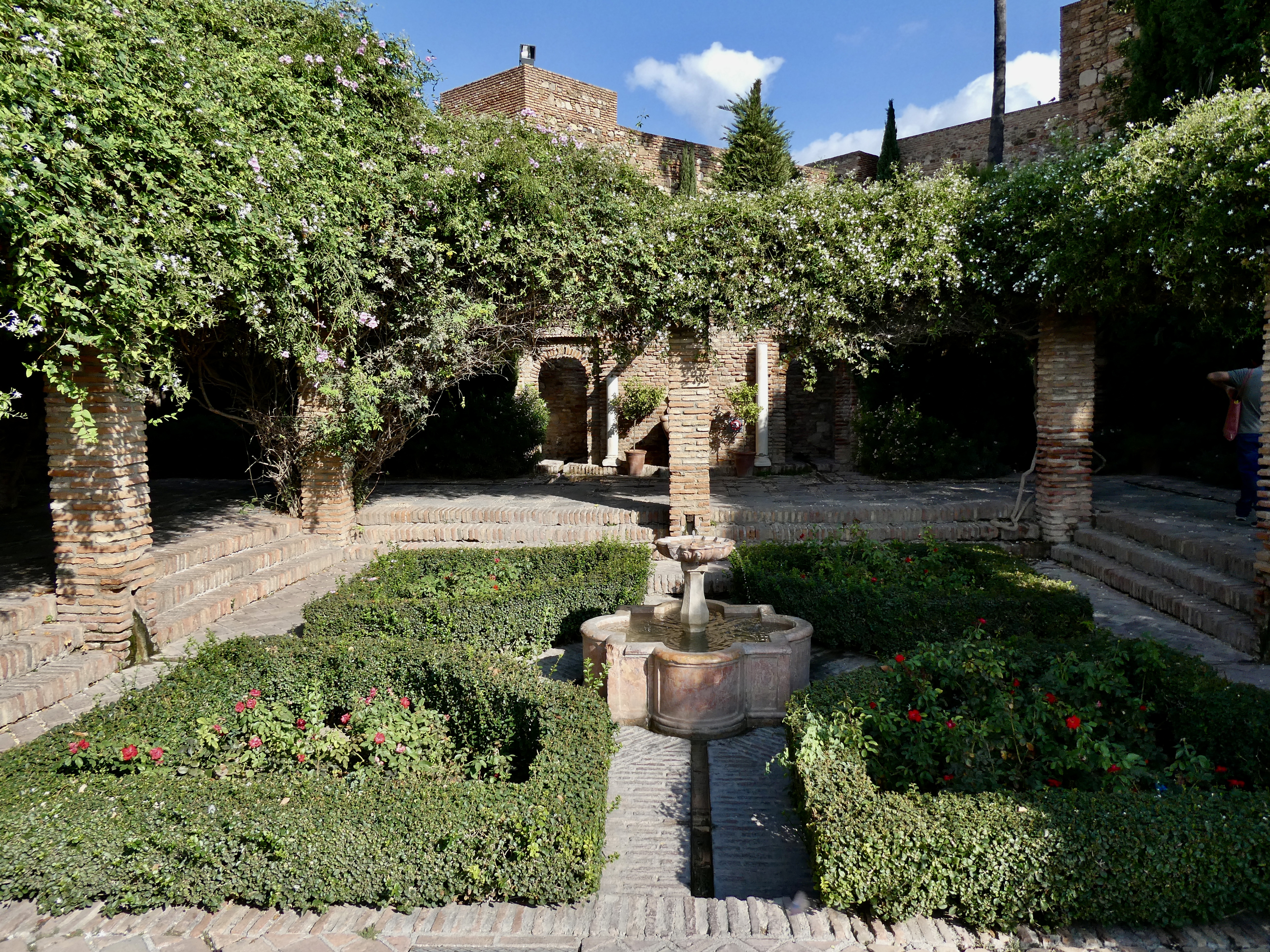

Once we passed through the gate and turned left, we reached what was once the Plaza de las Armas, but is now occupied by gardens.
From here, we walked along another path to the Puerta de los Cuartos de Granada, another gate in the inner wall that led to the palaces.
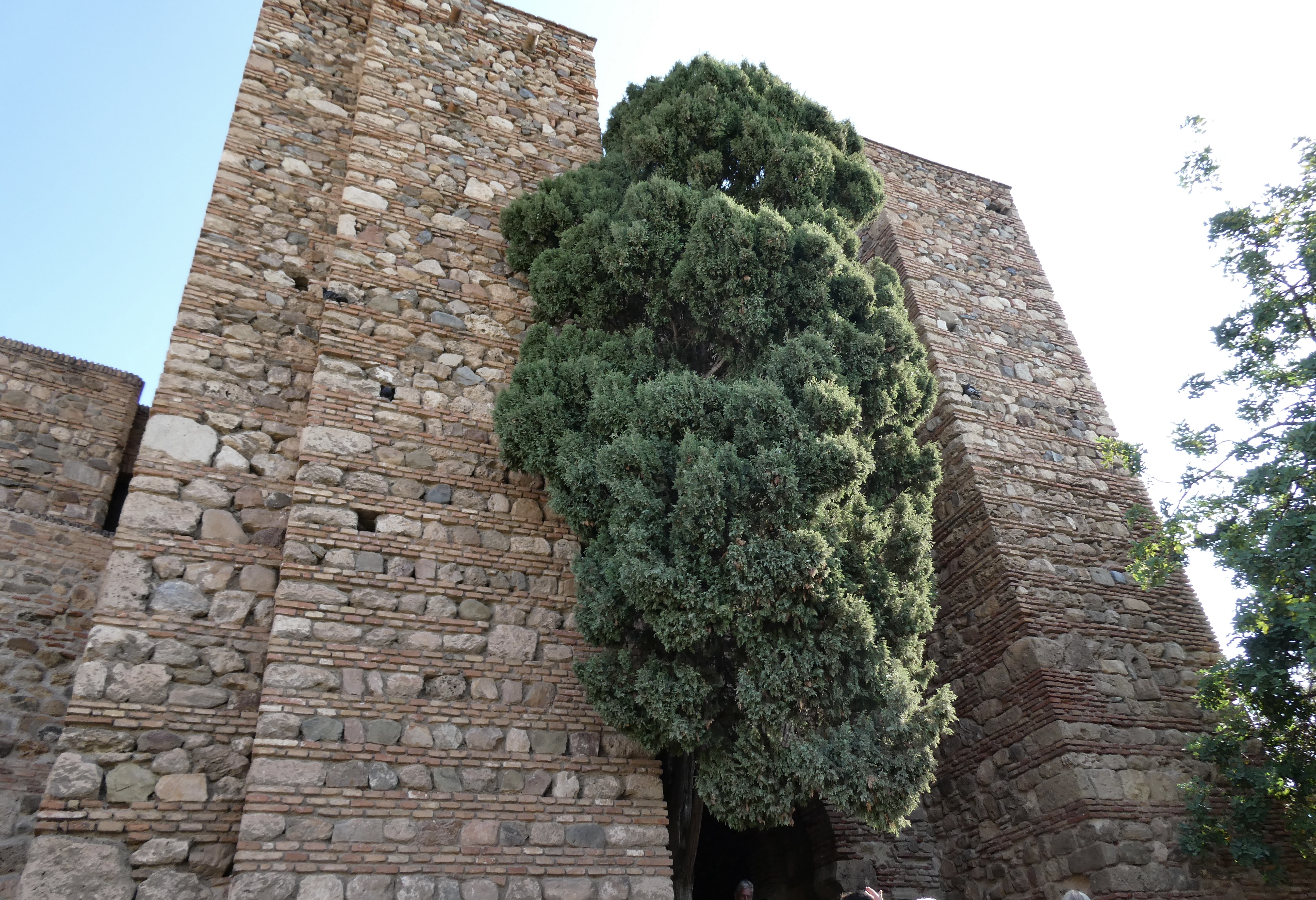
We passed by what was once a well (also used as a prison) in the middle of a garden area before taking some stairs to the walls of the first palace, the Taiffa Palace. Now this palace featured heavy Moorish overtones with arches supported by columns and painted in traditional red striping.
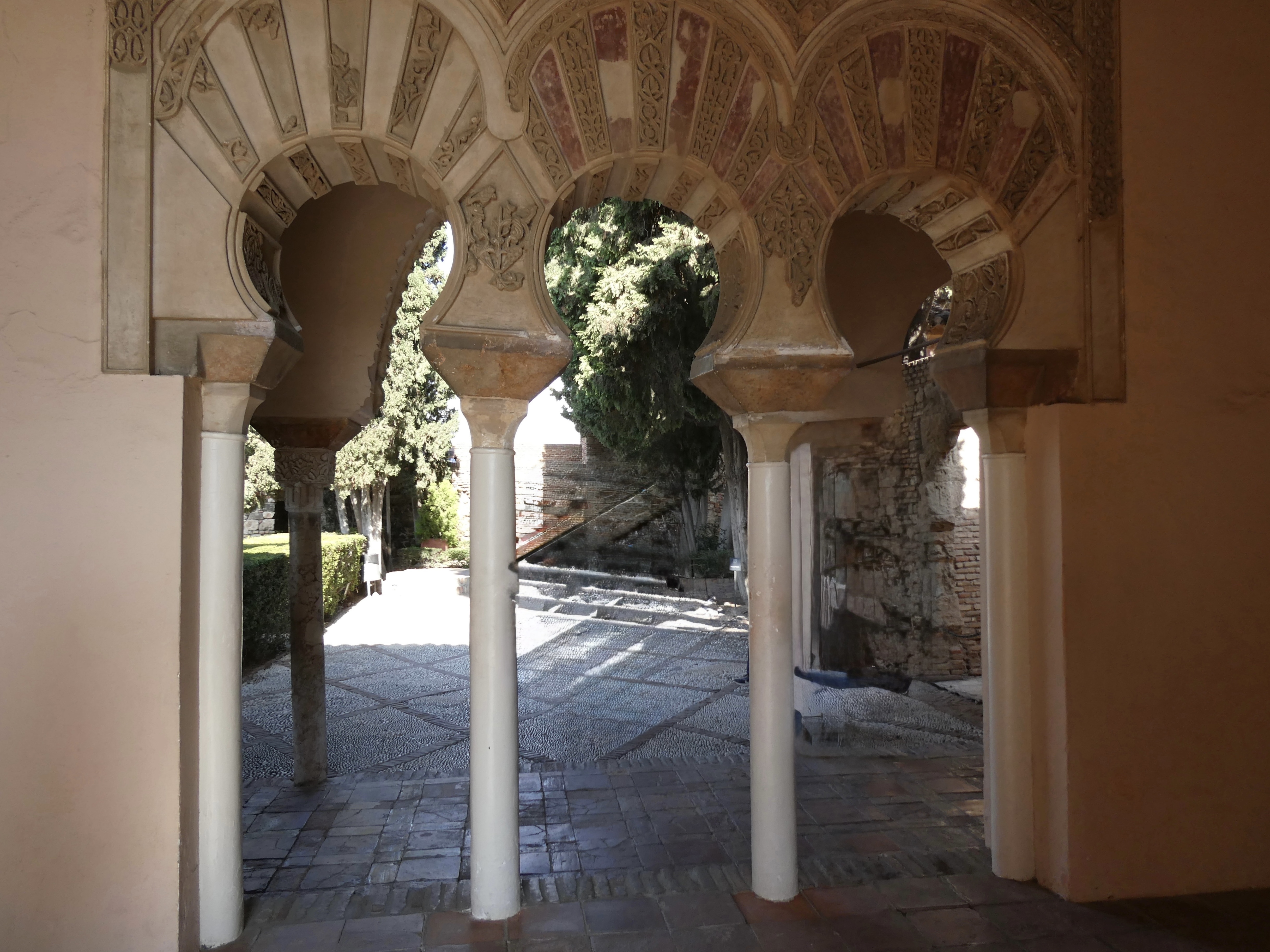
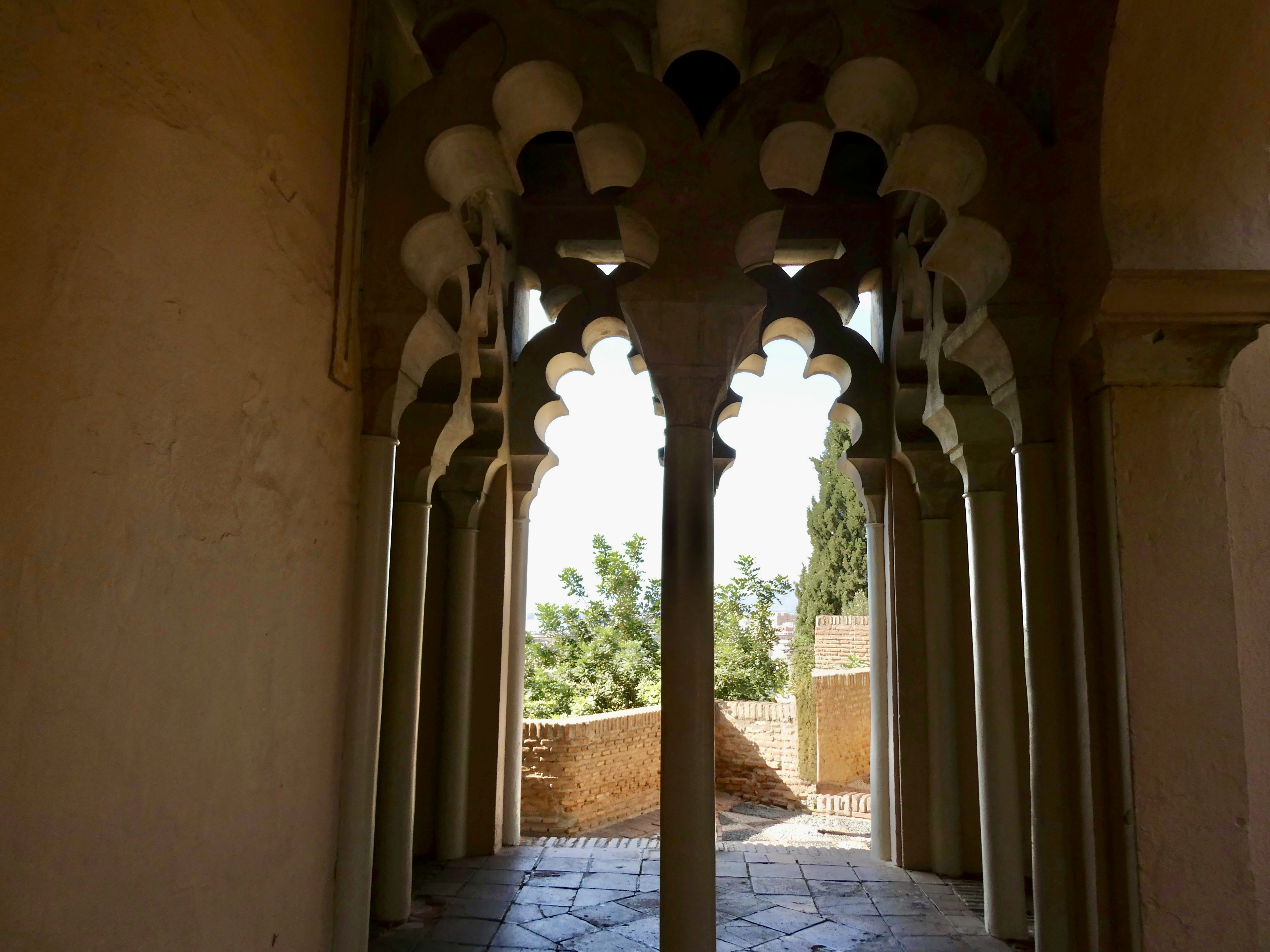
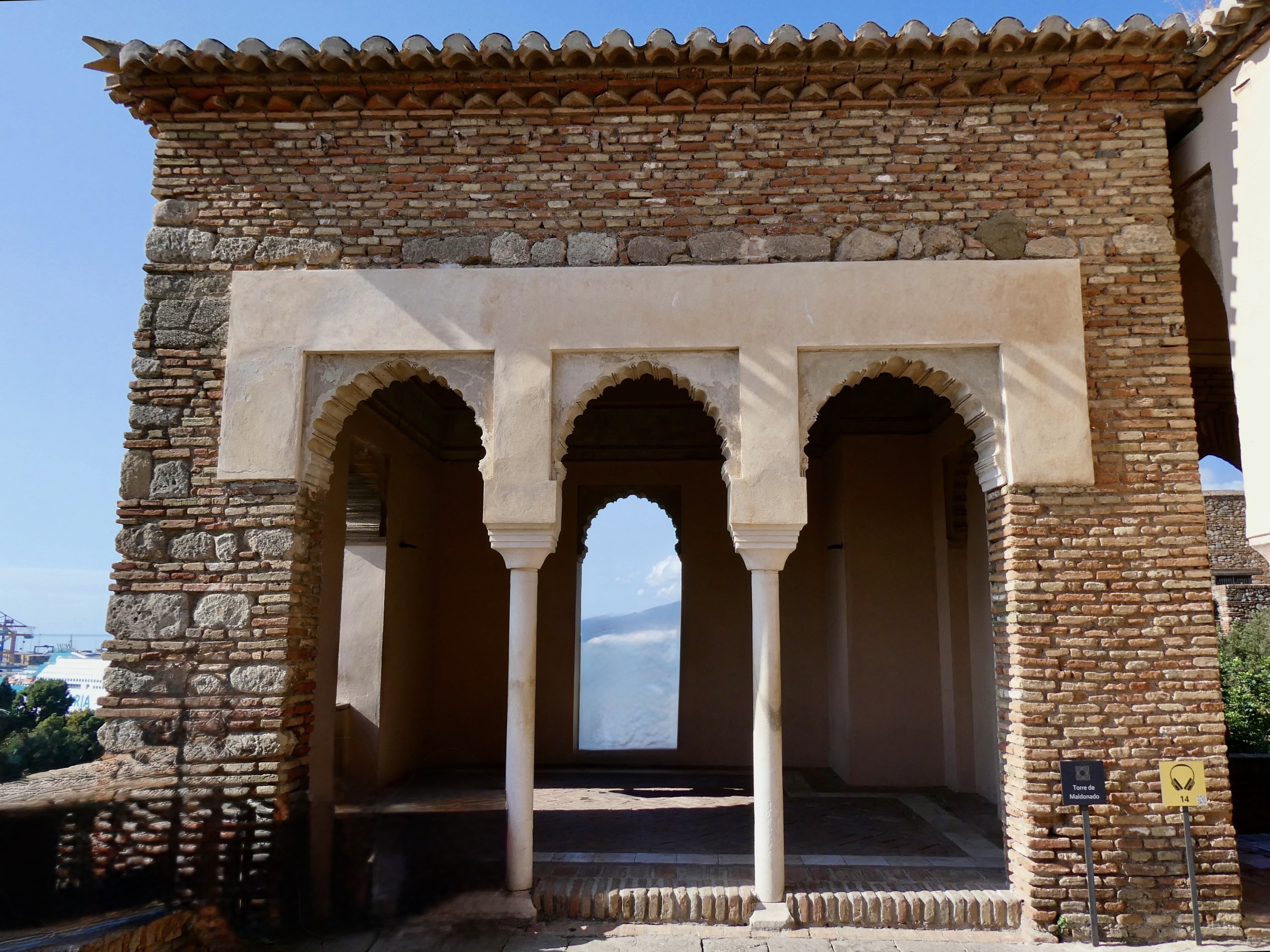
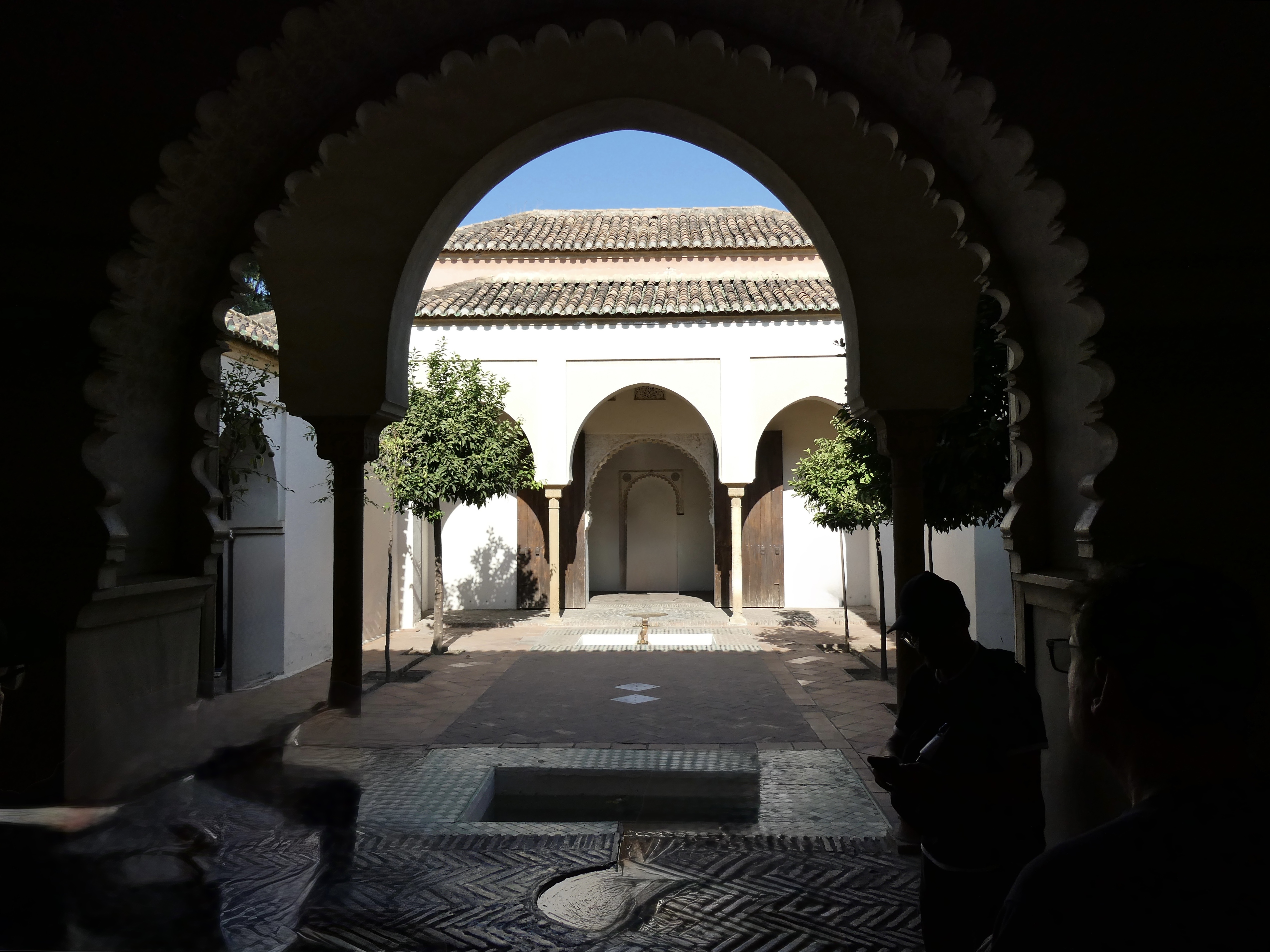
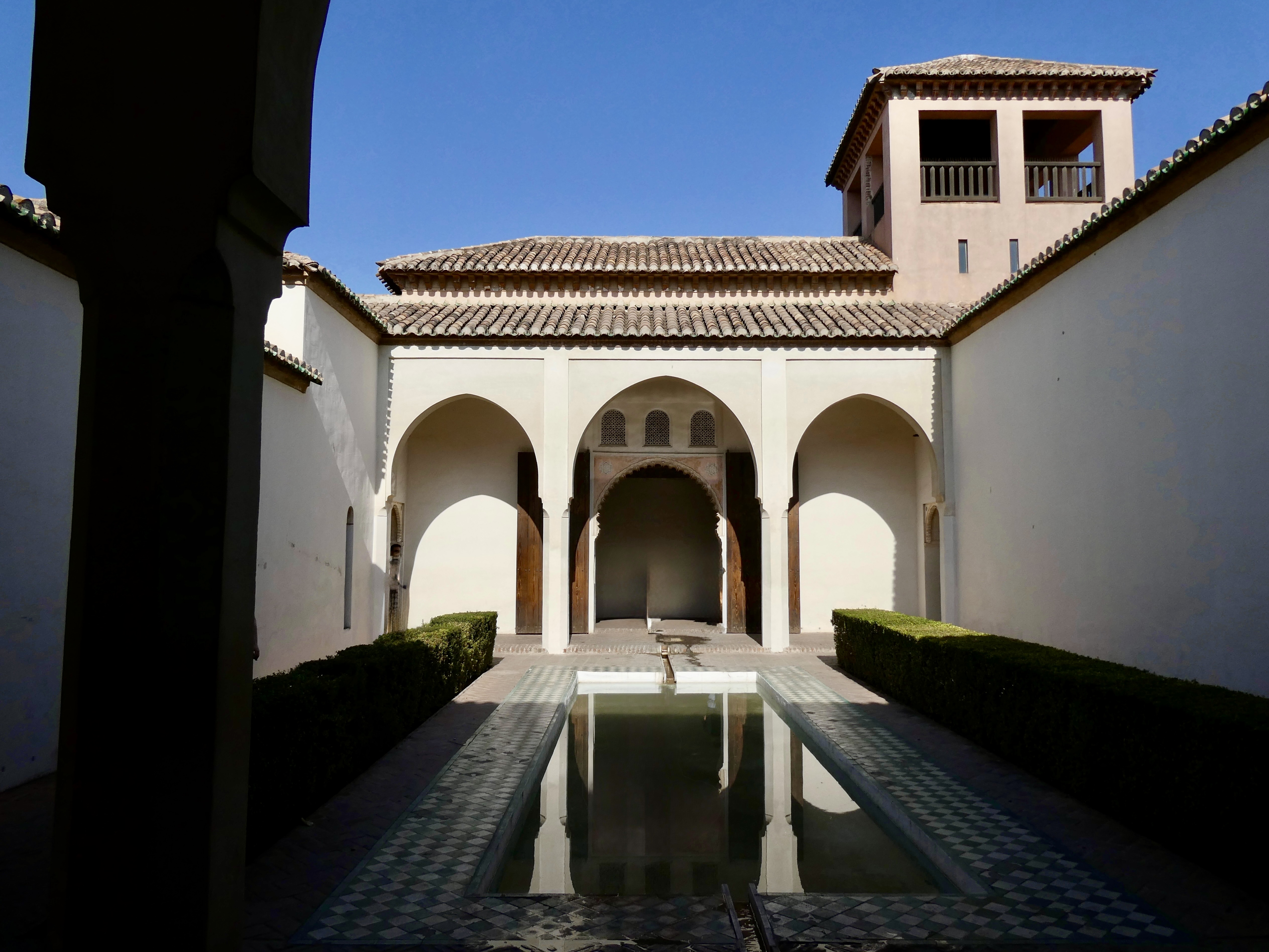
We entered a couple different rooms, including one that overlooked the harbour before moving on to the second palace, the Nasrid palace. Now this palace featured a handful of rooms and porticos arranged around two rectangular courtyards. The first courtyard was named the Patio de los Naranjos and had two original pools, with tiled décor. The second was name Patio de la Alberca and had one long central pool with original tile paving.
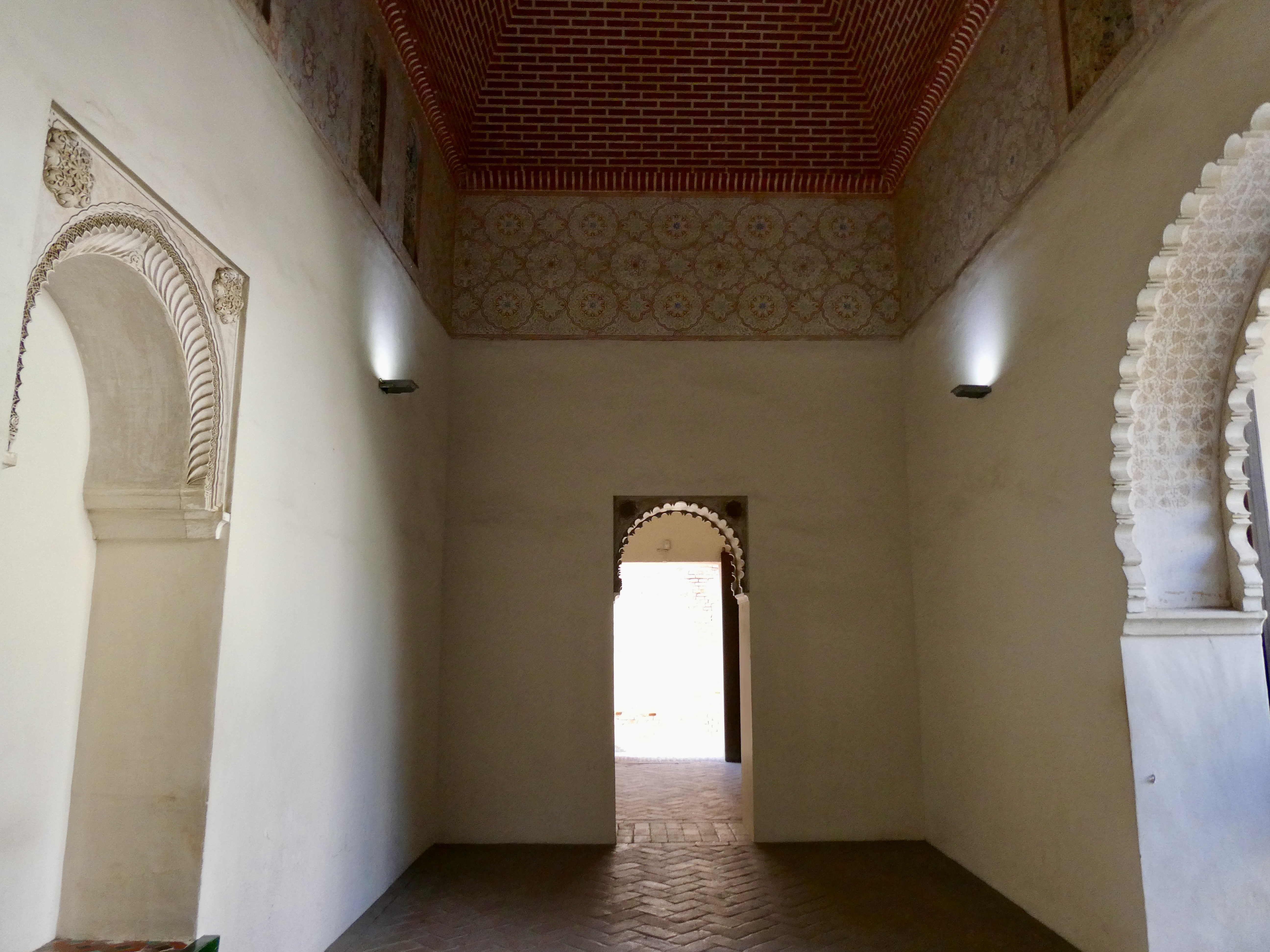
Now the room leading to the Patio de la Aberca courtyard was rather austere, but did have a lovely titled ceilings and a scallop shaped doorway at either end of the courtyard.

So at this point, we were done with the tour of the Alcazaba. Natalia gave us about 15 minutes on our own before we had to meet her back at the entrance. Once we gathered back with Natalia at noon, we took a walk through the old quarter to the Bishop’s Square which is home to not only to the Bishop’s Palace, a baroque 18th century building that once housed the Bishop and now serves as a Malaga Cultural Center, but also home to the Santa Iglesia Catedral Basílica de la Encarnación, (Malaga Cathedral).
The Cathedral was constructed between 1578 and 1782, but interesting factoid: the Cathedral is missing a tower. Yep, it only has one tower on the side of the building. The second tower was never built because Spain ended up sending money to the U.S. to help in its fight for independence from Britain. (I will not make any comments here about how that turned out.) As a result, the Malaga Cathedral is nicknamed La Marquita aka The One-Armed Lady because one of its towers remains unfinished.
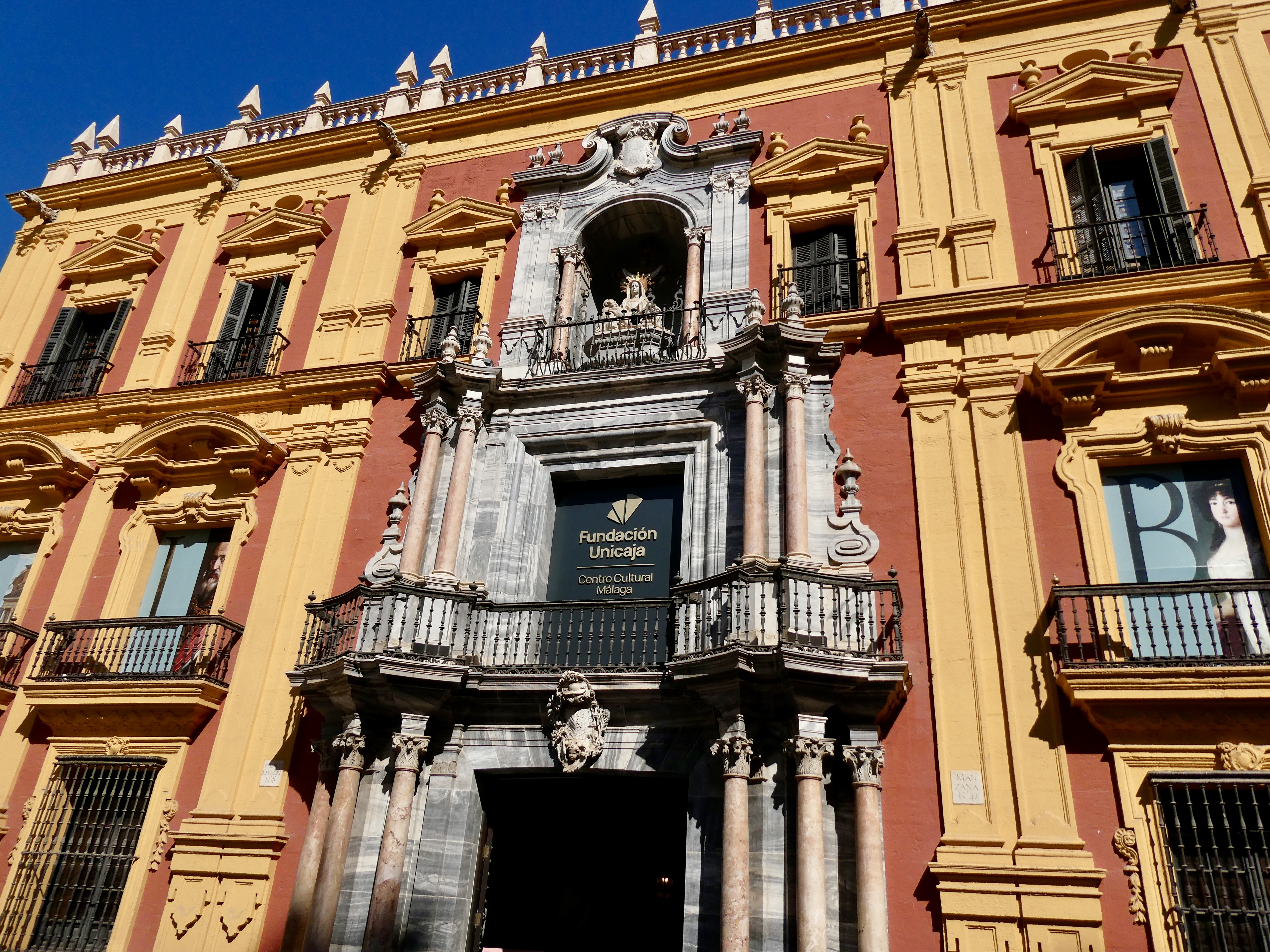
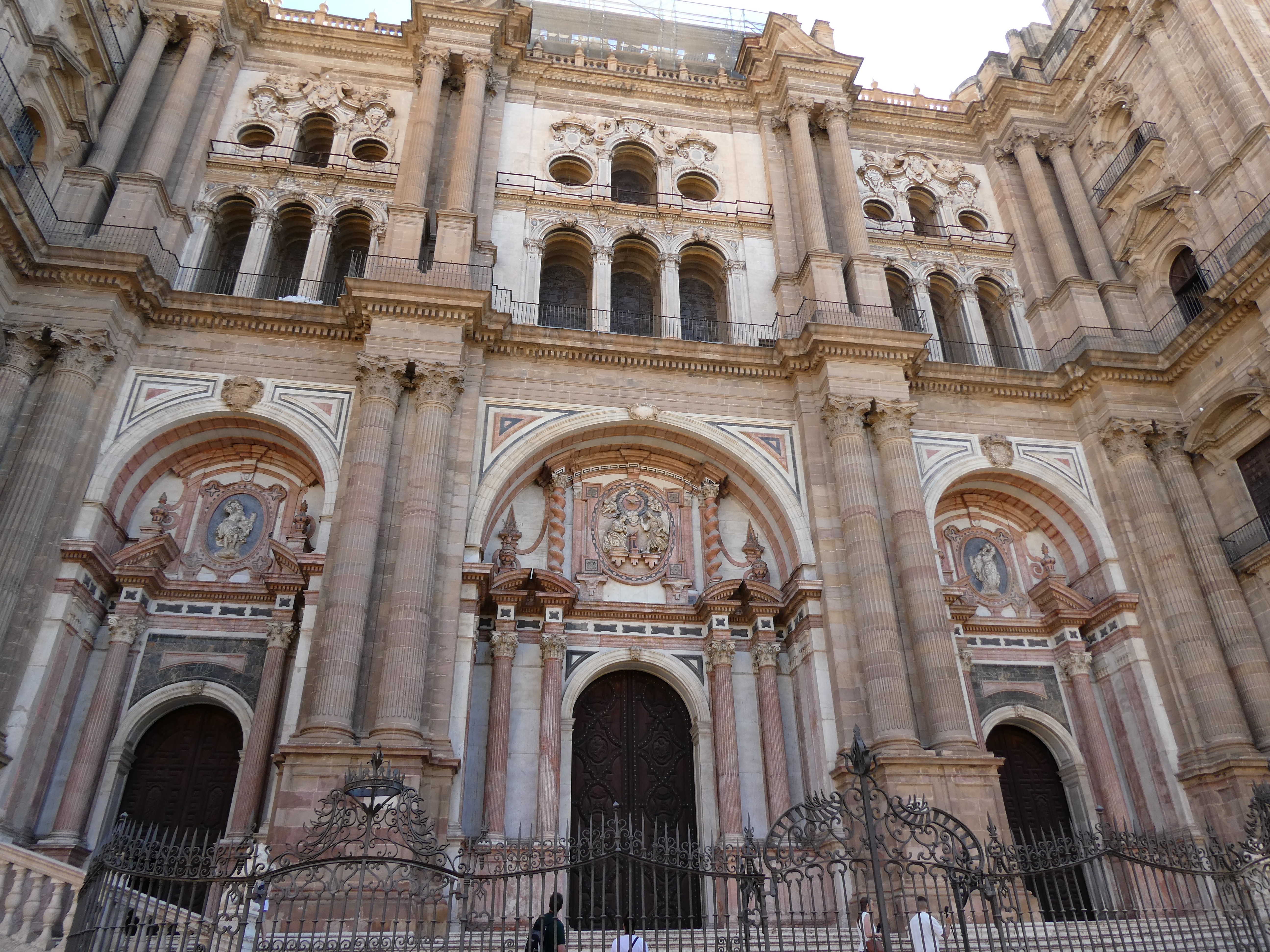
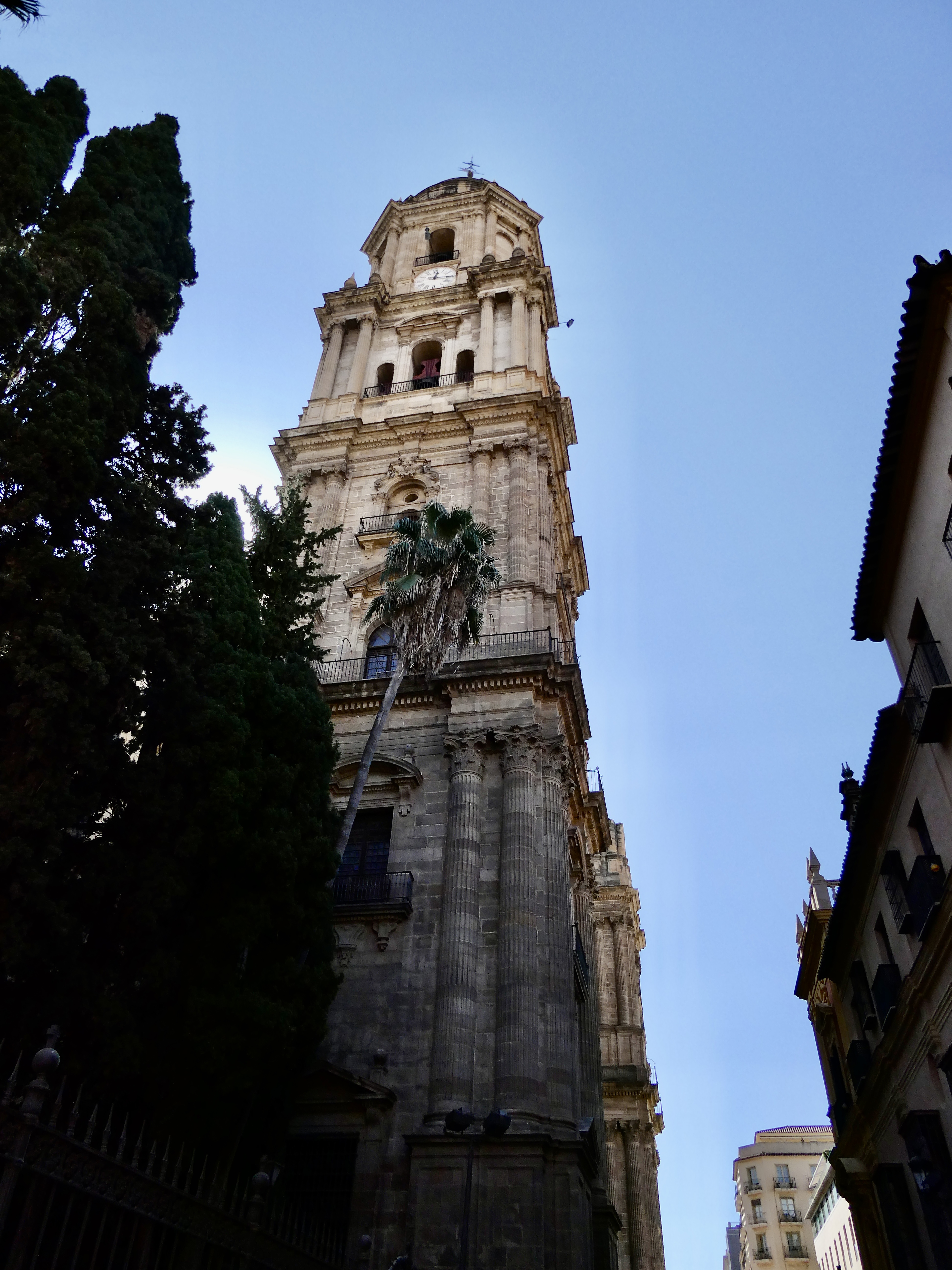
Anyway, we took in the gorgeous baroque façade of the side entrance of the Cathedral that faces Bishop’s Square before walking around to the front of the Cathedral and going inside.
Now the weird thing I noticed upon entering the building is that the interior was more Renaissance style and not at all like the façade. And the first thing you see on entering the Cathedral is the enormous Choir just off to the right with two huge organs on either side of the room and three levels of mahagony carvings dating to the 17th century. And to the left, was the Main Chapel, that was slightly obscured by a partial wall.

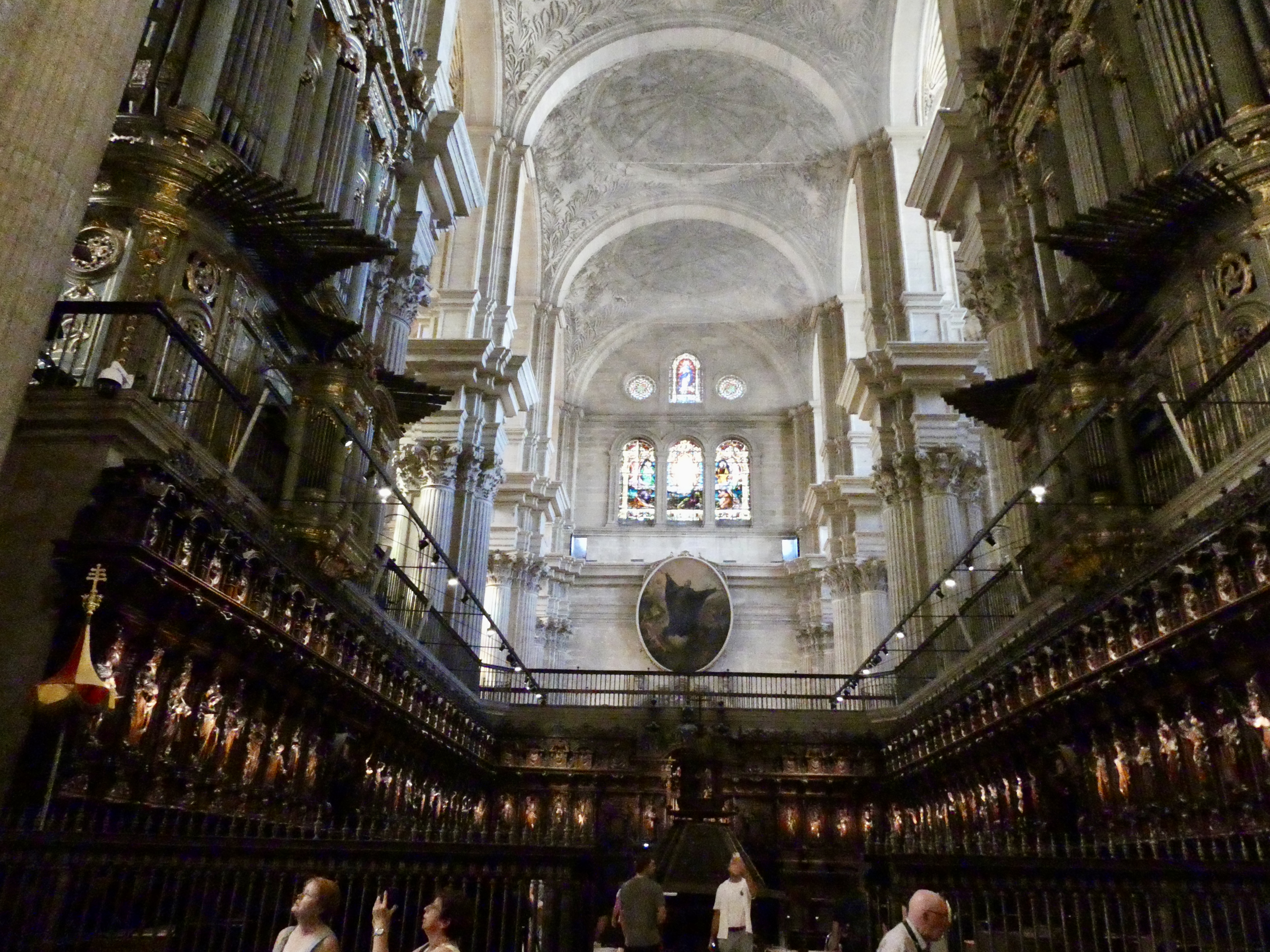
There were two long hallways extending from the Main Chapel all the way to the end of the Cathedral and all around were enormous stained glass windows.
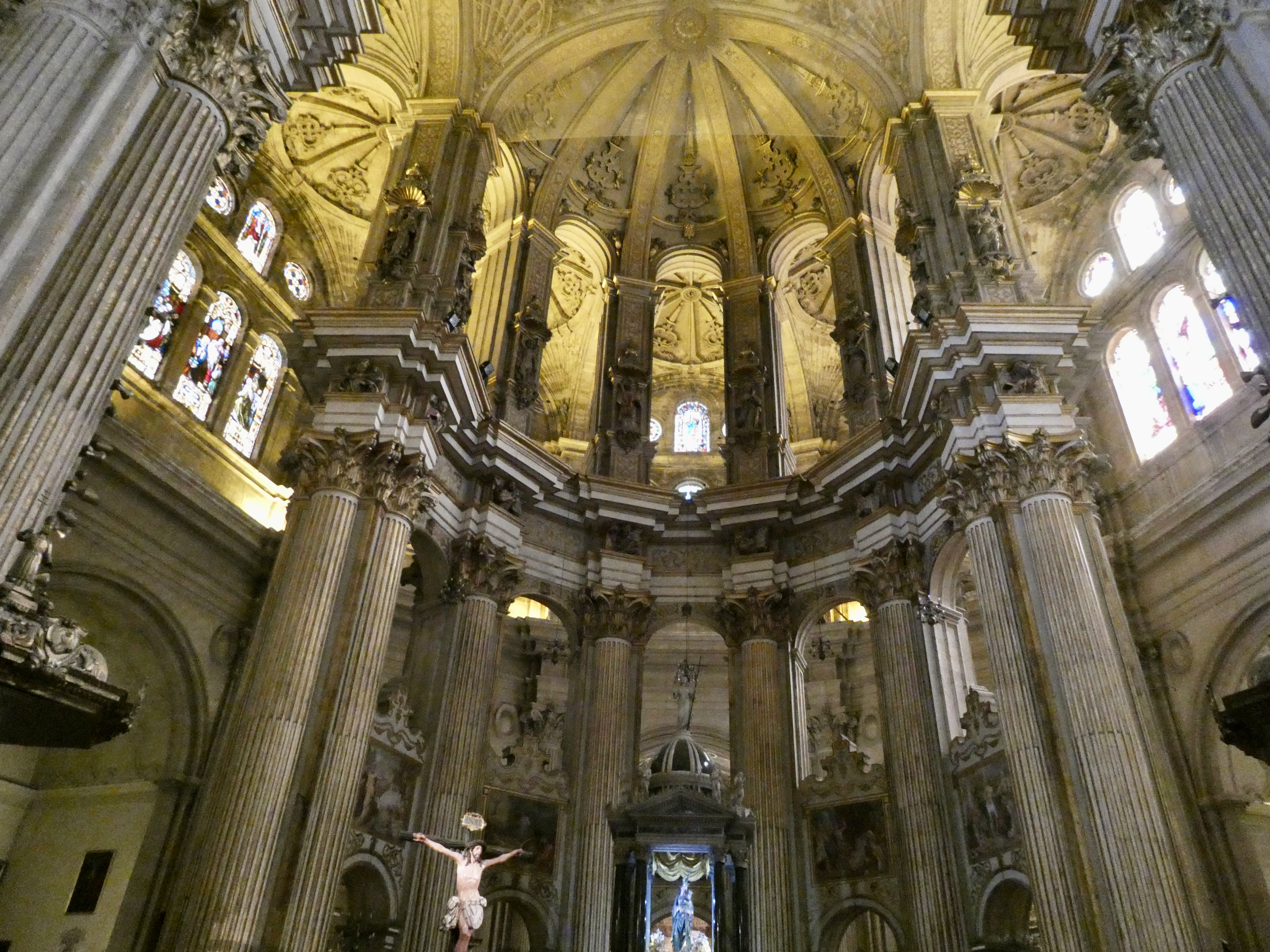
After taking in the Main Chapel, we walked past the famous painting of the Beheading of St. Paul before stopping at the Chapel of Santa Barbara with its beautiful gothic altarpiece. We then moved on to the Chapel of the Encarnación, from which the Cathedral draws its name. This chapel was directly behind the Main Chapel and features artwork dedicated to the Virgin Mary. The artwork was stunning.
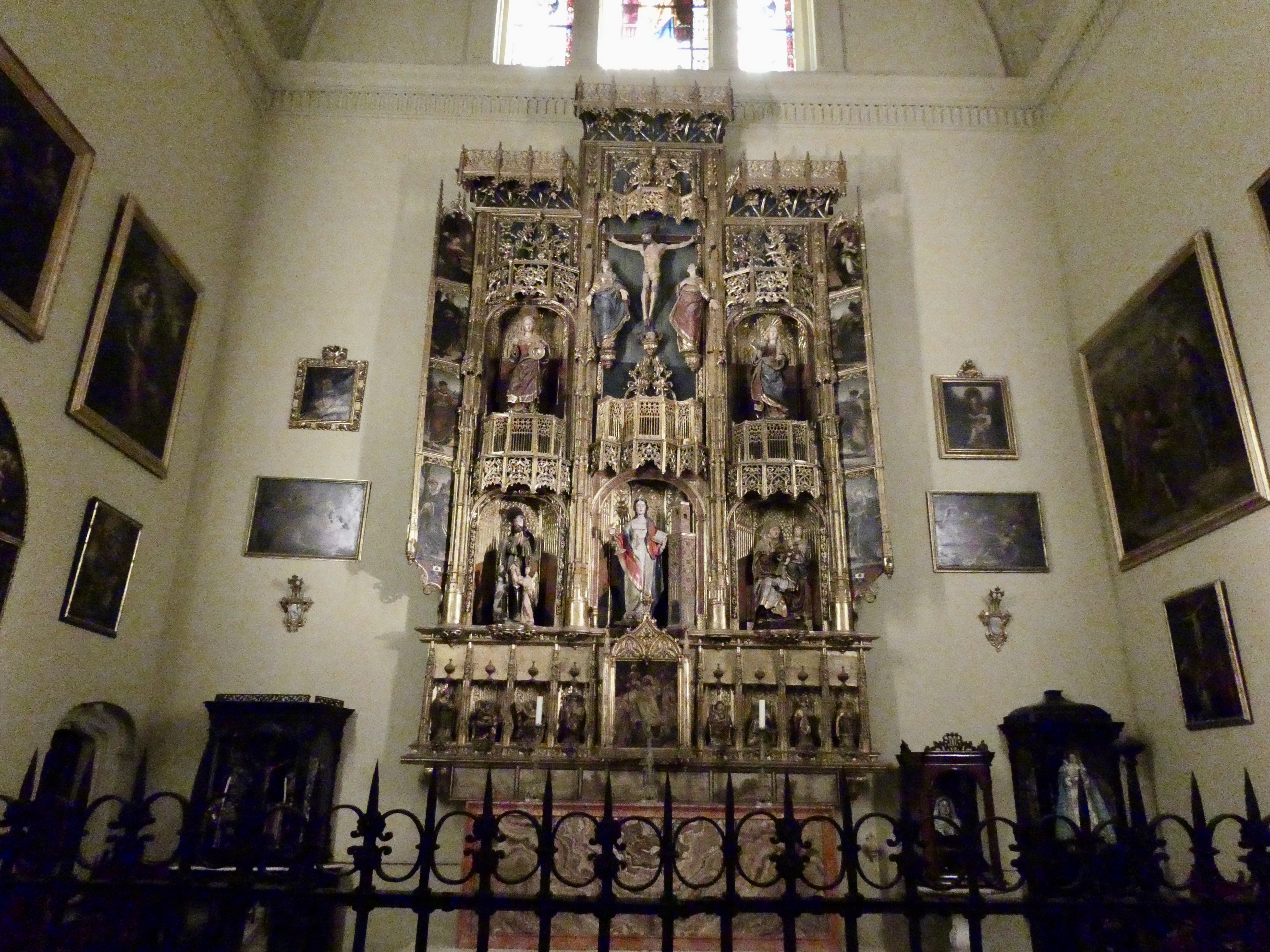

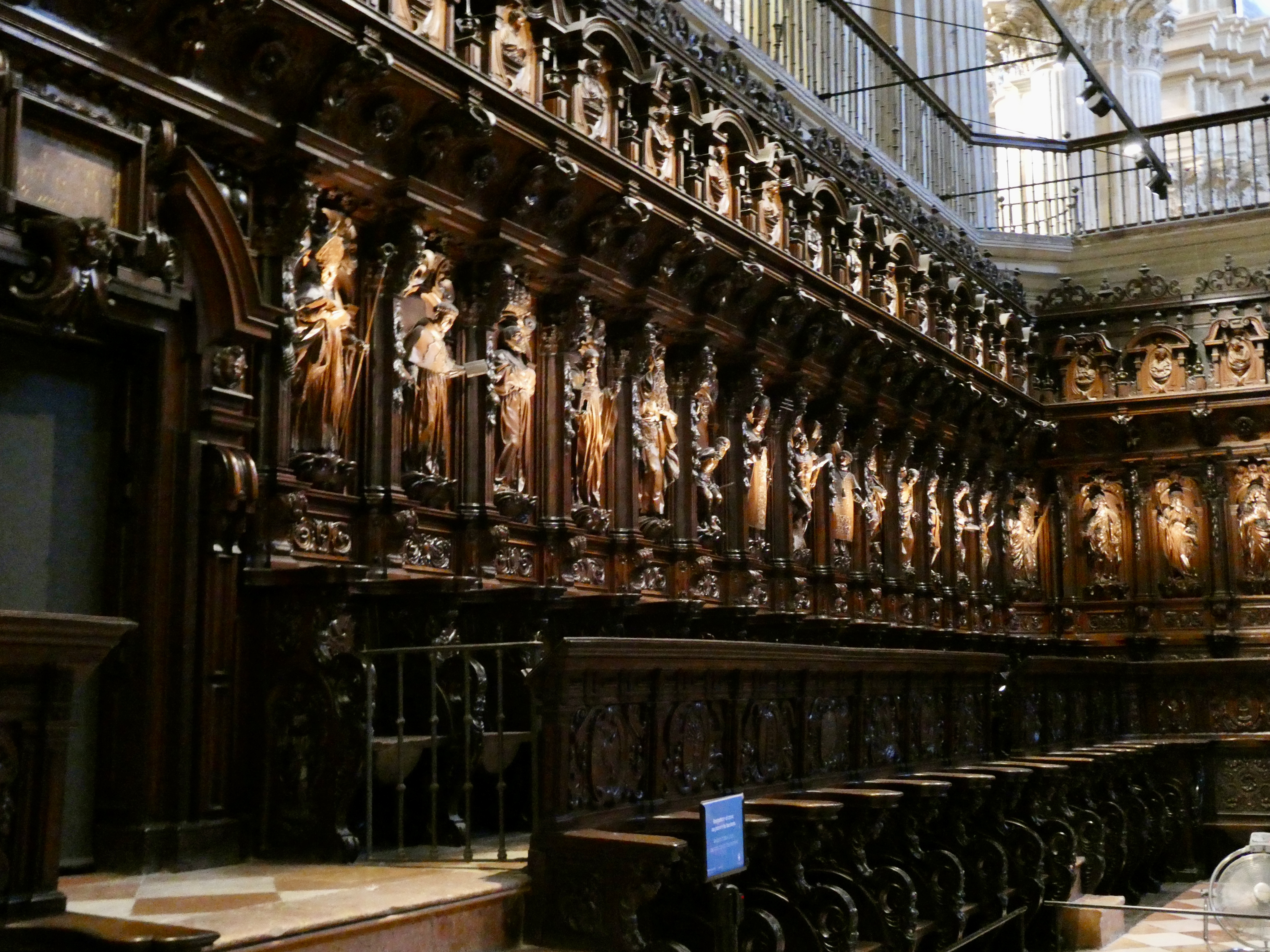
Now at this point, I was becoming slightly annoyed with Natalia. She rattled off here spiel about each of the sites we had visited as if it was a speech she memorized. No passion. No interest. (Unlike the fabulous Rafa from yesterday.). When I asked a question, she was often incapable of answering. So when I asked how many chapels there were in the Cathedral and she didn’t know, I ended up googling the answer (the official Cathedral site lists 14) and then took it upon myself to just wander around on my own. I ended up back in the Choir as Natalia was rattling off information about the mahogany carvings and at this point I was done. I wandered over to take a look at the two 17th century organs on either side of the room and then heard Natalia say that was the end of the tour. Thank goodness. She was not a good guide.
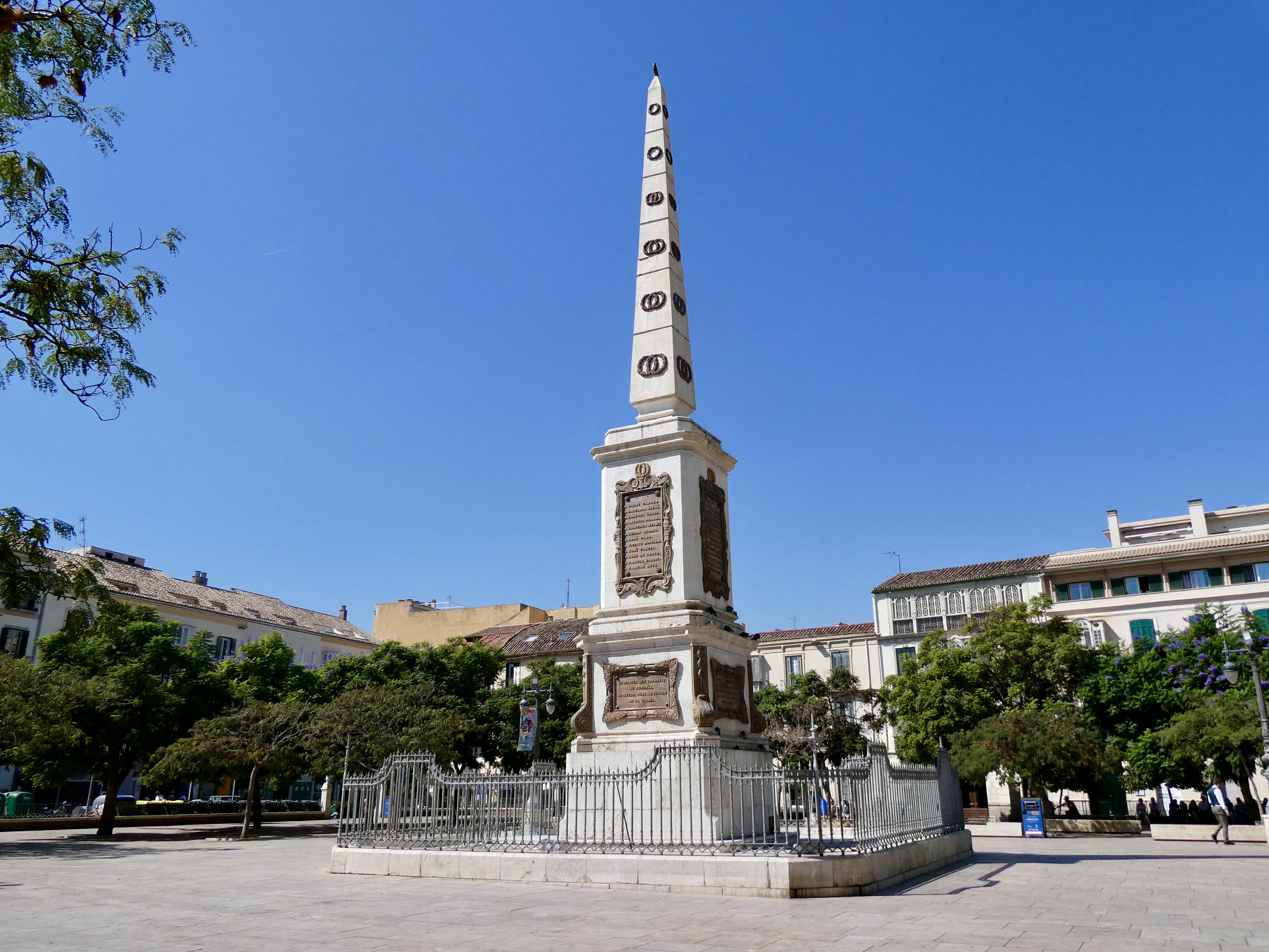
Anyway, after the tour, I wandered around some of the alleys nearby, but the feeling was far different than the old quarters of Barcelona and Cordoba. It actually felt more like Madrid with modern overtones. Somehow, I ending up wandering into Plaza de la Merced, a historic public square with a tall obelisk like statute that turned out to the the Monument to Torrijos, a tribute to a 19th-century liberal general.
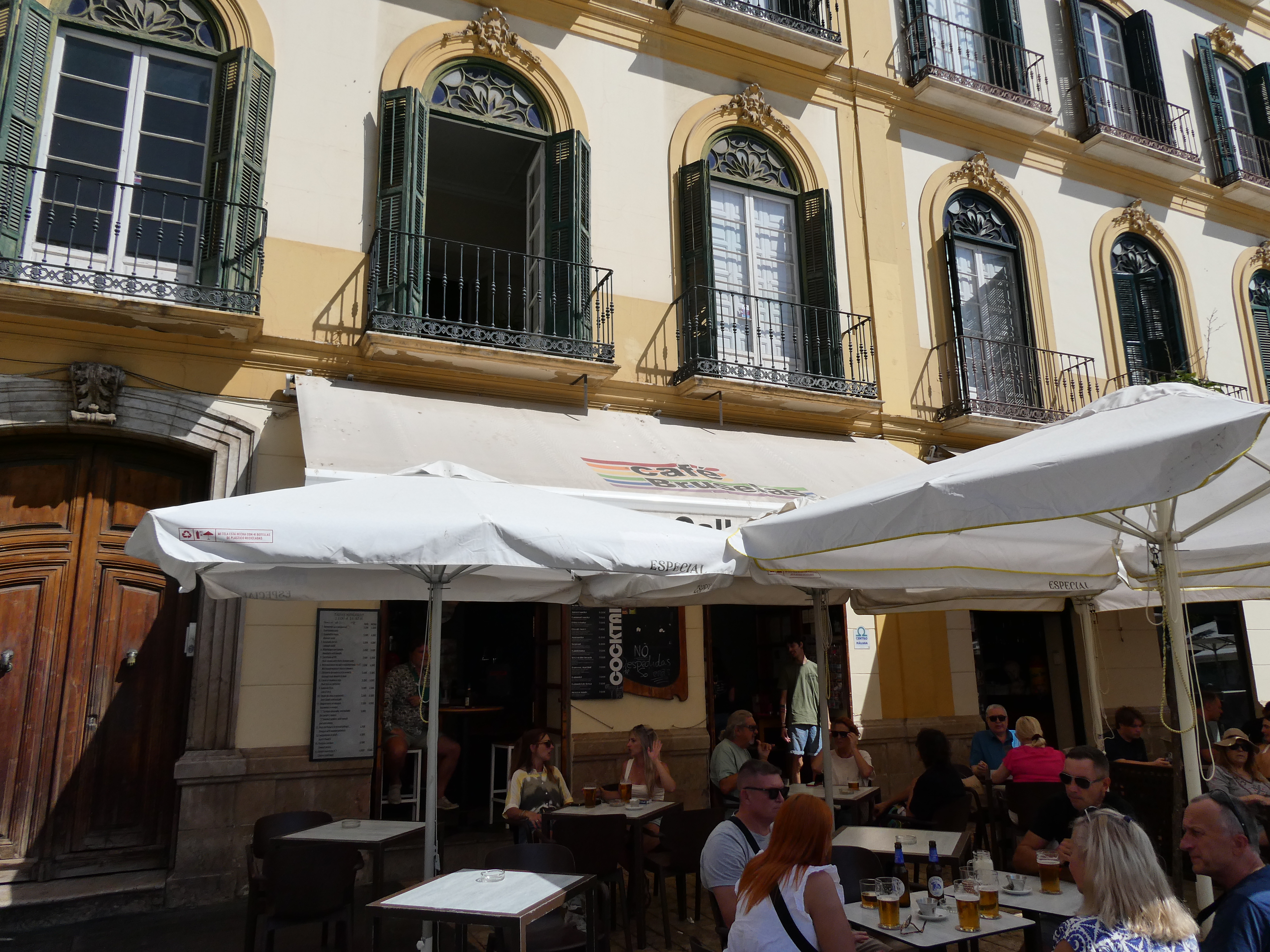
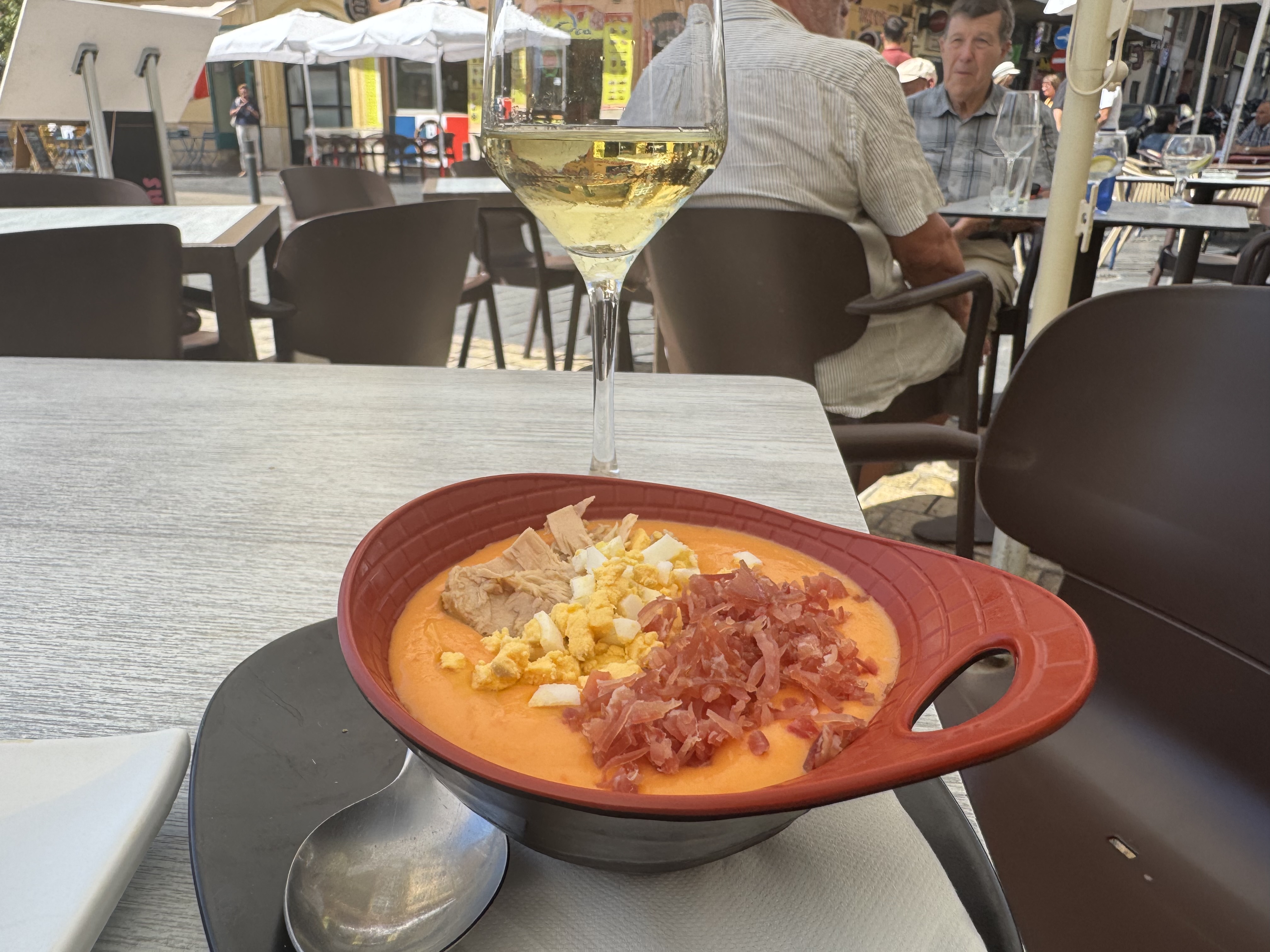
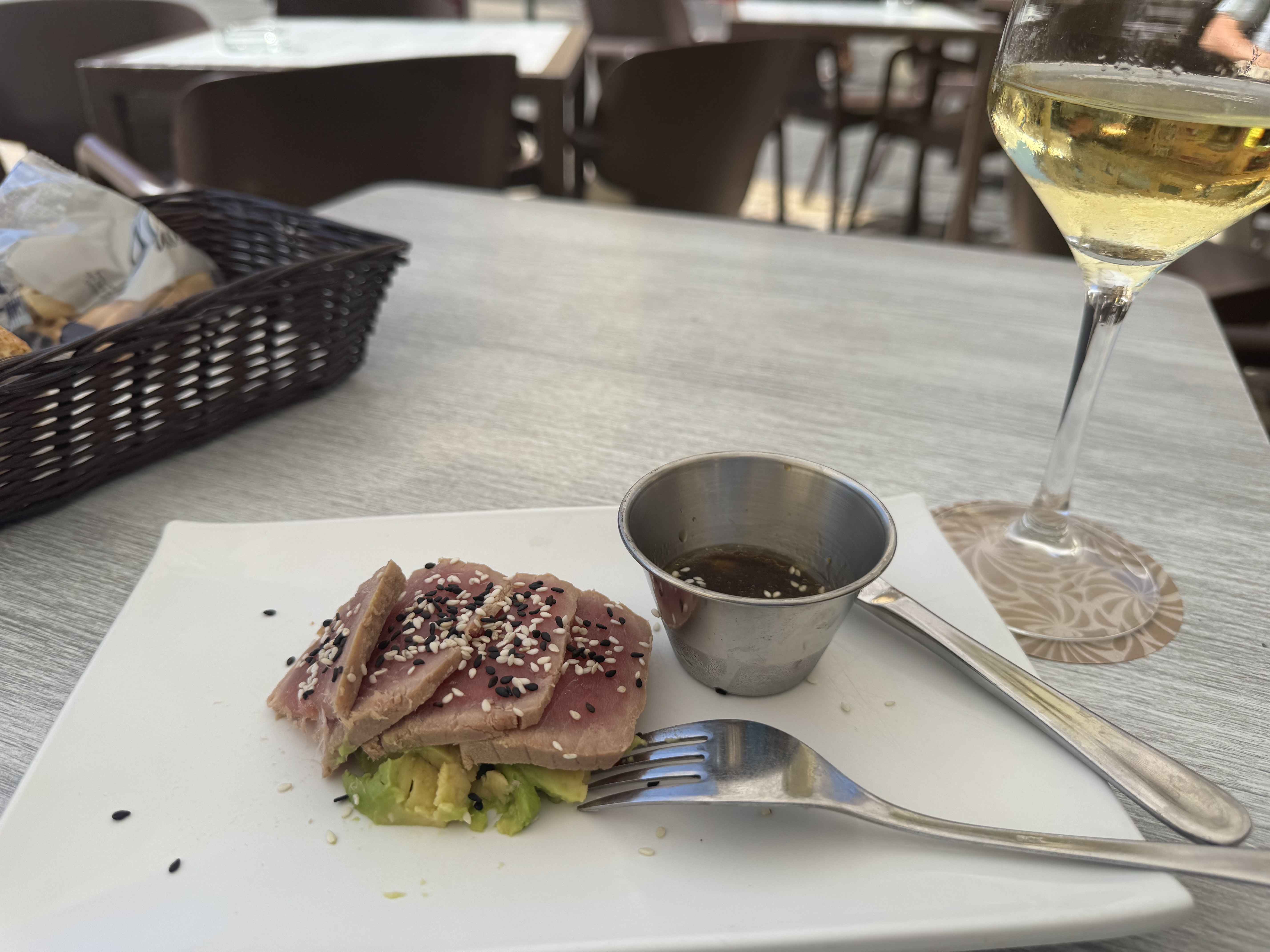
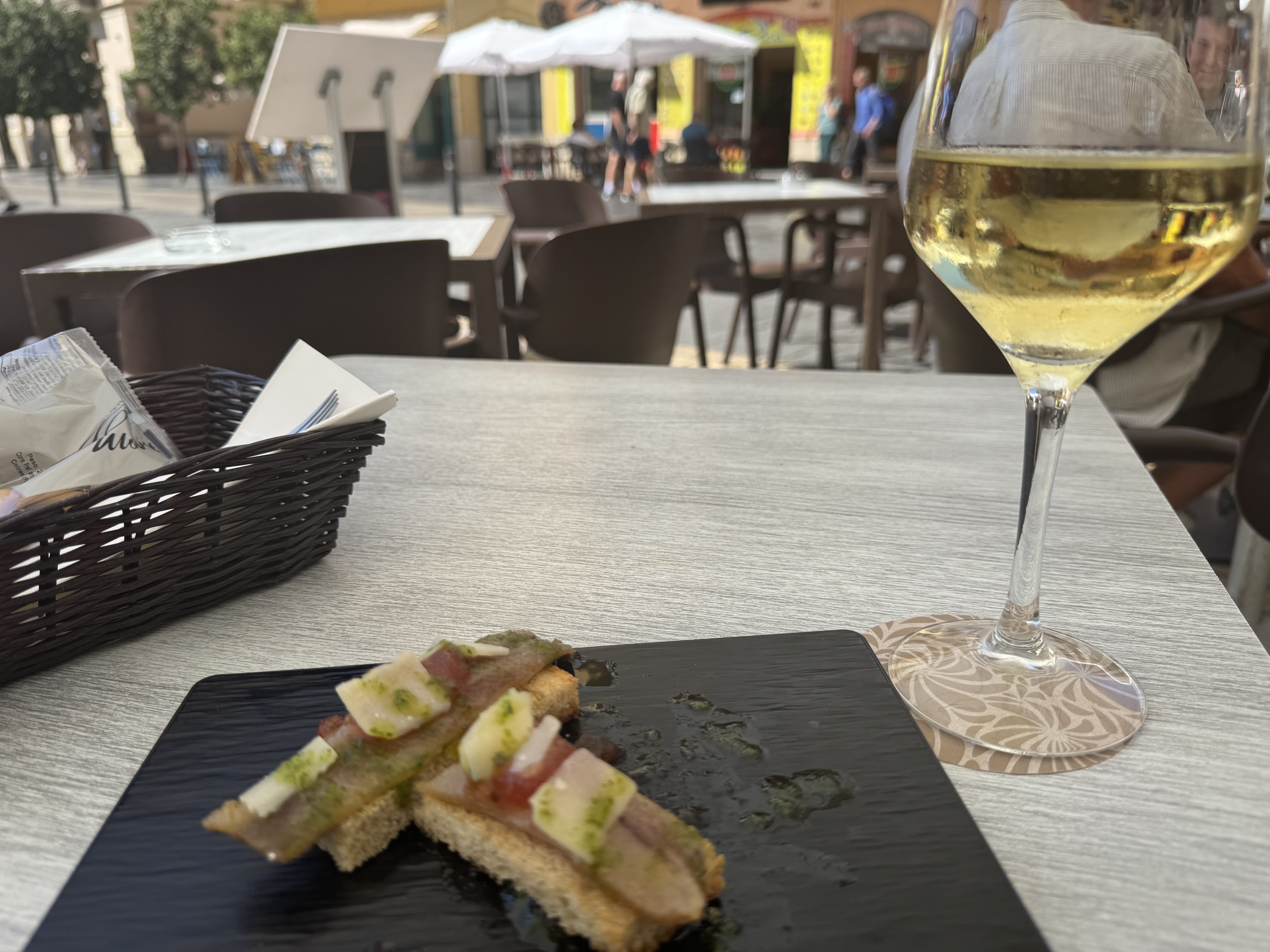
I then decided I needed to find a place to eat amongst all of the open air restaurants, bars and shops surrounding the square and opted for Cafe Bruselas. This turned out to be one of my best decisions since I arrived in Spain. I ordered a glass of white wine and three tapas: Salmorejo (a regional soup specialty like gazpacho, but thicker with additions of pieces of boiled egg, jamon (ham) and tuna; smoked sardines with tomato jam and cheese; and Tuna Tataky and avocado. Each of the tapas was absolutely lights out, fantastic. I would crawl on my hands and knees to have the smoked sardines again. Absolutely stellar food and preparation.
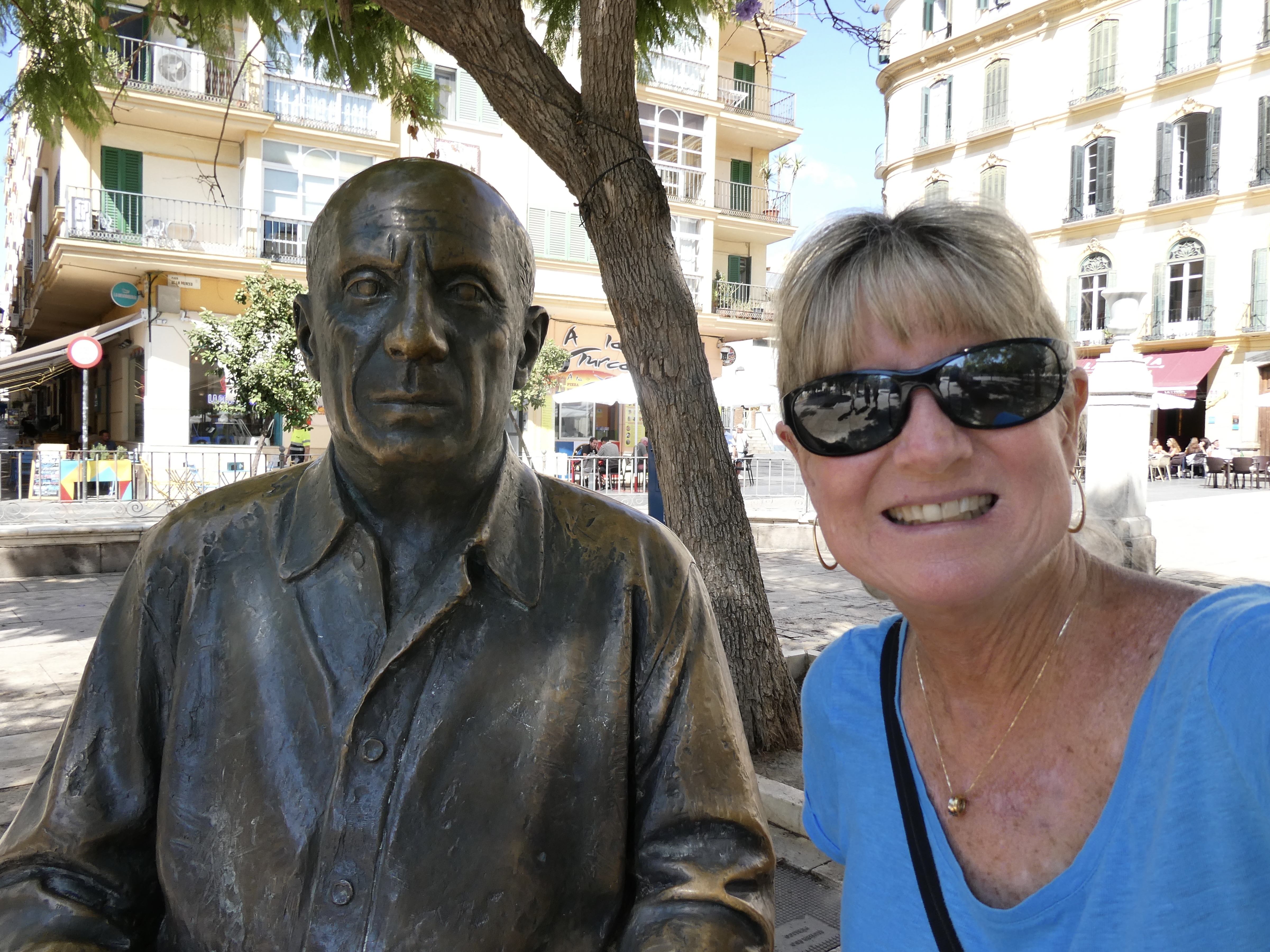
And while I was eating lunch, I kept seeing people taking pictures with some statute that was seated nearby so after lunch, I went to check it out. Turns out it was a statute of Malaga’s favourite son, Picasso who was not only born in Malaga, but apparently his home and a Picasso museum were nearby. Now I did not have time to visit the home or the museum, but I certainly had time to sit with Picasso and snap a pic.
Anyway, that was my day in Malaga. Tomorrow, I am up early again for my train to Seville where I will spend the next five days.
