Today I was off on a day trip outside Sevilla to the “White Villages” aka Pueblo Blancos, which are a collection of hilltop villages and towns located in the Andalusia area of Spain notable for their white limestone walls that reflect the sun to keep buildings cool. The villages date to Moorish times and while the whitewashed colour helped to keep the villages cool, the white colour was also used by the Moors to make it difficult to distinguish one building from the next in order to confuse invaders.
Now originally, I had planned to take a trip with a company called Naturanda. I had used the company in Madrid for the palace tour and the trip to Toledo, both of which were small (i.e. less than 10) group tours. I had also used the company for the tour to Gibraltar, which was a huge bus tour but there were no other options. Now I thought the trip to the White Villages was also going to be a small group tour, but found out at the last minute that the tour was going to be 25 people (their idea of a small group tour). Uh no thank you so I cancelled and booked a last minute tour with Anja Adventures. Great call. The tour turned out to be absolutely fantastic with the wonderful Anja and just six of us on the trip: a couple from Puerto Rico and a family of three from Miami. In addition, the folks on the tour were A+ people so all in all, a great call to change the tour.

Anyway, Anja picked us up at the meeting point at 9:00 a.m. for a tour of three of the White Villages: Zahara de la Sierra with its prominent Moorish tower and stunning hilltop views; Setenil de las Bodegas, which is famous for its unique houses and shops built into and under large rock formations; and Ronda, a town known for its impressive bridges and dramatic cliffside locations.
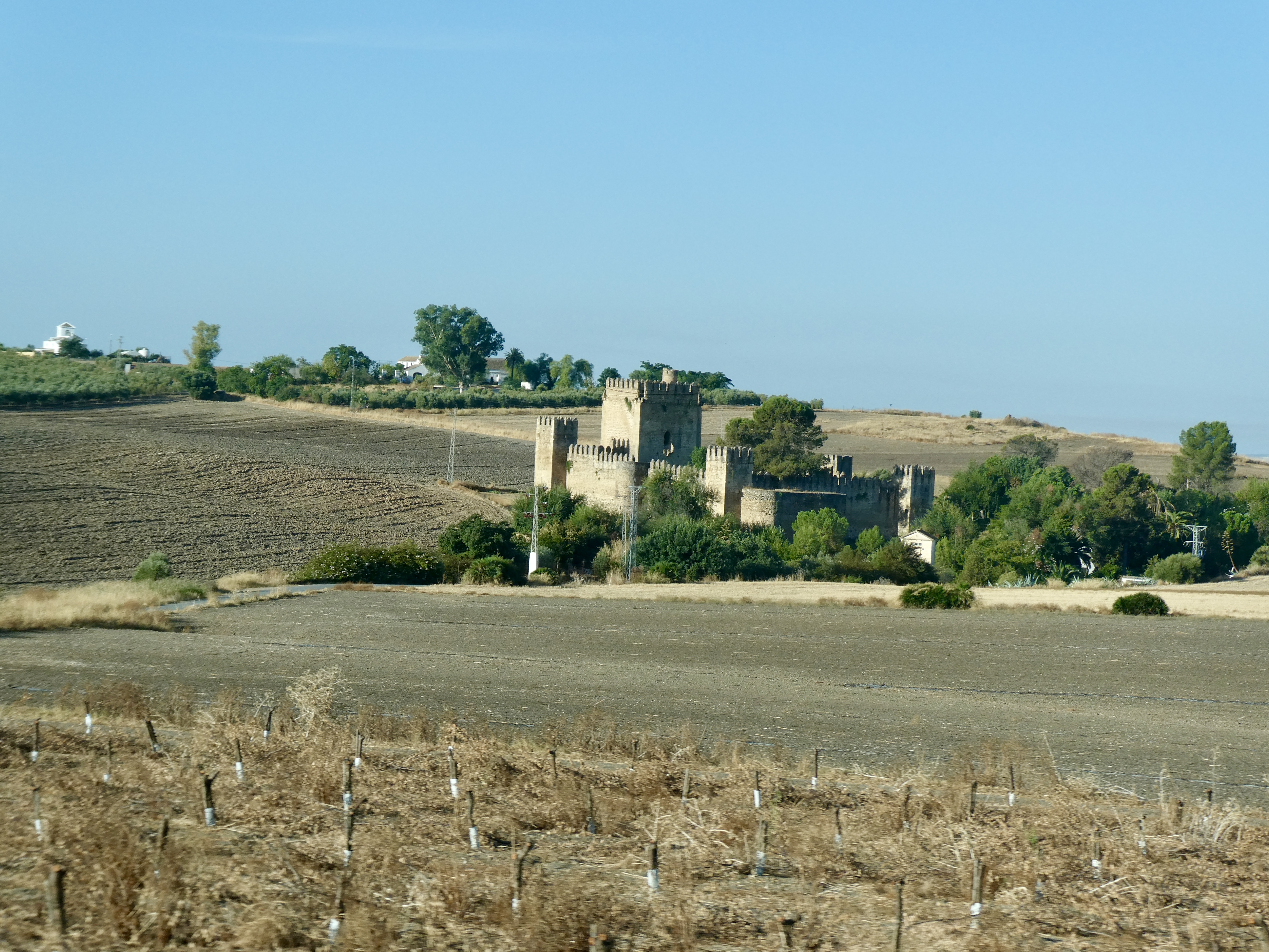
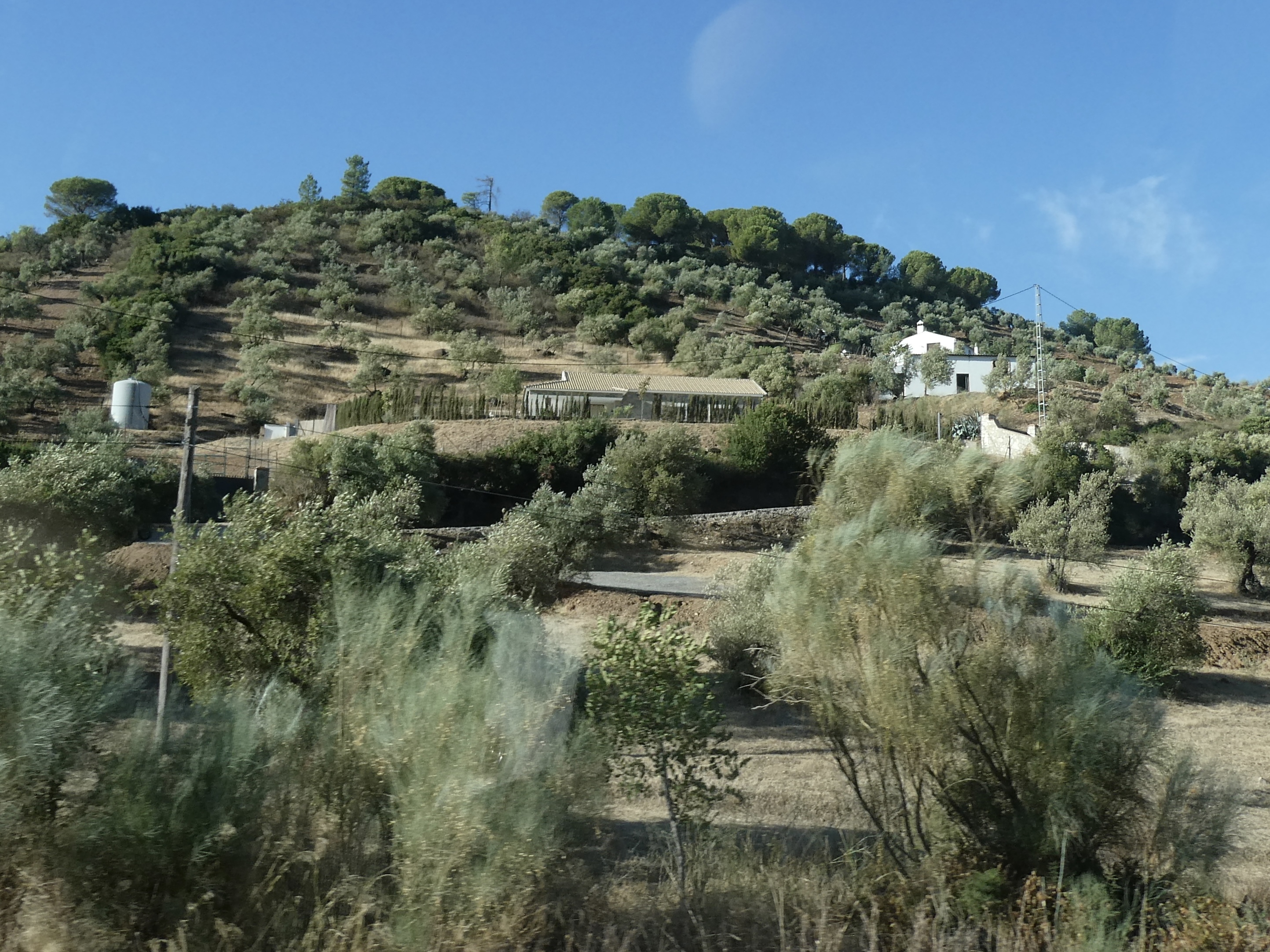
So once we set off, the first part of the drive took us south and east of Sevilla onto a small country road that led us through the flat farming areas of Sevilla province and then through the rolling hills covered in olive trees and farming areas that make up Cadiz province. Eventually the region became more mountainous with old churches and farmhouses dotting the area. We even passed a 14th century castle on a nearby hillside.
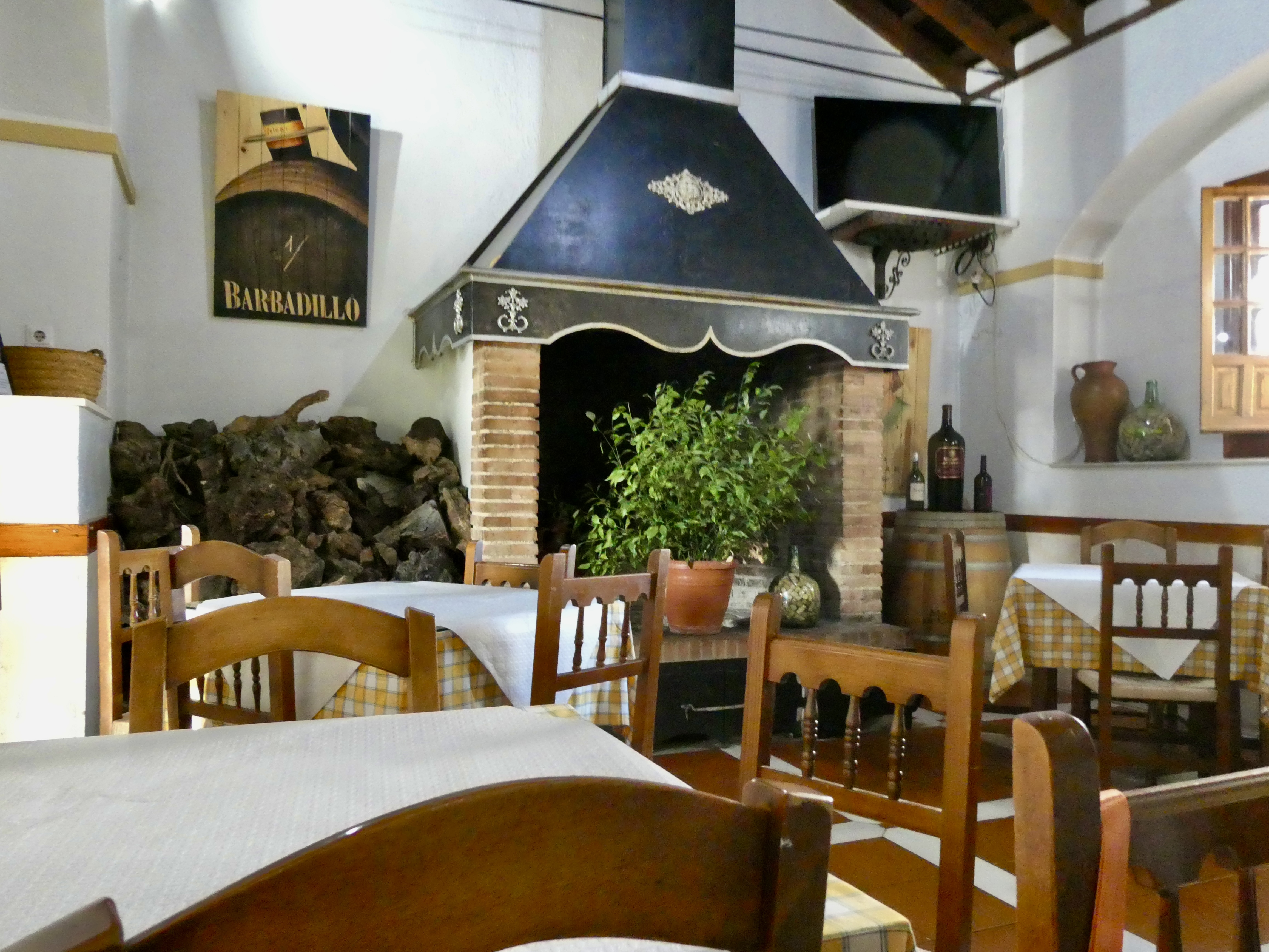
We eventually reached the small town of Algodonales about 80 minutes after we started out, where we stopped at El Cortijo Restaurant for breakfast. Now the really cool part about this tour is that Anja really took the time to ensure the tour was not a cookie cutter type tour and this stop for breakfast was a prime example. The restaurant was as local as they come and I am certain the only tourists that ever visit are the small groups Anja brings through here.
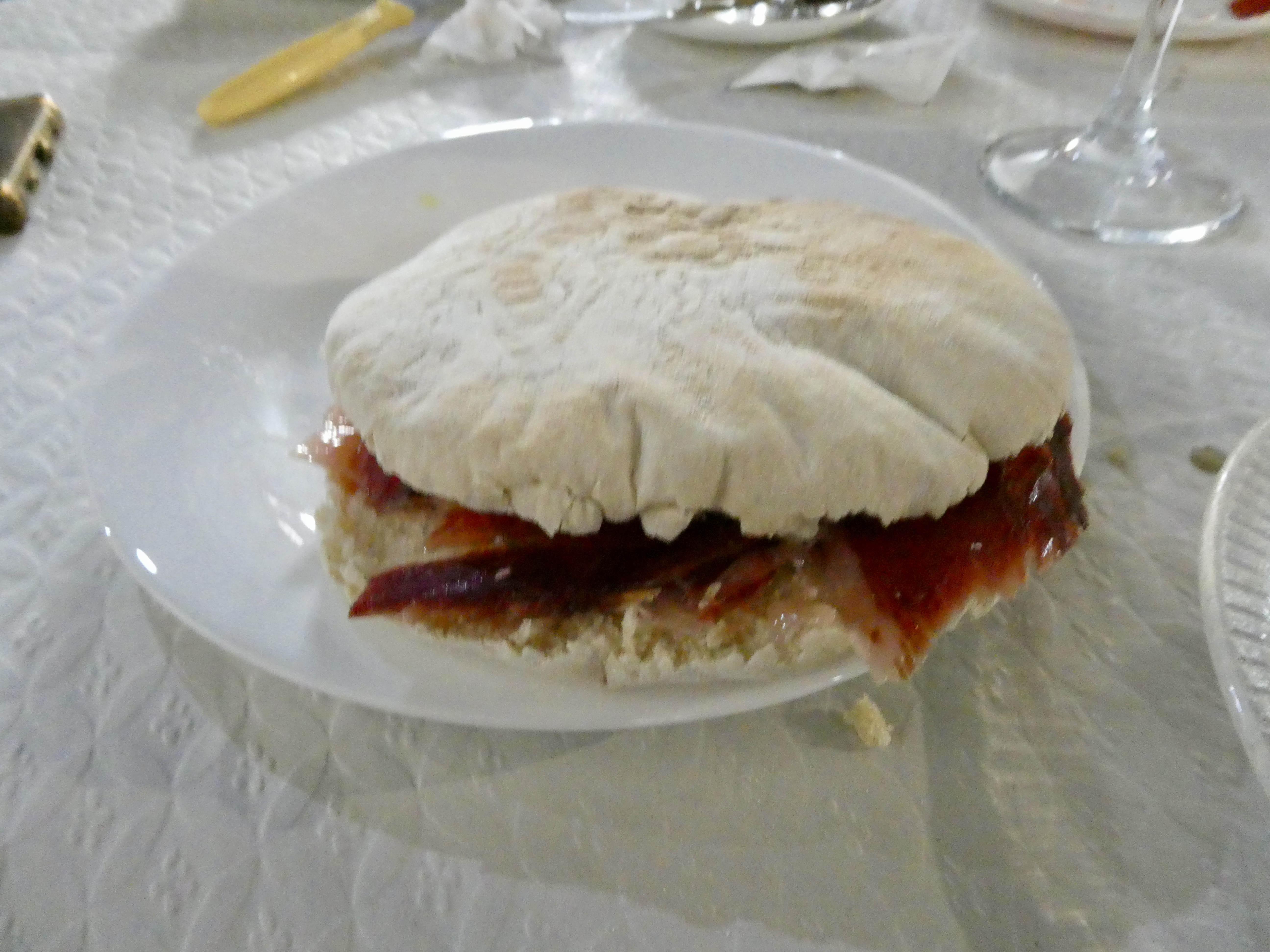
And breakfast was truly local. We were served piping hot Mollete bread, which we cut open and filled with jamon iberico, tomato sauce and olive oil, which was local and wonderful. The Mollete is a staple for breakfast in this region and was absolutely delicious. Fantastico!
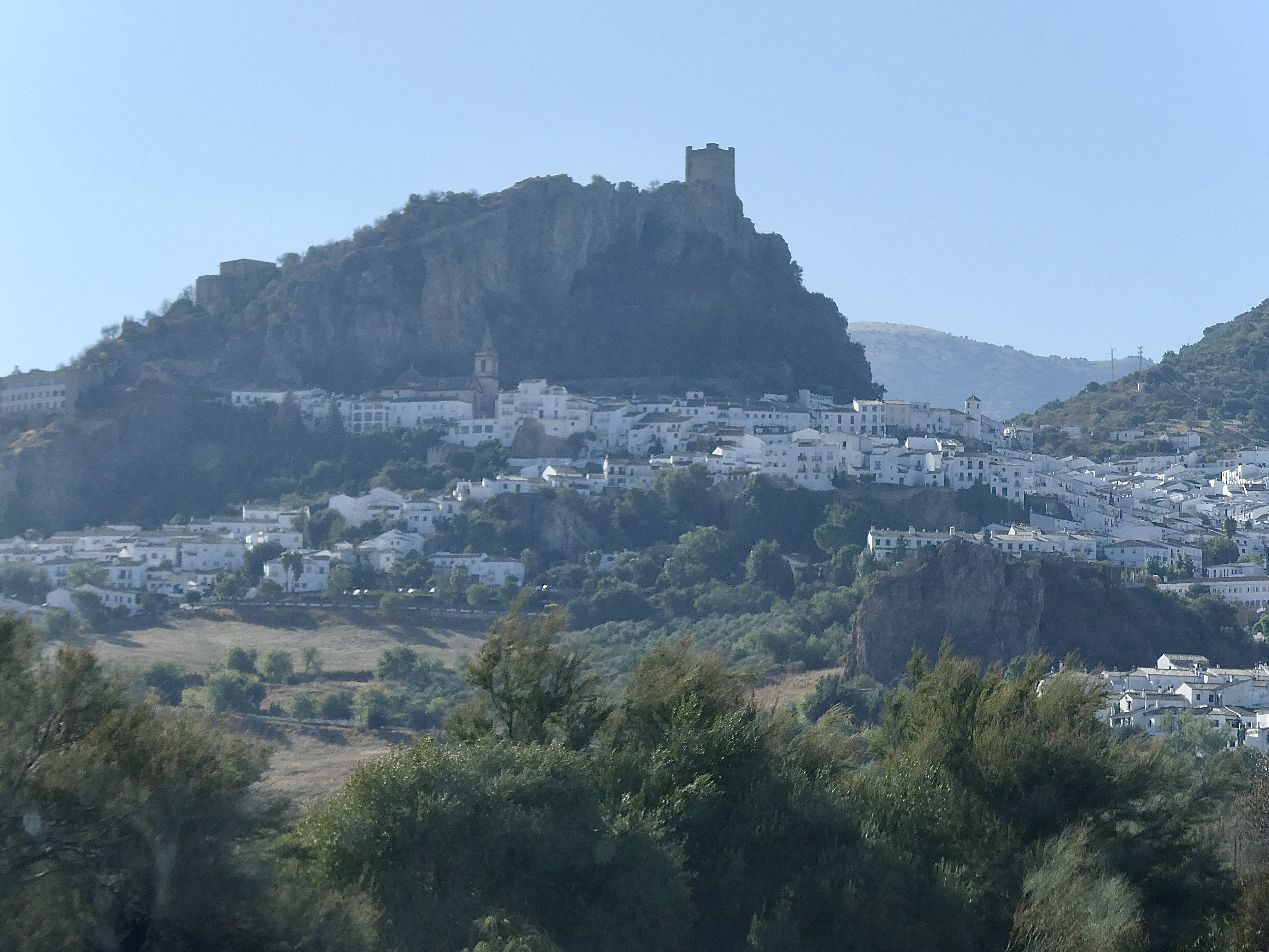
Once we were finished breakfast, we drove a bit further down the road with the first White Village of the day, Zahara de la Sierra
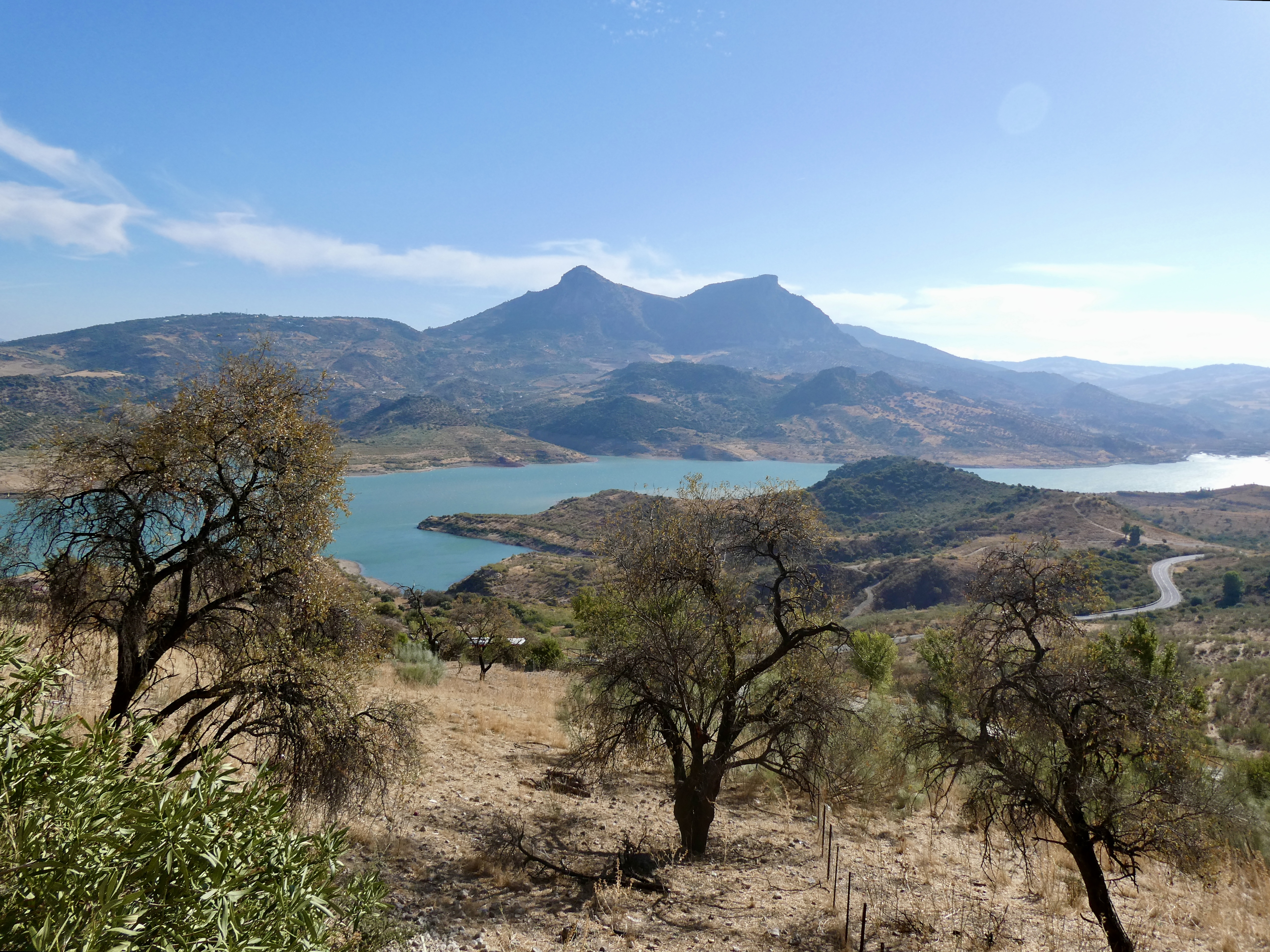
and its prominent Moorish tower and spectacular views, coming into sight. And nearby was the gorgeous Zahara-El Gaston gorge.
Now between the 13th and 15th centuries, Zahara de la Sierra was a fortified medieval town with three layers of walls and a number of towers. The tower and castle were originally constructed in the 12th century by the Moors. Today, there are a number of well preserved sections of the wall, but the most significant remaining structure from the original castle is the tower keep located 605 meters above sea level. And the tower was the last bastion of protection for the town in the event of attack. The town, castle and tower were captured by the Christians in the 15th century.
Anyway, once Anja parked the van we started out to tackle the hardest part of the day, climbing up the hill to the little town of Zahara-El Gaston and then on to the higher climb up to the Moorish tower. (And as it turned out, the climb up to the little town was far easier than the climb to the tower.)
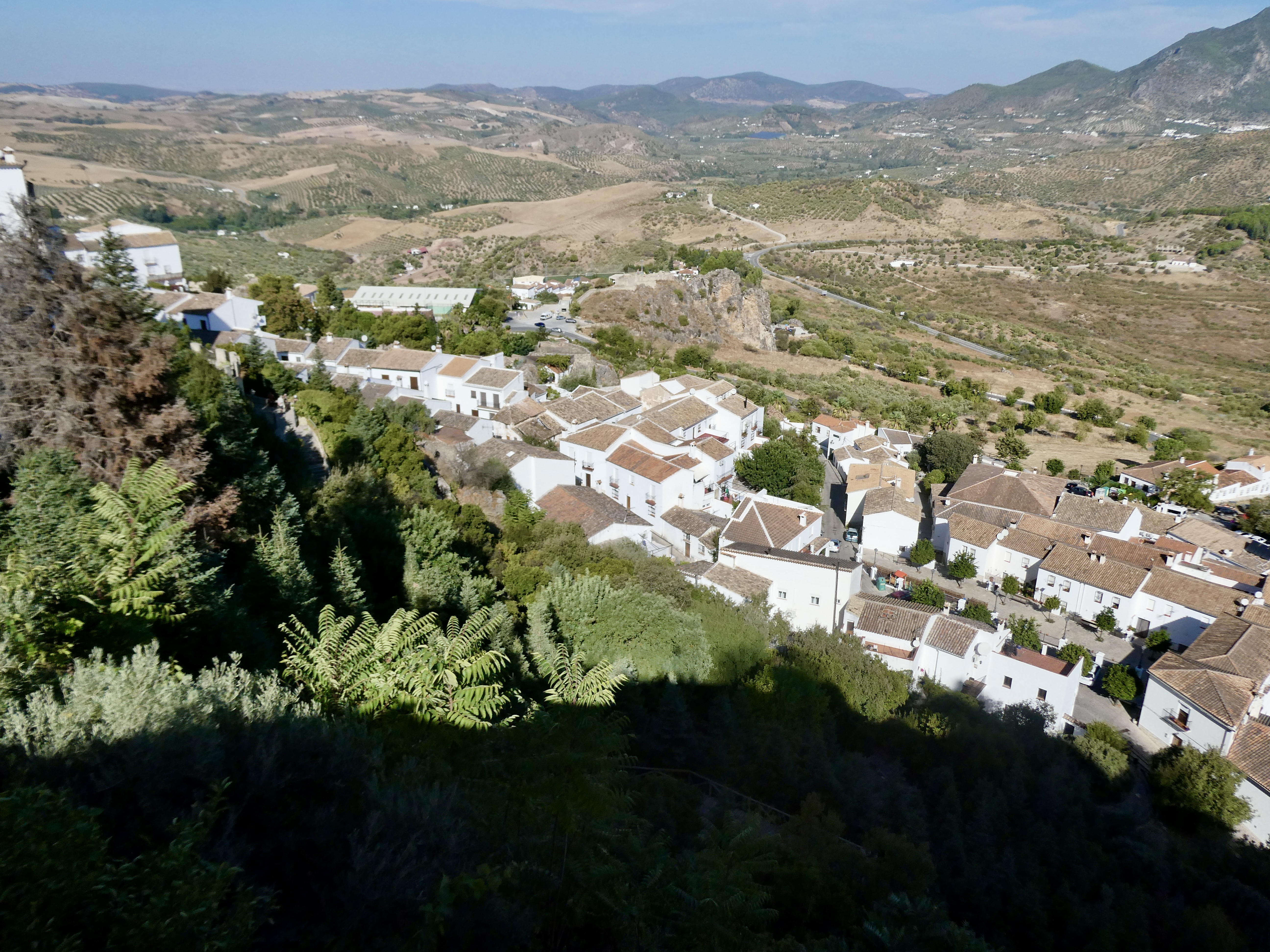
We ended up stopping a couple times on the hike up the road to the town to take in the spectacular views of the Zahara-El Gaston gorge and reservoir that had been created as a result of the construction of a nearby dam.
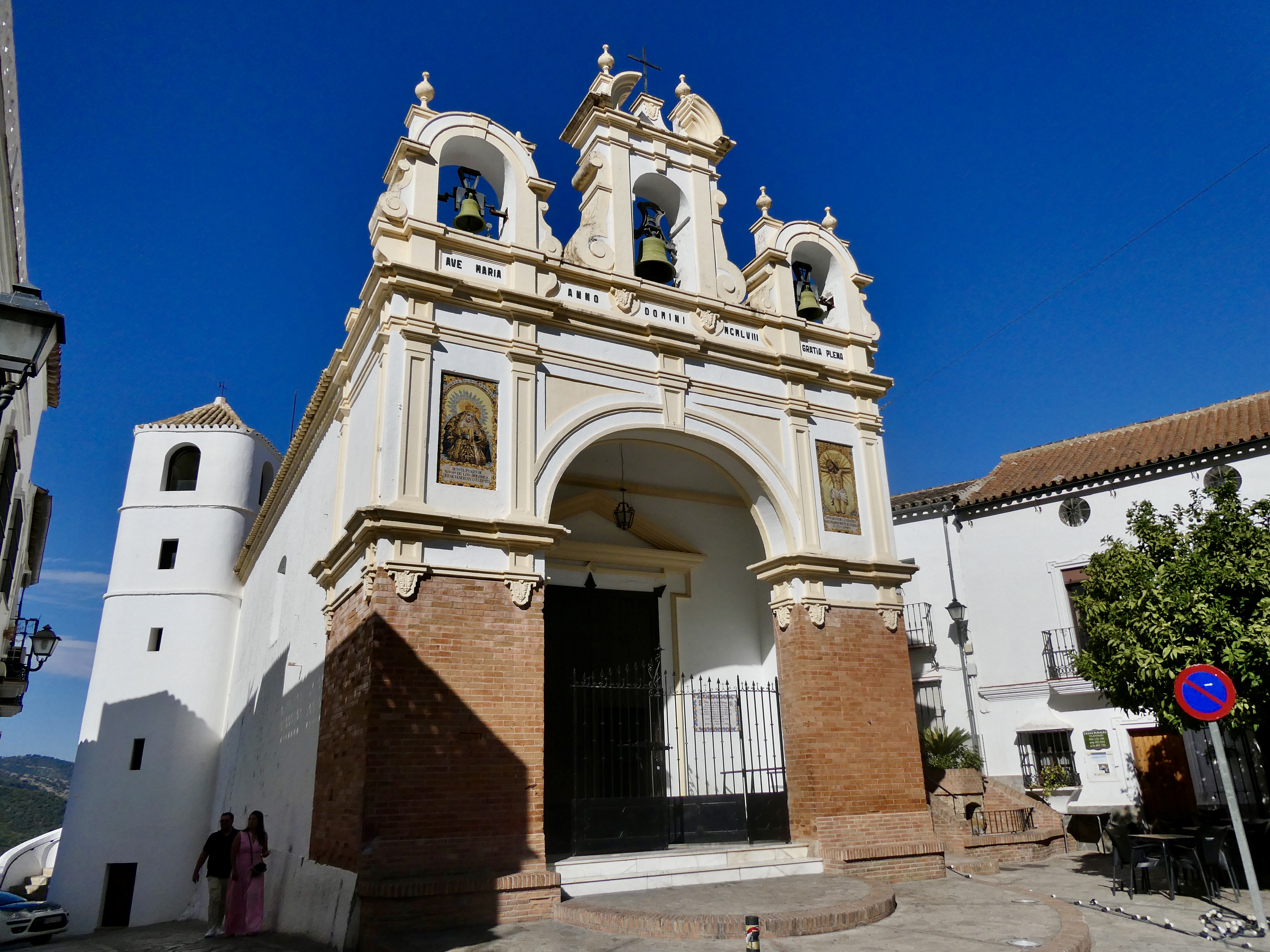

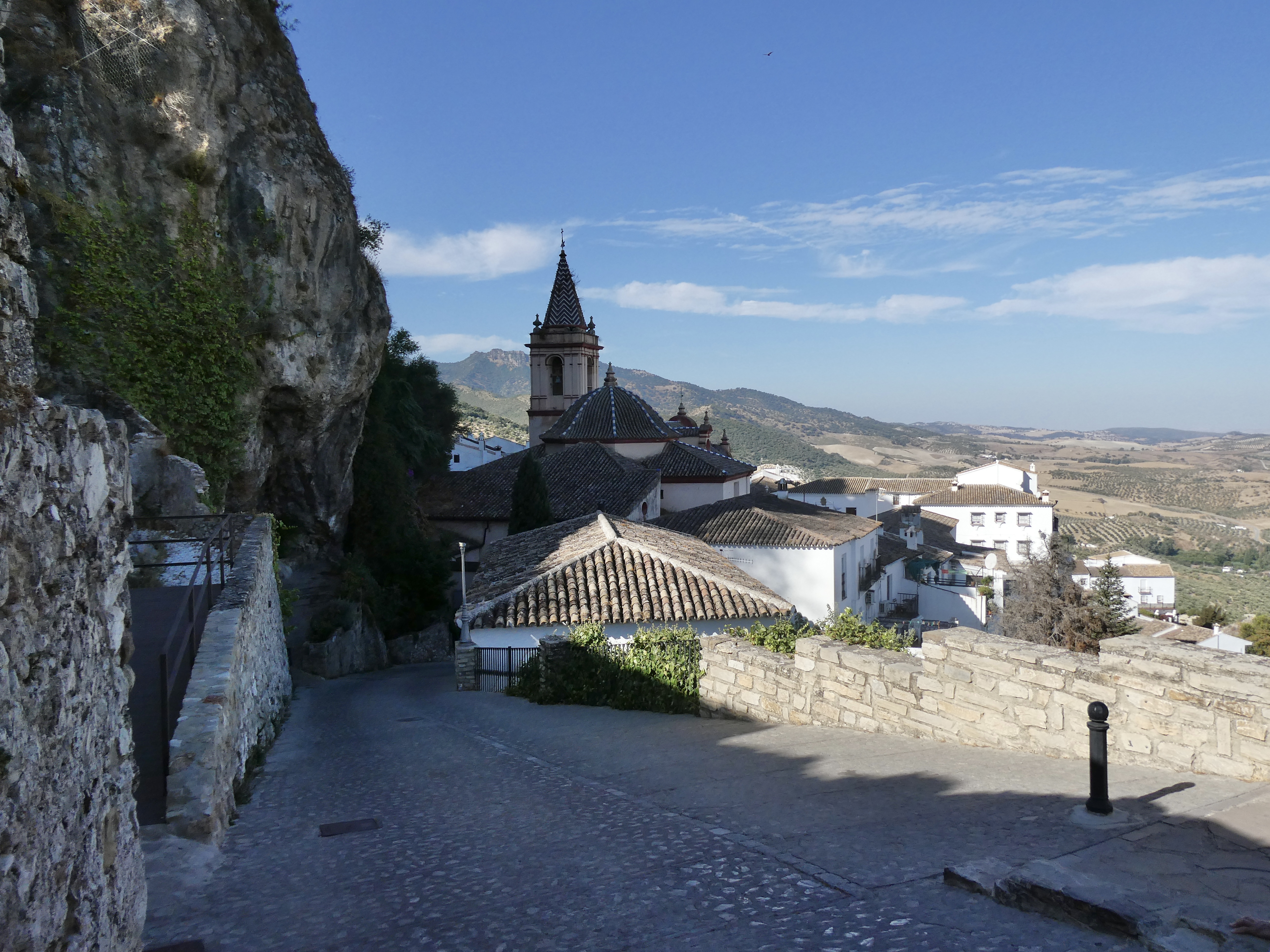
When we finally reached the apex of the road, we began our descent in the little town and were able to see the steeple of the 18th century Church of Santa María de la Mesa, as well as sweeping views to the white buildings below. Once we reached the main square where the church was located, we continued our walk through the little town passing restaurants and shops before reaching another lookout point near a second church with more spectacular views.
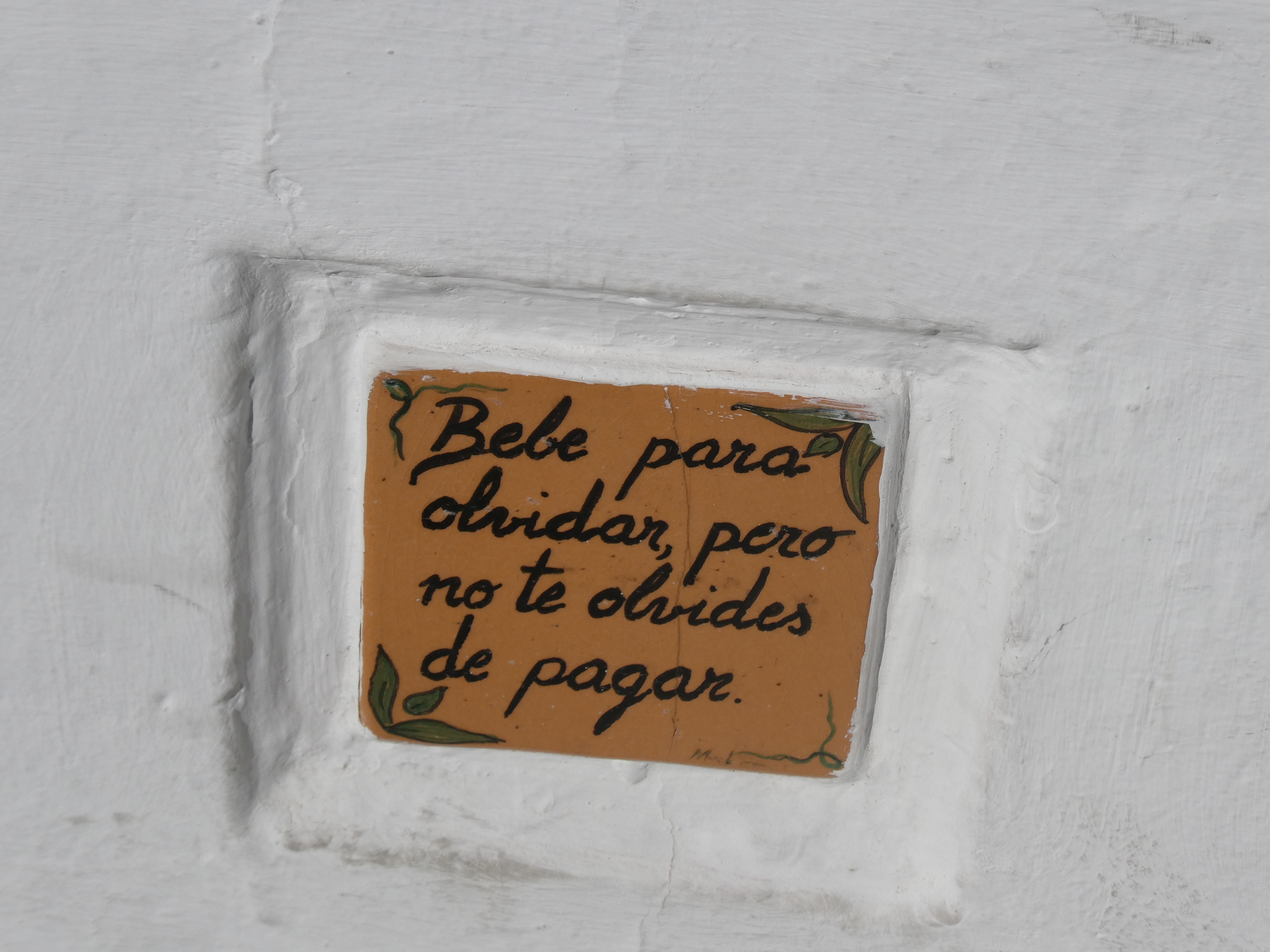
And ones of the cool aspects of this lookout was that it had been tiled with a myriad of Spanish phrases and sayings. Perhaps my favourite was “Drink until you forget, but don’t forget to pay”. Love a sense of humour.
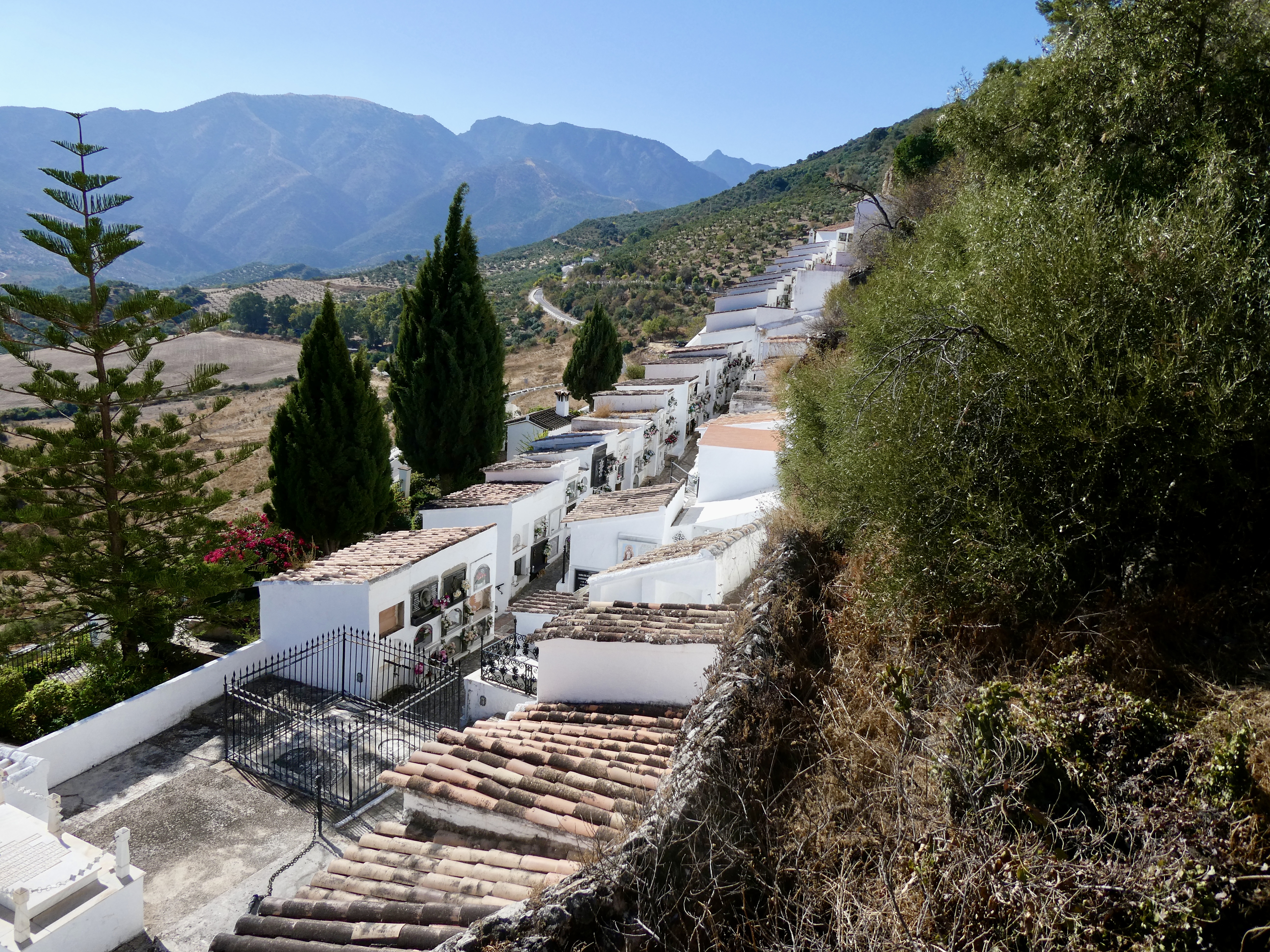
Anyway, from here, we reversed course and climbed back up to the apex in the road before veering off towards the entrance to the tower where we had views to a 19th century cemetery where families buy up plots and construct elaborate buildings to house the dead. Some of the buildings looked huge.
Now in looking up at the tower it did not seem like much of a hike up, but boy was this a case of looks can be deceiving. Not only was the climb up in full sun, but some of the portions of the climb were straight up. Then add on 200 stairs at the beginning of the climb and it made for a pretty tough workout.
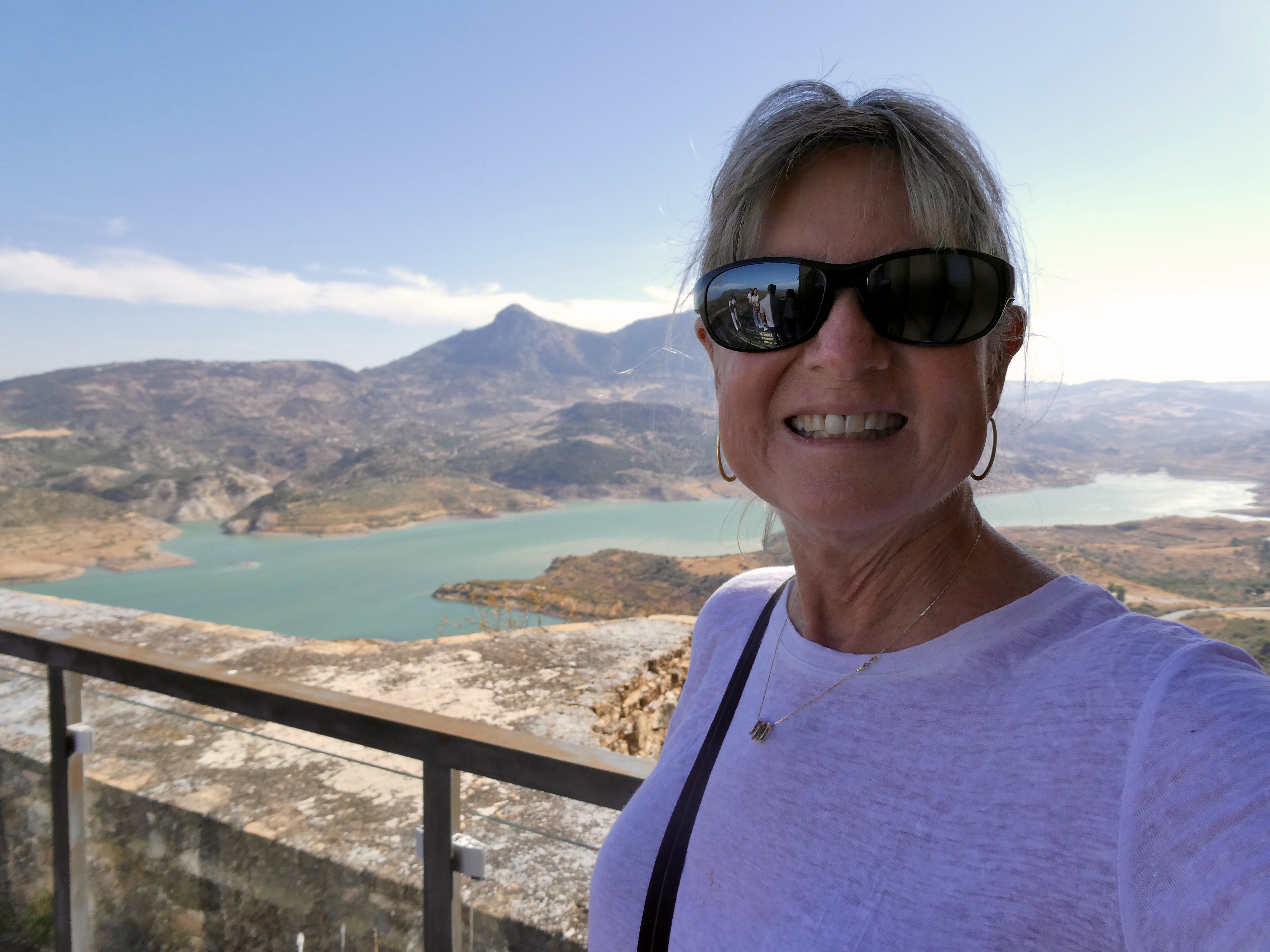
About half way up the climb to the tower, we stopped in at the original Church of Santa María de la Mesa, which dates to the 15th century. There was not much to see inside the Church, but the views were spectacular as it sat perched on the hillside.
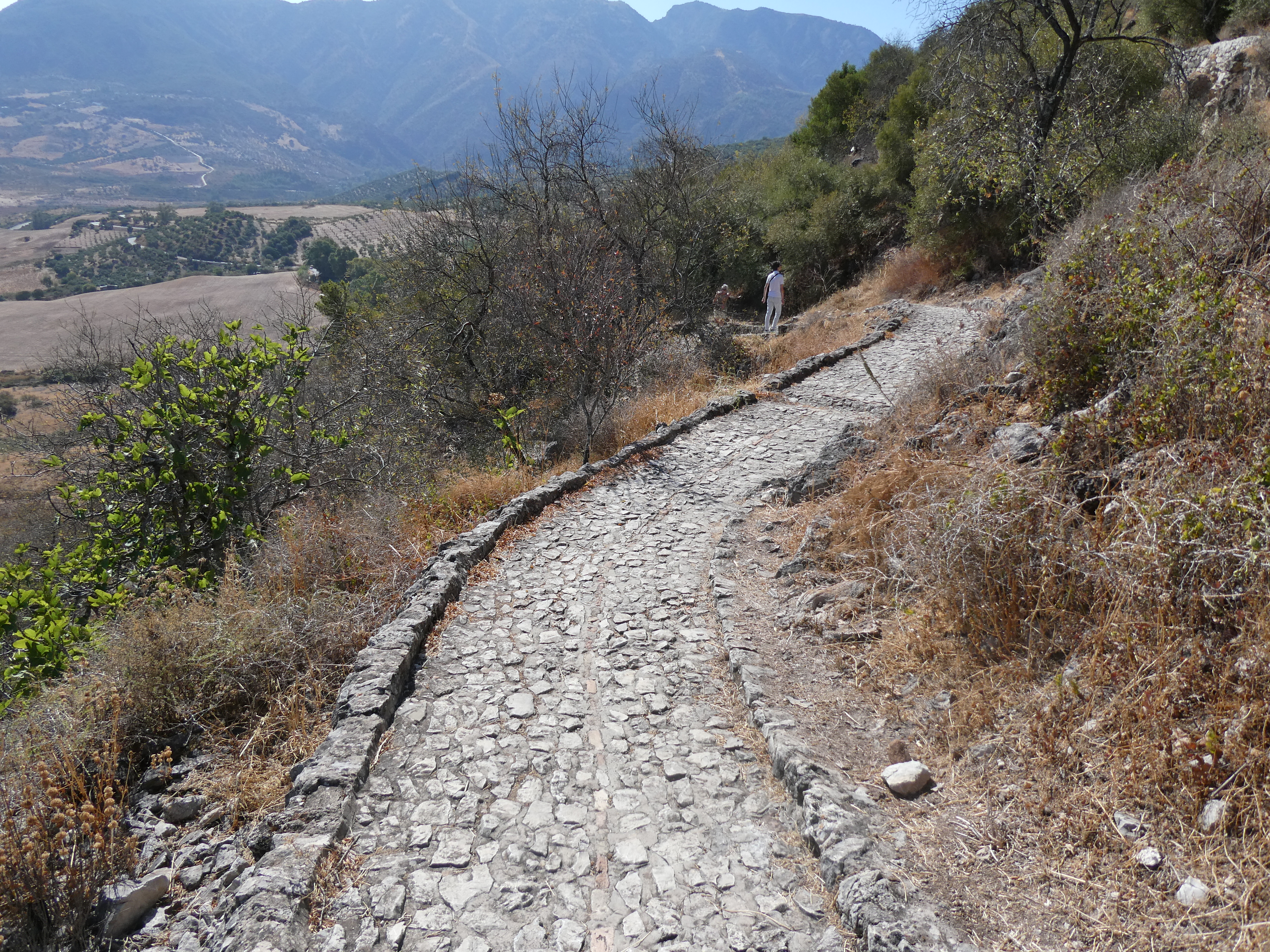
From here, we took a footpath switchback, which was the best part of the climb for me because this was old Roman footpath that saw us climbing up over uneven stones that had been on this site for over 2,000 years. Pretty darn cool!
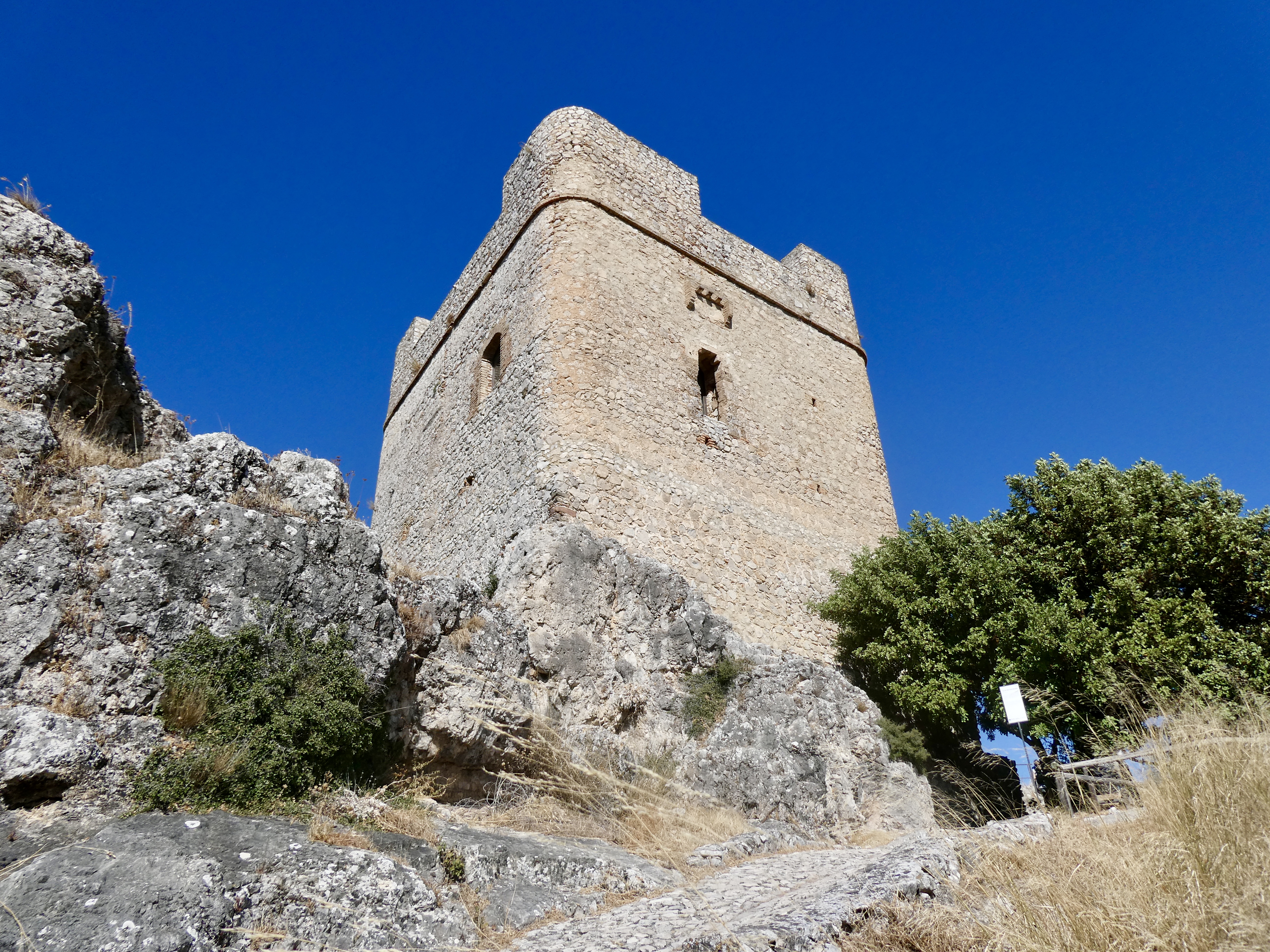
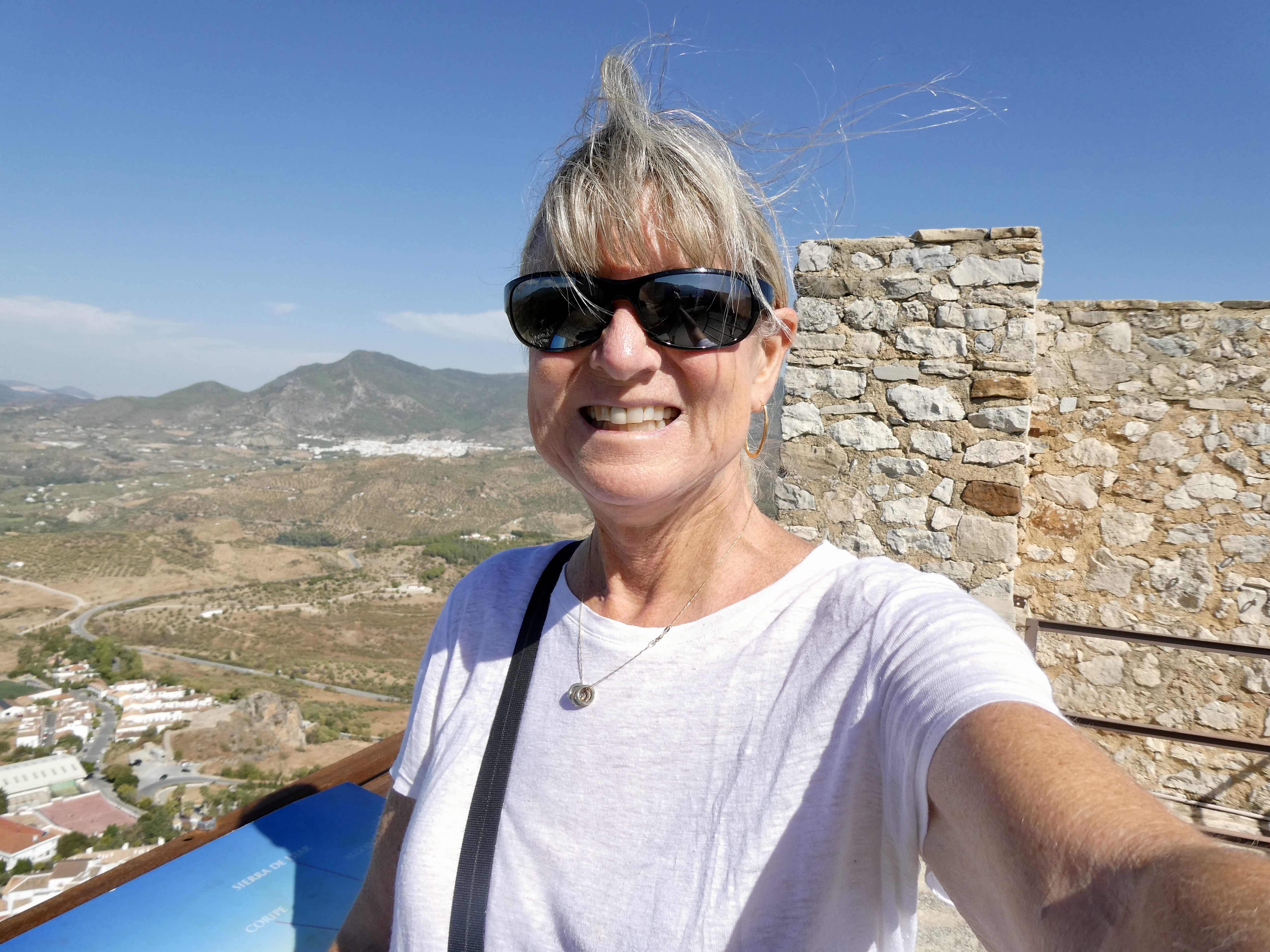
Now once we reached the end of the footpath, we took a rest before entering the tower. But, quite frankly, the inside of the tower was not that remarkable. There is still excavation going on inside and the middle part of the tower where the 11 occupants lived, had a re-creation of the living space and kitchen. The outside lookout portion of the tower was the highlight with still more 360 degree views of the town, the gorge, the mountains and the hillside.
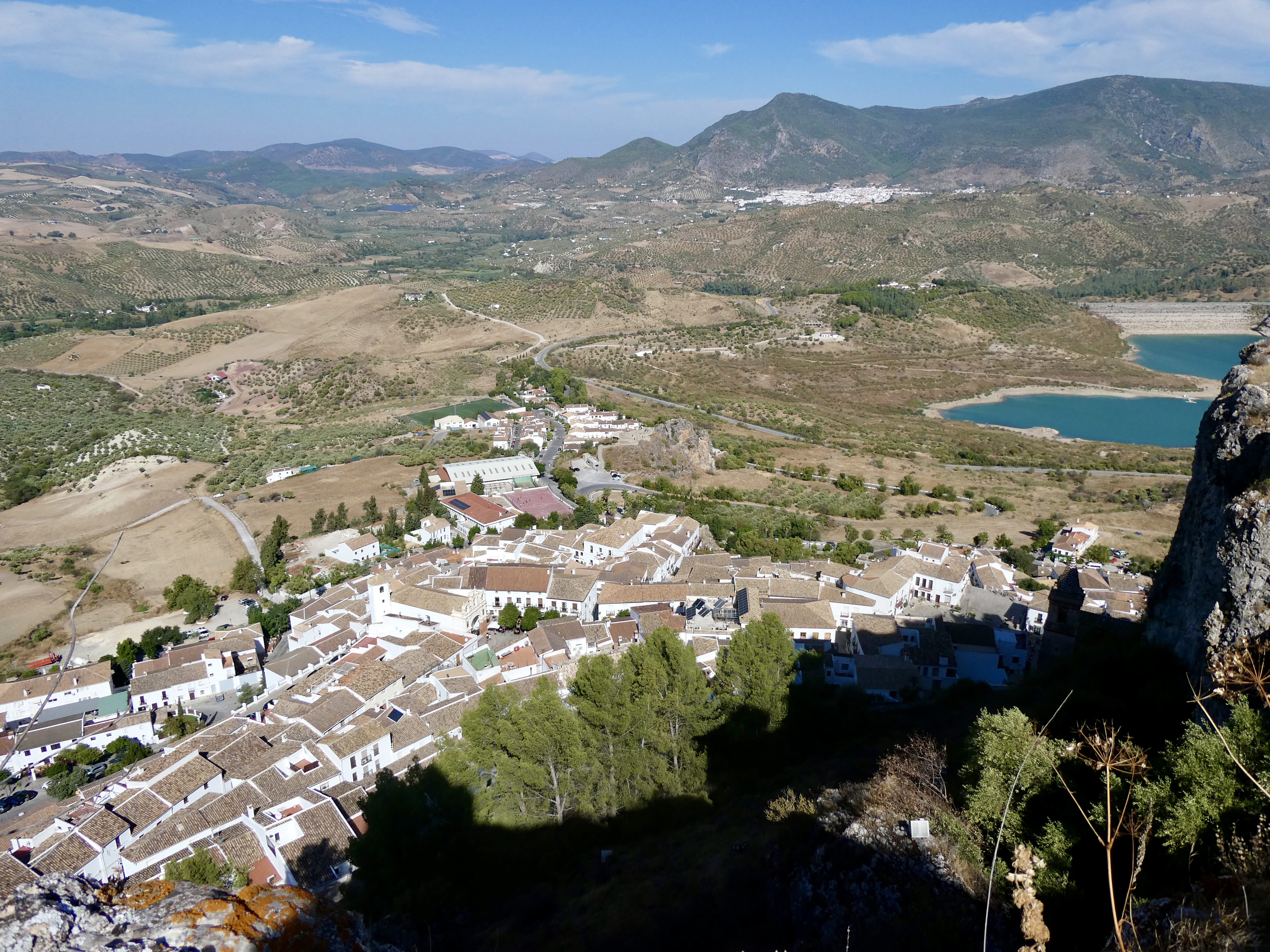
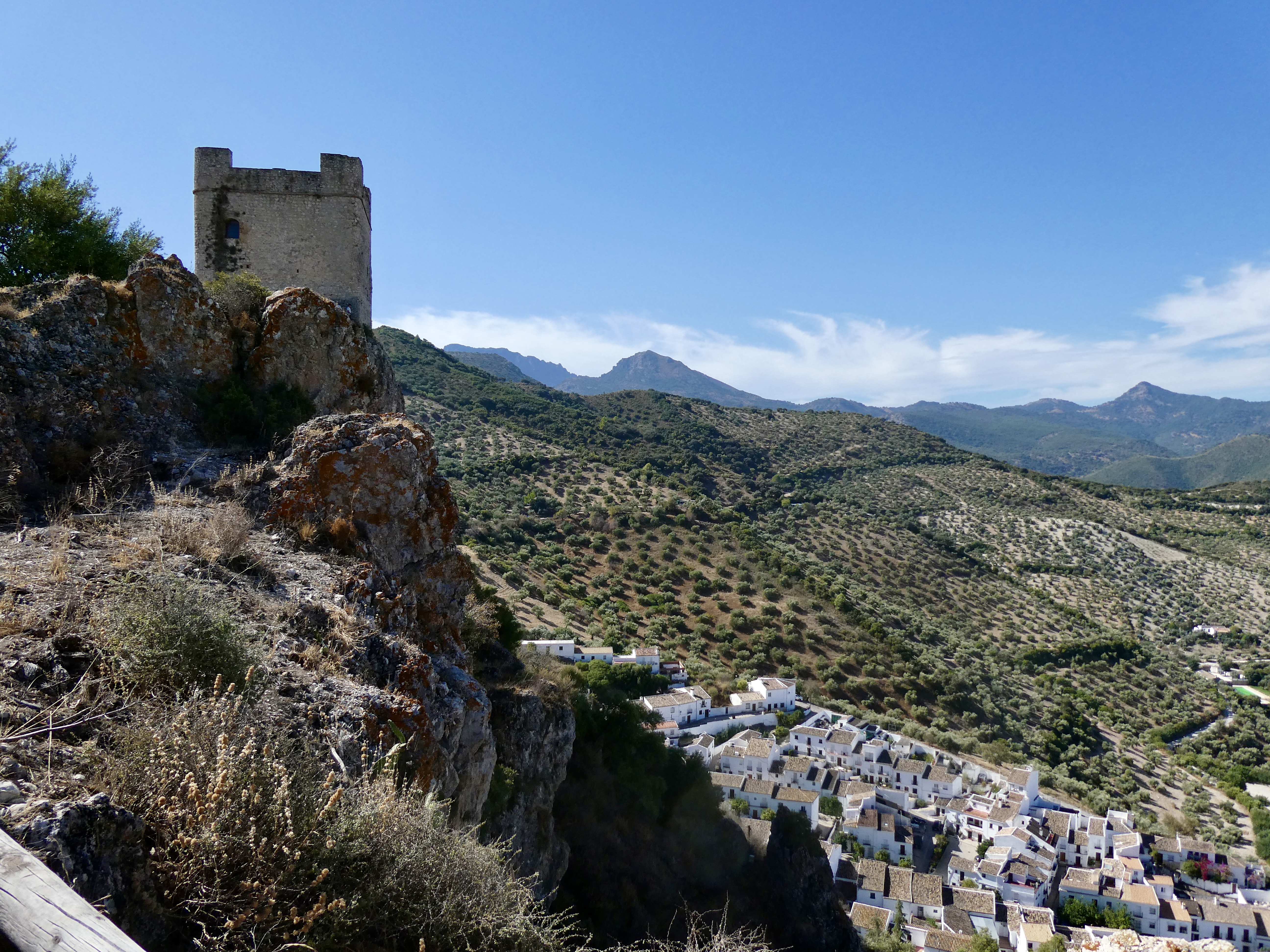
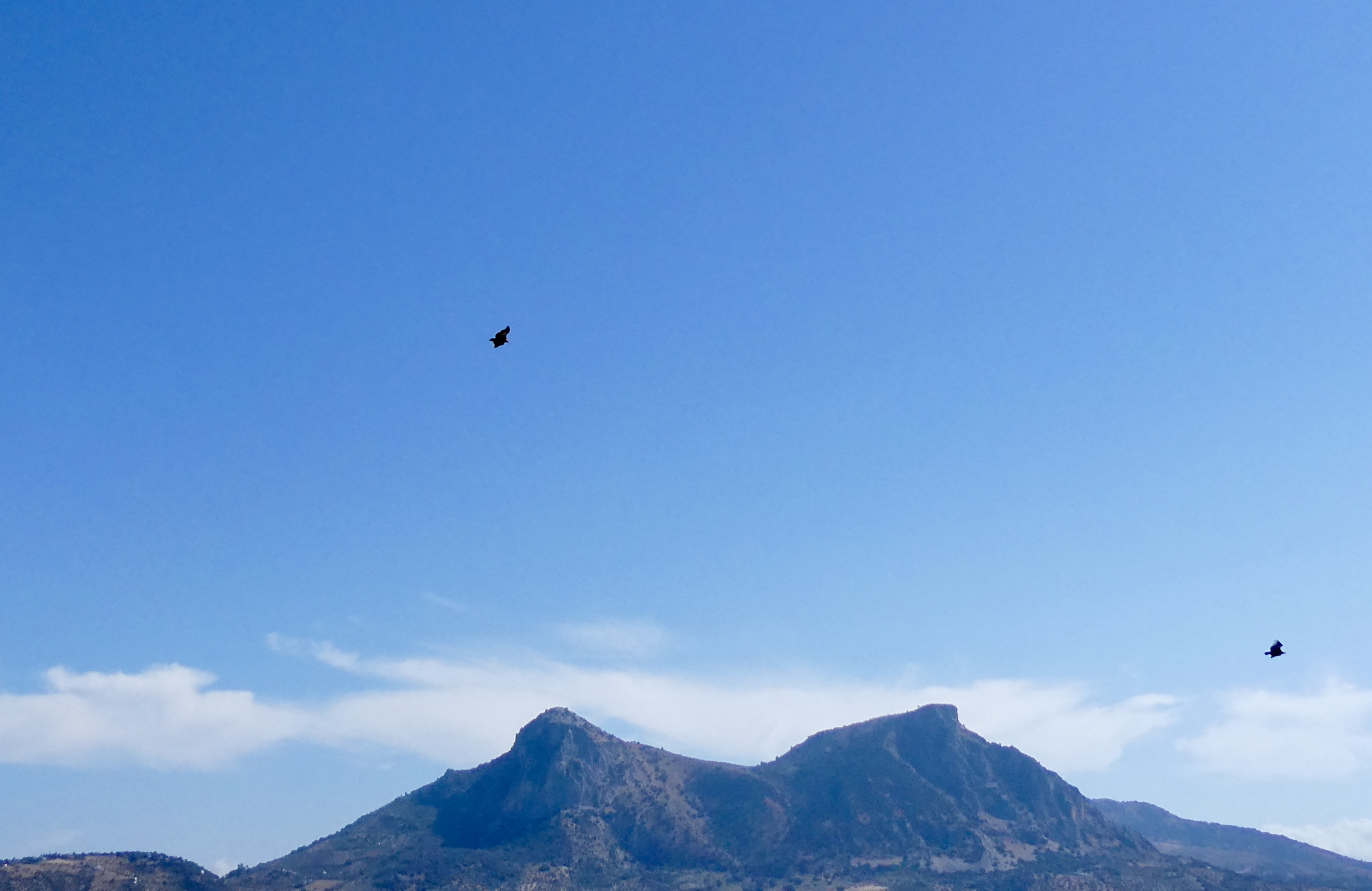
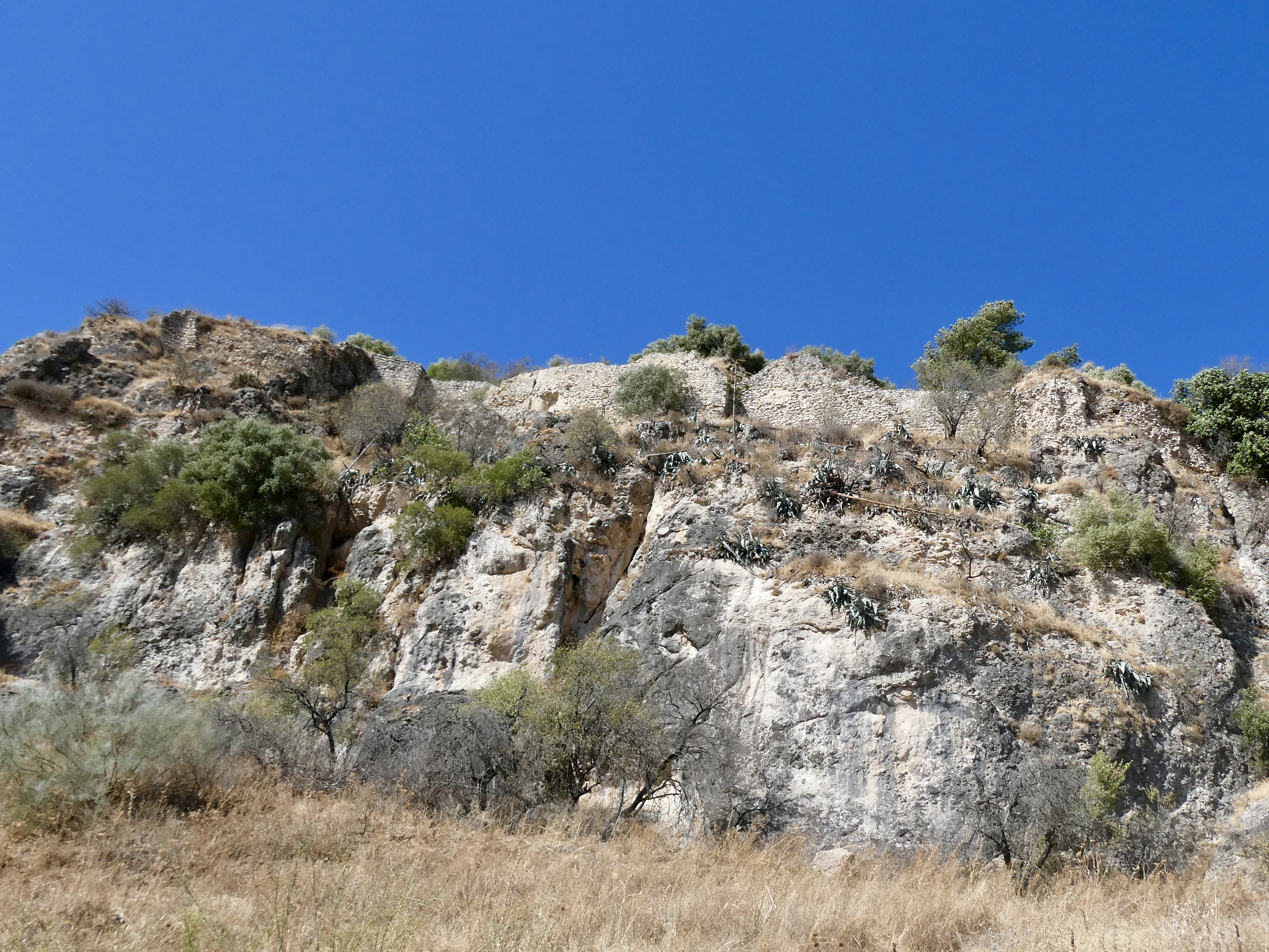
After taking in the views, we climbed back down and reached the van in about ten minutes. As we hiked down, we spotted a number of vultures circling overhead. It was a bit of a windy day and apparently the vultures love the wind.
Anyway, once we reached the van, we began the 40 minute drive to our next village, Setenil de los Bodegas, which is also in the province of Cadiz. The drive took us through more olive groves as well some vineyards and lots of rolling hills. In the distance, we had spectacular views of the Sierra de Grazalema mountains.
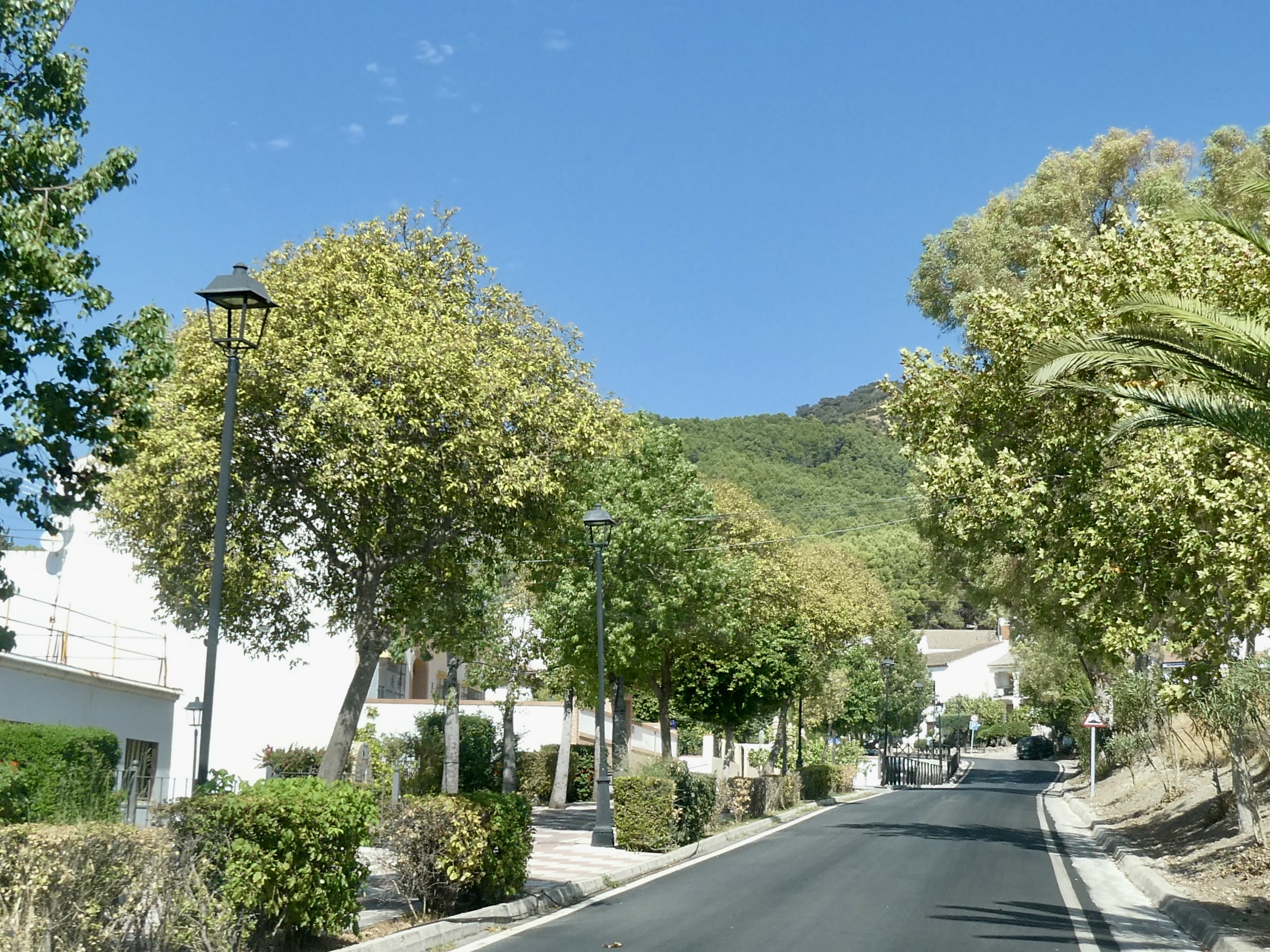

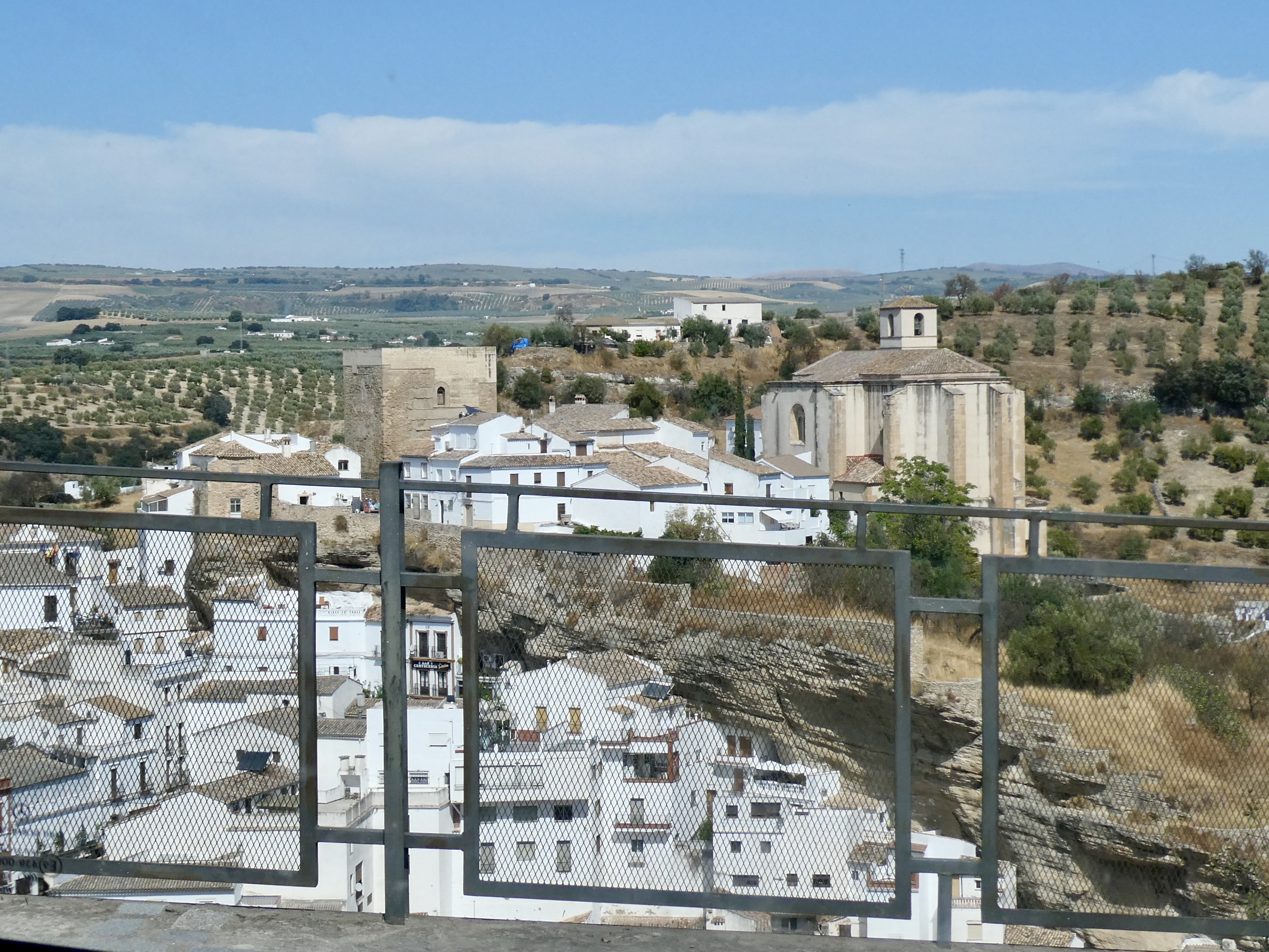
We also passed through and by a couple more White Villages, including the very pretty town of Montecorto. The town was not big, but the buildings were gorgeous. I expect people don’t stop here because of the glorious attractions in the other White Villages, but the town really was pretty.
We eventually reached Setenil de los Bodegas and while the little town has a castle and tower, we were there to see the houses and structures that were built directly into and under massive rock overhangs giving the appearance that the structures have been carved out of the rocks.
Now the town was built by the Moors in the 9th century within the gorge that was created by the Trejo River, which still flows through the middle of the village today. And while the Moors receive credit for building Setenil de los Bodegas, there is evidence that the area was occupied for thousands of years before this by ancient cave dwellers.
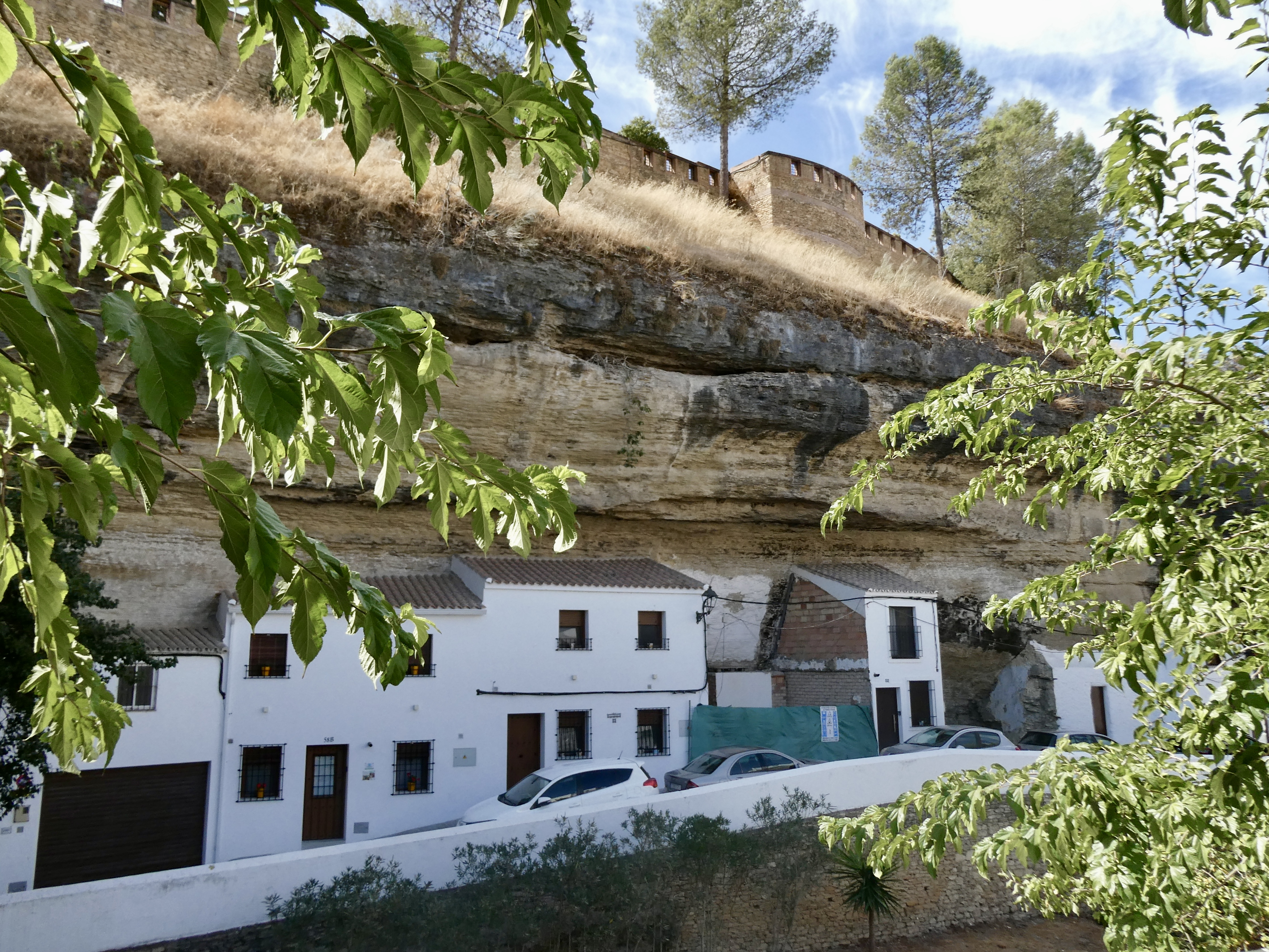
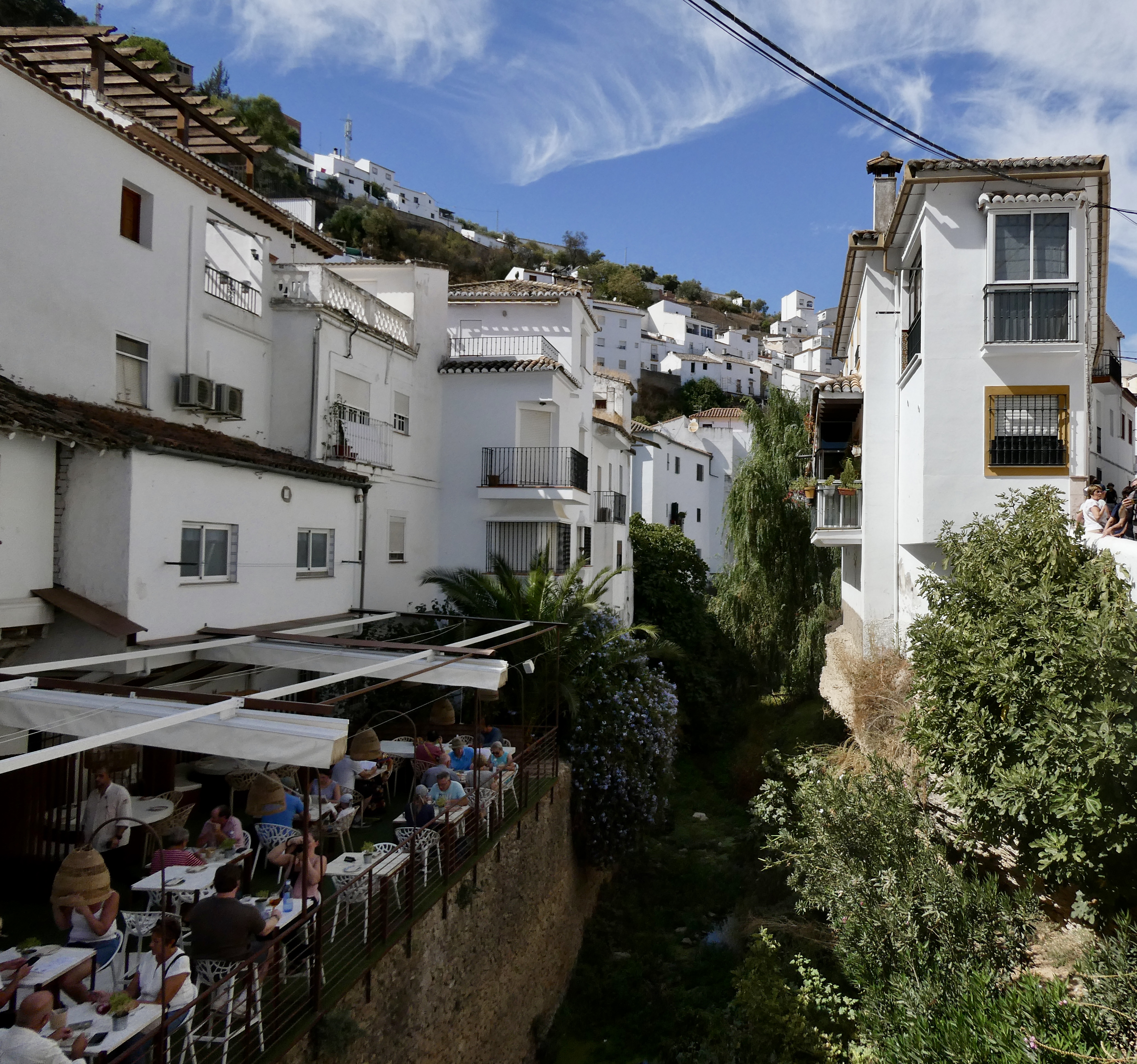
Now the name Setenil de los Bodegas (“Setenil”) refers to the seven times that the Moors held back the Christians before finally being defeated in the 15th century. And the name Bodgegas refers to the number of wineries in the area.
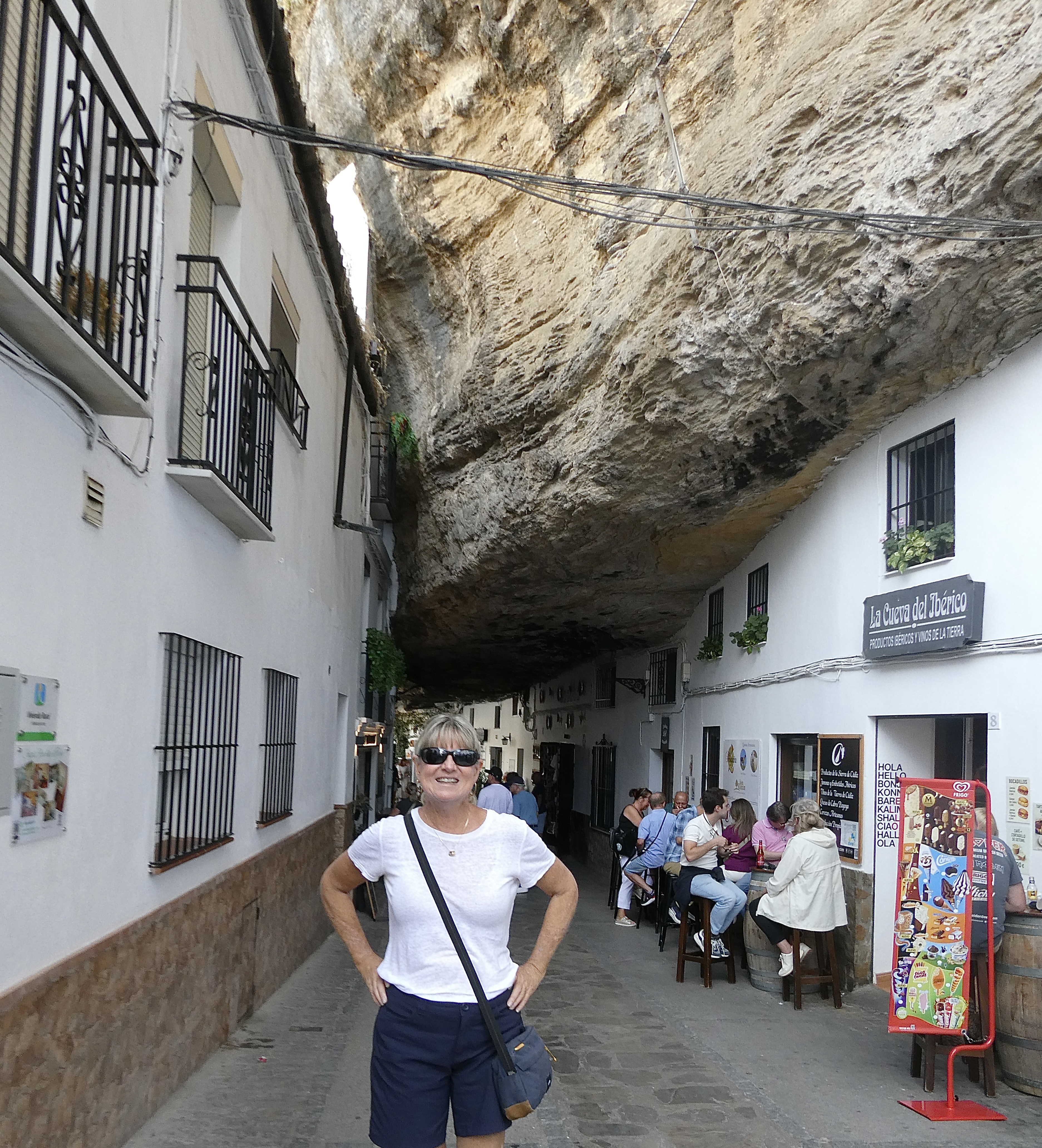
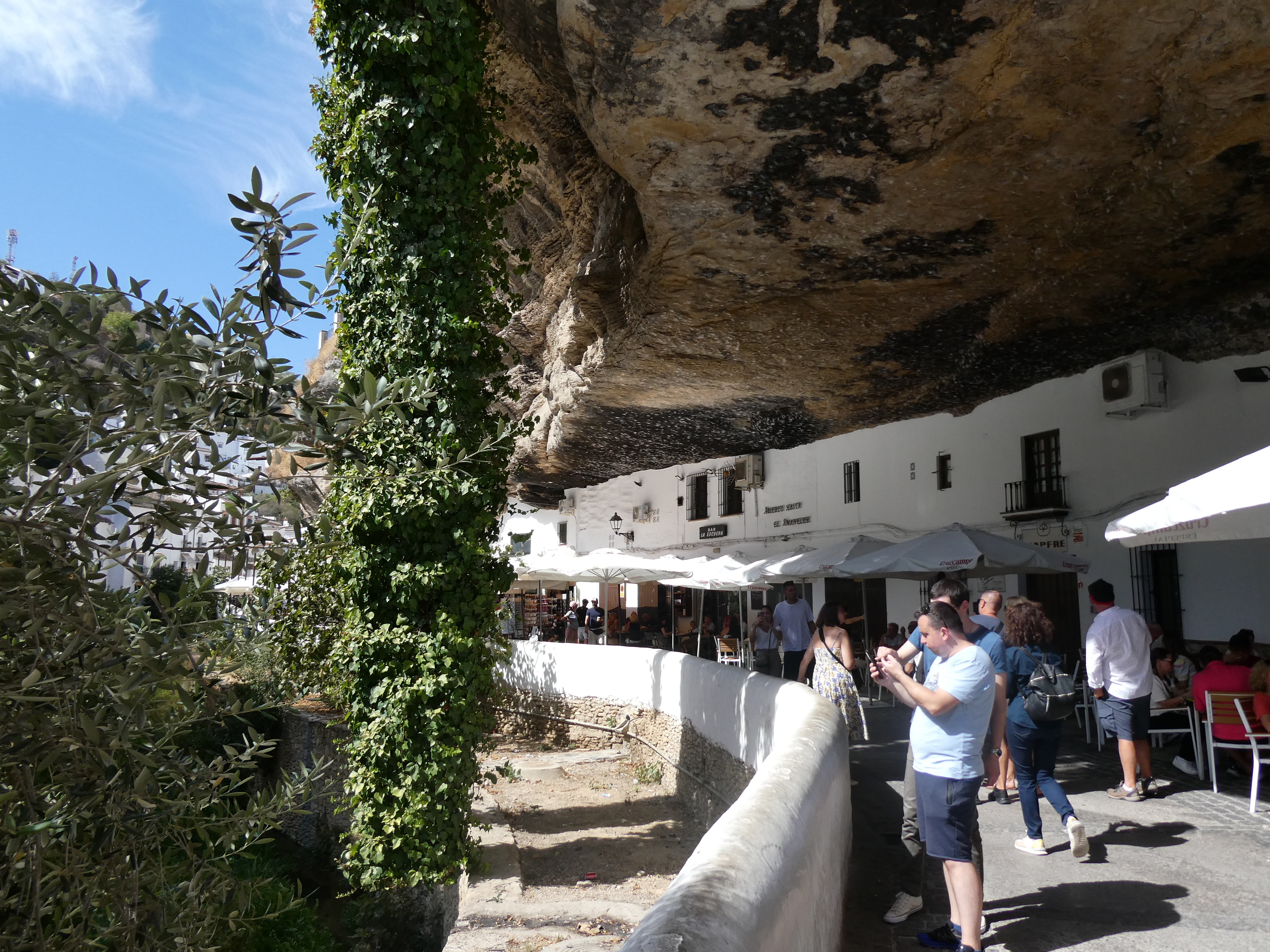
Anyway, once we parked the van, we took a walk through the narrow streets and under the HUGE overhanging rocks. It was remarkable to see the houses and shops literally built into and under the massive stones.
After we did a loop around the town, we stopped and had lunch at one of the many restaurants fronting the massive stone walls. I ended up ordering, what has rapidly become my favourite meal in this part of Spain, Salmorejo, a cold tomato soup that is thicker than gazpacho, topped with jamon, egg and tuna. LOVE IT!
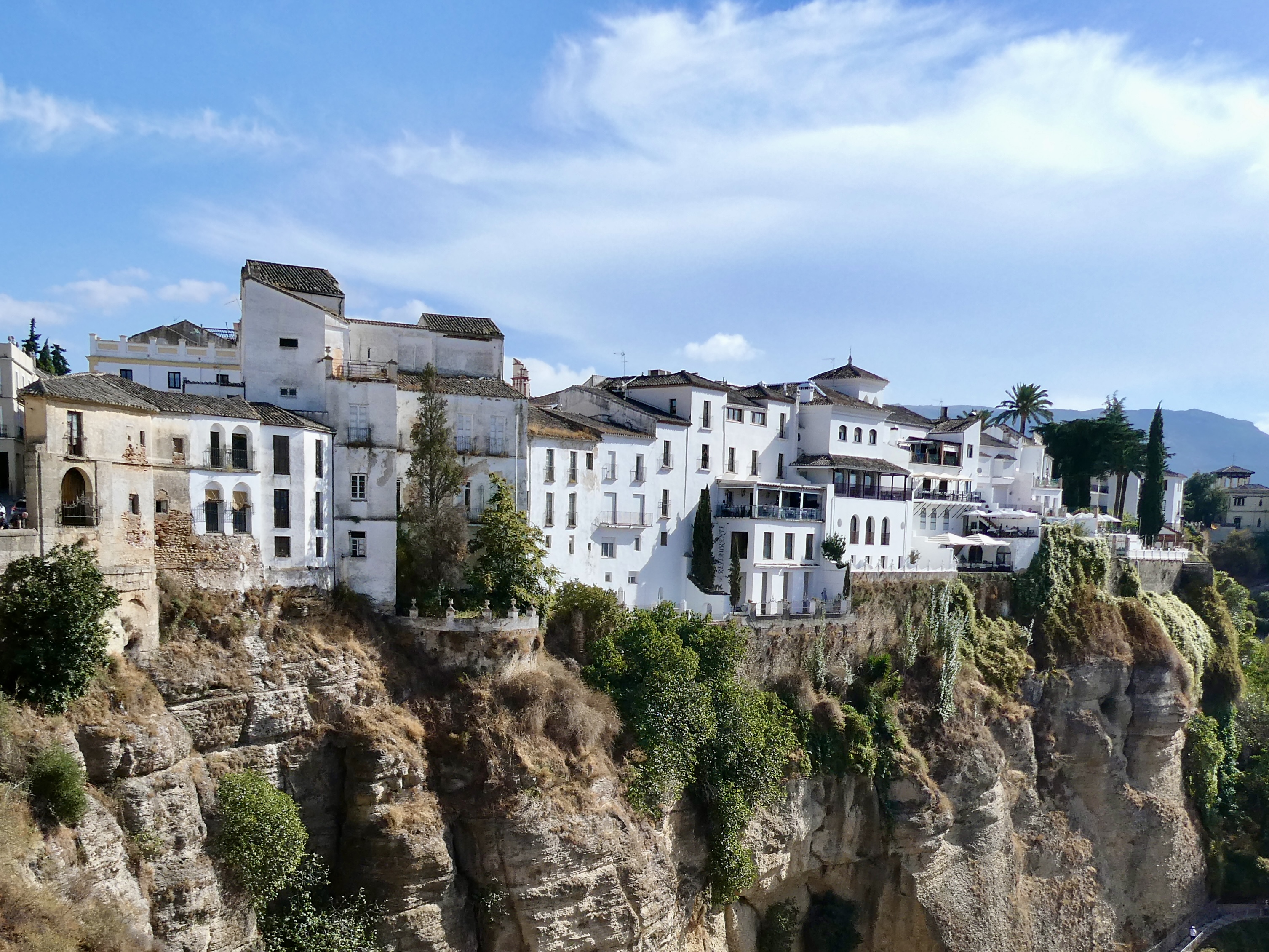
So after lunch (and lunch is usually 2-4 p.m. here) we headed into Malaga province for our visit to the third and last White Village of the day, the town of Ronda, perhaps the most famous of the White Villages because of the ancient bridges and magnificent El Tajo Gorge.
Now Ronda, like all other White Villages, dates to Moorish times, but was taken over by the Christians in the 15th century. Over the centuries, Ronda’s hilltop position has made access difficult so bridges are an integral part of its history and we were going to visit all three existing bridges in addition to taking in the spectacular views from the hilltop.

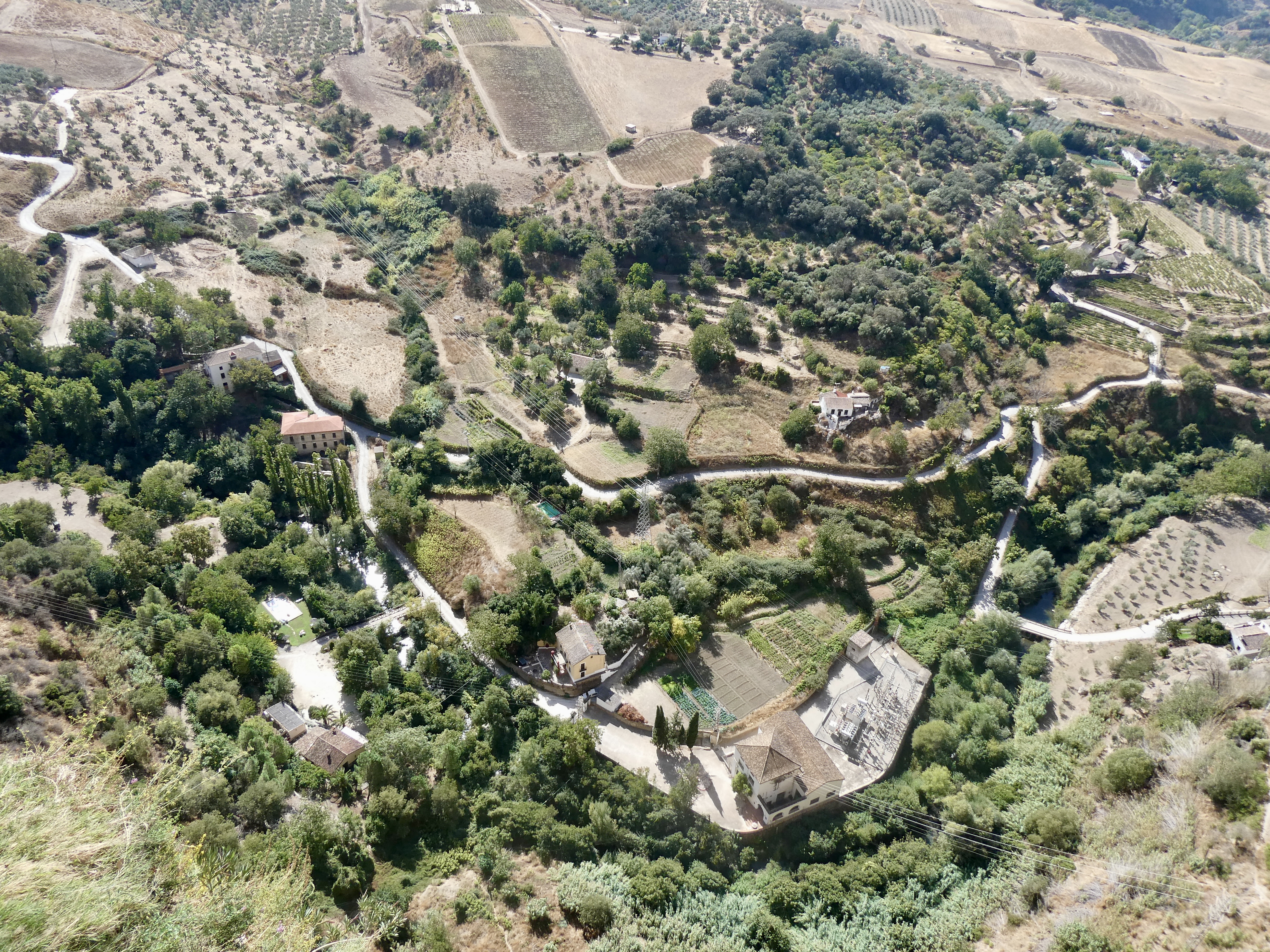
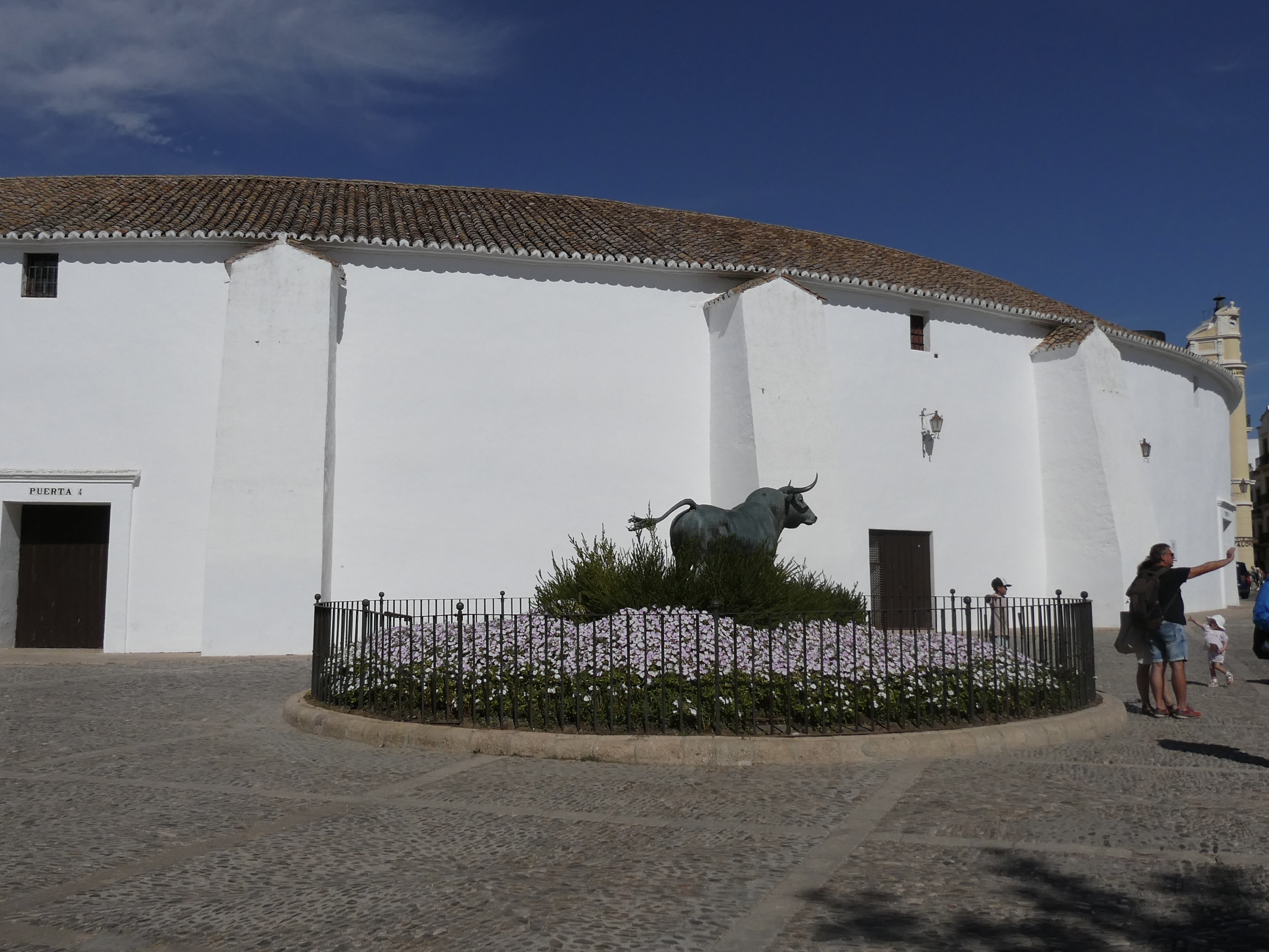
So we reached Ronda around 3:00 and walked to the Alameda del Tejo, a 19th century park that offers incredible views of the Andalusian countryside and nearby mountains. From here, we walked towards old town passing the Plaza de Toros, an historic 18th century bullring that is apparently the oldest bullring in Spain.
We then walked down a series of alleys to reach the main attraction in Ronda, the three bridges that span the El Tajo Gorge. At this point, Anja gave us options to see the three bridges, which included hiking down to near the bottom of the gorge to see the oldest bridge and walking back up to see the other two bridges or simply walking across the newest bridge right off the square and relaxing until 5:00 when we were set to leave Ronda.
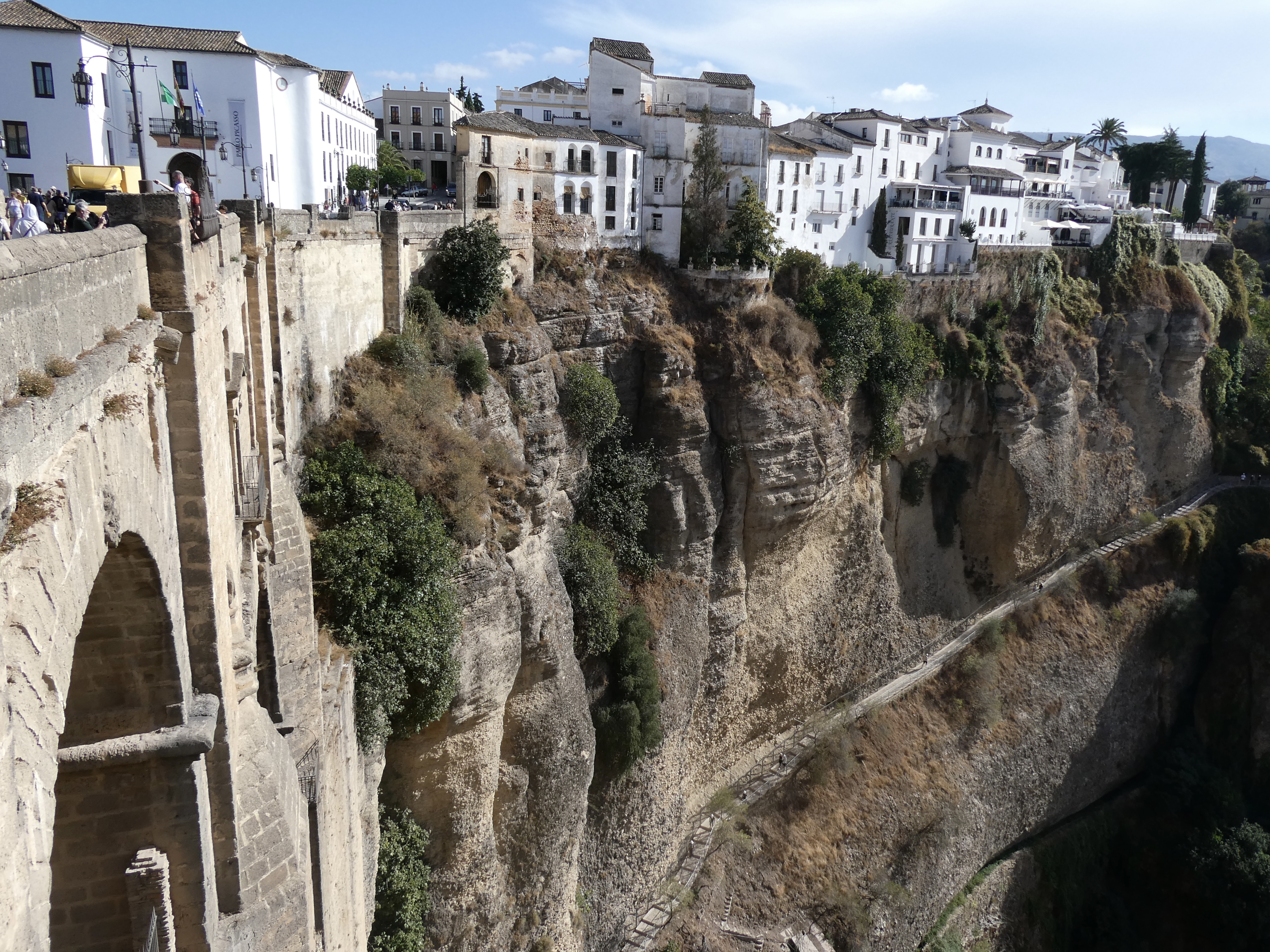
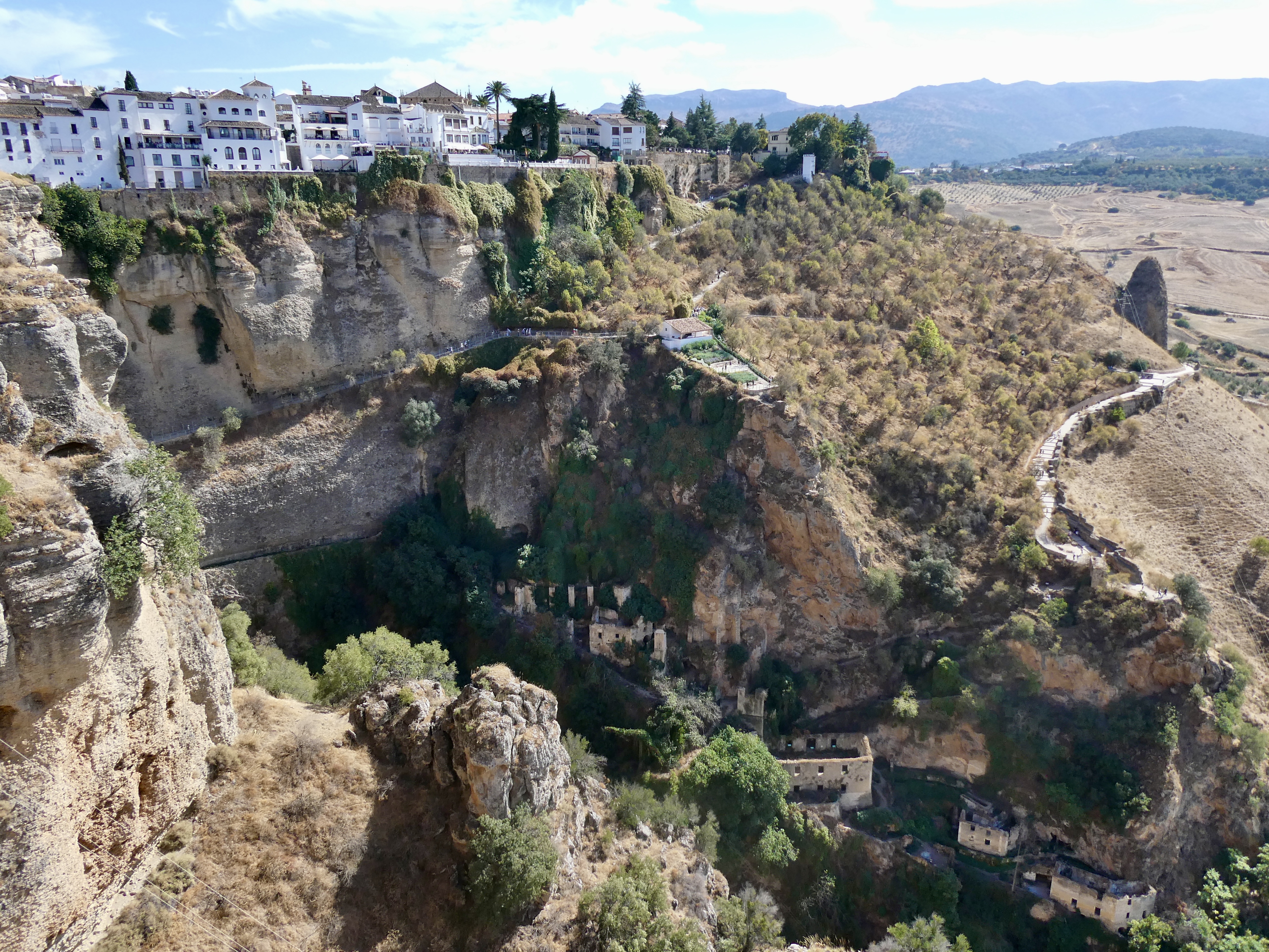
I opted for the hike (as if I have not walked enough today). Anyway, I ended up walking across what they call the Puente Nuevo aka New Bridge, which is a stone bridge built in the 18th century and offers the best views of the El Tajo gorge. The bridge took 34 years to build and actually replaced a prior structure that spanned the gorge, but due to poor construction, collapsed in 1741 killing 50 people.

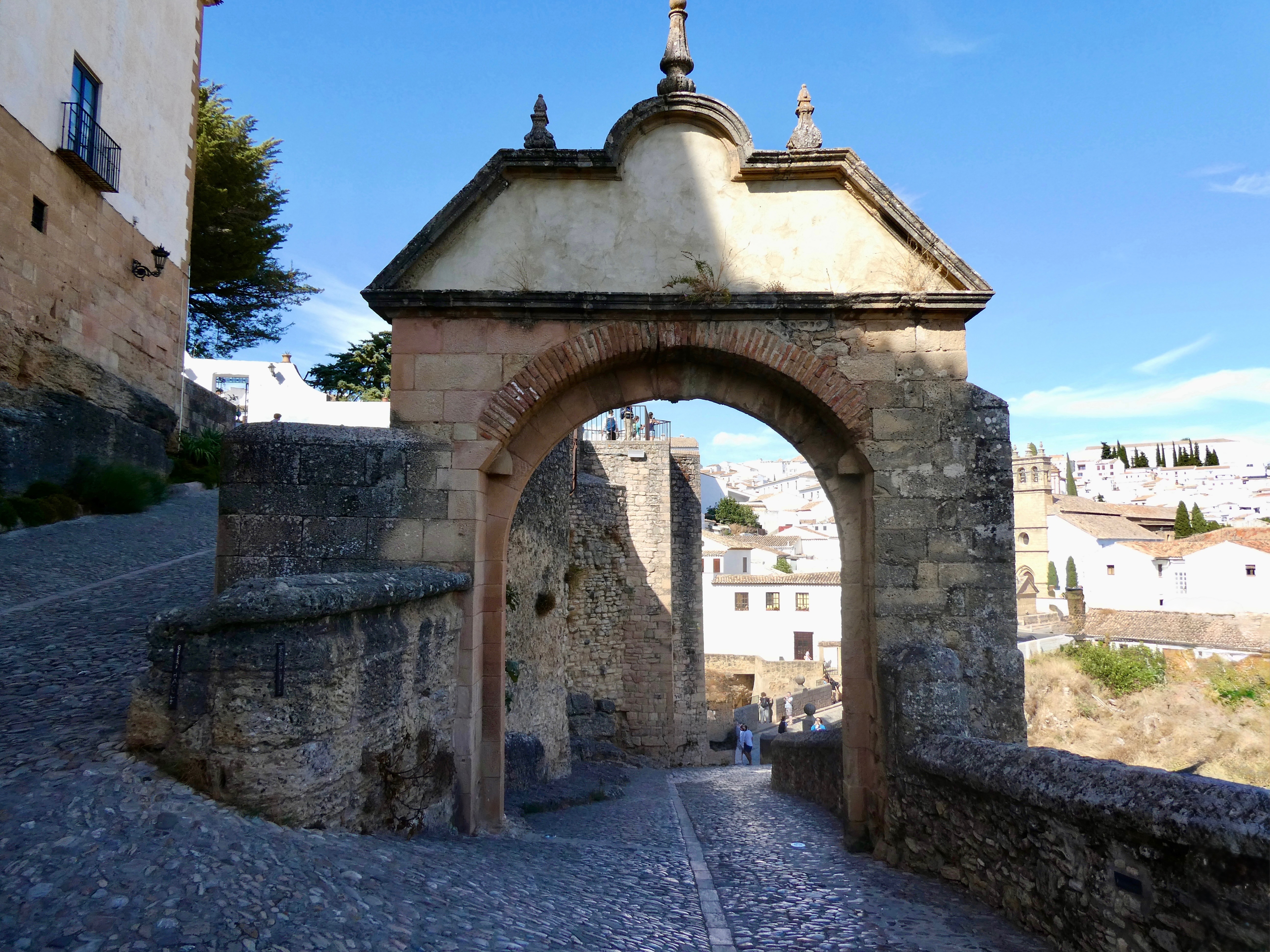

So after I took a few pictures and crossed the Puente Nuevo Bridge, I turned to the left and walked down a very steep hill past a monastery towards the Puente Viejo aka Old Bridge. I then crossed under the Arco de Felipe V, which was an arch built in 1742 to replace an older arch and to serve as a gateway to the town from across the Old Bridge.
Now the Old Bridge was constructed in 1616 to replace the Roman Bridge in order to accommodate horse carts and a higher volume of traffic and was built into the old city walls.
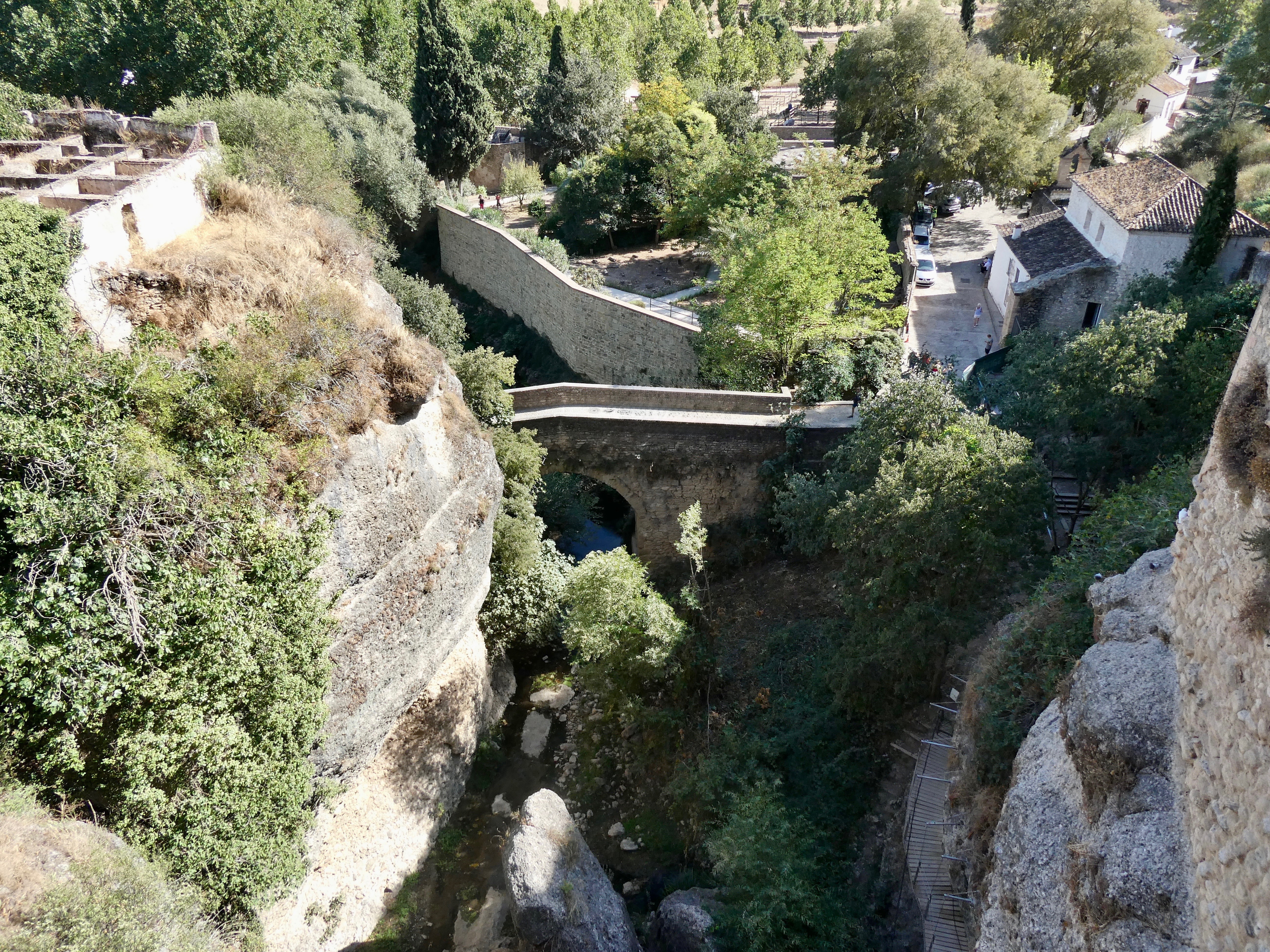
Once I reached the Old Bridge, I could look down to the bottom of the gorge to see the Puente Romano aka Roman Bridge, although the name is a misnomer because the bridge was actually built by the Moors, likely in the 8th century, on top of a Roman base. This bridge served as the entrance to a series of defensive fortifications, including a city gate and watch tower. And apparently nearby are the remains of the Arab Baths and a mosque.
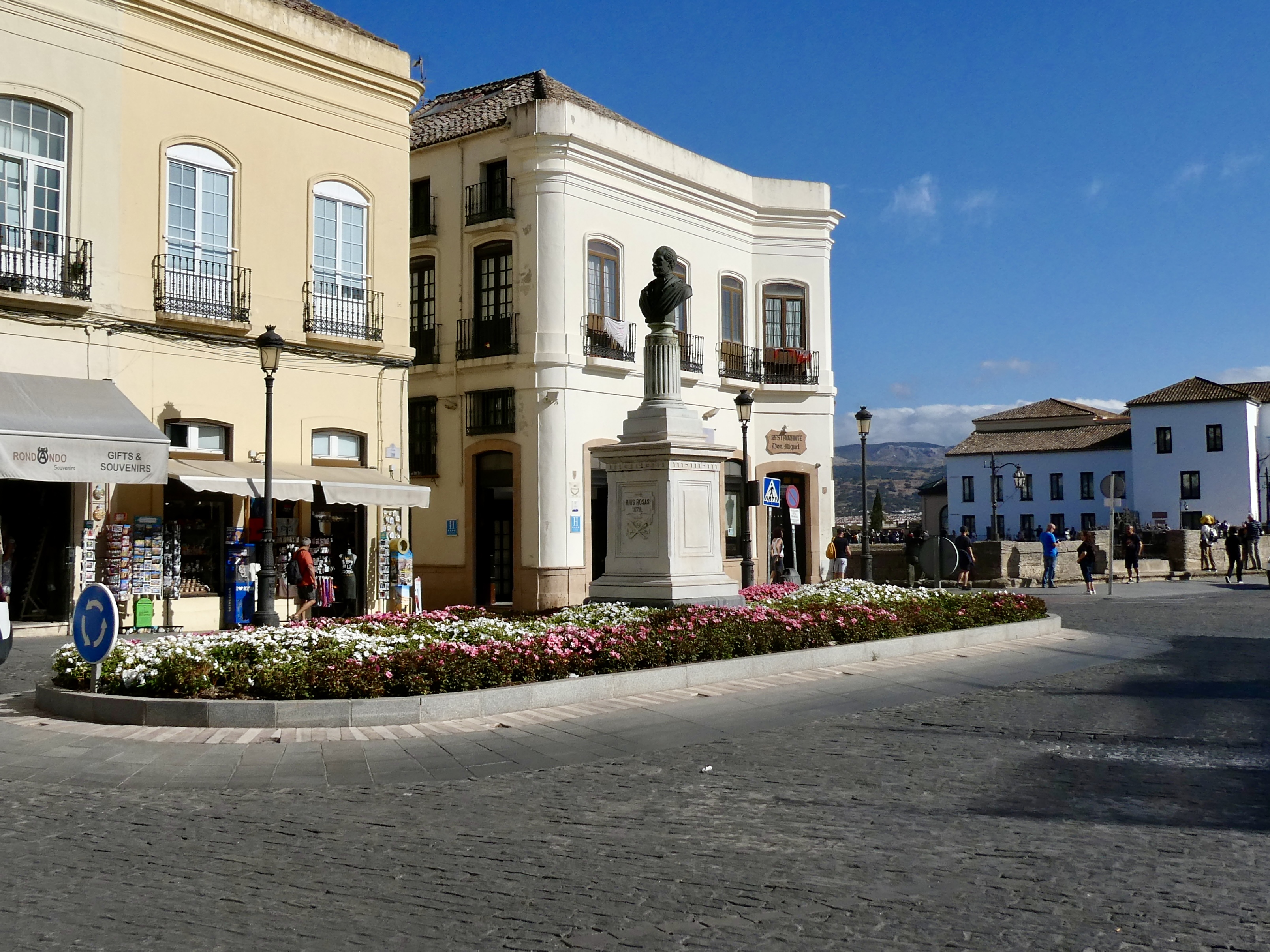
From here, I ended up crossing over to the end of the Old Bridge and then began the climb back up into the town. By the time I reached the top, about ten minutes later, I was done in. I found an ice cream shop in the main square, bought an ice cream and hung out for about 20 minutes until our group gathered at 5:00 for the trip back to Sevilla.
All in all, a fabulous day with a wonderful guide and a good group of peeps. Tomorrow I am off on a 3 hour bus ride to the little town of Merida (no trains travel to Merida) where I am going to spend a couple days with a guide taking in the Roman ruins and other historical sites.
