So I was supposed to spend this morning visiting Whakarewarewa, a living Māori village and then spend the afternoon hiking to a thermal pool for some hydro therapy. Unfortunately, the tour company taking me on the hike and thermal pool trip cancelled on me simply stating the thermal pools were closed and therefore they had to cancel. Now this really irritated the hell out of me because I had booked this months ago knowing that in order to enjoy the top thermal pools you had to book months in advance. This left me high and dry with no ability to book another site (and believe me, I checked numerous locations, with the only available one being the mud pools, but it was so far out of town, it would have cost me a fortune in Uber fees).
So that just left me with the village tour. Fortunately, this turned out to be really informative and enjoyable (although they had to cancel my 11:15 cultural performance due to a local funeral so I had to hang around for an extra hour to catch the 12:30 show.
Anyway, my guide was Daniel who turned out to be a descendant of the original settlers of the village, although he no longer lives in the village because his ancestral home was destroyed by geothermal activity in the area.
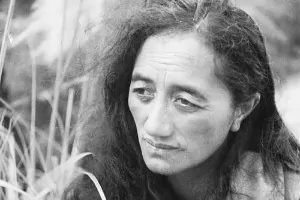
So the small group tour started out with a bit of history about the village (the full name of the village being Te Whakarewarewatangaoteopetauaawahiao, which means “The Uprising of the War Parties of Wahiao.” The village has been home to the Tūhourangi Ngāti Wāhiao people for over 200 years, and they are able to trace their roots back the original Māoris who first occupied the land back in 1325. (Today there are less than 100 people who live here due in part to the fact no further construction is permitted).
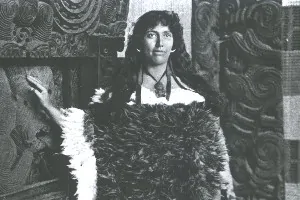
And interesting fact, the village was a pioneer in New Zealand tourism with female guides leading tours of the valley dating back to the late 1800s. Prior to the tour, I read the story boards in the entrance and took a few pics of the guides and it was absolutely fascinating. Guide Rangi guided Queen Elizabeth and Eleanor Roosevelt (and is perhaps the most famous of the guides) while Guide Maggie Papakura travelled to England by ship in the early 1900s bringing Maori entertainers with her to promote New Zealand tourism.
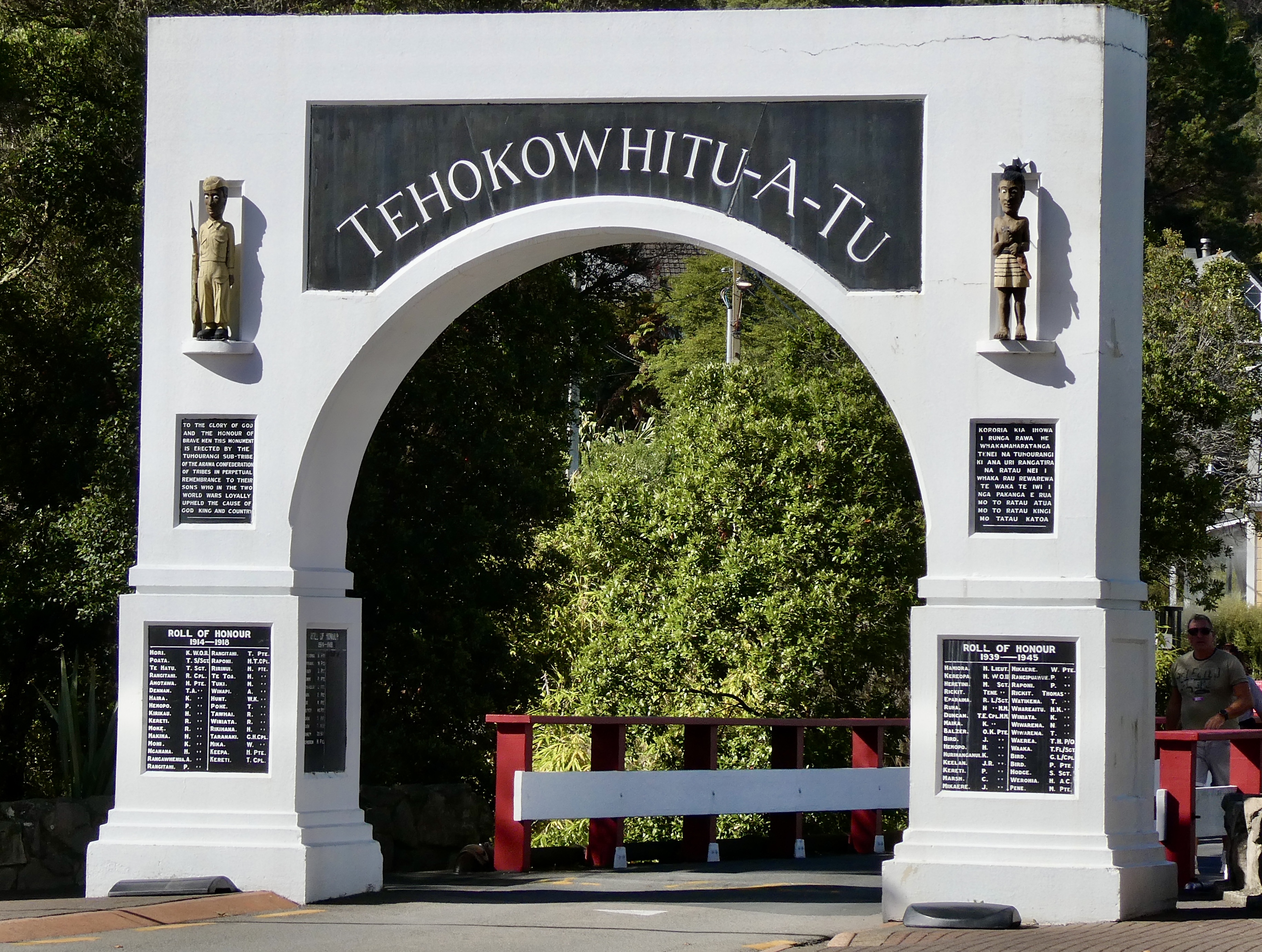

Anyway, with this background, Daniel led us through the Memorial Archway that is dedicated to the memory of those villagers lost in WWI and WWII and to the bridge that connects the village. Now at one time the only way between the two sides of the village was to pay a penny to be carried on the backs of villagers who made the crossing by stepping on the river rocks (seriously).
However, once the bridge was built the tradition of throwing pennies into the river below was born and children to this day dive off the bridge for pennies so they are known as the penny divers (although none were around today).
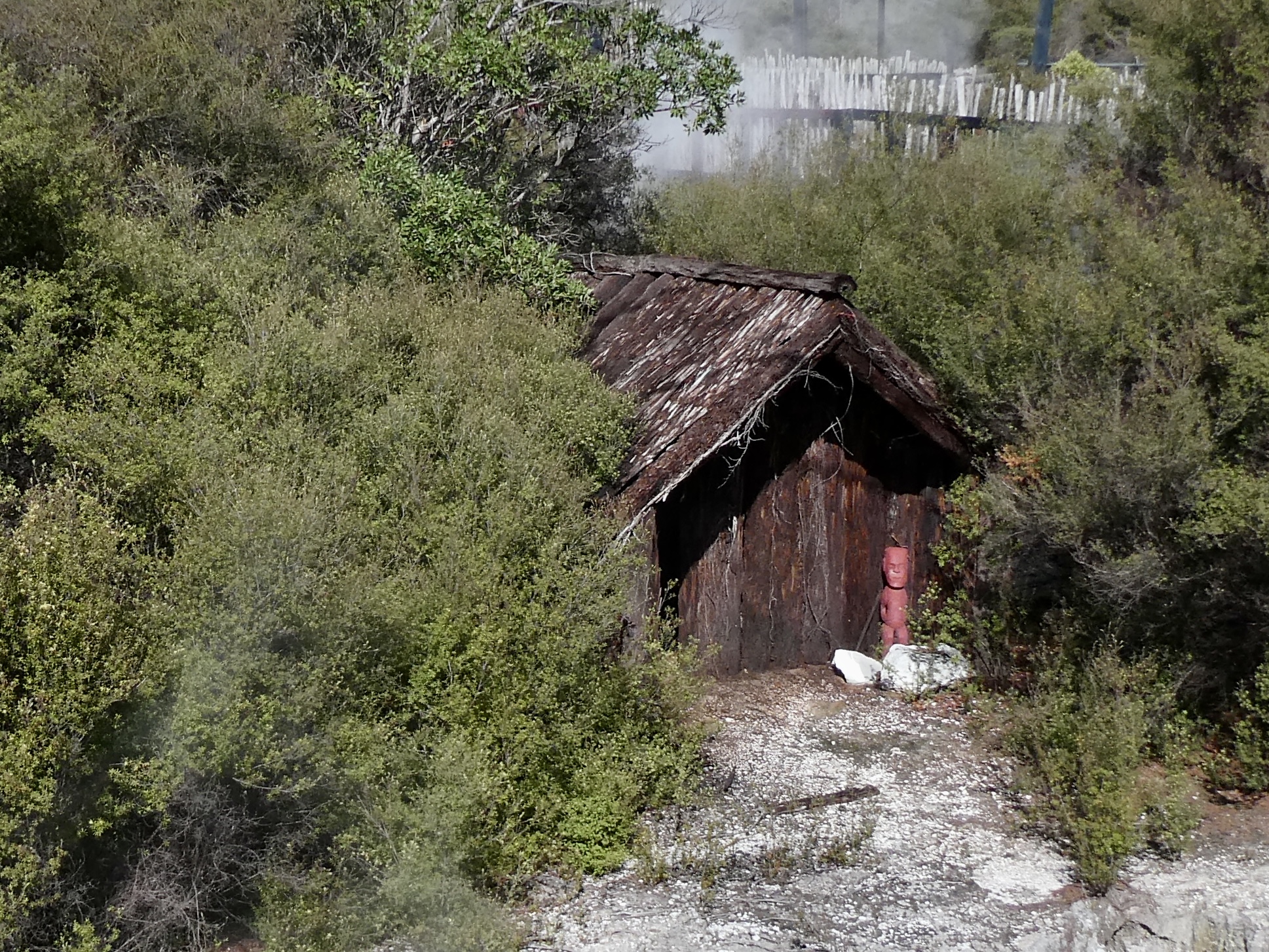
After we crossed the bridge, we encountered the wharepuni or Sleeping House, which was built from natural materials like tree ferns and was used by mother and children for sleeping. Apparently, the man slept outside guarding the house.
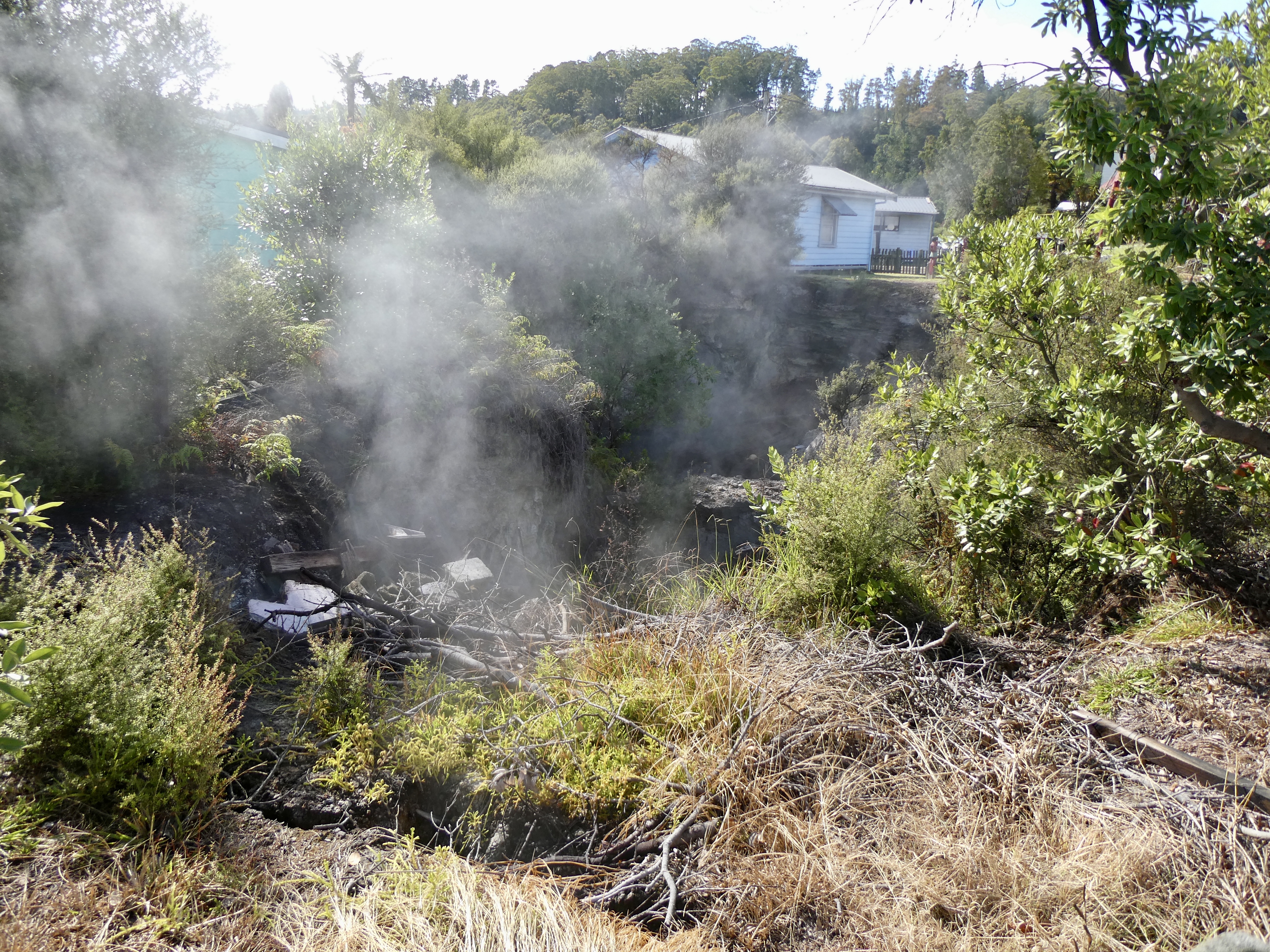
Now as we walked through the village, we were surrounded in all directions by steam coming from the underground thermal activity all around us. In fact, we passed one area where a house had one time be located but had collapsed due to the underground springs and steam coming up from the earth.
The next place we encountered was the Wahiao or meeting house, which today was off limits because one of the locals had passed away and a funeral was in process. As a show of respect, we were asked not to take pictures of the building, which as near as I could tell was obeyed by our small group.
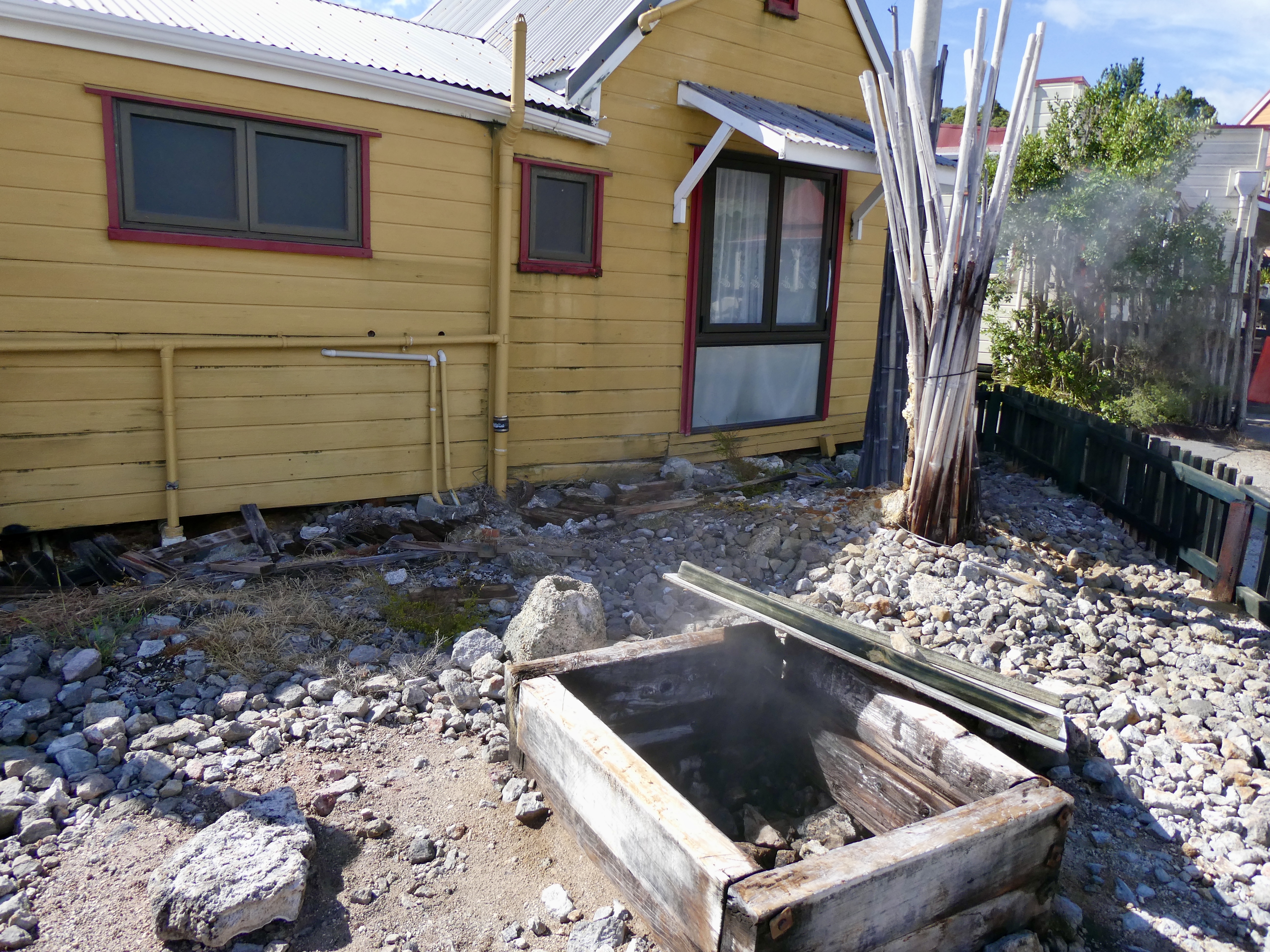
We then turned and walked uphill and cut behind a home to the steam box hangi that is used by locals to cook meals. The food is layered on steaming rocks with meat set down first followed by vegetables and then bread. The temperature is around 100 degrees and the food cooks slowly (like a pressure cooker) over a few hours.
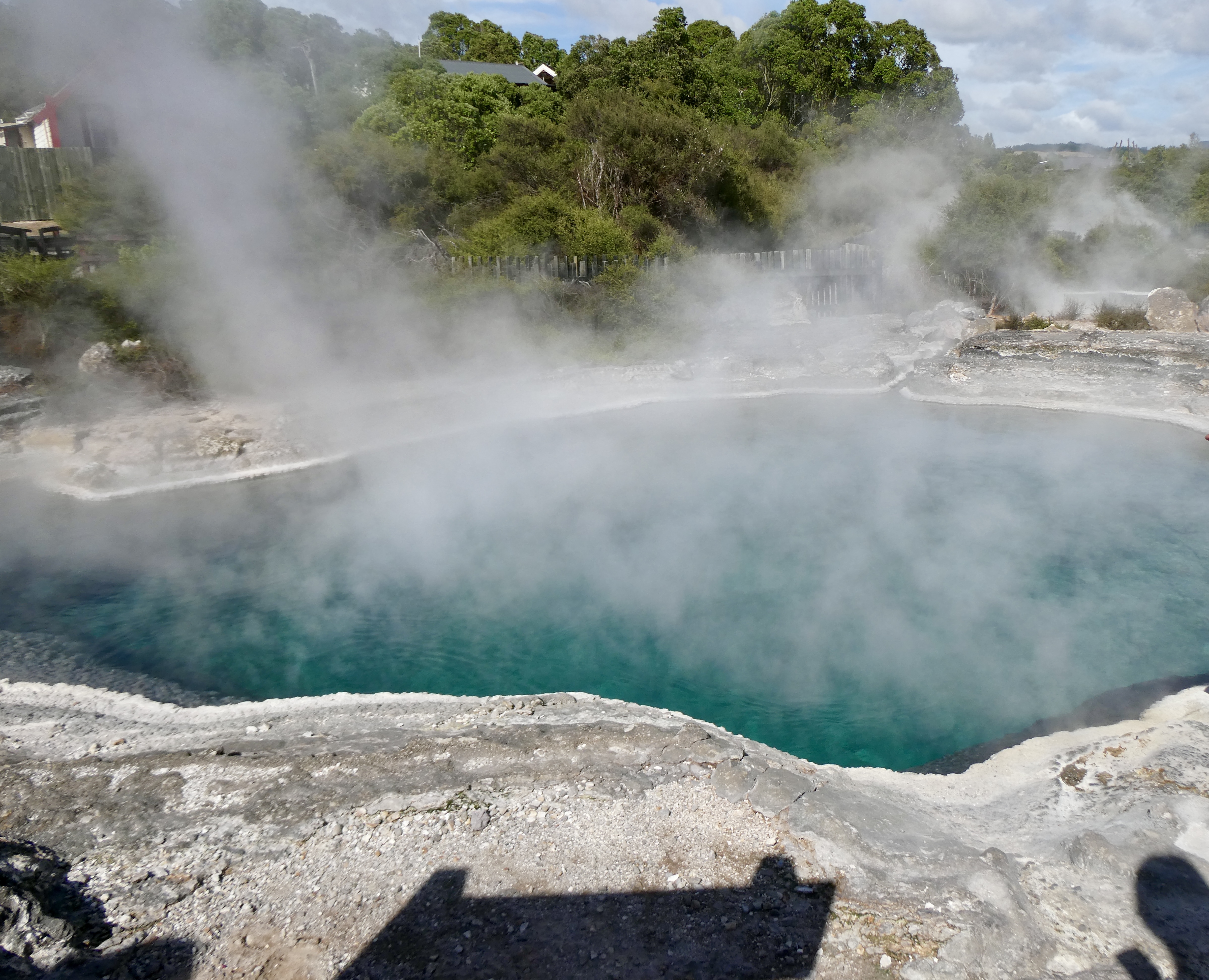

And nearby, there was a second cooking area called the reserve, but this one was “reserved” solely for vegetables. The reason being that this was a heated pool of water and the runoff from the pool was used for bathing. As a result, the locals did not want animal juices etc. mixing with the water.
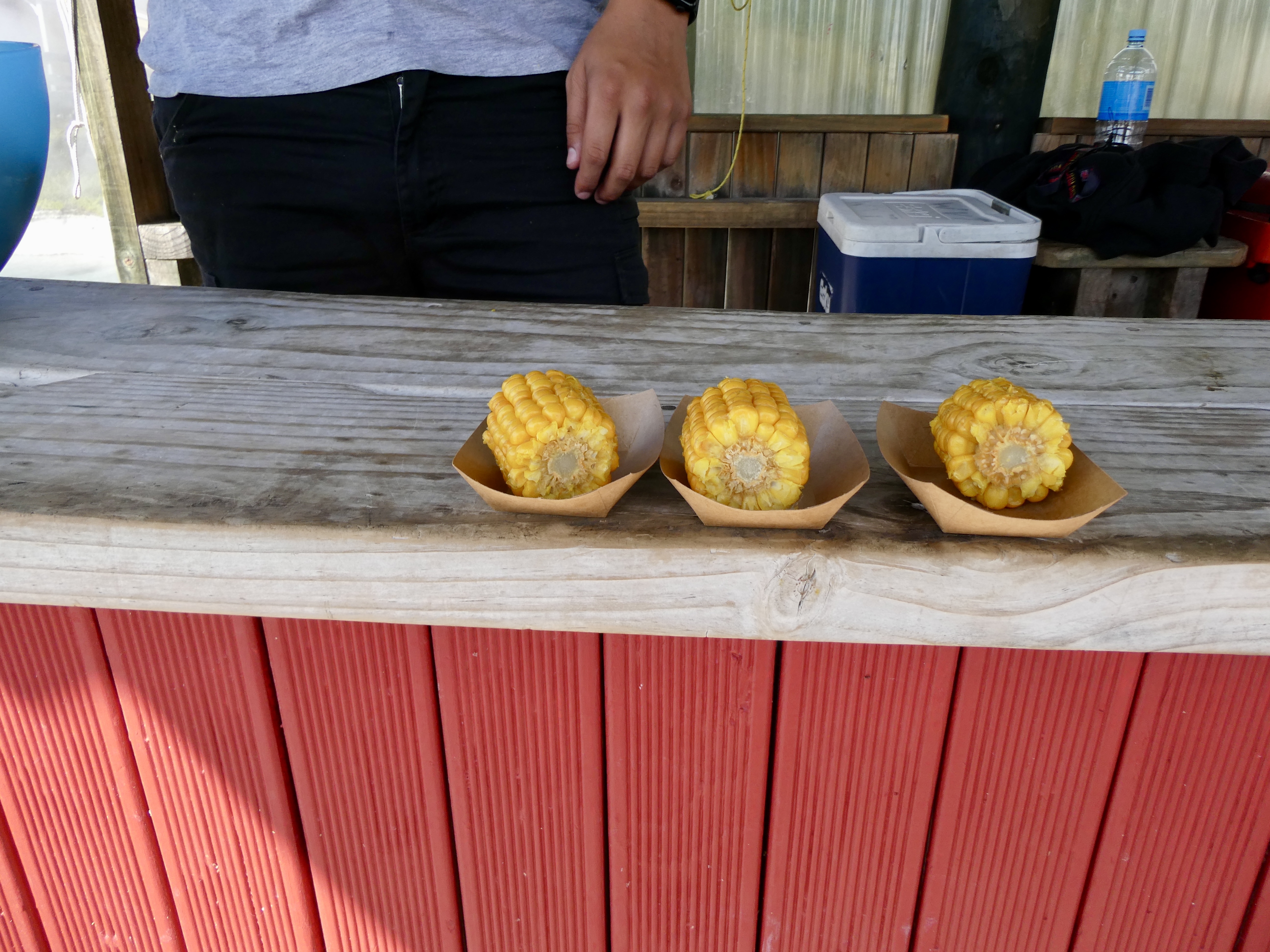
In order to cook in the reserve, the locals place their veggies in a cheese cloth and hang the cloth into the water where the food cooks in short time. And we were fortunate to be able to try corn on the cob cooked in the water and it was absolutely outstanding.
And adjacent to the cooking area were a number of vegetable gardens where locals can grow various types of produce (although the corn is grown elsewhere).
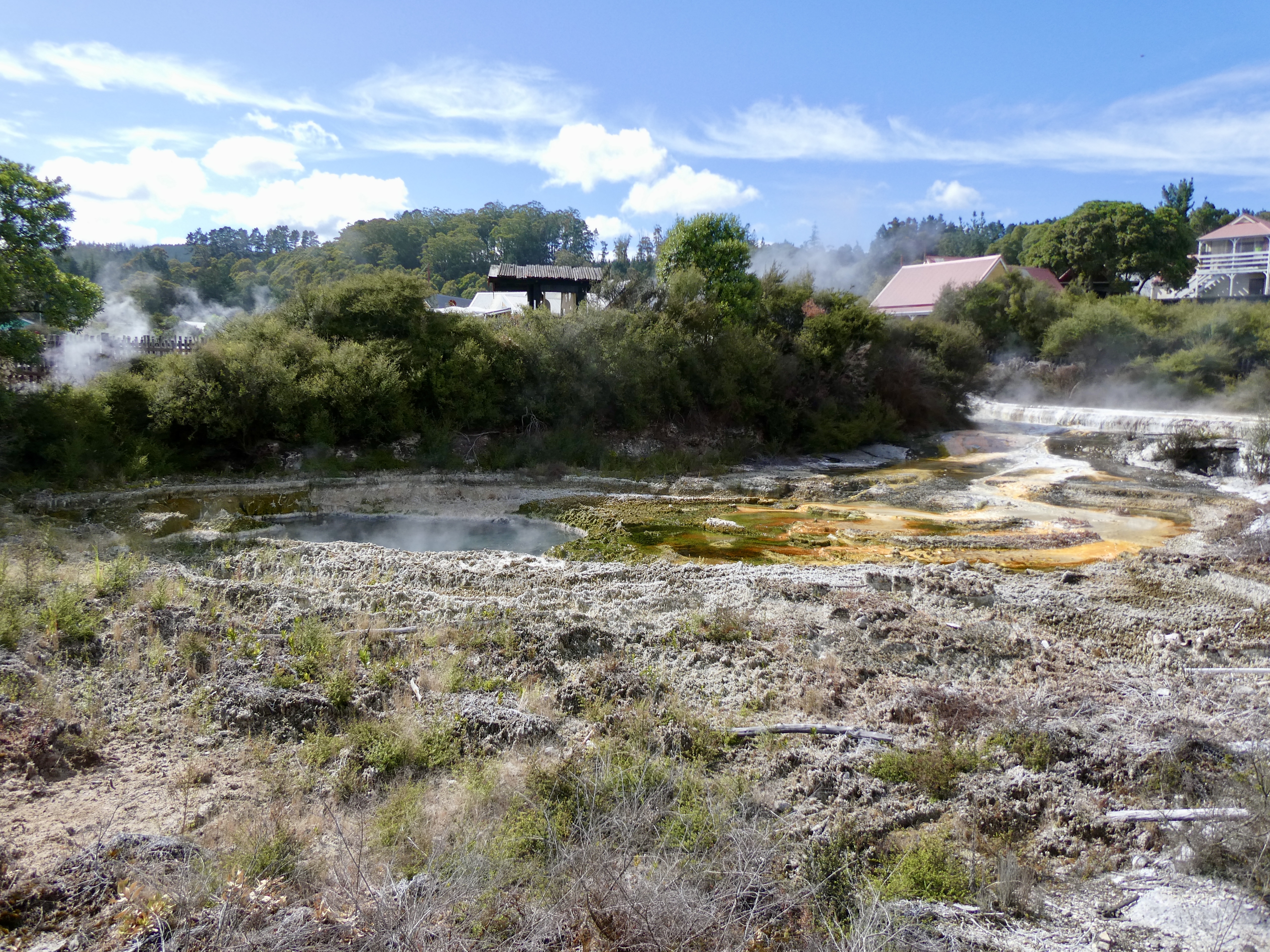
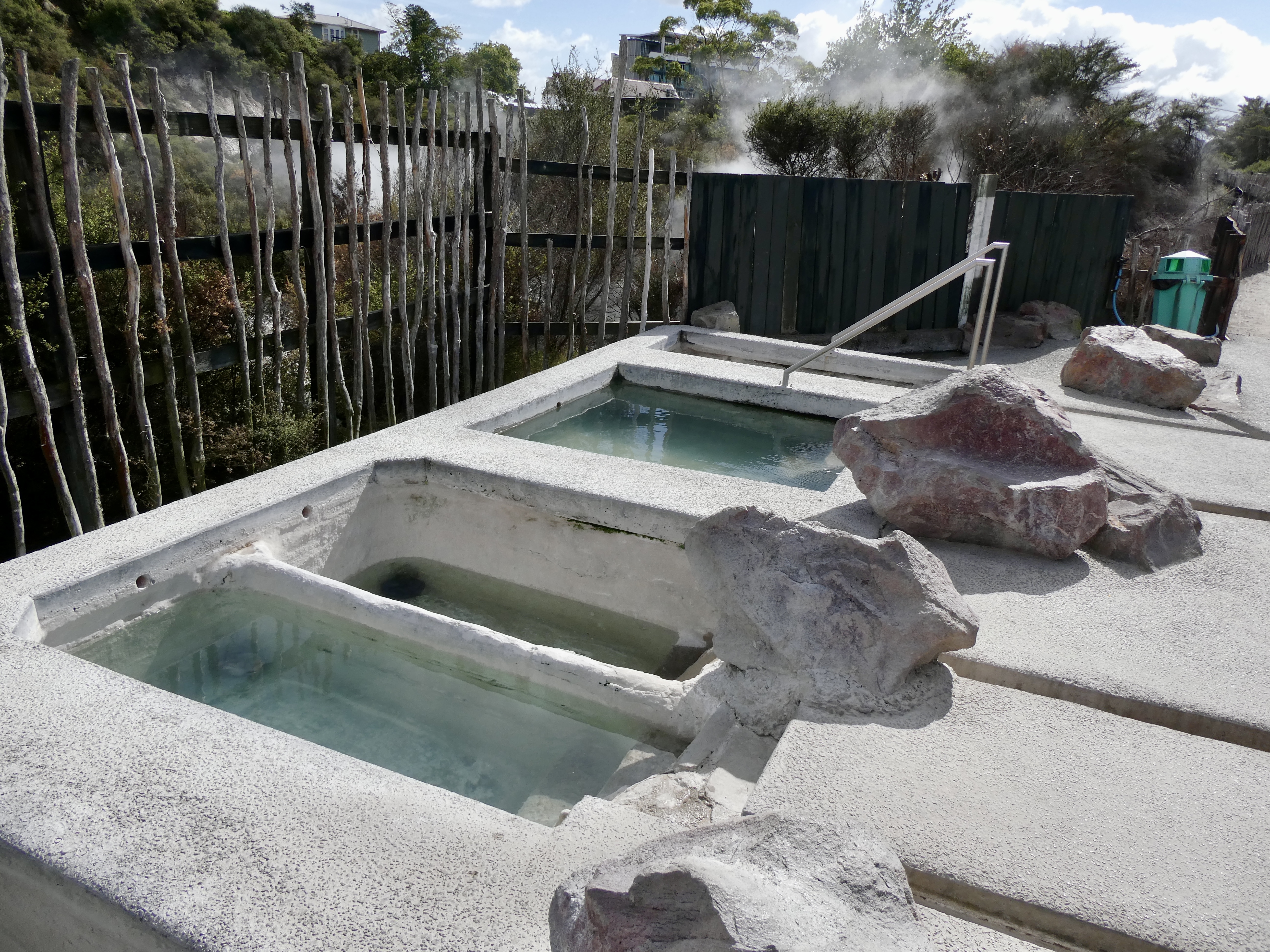
From here, we wandered around the reserve pool and past an area that was one time used for bathing, but now the locals have cement pools constructed in which the hot water flows. Bathing is done either early in the morning or after 5:00 p.m. when the village closes to visitors.
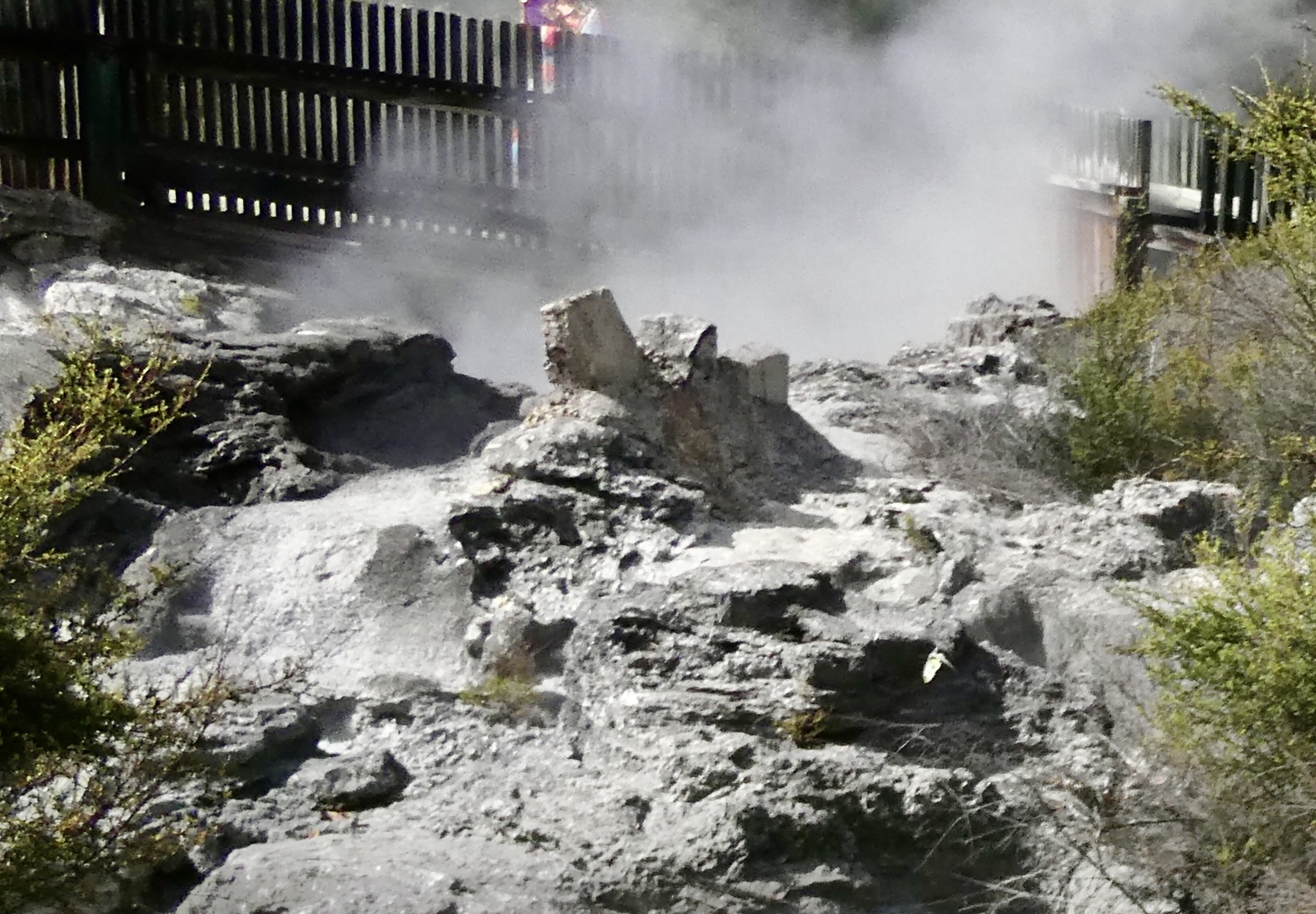
We next passed by the butterfly pools which are believed to foretell the weather. When the water level drops there is going to be a change in the weather. When the weather is nice, butterflies are abundant. (Who needs weathermen!)
Adjacent to this area was a lookout point where we could see the Pohutu Geyser (which I saw yesterday from Te Puia).
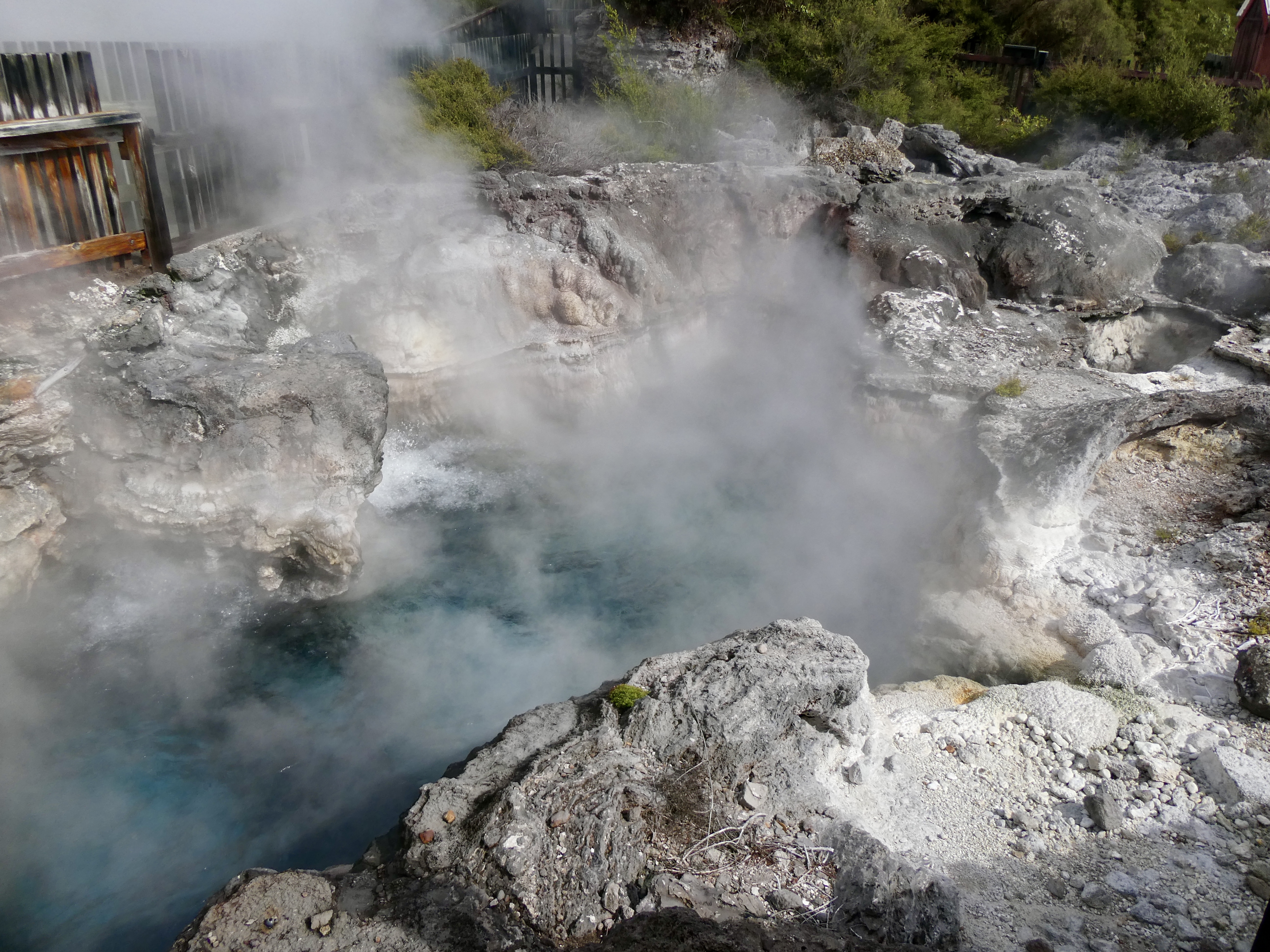
Across form the lookout point, we passed by my favourite site, Korotiotio aka Grumpy Old Man, a volitile, superheated spring where water was literally exploding out of the ground. I could have stood there all day and watched this thing erupt. It was fascinating.
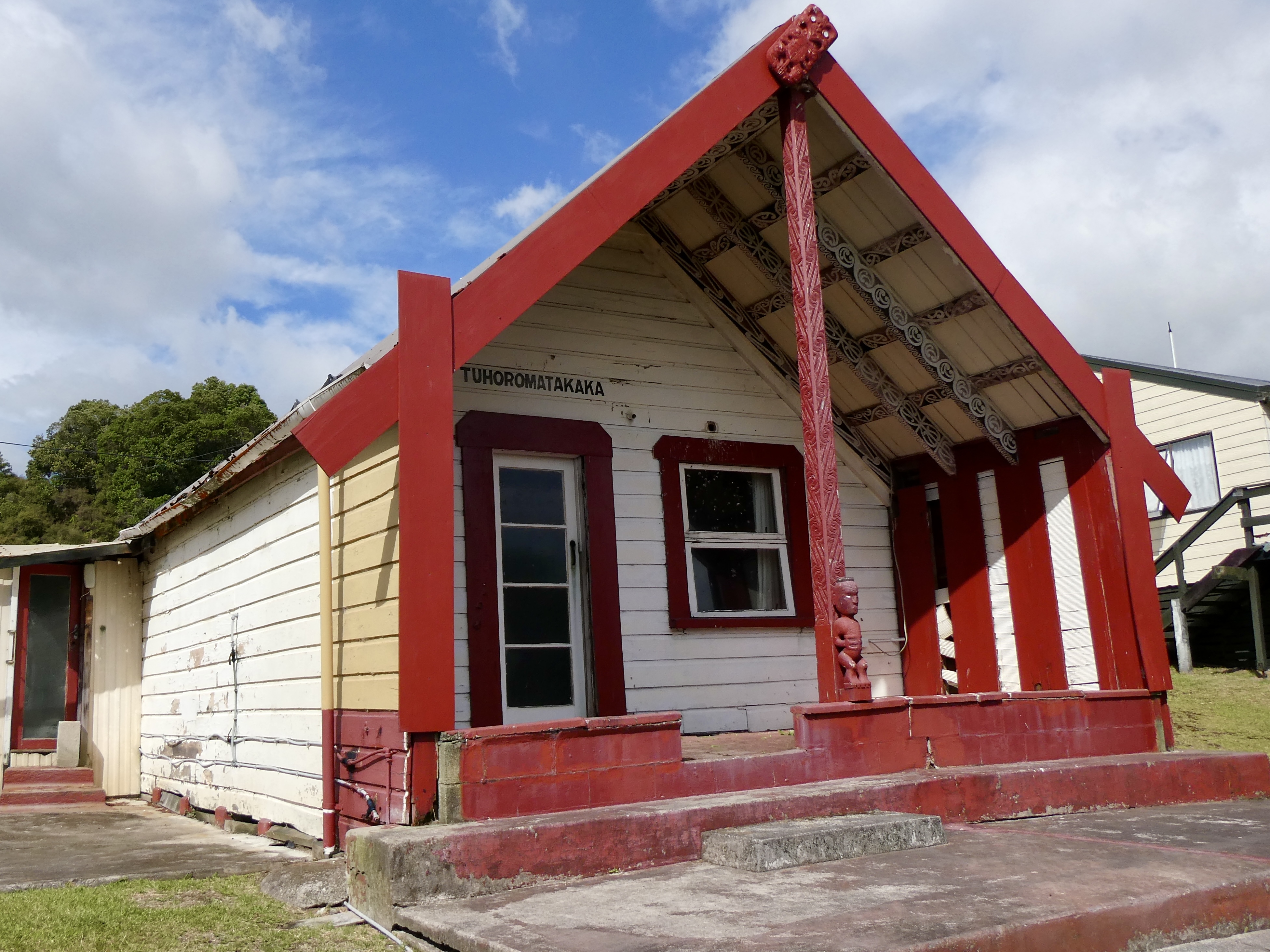
We then moved up the hill through the village past the ancestral home of Maggie Papakura and past the local catholic church and cemetery where the dead were buried above ground until the village ran out of space. Now the dead are either cremated or buried elsewhere.
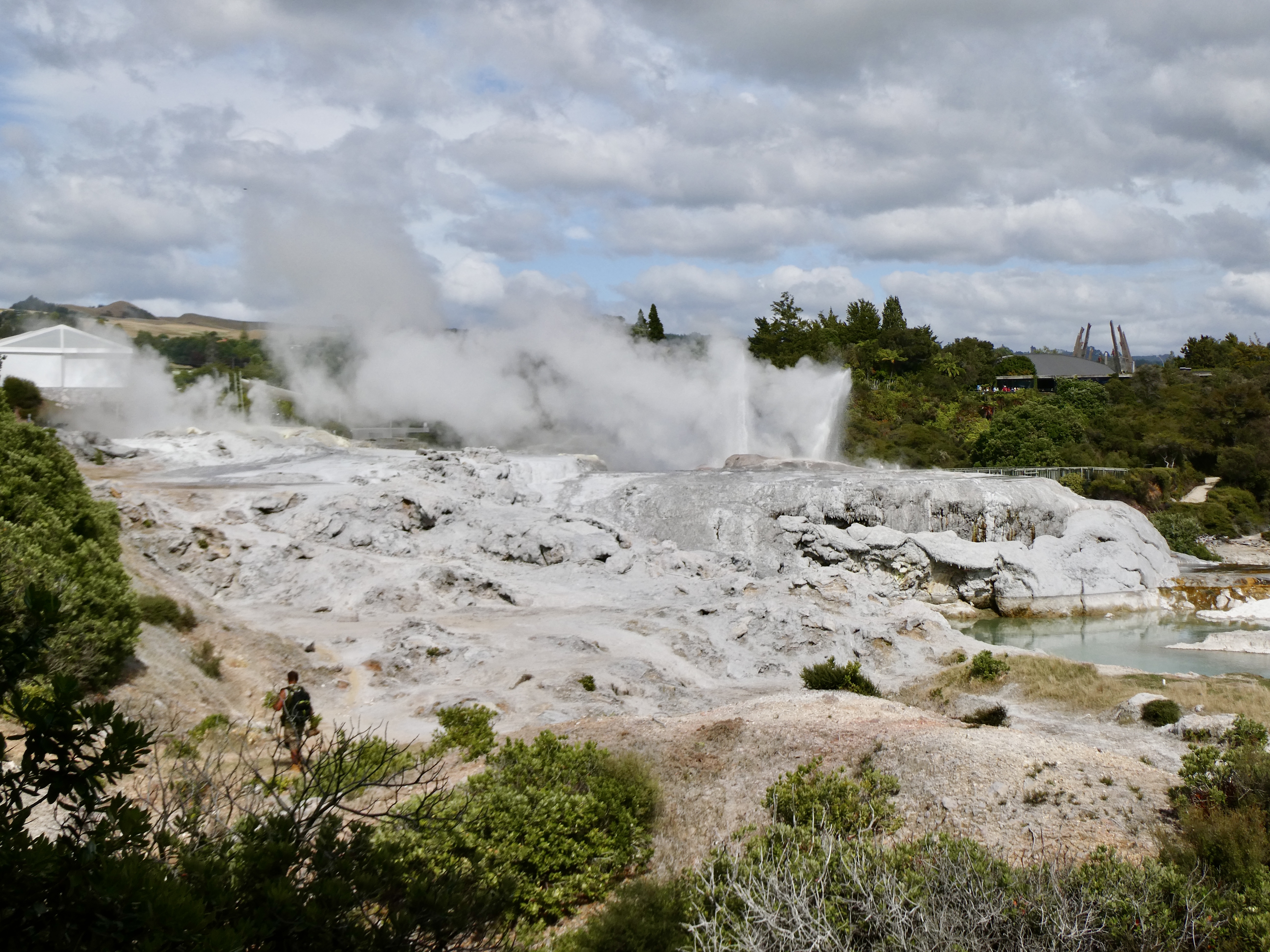
We then hit our final stop of the day, viewpoint number 2 where we were right on time to see the Pohutu Geyser erupting in the distance.
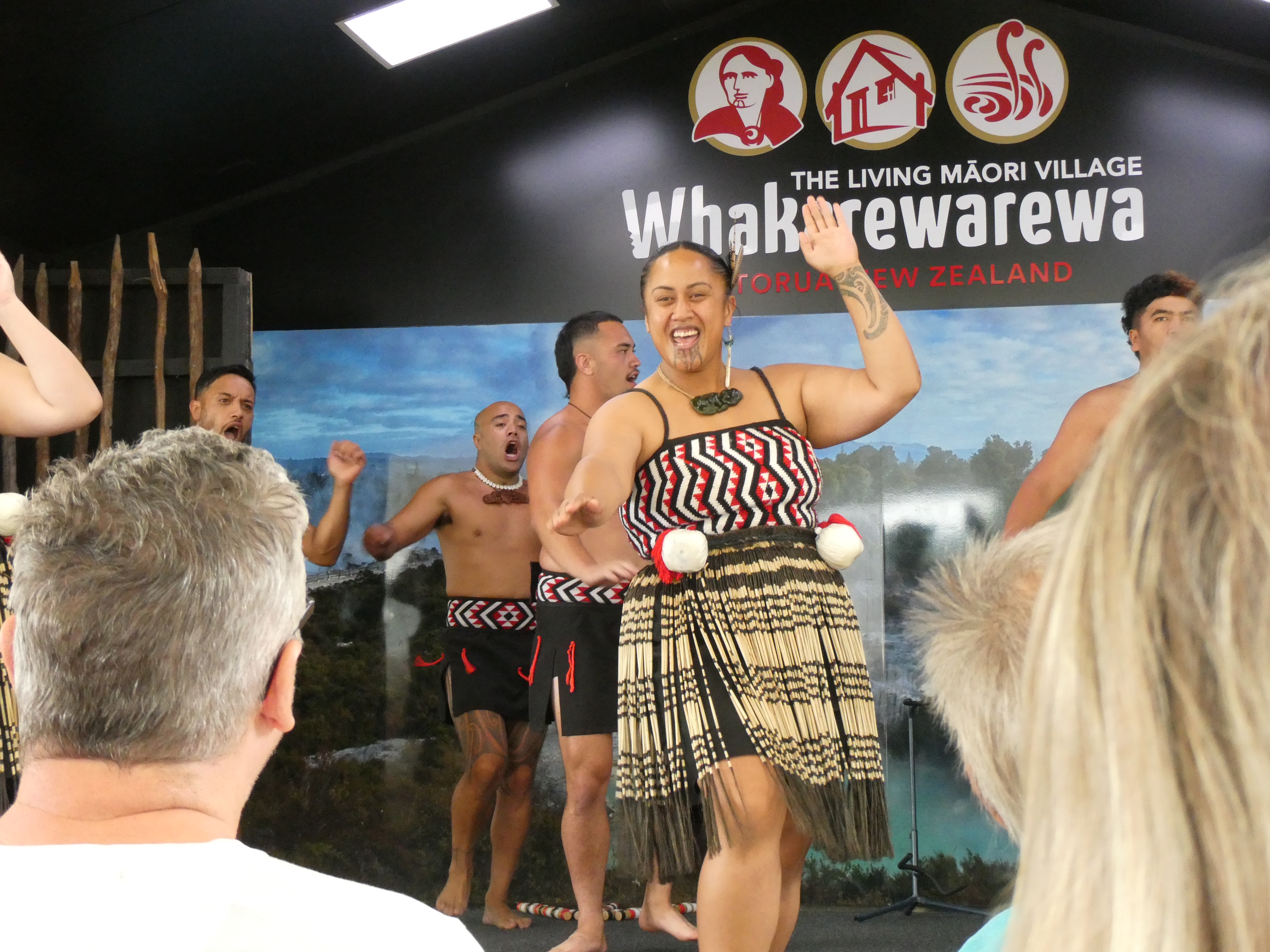
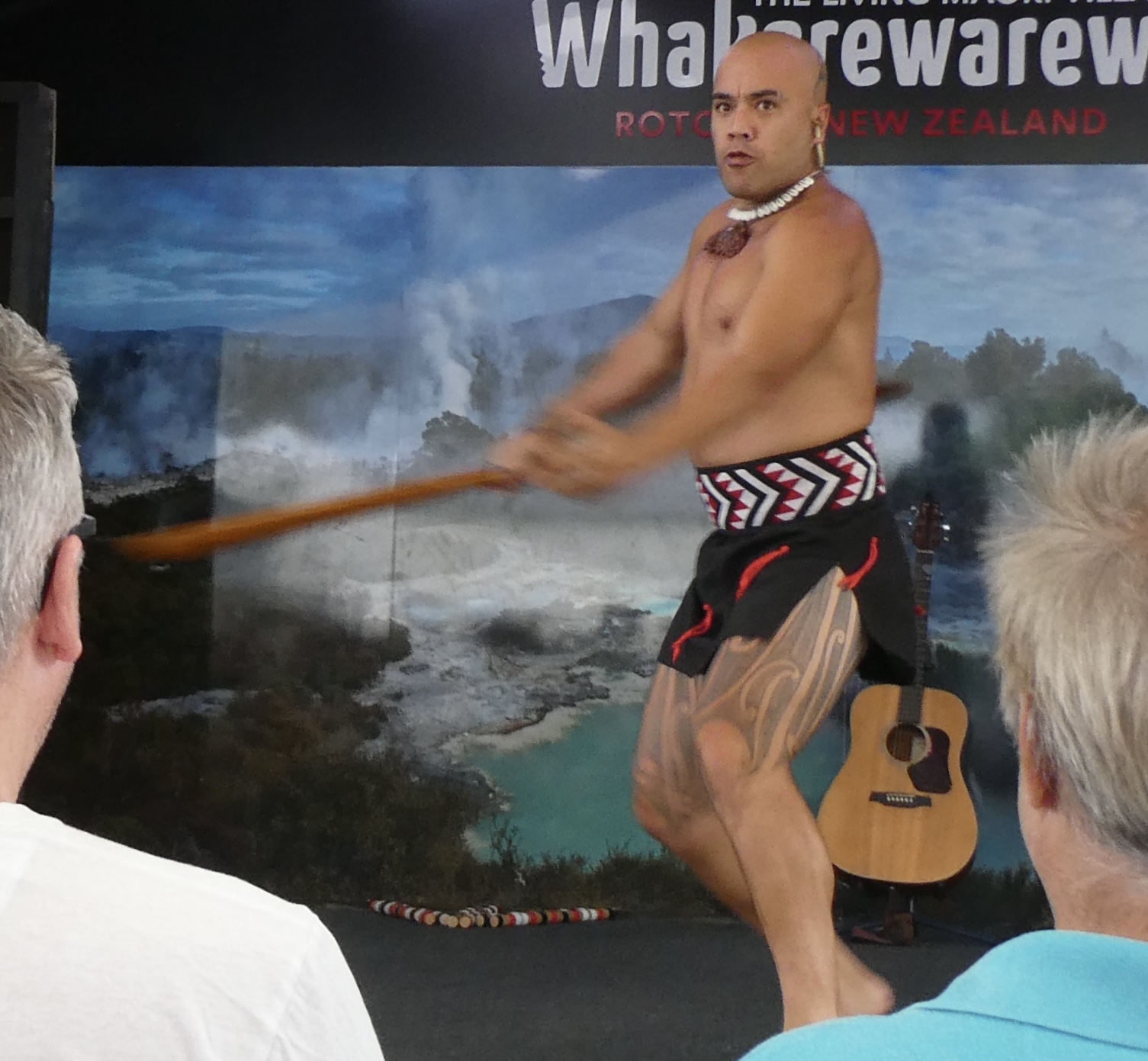
After the tour, I doubled back and waited in the little café before heading back into the village for the 12:30 cultural show. And the show turned out to be worth the wait. There was a brief introduction about what we were going to see, followed by a series of songs accompanied by traditional instruments, dancing and demonstrations.
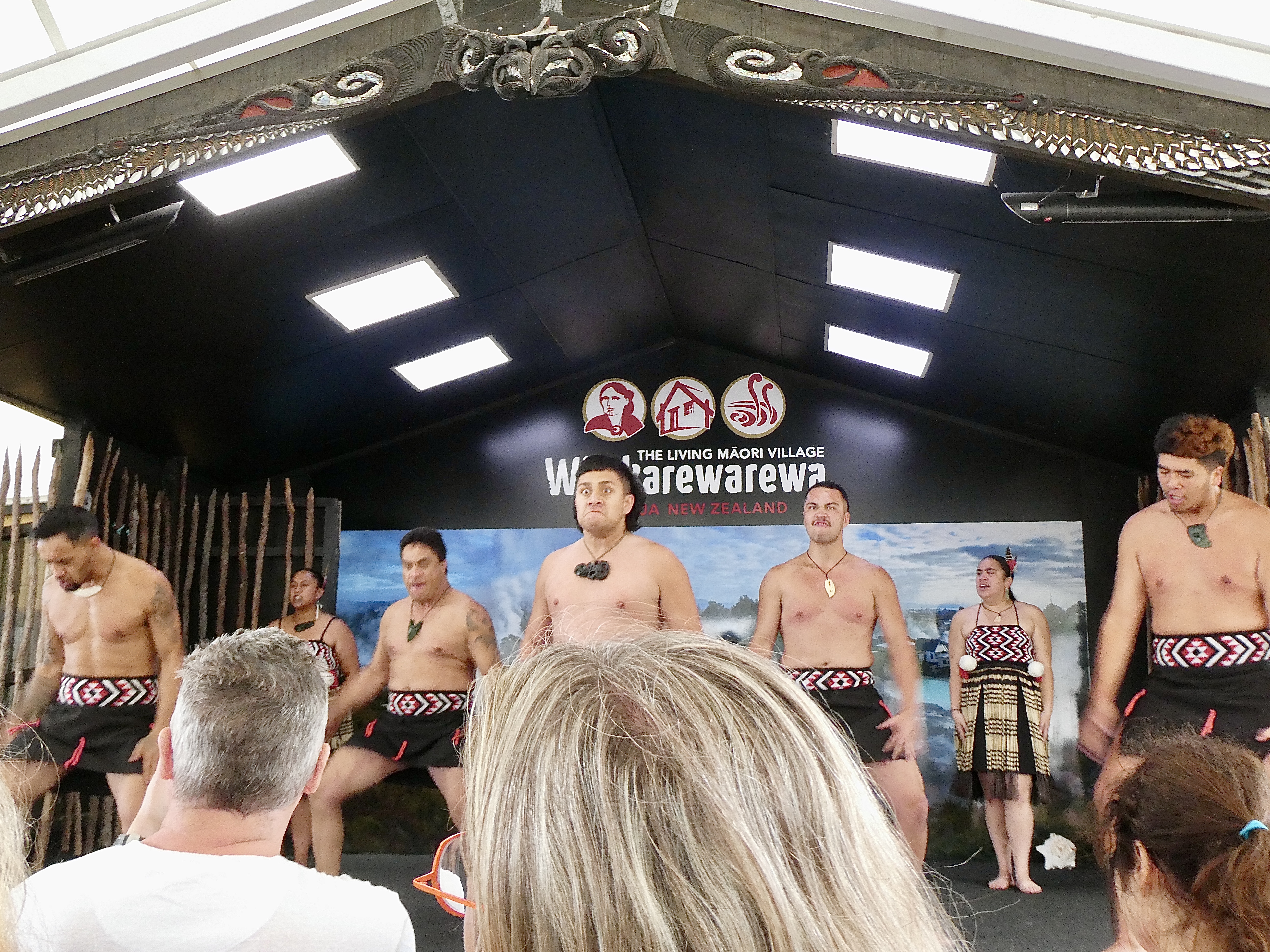

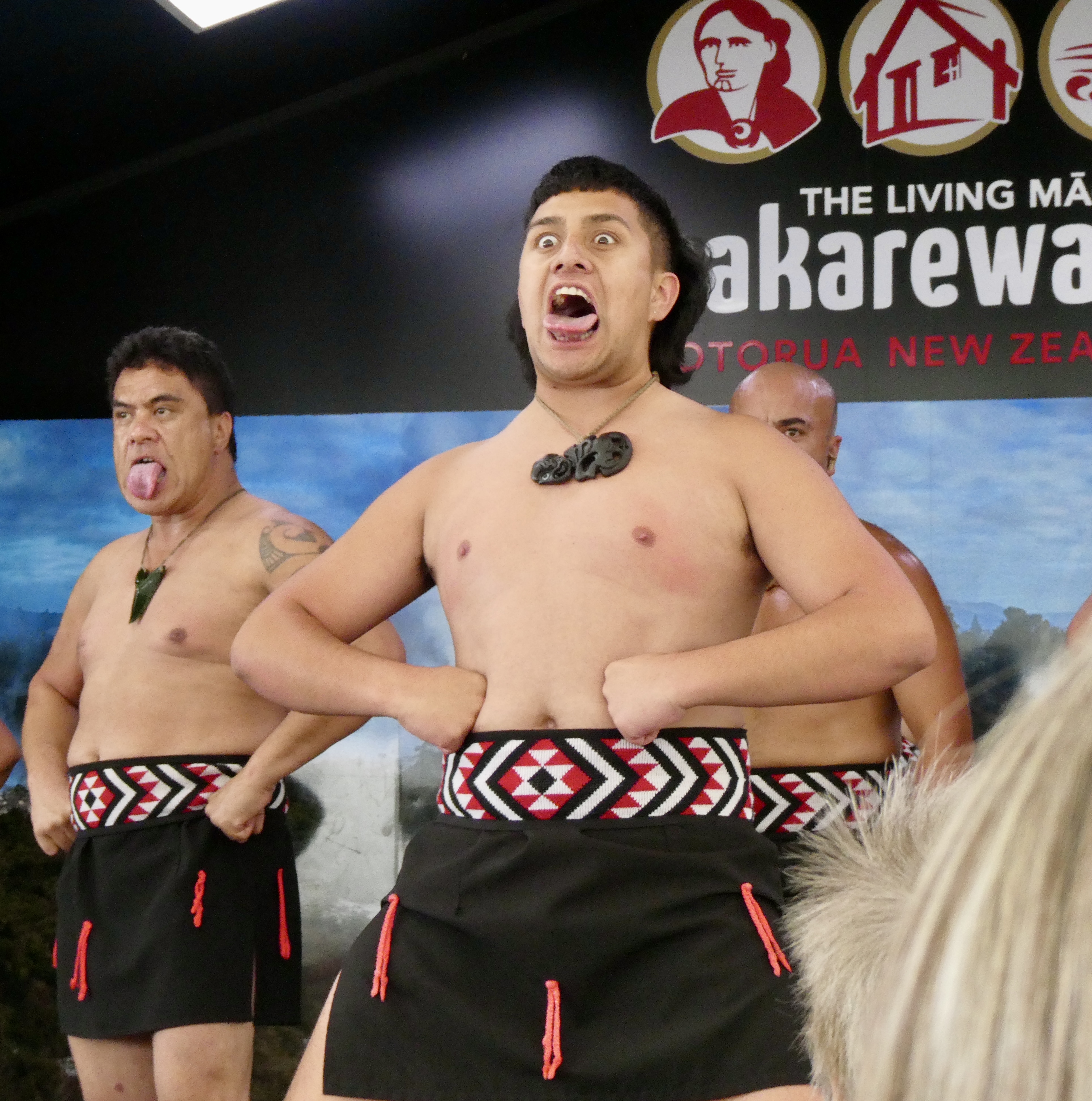
However, the highlight, was as anyone would expect, … the Hakka. We learned that the Hakka was traditionally performed by Maori warriors as they confronted their enemies. The idea behind the Hakka was to intimidate the enemies so they would surrender and war would not be necessary. I guess it now makes sense why the All-Blacks perform the Hakka before they play international rugby completions.
Anyway, the Hakka was first performed by the women and then they were joined by the men, who then took the lead and performed their own Hakka. It was a great way to end a really terrific show.
So tomorrow, I am going on a canopy tour (aka zip lining) in the forests outside Rotorura before jumping on a bus for the four hour trip back to Auckland. I have three more days in Auckland before it is off to Australia.