Today I joined a small group tour for a visit in the morning to Rotorura’s geothermal attractions and in the afternoon, we were going to visit a Māori cultural village, Te Puia. I met our guide, Trent at 8:10. We then picked up 3 other couples at nearby hotels and by 8:20, we were off to Waiotapu, about 30 km from Rotorua.
Now Rotorua sits on the shores of Lake Rotorua, was settled by the Māori in the 1300s and sits on the Rotorua Caldera (a volcano, which is presently filled, in part, by Lake Rotorua), which was formed by a major volcanic eruption over 24,000 years ago. The caldera is the source of the abundant geothermal activity in the area. And when I say abundant, I mean, ABUNDANT. There is literally old volcanoes, volcanic craters and steam everywhere.
And Rotorua has its own “unique” odor, from the constant presence of sulphur reminding many of “rotten eggs”. Now I don’t know if it was the rain (it was raining earlier today, which turned into sunshine) or just me, but I didn’t find the odor too bad.
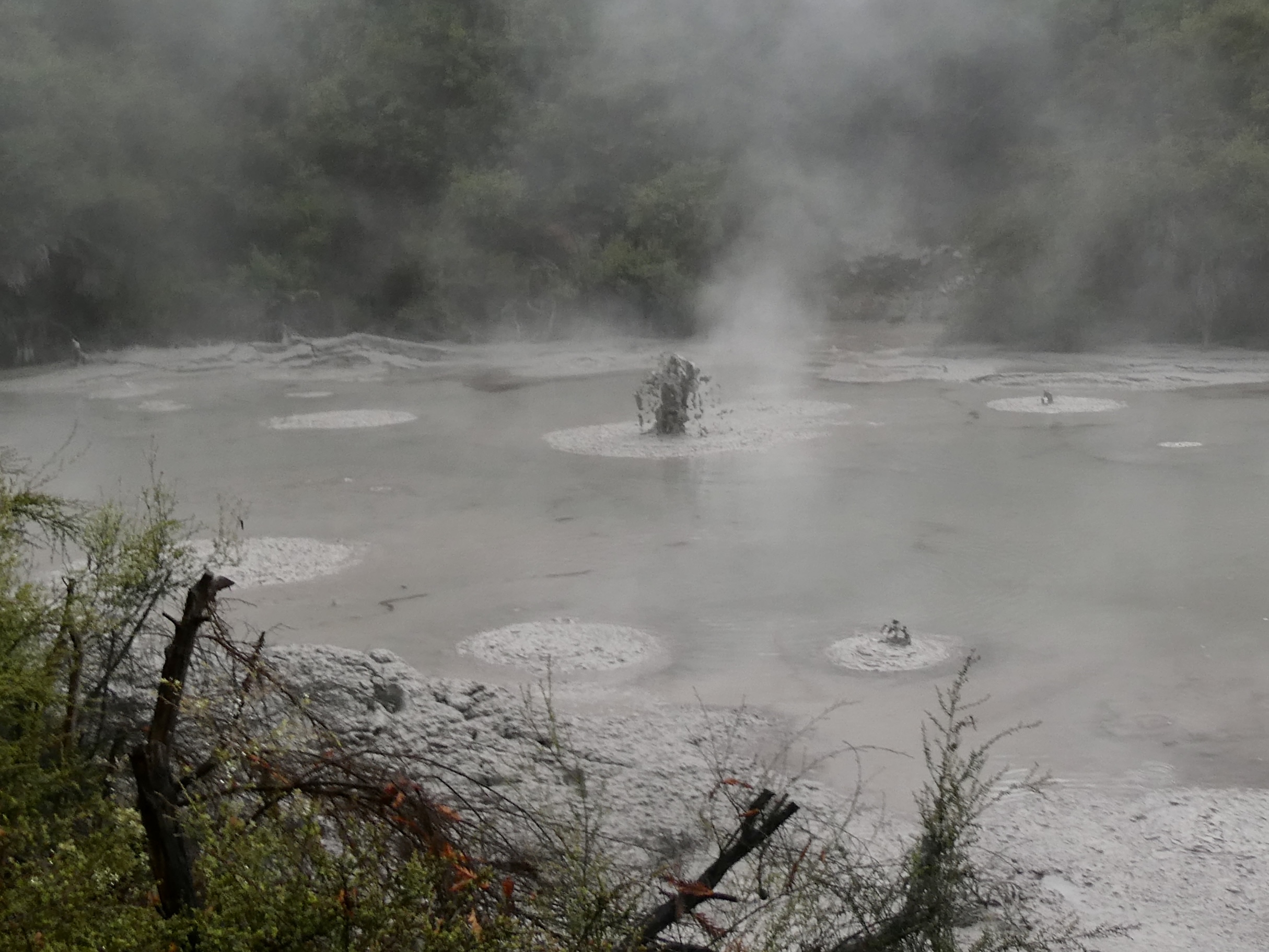
So first up was the amazing and absolutely fascinating mud pools. These pools are either fed by geothermal streams, steam or gas rising up from the earth’s middle. The “mud” is formed when these geothermal concentrations mix with ground water resulting, in what I can only describe as other worldly. It was an absolutely amazing sight to watch these pockets of mud bubble, gurgle, burp, spout and erupt. I could have spent hours watching this show.

We ended up staying about 20 minutes here before we moved on to nearby Wai-o-Tapu, a huge park filled with geothermal wonders. We were going to take a walk through the park (approximately 1 plus mile round trip) setting off just after nine. First up was the Wai-o-Tapu stream, which was basically hot water running through the park.
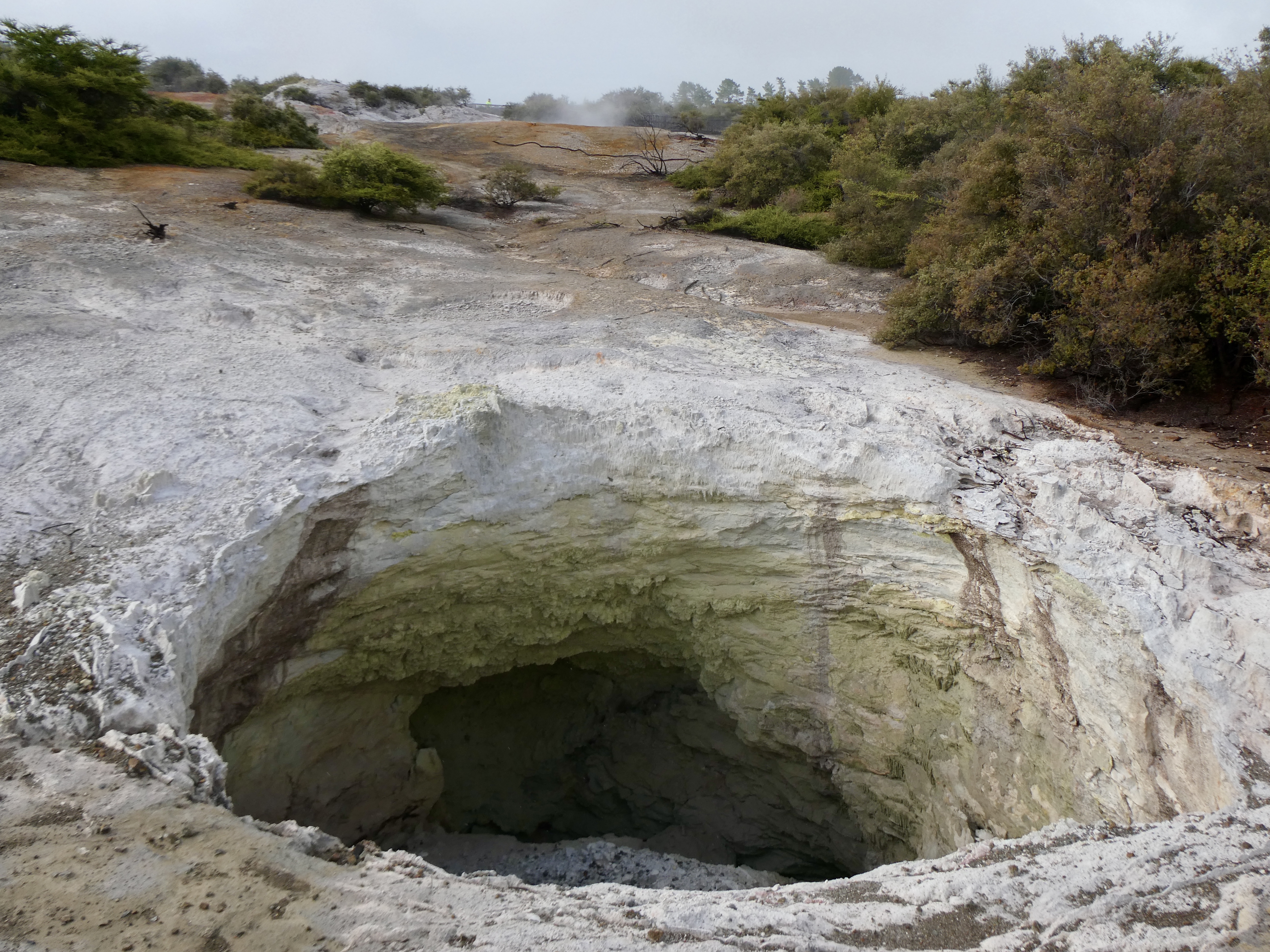
The real show began at our first stop, Mahanga Rua, a collapsed crater, filled with boiling mud. And while it was hard to see the mud from our vantage point, we could certainly hear the gurgling below.
As we continued our walk, we passed a series of craters, many surrounded by brilliant colours as a result of the oxidization of various minerals, including sulphur, Chinese clay, mercury sulphide and manganese oxide. We even saw one crater that was filled with mud and contained surface oil (yep, even oil is brought to the surface), which was skimmed off by the locals in the 1800s to use for kerosene lamps.
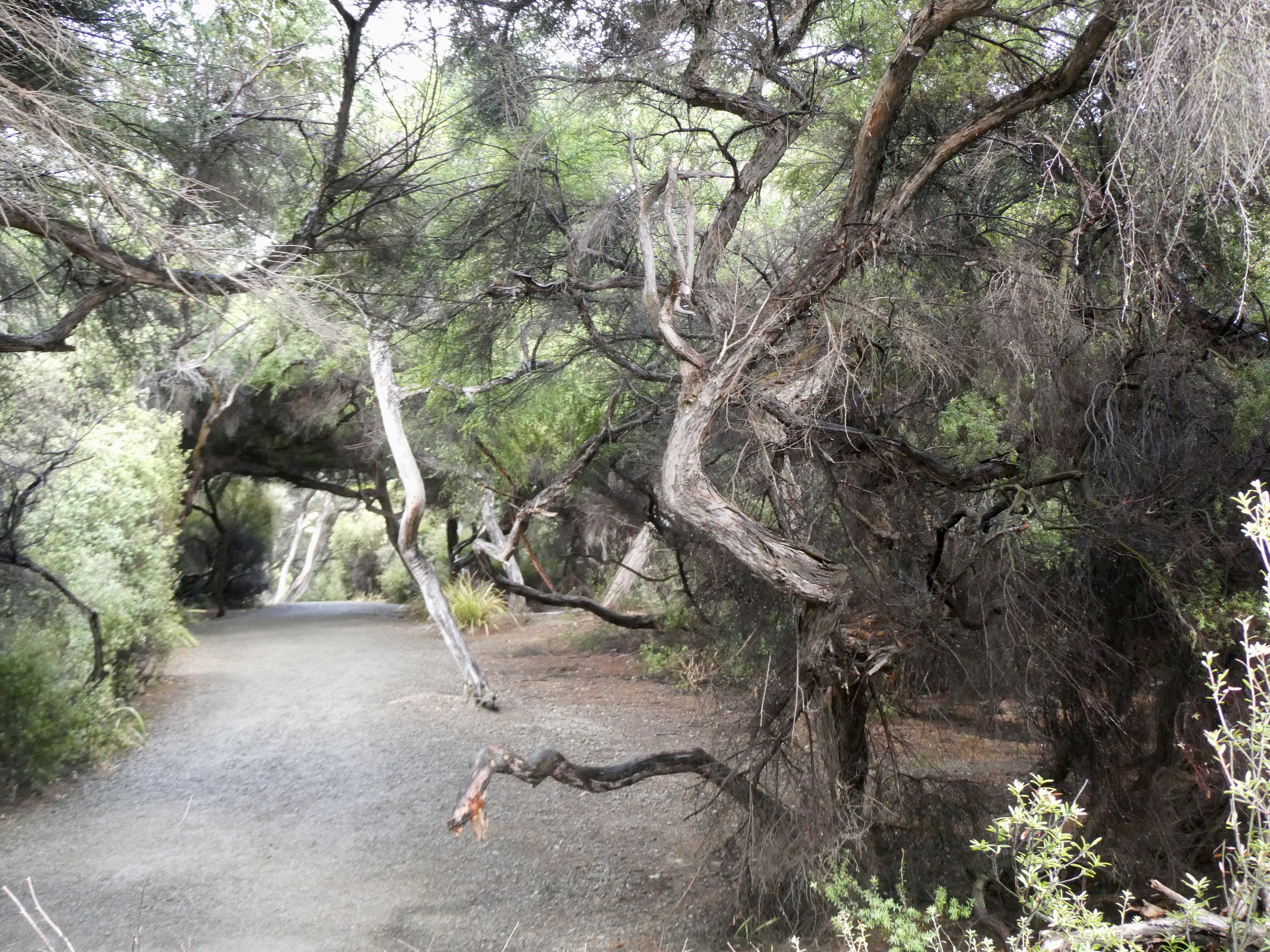
The path took us through some unique landscape and even included a funky looking hanging tree area where Peter Jackson apparently filmed scenes for Lord of the Rings 2 (again, haven’t seen it so no clue where in the film it may be located).

Now, in my opinion the real star of the park was the Champagne Pool, which features a multitude of colours. The waters of the pool contain minerals brought from deep below the surface and as the water cools, the minerals are exposed creating the myriad of colours, which are constantly changing depending on the water level, the weather and the wind.
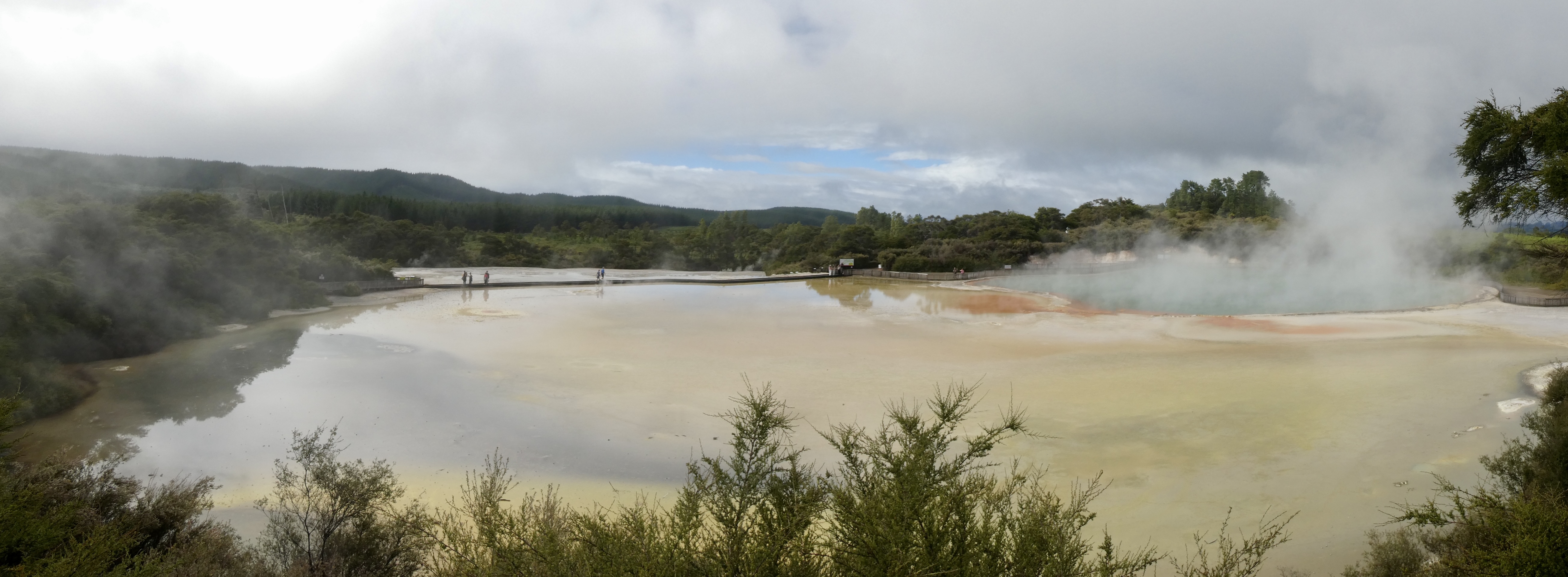
We ended up walking around one side of the pool and would meet up with the other side shortly after, but first we made a brief stop at the Sinter Terraces, where the water from the Champagne Pool overflows and as it evaporates, the residue leaves calcified deposits that create terraces.
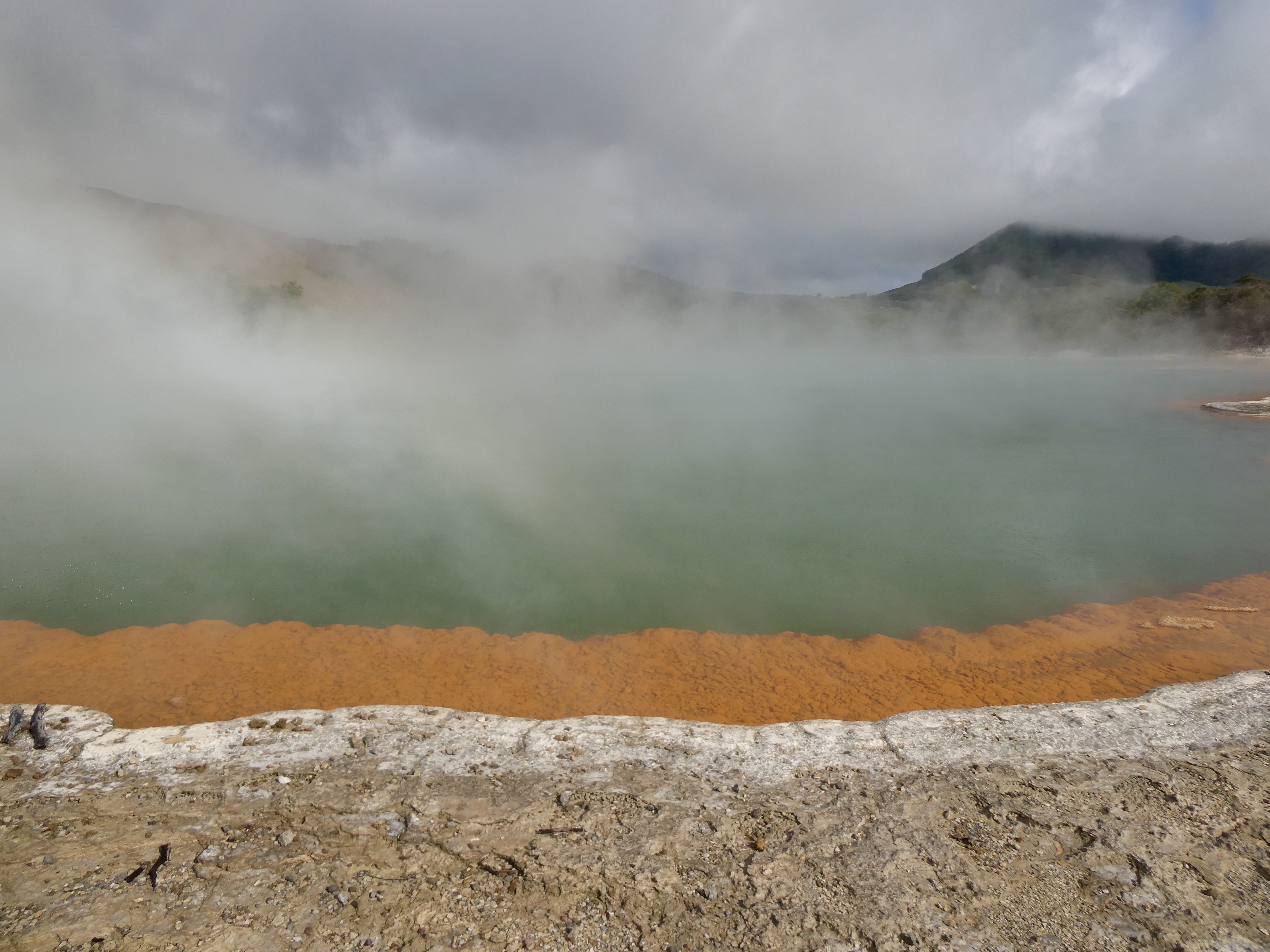
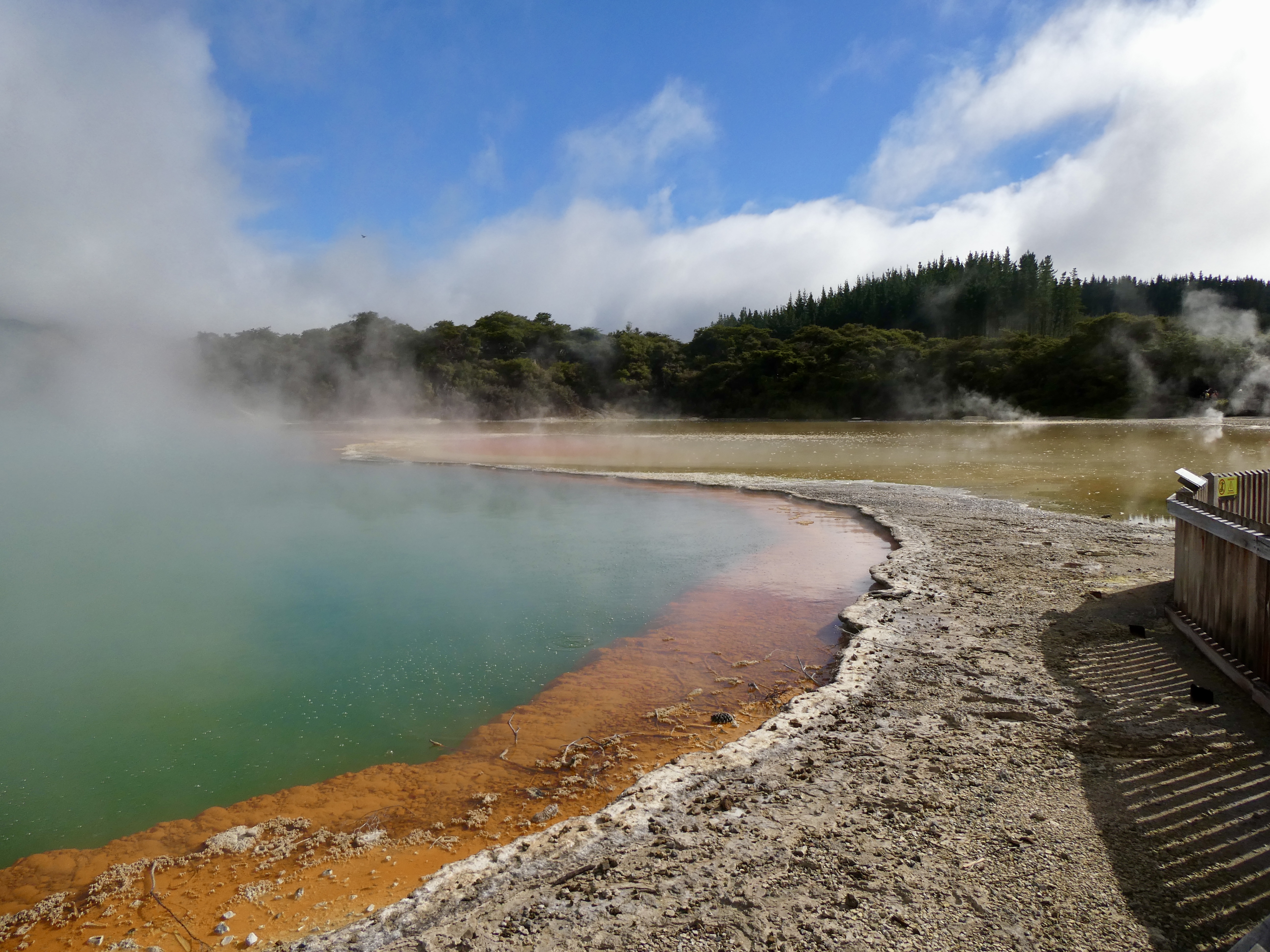
Once we passed the Sinter Terraces we approached the other side of the Champagne Pool. However, the steam and gas from this side was overwhelming (although apparently good for facials so we were told). In fact, I found it all so overpowering that I moved on ahead of the group. And it was not the steam so much as the overpowering onslaught of the gases coming from the pool.
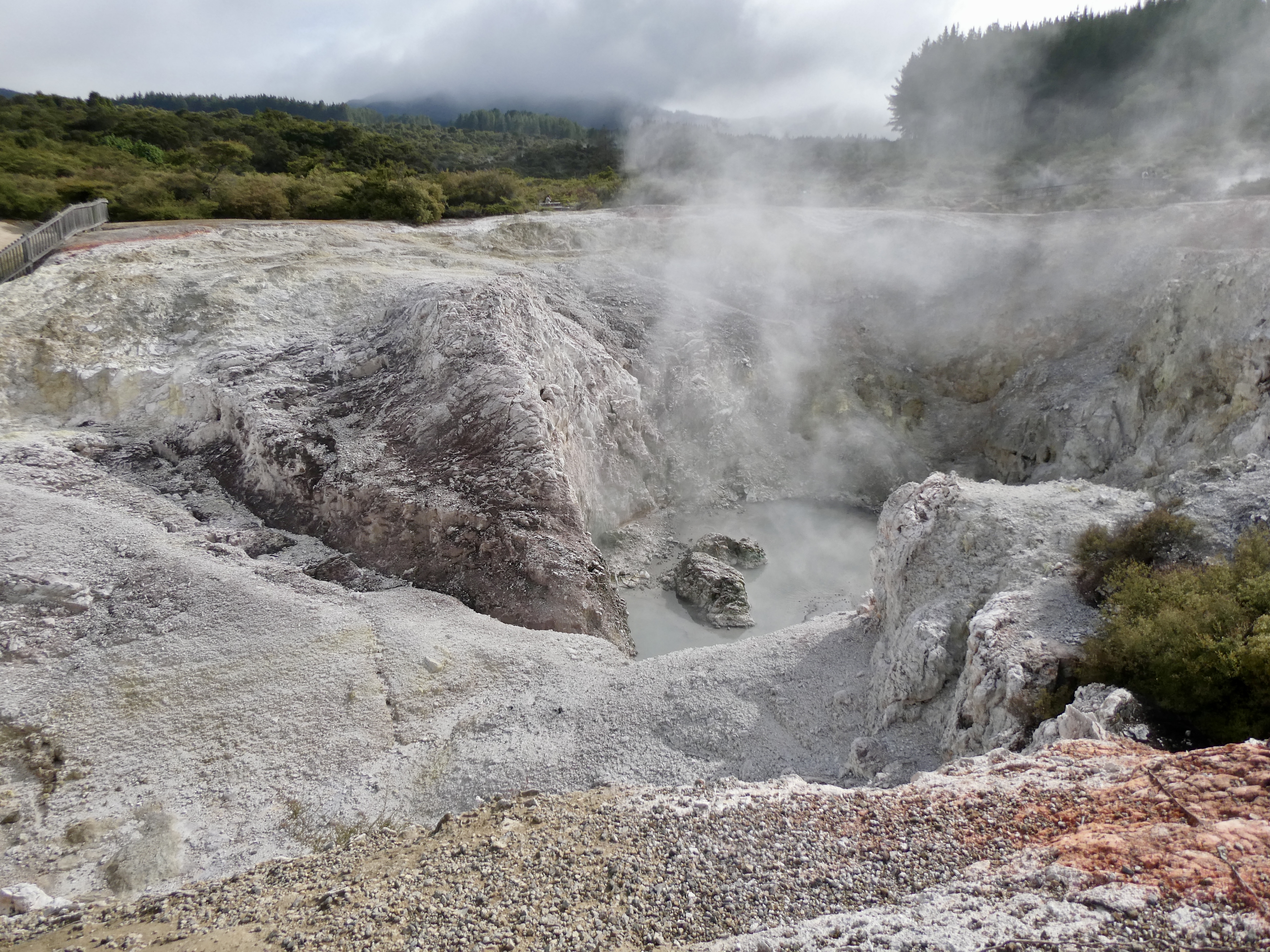
Anyway, we moved past more the terraces and several craters, including one where birds nest in the spring, to Anga Whanariki, a crater filled with a mud pool that left lovely white calcified deposits on the sides of the crater. Similar craters in the area, which are filled with water, are used for cooking.
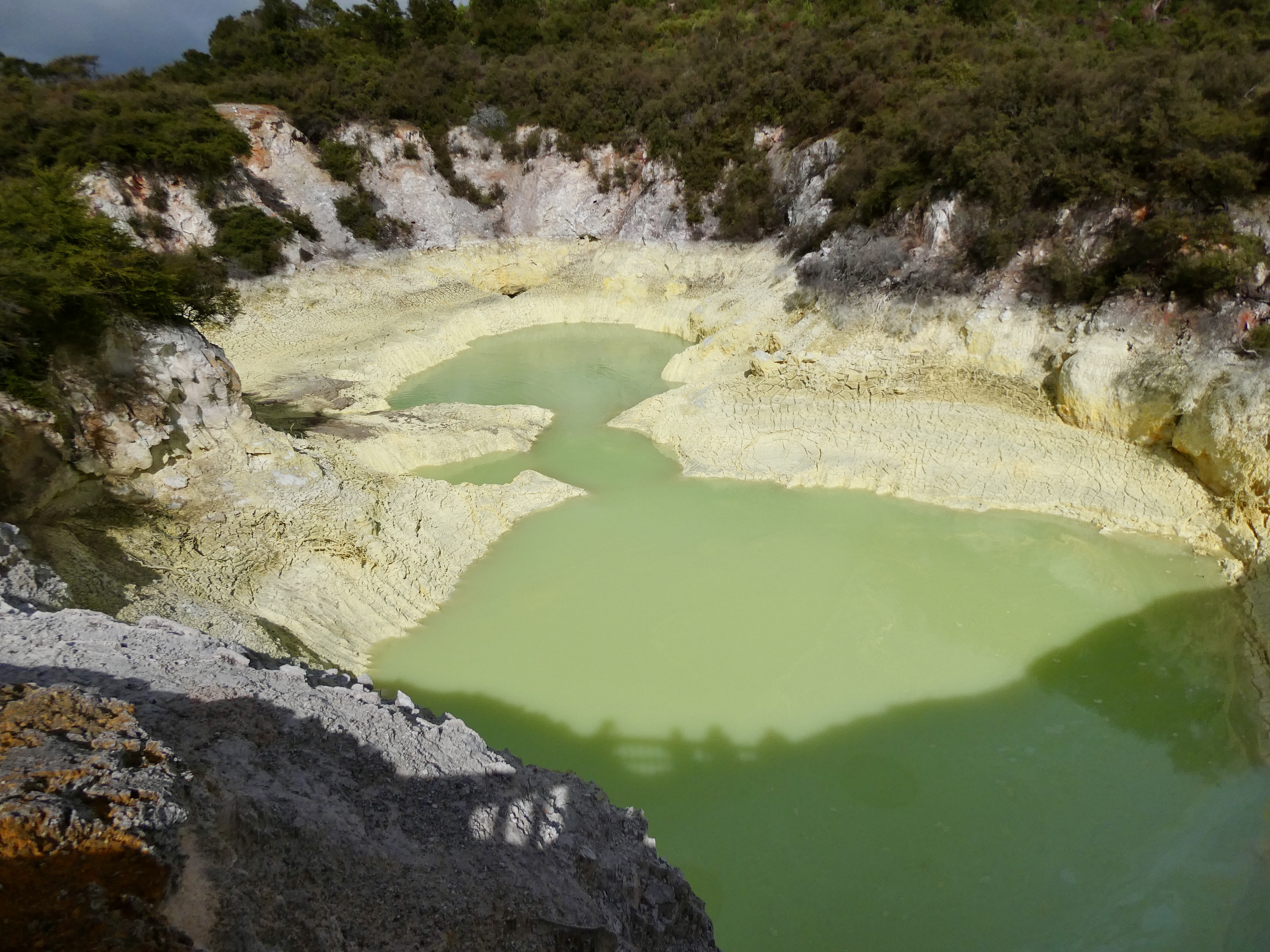
Our last stop was at Roto Karikitea, a huge crater filled with water from the Champagne Pool. This crater was filled with water that was the most amazing colour of greens and yellows caused by mineral deposits suspended in the water and reflected by the light. It was absolutely stunning.
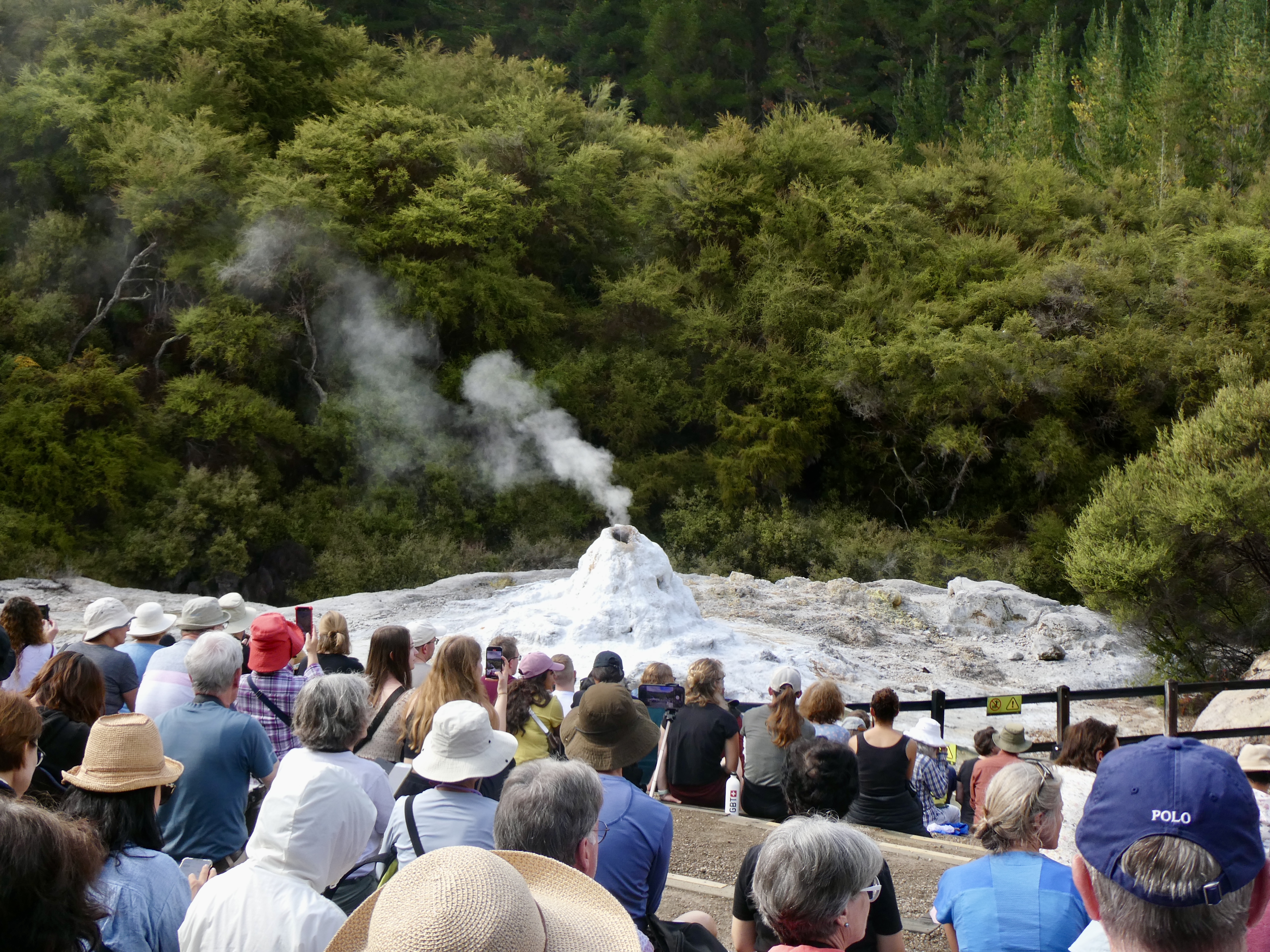
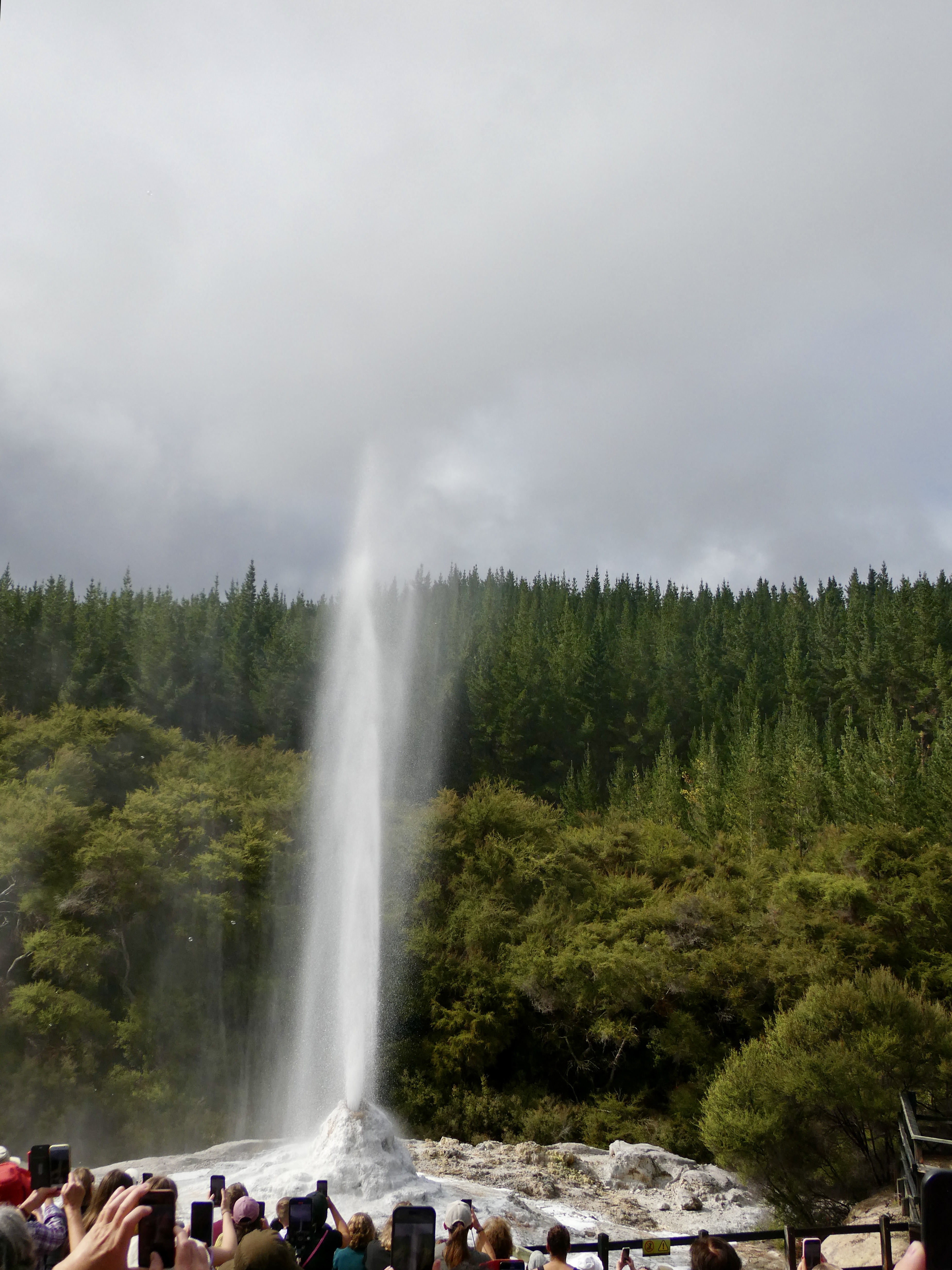
So after our 1 plus mile walk, we took a quick trip to another part of the park for the 10:15 am. Lady Knox Geyser eruption. The geyser was discovered by prisoners who were working to clear the area, had washed their clothes and then put them on the hot ground around the geyser only to have the geyser erupt. Now for some reason, this geyser draws hundreds of tourists despite the fact that the eruption is man induced (they put a form of biodegradable bubbles in the geyser to trigger the reaction).
Anyway, we took our seats, watched the guide give a Māori blessing, then another guide poured the bubbles in and shortly after that … eruption. Sorry, but I don’t get the whole attraction to Lady Knox Geyer. I like au natural!
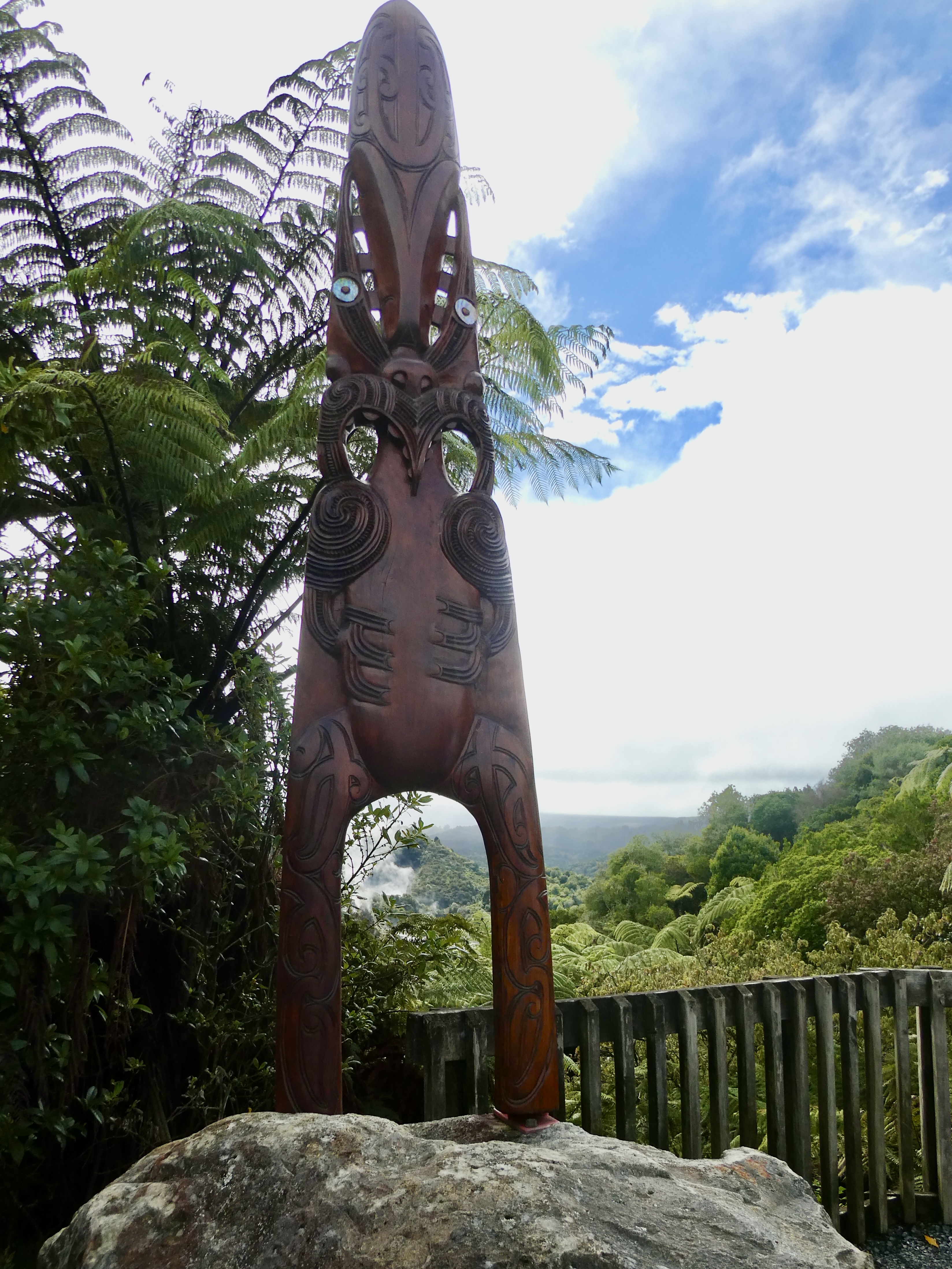
From here, we moved on to the Waimangu Volcanic Valley for our two hour (three mile) hike that took us downhill through the valley. Now this area has been the site of some of the most recent volcanic activity in Rotorua, including the devastating Waimangu geyser eruption in the early 1900s killing a number of people. In fact right near the entrance to our walk we encountered Ruaumoko, the Māori god of remembrance, an ode those who lost their lives.

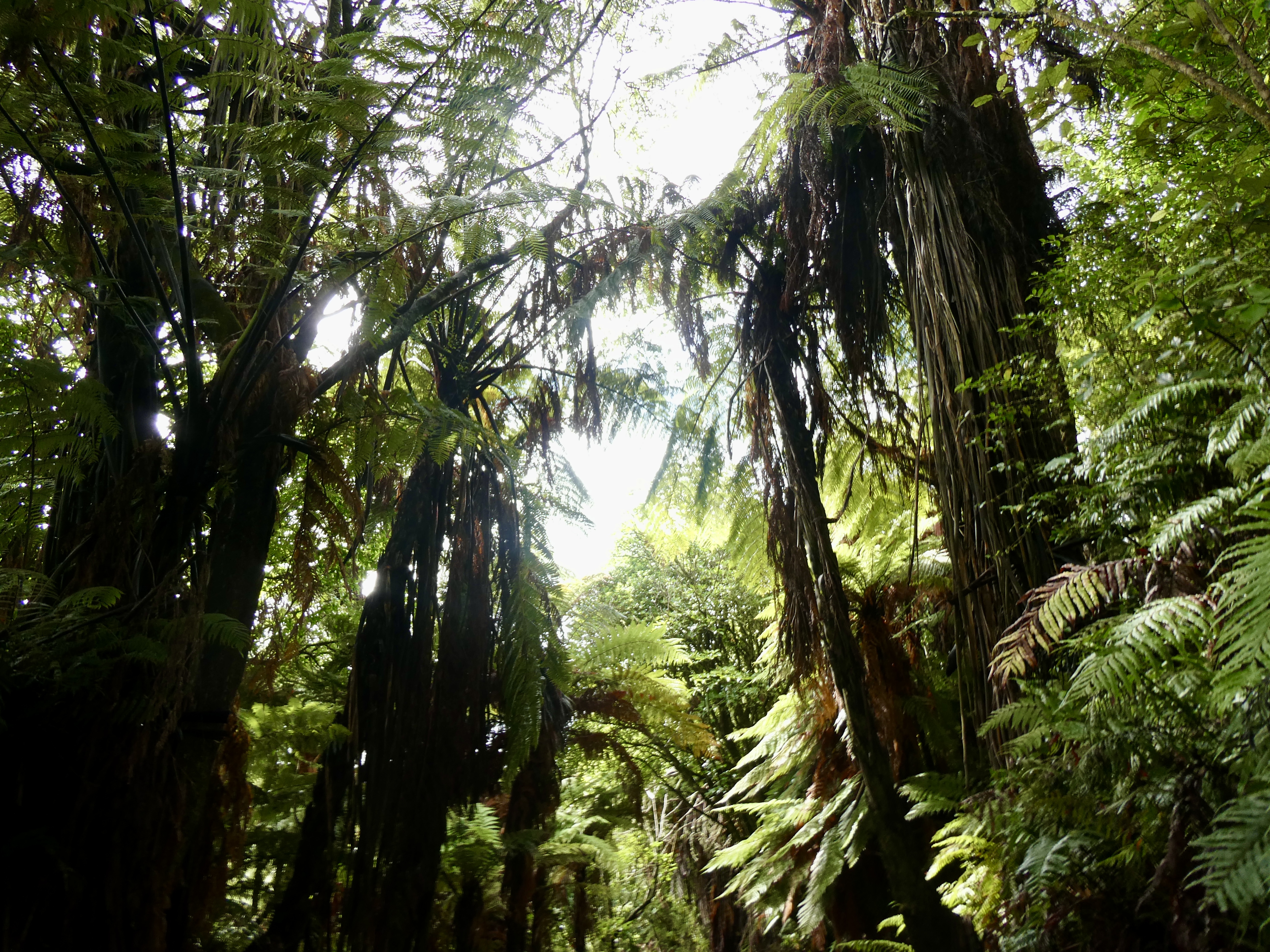
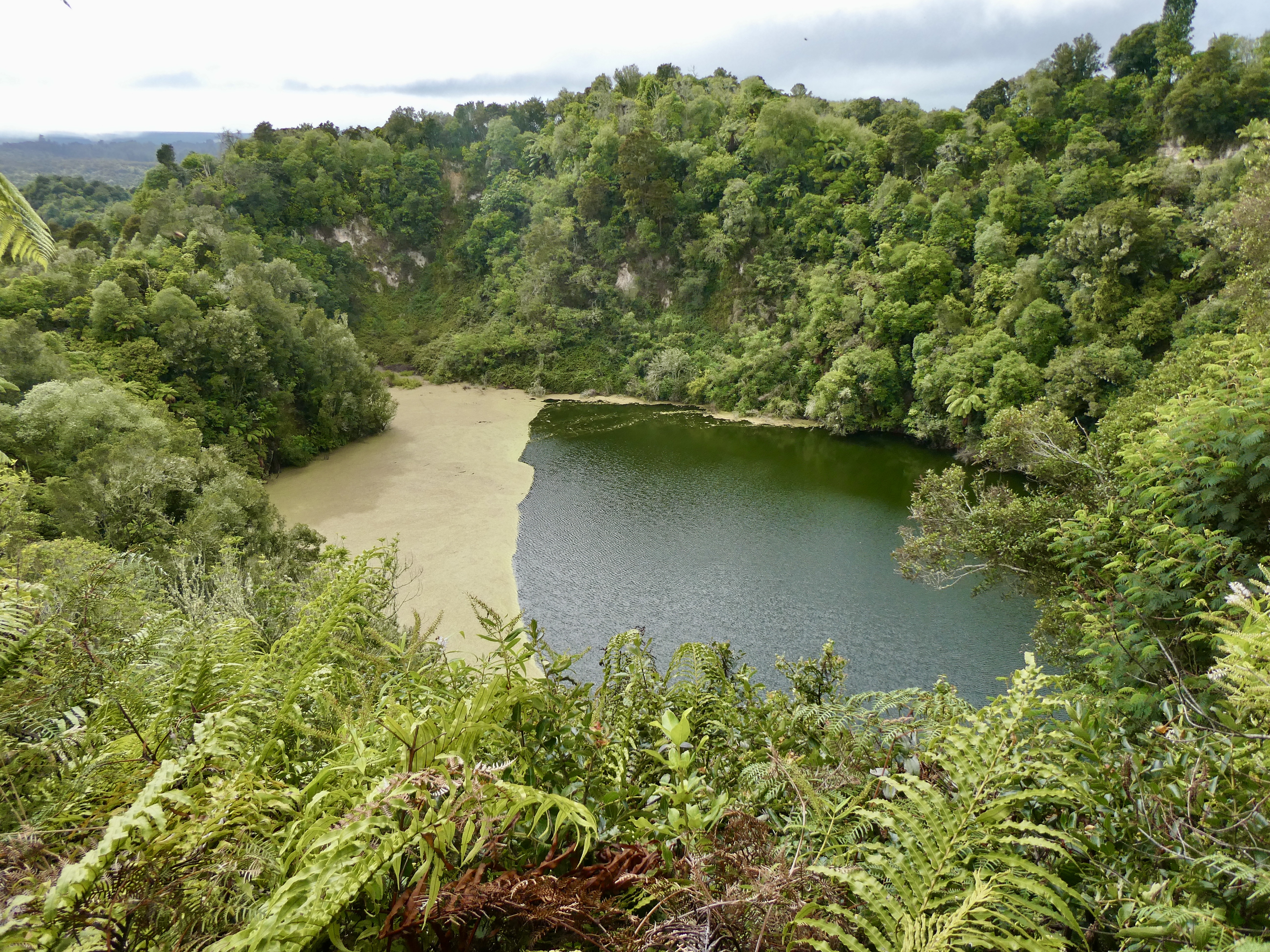
Once we began our walk, we were able to take in a gorgeous panorama of the valley before moving downhill through some amazing New Zealand vegetation before reaching the Echo Crater, which indeed created very loud echos when you let our a yell.
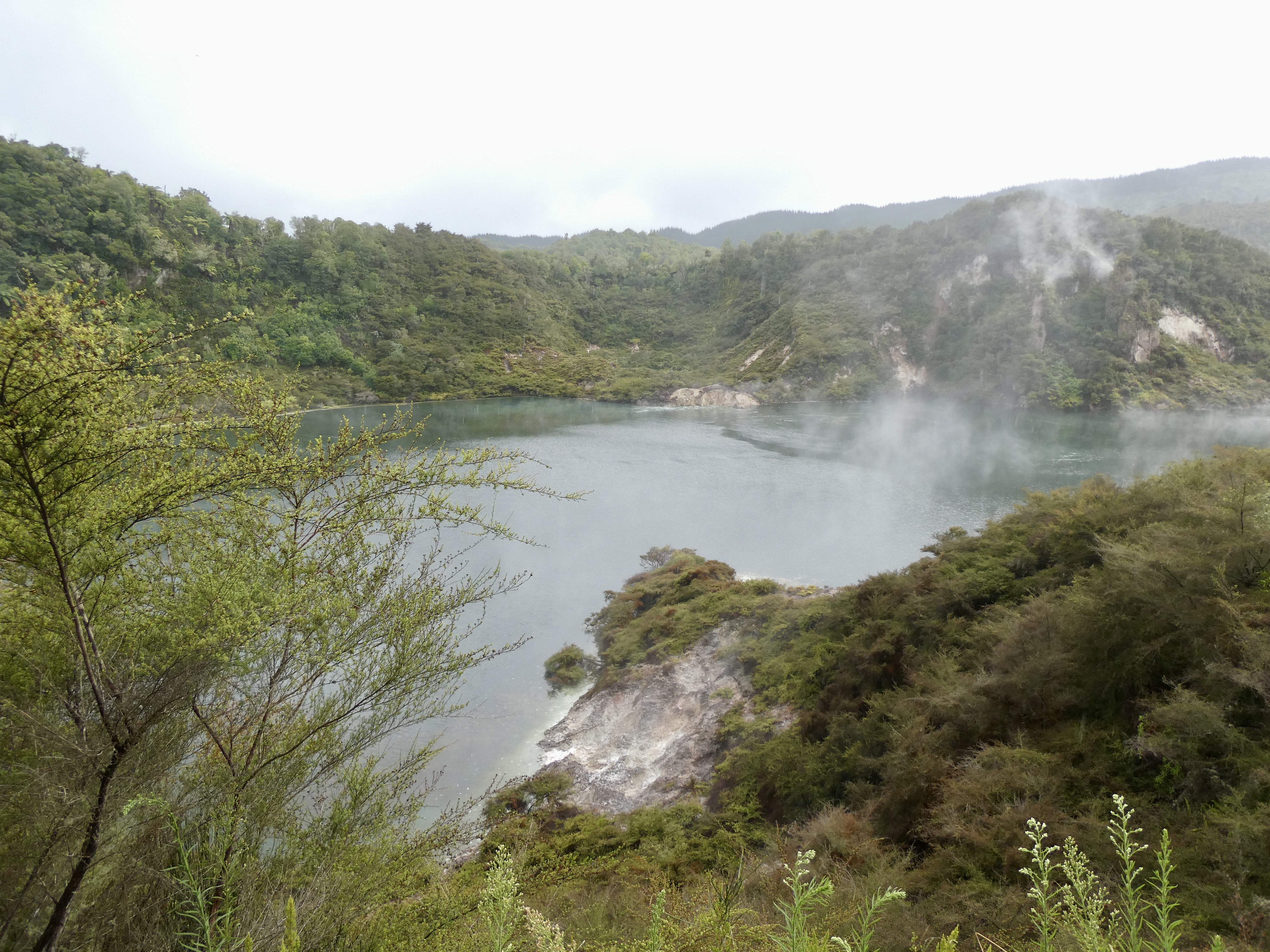
From here, we continued downhill catching periodic glimpses of Cathedral Rocks before finally reaching the shoreline of Cathedral Rocks, which featured a gorgeous rock outcrop and steam rising from the water.
And right next to Cathedral Rocks was Inferno Crater, where locals used to come to cook their food. And as you approached the stream moving from Cathedral Rocks to Inferno Crater, you could feel the heat.
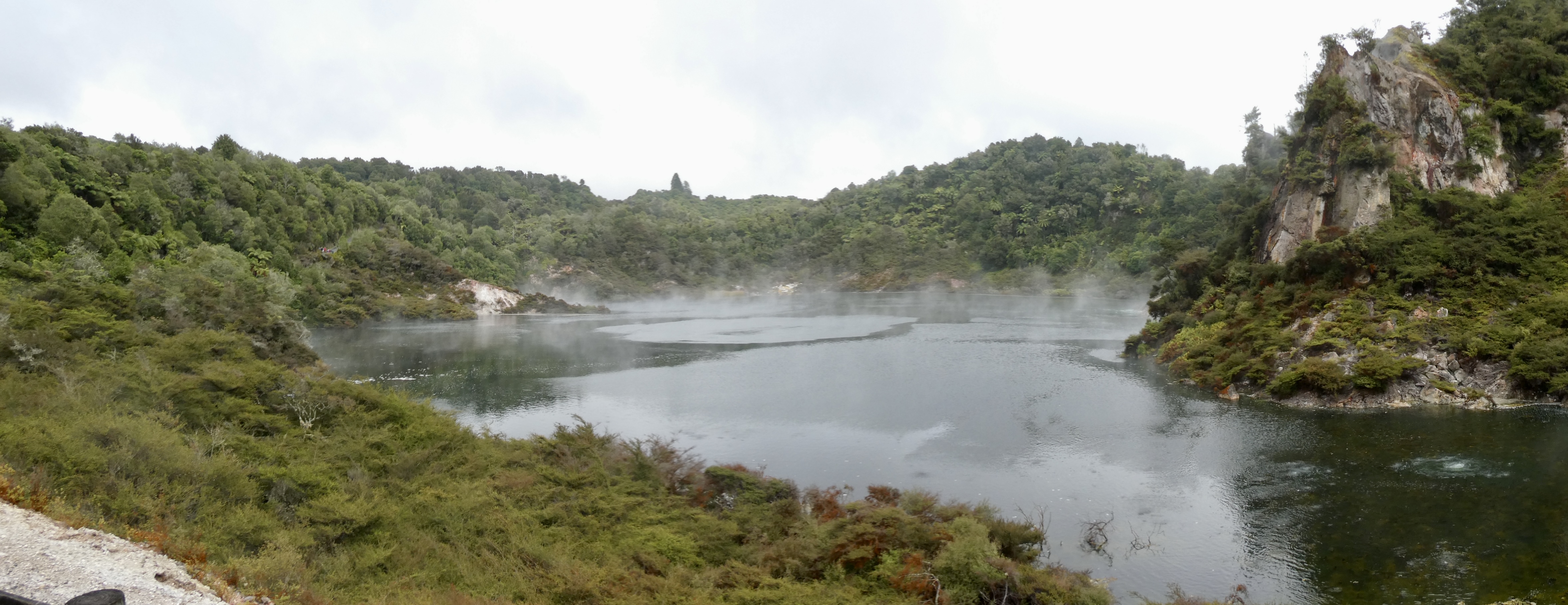
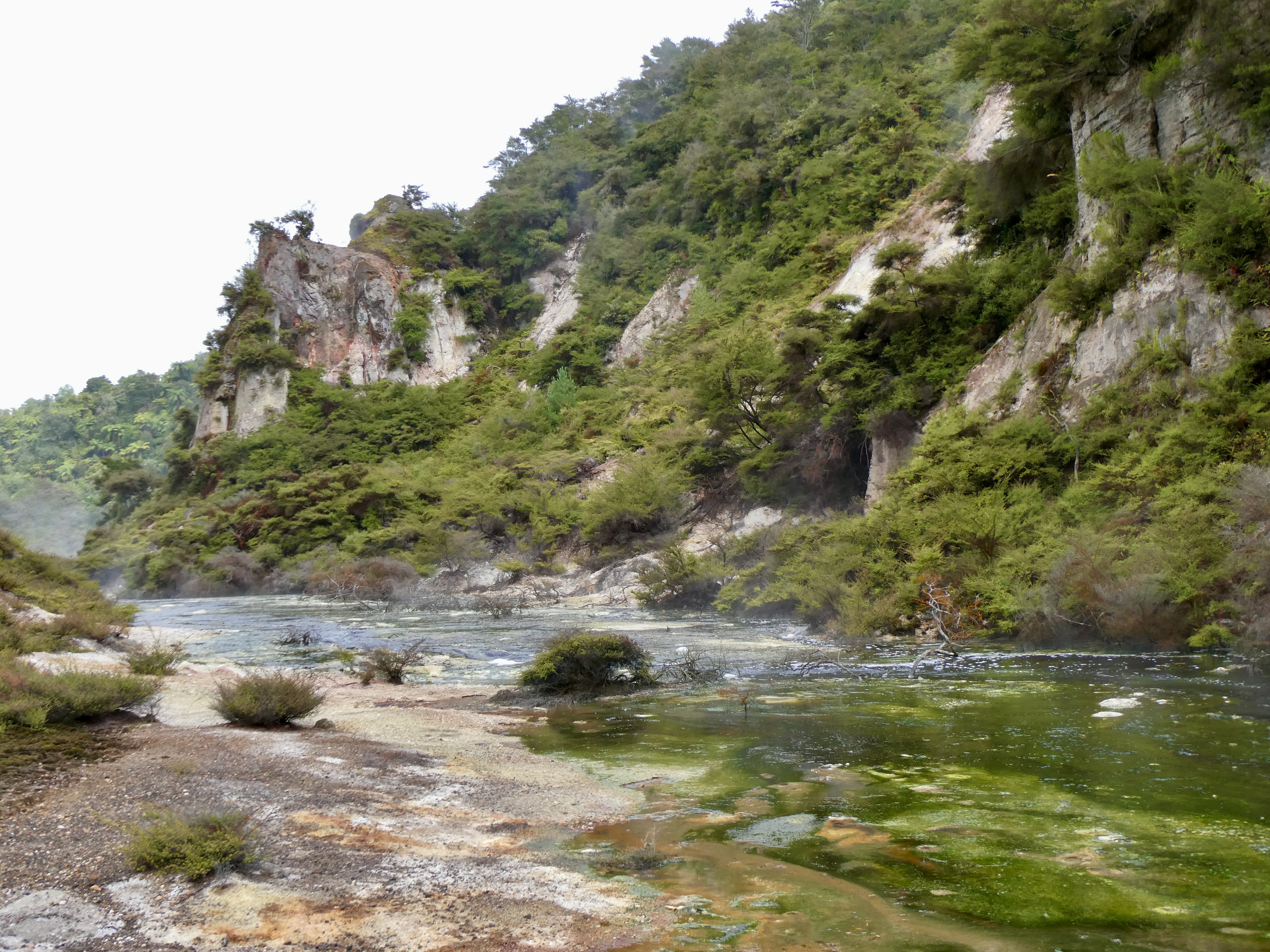
Next up was the Frying Pan Station, where monitors are in place to ensure there are no surprises form the geothermal activity taking place all around us. And to the right of this area was a large cross that commemorated the lives lost when the Waimangu Volcano blew.
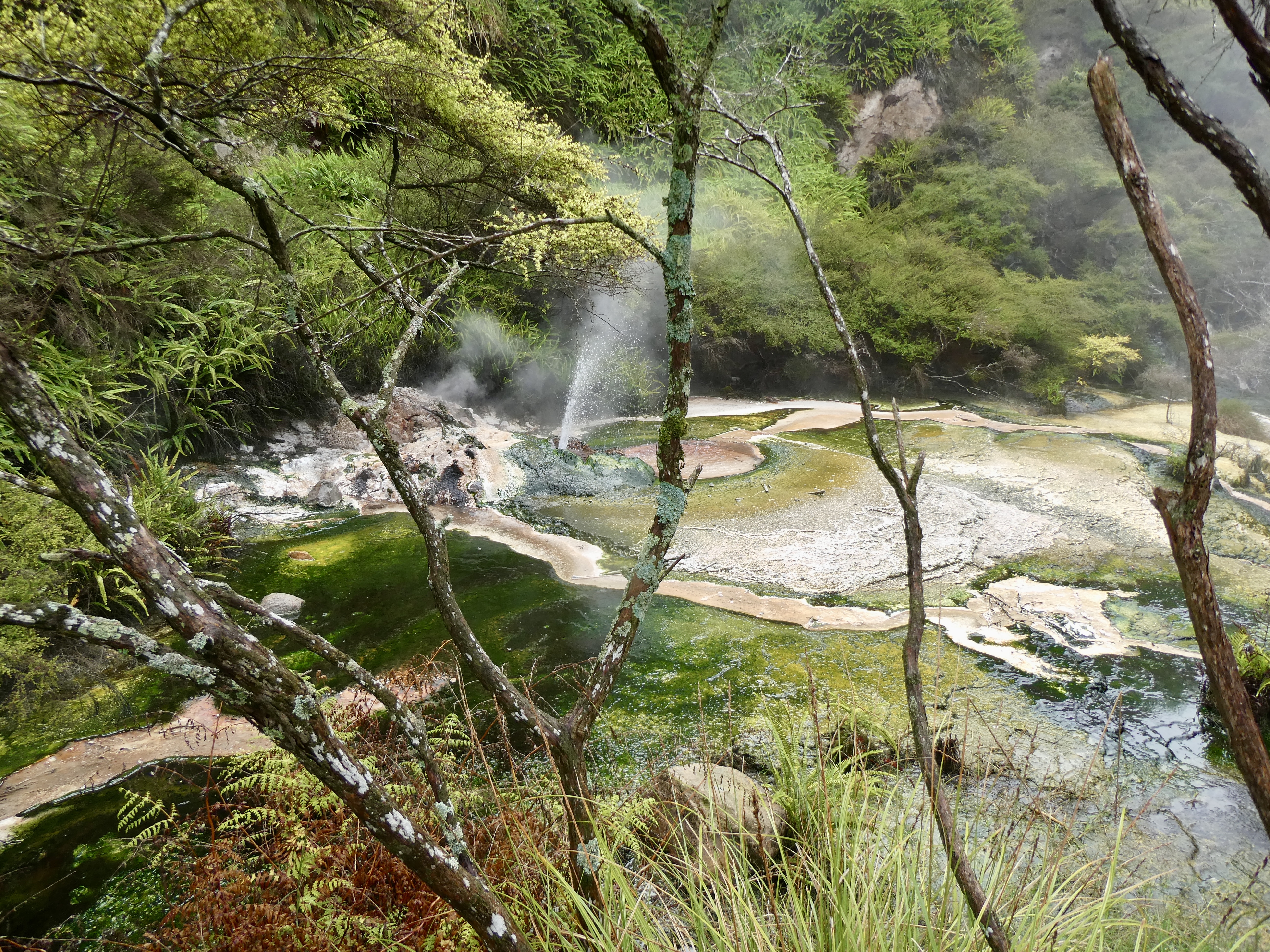
At this point, we walked up a slight incline to take in a number of streams, terraces and pools with my favourite being the Marble Terrace. The area was absolutely gorgeous and even included a tiny little geyser.
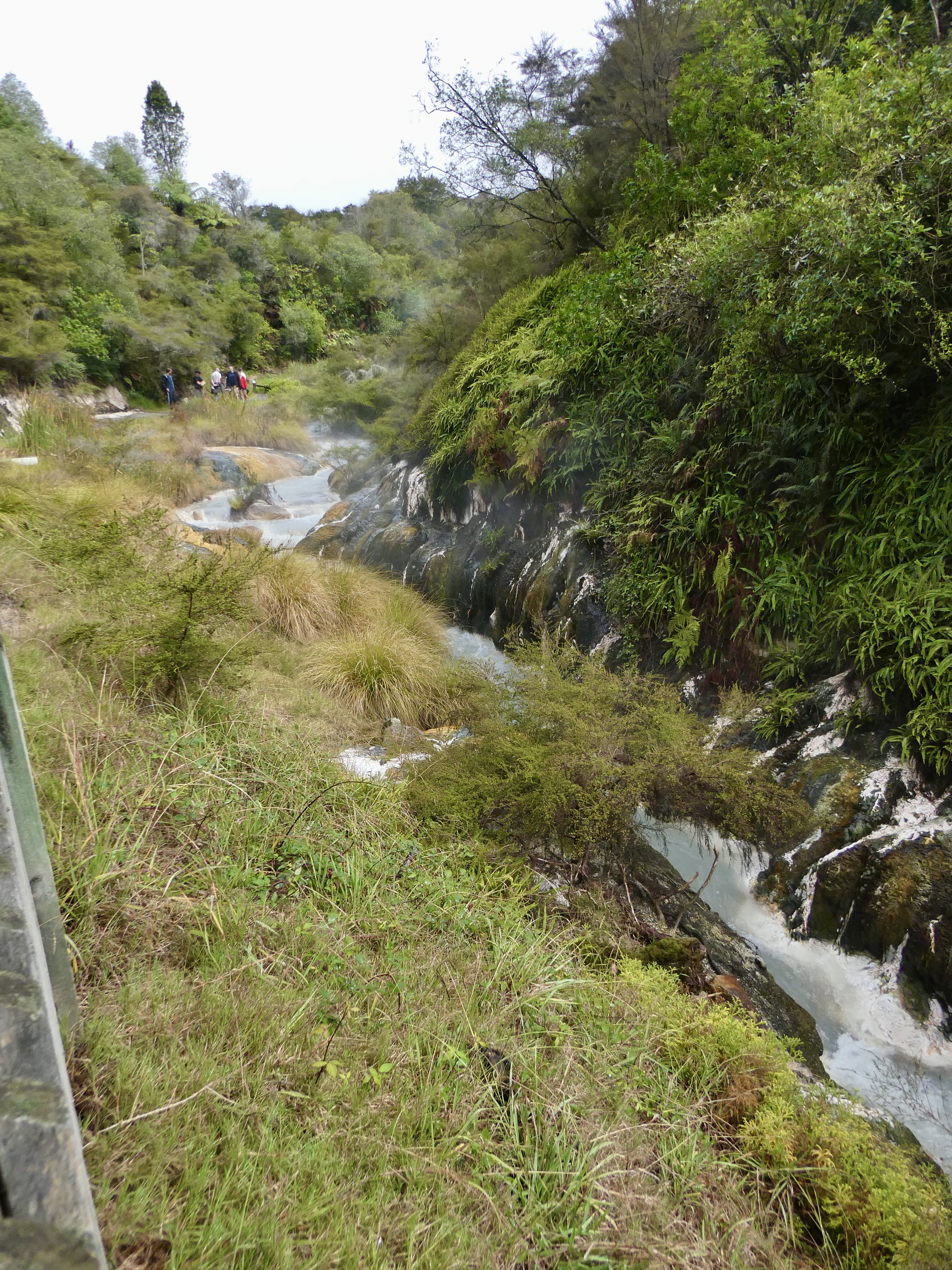
We wrapped up the hike, passing the Waimangu Stream before reaching the end of the “Waimangu Highlights Walk” and jumping into a shuttle bus that took us back to the entrance. We then had a short break before continuing the tour at 2:00.
Now the afternoon tour was a visit to Te Pui, a Māori cultural center featuring a Kiwi Conservation Center, Pohutu geyser and a Māori Arts and Crafts Institute. Sadly, this visit was probably the lowlight of the tour. It was jammed with people, and I felt like a number of the guides etc. were just going through the motions.
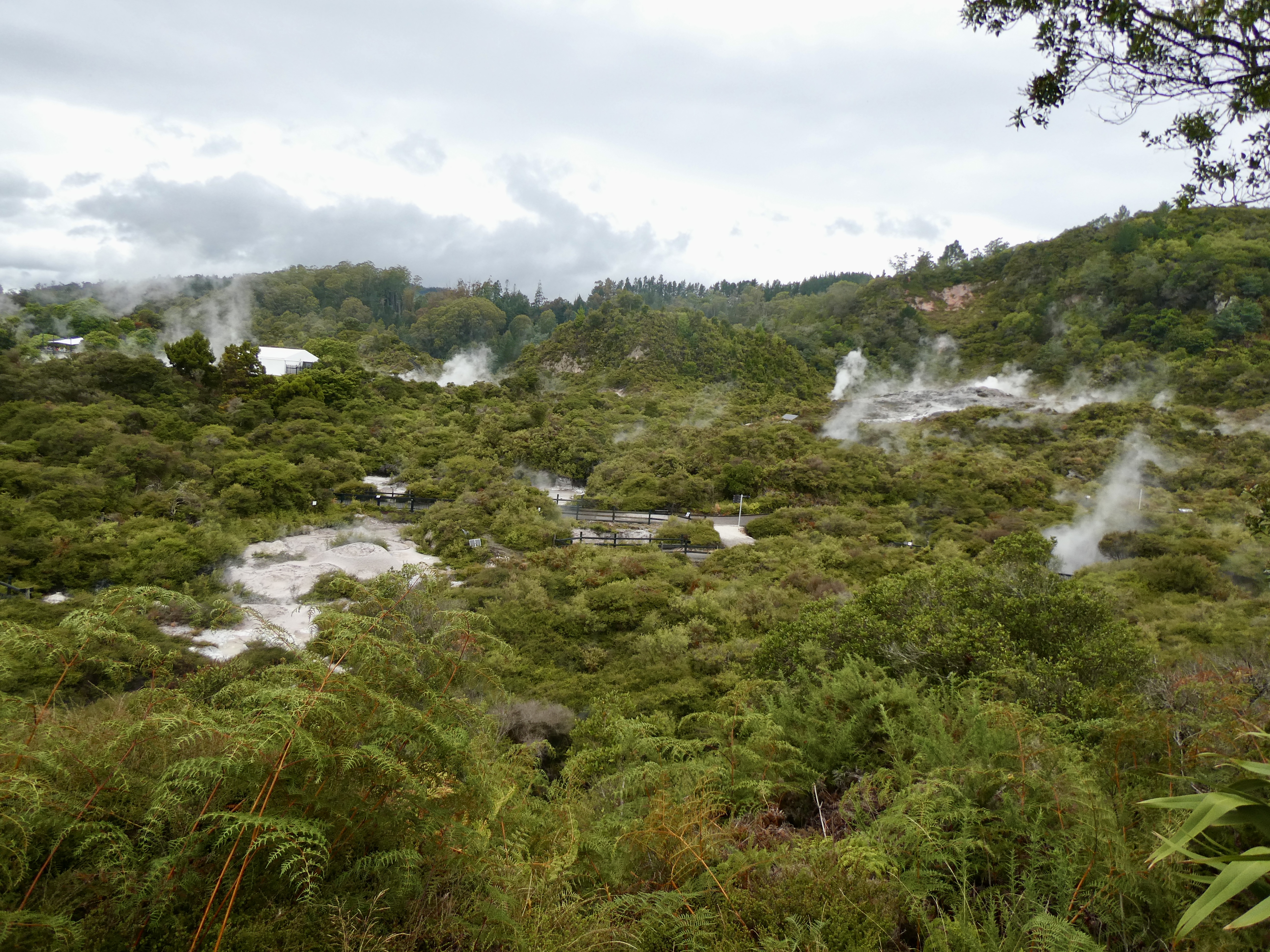
So once we arrived, the seven of us were herded together with about 25 other people and led around the site first to a view point to have our first look at the geothermal pools in the distance.
We then moved to the Kiwi Conservation Center, but this was nothing like what Tom and I experienced in Franz Josef. Instead of being able to view the kiwis out in the open (and only me and Tom in the enclosure) we were separated from the kiwis by double paned glass, which we were kind of dirty and left us straining to see the kiwis. In addition, we were rushed through as the line behind us was long. Not a good experience in my opinion (although the one kiwi that I could see was a lot larger than what we have viewed in Franz Josef).
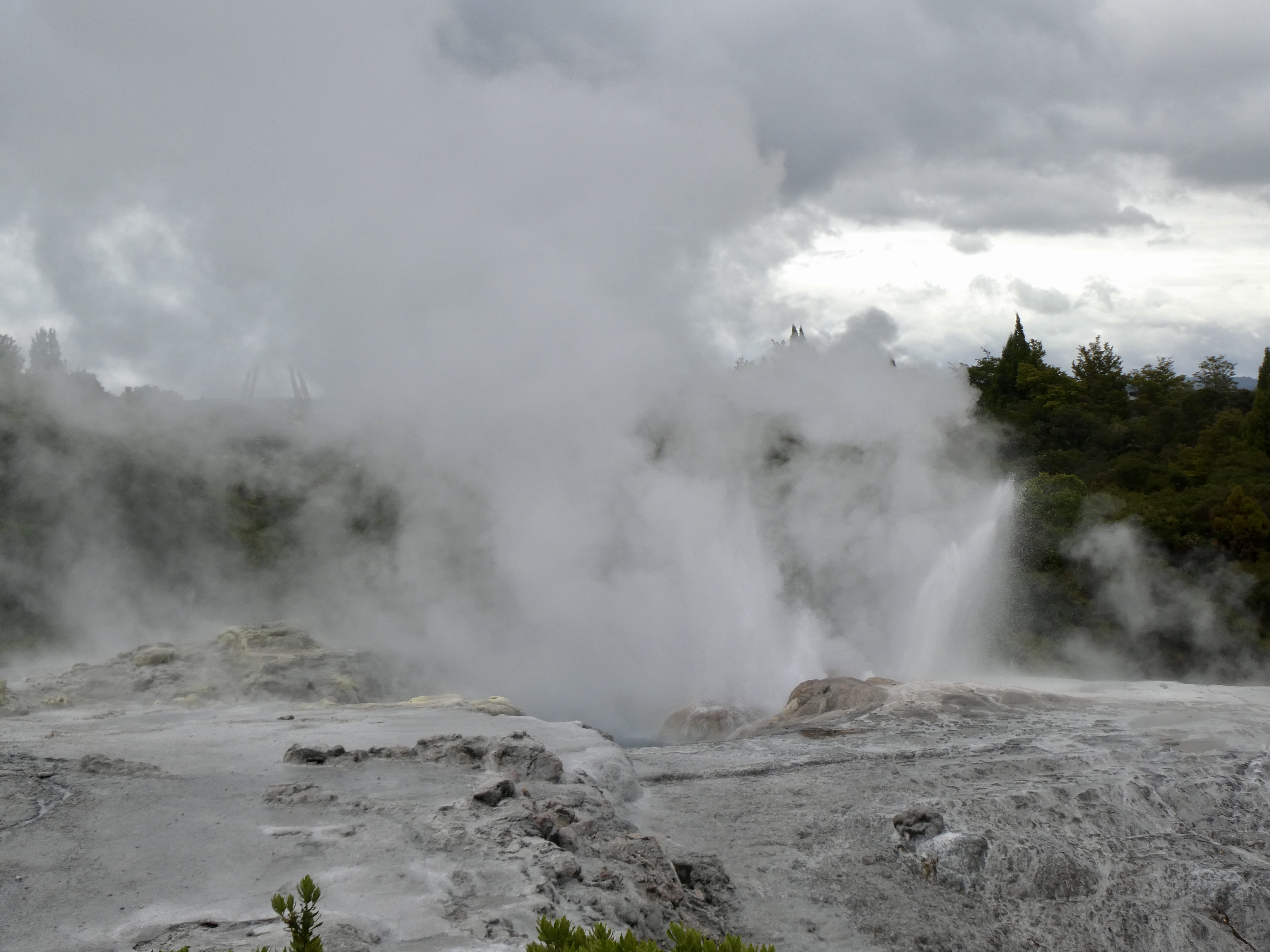
From here, we moved downhill toward the Pohutu geyser just as the clouds opened up. I ended up waiting for the downpour to lighten up before following the others and reaching the Pohutu geyser just has it was erupting. Now the herd was all gathered around the fence trying to take pictures, but I spotted a terrace in the distance and walked over to it and up the stairs for a far better (actually prime) view of the Pohutu geyser erupting.

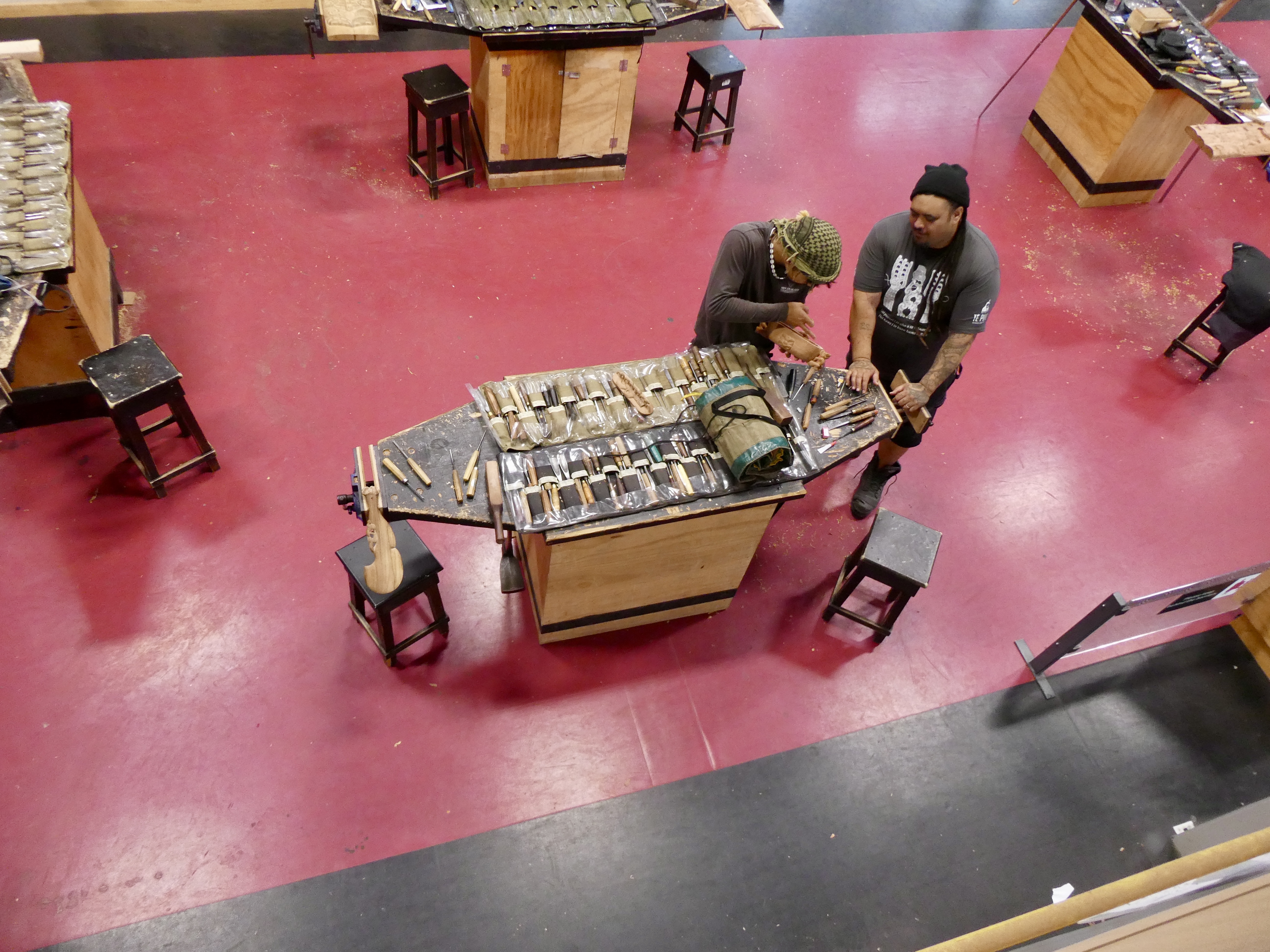
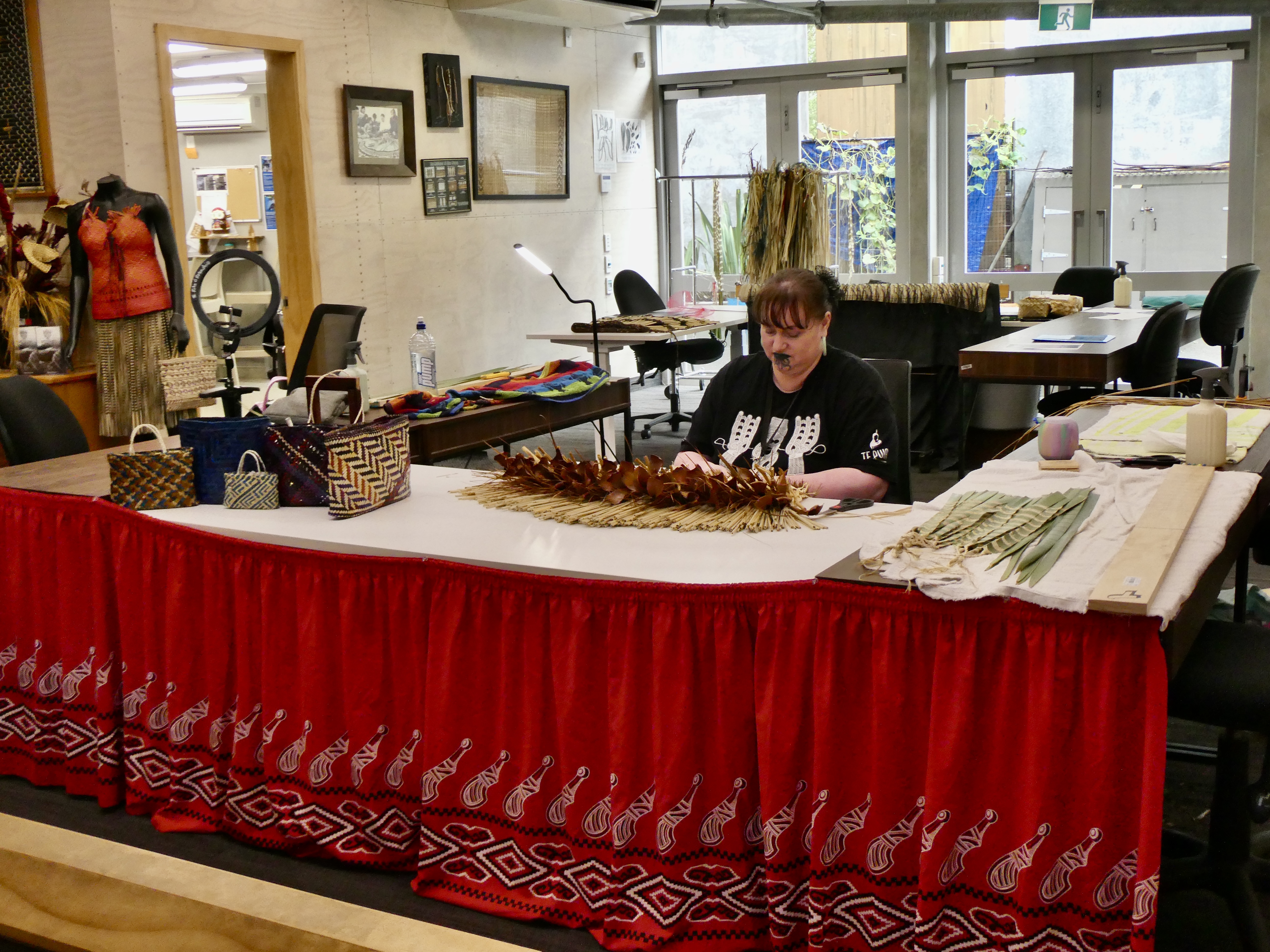
I then wandered around the geothermal pools before catching the people mover that took us all back to the entrance where we were herded through the Māori Arts and Crafts Institute. Here, we were able to see local Māori youth learning stone and bone carving, wood carving and weaving. Sadly, there were so many tourists crowded into the area, it was virtually impossible to ask the students any questions.
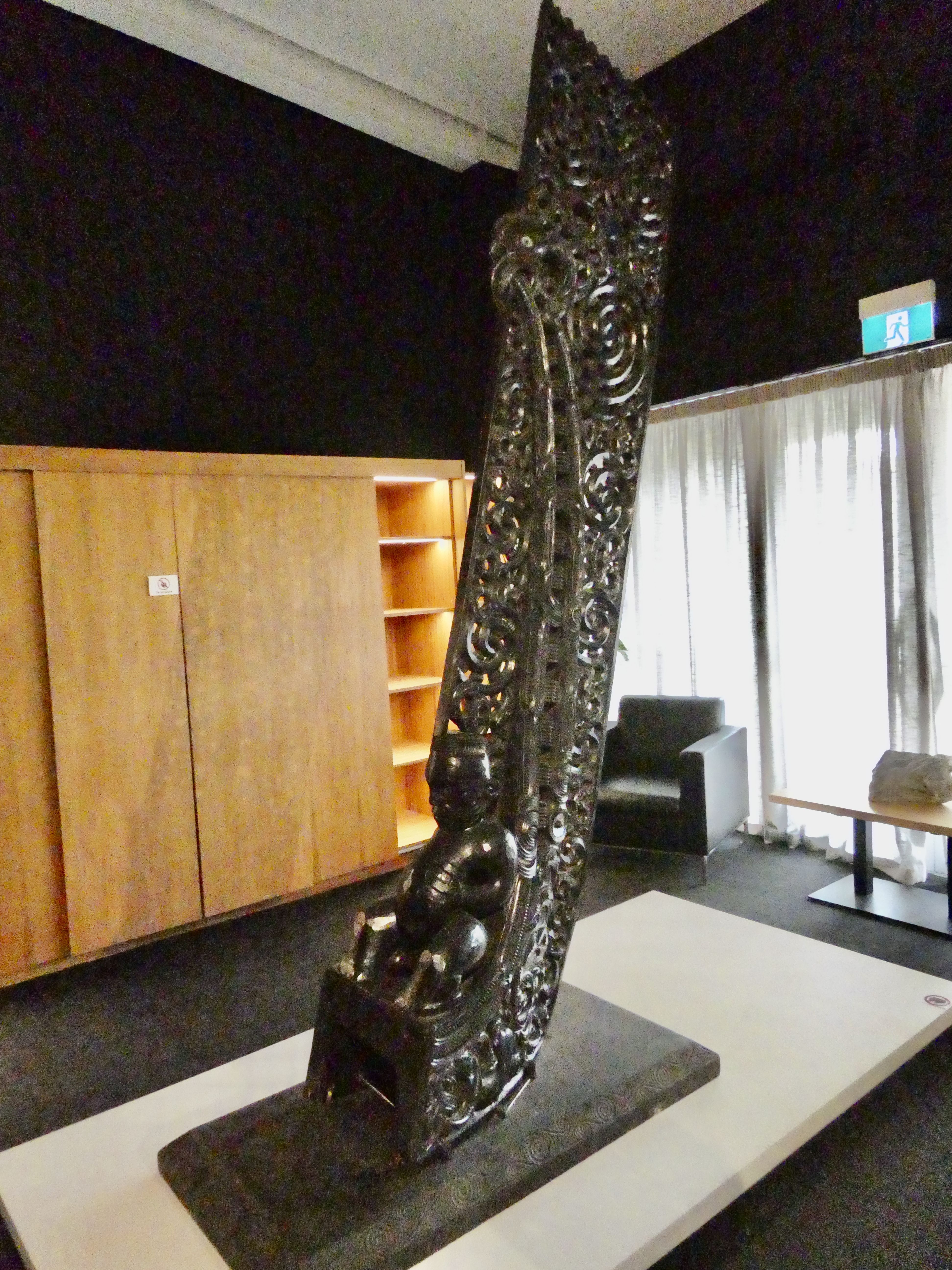
At this point, I moved on ahead of the group and took a walk through the art gallery before calling it good. The morning tour was fabulous, but the afternoon was a bit of a letdown as I had really been hoping to gain some insights into the Māori culture. Hopefully, the Whakarewarewa living Māori village tour and cultural performance I am scheduled to take tomorrow will be a better Māori experience than Te Puia.