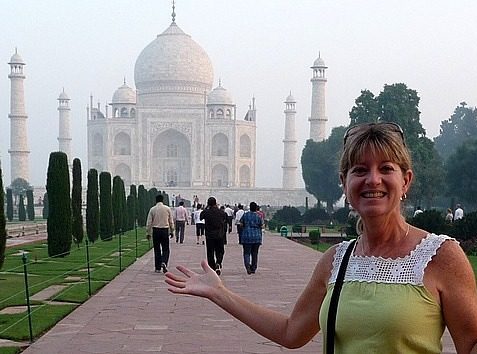
Today I took a tour outside Madrid to visit the ancient town of Avila known for its perfectly preserved old 11th century walls, and the ancient town of Segovia known for it incredible Roman aqueduct, its old walls and the 12th century Alcazar (Palace). My driver/guide Martin picked me up at just before 9:00 a.m. and we headed northeast to the town of Avila.
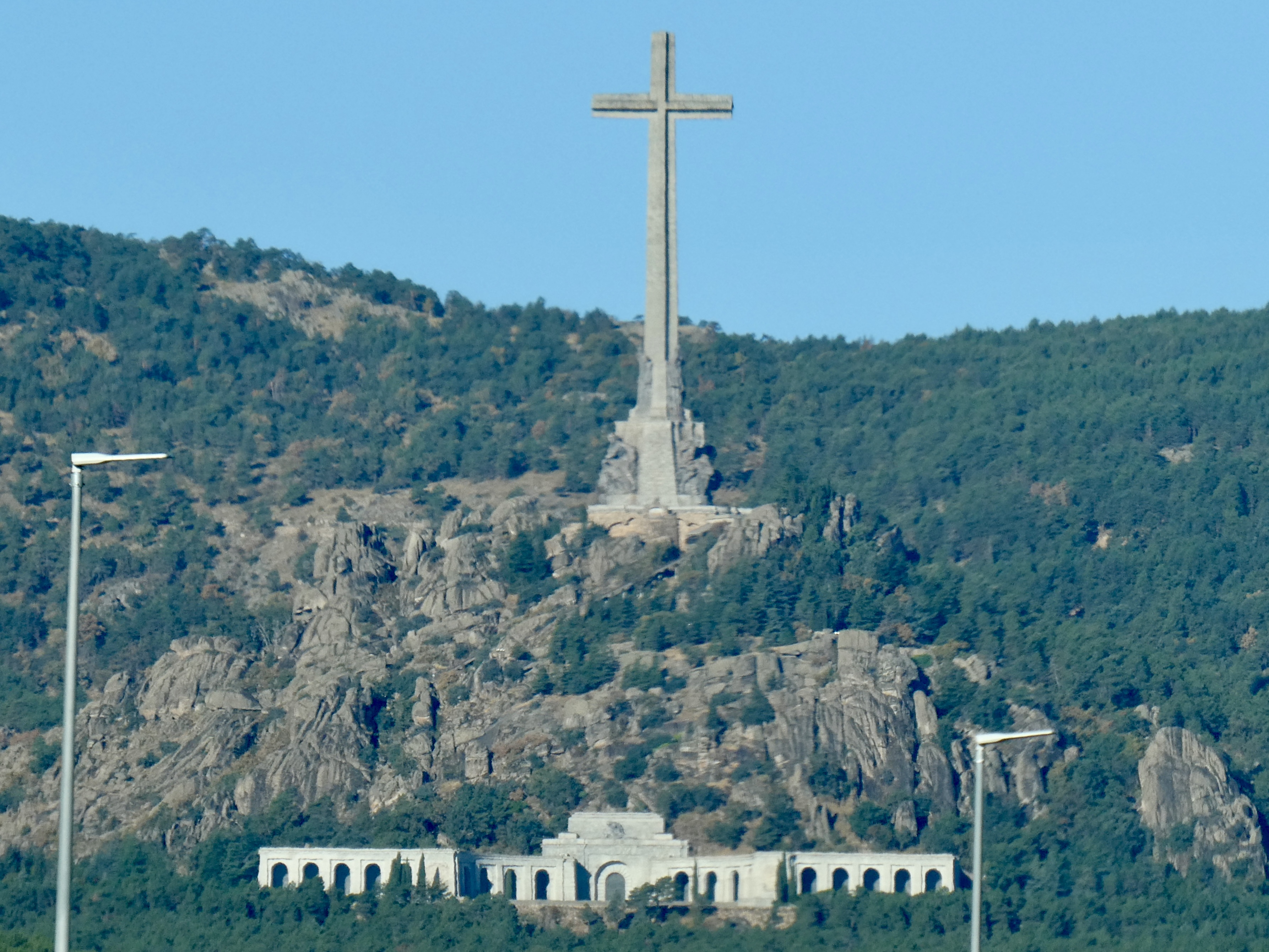
The drive was mostly on a freeway, but along the way we passed by a forested area where the Spanish Royal family resides and a monument established by Spain’s former dictator Generalissimo Franco. Originally, the monument was titled Holy Cross of the Valley of the Fallen where 35,000 Franco Nationalist are buried. In addition, Franco was at one time buried here, but his body was moved in 2019 at the same time the site was renamed the Hanging Walls.
We reached Avila around 10:15 and started the tour with a drive around the old outer walls of Avila which extend in a circle approximately 1.8 km. Now today most of the 60,000 residents of Avila live outside the walls, but at least 5,000 residents remain in the old quarter.

And the drive around the walls was pretty darn impressive. The work on the walls is believed to have commenced in 1090, but most of the walls were apparently rebuilt in the 12th century and were constructed on the site of the old Roman walls. In fact, many of the stones in the walls are from the old Roman walls and old Roman monuments that dotted the area. This was done to cut down on construction time and is pretty common throughout the old Roman world.
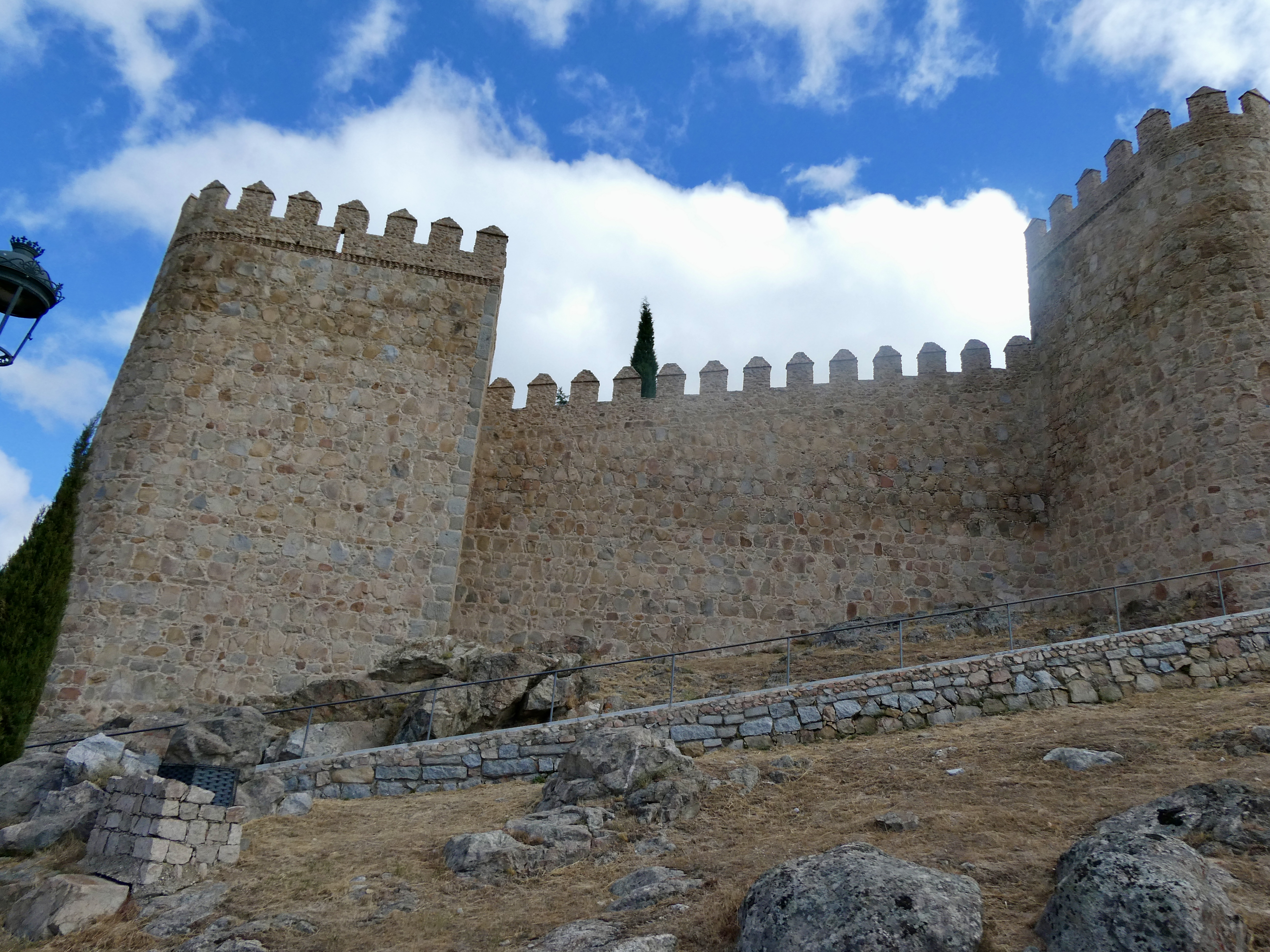
Now the walls were constructed for defensive purposes and include 87 turrets, 9 gates, 2 small gates and 2,500 merlons (narrow openings in the upper levels of the walls from which arrows were shot). The walls and old city of Avila were designated a UNESCO world heritage site in 1985.
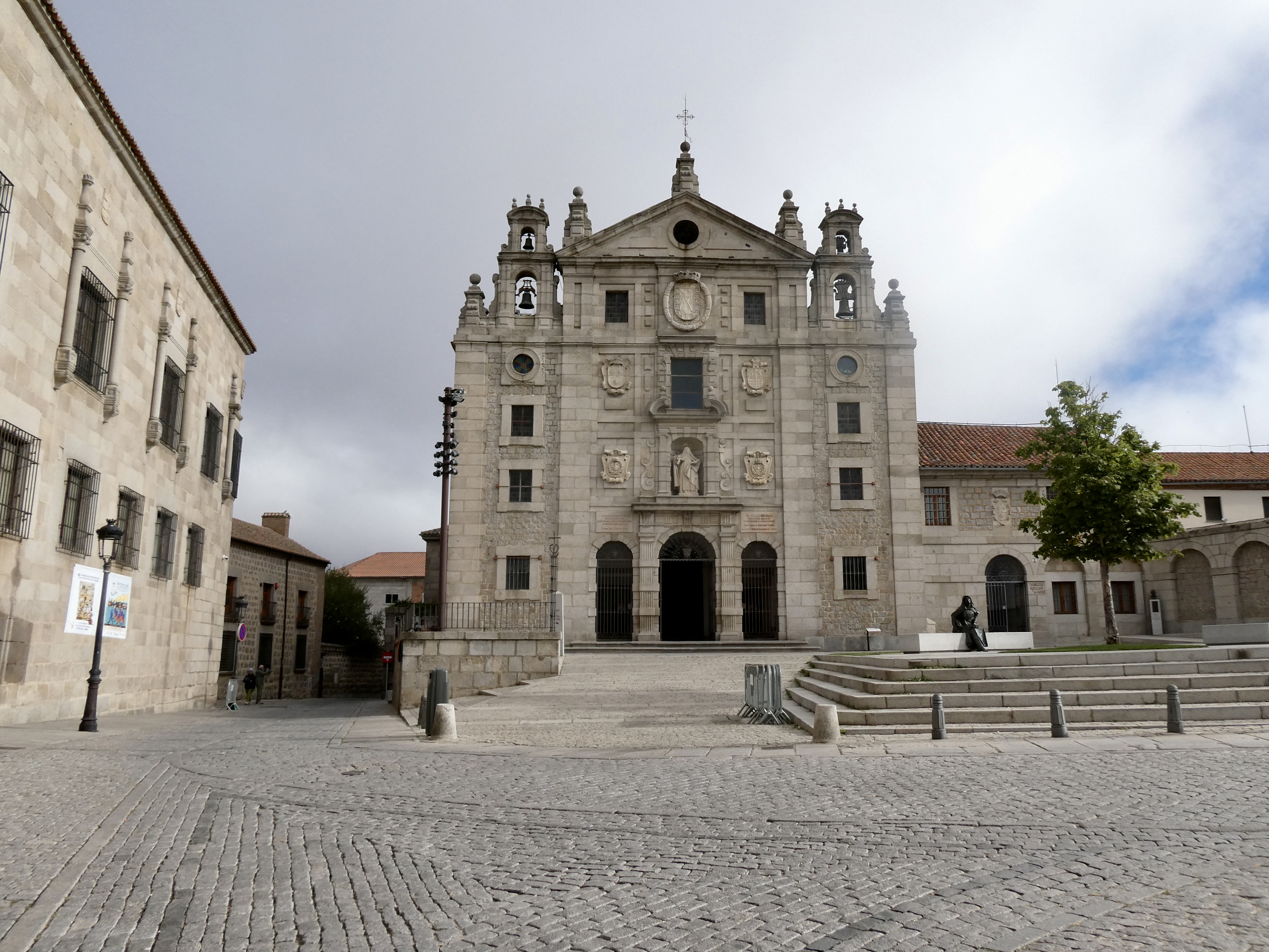
So after the drive around the walls, we stopped near one of the wall gates and entered to visit the old quarter. First up was the church and birthplace of Saint Teresa, the patron saint of Avila. Saint Teresa was born in Avila, became a Carmelite nun at 20 and set about reforming the Carmelite order, which had been a hierarchy of wealthy nuns who hosted parties, employed poor nuns and basically abandoned the traditional nunnery life. She is revered in Spain.
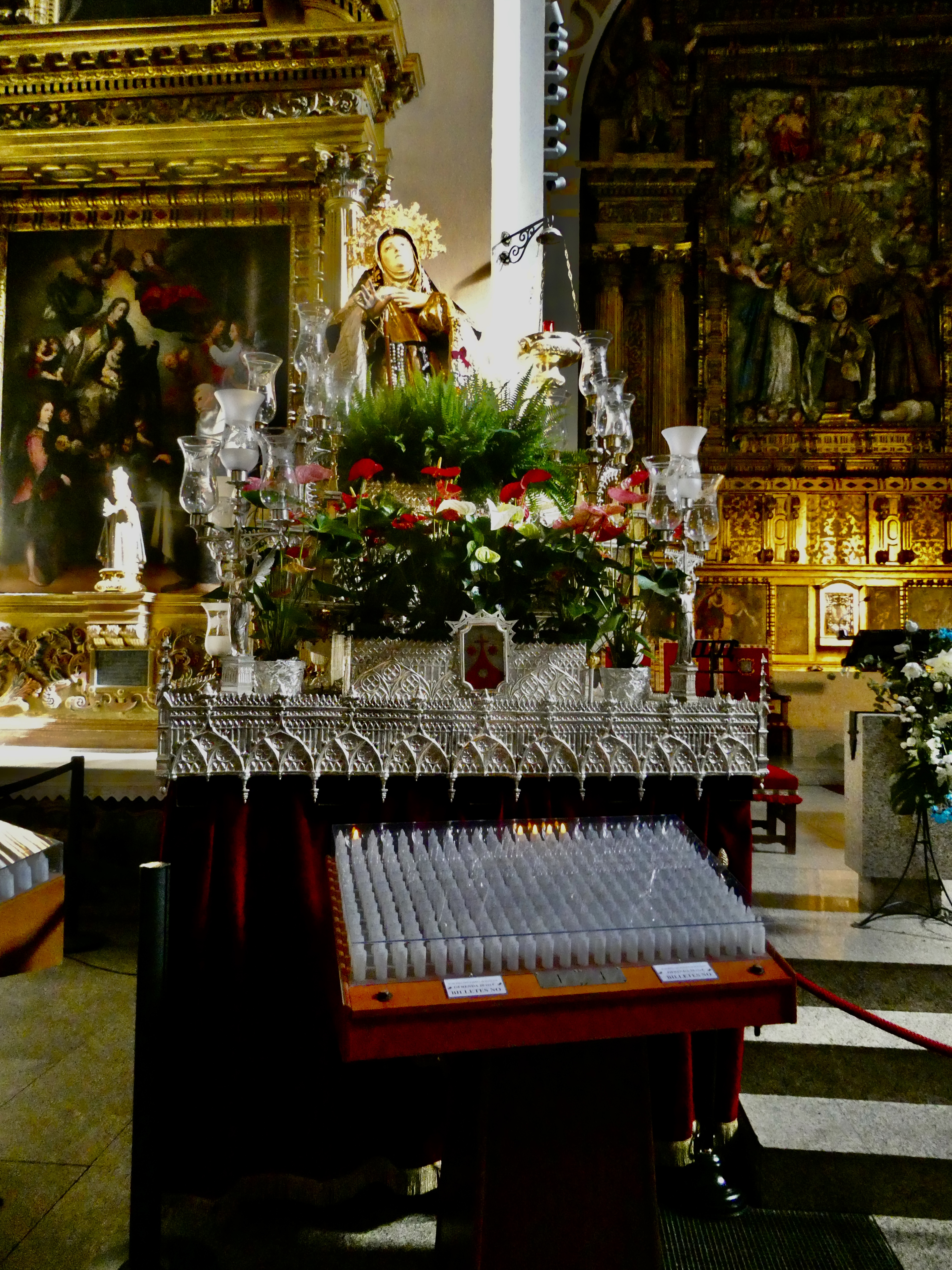
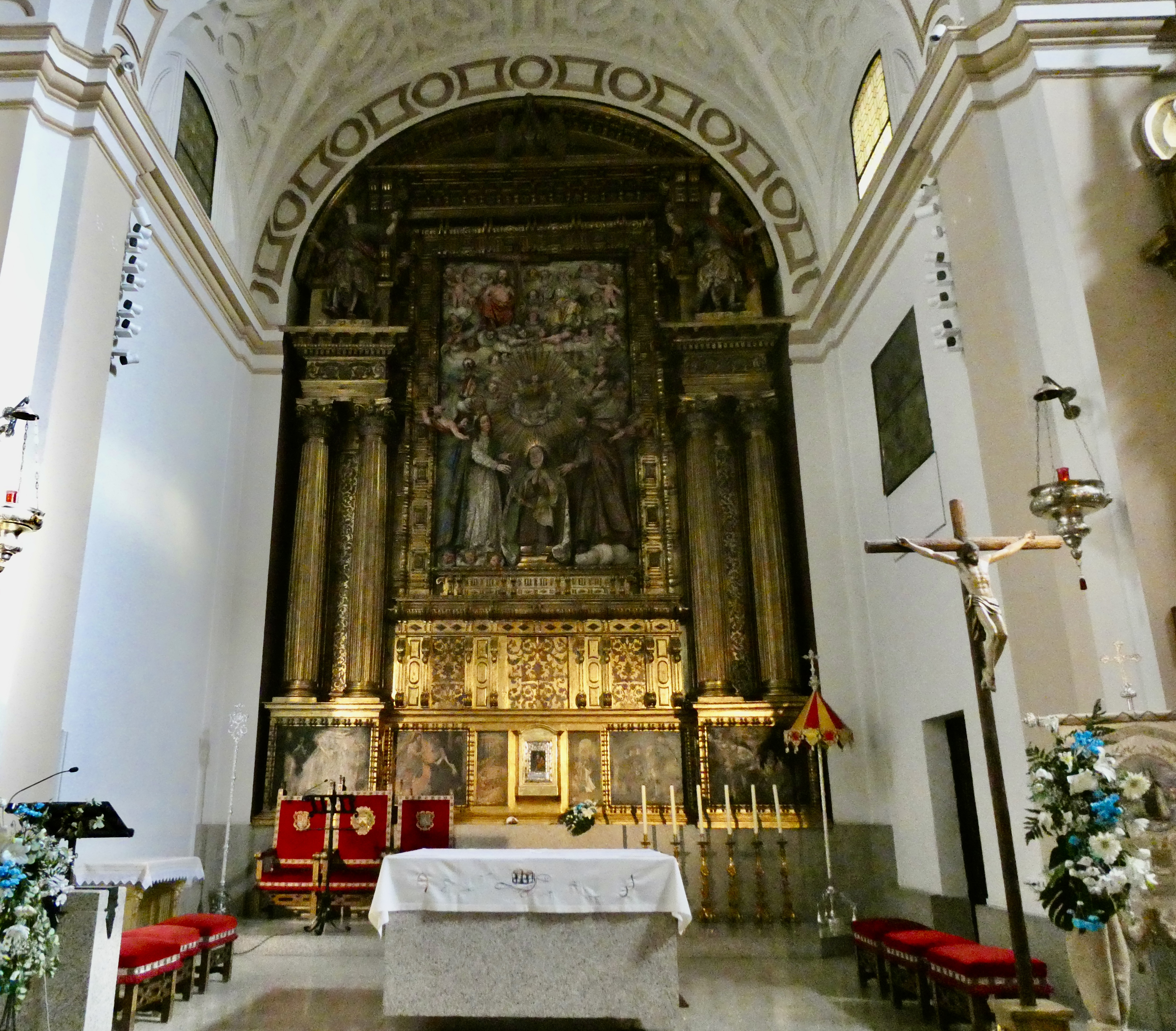

Anyway, we entered the church, which dates to 1636 and visited rooms where Saint Teresa was born, where she played and where she prayed. The main part of the church was fairly typical of a Catholic Church, but everywhere we looked, there were statues and paintings of Saint Teresa.
And adjacent to the church we entered a small museum where there were artifacts from Saint Teresa’s life including, believe it or not, the remains of her index finger. (Apparently the rest of her remains are split between two other churches in Spain.). In addition to the artifacts, there were books for sale that Saint Teresa had written during her lifetime about spirituality and meditation.
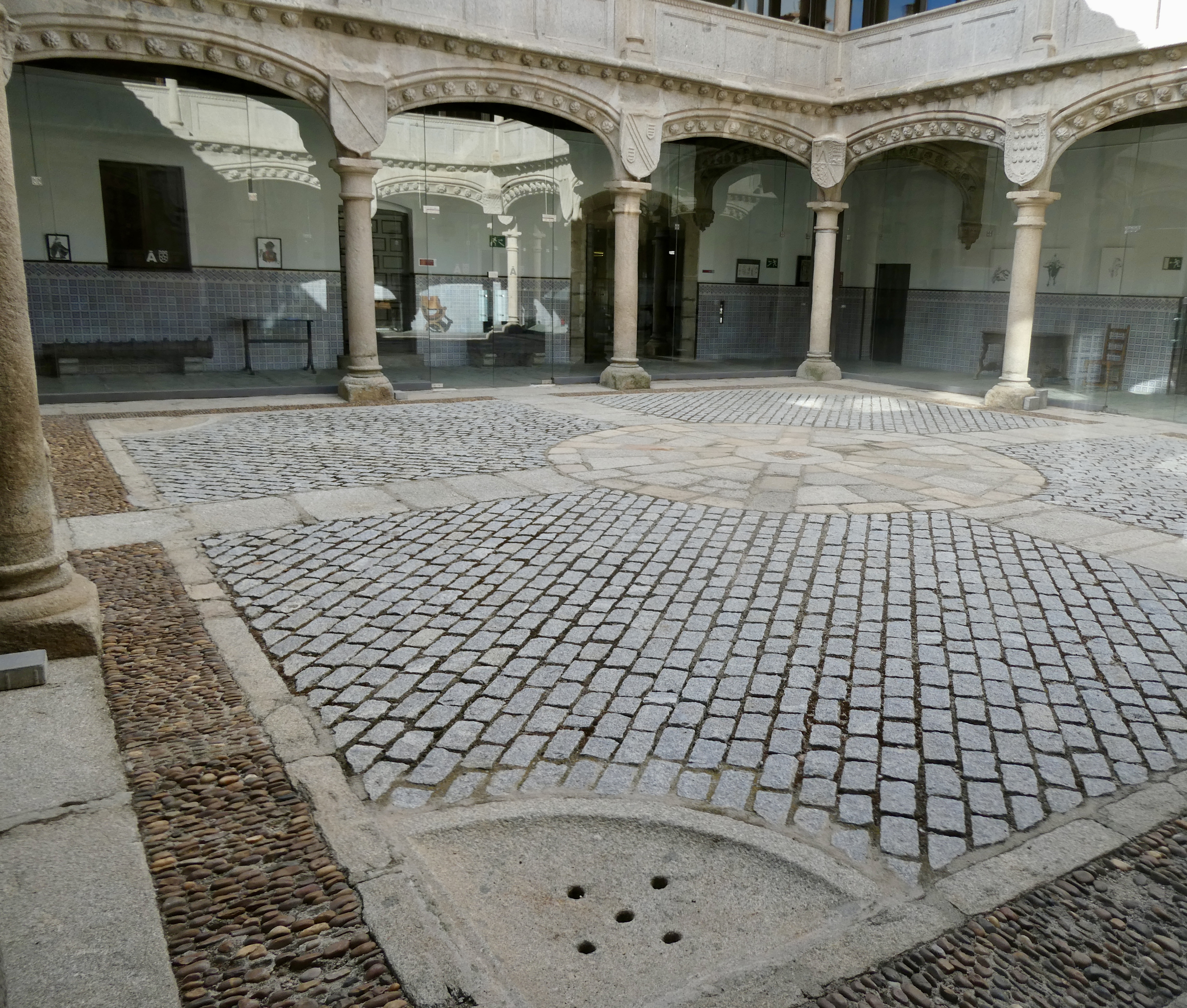
From here, we walked down a narrow alley and stopped inside the Palace of Los Verdugo. The only area that was open for viewing was the massive courtyard in the middle of the palace so we wandered around the courtyard and then continued on outside.
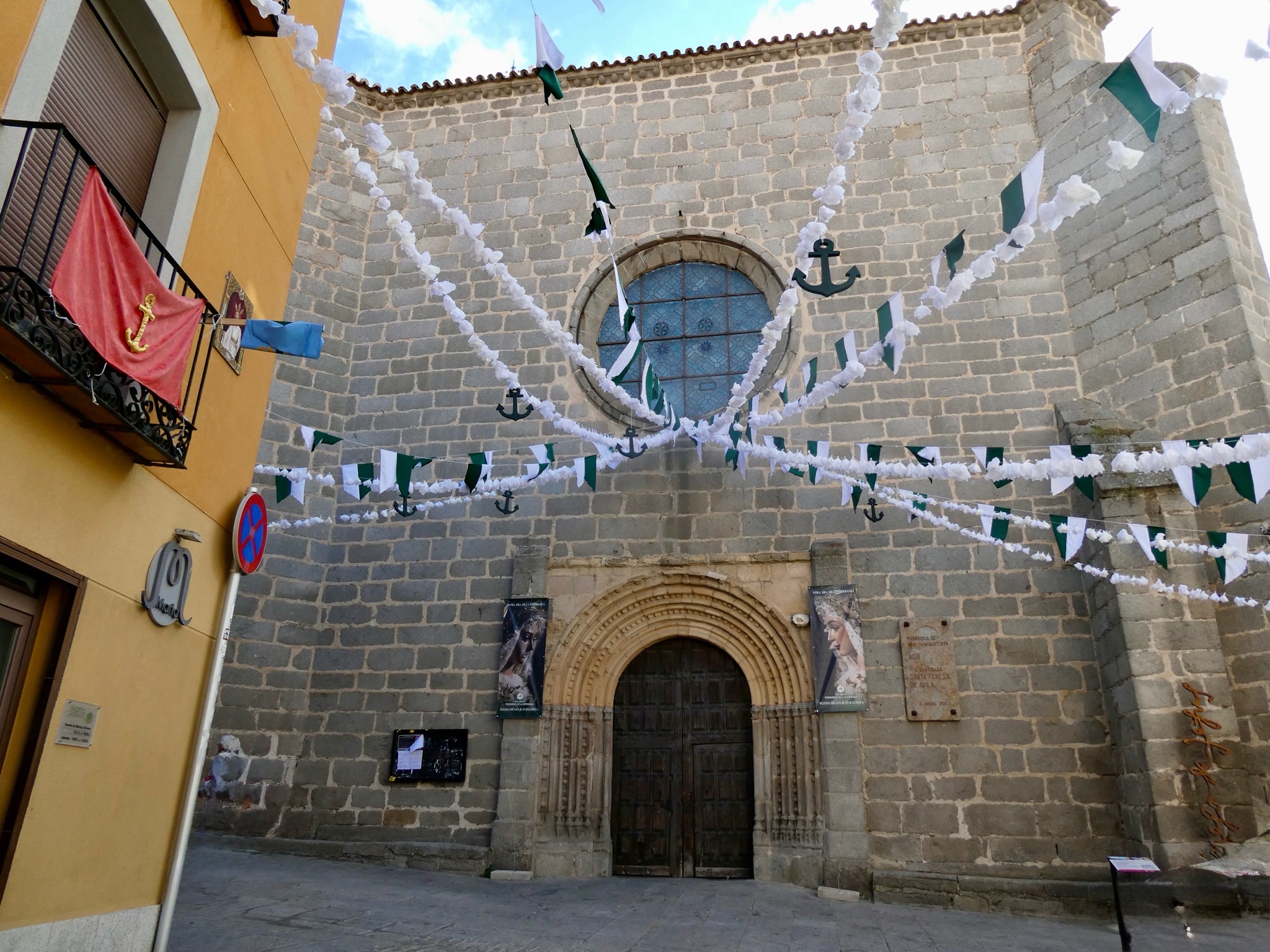
We next walked down a narrow alley that was decorated with white streamers before reaching St. John the Baptist Church, which was also decorated with streamers. Apparently some time next week is a celebration of Saint Teresa where here statute will be paraded through the streets, and the white streamers mark the route. And St. John the Baptist Church is part of the route because Saint Teresa was baptized here on April 4, 1515.
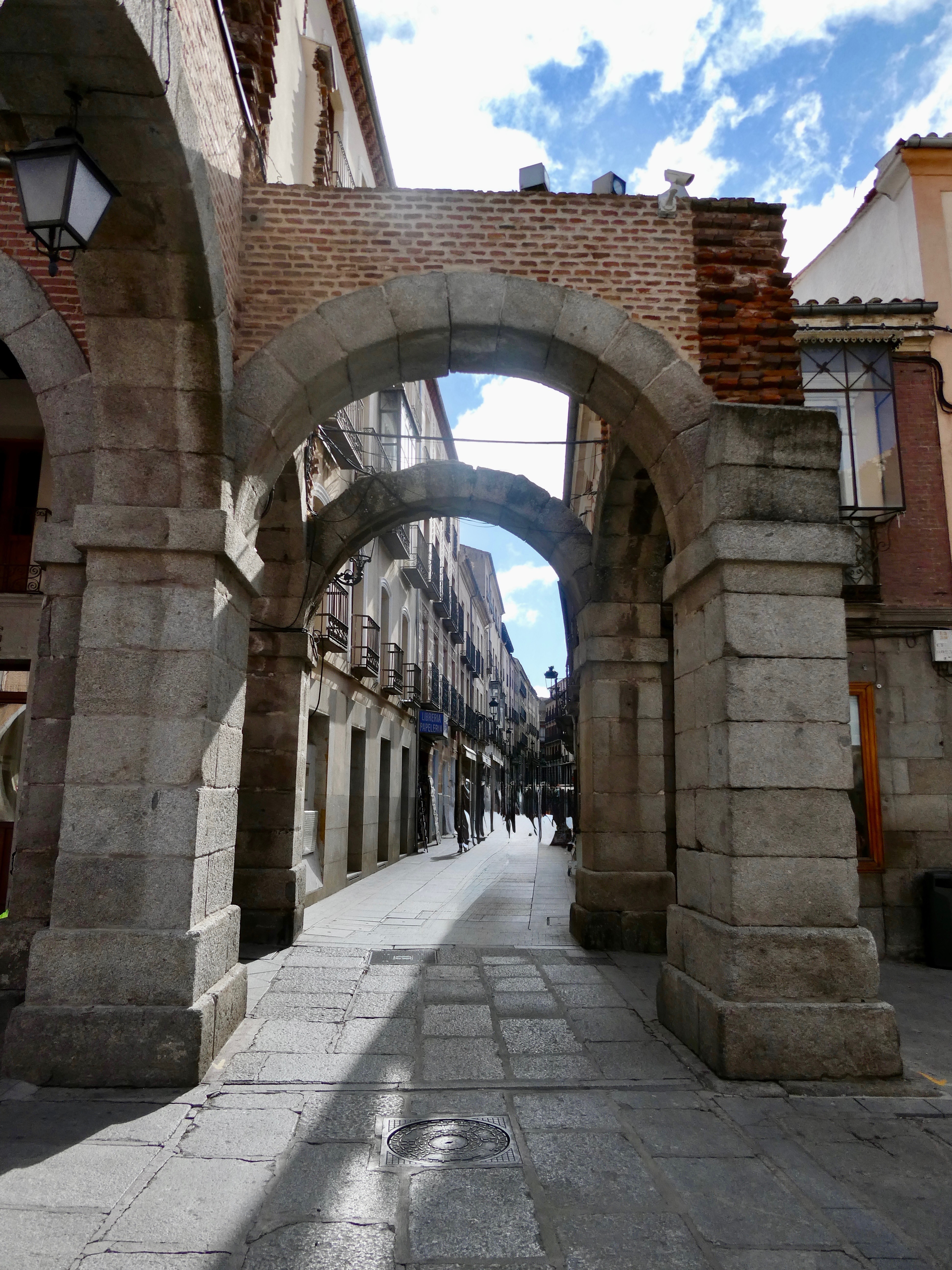
So after passing the church, we walked down another narrow alley past shops and restaurants opening for the day before reaching the Avila Cathedral, which was constructed in the early 1100s and was the first Gothic style church.
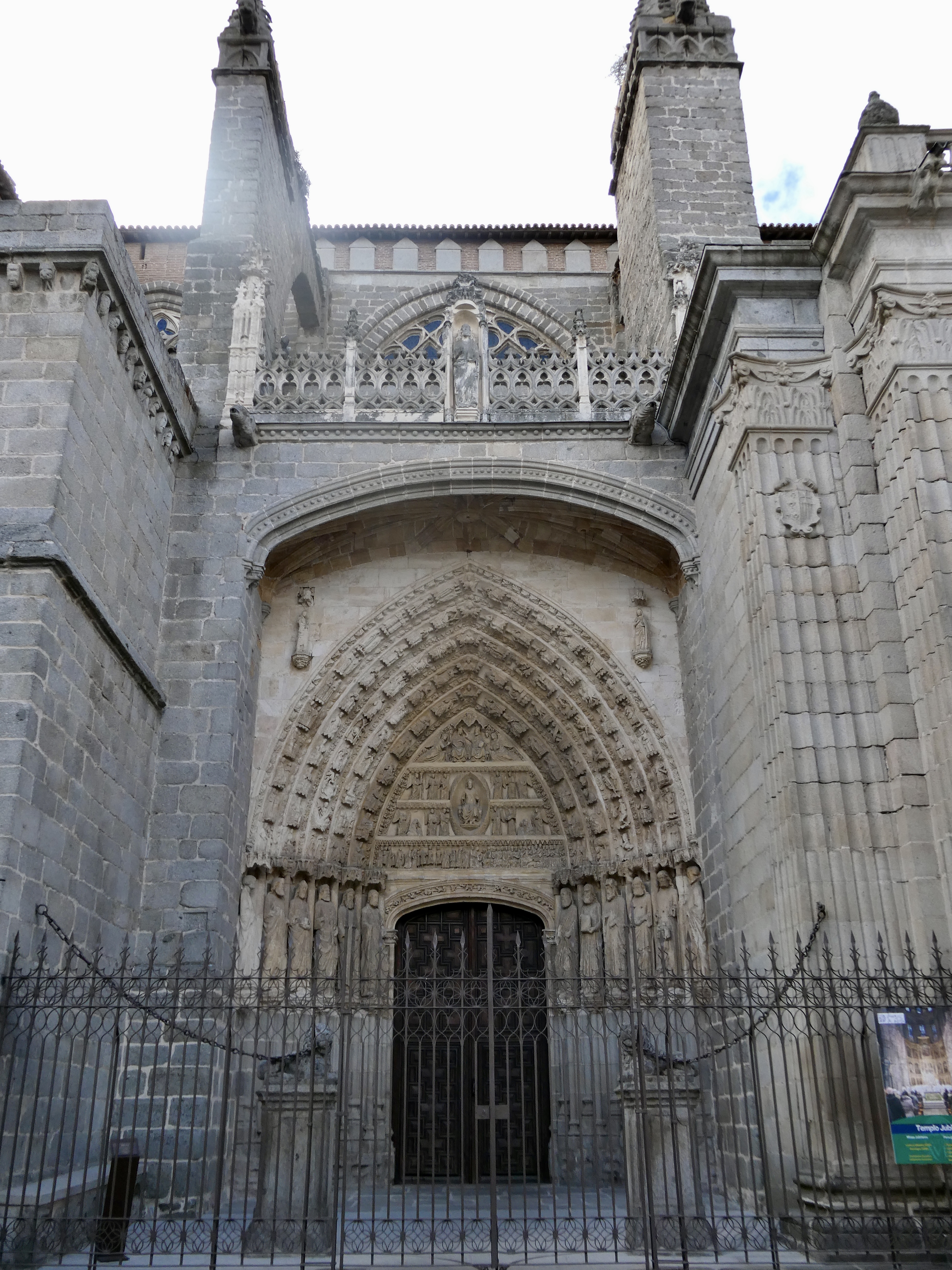
Now, interesting factoid, the entrance to the church is not the original entrance. In fact, while all sorts of folks were standing in front of what appeared to be the main entrance to the church, the old original entrance (where nobody was standing) was actually on the left side of the building and was much, much nicer.
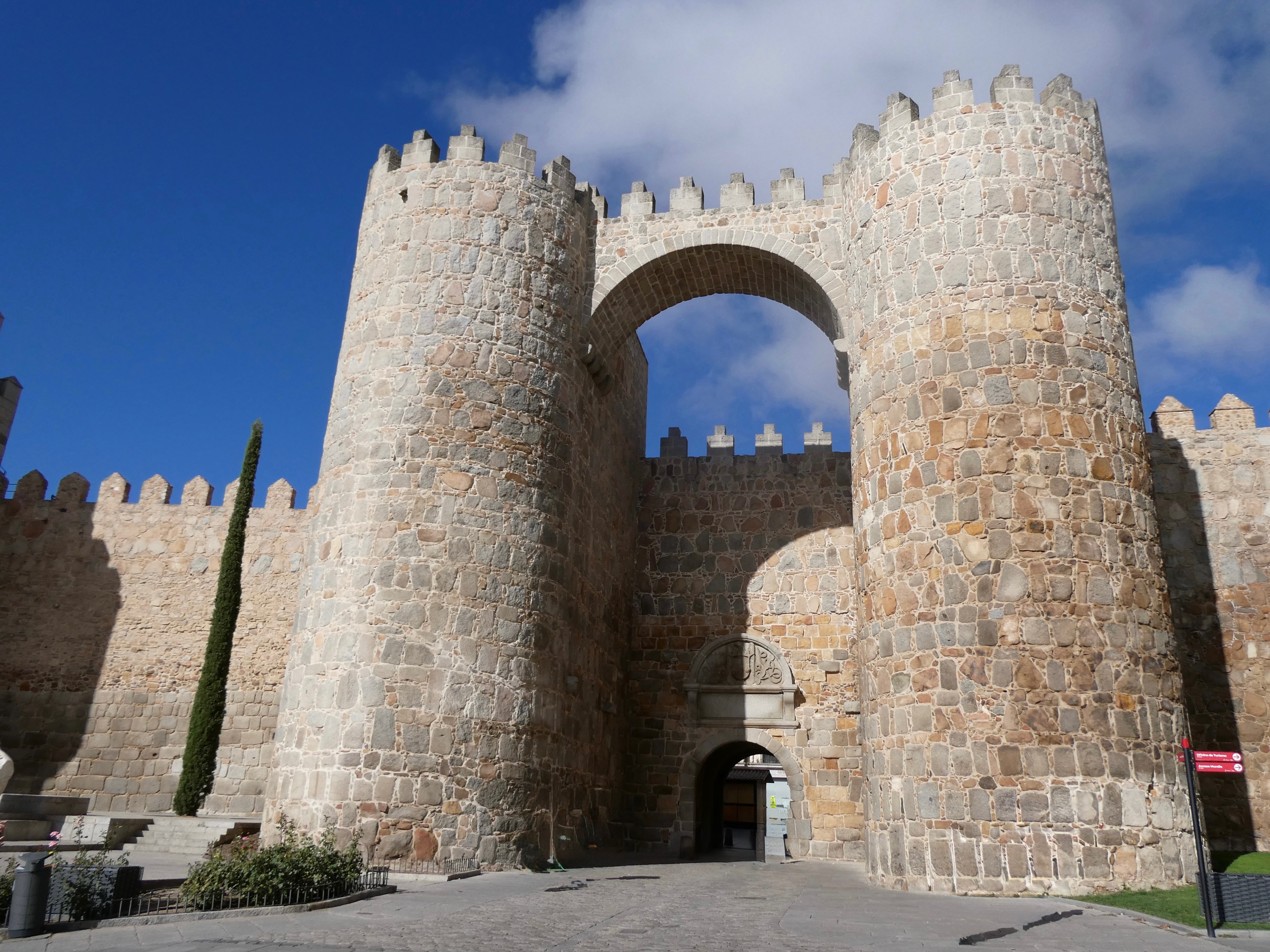
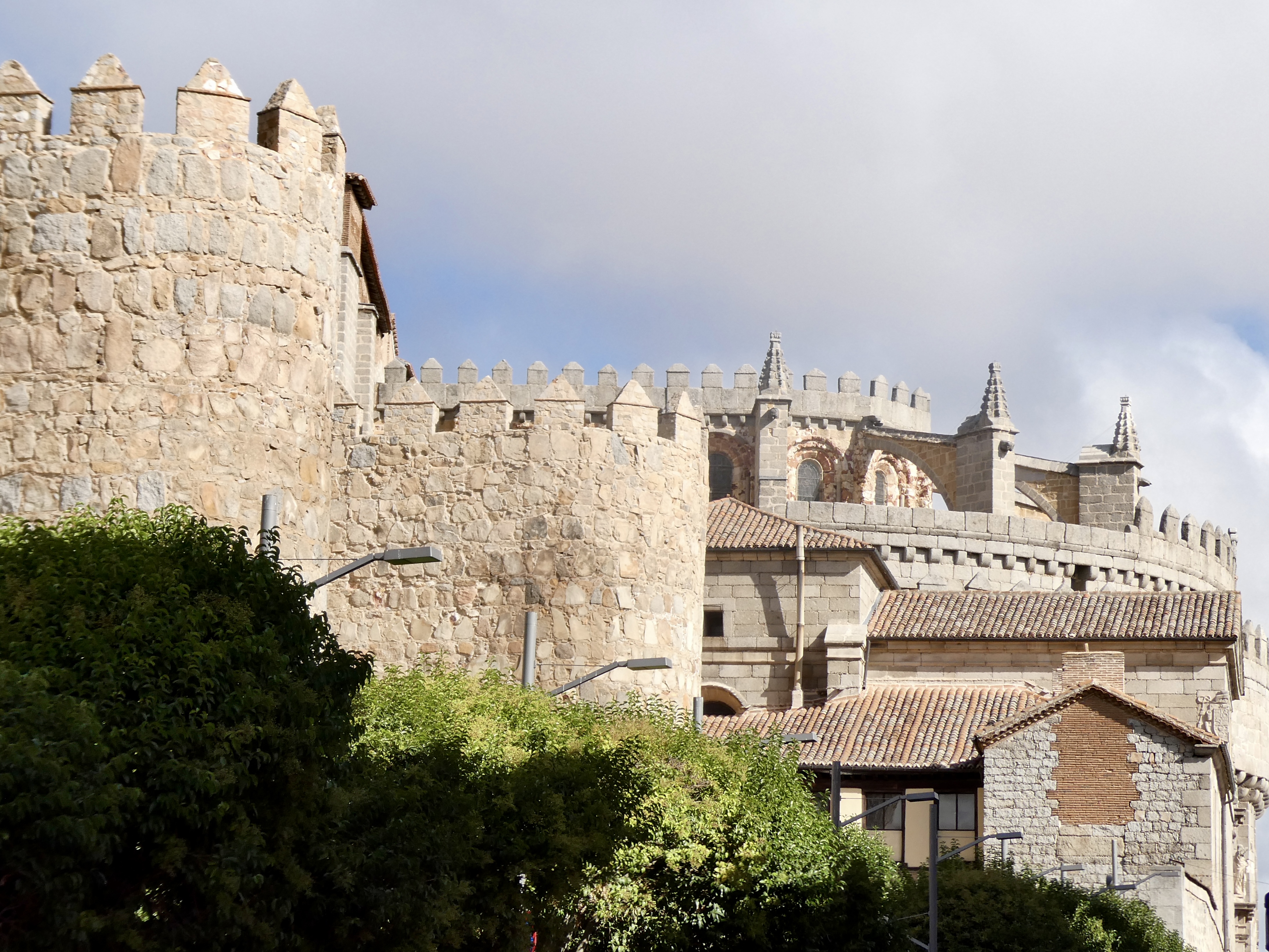
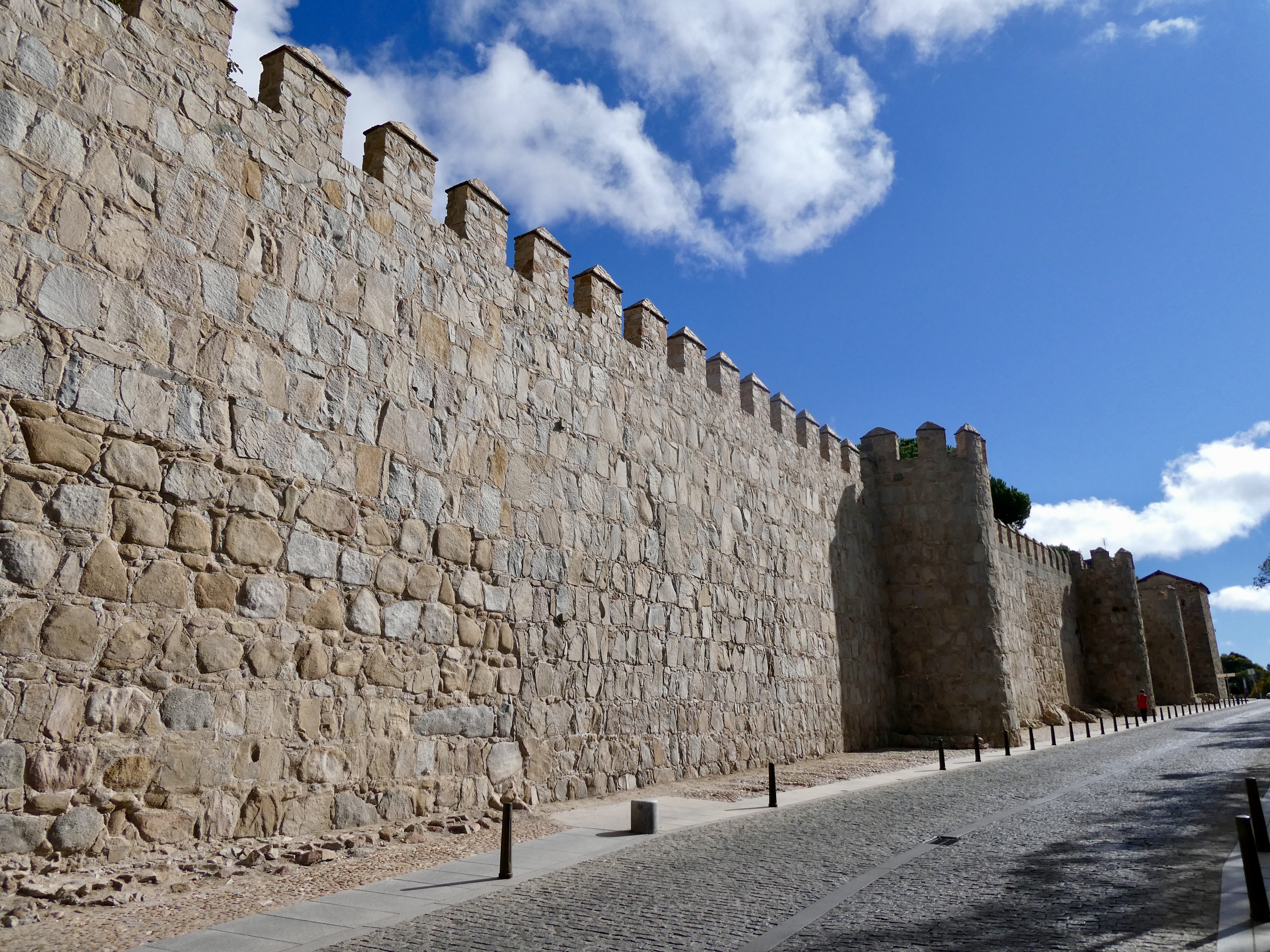

Once we passed the Cathedral and some old buildings now used as a post office and government offices, we walked out an archway and passed from inside the walled city to the outside. At this point, we started our walk around a significant portion of the outer walls, passing a number of turrets and the main point of entry into the old town.
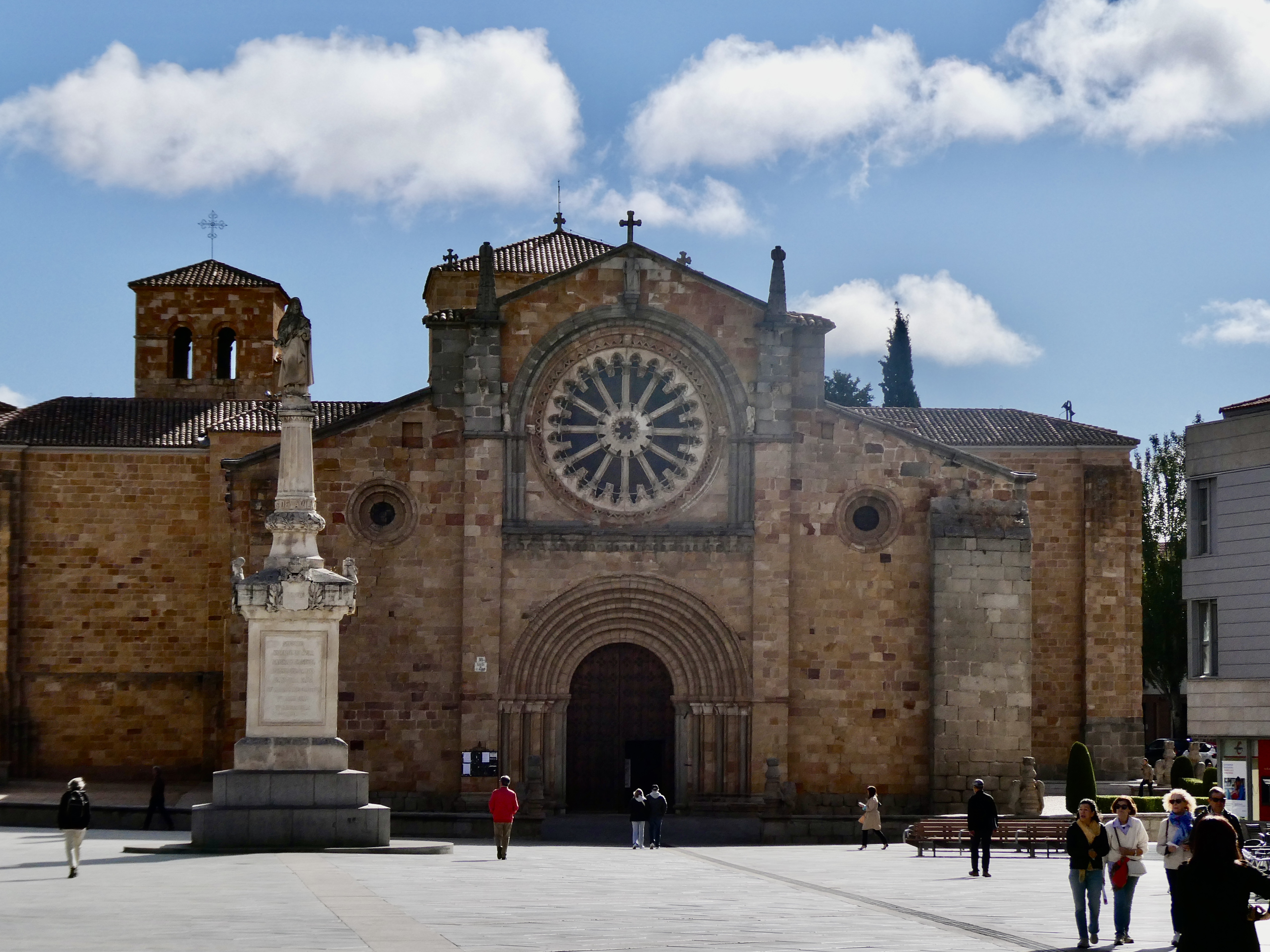
And across from the main entrance, was Church of San Pedro on the Plaza Mercado Grande, which, quite frankly, I thought was the most striking church we had seen in Avila. Sadly, we did not go inside.
From here, we continued wandering along the Avila walls and around the corner where we were met with a spectacular view of the valley surrounding the old town. We then walked a bit further before reaching the car. And before we left old town Avila, we drove around the walls to a viewpoint where I was able to take some fantastic pictures of the olds walls surrounding the old town.
We then left Avila and drove about an hour to Segovia. Along the way, Martin gave me a bit of an overview of the history of the Roman aqueduct, which is believed to have been built around the 1st century AD and was designed to move water from springs in the nearby mountains 17km away to Segovia. The aqueduct was in use approximately 1,800 years until its use was discontinued in 1973. The aqueduct is built partially underground and eventually rises from the ground with the elevated sections of the aqueduct made up of 167 arches before it slopes back underground. The aqueduct is considered one of the best preserved Roman aqueducts in the world.
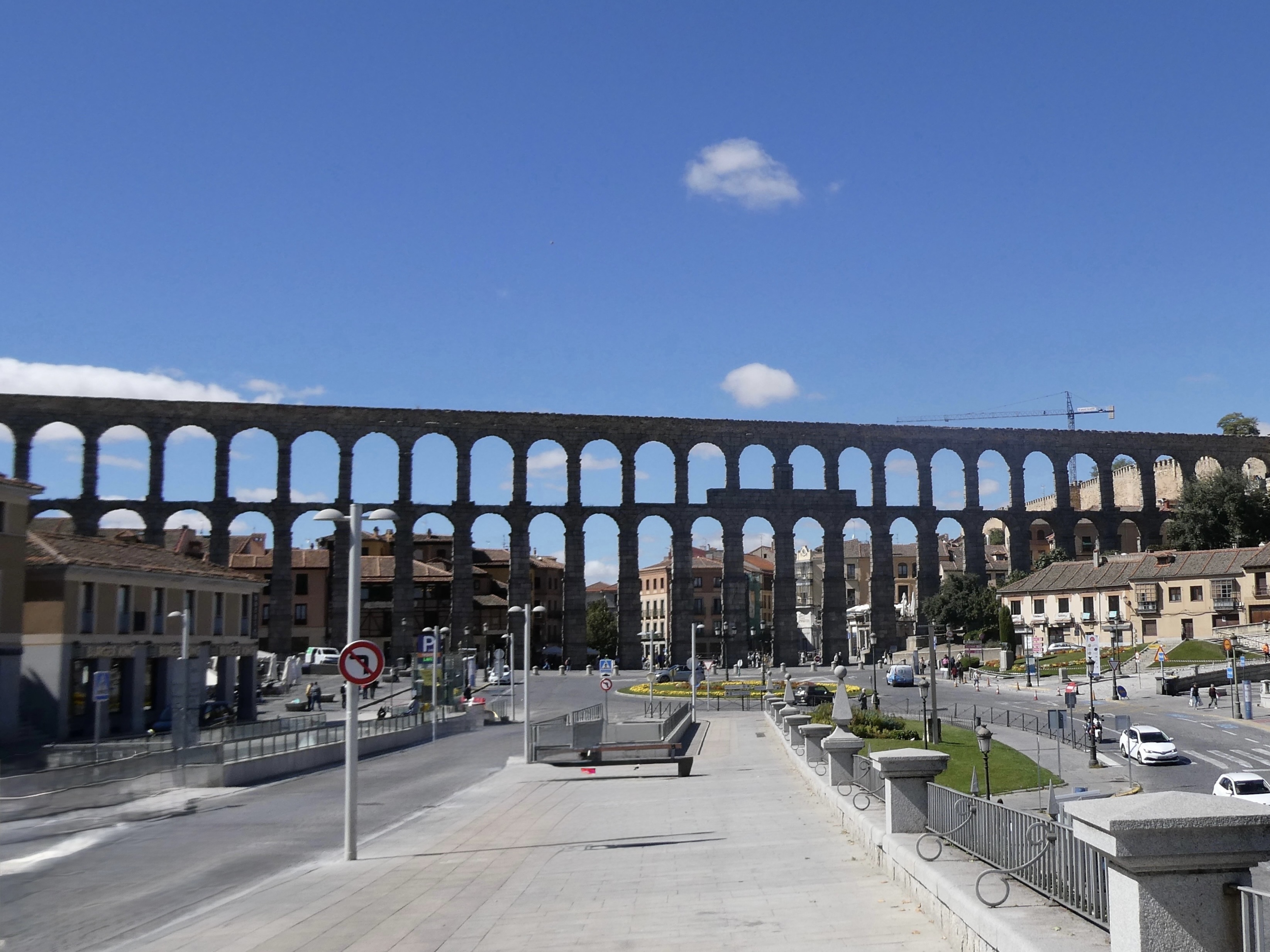
And with this background, I thought I was prepared to see this marvel, but I can say without a doubt nothing prepared me for first site of the structure. I think gobsmacked is the best way to describe it. It is absolutely unbelievable that this aqueduct could have been constructed without machinery. It is absolutely huge and amazing.
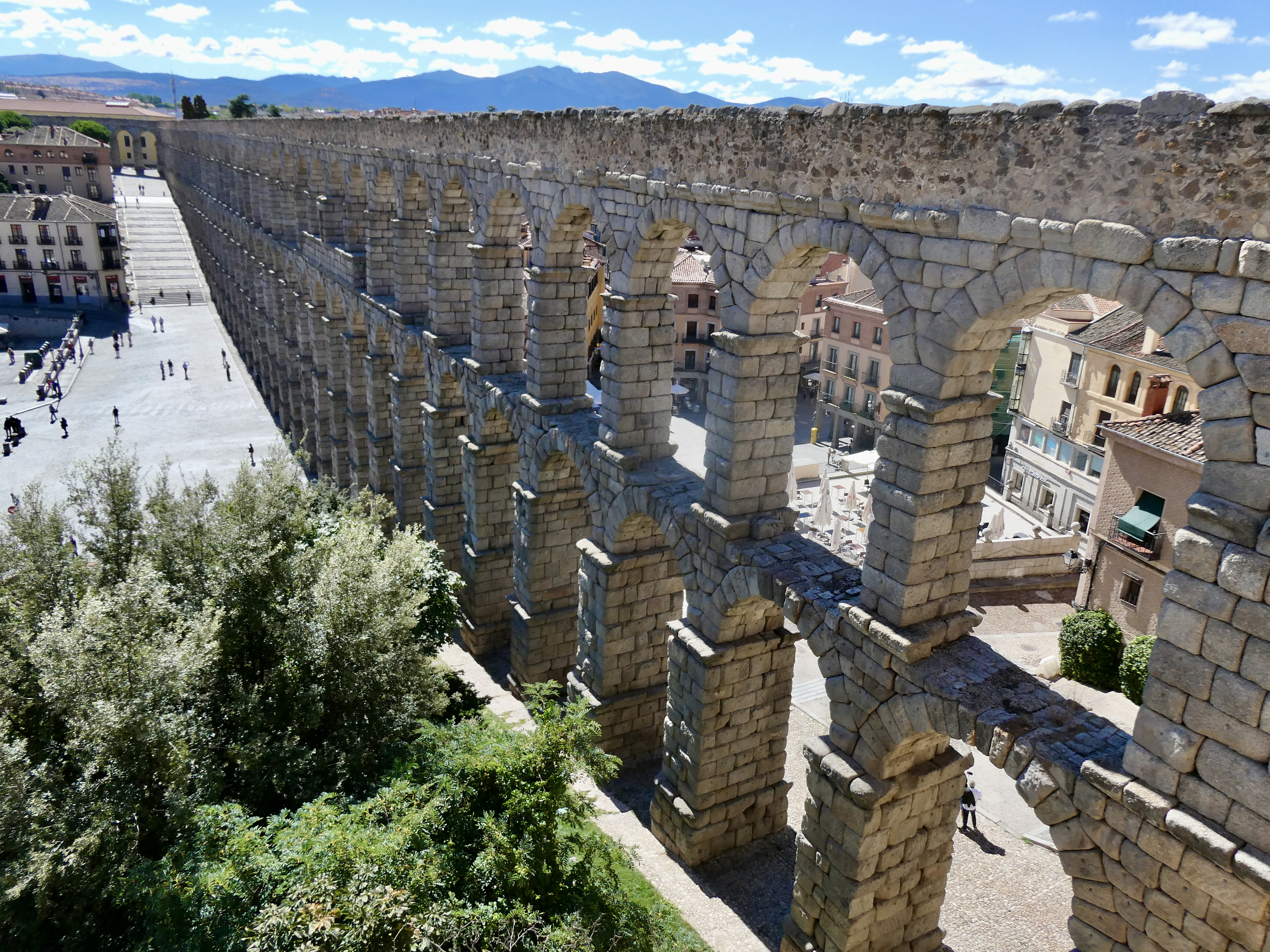

So once we took a quick drive by the aqueduct, Martin drove me up into the old city and dropped me off near a viewpoint so I could get a better look. However, before taking in the view, Martin showed me where the last bit of aqueduct is visible before it disappears underground. And the cool part of this was that I could see how the aqueduct carried the water along a small narrow channel in the middle of the stones.
Martin then gave me about 20 minutes to wander around at leisure so I started out by taking in the views above the aqueduct and then walked down the stairs to get a closer look. It was beyond description. Simply a stunning example of Roman ingenuity and construction.
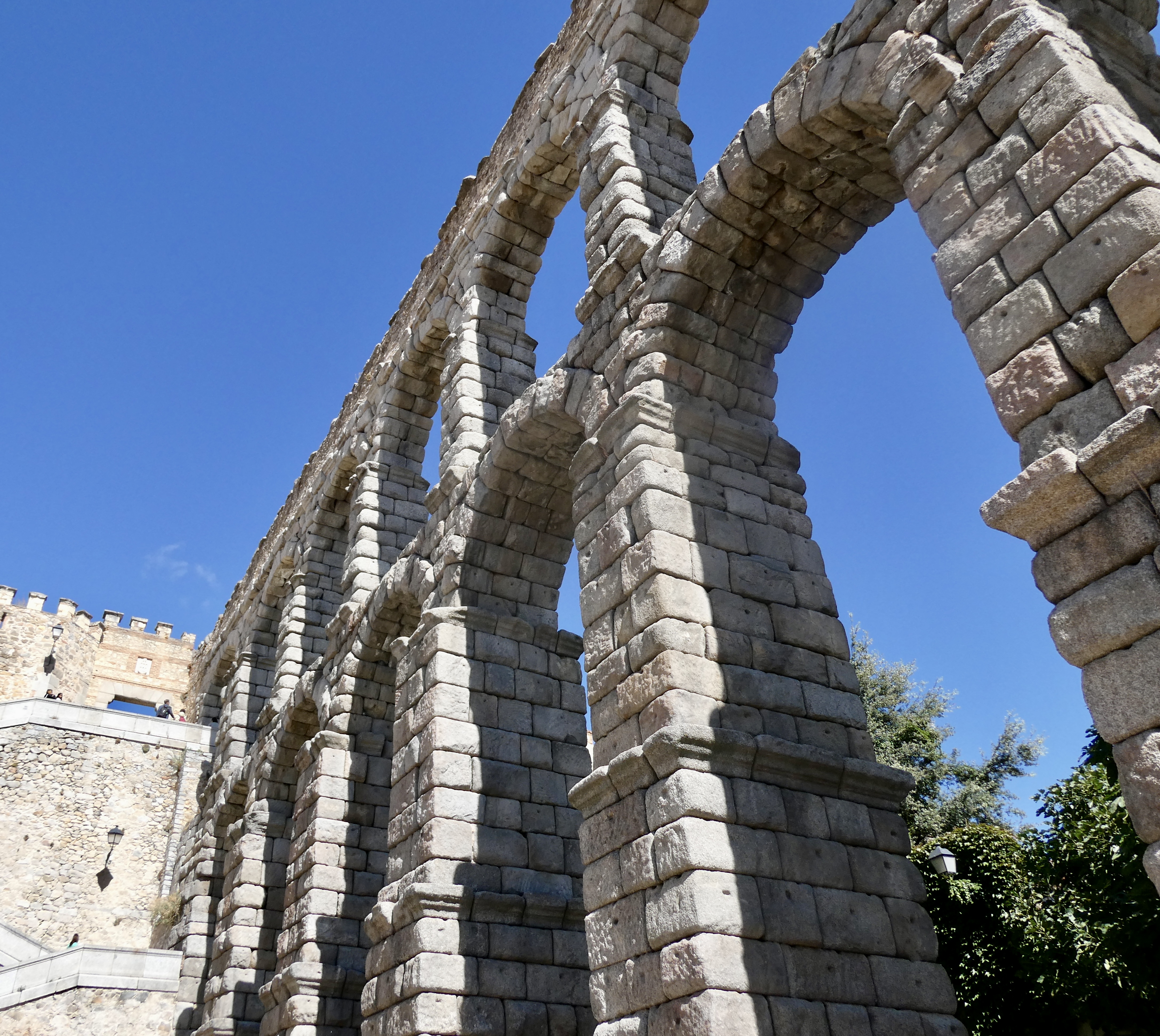
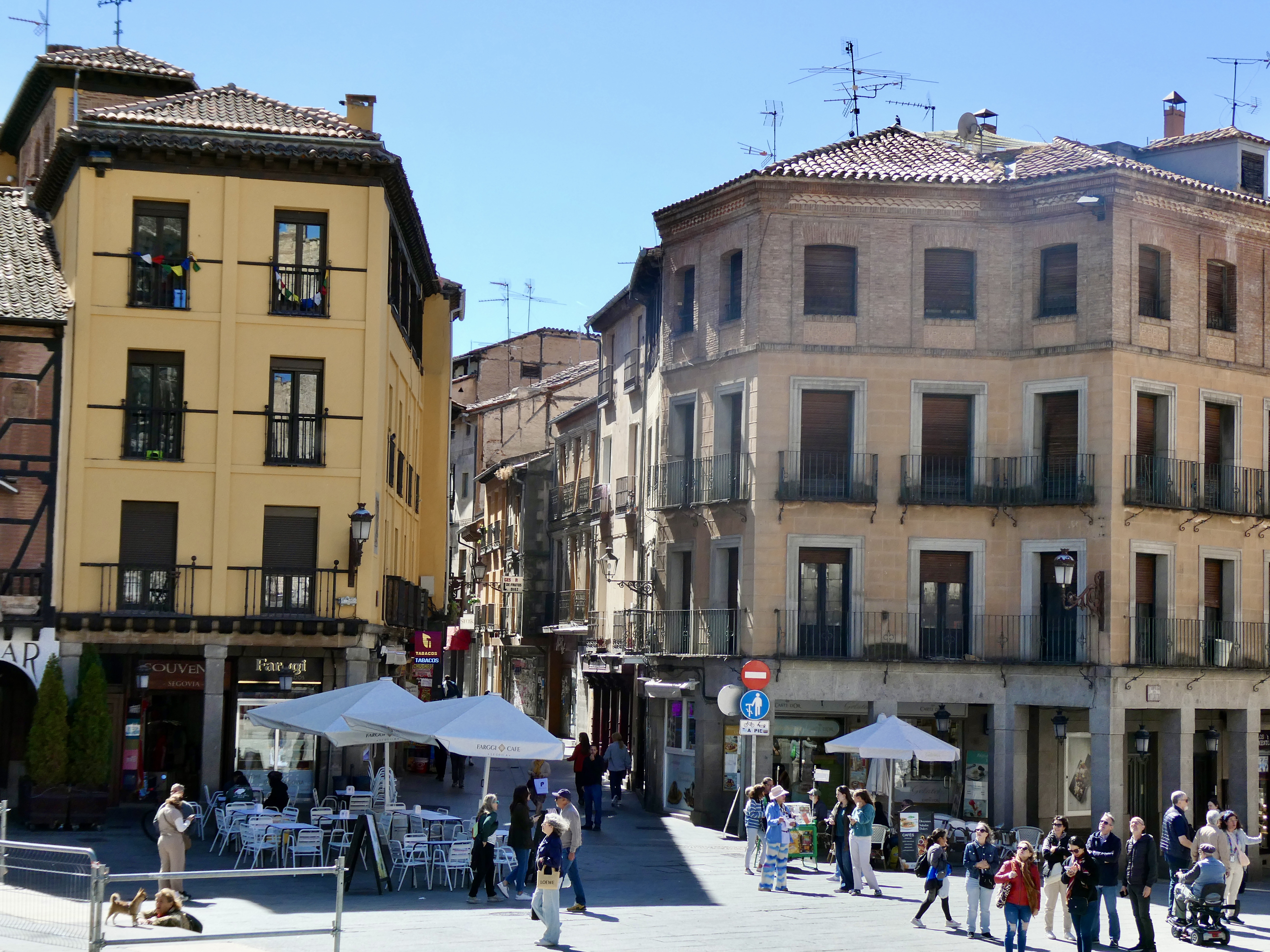
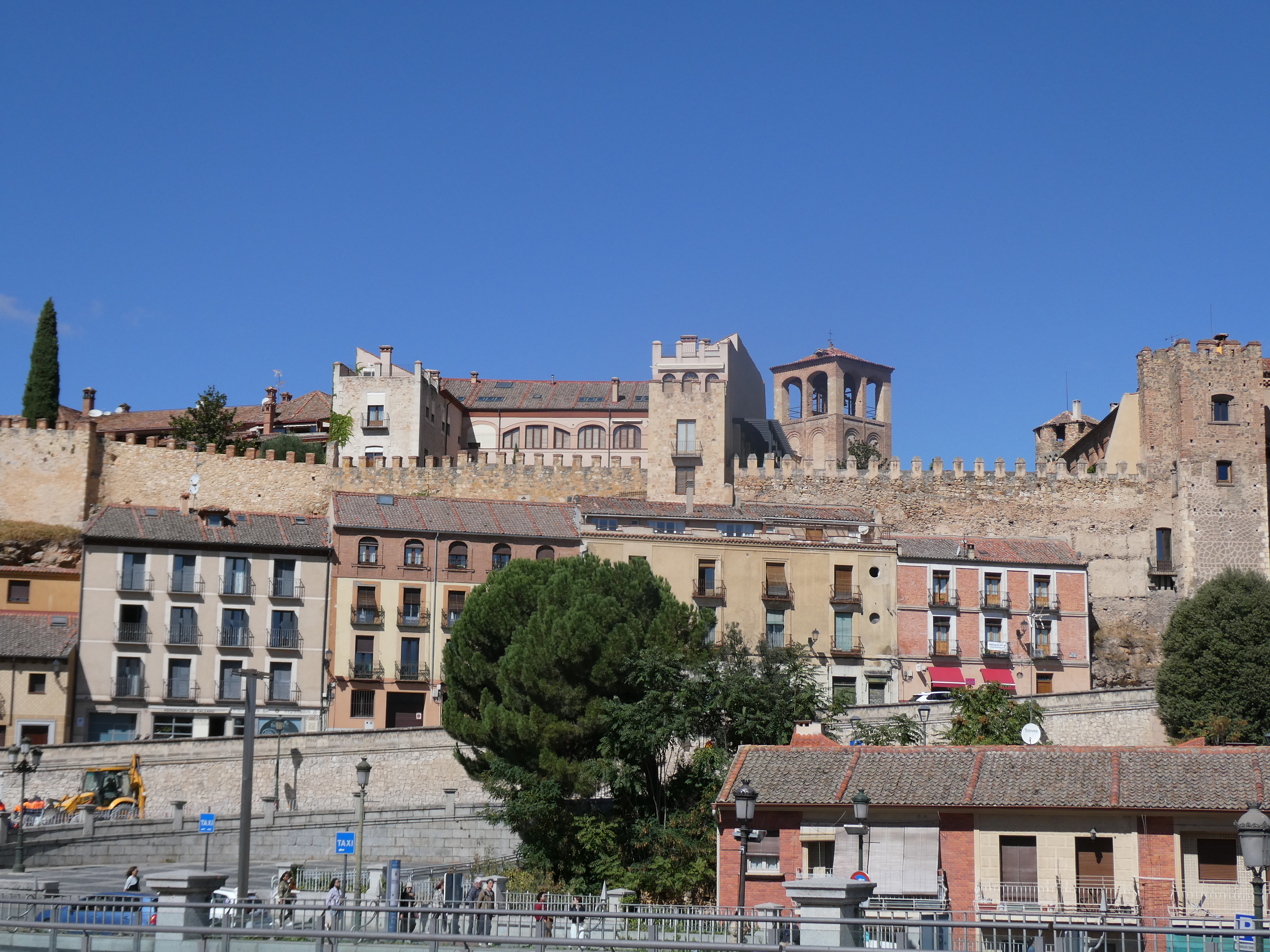
I then walked under the arches and up the street to take in a view looking directly at the structure from higher up the hill. And bonus, this spot afforded me a lovely view of the old town to my right.
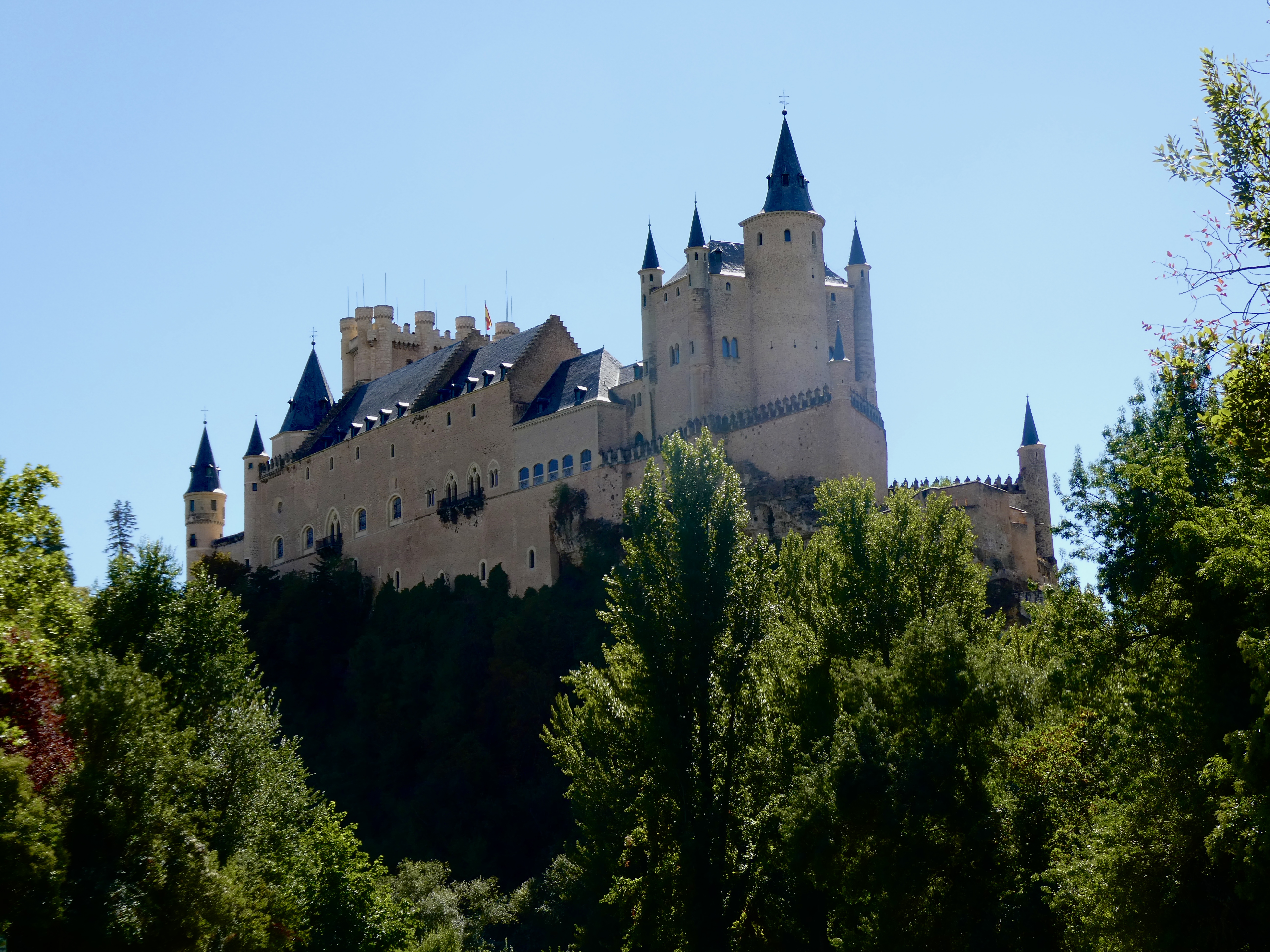
So once I had my fill of the aqueduct (although I probably could have stayed there all day staring at the amazing site), I hopped back in the car and we headed to a spot on the other side of town to take in the view of the Alcazar of Segovia, which is a historic medieval castle, which some say served as the inspiration for Disneyland’s Cinderella Castle. The castle was originally a Moorish fortress, but after the Christians defeated the Moors, the structure became a royal palace and later a military academy and a prison. Today the castle serves as a museum and is one of the best known landmarks in Spain.
Anyway, the spot to view the Alcazar outside the old city walls was absolutely perfect and allowed me to take an unobstructed picture of the giant castle up on the hill. It was fabulous.
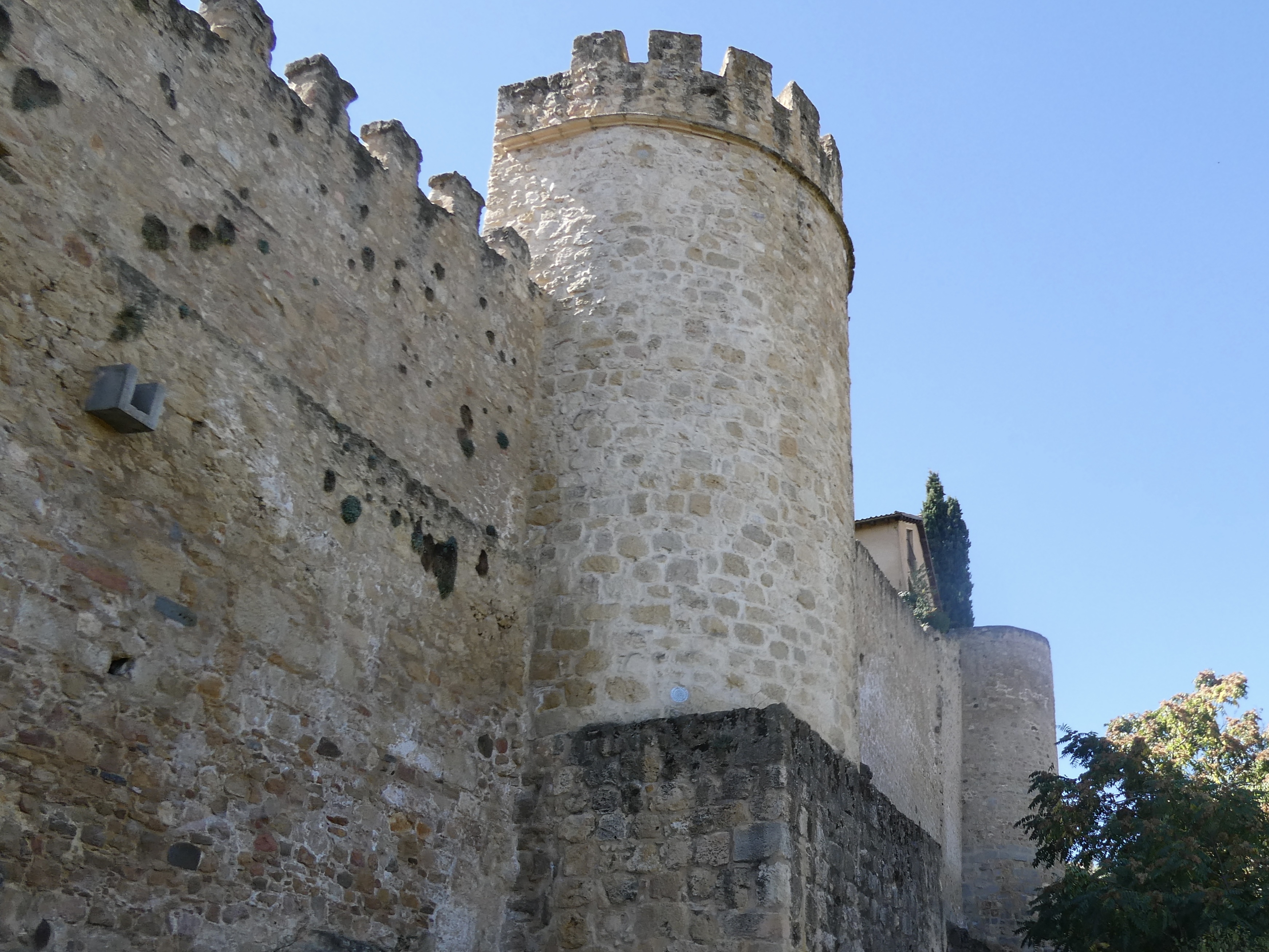
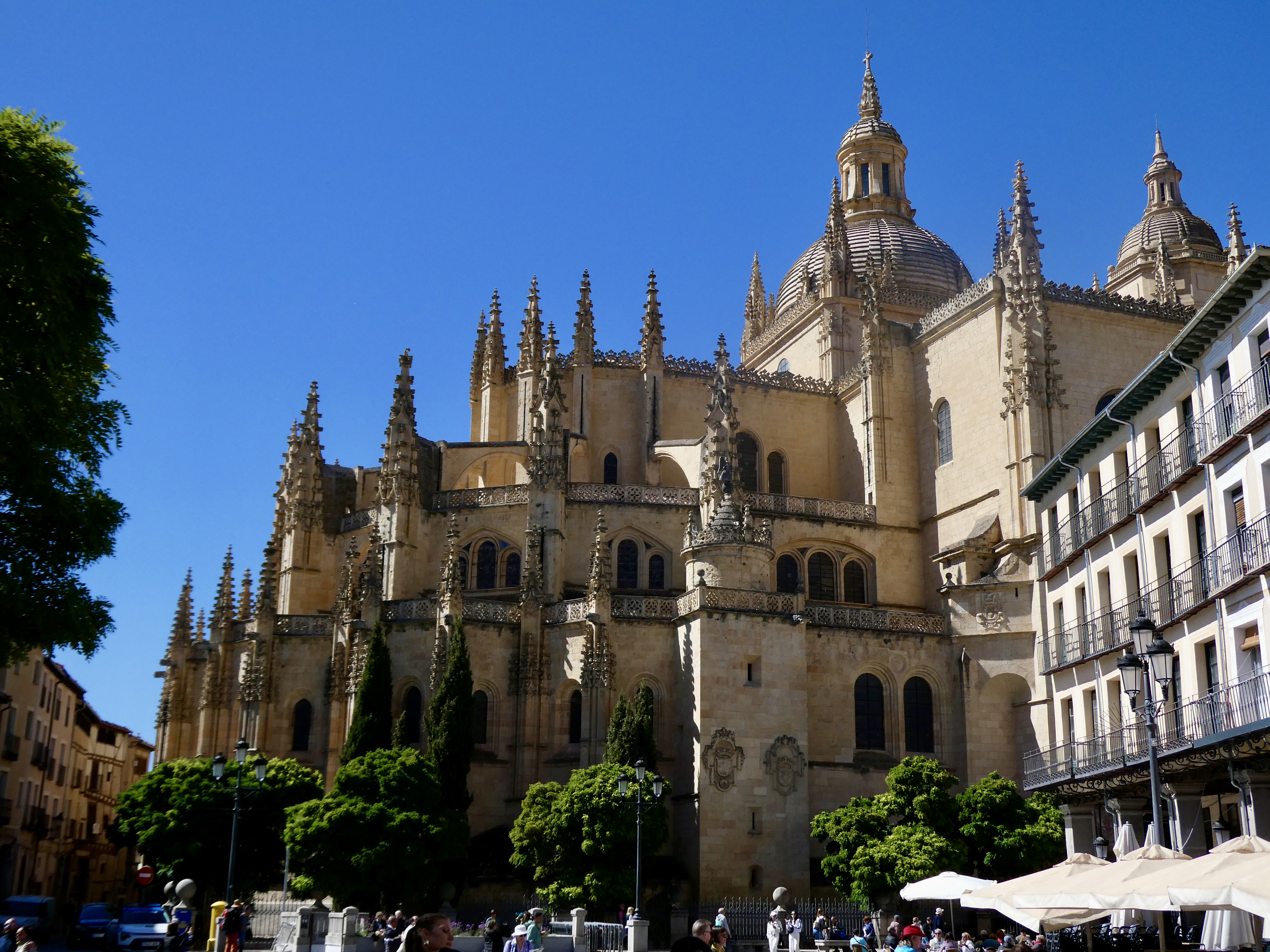

From here, we drove back through the old city walls and down the narrow streets to Plaza Major, the old city square. Here, there are numerous restaurants ringing the square, but the real star is the stunning Segovia Cathedral, a gothic style church (actually the last gothic style church constructed in Spain) that was built in 1525. The tower of the cathedral can be seen for miles and the inside of the church contains no less than 18 chapels. So yes, this building was huge.
After I wandered around the square for a bit, I ended up stopping for some tapas for lunch. Quite frankly, not the best tapas I have had to date, but the staff was very friendly so I will give them that.

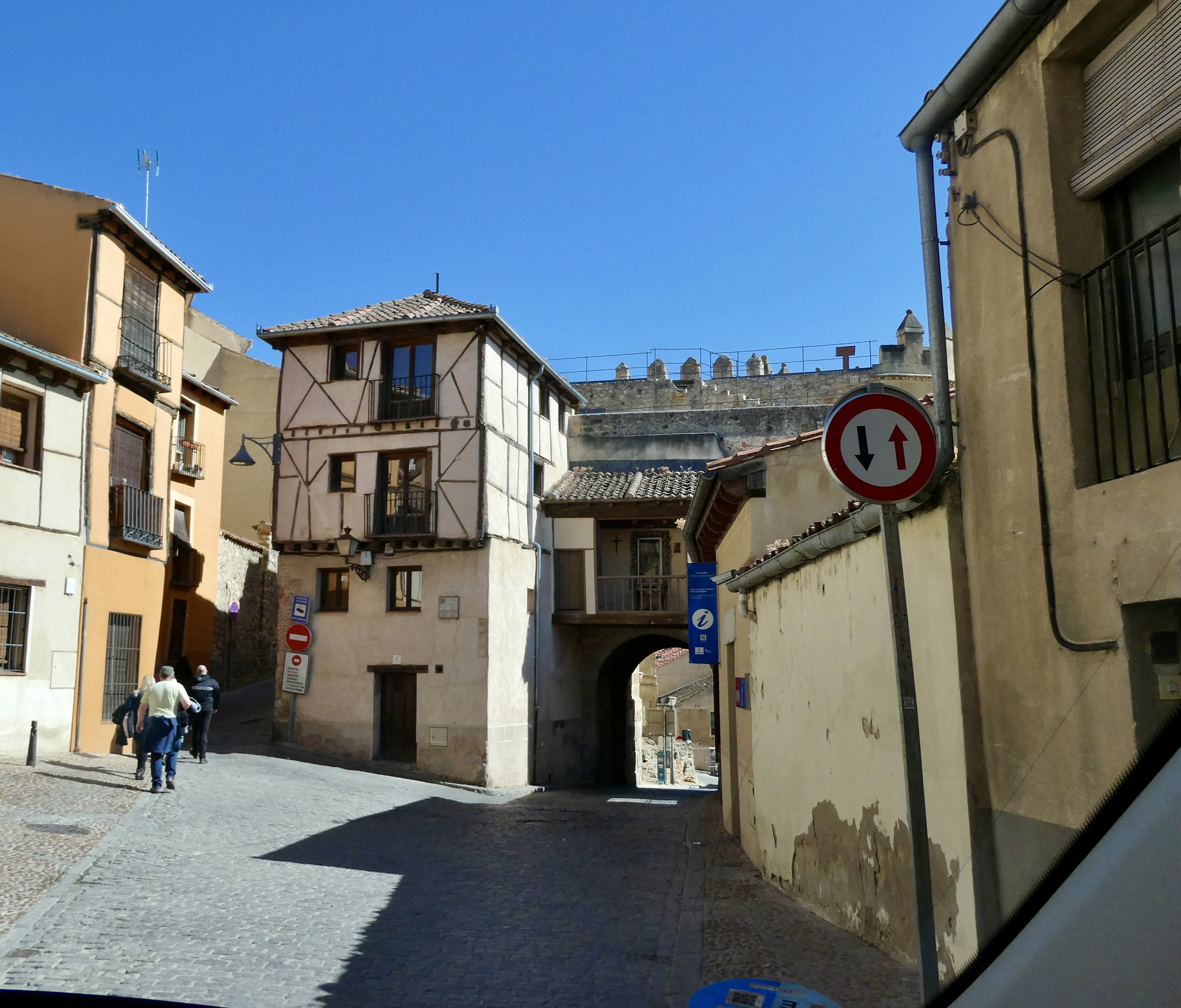
After lunch, I took a walk around the area and down some stairs to the old Jewish quarter, which was, incredibly, completely deserted, before stopping for a pastry and a latte. Just before 3:00 I met back up with Martin.
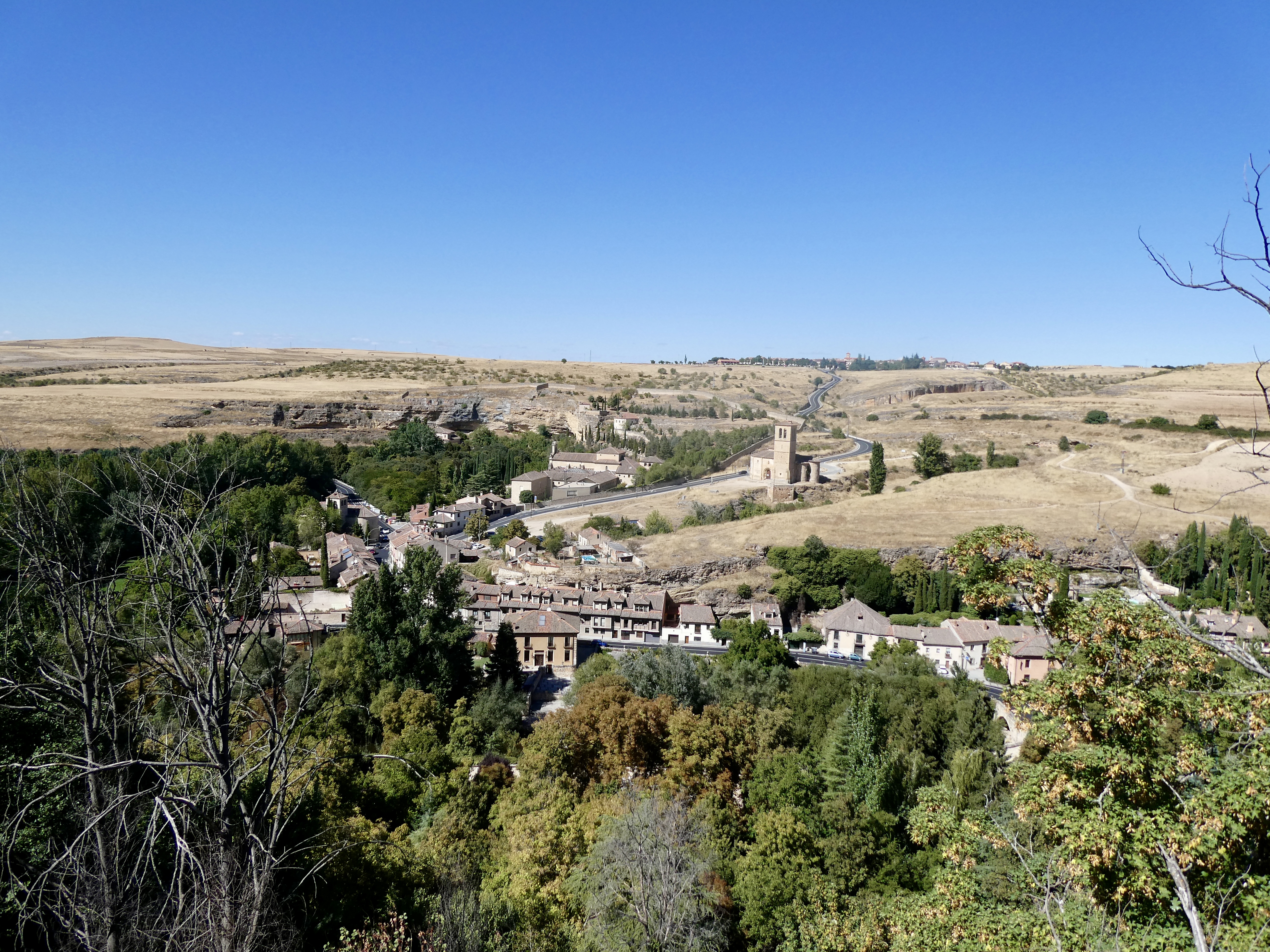
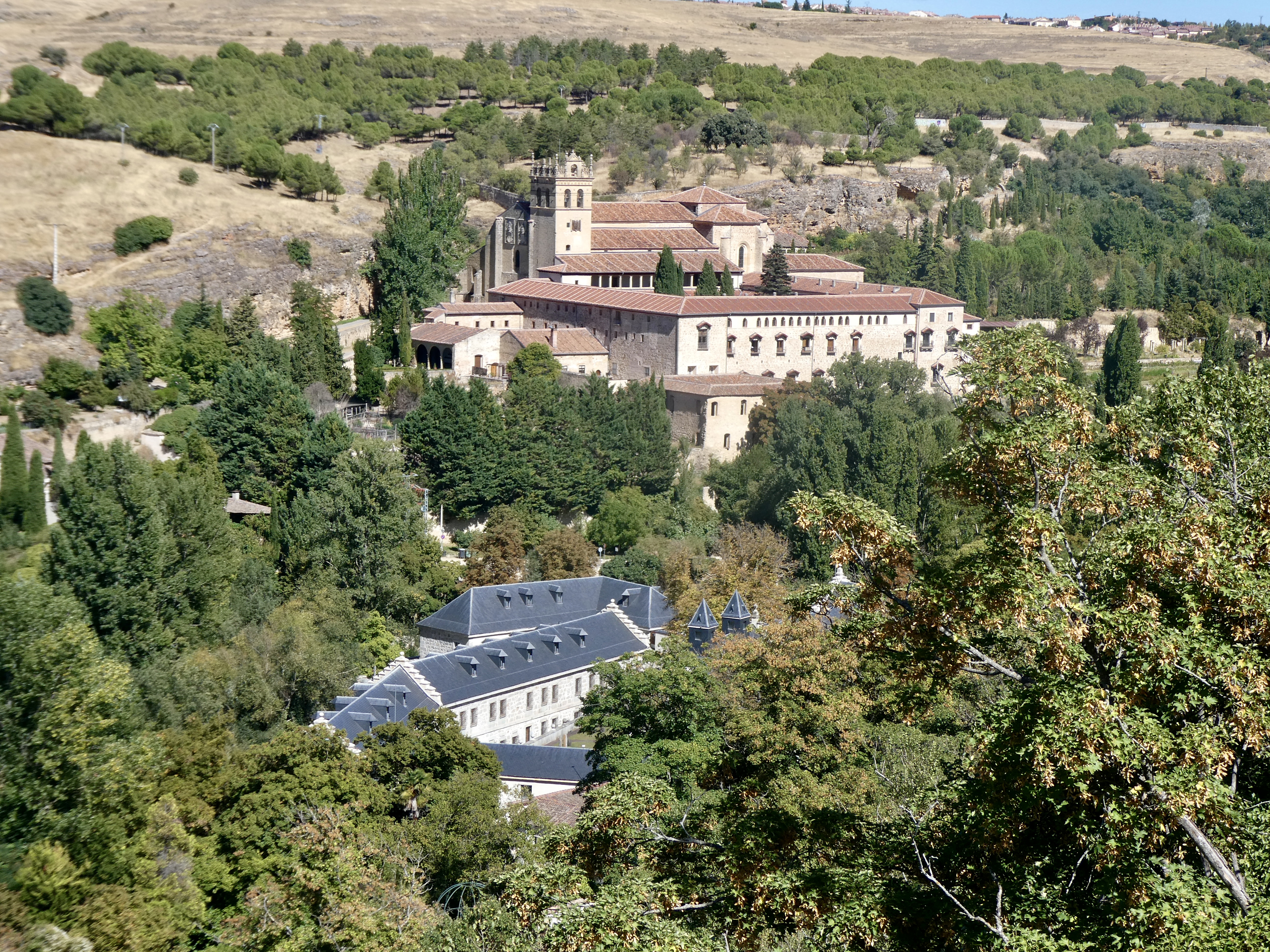
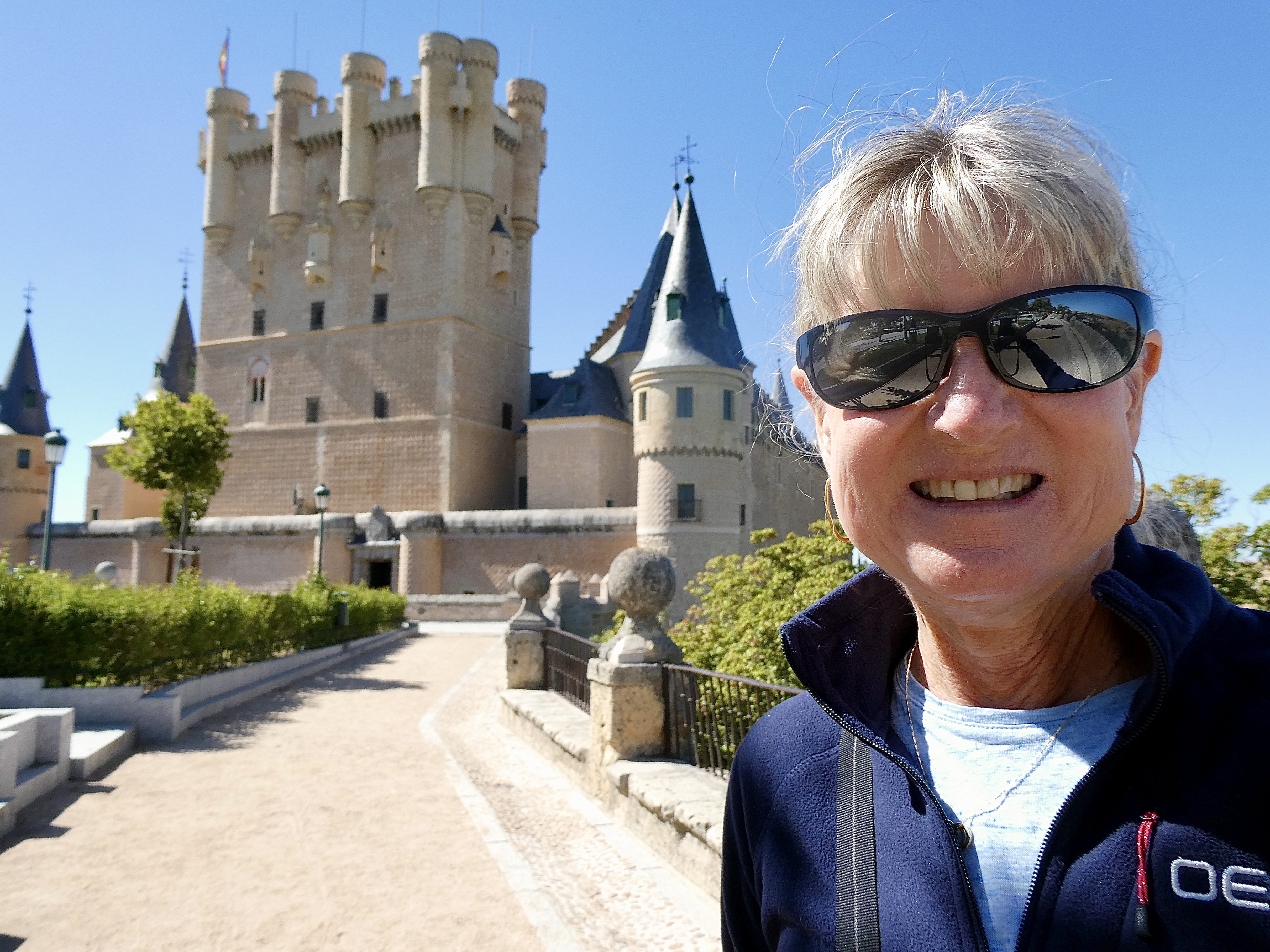
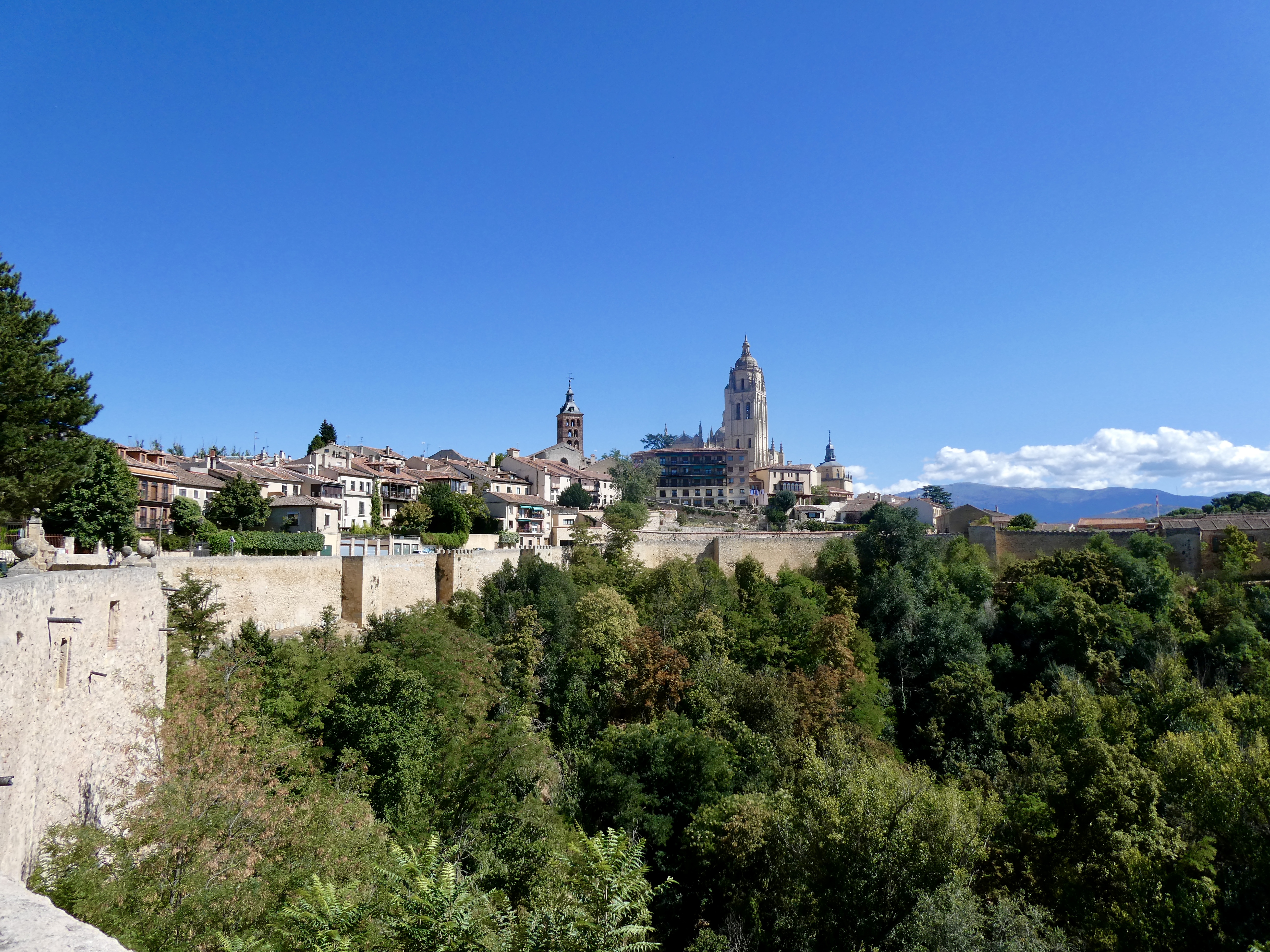
So our last stop of the day was to the the Alcazar. Tickets to the Alcazar have timed admissions and my admit time was 3:30, but they permit you to enter 10 minutes early. We arrived about 3:10, so I ended up wandering around and taking in the fantastic views surrounding the castle, including views of the old town and wall surrounding the old town, views to the nearby valley and views of the fabulous Monastery of Santa María del Parral.
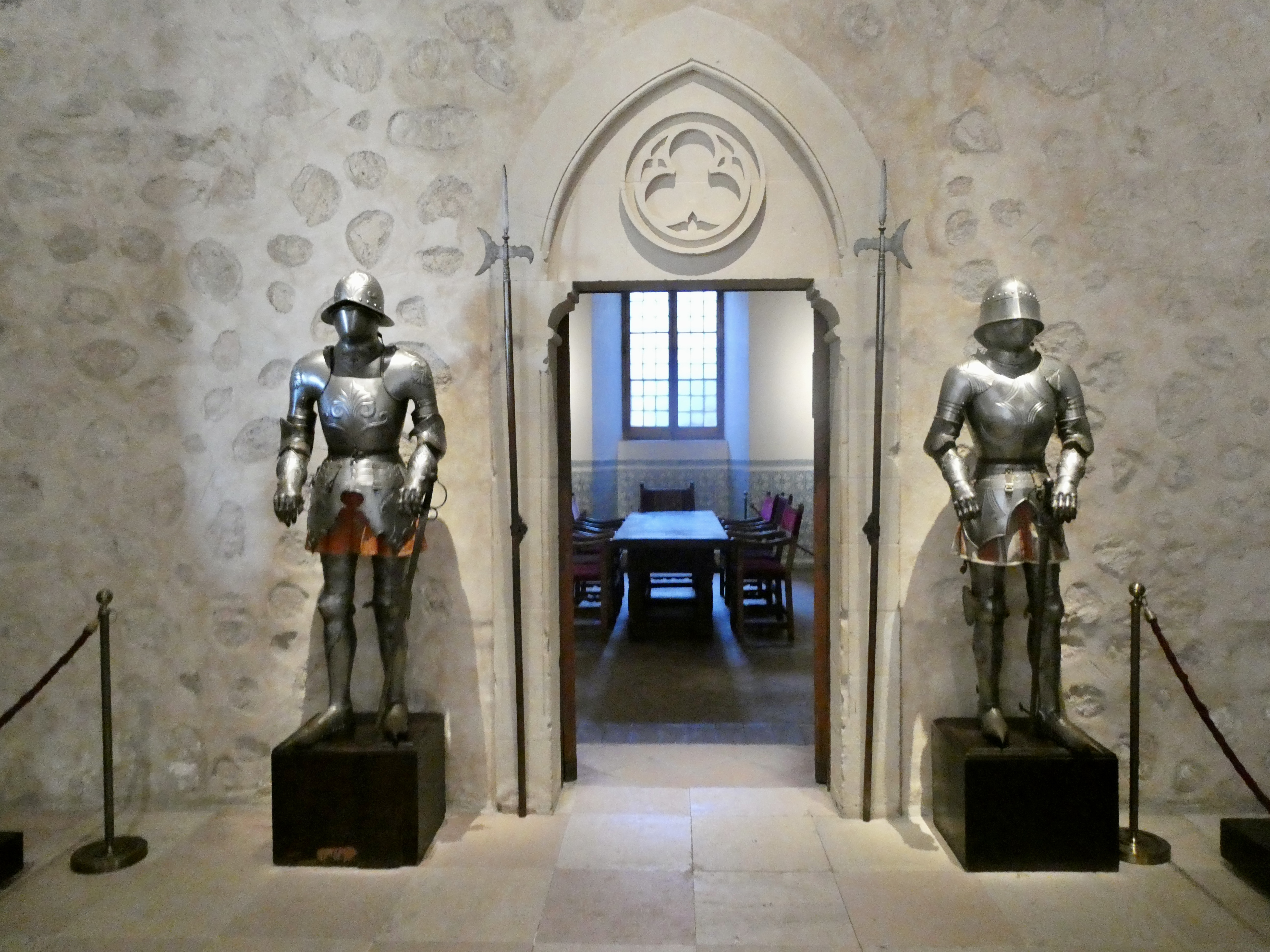
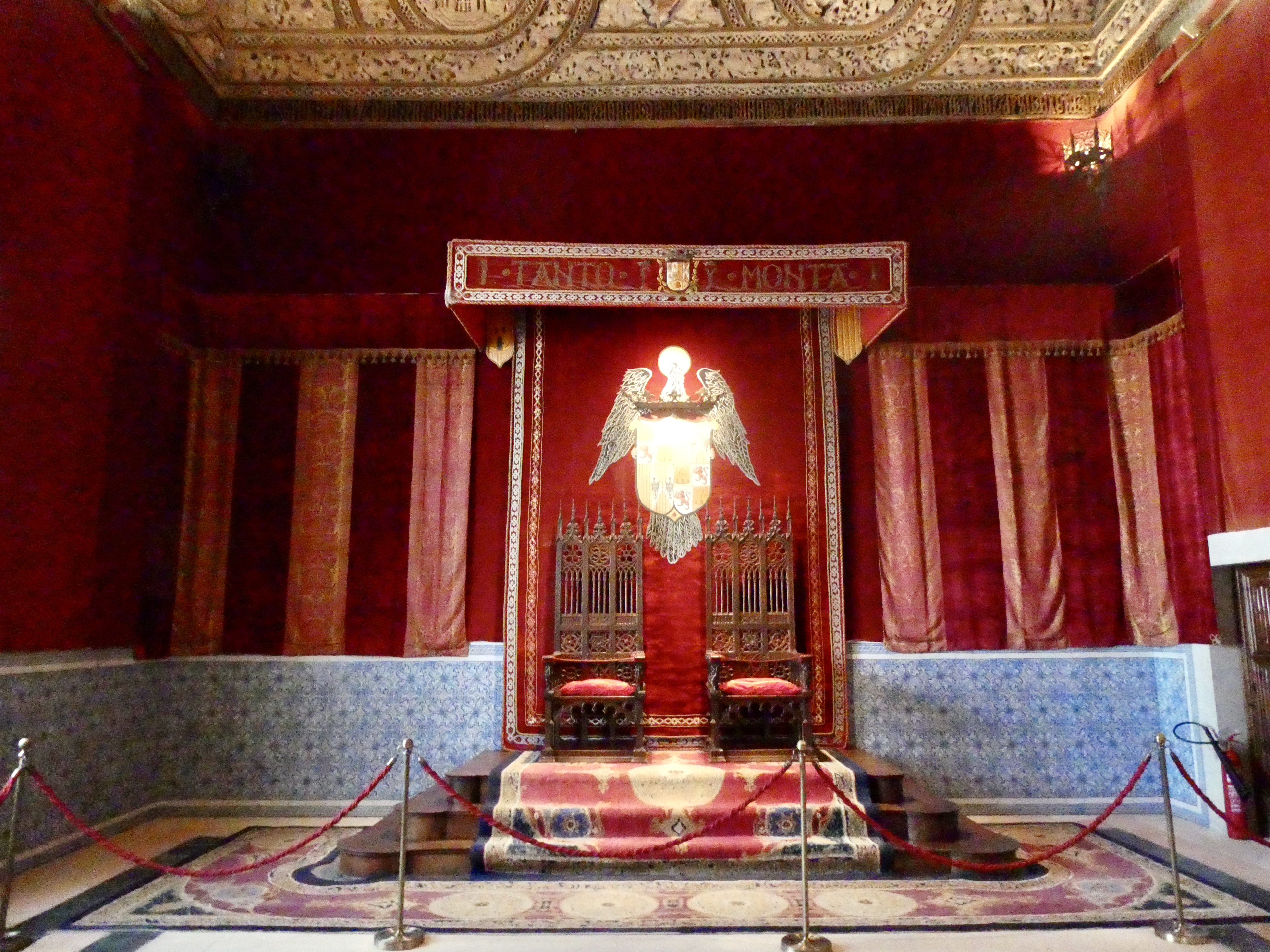
At just after 3:20, I wandered across the bridge that leads over the moat to the entrance to the castle. I had my ticket scanned, grabbed a map and followed the directions around the numbered rooms. First up was the Old Palace Room with several suits of armor on display. I then crossed under an arch and stopped by the Fireplace Room (more like a dining room with a fireplace), before taking in the very grand Throne Room.
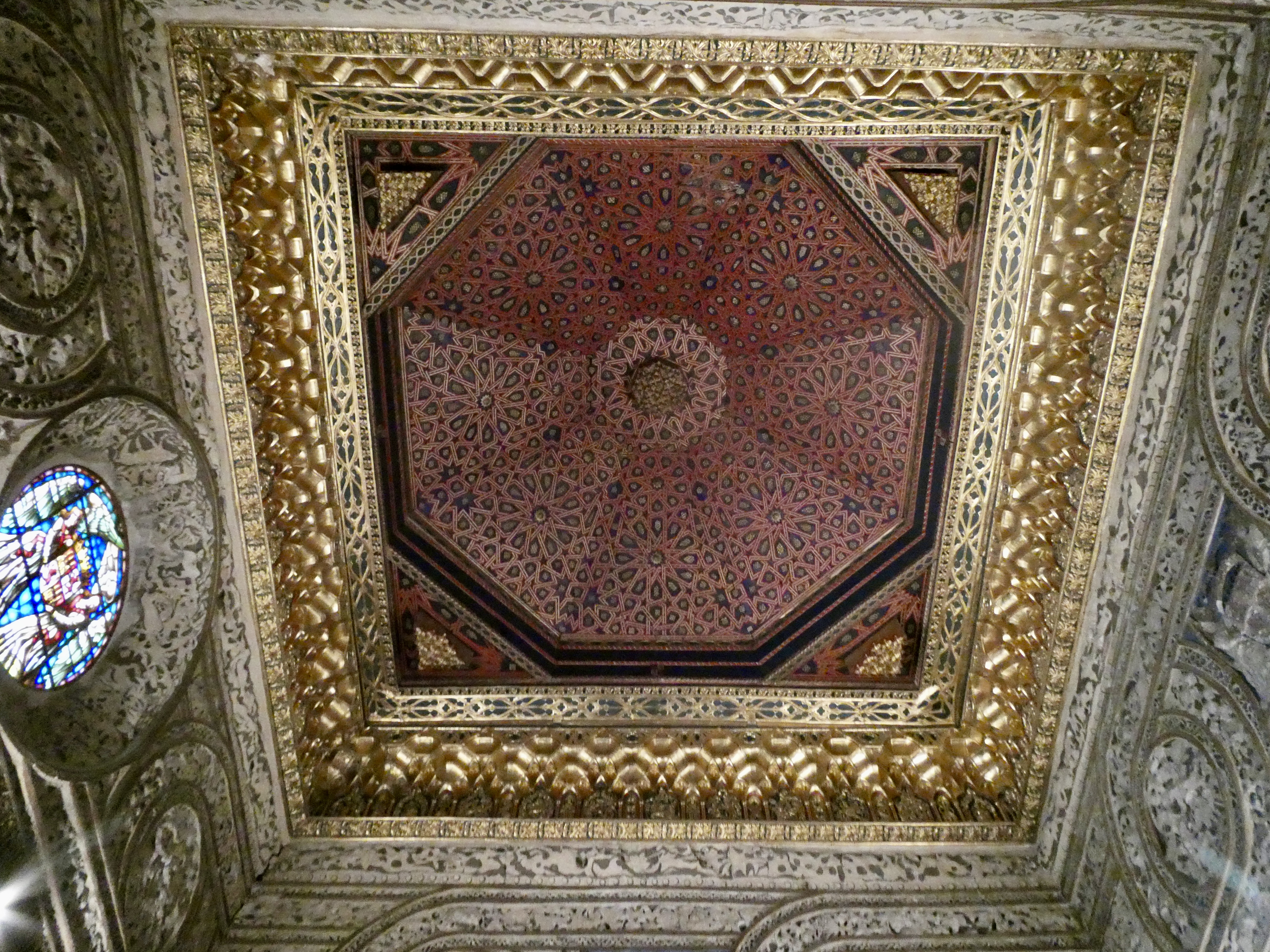
Now the the ceiling of the Throne Room is the oldest in the castle dating to the 14th century and for whatever reason, I took a picture of the ceiling without knowing it was the oldest. What was a bit surprising, though, is that the thrones in the room only date to 1808.
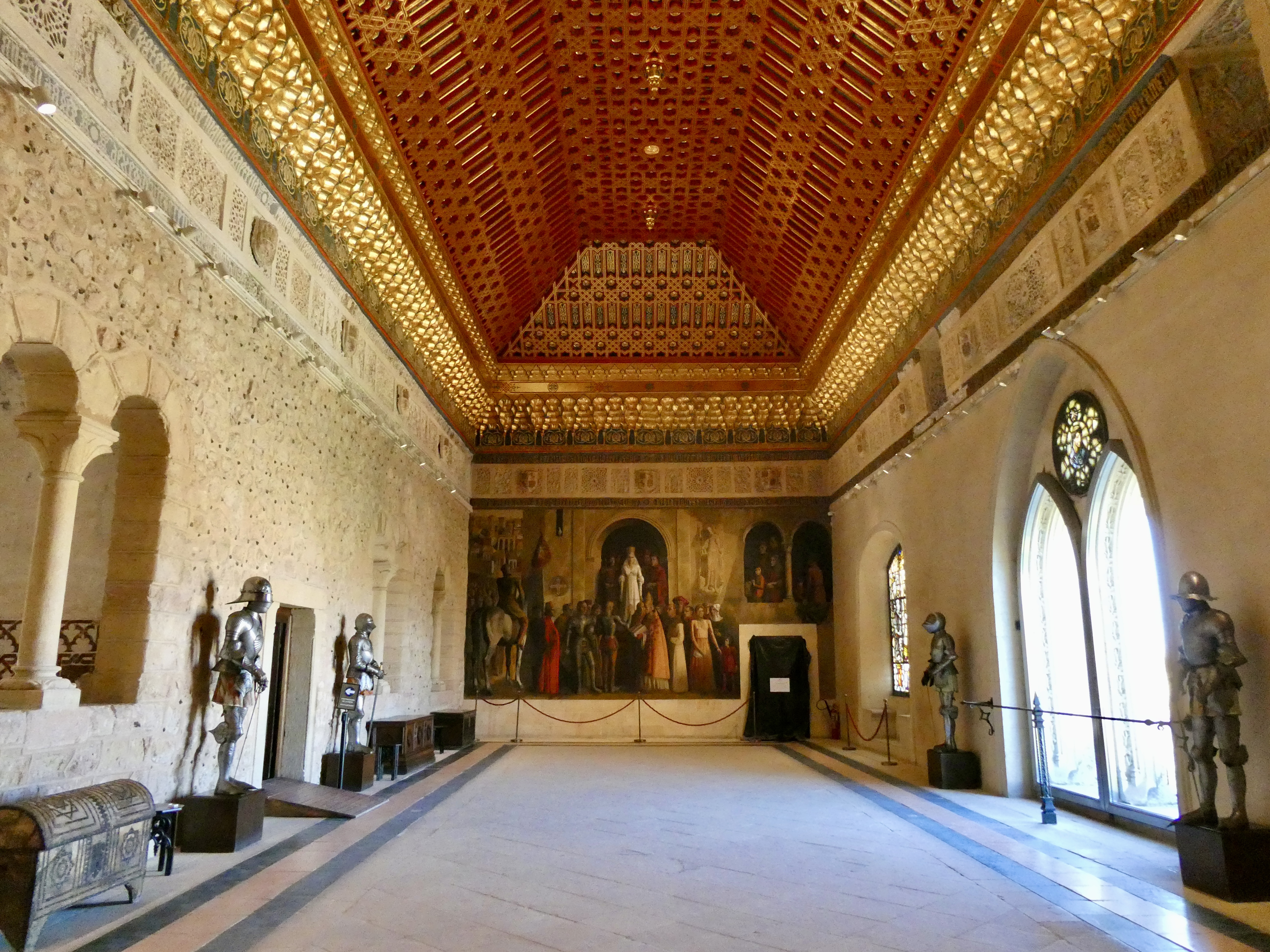
The next room was the Gallery Room, a huge ceremonial room that features a portrait of Queen Isabella, probably the most influential and significant Queen in Spain. This room was really quite impressive and in addition to the portrait of Queen Isabella, there were suits of armor and gorgeous moorish designed arched windows.
And nextdoor was the Royal Bedroom. Now I found this room a little too dark for my taste. The walls were covered in very dark tapestries and the deep red canopied bed and dark wood, made it feel really small.

However, the next room, the Monarchs Room, made up for the Royal Bedroom. The Monarchs Room was decorated with a fantastic ceiling as well as a frieze surrounding all four walls made up of the monarchs from various parts of Castile and Leon, the region in which Segovia is located. In addition, the lower walls were covered in painted tiles, which I expect was from Moorish times because it reminded me of decorations I have seen in Arabic countries.
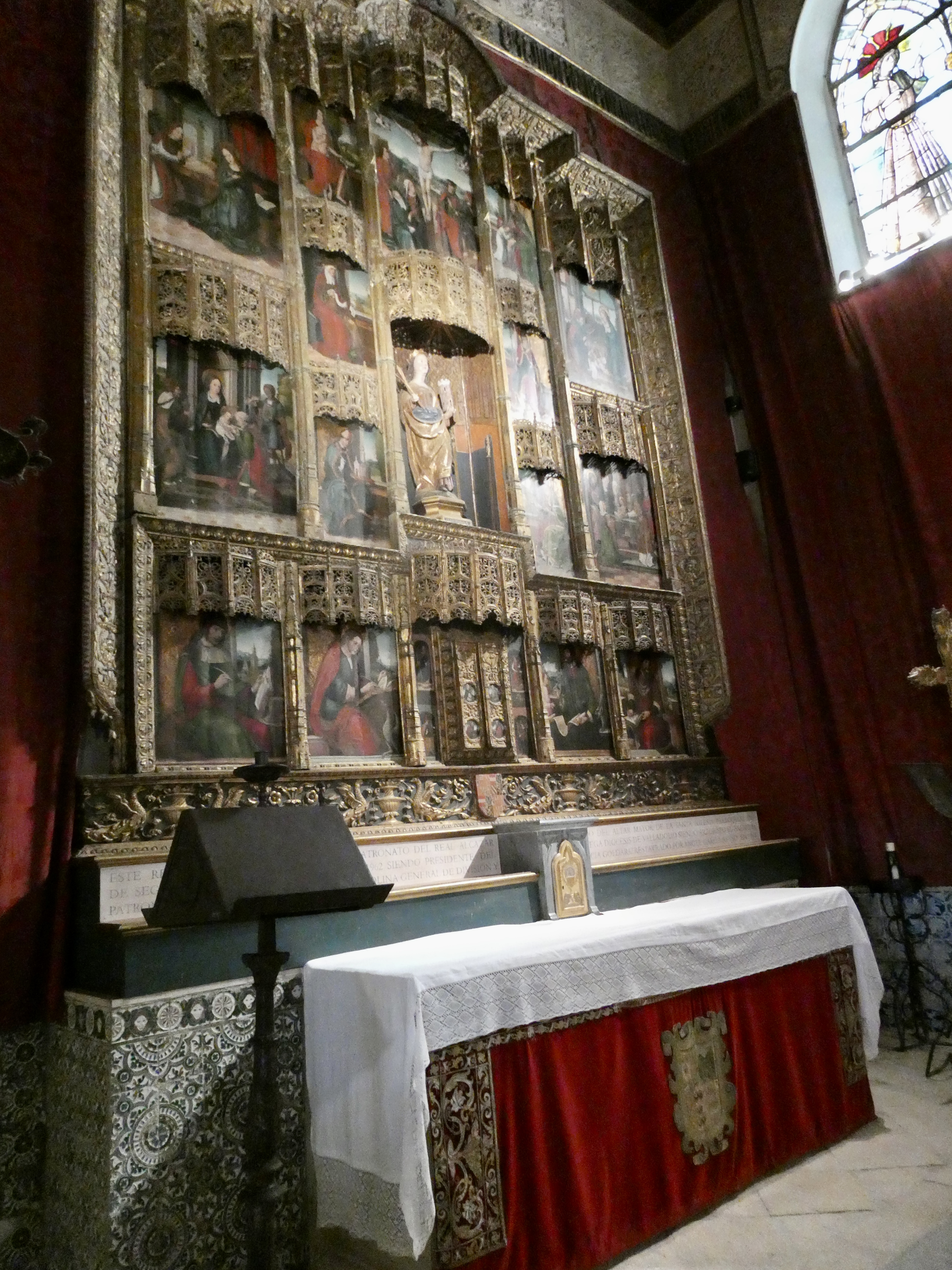
Next was the cord room so named because the room was decorated with Franciscan cords around the walls. This room was a bit on the boring side after the magnificent Monarchs Room. However, the one cool aspect of the room was that there was a little peek-a-boo window in a small alcove in which you could take a look at the Chapel next door.

And the Chapel featured a painting known as the Epiphany which was painted in 1600 and was rescued from a fire that engulfed part of the Alcazar in 1862.
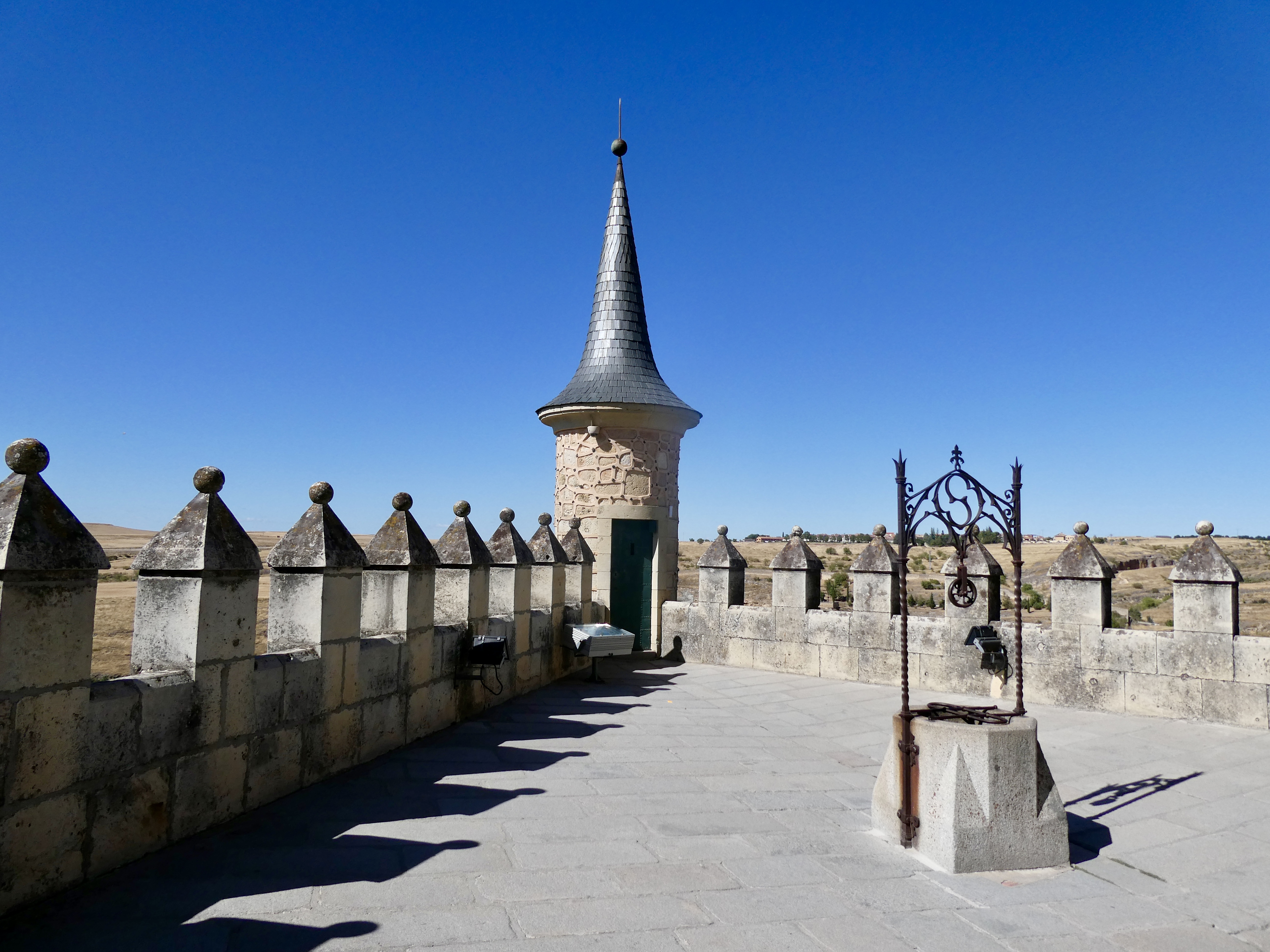
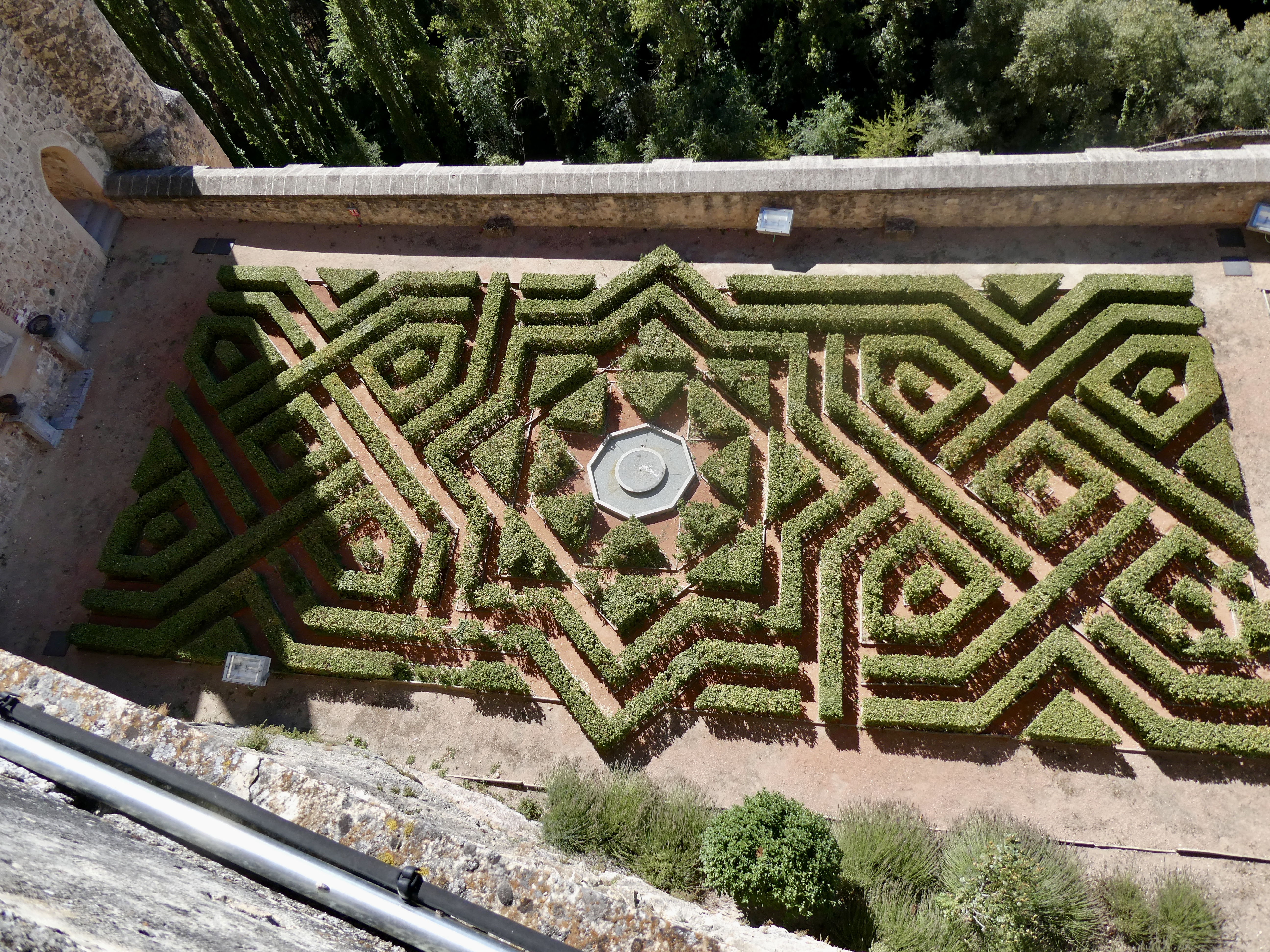
From here, I wandered outside onto a terrace where there was a small tower, a well, a view to a garden below in addition to views of the surrounding area.
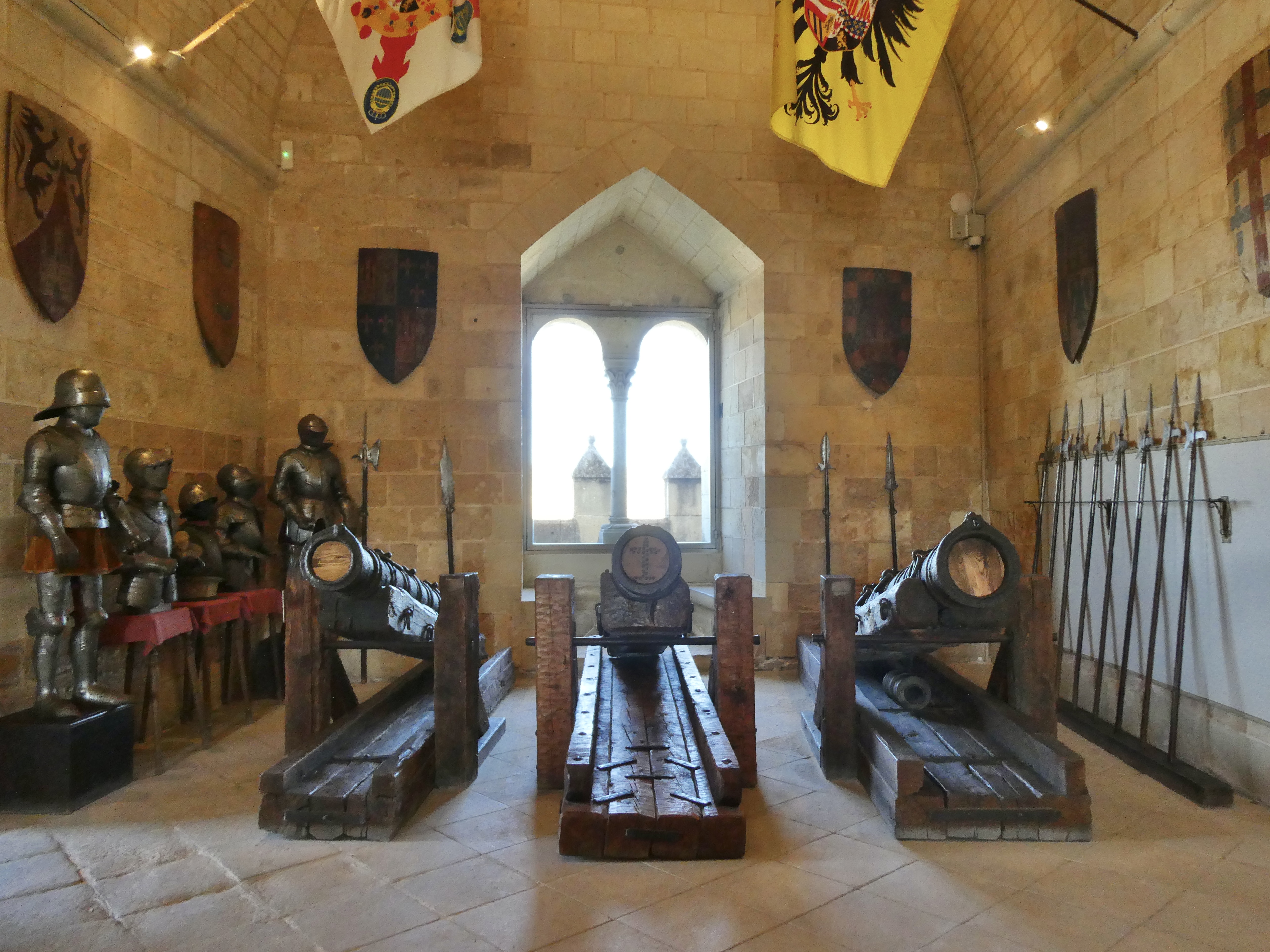
Once I spent a bit of time on the terrace, I went back inside and took in the last two rooms, the Armory Room featuring a collection of weapons from over the years and the Royal Artillery School Museum, which shows the Alcazar when it was the seat of power.
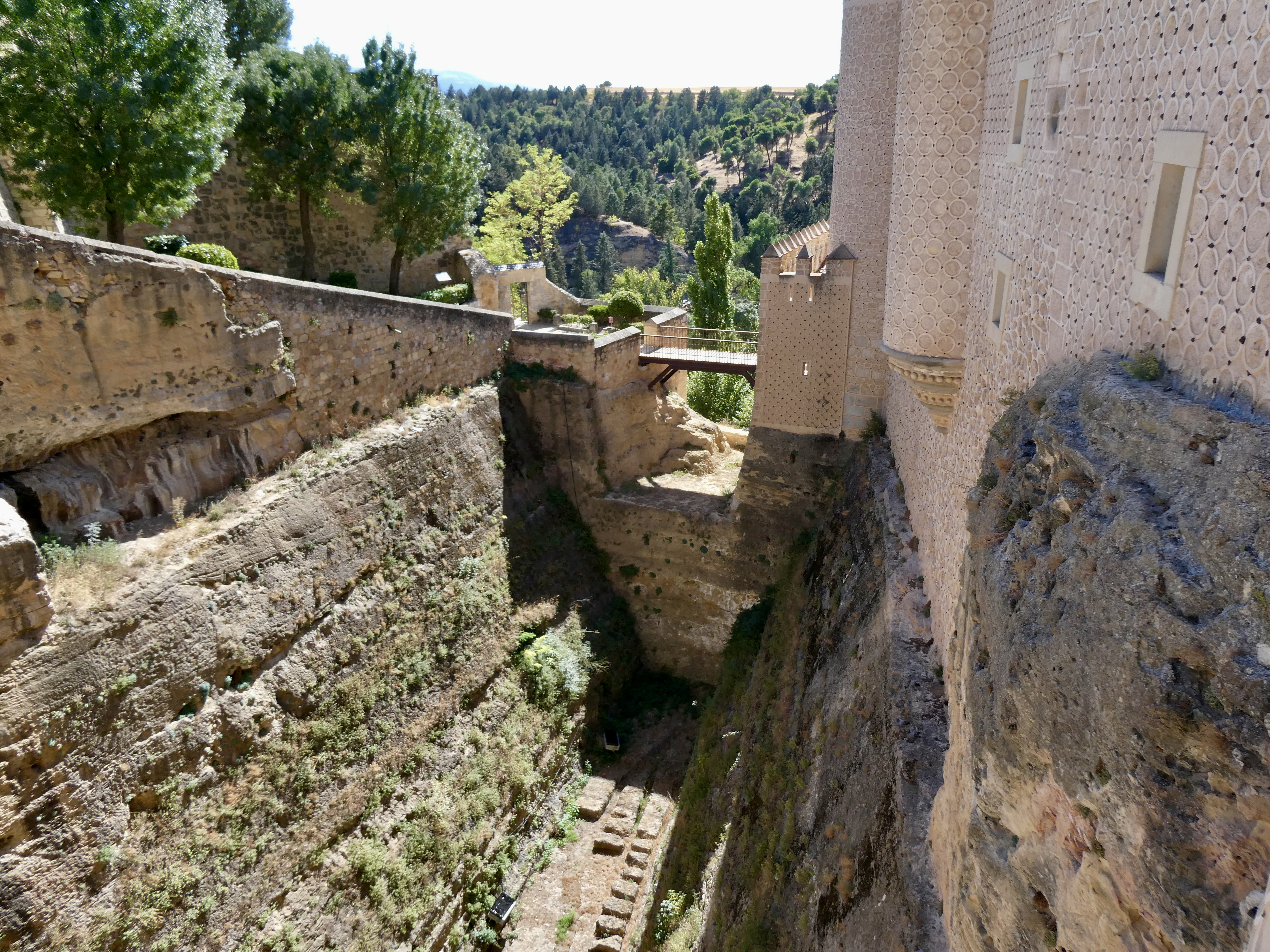
I then left through the doorway I had entered into the castle and immediately walked into more tour groups than I could count. Now at this point, the thing that had been confounding me was how few people were at the site. In fact, at times, I was the only person in a room. However, as I was leaving the damn burst and I ended up having to avoid more tour groups and people than I think could fit in the castle.
So when I got back to the car, I mentioned this to Martin who told me that the tour groups arrive around 10:00 a.m. and then again around 4:00 p.m. hence the reason my ticket was for 3:30 … so I could avoid the masses. Well … thank you Martin! I am pretty sure I would have been miserable fighting the hordes.
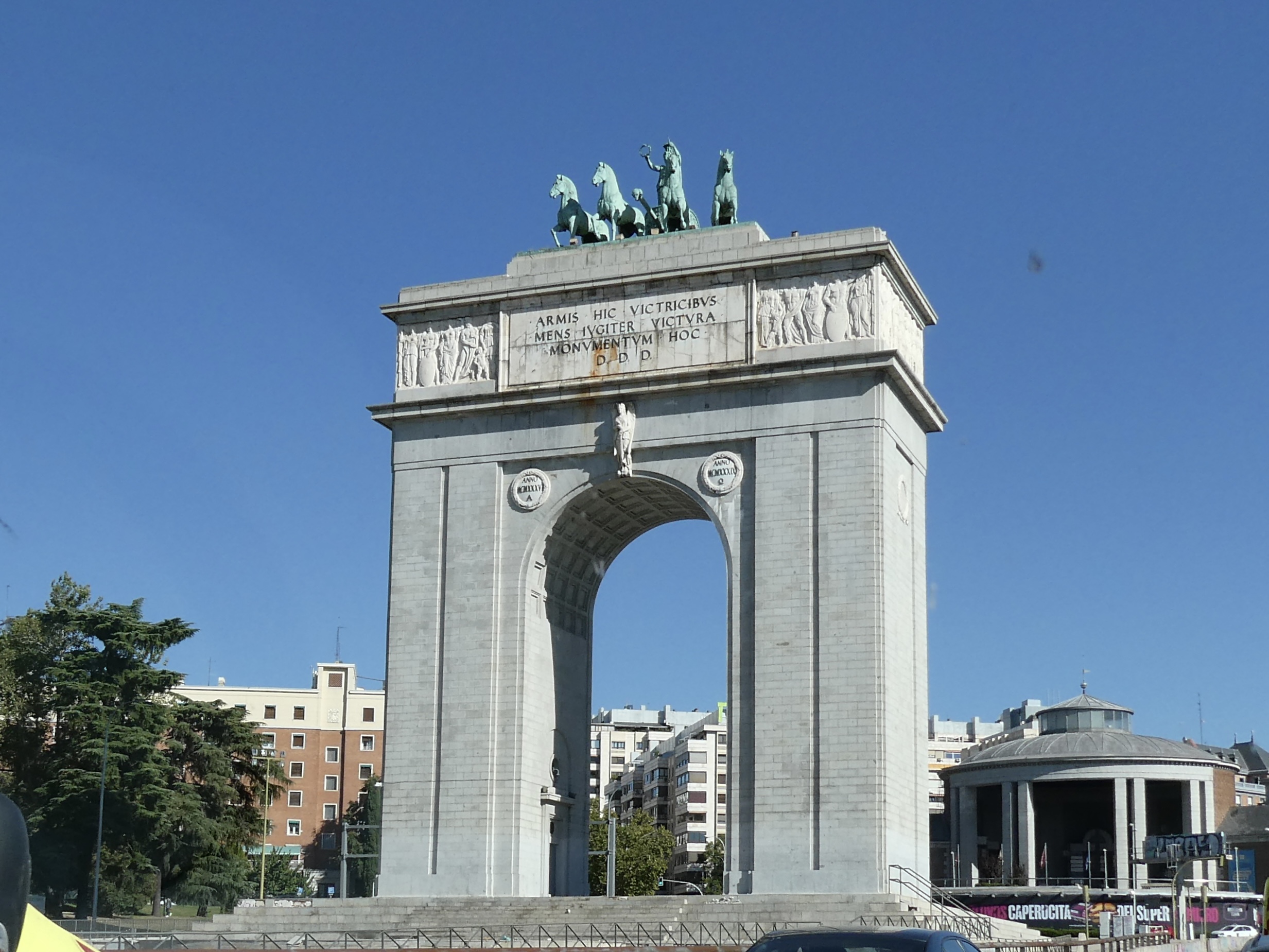
Anyway, with that my tour to Avila and Segovia was done. We drove out of Segovia and back on the freeway and just over an hour later, we were into the outskirts of Madrid passing under the “Victory Arch”, which Franco had constructed in 1956 as a tribute to his Nationalist army, who defeated the Republicans in the Spanish Civil War (1936-1939). Once through traffic, I was back at my hotel by 5:20. Tomorrow, I have a 2 ½ hour walking tour of the Old Town. I was also supposed to also visit the Royal Palace, but the Palace is apparently closing at 3:00 tomorrow and my tour was for 4:00 p.m. so the tour company called and asked if they could change the tour to Friday. I reluctantly agreed, although I am doing a food tour on Friday until 2:00 so I am not sure how I am going to trudge around a Palace on a full stomach for 2 hours. Ugh. Oh well. Go with the flow eh.