So today I was heading out of Barcelona to the town of Tarragona known for its spectacular Roman ruins. I was picked up by my guide Eduardo at 8:00 a.m. sharp and we proceeded to make three stops to pick up three other couples (one couple from Minneapolis, one couple from Atlanta and one couple from Australia) and a woman from Peru. Now the couple from Australia had to be the most standoffish, grumpy couple to ever come out of Australia. I don’t think they said more than two words the entire trip despite my efforts in the beginning to engage them. After getting two one word answers, I gave up and never heard them speak again the entire trip.
However, the woman from Peru who spoke very little English (but came on the English tour because she is trying to learn English) decided to attach herself to me. She followed me around like a puppy dog asking me to take photo after photo with her and even asking to have lunch with me later in the day. And oh yea, she kept speaking to me in Spanish after I made the mistake of saying a few words in Spanish. Unfortunately, I kept having to tell her no comprende.
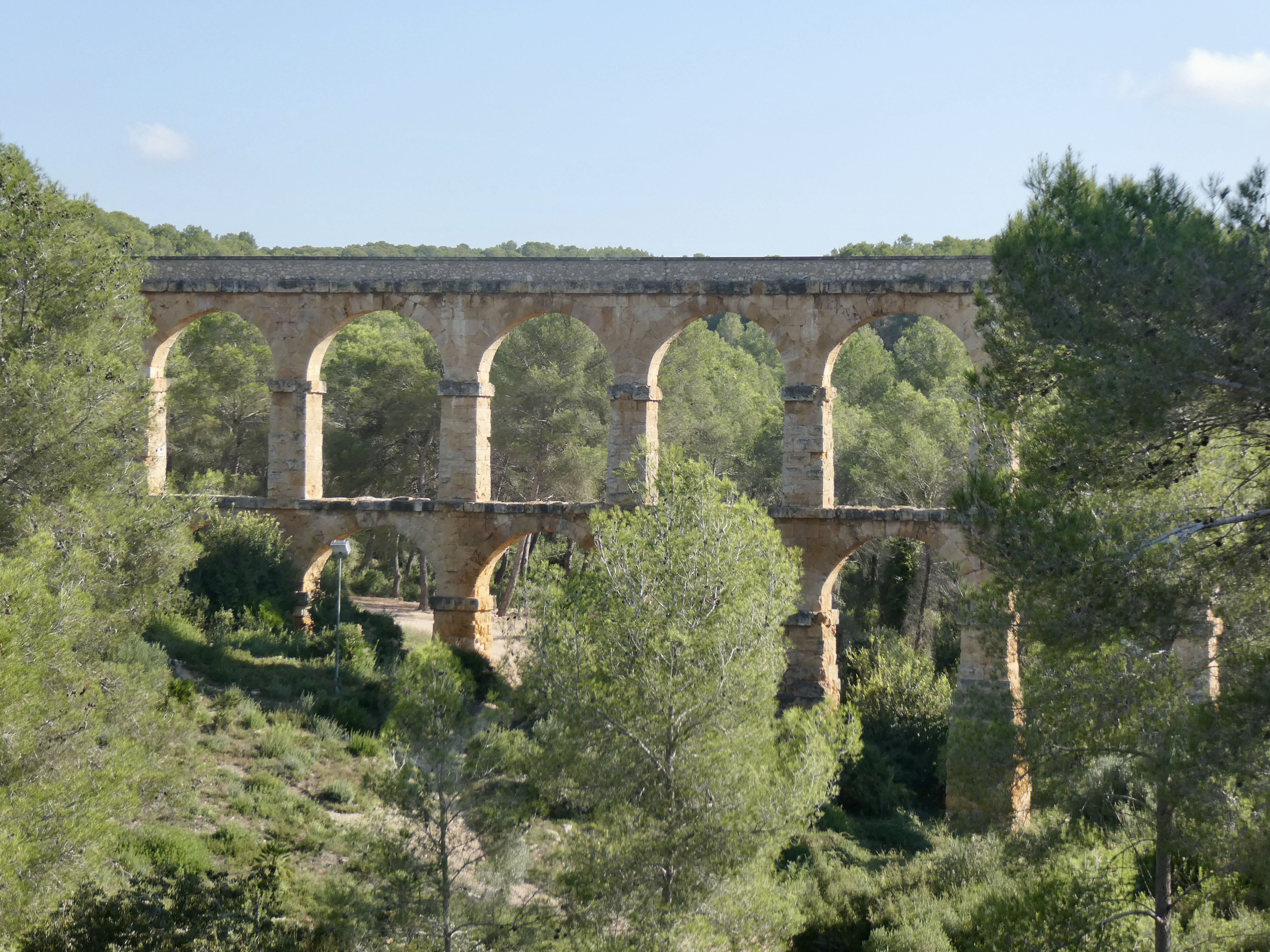
Anyway, the drive out of Barcelona was brutally slow as we hit rush hour, but eventually by 10:30 we reached the outskirts of Tarragona and our first stop, the incredibly well preserved Les Ferreres Acqueduct aka the Devil’s Bridge. The structure is 217 meters long and 26 meters high and dates to the first century when the Romans needed to connect a water source to Tarraco, the predecessor to Tarragona, which was the capital of Hispania Citerior, one of three Roman provinces on the Iberian Peninsula. (FYI an acqueduct carries water from the source to an endpoint, in this case Tarraco.)
The acqueduct was really incredible and the cool part is that you can actually walk across the top of the acqueduct (a 20th century addition). Sadly, we did not walk the top, but I would have loved to have given it a try.
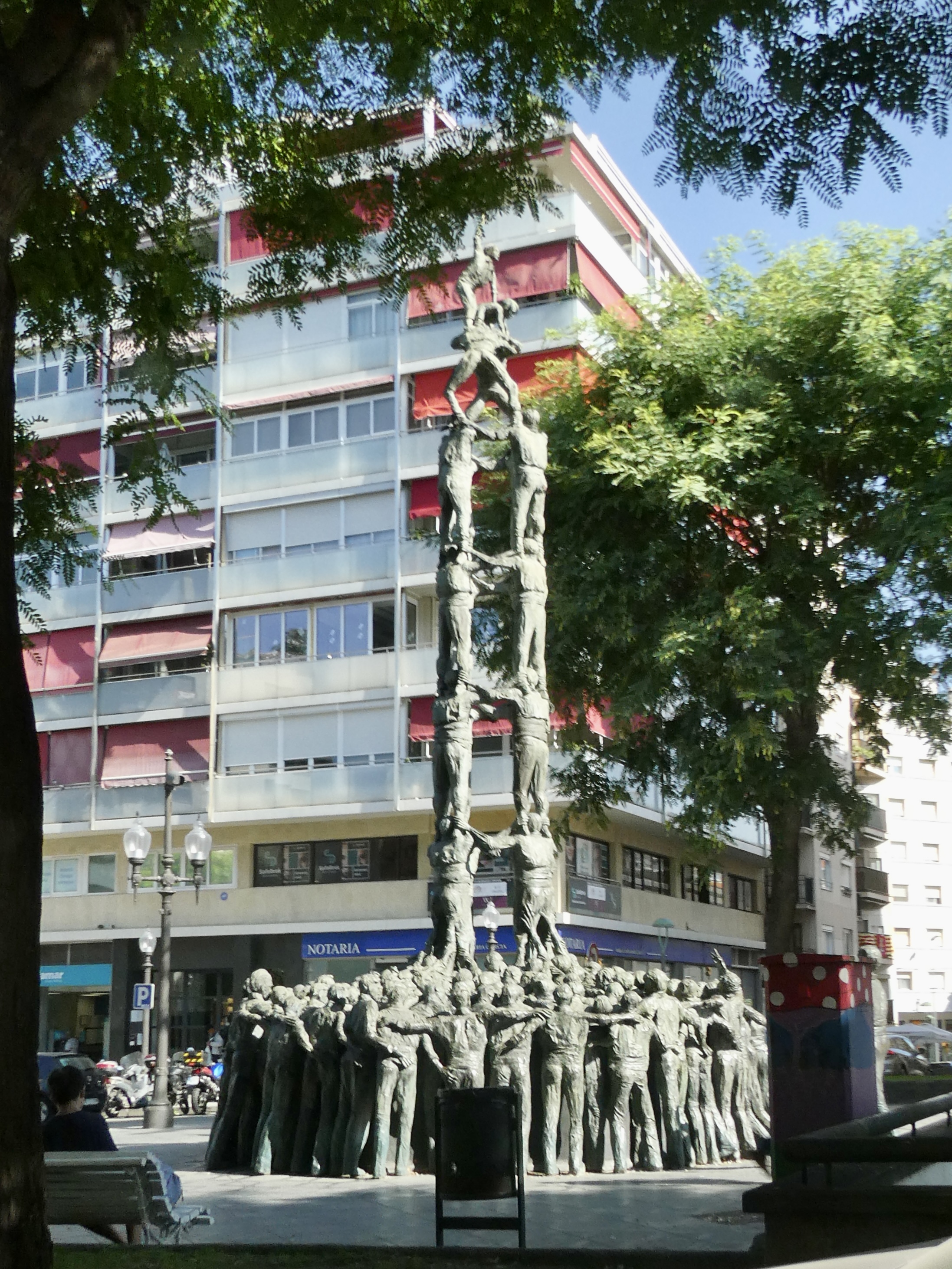
From here we headed into the main center of Tarragona where we passed a large statute dedicated to castells, the large human towers that people in Catalonia build during festivals. In fact, I am hoping to see one this weekend because there is a festival in Barcelona.
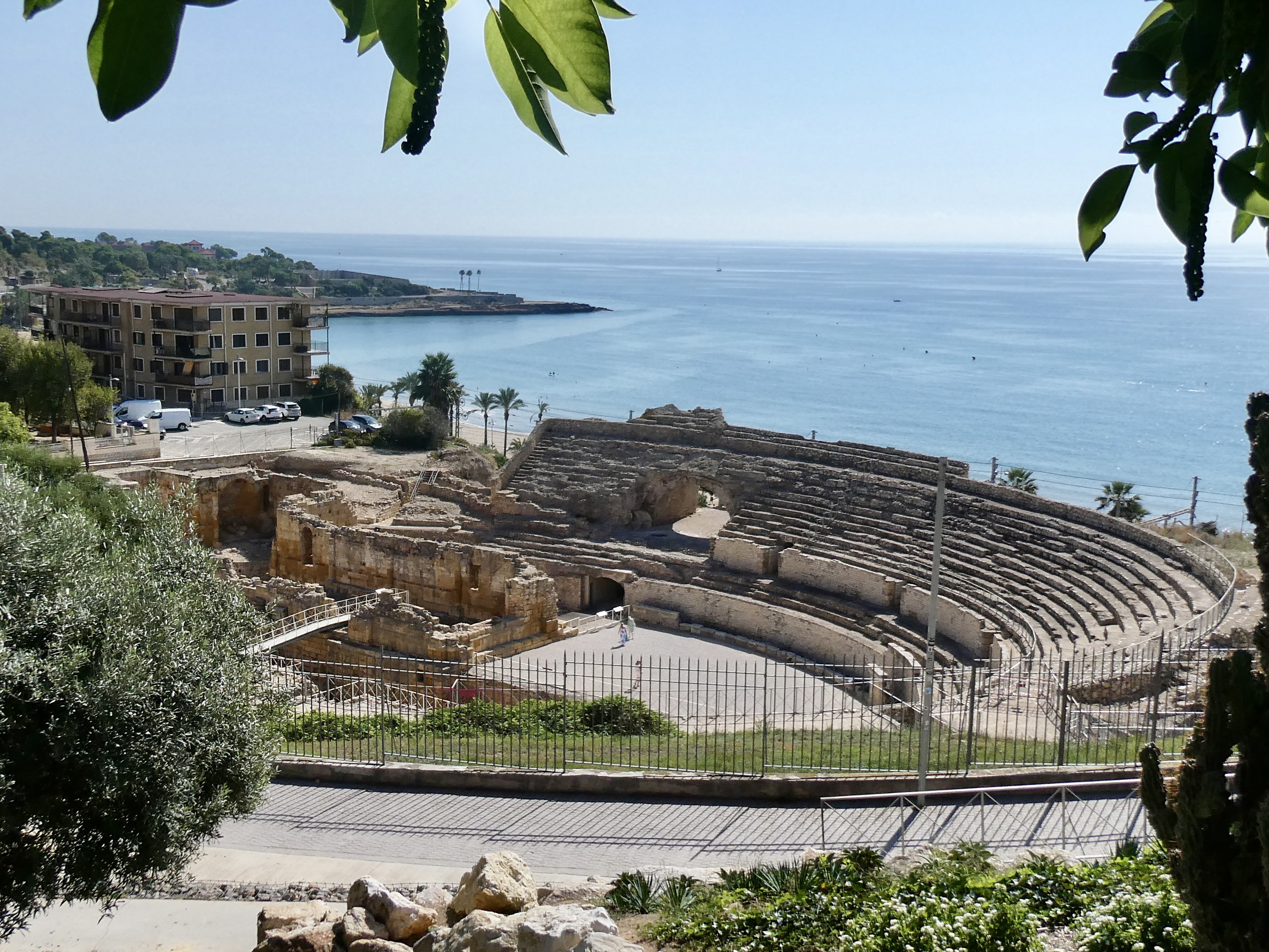
Anyway, Eduardo dropped us off along the waterfront promenade while he parked the van and then about 10 minutes later we set off for our Roman ruins walking tour. First up was the magnificent Roman coliseum sitting adjacent to the Mediterranean. During the second century, this coliseum was the center of entertainment for the wealthy Roman patrons residing in Tarraco. I stood there and tried to take it all in (I do love my Roman ruins) including the “pit” area where the wild animals were kept and the archway where the gladiators would make their entrance.
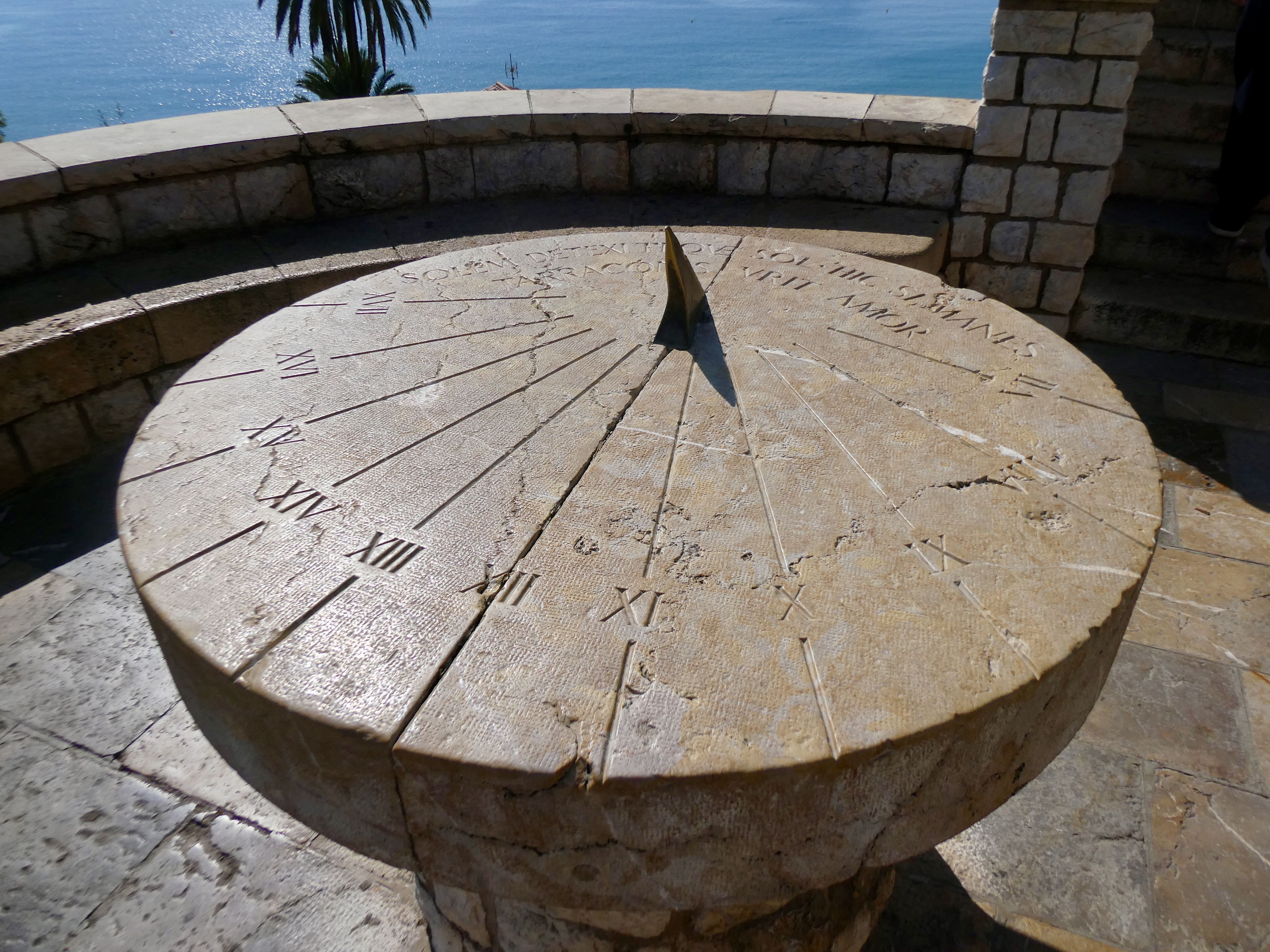
And nearby we were able to take in a Roman sundial. The sundial read 10:00 when it was in fact 11:00, but that difference can be accounted for by the fact that Spain adjusts its clock by one hour twice a year. No matter. I though the sundial was spectacular.
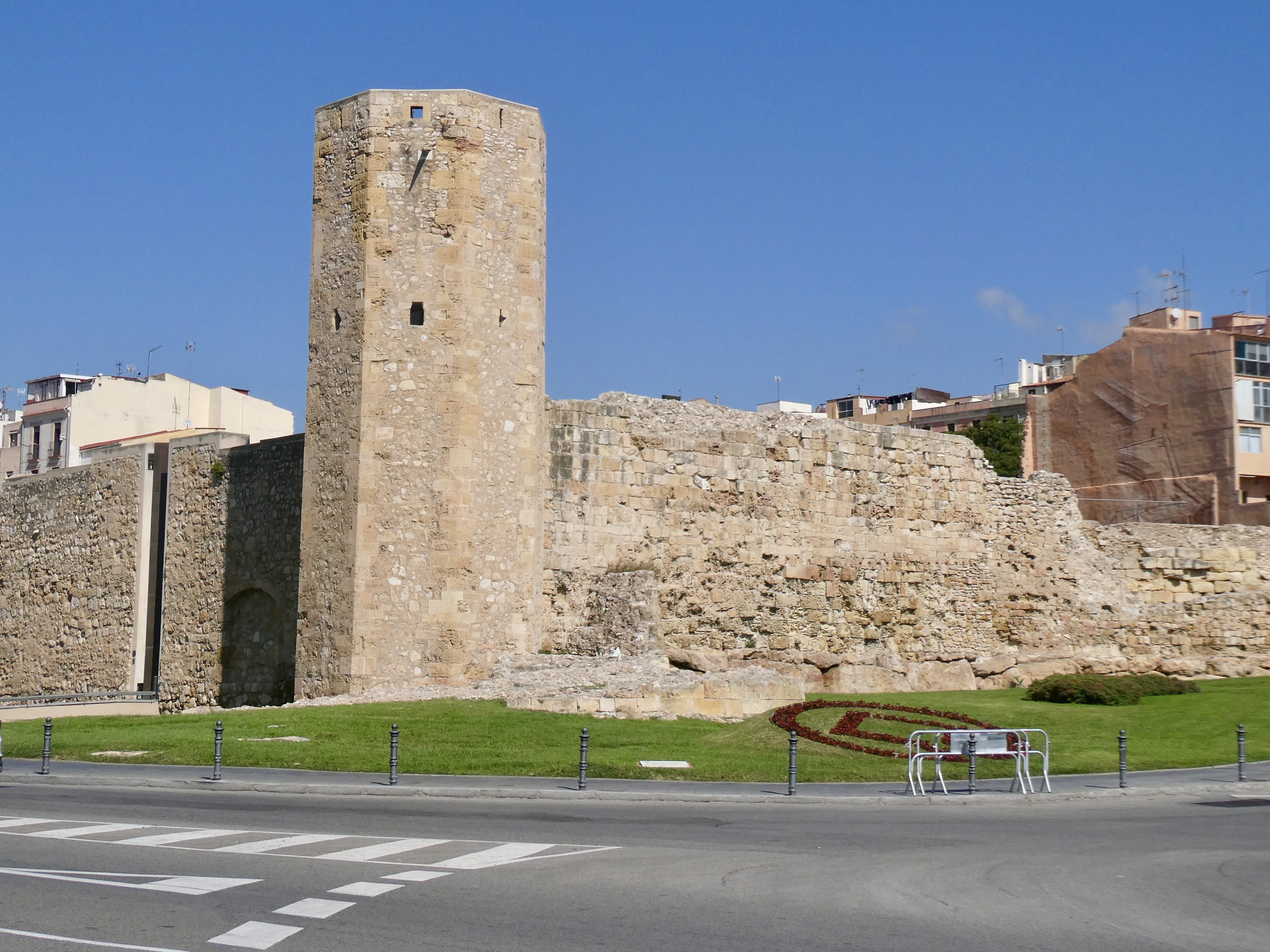

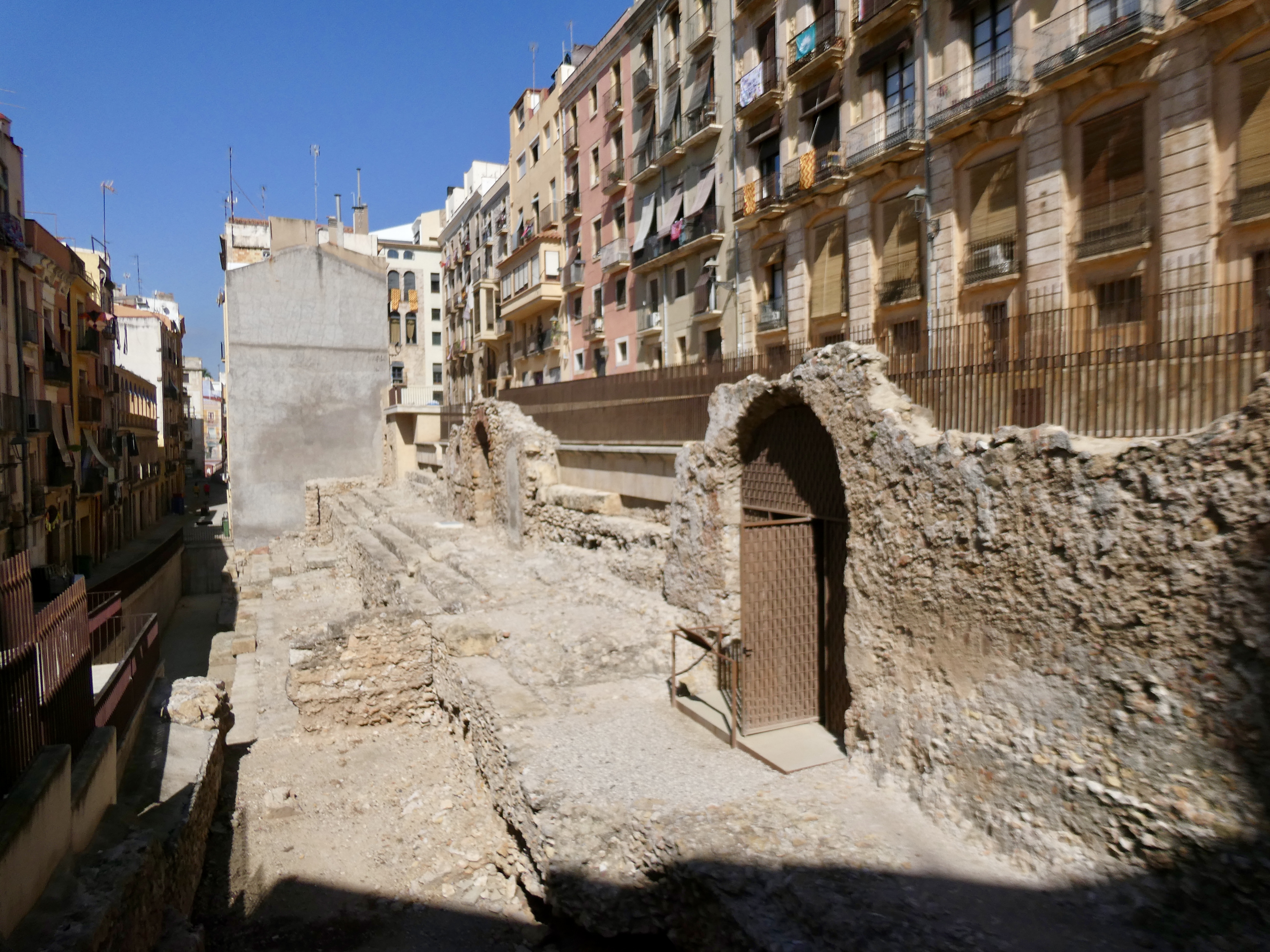
We then hiked up the hill past a portion of a Roman wall to the Roman Circus and Forum where chariot races would take place while shopkeepers in the forum sold their wares to attendees. Now only part of the Roman Circus was preserved (unlike the Roman Circus I saw in Lebanon which was completely in tact), but it was nevertheless impressive with a wide swath of pathway and surrounding stands still in pretty good shape. And nearby another portion of the stands overlooking the Roman Circus was visible although the ruins were not in the best of shape.
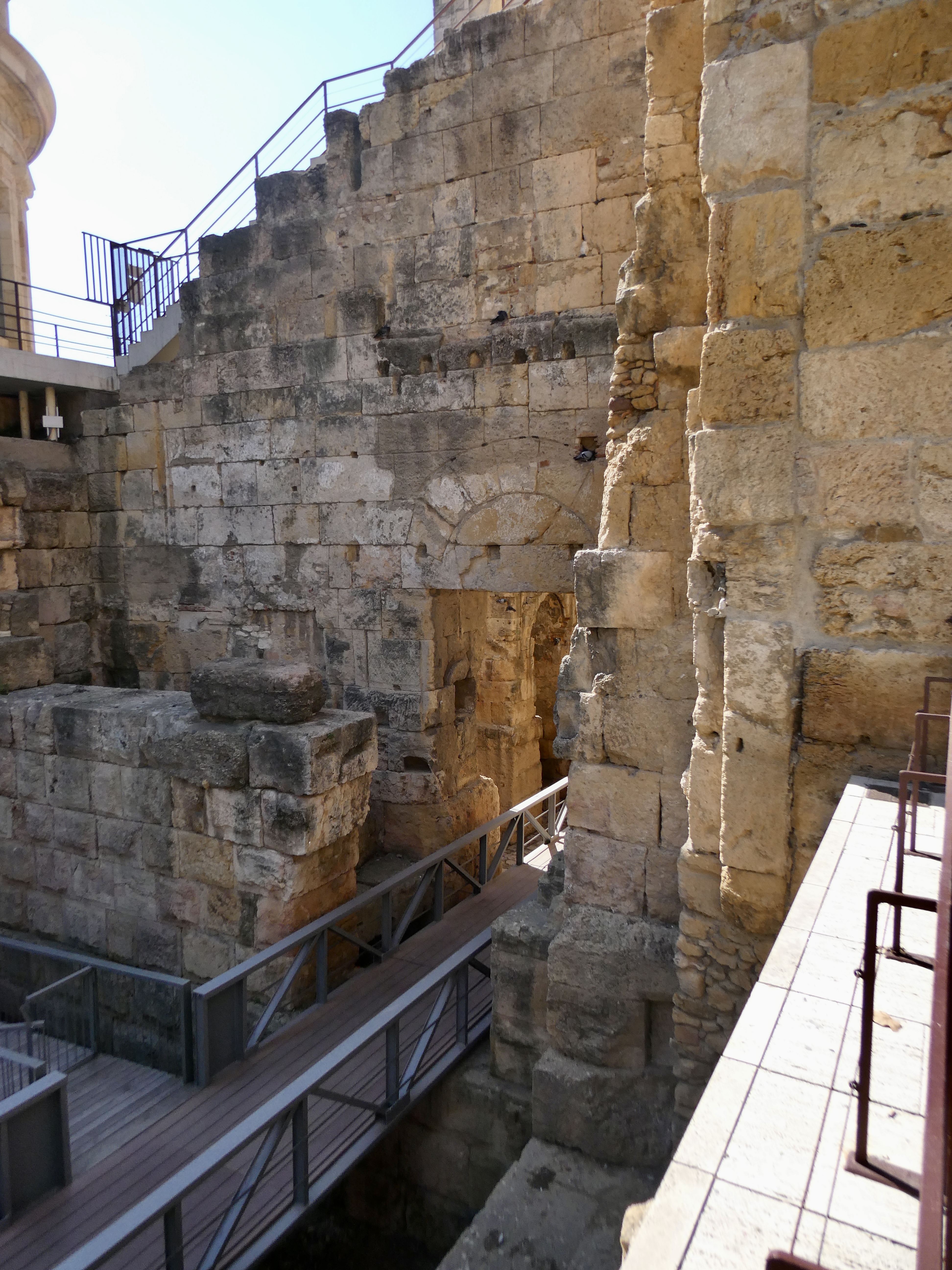
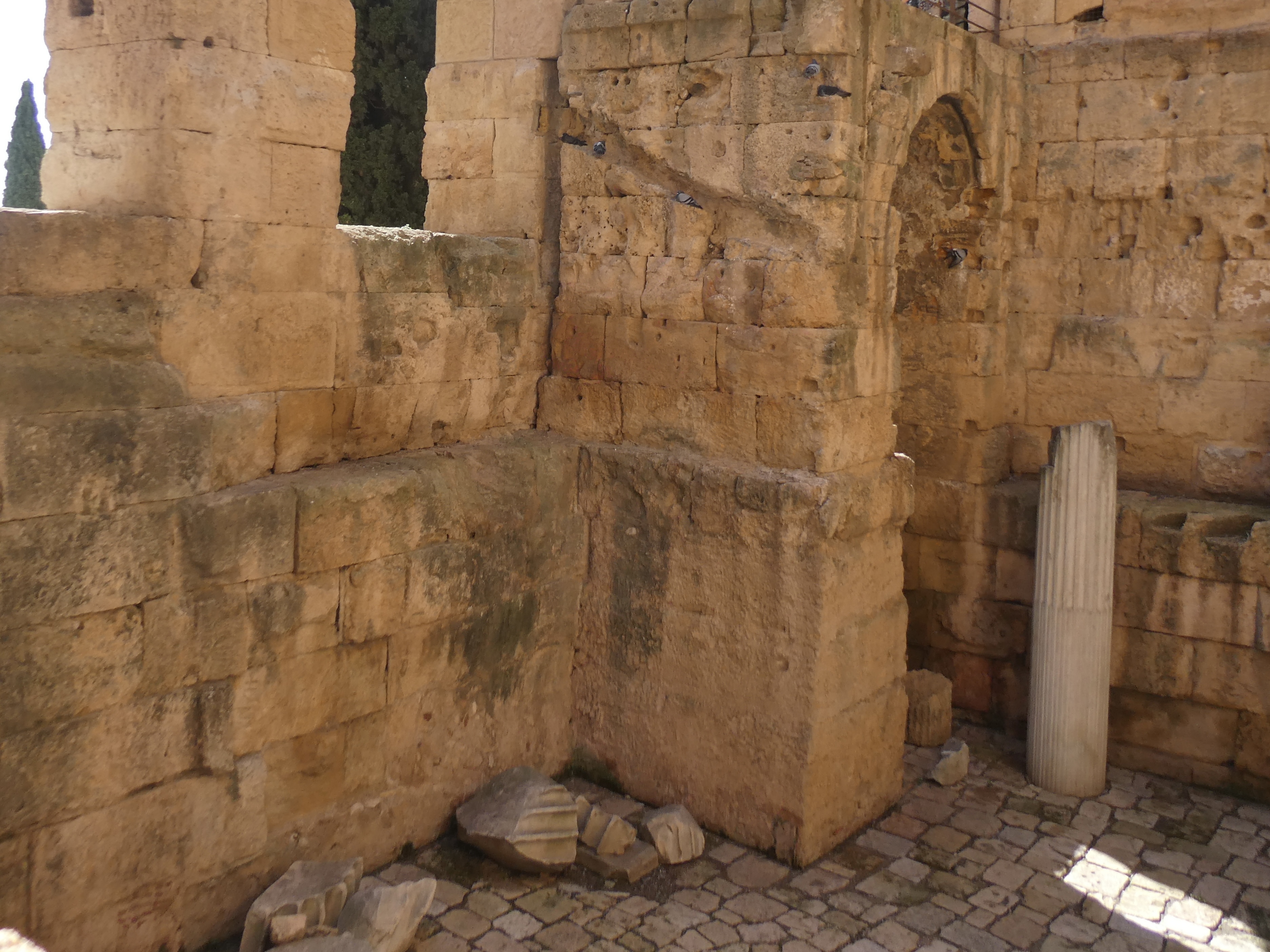
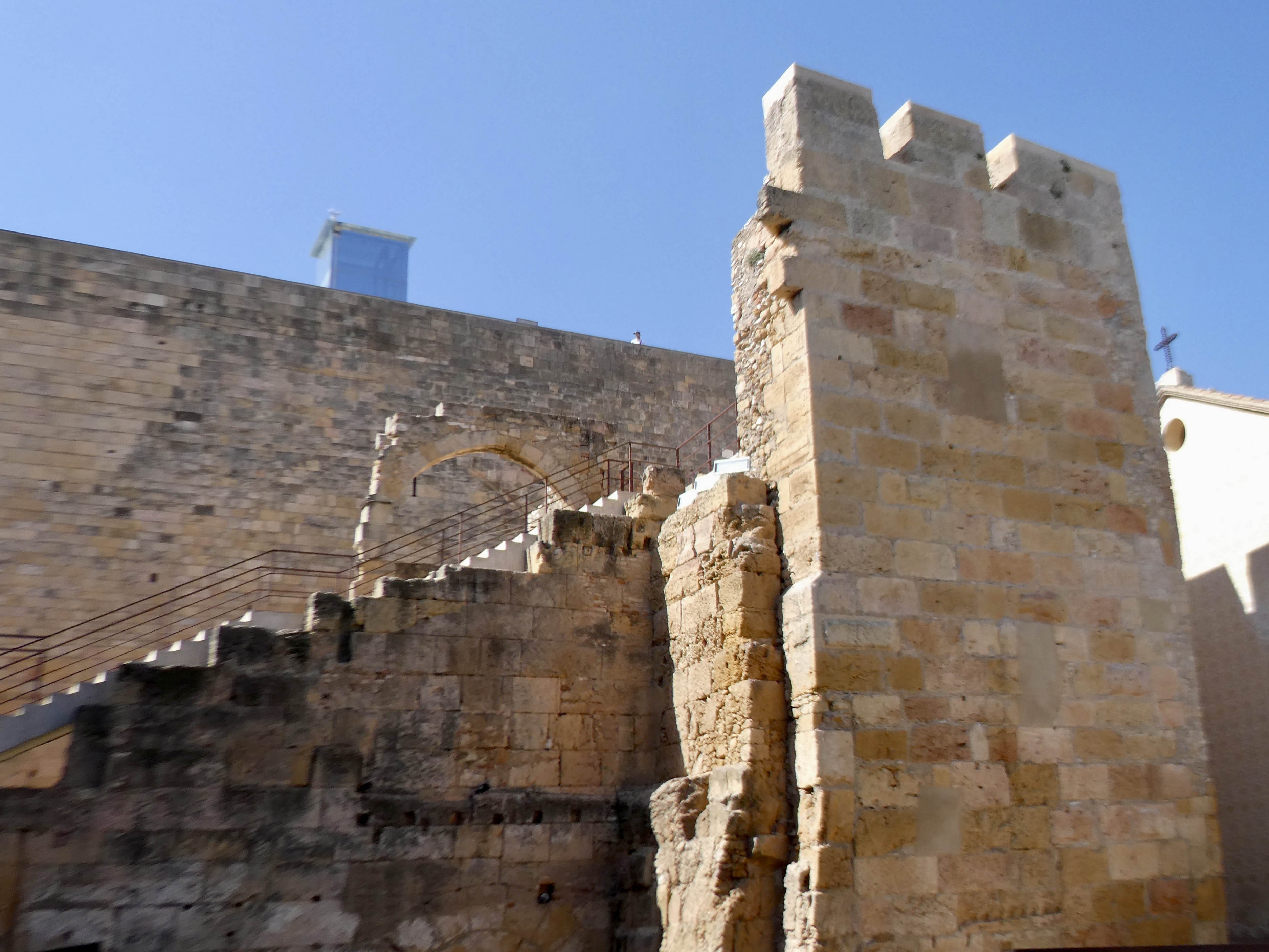
From here we continued up a small hill to another set of ruins that turned out to be the Roman law courts. I ended up walking down the stairs into the ruins and was able to see an original column from the Temple of Athena. Pretty cool.
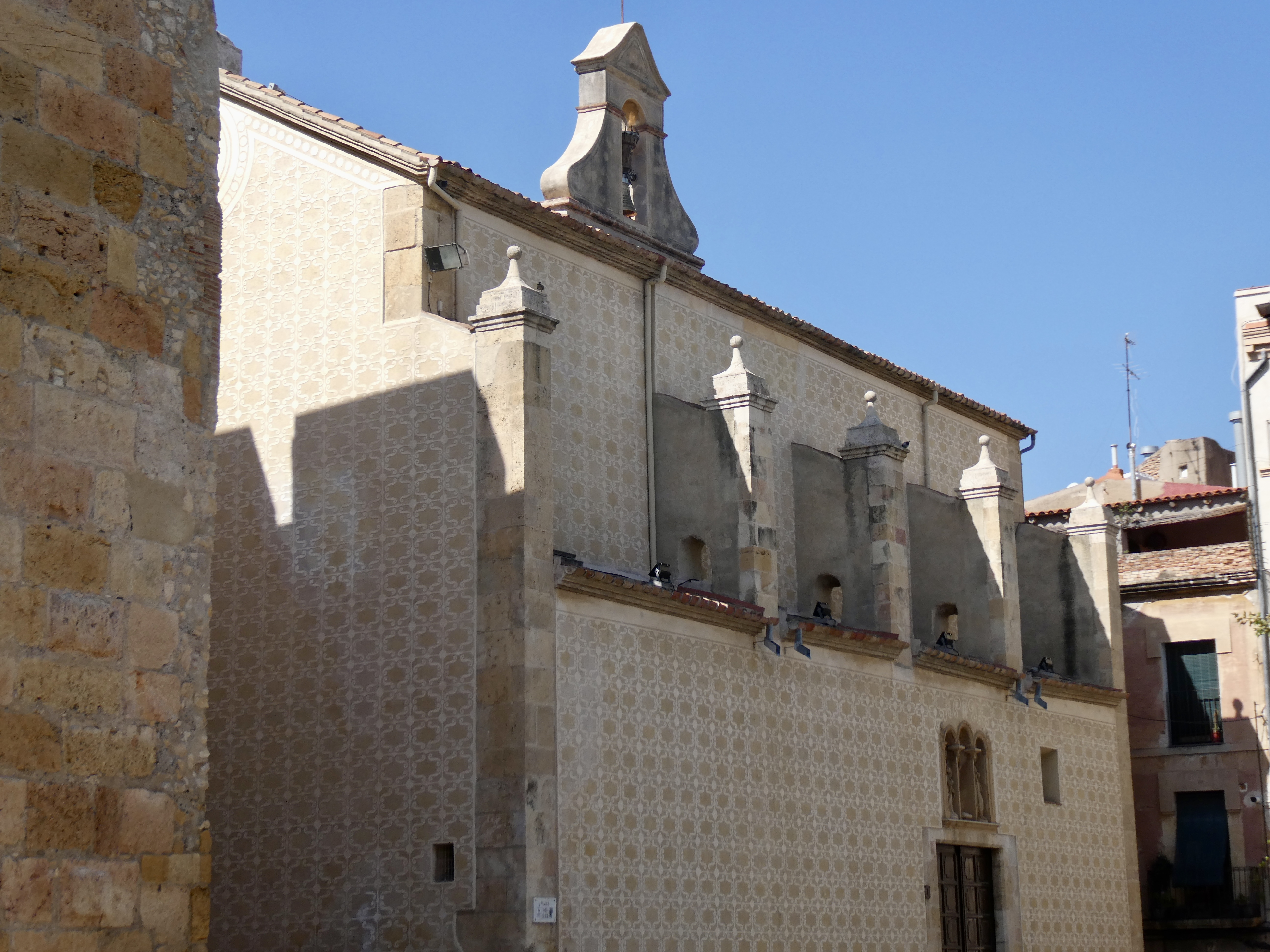

And before we left the area, Eduardo pointed out two nearby churches, both of which were constructed in the late 15th century. One church, the Church of the Nazareth, was constructed for the wealthy residents of Tarragona and the other, the Church of the Trinity was constructed for the poor. Nothing like a class system in religion ….
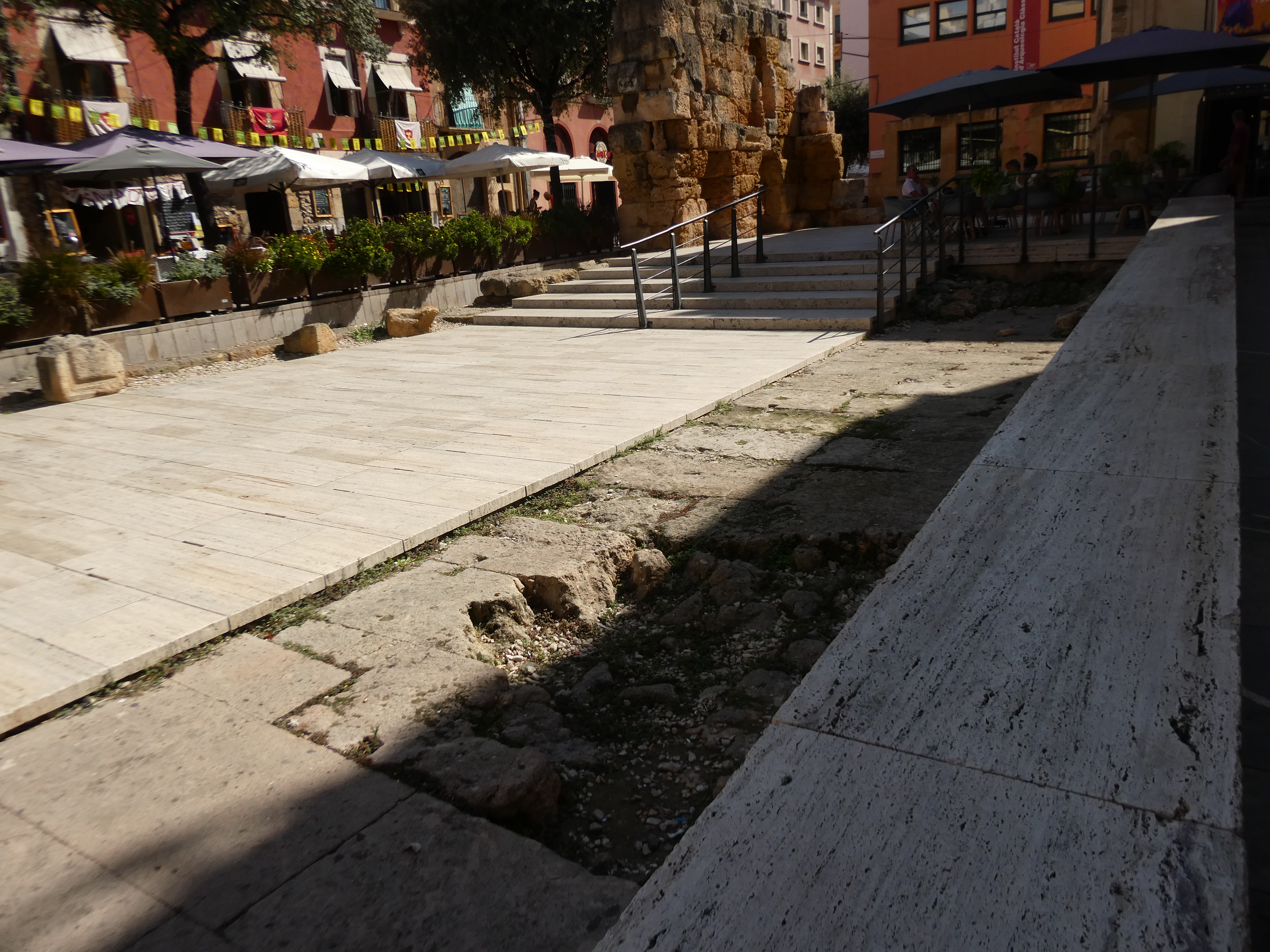
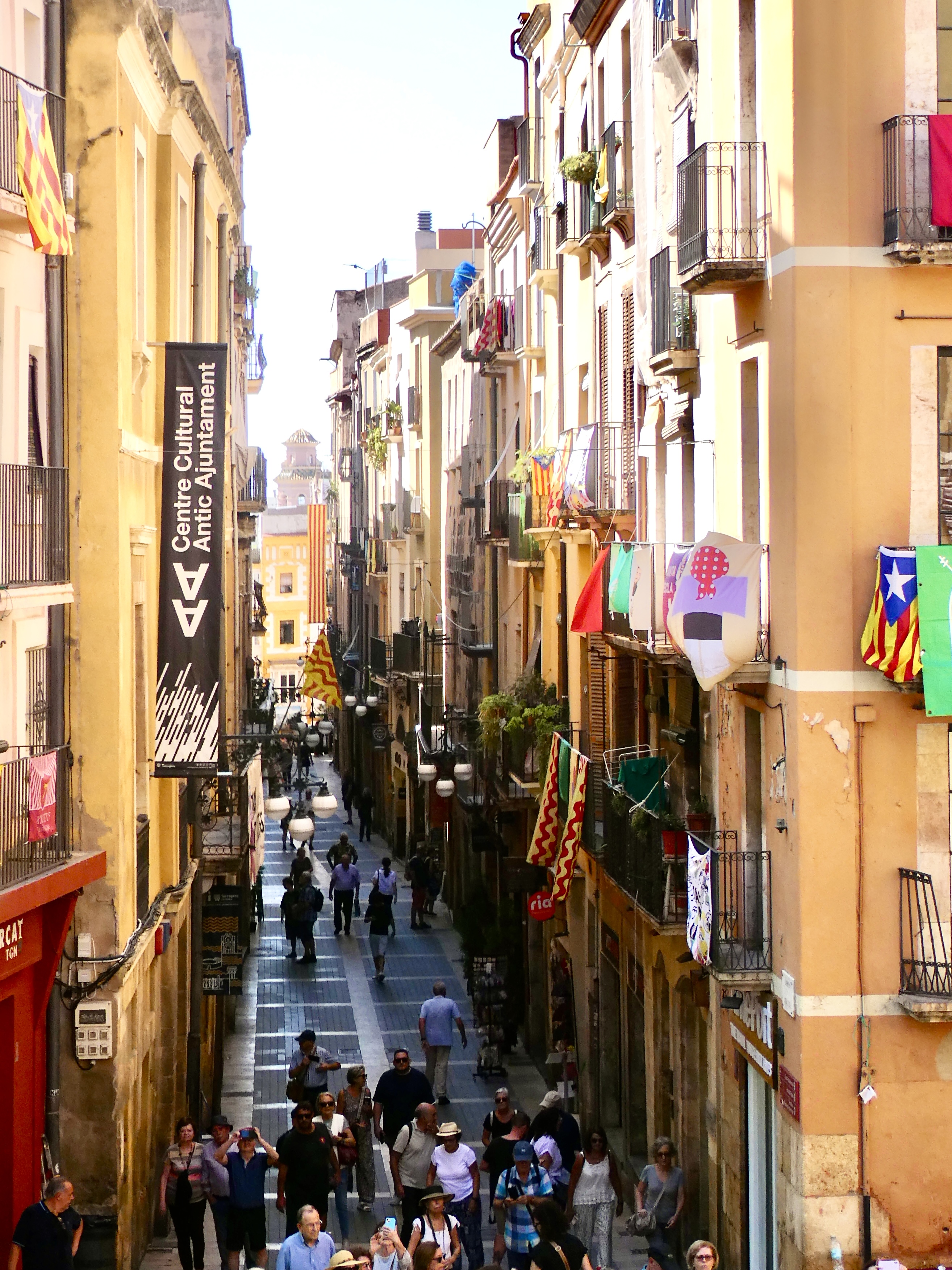
Anyway, from here, we walked down a series of narrow alleys passing a portion of an old Roman wall as well as the remains of the old Roman road. We then passed a number of buildings that appeared to have used old Roman stones in the construction before reaching the base of a staircase that led to the Tarragona Cathedral, with some parts of the church dating to the 11th century.

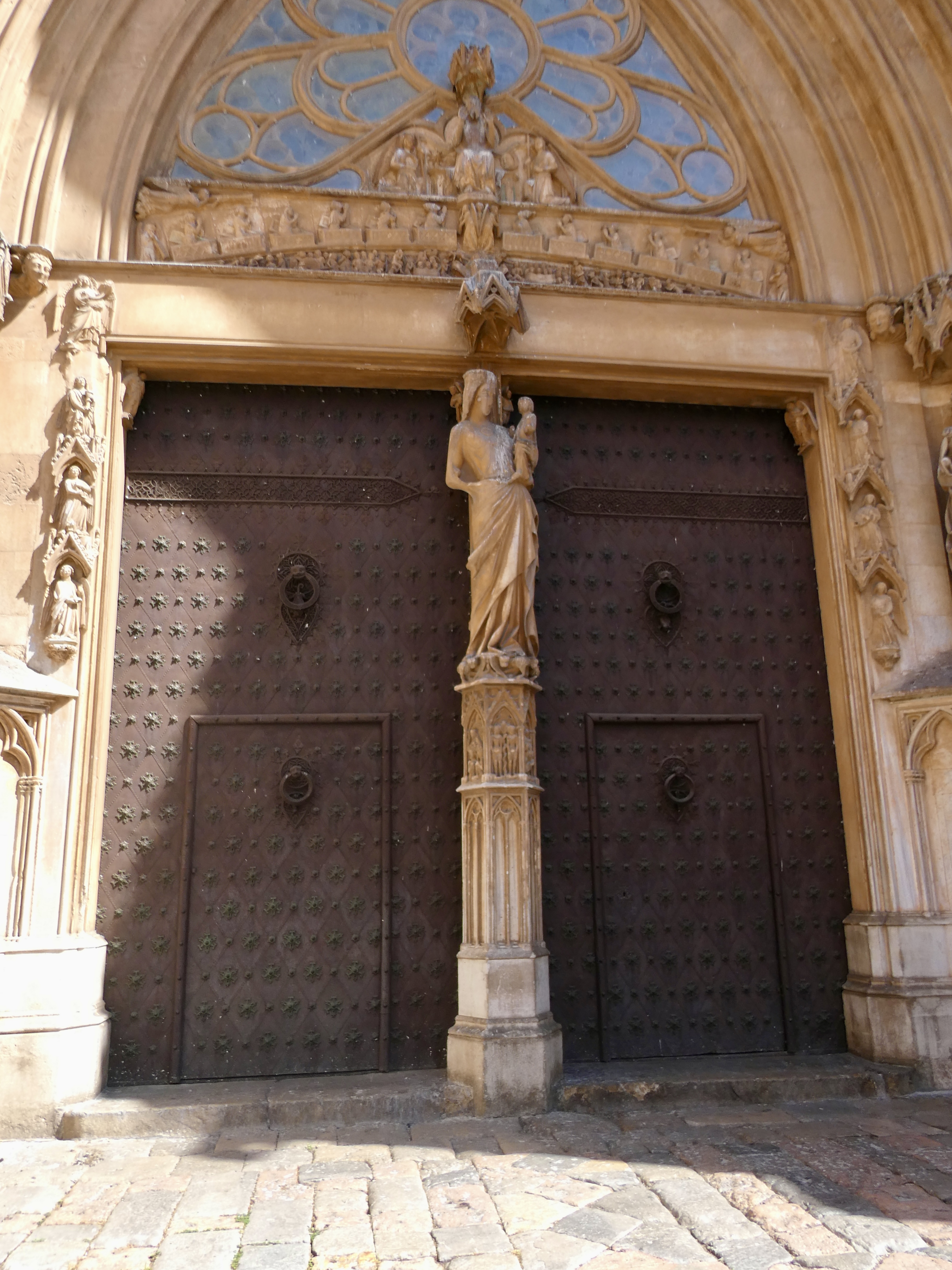
We ended up spending about 15 minutes wandering around the area. I was actually going to take a look inside the cathedral, but they wanted 5 euros to enter. Uh no sorry. Not paying to enter a church. So instead, I took a look at all the artwork on the exterior as well as the spectacular door that dates to the 13th century.

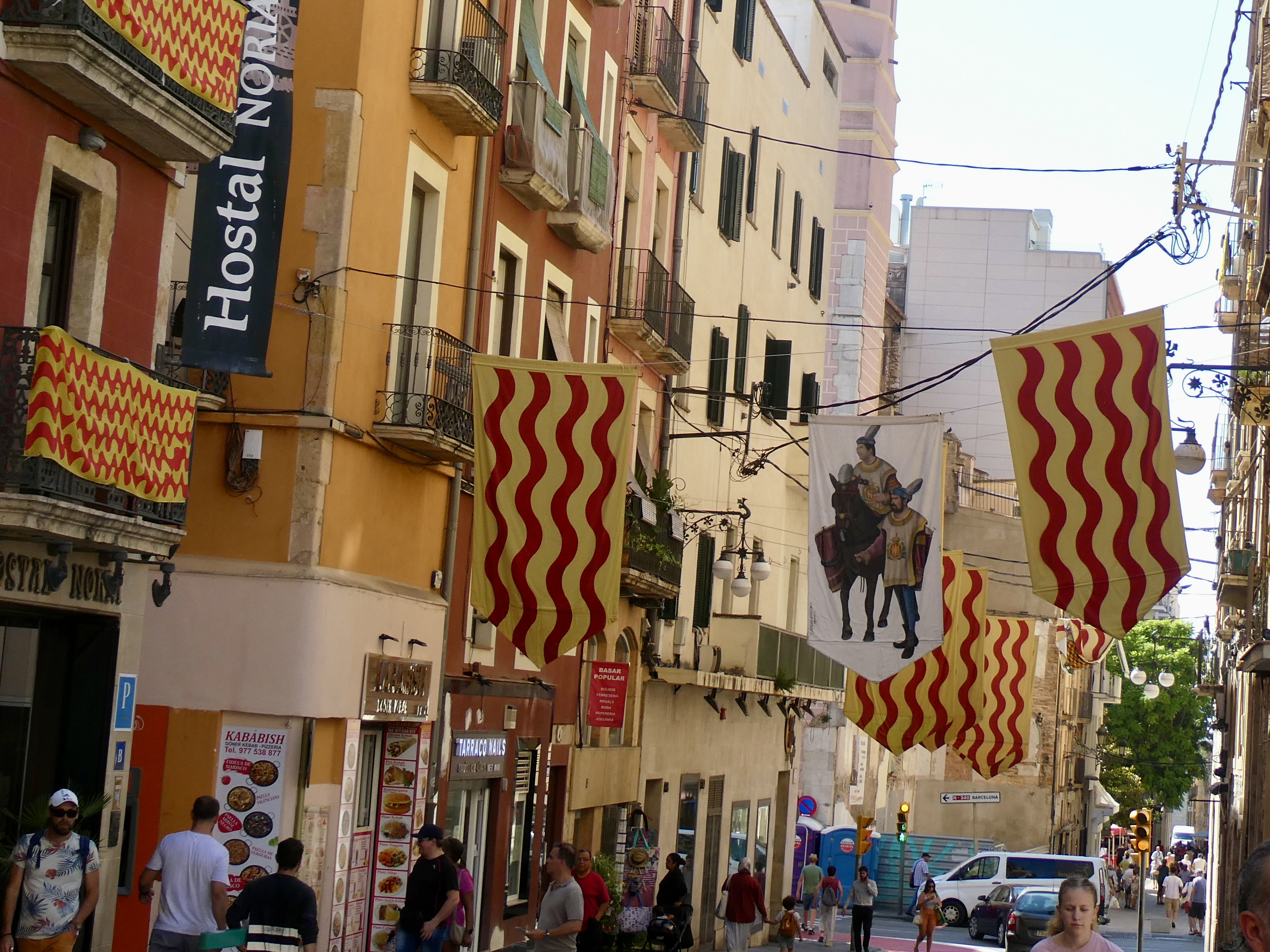
From here, we wandered down a narrow alley and made a stop at Sabora, a torrones store, where we could watch them actually making the candy. And the best part of this store is that there were massive amounts of samples. I think I tried at least 5 different kinds of torrones as well as various types of covered nuts and chocolates. I ended up buying two types of torrones as well as a lime chocolate bar. YUM! My sweet tooth thanks you.
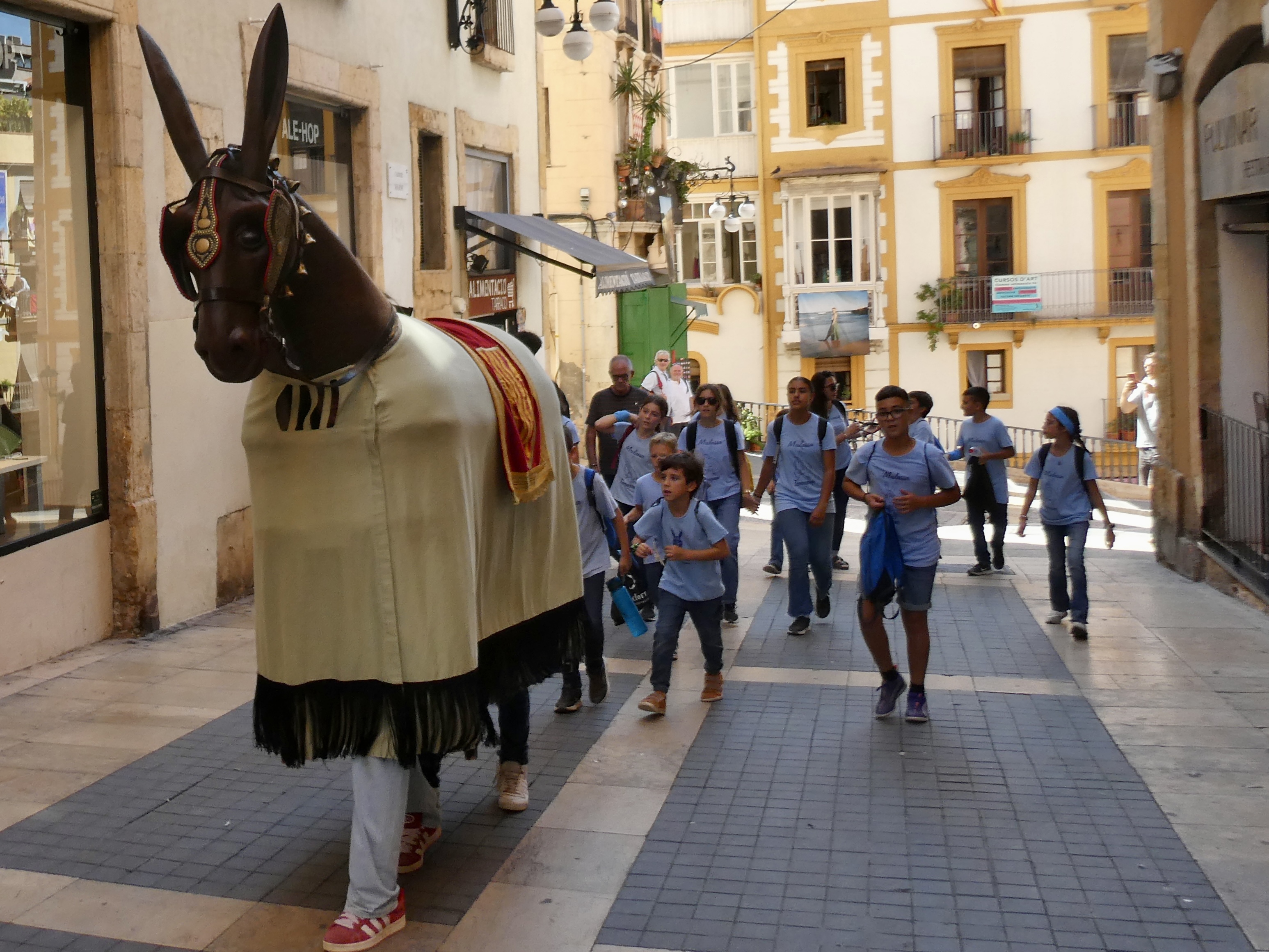
Once we had our fill of the torrones, we continued down the alley and were passed by a group of schoolchildren parading a faux donkey (with 2 kids inside). Apparently the donkey is a symbol of Catalonia and the kids were practicing for a parade this weekend for the Santa Tecla Fiesta, a huge festival in Tarragona.
By now we had completed a circle of old Tarragona. We then walked about two blocks back to the waterfront where we waited for Eduardo to retrieve the van and pick us up. Our next stop was to the very wealthy enclave of Sitges (pronounced Seet chez).
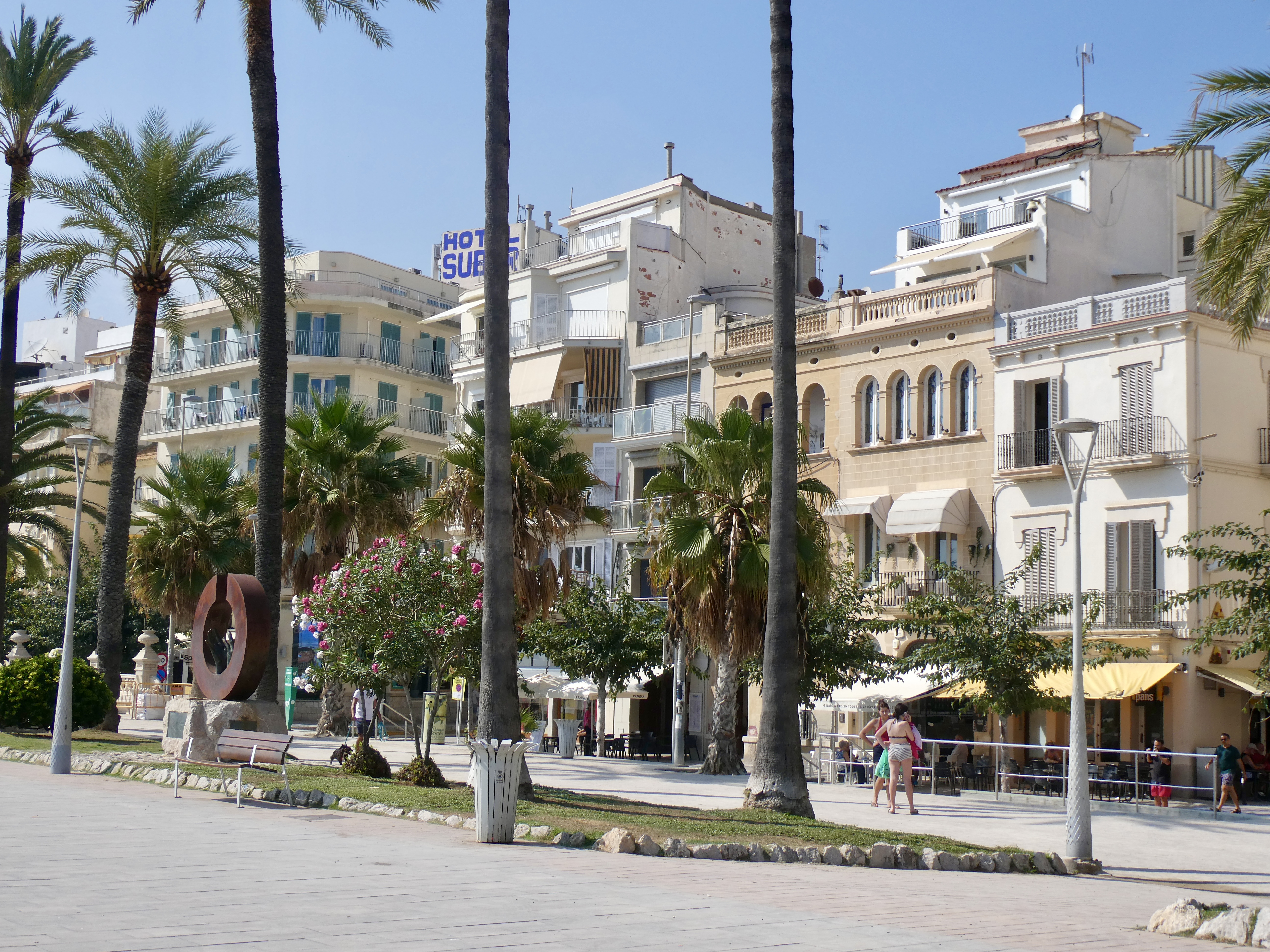
The 45 minute drive took us back in the direction of Barcelona before we turned off the freeway to an arterial road which took us to the waterfront (and past a hotel that is apparently owned by Lionel Messi). Once we reached the waterfront, Eduardo parked the van and gave us about an hour and a half to have lunch and wander around. The Peruvian lady attached herself to me and followed me to a nearby restaurant and joined me at my table. OK then.

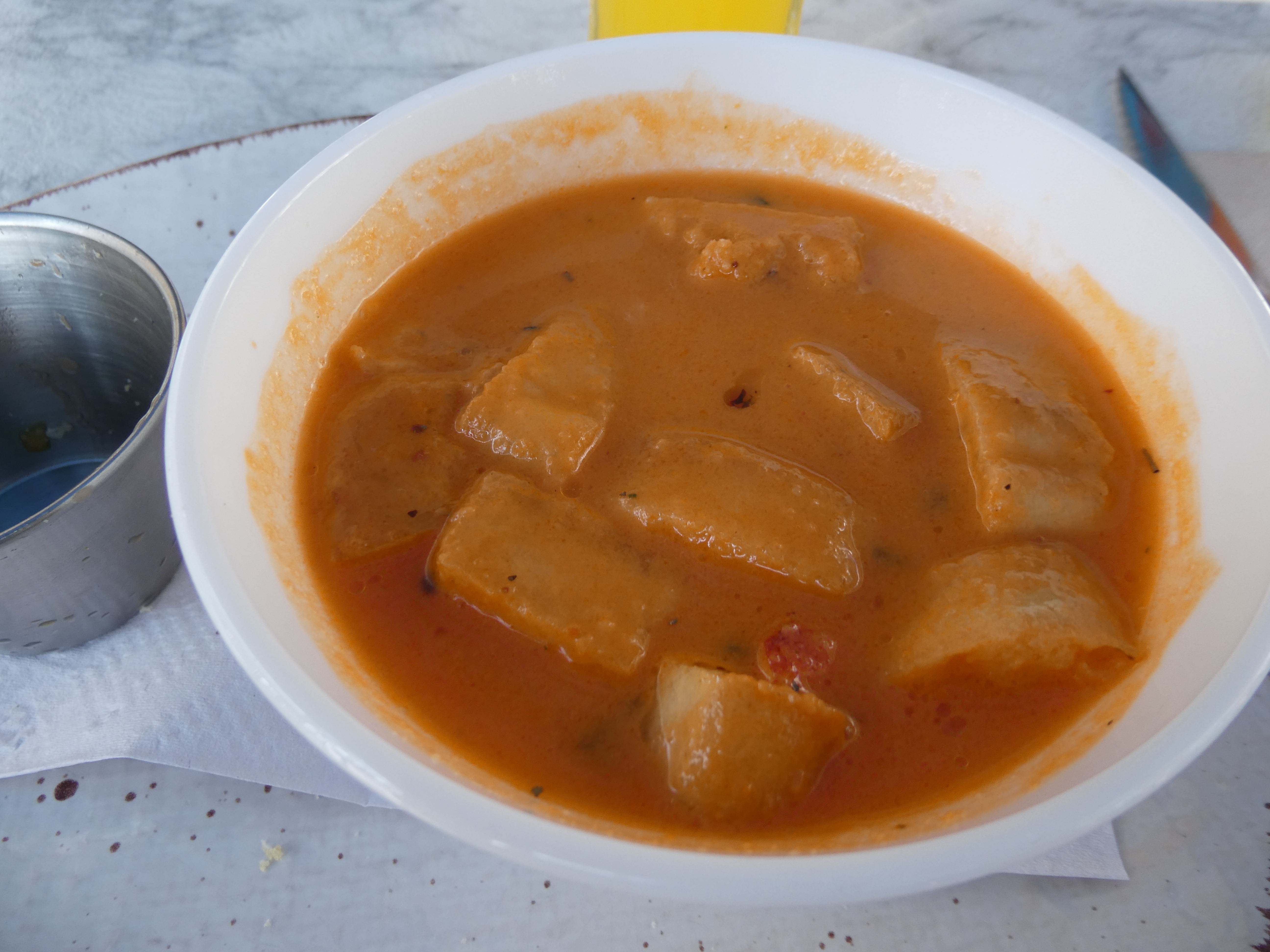
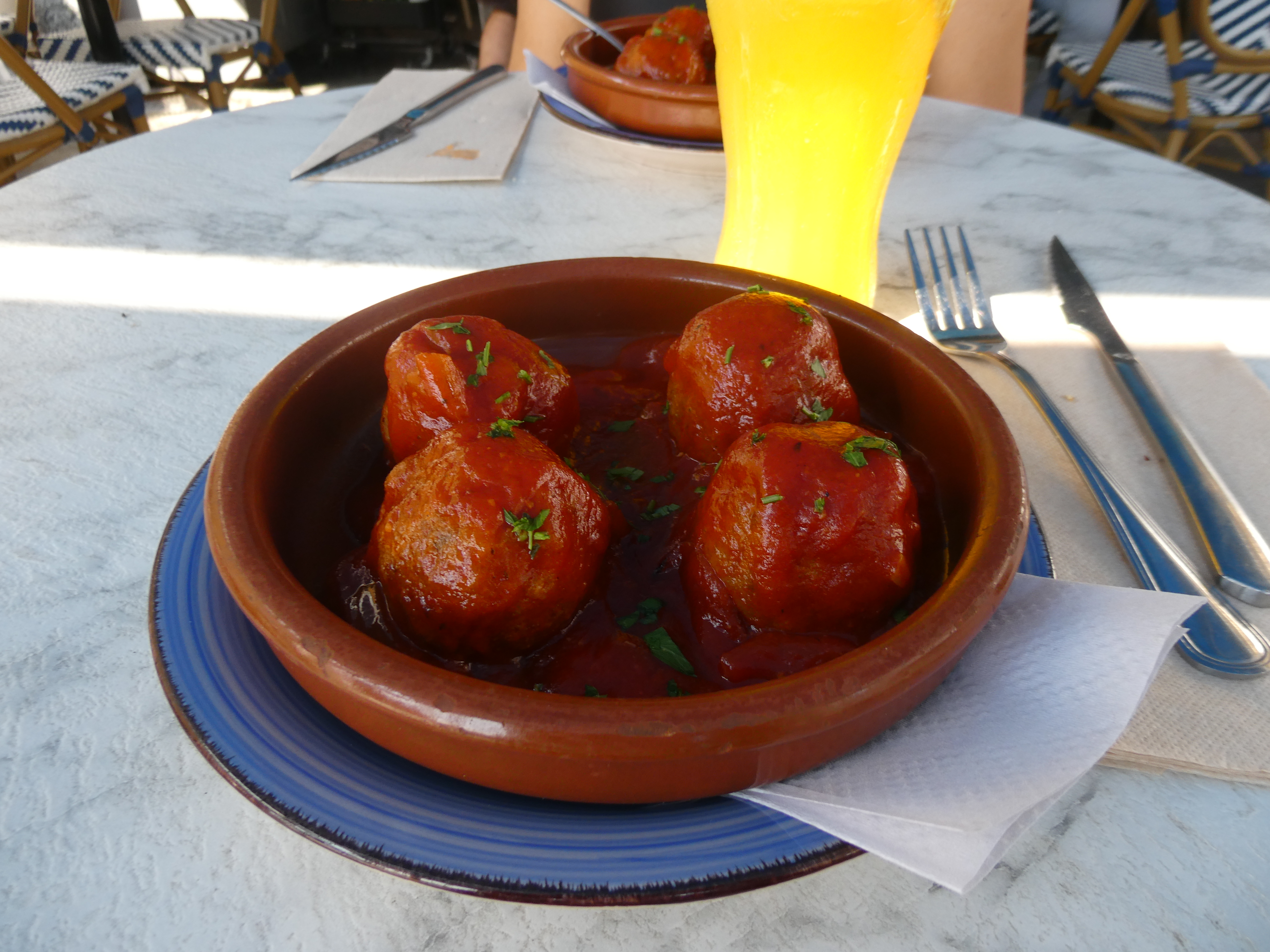

I ended up ordering gazpacho and Spanish albóndigas (meatballs). For whatever reason, the Peruvian lady ordered the same. Now the gazpacho turned out to be fantastic. The soup was served with tiny breadsticks you break up and drop into the soup along with some tiny cubed green and red peppers (also dropped into the soup). I gobbled the gazpacho down in record time and wished that I had ordered two servings it was that good.
Now the meatballs were OK, but a tad salty for my taste. Again, I should have just ordered two servings of the gazpacho.
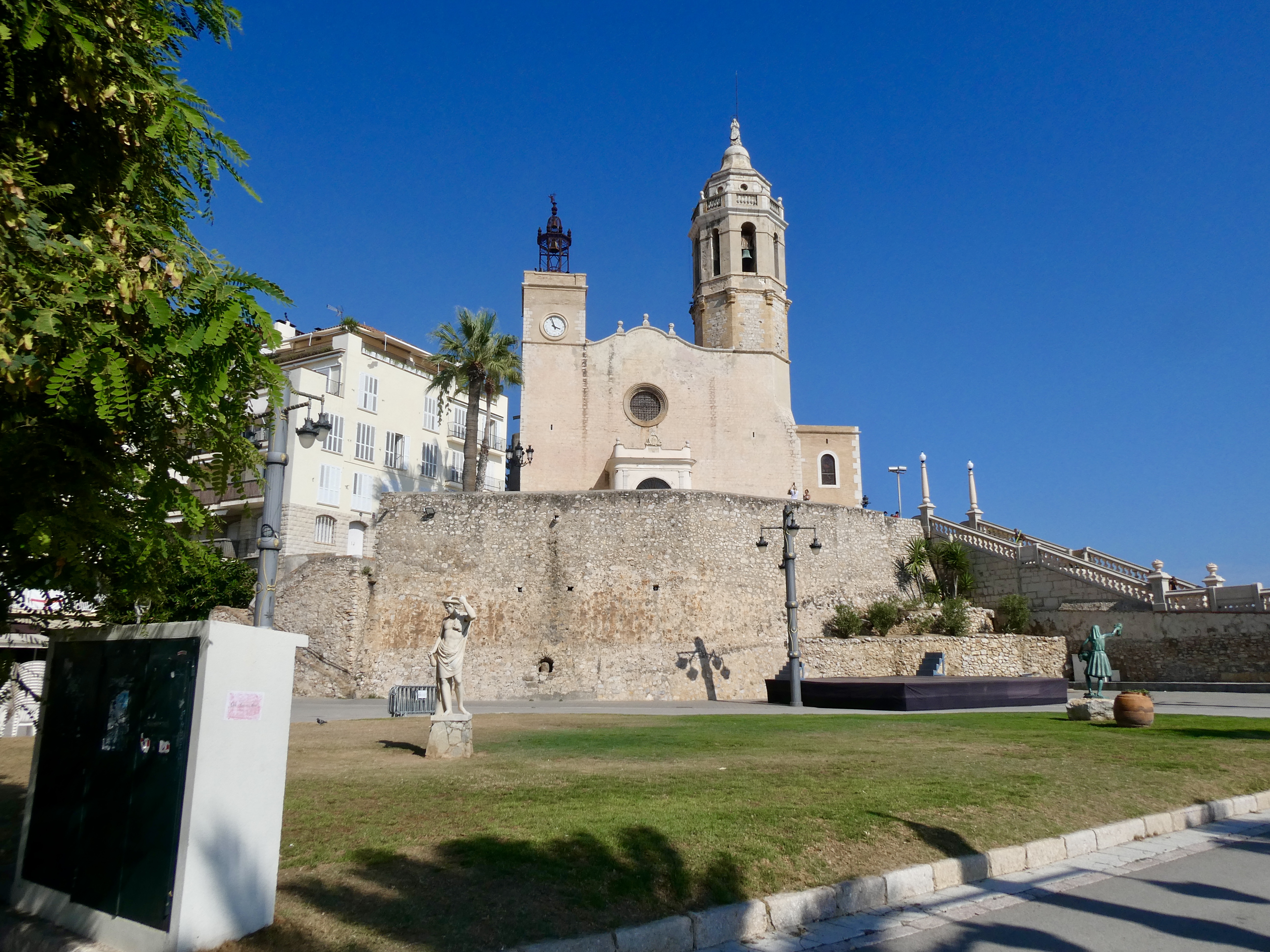
After lunch was finished, I wandered around the waterfront with the Peruvian lady in tow taking in the stunning beach area and lovely waterfront shops and restaurants. I even took a peak at the Church of San Bartolomé and Santa Tecla, which presides over the waterfront promenade. It really was a beautiful piece of architecture.
At 4:00, we met back up with Eduardo for a drive into the hills above Sitges where the “rich and famous” own homes, including numerous members of Barcelona FC, Madonna and Bruce Springsteen. The views were indeed magnificent and the area was supremely private (in fact there is a no fly zone over Sitges … seriously) so I could understand why the uber wealthy flock to this area.

After we took in the views, we jumped back in the van for the drive along the coast and back to Barcelona. I was dropped off first and was into my hotel by shortly before 6:00. Yay. Made up for the 2 hour detour the other day when we were driven all the way out to the airport to drop off a couple first before doubling back and dropping me off in the city. Still don’t understand what the heck the guide was thinking.
Anyway, that is day 5 in Barcelona in the books. Tomorrow I am doing 5 hour tour of the Sants area of Barcelona, which includes a walking food tour (yes more food).