
Today was my second food tour, but this time I was headed to Mercat de Santa Catarina in the El Born neighborhood, a mere 5 minute walk from my hotel in the Gothic quarter. (The road a block from my hotel is the dividing line between the Gothic quarter and El Born.)

Anyway, promptly at 10:45 our guide Alex arrived along with another couple from Austin, Texas. Then we proceeded to wait for three other folks (from Oregon) who apparently can’t follow directions and were waiting at the back entrance to the market (despite the instructions clearly stating the front of the market).
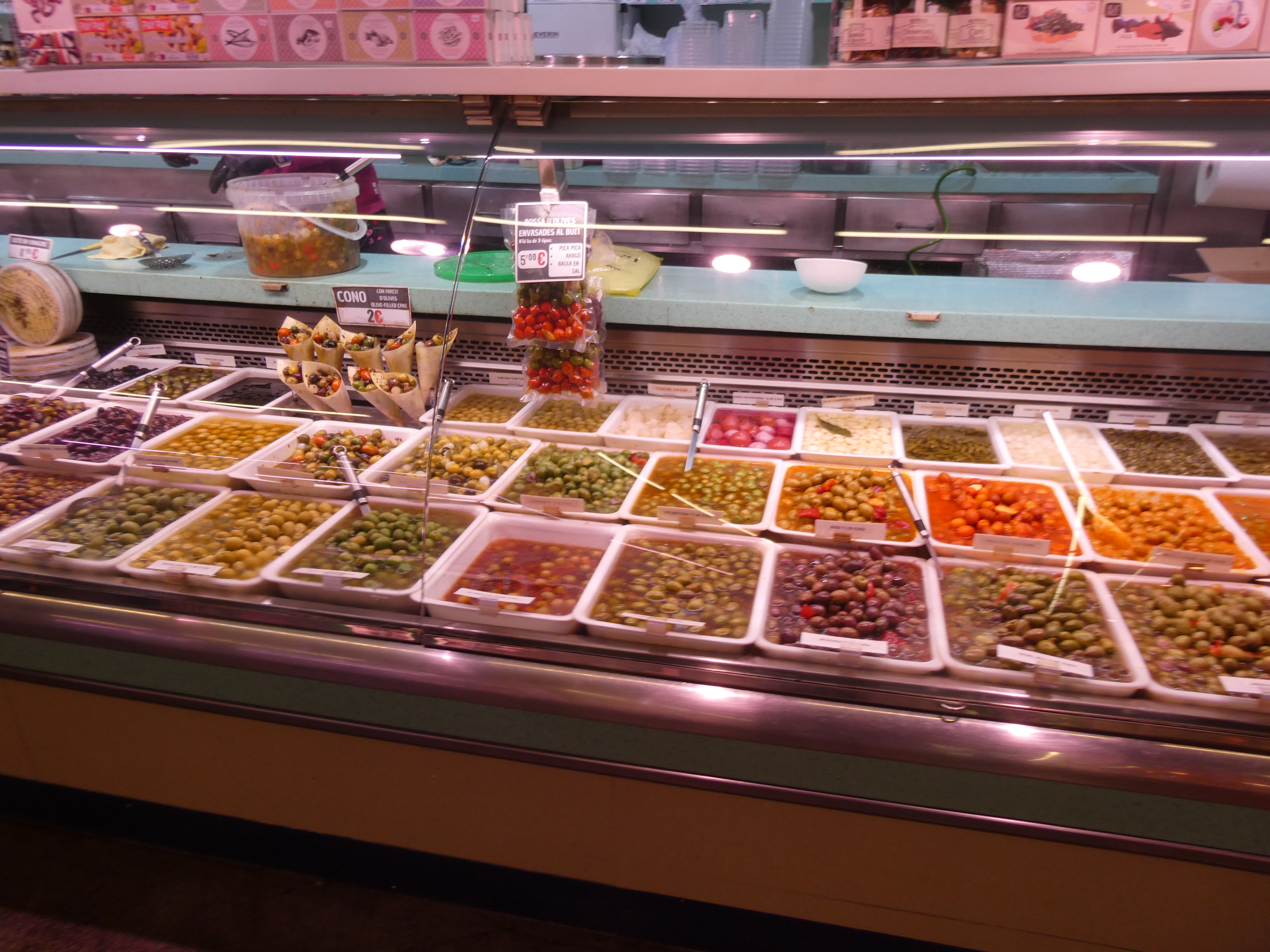
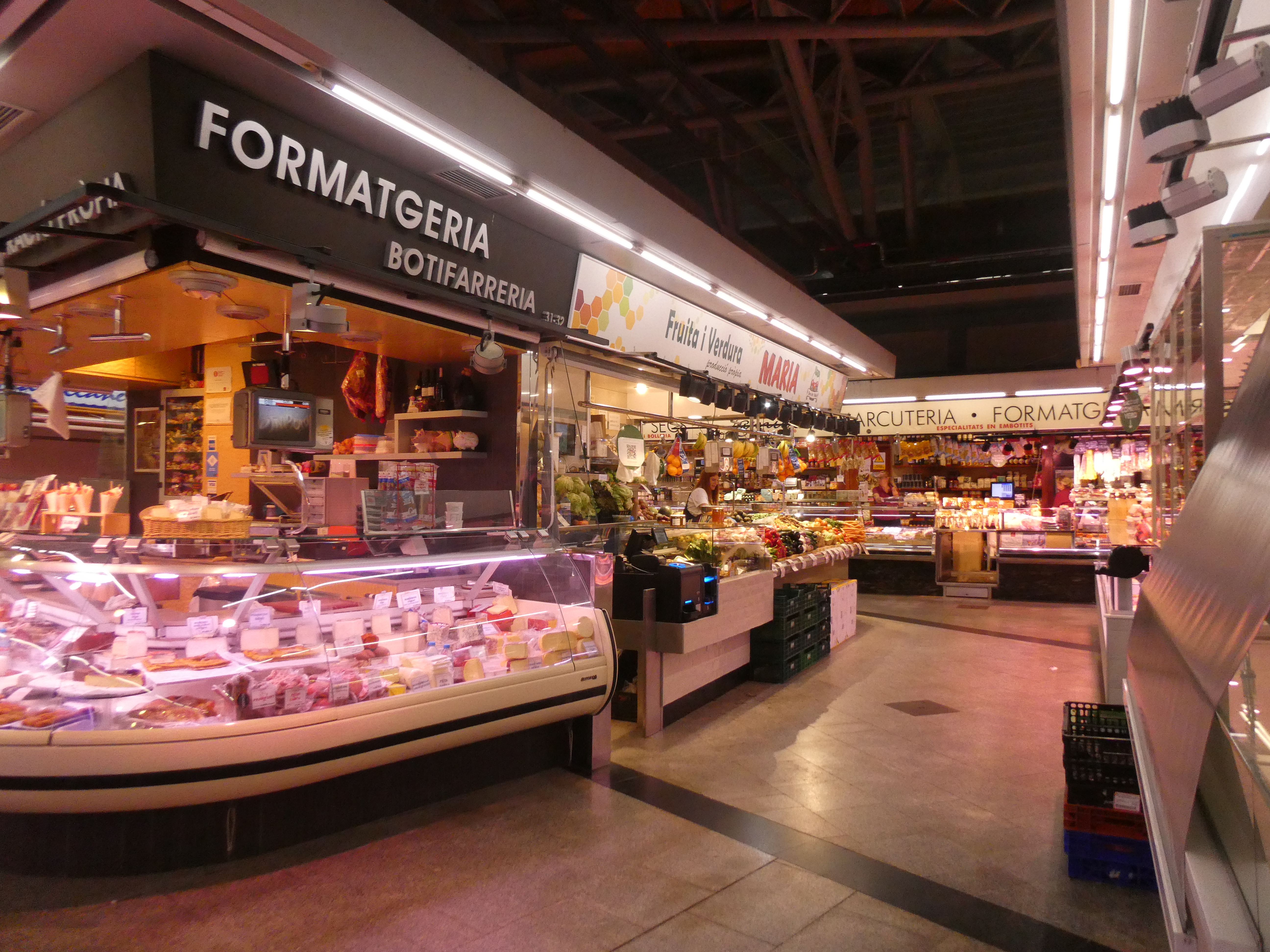
We eventually tracked them down and after a brief overview of the game plan for the day, we set off on a tour of the market learning about the various produce in the market and a myriad of interesting factoids. For example, there are more than 230 types of olives grown in Spain. Spain exports a significant portion of olives to Italy which then presses the olives, bottles it and bills the olive oil as Italian extra virgin olive oil. Fruits and veggies are rarely served in restaurants because they are so cheap to purchase in Spain and going out for dinner is expensive so folks typically just order meats. And my favorite: never buy fish in Spain on Mondays because most of the fishermen take Sunday off so any fish being sold is not fresh.
And while Alex was busy throwing facts at us, we also tasted three kinds of olives: a small green olive, a larger green olive marinated in paprika and garlic (yummy) and a black olive.
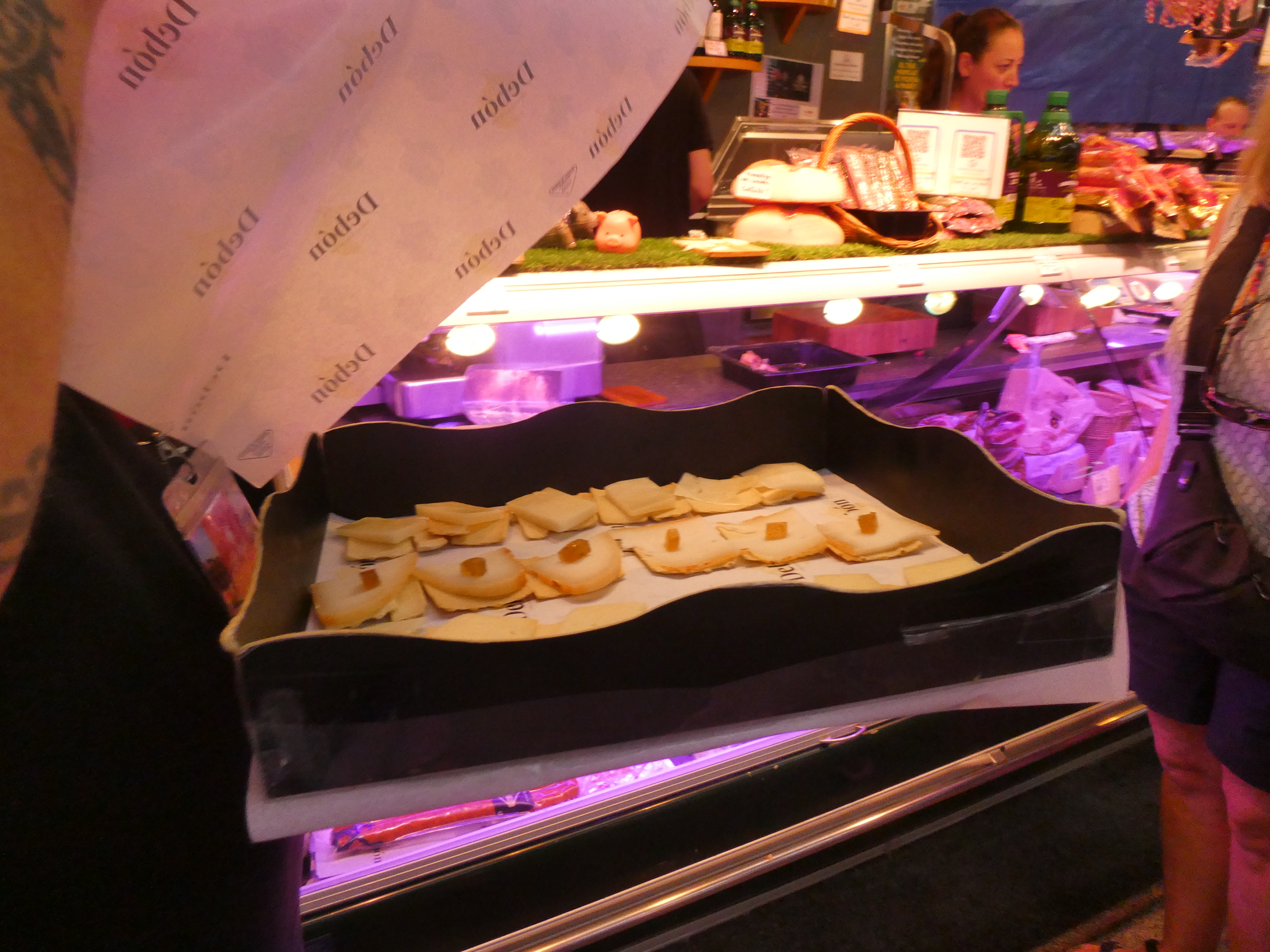
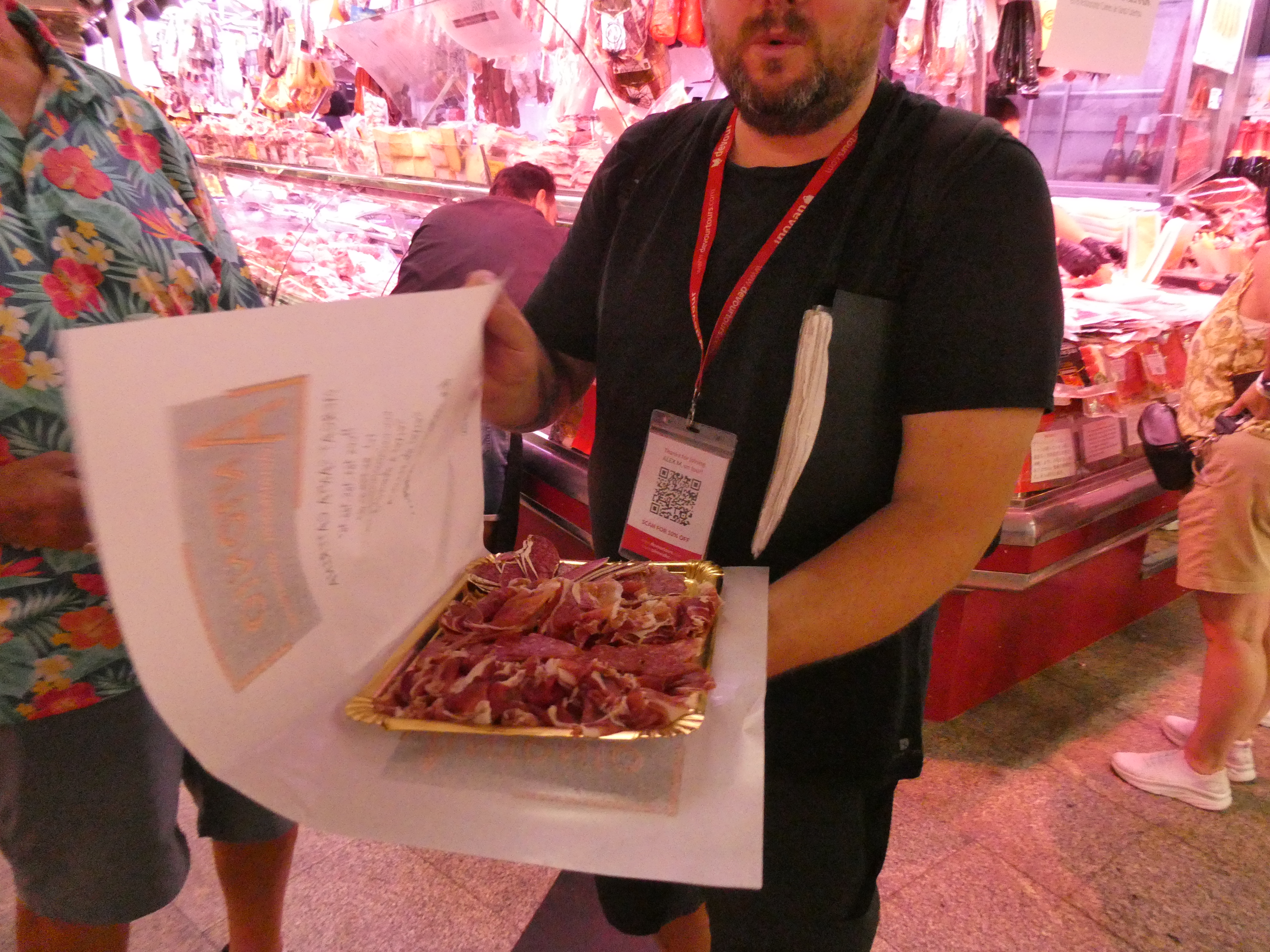
So once we had done a tour of the market, Alex picked up three types of cheeses and a plate full of meats and we went outside, found a bench and began the tastings. Now of the three cheeses Alex gave us to taste, an aged goat cheese, a manchego and semi-hard goat cheese, my hands down favourite was the manchego. The cheese had a bit of a bite and was really tasty with a bit of fig jam on top.
Now when it came to the meats, we were given tastings of fuet sausage, salami, and two kinds of Iberico ham. And apparently, Iberico ham has grades with the white grade being the cheapest, followed by red grade, green grade and black grade being the most expensive at upwards of 500 euro per kg. We were tasting the red grade and the green grade and there was, surprisingly, a major difference between the red grade and the green grade with the later being much softer and flavorful.

Anyway, once we finished the meat and cheese, we went back into the market where Alex showed us the old monastery walls and foundation of the 13th century Santa Catarina Monastery on which the market now sits. In fact, most of the old quarter of Barcelona now sits atop ruins dating all the way back to Roman times.
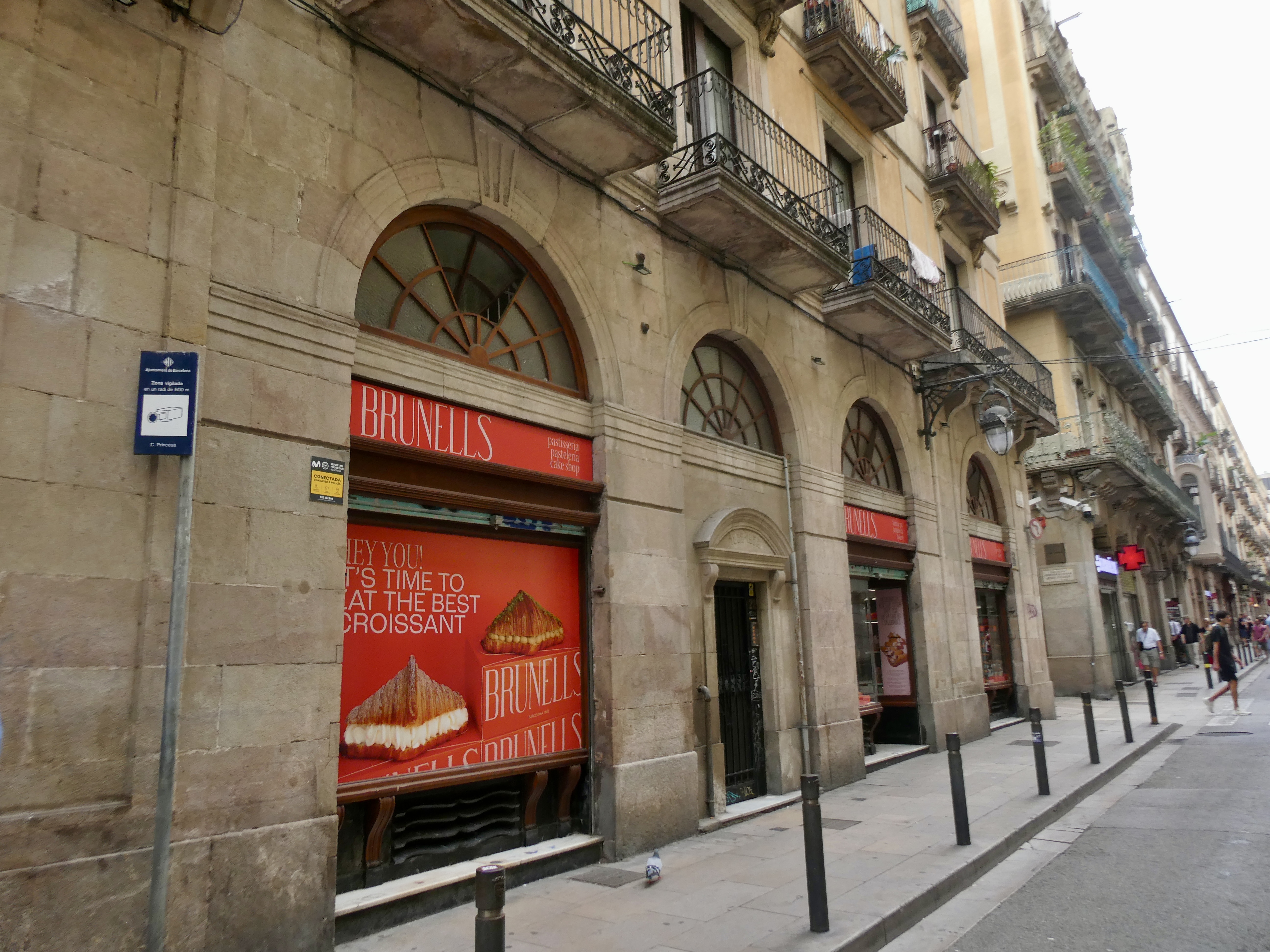
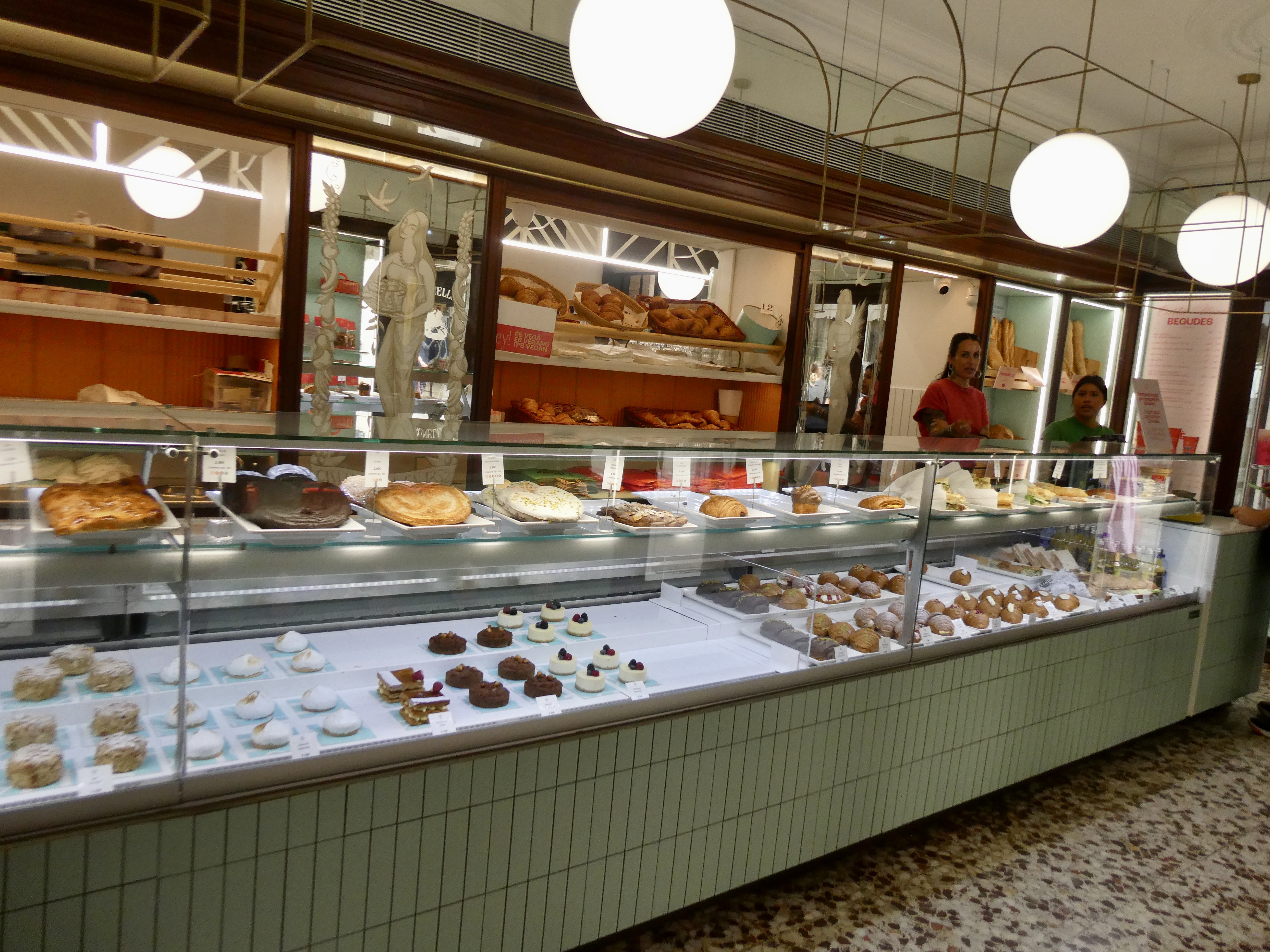
So after the market visit and apps, we headed deeper into the El Born quarter walking down narrow alleys, past old homes that have been converted into apartment buildings until we reached our next stop, Brunells, a bakery that has been at this location since 1852. Brunells is renowned for its pastries and has received numerous awards over the years for its croissants.
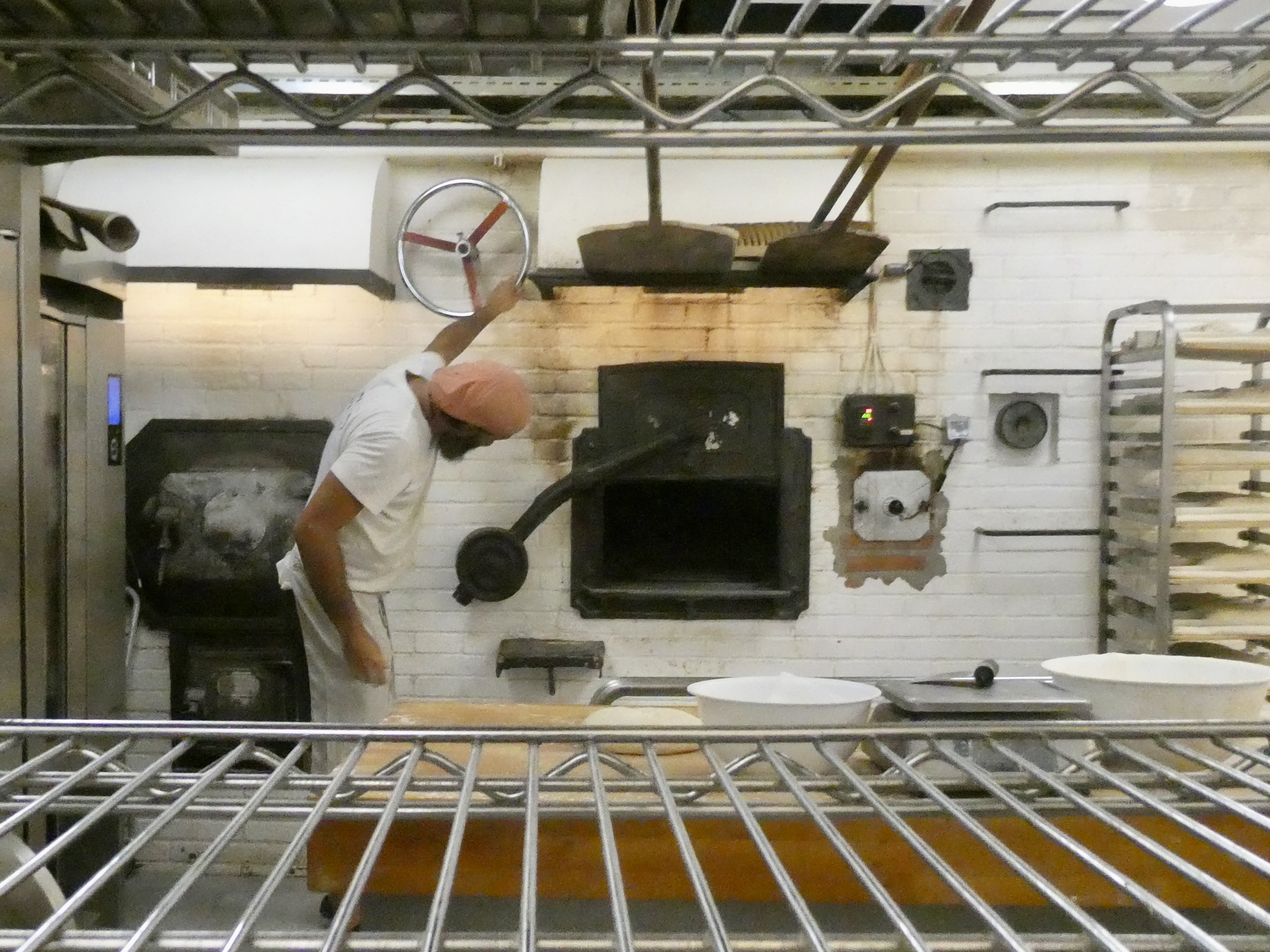
And once inside, I could easily understand why this bakery has been in business for 150 plus years. The pastries were gorgeous and the aroma that filled the bakery was heavenly. We were given a brief tour of the establishment and were even able to take a look at the original oven that remains in use to this day. (Unfortunately, because of the amount of heat the oven generates, the oven is not used during the summer months … pretty much March until November).
Anyway, after the brief tour Alex handed us each a bag with some pastries and told us not to open them as we were going to sit and eat the pastries after our next stop with Alex providing a bit of information about each pastry.
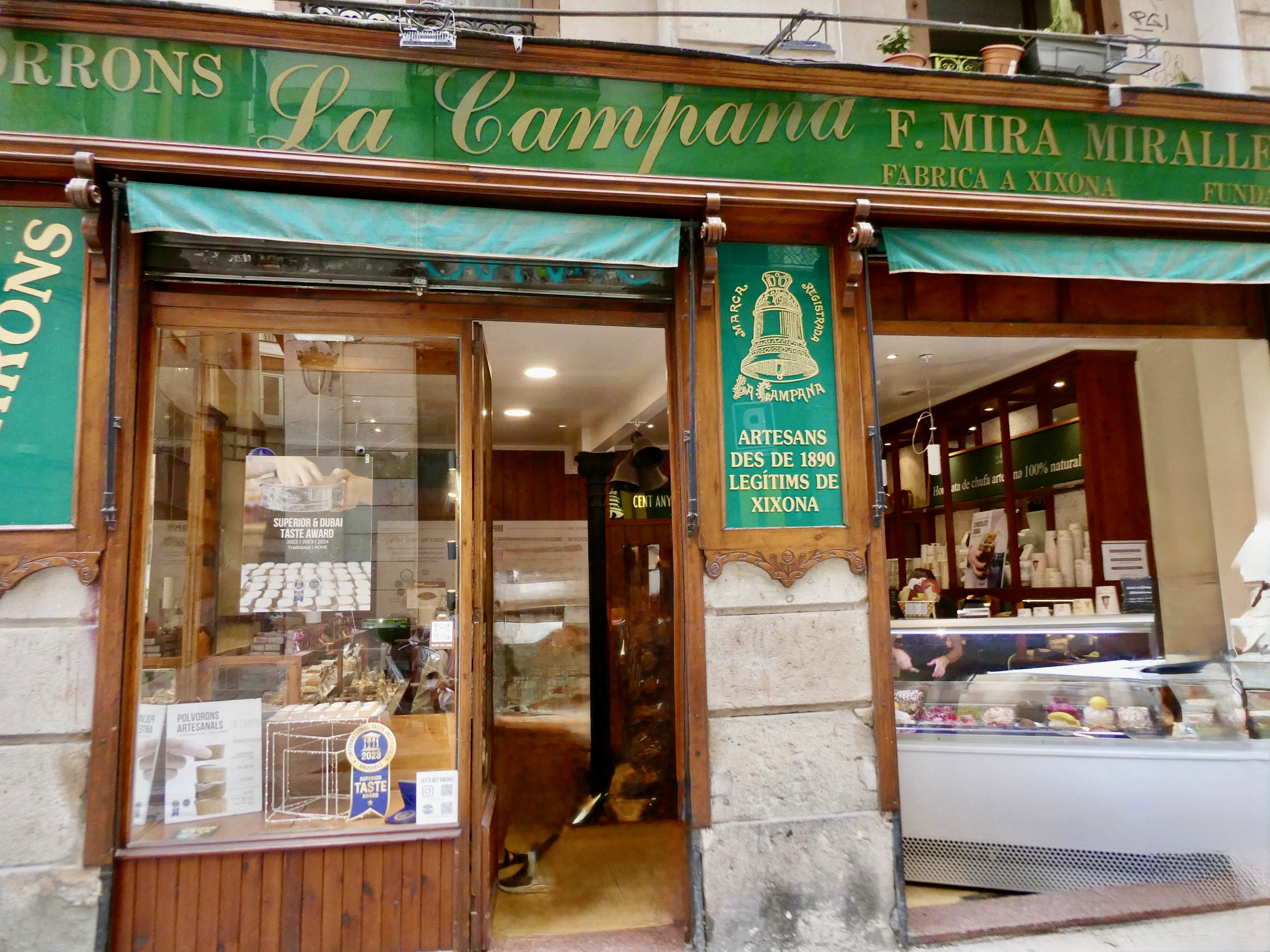
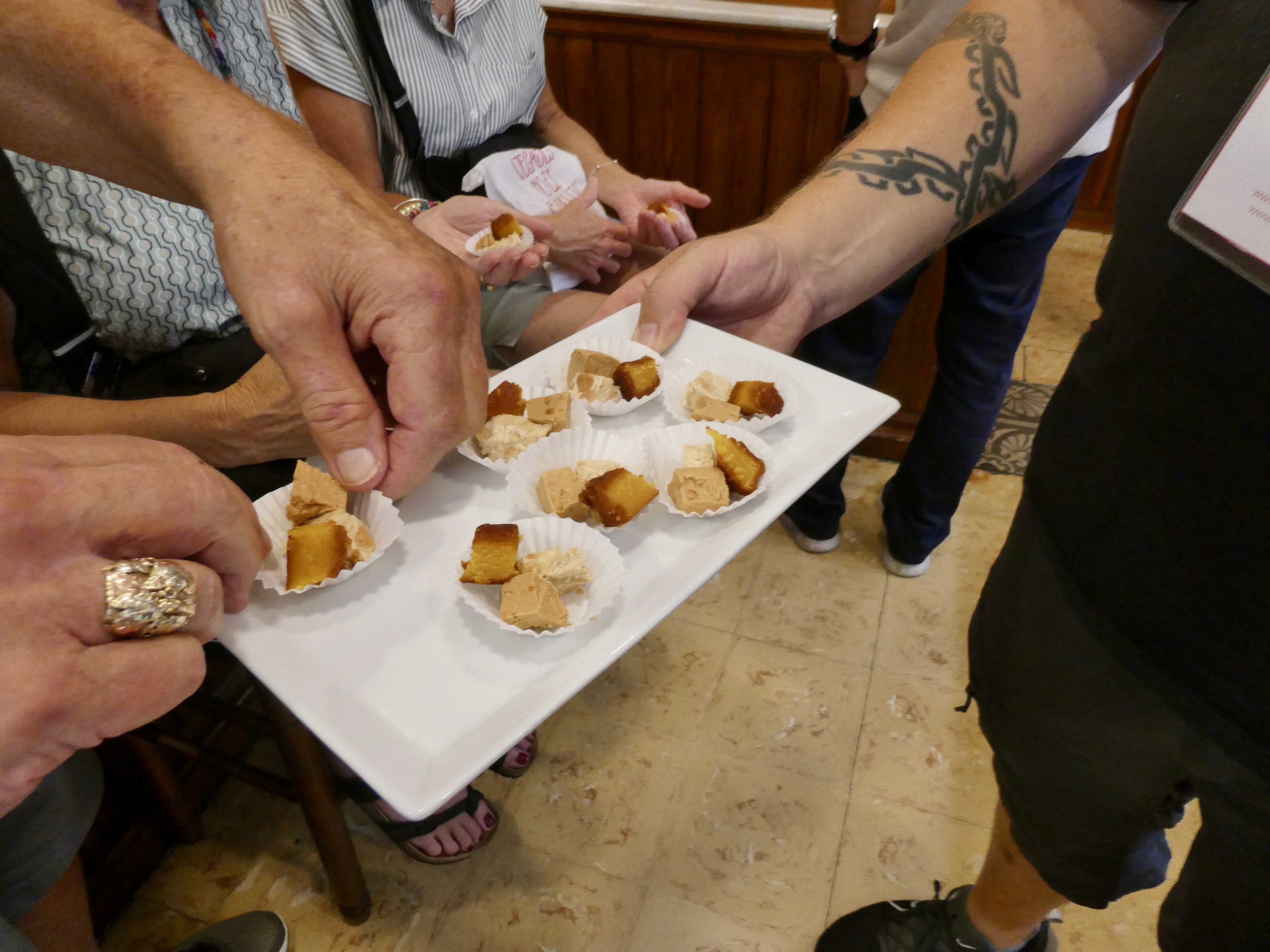
So we pushed on to a little shop less than a block away known as La Campana which dates to 1890. The specialty of this shop is ice cream and torrons, a type of candy confection made of sugar, eggs, honey and almonds. We were given three tastings which included Alicante (a hard nougat), Jijona (a soft nougat) and Yema Quemada (a carmelized marzipan). Now I enjoyed all three, but my hands down favourite with the Yema Quemada. It was soft carmelly goodness. YUM. In fact, it was so good I bought a little package to take with me.
And in addition, to the candy we were each given a glass of Horchata, a chocolaty type drink that was cold and really, really tasty.
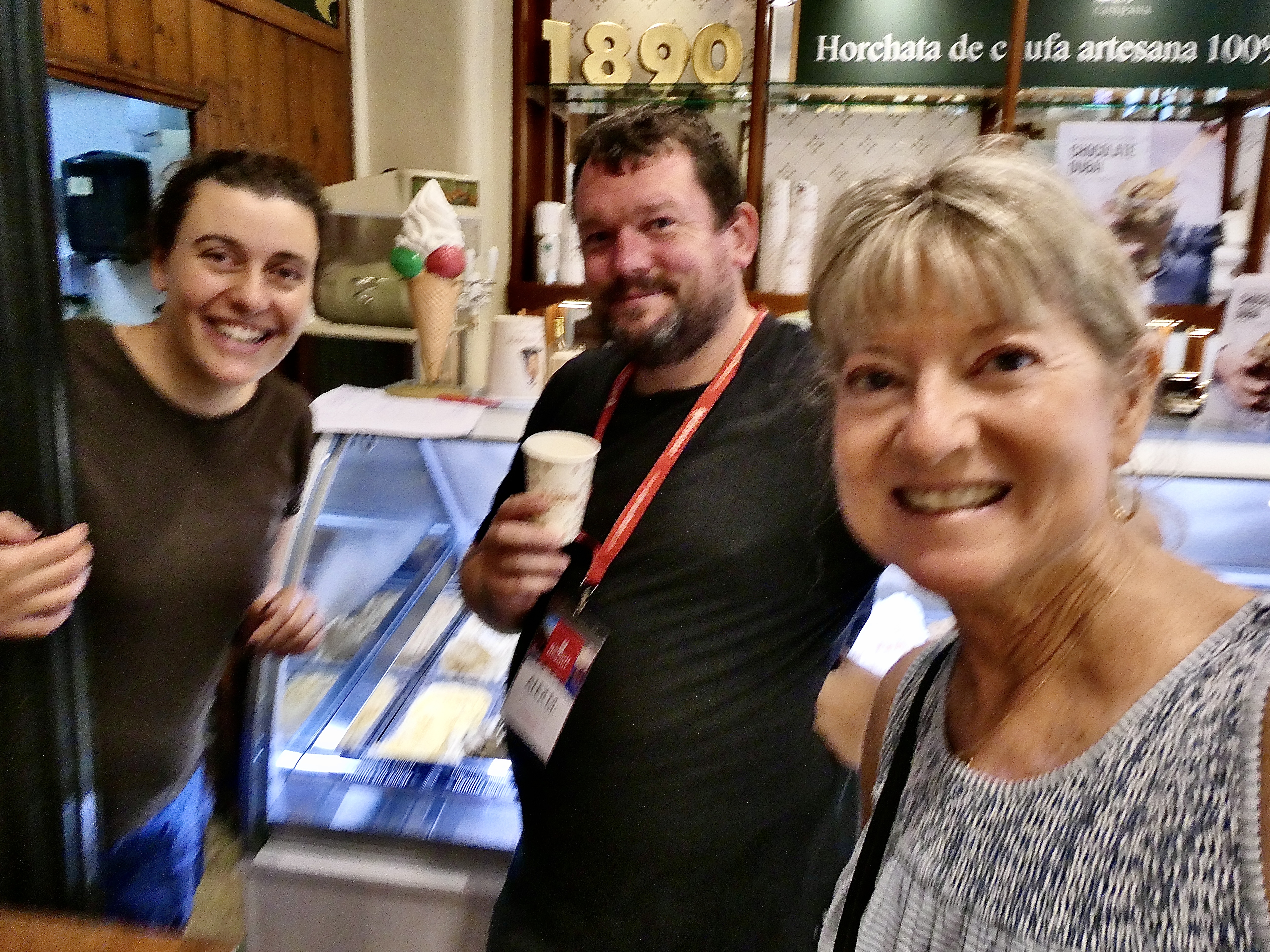
Now I hung around the store for a bit while Alex paid and this proved to be a good idea because as I was standing there the great granddaughter of the original owner (who now runs the shop with her sister) came out for a quick visit. Now unfortunately, I was the only one remaining in the store with Alex so the others missed out on a selfie with the proprietor. Shame on them.
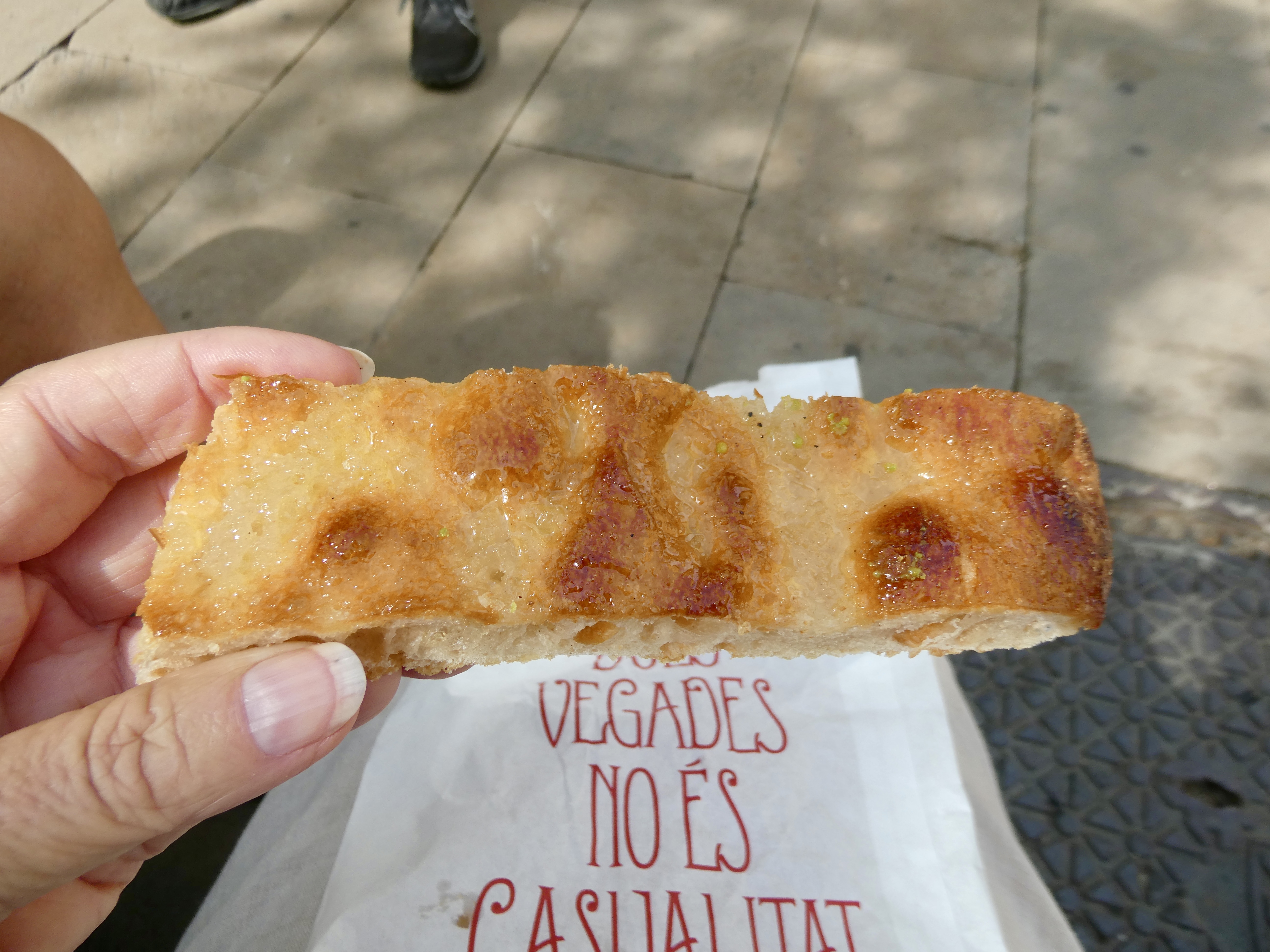
Anyway, from here, we took a little walk through the neighborhood before heading down an alley to a little square where we took up residence and opened our bag of goodies from Brunells, which contained two pastries. The first pastry we tried was something called a croisstick and was made with the remnants from the croissant pastries Brunells makes every morning.
Now the interesting thing about the croissant pastry is that the Spanish make it with either olive oil or lard. They do not use butter, which according to Alex is for heathens. Ok then.
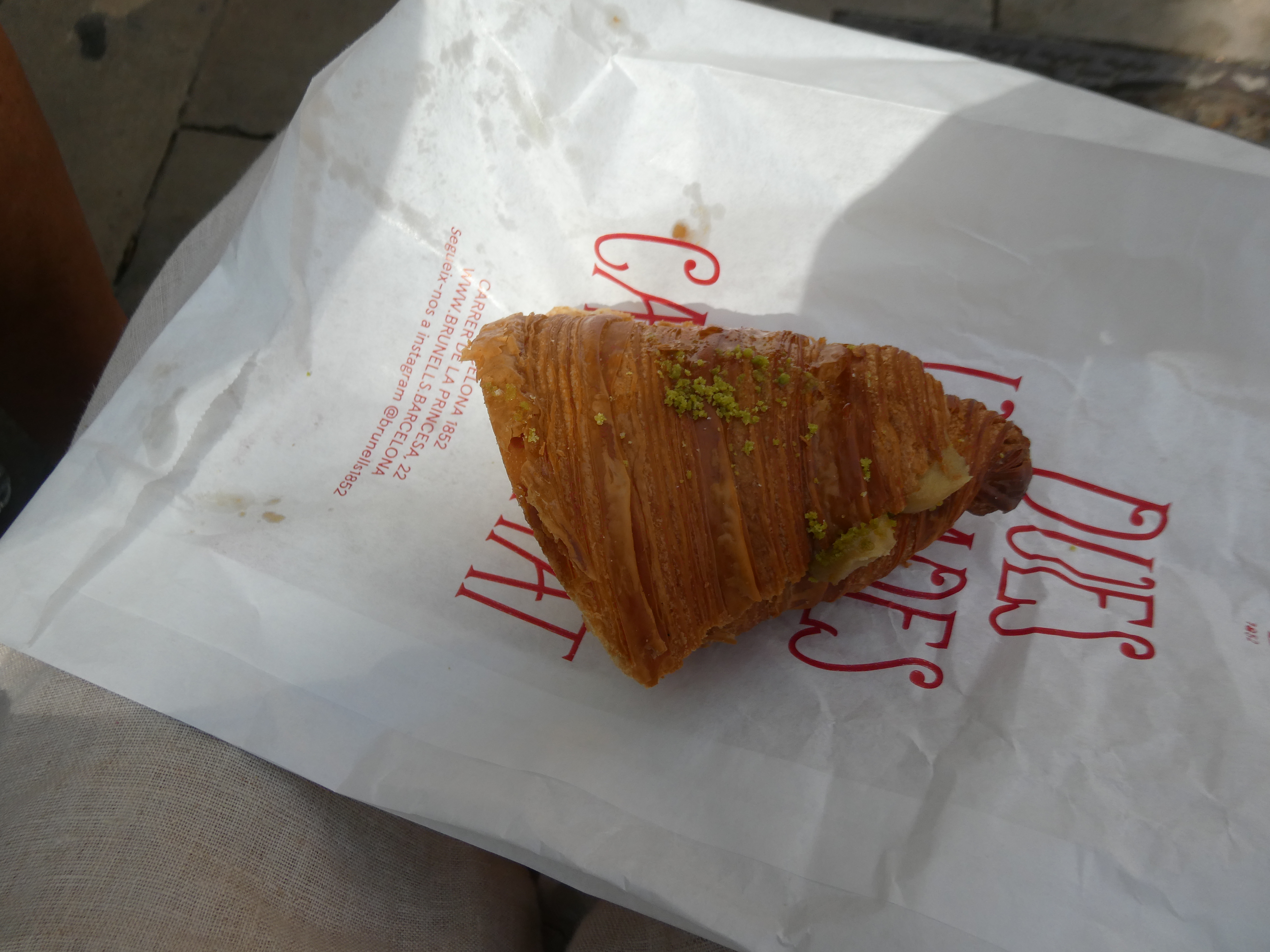
And this lovely croisstick was baked golden brown with caramelized sugars on top. It was sticky sweet and was absolutely fabulous. The second pastry was Brunells famous croissant. The croissant we had was filled with a pistachio cream and was hands down my favourite food of the day. It was ooey, gooey sweetness. I could have easily eaten a second. It is no wonder that Brunells has won numerous awards for their croissants.
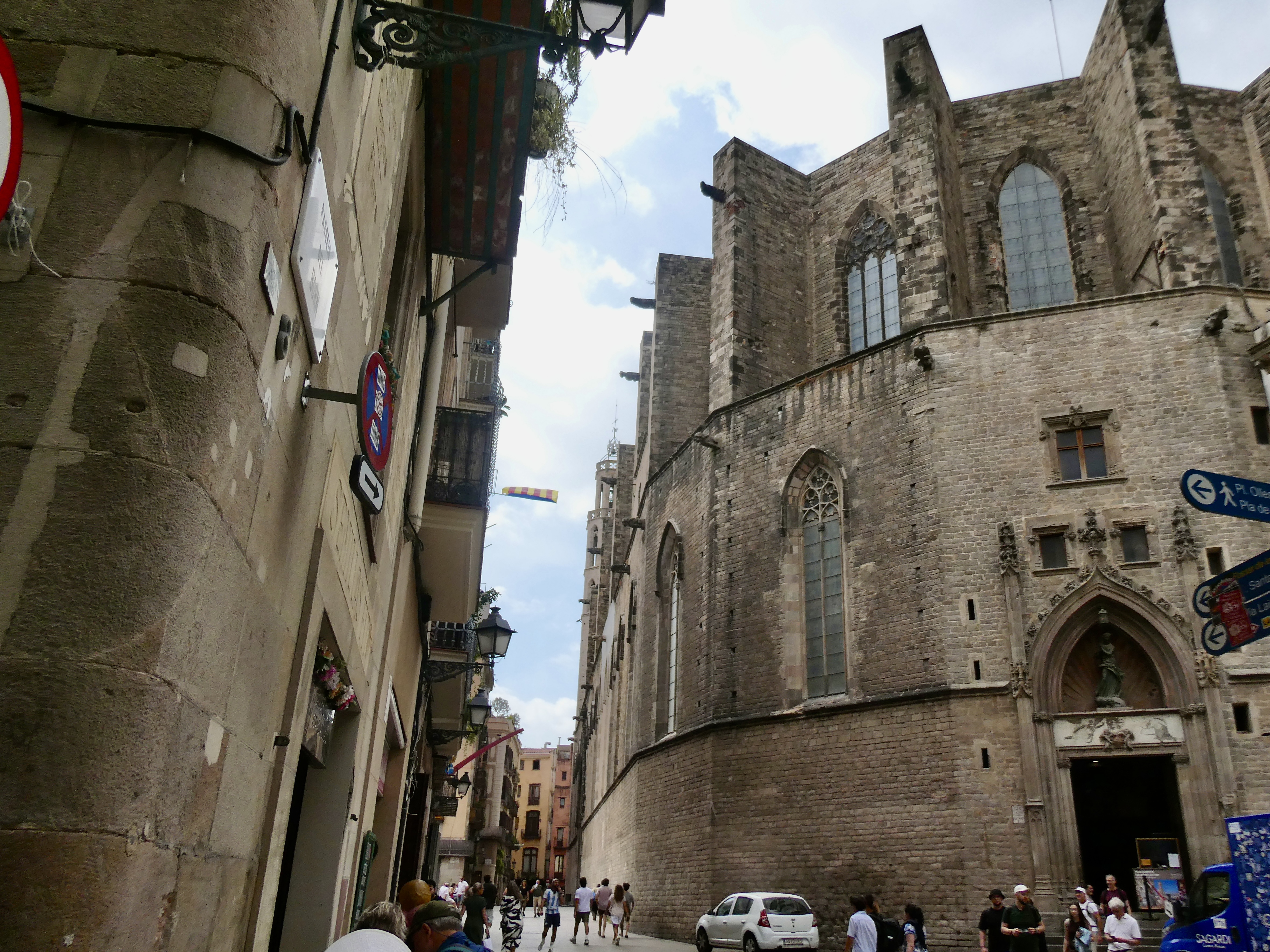
After the pastries, we walked to Casa del Born and the Santa Maria Del Mar church, which I had previously visited on my first food tour on Monday night.
We then continued on down a number of narrow alleys before reaching a busy thoroughfare near the waterfront where we crossed and entered Barceloneta, the former fishing village area of Barcelona. Today, it is a hub of bars, restaurants, docks and of course, the cruise port. Here, we took a seat and Alex provided us with an overview of the area and information about the average living conditions of the folks in Barcelona and the concerns that Barcelona residents have expressed about over tourism. (Alex is of the opinion that a couple of protests have been grossly blown out of proportion and Barcelona residents generally welcome tourists, although they would like to see tighter controls on the cruise industry.)
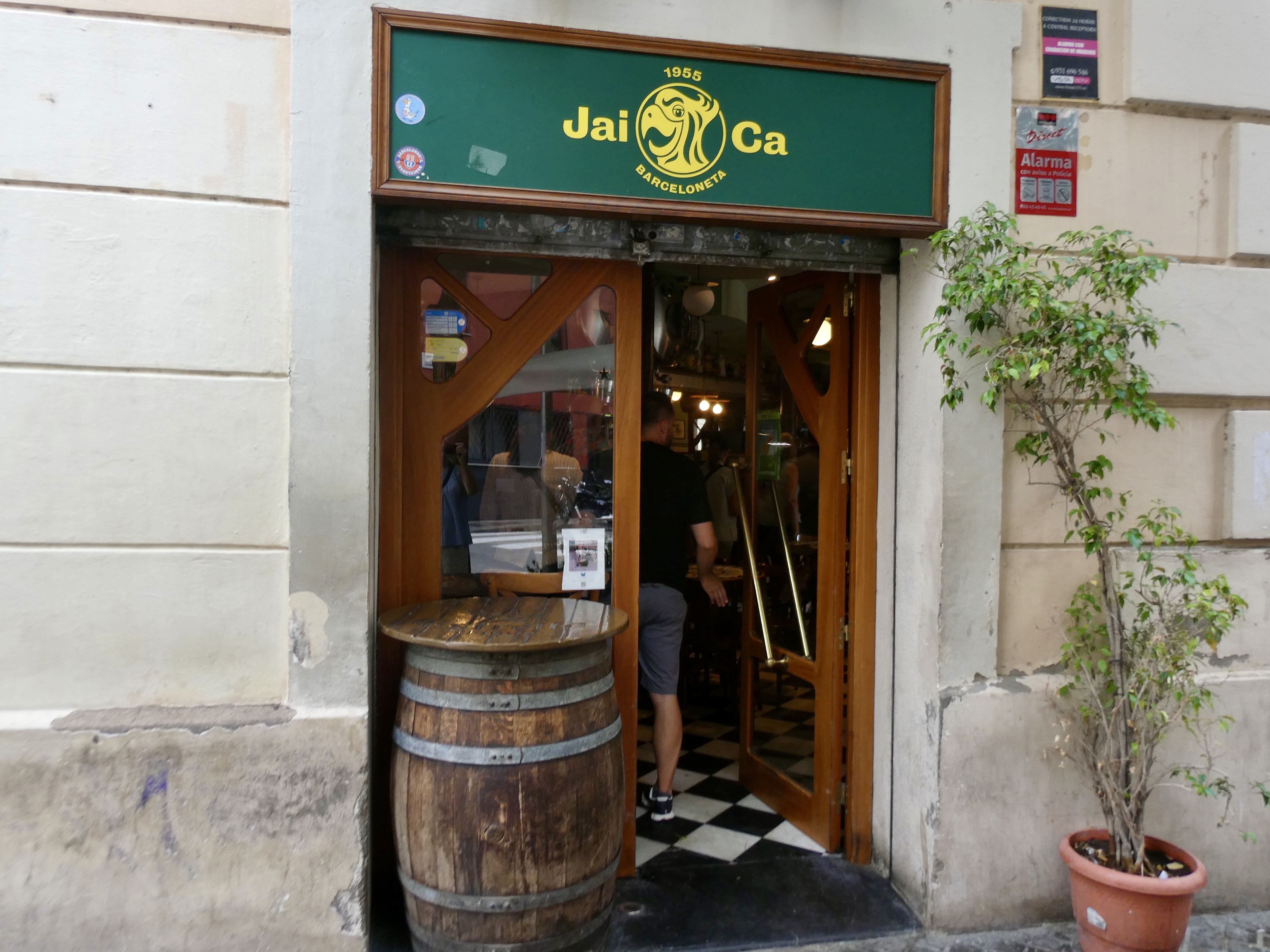
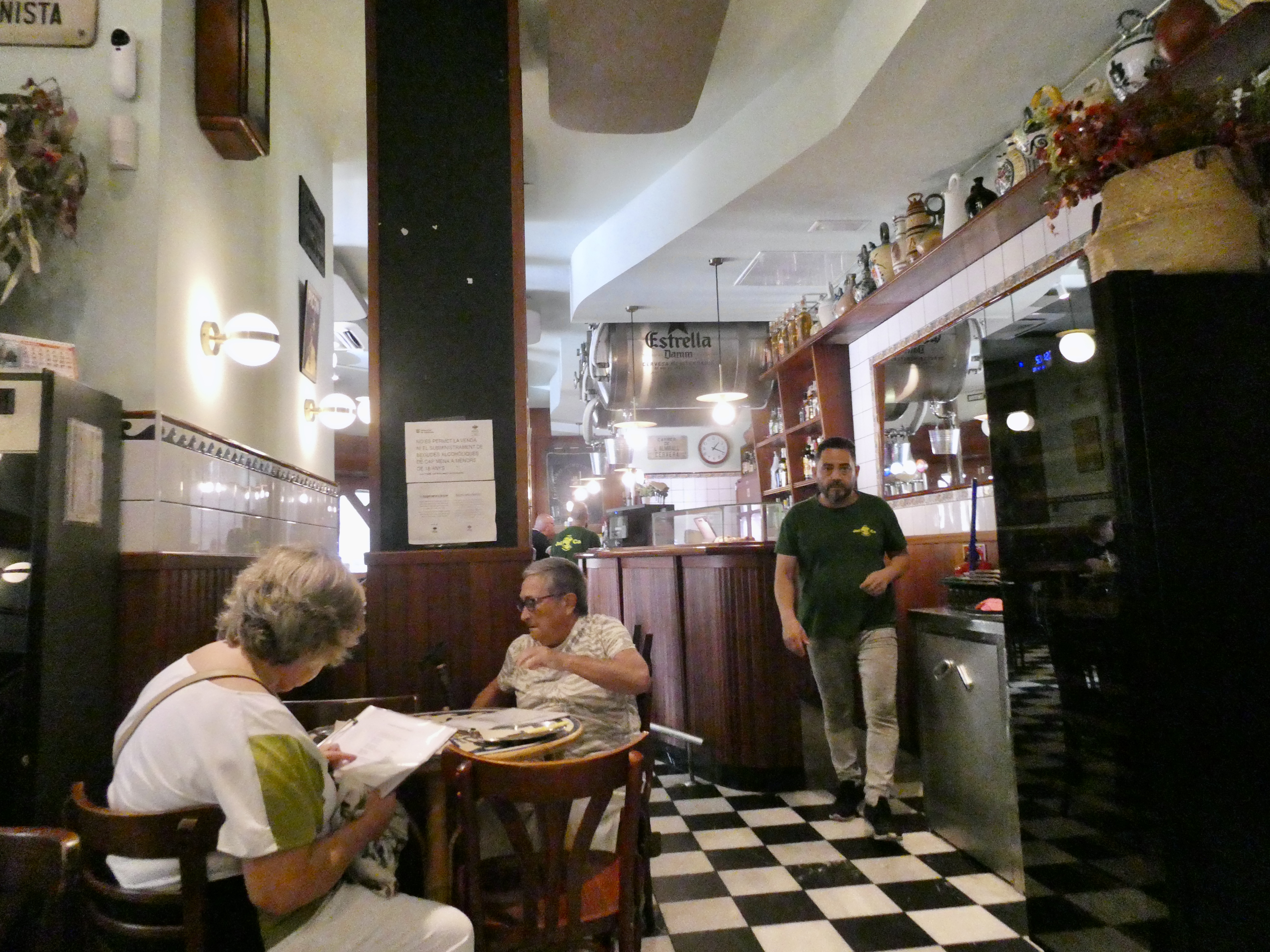
We then picked up and wandered down the street to our next stop, Jai Cai, a relatively young 75 year old restaurant where we were served a local specialty known as Bomba, made of meat and potatoes, coated in breading and fried to golden perfection. The Bomba is then covered in a spicy red
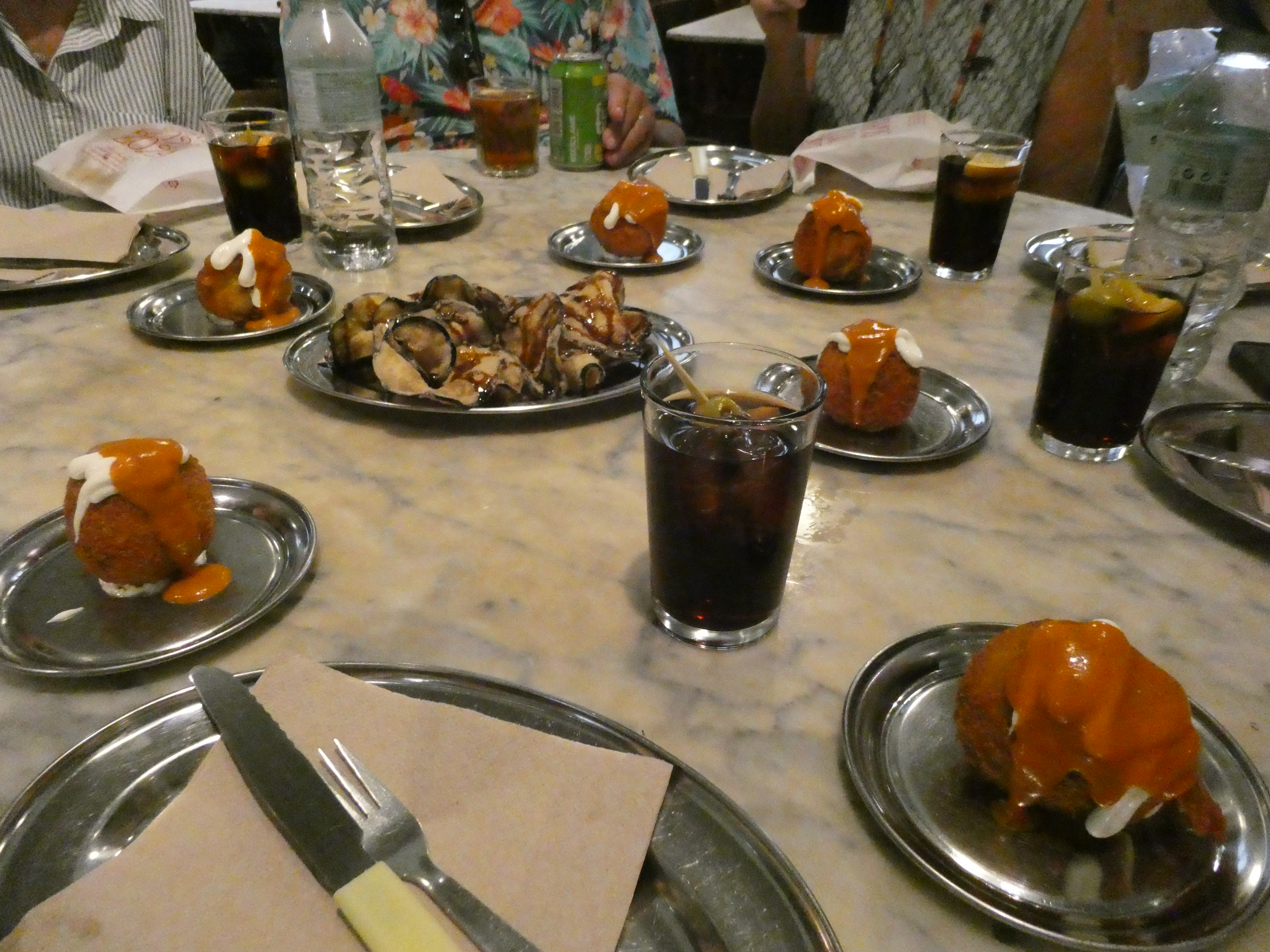
sauce with a dab of garlic sauce. This dish was delicious.
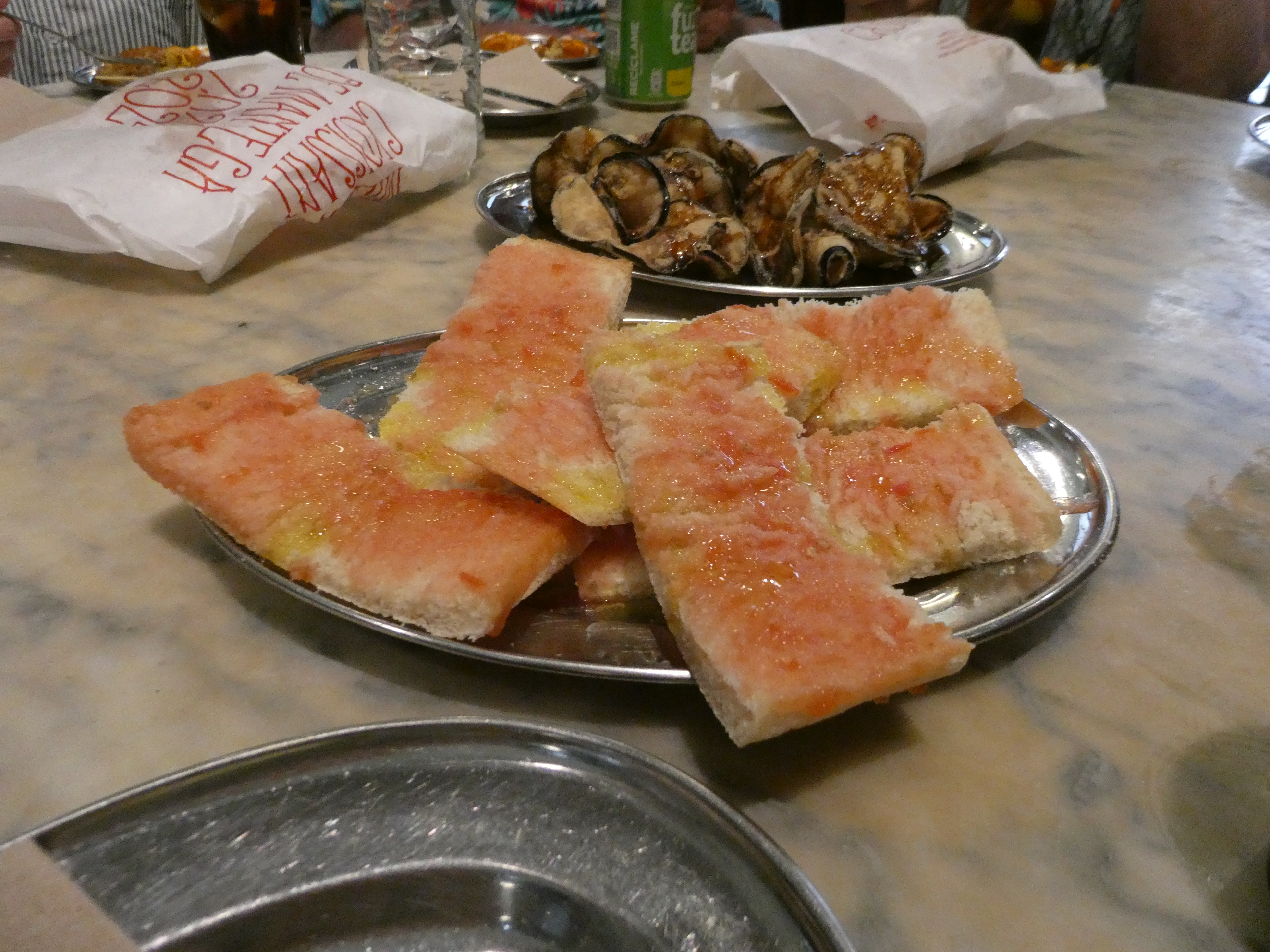
And along with the Bomba, we were served crispy aubergine (egg plant chips covered in dark molasses like honey) and tomato and olive oil bread. This later dish is made by drizzling olive oil over bread and taking over ripe tomatoes and rubbing the tomatoes atop the olive oil. The bread is finished with a sprinkling of sea salt on top. The bread was actually quite tasty, but the star was the crispy aubergine. Fabulous.
We also each received a glass of vermouth. Now I had been served a glass of vermouth on Monday night and quite frankly, I preferred that vermouth to what we were served today. I found the vermouth at Jai Cai really, really sweet with an overpowering carmel flavour. Not my cup of tea.
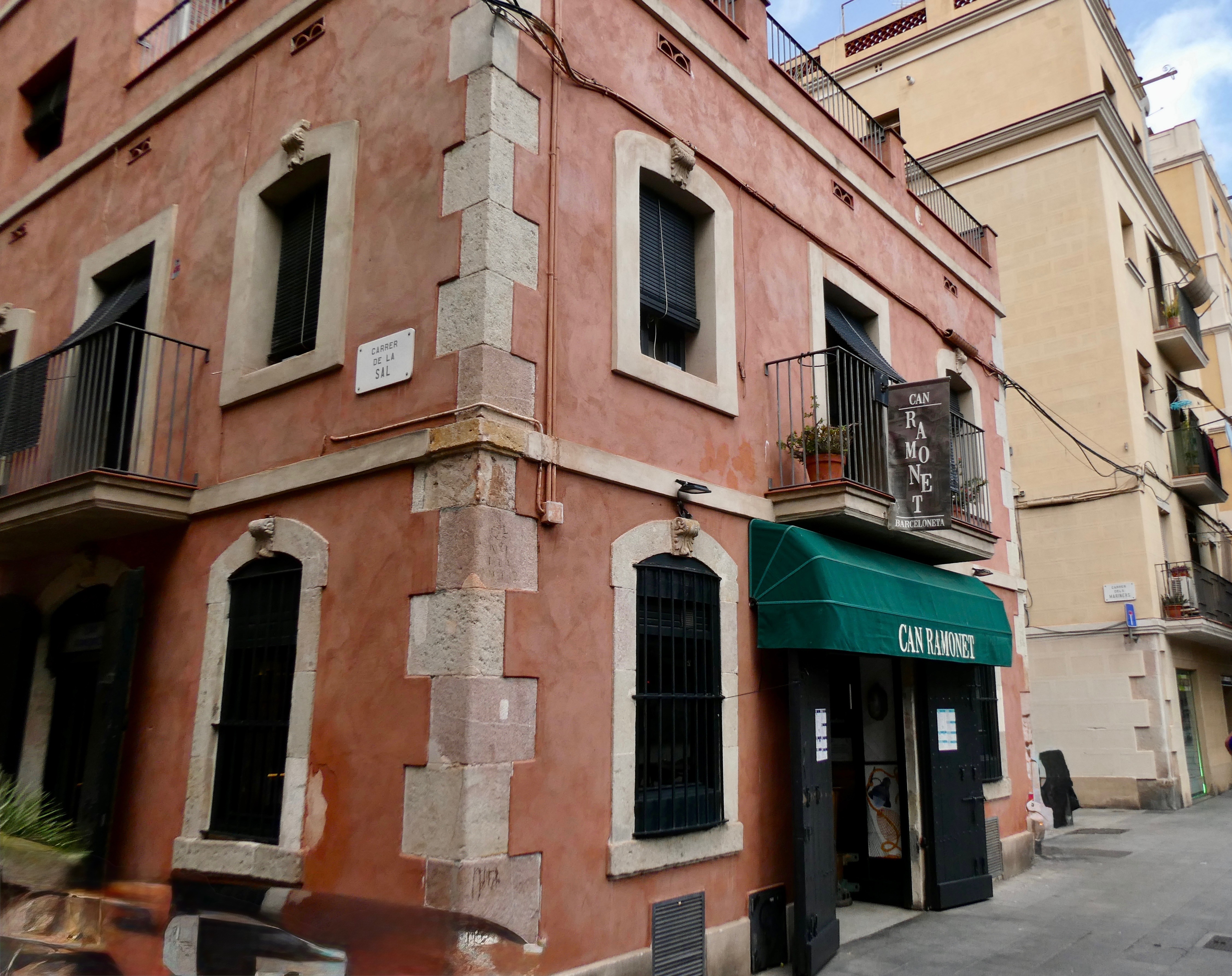
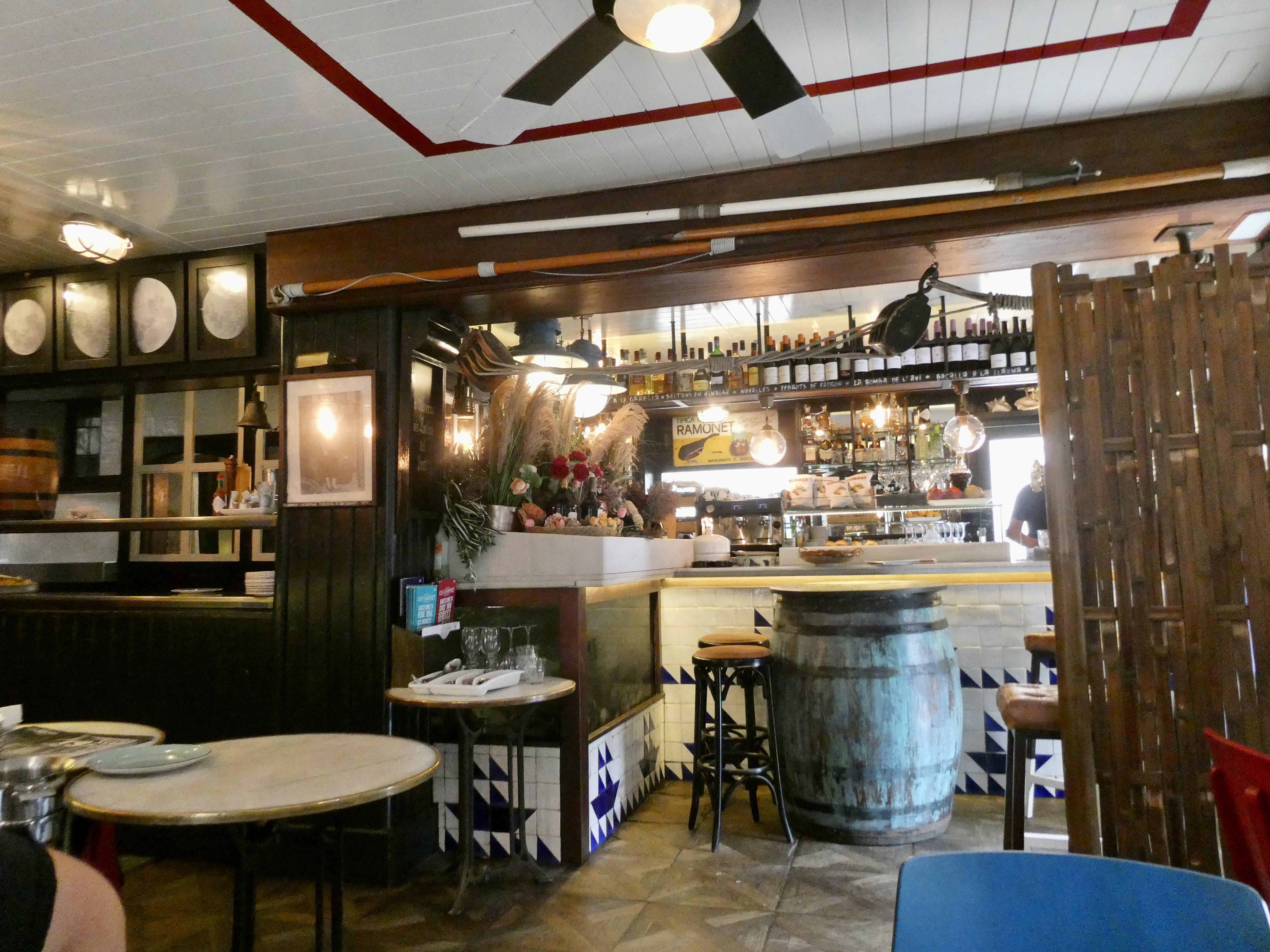
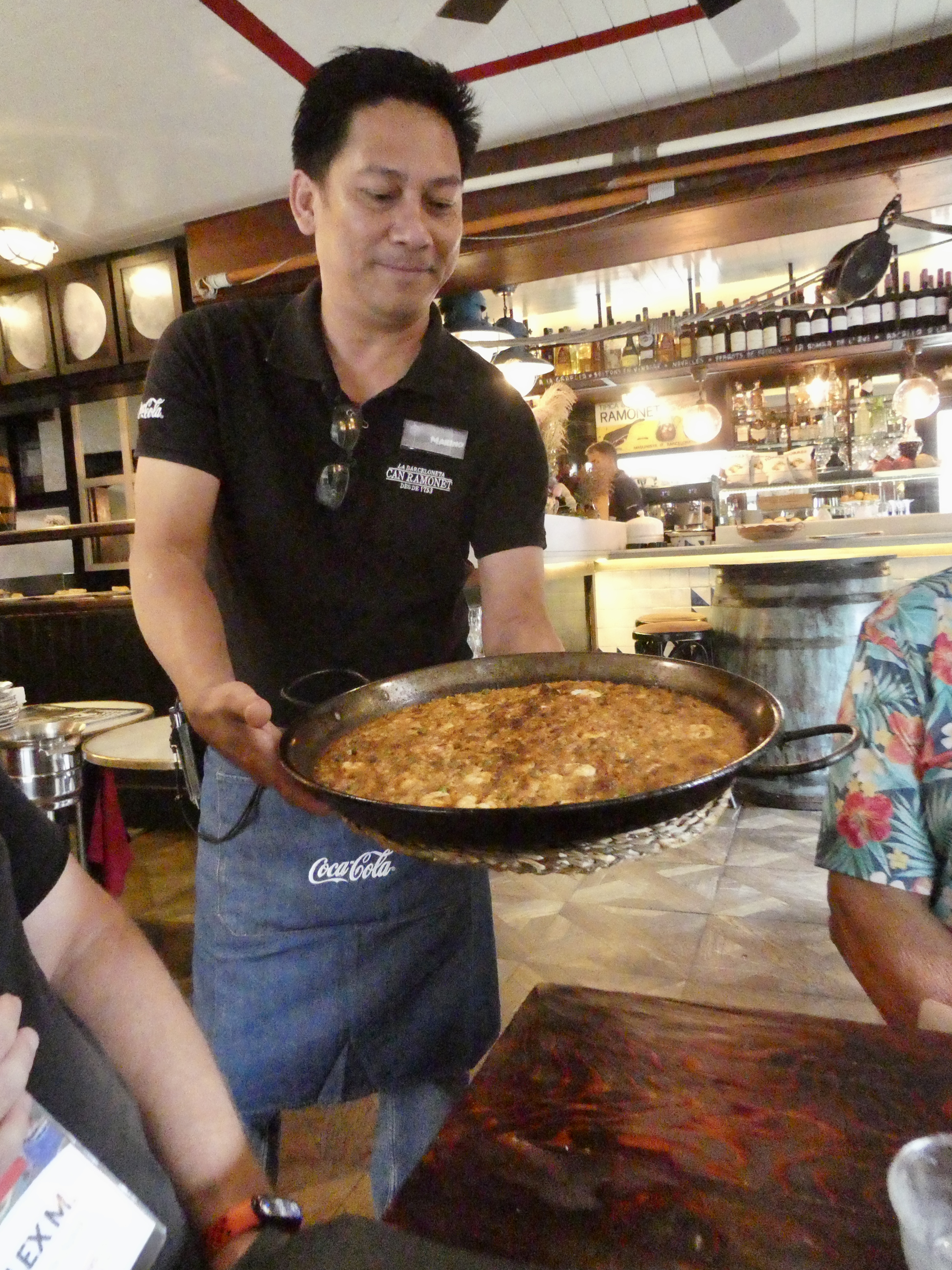
So after the stop at Jai Cai we walked another block to our last stop of the day, Can Ramonet where we were served cava (Spanish champagne) and seafood paella. Now quite frankly, I had really been looking forward to the paella, but I found it really, really bland. The seafood sprinkled throughout was good, but the overall flavour was lacking. Quite frankly the paella just tasted like al dente rice. I am not sure what it needed or what was lacking, but I would suggest a bit of spice to liven up the dish. Massive disappointment.
Anyway, with that out food tour came to an end. Tomorrow, I am off for a full day tour outside Barcelona to see the Roman ruins in Tarragona as well as a stop to eat at the fishing village of Sitges.