So just before noon on Monday, I was picked up at Rondon Ridge and driven 45 minutes down the hill to the airport for my flight to Karawari River. Now the beauty of this flight is that I was flying on a charter … turns out I was the only passenger (plus one staff member who turned out to be my cook for the next two days) and our plane was about as small as they come (four seater). Fortunately, I was in great hands with Sam from New Zealand. The flight could not have been smoother (save for the occasional bump) as we flew over dark green mountains which eventually gave way to dense tropical lowland rainforest. The views were magnificent.
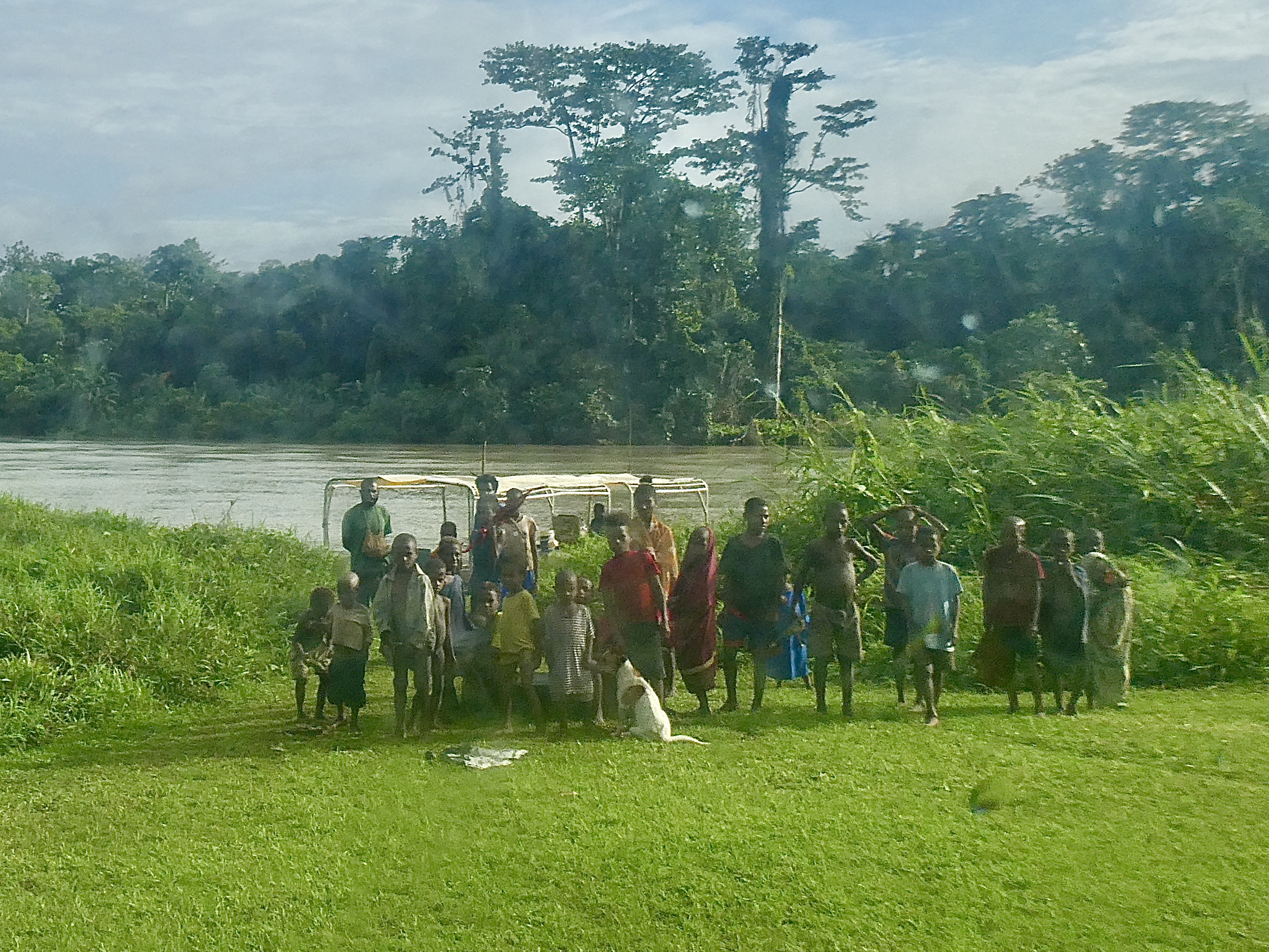
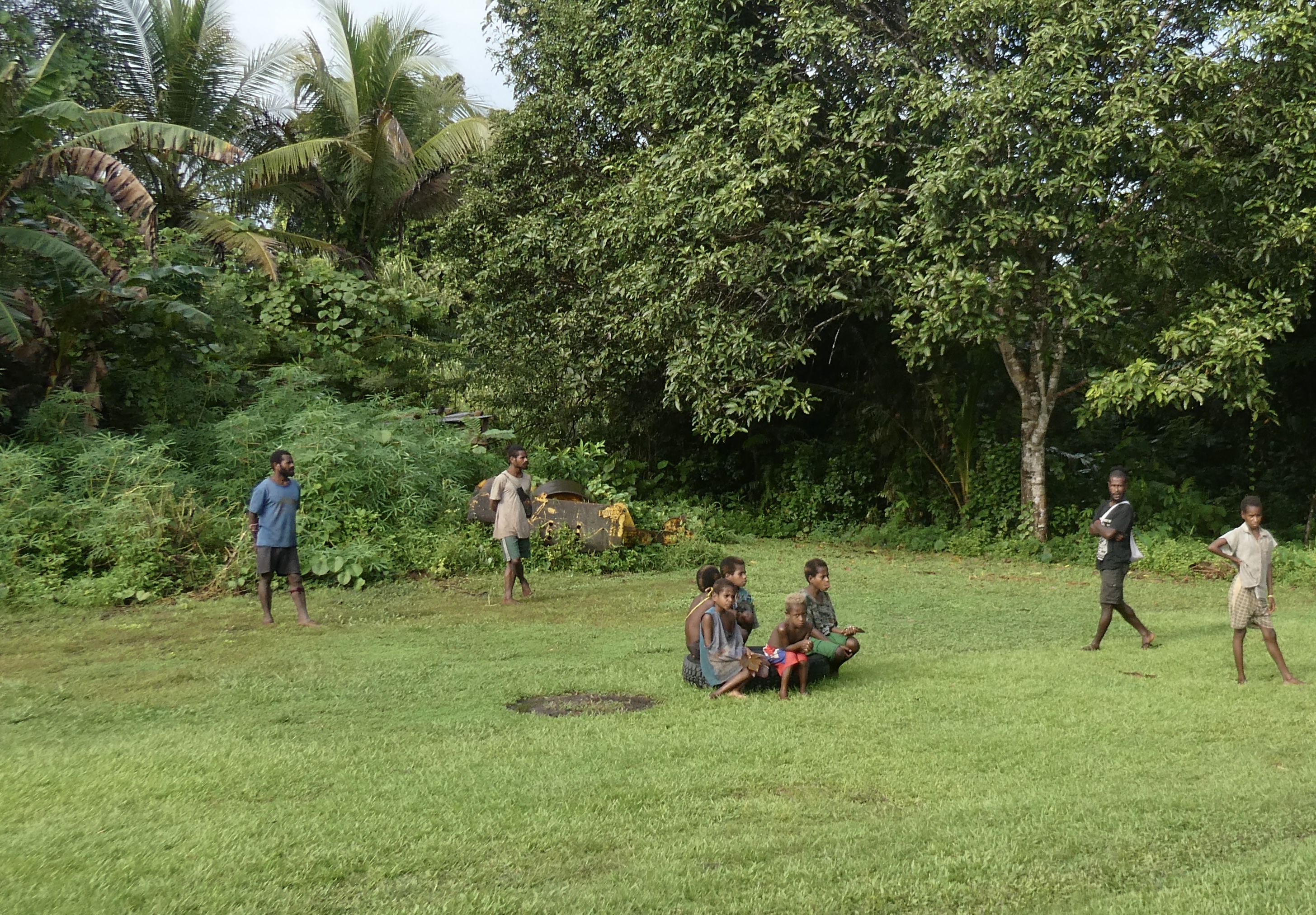
And 45 minutes after we took off from Mt. Hagen airport, we were landing on a small grass strip to a great deal of fan fare. As we taxied to a stop, I felt like I was entering into an edition of National Geographic. Naked children were running towards the plane, half naked ladies were waving and a couple guys (who I presume were the chiefs) stood there stoically and did not acknowledge me.

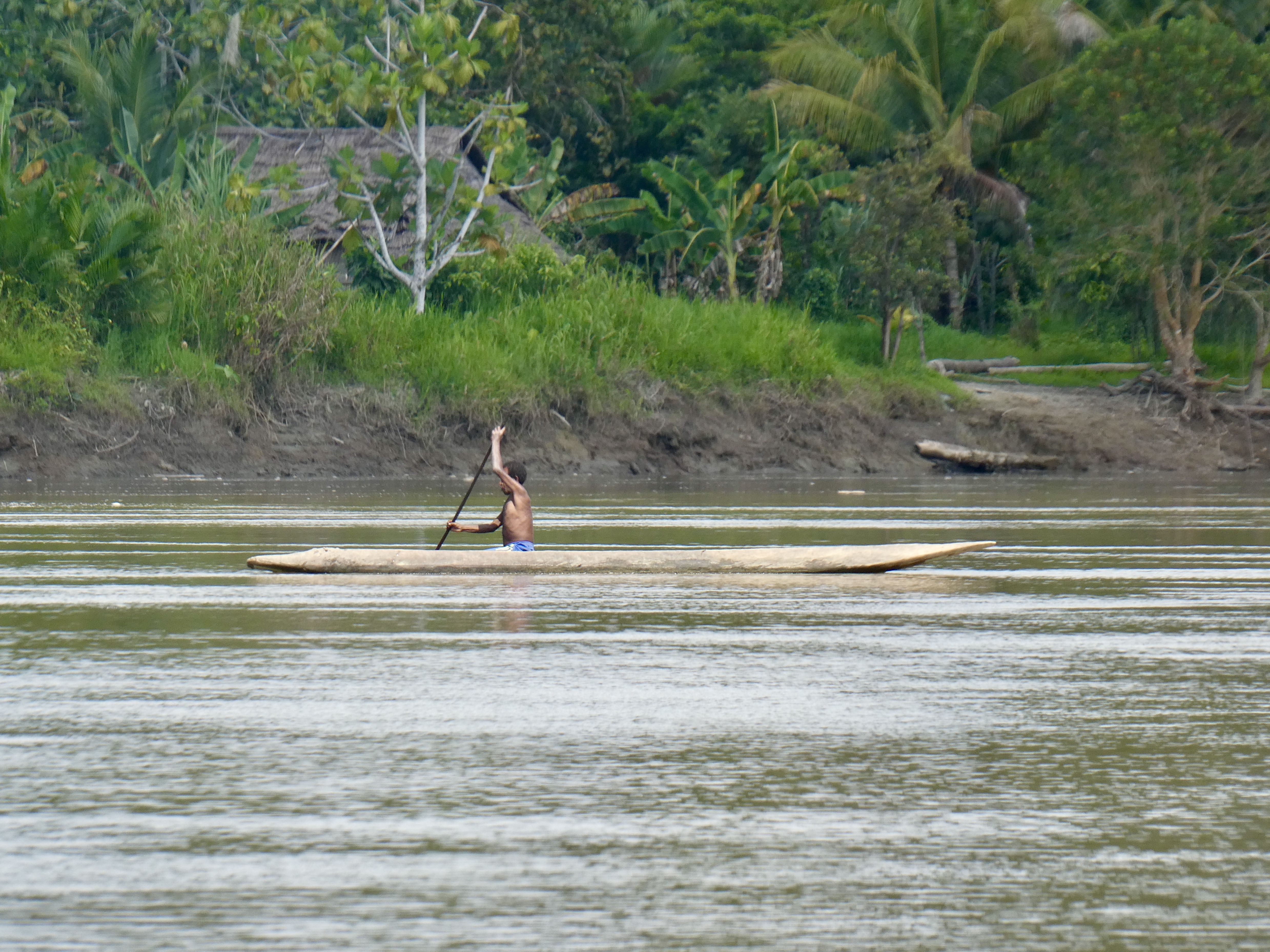

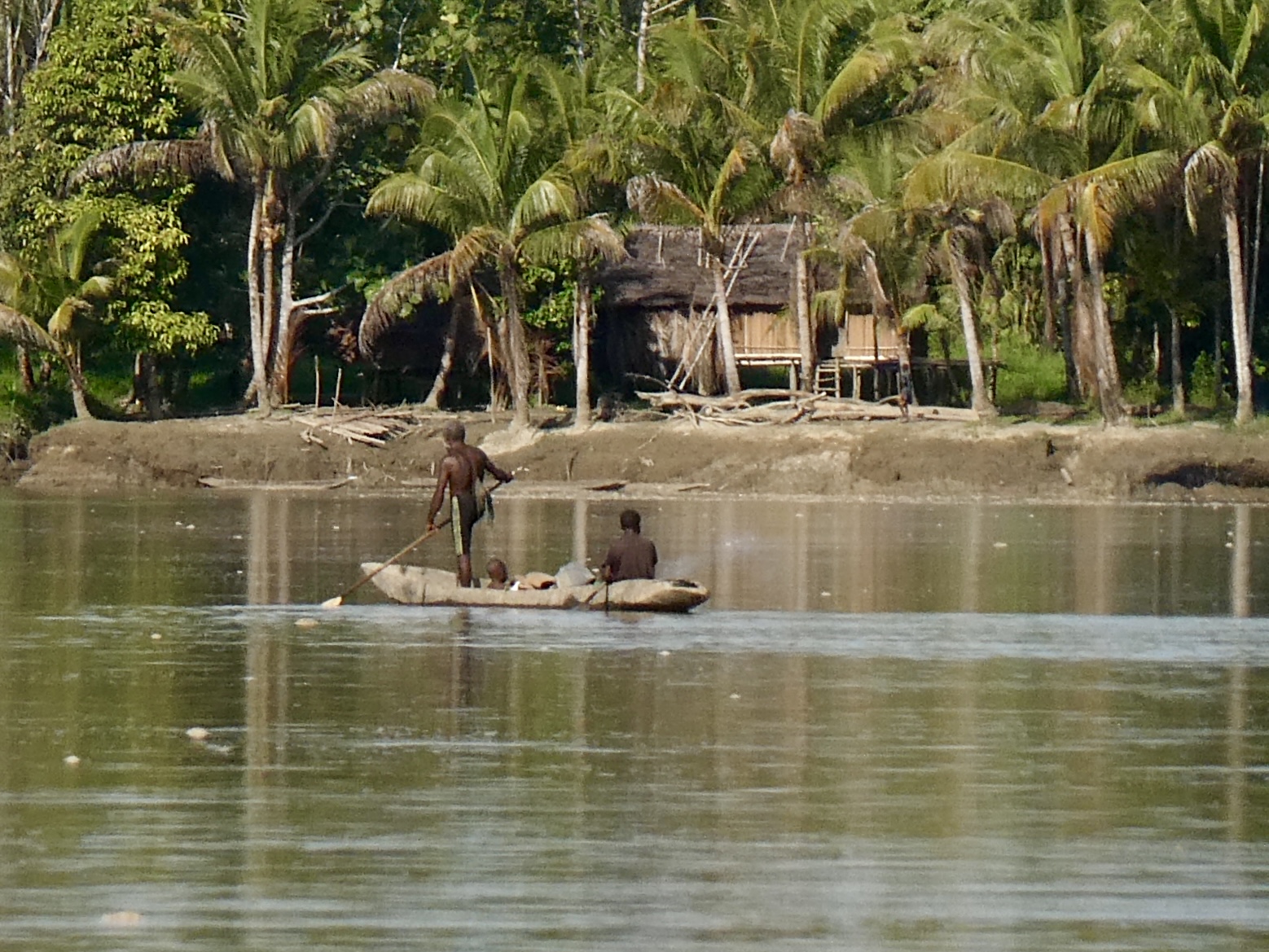
Anyway, after the spectacle was finished, my guide Chris, introduced himself and took me about 200 km down a dirt path to the river where I climbed aboard a flat bottom boat for a trip upriver. And the National Geographic theme continued as we motored along past villages with grass and wooden homes constructed on stilts (to avoid the seasonal flooding) without an electrical wire in sight. and men paddling nearby in dugout canoes.
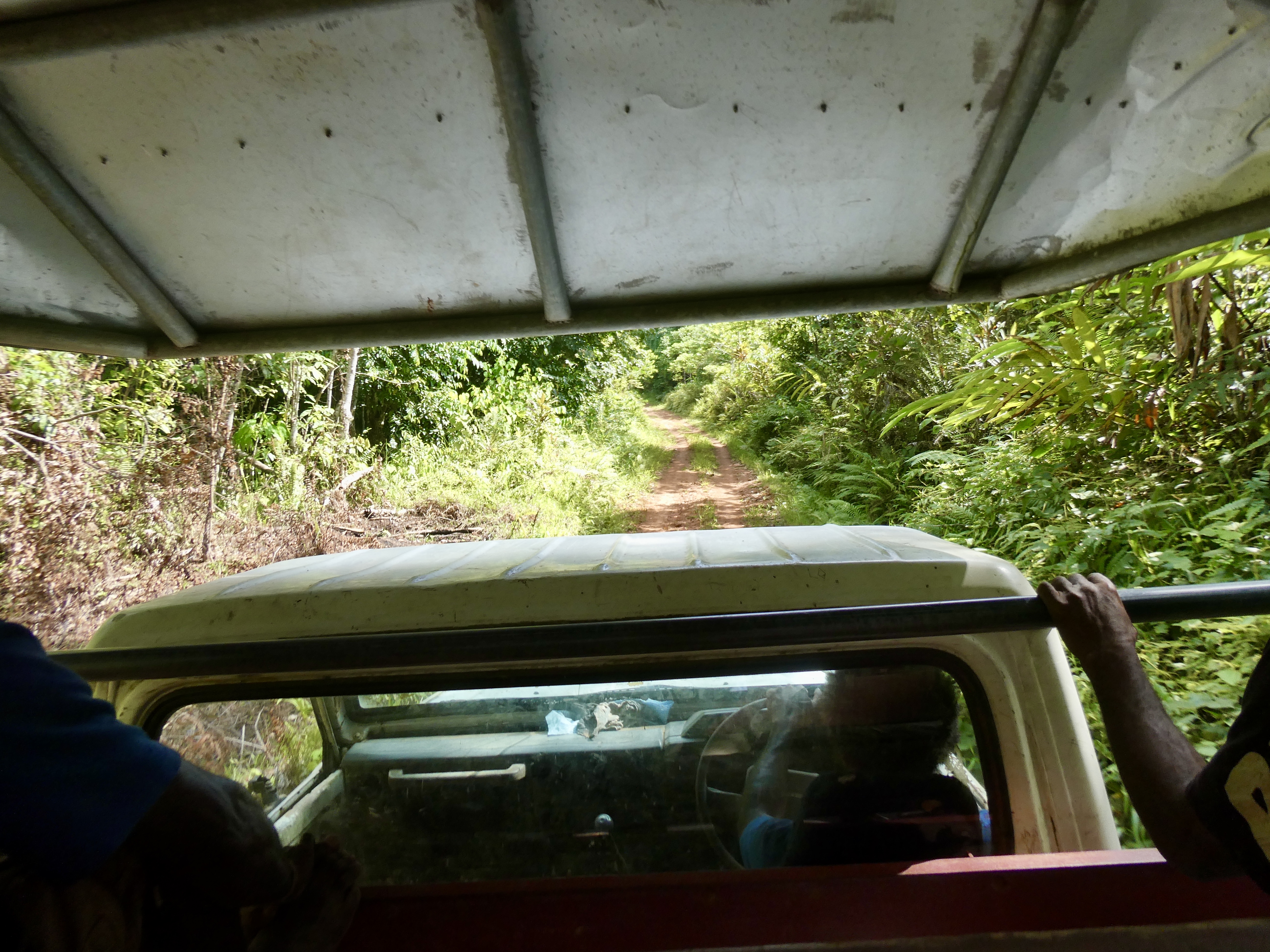
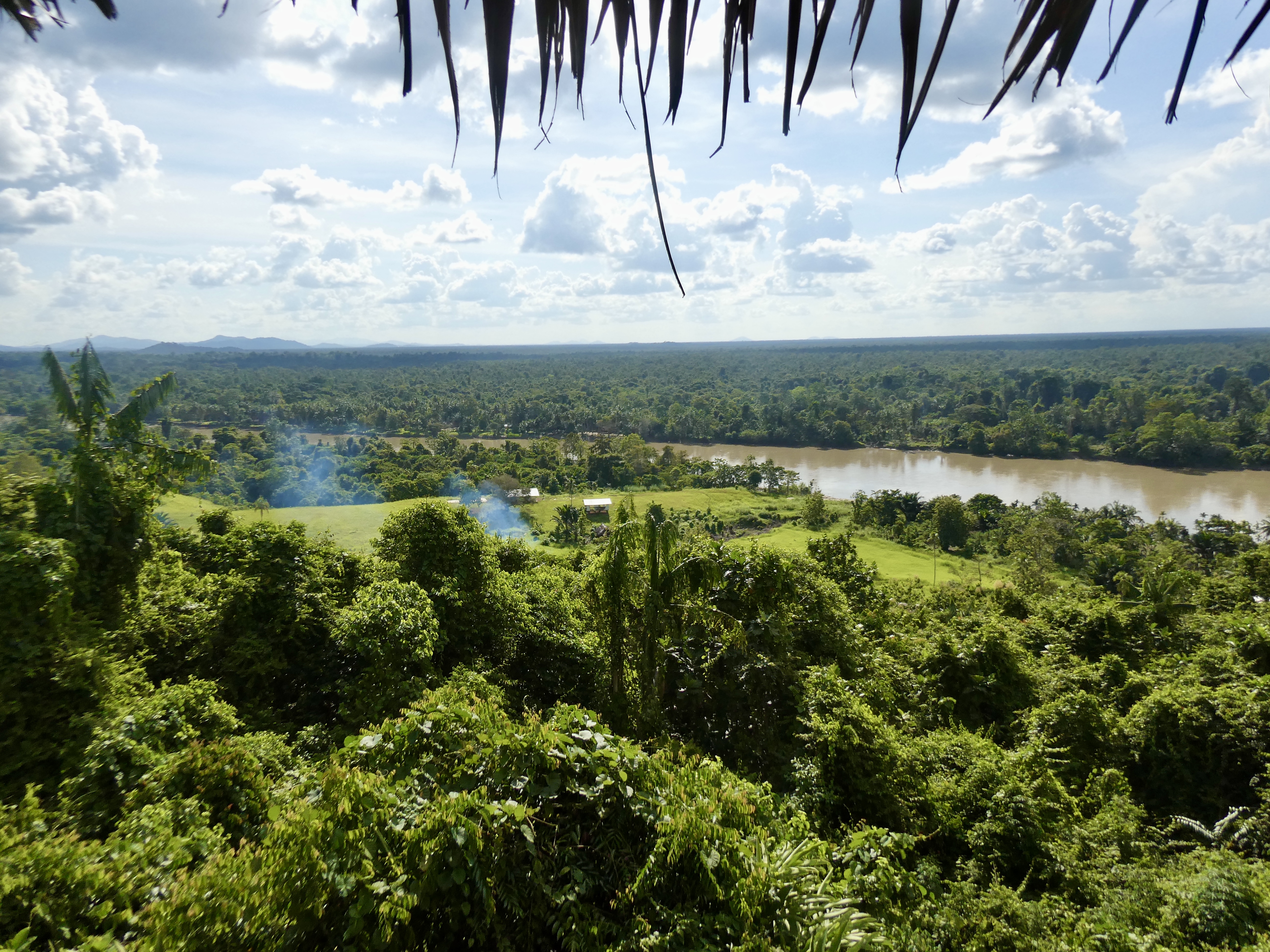
The trip took about 15 minutes and once we docked, I climbed aboard a four-wheel drive over a red mud “road” for the incredibly bumpy 5 minute trip uphill to the Karawari Lodge.
Now the views from the lodge were absolutely spectacular and far exceeded what I had been expecting. And it turns out, I am the only guest at the lodge for the next two days. Wowza. I am Queen of the Castle!
Anyway, after lunch and a bit of a rest, Chris and I loaded back in the jeep for the bumpy trip downhill to the boat. We were off to take in a bit of the river scenery and visit the Kundiman Village for a sago making demonstration.
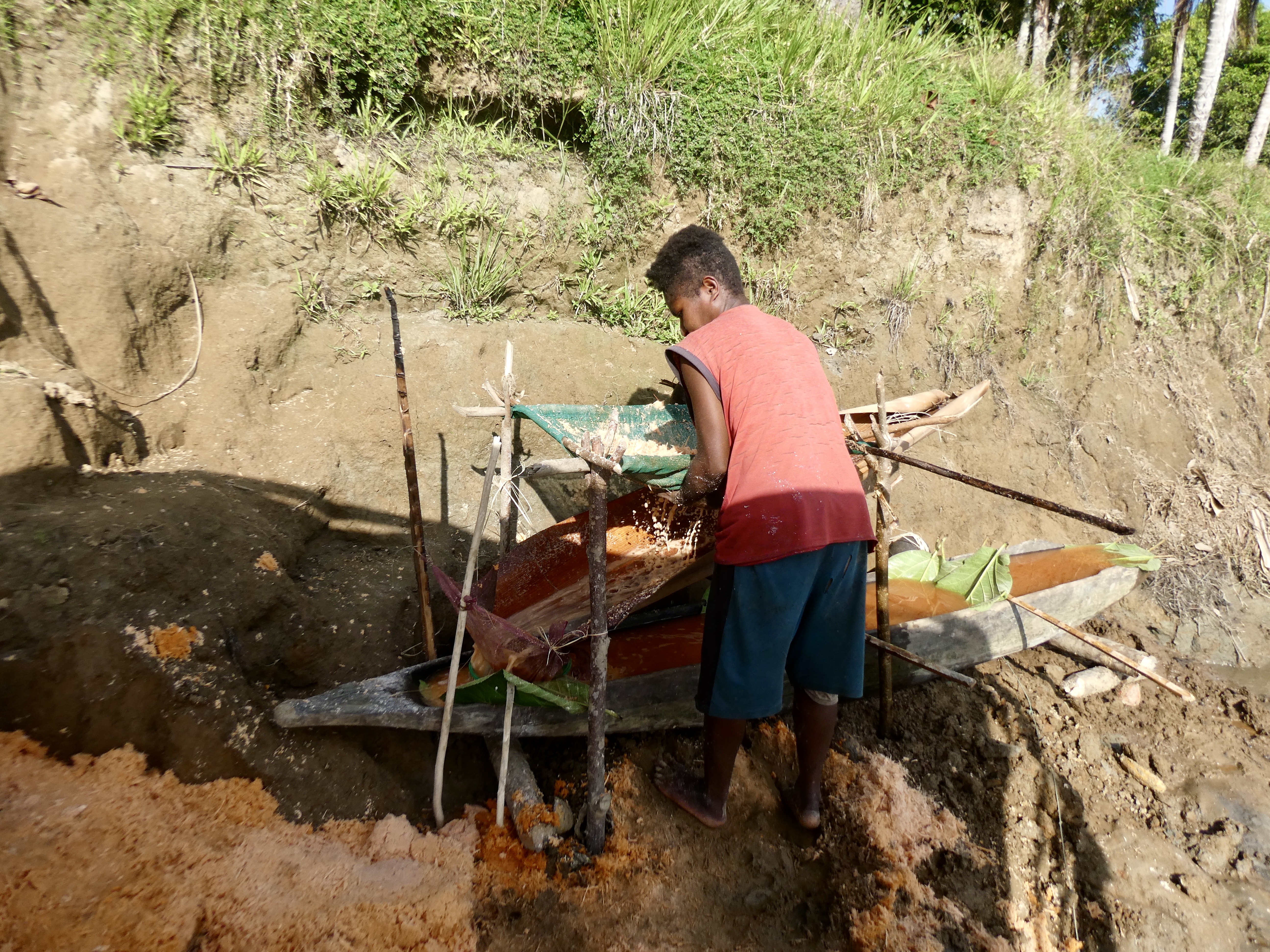
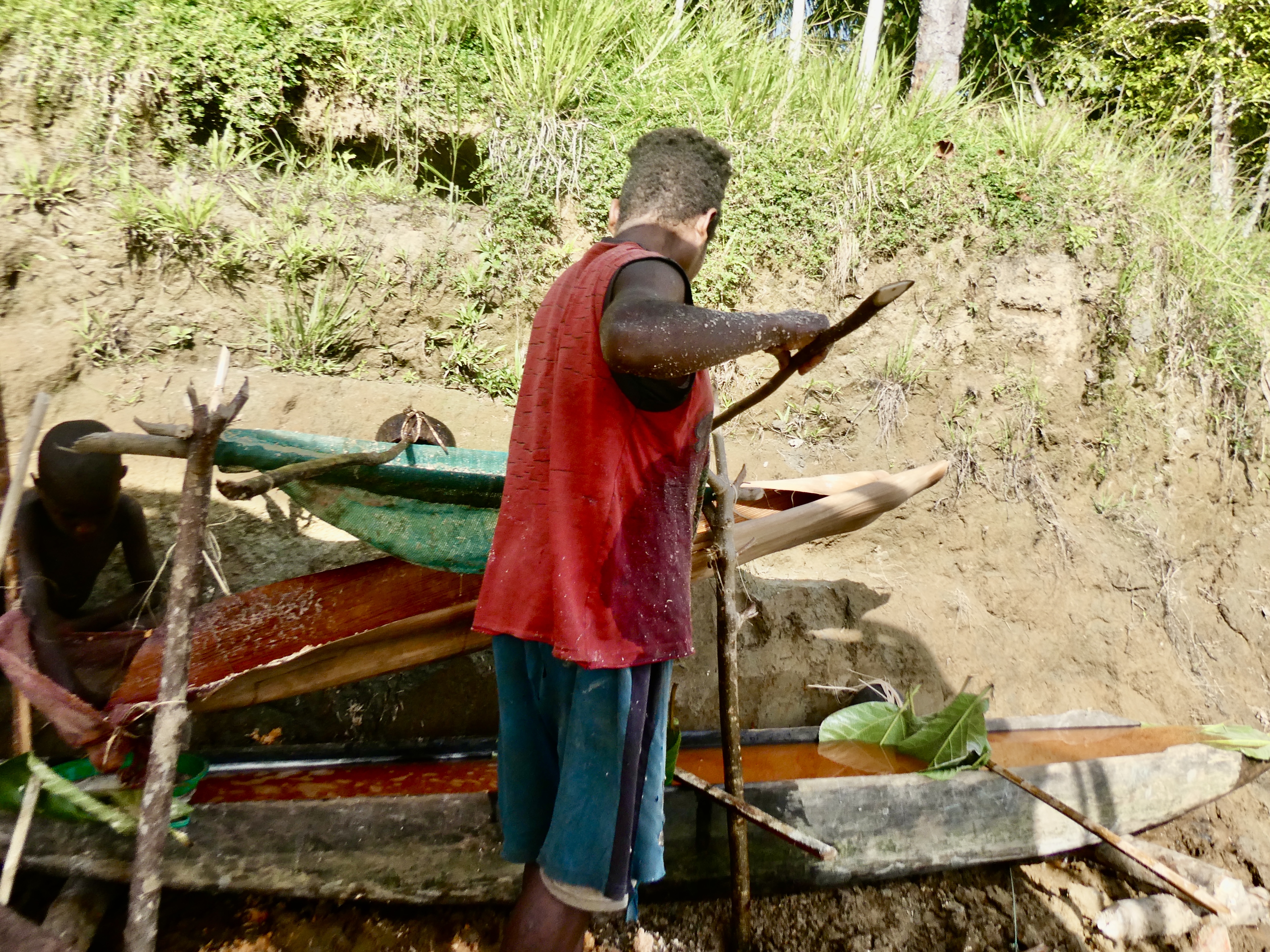
Now sago is a flour made from the sago palm tree and is the primary staple food for the tribes living along the Karawari River. So 15 minutes after we set off, we were pulling into a mudbank where I immediately drew a crowd of kids. Now adjacent to where we had pulled in, a young woman was taking large amounts of raw sago palm, placing the mixture on a filter, pouring three or four cups of water from the river (YIKES … not sure how sanitary that is) over the mixture and then pushing the mixture through the filter. Essentially, the gal was washing the raw sago palm through a filter so that the grains fall through to a trough below and sink to the bottom and once the trough is filled, the grains are removed and used for making flour. And the raw remains in the filter are then tossed.
Now I was initially confused because I mistook the huge amounts of yellow “waste” for the starchy flour, but it turns out that the clumps of yellow waste are simply a byproduct. Fortunately, I took a video and you can see for yourself how the process works.

So while this was going on, the audience of children could not stop staring at me. I waved a few times and smiled, but they kept on staring. I finally took their picture, which it seems was what they wanted. So after showing them the picture, they seemed satisfied and turned their attention back to the sago making.
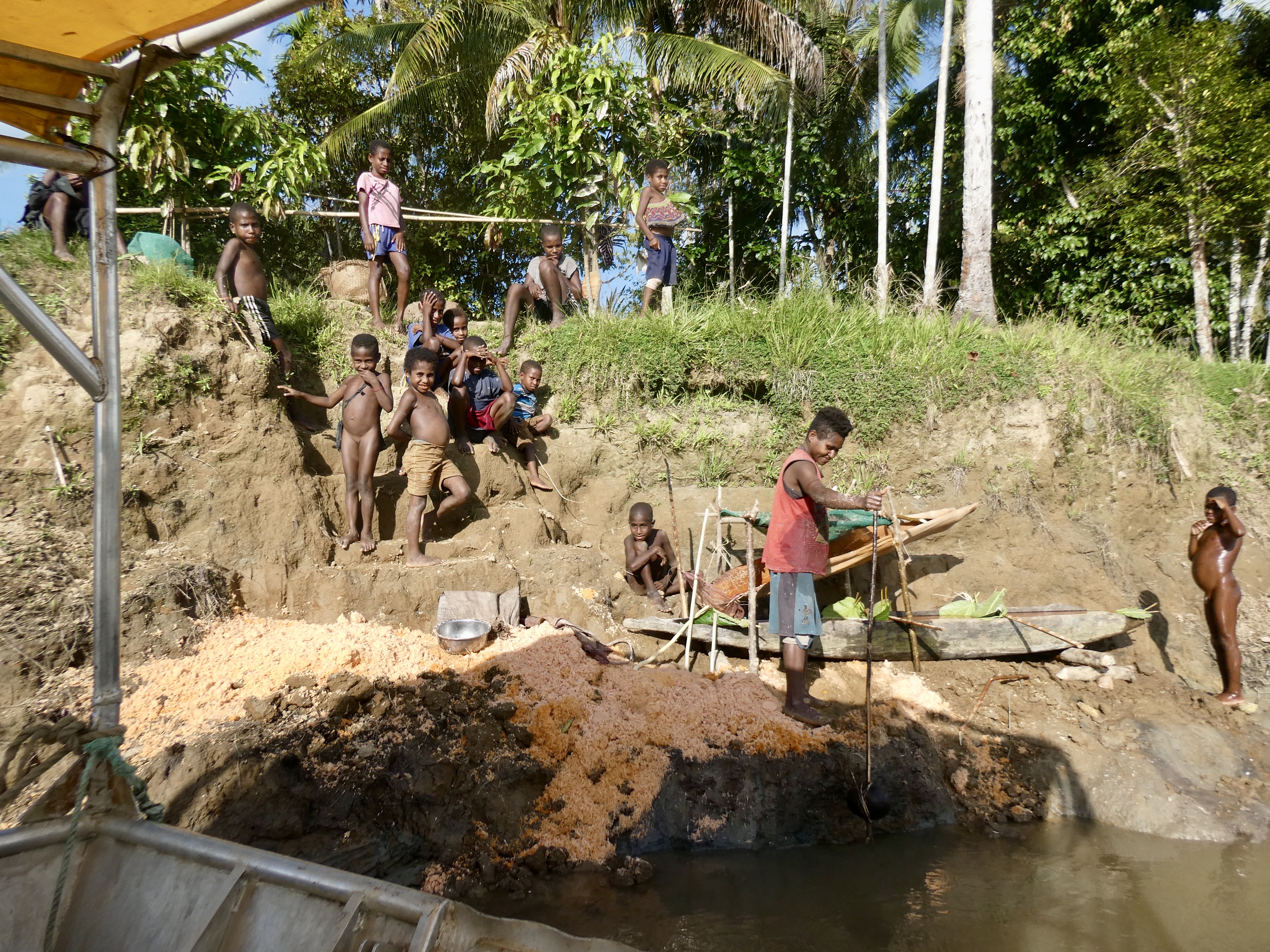
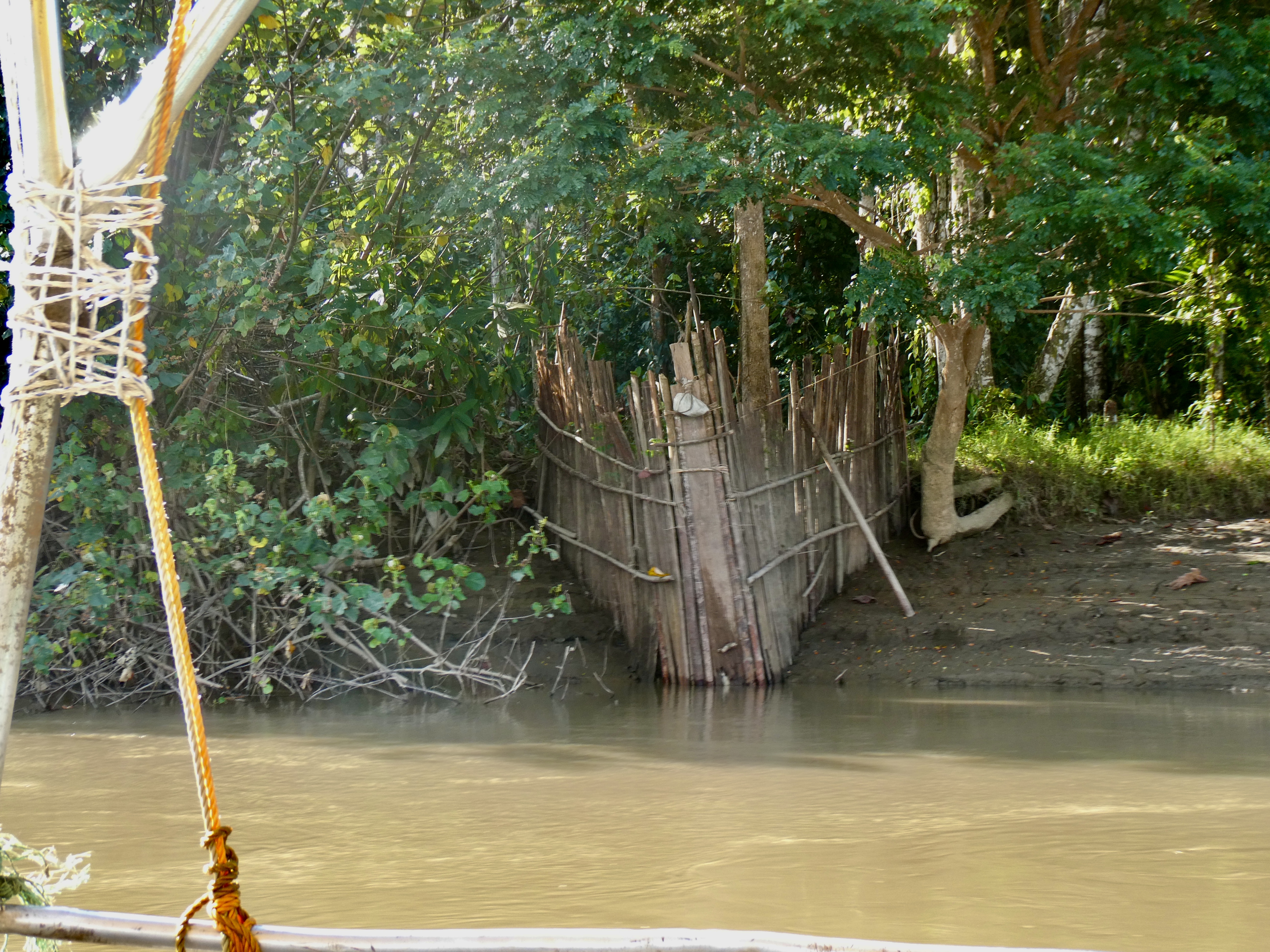
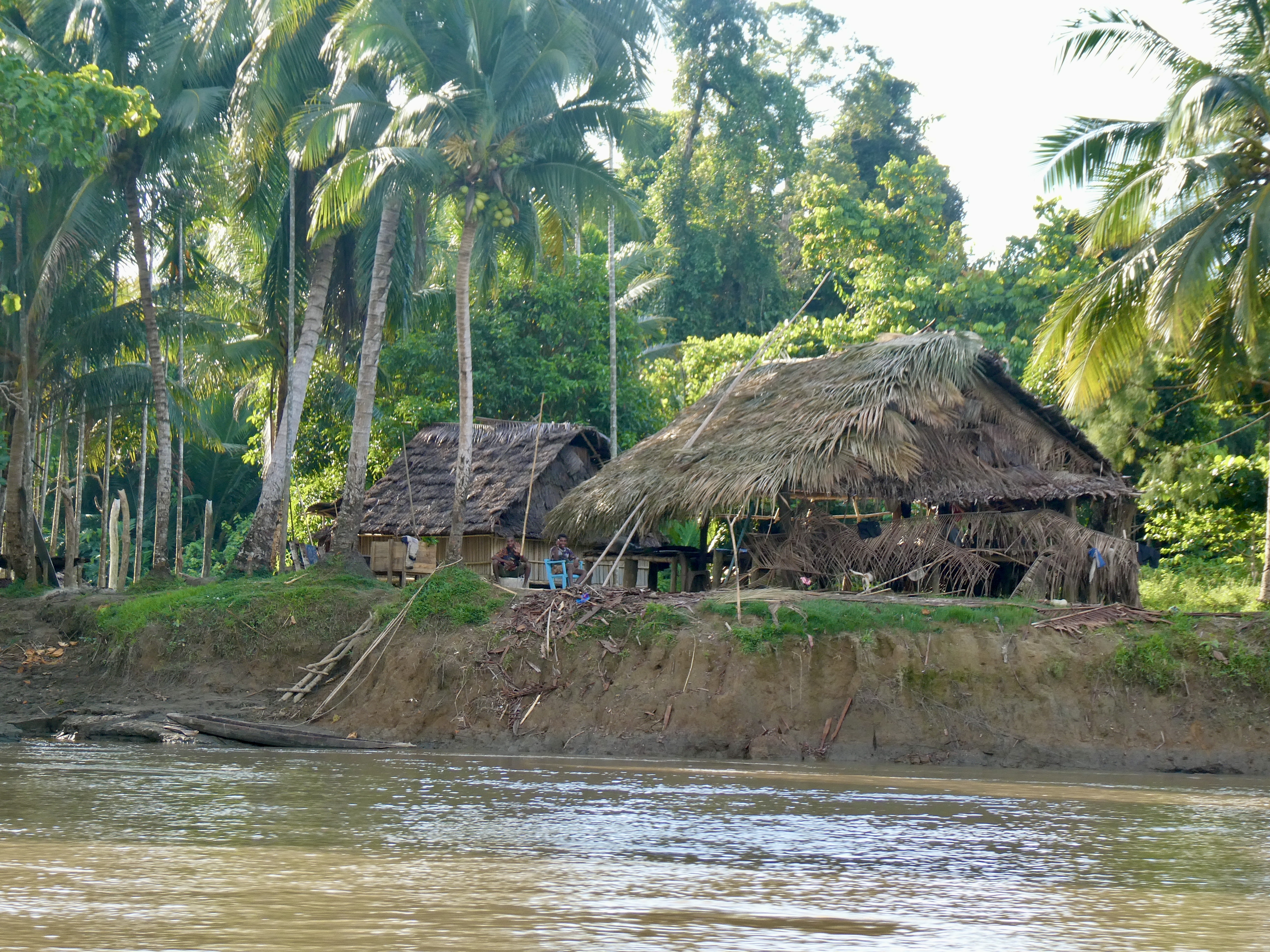

We spent about 20 minutes watching the process before turning the boat around and heading upstream. We passed more villages and even saw a guy building a canoe. By 4:30, we cut the engine and let the river take us back to the dock. Unfortunately, still no magnificent bird sightings, although we sure could hear them.
So on Tuesday morning, we started out around 9:00 a.m. for two village visits: Manjamai Village and Kornmei Village. At the Kornmei Village we were actually going to visit two different clans (the villages are made up of clans of people) in two different locations: the dockland clan and the eagle clan.
Now overnight we had a huge thunderstorm that dumped buckets of water and raised the river level to the edge of its banks. In addition, the storm caused a bunch of downed trees and bank erosion so there was a great deal of muck in the river as we pushed off. Throughout the day, it became a battle with the engine to avoid that debris so that we could continue on.
Anyway, as we motored along, my guide Chris would periodically point out a bird in the trees or overhead and our boat driver would every now and then cut the engines so that we floated with the current and could simply listen to the sounds of the rain forest.


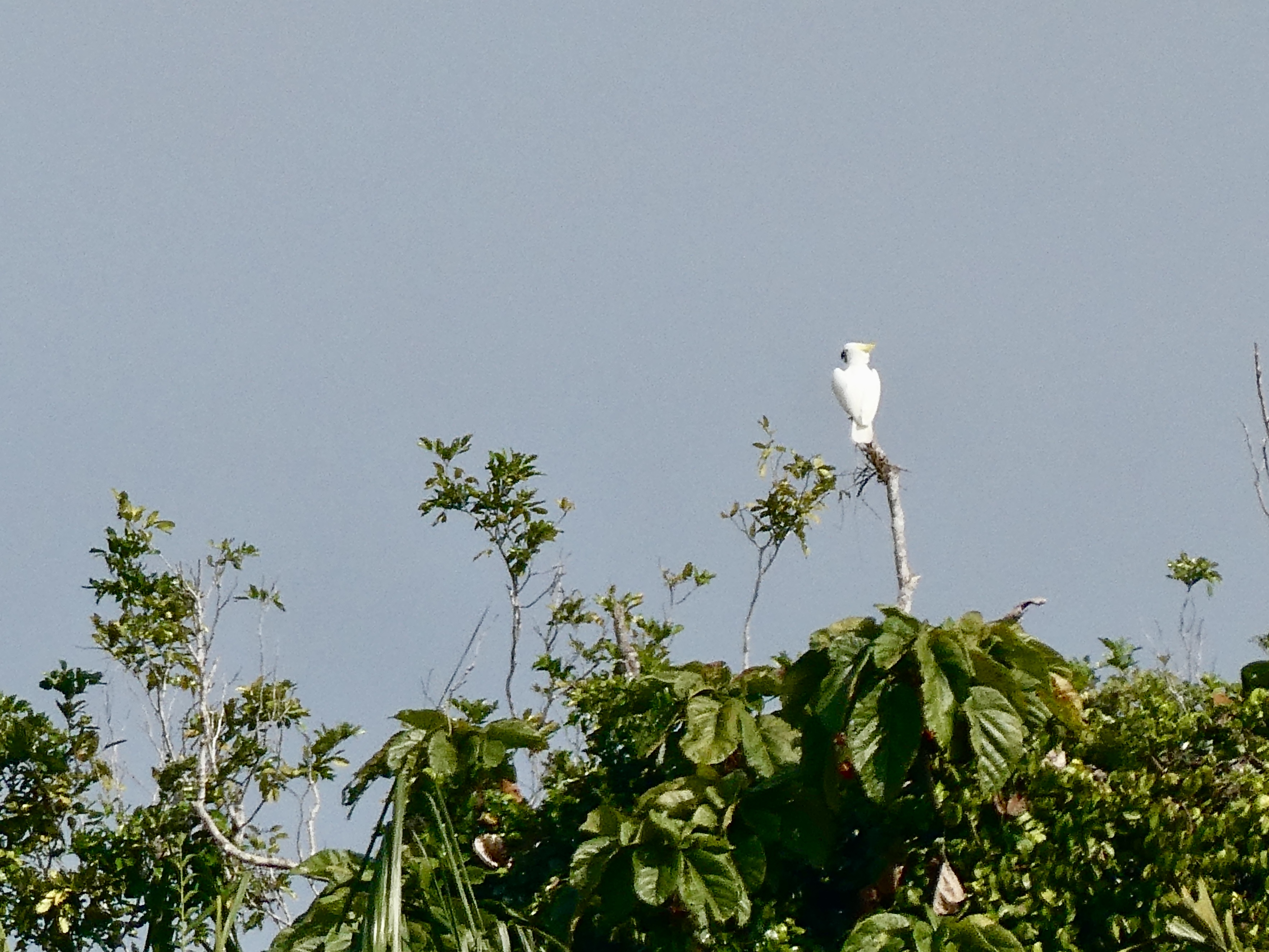
Now up to this point, the most exotic bird we had seen on the trip was a white cockatoo high up in the trees, but that was about to change. As we started around a bend in the river, Chris told our boat driver to turn the boat around. As we slowed and turned back, Chris handed me the binoculars and pointed to a palm with yellow leaves. I had no idea what I was looking at, but damn. I had never seen anything like it. Turns out it was a Victoria Crowned Pigeon and despite the fact that we were on the other side of the river from the tree where the bird was sitting, my glorious little camera was able to zoom in and capture a couple of the best pictures possible. Even Chris was impressed when he took a look at the picture on my iPad. An absolutely glorious looking bird.

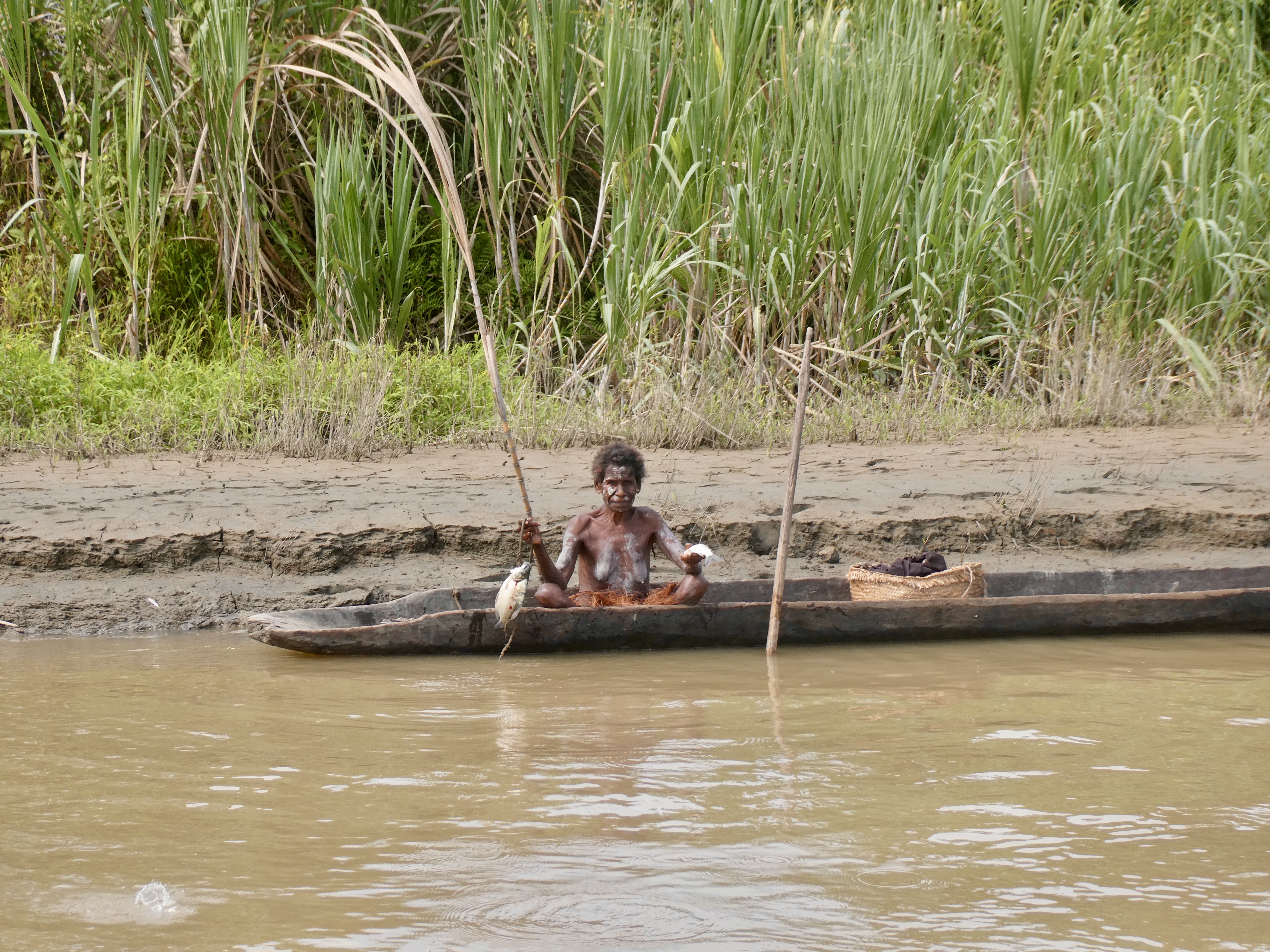

Anyway, after watching the bird for a few minutes, we continued down river passing the occasional small village eventually reaching Manjamai Village just before 10:30. And we were greeted by some villagers in their ceremonial dress fishing in dugout canoes. As we passed by, the villagers demonstrated how they catch the fish, clean the fish and cook the fish all on the same boat.
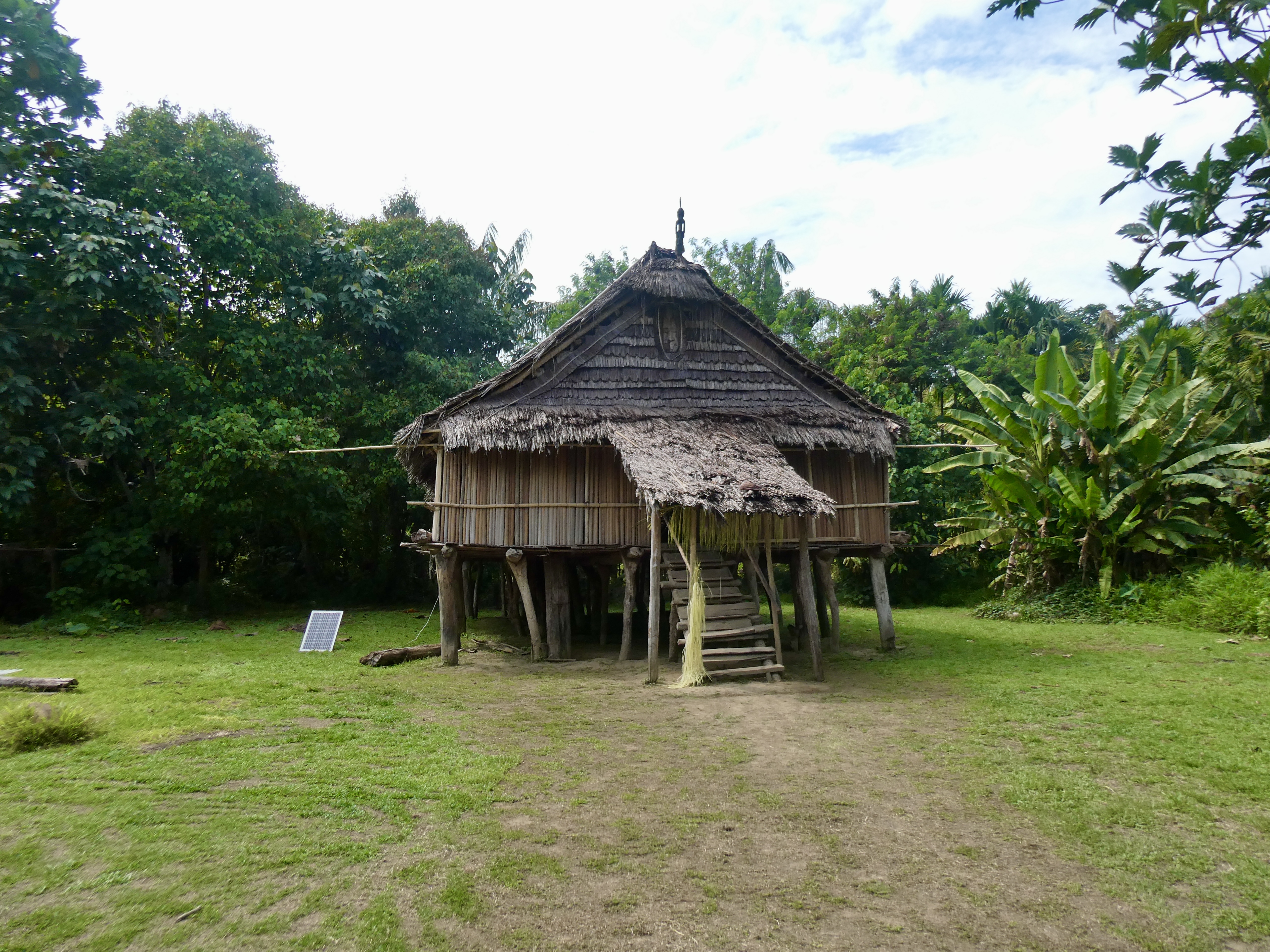
From here, we docked our boat and I was greeted by a man I came to find out was the head of the village. He and Chris escorted me to a typical village home where I was given a tour of the building, which houses three related families. In addition to the sleeping quarters, the home includes a kitchen area at the far end of the house where food is cooked on an open flame with smoke escaping out through the roof.
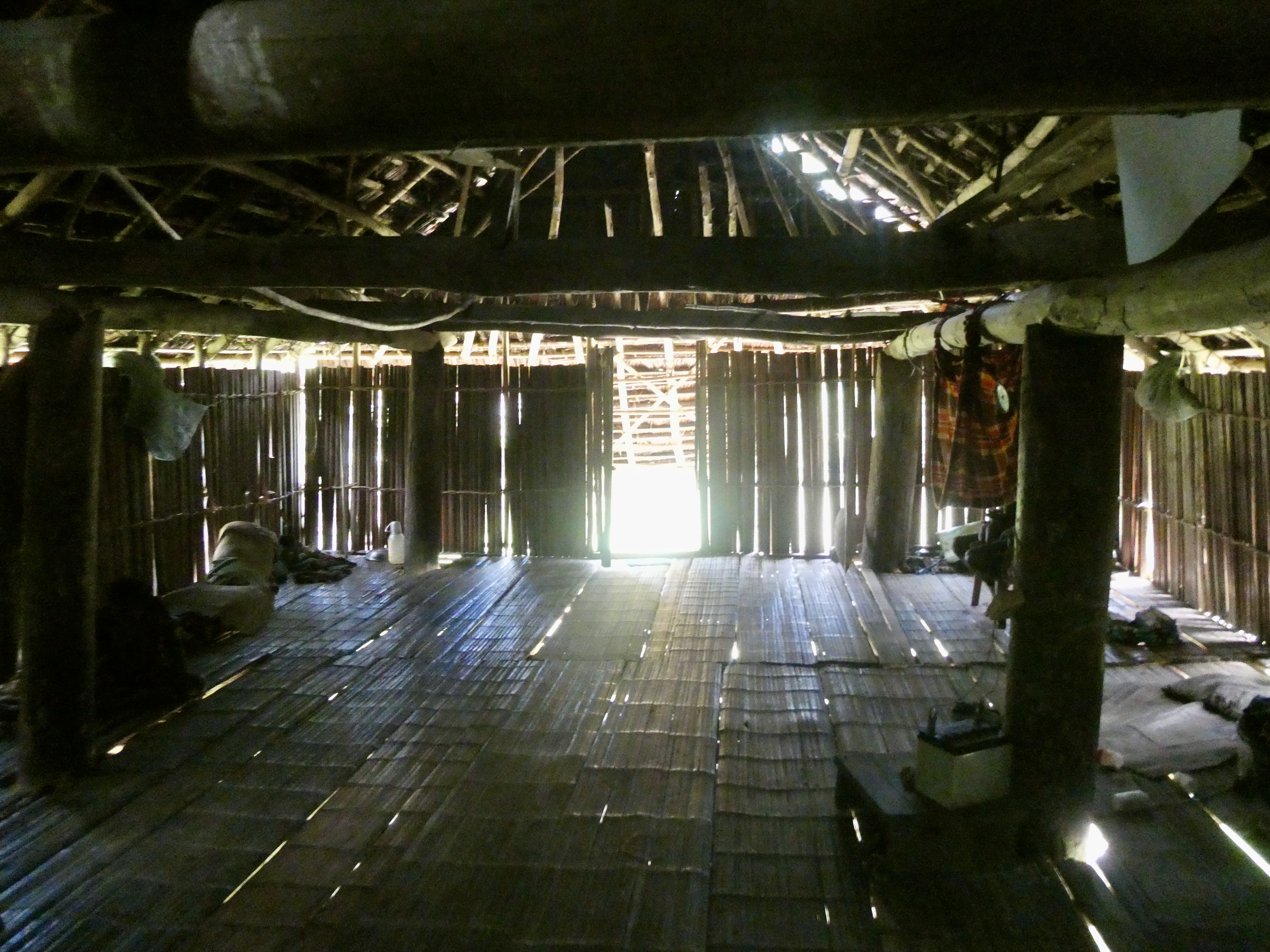
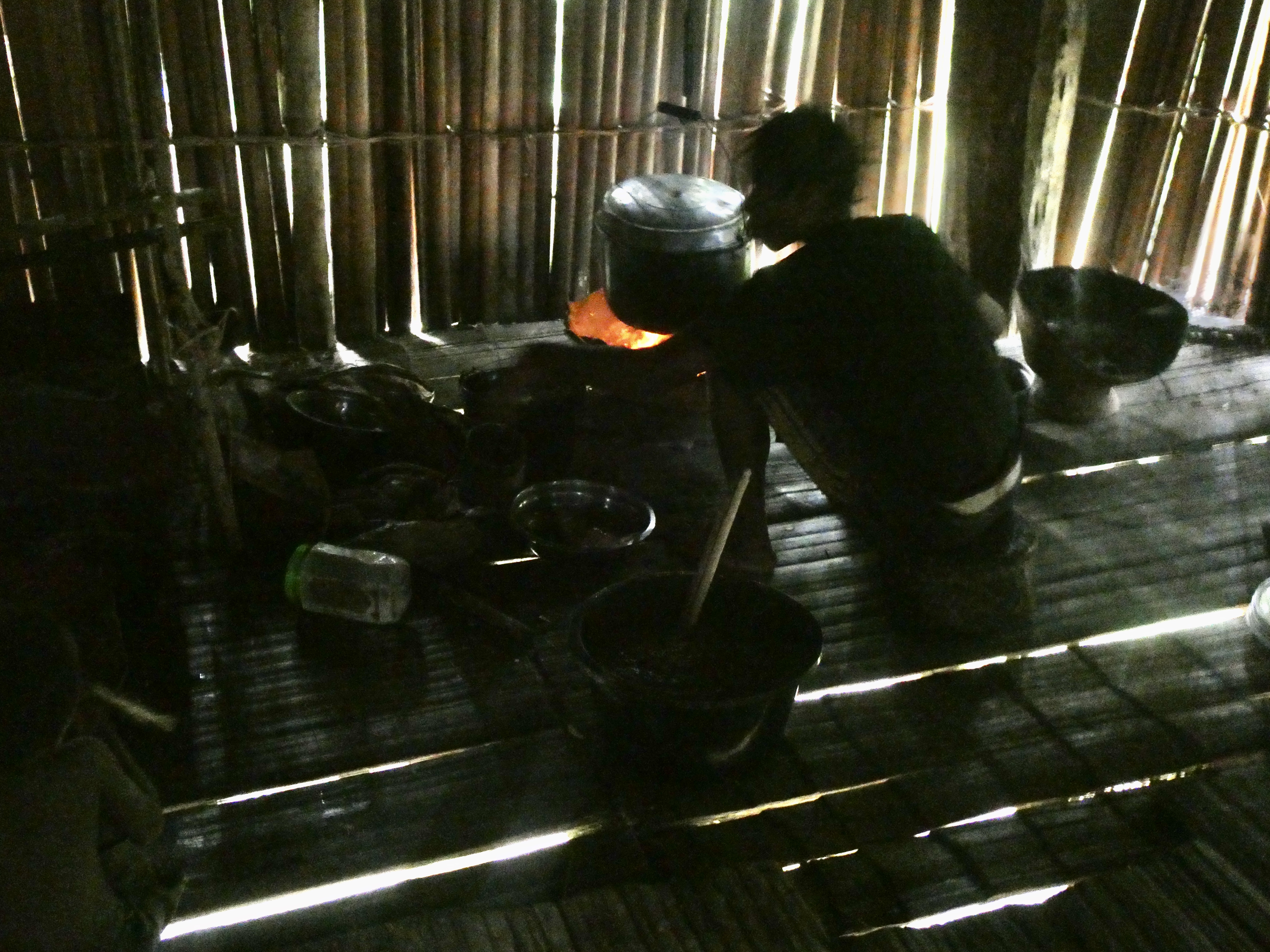
The home was constructed with wood beams, palm fronds for flooring and palm leaves for the roof. It was fascinating to see how the beams fit into the vertical poles that hold up the roof.
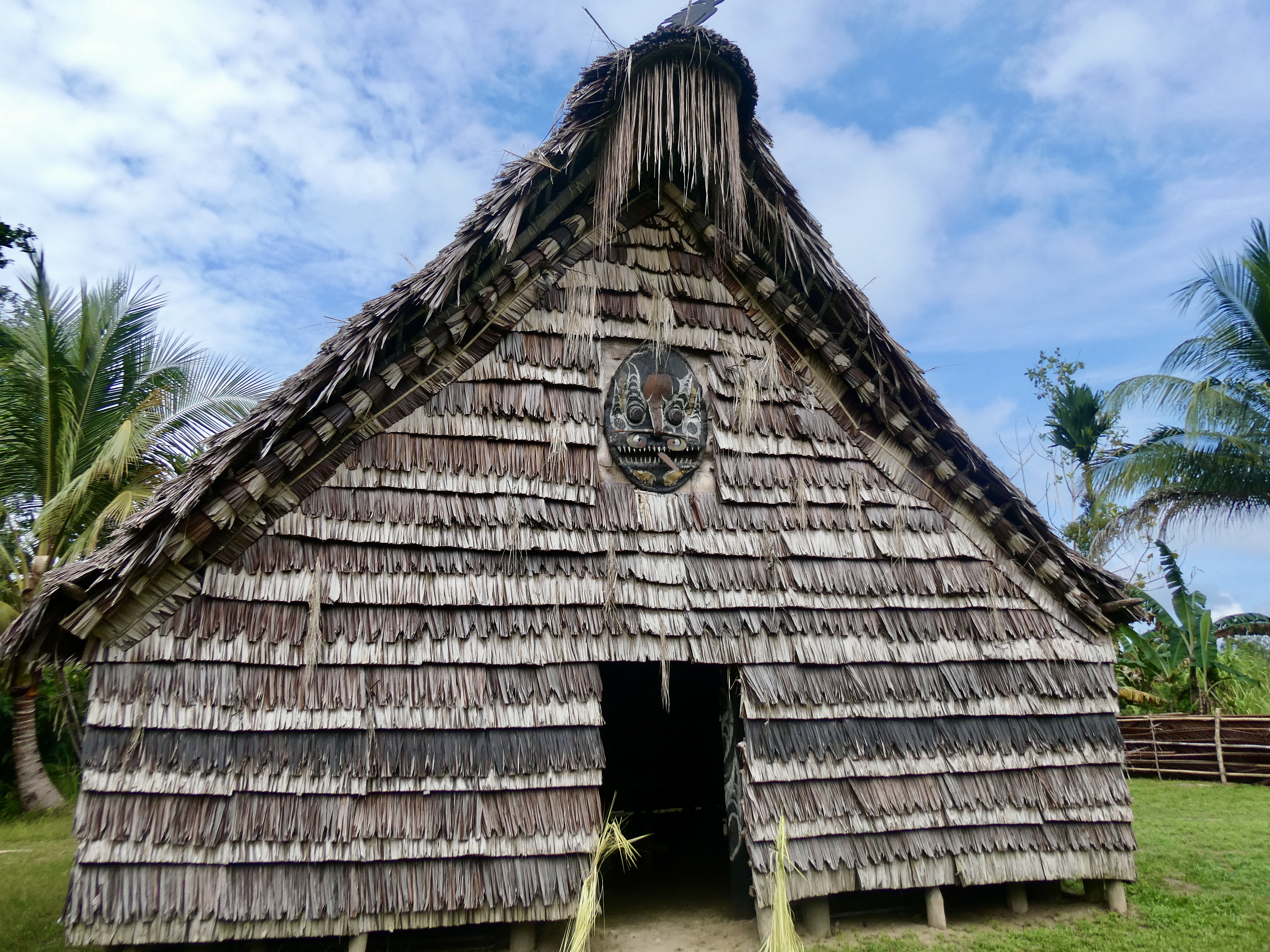
So after the tour of the home, we next visited the “Mens’ House”. This is a building where only men are permitted to enter and it is similar to the Spirit House (more about that later), which I would be visiting at the second village. The difference between the two is that the Spirit House is a traditional ancestral building of worship where young boys undergo initiation into manhood in addition to discussing village business while in the Mens’ House, men meet and discuss village business but any initiation must take place in a Spirit House.
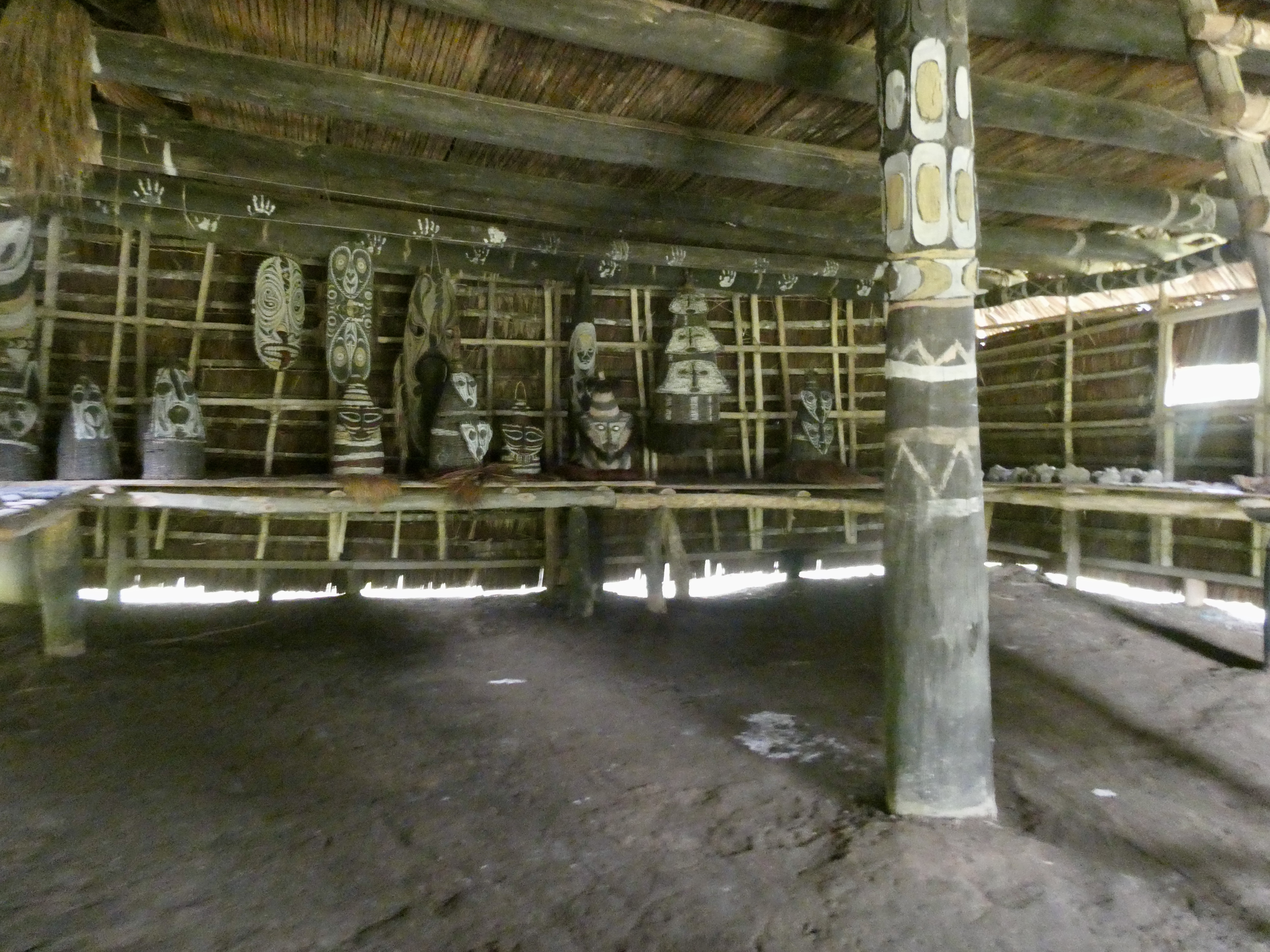
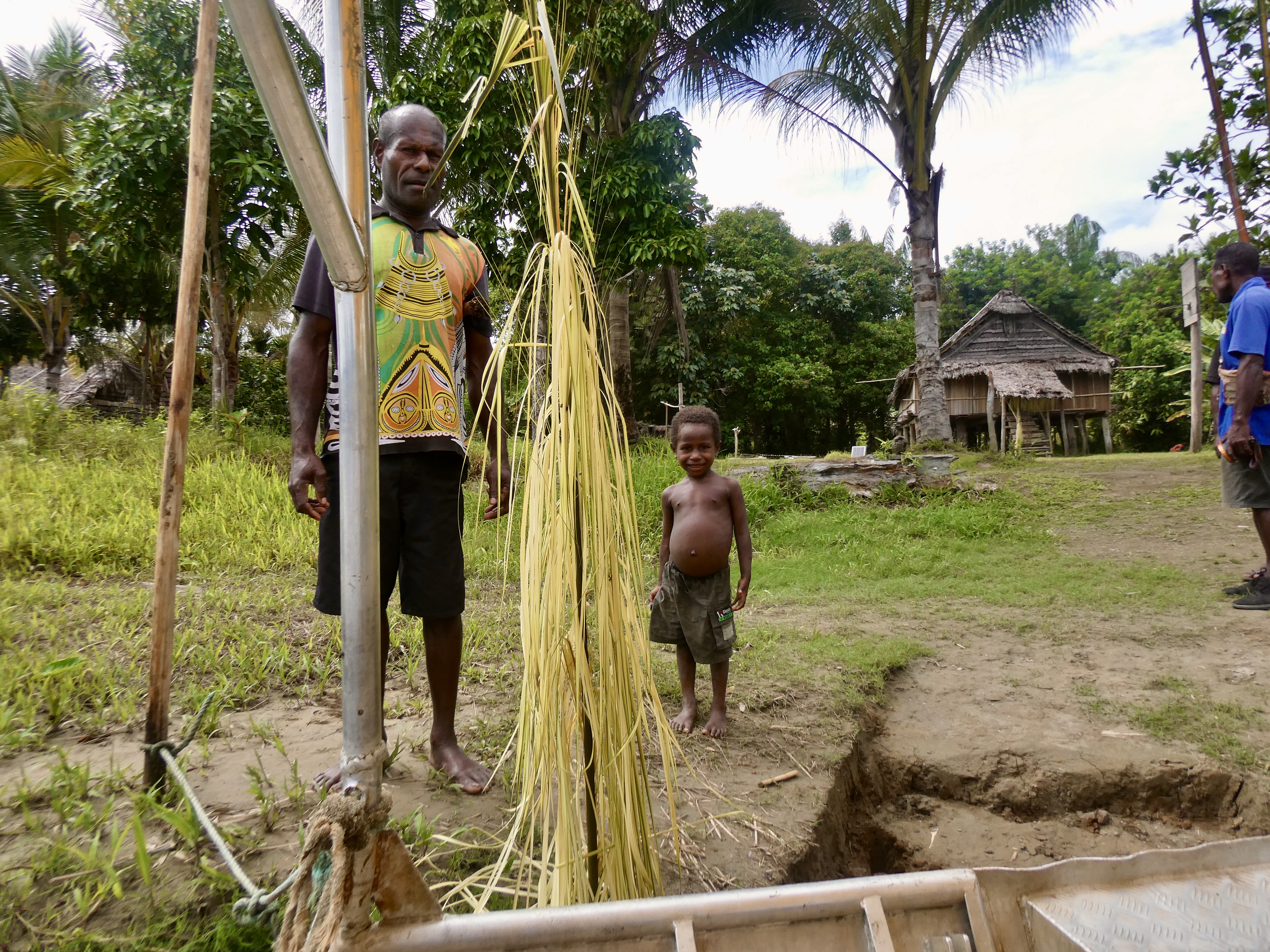
For some reason, I was permitted to enter the Mens’ House and was shown the gorgeous carved poles and artwork filling the building. Now the primary art that is found in these buildings are warrior masks (these villagers are descendants of cannibals and headhunters) as well large carvings of crocodiles. Crocodiles were at one time very common occupants of the local rivers, but in the 60s and 70s, the crocodiles were hunted close to extinction here. However, the villagers still believe that the crocodile remains the most powerful spirit on the river and a symbol of male strength and power (yes this is a VERY patriarchal society). In fact, there were numerous dugout canoes we passed that had the head of an crocodile carved into the front of the canoe.
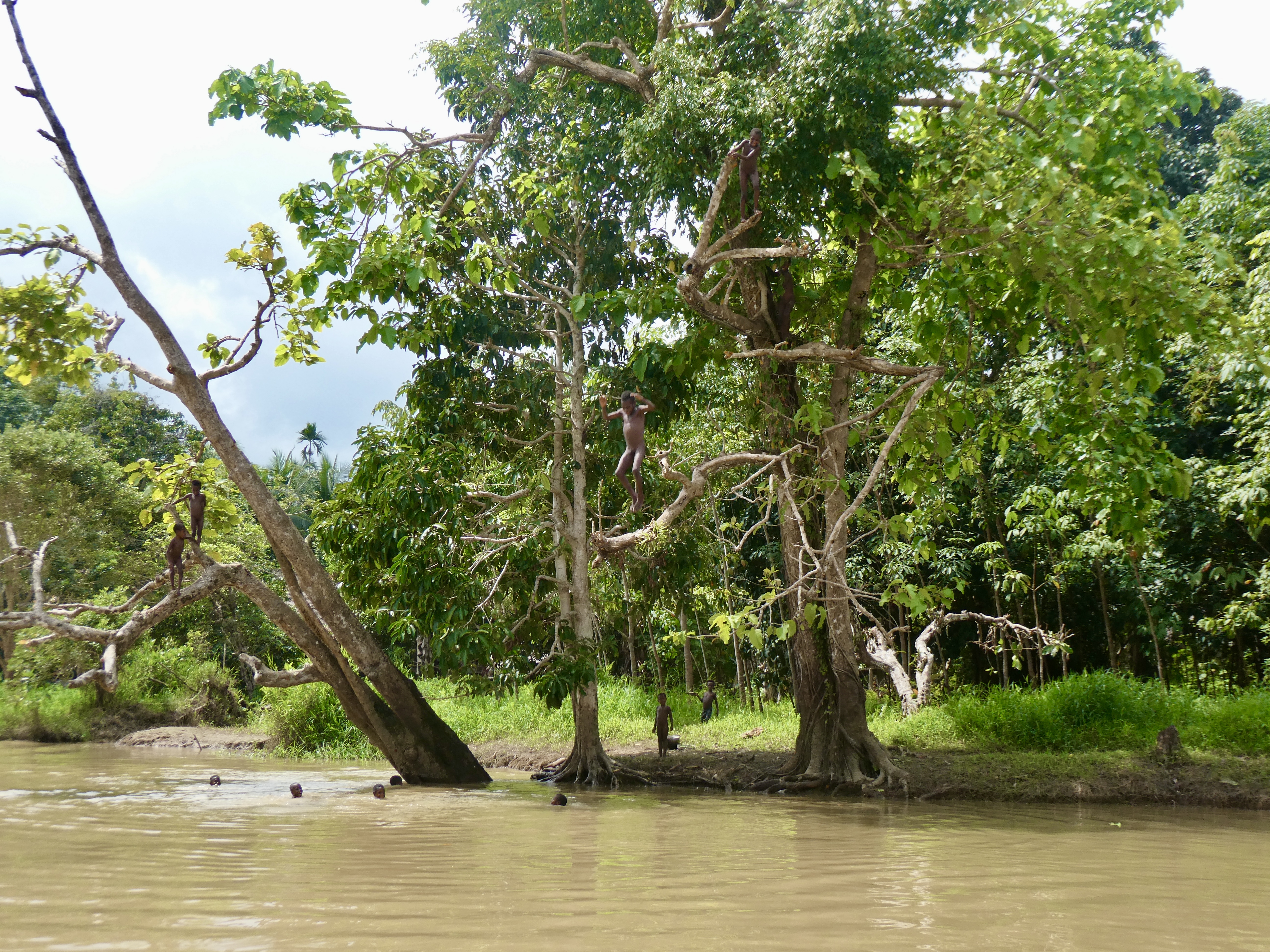
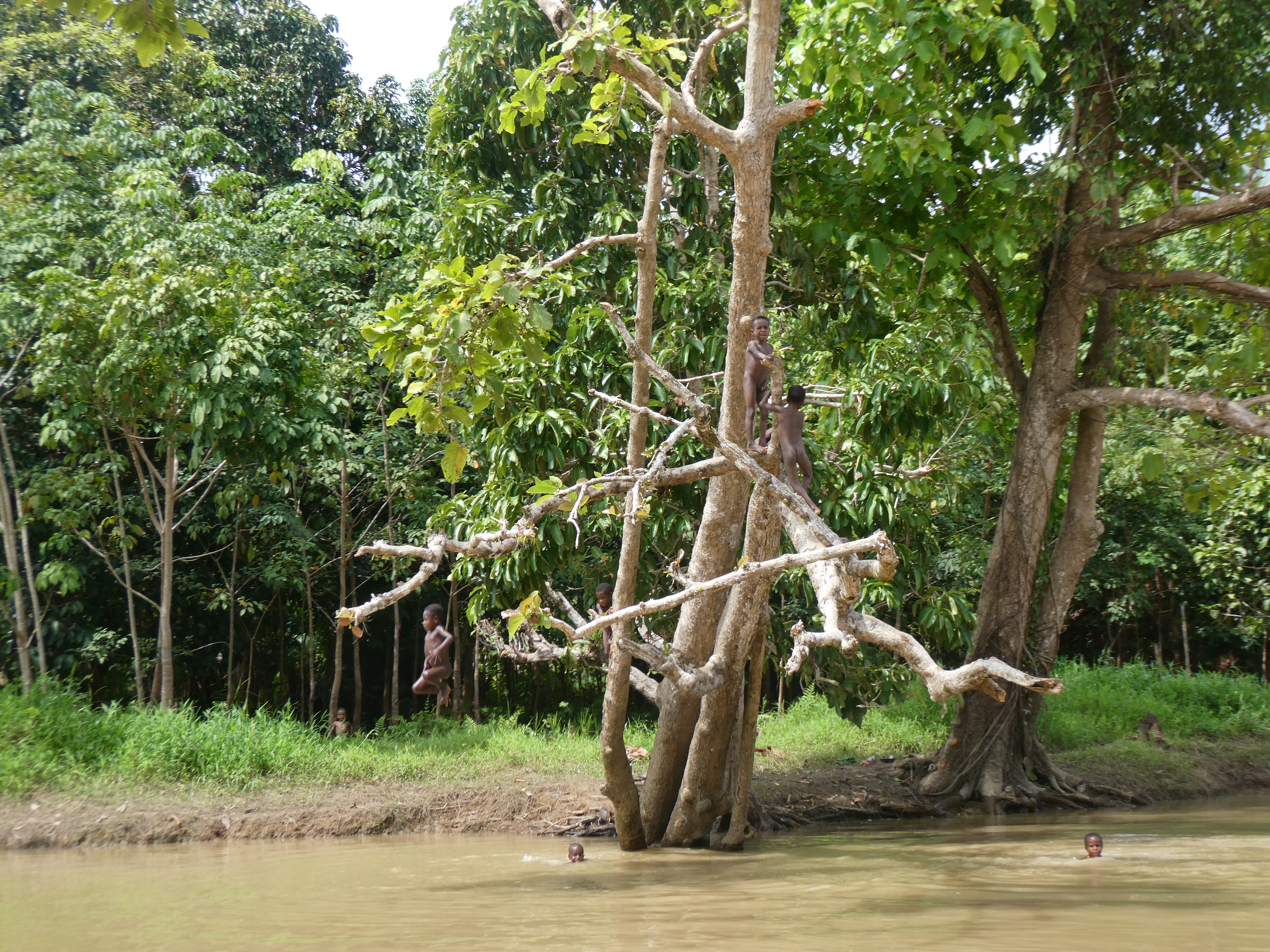
So after the visit to the Mens’ House, we said our goodbyes and headed back upstream and at a split in the river took a left onto the Hornbill River. And as we neared Kornmei Village (dockland clan), we came across a tree full of kids, and by tree full, I mean ten to fifteen kids, all naked and all taking turns jumping into the river. Each one seeming to dare the other to climb higher and higher. And of course as soon as I pulled out the camera, the kids took to showing off. It was a blast to watch kids being kids without any video screens in sight.
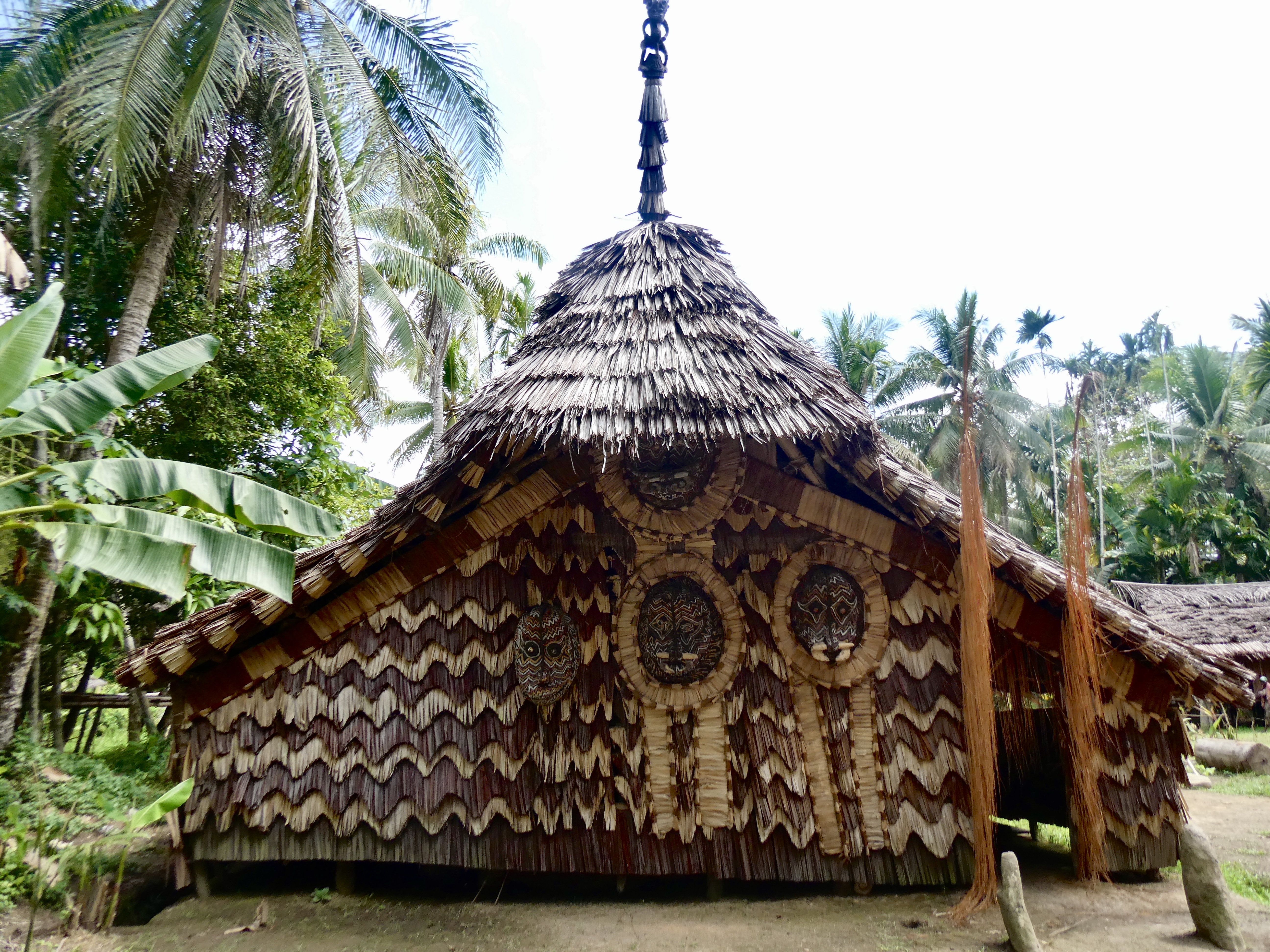
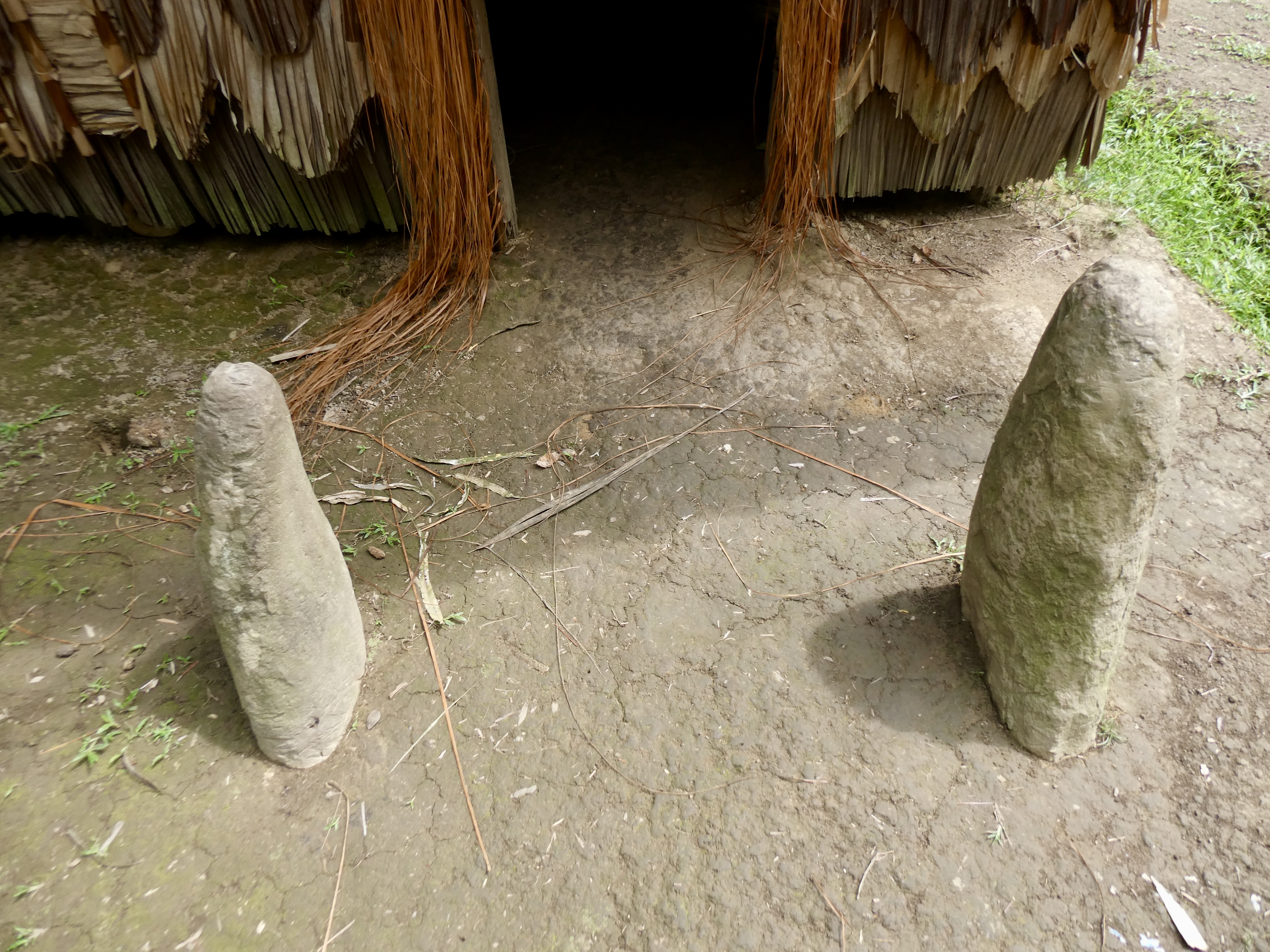
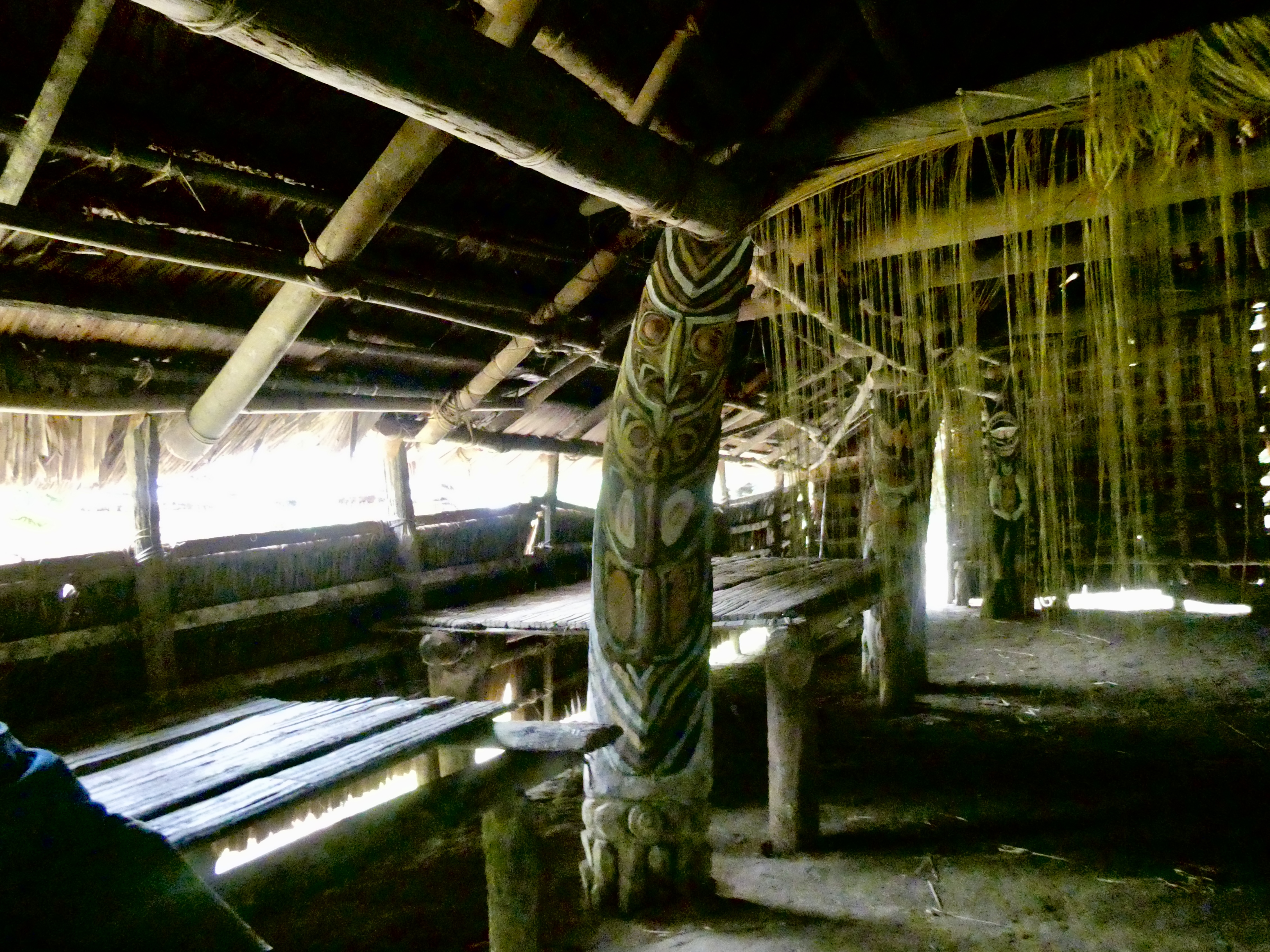
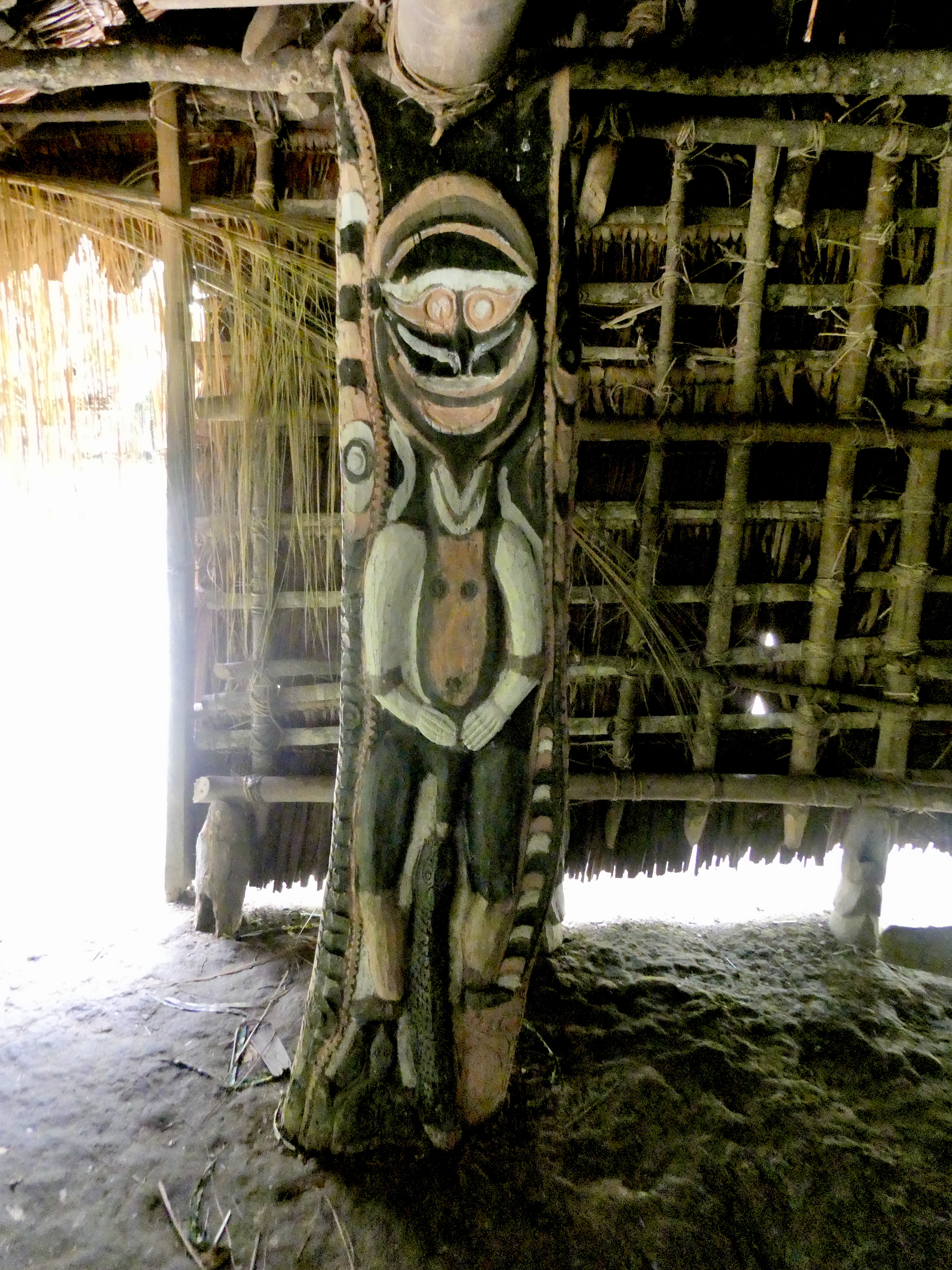
Anyway, not far from the tree adventure we pulled into the Kornmei Village and were greeted by dozens of kids. Once on shore, I was escorted to the Spirit House and shown around. On the outside were gorgeous hand carved masks and at the entrance were two blood stones. Now as explained to me, the blood stones are the stones on which the blood of an enemy was poured after he was killed. (This is obviously not recent times, but the blood stones have remained a part of the Spirit House tradition.). Now the reason the blood was poured over the stones is that the locals believed that unless the blood of the enemy was mixed with the spirits in the blood stones, the warrior who killed the enemy would die soon. However, by mixing the blood with the blood stone, the spirits in the stone and the spirit of the enemy become one and the warrior will live a long life.
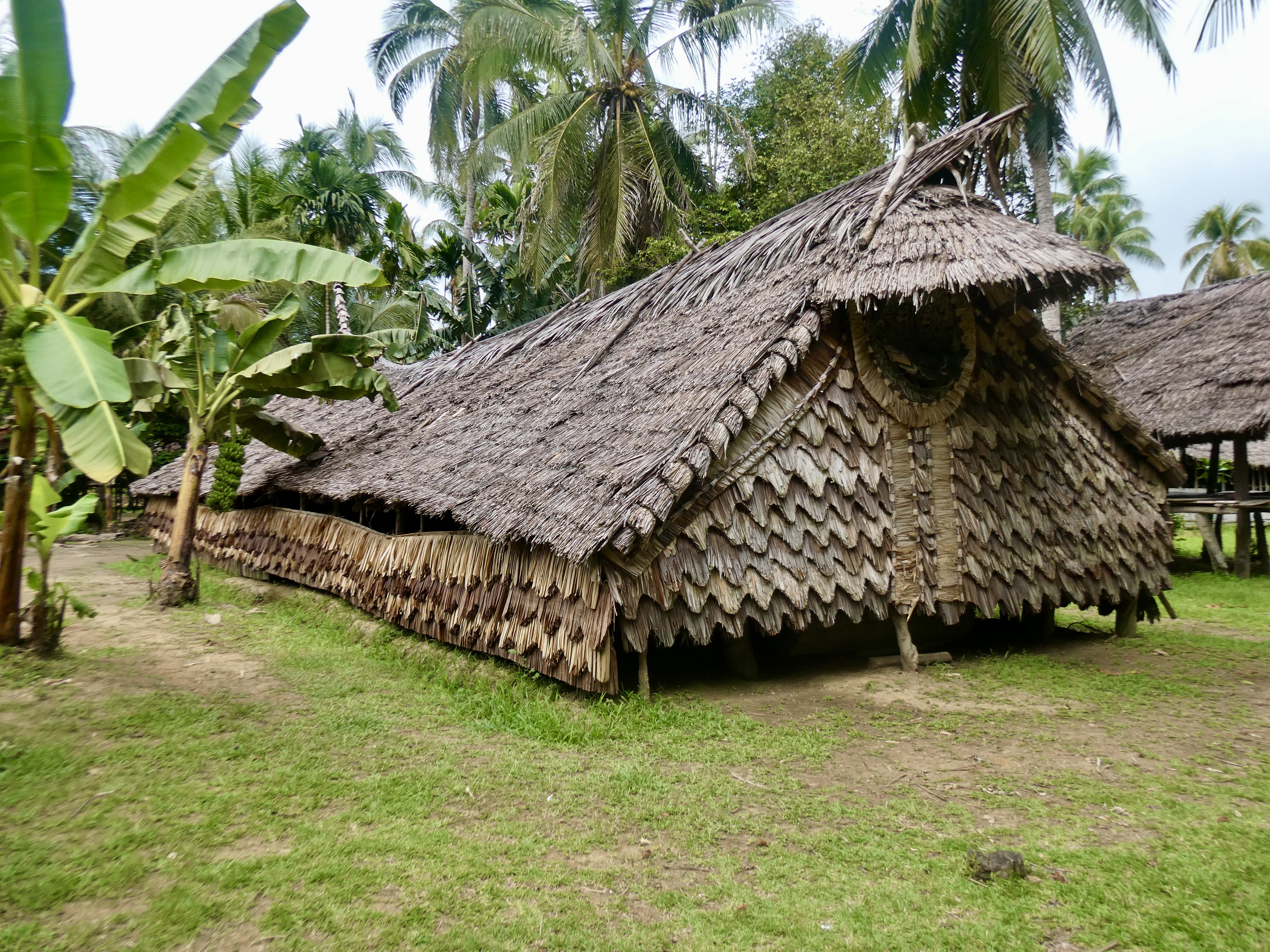
The Spirit House is also only occupied by the male members of the tribe and it is where young boys of 14, 15 and 16 learn to become men, including learning when and when not to have sex (seriously). The boys go through an extended initiation and do not leave the Spirit House while they are being initiated.
And one more thing. In the days of cannibalism and headhunters, they used to hang the bodies of the conquered from the roof of the Spirit House facing inward in order to ward off evil spirits from the dead. OK then….

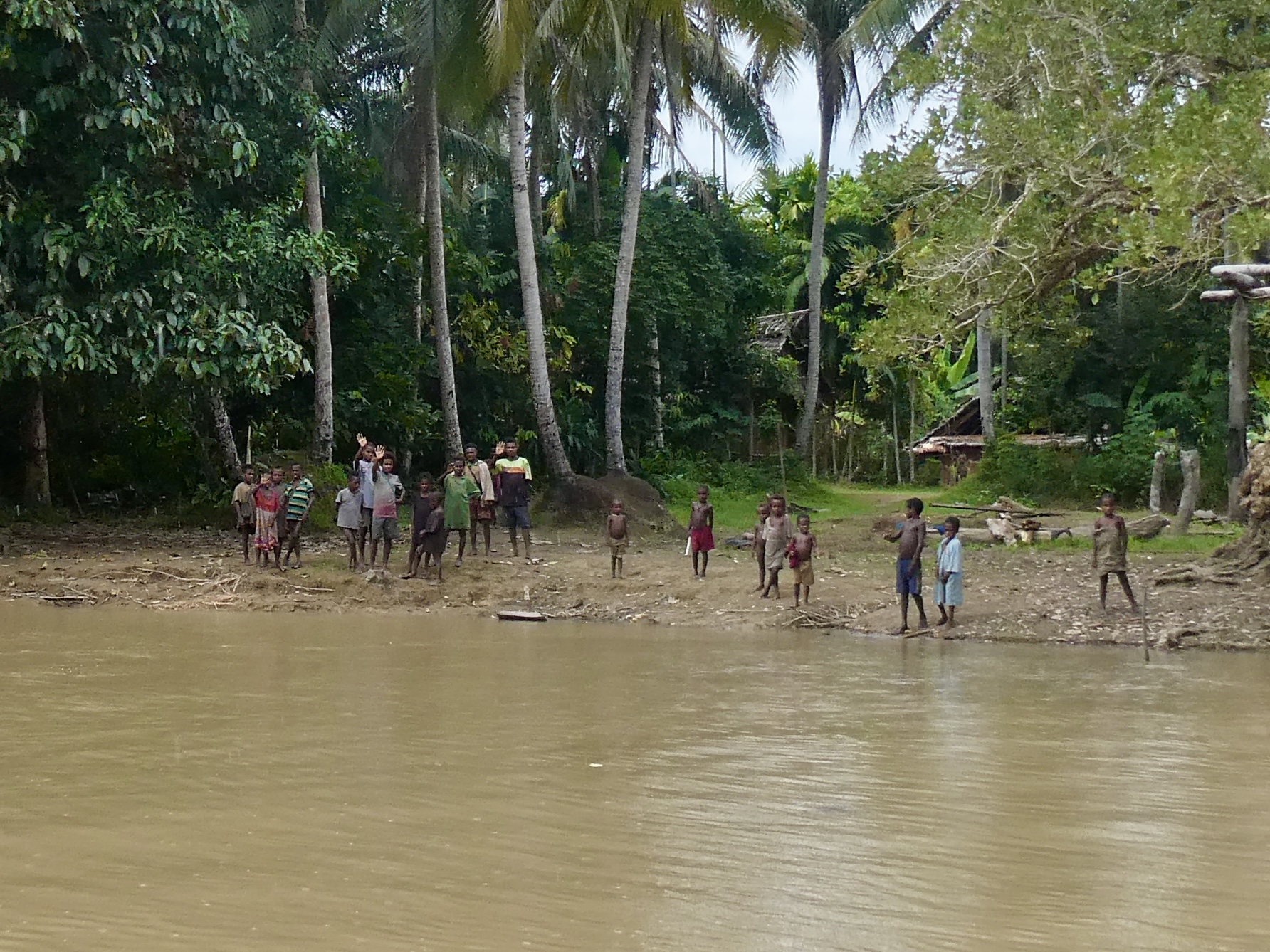
So after the Spirit House education, we left Kornmei Village (dockland clan) with a parade of kids waving me off. Our last stop of the day was to Kornmei Village (eagle clan). Now Chris had prepped me that this Spirit House was the most elaborate in the area and was his favourite.

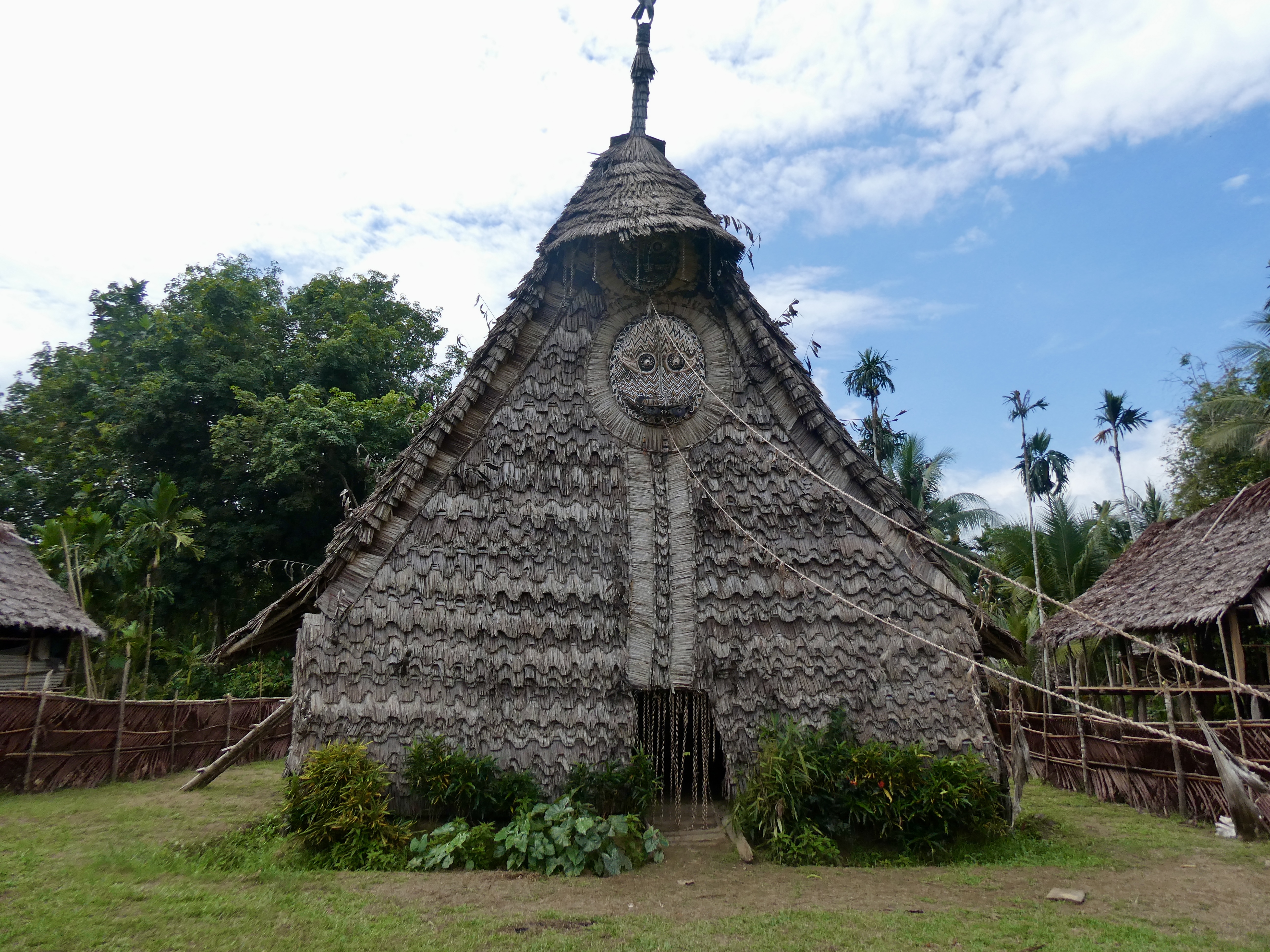

We were greeted near the dock by kids in dugout canoes and at the dock by one of the village artists in full ceremonial garb who escorted me to the spectacular Spirit House.
Now the artwork at this location was absolutely amazing. All four walls of the building were painted in various local scenes and four of the clan’s artists were inside (in traditional attire) to demonstrate their craft. The carvings were absolutely incredible with each of the artists showing me how they use a basic knife to carve the wood into traditional designs. And throughout the building there were examples of their artwork and if I could, I would have driven a truck up to the door and loaded up.
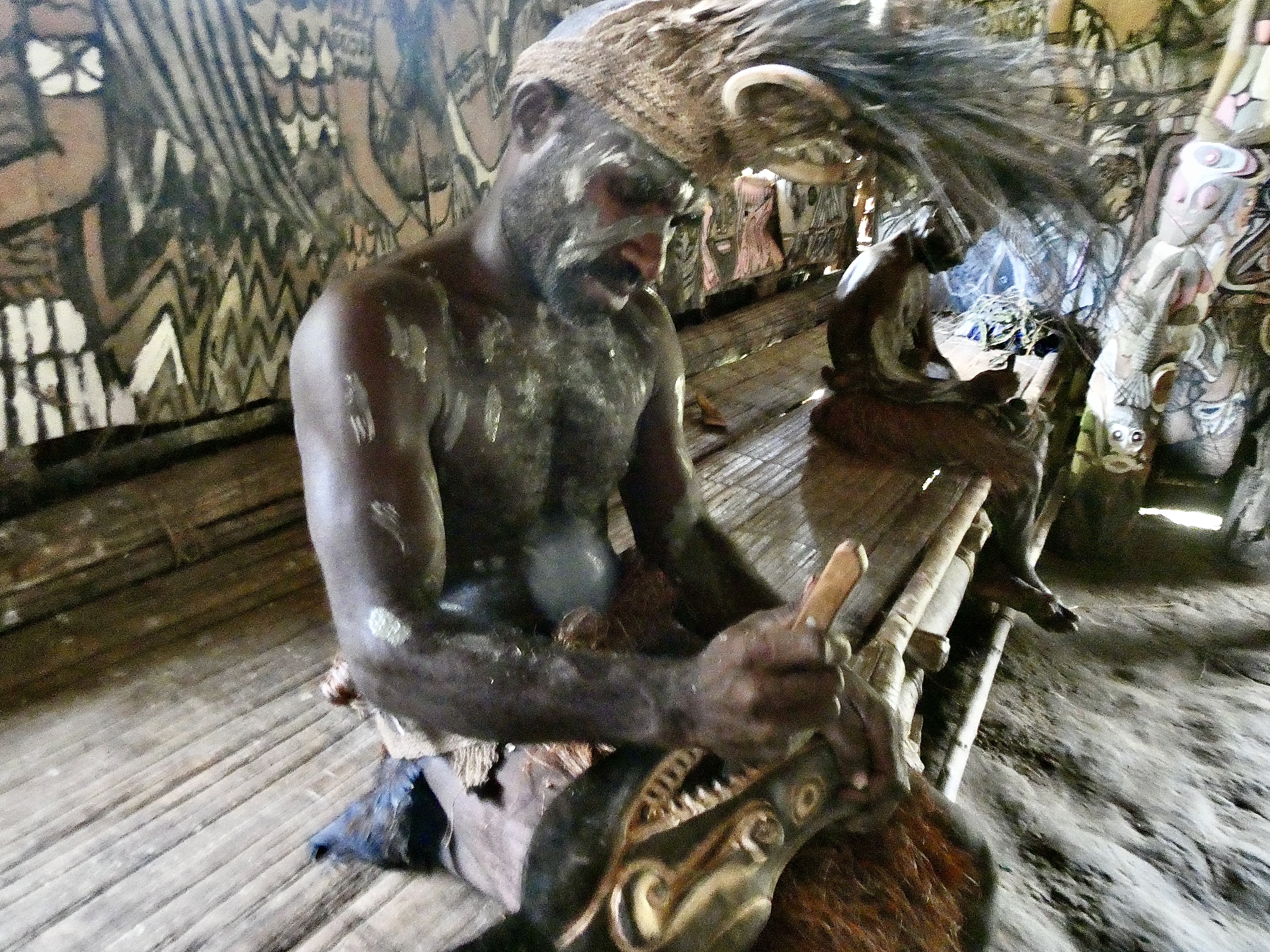
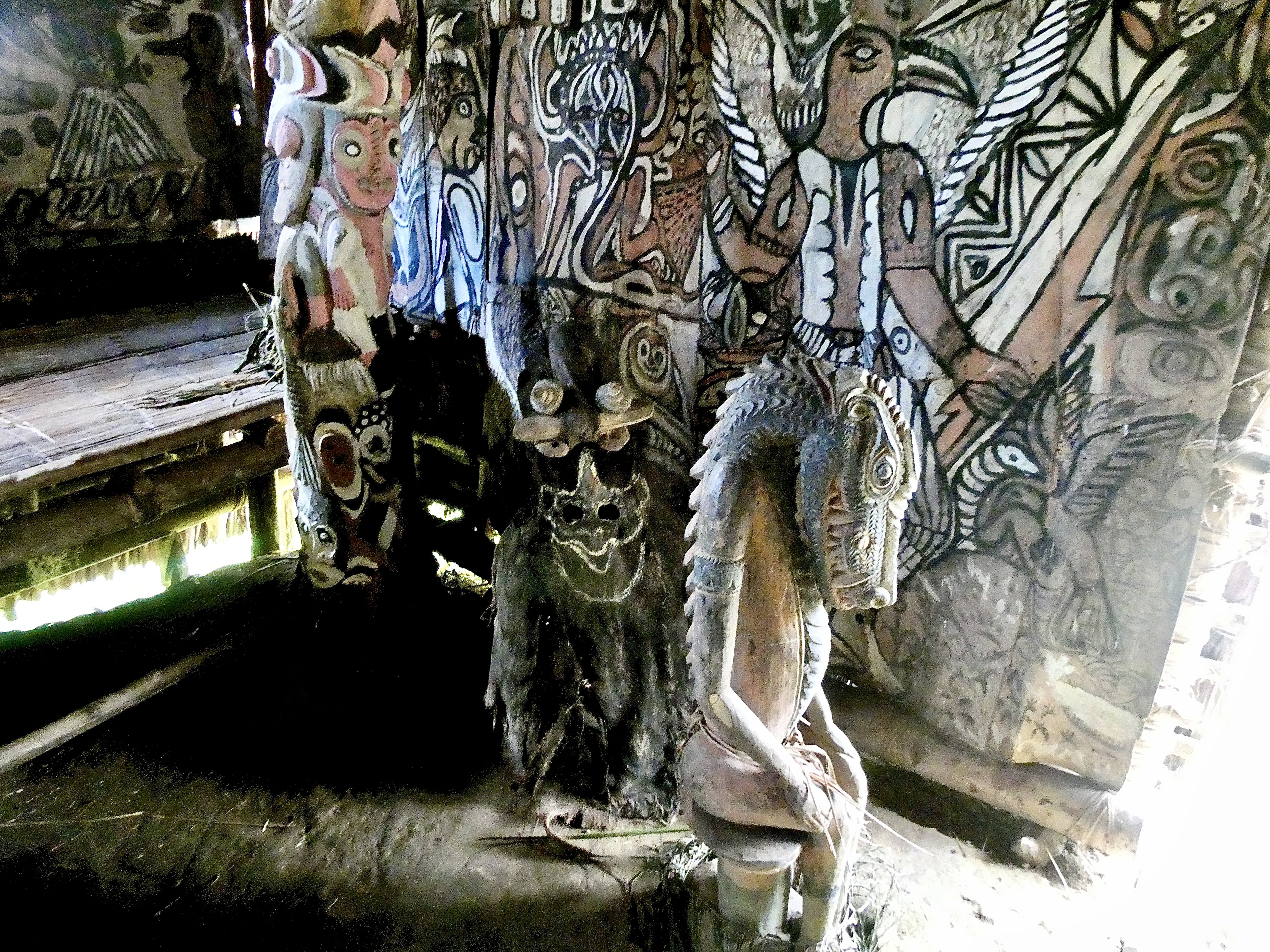
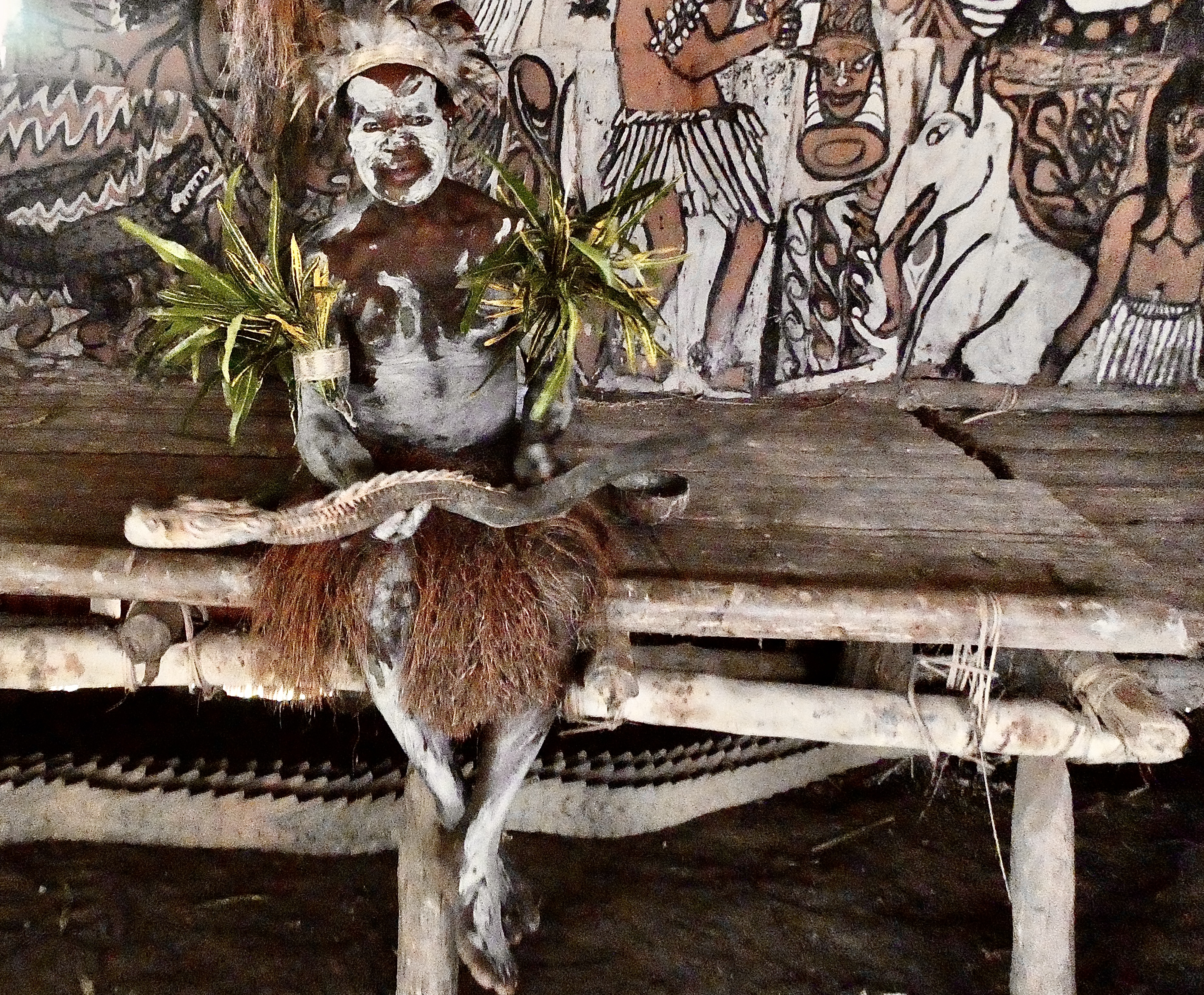
And as with the Mens’ House and the first Spirit House I visited, this one was also used for village meetings (men only) in which they used leaves as form of democracy. The village chief would open the meeting and anyone who wished to speak would have to put a leaf on the table. Pretty interesting. And of course, this Spirit House was also used for the initiation of young men to manhood. (I got a funny look when I asked where the house for the initiation of women was located.)
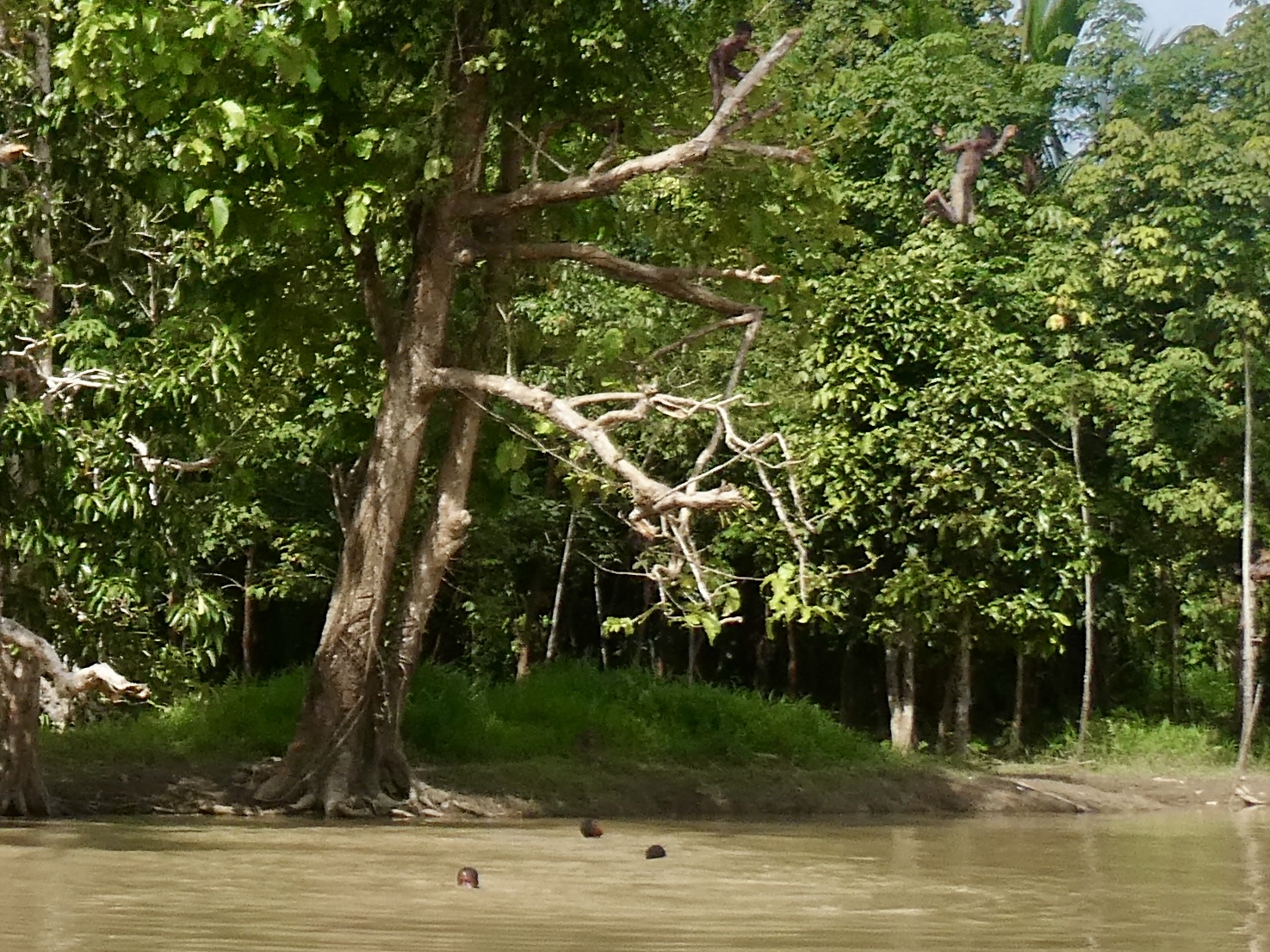
Anyway, after the visit to the last Spirt House, we boarded our boat and headed back to the lodge past the tree where the boys had been jumping into the river. And of course, the sound of our engine had the little boys racing down from the village and up the tree again to begin diving into the river. And one little kid even waved at me as he fell from the tree and emerged from the water clapping so I clapped back at him. Cheeky little bugger.
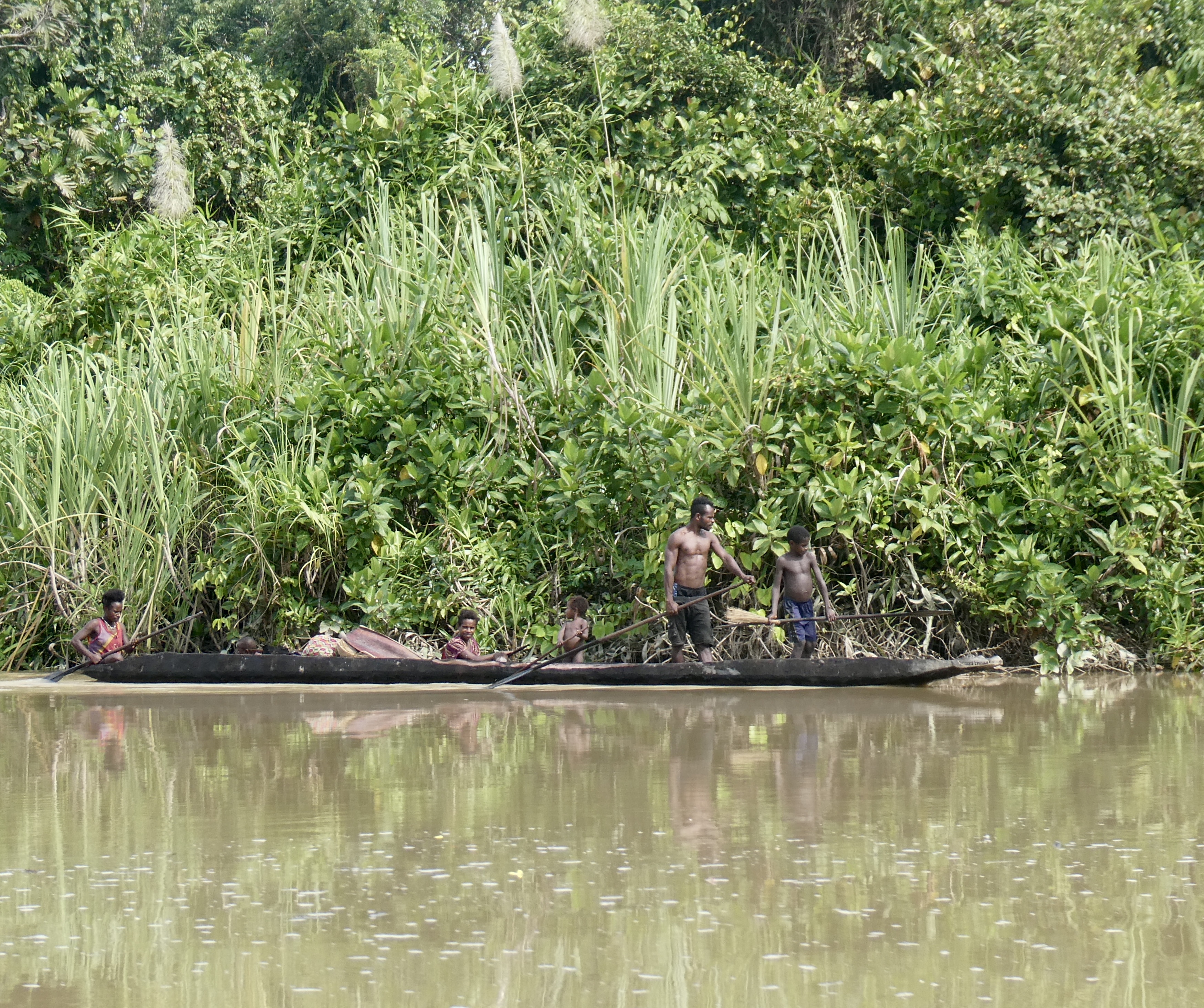
So we followed the same route we had travelled in the morning only in reverse, and along the way we saw a number of families in dug out canoes travelling from one village to the next (or in one case travelling into town two days away). We eventually reached the lodge just after 3:00 and about an hour later Kiwi Sam showed up as he will be flying me from the lowlands tomorrow to the highlands at about 7,000 feet.
