

So this morning, Sam and I were supposed to leave at 8:00 a.m., but we had another doozy of a thunderstorm overnight and by 7:00 a.m., it was still raining and a bit fogged in so Sam said we had to wait about a half hour for things to clear up. And just like yesterday, the rain soon stopped and the fog lifted and presto, Sam and I were headed down the mountain to the river for the trip to the airfield.
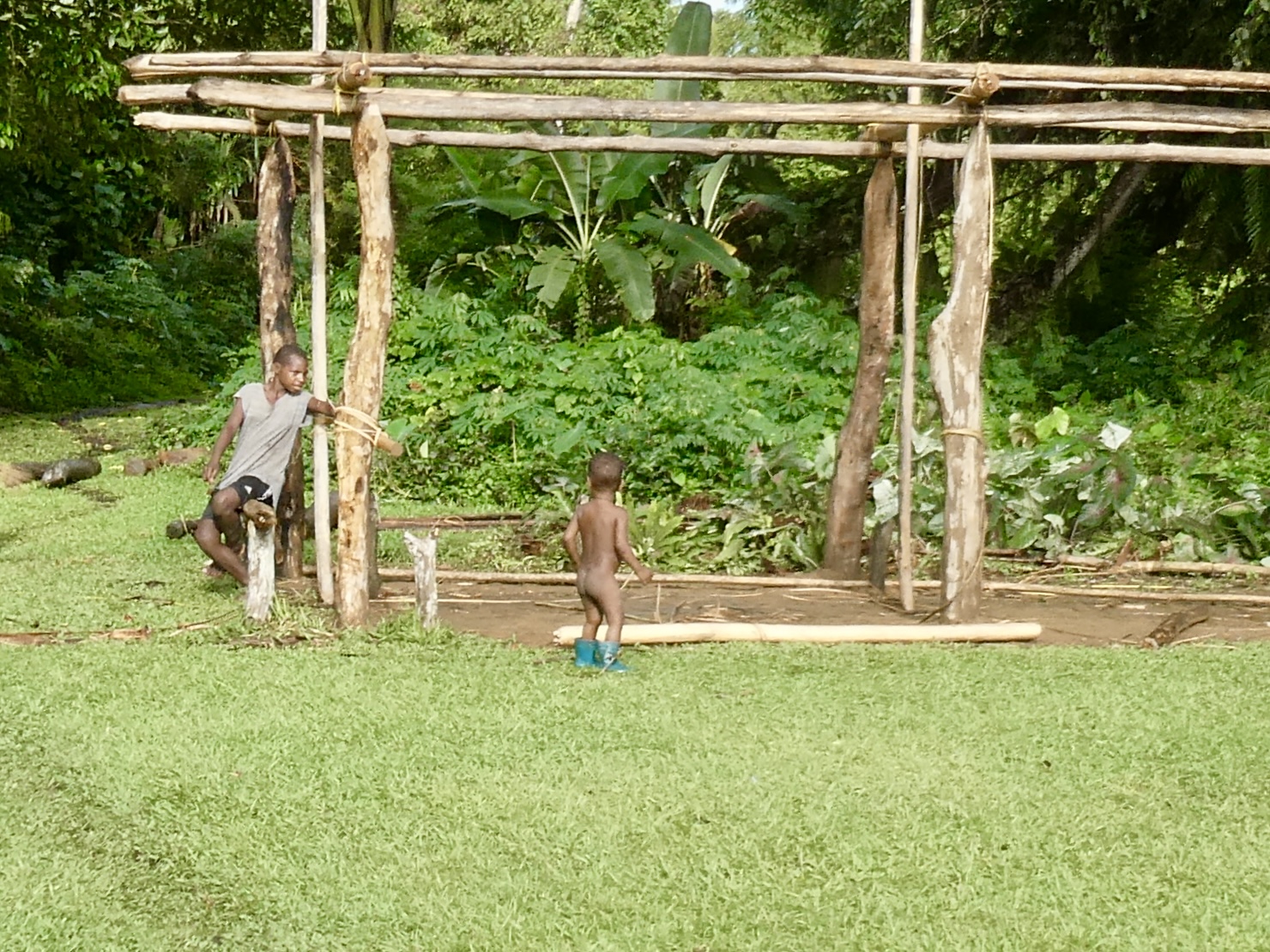

And just like two days ago, there was a gathering of villagers to see us off, including one little one who came running buck naked except for a pair of blue rain boots (glad to see he dressed for the occasion). As we took off, folks waved and Sam soon had us high above the river and heading towards the mountains. Forty minutes later we were landing in Tari (on a real runway as opposed to the grass airstrip we had just left near the Karawari River).
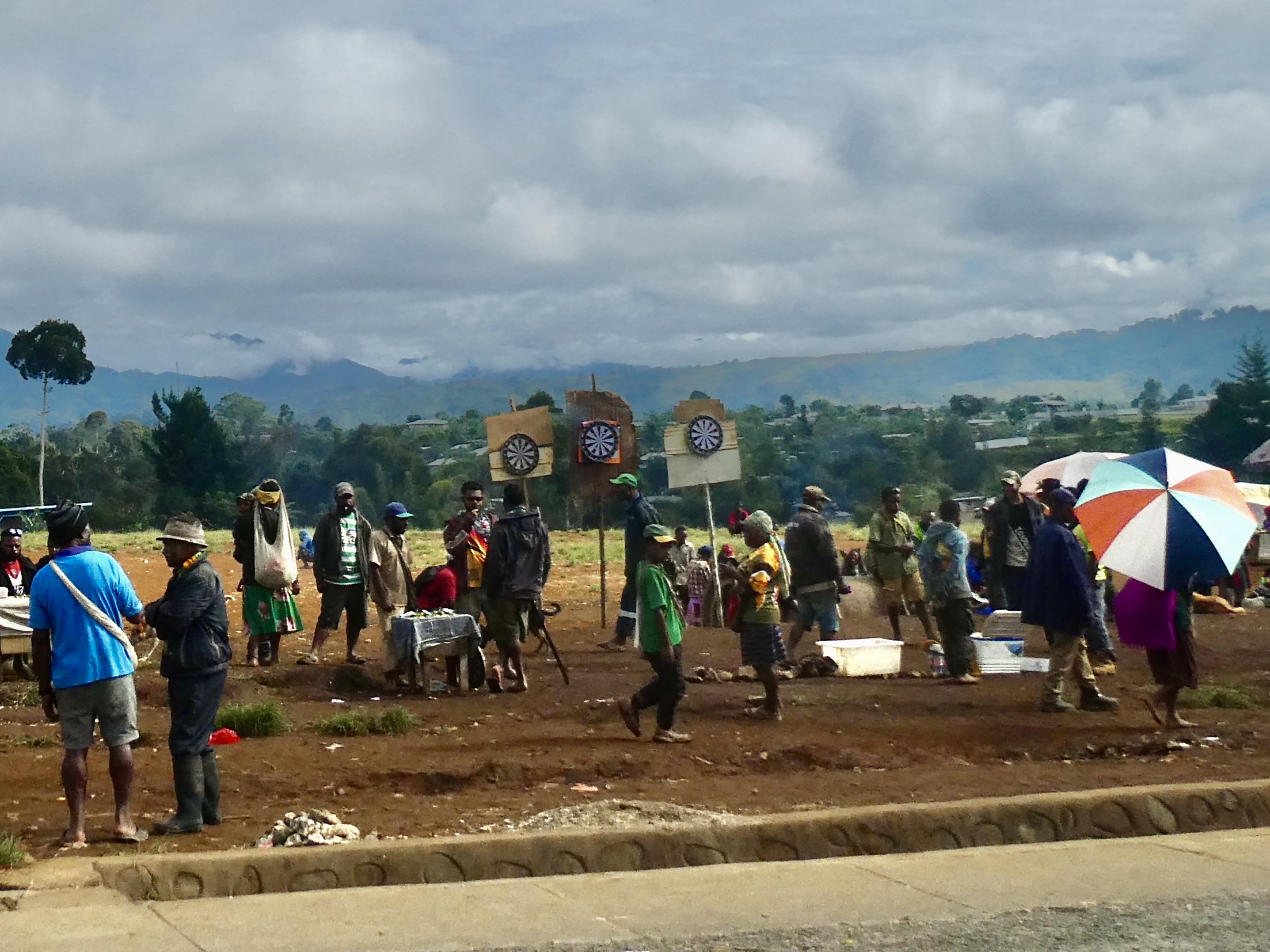

I was met by Paul, the Ambua Lodge manager, and Steven, my guide for the next two days. Once we were loaded in the bus (it was a literal bus), we headed down the lovely paved road for the forty minute trip up the mountain to the lodge. Along the way, we passed numerous roadside stands where folks were selling pop, betal nuts and produce. Many of the folks are not educated and the only way for them to make a buck is to barter or sell goods you would generally find at a convenience store.
As we drove along, we were greeted with numerous waves and shouts of hello from the children. Not sure if they could see me in the bus, but I was waving back.
So by 11:00, I was settled into the lodge (after the lodge manager described to me how they had 24-7 power from a nearby power plant … the irony of this will become clear below) and by 12:30 I was having lunch. At 1:30, I met up with Steven and we headed down the road to one of the nearby Huli villages. The Huli mountain tribe is known for their colourfully adorned human hair wigs and ancient warrior culture. Now in contrast to the Sepik people (the generic name for the villagers along the Karawari River) whose art is created through ceremonial and decorative carvings, the Huli villagers in the highlands use body and face painting and human hair wigs as their expression of art. And this became immediately apparent when we visited the nearby village.


In the village, Steven showed me the outside of a traditional home with a tiny (and I mean tiny) pen holding three rather large pigs. Apparently pigs are a traditional source of currency in the Huli culture. In fact, when a man wants to marry a woman, he must pay the woman’s family in pigs. Seriously.
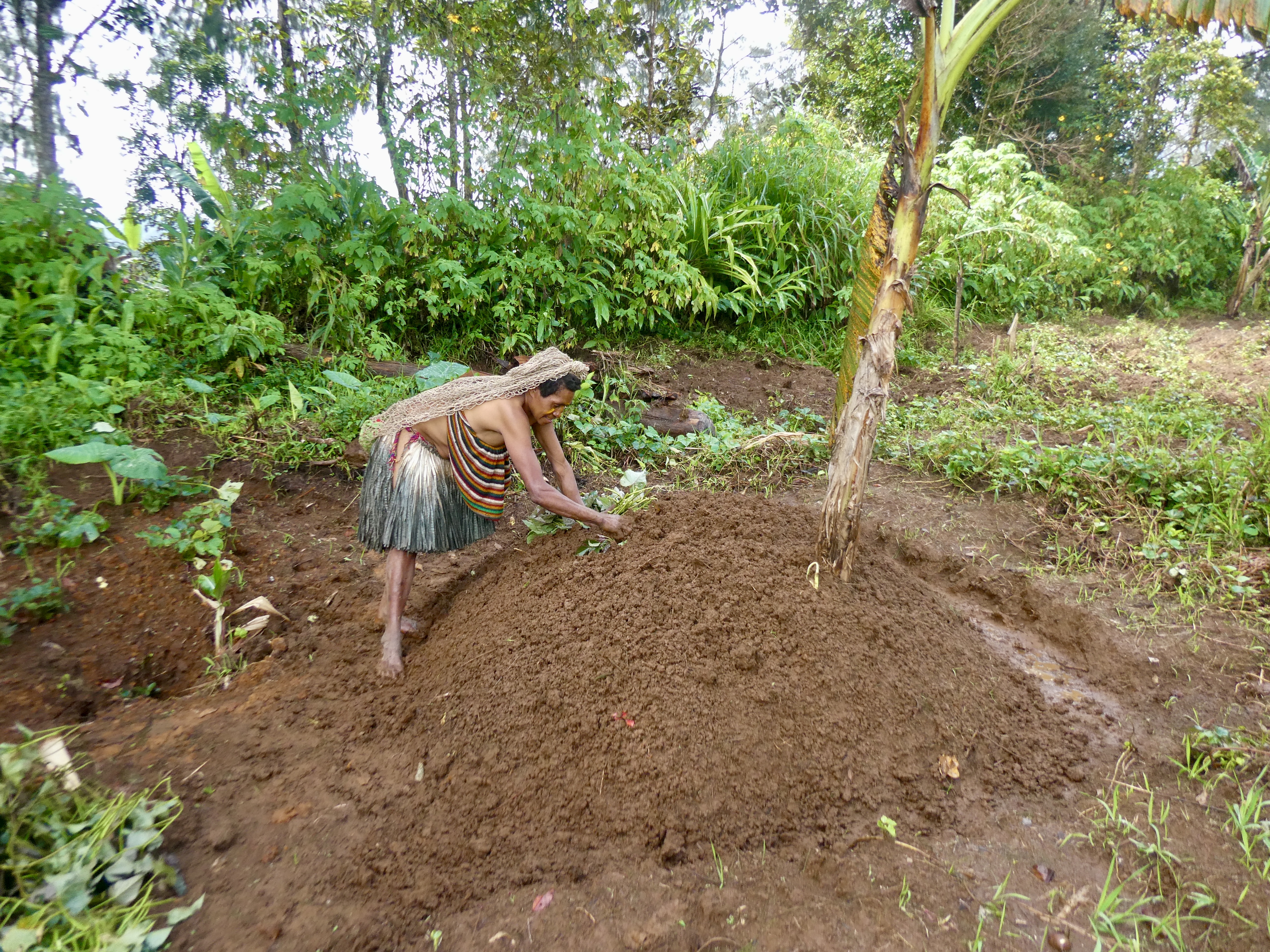
We then took a walk through a garden filled with vines that are apparently edible and used in Huli cooking. Nearby we watched a Huli woman plant cuttings from vines, which in about four months will be edible and used by the village for food.

From here, we walked back past the traditional home just in time to see a young girl taking roasted potatoes out of the fire pit for a snack. We then followed her down a path to where a group of women dressed in traditional clothing were seated and who went on to provide me with a demonstration of the traditional ways of Huli women, including showing me how a baby is cradled in a woven sack; how pendan leaves are woven into sturdy coverings; how grass from the forest is woven into ropes and bags; and how traditional womens’ clothing is made from palm leaves.


After watching the demonstration, Steven explained that while the women cook, clean, look after the children, farm and weave, the men do the “hard” work of chopping down trees and digging ditches. It was interesting that while I was at the village, I did not see a single tree being chopped down or a ditch being dug. Just sayin’…. Steven also explained that the men have the job of running the village, which is “something women cannot handle”. Yikes. Again a major patriarchal society in this country.


So after the village visit, we returned to the lodge and took a quick walk around with Steven to see if we could spot any birds and as luck would have it we not only spotted a melidectes honeyeater, but saw two Birds of Paradise. Now I was able to capture a pretty good picture of the first Bird of Paradise, but sadly just as we spotted the second Bird of Paradise, the heavens opened up and it absolutely poured. So much for birding for today.
Now I thought my adventure for the day was over, but about 5:15 the power went out and I was pretty much left to my own devices. No food, no water and no manager in sight. And at 7,000 feet my room soon became a refrigerator. It was freezing. The only light I had was the flashlight on my cellphone and the battery on my cellphone was soon running low. Around 7:00, I went into the main lodge where I found one lady who sat with me while we waited for the power to come on. Unfortunately, it never did. By 8:00 I was starving and asked the gal if they could give me something to eat … bread, a muffin anything. They came up with a piece of cake and luke warm tea. I wandered back to my room and put on a couple layers of clothing and huddled under my thin blanket (which was actually an electric blanket, but with no electricity… well…). I fell asleep for a bit, but at midnight woke up shivering and never went back to sleep.
At 6:00, I got up to meet Steven to go bird hunting, but found that they had locked the door to the building my room was in and I couldn’t get out. After pounding on the door, I was finally let out, found Steven and told him I hadn’t had a meal since 12:30 the day before and the manager was nowhere in sight
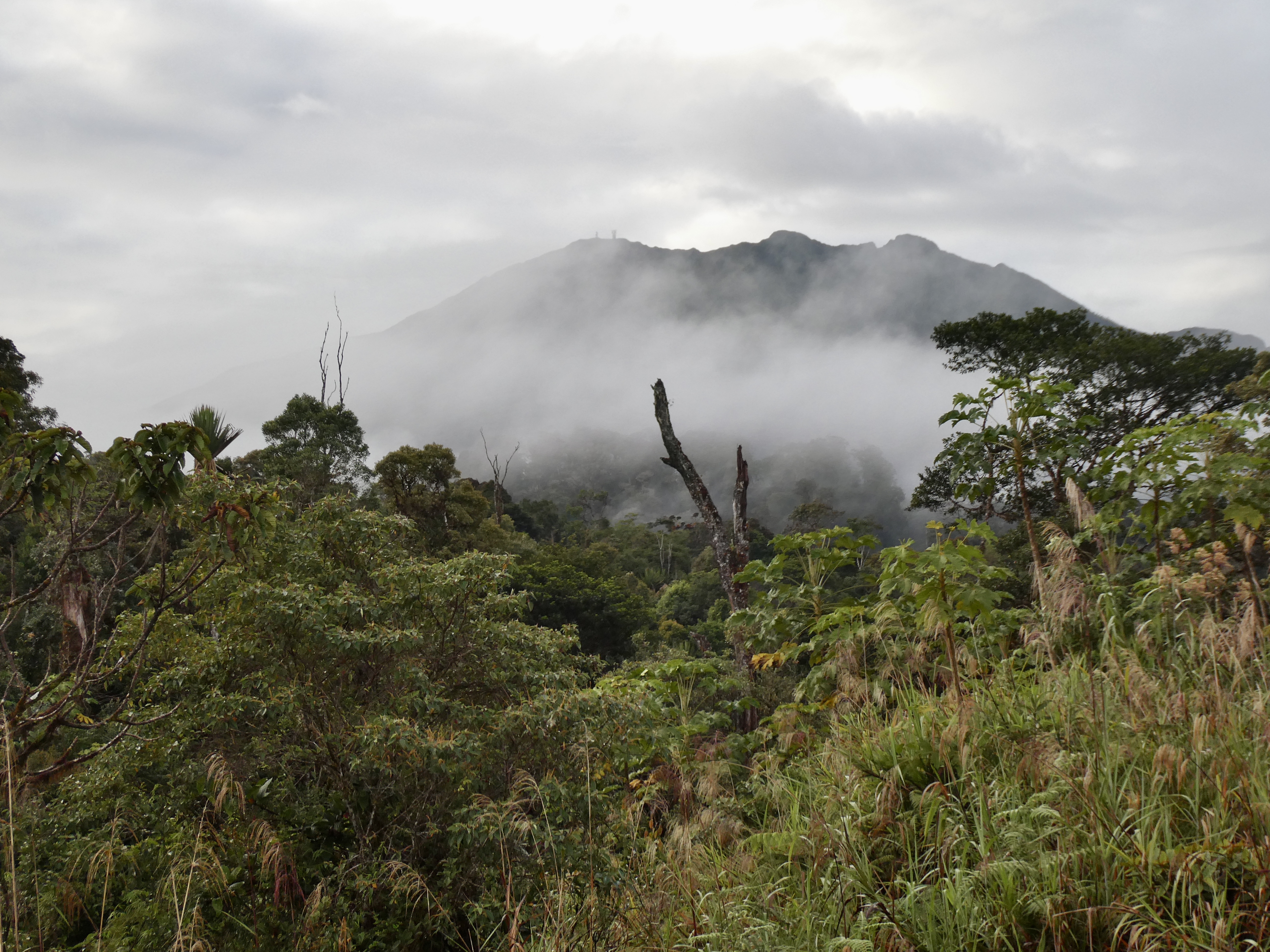
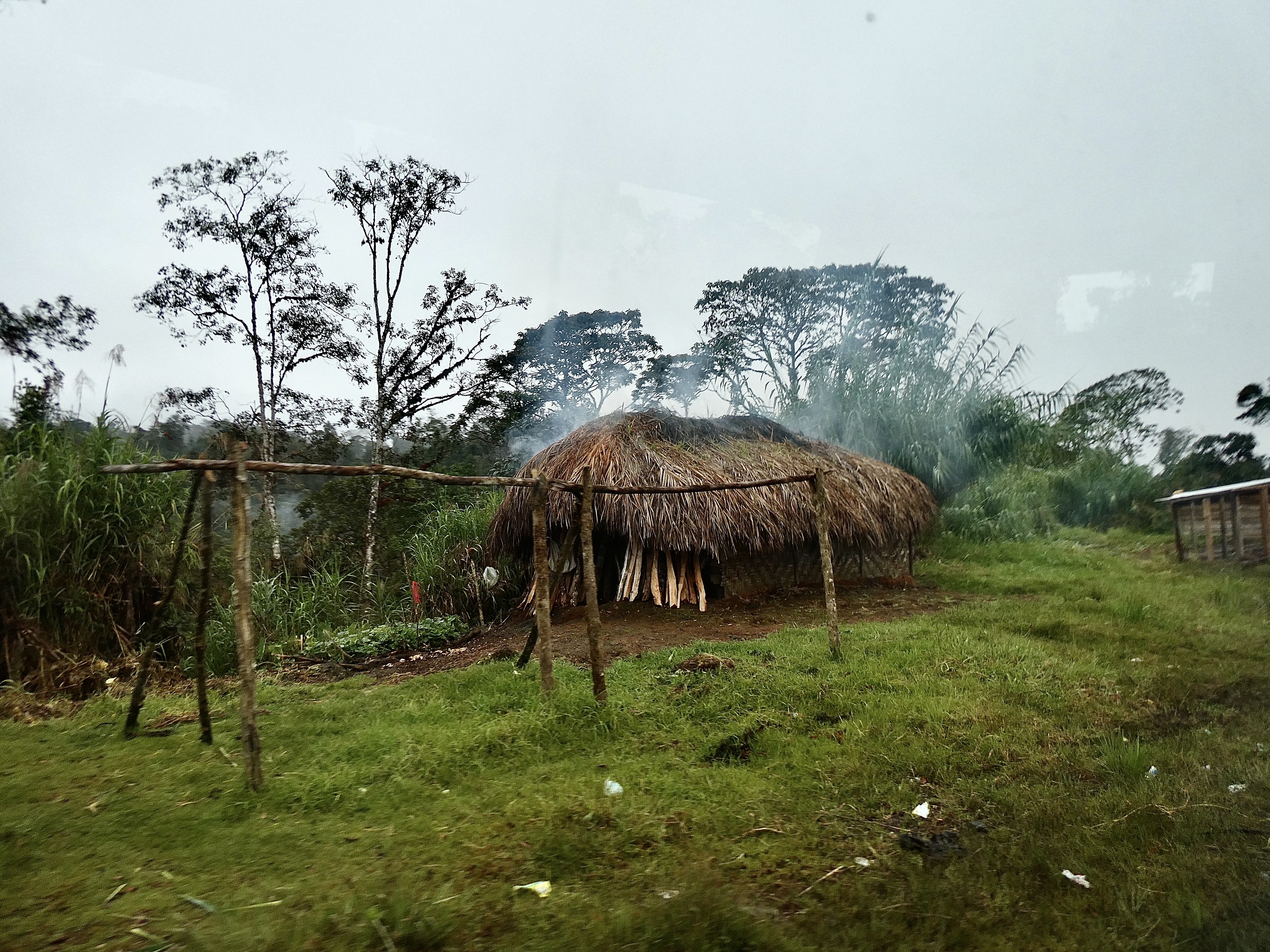
We ended up going out to look for birds, but it was a very foggy morning and the birds decided to lay low. About the only interesting site were numerous area houses in which the occupants had lit fires for warmth and the smoke from the indoor fires was literally seeping out of the straw roof of each home we passed.

By the time we got back to the lodge (still no power), I determined that the tour company had to get me out of there. At just after 8:00 the manager finally appeared and tried to blame the staff for not providing me with any food or blankets. I was done with this guy and at that point, called the tour company emergency number, explained what was going on and they promised to send the plane for me immediately. In the mean time, Steven told some of the staff to start a fire and cook me something … anything. I ended up with a number of soggy pieces of bread that appeared to have been soaked in eggs and cooked over the fire, along with cold beans and a bottle of OJ. I will give them A for effort, but the whole situation was completely unacceptable.
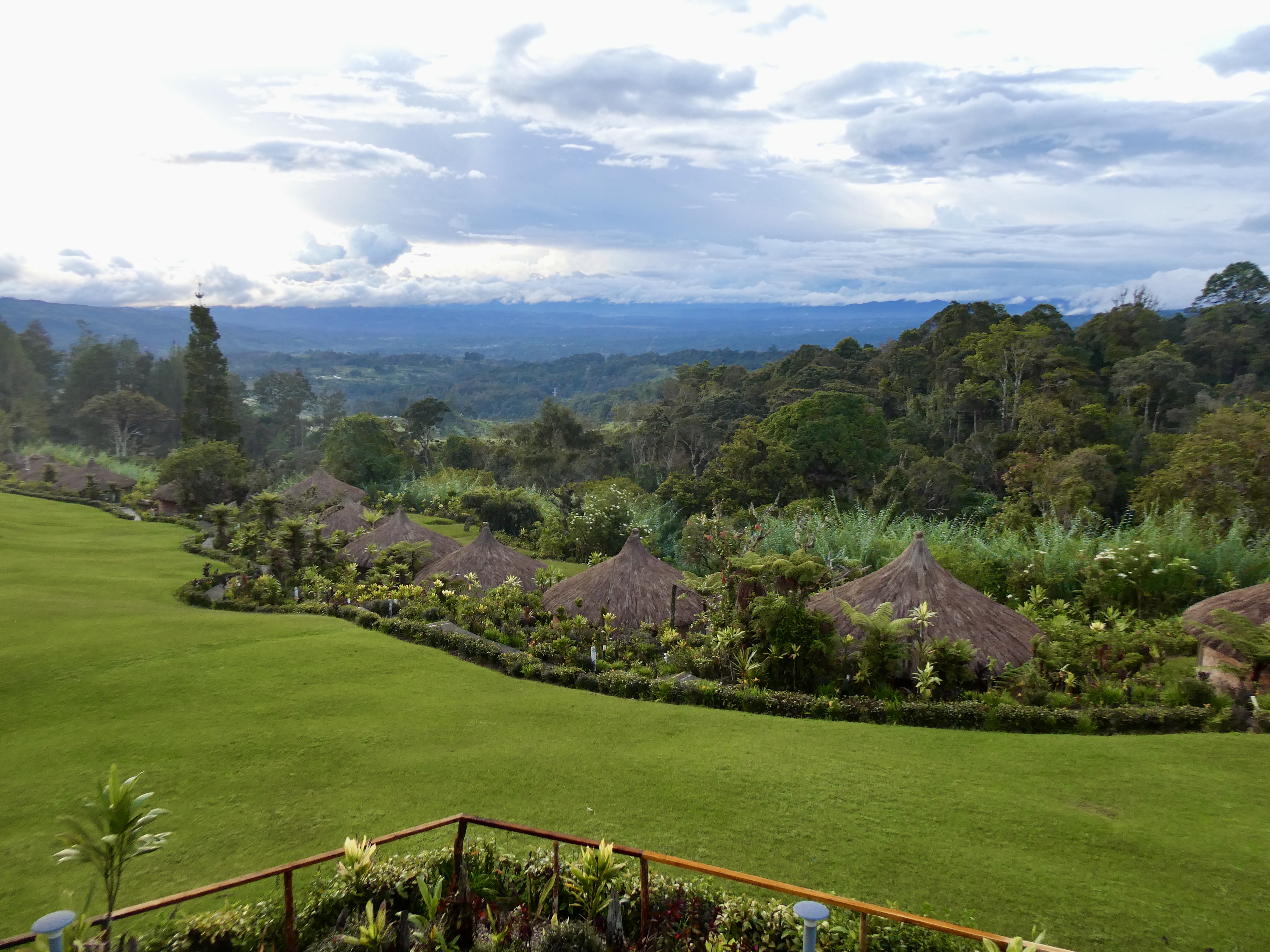
At just after 9:00, I was told a plane would be in Tari at 11:00 to take me back to Mt. Hagen (where I was supposed to fly tomorrow). In the meantime, poor Steven was trying to salvage my visit to the Huli country by setting up a visit on the way to the airport to see the Huli wigmen. The Huli men traditionally wore wigs made of their own hair and then adorned the wigs with feathers and animals from the area. The men would have an every day wig and then would also have a ceremonial wig for special occasions.
And in order to have a wig made, the Huli boys had to attend wig school where they would have to follow a school master’s teachings in the way of growing hair for the wig along with other teachings. Once they finished the schooling, the boys would be deemed men and would go home and marry.
Now the wig process involves having the master teacher bless reeds filled with water to ensure the spirits will protect the boys as they become men and then they must drink half of the water from the reeds, blow the water out three times which is believed to help the hair grow and then consume the last half of the water to fortify the hair. The students then take branches off trees and brush the leaves in a nearby stream, wave the leaves over their heads and follow the master in song. After the ceremony, the boys can allow their hair to become wet as it grows. After a number of months, the hair can be cut by one of two master wigmen (an everyday wigman and a ceremonial wigman) who will sew the hair to a mold and shape it for the man. Today, these kinds of wigs can run into the hundreds of dollars.
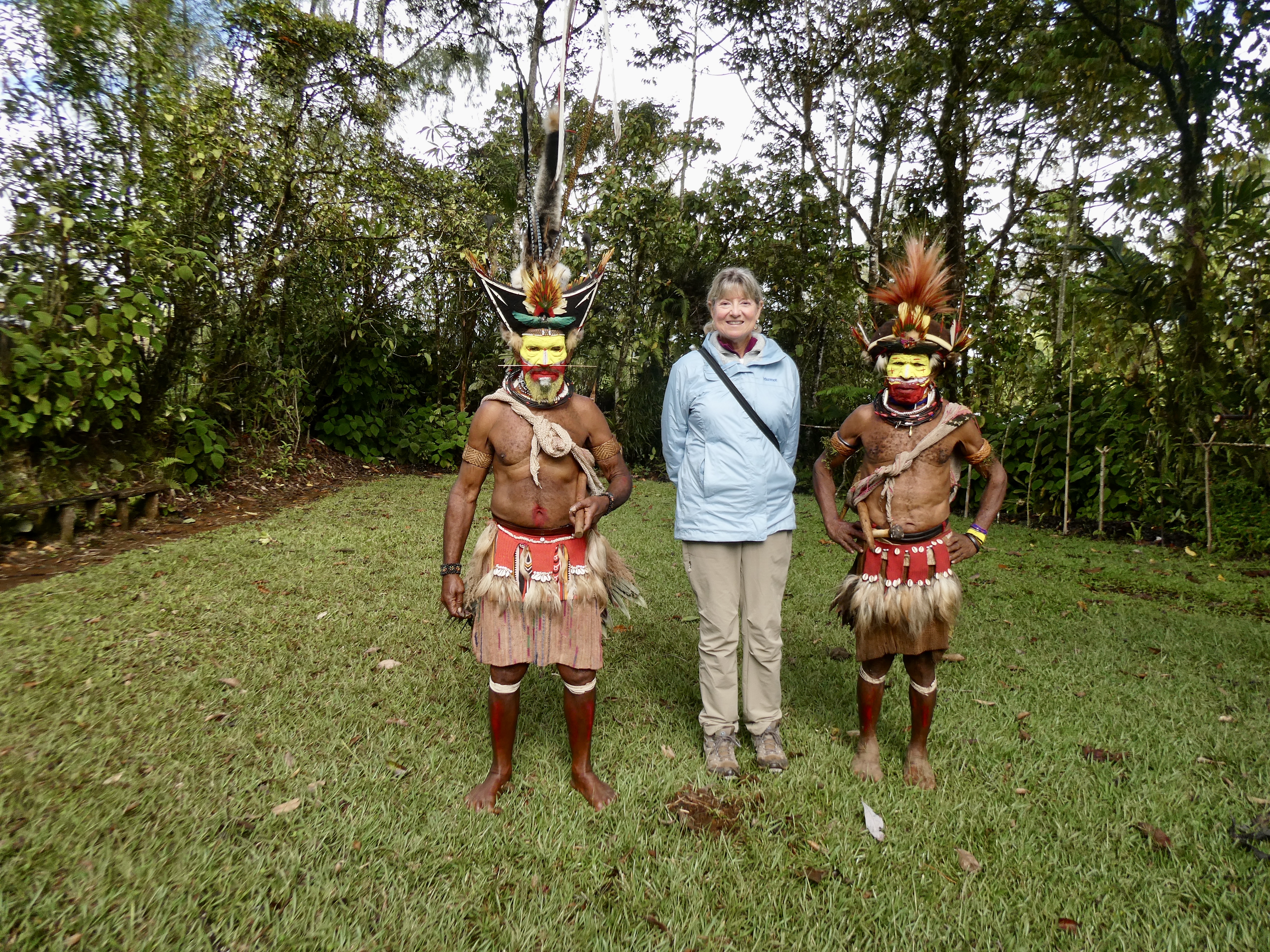
Anyway, with this background, we made a brief stop at a nearby village where I was met by two elders. One wore a ceremonial wig (which included bird of paradise feathers and a skinned possum to which the feathers attached) while the other wore an everyday wig. Today most of the Huli men only wear these wigs and attire during special occasions.


From here, we made second stop at the Huli wig school where the men, including a master teacher and two master wigmen, demonstrated the ceremony and ritual boys and men go through in order to grow their hair for wigs. (Men can return a number of times if they wish to have a number of wigs.). All in all, Steven did a great job salvaging a very difficult situation and the Huli men were very generous with their time and explanations about their wig traditions.
We then left the wig school and the highlands for Tari around 10:30 a.m. and by just after 11:00 a.m. we were pulling into the airport as Sam was landing his plane. And accompanying Sam was the tour company’s electrician along with multiple tool boxes and parts. The electrician figured it was going to take a couple days to do the repairs. Yikes.
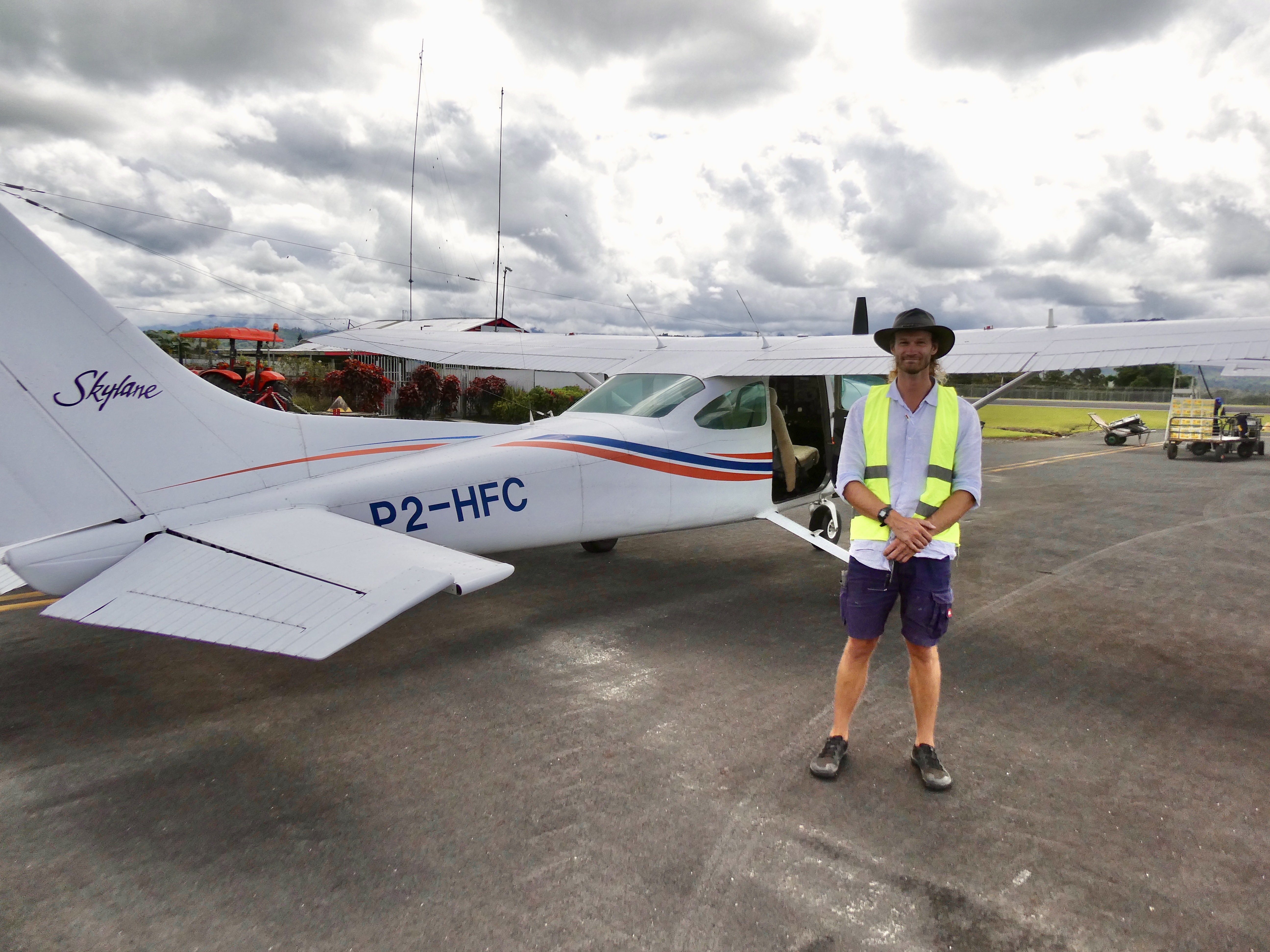
Anyway, Sam and I took off and by just after 12:00 we were landing back in Mt. Hagen. And we no sooner arrived back at Rondon Ridge Lodge around 1:00 and the heavens opened up. So no bird watching today. Tomorrow, they apparently have a full day tour planned for me (no idea what that means) and then on Saturday it is back to Port Moseby for my flight on Sunday to Manila.
