Today was a looooong day. I took a day trip to Gibraltar, which is about 200 km from Sevilla. Now unless I wanted to pay through the nose for a private tour, I was forced to take a 40 passenger bus trip south. And as luck would have it, the bus was almost full. Now we were supposed to leave at 9:00 a.m. for a drive south that should have taken less than 2 ½ hours, but we were delayed 40 minutes because three inconsiderate girls were late. (I have no idea why we (i.e. Petra our guide on the bus) did not leave them behind, but THIS is the reason I hate large group tours. And karma came back to haunt the girls because they were from China and did not have Visas to enter Britain so guess who got left on the Spanish side while we toured Gibraltar?)
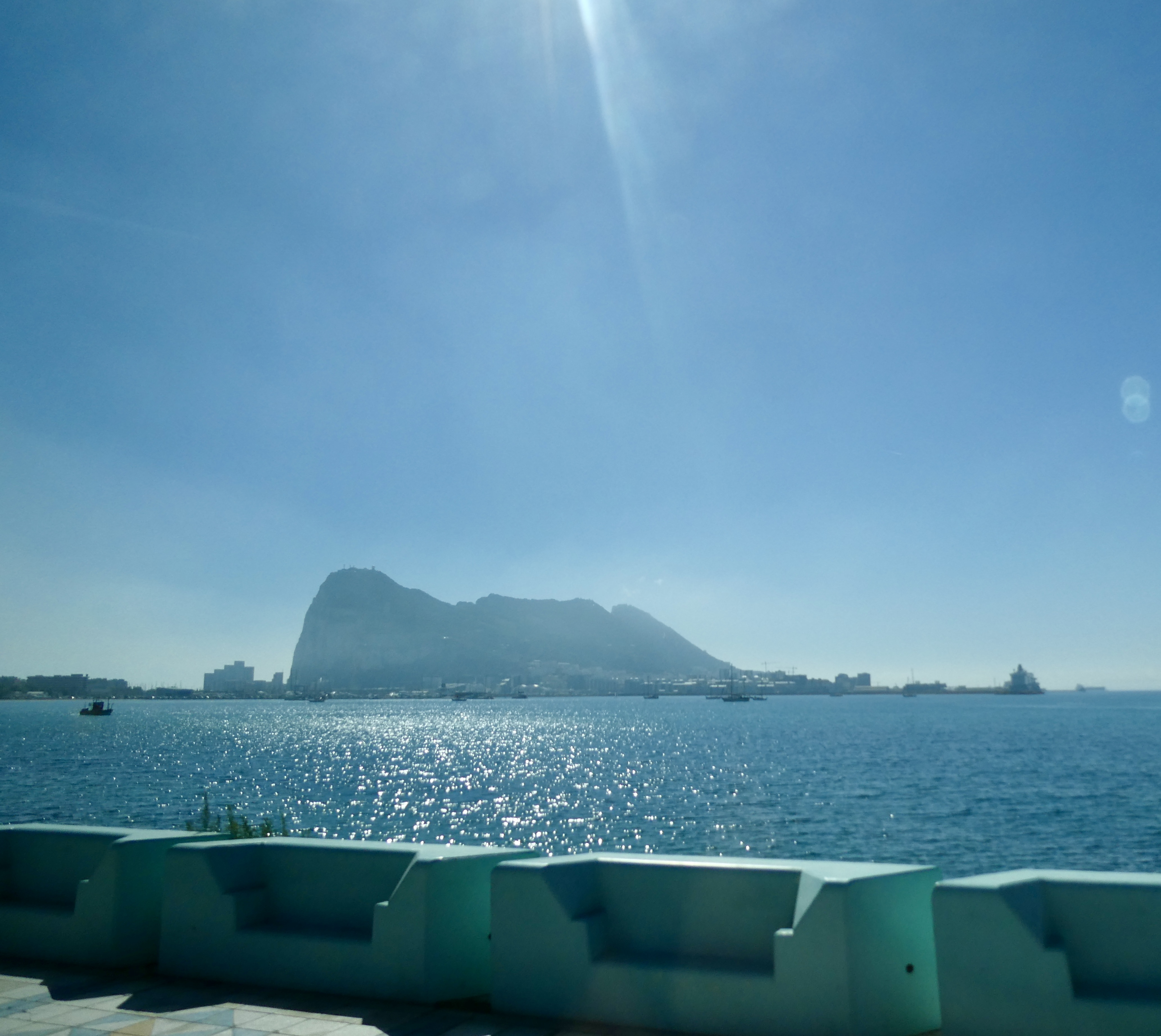
Anyway, once we were underway the trip took us south through wine country and past olive groves and cattle farms. We eventually reached the Spanish/Gibraltar border at 12:15 and we were able to catch our first glimpse of “The Rock of Gibraltar”. And interesting tidbit, Gibraltar is actually a peninsula with a significant part of the town area sitting on reclaimed land.

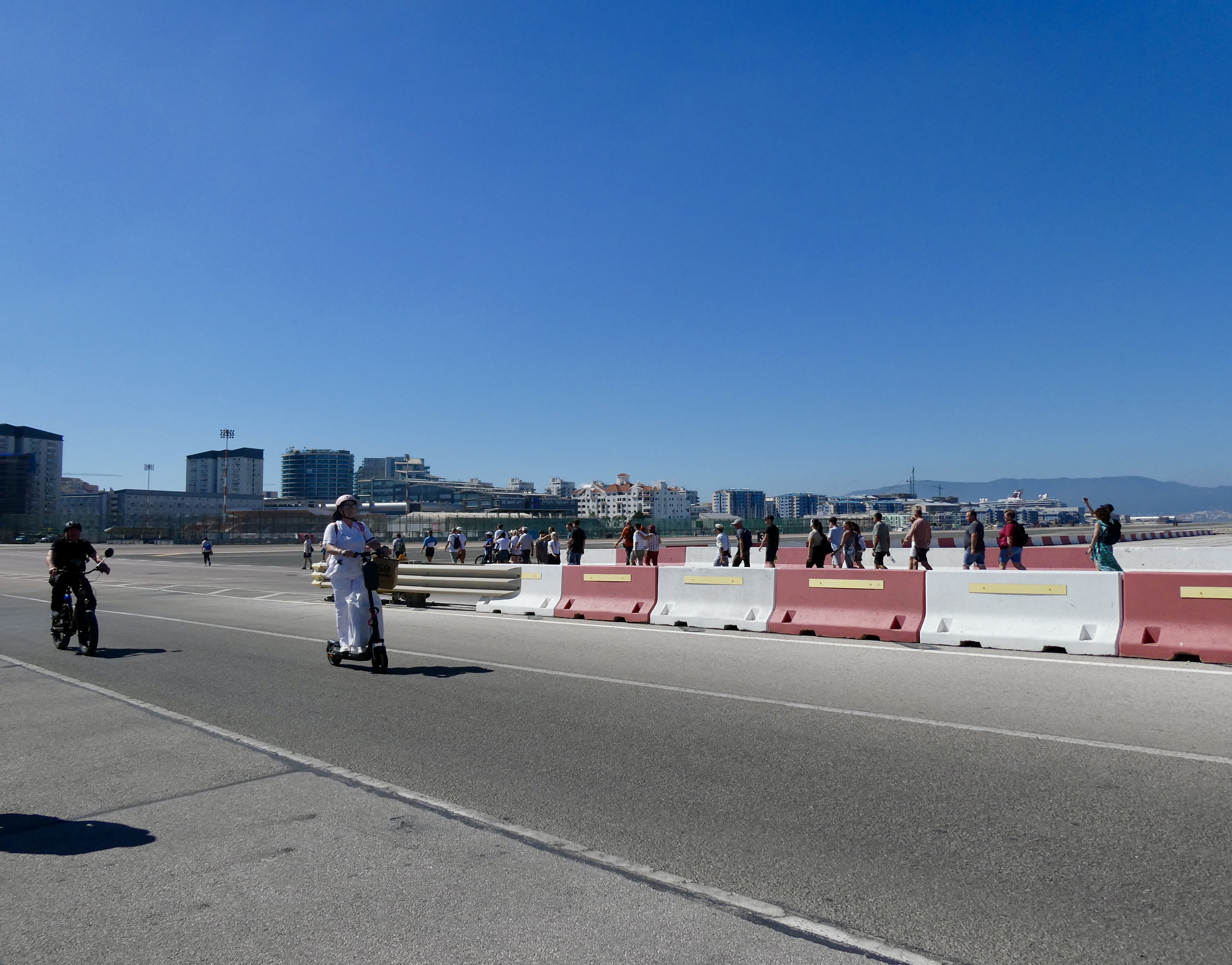
Now the border was interesting because we had to leave our bus on the Spain side and walk through through Spanish immigration and then through Gibraltar immigration. Once through immigration, in order to reach Gibraltar we actually had to walk across the Gibraltar airport runway. Seriously. They built the airport in 1941 beside immigration control and numerous times during the day the gates close (with a loud warning bell) and folks are left stranded outside the gates until the plane takes off or lands. And as luck would have it, just as we approached the runway, warning bells went off, gates closed and we had to stand there for ten minutes while a plane landed. Once the plane taxied away from the gates, the gates opened and we were permitted to walk across the runway and into Gibraltar. A real first!

Anyway, we ended up walking into the main part of the town and eventually were able to catch our first glimpse of the oldest building on Gibraltar, the Moorish castle and is surrounding fortifications, including the Tower of Homage, which is the building that dominates the hillside. The Castle was first built by the Moors in 1160, however, the Castle was destroyed when the Spanish conquered Gibraltar in the early 14th century, but the castle was rebuilt in 1333 AD when Abu’l Hassan recaptured Gibraltar from the Spanish.
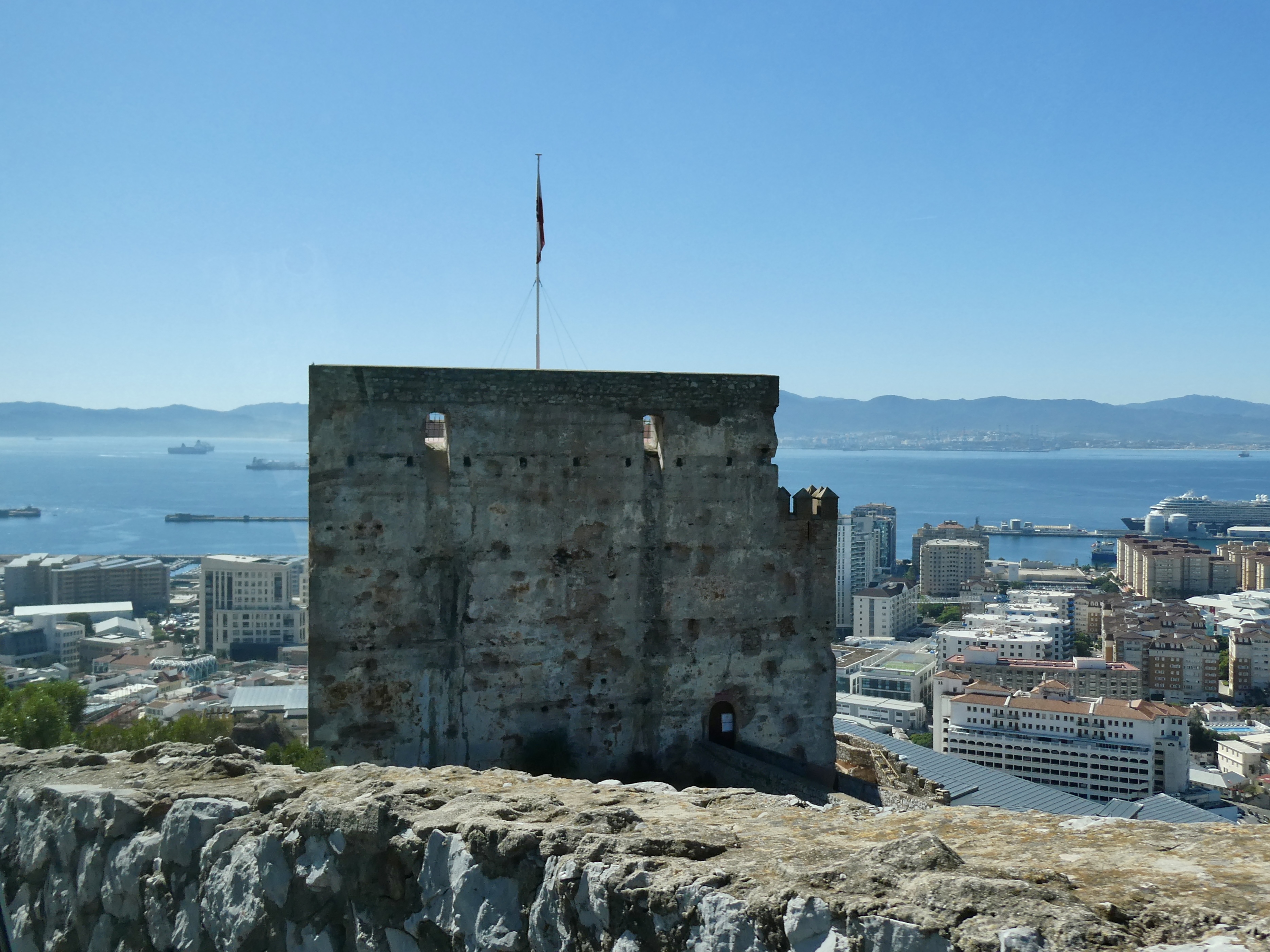
By 1492, the Spanish had recaptured Gibraltar and in 1704, Gibraltar was taken over by the Brits. In 1712 a treaty was signed with the Spanish turning Gibraltar over permanently to the British in exchange for Majorca. In 1773, the Moorish castle became British fort. Today, the castle is a landmark that stands out on the hillside and can be seen from numerous vantage points on Gibraltar.
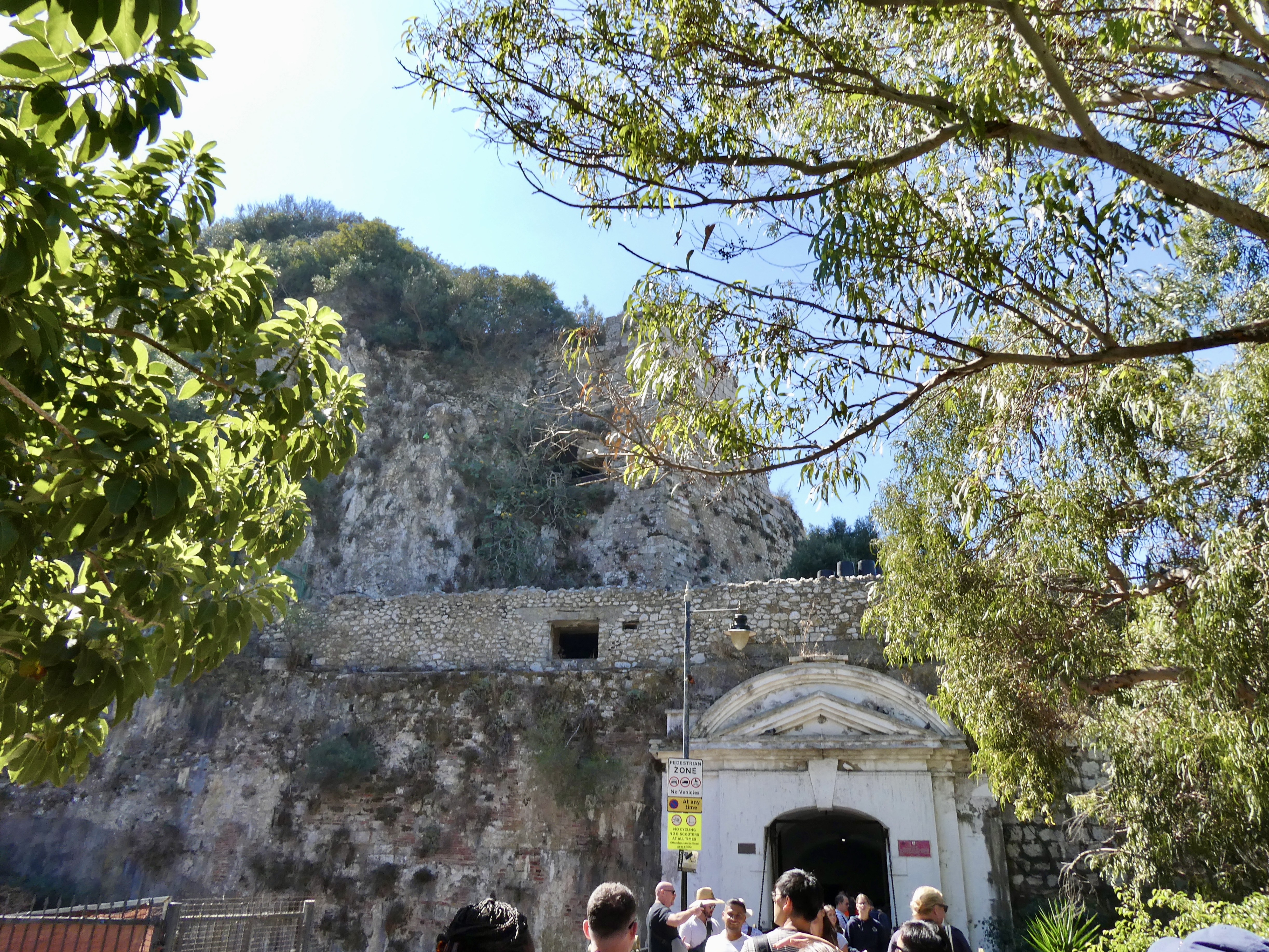
Now Gibraltar is a mix of Moorish, Spanish and British architecture with old Spanish walls dating to 1504 and British walls dating to 1850. In fact, everywhere we went we saw walls. We even passed through the famous Landport, a British passageway and walls dating to 1725, which was the only port of entry into the Fort of Gibraltar until the 19th century.
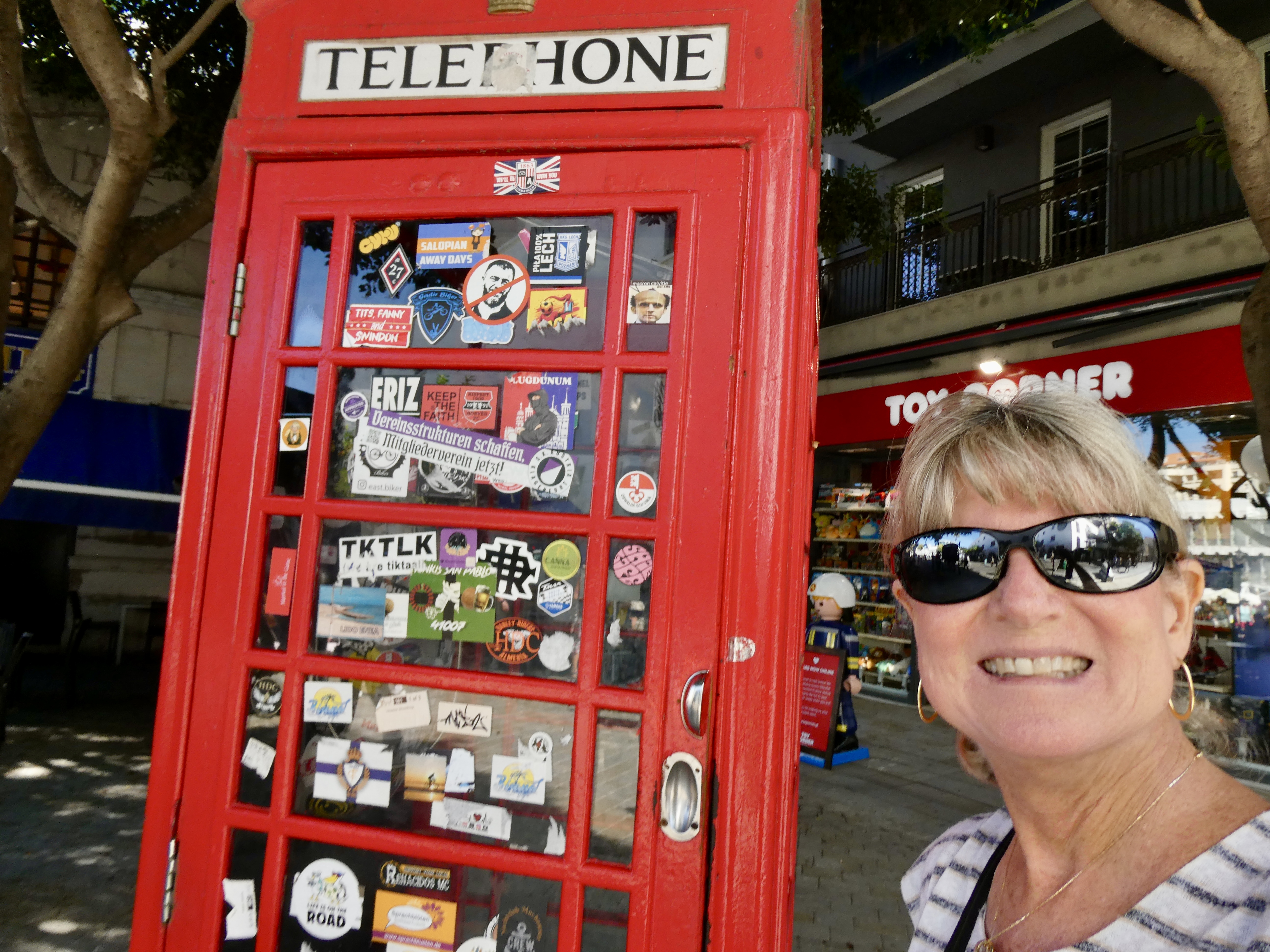
Anyway, once we passed through the Landport, we found ourselves in the main square in Gibraltar where we were given an hour for lunch. I ended up wandering around and found a local crafts exhibition where I purchased … yep … a Christmas ornament! Still haven’t been shut out!

By 2:15 p.m. we met back up and were split up into two groups of thirteen and another of fourteen. We then met our local bus drivers who were going to take us around the Gibralter. Our driver, Andrew, was really good and provided a terrific running commentary on all things Gibraltar. The tour started out by taking us past the port of Gibraltar and past some of the old Spanish and British walls as we climbed up the Rock. We even passed Gibraltar’s version of Big Ben called “Little Jonathon”, a tiny clock tower in comparison, but I did like the humour.
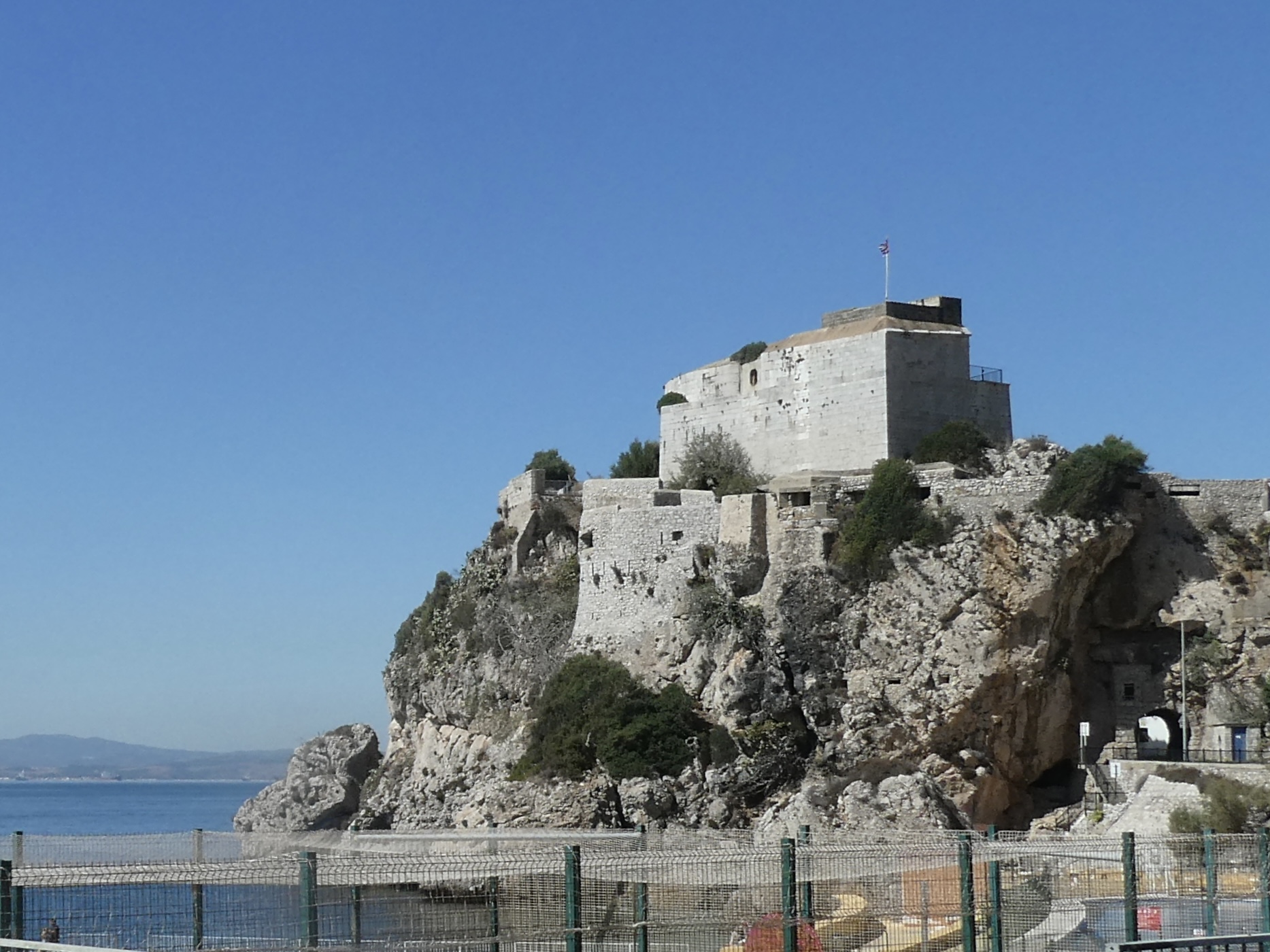
As we wound our way up and around The Rock, we passed numerous fortification and gun batteries, including Parson’s Lodge Battery, a 19th-century coastal defense fortification. The battery was built by the Brits in the 1870s to protect the Straight of Gibralter and its nearby Bay. In its heyday, the battery was armed with several large-caliber guns and was relied upon with other fortifications nearby to defend the British interests.
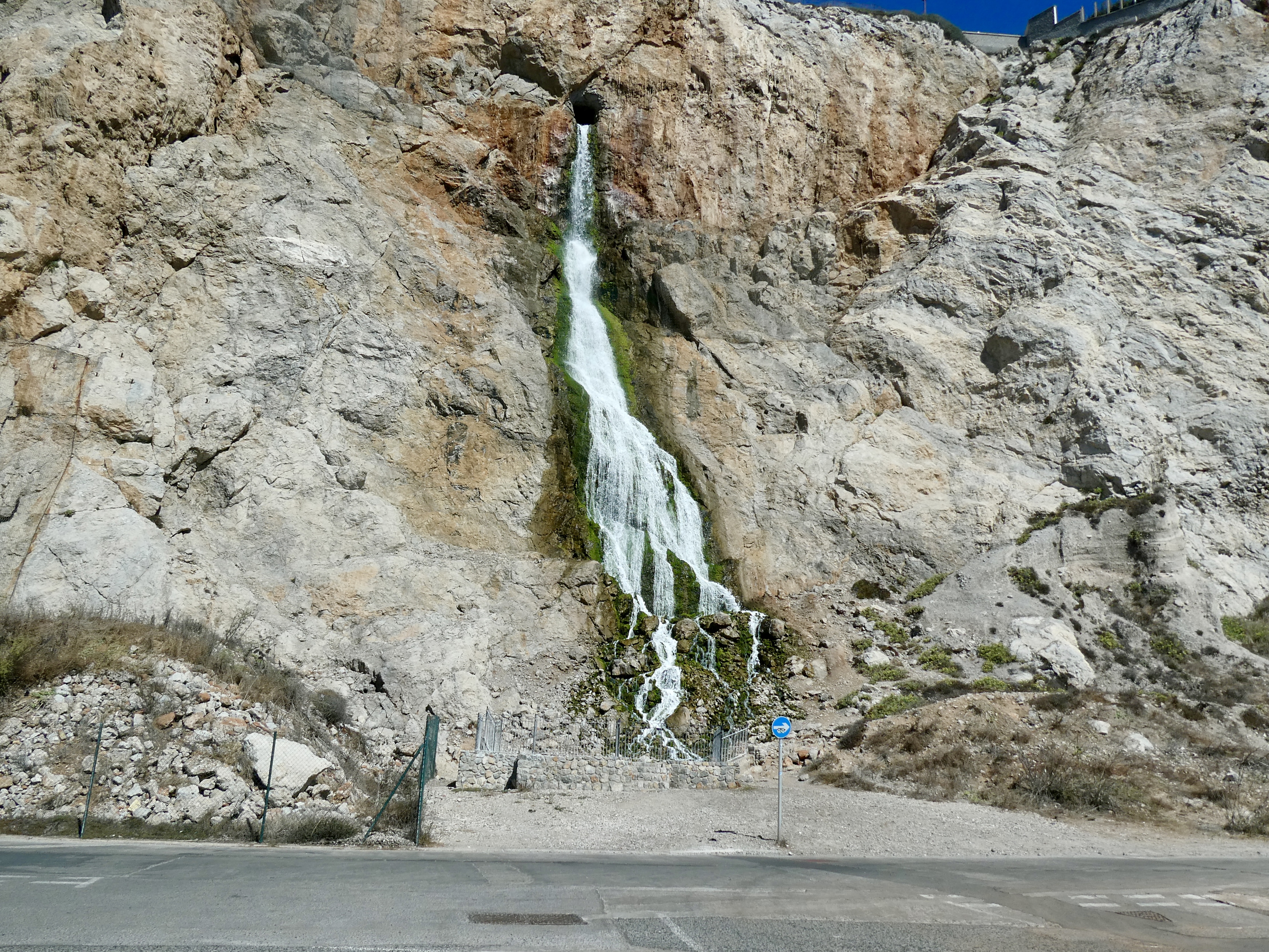
And another first … we passed a “fake” waterfall. Apparently, Gibraltar uses a desalination plant for freshwater and the excess salt and waste is sent back to the ocean creating this manmade waterfall that really isn’t water. Weird.
We eventually reached Europa Point, which is the southern most point in continental Europe and on a clear day (like today) affords clear views to the mountains of Jebel Musa in Morocco across the Straight of Gibraltar.

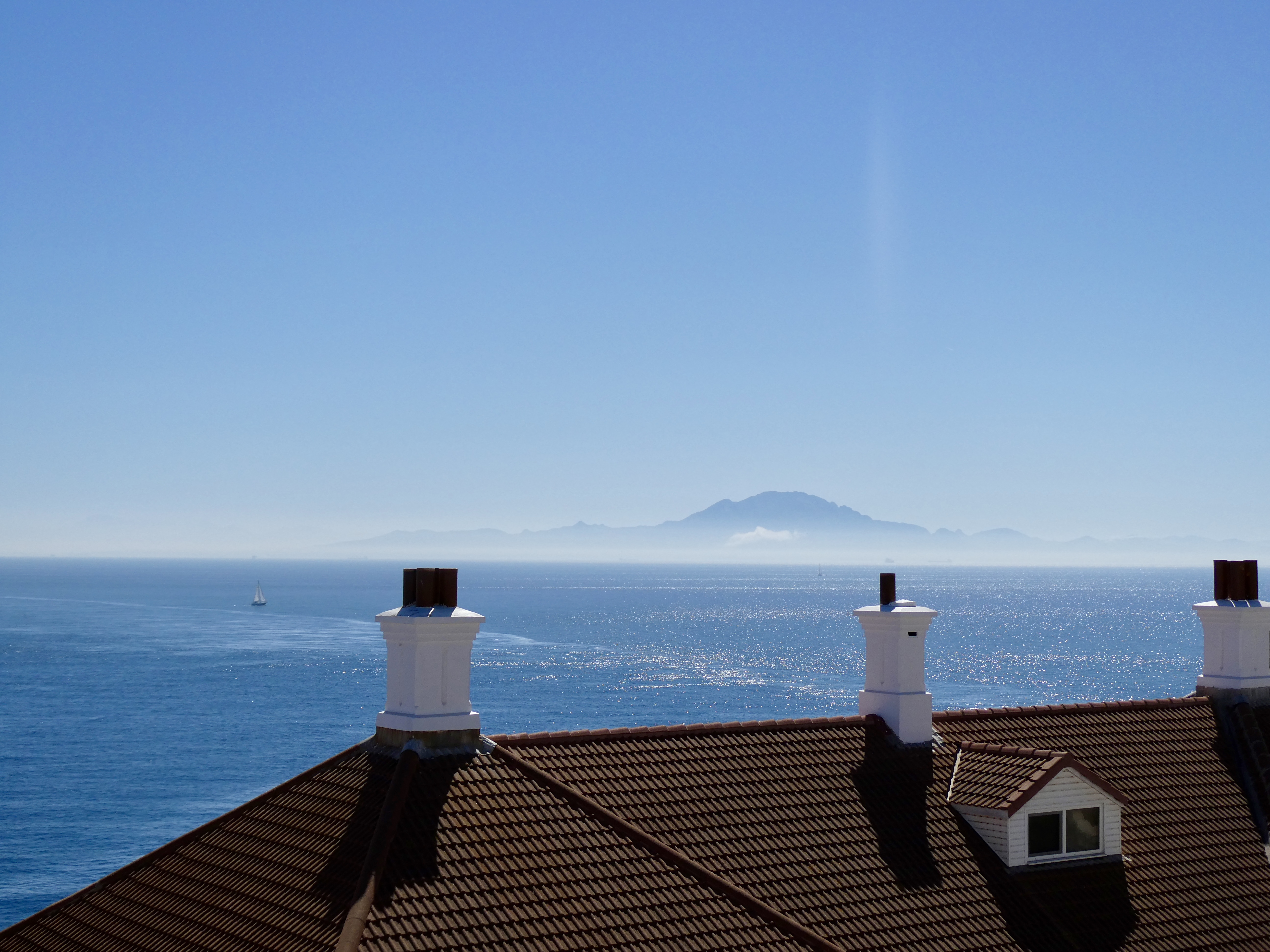
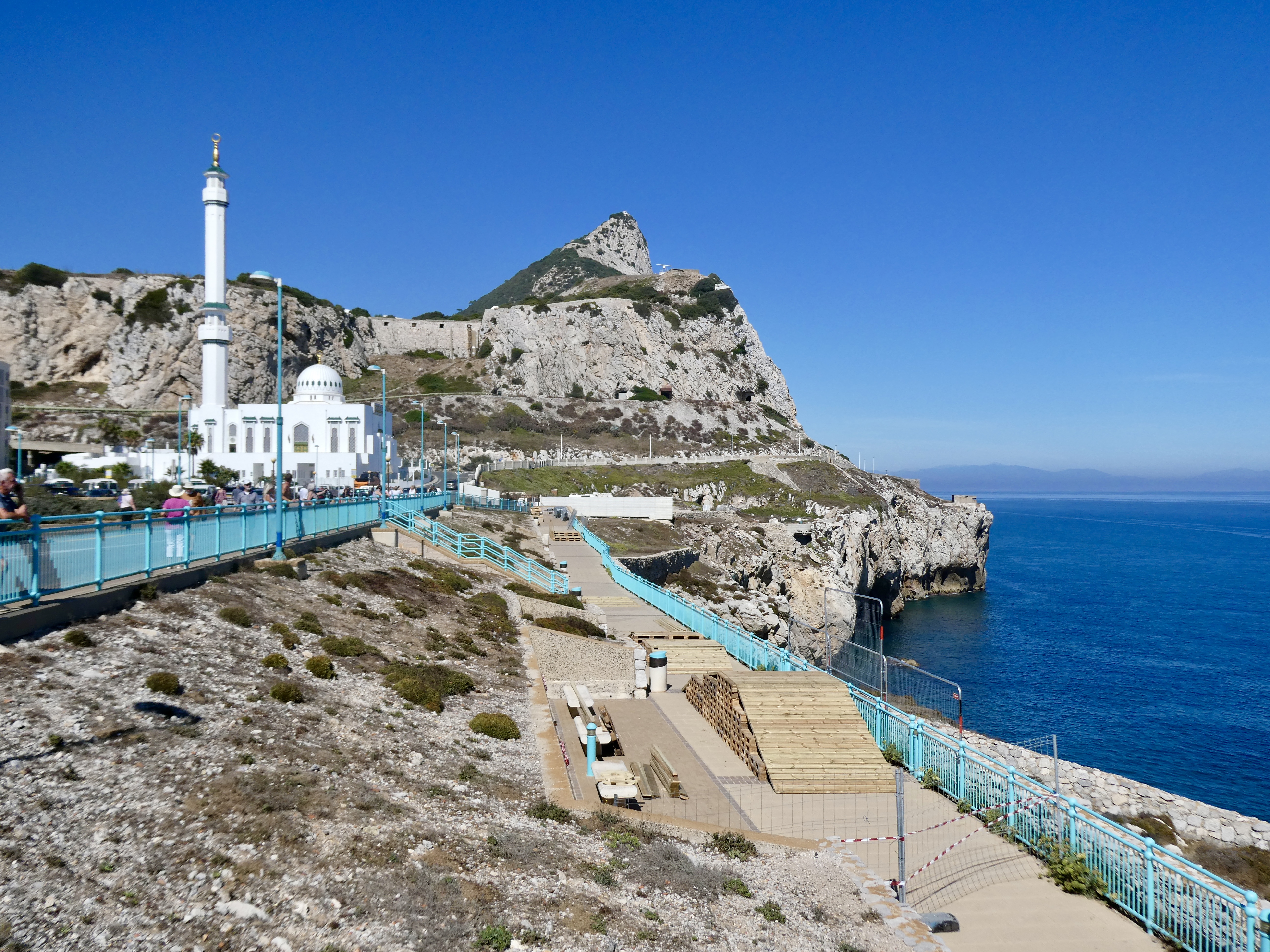

Anyway, Andrew dropped us off for a 15 minute wander around Europa Point, which included the King Fahd Bin Abdulaziz Al Saud Mosque, the southern most mosque in continental Europe. The mosque, which opened in 1997, was apparently a gift from King Fahd of Saudi Arabia and took two years to construct. The gift was made to Gibraltar because numerous Moroccans were emigrating to Gibraltar due to a work shortage in the 1990s.
And one amazing fact we learned about the Straight of Gibraltar is that 300 plus ships pass through the straight per day making it one of the busiest straights in the world. No wonder there was so much fighting over the years for this tiny peninsula.
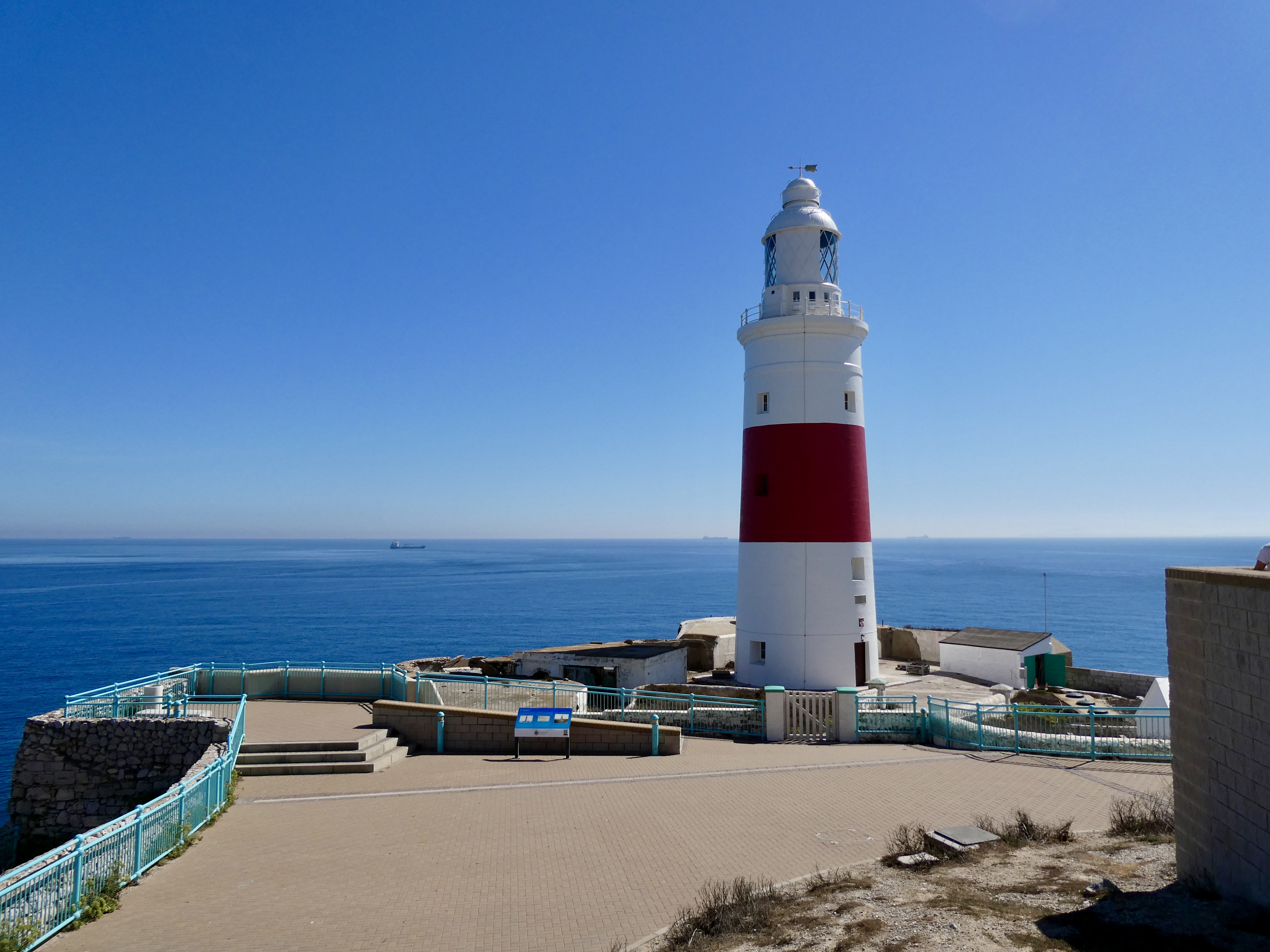
Now in addition, to the mosque and stunning views of Africa and the Straight of Gibraltar, we were able to take a look at the Europa Point Lighthouse aka the Trinity Lighthouse at Europa Point. The lighthouse was opened on August 1, 1841 and is still operational today, but was converted to LED operations in 2016.
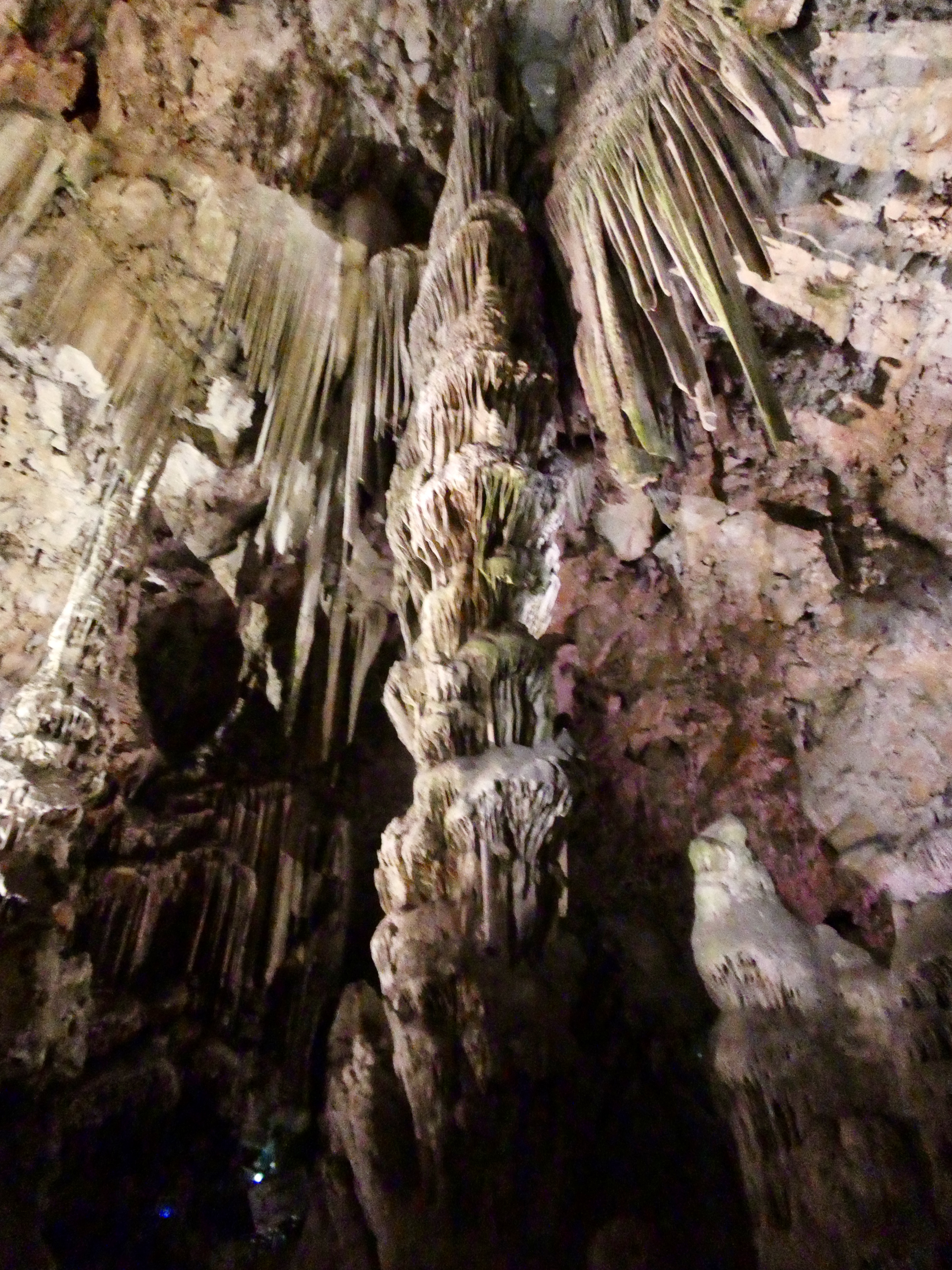
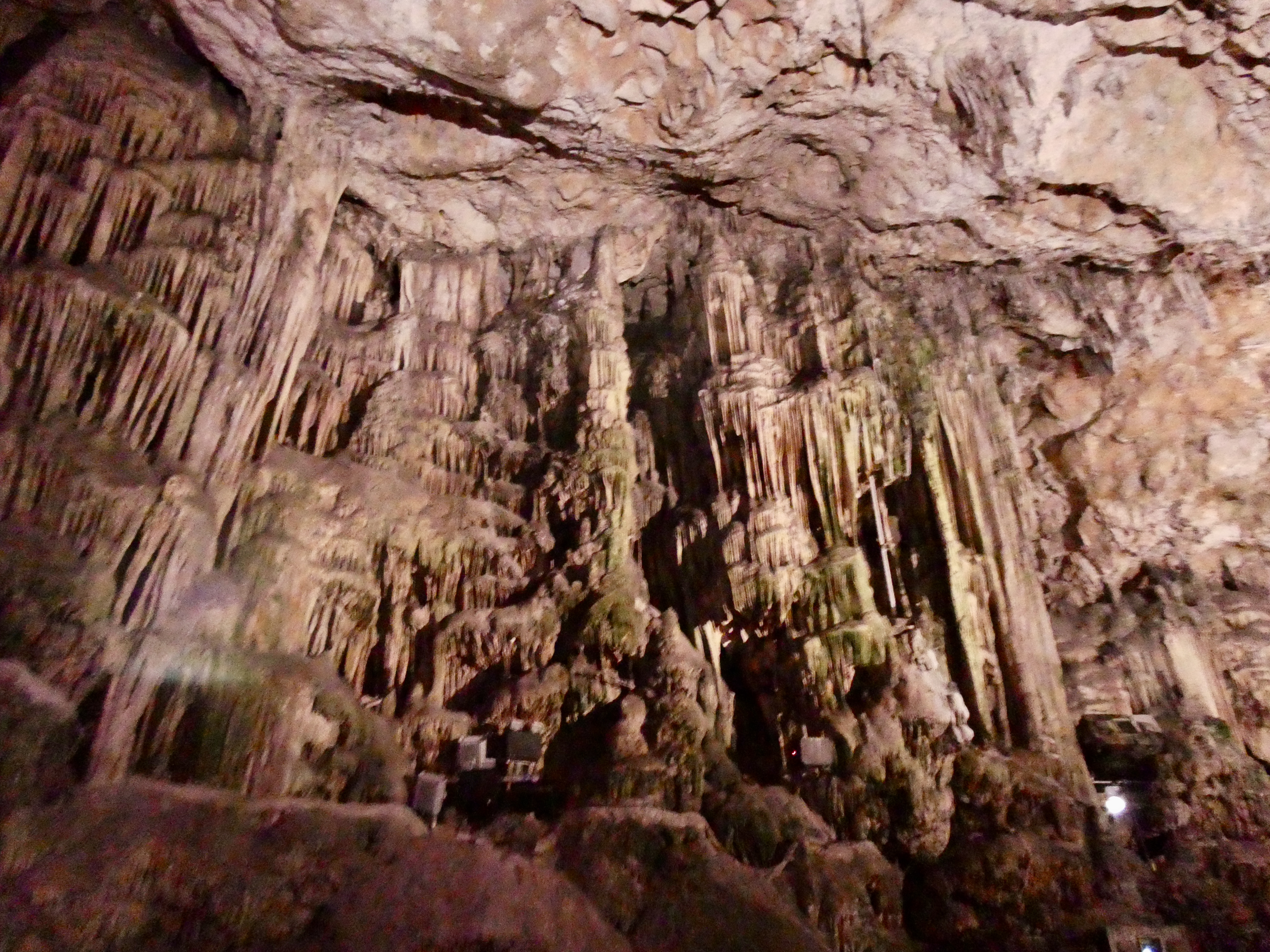
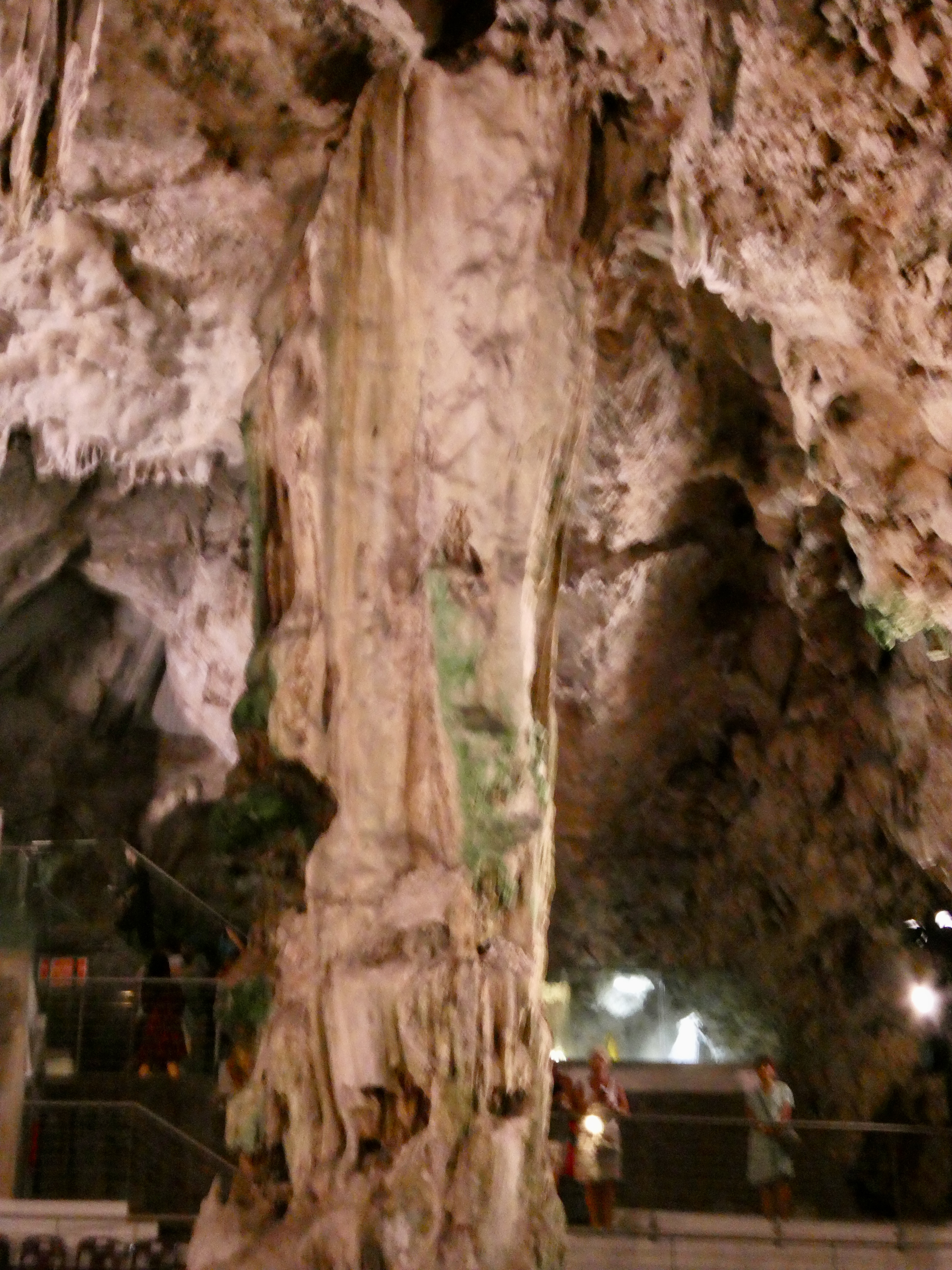
So after enjoying the views and the sites at Europa Point, we continued up The Rock to St. Michael’s Cave, a limestone cave and one of more than 150 caves on Gibraltar that include, inside the caves, 50 kms of roads and tunnels. Now this cave was special because water has been dripping over the rocks for centuries creating a network of stalactites and stalagmites throughout the cave. The results were stunning.
Now the amazing part about this cave is that the first factual description of the cave was written by the Romans in 45 AD, but evidence of prehistoric humans, including Neanderthals has been found in the cave making this cave millions of years old. Bloody amazing.
The cave was also important to WW II, as the Brits outfitted the cave as a hospital in the event of mass casualties in the area. Fortunately the hospital was not needed or used. Today the cave is used as a entertainment center with seating for 600 people.
We ended up wandering through the cave and up and down various staircases before reaching the exit. We had just joined the more than 1,000,000 people who visit St. Michael’s Cave annually.
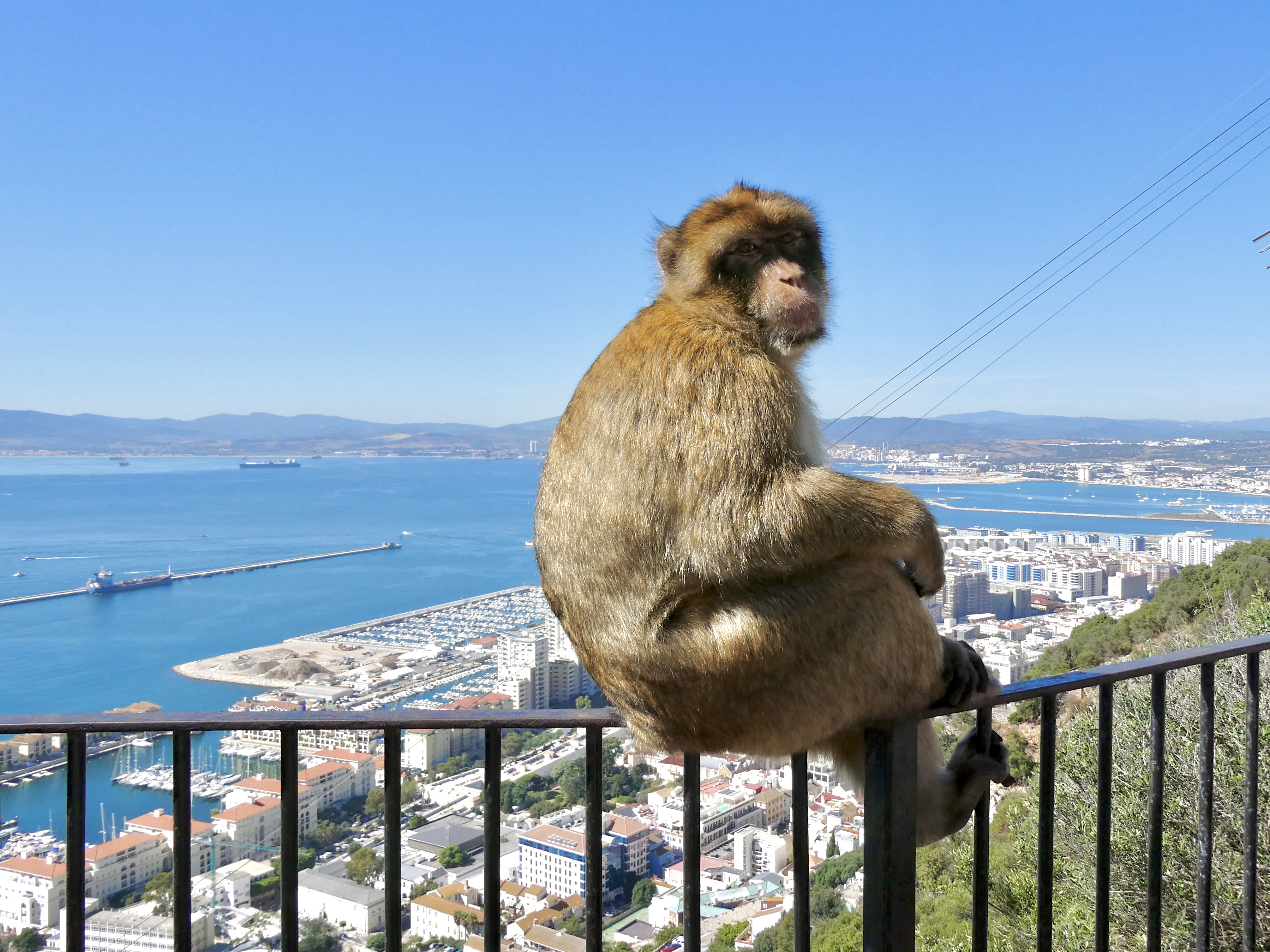

Now the other attraction at St. Michael’s cave is not inside the cave, but rather outside the cave: the famous Gibraltar monkeys aka the Barbary macaque, tailless monkeys who were brought over by the Moors as pets and now reside in the Upper Rock Nature Reserve in Gibraltar amongst the olive, pine and eucalyptus trees.
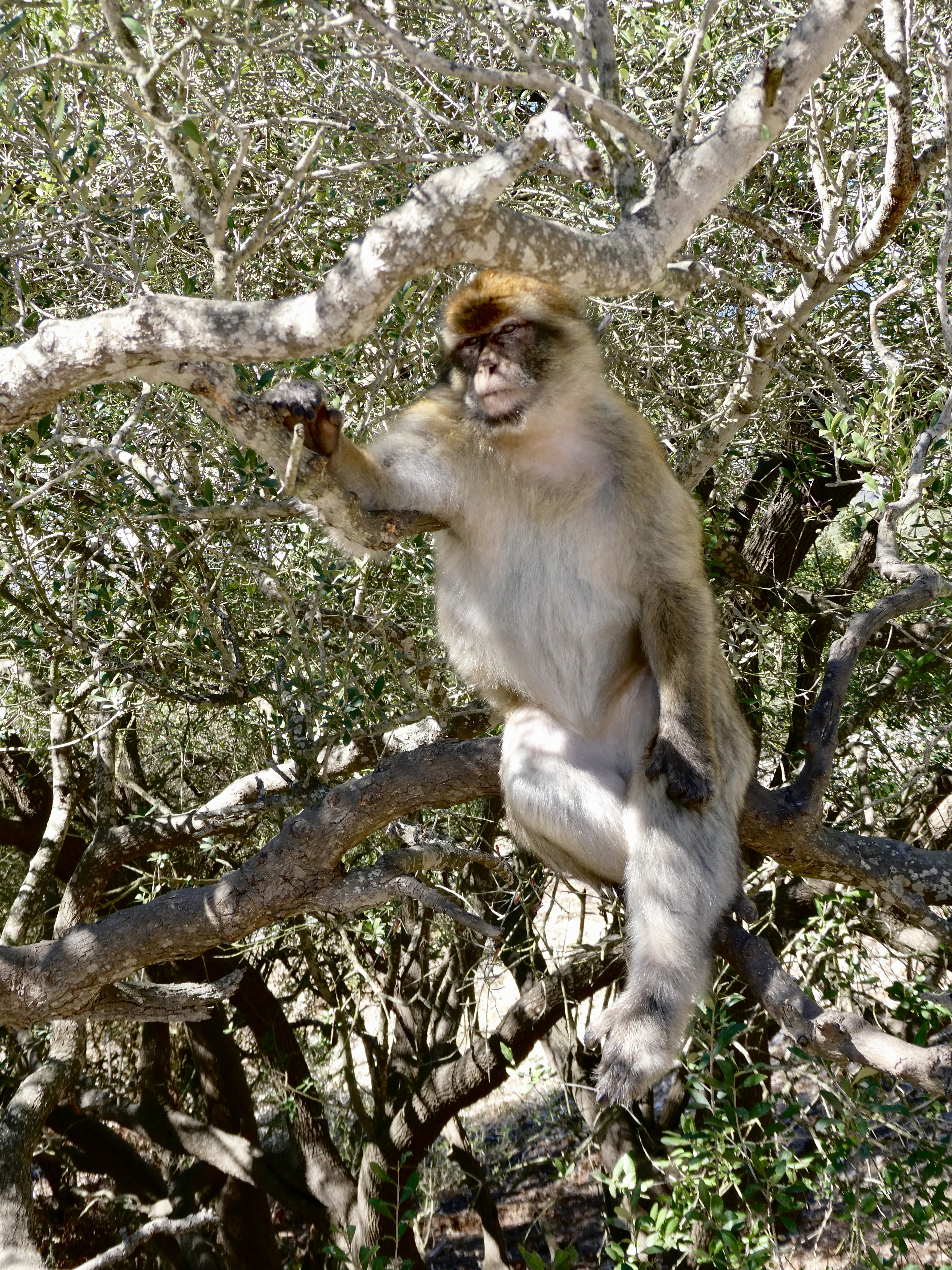
There are around 300 Barbary macaque at the Upper Rock Nature Reserve and local authorities control the population by allowing each female to give birth to one baby before capturing the female, tranquilizing her and inserting a coil into the mother so she can no longer give birth. The monkeys are fed three to four times per day, but do not eat meat so their diet consists of fruits and nuts.
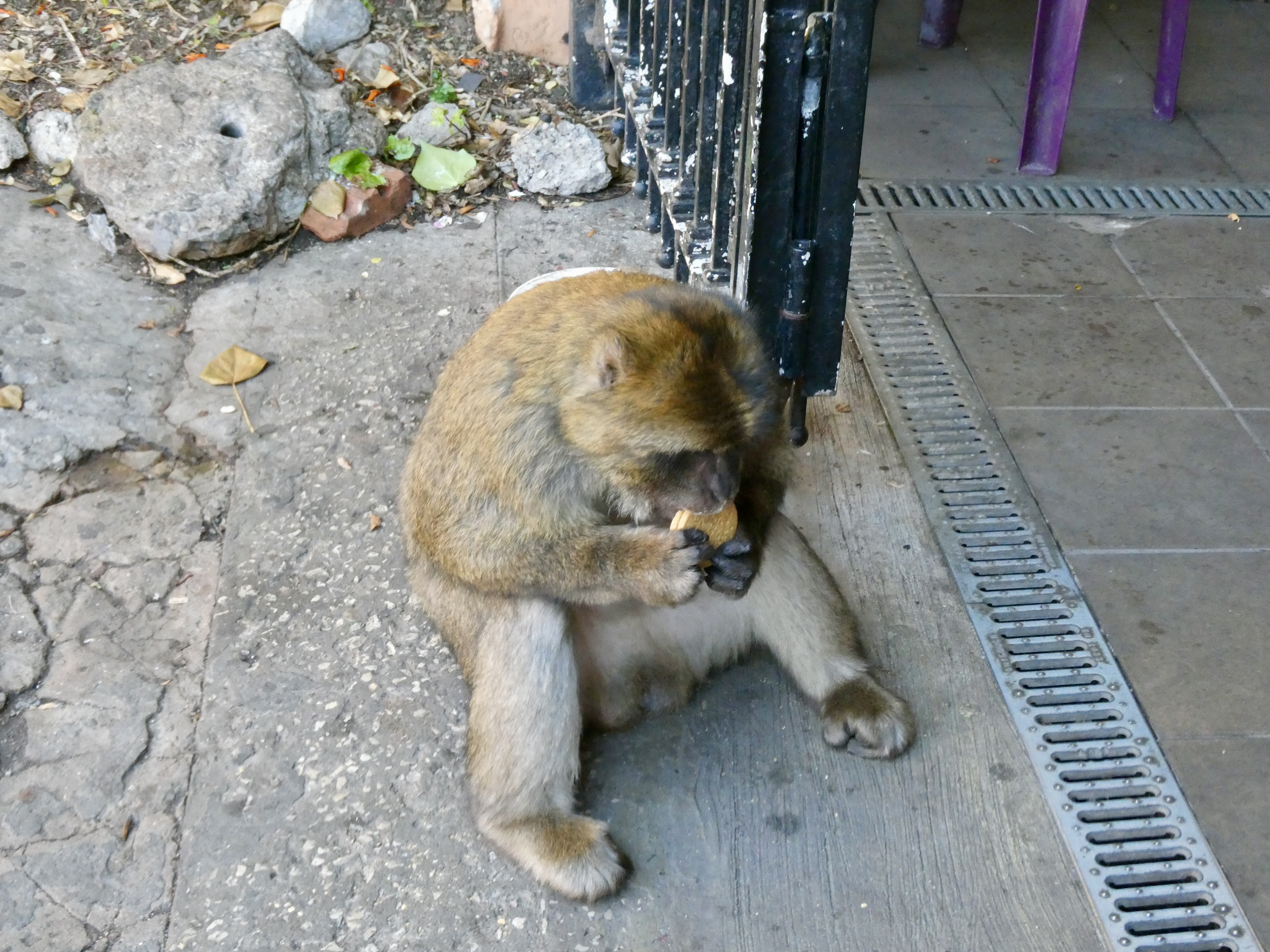
Now you would think being fed three to four times per day would be enough, but these little buggers go after any food they see. As a result, there were signs everywhere not to eat outside and not to walk around with food. Of course people, being jackasses, were walking around with ice cream cones and ice cream bars and the monkeys were having a field day. I saw one monkey literally jump up and grab an ice cream bar out of a woman’s hand. Another larger monkey walked right into a store and stole a handful of cookies and proceeded to sit at the entrance and munch away.
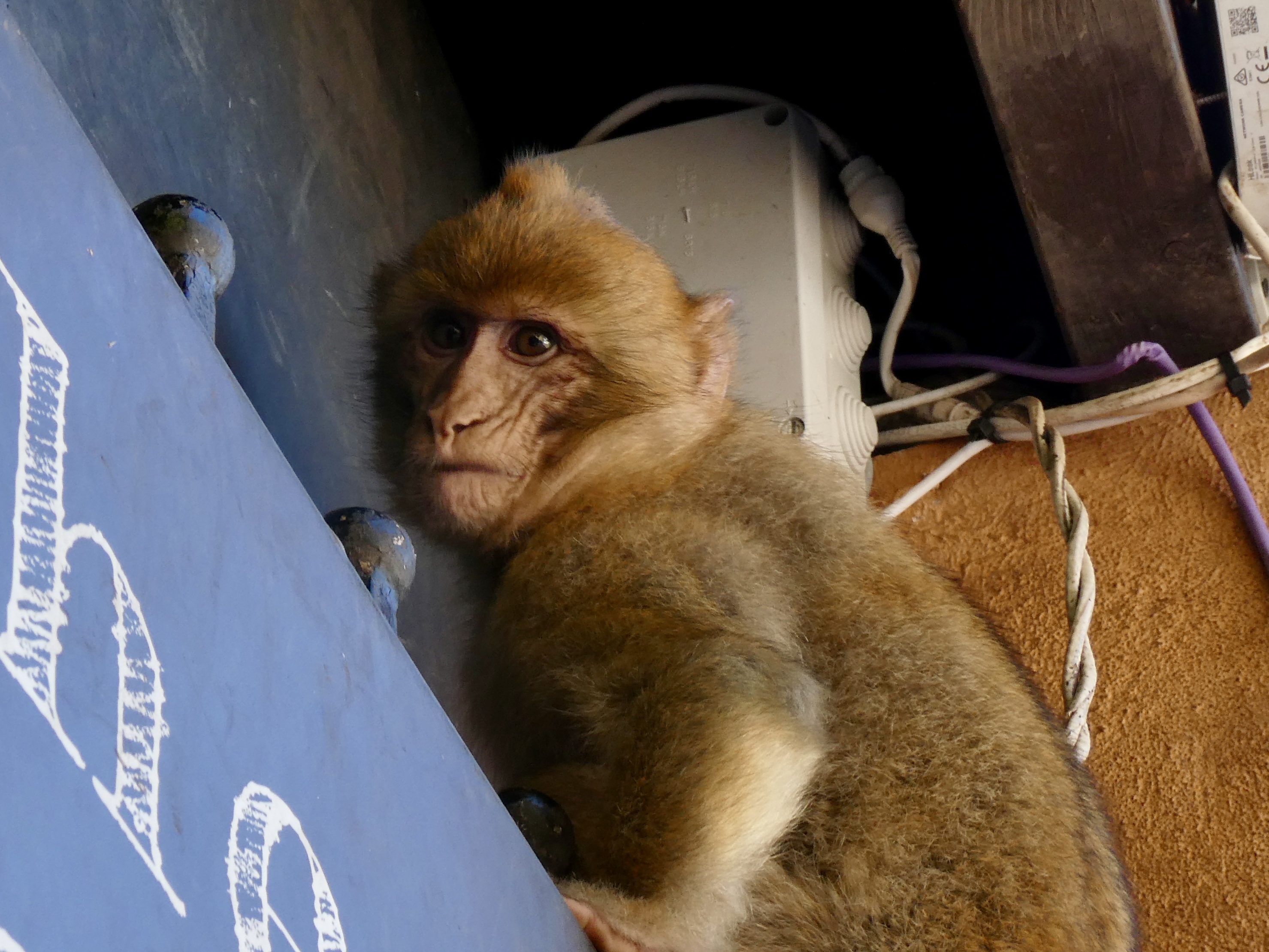

Anyway, I wandered around taking pictures of the monkeys and enjoying the view. By 4:30, it was back in the bus and back to the airport for a walk across the runway to immigration and onto the big bus. And of course, just as we arrived at the airport runway, the alarms sounded and we were stopped for another ten minutes while a flight landed. Craziness.
So that was my day in Gibraltar. Tomorrow I have a tour of the main monuments in Sevilla and then tomorrow night … a food tour!
