So I had some free time on Friday morning so decided to walk to the Antiquarium, which is the site of the Roman (and some Moorish) archaeological remains in Seville’s Plaza de Encarnacion. The remains were uncovered when the area was being excavated to build a car park. We had stopped by this area during my walking tour on Wednesday, but did not enter so I wanted to come back and check it out.
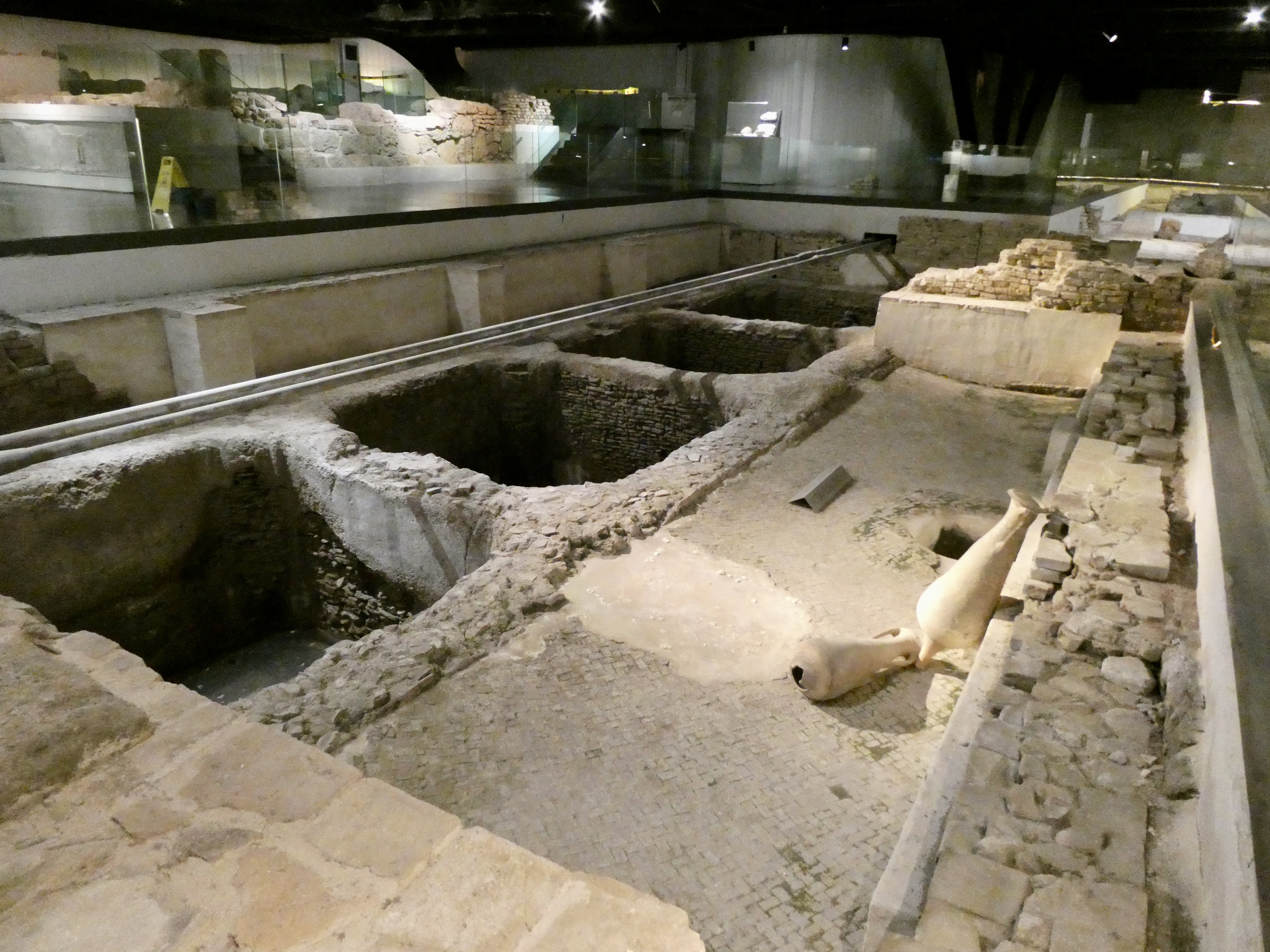
Now the area was apparently first settled in 40 A.D. and called Hispalis. Originally the area was settled by trades people and the first ruins I saw were the salt factory, which included the Roman fishing salt vats where the day’s catch was salted and dried for preservation. And one really interesting features I saw was a display showing that they had excavated a number of old storage containers that contained the remains of fish.
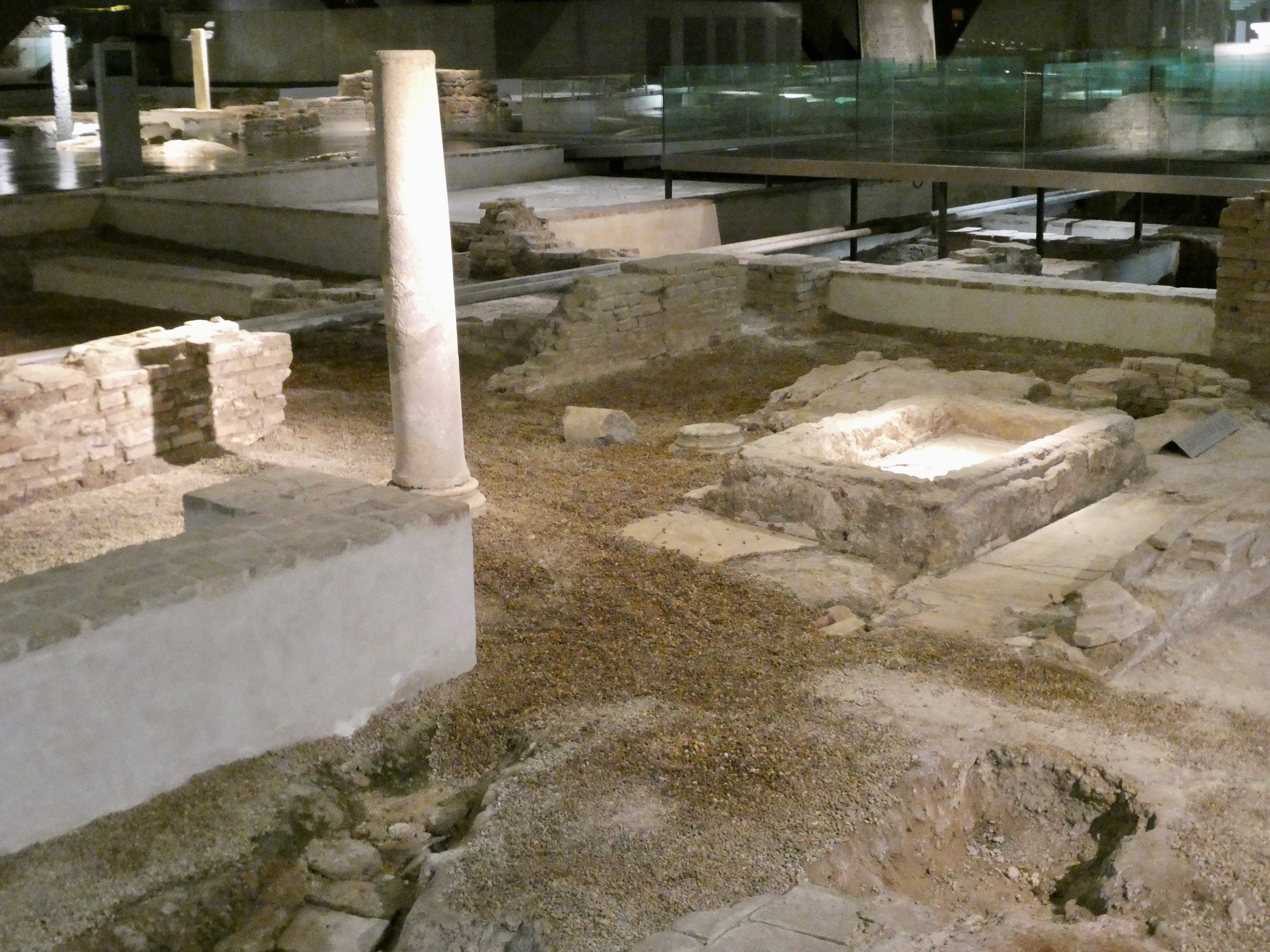
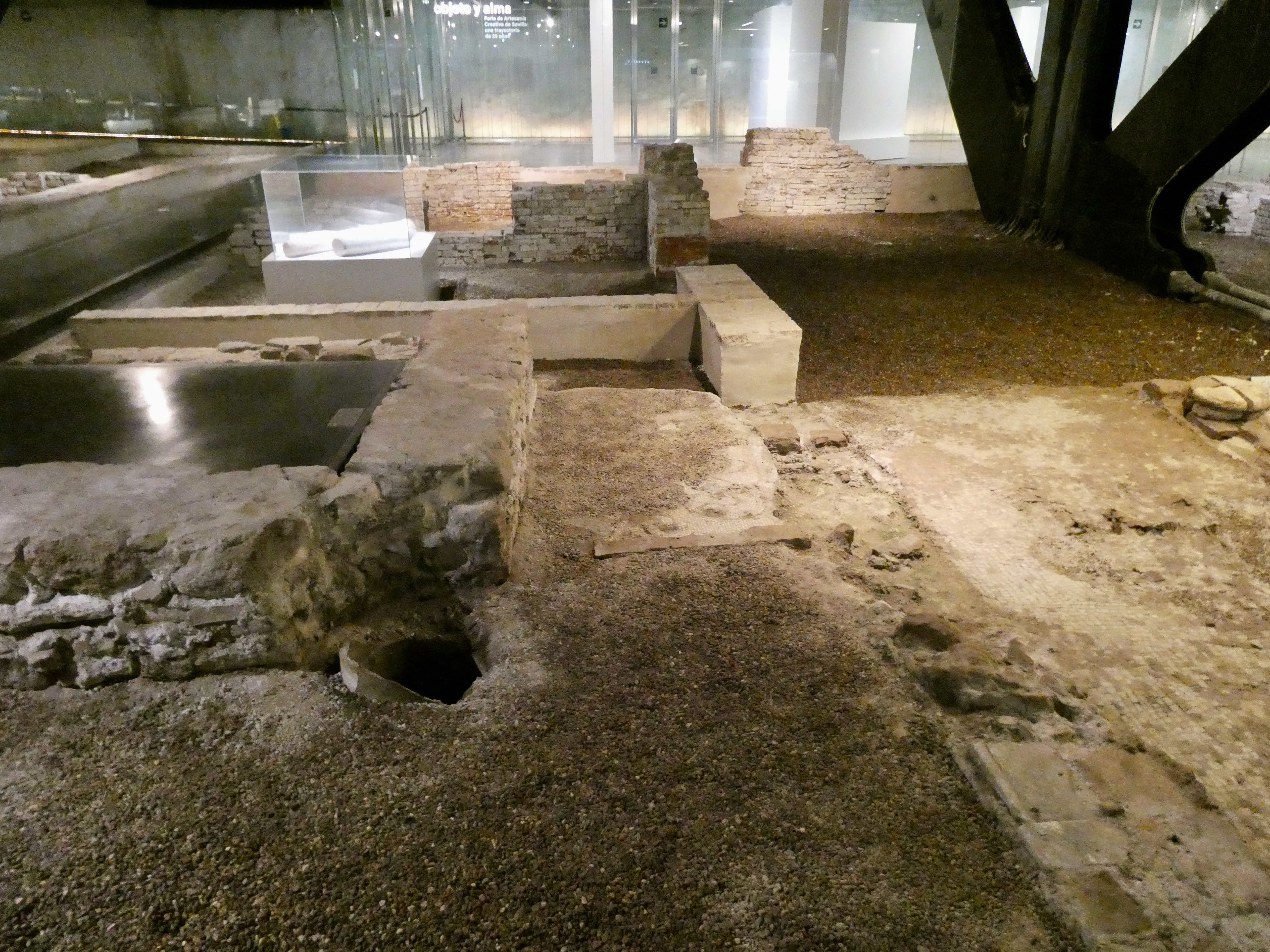
Now accordingly to the information in the Antiquarium, Hispalis saw a growth in residences over the next five centuries. In fact, they have excavated a number of homes dating to the 2nd and 3rd centuries in this site, including homes with names such as the Ivy House, the Draft Board House, the House of the Nymph, the West Alley, the Hospitium of the Dolphins, the House of Baccus, the East Alley and the House of Oceanus.
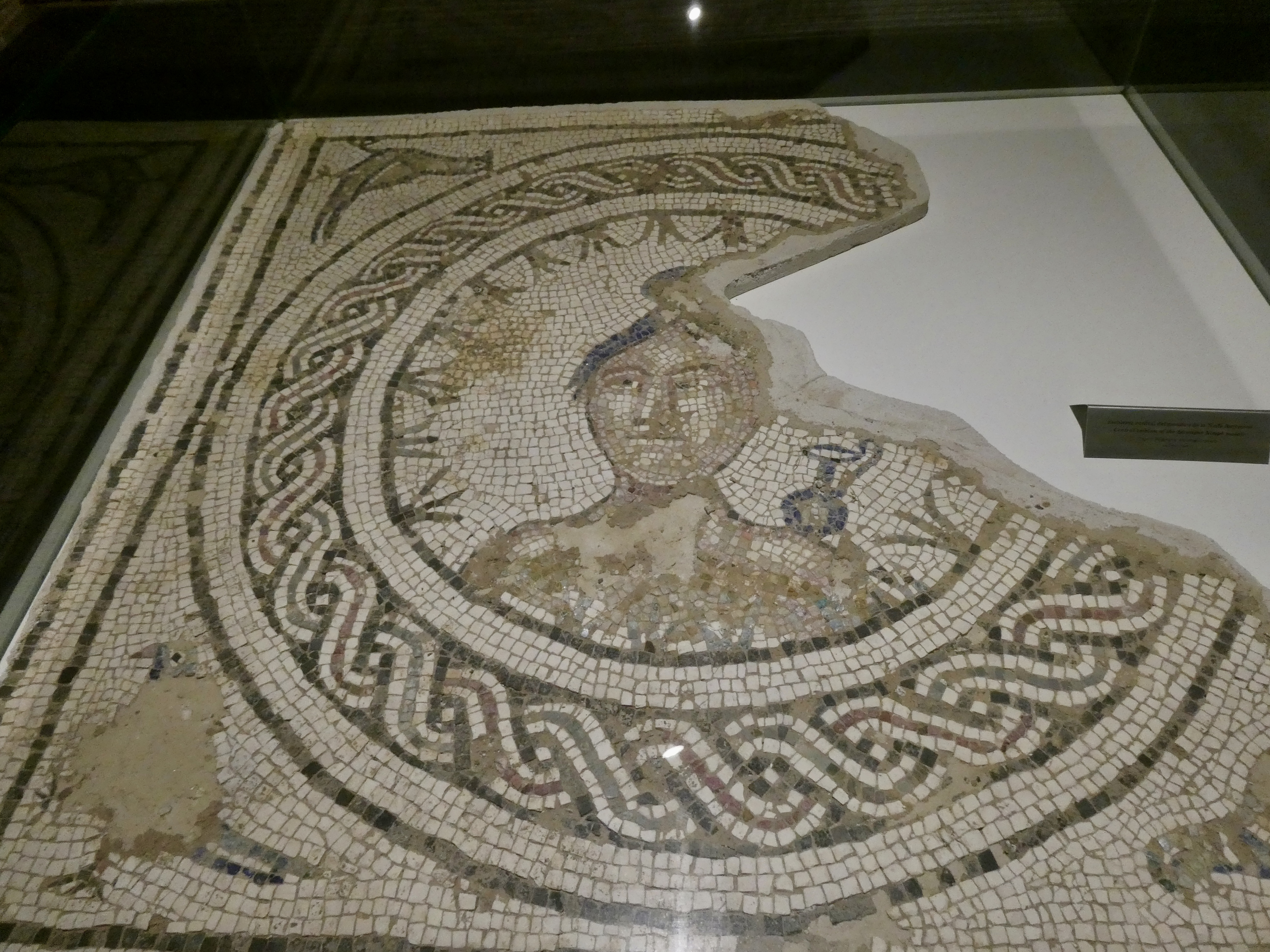
The House of the Nymph was particularly interesting for the gorgeous mosaic (of a nymph) uncovered as well as what appeared to be a marble pond.
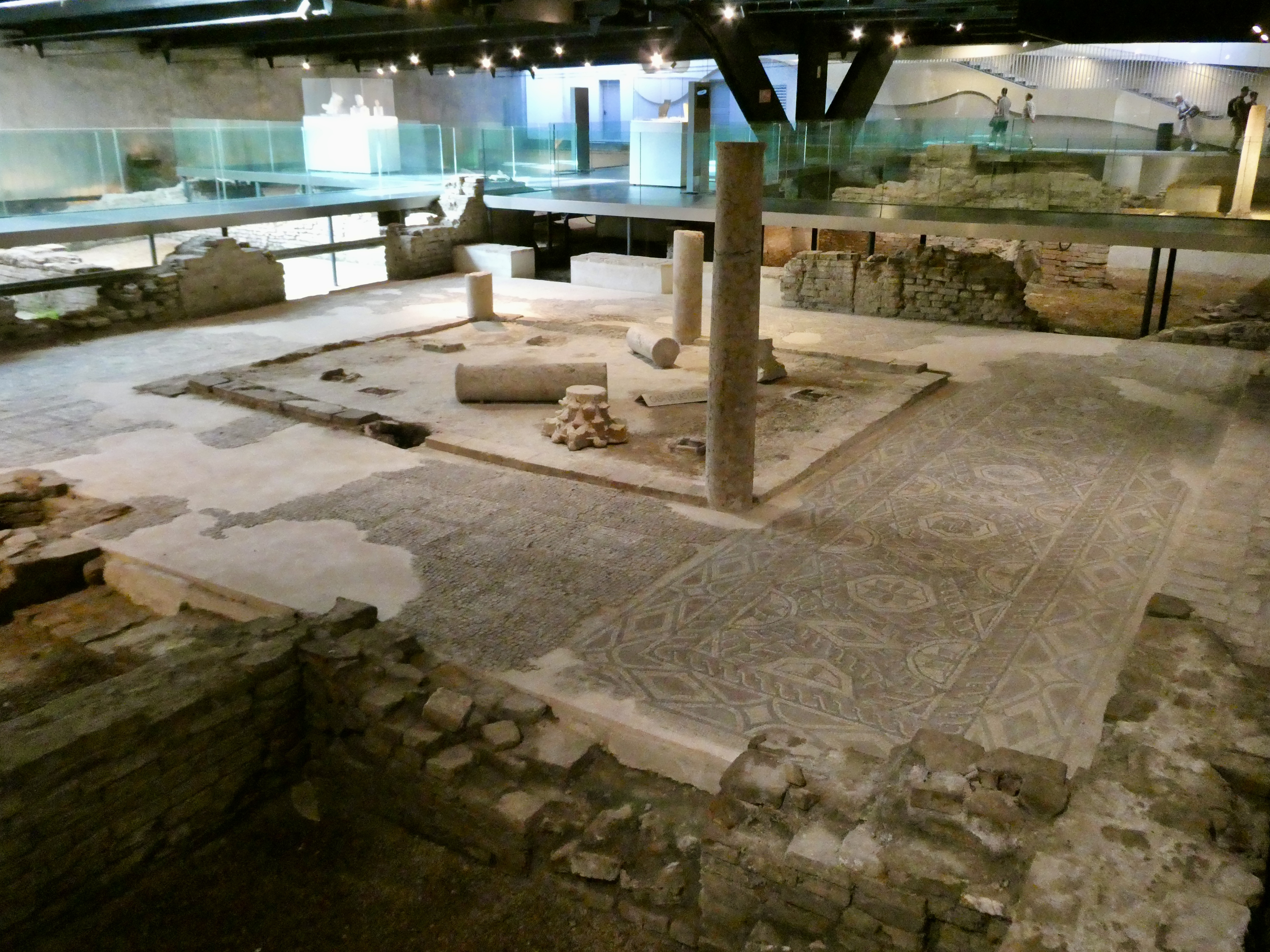
There was also a home that had been excavated dating to the 4th and 5th centuries called the House of Columns for the obvious reason that they had uncovered a number of columns in the home as well as part of a lovely mosaic.
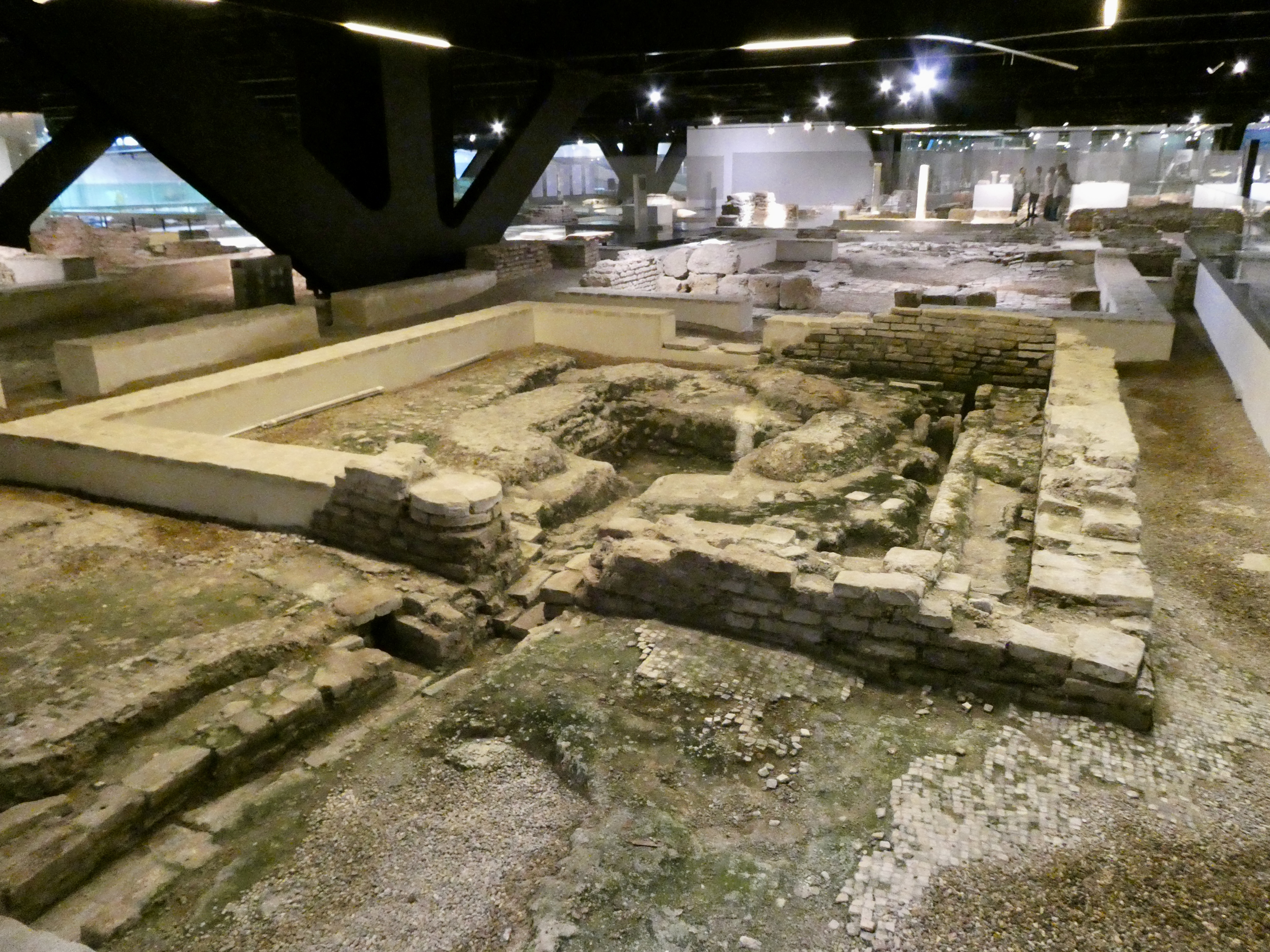

There were also two homes excavated from the 6th century with one known as House of Bases and the other known as Sigma House. Now Sigma House was located near the Salt Factory and appeared larger that the other homes and included what appeared to be an irrigation system flowing from the house as well as a large courtyard with the remains of a fountain.
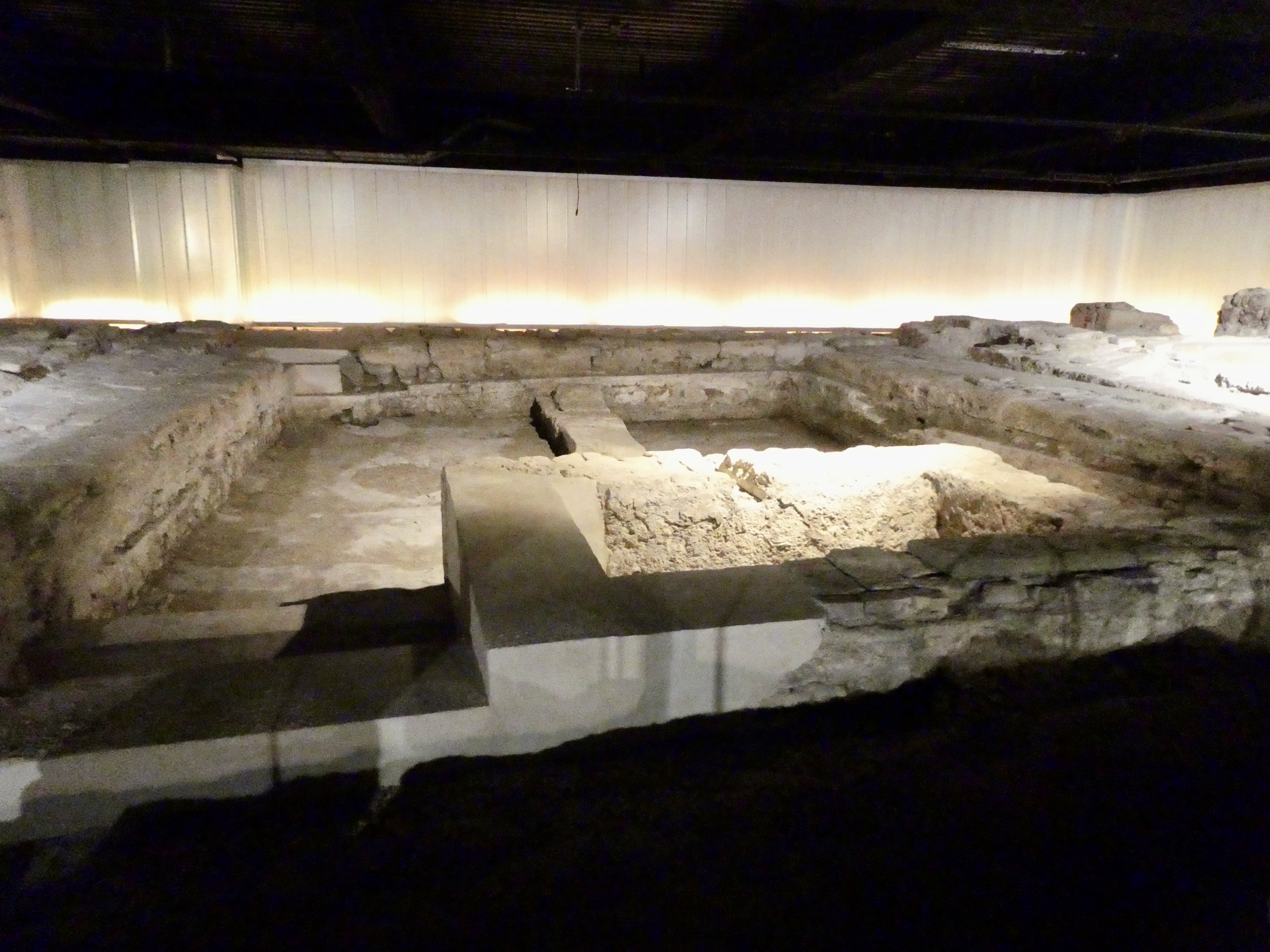
Now the last structure excavated was from the 12th century and was from the Moorish period when the area was named Isbylia. The home was named the House of the Waterwheel and you could see parts of walls and chimneys used for heating and cooling the home.
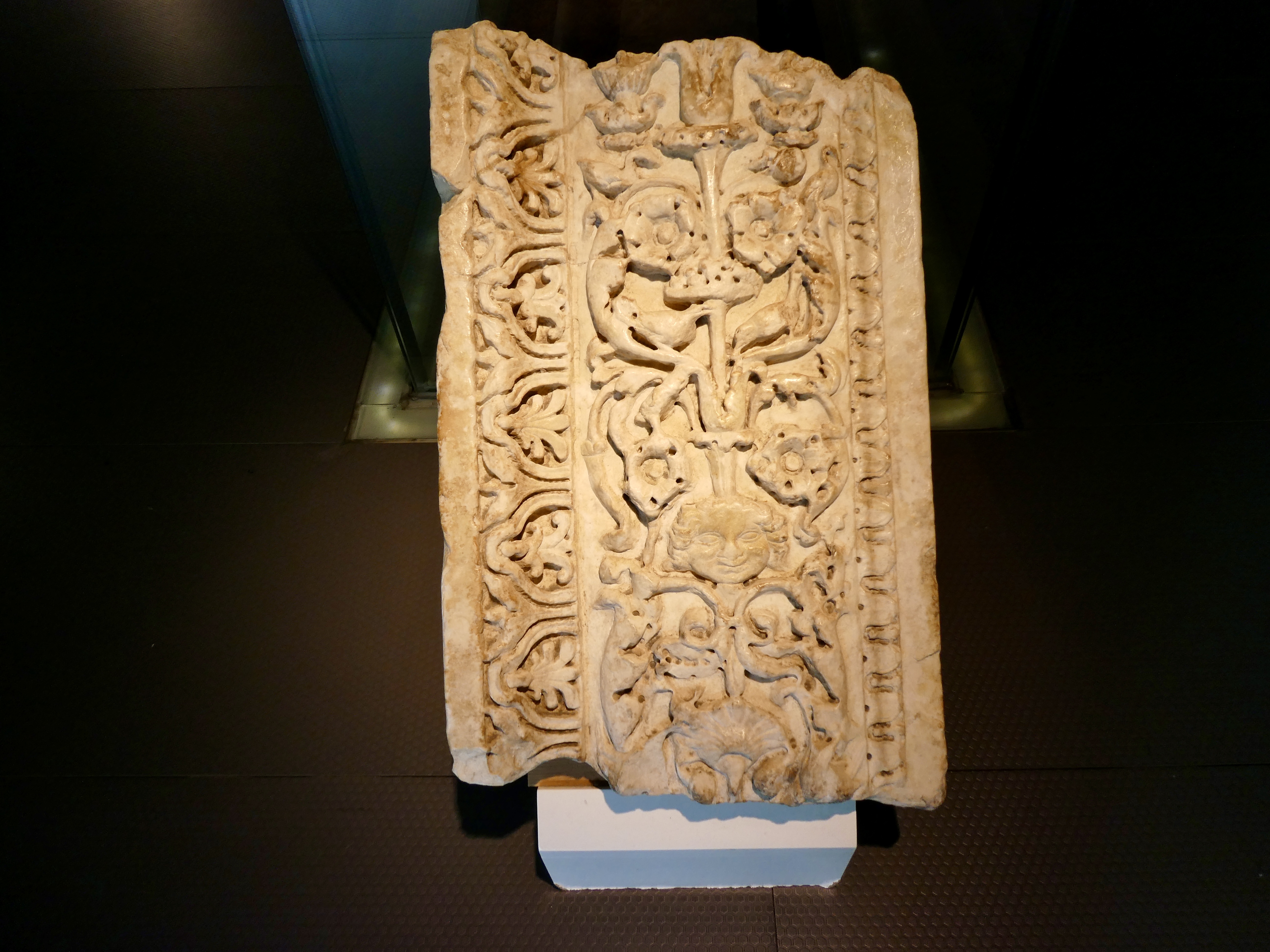
And in addition to the ruins, there were some other finds on display including ceramic heads and pieces of marble with intricate carvings and designs.
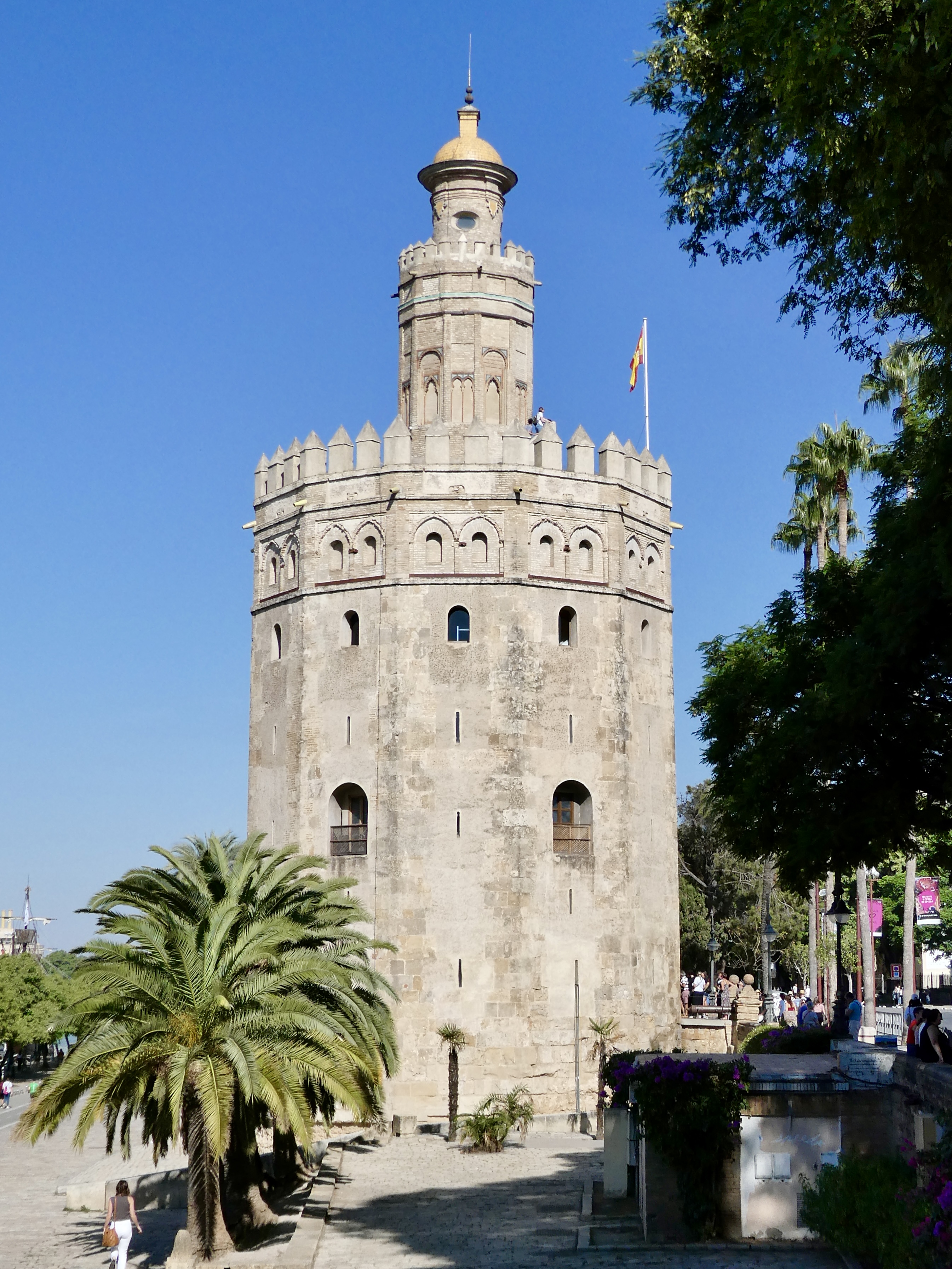
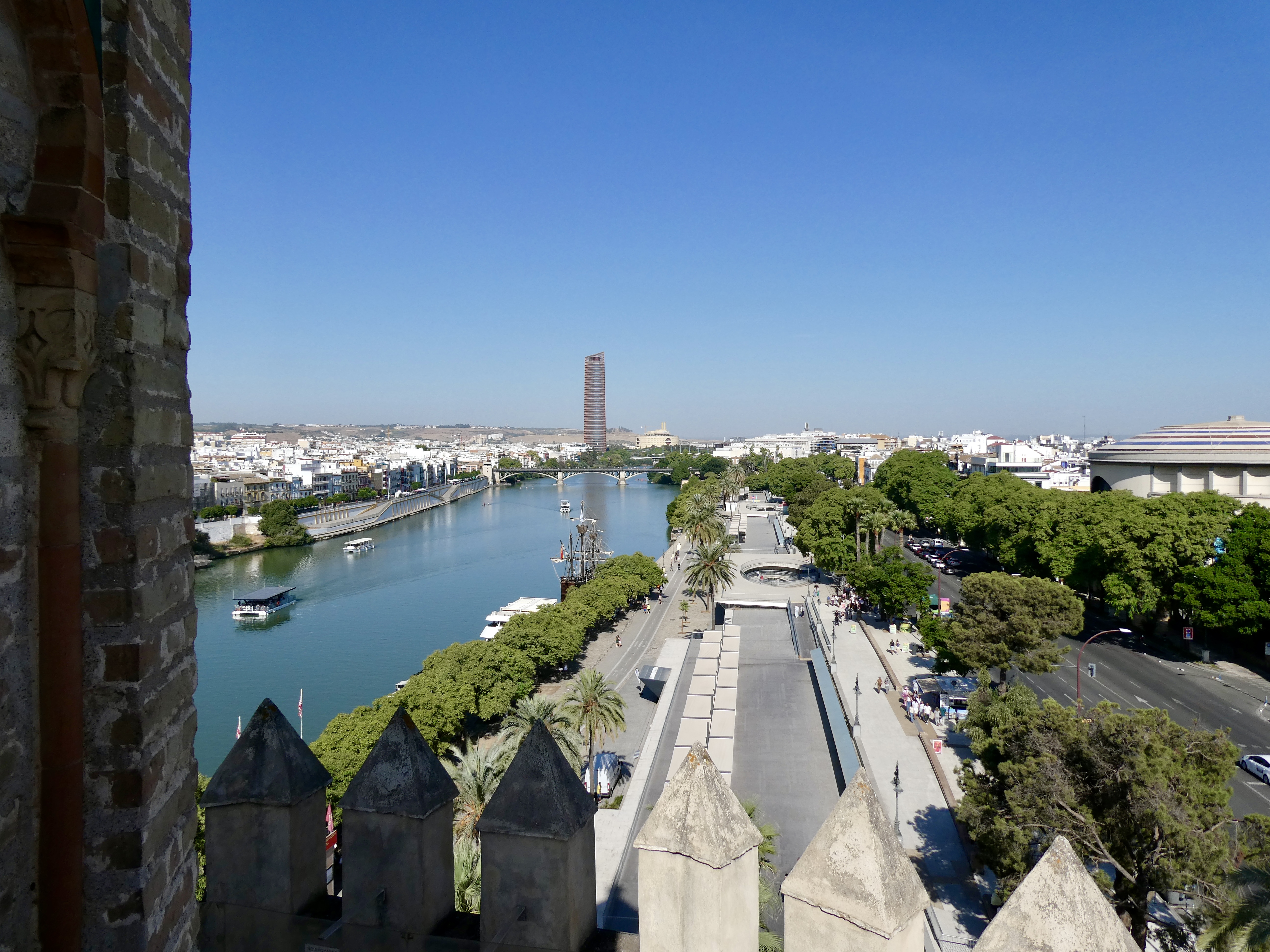
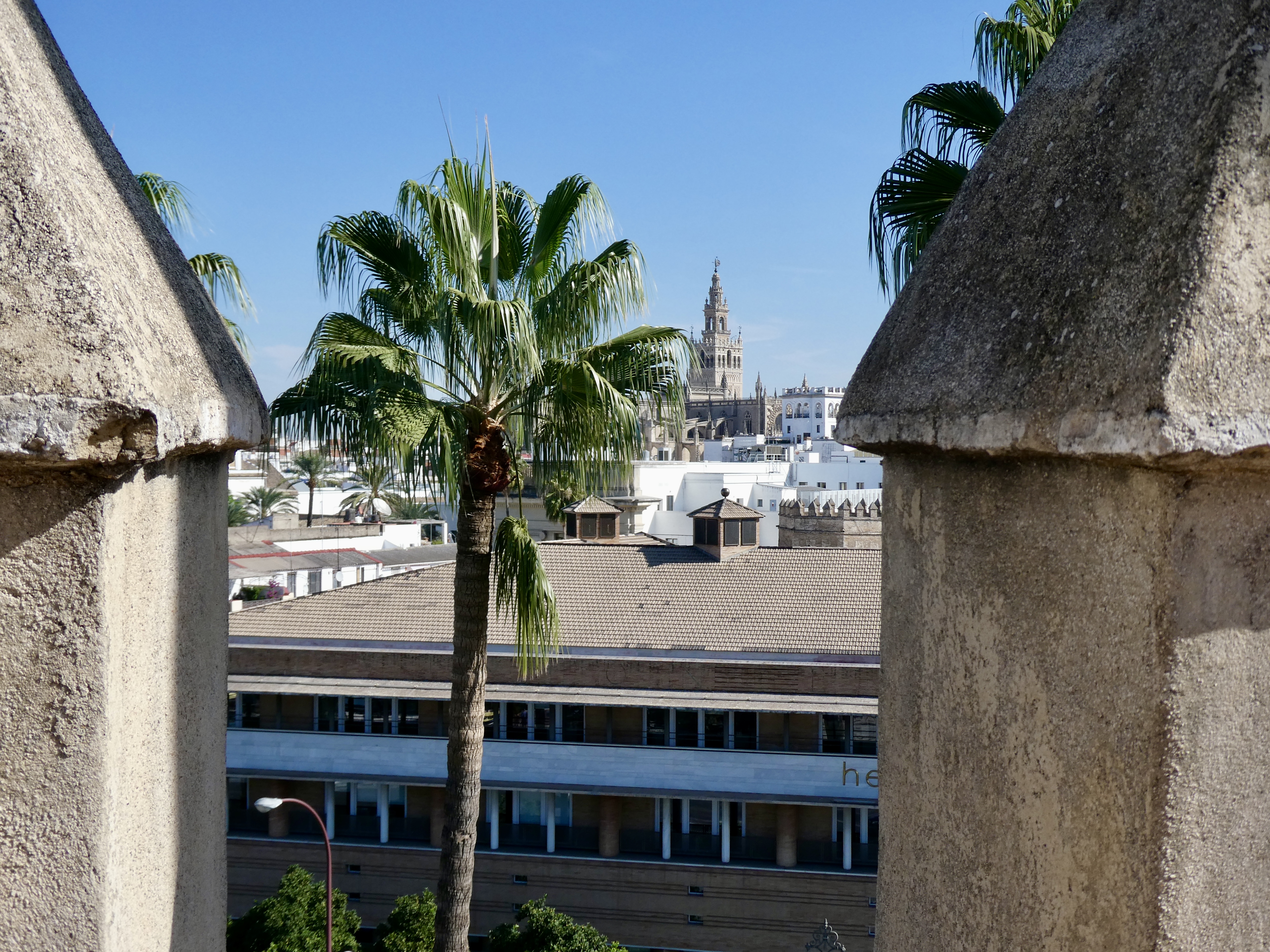
So after the visit, I walked down the street to the Palacio de la Condesa de Lebrija, which was the palace we passed by on our Wednesday walk around old town. Now, sadly, you could only visit the palace if you signed up for the tour and the next tour in English wasn’t until 11:45 so that left me out since my afternoon Cathedral and Alcazar tour started at 1:00. As a result, I passed on the palace and walked to the waterfront to visit the Torre del Oro (the Tower of Gold so named because at one time the exterior was painted gold), which is a military watchtower built between 1220 and 1221 by the Moors to defend the Guadalquivir River. Today, the tower contains a naval museum (not my cup of tea) and the opportunity to climb the tower to take in the views.
I opted for the tower climb and while the views were nice, I am not sure it was worth the time to walk to the tower and hike up.
Anyway, by 12:45 I was at the tour office meeting up with Petra, our guide for the small group tour of the three important monuments: the Cathedral, La Giralda (the Cathedral tower) and the Alcazar. We then took a five minute walk from the tour office to the Cathedral entrance.
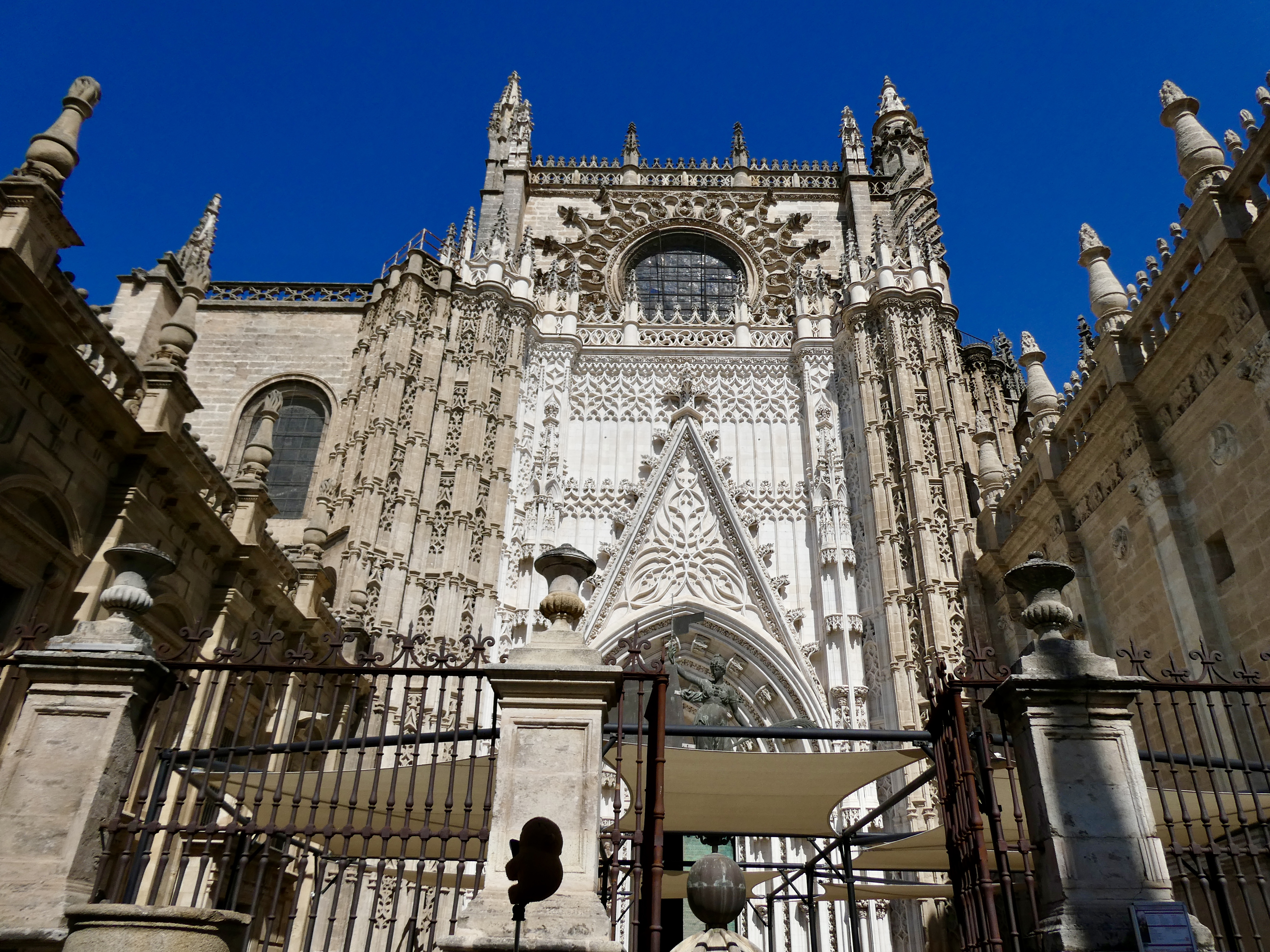
Now the Cathedral dates to 1184 -1198 when the the Moors constructed a mosque and minaret (the precursor to La Giralda) on the site. In 1248, the mosque became a cathedral when the Christians defeated the Moors. From 1434 to 1517 work was undertaken to construct a Gothic Church in place of the mosque, but many elements of the mosque remained, including the middle and lower portion of the minaret. From 1528 until 1928, the cathedral was expanded and renovated with the addition of chapels, the upper Renaissance portion of La Giralda, and later Baroque chapels and rooms. The Cathedral (along with the Alcazar) are UNESCO world heritage sites.
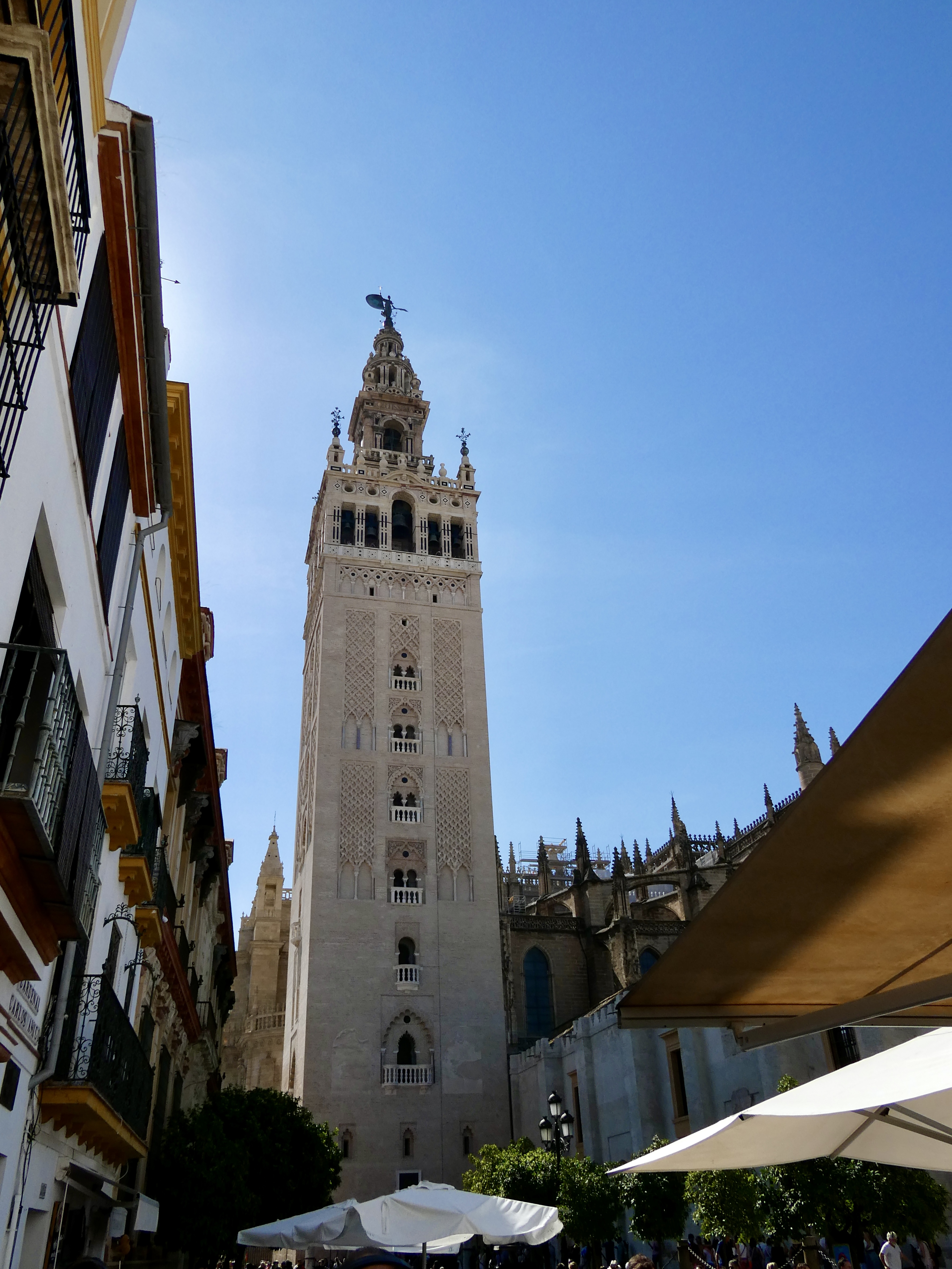
Anyway, once inside the Cathedral, Petra gave us about ten minutes to wander around and take pictures before we had to meet back up to climb up La Giralda, a 105 meter (343 feet) climb. Now fortunately, the bulk of the climb involves ramps (34 to be exact) with the reason being that when this tower was part of a mosque, the muzeen had to climb the tower five times a day to announce the call to prayer so in order to avoid exhaustion, 34 ramps were installed with the last climb to the top comprised of 17 stairs.
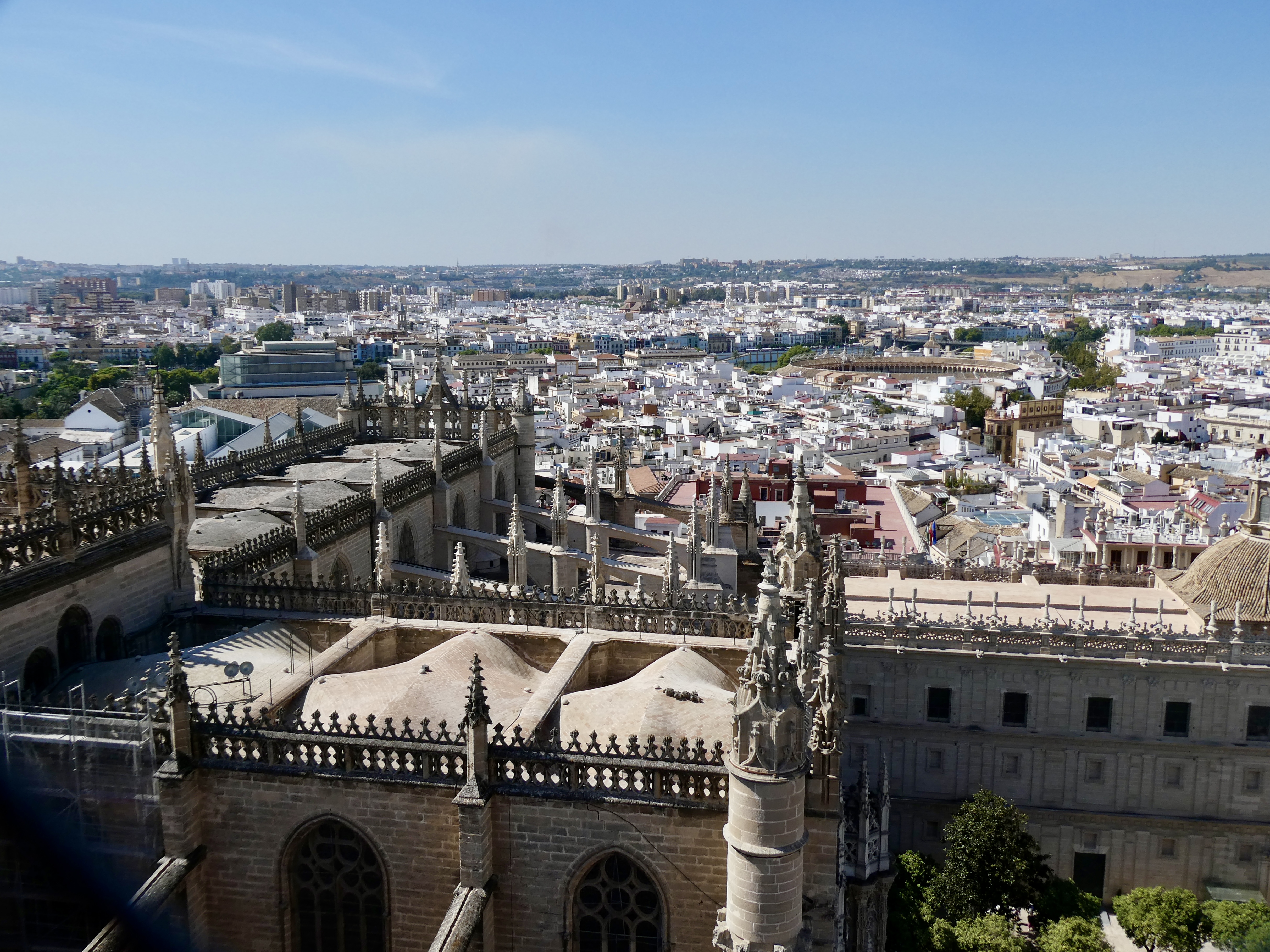
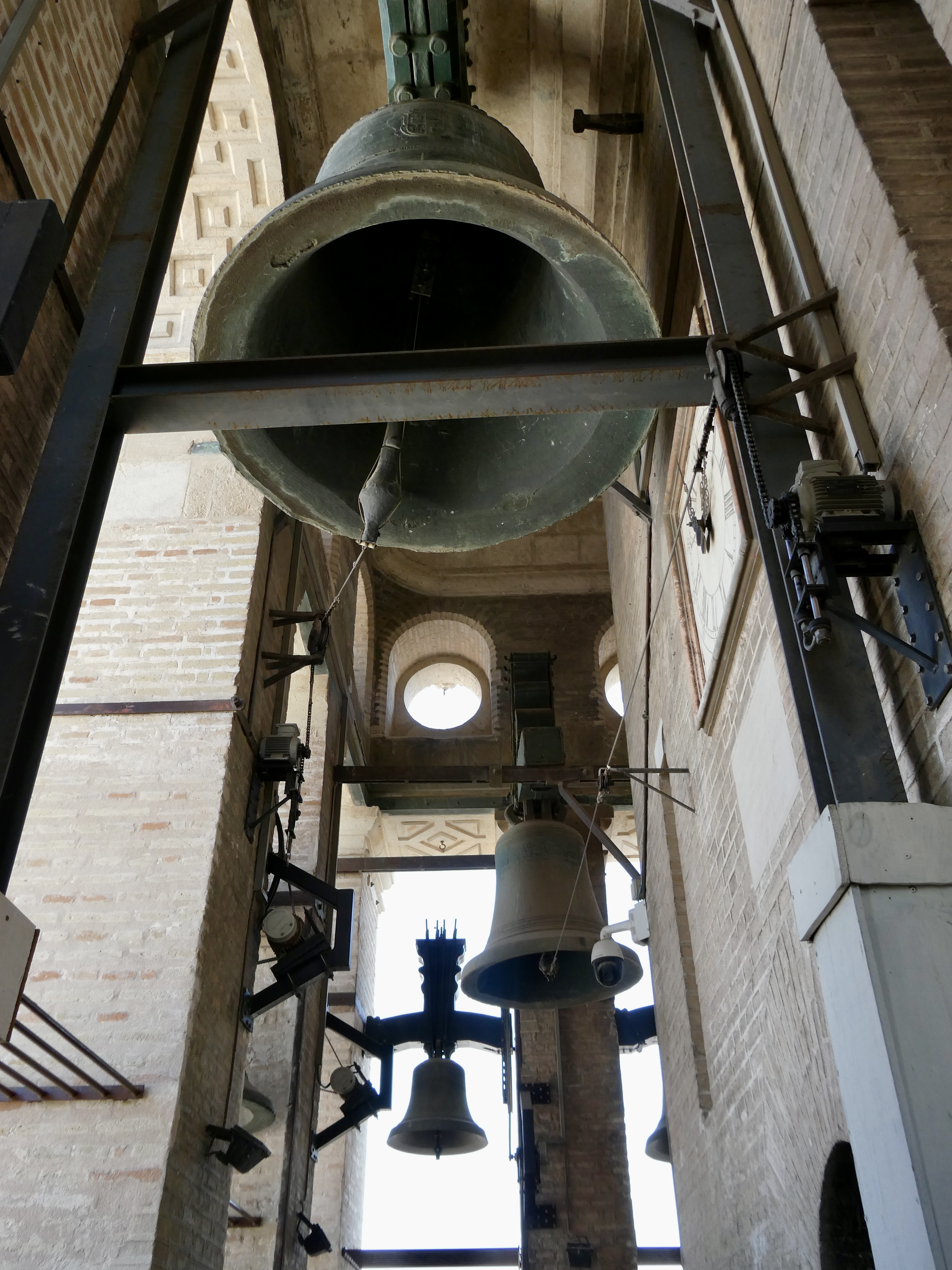

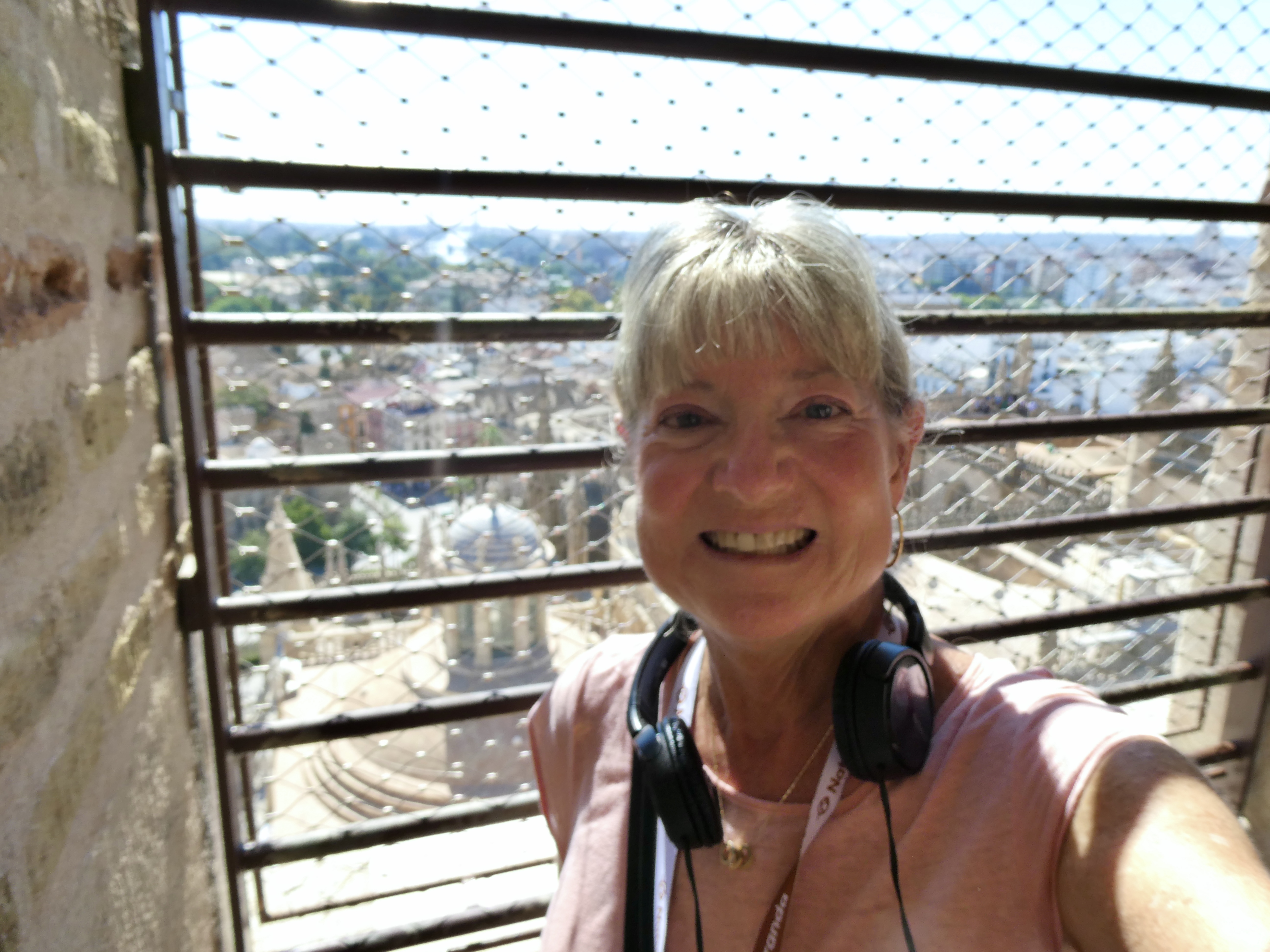
So all in all, the climb was not that bad, although it was a little slow going due to the number of people going up and down the narrow ramps. However, once at the top, the views were absolutely spectacular. I ended up wandering around the circumference of the tower and while I was walking around, the bells above my head began to chime (as they do at the top and bottom of each hour).
I stopped periodically as I walked around to try and take pictures through the wire screens covering the various lookout points and just generally admire the view.
After taking a walk around the tower, I headed back down to meet up with Petra and our little group for a tour of the Cathedral. Now this Cathedral is the largest Gothic cathedral in the world housing approximately 80 chapels, so we were only going to hit some of the highlights.
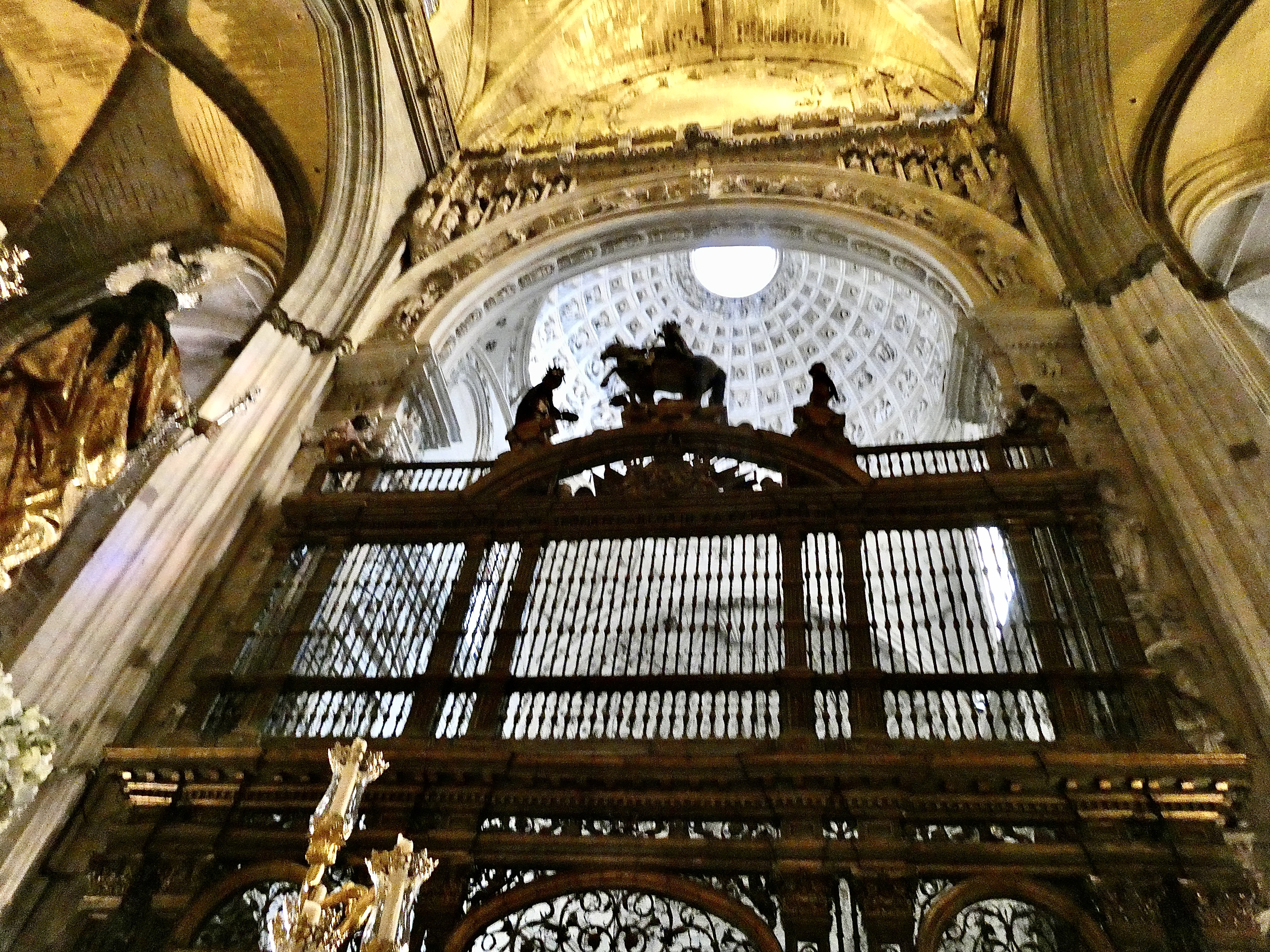
First up was the 16th century Royal Chapel that is the burial ground for three former Spanish kings, King Ferdinand III, his son Alfonso X, and King Pedro I aka Peter the Cruel. For some reason, the Chapel is only open one day of the year, so all we could do was look at the artwork on the entrance.
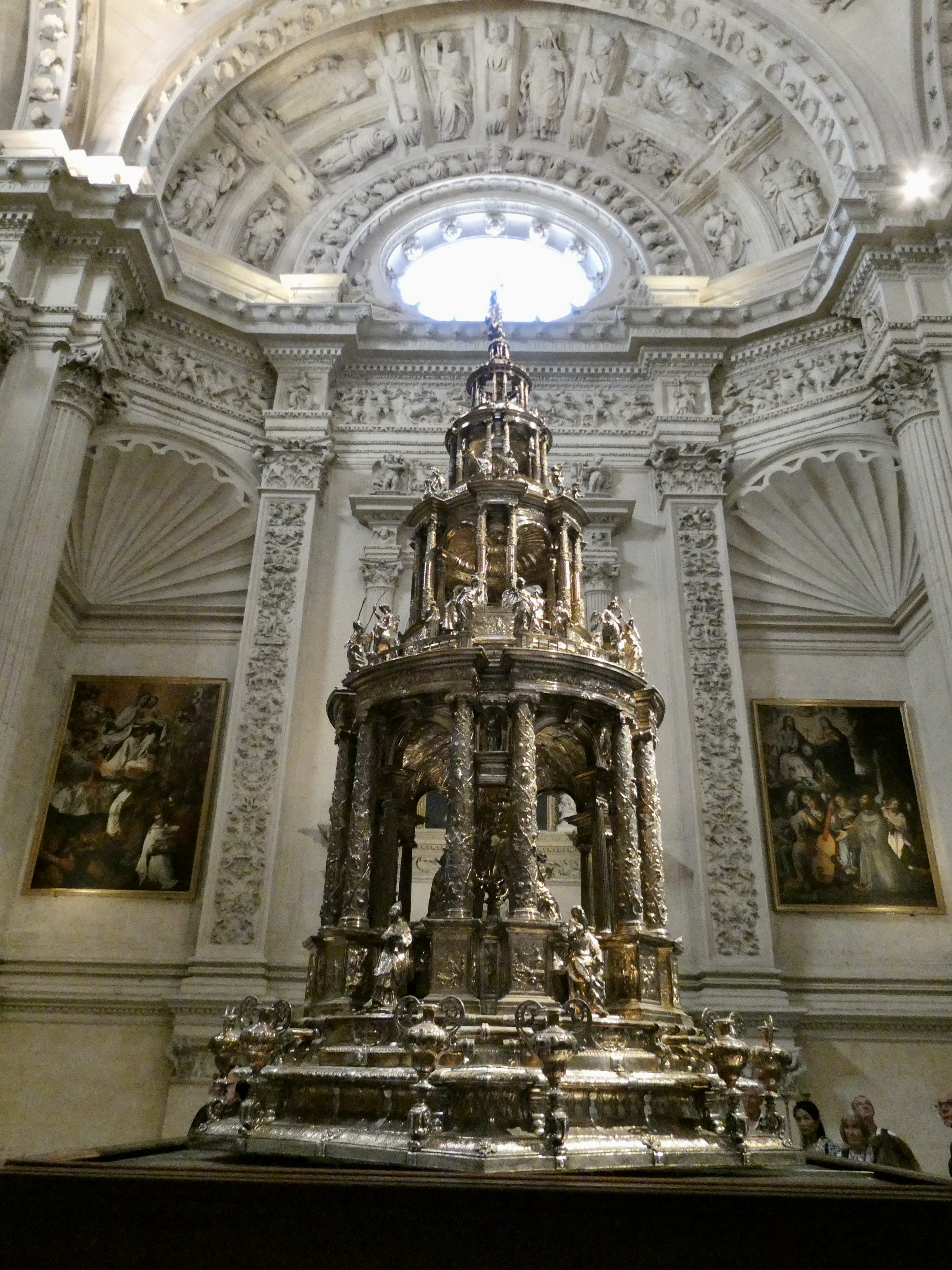
From here, we crossed over into the Sacristía Mayor (Main Sacristy) a Greek cross-shaped room topped with a circular dome at the crossing. In the center of the room was the Custodia de Arfe, a 16th solid silver statue, which is used in religious processions.
We then walked through an indoor courtyard to the Anticabildo, an elaborate Renaissance style waiting room with sculptures and relief carvings and a beautiful ceiling dating to the 1800s. The room was used by guests waiting to meet with the hierarchy of the Cathedral.
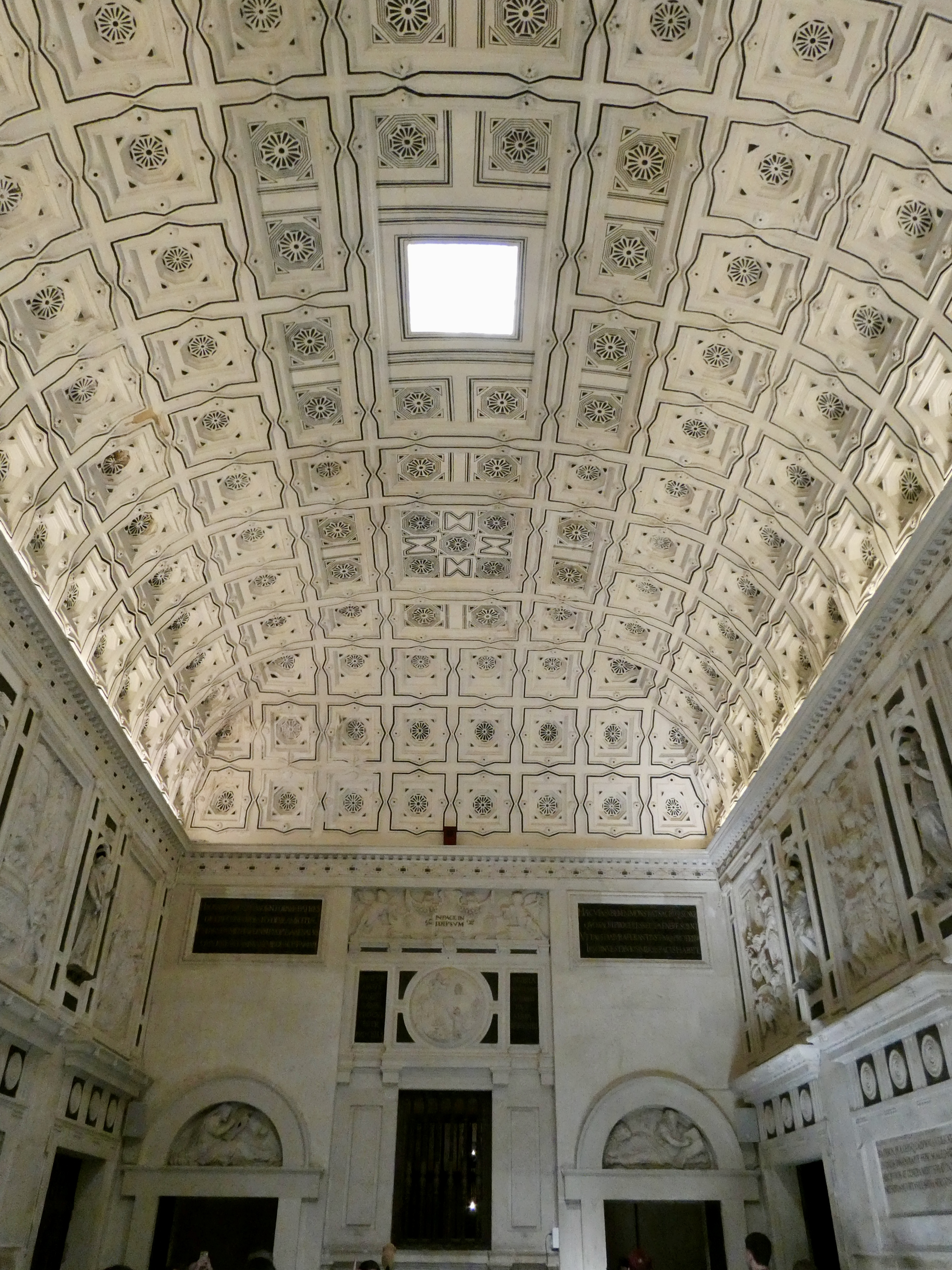
Next door to this room was the Chapter House, the meeting room for the Cathedral’s clergy and top brass. The ceiling of this room is perhaps the most interesting aspect of this 16th century room.

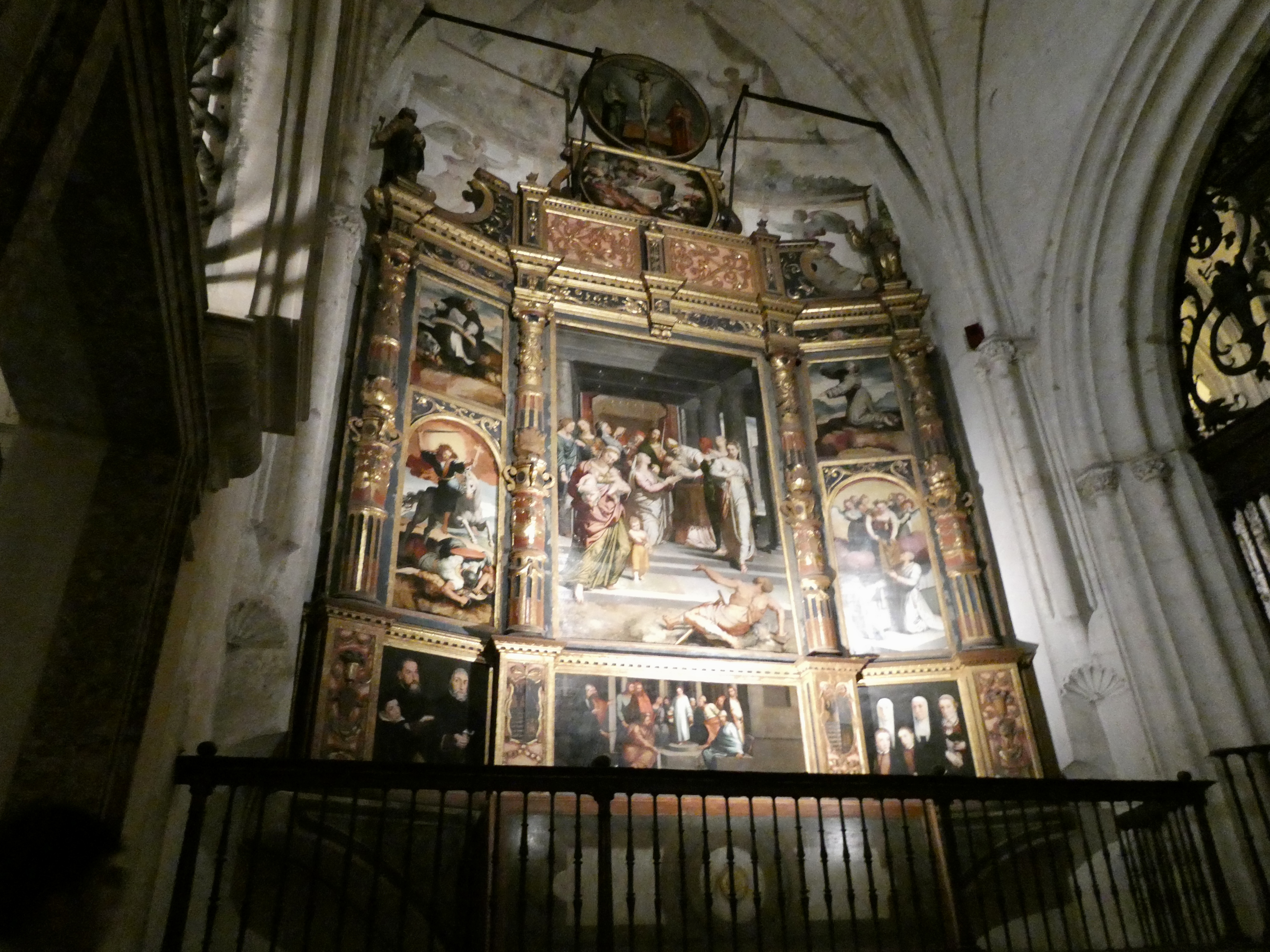
We then walked past the Marshall’s Chapel, which was closed off by an iron gate. We did not stop and I have no idea why because I found the artwork above the gate fabulous. Apparently it used to be the policy of the church that if you were wealthy enough you could sponsor aka buy a patronage allowing you to build a chapel in the Cathedral. This Chapel was apparently sponsored by Don Diego Caballero. The painting depicts religious scenes along with portraits of Caballero’s family.
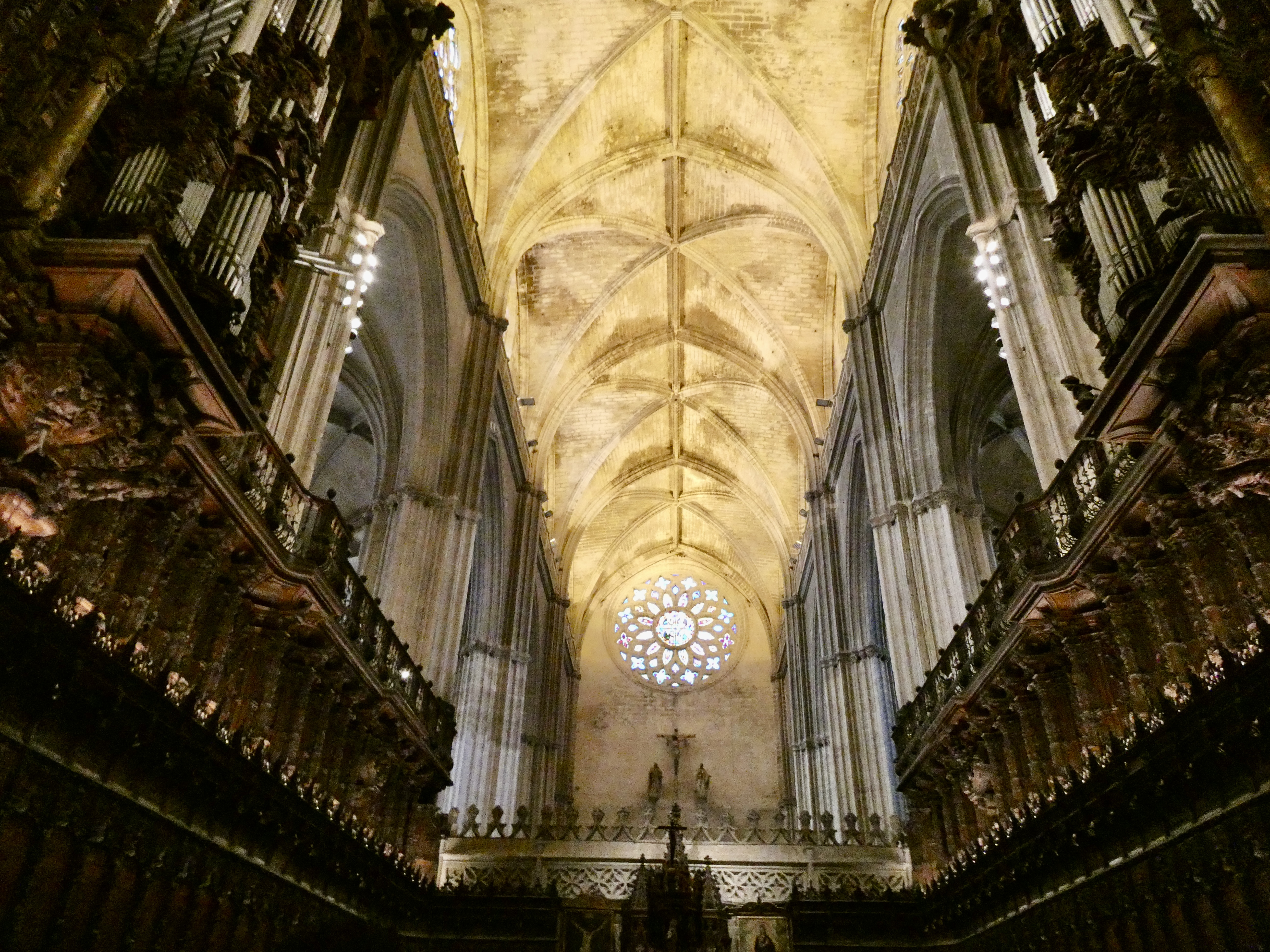

Petra then took us past the Choir, but we did not stop. Again, no idea why because the Choir is one of the most important rooms in the Cathedral. So I left the group at this point and went and took a look for myself. Fortunately, there was a sign that provided a bit of information, including the fact that the Choir features designs and carvings depicting 16th century religious life as well as huge organs on either side of the room.
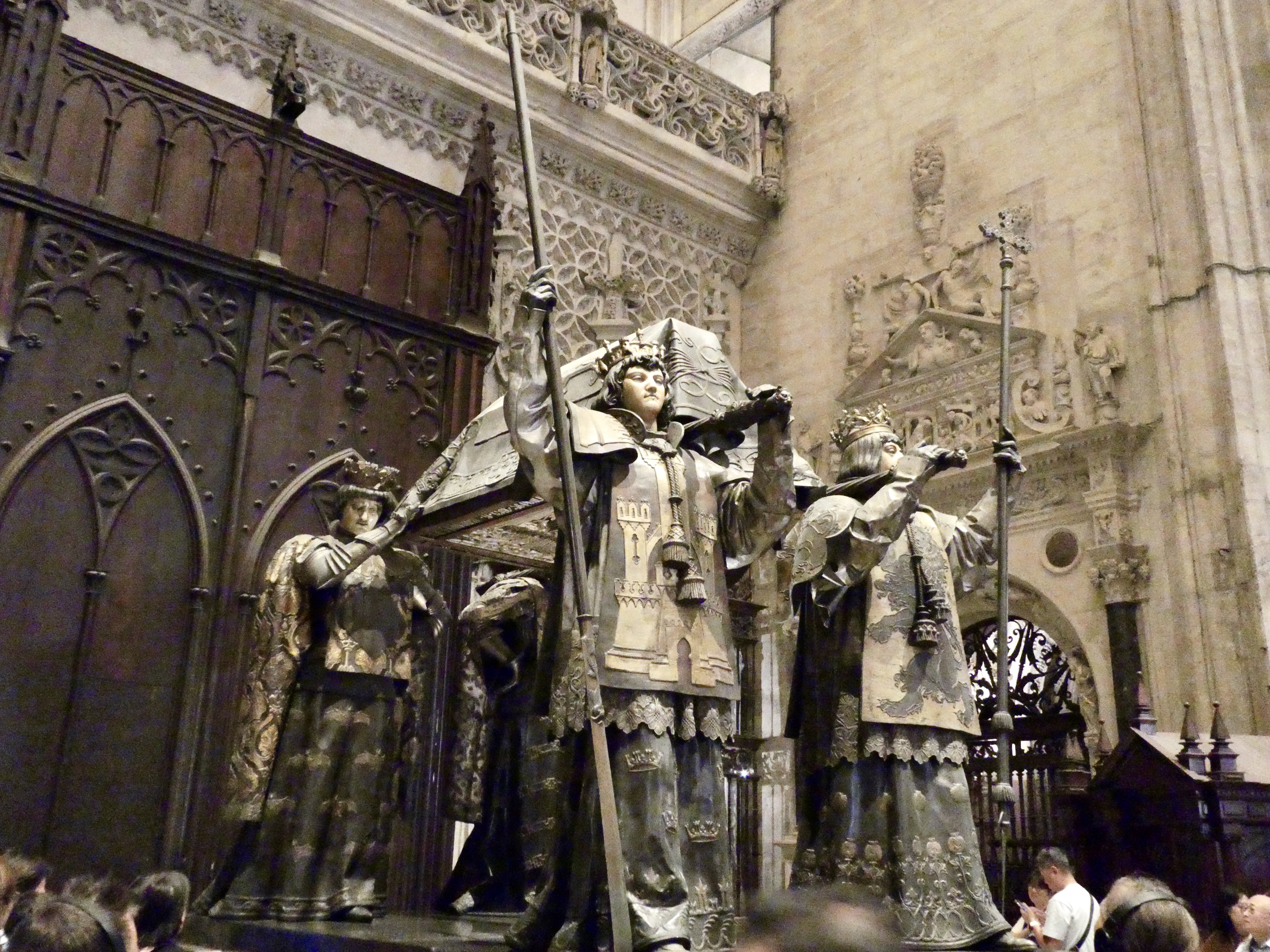
I then caught up with the group who were in front of what appeared to be a tomb and in fact, it was a tomb of the Cathedral’s most important inhabitant: Christopher Columbus. Now apparently there is some dispute about whether Columbus’ remains are in the tomb as the Dominican Republic claims it holds Columbus’ remains. However, recent DNA testing has confirmed the authenticity of Columbus’ remains in the Spanish tomb.
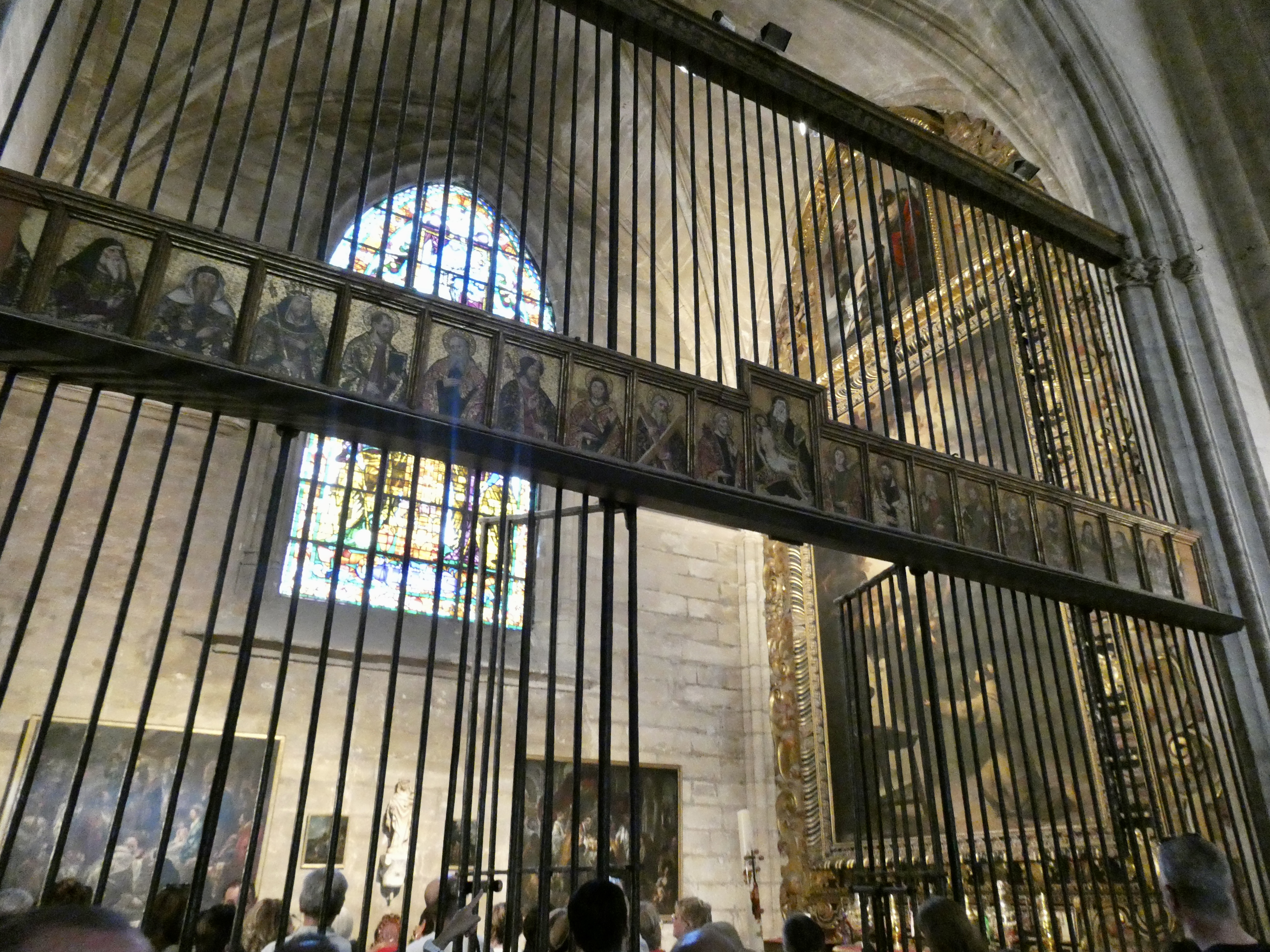
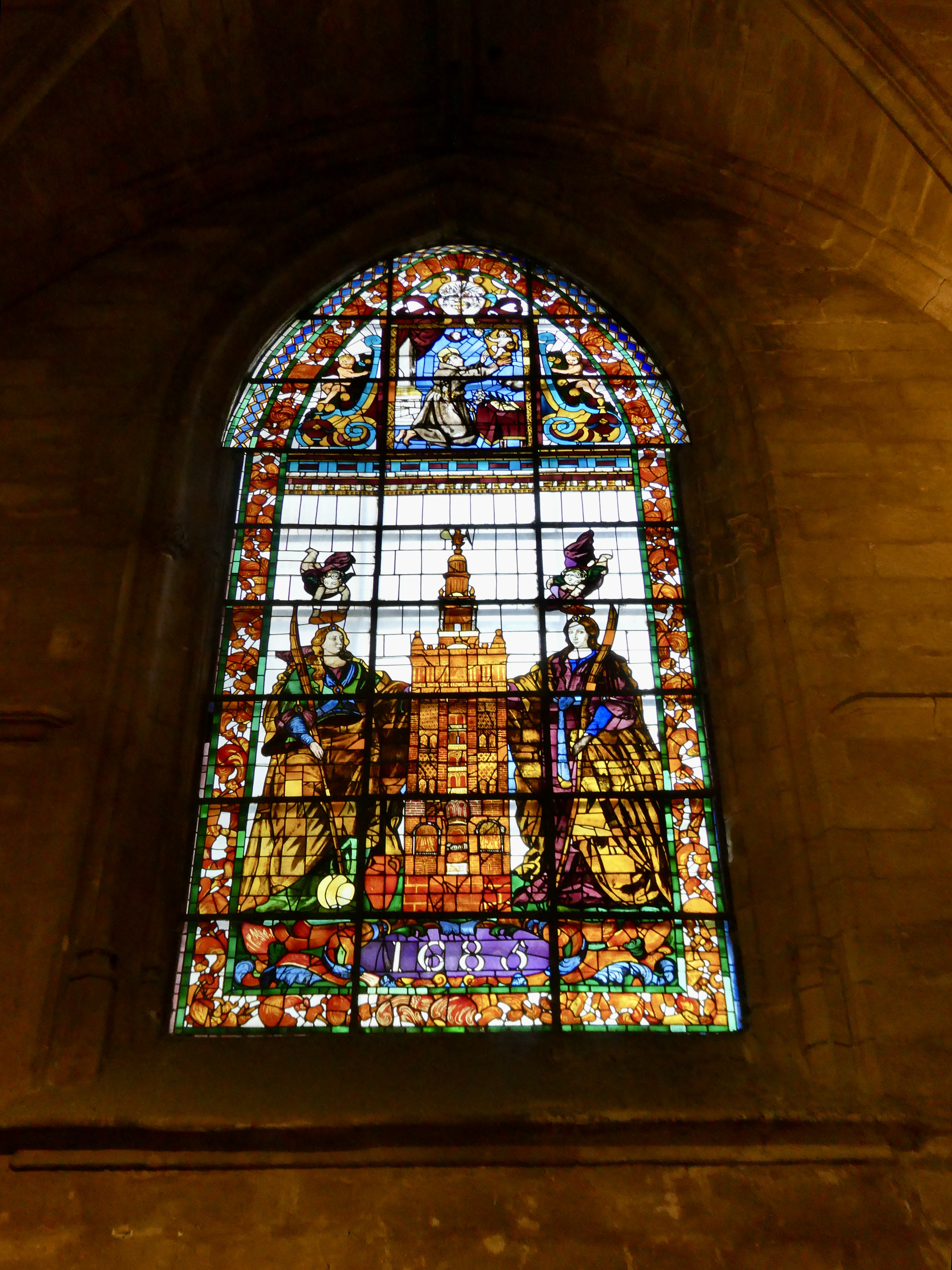
We then made a brief stop at the Chapel of Saint Anthony, which contains the famous painting of the Vision of Saint Anthony. Now the chapel was so crowded, I stayed outside and simply took a picture through the bars separating the chapel from the rest of the Cathedral. Quite frankly, I preferred the stained glass window in the chapel, which dated to 1685.
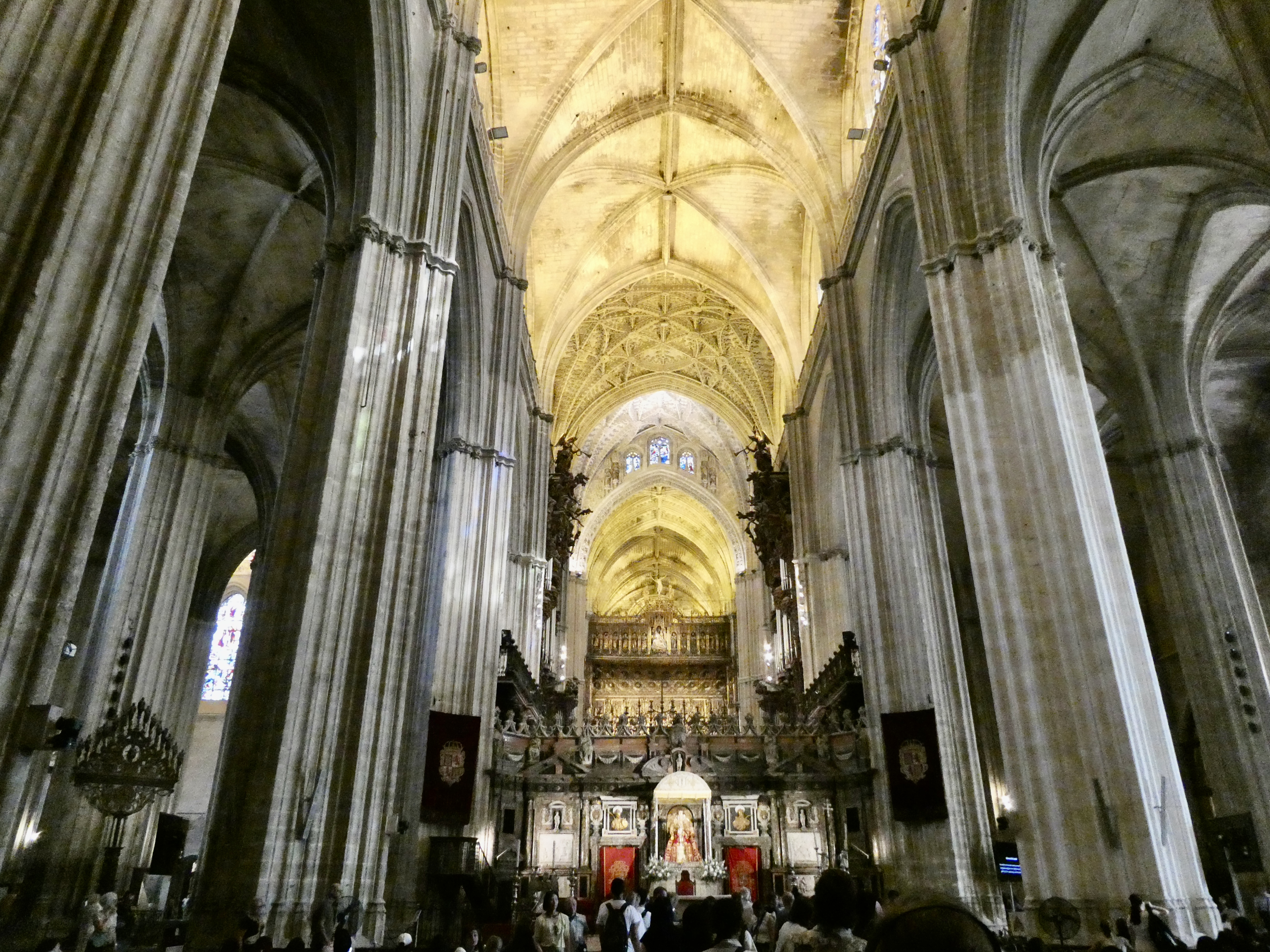
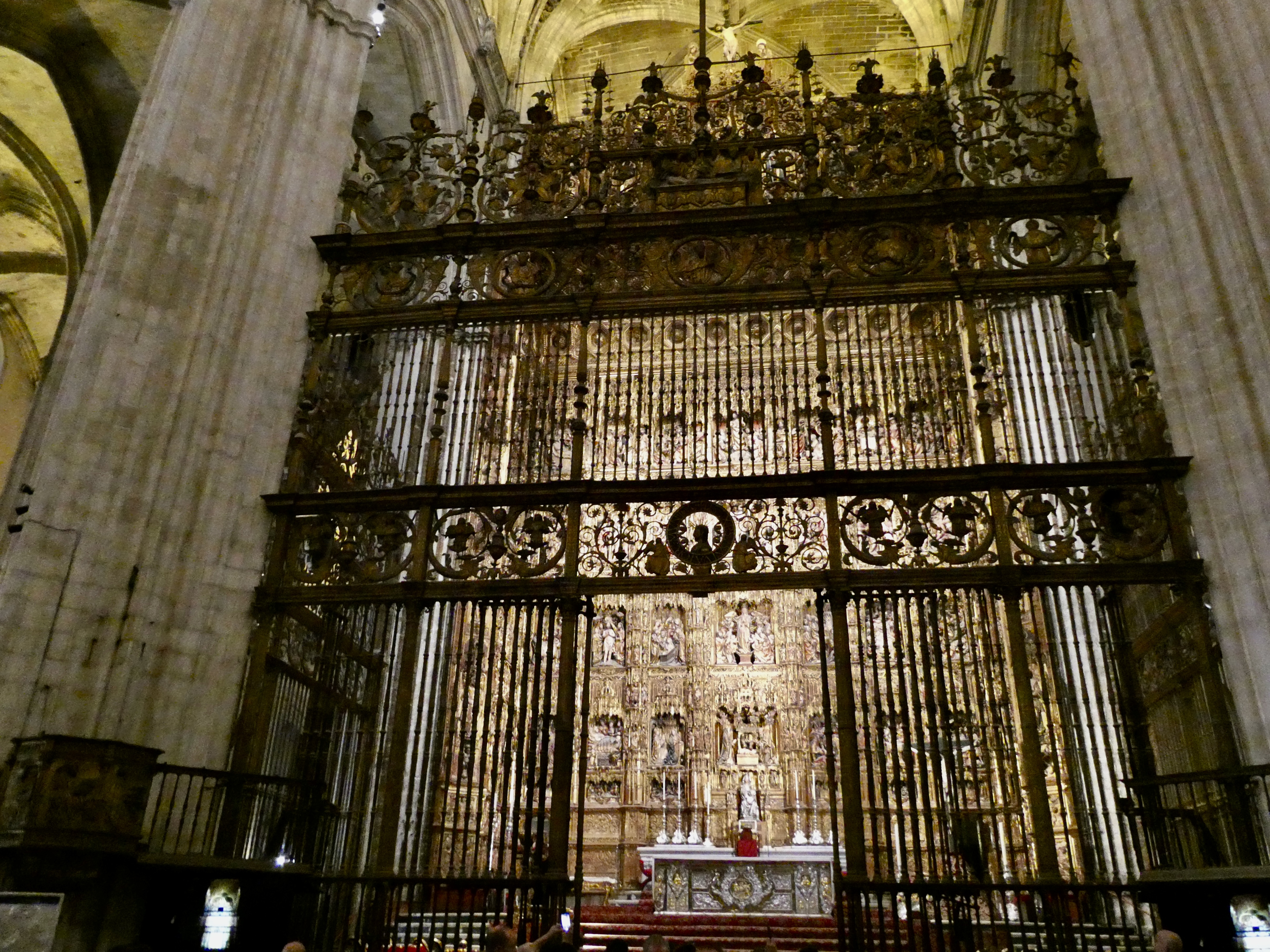
Petra then took us to the back of the church for a view from one end of the Cathedral through the Choir to the Main Alter. Now the Main Alter contains the Retablo Mayor, the world’s largest altarpiece consisting of a gilded wood carving depicting scenes from the Old Testament, the life of Christ, and the Virgin Mary and dates to the late 15th and early 16th century. It really was gorgeous.
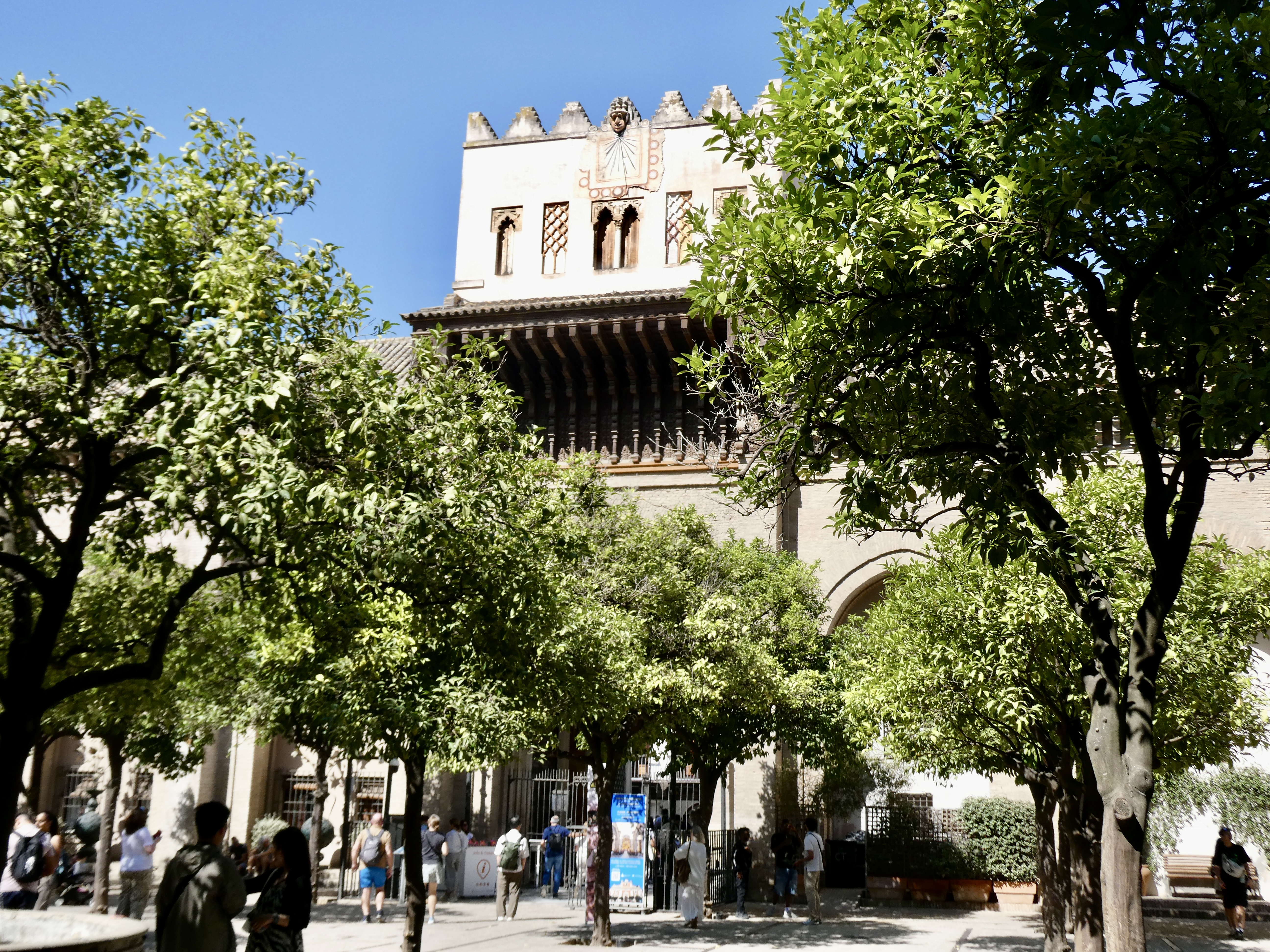
From here, we exited the Cathedral and walked through the Orange Tree Courtyard where a handful of us were going to continue on to visit the Alcazar. Now in order to enter the Alcazar, you had to provide ID and go through an airport-like screening process. And the reason for all this security is that the Royal Family of Spain stays in the Alcazar when they visit Sevilla. So precautions are necessary.
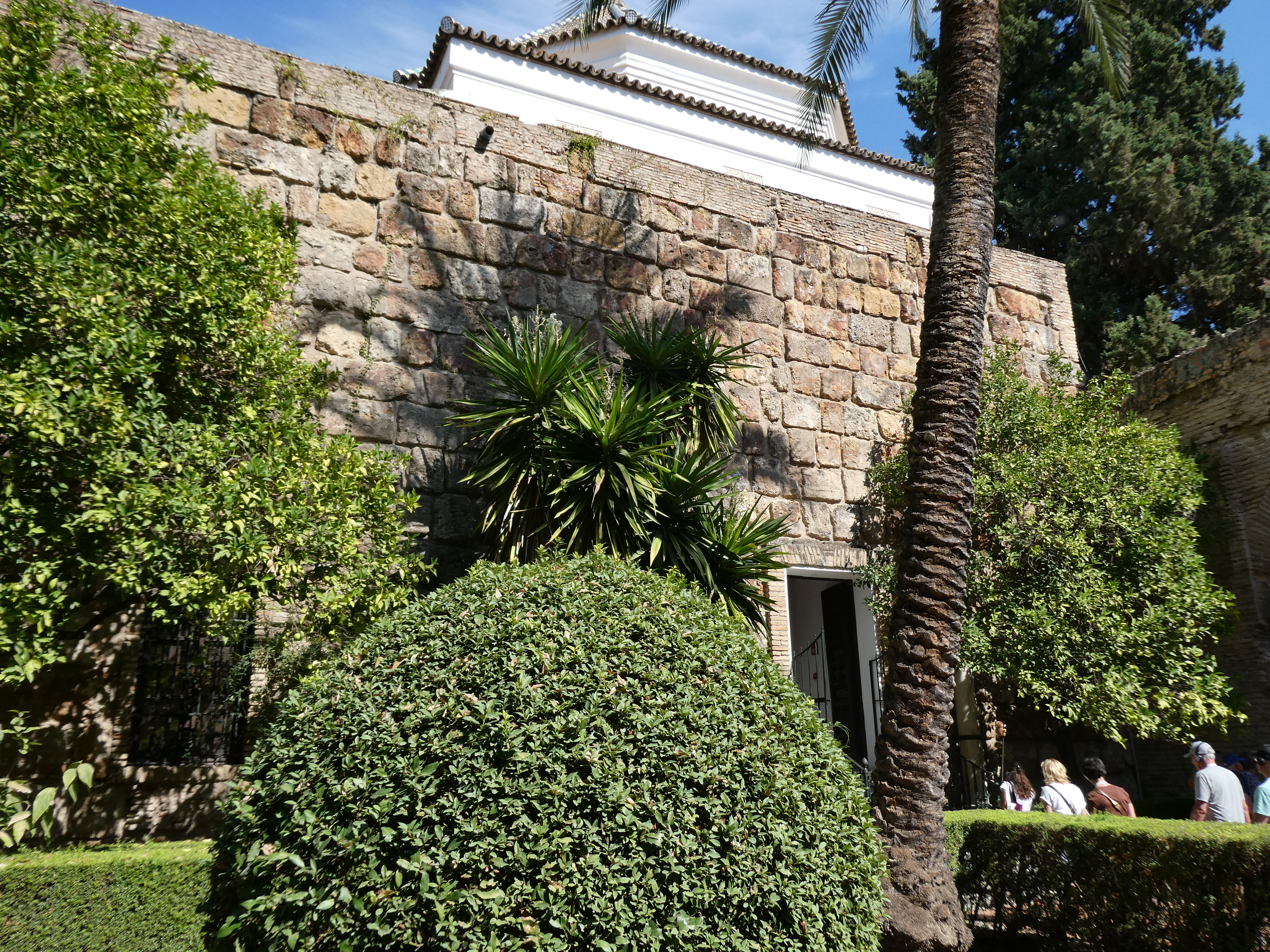
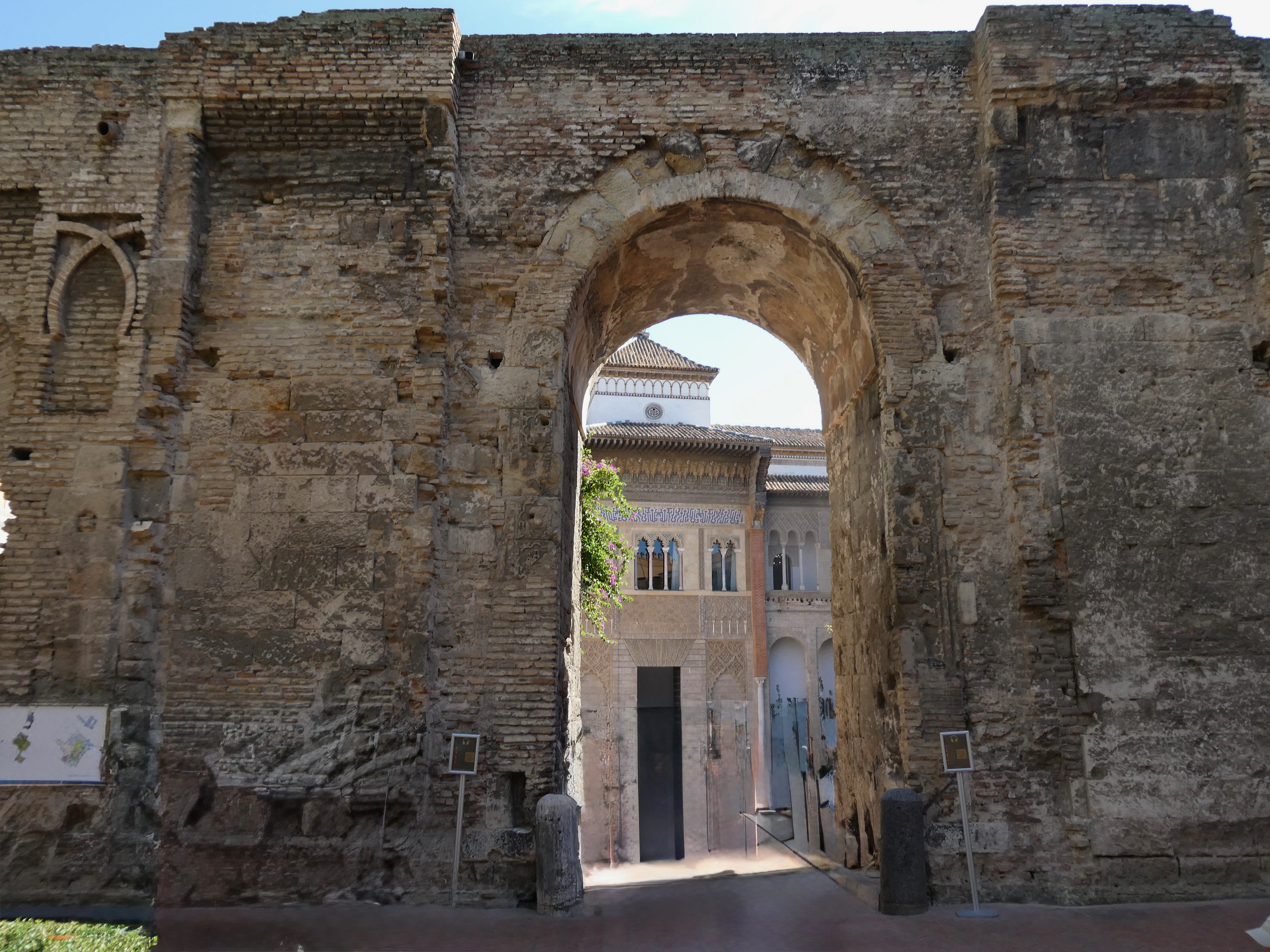
Anyway, once through security, we turned to the right and visited one of the two palaces in the Alcazar. Now the Alcazar dates to the 10th century when the Moors occupied this area and constructed the large palace complex. After the Castilians (Christians) conquered Sevilla in 1248, the Alcazar was rebuilt and new palaces and gardens were constructed, including the Moorish style palace built by King Pedro I during the 1360s (he apparently liked the Moorish designs).
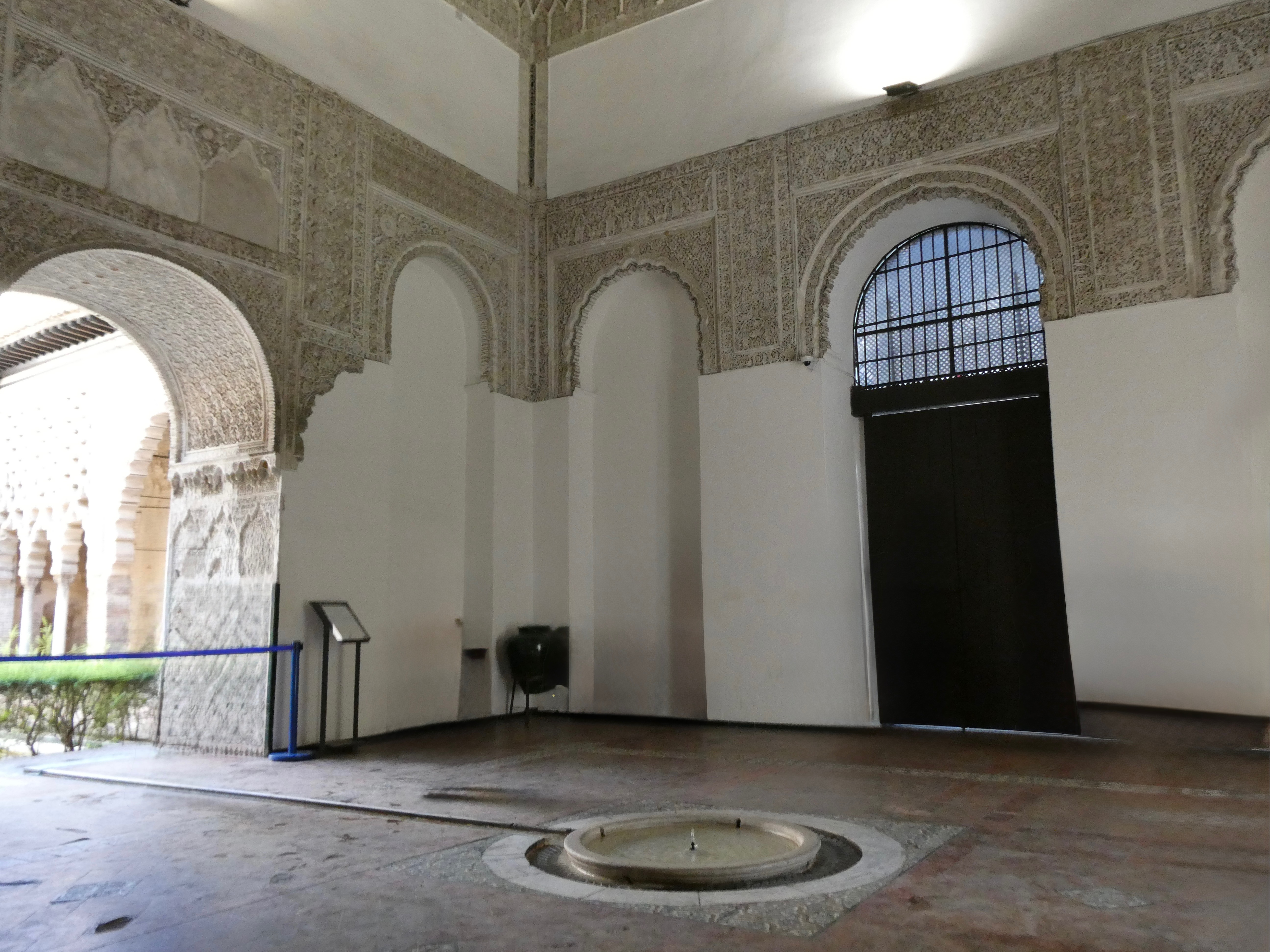
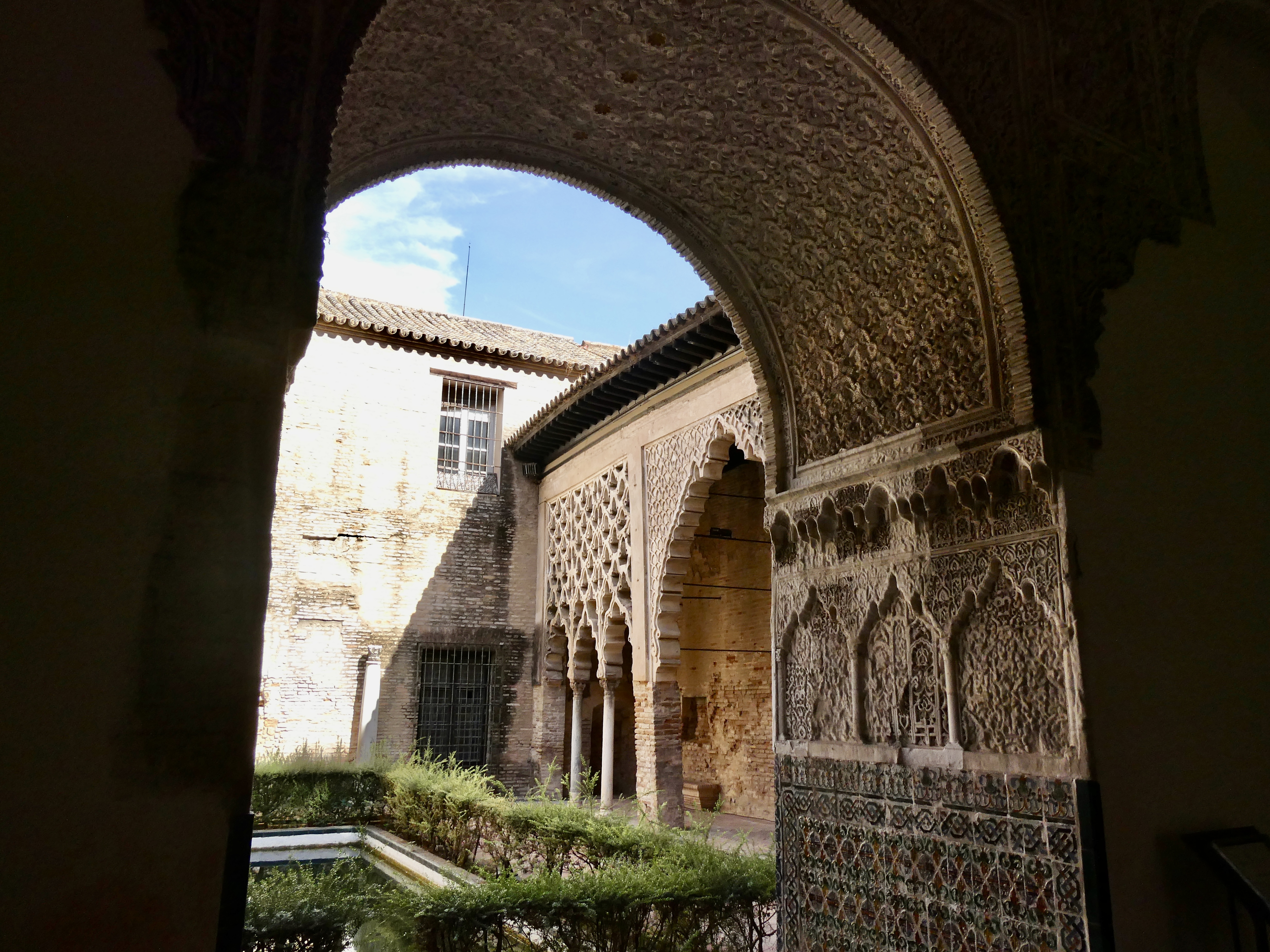
Anyway, first up was the Palacio del Yuso. Once we passed through the gate and courtyard, we entered the Sala de la Justice (the courtroom of justice). It is likely that this room is where the King meted out justice. And for some weird reason, there was a fountain in the middle of the room with a drain that directed water to the adjacent Patio del Yuso.
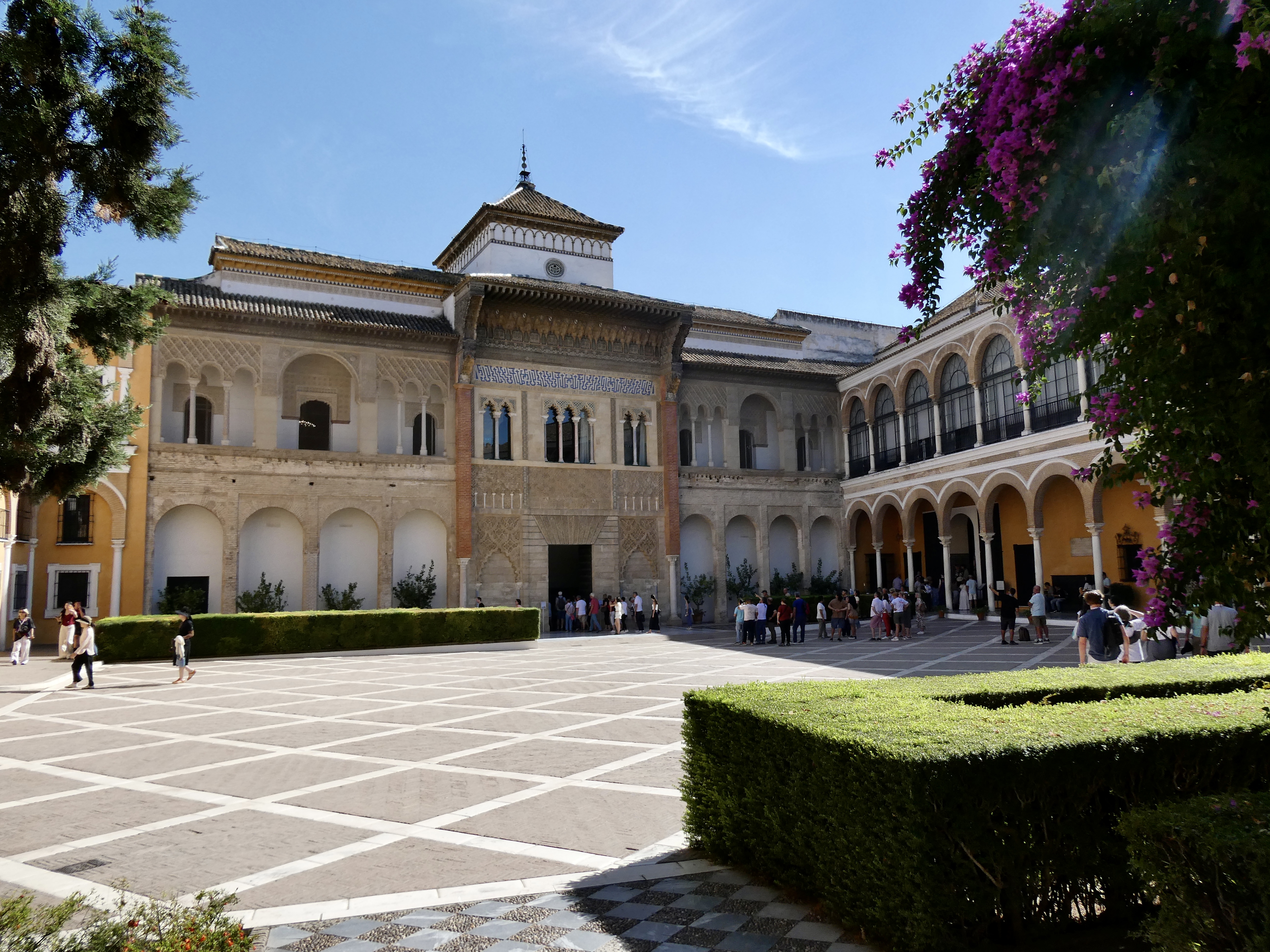
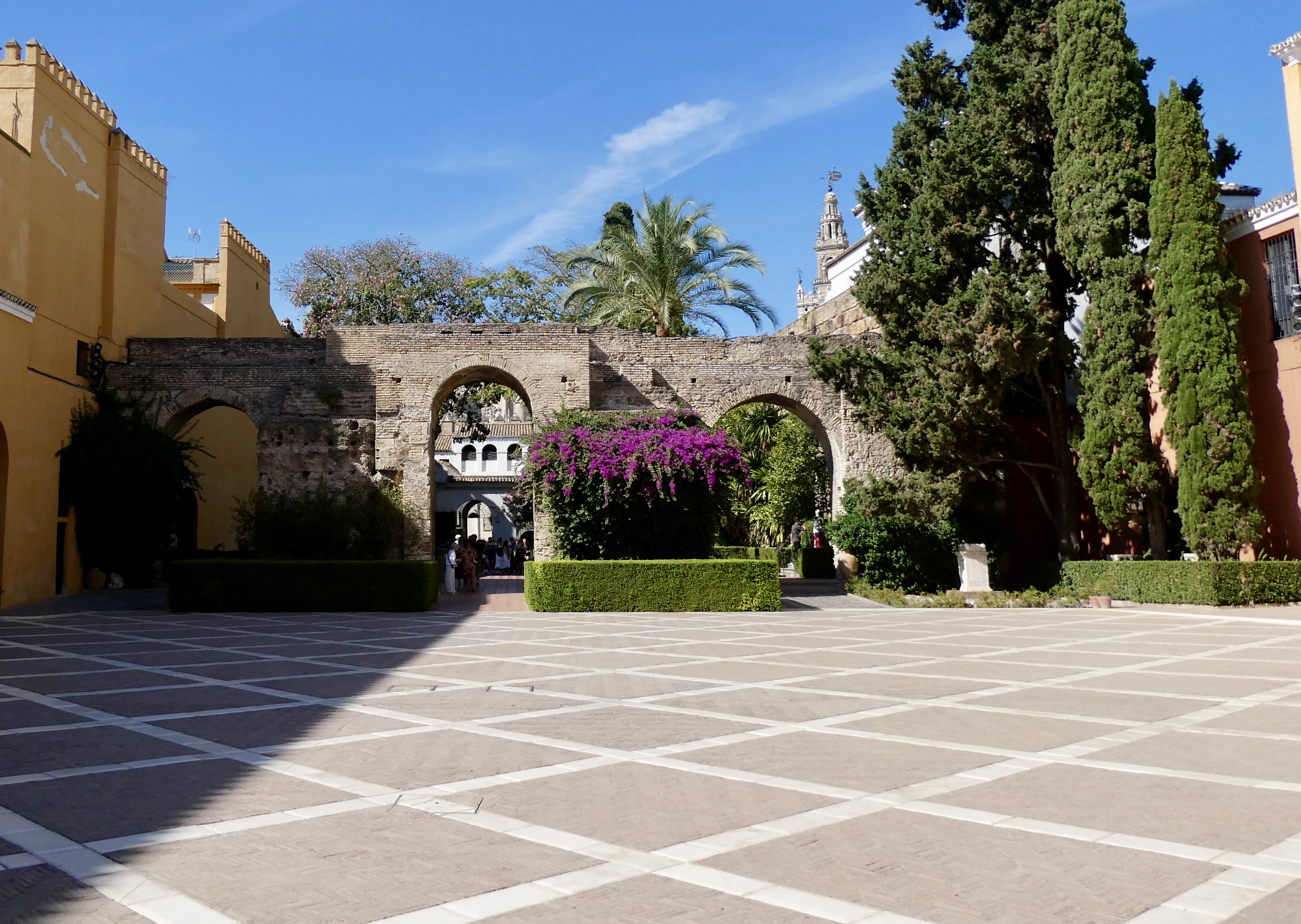
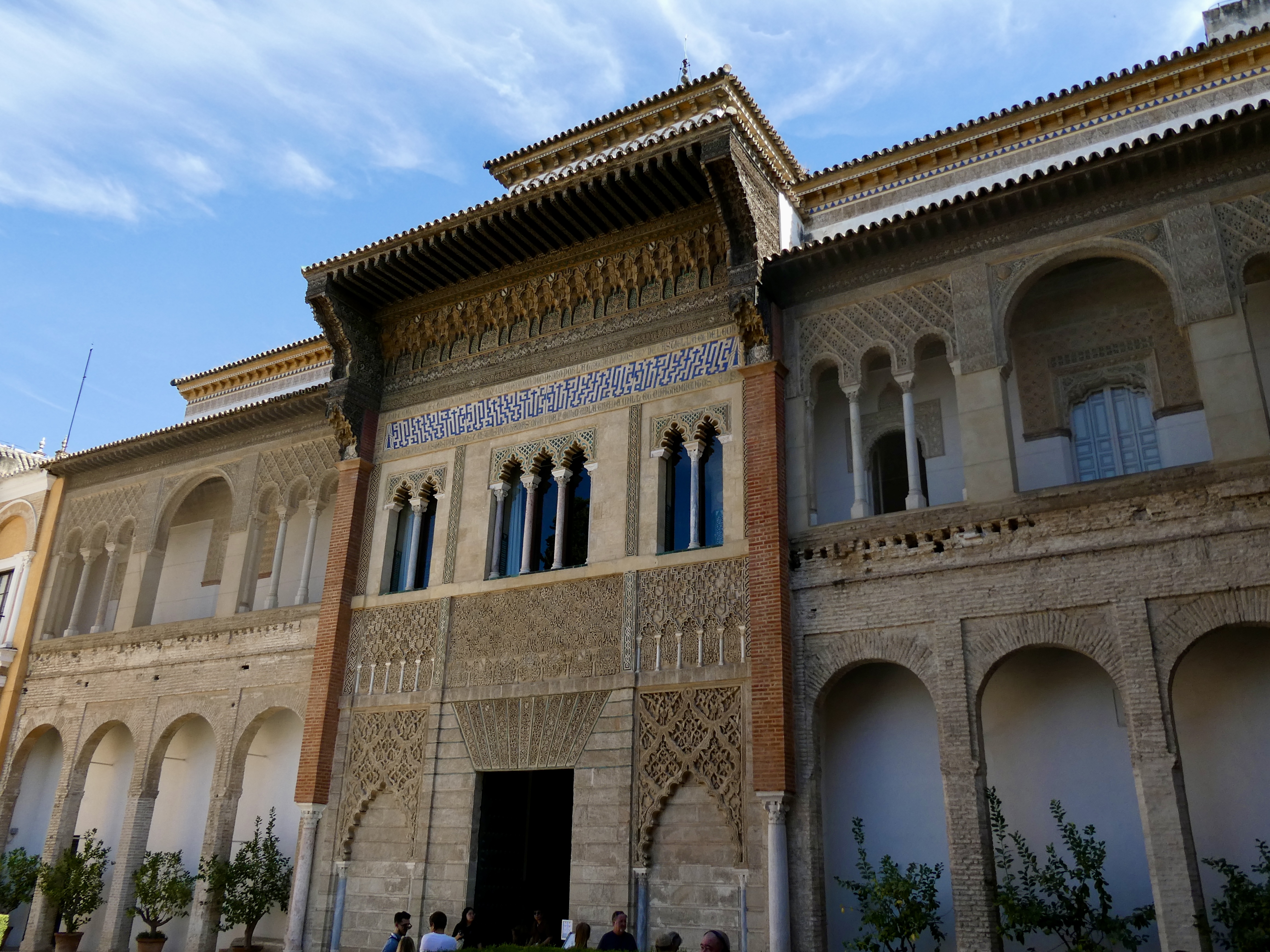
After checking out the Patio del Yuso, we reversed course and walked through the Patio de la Monteria, with its views to the façade of Palacio del Rey Don Pedro (King Pedro I’s palace), the second palace we would visit. We then stopped by Admiral’s Hall, where Spanish trade took place and famous explorers like Magellan, Columbia and Amerigo Vespucci planned their voyages around the world.
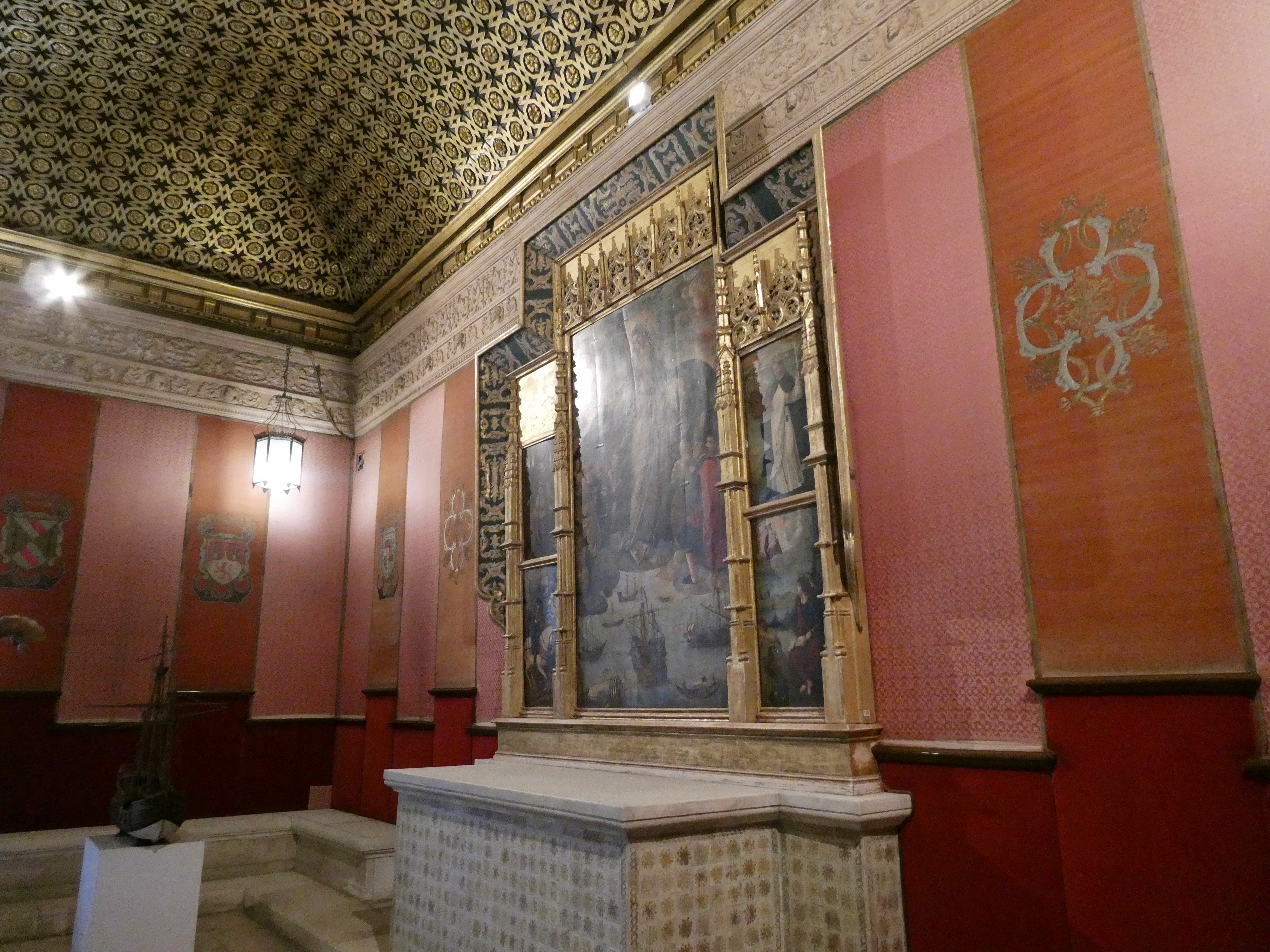
Next door we entered the Chapterhouse, another meeting
place for the clergy and religious persons.
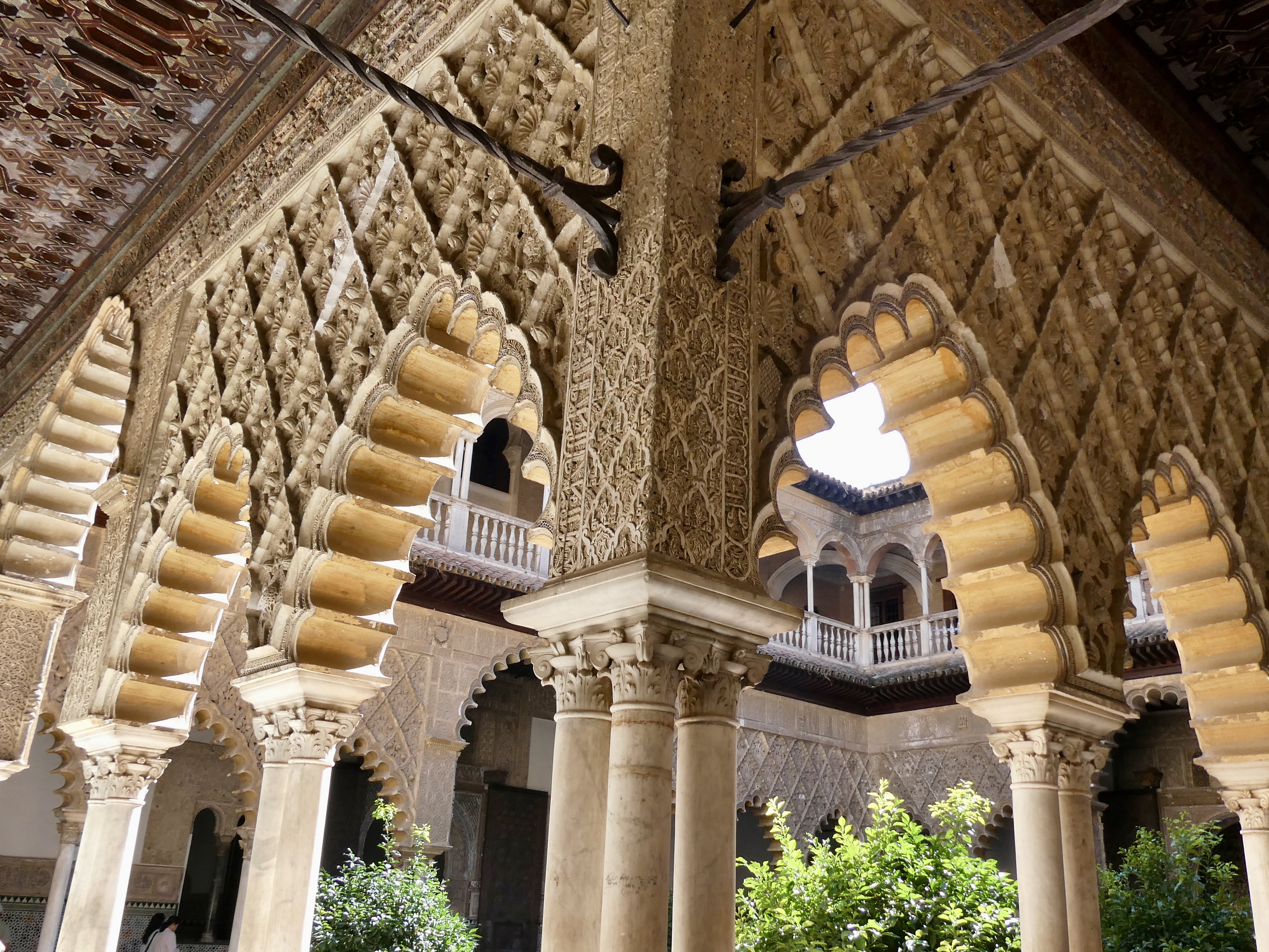
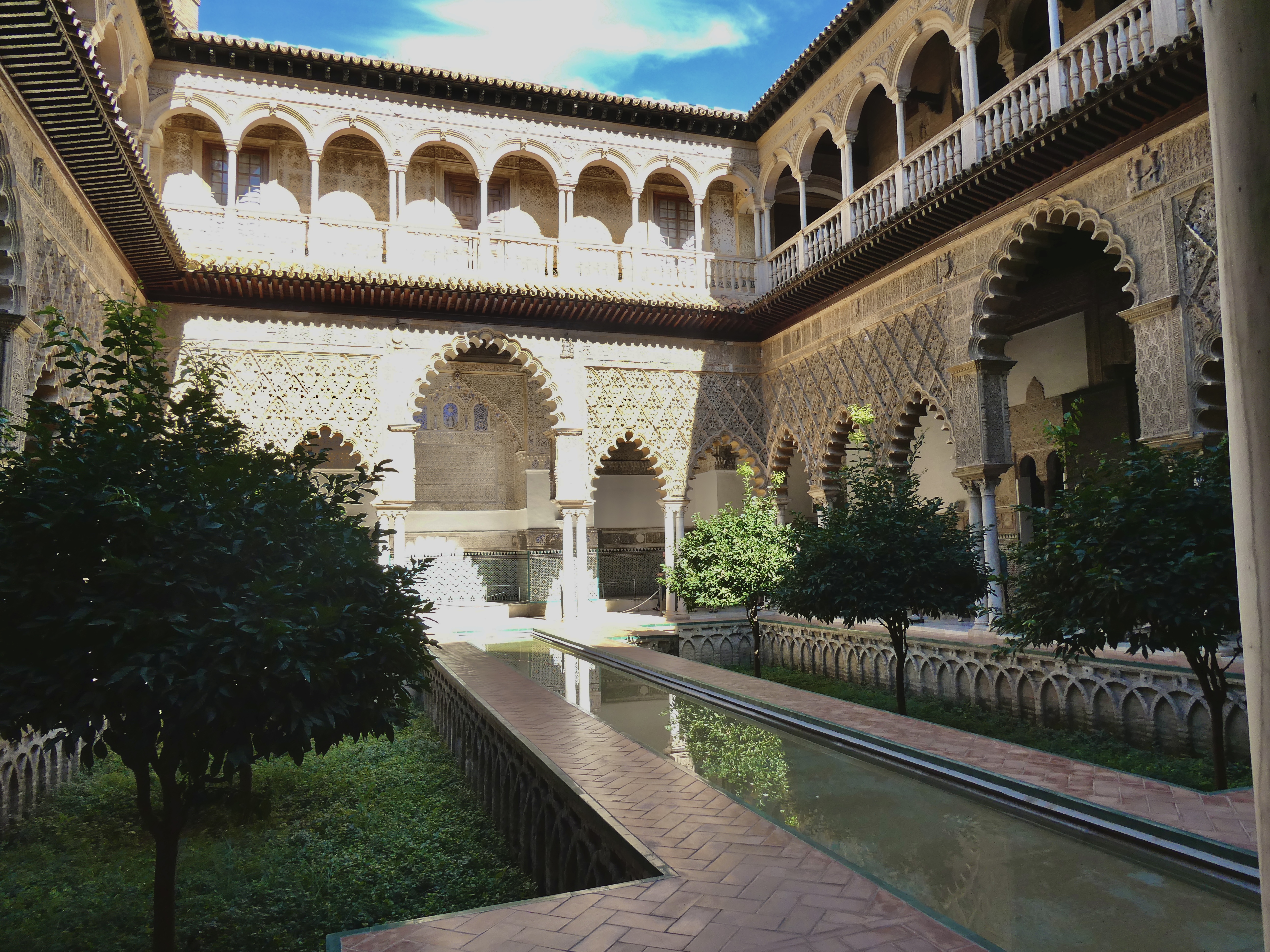
From here, we crossed the courtyard and entered the Palacio del Rey Don Pedro. First up was the gorgeous Maiden’s Courtyard (Patio de las Doncellas). The courtyard was part of the original palace built by Pedro I in the 1360s. The upper courtyard was a later addition. Now the interesting bit of history here is that the original garden and the pool were buried between 1581 and 1584 when the courtyard was paved and were only rediscovered in the early 2000s. Since that time, the garden and pool have been reconstructed.
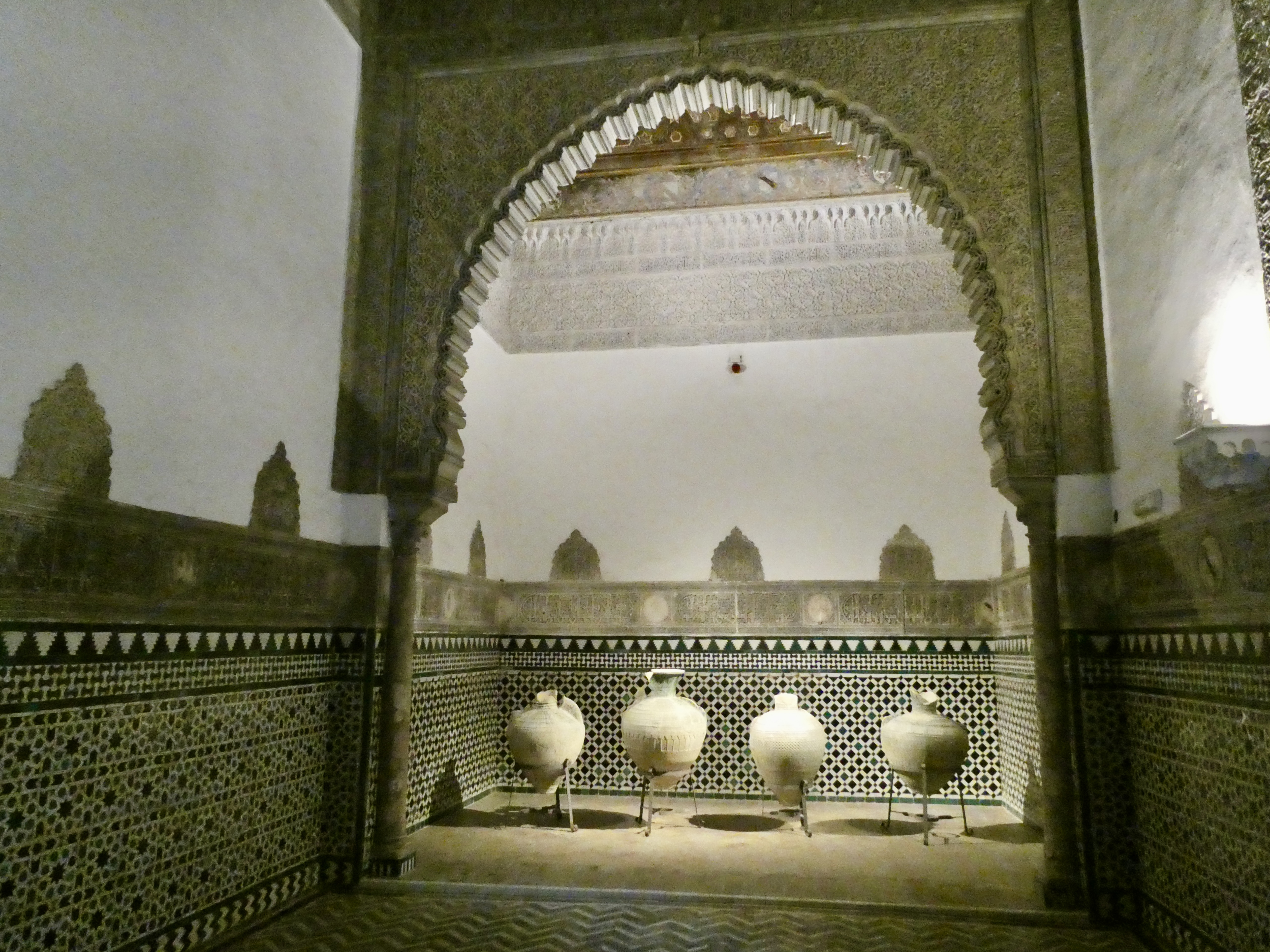
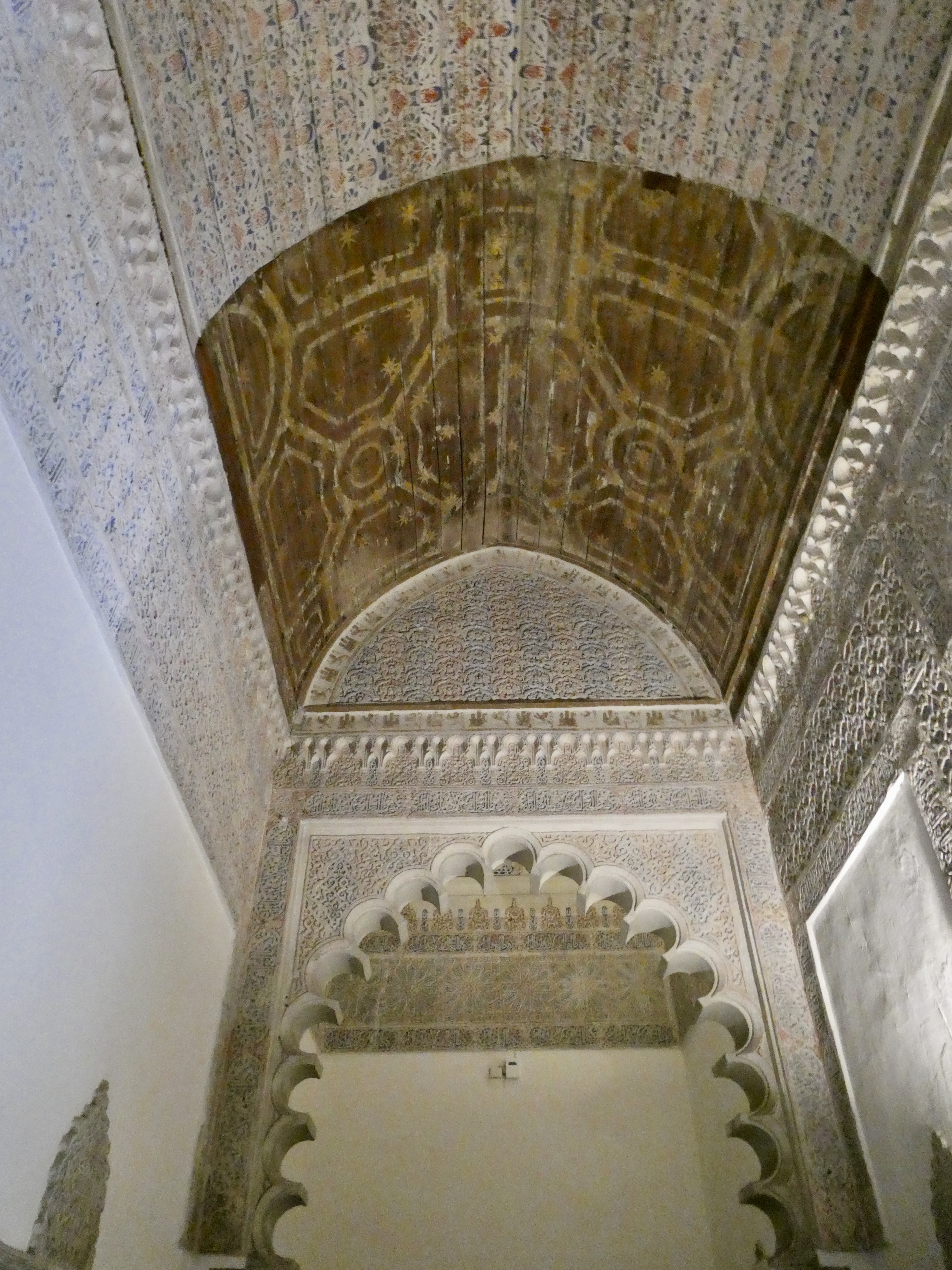
Now from here, we went inside to view the Royal Bedroom, comprised of two rooms, an antechamber and a bedroom divided by arches, which were likely separated by curtains. The room was elaborately decorated with marble and shells. There was also a display of large jars in an area where the bed was likely located.
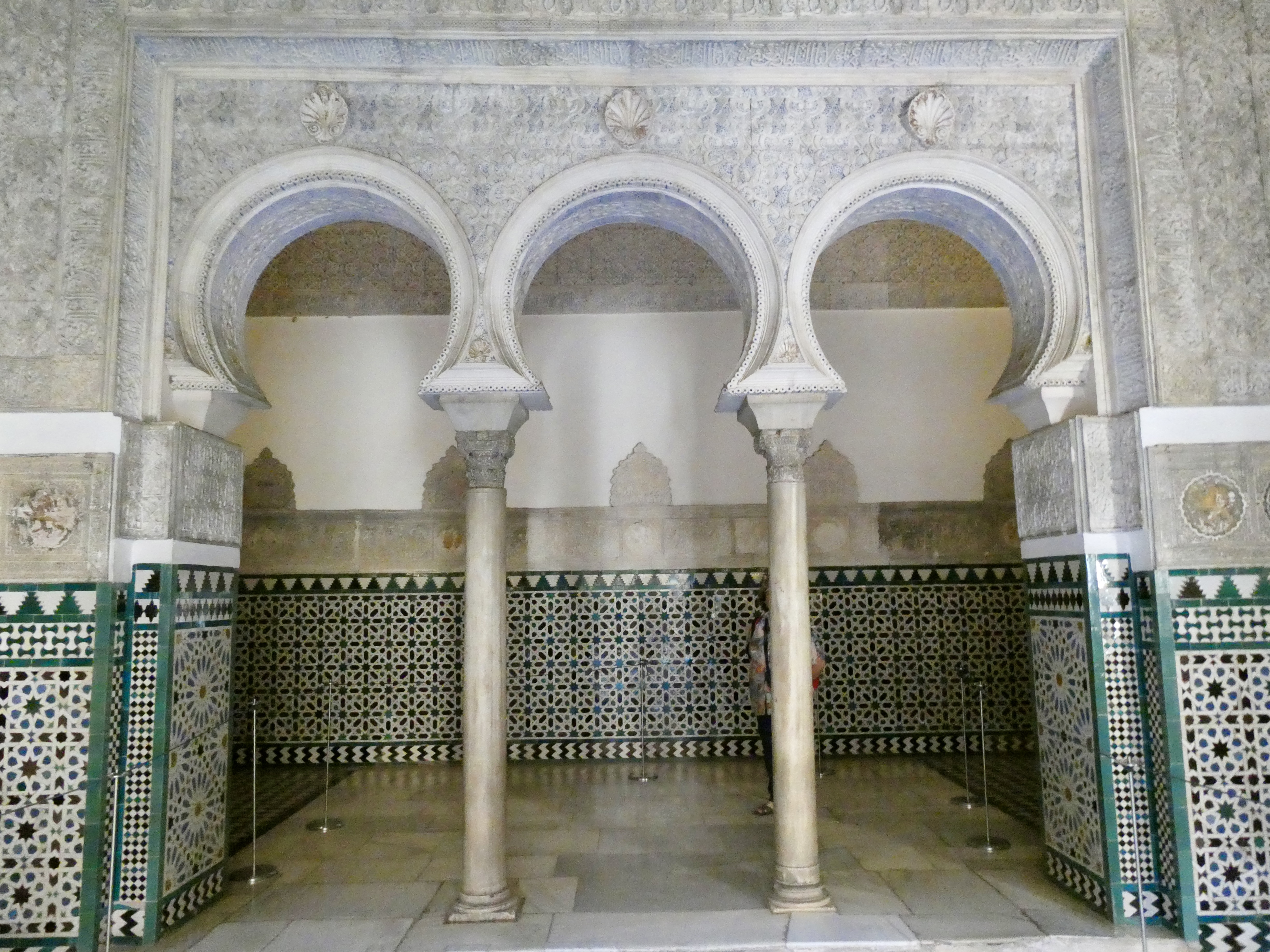
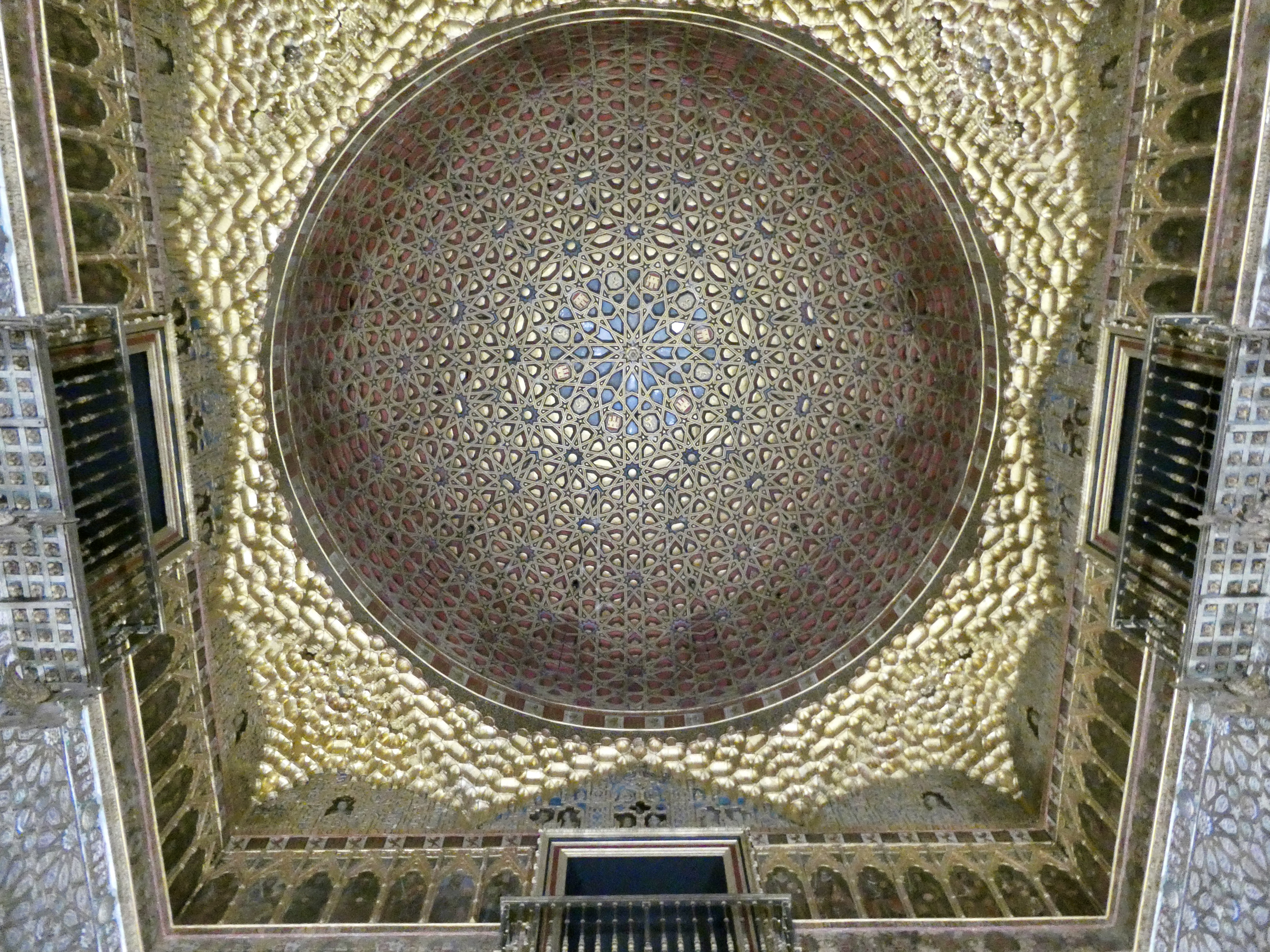
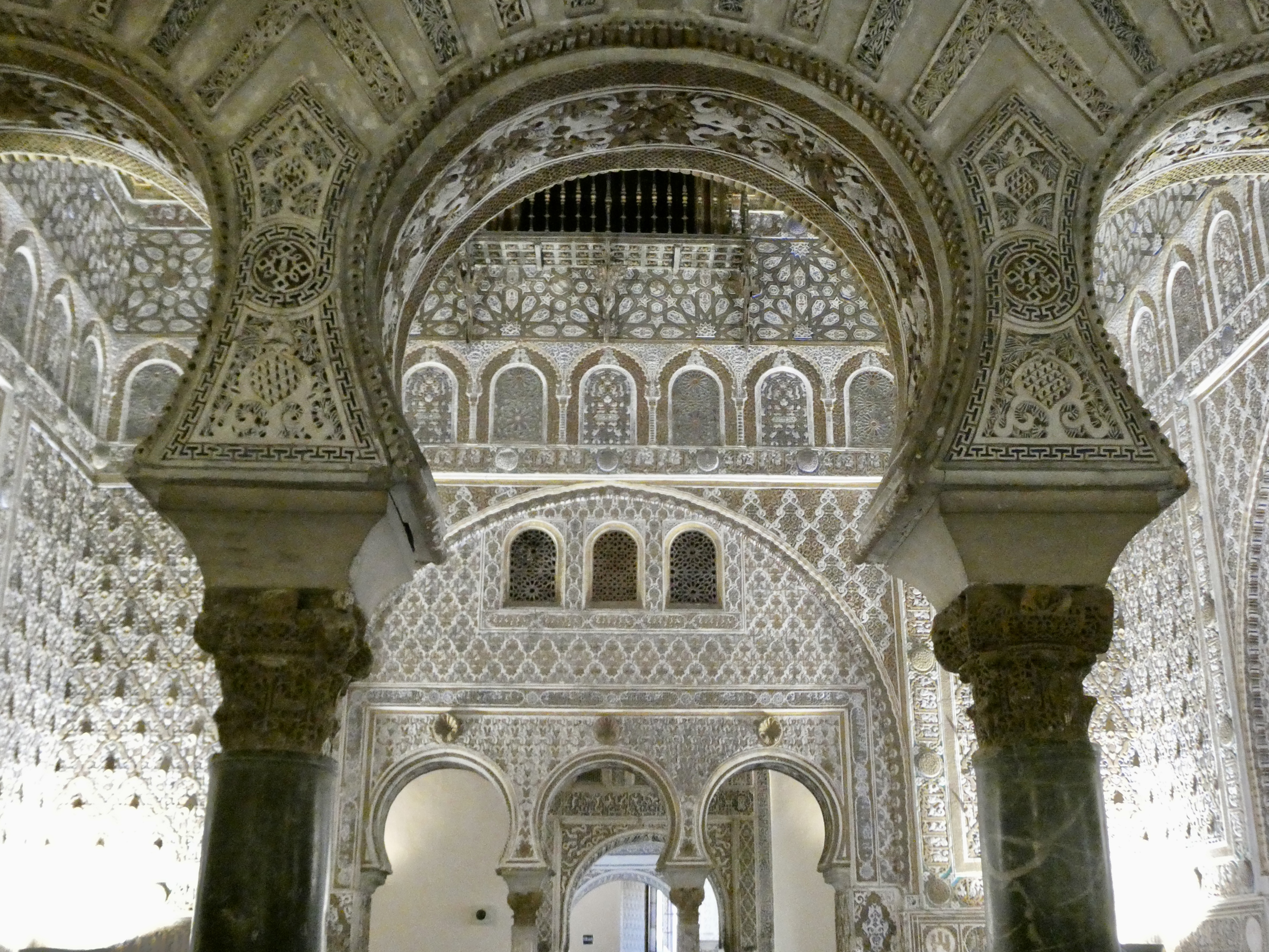
We then moved on through the Felipe II Ceiling Room to probably the most spectacular room in the Palace, the Hall of Ambassadors. The hall dates from the 14th century and has a gorgeous mosaic ceiling and numerous triple marble arches and columns that built upon one another giving a layered feeling to the room. The lower walls were tiled while the upper walls were covered in plaster designs. The hall was at one time used for the celebration of Charles V marriage to Isabella of Portugal.
The next room had a very odd name, the Dolls Courtyard, and took its name from the numerous doll heads imbedded in the marble columns. A little freaky if you ask me. The room was apparently used to organize the rooms and activities in the palace.
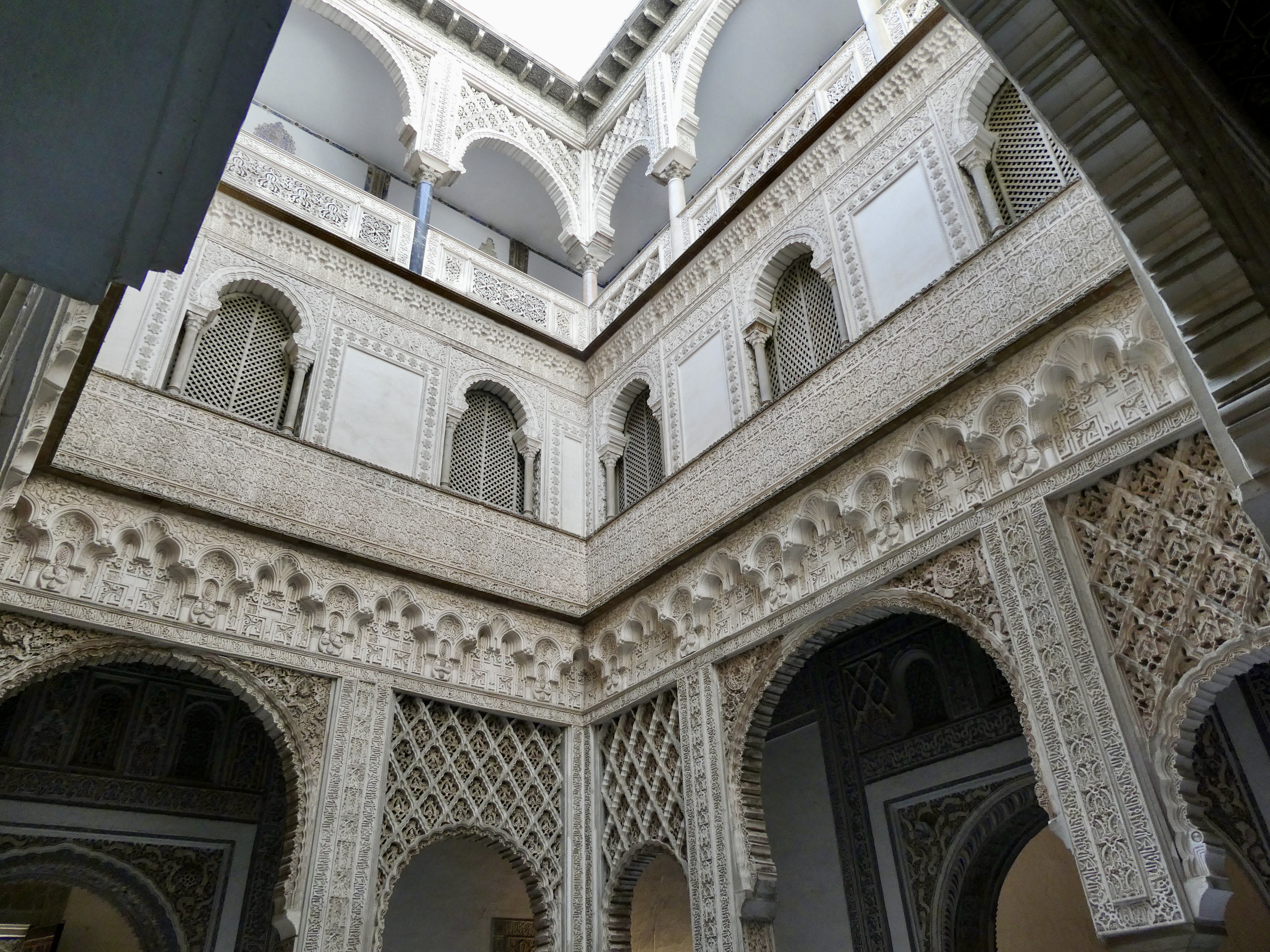
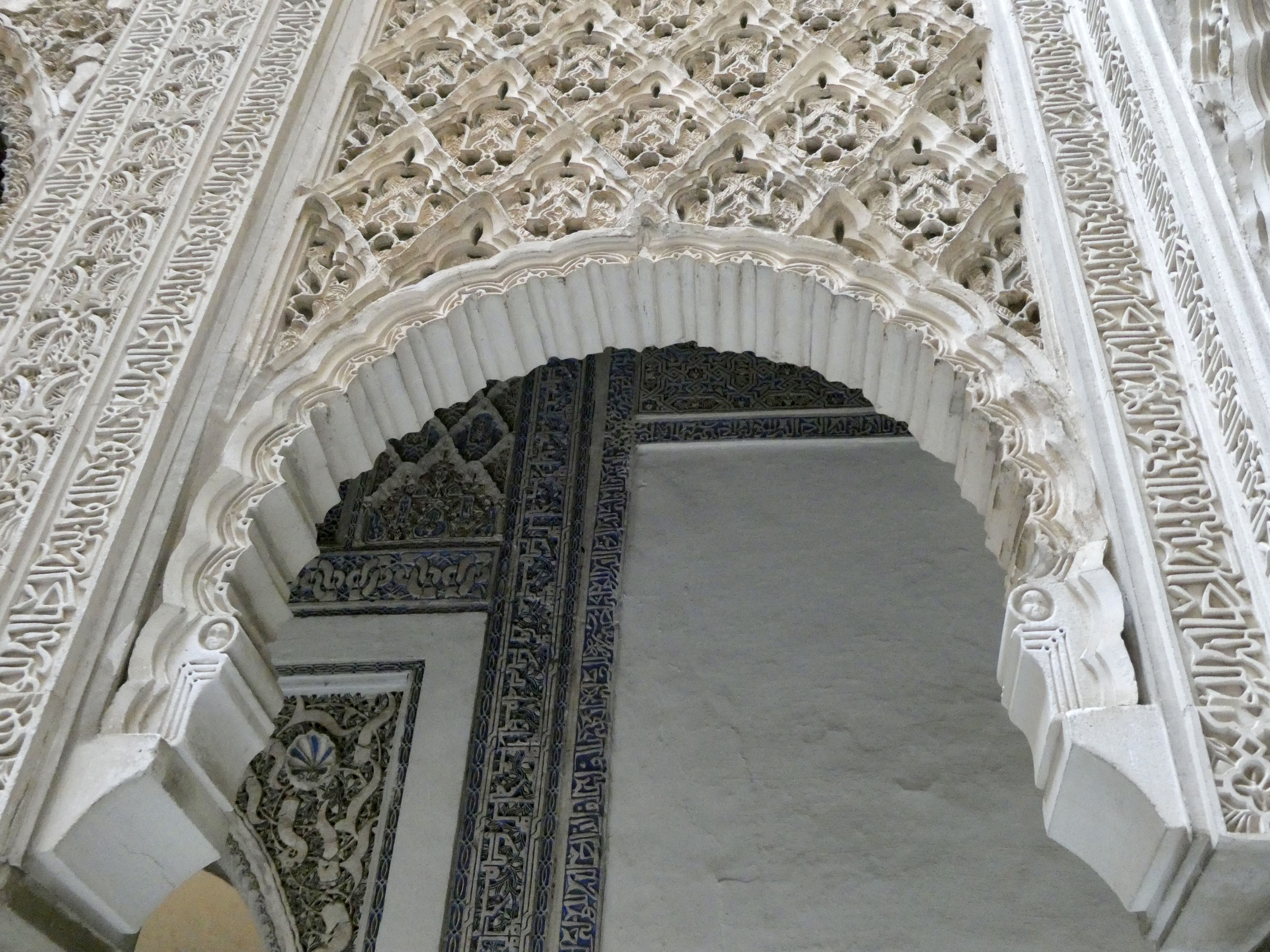
We then moved through the Dolls Courtyard to the Prince’s Suite, which is where Elizabeth I allegedly gave birth to Prince Juan. The room was comprised of a central hall surrounded by a room on either side. The ceiling of the room is constructed in a Moorish design with lots of gold and pinky overtones surrounded by a border of blue, red and white scalloped designs.
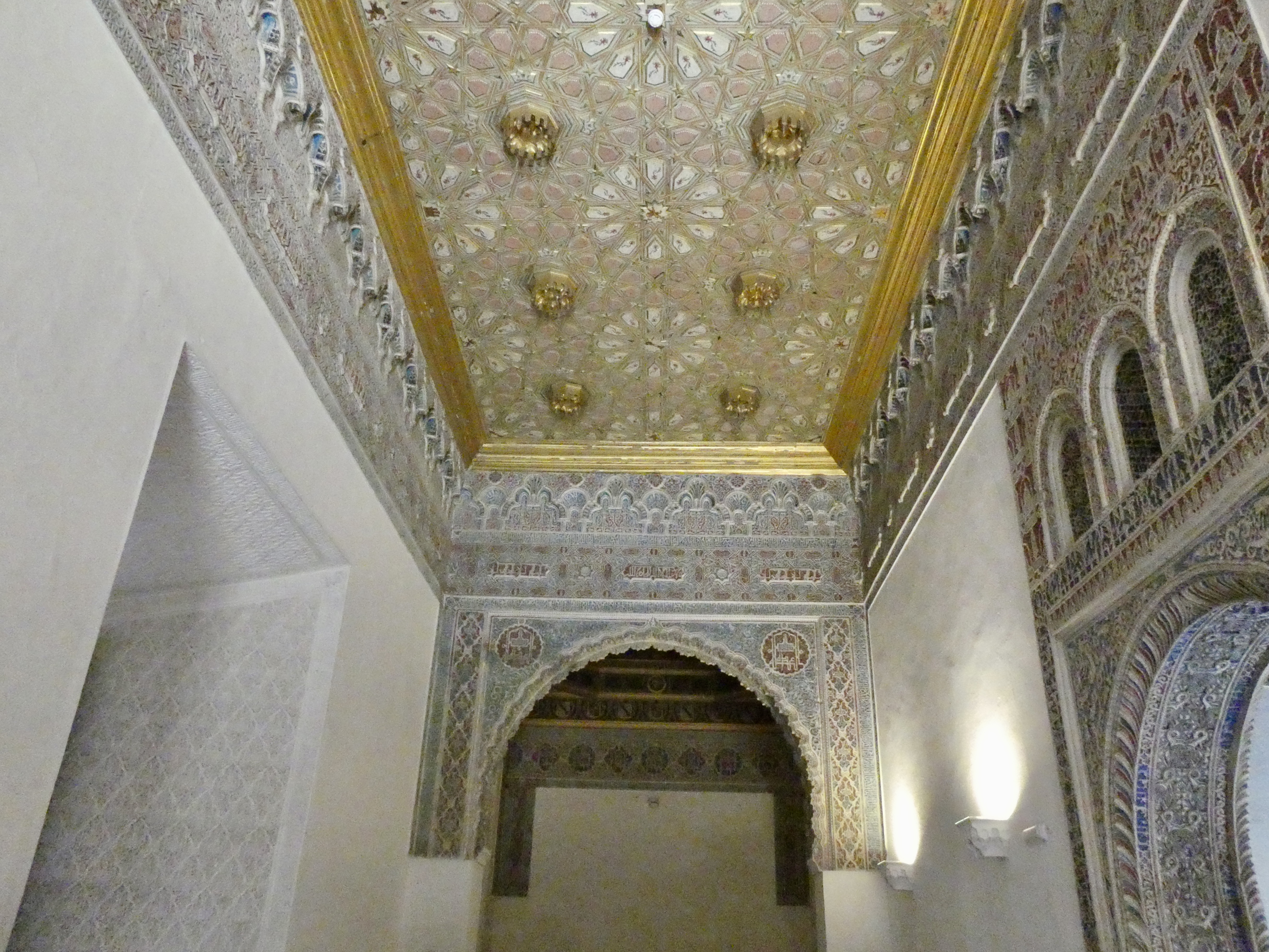
The last room we visited in the Palacio del Rey Don Pedro was the Charles V Ceiling Room. Now I did not find the ceiling particularly interesting, but I did like the titled walls of pine trees and blue floral designs.
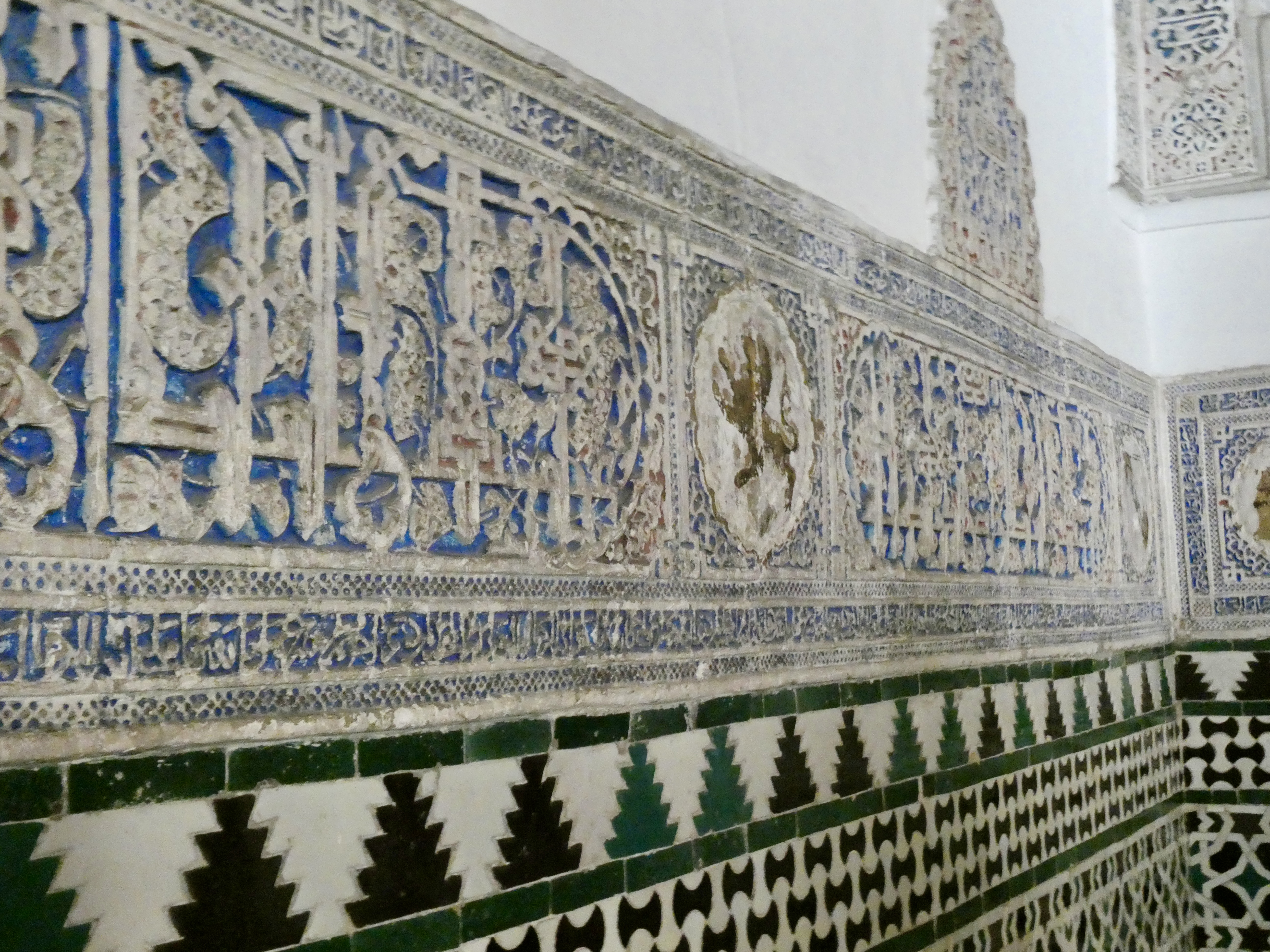
At this point, we moved into the Gothic Palace, which was built by Alfonso X in the late 13th century. The palace was built over an old Moorish palace and consists of two elongated rooms and two adjacent smaller rooms.
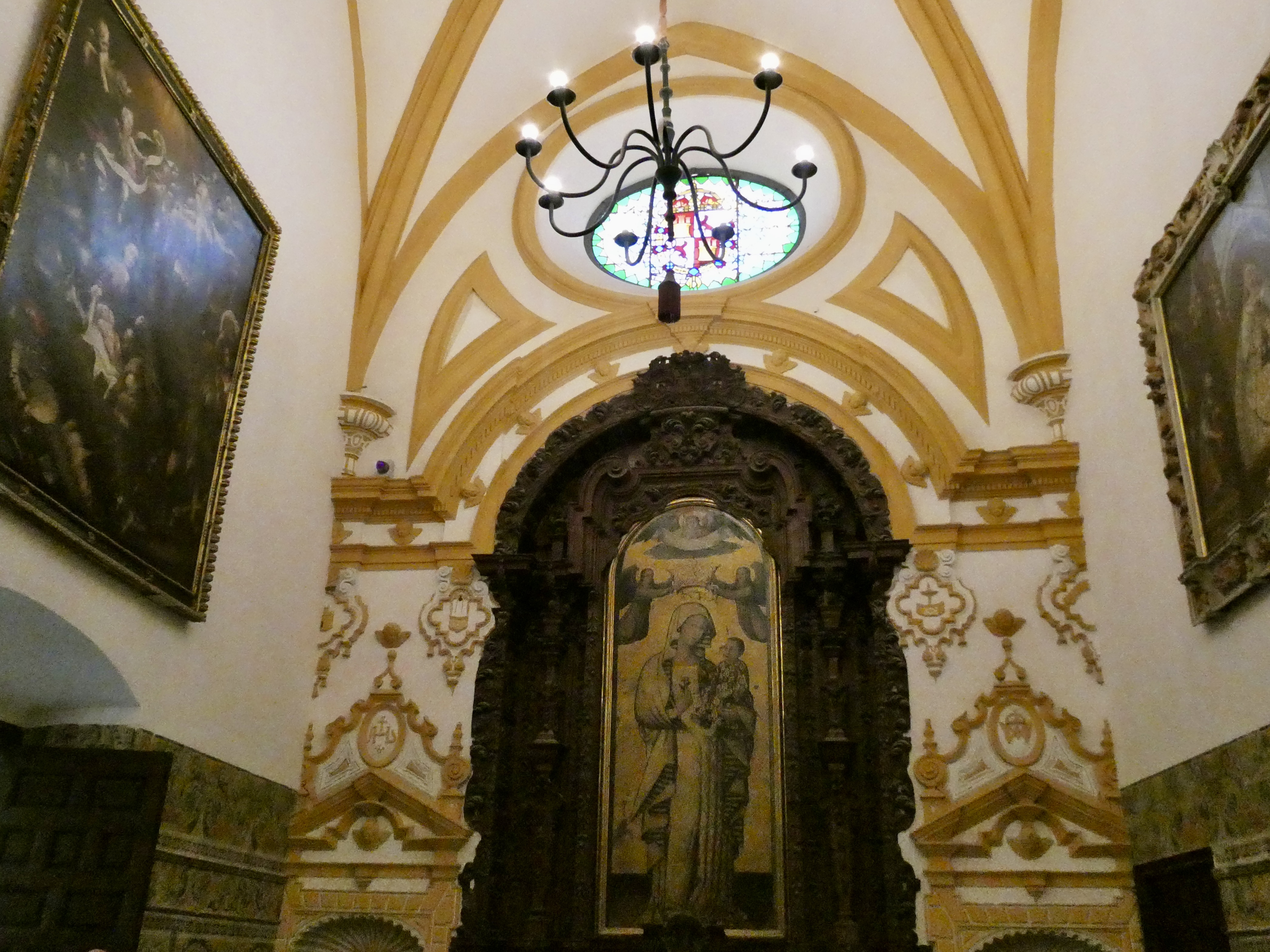
The first room we visited was the Chapel of the Gothic Palace and features a copy of the Virgin of Antigua, with the original located in the Sevilla Cathedral. I liked this small room and found it rather calming.
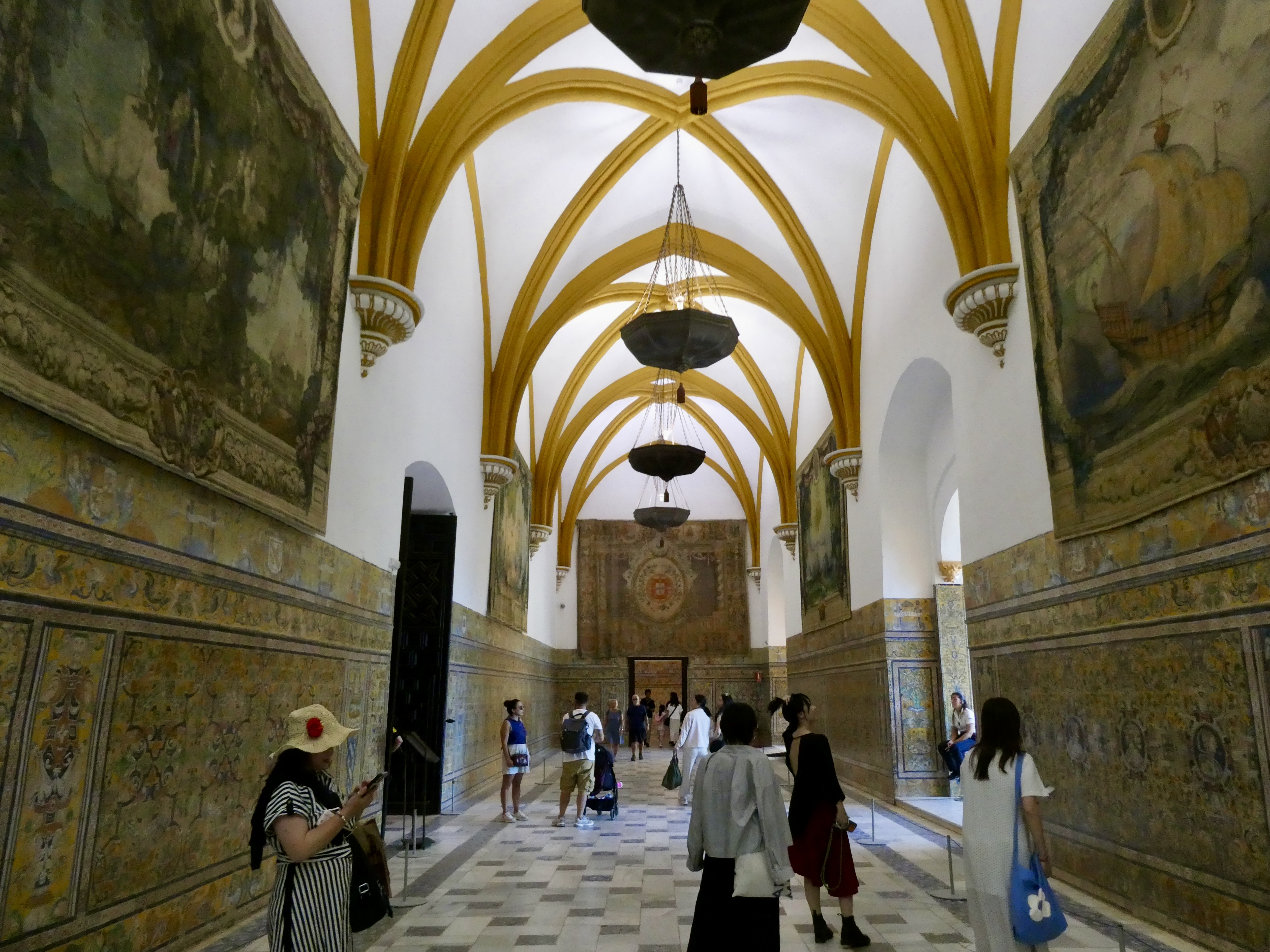
We then moved on to the Vaults Hall aka Halls of Charles V. This was one of the elongated rooms and included huge arching ceilings surrounded by tiled walls and tapestries on the walls. This room felt like all Moorish elements had been purposely destroyed or covered up. The rooms was very austere.
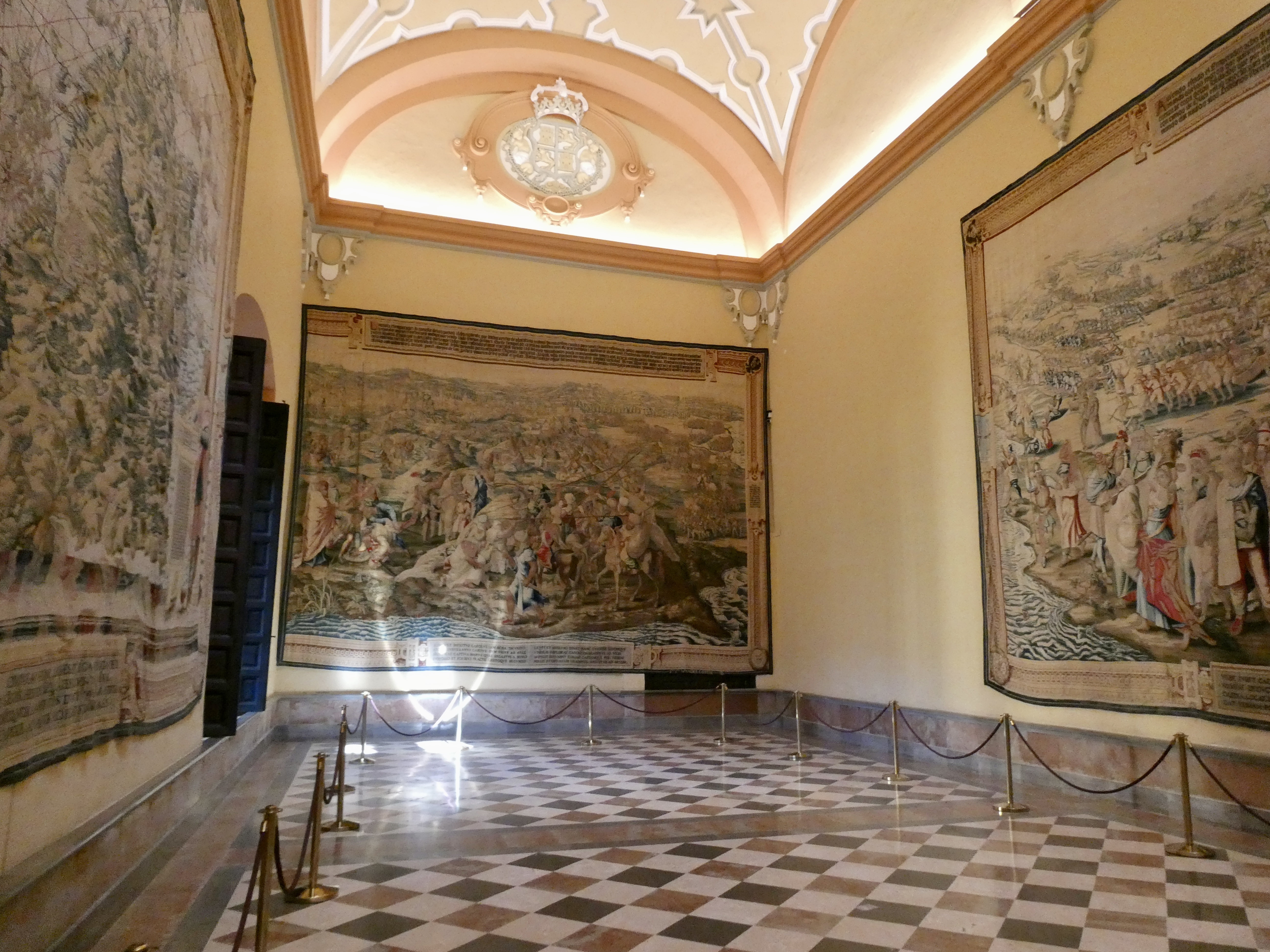
Next door was the second of the two elongated rooms and this room was named the Tapestries Hall. The rooms was also a tad austere, but filled with, what else, tapestries. However, these tapestries were replicas because the entire
hall as wells as the tapestries was destroyed by an earthquake in 1755.
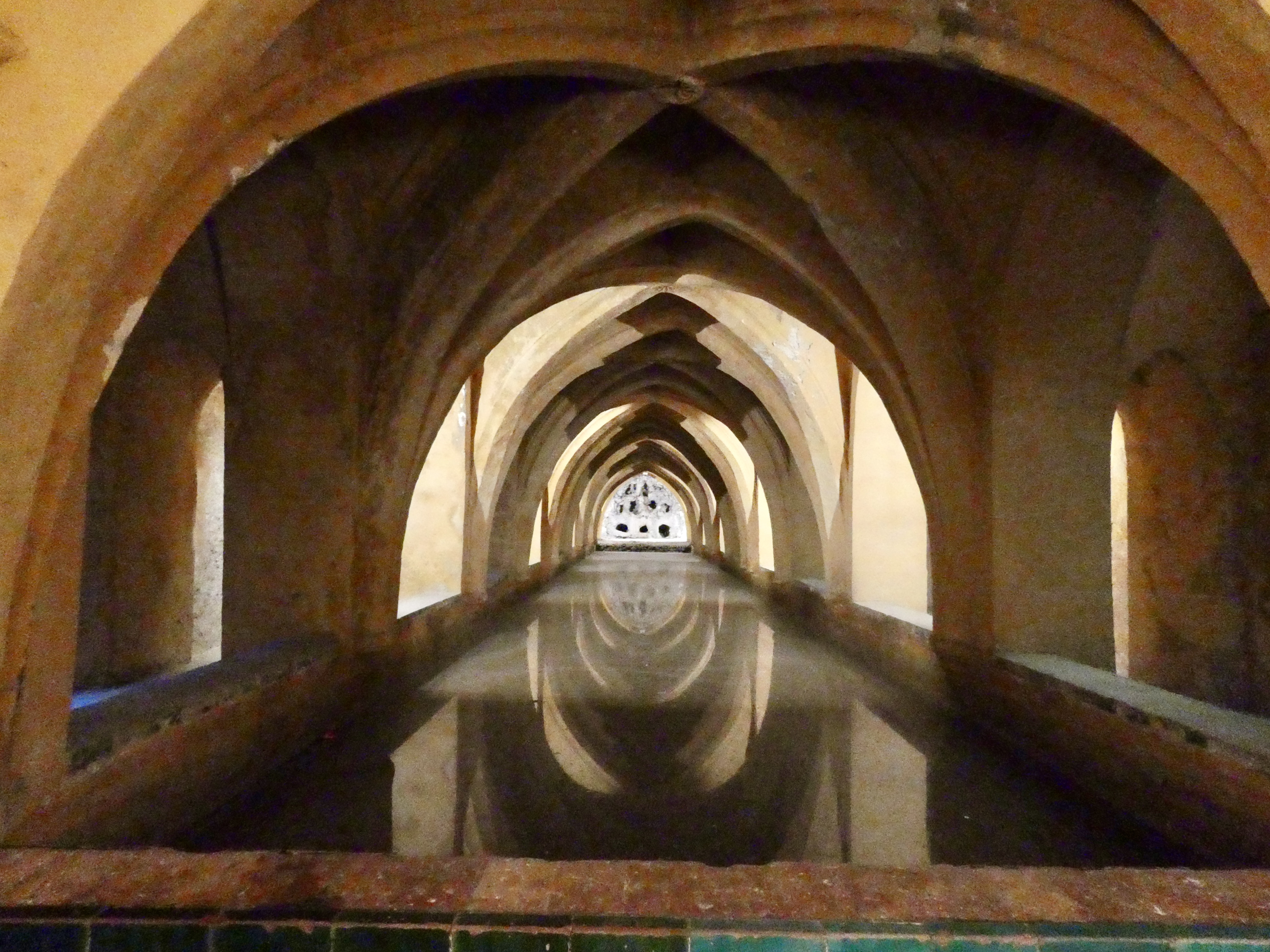
The last room we visited, the Baths of Dona Maria de Padilla, was apparently constructed as part of the Gothic Palace, but later named by Pedro I in honour of his mistress. The baths consisted of a long narrow cistern, with a series of Gothic cross-ribbed vaults supporting the roof. The room was dimly lit and had a feeling of a wealthy spa.
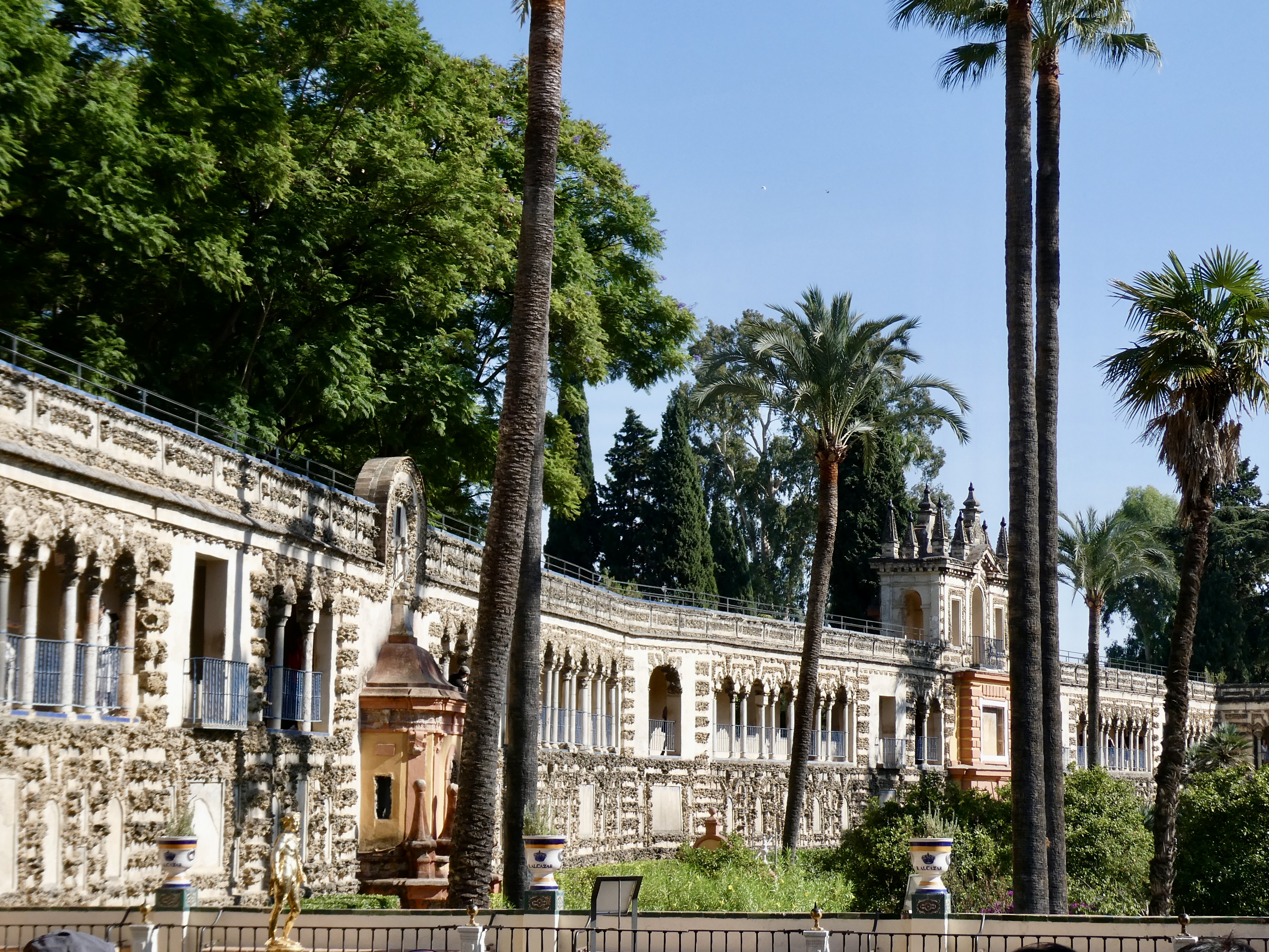
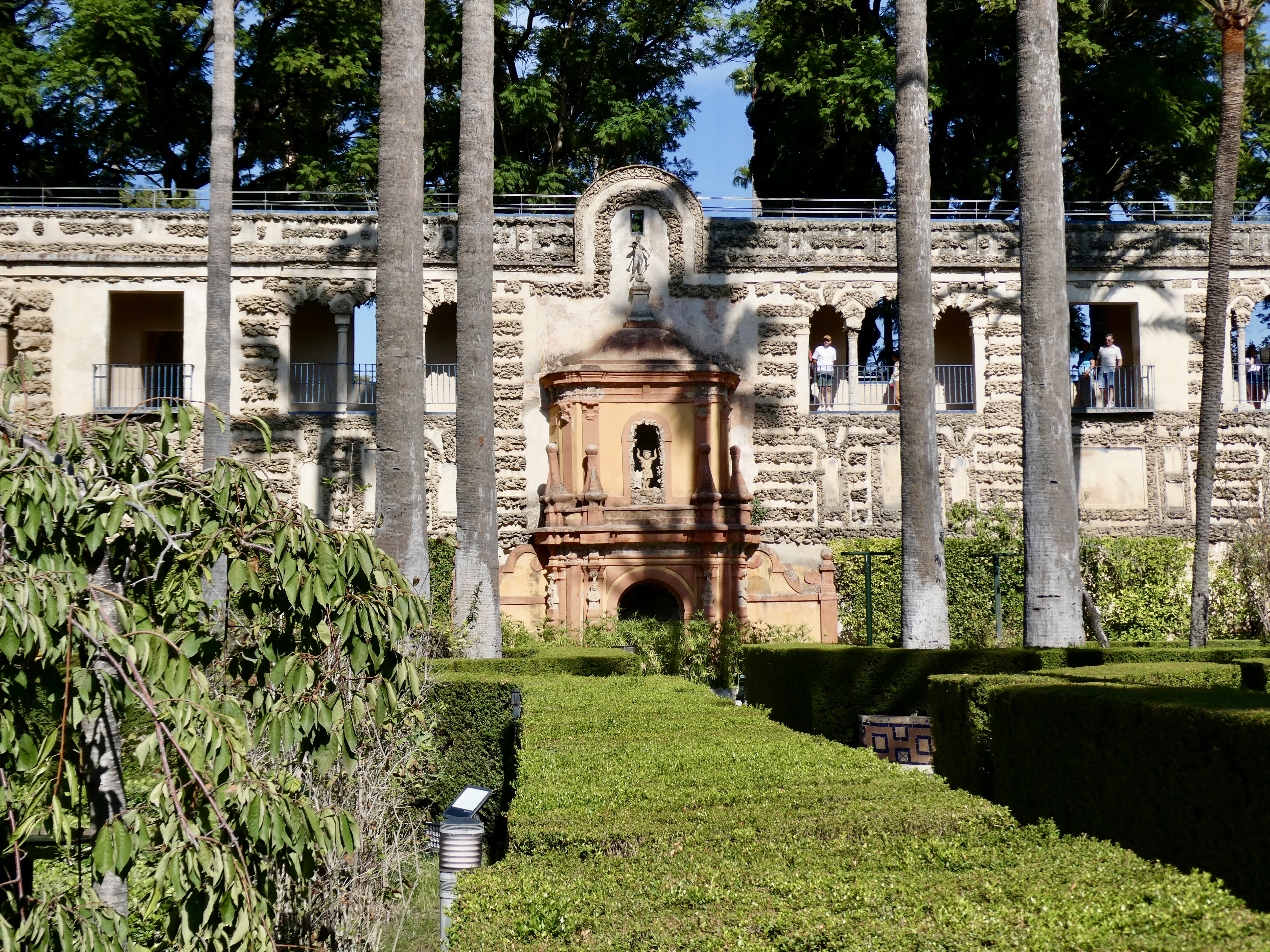

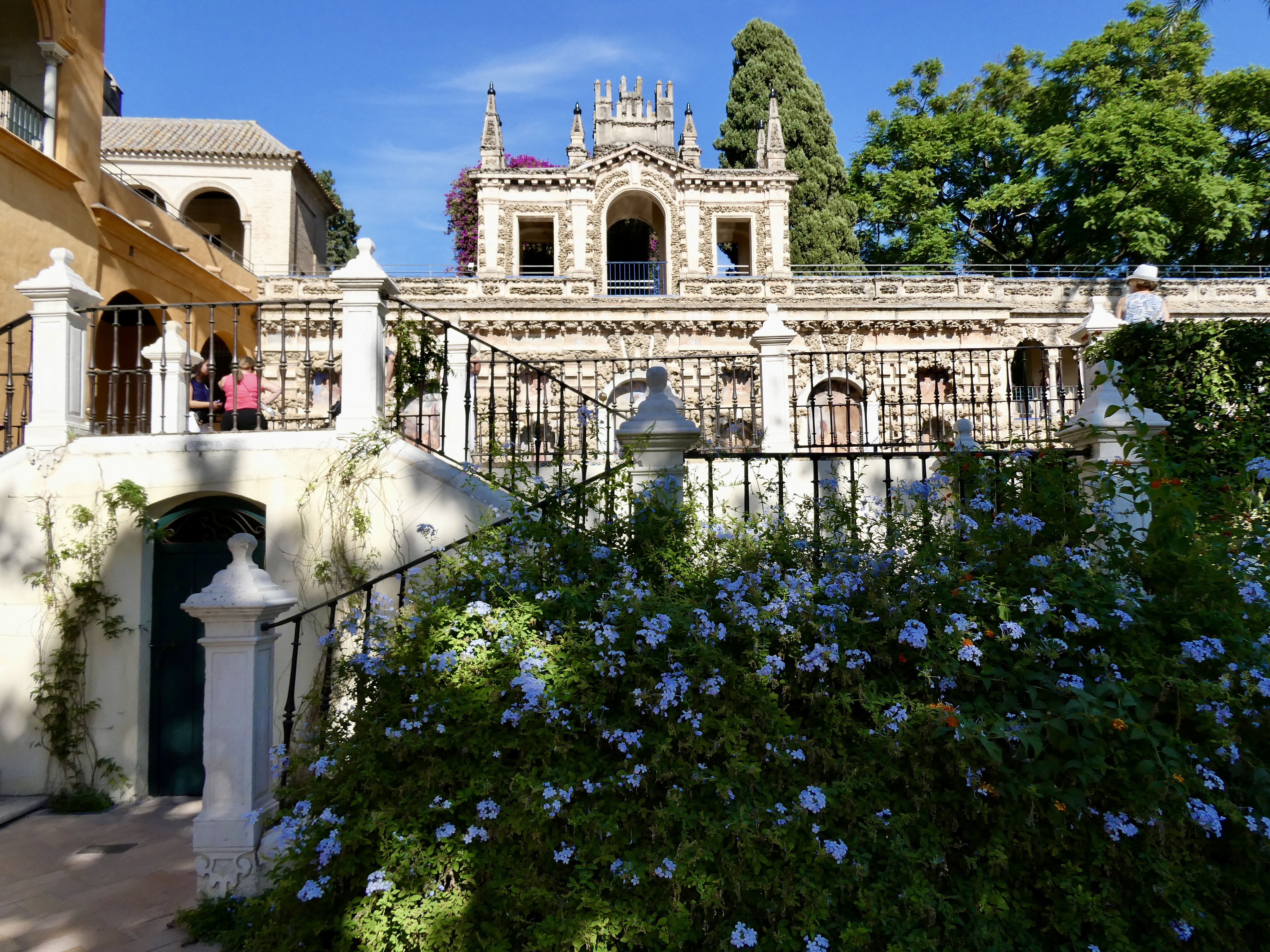
From here, I ended up wandering around the magnificent gardens outside. It is believed that this area has been filled with gardens dating back to when the Moors built there palace on these grounds in the 10th century.
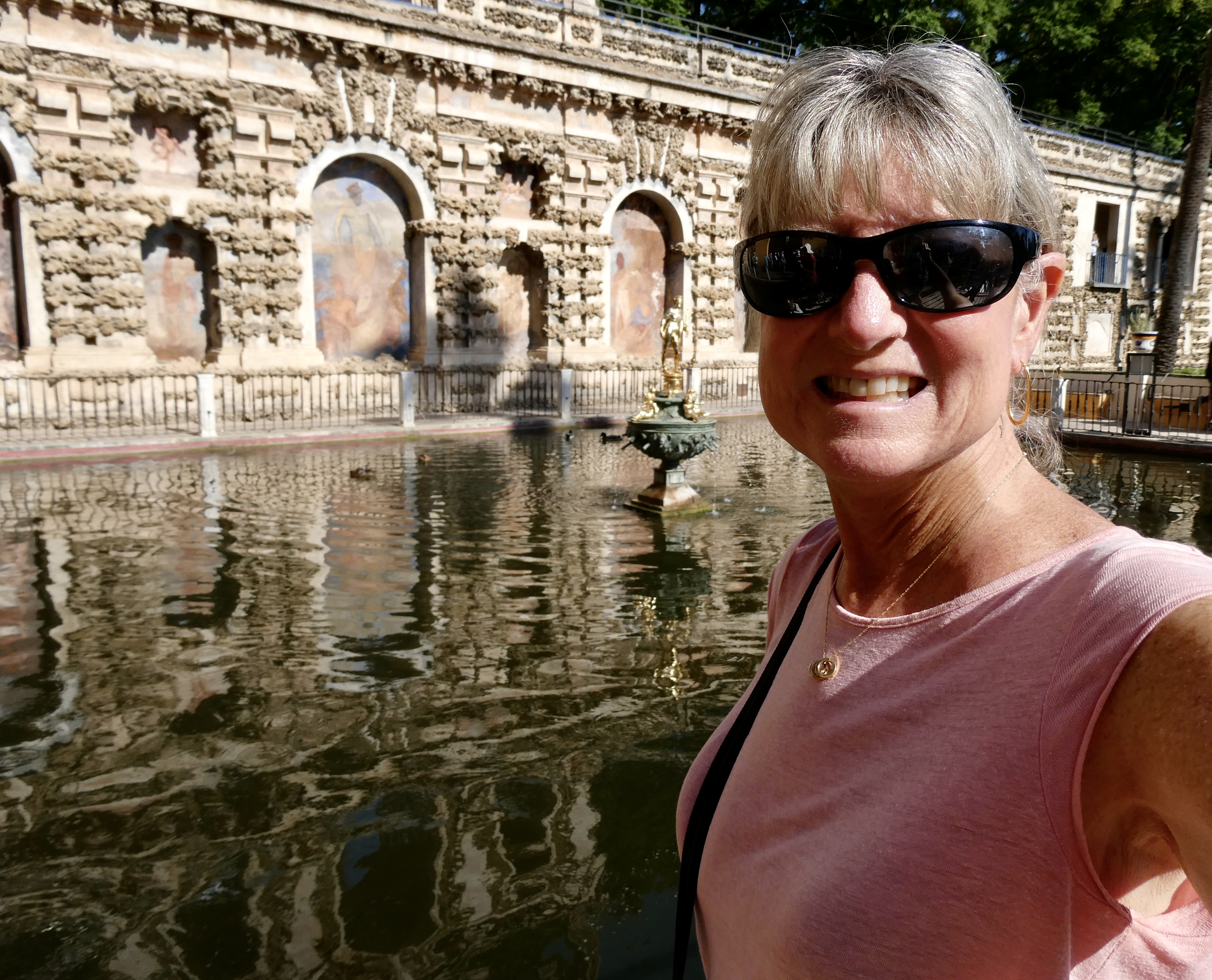
I started out near the entrance to the Gothic Palace passing the gorgeous Mercury Pond. And directly above the pond was the Gallery of the Grutesco, a long elaborate walkway that allows you views of the entire garden area. I did not walk this area, but instead opted to walk a portion of the gardens.
I then walked past a number of fountains, including the Fountain of Neptune, but opted out of walking through the maze the sits at the back of the gardens. (Too tired.). Now most of the gardens were lacking in flowers (not the right time of year), but the layout of the gardens was in a grid pattern making it easy to walk around and take in the beautiful plants, shrubs and fruits trees filling the gardens.
So by now, I had been walking for about 8 hours straight and was exhausted. I had about an hour and half before I needed to be at my food tour so opted to walk a couple blocks back to my hotel and take a rest. Quite frankly, I was feeling too tired to go on a four hour food tour, but after a bit of a break, I made it to the meeting point.
Mercedes was our tour guide for the evening (there was 8 of us) and boy did she love to talk. I was exhausted all over again ten minutes into the tour.
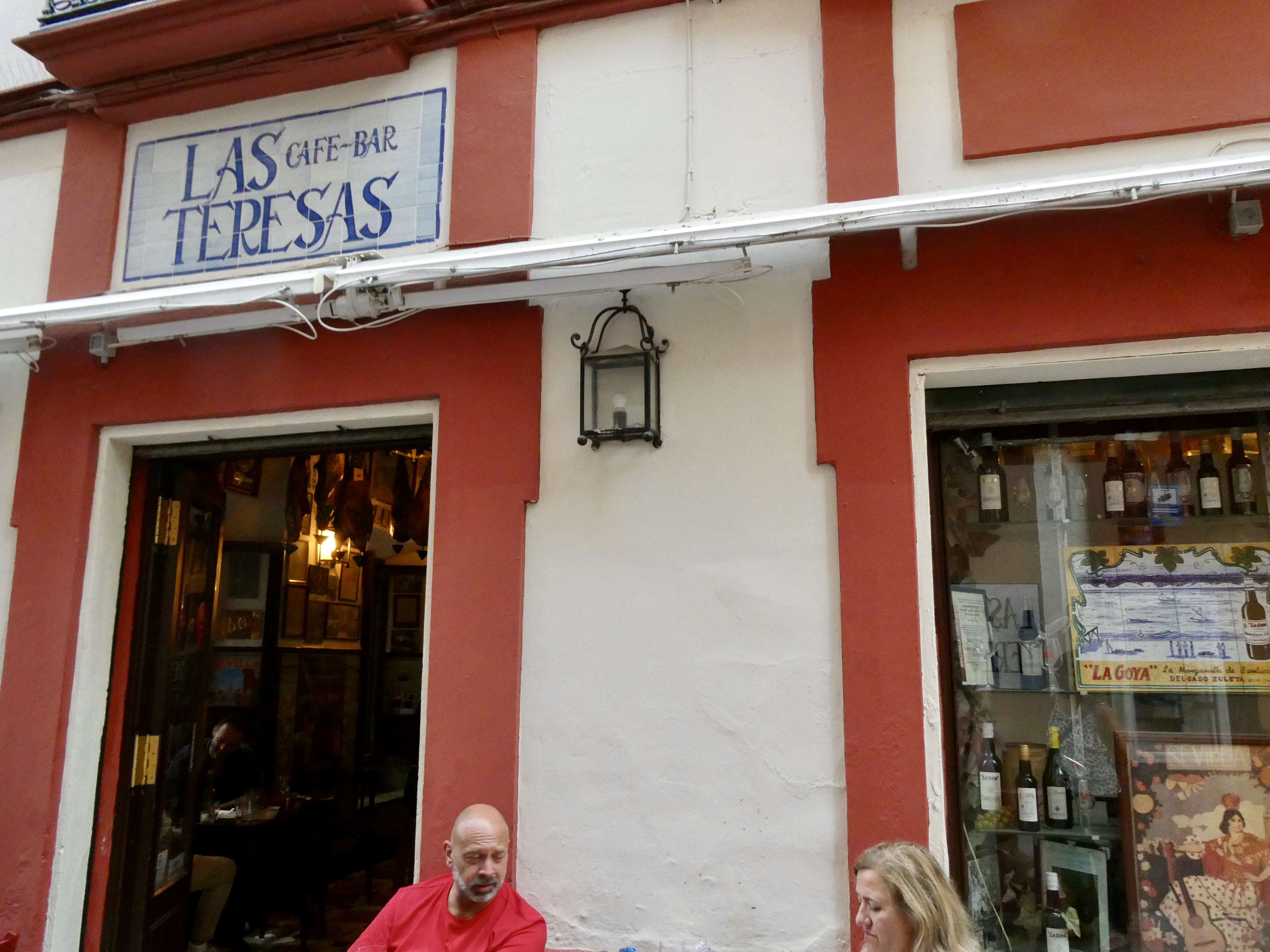
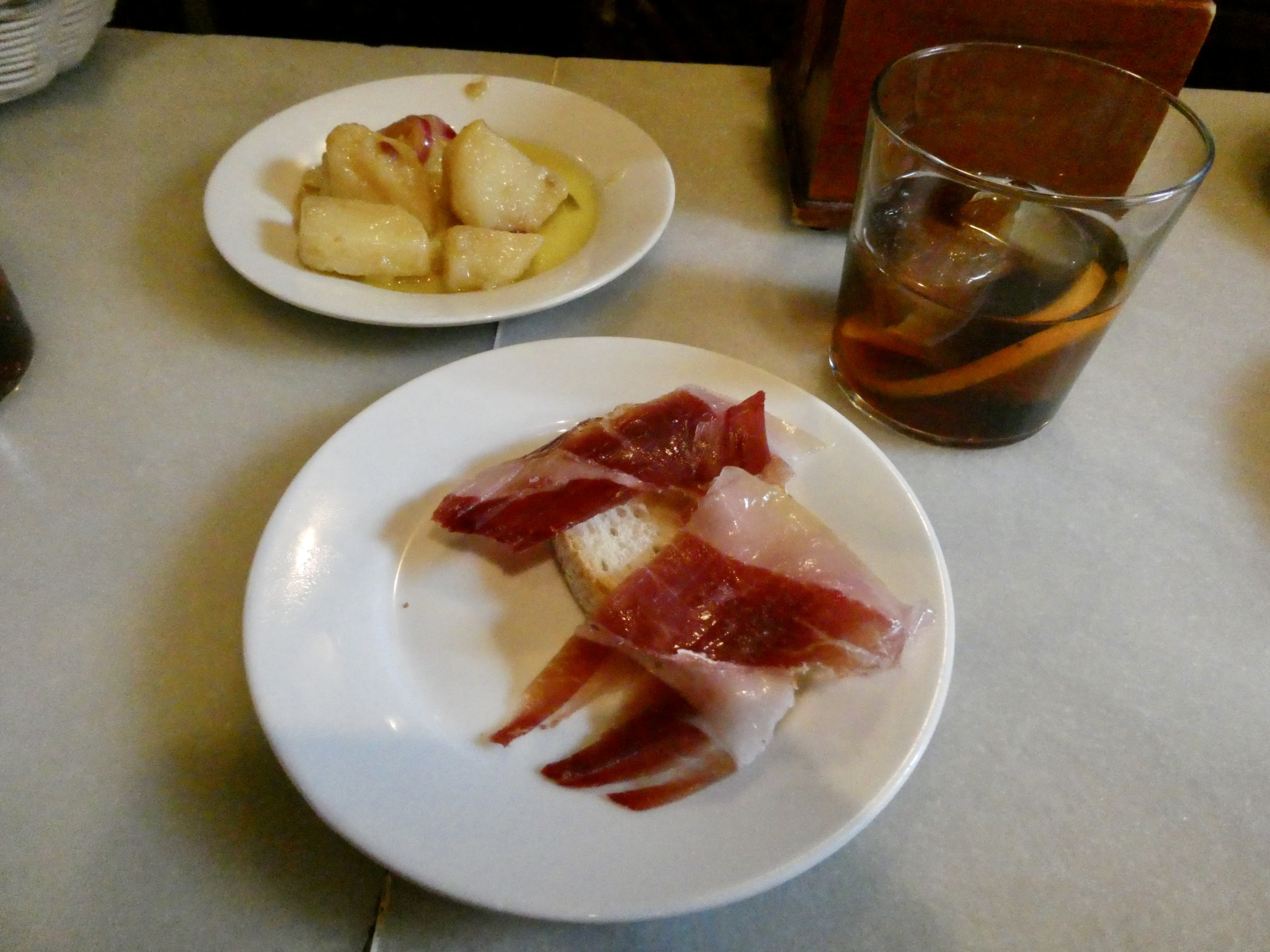
Anyway, we wandered through the old quarter in the direction of the Cathedral and made our first stop at Las Teresas Café & Bar, which was founded in 1870. This bar only serves the best Iberico ham (the black label) and we were going to try that along with potato salad and (ugh) vermouth.
Now so far, I have tried the other three labels of Iberico ham (white, green and red), but this was my first taste of black label and boy was it good. Melt in your mouth good. These piggies are free range and feed exclusively on acorns for the last few months of their lives giving them a fatty, soft texture.
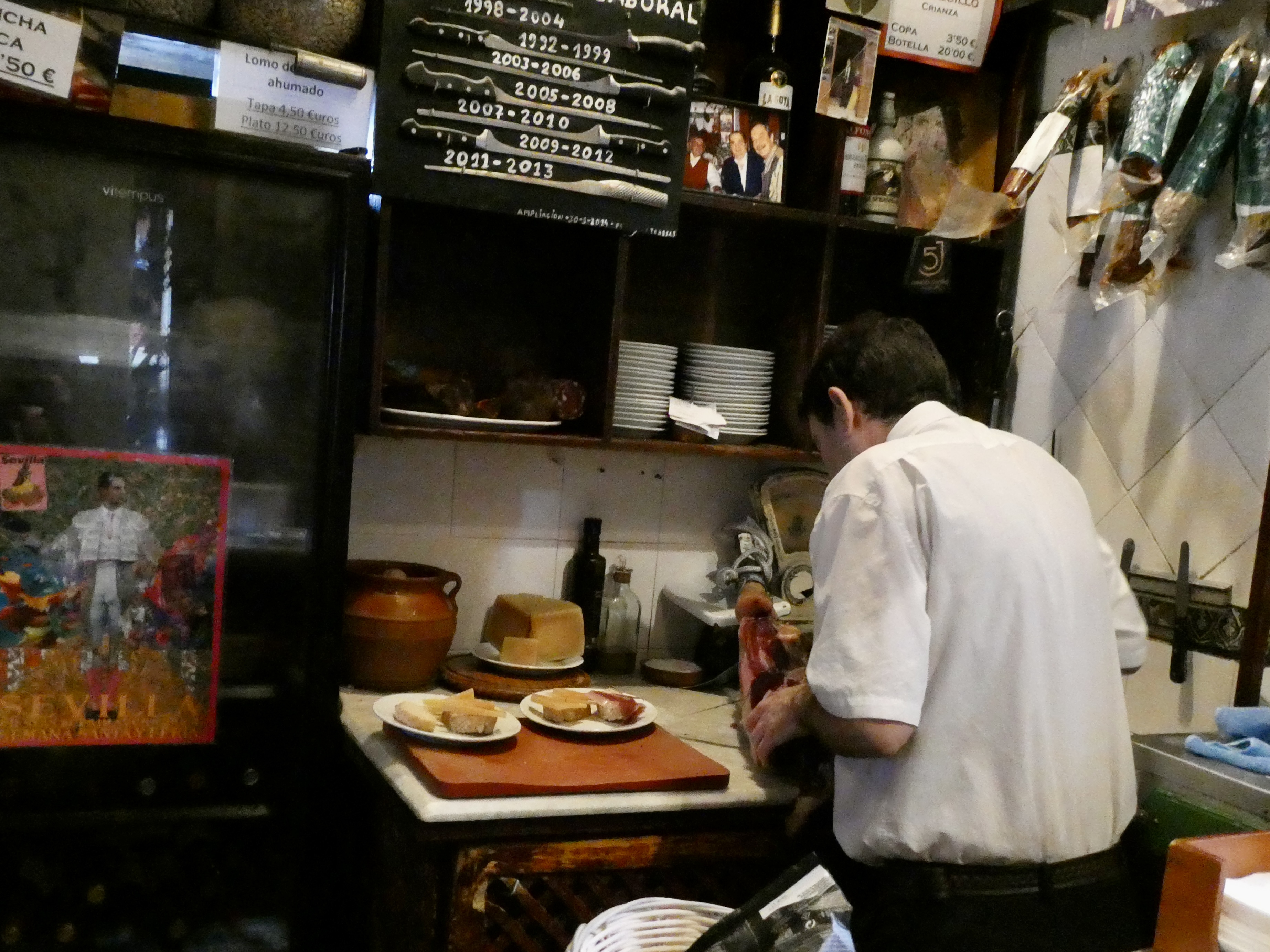
And those responsible for slicing the ham have to be trained in the precise method of carving. You need a super sharp knife and steady hand to slice the ham into the paper thin slices. I ended up watching the fellow at the bar slicing the ham and it was like watching an artist at work. Really cool.
From here, we walked to within two blocks of the Cathedral where Mercedes advised that there was going to be a procession tonight in honor of the Virgin Mary. I was actually aware of this because I had seen the processional statute inside the Cathedral earlier in the day. As a result of the procession, Mercedes wasn’t sure if we would be held up or not.
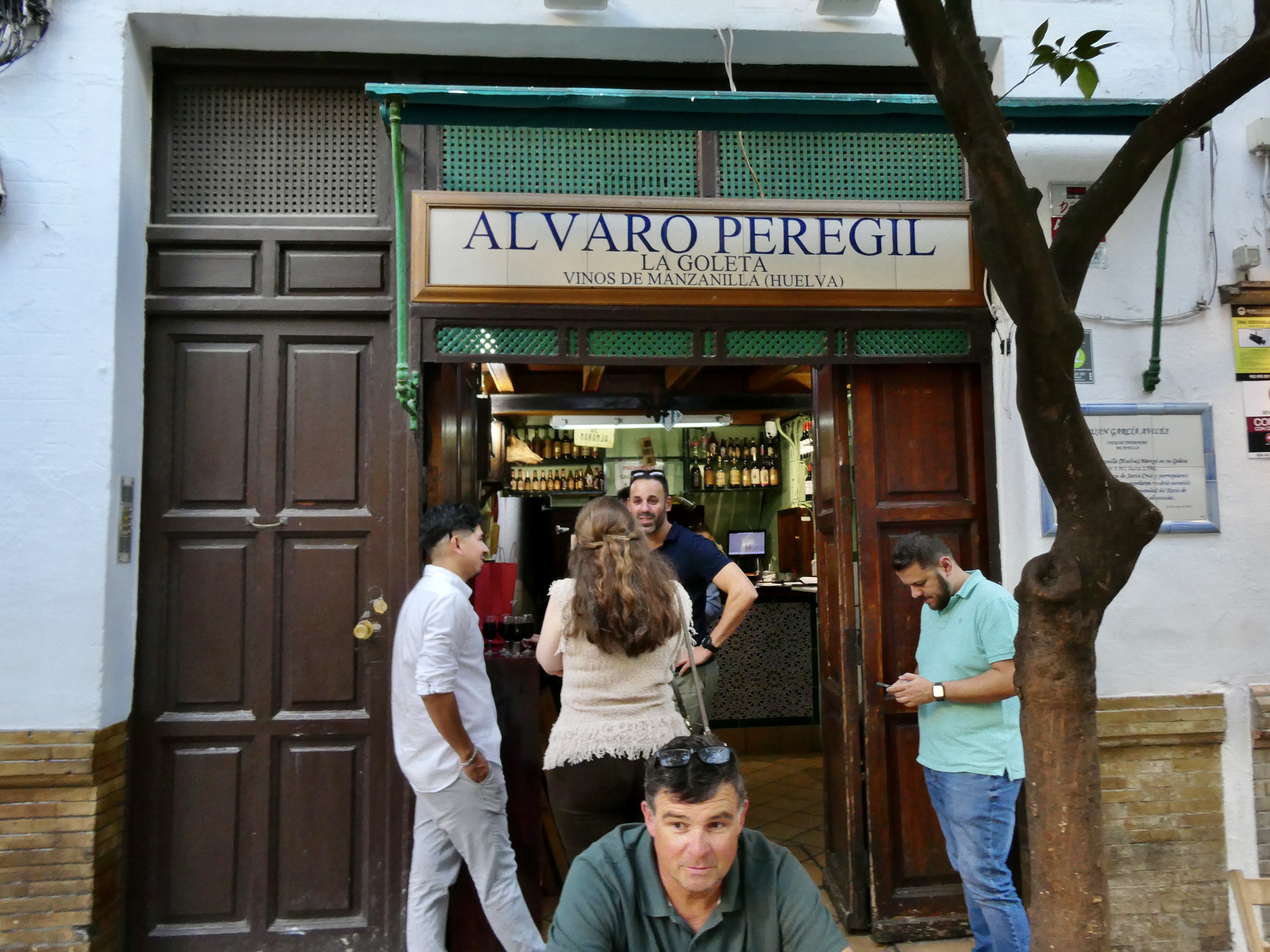
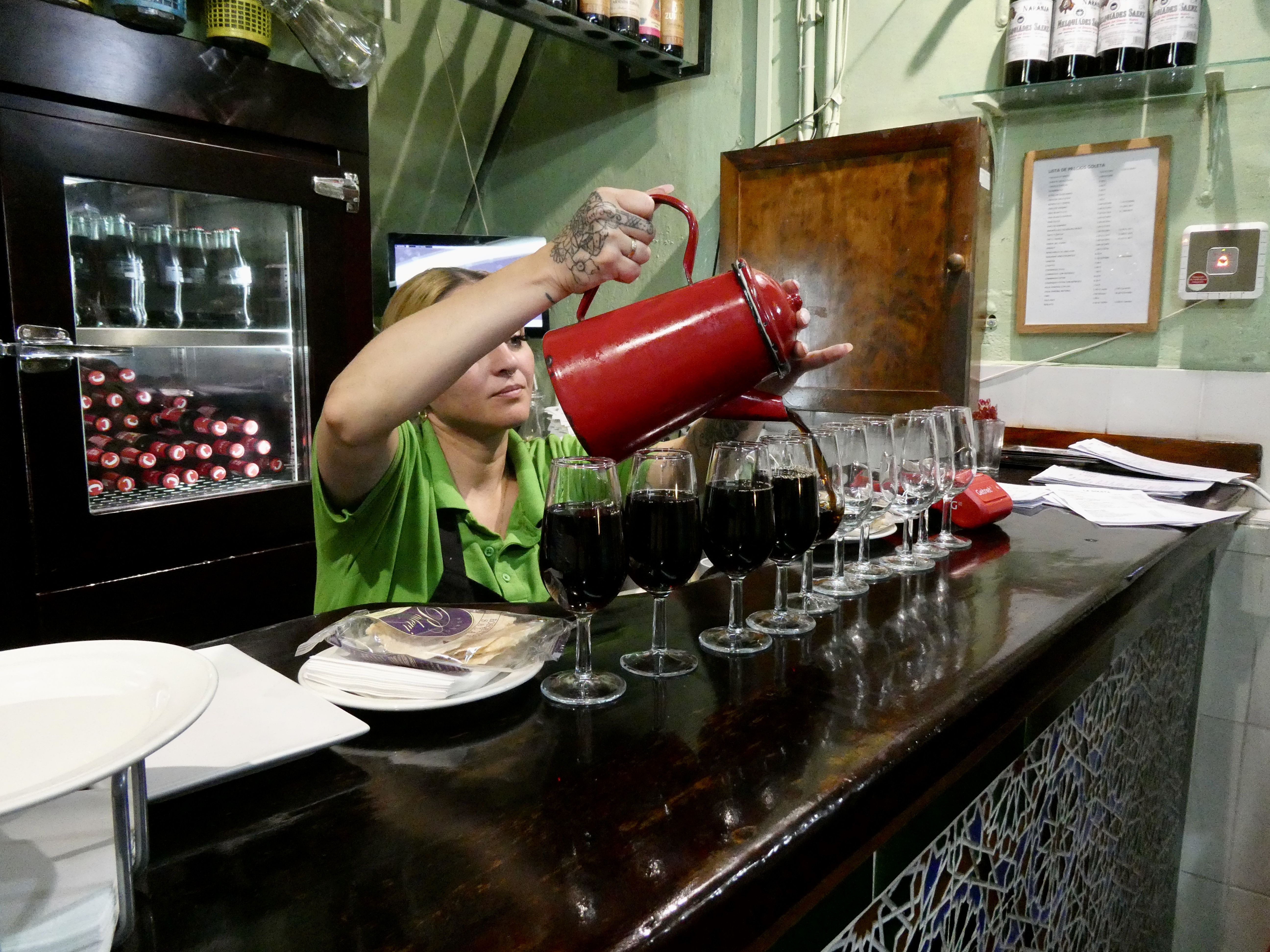
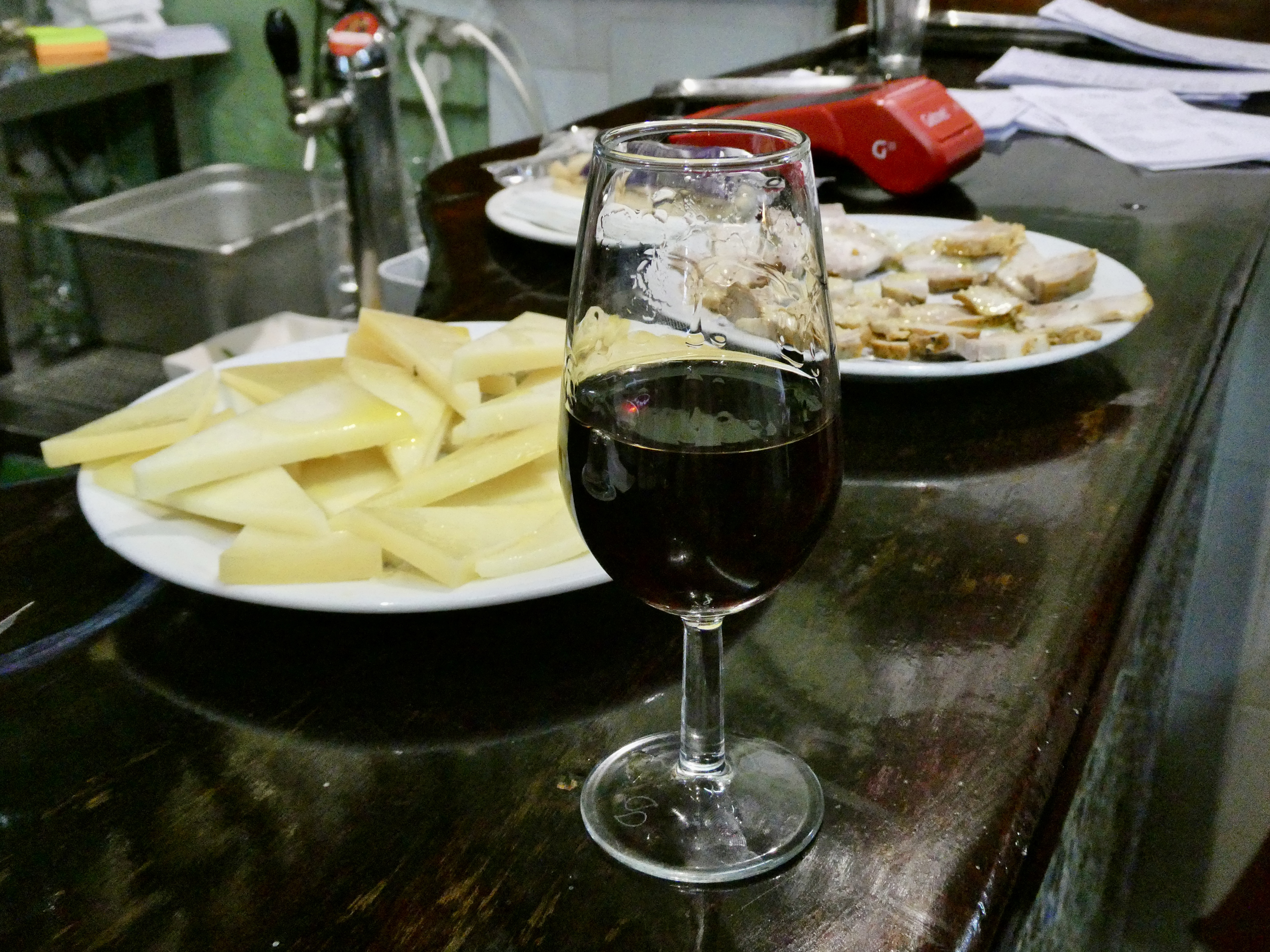
Anyway, our second stop was at Taberna La Goleta founded by Alvaro Peregil as a wine store in 1904. It became famous for its orange wine. Seriously. The wine is apparently made by mashing bitter Sevilla orange peels into distilled alcohol and adding moscatel wine. Now believe it or not, it wasn’t half bad.
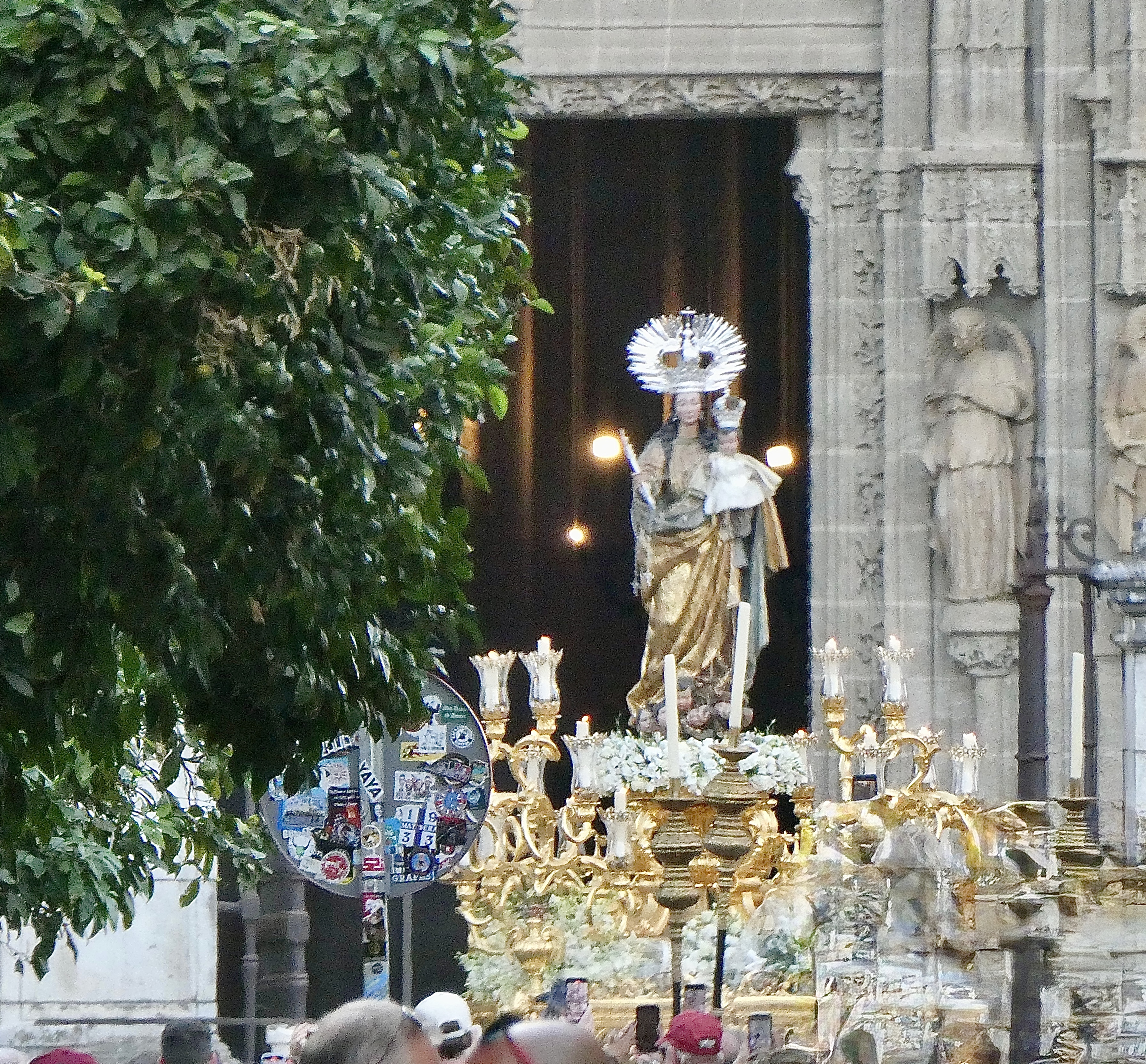
Along with the wine, we were served chicharron, grilled pork to which salt and olive oil was added (yummy) along with Manchego cheese and crackers. And while we were eating and drinking, the processional started up. We could hear the beating of a drum and shouting. I ended up going out into the alley and managed to take a picture as the processional was leaving the Cathedral.
So once we were finished here, we walked by the Cathedral and down the street in the direction of the river. We could hear the drum beat and cars were backed up for blocks. (Many were honking their horns and were NOT happy.)
And as we walked, we passed some traditional Spanish singers in the square near the Cathedral. Apparently they travel all over Spain putting on free shows and taking contributions. Mercedes said that they appear in the square two or three times a year. Good timing!
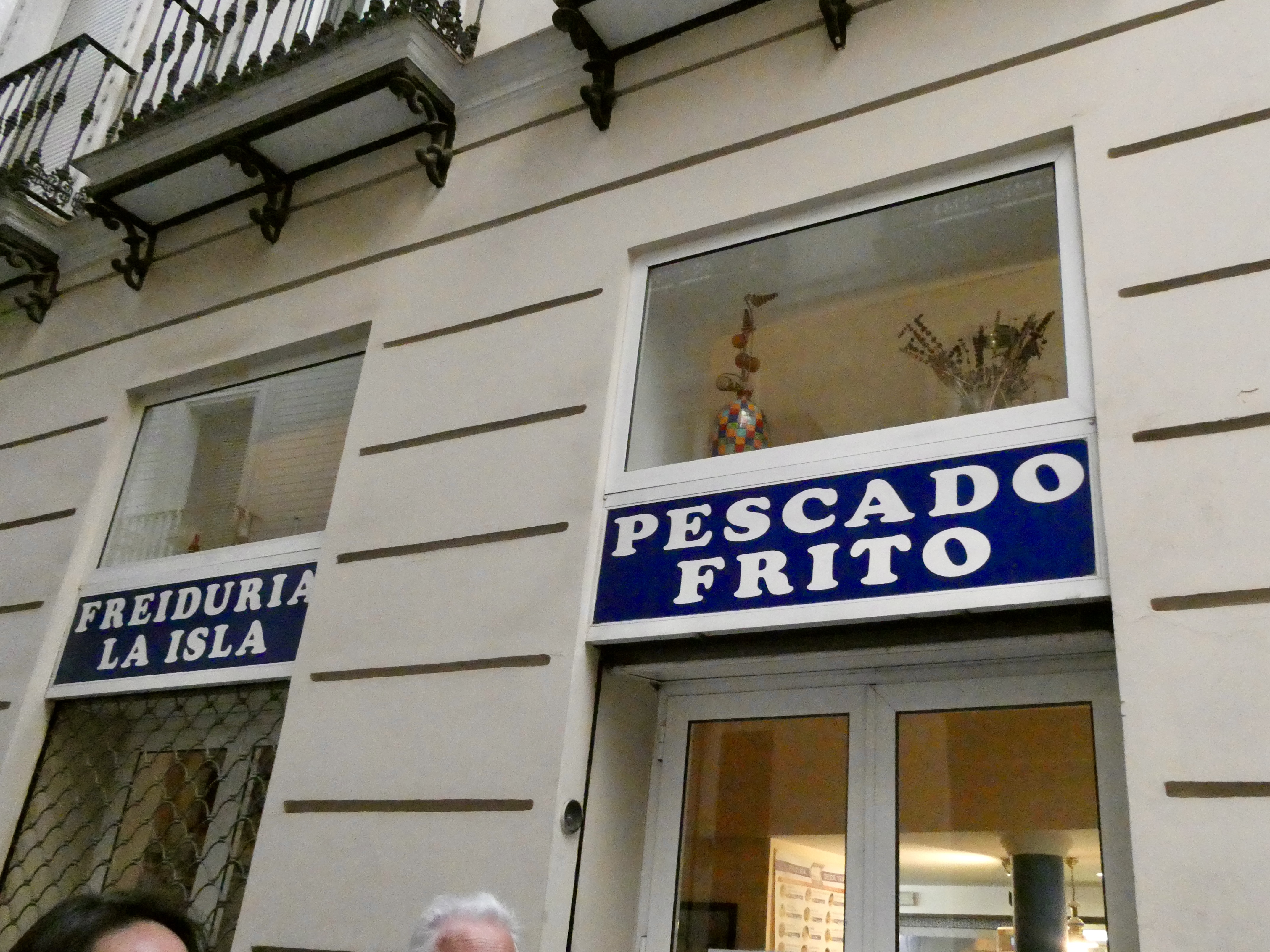
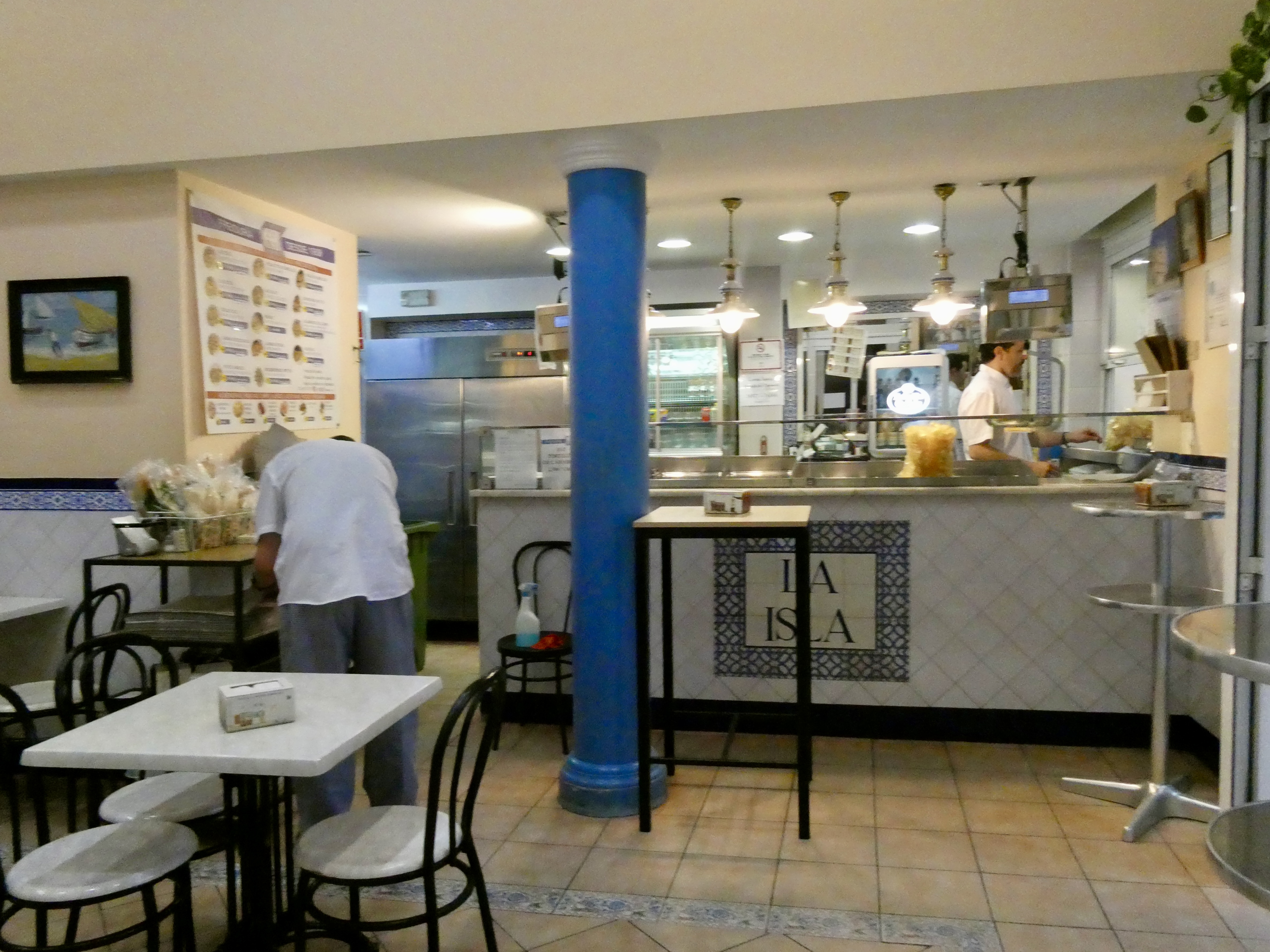

So our next stop was Freiduria La Isla, a fish shop that has been around for two generations. The place was a typical fish and chip shop. Nothing formal. In fact, when they brought the food out, fried shark, cuttlefish and french fries, the food was wrapped in a newspaper shaped cone and dumped the food on a mat on the table. Talk about informal.
Now for drinks, we were served brandy. I tell ya, these Spanish folk love their sweet alcohol. Now this brandy was not half bad. I generally do not like brandy, but this was not particularly sweet and went well with the fried fish.
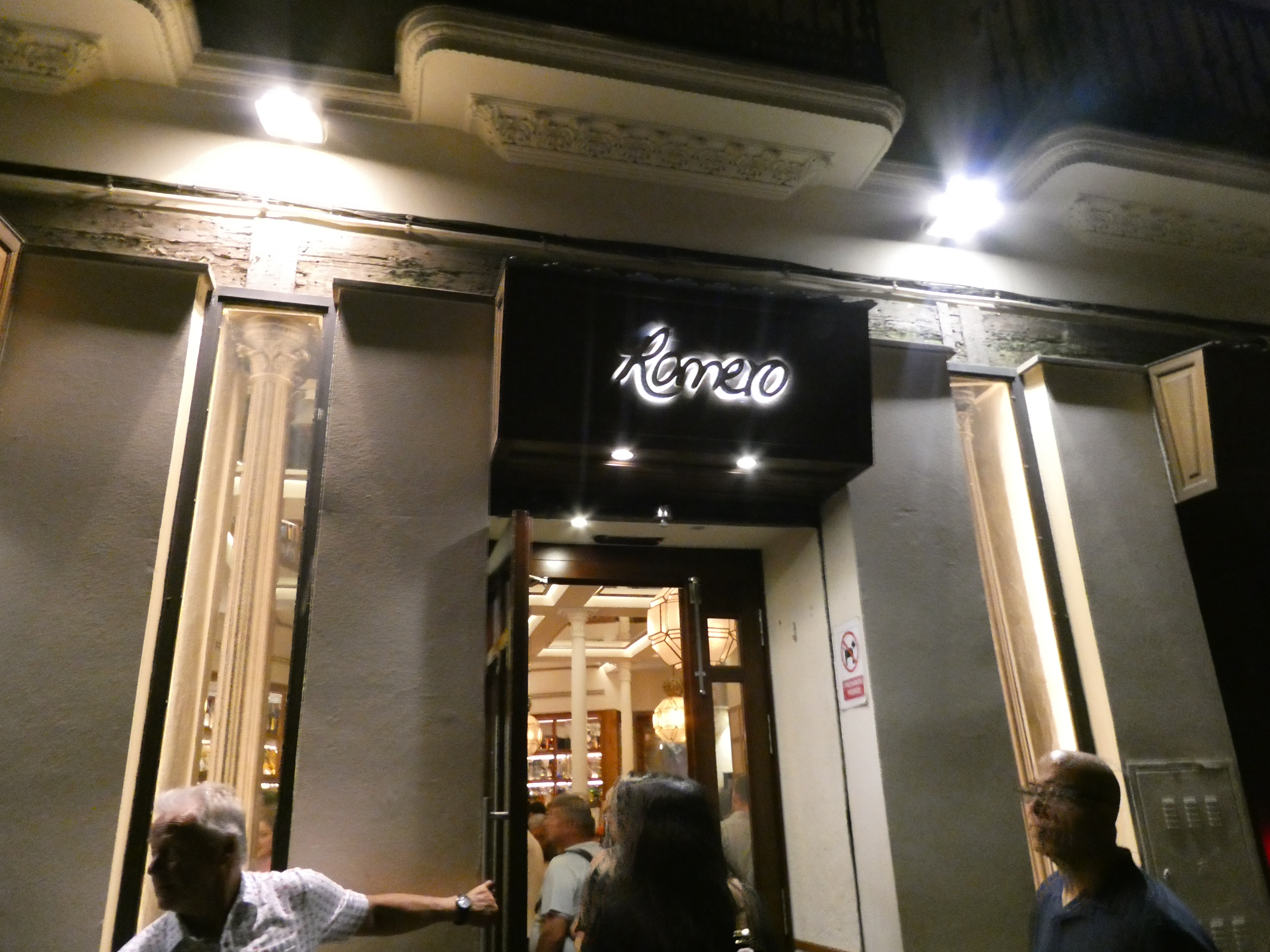
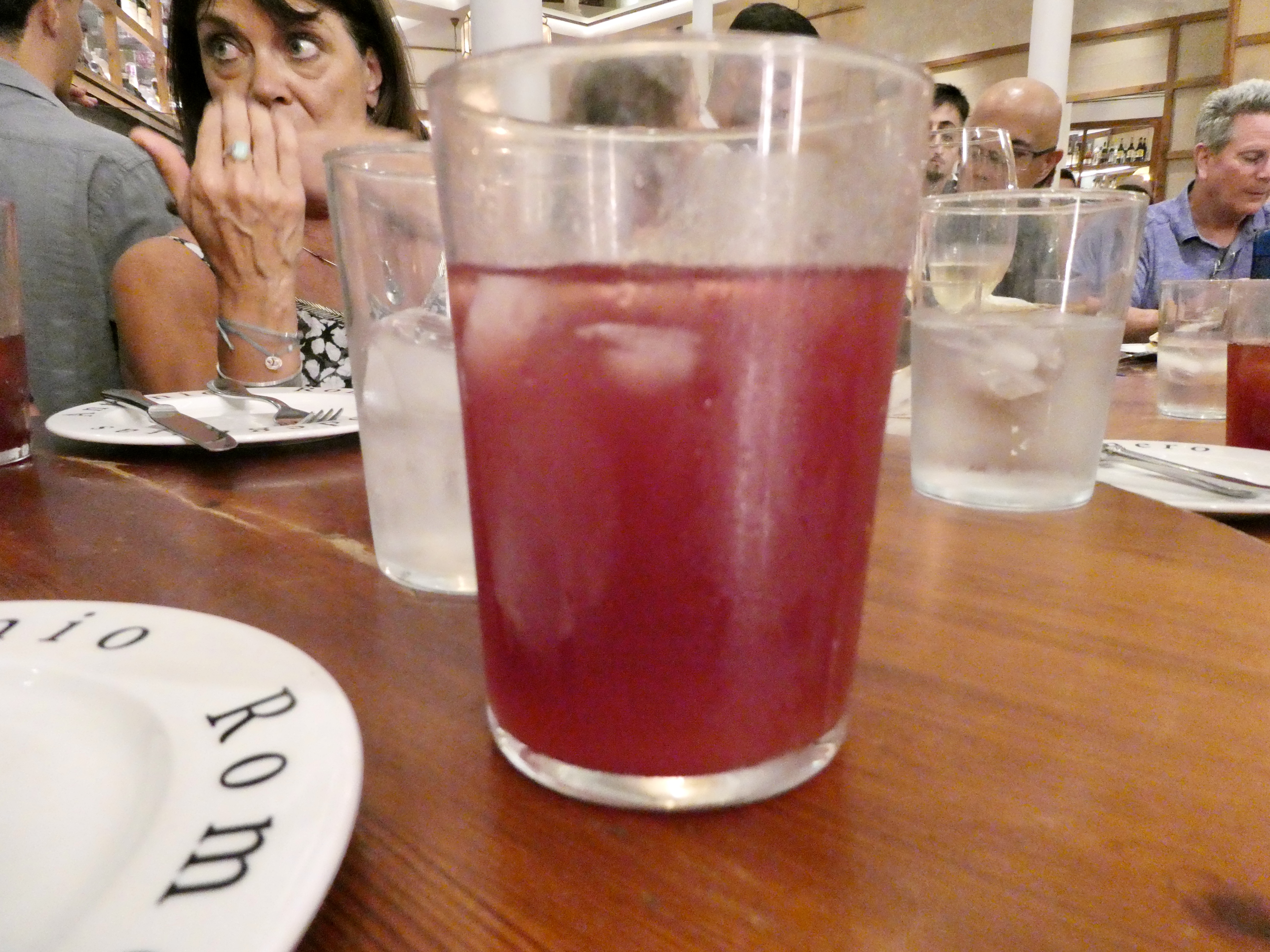
Our last stop of the day was at Antonio Romero Bodeuitas, a restaurant and bar a couple blocks from the river on the other side of the Cathedral. We had a reserved table (good thing because the place was packed). So we started out with our choice of drinks. I wasn’t sure what I wanted given the mixture so far on the tour, but Mercedes suggested Tinto de Verano, a cocktail made with red wine and lemon-lime soda. I thought it sounded similar to sangria so gave it a go and damn, it was fabulous. I would drink that again.
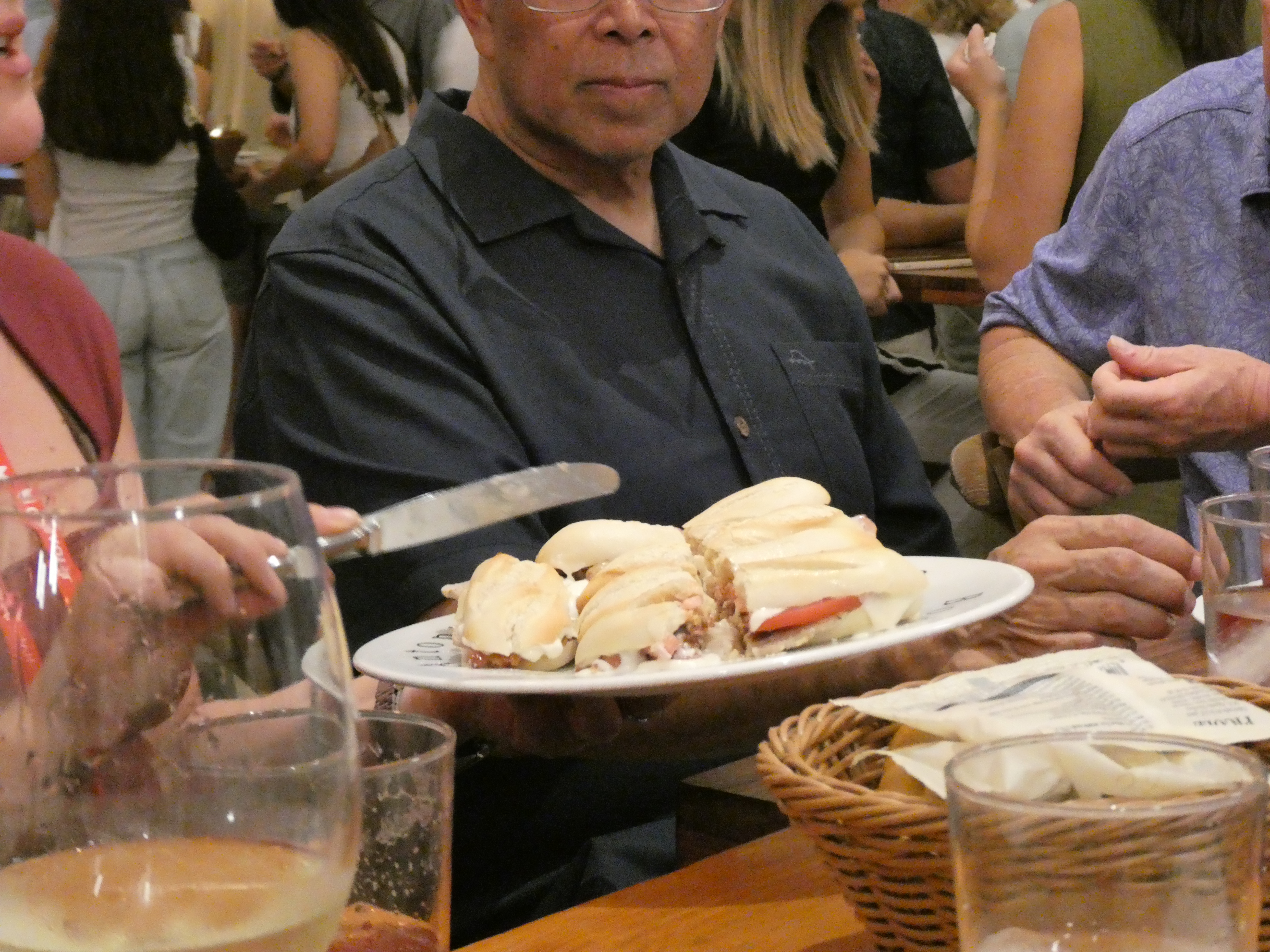
And then it was time to eat. First up was a spectacular sandwich made with ham, tomato, cheese and some kind of sauce. I am not sure what made the sandwich so good (maybe the bun and the sauce), but this was easily my favourite food of the night.
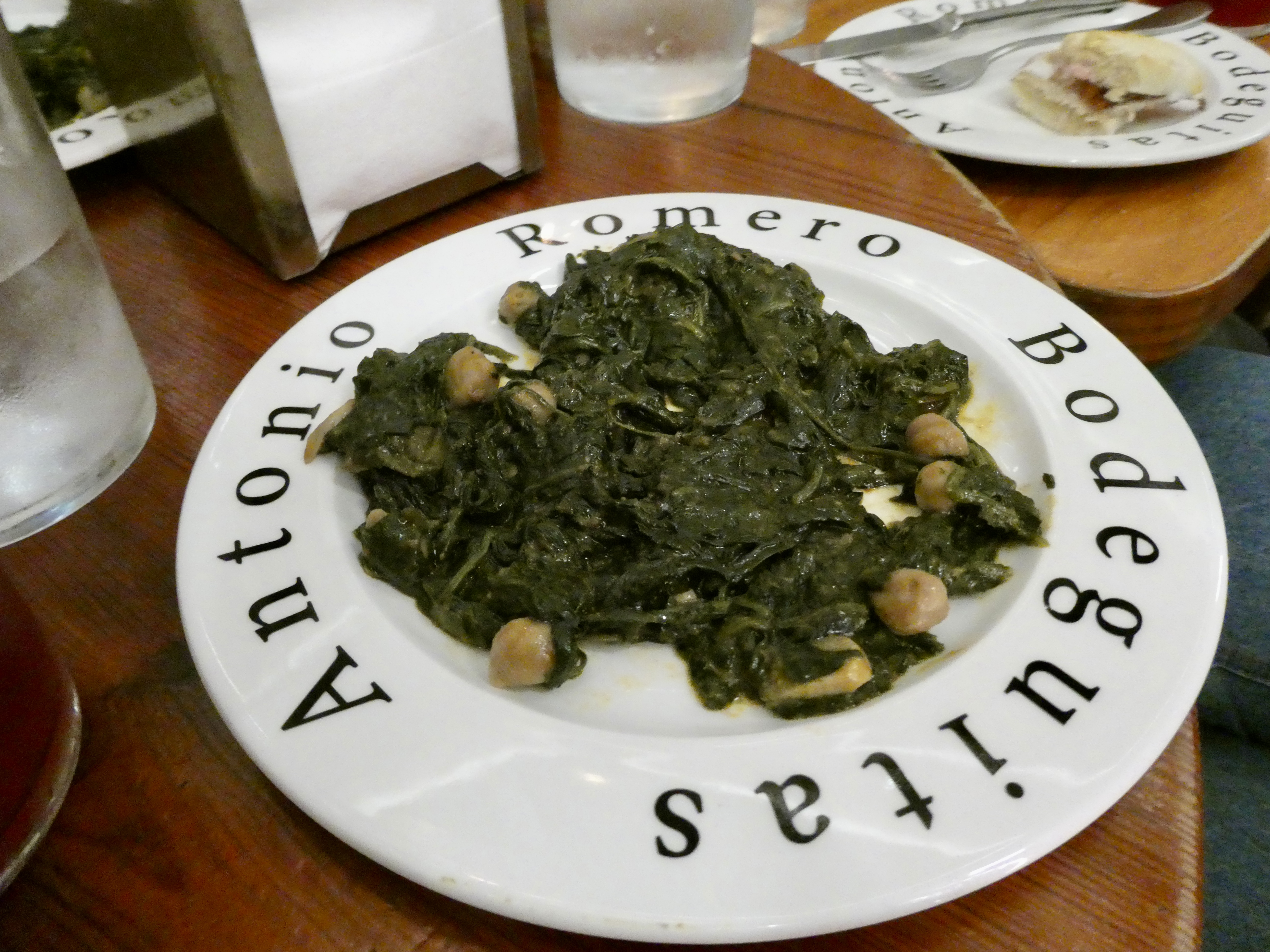
The sandwich was accompanied by spinach with chickpeas covered in olive oil, garlic, cumin and paprika. And as a lover of spinach, this dish was excellent. We were also served grilled peppers with a fried egg on top, but I opted out of this one.
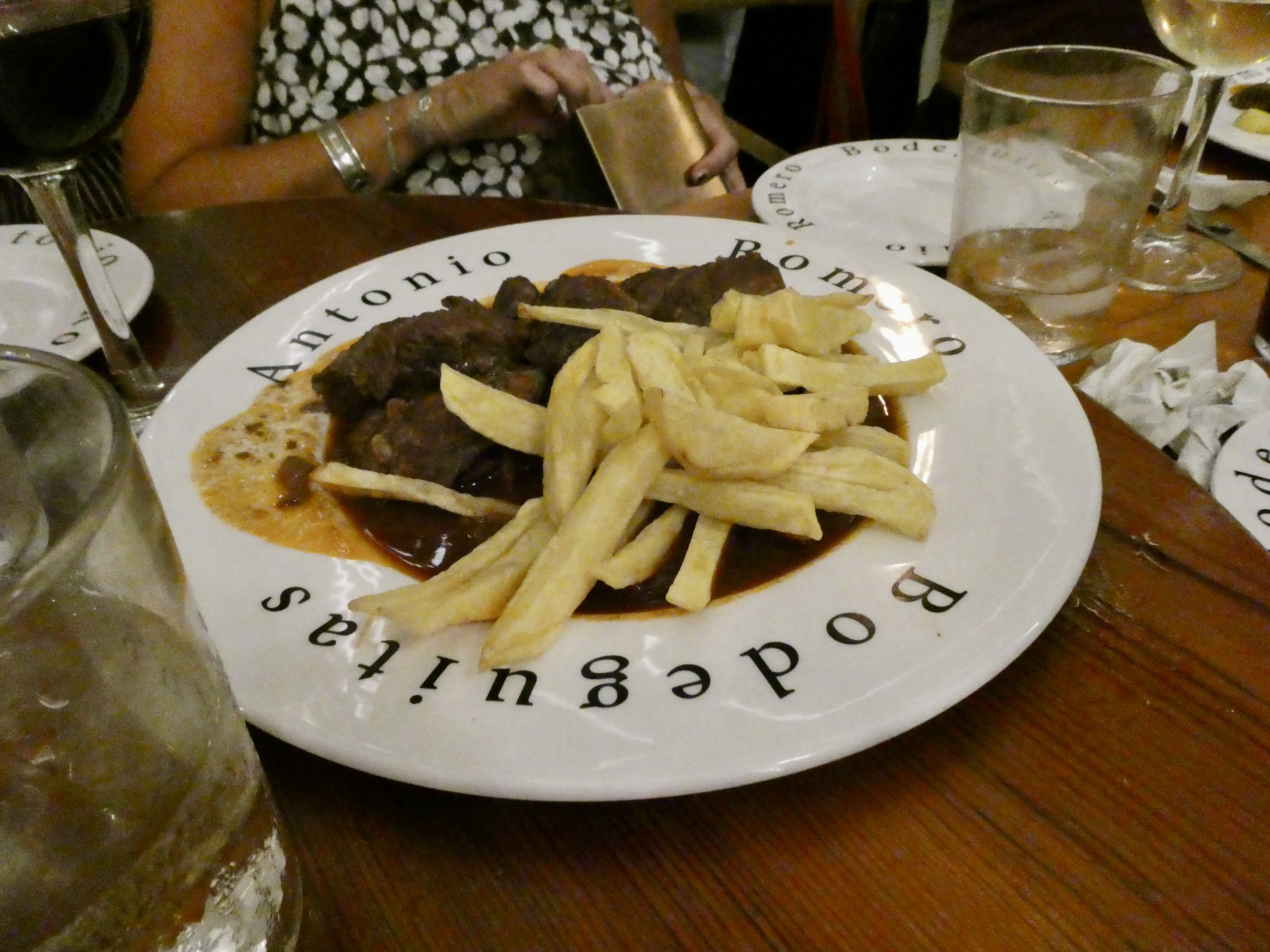
The next dish was grilled beef cheeks with fries served in a gravy. The beef cheeks were quite good with the sauce, but I decided against the fries. (I generally don’t eat French fries and had already had a couple of fries at the last place.)
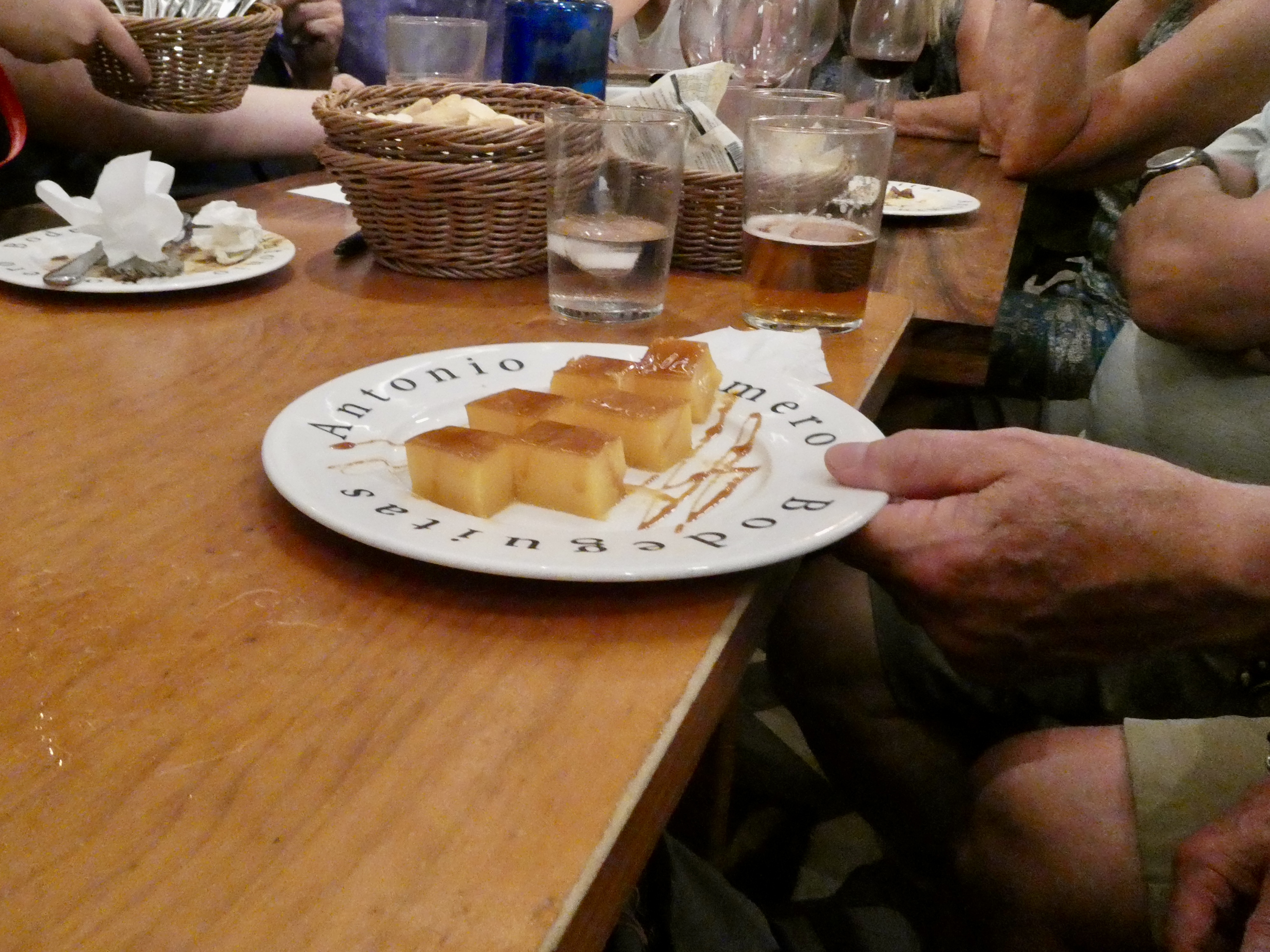
The last food served was Ticino de Cielo, a flan like desert that was perfection. Fluffy and light. A perfect end to all the food we ate.
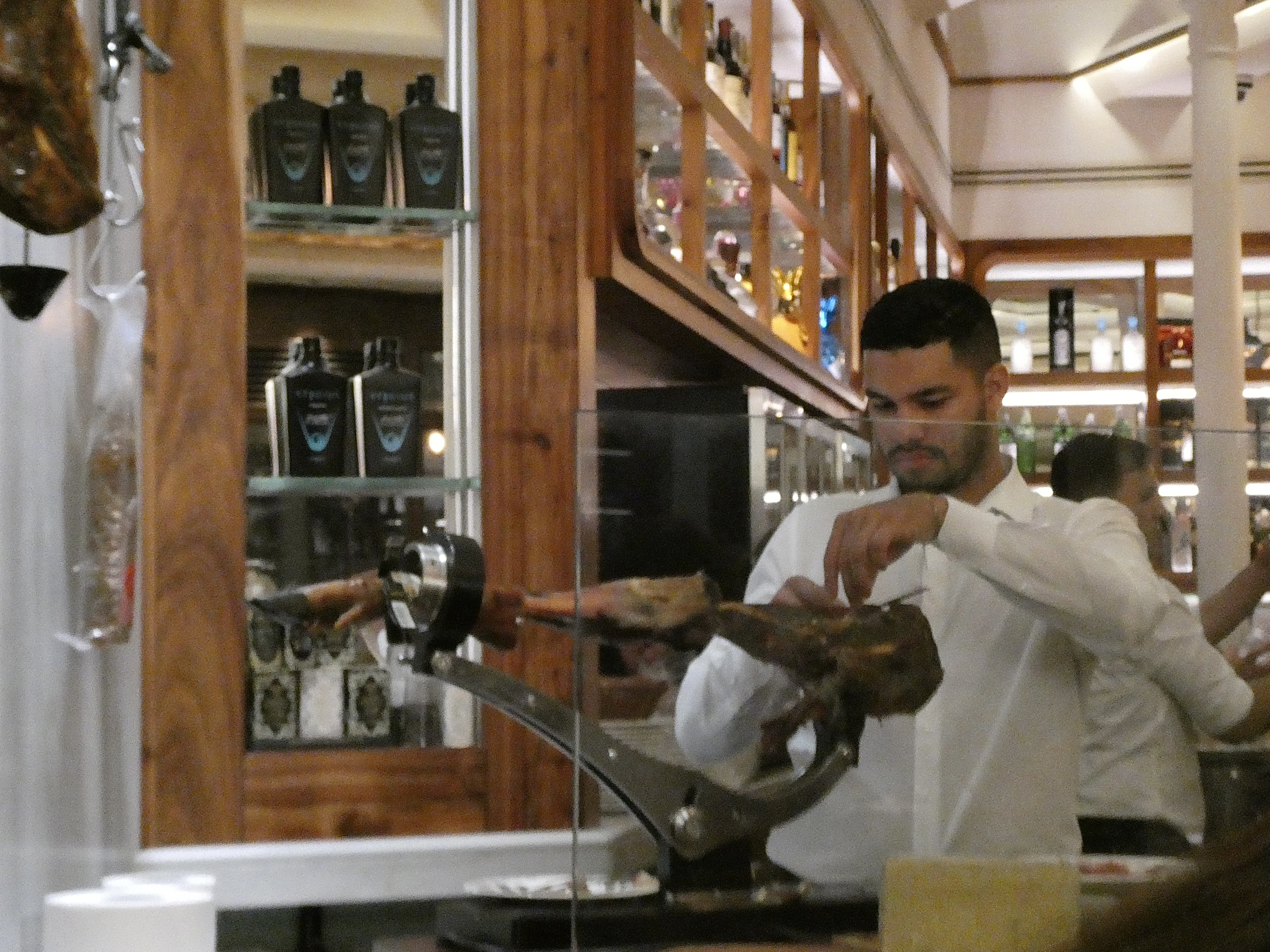
And while we were enjoying all this food, I could not stop watching the master carver at the bar cutting up Iberico ham. It was fascinating to watch this guy cut up the ham into wafer thin slices with such precision. A real artist at work.
So by 10:30 p.m. we were filled up and done. We all walked back to the Cathedral where the tour ended, and I started my five minute walk back to my hotel. And as a rounded a turn, I heard the sound of drums across the square. Yep, it was the procession. I ended up walking over to take a look and enjoyed the pageantry and music for a few minutes before the procession moved out of sight. Pretty cool.
And with that, my loooooong day was over. Tomorrow, I am off to Italica for some time with Roman ruins.
